US6041048A - Method for providing information packets from a packet switching network to a base site and corresponding communication system - Google Patents
Method for providing information packets from a packet switching network to a base site and corresponding communication system Download PDFInfo
- Publication number
- US6041048A US6041048A US09/096,635 US9663598A US6041048A US 6041048 A US6041048 A US 6041048A US 9663598 A US9663598 A US 9663598A US 6041048 A US6041048 A US 6041048A
- Authority
- US
- United States
- Prior art keywords
- data
- communication
- information
- packet
- group
- Prior art date
- Legal status (The legal status is an assumption and is not a legal conclusion. Google has not performed a legal analysis and makes no representation as to the accuracy of the status listed.)
- Expired - Lifetime
Links
Images


Classifications
-
- H—ELECTRICITY
- H04—ELECTRIC COMMUNICATION TECHNIQUE
- H04L—TRANSMISSION OF DIGITAL INFORMATION, e.g. TELEGRAPHIC COMMUNICATION
- H04L47/00—Traffic control in data switching networks
- H04L47/10—Flow control; Congestion control
- H04L47/24—Traffic characterised by specific attributes, e.g. priority or QoS
-
- H—ELECTRICITY
- H04—ELECTRIC COMMUNICATION TECHNIQUE
- H04L—TRANSMISSION OF DIGITAL INFORMATION, e.g. TELEGRAPHIC COMMUNICATION
- H04L67/00—Network arrangements or protocols for supporting network services or applications
- H04L67/50—Network services
- H04L67/60—Scheduling or organising the servicing of application requests, e.g. requests for application data transmissions using the analysis and optimisation of the required network resources
- H04L67/61—Scheduling or organising the servicing of application requests, e.g. requests for application data transmissions using the analysis and optimisation of the required network resources taking into account QoS or priority requirements
-
- H—ELECTRICITY
- H04—ELECTRIC COMMUNICATION TECHNIQUE
- H04L—TRANSMISSION OF DIGITAL INFORMATION, e.g. TELEGRAPHIC COMMUNICATION
- H04L67/00—Network arrangements or protocols for supporting network services or applications
- H04L67/50—Network services
- H04L67/60—Scheduling or organising the servicing of application requests, e.g. requests for application data transmissions using the analysis and optimisation of the required network resources
- H04L67/62—Establishing a time schedule for servicing the requests
-
- H—ELECTRICITY
- H04—ELECTRIC COMMUNICATION TECHNIQUE
- H04W—WIRELESS COMMUNICATION NETWORKS
- H04W28/00—Network traffic management; Network resource management
- H04W28/02—Traffic management, e.g. flow control or congestion control
-
- H—ELECTRICITY
- H04—ELECTRIC COMMUNICATION TECHNIQUE
- H04L—TRANSMISSION OF DIGITAL INFORMATION, e.g. TELEGRAPHIC COMMUNICATION
- H04L27/00—Modulated-carrier systems
- H04L27/0006—Assessment of spectral gaps suitable for allocating digitally modulated signals, e.g. for carrier allocation in cognitive radio
-
- H—ELECTRICITY
- H04—ELECTRIC COMMUNICATION TECHNIQUE
- H04L—TRANSMISSION OF DIGITAL INFORMATION, e.g. TELEGRAPHIC COMMUNICATION
- H04L47/00—Traffic control in data switching networks
- H04L47/10—Flow control; Congestion control
- H04L47/24—Traffic characterised by specific attributes, e.g. priority or QoS
- H04L47/2416—Real-time traffic
-
- H—ELECTRICITY
- H04—ELECTRIC COMMUNICATION TECHNIQUE
- H04W—WIRELESS COMMUNICATION NETWORKS
- H04W8/00—Network data management
- H04W8/02—Processing of mobility data, e.g. registration information at HLR [Home Location Register] or VLR [Visitor Location Register]; Transfer of mobility data, e.g. between HLR, VLR or external networks
- H04W8/04—Registration at HLR or HSS [Home Subscriber Server]
-
- H—ELECTRICITY
- H04—ELECTRIC COMMUNICATION TECHNIQUE
- H04W—WIRELESS COMMUNICATION NETWORKS
- H04W92/00—Interfaces specially adapted for wireless communication networks
- H04W92/04—Interfaces between hierarchically different network devices
- H04W92/045—Interfaces between hierarchically different network devices between access point and backbone network device
Definitions
- the present invention relates generally to communication systems and, in particular, to a method and apparatus for providing information packets from a packet switching network to a base site in a multi-service communication system.
- Wireless radio communication systems are well known in the art. Such systems include cellular telephone systems, trunked dispatch systems, and mobile data systems. Early radio systems generally offered a single service. However, some current systems now offer multiple services, such as telephony and trunked dispatch services, on a common set of radio communication resources. One such system is described in U.S. Pat. No. 5,548,631 (hereinafter the '631 patent).
- Radio systems which initially offered multiple services provided such services by using a single system controller that coordinated the usage of all radio communication resources and the call processing of all calls.
- Such coordination has been centralized for all sites, as in the "SmartNet” system that is commercially available from Motorola, Inc. of Schaumburg, Ill., and distributed with one controller for the radio communication resources for each site and another central controller to maintain control over all call processing, as in systems that implement the Global System for Mobile Communications (GSM) standard.
- GSM Global System for Mobile Communications
- the '631 patent describes a technique in which the call control is implemented separately in various controllers, or servers, with little concern over the interaction between services.
- the radio communication resources are maintained by a control process at the site that arbitrates between conflicting requests from the various servers.
- the communication links are generally provided by a public utility company (e.g., telephone company) and, therefore, generally involve a recurring cost.
- a public utility company e.g., telephone company
- the bandwidth required for each of the services is not known apriori, except that it is limited by the available radio frequency (RF) bandwidth provided by the installed equipment at each of the base sites. Therefore, at any point in time, each service is independently limited by the available RF bandwidth and the aggregate bandwidth of the services is also limited to that same RF bandwidth. In such a situation, one service could use most or all of the RF bandwidth at one time and another service could use most or all of the RF bandwidth at another time.
- RF radio frequency
- an effective method of providing the switching and transportation needs between the servers and the base sites is to use a common packet switching network and a shared communication link between each base site and the centralized communication equipment.
- the characteristics and attributes of each of the services may be such that when applied to a shared communication link, they conflict in such a way as to render one or more of the services unacceptable.
- Audio delay in a telephony or trunked dispatch voice communication system conflicts with packet data systems in the following way. Audio delay in telephony and trunked dispatch voice communication systems is very critical because users find voice services difficult to use when audio delay is above a couple hundred milliseconds (and only a small portion of this delay would be attributable to the packet switch and transport). On the other hand, packet data systems often transport very large packets (on the order of thousands of bytes of information).
- a data packet with 8,000 bytes of information would take a full second to transport on the shared link and would, therefore, delay any voice packets that happened to arrive after the start of the data packet transmission by up to one second. Such a delay would render the voice packets so late as to be unusable and, therefore, severely impair the voice service.
- Another approach to adding a new service, such as data, to an existing service, such as telephony, in a multi-site communication system is provide separate links and switches for each service.
- Such is the approach used to implement cellular digital packet data (CDPD) in existing Advanced Mobile Phone Service (AMPS) systems.
- CDPD digital packet data
- AMPS Advanced Mobile Phone Service
- FIG. 1 illustrates a block diagram depiction of a multi-service, radio communication system in accordance with a preferred embodiment of the present invention.
- FIG. 2 illustrates a block diagram depiction of a packet switch in accordance with a preferred embodiment of the present invention.
- FIG. 3 illustrates a logic flow diagram of steps executed to provide information packets from a packet switching network to a base site in accordance with the present invention.
- FIG. 4 illustrates a logic flow diagram of steps executed to provide information packets from a packet switching network to a base site in accordance with a preferred embodiment of the present invention.
- FIG. 5 illustrates a logic flow diagram of steps executed by a packet switch to provide information packets from multiple communication servers to a base site in accordance with a preferred embodiment of the present invention.
- FIG. 6 illustrates a logic flow diagram of steps executed by a packet switching network to provide data packets associated with multiple data communication sessions to a base site in accordance with a preferred embodiment of the present invention.
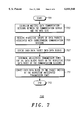
- FIG. 7 illustrates a logic flow diagram of steps executed by a communication server to provide data packets associated with multiple data communication sessions to a packet switch in accordance with a preferred embodiment of the present invention.
- the present invention encompasses a multi-service communication system and a method for providing information packets from a packet switching network to a base site therein.
- the packet switching network supports multiple communication services, such as voice and data.
- a communication link having a bandwidth that is substantially equal to an aggregate bandwidth of radio communication resources supported by the base site is provided between the packet switching network and the base site.
- At least one attribute of a first communication service supported by the packet switching network and at least one attribute or characteristic of a second communication service supported by the packet switching network are determined during a system design phase. Certain attributes of the first communication service are then compared and contrasted with certain attributes or characteristics of the second communication service with respect to the criticality of the attributes and/or characteristics.
- the packet switching network When one attribute of the first communication service is more critical than an attribute or characteristic of the second communication service, one or more of the attributes and/or characteristics of the second communication service are modified based on the critical attribute of the first communication service. Consequently, when the packet switching network receives information packets from one or more information sources, the packet switching network conveys such information packets to the base site via the communication link based on the critical attribute of the first communication service.
- the present invention allows a communication system to support multiple communication services with appropriate grades of service, without requiring multiple communication links between the packet switching network and the base site, thereby minimizing the necessary bandwidth utilized between the packet switching network and the base site.
- FIG. 1 illustrates a block diagram depiction of a multi-service, radio communication system 100 in accordance with a preferred embodiment of the present invention.
- the preferred radio communication system 100 includes a packet switching network 101, at least one base site 103-104 (two shown), a communication link 102 coupling the packet switching network 101 to a base site (e.g., 103), and one or more remote radio communication devices 106-107 (two shown).
- the base site 103 supports one or more radio communication resources 115-116 (two shown) to permit the exchange of information packets between the packet switching network 101 and the radio communication devices 106-107.
- a radio communication resource might comprise a radio frequency (RF) channel in a frequency division multiple access (FDMA) system, a time slot on an RF channel in a time division multiple access (TDMA) system, or an orthogonal code, such as a pseudo-noise sequence or a frequency-hopping pattern in a code division multiple access (CDMA) system.
- the communication link 102 preferably comprises a known T1 link that is configured to support a frame relay data link layer protocol and have a transmission bandwidth substantially equal to (i.e., within 5% of) the aggregate bandwidth of radio communication resources 115-116 supported by the base site 103.
- the communication link 102 might comprise a data communications link, such as T1 or V.35, that is configured to support some other standardized data link protocol, such as X.25 or asynchronous transfer mode (ATM).
- the packet switching network 101 includes multiple communication servers and a packet switch 114.
- the communication servers include data controllers 109-110, a dispatch controller 111, and a packet duplicator 112.
- the communication servers 109-112 are connected to the packet switch 114 via appropriate communication links as shown.
- the data controllers 109-110 are preferably coupled to a data source, such as the Internet Protocol (IP) network 118.
- IP Internet Protocol
- the preferred radio communication system 100 comprises an "iDEN” communication system that is commercially available from Motorola, Inc. of Schaumburg, Ill. Accordingly, the data controllers 109-1 10 preferably comprise Motorola Data Gateways (MDGs).
- the dispatch controller 111 preferably comprises an "iDEN” Dispatch Application Processor (DAP) and the packet duplicator 112 preferably comprises an "iDEN” extended site packet duplicator (ESPD).
- the base sites 103-104 preferably comprise "iDEN” Enhanced Base Transceiver Sites (EBTSs) and the radio communication devices 106-107 preferably comprise "iDEN" portable radios, such as the "iDEN” "i370" radiotelephone and the "iDEN” "i600” radiotelephone.
- EBTSs Enhanced Base Transceiver Sites
- the radio communication system 100 might comprise any multi-service communication system, such as communication systems that implement one or more of the following cellular platforms: Personal Communication Service (PCS), Unites States Digital Cellular (USDC), Code Division Multiple Access (CDMA), or Global System for Mobile Communications (GSM).
- PCS Personal Communication Service
- USDC Unites States Digital Cellular
- CDMA Code Division Multiple Access
- GSM Global System for Mobile Communications
- a preferred packet switch 114 is depicted in block diagram form in FIG. 2.
- the preferred packet switch 114 comprises a receiver 201, a processor 203, and a transmitter 205.
- the receiver 201, the processor 203, and the transmitter 205 preferably comprise application specific integrated circuits, general purpose processors, and software routines residing on a common platform, such as the IGX platform that is commercially available from Cisco Systems, Inc. of San Jose, Calif.
- operation of the preferred radio communication system 100 occurs substantially as follows in accordance with the present invention.
- a system designer and/ operator configures the communication system 100 to include the communication link 102 between the base site 103 and the packet switching network 101.
- the communication link 102 is preferably configured to have a bandwidth substantially equal to the aggregate bandwidth of the radio communication resources 115-116 supported by the base site 103. That is, the communication link bandwidth is selected to match the cumulative bandwidth supported by the base site, thereby minimizing cost while optimizing data throughput.
- the system designer determines attributes and/or characteristics of the communication services to be supported by the communication system 100.
- attributes include tolerance to time delay, tolerance to time delay variability, and voice packet reliability (e.g., tolerance to packet loss or bit error rate) for voice service, and reliability for packet data service.
- voice packet reliability e.g., tolerance to packet loss or bit error rate
- characteristics include packet rate and packet size for both voice and packet data services.
- the system designer Upon determining the attributes and/or characteristics of the communication services, the system designer evaluates the attributes and/or characteristics of the services and determines which, if any, of the attributes and/or characteristics are critical to maintaining a minimum quality for the respective service. Once the critical attributes and/or characteristics of each service are determined, the system designer determines whether one attribute and/or characteristic of one of the services is most critical. For example, when the communication services are voice and packet data, tolerance to time delay variability is more critical to voice service than packet size is to packet data service because users of remote communication devices 106-107 are less likely perceive a degradation in packet data service due to packet size reductions than they are to perceive a degradation in voice service due to increased voice delay.
- the system designer modifies the attributes and/or characteristics of the other services based on the critical attribute and/or characteristic of the one service. For example, when tolerance to time delay variability is more critical than data packet size in a voice and data system, the system designer programs the packet switching network 101 to permit a maximum amount of data to be conveyed between the packet switching network 101 and the base site 103 via the communication link 102 during any period of time.
- the packet switching network 101 conveys the data packet to the base site 103 via the communication link 102.
- the packet switching network 101 divides the data packet into data blocks that contain no more than the pre-established maximum amount of data, thereby effectively reducing the packet size which is an attribute of the packet data service.
- the system designer In addition to programming the packet switching network 101 to divide received data packets into data blocks, the system designer preferably also programs the packet switching network 101 to delay transmission of the data blocks to the base site 103 in such a manner as to substantially equal the data rate of the radio communication resource 115, while minimizing the amount of data to be stored at the base site 103 prior to transmission by effectively providing the packets to the base site 103 at substantially the same rate at which the base site 103 can ultimately transmit the packets via the radio communication resource 115.
- a further benefit to delaying packet delivery to the base site 103 is a reduction in the congestion on the communication link 102.
- the information sources e.g., IP network 118 one or more of the base sites 103-104 begin delivering information packets to the packet switching network 101.
- the packet switching network 101 Upon receiving the information packets, the packet switching network 101 conveys the packets to the base site 103 via the communication link 102 in accordance with a services-dependent protocol that is based on the critical attribute of one of the services as discussed above.
- the packet switching network 101 receives both voice and data packets (i.e., the packet switching network 101 is supporting both voice and data services) respectively at two or more of its communication servers (e.g., data controller 109 and packet duplicator 112)
- the data server e.g., data controller 109
- the voice server packet duplicator 112 provides the voice packets to the packet switch 114 without introducing any additional delay.
- the dispatch controller 111 provides control signals to the base site 103 to control group voice communications between the remote communication devices 106-107; thus, for the purposes of this invention, the information packets containing control information from the dispatch controller 111 are preferably treated in the same manner as are voice packets received from the packet duplicator 112.
- the packet switch 114 Upon receiving the voice packets and the data blocks from the data server and voice server respectively at its receiver 201, the packet switch 114 employs its processor 203 to determine whether a voice packet or a data block was received first. When a voice packet was received before a data block, the packet switch 114 employs its transmitter 205 to convey all voice packets that have been received by the packet switch 114 to the base site 103 via the communication link 102. When one or more data blocks were received by the packet switch 114 before a voice packet was so received, the packet switch 114 conveys one of the data blocks to the base site 103 via the communication link 102 and then employs its processor 203 to determine if a voice packet has been received.
- the packet switch 114 continues sending one data block at a time to the base site 103 until the packet switch 114 receives a voice packet. Once a voice packet is received, the packet switch 114 delays transmission of subsequent data blocks (i.e., queues the subsequent data blocks) until conveyance of the voice packet or packets is completed.
- the present invention is also applicable to the condition in which multiple voice servers and multiple data servers are providing voice packets and data blocks respectively to the packet switch 114 for ultimate delivery to the base site 103.
- the packet switching network 101 when the packet switching network 101 is presently supporting one or more data services and multiple data communication sessions between the packet switching network 101 and the base site 103 have been requested in accordance with known techniques by either the radio communication devices 106-107 or the data sources (e.g., the IP network 118 or another base site 104), the each data server (e.g., data controller 109 and data controller 110) or the packet switch 114 establishes a respective data communication session between the respective data server and the base site 103. In a preferred embodiment, each data communication session is established by assigning a virtual circuit between the respective data server and the base site 103. Once the data communication sessions are established, the each data server receives data packets from a data source and divides the received data packets into data blocks.
- the radio communication devices 106-107 or the data sources e.g., the IP network 118 or another base site 104
- the each data server e.g., data controller 109 and data controller 110
- the packet switch 114 establishes a respective data
- the data servers determine anticipated transmission times for their respective data blocks based on the data rates of their respective data communication sessions. For example, when two data communication sessions have been established in a TDMA radio communication system having time slots of 15 milliseconds each, each data block of each data communication session is sized to fit in a time slot and the anticipated transmission times for the data blocks of both communication sessions are at time slot intervals.
- the data servers convey their respective data blocks to the packet switch 114 at the anticipated transmission times.
- the packet switch 114 Upon receiving one or more data blocks at its receiver 201, the packet switch 114 employs its processor 203 to determine whether or not the communication link 102 is available. When the communication link 102 is available, the packet switch 114 employs its transmitter 205 to convey the data block or blocks to the base site 103 via the communication link 102, thereby effectively providing the data blocks to the base site 103 at their anticipated transmission times.
- the packet switch 114 employs its processor 203 to store the received data blocks until the communication link 102 becomes available.
- the processor 203 selects which data blocks to convey via the communication link 102.
- the processor 203 selects the stored data blocks for transmission prior to selecting any newly received data blocks because the stored data blocks are those that effectively have expired anticipated transmission times.
- the processor 203 might further refine its selection by determining time deadlines for transmission of the stored data blocks. The time deadlines are based upon the quality of service for the particular data service. For example, a data service might include a guaranteed transmission time or might include retransmission timers, such as in the transport control protocol (TCP).
- TCP transport control protocol
- the processor 203 selects those stored data blocks having the earliest time deadlines (i.e., smallest time window for delivery) and provides the selected data blocks to the transmitter 205 for conveyance to the base site 103.
- the present invention provides a multiservice communication system in which a single communication link is provided between the packet switching network and the base site with a bandwidth that substantially matches the aggregate usable bandwidth of the base site to facilitate the multiple communication services supported by the communication system.
- the present invention modifies attributes or characteristics of one or more of the communication services based on a critical attribute of another communication service and provides for the conveyance of information packets associated with all communication services based on the critical attribute of the critical communication service.
- the present invention facilitates a single data link protocol between the packet switching network and the base site for all services, even though the packet switching network includes multiple communication servers, thereby enabling the use of a single packet switch for all services, in sharp contrast to existing multi-service systems, such AMPS systems that include CDPD, that use multiple data link protocols and corresponding communication links between the base site and the communication servers.
- FIG. 3 illustrates a logic flow diagram 300 of steps executed to provide information packets from a packet switching network to a base site in accordance with the present invention.
- the logic flow begins (301) when a communication link is provided (303) between a packet switching network and the base site.
- the communication link has a bandwidth that is substantially equal to an aggregate bandwidth of radio communication resources supported by the base site.
- one or more attributes of a first communication service e.g., voice service
- a second communication service e.g., packet data
- the first communication service is voice service
- attributes of the first communication service include tolerance to time delay, tolerance to the time delay variability, and voice packet reliability.
- the second communication service is packet data
- the attributes of the second communication service include reliability.
- the system designer determines (307) whether one attribute of the first communication service is more critical to maintaining a minimum quality of service for the first communication service than is an attribute of the second communication service to maintaining a minimum quality of service for the second communication service.
- an attribute e.g., tolerance to time delay variability
- the system designer modifies (309) at least one attribute of the second communication service based on the critical attribute of the first communication service. For example, when tolerance of time delay variability is more critical than data packet reliability, the system designer might program the packet switching network to preempt the transmission of data in favor of the transmission of voice. That is, when data is being transmitted on the communication link and a new voice packet arrives, the packet switching network prematurely terminates the data transmission and begins transmitting the voice packet.
- the packet switching network receives (311) information packets associated with the first and second communication services.
- the information packets may arrive at the packet switching network from one of a variety of sources, such as an IP network or another base site.
- the packet switching network then conveys (313) the information packets to the base site via the communication link based on a critical attribute of the first communication service and the logic flow ends (315).
- an attribute of the first communication service is no more critical than any other attribute of the second communication service (307)
- no attribute modifications are made and the packet switching network simply conveys any received information packets to the base site via the communication link based on the attribute of the communication service to which the information packets pertain, and the logic flow ends (315).
- FIG. 4 illustrates a logic flow diagram 400 of steps executed to provide information packets from a packet switching network to a base site in accordance with a preferred embodiment of the present invention.
- the logic flow begins (401) when a communication link is provided (403) between a packet switching network and the base site.
- the communication link has a bandwidth that is substantially equal to an aggregate bandwidth of radio communication resources supported by the base site.
- one or more attributes of a first communication service e.g., voice service
- characteristics of a second communication service e.g., packet data
- the characteristics of the second communication service include packet size and packet rate.
- the system designer determines (407) whether one attribute of the first communication service is more critical to maintaining a minimum quality of service for the first communication service than is a characteristic of the second communication service to maintaining a minimum quality of service for the second communication service.
- an attribute e.g., tolerance to time delay variability
- the system designer modifies (409) at least one characteristic of the second communication service based on the critical attribute of the first communication service. For example, when tolerance of time delay variability is more critical than packet size, the system designer programs the packet switching network to divide received data packets into blocks (thereby reducing the packet size) and delay transmission of the data blocks as described above.
- the packet switching network receives (411) information packets associated with the first and second communication services.
- the information packets may arrive at the packet switching network from one of a variety of sources, such as an IP network or another base site.
- the packet switching network then conveys (413) the information packets to the base site via the communication link based on a critical attribute of the first communication service and the logic flow ends (415).
- an attribute of the first communication service is no more critical than any characteristic of the second communication service (407)
- no characteristic modifications are made and the packet switching network simply conveys any received information packets to the base site via the communication link based on the attributes and characteristics of the communication service to which the information packets pertain, and the logic flow ends (415).
- FIG. 5 illustrates a logic flow diagram 500 of steps executed by a packet switch to provide information packets from multiple communication servers to a base site in accordance with a preferred embodiment of the present invention.
- the logic flow begins (501) when the packet switch receives (503) a first group of information packets from a first communication server and a second group of information blocks from a second communication server.
- the second communication server Prior to conveying the information blocks to the packet switch, the second communication server divides any data packets larger than a desired block size (e.g., an amount of user data that can be transmitted in one TDMA time slot) into data blocks of the desired block size.
- a desired block size e.g., an amount of user data that can be transmitted in one TDMA time slot
- Some blocks of the second group collectively constitute an information packet when the second group includes blocks from multiple information packets (such as when the second communication server has received information packets for multiple remote communication devices), has divided the information packets into data blocks, and is providing data blocks intended for one remote radio communication device together with data blocks intended for another remote radio communication device.
- the packet switch determines (505) whether an information packet of the first group was received prior to an information block of the second group. For example, in the preferred embodiment, the packet switch determines whether a voice packet is received prior to a data block.
- the packet switch transmits (507) the first group of information packets of the base site and the logic flow ends (509).
- the packet switch transmits all voice packets received prior to transmitting any data blocks.
- the packet switch transmits (511) one information block to the base site via the communication link and then determines (513) whether an information packet of the first group has been received prior to a time for transmission of the next information block. That is, in the above example, when a data block is received before any voice packets, the packet switch begins transmitting data blocks one at a time until a voice packet is received. After each transmission of a data block, the packet switch determines whether or not a voice packet has been received.
- the packet switch queues (515) the next information block and transmits (507) the first group of information packets to the base site and the logic flow ends (509).
- the packet switch queues the information block and transmits all voice packets. After all the voice packets are transmitted, the packet switch then begins transmitting the data blocks.
- the packet switch transmits (517) the next information block and the logic flow returns to decision block 513 for re-evaluation of whether or not an information packet from the first group (i.e., an information packet from the first communication server) has been received prior to the transmission time of the next information block in sequence.
- the packet switch conveys information packets or information blocks to the base site using the prioritization approach described above with respect to FIG. 5 once service priorities are set in the system using the methodologies described above with respect to FIGS. 3 and 4.
- FIG. 6 illustrates a logic flow diagram 600 of steps executed by a packet switching network to provide data packets associated with multiple data communication sessions to a base site in accordance with a preferred embodiment of the present invention.
- the logic flow begins (601) when the packet switching network establishes (603) a first data communication session and a second data communication session between the packet switching network and the base site.
- the communication sessions are preferably established by assigning a virtual circuits between the packet switching network and the base site.
- the packet switching network receives (605) a first group of data packets associated with the first data communication session and a second group of data packets associated with the second data communication session from one or more data sources, such as an IP network or another base site. Routing of data packets between the data sources and the packet switching network is well known; thus, further discussion will be provided except to facilitate an understanding of the present invention.
- the packet switching network Upon receiving the data packets associated with each data communication session, the packet switching network divides (607) each data packet into data blocks. The packet switching network then determines (609) an anticipated transmission time for each data block based on the respective data rate of the communication session to which each data block is associated. That is, the packet switching network determines anticipated transmission times for the data blocks associated with the first group of data packets based on the data rate for the first communication session and determines anticipated transmission times for the data blocks associated with the second communication session based on the data rate of the second communication session.
- the packet switching network determines (611) whether the communication link between the packet switching network and the base site is unavailable for a time period that exceeds at least one anticipated transmission time of a data block. That is, the packet switching network determines whether the communication link was available at each anticipated transmission time of a data block. When the communication link was not available for a time period that exceeded one or more anticipated transmission times of data blocks, the packet switching network selects (613) those data blocks having expired transmission times for subsequent conveyance to the base site.
- the packet switching network performs another level of prioritization by determining (615) time deadlines for the selected data blocks having expired anticipated transmission times.
- each data packet has a time stamp associated with it.
- each data block formed from a data packet also has a time stamp associated with it.
- a time deadline for transmission of a data block can be determined based on the quality of service parameters of the data communication session.
- the quality of service parameters establish the time delay that can be incurred between reception and transmission of data blocks. Therefore, depending upon the quality of service for the respective data communication session, the data blocks associated with that session must be conveyed by the packet switching network to the base site by certain time deadlines or, if not so conveyed, must be deleted. Consequently, time deadlines are preferably determined in block 615 based on the quality of service parameters of the communication session.
- the packet switching network then conveys (617) the selected data blocks with earlier time deadlines to the base site once the communication link becomes available, and the logic flow ends (619).
- the packet switching network simply conveys the data blocks to the base site at their anticipated transmission times and the logic flow ends (619).
- the present invention uses a multi-level prioritization approach for conveying data blocks from the packet switching network to the base site when multiple data communication sessions are being processed by the packet switching network simultaneously.
- the two levels of the prioritization process include transmitting data blocks with expired anticipated transmission times prior to data blocks having anticipated transmission times that have not yet expired and selecting among the data blocks with expired anticipated transmission times based on time deadlines of those particular data blocks.
- the packet switching network might use only a single tiered prioritization scheme in which the packet switching network conveys data blocks having expired anticipated transmission times to the base site, without also considering the time deadlines associated with those data blocks.
- FIG. 7 illustrates a logic flow diagram 700 of steps executed by a communication server to provide data packets associated with multiple data communication sessions to a packet switch in accordance with a preferred embodiment of the present invention.
- the logic flow begins (701) when the communication server establishes (703) multiple data communication sessions between the communication server and the base site.
- the data communication sessions are preferably established by assigning virtual circuits between the communication server and the base site.
- the communication server receives (705) a first group of data packets associated with a first data communication session and a second group of data packets associated with a second data communication session from one or more data sources.
- the communication server then divides (707) each data packet of each group of data packets into data blocks.
- the communication server determines (709) the anticipated transmission times for the data blocks based on the effective data rates of the communication sessions. Finally, the communication server conveys (711) each data block to the packet switch at the respective anticipated transmission times and the logic flow ends (713).
- the present invention encompasses a multi-service communication system and a method for providing information packets from a packet switching network to a base site therein.
- a single communication link can be provided between the packet switching network and the base site with a bandwidth that substantially matches the aggregate usable bandwidth of the base site to facilitate multiple communication services supported by the communication system.
- the present invention modifies attributes or characteristics of one or more of the communication services based on a critical attribute of another communication service and provides for the conveyance of information packets associated with all communication services based on the critical attribute of the critical communication service.
Landscapes
- Engineering & Computer Science (AREA)
- Computer Networks & Wireless Communication (AREA)
- Signal Processing (AREA)
- Data Exchanges In Wide-Area Networks (AREA)
- Mobile Radio Communication Systems (AREA)
Priority Applications (6)
| Application Number | Priority Date | Filing Date | Title |
|---|---|---|---|
| US09/096,635 US6041048A (en) | 1998-06-12 | 1998-06-12 | Method for providing information packets from a packet switching network to a base site and corresponding communication system |
| CNB998072966A CN1139268C (zh) | 1998-06-12 | 1999-06-04 | 从分组交换网络向基站提供信息分组的方法及相应的通信系统 |
| PCT/US1999/012470 WO1999065255A1 (fr) | 1998-06-12 | 1999-06-04 | Procede destine a transmettre des paquets d'informations d'un reseau de commutation de paquets a un site de base et systeme de communication correspondant |
| EP99927217A EP1086596A4 (fr) | 1998-06-12 | 1999-06-04 | Procede destine a transmettre des paquets d'informations d'un reseau de commutation de paquets a un site de base et systeme de communication correspondant |
| ARP990102787A AR018661A1 (es) | 1998-06-12 | 1999-06-11 | Metodo para proporcionar paquetes de informacion asociados con un primer servicio de comunicaciones y paquetes de informacion asociados con un segundo servicio de comunicacion al sitio base en un sistema de comunicacion que incluye una red de conmutacion y un sitio base, la red de conmutacion por pa |
| ARP000103184A AR024582A2 (es) | 1998-06-12 | 2000-06-23 | MÉTODO PARA EL CONMUTADOR POR PAQUETES PARA SUMINISTRAR PAQUETES DE INFORMACION EN UN DISPOSITIVO DE COMUNICACION Y DISPOSITIVO DE COMUNICACIoN DE UTILIDAD EN DICHO MÉTODO. |
Applications Claiming Priority (1)
| Application Number | Priority Date | Filing Date | Title |
|---|---|---|---|
| US09/096,635 US6041048A (en) | 1998-06-12 | 1998-06-12 | Method for providing information packets from a packet switching network to a base site and corresponding communication system |
Publications (1)
| Publication Number | Publication Date |
|---|---|
| US6041048A true US6041048A (en) | 2000-03-21 |
Family
ID=22258323
Family Applications (1)
| Application Number | Title | Priority Date | Filing Date |
|---|---|---|---|
| US09/096,635 Expired - Lifetime US6041048A (en) | 1998-06-12 | 1998-06-12 | Method for providing information packets from a packet switching network to a base site and corresponding communication system |
Country Status (5)
| Country | Link |
|---|---|
| US (1) | US6041048A (fr) |
| EP (1) | EP1086596A4 (fr) |
| CN (1) | CN1139268C (fr) |
| AR (2) | AR018661A1 (fr) |
| WO (1) | WO1999065255A1 (fr) |
Cited By (33)
| Publication number | Priority date | Publication date | Assignee | Title |
|---|---|---|---|---|
| WO2000074288A1 (fr) * | 1999-05-28 | 2000-12-07 | Motorola Inc. | Procede de service de repartition |
| US6320873B1 (en) * | 1998-08-27 | 2001-11-20 | Qualcomm Incorporated | CDMA transmission of packet-switched data |
| US6370120B1 (en) * | 1998-12-24 | 2002-04-09 | Mci Worldcom, Inc. | Method and system for evaluating the quality of packet-switched voice signals |
| US20020060994A1 (en) * | 2000-11-17 | 2002-05-23 | Erno Kovacs | Transmission of carry-on objects using a wireless ad-hoc networking environment |
| US20020097840A1 (en) * | 1998-12-24 | 2002-07-25 | Worldcom, Inc. | Method and apparatus for estimating quality in a telephonic voice connection |
| US20020114296A1 (en) * | 1998-12-24 | 2002-08-22 | Hardy William Christopher | Method and system for evaluating the quality of packet-switched voice signals |
| US20020191635A1 (en) * | 2001-06-14 | 2002-12-19 | Chow Albert T. | Broadband network with enterprise wireless communication method for residential and business environment |
| US6553061B1 (en) | 2001-02-08 | 2003-04-22 | Worldcom, Inc. | Method and apparatus for detecting a waveform |
| US20030118020A1 (en) * | 2001-12-21 | 2003-06-26 | Mauricio Calle | Method and apparatus for classification of packet data prior to storage in processor buffer memory |
| US6665307B1 (en) * | 1999-07-02 | 2003-12-16 | Telefonaktiebolaget Lm Ericsson (Publ) | Variable fast page mode |
| EP1267524A3 (fr) * | 2001-06-14 | 2004-03-24 | AT&T Corp. | Réseau à bande large avec un système d'entreprise de communication sans fil et procédé pour un environement résidentiel et d'entreprise |
| US20050141493A1 (en) * | 1998-12-24 | 2005-06-30 | Hardy William C. | Real time monitoring of perceived quality of packet voice transmission |
| US7002995B2 (en) | 2001-06-14 | 2006-02-21 | At&T Corp. | Broadband network with enterprise wireless communication system for residential and business environment |
| US20060126529A1 (en) * | 1998-12-24 | 2006-06-15 | Mci, Inc. | Determining the effects of new types of impairments on perceived quality of a voice service |
| US20060262771A1 (en) * | 2005-05-17 | 2006-11-23 | M/A Com, Inc. | System providing land mobile radio content using a cellular data network |
| US20060262800A1 (en) * | 2005-05-17 | 2006-11-23 | Martinez Dennis M | Multimode land mobile radio |
| US7218630B1 (en) * | 1999-04-30 | 2007-05-15 | Lucent Technologies Inc. | Data session setup system for wireless network |
| US20100220849A1 (en) * | 2009-02-27 | 2010-09-02 | Ascendent Telecommunications Inc. | System and method for call management |
| US20100232355A1 (en) * | 2009-03-13 | 2010-09-16 | Harris Corporation | Asymmetric broadband data network |
| US20110110188A1 (en) * | 2006-07-24 | 2011-05-12 | Westerngeco L.L.C. | Seismic Data Acquisition and Source-Side Derivatives Generation and Application |
| US20120052849A1 (en) * | 2009-02-23 | 2012-03-01 | Research In Motion Limited | Method and system to automatically park a voice call for data transfer |
| US8194682B2 (en) | 2006-08-07 | 2012-06-05 | Pine Valley Investments, Inc. | Multiple protocol land mobile radio system |
| US20120182875A1 (en) * | 2006-12-12 | 2012-07-19 | Microsoft Corporation | Cognitive multi-user ofdma |
| US20130250797A1 (en) * | 2010-12-14 | 2013-09-26 | Nobuhiko Itoh | Communication control system, control device, communication control method, and communication control program |
| US20150085132A1 (en) * | 2013-09-24 | 2015-03-26 | Motorola Solutions, Inc | Apparatus for and method of identifying video streams transmitted over a shared network link, and for identifying and time-offsetting intra-frames generated substantially simultaneously in such streams |
| US20150126125A1 (en) * | 2001-10-16 | 2015-05-07 | Sony Corporation | Communication system and method, information processing apparatus and method, information processing terminal and method |
| US9363795B2 (en) | 2008-01-25 | 2016-06-07 | Microsoft Technology Licensing, Llc | Orthogonal Frequency Division Multiple Access with carrier sense |
| US9363120B2 (en) | 2007-05-08 | 2016-06-07 | Microsoft Technology Licensing, Llc | OFDM transmission and reception for non-OFDM signals |
| US9386055B2 (en) | 2006-05-12 | 2016-07-05 | Microsoft Technology Licensing, Llc | Signaling to application lack of requested bandwidth |
| US9492741B2 (en) | 2013-05-22 | 2016-11-15 | Microsoft Technology Licensing, Llc | Wireless gaming protocol |
| US9661142B2 (en) | 2003-08-05 | 2017-05-23 | Ol Security Limited Liability Company | Method and system for providing conferencing services |
| US20170164292A1 (en) * | 2008-06-06 | 2017-06-08 | Apple Inc. | Managing notification service connections |
| US9866494B2 (en) | 2015-11-04 | 2018-01-09 | Microsoft Technology Licensing, Llc | Wireless communication using delayed frame transmission |
Families Citing this family (1)
| Publication number | Priority date | Publication date | Assignee | Title |
|---|---|---|---|---|
| SE516564C2 (sv) * | 2000-05-23 | 2002-01-29 | Ericsson Telefon Ab L M | Förfarande och anordning avseende datapaketkommunikation |
Citations (2)
| Publication number | Priority date | Publication date | Assignee | Title |
|---|---|---|---|---|
| US5416770A (en) * | 1993-09-15 | 1995-05-16 | Motorola, Inc. | Method and apparatus for establishing dispatch audio communication in a communication system |
| US5617417A (en) * | 1994-09-07 | 1997-04-01 | Stratacom, Inc. | Asynchronous transfer mode communication in inverse multiplexing over multiple communication links |
Family Cites Families (5)
| Publication number | Priority date | Publication date | Assignee | Title |
|---|---|---|---|---|
| GB2166320B (en) * | 1984-10-25 | 1988-10-12 | Stc Plc | Packet switching system |
| EP0702473A1 (fr) * | 1994-09-19 | 1996-03-20 | International Business Machines Corporation | Procédé et dispositif de mise en forme du trafic de sortie en noeud de réseau de commutation de cellules de longueur fixe |
| EP0706297A1 (fr) * | 1994-10-07 | 1996-04-10 | International Business Machines Corporation | Procédé pour contrÔler la congestion de trafic dans un réseau de communication et système pour la mise en application de ce procédé |
| US5533009A (en) * | 1995-02-03 | 1996-07-02 | Bell Communications Research, Inc. | Bandwidth management and access control for an ATM network |
| US6052371A (en) * | 1996-03-14 | 2000-04-18 | Telefonaktiebolaget L M Ericsson (Publ) | System and method for the communication of operation and maintenance, administration and provisioning information over an asynchronous transfer mode network |
-
1998
- 1998-06-12 US US09/096,635 patent/US6041048A/en not_active Expired - Lifetime
-
1999
- 1999-06-04 CN CNB998072966A patent/CN1139268C/zh not_active Expired - Lifetime
- 1999-06-04 WO PCT/US1999/012470 patent/WO1999065255A1/fr not_active Ceased
- 1999-06-04 EP EP99927217A patent/EP1086596A4/fr not_active Ceased
- 1999-06-11 AR ARP990102787A patent/AR018661A1/es active IP Right Grant
-
2000
- 2000-06-23 AR ARP000103184A patent/AR024582A2/es active IP Right Grant
Patent Citations (2)
| Publication number | Priority date | Publication date | Assignee | Title |
|---|---|---|---|---|
| US5416770A (en) * | 1993-09-15 | 1995-05-16 | Motorola, Inc. | Method and apparatus for establishing dispatch audio communication in a communication system |
| US5617417A (en) * | 1994-09-07 | 1997-04-01 | Stratacom, Inc. | Asynchronous transfer mode communication in inverse multiplexing over multiple communication links |
Cited By (72)
| Publication number | Priority date | Publication date | Assignee | Title |
|---|---|---|---|---|
| US6320873B1 (en) * | 1998-08-27 | 2001-11-20 | Qualcomm Incorporated | CDMA transmission of packet-switched data |
| AU767214B2 (en) * | 1998-08-27 | 2003-11-06 | Qualcomm Incorporated | CDMA transmission of packet-switched data |
| US20090175188A1 (en) * | 1998-12-24 | 2009-07-09 | Verizon Business Global Llc | Real-time monitoring of perceived quality of packet voice transmission |
| US8068437B2 (en) | 1998-12-24 | 2011-11-29 | Verizon Business Global Llc | Determining the effects of new types of impairments on perceived quality of a voice service |
| US8689105B2 (en) | 1998-12-24 | 2014-04-01 | Tekla Pehr Llc | Real-time monitoring of perceived quality of packet voice transmission |
| US20020097840A1 (en) * | 1998-12-24 | 2002-07-25 | Worldcom, Inc. | Method and apparatus for estimating quality in a telephonic voice connection |
| US20020114296A1 (en) * | 1998-12-24 | 2002-08-22 | Hardy William Christopher | Method and system for evaluating the quality of packet-switched voice signals |
| US9571633B2 (en) | 1998-12-24 | 2017-02-14 | Ol Security Limited Liability Company | Determining the effects of new types of impairments on perceived quality of a voice service |
| US20060126529A1 (en) * | 1998-12-24 | 2006-06-15 | Mci, Inc. | Determining the effects of new types of impairments on perceived quality of a voice service |
| US6370120B1 (en) * | 1998-12-24 | 2002-04-09 | Mci Worldcom, Inc. | Method and system for evaluating the quality of packet-switched voice signals |
| US7099282B1 (en) | 1998-12-24 | 2006-08-29 | Mci, Inc. | Determining the effects of new types of impairments on perceived quality of a voice service |
| US7653002B2 (en) | 1998-12-24 | 2010-01-26 | Verizon Business Global Llc | Real time monitoring of perceived quality of packet voice transmission |
| US7085230B2 (en) | 1998-12-24 | 2006-08-01 | Mci, Llc | Method and system for evaluating the quality of packet-switched voice signals |
| US20050141493A1 (en) * | 1998-12-24 | 2005-06-30 | Hardy William C. | Real time monitoring of perceived quality of packet voice transmission |
| US6985559B2 (en) | 1998-12-24 | 2006-01-10 | Mci, Inc. | Method and apparatus for estimating quality in a telephonic voice connection |
| US7218630B1 (en) * | 1999-04-30 | 2007-05-15 | Lucent Technologies Inc. | Data session setup system for wireless network |
| US6304558B1 (en) * | 1999-05-28 | 2001-10-16 | Motorola, Inc. | Network dispatch manager, dispatch gateway, and a method for providing dispatch service to dispatch clients via a packet-switched network |
| WO2000074288A1 (fr) * | 1999-05-28 | 2000-12-07 | Motorola Inc. | Procede de service de repartition |
| US6665307B1 (en) * | 1999-07-02 | 2003-12-16 | Telefonaktiebolaget Lm Ericsson (Publ) | Variable fast page mode |
| US20020060994A1 (en) * | 2000-11-17 | 2002-05-23 | Erno Kovacs | Transmission of carry-on objects using a wireless ad-hoc networking environment |
| US6553061B1 (en) | 2001-02-08 | 2003-04-22 | Worldcom, Inc. | Method and apparatus for detecting a waveform |
| US7944948B2 (en) | 2001-06-14 | 2011-05-17 | At&T Intellectual Property Ii, L.P. | Broadband network with enterprise wireless communication system for residential and business environment |
| US20110216749A1 (en) * | 2001-06-14 | 2011-09-08 | Chow Albert T | Broadband network with enterprise wireless communication system for residential and business environment |
| US7010002B2 (en) | 2001-06-14 | 2006-03-07 | At&T Corp. | Broadband network with enterprise wireless communication method for residential and business environment |
| US7002995B2 (en) | 2001-06-14 | 2006-02-21 | At&T Corp. | Broadband network with enterprise wireless communication system for residential and business environment |
| EP1267524A3 (fr) * | 2001-06-14 | 2004-03-24 | AT&T Corp. | Réseau à bande large avec un système d'entreprise de communication sans fil et procédé pour un environement résidentiel et d'entreprise |
| US20020191635A1 (en) * | 2001-06-14 | 2002-12-19 | Chow Albert T. | Broadband network with enterprise wireless communication method for residential and business environment |
| US7720102B1 (en) | 2001-06-14 | 2010-05-18 | At&T Intellectual Property Ii, L.P. | Method of providing enterprise wireless communication method for intergrated residential and business services |
| US9398161B2 (en) * | 2001-06-14 | 2016-07-19 | At&T Intellectual Property Ii, L.P. | Broadband network with enterprise wireless communication system for residential and business environment |
| US10129686B2 (en) * | 2001-06-14 | 2018-11-13 | At&T Intellectual Property Ii, L.P. | Broadband network with enterprise wireless communication system for residential and business environment |
| US20060209795A1 (en) * | 2001-06-14 | 2006-09-21 | Chow Albert T | Broadband network with enterprise wireless communication system for residential and business environment |
| US20160330564A1 (en) * | 2001-06-14 | 2016-11-10 | At&T Intellectual Property Ii, L.P. | Broadband network with enterprise wireless communication system for residential and business environment |
| US20150126125A1 (en) * | 2001-10-16 | 2015-05-07 | Sony Corporation | Communication system and method, information processing apparatus and method, information processing terminal and method |
| US9516687B2 (en) * | 2001-10-16 | 2016-12-06 | Sony Corporation | Communication system and method, information processing apparatus and method, information processing terminal and method |
| US9974105B2 (en) | 2001-10-16 | 2018-05-15 | Sony Corporation | Communication system and method, information processing apparatus and method, information processing terminal and method |
| US7079539B2 (en) * | 2001-12-21 | 2006-07-18 | Agere Systems Inc. | Method and apparatus for classification of packet data prior to storage in processor buffer memory |
| US20030118020A1 (en) * | 2001-12-21 | 2003-06-26 | Mauricio Calle | Method and apparatus for classification of packet data prior to storage in processor buffer memory |
| US9661142B2 (en) | 2003-08-05 | 2017-05-23 | Ol Security Limited Liability Company | Method and system for providing conferencing services |
| US8359066B2 (en) | 2005-05-17 | 2013-01-22 | Pine Valley Investments, Inc. | Multimode land mobile radio |
| US8279868B2 (en) | 2005-05-17 | 2012-10-02 | Pine Valley Investments, Inc. | System providing land mobile radio content using a cellular data network |
| US8145262B2 (en) | 2005-05-17 | 2012-03-27 | Pine Valley Investments, Inc. | Multimode land mobile radio |
| US20060262771A1 (en) * | 2005-05-17 | 2006-11-23 | M/A Com, Inc. | System providing land mobile radio content using a cellular data network |
| US20060262800A1 (en) * | 2005-05-17 | 2006-11-23 | Martinez Dennis M | Multimode land mobile radio |
| US10182367B2 (en) | 2006-05-12 | 2019-01-15 | Microsoft Technology Licensing Llc | Signaling to application lack of requested bandwidth |
| US9386055B2 (en) | 2006-05-12 | 2016-07-05 | Microsoft Technology Licensing, Llc | Signaling to application lack of requested bandwidth |
| US20110110188A1 (en) * | 2006-07-24 | 2011-05-12 | Westerngeco L.L.C. | Seismic Data Acquisition and Source-Side Derivatives Generation and Application |
| US8194682B2 (en) | 2006-08-07 | 2012-06-05 | Pine Valley Investments, Inc. | Multiple protocol land mobile radio system |
| US9065687B2 (en) * | 2006-12-12 | 2015-06-23 | Microsoft Technology Licensing, Llc | Cognitive multi-user OFDMA |
| US10581655B2 (en) | 2006-12-12 | 2020-03-03 | Microsoft Technology Licensing, Llc | Cognitive multi-user OFDMA |
| US9866418B2 (en) | 2006-12-12 | 2018-01-09 | Microsoft Technology Licensing, Llc | Cognitive multi-user OFDMA |
| US9774415B2 (en) | 2006-12-12 | 2017-09-26 | Microsoft Technology Licensing, Llc | Cognitive multi-user OFDMA |
| US9641273B2 (en) | 2006-12-12 | 2017-05-02 | Microsoft Technology Licensing, Llc | Cognitive multi-user OFDMA |
| US20120182875A1 (en) * | 2006-12-12 | 2012-07-19 | Microsoft Corporation | Cognitive multi-user ofdma |
| US9363120B2 (en) | 2007-05-08 | 2016-06-07 | Microsoft Technology Licensing, Llc | OFDM transmission and reception for non-OFDM signals |
| US10177953B2 (en) | 2007-05-08 | 2019-01-08 | Microsoft Technology Licensing, Llc | OFDM transmission and reception for non-OFDM signals |
| US9755879B2 (en) | 2007-05-08 | 2017-09-05 | Microsoft Technology Licensing, Llc | OFDM transmission and reception for non-OFDM signals |
| US9363795B2 (en) | 2008-01-25 | 2016-06-07 | Microsoft Technology Licensing, Llc | Orthogonal Frequency Division Multiple Access with carrier sense |
| US9742529B2 (en) | 2008-01-25 | 2017-08-22 | Microsoft Technology Licensing, Llc | Orthogonal frequency division multiple access with carrier sense |
| US10412678B2 (en) * | 2008-06-06 | 2019-09-10 | Apple, Inc. | Managing notification service connections |
| US20170164292A1 (en) * | 2008-06-06 | 2017-06-08 | Apple Inc. | Managing notification service connections |
| US20120052849A1 (en) * | 2009-02-23 | 2012-03-01 | Research In Motion Limited | Method and system to automatically park a voice call for data transfer |
| US8351909B2 (en) * | 2009-02-23 | 2013-01-08 | Research In Motion Limited | Method and system to automatically park a voice call for data transfer |
| US20100220849A1 (en) * | 2009-02-27 | 2010-09-02 | Ascendent Telecommunications Inc. | System and method for call management |
| US8660254B2 (en) | 2009-02-27 | 2014-02-25 | Blackberry Limited | System and method for call management |
| US8406168B2 (en) | 2009-03-13 | 2013-03-26 | Harris Corporation | Asymmetric broadband data radio network |
| US20100232355A1 (en) * | 2009-03-13 | 2010-09-16 | Harris Corporation | Asymmetric broadband data network |
| US20130250797A1 (en) * | 2010-12-14 | 2013-09-26 | Nobuhiko Itoh | Communication control system, control device, communication control method, and communication control program |
| US9492741B2 (en) | 2013-05-22 | 2016-11-15 | Microsoft Technology Licensing, Llc | Wireless gaming protocol |
| US10004987B2 (en) | 2013-05-22 | 2018-06-26 | Microsoft Technology Licensing, Llc | Wireless gaming protocol |
| US9544534B2 (en) * | 2013-09-24 | 2017-01-10 | Motorola Solutions, Inc. | Apparatus for and method of identifying video streams transmitted over a shared network link, and for identifying and time-offsetting intra-frames generated substantially simultaneously in such streams |
| US20150085132A1 (en) * | 2013-09-24 | 2015-03-26 | Motorola Solutions, Inc | Apparatus for and method of identifying video streams transmitted over a shared network link, and for identifying and time-offsetting intra-frames generated substantially simultaneously in such streams |
| US9866494B2 (en) | 2015-11-04 | 2018-01-09 | Microsoft Technology Licensing, Llc | Wireless communication using delayed frame transmission |
Also Published As
| Publication number | Publication date |
|---|---|
| AR024582A2 (es) | 2002-10-16 |
| AR018661A1 (es) | 2001-11-28 |
| EP1086596A4 (fr) | 2005-06-08 |
| WO1999065255A1 (fr) | 1999-12-16 |
| CN1305685A (zh) | 2001-07-25 |
| EP1086596A1 (fr) | 2001-03-28 |
| CN1139268C (zh) | 2004-02-18 |
Similar Documents
| Publication | Publication Date | Title |
|---|---|---|
| US6041048A (en) | Method for providing information packets from a packet switching network to a base site and corresponding communication system | |
| US6879561B1 (en) | Method and system for wireless packet scheduling with per packet QoS support and link adaptation | |
| US6973061B2 (en) | Method and apparatus for sorting packets in a communication system | |
| US7724750B2 (en) | Expedited data transmission in packet based network | |
| EP1442620B1 (fr) | Equipement de communication, transcodeur et procede de traitement de trames associees a une pluralite de protocoles sans fil | |
| US20020122395A1 (en) | Method and apparatus for implementing a mac coprocessor in a communication system | |
| JP2003526964A (ja) | トラフィックチャネルメッセージに優先順位をつけるためのシステムおよび方法 | |
| US7460509B2 (en) | Method and apparatus for isochronous datagram delivery over contention-based data link | |
| US7336661B2 (en) | Transmitting packet data | |
| JP2002335556A5 (ja) | 無線通信システムおよびその方法、通信端末、通信局 | |
| JP2003530797A (ja) | 通信システムにおける情報の搬送 | |
| US20050052997A1 (en) | Packet scheduling of real time packet data | |
| US20110002269A1 (en) | Method and device for adapting a buffer of a terminal and communication system comprising such a device | |
| US6907019B2 (en) | Communication controller and method for managing the traffic flow of a communication connection during a cell reselection | |
| KR100783045B1 (ko) | 데이터 전송 방법, 시스템, 기지국, 가입자국, 데이터 처리장치, 컴퓨터 프로그램 배포 매체 및 기저대역 모듈 | |
| US20010036820A1 (en) | Distributed buffer management in a high data rate wireless network | |
| EP1481518B1 (fr) | Appareil et procede destines a dehierarchiser des paquets soumis a la derivation dans un systeme de communication par paquets | |
| US6160805A (en) | Method for synchronizing a session timer | |
| US20030140162A1 (en) | Method for treating packets of data transmitted with variable delays | |
| KR100566984B1 (ko) | 3세대 패킷망에서 트래픽 전달경로의 부하 분산처리 방법 | |
| US5799253A (en) | Method of switching in a signal selecting system | |
| WO2025184925A1 (fr) | Procédé de réglage de caractéristique de service ou de paramètre de qualité de service d'un service et dispositif de communication sans fil | |
| JP2005051811A (ja) | ネットワークシステムとその通信帯域制御方法 | |
| JP2000069047A (ja) | 無線アクセス方式および無線基地局ならびに無線端末 | |
| KR20010103732A (ko) | 기지국과 이동 교환국 간의 데이터 전송 방법 |
Legal Events
| Date | Code | Title | Description |
|---|---|---|---|
| AS | Assignment |
Owner name: MOTOROLA, INC., ILLINOIS Free format text: ASSIGNMENT OF ASSIGNORS INTEREST;ASSIGNORS:ERICKSON, PAUL M.;SPETS, TIMOTHY J.;REEL/FRAME:009270/0273 Effective date: 19980612 |
|
| STCF | Information on status: patent grant |
Free format text: PATENTED CASE |
|
| FPAY | Fee payment |
Year of fee payment: 4 |
|
| FPAY | Fee payment |
Year of fee payment: 8 |
|
| AS | Assignment |
Owner name: MOTOROLA MOBILITY, INC, ILLINOIS Free format text: ASSIGNMENT OF ASSIGNORS INTEREST;ASSIGNOR:MOTOROLA, INC;REEL/FRAME:025673/0558 Effective date: 20100731 |
|
| FPAY | Fee payment |
Year of fee payment: 12 |
|
| AS | Assignment |
Owner name: MOTOROLA MOBILITY LLC, ILLINOIS Free format text: CHANGE OF NAME;ASSIGNOR:MOTOROLA MOBILITY, INC.;REEL/FRAME:029216/0282 Effective date: 20120622 |
|
| AS | Assignment |
Owner name: GOOGLE TECHNOLOGY HOLDINGS LLC, CALIFORNIA Free format text: ASSIGNMENT OF ASSIGNORS INTEREST;ASSIGNOR:MOTOROLA MOBILITY LLC;REEL/FRAME:034420/0001 Effective date: 20141028 |