US6079397A - Apparatus and method for estimating concentration of vaporized fuel purged into intake air passage of internal combustion engine - Google Patents
Apparatus and method for estimating concentration of vaporized fuel purged into intake air passage of internal combustion engine Download PDFInfo
- Publication number
- US6079397A US6079397A US09/130,485 US13048598A US6079397A US 6079397 A US6079397 A US 6079397A US 13048598 A US13048598 A US 13048598A US 6079397 A US6079397 A US 6079397A
- Authority
- US
- United States
- Prior art keywords
- fuel
- air
- mixture ratio
- vaporized
- fuel mixture
- Prior art date
- Legal status (The legal status is an assumption and is not a legal conclusion. Google has not performed a legal analysis and makes no representation as to the accuracy of the status listed.)
- Expired - Fee Related
Links
- 239000000446 fuel Substances 0.000 title claims abstract description 217
- 238000002485 combustion reaction Methods 0.000 title claims abstract description 111
- 238000000034 method Methods 0.000 title claims description 9
- 239000000203 mixture Substances 0.000 claims abstract description 100
- 238000010926 purge Methods 0.000 claims abstract description 31
- QVGXLLKOCUKJST-UHFFFAOYSA-N atomic oxygen Chemical compound [O] QVGXLLKOCUKJST-UHFFFAOYSA-N 0.000 claims abstract description 27
- 229910052760 oxygen Inorganic materials 0.000 claims abstract description 27
- 239000001301 oxygen Substances 0.000 claims abstract description 27
- 239000007789 gas Substances 0.000 claims description 33
- 239000002828 fuel tank Substances 0.000 claims description 31
- 238000012937 correction Methods 0.000 claims description 16
- 238000012546 transfer Methods 0.000 claims description 7
- 238000013459 approach Methods 0.000 claims description 2
- 238000002347 injection Methods 0.000 description 17
- 239000007924 injection Substances 0.000 description 17
- 238000011161 development Methods 0.000 description 10
- OKTJSMMVPCPJKN-UHFFFAOYSA-N Carbon Chemical compound [C] OKTJSMMVPCPJKN-UHFFFAOYSA-N 0.000 description 4
- 239000003463 adsorbent Substances 0.000 description 4
- 230000006835 compression Effects 0.000 description 4
- 238000007906 compression Methods 0.000 description 4
- 230000010354 integration Effects 0.000 description 4
- 230000003247 decreasing effect Effects 0.000 description 3
- 230000004044 response Effects 0.000 description 3
- 239000002826 coolant Substances 0.000 description 2
- 230000001133 acceleration Effects 0.000 description 1
- 230000003197 catalytic effect Effects 0.000 description 1
- 230000003111 delayed effect Effects 0.000 description 1
- 230000000994 depressogenic effect Effects 0.000 description 1
- 238000007599 discharging Methods 0.000 description 1
- 239000003502 gasoline Substances 0.000 description 1
- 238000004519 manufacturing process Methods 0.000 description 1
- 238000005259 measurement Methods 0.000 description 1
- 238000012545 processing Methods 0.000 description 1
- 238000011144 upstream manufacturing Methods 0.000 description 1
Images




Classifications
-
- F—MECHANICAL ENGINEERING; LIGHTING; HEATING; WEAPONS; BLASTING
- F02—COMBUSTION ENGINES; HOT-GAS OR COMBUSTION-PRODUCT ENGINE PLANTS
- F02D—CONTROLLING COMBUSTION ENGINES
- F02D41/00—Electrical control of supply of combustible mixture or its constituents
- F02D41/0025—Controlling engines characterised by use of non-liquid fuels, pluralities of fuels, or non-fuel substances added to the combustible mixtures
- F02D41/003—Adding fuel vapours, e.g. drawn from engine fuel reservoir
- F02D41/0042—Controlling the combustible mixture as a function of the canister purging, e.g. control of injected fuel to compensate for deviation of air fuel ratio when purging
-
- F—MECHANICAL ENGINEERING; LIGHTING; HEATING; WEAPONS; BLASTING
- F02—COMBUSTION ENGINES; HOT-GAS OR COMBUSTION-PRODUCT ENGINE PLANTS
- F02D—CONTROLLING COMBUSTION ENGINES
- F02D41/00—Electrical control of supply of combustible mixture or its constituents
- F02D41/0025—Controlling engines characterised by use of non-liquid fuels, pluralities of fuels, or non-fuel substances added to the combustible mixtures
- F02D41/003—Adding fuel vapours, e.g. drawn from engine fuel reservoir
- F02D41/0045—Estimating, calculating or determining the purging rate, amount, flow or concentration
-
- F—MECHANICAL ENGINEERING; LIGHTING; HEATING; WEAPONS; BLASTING
- F02—COMBUSTION ENGINES; HOT-GAS OR COMBUSTION-PRODUCT ENGINE PLANTS
- F02D—CONTROLLING COMBUSTION ENGINES
- F02D41/00—Electrical control of supply of combustible mixture or its constituents
- F02D41/02—Circuit arrangements for generating control signals
- F02D41/14—Introducing closed-loop corrections
- F02D41/1401—Introducing closed-loop corrections characterised by the control or regulation method
-
- F—MECHANICAL ENGINEERING; LIGHTING; HEATING; WEAPONS; BLASTING
- F02—COMBUSTION ENGINES; HOT-GAS OR COMBUSTION-PRODUCT ENGINE PLANTS
- F02D—CONTROLLING COMBUSTION ENGINES
- F02D41/00—Electrical control of supply of combustible mixture or its constituents
- F02D41/30—Controlling fuel injection
- F02D41/3011—Controlling fuel injection according to or using specific or several modes of combustion
- F02D41/3017—Controlling fuel injection according to or using specific or several modes of combustion characterised by the mode(s) being used
- F02D41/3023—Controlling fuel injection according to or using specific or several modes of combustion characterised by the mode(s) being used a mode being the stratified charge spark-ignited mode
- F02D41/3029—Controlling fuel injection according to or using specific or several modes of combustion characterised by the mode(s) being used a mode being the stratified charge spark-ignited mode further comprising a homogeneous charge spark-ignited mode
-
- F—MECHANICAL ENGINEERING; LIGHTING; HEATING; WEAPONS; BLASTING
- F02—COMBUSTION ENGINES; HOT-GAS OR COMBUSTION-PRODUCT ENGINE PLANTS
- F02D—CONTROLLING COMBUSTION ENGINES
- F02D41/00—Electrical control of supply of combustible mixture or its constituents
- F02D41/30—Controlling fuel injection
- F02D41/3011—Controlling fuel injection according to or using specific or several modes of combustion
- F02D41/3076—Controlling fuel injection according to or using specific or several modes of combustion with special conditions for selecting a mode of combustion, e.g. for starting, for diagnosing
Definitions
- the present invention relates to a technique for estimating a concentration of a vaporized fuel purged into an intake air system of an internal combustion engine in which a vaporized fuel processor is installed and a combustion condition is transferred between a lean air-fuel mixture ratio combustion and a stoichiometric air-fuel mixture ratio combustion.
- a Japanese Patent Application First Publication No. Heisei 7-42588 published on Feb. 10, 1995 exemplifies a previously proposed vaporized fuel processor for an internal combustion engine which is constituted by a canistor for adsorbing a vaporized fuel onto an activated carbon thereof and a purge control valve interposed in a purge passage of the vaporized fuel linked from the canistor to an intake air system of the engine for controlling a purge quantity of the vaporized fuel.
- An oxygen concentration sensor is installed in an exhaust gas passage of the engine for detecting a rich or lean exhaust gas air-fuel mixture ratio.
- the above-described correction can be achieved by the air-fuel mixture ratio feedback control.
- the internal combustion engine (so-called, a lean burn engine) in which a combustion condition is transferred into a lean air-fuel mixture ratio combustion at least under a predetermined engine driving condition
- a normal type oxygen concentration sensor is used which detects a rich and lean state of the exhaust gas air-fuel mixture ratio, the feedback control to a target lean air-fuel mixture ratio cannot be made.
- the concentration of the vaporized fuel in the intake air system be estimated using the normal type oxygen concentration sensor so that the correction of the fuel injection quantity and other various kinds of engine operation controls can be achieved.
- a lean air-fuel mixture ratio combustion so-called, a lean burn engine
- an internal combustion engine comprises: a) an intake air passage; b) a fuel tank; c) a vaporized fuel control device, interposed between the fuel tank and the intake air passage, for adsorbing a vaporized fuel from the fuel tank and for purging the vaporized fuel therefrom into the intake air passage; d) an oxygen concentration sensor, installed in an exhaust gas passage, for detecting an air-fuel mixture ratio according to a concentration of oxygen in an exhaust gas; e) a command generator for generating and outputting a command to the engine to forcefully transfer a combustion condition of the engine into a stoichimetric air-fuel mixture ratio combustion; and f) an estimator for estimating a concentration of the vaporized fuel purged into the intake air passage during the stoichiometric air-fuel mixture ratio combustion.
- a method applicable to an internal combustion engine comprises the steps of: a) providing an intake air passage; b) providing a fuel tank; c) interposing a vaporized fuel processor between the fuel tank and the intake air passage; d) adsorbing a vaporized fuel from the fuel tank to the vaporized fuel processor; e) purging the vaporized fuel therefrom into the intake air passage; f) installing an oxygen concentration sensor in an exhaust gas passage; g) generating and outputting a command to the engine to forcefully transfer a combustion condition of the engine into a stoichiometric air-fuel mixture ratio combustion; h) detecting an air-fuel mixture ratio by the oxygen concentration sensor according to a concentration of oxygen in an exhaust gas; and i) estimating a concentration of the vaporized fuel purged into the intake air passage during the stoichiometric air-fuel mixture ratio combustion.
- FIG. 1A shows a system configuration of an internal combustion engine to which the present invention in a first preferred embodiment of an apparatus for estimating a concentration of a vaporized fuel in an intake air is applicable.
- FIG. 1B shows a structure of a controller shown in FIG. 1A.
- FIG. 2 shows a flowchart indicating an operation time interval variable routine in the first embodiment shown in FIGS. 1A and 1B.
- FIG. 3 shows a flowchart indicating a stoichiometric air-fuel mixture ratio force command determination routine in the first embodiment shown in FIGS. 1A and 1B.
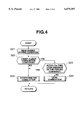
- FIG. 4 shows a flowchart indicating a combustion condition control routine in the first embodiment shown in FIGS. 1A and 1B.
- FIG. 5 shows a flowchart indicating a purge concentration estimation routine in the first embodiment shown in FIGS. 1A and 1B.
- FIG. 6 shows a flowchart of the operation time interval in a second preferred embodiment of the apparatus for estimating the concentration of the vaporized fuel in the intake air according to the present invention.
- FIG. 7 shows a flowchart of the operation time interval in a third preferred embodiment of the apparatus for estimating the concentration of the vaporized fuel in the intake air according to the present invention.
- FIG. 8 shows a flowchart of the operation time interval in a fourth preferred embodiment of the apparatus for estimating the concentration of the vaporized fuel in the intake air according to the present invention.
- FIG. 9 shows a flowchart of the operation time interval in a fifth preferred embodiment of the apparatus for estimating the concentration of the vaporized fuel in the intake air according to the present invention.
- FIG. 1A shows a system configuration of an internal combustion engine to which a first preferred embodiment of an apparatus for estimating a concentration of a vaporized fuel in an intake air according to the present invention is applicable.
- Intake air from an air cleaner 2 is sucked into a combustion chamber of each cylinder of the engine 1 mounted in a vehicle through an intake air passage 3 receiving a control of its quantity from a throttle valve 4 (so-called, an electronically controlled throttle valve).
- a throttle valve 4 so-called, an electronically controlled throttle valve
- An electromagnetic type fuel injection valve (injector) 5 is installed in a part of the intake air passage 3 near to an intake valve so as to inject a given quantity of fuel (gasoline) into each corresponding combustion chamber.
- Each fuel injection valve 5 has a solenoid portion thereof that opens in response to a fuel injection pulse signal outputted in a suction stroke or a compression stroke of its corresponding cylinder in synchronization with an engine rotation from a controller 20 so that the given quantity of fuel pressurized under a predetermined pressure is injected.
- the injected fuel is diffused over each corresponding combustion chamber to form a homogeneous air mixture fuel in the case of the fuel injection at the suction stroke of each corresponding cylinder and is formed in a stratified air mixture fuel concentrated around a spark plug 6 in the case of the fuel injection at the compression stroke of each corresponding cylinder.
- the spark plug 6 constituted by an ignition device is sparked to ignite and burn the air-fuel mixture in each combustion chamber so that the air-mixture fuel is combusted in a combustion condition as a, so-called, homogeneous charge combustion or stratified charge combustion.
- the combustion condition in the engine 1 is divided into three combustion conditions, in combination with an air-fuel mixture ratio control, a homogeneous stoichiometric air-fuel mixture ratio charge combustion; a homogeneous lean air-fuel mixture ratio combustion (air-fuel mixture ratio ranging from 20 to 30); and a stratified lean air-fuel mixture ratio combustion (air-fuel mixture ratio of approximately 40).
- An exhaust gas from the engine 1 is exhausted through an exhaust gas passage 7 and a catalytic converter 8 used to purify the exhaust gas and being interposed within the exhaust gas passage 7.
- a canistor 10 constituting a vaporized fuel processor is installed in the engine 1 so as to process the vaporized fuel generated by a fuel tank 9.
- the canistor 10 is filled with an adsorbent 11 such as an activated carbon within a sealed vessel, with a vaporized fuel introducing conduit 12 from the fuel tank 9 connected thereto.
- the vaporized fuel developed in the fuel tank 9 during a stop of the engine 1 is introduced into the canistor 10 through the vaporized fuel introducing conduit 12 and is adsorbed onto the adsorbent 11 of the canistor 10.
- the canistor 10 is formed with a fresh air introducing inlet 13 and a purge (gas) passage 14 extends from the canistor 10.
- the purge passage 14 is connected to a downstream side (intake manifold) of the intake air passage 3 through a purge control valve 15.
- the purge control valve 15 is open in response to a signal outputted under a predetermined engine driving condition of the engine 1 from the controller 20. Hence, if a purge enabling combustion is established with the engine 1 being started, the purge control valve 15 is open so that an intake air negative pressure of the engine 1 is acted upon the canistor 10.
- Air introduced from the fresh air introducing inlet 13 causes the vaporized fuel adsorbed onto the adsorbent 11 of the canistor 10 to be desorbed from the adsorbent 11, the purge gas including the desorbed vaporized fuel being sucked into the downstream side of the intake air passage 3 with respect to the intake air passage 3 through the purge gas passage 14. Thereafter, the purge gas described above is combusted within each combustion chamber of the engine 1.
- the controller 20 includes: a microcomputer having a CPU (Central Processing Unit), a ROM (Read Only Memory); RAM (Random Access Memory), a common bus, an Input Port having an A/D converter and an Output Port having an D/A converter, as shown in FIG. 1B.
- a microcomputer having a CPU (Central Processing Unit), a ROM (Read Only Memory); RAM (Random Access Memory), a common bus, an Input Port having an A/D converter and an Output Port having an D/A converter, as shown in FIG. 1B.
- the controller 20 Upon receipt of input signals from various engine driving condition sensors, the controller 20 performs various arithmetic/logic operations on the basis of the input signals and controls operations over each fuel injection valve 5, each spark plug 6, and the purge control valve 15.
- crank angle sensors 21 and 22 detecting a crankshaft axis rotation or camshaft axis rotation of the engine 1.
- crank angle sensors 21 and 22 if the engine 1 has the number of cylinders of n, outputs to the controller 20 a reference pulse signal REF at a predetermined crank angular position (for example, 110° before upper top dead center in the compression stroke of each cylinder) whenever a crank angular position of 720°/n is inputted and outputs to the controller 20 a unit pulse signal POS whenever the crank angular position of 1° or 2° is revolved.
- a reference pulse signal REF at a predetermined crank angular position (for example, 110° before upper top dead center in the compression stroke of each cylinder) whenever a crank angular position of 720°/n is inputted and outputs to the controller 20 a unit pulse signal POS whenever the crank angular position of 1° or 2° is revolved.
- the CPU of the controller 20 can calculate an engine speed Ne from a period of the reference pulse signal REF.
- the other sensors include: an air-flow meter 23 located at the upstream side of the intake air passage 3 with respect to the throttle valve 4 for detecting an intake air quantity Qa; an acceleration sensor 24 for detecting a depression angle through which a driver has depressed (accelerator depression angle)ACC; a throttle sensor 25 for detecting an opening angle TVO of the throttle valve 4 (including an idle switch which is turned to ON when the throttle valve 4 is completely closed); an engine coolant temperature sensor 26 for detecting a coolant temperature Tw of the engine 1; an (normal type) oxygen concentration sensor (so-called, O 2 sensor) 27 for outputting a signal corresponding to a rich and lean state of an exhaust gas air-fuel mixture ratio in the exhaust gas passage 7 (according to an oxygen concentration in the exhaust gas); and a vehicle speed sensor 28 for detecting a vehicle speed VSP.
- an air-flow meter 23 located at the upstream side of the intake air passage 3 with respect to the throttle valve 4 for detecting an intake air quantity Qa
- an acceleration sensor 24 for detecting
- the various sensors include: an air conditioner operation gas pressure sensor 29 for detecting an operation gas pressure of the air conditioner, namely, a discharging pressure of an air compressor in the air conditioner; an external air temperature sensor 30 for detecting an external (ambient) air temperature Ta external to the vehicle; a fuel temperature sensor 31 for detecting a fuel temperature Tt within a fuel tank 9; and a pressure sensor 32 for detecting an air pressure Pt in the fuel tank 9.
- an air conditioner operation gas pressure sensor 29 for detecting an operation gas pressure of the air conditioner, namely, a discharging pressure of an air compressor in the air conditioner
- an external air temperature sensor 30 for detecting an external (ambient) air temperature Ta external to the vehicle
- a fuel temperature sensor 31 for detecting a fuel temperature Tt within a fuel tank 9
- a pressure sensor 32 for detecting an air pressure Pt in the fuel tank 9.
- the microcomputer of the controller 20 commands the engine 1 to temporarily carry out a stoichiometric air-fuel mixture ratio charge combustion (homogeneous stoichiometric air-fuel mixture ratio charge combustion).
- the microcomputer of the engine 20 commands the engine 1 to be temporarily forced into a stoichiometric air-fuel mixture ratio combustion (homogeneous stoichiometric air-fuel mixture ratio combustion) whenever a predetermined interval of time has passed even during a lean air-fuel mixture ratio combustion condition (a homogeneous lean air-fuel mixture change combustion or a stratified lean air-fuel mixture ratio charge combustion).
- a stoichiometric air-fuel mixture ratio combustion homogeneous stoichiometric air-fuel mixture ratio combustion
- a concentration of the vaporized fuel in the intake air is estimated on the basis of a signal derived from the oxygen concentration (O 2 ) sensor 27.
- FIGS. 2, 3, 4, 5, 6, 7, 8, and 9 respectively show flowcharts executed by the controller 20.
- FIG. 2 shows a routine to vary a time interval of operations which is executed in the first embodiment shown in FIG. 1A whenever a predetermined period of time has passed.
- the CPU of the controller 20 reads a vehicle speed VSP detected by the vehicle speed sensor 28.
- the CPU of the controller 20 compares the vehicle speed VSP with a predetermined value (PRE) to determine whether the vehicle speed VSP is equal to or above the predetermined value.
- PRE predetermined value
- step S2 If VSP ⁇ PRE (Yes) at the step S2, viz., the vehicle speed is relatively high, the routine goes to a step S3.
- the value of the relatively long time interval TL is, for example, 10 minutes.
- VSP ⁇ PRE relatively low vehicle speed
- the value of the relatively short time interval TS is, for example, five minutes (300 seconds).
- FIG. 3 shows a stoichiometric air-fuel mixture ratio force command determination routine executed in the first embodiment shown in FIG. 1A whenever the predetermined period of time has passed.
- the CPU of the controller 20 determines whether the present combustion condition falls in the lean combustion condition (homogeneous lean air-fuel mixture ratio charge combustion or stratified lean air-fuel mixture ratio charge combustion).
- the routine goes to a step S12.
- the CPU of the controller 20 refers to the count value of the timer TM which indicates a continuation time of the lean air-fuel mixture ratio combustion.
- the CPU of the controller 20 compares the timer TM with the operation interval INTEVT set by the routine of FIG. 3 to determine whether the value of the timer TM is equal to or larger than INTEVT (TM ⁇ INTEVT).
- step S14 If TM ⁇ INTEVT (Yes) at the step S14, the routine goes to a step S15 in which the CPU of the controller 20 issues a command to force the combustion condition of the engine 1 into the stoichiometric air-fuel mixture ratio charge combustion.
- FIG. 4 shows a combustion condition control routine which is executed in the first embodiment shown in FIG. 1A whenever the predetermined period of time has passed.
- the CPU of the controller 20 determines whether the present driving condition falls in a predetermined lean combustion condition in accordance with the driving condition of the engine 1.
- the routine goes to a step S23 that determines whether is within a predetermined time from a time at which the CPU of the controller 20 has issued the command to the engine 1 to be forced into the homogeneous stoichiometric air-fuel mixture ratio charge combustion.
- the routine goes to a step S24 in which the combustion condition of the engine 1 is in the homogeneous stoichiometric air-fuel mixture ratio combustion.
- the CPU of the controller 20 sets a target air-fuel mixture ratio of the air-fuel mixture so as to perform an air-fuel mixture ratio feedback control (closed loop control) and sets a fuel supply (injection) timing of a fuel at the suction stroke of each cylinder so that each cylinder performs the homogeneous stoichiometric air-fuel mixture ratio charge combustion.
- the CPU of the controller 20 sets the target air-fuel mixture ratio to a lean air-fuel mixture ratio so as to perform an open loop control and the injection timing of the fuel is set to each suction stroke or to each compression stroke so as to perform the homogeneous lean air-fuel mixture ratio charge combustion or the stratified lean air-fuel mixture ratio charge combustion.
- the CPU of the controller 20 determines whether the present combustion condition is stoichiometric air-fuel mixture ratio combustion (during the feedback control of the air-fuel mixture ratio).
- the CPU of the controller 20 reads an output signal (output voltage) VO 2 from the oxygen concentration (O 2 ) sensor 27.
- the CPU of the controller compares a value of the output signal VO 2 with a predetermined slice level (SL) so as to determine a rich state or lean state of the exhaust gas air-fuel mixture ratio.
- the CPU of the controller 20 multiplies a basic fuel supply (injection) quantity by the air-fuel mixture ratio feedback correction coefficient a increased or decreased by the integration control when the fuel supply (injection) quantity Ti is calculated.
- the air-fuel mixture ratio can be controlled so as to match with a target air-fuel mixture ratio, viz., a stoichiometric air-fuel mixture ratio.
- the CPU of the controller 20 calculates an average value ⁇ mean of the air-fuel mixture ratio feedback correction coefficient ⁇ .
- the CPU of the controller 20 stores instantaneous air-fuel mixture ratio correction coefficient ⁇ at that time into a memory area such as the RAM and then calculates the average value ⁇ mean ( ⁇ max+ ⁇ min)/2 on the basis of the latest ⁇ max ( ⁇ when inverted from the increment direction to the decrement direction) and the latest amin (a when inverted from the decrement direction).
- the magnitude of the purge concentration can be determined according to the thus calculated purge concentration corresponding value ⁇ .
- the corrected fuel supply (injection) quantity (Ti'lean) is calculated as follows:
- Tilean Ti (a target fuel supply (injection) quantity) during the stoichiometric air-fuel mixture ratio combustion.
- the term of ( ⁇ 0- ⁇ mean ) may be replaced with (1- ⁇ mean).
- the return to the lean air-fuel mixture combustion may be delayed so as to continue the homogeneous stoichiometric air-fuel mixture ratio charge combustion for awhile.
- the present combustion may be transferred into the lean air-fuel mixture ratio combustion (corresponding to one of the stratified or homogeneous charge combustion).
- FIG. 6 shows another operation time interval variable routine in place of the operation time interval variable routine shown in FIG. .2 as a second preferred embodiment according to the present invention.
- the CPU of the controller 20 reads the air-conditioner operation gas pressure Pd detected by the air-conditioner operation gas pressure sensor 29.
- the CPU of the controller 20 compares the air-conditioner operation gas pressure Pd with a predetermined value thereof Pre so as to determine whether the air-conditioner operation gas pressure Pd is equal to or above the predetermined value (Pre ).
- the air-conditioner operation gas pressure Pd becomes higher, the external air temperature can be deemed to be high and the development speed of the vaporized fuel is increased.
- the operation time interval INTEVT can be varied depending on an operation condition of the air conditioner (the air-conditioner operation gas Pd or the air conditioner power switch).
- FIG. 7 shows a still another operation time interval variable routine in place of the operation time interval routine shown in FIG. 2 as a third preferred embodiment according to the present invention.
- the CPU of the controller 20 reads the external air temperature Ta detected by the external air temperature sensor 30.
- the CPU of the controller 20 compares the external air temperature Ta with a predetermined value thereof (Pre) so as to determine whether the detected external air temperature Ta is equal to or above the predetermined value (Pre).
- the concentration of the vaporized fuel can accurately be estimated.
- FIG. 8 shows a still another operation time interval variable routine in place of the routine shown in FIG. 2 as a fourth preferred embodiment according to the present invention.
- the CPU of the controller 20 reads an intake fuel temperature sensor Tt detected by the fuel temperature sensor 31 installed in the fuel tank 9.
- the CPU of the controller 20 compares the in-tank fuel temperature Tt with a predetermined value thereof.
- the concentration of the vaporized fuel based on the in-tank fuel temperature Tt can be estimated.
- FIG. 9 shows yet another operation time interval variable routine in place of the routine shown in FIG. 2 as a fifth preferred embodiment according to the present invention.
- the CPU of the controller 20 reads the in-take air pressure Pt detected by the in-tank pressure sensor 32.
- the CPU of the controller 20 compares the in-tank air pressure Pt with a predetermined value (Pre) so as to determine whether the intake air pressure Pt is equal to or above the predetermined value (Pre).
- the in-tank pressure Pt is a measurement result of the variation in the development speed of the vaporized fuel, the concentration of the vaporized fuel can be more accurately be estimated.
- the present invention is applicable to all of the engines in which the combustion condition is divided into the lean air-fuel mixture ratio combustion and the stoichiometric air-fuel mixture ratio combustion.
- each command generator, each estimator, each determinator, a fuel supply quantity corrector, and a air-fuel mixture ratio feedback controller described in the claims are incorporated in terms of software into the controller 20 as described above.
Landscapes
- Engineering & Computer Science (AREA)
- Chemical & Material Sciences (AREA)
- Combustion & Propulsion (AREA)
- Mechanical Engineering (AREA)
- General Engineering & Computer Science (AREA)
- Electrical Control Of Air Or Fuel Supplied To Internal-Combustion Engine (AREA)
- Supplying Secondary Fuel Or The Like To Fuel, Air Or Fuel-Air Mixtures (AREA)
- Combined Controls Of Internal Combustion Engines (AREA)
Applications Claiming Priority (2)
| Application Number | Priority Date | Filing Date | Title |
|---|---|---|---|
| JP21437997A JP3496468B2 (ja) | 1997-08-08 | 1997-08-08 | 内燃機関の蒸発燃料濃度判定装置 |
| JP9-214379 | 1997-08-08 |
Publications (1)
| Publication Number | Publication Date |
|---|---|
| US6079397A true US6079397A (en) | 2000-06-27 |
Family
ID=16654819
Family Applications (1)
| Application Number | Title | Priority Date | Filing Date |
|---|---|---|---|
| US09/130,485 Expired - Fee Related US6079397A (en) | 1997-08-08 | 1998-08-07 | Apparatus and method for estimating concentration of vaporized fuel purged into intake air passage of internal combustion engine |
Country Status (5)
| Country | Link |
|---|---|
| US (1) | US6079397A (de) |
| EP (1) | EP0896143B1 (de) |
| JP (1) | JP3496468B2 (de) |
| KR (1) | KR100288519B1 (de) |
| DE (1) | DE69823754T2 (de) |
Cited By (16)
| Publication number | Priority date | Publication date | Assignee | Title |
|---|---|---|---|---|
| US6176217B1 (en) * | 1998-08-27 | 2001-01-23 | Unisia Jecs Corporation | Fuel vapor processing apparatus and method of internal combustion engine |
| US6213087B1 (en) * | 1997-05-10 | 2001-04-10 | Robert Bosch Gmbh | Actuating system for a direct injection internal combustion engine, especially in a vehicle |
| US6257218B1 (en) * | 1996-12-16 | 2001-07-10 | Toyota Jidosha Kabushiki Kaisha | Fuel vapor feed controlling apparatus for a lean burn type internal combustion engine |
| US6257209B1 (en) | 1998-03-18 | 2001-07-10 | Toyota Jidosha Kabushiki Kaisha | Evaporative fuel processing apparatus for lean-burn internal combustion engine |
| US6325052B1 (en) | 1998-03-30 | 2001-12-04 | Toyota Jidosha Kabushiki Kaisha | Apparatus for detecting concentration of vapor fuel in lean-burn internal combustion engine, and applied apparatus thereof |
| US6439175B2 (en) | 1999-12-15 | 2002-08-27 | Nissan Motor Co., Ltd. | Control apparatus and method for internal combustion engine with variably operated engine valve |
| US6523531B1 (en) * | 2001-12-03 | 2003-02-25 | Ford Global Technologies, Inc. | Feed forward method for canister purge compensation within engine air/fuel ratio control systems having fuel vapor recovery |
| US20030040137A1 (en) * | 2001-08-22 | 2003-02-27 | Kim Seong-Hyun | Organic electroluminescent device having organic field effect transistor and organic light-emitting diode and method for fabricating the same |
| US20050183698A1 (en) * | 2004-02-24 | 2005-08-25 | Toyota Jidosha Kabushiki Kaisha | Fuel injection control apparatus for internal combustion engine |
| US20050194788A1 (en) * | 2004-03-05 | 2005-09-08 | Toyota Jidosha Kabushiki Kaisha | Control apparatus for internal combustion engine |
| US20050274353A1 (en) * | 2004-06-15 | 2005-12-15 | Toyota Jidosha Kabushiki Kaisha | Control device of internal combustion engine |
| EP1403492A3 (de) * | 2002-09-24 | 2006-09-06 | Volkswagen Aktiengesellschaft | Verfahren zum Betreiben einer direkteinspritzenden Brennkraftmaschine |
| US20080202481A1 (en) * | 2007-02-08 | 2008-08-28 | Andrzej Kalina | Vapor recovery system for a vehicle fuel tank |
| US20110029176A1 (en) * | 2009-07-31 | 2011-02-03 | Dr. Ing. H.C.F. Porsche Aktiengesellschaft | Method for operating a fuel evaporation retention system |
| US20130118456A1 (en) * | 2011-11-11 | 2013-05-16 | Robert Bosch Gmbh | Optimization of tank venting of a fuel tank |
| US11085382B2 (en) * | 2018-03-02 | 2021-08-10 | Ford Global Technologies, Llc | Evaporative emission control system and method |
Families Citing this family (3)
| Publication number | Priority date | Publication date | Assignee | Title |
|---|---|---|---|---|
| JP3829035B2 (ja) * | 1999-11-30 | 2006-10-04 | 株式会社日立製作所 | エンジンの燃料圧力制御装置 |
| JP2004360553A (ja) | 2003-06-04 | 2004-12-24 | Suzuki Motor Corp | 内燃機関の蒸発燃料制御装置 |
| US8838363B2 (en) * | 2012-01-24 | 2014-09-16 | Ford Global Technologies, Llc | Method for injecting fuel |
Citations (6)
| Publication number | Priority date | Publication date | Assignee | Title |
|---|---|---|---|---|
| US5524600A (en) * | 1993-06-15 | 1996-06-11 | Robert Bosch Gmbh | Method and arrangement for controlling a tank-venting apparatus |
| US5626122A (en) * | 1995-03-20 | 1997-05-06 | Mitsubishi Denki Kabushiki Kaisha | Air-fuel ratio control apparatus for an internal combustion engine |
| US5655507A (en) * | 1995-03-16 | 1997-08-12 | Nissan Motor Co., Ltd. | Evaporated fuel purge device for engine |
| US5699778A (en) * | 1994-12-15 | 1997-12-23 | Mitsubishi Jidosha Kogyo Kabushiki Kaisha | Fuel evaporative emission suppressing apparatus |
| US5839421A (en) * | 1996-01-24 | 1998-11-24 | Fuji Jukogyo Kabushiki Kaisha | Evaporation gas intercepting system for automotive vehicle |
| US5944003A (en) * | 1996-08-09 | 1999-08-31 | Toyota Jidosha Kabushiki Kaisha | Evaporated fuel treatment device of an engine |
Family Cites Families (5)
| Publication number | Priority date | Publication date | Assignee | Title |
|---|---|---|---|---|
| JPH0742588A (ja) | 1993-08-03 | 1995-02-10 | Mitsubishi Motors Corp | 燃料蒸発ガス処理システム |
| JP2867912B2 (ja) * | 1994-03-14 | 1999-03-10 | トヨタ自動車株式会社 | 内燃機関の蒸発燃料処理装置 |
| JP3689126B2 (ja) * | 1994-03-18 | 2005-08-31 | 本田技研工業株式会社 | 内燃機関の蒸発燃料制御装置 |
| US5553595A (en) * | 1994-03-30 | 1996-09-10 | Mazda Motor Corporation | Fuel system with fuel vapor estimating feature |
| JPH09214379A (ja) | 1996-02-05 | 1997-08-15 | Alpine Electron Inc | 多重放送受信機 |
-
1997
- 1997-08-08 JP JP21437997A patent/JP3496468B2/ja not_active Expired - Fee Related
-
1998
- 1998-08-03 DE DE69823754T patent/DE69823754T2/de not_active Expired - Fee Related
- 1998-08-03 EP EP98114576A patent/EP0896143B1/de not_active Expired - Lifetime
- 1998-08-07 US US09/130,485 patent/US6079397A/en not_active Expired - Fee Related
- 1998-08-08 KR KR1019980032311A patent/KR100288519B1/ko not_active Expired - Fee Related
Patent Citations (6)
| Publication number | Priority date | Publication date | Assignee | Title |
|---|---|---|---|---|
| US5524600A (en) * | 1993-06-15 | 1996-06-11 | Robert Bosch Gmbh | Method and arrangement for controlling a tank-venting apparatus |
| US5699778A (en) * | 1994-12-15 | 1997-12-23 | Mitsubishi Jidosha Kogyo Kabushiki Kaisha | Fuel evaporative emission suppressing apparatus |
| US5655507A (en) * | 1995-03-16 | 1997-08-12 | Nissan Motor Co., Ltd. | Evaporated fuel purge device for engine |
| US5626122A (en) * | 1995-03-20 | 1997-05-06 | Mitsubishi Denki Kabushiki Kaisha | Air-fuel ratio control apparatus for an internal combustion engine |
| US5839421A (en) * | 1996-01-24 | 1998-11-24 | Fuji Jukogyo Kabushiki Kaisha | Evaporation gas intercepting system for automotive vehicle |
| US5944003A (en) * | 1996-08-09 | 1999-08-31 | Toyota Jidosha Kabushiki Kaisha | Evaporated fuel treatment device of an engine |
Cited By (23)
| Publication number | Priority date | Publication date | Assignee | Title |
|---|---|---|---|---|
| US6257218B1 (en) * | 1996-12-16 | 2001-07-10 | Toyota Jidosha Kabushiki Kaisha | Fuel vapor feed controlling apparatus for a lean burn type internal combustion engine |
| US6213087B1 (en) * | 1997-05-10 | 2001-04-10 | Robert Bosch Gmbh | Actuating system for a direct injection internal combustion engine, especially in a vehicle |
| US6257209B1 (en) | 1998-03-18 | 2001-07-10 | Toyota Jidosha Kabushiki Kaisha | Evaporative fuel processing apparatus for lean-burn internal combustion engine |
| US6325052B1 (en) | 1998-03-30 | 2001-12-04 | Toyota Jidosha Kabushiki Kaisha | Apparatus for detecting concentration of vapor fuel in lean-burn internal combustion engine, and applied apparatus thereof |
| US6332456B2 (en) | 1998-03-30 | 2001-12-25 | Toyota Jidosha Kabushiki Kaisha | Apparatus for detecting concentration of vapor fuel in lean-burn internal combustion engine, and applied apparatus thereof |
| US6176217B1 (en) * | 1998-08-27 | 2001-01-23 | Unisia Jecs Corporation | Fuel vapor processing apparatus and method of internal combustion engine |
| US6439175B2 (en) | 1999-12-15 | 2002-08-27 | Nissan Motor Co., Ltd. | Control apparatus and method for internal combustion engine with variably operated engine valve |
| US20030040137A1 (en) * | 2001-08-22 | 2003-02-27 | Kim Seong-Hyun | Organic electroluminescent device having organic field effect transistor and organic light-emitting diode and method for fabricating the same |
| US6523531B1 (en) * | 2001-12-03 | 2003-02-25 | Ford Global Technologies, Inc. | Feed forward method for canister purge compensation within engine air/fuel ratio control systems having fuel vapor recovery |
| EP1403492A3 (de) * | 2002-09-24 | 2006-09-06 | Volkswagen Aktiengesellschaft | Verfahren zum Betreiben einer direkteinspritzenden Brennkraftmaschine |
| US20050183698A1 (en) * | 2004-02-24 | 2005-08-25 | Toyota Jidosha Kabushiki Kaisha | Fuel injection control apparatus for internal combustion engine |
| US7322344B2 (en) * | 2004-02-24 | 2008-01-29 | Toyota Jidosha Kabushiki Kaisha | Fuel injection control apparatus for internal combustion engine |
| US20050194788A1 (en) * | 2004-03-05 | 2005-09-08 | Toyota Jidosha Kabushiki Kaisha | Control apparatus for internal combustion engine |
| US7161258B2 (en) * | 2004-03-05 | 2007-01-09 | Toyota Jidosha Kabushiki Kaisha | Control apparatus for internal combustion engine |
| US7234447B2 (en) | 2004-06-15 | 2007-06-26 | Toyota Jidosha Kabushiki Kaisha | Control device of internal combustion engine |
| US20070163536A1 (en) * | 2004-06-15 | 2007-07-19 | Toyota Jidosha Kabushiki Kaisha | Control device of internal combustion engine |
| US7273043B2 (en) | 2004-06-15 | 2007-09-25 | Toyota Jidosha Kabushiki Kaisha | Control device of internal combustion engine |
| US20050274353A1 (en) * | 2004-06-15 | 2005-12-15 | Toyota Jidosha Kabushiki Kaisha | Control device of internal combustion engine |
| US20080202481A1 (en) * | 2007-02-08 | 2008-08-28 | Andrzej Kalina | Vapor recovery system for a vehicle fuel tank |
| US20110029176A1 (en) * | 2009-07-31 | 2011-02-03 | Dr. Ing. H.C.F. Porsche Aktiengesellschaft | Method for operating a fuel evaporation retention system |
| US8825245B2 (en) | 2009-07-31 | 2014-09-02 | Dr. Ing. H.C. F. Porsche Aktiengesellschaft | Method for operating a fuel evaporation retention system |
| US20130118456A1 (en) * | 2011-11-11 | 2013-05-16 | Robert Bosch Gmbh | Optimization of tank venting of a fuel tank |
| US11085382B2 (en) * | 2018-03-02 | 2021-08-10 | Ford Global Technologies, Llc | Evaporative emission control system and method |
Also Published As
| Publication number | Publication date |
|---|---|
| DE69823754T2 (de) | 2004-10-07 |
| KR100288519B1 (ko) | 2001-06-01 |
| KR19990023479A (ko) | 1999-03-25 |
| DE69823754D1 (de) | 2004-06-17 |
| JPH1162728A (ja) | 1999-03-05 |
| EP0896143B1 (de) | 2004-05-12 |
| EP0896143A2 (de) | 1999-02-10 |
| JP3496468B2 (ja) | 2004-02-09 |
| EP0896143A3 (de) | 2000-09-13 |
Similar Documents
| Publication | Publication Date | Title |
|---|---|---|
| EP0896143B1 (de) | Vorrichtung und Verfahren zur Schätzung der Konzentration der Kraftstoffdämpfe in dem Ansaugrohr einer Brennkraftmaschine | |
| KR0130006B1 (ko) | 내연엔진의 아이들회전수제어방법 | |
| EP0889221B1 (de) | Steuerungssystem für eine Brennkraftmaschine | |
| US5727528A (en) | Control apparatus and control method of internal combustion engine | |
| KR100336549B1 (ko) | 희박연소내연기관의증발연료공급제어장치 | |
| US6739310B2 (en) | Method and electronic control device for diagnosing the mixture production in an internal combustion engine | |
| EP0924420B1 (de) | Drehmomentregler für eine Brennkraftmaschine | |
| US7885757B2 (en) | Degradation determination apparatus and degradation determination system for oxygen concentration sensor | |
| US6039032A (en) | Air-fuel ratio controller for an internal combustion engine | |
| US5735255A (en) | Engine control system for a lean burn engine having fuel vapor recovery | |
| KR100306186B1 (ko) | 내연기관의가솔린증기퍼어징제어장치및가솔린증기퍼어징방법 | |
| JPS6411811B2 (de) | ||
| US7444994B2 (en) | Control system for internal combustion engine | |
| US6412477B2 (en) | Method and apparatus for controlling fuel vapor, method and apparatus for diagnosing fuel vapor control apparatus and method and apparatus for controlling air-fuel ratio | |
| JPH09133034A (ja) | 内燃機関の燃料噴射制御装置 | |
| JP4778401B2 (ja) | 内燃機関の制御装置 | |
| US6536414B2 (en) | Fuel injection control system for internal combustion engine | |
| JPH08200166A (ja) | 空燃比制御装置 | |
| US6273063B1 (en) | Apparatus and method for controlling idle rotation speed of an internal combustion engine | |
| JP3564945B2 (ja) | 内燃機関の燃料供給制御装置 | |
| JP2750777B2 (ja) | 内燃機関の電子制御燃料供給装置 | |
| JPH08200127A (ja) | 空燃比制御装置 | |
| JP3349398B2 (ja) | 内燃機関の蒸発燃料処理装置 | |
| JPH09287503A (ja) | 蒸発燃料処理装置を備える内燃機関の空燃比制御装置 | |
| JPH07243339A (ja) | 内燃機関の制御装置 |
Legal Events
| Date | Code | Title | Description |
|---|---|---|---|
| AS | Assignment |
Owner name: NISSAN MOTOR CO., LTD., JAPAN Free format text: ASSIGNMENT OF ASSIGNORS INTEREST;ASSIGNORS:MATSUMOTO, MIKIO;FURUSHOU, MASAYA;KAKIZAKI, SHIGEAKI;AND OTHERS;REEL/FRAME:009536/0223 Effective date: 19980928 |
|
| FEPP | Fee payment procedure |
Free format text: PAYOR NUMBER ASSIGNED (ORIGINAL EVENT CODE: ASPN); ENTITY STATUS OF PATENT OWNER: LARGE ENTITY |
|
| FPAY | Fee payment |
Year of fee payment: 4 |
|
| FPAY | Fee payment |
Year of fee payment: 8 |
|
| REMI | Maintenance fee reminder mailed | ||
| LAPS | Lapse for failure to pay maintenance fees | ||
| STCH | Information on status: patent discontinuation |
Free format text: PATENT EXPIRED DUE TO NONPAYMENT OF MAINTENANCE FEES UNDER 37 CFR 1.362 |
|
| FP | Lapsed due to failure to pay maintenance fee |
Effective date: 20120627 |