US6149928A - Protection system against subterranean termites - Google Patents
Protection system against subterranean termites Download PDFInfo
- Publication number
- US6149928A US6149928A US09/140,258 US14025898A US6149928A US 6149928 A US6149928 A US 6149928A US 14025898 A US14025898 A US 14025898A US 6149928 A US6149928 A US 6149928A
- Authority
- US
- United States
- Prior art keywords
- alkyl
- haloalkyl
- insecticide
- radical
- termites
- Prior art date
- Legal status (The legal status is an assumption and is not a legal conclusion. Google has not performed a legal analysis and makes no representation as to the accuracy of the status listed.)
- Expired - Fee Related
Links
Images


Classifications
-
- A—HUMAN NECESSITIES
- A01—AGRICULTURE; FORESTRY; ANIMAL HUSBANDRY; HUNTING; TRAPPING; FISHING
- A01M—CATCHING, TRAPPING OR SCARING OF ANIMALS; APPARATUS FOR THE DESTRUCTION OF NOXIOUS ANIMALS OR NOXIOUS PLANTS
- A01M1/00—Stationary means for catching or killing insects
- A01M1/20—Poisoning, narcotising, or burning insects
- A01M1/2005—Poisoning insects using bait stations
- A01M1/2011—Poisoning insects using bait stations for crawling insects
-
- A—HUMAN NECESSITIES
- A01—AGRICULTURE; FORESTRY; ANIMAL HUSBANDRY; HUNTING; TRAPPING; FISHING
- A01M—CATCHING, TRAPPING OR SCARING OF ANIMALS; APPARATUS FOR THE DESTRUCTION OF NOXIOUS ANIMALS OR NOXIOUS PLANTS
- A01M1/00—Stationary means for catching or killing insects
- A01M1/24—Arrangements connected with buildings, doors, windows, or the like
- A01M1/245—Arrangements connected with buildings, doors, windows, or the like for pesticide application or distribution, e.g. using a network of pipes
-
- E—FIXED CONSTRUCTIONS
- E04—BUILDING
- E04B—GENERAL BUILDING CONSTRUCTIONS; WALLS, e.g. PARTITIONS; ROOFS; FLOORS; CEILINGS; INSULATION OR OTHER PROTECTION OF BUILDINGS
- E04B1/00—Constructions in general; Structures which are not restricted either to walls, e.g. partitions, or floors or ceilings or roofs
- E04B1/62—Insulation or other protection; Elements or use of specified material therefor
- E04B1/72—Pest control
-
- A—HUMAN NECESSITIES
- A01—AGRICULTURE; FORESTRY; ANIMAL HUSBANDRY; HUNTING; TRAPPING; FISHING
- A01M—CATCHING, TRAPPING OR SCARING OF ANIMALS; APPARATUS FOR THE DESTRUCTION OF NOXIOUS ANIMALS OR NOXIOUS PLANTS
- A01M2200/00—Kind of animal
- A01M2200/01—Insects
- A01M2200/011—Crawling insects
Definitions
- the invention is related to a technical system and to a method for controlling subterranean termites, and for the reduction or elimination of a population of subterranean termites.
- term "termite” shall refer to "subterranean termite” hereafter in this document.
- An object of the invention is to provide an easy, improved and efficient way or method to control termite populations.
- Another object of the present invention is to provide an effective protection of buildings or housings or premises against termites.
- Another object of the invention is to provide a simple and cheap method to control termites.
- Another object of the instant invention is to provide a new and potent means to reduce the population of termites around a building.
- FIG. 1 illustrates a plurality of control systems according to the present invention arranged around a building
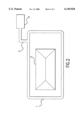
- FIG. 2 illustrates a control system according to the present invention with a hollow pipe surrounding a building
- FIG. 3 illustrates four control systems according to the present invention having their pipes joined together to surround a building.
- the invention is thus related to a new system for the protection of buildings against termites. It comprises a set of partially controlling systems, each partially controlling system being able to control termites in a limited area close to the said building, the locations of each partially controlling system being such that the combination of all the limited areas provides a global control all around the said building, each partially controlling system (preferably a subterranean system) comprising a hollow pipe where termites are able to circulate (and are preferably attracted to circulate) and a branch connecting the said pipe to a container containing a bait, and optionally a poison for said termites, or an insecticide with delayed action for said termites.
- the pipes of the partially controlling systems are formed together as a continuous pipe surrounding the building.
- the said pipes either partial or combined into one, have generally a diameter wide enough to allow many termites to circulate easily therein and the said pipes are also pierced by holes which are large enough to permit termites to enter into the said pipe(s), the said holes being spread along the length of the pipe, preferably regularly.
- a common manner to distribute the holes along the pipes is to have intervals between holes in the range from 2 cm to 25 cm, preferably from 6 cm to 20 cm.
- the pipe(s) are made attractive to the termites by providing within the said pipes, an attracting material for them, such as corrugated cardboard, wood saw, wood chips or saw dust.
- the invention relates also to a new system for the protection of buildings against termites comprising a hollow and continuous pipe for surrounding a building, the said pipe having a diameter wide enough to allow many termites to circulate easily therein and said pipe being also pierced by holes which are large enough to permit termites to enter into the pipe, the said holes being spread along the length of the pipe, preferably regularly.
- the pipe(s) is/are buried in the soil deep enough so as not to be possibly seen from outside. It is (they are) buried preferably less than 30 cm deep, preferably in the range from 20 to 200 mm.
- the pipe is made of a material such as plastic. Its internal diameter is generally larger than 2 mm, preferably in the range of 3 to 25 mm outside diameter.
- the container containing a bait is a box containing (preferably full of) at least moisture or water, and preferably a material that attracts termites, such as wood, or wood particles, or wood saw or cardboard or corrugated cardboard.
- the bait may include other attractants such as pheromones.
- the distance between the pipe and the building to be protected is not critical as long as the pipe makes a continuously effective barrier around the building.
- a distance comprising in the range from 0.5 m to 10 m is generally appropriate.
- a control system includes a hollow pipe 1 connected to a container 4 via a branch 3. As illustrated in FIG. 1, a plurality of such control systems may be arranged around the periphery of a building 2.
- Each hollow pipe 1-a to 1-n is arranged to allow termites to circulate within it.
- holes may be provided along the length of the pipe to allow the termites to enter it.
- the whole system may be buried underground. However, for convenience, preferably each hollow pipe 1-a to 1-n is buried and each branch 3-a to 3-n links it to a respective container or bait box 4-a to 4-n above ground.
- the entire periphery of the building 2 may be protected.
- the hollow pipe 1 is provided to extend around the entire periphery of the building 2.
- FIG. 3 In the embodiment of FIG. 3, four control systems are provided with hollow pipes which link together to extend around the periphery of the building 2. Hence, a single hollow pipe 1 is linked via four branches 3-1 to 3-4 to four containers 4-1 to 4-4.
- the container containing a bait also contains an insecticide, which is preferably an insecticide having secondary killing properties and a delayed action.
- an insecticide which is preferably an insecticide having secondary killing properties and a delayed action.
- secondary killing properties it is meant that the insecticide is able not only to kill the insects which come in direct contact with it, but also to kill insects which come into social relations with the insects which have come into contact with the insecticide.
- the amount of insecticide in the said bait container should be large enough to be able to kill the whole amount of insects of the nest or harborage wherein the said insects are generally foraging. The amount further depends on the size of the termite nest or harborage and on the specific nature of the insecticide.
- insecticide having a delayed action it is meant an insecticide having no knock-down effect, that is to say an insecticide which kills insects within a period of time greater than 3 minutes after they have taken a lethal dose, preferably greater than 30 minutes.
- the bait container may be under the surface of the ground (soil immersion) or it may lay upon or above the ground.
- the branch then comes from the T-piece in the underground pipe to ground level to make the connection with the container.
- insecticides with delayed action may be used in the invention. All insect growth regulators may be used. These compounds are generally acting on the molt. Compounds having insect growth regulating action include compounds killing the insects through a perturbation of the molt, especially the benzoylurea derivatives and all known insecticides having a benzoylurea group in their formula.
- the 1-arylpyrazoles which can be used according to the instant invention are preferably compounds of formula (I): ##STR1## in which: R 1 is CN or methyl or a halogen atom,
- R 2 is S(O) n R 3 or 4, 5-dicyanoimidazol 2-yl or haloalkyl,
- R 3 is alkyl or haloalkyl
- R 4 represents a hydrogen or halogen atom or a member of a group consisting of NR 5 R 6 , S(O) m R 7 , C(O)R 7 , C(O) O--R 7 , alkyl, haloalkyl, OR 8 and --N ⁇ C(R 9 )(R 10 );
- R 5 and R 6 independently represent the hydrogen atom or an alkyl, haloalkyl, C(O) alkyl, --C(O) OR 7 or S(O) r CF 3 radical; or R 5 and R 6 can together form a divalent alkylene radical which can be interrupted by one or more heteroatoms, such as oxygen, nitrogen or sulfur;
- R 7 represents an alkyl or haloalkyl radical
- R 8 represents an alkyl or haloalkyl radical or a hydrogen atom
- R 9 represents an alkyl radical or a hydrogen atom
- R 10 represents a phenyl or heteroaryl group which may optionally be unsubstituted or substituted by one or more halogen, OH, --O-alkyl, --S--alkyl, cyano or alkyl or combinations thereof;
- R 11 and R 12 represent, independently of one another, a hydrogen or halogen atom, or CN or NO 2 ;
- R 13 represents a halogen atom or a haloalkyl, haloalkoxy, S(O) q CF 3 or SF 5 group;
- X represents a trivalent nitrogen atom or a C--R 12 radical, the other three valences of the carbon atom forming part of the aromatic ring;
- n, q, and r represent, independently of one another, an integer equal to 0, 1, or 2;
- R 1 is methyl, then either R 3 is haloalkyl, R 4 is NH 2 , R 11 is Cl, R 13 is CF 3 and X is N; or then R 2 is 4,5-dicyanoimidazol 2-yl, R 4 is Cl, R 11 is Cl, R 13 is CF 3 , and X is ⁇ C--Cl.
- the alkyl and alkoxy groups and moieties thereof of the formula (I) are preferably lower alkyl and alkoxy groups, that is, groups having one to six carbon atoms.
- the haloalkyl and haloalkoxy groups likewise preferably have one to four carbon atoms.
- the haloalkyl and haloalkoxy groups can bear one or more halogen atoms; preferred groups of this type include --CF 3 and --OCF 3 .
- the ring formed by the divalent alkylene radical represented by R 5 and R 6 and including the nitrogen atom to which R 5 and R 6 are attached is generally a 5, 6, or 7-membered ring.
- R 10 is heteroaryl, it is preferably pyridyl, most preferably 2-pyridyl.
- the 1-arylpyrazoles of formula (I) include enatiomers and/or diastereomers thereof.
- a preferred group of 1-arylpyrazoles for use in the present invention are those of formula (I) with one or more of the following features wherein:
- R 1 is CN
- R 4 is --NR 5 R 6 ;
- R 5 and R 6 are independently selected from the hydrogen atom, alkyl, haloalkyl, C(O) alkyl, C(O)OR 7 ;
- X is C--R 12 ;
- R 13 is selected from a halogen atom, haloalkyl, haloalkoxy, and --SF 5 .
- R 1 is CN
- R 3 is a haloalkyl radical
- R 4 is NH 2 ;
- X is C--R 12 ;
- R 11 and R 12 represent, independently of one another, a halogen atom
- R 13 is a haloalkyl radical.
- a most preferred compound is 5-amino-1-(2,6-dichloro 4-trifluoromethyl phenyl) 4-trifluoromethylsulfinyl-3-cyanopyrazole, hereafter designated as compound (A).
- Compounds of formula (1) may be prepared according to known processes, for example as described in International Patent Publications WO 87/3781, 93/6089, and 94/21606 as well as in European Patent Applications 295117, 403300, 385809 or 679650, German Patent Publication 19511269 and U.S. Pat. Nos. 5,232,940 and 5,236,938 or other process according to the knowledge of a man skilled in the art of chemical synthesis, which is deemed to include Chemical Abstracts and the literature referred to therein.
- Compositions comprising the compounds of formula (I) may also be prepared according to the teaching of the same prior art or similar publications.
- the protecting system according to the invention is advantageous because of its efficacy.
- An aspect of this efficacy is the ability to control numerous types of insects, especially subterranean termites, with a given amount of bait.
- a plastic pipe of diameter 25 mm was laid to completely surround a house, the size of which was 15 m ⁇ 20 m. Every 100 mm, the pipe had regular holes of diameter 3 mm.
- the pipe was positioned five meters away from the house and 100 mm deep in the soil. It was connected by means of a branch to a box of size 200 mm ⁇ 400 mm ⁇ 400 mm. The pipe branch emerged from underneath and the box rested on the soil surface.
- the box contained 10 blocks of wood of 6 cm 3 each, and moisture created by mean of 5 cm 3 water poured upon the wood. In the same box was 0.1 g of fipronil spread as a liquid formulation upon the said blocks.
Landscapes
- Life Sciences & Earth Sciences (AREA)
- Pest Control & Pesticides (AREA)
- Engineering & Computer Science (AREA)
- Zoology (AREA)
- Architecture (AREA)
- Environmental Sciences (AREA)
- Insects & Arthropods (AREA)
- Wood Science & Technology (AREA)
- Toxicology (AREA)
- General Health & Medical Sciences (AREA)
- Physics & Mathematics (AREA)
- Health & Medical Sciences (AREA)
- Electromagnetism (AREA)
- Civil Engineering (AREA)
- Structural Engineering (AREA)
- Catching Or Destruction (AREA)
- Agricultural Chemicals And Associated Chemicals (AREA)
Applications Claiming Priority (2)
| Application Number | Priority Date | Filing Date | Title |
|---|---|---|---|
| EP97115002A EP0898885A1 (fr) | 1997-08-29 | 1997-08-29 | Système de protection contre les termites souterraines |
| EP97115002 | 1997-08-29 |
Publications (1)
| Publication Number | Publication Date |
|---|---|
| US6149928A true US6149928A (en) | 2000-11-21 |
Family
ID=8227291
Family Applications (1)
| Application Number | Title | Priority Date | Filing Date |
|---|---|---|---|
| US09/140,258 Expired - Fee Related US6149928A (en) | 1997-08-29 | 1998-08-26 | Protection system against subterranean termites |
Country Status (10)
| Country | Link |
|---|---|
| US (1) | US6149928A (fr) |
| EP (1) | EP0898885A1 (fr) |
| JP (1) | JPH11113470A (fr) |
| CN (1) | CN1210671A (fr) |
| AU (1) | AU8079398A (fr) |
| BR (1) | BR9803098A (fr) |
| ES (1) | ES2140357B1 (fr) |
| FR (1) | FR2767641B1 (fr) |
| IT (1) | IT1302032B1 (fr) |
| ZA (1) | ZA987792B (fr) |
Cited By (4)
| Publication number | Priority date | Publication date | Assignee | Title |
|---|---|---|---|---|
| US6374536B1 (en) * | 2000-06-27 | 2002-04-23 | Lawrence Washburn | Subterranean termite monitor and method |
| WO2003020022A1 (fr) * | 2001-09-03 | 2003-03-13 | Bradley Carpenter | Appareil et procedes de detection et de suivi de l'activite des termites |
| US6584728B2 (en) * | 2001-02-15 | 2003-07-01 | Harold W. Aesch, Jr. | Termite bait station and method of service |
| US9185896B2 (en) | 2002-03-22 | 2015-11-17 | University Of Florida Research Foundation, Inc. | Semiochemical reservoir to attract subterranean termites tunneling in soil |
Families Citing this family (6)
| Publication number | Priority date | Publication date | Assignee | Title |
|---|---|---|---|---|
| US20040074138A1 (en) * | 2000-12-20 | 2004-04-22 | Moreira Eduardo Fleury | Insect control system |
| US7086196B2 (en) | 2003-03-25 | 2006-08-08 | Whitmire Micro-Gen Research Laboratories, Inc. | Pest control device and method |
| EP1729574B1 (fr) * | 2004-03-29 | 2015-01-07 | Dow AgroSciences LLC | Compositions pesticides |
| JP5060406B2 (ja) * | 2008-06-25 | 2012-10-31 | 行文 花田 | シロアリ防除装置及びシロアリ防除方法 |
| CN104304217B (zh) * | 2014-09-25 | 2016-08-31 | 苏州市江枫白蚁防治有限公司 | 一种杀白蚁饵剂监控系统的使用方法 |
| CN105053025A (zh) * | 2015-08-13 | 2015-11-18 | 广东省昆虫研究所 | 一种白蚁引诱剂及引诱装置 |
Citations (6)
| Publication number | Priority date | Publication date | Assignee | Title |
|---|---|---|---|---|
| US3747260A (en) * | 1971-03-18 | 1973-07-24 | Ringer Corp J | Insect killer |
| EP0385809A1 (fr) * | 1989-03-02 | 1990-09-05 | Rhone-Poulenc Agrochimie | Cyano-3-alkoxy-5-aryl-1-pyrazoles pesticides |
| US5189830A (en) * | 1991-08-26 | 1993-03-02 | Janette Zuckerman | Tick trap |
| WO1993023998A1 (fr) * | 1992-06-01 | 1993-12-09 | University Of Florida | Nouveaux procedes et materiaux pour la gestion de la lutte contre les especes nuisibles |
| WO1996032009A1 (fr) * | 1995-04-11 | 1996-10-17 | Fmc Corporation | Appat pour termites |
| US5749168A (en) * | 1996-10-10 | 1998-05-12 | Chrysanthis; Chris A. | Fly and insect trap |
Family Cites Families (9)
| Publication number | Priority date | Publication date | Assignee | Title |
|---|---|---|---|---|
| GB8531485D0 (en) | 1985-12-20 | 1986-02-05 | May & Baker Ltd | Compositions of matter |
| GB8713768D0 (en) | 1987-06-12 | 1987-07-15 | May & Baker Ltd | Compositions of matter |
| US5232940A (en) | 1985-12-20 | 1993-08-03 | Hatton Leslie R | Derivatives of N-phenylpyrazoles |
| GB8913866D0 (en) | 1989-06-16 | 1989-08-02 | May & Baker Ltd | New compositions of matter |
| US5236938A (en) | 1991-04-30 | 1993-08-17 | Rhone-Poulenc Inc. | Pesticidal 1-aryl-5-(substituted alkylideneimino)pyrazoles |
| GB9120641D0 (en) | 1991-09-27 | 1991-11-06 | Ici Plc | Heterocyclic compounds |
| GB9306184D0 (en) | 1993-03-25 | 1993-05-19 | Zeneca Ltd | Heteroaromatic compounds |
| DE19511269A1 (de) | 1994-03-30 | 1995-10-05 | Ciba Geigy Ag | Pyrazole |
| DE4414333A1 (de) | 1994-04-25 | 1995-10-26 | Bayer Ag | Substituierte Pyridylpyrazole |
-
1997
- 1997-08-29 EP EP97115002A patent/EP0898885A1/fr not_active Ceased
-
1998
- 1998-08-19 AU AU80793/98A patent/AU8079398A/en not_active Abandoned
- 1998-08-25 ES ES009801799A patent/ES2140357B1/es not_active Expired - Lifetime
- 1998-08-26 JP JP10240035A patent/JPH11113470A/ja active Pending
- 1998-08-26 US US09/140,258 patent/US6149928A/en not_active Expired - Fee Related
- 1998-08-26 IT IT1998MI001924A patent/IT1302032B1/it active IP Right Grant
- 1998-08-27 FR FR9810927A patent/FR2767641B1/fr not_active Expired - Fee Related
- 1998-08-27 BR BR9803098-1A patent/BR9803098A/pt not_active IP Right Cessation
- 1998-08-27 ZA ZA987792A patent/ZA987792B/xx unknown
- 1998-08-28 CN CN98120387A patent/CN1210671A/zh active Pending
Patent Citations (6)
| Publication number | Priority date | Publication date | Assignee | Title |
|---|---|---|---|---|
| US3747260A (en) * | 1971-03-18 | 1973-07-24 | Ringer Corp J | Insect killer |
| EP0385809A1 (fr) * | 1989-03-02 | 1990-09-05 | Rhone-Poulenc Agrochimie | Cyano-3-alkoxy-5-aryl-1-pyrazoles pesticides |
| US5189830A (en) * | 1991-08-26 | 1993-03-02 | Janette Zuckerman | Tick trap |
| WO1993023998A1 (fr) * | 1992-06-01 | 1993-12-09 | University Of Florida | Nouveaux procedes et materiaux pour la gestion de la lutte contre les especes nuisibles |
| WO1996032009A1 (fr) * | 1995-04-11 | 1996-10-17 | Fmc Corporation | Appat pour termites |
| US5749168A (en) * | 1996-10-10 | 1998-05-12 | Chrysanthis; Chris A. | Fly and insect trap |
Cited By (5)
| Publication number | Priority date | Publication date | Assignee | Title |
|---|---|---|---|---|
| US6374536B1 (en) * | 2000-06-27 | 2002-04-23 | Lawrence Washburn | Subterranean termite monitor and method |
| US6584728B2 (en) * | 2001-02-15 | 2003-07-01 | Harold W. Aesch, Jr. | Termite bait station and method of service |
| WO2003020022A1 (fr) * | 2001-09-03 | 2003-03-13 | Bradley Carpenter | Appareil et procedes de detection et de suivi de l'activite des termites |
| US20040237380A1 (en) * | 2001-09-03 | 2004-12-02 | Bradley Carpenter | Apparatus and methods for detecting and monitoring termite activity |
| US9185896B2 (en) | 2002-03-22 | 2015-11-17 | University Of Florida Research Foundation, Inc. | Semiochemical reservoir to attract subterranean termites tunneling in soil |
Also Published As
| Publication number | Publication date |
|---|---|
| AU8079398A (en) | 1999-03-11 |
| IT1302032B1 (it) | 2000-07-20 |
| JPH11113470A (ja) | 1999-04-27 |
| FR2767641B1 (fr) | 1999-12-10 |
| ES2140357A1 (es) | 2000-02-16 |
| ITMI981924A1 (it) | 2000-02-26 |
| ZA987792B (en) | 1999-06-03 |
| EP0898885A1 (fr) | 1999-03-03 |
| CN1210671A (zh) | 1999-03-17 |
| BR9803098A (pt) | 1999-11-23 |
| ES2140357B1 (es) | 2000-10-16 |
| ITMI981924A0 (it) | 1998-08-26 |
| FR2767641A1 (fr) | 1999-03-05 |
Similar Documents
| Publication | Publication Date | Title |
|---|---|---|
| US5274950A (en) | Vermin barrier | |
| US6079150A (en) | Systems and methods for controlling insects under solid substrates | |
| US6149928A (en) | Protection system against subterranean termites | |
| AU2016216644A1 (en) | Foamable pesticide compositions | |
| JP5004906B2 (ja) | 農薬活性ピラゾール類および誘導体 | |
| ATE227269T1 (de) | 1-arylpyrazole insektizide | |
| US5700460A (en) | Methods of attracting and combatting insects | |
| US20020134003A1 (en) | Above ground non-edible foraging matrix configurations for arthropod control | |
| KR19990028521A (ko) | 1-아릴피라졸 또는 1-헤테로아릴피라졸을 통한 군생곤충 군집의 억제 방법 | |
| MXPA98006931A (en) | System of protection against termitas subterran | |
| JP4231646B2 (ja) | アリ用殺虫液剤 | |
| EP0898886A1 (fr) | Système pour la protection des bâtiments contre les termites | |
| JPH11158009A (ja) | ベイトキット | |
| EP0898888A1 (fr) | Dispositif pour la lutte contre les insectes rampants à comportement social et/ou d'agglomération | |
| Hassan et al. | Persistency of chlorpyrifos and termiban (imidacloprid) in soil against subterranean termites | |
| Drees et al. | House infesting ants and their management | |
| US4900732A (en) | Method of treating American and Oriental cockroaches | |
| TH63863A (th) | องค์ประกอบสำหรับควบคุมสัตว์รบกวนจำพวกแมลงในบริเวณบ้านและวิธีสำหรับควบคุมสัตว์รบกวนจำพวกแมลงในบริเวณบ้าน | |
| TH40651B (th) | องค์ประกอบสำหรับควบคุมสัตว์รบกวนจำพวกแมลงในบริเวณบ้านและวิธีสำหรับควบคุมสัตว์รบกวนจำพวกแมลงในบริเวณบ้าน | |
| TH23907A (th) | วิธีการดึงดูดและการต่อสู้กับแมลง | |
| TH29848B (th) | วิธีการดึงดูดและการต่อสู้กับแมลง | |
| TH36435A (th) | 1,4-ไดเอริล-2,3-ไดฟลูออโร-2-บิวทีนสารฆ่าแมลงและฆ่าเห็บ, หมัด | |
| TH30058A (th) | ไพราโซลและอนุพันธ์ที่ใช้กำจัดสัตว์รบกวน | |
| TH29890B (th) | วิธีการใหม่ในการต่อสู้กับแมลง | |
| JPH07187925A (ja) | チョウバエ類・ノミバエ類駆除剤 |
Legal Events
| Date | Code | Title | Description |
|---|---|---|---|
| AS | Assignment |
Owner name: RHONE-POULENC AGROCHIMIE, FRANCE Free format text: ASSIGNMENT OF ASSIGNORS INTEREST;ASSIGNOR:FRENCH, JOHN;REEL/FRAME:009611/0972 Effective date: 19981102 |
|
| REMI | Maintenance fee reminder mailed | ||
| LAPS | Lapse for failure to pay maintenance fees | ||
| STCH | Information on status: patent discontinuation |
Free format text: PATENT EXPIRED DUE TO NONPAYMENT OF MAINTENANCE FEES UNDER 37 CFR 1.362 |
|
| FP | Lapsed due to failure to pay maintenance fee |
Effective date: 20041121 |