US6153018A - Metal rinsing process with controlled metal microcorrosion reduction - Google Patents
Metal rinsing process with controlled metal microcorrosion reduction Download PDFInfo
- Publication number
- US6153018A US6153018A US08/987,261 US98726197A US6153018A US 6153018 A US6153018 A US 6153018A US 98726197 A US98726197 A US 98726197A US 6153018 A US6153018 A US 6153018A
- Authority
- US
- United States
- Prior art keywords
- rinsing
- solution
- substrate
- metal layer
- alkaline species
- Prior art date
- Legal status (The legal status is an assumption and is not a legal conclusion. Google has not performed a legal analysis and makes no representation as to the accuracy of the status listed.)
- Expired - Lifetime
Links
Images
Classifications
-
- H—ELECTRICITY
- H10—SEMICONDUCTOR DEVICES; ELECTRIC SOLID-STATE DEVICES NOT OTHERWISE PROVIDED FOR
- H10P—GENERIC PROCESSES OR APPARATUS FOR THE MANUFACTURE OR TREATMENT OF DEVICES COVERED BY CLASS H10
- H10P70/00—Cleaning of wafers, substrates or parts of devices
- H10P70/20—Cleaning during device manufacture
- H10P70/27—Cleaning during device manufacture during, before or after processing of conductive materials, e.g. polysilicon or amorphous silicon layers
- H10P70/273—Cleaning during device manufacture during, before or after processing of conductive materials, e.g. polysilicon or amorphous silicon layers the processing being a delineation of conductive layers, e.g. by RIE
-
- G—PHYSICS
- G03—PHOTOGRAPHY; CINEMATOGRAPHY; ANALOGOUS TECHNIQUES USING WAVES OTHER THAN OPTICAL WAVES; ELECTROGRAPHY; HOLOGRAPHY
- G03F—PHOTOMECHANICAL PRODUCTION OF TEXTURED OR PATTERNED SURFACES, e.g. FOR PRINTING, FOR PROCESSING OF SEMICONDUCTOR DEVICES; MATERIALS THEREFOR; ORIGINALS THEREFOR; APPARATUS SPECIALLY ADAPTED THEREFOR
- G03F7/00—Photomechanical, e.g. photolithographic, production of textured or patterned surfaces, e.g. printing surfaces; Materials therefor, e.g. comprising photoresists; Apparatus specially adapted therefor
- G03F7/26—Processing photosensitive materials; Apparatus therefor
- G03F7/42—Stripping or agents therefor
- G03F7/422—Stripping or agents therefor using liquids only
- G03F7/423—Stripping or agents therefor using liquids only containing mineral acids or salts thereof, containing mineral oxidizing substances, e.g. peroxy compounds
-
- H—ELECTRICITY
- H10—SEMICONDUCTOR DEVICES; ELECTRIC SOLID-STATE DEVICES NOT OTHERWISE PROVIDED FOR
- H10P—GENERIC PROCESSES OR APPARATUS FOR THE MANUFACTURE OR TREATMENT OF DEVICES COVERED BY CLASS H10
- H10P50/00—Etching of wafers, substrates or parts of devices
- H10P50/20—Dry etching; Plasma etching; Reactive-ion etching
- H10P50/28—Dry etching; Plasma etching; Reactive-ion etching of insulating materials
- H10P50/286—Dry etching; Plasma etching; Reactive-ion etching of insulating materials of organic materials
- H10P50/287—Dry etching; Plasma etching; Reactive-ion etching of insulating materials of organic materials by chemical means
Definitions
- This invention relates to a rinsing process for metallized substrates, particularly it relates to a rinsing process for rinsing metallized substrates subjected to photoresist stripping using organic strippers comprising an alkanolamine. Moreover, the invention relates to a new use of nitric acid in rinsing solutions and organic photoresist strippers, as well as to new rinsing solutions and strippers.
- Organic photoresist strippers are commonly used both for the removal of photoresist from metallized wafers as for the cleaning of the metal layers during the device manufacturing cycle. The most important requirement for such strippers therefore is a negligible metal microcorrosion property. Modern organic strippers, however, are composed of an alkanolamine and a polar organic solvent. When such strippers are rinsed from the wafer surface during processing, the amine group reacts with the water and hydroxide ions are generated.
- High alkalinity has a detrimental effect on the exposed metal layers, especially on aluminium and its alloys. Therefore, it is very important that the high alkalinity of the rinsing solution as occurring after solvent stripping is decreased as fast as possible.
- IPA isopropylalcohol
- organic acidic compounds are added to the photoresist stripper solution as corrosion inhibitors (G. Schwartzkopf, et al (1993) Proceedings of the Symposium on Interconnects, Contact Metallization and Multi-level Metallization and Reliability for Semiconductor Devices, Interconnects and Thin Insulator Materials. ECS Proc. 93-25, p. 379, Electrochemical Society, Pennington, N.J.).
- EP 596 515 discloses how metal corrosion is avoided by adding weak acids to alkaline containing strippers. Thereby the nucleophilic amine is partially neutralized by the formation of a reversible salt-like complex. However, during the subsequent rinsing, free amine groups originating both from the non-neutralized fraction and possibly from the dissociated complex fraction, will react with water and thus lead to the formation of hydroxyl ions. Thus, the use of such weak acids makes an accurate pH control difficult resulting in improper neutralization of the rinse solution which can be detrimental to the metal layer.
- a process for rinsing a metallized substrate which is subject to metal microcorrosion uses an acidic aqueous rinsing solution comprising at least one strong inorganic acid in an amount enough to reduce the alkalinity of the rinse solution to a level low enough to reduce microcorrosion of the metal layer while rinsing.
- the rinsing process can be used at any stage of the metallized substrate production process where microcorrosion is possible to occur.
- the substrate can be covered completely with a metal or only a part of the substrate surface can be covered with a metal layer.
- metallized wafers used in semiconductor device and which are subject to microcorrosion due to photoresist stripping with alkanolamine comprising strippers can be rinsed by the process according to the present invention.
- DI water-based rinsing solutions Although inexpensive, inorganic de-ionised (DI) water rinses are particularly vulnerable to causing metal corrosion. It was found that diluted strong acid water-based rinsing solutions, and preferably DI water-based rinsing solutions, particularly allow for acidification to be more controlled and aluminium alloy microcorrosion to be optimally governed.
- the strong inorganic acid which gives good results is nitric acid when used with a post-photoresist stripper rinse solution or in another embodiment when added to an alkanolamine comprising photoresist stripper. Other strong inorganic acids exerting the same effect can equally be added to the rinsing solution.
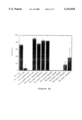
- FIG. 3a gives the electrical yield calculated for bare Al-meander structures.
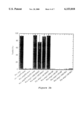
- FIG. 3b gives the electrical yield calculated for stacked Al-meander structures.
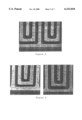
- FIG. 4 is a picture of bare aluminium lines which received an IPA-dip in order to remove the organic stripper before DI-rinsing.
- FIG. 5 (left) is a picture of bare Al-lines after dry-stripping.
- FIG. 5 (right) are bare Al-lines after wet-stripping followed by a 50 min. stay in DI-water.
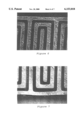
- FIG. 6 is a picture of Al-lines treated with diluted HNO 3 (1:100 diluted) after wet-stripping.
- FIG. 7 is a picture of stacked Al-meander structures treated with 1:100 HCI after wet-stripping.
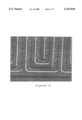
- FIG. 8 is a picture of bare Al-meanders treated with 1:100 HF after wet-stripping.
- strong inorganic acids it is meant in this patent application those strong inorganic acids which can be added to the rinsing solution without significantly corroding the metallized substrate as they only negligibly attack the passivating oxide film which is always present on metals such as aluminium or aluminium alloys, hereby inhibiting the corrosion of the underlying metal.
- strong inorganic acids can be selected from the group consisting of HNO 3 , H 2 SO 4 , HI, H 3 PO 4 , H 3 CrO 4 or a mixture thereof.
- the strong inorganic acid is HNO 3 .
- the amounts of strong inorganic acid used in the rinsing solutions of this invention are obviously dependent upon the number of metallized substrates and the kind of stripper used.
- good results are obtained with a 1:80 to 1:1200 diluted nitric acid solution, preferably it is a 1:100 to 1:1000 dilution and most preferably a 1:100 dilution.
- the metal layer on the metallized substrates which can be rinsed according to the present invention are for example, Al alloys.
- AlSiCu alloys and especially Al/1% Si/0.5% Cu alloys are particularly suited for rinsing according to the invention.
- the microcorrosion of aluminium alloys is preferably decreased during rinsing by using diluted nitric acid in a 1:100 to 1:1000 dilution.
- the rinsing solutions of the present invention are effective in rinsing metallized wafers subjected to a wide range of organic photoresist strippers comprising an alkanolamine.
- a substrate subjected to MS-2001 (OLIN HUNT) a known solvent strippers can be rinsed with the rinsing solutions according to the invention.
- the rinsing solutions can also be used for rinsing metallized wafers at stages in the processing cycle other than after solvent stripping. As such one can rinse metallized wafers from which the photoresist has been removed by dry stripping.
- Dry stripping (commonly referred to as oxygen ashing) is done using oxygen plasmas in plasma etching tools.
- Plasmas containing oxygen produce species that attack the photoresist to form CO 2 , H 2 O, N 2 O and SO 2 as end products.
- oxygen plasmas provide a highly selective method for removing organic material like photoresist, since O 2 plasmas do not etch Si, SiO 2 and Al or Al-alloys.
- the rinsing solutions of the present invention are found to have little or no corrosive effect on the substrates, especially not on dry stripped photoresists with aluminium alloy layer.
- aluminium alloys The corrosion of aluminium alloys is evaluated in a quartz tank without circulation or filtration, both on silicon wafers, CZ-growth ⁇ 100>, n-type, 1-30 Ohmcm, 150 mm diameter wafers with bare aluminium meanders (700 nm Al/1%SI/0.5%Cu) and with stacked meanders structures (Ti, TiN, Al/1%SI/0.5%Cu, Ti and TiN with a thickness of respectively 30, 80, 700, 20 and 80 nm).
- the wafers are stripped in MS-2001 (OLIN HUNT) for 60 min at 90/C, followed by a 50 min stay in a stagnant tank to which diluted inorganic nitric acid (HNO 3 ) solutions in two different mixing ratios (1:100 and 1:1000) are added. Finally, the wafers are rinsed with DI-water for 10 min and spin dried. All rinse treatments are performed at room temperature.
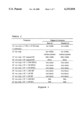
- the degree of corrosion of metal lines, as determined by visual inspection with SEM, after the different post-stripping treatments is summarized in table I (FIG. 1).
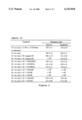
- the average resistance measured for the meander structure with 4.63 m length is shown in table II (FIG. 2), both for the bare and stacked wafers.
- Electrical yield is calculated with the following selection criterion: a bare Al-meander is considered to be "good" when its resistance lies in the intervals 270-300 kS and 260-290 kS respectively for the length 4.63 m and 4.51 m.
- the intervals are taken to be: 260-290 kS and 250-280 kS respectively for the long and the short structures. Thus, all shorts as well as open meanders are excluded.
- FIGS. 3a and 3b respectively for the bare and stacked meander structures.
- FIG. 4 shows the aluminium layer after being stripped with MS-2001 and followed by a IPA dip before a DI rinse according to the prior art.
- the observed surface degradation can probably be attributed to the extreme testing conditions and is significantly reduced when standard rinsing conditions are used, mainly because under normal circumstances, the contact time with the rinsing solution is significantly shorter. As such a 5 min. stay in the stagnant tank according to example 1 results in a non-degraded wafer surface.
- Rinsing-off the organic stripper in diluted HC1 results in a very localized line degradation (see FIG. 7) which causes severe changes in the measured resistance and consequently a decrease of the yield. The same phenomenon is observed for the dry stripped wafers dipped in diluted HC1.
- diluted HNO 3 -solutions offer interesting perspectives for replacing the commonly used IPA-dip after stripping and allows a more efficient pH control compared to carbonic acid comprising rinsing solutions.
Landscapes
- Physics & Mathematics (AREA)
- General Physics & Mathematics (AREA)
- Cleaning Or Drying Semiconductors (AREA)
- Manufacture And Refinement Of Metals (AREA)
- Cleaning And De-Greasing Of Metallic Materials By Chemical Methods (AREA)
Applications Claiming Priority (2)
| Application Number | Priority Date | Filing Date | Title |
|---|---|---|---|
| EP96870157 | 1996-12-09 | ||
| EP96870157A EP0846985B1 (de) | 1996-12-09 | 1996-12-09 | Metallspülungsverfahren mit kontrollierter Metallmikrokorrosionsreduktion |
Publications (1)
| Publication Number | Publication Date |
|---|---|
| US6153018A true US6153018A (en) | 2000-11-28 |
Family
ID=8226184
Family Applications (1)
| Application Number | Title | Priority Date | Filing Date |
|---|---|---|---|
| US08/987,261 Expired - Lifetime US6153018A (en) | 1996-12-09 | 1997-12-09 | Metal rinsing process with controlled metal microcorrosion reduction |
Country Status (4)
| Country | Link |
|---|---|
| US (1) | US6153018A (de) |
| EP (1) | EP0846985B1 (de) |
| AT (1) | ATE202421T1 (de) |
| DE (1) | DE69613476T2 (de) |
Cited By (2)
| Publication number | Priority date | Publication date | Assignee | Title |
|---|---|---|---|---|
| US6422246B1 (en) * | 2000-02-29 | 2002-07-23 | United Microelectronics Corp. | Method removing residual photoresist |
| US20040099289A1 (en) * | 1999-03-25 | 2004-05-27 | Kaijo Corporation | Method for rinsing cleaned objects |
Families Citing this family (2)
| Publication number | Priority date | Publication date | Assignee | Title |
|---|---|---|---|---|
| JP2836562B2 (ja) * | 1996-02-08 | 1998-12-14 | 日本電気株式会社 | 半導体ウェハのウェット処理方法 |
| US6878213B1 (en) | 1998-12-07 | 2005-04-12 | Scp Global Technologies, Inc. | Process and system for rinsing of semiconductor substrates |
Citations (10)
| Publication number | Priority date | Publication date | Assignee | Title |
|---|---|---|---|---|
| US3085917A (en) * | 1960-05-27 | 1963-04-16 | Gen Electric | Chemical cleaning method and material |
| US3649260A (en) * | 1970-02-27 | 1972-03-14 | Sylvania Electric Prod | Process for making refractory metal material |
| US3787239A (en) * | 1970-09-25 | 1974-01-22 | Allied Chem | Chemical strippers and method of using |
| US3813309A (en) * | 1969-12-23 | 1974-05-28 | Ibm | Method for stripping resists from substrates |
| US4778532A (en) * | 1985-06-24 | 1988-10-18 | Cfm Technologies Limited Partnership | Process and apparatus for treating wafers with process fluids |
| US5102777A (en) * | 1990-02-01 | 1992-04-07 | Ardrox Inc. | Resist stripping |
| US5201960A (en) * | 1991-02-04 | 1993-04-13 | Applied Photonics Research, Inc. | Method for removing photoresist and other adherent materials from substrates |
| EP0596515A1 (de) * | 1992-11-06 | 1994-05-11 | MALLINCKRODT BAKER, Inc. | Alkalische Photoresist-Stripper-Zusammensetzung, die zu verringerter Metallkorrosion führt |
| EP0678788A2 (de) * | 1994-04-18 | 1995-10-25 | Ocg Microelectronic Materials, Inc. | Nicht korrosives Photolackentschichtungsmittel |
| US5759751A (en) * | 1996-02-08 | 1998-06-02 | Nec Corporation | Method of peeling photo-resist layer without damage to metal wiring |
-
1996
- 1996-12-09 DE DE69613476T patent/DE69613476T2/de not_active Expired - Lifetime
- 1996-12-09 AT AT96870157T patent/ATE202421T1/de not_active IP Right Cessation
- 1996-12-09 EP EP96870157A patent/EP0846985B1/de not_active Expired - Lifetime
-
1997
- 1997-12-09 US US08/987,261 patent/US6153018A/en not_active Expired - Lifetime
Patent Citations (10)
| Publication number | Priority date | Publication date | Assignee | Title |
|---|---|---|---|---|
| US3085917A (en) * | 1960-05-27 | 1963-04-16 | Gen Electric | Chemical cleaning method and material |
| US3813309A (en) * | 1969-12-23 | 1974-05-28 | Ibm | Method for stripping resists from substrates |
| US3649260A (en) * | 1970-02-27 | 1972-03-14 | Sylvania Electric Prod | Process for making refractory metal material |
| US3787239A (en) * | 1970-09-25 | 1974-01-22 | Allied Chem | Chemical strippers and method of using |
| US4778532A (en) * | 1985-06-24 | 1988-10-18 | Cfm Technologies Limited Partnership | Process and apparatus for treating wafers with process fluids |
| US5102777A (en) * | 1990-02-01 | 1992-04-07 | Ardrox Inc. | Resist stripping |
| US5201960A (en) * | 1991-02-04 | 1993-04-13 | Applied Photonics Research, Inc. | Method for removing photoresist and other adherent materials from substrates |
| EP0596515A1 (de) * | 1992-11-06 | 1994-05-11 | MALLINCKRODT BAKER, Inc. | Alkalische Photoresist-Stripper-Zusammensetzung, die zu verringerter Metallkorrosion führt |
| EP0678788A2 (de) * | 1994-04-18 | 1995-10-25 | Ocg Microelectronic Materials, Inc. | Nicht korrosives Photolackentschichtungsmittel |
| US5759751A (en) * | 1996-02-08 | 1998-06-02 | Nec Corporation | Method of peeling photo-resist layer without damage to metal wiring |
Non-Patent Citations (3)
| Title |
|---|
| European Search Report dated Feb. 18, 1997. * |
| Journal of the Electrochemical Society, vol. 127, No. 2, Feb. 1980, pp. 386 395, XP002025557, Kaplan L H; Bergin B K: Residues from wet processing of positive resists * p. 390 p. 395. * |
| Journal of the Electrochemical Society, vol. 127, No. 2, Feb. 1980, pp. 386-395, XP002025557, Kaplan L H; Bergin B K: "Residues from wet processing of positive resists" * p. 390 --p. 395. |
Cited By (2)
| Publication number | Priority date | Publication date | Assignee | Title |
|---|---|---|---|---|
| US20040099289A1 (en) * | 1999-03-25 | 2004-05-27 | Kaijo Corporation | Method for rinsing cleaned objects |
| US6422246B1 (en) * | 2000-02-29 | 2002-07-23 | United Microelectronics Corp. | Method removing residual photoresist |
Also Published As
| Publication number | Publication date |
|---|---|
| EP0846985A1 (de) | 1998-06-10 |
| EP0846985B1 (de) | 2001-06-20 |
| ATE202421T1 (de) | 2001-07-15 |
| DE69613476T2 (de) | 2002-04-18 |
| DE69613476D1 (de) | 2001-07-26 |
Similar Documents
| Publication | Publication Date | Title |
|---|---|---|
| KR100319881B1 (ko) | 집적 회로 기판 표면의 불순물을 제거하기 위한 세정 수용액 및 이를 이용한 세정 방법 | |
| EP0918081B1 (de) | Ätzmittel und ihre Verwendung | |
| JP3150306B2 (ja) | 還元及び酸化電位を有する求核アミン化合物を含む洗浄剤組成物およびこれを使用した基板の洗浄方法 | |
| US8951433B2 (en) | Compositions for use in semiconductor devices | |
| JP2002543272A (ja) | 半導体デバイス用の、有機残留物およびプラズマエッチングされた残留物を洗浄するための組成物 | |
| US6787293B2 (en) | Photoresist residue remover composition | |
| US6432209B2 (en) | Composition and method for removing resist and etching residues using hydroxylazmmonium carboxylates | |
| TWI734149B (zh) | 後蝕刻殘留物的清潔組合物及其使用方法 | |
| JPH09319098A (ja) | レジスト膜用剥離液 | |
| KR100639615B1 (ko) | 세정액 및 그를 이용한 반도체소자의 세정 방법 | |
| US6153018A (en) | Metal rinsing process with controlled metal microcorrosion reduction | |
| KR20000070378A (ko) | 금속층의 패시베이션 방법 | |
| US7252718B2 (en) | Forming a passivating aluminum fluoride layer and removing same for use in semiconductor manufacture | |
| US20050089489A1 (en) | Composition for exfoliation agent effective in removing resist residues | |
| US7192489B2 (en) | Method for polymer residue removal following metal etching | |
| US20030027429A1 (en) | Process for removing polymers during the fabrication of semiconductor devices | |
| EP1139401B1 (de) | Zusammensetzung und verfahren zur seitenwandentfernung | |
| US6423646B1 (en) | Method for removing etch-induced polymer film and damaged silicon layer from a silicon surface | |
| US7879533B2 (en) | Etching residue removal method and semiconductor device fabrication method using this method | |
| US6495472B2 (en) | Method for avoiding erosion of conductor structure during removing etching residues | |
| KR19980044194A (ko) | 반도체 소자의 금속배선 형성방법 | |
| JPH0962013A (ja) | 半導体装置用洗浄剤及び半導体装置の製造方法 | |
| US20050112903A1 (en) | Process for removing tungsten particles after tungsten etch-back | |
| Kim et al. | Effects of gas species on charging induced tungsten plug corrosion during post metal etch process | |
| KR20080088246A (ko) | 반도체 기판 세정 방법 |
Legal Events
| Date | Code | Title | Description |
|---|---|---|---|
| AS | Assignment |
Owner name: INTERUNIVERSITAIR MICRO-ELEKTRONICA CENTRUM, BELGI Free format text: ASSIGNMENT OF ASSIGNORS INTEREST;ASSIGNORS:RONTONDARO, ANTONIO L.P.;VOS, RITA;HEYNS, MARK;REEL/FRAME:009268/0492;SIGNING DATES FROM 19971125 TO 19980611 |
|
| AS | Assignment |
Owner name: INTERUNIVERSITAIR MICRO-ELEKTRONICA CENTRUM, BELGI Free format text: CORRECTIVE ASSIGNMENT TO CORRECT ASSIGNEE'S NAME, PREVIOUSLY RECORDED AT REEL 9268, FRAME 0492;ASSIGNORS:ROTONDARO, ANTONIO L.P.;VOS, RITA;HEYNS, MARK;REEL/FRAME:009412/0021;SIGNING DATES FROM 19971125 TO 19980611 |
|
| STCF | Information on status: patent grant |
Free format text: PATENTED CASE |
|
| FPAY | Fee payment |
Year of fee payment: 4 |
|
| FPAY | Fee payment |
Year of fee payment: 8 |
|
| FEPP | Fee payment procedure |
Free format text: PAYOR NUMBER ASSIGNED (ORIGINAL EVENT CODE: ASPN); ENTITY STATUS OF PATENT OWNER: LARGE ENTITY |
|
| FPAY | Fee payment |
Year of fee payment: 12 |