US6379840B2 - Lithium secondary battery - Google Patents
Lithium secondary battery Download PDFInfo
- Publication number
- US6379840B2 US6379840B2 US09/265,921 US26592199A US6379840B2 US 6379840 B2 US6379840 B2 US 6379840B2 US 26592199 A US26592199 A US 26592199A US 6379840 B2 US6379840 B2 US 6379840B2
- Authority
- US
- United States
- Prior art keywords
- tabs
- positive
- negative
- lithium secondary
- secondary battery
- Prior art date
- Legal status (The legal status is an assumption and is not a legal conclusion. Google has not performed a legal analysis and makes no representation as to the accuracy of the status listed.)
- Expired - Fee Related
Links
Images



Classifications
-
- H—ELECTRICITY
- H01—ELECTRIC ELEMENTS
- H01M—PROCESSES OR MEANS, e.g. BATTERIES, FOR THE DIRECT CONVERSION OF CHEMICAL ENERGY INTO ELECTRICAL ENERGY
- H01M10/00—Secondary cells; Manufacture thereof
- H01M10/05—Accumulators with non-aqueous electrolyte
- H01M10/052—Li-accumulators
-
- H—ELECTRICITY
- H01—ELECTRIC ELEMENTS
- H01M—PROCESSES OR MEANS, e.g. BATTERIES, FOR THE DIRECT CONVERSION OF CHEMICAL ENERGY INTO ELECTRICAL ENERGY
- H01M10/00—Secondary cells; Manufacture thereof
- H01M10/05—Accumulators with non-aqueous electrolyte
- H01M10/058—Construction or manufacture
- H01M10/0585—Construction or manufacture of accumulators having only flat construction elements, i.e. flat positive electrodes, flat negative electrodes and flat separators
-
- H—ELECTRICITY
- H01—ELECTRIC ELEMENTS
- H01M—PROCESSES OR MEANS, e.g. BATTERIES, FOR THE DIRECT CONVERSION OF CHEMICAL ENERGY INTO ELECTRICAL ENERGY
- H01M10/00—Secondary cells; Manufacture thereof
- H01M10/05—Accumulators with non-aqueous electrolyte
- H01M10/058—Construction or manufacture
- H01M10/0587—Construction or manufacture of accumulators having only wound construction elements, i.e. wound positive electrodes, wound negative electrodes and wound separators
-
- H—ELECTRICITY
- H01—ELECTRIC ELEMENTS
- H01M—PROCESSES OR MEANS, e.g. BATTERIES, FOR THE DIRECT CONVERSION OF CHEMICAL ENERGY INTO ELECTRICAL ENERGY
- H01M50/00—Constructional details or processes of manufacture of the non-active parts of electrochemical cells other than fuel cells, e.g. hybrid cells
- H01M50/50—Current conducting connections for cells or batteries
- H01M50/531—Electrode connections inside a battery casing
- H01M50/533—Electrode connections inside a battery casing characterised by the shape of the leads or tabs
-
- H—ELECTRICITY
- H01—ELECTRIC ELEMENTS
- H01M—PROCESSES OR MEANS, e.g. BATTERIES, FOR THE DIRECT CONVERSION OF CHEMICAL ENERGY INTO ELECTRICAL ENERGY
- H01M50/00—Constructional details or processes of manufacture of the non-active parts of electrochemical cells other than fuel cells, e.g. hybrid cells
- H01M50/50—Current conducting connections for cells or batteries
- H01M50/531—Electrode connections inside a battery casing
- H01M50/536—Electrode connections inside a battery casing characterised by the method of fixing the leads to the electrodes, e.g. by welding
-
- H—ELECTRICITY
- H01—ELECTRIC ELEMENTS
- H01M—PROCESSES OR MEANS, e.g. BATTERIES, FOR THE DIRECT CONVERSION OF CHEMICAL ENERGY INTO ELECTRICAL ENERGY
- H01M10/00—Secondary cells; Manufacture thereof
- H01M10/05—Accumulators with non-aqueous electrolyte
- H01M10/052—Li-accumulators
- H01M10/0525—Rocking-chair batteries, i.e. batteries with lithium insertion or intercalation in both electrodes; Lithium-ion batteries
-
- H—ELECTRICITY
- H01—ELECTRIC ELEMENTS
- H01M—PROCESSES OR MEANS, e.g. BATTERIES, FOR THE DIRECT CONVERSION OF CHEMICAL ENERGY INTO ELECTRICAL ENERGY
- H01M6/00—Primary cells; Manufacture thereof
- H01M6/04—Cells with aqueous electrolyte
- H01M6/06—Dry cells, i.e. cells wherein the electrolyte is rendered non-fluid
- H01M6/10—Dry cells, i.e. cells wherein the electrolyte is rendered non-fluid with wound or folded electrodes
-
- Y—GENERAL TAGGING OF NEW TECHNOLOGICAL DEVELOPMENTS; GENERAL TAGGING OF CROSS-SECTIONAL TECHNOLOGIES SPANNING OVER SEVERAL SECTIONS OF THE IPC; TECHNICAL SUBJECTS COVERED BY FORMER USPC CROSS-REFERENCE ART COLLECTIONS [XRACs] AND DIGESTS
- Y02—TECHNOLOGIES OR APPLICATIONS FOR MITIGATION OR ADAPTATION AGAINST CLIMATE CHANGE
- Y02E—REDUCTION OF GREENHOUSE GAS [GHG] EMISSIONS, RELATED TO ENERGY GENERATION, TRANSMISSION OR DISTRIBUTION
- Y02E60/00—Enabling technologies; Technologies with a potential or indirect contribution to GHG emissions mitigation
- Y02E60/10—Energy storage using batteries
-
- Y—GENERAL TAGGING OF NEW TECHNOLOGICAL DEVELOPMENTS; GENERAL TAGGING OF CROSS-SECTIONAL TECHNOLOGIES SPANNING OVER SEVERAL SECTIONS OF THE IPC; TECHNICAL SUBJECTS COVERED BY FORMER USPC CROSS-REFERENCE ART COLLECTIONS [XRACs] AND DIGESTS
- Y02—TECHNOLOGIES OR APPLICATIONS FOR MITIGATION OR ADAPTATION AGAINST CLIMATE CHANGE
- Y02P—CLIMATE CHANGE MITIGATION TECHNOLOGIES IN THE PRODUCTION OR PROCESSING OF GOODS
- Y02P70/00—Climate change mitigation technologies in the production process for final industrial or consumer products
- Y02P70/50—Manufacturing or production processes characterised by the final manufactured product
-
- Y—GENERAL TAGGING OF NEW TECHNOLOGICAL DEVELOPMENTS; GENERAL TAGGING OF CROSS-SECTIONAL TECHNOLOGIES SPANNING OVER SEVERAL SECTIONS OF THE IPC; TECHNICAL SUBJECTS COVERED BY FORMER USPC CROSS-REFERENCE ART COLLECTIONS [XRACs] AND DIGESTS
- Y02—TECHNOLOGIES OR APPLICATIONS FOR MITIGATION OR ADAPTATION AGAINST CLIMATE CHANGE
- Y02T—CLIMATE CHANGE MITIGATION TECHNOLOGIES RELATED TO TRANSPORTATION
- Y02T10/00—Road transport of goods or passengers
- Y02T10/60—Other road transportation technologies with climate change mitigation effect
- Y02T10/70—Energy storage systems for electromobility, e.g. batteries
Definitions
- the present invention relates to a lithium secondary battery which maintains a good charge-discharge characteristic even during a high output cycle operation and which in particular may be preferably used for a drive motor of an electric vehicle.
- the internal electrode body of a lithium secondary battery has a positive electrode, a negative electrode and a separator made of porous polymer film, the positive electrode and the negative electrode being wound or laminated so that the positive electrode and negative electrode are not brought into direct contact with each other via the separator.
- an internal electrode body 1 of a winding type is formed by winding a positive plate 2 and a negative plate 3 having a separator 4 in between, and a tab 5 is provided for each of the positive and negative electrode plates 2 , 3 (hereafter referred to as “electrodes 2 , 3 ”) respectively.
- each tab 5 The end opposite to the end connected to the electrodes 2 , 3 of each tab 5 , is attached to an external terminal 11 or an electric current extracting terminal 13 such as an internal terminal member 12 being electrically connected to the external terminal 11 . That is, the tab 5 serves as a lead line which is electrically connected to the electric current extracting terminal 13 while conducting electricity collection from the electrodes 2 , 3 .
- FIG. 2 a plan view of the electrodes 2 , 3 when the internal electrode body 1 is spread out is shown in FIG. 2 .
- the electrodes 2 , 3 are formed with an electrode active material 16 coated respectively onto metal foils 15 made of aluminum, etc., for the positive electrode 2 and made of copper, etc., for the negative electrode 3 . Since a tab 5 is provided on a side of such metal foil 15 , a tab having a thin band shape is preferably used.
- the tabs are disposed at approximately a uniform distance so that each tab 5 conducts electricity collection in a constant area in electrode 2 , 3 .
- the material qualities of the tabs 5 are the same as the material qualities of the metal foil 15 to which the tabs 5 are attached.
- the tab 5 has an allowable range in which to set a resistance value from the point of view of the feasibility of setting its shape freely since the shape of tab 5 is to be housed in the space between the battery case housing the internal electrode body 1 therein and the internal electrode body 1 .
- the connection resistance of these does not vary much, since they are unified by welding, except for with extremely faulty welding.
- Concerning the connection between the tabs 5 and the electric current extracting terminal 13 there is room left to reduce the contact resistance, since various methods may be considered.
- a method of bundling by piling up in one direction is preferably easiest in terms of a forming process for the battery, and also is preferred since the structure inside the battery will not become complicated. In this case, however, there will be a need to aim to reduce the contact resistance on the contact surface of each tab, since contact between tabs will occur more times.
- a lithium secondary battery comprising a battery case, an internal electrode body contained in the battery case and including a positive electrode, a negative electrode and a separator made of porous polymer, the positive electrode and the negative electrode being wound or laminated so that the positive electrode and negative electrode are not brought into direct contact with each other via the separator, and at least plural tabs, having been connected to the positive electrode and negative electrode for electricity collection so that the respective resistance value of each tab remains within the range of ⁇ 20% of the average resistance value of the tabs.
- a lithium secondary battery of the present invention it is preferred that all the tabs are concentrated at one place and are connected to the electric current extracting terminal by crimping or welding. In addition, it is also preferred that all the tabs are connected to the electric current extracting terminal by crimping, or welding, or screwing after they have been unified by crimping, welding, or eyelet-type connecting in advance.
- the thickness of a tab is preferably 5 ⁇ m or more and 100 ⁇ m or less, and the battery structure using such tabs is preferably adopted to a lithium secondary battery with a battery capacity of 5 Ah or more, and especially to a lithium secondary battery for an EV or a hybrid electric vehicle.
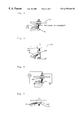
- FIG. 1 is a perspective view showing the structure of a wound-type internal electrode body.
- FIG. 2 is a plan view showing the spread state of each positive electrode and negative electrode in a wound-type internal electrode body.
- FIG. 3 is a perspective view showing one embodiment of the structure of a lamination-type internal electrode body.
- FIG. 4 is a cross-sectional view showing one embodiment of a method used to connect tabs to an electric current extracting terminal according to the lithium secondary battery of the present invention.
- FIG. 5 is an explanatory drawing showing another embodiment of a method used to connect tabs to an electric current extracting terminal according to the lithium secondary battery of the present invention.
- FIG. 6 is an explanatory drawing showing a method of measuring resistance of tabs according to the lithium secondary battery of the present invention.
- FIG. 7 is an explanatory drawing showing an embodiment of a method used to connect tabs to an electric current extracting terminal according to the lithium secondary battery of Comparative Example 2.
- FIG. 8 is an explanatory drawing showing the dispersion in resistance of tabs according to Examples and Comparative Examples.
- FIG. 9 is an explanatory drawing showing the flow of current from tabs to an electric current extracting terminal of a bolt and a nut.
- FIG. 10 is an explanatory drawing showing the flow of current from tabs to an electric current extracting terminal of a rivet.
- FIG. 11 is an explanatory drawing showing the process up to tab connection to an electric current extracting terminal in forming a lithium secondary battery of the present invention.
- FIG. 12 is an explanatory drawing showing the test results of cycle operations on an Example and Examples for comparison.
- the lithium secondary battery of this invention yields an excellent effect in that it is possible to discharge a huge electric current constantly, enabling uniform electricity collection from the positive electrode and negative electrode together with a uniform battery reaction within the positive electrode and negative electrode, since the resistance from the positive and negative electrodes to the electric current extracting terminal is made uniform. As a result of this, it also yields another excellent effect in that local deterioration of battery materials may be suppressed and thus excellent endurance may be provided during cycle operations.
- the internal electrode body of the lithium secondary battery of the present invention (hereinafter referred to as a “battery”) is constituted by a positive electrode, a negative electrode and a separator made of porous polymer film, the positive electrode and the negative electrode being wound or laminated so that the positive electrode and negative electrode are not brought into direct contact with each other via the separator.
- a battery is constituted by a positive electrode, a negative electrode and a separator made of porous polymer film, the positive electrode and the negative electrode being wound or laminated so that the positive electrode and negative electrode are not brought into direct contact with each other via the separator.
- an internal electrode body 1 of a winding type is formed by winding a positive electrode 2 and a negative electrode 3 having a separator 4 in between, and tabs 5 are provided for electrodes 2 , 3 .
- the lamination-type internal electrode body 7 laminates the positive plate 8 and the negative plate 9 alternately via the separator 10 with tabs 6 being connected to the positive and negative electrodes plates 8 and 9 (hereinafter referred to as “electrodes” 8 , 9 ) respectively.
- Such an internal electrode body 1 , 7 is basically configured to have a plurality of element batteries being connected in parallel, an element battery consisting of positive electrodes 2 , 8 and negative electrodes 3 , 9 facing each other.
- the positive electrodes 2 , 8 and the negative electrodes 3 , 9 are formed in the shape of a thin plate with an electrode active material being coated respectively onto metal foil as base materials.
- aluminum foil is used as the base material for the positive electrodes 2 , 8
- copper foil is used as the base material for the negative electrodes 3 , 9 respectively.
- lithium transition metal compound oxides such as lithium cobalt oxide(LiCoO 2 ), lithium nickel oxide(LiNiO 2 ), or lithium manganese oxide (LiMn 2 O 4 ), etc.
- a carbon powder such as acetylene black, graphite powder, etc.
- an amorphous carbon material such as soft carbon or hard carbon, or carbon powder such as natural graphite, etc., is used.
- a separator 4 , 10 it is preferable to use a three-layer structural one in which a polyethylene film having lithium ion permeability and including micropores is sandwiched between porous polypropylene films having lithium ion permeability.
- This serves also as a safety mechanism with which, when the temperature of the internal electrode body is raised, the polyethylene film is softened at about 130° C. so that the micropores collapse to suppress the movement of lithium ions, that is, battery reaction.
- this polyethylene film being sandwiched between the polypropylene films having a softening temperature higher than the polyethylene film, it is possible to prevent contact/welding between the electrodes ( 2 , 3 ), and ( 8 , 9 ).
- FIG. 2 is a plan view of the electrodes 2 , 3 when a wound-type internal electrode body 1 shown in FIG. 1 is spread out, wherein in the case of the battery capacity being constant, the length L toward its winding direction can be shortened if the width D of the electrodes 2 , 3 is lengthened.
- the width of the electrodes 2 , 3 is preferably set within the range from 10 cm to 40 cm, and when the width of the electrodes 2 , 3 is within such a range, the number of tabs 5 to be placed along the length L toward the winding direction of electrode 2 , 3 is preferably around 6 to 10 per 1 m.
- the tabs 5 are preferably arranged to make an approximately straight line toward the direction of the diameter of the internal electrode body 1 when the electrodes 2 , 3 are wound, so that arrangement of the tabs 5 to the electrode 2 , 3 is not configured to have a complicated structure as shown in FIG. 11 to be described below, but is easily attachable to the electric current extracting terminal 13 .
- the tabs 5 disposed approximately at an almost equal distance respectively serve to transfer electrons having a relationship to the battery reaction in an approximately equal electrode area of the electrodes 2 , 3 .
- there is any dispersion in resistance from the electric current extracting terminal 13 to the respective tabs 5 there will arise dispersion in extraction of electricity as well. That is, there is a possibility that electricity will be concentrated in low resistance tabs 5 , and in this case, not only will the battery reaction be uneven, but also a problem will arise in that rapid deterioration of material will take place at the portions where the battery reaction will be most active (at the portions where the low resistance tabs 5 are connected).
- the plural tabs 5 having been connected to each electrode 2 , 3 for electricity collection, are designed so that the respective resistance values of tabs 5 at least remain within the range of ⁇ 20% of the average resistance value of the tabs 5 . Due to this, it is preferred that all the tabs 5 are concentrated at one place and are connected to the electric current extracting terminal 13 by crimping or welding.
- a rivet 22 as an electric current extracting terminal 13 to be attached to the battery cap 23 , and to collect the tabs 5 to connect to the rivet 22 by crimping.
- the resistance value of the tabs 5 can be within the above-described range.
- the tabs 5 may be connected to the rivet 22 by welding instead of crimping, or the tabs 5 may be pressed into contact with the rivet 22 and the connection part may be unified further by welding.
- tabs 5 in a thin band shape are preferably used as well, the thickness of which are preferred to be equal to or more than 5 ⁇ m and equal to or less than 100 ⁇ m.
- aluminum foils are preferably used for the positive tabs and copper or nickel foils are preferably used for the negative tabs.
- connection points between the tabs 5 and the electrodes 2 , 3 are numerous, while the attachment point of the tabs 5 to the electric current extracting terminal 13 is only one, it is not preferred to use the shortest ones in length respectively for each tab 5 , giving rise to differences in resistance value for the tabs 5 . Due to this, it is preferred to adjust the length of the tabs 5 for use to that of the tab 5 requiring the longest length, or when tabs 5 with different lengths are used, to equalize resistance values by adjusting their thickness and width.
- the resistance value for each tab 5 was measured by measuring the voltage when a current of 1 A flowed at each tab 5 and the rivet 22 .
- the obtained resistance values were calculated to obtain an average value, and a resistance value distribution was obtained by standardizing the resistance values for each tab 5 with the average value as 100%.
- Comparative Example 1 the tabs 5 were crimped to the rivet 22 by a similar method as adopted in the above-described Examples 1 and 2, setting pressure of 500 kg/cm 2 for crimping, and the resistance value of each tab 5 was measured.
- Comparative Example for comparison 2 as shown in FIG. 7, the resistance value of each tab 5 was measured by a similar method as adopted in the above-described Examples 1 and 2, using an electric current extracting terminal consisting of a bolt 24 and a nut 25 without unifying the 30 sheets of the tabs 5 in advance, as shown in FIG. 5, but having a structure in which each tab 5 is individually screwed tightly.
- Examples 1, 2 show that dispersion in resistance values of the tabs 5 is within ⁇ 20% of the average value, while Comparative Examples show that the dispersion in resistance values is larger.
- a method capable of ensuring metal-to-metal contact by crimping, etc. is preferable for connecting the tabs 5 to the electric current extracting terminal.
- Examples 1, 2 it is thought that the dispersion in resistance of the tabs 5 was suppressed as a result of contact having been ensured between the metal materials with the oxide films on the surfaces of the tabs 5 having been destroyed by conducting crimping at an appropriate pressure. Nevertheless, it is thought that even if a crimping is used, as shown in the result of Comparative Example 1, in the case where the pressure of the crimping is low and inappropriate, dispersion in resistance of the connection of tabs 5 will increase, making the effect of crimping unobtainable. In addition, with Comparative Example 2, it is thought that with the clamp pressure for screwing it will be difficult to reach the necessary pressure to enable the oxide film on the tabs 5 to be destroyed, and as a result it is presumed that the dispersion of resistance will become larger.
- the pressure of crimping had to be within the range from 1 ton/cm 2 to 50 ton/cm 2
- the pressure of the crimping had to be within the range from 500 kg/cm 2 to 100 ton/cm 2 .
- the upper limit of pressure for crimping for each tab 5 is the pressure when damage such as cuts on the tab 5 take place at the end portions of the rivet 22 .
- a lithium secondary battery was formed by the method described below. At first, a paste was formed with a LiMn 2 O 4 powder body as a positive active material, to which acetylene black was added to provide conductivity to it, and further a binder and a solvent were mixed therein. With this paste being coated on both sides of 20 ⁇ m-thick aluminum foil, a positive electrode was formed having an electrode plane shape with a length towards the winding direction of 3600 mm ⁇ a width of 200 mm.
- a paste was formed with a highly graphitized carbon powder as a positive active material, and further a binder and a solvent are mixed therein, which is then coated on both sides of 10 ⁇ m-thick copper foil, and thereby a negative electrode was formed having an electrode plane shape with a length towards the winding direction of 4000 mm ⁇ a width of 200 mm.
- the thus-formed positive electrode 2 and negative electrode 3 were wound with insulation being provided employing 210 mm-wide separators 4 made of polypropylene.
- 30 sheets each of positive tabs 5 A made of aluminum and negative tabs 5 B made of copper which were used in the above-described Example 1, etc., were attached to the electrodes 2 , 3 by ultrasonic-welding so that they were arranged to make an approximately straight line along the direction of the diameter of the internal electrode body 1 , and so that each electrode 2 , 3 was placed with an approximate distance in between when they were spread out, and further so that one of the electrodes was formed at one end of the internal electrode body 1 .
- the thus formed internal electrode body 1 was fitted into the aluminum-made battery case 17 , crimping each positive tab and negative tab 5 A, 5 B to the positive electrode and negative electrode rivets 22 A, 22 B respectively, which are the electric current extracting terminals, under a pressure of 1 ton/cm 2 , using the same method as in the above-described Example 1, attaching a battery cap onto the negative rivet 22 B to seal the negative side of the battery case 17 .
- the electrolyte a mixed solvent of EC (ethylene carbonate) and DEC (diethyl carbonate) where electrolyte LiPF 6 was dissolved to yield 1 mol % density was injected into the battery case 17 .
- a battery cap was attached onto the positive rivet 22 A to tightly seal the battery case 17 .
- the battery case 17 may be sealed from the positive side.
- the battery formed using the method of connecting the tabs to the electric current extracting terminal in the above-described Example 1 is deemed to be the battery for the Example 1.
- the battery capacity of the formed batteries was 25 Ah, and their charge-discharge characteristic was assessed by a cycle operation test.
- charging was conducted at a constant current of 25 A and a constant voltage of 4.1 V, and discharging was conducted with constant current at a discharge rate of 1 C (25 A) until discharge was finalized at 2.5 V, whereupon charging/discharging was repeated.
- the discharge capacity for each time was standardized using the discharge capacity at the first time as 100%.
- FIG. 12 shows how the discharge capacity changed during the cycle operation test.
- the capacity drop was small, and there were no major differences between the two.
- the capacity drop was remarkable.
- Such a result is thought to be caused by unevenness that occurred in the battery reaction in the internal electrode body due to dispersion in resistance of the tabs, and deterioration which occurred partially in the positive electrodes and negative electrodes.
- the lithium secondary battery of this invention yields an excellent effect in that it is possible to discharge a huge electric current constantly, enabling uniform electricity collection from the positive electrodes and negative electrodes together with a uniform battery reaction within the positive electrodes and negative electrodes, since any inconsistency in the resistance of multiple tabs is limited within a certain range. As a result of this, it also yields another excellent effect in that local deterioration of battery materials may be suppressed and thus excellent endurance may be provided during cycle operations.
Landscapes
- Chemical & Material Sciences (AREA)
- Chemical Kinetics & Catalysis (AREA)
- Electrochemistry (AREA)
- General Chemical & Material Sciences (AREA)
- Engineering & Computer Science (AREA)
- Manufacturing & Machinery (AREA)
- Connection Of Batteries Or Terminals (AREA)
- Secondary Cells (AREA)
- Cell Separators (AREA)
- Battery Electrode And Active Subsutance (AREA)
Applications Claiming Priority (5)
| Application Number | Priority Date | Filing Date | Title |
|---|---|---|---|
| JP10-068017 | 1998-03-18 | ||
| JP10-68017 | 1998-03-18 | ||
| JP6801798 | 1998-03-18 | ||
| JP17110598 | 1998-06-18 | ||
| JP10-171105 | 1998-06-18 |
Publications (2)
| Publication Number | Publication Date |
|---|---|
| US20010038945A1 US20010038945A1 (en) | 2001-11-08 |
| US6379840B2 true US6379840B2 (en) | 2002-04-30 |
Family
ID=26409254
Family Applications (1)
| Application Number | Title | Priority Date | Filing Date |
|---|---|---|---|
| US09/265,921 Expired - Fee Related US6379840B2 (en) | 1998-03-18 | 1999-03-10 | Lithium secondary battery |
Country Status (4)
| Country | Link |
|---|---|
| US (1) | US6379840B2 (de) |
| EP (1) | EP0949699B1 (de) |
| CA (1) | CA2265324C (de) |
| DE (1) | DE69925532T2 (de) |
Cited By (35)
| Publication number | Priority date | Publication date | Assignee | Title |
|---|---|---|---|---|
| US20030091893A1 (en) * | 2001-10-18 | 2003-05-15 | Quallion Llc | Electrical battery assembly and method of manufacture |
| US6605382B2 (en) | 2000-04-26 | 2003-08-12 | Quallion Llc | Lithium ion battery suitable for hybrid electric vehicles |
| US20030211386A1 (en) * | 2000-02-02 | 2003-11-13 | Ruth Douglas Alan | Sealed battery and case therefor |
| US20040048121A1 (en) * | 2002-09-06 | 2004-03-11 | Sathya Motupally | Electrochemical cells and systems |
| US6746796B2 (en) * | 2000-11-24 | 2004-06-08 | Nec Tokin Corporation | Electrode-rolled battery and method of manufacturing electrode-rolled battery |
| US20040258986A1 (en) * | 2003-06-23 | 2004-12-23 | Xi Shen | Stacked-type lithium-ion rechargeable battery |
| US7041413B2 (en) | 2000-02-02 | 2006-05-09 | Quallion Llc | Bipolar electronics package |
| US20060127751A1 (en) * | 2004-11-29 | 2006-06-15 | Woo Soon K | Lithium rechargeable battery |
| US7166388B2 (en) | 2000-02-02 | 2007-01-23 | Quallion Llc | Brazed ceramic seal for batteries |
| US20100190056A1 (en) * | 2009-01-28 | 2010-07-29 | K2 Energy Solutions, Inc, | Battery Tab Structure |
| US20110117406A1 (en) * | 2009-11-18 | 2011-05-19 | Cho Jakyung | Secondary battery |
| US20120219845A1 (en) * | 2011-02-28 | 2012-08-30 | Mitsubishi Heavy Industries, Ltd. | Secondary battery |
| CN101816093B (zh) * | 2007-07-24 | 2013-09-25 | A123系统公司 | 电池设计及其构造方法 |
| US9312522B2 (en) | 2012-10-18 | 2016-04-12 | Ambri Inc. | Electrochemical energy storage devices |
| US9502737B2 (en) | 2013-05-23 | 2016-11-22 | Ambri Inc. | Voltage-enhanced energy storage devices |
| US9520618B2 (en) | 2013-02-12 | 2016-12-13 | Ambri Inc. | Electrochemical energy storage devices |
| US9735450B2 (en) | 2012-10-18 | 2017-08-15 | Ambri Inc. | Electrochemical energy storage devices |
| US9893385B1 (en) | 2015-04-23 | 2018-02-13 | Ambri Inc. | Battery management systems for energy storage devices |
| US10181800B1 (en) | 2015-03-02 | 2019-01-15 | Ambri Inc. | Power conversion systems for energy storage devices |
| US10181617B2 (en) | 2015-12-14 | 2019-01-15 | Johnson Controls Technology Company | Patterned crimp for battery collector attachment |
| US10270139B1 (en) | 2013-03-14 | 2019-04-23 | Ambri Inc. | Systems and methods for recycling electrochemical energy storage devices |
| WO2019180740A1 (en) * | 2018-03-20 | 2019-09-26 | Indian Space Research Organisation | Hermetically sealed lithium ion cells and a method for their manufacture |
| US10541451B2 (en) | 2012-10-18 | 2020-01-21 | Ambri Inc. | Electrochemical energy storage devices |
| US10608212B2 (en) | 2012-10-16 | 2020-03-31 | Ambri Inc. | Electrochemical energy storage devices and housings |
| US10637015B2 (en) | 2015-03-05 | 2020-04-28 | Ambri Inc. | Ceramic materials and seals for high temperature reactive material devices |
| US11211641B2 (en) | 2012-10-18 | 2021-12-28 | Ambri Inc. | Electrochemical energy storage devices |
| US11387497B2 (en) | 2012-10-18 | 2022-07-12 | Ambri Inc. | Electrochemical energy storage devices |
| US11411254B2 (en) | 2017-04-07 | 2022-08-09 | Ambri Inc. | Molten salt battery with solid metal cathode |
| US11721841B2 (en) | 2012-10-18 | 2023-08-08 | Ambri Inc. | Electrochemical energy storage devices |
| US11909004B2 (en) | 2013-10-16 | 2024-02-20 | Ambri Inc. | Electrochemical energy storage devices |
| US11929466B2 (en) | 2016-09-07 | 2024-03-12 | Ambri Inc. | Electrochemical energy storage devices |
| US12142735B1 (en) | 2013-11-01 | 2024-11-12 | Ambri, Inc. | Thermal management of liquid metal batteries |
| US12224447B2 (en) | 2018-12-17 | 2025-02-11 | Ambri Inc. | High temperature energy storage systems and methods |
| US12347832B2 (en) | 2013-09-18 | 2025-07-01 | Ambri, LLC | Electrochemical energy storage devices |
| US12374684B2 (en) | 2013-10-17 | 2025-07-29 | Ambri, LLC | Battery management systems for energy storage devices |
Families Citing this family (20)
| Publication number | Priority date | Publication date | Assignee | Title |
|---|---|---|---|---|
| JP4461686B2 (ja) * | 2003-02-13 | 2010-05-12 | トヨタ自動車株式会社 | 二次電池、その製造装置および製造方法 |
| EP2429010B1 (de) * | 2005-09-02 | 2014-12-17 | A123 Systems, Inc. | Batteriezellengestaltung und Verfahren zu deren Konstruktion |
| US8084158B2 (en) * | 2005-09-02 | 2011-12-27 | A123 Systems, Inc. | Battery tab location design and method of construction |
| FR2904475B1 (fr) * | 2006-07-28 | 2008-10-10 | Donald P H Wu | Structure conductrice pour un ensemble d'electrodes d'une batterie secondaire au lithium |
| DE102006054309A1 (de) * | 2006-11-17 | 2008-05-21 | Dieter Teckhaus | Batteriezelle mit Kontaktelementenanordnung |
| DE102007059443A1 (de) * | 2007-12-10 | 2009-06-18 | Li-Tec Vermögensverwaltungs GmbH | Elektrode für einen Energiespeicher |
| DE102008031537A1 (de) | 2008-07-03 | 2010-01-07 | Li-Tec Battery Gmbh | Elektrode für einen Energiespeicher |
| DE102008053011A1 (de) | 2008-10-23 | 2010-04-29 | Li-Tec Battery Gmbh | Galvanische Zelle für einen Akkumulator |
| DE102008052985A1 (de) | 2008-10-23 | 2010-04-29 | Li-Tec Battery Gmbh | Verpackungsvorrichtung und Verpackungssystem für im Wesentlichen flache Gegenstände, beispielsweise Lithium-Ionen-Zellen |
| DE102008053089A1 (de) | 2008-10-24 | 2010-04-29 | Li-Tec Battery Gmbh | Akkumulator mit mehreren galvanischen Zellen |
| JP2010135170A (ja) * | 2008-12-04 | 2010-06-17 | Hitachi Vehicle Energy Ltd | リチウム二次電池、二次電池モジュールおよび二次電池パック |
| DE102009018804A1 (de) | 2009-04-24 | 2010-10-28 | Li-Tec Battery Gmbh | Elektrochemische Zelle mit Lithiumtitanat |
| DE202009013174U1 (de) | 2009-09-30 | 2011-02-17 | Li-Tec Battery Gmbh | Elektrode für einen Energiespeicher |
| DE202009013179U1 (de) | 2009-09-30 | 2011-02-17 | Li-Tec Battery Gmbh | Elektrode für einen Energiespeicher |
| KR101101046B1 (ko) * | 2009-12-01 | 2011-12-29 | 삼성에스디아이 주식회사 | 전극 조립체 및 그를 구비하는 이차 전지 |
| EP2742552A4 (de) * | 2011-08-08 | 2015-05-06 | Basf Se | Elektrochemische zellen |
| KR102535745B1 (ko) * | 2017-10-11 | 2023-05-23 | 삼성에스디아이 주식회사 | 이차 전지 |
| KR102659830B1 (ko) | 2018-01-09 | 2024-04-23 | 삼성에스디아이 주식회사 | 이차 전지 및 그 제조 방법 |
| CN208000939U (zh) * | 2018-04-11 | 2018-10-23 | 宁德新能源科技有限公司 | 电池和设备 |
| US12476258B2 (en) * | 2024-01-11 | 2025-11-18 | Rivian Ip Holdings, Llc | Battery cell with supplemental current collectors |
Citations (4)
| Publication number | Priority date | Publication date | Assignee | Title |
|---|---|---|---|---|
| US3884715A (en) * | 1972-02-23 | 1975-05-20 | Us Energy | Secondary electrochemical power-producing cells having mixed cathode composition |
| US5154993A (en) * | 1990-04-27 | 1992-10-13 | Eveready Battery Company, Inc. | Electrode strips for coiled assemblies and method of producing them |
| US5736270A (en) * | 1995-06-08 | 1998-04-07 | Sony Corporation | Battery device |
| US6030726A (en) * | 1996-06-17 | 2000-02-29 | Hitachi, Ltd. | Lithium secondary battery having negative electrode of carbon material which bears metals |
Family Cites Families (3)
| Publication number | Priority date | Publication date | Assignee | Title |
|---|---|---|---|---|
| JPH07263028A (ja) * | 1994-03-25 | 1995-10-13 | Fuji Photo Film Co Ltd | 非水二次電池 |
| FR2752089B1 (fr) * | 1996-07-30 | 1998-09-04 | Accumulateurs Fixes | Generateur electrochimique cylindrique |
| FR2752092A1 (fr) * | 1996-07-30 | 1998-02-06 | Accumulateurs Fixes | Generateur electrochimique a electrodes spiralees |
-
1999
- 1999-03-10 US US09/265,921 patent/US6379840B2/en not_active Expired - Fee Related
- 1999-03-16 CA CA002265324A patent/CA2265324C/en not_active Expired - Fee Related
- 1999-03-17 EP EP99105468A patent/EP0949699B1/de not_active Expired - Lifetime
- 1999-03-17 DE DE69925532T patent/DE69925532T2/de not_active Expired - Lifetime
Patent Citations (4)
| Publication number | Priority date | Publication date | Assignee | Title |
|---|---|---|---|---|
| US3884715A (en) * | 1972-02-23 | 1975-05-20 | Us Energy | Secondary electrochemical power-producing cells having mixed cathode composition |
| US5154993A (en) * | 1990-04-27 | 1992-10-13 | Eveready Battery Company, Inc. | Electrode strips for coiled assemblies and method of producing them |
| US5736270A (en) * | 1995-06-08 | 1998-04-07 | Sony Corporation | Battery device |
| US6030726A (en) * | 1996-06-17 | 2000-02-29 | Hitachi, Ltd. | Lithium secondary battery having negative electrode of carbon material which bears metals |
Cited By (55)
| Publication number | Priority date | Publication date | Assignee | Title |
|---|---|---|---|---|
| US20060156538A1 (en) * | 2000-02-02 | 2006-07-20 | Hisashi Tsukamoto | Bipolar electronics package |
| US20030211386A1 (en) * | 2000-02-02 | 2003-11-13 | Ruth Douglas Alan | Sealed battery and case therefor |
| US7175938B2 (en) | 2000-02-02 | 2007-02-13 | Quallion Llc | Battery case employing ring sandwich |
| US7041413B2 (en) | 2000-02-02 | 2006-05-09 | Quallion Llc | Bipolar electronics package |
| US7410512B2 (en) | 2000-02-02 | 2008-08-12 | Quallion Llc | Bipolar electronics package |
| US7166388B2 (en) | 2000-02-02 | 2007-01-23 | Quallion Llc | Brazed ceramic seal for batteries |
| US6605382B2 (en) | 2000-04-26 | 2003-08-12 | Quallion Llc | Lithium ion battery suitable for hybrid electric vehicles |
| US20030211388A1 (en) * | 2000-04-26 | 2003-11-13 | Alan Ruth | Battery |
| US7285355B2 (en) | 2000-04-26 | 2007-10-23 | Quallion Llc | Battery |
| US6746796B2 (en) * | 2000-11-24 | 2004-06-08 | Nec Tokin Corporation | Electrode-rolled battery and method of manufacturing electrode-rolled battery |
| US20030091893A1 (en) * | 2001-10-18 | 2003-05-15 | Quallion Llc | Electrical battery assembly and method of manufacture |
| US7070881B2 (en) * | 2001-10-18 | 2006-07-04 | Quallion Llc | Electrical battery assembly and method of manufacture |
| US7410726B2 (en) | 2001-10-18 | 2008-08-12 | Quallion Llc | Electrical battery assembly and method of manufacture |
| US20040048121A1 (en) * | 2002-09-06 | 2004-03-11 | Sathya Motupally | Electrochemical cells and systems |
| US20040258986A1 (en) * | 2003-06-23 | 2004-12-23 | Xi Shen | Stacked-type lithium-ion rechargeable battery |
| US7618736B2 (en) * | 2003-06-23 | 2009-11-17 | Byd Company Limited | Stacked-type lithium-ion rechargeable battery |
| US20060127751A1 (en) * | 2004-11-29 | 2006-06-15 | Woo Soon K | Lithium rechargeable battery |
| CN101816093B (zh) * | 2007-07-24 | 2013-09-25 | A123系统公司 | 电池设计及其构造方法 |
| US20100190056A1 (en) * | 2009-01-28 | 2010-07-29 | K2 Energy Solutions, Inc, | Battery Tab Structure |
| WO2010088371A1 (en) * | 2009-01-28 | 2010-08-05 | K2 Energy Solutions, Inc. | Battery tab structure |
| US20110117406A1 (en) * | 2009-11-18 | 2011-05-19 | Cho Jakyung | Secondary battery |
| US8637182B2 (en) * | 2009-11-18 | 2014-01-28 | Samsung Sdi Co., Ltd. | Secondary battery including a plurality of aligned positive and negative electrode tabs |
| US20120219845A1 (en) * | 2011-02-28 | 2012-08-30 | Mitsubishi Heavy Industries, Ltd. | Secondary battery |
| US10608212B2 (en) | 2012-10-16 | 2020-03-31 | Ambri Inc. | Electrochemical energy storage devices and housings |
| US11196091B2 (en) | 2012-10-18 | 2021-12-07 | Ambri Inc. | Electrochemical energy storage devices |
| US11387497B2 (en) | 2012-10-18 | 2022-07-12 | Ambri Inc. | Electrochemical energy storage devices |
| US9312522B2 (en) | 2012-10-18 | 2016-04-12 | Ambri Inc. | Electrochemical energy storage devices |
| US9735450B2 (en) | 2012-10-18 | 2017-08-15 | Ambri Inc. | Electrochemical energy storage devices |
| US9825265B2 (en) | 2012-10-18 | 2017-11-21 | Ambri Inc. | Electrochemical energy storage devices |
| US11611112B2 (en) | 2012-10-18 | 2023-03-21 | Ambri Inc. | Electrochemical energy storage devices |
| US11721841B2 (en) | 2012-10-18 | 2023-08-08 | Ambri Inc. | Electrochemical energy storage devices |
| US11211641B2 (en) | 2012-10-18 | 2021-12-28 | Ambri Inc. | Electrochemical energy storage devices |
| US10541451B2 (en) | 2012-10-18 | 2020-01-21 | Ambri Inc. | Electrochemical energy storage devices |
| US9728814B2 (en) | 2013-02-12 | 2017-08-08 | Ambri Inc. | Electrochemical energy storage devices |
| US9520618B2 (en) | 2013-02-12 | 2016-12-13 | Ambri Inc. | Electrochemical energy storage devices |
| US10270139B1 (en) | 2013-03-14 | 2019-04-23 | Ambri Inc. | Systems and methods for recycling electrochemical energy storage devices |
| US10297870B2 (en) | 2013-05-23 | 2019-05-21 | Ambri Inc. | Voltage-enhanced energy storage devices |
| US9502737B2 (en) | 2013-05-23 | 2016-11-22 | Ambri Inc. | Voltage-enhanced energy storage devices |
| US9559386B2 (en) | 2013-05-23 | 2017-01-31 | Ambri Inc. | Voltage-enhanced energy storage devices |
| US12347832B2 (en) | 2013-09-18 | 2025-07-01 | Ambri, LLC | Electrochemical energy storage devices |
| US11909004B2 (en) | 2013-10-16 | 2024-02-20 | Ambri Inc. | Electrochemical energy storage devices |
| US12374684B2 (en) | 2013-10-17 | 2025-07-29 | Ambri, LLC | Battery management systems for energy storage devices |
| US12142735B1 (en) | 2013-11-01 | 2024-11-12 | Ambri, Inc. | Thermal management of liquid metal batteries |
| US10566662B1 (en) | 2015-03-02 | 2020-02-18 | Ambri Inc. | Power conversion systems for energy storage devices |
| US10181800B1 (en) | 2015-03-02 | 2019-01-15 | Ambri Inc. | Power conversion systems for energy storage devices |
| US10637015B2 (en) | 2015-03-05 | 2020-04-28 | Ambri Inc. | Ceramic materials and seals for high temperature reactive material devices |
| US11840487B2 (en) | 2015-03-05 | 2023-12-12 | Ambri, Inc. | Ceramic materials and seals for high temperature reactive material devices |
| US11289759B2 (en) | 2015-03-05 | 2022-03-29 | Ambri, Inc. | Ceramic materials and seals for high temperature reactive material devices |
| US9893385B1 (en) | 2015-04-23 | 2018-02-13 | Ambri Inc. | Battery management systems for energy storage devices |
| US10181617B2 (en) | 2015-12-14 | 2019-01-15 | Johnson Controls Technology Company | Patterned crimp for battery collector attachment |
| US11929466B2 (en) | 2016-09-07 | 2024-03-12 | Ambri Inc. | Electrochemical energy storage devices |
| US11411254B2 (en) | 2017-04-07 | 2022-08-09 | Ambri Inc. | Molten salt battery with solid metal cathode |
| WO2019180740A1 (en) * | 2018-03-20 | 2019-09-26 | Indian Space Research Organisation | Hermetically sealed lithium ion cells and a method for their manufacture |
| US12199313B2 (en) | 2018-03-20 | 2025-01-14 | Indian Space Research Organization | Hermetically sealed lithium ion cells and a method for their manufacture |
| US12224447B2 (en) | 2018-12-17 | 2025-02-11 | Ambri Inc. | High temperature energy storage systems and methods |
Also Published As
| Publication number | Publication date |
|---|---|
| DE69925532T2 (de) | 2006-04-27 |
| CA2265324C (en) | 2004-05-11 |
| EP0949699B1 (de) | 2005-06-01 |
| EP0949699A2 (de) | 1999-10-13 |
| EP0949699A3 (de) | 2004-01-28 |
| CA2265324A1 (en) | 1999-09-18 |
| US20010038945A1 (en) | 2001-11-08 |
| DE69925532D1 (de) | 2005-07-07 |
Similar Documents
| Publication | Publication Date | Title |
|---|---|---|
| EP0949699B1 (de) | Elektrische Verbindungsanordnung in einer Lithium- Sekundärbatterie | |
| CN101141009B (zh) | 电池组 | |
| US6753104B2 (en) | Lithium secondary battery | |
| JP4158440B2 (ja) | 二次電池及びそれを用いた組電池 | |
| US9583783B2 (en) | Prismatic secondary battery | |
| US9406921B2 (en) | Prismatic secondary battery | |
| CN101626093B (zh) | 电池 | |
| US20100216001A1 (en) | Rechargeable battery | |
| JP2005353519A (ja) | 電気化学素子 | |
| US20110223455A1 (en) | Lithium-ion secondary cell | |
| JP4305111B2 (ja) | 組電池及び電気自動車 | |
| CN116190871A (zh) | 非水电解质二次电池 | |
| KR100515832B1 (ko) | 이차전지의 전극 조립체 | |
| WO2018062231A1 (ja) | 角形二次電池 | |
| JP3283805B2 (ja) | リチウム二次電池 | |
| KR20080047165A (ko) | 전극 조립체 및 이를 구비하는 이차전지 | |
| US20140023913A1 (en) | Prismatic secondary battery | |
| US7166387B2 (en) | Thin battery with an electrode having a higher strength base portion than a tip portion | |
| US20100143774A1 (en) | Rechargeable battery and electrode assembly | |
| JP3511476B2 (ja) | リチウム二次電池 | |
| US20240413378A1 (en) | Method of manufacturing secondary battery | |
| JP6978500B2 (ja) | 二次電池 | |
| JP3511966B2 (ja) | 円筒形リチウムイオン電池 | |
| US12573667B2 (en) | Non-aqueous electrolyte secondary battery | |
| KR20230054267A (ko) | 리튬 이차 전지 |
Legal Events
| Date | Code | Title | Description |
|---|---|---|---|
| AS | Assignment |
Owner name: NGK INSULATORS, LTD., JAPAN Free format text: ASSIGNMENT OF ASSIGNORS INTEREST;ASSIGNORS:KITOH, KENSHIN;KUROKAWA, TERUHISA;REEL/FRAME:009839/0188 Effective date: 19990225 |
|
| FPAY | Fee payment |
Year of fee payment: 4 |
|
| FPAY | Fee payment |
Year of fee payment: 8 |
|
| REMI | Maintenance fee reminder mailed | ||
| LAPS | Lapse for failure to pay maintenance fees | ||
| STCH | Information on status: patent discontinuation |
Free format text: PATENT EXPIRED DUE TO NONPAYMENT OF MAINTENANCE FEES UNDER 37 CFR 1.362 |
|
| FP | Lapsed due to failure to pay maintenance fee |
Effective date: 20140430 |