US6410761B1 - Conjugated linoleic acid compositions and methods of making same - Google Patents
Conjugated linoleic acid compositions and methods of making same Download PDFInfo
- Publication number
- US6410761B1 US6410761B1 US09/270,940 US27094099A US6410761B1 US 6410761 B1 US6410761 B1 US 6410761B1 US 27094099 A US27094099 A US 27094099A US 6410761 B1 US6410761 B1 US 6410761B1
- Authority
- US
- United States
- Prior art keywords
- cla
- linoleic acid
- conjugated linoleic
- isomers
- acid
- Prior art date
- Legal status (The legal status is an assumption and is not a legal conclusion. Google has not performed a legal analysis and makes no representation as to the accuracy of the status listed.)
- Expired - Lifetime
Links
- 0 [1*]C(=O)OCC(COC([3*])=O)OC([2*])=O Chemical compound [1*]C(=O)OCC(COC([3*])=O)OC([2*])=O 0.000 description 1
Images
Classifications
-
- A—HUMAN NECESSITIES
- A61—MEDICAL OR VETERINARY SCIENCE; HYGIENE
- A61K—PREPARATIONS FOR MEDICAL, DENTAL OR TOILETRY PURPOSES
- A61K31/00—Medicinal preparations containing organic active ingredients
- A61K31/185—Acids; Anhydrides, halides or salts thereof, e.g. sulfur acids, imidic, hydrazonic or hydroximic acids
- A61K31/19—Carboxylic acids, e.g. valproic acid
- A61K31/20—Carboxylic acids, e.g. valproic acid having a carboxyl group bound to a chain of seven or more carbon atoms, e.g. stearic, palmitic, arachidic acids
- A61K31/201—Carboxylic acids, e.g. valproic acid having a carboxyl group bound to a chain of seven or more carbon atoms, e.g. stearic, palmitic, arachidic acids having one or two double bonds, e.g. oleic, linoleic acids
-
- A—HUMAN NECESSITIES
- A23—FOODS OR FOODSTUFFS; TREATMENT THEREOF, NOT COVERED BY OTHER CLASSES
- A23L—FOODS, FOODSTUFFS OR NON-ALCOHOLIC BEVERAGES, NOT OTHERWISE PROVIDED FOR; PREPARATION OR TREATMENT THEREOF
- A23L33/00—Modifying nutritive qualities of foods; Dietetic products; Preparation or treatment thereof
- A23L33/10—Modifying nutritive qualities of foods; Dietetic products; Preparation or treatment thereof using additives
- A23L33/115—Fatty acids or derivatives thereof; Fats or oils
- A23L33/12—Fatty acids or derivatives thereof
-
- A—HUMAN NECESSITIES
- A61—MEDICAL OR VETERINARY SCIENCE; HYGIENE
- A61K—PREPARATIONS FOR MEDICAL, DENTAL OR TOILETRY PURPOSES
- A61K47/00—Medicinal preparations characterised by the non-active ingredients used, e.g. carriers or inert additives; Targeting or modifying agents chemically bound to the active ingredient
- A61K47/50—Medicinal preparations characterised by the non-active ingredients used, e.g. carriers or inert additives; Targeting or modifying agents chemically bound to the active ingredient the non-active ingredient being chemically bound to the active ingredient, e.g. polymer-drug conjugates
- A61K47/51—Medicinal preparations characterised by the non-active ingredients used, e.g. carriers or inert additives; Targeting or modifying agents chemically bound to the active ingredient the non-active ingredient being chemically bound to the active ingredient, e.g. polymer-drug conjugates the non-active ingredient being a modifying agent
- A61K47/54—Medicinal preparations characterised by the non-active ingredients used, e.g. carriers or inert additives; Targeting or modifying agents chemically bound to the active ingredient the non-active ingredient being chemically bound to the active ingredient, e.g. polymer-drug conjugates the non-active ingredient being a modifying agent the modifying agent being an organic compound
-
- A—HUMAN NECESSITIES
- A61—MEDICAL OR VETERINARY SCIENCE; HYGIENE
- A61K—PREPARATIONS FOR MEDICAL, DENTAL OR TOILETRY PURPOSES
- A61K47/00—Medicinal preparations characterised by the non-active ingredients used, e.g. carriers or inert additives; Targeting or modifying agents chemically bound to the active ingredient
- A61K47/50—Medicinal preparations characterised by the non-active ingredients used, e.g. carriers or inert additives; Targeting or modifying agents chemically bound to the active ingredient the non-active ingredient being chemically bound to the active ingredient, e.g. polymer-drug conjugates
- A61K47/51—Medicinal preparations characterised by the non-active ingredients used, e.g. carriers or inert additives; Targeting or modifying agents chemically bound to the active ingredient the non-active ingredient being chemically bound to the active ingredient, e.g. polymer-drug conjugates the non-active ingredient being a modifying agent
- A61K47/54—Medicinal preparations characterised by the non-active ingredients used, e.g. carriers or inert additives; Targeting or modifying agents chemically bound to the active ingredient the non-active ingredient being chemically bound to the active ingredient, e.g. polymer-drug conjugates the non-active ingredient being a modifying agent the modifying agent being an organic compound
- A61K47/542—Carboxylic acids, e.g. a fatty acid or an amino acid
-
- A—HUMAN NECESSITIES
- A61—MEDICAL OR VETERINARY SCIENCE; HYGIENE
- A61K—PREPARATIONS FOR MEDICAL, DENTAL OR TOILETRY PURPOSES
- A61K47/00—Medicinal preparations characterised by the non-active ingredients used, e.g. carriers or inert additives; Targeting or modifying agents chemically bound to the active ingredient
- A61K47/50—Medicinal preparations characterised by the non-active ingredients used, e.g. carriers or inert additives; Targeting or modifying agents chemically bound to the active ingredient the non-active ingredient being chemically bound to the active ingredient, e.g. polymer-drug conjugates
- A61K47/51—Medicinal preparations characterised by the non-active ingredients used, e.g. carriers or inert additives; Targeting or modifying agents chemically bound to the active ingredient the non-active ingredient being chemically bound to the active ingredient, e.g. polymer-drug conjugates the non-active ingredient being a modifying agent
- A61K47/54—Medicinal preparations characterised by the non-active ingredients used, e.g. carriers or inert additives; Targeting or modifying agents chemically bound to the active ingredient the non-active ingredient being chemically bound to the active ingredient, e.g. polymer-drug conjugates the non-active ingredient being a modifying agent the modifying agent being an organic compound
- A61K47/543—Lipids, e.g. triglycerides; Polyamines, e.g. spermine or spermidine
Definitions
- the present invention relates to the field of human and animal nutrition, and in particular to certain novel compositions of conjugated linoleic acids (CLA). These compositions are prepared according to a novel method that controls isomerization of 9,12-linoleic acid.
- CLA conjugated linoleic acids
- CLA conjugated linoleic acids
- CLA CLA
- ruminants CLA
- Linoleic acid is an important component of biolipids, and comprises a significant proportion of triglycerides and phospholipids. Linoleic acid is known as an “essential” fatty acid, meaning that the animal must obtain it from exogenous dietary sources since it cannot be autosynthesized. Incorporation of the CLA form of linoleic acid may result in a direct substitution of CLA into lipid positions where unconjugated linoleic would have migrated. But this has not been proven, and some of the highly beneficial but unexplained effects observed may even result from a repositioning of CLA within the lipid architecture at sites where unconjugated linoleic acid would not have otherwise migrated.
- the present invention provides a novel compositions of isomerized fatty acids derived from clarified food grade seed oils.
- the linoleic acid contained in a seed oil selected as having at least 50 percent linoleic acid, as a practical matter, is typically in excess of 90 percent the 9,12-octadecadienoic isomer.
- the 9,12-octadecadienoic acid is converted to a mixture of other isomers to form a composition having at least 50 percent CLA.
- the conjugated linoleic acid-containing composition is intended for consumption by both humans and animals, including food animals such as cattle, swine, sheep, and birds, and as a human medicament and a nutritional supplement. It is an important object of this invention to provide a safe, defined product for these applications. Also, conventional products contain significant quantities of unknown fatty acid species and unusual isomers resulting from processing. Among the unusual CLA isomers are the 11,13-octadecadienoic acid and 8,10-octadecadienoic acid isomers.
- linoleic acid is converted primarily to the conjugated c9,t11 and t10,c12 isomers in a carefully controlled reaction yielding greater than 90 percent of these isomers, so that less than a combined 1 percent of the 11,13 isomers, less than 1 percent of the 8,10 isomers, less than 1 percent of the double trans species (the t9,t11 and t10,t12 isomers), and less than 1 percent total unidentified linoleic acid species is present in contrast to conventional compositions. In many individual product runs, the final composition has levels of these species virtually undetectable by GC analysis. The 1 percent limit in concentration of the 11,13, 8,10 and trans-trans isomers serves as a convenient and practical quality assurance standard of purity for a commercial scale manufactured food grade product.
- the present invention also provides a new process for making novel conjugated linoleic acid-containing compositions of the requisite purity and defined composition.
- the process comprises the steps of dissolving in the specific non-aqueous solvent propylene glycol, an alkali compatible with a non-aqueous medium such as potassium hydroxide, cesium hydroxide, cesium carbonate, or an organic alkali such as tetraethyl ammonium hydroxide, in the absence of metallic-based isomerization catalyst systems, blending into the alkaline propylene glycol a seed oil, heating under an inert gas atmosphere and at ambient pressures to a temperature in the range of 130-165 degrees C., preferably about 150 degrees C.
- a non-aqueous medium such as potassium hydroxide, cesium hydroxide, cesium carbonate, or an organic alkali such as tetraethyl ammonium hydroxide
- the process stream may be interrupted after the reaction mix is prepared, either prior to or after the heat step.
- the mix may then be stored for further processing in continuous acidification and distillation steps and/or be further processed at another location.
- the isomerized blended reaction mix contains 30-60 percent processed seed oil, 10-40 percent alkali, and 30-60 percent propylene glycol. In this process it is important to utilize propylene glycol because of its heating properties and the patterns of isomerization obtained.
- the components of the dissolved fatty acid reaction mix are present, as follows:
- the process comprises forming a blended reaction mix containing linoleic acid-containing seed oil, propylene glycol, and an alkali compatible with a nonaqueous medium, isomerizing said linoleic acid contained in said seed oil by heating to form conjugated linoleic acids, aquefying to release glycerol. Toxicity is avoided, as will be posed if other, undesirable organic solvents such as ethylene glycol are used. Under the non-reflux conditions, it is possible to vary the processing temperature over a range to obtain the desired result with oils of differing fatty acid composition.
- the temperature is critical, as the percentage of trans,trans species, as well as other undesired and unidentified species increases as temperature rises.
- the processing time requires about 2 to 6.5 hours and gives isomerized yields of greater than 90 percent, frequently as high as 99.5 percent.
- the linoleic acid containing seed oil may first be treated to produce alkylesters (e.g. methylesters or ethylesters) of the linoleic acid.
- the conjugated linoleic acids produced can be incorporated into a triglyceride by treating with a lipase in the presence of glycerol.
- the present invention provides the low impurity CLA preparation produced by the above processes.
- sunflower and safflower oil is preferred because of its high native 9,12 linoleic acid content, but also because of low levels of sterols, contaminating phospholipids, and other residues that tend to foul the processing equipment and result in a less pure final product.
- Other seed oils such as corn, soybean, and linseed oils, may also be employed, but the final product will be less compositionally defined, and. the impurity levels may stray to close to the threshold values for quality control contemplated above, and the isomerization process itself will be less predictable.
- the low impurity CLA described above may be provided as acylglycerols or alkylesters. Accordingly, in some embodiments, an acylglycerol composition is provided which comprises a plurality of acylglycerol molecules of the structure:
- R 1 , R 2 , and R 3 are selected from the group consisting of a hydroxyl group and an octadecadienoic acid, the composition characterized in containing at least approximately 30% t10,c12 octadecadienoic acid, at least approximately 30% c9,t11 octadecadienoic acid, and about less than 1% total of 8,10 octadecadienoic acid, 11,13 octadecadienoic and trans-trans octadecadienoic acid at positions R 1 , R 2 , and R 3 .
- a conjugated linoleic acid composition comprising a mixture of esters of conjugated linoleic acid isomers is provided, the mixture containing at least approximately 30% t10,c12 octadecadienoic acid, at least approximately 30% c9,t11 octadecadienoic acid, and about less than 1% total of 8,10 octadecadienoic acid, 11,13 octadecadienoic and trans-trans octadecadienoic acid.
- the CLA free fatty acids, acylglycerols and alkylesters of the present invention may be formulated with food products, including animal feeds and food for human consumption.
- the CLA compositions of the present invention may be formulated with physiologically acceptable carriers or oral delivery vehicles.
- the biological effects of the low impurity CLA may be utilized.
- a feed or food safe conjugated linoleic acid alkyl ester is manufactured under conditions preferentially controlling isomerization to the desired 10,12 and 9,11 isomers, while limiting formation of 8,10; 11,13; and trans,trans species.
- Such conditions are met by employing an alkali alcoholate catalyzed reaction in which a seed oil is split to release free fatty acids from a glycerol backbone and then esterifying prior to isomerization.
- the key to an adaptation of this process to a commercially viable product is reduction in the process steps which add cost.
- residues derived from non-oil components of seed oils, such as sterols and phosphatides foul equipment and reduce palatability for feed or food use. In the case of typical seed oils such as soy or corn these residues are present in sufficient quantity that a CLA-ester product could not be used in consumable products.
- non-oil residues are not purified away from the oil component, but rather the source of oil is selected to maintain such residues at acceptable levels.
- the source of oil is selected to maintain such residues at acceptable levels.
- critical residue levels can be controlled to between 0.1 and 0.5% phosphatides, and to an unsaponifiable sterol fraction containing between 5 and less than 20 percent each of campesterol and stigmasterol, without extensive degumming and distillation processing steps.
- the resulting linoleic acid alkyl ester is comprised of at least 50 percent up to about 99 percent by weight of octadecanoic acid ester isomers representing combinations of various possible individual percentages of c9,t11-octadecanoic acid alkyl ester and t10,c12-octadecanoic acid alkyl ester.
- octadecanoic acid ester isomers representing combinations of various possible individual percentages of c9,t11-octadecanoic acid alkyl ester and t10,c12-octadecanoic acid alkyl ester.
- the alkali alcoholate catalyzed process roughly equal amounts of each of these ester isomers are produced, but the relative percentages can by altered by addition of one or the other of a composition enriched for one isomer.
- the CLA ester may then be incorporated into an animal feed by compounding the feed from conventional ingredients in a ration typical for the species and age of the animal, and blending therewith the conjugated linoleic acid alkyl esters in a biologically active concentration, generally about 0.05 to 3.5 percent by weight.
- the CLA-ester product of the present invention is obtained by direct isomerization of an unrefined linoleic acid, e.g. a linoleic acid source not subjected to refining steps.
- the CLA-ester composition has one part comprising at least 50 percent by weight of ester isomers (up to substantially 100 percent) of a mixture of ester isomers of c9,t11-octadecanoic acid ester and t10,c12 -octadecanoic acid ester, a second part comprising less than about 5% percent, preferably less than about 1%, by aggregate weight of ester isomers of the structure 8,10-octadecanoic acid ester, 11,13-octadecanoic acid ester, and trans,trans-octadecanoic acid esters, and a third part containing a phosphatidyl residue of between 0.1 and 0.5 percent of the total composition weight.
- the alkyl groups may be methyl, ethyl, propyl, isopropyl, butyl, isobutyl and the like. Adjustments in concentration of the c9,t11 and t10,c12 isomers can be made by addition of a composition enriched for one or the other isomer to yield an ester composition wherein the c9,t11, or the t10,c12 respectively contained in the first composition part constitutes greater than 60 percent of the total isomers of octadecanoic acid esters.
- an unrefined CLA-ester having a phosphatidyl residue less than 0.5 percent is treated with an alkali alcoholate in the presence of a monohydric low molecular weight alcohol such as methyl or ethyl alcohol, continuing the treatment at low temperature (about 90 to 145 degrees C.) until at least 50 percent of the ester is converted to CLA-ester, acidifying by addition of an aqueous acid, and then separating the CLA-ester from the aqueous acid without a distillation step.
- a monohydric low molecular weight alcohol such as methyl or ethyl alcohol
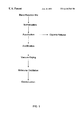
- FIG. 1 is a flow diagram of the procedure used to produce CLA.
- conjugated linoleic acid or “CLA” refers to any conjugated linoleic acid or octadecadienoic free fatty acid. It is intended that this term encompass and indicate all positional and geometric isomers of linoleic acid with two conjugated carbon-carbon double bonds any place in the molecule. CLA differs from ordinary linoleic acid in that ordinary linoleic acid has double bonds at carbon atoms 9 and 12.
- CLA examples include cis- and trans isomers (“E/Z isomers”) of the following positional isomers: 2,4-octadecadienoic acid, 4,6-octadecadienoic acid, 6,8-octadecadienoic acid, 7,9-octadecadienoic acid, 8,10-octadecadienoic acid, 9,11-octadecadienoic acid and 10,12 octadecadienoic acid, 11,13 octadecadienoic acid.
- E/Z isomers of the following positional isomers: 2,4-octadecadienoic acid, 4,6-octadecadienoic acid, 6,8-octadecadienoic acid, 7,9-octadecadienoic acid, 8,10-octadecadienoic acid, 9,11-octadecadienoic acid and 10,12 octadecadienoi
- triglycerides of CLA contain CLA at any or all of three positions on the triglyceride backbone. Accordingly, a triglyceride containing CLA may contain any of the positional and geometric isomers of CLA.
- esters of CLA include any and all positional and geometric isomers of CLA bound through an ester linkage to an alcohol or any other chemical group, including, but not limited to physiologically acceptable, naturally occurring alcohols (e.g., methanol, ethanol, propanol). Therefore, an ester of CLA or esterified CLA may contain any of the positional and geometric isomers of CLA.
- non-naturally occurring isomers include, but are not limited to c11,t13; t11,c13; t11,t13; c11,c13; c8,t10; t8,c10; t8,t10; c8,c10; and trans-trans isomers of octadecadienoic acid, and does not include t10,c12 and c9,t11 isomers of octadecadienoic acid.
- “Non-naturally occurring isomers” may also be referred to as “minor isomers” of CLA as these isomers are generally produced in low amounts when CLA is synthesized by alkali isomerization.
- low impurity CLA refers to CLA compositions, including free fatty acids, alkylesters, and triglycerides, which contain less than 1% total 8,10 octadecadienoic acids, 11,13 octadecadienoic acids, and trans-trans octadecadienoic acids.
- Prepared food product means any pre-packaged food approved for human consumption.
- c encompasses a chemical bond in the cis orientation
- t refers to a chemical bond in the trans orientation. If a positional isomer of CLA is designated without a “c” or a “t”, then that designation includes all four possible isomers.
- 10,12 octadecadienoic acid encompasses c10,t12; t10,c12; t10,t12; and c10,c12 octadecadienoic acid, while t10,c12 octadecadienoic acid or CLA refers to just the single isomer.
- oil refers to a free flowing liquid containing long chain fatty acids (e.g., CLA) or other long chain hydrocarbon groups.
- long chain fatty acids include, but are not limited to the various isomers of CLA.
- physiologically acceptable carrier refers to any carrier or excipient commonly used with oily pharmaceuticals.
- Such carriers or excipients include, but are not limited to, oils, starch, sucrose and lactose.
- oral delivery vehicle refers to any means of delivering a pharmaceutical orally, including, but not limited to, capsules, pills, tablets and syrups.
- the term “food product” refers to any food or feed suitable for consumption by humans, non-ruminant animals, or ruminant animals.
- the “food product” may be a prepared and packaged food (e.g., mayonnaise, salad dressing, bread, or cheese food) or an animal feed (e.g., extruded and pelleted animal feed or coarse mixed feed).
- composition of the present invention results from a highly controlled isomerization process, and from using the preferred starting material of sunflower or safflower oil.
- This composition has not heretofore been obtained, for application to an industrial scale, because the conventional processes historically produce conjugated linoleic acids for entirely different purposes, namely, as drying oils in the paint industry. Also, there has not been an appreciation of the implications of the isomer content of the final product, because the analytical methods for characterizing the fatty acids has not been widely available.
- 4,381,264 teaches a process where a low water content reaction zone (0.5% water) contains stoichiometric base in the presence of SO 2 to obtain conjugation of the double bonds of various polyunsaturated fatty acids.
- the aqueous alkali process was adapted in U.S. Pat. No. 4,164,505 to a continuous flow process in which an alkali metal hydroxide and water are continuously charged in a flow zone maintained at between 200 and 370 degrees C. At these temperatures, the time of reaction should be greatly foreshortened, but there is relatively little control over the isomerization. At the higher end of the temperature range, one would predict almost complete conversion to double trans species.
- Baltes el al. (U.S. Pat. No. 3,162,658) disclose the use of nonaqueous solvents and various metallic bases as catalysts for the conjugation of fatty acids.
- the various reaction parameters of the methods described by Baltes et al. are summarized in Table 2.
- Baltes et al. also disclose the use various low boiling point solvents. As most of these reactions were conducted at temperatures above the boiling point of the solvent employed, it is apparent that the reactions were conducted under pressure, which is an independent factor influencing the formation of octadecadienoic acid isomers. The product derived from these reactions will thus contain undesirable isomers.
- the CLA of the present invention lacks isomers such as the 8,10 isomer, the 11,13 isomer, and the various trans-trans isomers.
- This composition was produced by a tightly controlled nonaqueous alkali isomerization process presented in flow diagram form in FIG. 1 .
- sunflower oil or safflower oil are reacted at an ambient pressure under an inert gas atmosphere with an excess of alkali in a high-boiling point solvent, namely propylene glycol at a temperature below the boiling point of the solvent.
- the alkali is an inorganic alkali such as potassium hydroxide, cesium hydroxide, cesium carbonate or an organic alkali such as tetraethyl ammonium hydroxide.
- the catalyst is preferably provided in a molar excess as compared to the fatty acid content of oil.
- the solvent is propylene glycol.
- the reaction is conducted within a temperature range 130 to 165° C., most preferably at about 150° C.
- the time of the reaction may vary, however, there is an increased likelihood of the formation of undesirable isomers when the reaction is conducted for long periods of time. A relatively short reaction time of 2.0 to 6.5 hours has proved satisfactory for excellent yields.
- the reaction conditions described above may be varied depending upon the oil to be conjugated, the source of alkali and equipment. Preanalysis of a particular oil may indicate that the conditions must be varied to obtain the desired composition. Therefore, the temperature range, pressure, and other reaction parameters represent a starting point for design of the individual process and are intended as a guide only. For example, it is not implied that the described temperature range is the only range which may be used. The essential aspect is to provide precise temperature control. However, care must be taken because increasing the pressure may lead to less than complete isomerization and the formation of undesirable isomers. Finally, the length of the conjugation reaction may be varied. Generally, increasing amounts of undesirable isomers are formed with increasing length or reaction. Therefore, the optimal reaction time allows the reaction to go nearly or essentially to completion but does not result in the formation of undesirable isomers.
- the resulting CLA containing composition may be further purified according to FIG. 1 .
- the reaction mix is cooled to approximately 95° C., an excess of water at 50° C. is added, and the mixture slowly stirred while the temperature is reduced to about 50° C. to 60° C.
- a soap of the fatty acids is formed and glycerol is formed as a by-product.
- a molar excess of concentrated HCl is added while stirring.
- the aqueous and nonaqueous layers are then allowed to separate at about 80-90° C.
- the bottom layer containing water and propylene glycol is then drawn off. The remaining propylene glycol is removed by vacuum dehydration at 60-80° C.
- the dried CLA composition may then preferably be degassed in degassing unit with a cold trap to remove any residual propylene glycol.
- the CLA is distilled at 190° C. in a molecular distillation plant at a vacuum of 10 ⁇ 1 to 10 ⁇ 2 millibar.
- the advantage of this purfication system is the short time (less than one minute) at which the CLA is held at an elevated temperature.
- Conventional batch distillation procedures are to be strictly avoided since they involve an elevated temperature of approximately 180-200° C. for up to several hours. At these elevated temperatures the formation of undesirable trans-trans isomers will occur. Approximately 90% of the feed material is recovered as a slightly yellow distillate.
- the CLA may then be deodorized by heating to about 120-170° C., preferably at about 150° C. for 2 hours to improve smell and taste. Excessive heat may result in the formation of trans-trans isomers. These procedures produce a CLA composition with a solvent level of less than about 5 ppm, preferably less than about 1 ppm. This process eliminates toxic trace levels of solvent so that the resulting composition is essentially free of toxic solvent residues.
- the preferred oils for conjugation are sunflower and safflower oil. As compared to soybean oil, these oils have lower concentrations of undesirable components such as phosphatides and sterols. These undesirable components may contribute to the formation of gums which foul the conjugation equipment and other undesirable polymers.
- undesirable components such as phosphatides and sterols. These undesirable components may contribute to the formation of gums which foul the conjugation equipment and other undesirable polymers.
- Example 1 the CLA was prepared by the present method.
- CLA was produced by the conventional aqueous alkali method in Example 2.
- Example 3 the reaction of Example 1 is substantially repeated, only at high temperature.
- Example 4 the aqueous alkali reaction substantially identical to that of Example 2 is run at low temperature.
- the precise conditions and details of each experiments are set forth in the Examples.
- the profiles of the analysis of the CLA isomer content are set forth in tables 1-4.
- the relative area percentage is given for each identified peak corresponding to the individual isomers, for each of the four experiments.
- the GC plot gave a number of peaks for each sample tested. The area under each of these peaks was integrated to obtain a total value. The identity of the peak was determined by its relative position, from published atlases of standard elution profiles, and the scientific literature.
- the top row represents the residual value for unconjugated starting material, 9,12-linoleic acid. Both low and high temperature reaction in propylene glycol gave extremely high conversions of over 99 percent of the total starting material.
- Example 1 a peak corresponding to 11,13 mixture of isomers, the peak corresponding to c11,c13 specifically, the peaks for any of the 8,10 isomers, and the peak for unidentified isomers are all entirely missing.
- c9,t11 isomer the peaks in GC for both the 8,10 and 9,11 isomers are superimposed, and are here resolved only for Example 1 material by subtracting out that portion of the peak identified as 8,10 by NMR studies. This was not done in the other experiments, so that row 3 gives the values for combined 8,10 and 9,11 for Examples 2-4.
- a value of less than 1 percent down to undetectable is of therapeutic and nutritional value, because it reduces to trace levels potentially deleterious contaminants, especially those known to have suspect absorption pathways in lipogenesis.
- addition of 0.25 to 2.5 percent CLA to the diet can increase the incidence of CLA in tissues to approximate that in ruminants, so that other animals can be a source of CLA provided adulterating isomers are not present.
- Example 2 provides a typical aqueous alkali product representative of conventionally manufactured CLAs. Conversion is less efficient both overall, and in producing the c9,t11 and t10,c12 isomers. Note also a high percentage of the suspect 11,13 isomers, and a significant percentage of unidentified material.
- Example 3 illustrates the criticality of the temperature parameter.
- An upward shift in temperature in propylene glycol media sharply increases the amount of the contaminating isomers at the expense of the c9,t11 and t10,c12 isomers.
- Also of interest, at the higher temperature there is a dramatic increase in the trans, trans species, as double bond rearrangements are favored which yield a more stable electron configuration at levels of increased energy stress.
- Example 4 illustrates that decreasing the temperature in the aqueous alkali system, in fact, reduces the amounts of some of the contaminating isomers.
- Table 11 merely converts the relative isomer percentages in the various reactions as a function of peak area to their corresponding peak ratios.
- the present process produces a virtually complete conversion of 9,12-linoleic acid to an approximate equal amount of each of the two desired CLA isomers.
- the incidence of the 11,13 isomer is still less one third that of the low temperature aqueous alkali process.
- the present invention also provides methods for producing alkyl esters of CLA.
- the free fatty acids are combined with methanol or other monohydric low molecular weight alcohol and heated to the temperature at which the alcohol boils. Esterification proceeds under refluxing conditions with removal of the reaction water through a condenser.
- an alcoholate catalyst is blended into the ester mix.
- Typical alcoholate catalysts are sodium or potassium ethoxide, or their methyl, butyl, or propyl counterparts.
- esterification In the esterification, methanol or ethanol are preferred, although other branched or straight chain monohydric alcohols may be used.
- product of varying viscosity can be used to obtain the desired flow or compounding characteristics without affecting the therapeutic or nutritional properties arising from the CLA moieties.
- the theory and practice of esterification are conventional. A basic explanation of the most common methods is set forth in the McCraw-Hill Encyclopedia of Science & Technology, McGraw-Hill Book Co., N.Y.: 1996 (5th ed.). The animal and human body has a variety of esterases, so that the CLA-ester is cleaved to release the free fatty acids readily. Tissue uptake may have a different kinetics depending on the tissue involved and the benefit sought.
- CLA may be free or bound through ester linkages or provided in the form of an oil containing CLA triglycerides, as described in Examples 5 and 6.
- the triglycerides may be partially or wholly comprised of CLA attached to a glycerol backbone.
- the CLA may also preferably be provided as a methylester or ethylester as described in Examples 8 and 9.
- the CLA may be in the form of a non-toxic salt, such as a potassium or sodium salt (e.g., a salt formed by reacting chemically equivalent amounts of the free acids with an alkali hydroxide at a pH of about 8 to 9).
- a novel triacylglycerol is synthesized comprising the novel CLA isomer mixture disclosed hereinafter for non-aqueous isomerization of linoleic acid from sunflower and/or safflower oils.
- the pure triacylglycerols highly enriched for CLA may be confirmed by H NMR. Esterification proceeds using immobilized Candida antarctica Lipase.
- the CLA will contain at least 40 and upwardly 45-48 percent of c9,t11-octadecadienoic and t10,c12-octadecadienoic acids, and mixtures thereof.
- esters 8,10; 11,13; and trans, trans isomers There will be less than one percent esters 8,10; 11,13; and trans, trans isomers or less than five percent in the aggregate.
- the resultant triacylglycerol is not purified further to remove all levels of phosphatidyl and sterol residues. But those levels remaining from isomerization of sunflower and safflower oils will be adequate for commercial applications involving safe, edible products in feed and food.
- the immobilized Candida antarctica lipase is to be employed in a manner similar to that described for n-3 type polyunsaturated fatty acids, in Harraldson et al.
- the esterification reaction is conducted at 50-75° C., preferably 65 ° C., in the absence of any solvent and a vacuum employed in order to remove the co-produced water or alcohols (from esters) upon formation. This shifts the triacylglycerol production to completion and ensures a highly pure product virtually free of any mono- and diacylglycerols in essentially quantitative yields. Stoichiometric amounts of free fatty acids may be used, i.c.
- the 1- or 3-mono-acyglyeride is formed first, followed by the 1,3 diacylglyeride, and finally the triglyceride at the more extended reaction times.
- the mono- and diacylglyerides are useful intermediates in that they manifest biological activity, but have greater soluability in aqueous cellular environments and can participate in alternative molecular synthetic pathways such as synthesis of phospholipids or other funtional lipids.
- triglycerides are frequently deposited intact in cell membranes or storage vesicles.
- the administration of CLA in mono-, di- or triglycerol form rather than free fatty acid or ester, may influence the mode and distribution of uptake, metabolic rate and structural or physiological role of the CLA component.
- administration is oral.
- the CLA may be formulated with suitable carriers such as starch, sucrose or lactose in tablets, pills, dragees, capsules, solutions, liquids, slurries, suspensions and emulsions.
- the CLA may be provided in aqueous solution, oily solution, or in any of the other forms discussed above.
- the tablet or capsule of the present invention may be coated with an enteric coating which dissolves at a pH of about 6.0 to 7.0.
- a suitable enteric coating which dissolves in the small intestine but not in the stomach is cellulose acetate phthalate.
- the CLA is provided as soft gelatin capsules containing 750 mg 80% CLA (TonalinTM).
- the CLA may also be provided by any of a number of other routes, including, but not limited to, intravenous, intramuscular, intra-arterial, intramedullary, intrathecal, intraventricular, transdermal, subcutaneous, intraperitoneal, intranasal, enteral, topical, sublingual or rectal means. Further details on techniques for formulation for and administration and administration may be found in the latest edition of Remington's Pharmaceutical Sciences (Maack Publishing Co., Easton, Pa.).
- CLA may also be provided as a supplement in various prepared food products and drinks.
- prepared food product means any natural, processed, diet or non-diet food product to which CLA has been added.
- the CLA may be added in the form of free fatty acids or as an oil containing partial or whole triglycerides of CLA. Therefore, CLA may be directly incorporated into various prepared food products, including, but not limited to diet drinks, diet bars, supplements, prepared frozen meals, candy, snack products (e.g., chips), prepared meat products, milk, cheese, yogurt and any other fat or oil containing foods.
- CLA is susceptible to oxidation. Therefore, it is desirable to package CLA for human use with suitable antioxidants such as lecithin, tocopherols, ascorbate, ascorbyl palmitate or spice extracts such as rosemary extract.
- suitable antioxidants such as lecithin, tocopherols, ascorbate, ascorbyl palmitate or spice extracts such as rosemary extract.
- Safflower oil was isomerized in propylene glycol at low temperatures using KOH as a catalyst.
- the isomerization apparatus consisted of a two-necked flask with a thermometer placed in one neck, leaving a small opening to release excess pressure. A nitrogen supply was attached to the other neck of the flask. Solutions added to the flask were agitated by the use of a magnetic bar and a magnetic stirrer. The temperature of the flask was controlled by placing the flask in a thermostat-controlled oil bath placed on the magnetic stirrer.
- the flask was filled with 60.27 g propylene glycol and 28.20 g KOH and immersed into the oil bath. The temperature was increased to 130° C. to dissolve the KOH. After the KOH had dissolved, 60.09 g of safflower oil was introduced into the flask. A high volume of nitrogen was circulated through the two-neck flask for 5 min. and then reduced to a lower volume. The mixture was heated to 150° C., which took approximately 40 min. The mixture was then allowed to react at 150° C. for 3.5 hours. At intervals, 3ml samples were withdrawn for analysis.
- the resulting upper layer was added to till of purified water in a new test tube and again shaken under nitrogen. The resulting upper layer was then washed of isooctane and decanted into a third test tube. A small amount of sodium sulfate was added for water absorption. A 1 ⁇ l sample was then injected directly into the Gas chromatograph.
- the conjugated linoleic acid produced according to this method by characterized by comparing the various isomers produced.
- Second, the ratio of c9,t11 and t10,c12 isomers to total peak area may be determined. This value is 0.953.
- Third, the ratio of the t9,t11 and t10,t12 isomers to the c9,t11 and t10,c12 isomers may be determined. This value is 0.010.
- the ratio of the t9,t11 and t10,t12 isomers to total peak area may be determined. This value is 0.009.
- the ratio of the t10,c12 isomer to the c9,t11 isomer may be determined. This value is 1.018.
- Example 2 Example 3
- Example 4 c9,t12 0.44 1.43 0.23 20.52 c9,t11 36.51 na na na c9,t11/ ⁇ 0.5* 24.87 15.62 22.45 8,10 t10,c12 37.16 16.00 12.63 19.77 c9,c11 1.06 2.08 2.21 0.87 c8,c10 ⁇ 0.5 1.26 0.64 1.21 c10,c12 1.26 3.00 3.98 0.89 t9,t11/ 0.73 6.00 29.39 1.13 t10,t12 11,13 ⁇ 0.5 10.23 4.05 7.65 c11,c13 ⁇ 0.5 1.77 1.40 0.12 Uniden- ⁇ 0.5 2.91 4.34 0.55 tified CLA Total 76.88 72.61 74.24 54.55 Total 77.32 74.04 74.47 75.07 area *total percentage of 8,10 is less than 0.5 na- value is reflected as component of c9
- H nuclear magnetic resonance spectra were recorded on a Bruker AC 250 NMR spectrometer in deuterated chloroform as a solvent.
- HPLC separations were carried out by a PrepLCTM System 500A instrument from Waters using the PrepPak® 500/Silica Cartridge column from Millipore, eluting with 10% diethyl ether in petroleum ether.
- Analytical GLC was conducted on a Perkin-Elmer 8140 Gas Chromatograph according to a previously described procedure, as described in Haraldsson, et al., Acta Chem Scanned 45:723 (1991).
- the immobilized Candida antarctica lipase was provided by Novo Nordisk in Denmark as NovozymeTM. It was used directly as provided in the esterification experiments.
- Analytical grade diethyl ether purchased from Merck was used without any purification, but synthetic grade n-hexane also from Merck was freshly distilled prior to use in extractions and HPLC chromatography.
- Glycerol (99%) was purchased from Sigma and Aldrich Chemical Company and used without further purification.
- the CLA concentrate was provided by Natural Lipids in Norway as free fatty acids as TonalinTM. Its purity was confirmed by analytical GLC and high-field NMR spectroscopy which revealed some glyceride impurities.
- the CLA concentrate was found to contain 43.3% 9-cis,11-trans-linoleic acid, 44.5% 10-trans,12-cis-linoleic acid, 5.4% of other CLA isomers, 5.6% oleic acid and 0.6% each of palmitic and stearic acid as determined by GLC at the Science Institute.
- Immobilized Candida antarctica lipase (1.25 g) was added to a mixture of glycerol (1.22 g, 13.3 mmol) and CLA as free fatty acid (M.wt.280.3 g/mol; 11.6 g, 41.5 mmol). The mixture was gently stirred on a magnetic stirrer hot plate at 65° C. under continuous vacuum of 0.01-0.5 Torr. The volatile water produced during the progress of the reaction was continuously condensed into liquid nitrogen cooled traps. After 48 h the reaction was discontinued, n-hexane added and the enzyme separated off by filtration. The organic phase was treated with an alkaline aqueous solution of sodium carbonate to remove excessive free fatty acids (when required).
- the reaction was carried out in a closed vessel.
- the following components were mixed together: 10 g safflower FAME and a mixture of approximately 2.8 g KOCH 3 and 2.8 g methanol. There was probably more KOMe than methanol due to evaporation of methanol during mixing of the two components.
- the mixture was stirred for 5 hours at 111-115 deg C. in nitrogen atmosphere in a closed reaction vessel.
- the distribution of isomers was analyzed by Gas Chromatography. The results are summarized in Table 14. These data indicate that the conjugation safflower FAME may be accomplished under mild conditions, resulting in a product lacking appreciable amounts of undesirable 8,10 and 11,13 isomers.
- safflower conjugated FAME may be divided into two steps, methanolysis and conjugation.
- methanolysis 6,000 kg safflower oil was drawn into a closed reactor.
- the reactor was purged with nitrogen at atmospheric pressure, and 1150 liters of methanol and 160 kg of NaOCH 3 (30% solution) were added.
- the mixture is heated to 65° C. while stirring, and reacted at 65° C. for 2 hours.
- the resulting bottom layer was decanted while the reactor was purged with nitrogen gas.
- 1000 liters of water (40-50° C., into which 50 kg citric acid monohydrate has been dissolved) was then added while stirring.
- the layers were allowed to separate (approx. 60 min.) and the bottom layer decanted while purging the reactor with nitrogen gas.
- the resulting safflower FAME product was dried at 80° C. under vacuum for one hour.
- the resulting CLA was analyzed using a Perkin Elmer Autosystem XL GC under the following conditions:
- Table 22 Ingredients lbs. kgs. Ground yellow corn 1242 564.5 CLA 5 2.3 Alfalfa meal, 17% 25 11.3 Soybean meal, dehulled 451.6 205.3 Meat and bone meal (47%) 50 23.0 DL-methionine 1.0 .5 Dicalcium phosphate 7 3.1 Ground limestone 174 79.1 Iodized salt 7 3.1 Stabilized yellow grease 37 17.2 Mineral and vitamin supplements Calcium pantothenate (mg) 5,000 Manganese (g) 52 Selenium (mg) 90.8 Zinc (g) 16 Vitamin A (IU) 6,000,000 Vitamin D 3 (IU) 2,000,000 Choline (mg) 274,000 Niacin (mg) 12,000 Riboflavin (mg) 2,000 Vitamin B-12 6 Total 2000 909.4
Landscapes
- Health & Medical Sciences (AREA)
- Life Sciences & Earth Sciences (AREA)
- Chemical & Material Sciences (AREA)
- Medicinal Chemistry (AREA)
- Pharmacology & Pharmacy (AREA)
- Epidemiology (AREA)
- Animal Behavior & Ethology (AREA)
- General Health & Medical Sciences (AREA)
- Public Health (AREA)
- Veterinary Medicine (AREA)
- Engineering & Computer Science (AREA)
- Bioinformatics & Cheminformatics (AREA)
- Biophysics (AREA)
- Molecular Biology (AREA)
- Oil, Petroleum & Natural Gas (AREA)
- Mycology (AREA)
- Nutrition Science (AREA)
- Food Science & Technology (AREA)
- Polymers & Plastics (AREA)
- Fodder In General (AREA)
- Fats And Perfumes (AREA)
- Acyclic And Carbocyclic Compounds In Medicinal Compositions (AREA)
- Preparation Of Compounds By Using Micro-Organisms (AREA)
- Edible Oils And Fats (AREA)
Priority Applications (5)
| Application Number | Priority Date | Filing Date | Title |
|---|---|---|---|
| US09/270,940 US6410761B1 (en) | 1998-03-17 | 1999-03-17 | Conjugated linoleic acid compositions and methods of making same |
| US09/544,084 US7776353B1 (en) | 1998-03-17 | 2000-04-06 | Conjugated linoleic acid compositions |
| US09/961,522 US6524527B2 (en) | 1998-03-17 | 2001-09-24 | Conjugated linoleic acid compositions |
| US10/124,972 US6610868B2 (en) | 1998-03-17 | 2002-04-18 | Conjugated linoleic acid compositions and methods of making same |
| US12/020,820 US8207225B2 (en) | 1998-03-17 | 2008-01-28 | Conjugated linoleic acid compositions |
Applications Claiming Priority (5)
| Application Number | Priority Date | Filing Date | Title |
|---|---|---|---|
| US4253898A | 1998-03-17 | 1998-03-17 | |
| US09/042,767 US6015833A (en) | 1998-03-17 | 1998-03-17 | Conjugated linoleic acid compositions |
| US09/132,593 US7078051B1 (en) | 1998-08-11 | 1998-08-11 | Conjugated linoleic acid alkyl esters in feedstuffs and food |
| US16041698A | 1998-09-25 | 1998-09-25 | |
| US09/270,940 US6410761B1 (en) | 1998-03-17 | 1999-03-17 | Conjugated linoleic acid compositions and methods of making same |
Related Parent Applications (4)
| Application Number | Title | Priority Date | Filing Date |
|---|---|---|---|
| US4253898A Continuation-In-Part | 1998-03-17 | 1998-03-17 | |
| US09/042,767 Continuation-In-Part US6015833A (en) | 1998-03-17 | 1998-03-17 | Conjugated linoleic acid compositions |
| US09/132,593 Continuation-In-Part US7078051B1 (en) | 1998-03-17 | 1998-08-11 | Conjugated linoleic acid alkyl esters in feedstuffs and food |
| US16041698A Continuation-In-Part | 1998-03-17 | 1998-09-25 |
Related Child Applications (4)
| Application Number | Title | Priority Date | Filing Date |
|---|---|---|---|
| US09/132,593 Continuation-In-Part US7078051B1 (en) | 1998-03-17 | 1998-08-11 | Conjugated linoleic acid alkyl esters in feedstuffs and food |
| US09/544,084 Continuation-In-Part US7776353B1 (en) | 1998-03-17 | 2000-04-06 | Conjugated linoleic acid compositions |
| US09/961,522 Continuation-In-Part US6524527B2 (en) | 1998-03-17 | 2001-09-24 | Conjugated linoleic acid compositions |
| US10/124,972 Continuation US6610868B2 (en) | 1998-03-17 | 2002-04-18 | Conjugated linoleic acid compositions and methods of making same |
Publications (1)
| Publication Number | Publication Date |
|---|---|
| US6410761B1 true US6410761B1 (en) | 2002-06-25 |
Family
ID=27488800
Family Applications (4)
| Application Number | Title | Priority Date | Filing Date |
|---|---|---|---|
| US09/270,940 Expired - Lifetime US6410761B1 (en) | 1998-03-17 | 1999-03-17 | Conjugated linoleic acid compositions and methods of making same |
| US09/271,024 Expired - Lifetime US7029691B1 (en) | 1998-03-17 | 1999-03-17 | Conjugated linoleic acid compositions |
| US10/124,972 Expired - Lifetime US6610868B2 (en) | 1998-03-17 | 2002-04-18 | Conjugated linoleic acid compositions and methods of making same |
| US10/623,825 Expired - Fee Related US7514096B2 (en) | 1998-03-17 | 2003-07-21 | Triacylglycerols of enriched CLA content |
Family Applications After (3)
| Application Number | Title | Priority Date | Filing Date |
|---|---|---|---|
| US09/271,024 Expired - Lifetime US7029691B1 (en) | 1998-03-17 | 1999-03-17 | Conjugated linoleic acid compositions |
| US10/124,972 Expired - Lifetime US6610868B2 (en) | 1998-03-17 | 2002-04-18 | Conjugated linoleic acid compositions and methods of making same |
| US10/623,825 Expired - Fee Related US7514096B2 (en) | 1998-03-17 | 2003-07-21 | Triacylglycerols of enriched CLA content |
Country Status (14)
| Country | Link |
|---|---|
| US (4) | US6410761B1 (2) |
| EP (1) | EP0950410B1 (2) |
| JP (1) | JP2000516480A (2) |
| KR (1) | KR100619651B1 (2) |
| AT (1) | ATE350028T1 (2) |
| AU (1) | AU764699B2 (2) |
| CA (1) | CA2289648C (2) |
| DE (1) | DE69934627T2 (2) |
| DK (1) | DK0950410T3 (2) |
| ES (1) | ES2279586T3 (2) |
| IN (1) | IN2000KO00319A (2) |
| MX (1) | MX238954B (2) |
| NO (1) | NO331483B1 (2) |
| WO (1) | WO1999047135A1 (2) |
Cited By (23)
| Publication number | Priority date | Publication date | Assignee | Title |
|---|---|---|---|---|
| US20030138548A1 (en) * | 2002-01-22 | 2003-07-24 | Mars Incorporated | Weight management system for obese animals |
| US20030149288A1 (en) * | 2000-04-18 | 2003-08-07 | Natural Asa | Conjugated linoleic acid powder |
| US6677470B2 (en) | 2001-11-20 | 2004-01-13 | Natural Asa | Functional acylglycerides |
| WO2004015046A1 (de) * | 2002-08-07 | 2004-02-19 | Cognis Deutschland Gmbh & Co. Kg | Verfahren zur herstellung von konjugierter linolsäure |
| US20040097588A1 (en) * | 1998-05-04 | 2004-05-20 | Daria Jerome | Isomer enriched conjugated linoleic acid compositions |
| US6743931B2 (en) | 2002-09-24 | 2004-06-01 | Natural Asa | Conjugated linoleic acid compositions |
| US6756405B2 (en) | 2000-04-18 | 2004-06-29 | Natural Asa | Conjugated linoleic acid powder |
| US20040128705A1 (en) * | 2002-09-17 | 2004-07-01 | Murray James D. | Stearoyl CoA desaturase transgenic non-human animals |
| US20040229950A1 (en) * | 2002-11-26 | 2004-11-18 | Vanderhoek Jack Y. | Method and composition with conjugated linoleic acid esters |
| US20050064017A1 (en) * | 2002-01-22 | 2005-03-24 | Mars Incorporated | Reduction of renal damage in companion animals |
| US20050069593A1 (en) * | 2003-09-29 | 2005-03-31 | Life Time Fitness, Inc. | Nutritional supplement containing 7-Keto-DHEA and conjugated linoleic acid |
| WO2005087017A2 (en) | 2004-03-10 | 2005-09-22 | Natural Asa | Compositions comprising reverse isomers of conjugated linoleic acid |
| US20060035974A1 (en) * | 2004-08-05 | 2006-02-16 | Yun Anthony J | Linoleic acid active agents for enhancing probability of becoming pregnant |
| US20070032686A1 (en) * | 2003-09-09 | 2007-02-08 | Toru Sakamoto Et Al | Process for producing alcohol |
| US20070191619A1 (en) * | 2003-12-23 | 2007-08-16 | Stepan Company | Production and purification of esters of conjugated linoleic acids |
| US20070218183A1 (en) * | 2006-03-14 | 2007-09-20 | Bunge Oils, Inc. | Oil composition of conjugated linoleic acid |
| US20080206290A1 (en) * | 2007-02-26 | 2008-08-28 | Beiersdorf Ag | Cosmetic combination product for improving appearance |
| WO2012068645A2 (en) | 2010-11-25 | 2012-05-31 | Katholieke Universiteit Leuven | Method for the production of conjugated polyunsaturated fatty acids with heterogenous catalysts |
| US20120258450A1 (en) * | 2011-04-05 | 2012-10-11 | Receptomon, Llc | Method for Monitoring Gene Expression of Translation and Integral/Secretory Protein Synthesis by Magnetic Resonance Spectroscopy (MRS) |
| WO2013082035A1 (en) * | 2011-11-28 | 2013-06-06 | Lhoist North America, Inc. | Method and composition for increasing the proportion of dietary ingredients that are resistant to degradation by ruminal microorganisms |
| CN103849660A (zh) * | 2014-03-28 | 2014-06-11 | 大连医诺生物有限公司 | 一种以固定化脂肪酶为催化剂的耦联法制备共轭亚油酸的方法 |
| WO2014143614A1 (en) | 2013-03-11 | 2014-09-18 | Jan Remmereit | Lipid compositions containing bioactive fatty acids |
| WO2023209465A1 (en) | 2022-04-28 | 2023-11-02 | Societe Des Produits Nestle Sa | Diagnosing and treating chronic kidney disease in a feline |
Families Citing this family (38)
| Publication number | Priority date | Publication date | Assignee | Title |
|---|---|---|---|---|
| US7078051B1 (en) | 1998-08-11 | 2006-07-18 | Natural Asa | Conjugated linoleic acid alkyl esters in feedstuffs and food |
| DE69934627T2 (de) * | 1998-03-17 | 2007-10-25 | Natural Asa | Konjugierte Linolsäurezusammensetzung |
| US7776353B1 (en) | 1998-03-17 | 2010-08-17 | Aker Biomarine Asa | Conjugated linoleic acid compositions |
| FR2784268B1 (fr) * | 1998-10-12 | 2000-12-29 | Gervais Danone Sa | Nouvelle composition alimentaire, a base de matiere issue du lait, sous la forme d'une emulsion huile dans eau |
| GB2355382A (en) * | 1999-08-24 | 2001-04-25 | Gilbertson & Page Ltd | Conjugated linoleic acid for weight reduction in a dog |
| JP4262382B2 (ja) * | 2000-02-03 | 2009-05-13 | 株式会社ヤクルト本社 | 共役脂肪酸グリセリド含有発酵食品及びその製造法 |
| CA2404799C (en) * | 2000-04-06 | 2007-08-07 | Conlinco, Inc. | Conjugated linoleic acid compositions |
| US6380409B1 (en) * | 2000-04-24 | 2002-04-30 | Conlin Co., Inc. | Methods for preparing CLA isomers |
| DE10046402B4 (de) * | 2000-09-18 | 2006-04-20 | Cognis Ip Management Gmbh | Verfahren zur Herstellung von Rohstoffen für die Gewinnung von konjugierter Linolsäure |
| EP1389426A4 (en) * | 2001-04-25 | 2005-01-12 | Yakult Honsha Kk | FERMENTED FOODS AND METHOD FOR THEIR PRODUCTION |
| DE10143534B4 (de) | 2001-09-06 | 2005-03-24 | Cognis Deutschland Gmbh & Co. Kg | Verfahren zur Herstellung von konjugierten Fettsäureestern |
| DE10208812A1 (de) * | 2002-03-01 | 2003-09-11 | Basf Plant Science Gmbh | Verfahren zur Herstellung von ungesättigten Fettsäuren |
| DE10259157A1 (de) * | 2002-12-18 | 2004-07-01 | Cognis Deutschland Gmbh & Co. Kg | Verfahren zur Herstellung von konjugierter Linolsäure |
| US6897327B2 (en) * | 2003-05-08 | 2005-05-24 | Stepan Company | Manufacture of conjugated linoleic salts and acids |
| DE102004015781A1 (de) | 2004-03-31 | 2005-10-20 | Cognis Ip Man Gmbh | Verfahren zur enzymatischen Synthese von Triglyceriden ungesättigter Fettsäuren |
| DE102004015782A1 (de) * | 2004-03-31 | 2005-10-20 | Cognis Ip Man Gmbh | Verfahren zur enzymatischen Synthese von Triglyceriden ungesättigter Fettsäuren |
| JP4772295B2 (ja) * | 2004-06-22 | 2011-09-14 | 学校法人順天堂 | 共役脂肪酸を有効成分とする運動能力改善剤 |
| DE102004043824A1 (de) | 2004-09-10 | 2006-03-16 | Cognis Ip Management Gmbh | Emulsionen mit ungesättigten Fettsäuren und deren Estern |
| WO2006040914A1 (ja) * | 2004-10-08 | 2006-04-20 | The Nisshin Oillio Group, Ltd. | 不飽和脂肪酸濃縮物の製造方法 |
| KR101282098B1 (ko) * | 2005-02-04 | 2013-07-04 | 안칭 중창 바이오테크놀로지 컴파니 리미티드 | 지방산 제조 방법 |
| ES2296438B1 (es) * | 2005-03-04 | 2009-03-16 | Corporacion Alimentaria Peñasanta, S.A. | Alimento funcional a base de un producto lacteo no fermentado y acido linoleico conjugado. |
| EP1891189B1 (en) * | 2005-05-23 | 2020-09-23 | Epax Norway AS | Concentration of fatty acid alkyl esters by enzymatic reactions with glycerol |
| US20070049763A1 (en) * | 2005-08-23 | 2007-03-01 | Reaney Martin J | Methods for preparation and use of strong base catalysts |
| US20080113067A1 (en) * | 2005-10-17 | 2008-05-15 | Monoj Sarma | Protein-Containing Food Product and Coating for a Food Product and Method of Making Same |
| US20070087085A1 (en) * | 2005-10-17 | 2007-04-19 | Bunge Oils, Inc. | Protein-containing food product and coating for a food product and method of making same |
| US8203012B2 (en) * | 2005-12-05 | 2012-06-19 | Stepan Company | Process for preparing conjugated linoleic acid and derivatives thereof from ricinoleic acid |
| US20070148311A1 (en) * | 2005-12-22 | 2007-06-28 | Bunge Oils, Inc. | Phytosterol esterification product and method of make same |
| DE102007009649A1 (de) | 2007-02-26 | 2008-08-28 | Beiersdorf Ag | Nahrungsergänzungsmittel zur Pflege und/oder Verschönerung der Haut |
| CA2702577A1 (en) | 2007-10-15 | 2009-04-23 | Jbs United, Inc. | Method for increasing performance of offspring |
| EP2391370B1 (en) | 2009-02-02 | 2015-06-03 | Galmed Research and Development Ltd. | Methods and compositions for treating alzheimer's disease |
| CN102640805B (zh) * | 2011-02-18 | 2014-12-10 | 丰宁京北第一草原原生态食品科技开发有限公司 | 食用植物油脂脱臭、脱酸、去除苯并芘的方法 |
| EP2826384A1 (de) | 2013-07-16 | 2015-01-21 | Evonik Industries AG | Verfahren zur Trocknung von Biomasse |
| EP3200604B2 (de) | 2014-10-02 | 2025-05-07 | Evonik Operations GmbH | Verfahren zur herstellung eines futtermittels |
| BR112017006838B1 (pt) | 2014-10-02 | 2021-07-06 | Evonik Operations Gmbh | Processo para produzir um alimento para animais compreendendo biomassa contendo pufa, alimento para animais e método para criar animais |
| EP3200606B1 (de) | 2014-10-02 | 2021-03-31 | Evonik Operations GmbH | Verfahren zur herstellung eines pufas enthaltenden futtermittels durch extrusion einer pufas enthaltenden biomasse des typs labyrinthulomycetes |
| US11464244B2 (en) | 2014-10-02 | 2022-10-11 | Evonik Operations Gmbh | Feedstuff of high abrasion resistance and good stability in water, containing PUFAs |
| US9752099B2 (en) | 2014-12-05 | 2017-09-05 | Board Of Trustees Of The University Of Arkansas | Conjugated linoleic acid rich vegetable oil production using heterogeneous catalysis |
| WO2018183448A1 (en) * | 2017-03-31 | 2018-10-04 | Metabolon, Inc. | Comprehensive and quatitative lipid and tocopherol analysis |
Citations (2)
| Publication number | Priority date | Publication date | Assignee | Title |
|---|---|---|---|---|
| AU253031A (en) * | 1931-06-11 | 1931-11-19 | Eastman Kodak Company | Process of reclaiming dyed cellulose nitrate film scrap |
| US5468887A (en) * | 1992-03-13 | 1995-11-21 | The Dial Corp. | Production of fatty acid methyl esters and soaps therefrom |
Family Cites Families (48)
| Publication number | Priority date | Publication date | Assignee | Title |
|---|---|---|---|---|
| US2242230A (en) | 1941-05-20 | Process of producing conjugation in | ||
| US2350583A (en) | 1944-06-06 | Drying oils | ||
| GB558881A (2) | 1900-01-01 | |||
| US3050619A (en) * | 1959-10-02 | 1962-08-21 | Raylite Electric Corp | Display outfits with separable decorative floral cover constructions |
| DE1156788C2 (de) | 1959-12-02 | 1973-11-22 | Brinckmann Harburger Fett | Verfahren zur Umwandlung von Fettsaeureestern einwertiger Alkohole mit isolierten Doppelbindungen (íÀIsolenfettsaeureesterníÂ) in Fettsaeureester mit konjugierten Doppelbindungen (íÀKonjuenfettsaeureesteríÂ) |
| US3278567A (en) * | 1965-01-19 | 1966-10-11 | Pacific Vegets Le Oil Corp | Process for conjugating and isomerizing drying oils and products |
| US3433939A (en) * | 1965-10-22 | 1969-03-18 | Kenneth A Sieloff | Decorative night light |
| US3610917A (en) * | 1968-05-22 | 1971-10-05 | John D Hunt | Lighting fixture |
| US3711696A (en) * | 1970-10-22 | 1973-01-16 | K Sieloff | Floral decorative night light |
| US3729379A (en) * | 1971-08-31 | 1973-04-24 | Us Agriculture | Hydroxy-conjugated fatty acids |
| US4164505A (en) | 1977-07-08 | 1979-08-14 | Sylvachem Corporation | Flow process for conjugating unconjugated unsaturation of fatty acids |
| US4215462A (en) * | 1978-12-04 | 1980-08-05 | Fernandez Emile C | Method of making a translucent optical diffuser for a lamp |
| DE3019963A1 (de) | 1980-05-24 | 1981-12-03 | Henkel KGaA, 4000 Düsseldorf | Verfahren zur konjugierung mehrfach ungesaettigter fettsaeuren und fettsaeuregemische |
| US5208356A (en) * | 1989-02-17 | 1993-05-04 | Wisconsin Alumni Research Foundation | Octadecadienoic phospholipic esters, antioxidant and mold inhibiting compositions |
| US5017614A (en) | 1989-02-17 | 1991-05-21 | Wisconsin Alumni Research Foundation | Methods of preventing oxidation, quenching singlet oxygen and inhibiting mold growth and novel compositions therefor |
| US5070104A (en) * | 1989-02-17 | 1991-12-03 | Wisconsin Alumni Research Foundation | Methods of chelating metal and novel compositions therefor |
| US5288619A (en) * | 1989-12-18 | 1994-02-22 | Kraft General Foods, Inc. | Enzymatic method for preparing transesterified oils |
| DE69122717T2 (de) | 1990-05-14 | 1997-05-07 | Eastman Kodak Co | Fotografische filme enthaltend silberhalogenidkörner mit geringen zwillingsebenenabständen |
| US5428072A (en) | 1992-04-29 | 1995-06-27 | Wisconsin Alumni Research Foundation | Method of increasing the efficiency of feed conversion in animals |
| US5554646A (en) * | 1992-04-29 | 1996-09-10 | Wisconsin Alumni Research Foundation | Method for reducing body fat in animals |
| US5674901A (en) | 1995-06-01 | 1997-10-07 | Wisconsin Alumni Research Foundation | Methods of treating animals to maintain or increase CD-4 and CD-8 cell populations |
| US5430066A (en) | 1992-04-29 | 1995-07-04 | Wisconsin Alumni Research Foundation | Methods for preventing weight loss, reduction in weight gain, and anorexia due to immune stimulation |
| US5760082C1 (en) | 1994-08-29 | 2001-03-06 | Wisconsin Alumni Res Found | Dietetic foods containing conjugated linoleic acids |
| US5814663A (en) | 1994-08-29 | 1998-09-29 | Wisconsin Alumni Research Foundation | Method for maintaining an existing level of body fat |
| MY118354A (en) | 1995-05-01 | 2004-10-30 | Scarista Ltd | 1,3-propane diol derivatives as bioactive compounds |
| US5856149A (en) | 1995-06-01 | 1999-01-05 | Wisconsin Alumni Research Foundation | Method of producing conjugated fatty acids |
| ES2161969T3 (es) | 1995-11-14 | 2001-12-16 | Unilever Nv | Grasa comestible para untar. |
| US6184009B1 (en) * | 1995-11-14 | 2001-02-06 | Loders Croklaan B.V. | Process for the preparation of materials with a high content of conjugated long chain polyunsaturated fatty acids |
| US5585400A (en) | 1996-02-27 | 1996-12-17 | Wisconsin Alumni Research Foundation | Methods of attenuating the allergic response in animals |
| DE69736679T2 (de) | 1996-04-11 | 2006-12-28 | Loders Croklaan B.V. | Fliessfähige fettzusammensetzung |
| AUPO028696A0 (en) | 1996-06-06 | 1996-07-04 | Van Gelder-Stubbeng Pty Limited | A waste mill |
| US5725873A (en) * | 1996-07-22 | 1998-03-10 | Wisconsin Alumni Research Foundation | Method of improving the growth or the efficiency of feed conversion of an animal and compositions for use therein |
| US5760083A (en) * | 1996-08-07 | 1998-06-02 | Wisconsin Alumni Research Foundation | Use of CLA to reduce the incidence of valgus and varus leg deforomities in poultry |
| US5804210A (en) | 1996-08-07 | 1998-09-08 | Wisconsin Alumni Research Foundation | Methods of treating animals to maintain or enhance bone mineral content and compositions for use therein |
| JP3017108B2 (ja) * | 1996-10-30 | 2000-03-06 | リノール油脂株式会社 | 共役リノール酸の製造方法 |
| US5855917A (en) | 1996-12-04 | 1999-01-05 | Wisconsin Alumni Research Foundation | Method for controlling body fat and/or body weight in animals and pharmaceutical compositions for use therein comprising 20-carbon conjugated unsaturated fatty acids |
| US5850305A (en) | 1996-12-18 | 1998-12-15 | Scientific-Atlanta, Inc. | Adaptive predistortion control for optical external modulation |
| US5885594A (en) * | 1997-03-27 | 1999-03-23 | The Procter & Gamble Company | Oral compositions having enhanced mouth-feel |
| US5851572A (en) | 1997-04-25 | 1998-12-22 | Wisconsin Alumni Research Foundation | Method of increasing fat firmness and improving meat quality in animals with conjugated linolenic acid |
| DE19718245C5 (de) | 1997-04-30 | 2004-11-11 | Cognis Deutschland Gmbh & Co. Kg | Synthetische Triglyceride auf Basis konjugierter Linolsäure, Verfahren zu deren Herstellung und deren Verwendung |
| CA2246085C (en) | 1997-09-12 | 2004-04-27 | Krish Bhaggan | Production of materials rich in conjugated isomers of long chain polyunsaturated fatty acid residues |
| DE69934627T2 (de) | 1998-03-17 | 2007-10-25 | Natural Asa | Konjugierte Linolsäurezusammensetzung |
| US6015833A (en) | 1998-03-17 | 2000-01-18 | Conlinco., Inc. | Conjugated linoleic acid compositions |
| CA2287252A1 (en) * | 1999-10-22 | 2001-04-22 | Kuo Fen Shu | Improved light emitted diode light bulb holder used in led type christmas light bulb string |
| US6364501B1 (en) * | 1999-12-02 | 2002-04-02 | Hung-Te Tai | Illuminative vase-type scented ornamental decoration structure |
| GB9929897D0 (en) | 1999-12-18 | 2000-02-09 | Slabas Antoni R | Improvements in or relating to conjugated fatty acids and related compounds |
| ES2352001T3 (es) | 2000-01-19 | 2011-02-14 | Martek Biosciences Corporation | Procedimiento de extracción sin disolvente. |
| US20030043579A1 (en) * | 2001-08-31 | 2003-03-06 | Rong Zhu Jian | Decorative lighting string |
-
1999
- 1999-03-17 DE DE69934627T patent/DE69934627T2/de not_active Expired - Lifetime
- 1999-03-17 CA CA002289648A patent/CA2289648C/en not_active Expired - Fee Related
- 1999-03-17 DK DK99105497T patent/DK0950410T3/da active
- 1999-03-17 US US09/270,940 patent/US6410761B1/en not_active Expired - Lifetime
- 1999-03-17 ES ES99105497T patent/ES2279586T3/es not_active Expired - Lifetime
- 1999-03-17 KR KR1020007010266A patent/KR100619651B1/ko not_active Expired - Fee Related
- 1999-03-17 EP EP99105497A patent/EP0950410B1/en not_active Revoked
- 1999-03-17 JP JP11547251A patent/JP2000516480A/ja not_active Withdrawn
- 1999-03-17 AU AU31886/99A patent/AU764699B2/en not_active Ceased
- 1999-03-17 AT AT99105497T patent/ATE350028T1/de not_active IP Right Cessation
- 1999-03-17 WO PCT/US1999/005806 patent/WO1999047135A1/en not_active Ceased
- 1999-03-17 US US09/271,024 patent/US7029691B1/en not_active Expired - Lifetime
-
2000
- 2000-09-15 NO NO20004615A patent/NO331483B1/no not_active IP Right Cessation
- 2000-09-15 MX MXPA00009106 patent/MX238954B/es active IP Right Grant
- 2000-09-15 IN IN319KO2000 patent/IN2000KO00319A/en unknown
-
2002
- 2002-04-18 US US10/124,972 patent/US6610868B2/en not_active Expired - Lifetime
-
2003
- 2003-07-21 US US10/623,825 patent/US7514096B2/en not_active Expired - Fee Related
Patent Citations (2)
| Publication number | Priority date | Publication date | Assignee | Title |
|---|---|---|---|---|
| AU253031A (en) * | 1931-06-11 | 1931-11-19 | Eastman Kodak Company | Process of reclaiming dyed cellulose nitrate film scrap |
| US5468887A (en) * | 1992-03-13 | 1995-11-21 | The Dial Corp. | Production of fatty acid methyl esters and soaps therefrom |
Non-Patent Citations (4)
| Title |
|---|
| Arcos et al, Rapid enzymatic production of acylglycerols from conjugated linoleic acid and glycerol in a solvent-free system; Biotechnology Letters, vol. 20 No., pp. 617-621, Jun. 1998. * |
| Hashizume et al Manufacture of higly-unsaturated fatty acids with Lipase, JP 02025447 citation and abs, 1990.* * |
| Klemann, Acid-hydrolyzable ester derivatives as low calorie fat mimetics, US 5068119, citation, 1991.* * |
| Suzuki et al, Method for manufacturing 1,2-saturated-3-unsaturated trigylcerides using lipase, JP 10025491, citation and abs, Jan. 27, 1998.* * |
Cited By (39)
| Publication number | Priority date | Publication date | Assignee | Title |
|---|---|---|---|---|
| US7101914B2 (en) | 1998-05-04 | 2006-09-05 | Natural Asa | Isomer enriched conjugated linoleic acid compositions |
| US20040097588A1 (en) * | 1998-05-04 | 2004-05-20 | Daria Jerome | Isomer enriched conjugated linoleic acid compositions |
| US20030149288A1 (en) * | 2000-04-18 | 2003-08-07 | Natural Asa | Conjugated linoleic acid powder |
| US6756405B2 (en) | 2000-04-18 | 2004-06-29 | Natural Asa | Conjugated linoleic acid powder |
| US6677470B2 (en) | 2001-11-20 | 2004-01-13 | Natural Asa | Functional acylglycerides |
| US20080038403A1 (en) * | 2002-01-22 | 2008-02-14 | Mars Incorporated | Weight management system for obese animals |
| US20030138547A1 (en) * | 2002-01-22 | 2003-07-24 | Mars, Incorporated | Weight management system for animals |
| US20070243311A1 (en) * | 2002-01-22 | 2007-10-18 | Mars Incorporated | Weight management system for obese animals |
| US20070286889A1 (en) * | 2002-01-22 | 2007-12-13 | Mars Incorporated | Weight management system for obese animals |
| US20030138548A1 (en) * | 2002-01-22 | 2003-07-24 | Mars Incorporated | Weight management system for obese animals |
| US20050064017A1 (en) * | 2002-01-22 | 2005-03-24 | Mars Incorporated | Reduction of renal damage in companion animals |
| US8029819B2 (en) | 2002-01-22 | 2011-10-04 | Mars Incorporated | Weight management system for obese animals |
| WO2004015046A1 (de) * | 2002-08-07 | 2004-02-19 | Cognis Deutschland Gmbh & Co. Kg | Verfahren zur herstellung von konjugierter linolsäure |
| US20060106238A1 (en) * | 2002-08-07 | 2006-05-18 | Westfechtel Alfred R | Method for the production of conjugated linoleic acids |
| US7241910B2 (en) | 2002-08-07 | 2007-07-10 | Cognis Deutschland Gmbh & Co. Kg | Processes for producing conjugated linoleic acid |
| US20040128705A1 (en) * | 2002-09-17 | 2004-07-01 | Murray James D. | Stearoyl CoA desaturase transgenic non-human animals |
| US7244874B2 (en) | 2002-09-17 | 2007-07-17 | The Regents Of The University Of California | Stearoyl CoA desaturase transgenic non-human animals |
| US6743931B2 (en) | 2002-09-24 | 2004-06-01 | Natural Asa | Conjugated linoleic acid compositions |
| US20040229950A1 (en) * | 2002-11-26 | 2004-11-18 | Vanderhoek Jack Y. | Method and composition with conjugated linoleic acid esters |
| US20070032686A1 (en) * | 2003-09-09 | 2007-02-08 | Toru Sakamoto Et Al | Process for producing alcohol |
| US7579508B2 (en) * | 2003-09-09 | 2009-08-25 | Kao Corporation | Process for producing alcohol |
| US20050069593A1 (en) * | 2003-09-29 | 2005-03-31 | Life Time Fitness, Inc. | Nutritional supplement containing 7-Keto-DHEA and conjugated linoleic acid |
| US20070191619A1 (en) * | 2003-12-23 | 2007-08-16 | Stepan Company | Production and purification of esters of conjugated linoleic acids |
| WO2005087017A2 (en) | 2004-03-10 | 2005-09-22 | Natural Asa | Compositions comprising reverse isomers of conjugated linoleic acid |
| US20050215641A1 (en) * | 2004-03-10 | 2005-09-29 | Asgeir Saebo | Compositions comprising reverse isomers of conjugated linoleic acid |
| US8247450B2 (en) | 2004-08-05 | 2012-08-21 | Palo Alto Investors | Linoleic acid active agents for enhancing probability of becoming pregnant |
| US20060035974A1 (en) * | 2004-08-05 | 2006-02-16 | Yun Anthony J | Linoleic acid active agents for enhancing probability of becoming pregnant |
| US7767713B2 (en) | 2004-08-05 | 2010-08-03 | Palo Alto Investors | Linoleic acid active agents for enhancing probability of becoming pregnant |
| US20100280116A1 (en) * | 2004-08-05 | 2010-11-04 | Anthony Joonkyoo Yun | Linoleic acid active agents for enhancing probability of becoming pregnant |
| US20070218183A1 (en) * | 2006-03-14 | 2007-09-20 | Bunge Oils, Inc. | Oil composition of conjugated linoleic acid |
| US20080206290A1 (en) * | 2007-02-26 | 2008-08-28 | Beiersdorf Ag | Cosmetic combination product for improving appearance |
| WO2012068645A2 (en) | 2010-11-25 | 2012-05-31 | Katholieke Universiteit Leuven | Method for the production of conjugated polyunsaturated fatty acids with heterogenous catalysts |
| US20120258450A1 (en) * | 2011-04-05 | 2012-10-11 | Receptomon, Llc | Method for Monitoring Gene Expression of Translation and Integral/Secretory Protein Synthesis by Magnetic Resonance Spectroscopy (MRS) |
| WO2013082035A1 (en) * | 2011-11-28 | 2013-06-06 | Lhoist North America, Inc. | Method and composition for increasing the proportion of dietary ingredients that are resistant to degradation by ruminal microorganisms |
| CN104219960A (zh) * | 2011-11-28 | 2014-12-17 | 勒瓦研究开发股份有限公司 | 提高抗瘤胃微生物降解的膳食成分比例的方法及组合物 |
| WO2014143614A1 (en) | 2013-03-11 | 2014-09-18 | Jan Remmereit | Lipid compositions containing bioactive fatty acids |
| CN103849660A (zh) * | 2014-03-28 | 2014-06-11 | 大连医诺生物有限公司 | 一种以固定化脂肪酶为催化剂的耦联法制备共轭亚油酸的方法 |
| CN103849660B (zh) * | 2014-03-28 | 2016-01-06 | 大连医诺生物有限公司 | 一种以固定化脂肪酶为催化剂的耦联法制备共轭亚油酸的方法 |
| WO2023209465A1 (en) | 2022-04-28 | 2023-11-02 | Societe Des Produits Nestle Sa | Diagnosing and treating chronic kidney disease in a feline |
Also Published As
| Publication number | Publication date |
|---|---|
| EP0950410B1 (en) | 2007-01-03 |
| WO1999047135A8 (en) | 2001-07-05 |
| US6610868B2 (en) | 2003-08-26 |
| NO20004615D0 (no) | 2000-09-15 |
| WO1999047135A1 (en) | 1999-09-23 |
| AU764699B2 (en) | 2003-08-28 |
| ATE350028T1 (de) | 2007-01-15 |
| MX238954B (es) | 2006-07-26 |
| DE69934627T2 (de) | 2007-10-25 |
| DE69934627D1 (de) | 2007-02-15 |
| KR100619651B1 (ko) | 2006-09-05 |
| US7514096B2 (en) | 2009-04-07 |
| MXPA00009106A (es) | 2002-04-01 |
| KR20010074447A (ko) | 2001-08-04 |
| US20020169332A1 (en) | 2002-11-14 |
| JP2000516480A (ja) | 2000-12-12 |
| CA2289648A1 (en) | 1999-09-23 |
| EP0950410A1 (en) | 1999-10-20 |
| NO20004615L (no) | 2000-11-07 |
| US20040018225A1 (en) | 2004-01-29 |
| ES2279586T3 (es) | 2007-08-16 |
| DK0950410T3 (da) | 2007-05-07 |
| CA2289648C (en) | 2004-06-01 |
| NO331483B1 (no) | 2012-01-16 |
| AU3188699A (en) | 1999-10-11 |
| US7029691B1 (en) | 2006-04-18 |
| IN2000KO00319A (2) | 2005-03-11 |
Similar Documents
| Publication | Publication Date | Title |
|---|---|---|
| US6610868B2 (en) | Conjugated linoleic acid compositions and methods of making same | |
| US8207225B2 (en) | Conjugated linoleic acid compositions | |
| US7452548B1 (en) | Conjugated linoleic acid compositions | |
| US6524527B2 (en) | Conjugated linoleic acid compositions | |
| US20040058998A1 (en) | Conjugated linoleic acid compositions | |
| US6756405B2 (en) | Conjugated linoleic acid powder | |
| AU2001251449A1 (en) | Conjugated linoleic acid compositions | |
| AU2001255431A1 (en) | Conjugated linoleic acid powder | |
| JP2015129136A (ja) | 共役リノール酸組成物 | |
| US7776353B1 (en) | Conjugated linoleic acid compositions | |
| AU2003252076B2 (en) | Conjugated linoleic acid powder |
Legal Events
| Date | Code | Title | Description |
|---|---|---|---|
| AS | Assignment |
Owner name: CONLINCO, INC., MINNESOTA Free format text: ASSIGNMENT OF ASSIGNORS INTEREST;ASSIGNORS:SAEBO, ASGEIR;SKARIE, CARL;JEROME, DARIA;AND OTHERS;REEL/FRAME:010019/0101;SIGNING DATES FROM 19990429 TO 19990512 |
|
| AS | Assignment |
Owner name: NATURAL CORPORATION, NORWAY Free format text: ASSIGNMENT OF ASSIGNORS INTEREST;ASSIGNOR:CONLINCO., INC.;REEL/FRAME:012928/0844 Effective date: 20020425 |
|
| STCF | Information on status: patent grant |
Free format text: PATENTED CASE |
|
| FEPP | Fee payment procedure |
Free format text: PAT HOLDER NO LONGER CLAIMS SMALL ENTITY STATUS, ENTITY STATUS SET TO UNDISCOUNTED (ORIGINAL EVENT CODE: STOL); ENTITY STATUS OF PATENT OWNER: LARGE ENTITY |
|
| REFU | Refund |
Free format text: REFUND - SURCHARGE, PETITION TO ACCEPT PYMT AFTER EXP, UNINTENTIONAL (ORIGINAL EVENT CODE: R2551); ENTITY STATUS OF PATENT OWNER: LARGE ENTITY |
|
| FPAY | Fee payment |
Year of fee payment: 4 |
|
| AS | Assignment |
Owner name: NATURAL ASA, NORWAY Free format text: RE-RECORD TO CORRECT THE ADDRESS OF THE ASSIGNEE;ASSIGNOR:NATURAL CORPORATION;REEL/FRAME:017240/0646 Effective date: 20041019 Owner name: NATURAL ASA, NORWAY Free format text: RE-RECORD TO CORRECT THE ADDRESS OF THE ASSIGNEE.;ASSIGNOR:NATURAL CORPORATION;REEL/FRAME:017240/0646 Effective date: 20041019 |
|
| AS | Assignment |
Owner name: AKER BIOMARINE ASA, NORWAY Free format text: CHANGE OF NAME;ASSIGNOR:NATURAL ASA;REEL/FRAME:019805/0418 Effective date: 20070707 |
|
| FEPP | Fee payment procedure |
Free format text: PAYER NUMBER DE-ASSIGNED (ORIGINAL EVENT CODE: RMPN); ENTITY STATUS OF PATENT OWNER: LARGE ENTITY Free format text: PAYOR NUMBER ASSIGNED (ORIGINAL EVENT CODE: ASPN); ENTITY STATUS OF PATENT OWNER: LARGE ENTITY |
|
| FPAY | Fee payment |
Year of fee payment: 8 |
|
| FPAY | Fee payment |
Year of fee payment: 12 |