US6558929B2 - PCR reaction mixture for fluorescence-based gene expression and gene mutation analyses - Google Patents
PCR reaction mixture for fluorescence-based gene expression and gene mutation analyses Download PDFInfo
- Publication number
- US6558929B2 US6558929B2 US09/753,887 US75388701A US6558929B2 US 6558929 B2 US6558929 B2 US 6558929B2 US 75388701 A US75388701 A US 75388701A US 6558929 B2 US6558929 B2 US 6558929B2
- Authority
- US
- United States
- Prior art keywords
- pcr reaction
- reaction mixture
- fluorescence
- sybr
- green
- Prior art date
- Legal status (The legal status is an assumption and is not a legal conclusion. Google has not performed a legal analysis and makes no representation as to the accuracy of the status listed.)
- Expired - Lifetime
Links
Images




Classifications
-
- C—CHEMISTRY; METALLURGY
- C12—BIOCHEMISTRY; BEER; SPIRITS; WINE; VINEGAR; MICROBIOLOGY; ENZYMOLOGY; MUTATION OR GENETIC ENGINEERING
- C12Q—MEASURING OR TESTING PROCESSES INVOLVING ENZYMES, NUCLEIC ACIDS OR MICROORGANISMS; COMPOSITIONS OR TEST PAPERS THEREFOR; PROCESSES OF PREPARING SUCH COMPOSITIONS; CONDITION-RESPONSIVE CONTROL IN MICROBIOLOGICAL OR ENZYMOLOGICAL PROCESSES
- C12Q1/00—Measuring or testing processes involving enzymes, nucleic acids or microorganisms; Compositions therefor; Processes of preparing such compositions
- C12Q1/68—Measuring or testing processes involving enzymes, nucleic acids or microorganisms; Compositions therefor; Processes of preparing such compositions involving nucleic acids
Definitions
- Gene expression occupies a key function in the evaluation of molecular processes in the body and great efforts are being made to investigate the significance of the expression of numerous genes also as a result of drug effects and to check it with respect to its predictive value in regard to the course of an illness and the success of a therapy.
- a prerequisite for converting genetic information initially is the transcribing of the corresponding DNA sequence into mRNA.
- Gene expression can be regulated at the level of transcription as well as post-transcriptionally.
- the clarification of the mechanisms, which lead to a changed gene expression in the course of an illness, is an important objective, because new therapy concepts can be derived from it, which lead to an improved treatment of patients.
- a plurality of methods is employed for the analysis of gene expression, including Northern Blot and RT-PCR techniques.
- chip-based technologies that is, planar carriers of plastic, glass, gelatin, etc., on the surface of which a plurality of different (DNA) molecules, the positions of which are known and can be addressed, are disposed, thousands of genes can be investigated simultaneously with respect to their expression.
- nucleotide polymorphisms that is, different variations of a gene
- a relatively recent method for fluorescence-based gene expression analyses and gene mutation analyses is represented by the investigation of amplified probes by the PCR technique in real-time PCR analytical equipment, such as the Lightcycler (Roche Diagnostics), TaqMan (Perkin-Elmer), etc.
- the LightCycler is equipped with a three-channel fluorimeter, which can detect fluorescence at 530 nm (SYBR-Green), 640 nm (LC-RED 640) and 705 nm (LC-RED 7050).
- SYBR-Green fluorescence at 530 nm
- LC-RED 640 640 nm
- 705 nm LC-RED 7050.
- the manufacturer, Roche Diagnostics makes several tests available for the PCR amplification in the LightCycler, which can be used depending on the type of labeling (SYBR-Green or FRET methods; see below).
- the DNA In order to be able to measure the newly synthesized in DNA in the subsequent real-time PCR, the DNA must be labeled by suitable dyes, which can be detected.
- suitable dyes For detecting the fluorescence signals, various real-time PCR detection systems were developed, with which it is possible to follow the whole of the PCR reaction. In the following, basic principles of the detection are explained:
- Fluorescence resonance energy transfer is a process, for which a donor molecule, fluorescing after being stimulated by short-wave light, transfers its emission energy to a second acceptor molecule, which reacts to this with the emission of light of longer wavelength. The energy transfer from the one to the other molecule takes place over electron flow.
- the reporter molecule provides information concerning the product increase during the PCR.
- the so-called quencher molecule absorbs the fluorescence signals of the reporter molecule as long as both molecules are directly adjacent to one another in the hybridization probe. In this basic state, the reporter emission radiation for the fluorescence detector, with which the product increase in the PCR is measured, is invisible. Only as the PCR product increases, is there a spatial separation from the reporter and the quencher molecule. By these means, the reporter fluorescence becomes detectable and correlates directly with the amount of PCR product formed in the reaction.
- a further method is referred to as the TaqMan method.
- the fluorescence-labeled hybridization probes bond to the complementary target strand between the primer binding sites.
- the hybridization probe is cut into small fragments by the 5′-3′-exonuclease activity of the Taq polymerases and released from the target strand.
- the reporter molecules and the quencher molecules are now present separately in the reaction mixture and the measured increase in the reporter fluorescence per PCR cycle correlates directly with the increase in the PCR product.
- hybridization probes synthesized according to the FRET principle, can be used for carrying out mutation analyses. Particularly important is the detection of so-called single nucleotide polymorphisms (SNPs), which come about due to the exchange of individual bases.
- SNPs single nucleotide polymorphisms
- One donor probe binds directly adjacent to the mutation region.
- a second probe is produced so that it binds either complimentarily to the wild type or over the mutation site.
- the probe melts off at a particular temperature. If the probe bonds complimentarily to the wild type, it melts off at higher temperatures. On the other hand, in the presence of a mutation, the probe melts at lower temperatures. A mutation analysis therefore becomes possible.
- the fluorescence decline is calculated as a negative first derivative (as a melting peak).
- the mutation can be diagnosed by the displaced melting curve. This method with different fluorescence dyes can only be used by means of a real time detection system.
- the principle of the real time detection system also forms the basis of the LightCycler from Roche Diagnostics.
- the LightCycler has three channels by means of which the emitted light quanta of dyes can be detected.
- DNA can by labeled with SYBR-Green; in addition, FRET probes, which are labeled with LC-Red 640 or LC-Red 705 dyes can also be used.
- FRET fluorescence resonance energy transfer
- the SYBR-Green intercalates in each case between two complementary base strands during the DNA synthesis and, with that, experiences a measurable increase in fluorescence as the PCR reaction progresses (see FIG. 2 ).
- the use of SYBR-Green lacks any specificity with regard to the template, which is to be investigated (that is, the DNA binding site), because the primer dimers, which are formed during the reaction, also cause an increase in fluorescence. Initially, this cannot be differentiated from the desired DNA synthesis product and can lead to wrong interpretations. However, it is possible to differentiate between the specific product and primer dimers at the end of the PCR by means of a melting curve analysis.
- the PCR products are heated continuously over a particular temperature range and are present only as a single strand, depending on their melting point. The decrease in fluorescence, associated with this, is recorded. Smaller fragments, such as the primer dimers, have a melting point, which is lower than that of larger PCR products.
- the representation of the fluorescence signal changes as a function of the temperature, derived from this, results in a curve, in which the specific PCR product becomes distinguishable from the primer dimers, if the melting points differ clearly from one another.
- primer dimers which are false DNA synthesis products
- the formation of primer dimers must be emphasized especially, since it can lead to false findings, as a result of which appreciable risks arise for the patient and for biomedical research in general and therefore a reliable medicinal diagnosis, for example, during accompanying investigations in the course of the therapy, cannot be guaranteed.
- these investigations are very cost intensive, especially when the Roche kits are used, as a result of which the number of possible investigations is greatly limited by the respective research budget.
- inventive PCR reaction mixture leads to a clearly improved sensitivity and selectivity of fluorescence-based gene expression analyses and gene mutation analyses in the animal, bacterial, vegetable and human genome and prevents wrong diagnoses.
- the claimed invention leads to a dramatic reduction in the costs of the investigation.
- the technical area of application of the invention comprises, above all, a) the pharmacogenomics and here, especially the discovery of genomic targets for drug candidates in research and development, or for products already introduced on the market, b) the detection of nucleotide polymorphisms, especially in the molecular diagnosis of diseases based on gene mutation analyses and gene polymorphism, in drug therapy and here, in particular, in the individualized dosing of drugs and for the rational interpretation of the pharmacokinetic course of a therapy, c) for the characterization of potential drugs at the gene expression level, d) the toxicogenomics and here, especially, the use in the case of toxicological investigations for preclinical development and for predicting toxic effects and for the toxicological characterization of individual materials and material mixtures at the gene expression level, e) the molecular diagnosis and here, especially the screening and the diagnosis of genes relevant to the illness, the monitoring of the course of an illness and a therapy and the molecular prognosis of diseases and f) the research and here, in particular, the identification of mole
- FIG. 2 represents of the SBYR-Green I labeling
- FIG. 3 melting curve analysis after amplification of the transcription factor HNF3 ⁇ from cDNA cultured hepatocytes of the rat;
- FIG. 4 detection of a gene polymorphism in Morbus Meulengracht patients
- FIG. 5 detection of the sarcoplasmatic calcium ATPase from cDNA obtained from the human heart, using the claimed method
- FIG. 6 detection of the beta-myosin heavy chain (MHC) gene from cDNA obtained from human heart tissue using the claimed method;
- FIG. 7 detection of the brain natriuretic peptide (BNP) gene from cDNA obtained from human heart tissue;
- FIG. 8 detection of the atrial natriuretic peptide (ANP) gene from cDNA of cultured cardiomyocytes of the rat, using the claimed method;
- FIG. 9 detection of the alpha skeletal actin gene from cDNA of cultured cardiomyocytes of the rat, using the claimed invention.
- FIG. 10 detection of the albumin gene from cDNA of cultured hepatocytes of the rat using the claimed method
- FIG. 11 detection of the transcription factor HNF-3gamma from the cDNA of cultured hepatocytes of the rat using the claimed method
- FIG. 12 detection of the N-acetyl transferase 2 allele 5*genotype of human lymphocytic DNA with FRET hybridization probes using the claimed method;
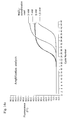
- FIG. 13 represents of the concentration dependence of the SYBR-Green I labeling used in the claimed method
- FIG. 14 represents of the concentration dependence of the MgCl 2 used in the claimed method.
- FIG. 15 represents of the concentration dependence of the BSA (bovine serum albumin) used in the claimed method.
- RNA and DNA nucleic acids
- whole blood nucleated lymphocytes
- animal/human tissue By means of standardized methods, DNA or RNA can be isolated from blood and/or tissue.
- RNA When RNA is obtained, it must be transcribed into copyDNA before being used in the PCR, in order to be able to synthesize large amounts of the target DNA subsequently.
- a defined amount of RNA is transcribed into copyDNA by means of reverse transcriptase.
- Morbus Meulengracht is a disease, which is caused by a TA insertion polymorphism in the region of the TATA box of the uridine-5′-diphosphoglucose glucoronyl transferase gene (UGTIAI).
- UGTIAI uridine-5′-diphosphoglucose glucoronyl transferase gene
- the DNA of the nucleated blood cells is isolated by means of a DNA isolation kit and purified.
- the PCR reaction mixture LightCycler DNA Master Hybridization Probes or LightCycler FastStartDNA Master Hybridization Probes (both Roche Diagnostics) or the inventive PCR reaction mixture (see Table 1) is added to the cooled LightCycler capillary.
- specific oligonucleotide primers (each 400 nM), the hybridization probes (each 10 nM); donor probe labeled with fluorescein, acceptor probe with LC-RED 640) and the patient-specific DNA (2 ⁇ L) are pipetted to it.
- the PCR reaction is then started with a 15-minute denaturing phase at 95° C. (In the case of the LightCycler DNA Master Hybridization Kit, the denaturing phase was 2 minutes). After that, the following cycle was repeated 50 times; 95° C. for 3 seconds, then 55° C. for 7 seconds and 72° C. for 12 seconds.
- a melting point analysis is carried out. For this purpose, the synthesis products formed were heated to 45° C. and then slowly (0.2° C./second) to 80° C. During this period, the fluorescence is determined on-line in real time.
- FRET fluorescence resonance energy transfer
- the sensitivity of the inventive FRET reaction mixture is compared with that of Roche Diagnostics (LightCycler FastStart DNA Master Hybridization Probes).
- FIG. 4 shows that the inventive PCR mixture is up to 10,000 times more sensitive than the DNA Master Hybridization Probe Kit offered by Roche Diagnostics.
- the melting curves are higher and narrower in the case of the claimed method; it is therefore possible to differentiate between the individual genotypes more specifically and more unambiguously with the inventive procedure than with the Roche Diagnostic Kit. This difference is of fundamental importance for the medical evaluation of neucleotide polymorphisms in medical diagnosis and for the individualized, dose-adapted therapy (see FIG. 4 ).
- RNA was isolated and purified by standardized methods. RNA (2 ⁇ g) and random primer (Roche Diagnostics) are heated for 10 minutes at 70° C. in order subsequently to initiate the reverse transcription (60 minutes at 42° C.). Rnase inhibitor (40 U Stratagene), dNTPs (1 nM, Roche Diagnostics) and AMV reverse transcriptase (20 U, Promega) are pipetted into random primers and RNA buffer solution (Promega). The reaction is stopped by raising the temperature to 95° C. for 5 minutes.
- the PCR reaction mixture (LightCycler DNA Master SYBR Green I or LightCycler FastStart DNA Master SYBR Green I (both Roche Diagnostics) or the PCR cocktail developed by us) is added to a LightCycler capillary. To this, 40 nM of the specific oligonucleotide primer and the corresponding copyDNA are pipetted.
- the PCR reaction is started. (In the case of the LightCycler DNA Master SYBR Green I Kit, the denaturing phase was 2 minutes).
- FIG. 5 shows that the claimed method, in comparison to the Roche Diagnostics Kit, leads to a significantly improved, higher dynamics (fluorescence increase per-cycle) during the DNA synthesis.
- the dynamics fluorescence loss per second
- the dynamics are also much higher for the melting point analysis, so that the melting point peaks are narrower and the amplitude higher, as a result of which the gene expression can be determined more specifically and therefore with greater accuracy.
- the claimed reaction mixture was used successfully for the amplification of genes from human and animal tissues, which are relevant to diseases, and in cell culture experiments.
- RNA was isolated and purified by standardized methods. RNA (2 ⁇ g) and random primer (Roche Diagnostics) are heated for 10 minutes at 70° C. in order subsequently to initiate the reverse transcription (60 minutes at 42° C.). Rnase inhibitor (40 U Stratagene), dNTPs (1 nM, Roche Diagnostics) and AMV reverse transcriptase (20 U, Promega) are pipetted into random primers and RNA buffer solution (Promega).
- the claimed PCR cocktail is added to a LightCycler capillary and 400 nM of the specific oligonucleo primer and the corresponding copyDNA were pipetted in (10 ng, 1 ng and 100 pg) are pipetted to it.
- the PCR reaction is started. After that, the following cycle is repeated 38 times: 95° C. for 3 seconds, then 57° C. for 8 seconds and 72° C. for 12 seconds. During each cycle, an actual fluorescence measurement was carried out at 89° C. in every capillary. From these measurements, the real time PCR curve shown in FIG. 6, was obtained.
- a melting point analysis is carried out. For this purpose, the DNA synthesis products are heated to 68° C. and then slowly (0.2° C./second) to 95° C. During this time period, the fluorescence is determined online. A specific melting temperature is reached for the respective DNA synthesis product.
- the claimed PCR cocktail is added to a LightCycler capillary and 400 nM of the specific oligonucleotide primer and the corresponding copyDNA are pipetted in (10 ng, 1 ng and 100 pg).
- the PCR reaction is started. After that, the following cycle is repeated 46 times: 95° C. for 3 seconds, then 53° C. for 8 seconds and 72° C. for 10 seconds. During each cycle, an actual fluorescence measurement was carried out at 89° C. in every capillary. From these measurements, the real time PCR curve shown in FIG. 7, was obtained.
- a melting point analysis is carried out. For this purpose, the DNA synthesis products are heated to 68° C. and then slowly (0.2° C./second) to 95° C. During this time period, the fluorescence is determined online.
- a specific melting temperature is reached for the respective DNA synthesis product. At this temperature, the added-on fluorescing SYBR Green molecules are detached from the melting DNA strands, as a result of which the fluorescence yield is decreased suddenly.
- the fluorescence behavior is converted by a special software into melting curves, which are then given graphically as the first negative derivative as a function of temperature ( ⁇ dF/dT vs T) (see FIG. 7 ).
- Atrial Natriuretic Peptide ADP
- RNA was isolated and purified by means of standard methods. RNA (2 ⁇ g) and random primer (Roche Diagnostics) are heated for 10 minutes at 70° C., in order to initiate the reverse transcription subsequently (60 minutes at 42° C.). dNTPs (1 nM, Roche Diagnostics), Rnase inhibitor (40 U, Stratagene) to and AMV reverse transcriptase (as 20 U, Promega) were pipetted into random primers and RNA buffer solution (Promega). The reaction is stopped by raising the temperature to 95° C. for five minutes.
- the claimed PCR cocktail is added to a LightCycler capillary.
- 400 nM of the specific oligonucleotide primer and the corresponding copyDNA is pipetted in (10 ng, 1 ng and 100 pg).
- the PCR reaction is started. After that, the following cycle is repeated 55 times: 95° C. for 3 seconds, then 55° C. for 7 seconds and 72° C. for 12 seconds. During each cycle, an actual fluorescence measurement was carried out at 91° C. in every capillary. From these measurements, the real time PCR curve shown in FIG. 8, was obtained.
- a melting point analysis is carried out. For this purpose, the DNA synthesis products are heated to 68° C. and then slowly (0.2° C./second) to 95° C. During this time period, the fluorescence is determined online. A specific melting temperature is reached for the respective DNA synthesis product.
- the claimed PCR cocktail is added to a LightCycler capillary and 400 nM of the specific oligonucleotide primer and the corresponding copyDNA are pipetted in (10 ng, 1 ng and 100 pg).
- the PCR reaction is started. After that, the following cycle is repeated 46 of times: 95° C. for 3 seconds, then 55° C. for 7 seconds and 72° C. for 15 seconds. During each cycle, an actual fluorescence measurement was carried out at 90° C. in every capillary. From these measurements, the real time PCR curve shown in FIG. 9, was obtained.
- a melting point analysis is carried out. For this purpose, the DNA synthesis products are heated to 68° C. and then slowly (0.2° C./second) to 95° C. During this time period, the fluorescence is determined online. A specific melting temperature is reached for the respective DNA synthesis product. At this temperature, the added-on fluorescing SYBR Green molecules are detached from the melting DNA strands, as a result of which the fluorescence yield is decreased suddenly.
- the fluorescence behavior is converted by a special software into melting curves, which are then given graphically as the first negative derivative as a function of temperature ( ⁇ dF/dT vs T) (see FIG. 9 ).
- RNA 2 ⁇ g
- random primer 20 ⁇ g
- dNTPs 1 nM, Roche Diagnostics
- Rnase inhibitor 40 U Stratagene
- AMV reverse transcriptase 20 U, Promega
- the claimed PCR cocktail is added to a LightCycler capillary and 400 nM of the specific oligonucleotide primer and the corresponding copyDNA are pipetted in (10 ng, 1 ng and 100 pg).
- the PCR reaction is started. After that, the following cycle is repeated 36 times: 95° C. for 3 seconds, then 55° C. for 7 and 72° C. for 12 seconds. During each cycle, an actual fluorescence measurement was carried out at 83° C. in every capillary. From these measurements, the real time PCR curve shown in FIG. 10, was obtained.
- a melting point analysis is carried out. For this purpose, the DNA synthesis products are heated to 68° C. and then slowly (0.2° C./second) to 95° C. During this time period, the fluorescence is determined online. A specific melting temperature is reached for the respective DNA synthesis product.
- HNF Hepatic Nuclear Factor
- RNA 2 ⁇ g
- random primer 20 ⁇ g
- dNTPs 1 nM, Roche Diagnostics
- Rnase inhibitor 40 U Stratagene
- AMV reverse transcriptase 20 U, Promega
- the claimed PCR cocktail is added to a LightCycler capillary and 400 nM of the specific oligonucleotide primer and the corresponding copyDNA are pipetted in (6 times 100 pg).
- the PCR reaction is started. After that, the following cycle is repeated 46 times: 95° C. for 3 seconds, then 57° C. for 8 seconds and more will 72° C. for 12 seconds. During each cycle, an actual fluorescence measurement was carried out at 88° C. in every capillary. From these measurements, the real time PCR curve shown in FIG. 11, was obtained.
- a melting point analysis is carried out. For this purpose, the DNA synthesis products are heated to 66° C. and then slowly (0.2° C./second) to 95° C. During this time period, the fluorescence is determined online.
- a specific melting temperature is reached for the respective DNA synthesis product. At this temperature, the added-on fluorescing SYBR Green molecules are detached from the melting DNA strands, as a result of which the fluorescence yield is decreased suddenly.
- the fluorescence behavior is converted by a special software into melting curves, which are then given graphically as the first negative derivative as a function of temperature ( ⁇ dF/dT vs T) (see FIG. 11 ).
- N-Acetyl transferase 2 is involved in the metabolization of many drugs. Patients with polymorphisms (gene mutations due to base exchange or deletions) have an increased-risk of being poisoned by side effects of drugs.
- the DNA is isolated from the nucleated blood cells and purified by means of a DNA isolation kit.
- the claimed PCR reaction mixture (see Table 1) is added to the cooled LightCycler capillary.
- specific oligonucleotides primers 400 nM of each
- the hybridization probes (10 nM of each; donor probe labeled with fluorescein, acceptor probe with LC-RED 640
- the patient-specific DNA (2 ⁇ L)
- the PCR reaction is then started with a 15-minute denaturing phase at 95° C. (In the case of the LightCycler DNA Master Hybridization Kit, the denaturing phase lasted 2 minutes). After that, the following cycle was repeated 60 times: 95° C. for 3 seconds, then 45 ° C. for 10 seconds and 72° C. for 20 seconds.
- a melting point analysis is carried out. For this purpose, the synthesis products formed are heated to 45° C. and then slowly (0.2° C. per second) to 75° C. During this time period, the fluorescence is determined online. As soon as the hybridization probe, which lies above the mutations that is to be detected, melts off, there no longer is any fluorescence resonance energy transfer (see above). The fluorescence is calculated by means of the melting curves, using a special software. The melting curves are then given graphically as the first negative derivative as a function of temperature ( ⁇ dF/dT vs T) (see FIG. 12 ).
- the amplitudes (heights) of the resulting melting curves are comparable for MgCl 2 concentrations of 3, 5 and 7 mM.
- the observed shift in the melting point curves to higher temperatures can be attributed to the different MgCl 2 concentration (see FIG. 14 ).
- Taq DNA polymerases from the different manufacturers (Taq DNA polymerase from Roche Diagnostics, Taq DNA polymerase from Life Technologies, PCR Supermix from Life Technologies, Platinum Taq polymerase from Life Technologies, Taq DNA Polymerase from Promega, Taq DNA polymerase from TaKaRa, Taq DNA polymerases from Qiagen, HotStart Taq DNA Polymerase Mastermix from Qiagen) were investigated. The best results way obtained with the HotStart Master Mix of Qiagen. Our claimed method can also be carried out with Taq polymerase is from other suppliers.
- dCTP, dGTP (2.5 U) 400 ⁇ M dUTP (tris-Cl, KCl, (NH 4 ) 2 SO 4 pH 8.7 0.5 U TAQ DNA polymerase HotStar Taq DNA polymerase 2.5 mM MgCl 2 MgCl 2 3 mM SYBR Green dNTPs (200 ⁇ M)
- the exact composition of the kit is not Bovine serum albumin evident from cited patents of Roche (666 ⁇ g/mL) Diagnostics (Patents EPO771870; SYBR-Green I U.S. Pat. No. 5,773,258; U.S. Pat. No.
- dCTP, dGTP (2.5 U) 400 ⁇ M dUTP (tris-Cl, KCl, (NH 4 ) 2 SO 4 pH 8.7 0.5 U TAQ DNA polymerase HotStar Taq DNA polymerase 2.5 mM MgCl 2 MgCl 2 3 mM dNTPs (200 ⁇ M)
- the exact composition of the kit is not Bovine serum albumin evident from cited patents of Roche (666 ⁇ g/mL) Diagnostics (Patents EPO771870; MgCl 2 - added up to a final U.S. Pat. No. 5,773,258; U.S. Pat. No. concentration of 5 mM. 5,677,152
- the melting curve amplitude is up to 400% higher (see FIG. 4).
- Dynamics of the Lower than in the case of the Thum/Borlak method 0.5 In the claimed method, four times higher than in the case of the amplification (in the fluorescence units per PCR cycle) Roche Diagnostics Kit (2.0 fluorescence units per PCR cycle) log-linear phase) (see FIG. 4) Costs SYBR-Green format DM 3.75-4.13 per sample DM 0.75 per sample FRET format DM 3.50-3.84 per sample DM 0.75 per sample
Landscapes
- Chemical & Material Sciences (AREA)
- Organic Chemistry (AREA)
- Life Sciences & Earth Sciences (AREA)
- Zoology (AREA)
- Wood Science & Technology (AREA)
- Proteomics, Peptides & Aminoacids (AREA)
- Health & Medical Sciences (AREA)
- Engineering & Computer Science (AREA)
- Microbiology (AREA)
- Immunology (AREA)
- Physics & Mathematics (AREA)
- Molecular Biology (AREA)
- Biotechnology (AREA)
- Biophysics (AREA)
- Analytical Chemistry (AREA)
- Biochemistry (AREA)
- Bioinformatics & Cheminformatics (AREA)
- General Engineering & Computer Science (AREA)
- General Health & Medical Sciences (AREA)
- Genetics & Genomics (AREA)
- Measuring Or Testing Involving Enzymes Or Micro-Organisms (AREA)
Applications Claiming Priority (3)
| Application Number | Priority Date | Filing Date | Title |
|---|---|---|---|
| DE10046079 | 2000-09-15 | ||
| DE10046079.8 | 2000-09-15 | ||
| DE10046079 | 2000-09-15 |
Publications (2)
| Publication Number | Publication Date |
|---|---|
| US20020058255A1 US20020058255A1 (en) | 2002-05-16 |
| US6558929B2 true US6558929B2 (en) | 2003-05-06 |
Family
ID=7656605
Family Applications (1)
| Application Number | Title | Priority Date | Filing Date |
|---|---|---|---|
| US09/753,887 Expired - Lifetime US6558929B2 (en) | 2000-09-15 | 2001-01-03 | PCR reaction mixture for fluorescence-based gene expression and gene mutation analyses |
Country Status (6)
| Country | Link |
|---|---|
| US (1) | US6558929B2 (fr) |
| EP (1) | EP1317570B1 (fr) |
| AT (1) | ATE292691T1 (fr) |
| AU (1) | AU2002223427A1 (fr) |
| DE (2) | DE50105854D1 (fr) |
| WO (1) | WO2002022865A2 (fr) |
Cited By (10)
| Publication number | Priority date | Publication date | Assignee | Title |
|---|---|---|---|---|
| US20040191776A1 (en) * | 2003-03-21 | 2004-09-30 | Pei-Jer Chen | Method for genotyping and quantifying Hepatitis B Virus |
| US20080033751A1 (en) * | 2003-05-20 | 2008-02-07 | Medencentive, Llc | Method and System for Delivery of Healthcare Services |
| US20080124710A1 (en) * | 2006-10-12 | 2008-05-29 | Engelhard Eric K | Devices for generating detectable polymers |
| US20080262866A1 (en) * | 2004-05-06 | 2008-10-23 | Medencentive, Llc | Methods for Improving the Clinical Outcome of Patient Care and for Reducing Overall Health Care Costs |
| US20090148833A1 (en) * | 2007-03-23 | 2009-06-11 | Fair Isaac Corporation | Devices for generating detectable polymers |
| US20100105025A1 (en) * | 2006-10-12 | 2010-04-29 | Engelhard Eric K | Devices for generating detectable polymers |
| US20100129796A1 (en) * | 2008-11-24 | 2010-05-27 | Micah Halpern | Dye probe fluorescence resonance energy transfer genotyping |
| EP2759307A2 (fr) | 2006-03-29 | 2014-07-30 | Merial Limited | Vaccin contre des streptocoques |
| US9410194B2 (en) | 2010-06-21 | 2016-08-09 | Life Technologies Corporation | Compositions, kits and methods for synthesis and/or detection of nucleic acids |
| US9977867B2 (en) | 2004-05-06 | 2018-05-22 | Medencentive, Llc | Methods for improving the clinical outcome of patient care and for reducing overall health care costs |
Families Citing this family (4)
| Publication number | Priority date | Publication date | Assignee | Title |
|---|---|---|---|---|
| CA2466896A1 (fr) * | 2001-09-06 | 2003-03-20 | Adnagen Ag | Procede et kit de diagnostic destines a la selection et/ou detection qualitative et/ou quantitative de cellules |
| ATE386141T1 (de) * | 2002-12-20 | 2008-03-15 | Stratagene Inc | Zusammensetzungen und verfahren für den nachweis von polynukleotiden |
| US20050053950A1 (en) * | 2003-09-08 | 2005-03-10 | Enrique Zudaire Ubani | Protocol and software for multiplex real-time PCR quantification based on the different melting temperatures of amplicons |
| KR20120046018A (ko) * | 2010-10-04 | 2012-05-09 | 삼성테크윈 주식회사 | 단일 뉴클레오티드 다형성의 실시간 pcr 검출 |
Citations (4)
| Publication number | Priority date | Publication date | Assignee | Title |
|---|---|---|---|---|
| US5759822A (en) * | 1995-01-27 | 1998-06-02 | Clontech Laboratories, Inc. | Method for suppressing DNA fragment amplification during PCR |
| US6087097A (en) * | 1994-05-12 | 2000-07-11 | Mayo Foundation For Medical Education And Research | PCR detection of Borrelia burgdorferi |
| US6174670B1 (en) * | 1996-06-04 | 2001-01-16 | University Of Utah Research Foundation | Monitoring amplification of DNA during PCR |
| US6395547B1 (en) * | 1994-02-17 | 2002-05-28 | Maxygen, Inc. | Methods for generating polynucleotides having desired characteristics by iterative selection and recombination |
Family Cites Families (1)
| Publication number | Priority date | Publication date | Assignee | Title |
|---|---|---|---|---|
| US5130238A (en) * | 1988-06-24 | 1992-07-14 | Cangene Corporation | Enhanced nucleic acid amplification process |
-
2001
- 2001-01-03 US US09/753,887 patent/US6558929B2/en not_active Expired - Lifetime
- 2001-09-15 EP EP01984658A patent/EP1317570B1/fr not_active Expired - Lifetime
- 2001-09-15 DE DE50105854T patent/DE50105854D1/de not_active Expired - Lifetime
- 2001-09-15 DE DE10147232A patent/DE10147232A1/de not_active Withdrawn
- 2001-09-15 WO PCT/DE2001/003617 patent/WO2002022865A2/fr not_active Ceased
- 2001-09-15 AT AT01984658T patent/ATE292691T1/de not_active IP Right Cessation
- 2001-09-15 AU AU2002223427A patent/AU2002223427A1/en not_active Abandoned
Patent Citations (4)
| Publication number | Priority date | Publication date | Assignee | Title |
|---|---|---|---|---|
| US6395547B1 (en) * | 1994-02-17 | 2002-05-28 | Maxygen, Inc. | Methods for generating polynucleotides having desired characteristics by iterative selection and recombination |
| US6087097A (en) * | 1994-05-12 | 2000-07-11 | Mayo Foundation For Medical Education And Research | PCR detection of Borrelia burgdorferi |
| US5759822A (en) * | 1995-01-27 | 1998-06-02 | Clontech Laboratories, Inc. | Method for suppressing DNA fragment amplification during PCR |
| US6174670B1 (en) * | 1996-06-04 | 2001-01-16 | University Of Utah Research Foundation | Monitoring amplification of DNA during PCR |
Non-Patent Citations (1)
| Title |
|---|
| Kubalakova et al. "Optimization of PRINS and C-PRINS for detection of telomeric sequences in Vicia Faba" Biologica Plantarium 41 (2) 177-184, 1998. * |
Cited By (13)
| Publication number | Priority date | Publication date | Assignee | Title |
|---|---|---|---|---|
| US20040191776A1 (en) * | 2003-03-21 | 2004-09-30 | Pei-Jer Chen | Method for genotyping and quantifying Hepatitis B Virus |
| US20080033751A1 (en) * | 2003-05-20 | 2008-02-07 | Medencentive, Llc | Method and System for Delivery of Healthcare Services |
| US7925519B2 (en) | 2003-05-20 | 2011-04-12 | Medencentive, Llc | Method and system for delivery of healthcare services |
| US20080262866A1 (en) * | 2004-05-06 | 2008-10-23 | Medencentive, Llc | Methods for Improving the Clinical Outcome of Patient Care and for Reducing Overall Health Care Costs |
| US9977867B2 (en) | 2004-05-06 | 2018-05-22 | Medencentive, Llc | Methods for improving the clinical outcome of patient care and for reducing overall health care costs |
| EP3167900A1 (fr) | 2006-03-29 | 2017-05-17 | Merial Limited | Vaccin contre des streptocoques |
| EP2759307A2 (fr) | 2006-03-29 | 2014-07-30 | Merial Limited | Vaccin contre des streptocoques |
| US20080124710A1 (en) * | 2006-10-12 | 2008-05-29 | Engelhard Eric K | Devices for generating detectable polymers |
| US20100105025A1 (en) * | 2006-10-12 | 2010-04-29 | Engelhard Eric K | Devices for generating detectable polymers |
| US20090148833A1 (en) * | 2007-03-23 | 2009-06-11 | Fair Isaac Corporation | Devices for generating detectable polymers |
| US20100129796A1 (en) * | 2008-11-24 | 2010-05-27 | Micah Halpern | Dye probe fluorescence resonance energy transfer genotyping |
| US9410194B2 (en) | 2010-06-21 | 2016-08-09 | Life Technologies Corporation | Compositions, kits and methods for synthesis and/or detection of nucleic acids |
| US11091801B2 (en) | 2010-06-21 | 2021-08-17 | Life Technologies Corporation | Compositions, kits and methods for synthesis and/or detection of nucleic acids |
Also Published As
| Publication number | Publication date |
|---|---|
| US20020058255A1 (en) | 2002-05-16 |
| WO2002022865A3 (fr) | 2002-12-05 |
| EP1317570B1 (fr) | 2005-04-06 |
| ATE292691T1 (de) | 2005-04-15 |
| DE50105854D1 (de) | 2005-05-12 |
| EP1317570A2 (fr) | 2003-06-11 |
| AU2002223427A1 (en) | 2002-03-26 |
| WO2002022865A2 (fr) | 2002-03-21 |
| DE10147232A1 (de) | 2002-07-11 |
Similar Documents
| Publication | Publication Date | Title |
|---|---|---|
| CA2497988C (fr) | Quantification de l'expression genetique | |
| US7468249B2 (en) | Detection of chromosomal disorders | |
| US7132235B2 (en) | Reagent kit for determining specific nucleotide variations | |
| US20030148301A1 (en) | Method of detecting nucleotide polymorphism | |
| US6558929B2 (en) | PCR reaction mixture for fluorescence-based gene expression and gene mutation analyses | |
| EP1241266A1 (fr) | Procede de detection de polymorphisme nucleotidique | |
| US20050191636A1 (en) | Detection of STRP, such as fragile X syndrome | |
| JPWO2001042498A1 (ja) | 塩基多型の検出方法 | |
| JP2001078768A (ja) | 遺伝子発現の測定法 | |
| US6355433B1 (en) | Determination of nucleotide sequence variations through limited primer extension | |
| JP3752466B2 (ja) | 遺伝子検査方法 | |
| Brion et al. | New technologies in the genetic approach to sudden cardiac death in the young | |
| Bhardwaj et al. | Neonatal hemoglobinopathy screening: molecular genetic technologies | |
| US20120064528A1 (en) | Methods and reagents for quantifying nucleic acid fragmentation and apoptosis (qlm-pcr, cell number qpcr and apoqpcr) | |
| JP2002078500A (ja) | 遺伝子多型解析方法 | |
| US20210147925A1 (en) | Partition-based determination of target copy number for single cells by non-endpoint amplification | |
| US20040175704A1 (en) | Compositions and methods for polynucleotide sequence detection | |
| US20090081650A1 (en) | Method for Identifying Nucleotide Sequences, Use of the Method and Test Kit | |
| HK1085244B (en) | Quantification of gene expression | |
| KR101075392B1 (ko) | Fga 유전자로부터 유래된 단일염기다형을 포함하는 폴리뉴클레오티드, 이를 포함하는 마이크로어레이 및 진단키트, 이를 이용한 검출 방법 | |
| US20040166503A1 (en) | Methods for gene expression profiling | |
| JPWO1996023077A1 (ja) | 遺伝子増幅用プライマー、該プライマーを用いた核酸の識別方法及び核酸の識別用検査セット | |
| WO2003042409A2 (fr) | Mutation de la ligne germinale dans le promoteur genique de la caderine e et methode de diagnostic d'identification d'une sensibilite accrue a la carcinome gastrique |
Legal Events
| Date | Code | Title | Description |
|---|---|---|---|
| AS | Assignment |
Owner name: FRAUNHOFER-GESELLSCHAFT ZUR FORDERUNG DER ANGEWAND Free format text: ASSIGNMENT OF ASSIGNORS INTEREST;ASSIGNORS:THUM, THOMAS;BORLAK, JURGEN;REEL/FRAME:011428/0305 Effective date: 20001102 |
|
| STCF | Information on status: patent grant |
Free format text: PATENTED CASE |
|
| FEPP | Fee payment procedure |
Free format text: PAYOR NUMBER ASSIGNED (ORIGINAL EVENT CODE: ASPN); ENTITY STATUS OF PATENT OWNER: LARGE ENTITY |
|
| FEPP | Fee payment procedure |
Free format text: PAT HOLDER NO LONGER CLAIMS SMALL ENTITY STATUS, ENTITY STATUS SET TO UNDISCOUNTED (ORIGINAL EVENT CODE: STOL); ENTITY STATUS OF PATENT OWNER: LARGE ENTITY |
|
| REFU | Refund |
Free format text: REFUND - SURCHARGE, PETITION TO ACCEPT PYMT AFTER EXP, UNINTENTIONAL (ORIGINAL EVENT CODE: R2551); ENTITY STATUS OF PATENT OWNER: LARGE ENTITY |
|
| FPAY | Fee payment |
Year of fee payment: 4 |
|
| FEPP | Fee payment procedure |
Free format text: PAYER NUMBER DE-ASSIGNED (ORIGINAL EVENT CODE: RMPN); ENTITY STATUS OF PATENT OWNER: LARGE ENTITY Free format text: PAYOR NUMBER ASSIGNED (ORIGINAL EVENT CODE: ASPN); ENTITY STATUS OF PATENT OWNER: LARGE ENTITY |
|
| FPAY | Fee payment |
Year of fee payment: 8 |
|
| FPAY | Fee payment |
Year of fee payment: 12 |