US6984312B2 - Process for the desulfurization of light FCC naphtha - Google Patents
Process for the desulfurization of light FCC naphtha Download PDFInfo
- Publication number
- US6984312B2 US6984312B2 US10/699,712 US69971203A US6984312B2 US 6984312 B2 US6984312 B2 US 6984312B2 US 69971203 A US69971203 A US 69971203A US 6984312 B2 US6984312 B2 US 6984312B2
- Authority
- US
- United States
- Prior art keywords
- naphtha
- reaction zone
- distillation
- cracked naphtha
- fraction
- Prior art date
- Legal status (The legal status is an assumption and is not a legal conclusion. Google has not performed a legal analysis and makes no representation as to the accuracy of the status listed.)
- Expired - Lifetime, expires
Links
- 238000000034 method Methods 0.000 title claims abstract description 31
- 230000008569 process Effects 0.000 title claims abstract description 30
- 238000006477 desulfuration reaction Methods 0.000 title description 3
- 230000023556 desulfurization Effects 0.000 title description 3
- 238000009835 boiling Methods 0.000 claims abstract description 92
- 239000003054 catalyst Substances 0.000 claims abstract description 60
- 238000005732 thioetherification reaction Methods 0.000 claims abstract description 14
- 239000002904 solvent Substances 0.000 claims abstract description 10
- 238000004821 distillation Methods 0.000 claims description 71
- RWSOTUBLDIXVET-UHFFFAOYSA-N Dihydrogen sulfide Chemical compound S RWSOTUBLDIXVET-UHFFFAOYSA-N 0.000 claims description 58
- 238000006243 chemical reaction Methods 0.000 claims description 52
- 229910052739 hydrogen Inorganic materials 0.000 claims description 37
- 239000001257 hydrogen Substances 0.000 claims description 37
- NINIDFKCEFEMDL-UHFFFAOYSA-N Sulfur Chemical compound [S] NINIDFKCEFEMDL-UHFFFAOYSA-N 0.000 claims description 34
- 229910052717 sulfur Inorganic materials 0.000 claims description 34
- 239000011593 sulfur Substances 0.000 claims description 34
- UFHFLCQGNIYNRP-UHFFFAOYSA-N Hydrogen Chemical compound [H][H] UFHFLCQGNIYNRP-UHFFFAOYSA-N 0.000 claims description 31
- 229910000037 hydrogen sulfide Inorganic materials 0.000 claims description 30
- 239000000463 material Substances 0.000 claims description 17
- 150000001336 alkenes Chemical class 0.000 claims description 16
- 150000002898 organic sulfur compounds Chemical class 0.000 claims description 16
- 150000003568 thioethers Chemical class 0.000 claims description 16
- PNEYBMLMFCGWSK-UHFFFAOYSA-N aluminium oxide Inorganic materials [O-2].[O-2].[O-2].[Al+3].[Al+3] PNEYBMLMFCGWSK-UHFFFAOYSA-N 0.000 claims description 14
- 150000001993 dienes Chemical class 0.000 claims description 10
- PXHVJJICTQNCMI-UHFFFAOYSA-N Nickel Chemical compound [Ni] PXHVJJICTQNCMI-UHFFFAOYSA-N 0.000 claims description 9
- 238000004508 fractional distillation Methods 0.000 claims description 7
- 150000002431 hydrogen Chemical class 0.000 claims description 5
- 229910017052 cobalt Inorganic materials 0.000 claims description 4
- 239000010941 cobalt Substances 0.000 claims description 4
- GUTLYIVDDKVIGB-UHFFFAOYSA-N cobalt atom Chemical compound [Co] GUTLYIVDDKVIGB-UHFFFAOYSA-N 0.000 claims description 4
- 229910000476 molybdenum oxide Inorganic materials 0.000 claims description 3
- PQQKPALAQIIWST-UHFFFAOYSA-N oxomolybdenum Chemical class [Mo]=O PQQKPALAQIIWST-UHFFFAOYSA-N 0.000 claims description 3
- 229910000480 nickel oxide Inorganic materials 0.000 claims description 2
- 238000010926 purge Methods 0.000 claims description 2
- 238000004064 recycling Methods 0.000 claims 4
- 238000005194 fractionation Methods 0.000 abstract description 5
- 238000005215 recombination Methods 0.000 abstract 1
- 230000006798 recombination Effects 0.000 abstract 1
- 150000003464 sulfur compounds Chemical class 0.000 description 12
- 229910052751 metal Inorganic materials 0.000 description 10
- 239000002184 metal Substances 0.000 description 10
- 239000000047 product Substances 0.000 description 9
- 230000003197 catalytic effect Effects 0.000 description 7
- 150000001875 compounds Chemical class 0.000 description 7
- 238000005984 hydrogenation reaction Methods 0.000 description 7
- 239000007788 liquid Substances 0.000 description 6
- 150000002739 metals Chemical class 0.000 description 6
- 229930192474 thiophene Natural products 0.000 description 6
- 239000000203 mixture Substances 0.000 description 5
- TVMXDCGIABBOFY-UHFFFAOYSA-N octane Chemical compound CCCCCCCC TVMXDCGIABBOFY-UHFFFAOYSA-N 0.000 description 5
- YTPLMLYBLZKORZ-UHFFFAOYSA-N Thiophene Chemical compound C=1C=CSC=1 YTPLMLYBLZKORZ-UHFFFAOYSA-N 0.000 description 4
- -1 octane olefins Chemical class 0.000 description 4
- KDLHZDBZIXYQEI-UHFFFAOYSA-N palladium Substances [Pd] KDLHZDBZIXYQEI-UHFFFAOYSA-N 0.000 description 4
- ZOKXTWBITQBERF-UHFFFAOYSA-N Molybdenum Chemical compound [Mo] ZOKXTWBITQBERF-UHFFFAOYSA-N 0.000 description 3
- 239000000571 coke Substances 0.000 description 3
- 229910052750 molybdenum Inorganic materials 0.000 description 3
- 239000011733 molybdenum Substances 0.000 description 3
- 229910052759 nickel Inorganic materials 0.000 description 3
- 230000001590 oxidative effect Effects 0.000 description 3
- 229920006395 saturated elastomer Polymers 0.000 description 3
- 239000000126 substance Substances 0.000 description 3
- 150000003577 thiophenes Chemical class 0.000 description 3
- 238000005406 washing Methods 0.000 description 3
- PMBXCGGQNSVESQ-UHFFFAOYSA-N 1-Hexanethiol Chemical compound CCCCCCS PMBXCGGQNSVESQ-UHFFFAOYSA-N 0.000 description 2
- BDFAOUQQXJIZDG-UHFFFAOYSA-N 2-methylpropane-1-thiol Chemical compound CC(C)CS BDFAOUQQXJIZDG-UHFFFAOYSA-N 0.000 description 2
- QGZKDVFQNNGYKY-UHFFFAOYSA-N Ammonia Chemical compound N QGZKDVFQNNGYKY-UHFFFAOYSA-N 0.000 description 2
- WKBOTKDWSSQWDR-UHFFFAOYSA-N Bromine atom Chemical compound [Br] WKBOTKDWSSQWDR-UHFFFAOYSA-N 0.000 description 2
- 239000004215 Carbon black (E152) Substances 0.000 description 2
- GIJGXNFNUUFEGH-UHFFFAOYSA-N Isopentyl mercaptan Chemical compound CC(C)CCS GIJGXNFNUUFEGH-UHFFFAOYSA-N 0.000 description 2
- LSDPWZHWYPCBBB-UHFFFAOYSA-N Methanethiol Chemical compound SC LSDPWZHWYPCBBB-UHFFFAOYSA-N 0.000 description 2
- GDTBXPJZTBHREO-UHFFFAOYSA-N bromine Substances BrBr GDTBXPJZTBHREO-UHFFFAOYSA-N 0.000 description 2
- 229910052794 bromium Inorganic materials 0.000 description 2
- LOCHFZBWPCLPAN-UHFFFAOYSA-N butane-2-thiol Chemical compound CCC(C)S LOCHFZBWPCLPAN-UHFFFAOYSA-N 0.000 description 2
- WQAQPCDUOCURKW-UHFFFAOYSA-N butanethiol Chemical compound CCCCS WQAQPCDUOCURKW-UHFFFAOYSA-N 0.000 description 2
- 238000004523 catalytic cracking Methods 0.000 description 2
- 239000012141 concentrate Substances 0.000 description 2
- 230000001627 detrimental effect Effects 0.000 description 2
- 238000010586 diagram Methods 0.000 description 2
- DNJIEGIFACGWOD-UHFFFAOYSA-N ethanethiol Chemical compound CCS DNJIEGIFACGWOD-UHFFFAOYSA-N 0.000 description 2
- 229930195733 hydrocarbon Natural products 0.000 description 2
- 150000002430 hydrocarbons Chemical class 0.000 description 2
- 239000012535 impurity Substances 0.000 description 2
- JRZJOMJEPLMPRA-UHFFFAOYSA-N olefin Natural products CCCCCCCC=C JRZJOMJEPLMPRA-UHFFFAOYSA-N 0.000 description 2
- 229910052763 palladium Inorganic materials 0.000 description 2
- 239000003208 petroleum Substances 0.000 description 2
- 239000003209 petroleum derivative Substances 0.000 description 2
- KJRCEJOSASVSRA-UHFFFAOYSA-N propane-2-thiol Chemical compound CC(C)S KJRCEJOSASVSRA-UHFFFAOYSA-N 0.000 description 2
- 230000009467 reduction Effects 0.000 description 2
- 238000000926 separation method Methods 0.000 description 2
- 241000894007 species Species 0.000 description 2
- ZRKMQKLGEQPLNS-UHFFFAOYSA-N 1-Pentanethiol Chemical compound CCCCCS ZRKMQKLGEQPLNS-UHFFFAOYSA-N 0.000 description 1
- QUSTYFNPKBDELJ-UHFFFAOYSA-N 2-Pentanethiol Chemical compound CCCC(C)S QUSTYFNPKBDELJ-UHFFFAOYSA-N 0.000 description 1
- 241000169624 Casearia sylvestris Species 0.000 description 1
- UCKMPCXJQFINFW-UHFFFAOYSA-N Sulphide Chemical compound [S-2] UCKMPCXJQFINFW-UHFFFAOYSA-N 0.000 description 1
- MCMNRKCIXSYSNV-UHFFFAOYSA-N ZrO2 Inorganic materials O=[Zr]=O MCMNRKCIXSYSNV-UHFFFAOYSA-N 0.000 description 1
- 230000009471 action Effects 0.000 description 1
- 150000001335 aliphatic alkanes Chemical class 0.000 description 1
- 229910021529 ammonia Inorganic materials 0.000 description 1
- 150000001491 aromatic compounds Chemical class 0.000 description 1
- 125000003118 aryl group Chemical group 0.000 description 1
- 230000008901 benefit Effects 0.000 description 1
- 238000004517 catalytic hydrocracking Methods 0.000 description 1
- 239000003518 caustics Substances 0.000 description 1
- WHDPTDWLEKQKKX-UHFFFAOYSA-N cobalt molybdenum Chemical compound [Co].[Co].[Mo] WHDPTDWLEKQKKX-UHFFFAOYSA-N 0.000 description 1
- 238000009833 condensation Methods 0.000 description 1
- 230000005494 condensation Effects 0.000 description 1
- 235000009508 confectionery Nutrition 0.000 description 1
- 239000000356 contaminant Substances 0.000 description 1
- 229910052593 corundum Inorganic materials 0.000 description 1
- 150000001923 cyclic compounds Chemical class 0.000 description 1
- 125000004122 cyclic group Chemical group 0.000 description 1
- 230000009849 deactivation Effects 0.000 description 1
- 230000003247 decreasing effect Effects 0.000 description 1
- 150000002019 disulfides Chemical class 0.000 description 1
- 230000000694 effects Effects 0.000 description 1
- 230000007613 environmental effect Effects 0.000 description 1
- 238000006266 etherification reaction Methods 0.000 description 1
- 239000012467 final product Substances 0.000 description 1
- 239000012530 fluid Substances 0.000 description 1
- XLYOFNOQVPJJNP-ZSJDYOACSA-N heavy water Substances [2H]O[2H] XLYOFNOQVPJJNP-ZSJDYOACSA-N 0.000 description 1
- 150000002391 heterocyclic compounds Chemical class 0.000 description 1
- ABNPJVOPTXYSQW-UHFFFAOYSA-N hexane-2-thiol Chemical compound CCCCC(C)S ABNPJVOPTXYSQW-UHFFFAOYSA-N 0.000 description 1
- VOIGMFQJDZTEKW-UHFFFAOYSA-N hexane-3-thiol Chemical compound CCCC(S)CC VOIGMFQJDZTEKW-UHFFFAOYSA-N 0.000 description 1
- 150000004678 hydrides Chemical class 0.000 description 1
- 125000004435 hydrogen atom Chemical group [H]* 0.000 description 1
- 239000007791 liquid phase Substances 0.000 description 1
- 238000004519 manufacturing process Methods 0.000 description 1
- 230000007246 mechanism Effects 0.000 description 1
- 238000002156 mixing Methods 0.000 description 1
- DDTIGTPWGISMKL-UHFFFAOYSA-N molybdenum nickel Chemical compound [Ni].[Mo] DDTIGTPWGISMKL-UHFFFAOYSA-N 0.000 description 1
- 230000007935 neutral effect Effects 0.000 description 1
- MOWMLACGTDMJRV-UHFFFAOYSA-N nickel tungsten Chemical compound [Ni].[W] MOWMLACGTDMJRV-UHFFFAOYSA-N 0.000 description 1
- 150000002897 organic nitrogen compounds Chemical class 0.000 description 1
- 125000001741 organic sulfur group Chemical group 0.000 description 1
- WICKAMSPKJXSGN-UHFFFAOYSA-N pentane-3-thiol Chemical compound CCC(S)CC WICKAMSPKJXSGN-UHFFFAOYSA-N 0.000 description 1
- 230000000737 periodic effect Effects 0.000 description 1
- 238000005498 polishing Methods 0.000 description 1
- SUVIGLJNEAMWEG-UHFFFAOYSA-N propane-1-thiol Chemical compound CCCS SUVIGLJNEAMWEG-UHFFFAOYSA-N 0.000 description 1
- 239000011541 reaction mixture Substances 0.000 description 1
- 238000011084 recovery Methods 0.000 description 1
- 239000007787 solid Substances 0.000 description 1
- 238000000638 solvent extraction Methods 0.000 description 1
- WMXCDAVJEZZYLT-UHFFFAOYSA-N tert-butylthiol Chemical compound CC(C)(C)S WMXCDAVJEZZYLT-UHFFFAOYSA-N 0.000 description 1
- 238000004227 thermal cracking Methods 0.000 description 1
- WFKWXMTUELFFGS-UHFFFAOYSA-N tungsten Chemical compound [W] WFKWXMTUELFFGS-UHFFFAOYSA-N 0.000 description 1
- 229910052721 tungsten Inorganic materials 0.000 description 1
- 239000010937 tungsten Substances 0.000 description 1
- 239000012808 vapor phase Substances 0.000 description 1
- 229910001845 yogo sapphire Inorganic materials 0.000 description 1
Images

Classifications
-
- C—CHEMISTRY; METALLURGY
- C10—PETROLEUM, GAS OR COKE INDUSTRIES; TECHNICAL GASES CONTAINING CARBON MONOXIDE; FUELS; LUBRICANTS; PEAT
- C10G—CRACKING HYDROCARBON OILS; PRODUCTION OF LIQUID HYDROCARBON MIXTURES, e.g. BY DESTRUCTIVE HYDROGENATION, OLIGOMERISATION, POLYMERISATION; RECOVERY OF HYDROCARBON OILS FROM OIL-SHALE, OIL-SAND, OR GASES; REFINING MIXTURES MAINLY CONSISTING OF HYDROCARBONS; REFORMING OF NAPHTHA; MINERAL WAXES
- C10G65/00—Treatment of hydrocarbon oils by two or more hydrotreatment processes only
- C10G65/02—Treatment of hydrocarbon oils by two or more hydrotreatment processes only plural serial stages only
- C10G65/04—Treatment of hydrocarbon oils by two or more hydrotreatment processes only plural serial stages only including only refining steps
-
- C—CHEMISTRY; METALLURGY
- C10—PETROLEUM, GAS OR COKE INDUSTRIES; TECHNICAL GASES CONTAINING CARBON MONOXIDE; FUELS; LUBRICANTS; PEAT
- C10G—CRACKING HYDROCARBON OILS; PRODUCTION OF LIQUID HYDROCARBON MIXTURES, e.g. BY DESTRUCTIVE HYDROGENATION, OLIGOMERISATION, POLYMERISATION; RECOVERY OF HYDROCARBON OILS FROM OIL-SHALE, OIL-SAND, OR GASES; REFINING MIXTURES MAINLY CONSISTING OF HYDROCARBONS; REFORMING OF NAPHTHA; MINERAL WAXES
- C10G45/00—Refining of hydrocarbon oils using hydrogen or hydrogen-generating compounds
- C10G45/02—Refining of hydrocarbon oils using hydrogen or hydrogen-generating compounds to eliminate hetero atoms without changing the skeleton of the hydrocarbon involved and without cracking into lower boiling hydrocarbons; Hydrofinishing
-
- C—CHEMISTRY; METALLURGY
- C10—PETROLEUM, GAS OR COKE INDUSTRIES; TECHNICAL GASES CONTAINING CARBON MONOXIDE; FUELS; LUBRICANTS; PEAT
- C10G—CRACKING HYDROCARBON OILS; PRODUCTION OF LIQUID HYDROCARBON MIXTURES, e.g. BY DESTRUCTIVE HYDROGENATION, OLIGOMERISATION, POLYMERISATION; RECOVERY OF HYDROCARBON OILS FROM OIL-SHALE, OIL-SAND, OR GASES; REFINING MIXTURES MAINLY CONSISTING OF HYDROCARBONS; REFORMING OF NAPHTHA; MINERAL WAXES
- C10G45/00—Refining of hydrocarbon oils using hydrogen or hydrogen-generating compounds
- C10G45/02—Refining of hydrocarbon oils using hydrogen or hydrogen-generating compounds to eliminate hetero atoms without changing the skeleton of the hydrocarbon involved and without cracking into lower boiling hydrocarbons; Hydrofinishing
- C10G45/04—Refining of hydrocarbon oils using hydrogen or hydrogen-generating compounds to eliminate hetero atoms without changing the skeleton of the hydrocarbon involved and without cracking into lower boiling hydrocarbons; Hydrofinishing characterised by the catalyst used
- C10G45/06—Refining of hydrocarbon oils using hydrogen or hydrogen-generating compounds to eliminate hetero atoms without changing the skeleton of the hydrocarbon involved and without cracking into lower boiling hydrocarbons; Hydrofinishing characterised by the catalyst used containing nickel or cobalt metal, or compounds thereof
- C10G45/08—Refining of hydrocarbon oils using hydrogen or hydrogen-generating compounds to eliminate hetero atoms without changing the skeleton of the hydrocarbon involved and without cracking into lower boiling hydrocarbons; Hydrofinishing characterised by the catalyst used containing nickel or cobalt metal, or compounds thereof in combination with chromium, molybdenum, or tungsten metals, or compounds thereof
-
- C—CHEMISTRY; METALLURGY
- C10—PETROLEUM, GAS OR COKE INDUSTRIES; TECHNICAL GASES CONTAINING CARBON MONOXIDE; FUELS; LUBRICANTS; PEAT
- C10G—CRACKING HYDROCARBON OILS; PRODUCTION OF LIQUID HYDROCARBON MIXTURES, e.g. BY DESTRUCTIVE HYDROGENATION, OLIGOMERISATION, POLYMERISATION; RECOVERY OF HYDROCARBON OILS FROM OIL-SHALE, OIL-SAND, OR GASES; REFINING MIXTURES MAINLY CONSISTING OF HYDROCARBONS; REFORMING OF NAPHTHA; MINERAL WAXES
- C10G45/00—Refining of hydrocarbon oils using hydrogen or hydrogen-generating compounds
- C10G45/58—Refining of hydrocarbon oils using hydrogen or hydrogen-generating compounds to change the structural skeleton of some of the hydrocarbon content without cracking the other hydrocarbons present, e.g. lowering pour point; Selective hydrocracking of normal paraffins
-
- C—CHEMISTRY; METALLURGY
- C10—PETROLEUM, GAS OR COKE INDUSTRIES; TECHNICAL GASES CONTAINING CARBON MONOXIDE; FUELS; LUBRICANTS; PEAT
- C10G—CRACKING HYDROCARBON OILS; PRODUCTION OF LIQUID HYDROCARBON MIXTURES, e.g. BY DESTRUCTIVE HYDROGENATION, OLIGOMERISATION, POLYMERISATION; RECOVERY OF HYDROCARBON OILS FROM OIL-SHALE, OIL-SAND, OR GASES; REFINING MIXTURES MAINLY CONSISTING OF HYDROCARBONS; REFORMING OF NAPHTHA; MINERAL WAXES
- C10G45/00—Refining of hydrocarbon oils using hydrogen or hydrogen-generating compounds
- C10G45/58—Refining of hydrocarbon oils using hydrogen or hydrogen-generating compounds to change the structural skeleton of some of the hydrocarbon content without cracking the other hydrocarbons present, e.g. lowering pour point; Selective hydrocracking of normal paraffins
- C10G45/60—Refining of hydrocarbon oils using hydrogen or hydrogen-generating compounds to change the structural skeleton of some of the hydrocarbon content without cracking the other hydrocarbons present, e.g. lowering pour point; Selective hydrocracking of normal paraffins characterised by the catalyst used
-
- C—CHEMISTRY; METALLURGY
- C10—PETROLEUM, GAS OR COKE INDUSTRIES; TECHNICAL GASES CONTAINING CARBON MONOXIDE; FUELS; LUBRICANTS; PEAT
- C10G—CRACKING HYDROCARBON OILS; PRODUCTION OF LIQUID HYDROCARBON MIXTURES, e.g. BY DESTRUCTIVE HYDROGENATION, OLIGOMERISATION, POLYMERISATION; RECOVERY OF HYDROCARBON OILS FROM OIL-SHALE, OIL-SAND, OR GASES; REFINING MIXTURES MAINLY CONSISTING OF HYDROCARBONS; REFORMING OF NAPHTHA; MINERAL WAXES
- C10G2300/00—Aspects relating to hydrocarbon processing covered by groups C10G1/00 - C10G99/00
- C10G2300/40—Characteristics of the process deviating from typical ways of processing
- C10G2300/4087—Catalytic distillation
Definitions
- the present invention relates to a process for the desulfurization of a light boiling range fluid catalytic cracked naphtha. More particularly the present invention employs catalytic distillation steps which reduce sulfur to very low levels, makes more efficient use of hydrogen and causes less olefin hydrogenation for a full boiling range naphtha stream.
- Petroleum distillate streams contain a variety of organic chemical components. Generally the streams are defined by their boiling ranges which determine the composition. The processing of the streams also affects the composition. For instance, products from either catalytic cracking or thermal cracking processes contain high concentrations of olefinic materials as well as saturated (alkanes) materials and polyunsaturated materials (diolefins). Additionally, these components may be any of the various isomers of the compounds.
- the composition of untreated naphtha as it comes from the crude still, or straight run naphtha is primarily influenced by the crude source.
- Naphthas from paraffinic crude sources have more saturated straight chain or cyclic compounds.
- most of the “sweet” (low sulfur) crudes and naphthas are paraffinic.
- the naphthenic crudes contain more unsaturates and cyclic and polycylic compounds.
- the higher sulfur content crudes tend to be naphthenic.
- Treatment of the different straight run naphthas may be slightly different depending upon their composition due to crude source.
- Reformed naphtha or reformate generally requires no further treatment except perhaps distillation or solvent extraction for valuable aromatic product removal.
- Reformed naphthas have essentially no sulfur contaminants due to the severity of their pretreatment for the process and the process itself.
- Cracked naphtha as it comes from the catalytic cracker has a relatively high octane number as a result of the olefinic and aromatic compounds contained therein. In some cases this fraction may contribute as much as half of the gasoline in the refinery pool together with a significant portion of the octane.
- Catalytically cracked naphtha gasoline boiling range material currently forms a significant part ( ⁇ 1 ⁇ 3) of the gasoline product pool in the United States and it provides the largest portion of the sulfur.
- the sulfur impurities may require removal, usually by hydrotreating, in order to comply with product specifications or to ensure compliance with environmental regulations. Some users wish the sulfur of the final product to be below 50 wppm.
- HDS hydrodesulfurization
- the product may be fractionated or simply flashed to release the hydrogen sulfide and collect the now desulfurized naphtha.
- the loss of olefins by incidental hydrogenation is detrimental by the reduction of the octane rating of the naphtha and the reduction in the pool of olefins for other uses.
- the cracked naphthas are often used as sources of olefins in other processes such as etherifications.
- the conditions of hydrotreating of the naphtha fraction to remove sulfur will also saturate some of the olefinic compounds in the fraction reducing the octane and causing a loss of source olefins.
- the predominant light or lower boiling sulfur compounds are mercaptans while the heavier or higher boiling compounds are thiophenes and other heterocyclic compounds.
- the separation by fractionation alone will not remove the mercaptans.
- the mercaptans have been removed by oxidative processes involving caustic washing.
- a combination oxidative removal of the mercaptans followed by fractionation and hydrotreating of the heavier fraction is disclosed in U.S. Pat. No. 5,320,742. In the oxidative removal of the mercaptans the mercaptans are converted to the corresponding disulfides.
- U.S. Pat. No. 5,597,476 discloses a two-step process in which naphtha is fed to a first distillation column reactor which acts as a depentanizer or dehexanizer with the lighter material containing most of the olefins and mercaptans being boiled up into a first distillation reaction zone where the mercaptans are reacted with diolefins to form sulfides which are removed in the bottoms along with any higher boiling sulfur compounds.
- the bottoms are subjected to hydrodesulfurization in a second distillation column reactor where the sulfur compounds are converted to H 2 S and removed.
- a light cracked naphtha is fractionated and a higher boiling naphtha fraction (about 165–350° F.) of light cracked naphtha (LCN) is fed, along with hydrogen, to a distillation column reactor along with some heavy cracked naphtha (HCN) boiling in the range of 350–450° F.
- the distillation column reactor contains a standard hydrodesulfurization catalyst which causes the organic sulfur compounds (mercaptans, sulfides and thiophenes) to react with the hydrogen to form hydrogen sulfide.
- the HCN is used as a solvent so that the distillation column reactor may be operated at higher temperatures and still have boiling material in the catalyst bed. In addition it continuously washes the catalyst to remove coke build up and extend catalyst life.
- the HCN is removed as bottoms and recycled to the distillation column reactor while the now hydrodesulfurized higher boiling naphtha fraction of the LCN, is taken as overheads along with unreacted hydrogen and hydrogen sulfide where the hydrogen sulfide is removed.
- a light cracked naphtha is subjected to a two-stage process for the removal of organic sulfur first by thioetherification and fractionation of a heavier fraction which is then subjected to hydrodesulfurization.
- the first stage the light naphtha boiling in a range of about C 5 –350° F. is subjected to thioetherification, more preferably in a distillation column reactor wherein most of the mercaptans are reacted with the diolefins to produce sulfides.
- the distillation column reactor acts as a splitter taking a lower boiling range naphtha fraction (about C 5 –165° F.) overhead which is substantially reduced in total sulfur content, especially the mercaptans.
- a higher boiling naphtha fraction (about 165–350° F.) is taken as bottoms which includes the sulfides made in the reactor.
- the bottoms are fed, along with hydrogen, to a distillation column reactor along with some heavy cracked naphtha HCN boiling in the range of 350–450° F.
- the second distillation column reactor contains a standard hydrodesulfurization catalyst which causes the organic sulfur compounds (mercaptans, sulfides and thiophenes) to react with the hydrogen to form hydrogen sulfide.
- the HCN is used as a solvent so that the distillation column reactor may be operated at higher temperatures and still have boiling material in the catalyst bed, while continuously washing the catalyst to remove coke build up and extend catalyst life.
- the HCN is removed as bottoms and recycled to the distillation column reactor while the now hydrodesulfurized higher boiling naphtha fraction of the LCN from the first reactor, is taken as overheads along with unreacted hydrogen and hydrogen sulfide where the hydrogen sulfide is removed.
- the higher boiling fraction may then be mixed back with the lower boiling naphtha fraction from the first reactor to produce a low sulfur product.
- the HCN which is recycled eventually is substantially desulfurized and the olefins contained therein are hydrogenated to produce a clean solvent.
- distillation column reactor means a distillation column which also contains catalyst such that reaction and distillation are going on concurrently in the column.
- the catalyst is prepared as a distillation structure and serves as both the catalyst and distillation structure.
- distillation reaction zone means the area within a distillation column reactor.
- lower boiling and “higher boiling” are relative to the full boiling LCN material. As in any fractional distillation a lower material is taken overhead and a higher boiling material is taken as bottoms. The boiling points may be adjusted to obtain the desired degree of thioetherification and desulfurization.
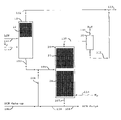
- FIGURE is a flow diagram in schematic form of the preferred embodiment of the invention.
- the feed to the process comprises a sulfur-containing petroleum fraction from a fluidized bed catalytic cracking unit (FCCU) which boils in the light gasoline boiling range (C 5 to about 350° F.) which is designated light cracked naphtha or LCN.
- FCCU fluidized bed catalytic cracking unit
- LCN light cracked naphtha
- the process is useful on the naphtha boiling range material from catalytic cracker products because they contain the desired olefins and unwanted sulfur compounds.
- Straight run naphthas have very little olefinic material, and unless the crude source is “sour”, very little sulfur.
- the sulfur content of the catalytically cracked fractions will depend upon the sulfur content of the feed to the cracker as well as the boiling range of the selected fraction used as feed to the process. Lighter fractions will have lower sulfur contents than higher boiling fractions.
- the front end of the naphtha contains most of the high octane olefins but relatively little of the sulfur.
- the sulfur components in the front end are mainly mercaptans and typical of those compounds are: methyl mercaptan (b.p. 43° F.), ethyl mercaptan (b.p. 99° F.), n-propyl mercaptan (b.p. 154° F.), iso-propyl mercaptan (b.p.
- Typical sulfur compounds found in the heavier boiling fraction include the heavier mercaptans, thiophenes sulfides and sulfides.
- thioetherification The reaction of mercaptans with diolefins to produce sulfides herein is termed thioetherification.
- a suitable catalyst for the reaction of the diolefins with the mercaptans is 0.4 wt % Pd on 7 to 14 mesh Al 2 O 3 (alumina) spheres, supplied by Süd-Chemie (formerly United Catalyst Inc.), designated as G-68C.
- Typical physical and chemical properties of the catalyst as provided by the manufacturer are as follows:
- Another catalyst useful for the mercaptan-diolefin reaction is 58 wt % Ni on 8 to 14 mesh alumina spheres, supplied by Calcicat, designated as E-475-SR.
- Typical physical and chemical properties of the catalyst as provided by the manufacturer are as follows:
- Hydrogen is provided as necessary to support the reaction and to reduce the oxide and maintain it in the hydride state.
- the distillation column reactor is operated at a pressure such that the reaction mixture is boiling in the bed of catalyst.
- a “froth level” may be maintained throughout the catalyst bed by control of the bottoms and/or overheads withdrawal rate which may improve the effectiveness of the catalyst thereby decreasing the height of catalyst needed.
- the liquid is boiling and the physical state is actually a froth having a higher density than would be normal in a packed distillation column but less than the liquid without the boiling vapors.
- the present process preferably operates at overhead pressure of said distillation column reactor in the range between 0 and 250 psig and temperatures within said distillation reaction zone in the range of 100 to 300° F., preferably 130 to 270° F.
- the feed and the hydrogen are preferably fed to the distillation column reactor separately or they may be mixed prior to feeding.
- a mixed feed is fed below the catalyst bed or at the lower end of the bed.
- Hydrogen alone is fed below the catalyst bed and the hydrocarbon stream is fed below the bed to about the mid one-third of the bed.
- the pressure selected is that which maintains catalyst bed temperature between 100° F. and 300° F.
- hydrodesulfurization The reaction of organic sulfur compounds in a refinery stream with hydrogen over a catalyst to form H 2 S is typically called hydrodesulfurization.
- Hydrotreating is a broader term which includes saturation of olefins and aromatics and the reaction of organic nitrogen compounds to form ammonia.
- hydrodesulfurization is included and is sometimes simply referred to as hydrotreating.
- Catalysts which are useful for the hydrodesulfurization reaction include Group VIII metals such as cobalt, nickel, palladium, alone or in combination with other metals such as molybdenum or tungsten on a suitable support which may be alumina, silica-alumina, titania-zirconia or the like. Normally the metals are provided as the oxides of the metals supported on extrudates or spheres and as such are not generally useful as distillation structures.
- the catalysts may additionally contain components from Group V and VIB metals of the Periodic Table or mixtures thereof.
- the use of the distillation system reduces the deactivation and provides for longer runs than the fixed bed hydrogenation units of the prior art.
- the Group VIII metal provides increased overall average activity.
- Catalysts containing a Group VIB metal such as molybdenum and a Group VIII such as cobalt or nickel are preferred.
- Catalysts suitable for the hydrodesulfurization reaction include cobalt-molybdenum, nickel-molybdenum and nickel-tungsten.
- the metals are generally present as oxides supported on a neutral base such as alumina, silica-alumina or the like. The metals are reduced to the sulfide either in use or prior to use by exposure to sulfur compound containing streams.
- the catalyst typically is in the form of extrudates having a diameter of 1 ⁇ 8, 1/16 or 1/32 inches and an L/D of 1.5 to 10.
- the catalyst also may be in the form of spheres having the same diameters. In their regular form they form too compact a mass and are preferably prepared in the form of a catalytic distillation structure.
- the catalytic distillation structure must be able to function as catalyst and as mass transfer medium. Catalytic distillation structures useful for this purpose are disclosed in U.S. Pat. Nos. 4,731,229, 5,073,236, 5,431,890 and 5,266,546 which are incorporated by reference.
- the distillation column reactor is advantageously used to react the heavier or higher boiling sulfur compounds.
- the overhead pressure is maintained at about 0 to 350 psig with the corresponding temperature in the distillation reaction zone of between 450 to 700° F.
- Hydrogen partial pressures of 0.1 to 70 psia, more preferably 0.1 to 10 are used, with hydrogen partial pressures in the range of 0.5 to 50 psia giving optimum results.
- distillation column reactor results in both a liquid and vapor phase within the distillation reaction zone.
- a considerable portion of the vapor is hydrogen while a portion is vaporous hydrocarbon from the petroleum fraction. Actual separation may only be a secondary consideration.
- the mechanism that produces the effectiveness of the present process is the condensation of a portion of the vapors in the reaction system, which occludes sufficient hydrogen in the condensed liquid to obtain the requisite intimate contact between the hydrogen and the sulfur compounds in the presence of the catalyst to result in their hydrogenation.
- sulfur species concentrate in the liquid while the olefins and H 2 S concentrate in the vapor allowing for high conversion of the sulfur compounds with low conversion of the olefin species.
- the result of the operation of the process in the distillation column reactor is that lower hydrogen partial pressures (and thus lower total pressures) may be used.
- any distillation there is a temperature gradient within the distillation column reactor.
- the temperature at the lower end of the column contains higher boiling material and thus is at a higher temperature than the upper end of the column.
- the lower boiling fraction which contains more easily removable sulfur compounds, is subjected to lower temperatures at the top of the column which provides for greater selectivity, that is, less hydrocracking or saturation of desirable olefinic compounds.
- the higher boiling portion is subjected to higher temperatures in the lower end of the distillation column reactor to crack open the sulfur containing ring compounds and hydrogenate the sulfur.
- FIGURE there is shown a schematic flow diagram of one embodiment of the invention.
- a light cracked naphtha is fed to a thioetherification reactor 10 containing a bed of thioetherification catalyst 12 through flow line 101 with hydrogen being fed through flow line 115 .
- the thioetherification reactor is configured to act as a light naphtha splitter.
- the mercaptans in the LCN are reacted with the diolefins to form higher boiling sulfides.
- a lower boiling fraction substantially reduced in mercaptans is removed as overheads via flow line 102 .
- a higher boiling fraction containing the sulfides, some unreacted mercaptans and higher boiling sulfur compounds, such as thiophene, is taken as bottoms via flow line 103 .
- the bottoms, or higher boiling fraction, from the thioetherification reactor 10 in flow line 103 are combined with a HCN and fed via flow line 105 to a hydrodesulfurization reactor 20 having beds 22 and 24 of hydrodesulfurization catalyst.
- the ratio of LCN to HCN in the feed to the hydrodesulfurization reactor can be in the range of 2:1 to 4:1
- the organic sulfur compounds including sulfides, mercaptans and thiophene are reacted with hydrogen to produce hydrogen sulfide.
- the higher boiling fraction of the LCN is distilled overhead via flow line 110 along with the unreacted hydrogen and the hydrogen sulfide.
- the hydrogen sulfide and hydrogen are separated from the overheads in a separator 30 and removed via flow line 111 .
- the liquid is removed from the separator 30 via flow line 112 and recombined with the lower boiling fraction in flow line 102 to produce a product having a reduced total sulfur content.
- the overheads in flow line 110 may be subjected to further subjected to hydrodesulfurization in a polishing reactor which is not shown.
- the HCN is removed from the hydrodesulfurization reactor 20 as bottoms via flow line 107 and a small purge is taken via flow line 108 .
- the remainder of the HCN bottoms is recycled via flow line 109 with make up HCN in flow line 104 .
- the clean solvent provides a washing action which removes coke and other detrimental products from the catalyst which greatly increases the catalyst life.
- the observed rate constant for the conversion of sulfur actually increased during operation.
- a catalyst which has enhanced hydrogenation properties such as nickel and molybdenum oxides on an alumina support may be used in the lower which will speed up the hydrogenation of the olefines in the HCN.
Landscapes
- Chemical & Material Sciences (AREA)
- Oil, Petroleum & Natural Gas (AREA)
- Engineering & Computer Science (AREA)
- Chemical Kinetics & Catalysis (AREA)
- General Chemical & Material Sciences (AREA)
- Organic Chemistry (AREA)
- Crystallography & Structural Chemistry (AREA)
- Production Of Liquid Hydrocarbon Mixture For Refining Petroleum (AREA)
- Catalysts (AREA)
- Organic Low-Molecular-Weight Compounds And Preparation Thereof (AREA)
Priority Applications (4)
| Application Number | Priority Date | Filing Date | Title |
|---|---|---|---|
| US10/699,712 US6984312B2 (en) | 2002-11-22 | 2003-11-03 | Process for the desulfurization of light FCC naphtha |
| EA200600912A EA008904B1 (ru) | 2003-11-03 | 2004-09-28 | Способ десульфурации жидкой, каталитически крекированной легкой нафты |
| PCT/US2004/030671 WO2005044953A2 (fr) | 2003-11-03 | 2004-09-28 | Procede de desulfuration de naphta leger fcc |
| CA002543645A CA2543645A1 (fr) | 2003-11-03 | 2004-09-28 | Procede de desulfuration de naphta leger fcc |
Applications Claiming Priority (2)
| Application Number | Priority Date | Filing Date | Title |
|---|---|---|---|
| US42863802P | 2002-11-22 | 2002-11-22 | |
| US10/699,712 US6984312B2 (en) | 2002-11-22 | 2003-11-03 | Process for the desulfurization of light FCC naphtha |
Publications (2)
| Publication Number | Publication Date |
|---|---|
| US20040099574A1 US20040099574A1 (en) | 2004-05-27 |
| US6984312B2 true US6984312B2 (en) | 2006-01-10 |
Family
ID=34573287
Family Applications (1)
| Application Number | Title | Priority Date | Filing Date |
|---|---|---|---|
| US10/699,712 Expired - Lifetime US6984312B2 (en) | 2002-11-22 | 2003-11-03 | Process for the desulfurization of light FCC naphtha |
Country Status (4)
| Country | Link |
|---|---|
| US (1) | US6984312B2 (fr) |
| CA (1) | CA2543645A1 (fr) |
| EA (1) | EA008904B1 (fr) |
| WO (1) | WO2005044953A2 (fr) |
Cited By (4)
| Publication number | Priority date | Publication date | Assignee | Title |
|---|---|---|---|---|
| US20070095725A1 (en) * | 2005-10-31 | 2007-05-03 | Catalytic Distillation Technologies | Processing of FCC naphtha |
| US8628656B2 (en) | 2010-08-25 | 2014-01-14 | Catalytic Distillation Technologies | Hydrodesulfurization process with selected liquid recycle to reduce formation of recombinant mercaptans |
| WO2014013154A1 (fr) | 2012-07-17 | 2014-01-23 | IFP Energies Nouvelles | Procede de desulfuration d'une essence |
| US8702973B2 (en) | 2011-03-15 | 2014-04-22 | Uop Llc | Process for upgrading one or more hydrocarbons boiling in a naphtha range |
Families Citing this family (1)
| Publication number | Priority date | Publication date | Assignee | Title |
|---|---|---|---|---|
| US8197674B2 (en) * | 2008-09-09 | 2012-06-12 | Lummus Technology Inc. | Thioetherification processes for the removal of mercaptans from gas streams |
Citations (27)
| Publication number | Priority date | Publication date | Assignee | Title |
|---|---|---|---|---|
| US3691066A (en) | 1969-09-23 | 1972-09-12 | British Petroleum Co | Hydrogenation of unsaturated gasolines |
| US4055483A (en) | 1976-08-02 | 1977-10-25 | Exxon Research & Engineering Co. | Hydrorefining of heavy oil with hydrogen and aluminum alkyl compound |
| US4194964A (en) | 1978-07-10 | 1980-03-25 | Mobil Oil Corporation | Catalytic conversion of hydrocarbons in reactor fractionator |
| US4265735A (en) | 1979-12-21 | 1981-05-05 | Mobil Oil Corporation | ZSM-5 Zeolite catalyzes dialkyl disulfide conversion to hydrogen sulfide |
| US4486297A (en) | 1980-01-12 | 1984-12-04 | Jgc Corporation | Process for desulfurizing and refining hydrocarbon fraction containing large quantities of aromatic components |
| US4731229A (en) | 1985-05-14 | 1988-03-15 | Sulzer Brothers Limited | Reactor and packing element for catalyzed chemical reactions |
| US5073236A (en) | 1989-11-13 | 1991-12-17 | Gelbein Abraham P | Process and structure for effecting catalytic reactions in distillation structure |
| US5169516A (en) | 1991-07-30 | 1992-12-08 | Carr Norman L | Removal of arsenic compounds from light hydrocarbon streams |
| US5320742A (en) | 1991-08-15 | 1994-06-14 | Mobil Oil Corporation | Gasoline upgrading process |
| US5321163A (en) | 1993-09-09 | 1994-06-14 | Chemical Research & Licensing Company | Multi-purpose catalytic distillation column and eterification process using same |
| US5510568A (en) | 1994-06-17 | 1996-04-23 | Chemical Research & Licensing Company | Process for the removal of mercaptans and hydrogen sulfide from hydrocarbon streams |
| US5510089A (en) | 1991-07-22 | 1996-04-23 | Chemical Research & Licensing Company | Method for operating a distillation column reactor |
| EP0725126A1 (fr) | 1995-02-03 | 1996-08-07 | Mitsubishi Oil Co., Ltd. | Procédé de désulfuration d'essence craquée catalytiquement |
| US5595634A (en) | 1995-07-10 | 1997-01-21 | Chemical Research & Licensing Company | Process for selective hydrogenation of highly unsaturated compounds and isomerization of olefins in hydrocarbon streams |
| US5597476A (en) | 1995-08-28 | 1997-01-28 | Chemical Research & Licensing Company | Gasoline desulfurization process |
| US5659106A (en) | 1995-06-22 | 1997-08-19 | Uop | Catalytic distillation process for mercaptan and olefin removal |
| US5759386A (en) | 1997-01-09 | 1998-06-02 | Uop | Process for thioetherification and selective hydrogenation of light hydrocarbons |
| US5779883A (en) | 1995-07-10 | 1998-07-14 | Catalytic Distillation Technologies | Hydrodesulfurization process utilizing a distillation column realtor |
| US5807477A (en) | 1996-09-23 | 1998-09-15 | Catalytic Distillation Technologies | Process for the treatment of light naphtha hydrocarbon streams |
| US5851383A (en) | 1997-01-09 | 1998-12-22 | Uop Llc | Process for thioetherification and selective hydrogenation of light olefins |
| US6083378A (en) | 1998-09-10 | 2000-07-04 | Catalytic Distillation Technologies | Process for the simultaneous treatment and fractionation of light naphtha hydrocarbon streams |
| US6231752B1 (en) | 1999-09-17 | 2001-05-15 | Catalytic Distillation Technologies | Process for the removal of mercaptans |
| US6303020B1 (en) | 2000-01-07 | 2001-10-16 | Catalytic Distillation Technologies | Process for the desulfurization of petroleum feeds |
| US6416658B1 (en) | 2000-10-19 | 2002-07-09 | Catalytic Distillation Technologies | Process for simultaneous hydrotreating and splitting of naphtha streams |
| US6444118B1 (en) | 2001-02-16 | 2002-09-03 | Catalytic Distillation Technologies | Process for sulfur reduction in naphtha streams |
| US6495030B1 (en) | 2000-10-03 | 2002-12-17 | Catalytic Distillation Technologies | Process for the desulfurization of FCC naphtha |
| US20030136706A1 (en) | 2001-10-25 | 2003-07-24 | Mcdaniel Stacey | Sulfur removal process |
Family Cites Families (1)
| Publication number | Priority date | Publication date | Assignee | Title |
|---|---|---|---|---|
| US4486397A (en) * | 1983-12-27 | 1984-12-04 | The Standard Oil Company | Group IIIB metallophosphates |
-
2003
- 2003-11-03 US US10/699,712 patent/US6984312B2/en not_active Expired - Lifetime
-
2004
- 2004-09-28 CA CA002543645A patent/CA2543645A1/fr not_active Abandoned
- 2004-09-28 WO PCT/US2004/030671 patent/WO2005044953A2/fr not_active Ceased
- 2004-09-28 EA EA200600912A patent/EA008904B1/ru not_active IP Right Cessation
Patent Citations (29)
| Publication number | Priority date | Publication date | Assignee | Title |
|---|---|---|---|---|
| US3691066A (en) | 1969-09-23 | 1972-09-12 | British Petroleum Co | Hydrogenation of unsaturated gasolines |
| US4055483A (en) | 1976-08-02 | 1977-10-25 | Exxon Research & Engineering Co. | Hydrorefining of heavy oil with hydrogen and aluminum alkyl compound |
| US4194964A (en) | 1978-07-10 | 1980-03-25 | Mobil Oil Corporation | Catalytic conversion of hydrocarbons in reactor fractionator |
| US4265735A (en) | 1979-12-21 | 1981-05-05 | Mobil Oil Corporation | ZSM-5 Zeolite catalyzes dialkyl disulfide conversion to hydrogen sulfide |
| US4486297A (en) | 1980-01-12 | 1984-12-04 | Jgc Corporation | Process for desulfurizing and refining hydrocarbon fraction containing large quantities of aromatic components |
| US4731229A (en) | 1985-05-14 | 1988-03-15 | Sulzer Brothers Limited | Reactor and packing element for catalyzed chemical reactions |
| US5073236A (en) | 1989-11-13 | 1991-12-17 | Gelbein Abraham P | Process and structure for effecting catalytic reactions in distillation structure |
| US5510089A (en) | 1991-07-22 | 1996-04-23 | Chemical Research & Licensing Company | Method for operating a distillation column reactor |
| US5169516A (en) | 1991-07-30 | 1992-12-08 | Carr Norman L | Removal of arsenic compounds from light hydrocarbon streams |
| US5320742A (en) | 1991-08-15 | 1994-06-14 | Mobil Oil Corporation | Gasoline upgrading process |
| US5321163A (en) | 1993-09-09 | 1994-06-14 | Chemical Research & Licensing Company | Multi-purpose catalytic distillation column and eterification process using same |
| US5431888A (en) | 1993-09-09 | 1995-07-11 | Chemical Research & Licensing Company | Multi-purpose catalytic distillation column |
| US5510568A (en) | 1994-06-17 | 1996-04-23 | Chemical Research & Licensing Company | Process for the removal of mercaptans and hydrogen sulfide from hydrocarbon streams |
| EP0725126A1 (fr) | 1995-02-03 | 1996-08-07 | Mitsubishi Oil Co., Ltd. | Procédé de désulfuration d'essence craquée catalytiquement |
| US5659106A (en) | 1995-06-22 | 1997-08-19 | Uop | Catalytic distillation process for mercaptan and olefin removal |
| US5595634A (en) | 1995-07-10 | 1997-01-21 | Chemical Research & Licensing Company | Process for selective hydrogenation of highly unsaturated compounds and isomerization of olefins in hydrocarbon streams |
| US5779883A (en) | 1995-07-10 | 1998-07-14 | Catalytic Distillation Technologies | Hydrodesulfurization process utilizing a distillation column realtor |
| US5597476A (en) | 1995-08-28 | 1997-01-28 | Chemical Research & Licensing Company | Gasoline desulfurization process |
| US5807477A (en) | 1996-09-23 | 1998-09-15 | Catalytic Distillation Technologies | Process for the treatment of light naphtha hydrocarbon streams |
| US5759386A (en) | 1997-01-09 | 1998-06-02 | Uop | Process for thioetherification and selective hydrogenation of light hydrocarbons |
| US5851383A (en) | 1997-01-09 | 1998-12-22 | Uop Llc | Process for thioetherification and selective hydrogenation of light olefins |
| US6083378A (en) | 1998-09-10 | 2000-07-04 | Catalytic Distillation Technologies | Process for the simultaneous treatment and fractionation of light naphtha hydrocarbon streams |
| US6231752B1 (en) | 1999-09-17 | 2001-05-15 | Catalytic Distillation Technologies | Process for the removal of mercaptans |
| US6303020B1 (en) | 2000-01-07 | 2001-10-16 | Catalytic Distillation Technologies | Process for the desulfurization of petroleum feeds |
| US6592750B2 (en) | 2000-01-07 | 2003-07-15 | Catalytic Distillation Technologies | Process for the desulfurization of petroleum feeds |
| US6495030B1 (en) | 2000-10-03 | 2002-12-17 | Catalytic Distillation Technologies | Process for the desulfurization of FCC naphtha |
| US6416658B1 (en) | 2000-10-19 | 2002-07-09 | Catalytic Distillation Technologies | Process for simultaneous hydrotreating and splitting of naphtha streams |
| US6444118B1 (en) | 2001-02-16 | 2002-09-03 | Catalytic Distillation Technologies | Process for sulfur reduction in naphtha streams |
| US20030136706A1 (en) | 2001-10-25 | 2003-07-24 | Mcdaniel Stacey | Sulfur removal process |
Cited By (4)
| Publication number | Priority date | Publication date | Assignee | Title |
|---|---|---|---|---|
| US20070095725A1 (en) * | 2005-10-31 | 2007-05-03 | Catalytic Distillation Technologies | Processing of FCC naphtha |
| US8628656B2 (en) | 2010-08-25 | 2014-01-14 | Catalytic Distillation Technologies | Hydrodesulfurization process with selected liquid recycle to reduce formation of recombinant mercaptans |
| US8702973B2 (en) | 2011-03-15 | 2014-04-22 | Uop Llc | Process for upgrading one or more hydrocarbons boiling in a naphtha range |
| WO2014013154A1 (fr) | 2012-07-17 | 2014-01-23 | IFP Energies Nouvelles | Procede de desulfuration d'une essence |
Also Published As
| Publication number | Publication date |
|---|---|
| CA2543645A1 (fr) | 2005-05-19 |
| US20040099574A1 (en) | 2004-05-27 |
| WO2005044953A2 (fr) | 2005-05-19 |
| EA200600912A1 (ru) | 2006-08-25 |
| EA008904B1 (ru) | 2007-08-31 |
| WO2005044953A3 (fr) | 2005-07-28 |
Similar Documents
| Publication | Publication Date | Title |
|---|---|---|
| AU2002327574B2 (en) | Process for the desulfurization of fcc naphtha | |
| US6303020B1 (en) | Process for the desulfurization of petroleum feeds | |
| US6946068B2 (en) | Process for desulfurization of cracked naphtha | |
| US7175754B2 (en) | Process for the production of low benzene gasoline | |
| AU2002327574A1 (en) | Process for the desulfurization of fcc naphtha | |
| US6824676B1 (en) | Process for the selective desulfurization of a mid range gasoline cut | |
| CN100368510C (zh) | 使用选定石脑油料流的改进加氢脱硫处理法 | |
| US7153415B2 (en) | Process for the treatment of light naphtha hydrocarbon streams | |
| US7125484B2 (en) | Downflow process for hydrotreating naphtha | |
| US6676830B1 (en) | Process for the desulfurization of a light FCC naphtha | |
| USRE41120E1 (en) | Process for ultra low sulfur gasoline | |
| US6984312B2 (en) | Process for the desulfurization of light FCC naphtha | |
| WO2001059032A1 (fr) | Procédé de désulfuration d'alimentations de pétrole | |
| AU2006312301B2 (en) | Processing of FCC naphtha | |
| US7090766B2 (en) | Process for ultra low sulfur gasoline |
Legal Events
| Date | Code | Title | Description |
|---|---|---|---|
| AS | Assignment |
Owner name: CATALYTIC DISTILLATION TECHNOLOGIES, TEXAS Free format text: ASSIGNMENT OF ASSIGNORS INTEREST;ASSIGNORS:SOM, MANOJ;PODREBARAC, GARY G.;SHOREY, SCOTT W.;REEL/FRAME:014663/0012;SIGNING DATES FROM 20031016 TO 20031021 |
|
| STCF | Information on status: patent grant |
Free format text: PATENTED CASE |
|
| FPAY | Fee payment |
Year of fee payment: 4 |
|
| FPAY | Fee payment |
Year of fee payment: 8 |
|
| FPAY | Fee payment |
Year of fee payment: 12 |