US7171272B2 - Sound-processing strategy for cochlear implants - Google Patents
Sound-processing strategy for cochlear implants Download PDFInfo
- Publication number
- US7171272B2 US7171272B2 US10/343,396 US34339603A US7171272B2 US 7171272 B2 US7171272 B2 US 7171272B2 US 34339603 A US34339603 A US 34339603A US 7171272 B2 US7171272 B2 US 7171272B2
- Authority
- US
- United States
- Prior art keywords
- loudness
- stimuli
- electrode
- overall
- electric
- Prior art date
- Legal status (The legal status is an assumption and is not a legal conclusion. Google has not performed a legal analysis and makes no representation as to the accuracy of the status listed.)
- Expired - Lifetime, expires
Links
- 239000007943 implant Substances 0.000 title claims abstract description 51
- 238000012545 processing Methods 0.000 title claims description 35
- 230000000638 stimulation Effects 0.000 claims abstract description 52
- 230000008447 perception Effects 0.000 claims abstract description 20
- 230000005236 sound signal Effects 0.000 claims abstract description 13
- 230000005284 excitation Effects 0.000 claims description 41
- 230000006870 function Effects 0.000 claims description 30
- 238000000034 method Methods 0.000 claims description 29
- 238000004070 electrodeposition Methods 0.000 claims description 19
- 230000000694 effects Effects 0.000 claims description 18
- 230000008569 process Effects 0.000 claims description 10
- 210000003477 cochlea Anatomy 0.000 claims description 8
- 230000004044 response Effects 0.000 claims description 6
- 238000000926 separation method Methods 0.000 claims description 3
- 238000003672 processing method Methods 0.000 abstract 1
- 238000013459 approach Methods 0.000 description 13
- 238000004458 analytical method Methods 0.000 description 9
- 238000001228 spectrum Methods 0.000 description 8
- 238000010586 diagram Methods 0.000 description 6
- 230000000541 pulsatile effect Effects 0.000 description 4
- 230000008901 benefit Effects 0.000 description 3
- 238000012886 linear function Methods 0.000 description 3
- 238000013507 mapping Methods 0.000 description 3
- 238000007493 shaping process Methods 0.000 description 3
- 230000003595 spectral effect Effects 0.000 description 3
- 238000010183 spectrum analysis Methods 0.000 description 3
- 230000002123 temporal effect Effects 0.000 description 3
- 230000004913 activation Effects 0.000 description 2
- 238000007792 addition Methods 0.000 description 2
- 238000005259 measurement Methods 0.000 description 2
- 230000001537 neural effect Effects 0.000 description 2
- 230000009466 transformation Effects 0.000 description 2
- 206010011891 Deafness neurosensory Diseases 0.000 description 1
- 206010021403 Illusion Diseases 0.000 description 1
- 208000009966 Sensorineural Hearing Loss Diseases 0.000 description 1
- 230000003044 adaptive effect Effects 0.000 description 1
- 238000003491 array Methods 0.000 description 1
- 230000009286 beneficial effect Effects 0.000 description 1
- 230000002051 biphasic effect Effects 0.000 description 1
- 238000012937 correction Methods 0.000 description 1
- 238000013213 extrapolation Methods 0.000 description 1
- 230000006872 improvement Effects 0.000 description 1
- 230000010354 integration Effects 0.000 description 1
- 230000003993 interaction Effects 0.000 description 1
- 238000004519 manufacturing process Methods 0.000 description 1
- 230000000873 masking effect Effects 0.000 description 1
- 210000002569 neuron Anatomy 0.000 description 1
- 230000008520 organization Effects 0.000 description 1
- 230000000737 periodic effect Effects 0.000 description 1
- 230000002093 peripheral effect Effects 0.000 description 1
- 230000009467 reduction Effects 0.000 description 1
- 238000005070 sampling Methods 0.000 description 1
- 230000035807 sensation Effects 0.000 description 1
- 208000023573 sensorineural hearing loss disease Diseases 0.000 description 1
- 230000009625 temporal interaction Effects 0.000 description 1
- 230000001131 transforming effect Effects 0.000 description 1
Images


Classifications
-
- A—HUMAN NECESSITIES
- A61—MEDICAL OR VETERINARY SCIENCE; HYGIENE
- A61N—ELECTROTHERAPY; MAGNETOTHERAPY; RADIATION THERAPY; ULTRASOUND THERAPY
- A61N1/00—Electrotherapy; Circuits therefor
- A61N1/18—Applying electric currents by contact electrodes
- A61N1/32—Applying electric currents by contact electrodes alternating or intermittent currents
- A61N1/36—Applying electric currents by contact electrodes alternating or intermittent currents for stimulation
- A61N1/36036—Applying electric currents by contact electrodes alternating or intermittent currents for stimulation of the outer, middle or inner ear
- A61N1/36038—Cochlear stimulation
-
- G—PHYSICS
- G10—MUSICAL INSTRUMENTS; ACOUSTICS
- G10L—SPEECH ANALYSIS TECHNIQUES OR SPEECH SYNTHESIS; SPEECH RECOGNITION; SPEECH OR VOICE PROCESSING TECHNIQUES; SPEECH OR AUDIO CODING OR DECODING
- G10L21/00—Speech or voice signal processing techniques to produce another audible or non-audible signal, e.g. visual or tactile, in order to modify its quality or its intelligibility
- G10L21/06—Transformation of speech into a non-audible representation, e.g. speech visualisation or speech processing for tactile aids
- G10L2021/065—Aids for the handicapped in understanding
-
- G—PHYSICS
- G10—MUSICAL INSTRUMENTS; ACOUSTICS
- G10L—SPEECH ANALYSIS TECHNIQUES OR SPEECH SYNTHESIS; SPEECH RECOGNITION; SPEECH OR VOICE PROCESSING TECHNIQUES; SPEECH OR AUDIO CODING OR DECODING
- G10L21/00—Speech or voice signal processing techniques to produce another audible or non-audible signal, e.g. visual or tactile, in order to modify its quality or its intelligibility
- G10L21/02—Speech enhancement, e.g. noise reduction or echo cancellation
- G10L21/0208—Noise filtering
- G10L21/0216—Noise filtering characterised by the method used for estimating noise
- G10L21/0232—Processing in the frequency domain
Definitions
- the present invention relates to a sound processing strategy for use in hearing prosthesis systems, with particular application to cochlear implant systems.
- Cochlear implants in particular have been in clinical use for many years.
- speech processing strategies have been employed in order to process a sound signal into a basis for electrical stimulation via implanted electrode arrays. Some systems have focused upon extracting particular acoustic components of the detected sound signal, which are important to the user's understanding of speech, for example the amplitudes and frequencies of formants, and using these as a basis for generating stimuli. Other approaches have also attempted to utilise the generally tonotopic arrangement of the cochlea, so that each electrode corresponds generally to a particular frequency band.
- SPEAK speech processors sold by Cochlear Limited
- the incoming sound signal is processed to provide an indication of the amplitude of the ambient sound signal in each of a predetermined set of frequency channels, and the channels with the largest amplitudes are selected as the basis for stimulation.
- the outputs of all channels are used to specify the stimulation patterns, rather than just the channels having the highest short-term amplitudes.
- the channels are defined by the partially overlapping frequency responses of a bank of band-pass filters.
- the filters may be implemented using a variety of analog or digital techniques, including the Fast Fourier Transform (FFT).
- FFT Fast Fourier Transform
- the electrodes corresponding to those channels, determined by a clinical mapping procedure, are selected for activation in each stimulation period and are allocated to the channels according to the tonotopic organization of the cochlear.
- the rate of stimulation is preferably as high as possible subject to limitations imposed by the processing and power capacity of the external processor and implanted receiver/stimulator unit.
- the range of electrical stimulus levels is usually determined by psychophysical measurement of threshold and comfortably loud levels on individual electrodes, using fixed-current pulse trains at the same rate as the stimulus cycle rate of the speech processor output. This may be described as per electrode loudness mapping.
- the problem with this method of loudness-mapping is that is does not take into consideration the effects of loudness summation when multiple electrodes are activated in quick succession, as they generally are in the output of speech processors.
- Amplitude envelope fluctuations of a speech signal provide vital cues for speech perception, especially for those people who are less able to make use of spectral cues in the signal (for example, those with few active electrodes or poor electrode discrimination ability). Therefore it is important that the changes in acoustic intensity from moment to moment in a speech signal are accurately conveyed as the appropriate perceptual loudness changes to the implantee.
- the present loudness coding methods whereby the acoustic output of a filter is mapped to a fixed range of electrical levels (however determined) on its corresponding electrode, lead inevitably to a perceptual distortion of the amplitude envelope shape because these methods do not take into account the variations from moment to moment of important aspects such as the number of electrodes activated in each stimulus cycle, and the relative loudness contributions from these other electrodes.
- the relative loudness of electrically stimulated hearing using present approaches does not accurately convey the relative loudness that a normally-hearing person would hear for the same acoustic input.
- this effect will lead to narrow-band signals being masked by lower-level broad-band noise, thus disrupting the ability of implantees to understand speech in background noise.
- the present invention relates to applying models of sound perception for normal hearing in the sound processing scheme to improve the control of loudness and to provide additional information about sound signals, while ensuring the implant users perceive signals of appropriate loudness.
- the present invention relates to applying shaping algorithms to the amplitudes of the channels after initial analysis to allow further processing of the amplitudes in each channel.
- the shaping algorithm takes into account the relative importance of each channel for speech perception by normal hearing listeners. The purpose is to not merely emphasise the channels with the largest amplitudes, but to also apply a selective weighting towards those most important for speech perception.
- the input sound signal is processed to determine an overall loudness estimate for a hypothetical listener with normal hearing.
- the loudness perceived by the implant user with the proposed stimuli is estimated, based on parameters including the previous stimuli applied, and relevant characteristics of the patient's auditory perception with electric stimulation which have been previously determined clinically. If the loudness of the proposed stimuli is not the same as that for a normally hearing person within a predetermined range, then the stimuli are adjusted and the loudness estimated again, until the range is met. This may be termed normalising the overall loudness as perceived by a listener using electric hearing.
- the input values for the electrical stimuli are initially determined using an established sound processing scheme for cochlear implants, such as the SPEAK scheme described above.
- SPEAK an established sound processing scheme for cochlear implants
- other schemes may also be employed, including schemes which generate simultaneous or analog patterns of stimulation, rather than stimulation using sequences of rectangular pulses which do not overlap in time.
- the intention of this approach is to adjust the electric stimulation so that the overall loudness of the user's percept is comparable to that of a normal hearing listener for the same input sound signal, including taking account of the specific user's characteristics. This approach is particularly applicable when it is desired to produce overall loudness which is not identical to that perceived by a hypothetical normal hearing listener, but has a predetermined relationship to normal loudness.
- This approach also provides signals which better emphasise the signals known to be most important to speech perception in normally hearing people.
- the present invention also attempts to provide a scheme that can improve the control of not just the overall loudness of signals perceived by cochlear implant users but also to improve the control of the relative loudness of signals presented to implant users, particularly the relative loudness of different components of speech signals, such as phonemes. This is done by using a version of the present scheme which controls the distribution of loudness contributions across frequency or across cochlear position, rather than controlling the overall loudness. This aspect will be described in more detail below.
- the above approaches allow for improvement when used with existing implants and processors.
- the above approaches become more important.
- the stimulation environment becomes more complex, it is increasingly important to control the overall perceptual effects of stimulation, such as the loudness perceived by the user, to ensure that the full benefits of stimulation with a cochlear implant can be obtained.
- the present invention will have increased application as more complex schemes are implemented.
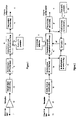
- FIG. 1 is a block diagram of prior art arrangement
- FIG. 2 is a block diagram of a first implementation
- FIG. 3 is a block diagram of a second implementation.
- the present invention will be described with reference to particular approaches to speech processing. However, it will be appreciated that the present invention can be applied to many different speech processing strategies, as an addition to assist in providing an outcome where the percepts provided to the user are optimal, particularly when many stimuli are applied within a short time interval and/or to multiple electrode positions. Further to this, each aspect of the present invention can be applied to existing speech processing schemes either separately or in combination to enhance the operational characteristics of such schemes.
- FIG. 1 is a functional block diagram showing the main components of a typical existing sound processor for cochlear implants. For convenience, a digital implementation is discussed, however, it will be appreciated that analog (or combined analog/digital) implementations of sound processors are also practical, and are not excluded from the field of the invention.
- the input is from a microphone 11 , via a preamplifier stage 12 to an analog-to-digital converter (ADC) 13 .
- the spectral analysis block 14 is generally implemented by a Fast Fourier Transform (preceded by appropriate windowing of the sampled time-domain input signals), or by a bank of band-pass filters.
- the output of the spectral analysis block is a set of short-term estimates of the level in a number of discrete or partially overlapping frequency bands.
- SPEAK or ACE Advanced Combination Encoder—a SPEAK derivative that uses a generally higher stimulation rate
- This subset includes the bands with the highest amplitudes. In other schemes, such as CIS (Continuous Interleaved Sampling), amplitudes from all bands are used. However, CIS processors typically have fewer analysis bands than SPEAK or ACE processors.
- the subsequent processing block 15 converts the amplitude data representing the input spectrum into levels of electric pulses appropriate for the cochlear implant user.
- a number of user-specific parameters 16 are required. These include data to ‘map’ the analysis-band frequencies onto the available intracochlear electrode positions; the current level and/or pulse width for stimulation on each electrode that is just detectable by the user (the ‘T-level’); and the current level and/or pulse width for stimulation on each electrode that is loud but not uncomfortable for the user (the ‘C-level’).
- the amplitude data are converted to current levels 15 for each electrode by a set of independent look-up tables, each containing a non-linear function. For example, for each electrode, the lowest amplitudes are converted to levels near the T-level, and the highest amplitudes are converted to levels near the C-level.
- the electrode selection and current level data are then encoded digitally 17 and finally transmitted to the cochlear implant 18 so that the desired stimulation of the auditory neurons is produced.
- the input signal is analysed to estimate the short-term spectrum.
- This spectrum is then processed by a real-time model, which estimates the distribution of excitation across frequency, or equivalently across cochlear place, as would occur in the ear of a listener with normal hearing.
- a real-time model which estimates the distribution of excitation across frequency, or equivalently across cochlear place, as would occur in the ear of a listener with normal hearing.
- the cochlea is modeled as a frequency analyzer based on a bank of partially overlapping band-pass filters, and the excitation pattern is derived from the outputs of these filters.
- this estimated excitation pattern is converted into a specific loudness function (i.e. the amount of loudness contributed by the excitation in each frequency band, or at each cochlear location).
- the specific loudness function is then integrated across frequency or cochlear position to estimate the overall loudness of the signal as perceived with normal hearing.
- the specific loudness (or excitation) functions are shaped according to the relative importance of each frequency region (e.g. each critical band) for speech perception by normally-hearing individuals.
- the appropriate shaping is derived from the theory underlying the Speech Intelligibility Index (SII) (Also known as the Articulation Index (AI)), which is well known by those skilled in the art).
- SII Speech Intelligibility Index
- AI Articulation Index
- the critical bands are then sorted in order of largest-to-smallest SII-weighted specific loudness (or excitation). The purpose of this step is to ensure that those parts of the incoming signal which are likely to contain most information about speech are given priority when the electric stimuli are generated.
- the acoustic channels instead of merely being weighted by absolute amplitudes, are weighted according to their importance to a normal hearing person in speech perception.
- This approach therefore provides a set of outputs that provide a better speech percept for a user hearing by electric means.
- the weighted amplitudes are used in the channel-selection process so that the electrodes selected for stimulation are those with the highest amplitudes after the weighting, based on the SII importance function.
- the unweighted loudness function is integrated to provide an overall value for loudness as perceived by a (hypothetical) normal hearing person for the analysis period.
- the set of stimuli applied to an electric hearing user should provide a loudness approximating this value, in order to match the percepts of a normal hearing person as closely as possible, and accordingly improve the perception of speech and other sounds perceived by the electric hearing user.
- each critical band is treated separately, and in the largest-to-smallest sequence.
- the first critical band having the largest SII-weighted specific loudness, is identified, and the corresponding specific loudness (or excitation) is obtained from the earlier stage of the analysis (i.e. before the SII weighting was applied).
- An electric stimulus is then constructed that should provide similar specific loudness (or excitation) for the implant user.
- each such stimulus is specified with only two parameters; electrode number and stimulus level.
- the rate of stimulation is determined by the rate of processing, as in SPEAK or CIS.
- the active electrode is selected according to the usual ‘map’ of normal auditory critical band frequencies to electrode positions.
- the determination of stimulus level is more complicated than in previous schemes. Having selected the active electrode, and having determined the specific loudness that electrode should contribute, the stimulus level is set to provide approximately that specific loudness to the implant user. A model to determine the expected response for the electric hearing user, including parameters specific to that user, is then applied. The model also estimates the spread of excitation around the active electrode. This is because there may be some specific loudness at electrode positions surrounding the first active electrode, even though those other electrodes are not currently activated. In addition, the overall loudness of the stimulation is estimated by integrating the specific loudness function.
- the second electrode to be activated in the frame is determined by using the second-largest SII-weighted specific loudness, and then, as described above, the corresponding specific loudness for normal hearing is obtained.
- the function estimating the distribution of specific loudness across the electrode positions is examined. If the specific loudness associated with the selected electrode is currently less than the specific loudness required to be contributed at that electrode position, a suitable stimulus level is generated to provide the required specific loudness. If there is already sufficient specific loudness at that electrode position, the second electrode is not activated. For example, the spread of excitation from the first active electrode may totally mask the contribution from the second electrode if the second electrode were to be activated at the appropriate level. If the second electrode is activated, the functions estimating the spread of excitation and the distribution of specific loudness across all electrode positions are updated. The estimate of total loudness is also updated.
- electrode selection can continue based on the specific loudness function itself, or on the levels in the physical spectrum.
- SII Speech Intelligibility Index
- the minimum level could be set to 30 dB below the maximum level found in the short-term spectrum over the previous few seconds.
- Another possibility would be to employ a speech/non-speech classifier to influence the way the SII importance is applied in the speech processor.
- the model receives inputs such as the parameters of each pulse to be delivered to the electrode array.
- parameters such as the position of pulse delivery site (active electrode number), the electrode configuration (monopolar, bipolar, etc), the pulse onset time, the pulse width, the time separating the phases of the pulse (if the pulse is biphasic) and the current level (or total charge contained in the pulse).
- the model could receive the above parameters combined for the set of all pulses to be generated in each analysis frame. For example, in sound processing schemes like SPEAK and ACE, a set of parameters could be obtained for each scan of the outputs of the band-pass filters, or for each short-term spectral analysis. As outlined previously, each of these scans results in a selection of the electrodes to be activated.
- the model estimates the contribution made by each pulse to the overall loudness.
- the pattern of contributions across the available cochlear sites is called the specific loudness function, by analogy to the specific loudness function derived in models of perception with normal hearing (as outlined above).
- This aspect of the model is based on known psychophysical characteristics of electrical hearing. For example:
- the model may require all of the physical parameters of the pulses over a finite extent of time to estimate each pulse's loudness contribution accurately.
- the model also takes into consideration user specific parameters, such as threshold levels (T-levels) and maximum comfort levels (C-levels) and/or other supra-threshold loudness estimates for different rates on all available electrodes, and for different numbers of spatially separate electrodes being activated within a short time (such as within one or several analysis periods, typically about 2–20 ms in total). It is possible that only a subset of these parameters would need to be measured for each implant user with the model using interpolations and extrapolations to extend the measured parameter values to the full range of values required for operation. Also, it is possible that some parameters of the model may have values that do not vary considerably among individual implant users and for such parameters average values would be used in the model rather than separately measured values. Such provisions make the model easily adaptable for each implant user.
- this model integrates (or averages) the specific loudness contributions of the pulses to be delivered over an appropriate time interval (e.g. 10 ms, or the analysis period). These integrations are then preferably overlapped in time (e.g. 10 ms averages computed every 5 ms).
- time interval e.g. 10 ms, or the analysis period.
- the model also produces a frequently updated estimate of the total loudness as perceived by the implant user. This estimate includes not only the effects of the most recent pulse delivered to the electrode array but also the (decaying) effects of other pulses delivered within a short time-window centered on that pulse.
- the model predicting specific loudness, and ultimately total loudness, for electric stimulation for a range of stimulus patterns has essentially three aspects: (1) an estimate of the spatial spread of excitation resulting from electric stimulation, derived from the results of psychophysical electric masking studies; (2) estimates of the effects of temporal interactions (including the effects of stimulation rate), which are also available from psychophysical studies; and (3) an estimate of loudness summation for stimulation with multiple pulses delivered to multiple electrodes.
- loudness summation is taken into account automatically based on the stimulus pattern being presented.
- sound processing schemes representative of the prior art convert an estimate of the sound intensity in each of a number of frequency bands into a corresponding level of stimulation on a selected electrode without taking account of the effects of pulses delivered on other electrodes or pulses occurring within a short time preceding or following the pulse.
- the explicit accounting for temporal and/or spatial loudness-summation effects for the actual patterns of electric stimulation delivered by the electrodes leads to better intelligibility of speech and other sounds, and improved listening comfort, for the implant user.
- Compensation for loudness summation could be applied using a rule based on averaged psychophysical data obtained from measurements obtained from a number of implant users, or a standard rule could be modified to suit the individual implant user.
- a simple way of obtaining a user-specific estimate of the amount of summation for high loudness levels would be to obtain C-levels for one or more selected complex (i.e. multi-electrode) stimuli after the C-levels have been obtained in the conventional way for each individual electrode.
- Temporal effects of loudness summation could be estimated by measuring hearing thresholds (T-levels), and/or levels producing supra-threshold loudness (such as C-levels) for different stimulation rates.
- spatial effects of loudness summation could be estimated by measuring threshold levels and/or levels producing supra-threshold loudness for selected sets of electrodes being activated at different cochlear positions.
- FIG. 2 is a functional block diagram showing how the typical prior-art sound processor of FIG. 1 can be modified to implement a simple version of the inventive processing scheme.
- the new processing blocks include a loudness estimator for normal hearing 19 and a loudness estimator for electric hearing 20 .
- the loudness estimator for normal hearing is based on a known numerical model, such as that mentioned previously by Moore and Glasberg. It is used to generate an estimate of the loudness of each short-term input spectrum for a hypothetical listener with normal hearing.
- the loudness estimator for electric hearing is based on a novel model of estimating loudness for users of cochlear implants as discussed above, and generates an estimate of the loudness of each short-term output pulse pattern for the individual implanted listener.
- the two loudness estimators 19 , 20 produce outputs that are updated periodically or continually. These loudness estimates are compared 21 , and a correction signal 23 is generated which aims to equalise the loudness of the electric stimuli to the loudness of the corresponding acoustic input signal.
- An initial set of parameters specifying the electric stimuli is calculated using a process similar to that in the prior art, and outlined previously.
- the inventive scheme continually modifies those parameters so as to make the implant user's perception of overall loudness more like that of a hypothetical listener with normal hearing when listening to the same input signals. For example, overall loudness can be adjusted by altering the currents and/or pulse widths of the stimuli either by a constant ratio or by a proportion of the dynamic range (difference between C- and T-levels) on the electrode to which each stimulus is delivered.
- FIG. 3 is a block diagram illustrating a more complex version of the inventive processing scheme.
- the conventional processing which converts acoustic amplitudes to current levels in existing sound processors is replaced by model-based processing.
- the loudness models may therefore be more complicated than those described above.
- the Moore & Glasberg model for loudness in normal hearing 29 produces an output representing the contribution to the overall loudness made by signals in each of a number of frequency bands. As mentioned above, this is referred to as the specific loudness function.
- the model also produces an output called the excitation pattern which represents the way activity is distributed through the cochlea in terms of known psychoacoustic properties.
- Either the specific loudness function, the excitation pattern, or another appropriate output of the model for normal hearing can be used in the inventive sound-processing scheme.
- the model for loudness in electric hearing 30 is similarly extended to produce outputs representing the specific loudness or the excitation which would result from a given pattern of electric stimuli.
- user-specific parameters 32 are required in this model.
- the parameters of the electric stimuli to be produced by the cochlear implant are calculated in real time so as to make the specific loudness or excitation in the electrically stimulated cochlea similar to the specific loudness or excitation that would occur in a hypothetical listener with normal hearing when listening to the same input signals.
- the overall loudness would also be similar, as in the simpler scheme described above.
- the more complex scheme of FIG. 3 has the advantage that the parameters of each electric pulse produced by the implant 25 are specified so that each pulse will contribute an appropriate amount of loudness or excitation, according to the corresponding contributions estimated for each acoustic frequency region by the model of normal hearing.
- the simpler scheme of FIG. 2 only the overall loudness level was controlled, without independent adjustments to the parameters of each pulse.
- a simplified version of the model producing specific loudness estimates for electric stimulation, suitable for use in a real-time sound processor for cochlear implants, is described as follows.
- the simplifications depend on two assumptions that have been shown to be applicable for realistic patterns of pulsatile stimulation in many existing implant users. The assumptions are: (1) that the spatial separation between sites of delivery of pulses has a negligible effect on the summation of loudness; and (2) that the loudness contribution of each pulse presented within a stimulation period can be treated independently when estimating the total loudness associated with that period of stimulation.
- L is the loudness
- C is the current level (specified in the stepwise units used in the prior-art implant devices manufactured by Cochlear Limited, which are related to the electrode current via a fixed, non-linear function approximating a logarithmic function)
- Ks are constants, determined experimentally.
- the block 25 generating electric stimuli may employ a look-up table based on the above function to convert the specific loudness estimates from the model for normal hearing 29 into current level data suitable for delivery 17 , 18 to the implanted stimulator.
- the available electrodes are allocated to frequency bands according to the tonotopic organisation of the cochlea.
- the normal specific-loudness estimates for each frequency band are converted to the specific loudness contributions required at each of the corresponding electrode positions, and then the current levels for the pulses to be delivered to those electrodes are determined from the look-up tables assigned to those electrodes.
- the total loudness as perceived by the implant user is estimated by summing the specific loudness contributions across all available electrode positions.
- the total loudness of the electric stimulation may be limited to a level that is safe and tolerable to the individual implant user.
- the limiting may be performed by comparing the total loudness estimate with the maximum loudness judged as comfortable by the implant user. If the total loudness estimate exceeds the maximum acceptable loudness at any time, the specific loudness contributions assigned to each of the active electrodes would be reduced in the same proportion (by reducing the current levels of the stimuli) until the total loudness was acceptable.
- Time constants could be applied to this limiting function to improve its perceived effects. For example, a short attack time (e.g. 5 ms) could be applied to reduce the loudness rapidly when it exceeds the limit, and a longer release time (e.g. 50 ms) could be applied to allow the loudness to increase relatively slowly to its original level when it no longer exceeds the limit.
- a short attack time e.g. 5 ms
- a longer release time e.g. 50 ms
- Such limiting techniques are similar to those employed in conventional
- E(p, t, a) is calculated from the physical parameters of the electric stimulus as a non-linear function of position in the cochlea (p), time (t), and the stimulus amplitude (a, which may be represented by the charge per pulse, the current level, and/or the phase duration).
- E is assumed to be related to the total amount of neural activity at a given time and place.
- the total electric excitation produced by an electric stimulus which has two or more (non-simultaneous) components is equal to the sum of the excitation produced by the individual components.
- a weighted summation of electric current may need to be calculated before applying the non-linear transformation to excitation.
- conventional pulsatile electric stimulation in which pulses are delivered to the electrodes sequentially, one suitable form of the non-linear transformation is an exponential decay over time.
- the electric excitation pattern can be estimated iteratively by successively transforming the existing electric excitation pattern and adding the excitation pattern contributed by each additional electric pulse.
- the excitation contributed by a particular pulse may affect the electric excitation pattern at cochlear positions spatially separate from the position at which the pulse was delivered by the electrode.
- the inventive scheme can determine the optimal parameters of the electric stimuli to be delivered by the implant. For instance, the positions (i.e. selected electrodes) and current levels can be calculated so as to minimise the difference between the desired electric excitation pattern and the estimated existing electric excitation pattern.
- One advantage of this approach to determining the parameters of the electric stimuli is that more pulses may be delivered by the electrodes to improve the accuracy of the desired excitation pattern in both temporal and spatial dimensions.
- the inventive scheme has the potential to deliver additional information to implant users, compared with the prior art, about detailed aspects of the acoustic signal by controlling spatio-temporal parameters of the stimulation on a relatively fine scale.
- These adjustments may require the total loudness estimates for the implant user to be held within a range derived from the normal-hearing loudness estimates, or that the relation between the two models' total-loudness estimates follow a predetermined function such as a compressive or expansive relationship.
Landscapes
- Health & Medical Sciences (AREA)
- Otolaryngology (AREA)
- Engineering & Computer Science (AREA)
- Biomedical Technology (AREA)
- Nuclear Medicine, Radiotherapy & Molecular Imaging (AREA)
- Radiology & Medical Imaging (AREA)
- Life Sciences & Earth Sciences (AREA)
- Animal Behavior & Ethology (AREA)
- General Health & Medical Sciences (AREA)
- Public Health (AREA)
- Veterinary Medicine (AREA)
- Prostheses (AREA)
- Measurement Of Mechanical Vibrations Or Ultrasonic Waves (AREA)
Priority Applications (1)
| Application Number | Priority Date | Filing Date | Title |
|---|---|---|---|
| US11/588,280 US20070043403A1 (en) | 2000-08-21 | 2006-10-27 | Sound-processing strategy for cochlear implants |
Applications Claiming Priority (3)
| Application Number | Priority Date | Filing Date | Title |
|---|---|---|---|
| AUPQ9527A AUPQ952700A0 (en) | 2000-08-21 | 2000-08-21 | Sound-processing strategy for cochlear implants |
| AUPA9527 | 2000-08-21 | ||
| PCT/AU2001/001027 WO2002017678A1 (fr) | 2000-08-21 | 2001-08-20 | Strategie de traitement de sons pour implants cochleaires |
Related Child Applications (1)
| Application Number | Title | Priority Date | Filing Date |
|---|---|---|---|
| US11/588,280 Continuation US20070043403A1 (en) | 2000-08-21 | 2006-10-27 | Sound-processing strategy for cochlear implants |
Publications (2)
| Publication Number | Publication Date |
|---|---|
| US20030167077A1 US20030167077A1 (en) | 2003-09-04 |
| US7171272B2 true US7171272B2 (en) | 2007-01-30 |
Family
ID=3823582
Family Applications (2)
| Application Number | Title | Priority Date | Filing Date |
|---|---|---|---|
| US10/343,396 Expired - Lifetime US7171272B2 (en) | 2000-08-21 | 2001-08-20 | Sound-processing strategy for cochlear implants |
| US11/588,280 Abandoned US20070043403A1 (en) | 2000-08-21 | 2006-10-27 | Sound-processing strategy for cochlear implants |
Family Applications After (1)
| Application Number | Title | Priority Date | Filing Date |
|---|---|---|---|
| US11/588,280 Abandoned US20070043403A1 (en) | 2000-08-21 | 2006-10-27 | Sound-processing strategy for cochlear implants |
Country Status (6)
| Country | Link |
|---|---|
| US (2) | US7171272B2 (fr) |
| EP (2) | EP1784047A3 (fr) |
| JP (1) | JP5196698B2 (fr) |
| AU (3) | AUPQ952700A0 (fr) |
| CA (1) | CA2419319A1 (fr) |
| WO (1) | WO2002017678A1 (fr) |
Cited By (37)
| Publication number | Priority date | Publication date | Assignee | Title |
|---|---|---|---|---|
| US20050229769A1 (en) * | 2004-04-05 | 2005-10-20 | Nathaniel Resnikoff | System and method for assigning visual markers to the output of a filter bank |
| US20060025833A1 (en) * | 2004-07-29 | 2006-02-02 | Cochlear Limited | Variable width electrode scheme |
| US20060235490A1 (en) * | 2000-08-21 | 2006-10-19 | Cochlear Limited | Determining stimulation signals for neural stimulation |
| US20060233385A1 (en) * | 2005-04-18 | 2006-10-19 | Phonak Ag | Controlling a gain setting in a hearing instrument |
| US20070092089A1 (en) * | 2003-05-28 | 2007-04-26 | Dolby Laboratories Licensing Corporation | Method, apparatus and computer program for calculating and adjusting the perceived loudness of an audio signal |
| US20070129772A1 (en) * | 2005-09-01 | 2007-06-07 | Alfred E. Mann Institute For Biomedical Engineering At The University Of Southern | Cochlear Implant Fitting |
| US20080021551A1 (en) * | 2002-12-11 | 2008-01-24 | Advanced Bionics Corporation | Optimizing pitch and other speech stimuli allocation in a cochlear implant |
| US20080119910A1 (en) * | 2004-09-07 | 2008-05-22 | Cochlear Limited | Multiple channel-electrode mapping |
| US20090063159A1 (en) * | 2005-04-13 | 2009-03-05 | Dolby Laboratories Corporation | Audio Metadata Verification |
| US20090067644A1 (en) * | 2005-04-13 | 2009-03-12 | Dolby Laboratories Licensing Corporation | Economical Loudness Measurement of Coded Audio |
| US20090097676A1 (en) * | 2004-10-26 | 2009-04-16 | Dolby Laboratories Licensing Corporation | Calculating and adjusting the perceived loudness and/or the perceived spectral balance of an audio signal |
| US20090118795A1 (en) * | 2001-06-29 | 2009-05-07 | Cochlear Limited | Multi-electrode cochlear implant system with distributed electronics |
| US20090177247A1 (en) * | 2000-08-21 | 2009-07-09 | Cochlear Limited | Determining stimulation signals for neural stimulation |
| US20090187237A1 (en) * | 2004-11-17 | 2009-07-23 | Advanced Bionics, Llc | Inner Hair Cell Stimulation Model for Use by a Cochlear Implant System |
| US20090220109A1 (en) * | 2006-04-27 | 2009-09-03 | Dolby Laboratories Licensing Corporation | Audio Gain Control Using Specific-Loudness-Based Auditory Event Detection |
| US20090304190A1 (en) * | 2006-04-04 | 2009-12-10 | Dolby Laboratories Licensing Corporation | Audio Signal Loudness Measurement and Modification in the MDCT Domain |
| US20100179616A1 (en) * | 2004-12-03 | 2010-07-15 | Advanced Bionics, Llc | Outer Hair Cell Stimulation Model for the Use by an Intra-Cochlear Implant |
| US20100198377A1 (en) * | 2006-10-20 | 2010-08-05 | Alan Jeffrey Seefeldt | Audio Dynamics Processing Using A Reset |
| US20100202632A1 (en) * | 2006-04-04 | 2010-08-12 | Dolby Laboratories Licensing Corporation | Loudness modification of multichannel audio signals |
| US20110009987A1 (en) * | 2006-11-01 | 2011-01-13 | Dolby Laboratories Licensing Corporation | Hierarchical Control Path With Constraints for Audio Dynamics Processing |
| US20110069853A1 (en) * | 2006-09-25 | 2011-03-24 | Advanced Bionics, Llc | Auditory Front End Customization |
| WO2011050237A1 (fr) * | 2009-10-23 | 2011-04-28 | Med-El Elektromedizinische Geraete Gmbh | Cartographie d'intensités sonores spécifiques à un canal pour prothèses auditives |
| US20110257704A1 (en) * | 2009-10-23 | 2011-10-20 | Med-El Elektromedizinische Geraete Gmbh | Equal Loudness Contour with Channel Specific Map Laws |
| US8050770B2 (en) | 2000-08-21 | 2011-11-01 | Cochlear Limited | Power efficient electrical stimulation |
| US8090120B2 (en) | 2004-10-26 | 2012-01-03 | Dolby Laboratories Licensing Corporation | Calculating and adjusting the perceived loudness and/or the perceived spectral balance of an audio signal |
| US8170679B2 (en) | 2006-03-21 | 2012-05-01 | Advanced Bionics, Llc | Spectral contrast enhancement in a cochlear implant speech processor |
| US20130023960A1 (en) * | 2007-11-30 | 2013-01-24 | Lockheed Martin Corporation | Broad wavelength profile to homogenize the absorption profile in optical stimulation of nerves |
| US8396574B2 (en) | 2007-07-13 | 2013-03-12 | Dolby Laboratories Licensing Corporation | Audio processing using auditory scene analysis and spectral skewness |
| US8401657B1 (en) * | 2008-12-01 | 2013-03-19 | Advanced Bionics, Llc | Spectral profile adjustment of incoming audio signals for cochlear implant patients |
| US8515540B2 (en) | 2011-02-24 | 2013-08-20 | Cochlear Limited | Feedthrough having a non-linear conductor |
| US20150057998A1 (en) * | 2012-01-30 | 2015-02-26 | Advanced Bionics Ag | Methods and systems for enhancing pitch associated with an audio signal presented to a cochlear implant patient |
| WO2015089124A1 (fr) * | 2013-12-11 | 2015-06-18 | Med-El Elektromedizinische Geraete Gmbh | Portillonnage de réaction d'un signal d'énergie pour stimulation nerveuse |
| US9623242B2 (en) | 2015-07-10 | 2017-04-18 | Northwestern University | Methods of frequency-modulated phase coding (FMPC) for cochlear implants and cochlear implants applying same |
| US9668068B2 (en) | 2006-09-25 | 2017-05-30 | Advanced Bionics, Llc | Beamforming microphone system |
| US20170304619A1 (en) * | 2014-12-01 | 2017-10-26 | Advanced Bionics Ag | Targeted channel selection systems and methods |
| US20180125415A1 (en) * | 2016-11-08 | 2018-05-10 | Kieran REED | Utilization of vocal acoustic biomarkers for assistive listening device utilization |
| US10964431B2 (en) | 2011-11-18 | 2021-03-30 | Boston Scientific Neuromodulation Corporation | Technique for linking electrodes together during programming of neurostimulation system |
Families Citing this family (53)
| Publication number | Priority date | Publication date | Assignee | Title |
|---|---|---|---|---|
| US7317945B2 (en) * | 2002-11-13 | 2008-01-08 | Advanced Bionics Corporation | Method and system to convey the within-channel fine structure with a cochlear implant |
| US20060126859A1 (en) * | 2003-01-31 | 2006-06-15 | Claus Elberling | Sound system improving speech intelligibility |
| DE10308483A1 (de) * | 2003-02-26 | 2004-09-09 | Siemens Audiologische Technik Gmbh | Verfahren zur automatischen Verstärkungseinstellung in einem Hörhilfegerät sowie Hörhilfegerät |
| AU2003901538A0 (en) * | 2003-03-28 | 2003-05-01 | Cochlear Limited | Maxima search method for sensed signals |
| US7149583B1 (en) * | 2003-04-09 | 2006-12-12 | Advanced Bionics Corporation | Method of using non-simultaneous stimulation to represent the within-channel fine structure |
| US8811643B2 (en) * | 2003-05-08 | 2014-08-19 | Advanced Bionics | Integrated cochlear implant headpiece |
| US20070239227A1 (en) * | 2003-08-15 | 2007-10-11 | Fridman Gene Y | Frequency modulated stimulation strategy for cochlear implant system |
| US20070282394A1 (en) * | 2003-09-11 | 2007-12-06 | Segel Philip A | Assistive listening technology integrated into a Behind-The-Ear sound processor |
| US20050187592A1 (en) * | 2003-12-24 | 2005-08-25 | Peter Seligman | Combined stimulation for auditory prosthesis |
| US7534127B2 (en) * | 2004-01-05 | 2009-05-19 | Cochlear Limited | Implantable connector |
| US9358393B1 (en) * | 2004-11-09 | 2016-06-07 | Andres M. Lozano | Stimulation methods and systems for treating an auditory dysfunction |
| US7564980B2 (en) * | 2005-04-21 | 2009-07-21 | Sensimetrics Corporation | System and method for immersive simulation of hearing loss and auditory prostheses |
| US20110040350A1 (en) * | 2005-05-05 | 2011-02-17 | Griffith Glen A | FSK telemetry for cochlear implant |
| US8285383B2 (en) * | 2005-07-08 | 2012-10-09 | Cochlear Limited | Directional sound processing in a cochlear implant |
| US8027733B1 (en) * | 2005-10-28 | 2011-09-27 | Advanced Bionics, Llc | Optimizing pitch allocation in a cochlear stimulation system |
| US20100331913A1 (en) * | 2005-10-28 | 2010-12-30 | Mann Alfred E | Hybrid multi-function electrode array |
| BRPI0709877B1 (pt) * | 2006-04-04 | 2019-12-31 | Dolby Laboratories Licensing Corp | método e aparelho para controlar uma característica de intensidade acústica particular de um sinal de áudio |
| KR100726325B1 (ko) * | 2006-11-28 | 2007-06-08 | 최성식 | 진동 스피커 및 그에 사용되는 페이스 플레이트 및 이를구비한 휴대 단말기 |
| US8412340B2 (en) * | 2007-07-13 | 2013-04-02 | Advanced Bionics, Llc | Tonality-based optimization of sound sensation for a cochlear implant patient |
| US8600516B2 (en) * | 2007-07-17 | 2013-12-03 | Advanced Bionics Ag | Spectral contrast enhancement in a cochlear implant speech processor |
| WO2010003173A1 (fr) * | 2008-07-10 | 2010-01-14 | Cochlear Limited | Implant cochléaire avec élément d'électrode intracochléaire modifié |
| AU2009293446A1 (en) * | 2008-09-18 | 2010-03-25 | Advanced Bionics, Llc | Methods and systems of conveying fine structure information to a cochlear implant patient |
| WO2010085477A1 (fr) * | 2009-01-20 | 2010-07-29 | Med-El Elektromedizinische Geraete Gmbh | Codage tonotopique et périodique haute précision avec résolution harmonique améliorée |
| FR2944919B1 (fr) | 2009-04-23 | 2011-07-29 | Pierre Sabin | Dispositif de connexion electrique implantable dans le corps humain |
| FR2944920B1 (fr) * | 2009-04-23 | 2011-09-02 | Pierre Sabin | Dispositif sous-cutane de connexion electrique percutanee |
| US8467881B2 (en) * | 2009-09-29 | 2013-06-18 | Advanced Bionics, Llc | Methods and systems for representing different spectral components of an audio signal presented to a cochlear implant patient |
| EP2362375A1 (fr) * | 2010-02-26 | 2011-08-31 | Fraunhofer-Gesellschaft zur Förderung der Angewandten Forschung e.V. | Dispositif et procédé de modification d'un signal audio par mise en forme de son envelope |
| EP2542301B1 (fr) | 2010-03-04 | 2014-03-12 | Fraunhofer Gesellschaft zur Förderung der angewandten Forschung e.V. | Production de signal de stimulation par électrode dans une prothèse auditive neurale |
| US20140207456A1 (en) * | 2010-09-23 | 2014-07-24 | Waveform Communications, Llc | Waveform analysis of speech |
| US8805519B2 (en) | 2010-09-30 | 2014-08-12 | Nevro Corporation | Systems and methods for detecting intrathecal penetration |
| US9814884B2 (en) | 2011-11-04 | 2017-11-14 | Nevro Corp. | Systems and methods for detecting faults and/or adjusting electrical therapy based on impedance changes |
| US20130345775A1 (en) * | 2012-06-21 | 2013-12-26 | Cochlear Limited | Determining Control Settings for a Hearing Prosthesis |
| WO2014024050A2 (fr) | 2012-08-07 | 2014-02-13 | Cochlear Limited | Stratégie de réglage de paramètres de perception auditive pour une prothèse auditive |
| EP2943246B1 (fr) * | 2013-01-11 | 2017-03-29 | Advanced Bionics AG | Système pour stimulation d'écoute neurale |
| WO2015065401A1 (fr) | 2013-10-30 | 2015-05-07 | Advanced Bionics Ag | Utilisation de différents schémas d'encodage du niveau sonore dans les systèmes d'implants cochléaires |
| US9999769B2 (en) | 2014-03-10 | 2018-06-19 | Cisco Technology, Inc. | Excitation modeling and matching |
| US11179566B2 (en) * | 2014-06-03 | 2021-11-23 | Cochlear Limited | Fitting method using channels |
| US9555243B2 (en) * | 2014-07-04 | 2017-01-31 | Oticon Medical A/S | Calibration method for cochlear system and hearing system applying calibration mapping |
| WO2016004970A1 (fr) | 2014-07-07 | 2016-01-14 | Advanced Bionics Ag | Système pour une stimulation auditive neuronale et acoustique combinée |
| EP3180076B1 (fr) | 2014-08-14 | 2019-08-07 | Advanced Bionics AG | Systèmes d'ajustement progressif d'un paramètre de contrôle associé à un système d'implant cochléaire |
| US9590580B1 (en) * | 2015-09-13 | 2017-03-07 | Guoguang Electric Company Limited | Loudness-based audio-signal compensation |
| WO2017052574A1 (fr) * | 2015-09-25 | 2017-03-30 | Advanced Bionics Ag | Systèmes et procédés d'émulation d'une cabine sonore pour un patient muni d'un implant cochléaire |
| US10716934B2 (en) * | 2016-11-18 | 2020-07-21 | Cochlear Limited | Recipient-directed electrode set selection |
| US10980999B2 (en) | 2017-03-09 | 2021-04-20 | Nevro Corp. | Paddle leads and delivery tools, and associated systems and methods |
| KR101963962B1 (ko) * | 2017-08-25 | 2019-03-29 | 강원대학교산학협력단 | 비접촉 생체 신호 검출 방법 및 장치 |
| WO2019191423A1 (fr) | 2018-03-29 | 2019-10-03 | Nevro Corp. | Fils ayant des ouvertures de paroi latérale ainsi que systèmes et procédés associés |
| EP3603739A1 (fr) * | 2018-07-31 | 2020-02-05 | Oticon Medical A/S | Système de stimulation cochléaire à l'aide d'un procédé amélioré permettant de déterminer un paramètre de structure fine temporelle |
| WO2020078522A1 (fr) * | 2018-10-14 | 2020-04-23 | Al Shalash Taha Kais Taha | Amélioration de la maturation de la voie auditive |
| CN111477237B (zh) * | 2019-01-04 | 2022-01-07 | 北京京东尚科信息技术有限公司 | 音频降噪方法、装置和电子设备 |
| EP3760279B1 (fr) * | 2019-07-05 | 2024-08-28 | Cochlear Limited | Système d'implant cochléaire comprenant un modèle amélioré d'interférences inter-électrodes |
| CN116194176A (zh) * | 2020-07-15 | 2023-05-30 | 科利耳有限公司 | 双模态听力系统中的双耳响度提示保持 |
| EP3972292A1 (fr) * | 2020-09-18 | 2022-03-23 | Oticon Medical A/S | Procédé généralisé permettant de fournir un ou plusieurs paramètres de codage de stimulation dans un système d'aide auditive pour obtenir un volume auditif perceptible |
| US12520080B2 (en) * | 2023-03-30 | 2026-01-06 | Qualcomm Incorporated | Audio processing based on target signal-to-noise ratio |
Citations (11)
| Publication number | Priority date | Publication date | Assignee | Title |
|---|---|---|---|---|
| US4617913A (en) | 1984-10-24 | 1986-10-21 | The University Of Utah | Artificial hearing device and method |
| EP0282335A2 (fr) | 1987-03-13 | 1988-09-14 | Cochlear Corporation | Circuit de traitement du signal pour et une prothèse auditive utilisant une transformation spectrale-temporelle |
| EP0282336A2 (fr) | 1987-03-13 | 1988-09-14 | Cochlear Corporation | Circuit de traitement du signal et prothèse auditive utilisant une prédominance sélective de canal |
| WO1991003913A1 (fr) | 1989-09-08 | 1991-03-21 | Cochlear Pty. Limited | Processeur de la parole multicrete |
| AU1706592A (en) | 1991-07-02 | 1993-01-07 | University Of Melbourne, The | Spectral maxima sound processor |
| US5215085A (en) | 1988-06-29 | 1993-06-01 | Erwin Hochmair | Method and apparatus for electrical stimulation of the auditory nerve |
| US5271397A (en) * | 1989-09-08 | 1993-12-21 | Cochlear Pty. Ltd. | Multi-peak speech processor |
| US5724433A (en) | 1993-04-07 | 1998-03-03 | K/S Himpp | Adaptive gain and filtering circuit for a sound reproduction system |
| US6002966A (en) | 1995-04-26 | 1999-12-14 | Advanced Bionics Corporation | Multichannel cochlear prosthesis with flexible control of stimulus waveforms |
| US6219580B1 (en) * | 1995-04-26 | 2001-04-17 | Advanced Bionics Corporation | Multichannel cochlear prosthesis with flexible control of stimulus waveforms |
| US6728578B1 (en) * | 2000-06-01 | 2004-04-27 | Advanced Bionics Corporation | Envelope-based amplitude mapping for cochlear implant stimulus |
Family Cites Families (6)
| Publication number | Priority date | Publication date | Assignee | Title |
|---|---|---|---|---|
| GB8919591D0 (en) * | 1989-08-30 | 1989-10-11 | Gn Davavox As | Hearing aid having compensation for acoustic feedback |
| JP2568134B2 (ja) * | 1990-09-04 | 1996-12-25 | リオン株式会社 | 補聴器 |
| US5597380A (en) * | 1991-07-02 | 1997-01-28 | Cochlear Ltd. | Spectral maxima sound processor |
| US5402496A (en) * | 1992-07-13 | 1995-03-28 | Minnesota Mining And Manufacturing Company | Auditory prosthesis, noise suppression apparatus and feedback suppression apparatus having focused adaptive filtering |
| US6327366B1 (en) * | 1996-05-01 | 2001-12-04 | Phonak Ag | Method for the adjustment of a hearing device, apparatus to do it and a hearing device |
| JP3756686B2 (ja) * | 1999-01-19 | 2006-03-15 | 日本放送協会 | 所望信号抽出の度合いを評価する評価値を求める方法および装置、ならびに信号抽出装置のパラメータ制御方法および装置 |
-
2000
- 2000-08-21 AU AUPQ9527A patent/AUPQ952700A0/en not_active Abandoned
-
2001
- 2001-08-20 EP EP06026989A patent/EP1784047A3/fr not_active Withdrawn
- 2001-08-20 EP EP01959968A patent/EP1329131A4/fr not_active Withdrawn
- 2001-08-20 US US10/343,396 patent/US7171272B2/en not_active Expired - Lifetime
- 2001-08-20 CA CA002419319A patent/CA2419319A1/fr not_active Abandoned
- 2001-08-20 AU AU2001281585A patent/AU2001281585B2/en not_active Ceased
- 2001-08-20 JP JP2002521409A patent/JP5196698B2/ja not_active Expired - Fee Related
- 2001-08-20 WO PCT/AU2001/001027 patent/WO2002017678A1/fr not_active Ceased
- 2001-08-20 AU AU8158501A patent/AU8158501A/xx active Pending
-
2006
- 2006-10-27 US US11/588,280 patent/US20070043403A1/en not_active Abandoned
Patent Citations (12)
| Publication number | Priority date | Publication date | Assignee | Title |
|---|---|---|---|---|
| US4617913A (en) | 1984-10-24 | 1986-10-21 | The University Of Utah | Artificial hearing device and method |
| EP0282335A2 (fr) | 1987-03-13 | 1988-09-14 | Cochlear Corporation | Circuit de traitement du signal pour et une prothèse auditive utilisant une transformation spectrale-temporelle |
| EP0282336A2 (fr) | 1987-03-13 | 1988-09-14 | Cochlear Corporation | Circuit de traitement du signal et prothèse auditive utilisant une prédominance sélective de canal |
| US5215085A (en) | 1988-06-29 | 1993-06-01 | Erwin Hochmair | Method and apparatus for electrical stimulation of the auditory nerve |
| WO1991003913A1 (fr) | 1989-09-08 | 1991-03-21 | Cochlear Pty. Limited | Processeur de la parole multicrete |
| US5095904A (en) * | 1989-09-08 | 1992-03-17 | Cochlear Pty. Ltd. | Multi-peak speech procession |
| US5271397A (en) * | 1989-09-08 | 1993-12-21 | Cochlear Pty. Ltd. | Multi-peak speech processor |
| AU1706592A (en) | 1991-07-02 | 1993-01-07 | University Of Melbourne, The | Spectral maxima sound processor |
| US5724433A (en) | 1993-04-07 | 1998-03-03 | K/S Himpp | Adaptive gain and filtering circuit for a sound reproduction system |
| US6002966A (en) | 1995-04-26 | 1999-12-14 | Advanced Bionics Corporation | Multichannel cochlear prosthesis with flexible control of stimulus waveforms |
| US6219580B1 (en) * | 1995-04-26 | 2001-04-17 | Advanced Bionics Corporation | Multichannel cochlear prosthesis with flexible control of stimulus waveforms |
| US6728578B1 (en) * | 2000-06-01 | 2004-04-27 | Advanced Bionics Corporation | Envelope-based amplitude mapping for cochlear implant stimulus |
Non-Patent Citations (6)
| Title |
|---|
| Applicant's Reponse to Written Opinion dated Feb. 4, 2002; counterpart patent application PCT/AU01/01027 filed Aug. 20, 2001; Publication No. WO 02/17678; Publication Date Feb. 28, 2002; Inventors: Hugh McDermott et al; Applicant: The University of Melbourne. |
| European Search Report form EP 01 95 9968. |
| International Preliminary Examination Report dated Feb. 27, 2002; counterpart patent application PCT/AU01/01027 filed Aug. 20, 2001: Publication No. WO 02/17678; Publication Date Feb. 28, 2002; Inventors: Hugh McDermott et al; Applicant: The University of. |
| International Search Report dated Oct. 8, 2001; counterpart patent application PCT/AU01/01027 filed Aug. 20, 2001; Publication WO 02/17678; Publication Date Feb. 28, 2002: Inventors: Hugh McDermott et al: Applicant: The University of Melbourne. |
| Use of Loudness Model for Hearing Aid Fitting, IV . . . ; British Journal of Audiology, copyright 2000, vol. 34, 165-177pp; written by BCJ Moore (see ISR, and PCT Written Opinion). |
| Written Opinion dated Nov. 27, 2001; counterpart patent application PCT/AU01/01027 filed Aug. 20, 2001; Publication No. WO 02/17678; Publication Date Feb. 28, 2002; Inventors: Hgh McDermott et al: Applicant: The University of Melbourne. |
Cited By (115)
| Publication number | Priority date | Publication date | Assignee | Title |
|---|---|---|---|---|
| US8050770B2 (en) | 2000-08-21 | 2011-11-01 | Cochlear Limited | Power efficient electrical stimulation |
| US9008786B2 (en) | 2000-08-21 | 2015-04-14 | Cochlear Limited | Determining stimulation signals for neural stimulation |
| US20060235490A1 (en) * | 2000-08-21 | 2006-10-19 | Cochlear Limited | Determining stimulation signals for neural stimulation |
| US20090177247A1 (en) * | 2000-08-21 | 2009-07-09 | Cochlear Limited | Determining stimulation signals for neural stimulation |
| US8285382B2 (en) | 2000-08-21 | 2012-10-09 | Cochlear Limited | Determining stimulation signals for neural stimulation |
| US20090118795A1 (en) * | 2001-06-29 | 2009-05-07 | Cochlear Limited | Multi-electrode cochlear implant system with distributed electronics |
| US8082040B2 (en) | 2001-06-29 | 2011-12-20 | Cochlear Limited | Multi-electrode cochlear implant system with distributed electronics |
| US7920925B2 (en) | 2002-12-11 | 2011-04-05 | Advanced Bionics, Llc | Optimizing pitch and other speech stimuli allocation in a cochlear implant |
| US20080021551A1 (en) * | 2002-12-11 | 2008-01-24 | Advanced Bionics Corporation | Optimizing pitch and other speech stimuli allocation in a cochlear implant |
| US7805198B2 (en) | 2002-12-11 | 2010-09-28 | Advanced Bionics, Llc | Optimizing pitch and other speech stimuli allocation in a cochlear implant |
| US20070092089A1 (en) * | 2003-05-28 | 2007-04-26 | Dolby Laboratories Licensing Corporation | Method, apparatus and computer program for calculating and adjusting the perceived loudness of an audio signal |
| AU2004248544B2 (en) * | 2003-05-28 | 2010-02-18 | Dolby Laboratories Licensing Corporation | Method, apparatus and computer program for calculating and adjusting the perceived loudness of an audio signal |
| US8437482B2 (en) * | 2003-05-28 | 2013-05-07 | Dolby Laboratories Licensing Corporation | Method, apparatus and computer program for calculating and adjusting the perceived loudness of an audio signal |
| US20050229769A1 (en) * | 2004-04-05 | 2005-10-20 | Nathaniel Resnikoff | System and method for assigning visual markers to the output of a filter bank |
| US20060025833A1 (en) * | 2004-07-29 | 2006-02-02 | Cochlear Limited | Variable width electrode scheme |
| US20080119910A1 (en) * | 2004-09-07 | 2008-05-22 | Cochlear Limited | Multiple channel-electrode mapping |
| US9954506B2 (en) | 2004-10-26 | 2018-04-24 | Dolby Laboratories Licensing Corporation | Calculating and adjusting the perceived loudness and/or the perceived spectral balance of an audio signal |
| US20090097676A1 (en) * | 2004-10-26 | 2009-04-16 | Dolby Laboratories Licensing Corporation | Calculating and adjusting the perceived loudness and/or the perceived spectral balance of an audio signal |
| US10389321B2 (en) | 2004-10-26 | 2019-08-20 | Dolby Laboratories Licensing Corporation | Methods and apparatus for adjusting a level of an audio signal |
| US9350311B2 (en) | 2004-10-26 | 2016-05-24 | Dolby Laboratories Licensing Corporation | Calculating and adjusting the perceived loudness and/or the perceived spectral balance of an audio signal |
| US10389319B2 (en) | 2004-10-26 | 2019-08-20 | Dolby Laboratories Licensing Corporation | Methods and apparatus for adjusting a level of an audio signal |
| US10374565B2 (en) | 2004-10-26 | 2019-08-06 | Dolby Laboratories Licensing Corporation | Methods and apparatus for adjusting a level of an audio signal |
| US10396738B2 (en) | 2004-10-26 | 2019-08-27 | Dolby Laboratories Licensing Corporation | Methods and apparatus for adjusting a level of an audio signal |
| US10396739B2 (en) | 2004-10-26 | 2019-08-27 | Dolby Laboratories Licensing Corporation | Methods and apparatus for adjusting a level of an audio signal |
| US9705461B1 (en) | 2004-10-26 | 2017-07-11 | Dolby Laboratories Licensing Corporation | Calculating and adjusting the perceived loudness and/or the perceived spectral balance of an audio signal |
| US10361671B2 (en) | 2004-10-26 | 2019-07-23 | Dolby Laboratories Licensing Corporation | Methods and apparatus for adjusting a level of an audio signal |
| US10411668B2 (en) | 2004-10-26 | 2019-09-10 | Dolby Laboratories Licensing Corporation | Methods and apparatus for adjusting a level of an audio signal |
| US10389320B2 (en) | 2004-10-26 | 2019-08-20 | Dolby Laboratories Licensing Corporation | Methods and apparatus for adjusting a level of an audio signal |
| US10454439B2 (en) | 2004-10-26 | 2019-10-22 | Dolby Laboratories Licensing Corporation | Methods and apparatus for adjusting a level of an audio signal |
| US10476459B2 (en) | 2004-10-26 | 2019-11-12 | Dolby Laboratories Licensing Corporation | Methods and apparatus for adjusting a level of an audio signal |
| US9960743B2 (en) | 2004-10-26 | 2018-05-01 | Dolby Laboratories Licensing Corporation | Calculating and adjusting the perceived loudness and/or the perceived spectral balance of an audio signal |
| US9966916B2 (en) | 2004-10-26 | 2018-05-08 | Dolby Laboratories Licensing Corporation | Calculating and adjusting the perceived loudness and/or the perceived spectral balance of an audio signal |
| US8090120B2 (en) | 2004-10-26 | 2012-01-03 | Dolby Laboratories Licensing Corporation | Calculating and adjusting the perceived loudness and/or the perceived spectral balance of an audio signal |
| US10720898B2 (en) | 2004-10-26 | 2020-07-21 | Dolby Laboratories Licensing Corporation | Methods and apparatus for adjusting a level of an audio signal |
| US8488809B2 (en) | 2004-10-26 | 2013-07-16 | Dolby Laboratories Licensing Corporation | Calculating and adjusting the perceived loudness and/or the perceived spectral balance of an audio signal |
| US9979366B2 (en) | 2004-10-26 | 2018-05-22 | Dolby Laboratories Licensing Corporation | Calculating and adjusting the perceived loudness and/or the perceived spectral balance of an audio signal |
| US8199933B2 (en) | 2004-10-26 | 2012-06-12 | Dolby Laboratories Licensing Corporation | Calculating and adjusting the perceived loudness and/or the perceived spectral balance of an audio signal |
| US11296668B2 (en) | 2004-10-26 | 2022-04-05 | Dolby Laboratories Licensing Corporation | Methods and apparatus for adjusting a level of an audio signal |
| US9393414B2 (en) | 2004-11-17 | 2016-07-19 | Advanced Bionics Ag | Inner hair cell stimulation model for use by a cochlear implant system |
| US8615302B2 (en) | 2004-11-17 | 2013-12-24 | Advanced Bionics Ag | Inner hair cell stimulation model for use by a cochlear implant system |
| US9254384B2 (en) | 2004-11-17 | 2016-02-09 | Advanced Bionics Ag | Inner hair cell stimulation model for use by a cochlear implant system |
| US20090187237A1 (en) * | 2004-11-17 | 2009-07-23 | Advanced Bionics, Llc | Inner Hair Cell Stimulation Model for Use by a Cochlear Implant System |
| US20100179616A1 (en) * | 2004-12-03 | 2010-07-15 | Advanced Bionics, Llc | Outer Hair Cell Stimulation Model for the Use by an Intra-Cochlear Implant |
| US8121698B2 (en) | 2004-12-03 | 2012-02-21 | Advanced Bionics, Llc | Outer hair cell stimulation model for the use by an intra-cochlear implant |
| US20090067644A1 (en) * | 2005-04-13 | 2009-03-12 | Dolby Laboratories Licensing Corporation | Economical Loudness Measurement of Coded Audio |
| US20090063159A1 (en) * | 2005-04-13 | 2009-03-05 | Dolby Laboratories Corporation | Audio Metadata Verification |
| US8239050B2 (en) | 2005-04-13 | 2012-08-07 | Dolby Laboratories Licensing Corporation | Economical loudness measurement of coded audio |
| US7545944B2 (en) * | 2005-04-18 | 2009-06-09 | Phonak Ag | Controlling a gain setting in a hearing instrument |
| US20060233385A1 (en) * | 2005-04-18 | 2006-10-19 | Phonak Ag | Controlling a gain setting in a hearing instrument |
| US20070129772A1 (en) * | 2005-09-01 | 2007-06-07 | Alfred E. Mann Institute For Biomedical Engineering At The University Of Southern | Cochlear Implant Fitting |
| US7885714B2 (en) * | 2005-09-01 | 2011-02-08 | University Of Southern California | Cochlear implant fitting |
| US8170679B2 (en) | 2006-03-21 | 2012-05-01 | Advanced Bionics, Llc | Spectral contrast enhancement in a cochlear implant speech processor |
| US20100202632A1 (en) * | 2006-04-04 | 2010-08-12 | Dolby Laboratories Licensing Corporation | Loudness modification of multichannel audio signals |
| US20090304190A1 (en) * | 2006-04-04 | 2009-12-10 | Dolby Laboratories Licensing Corporation | Audio Signal Loudness Measurement and Modification in the MDCT Domain |
| US8019095B2 (en) | 2006-04-04 | 2011-09-13 | Dolby Laboratories Licensing Corporation | Loudness modification of multichannel audio signals |
| US8504181B2 (en) | 2006-04-04 | 2013-08-06 | Dolby Laboratories Licensing Corporation | Audio signal loudness measurement and modification in the MDCT domain |
| US8731215B2 (en) | 2006-04-04 | 2014-05-20 | Dolby Laboratories Licensing Corporation | Loudness modification of multichannel audio signals |
| US9584083B2 (en) | 2006-04-04 | 2017-02-28 | Dolby Laboratories Licensing Corporation | Loudness modification of multichannel audio signals |
| US8600074B2 (en) | 2006-04-04 | 2013-12-03 | Dolby Laboratories Licensing Corporation | Loudness modification of multichannel audio signals |
| US9685924B2 (en) | 2006-04-27 | 2017-06-20 | Dolby Laboratories Licensing Corporation | Audio control using auditory event detection |
| US9742372B2 (en) | 2006-04-27 | 2017-08-22 | Dolby Laboratories Licensing Corporation | Audio control using auditory event detection |
| US11962279B2 (en) | 2006-04-27 | 2024-04-16 | Dolby Laboratories Licensing Corporation | Audio control using auditory event detection |
| US11711060B2 (en) | 2006-04-27 | 2023-07-25 | Dolby Laboratories Licensing Corporation | Audio control using auditory event detection |
| US12301189B2 (en) | 2006-04-27 | 2025-05-13 | Dolby Laboratories Licensing Corporation | Audio control using auditory event detection |
| US10523169B2 (en) | 2006-04-27 | 2019-12-31 | Dolby Laboratories Licensing Corporation | Audio control using auditory event detection |
| US10103700B2 (en) | 2006-04-27 | 2018-10-16 | Dolby Laboratories Licensing Corporation | Audio control using auditory event detection |
| US9450551B2 (en) | 2006-04-27 | 2016-09-20 | Dolby Laboratories Licensing Corporation | Audio control using auditory event detection |
| US12301190B2 (en) | 2006-04-27 | 2025-05-13 | Dolby Laboratories Licensing Corporation | Audio control using auditory event detection |
| US11362631B2 (en) | 2006-04-27 | 2022-06-14 | Dolby Laboratories Licensing Corporation | Audio control using auditory event detection |
| US20090220109A1 (en) * | 2006-04-27 | 2009-09-03 | Dolby Laboratories Licensing Corporation | Audio Gain Control Using Specific-Loudness-Based Auditory Event Detection |
| US10284159B2 (en) | 2006-04-27 | 2019-05-07 | Dolby Laboratories Licensing Corporation | Audio control using auditory event detection |
| US12283931B2 (en) | 2006-04-27 | 2025-04-22 | Dolby Laboratories Licensing Corporation | Audio control using auditory event detection |
| US9698744B1 (en) | 2006-04-27 | 2017-07-04 | Dolby Laboratories Licensing Corporation | Audio control using auditory event detection |
| US12218642B2 (en) | 2006-04-27 | 2025-02-04 | Dolby Laboratories Licensing Corporation | Audio control using auditory event detection |
| US9136810B2 (en) | 2006-04-27 | 2015-09-15 | Dolby Laboratories Licensing Corporation | Audio gain control using specific-loudness-based auditory event detection |
| US9762196B2 (en) | 2006-04-27 | 2017-09-12 | Dolby Laboratories Licensing Corporation | Audio control using auditory event detection |
| US9768749B2 (en) | 2006-04-27 | 2017-09-19 | Dolby Laboratories Licensing Corporation | Audio control using auditory event detection |
| US9768750B2 (en) | 2006-04-27 | 2017-09-19 | Dolby Laboratories Licensing Corporation | Audio control using auditory event detection |
| US9774309B2 (en) | 2006-04-27 | 2017-09-26 | Dolby Laboratories Licensing Corporation | Audio control using auditory event detection |
| US9780751B2 (en) | 2006-04-27 | 2017-10-03 | Dolby Laboratories Licensing Corporation | Audio control using auditory event detection |
| US9787268B2 (en) | 2006-04-27 | 2017-10-10 | Dolby Laboratories Licensing Corporation | Audio control using auditory event detection |
| US9787269B2 (en) | 2006-04-27 | 2017-10-10 | Dolby Laboratories Licensing Corporation | Audio control using auditory event detection |
| US10833644B2 (en) | 2006-04-27 | 2020-11-10 | Dolby Laboratories Licensing Corporation | Audio control using auditory event detection |
| US9866191B2 (en) | 2006-04-27 | 2018-01-09 | Dolby Laboratories Licensing Corporation | Audio control using auditory event detection |
| US8144881B2 (en) | 2006-04-27 | 2012-03-27 | Dolby Laboratories Licensing Corporation | Audio gain control using specific-loudness-based auditory event detection |
| US8428270B2 (en) | 2006-04-27 | 2013-04-23 | Dolby Laboratories Licensing Corporation | Audio gain control using specific-loudness-based auditory event detection |
| US8503685B2 (en) | 2006-09-25 | 2013-08-06 | Advanced Bionics Ag | Auditory front end customization |
| US9668068B2 (en) | 2006-09-25 | 2017-05-30 | Advanced Bionics, Llc | Beamforming microphone system |
| US20110069853A1 (en) * | 2006-09-25 | 2011-03-24 | Advanced Bionics, Llc | Auditory Front End Customization |
| US8849433B2 (en) | 2006-10-20 | 2014-09-30 | Dolby Laboratories Licensing Corporation | Audio dynamics processing using a reset |
| US20100198377A1 (en) * | 2006-10-20 | 2010-08-05 | Alan Jeffrey Seefeldt | Audio Dynamics Processing Using A Reset |
| US8521314B2 (en) | 2006-11-01 | 2013-08-27 | Dolby Laboratories Licensing Corporation | Hierarchical control path with constraints for audio dynamics processing |
| US20110009987A1 (en) * | 2006-11-01 | 2011-01-13 | Dolby Laboratories Licensing Corporation | Hierarchical Control Path With Constraints for Audio Dynamics Processing |
| US8396574B2 (en) | 2007-07-13 | 2013-03-12 | Dolby Laboratories Licensing Corporation | Audio processing using auditory scene analysis and spectral skewness |
| US20130023960A1 (en) * | 2007-11-30 | 2013-01-24 | Lockheed Martin Corporation | Broad wavelength profile to homogenize the absorption profile in optical stimulation of nerves |
| US9011508B2 (en) * | 2007-11-30 | 2015-04-21 | Lockheed Martin Corporation | Broad wavelength profile to homogenize the absorption profile in optical stimulation of nerves |
| US8401657B1 (en) * | 2008-12-01 | 2013-03-19 | Advanced Bionics, Llc | Spectral profile adjustment of incoming audio signals for cochlear implant patients |
| US8588923B1 (en) | 2008-12-01 | 2013-11-19 | Advanced Bionics Ag | Spectral profile adjustment of incoming audio signals for cochlear implant patients |
| WO2011050237A1 (fr) * | 2009-10-23 | 2011-04-28 | Med-El Elektromedizinische Geraete Gmbh | Cartographie d'intensités sonores spécifiques à un canal pour prothèses auditives |
| US20110098784A1 (en) * | 2009-10-23 | 2011-04-28 | Med-El Elektromedizinische Geraete Gmbh | Channel-Specific Loudness Mapping for Prosthetic Hearing Systems |
| US20110257704A1 (en) * | 2009-10-23 | 2011-10-20 | Med-El Elektromedizinische Geraete Gmbh | Equal Loudness Contour with Channel Specific Map Laws |
| US8515540B2 (en) | 2011-02-24 | 2013-08-20 | Cochlear Limited | Feedthrough having a non-linear conductor |
| US20130023963A1 (en) * | 2011-07-22 | 2013-01-24 | Lockheed Martin Corporation | Cochlear implant using optical stimulation with encoded information designed to limit heating effects |
| US8840654B2 (en) * | 2011-07-22 | 2014-09-23 | Lockheed Martin Corporation | Cochlear implant using optical stimulation with encoded information designed to limit heating effects |
| US10964431B2 (en) | 2011-11-18 | 2021-03-30 | Boston Scientific Neuromodulation Corporation | Technique for linking electrodes together during programming of neurostimulation system |
| US20150057998A1 (en) * | 2012-01-30 | 2015-02-26 | Advanced Bionics Ag | Methods and systems for enhancing pitch associated with an audio signal presented to a cochlear implant patient |
| US9324339B2 (en) * | 2012-01-30 | 2016-04-26 | Advanced Bionics Ag | Methods and systems for enhancing pitch associated with an audio signal presented to a cochlear implant patient |
| US9549265B2 (en) * | 2012-01-30 | 2017-01-17 | Advanced Bionics Ag | Methods and systems for enhancing pitch associated with an audio signal presented to a cochlear implant patient |
| WO2015089124A1 (fr) * | 2013-12-11 | 2015-06-18 | Med-El Elektromedizinische Geraete Gmbh | Portillonnage de réaction d'un signal d'énergie pour stimulation nerveuse |
| US9393413B2 (en) | 2013-12-11 | 2016-07-19 | Med-El Elektromedizinische Geraete Gmbh | Feedback gating of an energy signal for neural stimulation |
| US10029097B2 (en) * | 2014-12-01 | 2018-07-24 | Advanced Bionics Ag | Targeted channel selection systems and methods |
| US20170304619A1 (en) * | 2014-12-01 | 2017-10-26 | Advanced Bionics Ag | Targeted channel selection systems and methods |
| US9623242B2 (en) | 2015-07-10 | 2017-04-18 | Northwestern University | Methods of frequency-modulated phase coding (FMPC) for cochlear implants and cochlear implants applying same |
| US11253193B2 (en) * | 2016-11-08 | 2022-02-22 | Cochlear Limited | Utilization of vocal acoustic biomarkers for assistive listening device utilization |
| US20180125415A1 (en) * | 2016-11-08 | 2018-05-10 | Kieran REED | Utilization of vocal acoustic biomarkers for assistive listening device utilization |
Also Published As
| Publication number | Publication date |
|---|---|
| US20070043403A1 (en) | 2007-02-22 |
| EP1329131A1 (fr) | 2003-07-23 |
| US20030167077A1 (en) | 2003-09-04 |
| AUPQ952700A0 (en) | 2000-09-14 |
| JP5196698B2 (ja) | 2013-05-15 |
| EP1784047A2 (fr) | 2007-05-09 |
| EP1329131A4 (fr) | 2004-12-01 |
| WO2002017678A1 (fr) | 2002-02-28 |
| CA2419319A1 (fr) | 2002-02-28 |
| AU2001281585B2 (en) | 2006-08-17 |
| EP1784047A3 (fr) | 2007-05-16 |
| JP2004506398A (ja) | 2004-02-26 |
| AU8158501A (en) | 2002-03-04 |
Similar Documents
| Publication | Publication Date | Title |
|---|---|---|
| US7171272B2 (en) | Sound-processing strategy for cochlear implants | |
| AU2001281585A1 (en) | Sound-processing strategy for cochlear implants | |
| KR101676211B1 (ko) | 청각 임플란트에서의 일과성 사운드의 감소 | |
| US9008786B2 (en) | Determining stimulation signals for neural stimulation | |
| AU2014309167B2 (en) | Auditory prosthesis using stimulation rate as a multiple of periodicity of sensed sound | |
| CN105813688B (zh) | 用于听力植入物中的瞬态声音修改的装置 | |
| US9776001B2 (en) | Interaural coherence based cochlear stimulation using adapted envelope processing | |
| AU2016285966B2 (en) | Selective stimulation with cochlear implants | |
| AU2014293429A1 (en) | Optimised channel configuration based on spatial profiles | |
| AU2016341213B2 (en) | Robust instantaneous frequency estimation for hearing prosthesis sound coding | |
| AU2017372699B2 (en) | Interaural coherence based cochlear stimulation using adapted envelope processing | |
| Varsavsky et al. | Application of real-time loudness models can improve speech recognition for cochlear implant users |
Legal Events
| Date | Code | Title | Description |
|---|---|---|---|
| AS | Assignment |
Owner name: UNIVERSITY OF MELBOURNE, THE, AUSTRALIA Free format text: ASSIGNMENT OF ASSIGNORS INTEREST;ASSIGNORS:MCDERMOTT, HUGH;MCKAY, COLLETTE;BLAMEY, PETER JOHN;REEL/FRAME:014055/0343;SIGNING DATES FROM 20030129 TO 20030130 |
|
| STCF | Information on status: patent grant |
Free format text: PATENTED CASE |
|
| FPAY | Fee payment |
Year of fee payment: 4 |
|
| FPAY | Fee payment |
Year of fee payment: 8 |
|
| MAFP | Maintenance fee payment |
Free format text: PAYMENT OF MAINTENANCE FEE, 12TH YEAR, LARGE ENTITY (ORIGINAL EVENT CODE: M1553) Year of fee payment: 12 |