US7200520B2 - Device and method for monitoring an electric power station - Google Patents
Device and method for monitoring an electric power station Download PDFInfo
- Publication number
- US7200520B2 US7200520B2 US10/528,732 US52873205A US7200520B2 US 7200520 B2 US7200520 B2 US 7200520B2 US 52873205 A US52873205 A US 52873205A US 7200520 B2 US7200520 B2 US 7200520B2
- Authority
- US
- United States
- Prior art keywords
- data
- dynamic model
- power plant
- correlations
- operational
- Prior art date
- Legal status (The legal status is an assumption and is not a legal conclusion. Google has not performed a legal analysis and makes no representation as to the accuracy of the status listed.)
- Expired - Lifetime, expires
Links
- 238000000034 method Methods 0.000 title claims abstract description 41
- 238000012544 monitoring process Methods 0.000 title claims abstract description 14
- 238000004422 calculation algorithm Methods 0.000 claims abstract description 52
- 238000013473 artificial intelligence Methods 0.000 claims abstract description 42
- 238000004458 analytical method Methods 0.000 claims description 29
- 230000002068 genetic effect Effects 0.000 claims description 18
- 238000013528 artificial neural network Methods 0.000 claims description 17
- 230000006872 improvement Effects 0.000 claims description 9
- 230000008569 process Effects 0.000 claims description 8
- 238000013461 design Methods 0.000 claims description 4
- 238000004886 process control Methods 0.000 claims description 3
- 238000012986 modification Methods 0.000 claims 1
- 230000004048 modification Effects 0.000 claims 1
- 238000009434 installation Methods 0.000 abstract 2
- 230000006399 behavior Effects 0.000 description 29
- 238000005259 measurement Methods 0.000 description 15
- 239000002826 coolant Substances 0.000 description 12
- 238000012423 maintenance Methods 0.000 description 7
- 238000004364 calculation method Methods 0.000 description 6
- 238000003745 diagnosis Methods 0.000 description 6
- 230000003993 interaction Effects 0.000 description 5
- 238000012549 training Methods 0.000 description 5
- 230000008901 benefit Effects 0.000 description 3
- 239000003245 coal Substances 0.000 description 3
- 238000010586 diagram Methods 0.000 description 3
- 238000005457 optimization Methods 0.000 description 3
- 230000032683 aging Effects 0.000 description 2
- 230000000454 anti-cipatory effect Effects 0.000 description 2
- 230000008859 change Effects 0.000 description 2
- 238000011109 contamination Methods 0.000 description 2
- 238000011156 evaluation Methods 0.000 description 2
- 230000006870 function Effects 0.000 description 2
- 230000007774 longterm Effects 0.000 description 2
- 238000010845 search algorithm Methods 0.000 description 2
- 230000035882 stress Effects 0.000 description 2
- 206010052804 Drug tolerance Diseases 0.000 description 1
- 230000003044 adaptive effect Effects 0.000 description 1
- 230000003466 anti-cipated effect Effects 0.000 description 1
- 238000013459 approach Methods 0.000 description 1
- 238000009530 blood pressure measurement Methods 0.000 description 1
- 238000009529 body temperature measurement Methods 0.000 description 1
- 238000012512 characterization method Methods 0.000 description 1
- 238000001816 cooling Methods 0.000 description 1
- 238000010219 correlation analysis Methods 0.000 description 1
- 230000003247 decreasing effect Effects 0.000 description 1
- 238000009795 derivation Methods 0.000 description 1
- 238000002405 diagnostic procedure Methods 0.000 description 1
- 230000000694 effects Effects 0.000 description 1
- 238000005265 energy consumption Methods 0.000 description 1
- 230000007613 environmental effect Effects 0.000 description 1
- 230000026781 habituation Effects 0.000 description 1
- 230000002452 interceptive effect Effects 0.000 description 1
- 238000002955 isolation Methods 0.000 description 1
- 230000013016 learning Effects 0.000 description 1
- 238000007726 management method Methods 0.000 description 1
- 230000001537 neural effect Effects 0.000 description 1
- 238000012913 prioritisation Methods 0.000 description 1
- 238000007619 statistical method Methods 0.000 description 1
Images


Classifications
-
- G—PHYSICS
- G05—CONTROLLING; REGULATING
- G05B—CONTROL OR REGULATING SYSTEMS IN GENERAL; FUNCTIONAL ELEMENTS OF SUCH SYSTEMS; MONITORING OR TESTING ARRANGEMENTS FOR SUCH SYSTEMS OR ELEMENTS
- G05B23/00—Testing or monitoring of control systems or parts thereof
- G05B23/02—Electric testing or monitoring
- G05B23/0205—Electric testing or monitoring by means of a monitoring system capable of detecting and responding to faults
- G05B23/0218—Electric testing or monitoring by means of a monitoring system capable of detecting and responding to faults characterised by the fault detection method dealing with either existing or incipient faults
- G05B23/0243—Electric testing or monitoring by means of a monitoring system capable of detecting and responding to faults characterised by the fault detection method dealing with either existing or incipient faults model based detection method, e.g. first-principles knowledge model
-
- G—PHYSICS
- G05—CONTROLLING; REGULATING
- G05B—CONTROL OR REGULATING SYSTEMS IN GENERAL; FUNCTIONAL ELEMENTS OF SUCH SYSTEMS; MONITORING OR TESTING ARRANGEMENTS FOR SUCH SYSTEMS OR ELEMENTS
- G05B13/00—Adaptive control systems, i.e. systems automatically adjusting themselves to have a performance which is optimum according to some preassigned criterion
- G05B13/02—Adaptive control systems, i.e. systems automatically adjusting themselves to have a performance which is optimum according to some preassigned criterion electric
- G05B13/0265—Adaptive control systems, i.e. systems automatically adjusting themselves to have a performance which is optimum according to some preassigned criterion electric the criterion being a learning criterion
- G05B13/0285—Adaptive control systems, i.e. systems automatically adjusting themselves to have a performance which is optimum according to some preassigned criterion electric the criterion being a learning criterion using neural networks and fuzzy logic
-
- G—PHYSICS
- G05—CONTROLLING; REGULATING
- G05B—CONTROL OR REGULATING SYSTEMS IN GENERAL; FUNCTIONAL ELEMENTS OF SUCH SYSTEMS; MONITORING OR TESTING ARRANGEMENTS FOR SUCH SYSTEMS OR ELEMENTS
- G05B17/00—Systems involving the use of models or simulators of said systems
- G05B17/02—Systems involving the use of models or simulators of said systems electric
Definitions
- the invention relates to a device as well as a method for monitoring a technical facility comprising multiple systems, in particular a power plant facility.
- the object of the invention is to show an improved device as well as a method for monitoring a technical facility comprising multiple systems, in particular a power plant facility.
- high prediction accuracy in particular should be achievable with regard to a developing failure in the technical facility.
- the expected point in time of the appearance of a failure should be identifiable as early in time as possible by means of a device according to the invention or a corresponding method, such that countermeasures (for example, a maintenance procedure) can be initiated before a failure of the facility or its components occurs.
- countermeasures for example, a maintenance procedure
- a device according to the invention as well as a corresponding method should reduce the expense of diagnostic applications in the facility that have been customary up until now, and furthermore allow a better optimization of the control devices used.
- the object according to the invention with regard to the device is achieved by means of a device for monitoring a technical facility comprising multiple systems, in particular a power plant facility, including
- At least one analysis module which includes a dynamic model of at least one system of the technical facility, whereby operational and/or structural data for the technical facility can be supplied to the analysis module as input data, and
- At least one algorithm based on artificial intelligence incorporated by the analysis module by means of which the dynamic model of the system can be improved during the operation of the system, whereby output data is identifiable by means of the analysis module, which characterizes the present and/or future operational behavior of the system.
- the invention starts from the consideration that, with conventional modeling known from the prior art, the achievable precision and thus the achievable degree of agreement with the corresponding actual measurements for the identified model measurements is too limited to come to reliable conclusions about a future behavior of the facility.
- known modelings offer the most suitable results, i.e. there exists a high degree of agreement with the corresponding actual measurements at the present time. Therefore, the further in the future that the relevant point in time for the behavior of the facility lies, the greater the unreliability of the prediction.
- An additional starting point for the invention lies in the realization that, in many cases, it is impossible or possible only at extremely great expense to specify a fairly accurate model for the technical facility (for example, because of a strongly non-linear behavior of certain systems of the technical facility).
- a dynamic model of at least one system of the technical facility is assumed, which is improved during operation by means of methods of artificial intelligence.
- the capability of the analysis module to describe and to forecast the operational behavior of the system is thereby improved.
- the mentioned interrelationship is parameterized (for example, a Bernoulli equation for this relationship in order to use it on a specific existing flow), and the algorithm based on artificial intelligence searches in historical or present operational data and/or structural data of the system and/or of the technical facility for correlations, for example changes in measurements that are created as a consequence of the change in other measurements.
- Newly-discovered correlations of this type are then integrated into the dynamic model by means of the algorithm based on artificial intelligence—in particular as an additional characteristic and/or equation or as an adjustment of parameters of the dynamic model, for example of the network weight factors of a neural network—and these are thereby improved.
- system should cover the range from a simple component—for example, a pipeline—up to a highly complex complete system, including a number of subsystems—for example a turbine set, a boiler facility, a power plant block or the complete power plant.
- operation data is to be understood to mean, in particular, all types of data that accrue during the operation of the technical facility such as, for example, temperature measurements, pressure measurement data, thermal images, sensor data, messages, alarms, warning, and so forth.
- the “algorithm based on artificial intelligence” includes, in particular, methods of artificial intelligence such as neural networks, fuzzy logic and genetic algorithms.
- the “dynamic model” can be described deterministically and numerically or also by means of methods based on artificial intelligence. Furthermore, it can include physical and mathematical equations. Combinations of the mentioned elements are also included, in particular physical and/or mathematical equations that are linked by means of methods based on artificial intelligence.
- the improvement of the dynamic model includes the identification of that input data which has not yet been previously used by the dynamic model, and the dynamic model can be expanded with the help of this input data.
- the algorithm based on artificial intelligence is used for the improvement of the dynamic model for the identification and establishment of correlations not yet considered in the dynamic model.
- the dynamic model preferably includes one or more elements from the group ⁇ characteristic, physical equation, neural network, fuzzy logic, genetic algorithm ⁇ .
- the dynamic model particularly includes at least one neural network, which can be trained with historical operational data from the system.
- the modeling of technical components and facilities by means of neural networks is a known and proven procedure.
- a particular advantage to be seen therein is that an analytical description of the components to be modeled need not be known.
- the structure of the neural network first initialized by means of initial parameters (“initial weighting factors”) and determined in advance through the training phase (which, for example, includes a known backpropagation algorithm) is designed with respect to its weighting factors such that a good correlation with the actual component can be expected after the conclusion of the training phase. In this manner one obtains a model of the component without being required to undertake a precise analytical analysis.
- the neural network learns to respond to specific input values with specific output values; together with their corresponding output values, input values of this type are often designated as a training set.
- the neural network then interpolates for input values that are not included in the training set, such that output values are also calculated for input values of this type.
- the use of at least one algorithm based on artificial intelligence makes it possible, by means of the dynamic model, to incorporate into the calculations of the status of the system of the technical facility those parameters that do not act directly on this system of the technical facility, for example as input and/or output signals or media flows.
- the modeling of a system located in the middle of this chain is provided, which—alongside input signals where appropriate acting directly upon this system—derive input signals from the preceding system that are not measurable or available in other ways.
- the methods of artificial intelligence (which can be designed according to biological evolution, for example, as genetic search algorithms based on a suitable characteristic combination) also then allow a calculation of the status of a system of the technical facility if the input parameters for the determination of the current status are largely unknown or identifiable only with difficulty, for example—as mentioned before—by means of a complex measurement of the output values of the preceding system.
- statistical methods can also be used at the same time in connection with the algorithm based on artificial intelligence, whereby the most probable input and/or output values for a system that are not otherwise accessible are used in a current operational situation in which the algorithm based on artificial intelligence determines these input and/or output values of the respective system which are required by the dynamic model, for example, through an evolutionary search strategy.
- a particularly preferred embodiment of the invention consists of a number of analysis modules, which each include a dynamic model of at least one system of the technical facility. Furthermore, at least one additional algorithm based on artificial intelligence is provided at the same time, by means of which correlations at least between the input and/or output data of a first of the analysis modules and the input and/or output data of a second of the analysis modules is identifiable.
- This embodiment of the invention relates to the expansion of the device according to the invention to parallel monitoring of interacting systems, whereby the interaction in the form of a relationship between the respective input and/or output data of the analysis modules is determined from additional algorithms based on artificial intelligence and is established as additional correlations (for example, in the form of an equation, a neural network or a characteristic).
- Correlations between the said data indicate mutual dependencies, by which the additional output data thus extracted goes beyond the system limits of the individual systems concerned in its informative value, and thus describes the behavior of a larger unit of the technical facility consisting of at least two systems.
- the operational and/or structural data of the technical facility includes one or more items of information from the group ⁇ process data, operational messages, warning messages, disruption messages, monitoring notifications, comments, design of the technical facility, hierarchy of the facility components ⁇ .
- the process data can be acquired online and offline from a control system of the technical facility and/or a subsystem associated with it, or also manually entered.
- the operational messages particularly include sensor data and information derived therefrom about the operational status of the technical facility and its systems.
- the structural data particularly includes information about the design of the technical facility with regard to the systems comprising the technical facility (facility components, subsystems, system groups) as well as their hierarchical interaction and prioritization.
- this data can include current and/or historical data, which, for example, is recorded in a short- or long-term archive or in an engineering system.
- the operational and/or structural data is preferably supplied by a process control system.
- the invention leads to a method for monitoring a technical facility comprising multiple systems, particularly a power plant facility, including the following steps:
- Operational and/or structural data from the technical facility is provided as input data to a dynamic model of at least one system of the technical facility,
- the dynamic model of the system is improved during the operation of the system by means of an algorithm based on artificial intelligence
- output data that characterizes the current and/or future operational behavior of the system is determined by means of the dynamic model.
- the improvement of the dynamic model preferably includes the identification of that input data that has not yet been previously used by the dynamic model, and the dynamic model can be expanded with the help of this input data.
- a number of dynamic models are provided that in each case describe at least one system of the technical facility and at least one additional algorithm based on artificial intelligence, by means of which correlations at least between the input and/or output data of a first of the dynamic models and the input and/or output data of a second of the dynamic models are identifiable.
- Artificial intelligence for the diagnosis of systems of a technical facility for example a power plant facility, can be used to predict foreseeable failures, whereby all data available in the technical facility can be consulted.
- the main points of emphasis lie, for example, in genetic algorithms and neural networks for modeling and accomplishing the monitoring tasks, particularly diagnosis tasks.
- An improvement is achieved if, on the one hand, the relevant aggregate characteristics of systems of the technical facility, for example, power and energy consumption, are reduced with regard to legal regulations and resource scarcity. On the other hand, customer wishes for improved performance and diagnosis facilities are fulfilled.
- genetic algorithms therefore also makes it possible to include in the determination of the status of a system of the technical facility those parameters that do not directly affect this component of the technical facility, for example as input and/or output signals or media flows.
- the methodologies of genetic algorithms search algorithms therefore also then allow a calculation of the status of at least one system or of the entire technical facility if the input parameters for the determination of the current status are largely unknown and/or not identifiable or identifiable only with difficulty, for example, by means of an expensive measurement.
- a specific failure notice for example about the narrowly isolated failure location, can be initially dispensed with in this case, because failures, for example of sensors, are usually measured and reported in any event by an existing control system.
- a risky operation exists in particular if a functioning system is operated under increased stress; such stress can be generated through a control device mentioned previously by means of a reference value specification.
- a coolant loop is constructed for continuous operation at 50% output. Permanent operation at 70–80% output can then soon lead to serious damages.
- An impending failure of a coolant pump stricken with a leak remains unnoticed, however, because the control device increases the reference value (i.e. the pressure) for the coolant pump more and more to maintain the function of the coolant loop, which accelerates the failure of the pump further. Not until the failure actually occurs is the failure of the coolant pump noticed as the source of the failure of the cooling system.
- a device according to the invention as well as a method can provide a remedy here.
- genetic algorithms in conjunction with intelligent, adaptive networks allow the identification of risky operating modes of the technical facility, capacity overload or incorrect capacity utilization of units and systems, and so forth. This is advantageously reported to the operator/user of the technical facility, for example in the form of an operational diagram (i.e. a characteristic diagram), from which results the current operation as well as a proposed improved operation.
- an operational diagram i.e. a characteristic diagram
- information can be extracted by means of genetic algorithms for the management personnel of the technical facility, which makes possible a conclusion about the overall status of the facility and if appropriate about maintenance procedures necessary within a time interval.
- artificial intelligence advantageously makes possible an online calculation of system statuses, i.e. the operator can be notified of a “failure behavior” in his facility and is then able to make anticipatory calculations that make a new approach possible for him.
- a device for example in the form of a diagnostic system, reports “Failure in coal pulverizer XX grinding rollers zone” to the operator; it is determined through counterchecks that a maintenance procedure for the coal pulverizer is necessary (for example, because this is prescribed by the manufacturer in the related maintenance manual).
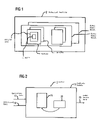
- FIG. 1 a system hierarchy, as customarily occurs in technical facilities
- FIG. 2 a device according to the invention
- FIG. 3 a further embodiment of a device according to the invention with two analysis modules.
- FIG. 1 shows by way of example a hierarchical system design of a technical facility 2 .
- the technical facility 2 is designed as a power plant facility for the generation of electrical energy and includes two power plant blocks 3 .
- Each power plant block 3 includes two turbines 5 , for example gas turbines. These turbines 5 in turn each contain a coolant loop 9 .
- This coolant loop 9 includes a turbine blade 11 of the turbine 5 .
- a system can therefore include a simple, isolated component such as, for example a turbine blade, as well as a complex system, such as the power plant block 3 or multiple power plant blocks 3 .
- FIG. 2 shows a device 1 according to the invention with an analysis module 13 .
- the operational data 17 can for example involve online measurement data which is recorded in the technical facility in the system itself by means of sensors. At the same time, it can also involve data derived from this measurement data, which is produced in a computer system, for example. Furthermore, the operational data 17 can also include offline measurement data, which is stored in an archive or manually entered, for example.
- the structural data 19 describes the technical facility or the system itself. In particular, it includes information about the interconnection of subsystems that are included in the system and their hierarchical arrangement.
- a dynamic model 15 is provided for modeling the system behavior.
- This model 15 can include analytic equations, for example, as well as methods of artificial intelligence such as, for example, neural networks, fuzzy logic or genetic algorithms. Furthermore, simple characteristics can in particular be provided for the description of the system behavior.
- An algorithm 21 based on artificial intelligence is provided for the improvement of the dynamic model 15 during the operation of the system 15 .
- This algorithm 21 based on artificial intelligence can be designed as a genetic algorithm, for example.
- An important role for this algorithm 21 consists in effecting dynamic adjustments in the model 15 in order to achieve an improvement of this model 15 in the sense that an improved model behavior and thus a better correlation with the behavior of the actual system is achieved. For example, a modeling error can be called upon for the evaluation of this circumstance, for example, the difference between the actual chronological behavior of the system and the modeled chronological behavior of this system. An improvement of the model 15 can then take place by means of the algorithm 21 based on artificial intelligence.
- the algorithm 21 based on artificial intelligence is particularly used to identify parameters and data not yet considered during modeling which are included in the operational data 10 and/or the structural data 19 but have not yet been called upon for modeling, and to establish further correlations, for example equations or characteristics, including the mentioned identified parameters and/or data, and to add them to the dynamic model 15 .
- An algorithm 21 based on artificial intelligence designed as a genetic algorithm optimizes correlations included in the dynamic model 15 such as, for example, equations, characteristics or network parameters of a neural network, in that it combines and re-combines evolutionary parameters and data and, at the same time, discovers new correlations in particular, which are not yet included in the dynamic model 15 .
- the analysis model 13 produces conclusions about the operational behavior of the system as output data 23 .
- it can involve current or future operational behavior of the system (creation of a prediction).
- operational data 17 is conveyed to the analysis module 13 , and it is assumed that this operational data will persist over a particular future time period.
- the output data 23 then allows a conclusion, for example, as to whether and, as the case may be, when a disruption of the system's operation is to be expected.
- a high level of precision for the model 15 is provided by device 1 according to the invention, in particular by means of the algorithm 21 based on artificial intelligence, such that the predictions and diagnoses determined as output data 23 by the analysis module 13 are very precise.
- the output data 23 includes, in particular, qualified reports with regard to failure identification (trend analysis, wear and ageing), efficiency, process quality and expected future behavior of the system and the technical facility.
- a set of rules can be included in analysis module 13 in order to transform output data generated from the model 15 into the mentioned reports.
- the set of rules can include rules for the prediction of a short-term observation period in particular as well as rules for a long-term observation period.
- a device 1 includes two analysis modules 13 a and 13 b.
- operational data 17 a and structural data 19 a from a coolant system 29 is conveyed to the analysis module 13 a ; the analysis module 13 b receives operational data 17 b and structural data 19 b from a generator 31 as input data.
- environmental data 33 for the technical facility is conveyed to both analysis modules 13 a , 13 b , for example the ambient temperature, atmospheric humidity, atmospheric pressure and so forth.
- Each analysis module 13 a , 13 b detects output data 23 a or 23 b , which characterizes the operational behavior of the respective analyzed system 29 or 31 .
- the additional algorithm 25 based on artificial intelligence is provided.
- the additional algorithm 25 based on artificial intelligence is therefore responsible for identifying and establishing higher-level cross-system correlations.
- These correlations can include, for example, equations, characteristics or neural networks, which are produced and/or parameterized by the additional algorithm 25 based on artificial intelligence.
- the strategy for the identification and establishment of cross-system correlations of this type can be similar to the identification and establishment of additional internal system correlations mentioned in connection with FIG. 2 by means of the algorithms 21 a , 21 b based on artificial intelligence.
- a self-adaptive dynamic model of the system is provided for this purpose, which is improved during operation by an algorithm based on artificial intelligence.
- the algorithm 21 based on artificial intelligence is used in particular for searching for correlations in a technical facility's operational and/or structural data that is typically available and processed in a control system, for example, and for integrating into the dynamic model the correlations identified in doing so in order to improve the said model incrementally.
- the model based on, for example, a very simple characteristic from a characteristic array and/or on simple equations, is improved incrementally by means of a correlation analysis of the operational and structural data by means of the algorithm based on artificial intelligence by establishing the correlations determined in doing so, for example, in the form of additional characteristics, equations, and so forth.
- the present is preferably based on a data-based method, whereby dependencies between parts of existing operational data and/or between parts of structural data from a technical facility are detected using methods of artificial intelligence and established as quantified correlations, for example equations and/or characteristics, such that a precise dynamic model of at least one system of the technical facility is produced.
Landscapes
- Engineering & Computer Science (AREA)
- Physics & Mathematics (AREA)
- Artificial Intelligence (AREA)
- Automation & Control Theory (AREA)
- General Physics & Mathematics (AREA)
- Software Systems (AREA)
- Evolutionary Computation (AREA)
- Mathematical Physics (AREA)
- Health & Medical Sciences (AREA)
- Computer Vision & Pattern Recognition (AREA)
- Medical Informatics (AREA)
- Fuzzy Systems (AREA)
- Testing And Monitoring For Control Systems (AREA)
- Remote Monitoring And Control Of Power-Distribution Networks (AREA)
- Supply And Distribution Of Alternating Current (AREA)
Applications Claiming Priority (3)
| Application Number | Priority Date | Filing Date | Title |
|---|---|---|---|
| EP02021501 | 2002-09-26 | ||
| EP02021501.8 | 2002-09-26 | ||
| PCT/EP2003/007202 WO2004034166A1 (de) | 2002-09-26 | 2003-07-04 | Vorrichtung und verfahren zur überwachung einer mehrere systeme umfassenden technischen anlage, insbesondere einer kraftwerksanlage |
Publications (2)
| Publication Number | Publication Date |
|---|---|
| US20060025961A1 US20060025961A1 (en) | 2006-02-02 |
| US7200520B2 true US7200520B2 (en) | 2007-04-03 |
Family
ID=32087944
Family Applications (1)
| Application Number | Title | Priority Date | Filing Date |
|---|---|---|---|
| US10/528,732 Expired - Lifetime US7200520B2 (en) | 2002-09-26 | 2003-07-04 | Device and method for monitoring an electric power station |
Country Status (11)
| Country | Link |
|---|---|
| US (1) | US7200520B2 (de) |
| EP (1) | EP1543394B1 (de) |
| JP (1) | JP4276623B2 (de) |
| CN (1) | CN100416438C (de) |
| AT (1) | ATE326717T1 (de) |
| AU (1) | AU2003244642B2 (de) |
| DE (1) | DE50303387D1 (de) |
| ES (1) | ES2264766T3 (de) |
| MX (1) | MXPA05003199A (de) |
| RU (1) | RU2313815C2 (de) |
| WO (1) | WO2004034166A1 (de) |
Cited By (4)
| Publication number | Priority date | Publication date | Assignee | Title |
|---|---|---|---|---|
| US20050171748A1 (en) * | 2004-01-29 | 2005-08-04 | Oke Harsh P. | Methods and systems for modeling power plants |
| AU2003244642B2 (en) * | 2002-09-26 | 2008-11-13 | Siemens Aktiengesellschaft | Method and device for monitoring a technical installation comprising several systems, in particular an electric power station |
| US20090043539A1 (en) * | 2007-08-08 | 2009-02-12 | General Electric Company | Method and system for automatically evaluating the performance of a power plant machine |
| US9360209B2 (en) | 2009-06-24 | 2016-06-07 | Siemens Aktiengesellschaft | Method for controlling a combustion process, in particular in a firing chamber of a fossil-fuel-fired steam generator, and combustion system |
Families Citing this family (30)
| Publication number | Priority date | Publication date | Assignee | Title |
|---|---|---|---|---|
| US7660639B2 (en) | 2006-03-27 | 2010-02-09 | Hitachi, Ltd. | Control system for control subject having combustion unit and control system for plant having boiler |
| ES2452340T3 (es) | 2006-11-09 | 2014-04-01 | Huawei Technologies Co., Ltd. | Un método y nodo de borde para el anuncio de información de conexión de borde de un sistema |
| DE102007001024B4 (de) * | 2007-01-02 | 2008-10-02 | Siemens Ag | Verfahren zur rechnergestützten Regelung und/oder Steuerung eines technischen Systems insbesondere einer Gasturbine |
| KR100856379B1 (ko) | 2007-03-28 | 2008-09-04 | 한국전력공사 | 유전알고리즘을 이용한 노외계측기의 설정치 결정방법 |
| DE102007028891A1 (de) * | 2007-06-20 | 2009-01-15 | Evonik Energy Services Gmbh | Verfahren zum Überwachen der Beanspruchung eines Rohrleitungsabschnitts |
| EP2053475A1 (de) | 2007-10-26 | 2009-04-29 | Siemens Aktiengesellschaft | Verfahren zur Analyse des Betriebs einer Gasturbine |
| DE102010043651A1 (de) * | 2010-08-27 | 2012-03-01 | Siemens Aktiengesellschaft | Anlagenüberwachungssystem und Verfahren zur Überwachung einer Anlage |
| ITCO20110032A1 (it) * | 2011-07-28 | 2013-01-29 | Nuovo Pignone Spa | Dispositivo e metodo di ottimizzazione e determinazione della vita di una turbina a gas |
| US8892382B2 (en) * | 2011-09-26 | 2014-11-18 | General Electric Company | Systems and methods for condition-based power plant sensor calibration |
| ITCO20120008A1 (it) | 2012-03-01 | 2013-09-02 | Nuovo Pignone Srl | Metodo e sistema per monitorare la condizione di un gruppo di impianti |
| RU2563161C2 (ru) * | 2013-07-18 | 2015-09-20 | Федеральное государственное бюджетное учреждение науки Институт конструкторско-технологической информатики Российской академии наук (ИКТИ РАН) | Способ и устройство технической диагностки сложного технологического оборудования на основе нейронных сетей |
| CN104896685B (zh) * | 2014-03-03 | 2019-06-28 | 松下电器(美国)知识产权公司 | 传感方法、传感系统及包含它们的空调设备 |
| DE102014109949B4 (de) * | 2014-07-16 | 2018-06-28 | Horst Zacharias | Computerimplementiertes Verfahren zur Beurteilung eines energieeffizienten Betriebs einer gebäudetechnischen Anlage |
| RU2626780C1 (ru) * | 2016-07-15 | 2017-08-01 | Акционерное общество "РОТЕК" (АО "РОТЕК") | Способ и система удаленного мониторинга энергетических установок |
| RU2649542C1 (ru) | 2016-12-06 | 2018-04-03 | Акционерное общество "РОТЕК" (АО "РОТЕК") | Способ и система удаленного мониторинга объектов |
| RU2648413C1 (ru) * | 2017-01-20 | 2018-03-27 | федеральное государственное бюджетное образовательное учреждение высшего образования "Санкт-Петербургский горный университет" | Способ управления режимами на основе нейросетевого диагностирования неисправностей и технического состояния электроприводного газоперекачивающего агрегата |
| RU2677429C2 (ru) * | 2017-01-30 | 2019-01-16 | Акционерное общество "РОТЕК" (АО "РОТЕК") | Способ удаленного мониторинга и прогнозирования состояния отдельных агрегатов и сложных технологических комплексов |
| DE102017217099A1 (de) * | 2017-09-26 | 2019-03-28 | Siemens Mobility GmbH | Verfahren zur Untersuchung eines Funktionsverhaltens eines technischen Systems und Auswerteeinheit |
| DE102018205660A1 (de) * | 2018-04-13 | 2019-10-17 | Siemens Aktiengesellschaft | Simulieren von statistisch modellierten Sensordaten |
| CN112272804B (zh) | 2018-05-18 | 2024-06-28 | 西门子股份公司 | 无需动态系统模型的工业过程在线故障定位 |
| US20190384255A1 (en) * | 2018-06-19 | 2019-12-19 | Honeywell International Inc. | Autonomous predictive real-time monitoring of faults in process and equipment |
| CA3120618A1 (en) * | 2018-11-21 | 2020-05-28 | Basf Se | Method and system of manufacturing an insulated member |
| RU2702510C1 (ru) * | 2019-01-28 | 2019-10-08 | Общество с ограниченной ответственностью "КОНВЕЛС Автоматизация" | Способ работы и определения параметров работы прокатного стана |
| RU2735296C1 (ru) * | 2019-08-16 | 2020-10-29 | федеральное государственное бюджетное образовательное учреждение высшего образования "Южно-Российский государственный политехнический университет (НПИ) имени М.И. Платова" | Способ многопараметрического контроля состояния сложных электротехнических объектов |
| EP3828652A1 (de) * | 2019-11-26 | 2021-06-02 | Siemens Aktiengesellschaft | Verfahren und testanordnung zum testen einer autonomen verhaltenssteuerung für ein technisches system |
| CN112070335B (zh) * | 2020-07-16 | 2024-11-19 | 中国核电工程有限公司 | 一种核电厂计划停运可用率的评估方法及系统 |
| RU2753151C1 (ru) * | 2020-09-23 | 2021-08-12 | Федеральное государственное бюджетное образовательное учреждение высшего образования "Орловский государственный университет имени И.С. Тургенева" (ФГБОУ ВО "ОГУ имени И.С. Тургенева") | Способ вибрационной диагностики роторных систем |
| US12449451B2 (en) * | 2020-12-31 | 2025-10-21 | Power Monitors, Inc. | Electric power data collection and analysis system and process of implementing the same |
| EP4423684A4 (de) * | 2021-10-30 | 2025-10-01 | Jio Platforms Ltd | System und verfahren zur optimierung nichtlinearer einschränkungen einer industriellen prozesseinheit |
| CN116955641A (zh) * | 2023-06-13 | 2023-10-27 | 贵州电网有限责任公司 | 基于知识图谱的电厂故障处理调度方法及管道监测装置 |
Citations (10)
| Publication number | Priority date | Publication date | Assignee | Title |
|---|---|---|---|---|
| US3852641A (en) * | 1973-02-05 | 1974-12-03 | Gen Electric | Protective system for mobile electric power apparatus |
| US5109380A (en) * | 1988-03-30 | 1992-04-28 | Mitsubishi Denki Kabushiki Kaisha | Testing apparatus |
| US5642000A (en) * | 1993-05-03 | 1997-06-24 | Cornell Research Foundation, Inc. | Method for preventing power collapse in electric power systems |
| US6181759B1 (en) * | 1999-07-23 | 2001-01-30 | Westinghouse Electric Company Llc | Method and apparatus for determining nearness to criticality of a nuclear fueled electric power generating unit |
| US6278962B1 (en) | 1996-05-03 | 2001-08-21 | Aspen Technology, Inc. | Hybrid linear-neural network process control |
| US6353815B1 (en) | 1998-11-04 | 2002-03-05 | The United States Of America As Represented By The United States Department Of Energy | Statistically qualified neuro-analytic failure detection method and system |
| US20020072828A1 (en) | 2000-06-29 | 2002-06-13 | Aspen Technology, Inc. | Computer method and apparatus for constraining a non-linear approximator of an empirical process |
| US6438430B1 (en) | 1996-05-06 | 2002-08-20 | Pavilion Technologies, Inc. | Kiln thermal and combustion control |
| US20020133320A1 (en) | 2001-01-19 | 2002-09-19 | Wegerich Stephan W. | Adaptive modeling of changed states in predictive condition monitoring |
| US20040044442A1 (en) * | 2001-12-28 | 2004-03-04 | Bayoumi Deia Salah-Eldin | Optimized dispatch planning of distributed resources in electrical power systems |
Family Cites Families (4)
| Publication number | Priority date | Publication date | Assignee | Title |
|---|---|---|---|---|
| SU1565261A1 (ru) * | 1987-05-04 | 1999-12-10 | В.Н. Михайлов | Адаптивная система идентификации параметров объекта |
| DE19641431A1 (de) * | 1996-10-08 | 1998-04-16 | Siemens Ag | Verfahren und Einrichtung zur Identifikation bzw. Vorausberechnung von Prozeßparametern eines industriellen zeitvarianten Prozesses |
| JP3612472B2 (ja) * | 2000-06-22 | 2005-01-19 | 株式会社日立製作所 | 遠隔監視診断システム、及び遠隔監視診断方法 |
| ATE326717T1 (de) * | 2002-09-26 | 2006-06-15 | Siemens Ag | Vorrichtung und verfahren zur überwachung einer mehrere systeme umfassenden technischen anlage, insbesondere einer kraftwerksanlage |
-
2003
- 2003-07-04 AT AT03738118T patent/ATE326717T1/de active
- 2003-07-04 EP EP03738118A patent/EP1543394B1/de not_active Expired - Lifetime
- 2003-07-04 ES ES03738118T patent/ES2264766T3/es not_active Expired - Lifetime
- 2003-07-04 CN CNB038232073A patent/CN100416438C/zh not_active Expired - Fee Related
- 2003-07-04 DE DE50303387T patent/DE50303387D1/de not_active Expired - Lifetime
- 2003-07-04 WO PCT/EP2003/007202 patent/WO2004034166A1/de not_active Ceased
- 2003-07-04 US US10/528,732 patent/US7200520B2/en not_active Expired - Lifetime
- 2003-07-04 MX MXPA05003199A patent/MXPA05003199A/es active IP Right Grant
- 2003-07-04 AU AU2003244642A patent/AU2003244642B2/en not_active Ceased
- 2003-07-04 JP JP2004542258A patent/JP4276623B2/ja not_active Expired - Lifetime
- 2003-07-04 RU RU2005112459/09A patent/RU2313815C2/ru not_active IP Right Cessation
Patent Citations (10)
| Publication number | Priority date | Publication date | Assignee | Title |
|---|---|---|---|---|
| US3852641A (en) * | 1973-02-05 | 1974-12-03 | Gen Electric | Protective system for mobile electric power apparatus |
| US5109380A (en) * | 1988-03-30 | 1992-04-28 | Mitsubishi Denki Kabushiki Kaisha | Testing apparatus |
| US5642000A (en) * | 1993-05-03 | 1997-06-24 | Cornell Research Foundation, Inc. | Method for preventing power collapse in electric power systems |
| US6278962B1 (en) | 1996-05-03 | 2001-08-21 | Aspen Technology, Inc. | Hybrid linear-neural network process control |
| US6438430B1 (en) | 1996-05-06 | 2002-08-20 | Pavilion Technologies, Inc. | Kiln thermal and combustion control |
| US6353815B1 (en) | 1998-11-04 | 2002-03-05 | The United States Of America As Represented By The United States Department Of Energy | Statistically qualified neuro-analytic failure detection method and system |
| US6181759B1 (en) * | 1999-07-23 | 2001-01-30 | Westinghouse Electric Company Llc | Method and apparatus for determining nearness to criticality of a nuclear fueled electric power generating unit |
| US20020072828A1 (en) | 2000-06-29 | 2002-06-13 | Aspen Technology, Inc. | Computer method and apparatus for constraining a non-linear approximator of an empirical process |
| US20020133320A1 (en) | 2001-01-19 | 2002-09-19 | Wegerich Stephan W. | Adaptive modeling of changed states in predictive condition monitoring |
| US20040044442A1 (en) * | 2001-12-28 | 2004-03-04 | Bayoumi Deia Salah-Eldin | Optimized dispatch planning of distributed resources in electrical power systems |
Non-Patent Citations (3)
| Title |
|---|
| McCalley et al., 'A New Methodology for Determining Transmission Capacity Margin in Electric Power Systems', Aug. 1991, IEEE Publication, vol. 6, No. 3, pp. 944-951. * |
| Nian et al., 'The New Intelligent Monitoring Method for Operating States of Large Generator Units', 2000, IEEE Article, pp. 223-227. * |
| Tomsovic et al., 'Methods of Approximate Resoning for Power System Equipment Condition and Reliability Analysis', 1996, IEEE Publication, pp. 310-315. * |
Cited By (5)
| Publication number | Priority date | Publication date | Assignee | Title |
|---|---|---|---|---|
| AU2003244642B2 (en) * | 2002-09-26 | 2008-11-13 | Siemens Aktiengesellschaft | Method and device for monitoring a technical installation comprising several systems, in particular an electric power station |
| US20050171748A1 (en) * | 2004-01-29 | 2005-08-04 | Oke Harsh P. | Methods and systems for modeling power plants |
| US7383167B2 (en) * | 2004-01-29 | 2008-06-03 | General Electric Company | Methods and systems for modeling power plants |
| US20090043539A1 (en) * | 2007-08-08 | 2009-02-12 | General Electric Company | Method and system for automatically evaluating the performance of a power plant machine |
| US9360209B2 (en) | 2009-06-24 | 2016-06-07 | Siemens Aktiengesellschaft | Method for controlling a combustion process, in particular in a firing chamber of a fossil-fuel-fired steam generator, and combustion system |
Also Published As
| Publication number | Publication date |
|---|---|
| RU2005112459A (ru) | 2005-09-10 |
| JP4276623B2 (ja) | 2009-06-10 |
| ES2264766T3 (es) | 2007-01-16 |
| RU2313815C2 (ru) | 2007-12-27 |
| EP1543394B1 (de) | 2006-05-17 |
| AU2003244642A1 (en) | 2004-05-04 |
| MXPA05003199A (es) | 2005-07-05 |
| JP2006500694A (ja) | 2006-01-05 |
| AU2003244642B2 (en) | 2008-11-13 |
| EP1543394A1 (de) | 2005-06-22 |
| DE50303387D1 (de) | 2006-06-22 |
| CN100416438C (zh) | 2008-09-03 |
| WO2004034166A1 (de) | 2004-04-22 |
| US20060025961A1 (en) | 2006-02-02 |
| CN1685294A (zh) | 2005-10-19 |
| ATE326717T1 (de) | 2006-06-15 |
Similar Documents
| Publication | Publication Date | Title |
|---|---|---|
| US7200520B2 (en) | Device and method for monitoring an electric power station | |
| JP7069269B2 (ja) | デジタル・ツイン・シミュレーション・データを利用した時系列データに基づく、大規模な産業用監視システム向けの半教師あり深層異常検出のための方法およびシステム | |
| RU2739727C1 (ru) | Способ и система удаленного мониторинга и прогнозирования состояния технологических объектов | |
| JP4943390B2 (ja) | 電力送配システム監視方法および電力送配システム | |
| Tsoutsanis et al. | A dynamic prognosis scheme for flexible operation of gas turbines | |
| EP1393141B1 (de) | Erzeugung von prozessverwandten daten | |
| CN115034248A (zh) | 用于设备的自动诊断方法、系统和存储介质 | |
| RU2626780C1 (ru) | Способ и система удаленного мониторинга энергетических установок | |
| RU2649542C1 (ru) | Способ и система удаленного мониторинга объектов | |
| Olsson et al. | A data-driven approach for predicting long-term degradation of a fleet of micro gas turbines | |
| WO2014117967A1 (en) | Method and apparatus for deriving diagnostic data about a technical system | |
| Wan et al. | Prognostics of gas turbine: A condition-based maintenance approach based on multi-environmental time similarity | |
| CN116235121A (zh) | 识别用于执行生产过程的工业设施中的异常的装置和方法 | |
| US20210102527A1 (en) | System and method for monitoring a device | |
| WO2006026340A1 (en) | System, device, and methods for updating system-monitoring models | |
| KR20250040175A (ko) | 공기압축기 원격 모니터링을 통한 예지보전 서비스 제공 방법 및 이를 위한 예지보전 플랫폼 | |
| Bouzidi et al. | Deep learning for a customised head-mounted fault display system for the maintenance of wind turbines | |
| Allen et al. | Gas turbine machinery diagnostics: A brief review and a sample application | |
| De Oliveira-Filho et al. | Condition monitoring of wind turbine main bearing using SCADA data and informed by the principle of energy conservation | |
| US7035763B2 (en) | Systems and methods for selecting training data and generating fault models for use in use sensor-based monitoring | |
| US20180087489A1 (en) | Method for windmill farm monitoring | |
| Abid et al. | Adaptive data-driven approach for the remaining useful life estimation when few historical degradation sequences are available | |
| ZA200501796B (en) | Method and device for monitoring a technical installation comprising several systems, in particular an electric power station | |
| KR102350635B1 (ko) | 플랜트 고장 예지 장치 및 방법 | |
| Virgiawan et al. | Big data & early alert (anomaly) detection in Paiton coal fired power plant |
Legal Events
| Date | Code | Title | Description |
|---|---|---|---|
| AS | Assignment |
Owner name: SIEMENS AKTIENGESELLSCHAFT, GERMANY Free format text: ASSIGNMENT OF ASSIGNORS INTEREST;ASSIGNORS:APPEL, MIRKO;FICK, WOLFGANG;GERK, UWE;REEL/FRAME:016928/0001;SIGNING DATES FROM 20050224 TO 20050301 |
|
| STCF | Information on status: patent grant |
Free format text: PATENTED CASE |
|
| FPAY | Fee payment |
Year of fee payment: 4 |
|
| FPAY | Fee payment |
Year of fee payment: 8 |
|
| MAFP | Maintenance fee payment |
Free format text: PAYMENT OF MAINTENANCE FEE, 12TH YEAR, LARGE ENTITY (ORIGINAL EVENT CODE: M1553); ENTITY STATUS OF PATENT OWNER: LARGE ENTITY Year of fee payment: 12 |
|
| AS | Assignment |
Owner name: SIEMENS GAS AND POWER GMBH & CO. KG, GERMANY Free format text: ASSIGNMENT OF ASSIGNORS INTEREST;ASSIGNOR:SIEMENS AKTIENGESELLSCHAFT;REEL/FRAME:053624/0425 Effective date: 20200818 |
|
| AS | Assignment |
Owner name: SIEMENS AKTIENGESELLSCHAFT, GERMANY Free format text: ASSIGNMENT OF ASSIGNORS INTEREST;ASSIGNOR:SIEMENS GAS AND POWER GMBH & CO. KG;REEL/FRAME:054184/0990 Effective date: 20200902 |