US7282088B2 - Method for copper-plating or bronze-plating an object and liquid mixtures therefor - Google Patents
Method for copper-plating or bronze-plating an object and liquid mixtures therefor Download PDFInfo
- Publication number
- US7282088B2 US7282088B2 US10/509,586 US50958605A US7282088B2 US 7282088 B2 US7282088 B2 US 7282088B2 US 50958605 A US50958605 A US 50958605A US 7282088 B2 US7282088 B2 US 7282088B2
- Authority
- US
- United States
- Prior art keywords
- copper
- bath
- acid
- water
- aqueous composition
- Prior art date
- Legal status (The legal status is an assumption and is not a legal conclusion. Google has not performed a legal analysis and makes no representation as to the accuracy of the status listed.)
- Expired - Lifetime, expires
Links
- 239000000203 mixture Substances 0.000 title claims description 31
- 238000000034 method Methods 0.000 title abstract description 20
- 238000007747 plating Methods 0.000 title abstract 7
- 239000007788 liquid Substances 0.000 title description 6
- 239000010949 copper Substances 0.000 claims abstract description 79
- 229910052802 copper Inorganic materials 0.000 claims abstract description 72
- RYGMFSIKBFXOCR-UHFFFAOYSA-N Copper Chemical compound [Cu] RYGMFSIKBFXOCR-UHFFFAOYSA-N 0.000 claims abstract description 71
- XEEYBQQBJWHFJM-UHFFFAOYSA-N Iron Chemical compound [Fe] XEEYBQQBJWHFJM-UHFFFAOYSA-N 0.000 claims abstract description 63
- 239000003795 chemical substances by application Substances 0.000 claims abstract description 39
- 229910052742 iron Inorganic materials 0.000 claims abstract description 32
- 238000007710 freezing Methods 0.000 claims abstract description 19
- 230000008014 freezing Effects 0.000 claims abstract description 19
- 239000005749 Copper compound Substances 0.000 claims abstract description 18
- 150000001880 copper compounds Chemical class 0.000 claims abstract description 18
- 238000005282 brightening Methods 0.000 claims abstract description 17
- 238000010257 thawing Methods 0.000 claims abstract description 17
- CWYNVVGOOAEACU-UHFFFAOYSA-N Fe2+ Chemical compound [Fe+2] CWYNVVGOOAEACU-UHFFFAOYSA-N 0.000 claims description 18
- 239000002253 acid Substances 0.000 claims description 18
- ABLZXFCXXLZCGV-UHFFFAOYSA-N Phosphorous acid Chemical compound OP(O)=O ABLZXFCXXLZCGV-UHFFFAOYSA-N 0.000 claims description 10
- XLYOFNOQVPJJNP-UHFFFAOYSA-N water Substances O XLYOFNOQVPJJNP-UHFFFAOYSA-N 0.000 claims description 10
- 230000000536 complexating effect Effects 0.000 claims description 8
- XQRLCLUYWUNEEH-UHFFFAOYSA-N diphosphonic acid Chemical compound OP(=O)OP(O)=O XQRLCLUYWUNEEH-UHFFFAOYSA-N 0.000 claims description 7
- 239000008139 complexing agent Substances 0.000 claims description 5
- NKCVNYJQLIWBHK-UHFFFAOYSA-N carbonodiperoxoic acid Chemical compound OOC(=O)OO NKCVNYJQLIWBHK-UHFFFAOYSA-N 0.000 claims description 4
- 229940116318 copper carbonate Drugs 0.000 claims description 4
- GEZOTWYUIKXWOA-UHFFFAOYSA-L copper;carbonate Chemical compound [Cu+2].[O-]C([O-])=O GEZOTWYUIKXWOA-UHFFFAOYSA-L 0.000 claims description 4
- 150000004699 copper complex Chemical class 0.000 claims 3
- MMCOUVMKNAHQOY-UHFFFAOYSA-N carbonoperoxoic acid Chemical compound OOC(O)=O MMCOUVMKNAHQOY-UHFFFAOYSA-N 0.000 claims 2
- JPVYNHNXODAKFH-UHFFFAOYSA-N Cu2+ Chemical compound [Cu+2] JPVYNHNXODAKFH-UHFFFAOYSA-N 0.000 claims 1
- BVKZGUZCCUSVTD-UHFFFAOYSA-N carbonic acid Chemical compound OC(O)=O BVKZGUZCCUSVTD-UHFFFAOYSA-N 0.000 claims 1
- 229910001431 copper ion Inorganic materials 0.000 claims 1
- 239000012141 concentrate Substances 0.000 abstract description 54
- 150000003606 tin compounds Chemical class 0.000 abstract description 10
- 229910000831 Steel Inorganic materials 0.000 abstract description 6
- 239000010959 steel Substances 0.000 abstract description 6
- 229910052751 metal Inorganic materials 0.000 abstract description 5
- 239000002184 metal Substances 0.000 abstract description 5
- 229910000906 Bronze Inorganic materials 0.000 abstract description 4
- 239000010974 bronze Substances 0.000 abstract description 4
- KUNSUQLRTQLHQQ-UHFFFAOYSA-N copper tin Chemical compound [Cu].[Sn] KUNSUQLRTQLHQQ-UHFFFAOYSA-N 0.000 abstract description 4
- QUQFTIVBFKLPCL-UHFFFAOYSA-L copper;2-amino-3-[(2-amino-2-carboxylatoethyl)disulfanyl]propanoate Chemical compound [Cu+2].[O-]C(=O)C(N)CSSCC(N)C([O-])=O QUQFTIVBFKLPCL-UHFFFAOYSA-L 0.000 abstract 2
- 235000008504 concentrate Nutrition 0.000 description 53
- 238000007598 dipping method Methods 0.000 description 22
- QAOWNCQODCNURD-UHFFFAOYSA-N Sulfuric acid Chemical compound OS(O)(=O)=O QAOWNCQODCNURD-UHFFFAOYSA-N 0.000 description 18
- 230000008569 process Effects 0.000 description 17
- 238000000576 coating method Methods 0.000 description 16
- 239000011248 coating agent Substances 0.000 description 14
- 239000000654 additive Substances 0.000 description 13
- 150000001875 compounds Chemical class 0.000 description 12
- 238000007792 addition Methods 0.000 description 10
- -1 copper complex compounds Chemical class 0.000 description 10
- 238000005554 pickling Methods 0.000 description 10
- HEMHJVSKTPXQMS-UHFFFAOYSA-M Sodium hydroxide Chemical compound [OH-].[Na+] HEMHJVSKTPXQMS-UHFFFAOYSA-M 0.000 description 9
- ATJFFYVFTNAWJD-UHFFFAOYSA-N Tin Chemical compound [Sn] ATJFFYVFTNAWJD-UHFFFAOYSA-N 0.000 description 9
- 150000001450 anions Chemical class 0.000 description 9
- 230000008021 deposition Effects 0.000 description 9
- FAPWRFPIFSIZLT-UHFFFAOYSA-M Sodium chloride Chemical compound [Na+].[Cl-] FAPWRFPIFSIZLT-UHFFFAOYSA-M 0.000 description 8
- KRKNYBCHXYNGOX-UHFFFAOYSA-N citric acid Chemical compound OC(=O)CC(O)(C(O)=O)CC(O)=O KRKNYBCHXYNGOX-UHFFFAOYSA-N 0.000 description 8
- QGZKDVFQNNGYKY-UHFFFAOYSA-O Ammonium Chemical compound [NH4+] QGZKDVFQNNGYKY-UHFFFAOYSA-O 0.000 description 7
- 229910052783 alkali metal Inorganic materials 0.000 description 7
- 150000001340 alkali metals Chemical class 0.000 description 7
- 229910052784 alkaline earth metal Inorganic materials 0.000 description 7
- 229910000365 copper sulfate Inorganic materials 0.000 description 7
- ARUVKPQLZAKDPS-UHFFFAOYSA-L copper(II) sulfate Chemical compound [Cu+2].[O-][S+2]([O-])([O-])[O-] ARUVKPQLZAKDPS-UHFFFAOYSA-L 0.000 description 7
- 150000004820 halides Chemical class 0.000 description 7
- 150000003839 salts Chemical class 0.000 description 7
- 230000000996 additive effect Effects 0.000 description 6
- 239000000470 constituent Substances 0.000 description 6
- 238000010790 dilution Methods 0.000 description 6
- 239000012895 dilution Substances 0.000 description 6
- 229910001385 heavy metal Inorganic materials 0.000 description 6
- 239000000243 solution Substances 0.000 description 6
- 238000005275 alloying Methods 0.000 description 5
- 239000000047 product Substances 0.000 description 5
- RGHNJXZEOKUKBD-SQOUGZDYSA-N D-gluconic acid Chemical compound OC[C@@H](O)[C@@H](O)[C@H](O)[C@@H](O)C(O)=O RGHNJXZEOKUKBD-SQOUGZDYSA-N 0.000 description 4
- PXHVJJICTQNCMI-UHFFFAOYSA-N Nickel Chemical compound [Ni] PXHVJJICTQNCMI-UHFFFAOYSA-N 0.000 description 4
- 235000014113 dietary fatty acids Nutrition 0.000 description 4
- 239000000194 fatty acid Substances 0.000 description 4
- 229930195729 fatty acid Natural products 0.000 description 4
- JVTAAEKCZFNVCJ-UHFFFAOYSA-N lactic acid Chemical compound CC(O)C(O)=O JVTAAEKCZFNVCJ-UHFFFAOYSA-N 0.000 description 4
- 235000014666 liquid concentrate Nutrition 0.000 description 4
- 238000004088 simulation Methods 0.000 description 4
- JHJLBTNAGRQEKS-UHFFFAOYSA-M sodium bromide Chemical compound [Na+].[Br-] JHJLBTNAGRQEKS-UHFFFAOYSA-M 0.000 description 4
- 239000011780 sodium chloride Substances 0.000 description 4
- 239000007787 solid Substances 0.000 description 4
- 238000003860 storage Methods 0.000 description 4
- VEXZGXHMUGYJMC-UHFFFAOYSA-M Chloride anion Chemical compound [Cl-] VEXZGXHMUGYJMC-UHFFFAOYSA-M 0.000 description 3
- BRLQWZUYTZBJKN-UHFFFAOYSA-N Epichlorohydrin Chemical compound ClCC1CO1 BRLQWZUYTZBJKN-UHFFFAOYSA-N 0.000 description 3
- VEXZGXHMUGYJMC-UHFFFAOYSA-N Hydrochloric acid Chemical compound Cl VEXZGXHMUGYJMC-UHFFFAOYSA-N 0.000 description 3
- 150000007513 acids Chemical class 0.000 description 3
- 230000002411 adverse Effects 0.000 description 3
- 150000001342 alkaline earth metals Chemical class 0.000 description 3
- 150000001412 amines Chemical class 0.000 description 3
- 238000004090 dissolution Methods 0.000 description 3
- 238000002474 experimental method Methods 0.000 description 3
- 150000004665 fatty acids Chemical class 0.000 description 3
- VKYKSIONXSXAKP-UHFFFAOYSA-N hexamethylenetetramine Chemical compound C1N(C2)CN3CN1CN2C3 VKYKSIONXSXAKP-UHFFFAOYSA-N 0.000 description 3
- 230000001050 lubricating effect Effects 0.000 description 3
- 229920000642 polymer Polymers 0.000 description 3
- 239000000843 powder Substances 0.000 description 3
- 238000001556 precipitation Methods 0.000 description 3
- 239000013049 sediment Substances 0.000 description 3
- OCUCCJIRFHNWBP-IYEMJOQQSA-L Copper gluconate Chemical class [Cu+2].OC[C@@H](O)[C@@H](O)[C@H](O)[C@@H](O)C([O-])=O.OC[C@@H](O)[C@@H](O)[C@H](O)[C@@H](O)C([O-])=O OCUCCJIRFHNWBP-IYEMJOQQSA-L 0.000 description 2
- RGHNJXZEOKUKBD-UHFFFAOYSA-N D-gluconic acid Natural products OCC(O)C(O)C(O)C(O)C(O)=O RGHNJXZEOKUKBD-UHFFFAOYSA-N 0.000 description 2
- FEWJPZIEWOKRBE-JCYAYHJZSA-N Dextrotartaric acid Chemical compound OC(=O)[C@H](O)[C@@H](O)C(O)=O FEWJPZIEWOKRBE-JCYAYHJZSA-N 0.000 description 2
- RTZKZFJDLAIYFH-UHFFFAOYSA-N Diethyl ether Chemical compound CCOCC RTZKZFJDLAIYFH-UHFFFAOYSA-N 0.000 description 2
- ROSDSFDQCJNGOL-UHFFFAOYSA-N Dimethylamine Chemical compound CNC ROSDSFDQCJNGOL-UHFFFAOYSA-N 0.000 description 2
- KRHYYFGTRYWZRS-UHFFFAOYSA-N Fluorane Chemical compound F KRHYYFGTRYWZRS-UHFFFAOYSA-N 0.000 description 2
- 241000237858 Gastropoda Species 0.000 description 2
- CSNNHWWHGAXBCP-UHFFFAOYSA-L Magnesium sulfate Chemical compound [Mg+2].[O-][S+2]([O-])([O-])[O-] CSNNHWWHGAXBCP-UHFFFAOYSA-L 0.000 description 2
- 229910019142 PO4 Inorganic materials 0.000 description 2
- WCUXLLCKKVVCTQ-UHFFFAOYSA-M Potassium chloride Chemical compound [Cl-].[K+] WCUXLLCKKVVCTQ-UHFFFAOYSA-M 0.000 description 2
- KWYUFKZDYYNOTN-UHFFFAOYSA-M Potassium hydroxide Chemical compound [OH-].[K+] KWYUFKZDYYNOTN-UHFFFAOYSA-M 0.000 description 2
- FEWJPZIEWOKRBE-UHFFFAOYSA-N Tartaric acid Natural products [H+].[H+].[O-]C(=O)C(O)C(O)C([O-])=O FEWJPZIEWOKRBE-UHFFFAOYSA-N 0.000 description 2
- 230000002378 acidificating effect Effects 0.000 description 2
- 238000013019 agitation Methods 0.000 description 2
- 150000001408 amides Chemical class 0.000 description 2
- 150000001642 boronic acid derivatives Chemical class 0.000 description 2
- 150000001649 bromium compounds Chemical class 0.000 description 2
- 229910052793 cadmium Inorganic materials 0.000 description 2
- BDOSMKKIYDKNTQ-UHFFFAOYSA-N cadmium atom Chemical compound [Cd] BDOSMKKIYDKNTQ-UHFFFAOYSA-N 0.000 description 2
- 238000006243 chemical reaction Methods 0.000 description 2
- 229960004106 citric acid Drugs 0.000 description 2
- 235000015165 citric acid Nutrition 0.000 description 2
- 150000001860 citric acid derivatives Chemical class 0.000 description 2
- 229910017052 cobalt Inorganic materials 0.000 description 2
- 239000010941 cobalt Substances 0.000 description 2
- GUTLYIVDDKVIGB-UHFFFAOYSA-N cobalt atom Chemical compound [Co] GUTLYIVDDKVIGB-UHFFFAOYSA-N 0.000 description 2
- 230000006866 deterioration Effects 0.000 description 2
- IUNMPGNGSSIWFP-UHFFFAOYSA-N dimethylaminopropylamine Chemical compound CN(C)CCCN IUNMPGNGSSIWFP-UHFFFAOYSA-N 0.000 description 2
- 239000001177 diphosphate Substances 0.000 description 2
- XPPKVPWEQAFLFU-UHFFFAOYSA-J diphosphate(4-) Chemical class [O-]P([O-])(=O)OP([O-])([O-])=O XPPKVPWEQAFLFU-UHFFFAOYSA-J 0.000 description 2
- 235000011180 diphosphates Nutrition 0.000 description 2
- 230000000694 effects Effects 0.000 description 2
- 239000004744 fabric Substances 0.000 description 2
- 150000002222 fluorine compounds Chemical class 0.000 description 2
- 239000000174 gluconic acid Substances 0.000 description 2
- 235000012208 gluconic acid Nutrition 0.000 description 2
- PCHJSUWPFVWCPO-UHFFFAOYSA-N gold Chemical compound [Au] PCHJSUWPFVWCPO-UHFFFAOYSA-N 0.000 description 2
- 229910052737 gold Inorganic materials 0.000 description 2
- 239000010931 gold Substances 0.000 description 2
- 238000010438 heat treatment Methods 0.000 description 2
- 150000003949 imides Chemical class 0.000 description 2
- 150000002466 imines Chemical class 0.000 description 2
- 238000011065 in-situ storage Methods 0.000 description 2
- 150000004694 iodide salts Chemical class 0.000 description 2
- 150000003893 lactate salts Chemical class 0.000 description 2
- 239000004310 lactic acid Substances 0.000 description 2
- 235000014655 lactic acid Nutrition 0.000 description 2
- WPBNNNQJVZRUHP-UHFFFAOYSA-L manganese(2+);methyl n-[[2-(methoxycarbonylcarbamothioylamino)phenyl]carbamothioyl]carbamate;n-[2-(sulfidocarbothioylamino)ethyl]carbamodithioate Chemical compound [Mn+2].[S-]C(=S)NCCNC([S-])=S.COC(=O)NC(=S)NC1=CC=CC=C1NC(=S)NC(=O)OC WPBNNNQJVZRUHP-UHFFFAOYSA-L 0.000 description 2
- 229910021645 metal ion Inorganic materials 0.000 description 2
- 239000007769 metal material Substances 0.000 description 2
- 150000002739 metals Chemical class 0.000 description 2
- 230000007935 neutral effect Effects 0.000 description 2
- 229910052759 nickel Inorganic materials 0.000 description 2
- 150000002825 nitriles Chemical class 0.000 description 2
- 150000002894 organic compounds Chemical class 0.000 description 2
- 235000021317 phosphate Nutrition 0.000 description 2
- 150000003013 phosphoric acid derivatives Chemical class 0.000 description 2
- 229920000151 polyglycol Polymers 0.000 description 2
- 239000010695 polyglycol Substances 0.000 description 2
- 239000002244 precipitate Substances 0.000 description 2
- 238000002360 preparation method Methods 0.000 description 2
- 238000003825 pressing Methods 0.000 description 2
- 230000002035 prolonged effect Effects 0.000 description 2
- WGYKZJWCGVVSQN-UHFFFAOYSA-N propylamine Chemical compound CCCN WGYKZJWCGVVSQN-UHFFFAOYSA-N 0.000 description 2
- 239000002994 raw material Substances 0.000 description 2
- 229910052709 silver Inorganic materials 0.000 description 2
- 239000004332 silver Substances 0.000 description 2
- PUZPDOWCWNUUKD-UHFFFAOYSA-M sodium fluoride Chemical compound [F-].[Na+] PUZPDOWCWNUUKD-UHFFFAOYSA-M 0.000 description 2
- 238000003756 stirring Methods 0.000 description 2
- 239000000126 substance Substances 0.000 description 2
- 239000000758 substrate Substances 0.000 description 2
- IIACRCGMVDHOTQ-UHFFFAOYSA-N sulfamic acid Chemical class NS(O)(=O)=O IIACRCGMVDHOTQ-UHFFFAOYSA-N 0.000 description 2
- 239000011975 tartaric acid Substances 0.000 description 2
- 235000002906 tartaric acid Nutrition 0.000 description 2
- 150000003892 tartrate salts Chemical class 0.000 description 2
- JECYNCQXXKQDJN-UHFFFAOYSA-N 2-(2-methylhexan-2-yloxymethyl)oxirane Chemical compound CCCCC(C)(C)OCC1CO1 JECYNCQXXKQDJN-UHFFFAOYSA-N 0.000 description 1
- VHUUQVKOLVNVRT-UHFFFAOYSA-N Ammonium hydroxide Chemical compound [NH4+].[OH-] VHUUQVKOLVNVRT-UHFFFAOYSA-N 0.000 description 1
- CPELXLSAUQHCOX-UHFFFAOYSA-M Bromide Chemical compound [Br-] CPELXLSAUQHCOX-UHFFFAOYSA-M 0.000 description 1
- OKTJSMMVPCPJKN-UHFFFAOYSA-N Carbon Chemical compound [C] OKTJSMMVPCPJKN-UHFFFAOYSA-N 0.000 description 1
- KRKNYBCHXYNGOX-UHFFFAOYSA-K Citrate Chemical compound [O-]C(=O)CC(O)(CC([O-])=O)C([O-])=O KRKNYBCHXYNGOX-UHFFFAOYSA-K 0.000 description 1
- AVXURJPOCDRRFD-UHFFFAOYSA-N Hydroxylamine Chemical compound ON AVXURJPOCDRRFD-UHFFFAOYSA-N 0.000 description 1
- 229910002651 NO3 Inorganic materials 0.000 description 1
- NHNBFGGVMKEFGY-UHFFFAOYSA-N Nitrate Chemical compound [O-][N+]([O-])=O NHNBFGGVMKEFGY-UHFFFAOYSA-N 0.000 description 1
- 239000004952 Polyamide Substances 0.000 description 1
- 239000004642 Polyimide Substances 0.000 description 1
- QAOWNCQODCNURD-UHFFFAOYSA-L Sulfate Chemical compound [O-]S([O-])(=O)=O QAOWNCQODCNURD-UHFFFAOYSA-L 0.000 description 1
- NINIDFKCEFEMDL-UHFFFAOYSA-N Sulfur Chemical compound [S] NINIDFKCEFEMDL-UHFFFAOYSA-N 0.000 description 1
- 230000009471 action Effects 0.000 description 1
- 230000001464 adherent effect Effects 0.000 description 1
- 238000005054 agglomeration Methods 0.000 description 1
- 230000002776 aggregation Effects 0.000 description 1
- 229910001513 alkali metal bromide Inorganic materials 0.000 description 1
- 229910001514 alkali metal chloride Inorganic materials 0.000 description 1
- 229910001515 alkali metal fluoride Inorganic materials 0.000 description 1
- 239000000956 alloy Substances 0.000 description 1
- 229910045601 alloy Inorganic materials 0.000 description 1
- 229960004543 anhydrous citric acid Drugs 0.000 description 1
- 239000007798 antifreeze agent Substances 0.000 description 1
- 239000007864 aqueous solution Substances 0.000 description 1
- 230000000712 assembly Effects 0.000 description 1
- 238000000429 assembly Methods 0.000 description 1
- 239000002585 base Substances 0.000 description 1
- 238000005452 bending Methods 0.000 description 1
- 230000015572 biosynthetic process Effects 0.000 description 1
- 229910052799 carbon Inorganic materials 0.000 description 1
- 125000004432 carbon atom Chemical group C* 0.000 description 1
- OVFCVRIJCCDFNQ-UHFFFAOYSA-N carbonic acid;copper Chemical compound [Cu].OC(O)=O OVFCVRIJCCDFNQ-UHFFFAOYSA-N 0.000 description 1
- 239000007795 chemical reaction product Substances 0.000 description 1
- 238000012505 colouration Methods 0.000 description 1
- 238000011109 contamination Methods 0.000 description 1
- 229910000009 copper(II) carbonate Inorganic materials 0.000 description 1
- ORTQZVOHEJQUHG-UHFFFAOYSA-L copper(II) chloride Chemical compound Cl[Cu]Cl ORTQZVOHEJQUHG-UHFFFAOYSA-L 0.000 description 1
- JJLJMEJHUUYSSY-UHFFFAOYSA-L copper(II) hydroxide Inorganic materials [OH-].[OH-].[Cu+2] JJLJMEJHUUYSSY-UHFFFAOYSA-L 0.000 description 1
- AEJIMXVJZFYIHN-UHFFFAOYSA-N copper;dihydrate Chemical compound O.O.[Cu] AEJIMXVJZFYIHN-UHFFFAOYSA-N 0.000 description 1
- 238000005260 corrosion Methods 0.000 description 1
- 230000007797 corrosion Effects 0.000 description 1
- 239000011646 cupric carbonate Substances 0.000 description 1
- 238000005520 cutting process Methods 0.000 description 1
- 230000000254 damaging effect Effects 0.000 description 1
- FWBOFUGDKHMVPI-UHFFFAOYSA-K dicopper;2-oxidopropane-1,2,3-tricarboxylate Chemical compound [Cu+2].[Cu+2].[O-]C(=O)CC([O-])(C([O-])=O)CC([O-])=O FWBOFUGDKHMVPI-UHFFFAOYSA-K 0.000 description 1
- 230000004069 differentiation Effects 0.000 description 1
- 150000002148 esters Chemical class 0.000 description 1
- 229940050410 gluconate Drugs 0.000 description 1
- 235000010299 hexamethylene tetramine Nutrition 0.000 description 1
- 239000004312 hexamethylene tetramine Substances 0.000 description 1
- 239000012456 homogeneous solution Substances 0.000 description 1
- 239000012535 impurity Substances 0.000 description 1
- 229910052500 inorganic mineral Inorganic materials 0.000 description 1
- 230000002452 interceptive effect Effects 0.000 description 1
- 150000002500 ions Chemical class 0.000 description 1
- 150000002506 iron compounds Chemical class 0.000 description 1
- NPFOYSMITVOQOS-UHFFFAOYSA-K iron(III) citrate Chemical compound [Fe+3].[O-]C(=O)CC(O)(CC([O-])=O)C([O-])=O NPFOYSMITVOQOS-UHFFFAOYSA-K 0.000 description 1
- 239000012263 liquid product Substances 0.000 description 1
- 239000000314 lubricant Substances 0.000 description 1
- 159000000003 magnesium salts Chemical class 0.000 description 1
- 229910052943 magnesium sulfate Inorganic materials 0.000 description 1
- 238000004519 manufacturing process Methods 0.000 description 1
- 239000000463 material Substances 0.000 description 1
- 239000011707 mineral Substances 0.000 description 1
- VZUGBLTVBZJZOE-KRWDZBQOSA-N n-[3-[(4s)-2-amino-1,4-dimethyl-6-oxo-5h-pyrimidin-4-yl]phenyl]-5-chloropyrimidine-2-carboxamide Chemical compound N1=C(N)N(C)C(=O)C[C@@]1(C)C1=CC=CC(NC(=O)C=2N=CC(Cl)=CN=2)=C1 VZUGBLTVBZJZOE-KRWDZBQOSA-N 0.000 description 1
- 229910000510 noble metal Inorganic materials 0.000 description 1
- 239000004033 plastic Substances 0.000 description 1
- 229920003023 plastic Polymers 0.000 description 1
- 229920002647 polyamide Polymers 0.000 description 1
- 229920000768 polyamine Polymers 0.000 description 1
- 229920001522 polyglycol ester Polymers 0.000 description 1
- 229920001721 polyimide Polymers 0.000 description 1
- 125000006308 propyl amino group Chemical class 0.000 description 1
- 230000009467 reduction Effects 0.000 description 1
- 238000010517 secondary reaction Methods 0.000 description 1
- 230000035945 sensitivity Effects 0.000 description 1
- 239000001509 sodium citrate Substances 0.000 description 1
- NLJMYIDDQXHKNR-UHFFFAOYSA-K sodium citrate Chemical compound O.O.[Na+].[Na+].[Na+].[O-]C(=O)CC(O)(CC([O-])=O)C([O-])=O NLJMYIDDQXHKNR-UHFFFAOYSA-K 0.000 description 1
- 238000013112 stability test Methods 0.000 description 1
- 239000011593 sulfur Substances 0.000 description 1
- 229910052717 sulfur Inorganic materials 0.000 description 1
- 239000004094 surface-active agent Substances 0.000 description 1
- 239000008399 tap water Substances 0.000 description 1
- 235000020679 tap water Nutrition 0.000 description 1
- 229940095064 tartrate Drugs 0.000 description 1
- RYSQYJQRXZRRPH-UHFFFAOYSA-J tin(4+);dicarbonate Chemical compound [Sn+4].[O-]C([O-])=O.[O-]C([O-])=O RYSQYJQRXZRRPH-UHFFFAOYSA-J 0.000 description 1
- CVNKFOIOZXAFBO-UHFFFAOYSA-J tin(4+);tetrahydroxide Chemical compound [OH-].[OH-].[OH-].[OH-].[Sn+4] CVNKFOIOZXAFBO-UHFFFAOYSA-J 0.000 description 1
- 238000011144 upstream manufacturing Methods 0.000 description 1
- 238000003466 welding Methods 0.000 description 1
Images


Classifications
-
- C—CHEMISTRY; METALLURGY
- C23—COATING METALLIC MATERIAL; COATING MATERIAL WITH METALLIC MATERIAL; CHEMICAL SURFACE TREATMENT; DIFFUSION TREATMENT OF METALLIC MATERIAL; COATING BY VACUUM EVAPORATION, BY SPUTTERING, BY ION IMPLANTATION OR BY CHEMICAL VAPOUR DEPOSITION, IN GENERAL; INHIBITING CORROSION OF METALLIC MATERIAL OR INCRUSTATION IN GENERAL
- C23C—COATING METALLIC MATERIAL; COATING MATERIAL WITH METALLIC MATERIAL; SURFACE TREATMENT OF METALLIC MATERIAL BY DIFFUSION INTO THE SURFACE, BY CHEMICAL CONVERSION OR SUBSTITUTION; COATING BY VACUUM EVAPORATION, BY SPUTTERING, BY ION IMPLANTATION OR BY CHEMICAL VAPOUR DEPOSITION, IN GENERAL
- C23C18/00—Chemical coating by decomposition of either liquid compounds or solutions of the coating forming compounds, without leaving reaction products of surface material in the coating; Contact plating
- C23C18/16—Chemical coating by decomposition of either liquid compounds or solutions of the coating forming compounds, without leaving reaction products of surface material in the coating; Contact plating by reduction or substitution, e.g. electroless plating
- C23C18/31—Coating with metals
- C23C18/38—Coating with copper
-
- C—CHEMISTRY; METALLURGY
- C23—COATING METALLIC MATERIAL; COATING MATERIAL WITH METALLIC MATERIAL; CHEMICAL SURFACE TREATMENT; DIFFUSION TREATMENT OF METALLIC MATERIAL; COATING BY VACUUM EVAPORATION, BY SPUTTERING, BY ION IMPLANTATION OR BY CHEMICAL VAPOUR DEPOSITION, IN GENERAL; INHIBITING CORROSION OF METALLIC MATERIAL OR INCRUSTATION IN GENERAL
- C23C—COATING METALLIC MATERIAL; COATING MATERIAL WITH METALLIC MATERIAL; SURFACE TREATMENT OF METALLIC MATERIAL BY DIFFUSION INTO THE SURFACE, BY CHEMICAL CONVERSION OR SUBSTITUTION; COATING BY VACUUM EVAPORATION, BY SPUTTERING, BY ION IMPLANTATION OR BY CHEMICAL VAPOUR DEPOSITION, IN GENERAL
- C23C18/00—Chemical coating by decomposition of either liquid compounds or solutions of the coating forming compounds, without leaving reaction products of surface material in the coating; Contact plating
- C23C18/16—Chemical coating by decomposition of either liquid compounds or solutions of the coating forming compounds, without leaving reaction products of surface material in the coating; Contact plating by reduction or substitution, e.g. electroless plating
- C23C18/48—Coating with alloys
Definitions
- the object of coppering or bronzing is not only to protect the surfaces of the objects to be coated by means of the copper-containing coating against corrosion, but also to form a coating that is as uniform, shiny and adherent as possible.
- a peel resistance (adherence) on bending a wire for example as well as a layer weight roughly in the range from 0.8 to 24 g/m 2 , in particular in the range from 1 to 18 g/m 2 are desired.
- the coppering or bronzing bath should be suitable for currentless metallising.
- Such pulverulent concentrates often have a copper content in the range from 12 to 22 wt. % Cu.
- the concentrates are very sensitive to moisture on account of the high content of copper sulfate, and their quality depends in particular on the freedom from or on the nature and amount of the impurities and/or additives.
- the storage life of the pulverulent concentrates is often limited. Changes are initially manifested by a green colouration and subsequently end in agglomerations.
- the object existed of providing a concentrate and a process for currentless coppering or bronzing that is as environmentally friendly as possible and that moreover has as safe a pH value as possible.
- These concentrates should in addition be able to be used easily, without complications and efficiently for the coppering or bronzing.
- the concentrate should have as high a copper content as possible.
- the bath prepared from the concentrate inter alia by dilution should form high-gloss, solid, firmly adhering copper coatings. It would be advantageous if this concentrate were to contain all the components for the currentless coppering or bronzing.
- an aqueous copper-rich concentrate in which a large part of the copper content is present in complexed form can exist as a solid homogeneous mass below the freezing point and can rapidly re-form into a homogeneous aqueous mixture on thawing, without having to be stirred or agitated.
- an aqueous concentrate that is stable on freezing and thawing that contains at least one water-soluble or water-dispersible copper compound and optionally also a water-soluble or water-dispersible tin compound for use in the diluted state as a bath for the currentless coppering or bronzing of objects, in particular metallic objects such as for example iron or steel wires, which is characterized in that it contains at least one complexed water-soluble or water-dispersed copper compound.
- the complexing agent may be contained in stoichiometric amount, in a sub-stoichiometric amount or in excess.
- the concentrate contains a basic copper carbonate or at least one compound formed therefrom by complexing with a complex-forming agent. On account of the complexing a high copper content can be maintained in the solution without precipitation occurring.
- the mixture may be repeatedly frozen at low temperatures down to at least ⁇ 14° C. and may be thawed without the quality of the mixture, in particular the quality of the coppering bath prepared therefrom, being adversely affected.
- This mixture normally serves as a concentrate that can be transported as a liquid product and that by dilution and optionally by addition of individual additives can be made up into a coppering bath, or at the same time can be used as a replenishment solution to replenish the copper content and the contents of the further components of such a bath, in particular a coppering bath.
- This mixture is according to the knowledge of the Applicant the first product that can durably be stored as a non-pulverulent Cu-containing concentrate for at least one month and possibly even several years under normal conditions, and that can withstand a cold stability test at ⁇ 14° C. for at least one week without any problem. It is therefore the first non-pulverulent product that can be transported overseas and used there without any problem since pulverulent copper-rich concentrates are always extremely hygroscopic and undergo chemical changes relatively quickly and markedly.
- a suitable alternative to bronzing is provided with a tin content of at least 0.01 g/l Sn.
- the tin content is preferably 0.5 to 20 wt. % of the sum total of all metals or metal ions that are required for the alloy composition of the bronze, and is in particular 1 to 25 wt. % and preferably 2 to 15 wt. % of the amount of copper employed.
- the bath is preferably largely or wholly free of halides and/or anions, in particular halides and/or anions such as chloride and/or nitrate, though halides and/or anions may also be entrained from other baths.
- the concentrate according to the invention is preferably free or largely free of cyanides, diphosphates, phosphates, sulfamates, borates, bromides, fluorides, fluoroborates and/or iodides.
- the substantial or complete freedom from these and possibly also other anions is significant in order that the anions do not lead to the precipitation of salts when the aqueous solution is cooled below the freezing point and accordingly do not affect the stability as regards freezing and thawing. This is due to the fact that hydrated copper sulfate can precipitate only in the presence of anions.
- these anions and heavy metals are not intentionally added, apart from copper, possibly apart from tin and possibly also apart from further alloying constituents of the copper-rich coating to be formed.
- the concentrate and/or bath according to the invention is also free or largely free of other heavy metals such as for example cadmium, gold, cobalt, manganese, nickel, silver and/or further steel-finishing additives, in which connection contents of heavy metals that are dissolved out from the metallic material to be coated and which derive from the raw materials or are entrained from other baths often cannot be avoided.
- the complexing agent in the preparation of the concentrate in an approximately stoichiometric ratio to the content of copper and possibly also tin or even in a hyper-stoichiometric amount (approximately of the order of magnitude of ca. 1:1), particularly preferably in the range from (0.9-1.2):1, most particularly preferably in the range from (0.96-1.10):1 and above all in the range from (0.99-1.05):1.
- the concentrate according to the invention should con-tain at least 40 wt. % of the contained copper compounds in complexed form.
- at least 50 wt. % of the contained copper compounds are in complexed form.
- the copper compounds and possibly also tin compounds are largely or wholly complexed.
- Other alloying constituents may also be largely or wholly complexed.
- at least one tin compound may also be present in complexed form.
- possibly preferably hydrated copper sulfate and/or similar copper or tin compounds may be included.
- the concentrate may contain at least one copper compound that is at least partially complexed with a complex-forming agent based on at least one complexing monohydroxycarboxylic, dihydroxycarboxylic, trihydroxycarboxylic and/or polyhydroxycarboxylic acid, phosphonic acid, diphosphonic acid and/or at least one of their derivatives.
- the complex-forming agent is preferably based on citric acid, gluconic acid, lactic acid, tartaric acid, phosphonic acid, diphosphonic acid, chemically related acids and/or one of their derivatives.
- the addition of the at least one complex-forming agent may take place inter alia in the form of an acid, salt and/or organic compound, in particular of an alkali metal, alkaline earth metal and/or ammonium.
- the complexed copper and/or tin compounds are preferably citrates, gluconates, lactates, tartrates, phosphonates, diphosphonates and/or their derivatives or chemically related compounds.
- the concentrate is stable to freezing and thawing preferably down to at least ⁇ 8° C.
- it is stable to freezing and thawing down to at least ⁇ 14° C., preferably down to at least ⁇ 20° C. and particularly preferably down to at least ⁇ 25° C.
- Stability to freezing and thawing within the context of the present invention means that the aqueous mixture can be repeatedly cooled to temperatures down to for example ⁇ 20° C., for example under normal storage conditions such as in the open air in Winter, and that the mixture is ready for use after heating to temperatures significantly above the freezing point of the aqueous mixture even without stirring or agitation and/or without prolonged waiting until all the constituents have dissolved to form a homogeneous solution.
- the bath In the fresh state the bath is dark blue, at a certain iron content is greenish, and after long use is, depending on the circumstances, brownish-black on account of the dissolved iron.
- the bath produced from the concentrate by dilution may also be stable to freezing and thawing, though not necessarily so.
- the concentrate preferably has a copper content in the range from 3 to 200 g/l Cu, more preferably at least 15 g/l, particularly preferably at least 30 g/l, most particularly preferably at least 60 g/l, or preferably at most 160 g/l, particularly preferably at most 130 g/l and most particularly preferably at most 110 g/l.
- a pH value may be chosen in a wide pH range.
- the concentrate is adjusted to a pH value in the range from 4 to 11.
- the concentrate has a pH value in the range from 5 to 10, particularly preferably in the range from 6 to 9, and most particularly preferably in the range from 7 to 8.
- the adjustment may be made inter alia with at least one base such as for example NaOH, KOH and NH 4 OH and/or with at least one amine. If the concentrate has a pH of about 7, it may be termed as dermatologically neutral.
- the concentrate advantageously contains at least one copper compound that is at least partially complexed with a complexing agent based on at least one monohydroxycarboxylic, dihydroxycarboxylic, trihydroxycarboxylic and/or polyhydroxycarboxylic acid, phosphonic acid, diphosphonic acid and/or chemically related compound and/or at least one of their derivatives.
- the object of the present invention is also achieved with an aqueous bath that contains at least one water-soluble or water-dispersible copper compound and also a water-soluble or water-dispersible tin compound for the currentless coppering or bronzing of objects, in particular metallic objects such as for example iron-containing wires, as well as at least one complexed copper compound and at least one brightening agent, the said bath being adjusted to a pH value of less than 2.5.
- tin and optionally generally minor amounts of other alloying constituents may advantageously be made in the form of water-soluble or water-dispersed compounds such as tin hydroxide, tin carbonate and/or at least one organotin compound such as for example at least one tin alcoholate or similar compounds of the further alloying constituents that are possibly used in the preparation of the bath, i.e. starting from the concentrate.
- the amount of tin added to the bath may in particular be in the range from 0.03 to 8 g/l Sn.
- the concentrate and/or bath according to the invention is preferably free or largely free of cyanides, diphosphates, phosphates, sulfamates, borates, bromides, fluorides, fluoroborates and/or iodides.
- the bath may however contain halide, in particular halide entrained from the upstream pickling baths.
- halide in particular halide entrained from the upstream pickling baths.
- these anions and heavy metals, apart from copper, tin and possibly further alloying constituents of the copper-rich coating that is to be formed, are not added intentionally.
- the concentrate and/or bath according to the invention is free or largely free of other heavy metals such as for example cadmium, gold, cobalt, manganese, nickel, silver and/or further steel-finishing additives, in which connection contents of heavy metals that are dissolved out from the metallic material to be coated, that are derived from the raw materials or that are entrained from other baths, often cannot be avoided or cannot be sufficiently avoided.
- heavy metals such as for example cadmium, gold, cobalt, manganese, nickel, silver and/or further steel-finishing additives, in which connection contents of heavy metals that are dissolved out from the metallic material to be coated, that are derived from the raw materials or that are entrained from other baths, often cannot be avoided or cannot be sufficiently avoided.
- At least 40 wt. % of the contained copper compounds may be complexed, preferably at least 50 wt. %, more preferably at least 60 wt. %, most particularly preferably at least 70 wt. %, in particular at least 80 wt. %, most particularly preferably at least 90 wt. % and above all at least 95 wt. %.
- at least one tin compound may also be complexed.
- hydrated copper sulfate, copper chloride and/or similar copper or tin compounds may for example be contained.
- the bath contains a basic copper carbonate or the at least one compound formed therefrom by complexing.
- the bath may advantageously have a copper content in the range from 0.05 to 120 g/l.
- the copper content of the bath is at least 0.1 g/l, particularly preferably at least 0.2 g/l, most particularly preferably at least 0.4 g/l, or preferably at most 100 g/l, particularly preferably at most 70 g/l and most particularly preferably at most 45 g/l.
- the coppering of wires copper contents of the bath above all in the range from 0.5 to 35 g/l Cu are suitable for throughflow processes as well as for dipping processes, in particular contents of about 22 to 25 g/l.
- the bath may have a dissolved iron content of up to at least 90 g/l or even up to at least 110 g/l Fe 2+ , and despite this may in principle be capable of use.
- the bath may in certain circumstances be operated with an even higher dissolved iron content.
- the bath may contain at least one copper compound that is at least partially complexed with a complex-forming agent based on at least one complexing monohydroxy-carboxylic, dihydroxycarboxylic, trihydroxycarboxylic and/or polyhydroxycarboxylic acid, phosphonic acid, diphosphonic acid and/or at least one of their derivatives.
- the complex-forming agent is one containing 4 to 12 carbon atoms, in particular citric acid, gluconic acid, lactic acid, tartaric acid, phosphonic acid, diphosphonic acid and/or one of their derivatives, in particular at least one alkali metal, ammonium or alkaline earth metal citrate, alkali metal, ammonium or alkaline earth metal gluconate, alkali metal, ammonium or alkaline earth metal acetate and/or alkali metal, ammonium or alkaline earth metal tartrate or analogous phosphonates and/or diphosphonates.
- the addition of the at least one complex-forming agent may take place inter alia in the form of an acid, salt and/or organic compound of an alkali metal, alkaline earth metal and/or ammonium.
- Part of the iron content taken up in the bath is likewise complexed in the process according to the invention.
- the complexed copper, tin and/or iron compounds are preferably citrates, gluconates, lactates, tartrates, phosphonates, diphosphonates and/or their derivatives. It was found from experience that an excessive amount of the complex-forming agent and of the brightening agent does not have a damaging effect.
- the bath may have a content of reacted or unreacted complex-forming agent in the range from 0.1 to 400 g/l, jointly calculated as unreacted complex-forming agent.
- the content is at least 1 g/l, particularly preferably at least 2 g/l, most particularly preferably at least 4 g/l, or preferably at most 150 g/l, particularly preferably at most 100 g/l and most particularly preferably at most 60 g/l.
- the bath may have a content of at least one brightening agent, in particular a brightening agent with a content of amide, amine, imide, imine, polymeric aminoalcohol, polyamide, polyamine, polyimide, polyimidazoline and/or polyimine.
- a brightening agent is selected that is stable in the pH range from 4 to 11 and that functions efficiently.
- the brightening agent contains at least one compound based on dimethylamine, hexamethyleneamine, propylamine or corresponding imine, amide or imide and/or oxirane, particularly preferably polymeric compounds based on the latter, above all polymeric compounds based on amine with epichlorohydrin, in particular those with propylamines and/or tetramines, most particularly preferably polymeric compounds based on dimethylaminopropylamine and/or hexamethylenetetramine with epichlorohydrin.
- the bath may have a content of at least one brightening agent in the range from 0.05 to 20 g/l.
- its content is at least 0.2 g/l, particularly preferably at least 0.5 g/l, most particularly preferably at least 1 g/l, or preferably at most 12 g/l, particularly preferably at most 8 g/l and most particularly preferably at most 4 g/l.
- the bath may also have a content of at least one pickling agent, in particular at least one halide of an alkali metal, alkaline earth metal and/or of ammonium and/or at least one acid, in particular at least one mineral acid.
- the pickling agent is preferably an alkali metal chloride, alkali metal bromide or alkali metal fluoride such as for example KCl, NaCl, NaBr, NaF, and/or at least one acid such as for example hydrochloric acid and/or hydrofluoric acid.
- pickling agent is added in an amount, generally a minor amount, such that a weak additional pickling effect is produced that facilitates the dissolution of the baser metal ions from the surface. It is not at all necessary to add at least one pickling agent, though the use thereof is advisable if the surfaces are particularly passive and it is also scarcely feasible to carry out a sulfuric acid pickling.
- the bath may be adjusted to a pH value in the range less than 2.5.
- the bath has a pH value in the range up to 2.0, particularly preferably a range around 1.0 or at most 1.0.
- the adjustment may advantageously be carried out inter alia with acids such as for example sulfuric acid and/or other sulfur-containing acids.
- the bath may contain at least one lubricating additive that is water-soluble and/or water-dispersible, and/or that allows at least one lubricating additive to separate out during the coppering or bronzing.
- the lubricating additive should for example improve the frictional behaviour in wire manufacture and reduce the cutting action of the wire, on for example plastics elements; it may be a typical lubricant, but may however also in each case be at least one high molecular weight polyglycol, an ester, a high molecular weight surfactant, a high molecular weight fatty acid or one of their derivatives, such as for example at least one fatty acid ester, in particular at least one fatty acid polyglycol ester and/or fatty acid polyglycol ether.
- the bath may be stable to freezing and thawing down to at least ⁇ 8° C. Preferably it is stable to freezing and thawing down to at least ⁇ 14° C., particularly preferably down to at least ⁇ 20° C. and most particularly preferably down to at least ⁇ 25° C.
- the freezing and thawing stability is not necessary for a bath that is normally used in premises that can be heated. Also, the freezing and thawing stability of the bath depends to a large extent on the substantial or complete freedom from anions apart from sulfate.
- the bath can be prepared from the concentrate according to the invention by dilution with water and optionally under the addition of in each case at least one acid, salt, brightening agent, pickling agent and/or further additive.
- the object of the present invention is furthermore achieved by a process for the currentless coppering or bronzing of an object, in particular a metallic object, with an aqueous bath according to the invention that is formulated from a concentrate according to the invention by addition of water and if necessary in each case by addition of at least one acid, salt, brightening agent, pickling agent and/or further additive to the ready-for-use aqueous bath for the coppering or bronzing.
- the dilution of the concentrate to form the bath is preferably carried out at dilution factors in the range from 2 to 50, particularly preferably in the range from 4 to 30, most particularly preferably in the range from 6 to 20.
- the pH of the bath may be adjusted to values around or below 1.0 and maintained in this range of values.
- a treatment time for coppering by dipping of 30 to 180 sec. was hitherto customary.
- the object to be metallised by dipping is contacted with the bath liquid for a time ranging from 0.1 to 8 minutes, and in throughflow metallising for a time ranging from 0.1 to 30 seconds.
- metallising is carried out at a bath temperature in the range from 5° to 80° C., preferably in the range from 10° to 70° C., in the case of dipping especially in the range from 15° to 60° C., in throughflow metallising especially in the range from 20° to 65° C. and most especially in the range from room temperature to 45° C.
- a coating with a copper content of 0.1 to 40 g/m 2 can be applied in this way.
- amounts of copper in particular in the range from 0.5 to 4 g/m 2 Cu can be deposited in the throughflow method, and amounts in the range from 1 to 20 g/m 2 Cu can be deposited in the dipping method.
- the layer thicknesses of the copper coating are generally up to 5 ⁇ m.
- metallising can often still be carried out with a dissolved iron content of the bath of up to 90 or even up to 110 g/l Fe 2+ .
- the object to be metallised or possibly the metallic object Before contact with the bath liquid the object to be metallised or possibly the metallic object can first of all be cleaned under alkaline conditions and/or pickled under acidic conditions in a currentless and/or electrolytic process and following this may also be rinsed with water if necessary. After the currentless coppering or bronzing the metallised object may then be rinsed, optionally dried, optionally treated with a passivating agent and optionally re-rinsed, optionally annealed and, in the case of wires, optionally also be drawn at least once.
- Normally coppering dipping baths can only handle an iron content of at most only 80 g/l, in particular often only up to 60 g/l or even less, as a result of which the bath has to be replaced when the operating limit is reached, which in the case of throughflow plants is generally already in the range from 15 to 30 g/l Fe 2+ and in dipping plants is, depending on the circumstances, only in the range from 60 to 80 g/l Fe 2+ (always as dissolved fraction), since the amount of deposited copper continues to fall per unit time with the iron content of the bath. At least part of the bath then has to be discarded.
- the first time it appears possible in this way for the first time to be able to raise the operating limit of the dipping bath to a range of at least 90 g/l Fe 2+ or even to a range of at least 110 g/l Fe 2+ .
- the dipping bath may in some cases be able to operate possibly with an even higher dissolved iron content.
- the first time it appears possible for the first time to be able to raise the copper content of a concentrate or bath for currentless coppering or bronzing to concentrations far in excess of 25 g/l Cu, and to maintain the content approximately at this order of magnitude.
- the higher copper concentration of the bath it is also possible to establish a higher deposition rate and to produce a high layer weight in a shorter time.
- the bath according to the invention does not lose its operational capability for coppering when iron contents in the range from about 15 to 30 g/l Fe 2+ referred to dissolved iron contents are reached, as is at present normally the case with processes for currentless coppering, but instead remains functional up to contents of about 90 to 110 g/l Fe 2+ .
- the copper deposition rate but also the adhesion strength and gloss of the coating remain at a very high quality up to this high operating limit.
- the deposition of copper takes place by the dissolution of a less noble metal such as iron, iron ions rapidly accumulate in the bath. In this connection there is no iron precipitation at the low pH value of far less than 2.5.
- the voltage difference in the bath corresponding to the Nernst equation is no longer sufficiently high to cause the deposition of the nobler metal.
- the copper deposition rate With increasing iron content in the bath the copper deposition rate, the adherence of the copper coating and the gloss of the coating all decrease.
- the negative influence of the iron content is obviated to a large extent by the nature of the complexing, in particular when using citrate.
- the cementation of the copper the complex-forming agent becomes free again and can obviously complex the released Fe 2+ ions.
- the copper concentration appears on account of the complexing to be at higher values in relation to the iron concentration.
- the cathodic partial reaction could be displaced to values corresponding to nobler metals and lead to an increase in the coppering rate and to higher layer weights.
- the copper-citrate complex is also less stable than the corresponding iron-citrate complex.
- the latter can be used for a multiple of the normal time without interruption, before the high iron content is rectified by discarding at least part of the bath.
- the bath contents can then be replenished by adding further concentrate containing all the components.
- Advantageously only the concentrate is used as replenishment solution.
- the adherence of the copper-rich coating to the substrate does not drop sharply as is usual with a marked increase in the layer weight of the copper-rich coating.
- a decrease in the layer weight from values of for example around about 2 g/m 2 to about half or even a quarter of this value is normally unavoidable, especially when coppering wires.
- the concentrate according to the invention is easily transportable, can be stored for at least six months, and is sufficiently stable to freezing and thawing for transportation and storage.
- the liquid concentrate has the following advantages compared to a solid concentrate: 1. there are no problems or expenditure involved in dissolving aggregates of the copper compounds such as for example copper sulfate (formation of lumps), which on account of the hygroscopic behaviour of the powder clump together and cause problems when metered in in an automated manner, 2. no halide has to be included, and accordingly a neutral or slightly alkaline pH that is friendly to the skin can be adjusted, 3. there are no rapid uncontrolled secondary reactions on account of the hygroscopic behaviour of the copper compound and additives such as sodium chloride, 4. a concentration equilibrium over the length of the treatment bath is ensured sufficiently quickly since the copper consumed in the bath has to be metered into the bath substantially continuously via the concentrate, 5.
- the bath according to the invention and the metallising process according to the invention are particularly suitable for the currentless coppering or bronzing of wires or assemblies containing wires.
- the bath or process may be particularly successfully used for the metallising of all types of wires, such as for example tyre inlay wire, paperclip wire, electrodes, mattress spring wire, welding wire, decorative wire applications, etc.
- the metallising may however also be used as a forming aid or mould release agent, for example in flow pressing such as in steel slugs and for many other purposes. Such slugs can readily be deformed in the coppered state at 300° to 350° C. in flow pressing.
- Tap water was used to prepare the bath. The pH value before the addition of the sulfuric acid was almost exactly 7, adjusted by adding the appropriate amount of sodium hydroxide. Sulfuric acid was added last, the pH value then being about 1.2.
- At least one liquid or solid additive was mixed with this bath as necessary, and as brightening agent for all the examples according to the invention there was added a product based on a polymeric reaction product of dimethylamino-propylamine and epichlorohydrin (Examples 2 ff. and comparison examples).
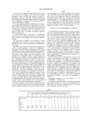
- Wire rods with a carbon content of 0.65 wt. % and 5.5 mm diameter were dipped in these baths, for example for 2 minutes at 30° C. (Table 1).
- the dipping time is calculated from the start of dipping up to the removal of the rods from the bath.
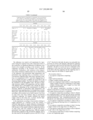
- the coppering was investigated with regard to the dependence on time and temperature via the copper layer weight obtained in each case by dipping and, parallel thereto, in a throughflow unit with a bath composition according to Example 10. Following this the copper layer weight was determined as a function of the dissolved iron-II ion content—simulated in a dipping bath at 30° C. or for a throughflow unit at 50° C.—for a bath composition according to Example 10. The results are summarised in Tables 1-3.
- Example 10 Coppering behaviour depending on temperature and time in a bath based on Example 10, and properties of the coppered wires.
- SG layer weight of the copper coat.
- Examples 11-24 relate to dipping and Examples 25-36 relate to the throughflow process.
- Table 3 Coppering behaviour depending on temperature, time and dissolved Fe 2+ content in a bath based on Example 10, and properties of the coppered wires.
- SG layer weight of the copper coat. Examples 41-55 relate to dipping and Examples 56-67 relate to the throughflow process.
- the gloss in principle increases slightly with temperature and also slightly with dipping time or throughflow time, though the homogeneity may, depending on the circumstances, be slightly adversely affected at particularly high temperatures and particularly long coppering times, for example due to minute black spots.
- the homogeneity of all samples according to the invention was at least as good, if not even in some cases even more uniform, than in conventional currentless coppering. All samples exhibited the typical copper colour in the same way. A closed, smooth, high-quality copper layer was always produced.
Landscapes
- Chemical & Material Sciences (AREA)
- Metallurgy (AREA)
- Chemical Kinetics & Catalysis (AREA)
- Engineering & Computer Science (AREA)
- Materials Engineering (AREA)
- Mechanical Engineering (AREA)
- General Chemical & Material Sciences (AREA)
- Organic Chemistry (AREA)
- Chemically Coating (AREA)
- Electroplating And Plating Baths Therefor (AREA)
- Chemical Treatment Of Metals (AREA)
- Removal Of Specific Substances (AREA)
- Extraction Or Liquid Replacement (AREA)
- Manufacture And Refinement Of Metals (AREA)
Applications Claiming Priority (3)
| Application Number | Priority Date | Filing Date | Title |
|---|---|---|---|
| DE10214859A DE10214859B4 (de) | 2002-04-04 | 2002-04-04 | Verfahren zum Verkupfern oder Verbronzen eines Gegenstandes und flüssige Gemische hierfür |
| DE10214859.7 | 2002-04-04 | ||
| PCT/EP2003/003427 WO2003085167A1 (de) | 2002-04-04 | 2003-04-02 | Verfahren zum verkupfern oder verbronzen eines gegenstandes und flüssige gemische hierfür |
Publications (2)
| Publication Number | Publication Date |
|---|---|
| US20060090669A1 US20060090669A1 (en) | 2006-05-04 |
| US7282088B2 true US7282088B2 (en) | 2007-10-16 |
Family
ID=28458573
Family Applications (1)
| Application Number | Title | Priority Date | Filing Date |
|---|---|---|---|
| US10/509,586 Expired - Lifetime US7282088B2 (en) | 2002-04-04 | 2003-04-02 | Method for copper-plating or bronze-plating an object and liquid mixtures therefor |
Country Status (7)
| Country | Link |
|---|---|
| US (1) | US7282088B2 (de) |
| EP (1) | EP1495157B1 (de) |
| CN (1) | CN100365163C (de) |
| AT (1) | ATE299192T1 (de) |
| AU (1) | AU2003226773A1 (de) |
| DE (2) | DE10214859B4 (de) |
| WO (1) | WO2003085167A1 (de) |
Families Citing this family (2)
| Publication number | Priority date | Publication date | Assignee | Title |
|---|---|---|---|---|
| US20130143071A1 (en) | 2010-08-17 | 2013-06-06 | Chemetall Gmbh | Process for the electroless copper plating of metallic substrates |
| CN109468642A (zh) * | 2019-01-04 | 2019-03-15 | 苏州禾川化学技术服务有限公司 | 一种用于黄铜紫铜焊接材料的化学抛光液及其使用方法 |
Citations (11)
| Publication number | Priority date | Publication date | Assignee | Title |
|---|---|---|---|---|
| GB1425298A (en) | 1973-04-04 | 1976-02-18 | Philips Electronic Associated | Electroless deposition of copper |
| US4036651A (en) * | 1974-02-26 | 1977-07-19 | Rca Corporation | Electroless copper plating bath |
| US4303443A (en) * | 1979-06-15 | 1981-12-01 | Hitachi, Ltd. | Electroless copper plating solution |
| US4954369A (en) | 1988-02-27 | 1990-09-04 | Basf Aktiengesellschaft | Chemical deposition of copper from alkaline aqueous baths |
| DE4111558C1 (en) | 1991-04-05 | 1992-01-09 | Schering Ag Berlin-Bergkamen, 1000 Berlin, De | Formaldehyde-free bath for electroless deposition of copper - contains copper salt complexing agent, and formic acid (salts) or addn. prods. as reducing agent |
| WO1992017624A1 (de) | 1991-04-05 | 1992-10-15 | Schering Aktiengesellschaft | Formaldehydfreies bad zur stromlosen abscheidung von kupfer, verfahren und die verwendung von polyethyleniminen in formaldehydfreien bädern |
| US5221328A (en) * | 1991-11-27 | 1993-06-22 | Mcgean-Rohco, Inc. | Method of controlling orthophosphite ion concentration in hyphophosphite-based electroless plating baths |
| DE4440299A1 (de) | 1994-11-11 | 1996-05-15 | Metallgesellschaft Ag | Verfahren zur stromlosen Abscheidung von Kupferüberzügen auf Eisen- und Eisenlegierungsoberflächen |
| DE19918833A1 (de) | 1999-04-22 | 2000-10-26 | Atotech Deutschland Gmbh | Verfahren zum elektrolytischen Metallisieren von dielektrischen Oberflächen |
| US6709563B2 (en) * | 2000-06-30 | 2004-03-23 | Ebara Corporation | Copper-plating liquid, plating method and plating apparatus |
| US20040253450A1 (en) * | 2001-05-24 | 2004-12-16 | Shipley Company, L.L.C. | Formaldehyde-free electroless copper plating process and solution for use in the process |
-
2002
- 2002-04-04 DE DE10214859A patent/DE10214859B4/de not_active Expired - Fee Related
-
2003
- 2003-04-02 WO PCT/EP2003/003427 patent/WO2003085167A1/de not_active Ceased
- 2003-04-02 CN CNB038130955A patent/CN100365163C/zh not_active Expired - Fee Related
- 2003-04-02 US US10/509,586 patent/US7282088B2/en not_active Expired - Lifetime
- 2003-04-02 AT AT03745779T patent/ATE299192T1/de active
- 2003-04-02 DE DE50300740T patent/DE50300740D1/de not_active Expired - Lifetime
- 2003-04-02 EP EP03745779A patent/EP1495157B1/de not_active Expired - Lifetime
- 2003-04-02 AU AU2003226773A patent/AU2003226773A1/en not_active Abandoned
Patent Citations (13)
| Publication number | Priority date | Publication date | Assignee | Title |
|---|---|---|---|---|
| GB1425298A (en) | 1973-04-04 | 1976-02-18 | Philips Electronic Associated | Electroless deposition of copper |
| US4036651A (en) * | 1974-02-26 | 1977-07-19 | Rca Corporation | Electroless copper plating bath |
| US4303443A (en) * | 1979-06-15 | 1981-12-01 | Hitachi, Ltd. | Electroless copper plating solution |
| US4954369A (en) | 1988-02-27 | 1990-09-04 | Basf Aktiengesellschaft | Chemical deposition of copper from alkaline aqueous baths |
| DE4111558C1 (en) | 1991-04-05 | 1992-01-09 | Schering Ag Berlin-Bergkamen, 1000 Berlin, De | Formaldehyde-free bath for electroless deposition of copper - contains copper salt complexing agent, and formic acid (salts) or addn. prods. as reducing agent |
| WO1992017624A1 (de) | 1991-04-05 | 1992-10-15 | Schering Aktiengesellschaft | Formaldehydfreies bad zur stromlosen abscheidung von kupfer, verfahren und die verwendung von polyethyleniminen in formaldehydfreien bädern |
| US5221328A (en) * | 1991-11-27 | 1993-06-22 | Mcgean-Rohco, Inc. | Method of controlling orthophosphite ion concentration in hyphophosphite-based electroless plating baths |
| DE4440299A1 (de) | 1994-11-11 | 1996-05-15 | Metallgesellschaft Ag | Verfahren zur stromlosen Abscheidung von Kupferüberzügen auf Eisen- und Eisenlegierungsoberflächen |
| US5776231A (en) | 1994-11-11 | 1998-07-07 | Metallgesellschaft Aktiengesellschaft | Concentrate for the electroless deposition of copper coatings on iron and iron alloy surfaces |
| US6261644B1 (en) | 1994-11-11 | 2001-07-17 | Metallgesellschaft Aktiengesellschaft | Process for the electroless deposition of copper coatings on iron and iron alloy surfaces |
| DE19918833A1 (de) | 1999-04-22 | 2000-10-26 | Atotech Deutschland Gmbh | Verfahren zum elektrolytischen Metallisieren von dielektrischen Oberflächen |
| US6709563B2 (en) * | 2000-06-30 | 2004-03-23 | Ebara Corporation | Copper-plating liquid, plating method and plating apparatus |
| US20040253450A1 (en) * | 2001-05-24 | 2004-12-16 | Shipley Company, L.L.C. | Formaldehyde-free electroless copper plating process and solution for use in the process |
Non-Patent Citations (2)
| Title |
|---|
| Derwent abstract of DE 19918833, Oct. 2002. * |
| Derwent abstract of DE 4111558, Jan. 1992. * |
Also Published As
| Publication number | Publication date |
|---|---|
| WO2003085167A1 (de) | 2003-10-16 |
| DE10214859B4 (de) | 2004-04-08 |
| EP1495157A1 (de) | 2005-01-12 |
| AU2003226773A1 (en) | 2003-10-20 |
| CN1659311A (zh) | 2005-08-24 |
| CN100365163C (zh) | 2008-01-30 |
| US20060090669A1 (en) | 2006-05-04 |
| DE10214859A1 (de) | 2003-10-23 |
| DE50300740D1 (de) | 2005-08-11 |
| EP1495157B1 (de) | 2005-07-06 |
| ATE299192T1 (de) | 2005-07-15 |
Similar Documents
| Publication | Publication Date | Title |
|---|---|---|
| CN101165220B (zh) | 硬金合金电镀浴 | |
| US3032436A (en) | Method and composition for plating by chemical reduction | |
| CN101348928B (zh) | 镀钯及镀钯合金之高速方法 | |
| EP2875168B1 (de) | Chemische vernickelungsbeschichtungen sowie zusammensetzungen und verfahren zur bildung derselben | |
| US4242180A (en) | Ammonia free palladium electroplating bath using aminoacetic acid | |
| TWI548782B (zh) | 無氰化物之酸性消光銀電鍍組成物及方法 | |
| JP2016527403A (ja) | 無電解ニッケルめっき液、及び無電解ニッケルめっき方法 | |
| JP7695086B2 (ja) | 白金電解めっき浴および白金めっき製品 | |
| US4904354A (en) | Akaline cyanide-free Cu-Zu strike baths and electrodepositing processes for the use thereof | |
| US9103027B2 (en) | Polishing and electroless nickel compositions, kits, and methods | |
| WO2006052310A2 (en) | Nickel electroplating bath designed to replace monovalent copper strike solutions | |
| TWI545232B (zh) | 鋅-鐵合金層材料 | |
| US7282088B2 (en) | Method for copper-plating or bronze-plating an object and liquid mixtures therefor | |
| US2883288A (en) | Silver plating bath | |
| US4400415A (en) | Process for nickel plating aluminum and aluminum alloys | |
| KR101365661B1 (ko) | 무전해 니켈-인 도금액 및 이를 이용한 도금방법 | |
| KR101271587B1 (ko) | 1액형 금속 나노 코팅 조성물 및 이의 제조 방법 | |
| WO2012052832A2 (en) | Electroless nickel plating bath and electroless nickel plating method using same | |
| JP6218473B2 (ja) | 無電解Ni−P−Snめっき液 | |
| US20070175359A1 (en) | Electroless gold plating solution and method | |
| US2973308A (en) | Complexed plating electrolyte and method of plating therewith | |
| EP3152345B1 (de) | Stromlose vernickelung mit hohem phosphorgehalt | |
| JP2006169605A (ja) | リン酸塩被膜を有する無電解ニッケルめっき膜の形成方法およびその形成膜 | |
| JPH05163581A (ja) | 複合無電解ニッケルめっき液 | |
| US3649343A (en) | Chloride concentration control in immersion copper coating |
Legal Events
| Date | Code | Title | Description |
|---|---|---|---|
| AS | Assignment |
Owner name: CHEMETALL GMBH, GERMANY Free format text: ASSIGNMENT OF ASSIGNORS INTEREST;ASSIGNORS:NITTEL, KLAUS-DIETER;SCHNEIDER, RALF;REEL/FRAME:015451/0654 Effective date: 20041018 |
|
| STCF | Information on status: patent grant |
Free format text: PATENTED CASE |
|
| FEPP | Fee payment procedure |
Free format text: PAYOR NUMBER ASSIGNED (ORIGINAL EVENT CODE: ASPN); ENTITY STATUS OF PATENT OWNER: LARGE ENTITY |
|
| FPAY | Fee payment |
Year of fee payment: 4 |
|
| FPAY | Fee payment |
Year of fee payment: 8 |
|
| MAFP | Maintenance fee payment |
Free format text: PAYMENT OF MAINTENANCE FEE, 12TH YEAR, LARGE ENTITY (ORIGINAL EVENT CODE: M1553); ENTITY STATUS OF PATENT OWNER: LARGE ENTITY Year of fee payment: 12 |