US7303911B2 - Prostate cell lines - Google Patents
Prostate cell lines Download PDFInfo
- Publication number
- US7303911B2 US7303911B2 US10/240,523 US24052302A US7303911B2 US 7303911 B2 US7303911 B2 US 7303911B2 US 24052302 A US24052302 A US 24052302A US 7303911 B2 US7303911 B2 US 7303911B2
- Authority
- US
- United States
- Prior art keywords
- onycap
- ecacc
- protein
- cell lines
- formulation
- Prior art date
- Legal status (The legal status is an assumption and is not a legal conclusion. Google has not performed a legal analysis and makes no representation as to the accuracy of the status listed.)
- Expired - Fee Related, expires
Links
Images




Classifications
-
- C—CHEMISTRY; METALLURGY
- C12—BIOCHEMISTRY; BEER; SPIRITS; WINE; VINEGAR; MICROBIOLOGY; ENZYMOLOGY; MUTATION OR GENETIC ENGINEERING
- C12N—MICROORGANISMS OR ENZYMES; COMPOSITIONS THEREOF; PROPAGATING, PRESERVING, OR MAINTAINING MICROORGANISMS; MUTATION OR GENETIC ENGINEERING; CULTURE MEDIA
- C12N5/00—Undifferentiated human, animal or plant cells, e.g. cell lines; Tissues; Cultivation or maintenance thereof; Culture media therefor
- C12N5/06—Animal cells or tissues; Human cells or tissues
- C12N5/0602—Vertebrate cells
- C12N5/0693—Tumour cells; Cancer cells
-
- A—HUMAN NECESSITIES
- A61—MEDICAL OR VETERINARY SCIENCE; HYGIENE
- A61K—PREPARATIONS FOR MEDICAL, DENTAL OR TOILETRY PURPOSES
- A61K39/00—Medicinal preparations containing antigens or antibodies
- A61K39/0005—Vertebrate antigens
- A61K39/0011—Cancer antigens
-
- A—HUMAN NECESSITIES
- A61—MEDICAL OR VETERINARY SCIENCE; HYGIENE
- A61P—SPECIFIC THERAPEUTIC ACTIVITY OF CHEMICAL COMPOUNDS OR MEDICINAL PREPARATIONS
- A61P35/00—Antineoplastic agents
-
- A—HUMAN NECESSITIES
- A61—MEDICAL OR VETERINARY SCIENCE; HYGIENE
- A61K—PREPARATIONS FOR MEDICAL, DENTAL OR TOILETRY PURPOSES
- A61K39/00—Medicinal preparations containing antigens or antibodies
- A61K2039/51—Medicinal preparations containing antigens or antibodies comprising whole cells, viruses or DNA/RNA
- A61K2039/515—Animal cells
-
- A—HUMAN NECESSITIES
- A61—MEDICAL OR VETERINARY SCIENCE; HYGIENE
- A61K—PREPARATIONS FOR MEDICAL, DENTAL OR TOILETRY PURPOSES
- A61K39/00—Medicinal preparations containing antigens or antibodies
- A61K2039/51—Medicinal preparations containing antigens or antibodies comprising whole cells, viruses or DNA/RNA
- A61K2039/515—Animal cells
- A61K2039/5152—Tumor cells
Definitions
- the cell lines arc characterised as being prostate epithelial in origin and have excellent growth characteristics in combination with unusual expression of markers that make these cell lines valuable for antigen discovery and use as potential vaccines in the treatment of prostate cancer as well as for the purposes of drug screening, genetic analysis of the basis of prostate cancer and other relevant studies.
- Carcinoma of the prostate is the second-most frequent cause of cancer related death in men in the United States (Boring, 1993).
- PCA Carcinoma of the prostate
- the increased incidence of prostate cancer during the last decade has established prostate cancer as the most prevalent of all cancers (Carter and Coffey, 1990).
- prostate cancer is the most common cancer found in United States men, (approximately 200,000 newly diagnosed cases/year), the molecular changes underlying its genesis and progression remain poorly understood (Boring et al., 1993).
- prostate cancer An unusual challenge presented by prostate cancer is that most prostate tumors do not represent life threatening conditions.
- Evidence from autopsies indicate that 11 million American men have prostate cancer (Dbom, 1983). These figures are consistent with prostate carcinoma having a protracted natural history in which relatively few tumors progress to clinical significance during the lifetime of the patient. If the cancer is well-differentiated, organ-confined and focal when detected, treatment does not extend the life expectancy of older patients.
- TSU-Pr1 (Iizumi T et al. J Urol June 1987 ;137(6):1304-6, Establishment of a new prostatic carcinoma cell line TSU-Pr1)
- LuCap23 (Ellis W J. et al, Clin Cancer Res June 1996;2(6):1039-48, Characterization of a novel androgen-sensitive, prostate-specific antigen-producing prostatic carcinoma xenograft: LuCaP 23); P69SV40-T P69-M2182, (Plymate S R.
- Prostate cancer in most cases remains localised within the prostate itself and does not escape the local confines of the prostate. Thus unless patients are monitored clinically by way of blood PSA level, digital rectal examination, ultrasound or needle biopsy the lesion is not diagnosed. When the tumour does escape from the prostate gland the spread and the favoured metastatic sites are very reproducible.
- the main sites of deposition are the local lymph nodes and more extensively the bone, in fact very often the first diagnosis of prostate disease is bone pain or non specific fractures of the bone resulting from bone metastatic deposits.
- the reasons for the preponderance of lymph and bone metastasis may be the local proximity of the lymph nodes and the growth factor rich environment of the bone.
- the first embodiment of this invention is two cell clones ONYCAP1 and ONYCAP23.
- the cell lines have been extensively characterised as being prostate epithelial in origin by virtue of cytokeratin staining.
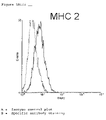
- the cell lines are further shown to posses significant levels of surface MHC-1 expression in addition to several other immune functional proteins not normally attributed to tumour cell lines, namely MHC-2, ICAM, and CD40 ligand.
- the two clones show differing morphology and also a differing pattern of gene expression with Onycap23 showing a distinct osteomimetic phenotype compared to Oncap1.
- a second embodiment of this invention is the use of any one of the cell lines in the formulation of a vaccine for the treatment of prostate cancer with or without a vaccine adjuvant which may include Il-2, IL-12, interferon gamma, BCG, tetanus toxoid or Mycobacterium Vaccae.
- the vaccine may be used as an adjuvant therapy in combination with other treatment modalities such as radiotherapy, or surgery or chemotherapy where the vaccine is used to treat or resolve minimal residual disease.
- a further aspect of the invention is the use of a combination of the cell lines in the formulation of a vaccine for the treatment of prostate cancer with or without a vaccine adjuvant which may include Il-2, IL-12, interferon gamma, BCG, tetanus toxoid or Mycobacterium Vaccae.
- the vaccine may be used as an adjuvant therapy in combination with other treatment modalities such as radiotherapy, surgery or chemotherapy where the vaccine is used to treat or resolve minimal residual disease
- a further aspect of the invention is the use of a combination of any of the cells with other prostate cell lines available from ATCC, ECACC or other laboratories and cell banks in the formulation of a vaccine for the treatment of prostate cancer with or without a vaccine adjuvant which may include IL-2, IL-12, interferon gamma, BCG, tetanus toxoid, Mycobacterium Vaccae or another suitable adjuvant or immunomodulator known in the art.
- the vaccine may be used as an adjuvant therapy in combination with other treatment modalities such as radiotherapy, surgery or chemotherapy where the vaccine is used to treat or resolve minimal residual disease or for the treatment of the disease at any stage with or without co-treatment of various types.
- a further embodiment of this invention are expression libraries derived from the cell lines which can be used in screening experiments to discover tumour associated or specific antigens for use as vaccine or immunotherapies and diagnostics.
- Expression cloning is now technically simple utilising commercially available kits such as the epitope tagged bacterial expression kits from InvitrogenTM and RocheTM or mammalian expression kits from StatageneTM.
- the various clones can be probed with anti-serum from vaccinated or non vaccinated patients using a SEREX type approach.
- mammalian cell expression clones can be used as targets for use with cytotoxic T-cells (CTL) from vaccinated or unvaccinated animals or patients to identify potential T cell antigens.
- CTL cytotoxic T-cells
- the cell lines may be used in specific proliferation experiments utilising whole blood to determine the precursor frequency of T cells that recognise antigens derived from the cell lines in both vaccinated and non-vaccinated patients.
- lysates of these cell lines are good at stimulating T cell proliferation in a high percentage of non-vaccinated patients indicating that there may be many shared antigens between these novel cell lines and early stage tumours in situ. Lysates of the cells may also be used to pulse antigen presenting cells or other cells expressing MHC-1 to enable these cells to be used as potential targets in CTL assays.
- Further embodiments of this invention relate to use of the cell lines grown in nude mice for drug screening, use of the cell lines in genomic screens for drug target identification and identification of antigens which may be used in diagnostic assays to screen for early phase detection of prostate cancer.
- FIG. 1 Morphology of Onycap 1 ( ⁇ 200 FIG. 1A ) and Onycap 23 ( ⁇ 200 FIG. 1B )
- FIG. 2 FACS Analysis of Cytokeratin Expression by Onycap1 and Oncap23
- FIG. 3 FACS Analysis of Known Immunological Surface Markers Onycap1 ( FIG. 3A ) and Oncap23 ( FIG. 23 )
- FIG. 4 Proliferation Response of Early Stage Prostate Cancer Patients to Lysates of Onycap1 and Oncap23
- ascitic fluid 3L was drawn from a patient with known metastatic prostate disease.
- the ascitic fluid was centrifuged at 1000 ⁇ g for 15 minutes and then resuspended in KSFM media supplemented with 25 g/ml bovine pituitary extract, 5 ng/ml of epidermal growth factor, 2 mM L-glutamine, 10 mM HEPES buffer and 5% foetal calf serum (FCS) (hereinafter called “modified KSFM”).
- FCS foetal calf serum
- a T175 flask of the ascitic outgrowth was trypsinised and plated out onto 96 well tissue culture plates at varying dilutions calculated to give 1, 10 and 100 cells per well. After a period of 14-21 days growth clones were picked from the 1 cell/well plate where there were less than 20 colonies per plate visible. Identified clones were trypsinised and plated into T25 flasks for expansion, after some 14-21 days growth the clones were further expanded to T75 and thereafter T175 flasks. The expanded clones were trypsinised and reformulated in freezing mixture comprising KSFM containing 10% v/v FCS and 20% v/v DMSO and then stored in 1 ⁇ 10 6 cell aliquots in liquid nitrogen.
- FIG. 1 A small epithelial morphology is shown in FIG. 1A and is representative of clone Onycap1.
- FIG. 1B A second unique morphology shown by clone Oncap23 is shown in FIG. 1B whereby the cells show dendrite-like processes emanating from a central cellular body similar to the so-called neuroendocrine phenotype (Chung T D K and Spiotto M T 2000 The Prostate 42 p186-195) which can be elicited by growth in IL6 containing medium.
- Onycap1 and Oncap23 clones have been analysed by flow cytometry using anti-cytokeratin 8, anti-cytokeratin 18 and desmin antibodies.
- Cytokeratin 8 and 18 are characteristic and considered true markers of prostatic epithelia.
- FIG. 2 shows examples of the flow cytometry analysis of the clones with CY8, CY18 and desmin antibodies compared with isotype control. In all cases the clones stained for these characteristic prostate epithelial markers proving their prostatic origin consistent with the medical condition of the patient.
- FIG. 3 shows representative flow cytometry data for Onycap1 and Oncap23. Unusually for prostate metastatic cell lines these clones show significant levels of MHC-I along with several other important markers which are important in cell based tumour immunotherapeutics, such as CD86 and CD40.
- MHC-I The presence of significant MHC-I levels is important since its cell surface presence will be important in eliciting an allogenic response when these cells are used as an whole cell allogeneic vaccine. There is also the possibility that with surface MHC-I expression these cells may also present directly to T cells, small peptide antigens restricted by the MPA clones MHC-I. In addition once the T cell receptor is engaged the presence of co-stimulatory molecules on the MPA clones may also elicit a significant proliferative response since both T receptor and co-stimulatory signals are present on the MPA cells.
- a double extraction was performed using TRI REAGENT (Sigma #T9424).
- the reagent was added directly to the washed cell pellets and samples were allowed to stand for 5 minutes before the addition of chloroform. Samples were vortexed and allowed to stand for a further 10 minutes at room temperature then centrifuged at 12,000 ⁇ g for 15 minutes.
- RNA precipitated with isopropanol RNA pellets were washed with 75% ethanol, dried and re-suspended in TE buffer.
- RNA sample was treated with Deoxyribonuclease I (Life Technologies #18068-015) to ensure there was no contamination with genomic DNA. Reactions were incubated for 15 minutes at room temperature then the DNase was inactivated by the addition of 25 mM EDTA and heating to 65° C. for 10 minutes.
- Reverse transcription was performed using the 1st strand cDNA synthesis kit for RT-PCR (AMV) from Boehringer Mannheim (#1 483 188). Reactions were incubated at 25° C. for 10 minutes then at 42° C. for 1 hour. The AMV enzyme was denatured by heating to 99° C. for 5 minutes then the reaction was cooled to 4° C.
- AMV 1st strand cDNA synthesis kit for RT-PCR
- PCR primers listed were selected from the literature to cover known prostate proteins, antigens and markers of invasion and metastasis.
- the cDNA extracted from the clones was probed with the primers and products of the reaction run out on high resolution agarose gels to check for products of the expected sizes. The results are tabulated in Table 1 for clones Onycap1 and Oncap23.
- Onycap1 and Oncap23 were seeded at 1 ⁇ 10 6 cells into T175 culture flasks. Cultures were maintained for 4-5 days in modified KSFM. Cells were harvested by trypsinisation from the surface of the plastic and washed in Hanks balanced salt solution before RNA extraction.
- a double extraction was performed using TRI REAGENT (Sigma #T9424).
- the reagent was added directly to the washed cell pellets and samples were allowed to stand for 5 minutes before the addition of chloroform. Samples were vortexed and allowed to stand for a further 10 minutes at room temperature then centrifuged at 12,000 ⁇ g for 15 minutes.
- RNA precipitated with isopropanol RNA pellets were washed with 75% ethanol, dried and re-suspended in TE buffer.
- RNA sample was treated with Deoxyribonuclease I (Life Technologies #18068-015) to ensure there was no contamination with genomic DNA. Reactions were incubated for 15 minutes at room temperature then the DNase inactivated by the addition of 25 mM EDTA and heating to 65° C. for 10 minutes.
- Labelled cDNA was used to probe a Clontech AtlasTM array (human cancer array II) following the manufacturers protocol for hybridisation and washing. Images were recorded utilising a phosphor imager and recorded files analysed with the Clontech Atlas ImageTM software.
- Clones were grown in T75 flasks in modified KSFM. Once the cells have reached confluency they were harvested by trypsinisation and washed in Hanks balanced salt solution and then pelleted by centrifugation.
- the pelleted cell mass was taken through four freeze thaw cycles in a minimal volume of Hanks balanced salt solution at a cell concentration of 2 ⁇ 10 6 cells/ml.
- the resulting cell supernatent was aliquoted into 25 ul aliquots and stored at ⁇ 70° C. until required.
- FIG. 4 The results for a series of proliferation assays are shown in FIG. 4 where a proliferation index for either CD4 or CD8 positive T-cells are plotted against Onycap1 and Onycap 23 cell lysates, the proliferation index being derived by dividing the percentage of T-cells proliferating by the no-lysate control.
- a proliferation index above 1 indicates significant T cell proliferation in response to the cell lysate used to stimulate.
- Results are shown for six early stage prostate patient sera 1, 2, 3, 4, 5 and 6 each of which was stimulated with Onycap1 or Oncap23 cell lysate.
- the results show that the Onycap cell lines posses antigens which differentially stimulate T cells from a variety of patients. Its is unlikely that a response is due to an mixed lymphocyte reaction since both cell lines posses the same haplotype and yet for each of the patients sera there are examples of one cell line stimulating a response where the other cell line does not.
Landscapes
- Health & Medical Sciences (AREA)
- Life Sciences & Earth Sciences (AREA)
- Engineering & Computer Science (AREA)
- Chemical & Material Sciences (AREA)
- Biomedical Technology (AREA)
- General Health & Medical Sciences (AREA)
- Organic Chemistry (AREA)
- Biotechnology (AREA)
- Wood Science & Technology (AREA)
- Oncology (AREA)
- Zoology (AREA)
- Genetics & Genomics (AREA)
- Bioinformatics & Cheminformatics (AREA)
- Microbiology (AREA)
- Pharmacology & Pharmacy (AREA)
- Medicinal Chemistry (AREA)
- Veterinary Medicine (AREA)
- Animal Behavior & Ethology (AREA)
- Public Health (AREA)
- Epidemiology (AREA)
- Mycology (AREA)
- Cell Biology (AREA)
- Biochemistry (AREA)
- General Engineering & Computer Science (AREA)
- Immunology (AREA)
- General Chemical & Material Sciences (AREA)
- Chemical Kinetics & Catalysis (AREA)
- Nuclear Medicine, Radiotherapy & Molecular Imaging (AREA)
- Measuring Or Testing Involving Enzymes Or Micro-Organisms (AREA)
- Medicines Containing Antibodies Or Antigens For Use As Internal Diagnostic Agents (AREA)
- Medicines Containing Material From Animals Or Micro-Organisms (AREA)
- Electrotherapy Devices (AREA)
- Micro-Organisms Or Cultivation Processes Thereof (AREA)
- Medicines That Contain Protein Lipid Enzymes And Other Medicines (AREA)
- Investigating Or Analysing Biological Materials (AREA)
Applications Claiming Priority (5)
| Application Number | Priority Date | Filing Date | Title |
|---|---|---|---|
| GB0008032.5 | 2000-04-01 | ||
| GB0008032A GB0008032D0 (en) | 2000-04-01 | 2000-04-01 | New prostate cell lines |
| GB0024237A GB0024237D0 (en) | 2000-10-03 | 2000-10-03 | New prostate cell lines |
| GB0024237.0 | 2000-10-03 | ||
| PCT/GB2001/001437 WO2001075073A2 (en) | 2000-04-01 | 2001-03-30 | Prostate cell lines and their use |
Publications (2)
| Publication Number | Publication Date |
|---|---|
| US20030185808A1 US20030185808A1 (en) | 2003-10-02 |
| US7303911B2 true US7303911B2 (en) | 2007-12-04 |
Family
ID=26244016
Family Applications (1)
| Application Number | Title | Priority Date | Filing Date |
|---|---|---|---|
| US10/240,523 Expired - Fee Related US7303911B2 (en) | 2000-04-01 | 2001-03-30 | Prostate cell lines |
Country Status (8)
| Country | Link |
|---|---|
| US (1) | US7303911B2 (de) |
| EP (1) | EP1272617B1 (de) |
| AT (1) | ATE507285T1 (de) |
| AU (1) | AU2001244341A1 (de) |
| CA (1) | CA2404388C (de) |
| DE (1) | DE60144515D1 (de) |
| DK (1) | DK1272617T3 (de) |
| WO (1) | WO2001075073A2 (de) |
Families Citing this family (4)
| Publication number | Priority date | Publication date | Assignee | Title |
|---|---|---|---|---|
| US20050019336A1 (en) | 2003-07-23 | 2005-01-27 | Dalgleish Angus George | Human prostate cell lines in cancer treatment |
| DE102004038076A1 (de) * | 2004-02-16 | 2005-09-01 | Proteosys Ag | Diagnostische Marker für Krebs |
| WO2005078124A2 (de) * | 2004-02-16 | 2005-08-25 | Proteosys Ag | Diagnostische marker für krebs |
| JP2023504659A (ja) | 2019-12-03 | 2023-02-06 | ニューボーゲン,インコーポレイティド | 腫瘍細胞ワクチン |
Citations (8)
| Publication number | Priority date | Publication date | Assignee | Title |
|---|---|---|---|---|
| WO1997018296A1 (en) | 1995-11-15 | 1997-05-22 | University Of Utah | Novel method of culturing human epithelial cells for the identification of cancer therapeutics and diagnostics |
| WO1997024132A1 (en) | 1995-12-28 | 1997-07-10 | The Johns Hopkins University School Of Medicine | Allogeneic paracrine cytokine tumor vaccines |
| WO1997028255A1 (en) | 1996-02-02 | 1997-08-07 | The Government Of The United States Of America, Represented By The Secretary, Department Of Health And Human Services | Immortal human prostate epithelial cell lines and clones and their applications in the research and therapy of prostate cancer |
| WO1998016238A2 (en) | 1996-10-11 | 1998-04-23 | The Regents Of The University Of California | Cancer immunotherapy using tumor cells combined with mixed lymphocytes |
| WO1999019462A1 (en) | 1997-10-10 | 1999-04-22 | The Regents Of The University Of California | Enhanced immunogenic cell populations prepared using h2 receptor antagonists |
| WO2000004918A2 (de) | 1998-07-21 | 2000-02-03 | Kerkmann Tucek Aida | Mittel zur immuntherapie von tumorerkrankungen |
| WO2000033869A2 (en) | 1998-12-10 | 2000-06-15 | Onyvax Limited | Use of human prostrate cell lines in cancer treatment |
| WO2000071155A2 (en) | 1999-05-21 | 2000-11-30 | Onyvax Limited | New vaccine formulations - 2 |
Family Cites Families (2)
| Publication number | Priority date | Publication date | Assignee | Title |
|---|---|---|---|---|
| US5804443A (en) * | 1997-02-28 | 1998-09-08 | Bernofsky; Carl | Human monocytic leukemia cell line |
| GB9827103D0 (en) * | 1998-12-10 | 1999-02-03 | Onyvax Ltd | New cancer treatments |
-
2001
- 2001-03-30 US US10/240,523 patent/US7303911B2/en not_active Expired - Fee Related
- 2001-03-30 CA CA2404388A patent/CA2404388C/en not_active Expired - Fee Related
- 2001-03-30 DK DK01917257.6T patent/DK1272617T3/da active
- 2001-03-30 EP EP01917257A patent/EP1272617B1/de not_active Expired - Lifetime
- 2001-03-30 AT AT01917257T patent/ATE507285T1/de not_active IP Right Cessation
- 2001-03-30 DE DE60144515T patent/DE60144515D1/de not_active Expired - Lifetime
- 2001-03-30 AU AU2001244341A patent/AU2001244341A1/en not_active Abandoned
- 2001-03-30 WO PCT/GB2001/001437 patent/WO2001075073A2/en not_active Ceased
Patent Citations (8)
| Publication number | Priority date | Publication date | Assignee | Title |
|---|---|---|---|---|
| WO1997018296A1 (en) | 1995-11-15 | 1997-05-22 | University Of Utah | Novel method of culturing human epithelial cells for the identification of cancer therapeutics and diagnostics |
| WO1997024132A1 (en) | 1995-12-28 | 1997-07-10 | The Johns Hopkins University School Of Medicine | Allogeneic paracrine cytokine tumor vaccines |
| WO1997028255A1 (en) | 1996-02-02 | 1997-08-07 | The Government Of The United States Of America, Represented By The Secretary, Department Of Health And Human Services | Immortal human prostate epithelial cell lines and clones and their applications in the research and therapy of prostate cancer |
| WO1998016238A2 (en) | 1996-10-11 | 1998-04-23 | The Regents Of The University Of California | Cancer immunotherapy using tumor cells combined with mixed lymphocytes |
| WO1999019462A1 (en) | 1997-10-10 | 1999-04-22 | The Regents Of The University Of California | Enhanced immunogenic cell populations prepared using h2 receptor antagonists |
| WO2000004918A2 (de) | 1998-07-21 | 2000-02-03 | Kerkmann Tucek Aida | Mittel zur immuntherapie von tumorerkrankungen |
| WO2000033869A2 (en) | 1998-12-10 | 2000-06-15 | Onyvax Limited | Use of human prostrate cell lines in cancer treatment |
| WO2000071155A2 (en) | 1999-05-21 | 2000-11-30 | Onyvax Limited | New vaccine formulations - 2 |
Non-Patent Citations (15)
| Title |
|---|
| Ablin, J. Cancer Res. Clin. Oncol. 123: 583-594 (1997). |
| Bellone et al. . (Immunology Today, v20 (10), 1999, pp. 457-461. * |
| Berthon et al., Intl. Journal of Oncology 6:333-343 (1995). |
| Brenner et al., Journal of Urology, pp. 1575-1579 (1995) (abstract only). |
| Dermer (Bio/Technology, 1994, 12:320). * |
| Freshney (Culture of Animal Cells, A Manual of Basic Technique, Alan R. Liss, Inc., 1983, New York, p. 4. * |
| Freshney, "Culture of Animal Cells", Chapter 23, p. 314 (1987). |
| Gorelik et al., Journal of Supramolecular Structure 12: 385-402 (1979) (abstract only). |
| Gura (Science, v278, 1997, pp. 1041-1042). * |
| Marble, Cancer Weekly Plus, p. 4(2) (1997). |
| Moran, American Medical News 42, 39, 23 (1999). |
| Olumi et al., Cancer Research 58: 4525-4530 (1998). |
| Tjoa et al., The Prostate 27: 63-69 (1995). |
| Weiner L.M., Seminars Oncology, vol. 26, No. 4, Suppl 12, pp. 41-50, 1999. * |
| Zhau et al., Proc. Natl. Acad. Sci. USA 93: 15152-15157 (1996). |
Also Published As
| Publication number | Publication date |
|---|---|
| DE60144515D1 (de) | 2011-06-09 |
| WO2001075073A2 (en) | 2001-10-11 |
| CA2404388A1 (en) | 2001-10-11 |
| CA2404388C (en) | 2010-06-15 |
| HK1052531A1 (en) | 2003-09-19 |
| ATE507285T1 (de) | 2011-05-15 |
| EP1272617B1 (de) | 2011-04-27 |
| EP1272617A2 (de) | 2003-01-08 |
| DK1272617T3 (da) | 2011-08-22 |
| US20030185808A1 (en) | 2003-10-02 |
| WO2001075073A3 (en) | 2002-02-14 |
| AU2001244341A1 (en) | 2001-10-15 |
Similar Documents
| Publication | Publication Date | Title |
|---|---|---|
| US7723107B2 (en) | Pharmaceutical composition for inducing an immune response in a human or animal | |
| Palucka et al. | Dendritic cells loaded with killed allogeneic melanoma cells can induce objective clinical responses and MART-1 specific CD8+ T-cell immunity | |
| US7851591B1 (en) | Cancer immunotherapy and diagnosis using universal tumor associated antigens, including hTERT | |
| CA2354046C (en) | New cancer treatments | |
| Ramanathan et al. | Development and clinical evaluation of dendritic cell vaccines for HPV related cervical cancer-a feasibility study | |
| CN101861163B (zh) | 用于治疗黑素瘤的细胞系、含有它们的组合物、制备所述组合物的方法以及治疗方法 | |
| Abdel-Wahab et al. | Human dendritic cells, pulsed with either melanoma tumor cell lysates or the gp100 peptide (280-288), induce pairs of T-cell cultures with similar phenotype and lytic activity | |
| JP4949554B2 (ja) | ガンの新規処置 | |
| EP1272617B1 (de) | Prostata zellinien und deren verwendung | |
| Saleh et al. | Melanoma immunotherapy: past, present, and future | |
| US20250339504A1 (en) | Cancer vaccine with use of common cancer antigen cocktail, tcr/car-t cell therapeutic, companion diagnostic method, and method for diagnosing risk of cancer onset by detecting circulating tumor cells | |
| US11260118B2 (en) | Immunogenic peptide composition | |
| HK1052531B (en) | Prostate cell lines and their use | |
| ES2367006T3 (es) | Estirpes celulares de prostata y su uso. | |
| EP1178822B1 (de) | Aus ganzen zellen bestehender krebs-impfstoff, enthaltend ko-kultivierte maligne und nicht-maligne zellen | |
| CN106279395A (zh) | 一种ezh2蛋白的表位肽及其应用 | |
| Saleh et al. | Vaccine Immunotherapy for a Deadly Disease Like Malignant Melanoma: Where Do We Stand? | |
| Marchand | Immunization of melanoma patients with tumor antigens recognized by T lymphocytes, using peptides and a recombinant protein encoded by MAGE-A3 | |
| Ardiani et al. | Vaccine-Mediated Immunotherapy Directed against a Transcription | |
| HK1086750B (en) | Pharmaceutical composition for inducing an immune response in a human or animal |
Legal Events
| Date | Code | Title | Description |
|---|---|---|---|
| AS | Assignment |
Owner name: ONYVAX LIMITED, UNITED KINGDOM Free format text: ASSIGNMENT OF ASSIGNORS INTEREST;ASSIGNORS:THRAVES, PETER;SUTTON, ANDREW;REEL/FRAME:013628/0154;SIGNING DATES FROM 20021106 TO 20021117 |
|
| STCF | Information on status: patent grant |
Free format text: PATENTED CASE |
|
| FPAY | Fee payment |
Year of fee payment: 4 |
|
| FPAY | Fee payment |
Year of fee payment: 8 |
|
| FEPP | Fee payment procedure |
Free format text: PAYER NUMBER DE-ASSIGNED (ORIGINAL EVENT CODE: RMPN); ENTITY STATUS OF PATENT OWNER: SMALL ENTITY Free format text: PAYOR NUMBER ASSIGNED (ORIGINAL EVENT CODE: ASPN); ENTITY STATUS OF PATENT OWNER: SMALL ENTITY |
|
| FEPP | Fee payment procedure |
Free format text: MAINTENANCE FEE REMINDER MAILED (ORIGINAL EVENT CODE: REM.); ENTITY STATUS OF PATENT OWNER: SMALL ENTITY |
|
| LAPS | Lapse for failure to pay maintenance fees |
Free format text: PATENT EXPIRED FOR FAILURE TO PAY MAINTENANCE FEES (ORIGINAL EVENT CODE: EXP.); ENTITY STATUS OF PATENT OWNER: SMALL ENTITY |
|
| STCH | Information on status: patent discontinuation |
Free format text: PATENT EXPIRED DUE TO NONPAYMENT OF MAINTENANCE FEES UNDER 37 CFR 1.362 |
|
| FP | Lapsed due to failure to pay maintenance fee |
Effective date: 20191204 |