US7319876B2 - System and method for using equipment identity information in providing location services to a wireless communication device - Google Patents
System and method for using equipment identity information in providing location services to a wireless communication device Download PDFInfo
- Publication number
- US7319876B2 US7319876B2 US10/648,623 US64862303A US7319876B2 US 7319876 B2 US7319876 B2 US 7319876B2 US 64862303 A US64862303 A US 64862303A US 7319876 B2 US7319876 B2 US 7319876B2
- Authority
- US
- United States
- Prior art keywords
- mobile station
- location services
- location
- request
- identified
- Prior art date
- Legal status (The legal status is an assumption and is not a legal conclusion. Google has not performed a legal analysis and makes no representation as to the accuracy of the status listed.)
- Expired - Lifetime, expires
Links
- 238000000034 method Methods 0.000 title claims abstract description 162
- 238000004891 communication Methods 0.000 title claims abstract description 104
- 230000015654 memory Effects 0.000 claims description 35
- 230000000977 initiatory effect Effects 0.000 claims 1
- 230000007547 defect Effects 0.000 abstract description 5
- 238000013461 design Methods 0.000 abstract description 4
- 238000004519 manufacturing process Methods 0.000 abstract description 3
- 238000012545 processing Methods 0.000 description 13
- 230000006870 function Effects 0.000 description 8
- 230000004044 response Effects 0.000 description 7
- VYLDEYYOISNGST-UHFFFAOYSA-N bissulfosuccinimidyl suberate Chemical compound O=C1C(S(=O)(=O)O)CC(=O)N1OC(=O)CCCCCCC(=O)ON1C(=O)C(S(O)(=O)=O)CC1=O VYLDEYYOISNGST-UHFFFAOYSA-N 0.000 description 6
- 238000012937 correction Methods 0.000 description 6
- 230000008569 process Effects 0.000 description 6
- 238000010586 diagram Methods 0.000 description 5
- 238000005516 engineering process Methods 0.000 description 5
- 230000005540 biological transmission Effects 0.000 description 4
- 230000000875 corresponding effect Effects 0.000 description 4
- 238000005259 measurement Methods 0.000 description 4
- 238000012360 testing method Methods 0.000 description 4
- 238000005070 sampling Methods 0.000 description 2
- 230000011664 signaling Effects 0.000 description 2
- 208000027418 Wounds and injury Diseases 0.000 description 1
- 230000001413 cellular effect Effects 0.000 description 1
- 238000004590 computer program Methods 0.000 description 1
- 230000001276 controlling effect Effects 0.000 description 1
- 230000002596 correlated effect Effects 0.000 description 1
- 230000006378 damage Effects 0.000 description 1
- 208000014674 injury Diseases 0.000 description 1
- 238000010295 mobile communication Methods 0.000 description 1
- 238000012986 modification Methods 0.000 description 1
- 230000004048 modification Effects 0.000 description 1
- 239000013307 optical fiber Substances 0.000 description 1
- 238000001228 spectrum Methods 0.000 description 1
Images




Classifications
-
- H—ELECTRICITY
- H04—ELECTRIC COMMUNICATION TECHNIQUE
- H04W—WIRELESS COMMUNICATION NETWORKS
- H04W4/00—Services specially adapted for wireless communication networks; Facilities therefor
- H04W4/02—Services making use of location information
-
- H—ELECTRICITY
- H04—ELECTRIC COMMUNICATION TECHNIQUE
- H04W—WIRELESS COMMUNICATION NETWORKS
- H04W8/00—Network data management
- H04W8/22—Processing or transfer of terminal data, e.g. status or physical capabilities
-
- H—ELECTRICITY
- H04—ELECTRIC COMMUNICATION TECHNIQUE
- H04W—WIRELESS COMMUNICATION NETWORKS
- H04W4/00—Services specially adapted for wireless communication networks; Facilities therefor
- H04W4/18—Information format or content conversion, e.g. adaptation by the network of the transmitted or received information for the purpose of wireless delivery to users or terminals
-
- H—ELECTRICITY
- H04—ELECTRIC COMMUNICATION TECHNIQUE
- H04W—WIRELESS COMMUNICATION NETWORKS
- H04W8/00—Network data management
- H04W8/18—Processing of user or subscriber data, e.g. subscribed services, user preferences or user profiles; Transfer of user or subscriber data
-
- H—ELECTRICITY
- H04—ELECTRIC COMMUNICATION TECHNIQUE
- H04W—WIRELESS COMMUNICATION NETWORKS
- H04W8/00—Network data management
- H04W8/22—Processing or transfer of terminal data, e.g. status or physical capabilities
- H04W8/24—Transfer of terminal data
- H04W8/245—Transfer of terminal data from a network towards a terminal
Definitions
- This invention relates to the field of location services for use in mobile devices or mobile stations, and more particularly to use of location services equipment identity information in providing location services in a wireless communication system.
- Location services for mobile telephones and wireless digital communication devices (collectively referred to hereinafter as Mobile Stations) are an increasingly important business area for wireless communication providers.
- Location information can be used to provide a variety of location services to mobile station users. For example, public safety authorities can use location information to pinpoint the location of a wireless device. Alternatively, a mobile station user can use location information to find the location of the nearest automatic teller machine, as well as the fee charged by the ATM. As another example, location information can assist a traveler in obtaining step-by-step directions to a desired destination while en route.
- CDMA and WCDMA communication devices are assigned a unique code and each mobile device uses its code to spread its communication signals across a common spread-spectrum bandwidth. As long as each communication device uses its correct code, it can successfully detect and select a desired signal from among other signals concurrently transmitted over the same bandwidth.
- TDMA time division multiple access
- FDMA frequency division multiple access
- FM analog frequency modulation
- AMPS Advanced Mobile Phone System
- GSM Global System for Mobile Communications
- GSM systems uses a combination of TDMA and FDMA technology.
- GSM systems also frequently employ General Packet Radio Service (GPRS) technology to transmit data and to provide location services.
- GPRS General Packet Radio Service
- a mobile station which may comprise a mobile phone, a laptop, palmtop, or other conventional mobile device, or combination thereof, establishes a communication link with a base station system (BSS).
- BSS typically includes a plurality of base station transceiver systems (BTSs) and a base station controller (BSC).
- BSC base station controller
- a location server such as a Serving Mobile Location Center (SMLC) (in a GSM system), provides location services to the MS as needed, such as coordinating the exchange of information from which the location of the MS can be determined.
- the location server may be part of a BSS, or it may be a separate server coupled to either a sole BSS or a system of BSSs.
- Any given MS may comply with various international equipment standards, and may have accurate standard performance data available.
- any given communication system such as one conforming to a current GSM specification, may not have adopted known equipment standards.
- any given MS may also have known manufacturing defects.
- An MS may be assigned an identification code, such as, for example, an “International Mobile Equipment Identifier” (IMEI) used in GSM systems and WCDMA systems, or an “Electronic Serial Number” (ESN), used in IS-95 and CDMA2000 systems.
- IMEI International Mobile Equipment Identifier
- ESN Electronic Serial Number
- a communication system may also maintain a database on an equipment identification server (EIS), such as an equipment identity register (EIR) in a GSM system, correlating users with particular equipment.
- EIS equipment identification server
- An EIS may be incorporated into other parts of a communication system, such as a mobile switching center (MSC) or a gateway switching server (GSS).
- MSC mobile switching center
- GSS gateway switching server
- Such a database may have a unique code assigned to the user or to the equipment.
- the particular equipment properties and method location services operation of an MS can have a significant impact on the ability of a location server to efficiently and accurately provide LCS capabilities.
- LCS Location Area Identifier
- the MS can determine, using database information, which model of position location server is used in that particular network.
- the MS can also determine the Operator Identification (ID) based upon broadcast information.
- the Operator ID can be related through database information to the position location server equipment.
- the system, apparatus, and method described herein are directed to the use of LCS equipment identification information in providing location services to a wireless communication device.
- the location server uses the equipment identity information of an MS in order to select the best protocol for LCS communication.
- the MS equipment identity information can be used to correct manufacturing defects, fix design flaws and software bugs, track performance, optimize performance, or any combinations thereof.
- Methods based on equipment identity information may be employed to detect whether a mobile station works correctly, and to generate location services control signals to correct or minimize MS faults.
- the location server may detect or determine from stored equipment identity information whether an MS performs according to a requested Quality of Service (QoS) requirement such as location accuracy, speed of performing location determination, etc. Based on this determination, the location server may optionally generate control signals, use additional information, or employ alternative methods to provide the requested QoS.
- QoS Quality of Service
- the MS uses the equipment identity information of the location server to select the best protocol to use for LCS communication. For example, based on the model of position location server, the MS can use a preferred set of message parameters to optimize the efficiency of determining the MS location. If the position location server is known to have design defects or “bugs”, the MS can act accordingly in order to avoid triggering these “bugs”. During the process, the MS can obtain information about features and bugs of a particular position location server and store this information for future use.
- the memory stores data relating location services equipment identity to location services equipment identifiers.
- the equipment identity processor is adapted for receiving location services equipment identifiers, retrieving location services equipment identity data from the memory, and generating location services control signals to control operation of the CPU responsive to an identified location services related characteristic of the location services equipment, wherein the location services equipment include either a location server or a mobile station.
- FIG. 1 is a functional block diagram of a wireless communication system for providing wireless communications including location services.
- FIG. 2 is another functional block diagram of a wireless communication system for providing wireless communications including location services, showing additional elements.
- FIG. 3 is another functional block diagram of a wireless communication system for providing wireless communications including location services, showing an alternative configuration of elements.
- FIG. 4 is another functional block diagram of a wireless communication system for providing wireless communications including location services, showing a plurality of mobile stations.
- FIG. 5 is a schematic illustration of an exemplary database of equipment information illustrated in tabular form that may be maintained by an embodiment of the wireless communications system.
- FIG. 6 is a flow chart illustrating an exemplary method of retrieving equipment information.
- FIG. 7 is a flow chart illustrating an exemplary method of using equipment information to provide location services to a mobile station.
- FIG. 8 is another schematic illustration of an exemplary database of equipment information illustrated in tabular form that may be maintained by an embodiment of the wireless communications system, showing additional or alternative elements.
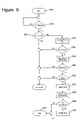
- FIG. 9 is a flow chart illustrating an exemplary method of gathering location services performance data for an MS and using performance data table to generate location services control signals relating to Quality of Service for location services.
- FIG. 10 is another functional block diagram of a wireless communication system for providing wireless communications including location services, showing a mobile station having an equipment identity processor.
- FIG. 11 is an exemplary database in the form of a table that may be maintained by an equipment identity processor incorporated in a mobile station.
- FIG. 12 is a flowchart illustrating an exemplary method for providing location services, using a mobile station having an equipment identity processor.
- FIG. 13 is flowchart illustrating another exemplary method for providing location services using a mobile station having an equipment identity processor, wherein performance data are stored and retrieved.
- a mobile wireless communication device is referred to herein as a mobile station (MS), and may comprise a mobile phone, a laptop computer, a handheld computer, or any other mobile device that may be configured for wireless communication, or any combination thereof.
- MS mobile station
- a number of different standards exist that govern wireless data communication. These standards may be implemented in a number of different ways to provide flexibility to the designer. The teachings herein are not limited to any specific standard.
- FIG. 1 illustrates a simplified general wireless communication system 100 that supports a communication link employing location services.
- an MS 104 communicates with a Base Station System (BSS) 102 via one or more wireless links 112 and 114 to one or more Base Transceiver Stations (BTSs) 108 and 110 .
- BSS Base Station System
- BTSs Base Transceiver Stations
- location services may be provided to the MS 104 using only one BTS, or using a plurality of BTSs.
- the BTSs are operatively coupled for data communication to a Base Station Controller (BSC) 106 , which is, in turn, connected to a location server 128 and a communication service provider network 130 .
- BSC Base Station Controller
- the MS 104 may also receive signals, such as GPS signals, from one or more satellites 124 and 126 via communication links 116 and 118 .
- the BSS 102 may optionally receive signals, such as GPS signals, from one or more satellites 124 and 126 via communication links 120 and 122 .
- the location server 128 may also access the data transmitted by the satellites by means other than via the BTS/BSS. For example, a Wide Area Reference Network of satellite receivers, not shown in the drawings, could provide the satellite data to the location server.
- E-OTD Enhanced Observed Time Difference
- information from the MS 104 and the BSS 102 may be provided to a location server 128 .
- This information may include the locations of the BTSs 108 and 110 , and information regarding signals received by the MS 104 and the BSS 102 from the satellites 124 and 126 .
- the location server 128 uses this information to provide location services to the MS 104 .
- the location server 128 may also provide information via the BSS 102 to the MS 104 to assist or improve determination of the location of the MS 104 .
- the location server 128 may comprise a separate server, or alternatively, it may be incorporated into the BSS 102 , or a control system located in the communication service provider network 130 , or in some combination thereof.
- the communication connections illustrated may be wired (such as “POTS” or optical fiber), wireless, or a combination of wired and wireless connections.
- FIG. 2 shows a communication system 200 in functional block form.
- the system 200 includes a location server 210 having a memory 214 , and a central processing unit (CPU) 212 that controls operation of the location server 210 .
- CPU central processing unit
- a CPU can include microprocessors, embedded controllers, application specific integrated circuits (ASICs), digital signal processors (DSPs), state machines, dedicated discrete hardware, and the like.
- ASICs application specific integrated circuits
- DSPs digital signal processors
- the location server 210 may be incorporated into other components of a communication system (such as a BSS, a communication service provider network 230 , a mobile switching center (MSC) in a GSM system, a satellite, or some combination thereof).
- the location server 210 may provide location services to multiple devices (such as the MS 240 ) communicating through multiple base station systems, such as the BSS 250 .
- the memory 214 which may include both read-only memory (ROM) and/or random-access memories (RAM), stores and provides instructions and data to the CPU 212 .
- a portion of the memory 214 may also include non-volatile random-access memory.
- the location server 210 also includes an equipment identity processor (EIP) 216 .
- EIP equipment identity processor
- the CPU 212 implements the EIP 216 by executing a specific set of instructions stored in the memory 214 , although in some embodiments a separate dedicated processor may be used to implement the EIP 216 .
- the CPU 212 can execute instructions stored in the memory 214 .
- the components of the location server 210 are linked together by a bus system 218 .
- the MS 240 has a CPU 242 , a memory 244 and a transceiver 246 to allow transmission and reception of data, such as audio/video/text communication and programming data, between the MS 240 and a remote location, such as the BSS 250 , or the satellite 260 .
- An antenna 248 is electrically coupled to the transceiver 246 .
- the MS 240 includes a bus system 249 .
- the basic operation of the MS 240 is well-known in the art and need not be described herein.
- the MS 240 may use the memory 244 to store an IMEI or other identity information pertaining to the MS 240 and may transmit the information to the BSS 250 .
- the MS 240 may also include a Subscriber Identity Module (SIM, not shown) which stores an International Mobile Subscriber Identity (IMSI) and a secret key together with other subscriber specific information such as preferences, settings, and personal phone books.
- SIM Subscriber Identity Module
- IMSI International Mobile Subscriber Identity
- the BSS 250 includes a BSC 251 including a CPU 252 and a memory 254 , and BTSs 255 and 256 .
- the BTSs allow transmission and reception of data (such as audio/video/text communication and programming data) between the BSS 250 and a remote location (such as the MS 240 or a satellite 260 ).
- Antennas 258 and 257 are electrically coupled to the BTSs 255 and 257 , respectively.
- the BSC 251 has a bus system 259 .
- the basic operation of the BSS 250 is well-known in the art and need not be described herein. As described above, the system and method described herein are not limited by the specific hardware component selected to implement the CPU 252 or other elements of the BSS 250 .
- the location server 210 , the MS 240 , the BSS 250 and the satellite 260 communicate via communication links 270 , 271 , and 272 .
- communication links 270 , 271 , and 272 Although one satellite is illustrated by way of example, persons skilled in the art will understand that a plurality of satellites may be employed, or none.
- the communication link 271 is optional, since other means for receiving the satellite data (e.g., a Wide Area Reference Network, not shown) may be employed.
- the BSS 250 provides any equipment identifying information received from the MS 240 via the communication link 273 to the location server 210 , either directly or after processing.
- the location server 210 may use the EIP 216 to process information regarding the identity of the MS 240 (for example, a unique equipment identifier such as an IMEI) and to generate control signals to control operation of the location request service provided for the MS, responsive to the equipment identity information.
- information regarding the identity of the MS 240 for example, a unique equipment identifier such as an IMEI
- IMEI unique equipment identifier
- the location server 210 , the MS 240 , the BSS 250 and the satellite 260 may comprise other components, such as power supplies (not shown), input/output devices (not shown), and additional CPUs and buses. These components can be arranged in various configurations. The system and method described herein are not limited to the specific configuration and arrangement of components shown.
- FIG. 3 illustrates an alternative communication system 300 that provides location services to an MS. This system is similar in many ways to the communication system 200 illustrated in FIG. 2 .
- the location server 310 is shown in FIG. 3 as part of the BSC 351 included in the BSS 350 .
- the location server 310 includes an EIP 316 .
- the BSC 351 also contains a CPU 352 , a memory 354 , and a bus system 359 .
- the BSS 350 also includes BTSs 355 and 356 , and respective antennas 358 and 357 .
- the CPU 352 implements the location server 310 by executing a specific set of instructions stored in the memory 354 .
- a separate dedicated processor may form the location server 310 .
- the location server 310 and the EIP 316 determine the services that the MS 340 requires for location determination, and instruct the CPU to provide the support services required by the MS 340 .
- the BSS 350 (and BSC 351 ) are connected for data communication with a communication service provider network 330 .
- the MS 340 includes a CPU 342 , a memory 344 , a transceiver 346 , a bus system 349 , and an antenna 348 .
- the system 300 includes a satellite 360 .
- location systems may employ a plurality of satellites, or none.
- the various parts of the communication system 300 communicate using communication links 370 , 371 , and 372 .
- the communication link 371 is optional, since other means for receiving the satellite data (e.g., a Wide Area Reference Network, not shown) may be employed.
- the location server 310 may use the EIP 316 to process identity information received from the MS 340 for the purpose of generating control signals that implement location services for the MS 340 .
- FIG. 4 illustrates a communication system 400 wherein a location server 410 provides location services for a plurality of MS devices 440 , 441 , 443 , 445 , and 447 , in communication with a plurality of BSSs 450 , 451 , and 452 via communication links 470 .
- a single BSS communicates with a plurality of MSs, although the BSS may also use a plurality of BTSs not shown. However, as illustrated, at other times and under some circumstances, a plurality of BSSs may communicate with a single MS.
- the location server 410 communicates with the BSSs 450 , 451 , and 452 via the communication link 472 .
- the MS devices 440 , 441 , 443 , 445 , and 447 and the BSSs 450 , 451 , and 453 may also communicate with a satellite 460 via communication links 471 and 473 , respectively.
- the communication links 473 are optional, since other means for receiving the satellite data (e.g., a Wide Area Reference Network, not shown) may be employed.
- the system 400 shown in FIG. 4 also includes an EIS 480 (in some embodiments, the EIS comprises an EIR, such as in a GSM system).
- the EIS 480 maintains a database correlating user and equipment information. For example, unique equipment identifiers, such as IMEIs, are correlated with individual subscribers (identified, for example, via IMSIs or Electronic Serial Numbers).
- the EIS 480 communicates with the location server 410 through communication link 472 .
- the EIS 480 may be part of, or connected through, an MSC (not shown), a BSS ( 450 , 451 , 452 ), a communication service provider network 430 , or other control equipment.
- the location server 410 has a CPU 412 , a memory 414 , an EIP 416 , and a bus system 418 . As will be described in more detail below, the location server 410 may use the EIP 416 to process information regarding the identity of the MSs and to generate control signals that control the location server 410 .
- a request for location services as received by the location server 410 may include equipment information, or user identifier information, or both, as part of the request.
- An EIP such as the EIP 416 shown in FIG. 4
- an EIP to control operation of a location server is illustrated below using a limited number of examples, with reference to components shown in FIG. 4 .
- An EIP such as the EIP 416 , may maintain a database, for example a relational database, that maps equipment information and equipment characteristics for communication sessions with various devices, such as the MS 440 .
- unique equipment identifiers may include IMEIs or other standard identifiers associated with the equipment or equipment type.
- Equipment characteristics may include a manufacturer, a model, bugs, errors, preferred methods, etc., associated with the equipment or the equipment type, and relating to location services properties of the equipment. Such equipment characteristics may also be referred to herein as location services characteristics of the equipment.
- the database may be stored in the memory 414 in one embodiment.
- the database may be updated for every request for location services information that is received by the location server 410 or it may be updated for only some requests, for example, to take a statistical sampling. It may also be updated to delete obsolete information.
- FIG. 5 illustrates an exemplary database in the form of a table 500 that may be maintained by an EIP.
- the table 500 contains: a field 502 for storing mobile subscriber identity information, such as an International Mobile Subscriber Identity (IMSI) in a GSM/GPRS/WCDMA communication system or an Electronic Serial Number (ESN) in an IS-95 and CDMA 2000 system; a field 504 for storing a mobile equipment identifier such as an IMEI in a GSM communication system; a field 506 for storing an equipment manufacturer identifier; a field 508 for storing a model identifier; a field 510 for storing known bug codes associated with the particular manufacturer and or model; a field 512 for storing correction codes; a field 514 for storing a code identifying a preferred method of providing location services; and a field 516 for storing error codes.
- IMSI International Mobile Subscriber Identity
- ESN Electronic Serial Number
- Table 500 may contain additional fields and may refer to other databases or tables, or it may not contain all of the fields described herein.
- a separate database containing the bug codes and corresponding correction codes may exist, in which case the table 500 might contain the field 510 for storing the bug code.
- the location server 410 would look up the corresponding correction code in another database or table, rather than storing it in the field 512 .
- Separate databases may be maintained by other servers, such as the EIS 480 and information retrieved by the location server 410 as needed.
- FIG. 6 is a flow chart illustrating the operation of a system, such as the system 400 of FIG. 4 , to receive a location services request without knowing whether equipment identity information is included in the request.
- the method determines whether it received a request for location services. If the answer at step 610 is NO, the method returns to STEP 610 . Otherwise, the method determines whether the request includes equipment identifying information for the MS which is to receive the requested location services in STEP 620 . If the answer at STEP 620 is YES, the method proceeds to STEP 700 , for further processing as illustrated in FIG. 7 , which is described below.
- an EIS may comprise a stand-alone server or it may be incorporated into another part of a communication system, such as an MSC, a GMLC, EIR, or the like.
- the method may employ user identity information (such as an IMSI or ESN), provided via the location services request.
- the method determines whether equipment identifying information has been provided. If the answer at STEP 640 is YES, the method proceeds to STEP 700 for further processing. If the answer at STEP 640 is NO, the method proceeds to a STEP 650 .
- the method requests identity information from the MSC/GMLC for the MS to which location services are to be provided, and proceeds to a STEP 660 .
- the method determines whether equipment identifying information was provided. If the answer at STEP 660 is YES, the method proceeds to STEP 700 . If the answer at STEP 660 is NO, the method proceeds to a STEP 662 .
- the method checks a database, such as the database 500 of FIG. 5 , to determine if equipment identity information for the MS has previously been entered into the database.
- the information may have been entered into the database during a previous attempt by the MS to obtain location information services.
- the database may include information relating the user identity for the MS to the equipment identity information. If the information is in the database, the system proceeds to the STEP 700 . If the information is not in the database, the system proceeds to a STEP 670 .
- the system updates the equipment information database to reflect that no equipment identity information is available for the session and then proceeds to a STEP 680 .
- the method generates control signals that cause system to provide the requested location services in a default manner and then proceeds to a STEP 690 .
- the method determines whether the request was successfully granted. If the answer at the STEP 690 is YES, the method proceeds to a STEP 699 and stops further processing of the request. If the answer at STEP 690 is NO, the method proceeds to the STEP 695 .
- the method updates the equipment information database to reflect the conditions of the request that was not successful.
- the method may also generate control signals to create an error log.
- the equipment information database and the error log may be used to generate fixes and/or determine preferred operational parameters for a receiving MS.
- the method then proceeds to the STEP 699 and terminates processing of the request.
- a communication system may be configured to provide equipment identifying information with a request for location services. In such a system, the method illustrated in FIG. 6 may be omitted.
- FIG. 7 illustrates the operation of a system that provides location services using equipment identifying information when a request for location services containing equipment identifying information is received.
- the method receives a request for location services incorporating equipment identifying information for the MS to which the services are to be provided.
- the method updates the information in an equipment information database that reflects the equipment identifying information received with the request, and then proceeds to a STEP 704 .
- the step of updating the database may include discarding outdated information.
- an IMEI may be paired with only one IMSI or ESN at a time, and vice-versa. Thus, if such a system receives a request pairing an IMEI with an IMSI or ESN, previous entries pairing the IMEI with a different IMSI or ESN and previous entries paring the IMSI or ESN with a different IMEI may be updated or deleted.
- the method determines whether there are known preferred operational parameters associated with the equipment for which location services are to be provided. If the answer at STEP 704 is YES, the method generates control signals that cause the method to use the preferred parameters when responding to the request for location services in STEP 706 , and proceeds to STEP 710 . If the answer at STEP 704 is NO, the method generates control signals that cause the method to use default parameters in responding to the request for location services in STEP 708 , and then proceeds to a STEP 710 .
- the method determines whether there are known “bug” fixes for the equipment to which the location services are to be provided. If the answer at STEP 710 is YES, the method proceeds to a STEP 712 . If the answer at STEP 710 is NO, the method proceeds to a STEP 714 . At the STEP 712 , the method generates control signals to implement the known bug fixes and proceeds to STEP 714 . At STEP 714 , the method generates control signals that provide the requested location services and proceeds to a STEP 716 . At the STEP 716 , the method determines whether the request was successfully granted. If the answer at STEP 716 is YES, the method proceeds to the STEP 720 . If the answer is NO, the method proceeds to a STEP 718 .
- the method updates the equipment information database to reflect the conditions of the request that was not successful.
- the method may also generate control signals that create an error log.
- the equipment information table and the error log may subsequently be used to generate fixes and/or to determine preferred operational parameters for a receiving MS.
- the method then proceeds to a STEP 720 .
- processing of the request for location services is terminated by the method of FIG. 7 .
- An EIP such as the EIP 416 (in location server 410 ) of FIG. 4 , may maintain a performance database that maps equipment performance data for communication sessions with various devices, such as the MS 440 .
- FIG. 8 illustrates an exemplary performance database in the form of a table 800 that may be maintained by an EIP.
- the database can be used to gather performance data for various makes and models of MS equipment.
- the table may be conveniently stored in a memory, such as the memory 414 ( FIG. 4 ).
- the table 800 contains the following fields: a field 802 for storing mobile subscriber identity information, such as an International Mobile Subscriber Identity (IMSI) in a GSM/GPRS or the Electronic Serial Number (ESN) in a WCDMA communication system; a field 804 for storing a mobile equipment identifier (such as an IMEI in a GSM communication system); a field 806 for storing an equipment manufacturer identifier; a field 808 for storing a model identifier; a field 810 for storing the time of the session; a field 812 for identifying the particular request for location services; a field 814 for storing a code identifying a preferred method of providing location services; a field 816 for storing error codes; a field 818 for storing a first quality of service parameter, such as an estimate of the accuracy of a location determination; and a field 820 for storing a second quality of service parameter, such as the time required to prepare a location estimate. Additional fields may be added to the table 800 . Not all
- FIG. 9 is a flow chart illustrating one method of gathering performance data for the MS devices that are provided with location services.
- the method receives a request for location services to be provided to an MS device and proceeds to STEP 902 .
- the method updates the information in an equipment information database, such as the database illustrated in FIG. 8 , to reflect the equipment identifying information received with the request, and proceeds to STEP 904 .
- the act of updating the database may include, for example, the act of discarding outdated information.
- an IMEI may be paired with only one IMSI or ESN at a time, and vice-versa. Thus, if such a system receives a request pairing an IMEI with an IMSI or ESN, previous entries pairing the IMEI with a different IMSI or ESN, and previous entries pairing the IMSI or ESN with a different IMEI, may be updated or deleted.
- the method determines whether performance data are desired for the MS for which location services are to be provided. For example, performance data are recommended for the makes and models of MS devices that did not receive complete standard performance testing. If the answer at STEP 904 is YES, the method proceeds to a STEP 906 . If the answer at STEP 904 is NO, the method proceeds to a STEP 950 . At the STEP 950 the method proceeds to process the request for location services (see FIG. 7 ), and subsequently proceeds to the termination STEP 999 . At the STEP 906 , the method determines whether there is an entry in the performance data table (e.g., the table 800 shown in FIG. 8 ) for the manufacturer and model of the MS for which location services are to be provided. If the answer at STEP 906 is YES, the method proceeds to a STEP 908 . If the answer at the STEP 906 is NO, the method proceeds to a STEP 922 .
- the performance data table e.g., the table 800 shown in FIG. 8
- the method determines from the performance data table whether additional information and/or preferred operating parameters are known for the MS to which the location services are to be provided. If the answer at STEP 908 is YES, the method proceeds to a STEP 910 . If the answer at STEP 908 is NO, the method proceeds to a STEP 920 . At the STEP 910 , the method generates control signals that implement known additional information and/or preferred operating parameters and proceeds to a STEP 922 . At the STEP 920 , the method generates control signals that cause the system to use default operating parameters when responding to the request for location services and proceeds to a STEP 922 .
- the method continues processing the request for location services (see FIG. 7 ) and proceeds to a STEP 924 .
- the method requests a response message from the MS to which location services were provided.
- the STEP 924 may be omitted under certain testing situations. For example, a response may be automatically provided.
- the method then proceeds to a STEP 926 .
- the method receives a response message from the MS to which location services were provided and proceeds to a STEP 928 .
- the method evaluates the performance of the MS receiving the location services and proceeds to a STEP 930 .
- the method updates a performance table, such as the performance table 800 of FIG. 8 , to reflect the performance of the MS, and proceeds to a STEP 999 .
- a performance table such as the performance table 800 of FIG. 8
- the performance data may comprise actual performance values.
- the performance data may comprise data indicating whether a target value was met.
- a request to provide location services associated with an MS need not originate with the associated MS. For example, one MS may request the location of a second MS.
- an MS may be connected to the communication system for other reasons, such as to place a telephone call, and the communication system may recognize that the MS is of a type for which location services performance data is desired. Thus, the communication system may automatically request location services for the MS.
- the IMEI has been employed for correcting coding errors and other faults unrelated to LCS.
- the MSC obtains IMEI of the target mobile via standard signaling between the MS and the MSC.
- the prior art methods cannot be employed for LCS because the IMEI is not available to the location determination network entity, which may be either mobile device or location server.
- the current inventive concept (as described hereinabove) advantageously overcomes the limitations of the prior art solutions.
- the location service request from the GMLC to the MSC may carry IMEI information to the MSC.
- the MSC may then transmit the complete IMEI message, or simply transmit the MS manufacturer and model information, to the location server and/or EIP.
- This information may be transmitted as an element in the standard location request message, or alternatively via a proprietary message between the MSC and the location server using the radio access network. If the GSM network cannot provide the MS identity information to the location server using a standard or proprietary message, data tables may then be maintained in the location server and/or the EIP and/or the MS, as described previously. These data tables may employ the IMSI or ESN (which may be obtained for each call by an MS), and may be adapted to relate the IMSI or ESN to the MS manufacturer/model, faults, and performance data.
- an MS may not function correctly, and hence the required location QoS (e.g. location accuracy) of location service cannot be confirmed.
- the location service has a wide range of applications based on QoS. For example, one application based on QoS comprises pinpointing an emergency user within a few meters. Another application comprises locating nearby restaurants in the vicinity of a few kilometers. Failure to pinpoint emergency users may cause injury to users, whereas failure to provide QoS to subscribers may cause revenue loss to operators.
- An exemplary implementation of the performance method described in reference to FIG. 9 relates to the problem of providing and confirming a required location QoS.
- a location request specifies a location QoS (e.g., an MS location accuracy required to be within 50 meters), this cannot be achieved by default operating parameters and control signals.
- the inventive method may be used to improve the location accuracy to a required level by retrieving known additional information or operating parameters from the performance database and implementing control signals responsive to this data. For example, if a fault exists in implementing assisted-GPS in a particular MS, the method may employ an Enhanced Observed Time Difference (E-OTD) positioning method instead. Further, depending on the required QoS, the system may recruit fewer or greater numbers of BTS pairs for the E-OTD position determination.
- E-OTD Enhanced Observed Time Difference
- FIG. 10 depicts a simplified communication system 1000 in functional block form.
- the system 1000 of FIG. 10 is similar to the system 200 of FIG. 2 .
- an MS 1040 includes an EIP 1045 .
- the MS 1040 is enabled for MS-assisted or MS-based location determination.
- MS-assisted positioning is a mobile centric positioning method (e.g. E-OTD, A-GPS) in which the MS provides position measurements to the network for computation of a location estimate provided by the network.
- the network may provide assistance data to the MS that enables location measurements and/or improve measurement performance.
- MS based positioning is defined as any mobile centric positioning method (e.g. E-OTD, A-GPS) in which the MS performs both position measurements and computation of a location estimate and wherein assistance data useful or essential to one or both of these functions is provided to the MS by the network.
- E-OTD E-OTD
- A-GPS assisted-GPS
- the MS 1040 is enabled in this embodiment to determine equipment identity information relating to the manufacturer and model of a location server 1010 .
- the MS 1040 uses this information to select a preferred set of messages and parameters for exchanging data with the location server 1010 . If the location server 1010 is known to have “bugs”, the MS 1040 optionally may employ data signals to avoid triggering the bugs. Further, when responding to location information requests, the MS 1040 may include a capability that learns about the features and bugs of a particular location server. The MS may store the information obtained by the MS for future use.
- the MS 1040 includes a CPU 1042 , a memory 1044 and a transceiver 1046 .
- the transceiver 1046 allows the transmission and reception of data, such as audio/video/text communication and programming data, between the MS 1040 and a remote location, such as the BSS 1050 or the satellite 1060 .
- An antenna 1048 is electrically coupled to the transceiver 1046 .
- the CPU 1042 implements the EIP 1045 by executing a specific set of instructions stored in the memory 1044 , although in some embodiments a separate dedicated processor may be used to implement the EIP 1045 .
- the CPU 1042 may execute instructions stored in the memory 1044 .
- the components of the MS 1040 are linked together by a bus system 1049 .
- the BSS 1050 includes a BSC 1051 having a CPU 1052 , a memory 1054 , and BTSs 1055 and 1056 .
- the BTSs allow transmission and reception of data (such as audio/video/text communication and programming data) between the BSS 1050 and a remote location (such as the MS 1040 or the satellite 1060 ).
- Antennas 1057 and 1058 are electrically coupled to the BTSs.
- the BSC 1051 includes a bus system 1059 .
- the location server 1010 , the MS 1040 , the BSS 1050 and the satellite 1060 communicate using communication links 1070 , 1071 , and 1072 .
- the communication link 1071 is optional, since other means for receiving the satellite data (e.g., a Wide Area Reference Network, not shown) may be employed. Although one satellite is illustrated by way of example, persons skilled in the communications arts shall recognize that a plurality of satellites may be employed to provide LCS to the MS, or none.
- the system 1000 includes a location server 1010 that has a memory 1014 and a CPU 1012 that controls operation of the location server 1010 .
- the memory 1014 provides instructions and data to the CPU 1012 in a known matter.
- the components of the location server 1010 are linked together by a bus system 1018 .
- the location server 1010 is illustrated as external to the BSS 1050 , it may be incorporated within the BSS 1050 or the BSC 1051 , or it may be located within the communication service provider network 1030 , or in some combination thereof.
- the EIP 1045 may maintain a database, for example a relational database, that maps equipment information (for example, unique equipment identifiers such as Location Area Identifiers and Operator IDs) for communication sessions with various BSSs, such as the BSS 1050 .
- equipment information for example, unique equipment identifiers such as Location Area Identifiers and Operator IDs
- the database may conveniently be stored in the memory 1044 .
- the database may be updated for every request for location services received or initiated by the MS 1040 , or it may be updated for only some requests, for example, to make a meaningful statistical sampling. It may also be updated to delete obsolete information.
- FIG. 11 illustrates an exemplary database in the form of a table 1100 that may be maintained by an EIP incorporated in an MS.
- the table 1100 contains the following fields: a field 1102 for storing identity information relating to the geographical service area, such as the Location Area Identifier (LAI); a field 1104 for storing a service provider identifier such as an Operator ID; a field 1106 for storing a location server equipment manufacturer identifier; a field 1108 for storing a location server model identifier; a field 1010 for storing a code identifying a preferred method of providing location services; a field 1112 for storing known bug codes associated with the particular manufacturer and or model; a field 1114 for storing correction codes; a field 1116 for storing error codes; a field 1118 for storing a time of session; a field 1120 for storing a session ID relating to a location request; and a field 1122 for storing performance data.
- LAI Location Area Identifier
- the MS can determine, using database information, which model of position location server is used in that particular network. Similarly, the MS can also determine the Operator Identification (ID) based upon broadcast information. The Operator ID can be related through database information to the position location server equipment.
- Table 1100 may contain additional fields and may refer to other databases or tables, or it may not contain all of the fields described herein and shown in FIG. 11 . For example, a separate database, containing the bug codes and corresponding correction codes, may exist. In this embodiment, table 1100 may contain a field 1112 for storing the bug code. In operation, the MS 1040 would look up the corresponding correction code in another database or table, rather than storing it in the field 1114 .
- FIG. 12 illustrates the operation of a method that provides location services using an MS such as the MS 1040 (having an EIP such as the EIP 1045 and enabled for MS-assisted or MS-based positioning).
- a request for location services is received by the MS and processing commences.
- the MS obtains the LAI or operator ID, and the method proceeds to a STEP 1204 .
- the LAI or operator ID may be obtained by receiving this information from the common broadcast channels. Alternatively, if the LAI and/or operator ID are known from previous communication sessions, and have not changed, these identifiers may retrieved from the MS memory. For example, these data may have been previously stored in a database or table such as table 1100 .
- the EIP retrieves location server equipment identity information from a database or data table, such as the table 1100 , and the method proceeds to a STEP 1205 .
- the database or table is updated. For example, the time of session and session ID may be entered in association with the LAI, etc. Entry of such data may facilitate future retrieval and use of equipment identity information as noted above.
- the EIP determines whether there are known preferred operational parameters associated with the location server equipment employed by the network operator. If the answer at STEP 1206 is YES, the MS generates control signals that cause the method to use the preferred parameters when responding to the request for location services in the STEP 1208 . The method then proceeds to a STEP 1212 .
- the MS If the answer at the STEP 1206 is NO, the MS generates control signals that cause the method to use default parameters when responding to the request for location services at STEP 1210 . The method then proceeds to a STEP 1212 .
- the EIP determines whether there are known bug fixes for the location server equipment. If the answer at STEP 1212 is YES, the method then proceeds to a STEP 1214 . If the answer at STEP 1212 is NO, the method the proceeds to a STEP 1216 . At the STEP 1214 , the MS generates control signals that implement the known bug fixes and the method proceeds to a STEP 1216 . At the STEP 1216 , the MS generates control signals that provide the requested location services. The method then proceeds to a STEP 1218 . At the STEP 1218 , the MS determines whether the request was successfully granted. If the answer at STEP 1218 is YES, the method proceeds to a STEP 1222 . If the answer is NO, the method proceeds to a STEP 1220 .
- the EIP updates the equipment information database or data table to reflect that the request was unsuccessful.
- the EIP may also generate control signals that create an error log.
- the equipment information table and the error log may subsequently be used to generate fixes and/or determine preferred operational parameters for subsequent location requests.
- the MS can generate information about features and bugs of a particular location server and store this information for future use.
- the method then proceeds to a STEP 1222 whereat processing by the MS is terminated.
- FIG. 13 is a flow chart illustrating one exemplary method of gathering performance data by an MS device relating to location server equipment.
- the method receives a request for location information to be provided by an MS device to a location server, and proceeds to STEP 1301 .
- the MS obtains the LAI or operator ID by reading the content of signaling messages transmitted by the BTS in the area where the MS is operating, and the method proceeds to a STEP 1302 .
- the EIP retrieves location server equipment identity information from a database or data table, such as the table 1100 described above, and the method proceeds to a STEP 1303 .
- the method updates the information in an equipment information database, such as the database illustrated in FIG. 11 , to reflect the equipment location server identifying information, session ID, time of session, etc., and proceeds to a STEP 1304 .
- an equipment information database such as the database illustrated in FIG. 11
- the method determines whether performance data are desired for the location server equipment. For example, performance data are recommended for location server equipment that has not been thoroughly tested in conjunction with the MS. If the answer at STEP 1304 is YES, the method proceeds to a STEP 1306 . If the answer at STEP 1304 is NO, the method proceeds to a STEP 1350 . At the STEP 1350 the method proceeds to process the request for location services (see FIG. 12 ), and subsequently proceeds to the termination STEP 1399 . At the STEP 1306 , the method determines whether there is an entry in the performance data table (e.g., the table 1100 shown in FIG. 11 ) for the manufacturer and model of the location server to which location information is to be provided. If the answer at STEP 1306 is YES, the method proceeds to a STEP 1308 . If the answer at the STEP 1306 is NO, the method proceeds to a STEP 1322 .
- the performance data table e.g., the table 1100 shown in FIG. 11
- the method determines from the performance data table whether additional information and/or preferred operating parameters are known for the location server equipment to which the location data are to be provided. If the answer at STEP 1308 is YES, the method proceeds to a STEP 1310 . If the answer at STEP 1308 is NO, the method proceeds to a STEP 1320 . At the STEP 1310 , the method generates control signals that implement known additional information and/or preferred operating parameters and proceeds to a STEP 1322 . At the STEP 1320 , the method generates control signals that cause the system to use default operating parameters when responding to the request for location services and proceeds to a STEP 1322 .
- the method continues processing the request for location services (see FIG. 12 ) and proceeds to a STEP 1324 .
- the method requests a response message from the location server equipment to which the location data were provided.
- the STEP 1324 may be omitted under certain testing situations. For example, a response may be automatically provided.
- the method then proceeds to a STEP 1326 .
- the method receives a response message from the location server equipment to which location data were provided and proceeds to a STEP 1328 .
- the method evaluates the performance of the location server equipment receiving the location data and proceeds to a STEP 1330 .
- the method updates a performance table, such as the performance table 1100 of FIG. 11 , to reflect the performance of the location server equipment, and proceeds to a STEP 1399 .
- a performance table such as the performance table 1100 of FIG. 11
- the performance data may comprise actual performance values.
- the performance data may comprise data indicating whether a target value was met.
- the disclosure also contemplates the method steps of any of the foregoing embodiments synthesized as digital logic in an integrated circuit, such as a Field Programmable Gate Array, or Programmable Logic Array, or other integrated circuits that can be fabricated or modified to embody computer program instructions.
- an integrated circuit such as a Field Programmable Gate Array, or Programmable Logic Array, or other integrated circuits that can be fabricated or modified to embody computer program instructions.
Landscapes
- Engineering & Computer Science (AREA)
- Computer Networks & Wireless Communication (AREA)
- Signal Processing (AREA)
- Databases & Information Systems (AREA)
- Mobile Radio Communication Systems (AREA)
- Telephonic Communication Services (AREA)
Priority Applications (15)
| Application Number | Priority Date | Filing Date | Title |
|---|---|---|---|
| US10/648,623 US7319876B2 (en) | 2002-08-26 | 2003-08-25 | System and method for using equipment identity information in providing location services to a wireless communication device |
| DE60323509T DE60323509D1 (de) | 2002-08-26 | 2003-08-26 | System und verfahren zur nutzung von geräte-identitätsinformationen zum bereitstellen von lokalen diensten an ein drahtloses kommunikationsgerät |
| ES03751920T ES2312803T3 (es) | 2002-08-26 | 2003-08-26 | Sistema y procedimiento para utilizar informaciones relcionadas con la identidad de equipos de cara a la prestacion de servicios de localizacion a un dispositivo de comunicacion inalambrica. |
| CA2496460A CA2496460C (en) | 2002-08-26 | 2003-08-26 | System and method for using equipment identity information in providing location services to a wireless communication device |
| PCT/US2003/026901 WO2004019650A2 (en) | 2002-08-26 | 2003-08-26 | System and method for using equipment identity information in providing location services to a wireless communication device |
| HK06101418.6A HK1081780B (en) | 2002-08-26 | 2003-08-26 | System and method for using equipment identity information in providing location services to a wireless communication device |
| EP03751920A EP1532833B1 (en) | 2002-08-26 | 2003-08-26 | System and method for using equipment identity information in providing location services to a wireless communication device |
| MXPA05002231A MXPA05002231A (es) | 2002-08-26 | 2003-08-26 | Sistema y metodo para utilizar informacion de identidad de equipo para proporcionar servicios de ubicacion a un dispositivo de comunicacion inalambrica. |
| BRPI0313697-3A BRPI0313697B1 (pt) | 2002-08-26 | 2003-08-26 | equipamento de serviço de localização, método de fornecimento de serviço de localização e sistema de comunicação |
| JP2004531252A JP2005537709A (ja) | 2002-08-26 | 2003-08-26 | 無線通信デバイスに対してロケーションサービスを提供する際に、機器識別情報を用いるシステム及び方法 |
| AU2003270026A AU2003270026A1 (en) | 2002-08-26 | 2003-08-26 | System and method for using equipment identity information in providing location services to a wireless communication device |
| BR0313697-3A BR0313697A (pt) | 2002-08-26 | 2003-08-26 | Sistema e método para utilizar informação de identidade de equipamento em fornecimento de serviços de locação a um dispositivo de comunicação sem fio |
| KR1020057003384A KR100915566B1 (ko) | 2002-08-26 | 2003-08-26 | 무선 통신 디바이스에 위치 확인 서비스를 제공하는데 있어서 장비 아이덴티티 정보를 사용하는 시스템 및 방법 |
| RU2005108595/09A RU2005108595A (ru) | 2002-08-26 | 2003-08-26 | Система и способ для использования информации идентификации оборудования при предоставлении услуг определения местоположения беспроводному устройству связи |
| IL16664205A IL166642A0 (en) | 2002-08-26 | 2005-02-01 | System and method for using equipment identity information in providing location services to a wireless communication device |
Applications Claiming Priority (2)
| Application Number | Priority Date | Filing Date | Title |
|---|---|---|---|
| US40626102P | 2002-08-26 | 2002-08-26 | |
| US10/648,623 US7319876B2 (en) | 2002-08-26 | 2003-08-25 | System and method for using equipment identity information in providing location services to a wireless communication device |
Publications (2)
| Publication Number | Publication Date |
|---|---|
| US20040138807A1 US20040138807A1 (en) | 2004-07-15 |
| US7319876B2 true US7319876B2 (en) | 2008-01-15 |
Family
ID=31949917
Family Applications (1)
| Application Number | Title | Priority Date | Filing Date |
|---|---|---|---|
| US10/648,623 Expired - Lifetime US7319876B2 (en) | 2002-08-26 | 2003-08-25 | System and method for using equipment identity information in providing location services to a wireless communication device |
Country Status (13)
| Country | Link |
|---|---|
| US (1) | US7319876B2 (pt) |
| EP (1) | EP1532833B1 (pt) |
| JP (1) | JP2005537709A (pt) |
| KR (1) | KR100915566B1 (pt) |
| AU (1) | AU2003270026A1 (pt) |
| BR (2) | BR0313697A (pt) |
| CA (1) | CA2496460C (pt) |
| DE (1) | DE60323509D1 (pt) |
| ES (1) | ES2312803T3 (pt) |
| IL (1) | IL166642A0 (pt) |
| MX (1) | MXPA05002231A (pt) |
| RU (1) | RU2005108595A (pt) |
| WO (1) | WO2004019650A2 (pt) |
Cited By (13)
| Publication number | Priority date | Publication date | Assignee | Title |
|---|---|---|---|---|
| US20070208861A1 (en) * | 2006-03-02 | 2007-09-06 | Zellner Samuel N | User preference interpretation |
| US20070207789A1 (en) * | 2006-03-02 | 2007-09-06 | Zellner Samuel N | Environment independent user preference communication |
| US20070208860A1 (en) * | 2006-03-02 | 2007-09-06 | Zellner Samuel N | User specific data collection |
| US20080200180A1 (en) * | 2007-02-16 | 2008-08-21 | Sean Dunn | Using location information to set radio transmitter characteristics for regulatory compliance |
| US20090098885A1 (en) * | 2007-10-12 | 2009-04-16 | Qualcomm Incorporated | System and method for storing information to locate a femto cell |
| US8594642B2 (en) | 2002-07-26 | 2013-11-26 | At&T Intellectual Property I, L.P. | System for automatic selection of profile based on location |
| US10340034B2 (en) | 2011-12-30 | 2019-07-02 | Elwha Llc | Evidence-based healthcare information management protocols |
| US10402927B2 (en) | 2011-12-30 | 2019-09-03 | Elwha Llc | Evidence-based healthcare information management protocols |
| US10475142B2 (en) | 2011-12-30 | 2019-11-12 | Elwha Llc | Evidence-based healthcare information management protocols |
| US10528913B2 (en) | 2011-12-30 | 2020-01-07 | Elwha Llc | Evidence-based healthcare information management protocols |
| US10552581B2 (en) | 2011-12-30 | 2020-02-04 | Elwha Llc | Evidence-based healthcare information management protocols |
| US10559380B2 (en) | 2011-12-30 | 2020-02-11 | Elwha Llc | Evidence-based healthcare information management protocols |
| US10679309B2 (en) | 2011-12-30 | 2020-06-09 | Elwha Llc | Evidence-based healthcare information management protocols |
Families Citing this family (20)
| Publication number | Priority date | Publication date | Assignee | Title |
|---|---|---|---|---|
| ATE442015T1 (de) * | 2002-12-11 | 2009-09-15 | Ericsson Telefon Ab L M | Verfahren und system zur positionierung in einem mobilkommunikationsnetz |
| CN100385992C (zh) * | 2004-04-30 | 2008-04-30 | 明基电通股份有限公司 | 经由通信网络注册与通信设备相关的信息的系统与方法 |
| CA2558341C (en) * | 2005-09-01 | 2016-04-19 | Radio Ip Software Inc. | Gps data management module for use in location-based service systems |
| CN100417302C (zh) * | 2006-03-01 | 2008-09-03 | 华为技术有限公司 | 对移动终端进行定位的方法及装置 |
| US10049077B2 (en) * | 2006-06-30 | 2018-08-14 | Intel Corporation | Handheld device for elderly people |
| US20090132674A1 (en) * | 2007-11-16 | 2009-05-21 | Qualcomm Incorporated | Resolving node identifier confusion |
| US9648493B2 (en) | 2007-11-16 | 2017-05-09 | Qualcomm Incorporated | Using identifiers to establish communication |
| RU2456771C2 (ru) * | 2007-11-16 | 2012-07-20 | Квэлкомм Инкорпорейтед | Устранение путаницы в идентификаторе узла |
| US9094880B2 (en) * | 2008-06-19 | 2015-07-28 | Qualcomm Incorporated | Access terminal assisted node identifier confusion resolution using a time gap |
| US8743858B2 (en) | 2008-07-15 | 2014-06-03 | Qualcomm Incorporated | Wireless communication systems with femto cells |
| US8989138B2 (en) * | 2008-07-15 | 2015-03-24 | Qualcomm Incorporated | Wireless communication systems with femto nodes |
| US20100093307A1 (en) * | 2008-10-15 | 2010-04-15 | Yan Hui | System and method of location based services from wireless terminals |
| EP2374294B1 (en) | 2008-12-18 | 2016-03-09 | Telefonaktiebolaget LM Ericsson (publ) | Method and arrangement for improved positioning |
| US20100313011A1 (en) * | 2009-06-09 | 2010-12-09 | Laffey Thomas M | Identity Data Management in a High Availability Network |
| US9094810B2 (en) * | 2010-08-06 | 2015-07-28 | Qualcomm Incorporated | Transfer and modification of location related data during an ongoing location session |
| WO2012073250A1 (en) * | 2010-12-02 | 2012-06-07 | Tata Consultancy Services Limited | Context aware system in a smart environment |
| US9544869B2 (en) * | 2013-05-16 | 2017-01-10 | Qualcomm Incorporated | Method for adapting to venue positioning capabilities |
| US9462413B2 (en) * | 2014-03-14 | 2016-10-04 | Qualcomm Incorporated | Methods and apparatuses for user-based positioning and assistance data |
| CN108076450B (zh) * | 2016-11-10 | 2022-01-28 | 北京国双科技有限公司 | 一种识别同一用户的方法及装置 |
| EP3729838A1 (en) * | 2017-12-18 | 2020-10-28 | Sony Corporation | Communications devices, infrastructure equipment, location servers and methods |
Citations (20)
| Publication number | Priority date | Publication date | Assignee | Title |
|---|---|---|---|---|
| US4751512A (en) * | 1986-01-21 | 1988-06-14 | Oceanonics, Inc. | Differential navigation system for remote mobile users |
| US5950125A (en) | 1996-02-20 | 1999-09-07 | At&T Wireless Services | Location-dependent cellular service profile |
| US6070083A (en) * | 1998-05-14 | 2000-05-30 | Nortel Networks Corporation | Mobile communication device and communication network for providing location services |
| US6081712A (en) * | 1995-08-31 | 2000-06-27 | Siemens Aktiengesellschaft | Method and system for transmitting messages between devices of a mobile radiotelephone network |
| US6131067A (en) | 1995-10-09 | 2000-10-10 | Snaptrack, Inc. | Client-server based remote locator device |
| US6157925A (en) | 1997-10-01 | 2000-12-05 | Novell, Inc. | System and method for caching identification and location information in a computer network |
| WO2001015480A1 (en) | 1999-08-24 | 2001-03-01 | Nokia Corporation | Mobile communications subscriber profile matching system |
| US6219557B1 (en) * | 1998-12-11 | 2001-04-17 | Ericsson Inc. | System and method for providing location services in parallel to existing services in general packet radio services architecture |
| US6377810B1 (en) * | 1999-06-11 | 2002-04-23 | Motorola, Inc. | Method of operation of mobile wireless communication system with location information |
| EP1209933A1 (en) | 2000-06-30 | 2002-05-29 | NTT DoCoMo, Inc. | Method and apparatus for assisting positional information service |
| US6400956B1 (en) | 1999-11-15 | 2002-06-04 | Lucent Technologies Inc. | Method and apparatus for a wireless telecommunication system that provides location-based action services |
| US20030186710A1 (en) * | 2000-03-13 | 2003-10-02 | Ahti Muhonen | Service provision in a communication system |
| US6650902B1 (en) * | 1999-11-15 | 2003-11-18 | Lucent Technologies Inc. | Method and apparatus for wireless telecommunications system that provides location-based information delivery to a wireless mobile unit |
| US6731941B2 (en) * | 2000-03-30 | 2004-05-04 | Huyndai Electronics Industries Co., Inc. | Method for locating mobile station based on power-related message of base transceiver station |
| US6771950B1 (en) * | 2000-09-12 | 2004-08-03 | Qwest Communications International Inc. | Method and system for a wireless subscriber to initiate a calling party number trace |
| US6799049B1 (en) * | 2000-12-19 | 2004-09-28 | Bellsouth Intellectual Property Corporation | System and method for tracking movement of a wireless device |
| US6810257B1 (en) * | 1997-06-26 | 2004-10-26 | At&T Wireless Services, Inc. | Method and apparatus for providing partitioned telecommunication services |
| US20050014500A1 (en) * | 2001-12-27 | 2005-01-20 | Ahti Muhonen | Method and system for locating a mobile terminal |
| US6853848B2 (en) * | 2002-06-20 | 2005-02-08 | Mitsubishi Electric Research Laboratories, Inc. | Method and system for classifying mobile terminals |
| US6912395B2 (en) * | 2001-09-25 | 2005-06-28 | Motorola, Inc. | Network and method for monitoring location capabilities of a mobile station |
Family Cites Families (2)
| Publication number | Priority date | Publication date | Assignee | Title |
|---|---|---|---|---|
| US6275692B1 (en) * | 1998-02-11 | 2001-08-14 | Telefonaktiebolaget L M Ericsson (Publ) | Server request including code for customizing service to requesting cellular mobile station |
| GB9928416D0 (en) * | 1999-12-01 | 2000-01-26 | Nokia Networks Oy | A telecommunications system |
-
2003
- 2003-08-25 US US10/648,623 patent/US7319876B2/en not_active Expired - Lifetime
- 2003-08-26 BR BR0313697-3A patent/BR0313697A/pt active IP Right Grant
- 2003-08-26 JP JP2004531252A patent/JP2005537709A/ja active Pending
- 2003-08-26 ES ES03751920T patent/ES2312803T3/es not_active Expired - Lifetime
- 2003-08-26 WO PCT/US2003/026901 patent/WO2004019650A2/en not_active Ceased
- 2003-08-26 CA CA2496460A patent/CA2496460C/en not_active Expired - Lifetime
- 2003-08-26 KR KR1020057003384A patent/KR100915566B1/ko not_active Expired - Lifetime
- 2003-08-26 DE DE60323509T patent/DE60323509D1/de not_active Expired - Lifetime
- 2003-08-26 MX MXPA05002231A patent/MXPA05002231A/es active IP Right Grant
- 2003-08-26 AU AU2003270026A patent/AU2003270026A1/en not_active Abandoned
- 2003-08-26 RU RU2005108595/09A patent/RU2005108595A/ru not_active Application Discontinuation
- 2003-08-26 BR BRPI0313697-3A patent/BRPI0313697B1/pt not_active IP Right Cessation
- 2003-08-26 EP EP03751920A patent/EP1532833B1/en not_active Expired - Lifetime
-
2005
- 2005-02-01 IL IL16664205A patent/IL166642A0/xx active IP Right Grant
Patent Citations (20)
| Publication number | Priority date | Publication date | Assignee | Title |
|---|---|---|---|---|
| US4751512A (en) * | 1986-01-21 | 1988-06-14 | Oceanonics, Inc. | Differential navigation system for remote mobile users |
| US6081712A (en) * | 1995-08-31 | 2000-06-27 | Siemens Aktiengesellschaft | Method and system for transmitting messages between devices of a mobile radiotelephone network |
| US6131067A (en) | 1995-10-09 | 2000-10-10 | Snaptrack, Inc. | Client-server based remote locator device |
| US5950125A (en) | 1996-02-20 | 1999-09-07 | At&T Wireless Services | Location-dependent cellular service profile |
| US6810257B1 (en) * | 1997-06-26 | 2004-10-26 | At&T Wireless Services, Inc. | Method and apparatus for providing partitioned telecommunication services |
| US6157925A (en) | 1997-10-01 | 2000-12-05 | Novell, Inc. | System and method for caching identification and location information in a computer network |
| US6070083A (en) * | 1998-05-14 | 2000-05-30 | Nortel Networks Corporation | Mobile communication device and communication network for providing location services |
| US6219557B1 (en) * | 1998-12-11 | 2001-04-17 | Ericsson Inc. | System and method for providing location services in parallel to existing services in general packet radio services architecture |
| US6377810B1 (en) * | 1999-06-11 | 2002-04-23 | Motorola, Inc. | Method of operation of mobile wireless communication system with location information |
| WO2001015480A1 (en) | 1999-08-24 | 2001-03-01 | Nokia Corporation | Mobile communications subscriber profile matching system |
| US6400956B1 (en) | 1999-11-15 | 2002-06-04 | Lucent Technologies Inc. | Method and apparatus for a wireless telecommunication system that provides location-based action services |
| US6650902B1 (en) * | 1999-11-15 | 2003-11-18 | Lucent Technologies Inc. | Method and apparatus for wireless telecommunications system that provides location-based information delivery to a wireless mobile unit |
| US20030186710A1 (en) * | 2000-03-13 | 2003-10-02 | Ahti Muhonen | Service provision in a communication system |
| US6731941B2 (en) * | 2000-03-30 | 2004-05-04 | Huyndai Electronics Industries Co., Inc. | Method for locating mobile station based on power-related message of base transceiver station |
| EP1209933A1 (en) | 2000-06-30 | 2002-05-29 | NTT DoCoMo, Inc. | Method and apparatus for assisting positional information service |
| US6771950B1 (en) * | 2000-09-12 | 2004-08-03 | Qwest Communications International Inc. | Method and system for a wireless subscriber to initiate a calling party number trace |
| US6799049B1 (en) * | 2000-12-19 | 2004-09-28 | Bellsouth Intellectual Property Corporation | System and method for tracking movement of a wireless device |
| US6912395B2 (en) * | 2001-09-25 | 2005-06-28 | Motorola, Inc. | Network and method for monitoring location capabilities of a mobile station |
| US20050014500A1 (en) * | 2001-12-27 | 2005-01-20 | Ahti Muhonen | Method and system for locating a mobile terminal |
| US6853848B2 (en) * | 2002-06-20 | 2005-02-08 | Mitsubishi Electric Research Laboratories, Inc. | Method and system for classifying mobile terminals |
Non-Patent Citations (2)
| Title |
|---|
| JP 2001016201, "Portable Terminal, Information Transmitter, Server Unit, Information Distribution System and it's Control Method", NTT Docomo, Jun. 30, 1999. |
| U.S. Appl. No. 2002/0080968, Olsson, Secure Location Based Services System and Method, Jun. 27, 2002. |
Cited By (20)
| Publication number | Priority date | Publication date | Assignee | Title |
|---|---|---|---|---|
| US8594642B2 (en) | 2002-07-26 | 2013-11-26 | At&T Intellectual Property I, L.P. | System for automatic selection of profile based on location |
| US9288739B2 (en) | 2002-07-26 | 2016-03-15 | At&T Intellectual Property, I, L.P. | System for automatic selection of profile based on location |
| US8989722B2 (en) | 2002-07-26 | 2015-03-24 | At&T Intellectual Property I, L.P. | System for automatic selection of profile based on location |
| US7747246B2 (en) * | 2006-03-02 | 2010-06-29 | At&T Intellectual Property I, L.P. | Environment independent user preference communication |
| US20070207789A1 (en) * | 2006-03-02 | 2007-09-06 | Zellner Samuel N | Environment independent user preference communication |
| US20070208861A1 (en) * | 2006-03-02 | 2007-09-06 | Zellner Samuel N | User preference interpretation |
| US20100223555A1 (en) * | 2006-03-02 | 2010-09-02 | At&T Intellectual Property I, L.P. | Environment Independent User Preference Communication |
| US8233890B2 (en) * | 2006-03-02 | 2012-07-31 | At&T Intellectual Property I, L.P. | Environment independent user preference communication |
| US8526925B2 (en) | 2006-03-02 | 2013-09-03 | At&T Intellectual Property I, L.P. | Environment independent user preference communication |
| US20070208860A1 (en) * | 2006-03-02 | 2007-09-06 | Zellner Samuel N | User specific data collection |
| US20080200180A1 (en) * | 2007-02-16 | 2008-08-21 | Sean Dunn | Using location information to set radio transmitter characteristics for regulatory compliance |
| US8594695B2 (en) | 2007-02-16 | 2013-11-26 | Intel Corporation | Using location information to set radio transmitter characteristics for regulatory compliance |
| US20090098885A1 (en) * | 2007-10-12 | 2009-04-16 | Qualcomm Incorporated | System and method for storing information to locate a femto cell |
| US10340034B2 (en) | 2011-12-30 | 2019-07-02 | Elwha Llc | Evidence-based healthcare information management protocols |
| US10402927B2 (en) | 2011-12-30 | 2019-09-03 | Elwha Llc | Evidence-based healthcare information management protocols |
| US10475142B2 (en) | 2011-12-30 | 2019-11-12 | Elwha Llc | Evidence-based healthcare information management protocols |
| US10528913B2 (en) | 2011-12-30 | 2020-01-07 | Elwha Llc | Evidence-based healthcare information management protocols |
| US10552581B2 (en) | 2011-12-30 | 2020-02-04 | Elwha Llc | Evidence-based healthcare information management protocols |
| US10559380B2 (en) | 2011-12-30 | 2020-02-11 | Elwha Llc | Evidence-based healthcare information management protocols |
| US10679309B2 (en) | 2011-12-30 | 2020-06-09 | Elwha Llc | Evidence-based healthcare information management protocols |
Also Published As
| Publication number | Publication date |
|---|---|
| CA2496460C (en) | 2013-03-05 |
| WO2004019650A2 (en) | 2004-03-04 |
| EP1532833A2 (en) | 2005-05-25 |
| HK1081780A1 (zh) | 2006-05-19 |
| BR0313697A (pt) | 2005-08-16 |
| CA2496460A1 (en) | 2004-03-04 |
| RU2005108595A (ru) | 2005-08-27 |
| DE60323509D1 (de) | 2008-10-23 |
| IL166642A0 (en) | 2006-01-15 |
| ES2312803T3 (es) | 2009-03-01 |
| AU2003270026A8 (en) | 2004-03-11 |
| WO2004019650A3 (en) | 2004-04-29 |
| EP1532833B1 (en) | 2008-09-10 |
| BRPI0313697B1 (pt) | 2020-01-21 |
| KR20050040131A (ko) | 2005-05-03 |
| MXPA05002231A (es) | 2005-07-05 |
| KR100915566B1 (ko) | 2009-09-03 |
| US20040138807A1 (en) | 2004-07-15 |
| AU2003270026A1 (en) | 2004-03-11 |
| JP2005537709A (ja) | 2005-12-08 |
Similar Documents
| Publication | Publication Date | Title |
|---|---|---|
| US7319876B2 (en) | System and method for using equipment identity information in providing location services to a wireless communication device | |
| US7822423B2 (en) | Provision of location information | |
| KR100809109B1 (ko) | 방문된 네트워크에서의 위치 정보 제공 | |
| US6397074B1 (en) | GPS assistance data delivery method and system | |
| US9066308B2 (en) | Method and apparatus for using supported network information for positioning | |
| RU2359282C2 (ru) | Система и способ обеспечения услуги определения местоположения для обеспечения услуги запроса инициируемого определения местоположения | |
| US9807562B2 (en) | Method and system for obtaining location information regarding a device in a wireless network | |
| US8768348B2 (en) | Method and device for providing a mobile station with network identity and timezone (NTZ) information | |
| US8195195B2 (en) | System and method for providing mobility event triggered service of target set and target set | |
| US8665750B2 (en) | Methods, devices, and computer program products for auditing and repairing a wireless telecommunications network configuration | |
| US20060194594A1 (en) | Location services in a communications system | |
| SG188812A1 (en) | Method and apparatus for performing session info query for user plane location | |
| US8798908B2 (en) | Method of supporting location services in a mobile radio communications system | |
| US8918115B2 (en) | Method and location server for determining a postion of a target device | |
| US20040116131A1 (en) | Method and device for exchange of geographical location information between location information server and core network element | |
| CN103458429A (zh) | 一种最小化路测方法及网络管理系统及基站 | |
| US20070165573A1 (en) | Mobility Management with Controlled Use of New Reject Causes | |
| US7231182B2 (en) | Tracking network problems in a wireless telecommunication system | |
| CN100518387C (zh) | 在向无线通信设备提供定位服务时使用设备身份信息的系统和方法 | |
| KR101162997B1 (ko) | 서빙 모바일 위치 센터(smlc)에서의 이동국 식별 | |
| EP4181591A1 (en) | Positioning calibration method and device | |
| HK1081780B (en) | System and method for using equipment identity information in providing location services to a wireless communication device | |
| CN110446257B (zh) | 基于移动终端的定位方法及定位装置 | |
| FI124438B (fi) | Langattoman päätelaitteen paikannus |
Legal Events
| Date | Code | Title | Description |
|---|---|---|---|
| AS | Assignment |
Owner name: QUALCOMM INCORPORATED, CALIFORNIA Free format text: ASSIGNMENT OF ASSIGNORS INTEREST;ASSIGNORS:JHA, ANJALI;GRILLI, FRANCESCO;REEL/FRAME:015016/0158;SIGNING DATES FROM 20040122 TO 20040130 |
|
| STCF | Information on status: patent grant |
Free format text: PATENTED CASE |
|
| CC | Certificate of correction | ||
| FPAY | Fee payment |
Year of fee payment: 4 |
|
| FPAY | Fee payment |
Year of fee payment: 8 |
|
| MAFP | Maintenance fee payment |
Free format text: PAYMENT OF MAINTENANCE FEE, 12TH YEAR, LARGE ENTITY (ORIGINAL EVENT CODE: M1553); ENTITY STATUS OF PATENT OWNER: LARGE ENTITY Year of fee payment: 12 |