US7483407B2 - Method for allocating bandwidth on a plurality of communication channels - Google Patents
Method for allocating bandwidth on a plurality of communication channels Download PDFInfo
- Publication number
- US7483407B2 US7483407B2 US11/533,888 US53388806A US7483407B2 US 7483407 B2 US7483407 B2 US 7483407B2 US 53388806 A US53388806 A US 53388806A US 7483407 B2 US7483407 B2 US 7483407B2
- Authority
- US
- United States
- Prior art keywords
- tdma
- communication
- communications
- active
- available
- Prior art date
- Legal status (The legal status is an assumption and is not a legal conclusion. Google has not performed a legal analysis and makes no representation as to the accuracy of the status listed.)
- Active, expires
Links
- 238000004891 communication Methods 0.000 title claims abstract description 318
- 238000000034 method Methods 0.000 title claims description 21
- 238000013459 approach Methods 0.000 description 9
- 238000005516 engineering process Methods 0.000 description 5
- 230000001934 delay Effects 0.000 description 3
- 230000011664 signaling Effects 0.000 description 3
- 230000004075 alteration Effects 0.000 description 2
- 238000010586 diagram Methods 0.000 description 2
- 230000014509 gene expression Effects 0.000 description 2
- 238000012986 modification Methods 0.000 description 2
- 230000004048 modification Effects 0.000 description 2
- 241000576451 Dimetra Species 0.000 description 1
- 230000001413 cellular effect Effects 0.000 description 1
- 230000003111 delayed effect Effects 0.000 description 1
- 238000010295 mobile communication Methods 0.000 description 1
- 238000012856 packing Methods 0.000 description 1
Images



Classifications
-
- H—ELECTRICITY
- H04—ELECTRIC COMMUNICATION TECHNIQUE
- H04B—TRANSMISSION
- H04B7/00—Radio transmission systems, i.e. using radiation field
- H04B7/24—Radio transmission systems, i.e. using radiation field for communication between two or more posts
- H04B7/26—Radio transmission systems, i.e. using radiation field for communication between two or more posts at least one of which is mobile
- H04B7/2621—Radio transmission systems, i.e. using radiation field for communication between two or more posts at least one of which is mobile using frequency division multiple access [FDMA]
-
- H—ELECTRICITY
- H04—ELECTRIC COMMUNICATION TECHNIQUE
- H04B—TRANSMISSION
- H04B7/00—Radio transmission systems, i.e. using radiation field
- H04B7/24—Radio transmission systems, i.e. using radiation field for communication between two or more posts
- H04B7/26—Radio transmission systems, i.e. using radiation field for communication between two or more posts at least one of which is mobile
- H04B7/2643—Radio transmission systems, i.e. using radiation field for communication between two or more posts at least one of which is mobile using time-division multiple access [TDMA]
-
- H—ELECTRICITY
- H04—ELECTRIC COMMUNICATION TECHNIQUE
- H04W—WIRELESS COMMUNICATION NETWORKS
- H04W72/00—Local resource management
- H04W72/04—Wireless resource allocation
- H04W72/044—Wireless resource allocation based on the type of the allocated resource
- H04W72/0446—Resources in time domain, e.g. slots or frames
-
- H—ELECTRICITY
- H04—ELECTRIC COMMUNICATION TECHNIQUE
- H04W—WIRELESS COMMUNICATION NETWORKS
- H04W76/00—Connection management
- H04W76/10—Connection setup
Definitions
- the field of the invention relates to transmitting communications in networks and, more specifically, to allocating bandwidth on a plurality of communication channels for these communications.
- Mobile stations operate in various operating modes, use different technologies, and utilize different protocols as they move across different networks or across the same network.
- mobile stations may operate according to frequency division multiple access (FDMA) or time division multiple access (TDMA) technologies.
- FDMA frequency division multiple access
- TDMA time division multiple access
- mobile stations may operate according to full rate or half rate vocoder technologies.
- These different modes may determine different operating characteristics of the mobile station.
- the operating mode determines whether the mobile station utilizes FDMA or TDMA technologies. Being able to operate the mobile station according to different modes allows the mobile station to operate more efficiently and effectively as it moves across different operational environments.
- the bandwidth on a communication channel used to conduct communications between mobile stations and other devices can be divided or structured in a variety of different ways. For example, with TDMA communications, the communication channel bandwidth may be divided into time slots and different communications can be conducted within these time slots.
- FDMA communications may not be able to obtain the needed resources (i.e., the entire bandwidth of the communication channel) thus resulting in the FDMA communication being delayed or dropped.
- secure TDMA communications typically require the distribution of call control signaling as well as, for example, encryption synchronization information.
- a substantial amount of bandwidth is needed for call control and encryption synchronization information. Consequently, when the secure TDMA communication is assigned to the same communication channel as active (on-going) TDMA communications, the amount of signaling information that can be distributed is greatly reduced. Therefore, if multiple TDMA secure communications are active on a communication channel, the amount of call control signaling bandwidth is greatly reduced resulting in reduced system capability.
- FIG. 1 is a block diagram of a system for allocating bandwidth on a plurality of communication channels for communications according to various embodiments of the present invention
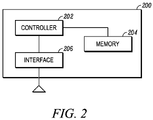
- FIG. 2 is a block diagram of a device for allocating bandwidth on a plurality of communication channel for communications according to various embodiments of the present invention.
- FIG. 3 is a flowchart of an approach for allocating bandwidth on a plurality of communication channels for communications according to various embodiments of the present invention.
- a method that allocates bandwidth on a plurality of communication channels in a communication system.
- the approaches described herein allocate bandwidth on a communication channel for a communication (such as a call) based upon the number of active (on-going) communications and the type of communications currently being supported by the communication channel.
- the number of active TDMA communications may be determined for a plurality of communication channels and the communication channel having available bandwidth and the greatest number of active communications is selected to support the new TDMA communication.
- the communication channels are a frequency that can be allocated to support either a single FDMA communication or multiple TDMA communications (i.e., a mixed FDMA/TDMA system). In so doing, the efficiency of the operation of the system is enhanced, fewer delays or dropped/queued communications occur, and user satisfaction with the system is improved.
- a first mobile station 102 and a second mobile station 104 operate at a first radio frequency (RF) communication site 106
- a third mobile station 114 and a fourth mobile station 116 operate at a second RF communication site 108
- the first RF communication site 106 comprises a site controller 118 and a plurality of base stations 122 , 124 , and 126 .
- the site controller 118 is coupled to the base stations 122 , 124 , and 126 .
- the second RF communication site 108 comprises a site controller 120 and a plurality of base stations 128 , 130 , and 132 .
- the site controller 120 is coupled to the base stations 128 , 130 , and 132 .
- the mobile stations 102 , 104 , 114 , and 116 may be selected from a variety of different mobile communication devices.
- the mobile stations 102 , 104 , 114 , and 116 may be selected from a group consisting of, but not limited to, a two-way radio, a cellular telephone, a pager, a personal digital assistant, a personal computer, or the like.
- the mobile stations 102 , 104 , 114 , and 116 and the first and second RF communication sites 106 and 108 may operate according to any communication protocol or technology.
- the mobile stations 102 , 104 , 114 , and 116 , the first RF communication site 106 , and the second RF communication site 108 may operate in, but not limited to, a FDMA mode, a TDMA mode (e.g., 2-to-1 (also referred to as 2-slot) TDMA, 4-to-1 (also referred to a 4-slot) TDMA), full rate vocoder mode, half-rate vocoder mode, or combinations of these modes.
- 2-to-1 also referred to as 2-slot
- 4-to-1 also referred to a 4-slot
- TDMA full rate vocoder mode
- half-rate vocoder mode or combinations of these modes.
- Other examples of mobile stations and operating modes for these mobile stations are also possible and will be obvious to a person of ordinary skill in the art after reading the present disclosure.
- the first RF communication site 106 and the second RF communication site 108 are coupled to a zone controller 110 .
- the zone controller 110 comprises a communication channel bandwidth allocation algorithm 112 that determines the allocation of bandwidth amongst the plurality of communication channels for communications that it receives.
- the zone controller 110 stores the information concerning the bandwidth allocation, for example, in a memory device that may or may not be co-located at the zone controller 110 .
- the communication channel bandwidth allocation algorithm 112 may be located at each of the site controllers 118 or 120 , or any other suitable device in the system that is capable of allocating bandwidth amongst the plurality of communication channels for the incoming communication requests.
- the base stations 122 , 124 , 126 , 128 , 130 , and 132 transmit and receive communications from the mobile stations.
- the base stations 122 , 124 , 128 , and 130 transmit and receive communications in a 4-slot TDMA mode, while the base stations 126 and 132 transmit and receive communications in a 2-slot TDMA mode.
- any of the base stations 122 , 124 , 126 , 128 , 130 , and 132 may transmit and receive communications in a FDMA mode.
- the modes used by the base stations 122 , 124 , 126 , 128 , 130 , and 132 of FIG. 1 are for exemplary purposes only, and that any other type of mode or combination of modes may also be used by any of the base stations 122 , 124 , 126 , 128 , 130 , and 132 .
- the device 200 may be the zone controller 110 .
- the device 200 may be the site controllers 118 , 120 .
- the device 200 includes a controller 202 , memory 204 , and interface 206 .
- the interface 206 receives bandwidth allocation information.
- the controller 202 obtains the current bandwidth allocation amongst the plurality of communication channels, which may be stored in the memory 204 .
- the controller 202 uses this information to determine how to allocate the available bandwidth on the plurality of communication channels to the newly arriving communication requests.
- the controller 202 is further programmed to allocate an available time slot on a communication channel in order to transmit the newly received TDMA communication.
- the bandwidth allocation may be made according to the algorithm of FIG. 3 .
- the device 200 packs the communication channel with as many TDMA communications as possible. In other words, the device 200 attempts to allocate bandwidth for the new TDMA communication on a channel where the new TDMA communication will completely use all the available bandwidth on the channel.
- the device 200 first attempts to allocate an available slot for the new TDMA communication on a communication channel that is currently supporting an active TDMA communication on the other slot before allocating the new TDMA communication to a communication channel that is currently not supporting any active TDMA communications.
- the device 200 For a 4-slot TDMA communication channel, the device 200 first attempts to allocate an available TDMA slot for the new TDMA communication on a communication channel that is currently supporting three active (on-going) TDMA communications. If there are no communication channels currently supporting three active TDMA communications, then the device 200 attempts to allocate an available TDMA slot for the new TDMA communication on a communication channel that is currently supporting two active TDMA communications.
- the device 200 attempts to allocate an available TDMA slot for the new TDMA communication on a communication channel currently supporting one active TDMA communication. Only if there are no communication channels currently supporting an active TDMA communication will the device 200 allocate bandwidth for the new TDMA communication on an empty or unallocated communication channel. This approach of packing the TDMA communications onto one communication channel increases the likelihood that other communication channels are free for use by other non-TDMA communication, such as a FDMA communication, which requires the entire bandwidth of the communication channel to be free and unallocated.
- the zone controller 110 allocates the bandwidth on the plurality of communication channels to support the communications, however, other suitable devices 200 may allocate the bandwidth amongst the plurality of communication channels.
- the zone controller 110 receives a communication request for a TDMA communication at step 302 .
- the zone controller 110 determines if a TDMA slot that can support the request is available on at least one of the plurality of communication channels that is currently supporting at least one active TDMA communication at step 304 . If the zone controller 110 determines that none of the communication channels that is currently supporting at least one active TDMA communication have an available TDMA slot that can support the new communication request, then the zone controller 110 allocates bandwidth for the new TDMA communication received at step 302 to a communication channel that does not have any active communications but has at least one available TDMA slot that can support the new communication request at step 306 .
- the zone controller 110 then waits to receive the next TDMA communication request.
- communication channel 1 is currently supporting one active FDMA communication; communication channels 2 and 3 are not currently supporting any active communications and communication channel 2 has 4 available TDMA slots that can support the new communication request and communication channel 3 has two available TDMA slots that can support the new communication request; and communication channel 4 is currently supporting four active TDMA communications but does not have any available TDMA slots.
- the zone controller 110 allocates an available TDMA slot for the new TDMA communication on either communication channel 2 or communication channel 3 .
- the zone controller 110 can select between channel 2 and channel 3 by being further programmed to allocate bandwidth on the 2-slot TDMA channel prior to allocating bandwidth on the 4-slot TDMA channel, or verse visa.
- the zone controller 110 determines which communication channel is supporting the greatest number of active TDMA communications while still having an available TDMA slot that can support the new communication request at step 308 (e.g., for the 4-slot TDMA communication channels, which communication channels are currently supporting 3 active TDMA communications, and if no communication channel currently supports 3 active TDMA communications, which communication channels are supporting 2 active TDMA communications, and so on).
- the zone controller 110 allocates the available TDMA slot on that communication channel to support the new TDMA communication at steps 310 and 312 and waits to receive the next TDMA communication request.
- communication channel 1 is currently supporting three active TDMA communications and has one available TDMA slot that can support the new communication request
- communication channel 2 is currently supporting two active TDMA communications and has two available TDMA slots that can support the new communication request
- communication channel 3 is not currently supporting any active communications and has two available TDMA slots that can support the new communication request
- communication channel 4 is currently supporting four active TDMA communications but does not have any available TDMA slots.
- the zone controller 110 Based on the distribution of active communications and available TDMA slots on each communication channel in Example 2, the zone controller 110 allocates the available TDMA slot on communication channel 1 to the new TDMA communication because communication channel 1 is currently supporting the greatest number of active TDMA communications (in this case 3) while still having an available TDMA slot that can support the new communication request.
- the subset of communication channels comprises all the communication channels that fulfill the requirements of currently supporting the greatest number of active TDMA communications while still having at least one available TDMA slot that can support the new TDMA communication request. It should be noted that the subset of communication channels can comprise all the communication channels if all the communication channels meet the requirements of currently supporting the greatest number of active TDMA communications while having at least one available TDMA slot that can support the new communication request. In Example 3, however, the subset of communication channels comprises only communication channel 1 and communication channel 2 since these are the only communication channels that fulfill the requirement in step 310 of currently supporting the greatest number of active TDMA communications while having at least one available TDMA slot that can support the new communication request.
- the zone controller 110 determines at step 314 the type of TDMA communication received in the communication request received at step 302 .
- a TDMA communication may take a variety of forms and have various characteristics.
- the TDMA communication may be non-secure (e.g., clear) or secure (e.g., encrypted, scrambled, etc.).
- the zone controller 110 allocates bandwidth for the new TDMA communication on the communication channel that is part of the subset of communication channels that has the greatest number of active TDMA communications and is currently supporting the greatest number of active secure TDMA communications while having at least one available TDMA slot that can support the new communication request.
- the zone controller 110 allocates bandwidth for the new TDMA communication on the communication channel that is part of the subset of communication channels that has the greatest number of active TDMA communications and is currently supporting the least number of active secure TDMA communications while having at least one available TDMA slot that can support the new communication request.
- the zone controller 110 determines the type of TDMA communications that are currently active for each communication channel that is part of the subset of communication channels.
- step 302 the zone controller 110 allocates the available TDMA slot on communication channel 1 for the new TDMA communication at step 316 since communication channel 1 supports the greatest number of active TDMA communications having the greatest number of secure TDMA communications.
- the zone controller 110 then waits to receive a new TDMA communication request.
- the zone controller 110 allocates the available TDMA slot on communication channel 2 for the new TDMA communication at step 318 since communication channel 2 supports the greatest number of active TDMA communications having the least number of active secure TDMA communications. The zone controller 110 then waits to receive a new TDMA communication request.
Landscapes
- Engineering & Computer Science (AREA)
- Computer Networks & Wireless Communication (AREA)
- Signal Processing (AREA)
- Time-Division Multiplex Systems (AREA)
- Mobile Radio Communication Systems (AREA)
Priority Applications (4)
| Application Number | Priority Date | Filing Date | Title |
|---|---|---|---|
| US11/533,888 US7483407B2 (en) | 2006-09-21 | 2006-09-21 | Method for allocating bandwidth on a plurality of communication channels |
| AU2007297519A AU2007297519B2 (en) | 2006-09-21 | 2007-08-14 | Method for allocating bandwidth on a plurality of communication channels |
| CA2663784A CA2663784C (fr) | 2006-09-21 | 2007-08-14 | Procede d'attribution de largeur de bande sur une pluralite de canaux de communication |
| PCT/US2007/075849 WO2008036481A2 (fr) | 2006-09-21 | 2007-08-14 | Procédé d'attribution de largeur de bande sur une pluralité de canaux de communication |
Applications Claiming Priority (1)
| Application Number | Priority Date | Filing Date | Title |
|---|---|---|---|
| US11/533,888 US7483407B2 (en) | 2006-09-21 | 2006-09-21 | Method for allocating bandwidth on a plurality of communication channels |
Publications (2)
| Publication Number | Publication Date |
|---|---|
| US20080075106A1 US20080075106A1 (en) | 2008-03-27 |
| US7483407B2 true US7483407B2 (en) | 2009-01-27 |
Family
ID=39201144
Family Applications (1)
| Application Number | Title | Priority Date | Filing Date |
|---|---|---|---|
| US11/533,888 Active 2027-05-01 US7483407B2 (en) | 2006-09-21 | 2006-09-21 | Method for allocating bandwidth on a plurality of communication channels |
Country Status (4)
| Country | Link |
|---|---|
| US (1) | US7483407B2 (fr) |
| AU (1) | AU2007297519B2 (fr) |
| CA (1) | CA2663784C (fr) |
| WO (1) | WO2008036481A2 (fr) |
Cited By (3)
| Publication number | Priority date | Publication date | Assignee | Title |
|---|---|---|---|---|
| US20070238477A1 (en) * | 2006-04-06 | 2007-10-11 | Furrer Nathaniel M | Method and apparatus to facilitate communication resource allocation for supergroups |
| US20100157958A1 (en) * | 2008-12-18 | 2010-06-24 | Motorola, Inc. | Method, device and system for temporarily selecting a time slot |
| US9930702B2 (en) | 2014-11-19 | 2018-03-27 | Motorola Solutions, Inc. | Method, device, and system for transmitting short data during an active TDMA call |
Families Citing this family (4)
| Publication number | Priority date | Publication date | Assignee | Title |
|---|---|---|---|---|
| US20080299963A1 (en) * | 2007-06-04 | 2008-12-04 | Telefonaktiebolaget Lm Ericsson (Publ) | Method and Apparatus for Vocoder Rate Control by a Mobile Terminal |
| US8355374B2 (en) * | 2008-03-31 | 2013-01-15 | Lg Electronics Inc. | Method for signaling uplink system configuration information |
| US8837512B2 (en) | 2010-01-25 | 2014-09-16 | Harris Corporation | TDMA voice communication method and apparatus |
| US8693363B2 (en) | 2011-07-21 | 2014-04-08 | Harris Corporation | Systems and methods for time division multiple access communication with automatic repeat request error control |
Citations (6)
| Publication number | Priority date | Publication date | Assignee | Title |
|---|---|---|---|---|
| US6064662A (en) * | 1994-04-28 | 2000-05-16 | At&T Corp | System and method for optimizing spectral efficiency using time-frequency-code slicing |
| US6108552A (en) * | 1996-10-12 | 2000-08-22 | Nortel Networks Corporation | Method of allocating radio channels |
| US6381461B1 (en) * | 1997-10-23 | 2002-04-30 | Siemens Aktiengesellschaft | Method and radio communications system for transmitting data in a mobile radio network |
| US20020067709A1 (en) * | 2000-11-09 | 2002-06-06 | Mayu Yamada | Time slot assignment method and apparatus in mobile communication system |
| US6901064B2 (en) * | 2002-01-10 | 2005-05-31 | Harris Corporation | Method and device for establishing communication links and detecting interference between mobile nodes in a communication system |
| US20060182142A1 (en) * | 2001-09-21 | 2006-08-17 | Schmidt Dominik J | Channel interference reduction |
Family Cites Families (2)
| Publication number | Priority date | Publication date | Assignee | Title |
|---|---|---|---|---|
| US6839792B2 (en) * | 2000-12-15 | 2005-01-04 | Innovative Concepts, Inc. | Data modem |
| US7257805B2 (en) * | 2001-11-09 | 2007-08-14 | International Business Machines Corporation | Restoring debugging breakpoints subsequent to program code modifications |
-
2006
- 2006-09-21 US US11/533,888 patent/US7483407B2/en active Active
-
2007
- 2007-08-14 AU AU2007297519A patent/AU2007297519B2/en active Active
- 2007-08-14 CA CA2663784A patent/CA2663784C/fr active Active
- 2007-08-14 WO PCT/US2007/075849 patent/WO2008036481A2/fr not_active Ceased
Patent Citations (6)
| Publication number | Priority date | Publication date | Assignee | Title |
|---|---|---|---|---|
| US6064662A (en) * | 1994-04-28 | 2000-05-16 | At&T Corp | System and method for optimizing spectral efficiency using time-frequency-code slicing |
| US6108552A (en) * | 1996-10-12 | 2000-08-22 | Nortel Networks Corporation | Method of allocating radio channels |
| US6381461B1 (en) * | 1997-10-23 | 2002-04-30 | Siemens Aktiengesellschaft | Method and radio communications system for transmitting data in a mobile radio network |
| US20020067709A1 (en) * | 2000-11-09 | 2002-06-06 | Mayu Yamada | Time slot assignment method and apparatus in mobile communication system |
| US20060182142A1 (en) * | 2001-09-21 | 2006-08-17 | Schmidt Dominik J | Channel interference reduction |
| US6901064B2 (en) * | 2002-01-10 | 2005-05-31 | Harris Corporation | Method and device for establishing communication links and detecting interference between mobile nodes in a communication system |
Cited By (5)
| Publication number | Priority date | Publication date | Assignee | Title |
|---|---|---|---|---|
| US20070238477A1 (en) * | 2006-04-06 | 2007-10-11 | Furrer Nathaniel M | Method and apparatus to facilitate communication resource allocation for supergroups |
| US7684816B2 (en) * | 2006-04-06 | 2010-03-23 | Motorola, Inc. | Method and apparatus to facilitate communication resource allocation for supergroups |
| US20100157958A1 (en) * | 2008-12-18 | 2010-06-24 | Motorola, Inc. | Method, device and system for temporarily selecting a time slot |
| US8116284B2 (en) * | 2008-12-18 | 2012-02-14 | Motorola Solutions, Inc. | Method, device and system for temporarily selecting a timeslot |
| US9930702B2 (en) | 2014-11-19 | 2018-03-27 | Motorola Solutions, Inc. | Method, device, and system for transmitting short data during an active TDMA call |
Also Published As
| Publication number | Publication date |
|---|---|
| CA2663784A1 (fr) | 2008-03-27 |
| US20080075106A1 (en) | 2008-03-27 |
| AU2007297519A1 (en) | 2008-03-27 |
| AU2007297519B2 (en) | 2010-10-28 |
| WO2008036481A2 (fr) | 2008-03-27 |
| WO2008036481B1 (fr) | 2008-11-20 |
| CA2663784C (fr) | 2013-02-19 |
| WO2008036481A3 (fr) | 2008-10-16 |
Similar Documents
| Publication | Publication Date | Title |
|---|---|---|
| US8331967B2 (en) | Base station, mobile station, and redirected cell determination method | |
| US11729794B2 (en) | Methods and apparatus for managing uplink resource grants in wireless networks | |
| US7352714B2 (en) | Methods and apparatuses for allocating time slots to half duplex wireless mobile stations | |
| CA2663784C (fr) | Procede d'attribution de largeur de bande sur une pluralite de canaux de communication | |
| US20040203828A1 (en) | Selective channel assignment in a wireless data communications network | |
| JP5393477B2 (ja) | Fddモードで動作するtddシステムのフィードバック制御 | |
| JP2002199435A (ja) | 無線リソース割当方法及び基地局 | |
| CN102316599A (zh) | 基于预留的mac协议 | |
| JPWO2020039487A1 (ja) | 端末装置、基地局装置、及び通信システム | |
| US5949769A (en) | Multirate local multipoint data distribution system | |
| JPH1117640A (ja) | パケット方式の移動通信網における、特に半二重方式の移動局への伝送チャネル割り当て方法 | |
| KR20050020619A (ko) | 무선 통신 시스템에서 업링크 타이밍 | |
| CN102318425B (zh) | 分配信道时间的方法、确定兼容链路的方法和处理数据的装置 | |
| CA2480645C (fr) | Allocation de voies de trafic dans un systeme de communications | |
| US6747985B1 (en) | Systems and methods for optimizing communications in an ethernet network | |
| US11770808B2 (en) | Resource indicating method, apparatus, access network device, terminal and system | |
| JP2003199147A (ja) | リソース割当制御装置、リソース割当制御方法、及びリソース割当制御システム | |
| EP2033475B1 (fr) | Procédé permettant d'accroître la capacité d'un canal de commande synchrone sur un système sans fil | |
| KR100250478B1 (ko) | 계층 구조의 셀에서 핸드오프 감소 및 셀의 트래픽분배를 고려한 호 접속 방법 | |
| WO2014104900A1 (fr) | Étendre la couverture dans un système de communication radio mobile | |
| JP2009206641A (ja) | 移動通信システム及び無線基地局制御装置 | |
| US10674507B2 (en) | Techniques for setting up traffic channels in a communications system | |
| US20240163786A1 (en) | Multimodal wireless and deterministic mode operation | |
| WO2001026253A1 (fr) | Systeme de liaisons radio | |
| CN117641619A (zh) | 一种直连通信方法及装置 |
Legal Events
| Date | Code | Title | Description |
|---|---|---|---|
| AS | Assignment |
Owner name: MOTOROLA, INC., ILLINOIS Free format text: ASSIGNMENT OF ASSIGNORS INTEREST;ASSIGNORS:MCDONALD, DANIEL J.;PETRIE, MICHALE C.;REEL/FRAME:018284/0128 Effective date: 20060921 |
|
| STCF | Information on status: patent grant |
Free format text: PATENTED CASE |
|
| AS | Assignment |
Owner name: MOTOROLA SOLUTIONS, INC., ILLINOIS Free format text: CHANGE OF NAME;ASSIGNOR:MOTOROLA, INC;REEL/FRAME:026081/0001 Effective date: 20110104 |
|
| FPAY | Fee payment |
Year of fee payment: 4 |
|
| FPAY | Fee payment |
Year of fee payment: 8 |
|
| MAFP | Maintenance fee payment |
Free format text: PAYMENT OF MAINTENANCE FEE, 12TH YEAR, LARGE ENTITY (ORIGINAL EVENT CODE: M1553); ENTITY STATUS OF PATENT OWNER: LARGE ENTITY Year of fee payment: 12 |