US8073540B2 - Implantable heart stimulating device with stimulation rate optimization - Google Patents
Implantable heart stimulating device with stimulation rate optimization Download PDFInfo
- Publication number
- US8073540B2 US8073540B2 US12/305,552 US30555206A US8073540B2 US 8073540 B2 US8073540 B2 US 8073540B2 US 30555206 A US30555206 A US 30555206A US 8073540 B2 US8073540 B2 US 8073540B2
- Authority
- US
- United States
- Prior art keywords
- rate
- stimulation
- activity
- sensor
- heart
- Prior art date
- Legal status (The legal status is an assumption and is not a legal conclusion. Google has not performed a legal analysis and makes no representation as to the accuracy of the status listed.)
- Expired - Fee Related, expires
Links
- 230000000638 stimulation Effects 0.000 title claims abstract description 75
- 210000002216 heart Anatomy 0.000 title claims abstract description 53
- 230000004936 stimulating effect Effects 0.000 title claims abstract description 17
- 238000005457 optimization Methods 0.000 title description 2
- 230000000694 effects Effects 0.000 claims abstract description 71
- 230000002996 emotional effect Effects 0.000 claims abstract description 55
- 230000001419 dependent effect Effects 0.000 claims abstract description 6
- 230000036772 blood pressure Effects 0.000 claims description 22
- 230000007423 decrease Effects 0.000 claims description 12
- 230000001515 vagal effect Effects 0.000 claims description 6
- 230000001133 acceleration Effects 0.000 claims description 4
- 230000004938 stress stimulation Effects 0.000 claims description 3
- 210000005036 nerve Anatomy 0.000 claims 1
- 230000004044 response Effects 0.000 abstract description 19
- 230000003247 decreasing effect Effects 0.000 abstract description 3
- 206010020772 Hypertension Diseases 0.000 description 15
- 238000010586 diagram Methods 0.000 description 8
- 230000037081 physical activity Effects 0.000 description 7
- 102000002852 Vasopressins Human genes 0.000 description 5
- 108010004977 Vasopressins Proteins 0.000 description 5
- KBZOIRJILGZLEJ-LGYYRGKSSA-N argipressin Chemical compound C([C@H]1C(=O)N[C@@H](CCC(N)=O)C(=O)N[C@@H](CC(N)=O)C(=O)N[C@@H](CSSC[C@@H](C(N[C@@H](CC=2C=CC(O)=CC=2)C(=O)N1)=O)N)C(=O)N1[C@@H](CCC1)C(=O)N[C@@H](CCCN=C(N)N)C(=O)NCC(N)=O)C1=CC=CC=C1 KBZOIRJILGZLEJ-LGYYRGKSSA-N 0.000 description 5
- 229960003726 vasopressin Drugs 0.000 description 5
- 238000002156 mixing Methods 0.000 description 4
- 208000024891 symptom Diseases 0.000 description 4
- 230000035488 systolic blood pressure Effects 0.000 description 4
- 108091008698 baroreceptors Proteins 0.000 description 3
- 238000006243 chemical reaction Methods 0.000 description 3
- 230000035487 diastolic blood pressure Effects 0.000 description 3
- 230000009977 dual effect Effects 0.000 description 3
- 230000002503 metabolic effect Effects 0.000 description 3
- 238000000034 method Methods 0.000 description 3
- 210000001774 pressoreceptor Anatomy 0.000 description 3
- 206010020880 Hypertrophy Diseases 0.000 description 2
- 206010062767 Hypophysitis Diseases 0.000 description 2
- 208000006011 Stroke Diseases 0.000 description 2
- 230000004913 activation Effects 0.000 description 2
- 230000000747 cardiac effect Effects 0.000 description 2
- 230000006870 function Effects 0.000 description 2
- 230000002267 hypothalamic effect Effects 0.000 description 2
- 210000003016 hypothalamus Anatomy 0.000 description 2
- 238000002847 impedance measurement Methods 0.000 description 2
- 230000007774 longterm Effects 0.000 description 2
- 230000007246 mechanism Effects 0.000 description 2
- 238000012986 modification Methods 0.000 description 2
- 230000004048 modification Effects 0.000 description 2
- 208000010125 myocardial infarction Diseases 0.000 description 2
- 210000000056 organ Anatomy 0.000 description 2
- 210000003635 pituitary gland Anatomy 0.000 description 2
- 230000011514 reflex Effects 0.000 description 2
- 208000004998 Abdominal Pain Diseases 0.000 description 1
- 208000019901 Anxiety disease Diseases 0.000 description 1
- 206010008479 Chest Pain Diseases 0.000 description 1
- 208000000059 Dyspnea Diseases 0.000 description 1
- 206010013975 Dyspnoeas Diseases 0.000 description 1
- 208000027534 Emotional disease Diseases 0.000 description 1
- LFQSCWFLJHTTHZ-UHFFFAOYSA-N Ethanol Chemical compound CCO LFQSCWFLJHTTHZ-UHFFFAOYSA-N 0.000 description 1
- 206010019233 Headaches Diseases 0.000 description 1
- 206010019280 Heart failures Diseases 0.000 description 1
- 206010029216 Nervousness Diseases 0.000 description 1
- 206010047139 Vasoconstriction Diseases 0.000 description 1
- 206010047513 Vision blurred Diseases 0.000 description 1
- 230000003187 abdominal effect Effects 0.000 description 1
- 230000006978 adaptation Effects 0.000 description 1
- MTEOMEWVDVPTNN-UHFFFAOYSA-E almagate Chemical compound O.O.[OH-].[OH-].[OH-].[OH-].[OH-].[OH-].[OH-].[Mg+2].[Mg+2].[Mg+2].[Al+3].[O-]C([O-])=O MTEOMEWVDVPTNN-UHFFFAOYSA-E 0.000 description 1
- 230000036506 anxiety Effects 0.000 description 1
- 206010003119 arrhythmia Diseases 0.000 description 1
- 230000006793 arrhythmia Effects 0.000 description 1
- 210000001367 artery Anatomy 0.000 description 1
- 238000009530 blood pressure measurement Methods 0.000 description 1
- 210000004204 blood vessel Anatomy 0.000 description 1
- 210000004556 brain Anatomy 0.000 description 1
- 238000004891 communication Methods 0.000 description 1
- 208000029078 coronary artery disease Diseases 0.000 description 1
- 210000003748 coronary sinus Anatomy 0.000 description 1
- 230000001627 detrimental effect Effects 0.000 description 1
- 238000011161 development Methods 0.000 description 1
- 206010012601 diabetes mellitus Diseases 0.000 description 1
- 208000002173 dizziness Diseases 0.000 description 1
- 229940079593 drug Drugs 0.000 description 1
- 239000003814 drug Substances 0.000 description 1
- 230000008451 emotion Effects 0.000 description 1
- 238000005516 engineering process Methods 0.000 description 1
- 210000001508 eye Anatomy 0.000 description 1
- 231100000869 headache Toxicity 0.000 description 1
- 230000036541 health Effects 0.000 description 1
- 208000019622 heart disease Diseases 0.000 description 1
- 230000003054 hormonal effect Effects 0.000 description 1
- 230000003993 interaction Effects 0.000 description 1
- 210000003734 kidney Anatomy 0.000 description 1
- 210000005240 left ventricle Anatomy 0.000 description 1
- 210000004072 lung Anatomy 0.000 description 1
- 238000012423 maintenance Methods 0.000 description 1
- 230000001537 neural effect Effects 0.000 description 1
- 238000012545 processing Methods 0.000 description 1
- 230000029865 regulation of blood pressure Effects 0.000 description 1
- 238000011160 research Methods 0.000 description 1
- 230000000284 resting effect Effects 0.000 description 1
- 230000033764 rhythmic process Effects 0.000 description 1
- 210000005241 right ventricle Anatomy 0.000 description 1
- 208000013220 shortness of breath Diseases 0.000 description 1
- 230000000391 smoking effect Effects 0.000 description 1
- 230000002269 spontaneous effect Effects 0.000 description 1
- 210000002820 sympathetic nervous system Anatomy 0.000 description 1
- 230000008719 thickening Effects 0.000 description 1
- 230000007704 transition Effects 0.000 description 1
- 230000025033 vasoconstriction Effects 0.000 description 1
- 238000009423 ventilation Methods 0.000 description 1
- XLYOFNOQVPJJNP-UHFFFAOYSA-N water Substances O XLYOFNOQVPJJNP-UHFFFAOYSA-N 0.000 description 1
Images



Classifications
-
- A—HUMAN NECESSITIES
- A61—MEDICAL OR VETERINARY SCIENCE; HYGIENE
- A61N—ELECTROTHERAPY; MAGNETOTHERAPY; RADIATION THERAPY; ULTRASOUND THERAPY
- A61N1/00—Electrotherapy; Circuits therefor
- A61N1/18—Applying electric currents by contact electrodes
- A61N1/32—Applying electric currents by contact electrodes alternating or intermittent currents
- A61N1/36—Applying electric currents by contact electrodes alternating or intermittent currents for stimulation
- A61N1/362—Heart stimulators
- A61N1/365—Heart stimulators controlled by a physiological parameter, e.g. heart potential
- A61N1/36585—Heart stimulators controlled by a physiological parameter, e.g. heart potential controlled by two or more physical parameters
-
- A—HUMAN NECESSITIES
- A61—MEDICAL OR VETERINARY SCIENCE; HYGIENE
- A61N—ELECTROTHERAPY; MAGNETOTHERAPY; RADIATION THERAPY; ULTRASOUND THERAPY
- A61N1/00—Electrotherapy; Circuits therefor
- A61N1/18—Applying electric currents by contact electrodes
- A61N1/32—Applying electric currents by contact electrodes alternating or intermittent currents
- A61N1/36—Applying electric currents by contact electrodes alternating or intermittent currents for stimulation
- A61N1/362—Heart stimulators
- A61N1/365—Heart stimulators controlled by a physiological parameter, e.g. heart potential
- A61N1/36514—Heart stimulators controlled by a physiological parameter, e.g. heart potential controlled by a physiological quantity other than heart potential, e.g. blood pressure
- A61N1/36521—Heart stimulators controlled by a physiological parameter, e.g. heart potential controlled by a physiological quantity other than heart potential, e.g. blood pressure the parameter being derived from measurement of an electrical impedance
-
- A—HUMAN NECESSITIES
- A61—MEDICAL OR VETERINARY SCIENCE; HYGIENE
- A61N—ELECTROTHERAPY; MAGNETOTHERAPY; RADIATION THERAPY; ULTRASOUND THERAPY
- A61N1/00—Electrotherapy; Circuits therefor
- A61N1/18—Applying electric currents by contact electrodes
- A61N1/32—Applying electric currents by contact electrodes alternating or intermittent currents
- A61N1/36—Applying electric currents by contact electrodes alternating or intermittent currents for stimulation
- A61N1/362—Heart stimulators
- A61N1/365—Heart stimulators controlled by a physiological parameter, e.g. heart potential
- A61N1/36514—Heart stimulators controlled by a physiological parameter, e.g. heart potential controlled by a physiological quantity other than heart potential, e.g. blood pressure
- A61N1/36564—Heart stimulators controlled by a physiological parameter, e.g. heart potential controlled by a physiological quantity other than heart potential, e.g. blood pressure controlled by blood pressure
-
- A—HUMAN NECESSITIES
- A61—MEDICAL OR VETERINARY SCIENCE; HYGIENE
- A61N—ELECTROTHERAPY; MAGNETOTHERAPY; RADIATION THERAPY; ULTRASOUND THERAPY
- A61N1/00—Electrotherapy; Circuits therefor
- A61N1/18—Applying electric currents by contact electrodes
- A61N1/32—Applying electric currents by contact electrodes alternating or intermittent currents
- A61N1/36—Applying electric currents by contact electrodes alternating or intermittent currents for stimulation
- A61N1/362—Heart stimulators
- A61N1/365—Heart stimulators controlled by a physiological parameter, e.g. heart potential
- A61N1/36514—Heart stimulators controlled by a physiological parameter, e.g. heart potential controlled by a physiological quantity other than heart potential, e.g. blood pressure
- A61N1/36578—Heart stimulators controlled by a physiological parameter, e.g. heart potential controlled by a physiological quantity other than heart potential, e.g. blood pressure controlled by mechanical motion of the heart wall, e.g. measured by an accelerometer or microphone
Definitions
- the present invention relates to an implantable heart stimulating device wherein the stimulation rate is optimized dependent on sensed information.
- High blood pressure, hypertension is abnormally high blood pressure that puts stress on the tissue and organs in the body. Over time, high blood pressure can damage heart, lungs, brain, kidneys, eyes and blood vessels, as well as leading to heart disease, heart attack or stroke. High blood pressure usually does not cause symptoms and is often known as the “Silent Killer”. Organs and tissues can be damaged by high blood pressure without any felt symptoms until advanced stages of damage. Symptoms such as headache, blurry vision, abdominal and chest pain, shortness of breath, anxiety and dizziness may be experienced if the blood pressure reaches extreme levels. Many are symptoms usually not related to hypertension.
- Blood pressure measurements are read as two numbers, the systolic and diastolic pressure. The higher number is called systolic pressure and the lower number is called diastolic pressure. Normal range of blood pressure is 120/80. High blood pressure is defined when the systolic pressure is greater than 140 and/or diastolic pressure is greater than 90.
- Hypertrophy is the enlargement of the heart because the heart is working too hard. This increases the risk for heart failure and arrhythmias. High blood pressure directly increases the risk of coronary heart disease (which leads to heart attack) and stroke, especially when it is present with other risk factors.
- risk factors may affect blood pressure.
- factors beyond control such as family history and age, and life style factors that can be controlled.
- life style factors may include overweight, alcohol, smoking, diabetes and emotional stress.
- the maintenance of blood pressure is highly complex and is dependent upon intrinsic, reflex, hormonal, renal and microvascular control systems.
- the complexity in the control of blood pressure is dependent upon the interaction from each of the control systems.
- ADH antidiuretic hormone
- baroreceptor resetting The antidiuretic hormone is produced in the pituitary gland and regulates blood pressure through vasoconstriction and resorption of water.
- the pituitary gland communicates with the hypothalamus through neural connections, and thus the ADH release is under control of hypothalamic function. It is known that the hypothalamus is an important link between psychological events during emotional stress. However, a clear connection between emotional stress factors and hypothalamic control, either directly through the sympathetic nervous system, or indirectly with ADH release, has not been established.
- baroreceptor reflexes could be reset to maintain an elevated blood pressure for an indefinite time. There is suggested that there is no long term baroreceptive control and that resetting to a new level may occur. If baroreceptors are subjected to a maintained high pressure, their mean active rate returns to normal after a period of time. Evidences suggest that there may be a substantial resetting within as short time as 20 minutes.
- U.S. Pat. No. 6,275,733 discloses a dual sensor rate responsive pacemaker having an activity sensor, e.g. an acceleration-based sensor, and a metabolic sensor, such as a minute ventilation sensor. Determining the dual indicated rate is achieved by selecting between the two rates provided by these two sensors resulting in the use of the activity indicated rate during periods of low-level and brisk activity and the use of the metabolic indicated rate during periods of high exertion.
- an activity sensor e.g. an acceleration-based sensor
- a metabolic sensor such as a minute ventilation sensor
- U.S. Pat. No. 6,055,454 relating to a cardiac pacemaker with automatic response optimization of a physiologic sensor based on a second sensor.
- the device has a first sensor for measuring a physiologic parameter reflecting metabolic demand and a second sensor for measuring a parameter reflecting the physical motion or activity of the patient, wherein the second sensor (activity sensor) is used to generate a dynamic target pacing rate which the first sensor is optimized to over time, thereby reducing the time constant for the adaptation of the first sensor and minimizing the amount of clinical time required to initialise the cardiac rhythm management device.
- the normal physical response to the type of reactions mentioned above is an increase in blood pressure as well as an increase in heart rate. The same response may be observed when a person is preparing her- or himself for a significant physical activity.
- An object of the present invention is to provide an implantable heart stimulator that enables relevant reactions in emotional stress situations for a patient.
- an implantable heart stimulating device having a stimulation pulse generator connected to a lead arrangement to applied stimulation pulses to the heart of a patient, an activity sensor that senses activity by the patient and that emits an activity signal representing the sensed activity, and a physiological parameter sensor that senses or detects a physiological parameter of the patient and that emits a physiological sensor signal representative thereof.
- the activity and physiological sensor signals are supplied to a control arrangement that is configured to determine a stimulation rate by executing a stimulation rate algorithm dependent on the aforementioned signals.
- control arrangement is configured to determined whether the physiological signal indicates emotional stress on the part of the patient and, if so, to increase the stimulation rate to an adjustable emotional stress rate level and, if no increase in the activity signal occurs during a predetermined time period following the stimulation rate increase, the control arrangement is configured to decrease the stimulation rate.
- the basis of the present invention is to increase the pacing rate if emotional stress is detected and also to slowly let the pacing rate go back to the baseline if no physical activity is detected.
- the rate will not drop all the way to the baseline if only emotional stress is detected.
- a rate blending means is included to appropriately take into account, i.e. to blend, the influence from the activity and from the emotional stress, e.g. such that a very low physical activity but a high emotional stress will give a high rate initially but a limited rate increase in the long term.
- vagal stimulation in order to reduce the heart rate caused by the emotional stress. This could be achieved in a rate responsive pacemaker as well as in a non responsive device having a feature intended to limit the effects of emotional stress.
- the present invention relates to a heart stimulating device comprising an activity sensor adapted to generate an activity signal in response of detected activity, and a physiological sensor, adapted to generate a physiological signal in response of a detected physiological parameter.
- the physiological sensor may be responsive of blood pressure, heart wall acceleration, impedance measurements, etc.
- the activity and physiological signals are applied to a control means adapted to determine a stimulation heart rate based upon a stimulation rate algorithm and in dependence of those signals. More specifically, the control means includes an activity rate control means, an emotional rate control means, a response control means and a rate blending means.
- the pacing rate is then increased by a preset value, and if activity starts within a predetermined period of time, the activity sensor takes over the rate control. But if no activity is detected, the pacing rate is smoothly stepped down to a basic rate.
- FIG. 1 is a schematic block diagram illustrating an embodiment of the present invention.
- FIG. 2 is a schematic block diagram illustrating, in greater detail, the preferred embodiment illustrated in FIG. 1 .
- FIG. 3 is a schematic flow diagram generally illustrating the present invention.
- FIG. 4 is a detailed schematic illustration of a preferred embodiment of the present invention.
- FIG. 5 shows a graph that schematically illustrates the emotional rate response for a given exemplary constant emotional sensor value according to the present invention.
- FIG. 1 is a block diagram generally illustrating the essential features of the present invention being a part of an implantable heart stimulating device generally illustrated by the block diagram of FIG. 2 .
- the present invention relates to an implantable heart stimulating device adapted to generate stimulation pulses at a stimulation rate to be applied to a patients heart, comprising an activity sensor 2 , generating an activity signal 4 in response of detected activity of the patient, and a physiological parameter sensor 6 , e.g. a pressure sensor, generating a physiological sensor signal 8 in response of a detected physiological parameter.
- an activity sensor 2 e.g. a pressure sensor
- a physiological parameter sensor 6 e.g. a pressure sensor
- the activity and physiological sensor signals are applied to a control arrangement formed by units 10 , 12 , 14 that are configured to determine a stimulation rate based upon a stimulation rate algorithm in dependence of those signals, wherein if the physiological signal indicates an emotional stress for the patient, the stimulation rate is increased to an adjustable emotional stress rate level and if no increase of the activity signal is indicated, during a predetermined time period from the stimulation rate increase, the stimulation rate is decreased.
- the control arrangement includes an activity rate control unit 10 , an emotional rate control unit 12 and a stimulation rate control unit 14 .
- the stimulation rate control unit 14 includes, in its turn, a response control unit 16 and a rate blending unit 18 .
- the emotional stress stimulation rate increase is 10-30 stimulations per minute during a period of 30-50 seconds
- the emotional stress stimulation rate decrease is 10-20 stimulations per minute during a first decrease interval of 50-70 seconds, and 60-80 stimulations per minute during a second decrease interval of 5-15 seconds.
- the implantable heart stimulating device further includes a pacing system 22 that includes all necessary components and circuitry to achieve the heart stimulation functions, e.g. further control circuitry, e.g. a microprocessor, and a battery.
- the pacing system is connected to a telemetry unit 24 , responsive for wireless communication between the implanted device and an external programming device (a programmer), in accordance with well-known procedures.
- An electrode system 20 is connectable to the implantable heart stimulating device, also in accordance with well-known techniques.
- the electrode system 20 may include one or many heart electrode leads, arranged to be able to perform monopolar or bipolar stimulation of the heart, and each electrode lead may include one or many stimulation electrode surfaces.
- the electrode lead is adapted to be arranged to perform stimulation in the right and/or left part of the heart, and may e.g. be inserted, by using well-known techniques, in the coronary sinus to perform left ventricle stimulation.
- the activity sensor 2 may be arranged inside the housing of the implantable heart stimulating device, or may be arranged in connection with the electrode system, e.g. close to the distal end of an electrode lead.
- the physiological parameter sensor 6 is preferably a pressure sensor, responsive of blood pressure, that advantageously also may be arranged close to the distal end of an electrode lead.
- the physiological sensor is responsive of heart wall acceleration or of impedance measurements.
- the influence of the emotional stress level is such, in accordance with the stimulation rate algorithm, that the algorithm only takes the emotional stress level into account if the present heart rate is less than a predetermined heart rate, preferably 100 beats per minute (bpm).
- a predetermined heart rate preferably 100 beats per minute (bpm).
- the stimulation rate increase, related to the emotional stress level, is only possible if the activity signal is below a preset level. At higher activity levels the stimulation rate algorithm favors the influence from the patient's activity level.
- FIG. 3 is a schematic flow diagram generally illustrating the present invention.
- the present heart rate is compared to a predetermined rate threshold, e.g. 100 bpm, and if the present heart rate is above that threshold the stimulation rate is adjusted in dependence of the activity level indicated by the activity sensor.
- a predetermined rate threshold e.g. 100 bpm
- the physiological sensor signal is compared to an emotional stress threshold and if the comparison is affirmative the stimulation rate is increased up to a preset emotional stress heart rate during a predetermined time interval, e.g. less than one minute, and if the activity sensor indicates no activity, the stimulation rate is decreased down to the initial base level or to a level slightly above the base level.
- the stimulation rate is adjusted in dependence on the activity level.
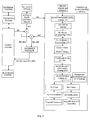
- FIG. 4 A block diagram illustrating a preferred embodiment of the present invention is shown in FIG. 4 .
- the physiological parameter sensor is a pressure sensor.
- the algorithm used to implement the present invention is only activated if a low or resting activity level for the patient is present. And in addition, no pressure-controlled stimulation is active during high detected or stimulated heart rates, e.g. 100 beats per minutes (bpm).
- the use and set-up of the algorithm is determined by external programming.
- the left side of the block diagram illustrated in FIG. 4 shows a conventional pacemaker system including Pacing System, Electrode System, Telemetry System and External System (programmer).
- the activity sensor and the activity rate control means are shown separate from the pacing system.
- the activity sensor output is averaged over a short time period, e.g. 10 seconds, to give a momentary Activity Level (AL) value, and the activity rate control means outputs a delta rate value ⁇ RA (the rate increase), which is added to the programmed base rate RB.
- ⁇ RA the rate increase
- the physiological parameter sensor in this case a blood pressure sensor
- the emotional rate control means having a set of programmable registers (not shown) that includes values used by the algorithm and programmable via the external programmer.
- blood pressure values are used that assumes that the pressure sensor is located in the right ventricle, but other locations and other values may of course be of interest.
- the Blood Pressure Sensor is connected to a short time average register, which outputs a Blood Pressure Average value BL.
- a check is then performed to detect if the blood pressure has undergone a level increase of at least ⁇ BLlim, e.g. 5 mmHg. If this is the case, a number of conditions must be satisfied in order to activate the blood pressure rate control:
- the blood pressure rate control starts which adds a ⁇ RP value to the programmed basic rate.
- the activity level and blood pressure level is then checked during an activation time TEact.
- the response is considered emotional without any following body activity.
- the rate increase ⁇ RP is then smoothly stepped down to the basic rate.
- the conventional activity rate control takes over the rate control which adds a ⁇ RA value to the programmed basic rate, while ⁇ RP is stepped down to basic rate.
- the maximum of ⁇ RP and ⁇ RA is selected in order to ensure smooth transitions between the activity and pressure control of the heart rate.
- the emotional rate control means is controlled by the pacing system via the response control arrangement (see FIG. 2 ).
- FIG. 5 shows a graph that schematically illustrates the emotional rate response for a given exemplary constant emotional sensor value.
- the x-axis denotes the time in seconds and the y-axis denotes the response in an arbitrary unit.
- the emotional target rate represents a rate increase from a base rate in response of predetermined input emotional sensor value from the physiological parameter sensor.
- the emotional sensor value is detected just before 20 s.
- the value “1” may represent a rate increase of 20 stimulations per minute (PPM) for a systolic pressure increase, for instance 20 mmHg of aortic pressure.
- PPM stimulations per minute
- the dashed line is the output from the emotional rate control means. It reaches the maximal rate around 35 s in this example and decreases thereafter. A much faster rate decrease is applied just after 70 s when the emotional sensor value returns to the base level.
- An exemplary illustration of how useful the present invention may be illustrated by the situation that occurs when a patient is at rest but is about to prepare for a coming body activity, e.g. feels emotions for leaving bed in order to go to the nearby local storage.
- the emotional rate control means will then respond by a first rate increase and the activity rate control means will then, when the activity is initiated, take over more and more of the rate control, as blended by the rate blending means.
Landscapes
- Health & Medical Sciences (AREA)
- Heart & Thoracic Surgery (AREA)
- Life Sciences & Earth Sciences (AREA)
- Cardiology (AREA)
- Nuclear Medicine, Radiotherapy & Molecular Imaging (AREA)
- Physiology (AREA)
- Engineering & Computer Science (AREA)
- Biomedical Technology (AREA)
- Biophysics (AREA)
- Radiology & Medical Imaging (AREA)
- Animal Behavior & Ethology (AREA)
- General Health & Medical Sciences (AREA)
- Public Health (AREA)
- Veterinary Medicine (AREA)
- Electrotherapy Devices (AREA)
- Measuring Pulse, Heart Rate, Blood Pressure Or Blood Flow (AREA)
Applications Claiming Priority (1)
| Application Number | Priority Date | Filing Date | Title |
|---|---|---|---|
| PCT/SE2006/000757 WO2007149019A1 (en) | 2006-06-21 | 2006-06-21 | Implantable heart stimulating device with stimulation rate optimization |
Publications (2)
| Publication Number | Publication Date |
|---|---|
| US20090210023A1 US20090210023A1 (en) | 2009-08-20 |
| US8073540B2 true US8073540B2 (en) | 2011-12-06 |
Family
ID=38833666
Family Applications (1)
| Application Number | Title | Priority Date | Filing Date |
|---|---|---|---|
| US12/305,552 Expired - Fee Related US8073540B2 (en) | 2006-06-21 | 2006-06-21 | Implantable heart stimulating device with stimulation rate optimization |
Country Status (5)
| Country | Link |
|---|---|
| US (1) | US8073540B2 (de) |
| EP (1) | EP2035084B1 (de) |
| AT (1) | ATE482002T1 (de) |
| DE (1) | DE602006017116D1 (de) |
| WO (1) | WO2007149019A1 (de) |
Cited By (3)
| Publication number | Priority date | Publication date | Assignee | Title |
|---|---|---|---|---|
| US10796596B2 (en) | 2015-08-27 | 2020-10-06 | Hrl Laboratories, Llc | Closed-loop intervention control system |
| US10877444B1 (en) * | 2017-06-07 | 2020-12-29 | Hrl Laboratories, Llc | System and method for biofeedback including relevance assessment |
| US11052252B1 (en) | 2017-06-07 | 2021-07-06 | Hrl Laboratories, Llc | Transcranial intervention to weaken an undesirable memory |
Citations (13)
| Publication number | Priority date | Publication date | Assignee | Title |
|---|---|---|---|---|
| US5065759A (en) | 1990-08-30 | 1991-11-19 | Vitatron Medical B.V. | Pacemaker with optimized rate responsiveness and method of rate control |
| US5154170A (en) | 1990-08-14 | 1992-10-13 | Medtronic, Inc. | Optimization for rate responsive cardiac pacemaker |
| US5282839A (en) * | 1992-12-14 | 1994-02-01 | Medtronic, Inc. | Rate responsive cardiac pacemaker and method for providing an optimized pacing rate which varies with a patient's physiologic demand |
| US5549650A (en) * | 1994-06-13 | 1996-08-27 | Pacesetter, Inc. | System and method for providing hemodynamically optimal pacing therapy |
| US5562711A (en) | 1994-11-30 | 1996-10-08 | Medtronic, Inc. | Method and apparatus for rate-responsive cardiac pacing |
| US5792198A (en) | 1996-04-30 | 1998-08-11 | Nappholz; Tibor A. | Auto adaptation of RR interval in implantable pacemaker |
| US6055454A (en) | 1998-07-27 | 2000-04-25 | Cardiac Pacemakers, Inc. | Cardiac pacemaker with automatic response optimization of a physiologic sensor based on a second sensor |
| US6141590A (en) * | 1997-09-25 | 2000-10-31 | Medtronic, Inc. | System and method for respiration-modulated pacing |
| US6249700B1 (en) | 1997-06-12 | 2001-06-19 | Eckhard Alt | Defibrillator with improved hemodynamic response and enhanced myocardial stability |
| US6275733B1 (en) | 1999-06-16 | 2001-08-14 | Pacesetter, Inc. | Dual sensor rate response pacemaker |
| US6336048B1 (en) | 1997-11-25 | 2002-01-01 | Ela Medical S.A. | Implantable active medical device enslaved to at least one physiological parameter |
| US20030153953A1 (en) | 2002-02-14 | 2003-08-14 | Euljoon Park | Stimulation device for sleep apnea prevention, detection and treatment |
| US6725093B1 (en) | 1998-11-06 | 2004-04-20 | Impulse Dynamics N.V. | Regulation of excitable tissue control of the heart based on physiological input |
Family Cites Families (2)
| Publication number | Priority date | Publication date | Assignee | Title |
|---|---|---|---|---|
| US5792711A (en) * | 1997-03-18 | 1998-08-11 | Porous Media Corporation | Antiwetting composition for fabrics and fibrous substrates |
| AU1072300A (en) * | 1998-11-06 | 2000-05-29 | Impulse Dynamics N.V. | Regulation of excitable tissue control of the heart based on physiological input |
-
2006
- 2006-06-21 WO PCT/SE2006/000757 patent/WO2007149019A1/en not_active Ceased
- 2006-06-21 DE DE602006017116T patent/DE602006017116D1/de not_active Expired - Lifetime
- 2006-06-21 AT AT06747946T patent/ATE482002T1/de not_active IP Right Cessation
- 2006-06-21 US US12/305,552 patent/US8073540B2/en not_active Expired - Fee Related
- 2006-06-21 EP EP06747946A patent/EP2035084B1/de not_active Expired - Lifetime
Patent Citations (13)
| Publication number | Priority date | Publication date | Assignee | Title |
|---|---|---|---|---|
| US5154170A (en) | 1990-08-14 | 1992-10-13 | Medtronic, Inc. | Optimization for rate responsive cardiac pacemaker |
| US5065759A (en) | 1990-08-30 | 1991-11-19 | Vitatron Medical B.V. | Pacemaker with optimized rate responsiveness and method of rate control |
| US5282839A (en) * | 1992-12-14 | 1994-02-01 | Medtronic, Inc. | Rate responsive cardiac pacemaker and method for providing an optimized pacing rate which varies with a patient's physiologic demand |
| US5549650A (en) * | 1994-06-13 | 1996-08-27 | Pacesetter, Inc. | System and method for providing hemodynamically optimal pacing therapy |
| US5562711A (en) | 1994-11-30 | 1996-10-08 | Medtronic, Inc. | Method and apparatus for rate-responsive cardiac pacing |
| US5792198A (en) | 1996-04-30 | 1998-08-11 | Nappholz; Tibor A. | Auto adaptation of RR interval in implantable pacemaker |
| US6249700B1 (en) | 1997-06-12 | 2001-06-19 | Eckhard Alt | Defibrillator with improved hemodynamic response and enhanced myocardial stability |
| US6141590A (en) * | 1997-09-25 | 2000-10-31 | Medtronic, Inc. | System and method for respiration-modulated pacing |
| US6336048B1 (en) | 1997-11-25 | 2002-01-01 | Ela Medical S.A. | Implantable active medical device enslaved to at least one physiological parameter |
| US6055454A (en) | 1998-07-27 | 2000-04-25 | Cardiac Pacemakers, Inc. | Cardiac pacemaker with automatic response optimization of a physiologic sensor based on a second sensor |
| US6725093B1 (en) | 1998-11-06 | 2004-04-20 | Impulse Dynamics N.V. | Regulation of excitable tissue control of the heart based on physiological input |
| US6275733B1 (en) | 1999-06-16 | 2001-08-14 | Pacesetter, Inc. | Dual sensor rate response pacemaker |
| US20030153953A1 (en) | 2002-02-14 | 2003-08-14 | Euljoon Park | Stimulation device for sleep apnea prevention, detection and treatment |
Non-Patent Citations (1)
| Title |
|---|
| "Sensors for Rate Responsive Pacing," Dell'Orto et al, Indian Pacing and Electrophysiology Journal, vol. 4, No. 3 (2004) pp. 137-145. |
Cited By (3)
| Publication number | Priority date | Publication date | Assignee | Title |
|---|---|---|---|---|
| US10796596B2 (en) | 2015-08-27 | 2020-10-06 | Hrl Laboratories, Llc | Closed-loop intervention control system |
| US10877444B1 (en) * | 2017-06-07 | 2020-12-29 | Hrl Laboratories, Llc | System and method for biofeedback including relevance assessment |
| US11052252B1 (en) | 2017-06-07 | 2021-07-06 | Hrl Laboratories, Llc | Transcranial intervention to weaken an undesirable memory |
Also Published As
| Publication number | Publication date |
|---|---|
| ATE482002T1 (de) | 2010-10-15 |
| EP2035084A1 (de) | 2009-03-18 |
| US20090210023A1 (en) | 2009-08-20 |
| EP2035084A4 (de) | 2010-01-20 |
| WO2007149019A1 (en) | 2007-12-27 |
| DE602006017116D1 (de) | 2010-11-04 |
| EP2035084B1 (de) | 2010-09-22 |
Similar Documents
| Publication | Publication Date | Title |
|---|---|---|
| US7505814B2 (en) | System and method for evaluating heart failure based on ventricular end-diastolic volume using an implantable medical device | |
| US8046069B2 (en) | Method and apparatus for control of cardiac therapy using non-invasive hemodynamic sensor | |
| US9943236B2 (en) | Methods for guiding heart failure decompensation therapy | |
| US7272443B2 (en) | System and method for predicting a heart condition based on impedance values using an implantable medical device | |
| US6572557B2 (en) | System and method for monitoring progression of cardiac disease state using physiologic sensors | |
| EP2370161B1 (de) | Behandlung eines patienten mit herzinsuffizienz mit einem implantierbaren überwachungssystem | |
| US6645153B2 (en) | System and method for evaluating risk of mortality due to congestive heart failure using physiologic sensors | |
| US7899522B1 (en) | System and method for discriminating acute and chronic heart failure using an implantable medical device | |
| US10194820B2 (en) | Method and apparatus for detecting atrial tachyarrhythmia using heart sounds | |
| US7389142B2 (en) | Heart monitoring device, system and method | |
| EP1486232A2 (de) | Vorrichtung zur Verbesserung der kardiologischen Funktion bei Patienten mit Herzversagen oder CHF | |
| US20080071183A1 (en) | Method and apparatus for identifying patients with wide QRS complexes | |
| US8892204B2 (en) | Aortic pacing to control cardiac afterload | |
| US20030149453A1 (en) | System and method for evaluating risk of mortality due to congestive heart failure using physiologic sensors | |
| JP2004538035A (ja) | 平均肺動脈圧を決定する方法および装置 | |
| EP1857141A1 (de) | Verfahren zur automatischen Überwachung der Herzbelastung bei Atemstörungen im Schlaf | |
| JP4297787B2 (ja) | 自動レート応答型センサモードスイッチ | |
| US10864378B2 (en) | Pacemaker with diagnostic intrinsic beat search | |
| EP2035084B1 (de) | Implantierbare herzstimulationsvorrichtung mit stimulationsratenoptimierung | |
| US10434315B2 (en) | Systems and methods for automatically determining pace and sense configurations for an implantable device | |
| US8099146B1 (en) | System and method for calibrating a blood oxygen saturation sensor for use with an implantable medical device | |
| US20120158086A1 (en) | Aortic pacing to reduce heart rate |
Legal Events
| Date | Code | Title | Description |
|---|---|---|---|
| AS | Assignment |
Owner name: ST. JUDE MEDICAL AB, SWEDEN Free format text: ASSIGNMENT OF ASSIGNORS INTEREST;ASSIGNORS:NOREN, KJELL;NILSSON, KENTH;REEL/FRAME:022006/0640 Effective date: 20081218 |
|
| ZAAA | Notice of allowance and fees due |
Free format text: ORIGINAL CODE: NOA |
|
| ZAAB | Notice of allowance mailed |
Free format text: ORIGINAL CODE: MN/=. |
|
| STCF | Information on status: patent grant |
Free format text: PATENTED CASE |
|
| FPAY | Fee payment |
Year of fee payment: 4 |
|
| MAFP | Maintenance fee payment |
Free format text: PAYMENT OF MAINTENANCE FEE, 8TH YEAR, LARGE ENTITY (ORIGINAL EVENT CODE: M1552); ENTITY STATUS OF PATENT OWNER: LARGE ENTITY Year of fee payment: 8 |
|
| FEPP | Fee payment procedure |
Free format text: MAINTENANCE FEE REMINDER MAILED (ORIGINAL EVENT CODE: REM.); ENTITY STATUS OF PATENT OWNER: LARGE ENTITY |
|
| LAPS | Lapse for failure to pay maintenance fees |
Free format text: PATENT EXPIRED FOR FAILURE TO PAY MAINTENANCE FEES (ORIGINAL EVENT CODE: EXP.); ENTITY STATUS OF PATENT OWNER: LARGE ENTITY |
|
| STCH | Information on status: patent discontinuation |
Free format text: PATENT EXPIRED DUE TO NONPAYMENT OF MAINTENANCE FEES UNDER 37 CFR 1.362 |
|
| FP | Lapsed due to failure to pay maintenance fee |
Effective date: 20231206 |