US8076085B2 - Methods and means relating to hepatitis B infection - Google Patents
Methods and means relating to hepatitis B infection Download PDFInfo
- Publication number
- US8076085B2 US8076085B2 US10/578,848 US57884804A US8076085B2 US 8076085 B2 US8076085 B2 US 8076085B2 US 57884804 A US57884804 A US 57884804A US 8076085 B2 US8076085 B2 US 8076085B2
- Authority
- US
- United States
- Prior art keywords
- pres1
- pos
- ifn
- individual
- treatment
- Prior art date
- Legal status (The legal status is an assumption and is not a legal conclusion. Google has not performed a legal analysis and makes no representation as to the accuracy of the status listed.)
- Expired - Fee Related
Links
Images




Classifications
-
- G—PHYSICS
- G01—MEASURING; TESTING
- G01N—INVESTIGATING OR ANALYSING MATERIALS BY DETERMINING THEIR CHEMICAL OR PHYSICAL PROPERTIES
- G01N33/00—Investigating or analysing materials by specific methods not covered by groups G01N1/00 - G01N31/00
- G01N33/48—Biological material, e.g. blood, urine; Haemocytometers
- G01N33/50—Chemical analysis of biological material, e.g. blood, urine; Testing involving biospecific ligand binding methods; Immunological testing
- G01N33/53—Immunoassay; Biospecific binding assay; Materials therefor
- G01N33/576—Immunoassay; Biospecific binding assay; Materials therefor for hepatitis
- G01N33/5761—Hepatitis B
-
- G—PHYSICS
- G01—MEASURING; TESTING
- G01N—INVESTIGATING OR ANALYSING MATERIALS BY DETERMINING THEIR CHEMICAL OR PHYSICAL PROPERTIES
- G01N2469/00—Immunoassays for the detection of microorganisms
- G01N2469/20—Detection of antibodies in sample from host which are directed against antigens from microorganisms
Definitions
- This invention relates to the use of interferon (IFN) to treat hepatitis B (HBV) infection and, in particular, to the identification of HBV patients for whom IFN treatment is likely to be beneficial.
- IFN interferon
- Hepatitis B infection is associated with high morbidity and mortality (Niederau C. et al (1996) The New England Journal of Medicine 334, 1422-1427). HBV infection is associated with cirrhosis, liver failure, hepatocellular carcinoma and death (Dudley F J et al (1972) Lancet ii: 1388-1393; Hoofnagle J H et al (1983) Chronic type B hepatitis: Clinical course. In: Viral Hepatitis and Delta Infection .
- a range of markers have been proposed for use in predicting whether a patient will respond to interferon treatment, including serum levels of transaminases, HBV-DNA, HBeAg, HBV preS1 antigen and IgM antibodies to HBcAg or HBeAg.
- PreS1 antigen is detectable in serum during HBV-infection and has been suggested to be a reliable marker for monitoring residual HBV replication in chronically infected patients receiving antiviral therapy as well a predictor of IFN response (Petit M A et al (1990) Hepatology 11: 809-814; Petit M A et al (1992a) Archieves of Virology Suppl 4: 105-112; Petit M A et al (1992b) Virology 187: 211-222; Petit M A et al (1994) Journal of Hepatology 20: 47-56; Feng et al, 1995 Zhonghua Yixue Jianyan Zazhi 18: 154-157; Ibarra et al, 1989 Liver 9: 153-158; Mi et al, 1999 Chinese Medical Journal 112: 321-324; Buffello-Le Guillou et al, 2000 Journal of Viral Hepatitis 7: 387-392).
- preS1# 21-47 A synthetic peptide analogue (preS1# 21-47) of a portion of the preS1 antigen is recognized by both cell receptors and anti-HBV antibodies. Furthermore, this peptide elicits antibodies reacting with native HBV. Among the preS1-specific peptides 1-21, 12-32, 32-53 and 94-117, only the peptide 12-32 is recognized strongly by human anti-HBV (Neurath et al, 1986 Cell 46: 429-436; Neurath A R (1988a) Advances Virus Research 34: 65-142; Neurath A R (1988b) Ann.Inst.Pasteyr/Virol 139: 13-38).
- Serum antibodies with specificity for preS1 antigen have been demonstrated early in acute HBV-infection (Alberti et al, 1978 British Medical Journal 14: 1056-1058; Theilmann et al, 1986 Hepatology 6: 186-190; Hellström and Sylvan, 1988 Progress in Medical Virology 35: 76-106; Budowska et al (1990) Hepatology 12: 1271-1277; Budowska et al (1992) Hepatology 15: 26-32).
- the present inventors have discovered that the presence of antibodies reactive with a specific portion of the PreS1 component of the hepatitis B surface antigen (HBsAg) antigen in a sample from an individual with HBV infection correlates closely with the effectiveness of interferon (IFN) in treating the individual.
- HBV hepatitis B surface antigen
- One aspect of the invention provides a method of predicting whether an individual infected with hepatitis B virus (HBV) will respond to interferon (IFN) treatment, the method comprising;
- the presence of antibodies reactive with a preS1 (94-117) peptide in the sample is indicative that the individual is a responder for whom the treatment will be beneficial (i.e. someone who will respond to IFN treatment).
- An individual who is responsive to IFN treatment may, in response to IFN treatment, show an improvement in one or more symptoms of HBV infection.
- the level of one or more biomarkers associated with HBV infection such as serum HBeAg levels, may be reduced or eliminated by IFN treatment of an individual who is responsive to the treatment.
- a method as described herein may be used to determine whether or not an individual having hepatitis B virus (HBV) infection is a responder to interferon (IFN) treatment.
- a method may thus comprises identifying an individual having antibodies reactive with said peptide as a responder to IFN treatment.
- An individual suitable for analysis using the present methods may have a chronic or an acute hepatitis B infection.
- the individual may show one or more symptoms of HBV infection, for example, the individual may be HBeAg positive.
- An antibody reactive with a preS1 (94-117) peptide is an antibody molecule which binds or reacts with a preS1 (94-117) peptide.
- an antibody reactive with an antigen such as a preS1 (94-117) peptide may not show any significant binding to molecules other than the antigen (i.e. it may show specific binding).
- an antibody may specifically bind to a particular epitope, such as the preS1 (94-117) epitope, which is carried by a number of antigens, in which case the antibody will be able to bind to the various antigens carrying the epitope.
- antibodies to the preS1 (94-117) epitope may also bind to other peptides and polypeptides comprising the preS1 (94-117) epitope, such as preS1 antigen.
- An antibody molecule reactive with preS1 may be any immunoglobulin molecule which is produced by the immune system of the individual in response to a foreign antigen, for example IgG, IgD, IgM, IgA or, IgE. In preferred embodiments, an IgG molecule is detected.
- a preS1 (94-117) peptide may consist of residues 94 to 117 of the HBV preS1 sequence.
- the HBV preS1 sequence may be from any subtype of HBV, including for example subtypes ayw, adyw, adw, adw 2 or adr.
- Peptide sequences of preS1 are described in Neurath A R, Kent S B (1988) Advances Virus Research 34: 65-142 and Neurath A R et al (1988) Ann.Inst.Pasteur/Virol 139: 13-38.
- a preS1 (94-117) peptide may have one of the following sequences (X 1 , X 2 and X 3 shown in bold);
- Sequences of preS1 (94-117) from other HBV sub-types may be identified using conventional sequence analysis of public databases.
- the presence of an antibody reactive with a preS1 (94-117) peptide may be determined by any convenient means and many suitable techniques are known in the art.
- the sample may be contacted with a polypeptide comprising or consisting of a preS1 (94-117) epitope. Binding of antibody molecules in the sample to the preS1 (94-117) epitope of the polypeptide may then be determined, for example, by measuring immunocomplex formation between the preS1 (94-117) peptide and antibodies in the sample.
- Binding of antibody molecules may be determined by any appropriate means. Tagging with individual reporter molecules is one possibility.
- the reporter molecules may directly or indirectly generate detectable, and preferably measurable, signals.
- the linkage of reporter molecules may be direct or indirect, covalent, e.g. via a peptide bond, or non-covalent. Linkage via a peptide bond may be as a result of recombinant expression of a gene fusion, encoding antibody and reporter molecule.
- an antibody or preS1 (94-117) peptide may be labelled with a fluorophore such as FITC or rhodamine, a radioisotope, or a non-isotopic-labelling reagent such as biotin or digoxigenin; antibodies containing biotin may be detected using “detection reagents” such as avidin conjugated to any desirable label such as a fluorochrome.
- Another possibility is to detect the binding of antibodies to the preS1 (94-117) antigen using a second antibody, for example in an ELISA assay system.
- the second antibody may, for example, be a non-human antibody that binds to human antibodies.
- the second antibody may be immobilised or labelled with a detectable label.
- a labelled third antibody may be used to detect the binding of the second antibody.
- the mode of determining binding is not a feature of the present invention and those skilled in the art are able to choose a suitable mode according to their preference and general knowledge.
- Suitable approaches for determining the presence of antibodies as described above include Western Blotting, immunofluorescence, enzyme linked immunosorbent assays (ELISA), radioimmunoassays (RIA), immunoradiometric assays (IRMA) and immunoenzymatic assays (IEMA), including sandwich assays using monoclonal and/or polyclonal antibodies. All of these approaches are well known in the art.
- a preS1 (94-117) peptide as described above for use in methods of the invention may be generated wholly or partly by chemical synthesis or by recombinant expression from encoding nucleic acid.
- PreS1(94-117) peptides may be readily prepared according to well-established, standard liquid or, preferably, solid-phase peptide synthesis methods, general descriptions of which are broadly available (see, for example, in J. M. Stewart and J. D. Young, Solid Phase Peptide Synthesis, 2nd edition, Pierce Chemical Company, Rockford, Ill. (1984), in M. Bodanzsky and A. Bodanzsky, The Practice of Peptide Synthesis, Springer Verlag, New York (1984); and Applied Biosystems 430A Users Manual, ABI Inc., Foster City, Calif.), or they may be prepared in solution, by the liquid phase method or by any combination of solid-phase, liquid phase and solution chemistry, e.g. by first completing the respective peptide portion and then, if desired and appropriate, after removal of any protecting groups being present, by introduction of the residue X by reaction of the respective carbonic or sulfonic acid or a reactive derivative thereof.
- a peptide may be made resistant to proteolysis by the replacement of a —CONH— peptide bond by a (CH 2 NH) reduced bond, a (NHCO) retro inverso bond, a (CH 2 —O) methylene-oxy bond, a (CH 2 S) thiomethylene bond, a (CH 2 CH 2 ) carbon bond, a (CO—CH 2 ) cetomethylene bond, a (CH 0 H—CH 2 ) hydroxyethylene bond), a (N—N) bound, a E-alcene bond or a CH ⁇ CH-bond.
- Peptides may also be conveniently produced by expressing encoding nucleic acid in a recombinant expression system and isolating and/or purifying the expressed peptide. Suitable techniques for such expression are well known in the art.
- a preS1 (94-117) peptide or polypeptide comprising a preS1 (94-117) epitope for use in a method described herein may be immobilised or non-immobilised i.e. free in solution.
- a peptide may be immobilised, for example, by attachment to a solid support for use in an immunoassay.
- the support may be in particulate or solid form and may include a plate, a test tube, beads, a ball, a filter or a membrane.
- a peptide may, for example, be fixed to an insoluble support that is suitable for use in affinity chromatography. Methods for fixing peptides to insoluble supports are known to those skilled in the art.
- An immobilised peptide may be preferred, for example, in assay formats such as ELISA.
- a solid support may be be any material that is an insoluble matrix and can have a rigid or semi-rigid surface.
- Exemplary solid supports include, but are not limited to, substrates such as nitrocellulose (e.g., in membrane or microtiter well form); polyvinylchloride (e.g., sheets or microtiter wells); polystyrene latex (e.g., beads or microtiter plates); polyvinylidine fluoride; diazotized paper; nylon membranes; activated beads, magnetically responsive beads, and the like.
- Particular supports include plates, pellets, disks, capillaries, hollow fibers, needles, pins, solid fibers, cellulose beads, pore-glass beads, silica gels, polystyrene beads optionally cross-linked with divinylbenzene, grafted co-poly beads, polyacrylamide beads, latex beads, dimethylacrylamide beads optionally crosslinked with N-N′-bis-acryloylethylenediamine, and glass particles coated with a hydrophobic polymer.
- the molecules to be added to the solid support can readily be functionalized to create styrene or acrylate moieties, thus enabling the incorporation of the molecules into polystyrene, polyacrylate or other polymers such as polyimide, polyacrylamide, polyethylene, polyvinyl, polydiacetylene, polyphenylene-vinylene, polypeptide, polysaccharide, polysulfone, polypyrrole, polyimidazole, polythiophene, polyether, epoxies, silica glass, silica gel, siloxane, polyphosphate, hydrogel, agarose, cellulose, and the like.
- Another aspect of the invention provides an immunoassay solid support comprising a preS1 (94-117) peptide.
- Preferred immunoassay solid supports are described above and include microtiter plates.
- An immunoassay solid support may be produced by a method comprising:
- An immunoassay solid support may be useful in performing a method of the invention.
- a method of predicting whether an individual having hepatitis B virus (HBV) infection will respond to interferon (IFN) treatment may comprise:
- Complexes may be detected as described above by adding to the solid support from step (b), under complex forming conditions, a second antibody, wherein said second antibody binds to antibodies from said sample.
- the second antibody may be an anti-IgG antibody.
- the second antibody may be detectably labelled.
- the methods described herein may be performed in an ELISA format.
- the wells of a microtiter plate may be coated with the peptide and a biological sample containing or suspected of containing antibody molecules is then added to the coated wells. After a period of incubation sufficient to allow antibody binding to the immobilized solid-phase peptide, the plate(s) can be washed to remove unbound moieties and a detectably labelled secondary binding molecule (e.g. labeled anti-IgG antibody) added. These molecules are allowed to react with any captured antibody bound to the peptide, the plate washed and the presence of the labeled antibodies detected using methods well known in the art.
- a detectably labelled secondary binding molecule e.g. labeled anti-IgG antibody
- kits for use in predicting whether an individual having hepatitis B will respond to interferon (IFN) treatment comprising a preS1 (94-117) peptide.
- the peptide may be immobilised on a solid support, for example, a microtitre plate.
- the kit may include instructions for use in a method for determining the presence of the antibodies of interest in a test sample.
- a kit may include one or more other reagents required for the method, such as secondary antibodies, detection reagents, buffer solutions etc.
- the secondary antibody may be labelled.
- a kit for use in determining the presence or absence of antibody of interest may include one or more articles and/or reagents for performance of the method, such as means for providing the test sample itself, e.g. a syringe for removing a sample and sample handling containers (such components generally being sterile).
- Another aspect of the invention provides a method of treating an individual having hepatitis B comprising;
- the IFN may be IFN-alpha, for example IFN-alpha 2a/2b or pegIFN-alpha 2a/2b, preferably IFN-alpha 2a or pegIFN-alpha 2a (Cooksley et al (2003) J Viral Hepatitis 10: 298-305, Manns et al (2001) Lancet 358:958-965).
- IFN-alpha may be administered under the supervision of a medical practitioner in accordance with standard practice. For example, dosages of interferon-alpha of 2.5 to 5 million units (MU) per meter square (/MSq) of body surface area three times a week are commonly employed. Higher doses (up to 10 MU/MSq) of interferon may also be used and some studies indicate that higher doses have an improved response rate. Alternatively, 5 million units may be administered daily. IFN-alpha treatment is well known in the art and typically lasts four to six months.
- the individual may also be treated with corticosteroids such as prednisolone.
- FIG. 1 a shows an ELISA with serum samples from one responder at a range of peptide concentrations.
- FIG. 1 b shows an ELISA with serum samples from one non-responder at a range of peptide concentrations.
- FIG. 2 shows ELISA data indicating the reproducibility of the test system.
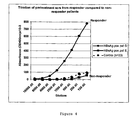
- FIG. 4 shows the reactivity of pretreatment sera from one responder ( ⁇ ) and one non-responder ( ⁇ ) HBeAg + Swedish adult patient.
- FIG. 5 a shows the results of analysis of serum from one HBeAg+ patient with chronic HBV-infection, who later spontaneously seroconverted to anti-HBe reactivity.
- Serum was incubated with incubation buffer instead of inhibitor (s dotted line), preS1 (94-117, I dotted line) or preS1 (21-32, n dotted line) before addition to preS1 (94-117) coated ELISA plates.
- Data are given as OD values at 405 nm
- FIGS. 5 b , 6 a and 6 b shows the results of analysis of serum of three HBeAg+ patients with acute resolving HB-infection.
- Samples were incubated with incubation buffer instead of inhibitor (s dotted line), preS1 (94-117, I dotted line) or preS1 (21-32, n dotted line) before addition to preS1 (94-117) coated ELISA plates.
- Data are given as OD values at 405 nm.
- FIG. 7 shows the results of analysis of serum from a HBeAg+ chronic patient which was preincubated with preS1 (94-117, ⁇ ), the whole preS1 (11-117, ⁇ ) or the preS1 sequence(21-47) corresponding to the so called hepatocyte receptor (n).
- FIG. 8 shows the results of screening a cohort of 24 Chinese HBeAg+ patients ( FIG. 8 a ), 17 Swedish HBeAg+ patients ( FIG. 8 b ) and 68 healthy Swedish blood donors ( FIG. 8 c ). Background levels of healthy control sera are given to the left in the figures (open circles) and mean values are given. The OD405 nm levels are plotted for each individual.
- FIG. 9 shows the results of screening cohorts of 37 HBeAg + Swedish adults, 36 HBeAg + Polish children and 43 HBeAg + Chinese adults.
- the IgG anti-preS1(94-117) reactivity are compared to that of control sera to the right of the figure.
- FIG. 10 shows the results of analysis of serum samples from one patient with acute resolving HBV-infection which were consecutively tested before and during acute infection.
- the X-axis gives the time schedule (days before and after onset of clinical symptoms).
- the solid line gives the IgG anti-preS1 (94-117) reactivity.
- FIG. 11 shows demonstrates the IgG anti-preS1 (94-117) reactivity in serum samples consecutively collected during a 10 year time year during which the patient with chronic HBV-infection spontaneously seroconvert from HBeAg to anti-HBe reactivity (after 5 years of follow-up) and after 10 years follow-up from HBsAg to anti-HBs reactivity.
- FIG. 12 b shows the level of HBV-DNA in the pretreatment serum from the responder patient.
- FIG. 13 b shows the level of HBV-DNA in the pretreatment serum from the non-responder patient.
- FIG. 14 a shows kinetic responses of IgG anti-preS1 (94-117) reactivity for one responder patient depicted before, during and after treatment with prednisone and alpha-IFN.
- the solid line gives the OD values at 405 nm for the anti-preS1 reactivity.
- FIG. 14 b shows serum HBV levels for the responder patient.
- the dotted line gives the result of quantitative measurements of serum HBV-DNA (pg/ml).
- FIG. 15 a shows kinetic responses of IgG anti-preS1 (94-117) reactivity for one non-responder patient depicted before, during and after treatment with prednisone and alpha-IFN.
- the solid line gives the OD values at 405 nm for the anti-preS1 reactivity.
- FIG. 15 b shows kinetic responses of serum HBV-DNA levels.
- the dotted line gives the result of quantitative measurements of serum HBV-DNA (pg/ml).
- a peptide consisting of the preS1#94-117 sequence of the HBV subtypes adw, adw 2 and two out of three described adr subtypes (i.e. PASTNRQSGRQPTPISPPLRDSHP) (SEQ ID NO:4) were obtained from Sigma Genosys, London Road, Cambridge, UK. The peptide was supplied lyophilized, resuspended in sterile distilled water and kept at ⁇ 20° C. The purity was >95% by HPLC.
- Microtiter plates; Immunolon 2, flat bottom plates Catalog No. 011-010-3455 were obtained from Dynatech Laboratories Inc., Chantilly, Va., USA through the Swedish agency In vitro Sweden AB, Sweden.
- 0.05 M sodium carbonate buffer, pH 9.6 [1.59 g Na 2 CO 3 (Catalogue No S-2127, min99%, Sigma-Aldrich) and 2.93 g NaHCO 3 (Catalogue No S-8875 min 99.5%, Sigma-Aldrich) to 100 ml with distilled water] was used as coating buffer.
- the peptide was diluted to final concentrations of 500, 1000 and 2000 ng/ml. In another test series, the final concentrations were 800, 1600 and 3200 ng/ml. For screening procedures, a final concentration of 2000 ng/ml was used throughout the studies. Fifty ⁇ l was added/well.
- the plates were charged by incubation at 40° C. for 4 hours and thereafter stored in refrigerator at 4° C. overnight before use.
- Patient sera were diluted 1/125 for screening procedures or in two-step dilutions from 1/125 to 1/16 000 for titration experiments in 0.05 M phosphate-buffered saline (PBS) containing 0.05% Tween 20 (Polyoxyethylenesorbitan Monolaurate, Catalogue No P-1379, Sigma-Aldrich Sweden AB) and 1% Foetal bovine serum (FBS, heat-inactivated 56° C. 90 minutes) (catalogue No 10106-151 Gibco BRL, Life Technologies). Diluted sera (50 ⁇ l/well) were incubated at plates 4° C. overnight. (Shorter incubation time periods was not analyzed for during this set of experiments). The protein content in the dilution reagent is of importance and 1% FBS have earlier been found to be optimal during this type of “site-specific” ELISA systems.
- PBS phosphate-buffered saline
- Tween 20 Polyoxyethylenesorbitan Monolaurate, Catalog
- Anti-human IgG conjugate Affinity isolated antibodies to human IgG (gamma-chains specific) from goat labelled with alkaline phosphatase was used (Catalogue No A-3187, Sigma Aldrich).
- the conjugate was diluted 1/1000 in PBS containing 0.05% Tween and 1% FBS and incubated on plates at 4° C. overnight.
- p-nitrophenyl phosphate in diethanolamine HCl was used as substrate: Sigma 104 phosphatase substrate (p-Nitrophenyl phosphate, disodium, hexahydrate) 5 mg tablets was dissolved in 5 ml diethanolamine HCl, pH 9.8 [97 ml diethanolamine (Catalogue No D-8885 min 98%), 101 mg MgCl 2 6H 2 O (Catalogue No M-0250,Magnesium Chloride, Hexahydrate, Sigma-Aldrich) and approx. 160 ml 1 M HCl (Hydrochloric acid, 1 mol/l, Riedel-de Haén, 35328, Sigma-Aldrich 01780) in 1000 ml distilled water to get pH 9.8].
- optical density (OD) value at 405 nm was measured in a TITERTEK Multiskan Plus Photometer (Flow Laboratories, Edinburgh, Scotland) after incubations for different time periods varying between 5-60 minutes. At optimal conditions plates was read after 20-30 minutes of incubation.
- control sera tested negative for IgG, IgM and IgA anti-hepatitis (A, B, C, D and E) markers.
- the control sera were tested in commercially available test systems from Abbott Laboratories. Sera with reactivity within the grey zone 10-20% ⁇ the cut-off value were avoided.
- Equal volumes of diluted (PBS-Tween-1% FBS) patient sera and inhibitor (PBS-Tween-1% FBS) were incubated for 4 hours at 4° C. and thereafter transferred to coated ELISA plates, followed by the procedure described above.
- the non-parametric Mann-Whitney U test was employed to compare data between groups of patients.
- the Chi-squared test was used to compare number of reactive individuals in different group of patients when the individuals in the groups were ⁇ 5.
- the solid phase i.e. ELISA plates
- Sera were diluted 1/125 and analysed for IgG anti-preS1 (94-117) reactivity.
- OD values at 405 nm are given.
- the serum samples were collected before (time 0), during (4, 10 and 14 weeks) and after (18 months) of treatment ( FIG. 1 b ).
- the responder patient had an IgG anti-preS1 (94-117) reactive pretreatment serum, while the pretreatment serum from the non-responder patient lacked detectable levels of anti-preS1 antibodies.
- the reproducibility of the test system is shown in FIG. 2 .
- the reactivity is given for the responder patient discussed above when the same serum samples were tested one month apart.
- the pretreatment responder patient serum ( ⁇ ) contained high titers (end point 4000) of IgG anti-preS1 (94-117) compared to the two pretreatment sera from non-responder patients ( ⁇ and ⁇ ) which were negative.
- FIG. 4 demonstrates the reactivity of pretreatment sera from one responder ( ⁇ ) and one non-responder ( ⁇ ) HBeAg + Swedish adult patient.
- the pretreatment serum from the responder patient was positive with a high titer (2000) of IgG anti-preS1 (94-117) antibodies, while the pretreatment serum from the non-responder lacked detectable levels of antibodies.
- the soluble preS1 (94-117) peptide inhibited the IgG anti-preS1 (94-117) reactivity to 100%, while the preS1 peptide (21-32) from the N-terminal part of preS1 did not.
- Serum from a HBeAg+ chronic patient was preincubated with preS1 (94-117, ⁇ ), the whole preS1 (11-117, ⁇ ) or the preS1 sequence(21-47, ⁇ ) corresponding to the so called hepatocyte receptor (n)( FIG. 7 ).
- the soluble preS1 (94-117) peptide inhibited the IgG antipreS1 (94-117) reactivity to 100%. While the irrelevant preS1 peptides did not.
- the responder patient who is classified in the Table 2 as negative had a borderline reactivity and was positive in some, but negative in other experiments.
- the reactivity pattern of this patient may be retested with more serum samples.
- the IgM anti-preS1 (94-117) reactivity in pretreatment did not differ significantly between responder and non-responder patients (Tables 2 and 3).
- Pretreatment samples from responder compared to non-responder patients were also analysed for content of IgM anti-HBc (Sample/Cut-off, S/CO), transaminases (ALT, ⁇ kat/L), serum HBV-DNA (pg/ml) and histology (CPH or CAH) (Tables 2 and 3). These parameters have earlier been discussed in the context of search for predictive markers. For the patients tested in this study, no significant differences were found between the two groups of patients.
- the IgG Anti-preS1 (94-117) Reactivity in Sera from a Cohort of HBeAg Reactive Sera from Patients (Swedish, Polish and Chinese) with Chronic HBV-infection.
- FIG. 8 a - c Results from three different experiments are depicted in FIG. 8 a - c . Background levels of healthy control sera are given to the left in the figures (open circles) and mean values are given. The OD405 nm levels are plotted for each individual in a cohort of 24 Chinese HBeAg+ patients ( FIG. 8 a ), 17 Swedish HBeAg+ patients ( FIG. 8 b ) and 68 healthy Swedish blood donors ( FIG. 8 c ).
- FIG. 9 the OD values at 405 nm are plotted for each individual in cohorts of 37 HBeAg + Swedish adults, 36 HBeAg + Polish children and 43 HBeAg + Chinese adults.
- the IgG anti-preS1 (94-117) reactivity are compared to that of control sera to the right of the figure.
- Sample (S) over normal (N) values>2.5 are judged as the cut-off value for positive reactivity. It equals a mean control value ⁇ 5-6 SD.
- a cohort of HBeAg+ patients (22-25%) have detectable levels of IgG anti-preS1 (94-117) in sera.
- the frequency of IgG anti-preS1(94-117) reactive sera from HBeAg+ patients were the same, irrespective of ethnical origin (eg Chinese or Swedish).
- Serum samples from one patient with acute resolving HBV-infection were consecutively tested before and during acute infection ( FIG. 10 ).
- the X-axis gives the time schedule (days before and after onset of clinical symptoms).
- the solid line gives the IgG anti-preS1 (94-117) reactivity.
- Serum samples were negative for IgG anti-preS1 (94-117) before but reactive after onset of clinical symptoms.
- the IgG anti-preS1 (94-117) reactivity peaked at the time for HBeAg/anti-HBe seroconversion (36 days) but declined at the time for HBsAg/anti-HBs seroconversion (162 days).
- FIG. 11 demonstrates the IgG anti-preS1 (94-117) reactivity in serum samples consecutively collected during a 10 year time period during which the patient with chronic HBV-infection spontaneously seroconverted from HBeAg to anti-HBe reactivity (after 5 years of follow-up; month/year 4/83) and after 10 years follow-up (month/year 1/88) from HBsAg to anti-HBs reactivity.
- the serum IgG anti-preS1 (94-117) reactivity fluctuates during HBe-antigenimia, reaching peak levels after the seroconversion to anti-Hbe and declining during the time for seroconversion to anti-HBs reactivity.
- the pretreatment serum from the responder patient contained anti-preS1 antibodies and HBV-DNA ( FIGS. 12 a and 12 b ), while the pretreatment serum from the non-responder patient had high levels of HBV-DNA but lacked detectable levels of IgG anti-preS1(94-117) ( FIGS. 13 a and 13 b ).
- the presence of serum antibodies with specificity for the N-terminal part of preS1 is dynamic and is fluctuating during the treatment schedule.
- the reactivity reached a peak at the time for seroconversion from HBeAg to anti-HBe reactivity.
- the predictive marker is valid both for alpha-IFN treatment with or without combined treatment with prednisolone.
- Hepatology 10: 761-763 increased the sensitivity from 33 to 77% and the specificity from 67 to 79% by the use of pretreatment variables AST levels and history of acute hepatitis.
- Perillo et al, 1993 Hepatology 18: 1306-1312 used stepwise Cox regression analysis with pretreatment variables HBeAg and ALT levels. The sensitivity and the specificity was raised to 81% and 46% respectively.
Landscapes
- Health & Medical Sciences (AREA)
- Life Sciences & Earth Sciences (AREA)
- Immunology (AREA)
- Engineering & Computer Science (AREA)
- Molecular Biology (AREA)
- Biomedical Technology (AREA)
- Chemical & Material Sciences (AREA)
- Urology & Nephrology (AREA)
- Hematology (AREA)
- Medicinal Chemistry (AREA)
- General Health & Medical Sciences (AREA)
- Cell Biology (AREA)
- Biotechnology (AREA)
- Food Science & Technology (AREA)
- Communicable Diseases (AREA)
- Physics & Mathematics (AREA)
- Analytical Chemistry (AREA)
- Biochemistry (AREA)
- Microbiology (AREA)
- General Physics & Mathematics (AREA)
- Pathology (AREA)
- Peptides Or Proteins (AREA)
- Medicines That Contain Protein Lipid Enzymes And Other Medicines (AREA)
- Medicines Containing Material From Animals Or Micro-Organisms (AREA)
- Pharmaceuticals Containing Other Organic And Inorganic Compounds (AREA)
- Medicines Containing Plant Substances (AREA)
- Investigating Or Analysing Biological Materials (AREA)
- Micro-Organisms Or Cultivation Processes Thereof (AREA)
Priority Applications (1)
| Application Number | Priority Date | Filing Date | Title |
|---|---|---|---|
| US10/578,848 US8076085B2 (en) | 2003-11-12 | 2004-10-22 | Methods and means relating to hepatitis B infection |
Applications Claiming Priority (5)
| Application Number | Priority Date | Filing Date | Title |
|---|---|---|---|
| US51915203P | 2003-11-12 | 2003-11-12 | |
| GBGB0326416.5A GB0326416D0 (en) | 2003-11-12 | 2003-11-12 | Methods and means relating to hepatitis B infection |
| GB0326416.5 | 2003-11-12 | ||
| PCT/EP2004/011958 WO2005050214A2 (en) | 2003-11-12 | 2004-10-22 | Methods and means relating to hepatitis b infection |
| US10/578,848 US8076085B2 (en) | 2003-11-12 | 2004-10-22 | Methods and means relating to hepatitis B infection |
Publications (2)
| Publication Number | Publication Date |
|---|---|
| US20070054264A1 US20070054264A1 (en) | 2007-03-08 |
| US8076085B2 true US8076085B2 (en) | 2011-12-13 |
Family
ID=29726432
Family Applications (1)
| Application Number | Title | Priority Date | Filing Date |
|---|---|---|---|
| US10/578,848 Expired - Fee Related US8076085B2 (en) | 2003-11-12 | 2004-10-22 | Methods and means relating to hepatitis B infection |
Country Status (5)
| Country | Link |
|---|---|
| US (1) | US8076085B2 (de) |
| CN (1) | CN1906488A (de) |
| AT (1) | ATE494555T1 (de) |
| DE (1) | DE602004030936D1 (de) |
| GB (1) | GB0326416D0 (de) |
Families Citing this family (2)
| Publication number | Priority date | Publication date | Assignee | Title |
|---|---|---|---|---|
| KR100949310B1 (ko) * | 2007-11-21 | 2010-03-23 | 한국과학기술연구원 | 세포 영상 기법을 이용한 hbv 캡시드 단백질과 표면단백질 간 상호작용 측정 방법과 이를 이용한 hbv 증식억제물질의 검색방법 |
| EP2629096A1 (de) * | 2012-02-20 | 2013-08-21 | Roche Diagniostics GmbH | HBV-Immunkomplexe zur Reaktionsvorhersage und Therapieüberwachung bei chronischen HBV-Patienten |
Citations (5)
| Publication number | Priority date | Publication date | Assignee | Title |
|---|---|---|---|---|
| EP0154902A2 (de) * | 1984-03-07 | 1985-09-18 | New York Blood Center, Inc. | Pre-S-Gen kodierte Hepatitis-B immunogene Peptide, Vakzine, Diagnostika und synthetische lipidische Bläschenträger |
| EP0250253A2 (de) | 1986-06-20 | 1987-12-23 | Scripps Clinic And Research Foundation | T- und B-Zellepitopen des pre-S-Gebietes des Hepatitis-B-Oberflächenantigens |
| EP0491077A1 (de) | 1990-12-19 | 1992-06-24 | Medeva Holdings B.V. | Zusammensetzung verwendbar als therapeutisches Mittel gegen chronische virale Leberkrankheiten |
| US5204096A (en) | 1984-03-07 | 1993-04-20 | New York Blood Center, Inc. | Pre-S gene coded peptide hepatitis B immunogens, vaccines, diagnostics, and synthetic lipid vesicle carriers |
| WO1994004922A1 (en) | 1992-08-21 | 1994-03-03 | Abbott Laboratories | Methods for monitoring effectiveness of interferon therapy in individuals with hcv infections |
-
2003
- 2003-11-12 GB GBGB0326416.5A patent/GB0326416D0/en not_active Ceased
-
2004
- 2004-10-22 AT AT04818749T patent/ATE494555T1/de not_active IP Right Cessation
- 2004-10-22 US US10/578,848 patent/US8076085B2/en not_active Expired - Fee Related
- 2004-10-22 DE DE602004030936T patent/DE602004030936D1/de not_active Expired - Lifetime
- 2004-10-22 CN CNA2004800402339A patent/CN1906488A/zh active Pending
Patent Citations (7)
| Publication number | Priority date | Publication date | Assignee | Title |
|---|---|---|---|---|
| EP0154902A2 (de) * | 1984-03-07 | 1985-09-18 | New York Blood Center, Inc. | Pre-S-Gen kodierte Hepatitis-B immunogene Peptide, Vakzine, Diagnostika und synthetische lipidische Bläschenträger |
| US4847080A (en) * | 1984-03-07 | 1989-07-11 | New York Blood Center, Inc. | Pre-S gene coded peptide hepatitis B immunogens, vaccines, diagnostics, and synthetic lipide vesicle carriers |
| EP0448126A1 (de) * | 1984-03-07 | 1991-09-25 | New York Blood Center, Inc. | Durch pre-S-Gen kodierte Hepatitis-B-Peptid-Immunogene, Vakzine, Diagnostika und synthetische Lipid-Bläschenträger |
| US5204096A (en) | 1984-03-07 | 1993-04-20 | New York Blood Center, Inc. | Pre-S gene coded peptide hepatitis B immunogens, vaccines, diagnostics, and synthetic lipid vesicle carriers |
| EP0250253A2 (de) | 1986-06-20 | 1987-12-23 | Scripps Clinic And Research Foundation | T- und B-Zellepitopen des pre-S-Gebietes des Hepatitis-B-Oberflächenantigens |
| EP0491077A1 (de) | 1990-12-19 | 1992-06-24 | Medeva Holdings B.V. | Zusammensetzung verwendbar als therapeutisches Mittel gegen chronische virale Leberkrankheiten |
| WO1994004922A1 (en) | 1992-08-21 | 1994-03-03 | Abbott Laboratories | Methods for monitoring effectiveness of interferon therapy in individuals with hcv infections |
Non-Patent Citations (19)
| Title |
|---|
| Alberti et al., Fine specificity of human antibody response to the PreS1 domain of hepatitis B virus, Hepatology, vol. 12, No. 2, Aug. 1990, pp. 199-203, XP009052827. |
| Chu, Chia-Ming, "Natural history of chronic hepatitis B virus infection in adults with emphasis on the occurrence of cirrhosis and hepatocellular carcinoma", Journal of Gastroenterology and Hepatology 15(Suppl S2):E25-E30 (2000). |
| Cooksley, Graham, "The treatment of hepatitis B e antigen-positive chronic hepatitis B with pegylated interferon", Journal of Hepatology 39:S143-S145 (2003). |
| Craxi et al, "Interferon-alpha for HBeAg-positive chronic hepatitis B", Journal of Hepatology 39:S99-S105 (2003). |
| Craxi et al, "Interferon-α for HBeAg-positive chronic hepatitis B", Journal of Hepatology 39:S99-S105 (2003). |
| De Franchis et al, "EASL International Consensus Conference on Hepatitis B", Journal of Hepatology 39:S3-S25 (2003). |
| Fattovich et al, "Long-Term Outcome of Hepatitis B e Antigen-Positive Patients with Compensated Cirrhosis Treated With Interferon Alfa", Hepatology 26:1338-1342 (1997). |
| Heathcote, E. Jenny, "Demography and Presentation of Chronic Hepatitis B Virus Infection", The American Journal of Medicine 121:S3-S11 (2008). |
| Ikeda et al, "Interferon Decreases Hepatocellular Carcinogenesis in Patients with Cirrhosis Caused by the Hepatitis B Virus", Cancer 82(5):827-835 (1998). |
| International Search Report for PCT/EP04/11958 dated Sep. 6, 2005. |
| Lai et al, "Viral hepatitis B", The Lancet 362:2089-2094 (2003). |
| Liaw and Chu, "Hepatitis B virus infection", The Lanced 373:S82-S92 (2009). |
| Liaw, Yun-Fan, "Hepatitis B virus replication and liver disease progression: the impact of antiviral therapy", Antivirus Therapy 11:669-679 (2006). |
| Paul, Fundamental Immunology, 5th Edition, 2003, pp. 718-720. * |
| Petit et al., PreS1 antigen/antibody patterns following interferon therapy in acute and chronic hepatitis B, J. Hepatol., vol. 20, No. 1, Jan. 1994, pp. 47-56, XP009052825. |
| Wei et al. Detection of anti-preS1 antibodies for recovery of hepatitis B patients by immunoassay, World J. Gastroenterol., 2002, 8(2):276-281. * |
| Wei et al., Detection of anti-preS1 antibodies for recovery of hepatitis B patients by immunoassay, World J Gastroenterol, 2002, 8(2):276-281. * |
| Wong et al, "Effect of Alpha-Interferon Treatment in Patients with Hepatitis B e Antigen-Positive Chronic Hepatitis B", Ann. Intern. Med. 119:312-323 (1993). |
| Zavaglia et al., Treatment of chronic hepatitis B (HBeAg-HBV DNA-positive) with lymphoblastoid alpha interferon with or without corticosteroids: short- and long-term follow-up, Italian Journal of Gastroenterology, Jul.-Aug. 1996 , 28 (6):324-331. Abstract. * |
Also Published As
| Publication number | Publication date |
|---|---|
| DE602004030936D1 (de) | 2011-02-17 |
| GB0326416D0 (en) | 2003-12-17 |
| CN1906488A (zh) | 2007-01-31 |
| ATE494555T1 (de) | 2011-01-15 |
| US20070054264A1 (en) | 2007-03-08 |
Similar Documents
| Publication | Publication Date | Title |
|---|---|---|
| Petit et al. | Variable expression of preS1 antigen in serum during chronic hepatitis B virus infection: an accurate marker for the level of hepatitis B virus replication | |
| JP5099564B2 (ja) | 組み合わせc型肝炎ウイルス抗原及び抗体検出法 | |
| Guillou et al. | Evaluation of an enzyme‐linked immunosorbent assay for detection and quantification of hepatitis B virus PreS1 envelope antigen in serum samples: comparison with two commercial assays for monitoring hepatitis B virus DNA | |
| CN104126124A (zh) | 用于慢性hbv患者的反应预测和疗法监测的hbv免疫复合物 | |
| CN100547001C (zh) | 可形成颗粒的乙型肝炎病毒前核心蛋白 | |
| Petit et al. | Inhibitory activity of monoclonal antibody F35. 25 on the interaction between hepatocytes (HepG2 cells) and preS1-specific ligands | |
| JP2010539488A (ja) | B型肝炎ウイルスの検出 | |
| CA1278259C (en) | Competitive elisa for the detection of antibodies | |
| US20070054264A1 (en) | Methods and means relating to hepatitis b infection | |
| JP2011513759A (ja) | エプスタイン−バーウイルス(ebv)再活性化のインビトロ診断のためのzebraタンパク質由来合成ペプチドの使用 | |
| EP1682894B1 (de) | Verfahren in verbindung mit einer hepatitis-b-infektion | |
| US20100136520A1 (en) | Detecting hepatitis b virus | |
| EP0656116A1 (de) | Verfahren zur beobachtung der effektivität der interferontherapie an hepatitis-c-infizierten individuren | |
| Yao et al. | Serum O-glycosylated HBsAg levels correlate with HBV RNA in HBeAg positive CHB patients during antiviral therapy | |
| Wei et al. | Development of the diagnostic immunoassay to detect anti-PreS1 (21-47aa) antibody—a marker suggesting the health improvement of hepatitis B patients | |
| Park et al. | Monitoring antibody titers to recombinant Core-NS3 fusion polypeptide is useful for evaluating hepatitis C virus infection and responses to interferon-alpha therapy | |
| US20070166702A1 (en) | Methods for predicting the efficacy or outcome of hcv therapy | |
| Petit et al. | PreS antigen expression and anti-preS response in hepatitis B virus infections: relationship to serum HBV-DNA, intrahepatic HBcAg, liver damage and specific T-cell response | |
| Suga et al. | Detection of IgM, IgA, and IgG antibodies to preS2 antigen in hepatitis B virus infection | |
| HK1102625A (en) | Methods and means relating to hepatitis b infection | |
| Ling | Assays for hepatitis B virus | |
| WO1989004964A1 (en) | Determination of anti-pol as an early marker or viral hepatitis infection | |
| EP4720681A1 (de) | Antigennachweis | |
| Usuda et al. | A monoclonal antibody against a hepatitis B e antigen epitope borne by six amino acids encoded by the precore region | |
| Grangeot‐Keros et al. | Prognostic value of HBsAg/IgM complexes in hepatitis B patients: Nature of the proteins involved |
Legal Events
| Date | Code | Title | Description |
|---|---|---|---|
| AS | Assignment |
Owner name: HBV THERANOSTICA AB, SWEDEN Free format text: ASSIGNMENT OF ASSIGNORS INTEREST;ASSIGNORS:HELLSTROM, ULLA;SYLVAN, STAFFAN;SIGNING DATES FROM 20060627 TO 20060705;REEL/FRAME:018121/0083 Owner name: HBV THERANOSTICA AB, SWEDEN Free format text: ASSIGNMENT OF ASSIGNORS INTEREST;ASSIGNORS:HELLSTROM, ULLA;SYLVAN, STAFFAN;REEL/FRAME:018121/0083;SIGNING DATES FROM 20060627 TO 20060705 |
|
| FEPP | Fee payment procedure |
Free format text: PAYOR NUMBER ASSIGNED (ORIGINAL EVENT CODE: ASPN); ENTITY STATUS OF PATENT OWNER: LARGE ENTITY |
|
| REMI | Maintenance fee reminder mailed | ||
| LAPS | Lapse for failure to pay maintenance fees | ||
| STCH | Information on status: patent discontinuation |
Free format text: PATENT EXPIRED DUE TO NONPAYMENT OF MAINTENANCE FEES UNDER 37 CFR 1.362 |
|
| STCH | Information on status: patent discontinuation |
Free format text: PATENT EXPIRED DUE TO NONPAYMENT OF MAINTENANCE FEES UNDER 37 CFR 1.362 |
|
| FP | Lapsed due to failure to pay maintenance fee |
Effective date: 20151213 |