US8080562B2 - Crystalline pharmaceutical and methods of preparation and use thereof - Google Patents
Crystalline pharmaceutical and methods of preparation and use thereof Download PDFInfo
- Publication number
- US8080562B2 US8080562B2 US12/386,361 US38636109A US8080562B2 US 8080562 B2 US8080562 B2 US 8080562B2 US 38636109 A US38636109 A US 38636109A US 8080562 B2 US8080562 B2 US 8080562B2
- Authority
- US
- United States
- Prior art keywords
- compound
- formula
- acid
- amorphous form
- crystalline
- Prior art date
- Legal status (The legal status is an assumption and is not a legal conclusion. Google has not performed a legal analysis and makes no representation as to the accuracy of the status listed.)
- Active, expires
Links
- JFOZKMSJYSPYLN-QHCPKHFHSA-N CS(=O)(=O)C1=CC(C[C@H](NC(=O)C2=C(Cl)C=C3CN(C(=O)C4=CC5=C(C=CO5)C=C4)CCC3=C2Cl)C(=O)O)=CC=C1 Chemical compound CS(=O)(=O)C1=CC(C[C@H](NC(=O)C2=C(Cl)C=C3CN(C(=O)C4=CC5=C(C=CO5)C=C4)CCC3=C2Cl)C(=O)O)=CC=C1 JFOZKMSJYSPYLN-QHCPKHFHSA-N 0.000 description 8
- JXBQRXIJBFUZMR-UHFFFAOYSA-N CC(C)(C)OC(=O)N1CCC2=C(Cl)C(C(=O)O)=C(Cl)C=C2C1 Chemical compound CC(C)(C)OC(=O)N1CCC2=C(Cl)C(C(=O)O)=C(Cl)C=C2C1 JXBQRXIJBFUZMR-UHFFFAOYSA-N 0.000 description 3
- NAHLQFJKVQKZSA-INIZCTEOSA-N CS(=O)(=O)C1=CC(C[C@H](N)C(=O)OCC2=CC=CC=C2)=CC=C1.Cl Chemical compound CS(=O)(=O)C1=CC(C[C@H](N)C(=O)OCC2=CC=CC=C2)=CC=C1.Cl NAHLQFJKVQKZSA-INIZCTEOSA-N 0.000 description 3
- CWMBPRWSUXTRTQ-PMERELPUSA-N CS(c1cc(C[C@@H](C(OCc2ccccc2)=O)NC(c(c(Cl)c(CCN(C2)C(c3cc([o]cc4)c4cc3)=O)c2c2)c2Cl)=O)ccc1)(=O)=O Chemical compound CS(c1cc(C[C@@H](C(OCc2ccccc2)=O)NC(c(c(Cl)c(CCN(C2)C(c3cc([o]cc4)c4cc3)=O)c2c2)c2Cl)=O)ccc1)(=O)=O CWMBPRWSUXTRTQ-PMERELPUSA-N 0.000 description 3
- ZTYYSZJSTXFVKI-SANMLTNESA-N CC(C)(C)OC(=O)N1CCC2=C(Cl)C(C(=O)N[C@@H](CC3=CC=CC(S(C)(=O)=O)=C3)C(=O)OCC3=CC=CC=C3)=C(Cl)C=C2C1 Chemical compound CC(C)(C)OC(=O)N1CCC2=C(Cl)C(C(=O)N[C@@H](CC3=CC=CC(S(C)(=O)=O)=C3)C(=O)OCC3=CC=CC=C3)=C(Cl)C=C2C1 ZTYYSZJSTXFVKI-SANMLTNESA-N 0.000 description 2
- PKCAUDLTFGDSEA-HPQSITOCSA-N CC(C)(C)OC(=O)N1CCC2=C(Cl)C(C(=O)N[C@@H](CC3=CC=CC(S(C)(=O)=O)=C3)C(=O)OCC3=CC=CC=C3)=C(Cl)C=C2C1.CS(=O)(=O)C1=CC(C[C@H](NC(=O)C2=C(Cl)C=C3CN(C(C4=CC=CC=C4)(C4=CC=CC=C4)C4=CC=CC=C4)CCC3=C2Cl)C(=O)OCC2=CC=CC=C2)=CC=C1 Chemical compound CC(C)(C)OC(=O)N1CCC2=C(Cl)C(C(=O)N[C@@H](CC3=CC=CC(S(C)(=O)=O)=C3)C(=O)OCC3=CC=CC=C3)=C(Cl)C=C2C1.CS(=O)(=O)C1=CC(C[C@H](NC(=O)C2=C(Cl)C=C3CN(C(C4=CC=CC=C4)(C4=CC=CC=C4)C4=CC=CC=C4)CCC3=C2Cl)C(=O)OCC2=CC=CC=C2)=CC=C1 PKCAUDLTFGDSEA-HPQSITOCSA-N 0.000 description 2
- RLNKWSJTOAYYQJ-QHCPKHFHSA-N CC1=CC(C[C@H](NC(=O)C2=C(Cl)C=C3CNCCC3=C2Cl)C(=O)OCC2=CC=CC=C2)=CC=C1.Cl Chemical compound CC1=CC(C[C@H](NC(=O)C2=C(Cl)C=C3CNCCC3=C2Cl)C(=O)OCC2=CC=CC=C2)=CC=C1.Cl RLNKWSJTOAYYQJ-QHCPKHFHSA-N 0.000 description 2
- XIBUXLQPDPBDCO-QHCPKHFHSA-N CS(=O)(=O)C1=CC(C[C@H](NC(=O)C2=C(Cl)C=C3CNCCC3=C2Cl)C(=O)OCC2=CC=CC=C2)=CC=C1.Cl Chemical compound CS(=O)(=O)C1=CC(C[C@H](NC(=O)C2=C(Cl)C=C3CNCCC3=C2Cl)C(=O)OCC2=CC=CC=C2)=CC=C1.Cl XIBUXLQPDPBDCO-QHCPKHFHSA-N 0.000 description 2
- DPWMSOPIYRBXCG-UHFFFAOYSA-N B.Cl.Cl.ClC1=CC2=C(CCN(C(C3=CC=CC=C3)(C3=CC=CC=C3)C3=CC=CC=C3)C2)C(Cl)=C1.ClC1=CC2=C(CCNC2)C(Cl)=C1.ClCCNC1=CC(Cl)=CC(Cl)=C1.N#C[Na].NCCCl.O=C(O)C1=C(Cl)C2=C(C=C1Cl)CN(C(C1=CC=CC=C1)(C1=CC=CC=C1)C1=CC=CC=C1)CC2.O=CC1=CC(Cl)=CC(Cl)=C1 Chemical compound B.Cl.Cl.ClC1=CC2=C(CCN(C(C3=CC=CC=C3)(C3=CC=CC=C3)C3=CC=CC=C3)C2)C(Cl)=C1.ClC1=CC2=C(CCNC2)C(Cl)=C1.ClCCNC1=CC(Cl)=CC(Cl)=C1.N#C[Na].NCCCl.O=C(O)C1=C(Cl)C2=C(C=C1Cl)CN(C(C1=CC=CC=C1)(C1=CC=CC=C1)C1=CC=CC=C1)CC2.O=CC1=CC(Cl)=CC(Cl)=C1 DPWMSOPIYRBXCG-UHFFFAOYSA-N 0.000 description 1
- CSVWEQARRCHWAK-UHFFFAOYSA-N C.CC(=O)C1=CC2=C(C=CO2)C=C1.CC(C)(C)[Si](C)(C)OC1=CC2=C(C=C1)C(=O)CO2.COC(=O)C1=CC2=C(C=CO2)C=C1.O=C1COC2=C1C=CC(O)=C2.O=S(=O)(OC1=CC2=C(C=CO2)C=C1)C(F)(F)F.OC1=CC2=C(C=CO2)C=C1 Chemical compound C.CC(=O)C1=CC2=C(C=CO2)C=C1.CC(C)(C)[Si](C)(C)OC1=CC2=C(C=C1)C(=O)CO2.COC(=O)C1=CC2=C(C=CO2)C=C1.O=C1COC2=C1C=CC(O)=C2.O=S(=O)(OC1=CC2=C(C=CO2)C=C1)C(F)(F)F.OC1=CC2=C(C=CO2)C=C1 CSVWEQARRCHWAK-UHFFFAOYSA-N 0.000 description 1
- FQGZZHFXHSXKOH-GEGRWFKOSA-N C.CC(C)(C)OC(=O)N[C@@H](CC1=CC=CC(Br)=C1)C(=O)O.CC(C)(C)OC(=O)N[C@@H](CC1=CC=CC(S(C)(=O)=O)=C1)C(=O)O.CC(C)(C)OC(=O)N[C@@H](CC1=CC=CC(S(C)(=O)=O)=C1)C(=O)OCC1=CC=CC=C1.CC(C)(C)OC(=O)OC(=O)OC(C)(C)C.CS(=O)(=O)C1=CC(C[C@H](N)C(=O)OCC2=CC=CC=C2)=CC=C1.Cl.N[C@@H](CC1=CC=CC(Br)=C1)C(=O)O Chemical compound C.CC(C)(C)OC(=O)N[C@@H](CC1=CC=CC(Br)=C1)C(=O)O.CC(C)(C)OC(=O)N[C@@H](CC1=CC=CC(S(C)(=O)=O)=C1)C(=O)O.CC(C)(C)OC(=O)N[C@@H](CC1=CC=CC(S(C)(=O)=O)=C1)C(=O)OCC1=CC=CC=C1.CC(C)(C)OC(=O)OC(=O)OC(C)(C)C.CS(=O)(=O)C1=CC(C[C@H](N)C(=O)OCC2=CC=CC=C2)=CC=C1.Cl.N[C@@H](CC1=CC=CC(Br)=C1)C(=O)O FQGZZHFXHSXKOH-GEGRWFKOSA-N 0.000 description 1
- DQCNGEQETOQZPG-AYFMFFSCSA-N CC(C)(C)OC(=O)N1CCC2=C(Cl)C(C(=O)N[C@@H](CC3=CC=CC(S(C)(=O)=O)=C3)C(=O)OCC3=CC=CC=C3)=C(Cl)C=C2C1.CC(C)(C)OC(=O)N1CCC2=C(Cl)C(C(=O)O)=C(Cl)C=C2C1.CS(=O)(=O)C1=CC(C[C@H](N)C(=O)OCC2=CC=CC=C2)=CC=C1.CS(=O)(=O)C1=CC(C[C@H](NC(=O)C2=C(Cl)C=C3CNCCC3=C2Cl)C(=O)OCC2=CC=CC=C2)=CC=C1.Cl.Cl.Cl.O=C(O)C1=C(Cl)C=C2CN(C(C3=CC=CC=C3)(C3=CC=CC=C3)C3=CC=CC=C3)CCC2=C1Cl.O=C(O)C1=C(Cl)C=C2CNCCC2=C1Cl Chemical compound CC(C)(C)OC(=O)N1CCC2=C(Cl)C(C(=O)N[C@@H](CC3=CC=CC(S(C)(=O)=O)=C3)C(=O)OCC3=CC=CC=C3)=C(Cl)C=C2C1.CC(C)(C)OC(=O)N1CCC2=C(Cl)C(C(=O)O)=C(Cl)C=C2C1.CS(=O)(=O)C1=CC(C[C@H](N)C(=O)OCC2=CC=CC=C2)=CC=C1.CS(=O)(=O)C1=CC(C[C@H](NC(=O)C2=C(Cl)C=C3CNCCC3=C2Cl)C(=O)OCC2=CC=CC=C2)=CC=C1.Cl.Cl.Cl.O=C(O)C1=C(Cl)C=C2CN(C(C3=CC=CC=C3)(C3=CC=CC=C3)C3=CC=CC=C3)CCC2=C1Cl.O=C(O)C1=C(Cl)C=C2CNCCC2=C1Cl DQCNGEQETOQZPG-AYFMFFSCSA-N 0.000 description 1
- HKGKHDKQDFOSFK-UHFFFAOYSA-N CC(C1=CC=CC=C1)(C1=CC=CC=C1)N1CCC2=C(Cl)C(C(=O)O)=C(Cl)C=C2C1 Chemical compound CC(C1=CC=CC=C1)(C1=CC=CC=C1)N1CCC2=C(Cl)C(C(=O)O)=C(Cl)C=C2C1 HKGKHDKQDFOSFK-UHFFFAOYSA-N 0.000 description 1
- MGAQBQBQPJOFKY-PMERELPUSA-N CC1=CC(C[C@H](NC(=O)C2=C(Cl)C=C3CN(C(=O)C4=CC5=C(C=CO5)C=C4)CCC3=C2Cl)C(=O)OCC2=CC=CC=C2)=CC=C1 Chemical compound CC1=CC(C[C@H](NC(=O)C2=C(Cl)C=C3CN(C(=O)C4=CC5=C(C=CO5)C=C4)CCC3=C2Cl)C(=O)OCC2=CC=CC=C2)=CC=C1 MGAQBQBQPJOFKY-PMERELPUSA-N 0.000 description 1
- RUWJRJFIDDSACI-UHFFFAOYSA-N CN1CCC2=C(Cl)C(C(=O)O)=C(Cl)C=C2C1 Chemical compound CN1CCC2=C(Cl)C(C(=O)O)=C(Cl)C=C2C1 RUWJRJFIDDSACI-UHFFFAOYSA-N 0.000 description 1
- IGFAJWIJIKVLBT-WRIZZHGISA-N CS(=O)(=O)C1=CC(C[C@H](N)C(=O)OCC2=CC=CC=C2)=CC=C1.CS(=O)(=O)C1=CC(C[C@H](NC(=O)C2=C(Cl)C=C3CN(C(C4=CC=CC=C4)(C4=CC=CC=C4)C4=CC=CC=C4)CCC3=C2Cl)C(=O)OCC2=CC=CC=C2)=CC=C1.CS(=O)(=O)C1=CC(C[C@H](NC(=O)C2=C(Cl)C=C3CNCCC3=C2Cl)C(=O)OCC2=CC=CC=C2)=CC=C1.Cl.O=C(O)C1=C(Cl)C=C2CN(C(C3=CC=CC=C3)(C3=CC=CC=C3)C3=CC=CC=C3)CCC2=C1Cl.[Cl] Chemical compound CS(=O)(=O)C1=CC(C[C@H](N)C(=O)OCC2=CC=CC=C2)=CC=C1.CS(=O)(=O)C1=CC(C[C@H](NC(=O)C2=C(Cl)C=C3CN(C(C4=CC=CC=C4)(C4=CC=CC=C4)C4=CC=CC=C4)CCC3=C2Cl)C(=O)OCC2=CC=CC=C2)=CC=C1.CS(=O)(=O)C1=CC(C[C@H](NC(=O)C2=C(Cl)C=C3CNCCC3=C2Cl)C(=O)OCC2=CC=CC=C2)=CC=C1.Cl.O=C(O)C1=C(Cl)C=C2CN(C(C3=CC=CC=C3)(C3=CC=CC=C3)C3=CC=CC=C3)CCC2=C1Cl.[Cl] IGFAJWIJIKVLBT-WRIZZHGISA-N 0.000 description 1
- UPAGOGYOIVIYOB-ZKXWSJGHSA-N CS(=O)(=O)C1=CC(C[C@H](NC(=O)C2=C(Cl)C=C3CN(C(=O)C4=CC5=C(C=CO5)C=C4)CCC3=C2Cl)C(=O)O)=CC=C1.CS(=O)(=O)C1=CC(C[C@H](NC(=O)C2=C(Cl)C=C3CN(C(=O)C4=CC5=C(C=CO5)C=C4)CCC3=C2Cl)C(=O)O)=CC=C1.CS(=O)(=O)C1=CC(C[C@H](NC(=O)C2=C(Cl)C=C3CN(C(=O)C4=CC5=C(C=CO5)C=C4)CCC3=C2Cl)C(=O)OCC2=CC=CC=C2)=CC=C1.CS(=O)(=O)C1=CC(C[C@H](NC(=O)C2=C(Cl)C=C3CNCCC3=C2Cl)C(=O)OCC2=CC=CC=C2)=CC=C1.Cl.O=C(O)C1=CC2=C(C=CO2)C=C1 Chemical compound CS(=O)(=O)C1=CC(C[C@H](NC(=O)C2=C(Cl)C=C3CN(C(=O)C4=CC5=C(C=CO5)C=C4)CCC3=C2Cl)C(=O)O)=CC=C1.CS(=O)(=O)C1=CC(C[C@H](NC(=O)C2=C(Cl)C=C3CN(C(=O)C4=CC5=C(C=CO5)C=C4)CCC3=C2Cl)C(=O)O)=CC=C1.CS(=O)(=O)C1=CC(C[C@H](NC(=O)C2=C(Cl)C=C3CN(C(=O)C4=CC5=C(C=CO5)C=C4)CCC3=C2Cl)C(=O)OCC2=CC=CC=C2)=CC=C1.CS(=O)(=O)C1=CC(C[C@H](NC(=O)C2=C(Cl)C=C3CNCCC3=C2Cl)C(=O)OCC2=CC=CC=C2)=CC=C1.Cl.O=C(O)C1=CC2=C(C=CO2)C=C1 UPAGOGYOIVIYOB-ZKXWSJGHSA-N 0.000 description 1
Images






Classifications
-
- C—CHEMISTRY; METALLURGY
- C07—ORGANIC CHEMISTRY
- C07D—HETEROCYCLIC COMPOUNDS
- C07D405/00—Heterocyclic compounds containing both one or more hetero rings having oxygen atoms as the only ring hetero atoms, and one or more rings having nitrogen as the only ring hetero atom
- C07D405/02—Heterocyclic compounds containing both one or more hetero rings having oxygen atoms as the only ring hetero atoms, and one or more rings having nitrogen as the only ring hetero atom containing two hetero rings
- C07D405/06—Heterocyclic compounds containing both one or more hetero rings having oxygen atoms as the only ring hetero atoms, and one or more rings having nitrogen as the only ring hetero atom containing two hetero rings linked by a carbon chain containing only aliphatic carbon atoms
-
- A—HUMAN NECESSITIES
- A61—MEDICAL OR VETERINARY SCIENCE; HYGIENE
- A61K—PREPARATIONS FOR MEDICAL, DENTAL OR TOILETRY PURPOSES
- A61K31/00—Medicinal preparations containing organic active ingredients
- A61K31/33—Heterocyclic compounds
- A61K31/395—Heterocyclic compounds having nitrogen as a ring hetero atom, e.g. guanethidine or rifamycins
- A61K31/435—Heterocyclic compounds having nitrogen as a ring hetero atom, e.g. guanethidine or rifamycins having six-membered rings with one nitrogen as the only ring hetero atom
- A61K31/47—Quinolines; Isoquinolines
- A61K31/4709—Non-condensed quinolines and containing further heterocyclic rings
-
- A—HUMAN NECESSITIES
- A61—MEDICAL OR VETERINARY SCIENCE; HYGIENE
- A61K—PREPARATIONS FOR MEDICAL, DENTAL OR TOILETRY PURPOSES
- A61K31/00—Medicinal preparations containing organic active ingredients
- A61K31/33—Heterocyclic compounds
- A61K31/395—Heterocyclic compounds having nitrogen as a ring hetero atom, e.g. guanethidine or rifamycins
- A61K31/435—Heterocyclic compounds having nitrogen as a ring hetero atom, e.g. guanethidine or rifamycins having six-membered rings with one nitrogen as the only ring hetero atom
- A61K31/47—Quinolines; Isoquinolines
- A61K31/472—Non-condensed isoquinolines, e.g. papaverine
- A61K31/4725—Non-condensed isoquinolines, e.g. papaverine containing further heterocyclic rings
-
- A—HUMAN NECESSITIES
- A61—MEDICAL OR VETERINARY SCIENCE; HYGIENE
- A61K—PREPARATIONS FOR MEDICAL, DENTAL OR TOILETRY PURPOSES
- A61K45/00—Medicinal preparations containing active ingredients not provided for in groups A61K31/00 - A61K41/00
- A61K45/06—Mixtures of active ingredients without chemical characterisation, e.g. antiphlogistics and cardiaca
-
- A—HUMAN NECESSITIES
- A61—MEDICAL OR VETERINARY SCIENCE; HYGIENE
- A61K—PREPARATIONS FOR MEDICAL, DENTAL OR TOILETRY PURPOSES
- A61K47/00—Medicinal preparations characterised by the non-active ingredients used, e.g. carriers or inert additives; Targeting or modifying agents chemically bound to the active ingredient
- A61K47/06—Organic compounds, e.g. natural or synthetic hydrocarbons, polyolefins, mineral oil, petrolatum or ozokerite
- A61K47/08—Organic compounds, e.g. natural or synthetic hydrocarbons, polyolefins, mineral oil, petrolatum or ozokerite containing oxygen, e.g. ethers, acetals, ketones, quinones, aldehydes, peroxides
- A61K47/10—Alcohols; Phenols; Salts thereof, e.g. glycerol; Polyethylene glycols [PEG]; Poloxamers; PEG/POE alkyl ethers
-
- A—HUMAN NECESSITIES
- A61—MEDICAL OR VETERINARY SCIENCE; HYGIENE
- A61K—PREPARATIONS FOR MEDICAL, DENTAL OR TOILETRY PURPOSES
- A61K47/00—Medicinal preparations characterised by the non-active ingredients used, e.g. carriers or inert additives; Targeting or modifying agents chemically bound to the active ingredient
- A61K47/06—Organic compounds, e.g. natural or synthetic hydrocarbons, polyolefins, mineral oil, petrolatum or ozokerite
- A61K47/08—Organic compounds, e.g. natural or synthetic hydrocarbons, polyolefins, mineral oil, petrolatum or ozokerite containing oxygen, e.g. ethers, acetals, ketones, quinones, aldehydes, peroxides
- A61K47/14—Esters of carboxylic acids, e.g. fatty acid monoglycerides, medium-chain triglycerides, parabens or PEG fatty acid esters
-
- A—HUMAN NECESSITIES
- A61—MEDICAL OR VETERINARY SCIENCE; HYGIENE
- A61K—PREPARATIONS FOR MEDICAL, DENTAL OR TOILETRY PURPOSES
- A61K47/00—Medicinal preparations characterised by the non-active ingredients used, e.g. carriers or inert additives; Targeting or modifying agents chemically bound to the active ingredient
- A61K47/06—Organic compounds, e.g. natural or synthetic hydrocarbons, polyolefins, mineral oil, petrolatum or ozokerite
- A61K47/22—Heterocyclic compounds, e.g. ascorbic acid, tocopherol or pyrrolidones
-
- A—HUMAN NECESSITIES
- A61—MEDICAL OR VETERINARY SCIENCE; HYGIENE
- A61K—PREPARATIONS FOR MEDICAL, DENTAL OR TOILETRY PURPOSES
- A61K47/00—Medicinal preparations characterised by the non-active ingredients used, e.g. carriers or inert additives; Targeting or modifying agents chemically bound to the active ingredient
- A61K47/30—Macromolecular organic or inorganic compounds, e.g. inorganic polyphosphates
- A61K47/36—Polysaccharides; Derivatives thereof, e.g. gums, starch, alginate, dextrin, hyaluronic acid, chitosan, inulin, agar or pectin
- A61K47/38—Cellulose; Derivatives thereof
-
- A—HUMAN NECESSITIES
- A61—MEDICAL OR VETERINARY SCIENCE; HYGIENE
- A61K—PREPARATIONS FOR MEDICAL, DENTAL OR TOILETRY PURPOSES
- A61K9/00—Medicinal preparations characterised by special physical form
- A61K9/06—Ointments; Bases therefor; Other semi-solid forms, e.g. creams, sticks, gels
-
- A—HUMAN NECESSITIES
- A61—MEDICAL OR VETERINARY SCIENCE; HYGIENE
- A61K—PREPARATIONS FOR MEDICAL, DENTAL OR TOILETRY PURPOSES
- A61K9/00—Medicinal preparations characterised by special physical form
- A61K9/08—Solutions
-
- A—HUMAN NECESSITIES
- A61—MEDICAL OR VETERINARY SCIENCE; HYGIENE
- A61P—SPECIFIC THERAPEUTIC ACTIVITY OF CHEMICAL COMPOUNDS OR MEDICINAL PREPARATIONS
- A61P11/00—Drugs for disorders of the respiratory system
- A61P11/02—Nasal agents, e.g. decongestants
-
- A—HUMAN NECESSITIES
- A61—MEDICAL OR VETERINARY SCIENCE; HYGIENE
- A61P—SPECIFIC THERAPEUTIC ACTIVITY OF CHEMICAL COMPOUNDS OR MEDICINAL PREPARATIONS
- A61P11/00—Drugs for disorders of the respiratory system
- A61P11/06—Antiasthmatics
-
- A—HUMAN NECESSITIES
- A61—MEDICAL OR VETERINARY SCIENCE; HYGIENE
- A61P—SPECIFIC THERAPEUTIC ACTIVITY OF CHEMICAL COMPOUNDS OR MEDICINAL PREPARATIONS
- A61P17/00—Drugs for dermatological disorders
-
- A—HUMAN NECESSITIES
- A61—MEDICAL OR VETERINARY SCIENCE; HYGIENE
- A61P—SPECIFIC THERAPEUTIC ACTIVITY OF CHEMICAL COMPOUNDS OR MEDICINAL PREPARATIONS
- A61P17/00—Drugs for dermatological disorders
- A61P17/02—Drugs for dermatological disorders for treating wounds, ulcers, burns, scars, keloids, or the like
-
- A—HUMAN NECESSITIES
- A61—MEDICAL OR VETERINARY SCIENCE; HYGIENE
- A61P—SPECIFIC THERAPEUTIC ACTIVITY OF CHEMICAL COMPOUNDS OR MEDICINAL PREPARATIONS
- A61P17/00—Drugs for dermatological disorders
- A61P17/06—Antipsoriatics
-
- A—HUMAN NECESSITIES
- A61—MEDICAL OR VETERINARY SCIENCE; HYGIENE
- A61P—SPECIFIC THERAPEUTIC ACTIVITY OF CHEMICAL COMPOUNDS OR MEDICINAL PREPARATIONS
- A61P17/00—Drugs for dermatological disorders
- A61P17/08—Antiseborrheics
-
- A—HUMAN NECESSITIES
- A61—MEDICAL OR VETERINARY SCIENCE; HYGIENE
- A61P—SPECIFIC THERAPEUTIC ACTIVITY OF CHEMICAL COMPOUNDS OR MEDICINAL PREPARATIONS
- A61P17/00—Drugs for dermatological disorders
- A61P17/14—Drugs for dermatological disorders for baldness or alopecia
-
- A—HUMAN NECESSITIES
- A61—MEDICAL OR VETERINARY SCIENCE; HYGIENE
- A61P—SPECIFIC THERAPEUTIC ACTIVITY OF CHEMICAL COMPOUNDS OR MEDICINAL PREPARATIONS
- A61P27/00—Drugs for disorders of the senses
- A61P27/02—Ophthalmic agents
-
- A—HUMAN NECESSITIES
- A61—MEDICAL OR VETERINARY SCIENCE; HYGIENE
- A61P—SPECIFIC THERAPEUTIC ACTIVITY OF CHEMICAL COMPOUNDS OR MEDICINAL PREPARATIONS
- A61P27/00—Drugs for disorders of the senses
- A61P27/02—Ophthalmic agents
- A61P27/04—Artificial tears; Irrigation solutions
-
- A—HUMAN NECESSITIES
- A61—MEDICAL OR VETERINARY SCIENCE; HYGIENE
- A61P—SPECIFIC THERAPEUTIC ACTIVITY OF CHEMICAL COMPOUNDS OR MEDICINAL PREPARATIONS
- A61P27/00—Drugs for disorders of the senses
- A61P27/02—Ophthalmic agents
- A61P27/14—Decongestants or antiallergics
-
- A—HUMAN NECESSITIES
- A61—MEDICAL OR VETERINARY SCIENCE; HYGIENE
- A61P—SPECIFIC THERAPEUTIC ACTIVITY OF CHEMICAL COMPOUNDS OR MEDICINAL PREPARATIONS
- A61P29/00—Non-central analgesic, antipyretic or antiinflammatory agents, e.g. antirheumatic agents; Non-steroidal antiinflammatory drugs [NSAID]
-
- C—CHEMISTRY; METALLURGY
- C07—ORGANIC CHEMISTRY
- C07C—ACYCLIC OR CARBOCYCLIC COMPOUNDS
- C07C317/00—Sulfones; Sulfoxides
- C07C317/44—Sulfones; Sulfoxides having sulfone or sulfoxide groups and carboxyl groups bound to the same carbon skeleton
- C07C317/48—Sulfones; Sulfoxides having sulfone or sulfoxide groups and carboxyl groups bound to the same carbon skeleton the carbon skeleton being further substituted by singly-bound nitrogen atoms, not being part of nitro or nitroso groups
-
- C—CHEMISTRY; METALLURGY
- C07—ORGANIC CHEMISTRY
- C07D—HETEROCYCLIC COMPOUNDS
- C07D217/00—Heterocyclic compounds containing isoquinoline or hydrogenated isoquinoline ring systems
- C07D217/02—Heterocyclic compounds containing isoquinoline or hydrogenated isoquinoline ring systems with only hydrogen atoms or radicals containing only carbon and hydrogen atoms, directly attached to carbon atoms of the nitrogen-containing ring; Alkylene-bis-isoquinolines
- C07D217/04—Heterocyclic compounds containing isoquinoline or hydrogenated isoquinoline ring systems with only hydrogen atoms or radicals containing only carbon and hydrogen atoms, directly attached to carbon atoms of the nitrogen-containing ring; Alkylene-bis-isoquinolines with hydrocarbon or substituted hydrocarbon radicals attached to the ring nitrogen atom
-
- C—CHEMISTRY; METALLURGY
- C07—ORGANIC CHEMISTRY
- C07D—HETEROCYCLIC COMPOUNDS
- C07D217/00—Heterocyclic compounds containing isoquinoline or hydrogenated isoquinoline ring systems
- C07D217/22—Heterocyclic compounds containing isoquinoline or hydrogenated isoquinoline ring systems with hetero atoms or with carbon atoms having three bonds to hetero atoms with at the most one bond to halogen, e.g. ester or nitrile radicals, directly attached to carbon atoms of the nitrogen-containing ring
- C07D217/26—Carbon atoms having three bonds to hetero atoms with at the most one bond to halogen
-
- C—CHEMISTRY; METALLURGY
- C07—ORGANIC CHEMISTRY
- C07D—HETEROCYCLIC COMPOUNDS
- C07D405/00—Heterocyclic compounds containing both one or more hetero rings having oxygen atoms as the only ring hetero atoms, and one or more rings having nitrogen as the only ring hetero atom
- C07D405/02—Heterocyclic compounds containing both one or more hetero rings having oxygen atoms as the only ring hetero atoms, and one or more rings having nitrogen as the only ring hetero atom containing two hetero rings
- C07D405/10—Heterocyclic compounds containing both one or more hetero rings having oxygen atoms as the only ring hetero atoms, and one or more rings having nitrogen as the only ring hetero atom containing two hetero rings linked by a carbon chain containing aromatic rings
-
- A—HUMAN NECESSITIES
- A61—MEDICAL OR VETERINARY SCIENCE; HYGIENE
- A61K—PREPARATIONS FOR MEDICAL, DENTAL OR TOILETRY PURPOSES
- A61K47/00—Medicinal preparations characterised by the non-active ingredients used, e.g. carriers or inert additives; Targeting or modifying agents chemically bound to the active ingredient
- A61K47/02—Inorganic compounds
-
- A—HUMAN NECESSITIES
- A61—MEDICAL OR VETERINARY SCIENCE; HYGIENE
- A61K—PREPARATIONS FOR MEDICAL, DENTAL OR TOILETRY PURPOSES
- A61K47/00—Medicinal preparations characterised by the non-active ingredients used, e.g. carriers or inert additives; Targeting or modifying agents chemically bound to the active ingredient
- A61K47/06—Organic compounds, e.g. natural or synthetic hydrocarbons, polyolefins, mineral oil, petrolatum or ozokerite
- A61K47/16—Organic compounds, e.g. natural or synthetic hydrocarbons, polyolefins, mineral oil, petrolatum or ozokerite containing nitrogen, e.g. nitro-, nitroso-, azo-compounds, nitriles, cyanates
- A61K47/18—Amines; Amides; Ureas; Quaternary ammonium compounds; Amino acids; Oligopeptides having up to five amino acids
- A61K47/183—Amino acids, e.g. glycine, EDTA or aspartame
Definitions
- LFA-1 Lymphocyte Function-Associated Antigen-1
- ICAM Intercellular Adhesion Molecules
- Improved forms, including crystalline forms, and their uses in treatment of disorders mediated by the interaction of LFA-1 and ICAM are described herein.
- Novel polymorphs of the compound of Formula I which may afford improved purity, stability, bioavailability and other like characteristics for use in pharmaceutical formulations and methods of use thereof are useful in treating disease.
- composition comprising a compound of Formula I:
- the compound is a crystalline form (Form A) comprising an X-ray powder diffraction pattern having characteristic peaks at a reflection angle 2 ⁇ of about 18.2, 21.4, and 22.7 degrees.
- the crystalline form (Form A) undergoes a predominant endotherm at about 145° C.
- the form (Form A) form is produced by isolating the form from a suspension of the compound in an organic solvent which is acetonitrile, methyl ethyl ketone, or water.
- the compound is a crystalline form (Form B) comprising an X-ray powder diffraction pattern having characteristic peaks at a reflection angle 2 ⁇ of about 12.1, 17.1, and 18.5 degrees.
- the compound in another embodiment of the composition of a compound of Formula I, is a crystalline form (Form C) form comprising an X-ray powder diffraction pattern having characteristic peaks at a reflection angle 2 ⁇ of about 4.8, 17.8, and 21.5 degrees.
- the compound is a crystalline form (Form D) comprising an X-ray powder diffraction pattern having characteristic peaks at a reflection angle 2 ⁇ of about 17.6, 21.7, and 24.8 degrees.
- the compound in another embodiment of the composition of a compound of Formula I, is a crystalline form (Form E) form comprising an X-ray powder diffraction pattern having characteristic peaks at a reflection angle 2 ⁇ of about 5.12, 8.26, and 17.8 degrees.
- Form E crystalline form
- the compound is an amorphous form.
- the invention provides other compositions of a compound of Formula I, wherein the compound comprises less than 0.5% of any one byproduct of chemical synthesis of the compound. In other embodiments, the compound comprises less than a total of 1.5% of all byproducts of the chemical synthesis. In yet other embodiments, the compound comprises less than a total of 1.5% of all byproducts of the chemical synthesis.
- the invention provides a method of producing the form (Form A) comprising an X-ray powder diffraction pattern having characteristic peaks at a reflection angle 2 ⁇ of about 18.2, 21.4, and 22.7 degrees;
- the solvent is acetonitrile or methyl ethyl ketone.
- the invention provides a pharmaceutical composition
- a pharmaceutical composition comprising a pharmaceutically acceptable carrier and the compound of Formula I, which comprises a purity of greater than about 90%, and its pharmaceutically acceptable salts.
- the compound has been converted to a salt.
- the compound comprises the amorphous form or any of crystalline Forms A, B, C, D, or E, or a combination thereof, of the compound of Formula I, which comprises a purity of greater than about 90%.
- the pharmaceutical composition further comprises one or more pharmaceutically acceptable excipients.
- the pharmaceutical composition comprising a pharmaceutically acceptable carrier and the compound of Formula I, which comprises a purity of greater than about 90%, and its pharmaceutically acceptable salts, may further comprise at least one additional therapeutic agent.
- the additional therapeutic agent is an antioxidant, antiinflammatory agent, antimicrobial agent, antiangiogenic agent, anti-apoptotic agent, vascular endothelial growth factor inhibitor, antiviral agent, calcineurin inhibitor, corticosteroid, antihistamine, mast cell stabilizing agent, or immunomodulator.
- the pharmaceutical composition comprising a pharmaceutically acceptable carrier and the compound of Formula I, which comprises a purity of greater than about 90%, and its pharmaceutically acceptable salts, is a gel comprising about 1% W/V of the compound of Formula I; up to about 15% W/V Dimethyl Isosorbide; up to about 25% W/V Transcutol; up to about 12% W/V Hexylene glycol, up to about 0.15% W/V Methylparaben; up to about 0.05% W/V Propylparaben; up to about 1% W/V Hydroxyethyl Cellulose; and water.
- the pharmaceutical composition comprising a pharmaceutically acceptable carrier and the compound of Formula I, which comprises a purity of greater than about 90%, is an ointment comprising about 1% W/V of the compound of Formula I, up to about 10% W/V Dimethyl Isosorbide; up to about 0.02% W/V Butylated Hydroxytoluene; up to about 2% W/V Span 80; up to about 10% W/V White Wax; and White Petrolatum.
- the pharmaceutical composition comprising a pharmaceutically acceptable carrier and the compound of Formula I, which comprises a purity of greater than about 90%, is a water based lotion comprising about 1% W/V of the compound of Formula I, up to about 15% W/V Dimethyl Isosorbide; up to about 25% W/V Transcutol; up to about 12% W/V Hexylene glycol; up to about 5% W/V Propylene Glycol; and pH 6.0 25% Trolamine, wherein the lotion is buffered to a pH of about pH4.0 to about pH7.5.
- the pharmaceutical composition comprising a pharmaceutically acceptable carrier and the compound of Formula I, which comprises a purity of greater than about 90%, is an aqueous solution buffered to a pH of about 6.0 to about 8.0 with Sodium Phosphate, Monobasic, comprising about 1% W/V of the compound of Formula I, up to about 0.1% W/V EDTA, and, optionally, up to about 0.4% w/w Methylparaben and up to about 0.02% w/w Propylparaben.
- the pharmaceutical composition comprising a pharmaceutically acceptable carrier and the compound of Formula I, which comprises a purity of greater than about 90%, is a biocompatible solid.
- the biocompatible solid is biodegradable.
- composition is suitable for administration via instillation, via aerosol, via inhalation, orally, topically, transdermally, via insert, or via injection.
- the pharmaceutical composition is formulated to deliver a therapeutically effective amount of the compound of Formula I locally.
- the pharmaceutical composition is formulated to deliver less than a therapeutically effective amount of the compound of Formula I systemically.
- the invention provides a pharmaceutical composition comprising a compound of Formula I:
- the compound comprises a solid form within the biocompatible matrix.
- the solid form is the amorphous form or any of crystalline Forms A, B, C, D, or E, or a combination thereof, of the compound of Formula I.
- the biocompatible matrix is a gel or a solid.
- the biocompatible matrix is a polyacrylate, methacrylate, polyolefin, polyamide, fluoropolymer, cellulose derivative, polyvinyl alcohol, polyvinylpyrrolidone, coated zeolite, or PLGA microsphere or nanosphere.
- the biocompatible matrix is biodegradable. The invention also provides embodiments wherein a release of the compound from the biocompatible matrix comprises a slow release profile or a sustained release profile.
- a method for treating disease in a subject comprising the steps of administering an effective amount of the pharmaceutical composition comprising a pharmaceutically acceptable carrier and the compound of Formula I, which comprises a purity of greater than about 90%, to the subject in need thereof.
- a method of treating disease in a subject comprising administering an effective amount of the pharmaceutical composition comprising a compound of Formula I which comprises a purity greater than about 90%, and a pharmaceutically acceptable biocompatible matrix wherein the compound comprises a solid form within the biocompatible matrix to the subject in need thereof.
- the disease is an inflammatory eye disorder which is intraocular, periocular and ocular surface inflammation, Keratoconjunctivitis, keratoconjunctivitis sicca (KCS, aka Dry Eye), KCS in patients with Sjogren's syndrome, allergic conjunctivitis, uveitis, inflammation of the eye, the cornea and periocular tissue from contact lens wear, inflammation of the eye following surgery including LASIK, intraocular inflammation including inflammation of the retina and the anterior and posterior segments of the eye, uveitis, retinitis, edema and retinopathies including diabetic macular edema and diabetic retinopathy, corneal inflammation including rejection of corneal transplants Graves' disease (Basedow disease), or Graves ophthalmopathy.
- the disease is an allergic disease which is allergic conjunctivitis, allergic rhinitis, allergic asthma, or allergic contact dermatitis.
- the disease is psoriasis, irritant contact dermatitis, eczematous dermatitises, seborrhoeic dermatitis, cutaneous manifestations of immunologically-mediated disorders, alopecia, alopecia areata, or scar formation.
- reaction mixture comprising the compound having one of the following formulae:
- reaction mixture further comprises a base.
- reaction mixture further comprises a compound or its pharmaceutically acceptable salt, having the formula:
- reaction mixture is the reaction mixture wherein a compound or its pharmaceutically acceptable salts having one of the following formulae:
- the solvent is DMF.
- the coupling reagent is 2-(7-Aza-1H-benzotriazole-1-yl)-1,1,3,3-tetramethyluronium hexafluorophosphate (HATU).
- the base is triethylamine.
- a reaction mixture comprising a compound or its salt having one of the following formulae:
- reaction mixture is the reaction mixture wherein a compound of the following formula:
- the solvent is dioxane.
- the acid is HCl.
- a reaction mixture comprising a compound of the following formula:
- the reaction mixture further comprises benzofuranyl chloride.
- the solvent is methylene chloride.
- the base is diisopropylethylamine.
- the reaction mixture is the mixture wherein a compound of Formula A is produced.
- the palladium catalyst is 10% palladium on carbon.
- the proton source is formic acid.
- FIG. 1 is a graphical representation of the FT-Raman spectrum of the amorphous form of the compound of Formula I.
- FIG. 2 is a graphical representation of the PXDR pattern of the amorphous form of the compound of Formula I.
- FIG. 3 is a graphical representation of the TG-FTIR chromatogram of the amorphous form of the compound of Formula I.
- FIG. 4 is a graphical representation of the FT-Raman spectrum of the amorphous form of the compound of Formula I overlaid for comparison with the FT-Raman spectrum of crystalline Form A.
- FIG. 5 is a graphical representation of the FT-Raman spectrum of crystalline Form A.
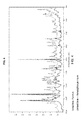
- FIG. 6 is a graphical representation of the PXDR pattern of crystalline Form A.
- FIG. 7 is a graphical representation of the TG-FTIR chromatogram of crystalline Form A.
- FIG. 8 is a graphical representation of the DSC chromatogram of crystalline Form A.
- FIG. 9 is a graphical representation of the DVS chromatogram of crystalline Form A with time as the X axis.
- FIG. 10 is a graphical representation of the DVS chromatogram of crystalline Form A with relative humidity as the X axis.
- FIG. 11 is a graphical representation of a TG-FTIR chromatogram of crystalline Form A, using material previously subjected to DVS analysis.
- FIG. 12 is a graphical representation of the FT-Raman spectrum of crystalline Form B.
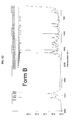
- FIG. 13 is a graphical representation of the PXDR pattern of crystalline Form B.
- FIG. 14 is a graphical representation of the TG-FTIR chromatogram of crystalline Form B.
- FIG. 15 is a graphical representation of the DVS chromatogram of crystalline Form B with time as the X axis.
- FIG. 16 is a graphical representation of the DVS chromatogram of crystalline Form B with relative humidity as the X axis.
- FIG. 17 is a graphical representation of the DSC chromatogram of crystalline Form B.
- FIG. 18 is a graphical representation of the FT-Raman spectrum of crystalline Form C.
- FIG. 19 is a graphical representation of the PXDR pattern of crystalline Form C.
- FIG. 20 is a graphical representation of the TG-FTIR chromatogram of crystalline Form C.
- FIG. 21 is a graphical representation of the FT-Raman spectrum of crystalline Form D.
- FIG. 22 is a graphical representation of the PXDR pattern of crystalline Form D.
- FIG. 23 is a graphical representation of the TG-FTIR chromatogram of crystalline Form D.
- FIG. 24 is a graphical representation of the FT-Raman spectrum of crystalline Form E.
- FIG. 25 is a graphical representation of the PXDR pattern of crystalline Form E.
- FIG. 26 is a graphical representation of the TG-FTIR chromatogram of crystalline Form E.
- FIG. 27 is a graphical representation of histopathological evaluation of biopsies taken before and after treatment of a dog eye with the compound of Formula I.
- FIG. 28 illustrates the mean change in Schirmer test score at weeks, 2, 4, 8, and 12 for eyes in dogs treated with the compound of Formula I.
- FIG. 29 illustrates percentage of dog eyes with a Schirmer test score of greater than 10 mm at 2, 4, 8, and 12-weeks with a formulation of 1% compound of Formula I (TID; three times daily).
- FIG. 30 illustrates percentage of eyes with a greater than 4 mm improvement in Schirmer test score at 2, 4, 12, 16, and 26 weeks for subjects treated with a formulation of 1% compound of Formula I (TID) compared to literature results for 2% CsA (BID; two times daily).
- FIG. 31 illustrates a timecourse of mean plasma levels of the compound of Formula I treatment (human) with 5% compound of Formula I.
- FIG. 32 illustrates tear C min levels for human subjects treated with 1% compound of Formula I QD (once a day).
- FIG. 33 illustrates the dose/drug C max tear level relationship for administration of the compound of Formula I in humans (QD and TID).
- FIG. 34 illustrates the dose/AUC and dose/mean C max tear level relationship for human subjects treated QD with the compound of Formula I.
- FIG. 35 is a graphical representation of a whole body autoradiograph for a male Sprague Dawley Animal 0.5 hour after a single topical ocular administration of [ 14 C]-compound of Formula I (1 mg/eye).
- FIG. 36 is a graphical representation of a whole-body autoradiograph for a male Sprague Dawley Animal 2 hours after a single topical ocular administration of [ 14 C]-compound of Formula I (1 mg/eye).
- FIG. 37 is a graphical representation of a whole-body autoradiograph for a male Sprague Dawley Animal 8 hours after a single topical ocular administration of [ 14 C]-compound of Formula I (1 mg/eye).
- FIG. 38 is a graphical representation of a whole-body autoradiograph for a male Sprague Dawley Animal 12 hours after a single topical ocular administration of [ 14 C]-compound of Formula I (1 mg/eye).
- FIG. 39 is a graphical representation of a whole-body autoradiograph for a male Sprague Dawley Animal 24 hours after a single topical ocular administration of [ 14 C]-compound of Formula I (1 mg/eye).
- FIG. 40 illustrates rat ocular pharmacokinetics of [ 14 C]-compound of Formula I.
- FIG. 41 illustrates dog ocular pharmacokinetics of [ 14 C]-compound of Formula I.
- FIG. 42 is a graphical representation of the timecourse of drug plasma levels for the compound of Formula I following single IV doses in rats.
- FIG. 43 is a graphical representation of the timecourse of drug plasma levels for the compound of Formula I following single IV doses in dogs.
- FIG. 44 illustrates the dose/drug AUC (in tears) relationship for the compound of Formula I administered to dogs.
- FIG. 45 illustrates the drug tear concentration profiles measured after 13 weeks of TID ocular dosing in rabbits.
- FIG. 46 illustrates the drug tear concentration profiles measured after 13 weeks of TID ocular dosing in dogs.
- FIG. 47 illustrates mean drug tear concentrations in right and left eyes of rabbits following topical instillation of a single dose of the compound of Formula I.
- FIG. 48 illustrates the drug plasma level in rats for various topical applications of the compound of Formula I.
- agent refers to a biological, pharmaceutical, or chemical compound or other moiety.
- Non-limiting examples include simple or complex organic or inorganic molecule, a peptide, a protein, an oligonucleotide, an antibody, an antibody derivative, antibody fragment, a vitamin derivative, a carbohydrate, a toxin, or a chemotherapeutic compound.
- Various compounds can be synthesized, for example, small molecules and oligomers (e.g., oligopeptides and oligonucleotides), and synthetic organic compounds based on various core structures.
- various natural sources can provide compounds for screening, such as plant or animal extracts, and the like. A skilled artisan can readily recognize that there is no limit as to the structural nature of the agents of the present invention.
- agonist refers to a compound having the ability to initiate or enhance a biological function of a target protein, whether by inhibiting the activity or expression of the target protein. Accordingly, the term “agonist” is defined in the context of the biological role of the target polypeptide. While preferred agonists herein specifically interact with (e.g. bind to) the target, compounds that initiate or enhance a biological activity of the target polypeptide by interacting with other members of the signal transduction pathway of which the target polypeptide is a member are also specifically included within this definition.
- antagonists are used interchangeably, and they refer to a compound having the ability to inhibit a biological function of a target protein, whether by inhibiting the activity or expression of the target protein. Accordingly, the terms “antagonist” and “inhibitors” are defined in the context of the biological role of the target protein. While preferred antagonists herein specifically interact with (e.g. bind to) the target, compounds that inhibit a biological activity of the target protein by interacting with other members of the signal transduction pathway of which the target protein is a member are also specifically included within this definition.
- a preferred biological activity inhibited by an antagonist of LFA-1 for example, is associated with an undesired inflammatory or immune response as manifested in inflammatory or autoimmune disease, respectively.
- a “directly competitive inhibitor” or “directly competitive antagonist” refers to a ligand, which includes biomolecules, peptides, and synthetic small organic molecules, which binds directly to the active site of the biological target molecule, and directly prevents a substrate from binding to it.
- a directly competitive inhibitor of the interaction of LFA-1 and ICAM-1 binds to LFA-1 at the site where ICAM-1 binds, and thus directly prevents ICAM-1 from binding.
- Allosteric inhibitor refers to a ligand which includes biomolecules, peptides, and synthetic small organic molecules, that binds to a biological target molecule at a site other than the binding site of the interaction which is being inhibited.
- the interaction changes the shape of the biological target molecule so as to disrupt the usual complex between the biological target molecule and its substrate. This results in inhibition of the normal activity of such complex formation.
- an allosteric inhibitor of the interaction of LFA-1 and ICAM-1 binds to LFA-1 at a site other than that where ICAM-1 binds, but it disrupts the binding site of ICAM-1 such that the interaction of LFA-1 and ICAM-1 is reduced.
- selective inhibition or “selectively inhibit” as applied to a biologically active agent refers to the agent's ability to selectively reduce the target signaling activity as compared to off-target signaling activity, via direct or interact interaction with the target.
- Th1 and Th2 refer to helper T cells which are found in two distinct cell types, Th1 and Th2, distinguished by the cytokines they produce and respond to and the immune responses they are involved in.
- Th1 cells produce pro-inflammatory cytokines like IFN-g, TNF-b and IL-2, while Th2 cells produce the cytokines IL-4, IL-5, IL-6 and IL-13.
- an “anti-cancer agent”, “anti-tumor agent” or “chemotherapeutic agent” refers to any agent useful in the treatment of a neoplastic condition.
- One class of anti-cancer agents comprises chemotherapeutic agents.
- “Chemotherapy” means the administration of one or more chemotherapeutic drugs and/or other agents to a cancer patient by various methods, including intravenous, oral, intramuscular, intraperitoneal, intravesical, subcutaneous, transdermal, buccal, or inhalation or in the form of a suppository.
- cell proliferation refers to a phenomenon by which the cell number has changed as a result of division. This term also encompasses cell growth by which the cell morphology has changed (e.g., increased in size) consistent with a proliferative signal.
- co-administration encompasses administration of two or more agents to an animal so that both agents and/or their metabolites are present in the animal at the same time.
- Co-administration includes simultaneous administration in separate compositions, administration at different times in separate compositions, or administration in a composition in which both agents are present.
- the term “effective amount” or “therapeutically effective amount” refers to that amount of a compound described herein that is sufficient to effect the intended application including but not limited to disease treatment, as defined below.
- the therapeutically effective amount may vary depending upon the intended application (in vitro or in vivo), or the subject and disease condition being treated, e.g., the weight and age of the subject, the severity of the disease condition, the manner of administration and the like, which can readily be determined by one of ordinary skill in the art.
- the term also applies to a dose that will induce a particular response in target cells, e.g. reduction of platelet adhesion and/or cell migration.
- the specific dose will vary depending on the particular compounds chosen, the dosing regimen to be followed, whether it is administered in combination with other compounds, timing of administration, the tissue to which it is administered, and the physical delivery system in which it is carried.
- treatment or “treating,” or “palliating” or “ameliorating” are used interchangeably herein. These terms refers to an approach for obtaining beneficial or desired results including but not limited to therapeutic benefit and/or a prophylactic benefit.
- therapeutic benefit is meant eradication or amelioration of the underlying disorder being treated.
- a therapeutic benefit is achieved with the eradication or amelioration of one or more of the physiological symptoms associated with the underlying disorder such that an improvement is observed in the patient, notwithstanding that the patient may still be afflicted with the underlying disorder.
- compositions may be administered to a patient at risk of developing a particular disease, or to a patient reporting one or more of the physiological symptoms of a disease, even though a diagnosis of this disease may not have been made.
- the compositions may be administered to a subject to prevent progression of physiological symptoms or to prevent progression of the underlying disorder
- a prophylactic effect includes delaying or eliminating the appearance of a disease or condition, delaying or eliminating the onset of symptoms of a disease or condition, slowing, halting, or reversing the progression of a disease or condition, or any combination thereof.
- the term “pharmaceutically acceptable salt” refers to those salts which are suitable for pharmaceutical use, preferably for use in the tissues of humans and lower animals without undue irritation, allergic response and the like.
- Pharmaceutically acceptable salts of amines, carboxylic acids, and other types of compounds are well known in the art. For example, S. M. Berge, et al., describe pharmaceutically acceptable salts in detail in J Pharmaceutical Sciences, 66: 1-19 (1977), incorporated herein by reference.
- the salts can be prepared in situ during the final isolation and purification of the compounds of the invention, or separately by reacting a free base or free acid function with a suitable reagent, as described generally below. For example, a free base function can be reacted with a suitable acid.
- suitable pharmaceutically acceptable salts thereof may, include metal salts such as alkali metal salts, e. g. sodium or potassium salts; and alkaline earth metal salts, e. g. calcium or magnesium salts.
- suitable pharmaceutically acceptable, nontoxic acid addition salts are salts of an amino group formed with inorganic acids such as hydrochloric acid, hydrobromic acid, phosphoric acid, sulfuric acid and perchloric acid or with organic acids such as acetic acid, oxalic acid, maleic acid, tartaric acid, citric acid, succinic acid or malonic acid or by using other methods used in the art such as ion exchange.
- salts include adipate, alginate, ascorbate, aspartate, benzoate, bisulfate, borate, butyrate, camphorate, camphorsulfonate, citrate, cyclopentanepropionate, digluconate, dodecylsulfate, formate, fumarate, glucoheptonate, glycerophosphate, gluconate, hernisulfate, heptanoate, hexanoate, hydroiodide, 2-hydroxy-ethanesulfonate, lactobionate, lactate, laurate, lauryl sulfate, malate, maleate, malonate, methanesulfonate, nicotinate, nitrate, oleate, oxalate, palmitate, pectinate, persulfate, 3-phenylpropionate, phosphate, picrate, pivalate, propionate, stearate, succinate,
- Representative alkali or alkaline earth metal salts include sodium, lithium, potassium, calcium, magnesium, and the like.
- Further pharmaceutically acceptable salts include, when appropriate, nontoxic ammonium, quaternary ammonium, and amine cations formed by direct reaction with the drug carboxylic acid or by using counterions such as halide, hydroxide, carboxylate, sulfate, phosphate, nitrate, sulfonate and aryl sulfonate.
- “Pharmaceutically acceptable carrier” or “pharmaceutically acceptable excipient” includes any and all solvents, dispersion media, coatings, antibacterial and antifungal agents, isotonic and absorption delaying agents and the like. The use of such media and agents for pharmaceutically active substances is well known in the art. Except insofar as any conventional media or agent is incompatible with the active ingredient, its use in the therapeutic compositions of the invention is contemplated. Supplementary active ingredients can also be incorporated into the compositions.
- Prodrug is meant to indicate a compound that may be converted under physiological conditions or by solvolysis to a biologically active compound described herein.
- prodrug refers to a precursor of a biologically active compound that is pharmaceutically acceptable.
- a prodrug may be inactive when administered to a subject, i.e. an ester, but is converted in vivo to an active compound, for example, by hydrolysis to the free carboxylic acid.
- the prodrug compound often offers advantages of solubility, tissue compatibility or delayed release in a mammalian organism (see, e.g., Bundgard, H., Design of Prodrugs (1985), pp. 7-9, 21-24 (Elsevier, Amsterdam).
- prodrugs are also meant to include any covalently bonded carriers, which release the active compound in vivo when such prodrug is administered to a mammalian subject.
- Prodrugs of an active compound, as described herein may be prepared by modifying functional groups present in the active compound in such a way that the modifications are cleaved, either in routine manipulation or in vivo, to the parent active compound.
- Prodrugs include compounds wherein a hydroxy, amino or mercapto group is bonded to any group that, when the prodrug of the active compound is administered to a mammalian subject, cleaves to form a free hydroxy, free amino or free mercapto group, respectively.
- Examples of prodrugs include, but are not limited to, acetate, formate and benzoate derivatives of an alcohol or acetamide, formamide and benzamide derivatives of an amine functional group in the active compound and the like.
- “Localized treatment” as used herein refers to treatment of an immune or inflammatory disorder wherein the drug is delivered locally and is not delivered via systemic delivery. This may include many different local areas or a few different local areas within, for example, the gastrointestinal tract to which drug is delivered to the gastrointestinal mucosa from within the lumen of the GI tract. Another example is treatment of skin, wherein the drug may be applied to many different locations or a few different locations on the skin, and wherein drug is delivered to tissues within and adjacent to the skin by absorption through the skin. Alternatively, drug may be delivered via suppository to anal mucosa and absorbed through the epithelial surfaces to tissue within and adjacent to the mucosa of the lower GI tract.
- “Local delivery” as used herein refers to drug compound being carried to the site of therapeutic use. It includes, for example, applying a formulation directly to area of skin that is being treated, spraying a formulation to an area of skin being treated, spraying or inhaling a formulation intranasally to administer drug to the nasal passages, or instilling eye drops to an eye to treat the eye.
- “local delivery” also encompasses orally or nasally administering a formulation which is carried to the gastrointestinal tract, wherein the drug is brought in contact with the gastrointestinal mucosa, where the drug is absorbed into the surrounding tissue and exerts a therapeutic effect, without being directly delivered to that site from the blood circulatory system.
- “Local tissue concentration” as used herein, refers to the concentration of LFA-1 antagonist within the tissue area to which the LFA-1 antagonist has been delivered and absorbed.
- Subject refers to an animal, such as a mammal, for example a human.
- the methods described herein can be useful in both human therapeutics and veterinary applications.
- the patient is a mammal, and in some embodiments, the patient is human.
- in vivo refers to an event that takes place in a subject's body.
- in vitro refers to an event that takes places outside of a subject's body.
- an in vitro assay encompasses any assay run outside of a subject assay.
- in vitro assays encompass cell-based assays in which cells alive or dead are employed.
- In vitro assays also encompass a cell-free assay in which no intact cells are employed.
- structures depicted herein are also meant to include compounds which differ only in the presence of one or more isotopically enriched atoms.
- compounds having structures wherein a hydrogen is replaced by a deuterium or tritium, or a carbon is replaced by 13 C- or 14 C-enriched carbon are within the scope of this invention.
- the compounds of the present invention may also contain unnatural proportions of atomic isotopes at one or more of atoms that constitute such compounds.
- the compounds may be radiolabeled with radioactive isotopes, such as for example tritium ( 3 H), iodine-125 ( 125 I) or carbon-14 ( 14 C). All isotopic variations of the compounds of the present invention, whether radioactive or not, are encompassed within the scope of the present invention.
- LFA-1 also known as CD11a/CD18 or the integrin ⁇ L ⁇ 2
- integrin ⁇ L ⁇ 2 is one of a group of leukointegrins which are expressed on most leukocytes, and is considered to be the lymphoid integrin which interacts with a number of ICAMs as ligands.
- LFA-1 The expression of LFA-1 in humans is almost exclusively limited to cells of the immune system, particularly the extracellular surface of leukocytes, including lymphocytes. As such, LFA-1 regulates the adhesion, migration, proliferation, and inflammatory response of lymphocytes, particularly T-lymphocytes (T-cells), in normal immune function as well as in a number of inflammatory and autoimmune disease settings. Disrupting LFA-1/ICAM interactions, and thus the immune/inflammatory response, provides for reduction of inflammation.
- ICAM-1 CD54
- ICAM-1 CD54
- ICAM-2 ICAM-2
- ICAM-3 ICAM-4
- ICAM-4 adhesion receptors
- LFA-1 and ICAM-1 Functional studies of the binding of LFA-1 and ICAM-1 have shown that this interaction is crucial in processes which contribute to disease mechanism including: leukocyte and lymphocyte adhesion to vascular endothelial cells; their extravasation from the vasculature at a site of inflammation; homotypic interactions between lymphocytes, as well as interactions between T-cells and dendritic cells in inflamed tissue; the formation of the immunologic synapse and in the transmission of costimulatory signals in concert with MHC/T-cell Receptor crucial for lymphocyte proliferation and cytokine release. Consequently, antagonists of LFA-1/ICAM binding may provide blockade of the adhesive, migratory, proliferative, and inflammatory signaling components of lymphocyte mediated inflammation.
- antagonists of LFA-1 may show anti-inflammatory and immunosuppressive effects on lymphocytes in vitro and in T-cell mediated diseases in vivo, particularly when administered systemically to treat inflammatory diseases throughout the body, or when administered locally to treat local manifestations of inflammatory diseases.
- LFA-1 has been found to be an effective inhibitor of LFA-1 interactions with ICAM-1. It is a member of a class of directly competitive inhibitors of LFA-1, binding to ICAM's binding-site on LFA-1 directly, and thus excludes ICAM binding. Directly competitive inhibitors of LFA-1 may offer the potential for more effective modulation of the inflammatory and/or immunologic response than allosteric inhibitors provide, precisely because these inhibitors occlude the binding site more effectively.
- the compound of Formula I has a rapid systemic clearance rate.
- LFA-1 interaction with ICAMs exert various systemic effects throughout the body. Treatment of a disorder using an LFA-1 antagonist may result in unwanted effects due to LFA-1 antagonist activity in unwanted locations, for example, other than at the site of administration.
- the present invention utilizes the compound of Formula I which is cleared quickly from systemic circulation.
- the compound of Formula I may have minimal systemic LFA-1 antagonist activity. In some embodiments, the compound of Formula I may have undetectable systemic LFA-1 antagonist activity. Therefore, the compound of Formula I may be particularly well suited for treatment of a disorder mediated by the interaction between LFA-1 and ICAM-1, where localized treatment is desirable and/or where such localized treatment is administered for many months or years.
- the systemic clearance rate can be calculated by various means known in the art.
- the clearance rate for a drug may be calculated from an analysis of the drug concentration time profile for the drug concentration time profile for the rate of disappearance of a drug from the plasma following administration of the formulation, for example after a single intravenous injection.
- One of skill in the art could use a variety of methods to calculate and determine systemic clearance rates.
- the rate of disappearance may be measured by analysis of the absorption, distribution, metabolism and excretion of a radiolabeled form of a drug or other means of measuring the level of drug in plasma, such as gas chromatography (Sapirstein et al., 1955, Am. Jour. Physiol., Vol. 181, pp. 330; U.S. Pat. No.
- the clearance rate may be calculated by introducing the formulation to the subject by continuous intravenous infusion until an equilibrium is reached at which the plasma level of the substance (as determined by analysis of plasma samples) is steady, at which point the infusion rate is equal to the rate of clearance from plasma (Earle et al., 1946, Proc. Soc. Exp. Biol. Med., Vol. 62, pp. 262 ff.)
- Rapid systemic clearance may be through clearance or metabolism in the liver, kidney or other organs. Where clearance occurs in a particular organ, the clearance rate is related to the blood flow to that particular organ.
- the clearance rate for other animals may be calculated by allometric scaling.
- the compound of the present invention is known to be cleared through the liver in rats. Based on the rate of clearance calculated in rat, the clearance of the compound may be scaled for various animals based on the known blood flow in rats compared to other animals (see Davies and Morris, “Physiological Parameters in Laboratory Animals and Humans” Pharmaceutical Research (1993)10:1093-5).
- 100% of rat hepatic blood flow would be approximately 55 mL/min/kg while 100% of human hepatic blood flow would be approximately 20 mL/min/kg.
- the compound of Formula I has a clearance rate in rats of greater than 100 mL/min/kg.
- these modifications may have different solid-state physical properties to affect, for example, the solubility, dissolution rate, bioavailability, chemical and physical stability, flowability, fractability, and compressibility of the compound as well as the safety and efficacy of drug products based on the compound.
- further purification in terms of gross physical purity or optical purity, may be accomplished as well.
- Fourier Transform-Raman Spectroscopy was performed with a Bruker RFS100 instrument, using Nd:YAG 1064 nm excitation, 300 mW laser power, Ge detector, using 64 scans over the range of 25-3500 cm ⁇ 1 , and with 2 cm ⁇ 1 resolution.
- PXDR Power X-ray Diffraction
- TG-FTIR Thermogravimetric-Fourier transform Infrared Spectroscopy
- DSC Differential Scanning Calorimetry
- Dynamic Vapor Sorption (DVS) analysis was performed with a Surface Measurement Systems DVS-1 water vapor sorption analyzer.
- the experiments were run by placing the sample on a quartz holder on top of a microbalance, and allowing the sample to equilibrate at 50% relative humidity (r.h.) before starting the pre-defined humidity program.
- the program proceeded in the following steps: 1 hour at 50% r.h.; 50% to 0% r.h. at a rate of 5% r.h. change per hour; 5 hours at 0% r.h; 0% r.h to 96% r.h. at 5% r.h change per hour; 5 hours at 95% r.h.; 95% r.h. to 50% r.h. at a rate of 5% r.h. change per hour, and followed by one hour at 50% r.h.
- the reaction product resulting from synthesis of the compound of Formula I, using the synthetic methods described in U.S. Pat. No. 7,314,938, was isolated by concentration from an ethyl acetate extract. It may be further purified to remove calcium impurities or convert the calcium salt to the free acid.
- the free acid thus obtained has a FT-Raman chromatogram with broad peaks ( FIG. 1 ), and an X-ray powder diffraction chromatogram with no peaks ( FIG. 2 ), thus revealing that the reaction product is an amorphous form.
- the amorphous form has a thermogravimetric/Fourier transform infrared chromatogram which demonstrates that the amorphous form loses about 5.1% of its mass as temperature is raised to just below 190° C., which is attributed to loss of ethyl acetate. As the temperature is raised above 190° C., the amorphous form begins to decompose, as shown in FIG. 3 .
- the purity of the amorphous solid as determined by high pressure liquid chromatography is 96.6% of the total area under the curve as observed at 220 nm, and 97.1% of the total area under the curve at 254.4 nm (Table 1).
- Crystallization in selected solvents and under selected conditions resulted in the discovery of several crystalline forms with distinct physical behavior.
- the amorphous form (free acid, 129 mg) was suspended in 0.2 ml acetonitrile which had been previously dried over molecular sieves and let stand for 3 days. Another addition of 0.5 ml dry acetonitrile was made and the suspension was exposed to ultrasonic radiation. The suspension was then stirred for one day, filtered and rinsed with 1.5 ml dry acetonitrile to produce crystalline Form A.
- the crystalline Form A was also produced by slurrying amorphous form in methyl ethyl ketone (MEK). As a third alternative, slurrying the amorphous form in water will also provide crystalline Form A.
- MEK methyl ethyl ketone
- a Zorbax SB C18 50 ⁇ 4.6 mm ID column was used, Eluent C was 0.1% TFA in water and Eluent D was 0.1% TFA in acetonitrile, with a ratio of C:D equal to 2:8, with a flow rate of 1 ml/min.
- the column temperature was controlled at 40° C. Detection was performed at either 220 nm or 254 nm.
- Form A has a high pressure liquid chromatogram comprising a total area under the curve of 98.0% for Form A, as observed at 220 nm, and a total area under the curve of 98.5% for Form A when observed at 254 nm (Table 1A).
- the method of producing crystalline Form A removes more impurities that were introduced to the compound of Formula I throughout the synthetic route, which may be due to one or more of by-products of the synthesis, impurities introduced with reagents used in the synthesis, trapped organic solvents used in prior reaction steps, such as methylene chloride, and contaminants due to degradation of an intermediate product of the synthetic sequence. Removal of methylene chloride is particularly important in preparation of formulations for ocular application.
- Impurities which must be removed from the product of the synthetic process include residual palladium catalyst and residual organic solvents including MEK, ethyl acetate, THF, and toluene.
- Other impurities which are intermediates and/or starting materials of the synthesis include compounds 12, 18, and 19 (shown in Scheme 5), which may be designated byproducts of the synthesis.
- Form A was also analyzed by chiral high pressure liquid chromatography to determine the chiral purity of the S enantiomer.
- the mobile phase was 350 ml acetonitrile mixed with 650 ml of water which had previously been adjusted to pH 3.0 with formic acid.
- the chromatography was isocratic, using a Chiralcel OJ-RH column, 150 ⁇ 4.6 mm, temperature controlled to 40° C., and detection was performed at 260 nm.
- Crystalline Form A was analyzed by 1 H-Nuclear Magnetic Resonance spectroscopy. The resultant spectrum showed a number of the peaks which were narrowed in comparison to that of the amorphous form, and removal of trapped ethyl acetate was accomplished.
- Crystalline Form A when analyzed by Raman spectroscopy, has a chromatogram which has narrowed peaks relative to the above amorphous form, as is shown in the overlaid spectra of both forms in FIG. 4 . Several peaks were shifted relative to the amorphous form.
- the Raman chromatogram of crystalline Form A is shown in FIG. 5 .
- Crystalline Form A comprises a powder x-ray diffraction pattern as shown in FIG. 6 .
- the peak assignments corresponding to the diffraction pattern for crystalline Form A and their relative intensities are listed in Table 2.
- Thermogravimetric analysis graph of crystalline Form A is shown in FIG. 7 .
- a mass loss of about 2.5% between room temperature and 180° C. is observed.
- the loss is attributable to loss of water.
- the results suggest that Form A is a hydrate, with a theoretical mass loss of 2.8%, and that the water of hydration may be derived from the amorphous form or may have been introduced adventitiously in the crystallization experiment.
- FIG. 8 The graph of differential scanning calorimetry of crystalline Form A, performed at a rate of change of 10° C./min, is shown in FIG. 8 .
- a double peak is seen at about 145° C., and correlates with the loss of water observed in the TG-FTIR.
- crystalline Form A was analyzed using DVS.
- FIG. 9 and FIG. 10 show its behavior over the standard experimental protocol.
- FIG. 9 shows the change in mass of crystalline Form A over the timecourse of the experiment, first decreasing in mass as the relative humidity is decreased, stabilizing at the lowest relative humidity of 0.4%, then increasing with increasing relative humidity, and stabilizing at 95% relative humidity.
- the amount of mass loss is consistent with the presence of a hemi hydrate (0.5 mole water per mole free acid) and the mass gain at 95% relative humidity is consistent with the presence of 1.1 mole water per mole free acid.
- the material at the start of the experiment has a water content of about 0.9 mole water per mole free acid.
- the behavior of crystalline Form A versus the relative humidity axis of this experiment is shown in FIG. 10 .
- a second TG-FTIR analysis was performed on crystalline Form A material after it had been treated according to the DVS experimental conditions. This data is shown in FIG. 11 and demonstrates that the changes in mass seen over the course of the DVS analysis are reversible as the same curve is obtained.
- Crystalline Form B was produced from crystalline Form A, by suspending 100 mg of crystalline Form A in ethyl acetate, which had been previously dried over molecular sieves, stirring for four days, and then filtering to isolate crystalline Form B. It was also formed to an extent by slurrying Form A in tert-butyl methyl ether. Crystalline Form B was analyzed by most of the same techniques as crystalline Form A. The FT-Raman spectrum of Crystalline Form B is shown in FIG. 12 . The PXDR pattern of crystalline Form B is distinct from that of crystalline Form A, and is shown in FIG. 13 . The peak assignments and their relative intensities are listed in Table 3.
- TG-FTIR data for Form B is displayed in FIG. 14 .
- DVS analysis of Form B is shown in FIG. 15 and FIG. 16 , mass change versus time in FIG. 15 and mass change versus relative humidity in FIG. 16 , respectively.
- the mass loss upon reduction of the relative humidity to 0.4% is 0.30% and 0.19% mass gain is seen upon equilibration at 95% relative humidity.
- the decomposition of Form B itself occurred at the same temperature as that observed for Form A.
- the graph of the DSC analysis of Form B is shown in FIG.
- Crystalline Form C was produced by suspending 104 mg of crystalline Form A in ethanol, which had been dried over molecular sieves, and stirring the resultant slurry for four days. Crystalline Form C was isolated upon filtering.
- the FT-Raman chromatogram of crystalline Form C is shown in FIG. 18 .
- the PXDR graph of Crystalline Form C ( FIG. 19 ) shows that a distinct and new crystalline form has been isolated.
- the peak assignments and relative intensities for PXDR pattern for crystalline Form C are listed in Table 4.
- the graph of the TG-FTIR data for crystalline Form C is shown in FIG. 20 .
- the first mass loss is attributable to water and ethanol loss, up to about 120° C.
- the pronounced loss at about 155° C. of about 3.86% is attributable to loss of ethanol, and may be consistent with crystalline Form C existing as a hemi ethanol solvate, which converts to Form A upon drying in a humid atmosphere.
- Crystalline Form D was produced by suspending 97 mg of Form A in 1.0 ml of water, stirring for four days, and then filtering to isolate crystalline Form D.
- the FT-Raman chromatogram is shown in FIG. 21 .
- the PXDR pattern of crystalline Form D is shown in FIG. 22 , and represents another novel crystalline form.
- the peak assignments and intensities for the PXDR pattern are listed in Table 5.
- Crystalline Form E is consistent with conversion of crystalline Form D into crystalline Form A upon heating.
- a mass loss of about 23.5% was observed about 110° C., but does not appear to be consistent with a dehydration step converting a hydrate to an anhydrate, but appears to be consistent with the loss of water from the surface of the solid.
- Crystalline Form E was produced similarly to that of crystalline Form A, using 103 mg of the Amorphous Form described above, suspending the amorphous Form in 0.7 ml acetonitrile, previously dried over molecular sieves, and seeded with crystalline Form A. After stirring, crystalline Form E was isolated by filtration, and investigated while still in wet stage. Crystalline Form E converts into crystalline Form A upon drying.
- the FT-Raman chromatogram of crystalline Form E is shown in FIG. 24
- its PXDR pattern is shown in FIG. 25 .
- the assignment of peaks and their intensities for the PXDR of crystalline Form E is listed in Table 6.
- the data from the TG-FTIR analysis of Form E is shown in FIG. 26 .
- each of crystalline Forms A, B, C, D, and E has been exemplified employing a specific solvent system and crystallization conditions, it is envisioned that each form can be obtained employing a different solvent or combination of solvents and/or different crystallization conditions. Further, crystals of any of crystalline Forms A, B, C, D, or E may be added to solutions or slurries of the amorphous form to seed the crystallization of that specific form. Therefore the above description is not meant to limit the invention in any way.
- any of the crystalline Forms A, B, C, D, and/or E may be treated to regenerate an amorphous form.
- An amorphous form with equivalent purity to that of crystalline Form A, B, C, D, or E was produced by dissolving the crystalline form in aqueous sodium bicarbonate, acidifying, and extracting the compound of Formula I into ethyl acetate. Removal of the ethyl acetate yielded the amorphous form having the same purity as that of any of crystalline Forms A, B, C, D, or/and E.
- a partial list of useful solvents includes, i.e., for example, water, aliphatic solvents such as pentane, petroleum ether, and hexane; aromatic solvents such as toluene and xylene, aliphatic ketones and esters such as methyl ethyl ketone, acetone ethyl acetate, and butyl acetate, alcohols, such as ethyl alcohol, propyl alcohol, and methyl alcohol, acetonitrile, ethers, such as ethyl ether, tert-butyl methyl ether (TBME), and tetrahydrofuran, alkenes and alkynes, alkenyl esters and alcohols, alkynyl esters and alcohols, and aromatic esters and alcohols.
- aliphatic solvents such as pentane, petroleum ether, and hexane
- aromatic solvents such as toluene and xylene
- the purity of the amorphous form of the compound of Formula I as measured by high pressure liquid chromatography is greater than about 90%, about 90.5%, about 91.0%, about 91.5%, about 92.0%, about 92.5%, about 93.0%, about 93.5%, about 94.0%, about 94.5%, about 95.0%, about 95.5%, about 96.0%, about 96.5%, about 97.0%, about 97.5%, about 98.0%, about 98.5%, about 99.0%, about 99.5%, or about 99.9% total area under the curve as observed at about 220 nm.
- the amorphous form of the compound of Formula I is about 100.0% pure as measured by high pressure liquid chromatography as area under the curve as observed at about 220 nm.
- the purity of the amorphous form of the compound of Formula I as measured by high pressure liquid chromatography is greater than about 90%, about 90.5%, about 91.0%, about 91.5%, about 92.0%, about 92.5%, about 93.0%, about 93.5%, about 94.0%, about 94.5%, about 95.0%, about 95.5%, about 96.0%, about 96.5%, about 97.0%, about 97.5%, about 98.0%, about 98.5%, about 99.0%, about 99.5%, or about 99.9% total area under the curve as observed at about 254 nm or about 260 nm.
- the amorphous form of the compound of Formula I is about 100.0% pure as measured by high pressure liquid chromatography as area under the curve as observed at about 254 nm or about 260 nm.
- the purity of crystalline Form A of the compound of Formula I as measured by high pressure liquid chromatography is greater than about 90%, about 90.5%, about 91.0%, about 91.5%, about 92.0%, about 92.5%, about 93.0%, about 93.5%, about 94.0%, about 94.5%, about 95.0%, about 95.5%, about 96.0%, about 96.5%, about 97.0%, about 97.5%, about 98.0%, about 98.5%, about 99.0%, about 99.5%, or about 99.9% total area under the curve as observed at about 220 nm.
- the crystalline Form A of the compound of Formula I is about 100.0% pure as measured by high pressure liquid chromatography as area under the curve as observed at about 220 nm.
- the purity of crystalline Form A of the compound of Formula I as measured by high pressure liquid chromatography is greater than about 90%, about 90.5%, about 91.0%, about 91.5%, about 92.0%, about 92.5%, about 93.0%, about 93.5%, about 94.0%, about 94.5%, about 95.0%, about 95.5%, about 96.0%, about 96.5%, about 97.0%, about 97.5%, about 98.0%, about 98.5%, about 99.0%, about 99.5%, or about 99.9% total area under the curve as observed at about 254 nm or about 260 nm.
- the crystalline Form A of the compound of Formula I is about 99.9% pure as measured by high pressure liquid chromatography as area under the curve as observed at about 254 nm or about 260 nm.
- the purity of crystalline Form B of the compound of Formula I as measured by high pressure liquid chromatography is greater than about 90%, about 90.5%, about 91.0%, about 91.5%, about 92.0%, about 92.5%, about 93.0%, about 93.5%, about 94.0%, about 94.5%, about 95.0%, about 95.5%, about 96.0%, about 96.5%, about 97.0%, about 97.5%, about 98.0%, about 98.5%, about 99.0%, about 99.5%, or about 99.9% total area under the curve as observed at about 220 nm.
- the crystalline Form B of the compound of Formula I is about 100.0% pure as measured by high pressure liquid chromatography as area under the curve as observed at about 220 nm.
- the purity of crystalline Form B of the compound of Formula I as measured by high pressure liquid chromatography is greater than about 90%; about 90.5%, about 91.0%, about 91.5%, about 92.0%, about 92.5%, about 93.0%, about 93.5%, about 94.0%, about 94.5%, about 95.0%, about 95.5%, about 96.0%, about 96.5%, about 97.0%, about 97.5%, about 98.0%, about 98.5%, about 99.0%, about 99.5%, or about 99.9% total area under the curve as observed at about 254 nm or about 260 nm.
- the crystalline Form B of the compound of Formula I is about 100.0% pure as measured by high pressure liquid chromatography as area under the curve as observed at about 254 nm or about 260 nm.
- the purity of crystalline Form C of the compound of Formula I as measured by high pressure liquid chromatography is greater than about 90%, about 90.5%, about 91.0%, about 91.5%, about 92.0%, about 92.5%, about 93.0%, about 93.5%, about 94.0%, about 94.5%, about 95.0%, about 95.5%, about 96.0%, about 96.5%, about 97.0%, about 97.5%, about 98.0%, about 98.5%, about 99.0%, about 99.5%, or about 99.9% total area under the curve as observed at about 220 nm.
- the crystalline Form C of the compound of Formula I is about 100.0% pure as measured by high pressure liquid chromatography as area under the curve as observed at about 220 nm.
- the purity of crystalline Form C of the compound of Formula I as measured by high pressure liquid chromatography is greater than about 90%, about 90.5%, about 91.0%, about 91.5%, about 92.0%, about 92.5%, about 93.0%, about 93.5%, about 94.0%, about 94.5%, about 95.0%, about 95.5%, about 96.0%, about 96.5%, about 97.0%, about 97.5%, about 98.0%, about 98.5%, about 99.0%, about 99.5%, or about 99.9% total area under the curve as observed at about 254 nm or about 260 nm.
- the crystalline Form C of the compound of Formula I is about 100.0% pure as measured by high pressure liquid chromatography as area under the curve as observed at about 254 nm or about 260 nm.
- the purity of crystalline Form D of the compound of Formula I as measured by high pressure liquid chromatography is greater than about 90%, about 90.5%, about 91.0%, about 91.5%, about 92.0%, about 92.5%, about 93.0%, about 93.5%, about 94.0%, about 94.5%, about 95.0%, about 95.5%, about 96.0%, about 96.5%, about 97.0%, about 97.5%, about 98.0%, about 98.5%, about 99.0%, about 99.5%, or about 99.9% total area under the curve as observed at about 220 nm.
- the crystalline Form D of the compound of Formula I is about 100.0% pure as measured by high pressure liquid chromatography as area under the curve as observed at about 220 nm.
- the purity of crystalline Form D of the compound of Formula I as measured by high pressure liquid chromatography is greater than about 90%, about 90.5%, about 91.0%, about 91.5%, about 92.0%, about 92.5%, about 93.0%, about 93.5%, about 94.0%, about 94.5%, about 95.0%, about 95.5%, about 96.0%, about 96.5%, about 97.0%, about 97.5%, about 98.5%, about 98.5%, about 99.0%, about 99.5%, or about 99.9% total area under the curve as observed at about 254 nm or about 260 nm.
- the crystalline Form D of the compound of Formula I is about 100.0% pure as measured by high pressure liquid chromatography as area under the curve as observed at about 254 nm or about 260 nm.
- the purity of crystalline Form E of the compound of Formula I as measured by high pressure liquid chromatography is greater than about 90%, about 90.5%, about 91.0%, about 91.5%, about 92.0%, about 92.5%, about 93.0%, about 93.5%, about 94.0%, about 94.5%, about 95.0%, about 95.5%, about 96.0%, about 96.5%, about 97.0%, about 97.5%, about 98.0%, about 98.5%, about 99.0%, about 99.5%, or about 99.9% total area under the curve as observed at about 220 nm.
- the crystalline Form E of the compound of Formula I is about 100.0% pure as measured by high pressure liquid chromatography as area under the curve as observed at about 220 nm.
- the purity of crystalline Form E of the compound of Formula I as measured by high pressure liquid chromatography is greater than about 90%, about 90.5%, about 91.0%, about 91.5%, about 92.0%, about 92.5%, about 93.0%, about 93.5%, about 94.0%, about 94.5%, about 95.0%, about 95.5%, about 96.0%, about 96.5%, about 97.0%, about 97.5%, about 98.0%, about 98.5%, about 99.0%, about 99.5%, or about 99.9% total area under the curve as observed at about 254 nm or about 260 nm.
- the crystalline Form E of the compound of Formula I is about 100.0% pure as measured by high pressure liquid chromatography as area under the curve as observed at about 254 nm or about 260 nm.
- the chiral purity of the amorphous form of the compound of Formula I as measured by chiral chromatography at 260 nm is greater than about 75%, about 75.5%, about 76%, about 76.5%, about 77%, about 77.5%, about 78%, about 78.5%, about 79%, about 79.5%, about 80%, about 80.5%, about 81%, about 81.5%, about 82%, about 82.5%, about 83%, about 83.5%, about 84%, about 84.5%, about 85%, about 85.5%, about 86%, about 86.5%, about 87%, about 87.5%, about 88%, about 88.5%, about 89%, about 89.5%, about 90%, about 90.5%, about 91.0%, about 91.5%, about 92.0%, about 92.5%, about 93.0%, about 93.5%, about 94.0%, about 94.0%, about 94.5%, about 94.0%, about 94
- the chiral purity of crystalline Form A of the compound of Formula I as measured by chiral chromatography at 260 nm is greater than about 75%, about 75.5%, about 76%, about 76.5%, about 77%, about 77.5%, about 78%, about 78.5%, about 79%, about 79.5%, about 80%, about 80.5%, about 81%, about 81.5%, about 82%, about 82.5%, about 83%, about 83.5%, about 84%, about 84.5%, about 85%, about 85.5%, about 86%, about 86.5%, about 87%, about 87.5%, about 88%, about 88.5%, about 89%, about 89.5%, about 90%, about 90.5%, about 91.0%, about 91.5%, about 92.0%, about 92.5%, about 93.0%, about 93.5%, about 94.0%, about 94.0%, about 94.5%, about 95.
- the chiral purity of crystalline Form B of the compound of Formula I as measured by chiral chromatography at 260 nm is greater than about 75%, about 75.5%, about 76%, about 76.5%, about 77%, about 77.5%, about 78%, about 78.5%, about 79%, about 79.5%, about 80%, about 80.5%, about 81%, about 81.5%, about 82%, about 82.5%, about 83%, about 83.5%, about 84%, about 84.5%, about 85%, about 85.5%, about 86%, about 86.5%, about 87%, about 87.5%, about 88%, about 88.5%, about 89%, about 89.5%, about 90%, about 90.5%, about 91.0%, about 91.5%, about 92.0%, about 92.5%, about 93.0%, about 93.5%, about 94.0%, about 94.0%, about 94.5%, about 95.
- the chiral purity of crystalline Form C of the compound of Formula I as measured by chiral chromatography at 260 nm is greater than about 75%, about 75.5%, about 76%, about 76.5%, about 77%, about 77.5%, about 78%, about 78.5%, about 79%, about 79.5%, about 80%, about 80.5%, about 81%, about 81.5%, about 82%, about 82.5%, about 83%, about 83.5%, about 84%, about 84.5%, about 85%, about 85.5%, about 86%, about 86.5%, about 87%, about 87.5%, about 88%, about 88.5%, about 89%, about 89.5%, about 90%, about 90.5%, about 91.0%, about 91.5%, about 92.0%, about 92.5%, about 93.0%, about 93.5%, about 94.0%, about 94.0%, about 94.5%, about 95.
- the chiral purity of crystalline Form D of the compound of Formula I as measured by chiral chromatography at 260 nm is greater than about 75%, about 75.5%, about 76%, about 76.5%, about 77%, about 77.5%, about 78%, about 78.5%, about 79%, about 79.5%, about 80%, about 80.5%, about 81%, about 81.5%, about 82%, about 82.5%, about 83%, about 83.5%, about 84%, about 84.5%, about 85%, about 85.5%, about 86%, about 86.5%, about 87%, about 87.5%, about 88%, about 88.5%, about 89%, about 89.5%, about 90%, about 90.5%, about 91.0%, about 91.5%, about 92.0%, about 92.5%, about 93.0%, about 93.5%, about 94.0%, about 94.0%, about 94.5%, about 95.
- the chiral purity of crystalline Form E of the compound of Formula I as measured by chiral chromatography at 260 nm is greater than about 75%, about 75.5%, about 76%, about 76.5%, about 77%, about 77.5%, about 78%, about 78.5%, about 79%, about 79.5%, about 80%, about 80.5%, about 81%, about 81.5%, about 82%, about 82.5%, about 83%, about 83.5%, about 84%, about 84.5%, about 85%, about 85.5%, about 86%, about 86.5%, about 87%, about 87.5%, about 88%, about 88.5%, about 89%, about 89.5%, about 90%, about 90.5%, about 91.0%, about 91.5%, about 92.0%, about 92.5%, about 93.0%, about 93.5%, about 94.0%, about 94.0%, about 94.5%, about 95.
- the amorphous form of the compound of Formula I has less than about 2.0%, about 1.9%, about 1.8%, about 1.7%, about 1.6%, about 1.5%, about 1.4%, about 1.3%, about 1.2%, about 1.1%, about 1.0%, about 0.9%, about 0.8%, about 0.7%, about 0.6%, about 0.5%, about 0.4%, about 0.3%, about 0.2%, about 0.1%, about 0.09%, about 0.08%, about 0.07%, about 0.06%, about 0.05%, about 0.04%, about 0.03%, about 0.02%, about 0.01%, or about 0.009% of any one impurity introduced, obtained or produced as a result of the chemical synthesis, as measured by chromatography at about 220 nm.
- the impurity is a by-product of the synthesis.
- crystalline Form A of the compound of Formula I has less than about 2.0%, about 1.9%, about 1.8%, about 1.7%, about 1.6%, about 1.5%, about 1.4%, about 1.3%, about 1.2%, about 1.1%, about 1.0%, about 0.9%, about 0.8%, about 0.7%, about 0.6%, about 0.5%, about 0.4%, about 0.3%, about 0.2%, about 0.1%, about 0.09%, about 0.08%, about 0.07%, about 0.06%, about 0.05%, about 0.04%, about 0.03%, about 0.02%, about 0.01%, or about 0.009% of any one impurity introduced, obtained or produced as a result of the chemical synthesis, as measured by chromatography at 220 nm.
- the impurity is a by-product of the synthesis.
- crystalline Form B of the compound of Formula I has less than about 2.0%, about 1.9%, about 1.8%/o, about 1.7%, about 1.6%, about 1.5%, about 1.4%, about 1.3%, about 1.2%, about 1.1%, about 1.0%, about 0.9%, about 0.8%, about 0.7%, about 0.6%, about 0.5%, about 0.4%, about 0.3%, about 0.2%, about 0.1%, about 0.09%, about 0.08%, about 0.07%, about 0.06%, about 0.05%, about 0.04%, about 0.03%, about 0.02%, about 0.01%, or about 0.009% of any one impurity introduced, obtained or produced as a result of the chemical synthesis, as measured by chromatography at about 220 nm.
- the impurity is a by-product of the synthesis.
- crystalline Form C of the compound of Formula I has less than about 2.0%, about 1.9%, about 1.8%, about 1.7%, about 1.6%, about 1.5%, about 1.4%, about 1.3%, about 1.2%, about 1.1%, about 1.0%, about 0.9%, about 0.8%, about 0.7%, about 0.6%, about 0.5%, about 0.4%, about 0.3%, about 0.2%, about 0.1%, about 0.09%, about 0.08%, about 0.07%, about 0.06%, about 0.05%, about 0.04%, about 0.03%, about 0.02%, about 0.01%, or about 0.009% of any one impurity introduced, obtained or produced as a result of the chemical synthesis, as measured by chromatography at 220 nm.
- the impurity is a by-product of the synthesis.
- crystalline Form D of the compound of Formula I has less than about 2.0%, about 1.9%, about 1.8%, about 1.7%, about 1.6%, about 1.5%, about 1.4%, about 1.3%, about 1.2%, about 1.1%, about 1.0%, about 0.9%, about 0.8%, about 0.7%, about 0.6%, about 0.5%, about 0.4%, about 0.3%, about 0.2%, about 0.1%, about 1.0%, about 0.9%, about 0.8%, about 0.7%, about 0.6%, about 0.5%, about 0.4%, about 0.3%, about 0.2%, about 0.1%, about 0.09%, about 0.08%, about 0.07%, about 0.06%, about 0.05%, about 0.04%, about 0.03%, about 0.02%, about 0.01%, or about 0.009% of any one impurity introduced, obtained or produced as a result of the chemical synthesis, as measured by chromatography at 220 nm.
- the impurity is a by-product of the synthesis.
- crystalline Form E of the compound of Formula I has less than about 2.0%, about 1.9%, about 1.8%, about 1.7%, about 1.6%, about 1.5%, about 1.4%, about 1.3%, about 1.2%, about 1.1%, about 1.0%, about 0.9%, about 0.8%, about 0.7%, about 0.6%, about 0.5%, about 0.4%, about 0.3%, about 0.2%, about 0.1%, about 0.09%, about 0.08%, about 0.07%, about 0.06%, about 0.05%, about 0.04%, about 0.03%, about 0.02%, about 0.01%, or about 0.009% of any one impurity introduced, obtained or produced as a result of the chemical synthesis, as measured by chromatography at 220 nm.
- the impurity is a by-product of the synthesis.
- the amorphous form of the compound of Formula I comprises less than about 3.0%, about 2.8%, about 2.6%, about 2.4%, about 2.2%, about 2.1%, about 2.0%, about 1.9%, about 1.8%, about 1.7%, about 1.6%, about 1.5%, about 1.4%, about 1.3%, about 1.2%, about 1.1%, about 1.0%, about 0.9%, about 0.8%, about 0.7%, about 0.6%, about 0.5%, about 0.4%, about 0.3%, about 0.2%, about 0.1%, or about 0.09% of total impurities introduced, obtained or produced as a results of the chemical synthesis, as measured by chromatography at 220 nm.
- the impurities comprise a by-product of the chemical synthesis.
- crystalline Form A of the compound of Formula I comprises less than about 3.0%, about 2.8%, about 2.6%, about 2.4%, about 2.2%, about 2.1%, about 2.0%, about 1.9%, about 1.8%, about 1.7%, about 1.6%, about 1.5%, about 1.4%, about 1.3%, about 1.2%, about 1.1%, about 1.0%, about 0.9%, about 0.8%, about 0.7%, about 0.6%, about 0.5%, about 0.4%, about 0.3%, about 0.2%, about 0.1%, or about 0.09% of total impurities introduced, obtained or produced as a results of the chemical synthesis, as measured by chromatography at 220 nm.
- the impurities comprise a by-product of the chemical synthesis.
- crystalline Form B of the compound of Formula I comprises less than about 3.0%, about 2.8%, about 2.6%, about 2.4%, about 2.2%, about 2.1%, about 2.0%, about 1.9%, about 1.8%, about 1.7%, about 1.6%, about 1.5%, about 1.4%, about 1.3%, about 1.2%, about 1.1%, about 1.0%, about 0.9%, about 0.8%, about 0.7%, about 0.6%, about 0.5%, about 0.4%, about 0.3%, about 0.2%, about 0.1%, or about 0.09% of total impurities introduced, obtained or produced as a results of the chemical synthesis, as measured by chromatography at 220 nm.
- the impurities comprise a by-product of the chemical synthesis.
- crystalline Form C of the compound of Formula I comprises less than about 3.0%, about 2.8%, about 2.6%, about 2.4%, about 2.2%, about 2.1%, about 2.0%, about 1.9%, about 1.8%, about 1.7%, about 1.6%, about 1.5%, about 1.4%, about 1.3%, about 1.2%, about 1.1%, about 1.0%, about 0.9%, about 0.8%, about 0.7%, about 0.6%, about 0.5%, about 0.4%, about 0.3%, about 0.2%, about 0.1%, or about 0.09% of total impurities introduced, obtained or produced as a results of the chemical synthesis, as measured by chromatography at 220 nm.
- the impurities comprise a by-product of the chemical synthesis.
- crystalline Form D of the compound of Formula I comprises less than about 3.0%, about 2.8%, about 2.6%, about 2.4%, about 2.2%, about 2.1%, about 2.0%, about 1.9%, about 1.8%, about 1.7%, about 1.6%, about 1.5%, about 1.4%, about 1.3%, about 1.2%, about 1.1%, about 1.0%, about 0.9%, about 0.8%, about 0.7%, about 0.6%, about 0.5%, about 0.4%, about 0.3%, about 0.2%, about 0.1%, or about 0.09% of total impurities introduced, obtained or produced as a results of the chemical synthesis, as measured by chromatography at 220 nm.
- the impurities comprise a by-product of the chemical synthesis.
- crystalline Form E of the compound of Formula I comprises less than about 3.0%, about 2.8%, about 2.6%, about 2.4%, about 2.2%, about 2.1%, about 2.0%, about 1.9%, about 1.8%, about 1.7%, about 1.6%, about 1.5%, about 1.4%, about 1.3%, about 1.2%, about 1.1%, about 1.0%, about 0.9%, about 0.8%, about 0.7%, about 0.6%, about 0.5%, about 0.4%, about 0.3%, about 0.2%, about 0.1%, or about 0.09% of total impurities introduced, obtained or produced as a results of the chemical synthesis, as measured by chromatography at 220 nm.
- the impurities comprise a by-product of the chemical synthesis.
- the compound of Formula I was synthesized as in the following Schemes 1-6. Two alternative protection schemes in the route were utilized, differing in protecting group strategy for one intermediate. Both variants of this overall route yield superior yields, cost of goods and superior chiral purity compared to previously described methods. The final product of this synthesis yields crystalline Form A directly.
- the first alternative protecting strategy produces compound 5, a trityl protected species as shown in Scheme 1.
- the synthesis begins by reductively aminating 3, 5, dichlorobenzaldehyde, compound 1, with 1-chloro-2-aminoethane and sodium cyanoborohydride in 35% yield. Cyclization of compound 2 using aluminum chloride catalysis and ammonium chloride at 185° C. provided compound 3 in 91% yield. Protection of the free amine of compound 3 as the trityl protected species afforded compound 4 in 89% yield.
- a carboxylic acid functionality was introduced by treatment of compound 4 with n-butyllithium and Tetramethylethylenediamine (TMEDA), with subsequent introduction of carbon dioxide, to produce compound 5 in 75% yield.
- TEDA Tetramethylethylenediamine
- Bromophenylalanine was used as the starting material for the right hand portion of the final molecule as shown in Scheme 2.
- t-Butylcarbamate (Boc) protection of the amino group was accomplished, using sodium bicarbonate (3 equivalents), t-butyl dicarbonate (Boc 2 O, 1.1 equivalent) in dioxane and water, to obtain compound 7 in 98% yield.
- a methyl sulfone functionality was introduced by treating the bromo compound 7 with copper iodide (0.4 equivalents), cesium carbonate (0.5 equivalents), L-proline (0.8 equivalents), and the sodium salt of methanesulfinic acid (3.9 equivalents) in dimethylsulfoxide (DMSO) at 95-100° C.
- the benzofuranyl carbonyl moiety of the compound of Formula I was prepared by protecting the hydroxyl group of compound 13 by reacting with tert-butyldimethylsilyl chloride (1.0 equivalents) and TEA (1.1 equivalents) in acetone, to give compound 14 in 79% yield.
- a solution of compound 14 in methanol was then treated with sodium borohydride (1.0 equivalent) at room temperature overnight.
- the reaction was quenched with an addition of acetone, stirred at room temperature for a further 2.5 hours, aqueous HCl (4N) was added with the temperature controlled to below 28 C, tetrahydrofuran (THF) was added, and the solution stirred overnight under argon and in the absence of light.
- the product, compound 15, was isolated quantitatively by extraction into methylene chloride, concentrated at low heat, and used without further purification.
- the triflate ester, compound 16, was produced in 69% yield from compound 15 by reacting it with N-phenyl-bis(trifluoromethanesulfonimide) (1.0 equivalent) in methylene chloride for 72 hours.
- Compound 16 in a mixture of DMF, methanol, and triethylamine was added to a prepared solution of palladium acetate, diphenyl, DMF and methanol in an autoclave. Carbon monoxide was charged into the autoclave to a pressure of 8 bar, and the reaction mixture was heated at 70° C. for 6 hours. After workup, compound 17 was isolated in 91% yield. Lithium hydroxide (4 equivalents) in methanol and water was used to hydrolyze the ester and permit the isolation of compound 18 in 97% yield.
- the benzofuran carboxylic acid 18 was treated with oxalyl chloride (1.2 equivalents) and a catalytic amount of DMF, stirring for 5.5 hours until a clear solution was obtained.
- the solvent was removed under reduced pressure and the acid chloride of compound 18 was stored under argon until use, on the next day.
- the acid chloride, in methylene chloride was added slowly to a methylene chloride solution of the compound of Formula I and diisopropylethylamine (DIPEA) which was cooled to 0-5° C. The reaction was not permitted to rise above 5° C., and after completion of addition, was stirred at 5° C. for a further 0.5 hour.
- DIPEA diisopropylethylamine
- the product, compound 19 was isolated in quantitative yield.
- the benzyl ester of compound 19 was removed by transfer hydrogenolysis using 10% palladium on carbon, using formic acid and triethylamine in a 5:1 mixture of methanol:THF, to produce the compound of Formula I in 95% yield.
- a final step of slurrying in methyl ethylketone (MEK) produced Form A of the compound of Formula I.
- the product was washed with water to remove residual MEK.
- the product of the hydrogenolysis step was slurried in acetonitrile yielded Form A of the compound of Formula I.
- Boc-protection was used for the ring nitrogen in the intermediates 20, 21, and 22.
- Compound 5 was deprotected with HCl in dioxane to produce compound 20 in better than 97% yield. Boc-protection was introduced, using di-tert-butyl dicarbonate (1.1 equivalent), and compound 21 was obtained in better than 95% yield.
- Compound 10 was coupled with compound 21 to obtain compound 22, using HATU and triethylamine in DMF. The product, compound 22, was obtained in quantitative yield, and greater than 90% purity.
- Deprotection with HCl yields the compound of Formula I in 97.4% yield and the synthesis rejoins the process described in Scheme 5.
- the methods of the present invention involve the inhibition of initiation and progression of inflammation related disease by inhibiting the interaction between LFA-1 and ICAM-1 by administering the amorphous form or any of the crystalline Forms A, B, C, D, or E, or a combination thereof, of the compound of Formula I.
- such methods provide anti-inflammatory effects in-vitro and in-vivo, and are useful in the treatment of inflammation mediated diseases.
- the amorphous form or any of the crystalline Forms A, B, C, D, or E, or a combination thereof, of the compound of Formula I can modulate inflammation mediated by leukocytes.
- the amorphous form or any of the crystalline Forms A, B, C, D, or E, or a combination thereof, of the compound of Formula I can be used as a therapeutic agent in any disorder in which antibodies to LFA-1 are shown to be effective.
- a subject is administered the amorphous form or any of the crystalline Forms A, B, C, D, or E, or a combination thereof, of the compound of Formula I to modulate inflammation associated with ocular inflammation.
- a subject with inflammation associated with dry eye syndrome is administered the amorphous form or any of the crystalline Forms A, B, C, D, or E, or a combination thereof, of the compound of Formula I.
- One embodiment of the invention provides methods for treating a subject in need thereof for symptoms of dry eye due to allergies, diabetes, lacrimal gland deficiency, lupus, Parkinson's disease, Sjogren's disease, rheumatoid arthritis, or rosaceaby administering the amorphous form or any of the crystalline Forms A, B, C, D, or E, or a combination thereof, of the compound of Formula I.
- Another embodiment of the invention provides methods for treating a subject in need thereof for symptoms of dry eye disorder due to complications arising from LASIK therapy for vision correction, use of contact lenses, exposure to arid climates, exposure to air pollution, exposure to windy climates, or exposure due to cigarette smoke by administering the amorphous form or any of the crystalline Forms A, B, C, D, or E, or a combination thereof, of the compound of Formula I.
- the invention also provides methods for treating a subject in need thereof for symptoms of dry eye disorder due to keratoconjunctivitis sicca, corneal injury, conjunctival fibrosis, age-related dry eye, Stevens-Johnson syndrome, or congenital alachrima, by administering the amorphous form or any of the crystalline Forms A, B, C, D, or E, or a combination thereof, of the compound of Formula I.
- methods are providing for treating a subject in need thereof for symptoms of dry eye disorder due to pharmacological side effects of other drugs being taken by the patient by administering the amorphous form or any of the crystalline Forms A, B, C, D, or E, or a combination thereof, of the compound of Formula I. Additionally, methods are provided for treating a subject in need thereof for symptoms of dry eye disorder due to infection by administering the amorphous form or any of the crystalline Forms A, B, C, D, or E, or a combination thereof, of the compound of Formula I in combination with an antibiotic or antimicrobial agent.
- a subject with symptoms of dry eye disorder due to eye stress may be treated by administering the amorphous form or any of the crystalline Forms A, B, C, D, or E, or a combination thereof, of the compound of Formula I.
- inventions provide methods of treating a subject in need thereof for symptoms of dry eye disorder due to Riley-Day syndrome, glandular and tissue destruction, ocular cicatrical pemphogoid, blepharitis, autoimmune and other immunodeficient disorders, an inability to blink, by administering the amorphous form or any of the crystalline Forms A, B, C, D, or E, or a combination thereof, of the compound of Formula I.
- methods are provided for treating a subject in need thereof for symptoms of psoriasis, of bullous skin diseases, dermatitis, inflammatory bowel disease (including but not limited to Crohn's disease and ulcerative colitis), hidradentitis supperativa, discoid lupus erythrematosus, erythema multiforme, Whipple's disease, or gluten-sensitive enteropathy, by administering the amorphous form or any of the crystalline Forms A, B, C, D, or E, or a combination thereof, of the compound of Formula I.
- methods are provided for treating a subject in need thereof for symptoms of adult respiratory distress syndrome, pulmonary fibrosis, meningitis, uveitis, eczema, encephalitis, or atopic dermatitis, by administering the amorphous form or any of the crystalline Forms A, B, C, D, or E, or a combination thereof, of the compound of Formula I.
- methods are provided for treating a subject in need thereof for symptoms of allergic rhinitis, allergic conjunctivitis, rhinitis, food hypersensitivity, asthma, eczema, or skin hypersensitivity reactions by administering the amorphous form or any of the crystalline Forms A, B, C, D, or E, or a combination thereof, of the compound of Formula I.
- methods are provided for treating a subject in need thereof for symptoms of atherosclerosis, rheumatoid arthritis, juvenile chronic arthritis, osteoarthritis, oral lichen planus, systemic lupus erythematosus (SLE) by administering the amorphous form or any of the crystalline Forms A, B, C, D, or E, or a combination thereof, of the compound of Formula I.
- SLE systemic lupus erythematosus
- Methods of the present invention also include methods for treating a subject in need thereof for symptoms of diabetes mellitus, multiple sclerosis, idiopathic demyelinating polyneuropathy, Guillain-Barre syndrome, Reynaud's syndrome, or autoimmune thrombocytopenia, by administering the amorphous form or any of the crystalline Forms A, B, C, D, or E, or a combination thereof, of the compound of Formula I.
- methods are provided for treating a subject in need thereof for symptoms of thyroiditis, immune mediated renal disease, experimental autoimmune encephalomyelitis, tuberculosis, or sarcoidosis by administering the amorphous form or any of the crystalline Forms A, B, C, D, or E, or a combination thereof, of the compound of Formula I.
- methods are provided for treating a subject in need thereof for symptoms of polymyositis, granulomatosis, vasculitis, pernicious anemia, by administering the amorphous form or any of the crystalline Forms A, B, C, D, or E, or a combination thereof, of the compound of Formula I.
- COPD chronic obstructive pulmonary disease
- eosinophilic pneumonias eosinophilic pneumonias
- idiopathic pulmonary fibrosis idiopathic pulmonary fibrosis
- hypersensitivity pneumonitis bronchitis
- the invention provides methods for treating a subject in need thereof for symptoms of insulinitis, urticaria, glomerulonephritis, autoimmune chronic active hepatitis, sclerosing cholangitis, diabetic retinopathy, CNS inflammatory disorder, organ injury syndrome secondary to septicaemia or trauma, autoimmune hemolytic anemia, or myasthemia gravis by administering the amorphous form or any of the crystalline Forms A, B, C, D, or E, or a combination thereof, of the compound of Formula I.
- methods are provided for treating a subject in need thereof for symptoms of antigen-antibody complex mediated diseases, symptoms of malignancies (e.g., B-cell malignancies such as chronic lymphocytic leukemia or hairy cell leukemia), nephrotic syndrome, chronic lymphocytic leukemia, or hairy cell leukemia by administering the amorphous form or any of the crystalline Forms A, B, C, D, or E, or a combination thereof, of the compound of Formula I.
- malignancies e.g., B-cell malignancies such as chronic lymphocytic leukemia or hairy cell leukemia
- nephrotic syndrome e.g., chronic lymphocytic leukemia or hairy cell leukemia
- chronic lymphocytic leukemia e.g., chronic lymphocytic leukemia or hairy cell leukemia
- nephrotic syndrome e.g., chronic lymphocytic leukemia or hairy cell leukemia
- methods are provided for treating a subject in need thereof for symptoms of post surgical inflammation of the eye, graft versus host disease (including but not limited to corneal, kidney, or islet cell transplantation), host versus graft disease (including but not limited to corneal, kidney, or islet cell transplantation), or inflammatory response associated with transplantation, by administering the amorphous form or any of the crystalline Forms A, B, C, D, or E, or a combination thereof, of the compound of Formula I.
- An embodiment of the invention treats a subject with symptoms of HIV and rhinovirus infections by administering the amorphous form or any of the crystalline Forms A, B, C, D, or E, or a combination thereof, of the compound of Formula I.
- the amorphous form or any of the crystalline Forms A, B, C, D, or E, or a combination thereof, of the compound of Formula I may be formulated in a manner such that a therapeutically effective amount of the compound of Formula I is delivered only locally, for example, i.e. to the dermis, and a less than therapeutically effective amount of the compound is distributed systemically.
- Other formulations of the amorphous form or any of the crystalline Forms A, B, C, D, or E, or a combination thereof of the compound of Formula I may be chosen such that a therapeutically effective amount of the compound of Formula I is delivered systemically.
- the amorphous form or any of the crystalline Forms A, B, C, D, or E, or a combination thereof of the compound of Formula I are administered in pharmaceutical compositions.
- the pharmaceutical compositions of the invention comprise pharmaceutically acceptable carriers and excipients as well as the amorphous form or any of the crystalline Forms A, B, C, D, or E, or a combination thereof of the compound of Formula I, in order to formulate the composition for appropriate administration to the subject.
- the crystalline form remains in crystalline form in the pharmaceutical composition.
- the amorphous form and/or crystalline form is solubilized and is no longer crystalline.
- the superior purity or other physicochemical properties of the amorphous form and/or crystalline form contributes to, i.e., for example, ease of handling the form of the compound of Formula I to form the composition, superior storage capabilities of crystalline form prior to formulation, better therapeutic index, tolerability of the compound of Formula I to the subject, or decreased side effects of the compound of Formula I.
- the amorphous form or crystalline Forms A, B, C, D, or E may be milled to provide desirable properties for formulation.
- Combinations of agents can be used to treat LFA-1 mediated disorders or to modulate the side-effects of one or more agents in the combination. Since the pathological events in these disorders may be marked by a combination of impaired autoregulation, apoptosis, ischemia, neovascularization, and inflammatory stimuli, it may be desirable to administer the amorphous form or any of the crystalline Forms A, B, C, D, or E, or a combination thereof of the compound of Formula I in combination with other therapeutic agents to additionally or synergistically intervene.
- the second therapeutic agent is an antioxidant, antiinflammatory agent, antiviral agent, antihistamine, mast cell stabilizer, antimicrobial, antiangiogenic agent, and/or anti-apoptotic agent.
- an additional therapeutic agent in addition to administering the amorphous form or any of crystalline Forms A, B, C, D, or E, or a combination thereof, of the compound of Formula I which directly competes for binding to LFA-1, an additional therapeutic agent may be administered which is an allosteric, but not a directly competitive, antagonist of LFA-1 as discussed above, potentially resulting in synergistic efficacy.
- An example of such allosteric antagonist is the class of hydantoin inhibitors of LFA-1.
- VEGF inhibitor may be of use in the compositions of the invention. 1) neutralizing monoclonal antibodies against VEGF or its receptor, 2) small molecule tyrosine kinase inhibitors of VEGF receptors, 3) soluble VEGF receptors which act as decoy receptors for VEGF, and 4) ribozymes which specifically target VEGF.
- antibodies which are active against VEGF are, for example, e.g., Lucentis (ranibizumab), and Avastin (bevacizumab).
- An example of an oligonucleotide drug is, e.g., Macugen (pegaptanib sodium injection).
- Small molecule tyrosine kinase inhibitors include, for example, pazopanib, sorafenib, sutent, and the like.
- Inflammation may be induced by the process of leukocyte adhesion and neovascularization. Therefore, other anti-inflammatory agents may be administered in combination, prior to, after, or concomitantly with the amorphous form or any of crystalline Forms A, B, C, D, or E, or a combination thereof, of the compound of Formula I.
- the anti-inflammatory agents can be chosen from corticosteroid related drugs including but not limited to dexamethasone, fluoromethalone, medrysone, betamethasone, triamcinolone, triamcinolone acetonide, prednisone, prednisolone, hydrocortisone, rimexolone, and pharmaceutically acceptable salts thereof, prednicarbate, deflazacort, halomethasone, tixocortol, prednylidene, prednival, paramethasone, methylprednisolone, meprednisone, mazipredone, isoflupredone, halopredone acetate, halcinonide, formocortal, flurandrenolide, fluprednisolone, fluprednidine acetate, fluperolone acetate, fluocortolone, fluocortin butyl, fluocinonide, fluocinolone aceton
- the anti-inflammatory agents can be chosen from cyclosporine related drugs (e.g. calcineurin antagonist) including but not limited to members of the cyclosporine family, and other related calineurin antagonists, including sirolimus, tacrolimus, and pimecrolimus.
- cyclosporine related drugs e.g. calcineurin antagonist
- members of the cyclosporine family e.g. members of the cyclosporine family
- other related calineurin antagonists including sirolimus, tacrolimus, and pimecrolimus.
- the anti-inflammatory agents can be chosen from the group of NSAIDs including but not limited to acetaminophen, acemetacin, aceclofenac, alminoprofen, amfenac, bendazac, benoxaprofen, bromfenac, bucloxic acid, butibufen, carprofen, celecoxib, cinmetacin, clopirac, diclofenac, etodolac, etoricoxib, felbinac, fenclozic acid, fenbufen, fenoprofen, fentiazac, flunoxaprofen, flurbiprofen, ibufenac, ibuprofen, indomethacin, isofezolac, isoxicam, isoxepac, indoprofen, ketoprofen, lonazolac, loxoprofen, mefenamic acid, meclofenamic acid, meclo
- asprin sulindac
- suprofen suprofen
- suxibuzone triaprofenic acid
- tolmetin valdecoxib
- xenbucin ximoprofen
- zaltoprofen zomepirac
- aspirin acemetcin
- burnadizon carprofenac
- clidanac diflunisal
- enfenamic acid fendosal
- flufenamic acid flunixin
- gentisic acid ketorolac
- mesalamine prodrugs thereof, and the like.
- antihistamines including akylamine, ethanolamine and phenothiazine classes, such as, for example, chlorpheniramine maleate, chlorphenamiramine tannate, diphenhydramine hydrochloride, promethazine hydrochloride, acrivastine, azatadine maleate, azelastine hydrochloride, brompheniramine maleate, carbinoxamine maleate, cetirizine hydrochloride, clemastine fumarate, cyproheptadine hydrochloride, desloratadine, dexbrompheniramine maleate, dexchlorpheniramine maleate, dimenhydriunate, diphenhydramine hydrochloride, emedastine
- Another class of therapeutic agents which may be useful to administer in combination, prior to, after, or concomitantly with the amorphous form or any of crystalline Forms A, B, C, D, or E, or a combination thereof, of the compound of Formula I is mast cell stabilizers such as cromolyn sodium and nedocromil.
- Oxidative stress may be induced in cells with impaired autoregulatory processes induced by LFA-1 mediated disorders. Therefore, anti-oxidants may be useful to administer in combination, prior to, after, or concomitantly with the amorphous form or any of crystalline Forms A, B, C, D, or E, or a combination thereof, of the compound of Formula I.
- Suitable anti-oxidants useful in the methods of the invention include, but are not limited to, ascorbic acid, tocopherols, tocotrienols, carotinoids, glutathione, alpha-lipoic acid, ubiquinols, bioflavonoids, carnitine, and superoxide dismutase mimetics, such as, for example, 2,2,6,6-tetramethyl-1-piperidinyloxy (TEMPO), DOXYL, PROXYL nitroxide compounds; 4-hydroxy-2,2,6,6-tetramethyl-1-piperidinyloxy (Tempol), M-40401, M-40403, M-40407, M-40419, M-40484, M-40587, M-40588, and the like.
- TEMPO 2,2,6,6-tetramethyl-1-piperidinyloxy
- TEMPO 2,2,6,6-tetramethyl-1-piperidinyloxy
- DOXYL DOXYL
- anti-apoptotic therapeutic agents may be administered in combination, prior to, after, or concomitantly with the amorphous form or any of crystalline Forms A, B, C, D, or E, or a combination thereof, of the compound of Formula I.
- suitable anti-apoptotic agents are, for example, inhibitors of caspases, cathepsins, and TNF- ⁇ .
- Another class of therapeutic agents which may be useful to administer in combination, prior to, after, or concomitantly with the amorphous form or any of crystalline Forms A, B, C, D, or E, or a combination thereof, of the compound of Formula I, are antimicrobial agents.
- Suitable antimicrobial compounds include, but are not limited to, penicillins, such as, for example, amoxicillin, ampicillin, azlocillin, carbenicillin, cloxacillin, dicloxacillin, flucloxacillin, mezlocillin, nafcillin, penicillin, piperacillin, ticarcillin, and the like; beta-lactamase inhibitors; carbapenems, such as, for example, ertapenem, imipenem, meropenem, and the like; cephalosporins, such as, for example, cefaclor, cefamandole, cefoxitin, cefprozil, cefuroxime, cefixime, cefdinir, cefditoren, cefoperazone, cefotaxime, cefpodoxime, cefadroxil, ceftazidime, ceftibuten, ceftizoxime, ceffiriaxone, cefazol
- Examples of other therapeutic agents which may be useful to administer in combination, prior to, after, or concomitantly with the amorphous form or any of crystalline Forms A, B, C, D, or E, or a combination thereof, of the compound of Formula I include, but are not limited to: (a) anti-diabetic agents such as insulin and insulin mimetics, sulfonylureas (e.g., glyburide, meglinatide), biguanides, e.g., metformin (Glucophage®), .alpha-glucosidase inhibitors (acarbose), insulin sensitizers, e.g., thiazolidinone compounds, rosiglitazone (Avandia®), troglitazone (Rezulin®), ciglitazone, pioglitazone (Actos®) and englitazone; (b) cholesterol lowering agents such as HMG-CoA reductase inhibitors
- antiviral agents examples include, but are not limited to therapeutic agents such as entry inhibitors, reverse transcriptase inhibitors, nucleoside or nucleotide analogs, protease inhibitors, and inhibitors of viral release from host cells.
- Some illustrative therapeutic agents of this group include, but are not limited to abacavir, acyclovir, adefovir, amantadine, amprenavir, arbidol, atazanavir, atripla, brivudine, cidofovir, combivir, darunavir, delavirdine, didanosine, docosanol, edoxudine, efavirenz, emtricitabine, enfuvirtide, entecavir, famciclovir, fomivirsen, foscarnet, fosfonet, ganciclovir, gardasil, ibacitabine, imunovir, idoxuridine, imiquimod, indinavir, inosine, interferon type III, interferon type II, interferon type I, interferon, lamivudine, lopinavir, loviride, maraviroc, moroxydine
- the formulations administered to the skin comprise one or more antimicrobial or antibiotic agents.
- Secretagogues may also be administered in combination, prior to, concomitantly with, or subsequent to administration of the LFA-1 antagonist.
- Increasing mucin or other fluid production in the eye may be beneficial. Examples include but are not limited to Diquafasol, Rebamipide, and Eicosanoid 15-(S)-HETE.
- lubricants may be administered in combination, prior to, concomitantly with, or subsequent to ocular administration of the LFA-1 antagonist. Examples include but are not limited to Refresh Dry Eye Therapy® and other lubricating eye drops.
- a pharmaceutical composition comprising the amorphous form or any of crystalline Forms A, B, C, D, or E, or a combination thereof, of the compound of Formula I may be by any suitable means.
- a pharmaceutical composition comprising the amorphous form or any of crystalline Forms A, B, C, D, or E, or a combination thereof, of the compound of Formula I, is administered by oral, transdermal, by injection, slow release intraocular implantation, aerosol administration.
- a pharmaceutical composition comprising the amorphous form or any of crystalline Forms A, B, C, D, or E, or a combination thereof, of the compound of Formula I, is administered locally to achieve therapeutically effective concentration locally and does not distribute systemically at pharmacologically effective concentrations, which may be by oral, transdermal, depot, injection, ocular insert, instillation, inhalation, or pump administration.
- a pharmaceutical composition comprising the amorphous form or any of crystalline Forms A, B, C, D, or E, or a combination thereof, of the compound of Formula I, is administered locally with a sustained release profile to achieve therapeutically effective concentration locally and does not distribute systemically at pharmacologically effective concentrations, which may be by oral, transdermal, depot, injection, ocular insert, instillation, inhalation, or pump administration.
- a pharmaceutical composition comprising the amorphous form or any of crystalline Forms A, B, C, D, or E, or a combination thereof, of the compound of Formula I, is administered orally, transdermally, via periocular implant, or via suppository with a slow release profile.
- a pharmaceutical composition comprising the amorphous form or any of crystalline Forms A, B, C, D, or E, or a combination thereof, of the compound of Formula I, is administered topically.
- a pharmaceutical composition comprising the amorphous form or any of crystalline Forms A, B, C, D, or E, or a combination thereof, of the compound of Formula I, have a clearance rate of at least 5% of hepatic blood flow. In humans, this would mean a clearance rate of 1 mL/min/kg.
- a pharmaceutical composition comprising the amorphous form or any of crystalline Forms A, B, C, D, or E, or a combination thereof, of the compound of Formula I, have a clearance rate of at least about 10%, 20%, 30%, 40%, 50%, 60%, 70%, 80%, 90% or about 100% of hepatic blood flow rate in humans (which would be a clearance rate in human liver of 20 mL/min/kg).
- a pharmaceutical composition comprising the amorphous form or any of crystalline Forms A, B, C, D, or E, or a combination thereof, of the compound of Formula I, may have a clearance rate of at least about 110%, 120%, 130%, 140%, 150%, 175%, 200%, 220%, 240%, 260%, 280%, 300%, 320%, 340%, 360%, 380%, 400%, 420%, 440%, 460%, 480%, or 500% of hepatic blood flow rate in humans.
- the clearance rates of a pharmaceutical composition comprising the amorphous form or any of crystalline Forms A, B, C, D, or E, or a combination thereof, of the compound of Formula I may include clearance rates scaled to humans of approximately 1-500 mL/min/kg.
- a pharmaceutical composition comprising the amorphous form or any of crystalline Forms A, B, C, D, or E, or a combination thereof, of the compound of Formula I may have a systemic clearance rate of approximately 1 mL/min/kg or greater.
- a pharmaceutical composition comprising the amorphous form or any of crystalline Forms A, B, C, D, or E, or a combination thereof, of the compound of Formula I, may have a systemic clearance rate of approximately 2 mL/min/kg or greater. In other embodiments, a pharmaceutical composition comprising the amorphous form or any of crystalline Forms A, B, C, D, or E, or a combination thereof, of the compound of Formula I, may have a systemic clearance rate of approximately 3 mL/min/kg or greater.
- a pharmaceutical composition comprising the amorphous form or any of crystalline Forms A, B, C, D, or E, or a combination thereof, of the compound of Formula I, may have a systemic clearance rate of approximately 5 mL/min/kg or greater. In other embodiments, the compositions of the invention may have a systemic clearance rate of approximately 7 mL/min/kg or greater. In some embodiments, a pharmaceutical composition comprising the amorphous form or any of crystalline Forms A, B, C, D, or E, or a combination thereof, of the compound of Formula I, may have a systemic clearance rate of approximately 10 mL/min/kg or greater.
- a pharmaceutical composition comprising the amorphous form or any of crystalline Forms A, B, C, D, or E, or a combination thereof, of the compound of Formula I, may have a systemic clearance rate of approximately 15 mL/min/kg or greater. In other embodiments a pharmaceutical composition comprising the amorphous form or any of crystalline Forms A, B, C, D, or E, or a combination thereof, of the compound of Formula I, may have a systemic clearance rate of approximately 20 mL/min/kg or greater.
- a pharmaceutical composition comprising the amorphous form or any of crystalline Forms A, B, C, D, or E, or a combination thereof, of the compound of Formula I, may have a systemic clearance rate of approximately 25 mL/min/kg or greater. In some embodiments, a pharmaceutical composition comprising the amorphous form or any of crystalline Forms A, B, C, D, or E, or a combination thereof, of the compound of Formula I, may have a systemic clearance rate of approximately 30 mL/min/kg or greater.
- a pharmaceutical composition comprising the amorphous form or any of crystalline Forms A, B, C, D, or E, or a combination thereof, of the compound of Formula I, may have a systemic clearance rate of approximately 40 mL/min/kg or greater. In other embodiments, a pharmaceutical composition comprising the amorphous form or any of crystalline Forms A, B, C, D, or E, or a combination thereof, of the compound of Formula I, may have a systemic clearance rate of approximately 50 mL/min/kg or greater.
- a pharmaceutical composition comprising the amorphous form or any of crystalline Forms A, B, C, D, or E, or a combination thereof, of the compound of Formula I, may have a systemic clearance rate of at least about 60, 65, 70, 75, 80, 85, 90, 95, or 100 mL/min/kg.
- additional therapeutic agents are administered as separate compositions, they may be administered by the same route or by different routes. If additional therapeutic agents are administered in a single pharmaceutical composition with the amorphous form or any of crystalline Forms A, B, C, D, or E, or a combination thereof, of the compound of Formula I, it may be administered by any suitable route, including but not limited to oral, transdermal, injection, or topically.
- a pharmaceutical composition comprising the amorphous form or any of crystalline Forms A, B, C, D, or E, or a combination thereof, of the compound of Formula I is administered in a single dose.
- a single dose of a pharmaceutical composition comprising the amorphous form or any of crystalline Forms A, B, C, D, or E, or a combination thereof, of the compound of Formula I may also be used when it is co-administered with another substance (e.g., an analgesic) for treatment of an acute condition.
- a pharmaceutical composition comprising the amorphous form or any of crystalline Forms A, B, C, D, or E, or a combination thereof, of the compound of Formula I is administered in multiple doses. Dosing may be about once, twice, three times, four times, five times, six times, seven times, eight times, nine times, ten times or more than ten times per day. Dosing may be about once a year, twice a year, every six months, every 4 months, every 3 months, every 60 days, once a month, once every two weeks, once a week, or once every other day.
- the administration of the pharmaceutical composition comprising the amorphous form or any of crystalline Forms A, B, C, D, or E, or a combination thereof, of the compound of Formula I, continues for less than about 7 days. In yet another embodiment the administration continues for more than about 6, 10, 14, 28 days, two months, six months, or one year. In some cases, dosing is maintained as long as necessary, e.g., dosing for chronic inflammation.
- a pharmaceutical composition comprising the amorphous form or any of crystalline Forms A, B, C, D, or E, or a combination thereof, of the compound of Formula I, is administered in combination with another therapeutic agent about once per day to about 10 times per day.
- the co-administration of the pharmaceutical composition comprising the amorphous form or any of crystalline Forms A, B, C, D, or E, or a combination thereof, of the compound of Formula I, with another therapeutic substance continues for less than about 7 days.
- the co-administration continues for more than about 6, 10, 14, 28 days, two months, six months, or one year.
- co-administered dosing is maintained as long as necessary, e.g., dosing for chronic inflammation.
- the co-administration is in the same composition.
- the co-administration is in separate pharmaceutical compositions. In some embodiments, the co-administration is concomitant. In some embodiments, the administration of the second therapeutic agent is before the administration of the pharmaceutical composition comprising the amorphous form or any of crystalline Forms A, B, C, D, or E, or a combination thereof, of the compound of Formula I. In some embodiments, the administration of the second therapeutic agent is after the administration of the pharmaceutical composition comprising the amorphous form or any of crystalline Forms A, B, C, D, or E, or a combination thereof, of the compound of Formula I. In one embodiment, the second therapeutic agent is an analgesic, antibiotic, or antihistamine.
- the amorphous form or any of crystalline Forms A, B, C, D, or E, or a combination thereof, of the compound of Formula I is present in an amount sufficient to exert a therapeutic effect to reduce symptoms of an immune related disorder by an average of at least about 5, 10, 15, 20, 25, 30, 40, 50, 60, 70, 80, 90, more than 90%, or substantially eliminate symptoms of the immune related disorder.
- therapeutic effect e.g. PASI score for psoriasis and EASI score for eczema.
- the amorphous form or any of crystalline Forms A, B, C, D, or E, or a combination thereof, of the compound of Formula I is present in an amount sufficient to decrease neovascularization and erythema in a treated individual by an average of at least about 5, 10, 15, 20, 25, 30, 40, 50, 60, 70, 80, 90, more than 90%, or substantially eliminate neovascularization.
- the amorphous form or any of crystalline Forms A, B, C, D, or E, or a combination thereof, of the compound of Formula I is present in an amount sufficient to decrease fibrovascular growth of an individual by an average of at least about 5, 10, 15, 20, 25, 30, 40, 50, 60, 70, 80, 90, more than 90%, or substantially eliminate fibrovascular growth.
- compositions of the invention may continue as long as necessary.
- a composition of the invention is administered for more than 1, 2, 3, 4, 5, 6, 7, 14, or 28 days.
- a composition of the invention is administered for less than 28, 14, 7, 6, 5, 4, 3, 2, or 1 day.
- a composition of the invention is administered chronically on an ongoing basis, e.g., for the treatment of chronic pain.
- the composition of the invention delivers a therapeutically effective amount of the amorphous form or any of crystalline Forms A, B, C, D, or E, or a combination thereof, of the compound of Formula I locally and not systemically. In other embodiments, the composition of the invention delivers a therapeutically effective amount of the amorphous form or any of crystalline Forms A, B, C, D, or E, or a combination thereof, of the compound of Formula I systemically.
- Dosing for the amorphous form or any of crystalline Forms A, B, C, D, or E, or a combination thereof, of the compound of Formula I, in the methods of the invention may be found by routine experimentation.
- the daily dose can range from about 1 ⁇ 10 ⁇ 10 g to 5000 mg.
- Daily dose range may depend on the form of form of the compound of Formula I e.g., the esters or salts used, and/or route of administration, and/or solubility of the specific amorphous or crystalline form as described herein.
- typical daily dose ranges are, e.g.
- the daily dose of the amorphous form or any of crystalline Forms A, B, C, D, or E, or a combination thereof, of the compound of Formula I is about 100, 200, 300, 400, 500, 600, 700, 800, 900, or 1000 mg. In some embodiments, the daily dose of the amorphous form or any of crystalline Forms A, B, C, D, or E, or a combination thereof, of the compound of Formula I is 0.1 mg. In some embodiments, the daily dose of the amorphous form or any of crystalline Forms A, B, C, D, or E, or a combination thereof, of the compound of Formula I is 1.0 mg.
- the daily dose of the amorphous form or any of crystalline Forms A, B, C, D, or E, or a combination thereof, of the compound of Formula I is 10 mg. In some embodiments, the daily dose of the amorphous form or any of crystalline Forms A, B, C, D, or E, or a combination thereof, of the compound of Formula I is 100 mg. In some embodiments, the daily dose of the amorphous form or any of crystalline Forms A, B, C, D, or E, or a combination thereof, of the compound of Formula I is 500 mg. In some embodiments, the daily dose of the amorphous form or any of crystalline Forms A, B, C, D, or E, or a combination thereof, of the compound of Formula I is 1000 mg.
- the amorphous form or any of crystalline Forms A, B, C, D, or E, or a combination thereof, of the compound of Formula I is present in an amount sufficient to exert a therapeutic effect to reduce symptoms of a disorder mediated by LFA-1, by an average of at least about 5, 10, 15, 20, 25, 30, 40, 50, 60, 70, 80, 90, more than 90%, or substantially eliminate symptoms of the disorder mediated by LFA-1.
- an effective amount of the amorphous form or any of crystalline Forms A, B, C, D, or E, or a combination thereof, of the compound of Formula I is a daily dose of about 1 ⁇ 10 ⁇ 11 , 1 ⁇ 10 ⁇ 10 , 1 ⁇ 10 ⁇ 9 , 1 ⁇ 10 ⁇ 8 , 1 ⁇ 10 ⁇ 7 , 1 ⁇ 10 ⁇ 6 , 1 ⁇ 10 ⁇ 5 , 1 ⁇ 10 ⁇ 4 , 1 ⁇ 10 ⁇ 3 , 1 ⁇ 10 ⁇ 2 , 1 ⁇ 10 ⁇ 1 , 1, 1 ⁇ 10 1 , 1 ⁇ 10 2 grams.
- the typical daily dose ranges are, e.g. about 1 ⁇ 10 ⁇ 10 g to 5.0 g, or about 1 ⁇ 10 ⁇ 10 g to 2.5 g, or about 1 ⁇ 10 ⁇ 10 g to 1.00 g, or about 1 ⁇ 10 ⁇ 10 g to 0.5 g, or about 1 ⁇ 10 ⁇ 10 g to 0.25 g, or about 1 ⁇ 10 ⁇ 10 g to 0.1 g, or about 1 ⁇ 10 ⁇ 10 g to 0.05 g, or about 1 ⁇ 10 ⁇ 10 g to 0.025 g, or about 1 ⁇ 10 ⁇ 10 g to 1 ⁇ 10 ⁇ 2 g, or about 1 ⁇ 10 ⁇ 10 g to 5 ⁇ 10 ⁇ 3 g, or about 1 ⁇ 10 ⁇ 10 g to 2.5 ⁇ 10 ⁇ 3 g, or about 1 ⁇ 10 ⁇ 10 g to 1 ⁇ 10 ⁇ 3 g, or about 1 ⁇ 10 ⁇ 10 g to 5 ⁇ 10 ⁇ 4 g, or 1 ⁇ 10
- the daily dose of the amorphous form or any of crystalline Forms A, B, C, D, or E, or a combination thereof, of the compound of Formula I is about 1 ⁇ 10 ⁇ 10 , about 1 ⁇ 10 ⁇ 8 , about 1 ⁇ 10 ⁇ 7 , about 1 ⁇ 10 ⁇ 6 , about 1 ⁇ 10 ⁇ 5 , about 1 ⁇ 10 ⁇ 4 , about 1 ⁇ 10 ⁇ 3 , about 1 ⁇ 10 ⁇ 2 , about 1 ⁇ 10 1 g, or about 1 g.
- the daily dose of the amorphous form or any of crystalline Forms A, B, C, D, or E, or a combination thereof, of the compound of Formula I is about 1 ⁇ 10 ⁇ 10 g.
- the daily dose of the amorphous form or any of crystalline Forms A, B, C, D, or E, or a combination thereof, of the compound of Formula I is about 1 ⁇ 10 ⁇ 9 g. In some embodiments, the daily dose of the amorphous form or any of crystalline Forms A, B, C, D, or E, or a combination thereof, of the compound of Formula I is about 1 ⁇ 10 ⁇ 8 g. In some embodiments, the daily dose of the amorphous form or any of crystalline Forms A, B, C, D, or E, or a combination thereof, of the compound of Formula I is about 1 ⁇ 10 ⁇ 7 g.
- the daily dose of the amorphous form or any of crystalline Forms A, B, C, D, or E, or a combination thereof, of the compound of Formula I is about 1 ⁇ 10 ⁇ 5 g. In some embodiments, the daily dose of the amorphous form or any of crystalline Forms A, B, C, D, or E, or a combination thereof, of the compound of Formula I, is about 1 ⁇ 10 ⁇ 3 g. In some embodiments, the daily dose of the amorphous form or any of crystalline Forms A, B, C, D, or E, or a combination thereof, of the compound of Formula I, is about 1 ⁇ 10 ⁇ 2 g.
- the individual dose ranges from about 1 ⁇ 10 ⁇ 10 g to 5.0 g, or about 1 ⁇ 10 ⁇ 10 g to 2.5 g, or about 1 ⁇ 10 ⁇ 10 g to 1.00 g, or about 1 ⁇ 10 ⁇ 10 g to 0.5 g, or about 1 ⁇ 10 ⁇ 10 g to 0.25 g, or about 1 ⁇ 10 ⁇ 10 g to 0.1 g, or about 1 ⁇ 10 ⁇ 10 g to 0.05 g, or about 1 ⁇ 10 ⁇ 10 g to 0.025 g, or about 1 ⁇ 10 ⁇ 10 g to 1 ⁇ 10 ⁇ 2 g, or about 1 ⁇ 10 ⁇ 10 g to 5 ⁇ 10 ⁇ 3 g, or about 1 ⁇ 10 ⁇ 10 g to 2.5 ⁇ 10 ⁇ 3 g, or about 1 ⁇ 10 ⁇ 10 g to 1 ⁇ 10 ⁇ 3 g, or about 1 ⁇ 10 ⁇ 10 g to 5 ⁇ 10 ⁇ 4 g, or 1 ⁇ 10 ⁇ 10 g to 2.5 ⁇ 10 ⁇ 4 g, or 1
- the individual doses as described above is repeated 1, 2, 3, 4, 5, 6, 7, 8, 9, or 10 times per day.
- the daily dosages may range about the range described for systemic administration or may range about the range described for topical administration.
- a typical dose range is about 0.1 mg to about 100 mg of the amorphous form or any of crystalline Forms A, B, C, D, or E, or a combination thereof, of the compound of Formula I, released over the dosing period.
- about 1 mg to about 50 mg, about 1 to about 25 mg, about 5 mg to about 100 mg, about 5 to about 50 mg, about 5 to about 25 mg, about 10 mg to about 100 mg, about 10 mg to about 50 mg, about 10 mg to about 25 mg, or about 15 mg to about 50 mg is released over the dosing period.
- the dosing period for slow release devices and formulations typically range from about 10 days to about 1 year, about 30 days to about 1 year, about 60 days to about 1 year, about 3 months to about 1 year, about 4 months to about 1 year, about 5 months to about 1 year, or about 6 months to about 1 year.
- the slow release devices and formulations release the amorphous form or any of crystalline Forms A, B, C, D, or E, or a combination thereof, of the compound of Formula I, over the period of about 1 month to about 9 months, about 1 month to about 8 months, about 1 month to about 7 months, about 1 month, to about 6 months, about 1 month to about 5 months, about 1 month to about 4 months, or about 1 month to about 3 months.
- the slow release formulations and devices release the amorphous form or any of crystalline Forms A, B, C, D, or E, or a combination thereof, of the compound of Formula I, for up to 1 month, 2 months, 3 months, 4 months, 5 months, 6 months, 7 months, 8 months, 9 months, 10 months, 12 months, 18 months, 2 years, 30 months, or 3 years.
- the slow or sustained release device is a periocular insert, intraocular insert, periocular implant, intraocular implant.
- the slow or sustained release device is a pump.
- it is a gel.
- it is a biocompatible solid.
- it is a biodegradable solid.
- the sustained release formulation and/or implantations release sufficient therapeutic agent to sustain a locally effective level of therapeutic agent from the amorphous form or any of crystalline Forms A, B, C, D, or E, or a combination thereof, of the compound of Formula I, of at least about 10 nM, about 50 nM, about 100 nM, about 150 nM, about 200 nM, about 250 nM, about 300 nM, about 350 nM, about 500 nM, about 600 nM, about 700 nM, about 800 nM, about 900 nM, about 1 ⁇ M, about 2 ⁇ M, about 3 ⁇ M, about 5 ⁇ M, about 6 ⁇ M, about 7 ⁇ M, about 8 ⁇ M, about 9 ⁇ M, about 10 ⁇ M, about 15 ⁇ M, about 20 ⁇ M, about 25 ⁇ M, about 30 ⁇ M, about 35 ⁇ M, about 40 ⁇ M, about 45 ⁇ M, about 50 ⁇ M, about
- the sustained release formulation and/or implantations release sufficient therapeutic agent intraocularly or periocularly to sustain a local level of the amorphous form or any of crystalline Forms A, B, C, D, or E, or a combination thereof, of the compound of Formula I, of at least about 10 nM, about 50 nM, about 100 nM, about 150 nM, about 200 nM, about 250 nM, about 300 nM, about 350 nM, about 500 nM, about 600 nM, about 700 nM, about 800 nM, about 900 nM, about 1 ⁇ M, about 2 ⁇ M, about 3 ⁇ M, about 5 ⁇ M, about 6 ⁇ M, about 7 ⁇ M, about 8 ⁇ M, about 9 ⁇ M, about 10 ⁇ M, about 15 ⁇ M, about 20 ⁇ M, about 25 ⁇ M, about 30 ⁇ M, about 35 ⁇ M, about 40 ⁇ M, about 45 ⁇ M, about
- compositions of the invention may be formulated as a gel, cream, lotion, solution, suspension, emulsion, ointment, powder, crystalline forms, spray, aerosol, foam, salve, paste, plaster, paint, microparticle, nanoparticle, or bioadhesive, and may be prepared so as to contain liposomes, micelles and/or microspheres.
- Formulations for topical use of the pharmaceutical compositions of the present invention can be provided as a topical composition wherein the pharmacologically active ingredients are mixed with excipients to form a semisolid consistency.
- topical pharmaceutical compositions include, but are not limited to, a gel, cream, lotion, suspension, emulsion, ointment, foam, paste and the like.
- the topical pharmaceutical compositions of the present invention can be formulated in a semi-liquid formulation.
- examples of such topical pharmaceutical compositions include, but are not limited to, a topical solution, spray, mist, drops and the like.
- the topical pharmaceutical compositions of the present invention can be formulated in a dry powder form.
- the pharmaceutical compositions can also be administered by a transdermal patch.
- Ointments are semi-solid preparations that are typically based on petrolatum or other petroleum derivatives.
- the composition has a consistency suitable for uniform dermal application. Additionally, the ointment may be substantially viscous to remain in contact with the skin regardless of perspiration, excess moisture or environmental conditions.
- the specific ointment base to be used is one that will provide for optimum drug delivery, and, preferably, will provide for other desired characteristics as well, e.g., emolliency or the like.
- an ointment base should be inert, stable, nonirritating and nonsensitizing.
- ointment bases may be grouped in four classes: oleaginous bases; emulsifiable-bases; emulsion bases; and water-soluble bases.
- Oleaginous ointment bases include, for example, vegetable oils, fats obtained from animals, and semisolid hydrocarbons obtained from petroleum.
- Emulsifiable ointment bases also known as absorbent ointment bases, contain little or no water and include, for example, hydroxystearin sulfate, anhydrous lanolin and hydrophilic petrolatum.
- Emulsion ointment bases are either water-in-oil (W/O) emulsions or oil-in-water (O/W) emulsions, and include, for example, cetyl alcohol, glyceryl monostearate, lanolin, and stearic acid.
- W/O water-in-oil
- O/W oil-in-water
- Some water-soluble ointment bases are prepared from polyethylene glycols of varying molecular weight; again, see Remington: The Science and Practice of Pharmacy for further information.
- Creams are viscous liquids or semi-solid emulsions, either oil-in-water or water-in-oil.
- Cream bases are water-washable, and contain an oil phase, an emulsifier, and an aqueous phase.
- the oil phase also called the “internal” phase, is generally comprised of petrolatum and a fatty alcohol such as cetyl or stearyl alcohol.
- the aqueous phase usually, although not necessarily, exceeds the oil phase in volume, and generally contains a humectant.
- the emulsifier in a cream formulation is generally a nonionic, anionic, cationic, or amphoteric surfactant.
- Gels are semi-solid, suspension-type systems and are well known in the art.
- Gel forming agent for use herein can be any gelling agent typically used in the pharmaceutical art for topical semi solid dosage forms.
- Single-phase gels contain organic macromolecules distributed substantially uniformly throughout the carrier liquid, which is typically aqueous, but also can contain an alcohol and optionally an oil.
- dispersing agents such as alcohol or glycerin can be added, or the gelling agent can be dispersed by tritration, mechanical mixing or stirring, or combinations thereof.
- the amount of gelling agents varies widely and will ordinarily range from about 0.1% to about 2.0% by weight, based on the total weight of the composition.
- the gel forming agent also works by the principle of copolymerization. Under alkaline pH, carbomer in presence of water undergoes cross linking and forms a gel like structure. The degree of polymerization is dependent upon the pH. At a threshold pH, the viscosities achieved by the polymer grade is the maximum.
- Lotions are preparations to be applied to the skin surface without friction, and are typically semi-liquid preparations in which solid particles, including the active agent, are present in a water or alcohol base.
- Lotions are usually suspensions of solids, and comprise a liquid oily emulsion of the oil-in-water type. Lotions may be useful formulations herein for treating large body areas, because of the ease of applying a more fluid composition. It desirable that the insoluble matter in a lotion be finely divided. Lotions will typically contain suspending agents to produce better dispersions as well as compounds useful for localizing and holding the active agent in contact with the skin, e.g., methylcellulose, sodium carboxymethyl-cellulose, or the like.
- Pastes are semi-solid dosage forms in which the active agent is suspended in a suitable base. Depending on the nature of the base, pastes are divided between fatty pastes or those made from a single-phase aqueous gels.
- the base in a fatty paste is generally petrolatum or hydrophilic petrolatum or the like.
- the pastes made from single-phase aqueous gels generally incorporate carboxymethylcellulose or the like as a base.
- Plasters are comprised of a pasty mixture that is spread on the body, either directly or after being saturated into a base material such as cloth.
- Medications including the pharmacologically active bases of the invention, may be dissolved or dispersed within the plaster to make a medicated plaster.
- Bioadhesives are preparations that adhere to surfaces of body tissues.
- Polymeric bioadhesive formulations are well known in the art; see, for example, Heller et al., “Biodegradable polymers as drug delivery systems”, in Chasin, M. and Langer, R., eds.: Dekker, N.Y., pp. 121-161 (1990); and U.S. Pat. No. 6,201,065.
- Suitable non-polymeric bioadhesives are also known in the art, including certain fatty acid esters (U.S. Pat. No. 6,228,383).
- amorphous form or any of the crystalline forms of the compound of Formula I, or a combination thereof may be formulated as a sterile solution or suspension, in suitable vehicles, well known in the art. Suitable formulations and additional carriers and excipients are described in Remington “The Science and Practice of Pharmacy” (20 th Ed., Lippincott Williams & Wilkins, Baltimore Md.), the teachings of which are incorporated by reference in their entirety herein.
- the vehicle may be chosen from those known in art to be suitable, including aqueous solutions or oil suspensions, or emulsions, with sesame oil, corn oil, cottonseed oil, or peanut oil, as well as elixirs, mannitol, dextrose, or a sterile aqueous solution, and similar pharmaceutical vehicles.
- the formulation may also comprise polymer compositions which are biocompatible, biodegradable, such as poly(lactic-co-glycolic)acid. These materials may be made into micro or nanospheres, loaded with drug and further coated or derivatized to provide superior sustained release performance.
- Vehicles suitable for periocular or intraocular injection include, for example, suspensions of therapeutic agent in injection grade water, liposomes and vehicles suitable for lipophilic substances. Other vehicles for periocular or intraocular injection are well known in the art.
- the concentration of drug may be adjusted, the pH of the solution buffered and the isotonicity adjusted to be compatible with intravenous injection, as is well known in the art.
- Oral formulations can be tablets, capsules, troches, pills, wafers, chewing gums, lozenges, aqueous solutions or suspensions, oily suspensions, syrups, elixirs, or dispersible powders or granules, and the like and may be made in any way known in the art. Oral formulations may also contain sweetening, flavoring, coloring and preservative agents.
- Intranasal administration may utilize an aerosol suspension of respirable particles comprised of the amorphous form or any of the crystalline forms of the compound of Formula I, or a combination thereof, along with an aerosol propellant which the individual inhales.
- the compound of the invention are absorbed into the lining of the lung.
- aerosol delivery to the eye may deliver the compound of Formula I to the lacrimal tissues via nasolacrimal ducts, and subsequently be delivered to the retinal tissues in a pharmaceutically effective amount.
- the pharmaceutical compositions may include one or more inert excipients, which include water, buffered aqueous solutions, surfactants, volatile liquids, starches, polyols, granulating agents, microcrystalline cellulose, diluents, lubricants, acids, bases, salts, emulsions, such as oil/water emulsions, oils such as mineral oil and vegetable oil, wetting agents, chelating agents, antioxidants, sterile solutions, complexing agents, disintegrating agents and the like.
- inert excipients include water, buffered aqueous solutions, surfactants, volatile liquids, starches, polyols, granulating agents, microcrystalline cellulose, diluents, lubricants, acids, bases, salts, emulsions, such as oil/water emulsions, oils such as mineral oil and vegetable oil, wetting agents, chelating agents, antioxidants, sterile solutions, complexing agents, disintegrating agents and the like.
- CTFA Cosmetic Ingredient Handbook Seventh Edition, 1997 and the Eighth Edition, 2000, which is incorporated by reference herein in its entirety, describes a wide variety of cosmetic and pharmaceutical ingredients commonly used in skin care compositions, which are suitable for use in the compositions of the present invention.
- Examples of these functional classes disclosed in this reference include: absorbents, abrasives, anticaking agents, antifoaming agents, antimicrobial agents, antioxidants, binders, biological additives, buffering agents, bulking agents, chelating agents, chemical additives, colorants, cosmetic astringents, cosmetic biocides, denaturants, drug astringents, external analgesics, film formers, fragrance components, humectants, opacifying agents, pH adjusters, plasticizers, preservatives, reducing agents, skin bleaching agents, skin-conditioning agents (emollient, humectants, miscellaneous, and occlusive), skin protectants, solvents, foam boosters, hydrotropes, solubilizing agents, steroidal anti-inflammatory agents, surfactants/emulsifying agents, suspending agents (nonsurfactant), sunscreen agents, topical analgesics, ultraviolet light absorbers, SPF boosters, thickening agents, waterproofing agents, and viscos
- compositions for tablet forms may comprise nontoxic ingredients such as inert diluents, such as calcium carbonate, sodium carbonate, lactose, calcium phosphate, or sodium phosphate, and the like.
- inert diluents such as calcium carbonate, sodium carbonate, lactose, calcium phosphate, or sodium phosphate, and the like.
- carriers which are commonly used include lactose and corn starch, and lubricating agents such as magnesium stearate are commonly added.
- useful carriers include lactose and corn starch.
- carriers and excipients include milk, sugar, certain types of clay, gelatin, stearic acid or salts thereof, calcium stearate, talc, vegetable fats or oils, gums and glycols.
- Surfactant which can be used to form pharmaceutical compositions and dosage forms of the invention include, but are not limited to, hydrophilic surfactants, lipophilic surfactants, and mixtures thereof. That is, a mixture of hydrophilic surfactants may be employed, a mixture of lipophilic surfactants may be employed, or a mixture of at least one hydrophilic surfactant and at least one lipophilic surfactant may be employed.
- the surfactant may be the sodium salt form of the compound, which may include the monosodium salt form.
- Suitable sodium salt surfactants may be selected based on desirable properties, including high speed of polymerization, small resultant particle sizes suitable for delivery, good polymerization yields, stability including freeze-thaw and shelf-life stability, improved surface tension properties, and lubrication properties.
- the surfactant may be any suitable, non-toxic compound that is non-reactive with the medicament and that substantially reduces the surface tension between the medicament, the excipient and the site of administration.
- Some useful surfactants are: oleic acid available under the tradenames Mednique 6322 and Emersol 6321 (from Cognis Corp., Cincinnati, Ohio); cetylpyridinium chloride (from Arrow Chemical, Inc.
- a suitable hydrophilic surfactant may generally have an HLB value of at least 10, while suitable lipophilic surfactants may generally have an HLB value of or less than about 10.
- An empirical parameter used to characterize the relative hydrophilicity and hydrophobicity of non-ionic amphiphilic compounds is the hydrophilic-lipophilic balance (“HLB” value).
- HLB hydrophilic-lipophilic balance
- Surfactants with lower HLB values are more lipophilic or hydrophobic, and have greater solubility in oils, while surfactants with higher HLB values are more hydrophilic, and have greater solubility in aqueous solutions.
- Hydrophilic surfactants are generally considered to be those compounds having an HLB value greater than about 10, as well as anionic, cationic, or zwitterionic compounds for which the HLB scale is not generally applicable.
- lipophilic (i.e., hydrophobic) surfactants are compounds having an HLB value equal to or less than about 10.
- HLB value of a surfactant is merely a rough guide generally used to enable formulation of industrial, pharmaceutical and cosmetic emulsions.
- Hydrophilic surfactants may be either ionic or non-ionic. Suitable ionic surfactants include, but are not limited to, alkylammonium salts; fusidic acid salts; fatty acid derivatives of amino acids, oligopeptides, and polypeptides; glyceride derivatives of amino acids, oligopeptides, and polypeptides; lecithins and hydrogenated lecithins; lysolecithins and hydrogenated lysolecithins; phospholipids and derivatives thereof; lysophospholipids and derivatives thereof; carnitine fatty acid ester salts; salts of alkylsulfates; fatty acid salts; sodium docusate; acyl lactylates; mono- and di-acetylated tartaric acid esters of mono- and di-glycerides; succinylated mono- and di-glycerides; citric acid esters of mono- and di-glycerides; and mixture
- some ionic surfactants include, by way of example: lecithins, lysolecithin, phospholipids, lysophospholipids and derivatives thereof; carnitine fatty acid ester salts; salts of alkylsulfates; fatty acid salts; sodium docusate; acyl lactylates; mono- and di-acetylated tartaric acid esters of mono- and di-glycerides; succinylated mono- and di-glycerides; citric acid esters of mono- and di-glycerides; and mixtures thereof.
- Ionic surfactants may be the ionized forms of lecithin, lysolecithin, phosphatidylcholine, phosphatidylethanolamine, phosphatidylglycerol, phosphatidic acid, phosphatidylserine, lysophosphatidylcholine, lysophosphatidylethanolamine, lysophosphatidylglycerol, lysophosphatidic acid, lysophosphatidylserine, PEG-phosphatidylethanolamine, PVP-phosphatidylethanolamine, lactylic esters of fatty acids, stearoyl-2-lactylate, stearoyl lactylate, succinylated monoglycerides, mono/diacetylated tartaric acid esters of mono/diglycerides, citric acid esters of mono/diglycerides, cholylsarcosine, caproate, caprylate, caprate,
- Hydrophilic non-ionic surfactants may include, but not limited to, alkylglucosides; alkylmaltosides; alkylthioglucosides; lauryl macrogolglycerides; polyoxyalkylene alkyl ethers such as polyethylene glycol alkyl ethers; polyoxyalkylene alkylphenols such as polyethylene glycol alkyl phenols; polyoxyalkylene alkyl phenol fatty acid esters such as polyethylene glycol fatty acids monoesters and polyethylene glycol fatty acids diesters; polyethylene glycol glycerol fatty acid esters; polyglycerol fatty acid esters; polyoxyalkylene sorbitan fatty acid esters such as polyethylene glycol sorbitan fatty acid esters; hydrophilic transesterification products of a polyol with at least one member of the group consisting of glycerides, vegetable oils, hydrogenated vegetable oils, fatty acids, and sterols; polyoxyethylene sterols, derivative
- hydrophilic-non-ionic surfactants include, without limitation, PEG-10 laurate, PEG-12 laurate, PEG-20 laurate, PEG-32 laurate, PEG-32 dilaurate, PEG-12 oleate, PEG-15 oleate, PEG-20 oleate, PEG-20 dioleate, PEG-32 oleate, PEG-200 oleate, PEG-400 oleate, PEG-15 stearate, PEG-32 distearate, PEG-40 stearate, PEG-100 stearate, PEG-20 dilaurate, PEG-25 glyceryl trioleate, PEG-32 dioleate, PEG-20 glyceryl laurate, PEG-30 glyceryl laurate, PEG-20 glyceryl stearate, PEG-20 glyceryl oleate, PEG-30 glyceryl oleate, PEG-30 glyceryl oleate
- Suitable lipophilic surfactants include, by way of example only: fatty alcohols; glycerol fatty acid esters; acetylated glycerol fatty acid esters; lower alcohol fatty acids esters; propylene glycol fatty acid esters; sorbitan fatty acid esters; polyethylene glycol sorbitan fatty acid esters; sterols and sterol derivatives; polyoxyethylated sterols and sterol derivatives; polyethylene glycol alkyl ethers; sugar esters; sugar ethers; lactic acid derivatives of mono- and di-glycerides; hydrophobic transesterification products of a polyol with at least one member of the group consisting of glycerides, vegetable oils, hydrogenated vegetable oils, fatty acids and sterols; oil-soluble vitamins/vitamin derivatives; and mixtures thereof.
- lipophilic surfactants include glycerol fatty acid esters, propylene glycol fatty acid esters, and mixtures thereof, or are hydrophobic transesterification products of a polyol with at least one member of the group consisting of vegetable oils, hydrogenated vegetable oils, and triglycerides.
- Surfactants may be used in any formulation of the invention where its use is not otherwise contradicted. In some embodiments of the invention, the use of no surfactants or limited classes of surfactants may be preferred.
- the topical formulations according to the invention may contain no, or substantially no surfactant, i.e. contain less than approximately 0.0001% by weight of surface-active agents.
- the formulations can contain surface-active agents conventionally employed in topical formulations, such as oleic acid, lecithin, sorbitan trioleate, cetylpyridinium chloride, benzalkonium chloride, polyoxyethylene (20) sorbitan monolaurate, polyoxyethylene (20) sorbitan monostearate, polyoxyethylene (20) sorbitan mono-oleate, polyoxypropylene/polyoxyethylene block copolymers, polyoxypropylene/polyoxyethylene/ethylenediamine block copolymers, ethoxylated castor oil and the like, where the proportion of surface-active agents, if present, can be about 0.0001 to 1% by weight, or about 0.001 to 0.1% by weight, based on the total formulation.
- Other suitable surfactant/emulsifying agents would be known to one of skill in the art and are listed in the CTFA International Cosmetic Ingredient Dictionary and Handbook, Vol. 2, 7 th Edition (1997).
- aqueous vehicles include, but are not limited to, Ringer's solution and isotonic sodium chloride.
- Aqueous suspensions may include suspending agents such as cellulose derivatives, sodium alginate, polyvinyl-pyrrolidone and gum tragacanth, and a wetting agent such as lecithin.
- Suitable preservatives for aqueous suspensions include ethyl and n-propyl p-hydroxybenzoate.
- Chelating agents which can be used to form pharmaceutical compositions and dosage forms of the invention include, but are not limited to, ethylene diaminetetraacetic acid (EDTA), EDTA disodium, calcium disodium edetate, EDTA trisodium, albumin, transferrin, desferoxamine, desferal, desferoxamine mesylate, EDTA tetrasodium and EDTA dipotassium, sodium metasilicate or combinations of any of these.
- EDTA ethylene diaminetetraacetic acid
- EDTA disodium calcium disodium edetate
- EDTA trisodium albumin
- transferrin desferoxamine, desferal, desferoxamine mesylate
- EDTA tetrasodium and EDTA dipotassium sodium metasilicate or combinations of any of these.
- Preservatives which can be used to form pharmaceutical compositions and dosage forms of the invention include, but are not limited to, purite, peroxides, perborates, imidazolidinyl urea, diazolidinyl urea, phenoxyethanol, alkonium chlorides including benzalkonium chlorides, methylparaben, ethylparaben and propylparaben.
- suitable preservatives for the compositions of the invention include: benzalkonium chloride, purite, peroxides, perborates, thimerosal, chlorobutanol, methyl paraben, propyl paraben, phenylethyl alcohol, edetate disodium, sorbic acid, Onamer M, or other agents known to those skilled in the art.
- such preservatives may be employed at a level of from 0.004% to 0.02% W/V.
- the preservative for example, benzalkonium chloride, methyl paraben, and/or propyl paraben
- the preservative may be employed at a level of from about 0.001% to less than about 0.01%, e.g. from about 0.001% to about 0.008%, or about 0.005% W/V. It has been found that a concentration of benzalkonium chloride of about 0.005% may be sufficient to preserve the compositions of the present invention from microbial attack.
- concentration of benzalkonium chloride of about 0.005% may be sufficient to preserve the compositions of the present invention from microbial attack.
- One of skill in the art could determine the proper concentration of ingredients as well as combinations of various ingredients for generating a suitable topical formulation.
- ophthalmic drops or formulations for application to skin may use a mixture of methyl and propyl parabens at about 0.02% W/V and about 0.04% W/V respectively.
- these formulations use methyl paraben and/or propyl paraben in amounts up to about 0.02% W/V and up to about 0.04% W/V respectively, which encompasses the embodiments where no methyl paraben or no propyl paraben is used.
- Lubricants which can be used to form pharmaceutical compositions and dosage forms of the invention include, but are not limited to, calcium stearate, magnesium stearate, mineral oil, light mineral oil, glycerin, sorbitol, mannitol, polyethylene glycol, other glycols, stearic acid, sodium lauryl sulfate, talc, hydrogenated vegetable oil (e.g., peanut oil, cottonseed oil, sunflower oil, sesame oil, olive oil, corn oil, and soybean oil), zinc stearate, ethyl oleate, ethyl laureate, agar, or mixtures thereof.
- Additional lubricants include, for example, a syloid silica gel, a coagulated aerosol of synthetic silica, or mixtures thereof.
- a lubricant can optionally be added, in an amount of less than about 1 weight percent of the pharmaceutical composition.
- Thickening agents which can be used to form pharmaceutical compositions and dosage forms of the invention include, but are not limited to, isopropyl myristate, isopropyl palmitate, isodecyl neopentanoate, squalene, mineral oil, C 12 -C 15 benzoate and hydrogenated polyisobutene. Agents which would not disrupt other compounds of the final product may be desirable, such as non-ionic thickening agents. The selection of additional thickening agents is well within the skill of one in the art.
- Skin conditioning agents can be emollients, humectants and moisturizers.
- a humectant is a moistening agent that promotes retention of water due to its hygroscopic properties.
- Suitable skin conditioning agents include urea; guanidine; aloe vera; glycolic acid and glycolate salts such as ammonium and quaternary alkyl ammonium; lactic acid and lactate salts such as sodium lactate, ammonium lactate and quaternary alkyl ammonium lactate; polyhydroxy alcohols such as sorbitol, glycerol, mannitol, xylitol, hexanetriol, propylene glycol, butylene glycol, hexylene glycol, polymeric glycols such as polyethylene glycol and polypropylene glycol; carbohydrates such as alkoxylated glucose; starches; starch derivatives; glycerin; pyrrolidone carboxylic acid (PCA); lactamide
- An emollient is an oleaginous or oily substance which helps to smooth and soften the skin, and may also reduce its roughness, cracking or irritation.
- suitable emollients include mineral oil having a viscosity in the range of 50 to 500 centipoise (cps), lanolin oil, coconut oil, cocoa butter, olive oil, almond oil, macadamia nut oil, aloe extracts such as aloe vera lipoquinone, synthetic jojoba oils, natural sonora jojoba oils, safflower oil, corn oil, liquid lanolin, cottonseed oil and peanut oil.
- cps centipoise
- the emollient is a cocoglyceride, which is a mixture of mono, di and triglycerides of cocoa oil, sold under the trade name of Myritol 331 from Henkel KGaA, or Dicaprylyl Ether available under the trade name Cetiol OE from Henkel KGaA or a C.sub.12-C.sub.15 Alkyl Benzoate sold under the trade name Finsolv TN from Finetex.
- Another suitable emollient is DC 200 Fluid 350, a silicone fluid, available Dow Corning Corp.
- emollients include squalane, castor oil, polybutene, sweet almond oil, avocado oil, calophyllum oil, ricin oil, vitamin E acetate, olive oil, silicone oils such as dimethylopolysiloxane and cyclomethicone, linolenic alcohol, oleyl alcohol, the oil of cereal germs such as the oil of wheat germ, isopropyl palmitate, octyl palmitate, isopropyl myristate, hexadecyl stearate, butyl stearate, decyl oleate, acetyl glycerides, the octanoates and benzoates of (C.sub.12-C.sub.15) alcohols, the octanoates and decanoates of alcohols and polyalcohols such as those of glycol and glyceryl, ricinoleates esters such as isopropyl adipate, ric
- emollients which are solids or semi-solids at ambient temperatures may be used.
- Such solid or semi-solid cosmetic emollients include glyceryl dilaurate, hydrogenated lanolin, hydroxylated lanolin, acetylated lanolin, petrolatum, isopropyl lanolate, butyl myristate, cetyl myristate, myristyl myristate, myristyl lactate, cetyl alcohol, isostearyl alcohol and isocetyl lanolate.
- One or more emollients can optionally be included in the formulation.
- Anti-oxidants which can be used to form pharmaceutical compositions and dosage forms of the invention include, but are not limited to, propyl, octyl and dodecyl esters of gallic acid, butylated hydroxyanisole (BHA, usually purchased as a mixture of ortho and meta isomers), green tea extract, uric acid, cysteine, pyruvate, nordihydroguaiaretic acid, ascorbic acid, salts of ascorbic acid such as ascorbyl palmitate and sodium ascorbate, ascorbyl glucosamine, vitamin E (i.e., tocopherols such as a-tocopherol), derivatives of vitamin E (e.g., tocopheryl acetate), retinoids such as retinoic acid, retinol, trans-retinol, cis-retinol, mixtures of trans-retinol and cis-retinol, 3-dehydroretinol and derivatives of vitamin A (e
- Skin protecting agents are agents that protect the skin against chemical irritants and/or physical irritants, e.g., UV light, including sunscreens, anti-acne additives, anti-wrinkle and anti-skin atrophy agents.
- Suitable sunscreens as skin protecting agents include 2-ethylhexyl p-methoxycinnamate, 2-ethylhexyl N,N-dimethyl-p-aminobenzoate, p-aminobenzoic acid, 2-phenylbenzimidazole-5-sulfonic acid, octocrylene, oxybenzone, homomenthyl salicylate, octyl salicylate, 4,4′-methoxy-t-butyldibenzoylmethane, 4-isopropy dibenzoylmethane, 3-benzylidene camphor, 3-(4-methylbenzylidene) camphor, anthanilates, ultrafine titanium dioxide, zinc oxide, iron oxide, si
- Suitable anti-acne agents include salicylic acid; 5-octanoyl salicylic acid; resorcinol; retinoids such as retinoic acid and its derivatives; sulfur-containing D and L amino acids other than cysteine; lipoic acid; antibiotics and antimicrobials such as benzoyl peroxide, octopirox, tetracycline, 2,4,4′-trichloro-2′-hydroxydiphenyl ether, 3,4,4′-trichlorobanilide, azelaic acid, phenoxyethanol, phenoxypropanol, phenoxisopropanol, ethyl acetate, clindamycin and melclocycline; flavonoids; and bile salts such as scymnol sulfate, deoxycholate and cholate.
- anti-wrinkle and anti-skin atrophy agents are retinoic acid and its derivatives, retinol, retinyl esters, salicylic acid and its derivatives, sulfur-containing D and L amino acids except cysteine, alpha-hydroxy acids (e.g., glycolic acid and lactic acid), phytic acid, lipoic acid and lysophosphatidic acid.
- the formulations may also contain irritation-mitigating additives to minimize or eliminate the possibility of skin irritation or skin damage resulting from the permeation-enhancing base or other components of the composition.
- Suitable irritation-mitigating additives include, for example: -tocopherol; monoamine oxidase inhibitors, particularly phenyl alcohols such as 2-phenyl-1-ethanol; glycerin; salicylic acids and salicylates; ascorbic acids and ascorbates; ionophores such as monensin; amphiphilic amines; ammonium chloride; N-acetylcysteine; cis-urocanic acid; capsaicin; and chloroquine.
- the irritant-mitigating additive may be incorporated into the present formulations at a concentration effective to mitigate irritation or skin damage, typically representing not more than about 20 wt. %, more typically not more than about 5 wt. %, of the composition.
- a dry-feel modifier is an agent which when added to an emulsion, imparts a “dry feel” to the skin when the emulsion dries.
- Dry feel modifiers can include talc, kaolin, chalk, zinc oxide, silicone fluids, inorganic salts such as barium sulfate, surface treated silica, precipitated silica, fumed silica such as an Aerosil available from Degussa Inc. of New York, N.Y. U.S.A.
- Another dry feel modifier is an epichlorohydrin cross-linked glyceryl starch of the type that is disclosed in U.S. Pat. No. 6,488,916.
- antimicrobial agents to prevent spoilage upon storage, i.e., to inhibit growth of microbes such as yeasts and molds.
- Suitable antimicrobial agents are typically selected from the group consisting of the methyl and propyl esters of p-hydroxybenzoic acid (i.e., methyl and propyl paraben), sodium benzoate, sorbic acid, imidurea, purite, peroxides, perborates and combinations thereof.
- the formulation may also contain an aesthetic agent.
- aesthetic agents include fragrances, pigments, colorants, essential oils, skin sensates and astringents.
- Suitable aesthetic agents include clove oil, menthol, camphor, eucalyptus oil, eugenol, methyl lactate, bisabolol, witch hazel distillate and green tea extract.
- Fragrances are aromatic substances which can impart an aesthetically pleasing aroma to the composition.
- Typical fragrances include aromatic materials extracted from botanical sources (i.e., rose petals, gardenia blossoms, jasmine flowers, etc.) which can be used alone or in any combination to create essential oils.
- alcoholic extracts may be prepared for compounding fragrances.
- One or more fragrances can optionally be included in the composition in an amount ranging from about 0.001 to about 5 weight percent, or about 0.01 to about 0.5 percent by weight.
- preservatives may also be used if desired and include well known preservative compositions such as benzyl alcohol, phenyl ethyl alcohol and benzoic acid, diazolydinyl, urea, chlorphenesin, iodopropynyl and butyl carbamate, among others.
- a chemical penetration enhancer In order to increase the degree and rate at which a drug penetrates the skin when delivering the compound of Formula I via topical administration, various approaches have been followed, each of which involves the use of either a chemical penetration enhancer or a physical penetration enhancer.
- Physical enhancements of skin permeation include, for example, electrophoretic techniques such as iontophoresis.
- the use of ultrasound (or “phonophoresis”) as a physical penetration enhancer has also been researched.
- Chemical penetration enhancers are more commonly used. These are compounds that are topically administered along with a drug (or, in some cases, prior to drug administration) in order to increase the permeability of the stratum corneum, and thereby provide for enhanced penetration of the drug through the skin.
- such chemical penetration enhancers (or “permeation enhancers,” as the compounds are referred to herein) are compounds that are innocuous and serve merely to facilitate diffusion of the drug through the stratum corneum.
- sulfoxides such as dimethylsulfoxide (DMSO) and decylmethylsulfoxide (C 10 MSO)
- ethers such as diethylene glycol monoethyl ether (available commercially as Transcutol®) and diethylene glycol monomethyl ether
- surfactants such as sodium laurate, sodium lauryl sulfate, cetyltrimethylammonium bromide, benzalkonium chloride, Poloxamer (231, 182, 184), Tween (20, 40, 60, 80), and lecithin (U.S. Pat. No.
- alcohols such as ethanol, propanol, octanol, benzyl alcohol, and the like
- fatty acids such as lauric acid, oleic acid and valeric acid
- fatty acid esters such as isopropyl myristate, isopropyl palmitate, methylpropionate, and ethyl oleate
- polyols and esters thereof such as propylene glycol, ethylene glycol, glycerol, butanediol, polyethylene glycol, and polyethylene glycol monolaurate (PEGML; see, e.g., U.S. Pat. No.
- amides and other nitrogenous compounds such as urea, dimethylacetamide (DMA), dimethylformamide (DMF), 2-pyrrolidone, 1-methyl-2-pyrrolidone, ethanolamine, diethanolamine and triethanolamine; terpenes; alkanones; and organic acids, particularly salicylic acid and salicylates, citric acid, and succinic acid.
- the pH at the body surface in contact with a formulation or drug delivery system of the invention may be in the range of approximately 8.0-13.0, about 8.0-11.5, about 8.5 to 11.5, or about 8.5-10.5. In some embodiments, the pH will be in the range of about 9.5 to 11.5, or about 10.0 to 11.5.
- the pH at the skin surface is the primary design consideration, i.e., the composition or system is designed so as to provide the desired pH at the skin surface.
- Anhydrous formulations and transdermal systems may not have a measurable pH, and the formulation or system can be designed so as to provide a target pH at the skin surface. Moisture from the body surface can migrate into the formulation or system, dissolve the base and thus release the base into solution, which will then provide the desired target pH at body surface. In those instances, a hydrophilic composition may be preferred.
- the pH of the formulation may change over time after it is applied on the skin.
- gels, solutions, ointments, etc. may experience a net loss of moisture after being applied to the body surface, i.e., the amount of water lost is greater than the amount of water received from the body surface.
- the pH of the formulation may be different than its pH when manufactured. This problem can be easily remedied by designing the aqueous formulations to provide a target pH at the body surface.
- the pH of the formulation or the drug composition contained within a delivery system will be in the range of approximately pH 8.0 to about pH 13.0, about pH 8.0 to about pH 11.5, about pH 11.5, about pH 8.5 to about pH 11.5, or about pH 8.5 to about pH 10.5. In some embodiments, the pH will be in the range of about pH 9.5 to about pH 11.5, or about pH 10.0 to about pH 11.5. In one embodiment of the invention the pH of the formulation is higher than the pH at the body surface. For example, if an aqueous formulation is used, moisture from the body surface can dilute the formulation, and thus provide for a different pH at the body surface, which will typically be lower than that of the formulation itself.
- the body surface is exposed to a base or basic solution for a sufficient period of time so as to provide a high pH at the skin surface, thus creating channels in the skin or mucosa for the drug to go through.
- drug flux is proportional to the strength of the solution and the duration of exposure.
- the optimum amount of any such base will depend on the strength or weakness of the base and its molecular weight, and other factors such as the number of ionizable sites in the active-agent being administered and whether there are any acidic species present in the formulation or patch.
- One skilled in the art may readily determine the optimum amount for any particular base such that the degree of enhancement is optimized while the possibility of damage to the body surface is eliminated or at least substantially minimized.
- Exemplary inorganic bases are inorganic hydroxides, inorganic oxides, inorganic salts of weak acids, and combinations thereof.
- Some useful inorganic bases include those whose aqueous solutions have a high pH, and are acceptable as food or pharmaceutical additives.
- Examples of such inorganic bases include ammonium hydroxide, sodium hydroxide, potassium hydroxide, calcium hydroxide, magnesium hydroxide, magnesium oxide, calcium oxide, Ca(OH) 2 , sodium acetate, sodium borate, sodium metaborate, sodium carbonate, sodium bicarbonate, sodium phosphate, potassium carbonate, potassium bicarbonate, potassium citrate, potassium acetate, potassium phosphate and ammonium phosphate and combinations thereof.
- Inorganic hydroxides include, for example, ammonium hydroxide, alkali metal hydroxide and alkaline earth metal hydroxides, and mixtures thereof.
- Some useful inorganic hydroxides include ammonium hydroxide; monovalent alkali metal hydroxides such as sodium hydroxide and potassium hydroxide; divalent alkali earth metal hydroxides such as calcium hydroxide and magnesium hydroxide; and combinations thereof.
- the amount of inorganic hydroxide included in the compositions and systems of the invention will typically represent about 0.3-7.0 W/V %, about 0.5-4.0 W/V %, about 0.5-3.0 W/V %, or about 0.75-2.0 W/V %, of a topically applied formulation or of a drug reservoir of a drug delivery system, or patch.
- Inorganic oxides include, for example, magnesium oxide, calcium oxide, and the like.
- the amount of inorganic oxide included in the compositions and systems of the invention may be substantially higher than the numbers set forth above for the inorganic hydroxide, and may be as high as 20 wt %, in some cases as high as 25 wt % or higher, but will generally be in the range of about 2-20 wt %. These amounts may be adjusted to take into consideration the presence of any base-neutralizable species.
- Inorganic salts of weak acids include, ammonium phosphate (dibasic); alkali metal salts of weak acids such as sodium acetate, sodium borate, sodium metaborate, sodium carbonate, sodium bicarbonate, sodium phosphate (tribasic), sodium phosphate (dibasic), potassium carbonate, potassium bicarbonate, potassium citrate, potassium acetate, potassium phosphate (dibasic), potassium phosphate (tribasic); alkaline earth metal salts of weak acids such as magnesium phosphate and calcium phosphate; and the like, and combinations thereof.
- alkali metal salts of weak acids such as sodium acetate, sodium borate, sodium metaborate, sodium carbonate, sodium bicarbonate, sodium phosphate (tribasic), sodium phosphate (dibasic), potassium carbonate, potassium bicarbonate, potassium citrate, potassium acetate, potassium phosphate (dibasic), potassium phosphate (tribasic); alkaline earth metal salts of weak acids such as magnesium phosphate and calcium phosphat
- Organic bases suitable for use in the invention are compounds having an amino group, amido group, an oxime, a cyano group, an aromatic or non-aromatic nitrogen-containing heterocycle, a urea group, and combinations thereof. More specifically, examples of suitable organic bases are nitrogenous bases, which include, but are not limited to, primary amines, secondary amines, tertiary amines, amidines, guanidines, hydroxylamines, cyano guanidines, cyanoamidines, oximes, cyano (—CN) containing groups, aromatic and non-aromatic nitrogen-containing heterocycles, urea, and mixtures thereof. In some embodiments, the organic bases are primary amines, secondary amines, tertiary amines, aromatic and non-aromatic nitrogen-containing heterocycles, and mixtures thereof.
- the optimum amount of any particular agent will depend on the strength or weakness of the base, the molecular weight of the base, and other factors such as the number of ionizable sites in the drug administered and any other acidic species in the formulation or patch.
- One skilled in the art may readily determine the optimum amount for any particular agent by ensuring that a formulation is effective to provide a pH at the skin surface, upon application of the formulation, in the range of about pH 7.5 to about pH 13.0, about pH 8.0 to about pH 11.5, or about pH 8.5 to about pH 10.5.
- the pH will be in the range of about pH 9.5 to about pH 11.5, or about pH 10.0 to about pH 11.5. This in turn ensures that the degree of treatment is maximized while the possibility of damage to the body surface is eliminated or at least substantially minimized.
- such solutions or suspensions may be isotonic relative to nasal secretions and of about the same pH, ranging e.g., from about pH 4.0 to about pH 7.4 or, from about pH 6.0 to about pH 7.0.
- Buffers should be physiologically compatible and include, simply by way of example, phosphate buffers.
- a representative nasal decongestant is described as being buffered to a pH of about 6.2 (Remington's Pharmaceutical Sciences 16th edition, Ed. Arthur Osol, page 1445 (1980)).
- a suitable saline content and pH for an innocuous aqueous solution for nasal and/or upper respiratory administration.
- An example of a suitable formulation for intranasal administration is an aqueous solution buffered to a pH of about 6.0 to about 8.0 with Sodium Phosphate, Monobasic, comprising about 1% W/V of the LFA-1 antagonist, up to about 0.1% W/V EDTA, and, optionally, up to about 0.4% w/w Methylparaben and up to about 0.02% w/w Propylparaben.
- compositions of the invention may comprise pharmaceutically acceptable salts of the amorphous form or any of the crystalline forms of the compound of Formula I, or a combination thereof, and which refers to those salts which are suitable for pharmaceutical use, preferably for use in the tissues of humans and lower animals without undue irritation, allergic response and the like.
- Pharmaceutically acceptable salts of amines, carboxylic acids, and other types of compounds are well known in the art. For example, S. M.
- suitable pharmaceutically acceptable salts thereof may, include metal salts such as alkali metal salts, e. g. sodium or potassium salts; and alkaline earth metal salts, e. g. calcium or magnesium salts.
- Examples of pharmaceutically acceptable, nontoxic acid addition salts are salts of an amino group formed with inorganic acids such as hydrochloric acid, hydrobromic acid, phosphoric acid, sulfuric acid and perchloric acid or with organic acids such as acetic acid, oxalic acid, maleic acid, tartaric acid, citric acid, succinic acid or malonic acid or by using other methods used in the art such as ion exchange.
- inorganic acids such as hydrochloric acid, hydrobromic acid, phosphoric acid, sulfuric acid and perchloric acid
- organic acids such as acetic acid, oxalic acid, maleic acid, tartaric acid, citric acid, succinic acid or malonic acid or by using other methods used in the art such as ion exchange.
- salts include adipate, alginate, ascorbate, aspartate, benzoate, bisulfate, borate, butyrate, camphorate, camphorsulfonate, citrate, cyclopentanepropionate, digluconate, dodecylsulfate, formate, fumarate, glucoheptonate, glycerophosphate, gluconate, hernisulfate, heptanoate, hexanoate, hydroiodide, 2-hydroxy-ethanesulfonate, lactobionate, lactate, laurate, lauryl sulfate, malate, maleate, malonate, methanesulfonate, nicotinate, nitrate, oleate, oxalate, palmitate, pectinate, persulfate, 3-phenylpropionate, phosphate, picrate, pivalate, propionate, stearate, succinate,
- Representative alkali or alkaline earth metal salts include sodium, lithium, potassium, calcium, magnesium, and the like.
- Further pharmaceutically acceptable salts include, when appropriate, nontoxic ammonium, quaternary ammonium, and amine cations formed by direct reaction with the drug carboxylic acid or by using counterions such as halide, hydroxide, carboxylate, sulfate, phosphate, nitrate, sulfonate and aryl sulfonate.
- the amorphous form or any of the crystalline forms of the compound of Formula I, or a combination thereof may be attached releasably to biocompatible polymers for use in sustained release formulations on, in or attached to inserts for topical, intraocular, periocular, or systemic administration.
- the controlled release from a biocompatible polymer may be utilized with a water soluble polymer to form an instillable formulation, as well.
- the controlled release from a biocompatible polymer such as for example, PLGA microspheres or nanospheres, may be utilized in a formulation suitable for intra ocular implantation or injection for sustained release administration, as well. Any suitable biodegradable and biocompatible polymer may be used.
- the amorphous form or any of the crystalline Forms A, B, C, D, and E, or combinations thereof, of the compound of Formula I may be suitable for use in sustained release formulations where the drug entity may remain as a solid.
- the calcium salt of the free acid of any of these forms is envisioned to be useful in slow release formulations, as a solid formulation, gel formulation or liquid formulation.
- the amorphous form or any of the crystalline Forms A, B, C, D, and E, or combinations thereof, of the compound of Formula I may be milled to provide more suitable properties for formulation. Milling may provide smaller particle size with greater surface area exposure, which can provide faster solubilization in-vivo or during formulation.
- milling to a smaller particle size may provide the amorphous form or any of the crystalline Forms A, B, C, D, or E, or a combination thereof, with the capacity to pass through biological barriers, such as the skin or gut wall, directly, without initial solubilization, permitting the use of the amorphous form or any of the crystalline Forms A, B, C, D, and E, or combinations thereof, as a solid in the formulation, which may provide additional benefits of temperature stability, shelf life, ease of transport, and ease of use by the subject.
- Milled solid particles of the amorphous form or any of the crystalline Forms A, B, C, D, and E, or combinations thereof may also provide greater bioavailability, and more desirable or controllable pharmacokinetics in the formulations.
- the size of the milled particle can affect the rate of distribution of the compound of Formula I upon administration or rate of release of the compound of Formula I from a sustained or slow release formulation.
- milling of the particles of the amorphous form or any of the crystalline Forms A, B, C, D, and E, or combinations thereof may be performed to create either a narrower or more symmetrical particle size distribution within a particular formulation or lot of material which may be subjected to formulation.
- the size of the particles of the amorphous form or any of the crystalline Forms A, B, C, D, and E, or combinations thereof, may be selected as is well known in the art, to obtain the desired physical characteristics for ease of formulation or the ability to be distributed from the formulation in a controlled fashion over a preselected period under conditions of use.
- the size of the particles can be represented as the D50, which represents the median or 50 th percentile of the diameter of a particle within the lot of material under discussion.
- Another measure of the size of the particles in a lot of material is the D90, which is the 90 th percentile of the particle size diameter in the particle size distribution.
- the diameter of the particles of the amorphous form or any of the crystalline Forms A, B, C, D, and E, or combinations thereof of the compound of Formula I are in the range from about 5 nm to about 100 ⁇ m, from about 50 nm to about 100 ⁇ m, from about 100 nm to about 100 ⁇ m, from about 250 nm to about 100 ⁇ m, from about 500 nm to about 100 ⁇ m, from about 750 nm to about 100 ⁇ m, from about 1 ⁇ m to about 100 ⁇ m, or from about 10 ⁇ m to about 100 ⁇ m; from about 5 nm to about 50 ⁇ m, from about 50 nm to about 50 ⁇ m, from about 100 nm to about 50 ⁇ m, from about 250 nm to about 50 ⁇ m, from about 500 nm to about 50 ⁇ m, from about 750 nm to about 50 ⁇ m, from about 1 ⁇ m to about 50 ⁇ m, or from about 10 ⁇ m to about 100 ⁇
- the D50 of the diameter of the particles of the amorphous form or any of the crystalline Forms A, B, C, D, and E, or combinations thereof of the compound of Formula I are about 100 ⁇ m, about 90 ⁇ m, about 80 ⁇ m, about 70 ⁇ m, about 60 ⁇ m, about 50 ⁇ m, about 45 ⁇ m, about 40 ⁇ m, about 35 ⁇ m, about 30 ⁇ m, about 25 ⁇ m, about 20 ⁇ m, about 19 ⁇ m, about 18 ⁇ m, about 17 ⁇ m, about 16 ⁇ m, about 15 ⁇ m, about 14 ⁇ m, about 13 ⁇ m, about 12 ⁇ m, about 11 ⁇ m, about 10 ⁇ m, about 9 ⁇ m, about 8 ⁇ m, about 7 ⁇ m, about 6 ⁇ m, about 5 ⁇ m, about 4 ⁇ m, about 3 ⁇ m, about 2 ⁇ m, about 1 ⁇ m, about 950 nm, about 900 nm, about
- the D50 of the diameter of the particles of the amorphous form or any of the crystalline Forms A, B, C, D, and E, or combinations thereof of the compound of Formula I are less than about 100 ⁇ m, about 90 ⁇ m, about 80 ⁇ m, about 70 ⁇ m, about 60 ⁇ m, about 50 ⁇ m, about 45 ⁇ m, about 40 ⁇ m, about 35 ⁇ m, about 30 ⁇ m, about 25 ⁇ m, about 20 ⁇ m, about 19 ⁇ m, about 18 ⁇ m, about 17 ⁇ m, about 16 ⁇ m, about 15 ⁇ m, about 14 ⁇ m, about 13 ⁇ m, about 12 ⁇ m, about 11 ⁇ m, about 10 ⁇ m, about 9 ⁇ m, about 8 ⁇ m, about 7 ⁇ m, about 6 ⁇ m, about 5 ⁇ m, about 4 ⁇ m, about 3 ⁇ m, about 2 ⁇ m, about 1 ⁇ m, about 950 nm, about 900 nm,
- the D50 of the diameter of the particles of the amorphous form or any of the crystalline Forms A, B, C, D, and E, or combinations thereof of the compound of Formula I are no more than about 100 ⁇ m, about 90 ⁇ m, about 80 ⁇ m, about 70 ⁇ m, about 60 ⁇ m, about 50 ⁇ m, about 45 ⁇ m, about 40 ⁇ m, about 35 ⁇ m, about 30 ⁇ m, about 25 ⁇ m, about 19 ⁇ m, about 18 ⁇ m, about 17 ⁇ m, about 16 ⁇ m, about 20 ⁇ m, about 15 ⁇ m, about 14 ⁇ m, about 13 ⁇ m, about 12 ⁇ m, about 11 ⁇ m, about 10 ⁇ m, about 9 ⁇ m, about 8 ⁇ m, about 7 ⁇ m, about 6 ⁇ m, about 5 ⁇ m, about 4 ⁇ m, about 3 ⁇ m, about 2 ⁇ m, about 1 ⁇ m, about 950 nm, about 900 nm
- the D90 of the diameter of the particles of the amorphous form or any of the crystalline Forms A, B, C, D, and E, or combinations thereof of the compound of Formula I are about 100 ⁇ m, about 90 ⁇ m, about 80 ⁇ m, about 70 ⁇ m, about 60 ⁇ m, about 50 ⁇ m, about 45 ⁇ m, about 40 ⁇ m, about 35 ⁇ m, about 30 ⁇ m, about 25 ⁇ m, about 20 ⁇ m, about 19 ⁇ m, about 18 ⁇ m, about 17 ⁇ m, about 16 ⁇ m, about 15 ⁇ m, about 14 ⁇ m, about 13 ⁇ m, about 12 ⁇ m, about 11 ⁇ m, about 10 ⁇ m, about 9 ⁇ m, about 8 ⁇ m, about 7 ⁇ m, about 6 ⁇ m, about 5 ⁇ m, about 4 ⁇ m, about 3 ⁇ m, about 2 ⁇ m, about 1 ⁇ m, about 950 nm, about 900 nm, about
- the D90 of the diameter of the particles of the amorphous form or any of the crystalline Forms A, B, C, D, and E, or combinations thereof of the compound of Formula I are less than about 100 ⁇ m, about 90 ⁇ m, about 80 ⁇ m, about 70 ⁇ m, about 60 ⁇ m, about 50 ⁇ m, about 45 ⁇ m, about 40 ⁇ m, about 35 ⁇ m, about 30 ⁇ m, about 25 ⁇ m, about 20 ⁇ m, about 19 ⁇ m, about 18 ⁇ m, about 17 ⁇ m, about 16 ⁇ m, about 15 ⁇ m, about 14 ⁇ m, about 13 ⁇ m, about 12 ⁇ m, about 11 ⁇ m, about 10 ⁇ m, about 9 ⁇ m, about 8 ⁇ m, about 7 ⁇ m, about 6 ⁇ m, about 5 ⁇ m, about 4 ⁇ m, about 3 ⁇ m, about 2 ⁇ m, about 1 ⁇ m, about 950 nm, about 900 nm,
- the D90 of the diameter of the particles of the amorphous form or any of the crystalline Forms A, B, C, D, and E, or combinations thereof of the compound of Formula I are no more than about 100 ⁇ m, about 90 ⁇ m, about 80 ⁇ m, about 70 ⁇ m, about 60 ⁇ m, about 50 ⁇ m, about 45 ⁇ m, about 40 ⁇ m, about 35 ⁇ m, about 30 ⁇ m, about 25 ⁇ m, about 20 ⁇ m, about 19 ⁇ m, about 18 ⁇ m, about 17 ⁇ m, about 16 ⁇ m, about 15 ⁇ m, about 14 ⁇ m, about 13 ⁇ m, about 12 ⁇ m, about 11 ⁇ m, about 10 ⁇ m, about 9 ⁇ m, about 8 ⁇ m, about 7 ⁇ m, about 6 ⁇ m, about 5 ⁇ m, about 4 ⁇ m, about 3 ⁇ m, about 2 ⁇ m, about 1 ⁇ m, about 950 nm, about 900 nm
- the ratio of D50 to D90 of the diameter of the particles of the amorphous form or any of the crystalline Forms A, B, C, D, and E, or combinations thereof of the compound of Formula I is about 1:1.10; about 1:1.20; about 1:1.30; about 1:1.40; about 1:1.50; about 1:1.60; about 1:1.70; about 1:1.80; about 1:1.90; about 1:2.00; about 1:2.10; about 1:2.20; about 1:2.30; about 1:2.40; about 1:2.50; about 1:2.60; about 1:2.70; about 1:2.80; about 1:2.90; about 1:3.00; about 1:3.10; about 1:3.20; about 1:3.30; about 1:3.40; about 1:3.50; about 1:3.60; about 1:3.70; about 1:3.80; about 1:3.90; about 1:4.00; about 1:4.10; about 1:4.20; about 1:4.30; about 1:4.40; about 1:4.50; about 1:4.60; about
- any suitable formulation known in the art may be utilized, either as a solution, suspension, gel, powder, cream, oil, solids, dimethylsulfoxide (DMSO)-based solutions or liposomal formulation for use in a patch or other delivery system known in the art.
- the pharmaceutical compositions also may comprise suitable solid or gel phase carriers or excipients, which are compounds that allow increased penetration of, or assist in the delivery of, therapeutic molecules across the stratum corneum permeability barrier of the skin. There are many of these penetration-enhancing molecules known to those trained in the art of topical formulation.
- humectants e.g., urea
- glycols e.g., propylene glycol
- alcohols e.g., ethanol
- fatty acids e.g., oleic acid
- surfactants e.g., isopropyl myristate and sodium lauryl sulfate
- pyrrolidones e.g., isopropyl myristate and sodium lauryl sulfate
- pyrrolidones e.glycerol monolaurate, sulfoxides, terpenes (e.g., menthol)
- amines amides, alkanes, alkanols, water, calcium carbonate, calcium phosphate, various sugars, starches, cellulose derivatives, gelatin, and polymers such as polyethylene glycols.
- transdermal patches for the delivery of pharmaceutical agents is well known in the art. See, e.g., U.S. Pat. Nos. 5,023,252, 4,992,445 and 5,001,139. Such patches may be constructed for continuous, pulsatile, or on demand delivery of pharmaceutical agents.
- all the formulations for topical ocular administration used in the field of ophthalmology e.g., eye drops, inserts, eye packs, impregnated contact lenses, pump delivery systems, dimethylsulfoxide (DMSO)-based solutions suspensions, liposomes, and eye ointment
- all the formulations for external use in the fields of dermatology and otolaryngology e.g., ointment, cream, gel, powder, salve, lotion, crystalline forms, foam, and spray
- ointment cream, gel, powder, salve, lotion, crystalline forms, foam, and spray
- suitable formulations for topical administration to skin and mucus membranes of the nasal passages may be utilized to deliver the compounds of the invention.
- compositions of the present invention may be a liposomal formulation for topical or oral administration, any of which are known in the art to be suitable for the purpose of this invention.
- concentration of the drug may be adjusted, the pH of the solution buffered, and/or the isotonicity adjusted to be compatible with tear, nonirritating and well tolerated by the subject as is well known in the art.
- compositions may administered via oral delivery.
- Oral formulations can comprise liquid formulations which are encapsulated or not.
- a liquid formulation may be an aqueous solution of the LFA-1 antagonist, and may contain buffering agents and may or may not have preservatives included.
- Orally administered formulations such as tablets may optionally be coated or scored and may be formulated so as to provide sustained, delayed or controlled release of the active ingredient therein. Examples of solid formulations may be as described in U.S. Pat. No. 5,424,289.
- Oral formulations can also have increased bioavailability, such as described in U.S. Pat. No. 7,097,851, location and time dependent in delivery, such as described in U.S. Pat. No. 5,840,332, or delivered to specific regions of the gastrointestinal system, for example, as described in U.S. Pat. No. 5,849,327, where coating of an enteric material that remains intact until the dosage form reaches the lower gastrointestinal tract.
- Formulations may use enteric coatings which are available for tablets and capsules. Enteric coatings can remain intact in the stomach but rapidly dissolve when they arrive at the small intestine, thereafter releasing the drug at sites downstream in the intestine (e.g., the ileum and colon), thus delivering a LFA-1 antagonist to the mucosa thereof. Enteric coatings are well known in the art and are discussed at, for example, Remington's Pharmaceutical Sciences, Mack Publishing Co., Easton, Pa.; and Polymers for Controlled Drug Delivery, Chapter 3, CRC Press, 1991.
- enteric coatings include cellulose acetate phthalate, polyvinyl acetate phthalate, methacrylic acid-methacrylic acid ester copolymers, carboxymethyl ethylcellulose, and hydroxypropyl methylcellulose acetate succinates.
- a controlled release oral delivery vessel designed to release the formulations comprising a LFA-1 antagonist after a predetermined period of time, and thus after the vessel has passed into the ileum or colon, can also be used to deliver the formulation of the present invention.
- Such vessels include, but are not limited to, the CHRONSETTM delivery device (ALZA Corporation, Palo Alto, Calif.) and the PulsincapTM delivery device (R.P. Scherer Co.).
- coating agents may include, but not be limited to: sodium carboxymethyl cellulose, cellulose acetate phthalate, ethylcellulose, gelatin, pharmaceutical glaze, hydroxypropyl cellulose, hydroxypropyl methylcellulose, hydroxypropyl methyl cellulose phthalate, methylcellulose, polyethylene glycol, polyvinyl acetate phthalate, shellac, sucrose, titanium dioxide, camauba wax, microcrystalline wax, or mixtures thereof.
- Controlled release oral formulations of the LFA-1 antagonist can also be formed wherein the LFA-1 antagonist is incorporated within a biocompatible and/or biodegradable matrix.
- the matrix can be hydrophilic or hydrophobic.
- An active ingredient will be released by the dissolution mechanism when it is homogeneously dispersed in a matrix network of a soluble polymer.
- the network will gradually dissolve in the gastrointestinal tract, thereby gradually releasing its load.
- the matrix polymer can also gradually be eroded from the matrix surface, likewise releasing the active ingredient in time.
- an active ingredient When an active ingredient is processed in a matrix made up of an insoluble polymer, it will be released by diffusion: the gastro-intestinal fluids penetrate the insoluble, sponge-like matrix and diffuse back out loaded with drug.
- the formulations of the present invention can contain the LFA-1 antagonist as either a carboxylic acid or as a salt.
- the formulations can include a polymer such as polylactic-glycoloic acid (PLGA), poly-(I)-lactic-glycolic-tartaric acid (P(I)LGT) (WO 01/12233), polyglycolic acid (U.S. Pat. No. 3,773,919), polylactic acid (U.S. Pat. No. 4,767,628), poly(M-caprolactone) and poly(alkylene oxide) (U.S. 2003/0068384) to create a sustained release formulation, which may be liquid, gel, or a solid.
- PLGA polylactic-glycoloic acid
- P(I)LGT) WO 01/12233
- polyglycolic acid U.S. Pat. No. 3,773,919
- polylactic acid U.S. Pat. No. 4,767,628)
- Such formulations can be used to manufacture implants that release a LFA-1 antagonist over a period of a few days, a few weeks or several months depending on the polymer, the particle size of the polymer, and the size of the implant (see, e.g., U.S. Pat. No. 6,620,422).
- Other sustained release formulations and polymers for use in are described in EP 0 467 389 A2, WO 93/24150, U.S. Pat. No. 5,612,052, WO 97/40085, WO 03/075887, WO 01/01964A2, U.S. Pat. No. 5,922,356, WO 94/155587, WO 02/074247A2, WO 98/25642, U.S. Pat. No.
- sustained release formulations forming implants microparticles of LFA-1 antagonist are combined with microparticles of polymer.
- One or more sustained release implants can be placed in the large intestine, the small intestine or both.
- U.S. Pat. No. 6,011,011 and WO 94/06452 describe a sustained release formulation providing either polyethylene glycols (i.e. PEG 300 and PEG 400) or triacetin.
- Another formulation which may both enhance bioavailability and provide controlled release of the LFA-1 antagonist within the GI tract is a variant of that described in WO 03/053401.
- a controlled release formulation includes a permeation enhancer, the LFA-1 antagonist, and a carrier that exhibits in-site gelling properties, such as a nonionic surfactant.
- the formulation is delivered within the GI tract as a liquid having at least some affinity for the surface of the GI mucosal membrane. Once released, the liquid formulation can spread across one or more areas on the surface of the GI mucosal membrane, where the carrier of the formulation then transitions into a bioadhesive gel in-situ.
- the formulation of the present invention not only adheres to the mucosal membrane of the GI tract, but also reduces or minimizes dilution of both the permeation enhancer and the LFA-1 antagonist included in the formulation by lumenal fluids and secretions.
- Bioavailability of the LFA-1 antagonist may be increased by presenting the LFA-1 antagonist, together with a suitable permeation enhancer, at the surface of the mucosal membrane of the GI tract at concentrations sufficient to increase absorption of the LFA-1 antagonist through the GI mucosal membrane over a period of time.
- Permeation enhancers suitable for use in a controlled formulation of this type include, but are not limited to, ethylene-diamine tetra-acetic acid (EDTA), bile salt permeation enhancers, such as sodium deoxycholate, sodium taurocholate, sodium deoxycholate, sodium taurodiliydrofusidate, sodium dodecylsulfate, sodium glycocholate, taurocholate, glycocholate, taurocheno-deoxycholate, taurodeoxycholate, deoxycholate, glycodeoxycholate, and ursodeoxycholate, fatty acid permeation enhancers, such as sodium caprate, sodium laurate, sodium caprylate, capric acid, lauric acid, and caprylic acid, acyl carnitines, such as palmitoyl carnitine, stearoyl carnitine, myristoyl carnitine, and lauroyl carnitine, and salicylates, such as sodium salicylate, 5-me
- Permeation enhancers may act to open the tight junctions formed between epithelial cells of the GI mucosal membrane, and thereby allow diffusion of the LFA-1 antagonist into the intestinal mucosa (i. e., pericellular absorption.
- the amount of permeation enhancer included in the formulation of the present invention may range from about 10 wt % to about 40 wt %, the nature and precise amount of permeation enhancer included in the formulation of the present invention will vary depending on, for example, the LFA-1 antagonist to be delivered, the nature of the permeation enhancer itself, and the dose of formulation to be administered.
- the amount of permeation enhancer included in the formulation should be sufficient to maintain an effective concentration of permeation enhancer (i.e., a concentration above the critical concentration for the permeation enhancer used) at or near the surface of the GI mucosal membrane over a period of time sufficient to increase the bioavailability of the LFA-1 antagonist.
- the permeation enhancer can be chosen such that the permeation enhancer not only facilitates absorption of the LFA-1 antagonist, but also resists dilution by lumenal fluids or secretions.
- Permeation enhancers may also be used in formulations of the invention which are not controlled release formulations.
- the carrier of a controlled release formulation containing a permeation enhancer, the LFA-1 antagonist, and the carrier exhibiting in-site gelling properties will permit a transition from a relatively non-adhesive, low viscosity liquid to a relatively viscous, bioadhesive gel after the formulation has been delivered within the GI tract of a subject.
- the carrier is chosen such that the transition from a relatively non-adhesive, low viscosity liquid to a relatively viscous, bioadhesive gel occurs after the formulation has been released within the GI tract and had some opportunity to arrive at the surface of the GI mucosal membrane.
- the carrier of the formulation of the present invention enables the in-situ transition of the formulation from a liquid to a bioadhesive gel. Due to its high viscosity and bioadhesive properties, the gel formed by the formulation of the present invention holds the permeation enhancer and the LFA-1 antagonist together at the surface of the GI mucosal membrane and protects both such components from dilution and enzymatic degradation over a period of time.
- Suitable carriers include non-ionic surfactants that transition from a relatively non-adhesive, low viscosity liquid to a relatively viscous, bioadhesive liquid crystal state as they absorb water.
- the initial viscosity of the formulation will increase.
- the increase in viscosity of nonionic surfactants tends to be non-linear.
- the viscosity of the nonionic surfactant increases rapidly as the nonionic surfactant transitions to its gelling state.
- a formulation including a nonionic surfactant may be provided more water, thereby placing the formulation closer to the water content threshold at which the formulation will rapidly convert to a bioadhesive gel.
- the formulation may include less water or no water, thereby placing the formulation farther from the gelling threshold.
- controlled release formulation containing a permeation enhancer, the LFA-1 antagonist, and the carrier exhibiting in-site gelling properties may also include a viscosity reducing agent that reduces the initial viscosity of the formulation. Reducing the initial viscosity of the formulation may further facilitate spreading of the formulation of the present invention across one or more areas of the GI mucosal membrane after the formulation is delivered within the GI tract but before the formulation transitions into a bioadhesive gel.
- Exemplary viscosity reducing agents that may be used include, but are not limited to, polyoxyethylene 5 castor oil, polyoxyethylene 9 castor oil, labratil, labrasol, capmul GMO (glyceryl mono oleate), capmul MCM (medium chain mono- and diglyceride), capmul MCM C8 (glyceryl mono caprylate), capmul MCM C10 (glyceryl mono caprate), capmul GMS-50 (glyceryl mono stearate), caplex 100 (propylene glycol didecanoate), caplex 200 (propylene glycol dicaprylate/dicaprate), caplex 800 (propylene glycol di 2-ethyl hexanoate), captex 300 (glyceryl tricapryl/caprate), captex 1000 (glyceryl tricaprate), captex 822 (glyceryl triandecanoate), captex 350 (glyceryl tricaprylate/caprate/laurate), caplex 810 (glyceryl tricaprylate
- the dosage form of the controlled release formulation containing a permeation enhancer, the LFA-1 antagonist, and the carrier exhibiting in-site gelling properties may include a hard or soft gelatin capsule.
- the dosage form is designed, such as by use of enteric coatings, to delay release of the formulation until the dosage form has passed through the stomach and at least entered the small intestine.
- An example of a solid controlled release formulation may include hydrophilic polymers such as starch, cellulosic polymers, polyacrylic acids, or polymethacrylic acids to entrap the LFA-1 antagonist; cyclodextrins such as alpha, beta, or gamma cyclodextrins and further including substituted cyclodextrins such as sulfobutyl cyclodextrins or hydroxypropyl beta cyclodextrin, which complex with the LFA-1 antagonist and act to provide a more regulated release of the LFA-1 antagonist from the solid controlled release formulation.
- hydrophilic polymers such as starch, cellulosic polymers, polyacrylic acids, or polymethacrylic acids to entrap the LFA-1 antagonist
- cyclodextrins such as alpha, beta, or gamma cyclodextrins and further including substituted cyclodextrins such as sulfobutyl cyclod
- the oral administration formulations may utilize gastroretentive formulations to enhance absorption from the gastrointestinal (GI) tract.
- a formulation which is retained in the stomach for several hours may release compounds of the invention to provide a sustained release in the upper gastrointestinal region that may be desirable in some embodiments of the invention. Disclosure of such gastro-retentive formulations are found in Klausner, E. A.; Lavy, E.; Barta, M.; Cserepes, E.; Friedman, M.; Hoffman, A. 2003 “Novel gastroretentive dosage forms: evaluation of gastroretentivity and its effect on levodopa in humans.” Pharm. Res. 20, 1466-73, Hoffman, A.; Stepensky, D.; Lavy, E.; Eyal, S.
- Expandable, floating and bioadhesive techniques may be utilized to maximize the extent and/or duration of absorption of the compounds of the invention.
- Materials such as cross povidone, pysllium husk, chitosan, cellulosic polymers, amongst other materials, can be selected and combined to vary the buoyancy lag time, duration of buoyancy, dimensional stability, drug content and drug release profile. Variation of the physical characteristics of the formulation can also used to vary these parameters of drug delivery.
- a biodegradable membrane may be included as part of a gastroretentive formulation, which membrane is buoyant in the stomach and is exposed to the gastric environment only over a predetermined time period.
- This membrane may be formed of materials that only release LFA-1 antagonist after this initial exposure period, thus, in combination with an immediately releasing portion of the gastroretentive formulation, providing LFA-1 antagonist over a much extended period of time relative to a formulation comprising only immediate release compositions.
- compositions for inhalation or insufflation include solutions and suspensions in pharmaceutically acceptable, aqueous or organic solvents, or mixtures thereof, and powders.
- the liquid or solid compositions may contain suitable pharmaceutically acceptable excipients as described supra.
- the compositions are administered by the oral or nasal respiratory route for local or systemic effect.
- Compositions in pharmaceutically acceptable solvents may be nebulized by use of inert gases. Nebulized solutions may be inhaled directly from the nebulizing device or the nebulizing device may be attached to a face mask tent, or intermittent positive pressure breathing machine. Alternatively a pressurized metered dose device may be used to deliver the drug, or dry powder inhaler devices.
- Solution, suspension, or powder compositions may be administered, topically, orally or nasally, from devices that deliver the formulation in an appropriate manner.
- Eye drops may be prepared by dissolving the amorphous form or any of the crystalline forms of the compound of Formula I, or a combination thereof, in a sterile aqueous solution such as physiological saline, buffering solution, etc., or by combining powder compositions to be dissolved before use.
- a sterile aqueous solution such as physiological saline, buffering solution, etc.
- Other vehicles may be chosen, as is known in the art, including but not limited to: balance salt solution, saline solution, water soluble polyethers such as polyethyene glycol, polyvinyls, such as polyvinyl alcohol and povidone, cellulose derivatives such as methylcellulose and hydroxypropyl methylcellulose, petroleum derivatives such as mineral oil and white petrolatum, animal fats such as lanolin, polymers of acrylic acid such as carboxypolymethylene gel, vegetable fats such as peanut oil and polysaccharides such as dextrans, and glycosaminoglycans such as sodium hyaluronate. If desired, additives ordinarily used in the eye drops can be added.
- water soluble polyethers such as polyethyene glycol
- polyvinyls such as polyvinyl alcohol and povidone
- cellulose derivatives such as methylcellulose and hydroxypropyl methylcellulose
- petroleum derivatives such as mineral oil and white petrolatum
- animal fats such as
- Such additives include isotonizing agents (e.g., sodium chloride, etc.), buffer agent (e.g., boric acid, sodium monohydrogen phosphate, sodium dihydrogen phosphate, etc.), preservatives (e.g., benzalkonium chloride, benzethonium chloride, chlorobutanol, etc.), thickeners (e.g., saccharide such as lactose, mannitol, maltose, etc.; e.g., hyaluronic acid or its salt such as sodium hyaluronate, potassium hyaluronate, etc.; e.g., mucopolysaccharide such as chondroitin sulfate, etc.; e.g., sodium polyacrylate, carboxyvinyl polymer, crosslinked polyacrylate, polyvinyl alcohol, polyvinyl pyrrolidone, methyl cellulose, hydroxy propyl methylcellulose, hydroxyethyl
- addition of sodium bicarbonate is made to the amorphous form or any of crystalline forms A, B, C, D, or E, or a mixture thereof of the compound of Formula I to convert it to a sodium salt.
- the amorphous form or any of the crystalline forms A, B, C, D, or E are formulated as their sodium, potassium, lithium, magnesium, zinc, or calcium salts.
- the solubility of the components of the present compositions may be enhanced by a surfactant or other appropriate co-solvent in the composition.
- cosolvents include polysorbate 20, 60, and 80, Pluronic F68, F-84 and P-103, cyclodextrin, or other agents known to those skilled in the art.
- co-solvents may be employed at a level of from about 0.01% to 2% by weight.
- composition of the invention can be formulated as a sterile unit dose type containing no preservatives.
- compositions of the invention may be formulated as a sterile unit dose type containing preservatives.
- Suitable preservatives include benzalkonium chloride, thimerosal, chlorobutanol, methyl paraben, ethyl paraben, propyl paraben, phenylethyl alcohol, imidazolidinyl urea, diazolidinyl urea, phenoxyethanol, edetate disodium, sorbic acid, Onamer M, purite, peroxides, perborates, and other agents known to one of skill in the art.
- the preservatives may be employed at a level from about 0.004% to about 0.02% W/W.
- compositions of the invention may be packaged in multidose form.
- Preservatives may be preferred to prevent microbial contamination during use. Suitable preservatives include: benzalkonium chloride, thimerosal, chlorobutanol, methyl paraben, ethyl paraben, propyl paraben, phenylethyl alcohol, imidazolidinyl urea, diazolidinyl urea, phenoxyethanol, edetate disodium, sorbic acid, Onamer M, or other agents known to those skilled in the art. In the prior art ophthalmic products, such preservatives may be employed at a level of from 0.004% to 0.02%.
- methyl paraben and propyl paraben are used in combination.
- the preservative benzalkonium chloride may be employed at a level of from about 0.001% to less than about 0.01%, e.g. from about 0.001% to about 0.008%, or about 0.005% by weight. It has been found that a concentration of benzalkonium chloride of about 0.005% may be sufficient to preserve the compositions of the present invention from microbial attack.
- the amount of administration and the number of administrations of the active ingredient used in the present invention vary according to sex, age and body weight of patient, symptoms to be treated, desirable therapeutic effects, administration routes and period of treatment.
- the formulations containing the amorphous form or the crystalline forms of the compound of Formula I may range in concentration from about 0.0001% to 10.0 W/V %, about 0.005% to 10.0 W/V %, about 0.01% to 10.0 W/V %, about 0.05% to 10.0 W/V %, about 0.1% to 10.0 W/V %, about 0.5% to 10.0 W/V %, about 1.0% to 10.0 W/V %, about 2.0% to 10.0 W/V %, about 3.0% to 10.0 W/V %, about 4.0% to 10.0 W/V %, or about 5.0% to 10.0 W/V %; about 1% to about 20.0 W/V %, about 5% to about 20.0 W/V %, about 7% to about 20.0 W/
- One embodiment of the invention has a formulation of about 1.0% to 10.0 W/V % of the compounds of the invention.
- One embodiment of the invention has a formulation of about 0.01% to 10.0 W/V % of the compounds of the invention.
- One embodiment of the invention has a formulation of about 5.0% to 10.0 W/V % of the compounds of the invention.
- One embodiment of the invention has a formulation of about 10% to about 50.0 W/V % of the compounds of the invention.
- One embodiment of the invention has a formulation of about 10% to about 20.0 W/V % of the compounds of the invention.
- One embodiment of the invention has a formulation of about 10% to about 35.0 W/V % of the compounds of the invention.
- the administration may be administered several times a day per eye, one to ten times, one to four times, or once a day.
- the size of the drop administered may be in the range of about 10-100 ⁇ l, about 10-90 ⁇ l, about 10-80 ⁇ l, about 10-70 ⁇ l, about 10-60 ⁇ l, about 10-50 ⁇ l, about 10-40 ⁇ l, about 10-30 ⁇ l, about 20-100 ⁇ l, about 20-90 ⁇ l, about 20-80 ⁇ l, about 20-70 ⁇ l, about 20-60 ⁇ l, about 20-50 ⁇ l, about 20-40 ⁇ l, or about 20-30 ⁇ l.
- One embodiment of the invention administers a drop in the range of 10-30 ⁇ l.
- One embodiment of the invention administers a drop in the range of 10-100 ⁇ l.
- One embodiment of the invention administers a drop in the range of 20-50 ⁇ l.
- One embodiment of the invention administers a drop in the range of 10-60 ⁇ l.
- the formulations of the invention may be administered several drops per time, one to four drops one to three drops, one to two drops, or one drop per day.
- the concentration of the amorphous form or any of the crystalline Forms of the compound of Formula I or a combination thereof in the formulations may range about 0.0001% to 10.0 W/V %, about 0.005% to 10.0 W/V %, about 0.01% to 10.0 W/V %, about 0.05% to 10.0 W/V %, about 0.1% to 10.0 W/V %, about 0.5% to 10.0 W/V %, about 1.0% to 10.0 W/V %, about 2.0% to 10.0 W/V %, about 3.0% to 10.0 W/V %, about 4.0% to 10.0 W/V %, or about 5.0% to 10.0 W/V %; about 1% to about 20.0 W/V %, about 5% to about 20.0 W/V %, about 7% to about 20.0 W/V %, about 10% to about 20.0 W/V %, about 12% to about 20.0 W/V %, about 15% to about
- One embodiment of the invention has a formulation of about 1.0% to 10.0 W/V % of the compounds of the invention.
- One embodiment of the invention has a formulation of about 0.01% to 10.0 W/V % of the compounds of the invention.
- One embodiment of the invention has a formulation of about 5.0% to 10.0 W/V % of the compounds of the invention.
- One embodiment of the invention has a formulation of about 10% to about 50.0 W/V % of the compounds of the invention.
- One embodiment of the invention has a formulation of about 10% to about 20.0 W/V % of the compounds of the invention.
- One embodiment of the invention has a formulation of about 10% to about 35.0 W/V % of the compounds of the invention.
- the formulations of the invention can further include other pharmacological active ingredients as far as they do not contradict the purpose of the present invention.
- their respective contents may be suitably increased or decreased in consideration of their effects and safety.
- kits include a compound of the invention in suitable packaging, and written material that can include instructions for use, discussion of clinical studies, listing of side effects, and the like.
- the kit may further contain another therapeutic agent that is co-administered with the amorphous form or any of the crystalline Forms of the compound of Formula I or a combination thereof.
- the therapeutic agent and the amorphous form or any of the crystalline Forms of the compound of Formula I or a combination thereof are provided as separate compositions in separate containers within the kit.
- the therapeutic agent and the amorphous form or any of the crystalline forms of the compound of Formula I or a combination thereof are provided as a single composition within a container in the kit.
- Suitable packaging and additional articles for use e.g., measuring cup for liquid preparations, foil wrapping to minimize exposure to air, dispensers, and the like) are known in the art and may be included in the kit.
- the T-cell adhesion assay was performed using the human T-lymphoid cell line HuT 78 (ATCC TIB-161).
- Goat anti-HuIgG(Fc) was diluted to 2 ⁇ g/ml in PBS and 96-well plates were coated with 50 ⁇ l/well at 37° C. for 1 h. Plates were washed with PBS and blocked for 1 h at room temperature with 1% BSA in PBS.
- 5 domain ICAM-Ig was diluted to 100 ng/ml in PBS and 50 ⁇ l/well was added to the plates O/N at 4° C.
- HuT 78 cells were centrifuged at 100 g and the cell pellet was treated with 5 mM EDTA for ⁇ 5′ at 37° C.
- Purified full length recombinant human LFA-1 protein is diluted to 2.5 ⁇ g/ml in 0.02 M Hepes, 0.15M NaCl, and 1 mM MnCl 2 and 96-well plates (50 ⁇ l/well) are coated overnight at 4° C. The plates are washed with wash buffer. (0.05% Tween in PBS) and blocked for 1 h at room temperature with 1% BSA in 0.02M Hepes, 0.15 M NaCl, and 1 mM MnCl 2 . Plates are washed.
- 50 ⁇ l/well inhibitors appropriately diluted in assay buffer (0.5% BSA in 0.02M Hepes, 0.15M NaCl, and 1 mM MnCl 2 ), are added to a 2 ⁇ final concentration and incubated for 1 h at room temperature.
- 50 ⁇ l/well of purified recombinant human 5 domain ICAM-Ig diluted to 50 ng/ml in assay buffer, is added and incubated 2 h at room temperature. Plates are washed and bound ICAM-Ig is detected with Goat anti-HuIgG(Fc)-HRP for 1 h at room temperature. Plates are washed and developed with 100 ⁇ l/well TMB substrate for 10-30′ at room temperature. Colorimetric development is stopped with 100 ⁇ l/well 1M H 2 PO 4 and read at 450 nM on a platereader.
- the compound of Formula I is expected to demonstrate potent competitive inhibition of the interaction between LFA-1 and ICAM-1.
- LFA-1 antagonist the compound of Formula I
- PBMC human mononuclear cells
- SEB staphylococcal enterotoxin B
- Stock solutions of the compound of Formula I, Rebamipide (a mucosal protective agent), and Cyclosporin A (CsA) were prepared in culture media and dilutions were prepared by addition of culture media to achieve the desired concentration.
- Negative controls were prepared without SEB stimulation.
- SEB stimulation with vehicle (0.25% DMSO/media) was used as the positive control.
- the compound of Formula I was shown to have EC50 of 150 nM or less.
- PBMC Human PBMC, frozen in cryopreservation media were thawed, washed with RPMI culture media containing 10% FBS in growth media and seeded onto a 96 well plate at 20,000 cells/well containing 180 ⁇ l culture media. Cells were incubated in the presence of the compound of Formula I, Rebamipide or CsA at 37° C. for 1 hour prior to stimulation with SEB. SEB was added at 1 ng/ml and cell supernatants were harvested at 6, 16, and 48 hours. Cytokine levels in the assay supernatants were determined using a Luminex multiplex assay.
- the compound of Formula I demonstrated potent inhibition of the release of inflammatory cytokines, particularly the T-cell regulating cytokines, IL-2 and IL-4, with increasing dose.
- the results are shown in Tables 7, 8, and 9.
- the pattern of cytokine release inhibited by more than 50% with the compound of Formula I is similar to that seen in comparison with CsA.
- the exceptions to this similarity include IL-3, Il-6, and IL-12p40.
- the compound of Formula I was formulated in several compositions for administration as gels, lotions, ointments, and solutions, for administration by varying routes, including but not limited to topical, via instillation, aerosol, transdermal patch, via insert, or oral administration.
- Formulation 3 (% w/w) Formulation 4 (% w/w) 1% Form A 1% Form A 13% Dimethyl Isosorbide 13% Dimethyl Isosorbide 20% Transcutol 20% Transcutol 10% Hexylene glycol 10% Hexylene glycol 4% Propylene Glycol 4% Propylene Glycol 0.15% Methylparaben 0.15% Methylparaben 0.05% Propylparaben 0.05% Propylparaben 0.01% EDTA 0.01% EDTA 0.5% Carbopol Ultrez 10 0.3% Carbopol Ultrez 10 0.2% Penmulen TR-1 0.2% Penmulen TR-1 3% Isopropyl Myristate 2% Cetyl Alcohol 5% Olelyl Alcohol 5.5% Light Mineral Oil 5% White Petrolatum 5% Oleic Acid 0.02% Butylated 0.02% Butylated Hydroxytoluene Hydroxyto
- Formulations 5 and 6 of the Compound of Formula I Formulation 5 (% w/w) Formulation 6 (% w/w) 1% Form A 1% Form A 15% PEG 400 10% Dimethyl Isosorbide 0.02% Butylated 0.02% Butylated Hydroxytoluene Hydroxytoluene 2% Span 80 2% Span 80 10% White Wax 10% White Wax 71.98% White Petrolatum 76.98% White Petrolatum
- Formulation 9 Formulation 7 (% w/w) Formulation 8 (% w/w) (% w/w) 1% Form A 1% Form A 1% Form A 15% Dimethyl Isosorbide 15% Dimethyl Isosorbide 99% Dimethyl Sulfoxide 25% Transcutol 25% Transcutol 12% Hexylene glycol 12% Hexylene glycol 5% Propylene Glycol 5% Propylene Glycol q.s. pH 4.5 25% Trolamine q.s. pH 6.0 25% Trolamine q.s. 100 Water q.s. 100 Water
- Formulation Formulation Formulation Formulation Formulation W/W % 10 11 12 13 14 Form A 0.1% 0.3% 1% 3% 5% Sodium Bicarbonate 0.015% 0.046% 0.15% 0.46% 0.77% 0.1% EDTA 0.12% Sodium Phosphate, Monobasic 0.4% Methylparaben 0.02% Propylparaben q.s. Osmolality 270, Sodium Chloride q.s. pH 7.0 1% Sodium Hydroxide q.s. pH 7.0 1% HCl q.s. Water
- the compound of Formula I can be supplied as a sterile, clear, colorless liquid solution containing 0.1%, 1.0%, and 5.0% (w/w) Active Pharmaceutical Ingredient (API) concentrations (pH 7.0). Each mL of a 1% solution contains 10 mg of the active ingredient.
- API Active Pharmaceutical Ingredient
- other components of a drug product solution, their functions, and their compendial grade can include propylparaben (preservative; National Formulary (NF)), methylparaben (preservative, NF), EDTA (antioxidant, United States Pharmacopeia (USP)), sodium bicarbonate (buffering agent, USP), monobasic sodium phosphate (buffering agent, USP), dibasic sodium phosphate (buffering agent, USP), and sterile water (diluent, USP). All excipients can be of compendial grade and of non-human or non-animal origin.
- Formulated drug product solution can be packaged under aseptic conditions into sterile 7.0 mL High Density Polyethylene (HDPE) bottles equipped with a dropper tip that delivers an approximate per drop volume of 0.35 ⁇ L and a protective cap.
- the dropper bottle can have a 40 ⁇ L tip.
- Unpreserved study drug no methyl or propylparabens in the formulation
- LDPE Low Density Polyethylene
- Drug solutions can be stored refrigerated (2-8° C.). The stability of the drug at 5° C. and 25° C. can be out to 9 months or longer.
- Formulations 1-9 were applied to dermatomed human skin tissue excised from a single donor in a single clinically relevant dose of 5 mg/cm 2 , which is equivalent to a 30-35 ⁇ g dose.
- the thickness of the tissue ranges form 0.023 to 0.039 inches (0.584 to 0.991 mm) with a mean ⁇ standard deviation in thickness of 0.030 ⁇ 0.004 inches (0.773 ⁇ 0.111 mm) and a coefficient of variation of 14.4%.
- the tissue samples were mounted in Bronaugh flow-through diffusion cells. The cells were maintained at a constant temperature of 32° C. using recirculating water baths. The cells have a nominal diffusion area of 0.64 cm 2 .
- PBS at pH 7.4, with 0.1% sodium azide and 4% Bovine Serum Albumin was used as the receptor phase below the mounted tissue.
- Fresh receptor phase was continuously pumped under the tissue at a flow rate of nominally 1.0 ml/hr and collected in 6 hour intervals. The receptor phases were collected for analysis.
- Analytical data for the dermis fell within the linearity range established for the compound of Formula I, and are quantitative.
- the concentration of the compound of Formula I (633.5 g/mole) in the dermis is thereby calculated as 6.7 ⁇ M (Formulation 6) or greater (i.e., Formulation 7 provides a concentration in the dermis of 54.1 ⁇ M) for Formulations 1 to 9 in the dermis.
- Dogs were enrolled in this study if the following criteria were met: more than one year of age, a Schimer tear test (STT) of less than 10 mm wetting per minute, bilateral involvement, and at least one of the following clinical signs: blepharospasm, conjunctivial hyperemia, exposure keratopathy (irregular surface), corneal pigmentation, corneal neovascularization or ropey mucopurulent discharge, no congenital KCS, no traumatic KCS, toxic KCS, and no facial nerve paralysis. If dogs had been treated with topical CsA or tacrolimus in the previous six months, they were not enrolled.
- STT Schimer tear test
- the dogs were administered one 35 ⁇ l drop of the compound of Formula I, 1% solution (Formulation 15, 0.35 mg/eye), in each affected eye three times daily, with approximately 4 hours ( ⁇ 1 hour) between the daily doses for 12 weeks.
- CsA will be administered for a further four weeks by administering commercially available 0.2% ointment three times a day, after the compound of Formula I is discontinued at twelve weeks.
- IOPs Intraocular pressure measurements
- Conjunctival biopsies were taken at the initial (pretreatment) visit and the Week 12 visit. The second biopsy was taken more lateral (approx. 1 mm) to the initial biopsy. Following appropriate preparation a small conjunctival biopsy was taken from the ventral fornix of each eye.
- FIG. 27 illustrates this phenomenon in samples taken from dog #1. No significant additional benefit was seen from four subsequent weeks of CsA administration.
- FIG. 28 illustrates the mean change in Schirmer test score at weeks 2, 4, 8, and 12. Significant improvement in Schirmer test scores over pretreatment was observed in week 12.
- FIG. 29 illustrates the percentage of eyes with a Schirmer test score of greater than 10 mm at 2, 4, 8, and 12-weeks with 1% the compound of Formula I (TID).
- the compound of Formula I canine KCS study results exceeded human CsA data.
- the basis of restasis approval was an improvement of Schirmer test score to greater than 10 m. Restasis treatment resulted in 15% of eyes with Schirmer test score greater than 10 mm.
- FIG. 30 illustrates the percentage of eyes with a greater than 4 mm improvement in Schirmer test score at 2, 4, 12, 16, and 26 weeks for subjects treated with 1% the compound of Formula I (tid) or 2% CsA (bid) (using historic CsA data; Morgan et al., J. Am. Vet. Med. Assoc., 199, 1043-1046 (1991)).
- the compound of Formula I timecourse was similar to historic CsA data.
- the Canine KCS study demonstrated that administering the compound of Formula I resulted in rapid improvement in Schirmer test score in 2-8 weeks, improvement in histology, and rapid anti-inflammatory effect.
- This assay is an in vitro model of lymphocyte proliferation resulting from activation, induced by engagement of the T-cell receptor and LFA-1, upon interaction with antigen presenting cells (Springer, Nature 346: 425 (1990)).
- Microtiter plates (Nunc 96 well ELISA certified) are pre-coated overnight at 4° C. with 50 ⁇ l of 2 ⁇ g/ml of goat anti-human Fc(Caltag H10700) and 50 ⁇ l of 0.07 ⁇ g/ml monoclonal antibody to CD3 (Immunotech 0178) in sterile PBS. The next day coat solutions are aspirated. Plates are then washed twice with PBS and 100 ⁇ l of 17 ng/ml 5d-ICAM-1-IgG is added for 4 hours at 37° C. Plates are washed twice with PBS prior to addition of CD4+ T cells. Lymphocytes from peripheral blood are separated from heparinized whole blood drawn from healthy donors.
- An alternative method is to obtain whole blood from healthy donors through leukophoresis.
- Blood is diluted 1:1 with saline, layered and centrifuged at 2500 ⁇ g for 30 minutes on LSM (6.2 g Ficoll and 9.4 g sodium diztrizoate per 100 ml) (Organon Technica, N.J.).
- Monocytes are depleted using a myeloid cell depletion reagent method (Myeloclear, Cedarlane Labs, Hornby, Ontario, Canada).
- PBLs are resuspended in 90% heat-inactivated Fetal Bovine serum and 10% DMSO, aliquoted, and stored in liquid nitrogen.
- RPMI 1640 medium Gibco, Grand Island, N.Y.
- Fetal Bovine serum Intergen, Purchase, N.Y.
- 1 mM sodium pyruvate 3 mM L-glutamine
- 1 mM nonessential amino acids 500 ⁇ g/ml penicillin, 50 ⁇ g/ml streptomycin, 50 ⁇ g/ml gentamycin (Gibco).
- CD4+ T cells Purification of CD4+ T cells are obtained by negative selection method (Human CD4 Cell Recovery Column Kit # CL110-5 Accurate). 100,000 purified CD4+ T cells (90% purity) per microtiter plate well are cultured for 72 hours at 37° C. in 5% CO 2 in 100 ml of culture medium (RPMI 1640 (Gibco) supplemented with 10% heat inactivated FBS (Intergen), 0.1 mM non-essential amino acids, 1 nM Sodium Pyruvate, 100 units/ml Penicillin, 100 ⁇ g/ml Streptomycin, 50 ⁇ g/ml Gentamicin, 10 mM Hepes and 2 mM Glutamine). Inhibitors are added to the plate at the initiation of culture.
- RPMI 1640 Gibco
- FBS heat inactivated FBS
- Inhibitors are added to the plate at the initiation of culture.
- Proliferative responses in these cultures are measured by addition of 1 ⁇ Ci/well titrated thymidine during the last 6 hours before harvesting of cells. Incorporation of radioactive label is measured by liquid scintillation counting (Packard 96 well harvester and counter). Results are expressed in counts per minute (cpm).
- the mixed lymphocyte culture model which is an in vitro model of transplantation (A. J. Cunningham, “Understanding Immunology, Transplantation Immunology” pages 157-159 (1978) examines the effects of various LFA-1 antagonists in both the proliferative and effector arms of the human mixed lymphocyte response.
- PBMC peripheral blood
- PBMCs Mononuclear cells from peripheral blood (PBMC) are separated from heparanized whole blood drawn from healthy donors. Blood is diluted 1:1 with saline, layered, and centrifuged at 2500 ⁇ g for 30 minutes on LSM (6.2 g Ficoll and 9.4 g sodium diztrizoate per 100 ml) (Organon Technica, N.J.).
- LSM 6.2 g Ficoll and 9.4 g sodium diztrizoate per 100 ml
- An alternative method is to obtain whole blood from healthy donors through leukophoresis.
- PBMCs are separated as above, resuspended in 90% heat inactivated Fetal Bovine serum and 10% DMSO, aliquoted and stored in liquid nitrogen.
- RPMI 1640 medium Gibco, Grand Island, N.Y.
- Fetal Bovine serum Intergen, Purchase, N.Y.
- 1 mM sodium pyruvate 3 mM L-glutamine
- 1 mM nonessential amino acids 500 ⁇ g/ml penicillin, 50 ⁇ g/ml streptomycin, 50 ⁇ g/ml gentamycin (Gibco).
- MLR Mixed Lymphocyte Response
- the purpose of this study was to evaluate the anti-adhesive properties of the compound of Formula I on the attachment of Jurkat cells to ICAM-1 following in vitro exposure.
- Jurkat cells were labeled with an 8 ⁇ M solution of BCECF-AM (2′,7′-bis-(2-carboxyethyl)-5-(and-6)-carboxyfluorescein) in growth media at room temperature for 15 minutes. Labeled cells were incubated in 70 ⁇ L of assay media in each well of a 96 well plate at 500,000 cells per well with 70 ⁇ L of the compound of Formula I or positive control in assay media at 37° C. for 30 minutes.
- BCECF-AM (2′,7′-bis-(2-carboxyethyl)-5-(and-6)-carboxyfluorescein
- the cornea is normally clear and leukocyte free. Bacterial infection induces complement mediated leukocyte recruitment and inflammation into the cornea.
- a murine model of neutrophil keratitis has been developed which inserts a defined number of tobramycin killed Pseudomonas into a surgical cut in the cornea. Neutrophil influx and corneal haze are scored at 24 hours.
- the system provides a pharmacodynamic model of neutrophil adhesion in vasculature and migration into tissue. The system has been described in Sun Y. and Pearlman E. (2009) Invest Ophthalmol Vis Sci. 50:1247-54.
- a Phase I single center randomized, prospective, double masked, placebo controlled study of escalating doses of topical compound of Formula I Ophthalmic Solution was conducted in 4 cohorts (0.1%, 0.3%, 1% and 5% compound of Formula I dose strengths) in 28 healthy adults (7 subjects per cohort: 5 received compound of Formula I Ophthalmic Solution and 2 received placebo solution).
- the objectives of the trial were to measure safety and tolerability, and pharmacokinetics in tear and plasma.
- the dosing schedule (OU; Oculus Uterque (each eye or both eyes) was divided into 3 periods, each separated by a 72-hour wash out interval: once/day ⁇ 1 day (drug one eye; placebo fellow eye), twice/day ⁇ 10 days, and thrice/day ⁇ 10 days, 14-day observation.
- Serum chemistry results were within normal range with no observable study drug-related trends measured across study duration, dose-strength, or schedule.
- Plasma and tear samples were obtained at baseline and during scheduled intervals in each dosing period to characterize the pharmacokinetics (PK) of the compound of Formula I Ophthalmic Solution following ocular administration.
- PK pharmacokinetics
- Plasma compound of Formula I concentrations were determined using a validated LC/MS/MS (liquid chromatography tandem mass spectrometry) method with a LLOQ (Lower Limit of quantitation) of 0.500 ng/mL.
- the compound of Formula I plasma concentrations were BLOQ (Below the limits of quantitation, ⁇ 0.500 ng/mL) at all timepoints following single- and multiple-doses of 0.1% and 0.3% the compound of Formula I dose strengths and in 3 of 5 subjects that received the 1% compound of Formula I dose strength.
- Measurable levels of the compound of Formula I were seen in the plasma of one subject dosed with 1% compound of Formula I at the earliest timepoint (5 minutes post-dose) on Days 14 and 27 but were BLOQ for subsequent timepoints. Measurable levels were observed more frequently following administration of the 5% dose strength throughout the trial, although levels were quite low ( ⁇ 3 ng/mL) and generally were not detectable after the first hour following administration ( FIG. 31 ).
- LFA-1 levels in in vitro cell assays where IC50 values of 2 nM have been observed are approximately 0.1 nM.
- LFA-1 levels in blood are approximately 10 nM.
- the IC50 for compound of Formula I inhibition of SEB stimulated IL-2 release in whole human blood is 69 nM.
- Compound of Formula I levels greater than LFA-1 levels are needed to inhibit leukocyte function. Therefore, no significant inhibition of systemic leukocytes is expected from compound of Formula I ophthalmic drops.
- Plasma compound of Formula I half-life or exposure parameters could not be accurately assessed following administration of the compound of Formula I Ophthalmic Solution at any dose strength in any study period because the plasma compound of Formula I concentrations were not detectable or rapidly declined BLOQ within 1 to 4 hours of dosing.
- Tear samples of the compound of Formula I were collected in both eyes pre-dose, at 30 minutes post-dose and at 1, 4, 8, and 24 hours post-dose on Days 1, 5, 14, 18, and 27 of the Phase 1 study using paper Schirmer tear strips. A 48-hour post-dose sample was obtained following Day 1, 14, and 27. Tear compound of Formula I concentrations were determined using a validated LC/MS/MS method with a LLOQ of 0.500 ng/mL.
- FIG. 32 illustrates 1% compound of Formula I tear C min levels.
- FIG. 33 illustrates that dose was proportional to the compound of Formula I C max tear levels.
- FIG. 34 illustrates that dose was proportional to the compound of Formula I QD AUC and C max in tears.
- compound of Formula I Ophthalmic Solution administered by topical ocular instillation to healthy adult subjects at dose strengths up to 5% TID appears safe and well-tolerated and appropriate for further investigation in subjects with ocular inflammation secondary to allergic conjunctivitis or dry eye.
- Respiratory function (tidal volume, respiration rate, and minute volume) in rats following a single IV bolus dose of the compound of Formula I using head-out plethysomograph chambers was assessed. No adverse changes in respiratory function or adverse effects were observed at any dose.
- the compound of Formula I displayed no effect in in vitro Ames chromosomal aberration assays or an in vivo rat micronucleus study.
- the compound of Formula I did not cause an increase in the mean number of revertants per plate with any of the tester strains either in the presence or absence of microsomal (S9) enzymes. Therefore, the compound of Formula I was judged to be not mutagenic.
- the ability of the compound of Formula I to induce chromosomal aberrations was assessed in cultured Chinese hamster ovary (CHO) cells with and without an exogenous metabolic activation following 20 hours of co-incubation.
- the compound of Formula I is considered negative for inducing structural chromosomal aberrations in CHO cells with and without metabolic activation, except at a single toxic dose without metabolic activation (3-hour treatment; 3500 ⁇ g/mL).
- the biological relevance of this response is equivocal due to cytotoxicity.
- NOAEL no observable adverse effect level
- the NOAEL In a 4-week IV toxicity study in dogs with 2-week recovery, the NOAEL was 10 mg/kg. In a 13-week IV toxicity study in rats with 4-week recovery, the NOAEL was 30 mg/kg. In a 13-week ocular toxicity study in rabbits with a 4-week recovery, the NOAEL was 1.05 mg/eye/3 ⁇ per day (3%). In a 13-week ocular toxicity study in dogs with a 4-week recovery, the NOAEL was 1.05 mg/eye/3 ⁇ per day (3%).
- ADME absorption, distribution, metabolism and excretion
- the compound of Formula I levels were assessed in plasma, tear and vitreous humor samples by tandem mass spectrometry. Some in vivo studies used [ 14 C]-compound of Formula I to determine PK and the extent of absorption, distribution, and excretion of [ 14 C]-compound of Formula I derived radioactivity. Additionally, the metabolic profile and identification of metabolites of [ 14 C]-compound of Formula I were determined in plasma, urine and feces.
- [ 14 C]-compound of Formula I was also measured in ocular tissues and those of excretion, indicating that the administered dose passed from the eye through the nasal turbinates, into the esophagus and was ultimately excreted through the gastrointestinal tract.
- These data indicate that ocular, nasal, or oral administration of the compound of Formula I will result in ultimate excretion through the gastrointestinal tract.
- FIG. 35 illustrates a whole body autoradiograph for a male Sprague Dawley Animal 0.5 hour after a single topical ocular administration of [ 14 C]-compound of Formula I (1 mg/eye).
- FIG. 36 illustrates a whole-body autoradiograph for a male Sprague Dawley Animal 2 hours after a single topical ocular administration of [ 14 C]-compound of Formula I (1 mg/eye).
- FIG. 37 illustrates a whole-body autoradiograph for a male Sprague Dawley Animal 8 hours after a single topical ocular administration of [ 14 C]-compound of Formula I (1 mg/eye).
- FIG. 38 illustrates a whole-body autoradiograph for a male Sprague Dawley Animal 12 hours after a single topical ocular administration of [ 14 C]-compound of Formula I (1 mg/eye).
- FIG. 39 illustrates a whole-body autoradiograph for a male Sprague Dawley Animal 24 hours after a single topical ocular administration of [ 14 C]-compound of Formula I (1 mg/eye). For all other tissues, with the exception of the non-pigmented skin and the liver radioactivity was not detectable.
- Tissue distribution of [ 14 C]-compound of Formula I in pigmented and albino rats was comparable and indicated that compound of Formula I did not preferentially bind to melanin. There were no obvious differences seen in results from male and female rats. Furthermore, no preferential distribution of [ 14 C]-compound of Formula I-derived radioactivity was seen in red blood cells and no metabolites were isolated from samples of pooled plasma, urine and fecal homogenates collected up to 168 hrs following either a topical ocular or IV dose administration of [ 14 C]-compound of Formula I.
- the compound of Formula I levels in conjunctiva/cornea are greater than 1 micromolar/100 nanomolar for 16 hrs (dog/rat).
- Plasma compound of Formula I concentrations over time following a single IV doses in rats and dogs are shown in FIGS. 42 and 43 , respectively. Plasma concentrations of the compound of Formula I declined in an expected, exponential manner following a single IV bolus dose in both species.
- the plasma PK parameters determined using standard noncompartmental methods after a single IV administration of the compound of Formula I to rats at doses ranging from 0.2 to 30.0 mg/kg or to dogs after single doses up to 30 mg/kg and 7 daily doses of 3 or 10 mg/kg are shown in Table 22 (rats).
- PK results from both species show very high clearance of the compound of Formula I (liver blood flow is ⁇ 3.3 L/hr/kg and 1.9 L/hr/kg in rats and dogs, respectively; (Davies, 1993, Pharm Res).
- FIG. 44 illustrates that the dose of compound of Formula I is proportional to PK in tears (AUC) for dogs.
- mean tear C max values were 34,014 ng/mL, 21460 ng/L and 313,906 ng/mL in the right eyes of rabbits dosed with 0.105, 0.35 and 1.05 mg/eye, respectively.
- Mean tear AUCs were 18864 hr ⁇ ng/mL, 18931 hr ⁇ ng/mL and 182978 hr ⁇ ng/mL in the right eyes from the same dose groups, respectively.
- Plasma C max (mean ⁇ SD) values were 11.7 ⁇ 8.80 ng/mL, 13.1 ⁇ 2.12 ng/mL, and 38.9 ⁇ 19.7 ng/mL and AUC 0-n (mean ⁇ SD) values were 5.19 ⁇ 5.39 hr ⁇ ng/mL, 7.35 ⁇ 1.52 hr ⁇ ng/mL, and 22.9 ⁇ 10.1 hr ⁇ ng/mL in the 0.105, 0.35, and 1.05 mg/eye/dose groups, respectively.
- FIG. 47 illustrates mean compound of Formula I tear concentrations in right and left eyes of rabbits following topical instillation of a single dose.
- Compound of Formula I was not detected in the vitreous fluid in both 13-week rabbit and dog studies in samples obtained at sacrifice (terminal and recovery phase sacrifices). Variable levels of compound of Formula I were seen in the vitreous fluid of dogs dosed TID for three days with 3.5 mg/eye (10%) and ranged from BLOQ to 18 ng/mL.
- Nonclinical studies showed that about 6.9 to 32% of the compound of Formula I ocular dose was absorbed from the ocular topical instillation site into the systemic circulation but this systemic availability estimate has been based on limited available data which includes an ocular dose that is 1/100 th the intravenous dose.
- Low systemic plasma exposure to the drug was observed in animals after ocular instillation.
- the compound of Formula I plasma clearance is high in these species indicating that the absorbed compound of Formula I is efficiently removed from the systemic circulation, thereby assisting to minimize systemic exposure.
- the PK profiles from all nonclinical species support a clinical dose topical ocular instillation regimen of up to three times per day for at least 13 weeks.
- a pilot ocular tolerance of topically administered compound of Formula I in dogs-PK was performed. Animals were dosed with 35 ⁇ L of compound of Formula I TID (0, 4, 8 hrs). 1% solution was administered on days 1-14; 3% solution was administered on Days 17-21, and 10% solution was administered on Days 24-27. Compound of Formula I trough levels in tear/periocular tissue are greater than 1000 times the IC 50 for T-cell attachment/IL-2 release. The compound of Formula I is safe and well tolerated at up to 10% strength at 3 doses/day. Dose dependent increases in compound of Formula I concentration were detected in tear (30 min-16 hours) and plasma (30 min) following ocular instillation. Vitreous concentrations of compound of Formula I were greater than 1000 fold lower.
- the compound of Formula I displays 2% (w/w) solubility in water/glycol/transcutol solution and 10% (w/w) solubility in ethanol/glycol/transcutol solution.
- Solubility studies suggest an emulsion formulation. Prototypes have been developed and tested on microtomed human skin from elective surgery at 1% (w/w). The forms include gels, ointment, or lotion. Stability and compatibility has been demonstrated in all formulations.
- Skin transport studies performed with LC/MS/MS analysis indicate high compound of Formula I levels in epidermis and dermis and low levels in the receiver. There can be greater than 10 micromolar compound of Formula I in dermis, with 2-4% dose penetration, as determined using [ 14 C]-compound of Formula I. Pilot rat and mini-pig studies demonstrate low systemic exposure which indicates drug penetration into vascularized levels of skin (i.e. dermis).
- a Buehler test using healthy, young adult (4 to 6 weeks), randomly bred albino guinea pigs (strain Crl:(Ha)BR) is used to determine the potential of compound of Formula I to induce hypersensitivity.
- the diet consists of certified guinea pig diet (#5026, PMI Nutrition International LLC) ad libitum. Water is administered ad libitum. Room temperature is 18 to 26° C., relative humidity is 30 to 70%, and a 12-hour light/12-hour dark cycle is used. Animals are acclimated for at least 5 days.
- mice 34 acclimated animals are placed in an irritation screening group of 4 guinea pigs, a test group of 10 guinea pigs (Group 1), a naive control group of 5 guinea pigs (Group 2), 10 positive control guinea pigs (Group 3), and 5 positive naive control guinea pigs (Group 4).
- Irritation screen Hair from the back of 4 animals is removed by clipping and four application sites per animal are selected. Each site is treated with 0.4 mL of 0.1%, 1%, or 10% w/v compound of Formula I and 0.4-g dose of compound of Formula I. Appropriate concentrations of compound of Formula I are selected for induction exposure (highest to cause mild-to-moderate skin irritation) and challenge exposure (highest non-irritant dose).
- Definitive phase Prior to the test, hair is removed using electric clippers from animals in Group 1. Occlusive patch systems (Hill Top Chamber®, 25-mm diameter) are saturated with 0.4 mL solution of vehicle with a concentration of compound of Formula I as determined in the irritation screen. The occlusive patches are applied to the flanks of Group 1 guinea pigs for 6 hours. Restraints are used to maintain even pressure over the patches. The procedure is repeated on days 6-8 and 13-15 after the initial exposure. The positive control material, HCA (alpha-hexylcinnamaldehyde), 2.5% w/v in ethanol, is applied in a similar manner to the Group 3 guinea pigs. The naive control animals (Groups 2 and 4) are not treated during the induction phase.
- HCA alpha-hexylcinnamaldehyde
- mice Two weeks after the last induction patch, animals are challenged with patches saturated with a nonirritating concentration of compound of Formula I applied to the dorsal anterior right quadrant, and along the dorsal anterior left quadrant with a challenge application of water.
- Group 2 animals (naive control) are shaved with electric clippers and treated on the dorsal anterior right quadrant with compound of formula I and along the dorsal anterior left quadrant with vehicle.
- HCA is administered at 5.0% and 7.0% w/v in acetone on two respective challenge sites along the right side of each animal in Group 3 in the same manner as the induction phase (0.4 mL dose volume).
- Group 4 animals are treated with two challenge applications of the positive control material in the same manner as Group 3.
- the patches are removed and the area depilated (by applying Nair®). Test sites are evaluated visually 24 and 48 hr after patch removal. Animals developing erythematous responses are considered sensitized (if irritant control animals do not respond). The number of positive reactions and the average intensity of the responses are calculated. Reactions to the challenge doses determine the sensitization. Grades of 1 or greater in the test animals to a respective material indicates evidence of sensitization, provided that grades of less than one are seen in the naive control animals to this same material. If grades of one or greater are noted in the naive control animals, then the reactions of test animals exceeding the most severe naive control reactions are considered sensitization reactions.
- FIG. 48 illustrates that the compound of Formula I is detectable in serum.
- the tolerability and systemic exposure of various formulations of the compound of Formula I was assessed by giving these formulations to mini-pigs as multiple dermal does TID for 7 days, approximately 50 cm 2 with 10 mg/cm 2 .
- One pig/dose formulation was used.
- In-life PK analysis was completed. No toxicity was reported with any formulation.
- Plasma PK revealed low levels of the compound of Formula I in all groups but below the LLOQ of 0.5 ng/ml.
- PK were comparable with gel and ointment and the compound of Formula I is safe for evaluation in humans as a gel or ointment formulation.
- Prototypical 1% topical derm formulations have been developed (lotion, gel, and ointment). There is good delivery of the compound of Formula I to epidermis and dermis in human skin Franz cell. Pilot toxicology studies of lotion, gel, and ointment reveal the PK demonstrates good bioavailability.
- Subjects with positive history of ocular allergies and a positive skin test reaction to cat hair, cat dander, dog dander, grasses, ragweed, trees, dust mites, and/or cockroaches within the past 24 months will be challenged with allergen administered to the conjunctiva to induce ocular itching and conjunctival redness.
- Subjects will be treated with both preserved and unpreserved formulations of the compound of Formula I ophthalmic drops.
- Unpreserved drug will be supplied as a sterile unit dose in a single use blow-fill-seal container containing the compound of Formula I formulated in PBS.
- Preserved drug will be supplied as a sterile multi-use container containing the compound of Formula I formulated in PBS containing preservative.
- Each group of test subjects will be treated QD, BID or TID with different dose strengths of the compound of Formula I or placebo in preserved or unpreserved formulations.
- Drug will be self administered by each subject as a single drop to each eye once, twice or three times a day as directed.
- Administered dose strengths will include placebo (PBS vehicle) 0.1%, 0.3%, 1% and 5% solutions of compound of Formula I.
- a conjunctival provocation test also referred to as a “conjunctival allergen challenge test”.
- Patients responding with itchiness and redness of at least 2.0 [0-4 point scale with 0.5 point increments] will be supplied with drug and required to record the administration of each drug dose in patient diaries.
- Patient response to allergen (itchiness and redness) will be assessed in follow-up visits with subsequent challenges 6,7 days and/or 13,14 days after their enrollment. Challenges in these visits will occur at variable times (approximately 15 minutes, 8 hours, or 24 hours) after their last compound of Formula I dose.
- patients will be challenged with allergen and then treated with compound of Formula I at variable times (5 minutes, 10 minutes, 20 minutes, 40 minutes or 1 hour) after the challenge.
- Patient exams will include assessments of safety, visual acuity, slit-lamp exam, dilated fundoscopy.
- a mean difference of at least 1.0 point [0-4 point scale with 0.5 point increments] in ocular itching and hyperemia comparing compound of Formula I and vehicle is considered clinically meaningful when evaluated in the first 10 minutes following allergen challenge.
- Objective measures of efficacy will include: 1) conjunctival hyperemia, 2) episcleral hyperemia, 3) ciliary hyperemia, and 4) chemosis.
- Subjective measures of efficacy will include: 1) ocular itching, 2) blepharitis, 3) rhinorrhea, 4) nasal congestion, and 5) nasal pruritis.
- Results of this trial will support regulatory claims to the treatment or prevention of signs and symptoms from allergic conjunctivitis (both seasonal and perennial); steroid sparing treatment of allergic conjunctivitis—no steroid safety events (glaucoma, cataracts); compound of Formula I can be used in conjunction with mast cell stabilizers and antihistamines to enhance or prolong efficacy; treatment of both ocular and nasal signs and symptoms of allergy.
- Subjects with moderate to severe dry eye will be treated for 12 weeks (efficacy trials) and up to 1 year (safety trials) with both preserved and unpreserved formulations of compound of Formula I ophthalmic drops.
- Unpreserved drug will be supplied as a sterile unit dose in a single use blow-fill-seal container containing compound of Formula I formulated in PBS.
- Preserved drug will be supplied as a sterile multi-use container containing compound of Formula I formulated in PBS containing preservative.
- Each group of test subjects will be treated QD or BID with different dose strengths of compound of Formula I or placebo in preserved or unpreserved formulations.
- Drug will be self administered by each subject as a single drop to each eye once or twice a day.
- Administered dose strengths will include placebo (PBS vehicle) 0.1%, 0.3%, 1% and 5% solutions of compound of Formula I.
- subjects will be evaluated for signs and symptoms of Dry Eye. Patients will be supplied with drug and required to record the administration of each drug dose in patient diaries. Patient signs and symptoms of Dry Eye will be assessed in follow-up visits at the end of week 2, week 4, week 6, week 8 and/or week 12. Patient exams will include assessments of safety, visual acuity, slit-lamp exam, dilated fundoscopy. Endpoints will be measured at the clinic in normal office conditions (referred to as “environmental” conditions) and measured during and/or immediately following prolonged exposure to a controlled environment (i.e., controlled humidity, temperature, air-flow, and visual tasking; also referred to as a “controlled ambient environment”).
- a controlled environment i.e., controlled humidity, temperature, air-flow, and visual tasking
- Objective clinical measures of efficacy will include: 1) corneal staining with fluorescein, 2) conjunctival staining with lissamine green, 3) tear film break up time with fluorescein, 4) Schirmer tear tests with and without anesthesia, 5) conjunctival impression cytology (ICAM-1), 6) tear osmolarity, 7) blink rate, 8) ocular hyperemia, 9) Cochet Bonnet corneal sensitivity, 10) tear fluorophotometry, and 11) ocular protection index.
- Subjective clinical measures of efficacy will include: 1) Ocular Surface Disease Index, 2) Patient global self-assessment (self-scored ocular discomfort) 3) Visual analog scale, and 4) drop comfort (tolerability assessment).
- Results of this trial will support regulatory claims to the treatment or prevention of signs and symptoms from keratoconjunctivitis sicca (dry eye) with or without concomitant use of lubricating eye drops.
- DR Diabetic Retinopathy
- DME Diabetic Macular Edema
- DR and DME are leukocyte mediated diseases. Adhesion of leukocyte to capillary epithelial cells seems critical in ischemia reperfusion mechanism.
- Subjects with type I or type II diabetes will be treated with compound of Formula I for up to 3 years with both preserved and unpreserved formulations of compound of Formula I ophthalmic drops.
- Unpreserved drug will be supplied as a sterile unit dose in a single use blow-fill-seal container containing compound of Formula I formulated in PBS.
- Preserved drug will be supplied as a sterile multi-use container containing compound of Formula I formulated in PBS containing preservative.
- Each group of test subjects will be treated QD, BID or TID with different dose strengths of compound of Formula I ophthalmic drops or placebo in preserved or unpreserved formulations.
- Drug will be self administered by each subject as a single drop to each eye once, twice or three times a day.
- Administered dose strengths will include placebo (PBS vehicle) 0.1%, 0.3%, 1% and 5% solutions of compound of Formula I.
- compound of Formula I can be administered as a slow release formulation which delivers drug to the retina over
- patients At enrollment, patients must have a diagnosis of type I or type II diabetes and non-proliferative diabetic retinopathy. Patients may also have concomitant diabetic macular edema. Patients will be supplied with drug and required to record the administration of each drug dose in patient diaries. Patients will be assessed every 2 months for the duration of the study. Each patient exam will include assessments of safety, visual acuity, slit-lamp exam, dilated fundoscopy.
- Objective measures of efficacy will include: 1) Best corrected visual acuity using Early Treatment of Diabetic Retinopathy (ETDRS) method at 4 meters, 2) Reduction in retinal thickness measured by optical coherence tomography (OCT), and 3) Progression of diabetic retinopathy.
- EDRS Diabetic Retinopathy
- OCT optical coherence tomography
- Subjective clinical measures of efficacy will include: 1) improvement NEI-VFQ 25 and other validated patient-reported outcome instruments.
- Results of this trial will support regulatory claims to the prevention of the progression of diabetic retinopathy at 4, 8 weeks, 1, 2, and 3 years; maintenance or improvement in visual acuity; prevention, treatment, and/or reduction in macular edema; can be used in combination with focal and grid laser, intravitreal steroids, photodynamic therapy, and/or anti-VEGF therapies.
- Compound of Formula I radiolabel distribution studies in rat demonstrate delivery to retina.
- STZ streptozocin
- a definitive STZ rat study with compound of Formula I will include 5 groups with 18 animals.
- Group no. 1 is normal SD rats that will receive no treatment.
- Group no. 2 is STZ rats that receive vehicle drops BID/2 months.
- Group no. 3 is STZ rats that receive 1% compound of Formula I drops BID/2 months.
- Group no. 4 is STZ rats that will receive 5% compound of Formula I drops BID/2 months.
- STZ rats that will receive celecoxib positive control. Endpoints for the study will include: retinal FITC-dextran leakage, vitreous-plasma protein ratio, myeloperoxidase assay, and retinal leukostasis.
- Leukostasis is studied as described in U.S. Patent Application No. 20080019977 using Acridine Orange Leukocyte Fluorography (AOLF) and Fluorescein Angiography.
- Leukocyte dynamics in the retina are studied with AOLF (Miyamoto, K., et al., Invest. Opthalmol. Vis. Sci., 39:2190-2194 (1998); Nishiwaki, H., et al., Invest. Opthalmol. Vis. Sci., 37:1341-1347 (1996); Miyamoto, K., et al., Invest. Opthalmol. Vis. Sci., 37:2708-2715 (1996)).
- Intravenous injection of acridine orange causes leukocytes and endothelial cells to fluoresce through the non-covalent binding of the molecule to double stranded nucleic acid.
- a scanning laser opthalmoscope is utilized, retinal leukocytes within blood vessels can be visualized in vivo. Twenty minutes after acridine orange injection, static leukocytes in the capillary bed can be observed. Immediately after observing and recording the static leukocytes, fluorescein angiography is performed to study the relationship between static leukocytes and retinal vasculature.
- a focused image of the peripapillary fundus of the left eye is obtained with a scanning laser opthalmoscope (SLO).
- SLO scanning laser opthalmoscope
- Acridine orange is dissolved in sterile saline (1.0 mg/ml) and 3 mg/kg is injected through the jugular vein catheter at a rate of 1 ml/min.
- the fundus is observed with the SLO using the argon blue laser as the illumination source and the standard fluorescein angiography filter in the 40° field setting for 1 minute. Twenty minutes later, the fundus is again observed to evaluate leukostasis in the retina.
- 20 ⁇ l of 1% sodium fluorescein dye is injected into the jugular vein catheter.
- the images are recorded on a videotape at the rate of 30 frames/sec.
- the video recordings are analyzed on a computer equipped with a video digitizer that digitizes the video image in real time (30 frames/sec) to 640 ⁇ 480 pixels with an intensity resolution of 256 steps.
- a video digitizer that digitizes the video image in real time (30 frames/sec) to 640 ⁇ 480 pixels with an intensity resolution of 256 steps.
- an observation area around the optic disc measuring ten disc diameters in diameter is determined by drawing a polygon surrounded by the adjacent major retinal vessels. The area is measured in pixels and the density of trapped leukocytes is calculated by dividing the number of trapped leukocytes, which are recognized as fluorescent dots, by the area of the observation region.
- the leukocyte densities are calculated generally in eight peripapillary observation areas and an average density is obtained by averaging the eight density values.
- Compound of Formula I is expected to reduce leukostasis and blood-retinal barrier leakage in STZ treated rats.
- ATD Age Related Macular Degeneration
- Subjects with wet or dry AMD will be treated with compound of Formula I for up to 3 years with both preserved and unpreserved formulations of compound of Formula I ophthalmic drops.
- Unpreserved drug will be supplied as a sterile unit dose in a single use blow-fill-seal container containing compound of Formula I formulated in PBS.
- Preserved drug will be supplied as a sterile multi-use container containing compound of Formula I formulated in PBS containing preservative.
- Each group of test subjects will be treated QD, BID or TID with different dose strengths of compound of Formula I ophthalmic drops or placebo in preserved or unpreserved formulations.
- Drug will be self administered by each subject as a single drop to each eye once, twice, or three times a day.
- Administered dose strengths will include placebo (PBS vehicle) 0.1%, 0.3%, 1% and 5% solutions of compound of Formula I.
- compound of Formula I can be administered as a slow release formulation which delivers drug to the retina over
- patients At enrollment, patients must have a diagnosis of wet or dry AMD. Patients may also have concomitant diabetic macular edema. Patients will be supplied with drug and required to record the administration of each drug dose in patient diaries. Patients will be assessed every 2 months for the duration of the study. Each patient exam will include assessments of safety, visual acuity, slit-lamp exam, dilated fundoscopy.
- Objective measures will include: best corrected visual acuity; prevention of progression of geographic atrophy; and prevention of conversion to neovascular (wet AMD).
- Results of this trial will support regulatory claims to the prevention of geographic atrophy related to dry AMD; can be used in conjunction with genetic biomarker or other type of diagnostic study that predicts subjects at high risk; and can be used in conjunction with anti-oxidant and/or anti-neovascular or anti-VEGF agents.
- Subjects with atopic dermatitis will be treated with compound of Formula I for up to 12 months.
- Drug will be supplied as a suitable dermatologic formulation for local application (cream, lotion, gel or ointment) containing compound of Formula I.
- Each group of test subjects will be treated QD, BID or TID with different dose strengths of compound of Formula I ophthalmic drops or placebo in formulation.
- Drug will be self administered by each subject by gentle rubbing onto the effected area.
- Administered dose strengths will include placebo (vehicle) 0.1%, 0.3%, 1%, and 2% preparations of compound of Formula I.
- treated areas may covered with an occlusive dressing.
- drug may be administered as a slow release drug-impregated patch.
- patients At enrollment, patients must have a diagnosis of atopic dermatitis. Patients will be supplied with drug and required to record the administration of each drug dose in patient diaries. Patients will be assessed every 2 weeks for the duration of the study. Each patient exam will include assessments of safety and tolerability. Measures of efficacy will include a physician's global assessment, a reduction in affected body surface area or a reduction in pruritis score.
- Drug will be supplied as a formulation suitable for oral administration (solution, pill, or capsule) containing compound of Formula I.
- a typical oral solution dosage form would include compound of Formula I dissolved in PBS adjusted to pH 7.
- Each group of test subjects will be treated QD, BID or TID with different dose strengths of compound of Formula I or placebo in formulation.
- Drug will be self administered by each subject by mouth.
- Administered dose strengths will include placebo (vehicle) 1 mg per dose, 5 mg per dose, 10 mg per dose and up to 100 mg per dose of compound of Formula I in formulation.
- Treatment with compound of Formula I can be used in conjunction with current anti-inflammatories (eg, salicylates) and immunosuppressants (methotrexates, steroids, antibodies).
- current anti-inflammatories eg, salicylates
- immunosuppressants metalhotrexates, steroids, antibodies
- CDAI Crohn's Disease Activity Index
- Results of this trial will support regulatory claims to the treatment and maintenance of remission of Crohn's disease, ulcerative colitis and/or IBD.
Landscapes
- Health & Medical Sciences (AREA)
- Chemical & Material Sciences (AREA)
- Organic Chemistry (AREA)
- Life Sciences & Earth Sciences (AREA)
- Medicinal Chemistry (AREA)
- Pharmacology & Pharmacy (AREA)
- Animal Behavior & Ethology (AREA)
- General Health & Medical Sciences (AREA)
- Public Health (AREA)
- Veterinary Medicine (AREA)
- Epidemiology (AREA)
- General Chemical & Material Sciences (AREA)
- Chemical Kinetics & Catalysis (AREA)
- Engineering & Computer Science (AREA)
- Nuclear Medicine, Radiotherapy & Molecular Imaging (AREA)
- Bioinformatics & Cheminformatics (AREA)
- Oil, Petroleum & Natural Gas (AREA)
- Dermatology (AREA)
- Ophthalmology & Optometry (AREA)
- Pulmonology (AREA)
- Inorganic Chemistry (AREA)
- Otolaryngology (AREA)
- Pain & Pain Management (AREA)
- Rheumatology (AREA)
- Pharmaceuticals Containing Other Organic And Inorganic Compounds (AREA)
- Proteomics, Peptides & Aminoacids (AREA)
Priority Applications (8)
| Application Number | Priority Date | Filing Date | Title |
|---|---|---|---|
| US12/386,361 US8080562B2 (en) | 2008-04-15 | 2009-04-15 | Crystalline pharmaceutical and methods of preparation and use thereof |
| US13/289,172 US8367701B2 (en) | 2008-04-15 | 2011-11-04 | Crystalline pharmaceutical and methods of preparation and use thereof |
| US13/710,651 US8871935B2 (en) | 2008-04-15 | 2012-12-11 | Crystalline pharmaceutical and methods of preparation and use thereof |
| US14/491,333 US9447077B2 (en) | 2008-04-15 | 2014-09-19 | Crystalline pharmaceutical and methods of preparation and use thereof |
| US15/235,572 US11028077B2 (en) | 2008-04-15 | 2016-08-12 | Crystalline pharmaceutical and methods of preparation and use thereof |
| US17/323,693 US20220073500A1 (en) | 2008-04-15 | 2021-05-18 | Crystalline pharmaceutical and methods of preparation and use thereof |
| US18/337,565 US20230331711A1 (en) | 2008-04-15 | 2023-06-20 | Crystalline pharmaceutical and methods of preparation and use thereof |
| US18/439,671 US20250011308A1 (en) | 2008-04-15 | 2024-02-12 | Crystalline pharmaceutical and methods of preparation and use thereof |
Applications Claiming Priority (2)
| Application Number | Priority Date | Filing Date | Title |
|---|---|---|---|
| US4514208P | 2008-04-15 | 2008-04-15 | |
| US12/386,361 US8080562B2 (en) | 2008-04-15 | 2009-04-15 | Crystalline pharmaceutical and methods of preparation and use thereof |
Related Child Applications (1)
| Application Number | Title | Priority Date | Filing Date |
|---|---|---|---|
| US13/289,172 Continuation US8367701B2 (en) | 2008-04-15 | 2011-11-04 | Crystalline pharmaceutical and methods of preparation and use thereof |
Publications (2)
| Publication Number | Publication Date |
|---|---|
| US20090298869A1 US20090298869A1 (en) | 2009-12-03 |
| US8080562B2 true US8080562B2 (en) | 2011-12-20 |
Family
ID=41319204
Family Applications (8)
| Application Number | Title | Priority Date | Filing Date |
|---|---|---|---|
| US12/386,361 Active 2030-07-08 US8080562B2 (en) | 2008-04-15 | 2009-04-15 | Crystalline pharmaceutical and methods of preparation and use thereof |
| US13/289,172 Active US8367701B2 (en) | 2008-04-15 | 2011-11-04 | Crystalline pharmaceutical and methods of preparation and use thereof |
| US13/710,651 Active 2029-05-12 US8871935B2 (en) | 2008-04-15 | 2012-12-11 | Crystalline pharmaceutical and methods of preparation and use thereof |
| US14/491,333 Active US9447077B2 (en) | 2008-04-15 | 2014-09-19 | Crystalline pharmaceutical and methods of preparation and use thereof |
| US15/235,572 Active 2029-10-06 US11028077B2 (en) | 2008-04-15 | 2016-08-12 | Crystalline pharmaceutical and methods of preparation and use thereof |
| US17/323,693 Abandoned US20220073500A1 (en) | 2008-04-15 | 2021-05-18 | Crystalline pharmaceutical and methods of preparation and use thereof |
| US18/337,565 Abandoned US20230331711A1 (en) | 2008-04-15 | 2023-06-20 | Crystalline pharmaceutical and methods of preparation and use thereof |
| US18/439,671 Pending US20250011308A1 (en) | 2008-04-15 | 2024-02-12 | Crystalline pharmaceutical and methods of preparation and use thereof |
Family Applications After (7)
| Application Number | Title | Priority Date | Filing Date |
|---|---|---|---|
| US13/289,172 Active US8367701B2 (en) | 2008-04-15 | 2011-11-04 | Crystalline pharmaceutical and methods of preparation and use thereof |
| US13/710,651 Active 2029-05-12 US8871935B2 (en) | 2008-04-15 | 2012-12-11 | Crystalline pharmaceutical and methods of preparation and use thereof |
| US14/491,333 Active US9447077B2 (en) | 2008-04-15 | 2014-09-19 | Crystalline pharmaceutical and methods of preparation and use thereof |
| US15/235,572 Active 2029-10-06 US11028077B2 (en) | 2008-04-15 | 2016-08-12 | Crystalline pharmaceutical and methods of preparation and use thereof |
| US17/323,693 Abandoned US20220073500A1 (en) | 2008-04-15 | 2021-05-18 | Crystalline pharmaceutical and methods of preparation and use thereof |
| US18/337,565 Abandoned US20230331711A1 (en) | 2008-04-15 | 2023-06-20 | Crystalline pharmaceutical and methods of preparation and use thereof |
| US18/439,671 Pending US20250011308A1 (en) | 2008-04-15 | 2024-02-12 | Crystalline pharmaceutical and methods of preparation and use thereof |
Country Status (2)
| Country | Link |
|---|---|
| US (8) | US8080562B2 (fr) |
| WO (1) | WO2009139817A2 (fr) |
Cited By (19)
| Publication number | Priority date | Publication date | Assignee | Title |
|---|---|---|---|---|
| US20110158958A1 (en) * | 2009-12-07 | 2011-06-30 | Sing George L | Methods for treating ophthalmic disorders, diseases and injuries |
| US20110165228A1 (en) * | 2005-05-17 | 2011-07-07 | Sarcode Corporation | Compositions and Methods for Treatment |
| US20120107404A1 (en) * | 2008-04-15 | 2012-05-03 | Sarcode Bioscience Inc. | Crystalline Pharmaceutical and Methods of Preparation and Use Thereof |
| US20140051722A1 (en) * | 2008-04-15 | 2014-02-20 | Sarcode Bioscience Inc. | Topical lfa-1 antagonists for use in localized treatment of immune related disorders |
| US8927574B2 (en) | 2009-10-21 | 2015-01-06 | Sarcode Bioscience Inc. | Crystalline pharmaceutical and methods of preparation and use thereof |
| US20150164890A1 (en) * | 2012-06-14 | 2015-06-18 | Sandoz Ag | Pharmaceutical compositions comprising crystalline posaconazole |
| US9085553B2 (en) | 2012-07-25 | 2015-07-21 | SARcode Bioscience, Inc. | LFA-1 inhibitor and methods of preparation and polymorph thereof |
| US9161914B2 (en) | 2013-01-31 | 2015-10-20 | Merz Pharmaceuticals, Llc | Topical compositions and methods for making and using same |
| US9216174B2 (en) | 2003-11-05 | 2015-12-22 | Sarcode Bioscience Inc. | Modulators of cellular adhesion |
| US9433680B2 (en) * | 2013-01-31 | 2016-09-06 | Merz Pharmaceuticals, Llc | Topical compositions and methods for making and using same |
| US9446131B2 (en) | 2013-01-31 | 2016-09-20 | Merz Pharmaceuticals, Llc | Topical compositions and methods for making and using same |
| US9452173B2 (en) | 2013-01-31 | 2016-09-27 | Merz Pharmaceuticals, Llc | Topical compositions and methods for making and using same |
| WO2019004936A1 (fr) | 2017-06-30 | 2019-01-03 | Scinopharm Taiwan, Ltd. | Procédé pour la préparation de lifitegrast et d'intermédiaires de celui-ci |
| WO2019073325A1 (fr) | 2017-10-10 | 2019-04-18 | Mankind Pharma Ltd. | Nouveau procédé de préparation de lifitegrast |
| WO2019097547A1 (fr) | 2017-11-15 | 2019-05-23 | Cipla Limited | Procédé amélioré pour la préparation de lifitegrast ou de sels de celui-ci |
| US10723721B2 (en) * | 2017-07-24 | 2020-07-28 | Interquim, S.A. | Process for preparing and purifying the LFA-1 antagonist lifitegrast |
| WO2021002867A1 (fr) * | 2019-07-03 | 2021-01-07 | Ganga Yvon | Crème antimicrobienne pour la peau |
| US10960087B2 (en) | 2007-10-19 | 2021-03-30 | Novartis Ag | Compositions and methods for treatment of diabetic retinopathy |
| WO2025186604A1 (fr) * | 2024-03-07 | 2025-09-12 | Fdc Limited | Procédé de préparation de lifitégrast par transestérification et composé associé |
Families Citing this family (54)
| Publication number | Priority date | Publication date | Assignee | Title |
|---|---|---|---|---|
| US8513259B2 (en) | 2009-07-03 | 2013-08-20 | Jdp Therapeutics, Inc. | Non-sedating antihistamine injection formulations and methods of use thereof |
| US8263581B2 (en) | 2009-07-03 | 2012-09-11 | Jdp Therapeutics, Inc. | Non-sedating antihistamine injection formulations and methods of use thereof |
| GB0919757D0 (en) * | 2009-11-12 | 2009-12-30 | Johnson Matthey Plc | Polymorphs of bromfenac sodium and methods for preparing bromfenac sodium polymorphs |
| US8299295B2 (en) | 2009-10-15 | 2012-10-30 | Johnson Matthey Public Limited Company | Polymorphs of bromfenac sodium and methods for preparing bromfenac sodium polymorphs |
| US20120295893A1 (en) * | 2009-12-14 | 2012-11-22 | Coeruleus Ltd. | Compositions and methods of counteracting residual sedative effects of sleep/ hypnotic drugs |
| US9011861B2 (en) | 2010-02-25 | 2015-04-21 | Schepens Eye Research Institute | Therapeutic compositions for the treatment of dry eye disease |
| WO2011148381A1 (fr) * | 2010-05-25 | 2011-12-01 | Hetero Research Foundation | Sels de raltégravir |
| US8192429B2 (en) | 2010-06-29 | 2012-06-05 | Theravant, Inc. | Abnormality eradication through resonance |
| WO2012088305A1 (fr) * | 2010-12-22 | 2012-06-28 | The Feinstein Institute For Medical Research | Procédés pour traiter le lupus érythémateux disséminé utilisant des inhibiteurs de protéase du vih |
| JP2014530242A (ja) * | 2011-10-13 | 2014-11-17 | ガデック,トーマス | 皮膚疾病の処置用のケメリンc15ペプチドの局所製剤 |
| EP2858500A4 (fr) | 2012-06-08 | 2016-04-06 | Biogen Ma Inc | Inhibiteurs de la tyrosine kinase de bruton |
| WO2014052518A1 (fr) * | 2012-09-27 | 2014-04-03 | Allergan, Inc. | Systèmes d'administration de médicaments biodégradables permettant une libération prolongée de protéines |
| US8822537B2 (en) * | 2012-09-27 | 2014-09-02 | Achelios Therapeutics, Inc. | Topical ketoprofen composition |
| WO2014051056A1 (fr) * | 2012-09-28 | 2014-04-03 | 東レ株式会社 | Cristaux de dérivé de glycine et leur utilisation pharmaceutique |
| EP3827823A1 (fr) * | 2012-12-19 | 2021-06-02 | Novartis AG | Formulations d'inhibiteur de lfa-1 |
| KR101692578B1 (ko) * | 2013-04-18 | 2017-01-03 | 삼진제약주식회사 | 레바미피드 또는 이의 전구체를 포함하는 안구건조증의 예방 또는 치료를 위한 경구용 약제학적 조성물 |
| EP3244851B1 (fr) | 2015-01-12 | 2024-10-16 | Bausch + Lomb Ireland Limited | Dispositif de distribution de micro-gouttelettes |
| CA3033507A1 (fr) | 2016-08-12 | 2018-02-15 | Silk Technologies, Ltd. | Proteine derivee de la soie pour le traitement d'une inflammation |
| JP2020502118A (ja) * | 2016-12-16 | 2020-01-23 | サーコード バイオサイエンス インコーポレイテッド | リフィテグラスト製剤の眼内分布および薬物動態 |
| CN109906120A (zh) | 2017-01-20 | 2019-06-18 | 科达莱昂治疗公司 | 压电流体分配器 |
| WO2019026014A1 (fr) * | 2017-08-03 | 2019-02-07 | Dr. Reddy's Laboratories Limited | Procédés de préparation de lifitegrast et de ses intermédiaires |
| WO2019043724A1 (fr) * | 2017-08-28 | 2019-03-07 | Msn Laboratories Private Limited, R&D Center | Procédés pour la préparation de l'acide (s)-2-(2-(benzofuran-6-carbonyl)-5,7-dichloro-1,2,3,4-tétrahydroisoquinoléine-6-carboxamido)-3-(3-(méthylsulfonyl)phényl)propanoïque et de polymorphes de celui-ci |
| WO2019053607A1 (fr) * | 2017-09-18 | 2019-03-21 | Glenmark Pharmaceuticals Limited | Procédé de préparation de lifitegrast |
| WO2019096996A1 (fr) | 2017-11-17 | 2019-05-23 | Medichem, S.A. | Procédé permettant d'obtenir un dérivé de tétrahydroisoquinoline |
| WO2019113483A1 (fr) | 2017-12-08 | 2019-06-13 | Kedalion Therapeutics, Inc. | Système d'alignement pour administration de fluide |
| US10435395B1 (en) | 2018-03-30 | 2019-10-08 | Scinopharm Taiwan, Ltd. | Crystal forms of lifitegrast |
| US11345683B2 (en) * | 2018-03-31 | 2022-05-31 | Aurobindo Pharma Ltd | Process for the preparation of lifitegrast |
| WO2019200121A1 (fr) | 2018-04-12 | 2019-10-17 | Kedalion Therapeutics, Inc. | Procédés d'administration oculaire topique et dispositifs destinés à être utilisés dans ceux-ci |
| US12350194B1 (en) | 2018-04-12 | 2025-07-08 | Bausch + Lomb Ireland Limited | Topical ocular delivery of fluids with controlled mass dosing and wireless communication |
| IT201800006337A1 (it) * | 2018-06-14 | 2019-12-14 | Procedimento per la preparazione di lifitegrast | |
| EP3817696B8 (fr) | 2018-07-03 | 2024-12-11 | Bausch + Lomb Ireland Limited | Dispositifs d'administration oculaire topique |
| CN109384717A (zh) * | 2018-10-29 | 2019-02-26 | 广安凯特制药有限公司 | 5,7-二氯-1,2,3,4-四氢异喹啉-6-甲酸盐酸盐水合物及其制备方法和用途 |
| US12097145B2 (en) | 2019-03-06 | 2024-09-24 | Bausch + Lomb Ireland Limited | Vented multi-dose ocular fluid delivery system |
| US11679028B2 (en) | 2019-03-06 | 2023-06-20 | Novartis Ag | Multi-dose ocular fluid delivery system |
| WO2020212755A1 (fr) | 2019-04-18 | 2020-10-22 | Azura Ophthalmics Ltd. | Composés et procédés pour le traitement de troubles oculaires |
| US12496218B1 (en) | 2019-11-12 | 2025-12-16 | Bausch + Lomb Ireland Limited | Fractionated topical ocular drug delivery methods and devices for use in the same |
| US20220411482A1 (en) | 2019-11-15 | 2022-12-29 | Silk Technologies, Ltd. | Stable formulations of silk-derived protein |
| CN111057003A (zh) * | 2019-12-06 | 2020-04-24 | 广安凯特制药有限公司 | 一种立他司特中间体5,7-二氯-1,2,3,4-四氢异喹啉的合成方法 |
| US12290472B2 (en) | 2020-04-17 | 2025-05-06 | Bausch + Lomb Ireland Limited | Hydrodynamically actuated preservative free dispensing system |
| EP4120973B1 (fr) | 2020-04-17 | 2026-06-10 | Bausch + Lomb Ireland Limited | Système de distribution sans conservateur à actionnement hydrodynamique comprenant un réservoir de liquide pliable |
| US11938057B2 (en) | 2020-04-17 | 2024-03-26 | Bausch + Lomb Ireland Limited | Hydrodynamically actuated preservative free dispensing system |
| CA3180199A1 (fr) | 2020-04-17 | 2021-10-21 | Yehuda Ivri | Systeme de distribution sans conservateur a actionnement hydrodynamique |
| CN111205275A (zh) * | 2020-04-22 | 2020-05-29 | 南京佰麦生物技术有限公司 | 立他司特晶型及其制备方法 |
| KR102604227B1 (ko) | 2020-10-15 | 2023-11-20 | 주식회사 와이에스생명과학 | 리피테그라스트 결정형 및 이를 포함하는 약제학적 조성물 |
| US11459351B1 (en) | 2021-04-05 | 2022-10-04 | Azura Ophthalmics Ltd. | Compounds and methods for the treatment of ocular disorders |
| CN119060022B (zh) | 2021-09-18 | 2026-06-05 | 浙江大学医学院附属第一医院 | 立他司特的制备方法及其中间体化合物 |
| CN114487192B (zh) * | 2022-01-26 | 2024-05-31 | 山东新华鲁抗医药有限公司 | 地氯雷他定口服溶液中依地酸二钠的含量测定方法 |
| WO2023233410A1 (fr) * | 2022-06-02 | 2023-12-07 | Biosight Ltd. | Forme cristalline d'intermédiaire d'aspacytarabine |
| US20240197713A1 (en) * | 2022-11-17 | 2024-06-20 | VivaVision Biotech, Inc | Lfa-1 antagonists for treating inflammatory bowel diesease |
| CN116239532B (zh) * | 2022-12-19 | 2023-11-07 | 浙江博崤生物制药有限公司 | 一种二氯四氢异喹啉羧酸的中间体及其制备方法和应用 |
| IT202400005224A1 (it) | 2024-03-08 | 2025-09-08 | Olon Spa | Processo per preparare lifitegrast. |
| IT202400005227A1 (it) | 2024-03-08 | 2025-09-08 | Olon Spa | Processo per preparare lifitegrast. |
| WO2025223511A1 (fr) * | 2024-04-25 | 2025-10-30 | 上海翊石医药科技有限公司 | Classe de dérivés de benzoylglycine, procédé de préparation et utilisation associés |
| CN118903130B (zh) * | 2024-08-08 | 2025-06-27 | 武汉大学人民医院(湖北省人民医院) | 立他司特在制备治疗视网膜动脉阻塞损伤的药物中的应用 |
Citations (99)
| Publication number | Priority date | Publication date | Assignee | Title |
|---|---|---|---|---|
| US3773919A (en) | 1969-10-23 | 1973-11-20 | Du Pont | Polylactide-drug mixtures |
| US4668506A (en) | 1985-08-16 | 1987-05-26 | Bausch & Lomb Incorporated | Sustained-release formulation containing and amino acid polymer |
| US4713244A (en) | 1985-08-16 | 1987-12-15 | Bausch & Lomb Incorporated | Sustained-release formulation containing an amino acid polymer with a lower alkyl (C1 -C4) polar solvent |
| US4767628A (en) | 1981-02-16 | 1988-08-30 | Imperial Chemical Industries Plc | Continuous release pharmaceutical compositions |
| EP0314863A2 (fr) | 1987-11-02 | 1989-05-10 | Baylor College Of Medicine | Utilisation du ICAM-1 ou de ses derivés fonctionels pour le traitement des inflammations non spécifiques |
| US4908202A (en) | 1988-02-02 | 1990-03-13 | Cassella Aktiengesellschaft | Use of 2-oxo-1-pyrrolidineacetamide for the determination of the glomerular filtration rate in humans |
| WO1990003400A1 (fr) | 1988-09-28 | 1990-04-05 | Dana-Farber Cancer Institute | Molecules d'adhesion intercellulaire et leurs ligands de liaison |
| EP0362531A1 (fr) | 1988-09-01 | 1990-04-11 | Bayer Corporation | Protéine du récepteur du rhinovirus humain, qui inhibe le caractère infectieux du virus |
| EP0362526A2 (fr) | 1988-08-23 | 1990-04-11 | Dana Farber Cancer Institute | Sous-unité du récepteur d'adhésion de leucocyte LFA-1 |
| US4931279A (en) | 1985-08-16 | 1990-06-05 | Bausch & Lomb Incorporated | Sustained release formulation containing an ion-exchange resin |
| WO1990010652A1 (fr) | 1989-03-09 | 1990-09-20 | Dana Farber Cancer Institute | Procede de traitement d'infections virales a l'aide de lfa-1 |
| WO1990013316A1 (fr) | 1989-04-28 | 1990-11-15 | Baylor College Of Medicine | Dissemination de cellules infectees par l'hiv-1 |
| US4992445A (en) | 1987-06-12 | 1991-02-12 | American Cyanamid Co. | Transdermal delivery of pharmaceuticals |
| US5001139A (en) | 1987-06-12 | 1991-03-19 | American Cyanamid Company | Enchancers for the transdermal flux of nivadipine |
| US5023252A (en) | 1985-12-04 | 1991-06-11 | Conrex Pharmaceutical Corporation | Transdermal and trans-membrane delivery of drugs |
| WO1991019511A1 (fr) | 1990-06-18 | 1991-12-26 | The General Hospital Corporation | LUTTE CONTRE LES REACTIONS IMMUNITAIRES/INFLAMMATOIRES CELLULAIRES DES INTEGRINES β2 |
| WO1992003473A1 (fr) | 1990-08-27 | 1992-03-05 | Cetus Corporation | Medicaments peptidiques a base de cd18 utilises dans le traitement d'affections |
| JPH04193895A (ja) | 1990-11-27 | 1992-07-13 | Ajinomoto Co Inc | 新規ペプチド |
| US5134122A (en) | 1989-07-28 | 1992-07-28 | Debiopharm S.A. | Method for preparing a pharmaceutical composition in the form of microparticles |
| US5149780A (en) | 1988-10-03 | 1992-09-22 | The Scripps Research Institute | Peptides and antibodies that inhibit integrin-ligand binding |
| US5192741A (en) | 1987-09-21 | 1993-03-09 | Debiopharm S.A. | Sustained and controlled release of water insoluble polypeptides |
| EP0326151B1 (fr) | 1988-01-29 | 1993-06-16 | Sumitomo Pharmaceuticals Company, Limited | Formulations perfectionnées à libération contrôlée |
| WO1993016702A1 (fr) | 1992-02-27 | 1993-09-02 | Abbott Laboratories | Agents antineoplasiques de quinobenzoxazine, quinobenzothiazine et pyrido-acridine |
| WO1993024150A1 (fr) | 1992-05-28 | 1993-12-09 | Zeneca Limited | Sels de peptides comprenant des polyesters a terminaison carboxy |
| WO1994003481A1 (fr) | 1992-08-04 | 1994-02-17 | Schering Corporation | Derives de diaminoacide en tant qu'hypertenseurs |
| US5288854A (en) | 1990-11-28 | 1994-02-22 | Center For Blood Research, Inc. | Functional derivatives of ICAM-1 which are substantially capable of binding to LFA-1 but are substantially incapable of binding to MAC-1 |
| WO1994011400A1 (fr) | 1992-11-18 | 1994-05-26 | Helsinki University Licensing Ltd. Oy | Peptides de icam-2 et icam-1 chez l'homme et leurs analogues s'utilisant en therapie et diagnostic |
| WO1994015587A2 (fr) | 1993-01-06 | 1994-07-21 | Kinerton Limited | Conjugues moleculaires ioniques de polyesters biodegradables et de polypeptides biologiquement actifs |
| WO1995004531A1 (fr) | 1993-08-09 | 1995-02-16 | Merck & Co., Inc. | Antagonistes du recepteur du fibrinogene |
| US5424399A (en) | 1988-06-28 | 1995-06-13 | The Children's Medical Center Corporation | Human CR3α/β heterodimers |
| US5424289A (en) | 1993-07-30 | 1995-06-13 | Alza Corporation | Solid formulations of therapeutic proteins for gastrointestinal delivery |
| US5445832A (en) | 1991-07-22 | 1995-08-29 | Debio Recherche Pharmaceutique S.A. | Process for the preparation of microspheres made of a biodegradable polymeric material |
| WO1995028170A1 (fr) | 1994-04-19 | 1995-10-26 | The University Of Kansas | Peptides a chaine courte a base d'icam-1/lfa-1 et leur methode d'utilisation |
| US5470953A (en) | 1993-12-23 | 1995-11-28 | Icos Corporation | Human β2 integrin α subunit |
| WO1996009836A1 (fr) | 1994-09-29 | 1996-04-04 | Merck & Co., Inc. | Inhibiteurs de farnesyle-proteine transferase |
| US5597567A (en) | 1991-10-04 | 1997-01-28 | The United States Of America As Represented By The Department Of Health And Human Services | Blocking cell adhesion molecules and treating animals with ocular inflammation |
| WO1997004744A1 (fr) | 1995-07-28 | 1997-02-13 | Rutgers, The State University | Formulations de medicaments polymeres |
| US5612052A (en) | 1995-04-13 | 1997-03-18 | Poly-Med, Inc. | Hydrogel-forming, self-solvating absorbable polyester copolymers, and methods for use thereof |
| US5622700A (en) | 1992-08-21 | 1997-04-22 | Genentech, Inc. | Method for treating a LFA-1-mediated disorder |
| WO1997026015A1 (fr) | 1996-01-16 | 1997-07-24 | Delab | Formulations de medicaments a liberation continue |
| US5672659A (en) | 1993-01-06 | 1997-09-30 | Kinerton Limited | Ionic molecular conjugates of biodegradable polyesters and bioactive polypeptides |
| WO1997040085A2 (fr) | 1996-04-23 | 1997-10-30 | Kinerton Limited | Polymeres polylactiques acides |
| WO1998013029A1 (fr) | 1996-09-23 | 1998-04-02 | Duphar International Research B.V. | Formulation retard a administration par voie orale et procede de preparation de cette formulation |
| US5747035A (en) | 1995-04-14 | 1998-05-05 | Genentech, Inc. | Polypeptides with increased half-life for use in treating disorders involving the LFA-1 receptor |
| WO1998025642A2 (fr) | 1996-12-11 | 1998-06-18 | Praecis Pharmaceuticals Incorporated | Formulations pharmaceutiques pour administration de medicaments a liberation prolongee |
| WO1998046599A1 (fr) | 1997-04-16 | 1998-10-22 | J. Uriach & Cia. S.A. | Nouveaux carboxamides inhibiteurs d'agregation plaquettaire |
| US5840332A (en) | 1996-01-18 | 1998-11-24 | Perio Products Ltd. | Gastrointestinal drug delivery system |
| US5849327A (en) | 1994-07-29 | 1998-12-15 | Advanced Polymer Systems, Inc. | Delivery of drugs to the lower gastrointestinal tract |
| US5893985A (en) | 1997-03-14 | 1999-04-13 | The Lincoln Electric Company | Plasma arc torch |
| US5922356A (en) | 1996-10-09 | 1999-07-13 | Sumitomo Pharmaceuticals Company, Limited | Sustained release formulation |
| EP0467389B1 (fr) | 1990-07-19 | 1999-10-06 | University Of Kentucky Research Foundation | Système de délivrance de drogue à l'aide de l'interaction entre calcitonin et un polymère biodégradable hydrophobe |
| WO1999049856A2 (fr) | 1998-03-27 | 1999-10-07 | Genentech, Inc. | Antagonistes destines au traitement de troubles induits par le recepteur d'adhesion de cd11/cd18 |
| US5973188A (en) | 1993-12-03 | 1999-10-26 | Hoffmann-La Roche Inc. | Acetic acid derivatives |
| WO2000021920A1 (fr) | 1998-10-13 | 2000-04-20 | F. Hoffmann-La Roche Ag | Derives de l'acide diaminopropionique |
| WO2000038714A1 (fr) | 1998-12-30 | 2000-07-06 | Children's Medical Center Corporation | Prevention et traitement de l'ischemie retinienne et de l'oedeme |
| WO2000044731A1 (fr) | 1999-01-27 | 2000-08-03 | G.D. Searle & Co. | Nouveaux derives d'hydroamidino carboxylate utilise comme inhibiteurs de la synthase de l'oxyde nitrique |
| WO2001001964A2 (fr) | 1999-06-23 | 2001-01-11 | Sedum Laboratories, Inc. | Micro-excipients de biomolecules a formulation ionique |
| WO2001012233A2 (fr) | 1999-08-18 | 2001-02-22 | Societe De Conseils De Recherches Et D'applications Scientifiques S.A.S. | Formulation de peptide a liberation lente |
| US6204280B1 (en) | 1994-11-02 | 2001-03-20 | Merck Patent Gesellschaft Mit Berschrankter Haftung | Adhesion receptor antagonists |
| WO2001027102A1 (fr) | 1999-10-13 | 2001-04-19 | Novartis Ag | Diazepans substitues |
| WO2001049311A1 (fr) | 1999-12-31 | 2001-07-12 | Rutgers, The State University | Formulation pharmaceutique composee d'un melange polymere et d'un compose actif pour une liberation regulee dans le temps |
| WO2001049249A2 (fr) | 1999-12-31 | 2001-07-12 | Rutgers, The State University | Formulation pharmaceutique destinee a reguler la liberation dans le temps de composes biologiquement actifs a base d'une matrice polymere |
| WO2001058853A1 (fr) | 2000-02-09 | 2001-08-16 | F. Hoffmann-La Roche Ag | Dehydroamino-acides |
| US6294522B1 (en) | 1999-12-03 | 2001-09-25 | Cv Therapeutics, Inc. | N6 heterocyclic 8-modified adenosine derivatives |
| US20010031260A1 (en) | 1999-12-14 | 2001-10-18 | Genentech, Inc. | Treatment method |
| WO2001087840A1 (fr) | 2000-05-16 | 2001-11-22 | Pharmacia Italia S.P.A. | Derives d'acide propanoique en tant qu'antagonistes du recepteur integrine |
| US6340679B1 (en) | 1999-02-13 | 2002-01-22 | Aventis Pharma Deutschland Gmbh | Guanidine derivatives as inhibitors of cell adhesion |
| US6358976B1 (en) | 1996-11-27 | 2002-03-19 | John Wityak | Integrin receptor antagonists |
| WO2002030398A2 (fr) | 2000-10-13 | 2002-04-18 | Euro-Celtique S.A. | Preparations pharmaceutiques a liberation retardee |
| WO2002038129A2 (fr) | 2000-11-08 | 2002-05-16 | Creative Peptides Sweden Ab | Preparations pharmaceutiques a action retardee |
| WO2002050080A1 (fr) | 2000-12-19 | 2002-06-27 | Boehringer Ingelheim Pharmaceuticals, Inc. | Petites molecules utiles dans le traitement de maladies inflammatoires |
| WO2002058672A2 (fr) | 2001-01-26 | 2002-08-01 | Debio Recherche Pharmaceutique S.A. | Microparticules de polymere biodegradable encapsulant une substance biologiquement active et formulations pharmaceutiques a liberation prolongee contenant lesdites particules |
| WO2002059114A1 (fr) | 2000-11-28 | 2002-08-01 | Genentech, Inc. | Composes antagonistes lfa-1 |
| US20020115692A1 (en) | 2000-11-21 | 2002-08-22 | Archibald Sarah Catherine | Tryptophan derivatives |
| US20020132807A1 (en) | 2000-06-29 | 2002-09-19 | Wang Gary T. | Aryl phenylheterocyclyl sulfide derivatives and their use as cell adhesion-inhibiting anti-inflammatory and immune-suppressive agents |
| WO2002074247A2 (fr) | 2001-03-19 | 2002-09-26 | Praecis Pharmaceuticals Incorporated | Formulations pharmaceutiques a liberation prolongee |
| US20020177591A1 (en) | 2001-02-06 | 2002-11-28 | Pfizer Inc. | Pharmaceutical compositions for the treatment of CNS and other discorders |
| WO2002098426A1 (fr) | 2001-06-06 | 2002-12-12 | Aventis Pharma Limtied | Tetrahydroisoquinolines substituees destinees au traitement des maladies inflammatoires |
| US20030044406A1 (en) | 2001-03-02 | 2003-03-06 | Christine Dingivan | Methods of preventing or treating inflammatory or autoimmune disorders by administering CD2 antagonists in combination with other prophylactic or therapeutic agents |
| US20030064105A1 (en) | 2000-08-25 | 2003-04-03 | Myung-Jin Kim | Lipophilic-coated microparticle containing a protein drug and formulation comprising same |
| WO2003053401A2 (fr) | 2001-12-19 | 2003-07-03 | Alza Corporation | Preparation et forme posologique pour l'augmentation de la biodisponibilite buccale de macromolecules hydrophiles |
| US20030138488A1 (en) | 1999-12-31 | 2003-07-24 | Kohn Joachim B | Pharmaceutical formulation for regulating the timed release of biologically active compounds based on a polymer matrix |
| US6605597B1 (en) | 1999-12-03 | 2003-08-12 | Cv Therapeutics, Inc. | Partial or full A1agonists-N-6 heterocyclic 5′-thio substituted adenosine derivatives |
| US20030166630A1 (en) | 2000-05-05 | 2003-09-04 | Serge Auvin | Amino acid derivatives and their use as medicines |
| US6620422B1 (en) | 1998-12-10 | 2003-09-16 | Mediolanum Farmaceutici S.P.A. | Compositions containing a peptide and polylactic-glycolic acid suitable for preparing subcutaneous implants with an extended release period |
| WO2003075887A1 (fr) | 2002-03-04 | 2003-09-18 | Societe De Conseils De Recherches Et D'applications Scientifiques, S.A.S. | Preparations medicamenteuses a liberation soutenue renfermant un peptide support |
| US6653478B2 (en) | 2000-10-27 | 2003-11-25 | Ortho-Mcneil Pharmaceutical, Inc. | Substituted benzimidazol-2-ones as vasopressin receptor antagonists and neuropeptide Y modulators |
| US6667060B1 (en) | 1999-03-31 | 2003-12-23 | Janssen Pharmaceutica N.V. | Pregelatinized starch in a controlled release formulation |
| WO2004026406A1 (fr) | 2002-09-20 | 2004-04-01 | Alcon, Inc. | Utilisation d'inhibiteurs de la synthese des cytokines dans le traitement des troubles associes a la keratoconjonctivite seche |
| WO2005014533A2 (fr) | 2003-08-08 | 2005-02-17 | Transtech Pharma, Inc. | Composes aryle et heteroaryle, compositions et procedes d'utilisation |
| WO2005014532A1 (fr) | 2003-08-08 | 2005-02-17 | Transtech Pharma, Inc. | Composes aryle et heteroaryle, compositions et procedes associes |
| US6872382B1 (en) | 2001-05-21 | 2005-03-29 | Alcon, Inc. | Use of selective PDE IV inhibitors to treat dry eye disorders |
| WO2005044817A1 (fr) | 2003-11-05 | 2005-05-19 | Sunesis Pharmaceuticals, Inc. | Modulateurs de l'adhesion cellulaire |
| WO2005123706A1 (fr) | 2004-06-08 | 2005-12-29 | Wyeth | Polymorphes cristallins de (3s)-n-hydroxy-4({4-[(4-hydroxy-2-butynyl)oxy]phenyl}sulfonyl)-2,2-dimethyl-3-thiomorpholine carboxamide |
| US7097851B1 (en) | 1998-11-27 | 2006-08-29 | Kanji Takada | Oral formulation for gastrointestinal drug delivery |
| WO2006125119A1 (fr) | 2005-05-17 | 2006-11-23 | Sarcode Corporation | Compositions et procedes pour le traitement des troubles oculaires |
| JP4193895B2 (ja) | 2006-10-12 | 2008-12-10 | 横河電機株式会社 | 欠陥検査装置 |
| US20090155176A1 (en) | 2007-10-19 | 2009-06-18 | Sarcode Corporation | Compositions and methods for treatment of diabetic retinopathy |
| WO2009139817A2 (fr) | 2008-04-15 | 2009-11-19 | Sarcode Corporation | Produit pharmaceutique cristallin et ses procédés de préparation et d'utilisation |
Family Cites Families (6)
| Publication number | Priority date | Publication date | Assignee | Title |
|---|---|---|---|---|
| NZ511219A (en) | 1999-01-05 | 2003-05-30 | Univ Southern Australia | Novel agents and methods for treatment and diagnosis of ocular disorders |
| AR030817A1 (es) | 2000-10-02 | 2003-09-03 | Novartis Ag | Derivados de diazacicloalcanodiona |
| US6642255B2 (en) | 2001-01-11 | 2003-11-04 | Bristol-Myers Squibb Pharma Company | 1,2,-Disubstituted cyclic inhibitors of matrix metalloproteases and TNF-alpha |
| US7785578B2 (en) | 2002-10-11 | 2010-08-31 | Aciont, Inc. | Non-invasive ocular drug delivery |
| WO2005042710A1 (fr) | 2003-10-28 | 2005-05-12 | The Government Of The United States Of America, As Represented By The Secretary, Department Of Health And Human Services | Utilisation de statines pour detruire des cellules b transformees par virus d'epstein-barr (veb) |
| US8378105B2 (en) * | 2009-10-21 | 2013-02-19 | Sarcode Bioscience Inc. | Crystalline pharmaceutical and methods of preparation and use thereof |
-
2009
- 2009-04-15 WO PCT/US2009/002391 patent/WO2009139817A2/fr not_active Ceased
- 2009-04-15 US US12/386,361 patent/US8080562B2/en active Active
-
2011
- 2011-11-04 US US13/289,172 patent/US8367701B2/en active Active
-
2012
- 2012-12-11 US US13/710,651 patent/US8871935B2/en active Active
-
2014
- 2014-09-19 US US14/491,333 patent/US9447077B2/en active Active
-
2016
- 2016-08-12 US US15/235,572 patent/US11028077B2/en active Active
-
2021
- 2021-05-18 US US17/323,693 patent/US20220073500A1/en not_active Abandoned
-
2023
- 2023-06-20 US US18/337,565 patent/US20230331711A1/en not_active Abandoned
-
2024
- 2024-02-12 US US18/439,671 patent/US20250011308A1/en active Pending
Patent Citations (159)
| Publication number | Priority date | Publication date | Assignee | Title |
|---|---|---|---|---|
| US3773919A (en) | 1969-10-23 | 1973-11-20 | Du Pont | Polylactide-drug mixtures |
| US4767628A (en) | 1981-02-16 | 1988-08-30 | Imperial Chemical Industries Plc | Continuous release pharmaceutical compositions |
| US4767628B1 (fr) | 1981-02-16 | 1990-07-17 | Ici Plc | |
| US4931279A (en) | 1985-08-16 | 1990-06-05 | Bausch & Lomb Incorporated | Sustained release formulation containing an ion-exchange resin |
| US4668506A (en) | 1985-08-16 | 1987-05-26 | Bausch & Lomb Incorporated | Sustained-release formulation containing and amino acid polymer |
| US4713244A (en) | 1985-08-16 | 1987-12-15 | Bausch & Lomb Incorporated | Sustained-release formulation containing an amino acid polymer with a lower alkyl (C1 -C4) polar solvent |
| US5023252A (en) | 1985-12-04 | 1991-06-11 | Conrex Pharmaceutical Corporation | Transdermal and trans-membrane delivery of drugs |
| US4992445A (en) | 1987-06-12 | 1991-02-12 | American Cyanamid Co. | Transdermal delivery of pharmaceuticals |
| US5001139A (en) | 1987-06-12 | 1991-03-19 | American Cyanamid Company | Enchancers for the transdermal flux of nivadipine |
| US5192741A (en) | 1987-09-21 | 1993-03-09 | Debiopharm S.A. | Sustained and controlled release of water insoluble polypeptides |
| EP0314863A2 (fr) | 1987-11-02 | 1989-05-10 | Baylor College Of Medicine | Utilisation du ICAM-1 ou de ses derivés fonctionels pour le traitement des inflammations non spécifiques |
| EP0314863A3 (en) | 1987-11-02 | 1990-04-04 | Baylor College Of Medicine | Method of treatment for non-specific inflammation |
| US5236704A (en) | 1988-01-28 | 1993-08-17 | Sumitomo Pharmaceuticals Co., Ltd. | Controlled release formulation |
| EP0326151B1 (fr) | 1988-01-29 | 1993-06-16 | Sumitomo Pharmaceuticals Company, Limited | Formulations perfectionnées à libération contrôlée |
| US4908202A (en) | 1988-02-02 | 1990-03-13 | Cassella Aktiengesellschaft | Use of 2-oxo-1-pyrrolidineacetamide for the determination of the glomerular filtration rate in humans |
| US5424399A (en) | 1988-06-28 | 1995-06-13 | The Children's Medical Center Corporation | Human CR3α/β heterodimers |
| EP0362526A3 (en) | 1988-08-23 | 1990-07-18 | Dana Farber Cancer Institute | The alpha-subunit of the lfa-1 leukocyte adhesion receptor |
| EP0362526A2 (fr) | 1988-08-23 | 1990-04-11 | Dana Farber Cancer Institute | Sous-unité du récepteur d'adhésion de leucocyte LFA-1 |
| EP0362531A1 (fr) | 1988-09-01 | 1990-04-11 | Bayer Corporation | Protéine du récepteur du rhinovirus humain, qui inhibe le caractère infectieux du virus |
| WO1990003400A1 (fr) | 1988-09-28 | 1990-04-05 | Dana-Farber Cancer Institute | Molecules d'adhesion intercellulaire et leurs ligands de liaison |
| US5149780A (en) | 1988-10-03 | 1992-09-22 | The Scripps Research Institute | Peptides and antibodies that inhibit integrin-ligand binding |
| WO1990010652A1 (fr) | 1989-03-09 | 1990-09-20 | Dana Farber Cancer Institute | Procede de traitement d'infections virales a l'aide de lfa-1 |
| WO1990013316A1 (fr) | 1989-04-28 | 1990-11-15 | Baylor College Of Medicine | Dissemination de cellules infectees par l'hiv-1 |
| US5134122A (en) | 1989-07-28 | 1992-07-28 | Debiopharm S.A. | Method for preparing a pharmaceutical composition in the form of microparticles |
| WO1991019511A1 (fr) | 1990-06-18 | 1991-12-26 | The General Hospital Corporation | LUTTE CONTRE LES REACTIONS IMMUNITAIRES/INFLAMMATOIRES CELLULAIRES DES INTEGRINES β2 |
| EP0467389B1 (fr) | 1990-07-19 | 1999-10-06 | University Of Kentucky Research Foundation | Système de délivrance de drogue à l'aide de l'interaction entre calcitonin et un polymère biodégradable hydrophobe |
| WO1992003473A1 (fr) | 1990-08-27 | 1992-03-05 | Cetus Corporation | Medicaments peptidiques a base de cd18 utilises dans le traitement d'affections |
| US5340800A (en) | 1990-08-27 | 1994-08-23 | Liu David Y | Peptide medicaments for the treatment of disease |
| JPH04193895A (ja) | 1990-11-27 | 1992-07-13 | Ajinomoto Co Inc | 新規ペプチド |
| US5288854A (en) | 1990-11-28 | 1994-02-22 | Center For Blood Research, Inc. | Functional derivatives of ICAM-1 which are substantially capable of binding to LFA-1 but are substantially incapable of binding to MAC-1 |
| US5445832A (en) | 1991-07-22 | 1995-08-29 | Debio Recherche Pharmaceutique S.A. | Process for the preparation of microspheres made of a biodegradable polymeric material |
| US5597567A (en) | 1991-10-04 | 1997-01-28 | The United States Of America As Represented By The Department Of Health And Human Services | Blocking cell adhesion molecules and treating animals with ocular inflammation |
| WO1993016702A1 (fr) | 1992-02-27 | 1993-09-02 | Abbott Laboratories | Agents antineoplasiques de quinobenzoxazine, quinobenzothiazine et pyrido-acridine |
| WO1993024150A1 (fr) | 1992-05-28 | 1993-12-09 | Zeneca Limited | Sels de peptides comprenant des polyesters a terminaison carboxy |
| US5298492A (en) | 1992-08-04 | 1994-03-29 | Schering Corporation | Diamino acid derivatives as antihypertensives |
| WO1994003481A1 (fr) | 1992-08-04 | 1994-02-17 | Schering Corporation | Derives de diaminoacide en tant qu'hypertenseurs |
| US20040120960A1 (en) | 1992-08-21 | 2004-06-24 | Genentech, Inc. | Method for treating multiple sclerosis |
| EP0656789B1 (fr) | 1992-08-21 | 1997-12-17 | Genentech, Inc. | Procede pour traiter une affection ayant pour origine l'antigene 1 associe a la fonction lymphocytaire |
| US5622700A (en) | 1992-08-21 | 1997-04-22 | Genentech, Inc. | Method for treating a LFA-1-mediated disorder |
| WO1994011400A1 (fr) | 1992-11-18 | 1994-05-26 | Helsinki University Licensing Ltd. Oy | Peptides de icam-2 et icam-1 chez l'homme et leurs analogues s'utilisant en therapie et diagnostic |
| US5672659A (en) | 1993-01-06 | 1997-09-30 | Kinerton Limited | Ionic molecular conjugates of biodegradable polyesters and bioactive polypeptides |
| WO1994015587A3 (fr) | 1993-01-06 | 1994-09-01 | Kinerton Ltd | Conjugues moleculaires ioniques de polyesters biodegradables et de polypeptides biologiquement actifs |
| WO1994015587A2 (fr) | 1993-01-06 | 1994-07-21 | Kinerton Limited | Conjugues moleculaires ioniques de polyesters biodegradables et de polypeptides biologiquement actifs |
| US5424289A (en) | 1993-07-30 | 1995-06-13 | Alza Corporation | Solid formulations of therapeutic proteins for gastrointestinal delivery |
| US5397791A (en) | 1993-08-09 | 1995-03-14 | Merck & Co., Inc. | Fibrinogen receptor antagonists |
| WO1995004531A1 (fr) | 1993-08-09 | 1995-02-16 | Merck & Co., Inc. | Antagonistes du recepteur du fibrinogene |
| US5973188A (en) | 1993-12-03 | 1999-10-26 | Hoffmann-La Roche Inc. | Acetic acid derivatives |
| US5470953A (en) | 1993-12-23 | 1995-11-28 | Icos Corporation | Human β2 integrin α subunit |
| WO1995028170A1 (fr) | 1994-04-19 | 1995-10-26 | The University Of Kansas | Peptides a chaine courte a base d'icam-1/lfa-1 et leur methode d'utilisation |
| US5849327A (en) | 1994-07-29 | 1998-12-15 | Advanced Polymer Systems, Inc. | Delivery of drugs to the lower gastrointestinal tract |
| US5585359A (en) | 1994-09-29 | 1996-12-17 | Merck & Co., Inc. | Inhibitors of farnesyl-protein transferase |
| WO1996009836A1 (fr) | 1994-09-29 | 1996-04-04 | Merck & Co., Inc. | Inhibiteurs de farnesyle-proteine transferase |
| US6204280B1 (en) | 1994-11-02 | 2001-03-20 | Merck Patent Gesellschaft Mit Berschrankter Haftung | Adhesion receptor antagonists |
| US5612052A (en) | 1995-04-13 | 1997-03-18 | Poly-Med, Inc. | Hydrogel-forming, self-solvating absorbable polyester copolymers, and methods for use thereof |
| US5747035A (en) | 1995-04-14 | 1998-05-05 | Genentech, Inc. | Polypeptides with increased half-life for use in treating disorders involving the LFA-1 receptor |
| US20030068384A1 (en) | 1995-07-28 | 2003-04-10 | Stephen Brocchini | Polymeric drug formulations |
| WO1997004744A1 (fr) | 1995-07-28 | 1997-02-13 | Rutgers, The State University | Formulations de medicaments polymeres |
| US5877224A (en) | 1995-07-28 | 1999-03-02 | Rutgers, The State University Of New Jersey | Polymeric drug formulations |
| US20020019446A1 (en) | 1995-07-28 | 2002-02-14 | Stephen Brocchini | Polymeric drug formulations |
| WO1997026015A1 (fr) | 1996-01-16 | 1997-07-24 | Delab | Formulations de medicaments a liberation continue |
| US5980945A (en) | 1996-01-16 | 1999-11-09 | Societe De Conseils De Recherches Et D'applications Scientifique S.A. | Sustained release drug formulations |
| US5840332A (en) | 1996-01-18 | 1998-11-24 | Perio Products Ltd. | Gastrointestinal drug delivery system |
| WO1997040085A2 (fr) | 1996-04-23 | 1997-10-30 | Kinerton Limited | Polymeres polylactiques acides |
| WO1998013029A1 (fr) | 1996-09-23 | 1998-04-02 | Duphar International Research B.V. | Formulation retard a administration par voie orale et procede de preparation de cette formulation |
| US5922356A (en) | 1996-10-09 | 1999-07-13 | Sumitomo Pharmaceuticals Company, Limited | Sustained release formulation |
| US6358976B1 (en) | 1996-11-27 | 2002-03-19 | John Wityak | Integrin receptor antagonists |
| US5968895A (en) | 1996-12-11 | 1999-10-19 | Praecis Pharmaceuticals, Inc. | Pharmaceutical formulations for sustained drug delivery |
| US20030171296A1 (en) | 1996-12-11 | 2003-09-11 | Praecis Pharmaceuticals, Inc. | Pharmaceutical formulations for sustained drug delivery |
| WO1998025642A2 (fr) | 1996-12-11 | 1998-06-18 | Praecis Pharmaceuticals Incorporated | Formulations pharmaceutiques pour administration de medicaments a liberation prolongee |
| US6180608B1 (en) | 1996-12-11 | 2001-01-30 | Praecis Pharmaceuticals, Inc. | Pharmaceutical formulations for sustained drug delivery |
| US5893985A (en) | 1997-03-14 | 1999-04-13 | The Lincoln Electric Company | Plasma arc torch |
| WO1998046599A1 (fr) | 1997-04-16 | 1998-10-22 | J. Uriach & Cia. S.A. | Nouveaux carboxamides inhibiteurs d'agregation plaquettaire |
| WO1999049856A2 (fr) | 1998-03-27 | 1999-10-07 | Genentech, Inc. | Antagonistes destines au traitement de troubles induits par le recepteur d'adhesion de cd11/cd18 |
| WO1999049856A3 (fr) | 1998-03-27 | 1999-11-18 | Genentech Inc | Antagonistes destines au traitement de troubles induits par le recepteur d'adhesion de cd11/cd18 |
| US6331640B1 (en) | 1998-10-13 | 2001-12-18 | Hoffmann-La Roche Inc. | Diaminopropionic acid derivatives |
| US7217728B2 (en) | 1998-10-13 | 2007-05-15 | Hoffmann-La Roche Inc. | Diaminopropionic acid derivatives |
| US6803384B2 (en) | 1998-10-13 | 2004-10-12 | Hoffmann-La Roche Inc. | Diaminopropionic acid derivatives |
| US20050080119A1 (en) | 1998-10-13 | 2005-04-14 | Nader Fotouhi | Diaminopropionic acid derivatives |
| US20070155671A1 (en) | 1998-10-13 | 2007-07-05 | Nader Fotouhi | Diaminopropionic acid derivatives |
| WO2000021920A1 (fr) | 1998-10-13 | 2000-04-20 | F. Hoffmann-La Roche Ag | Derives de l'acide diaminopropionique |
| US20040006236A1 (en) | 1998-10-13 | 2004-01-08 | Nader Fotouhi | Diaminopropionic acid derivatives |
| US7097851B1 (en) | 1998-11-27 | 2006-08-29 | Kanji Takada | Oral formulation for gastrointestinal drug delivery |
| US6620422B1 (en) | 1998-12-10 | 2003-09-16 | Mediolanum Farmaceutici S.P.A. | Compositions containing a peptide and polylactic-glycolic acid suitable for preparing subcutaneous implants with an extended release period |
| US6670321B1 (en) | 1998-12-30 | 2003-12-30 | The Children's Medical Center Corporation | Prevention and treatment for retinal ischemia and edema |
| US6524581B1 (en) | 1998-12-30 | 2003-02-25 | The Children's Medical Center Corporation | Prevention and treatment of retinal ischemia and edema |
| US20040028648A1 (en) | 1998-12-30 | 2004-02-12 | The Children's Medical Center Corporation | Prevention and treatment of retinal ischemia and edema |
| WO2000038714A1 (fr) | 1998-12-30 | 2000-07-06 | Children's Medical Center Corporation | Prevention et traitement de l'ischemie retinienne et de l'oedeme |
| US20080019977A1 (en) | 1998-12-30 | 2008-01-24 | The Children's Medical Center Corporation | Prevention and treatment of retinal ischemia and edema |
| WO2000044731A1 (fr) | 1999-01-27 | 2000-08-03 | G.D. Searle & Co. | Nouveaux derives d'hydroamidino carboxylate utilise comme inhibiteurs de la synthase de l'oxyde nitrique |
| US6340679B1 (en) | 1999-02-13 | 2002-01-22 | Aventis Pharma Deutschland Gmbh | Guanidine derivatives as inhibitors of cell adhesion |
| US6667060B1 (en) | 1999-03-31 | 2003-12-23 | Janssen Pharmaceutica N.V. | Pregelatinized starch in a controlled release formulation |
| WO2001001964A3 (fr) | 1999-06-23 | 2001-06-07 | Sedum Lab Inc | Micro-excipients de biomolecules a formulation ionique |
| WO2001001964A2 (fr) | 1999-06-23 | 2001-01-11 | Sedum Laboratories, Inc. | Micro-excipients de biomolecules a formulation ionique |
| WO2001012233A2 (fr) | 1999-08-18 | 2001-02-22 | Societe De Conseils De Recherches Et D'applications Scientifiques S.A.S. | Formulation de peptide a liberation lente |
| WO2001012233A3 (fr) | 1999-08-18 | 2001-11-01 | Sod Conseils Rech Applic | Formulation de peptide a liberation lente |
| WO2001027102A1 (fr) | 1999-10-13 | 2001-04-19 | Novartis Ag | Diazepans substitues |
| US6294522B1 (en) | 1999-12-03 | 2001-09-25 | Cv Therapeutics, Inc. | N6 heterocyclic 8-modified adenosine derivatives |
| US6605597B1 (en) | 1999-12-03 | 2003-08-12 | Cv Therapeutics, Inc. | Partial or full A1agonists-N-6 heterocyclic 5′-thio substituted adenosine derivatives |
| US20010031260A1 (en) | 1999-12-14 | 2001-10-18 | Genentech, Inc. | Treatment method |
| WO2001049249A2 (fr) | 1999-12-31 | 2001-07-12 | Rutgers, The State University | Formulation pharmaceutique destinee a reguler la liberation dans le temps de composes biologiquement actifs a base d'une matrice polymere |
| WO2001049249A3 (fr) | 1999-12-31 | 2002-01-17 | Univ Rutgers | Formulation pharmaceutique destinee a reguler la liberation dans le temps de composes biologiquement actifs a base d'une matrice polymere |
| WO2001049311A1 (fr) | 1999-12-31 | 2001-07-12 | Rutgers, The State University | Formulation pharmaceutique composee d'un melange polymere et d'un compose actif pour une liberation regulee dans le temps |
| US20030216307A1 (en) | 1999-12-31 | 2003-11-20 | Kohn Joachim B | Pharmaceutical formulation composed of a polymer blend and an active compound for time-controlled release |
| US20030138488A1 (en) | 1999-12-31 | 2003-07-24 | Kohn Joachim B | Pharmaceutical formulation for regulating the timed release of biologically active compounds based on a polymer matrix |
| US6515124B2 (en) | 2000-02-09 | 2003-02-04 | Hoffman-La Roche Inc. | Dehydroamino acids |
| WO2001058853A1 (fr) | 2000-02-09 | 2001-08-16 | F. Hoffmann-La Roche Ag | Dehydroamino-acides |
| US20030166630A1 (en) | 2000-05-05 | 2003-09-04 | Serge Auvin | Amino acid derivatives and their use as medicines |
| WO2001087840A1 (fr) | 2000-05-16 | 2001-11-22 | Pharmacia Italia S.P.A. | Derives d'acide propanoique en tant qu'antagonistes du recepteur integrine |
| US20020132807A1 (en) | 2000-06-29 | 2002-09-19 | Wang Gary T. | Aryl phenylheterocyclyl sulfide derivatives and their use as cell adhesion-inhibiting anti-inflammatory and immune-suppressive agents |
| US20030064105A1 (en) | 2000-08-25 | 2003-04-03 | Myung-Jin Kim | Lipophilic-coated microparticle containing a protein drug and formulation comprising same |
| WO2002030398A2 (fr) | 2000-10-13 | 2002-04-18 | Euro-Celtique S.A. | Preparations pharmaceutiques a liberation retardee |
| WO2002030398A3 (fr) | 2000-10-13 | 2003-03-13 | Euro Celtique Sa | Preparations pharmaceutiques a liberation retardee |
| US6653478B2 (en) | 2000-10-27 | 2003-11-25 | Ortho-Mcneil Pharmaceutical, Inc. | Substituted benzimidazol-2-ones as vasopressin receptor antagonists and neuropeptide Y modulators |
| WO2002038129A2 (fr) | 2000-11-08 | 2002-05-16 | Creative Peptides Sweden Ab | Preparations pharmaceutiques a action retardee |
| WO2002038129A3 (fr) | 2000-11-10 | 2003-02-13 | Creative Peptides Sweden Ab | Preparations pharmaceutiques a action retardee |
| US20020115692A1 (en) | 2000-11-21 | 2002-08-22 | Archibald Sarah Catherine | Tryptophan derivatives |
| US6872735B2 (en) | 2000-11-28 | 2005-03-29 | Genentech, Inc. | LFA-1 antagonist compounds |
| US20040058968A1 (en) | 2000-11-28 | 2004-03-25 | Genentech, Inc. | LFA-1 antagonist compounds |
| WO2002059114A1 (fr) | 2000-11-28 | 2002-08-01 | Genentech, Inc. | Composes antagonistes lfa-1 |
| US6667318B2 (en) | 2000-11-28 | 2003-12-23 | Genentech, Inc. | LFA-1 antagonist compounds |
| US20020119994A1 (en) | 2000-11-28 | 2002-08-29 | Genentech, Inc | LFA-1 Antagonist compounds |
| US20050148588A1 (en) | 2000-11-28 | 2005-07-07 | Genentech, Inc. | LFA-1 antagonist compounds |
| WO2002050080A1 (fr) | 2000-12-19 | 2002-06-27 | Boehringer Ingelheim Pharmaceuticals, Inc. | Petites molecules utiles dans le traitement de maladies inflammatoires |
| WO2002058672A2 (fr) | 2001-01-26 | 2002-08-01 | Debio Recherche Pharmaceutique S.A. | Microparticules de polymere biodegradable encapsulant une substance biologiquement active et formulations pharmaceutiques a liberation prolongee contenant lesdites particules |
| WO2002058672A3 (fr) | 2001-01-26 | 2002-12-19 | Debio Rech Pharma Sa | Microparticules de polymere biodegradable encapsulant une substance biologiquement active et formulations pharmaceutiques a liberation prolongee contenant lesdites particules |
| US20020177591A1 (en) | 2001-02-06 | 2002-11-28 | Pfizer Inc. | Pharmaceutical compositions for the treatment of CNS and other discorders |
| US20070025990A1 (en) | 2001-03-02 | 2007-02-01 | Medimmune, Inc. | Methods of administering/dosing CD2 antagonists for the prevention and treatment of autoimmune disorders or inflammatory disorders |
| US20030044406A1 (en) | 2001-03-02 | 2003-03-06 | Christine Dingivan | Methods of preventing or treating inflammatory or autoimmune disorders by administering CD2 antagonists in combination with other prophylactic or therapeutic agents |
| US20030068320A1 (en) | 2001-03-02 | 2003-04-10 | Christine Dingivan | Methods of administering/dosing CD2 antagonists for the prevention and treatment of autoimmune disorders or inflammatory disorders |
| US20020176841A1 (en) | 2001-03-19 | 2002-11-28 | Praecis Pharmaceuticals Inc. | Pharmaceutical formulations for sustained release |
| WO2002074247A3 (fr) | 2001-03-19 | 2002-12-05 | Praecis Pharm Inc | Formulations pharmaceutiques a liberation prolongee |
| WO2002074247A2 (fr) | 2001-03-19 | 2002-09-26 | Praecis Pharmaceuticals Incorporated | Formulations pharmaceutiques a liberation prolongee |
| US6872382B1 (en) | 2001-05-21 | 2005-03-29 | Alcon, Inc. | Use of selective PDE IV inhibitors to treat dry eye disorders |
| EP1392306B1 (fr) | 2001-06-06 | 2008-01-16 | Aventis Pharma Limited | Tetrahydroisoquinolines substituees destinees au traitement des maladies inflammatoires |
| US7211586B2 (en) | 2001-06-06 | 2007-05-01 | Aventis Pharma Limited | Substituted tetrahydroisoquinolines |
| WO2002098426A1 (fr) | 2001-06-06 | 2002-12-12 | Aventis Pharma Limtied | Tetrahydroisoquinolines substituees destinees au traitement des maladies inflammatoires |
| WO2003053401A2 (fr) | 2001-12-19 | 2003-07-03 | Alza Corporation | Preparation et forme posologique pour l'augmentation de la biodisponibilite buccale de macromolecules hydrophiles |
| WO2003053401A3 (fr) | 2001-12-19 | 2004-01-15 | Alza Corp | Preparation et forme posologique pour l'augmentation de la biodisponibilite buccale de macromolecules hydrophiles |
| WO2003075887A1 (fr) | 2002-03-04 | 2003-09-18 | Societe De Conseils De Recherches Et D'applications Scientifiques, S.A.S. | Preparations medicamenteuses a liberation soutenue renfermant un peptide support |
| WO2004026406A1 (fr) | 2002-09-20 | 2004-04-01 | Alcon, Inc. | Utilisation d'inhibiteurs de la synthese des cytokines dans le traitement des troubles associes a la keratoconjonctivite seche |
| WO2005014533A3 (fr) | 2003-08-08 | 2005-04-07 | Transtech Pharma Inc | Composes aryle et heteroaryle, compositions et procedes d'utilisation |
| WO2005014532A1 (fr) | 2003-08-08 | 2005-02-17 | Transtech Pharma, Inc. | Composes aryle et heteroaryle, compositions et procedes associes |
| WO2005014533A2 (fr) | 2003-08-08 | 2005-02-17 | Transtech Pharma, Inc. | Composes aryle et heteroaryle, compositions et procedes d'utilisation |
| US20080182839A1 (en) | 2003-11-05 | 2008-07-31 | Sunesis Pharmaceuticals, Inc. | Modulators of cellular adhesion |
| US20050267098A1 (en) | 2003-11-05 | 2005-12-01 | Wang Shen | Modulators of cellular adhesion |
| WO2005044817A1 (fr) | 2003-11-05 | 2005-05-19 | Sunesis Pharmaceuticals, Inc. | Modulateurs de l'adhesion cellulaire |
| US7314938B2 (en) | 2003-11-05 | 2008-01-01 | Sunesis Pharmaceuticals, Inc. | Modulators of cellular adhesion |
| US20080176896A1 (en) | 2003-11-05 | 2008-07-24 | Wang Shen | Modulators of cellular adhesion |
| WO2005123706A1 (fr) | 2004-06-08 | 2005-12-29 | Wyeth | Polymorphes cristallins de (3s)-n-hydroxy-4({4-[(4-hydroxy-2-butynyl)oxy]phenyl}sulfonyl)-2,2-dimethyl-3-thiomorpholine carboxamide |
| US20060281739A1 (en) | 2005-05-17 | 2006-12-14 | Thomas Gadek | Compositions and methods for treatment of eye disorders |
| WO2006125119A1 (fr) | 2005-05-17 | 2006-11-23 | Sarcode Corporation | Compositions et procedes pour le traitement des troubles oculaires |
| US20100092541A1 (en) | 2005-05-17 | 2010-04-15 | John Burnier | Compositions and methods for treatment of eye disorders |
| US20100092542A1 (en) | 2005-05-17 | 2010-04-15 | John Burnier | Compositions and methods for treatment of eye disorders |
| US20110165228A1 (en) | 2005-05-17 | 2011-07-07 | Sarcode Corporation | Compositions and Methods for Treatment |
| US20110165229A1 (en) | 2005-05-17 | 2011-07-07 | Sarcode Corporation | Compositions and Methods for Treatment |
| JP4193895B2 (ja) | 2006-10-12 | 2008-12-10 | 横河電機株式会社 | 欠陥検査装置 |
| US20090155176A1 (en) | 2007-10-19 | 2009-06-18 | Sarcode Corporation | Compositions and methods for treatment of diabetic retinopathy |
| WO2009139817A2 (fr) | 2008-04-15 | 2009-11-19 | Sarcode Corporation | Produit pharmaceutique cristallin et ses procédés de préparation et d'utilisation |
| WO2009139817A3 (fr) | 2008-04-15 | 2010-01-07 | Sarcode Corporation | Produit pharmaceutique cristallin et ses procédés de préparation et d'utilisation |
Non-Patent Citations (71)
| Title |
|---|
| Boschelli, et al. 3-Alkoxybenzo[b]thiophene-2-carboxamides as inhibitors of neutrophil-endothelial cell adhesion. J Med Chem. 1994; 37(6): 717-8. |
| Boschelli, et al. Inhibition of E-Selectin-, ICAM-1-, and VCAM-1-mediated cell adhesion by benzo[b]thiophene-, benzufuran-, indole-, and naphthalene-2-carboxamides: Identification of PD 144795 as an antiinflammatory agent. J Med Chem. 1995; 38: 4597-614. |
| Burdick, et al. N-Benzoyl amino acids as ICAM/LFA-1 inhibitors. Part 2: Structure-activity relationship of the benzoyl moiety. Bioorganic & Medicinal Chemistry Letters. 2004; 14(9): 2055-9. |
| Burdick, et al. N-Benzoyl amino acids as LFA-1/ICAM inhibitors 1: amino acid structure-activity relationship. Bioorganic & Medicinal Chemistry Letters. 2004; 13(6): 1015-8. |
| Chang, et al. Effects of pharmacologic agents on the reversed passive Arthus reaction in the rat. Eur J Pharmacol. 1981; 69(2): 155-64. |
| Chavanpatil, et al. Novel sustained release, swellable and bioadhesive gastroretentive drug delivery system for ofloxacin. Int J Pharm. 2006; 316(1-2): 86-92. |
| Coleman, et al. Chemoselective Cleavage of Benzyl Ethers, Esters, and Carbamates in the Presence of Other Easily Reducible Groups. Synthesis. 1999;1399-1400. |
| Cosimi, et al. In vivo effects of monoclonal antibody to ICAM-1 (CD54) in nonhuman primates with renal allografts. J Immunol. 1990; 144(12): 4604-12. |
| Crocker, et al. The role of fluorine substitution in the structure-activity relationships (SAR) of classical cannabinoids. Bioorg med chem lett. 2007; 17(6):1504-1507. |
| Davies et al. Physiological Parameters in Laboratory Animals and Humans. Pharmaceutical Research. 1993;10:1093-1095. |
| Diamond, et al. The dynamic regulation of integrin adhesiveness. Current Biology. 1994; 4(6): 506-32. |
| Earle et al. A Simplified Clinical Procedure for Measurement of Glomerular Filtration Rate and Renal Plasma Flow. Proc. Soc. Exp. Biol. Med. 1946;62:262-269. |
| European Office Action dated Nov. 9, 2010 for Application No. 6770607.7. |
| European search report dated May 20, 2009 for Application No. 06770607.7. |
| Fischer, et al. Prevention of graft failure by an anti-HLFA-1 monoclonal antibody in HLA-mismatched bone-marrow transplantation. The Lancet. 1986; 2: 1058-60. |
| Fox. Systemic diseases associated with dry eye. Int Ophthalmol Clin, 1994 Winter, 34(1):71-87. |
| Gadek, et al. Generation of an LFA-1 antagonist by the transfer of the ICAM-1 immunoregulatory epitope to a small molecule. Science. 2002; 295: 1086-9. |
| Gao, et al. ICAM-1 expression predisposes ocular tissues to immune-based inflammation in dry eye patients and Sjögrens syndrome-like MRL/lpr mice. Exp Eye Res. Apr. 2004;78(4):823-35. |
| Gorski, A. The role of cell adhesion molecules in immunopathology. Immunology Today. 1994; 15: 251-5. |
| Hecht, et al. Effects of methyl and fluorine substitution on the metabolic activation and tumorigenicity of polycyclic aromatic hydrocarbons. ACS Symposium series. 1985; 283(5):85-105. Abstract only. |
| Hildreth, et al. Monoclonal antibodies against porcine LFA-1: Species cross-reactivity and functional effects of beta-subunit-specific antibodies. Molecular Immunology. 1989; 26(9): 883-95. |
| Hildreth, et al. Monoclonal antibodies against porcine LFA-1: Species cross-reactivity and functional effects of β-subunit-specific antibodies. Molecular Immunology. 1989; 26(9): 883-95. |
| Hoffman, et al. Pharmacokinetic and pharmacodynamic aspects of gastroretentive dosage forms. Int J Pharm. 2004; 277(1-2): 141-53. |
| Huang, et al. A binding interface of the I domain of lymphocyte function-associated antigen-1 (LFA-1) required for specific interaction with intercellular adhesion molecule 1 (ICAM-1). J Biological Chemistry. 1995; 270(32): 19008-16. |
| International search report and written opinion dated Dec. 22, 2010 for PCT Application No. US10/53571. |
| International search report and written opinion dated Sep. 24, 2009 for PCT Application No. US2009/02391. |
| International search report dated Sep. 19, 2006 for PCT Application No. PCT/US2006/19327. |
| Kavanaugh, et al. Treatment of refractory rheumatoid arthritis with a monoclonal antibody to intercellular adhesion molecule 1. Arthritis Rheum. 1994; 37(7): 992-1004. |
| Keating, et al. Competition between intercellular adhesion molecule-1 and a small-molecule antagonist for a common binding site on the alphal subunit of lymphocyte function-associated antigen-1. Protein Sci. 2006; 15(2):290-303. |
| Keating, et al. Putting the pieces together : Contribution of fluorescence polarization assays to small molecule lead optimization. Proc. SPIE. 2000; vol. 3913, p. 128-137. (Online Publication Date: Jul. 2, 2003). |
| Kishimoto, et al. Integrins, ICAMs, and selectins: Role and regulation of adhesion molecules in neutrophil recruitment to inflammatory sites. Adv Pharmacol. 1994; 25: 117-69. |
| Klausner, et al. Novel gastroretentive dosage forms: evaluation of gastroretentivity and its effect on levodopa absorption in humans. Pharm Res. 2003; 20(9): 1466-73. |
| Kunert, et al. Analysis of Topical Cyclosporine Treatment of Patients with Dry Eye Syndrome. Arch Ophthalmol, vol. 118, Nov. 2000, 1489-1496. |
| Le Mauff, et al. Effect of anti-LFA1 (CD11a) monoclonal antibodies in acute rejection of human kidney transplantation. Transplantation. 1991; 52(2): 291-5. |
| Legarreta Eye Center, Dry Eye, Jan. 2002, printed from http://www.legarretaeyecenter.com/dry-eye.html with Google date entry, 3 pages. |
| Ley, et al. Getting to the site of inflammation: the leukocyte adhesion cascade updated. Nat Rev Immunol. Sep. 2007;7(9):678-689. |
| Liu, G. Inhibitors of LFA-1/ICAM-1 interaction: from monoclonal antibodies to small molecules. Drugs of the Future. 2001; 26: 767-78. |
| Liu, G. Small molecule antagonists of the LFA-1/ICAM-1 interaction as potential therapeutic agents. Expert Opin Ther Patents. 2001; 11: 1383-93. |
| Lu, et al. The binding sites for competitive antagonistic, allosteric antagonistic, and agonistic antibodies to the I domain of the integrin LFA-1. J Immunol. 2004;173: 3972-8. |
| Murphy, et al. The Pharmacologic Assessment of A Novel Lymphocyte Function-Associated Antigen-1 Antagonist (SAR 1118) for the Treatment of Keratoconjunctivitis Sicca in Dogs. Invest Ophthalmol Vis Sci. May 16, 2011;52(6):3174-80. |
| Musza, et al. Potent new cell adhesion inhibitory compounds from the root of Trichilia rubra. Tetrahedron. 1994; 50(39): 11369-78. |
| Office Action dated Dec. 21, 2010 for U.S. Appl. No. 11/436,906. |
| Office action dated Jun. 7, 2011 for U.S. Appl. No. 11/436,906. |
| Office Action dated Jun. 8, 2011 for U.S. Appl. No. 12/508,367. |
| Office Action dated Sep. 28, 2010 for U.S. Appl. No. 12/508,311. |
| Office Action dated Sep. 28, 2010 for U.S. Appl. No. 12/508,367. |
| Park, et al. Effects of fluorine substitution on drug metabolism: pharmacological and toxicological implications. Drug Metab Rev. 1994;26(3):605-43. |
| Park, et al. Metabolism of fluorine-containing drugs. Annu Rev Pharmacol Toxicol. 2001;41:443-70. |
| Plobeck, et al. New diarylmethylpiperazines as potent and selective nonpeptidic delta opioid receptor agonists with increased in vitro metabolic stability. J Med Chem. 2000; 43: 3878-94. |
| Plobeck, et al. New diarylmethylpiperazines as potent and selective nonpeptidic δ opioid receptor agonists with increased in vitro metabolic stability. J Med Chem. 2000; 43: 3878-94. |
| Rothlein, et al. 1. Leukocyte adhesion in inflammation: From discovery to the clinic. Adhesion Molecules. Wegner, C.D., Ed.; 1994: 1-8. |
| Salas, et al. Rolling adhesion through an extended conformation of integrin alphaLbeta2 and relation to alpha I and beta I-like domain interaction. Immunity. 2004; 20(4): 393-406. |
| Salas, et al. Rolling adhesion through an extended conformation of integrin αLβ2 and relation to α I and β I-like domain interaction. Immunity. 2004; 20(4): 393-406. |
| Sanfilippo, et al. Novel thiazole based heterocycles as inhibitors of LFA-1/ICAM-1 mediated cell adhesion. J Med Chem. 1995; 38: 1057-9. |
| Sapirstein et al. Volumes of Distribution and Clearances of Intravenously Injected Creatinine in the Dog. American Journal of Physiology. 1955;181:330-336. |
| Shimaoka, et al. Reversibly locking a protein fold in an active conformation with a disulfide bond: Integrin alpha L I domains with high affinity and antagonist activity in vivo. PNAS. 2001; 98(11): 6009-14. |
| Shimaoka, et al. Small molecule integrin antagonists that bind to the beta2 subunit I-like domain and activate signals in one direction and block them in the other. Immunity. 2003; 19(3): 391-402. |
| Shimaoka, et al. Small molecule integrin antagonists that bind to the β2 subunit I-like domain and activate signals in one direction and block them in the other. Immunity. 2003; 19(3): 391-402. |
| Shimaoka, et al. Structures of the alphaL I domain and its complex with ICAM-1 reveal a shape-shifting pathway for integrin regulation. Cell. 2003; 112(1): 99-111. |
| Shimaoka, et al. Structures of the αL I domain and its complex with ICAM-1 reveal a shape-shifting pathway for integrin regulation. Cell. 2003; 112(1): 99-111. |
| Shimaoka, et al. Therapeutic antagonists and the conformational regulation of the beta2 integrins. Curr Topics Med Chem. 2004; 4: 1485-95. |
| Shimaoka, et al. Therapeutic antagonists and the conformational regulation of the β2 integrins. Curr Topics Med Chem. 2004; 4: 1485-95. |
| Shulman, et al. Lymphocyte crawling and transendothelial migration require chemokine triggering of high-affinity LFA-1 integrin. Immunity. Mar. 20, 2009;30(3):384-396. |
| Springer, T. Adhesion receptors of the immune system. Nature. 1990; 346: 425-34. |
| Stern, et al. Conjunctival T-cell subpopulations in Sjögren's and non-Sjögren's patients with dry eye. Invest Ophthalmol Vis Sci. Aug. 2002;43(8):2609-14. |
| Streubel, et al. Gastroretentive drug delivery systems. Expert Opin Drug Deliv. 2006; 3(2): 217-33. |
| The Eye Digest, Eye Exam for Dry Eyes, Mar. 2003, printed from http://www.agingeye.net/dryeyes/dryeeyeseyeexam.php and google date entry, 4 pages. |
| U.S. Appl. No. 12/909,241, filed Oct. 21, 2010, Burnier et al. |
| Ward, S. Millipede-like lymphocyte crawling: feeling the way with filopodia. Immunity. Mar. 20, 2009;30(3):315-317. |
| Welzenbach, et al. Small molecule inhibitors induce conformational changes in the I domain and the I-like domain of lymphocyte function-associated antigen-1. J Biological Chemistry. 2002; 277(12): 10590-8. |
| Wermuch. The practice of medicinal chemistry-molecular variations based on isosteric replacements. Academic Press Limited. 1996; 226-228. |
Cited By (65)
| Publication number | Priority date | Publication date | Assignee | Title |
|---|---|---|---|---|
| US9216174B2 (en) | 2003-11-05 | 2015-12-22 | Sarcode Bioscience Inc. | Modulators of cellular adhesion |
| US9248126B2 (en) | 2003-11-05 | 2016-02-02 | Sarcode Bioscience Inc. | Modulators of cellular adhesion |
| US20150216857A1 (en) * | 2005-05-17 | 2015-08-06 | Sarcode Bioscience Inc. | Compositions and methods for treatment |
| US20150140080A1 (en) * | 2005-05-17 | 2015-05-21 | Sarcode Bioscience Inc. | Compositions and methods for treatment |
| US12558350B2 (en) | 2005-05-17 | 2026-02-24 | Bausch + Lomb Ireland Limited | Compositions and methods for treatment |
| US8592450B2 (en) | 2005-05-17 | 2013-11-26 | Sarcode Bioscience Inc. | Compositions and methods for treatment of eye disorders |
| US10188641B2 (en) | 2005-05-17 | 2019-01-29 | Sarcode Bioscience Inc. | Compositions and methods for treatment |
| US20140073666A1 (en) * | 2005-05-17 | 2014-03-13 | Sarcode Bioscience Inc. | Compositions and methods for treatment |
| US20140099387A1 (en) * | 2005-05-17 | 2014-04-10 | Sarcode Bioscience Inc. | Compositions and methods for treatment |
| US8758776B2 (en) | 2005-05-17 | 2014-06-24 | Sarcode Bioscience Inc. | Compositions and methods for treatment |
| US8771715B2 (en) | 2005-05-17 | 2014-07-08 | Sarcode Bioscience Inc. | Compositions and methods for treatment |
| US20110165228A1 (en) * | 2005-05-17 | 2011-07-07 | Sarcode Corporation | Compositions and Methods for Treatment |
| US20110165229A1 (en) * | 2005-05-17 | 2011-07-07 | Sarcode Corporation | Compositions and Methods for Treatment |
| US20150140082A1 (en) * | 2005-05-17 | 2015-05-21 | Sarcode Bioscience Inc. | Compositions and methods for treatment |
| US20150140075A1 (en) * | 2005-05-17 | 2015-05-21 | Sarcode Bioscience Inc. | Compositions and methods for treatment |
| US20150140081A1 (en) * | 2005-05-17 | 2015-05-21 | Sarcode Bioscience Inc. | Compositions and methods for treatment |
| US20150140077A1 (en) * | 2005-05-17 | 2015-05-21 | Sarcode Bioscience Inc. | Compositions and methods for treatment |
| US20150182520A1 (en) * | 2005-05-17 | 2015-07-02 | Sarcode Bioscience Inc. | Compositions and methods for treatment |
| US20150140076A1 (en) * | 2005-05-17 | 2015-05-21 | Sarcode Bioscience Inc. | Compositions and methods for treatment |
| US20150140078A1 (en) * | 2005-05-17 | 2015-05-21 | Sarcode Bioscience Inc. | Compositions and methods for treatment |
| US20150140079A1 (en) * | 2005-05-17 | 2015-05-21 | Sarcode Bioscience Inc. | Compositions and methods for treatment |
| US9045458B2 (en) | 2005-05-17 | 2015-06-02 | Sarcode Bioscience Inc. | Compositions and methods for treatment |
| US9045457B2 (en) | 2005-05-17 | 2015-06-02 | Sarcode Bioscience Inc. | Compositions and methods for treatment |
| US20150152090A1 (en) * | 2005-05-17 | 2015-06-04 | Sarcode Bioscience Inc. | Compositions and methods for treatment |
| US9051297B2 (en) | 2005-05-17 | 2015-06-09 | Sarcode Bioscience Inc. | Compositions and methods for treatment |
| US20150175581A1 (en) * | 2005-05-17 | 2015-06-25 | Sarcode Bioscience Inc. | Compositions and methods for treatment |
| US20150175580A1 (en) * | 2005-05-17 | 2015-06-25 | Sarcode Bioscience Inc. | Compositions and methods for treatment |
| US20150175577A1 (en) * | 2005-05-17 | 2015-06-25 | Sarcode Bioscience Inc. | Compositions and methods for treatment |
| US20150175579A1 (en) * | 2005-05-17 | 2015-06-25 | Sarcode Bioscience Inc. | Compositions and methods for treatment |
| US20150174119A1 (en) * | 2005-05-17 | 2015-06-25 | Sarcode Bioscience Inc. | Compositions and methods for treatment |
| US10960087B2 (en) | 2007-10-19 | 2021-03-30 | Novartis Ag | Compositions and methods for treatment of diabetic retinopathy |
| US20150218135A1 (en) * | 2008-04-15 | 2015-08-06 | Sarcode Bioscience Inc. | Crystalline pharmaceutical and methods of preparation and use thereof |
| US20120107404A1 (en) * | 2008-04-15 | 2012-05-03 | Sarcode Bioscience Inc. | Crystalline Pharmaceutical and Methods of Preparation and Use Thereof |
| US8367701B2 (en) * | 2008-04-15 | 2013-02-05 | Sarcode Bioscience Inc. | Crystalline pharmaceutical and methods of preparation and use thereof |
| US11028077B2 (en) | 2008-04-15 | 2021-06-08 | Novartis Pharmaceuticals Corporation | Crystalline pharmaceutical and methods of preparation and use thereof |
| US8871935B2 (en) | 2008-04-15 | 2014-10-28 | Sarcode Bioscience Inc. | Crystalline pharmaceutical and methods of preparation and use thereof |
| US20140051722A1 (en) * | 2008-04-15 | 2014-02-20 | Sarcode Bioscience Inc. | Topical lfa-1 antagonists for use in localized treatment of immune related disorders |
| US9447077B2 (en) * | 2008-04-15 | 2016-09-20 | Sarcode Bioscience Inc. | Crystalline pharmaceutical and methods of preparation and use thereof |
| US9890141B2 (en) | 2009-10-21 | 2018-02-13 | Sarcode Bioscience Inc. | Crystalline pharmaceutical and methods of preparation and use thereof |
| US8927574B2 (en) | 2009-10-21 | 2015-01-06 | Sarcode Bioscience Inc. | Crystalline pharmaceutical and methods of preparation and use thereof |
| US9353088B2 (en) | 2009-10-21 | 2016-05-31 | Sarcode Bioscience Inc. | Crystalline pharmaceutical and methods of preparation and use thereof |
| US20110158958A1 (en) * | 2009-12-07 | 2011-06-30 | Sing George L | Methods for treating ophthalmic disorders, diseases and injuries |
| US20150164890A1 (en) * | 2012-06-14 | 2015-06-18 | Sandoz Ag | Pharmaceutical compositions comprising crystalline posaconazole |
| US10214517B2 (en) | 2012-07-25 | 2019-02-26 | Sarcode Bioscience Inc. | LFA-1 inhibitor and methods of preparation and polymorph thereof |
| US9085553B2 (en) | 2012-07-25 | 2015-07-21 | SARcode Bioscience, Inc. | LFA-1 inhibitor and methods of preparation and polymorph thereof |
| EP4406950A2 (fr) | 2012-07-25 | 2024-07-31 | Bausch + Lomb Ireland Limited | Inhibiteur de lfa-1 et polymorphe de celui-ci |
| EP3715345A2 (fr) | 2012-07-25 | 2020-09-30 | Novartis AG | Procédé de préparation d'un inhibiteur de lfa-1 et polymorphe associé |
| US10906892B2 (en) | 2012-07-25 | 2021-02-02 | Novartis Pharmaceuticals Corporation | LFA-1 inhibitor and methods of preparation and polymorph thereof |
| US9433680B2 (en) * | 2013-01-31 | 2016-09-06 | Merz Pharmaceuticals, Llc | Topical compositions and methods for making and using same |
| US9452173B2 (en) | 2013-01-31 | 2016-09-27 | Merz Pharmaceuticals, Llc | Topical compositions and methods for making and using same |
| US10166205B2 (en) | 2013-01-31 | 2019-01-01 | Sebela International Bermuda Limited | Topical compositions and methods for making and using same |
| US10695303B2 (en) | 2013-01-31 | 2020-06-30 | Sebela Ireland Limited | Topical compositions and methods for making and using same |
| US10729667B2 (en) | 2013-01-31 | 2020-08-04 | Sebela Ireland Limited | Topical compositions and methods for making and using same |
| US10166206B2 (en) | 2013-01-31 | 2019-01-01 | Sebela International Bermuda Limited | Topical compositions and methods for making and using same |
| US9161914B2 (en) | 2013-01-31 | 2015-10-20 | Merz Pharmaceuticals, Llc | Topical compositions and methods for making and using same |
| US9446131B2 (en) | 2013-01-31 | 2016-09-20 | Merz Pharmaceuticals, Llc | Topical compositions and methods for making and using same |
| US10428052B2 (en) | 2017-06-30 | 2019-10-01 | Scinopharm Taiwan, Ltd. | Process for preparing lifitegrast and intermediates thereof |
| WO2019004936A1 (fr) | 2017-06-30 | 2019-01-03 | Scinopharm Taiwan, Ltd. | Procédé pour la préparation de lifitegrast et d'intermédiaires de celui-ci |
| US10723721B2 (en) * | 2017-07-24 | 2020-07-28 | Interquim, S.A. | Process for preparing and purifying the LFA-1 antagonist lifitegrast |
| US11286250B2 (en) | 2017-07-24 | 2022-03-29 | Interquim, S.A. | Process for preparing and purifying a LFA-1 antagonist |
| US11246862B2 (en) | 2017-10-10 | 2022-02-15 | Mankind Pharma Ltd. | Process for the preparation of lifitegrast |
| WO2019073325A1 (fr) | 2017-10-10 | 2019-04-18 | Mankind Pharma Ltd. | Nouveau procédé de préparation de lifitegrast |
| WO2019097547A1 (fr) | 2017-11-15 | 2019-05-23 | Cipla Limited | Procédé amélioré pour la préparation de lifitegrast ou de sels de celui-ci |
| WO2021002867A1 (fr) * | 2019-07-03 | 2021-01-07 | Ganga Yvon | Crème antimicrobienne pour la peau |
| WO2025186604A1 (fr) * | 2024-03-07 | 2025-09-12 | Fdc Limited | Procédé de préparation de lifitégrast par transestérification et composé associé |
Also Published As
| Publication number | Publication date |
|---|---|
| US20150218135A1 (en) | 2015-08-06 |
| US11028077B2 (en) | 2021-06-08 |
| US8367701B2 (en) | 2013-02-05 |
| US8871935B2 (en) | 2014-10-28 |
| US20130144063A1 (en) | 2013-06-06 |
| US20160368902A1 (en) | 2016-12-22 |
| US20090298869A1 (en) | 2009-12-03 |
| WO2009139817A3 (fr) | 2010-01-07 |
| US9447077B2 (en) | 2016-09-20 |
| US20250011308A1 (en) | 2025-01-09 |
| WO2009139817A2 (fr) | 2009-11-19 |
| US20220073500A1 (en) | 2022-03-10 |
| US20230331711A1 (en) | 2023-10-19 |
| US20120107404A1 (en) | 2012-05-03 |
Similar Documents
| Publication | Publication Date | Title |
|---|---|---|
| US20250011308A1 (en) | Crystalline pharmaceutical and methods of preparation and use thereof | |
| US9890141B2 (en) | Crystalline pharmaceutical and methods of preparation and use thereof | |
| EP2265125B1 (fr) | Antagonistes de lfa-1 topiques utilisés dans le traitement localisé de troubles de nature immunitaire | |
| US20140079784A1 (en) | Aerosolized lfa-1 antagonists for use in localized treatment of immune related disorders | |
| US20090258069A1 (en) | Delivery of LFA-1 antagonists to the gastrointestinal system | |
| CN105943534A (zh) | 用于局部治疗免疫相关疾病的局部lfa-1拮抗剂 | |
| HK1171441A (en) | Compositions and methods for treatment of eye disorders |
Legal Events
| Date | Code | Title | Description |
|---|---|---|---|
| AS | Assignment |
Owner name: SARCODE CORPORATION, CALIFORNIA Free format text: ASSIGNMENT OF ASSIGNORS INTEREST;ASSIGNORS:BURNIER, JOHN;GADEK, THOMAS;NAUD, FREDERIC;SIGNING DATES FROM 20090604 TO 20090609;REEL/FRAME:022920/0989 |
|
| AS | Assignment |
Owner name: SARCODE BIOSCIENCE INC., CALIFORNIA Free format text: CHANGE OF NAME;ASSIGNOR:SARCODE CORPORATION;REEL/FRAME:026876/0312 Effective date: 20110715 |
|
| STCF | Information on status: patent grant |
Free format text: PATENTED CASE |
|
| CC | Certificate of correction | ||
| AS | Assignment |
Owner name: SILICON VALLEY BANK, CALIFORNIA Free format text: SECURITY AGREEMENT;ASSIGNOR:SARCODE BIOSCIENCE INC.;REEL/FRAME:029778/0888 Effective date: 20130208 |
|
| AS | Assignment |
Owner name: SARCODE BIOSCIENCE INC., CALIFORNIA Free format text: RELEASE OF SECURITY INTEREST;ASSIGNOR:SILICON VALLEY BANK;REEL/FRAME:030295/0028 Effective date: 20130424 |
|
| FPAY | Fee payment |
Year of fee payment: 4 |
|
| MAFP | Maintenance fee payment |
Free format text: PAYMENT OF MAINTENANCE FEE, 8TH YEAR, LARGE ENTITY (ORIGINAL EVENT CODE: M1552); ENTITY STATUS OF PATENT OWNER: LARGE ENTITY Year of fee payment: 8 |
|
| AS | Assignment |
Owner name: NOVARTIS AG, SWITZERLAND Free format text: ASSIGNMENT OF ASSIGNORS INTEREST;ASSIGNOR:SARCODE BIOSCIENCE INC.;REEL/FRAME:050900/0268 Effective date: 20190701 |
|
| AS | Assignment |
Owner name: NOVARTIS PHARMACEUTICALS CORPORATION, NEW JERSEY Free format text: ASSIGNMENT OF ASSIGNORS INTEREST;ASSIGNOR:NOVARTIS AG;REEL/FRAME:054134/0708 Effective date: 20201021 |
|
| MAFP | Maintenance fee payment |
Free format text: PAYMENT OF MAINTENANCE FEE, 12TH YEAR, LARGE ENTITY (ORIGINAL EVENT CODE: M1553); ENTITY STATUS OF PATENT OWNER: LARGE ENTITY Year of fee payment: 12 |
|
| AS | Assignment |
Owner name: BAUSCH + LOMB IRELAND LIMITED, IRELAND Free format text: ASSIGNMENT OF ASSIGNORS INTEREST;ASSIGNOR:NOVARTIS PHARMACEUTICALS CORPORATION;REEL/FRAME:065789/0853 Effective date: 20230929 |
|
| AS | Assignment |
Owner name: CITIBANK, N.A., AS NOTES COLLATERAL AGENT, NEW YORK Free format text: INTELLECTUAL PROPERTY SECURITY AGREEMENT;ASSIGNOR:BAUSCH + LOMB IRELAND LIMITED;REEL/FRAME:074050/0682 Effective date: 20251218 Owner name: JPMORGAN CHASE BANK, N.A., AS COLLATERAL AGENT, ILLINOIS Free format text: INTELLECTUAL PROPERTY SECURITY AGREEMENT;ASSIGNOR:BAUSCH + LOMB IRELAND LIMITED;REEL/FRAME:074050/0573 Effective date: 20251218 Owner name: CITIBANK, N.A., AS NOTES COLLATERAL AGENT, NEW YORK Free format text: INTELLECTUAL PROPERTY SECURITY AGREEMENT;ASSIGNOR:BAUSCH + LOMB IRELAND LIMITED;REEL/FRAME:074050/0709 Effective date: 20251218 |