US8097448B2 - Genetically modified yeast of the species Issatchenkia orientalis and closely relates species, and fermentation processes using same - Google Patents
Genetically modified yeast of the species Issatchenkia orientalis and closely relates species, and fermentation processes using same Download PDFInfo
- Publication number
- US8097448B2 US8097448B2 US11/921,161 US92116106A US8097448B2 US 8097448 B2 US8097448 B2 US 8097448B2 US 92116106 A US92116106 A US 92116106A US 8097448 B2 US8097448 B2 US 8097448B2
- Authority
- US
- United States
- Prior art keywords
- gene
- plasmid
- orientalis
- seq
- strain
- Prior art date
- Legal status (The legal status is an assumption and is not a legal conclusion. Google has not performed a legal analysis and makes no representation as to the accuracy of the status listed.)
- Active, expires
Links
Images




Classifications
-
- C—CHEMISTRY; METALLURGY
- C12—BIOCHEMISTRY; BEER; SPIRITS; WINE; VINEGAR; MICROBIOLOGY; ENZYMOLOGY; MUTATION OR GENETIC ENGINEERING
- C12N—MICROORGANISMS OR ENZYMES; COMPOSITIONS THEREOF; PROPAGATING, PRESERVING, OR MAINTAINING MICROORGANISMS; MUTATION OR GENETIC ENGINEERING; CULTURE MEDIA
- C12N15/00—Mutation or genetic engineering; DNA or RNA concerning genetic engineering, vectors, e.g. plasmids, or their isolation, preparation or purification; Use of hosts therefor
- C12N15/09—Recombinant DNA-technology
- C12N15/63—Introduction of foreign genetic material using vectors; Vectors; Use of hosts therefor; Regulation of expression
- C12N15/74—Vectors or expression systems specially adapted for prokaryotic hosts other than E. coli, e.g. Lactobacillus, Micromonospora
-
- C—CHEMISTRY; METALLURGY
- C12—BIOCHEMISTRY; BEER; SPIRITS; WINE; VINEGAR; MICROBIOLOGY; ENZYMOLOGY; MUTATION OR GENETIC ENGINEERING
- C12P—FERMENTATION OR ENZYME-USING PROCESSES TO SYNTHESISE A DESIRED CHEMICAL COMPOUND OR COMPOSITION OR TO SEPARATE OPTICAL ISOMERS FROM A RACEMIC MIXTURE
- C12P7/00—Preparation of oxygen-containing organic compounds
- C12P7/40—Preparation of oxygen-containing organic compounds containing a carboxyl group including Peroxycarboxylic acids
- C12P7/56—Lactic acid
-
- C—CHEMISTRY; METALLURGY
- C12—BIOCHEMISTRY; BEER; SPIRITS; WINE; VINEGAR; MICROBIOLOGY; ENZYMOLOGY; MUTATION OR GENETIC ENGINEERING
- C12N—MICROORGANISMS OR ENZYMES; COMPOSITIONS THEREOF; PROPAGATING, PRESERVING, OR MAINTAINING MICROORGANISMS; MUTATION OR GENETIC ENGINEERING; CULTURE MEDIA
- C12N1/00—Microorganisms; Compositions thereof; Processes of propagating, maintaining or preserving microorganisms or compositions thereof; Processes of preparing or isolating a composition containing a microorganism; Culture media therefor
- C12N1/14—Fungi; Culture media therefor
- C12N1/16—Yeasts; Culture media therefor
- C12N1/18—Baker's yeast; Brewer's yeast
-
- C—CHEMISTRY; METALLURGY
- C12—BIOCHEMISTRY; BEER; SPIRITS; WINE; VINEGAR; MICROBIOLOGY; ENZYMOLOGY; MUTATION OR GENETIC ENGINEERING
- C12N—MICROORGANISMS OR ENZYMES; COMPOSITIONS THEREOF; PROPAGATING, PRESERVING, OR MAINTAINING MICROORGANISMS; MUTATION OR GENETIC ENGINEERING; CULTURE MEDIA
- C12N9/00—Enzymes; Proenzymes; Compositions thereof; Processes for preparing, activating, inhibiting, separating or purifying enzymes
- C12N9/0004—Oxidoreductases (1.)
- C12N9/0006—Oxidoreductases (1.) acting on CH-OH groups as donors (1.1)
-
- Y—GENERAL TAGGING OF NEW TECHNOLOGICAL DEVELOPMENTS; GENERAL TAGGING OF CROSS-SECTIONAL TECHNOLOGIES SPANNING OVER SEVERAL SECTIONS OF THE IPC; TECHNICAL SUBJECTS COVERED BY FORMER USPC CROSS-REFERENCE ART COLLECTIONS [XRACs] AND DIGESTS
- Y02—TECHNOLOGIES OR APPLICATIONS FOR MITIGATION OR ADAPTATION AGAINST CLIMATE CHANGE
- Y02E—REDUCTION OF GREENHOUSE GAS [GHG] EMISSIONS, RELATED TO ENERGY GENERATION, TRANSMISSION OR DISTRIBUTION
- Y02E50/00—Technologies for the production of fuel of non-fossil origin
- Y02E50/10—Biofuels, e.g. bio-diesel
Definitions
- This invention relates to certain genetically modified yeast species.
- Certain organic acids such as lactic acid are manufactured through an industrial fermentation process.
- the fermentation is conducted using various types of bacterial species, which consume sugars (principally glucose) and convert those sugars to the desired acid.
- sugars principally glucose
- yeast or fungal biocatalyst for producing organic acids from sugar substrates.
- Many bacteria are unable to synthesize some of the amino acids or proteins they need to grow and metabolize sugars efficiently. As a result, bacteria often must be fed a somewhat complex package of nutrients. This increases the direct expense required to operate the fermentation. The increased complexity of the broth makes it more difficult to recover the fermentation product in reasonably pure form, so increased operating and capital costs are incurred to recover the product.
- yeast species can synthesize their needed amino acids or proteins from inorganic nitrogen compounds. They often grow and ferment well in so-called “defined” media, which are simplified, often less expensive and present fewer difficulties in product recovery operations.
- yeast are of interest as a biocatalyst for organic acid production has to do with the nature of the product itself.
- a high concentration of the organic acid product must accumulate in the fermentation broth.
- the fermentation product may be toxic to the biocatalyst when present in high concentrations
- an additional concern about acidity exists when the fermentation product is an acid.
- the media will become increasingly acidic as more of the organic acid is produced.
- Most bacteria that produce these organic acids do not perform well in strongly acidic environments—they either do not survive under those conditions or else produce the product so slowly as to be economically unviable.
- the most common buffering agent is a calcium compound, which neutralizes the organic acid to form the corresponding calcium salt.
- a mineral acid typically sulphuric acid
- This process therefore involves direct expense for the buffering agent and mineral acid, as well as costs for handling and disposing the unwanted calcium salt by-product. These costs could be reduced or eliminated if the biocatalyst could grow and produce efficiently under lower pH conditions.
- Yeast species have been considered as candidates for such low pH fermentations. Many yeast species naturally ferment hexose sugars to ethanol, but few if any naturally produce desired organic acids such as lactic acid. Efforts have been made to genetically modify various yeast species to insert one or more genes that will enable the cell to produce lactic acid. In order to divert sugar metabolism from ethanol production to lactic acid production, these cells have also been genetically modified to disrupt or delete the native pyruvate decarboxylase (PDC) gene.
- PDC native pyruvate decarboxylase
- a biocatalyst for these fermentation processes desirably can achieve high volumetric and specific productivities; a high yield of the desired organic acid from the fermentation substrate; the ability to grow and produce with reasonable efficiency under acidic conditions; and the ability to grow and produce with reasonable efficiency under microaerobic and especially anaerobic conditions.
- the biocatalyst preferably can achieve these results using a simplified defined media.
- this invention is a genetically modified yeast cell of a species within the Issatchenkia orientalis/Pichia fermentans clade having at least one exogenous lactate dehydrogenase gene integrated into its genome.
- This invention is also a fermentation process in which a genetically modified yeast cell of the first aspect is cultured under fermentation conditions in a fermentation broth that includes a fermentable sugar to produce lactic acid or a salt thereof.
- This invention is in addition a fermentation process in which a genetically modified yeast cell of the first aspect is cultured under fermentation conditions in a fermentation broth that includes a fermentable sugar to produce lactic acid or a salt thereof, wherein the pH of the fermentation broth during at least a portion of the period of fermentation is in the range of from about 1.5 to about 4.5.
- modified cells of the invention exhibit an excellent tolerance to moderately low pH, high lactic acid titer conditions, and can grow and produce lactic acid at good rates in an unbuffered medium, even under anaerobic or quasi-anaerobic conditions.
- the modified cells grow well on defined media.
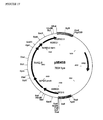
- FIG. 1 is a diagram depicting the pMI318 plasmid.
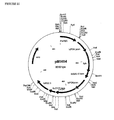
- FIG. 2 is a diagram depicting the pMI320 plasmid.
- FIG. 3 is a diagram depicting the pMI321 plasmid.
- FIG. 4 is a diagram depicting the pMI355 plasmid.
- FIG. 5 is a diagram depicting the pMI356 plasmid.
- FIG. 6 is a diagram depicting the pMI357 plasmid.
- FIG. 7 is a diagram depicting the pMI319 plasmid.
- FIG. 8 is a diagram depicting the pMI433 plasmid.
- FIG. 9 is a diagram depicting the pMM25 plasmid.
- FIG. 10 is a diagram depicting the pMM28 plasmid.
- FIG. 11 is a diagram depicting the pMI445 plasmid.
- FIG. 12 is a diagram depicting the pMM35 plasmid.
- FIG. 13 is a diagram depicting the pMI446 plasmid.
- FIG. 14 is a diagram depicting the pMI447 plasmid.
- FIG. 15 is a diagram depicting the pMI448 plasmid.
- FIG. 16 is a diagram depicting the pMI457 plasmid.
- FIG. 17 is a diagram depicting the pMI458 plasmid.
- FIG. 18 is a diagram depicting the pMI449 plasmid.
- FIG. 19 is a diagram depicting the pMI454 plasmid.
- FIG. 20 is a diagram depicting the pBH165 plasmid.
- FIG. 21 is a diagram depicting the pMI464 plasmid.
- the genetically modified yeast of the invention is made by performing certain genetic modifications to a host yeast cell.
- the host cell is of a species contained within the I. orientalis/P. fermentans clade. This clade is the most terminal c that contains at least the species Issatchenkia orientalis, Pichia galeiformis, Pichia sp. YB-4149 (NRRL designation), Candida ethanolica, P. deserticola, P. membranifaciens and P. fermentans . Members of the I. orientalis/P.
- fermentans clade are identified by analysis of the variable D1/D2 domain of the 26S ribosomal DNA of yeast species, using the method described by Kurtzman and Robnett in “Identification and Phylogeny of Ascomycetous Yeasts from Analysis of Nuclear Large Subunit (26S) Ribosomal DNA Partial Sequences”, Antonie van Leeuwenhoek 73:331-371, 1998, incorporated herein by reference. See especially p. 349. Analysis of the variable D1/D2 domain of the 26S ribosomal DNA from hundreds of ascomycetes has revealed that the I. orientalis/P. fermentans clade contains very closely related species. Members of the I. orientalis/P.
- fermentans clade exhibit greater similarity in the variable D1/D2 domain of the 26S ribosomal DNA to that of other members of the clade than to that of yeast species outside of the clade. Therefore, other members of the I. orientalis/P. fermentans clade can be identified by comparison of the D1/D2 domains of their respective ribosomal DNA and comparing to that of other members of the clade and closely related species outside of the clade, using Kurtzman and Robnett's methods.
- I. orientalis When first characterized, the species I. orientalis was assigned the name Pichia kudriavzevii .
- the anamorph (asexual form) of I. orientalis is known as Candida krusei.
- a particularly suitable host cell is I. orientalis strain ATCC 32196.
- Another particularly suitable host cell is I. orientalis strain ATCC PTA-6658.
- the cell of the invention contains at least one functional, exogenous lactate dehydrogenase (LDH) gene integrated into its genome.
- LDH gene is any gene that encodes for a lactate dehydrogenase enzyme, i.e., one having lactate dehydrogenase activity.
- lactate dehydrogenase activity refers to the ability of the protein to catalyze the reaction of pyruvate to lactate.
- Lactate dehydrogenase enzymes include (but are not limited to) those categorized by the Enzyme Commission numbers 1.1.1.27 and 1.1.1.28.
- exogenous means that the genetic material under consideration (in this case, the LDH gene) is not native to the host strain.
- native is used herein with respect to genetic materials (e.g., a gene, promoter or terminator) that are found (apart from individual-to-individual mutations which do not affect function) within the genome of wild-type cells of the host cell.
- the LDH gene may enable the modified cell to produce either the L- or D-lactic acid stereoisomer. It is possible that the modified cell of the invention contains both L- and D-LDH genes, and thus is capable of producing both lactic acid stereoisomers. However, it is preferred that only L- or only D-LDH genes are present, so the cell produces a more optically pure lactic acid product.
- Suitable LDH genes include those obtained from bacterial, fungal, yeast or mammalian sources.
- Examples of specific L-LDH genes are those obtained from Lactobacillus helveticus, L. casei, Bacillus megaterium, Pediococcus acidilactici, Rhizopus oryzae and bovine sources such as Bos taurus .
- Examples of specific D-LDH genes are those obtained from L. helveticus, L. johnsonii, L. bulgaricus, L. delbrueckii, L. plantarum, L. pentosus and P. acidilactici .
- L-LDH or D-LDH genes that are identical to such L-LDH or D-LDH genes or which have an identities score of at least 35%, 60%, 70% or 80% relative to such genes at the amino acid level are suitable.
- the native genes obtained from any of these sources may be subjected to mutagenesis if necessary to provide a coding sequence starting with the usual eukaryotic starting codon (ATG), or for other purposes.
- a preferred L-LDH gene is that obtained from L. helveticus or one that has an identities score relative to such gene of at least 35%, 60%, 70%, 80%, 85%, 90% or 95%.
- Another preferred L-LDH gene is that obtained from B.
- Another preferred L-LDH gene is that obtained from Bos. taurus or one that has an identities score of at least 35%, 60%, 70%, 80%, 85%, 90% or 95% compared with such gene.
- a preferred D-LDH gene is that obtained from L. helveticus or one that has an identities score of at least 45%, 60%, 70%, 80%, 85%, 90% or 95% compared with such gene.
- Identities scores of amino acid sequences of DNA, RNA or proteins are, for purposes of this invention computed using BLAST version 2.2.1 software with default parameters.
- Particularly suitable LDH genes include those that encode for an enzyme with an amino acid sequence that has an identities score of at least 60%, especially at least 80%, 85% or 95%, compared with the sequence identified as SEQ. ID. NO. 93 (which appears as SEQ. ID. NO. 45 in WO 03/049525) or compared with that identified as SEQ. ID. NO. 94 (which appears as SEQ. ID. NO. 49 in WO 03/049525).
- Particularly suitable LDH genes also include those that encode an enzyme having a protein sequence that has an identities score of at least 60%, 80%, 85% or 95% compared to SEQ. ID. NO. 95 or SEQ. ID. NO. 96 (which appear as SEQ ID. NO. 46 and 50, respectively, in WO 03/049525).
- the transformed cell may contain a single LDH gene or multiple LDH genes, such as from 1-10 LDH genes, especially from 1-5 LDH genes.
- the individual genes may be copies of the same gene, or include copies of two or more different LDH genes.
- Multiple copies of the exogenous LDH gene may be integrated at a single locus (so they are adjacent to each other), or at several loci within the host cell's genome.
- the exogenous LDH gene is under the transcriptional control of one or more promoters and one or more terminators, both of which are functional in the modified yeast cell.
- promoter refers to an untranslated sequence located upstream (i.e., 5′) to the translation start codon of a structural gene (generally within about 1 to 1000 bp, preferably 1-500 bp, especially 1-100 bp) and which controls the start of transcription of the structural gene.
- terminal refers to an untranslated sequence located downstream (i.e., 3′) to the translation finish codon of a structural gene (generally within about 1 to 1000 bp, more typically 1-500 base pairs and especially 1-100 base pairs) and which controls the end of transcription of the structural gene.
- a promoter or terminator is “operatively linked” to a structural gene if its position in the genome relative to that of the structural gene is such that the promoter or terminator, as the case may be, performs its transcriptional control function.
- Promoters and terminator sequences may be native to I. orientalis or exogenous to the cell.
- Useful promoter and terminator sequences include those that are highly identical (i.e., have an identities score of 90% or more, especially 95% or more, most preferably 99% or more) in their functional portions compared to the functional portions of promoter and terminator sequences, respectively, that are native to the host cell, particularly when the insertion of the exogenous gene is targeted at a specific site in the cell's genome.
- One suitable type of promoter has an identities score at least 90%, 95% or 99% relative to a promoter that is native to a yeast gene.
- a more suitable type of promoter has an identities score of at least 90%, 95% or 99% compared to a promoter for a gene that is native to the host cell.
- Particularly useful promoters include promoters for yeast pyruvate decarboxylase (PDC), phosphoglycerate kinase (PGK), and transcription elongation factor-1 (TEF-1) genes, especially from the respective I. orientalis genes.
- PDC yeast pyruvate decarboxylase
- PGK phosphoglycerate kinase
- TEZ1 transcription elongation factor-1
- An especially useful promoter includes the functional portion of a promoter for an I. orientalis PGK gene.
- One suitable type of terminator has an identities score of at least 90%, 95% or 99% compared to a terminator for a gene that is native to a yeast.
- the terminator may have an identities score at least 90%, 95% or 99% homologous to a terminator for a gene that is native to the host cell.
- Particularly useful terminators include terminators for yeast pyruvate decarboxylase (PDC), xylose reductase, (XR), xylitol dehydrogenase (XDH) or iso-2-cytochrome c (CYC) genes, or a terminator from the galactose family of genes in yeast, particularly the so-called GAL10 terminator.
- An especially preferred terminator includes a functional portion of a terminator for a PDC gene of the host cell.
- native (to the host cell) promoters and terminators can permit the targeted integration of the LDH gene into specific loci of the host cell's genome, and for simultaneous integration the LDH gene and deletion of another native gene, such as, for example, a PDC gene.
- the exogenous LDH gene may be integrated randomly into the host cell's genome or inserted at one or more targeted locations.
- targeted locations include the loci of a gene that is desirably deleted or disrupted, such as a PDC gene. Integration at the PDC locus may be accomplished with or without deletion or disruption of the native PDC gene, but it is generally preferred to disrupt or delete the PDC gene, so the modified cell produces less ethanol.
- the host cell may contain multiple PDC genes.
- Native I. orientalis cells for example, contain two PDC genes, which are designated herein as IoPDC1A and IoPDC1B. In some strains, including ATCC PTA-6658, these are visualized as ⁇ 8 kbp and ⁇ 10 kbp HindIII bands, respectively, upon Southern analysis of the wild-type organism. Other I. orientalis strains, such as ATCC 32196, appear to have two alleles that produce bands of similar size.
- deletion or disrupt it is meant that the entire coding region of the gene is eliminated (deletion), or the gene or its promoter and/or terminator region is modified (such as by deletion, insertion, or mutation) so that the gene no longer produces an active enzyme, or produces an enzyme with severely reduced activity.
- the deletion or disruption can be accomplished by genetic engineering methods, forced evolution or mutagenesis and/or selection or screening. A preferred way of accomplishing this is to replace the PDC gene with a cassette containing an LDH gene, as described more fully below.
- Genetic modification of the host cell is accomplished in one or more steps via the design and construction of appropriate vectors and transformation of the host cell with those vectors. Electroporation and/or chemical (such as calcium chloride- or lithium acetate-based) transformation methods can be used. Methods for transforming yeast strains to insert an exogenous LDH gene are described in WO 99/14335, WO 00/71738, WO 02/42471, WO 03/102201, WO 03/102152 and WO 03/049525; these methods are generally applicable for transforming I. orientalis cells in accordance with this invention.
- the vectors can either be cut with particular restriction enzymes or used as circular DNA.
- a vector is prepared that contains the LDH gene and associated promoter and terminator sequences.
- the vector may contain restriction sites of various types for linearization or fragmentation.
- Vectors may further contain a backbone portion (such as for propagation in E. coli ) many of which are conveniently obtained from commercially available yeast or bacterial vectors.
- the vector preferably contains one or more selection marker gene cassettes.
- a “selection marker gene” is one that encodes a protein needed for the survival and/or growth of the transformed cell in a selective culture medium.
- Typical selection marker genes encode proteins that (a) confer resistance to antibiotics or other toxins such as zeocin (sh ble gene from Streptoalloteichus hindustanus ), G418 (kanamycin resistance gene of Tn903), hygromycin (aminoglycoside antibiotic resistance gene from E. coli ), ampicillin, tetracycline, or kanamycin), (b) complement auxotrophic deficiencies of the cell. Two prominent examples of auxotrophic deficiencies are the amino acid leucine deficiency (e.g.
- uracil deficiency e.g. URA3 gene
- Cells that are orotidine-5′-phosphate decarboxylase negative (ura3 ⁇ ) cannot grow on media lacking uracil.
- a functional URA3 gene can be used as a marker on a cell having a uracil deficiency, and successful transformants can be selected on a medium lacking uracil. Only cells transformed with the functional URA3 gene are able to synthesize uracil and grow on such medium. If the wild-type strain does not have a uracil deficiency (as is the case with I. orientalis , for example), an auxotrophic mutant having the deficiency must be made in order to use URA3 as a selection marker for the strain. Methods for accomplishing this are well known in the art.
- the selection marker cassette will further include a promoter and terminator sequence, operatively linked to the selection marker gene, and which are operable in I. orientalis .
- Suitable promoters include those described above with respect to the LDH gene, as well as others such as are described in WO 99/14335, WO 00/71738, WO 02/42471, WO 03/102201, WO 03/102152 and WO 03/049525.
- An especially preferred promoter is a PGK or PDC promoter (or functional portion thereof) of the host strain, or a sequence having an identities score of at least 80, 85, 90 or 95% compared to such a PGK or PDC promoter.
- Suitable terminators include those described above with respect to the LDH gene. Either the promoter or terminator (or both) may be the same as that used with the LDH gene.
- Targeted integration can be accomplished by constructing a vector having regions that are highly identical to (i.e. identities score of 80% or more, preferably 95% or more and most preferably 100%) to the upstream (5′-) and downstream (3′-) flanks of the target gene. Either or both of these regions may include a portion of the coding region of the target gene as well as a portion or all of the respective promoter or terminator regions.
- the LDH cassette (including associated promoters and terminators if different from those of the target gene) and selection marker(s) (with associated promoters and terminators as may be needed) will reside on the vector between the regions that are highly identical to the upstream and downstream flanks of the target gene.
- a preferred target gene is the IoPDC1A or IoPDC1B gene (or both) as disruption or deletion of one or both of those genes is preferred.
- other native genes may serve as targets for insertion of the LDH gene cassette.
- Successful transformants can be selected for in known manner, by taking advantage of the attributes contributed by the marker gene, or by other characteristics (such as ability to produce lactic acid, inability to produce ethanol, or ability to grow on specific substrates) contributed by the inserted genes. Screening can be performed by PCR or Southern analysis to confirm that the desired insertions and deletions have taken place, to confirm copy number and to identify the point of integration of genes into the host cell's genome. Activity of the enzyme encoded by the inserted gene and/or lack of activity of enzyme encoded by the deleted gene can be confirmed using known assay methods.
- Deletion or disruption of the PDC genes can be accomplished in a variety of ways, including, for example, methods analogous to those described in WO 99/14335, WO 02/42471, WO 03/049525, WO 03/102152 and WO 03/102201.
- a method of particular interest with respect to transforming I. orientalis
- (1) the 5′ and 3′ flanking regions of one of the I. orientalis PDC genes are cloned, optionally together with a portion of the functional PDC gene; (2) a vector containing the 5′ and 3′ flanking regions is produced, and (3) the I. orientalis cell is transformed with the vector.
- a homologous recombination event results in a deletion of the functional PDC gene.
- IoPDC1A can be used in the vector to delete or disrupt both IoPDC1A and IoPDC1B.
- Analogous methods may be used to disrupt or delete one or more PDC genes in other host cells useful in the invention.
- the PDC deletion or disruption vector may include one or more functional structural genes, notably an LDH gene as described above, inserted between the 5′ and 3′ flanking portions of one of the PDC genes of the host cell.
- the functional gene preferably includes functional promoter and terminator sequences operatively linked to the structural gene. This approach allows for the simultaneous deletion of the PDC gene and insertion of the functional gene.
- the vector may include a selection marker gene instead of or in addition to the structural gene. Again, the selection marker gene is positioned on the vector between the 5′ and 3′ flanking portions of the PDC gene being targeted, and becomes inserted in the locus of the functional PDC gene.
- the use of a selection marker gene has the advantage of introducing a means of selecting for successful transformants.
- I. orientalis it is possible to eliminate both IoPDC1A and IoPDC1B in a single step by transforming the host strain with a single vector containing the 5′ flank of either target gene, a functional gene cassette including associated promoters and terminators, and/or a selection marker gene cassette including associated promoters and terminators, and the 3′ flank of either target gene.
- An example of such a vector is that designated pMI356 in Example 2B. Transformations of I. orientalis with such a vector produces transformants having a single PDC allele deleted and transformants having a deletion of both the IoPDC1A and IoPDC1B alleles. Typically, at least one of the PDC alleles is replaced by a functional LDH gene (or other structural gene). Again, analogous methods are applicable with respect to other host cells having multiple PDC alleles.
- I. orientalis can be transformed with a vector as described above, and single PDC deletion strains transformed a second time with a like or similar vector to eliminate the second PDC allele. Examples 2D and 3B below illustrate such an approach.
- the genetically modified yeast cell of the invention may include additional genetic modifications that provide some desired attribute to the cells. Additional modification(s) of particular interest confer to the cell the ability to ferment pentose sugars to desirable fermentation products. Among such modifications are (1) insertion of a functional exogenous xylose isomerase gene, (2) a deletion or disruption of a native gene that produces an enzyme that catalyzes the conversion of xylose to xylitol, (3) a deletion or disruption of a functional xylitol dehydrogenase gene and/or (4) modifications that cause the cell to overexpress a functional xylulokinase. Methods for introducing such modifications into yeast cells are described, for example, in WO 04/099381, incorporated herein by reference.
- Genetically modified yeast cells of certain aspects of the invention include a functional, exogenous xylose isomerase (XI) gene that is preferably integrated into the genome of the host cell.
- XI xylose isomerase
- “exogenous” means (1) the XI gene is not native to the host cell, (2) the XI gene is native to the host cell, but the genome of the host cell has been modified to provide additional functional copies of the native XI gene, or (3) both (1) and (2).
- suitable XI genes include XI genes native to Piromyces species E2 (such as the Piromyces sp.
- Nucleotide sequences for the Piromyces species E2 and Cyllamyces Aberensis XI genes are identified as SEQ. ID. NOs. 58 and 151, respectively.
- Deduced amino acid sequences for proteins produced by these XI genes are identified as SEQ. ID. No. 59 and 152, respectively.
- a suitable bacterial XI gene is native to Bacteroides thetaiotaomicron .
- the nucleotide sequence for this B. thetaiotamicron XI gene is identified as SEQ.
- Suitable XI genes include those that are at least 60%, 80%, 90%, 95%, 98% or 99% homologous to SEQ. ID. NOs. 58 or 151.
- Suitable XI genes include those that encode for enzymes that are at least 60%, 80%, 90%, 95%, 98% or 99% homologous to SEQ. ID. NOs. 59 or 152.
- Some suitable xylose isomerase genes are no greater than 95% or no greater than 90% homologous to SEQ. ID. NO. 58 or encode an enzyme that is no greater than 95% or no greater than 90% homologous to SEQ. ID. NO. 59.
- xylose isomerase genes are bacterial xylose isomerase genes that are at least 60, 80, 90, 95, 98 or 99% homologous to SEQ. ID. NO. 162 and/or produce an enzyme that is at least 60, 80, 90, 95, 98 or 99% homologous to SEQ. ID. NO. 163.
- Percent homology of amino acid sequences can conveniently computed using BLAST version 2.2.1 software with default parameters. Sequences having an identities score and a positives score of at least XX %, using the BLAST version 2.2.1 algorithm with default parameters are considered at least XX % homologous.
- Particularly suitable xylose isomerase genes include those that encode for an enzyme that has an identities score of at least 60%, compared with SEQ. ID. NO. 163, an identities score of less than 95%, compared with SEQ. ID. NO. 59, and a positives score of less than 97%, compared with SEQ. ID. NO. 59.
- the exogenous XI gene is under the control of a promoter and a terminator, both of which are functional in the modified yeast cell.
- promoter refers to an untranscribed sequence located upstream (i.e., 5′) to the translation start codon of a structural gene (generally within about 1 to 1000 bp, preferably 1-500 bp, especially 1-100 bp) and which controls the start of transcription of the structural gene.
- terminal refers to an untranscribed sequence located downstream (i.e., 3′) to the translation finish codon of a structural gene (generally within about 1 to 1000 bp, more typically 1-500 base pairs and especially 1-100 base pairs) and which controls the end of transcription of the structural gene.
- a promoter or terminator is “operatively linked” to a structural gene if its position in the genome relative to that of the structural gene such that the promoter or terminator, as the case may be, performs its transcriptional control function.
- Promoters and terminator sequences may be native to the yeast cell or exogenous.
- Promoter and terminator sequences that are highly homologous (i.e., 90% or more, especially 95% or more, most preferably 99% or more homologous) in their functional portions to functional portions of promoter and terminator sequences, respectively, that are native to the cell are useful as well, particularly when the insertion of the exogenous gene is targeted at a specific site in the cell's genome.
- a suitable promoter is at least 90%, 95% or 99% homologous to a promoter that is native to a yeast gene.
- a more suitable promoter is at least 90%, 95% or 99% homologous to a promoter for a gene that is native of the host cell.
- Particularly useful promoters include promoters for yeast pyruvate decarboxylase (PDC), phosphoglycerate kinase (PGK), xylose reductase, (XR), xylitol dehydrogenase (XDH) and transcription enhancer factor-1 (TEF-1) genes, especially from such genes as are native to the host cell.
- a suitable terminator is at least 90%, 95% or 99% homologous to a terminator that is native to a yeast gene.
- the terminator may be at least 90%, 95% or 99% homologous to a terminator for a gene that is native of the host cell.
- Particularly useful terminators include terminators for yeast pyruvate decarboxylase (PDC), xylose reductase, (XR), xylitol dehydrogenase (XDH) or iso-2-cytochrome c (CYC) genes, or a terminator from the galactose family of genes in yeast, particularly the so-called GAL10 terminator.
- PDC yeast pyruvate decarboxylase
- XR xylose reductase
- XDH xylitol dehydrogenase
- CYC iso-2-cytochrome c
- native (to the host cell) promoters and terminators can permit the targeted integration of the XI gene into specific loci of the host cell's genome, and for simultaneous integration the XI gene and deletion of another native gene, such as, for example, an XR, XDH or PDC gene.
- a poly-his(tidine) tail may be present at the 3′ end of the XI gene. A method for accomplishing this is described in Example 3 below. The presence of the poly-his tail may diminish the performance of the XI gene, however. The poly-his tail is not critical to the invention and may be omitted if desired.
- the exogenous XI gene may be integrated randomly into the host cell's genome or inserted at one or more targeted locations.
- targeted locations include the loci of a gene that is desirably deleted or disrupted, such as an XR, XDH or PDC gene.
- integration of the XI gene adjacent to the site of a native PDC gene appears to be related to improved performance of the modified yeast cell in producing fermentation products. Integration at the PDC locus may be accomplished with or without deletion or disruption of the native PDC gene, but it is preferred to maintain the native PDC gene intact and functional, particularly when a desired fermentation product is ethanol or other product that is a pyruvate metabolite.
- Targeted integration can be accomplished by designing a vector having regions that are homologous to the upstream (5′-) and downstream (3′-) flanks of the target gene. Either of both of these regions may include a portion of the coding region of the target gene.
- the XI cassette including associated promoters and terminators if different from those of the target gene
- selection markers with associated promoters and terminators as may be needed
- the genetically modified yeast cell may contain a single copy or multiple copies of the exogenous XI gene. If multiple copies of the exogenous XI gene are present, from 2 to 10 or more copies may be present, such as from about 2-8 or from about 2-5 copies. Multiple copies of the exogenous XI gene may be integrated at a single locus (so they are adjacent each other), or at several loci within the host cell's genome. In an embodiment of particular interest, multiple copies of the exogenous XI gene are incorporated at or adjacent to the locus of a native PDC gene, with or without deletion or disruption of the native PDC gene. It is possible for different exogenous XI genes to be under the control of different types of promoters and/or terminators.
- the host cell contains one or more aldose reductase genes that produce enzymes that catalyze the conversion of xylose to xylitol
- these genes is suitably disrupted or deleted.
- the gene(s) selected for disruption or deletion are those which individually or collectively (1) account for at least 40%, preferably at least 50% of the host cell's xylose ⁇ xylitol reduction activity, and/or (2) are xylose reductase (XR) genes, i.e., genes that encode an enzyme specific to the xylose ⁇ xylitol reduction. It is generally preferred to delete or disrupt at least one XR gene. Deletion or disruption preferably achieves at least a 50% reduction in enzyme activity, and more preferably reduced xylose reductase activity to below 10 mU/mg or 5 mU/mg.
- deletion or disrupt it is meant that the entire coding region of the gene is eliminated (deletion), or the gene or its promoter and/or terminator region is modified (such as by deletion, insertion, or mutation) so that the gene no longer produces an active enzyme, or produces an enzyme with severely reduced activity.
- the deletion or disruption can be accomplished by genetic engineering methods, forced evolution or mutagenesis and/or selection or screening.
- a suitable method for accomplishing this is to clone the upstream and downstream flanking regions for the gene (which may include a portion of the coding region for the gene), produce a vector containing the cloned upstream and downstream flanks, and transform the host cell with the vector.
- the vector may contain other genetic material such as a marker gene or other gene that is desirably inserted into the genome of the host cell at the locus of the native XR or non-specific aldose gene (such as an XI gene, XK gene or a gene that enables the cell to produce a desired fermentation product, as an L- or D-LDH gene).
- a marker gene or other gene that is desirably inserted into the genome of the host cell at the locus of the native XR or non-specific aldose gene (such as an XI gene, XK gene or a gene that enables the cell to produce a desired fermentation product, as an L- or D-LDH gene).
- flanking sequences can be obtained, for example, by amplifying the appropriate regions by PCR using suitably designed primers and genomic DNA as the template. Either of both of these regions may include a portion of the coding region of the target gene, although the vector should not contain the entire functional portion of the gene.
- flanking sequences are generally sequences of at least 50 base pairs, or at least 100 or at least 500 base pairs.
- flanking sequence is preferably up to about 4000 base pairs, more preferably up to about 1200 base pairs in length.
- the flanking sequences are each at least 90%, preferably at least 95%, more preferably at least 98% and even more preferably at least 99% homologous to the corresponding sequences in the cell's genome.
- These flanking sequences may include the promoter and terminator sequences, respectively, of the target gene.
- the vector may in addition contain one or more selection marker cassettes (with associated promoters and terminators as may be needed) that advantageously reside between the regions that are homologous to the upstream and downstream flanks of the target gene.
- Such a vector can delete the target gene in a homologous recombination, inserting the selection marker gene at the locus of the deleted target gene.
- the vector may instead of or in addition to the selection marker cassette include another expression cassette, such as an XI expression cassette, and L- or D-LDH cassette or a xylulokinase expression cassette, all of which may include associated promoters and terminators.
- Vectors can also be designed to take advantage of spontaneous loopout events, such as are described in WO 03/102152.
- XDH gene deletion or disruption can be performed in a way analogous to described before with respect to aldose reductase deletion or disruption. Deletion can be performed by incorporating upstream and downstream flanks of the XDH gene into a transformation vector, instead of the flanks of the XR or non-specific aldose reductase gene.
- the vector may include one or more selection marker cassettes and/or one or more other expression cassettes. Deletion or disruption preferably achieves at least a 50% reduction in enzyme activity, and more preferably reduced xylitol dehydrogenase activity to below 2 mU/mg or 1 mU/mg.
- the modified cell preferably expresses a xylulokinase enzyme having an activity of at least 100 mU/mg, such as at least 300 mU/mg or at least 500 mU/mg, measured as described in Example 5E below.
- Overexpression can be achieved, for example, by forced evolution (under conditions that favor selection of mutants that overexpress the enzyme), mutagenesis or by integrating one or more functional exogenous xylulokinase genes into the genome of the host cell.
- exogenous means (1) the XK gene is not native to the host cell, (2) the XK gene is native to the host cell, but the genome of the host cell has been modified to provide additional functional copies of the native XK gene, or (3) both (1) and (2).
- Suitable xylulokinase genes include yeast xylulokinase genes.
- a preferred example of a suitable XK gene is the S. cerevisiae XK gene (ScXKS1).
- a nucleotide sequence for the ScXKS1 gene is identified as SEQ. ID. NO. 83.
- the deduced amino acid sequence for the enzymes produced by the ScXKS1 gene is identified as SEQ. ID. NO. 84.
- Suitable XK genes include those that are at least 70%, 80%, 90%, 95%, 98% or 99% homologous to SEQ. ID. NO. 83.
- Suitable XK genes include those that encode for enzymes that are at least 70%, 80%, 90%, 95%, 98% or 99% homologous to SEQ. ID. NO. 84.
- Other suitable XK genes are native to K. marxianus or C. sonorensis , or are at least 70%, 80%, 80%, 95%, 98% or 99% homologous to either of these.
- the exogenous XK gene is under the control of a promoter and a terminator, both of which are functional in the modified yeast cell.
- Suitable promoters and terminator sequences may be native to the host cell or exhibit a high homology (i.e., 90% or greater, especially 95% or greater, most preferably 99% or greater homology) to a native promoters or terminator.
- Such promoters and terminators are particularly useful when the exogenous XK gene is targeted at a specific site in the host cell's genome.
- Other suitable promoters and terminators are native to the organism from which the XK gene was obtained or exhibit a similarly high homology to such native promoter and/or terminators.
- suitable promoters and terminators for the ScXKS1 gene identified above include promoters and terminators for S. cerevisiae genes.
- the promoter and/or terminators may be those native to the particular XK gene or exhibit a similarly high homology to such promoter and/and terminator.
- Particularly useful promoters for the ScXKS1 gene include S. cerevisiae pyruvate decarboxylase (PDC), phosphoglycerate kinase (PGK), xylose reductase, (XR), xylitol dehydrogenase (XDH) and transcription enhancer factor-1 (TEF-1) promoters.
- Particularly useful terminators for the ScXKS1 gene include S.
- a S. cerevisiae GAL10 terminator and a S. cerevisiae CYC1 terminator have been shown to be effective terminators for exogenous XI genes in yeast.
- the exogenous XK gene may be integrated randomly into the host cell's genome, or inserted at one or more targeted locations, using methods analogous to those for inserting the XR gene, as discussed above.
- targeted locations include the loci of a gene that is desirably deleted or disrupted, such as an XR, XDH or PDC gene.
- targeted integration can be accomplished by designing a vector having regions that are homologous to the upstream (5′-) and downstream (3′-) flanks of the target gene. Either of both of these regions may include a portion of the coding region of the target gene.
- the XK cassette (including associated promoters and terminators if different from those of the target gene) and selection markers (with associated promoters and terminators as may be needed) will reside on the vector between the regions that are homologous to the upstream and downstream flanks of the target gene.
- the genetically modified yeast cell may contain a single copy or multiple copies (such as from 2 to 10 or more copies, from 2 to 8 or from 2 to 5 copies) of the exogenous XK gene. Multiple copies of the exogenous XK gene may be integrated at a single locus (so they are adjacent each other), or at several loci within the host cell's genome. It is possible for different exogenous XK genes to be under the control of different types of promoters and/or terminators.
- the cell of the invention is cultivated in a fermentation medium that includes a sugar that is fermentable by the transformed cell.
- the sugar may be a hexose sugar such as glucose, glycan or other polymer of glucose, glucose oligomers such as maltose, maltotriose and isomaltotriose, panose, fructose, and fructose oligomers.
- the fermentation medium may include a pentose sugar such as xylose, xylan or other oligomer of xylose.
- pentose sugars are suitably hydrolysates of a hemicelluose-containing biomass.
- the medium will typically contain nutrients as required by the particular cell, including a source of nitrogen (such as amino acids, proteins, inorganic nitrogen sources such as ammonia or ammonium salts, and the like), and various vitamins, minerals and the like.
- a source of nitrogen such as amino acids, proteins, inorganic nitrogen sources such as ammonia or ammonium salts, and the like
- various vitamins, minerals and the like such as amino acids, proteins, inorganic nitrogen sources such as ammonia or ammonium salts, and the like
- I. orientalis is capable of satisfying its needs for nitrogen, phosphorus and magnesium from inorganic sources and so is capable of growing and fermenting in a chemically defined medium containing inorganic sources of these elements.
- the cells of the invention can be cultured in such a chemically defined medium.
- Temperatures during each of the growth phase and the production phase may range from above the freezing temperature of the medium to about 50° C.
- a preferred temperature, particularly during the production phase is from about 30-45° C.
- the concentration of cells in the fermentation medium is typically in the range of about 0.1-20, preferably about 0.1-5, even more preferably about 1-3 g dry cells/liter of fermentation medium.
- the fermentation may be conducted aerobically, microaerobically or anaerobically. Quasi-anaerobic conditions, in which no oxygen is added during the fermentation but dissolved oxygen is present in the fermentation medium at the start of the fermentation, can also be used. If desired, specific oxygen uptake rate can be used as a process control, as described in WO 03/102200.
- the cells of the invention exhibit a good ability to ferment sugars to lactic acid or lactic acid/ethanol mixtures, at good volumetric and specific productivities under even anaerobic conditions.
- the medium may be buffered during the production phase of the fermentation so that the pH is maintained in a range of about 5.0 to about 9.0, preferably about 5.5 to about 7.0.
- Suitable buffering agents are basic materials that neutralize lactic acid as it is formed, and include, for example, calcium hydroxide, calcium carbonate, sodium hydroxide, potassium hydroxide, potassium carbonate, sodium carbonate, ammonium carbonate, ammonia, ammonium hydroxide and the like. In general, those buffering agents that have been used in conventional fermentation processes are also suitable here.
- acidic fermentation products such as lactic acid are neutralized to the corresponding salt as they are formed.
- Recovery of the acid therefore involves regenerating the free acid. This is typically done by removing the cells and acidulating the fermentation broth with a strong acid such as sulfuric acid.
- a salt by-product is formed (gypsum in the case where a calcium salt is the neutralizing agent and sulfuric acid is the acidulating agent), which is separated from the acid.
- the acid is then recovered through techniques such as liquid-liquid extraction, distillation, absorption, etc., such as are described in T. B. Vickroy, Vol. 3, Chapter 38 of Comprehensive Biotechnology, (ed. M. Moo-Young), Pergamon, Oxford, 1985; R.
- a suitable final pH is suitably in the range of about 1.5 to about 3.5, in the range of from about 1.5 to about 3.0, or in the range from about 1.5 to about 2.5.
- the starting pH may be somewhat higher, such as from about 3.5 to about 6.0, especially from about 3.5 to about 5.5, or may be adjusted to a more acidic pH of 1.5 to about 3.5.
- the cells of this invention have been shown to have an unexpected ability to grow and produce well even in acidic fermentation media where the pH is below 3.5, below 3.0, below 2.5, and even below 2.0. I.
- orientalis cells with only basic genetic modifications such as the insertion of an LDH gene and deletion of IoPDC1A and IoPDC1B genes, have been found to produce from 15-20 g/L lactic acid under anaerobic conditions in an unbuffered medium originally containing 10% by weight glucose.
- Recovery of lactic acid from a low pH fermentation medium can be conducted using methods such as those described in U.S. Pat. No. 6,229,046.
- the process of the invention can be conducted continuously, batch-wise, or some combination thereof.
- I. orientalis PGK IoPGK1 Promoter Region
- Plasmid Plasmid (pMI318, FIG. 1 ) having the E. coli Hygromycin Gene Under the Control of the IoPGK1 Promoter and the S. Cerevisiae GAL10 Terminator
- a 920 bp probe fragment of the C. sonorensis PGK1 gene is obtained from the genomic DNA of C. sonorensis in the same manner as described in Example 22 of WO 02/042471, using primers identified as SEQ. ID. NO. 1 and SEQ. ID. NO. 2.
- Genomic DNA is isolated from a growing I. orientalis strain and resuspended in 10 mM Tris-HCl+1 mM EDTA (pH 8) (TE).
- the I. orientalis genomic DNA is cut with HindIII, a Southern blot is prepared and hybridized using standard methods with the C. sonorensis PGK1 gene as a probe.
- Fragments of ⁇ 2 kb size are isolated from agarose gel and cloned into a HindIII-cut plasmid. Colony hybridization of the E. coli transformants with the PGK1 probe result in isolation of a HindIII fragment containing most of the I. orientalis PGK1 (IoPGK1) protein coding sequences but no promoter sequences, as verified by sequencing.
- IoPGK1 IoPGK1
- Genomic fragments containing the IoPGK1 promoter region are obtained with ligation-mediated PCR amplification (Mueller, P. R. and Wold, B. 1989, “In vivo footprinting of a muscle specific enhancer by ligation mediated PCR.” Science 246:780-786).
- a mixture of a linker identified as SEQ. ID. NO. 3 and a linker identified as SEQ. ID. NO. 4 is ligated to HaeIII-digested I. orientalis genomic DNA with T4 DNA ligase (New England BioLabs). Samples of the ligation mixtures are used as templates for 50 1 PCR reactions containing 0.1 M of a primer identified as SEQ. ID. NO. 5 and 1 M of a primer identified as SEQ.
- the reaction mixture is heated at 94° C. for 3 minutes after 2 U of Dynazyme EXT is added.
- the reactions are cycled 30 times as follows: 1 minute at 94° C., 2 minutes at 68° C. and 2 minutes at 72° C., with a final extension of 10 minutes at 72° C.
- a diluted sample of this first PCR-amplification is used as the template in a nested PCR reaction (50 l) containing 0.05 M of a primer identified as SEQ. ID. NO. 7 and 0.5 M of a primer identified as SEQ. ID. NO. 8.
- the reaction mixture is heated at 94° C. for 3 minutes after 2 U of Dynazyme EXT is added.
- the reactions are then cycled 30 times as follows: 1 minute at 94° C., 2 minutes at 67° C. and 2 minutes at 72° C., with a final extension of 10 minutes at 72° C.
- a ⁇ 600 bp PCR fragment is isolated and sequenced.
- Nested primers identified as SEQ. ID. NO. 9 and SEQ. ID. NO. 10 are designed and used in a ligation-mediated PCR amplification together with oligonucleotides identified as SEQ. ID. NO. 11 and SEQ. ID. NO. 12 similarly as above except that digested I. orientalis DNA is used and the PCR is carried out using an annealing temperature of 65° C.
- the I. orientalis PGK1 promoter is PCR amplified using primers identified as SEQ. ID. NO. 13 and SEQ. ID. NO. 14 and the I. orientalis genomic DNA as the template.
- the fragment is filled in using the Klenow enzyme and then cut with XbaI.
- a 633 bp fragment is gel isolated and ligated to a 4428 bp fragment obtained by digesting a plasmid designated as pMI270 (described in FIG. 4 of WO 03/049525) with XhoI, filling the fragment in using the Klenow enzyme and 0.1 mM dNTP, and digesting with XbaI.
- Plasmid pMI270 contains the E. coli hygromycin gene linked to a C.
- Plasmid pMI318 contains the E. coli hygromycin gene under the control of the I. orientalis PGK1 promoter and the S. cerevisiae GAL10 terminator.
- Plasmid (pMI321, FIG. 3 ) Containing the Hygromycin Gene Under the Control of the IoPGK1 Promoter and the S. cerevisiae GAL10 Terminator, and the L. helveticus LDH Gene Under the Control of the IoPGK1 Promoter and S. cerevisiae CYC1 Terminator
- the I. orientalis PGK1 promoter from Example 1A is PCR amplified using primers identified as SEQ. ID. NO. 15 and SEQ. ID. NO. 16 and the I. orientalis genomic DNA as the template.
- the fragment is filled in using the Klenow enzyme and 0.1 mM dNTP, and then cut with Neal.
- a 633 bp fragment is gel isolated.
- Plasmid pVR1 (described in WO 03/102152 FIG. 7 ) contains the L. helveticus LDH gene under the control of the S. cerevisiae TEF1 promoter and the S. cerevisiae CYC1 terminator. Plasmid pVR1 is digested with XhoI, filled in using the Klenow enzyme, and cut with NcoI. A 7386 bp fragment from plasmid pVR1 is ligated to the 633 bp IoPGK1 promoter fragment. The resulting plasmid is designated pMI320 ( FIG. 2 ). Plasmid pMI320 contains the L. helveticus LDH gene under the control of the IoPGK1 promoter and S. cerevisiae CYC1 terminator.
- Plasmids pMI318 (Ex. 1A, FIG. 1 ) and pMI320 are digested with ApaI and NotI.
- a 5008 bp fragment from plasmid pMI318 is ligated to a 1995 bp fragment from plasmid pMI320 to form plasmid pMI321 ( FIG. 3 ).
- the hygromycin gene (and its terminator) is positioned on plasmid pMI321 between two copies of the IoPGK1 promoter.
- This construct can permit a cell transformed with plasmid pMI321 to engage in a homologous recombination to “loop out” the hygromycin gene and terminator, together with one copy of the IoPGK1 promoter.
- Plasmid pMI321 is partially restricted with XhoI, and the resulting mixture of linear and circularized DNA is used to transform a wild-type I. orientalis strain designated as ATCC PTA-6658, using standard lithium acetate methods as described in Gietz et al. (1992, Nucleic Acids Rs. 20:1425).
- the transformed cells are screened for hygromycin resistance.
- Several hygromycin-resistant colonies are cultured and the culture medium analyzed for the production of lactic acid.
- a hygromycin-resistant colony that produces lactic acid is designated strain CD990.
- Plasmid pMI321 is partially restricted with XhoI, and the resulting mixture of linear and circularized DNA is used to transform wild-type I. orientalis strain ATCC 32196, using standard lithium acetate methods as described before.
- the transformed cells are screened for hygromycin resistance. Several hygromycin-resistant colonies are cultured and the culture medium analyzed for the production of lactic acid. Several colonies are found to produce lactic acid.
- Plasmid pMI320 is partially digested with XhoI. Plasmid pMI321 is digested with SmaI and SalI. The digested materials are combined and used to transform wild-type I. orientalis strain ATCC PTA-6658, using standard lithium acetate methods as described before. The transformed cells are screened for hygromycin resistance. Several hygromycin-resistant colonies are cultured and the culture medium analyzed for the production of lactic acid. Several colonies are found to produce lactic acid.
- Plasmid pMI320 is partially digested with XhoI. Plasmid pMI321 is digested with SmaI and SalI. The digested materials are combined and used to transform a wild-type I. orientalis strain designated as ATCC 32196, using standard lithium acetate methods as described before. The transformed cells are screened for hygromycin resistance. Several hygromycin-resistant colonies are cultured and the culture medium analyzed for the production of lactic acid. One colony is found to produce lactic acid.
- IoPDC1A I. orientalis PDC (IoPDC1A) Promoter Region; Construction of a Plasmid (pMI355, FIG. 4 ) Having the E. coli Hygromycin Gene Under the Control of the IoPGK1 Promoter and the S. cerevisiae GAL10 Terminator, the L. helveticus LDH Gene Under the Control of the IoPGK1 Promoter and S. cerevisiae CYC1 Terminator, and the IoPDC1A 5′ Flanking Region
- a genomic library of the native I. orientalis strain ATCC PTA-6658 is constructed into the SuperCos1 (Stratagene) cosmid vector according to instructions provided by the manufacturer.
- PDC-like sequences are amplified by PCR from the genomic DNA of the strain with primers designated as SEQ. ID. NO. 17 and SEQ. ID. NO. 18.
- a 700 bp fragment of a PDC gene is amplified.
- the genomic library is screened using hybridization techniques with labeled PCR fragments as probes as described in WO 03/049525 and cosmid clones containing the PDC gene are isolated and sequenced. The I.
- orientalis PDC1A 5′ region from 1000 bp to 167 bp upstream of the start of the open reading frame is PCR amplified using primers identified as SEQ. ID. NO. 19 and SEQ. ID. NO. 20 and the I. orientalis PDC cosmid DNA as the template.
- the amplified gene (from start to finish codons) has the sequence identified as SEQ. ID. NO. 97.
- the fragment is cut with SalI and SacI.
- An 836 bp fragment is gel isolated and ligated to a 6992 bp fragment obtained by digesting plasmid pMI321 (Example 1B, FIG. 3 ) with SalI and SacI.
- the resulting plasmid is named pMI355 ( FIG. 4 ).
- IoPDC1A I. orientalis PDC (IoPDC1A) Terminator Region; Construction of Plasmids (pMI356 and pMI357, FIGS. 5 and 6 ) Having the IoPDC1A 5′ Flanking Region, the E. coli Hygromycin Gene Under the Control of the IoPGK1 Promoter and the S. cerevisiae GAL10 Terminator, the L. helveticus LDH Gene Under the Control of the IoPGK1 Promoter and S. cerevisiae CYC1 Terminator, and the IoPDC1A 3′ Flanking Region
- the I. orientalis PDC 3′ region corresponding to sequences from 233 bp to 872 bp downstream of the PDC translation stop codon is PCR amplified using primers identified as SEQ. ID. NO. 21 and SEQ. ID. NO. 22 and the I. orientalis PDC1A cosmid DNA (Example 2A) as the template.
- the fragment is cut with ApaI and SmaI.
- a 630 bp fragment is gel isolated and ligated to a 7809 bp fragment obtained by digesting plasmid pMI355 (Ex. 2A, FIG. 4 ) with ApaI and SmaI.
- the resulting plasmid is named pMI356 ( FIG. 5 ). It contains the hygromycin and LDH cassettes from plasmid pMI355 between the 5′ flank and a portion of the 3′ flank of the IoPDC1A gene.
- the I. orientalis PDC1A 3′ region corresponding to sequences from 524 bp upstream to 217 bp downstream of the PDC translation stop codon is PCR amplified using primers identified as SEQ. ID. NO. 23 and SEQ. ID. NO. 24 and the I. orientalis PDC cosmid DNA (Example 2A) as the template.
- the fragment is cut with ApaI and SmaI.
- a 764 bp fragment is gel isolated and ligated to a 7809 bp fragment obtained by digesting plasmid pMI355 with ApaI and SmaI.
- the resulting plasmid is named pMI357 ( FIG. 6 ).
- Plasmid pMI357 differs from plasmid pMI356 with respect to the portion of the 3′ IoPDC1A flank that is present.
- Plasmid pMI357 is restricted with SacI and ApaI and used to transform I. orientalis strain ATCC 32196, using standard chemical methods as described before.
- Colonies that grow on the hygromycin media are subjected to Southern analysis to confirm the integration of the LDH gene from plasmid pMI357 and to confirm the deletion of the IoPDC1A and/or IoPDC1B allele.
- a transformant containing the LDH gene and a deletion of one of the IoPDC1A or IoPDC1B alleles is designated as ATCC/357-5.
- Plasmid pMI356 is restricted with SacI and ApaI and used to transform I. orientalis strain ATCC PTA-6658, using standard chemical methods as described before.
- Colonies that grow on the hygromycin media are selected.
- Southern analysis of HindIII-XbaI cut genomic DNA hybridized with LhLDH and PDC 5′ probes confirm the integration of the LDH gene from plasmid pMI356 and the deletion of the IoPDC1B gene in a transformant, which is designated as CD1030.
- a transformant having integrated LDH and a deletion of the IoPDC1A gene is designated as CD1027.
- Plasmid pMI356 is restricted with SacI and ApaI and used to transform wild-type I. orientalis strain ATCC 32196, using standard chemical methods as described before.
- Colonies that grow on the hygromycin media are selected.
- Southern analysis of HindIII-XbaI cut genomic DNA hybridized with LhLDH and PDC 5′ probes confirm the integration of the LDH gene from plasmid pMI356 and the deletion of one of the IoPDC1A or IoPDC1B alleles in a transformant, which is designated as ATCC/356-23.
- Plasmid pMI433 (FIG. 8 ) Containing the IoPDC1A 5′ Flanking Region, the ScMEL5 Gene Under the Control of the IoPGK1 Promoter, the L. helveticus LDH Gene Under the Control of the IoPGK1 Promoter and ScCYC1 Terminator, and the IoPDC1A 3′ Flanking Region
- the I. orientalis PGK1 promoter is PCR amplified using primers identified as SEQ. ID. NO. 25 and SEQ. ID. NO. 26 and the I. orientalis genomic DNA as the template. The fragment is filled in using the Klenow enzyme and 0.1 mm dNTP, and then cut with SphI. A 669 bp fragment is gel isolated. A plasmid designated as pMI233 (described in FIG. 23C of WO 03/049525) is cut with XhoI. The fragment is filled in with the Klenow enzyme and cut with SphI. The 4534 bp and the 669 bp fragments are ligated and the resulting plasmid is named pMI319 ( FIG. 7 ). Plasmid pMI319 contains the S. cerevisiae MEL5 (ScMEL5) gene and the IoPGK1 promoter region.
- ScMEL5 S. cerevisiae MEL5
- Plasmid pMI319 plasmid is cut with ApaI, made blunt ended with T4 polymerase, and cut with NotI.
- a 2317 bp fragment is gel isolated. It is ligated to a 6498 bp fragment obtained by digesting plasmid pMI357 (Example 2B, FIG. 6 ) with SalI, making it blunt ended with the Klenow enzyme and then cutting with NotI.
- the resulting plasmid contains the ScMEL5 gene (with its native terminator) in place of the hygromycin gene of plasmid pMI357.
- the resulting plasmid is designated pMI433 ( FIG. 8 ).
- Mutant strain CD1027 is transformed with a 5.9 kb SacI/ApaI fragment from plasmid pMI433 using standard chemical methods. Southern analysis is conducted on transformants that exhibit melibiase activity, using genomic DNA digested with various enzyme combinations and carried out with LhLDH and PDC 5′ probes. Two transformants that have lost the IoPDC1B allele and gained a second copy of the LhLDH gene are designated C258/433-3 and C258/433-4, respectively. However, the integration occurs differently in the two transformants, in that the LhLDH 3′ band corresponding to the LhLDH cassette of plasmid pMI433 appears differently in the two strains. It is not clear whether the inserted LhLDH expression cassette is intact in these transformants.
- I. orientalis strain ATCC PTA-6658 is transformed with plasmid pMI356 using the general method described in Example 3B. Transformed strains that grow on hygromycin plates are cultured. A transformant that does not produce ethanol is selected for Southern analysis, which confirms the deletion of both the IoPDC1A and IoPDC1B alleles and insertion of at least one copy of the LhLDH gene. This strain is designated CD1184.
- I. orientalis strain ATCC 32196 is transformed with plasmid pMI356 using the general method described in Example 3B. Transformed strains that grow on hygromycin plates are cultured. A transformant that does not produce ethanol is selected for Southern analysis, which confirms the deletion of both the IoPDC1A and IoPDC1B alleles and the insertion of a copy of the LhLDH gene. This strain is designated CD1270.
- Transformants CD990, ATCC/357-5, ATCC 356-23, CD1030, CD1184 and CD1270 are separately cultivated in 50 mL yeast nitrogen base (YNB) without amino acids, supplemented with 100 g/L glucose in a 250 mL baffled flask.
- the cultivations are not buffered, so pH within the medium falls as lactic acid is produced, to a final pH of 2.0 ⁇ 0.1 in each instance.
- Each flask is inoculated to an OD 600 of 0.2 with cells grown on yeast peptone plus glucose plates.
- the cultivations are maintained at a temperature of 30° C. with shaking at 100 rpm. Samples are withdrawn periodically during cultivation, and OD 600 is measured. Cells are recovered from each sample by centrifugation and the supernatant analyzed by HPLC for lactic acid, glucose and ethanol.
- HPLC analyses are conducted with a Waters 2690 Separation Module and Water System Interfase Module liquid chromatography coupled with a Waters 2414 differential refractometer and Waters 2487 dual absorbance detector.
- the liquid chromatography columns are a 50 ⁇ 7.8 mm Fast Juice column from Phenomenex and a 100 ⁇ 7.8 mm Fast Acid Analysis column from Bio-Rad.
- the columns are equilibrated with 2.5 mM H2504 in water at 60° C. and samples are eluted with 2.5 mM H2504 in water at 0.5 ml/min flow rate. Data acquisition is done using Waters Millennium software.
- the single PDC deletant strains (ATCC/357-5, ATCC/356-23 and CD1030) all produce both ethanol and lactic acid. Glucose consumption for these three strains is nearly linear throughout the 168 hour cultivation, with each consuming about 50% of the glucose after about 72 hours and essentially all of the glucose after about 168 hours. Each of these strains produces about 20-24 g/L of ethanol after 168 hours. Lactic acid production peaks after about 96 hours at a level of 15-20 g/L for each of these strains. The strains thereafter consume a small amount of lactic acid. Lactic acid yields for these strains peak at about 35% after 48 hours, and decline thereafter due to lactic acid consumption and continued production of ethanol.
- Strain CD990 which has no PDC deletion, performs similarly to the single PDC deletant strains.
- the double PDC deletant strains (CD1184 and CD1270) produce lactic acid but no ethanol. These strains consume glucose more slowly than do the others, with approximately 48-55% of the glucose being unconsumed after 168 hours.
- Strain CD1270 produces lactic acid through the first 96 hours of cultivation, after which lactic acid titers increase only slightly. Strain CD1270 produces a peak lactic acid yield of about 56%.
- Strain CD1184 continues to produce lactic acid through the entire cultivation period, with lactic acid titer at the end of the cultivation being about 31 g/L. Lactic acid yield for this strain is about 55%.
- Transformants CD 990, CD1030, CD1184 and CD1270 are separately grown on yeast peptone plus 5% glucose.
- the flasks are incubated overnight at 30° C. and 250 rpm shaking.
- the single PDC deletant strain CD1030 produces both ethanol and lactic acid. It consumes all of the glucose within 48 hours and produces about 56 g/L lactic acid. Lactic acid yield for this strain is just under 60%. This strain also produces about 13 g/L of ethanol. This performance is very similar to that of CD990, which has the LhLDH gene without either PDC deletion.
- strain CD1270 consumes glucose slightly faster than strain CD1184, but at about the same rate as strain CD1030. Lactic acid titer for strain CD1270 peaks at about 85 g/L after 50 hours, and declines slightly thereafter as the strain begins to consume lactic acid when glucose becomes depleted. Lactic acid yield for this strain is about 85% after 50 hours. Strain CD1184 consumes about 90% of the glucose after 50 hours, and consumes the remainder over the next 72 hours. It produces a maximum lactic acid titer of about 73 g/L and a maximum lactic acid yield of about 80%.
- Transformants CD 990, CD1030, CD1184 and CD1270 are separately grown on yeast peptone plus 2% glucose.
- the cells are used to inoculate separate flasks containing yeast peptone+10% glucose and incubated overnight at 30° C. and 250 rpm shaking.
- the flasks are sealed with water locks and incubated for about 6 days at 30° C. and 100 rpm shaking in yeast peptone+10% glucose.
- residual air is not removed from the head space of the flask and no measures are taken to remove dissolved oxygen. These cultivations are therefore not strictly anaerobic, as some oxygen is available at least at the beginning of the cultivation.
- the pH of the broths falls to 3.2 ⁇ 0.1 during the cultivations due to the production of lactic acid.
- the single PDC deletant strain CD1030 produces about 19 g/L lactic acid after 24 hours, about 24 g/L lactic acid after 72 hours and slightly more than 25 g/L lactic acid after 141 hours.
- Strain CD990 which has no PDC deletion, produces about 20 g/L lactic acid after 24 hours and about 22 g/L lactic acid after 141 hours.
- Strains CD990 and CD1030 both produce ethanol as well as lactic acid.
- the double PDC deletant strain CD1184 produces about 15 g/L lactic acid after 24 hours and about 18 g/L lactic acid after 72 hours.
- the double PDC deletant strain CD1270 produces about 15.5 g/L lactic acid after 24 hours, about 14.5 g/L lactic acid after 72 hours and about 19.5 g/L lactic acid after 141 hours.
- Duplicate single-stage batch culture reactors containing a defined medium that includes ammonium sulphate, potassium dihydrogen phosphate and magnesium sulphate, trace elements, vitamins and 83 g/L glucose are inoculated with 1 mL strain CD1184. pH of the medium is adjusted to 3.3 prior to adding the cells. The cells are cultured at 30° C. under 380 rpm agitation and 0.1 vvm aeration. These conditions lead to an oxygen uptake rate (see WO 03/102200) of 2.9-3.1 mmol/L/h. The pH of the culture is allowed to drop to 3.0 as cells grow and begin to produce lactic acid. Afterward, pH is maintained at 3.0 by addition of potassium hydroxide.
- HPLC analyses are conducted as described above. Under these conditions, the organism produces 67 g/L lactic acid after ⁇ 120 hours fermentation.
- the lactate production rate is 0.62 g/L/hr and the yield of lactate on glucose is 0.76 g/g.
- a single-stage batch culture reactor containing a defined medium that includes ammonium sulphate, potassium dihydrogen phosphate and magnesium sulphate, trace elements, vitamins, defoaming agent, and 90 g/L glucose are inoculated with 1 mL strain CD1184.
- the pH of the medium is adjusted to about 3.3 prior to adding the cells.
- the pH of the culture is allowed to drop to 3.0 as cells grow and begin to produce lactic acid. Afterward, pH is maintained at about 3.0 by addition of potassium hydroxide.
- the cells are cultured at 30° C. under 490 rpm agitation and 0.1 vvm aeration. These conditions lead to an oxygen uptake rate (see WO 03/102200) of about 8 mmol/L/hr.
- An additional 40 g/L glucose is added to the fermentation after about 50 hours of fermentation
- HPLC analyses are conducted as described above. Under these conditions, the organism produces 80 g/L lactic acid after ⁇ 90 hours fermentation (including a lag phase of about 18 hours during which little fermentation occurs). Over the entire batch fermentation, the lactate production rate is 1.0 g/L/hr and the yield of lactate on glucose is 0.71 g/g. Over the period of time between the end of the lag phase (18 hours) and a titer of 70 g/L lactate is reached (69 hours), the lactate production rate is 1.5 g/L/hr and the yield of lactate on glucose is 0.75 g/g after accounting for dilution effects from the addition of glucose and potassium hydroxide.
- Plasmid (pMI445, FIG. 11 ) Containing the S. cerevisiae MEL5 Gene Cassette Between Identical K. thermotolerans Repeats
- the entire K. marxianus CYB2 (KmCYB2) gene cassette, including promoter and terminator regions, is PCR amplified from the genomic DNA of a native K. marxianus strain, with introduction of BamHI and SalI restriction sites, by PCR using primers identified as SEQ. ID. NO. 27 and SEQ. ID. NO. 28.
- the PCR product is ligated to a commercial vector designated as pUC18 (from Invitrogen Corp., Carlsbad, Calif.) that is digested with BamHI and SalI.
- the resulting plasmid is designated as pMM25 ( FIG. 9 ).
- a 705 bp sequence identified as SEQ. ID. NO. 29 is PCR-amplified from the genomic DNA of K. thermotolerans , with introduction of SphI and SalI restriction sites, using primers identified as SEQ. ID. NO. 30 and SEQ. ID. NO. 31.
- This K. thermotolerans sequence does not encode for any active protein.
- Plasmid pMM25 is digested with SphI and SalI and the K. thermotolerans sequence is ligated to it upstream (5′) to the KmCYB2 cassette to form a plasmid designated as pMM27.
- Plasmid pMM27 is digested with BamHI and XmaI and the K. thermotolerans sequence is ligated to it downstream (3′) from the KmCYB2 cassette to form a plasmid designated as pMM28 ( FIG. 10 ). Plasmid pMM28 contains the KmCYB2 cassette flanked by identical K. thermotolerans sequences, both oriented in the same direction.
- Plasmid pMM28 is digested with BamHI, filled in with the Klenow enzyme, and digested with SalI.
- a 4077 bp fragment so obtained is ligated to a 2317 bp fragment obtained by digesting pMI433 ( FIG. 8 , Ex. 3A) with NatI, filling the overhangs in with the Klenow enzyme, and digesting with SalI.
- the resulting plasmid is designated pMI445 ( FIG. 11 ).
- the KmCYB2 gene is used as a probe to isolate homologous genes from a library of genomic DNA obtained from a growing I. orientalis strain.
- the probe is synthesized by PCR using oligonucleotides SEQ. ID. NO. 34 and SEQ. ID. NO. 35 as primers and K. marxianus genomic DNA as the template, and labeled with 32 P.
- the KmCYB2 gene so obtained is used to isolate I. orientalis CYB2 genes from a genomic library of I. orientalis .
- a Southern blot containing EcoRI-digested DNA from six I. orientalis cosmid clones and genomic DNA from a wild-type I. orientalis strain are prepared and hybridized with the KmCYB2 gene.
- ⁇ 1.5 kbp bands are detected, isolated from gel and cloned into an EcoRI-digested pBluescript SK( ⁇ ) plasmid. The bands are sequenced using M13 reverse and forward primers. Sequence-specific primers are designed based on the sequences so obtained.
- Two CYB2 genes are identified, which are designated IoCYB2A and IoCYB2B. The coding region and approximately 1 kbp of the 5′ and 3′ flanking regions of each of the clones are sequenced. The sequences are identified as SEQ. ID. NO. 36 and SEQ. ID. NO. 37, respectively.
- Plasmid (pMI447, FIG. 14 ) Containing the I. orientalis PDC1A Promoter, K. thermotolerans Sequence, ScMEL1 Cassette, Second Identical K. Thermotolerans Sequence, LhLDH Gene Cassette and I. orientalis PDC1A Terminator
- a vector designated as pNC16 is obtained from the National Research Energy Laboratories in Golden, Colo.
- This plasmid contains the S. cerevisiae MEL1 gene under the control of the S. cerevisiae PDC1 promoter and S. cerevisiae GAL10 terminator.
- the MEL1 gene cassette is PCR-amplified with addition of BglII and SacI restriction sites using primers designated as SEQ. ID. NO. 38 and SEQ. ID. NO. 39.
- Plasmid pMM28 (Ex. 10A. FIG. 10 ) is digested with BglII and SacI and ligated to the MEL1 cassette.
- the resulting plasmid is designated pMM31. It contains the MEL1 cassette flanked by the repeating K. thermotolerans sequences.
- a ⁇ 2 kbp flanking region directly 3′ of the KmCYB2 coding region is amplified with introduction of XmaI and SacI restriction sites by PCR using primers identified as SEQ. ID. NO. 40 and SEQ. ID. NO. 41 and genomic DNA as the template.
- the resulting fragment is ligated to XmaI/SacI-digested plasmid pMM31 to insert the 3′ CYB2 flank downstream (3′) of the K. thermotolerans sequence that is itself downstream of the MEL1 cassette.
- the resulting plasmid is designated as pMM32.
- a ⁇ 2 kbp flanking region directly 5′ of the KmCYB2 coding region is amplified with introduction of AatII and NarI restriction sites by PCR using primers identified as SEQ. ID. NO. 42 and SEQ. ID. NO. 43 and genomic DNA as the template.
- the resulting fragment is ligated to the AatII/NarI-digested plasmid pMM32.
- the resulting plasmid (designated pMM35, FIG. 12 ) contains, in order, the 5′ KmCYB2 flanking region, a first identical K. thermotolerans sequence, the MEL1 cassette, the second identical K. thermotolerans sequences and the 3′ KmCYB2 flanking region.
- the K. thermotolerans sequence is amplified by PCR using primers identified as SEQ. ID. NO. 44 and SEQ. ID. NO. 45, with plasmid pMM35 as the template.
- the PCR product is digested with NotI and SpeI.
- the resulting 712 bp fragment is ligated to an 8798 bp fragment obtained by digesting pMI433 (Ex. 3A, FIG. 8 ) with SpeI and NotI.
- the resulting plasmid is designated pMI446 ( FIG. 13 ). It contains, in order, the I. orientalis PDC promoter, ScMEL5 gene cassette, the K. thermotolerans sequence, the LhLDH cassette, and I. orientalis PDC1A terminator.
- the K. thermotolerans sequence is amplified by PCR using primers identified as SEQ. ID. NO. 46 and SEQ. ID. NO. 47, using plasmid pMM35 as the template.
- the PCR product is digested with SalI.
- the resulting 711 bp fragment is ligated to a 9510 bp SalI fragment of plasmid pMI446.
- the resulting plasmid is designated pMI447 ( FIG. 14 ). It contains, in order, the I. orientalis PDC promoter, first K. thermotolerans repeating sequence, ScMEL5 cassette, second K. thermotolerans repeating sequence, LhLDH gene cassette and I. orientalis PDC terminator.
- Plasmid (pMI448, FIG. 15 ) Containing a K. thermotolerans Sequence, ScMEL5 Gene Cassette, Second Identical K. thermotolerans Sequence and IoCYB2A Terminator
- the 3′ flanking region of the IoCYB2A gene from ⁇ 90-676 bp downstream of the open reading frame is amplified by PCR using primers identified as SEQ. ID. NO. 48 and SEQ. ID. NO. 49 and a cosmid clone containing the I. orientalis CYB2A gene as the template.
- the PCR product is digested with SacI and SmaI.
- a 607 bp fragment is obtained and ligated to a 6386 fragment obtained by digesting plasmid pMI445 (Example 10A, FIG. 11 ) with SacI and SmaI.
- the resulting plasmid is designated pMI448 ( FIG. 15 ).
- a fragment of the I. orientalis URA3 gene (IoURA3) is amplified by PCR from genomic DNA of a native strain of I. orientalis using primers identified as SEQ. ID. NO. 50 and SEQ. ID. NO. 51.
- a ⁇ 650 bp fragment is obtained, which is sequenced to confirm close homology to the URA3 genes of other yeasts. This ⁇ 650 bp fragment is then used as a probe for isolating the full length gene from a genomic cosmid library of the I. orientalis native strain.
- a clone is obtained, which is purified and sequenced.
- the clone includes the IoURA3 functional gene and flanking regions, and includes a sequence identified as SEQ. ID. NO. 52.
- the open reading frame of this gene encodes for a protein having 262 amino acids. This amino acid sequence is identified as SEQ. ID. NO. 53.
- Transformation Plasmid pMI457 (FIG. 16 ) Containing the IoURA3 Promoter, ScMEL5 Gene Cassette Between Identical K. thermotolerans Sequences, LhLDH Gene Cassette and IoURA3 Terminator and Transformation Plasmid pMI458 (FIG. 17 ) Containing the IoURA3 Promoter, ScMEL5 Gene Cassette Between Identical K. thermotolerans Sequences, and IoURA3 Terminator
- the IoURA3 3′ flanking sequence of I. orientalis is amplified with primers identified as SEQ. ID. NO. 54 and SEQ. ID. NO. 55 with an I. orientalis cosmid clone containing the URA3 gene as the template.
- a 630 bp fragment is obtained, which is cut with SmaI and ApaI and ligated to a SmaI/ApaI fragment of plasmid pMI447 (Ex. 10C, FIG. 14 ) to produce a plasmid designated pMI455.
- Plasmid pMI455 contains the I. orientalis PDC promoter, ScMEL5 gene cassette between repeating K. thermotolerans sequences, LhLDH gene cassette and IoURA3 3′ flank.
- the IoURA3 5′ flanking sequence of I. orientalis is amplified with primers identified as SEQ. ID. NO. 56 and SEQ. ID. NO. 57 with the I. orientalis cosmid clone containing the URA3 gene as the template.
- a 554 bp fragment is obtained, which is cut with SphI and ligated to a 6994 bp SphI-cut fragment of plasmid pMI448 (Ex 10C, FIG. 15 ) to produce plasmid pMI456.
- Plasmid pMI456 contains the IoURA3 promoter, the ScMEL5 gene cassette between repeating K. thermotolerans sequences and the I. orientalis CYB2A terminator.
- Plasmid pMI455 is cut with Sac/and SalI. The resulting 8542 bp fragment is ligated to a 1264 bp SacI-XhoI fragment of plasmid pMI456 to produce plasmid pMI457 ( FIG. 16 ).
- Plasmid pMI457 is cut with Not/and SmaI, filled in using the Klenow enzyme and the resulting 7834 bp fragment religated to form plasmid pMI458 ( FIG. 17 ).
- Mutant stain CD1184 is transformed with plasmid pMI457 using the general method described in Example 3B and plated onto YPD+X-gal plates. Transformants containing the ScMEL5 gene are identified based on blue color. Those transformants are screened via PCR using primers identified as SEQ. ID. NO. 58 and SEQ. ID. NO. 59 to identify URA3 integrants. Positive transformants are further identified by Southern analysis of EcoRV-HindIII and NcoI-BsmI-digested DNA. A digoxigenin-labeled URA3 probe is synthesized using primers identified as SEQ. ID. NO. 56 and SEQ. ID. NO. 55 and the cosmid clone containing the I.
- Strain CD1439 has the same genetic background as strain CD1184, except it has an extra copy of the LhLDH cassette and ScMEL5 cassette at the locus of a native URA3 gene.
- Strain CD1440 is produced in the same manner, except it is transformed with plasmid pMI458. Plasmid pMI458 lacks the LhLDH cassette, but otherwise effects the same transformation as plasmid pMI457. Strains CD1439 and CD1440 therefore have the same genetic background except for the number of LhLDH cassettes.
- Strains CD1439 and CD1440 are separately inoculated to an initial OD600 of 0.15 into 50 ml of YP+100 g/L glucose in non-baffled flasks. The flasks are incubated at 30° C. with 100 rpm shaking and assayed after 22, 47, 62, 91, 119 and 143 hours.
- Samples for enzyme activity measurements (5 mL) are collected periodically by centrifugation. The cell pellets are washed with 1 mL of cold 10 mM K 2 HPO 4 /KH 2 PO 4 (pH 7.5) supplemented with 2 mM EDTA. The washed pellets are resuspended in 1 mL of the same buffer and stored at ⁇ 70° C. Samples are thawed at room temperature and washed in homogenization buffer (100 mM K 2 HPO 4 /KH 2 PO 4 (pH 7.5) supplemented with 2 mM MgCl 2 , 1 mM DTT and Protease Inhibitor (EDTA-free, Roche).
- homogenization buffer 100 mM K 2 HPO 4 /KH 2 PO 4 (pH 7.5) supplemented with 2 mM MgCl 2 , 1 mM DTT and Protease Inhibitor (EDTA-free, Roche).
- Washed samples are resuspended in 0.5 mL of homogenization buffer and twice homogenized for 30 seconds with 0.5 mL glass beads using a Bead Beater homogenizer. Samples are then centrifuged at 14,000 rpm for 30 minutes at 4° C. LDH activity is determined by analyzing the supernatant spectrophotometrically (A340) using a Cobas MIRA automated analyzer at 30° C. in sodium acetate buffer containing 0.4 mM NADH, 5 mM fructose-1,6-diphosphate and 2 mM pyruvate. 1 U of activity is defined as the amount of activity converting 1 mol of NADH to NAD ⁇ /minute. Protein concentrations are determined using the Bio-Rad method, with bovine gamma-globulin used as a protein standard.
- strains CD1184, CD1439 and CD1440 all consume glucose at approximately the same rate, and all produce approximately 55-60 g/L of lactate. Each produces approximately 0.6 g/L pyruvate and 6 g/L glycerol.
- the LDH activity of strain CD1439 is approximately 40% higher than that of CD1440 throughout the cultivation, due to the presence of the second copy of the LhLDH cassette.
- glycerol-3-phosphate dehydrogenase genes from several yeast species ( S. cerevisiae, K. marxianus, Y. lipolytica, P. jadinii, D. hansenii and C. glabrata ) are aligned and regions which are highly conserved among the various genes are identified. Two sets of degenerate primers were designed in these regions of high homology. These sets are identified as SEQ. ID. NO. 60 and SEQ. ID. NO. 61, and SEQ. ID. NO. 62 and SEQ. ID. NO. 63, respectively. PCR is performed using the first set of primers and I. orientalis genomic DNA as the template, and a ⁇ 200 bp product is obtained as expected.
- PCR is again performed using the second set of primers and I. orientalis genomic DNA as the template, and a ⁇ 400 bp product is obtained as expected.
- the two PCR products are gel purified and sequenced using the same primers.
- primers are designed for genome walking. Genome walking is performed using the BD Clontech Genome Walking Kit according to the manufacturer's instructions using primary PCR primers identified as SEQ. ID. NO. 64 and SEQ. ID. NO. 65 and nested PCR primers identified as SEQ. ID. NO. 66 and SEQ. ID. NO. 67. Sequences obtained from both upstream and downstream genome walks are aligned and merged with the previously obtained partial sequence to construct the I. orientalis glycerol-3-phosphate dehydrogenase gene.
- Plasmid pMM28 ( FIG. 10 , Ex. 10A) is digested with BamHI, filled in with the Klenow enzyme, and digested with SalI. The 4077 bp fragment so obtained is ligated to a 2317 bp NotI (filled in with Klenow enzyme)-SalI fragment of pMI433 ( FIG. 8 , Ex. 3A). The resulting plasmid is designated pMI445.
- the 3′ flanking region of the I. orientalis L-lactate:ferricytochrome c oxidoreductase (IoCYB2A) gene (corresponding to sequences from 90 to 676 bp downstream of the predicted open reading frame) is amplified by PCR using primers identified as SEQ. ID. NO. 68 and SEQ. ID. NO. 69, using a CYB2-2 cosmid clone as a template.
- the PCR product is digested with SacI and SmaI and the 607 bp fragment is ligated to the 6386 bp SacI—SmaI fragment of plasmid pMI445.
- the resulting plasmid is designated pMI448.
- the IoCYB2A 5′ flanking region (corresponding to sequences from 913 to 487 bp upstream of the predicted open reading frame) is amplified by PCR using primers identified as SEQ. ID. NO. 70 and SEQ. ID. NO. 71, again using the CYB2-2 cosmid clone as a template.
- the PCR product is digested with SphI and the 454 bp fragment is ligated to the 6993 bp SphI fragment obtained by partially digesting pMI448.
- the resulting plasmid is designated pMI449 ( FIG. 18 ).
- the IoCYB2A 5′ flanking region (corresponding to sequences from 466 to 7 bp upstream of the predicted open reading frame) is amplified by PCR using primers identified as SEQ. ID. NO. 72 and SEQ. ID. NO. 73, once again using the CYB2-2 cosmid clone as the template.
- the PCR product is digested with SphI and the 493 bp fragment is ligated to the 6993 bp SphI fragment obtained by partially digesting plasmid pMI448.
- the resulting plasmid is designated pMI453.
- the IoCYB2A 3′ flanking region (corresponding to sequences from 402 bp upstream to 77 bp downstream of the predicted stop codon) is amplified by PCR using primers identified as SEQ. ID. NO. 74 and SEQ. ID. NO. 75, using the CYB2-2 cosmid as a template.
- the PCR product is digested with ApaI and SmaI and the 506 bp fragment is ligated to the 6886 bp ApaI—SmaI fragment of plasmid pMI453.
- the resulting plasmid is designated pMI454 ( FIG. 19 ).
- Plasmid (pBH165, FIG. 20 ) Containing an Upstream Fragment of the IoGPD1 Gene, a First K. thermotolerans Direct Repeat Section, a MEL5 Gene Cassette, a Second K. thermotolerans Direct Repeat Section, and a Downstream Fragment of the IoGPD1 Gene
- Plasmid pMI449 ( FIG. 18 , Ex. 12B) is digested with NdeI and SbfI to excise the 5′ CYB2A flanking homology. A 6.8 kbp fragment is gel purified and dephosphorylated. A 302 bp fragment of the IoGPDJ gene from Example 12A (corresponding to base pairs 1-302 from the start codon of the gene) is amplified by PCR using primers identified as SEQ. ID. NO. 76 and SEQ. ID. NO. 77. The PCR product is gel purified, digested with NdeI and SbfI, and ligated to the 6.8 kbp fragment from plasmid pMI449 to produce plasmid pBH164.
- Plasmid pBH164 is then digested with XmaI and EcoRI to excise the 3′ CYB2A flanking homology.
- a 6.5 kbp fragment is gel purified and dephosphorylated.
- a 346 bp fragment of the IoGPDJ gene from Example 12A (corresponding to base pairs 322-668 from the start codon) is amplified by PCR using primers identified as SEQ. ID. NO. 78 and SEQ. ID. NO. 79.
- the PCR product is gel purified, digested with XmaI and EcoRI, and ligated to the 6.5 kbp fragment obtained from pBH164 to produce pBH165 ( FIG. 20 ).
- Plasmid pBH165 contains, in order of transcription, the 302 bp fragment of the IoGPD1 gene, a first K. thermotolerans direct repeat section, a MEL5 gene cassette, a second K. thermotolerans direct repeat section, and the 346 bp fragment of the IoGPD1 gene. It is designed for insertion at the locus of the native IoGPD1 gene (with disruption of the gene), followed by a loop-out of the MEL5 gene cassette.
- Strain CD1184 is transformed with plasmid pMI449 using the lithium acetate method and transformants (blue colonies) are selected based on melibiase activity on YPD X-gal plates.
- the replacement of the IoCYB2A gene of strain CD1184 is confirmed by colony PCR and Southern analysis in some of the transformants.
- the MEL5 marker is looped out from one of those transformants via a homologous recombination event through the K. thermotolerans repeat sequences, as confirmed by Southern analysis.
- the second CYB2A allele is then deleted from this transformant using plasmid pMI454. Transformants are analyzed by colony PCR for the absence of a 1000 bp CYB2A-specific PCR product.
- the MEL5 marker from plasmid pMI454 is looped out of a transformant having a deletion of the second CYB2A allele via recombination as before.
- This transformant is designated strain CD1436.
- Strain CD1436 has a deletion of both PDC1 alleles (with replacement by a functional L-LDH gene cassette), and a deletion of each of its two native IoCYB2 genes.
- Cells of strain CD1436 from a fresh YPD plate are resuspended in 2 mL phosphate-buffered saline to an approximate OD 600 of 6. Twelve 2000 aliquots of this cell suspension are pipeted into twelve 14 mL snap-cap tubes, and 8 ⁇ L of ethyl methanesulfonate (EMS, Sigma Chemical Co., St. Louis, Mo., catalog #M0880, 1.17 g/mL solution) is added to ten of the twelve tubes. The remaining two tubes serve as mock-treated controls. The tubes are then incubated at 30° C. with agitation (225 rpm) for 60 minutes, to kill 90-99% of the cells.
- EMS ethyl methanesulfonate
- strain CD1496 A strain that produces more lactate and less glycerol than strain CD1436 is designated as strain CD1496.
- Strain CD1496 is grown and transformed with 5 g of the 4.4 kbp fragment obtained by digesting plasmid pBH165 with NdeI and EcoRI. Transformants are selected on yeast nitrogen base (YNB)+2% melibiose plates overlaid with x- ⁇ -gal (5-bromo-4-chloro-3-indolyl-aD-galactoside). Blue-colored transformants are visible after ⁇ 4 days of growth at 30° C. Eight transformants are picked and plated for single colonies on YP+20 g/L glucose plates containing x- ⁇ -gal. A single blue colony for each transformant is picked and restreaked to YP+20 g/L glucose plates. Genomic DNA is isolated from the transformants.
- Disruption of one allele of the IoGPDJ gene is verified by PCR using primers identified as SEQ. ID. NO. 80 and SEQ. ID. NO. 81.
- One transformant that exhibits the expected ⁇ 2 kb product is designated as strain CD1657.
- Disruption of one copy of the native IoGPDJ gene is further verified by PCR using primers designated as SEQ. ID. NO. 82 and SEQ. ID. NO. 83.
- Strain CD1657 is grown for several rounds in YP+100 g/L glucose at 30° C. A dilution series is plated onto YP+20 g/L plates overlaid with x-1-gal, and grown overnight at 30° C. A white colony (indicative of the loop-out of the MEL 5 marker cassette) is selected and restreaked to YP+20 g/L glucose+x-1-gal plates. A white colony is selected. Disruption of one allele of the native IoGPDJ gene is verified by PCR using primers identified as SEQ. ID. NO. 84 and SEQ. ID. NO. 85. This transformant is designated as strain CD1671.
- Strain CD1671 is transformed with 5 g of a 4.4 kbp fragment obtained by digesting plasmid pBH165 with NdeI and EcoRI. Transformants are selected on YNB+2% melibiose plates overlaid with x- ⁇ -gal. Blue-colored transformants are visible after ⁇ 4 days of growth at 30° C. Ten transformants are picked and plated for single colonies on YP+20 g/L glucose plates containing x- ⁇ -gal. A single blue colony for each transformant is picked and restreaked to YP+20 g/L glucose. Genomic DNA is isolated from the transformants. Disruption of the second allele of the IoGPDJ gene is verified in a transformant by PCR using primers identified as SEQ. ID. NO 86 and SEQ. ID. NO. 86. This transformant is designated as strain CD1690.
- Strain CD1690 is inoculated to an initial OD600 of 0.2 into YP+100 g/L glucose in 3-liter batch fermenter. The flasks are incubated for 40 hours at 38-40° C. with 100 rpm shaking. The cultivation is buffered to pH 5.5 throughout the cultivation. Under these conditions, strain CD1690 produces a yield of 88 grams of L-lactic acid/100 grams of glucose that is consumed. L-lactic acid productivity is 2.6 g/L/hr. Yields for by-products are CO 2 : 8%; biomass: 2.4%, and pyruvate: 1%. The final OD600 is 6.3.
- a pair of degenerate primers is designed to clone a portion of the PDC1 gene in P. membranifaciens . These primers are identified as SEQ. ID. NO. 88 and SEQ. ID. NO. 89. PCR is performed using the primers and P. membranifaciens genomic DNA as the template, and a ⁇ 700 bp product is obtained. The fragment is cloned onto a commercial TOPO vector to produce a plasmid designated as plasmid PDC-7 clone. The fragment is sequenced using primers identified as SEQ. ID. NO. 90 and SEQ. ID. NO. 91. The nucleotide sequence of the fragment is identified as SEQ. ID. NO. 92. The fragment has high identify with other known yeast PDC gene sequences.
- Plasmid pMI464 (FIG. 21 ) Containing P. membranifaciens PDC1 Gene Fragment, Hygromycin Expression Cassette and LhLDH Expression Cassette
- Plasmid pMI357 ( FIG. 6 , Ex. 2B) is digested with SacI and SalI to form a ⁇ 7735 bp fragment. Plasmid PDC-y clone is digested with SacI and XhoI to produce a ⁇ 700 bp fragment. The two fragments are ligated together to form a plasmid designated as plasmid pMI464.
- a wild-type P. membranifaciens strain designated as NCYC2696 is transformed with a fragment obtained by digesting plasmid pMI464 with AgeI. Transformants are selected on YDP+hygromycin plates and streaked onto YDP+200 ⁇ g/mL hygromycin. One colony is designated as strain CD1598. The presence of the LhLDH gene cassette in the strain is verified by PCR.
- Strain CD1598 is inoculated to an initial OD600 of 0.2 into 50 ml of non-buffered YP+10% glucose medium in a shake flask. The flask is incubated for 7 days at 30° C. with 100 rpm shaking. Strain CD1598 produces lactic acid to a titer of 47 g/L. Lactic acid yield is 70% based on glucose consumed. Lactic acid production rate is 0.41 g/L/hr. The strain does not produce ethanol.
Landscapes
- Life Sciences & Earth Sciences (AREA)
- Chemical & Material Sciences (AREA)
- Health & Medical Sciences (AREA)
- Engineering & Computer Science (AREA)
- Organic Chemistry (AREA)
- Genetics & Genomics (AREA)
- Wood Science & Technology (AREA)
- Zoology (AREA)
- Bioinformatics & Cheminformatics (AREA)
- Biotechnology (AREA)
- General Engineering & Computer Science (AREA)
- General Health & Medical Sciences (AREA)
- Biochemistry (AREA)
- Microbiology (AREA)
- Biomedical Technology (AREA)
- Medicinal Chemistry (AREA)
- Mycology (AREA)
- Molecular Biology (AREA)
- General Chemical & Material Sciences (AREA)
- Chemical Kinetics & Catalysis (AREA)
- Plant Pathology (AREA)
- Biophysics (AREA)
- Botany (AREA)
- Physics & Mathematics (AREA)
- Tropical Medicine & Parasitology (AREA)
- Virology (AREA)
- Micro-Organisms Or Cultivation Processes Thereof (AREA)
- Preparation Of Compounds By Using Micro-Organisms (AREA)
Applications Claiming Priority (2)
| Application Number | Priority Date | Filing Date | Title |
|---|---|---|---|
| US68689905P | 2005-06-02 | 2005-06-02 | |
| PCT/US2006/020782 WO2007032792A2 (en) | 2005-06-02 | 2006-05-30 | Genetically modified yeast of the species issatchenkia orientalis and closely related species and fermentation processes using same |
Publications (2)
| Publication Number | Publication Date |
|---|---|
| US20090226989A1 US20090226989A1 (en) | 2009-09-10 |
| US8097448B2 true US8097448B2 (en) | 2012-01-17 |
Family
ID=37865412
Family Applications (2)
| Application Number | Title | Priority Date | Filing Date |
|---|---|---|---|
| US11/921,161 Active 2026-12-09 US8097448B2 (en) | 2005-06-02 | 2006-05-30 | Genetically modified yeast of the species Issatchenkia orientalis and closely relates species, and fermentation processes using same |
| US13/316,044 Abandoned US20120129230A1 (en) | 2005-06-02 | 2011-12-09 | Genetically Modified Yeast of the Species Issatchenkia Orientalis and Closely Related Species, and Fermentation Processes Using Same |
Family Applications After (1)
| Application Number | Title | Priority Date | Filing Date |
|---|---|---|---|
| US13/316,044 Abandoned US20120129230A1 (en) | 2005-06-02 | 2011-12-09 | Genetically Modified Yeast of the Species Issatchenkia Orientalis and Closely Related Species, and Fermentation Processes Using Same |
Country Status (12)
| Country | Link |
|---|---|
| US (2) | US8097448B2 (pt) |
| EP (1) | EP1885842A4 (pt) |
| JP (1) | JP2008545429A (pt) |
| KR (1) | KR20080028902A (pt) |
| CN (1) | CN101287824A (pt) |
| AR (1) | AR055964A1 (pt) |
| AU (1) | AU2006291566A1 (pt) |
| BR (1) | BRPI0610951A2 (pt) |
| CA (1) | CA2611028A1 (pt) |
| MX (1) | MX2007015170A (pt) |
| WO (1) | WO2007032792A2 (pt) |
| ZA (1) | ZA200711038B (pt) |
Cited By (8)
| Publication number | Priority date | Publication date | Assignee | Title |
|---|---|---|---|---|
| US9593350B2 (en) | 2014-02-14 | 2017-03-14 | Samsung Electronics Co., Ltd. | Lactate dehydrogenase mutant, polynucleotide coding for the mutant, yeast cell including the polynucleotide, method of preparing the mutant, and method of producing the lactate using the same |
| US9758799B2 (en) * | 2003-05-02 | 2017-09-12 | Cargill Incorporated | Genetically modified yeast species, and fermentation processes using genetically modified yeast |
| WO2019159011A2 (en) | 2018-02-16 | 2019-08-22 | Ptt Global Chemical Public Company Limited | Microorganisms and processes for lactic acid production |
| US10731184B2 (en) | 2015-11-24 | 2020-08-04 | Cargill, Incorporated | Genetically modified yeasts and fermentation processes using genetically modified yeasts |
| FR3095817A1 (fr) | 2019-05-09 | 2020-11-13 | Enobraq | Bactérie génétiquement modifiée pour une production améliorée de lactate à partir de CO2 |
| US20240368530A1 (en) * | 2021-08-18 | 2024-11-07 | Cargill, Incorporated | Genetically modified yeast and fermentation processes for the production of lactate |
| WO2024233856A1 (en) | 2023-05-11 | 2024-11-14 | Cargill, Incorporated | Process for preparing lactic acid |
| US20250270597A1 (en) * | 2021-08-18 | 2025-08-28 | Cargill, Incorporated | Genetically modified yeast and fermentation processes for the production of lactate |
Families Citing this family (40)
| Publication number | Priority date | Publication date | Assignee | Title |
|---|---|---|---|---|
| US8455239B2 (en) | 2007-12-23 | 2013-06-04 | Gevo, Inc. | Yeast organism producing isobutanol at a high yield |
| CN101952448A (zh) | 2007-12-23 | 2011-01-19 | 格沃股份有限公司 | 高产率产生异丁醇的酵母生物 |
| CN101959568A (zh) | 2007-12-27 | 2011-01-26 | 格沃股份有限公司 | 从稀水溶液回收高级醇 |
| TWI405744B (zh) * | 2009-03-18 | 2013-08-21 | Nat Univ Chung Hsing | Candida albicans Candida ethanolica ) CC-DH2011 and its formulations and uses |
| DE102009029651A1 (de) * | 2009-09-22 | 2011-03-24 | Evonik Röhm Gmbh | Verfahren zur Herstellung freier Carbonsäuren |
| WO2011142865A2 (en) | 2010-02-12 | 2011-11-17 | Gevo, Inc. | Yeast microorganisms with reduced by-product accumulation for improved production of fuels, chemicals, and amino acids |
| EP2633028B1 (en) | 2010-10-28 | 2014-04-30 | Total Marketing Services | Use of monascus in organic acid production |
| CA2885934C (en) * | 2010-11-22 | 2018-05-01 | Cargill, Incorporated | Compositions and methods for increased ethanol titer from biomass |
| EP2668281A4 (en) | 2011-01-25 | 2015-08-26 | Cargill Inc | COMPOSITIONS AND METHODS OF SUCCINATE MANUFACTURE |
| SG193589A1 (en) * | 2011-03-29 | 2013-10-30 | Nestec Sa | Natural derivative of the lactobacilus johnsonii strain cncm i-1225, deficient in d-lactic acid production and with a further improved immune profile |
| FI125136B (en) | 2011-10-04 | 2015-06-15 | Teknologian Tutkimuskeskus Vtt Oy | Eukaryotic cells and a method for preparing glycolic acid |
| EP2807262A4 (en) * | 2012-01-25 | 2015-12-30 | Bioamber Internat S A R L | PROCESS FOR SUCCINATE MANUFACTURE |
| EP3901248A1 (en) | 2012-07-25 | 2021-10-27 | Cargill, Incorporated | Yeast cells having reductive tca pathway from pyruvate to succinate and overexpressing an exogenous nad(p)+ transhydrogenase enzyme |
| JP5367139B1 (ja) * | 2012-09-14 | 2013-12-11 | 株式会社伊勢半 | ベニバナ発酵液 |
| EP2895593B1 (en) | 2012-09-14 | 2019-12-11 | PTT Global Chemical Public Company Limited | Production of organic acids by fermentation at low ph |
| WO2014076232A2 (en) | 2012-11-19 | 2014-05-22 | Novozymes A/S | Isopropanol production by recombinant hosts using an hmg-coa intermediate |
| EP2925873B1 (en) | 2012-11-30 | 2017-07-12 | Novozymes, Inc. | 3-hydroxypropionic acid production by recombinant yeasts |
| US9845484B2 (en) | 2013-07-31 | 2017-12-19 | Novozymes A/S | 3-hydroxypropionic acid production by recombinant yeasts expressing an insect aspartate 1-decarboxylase |
| KR102208959B1 (ko) * | 2013-08-09 | 2021-01-28 | 삼성전자주식회사 | 락테이트 데히드로게나제가 활성화된 효모 세포 및 그를 이용한 락테이트를 생산하는 방법 |
| EP3072955B1 (en) * | 2013-11-22 | 2019-01-09 | JMTC Enzyme Corporation | Transformant and process for production thereof, and process for production of lactic acid |
| CN107709540B (zh) * | 2014-06-20 | 2021-04-09 | 韩国生命工学研究院 | 库德里阿兹威氏毕赤酵母ng7微生物及其用途 |
| KR102330593B1 (ko) | 2014-07-28 | 2021-11-26 | 에스케이이노베이션 주식회사 | 신규 이소프렌 신타아제 및 이를 이용한 이소프렌의 제조방법 |
| EP3262161B1 (en) * | 2015-02-27 | 2021-06-30 | Novozymes A/S | Mutant host cells for the production of 3-hydroxypropionic acid |
| EP3274461A1 (en) | 2015-03-27 | 2018-01-31 | Cargill, Incorporated | Glucoamylase-modified yeast strains and methods for bioproduct production |
| US10844363B2 (en) | 2015-08-05 | 2020-11-24 | Cargill, Incorporated | Xylose isomerase-modified yeast strains and methods for bioproduct production |
| WO2017035270A1 (en) | 2015-08-24 | 2017-03-02 | Novozymes A/S | Beta-alanine aminotransferases for the production of 3-hydroxypropionic acid |
| EP3374512A1 (en) | 2015-11-13 | 2018-09-19 | INVISTA Textiles (U.K.) Limited | Polypeptides for carbon-carbon bond formation and uses thereof |
| BR112018011902A2 (pt) | 2015-12-17 | 2018-12-04 | Cargill Inc | método de fermentação, levedura geneticamente modificada, construto de ácido nucleico, vetor, célula hospedeira, meio de fermentação e utilização da levedura geneticamente modificada |
| WO2018027131A1 (en) | 2016-08-05 | 2018-02-08 | Cargill, Incorporated | Leader-modified glucoamylase polypeptides and engineered yeast strains having enhanced bioproduct production |
| EP3668306A4 (en) * | 2017-08-17 | 2021-06-09 | Cargill, Incorporated | GENETICALLY MODIFIED HAPLOIDISSATCHENKIA ORIENTALIS |
| CN107937289B (zh) * | 2017-12-15 | 2021-06-25 | 北京工商大学 | 一株盔状毕赤酵母by27菌株在水果采后病害防治中的应用 |
| EP3775247A4 (en) * | 2018-04-13 | 2021-12-15 | Lygos, Inc. | RECOMBINANT HOST CELLS AND PROCESS FOR THE PRODUCTION OF L-LACTIC ACID |
| CN109097293B (zh) * | 2018-07-13 | 2021-10-26 | 广东利世康低碳科技有限公司 | 一种能降解利用餐厨废弃物生成乳酸的基因重组毕赤酵母 |
| KR20210128742A (ko) * | 2020-04-17 | 2021-10-27 | 에스케이이노베이션 주식회사 | 글리세롤 생성이 억제된 재조합 내산성 효모 및 이를 이용한 젖산의 제조방법 |
| CN112877459B (zh) * | 2021-02-05 | 2023-08-25 | 江南大学 | 用于库德里阿兹威毕赤酵母绝对定量的探针 |
| WO2023168244A1 (en) | 2022-03-03 | 2023-09-07 | Cargill, Incorporated | Genetically modified yeast and fermentation processes for the production of 3-hydroxypropionate |
| WO2023168233A1 (en) | 2022-03-03 | 2023-09-07 | Cargill, Incorporated | Genetically modified yeast and fermentation processes for the production of 3-hydroxypropionate |
| CN115960732B (zh) * | 2023-01-20 | 2023-12-01 | 昆明理工大学 | 一株盔状毕赤酵母及其微生物菌剂和应用 |
| CN116855424B (zh) * | 2023-08-23 | 2024-07-12 | 四川大学 | 一株抑制解脂耶氏酵母菌的戊糖乳植物杆菌及其应用 |
| CN121518289B (zh) * | 2026-01-12 | 2026-06-09 | 安琪酵母股份有限公司 | 一种库德里阿兹威毕赤酵母菌及其应用 |
Citations (11)
| Publication number | Priority date | Publication date | Assignee | Title |
|---|---|---|---|---|
| WO1995013362A1 (en) | 1993-11-08 | 1995-05-18 | Purdue Research Foundation | Recombinant yeasts for effective fermentation of glucose and xylose |
| WO1999014335A1 (en) | 1997-09-12 | 1999-03-25 | A.E. Staley Manufacturing Company | Yeast strains for the production of lactic acid |
| WO1999054477A2 (en) | 1998-04-20 | 1999-10-28 | Forskarpatent I Syd Ab | Genetically engineered yeast and mutants thereof for the efficient fermentation of lignocellulose hydrolysates |
| WO2000071738A1 (en) | 1999-05-21 | 2000-11-30 | Cargill Dow Llc | Methods and materials for the synthesis of organic products |
| WO2002042471A2 (en) | 2000-11-22 | 2002-05-30 | Cargill Dow Polymers Llc | Methods and materials for the synthesis of organic products |
| WO2003049525A2 (en) | 2001-11-23 | 2003-06-19 | Cargill Dow Llc | Methods and materials for the production of organic products in cells of $i(candida) species |
| WO2003062430A1 (en) | 2002-01-23 | 2003-07-31 | Royal Nedalco B.V. | Fermentation of pentose sugars |
| US20030190630A1 (en) | 2000-11-22 | 2003-10-09 | Vineet Rajgarhia | Methods and materials for the production of organic products in cells of candida species |
| WO2003102152A2 (en) | 2002-05-30 | 2003-12-11 | Cargill Dow Llc | Methods and materials for the production of lactic acid in yeast |
| WO2004099381A2 (en) | 2003-05-02 | 2004-11-18 | Cargill Dow Llc | Genetically modified yeast species and fermentation processes using genetically modified yeast |
| US20050080277A1 (en) | 2000-06-05 | 2005-04-14 | Akira Nishiyama | Process for preparing optically active 2-[6-(hydroxy-methyl)-1,3-dioxan-4-yl] acetic acid derivatives |
Family Cites Families (14)
| Publication number | Priority date | Publication date | Assignee | Title |
|---|---|---|---|---|
| IL39710A (en) | 1972-06-19 | 1975-04-25 | Imi Inst For Res & Dev | Recovery of acids from aqueous solutions by solvent extraction |
| US4771001A (en) | 1986-03-27 | 1988-09-13 | Neurex Corp. | Production of lactic acid by continuous fermentation using an inexpensive raw material and a simplified method of lactic acid purification |
| US5210296A (en) | 1990-11-19 | 1993-05-11 | E. I. Du Pont De Nemours And Company | Recovery of lactate esters and lactic acid from fermentation broth |
| US5132456A (en) | 1991-05-07 | 1992-07-21 | The Regents Of The University Of California | Sorption of carboxylic acid from carboxylic salt solutions at PHS close to or above the pKa of the acid, with regeneration with an aqueous solution of ammonia or low-molecular-weight alkylamine |
| US5247058A (en) * | 1992-01-24 | 1993-09-21 | Cargill, Incorporated | Continuous process for manufacture of lactide polymers with controlled optical purity |
| US5420304A (en) | 1992-03-19 | 1995-05-30 | Biopak Technology, Ltd. | Method to produce cyclic esters |
| AT398982B (de) | 1993-02-18 | 1995-02-27 | Vogelbusch Gmbh | Verfahren zur abtrennung und reinigung von milchsäure |
| US5510526A (en) | 1993-06-29 | 1996-04-23 | Cargill, Incorporated | Lactic acid production, separation and/or recovery process |
| IL109003A (en) | 1994-03-16 | 1999-09-22 | Yissum Res Dev Co | Process and extractant composition for extracting water-soluble carboxylic and mineral acids |
| US5883120A (en) * | 1997-06-16 | 1999-03-16 | Arizona Board Of Regents, A Body Corporate, Acting On Behalf Of Arizona State University | Antifungal activity of the spongistatins |
| FI110270B (fi) * | 2000-02-23 | 2002-12-31 | Outokumpu Oy | Menetelmä elektrodin valmistamiseksi ja elektrodi |
| JP2004344084A (ja) * | 2003-05-23 | 2004-12-09 | Japan Science & Technology Agency | アルコール発酵性酵母 |
| DE102005049586A1 (de) * | 2005-10-17 | 2007-04-26 | Siemens Ag | Verfahren zur Erzeugung von CT-Darstellungen in der Röntgen-Computertomographie |
| ES2620770T3 (es) * | 2006-03-13 | 2017-06-29 | Cargill, Incorporated | Proceso de fermentación que emplea células de levadura que tienen una ruta alterada desde dihidroxiacetona fosfato hasta glicerol |
-
2006
- 2006-05-30 JP JP2008514759A patent/JP2008545429A/ja active Pending
- 2006-05-30 CN CNA2006800285014A patent/CN101287824A/zh active Pending
- 2006-05-30 CA CA002611028A patent/CA2611028A1/en not_active Abandoned
- 2006-05-30 KR KR1020087000027A patent/KR20080028902A/ko not_active Ceased
- 2006-05-30 EP EP06836073A patent/EP1885842A4/en not_active Withdrawn
- 2006-05-30 AU AU2006291566A patent/AU2006291566A1/en not_active Abandoned
- 2006-05-30 US US11/921,161 patent/US8097448B2/en active Active
- 2006-05-30 BR BRPI0610951-9A patent/BRPI0610951A2/pt not_active Application Discontinuation
- 2006-05-30 MX MX2007015170A patent/MX2007015170A/es not_active Application Discontinuation
- 2006-05-30 WO PCT/US2006/020782 patent/WO2007032792A2/en not_active Ceased
- 2006-05-30 ZA ZA200711038A patent/ZA200711038B/xx unknown
- 2006-06-02 AR ARP060102321A patent/AR055964A1/es not_active Application Discontinuation
-
2011
- 2011-12-09 US US13/316,044 patent/US20120129230A1/en not_active Abandoned
Patent Citations (15)
| Publication number | Priority date | Publication date | Assignee | Title |
|---|---|---|---|---|
| WO1995013362A1 (en) | 1993-11-08 | 1995-05-18 | Purdue Research Foundation | Recombinant yeasts for effective fermentation of glucose and xylose |
| WO1999014335A1 (en) | 1997-09-12 | 1999-03-25 | A.E. Staley Manufacturing Company | Yeast strains for the production of lactic acid |
| WO1999054477A2 (en) | 1998-04-20 | 1999-10-28 | Forskarpatent I Syd Ab | Genetically engineered yeast and mutants thereof for the efficient fermentation of lignocellulose hydrolysates |
| WO2000071738A1 (en) | 1999-05-21 | 2000-11-30 | Cargill Dow Llc | Methods and materials for the synthesis of organic products |
| US20050080277A1 (en) | 2000-06-05 | 2005-04-14 | Akira Nishiyama | Process for preparing optically active 2-[6-(hydroxy-methyl)-1,3-dioxan-4-yl] acetic acid derivatives |
| WO2002042471A2 (en) | 2000-11-22 | 2002-05-30 | Cargill Dow Polymers Llc | Methods and materials for the synthesis of organic products |
| US20030190630A1 (en) | 2000-11-22 | 2003-10-09 | Vineet Rajgarhia | Methods and materials for the production of organic products in cells of candida species |
| US20070092956A1 (en) | 2000-11-22 | 2007-04-26 | Natureworks Llc. | Methods and materials for the production of organic products in cells of Candida species |
| US20060110810A1 (en) * | 2000-11-22 | 2006-05-25 | Vineet Rajgarhia | Methods and materials for the synthesis of organic products |
| WO2003049525A2 (en) | 2001-11-23 | 2003-06-19 | Cargill Dow Llc | Methods and materials for the production of organic products in cells of $i(candida) species |
| WO2003062430A1 (en) | 2002-01-23 | 2003-07-31 | Royal Nedalco B.V. | Fermentation of pentose sugars |
| WO2003102201A2 (en) | 2002-05-30 | 2003-12-11 | Cargill Dow Llc | Methods and materials for the production of d-lactic acid in yeast |
| WO2003102152A2 (en) | 2002-05-30 | 2003-12-11 | Cargill Dow Llc | Methods and materials for the production of lactic acid in yeast |
| WO2004099381A2 (en) | 2003-05-02 | 2004-11-18 | Cargill Dow Llc | Genetically modified yeast species and fermentation processes using genetically modified yeast |
| US20060234364A1 (en) | 2003-05-02 | 2006-10-19 | Vineet Rajgarhia | Genetically modified yeast species and fermenation processes using genetically modified yeast |
Non-Patent Citations (2)
| Title |
|---|
| Kurtzman et al., 'Identification and Phylogony of Ascomycetous Yeasts . . . , Antonie van Leeuwenhoek 73:331-371 (1998). |
| Traff et al, "Deletion of the GRE3 Aldose Reductase Gene . . . ", Environmental Microbiology vol. 67, pp. 5668-5674 (Dec. 2001). |
Cited By (9)
| Publication number | Priority date | Publication date | Assignee | Title |
|---|---|---|---|---|
| US9758799B2 (en) * | 2003-05-02 | 2017-09-12 | Cargill Incorporated | Genetically modified yeast species, and fermentation processes using genetically modified yeast |
| US9593350B2 (en) | 2014-02-14 | 2017-03-14 | Samsung Electronics Co., Ltd. | Lactate dehydrogenase mutant, polynucleotide coding for the mutant, yeast cell including the polynucleotide, method of preparing the mutant, and method of producing the lactate using the same |
| US10731184B2 (en) | 2015-11-24 | 2020-08-04 | Cargill, Incorporated | Genetically modified yeasts and fermentation processes using genetically modified yeasts |
| US10738332B2 (en) * | 2015-11-24 | 2020-08-11 | Cargill, Incorporated | Genetically modified yeasts and fermentation processes using genetically modified yeasts |
| WO2019159011A2 (en) | 2018-02-16 | 2019-08-22 | Ptt Global Chemical Public Company Limited | Microorganisms and processes for lactic acid production |
| FR3095817A1 (fr) | 2019-05-09 | 2020-11-13 | Enobraq | Bactérie génétiquement modifiée pour une production améliorée de lactate à partir de CO2 |
| US20240368530A1 (en) * | 2021-08-18 | 2024-11-07 | Cargill, Incorporated | Genetically modified yeast and fermentation processes for the production of lactate |
| US20250270597A1 (en) * | 2021-08-18 | 2025-08-28 | Cargill, Incorporated | Genetically modified yeast and fermentation processes for the production of lactate |
| WO2024233856A1 (en) | 2023-05-11 | 2024-11-14 | Cargill, Incorporated | Process for preparing lactic acid |
Also Published As
| Publication number | Publication date |
|---|---|
| US20090226989A1 (en) | 2009-09-10 |
| WO2007032792A2 (en) | 2007-03-22 |
| EP1885842A2 (en) | 2008-02-13 |
| WO2007032792A3 (en) | 2007-12-06 |
| US20120129230A1 (en) | 2012-05-24 |
| ZA200711038B (en) | 2009-06-24 |
| MX2007015170A (es) | 2008-02-20 |
| CA2611028A1 (en) | 2007-03-22 |
| BRPI0610951A2 (pt) | 2010-08-03 |
| AU2006291566A1 (en) | 2007-03-22 |
| EP1885842A4 (en) | 2009-06-10 |
| CN101287824A (zh) | 2008-10-15 |
| AR055964A1 (es) | 2007-09-12 |
| AU2006291566A8 (en) | 2007-03-22 |
| KR20080028902A (ko) | 2008-04-02 |
| JP2008545429A (ja) | 2008-12-18 |
Similar Documents
| Publication | Publication Date | Title |
|---|---|---|
| US20090226989A1 (en) | Genetically modified yeast of the species issatchenkia orientalis and closely relates species, and fermentation processes using same | |
| US11691817B2 (en) | Yeast cells having disrupted pathway from dihydroxyacetone phosphate to glycerol | |
| US9758799B2 (en) | Genetically modified yeast species, and fermentation processes using genetically modified yeast | |
| US8137953B2 (en) | Lactic acid-producing yeast cells having nonfunctional L- or D-lactate:ferricytochrome C oxidoreductase cells |
Legal Events
| Date | Code | Title | Description |
|---|---|---|---|
| AS | Assignment |
Owner name: NATUREWORKS LLC, MINNESOTA Free format text: ASSIGNMENT OF ASSIGNORS INTEREST;ASSIGNORS:SUOMINEN, PIRKKO;ILMEN, MARJA;ROBERG-PEREZ, KEVIN;AND OTHERS;REEL/FRAME:020419/0586;SIGNING DATES FROM 20060710 TO 20060823 Owner name: NATUREWORKS LLC, MINNESOTA Free format text: ASSIGNMENT OF ASSIGNORS INTEREST;ASSIGNORS:SUOMINEN, PIRKKO;ILMEN, MARJA;ROBERG-PEREZ, KEVIN;AND OTHERS;SIGNING DATES FROM 20060710 TO 20060823;REEL/FRAME:020419/0586 |
|
| AS | Assignment |
Owner name: CARGILL INC., MINNESOTA Free format text: ASSIGNMENT OF ASSIGNORS INTEREST;ASSIGNOR:NATUREWORKS LLC;REEL/FRAME:025833/0085 Effective date: 20071128 |
|
| STCF | Information on status: patent grant |
Free format text: PATENTED CASE |
|
| FPAY | Fee payment |
Year of fee payment: 4 |
|
| MAFP | Maintenance fee payment |
Free format text: PAYMENT OF MAINTENANCE FEE, 8TH YEAR, LARGE ENTITY (ORIGINAL EVENT CODE: M1552); ENTITY STATUS OF PATENT OWNER: LARGE ENTITY Year of fee payment: 8 |
|
| MAFP | Maintenance fee payment |
Free format text: PAYMENT OF MAINTENANCE FEE, 12TH YEAR, LARGE ENTITY (ORIGINAL EVENT CODE: M1553); ENTITY STATUS OF PATENT OWNER: LARGE ENTITY Year of fee payment: 12 |