US8326268B2 - Method and system for protection against the unauthorized use of a terminal - Google Patents
Method and system for protection against the unauthorized use of a terminal Download PDFInfo
- Publication number
- US8326268B2 US8326268B2 US12/475,875 US47587509A US8326268B2 US 8326268 B2 US8326268 B2 US 8326268B2 US 47587509 A US47587509 A US 47587509A US 8326268 B2 US8326268 B2 US 8326268B2
- Authority
- US
- United States
- Prior art keywords
- identity information
- terminal
- network
- information stored
- request message
- Prior art date
- Legal status (The legal status is an assumption and is not a legal conclusion. Google has not performed a legal analysis and makes no representation as to the accuracy of the status listed.)
- Expired - Fee Related, expires
Links
Images




Classifications
-
- H—ELECTRICITY
- H04—ELECTRIC COMMUNICATION TECHNIQUE
- H04W—WIRELESS COMMUNICATION NETWORKS
- H04W12/00—Security arrangements; Authentication; Protecting privacy or anonymity
- H04W12/06—Authentication
-
- H—ELECTRICITY
- H04—ELECTRIC COMMUNICATION TECHNIQUE
- H04W—WIRELESS COMMUNICATION NETWORKS
- H04W12/00—Security arrangements; Authentication; Protecting privacy or anonymity
- H04W12/12—Detection or prevention of fraud
-
- H—ELECTRICITY
- H04—ELECTRIC COMMUNICATION TECHNIQUE
- H04W—WIRELESS COMMUNICATION NETWORKS
- H04W12/00—Security arrangements; Authentication; Protecting privacy or anonymity
- H04W12/40—Security arrangements using identity modules
- H04W12/48—Security arrangements using identity modules using secure binding, e.g. securely binding identity modules to devices, services or applications
Definitions
- aspects of the present invention relate to protection against an unauthorized terminal use and, in particular, a method and system for protecting against the unauthorized use of a mobile terminal operating with a subscriber identity module (SIM) card.
- SIM subscriber identity module
- GSM Global System for Mobile Communication
- UMTS Universal Mobile Telecommunications System
- GPRS General Packet Radio Services
- SIM subscriber identity module
- USIM Universal SIM
- the SIM or USIM chip is provided in the form of a card (hereinafter called a SIM card) that stores information for identifying a subscriber such that, when a mobile terminal equipped with the SIM card attempts to access a service provided by a communication system network, the network identifies the subscriber with the information provided by the SIM card.
- a SIM card a card that stores information for identifying a subscriber such that, when a mobile terminal equipped with the SIM card attempts to access a service provided by a communication system network, the network identifies the subscriber with the information provided by the SIM card.
- the subscriber identity information stored in the SIM card includes a unique International Mobile Subscriber Identity (IMSI), and a Temporary Mobile Subscriber Identity (TMSI) and a Packet-Temporary Mobile Subscriber Identity (P-TMSI) allocated by the network.
- IMSI International Mobile Subscriber Identity
- TMSI Temporary Mobile Subscriber Identity
- P-TMSI Packet-Temporary Mobile Subscriber Identity
- the TMSI and P-TMSI are allocated by the network and used for subsequently requesting registration with the network once the subscriber is identified to the network by the IMSI instead of by continued use of the IMSI. That is, the IMSI is used in the initial network registration, and the TMSI and P-TMSI are used for receiving Circuit Switched and Packet Switched service respectively after completing the initial network registration.
- the TMSI or P-TMSI is allocated to the subscriber from the network which authenticated the subscriber. Accordingly, once the TMSI or P-TMSI is allocated and stored in the SIM card through a normal registration process, the mobile terminal equipped with the SIM card can access the service provided by the network using the TMSI or P-TMSI. That is, the IMSI is used in the authentication process of the initial registration, and the TMSI or P-TMSI is used for accessing the service without additional subscriber identification verification after the initial registration.
- the SIM card that stores the TMSI or P-TMSI allocated through the normal registration process may be modified, e.g., hacked or tampered, for unauthorized (e.g., illegal) use.
- the mobile terminal checks the network code of the IMSI and, when the network code of the IMSI stored in the SIM card is not identical to the carrier's network code, restricts the access to the network.
- the network code can be a carrier code such as a Mobile Network Code (MNC) constituting a portion of the IMSI.
- MNC Mobile Network Code
- PLMN Public Land Mobile Network
- the mobile terminal identifies the PLMN code constituting a portion of the IMSI stored in the SIM card and the PLMN code received from the network and, when the PLMN codes are identical to each other, continues its normal power-on procedure. Otherwise, the mobile terminal restricts access to the network.
- the specific carrier-dedicated mobile terminal only allows unrestricted access to the network when the network code of the IMSI stored in the SIM card is identical to the carrier's network code.
- the mobile terminal attached to the SIM card storing the tampered IMSI can be used without authorization (e.g., illegally) on the dedicated carrier's network, normally without restriction.
- aspects of the present invention provide a method and system to protect against unauthorized use of a mobile terminal attached to a tampered SIM card.
- An aspect of the present invention includes a method and system to protect against an unauthorized use of a mobile terminal having a fraudulently unlocked SIM lock/network lock.
- An aspect of the present invention includes a method and system to protect against the unauthorized use of a mobile terminal by incapacitating the fraudulent unlocking of the network lock/SIM lock.
- the present invention discloses a method for protecting against unauthorized use of a terminal having a subscriber identity module (SIM) card that includes comparing a secondary version of a temporary identity information stored in a storage unit and a primary version of the temporary identity information stored in the SIM card; sending, when the primary and secondary versions of the temporary identity information differ from each other, a message containing a unique identity information to a network; and restricting, when a registration reject message is received in response to the message containing the unique identity information, operation of a predetermined function of the terminal.
- SIM subscriber identity module
- the present invention also discloses a terminal having a subscriber identity module (SIM) card and that includes: a radio frequency unit which establishes a connection with a network providing the terminal with a service; a storage unit which stores a secondary version of a temporary identity information allocated by the network; and a control unit which compares the secondary version with a primary version of the temporary identity information stored in the SIM card, sends a message containing a unique identity information to the network when the primary and secondary versions of the temporary identity information differ from each other, and restricts operation of a function of the terminal when a registration reject message is received from the network in response to the message containing the unique identity information.
- SIM subscriber identity module
- the present invention also discloses a system to protect against unauthorized use of a terminal operating with a Subscriber Identity Module (SIM) card.
- SIM Subscriber Identity Module
- the system includes a terminal which compares a primary version of a temporary identity information stored in a storage unit and a secondary version of the temporary identity information, sends a message containing a unique identity information to the network when the primary and secondary versions of the temporary identity information differ from each other, and restricts operation of a function of the terminal when a registration reject message is received from the network in response to the message containing the unique identity information; and a network which checks the unique identity information contained in the message received from the terminal and sends, when the unique identity information is invalid, the registration reject message to the terminal.
- SIM Subscriber Identity Module
- FIG. 1 is a diagram illustrating a configuration of a terminal attached to a SIM card according to an exemplary embodiment of the present invention.
- FIG. 2 is a diagram illustrating a structure of an IMSI stored in the SIM card 100 of FIG. 1 .
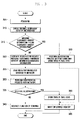
- FIG. 3 is a flowchart illustrating a protection method against unauthorized use of a mobile terminal according to an exemplary embodiment of the present invention.
- FIG. 4 is a message flow diagram illustrating steps of a registration procedure of the protection method of FIG. 3 when the SIM card attached to the terminal is invalid.
- FIG. 5 is a message flow diagram illustrating steps of a registration procedure of the protection method of FIG. 3 when the terminal is identified as a valid terminal.
- FIG. 6 is a message flow diagram illustrating steps of a normal registration procedure of the protection method of FIG. 3 .
- FIG. 7 is a flowchart illustrating a protection method for a mobile terminal according to another exemplary embodiment of the present invention.
- FIG. 8 is a message flow diagram illustrating steps of a registration procedure of the protection method of FIG. 7 when the SIM card attached to the terminal is valid.
- FIG. 9 is a message flow diagram illustrating steps of a registration procedure of the protection method of FIG. 7 when the SIM card attached to the terminal is invalid.
- FIG. 1 is a diagram illustrating a configuration of a terminal attached to a SIM card according to an exemplary embodiment of the present invention.
- the mobile terminal 200 may include other elements (not shown) required for supplementary functions.
- the SIM card 100 contains a chip to store information to identify a subscriber on the services provided by a second generation (2G) communication network such as Global System for Mobile Communication (GSM), the information to be used for terminal authentication, billing, security, etc.
- 2G second generation
- GSM Global System for Mobile Communication
- the SIM card can be a Universal Integrated Circuit Card (UICC) or a Universal Subscriber Identity Module (USIM) card that are equivalents of a SIM card in a third generation (3G) communication system. Accordingly, it should be understood that the SIM card 100 is a device having at least one of SIM, USIM and their equivalents.
- UICC Universal Integrated Circuit Card
- USIM Universal Subscriber Identity Module
- the terminal 200 is implemented with the SIM card 100 that can be attached to and detached from the mobile terminal 200 .
- the mobile terminal 200 includes a Radio Frequency (RF) unit 210 , a data processing unit 220 , a control unit 240 , a storage unit 250 , a display unit 260 , and an input unit 270 .
- RF Radio Frequency
- the SIM card 100 includes a microprocessor and a memory chip integrated in the form of an attachable/detachable card.
- the memory chip preferably stores subscriber information including subscriber's phone number, password, and billing account, and a unique International Mobile Subscriber Identity (IMSI) for identifying the subscriber.
- IMSI International Mobile Subscriber Identity
- the memory chip also can store network registration information such as a Temporary Mobile Subscriber Identity (TMSI) or a Packet Temporary Mobile Subscriber Identity (P-TMSI) for accessing services provided by the current network.
- TMSI Temporary Mobile Subscriber Identity
- P-TMSI Packet Temporary Mobile Subscriber Identity
- An exemplary embodiment of the IMSI is structured as shown in FIG. 2 .
- FIG. 2 is a diagram illustrating an exemplary structure of an IMSI stored in the SIM card 100 of FIG. 1 .
- the IMSI is a unique identifier preferably of less than or equal to 15 digits allocated to each mobile subscriber, i.e. SIM card 100 .
- the IMSI comprises a three digit Mobile Country Code (MCC), a two or three digit Mobile Network Code (MNC), and a Mobile Station Identifier Number (MSIN), which is less than or equal to ten digits.
- MCC Mobile Country Code
- MNC Mobile Network Code
- MSIN Mobile Station Identifier Number
- the MCC and MNC are used for identifying the subscriber's home network, e.g., Home Public Land Mobile Network (HPLMN), and are uniquely allocated to each network carrier.
- HPLMN Home Public Land Mobile Network
- the roamed network i.e. the visited network or Visited Public Land Mobile Network (VPLMN) refers to the MCC and MNC (the combination of which are at most 6 digits in this exemplary embodiment) stored in the SIM card 100 for identifying the HPLMN of the terminal 200 .
- VPN Visited Public Land Mobile Network
- the MSIN is used for identifying the subscriber.
- the MCC and MNC network identifiers are the most likely to be tampered with.
- the information used for restricting the use of the terminal with other network carriers is called a SIM lock or network lock information.
- the network lock information can be composed of the MCC and MNC, sometimes including a part of the MSIN.
- the MCC, MNC, and a Network Subset Personalization number of two or three digits can be used as the network lock information.
- the network lock information is composed of the MCC and MNC.
- the network lock information is used to verify the validity of the SIM card 100 attached to the terminal 200 . That is, whether the SIM card 100 attached to a specific carrier-dedicated terminal 200 is valid for the carrier network is verified, using the network lock information.
- the radio frequency (RF) unit 210 establishes a radio link with the network.
- the RF unit 210 includes an RF transmitter for up-converting and amplifying transmission signal frequency and an RF receiver for low noise amplifying and down-converting received signal frequency.
- the RF unit 210 transmits a service request signal to the network and other signals for subscriber identity information and receives signals transmitted by the network. Particularly, the RF unit 210 communicates messages generated during the registration process with the network.
- the data processing unit 220 processes the data input through the input unit 270 and received through the RF unit 210 .
- the data processing unit 220 includes a transmitter for encoding and modulating the signal to be transmitted through the RF unit 210 and a receiver for demodulating and decoding the signal received through the RF unit 210 . That is, the data processing unit 220 includes a modulator/demodulator (modem) and a coder/decoder (codec).
- modem modulator/demodulator
- codec coder/decoder
- the control unit 240 controls operations of and signaling among the internal elements of the mobile terminal 200 .
- the control unit 240 may be integrated with the data processing unit 220 .
- the control unit 240 executes the operation to protect against the unauthorized use of the terminal and services provided through the terminal by tampering with the network lock or SIM lock. That is, the control unit 240 can control the operation of the terminal 200 to restrict the use of the terminal 200 having a tampered network lock and the Temporary Mobile Subscriber Identity (TMSI) allocated to another network carrier.
- TMSI Temporary Mobile Subscriber Identity
- the control unit 240 compares a TMSI stored in the storage unit 250 and a TMSI stored in the SIM card 100 .
- the control unit 240 sends a Registration Request message containing the TMSI mismatch information to the network. If a Registration Response message is received in response to the Registration Request message, the control unit 240 restricts the use of the terminal 200 with the SIM card 100 .
- the control unit 240 compares the network identity information (e.g., Public Land Mobile Network (PLMN) code) received from the current serving network with the IMSI, particularly, with the MMC and MNC (PLMN code) constituting a portion of the IMSI stored in the SIM card 100 .
- PLMN Public Land Mobile Network
- the control unit 240 restricts the functions and operations of the terminal 200 attached to the SIM card 100 .
- the network identity information i.e. the PLMN code, is acquired from the system information message transmitted by the network periodically.
- the control unit 240 compares a Location Information (LOCI) stored in the storage unit 250 and a LOCI stored in the SIM card 100 .
- the LOCI includes the TMSI and a Location Area Identifier (LAI). That is, the control unit 240 compares the TMSI acquired from the LOCI stored in the storage unit 250 and the TMSI provided by the SIM card 100 .
- LAI Location Area Identifier
- the control unit 240 verifies the validity of the TMSI acquired from the LOCI and sends a Registration Request message containing the TMSI to the network.
- the control unit 240 verifies the invalidity of the TMSI of the LOCI, deletes the TMSI, and sends a Registration Request message containing the IMSI to the network.
- the TMSI deletion includes the deletion of the LOCI stored in the storage unit 250 and the LOCI stored in the SIM card 100 , and the IMSI included in the Registration Request message can be acquired from the storage unit 250 or the SIM card 100 .
- the control unit 240 If a Registration Accept message is received from the network in response to the Registration Request message containing the TMSI or the IMSI, the control unit 240 enables the function for use in the corresponding service. Otherwise, if a Registration Reject message is received, the control unit 240 disables the function for use in the corresponding service. That is, when an attempt to find a valid TMSI has failed, the control unit 240 sends the Registration Request message containing the IMSI. If it is determined by the network that the SIM card 100 is not one registered with the network, the network sends the Registration Reject message to the terminal 200 . Accordingly, the terminal 200 is restricted from accessing the service with the SIM card 100 .
- the message generator 244 also generates the Registration Request message containing the TMSI when the TMSI stored in the storage unit 250 and the SIM card 100 are identical to each other. Under the control of the control unit 240 , the message generator 244 also generates the Registration Request message containing the IMSI when the Temporary Mobile Subscriber Identities (TMSIs) are not identical to each other.
- the Registration Request message can be replaced with a Location Updating Request message. In such a case, the message generator 244 generates the Location Updating Request message containing the TMSI or IMSI according to whether the TMSIs are identical to each other.
- the storage unit 250 stores application programs for the operations of the terminal 200 as well as various data.
- the storage unit 250 stores SIM card identity information of the SIM card 100 attached to the terminal 200 , e.g. Integrated Circuit Card ID (ICCID) and TMSI or P-TMSI, i.e. LOCI allocated by the registered network.
- ICCID Integrated Circuit Card ID
- TMSI or P-TMSI allocated by the registered network is stored in the memory chip (not shown) of the SIM card 100 as well as in the storage unit 250 .
- the display unit 260 displays visual data generated while the terminal 200 runs the programs and data is input through key manipulation.
- the display unit 260 can be implemented with a Liquid Crystal Display (LCD). When the LCD supports a touchscreen function, the display unit 260 can work as a part of the input unit 270 .
- the display unit 260 also displays alert messages for alerting the user of reception of the messages from the network such as the Registration Reject message.
- the control unit 240 reads an internal TMSI, i.e. the TMSI or P-TMSI stored in the storage unit 250 and a card TMSI, i.e. the TMSI or P-TMSI stored in the SIM card (S 310 ) and determines whether the internal TMSI and the card TMSI are identical with each other (S 315 ). If the two TMSIs are identical to each other, the process goes to step S 350 ; and otherwise, the process goes to step S 320 .
- an internal TMSI i.e. the TMSI or P-TMSI stored in the storage unit 250
- a card TMSI i.e. the TMSI or P-TMSI stored in the SIM card
- the control unit 240 detects the TMSI mismatch.
- the control unit 240 also can compare the Integrated Circuit Card ID (ICCID) of the SIM card 100 and the ICCID stored in the storage unit 250 before comparing the internal TMSI and the card TMSI.
- ICCID Integrated Circuit Card ID
- the ICCID of the SIM card 100 is read out and stored into the storage unit 250 when the terminal 200 registers with the network successfully. Accordingly, the control unit 240 can check whether the SIM card 100 attached to the terminal 200 has been changed through the ICCID comparison process. Even when it is determined that the SIM card 100 has been changed through the ICCID comparison process, the control unit 240 regards the ICCID mismatch as the TMSI mismatch.
- the control unit 240 generates a Registration Request message containing the TMSI mismatch information.
- the Registration Request message to be transmitted can be a Location Updating Request message or an Attach Request message depending on the network.
- the terminal 200 sends the Attach Request message for registering to both the CS domain for CS services and the PS domain for PS services.
- CS Circuit Switched
- PS Packet Switched
- UMTS Universal Mobile Telecommunications System
- the terminal 200 sends the Location Updating Request message for registering to the CS domain and the Attach Request message for registering to the PS domain.
- GSM Global System for Mobile Communication
- Table 1 and Table 2 show information elements included in an exemplary Location Updating Request message and an exemplary Attach Request message containing the TMSI mismatch information, respectively.
- the Location Updating Request message includes Information Elements (IEs) such as the Registered Public Land Mobile Network (RPLMN) and TMSI status for restricting unauthorized use of the terminal 200 .
- IEs Information Elements
- RPLMN Registered Public Land Mobile Network
- TMSI status for restricting unauthorized use of the terminal 200 .
- the Location Updating Request message includes a Mobility Management Protocol Discriminator IE of 1 ⁇ 2 byte (4 bits) as mandatory (M) IE for identifying the standard layer 3 protocol message, a Skip Indicator IE of 1 ⁇ 2 byte as mandatory IE for indicating the message to be ignored, a Location Updating Request message type IE of 1 byte as mandatory IE for indicating the Location Updating Request message, a Location Updating type IE of 1 ⁇ 2 byte as mandatory IE for indicating whether the Location Updating Request message is of requesting normal registration, periodic registration, or IMSI connection, a Ciphering key sequence number IE of 1 ⁇ 2 byte as mandatory IE for indicating a ciphering key, a Location Area Identification IE of 5 bytes as mandatory IE for identifying the Area, a Mobile Station classmark IE of 1 byte as mandatory IE providing high priority information, a Mobility Identity IE of 2-9 bytes as mandatory IE for indicating identity information such as IMSI or TMSI,
- M
- the Attach Request message is a message sent to the PS domain when requesting registration to both the CS domain and the PS domain.
- the Attach Request message further includes the RPLM IE shown in Table 1.
- the Attach Request message includes a Protocol Discriminator IE of 1 ⁇ 2 byte (4 bits) as mandatory IE for identifying the standard layer 3 protocol message, a Skip Indicator IE of 1 ⁇ 2 byte as mandatory IE for indicating the message to be ignored, an Attach Request message identity IE of 1 byte as mandatory IE for indicating the Attach Request message, a Mobile Station (MS) network capability IE of 3 to 9 bytes as mandatory IE for indicating the MS network capability in association with General Packet Radio Services (GPRS), an Attach type IE of 1 ⁇ 2 byte as mandatory IE for indicating the attach type, i.e., whether the MS requests for the GPRS or the combined GPRS, a GPRS ciphering key sequence number IE of 1 ⁇ 2 byte as mandatory IE containing GPRS Ciphering key sequence number, a DRX parameter IE of 2 bytes as mandatory IE included when the MS changes connection from a GSM network to an UMTS network or the MS provides new discontinuous reception (
- the Registration Request message includes a specific IE for asking the network to perform an Identification process when the TMSI mismatch is detected. That is, the terminal 200 sends the network the Registration Request message having an RPLMN IE and a TMSI status IE as shown in Tables 1 and 2 such that the identification process is performed by the network.
- Tables 3 and 4 show the detailed structures of the RPLMN IE and the TMSI status IE, respectively.
- the RPLMN IE is 4 octets long (4 bytes).
- the RPLMN IE is composed of a RPLMN Information Element Identifier (IEI) (the first octet), MCC information (the second octet and first 4 bits of the third octet), and MNC information (last 4 bits of the third octet and the fourth octet).
- the current serving network can acquire information on the previous serving network using the MCC and MNC information, i.e. the network with which the terminal 200 had registered and allocated the TMSI, based on the MCC and MNC information included in the RPLMN IE.
- the TMSI status IE is 1 octet long and composed of a TMSI flag (the first 1 bit), spare bits filled with “0” (the second to fourth bits), a TMSI status IEI (the fifth to eighth bits). If the TMSI flag has been set to 1 in the Location Updating Request message or the Attach Request message, it indicates TMSI mismatch, i.e. that no valid TMSI is available. Accordingly, the network which receives such a Location Updating Request message or such an Attach Request message performs a subscriber identification process with the terminal 200 .
- the control unit 240 sends the Registration Request message to the network (S 325 ).
- the control unit 240 performs an identification process with the reception of an Identity Request message transmitted by the network in response to the Registration Request message (S 330 ).
- the control unit 240 performs an authentication process with the network. Otherwise, if the terminal 200 is identified as an invalid terminal, e.g. a terminal attached to a tampered SIM card, the registration request is rejected.
- the registration procedure is described later in more detail with reference to FIG. 4 and FIG. 5 .
- the control unit 240 determines whether the mobile terminal 200 is successfully registered with the network by checking the registration response message transmitted by the network (S 335 ).
- the registration response message can be a Registration Accept message including the Location Update Accept message or the Attach Accept message or a Registration Reject message including the Location Update Reject message and Attach Reject message.
- the control unit 240 determines that the terminal 200 is successfully registered with the network, such that the process goes to step S 360 . Otherwise, if the Location Update Reject message or the Attach Reject message is received, the control unit 240 determines that the terminal 200 fails registration with the network, such that the process goes to step S 340 .
- the control unit 240 displays an alert message on the display unit 250 of the mobile terminal 200 for alerting the user of unauthorized use of the mobile terminal 200 and restricts preset functions of the terminal.
- the functions restricted against unauthorized use can be set in the manufacturing phase of the terminal to prevent the terminal from being used without authorization with a SIM card owned by another network carrier subscriber.
- the control unit 240 performs a normal registration process with the network and stores the TMSI or P-TMSI allocated by the network into the storage 250 as well as into the SIM card 100 (S 350 ). At this time, the control unit 240 may store the ICCID acquired from the SIM card 100 into the storage unit 250 . The ICCID copied into the storage unit 250 is used, when the terminal 200 powers on with a SIM card, to check whether a change of SIM card has occurred. In the case where the TMSI or P-TMSI is reallocated, the new TMSI or P-TMSI is received through the Location Update Accept message or the Access Accept message transmitted by the network. Once the mobile terminal 200 is successfully registered with the network, the control unit 240 waits for a service request event (S 365 ).
- the control unit 240 stores the TMSI or P-TMSI allocated by the network into the storage 250 and the SIM card 100 (S 360 ). At this time, the control unit 240 may store the ICCID acquired from the SIM card into the storage unit 250 . Next, the control unit 240 waits for a service request event (S 365 ).
- the protection method against unauthorized use may include a PLMN code comparison procedure described later with reference to FIGS. 7 , 8 and 9 . That is, when the terminal 200 powers on, the control unit 240 can compare the network identity information received from the network, i.e. PLMN code, with the PLMN code of the IMSI stored in the SIM card 100 , and can restrict the use of the terminal 200 or perform step S 310 depending on the comparison result.
- the PLMN code comparison procedure is described in more detail with reference to FIG. 7 , FIG. 8 and FIG. 9 .
- the registration procedure including a terminal identification process between the terminal and the network will now be described in greater detail with reference to FIG. 4 and FIG. 5 .
- FIG. 4 shows the registration procedure when an invalid SIM card is attached to the terminal and
- FIG. 5 shows the registration procedure when a valid SIM card is attached to the terminal.
- FIG. 4 is a message flow diagram illustrating steps of a registration procedure of the unauthorized use prevention method (method of protection against unauthorized use) of FIG. 3 when the SIM card attached to the terminal is invalid.
- the terminal 200 once it is determined that the internal TMSI stored in the storage unit 250 of the terminal 200 and the card TMSI stored in the SIM card 100 attached to the terminal 200 are different from each other, the terminal 200 generates a Location Update Request message and an Attach Request message containing the TMSI mismatch information indicated by RPLMN IE (see Table 3) and TMSI status IE (see Table 4).
- the terminal 200 sends the Location Update Request message (S 401 ) and the Attach Request message to the network 500 (S 403 ).
- the Location Update Request message is used for requesting registration to a CS domain
- the Attach Request message is used for requesting registration to a PS domain.
- FIG. 4 shows the message flows between the terminal 200 and the network 500 under the assumption that the network 500 requires registration to both the CS and PS domains. If the network 500 supports the simultaneous registration to both the CS and PS domains, the transmission of the Location Update Request message is skipped.
- the network 500 Upon receipt of the messages containing the TMSI mismatch information, the network 500 sends an Identity Request message to the terminal 200 for identifying the terminal 200 (S 405 ).
- the Identity Request message is structured in the message format defined in the international standard, whereby further detailed description of the Identity Request message is omitted in the present disclosure.
- the terminal 200 Upon receipt of the Identity Request message, the terminal 200 sends an Identity Response message containing its identity information to the network 500 (S 405 ).
- the identity information contained in the Identity Response message is the IMSI read from the SIM card 100 attached to the terminal 200 .
- the network 500 Upon receipt of the Identity Response message, the network 500 compares the IMSI extracted from the Identity Response message and the IMSI registered with a Home Location Register (HLR) (stored in the network 500 ) and determines whether the terminal 200 is valid (S 409 ).
- HLR Home Location Register
- FIG. 4 depicts a configuration where the two IMSIs differ from each other such that the terminal 200 is determined to be an invalid terminal (S 409 ).
- the network 500 determines that the terminal 200 is an invalid terminal (S 409 ). That is, the network 500 regards that the terminal 200 is used without authorization, e.g., equipped with a tampered SIM card. Once the network 500 determines that the terminal 200 is an invalid terminal, the network 500 sends a Location Update Reject message to the terminal 200 in response to the Location Update Request message (S 411 ). Also, the network 500 sends an Attach Reject message to the terminal 200 in response to the Attach Request message (S 413 ).
- the transmission of the Location Update Reject message can be skipped.
- the Identity Response message, Location Update Reject message, and Attach Reject message are structured in the message formats defined in the international standard, whereby further detailed descriptions of these messages are omitted in the present description.
- FIG. 5 is a message flow diagram illustrating steps of a registration procedure of the unauthorized use prevention method of FIG. 3 when the terminal is identified as a valid terminal.
- the terminal 200 once it is determined that the internal TMSI stored in the storage unit 250 of the terminal 200 and the card TMSI stored in the SIM card 100 attached to the terminal 200 are different from each other, the terminal 200 generates a Location Update Request message and an Attach Request message containing the TMSI mismatch information indicated by RPLMN IE (see Table 3) and TMSI status IE (see Table 4).
- the terminal 200 sends the Location Update Request message (S 501 ) and the Attach Request message to the network 500 (S 503 ).
- the Location Update Request message is used for requesting registration to a CS domain
- the Attach Request message is used for requesting registration to a PS domain.
- FIG. 5 shows the message flows between the terminal 200 and the network 500 under the assumption that the network 500 requires registration to both the CS and PS domains. If the network 500 supports the simultaneous registration to both the CS and PS domains, the transmission of the Location Update Request message can be omitted.
- the network 500 Upon receipt of the messages containing the TMSI mismatch information, the network 500 sends an Identity Request message to the terminal 200 for identifying the terminal 200 (S 505 ).
- the terminal 200 Upon receipt of the Identity Request message, the terminal 200 sends an Identity Response message containing its identity information to the network 500 (S 507 ).
- the identity information contained in the Identity Response message is the IMSI read from the SIM card 100 attached to the terminal 200 .
- the network 500 Upon receipt of the Identity Response message, the network 500 compares the IMSI extracted from the Identity Response message to the IMSI registered with a Home Location Register (HLR) (stored in the network 500 ) and determines whether the terminal 200 is valid (S 509 ).
- HLR Home Location Register
- FIG. 5 shows the configuration when the two IMSIs are identical with each other such that the terminal 200 is determined to be a valid terminal (S 509 ).
- the network 500 sends an Authentication & Ciphering Request message to the terminal 200 for the location update process requested by the terminal 200 (S 511 ).
- the terminal 200 Upon receipt of the Authentication & Ciphering Request message, the terminal 200 sends an Authentication & Ciphering Response message to the network in response to the Authentication & Ciphering Request message (S 513 ).
- the network 500 performs the authentication and ciphering configuration for providing the terminal with the service. Once the terminal 200 is successfully registered with the network 500 through the authentication and ciphering process, the network 500 sends the terminal 200 a Location Update Accept message indicating the successful registration with the CS domain in response to the Location Update Request message (S 515 ). If a new TMSI is allocated by the network 500 , the Location Update Request message to the terminal 200 contains the new TMSI.
- the network 500 sends the terminal 200 an Attach Accept message indicating the successful registration to the PS domain in response to the Attach Request message (S 517 ).
- the transmission of the Location Update Accept message is omitted.
- the Identity Request message, Identity Response message, Authentication & Ciphering Request message, Authentication & Ciphering Response message, Location Update Accept message, and Attach Accept message are structured in the message formats defined in the international standard, whereby further detailed descriptions of these messages are omitted here.
- FIG. 6 is a message flow diagram illustrating steps of a normal registration procedure of the unauthorized use prevention method of FIG. 3 .
- the terminal 200 once it is determined that the internal TMSI stored in the storage unit 250 of the terminal 200 and the card TMSI stored in the SIM card 100 attached to the terminal 200 are identical with each other, the terminal 200 generates a Location Update Request message and an Attach Request message. In this case, since the two TMSIs are identical to each other, the Location Update Request message and Attach Request message do not carry the TMSI mismatch information.
- the terminal 200 sends the Location Update Request message (S 601 ) and the Attach Request message to the network 500 (S 603 ).
- the Location Update Request message is used for requesting registration to a CS domain
- the Attach Request message is used for requesting registration to a PS domain.
- FIG. 6 shows the message flows between the terminal 200 and the network 500 under the assumption that the network 500 requires registration to both the CS and PS domains. If the network 500 supports the simultaneous registration to both the CS and PS domains, the transmission of the Location Update Request message is skipped.
- the network 500 Upon receipt of the messages having no TMSI mismatch information, the network 500 sends an Authentication & Ciphering Request message to the terminal 200 for the location update process requested by the terminal 200 (S 605 ). Upon receipt of the Authentication & Ciphering Request message, the terminal 200 sends an Authentication & Ciphering Response message to the network 500 in response to the Authentication & Ciphering Request message (S 607 ).
- the network 500 sends the terminal 200 a Location Update Accept message indicating the successful registration with the CS domain in response to the Location Update Request message (S 609 ).
- the Location Update Accept message contains the new TMSI.
- the network 500 also sends the terminal 200 an Attach Accept message indicating the successful registration to the PS domain in response to the Attach Request message (S 611 ). If the network 500 supports the simultaneous registration to both the CS and PS domains, the transmission of the Location Update Accept message is skipped.
- the protection method against unauthorized use for a mobile terminal can protect the terminal attached to a tampered SIM card from being used without authorization.
- the terminal according to an exemplary embodiment of the present invention compares the internal TMSI stored in the storage unit and the card TMSI stored in the SIM card and sends, when the two TMSIs differ from each other, a registration request message (Location Update Request message and/or Attach Request message) containing the TMSI mismatch information to the network to trigger a terminal identification process with a tamper-proof identity information.
- a registration request message Lication Update Request message and/or Attach Request message
- the Registration Request message is transmitted when the Location Area Identifier (LAI) or a Routing Area Identifier (RAI) changes due to movement of the terminal or a predetermined timer expires, as well as when the terminal powers on with the SIM card.
- LAI Location Area Identifier
- RAI Routing Area Identifier
- the change of the LAI or RAI can be detected by checking the information stored in a System Information Block (SIB) of the System Information message broadcasted by the network periodically.
- SIB System Information Block
- the terminal starts the timer when a Registration Accept message (Location Update Accept message and/or Attach Accept message) is received.
- the terminal resends the Registration Request message (Location Update Request message and/or Attach Request message).
- the Registration Request message can be at least one of the Location Update Request message for registration to the CS domain and the Routing Update Request message, i.e., the Attach Request message, for registration to the PS domain.
- the Location Update Request message is structured in the exemplary format of Table 1
- the Routing Update Request message is structured in the exemplary format of Table 2.
- the terminal compares the internal TMSI and the card TMSI as shown in steps S 310 and S 315 of FIG. 3 . If the two TMSIs differ from each other, the terminal sends the network a Registration Request message containing the TMSI mismatch information indicated by the PLMN IE as shown in Table 3 and/or the TMSI status IE as shown in Table 4. Otherwise, if the two TMSIs are identical with each other, the terminal sends the Registration Request message without TMSI mismatch information to the network and performs the network registration process as shown in FIG. 3 (S 350 ).
- the mobile terminal can be protected from being used without authorization with the SIM card containing a tampered IMSI.
- the terminal compares the internal TMSI and the card TMSI.
- the terminal sends a Registration Request message such as the Location Update Request message and the Attach Request message containing the TMSI mismatch information to the network.
- the network which receives the Registration Request message requests from the terminal the IMSI that is uniquely allocated to the terminal according to the TMSI mismatch information such that the terminal registration process is performed with the unique IMSI.
- the terminal verifies the validity of the TMSI by comparing the TMSIs stored in the storage unit and the SIM card and sends the Registration Request message containing the TMSI or IMSI to the network depending on the comparison result, and the network determines whether to register the terminal based on the TMSI or IMSI received from the terminal.
- the protection method protects the terminal from being used without authorization such as through the hacking of the network lock/SIM lock and the TMSI allocated by another network carrier.
- the protection against unauthorized use method allows the network to identify the subscriber by checking the IMSI of the terminal.
- the terminal stores the TMSI to the internal TMSI whenever a registration process has been completed successfully and sends the IMSI to the network through a Registration Request message when the card TMSI (if it is verified as the valid card TMSI in the TMSI verification process) differs from the internal TMSI.
- a Registration Request message when the card TMSI (if it is verified as the valid card TMSI in the TMSI verification process) differs from the internal TMSI.
- FIG. 7 is a flowchart illustrating a protection method against an unauthorized use for a mobile terminal according to another exemplary embodiment of the present invention.
- the control unit 240 of the terminal 200 reads the International Mobile Subscriber Identity (IMSI) ( FIG. 2 ) from the SIM card 100 (S 703 ) and determines whether the IMSI is identical with network identity information of a subscriber's home network (S 705 ). That is, the control unit 240 compares the network identity information received from the current network right after the power-on of the terminal 200 and the network identity information read from the SIM card 100 .
- the network identity information can be a Public Land Mobile Network (PLMN) code composed of the Mobile Country Code (MCC) and the Mobile Network Code (MNC) derived from the IMSI.
- PLMN Public Land Mobile Network
- MCC Mobile Country Code
- MNC Mobile Network Code
- step S 709 If the two instances of the network identity information, particularly the PLMN codes differ from each other, the process goes to step S 709 ; otherwise, the process goes to step S 707 .
- the control unit 240 restricts use of the terminal 200 based on the mismatch of the two PLMN codes. At this time, the control unit 240 displays an alert notice of unauthorized use of the terminal on the display unit 260 and restricts predetermined functions such as a communication function.
- the functions restricted against unauthorized use can be set in the manufacturing phase of the terminal to prevent the terminal from unauthorized use, such as with a SIM card owned by another network carrier subscriber.
- the control unit 240 reads the Location Information (LOCI) which includes the Temporary Mobile Subscriber Identity (TMSI) and the Location Area Identifier (LAI) from the SIM card 100 (S 709 ) and determines whether the LOCI read from the SIM card is identical to the LOCI read from the storage unit 250 (S 711 ). That is, the control unit 240 verifies the validity of the TMSI stored in the SIM card 100 . If the two LOCIs are identical to each other, the process goes to step S 721 ; otherwise, the process goes to step S 731 .
- LOCI Location Information
- TMSI Temporary Mobile Subscriber Identity
- LAI Location Area Identifier
- the LOCI is preferably composed of the TMSI and the LAI
- the control unit 240 extracts the TMSI from the LOCI and verifies the extracted TMSI (S 709 and S 711 ).
- the control unit 240 stores the LOCI into the storage unit 250 whenever the terminal 200 is successfully registered with the network 500 ( FIG. 8 ).
- the control unit 240 determines that the LOCI stored in the SIM card 100 , particularly, the TMSI derived from the LOCI (S 721 ) is valid and sends a Registration Request message containing the verified TMSI to the network 500 (S 723 ).
- the Registration Request message can be a Location Update Request message and/or an Attach Request message.
- the TMSI allocated by the network 500 is stored into the storage unit 250 as well as in the SIM card 100 by the control unit 240 .
- the control unit 240 sends the Registration Request message containing the IMSI when it is determined, in a subsequent registration process that the TMSI stored in the SIM card differs from the TMSI stored in the storage unit 250 .
- the control unit 240 regards the LOCI stored in the SIM card 100 , particularly, the TMSI derived for the LOCI, is invalid (S 731 ). In this case, the control unit 240 deletes the invalid TMSI.
- the control unit 240 sends a Registration Request message containing the IMSI to the network (S 733 ). At this time, the control unit 240 can read the IMSI from the SIM card 100 or the storage unit 250 .
- the Registration Request message can be the Location Update Request message and/or the Access Request message.
- the control unit 240 Upon receipt of a Registration Reject message from the network 500 in response to the Registration Request message, the control unit 240 restricts the use of the terminal 200 connected to the SIM card 100 (S 735 ). At this time, the control unit 240 controls the message generator 244 to display an alert message on the display unit 260 notifying the user of the invalid SIM card and the control unit 240 restricts predetermined functions such as the communication function of the terminal 200 .
- the Registration Reject message can be a Location Update Reject message and/or an Attach Reject message.
- FIG. 8 shows the registration procedure when a valid SIM card 100 is attached to the terminal 200
- FIG. 9 shows the registration procedure when an invalid SIM card 100 is attached to the terminal 200 .
- FIG. 8 is a message flow diagram illustrating steps of a registration procedure of the unauthorized use protection method of FIG. 7 when the SIM card 100 attached to the terminal 200 is valid.
- the terminal 200 checks that the network identity information stored in the SIM card 100 and the network identity information received from the network 500 are identical to each other (S 801 ).
- the terminal 200 also checks that the location information (i.e., the TMSI) stored in the SIM card 100 and the location information (TMSI) stored in the storage unit 250 are identical to each other (S 803 ).
- the terminal 200 generates a Registration Request message, i.e. Location Update Request message and Attach Request message containing the TMSI.
- the terminal 200 sends the Location Update Request message containing the TMSI (S 805 ) and sequentially the Attach Request message containing the TMSI to the network 500 (S 807 ).
- the Location Update Request message is a message for registration to the CS domain
- the Attach Request message is a message for registration to the PS domain.
- the network 500 supports CS and PS domains each requiring a respective registration.
- the order of registration messages is not particularly limited and can be first to the CS domain and then to the PS domain as shown in FIG. 8 , or where the network supports only one domain, one of the Location Update Request message and the Attach Request message may be omitted. Accordingly, any or both of the Location Update Request message and the Attach Request message can be transmitted depending on the capability of the network.
- the network 500 Upon receipt of the Registration Request messages, the network 500 verifies whether the terminal 200 is valid for the network 500 using the TMSI contained in the Registration Request messages (S 809 ). That is, the network 500 determines whether the TMSI contained in the Registration Request messages is identical with the TMSI allocated by the network.
- FIG. 8 is depicted under the condition where the TMSIs are identical with each other such that the terminal is verified as a valid terminal.
- the network 500 verifies the validity of the terminal 200 based on the match of TMSIs (S 811 ).
- the network 500 performs the registration process requested by the terminal 200 and sends the terminal 200 a Location Update Accept message indicating the successful registration to the CS domain in response to the Location Update Request message (S 813 ) and sequentially an Attach Accept message indicating the successful registration to the PS domain in response to the Access Request message (S 815 ).
- a new TMSI is allocated to the terminal 200
- the newly allocated TMSI is contained in the Location Update Accept message and/or the Attach Accept message.
- the order of registration messages is not particularly limited and can be first the successful CS domain registration message and then the successful PS domain registration message as shown in FIG. 8 or where the network supports only one domain, one of the Location Update Accept message and the Attach Accept message may be omitted.
- one or both of the Location Update Accept message and the Attach Accept message is/are transmitted.
- FIG. 9 is a message flow diagram illustrating steps of a registration procedure of the unauthorized use protection method of FIG. 7 when the SIM card attached to the terminal is invalid.
- the terminal 200 finds that the network identity information stored in the SIM card 100 and the network identity information received from the network 500 are identical with each other (S 901 ) and further that the location information (i.e., the TMSI) stored in the SIM card 100 and the location information (TMSI) stored in the storage unit 250 differ from each other (S 903 ). In this case, the terminal 200 generates a Registration Request message, i.e. the Location Update Request message and the Attach Request message containing the IMSI.
- a Registration Request message i.e. the Location Update Request message and the Attach Request message containing the IMSI.
- the terminal 200 sends the Location Update Request message containing the IMSI (S 905 ) and sequentially the Attach Request message containing the IMSI (S 907 ).
- the Location Update Request message and the Attach Request message can be transmitted.
- the network 500 Upon receipt of the Registration Request messages, the network 500 verifies whether the terminal 200 is valid for the network 500 using the IMSI contained in the Registration Request messages (S 909 ). That is, the network 500 determines whether the IMSI contained in the Registration Request messages is identical with the IMSI stored in the network 500 .
- FIG. 9 is depicted under the assumption that the two IMSI differ from each other such that the terminal 200 is verified as an invalid terminal.
- the network 500 verifies the invalidity of the terminal 200 based on the mismatch of the IMSIs (S 911 ). That is, if the two IMSIs differ from each other, the network 500 regards the terminal 200 as an invalid terminal for use in the network, e.g. a terminal attached to a tampered SIM card.
- the network 500 sends the terminal 200 a Location Update Reject message indicating the registration failure to the CS domain in response to the Location Update Request message (S 913 ) and sequentially an Attach Reject message indicating the registration failure to the PS domain in response to the Attach Reject message (S 915 ).
- the Location Update Reject message and the Attach Reject message is/are transmitted.
- the terminal 200 having received the Location Update Reject message and/or the Attach Reject message cannot then receive a normal service from the network 500 , resulting in protection from unauthorized use of the terminal 200 .
- the Registration Request message can be transmitted to the network when the LAI or RAI changes due to the movement of the terminal and when a predetermined timer expires, as well as when the terminal powers on.
- the registration process described in detail with reference to FIG. 8 and FIG. 9 in association with the unauthorized use protection method depicted in FIG. 3 , as described herein can also be applied in these exemplary scenarios.
- the unauthorized use protection method of a terminal enables protecting against unauthorized use of the terminal, even when the terminal is activated by releasing the SIM lock/network lock with the IMSI copied from a valid SIM card for a specific network carrier, since the network rejects serving the terminal in a registration process (location registration process and/or access registration process).
- the unauthorized use protection method of a terminal can protect against unauthorized use of the terminal when any of the identity codes constituting the IMSI contained in the SIM card are tampered since the terminal identification is performed in cooperation with the network using the IMSI.
- the method of protecting a terminal against unauthorized use according to the exemplary embodiments of the present invention prevent the terminal dedicated to a specific network carrier from being used without permission of the network carrier.
Landscapes
- Engineering & Computer Science (AREA)
- Computer Security & Cryptography (AREA)
- Computer Networks & Wireless Communication (AREA)
- Signal Processing (AREA)
- Mobile Radio Communication Systems (AREA)
- Telephone Function (AREA)
Applications Claiming Priority (4)
| Application Number | Priority Date | Filing Date | Title |
|---|---|---|---|
| KR10-2008-0054291 | 2008-06-10 | ||
| KR20080054291 | 2008-06-10 | ||
| KR10-2009-0008131 | 2009-02-02 | ||
| KR1020090008131A KR101059794B1 (ko) | 2008-06-10 | 2009-02-02 | 단말기의 불법 사용을 제한하는 방법 및 이를 위한 시스템 |
Publications (2)
| Publication Number | Publication Date |
|---|---|
| US20090305668A1 US20090305668A1 (en) | 2009-12-10 |
| US8326268B2 true US8326268B2 (en) | 2012-12-04 |
Family
ID=41110462
Family Applications (1)
| Application Number | Title | Priority Date | Filing Date |
|---|---|---|---|
| US12/475,875 Expired - Fee Related US8326268B2 (en) | 2008-06-10 | 2009-06-01 | Method and system for protection against the unauthorized use of a terminal |
Country Status (2)
| Country | Link |
|---|---|
| US (1) | US8326268B2 (de) |
| EP (1) | EP2134061B1 (de) |
Cited By (6)
| Publication number | Priority date | Publication date | Assignee | Title |
|---|---|---|---|---|
| US20120220269A1 (en) * | 2009-11-02 | 2012-08-30 | Zte Corporation | Anti-crack method and device for network-locked mobile terminal, and network-locked mobile terminal |
| US20140128028A1 (en) * | 2010-09-14 | 2014-05-08 | Vodafone Ip Licensing Limited | Method and device for controlling access to mobile telecommunications networks |
| US10159057B1 (en) * | 2017-06-02 | 2018-12-18 | Apple Inc. | Device, system, and method for persisting network registration rejection causes |
| WO2021046650A1 (en) * | 2019-09-12 | 2021-03-18 | Trespass Tracker Ltd. | System and method of tracking a mobile device |
| US11016852B1 (en) * | 2017-05-10 | 2021-05-25 | Juniper Networks, Inc. | Guarded mode boot up and/or recovery of a network device |
| US11224004B2 (en) | 2018-09-12 | 2022-01-11 | Trespass Tracker Ltd. | System and method of tracking a mobile device |
Families Citing this family (36)
| Publication number | Priority date | Publication date | Assignee | Title |
|---|---|---|---|---|
| KR100985397B1 (ko) | 2008-06-30 | 2010-10-05 | 삼성전자주식회사 | 이동통신 단말기에서 이동 가입 식별자의 유효성 판단 방법및 장치 |
| US8412270B2 (en) * | 2008-08-08 | 2013-04-02 | Motorola Mobility Llc | Using network authentication to counter subscriber identity module card man-in-the-middle subsidy lock attack |
| US8290474B2 (en) * | 2008-10-09 | 2012-10-16 | Nokia Corporation | Method, apparatus and computer program product for providing smart card security |
| US8229436B2 (en) * | 2009-06-12 | 2012-07-24 | Research In Motion Limited | Methods and apparatus for managing mobile handover |
| US8639290B2 (en) * | 2009-09-25 | 2014-01-28 | At&T Intellectual Property I, L.P. | UICC control over devices used to obtain service |
| US9497632B2 (en) | 2009-10-01 | 2016-11-15 | T-Mobile Usa, Inc. | System and method for pairing a UICC card with a particular mobile communications device |
| KR101629709B1 (ko) * | 2010-01-20 | 2016-06-14 | 삼성전자주식회사 | 통신모듈을 내장한 컴퓨터 기기에서 부팅 방법 및 장치 |
| US20110201342A1 (en) * | 2010-02-16 | 2011-08-18 | Nokia Siemens Networks Oy | Minimizing location update in circuit-switched fallback |
| CN101951548B (zh) * | 2010-09-03 | 2014-04-16 | 惠州Tcl移动通信有限公司 | 用于追踪失窃通信终端的系统和方法及通信终端 |
| CN102034041A (zh) * | 2010-12-07 | 2011-04-27 | 华为终端有限公司 | 一种验证绑定数据卡和移动主机的方法、装置及系统 |
| CN102075910B (zh) * | 2010-12-20 | 2014-06-11 | 华为终端有限公司 | 对终端进行锁网的方法和装置 |
| BR112013031001B1 (pt) * | 2011-06-07 | 2021-11-16 | Nokia Technologies Oy | Método, meio legível por computador e aparelho |
| JP5223952B2 (ja) | 2011-08-12 | 2013-06-26 | 日本電気株式会社 | 移動体通信システム、移動局、交換局および移動局の位置登録方法 |
| KR101840725B1 (ko) * | 2011-09-02 | 2018-03-21 | 에스프린팅솔루션 주식회사 | P2p 연결을 지원하는 화상형성장치 및 그것의 p2p 연결 제어 방법 |
| CN102984684B (zh) * | 2011-09-06 | 2015-09-23 | 华为技术有限公司 | 一种上报终端信息的方法和终端 |
| FR2985625A1 (fr) | 2012-01-05 | 2013-07-12 | France Telecom | Procede d'activation sur un deuxieme reseau d'un terminal comprenant un module memoire associe a un premier reseau |
| CN102883323B (zh) | 2012-09-27 | 2018-07-27 | 中兴通讯股份有限公司 | 一种保护移动终端用户私密数据的方法和装置 |
| AP2015008715A0 (en) * | 2013-02-05 | 2015-09-30 | Knowroaming Ltd | Method and device for authenticating a mobile station on an alternative communications network |
| DE102013113270A1 (de) * | 2013-11-29 | 2015-06-03 | Vodafone Holding Gmbh | Steuerung der Nutzung von einem Endgerät in einem Mobilfunknetz für Kommunikationsverbindungen zur Verfügung stehenden Diensten |
| EP3136800B1 (de) * | 2014-05-12 | 2019-06-19 | Huawei Technologies Co. Ltd. | Verfahren zur aktualisierung von rplmn-informationen und benutzergerät |
| CN104038615A (zh) * | 2014-05-14 | 2014-09-10 | 京东方科技集团股份有限公司 | 通讯设备的认证方法及其认证装置 |
| US9942755B2 (en) | 2014-08-25 | 2018-04-10 | Apple Inc. | Enforcing service policies in embedded UICCs |
| US9807607B2 (en) * | 2014-10-03 | 2017-10-31 | T-Mobile Usa, Inc. | Secure remote user device unlock |
| US10769315B2 (en) | 2014-12-01 | 2020-09-08 | T-Mobile Usa, Inc. | Anti-theft recovery tool |
| EP4030796B1 (de) * | 2015-11-19 | 2026-04-15 | SK Telecom Co., Ltd. | Verfahren und vorrichtung zur auswahl eines kernnetzwerks in einem mobilkommunikationssystem |
| US11425553B2 (en) * | 2016-07-01 | 2022-08-23 | Nokia Solutions And Networks Oy | Optimized mobility management signaling in a data centric network architecture |
| CN106453847B (zh) * | 2016-09-19 | 2020-03-27 | 努比亚技术有限公司 | 一种终端解锁介质自动清除系统及方法 |
| CN107872771B (zh) | 2016-09-28 | 2021-03-30 | 华为技术有限公司 | 物联网中处理短消息的方法、移动管理网元和终端设备 |
| WO2018076148A1 (zh) * | 2016-10-25 | 2018-05-03 | 深圳市佳润鑫信息技术有限公司 | 一种防破解终端锁网信息的方法 |
| CN107222863A (zh) * | 2017-07-03 | 2017-09-29 | 上海与德科技有限公司 | 一种网络锁定的方法及装置 |
| JP2021013045A (ja) * | 2017-09-26 | 2021-02-04 | 京セラ株式会社 | 無線端末およびその制御方法 |
| US10812970B2 (en) * | 2018-04-30 | 2020-10-20 | Tracfone Wireless, Inc. | System and process for locking a subscriber identity module (SIM) card to a wireless device |
| GB2582169B (en) * | 2019-03-13 | 2021-08-11 | Trustonic Ltd | Authentication method |
| US20220124838A1 (en) * | 2020-10-19 | 2022-04-21 | Mediatek Inc. | Ma pdu session and user plane resource establishment for data transmission |
| CN114867028A (zh) * | 2021-02-03 | 2022-08-05 | 中国移动通信有限公司研究院 | 一种仿冒攻击的防护方法、装置及网络设备 |
| GB2701534A (en) * | 2024-10-04 | 2026-04-29 | Wavemobile Ltd | Providing wireless communication services |
Citations (5)
| Publication number | Priority date | Publication date | Assignee | Title |
|---|---|---|---|---|
| WO1996035304A1 (en) | 1995-05-04 | 1996-11-07 | Nokia Telecommunications Oy | Checking the access right of a subscriber equipment |
| US20040005912A1 (en) * | 2002-07-04 | 2004-01-08 | Alcatel | Method of locking a mobile telecommunications terminal |
| EP1523202A1 (de) | 2003-10-07 | 2005-04-13 | Samsung Electronics Co., Ltd. | Mobilkommunikationsendgerät und Verfahren zum Schutz von privaten Informationen |
| US20060172732A1 (en) * | 2005-02-01 | 2006-08-03 | Tomas Nylander | Method, system and apparatus for providing security in an unlicensed mobile access network or a generic access network |
| US20060189298A1 (en) * | 2003-03-06 | 2006-08-24 | Maurizio Marcelli | Method and software program product for mutual authentication in a communications network |
-
2009
- 2009-06-01 US US12/475,875 patent/US8326268B2/en not_active Expired - Fee Related
- 2009-06-02 EP EP09161721.7A patent/EP2134061B1/de not_active Not-in-force
Patent Citations (5)
| Publication number | Priority date | Publication date | Assignee | Title |
|---|---|---|---|---|
| WO1996035304A1 (en) | 1995-05-04 | 1996-11-07 | Nokia Telecommunications Oy | Checking the access right of a subscriber equipment |
| US20040005912A1 (en) * | 2002-07-04 | 2004-01-08 | Alcatel | Method of locking a mobile telecommunications terminal |
| US20060189298A1 (en) * | 2003-03-06 | 2006-08-24 | Maurizio Marcelli | Method and software program product for mutual authentication in a communications network |
| EP1523202A1 (de) | 2003-10-07 | 2005-04-13 | Samsung Electronics Co., Ltd. | Mobilkommunikationsendgerät und Verfahren zum Schutz von privaten Informationen |
| US20060172732A1 (en) * | 2005-02-01 | 2006-08-03 | Tomas Nylander | Method, system and apparatus for providing security in an unlicensed mobile access network or a generic access network |
Non-Patent Citations (1)
| Title |
|---|
| European Search Report for corresponding EP Application No. 09161721.7-1244/2134061 dated Jun. 28, 2012. |
Cited By (10)
| Publication number | Priority date | Publication date | Assignee | Title |
|---|---|---|---|---|
| US20120220269A1 (en) * | 2009-11-02 | 2012-08-30 | Zte Corporation | Anti-crack method and device for network-locked mobile terminal, and network-locked mobile terminal |
| US8923917B2 (en) * | 2009-11-02 | 2014-12-30 | Zte Corporation | Anti-crack method and device for network-locked mobile terminal, and network-locked mobile terminal |
| US20140128028A1 (en) * | 2010-09-14 | 2014-05-08 | Vodafone Ip Licensing Limited | Method and device for controlling access to mobile telecommunications networks |
| US9210174B2 (en) * | 2010-09-14 | 2015-12-08 | Vodafone Ip Licensing Limited | Method and device for controlling access to mobile telecommunications networks |
| US11016852B1 (en) * | 2017-05-10 | 2021-05-25 | Juniper Networks, Inc. | Guarded mode boot up and/or recovery of a network device |
| US10159057B1 (en) * | 2017-06-02 | 2018-12-18 | Apple Inc. | Device, system, and method for persisting network registration rejection causes |
| US11224004B2 (en) | 2018-09-12 | 2022-01-11 | Trespass Tracker Ltd. | System and method of tracking a mobile device |
| WO2021046650A1 (en) * | 2019-09-12 | 2021-03-18 | Trespass Tracker Ltd. | System and method of tracking a mobile device |
| US20220369095A1 (en) * | 2019-09-12 | 2022-11-17 | Trespass Tracker Ltd. | System and method of tracking a mobile device |
| US12137497B2 (en) * | 2019-09-12 | 2024-11-05 | Trespass Tracker Ltd. | System and method of tracking a mobile device |
Also Published As
| Publication number | Publication date |
|---|---|
| EP2134061B1 (de) | 2018-08-01 |
| EP2134061A2 (de) | 2009-12-16 |
| EP2134061A3 (de) | 2012-08-01 |
| US20090305668A1 (en) | 2009-12-10 |
Similar Documents
| Publication | Publication Date | Title |
|---|---|---|
| US8326268B2 (en) | Method and system for protection against the unauthorized use of a terminal | |
| CN101605333B (zh) | 用于防止终端的未授权使用的保护方法和系统 | |
| EP1562394B1 (de) | Vorrichtung und Verfahren zum Einstellen der Nutzungsbeschränkung eines mobilen Kommunikationsterminals | |
| US8320883B2 (en) | Method to dynamically authenticate and control mobile devices | |
| EP2457394B1 (de) | Endgeräteidentifikatoren in einem kommunikationsnetz | |
| KR101546789B1 (ko) | 위치등록 수행방법, 장치 및 시스템 | |
| JP3935994B2 (ja) | 移動通信網及び該移動通信網の選択された遠隔移動端末装置をロックする方法 | |
| US7088988B2 (en) | Over-the-air subsidy lock resolution | |
| US9497630B2 (en) | Enhanced manageability in wireless data communication systems | |
| CN101494854B (zh) | 一种防止非法sim lock解锁的方法、系统和设备 | |
| WO2018065660A1 (en) | Iot device connectivity provisioning | |
| CN108024241B (zh) | 终端接入鉴权方法、系统以及鉴权服务器 | |
| EP1571859B1 (de) | Verfahren zur Verschlüsselung der Gerätekennung eines mobilen Teilnehmergeräts | |
| CN113329403B (zh) | 一种一号多终端鉴权入网方法及系统 | |
| EP3673675B1 (de) | Registrierung eines benutzergeräts mit einem besuchten öffentlichen terrestrischen mobilfunknetz | |
| CN105636043A (zh) | eSIM卡鉴权方法、eSIM卡鉴权装置和终端 | |
| KR101236487B1 (ko) | 불법단말기의 사용방지 시스템 및 방법 |
Legal Events
| Date | Code | Title | Description |
|---|---|---|---|
| AS | Assignment |
Owner name: SAMSUNG ELECTRONICS CO., LTD., KOREA, REPUBLIC OF Free format text: ASSIGNMENT OF ASSIGNORS INTEREST;ASSIGNORS:AHN, JUNG HOON;CHUN, YOUNG GUN;REEL/FRAME:022976/0154 Effective date: 20090423 |
|
| STCF | Information on status: patent grant |
Free format text: PATENTED CASE |
|
| FEPP | Fee payment procedure |
Free format text: PAYOR NUMBER ASSIGNED (ORIGINAL EVENT CODE: ASPN); ENTITY STATUS OF PATENT OWNER: LARGE ENTITY |
|
| FPAY | Fee payment |
Year of fee payment: 4 |
|
| FEPP | Fee payment procedure |
Free format text: MAINTENANCE FEE REMINDER MAILED (ORIGINAL EVENT CODE: REM.); ENTITY STATUS OF PATENT OWNER: LARGE ENTITY |
|
| LAPS | Lapse for failure to pay maintenance fees |
Free format text: PATENT EXPIRED FOR FAILURE TO PAY MAINTENANCE FEES (ORIGINAL EVENT CODE: EXP.); ENTITY STATUS OF PATENT OWNER: LARGE ENTITY |
|
| STCH | Information on status: patent discontinuation |
Free format text: PATENT EXPIRED DUE TO NONPAYMENT OF MAINTENANCE FEES UNDER 37 CFR 1.362 |
|
| FP | Lapsed due to failure to pay maintenance fee |
Effective date: 20201204 |