US8526337B2 - Method and apparatus for communication in a TDD-based wireless communication system - Google Patents
Method and apparatus for communication in a TDD-based wireless communication system Download PDFInfo
- Publication number
- US8526337B2 US8526337B2 US12/937,628 US93762809A US8526337B2 US 8526337 B2 US8526337 B2 US 8526337B2 US 93762809 A US93762809 A US 93762809A US 8526337 B2 US8526337 B2 US 8526337B2
- Authority
- US
- United States
- Prior art keywords
- frame
- tdd
- ieee
- start point
- virtual frames
- Prior art date
- Legal status (The legal status is an assumption and is not a legal conclusion. Google has not performed a legal analysis and makes no representation as to the accuracy of the status listed.)
- Expired - Fee Related, expires
Links
- 238000000034 method Methods 0.000 title claims abstract description 38
- 238000004891 communication Methods 0.000 title claims abstract description 30
- 230000007774 longterm Effects 0.000 claims description 2
- 230000005540 biological transmission Effects 0.000 description 14
- 125000004122 cyclic group Chemical group 0.000 description 4
- 238000005070 sampling Methods 0.000 description 4
- 230000003595 spectral effect Effects 0.000 description 4
- 230000003247 decreasing effect Effects 0.000 description 3
- 238000010586 diagram Methods 0.000 description 3
- 101100440696 Caenorhabditis elegans cor-1 gene Proteins 0.000 description 2
- 230000006870 function Effects 0.000 description 2
- 230000007704 transition Effects 0.000 description 2
- 238000007796 conventional method Methods 0.000 description 1
- 238000013461 design Methods 0.000 description 1
- 238000012986 modification Methods 0.000 description 1
- 230000004048 modification Effects 0.000 description 1
Images




Classifications
-
- H—ELECTRICITY
- H04—ELECTRIC COMMUNICATION TECHNIQUE
- H04B—TRANSMISSION
- H04B7/00—Radio transmission systems, i.e. using radiation field
- H04B7/14—Relay systems
- H04B7/15—Active relay systems
- H04B7/204—Multiple access
- H04B7/212—Time-division multiple access [TDMA]
-
- H—ELECTRICITY
- H04—ELECTRIC COMMUNICATION TECHNIQUE
- H04L—TRANSMISSION OF DIGITAL INFORMATION, e.g. TELEGRAPHIC COMMUNICATION
- H04L5/00—Arrangements affording multiple use of the transmission path
- H04L5/14—Two-way operation using the same type of signal, i.e. duplex
- H04L5/1469—Two-way operation using the same type of signal, i.e. duplex using time-sharing
- H04L5/1484—Two-way operation using the same type of signal, i.e. duplex using time-sharing operating bytewise
-
- H—ELECTRICITY
- H04—ELECTRIC COMMUNICATION TECHNIQUE
- H04L—TRANSMISSION OF DIGITAL INFORMATION, e.g. TELEGRAPHIC COMMUNICATION
- H04L27/00—Modulated-carrier systems
- H04L27/26—Systems using multi-frequency codes
-
- H—ELECTRICITY
- H04—ELECTRIC COMMUNICATION TECHNIQUE
- H04L—TRANSMISSION OF DIGITAL INFORMATION, e.g. TELEGRAPHIC COMMUNICATION
- H04L5/00—Arrangements affording multiple use of the transmission path
- H04L5/0001—Arrangements for dividing the transmission path
- H04L5/0003—Two-dimensional division
- H04L5/0005—Time-frequency
- H04L5/0007—Time-frequency the frequencies being orthogonal, e.g. OFDM(A) or DMT
Definitions
- the present invention relates to wireless communications, and more particularly, to coexistence with another time division duplex (TDD) system in a TDD-based wireless communication system.
- TDD time division duplex
- the wireless communication system is generally a multiple access system that can support communication with multiple users by sharing available radio resources (e.g., bandwidth, transmit power, etc.).
- Examples of the multiple access system include a code division multiple access (CDMA) system, a frequency division multiple access (FDMA) system, a time division multiple access (TDMA) system, an orthogonal frequency division multiple access (OFDMA) system, a single carrier frequency division multiple access (SC-FDMA) system, etc.
- CDMA code division multiple access
- FDMA frequency division multiple access
- TDMA time division multiple access
- OFDMA orthogonal frequency division multiple access
- SC-FDMA single carrier frequency division multiple access
- the institute of electrical and electronics engineers (IEEE) 802.16 standard provides a technique and protocol for supporting broadband wireless access.
- the standardization had been conducted since 1999 until the IEEE 802.16-2001 was approved in 2001.
- the IEEE 802.16-2001 is based on a physical layer of a single carrier (SC) called ‘WirelessMAN-SC’.
- the IEEE 802.16a standard was approved in 2003.
- ‘WirelessMAN-OFDM’ and ‘WirelessMAN-OFDMA’ are further added to the physical layer in addition to the ‘WirelessMAN-SC’.
- the revised IEEE 802.16-2004 standard was approved in 2004.
- IEEE 802.16-2004/Cor1 To correct bugs and errors of the IEEE 802.16-2004 standard, the IEEE 802.16-2004/Cor1 was completed in 2005 in a format of ‘corrigendum’.
- a standard based on the IEEE 802.16-2004/Cor1 is referred to as IEEE 802.16e or WiMAX.
- IEEE 802.16 broadband wireless access working group there is ongoing standardization effort for the IEEE 802.16m standard which is a new technical standard based on the IEEE 802.16e.
- the IEEE 802.16m standard requires flexible support for the conventional IEEE 802.16e standard as well as a new system.
- the IEEE 802.16m system is based on TDD. That is, uplink transmission and downlink transmission are achieved in the same frequency band at different times.
- Deployment of various wireless communication systems results in a problem in coexistence between different systems. That is, the problem is that a plurality of systems provide services in the same region/time.
- symbol puncturing, time delay, or the like can be used to avoid interference, but this may cause a problem of decreasing spectral efficiency.
- the present invention provides a frame structure for coexistence between different time division duplex (TDD) systems.
- TDD time division duplex
- a method for communication in a time division duplex (TDD)-based wireless communication system includes configuring a first frame comprising a plurality of contiguous downlink subframes and a plurality of contiguous uplink subframes, and transmitting data by using at least one downlink subframe or uplink subframe in the first frame, wherein a start point of a first uplink subframe among the plurality of contiguous uplink subframes is located in a switching point in a second frame in which another system is used.
- TDD time division duplex
- the switching point may include a downlink pilot time slot (DwPTS), a guard period (GP), and an uplink pilot time slot (UpPTS).
- DwPTS downlink pilot time slot
- GP guard period
- UpPTS uplink pilot time slot
- the start point of the first uplink subframe may be aligned with a start point of the UpPTS or a start point of the GP.
- a length of the first frame may be 5 ms, and a length of the second frame may be 10 ms.
- the method may further include receiving information on a frame offset for allowing the start point of the first uplink subframe to be located in the switching point in the second frame in which another system is used.
- an apparatus for communication in a time division duplex (TDD)-based wireless communication system includes a frame configuration unit for configuring a first frame comprising a plurality of contiguous downlink subframes and a plurality of contiguous uplink subframes, wherein a start point of a first uplink subframe among the plurality of contiguous uplink subframes is located in a switching point in a second frame in which another system is used, and a transceiver for transmitting data by using at least one downlink subframe or uplink subframe in the first frame.
- TDD time division duplex
- FIG. 1 shows a wireless communication system
- FIG. 2 shows a frame structure of an IEEE 802.16m system.
- FIG. 3 shows a TDD frame structure of a 3GPP LTE system.
- FIG. 4 shows a method for coexistence using a frame offset.
- FIG. 5 shows coexistence between an IEEE 802.16m frame and an LTE TDD frame having a repetition period of 5 ms.
- FIG. 6 shows coexistence between an IEEE 802.16m frame and an LTE TDD frame having a repetition period of 10 ms.
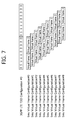
- FIG. 7 shows an example of combinations of virtual frames.
- FIG. 8 shows an IEEE 802.16m frame structure for coexistence with the configuration 4 of LTE TDD.
- FIG. 9 shows an IEEE 802.16m frame structure for coexistence with the configuration 6 of LTE TDD.
- FIG. 10 shows an apparatus for wireless communication according to an embodiment of the present invention.
- FIG. 1 shows a wireless communication system.
- a wireless communication system 10 includes at least one base station (BS) 11 .
- Each BS 11 provides communication services to specific geographical regions (generally referred to as cells) 15 a , 15 b , and 15 c . Each cell can be divided into a plurality of regions (referred to as sectors).
- a user equipment (UE) 12 may be fixed or mobile, and may be referred to as another terminology, such as a mobile station (MS), a mobile terminal (MT), a user terminal (UT), a subscriber station (SS), a wireless device, a personal digital assistant (PDA), a wireless modem, a handheld device, etc.
- the BS 11 is generally a fixed station that communicates with the UE 12 and may be referred to as another terminology, such as an evolved node-B (eNB), a base transceiver system (BTS), an access point, etc.
- eNB evolved node-B
- BTS base transceiver system
- a downlink (DL) denotes a communication link from the BS to the UE
- an uplink (UL) denotes a communication link from the UE to the BS.
- a transmitter may be a part of the BS
- a receiver may be a part of the UE
- the transmitter may be a part of the UE
- the receiver may be a part of the BS.
- a time division duplex (TDD) structure considered hereinafter is not limited only to a specific system.
- TDD time division duplex
- IEEE 802.16m is an evolution of IEEE 802.16e.
- 3GPP LTE is a part of evolved UMTS (E-UMTS) using E-UTRA, and employs orthogonal frequency division multiple access (OFDMA) in DL and single carrier frequency division multiple access (SC-FDMA) in UL.
- OFDMA orthogonal frequency division multiple access
- SC-FDMA single carrier frequency division multiple access
- the reason of selecting the IEEE 802.16m system and the LTE TDD system is that the IEEE 802.16m system has a frame structure in which a DL subframe and a UL subframe are included with 5 ms periodicity whereas the LTE TDD system has a frame structure having 5 ms periodicity and 10 ms periodicity.
- FIG. 2 shows a frame structure of an IEEE 802.16m system.
- a TDD frame includes 8 subframes SF 0 , SF 1 , SF 2 , SF 3 , SF 4 , SF 5 , SF 6 , and SF 7 .
- Each subframe can be used to transmit UL data or DL data.
- the subframe can consist of 6 OFDM symbols S 0 , S 1 , S 2 , S 3 , S 4 , and S 5 or 5 OFDM symbols S 0 , S 1 , S 2 , S 3 , and S 4 , for exemplary purposes only.
- each subframe is used for UL or DL in the same frequency at different times. That is, subframes in a TDD frame are divided into a UL subframe and a DL subframe. At least one of DL subframes and UL subframes is the type-2 subframe.
- a transmit/receive transition gap (TTG)/receive/transmit transition gap (RTG) is deployed as an idle time for switching from UL to DL or switching from DL to UL.
- TTG/RTG is also referred to as a switching point or an idle frame.
- a TDD structure in which some of parameters used in WiMAX profile are extracted is defined as a frame structure of a legacy system, on the basis of the IEEE 802.16e standard.
- Table 1 below shows an orthogonal frequency-division multiplexing (OFDM) parameter in the IEEE 802.16e system.
- OFDM orthogonal frequency-division multiplexing
- the TDD frame structure for the parameters has characteristics as follows: (1) A frame length is 5 ms; (2) Among the OFDM parameters of Table 1, a CP length is 1 ⁇ 8 Tu; (3) One frame consists of 8 subframes; and (4) UL and DL are divided in a subframe unit.
- a cyclic prefix is a copy of a last time Tg of an useful symbol period, and can be denoted by a ratio with respect to a useful symbol time Tu.
- FIG. 3 shows a TDD frame structure of a 3GPP LTE system.
- the section 4.2 of 3GPP TS 36.211 V8.2.0 (2008-03) “Technical Specification; Evolved Universal Terrestrial Radio Access (E-UTRA); Physical Channels and Modulation (Release 8)” can be incorporated herein by reference.
- a radio frame consists of 2 half-frames.
- One half-frame consists of 10 subframes # 0 to # 9 .
- the subframe may consist of 7 OFDM symbols in case of using a normal CP, and may consist of 6 OFDM symbols in case of using an extended CP.
- the UL and DL are divided in a subframe unit, and a UL subframe and a DL subframe are separated by a switching point.
- the switching point is located between the UL subframe and the DL subframe and is a specific period for dividing UL and DL. At least one switching point exists in the radio frame.
- the switching point includes a downlink pilot time slot (DwPTS), a guard period (GP), and an uplink pilot time slot (UpPTS).
- DwPTS is used for initial cell search, synchronization, or channel estimation.
- the UpPTS is used for channel estimation in a BS and UL transmission synchronization adjustment of a UE.
- the GP is a guard period for removing interference that occurs in UL due to a multiple-path delay of a DL signal between UL and DL.
- Table 2 shows a structure of a frame that can be configured according to deployment of a UL subframe and a DL subframe in an LTE TDD system.
- D denotes a DL subframe
- U denotes a UL subframe
- S denotes a switching point, i.e., DwPTS+GP+UpPTS.
- DL and UL are switched with a switching-point periodicity of 5 ms.
- DL and UL are switched with a switching-point periodicity of 10 ms.
- Table 3 shows a method of configuring the DwPTS, the GP, and the UpPTS considered in the LTE system.
- Ts denotes a sampling time, and is calculated to 1/(15000*2048) (sec).
- FIG. 4 shows a method for coexistence using a frame offset.
- An IEEE 802.16m frame uses a frame offset for coexistence with a frame having a switching-point periodicity of 5 ms in an LTE system.
- the frame offset is used to align a DL transmission duration and/or a UL transmission duration of two systems to the maximum extent possible. Overlapping of the DL duration and the UL duration is avoided by puncturing a part of duration.
- a scheme 1 is a scheme in which a DL start point of IEEE 802.16m is aligned to a DL start point of LTE.
- a frame offset 1 is information for aligning the DL start point of IEEE 802.16m to the DL start point of the LTE.
- a time difference to the DL start point of IEEE 802.16m from a start point of an LTE frame is defined as the frame offset 1 .
- a scheme 1 is a scheme in which a UL start point of IEEE 802.16m is aligned to a start point of a UpPTS or GP of LTE.
- a frame offset 2 is information for aligning the UL start point of IEEE 802.16m to the start point of the UpPTS or GP of LTE.
- a time difference to the DL start point of IEEE 802.16m from a start point of an LTE frame is defined as the frame offset 2 .
- Information on the frame offset 1 and/or the frame offset 2 is a part of system information or a super frame header (SFH), and can be reported by a BS to the UE.
- FSH super frame header
- an OFDM symbol needs to be punctured in some parts of the duration due to a difference between an OFDM parameter of IEEE 802.16m and an OFDM parameter of LTE.
- a DL/UL ratio of IEEE 802.16m according to three DL/UL ratios of 5 ms periodicity of LTE used in the schemes 1 and 2 , and the number of OFDM symbols required to be punctured are summarized as shown in Table 4.
- a method of solving a mutual coexistence problem will be described by defining a virtual frame which is adjusted to a size of an IEEE 802.16m frame having a shorter period by properly fragmenting DL and UL deployment of an LTE frame having a longer period.
- a method of applying the present invention to a case where the IEEE 802.16m TDD frame coexists with an LTE TDD frame with 10 ms periodicity and having configurations 3 , 4 , and 5 will be described.
- the number of OFDM symbols punctured to decrease mutual interference between DL and UL is increased when transmitting an IEEE 802.16m frame since a repetition period differs between DL and UL.
- FIG. 5 shows coexistence between an IEEE 802.16m frame and an LTE TDD frame having a repetition period of 5 ms.
- a slashed part represents a DL duration.
- LTE has a DL/UL ratio of 1:3.
- a length of a duration obtained by summing a first DL subframe 502 and a switching point 503 is 2000 us.
- a DL/UL ratio of IEEE 802.16m is configured with 2:6 or 3:5 within 5 ms and if a proper frame offset is found between two frames, a DL duration or UL duration of IEEE 802.16m or a UL duration or DL duration of LTE can be prevented from overlapping with each other. Therefore, there may be no OFDM symbol to be punctured.
- FIG. 6 shows coexistence between an IEEE 802.16m frame and an LTE TDD frame having a repetition period of 10 ms.
- a 3GPP LTE configuration 3 having a repetition period of 10 ms coexists with an IEEE 802.16m frame having a repetition period of 5 ms
- no OFDM symbol is punctured for an IEEE 802.16m frame overlapping with a first portion of 5 ms in LTE, whereas many OFDM symbols are inevitably punctured in a last portion of 5 ms.
- a TDD frame is defined in a unit in which at least one DL subframe and at least one UL frame are repeated.
- a virtual frame can be defined as a frame obtained by fragmenting the TDD frame structure 2 by the size T1.
- FIG. 7 shows an example of combinations of virtual frames. 10 possible combinations of virtual frames are shown in case of using a configuration 3 of 3GPP LTE TDD for coexistence of a 5 ms TDD frame. Although the combinations of virtual frames are configured by shifting them in one subframe unit of LTE in the present embodiment, the virtual frames can be configured by shifting them in an OFDM symbol unit or a sampling time unit.
- the virtual frames can be configured in a unit of 5 ms, and can be configured with different configurations.
- the virtual frame can be interpreted as an IEEE 802.16m frame, and continuous IEEE 802.16m frames can use different TDD configurations (i.e., different DL/UL ratios).
- the present invention also includes a case where the virtual frame consists of only UL or DL.
- a start point of the TDD frame structure is aligned to a start point of any one of m virtual frames.
- DL and UL may be misaligned between two systems, and thus symbol puncturing can be reduced to improve spectral efficiency.
- a virtual frame can be configured such that DL and UL are deployed in a most similar pattern as deployment of DL and UL of the TDD frame structure 1 . This is because spectral efficiency can be improved by decreasing symbol puncturing caused by DL and UL misalignment between two systems. More specifically, a virtual frame can be configured such that the number of switching points can be equal between DL and UL.
- a virtual frame of the TDD frame structure 2 is also configured to have one switching point.
- the virtual frame can be configured to start from DL. If the frame of the TDD frame structure 1 starts from UL, the virtual frame can be configured to start from UL.
- the TDD frame structure 1 has to have a frame of a different DL/UL ratio in each frame, and this can be repeated in every n th frame.
- TDD has a repetition period of 10 ms
- IEEE 802.16m has a repetition period of 5 ms
- a frame configuration of IEEE 802.16m can be configured such that a DL/UL ratio is a:b in an even frame and is c:d in an odd frame.
- the DL/UL ratio possible for the even frame and the odd frame does not necessarily have a DL/UL ratio for all possible cases for a 5 ms frame.
- System overhead can be reduced by limiting several methods according to a method of configuring an LTE TDD frame having a repetition period of 10 ms.
- a method of reporting a DL/UL ratio to a receiver by transmitting control information regarding a frame configuration in every frame while maintaining a possible DL/UL configuration table of a system having a repetition period of 5 ms.
- an optimal method in which the frame structure 1 and the frame structure 2 coexist can be found.
- a possible 16 m DL:UL ratio can be obtained by using an IEEE 802.16m DL:UL ratio possible for configurations 0 , 1 , and 2 having 5 ms periodicity of LTE and by combining the configurations 0 , 1 , and 2 with respect to configurations 3 , 4 , and 5 .
- Table 5 shows a possible DL/UL ratio of IEEE 802.16m according to an LTE TDD configuration.
- the DL/UL ratio can be seen as a value determined as a frame offset and an optimal DL:UL ratio of IEEE 802.16m for coexistence in the conventional method.
- the configuration 3 if subframes 0 to 4 are regarded as a virtual frame 1 and subframes 5 to 9 are regarded as a virtual frame 2 , as to the virtual frame 1 , optimal coexistence can be achieved with a DL:UL ratio of (2:6) and (3:6) as obtained in the configuration 0 , and as to the virtual frame 2 , optimal coexistence can be achieved with a configuration of (8:0) in which all frames consist of only DL.
- a configuration in which the number of punctured symbols is minimized can be achieved by a configuration of (2:6)+(8:0) or (3:5)+(8:0) which is a combination of optimal frame configuration methods for respective two virtual frames.
- a subframe 9 and subframes 0 to 3 are set to one virtual frame 1
- the remaining subframes 4 to 8 are set to the virtual frame 2 .
- an optimal configuration can be found by using a DL/UL combination configuration of (8:0).
- a similar method can be possible for a configuration 5 .
- an optimal configuration combination can be found by setting a virtual frame in an OFDM symbol unit instead of a subframe unit.
- a first virtual frame can be configured to start from a GP of an S frame of a subframe 1
- a second virtual frame can be configured to start from a GP or a UpPTS of an S frame of a subframe 6
- configuration methods of the configuration 0 and the configuration 1 are respectively applied thereto.
- the total number of possible DL:UL ratios is 6, i.e., (2:6)+(3:5), (2:6)+(4:4), (2:6)+(5:3), (3:5)+(3:5), (3:5)+(4:4), or (3:5)+(5:3).
- a DL/UL configuration for 10 ms periodicity is included in a DL/UL configuration for the conventional 5 ms periodicity by considering coexistence with LTE TDD as shown in Table 6.
- Table 6 shows a DL:UL configuration of IEEE 802.16m considering coexistence with an LTE TDD frame having 10 ms periodicity.
- Table 7 shows an example of decreasing DL/UL configurations supported for the configuration 6 into 2 types considering coexistence with the LTE TDD frame in comparison with Table 6.
- FIG. 8 shows an IEEE 802.16m frame structure for coexistence with the configuration 4 of LTE TDD.
- a start point of an IEEE 802.16m extended frame is defined as a point at which contiguous DL subframes included in an LTE TDD frame start.
- the conventional IEEE 802.16m frame structure having a DL/UL ratio of 4:4 is a symmetric frame structure since the same frame structure is repeated. According to this structure, for coexistence with a second half-frame consisting of only DL subframes, a DL duration of an IEEE 802.16m frame overlapping with the second half-frame is punctured.
- an IEEE 802.16m frame is defined as (2:6)+(8:0), (4:4)+(8:0) or (3:5)+(8:0) as shown in Table 5, symbol puncturing is unnecessary.
- the even frame and the odd frame are for representing two frames, and there is no restriction on their orders.
- a total length of the even frame and the odd frame is 10 ms.
- a new frame having a length of 10 ms including the even frame and the odd frame is referred to as an extended frame.
- an IEEE 802.16m frame configured to (4:4)+(8:0) are shown for example, and has an asymmetric structure in that frames having two different DL/UL ratios are repeated.
- a start point of the extended frame is a start point at which contiguous DL subframes appear.
- a frame offset is a duration from a start point of an LTE TDD frame (referred to as an LTE reference time) to a start point of the extended frame.
- LTE TDD configuration 4 is described for example herein, the same method can also apply to the configurations 3 and 5 .
- FIG. 9 shows an IEEE 802.16m frame structure for coexistence with the configuration 6 of LTE TDD.
- An extended frame includes an even frame and an odd frame.
- the even frame has a DL/UL ratio of 4:4, and the odd frame has a DL/UL ratio of 3:4.
- This frame structure is an asymmetric frame structure in which frames having different DL/UL ratios are repeated.
- a start point of the extended frame is set to a start point at which a large number of contiguous DL subframes exist among a plurality of contiguous DL subframes (herein, a start point of the even frame).
- a frame offset is a duration from an LTE reference time to a start point of the extended frame.
- Table 8 shows a possible DL/UL ratio of an extended frame based on an LTE TDD configuration.
- Table 9 shows a DL:UL configuration value of an IEEE 802.16m extended frame considering coexistence with an LTE TDD frame.
- a frame having an asymmetric DL/UL ratio is proposed.
- a more detailed configuration is exemplified in Tables 6, 7, and 9.
- Frame configuration information can be reported by a BS to a UE as a part of system information or a broadcast message.
- Indication for coexistence with another TDD network can also be transmitted separately or together with the configuration information.
- FIG. 10 shows an apparatus for wireless communication according to an embodiment of the present invention.
- the apparatus for wireless communication may be a part of a UE or a part of a BS.
- An apparatus 50 for wireless communication includes a frame configuration unit 52 , a transceiver 54 , and an antenna 59 .
- the frame configuration unit 52 configures a TDD frame for coexistence with another network according to frame configuration information.
- the transceiver 54 transmits data by using the TDD frame.
- the frame configuration unit 52 transmits the frame configuration information on the configured TDD frame to a receiver.
- the frame configuration unit 52 receives data by using the TDD frame configured according to the frame configuration information.
- interference can be avoided while avoiding overlapping of uplink transmission and downlink transmission between time division duplex (TDD) systems when a plurality of TDD systems coexist.
- spectral efficiency can be improved by minimizing the number of orthogonal frequency-division multiplexing (OFDM) symbols requiring puncturing.
- OFDM orthogonal frequency-division multiplexing
- the present invention can be implemented using hardware, software, or a combination of them.
- the present invention can be implemented using an application specific integrated circuit (ASIC), a digital signal processor (DSP), a programmable logic device (PLD), a field programmable gate array (FPGA), a processor, a controller, a microprocessor, other electronic unit, or a combination of them, which is designed to perform the above-described functions.
- ASIC application specific integrated circuit
- DSP digital signal processor
- PLD programmable logic device
- FPGA field programmable gate array
- the present invention can be implemented using a module performing the above functions.
- the software can be stored in a memory unit and executed by a processor.
- the memory unit or the processor can use various means which are well known to those skilled in the art.
Landscapes
- Engineering & Computer Science (AREA)
- Signal Processing (AREA)
- Computer Networks & Wireless Communication (AREA)
- Mobile Radio Communication Systems (AREA)
- Time-Division Multiplex Systems (AREA)
- Bidirectional Digital Transmission (AREA)
Priority Applications (1)
| Application Number | Priority Date | Filing Date | Title |
|---|---|---|---|
| US12/937,628 US8526337B2 (en) | 2008-04-14 | 2009-04-14 | Method and apparatus for communication in a TDD-based wireless communication system |
Applications Claiming Priority (6)
| Application Number | Priority Date | Filing Date | Title |
|---|---|---|---|
| US4487008P | 2008-04-14 | 2008-04-14 | |
| US4854308P | 2008-04-28 | 2008-04-28 | |
| KR10-2008-0128321 | 2008-12-17 | ||
| KR1020080128321A KR20090109046A (ko) | 2008-04-14 | 2008-12-17 | Tdd 방식에 따른 프레임 전송 방법 |
| US12/937,628 US8526337B2 (en) | 2008-04-14 | 2009-04-14 | Method and apparatus for communication in a TDD-based wireless communication system |
| PCT/KR2009/001922 WO2009128643A2 (fr) | 2008-04-14 | 2009-04-14 | Procédé et appareil de communication dans un système de communications sans fil à base de duplex à répartition dans le temps |
Publications (2)
| Publication Number | Publication Date |
|---|---|
| US20110032853A1 US20110032853A1 (en) | 2011-02-10 |
| US8526337B2 true US8526337B2 (en) | 2013-09-03 |
Family
ID=41199564
Family Applications (1)
| Application Number | Title | Priority Date | Filing Date |
|---|---|---|---|
| US12/937,628 Expired - Fee Related US8526337B2 (en) | 2008-04-14 | 2009-04-14 | Method and apparatus for communication in a TDD-based wireless communication system |
Country Status (3)
| Country | Link |
|---|---|
| US (1) | US8526337B2 (fr) |
| KR (1) | KR20090109046A (fr) |
| WO (1) | WO2009128643A2 (fr) |
Cited By (2)
| Publication number | Priority date | Publication date | Assignee | Title |
|---|---|---|---|---|
| US20110292846A1 (en) * | 2009-02-03 | 2011-12-01 | China Academy Of Telecommunications Technology | Method and apparatus for determining the configuration mode of special subframe and the usage mode of time-domain resource |
| US20170019905A1 (en) * | 2014-02-28 | 2017-01-19 | Lg Electronics Inc. | Method and apparatus for generating signal for low latency in wireless communication system |
Families Citing this family (15)
| Publication number | Priority date | Publication date | Assignee | Title |
|---|---|---|---|---|
| US9258833B2 (en) | 2006-02-09 | 2016-02-09 | Altair Semiconductor Ltd. | LTE/Wi-Fi coexistence |
| KR101449766B1 (ko) * | 2008-04-23 | 2014-10-14 | 엘지전자 주식회사 | Tdd 방식에 따른 통신 방법 |
| US20100124184A1 (en) * | 2008-11-14 | 2010-05-20 | Qualcomm Incorporated | Methods and systems with frame structure for improved adjacent channel co-existence |
| US8547989B2 (en) * | 2008-12-01 | 2013-10-01 | Qualcomm Incorporated | Methods and systems for LTE-WIMAX coexistence |
| KR101598910B1 (ko) * | 2009-01-07 | 2016-03-02 | 엘지전자 주식회사 | 무선 통신 시스템에서 시분할 이중화 방식의 프레임 구조를 이용하여 신호를 송수신하는 방법 및 장치 |
| US8326309B2 (en) * | 2009-03-06 | 2012-12-04 | Bae Systems Information And Electronic Systems Integration Inc. | Resource allocation in co-existence mode |
| CN102387506B (zh) * | 2010-08-30 | 2015-06-03 | 中兴通讯股份有限公司 | 通信系统共存时的物理资源配置和信号发送方法及系统 |
| WO2012107102A1 (fr) * | 2011-02-11 | 2012-08-16 | Nokia Siemens Networks Oy | Transmission de données tdd sur des porteuses multiples avec des sous-trames réservées pour des directions de transmission prédéterminées |
| US9237572B2 (en) * | 2011-06-12 | 2016-01-12 | Altair Semiconductor Ltd. | Mitigation of interference between communication terminals in TD-LTE |
| KR101856779B1 (ko) | 2011-06-23 | 2018-05-10 | 애플 인크. | 다중 요소 반송파를 이용하는 tdd시스템에서의 데이터 트래픽을 제어하는 방법 및 장치 |
| KR20130069284A (ko) * | 2011-12-16 | 2013-06-26 | 주식회사 팬택 | 송수신 포인트, 송수신 포인트의 타이밍 설정 방법, 단말, 및 단말의 pdsch a/n 전송 방법 |
| KR101664876B1 (ko) * | 2013-05-14 | 2016-10-12 | 삼성전자 주식회사 | 무선 통신 시스템에서 셀간 간섭 제어를 위한 간섭 측정 방법 및 장치 |
| US10122488B2 (en) | 2014-02-18 | 2018-11-06 | Lg Electronics Inc. | Method for transreceiving signals using user-specific flexible TDD technology in wireless communication system and device for same |
| WO2017086554A1 (fr) * | 2015-11-20 | 2017-05-26 | 엘지전자 주식회사 | Procédé pour réaliser une communication à l'aide d'une trame de duplexage à répartition dans le temps (tdd) dans un système de communication sans fil, et dispositif pour ce dernier |
| KR102801382B1 (ko) * | 2016-11-03 | 2025-04-29 | 삼성전자 주식회사 | 이동통신시스템에서 통신 방법 및 장치 |
Citations (6)
| Publication number | Priority date | Publication date | Assignee | Title |
|---|---|---|---|---|
| KR20020027283A (ko) | 2000-10-05 | 2002-04-13 | 윤종용 | 시분할 듀플렉싱 부호분할다중접속 이동통신시스템을 위한타임 스위치드 전송 다이버시티 장치 및 방법 |
| US20050094605A1 (en) | 2002-04-03 | 2005-05-05 | Lixin Sun | TDD-based method for transmitting high-speed data |
| KR20050082037A (ko) | 2004-02-17 | 2005-08-22 | 삼성전자주식회사 | 시분할 듀플렉싱 이동 통신 시스템에서 상향 방향 전송증대를 위한 데이터 수신 여부 정보를 전송하는 방법 |
| US20080151809A1 (en) * | 2006-11-01 | 2008-06-26 | Siemens Corporation Research, Inc. | Hierarchical Frame Structure for OFDMA Systems with Relay |
| US20080153506A1 (en) * | 2006-12-20 | 2008-06-26 | Hujun Yin | Channel quality information feedback techniques for a wireless system |
| US20100157928A1 (en) * | 2000-12-22 | 2010-06-24 | Wi-Lan, Inc. | Method and System For Adaptively Obtaining Bandwidth Allocation Requests |
-
2008
- 2008-12-17 KR KR1020080128321A patent/KR20090109046A/ko not_active Withdrawn
-
2009
- 2009-04-14 US US12/937,628 patent/US8526337B2/en not_active Expired - Fee Related
- 2009-04-14 WO PCT/KR2009/001922 patent/WO2009128643A2/fr not_active Ceased
Patent Citations (8)
| Publication number | Priority date | Publication date | Assignee | Title |
|---|---|---|---|---|
| KR20020027283A (ko) | 2000-10-05 | 2002-04-13 | 윤종용 | 시분할 듀플렉싱 부호분할다중접속 이동통신시스템을 위한타임 스위치드 전송 다이버시티 장치 및 방법 |
| US20020061005A1 (en) | 2000-10-05 | 2002-05-23 | Samsung Electronics Co., Ltd. | TSTD apparatus and method for a TDD CDMA mobile communication system |
| US20100157928A1 (en) * | 2000-12-22 | 2010-06-24 | Wi-Lan, Inc. | Method and System For Adaptively Obtaining Bandwidth Allocation Requests |
| US20050094605A1 (en) | 2002-04-03 | 2005-05-05 | Lixin Sun | TDD-based method for transmitting high-speed data |
| KR20050082037A (ko) | 2004-02-17 | 2005-08-22 | 삼성전자주식회사 | 시분할 듀플렉싱 이동 통신 시스템에서 상향 방향 전송증대를 위한 데이터 수신 여부 정보를 전송하는 방법 |
| US20050201319A1 (en) | 2004-02-17 | 2005-09-15 | Samsung Electronics Co., Ltd. | Method for transmission of ACK/NACK for uplink enhancement in a TDD mobile communication system |
| US20080151809A1 (en) * | 2006-11-01 | 2008-06-26 | Siemens Corporation Research, Inc. | Hierarchical Frame Structure for OFDMA Systems with Relay |
| US20080153506A1 (en) * | 2006-12-20 | 2008-06-26 | Hujun Yin | Channel quality information feedback techniques for a wireless system |
Cited By (6)
| Publication number | Priority date | Publication date | Assignee | Title |
|---|---|---|---|---|
| US20110292846A1 (en) * | 2009-02-03 | 2011-12-01 | China Academy Of Telecommunications Technology | Method and apparatus for determining the configuration mode of special subframe and the usage mode of time-domain resource |
| US8804618B2 (en) * | 2009-02-03 | 2014-08-12 | China Academy Of Telecommunications Technology | Method and apparatus for determining the configuration mode of special subframe and the usage mode of time-domain resource |
| US20170019905A1 (en) * | 2014-02-28 | 2017-01-19 | Lg Electronics Inc. | Method and apparatus for generating signal for low latency in wireless communication system |
| US10057906B2 (en) * | 2014-02-28 | 2018-08-21 | Lg Electronics Inc. | Method and apparatus for generating signal for low latency in wireless communication system |
| US10681706B2 (en) | 2014-02-28 | 2020-06-09 | Lg Electronics Inc. | Method and apparatus for generating signal for low latency in wireless communication system |
| US11375514B2 (en) | 2014-02-28 | 2022-06-28 | Lg Electronics Inc. | Method and apparatus for generating signal for low latency in wireless communication system |
Also Published As
| Publication number | Publication date |
|---|---|
| US20110032853A1 (en) | 2011-02-10 |
| KR20090109046A (ko) | 2009-10-19 |
| WO2009128643A3 (fr) | 2010-01-21 |
| WO2009128643A2 (fr) | 2009-10-22 |
Similar Documents
| Publication | Publication Date | Title |
|---|---|---|
| US8526337B2 (en) | Method and apparatus for communication in a TDD-based wireless communication system | |
| US8462672B2 (en) | Method of communicating according to time division duplex | |
| US8223857B2 (en) | Method of communication using frame | |
| KR101221504B1 (ko) | 향상된 인접 채널 공존을 위한 프레임 구조를 갖는 시스템 및 방법 | |
| TWI568221B (zh) | 傳輸子訊框中之正交分頻多工(ofdm)符號的方法及系統 | |
| JP5048845B2 (ja) | 伝送タイミング調節方法、連続パケットの伝送方法及び移動局 | |
| US8406157B2 (en) | Communication method for radio communication system | |
| US8630212B2 (en) | Apparatus and method for data transmission in wireless communication system | |
| US8717951B2 (en) | Method for allocating radio resources in FDD frame | |
| US20180077703A1 (en) | Data transmission method | |
| US20120147793A1 (en) | System and Method for the Coexistence of Multiple Communications Systems | |
| US8532205B2 (en) | Frame transmission method in a wireless communication system | |
| JP5639175B2 (ja) | 無線通信システムにおいてフレーム構造を用いて信号を送受信する装置及び方法 | |
| KR20100132464A (ko) | 전송 타이밍 조절 방법 및 이를 위한 장치 | |
| KR101636581B1 (ko) | 중계국의 신호 송수신 방법 및 장치 | |
| KR101537617B1 (ko) | 무선 통신 시스템에서의 신호 전송 방법 | |
| KR20100110729A (ko) | 무선 통신 시스템에서의 신호 전송 방법 |
Legal Events
| Date | Code | Title | Description |
|---|---|---|---|
| AS | Assignment |
Owner name: LG ELECTRONICS INC., KOREA, REPUBLIC OF Free format text: ASSIGNMENT OF ASSIGNORS INTEREST;ASSIGNORS:MOON, SEONG HO;NOH, MIN SEOK;KWON, YEONG HYEON;AND OTHERS;SIGNING DATES FROM 20100819 TO 20100823;REEL/FRAME:025149/0251 |
|
| FEPP | Fee payment procedure |
Free format text: PAYOR NUMBER ASSIGNED (ORIGINAL EVENT CODE: ASPN); ENTITY STATUS OF PATENT OWNER: LARGE ENTITY |
|
| REMI | Maintenance fee reminder mailed | ||
| LAPS | Lapse for failure to pay maintenance fees |
Free format text: PATENT EXPIRED FOR FAILURE TO PAY MAINTENANCE FEES (ORIGINAL EVENT CODE: EXP.) |
|
| STCH | Information on status: patent discontinuation |
Free format text: PATENT EXPIRED DUE TO NONPAYMENT OF MAINTENANCE FEES UNDER 37 CFR 1.362 |
|
| FP | Lapsed due to failure to pay maintenance fee |
Effective date: 20170903 |