US8699472B2 - Common charging identifier for communication networks - Google Patents
Common charging identifier for communication networks Download PDFInfo
- Publication number
- US8699472B2 US8699472B2 US09/758,267 US75826701A US8699472B2 US 8699472 B2 US8699472 B2 US 8699472B2 US 75826701 A US75826701 A US 75826701A US 8699472 B2 US8699472 B2 US 8699472B2
- Authority
- US
- United States
- Prior art keywords
- network
- network element
- charging
- pdp context
- sgsn
- Prior art date
- Legal status (The legal status is an assumption and is not a legal conclusion. Google has not performed a legal analysis and makes no representation as to the accuracy of the status listed.)
- Active, expires
Links
Images



Classifications
-
- H—ELECTRICITY
- H04—ELECTRIC COMMUNICATION TECHNIQUE
- H04L—TRANSMISSION OF DIGITAL INFORMATION, e.g. TELEGRAPHIC COMMUNICATION
- H04L12/00—Data switching networks
- H04L12/02—Details
- H04L12/14—Charging, metering or billing arrangements specially adapted for data communications, e.g. authentication, authorisation and accounting [AAA] framework
- H04L12/1403—Architecture for metering, charging or billing
-
- H—ELECTRICITY
- H04—ELECTRIC COMMUNICATION TECHNIQUE
- H04L—TRANSMISSION OF DIGITAL INFORMATION, e.g. TELEGRAPHIC COMMUNICATION
- H04L12/00—Data switching networks
- H04L12/02—Details
- H04L12/14—Charging, metering or billing arrangements specially adapted for data communications, e.g. authentication, authorisation and accounting [AAA] framework
-
- H—ELECTRICITY
- H04—ELECTRIC COMMUNICATION TECHNIQUE
- H04L—TRANSMISSION OF DIGITAL INFORMATION, e.g. TELEGRAPHIC COMMUNICATION
- H04L61/00—Network arrangements, protocols or services for addressing or naming
- H04L61/35—Network arrangements, protocols or services for addressing or naming involving non-standard use of addresses for implementing network functionalities, e.g. coding subscription information within the address or functional addressing, i.e. assigning an address to a function
-
- H—ELECTRICITY
- H04—ELECTRIC COMMUNICATION TECHNIQUE
- H04L—TRANSMISSION OF DIGITAL INFORMATION, e.g. TELEGRAPHIC COMMUNICATION
- H04L63/00—Network architectures or network communication protocols for network security
- H04L63/10—Network architectures or network communication protocols for network security for controlling access to devices or network resources
- H04L63/104—Grouping of entities
-
- H—ELECTRICITY
- H04—ELECTRIC COMMUNICATION TECHNIQUE
- H04L—TRANSMISSION OF DIGITAL INFORMATION, e.g. TELEGRAPHIC COMMUNICATION
- H04L65/00—Network arrangements, protocols or services for supporting real-time applications in data packet communication
- H04L65/10—Architectures or entities
- H04L65/102—Gateways
- H04L65/1023—Media gateways
- H04L65/1026—Media gateways at the edge
-
- H—ELECTRICITY
- H04—ELECTRIC COMMUNICATION TECHNIQUE
- H04L—TRANSMISSION OF DIGITAL INFORMATION, e.g. TELEGRAPHIC COMMUNICATION
- H04L65/00—Network arrangements, protocols or services for supporting real-time applications in data packet communication
- H04L65/10—Architectures or entities
- H04L65/102—Gateways
- H04L65/1033—Signalling gateways
- H04L65/1036—Signalling gateways at the edge
-
- H—ELECTRICITY
- H04—ELECTRIC COMMUNICATION TECHNIQUE
- H04L—TRANSMISSION OF DIGITAL INFORMATION, e.g. TELEGRAPHIC COMMUNICATION
- H04L9/00—Cryptographic mechanisms or cryptographic arrangements for secret or secure communications; Network security protocols
- H04L9/40—Network security protocols
-
- H—ELECTRICITY
- H04—ELECTRIC COMMUNICATION TECHNIQUE
- H04M—TELEPHONIC COMMUNICATION
- H04M15/00—Arrangements for metering, time-control or time indication ; Metering, charging or billing arrangements for voice wireline or wireless communications, e.g. VoIP
-
- H—ELECTRICITY
- H04—ELECTRIC COMMUNICATION TECHNIQUE
- H04M—TELEPHONIC COMMUNICATION
- H04M15/00—Arrangements for metering, time-control or time indication ; Metering, charging or billing arrangements for voice wireline or wireless communications, e.g. VoIP
- H04M15/41—Billing record details, i.e. parameters, identifiers, structure of call data record [CDR]
-
- H—ELECTRICITY
- H04—ELECTRIC COMMUNICATION TECHNIQUE
- H04M—TELEPHONIC COMMUNICATION
- H04M15/00—Arrangements for metering, time-control or time indication ; Metering, charging or billing arrangements for voice wireline or wireless communications, e.g. VoIP
- H04M15/55—Arrangements for metering, time-control or time indication ; Metering, charging or billing arrangements for voice wireline or wireless communications, e.g. VoIP for hybrid networks
-
- H—ELECTRICITY
- H04—ELECTRIC COMMUNICATION TECHNIQUE
- H04M—TELEPHONIC COMMUNICATION
- H04M15/00—Arrangements for metering, time-control or time indication ; Metering, charging or billing arrangements for voice wireline or wireless communications, e.g. VoIP
- H04M15/62—Arrangements for metering, time-control or time indication ; Metering, charging or billing arrangements for voice wireline or wireless communications, e.g. VoIP based on trigger specification
-
- H—ELECTRICITY
- H04—ELECTRIC COMMUNICATION TECHNIQUE
- H04M—TELEPHONIC COMMUNICATION
- H04M15/00—Arrangements for metering, time-control or time indication ; Metering, charging or billing arrangements for voice wireline or wireless communications, e.g. VoIP
- H04M15/67—Transmitting arrangements for sending billing related information
-
- H—ELECTRICITY
- H04—ELECTRIC COMMUNICATION TECHNIQUE
- H04M—TELEPHONIC COMMUNICATION
- H04M2215/00—Metering arrangements; Time controlling arrangements; Time indicating arrangements
- H04M2215/01—Details of billing arrangements
- H04M2215/0164—Billing record, e.g. Call Data Record [CDR], Toll Ticket[TT], Automatic Message Accounting [AMA], Call Line Identifier [CLI], details, i.e. parameters, identifiers, structure
-
- H—ELECTRICITY
- H04—ELECTRIC COMMUNICATION TECHNIQUE
- H04M—TELEPHONIC COMMUNICATION
- H04M2215/00—Metering arrangements; Time controlling arrangements; Time indicating arrangements
- H04M2215/20—Technology dependant metering
- H04M2215/204—UMTS; GPRS
-
- H—ELECTRICITY
- H04—ELECTRIC COMMUNICATION TECHNIQUE
- H04M—TELEPHONIC COMMUNICATION
- H04M2215/00—Metering arrangements; Time controlling arrangements; Time indicating arrangements
- H04M2215/20—Technology dependant metering
- H04M2215/2046—Hybrid network
-
- H—ELECTRICITY
- H04—ELECTRIC COMMUNICATION TECHNIQUE
- H04M—TELEPHONIC COMMUNICATION
- H04M2215/00—Metering arrangements; Time controlling arrangements; Time indicating arrangements
- H04M2215/22—Bandwidth or usage-sensitve billing
-
- H—ELECTRICITY
- H04—ELECTRIC COMMUNICATION TECHNIQUE
- H04M—TELEPHONIC COMMUNICATION
- H04M2215/00—Metering arrangements; Time controlling arrangements; Time indicating arrangements
- H04M2215/48—Sending information over a non-traffic network channel or another connection than the one actually used, e.g. signalling, D-channel, data and voice
-
- H—ELECTRICITY
- H04—ELECTRIC COMMUNICATION TECHNIQUE
- H04W—WIRELESS COMMUNICATION NETWORKS
- H04W48/00—Access restriction; Network selection; Access point selection
- H04W48/08—Access restriction or access information delivery, e.g. discovery data delivery
-
- H—ELECTRICITY
- H04—ELECTRIC COMMUNICATION TECHNIQUE
- H04W—WIRELESS COMMUNICATION NETWORKS
- H04W76/00—Connection management
- H04W76/10—Connection setup
-
- H—ELECTRICITY
- H04—ELECTRIC COMMUNICATION TECHNIQUE
- H04W—WIRELESS COMMUNICATION NETWORKS
- H04W8/00—Network data management
- H04W8/26—Network addressing or numbering for mobility support
-
- H—ELECTRICITY
- H04—ELECTRIC COMMUNICATION TECHNIQUE
- H04W—WIRELESS COMMUNICATION NETWORKS
- H04W80/00—Wireless network protocols or protocol adaptations to wireless operation
- H04W80/04—Network layer protocols, e.g. mobile IP [Internet Protocol]
-
- H—ELECTRICITY
- H04—ELECTRIC COMMUNICATION TECHNIQUE
- H04W—WIRELESS COMMUNICATION NETWORKS
- H04W84/00—Network topologies
- H04W84/02—Hierarchically pre-organised networks, e.g. paging networks, cellular networks, WLAN [Wireless Local Area Network] or WLL [Wireless Local Loop]
- H04W84/04—Large scale networks; Deep hierarchical networks
Definitions
- the present invention relates to communication networks and, more particularly, the present invention relates to techniques for charging coordination and other kinds of information coordination, and a common charging identifier for communication networks.
- packet switched wireless networks provide communications for mobile terminals with no physical connection required for network access.
- GPRS General Packet Radio Service
- GSM Global System for Mobile Communications
- UMTS Universal Mobile Terrestrial System
- PDP packet data protocol
- MT Mobile Terminal
- SGSN Service GPRS Support Node
- GGSN Gateway GPRS Support Node
- the GGSN is a gateway to external networks.
- Each PDP context may have routing and mapping information for directing the transfer of data to and from its associated PDP address and a traffic flow template (TFT) for filtering the transferred data.
- TFT traffic flow template
- Each PDP context can be selectively and independently activated, modified, and deactivated.
- the activation state of a PDP context indicates whether data transfer is enabled for a corresponding PDP address and TFT. If all PDP contexts associated with the same PDP address are inactive or deactivated, all data transfer for that PDP address is disabled. All PDP contexts of a subscriber are associated with the same Mobility Management (MM) context for the International Mobile Subscriber Identity (IMSI) of that subscriber. Setting up a PDP context means setting up a communication channel.
- MM Mobility Management
- IMSI International Mobile Subscriber Identity
- FIG. 1 is a process flow diagram that illustrates an example of the PDP context activation procedure.
- the MT sends an Activate PDP Context Request to the SGSN.
- the Activate PDP Context Request message sent in step 100 includes a number of parameters.
- the parameters include a PDP address and an Access Point Name (APN).
- the PDP address is used to indicate whether a static PDP or dynamic PDP address is required.
- the APN is a logical name referring to the Gateway GPRS Support Node (GGSN) to be used.
- GGSN Gateway GPRS Support Node
- the SGSN sends a Radio Access Bearer (RAB) setup message to the UMTS Terrestrial Radio Access Network (UTRAN) or the GERAN or other corresponding radio access networks.
- RAB Radio Access Bearer
- the SGSN sends a Create PDP Context Request message to the affected GGSN.
- the GGSN decides whether to accept or reject the request. If it accepts the request, it modifies its PDP context table and returns a Create PDP Context Response message in step 106 .
- the SGSN then sends an Activate PDP Context Accept message to the Mobile Terminal in step 108 .
- IP multimedia services including, e.g., IP telephony.
- SIP Session Initiation Protocol
- the caller allocates a Call Id, which is included in SIP messages.
- the Call Id uniquely identifies the call and is used by all call participants
- MS mobile station
- MT mobile terminal
- TE terminal equipment
- the subscribers of voice services are accustomed to receiving bills based on calls, not based on the transport resources used for making the calls. Subscribers of IP telephony often expect similar billing criteria. Consequently, billing for the services used (e.g., for the calls) rather than the transport resources used is becoming increasingly important. In the case of Wireless Application Protocol (WAP) services, billing for services rather than transport resources is already the expectation.
- WAP Wireless Application Protocol
- a PDP context For an IP telephony call, a PDP context is required to carry the actual voice traffic.
- Both the GPRS/UMTS layer and the IP telephony layer collect charging information (CDRs): the GPRS/UMTS layer collects charging information for the PDP context while the IP telephony layer collects charging information for the call.
- CDRs charging information
- the GPRS/UMTS layer collects charging information for the PDP context while the IP telephony layer collects charging information for the call.
- a common identifier ought to be added to the CDRs to make it possible to bill based only on the CDRs created by the IP telephony layer (i.e., for services) and to omit the CDRs created by the GPRS/UMTS layer (i.e., for transport resources).
- a common identifier is needed in the CDRs created by the GPRS/UMTS layer and by the IP telephony layer to make it possible to omit certain CDRs and enable billing based on services rather than use of transport resources. More specifically, in many cases it would be advantageous to selectively omit CDRs created by the GPRS/UMTS layer or CDRs created by the IP telephony layer. If that were possible, the billing would be operator-specific, in that the operator could decide how to bill the subscribers (how to use the created CDRs).
- charging information can be created by the SGSN, the GGSN and by the IP telephony network elements, e.g. the CSCF.
- the network may be so complicated (e.g., the charging data may be generated in many different network elements) that it is not possible to combine all call event related data. At least some of this data is needed in order to implement network functionality such as hot billing or merely to allow a network operator to implement joint billing for GPRS services and IP telephony services.
- the SGSN when an Activate PDP Context Request message is forwarded to a Service GPRS Support Node (SGSN) by an MT, the SGSN creates a Create PDP Context Request message and forwards it to a Gateway GPRS Support Node (GGSN).
- the GGSN In response to the Create PDP Context Request forwarded by the SGSN, the GGSN creates a Create PDP Context Response message.
- the GGSN associates a Charging Identification parameter with the PDP context. Then, the Create PDP Context Response including the Charging Identification parameter is forwarded to the SGSN.
- the SGSN In response to the PDP Context Response forwarded by the GGSN to the SGSN, the SGSN forwards an Activate PDP Context Accept message to the MT.
- both the Charging Identification parameter and possibly the GGSN address are provided to the MT in the Activate PDP Context Accept message.
- the mobile station includes two parts: the terminal equipment (TE) and the mobile terminal (MT).
- the MS may also be referred to as user equipment (UE).
- the TE can, e.g., be a laptop which is then connected to the MT.
- the MT can be a mobile phone.
- Sending the GGSN address is not mandatory.
- the CSCF adds the IP address of the MS to the charging records (CDRs) that it creates for a call.
- CDRs charging records
- the SGSN and the GGSN already add the PDP address of the PDP context to the CDRs. By checking that the PDP address is the same as the IP address, it can be ensured that the PDP context has been used for the call in question. Since this requires that the charging identifications are the same, the CSCF adds the Charging Identification to the CDRs that it creates for the call in question.
- the Charging Identification can be sent from the SGSN or the GGSN to the Call State Control Function (CSCF).
- CSCF Call State Control Function
- the SGSN creates a Create PDP Context Request message.
- the SGSN sends the Create PDP Context Request to the GGSN.
- the GGSN creates a Create PDP Context Response.
- the GGSN associates the Charging Identification parameter with the PDP context.
- the Create PDP Context Response including the Charging Identification parameter is then forwarded to the SGSN.
- the Charging Identification parameter can be sent from either of the SGSN or the GGSN directly to the CSCF; and, such sending of the Charging Identification parameter can be performed either autonomously, e.g., at PDP context activation, or based on a request from the CSCF.
- the CSCF sends the charging identification towards an endpoint of a communication, and sends security information together with said charging identification toward the endpoint.
- the CSCF is able to send an address of a GGSN together with the charging identification to the endpoint. If the GGSN address is not sent with the charging identification, the CSCF adds the IP address of the mobile station (UE) to the CDRs.
- the Charging Identification parameter is a Globally Unique Charging Identification (GCI).
- GCI Globally Unique Charging Identification
- the GCI is used during a call to ease combination of call event related data from different network elements.
- the GCI can be generated by any network element. It can be generated by the SGSN, GGSN or CSCF. Such a network element can be a 2 nd generation network element or a 3 rd generation network element.
- the network elements do not need to generate a charging identification, but instead use the GCI generated by the other network element.
- the GCI can be used to ease combination of all call event related data or any portion thereof.
- the GCI and all the charging data for a call event can be collected and used by another network, such as one including a post-processing system providing billing for network subscribers.
- a PDP context For an IP telephony call, a PDP context is required to carry the actual voice traffic.
- Both the GPRS/UMTS layer and the IP telephony layer collect charging information (CDRs):
- the GPRS/UMTS layer collects charging information for the PDP context while the IP telephony layer collects charging information for the call.
- a common identifier is added to the CDRs, which, for example, makes it possible to bill based on the CDRs created by the IP telephony layer (i.e., for services) and omit the CDRs created by the GPRS/UMTS layer (i.e., for transport resources).
- the common identifier is associated with the CDRs created by the GPRS/UMTS layer and by the IP telephony layer.
- the common identifier enables charging coordination and other kinds of information coordination.
- a call in SIP is identified by the Call Identification which is used as the common identifier.
- the Call Identification is allocated by the caller and included in the SIP messages.
- the MS sends the SIP messages to the called party via the CSCF.
- the CSCF intercepts the SIP messages and can thereby obtain the Call Identification from the SIP messages.
- the MS sends the Call Identification to the SGSN and the GGSN during PDP context activation. More specifically, the MS sends the Call Identification to the SGSN along with the Activate (Secondary) PDP Context Request message, and the SGSN forwards the Call Identification to the GGSN along with the Create PDP Context Request message.
- the MS sends the Call Identification to the SGSN and the GGSN during PDP context activation. More specifically, the MS sends the Call Identification to the SGSN along with the Activate (Secondary) PDP Context Request message, and the SGSN forwards the Call Identification to the GGSN along with the Create PDP Context Request message.
- the process described herein works for both mobile-originated calls (where the MS allocates the Call Identification) and mobile-terminated calls (where the MS receives the Call Identification in the SIP Invite message).
- the SGSN and the GGSN add the Call Identification to the CDRs that they create for the PDP context
- the CSCF adds the Call Identification to the CDRs that it creates for the call.
- a fourth embodiment of the invention is similar to the third embodiment, except that a unique identifier is formed by using the UDP port number present in the SDP syntax of SIP “INVITE” and “183 Session Progress” messages instead of the Call-ID field.
- an operator is given greater flexibility in deciding how to bill subscribers for the created CDRs.
- the operator can selectively omit billing for CDRs created by the GPRS/UMTS layer while choosing to bill for CDRs created by the IP telephony layer.
- FIG. 1 is a generalized process flow diagram illustrating the PDP context activation procedure.
- FIG. 2 is a generalized block diagram of the architecture of a packet switched wireless communication network in which the example embodiments of the invention can be practiced.
- FIG. 3 is a generalized process flow diagram illustrating sending a charging identification in accordance with a first embodiment of the present invention.
- FIG. 4 is a generalized process flow diagram illustrating sending a charging identification in accordance with an arrangement of a second embodiment of the present invention.
- FIG. 5 is a generalized process flow diagram illustrating sending a charging identification in accordance with another arrangement of the second embodiment of the invention.
- FIG. 6 is a generalized process flow diagram illustrating sending a call identification in accordance with a third embodiment of the invention.
- FIG. 7 is a generalized signaling flow diagram illustrating coordination of the application layer and transport layer in accordance with an arrangement of the third embodiment of the invention.
- FIG. 8 is a generalized signaling flow diagram illustrating coordination of the application layer and transport layer in accordance with another arrangement of the third embodiment of the invention.
- FIG. 9 is a generalized process flow diagram illustrating sending a tuple or tuple pair in accordance with a fourth embodiment of the invention.
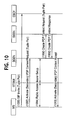
- FIG. 10 is a generalized signaling flow diagram illustrating coordination of the application layer and transport layer in accordance with an arrangement of the third embodiment of the invention.
- FIG. 11 is a generalized signaling flow diagram illustrating coordination of the application layer and transport layer in accordance with another arrangement of the fourth embodiment of the invention.
- FIG. 2 An example of a network architecture supporting these specifications is the wireless communications network shown in the block diagram of FIG. 2 .
- the various elements of the network and their functions are described in the General Packet Radio Service (GPRS) Service Description, Stage 2, 3GPP TS 23.060, published by the 3rd Generation Partnership Program (www.3gpp.org).
- the elements and their functions may be described in earlier or later versions of the 3GPP TS 23.060 specifications or may be those of any other known packet switched wireless communications network.
- the description of network elements and their functions are merely a non-limiting example of packet switched wireless communication networks.
- the Mobile Terminal commonly referred to as a cell phone or a mobile phone, is only one possible part of User Equipment (UE).
- UE User Equipment
- TE Terminal Equipment
- UE User Equipment
- MS Mobile Station
- Any UE may be utilized in conjunction with this invention so that it operates or can be programmed to operate in the manner described below.
- the UMTS Terrestrial Radio Access Network (UTRAN) and the Base Station System (BSS) in GPRS manage and control the radio access between the core network and a number of MTs.
- GERAN GERAN.
- the CSCF is a network element in an IP telephony network.
- the IP telephony network is sometimes referred to as “the application layer”.
- the structure and function of the Call State Control Function (CSCF) can be divided into several logical components, which are currently internal to the CSCF. Every CSCF acting as a Serving CSCF has a Call Control Function (CCF) function.
- the CSCF includes an ICGW (Incoming call gateway).
- the ICGW acts as a first entry point.
- the ICGW performs routing of incoming calls. Incoming call service triggering (e.g. call screening/call forwarding unconditional) may need to reside for optimization purposes.
- the ICGW performs Query Address Handling (implies administrative dependency with other entities); and communicates with the Home Subscriber Server (HSS).
- HSS Home Subscriber Server
- the CCF (Call Control Function) performs call set-up/termination and state/event management; interacts with MRF in order to support multi-party and other services; reports call events for billing, auditing, intercept or other purposes; receives and process application layer registration; performs query address handling (implies administrative dependency); and may provide service trigger mechanisms (service capabilities features) towards application & services network (VHE/OSA).
- the CCF may invoke location based services relevant to the serving network, and may check whether the requested outgoing communication is allowed given the current subscription.
- the CSCF includes a SPD (Serving Profile Database).
- the SPD interacts with HSS in the home domain to receive profile information for the R00 all-IP network user and may store them depending on the SLA with the home domain.
- the SPD notifies the home domain of initial user's access (which includes, e.g., CSCF signaling transport address, user ID, etc.)
- the SPD may cache access related information (e.g. terminal IP address(es) where the user may be reached, etc.)
- the CSCF performs AH (Address Handling) function.
- the AH function includes analysis, translation, modification, if required, address portability, and mapping of alias addresses.
- the AH function may do temporary address handling for inter-network routing.
- the Serving GPRS Support Node is the node that serves the MT. At PDP context activation, the SGSN establishes a PDP context used for routing purposes.
- the Gateway GPRS Support Node is the node accessed by the external packet data network due to evaluation of the PDP address. It contains routing information for attached GPRS/UMTS users. The routing information is used to tunnel Protocol Data Units (PDUs) to the SGSN.
- the SGSN and GGSN functionalities may reside in different physical nodes or may be combined in the same physical node, for example, the Internet GPRS Support Node (IGSN).
- the IP-based mobile network architecture includes an application layer and a transport layer.
- the transport layer protocols and mechanisms are usually optimized for the specific type of access whereas the application layer is normally generic, that is independent of the type of access.
- the UE sets up a call by signaling to the peer entity and exchanging messages of a call control protocol over an IP connection provided by the transport layer.
- the underlying transport layer has to set up the transport bearers over the radio interface and in the transport network.
- setting up of transport bearers means allocating radio resources and network resources.
- the call control signaling is transparently exchanged over an IP connection provided by the transport layer.
- FIG. 3 illustrates a process of sending a charging identification in accordance with a first embodiment of the present invention.
- GPRS/UMTS when GPRS/UMTS is adopted as access/transport network for multimedia and voice over IP services, charging will be performed independently at the GPRS/UMTS layer and at the application layer (e.g., the CSCF).
- the application layer e.g., the CSCF
- PDP contexts are created by the GGSN upon request from the SGSN (with a Create PDP Context Request message) that, in turn, receives the request from the MT (an Activate PDP Context Request message).
- the technique in accordance with the present invention begins at the application layer at step 300 in which a trigger is forwarded from the TE (Terminal Equipment) to the MT (Mobile Terminal).
- the trigger may be, e.g., a call set up indication including the requested logical channels and characteristics, sent from the TE to the MT to start PDP context activation.
- an Activate PDP Context Request message is forwarded to the SGSN.
- the SGSN creates a Create PDP Context Request message and forwards it to the GGSN.
- the GGSN creates a Create PDP Context Response message.
- step 308 when a PDP context is created by the GGSN, the GGSN associates a Charging Identification parameter with the PDP context in step 308 . Then, in step 310 , the Create PDP Context Response message including the Charging Identification parameter is forwarded to the SGSN.
- the SGSN forwards an Activate PDP Context Accept message to the MT.
- both the Charging Identification parameter and the GGSN Address are provided to the MT in the Activate PDP Context Accept message.
- steps 300 - 312 are repeated as many times as needed depending on the PDP contexts needed.
- the UE Upon the completion of the last procedure in step 312 , the UE forwards a call set up message, including requested logical channels and characteristics, to the CSCF (Call State Control Function) in step 314 .
- the MT will, in turn, provide the Charging Identification and the GGSN Address to the CSCF within the call set up message.
- the CSCF forwards the call set up message, including requested logical channels and characteristics, to the remote end point in step 316 .
- the remote end point then forwards a response message, including accepted logical channels and characteristics, back to the CSCF in step 318 .
- the CSCF then forwards the response message, including accepted logical channels and characteristics, to the UE in step 320 .
- the response message may be, e.g., the Connect message in H.323 or a SIP response message, but not necessarily limited to those.
- the invention contemplates that the Charging Identification parameter can be made more secure by applying appropriate cryptographic algorithms to avoid a false Charging Identification being forwarded by a malicious MT to the CSCF instead of the legitimate value, or a malicious MT re-using a value of the Charging Identification.
- the Charging Identification parameter is sent from the SGSN to the UE and from the UE to the CSCF.
- FIG. 4 illustrates a process of sending a charging identification in accordance with an arrangement of a second embodiment of the present invention.
- GPRS/UMTS when GPRS/UMTS is adopted as the access/transport network for multimedia and voice over IP services, charging will be performed independently at the GPRS/UMTS layer and at the application layer (e.g., the CSCF).
- the application layer e.g., the CSCF
- PDP contexts are created by the GGSN upon request from the SGSN (i.e., a Create PDP Context Request message) that, in turn, receives the request from the MT (i.e., an Activate PDP Context Request).
- the Charging Identification parameter is sent from the SGSN or the GGSN to the CSCF. Unlike the first embodiment, there is no need to send the Charging Identification parameter via the UE.
- the MT intercepts data packets that are sent from the TE and adds the Charging Identification parameter to a specific data packet (the SIP message or the H.323 message for call set up). Interception of data packets may decrease the performance of the MT.
- the GPRS/UMTS and IPT network elements are able to coordinate charging information or other kinds of information, e.g., in order to combine charging information collected for a PDP context by the SGSN and the GGSN and for a call by the CSCF.
- the GGSN allocates a Charging Id parameter at PDP context activation.
- the GGSN sends the Charging Id parameter to the SGSN.
- the Charging Identification possibly together with other information (e.g., IMSI, MSISDN, PDP address, UE port number from the TFT, Charging Characteristics etc.) can be sent from the SGSN or the GGSN to the CSCF.
- other information e.g., IMSI, MSISDN, PDP address, UE port number from the TFT, Charging Characteristics etc.
- Sending the Charging Id parameter can be performed either autonomously or based on a request from the CSCF.
- the SGSN will send the Charging Identification, since the address of the CSCF has to be known if something will be sent to it.
- the SGSN has an interface with the HSS (HLR+UMS), which contains the address of the serving CSCF.
- FIG. 4 illustrates an aspect of the second embodiment of the invention in which the SGSN sends the Charging-Id parameter to the CSCF.
- a process of sending a charging identification in accordance with the present invention begins at step 400 in which a trigger is forwarded from the TE (Terminal Equipment) to the MT (Mobile Terminal).
- the trigger may be, e.g., a call set up message including the requested logical channels and characteristics.
- an Activate PDP Context Request message is forwarded to the SGSN.
- the SGSN creates a Create PDP Context Request message.
- step 406 the SGSN sends the Create PDP Context Request to the GGSN.
- the GGSN creates a Create PDP Context Response.
- the GGSN associates the Charging Identification parameter with the PDP context.
- both the Create PDP Context Response and the Charging Identification are then returned to the SGSN in the Create PDP Context Response message.
- the Charging Id is included in the CDRs created by the GGSN and the SGSN.
- the CDRs are sent to the Charging Gateway Functionality (CGR) for further processing. From the Charging Gateway Functionality, the CDRs are sent to the Billing System. This is true for all the embodiments.
- the CSCF adds the Charging Id to the CDRs that it creates for the call in question.
- the CSCF sends CDRs either to the Charging Gateway Functionality (CGF) or to the Billing System. This way, when creating a bill for a subscriber, the PDP context(s) that were used for a specific call can be checked.
- the Charging Identification in all those CDRs is the same.
- the SGSN If the Charging Characteristics change during an active PDP context, the SGSN includes the new Charging Characteristics of the PDP context in an Update PDP Context Request message, which the SGSN sends to the GGSN.
- the Charging Id parameter is sent from the SGSN directly to the CSCF in step 414 .
- This is done either autonomously (in a first case) or based on a request from the CSCF (in a second case).
- the SGSN sends a message including the Charging Id and possibly other information (see above) to the CSCF.
- the message sent by the SGSN may be acknowledged by the CSCF.
- the SGSN must know the CSCF address.
- the CSCF address may be requested from the HSS or may be derived from the TFT which the UE specifies for the PDP context which is used for the communication with the CSCF.
- the CSCF requests information from the SGSN.
- the request is based, e.g., on IMSI or MSISDN.
- the SGSN sends the Charging Id and possibly other information (see above) to the CSCF.
- the CSCF must know the SGSN address.
- the SGSN address may be requested from the HSS.
- the CSCF forwards the call set up message to the remote end point in step 416 .
- the remote end point then forwards a response message back to the CSCF in step 418 .
- the CSCF then forwards the response message to the UE in step 420 .
- FIG. 5 illustrates another arrangement of the second embodiment of the invention in which the GGSN sends the Charging Identification directly to the CSCF.
- a process of sending a charging identification in accordance with the present invention begins at step 500 in which a trigger is forwarded from the TE to the MT (Mobile Terminal).
- the trigger may be, e.g., a call set up message including the requested logical channels and characteristics.
- an Activate PDP Context Request message is forwarded to the SGSN.
- the SGSN creates a Create PDP Context Request message.
- the SGSN sends the Create PDP Context Request to the GGSN.
- the GGSN In response to the Create PDP Context Request received from the SGSN, in step 508 , the GGSN creates a Create PDP Context Response. In step 510 , the GGSN associates the Charging Identification parameter with the PDP context. In step 512 , the Create PDP Context Response message including the Charging Identification is then returned to the SGSN.
- the Charging Id parameter is sent from the GGSN directly to the CSCF in step 514 .
- Step 514 is performed either autonomously (in a first case) or based on a request from the CSCF (in a second case).
- the GGSN sends a message including the Charging Id and possibly other information (see above) to the CSCF.
- the message sent by the GGSN may be acknowledged by the CSCF.
- the GGSN needs to know the CSCF address.
- the CSCF address may be requested from the HSS or may be derived from the TFT which the UE specifies for the PDP context that is used for the communication with the CSCF.
- the CSCF requests information from the GGSN.
- the request is based, e.g., on IMSI or MSISDN.
- the GGSN sends the Charging Id parameter and possibly other information to the CSCF.
- the CSCF forwards the call set up message to the remote end point in step 516 .
- the remote end point then forwards a response message back to the CSCF in step 518 .
- the CSCF then forwards the response message to the UE in step 520 .
- the second embodiment allows the GPRS and IPT network elements to coordinate charging information and other kinds of information, e.g., in order to combine charging information collected for a PDP context by the SGSN and the GGSN and for a call by the CSCF.
- Sending the Charging Identification from the SGSN or the GGSN to the CSCF requires an interface between the application layer network and the transport layer network.
- the Charging Identification generated in the SGSN, GGSN or other network element is a Globally Unique Charging Identification (GCI).
- GCI Globally Unique Charging Identification
- the GCI is a combination of the integer value 2 ⁇ 32 ⁇ 1 (4 bytes) and the ID of the network element which generated it (such as the SGSN or GGSN).
- the length or structure of the network element ID generating the GCI may vary according to the specific implementation. It is not necessary that the GCI be generated in any particular group of network elements. In any circumstance, the remaining network elements simply receive and use the GCI generated by the first network element.
- the GCI After the GCI is generated, it is used during the entire call and the other network elements don't generate a charging identification, but instead use the GCI generated by the first network element.
- the GCI is created and transferred over several interfaces in the place of the Charging Identification described above.
- a plurality of separate call detail records (CDRs) can be generated and associated with each other using the GCI.
- the SGSN may create a S-CDR and the GGSN may create a G-CDR as explained in 3G TS 32.015.
- the CSCF (together with a MGCF) may create a C-CDR.
- a terminating network (such as a PSTN/MSC) may create POC and MTC CDRs.
- an endpoint such as a MGCF
- receives the GCI passed from the CSCF it may pass it on to another network.
- the GCI can be transferred to, within and between 2 nd generation (“2G”) networks as well as the 3G network described above.
- the SIP and GTP′ protocols may be used to carry the GCI in the 3G network as described above, and the corresponding protocols in a 2G network may be modified so that they can also carry the GCI.
- the connected 2G network may be a post-processing system which produces subscriber billing by effectively using the GCI to determine and combine charging data for the subscriber in one or more CDRs.
- the subscribers of voice services are accustomed to receiving bills based on calls, not based on the transport resources used for making the calls. Subscribers of IP telephony often expect similar billing criteria. Consequently, billing for the services used (e.g., for the calls) rather than the transport resources used is becoming increasingly important. In the case of WAP services, billing for services rather than transport resources is already the expectation.
- a PDP context For an IP telephony call, a PDP context is required to carry the actual voice traffic.
- Both the GPRS/UMTS layer and the IP telephony layer collect charging information (CDRs):
- the GPRS/UMTS layer collects charging information for the PDP context while the IP telephony layer collects charging information for the call.
- a common identifier ought to be added to the CDRs to make it possible, for example, to bill based only on the CDRs created by the IP telephony layer (i.e., for services) and to omit the CDRs created by the GPRS/UMTS layer (i.e., for transport resources).
- a common identifier is needed in the CDRs created by the GPRS/UMTS layer and by the IP telephony layer to make it possible to omit certain CDRs and enable billing based on services rather than use of transport resources. More specifically, in many cases it would be advantageous to selectively omit CDRs created by the GPRS/UMTS layer or CDRs created by the IP telephony layer. If that were possible, the billing would be operator-specific, in that the operator could decide how to bill the subscribers (how to use the created CDRs).
- a common identifier is associated with the CDRs created by the GPRS/UMTS layer and by the IP telephony layer.
- the common identifier enables charging coordination and other kinds of information coordination.
- a call in SIP is identified with a Call Identification, which is used as a charging coordinator.
- the Call Identification is allocated by the caller and included in the SIP messages.
- the MS sends the SIP messages to the called party via the CSCF.
- the CSCF intercepts the SIP messages and can thereby obtain the Call Identification from the SIP messages.
- the MS sends the Call Identification to the SGSN and the GGSN during PDP context activation. More specifically, the MS sends the Call Identification to the SGSN along with the Activate (Secondary) PDP Context Request message, and the SGSN forwards the Call Identification to the GGSN along with the Create PDP Context Request message.
- the MS sends the Call Identification to the SGSN and the GGSN during PDP context activation. More specifically, the MS sends the Call Identification to the SGSN along with the Activate (Secondary) PDP Context Request message, and the SGSN forwards the Call Identification to the GGSN along with the Create PDP Context Request message.
- FIG. 6 illustrates a process for coordinating charging in accordance with a third embodiment of the invention, which advantageously enhances coordination of information between transport and application layers.
- the technique in accordance with the present invention begins at the application layer at step 600 in which a trigger is forwarded from the TE (Terminal Equipment) to the MT (Mobile Terminal).
- the trigger may be, e.g., a call set up indication including the requested logical channels and characteristics, sent from the TE to the MT to start PDP context activation.
- the MS initiates a transaction in the form of a call.
- the MS assigns a call identification to the call.
- step 606 the call identification is sent from the MS to the CSCF.
- an Activate (Secondary) PDP Context Request message and a Call Identification is forwarded from the MS to the SGSN.
- the SGSN sends a Radio Access Bearer (RAB) setup message to the UTRAN.
- RAB Radio Access Bearer
- the SGSN creates a Create PDP Context Request message and forwards it to the GGSN along with the Call Identification.
- the GGSN creates a Create PDP Context Response message.
- step 616 the Create PDP Context Response message is forwarded to the SGSN.
- the SGSN forwards an Activate (Secondary) PDP Context Accept message to the MS.
- the SGSN and the GGSN add the Call Identification to the CDRs that they create for the PDP context, and the CSCF adds the Call Identification to the CDRs that it creates for the call.
- an operator is given greater flexibility in deciding how to bill subscribers for the created CDRs.
- the operator can selectively omit billing for CDRs created by the GPRS/UMTS layer while choosing to bill for CDRs created by the IP telephony layer.
- FIG. 7 is a signaling flow diagram illustrating coordination of the application layer and transport layer in accordance with an arrangement of the third embodiment of the invention.
- the Call Id is sent to the CSCF at call set up and to the SGSN and to the GGSN at PDP context activation.
- the MS allocates a Call Id and sends it to the CSCF in the SIP Invite message.
- the MS activates at least one PDP context for the call.
- the MS sends the Call Id to the SGSN in the Activate (Secondary) PDP Context Request message.
- the MS has to send the Call Id to the SGSN at every PDP context activation.
- the radio access bearer setup is performed.
- the SGSN sends the Call Id to the GGSN in the Create PDP Context Request message.
- the (secondary) PDP context activation is accepted.
- FIG. 8 is a signaling flow diagram illustrating coordination of the application layer and transport layer in accordance with another arrangement of the third embodiment of the invention.
- FIG. 8 presents an example of charging coordination for a mobile-terminated call.
- the MS receives the SIP Invite message.
- the caller has allocated the Call Id for the call.
- the MS activates at least one PDP context for the call.
- the MS sends the Call Id to the SGSN in the Activate (Secondary) PDP Context Request message. If multiple PDP contexts are activated for the call, the MS has to send the Call Id to the SGSN at every PDP context activation.
- the radio access bearer setup is performed.
- the SGSN sends the Call Id to the GGSN in the Create PDP Context Request message.
- the (secondary) PDP context activation is accepted.
- the common identifier associated with the CDRs created by the GPRS/UMTS layer and by the IP telephony layer is a tuple or tuple pair used to differentiate connections in IP networking.
- a “tuple” consists of the IP address and UDP port values related to the RTP data flow of the connection.
- a “tuple pair” consists of the tuples for both the source and destination side connection endpoints.
- the MS sends them to the SGSN and the GGSN during PDP context activation. More specifically, the MS sends them to the SGSN along with the Activate (Secondary) PDP Context Request message, and the SGSN forwards them to the GGSN along with the Create PDP Context Request message.
- a trigger is forwarded from the TE (Terminal Equipment) to the MT (Mobile Terminal).
- the trigger may be, e.g., a call set up indication including the requested logical channels and characteristics, sent from the TE to the MT to start PDP context activation.
- the MS initiates a transaction in the form of a call.
- the MS assigns the tuple for each proposed media flow it suggests to use within the call. This information will then be carried in the SDP part of SIP INVITE and be used as destination tuple by the remote endpoint, if the remote endpoint agrees to use the proposed media.
- step 906 the tuple is sent from the MS to the CSCF.
- step 908 the media negotiation has traversed the necessary round-trips through the CSCF signalling chain and the terminating MS knows at least the initially agreed destination and source connection tuples (a tuple pair) for each media flow.
- the P-CSCF of both the originating and terminating terminals parse and grab the tuple pair values from passing SIP messages (for media authorization and policy control purposes).
- An Activate (Secondary) PDP Context Request message and the connection specific tuple pair information is forwarded from the MS to the SGSN.
- the SGSN sends a Radio Access Bearer (RAB) setup message to the UTRAN.
- RAB Radio Access Bearer
- step 912 the SGSN creates a Create PDP Context Request message and forwards it to the GGSN along with the tuple pair.
- step 914 the GGSN creates a Create PDP Context Response message.
- step 916 the Create PDP Context Response message is forwarded to the SGSN.
- the SGSN forwards an Activate (Secondary) PDP Context Accept message to the MS.
- the SGSN and the GGSN add the tuple pair to the CDRs that they create for the PDP context, and the CSCF adds the tuple pair present in media specific part (e.g., SDP) of SIP signalling to the CDRs that it creates for the call.
- media specific part e.g., SDP
- an operator is given greater flexibility in deciding how to bill subscribers for the created CDRs.
- the operator can selectively omit billing for CDRs created by the GPRS/UMTS layer while choosing to bill for CDRs created by the IP telephony layer.
- FIG. 10 is a signaling flow diagram illustrating coordination of the application layer and transport layer in accordance with an arrangement of the fourth embodiment of the invention.
- the tuple or tuple pair is sent to the CSCF at call set up and to the SGSN and to the GGSN at PDP context activation.
- the MS allocates a tuple for each proposed media flow it suggests to use within the call. This information will then be carried in a media specific (e.g., SDP) part of SIP INVITE and be used as destination tuple by the remote endpoint, if it agrees to use the proposed media.
- media specific e.g., SDP
- the MS sends the tuples for each proposed media flow to the CSCF in the SIP INVITE message.
- the MS activates at least one (signalling) PDP context for the call if one is not already activated.
- the MS sends the connection specific tuple pair to the SGSN in the Activate (Secondary) PDP Context Request message.
- the MS has to send the tuple pair assigned to the particular media flow to the SGSN at every PDP context activation.
- the radio access bearer setup is performed.
- the SGSN sends the tuple pair to the GGSN in the Create PDP Context Request message.
- the (secondary) PDP context activation is accepted.
- FIG. 11 is a signaling flow diagram illustrating coordination of the application layer and transport layer in accordance with another arrangement of the fourth embodiment of the invention.
- FIG. 11 presents an example of charging coordination or other kinds of information coordination for a mobile-terminated call.
- the MS receives the SIP INVITE message.
- the caller has allocated the destination tuple values for each intended original or dynamically added media component for the call.
- the MS activates at least one secondary PDP context for the call.
- the MS sends the tuple or tuple pair to the SGSN in the Activate (Secondary) PDP Context Request message.
- the MS has to send the tuple or tuple pair to the SGSN at every PDP context activation.
- the radio access bearer setup is performed.
- the SGSN sends the tuple pair to the GGSN in the Create PDP Context Request message.
- the (secondary) PDP context activation is accepted.
- the use of the tuple pairs in the fourth embodiment simplifies the terminal inter-layer (application layer—GPRS/UMTS layer) processing and can be used effectively regardless of whether the MS is a TE+MT combination or a unified UE. This is because the connection specific UDP and TCP port information is sent automatically without need for specific MT interception/parsing process of SIP messages from TE (as in the third embodiment) or adding an extra message (charging ID received from SGSN) to TE-originated SIP messages.
- application layer—GPRS/UMTS layer application layer—GPRS/UMTS layer
- the port information is sent to both CSCF in SDP part of SIP INVITE or ACK message at application layer and to SGSN & GGSN in the TFT information of PDP Context Activation Request message (The tuple pair included to each PDP context's TFT needs to be forwarded to the MT's GPRS session management layer—this can e.g. be done via MT's implementation specific bearer management or QoS application programming interface (API)).
- API application programming interface
- the tuple pairs can be used as the key identifiers to which the charging ID (and policing authorization) is assigned or linked to, although the charging ID would be used for the identifier in CGR and billing.
- a call is triggered over the primary (signalling) PDP context by sending a call setup (in SIP: INVITE) message with logical channel information for the receiver side (i.e., the ports to which it is ready to receive real-time data.
- the CSCF receives the INVITE with SDP (with coded bandwidth and port information) and stores the information.
- the signalling is sent to the remote end, which is answered (e.g., SIP 183 message) and the CSCF now receives a new set of SDP information with codec, bandwidth and terminating side destination ports provided by the remote end SDP.
- CSCF executed examination of the codec type data received from SIP messages from both terminals results in an agreed codec set, whose destination [IP address, port] tuple values are known for each IP connection CSCF should authorise.
- the CSCF can use the CSCF-PCF-GGSN interfaces (or CSCF-GGSN if PCF is integrated to CSCF) to request policy control actions (bandwidth authorization) and charging coordination between layers with the tuplesas keys.
- the GGSN admits the bandwidth and later during the secondary PDP context activation process, assigns the charging ID to the created PDP context associated with the key tuple values, and forwards the charging ID back to the CSCF for charging coordination purposes.
- the CSCF doesn't need to parse the Charging-ID from received SIP messages—there is no risk of malicious MT since it won't be intercepting or modifying any SIP messages received from a TE. Instead it can correlate the charging ID sent by GGSN to the port information.
- the charging flexibility offered for the operator is further improved in the fourth embodiment if the TE sends a RE-INVITE message with changed QoS/codec information, since the CSCF will notice outcome of the dynamic change in the resulting signalling, and request new authorization and get a new charging ID. Furthermore, a new charging ID will be created to charging records for each new dynamically added real-time PDP context/media flow. If the real-time flows are to utilise RTP/UDP/IP header compression at the PDP layer, each media flow needs its own PDP context. Thus, operator charging can, if desired, follow the media changes (audio to videotelephony back to audio, . . . ) within an end-to-end call. Following the process described in the third embodiment of this invention, the Call-ID would not change and would not indicate the media specific connection details in the charging information if, for example, SGSN and GGSN CDRs are omitted by an operator decision.
Landscapes
- Engineering & Computer Science (AREA)
- Computer Networks & Wireless Communication (AREA)
- Signal Processing (AREA)
- Multimedia (AREA)
- Computer Security & Cryptography (AREA)
- Computing Systems (AREA)
- Computer Hardware Design (AREA)
- General Engineering & Computer Science (AREA)
- Mobile Radio Communication Systems (AREA)
- Meter Arrangements (AREA)
- Telephonic Communication Services (AREA)
- Data Exchanges In Wide-Area Networks (AREA)
- Circuits Of Receivers In General (AREA)
Priority Applications (8)
| Application Number | Priority Date | Filing Date | Title |
|---|---|---|---|
| US09/758,267 US8699472B2 (en) | 2000-05-24 | 2001-01-12 | Common charging identifier for communication networks |
| EP01931997A EP1310085B1 (de) | 2000-05-24 | 2001-05-21 | Gemeinsamem gebührenerhebung kennung für kommunikationsnetze |
| AT01931997T ATE369696T1 (de) | 2000-05-24 | 2001-05-21 | Gemeinsamem gebührenerhebung kennung für kommunikationsnetze |
| CN018133436A CN1444824B (zh) | 2000-05-24 | 2001-05-21 | 用于协调通信网络内的计费信息的方法 |
| PCT/IB2001/000890 WO2001091446A2 (en) | 2000-05-24 | 2001-05-21 | Common charging identifier for communication networks |
| JP2001586906A JP3904142B2 (ja) | 2000-05-24 | 2001-05-21 | 通信ネットワークのための共通課金用id |
| DE60129821T DE60129821T2 (de) | 2000-05-24 | 2001-05-21 | Gemeinsame gebührenerhebung kennung für kommunikationsnetze |
| ES01931997T ES2290131T3 (es) | 2000-05-24 | 2001-05-21 | Identificador de tarificacion comun para redes de comunicaciones. |
Applications Claiming Priority (3)
| Application Number | Priority Date | Filing Date | Title |
|---|---|---|---|
| US57715200A | 2000-05-24 | 2000-05-24 | |
| US63673800A | 2000-08-11 | 2000-08-11 | |
| US09/758,267 US8699472B2 (en) | 2000-05-24 | 2001-01-12 | Common charging identifier for communication networks |
Related Parent Applications (2)
| Application Number | Title | Priority Date | Filing Date |
|---|---|---|---|
| US63673800A Continuation-In-Part | 2000-05-24 | 2000-08-11 | |
| US09/636,378 Continuation-In-Part US6584737B1 (en) | 1999-08-11 | 2000-08-11 | Mounting apparatus and photovoltaic mounting system for a solar panel and method of mounting a solar panel |
Publications (2)
| Publication Number | Publication Date |
|---|---|
| US20020127995A1 US20020127995A1 (en) | 2002-09-12 |
| US8699472B2 true US8699472B2 (en) | 2014-04-15 |
Family
ID=27416260
Family Applications (1)
| Application Number | Title | Priority Date | Filing Date |
|---|---|---|---|
| US09/758,267 Active 2027-04-06 US8699472B2 (en) | 2000-05-24 | 2001-01-12 | Common charging identifier for communication networks |
Country Status (8)
| Country | Link |
|---|---|
| US (1) | US8699472B2 (de) |
| EP (1) | EP1310085B1 (de) |
| JP (1) | JP3904142B2 (de) |
| CN (1) | CN1444824B (de) |
| AT (1) | ATE369696T1 (de) |
| DE (1) | DE60129821T2 (de) |
| ES (1) | ES2290131T3 (de) |
| WO (1) | WO2001091446A2 (de) |
Cited By (5)
| Publication number | Priority date | Publication date | Assignee | Title |
|---|---|---|---|---|
| US20150111532A1 (en) * | 2012-06-29 | 2015-04-23 | Huawei Technologies Co., Ltd. | Charging Information Processing Method and Gateway Device |
| US20150163843A1 (en) * | 2012-08-17 | 2015-06-11 | Huawei Technologies Co., Ltd. | User equipment pairing processing method, network side device, and user equipment |
| USRE45738E1 (en) | 2003-05-13 | 2015-10-06 | Nokia Corporation | Charging in communication networks |
| US20150312925A1 (en) * | 2008-12-16 | 2015-10-29 | Orange Sa | Packet radio communications system |
| US10237720B1 (en) * | 2017-08-25 | 2019-03-19 | Syniverse Technologies, Llc | Intelligent data routing application and method for providing a home mobile network operator with a location of an outbound roamer |
Families Citing this family (88)
| Publication number | Priority date | Publication date | Assignee | Title |
|---|---|---|---|---|
| US6958988B1 (en) * | 1999-06-04 | 2005-10-25 | Ntt Docomo, Inc. | Mobile communication network and data delivery method in mobile communications network |
| GB0012626D0 (en) * | 2000-05-25 | 2000-07-12 | Ericsson Telefon Ab L M | Cost control management in telecommunication systems |
| FI111312B (fi) * | 2000-08-25 | 2003-06-30 | Nokia Corp | Yhteyden päätelaitteeseen valvonta tietoliikennejärjestelmässä |
| US7684786B2 (en) * | 2003-08-26 | 2010-03-23 | Nokia Corporation | Method and system for establishing a connection between network elements |
| US20020068545A1 (en) * | 2000-11-06 | 2002-06-06 | Johnson Oyama | Method and apparatus for coordinating charging for services provided in a multimedia session |
| EP1206111A1 (de) * | 2000-11-13 | 2002-05-15 | Alcatel | Anordnung zur Gebührenerhebung in einem Multimedia- Kommunikationssystem |
| WO2002052789A1 (en) * | 2000-12-22 | 2002-07-04 | Nokia Corporation | Method and network device for accounting chargeable signaling |
| US20020131395A1 (en) * | 2001-03-19 | 2002-09-19 | Chenghui Wang | Session initiation protocol (SIP) user agent in a serving GPRS support node (SGSN) |
| US8380840B2 (en) * | 2001-12-17 | 2013-02-19 | Verizon Business Global Llc | Method for recording events in an IP network |
| US7406306B2 (en) * | 2001-03-20 | 2008-07-29 | Verizon Business Global Llc | Method for billing in a telecommunications network |
| US7945592B2 (en) | 2001-03-20 | 2011-05-17 | Verizon Business Global Llc | XML based transaction detail records |
| EP1246479A1 (de) * | 2001-03-26 | 2002-10-02 | Lucent Technologies Inc. | GPRS Mobiltelekommunikationssystem |
| GB0112202D0 (en) * | 2001-05-18 | 2001-07-11 | Nokia Corp | Charging in communication networks |
| EP1391097A1 (de) | 2001-05-28 | 2004-02-25 | Nokia Corporation | Laden in einem telekommunikationsnetz |
| GB2376845B (en) * | 2001-06-19 | 2006-02-08 | Ericsson Telefon Ab L M | Association of charging between communication systems |
| US20030003894A1 (en) * | 2001-06-27 | 2003-01-02 | Kumar Anil K. | Developing mobile unit based estimates of metered packet charges |
| WO2003007544A2 (en) * | 2001-07-10 | 2003-01-23 | Telefonaktiebolaget Lm Ericsson (Publ) | Traffic flow template for managing packet data flows |
| CA2453536A1 (en) * | 2001-07-13 | 2003-01-23 | Telenor Asa | Extended telecommunication system architecture for open service access |
| DE10142868A1 (de) * | 2001-08-27 | 2003-04-03 | Siemens Ag | Verfahren zum Abrechnen eines Kommunikations-Dienstes |
| US6928150B2 (en) * | 2001-12-17 | 2005-08-09 | Mci, Inc. | Call charging notification |
| US8644797B2 (en) * | 2001-12-26 | 2014-02-04 | Apple Inc. | Content-based billing service for wireless prepaid subscribers |
| KR100447412B1 (ko) * | 2001-12-26 | 2004-09-04 | 삼성전자주식회사 | Ip 멀티미디어 서비스 가입자의 이동성 관리를 위한가입자 데이터 관리 장치 및 방법 |
| US6947724B2 (en) | 2002-01-04 | 2005-09-20 | Telefonaktiebolaget Lm Ericsson (Publ) | System and method of billing based on the reported traffic load in a telecommunications network |
| ATE306777T1 (de) * | 2002-06-07 | 2005-10-15 | Siemens Ag | Verfahren und vorrichtung zum übertragen von ip- paketen zwischen einem radio network controller (rnc) und einer weiteren einrichtung eines mobilfunknetzes |
| GB0215013D0 (en) * | 2002-06-28 | 2002-08-07 | Nokia Corp | Communications system and method |
| US20040028030A1 (en) * | 2002-08-12 | 2004-02-12 | Cheng-Shing Lai | Method for dialing an internet protocol phone |
| US7027577B2 (en) * | 2002-08-26 | 2006-04-11 | Telefonaktiebolaget Lm Ericsson (Publ) | Method and system for multi-party call conferencing |
| CN100379200C (zh) * | 2002-10-14 | 2008-04-02 | 思科技术公司 | 用于处理数据流中的信息的系统和方法 |
| DE60232110D1 (de) | 2002-11-12 | 2009-06-04 | Nokia Corp | Verfahren zur vermeidung einer doppelten gebührenberechnung für einen dienst in einem telekommunikationssystem |
| DE10394185D2 (de) * | 2003-01-03 | 2005-11-24 | Siemens Ag | Verfahren zur Vergebührung einer Kommunikationsverbindung über Internet zwischen Kommunikationssendgeräten |
| US7720960B2 (en) * | 2003-03-04 | 2010-05-18 | Cisco Technology, Inc. | Method and apparatus providing prepaid billing for network services using explicit service authorization in an access server |
| PT1611711E (pt) * | 2003-04-04 | 2007-12-24 | Nokia Siemens Networks Gmbh | Processo para débito em linha com controlo do limite de transmissão de dados |
| US7751384B1 (en) * | 2003-06-03 | 2010-07-06 | Sprint Spectrum L.P. | Method and system for identifying calls |
| US7769159B1 (en) * | 2003-06-03 | 2010-08-03 | Sprint Spectrum L.P. | Method and system for identifying calls |
| GB0324596D0 (en) * | 2003-10-21 | 2003-11-26 | Nokia Corp | Sessions in a communication system |
| CN100346600C (zh) * | 2003-11-19 | 2007-10-31 | 华为技术有限公司 | 一种实现多媒体广播/组播服务业务计费的方法 |
| US7844250B2 (en) * | 2003-11-26 | 2010-11-30 | Telefonaktiebolaget Lm Ericsson (Publ) | Differentiated charging in packet data networks |
| DE102004026140A1 (de) * | 2004-05-26 | 2005-12-22 | Siemens Ag | Anordnung zum Erstellen von dienstorientierten Gebührendaten in einem Kommunikationsnetz |
| CN1303781C (zh) * | 2004-04-01 | 2007-03-07 | 华为技术有限公司 | 一种分组数据业务的计费控制方法 |
| CN1275422C (zh) | 2004-04-09 | 2006-09-13 | 华为技术有限公司 | 一种分组数据业务中增强计费规则及进行操作的方法 |
| CN1302636C (zh) * | 2004-05-12 | 2007-02-28 | 华为技术有限公司 | 一种完善基于业务数据流在线计费的处理方法 |
| CN100362794C (zh) * | 2004-05-12 | 2008-01-16 | 华为技术有限公司 | 一种基于业务数据流在线计费的信用控制方法 |
| PL1751966T3 (pl) * | 2004-06-03 | 2008-05-30 | Ericsson Telefon Ab L M | Procedury obciążania kosztami za usługi IP Multimedia |
| BRPI0513535A (pt) | 2004-07-20 | 2008-05-06 | Qualcomm Inc | handoff entre uma rede sip e um sistema de comunicação celular |
| US8315170B2 (en) * | 2004-08-09 | 2012-11-20 | Cisco Technology, Inc. | System and method for signaling information in order to enable and disable distributed billing in a network environment |
| CN1735023A (zh) * | 2004-08-10 | 2006-02-15 | 华为技术有限公司 | 一种进行重鉴权及重鉴权事件和触发事件的处理方法 |
| CN1260910C (zh) * | 2004-08-11 | 2006-06-21 | 华为技术有限公司 | 基于分组数据流计费触发事件和重授权事件的处理方法 |
| CN1319317C (zh) * | 2004-08-11 | 2007-05-30 | 华为技术有限公司 | 一种基于分组数据流计费的对话建立方法 |
| US7844745B1 (en) * | 2004-08-19 | 2010-11-30 | Nortel Networks Limited | Alternate home subscriber server (HSS) node to receive a request if a first HSS node cannot handle said request |
| CN101048979A (zh) * | 2004-08-26 | 2007-10-03 | 艾利森电话股份有限公司 | 激活pdp上下文的方法 |
| WO2006043860A1 (en) * | 2004-10-19 | 2006-04-27 | Telefonaktiebolaget Lm Ericsson (Publ) | Sgsn and ggsn integration |
| US20080298300A1 (en) * | 2004-10-26 | 2008-12-04 | Alcatel Lucent | Communication Control Method and System for Carrying Out Said Method |
| CN100384296C (zh) * | 2004-11-04 | 2008-04-23 | 华为技术有限公司 | 一种互联网协议多媒体子系统计费标识分配方法 |
| CN100401675C (zh) * | 2004-11-09 | 2008-07-09 | 华为技术有限公司 | 一种计费信息的处理方法 |
| CN100438412C (zh) * | 2004-11-10 | 2008-11-26 | 华为技术有限公司 | 一种对计费键进行处理的方法 |
| US7843860B2 (en) * | 2004-11-10 | 2010-11-30 | Telefonaktiebolaget L M Ericsson (Publ) | Arrangement, nodes and a method relating to services access over a communication system |
| CN100341278C (zh) * | 2004-12-09 | 2007-10-03 | 华为技术有限公司 | 一种基于分组数据流计费的系统及处理方法 |
| CN100397820C (zh) * | 2004-12-22 | 2008-06-25 | 华为技术有限公司 | 一种在通信系统中进行计费的方法 |
| CN100463410C (zh) * | 2005-01-06 | 2009-02-18 | 中兴通讯股份有限公司 | 一种网关服务节点处理业务服务节点重启的方法 |
| US20060153357A1 (en) * | 2005-01-08 | 2006-07-13 | Arup Acharya | Method and apparatus for providing contextual information with telephone calls |
| CN1855976B (zh) * | 2005-04-21 | 2010-12-29 | 中兴通讯股份有限公司 | 一种一键通会话计费系统及其会话邀请发起者的计费方法 |
| JP4955945B2 (ja) * | 2005-06-30 | 2012-06-20 | 株式会社東芝 | 電話交換装置、電話交換システムおよび課金方法 |
| EP1761020B1 (de) * | 2005-09-01 | 2018-01-10 | Nokia Solutions and Networks GmbH & Co. KG | Vergebührung von Kommunikationsverbindungen unter Vermeidung der Korrelation von Gebührendatensätzen von mehr als einem Netzelement |
| CN100558039C (zh) * | 2006-01-25 | 2009-11-04 | 华为技术有限公司 | 一种计费关联的方法 |
| KR100727077B1 (ko) * | 2006-02-07 | 2007-06-13 | 주식회사 케이티프리텔 | 멀티 피디피 환경에서의 과금 방법 및 시스템 |
| US8189509B2 (en) * | 2006-03-13 | 2012-05-29 | Telefonaktiebolaget Lm Ericsson (Publ) | Method of controlling packet data traffic |
| CN101064615B (zh) * | 2006-04-28 | 2010-12-08 | 华为技术有限公司 | 一种在即按即通业务中基于角色计费的方法及系统 |
| CN101163020B (zh) * | 2006-10-11 | 2012-08-29 | 华为技术有限公司 | 计费关联方法、装置及系统 |
| CN101163022B (zh) * | 2006-10-13 | 2012-03-07 | 华为技术有限公司 | 一种点对点通信计费方法及通讯系统以及计费装置 |
| CN1946120B (zh) * | 2006-10-20 | 2010-05-12 | 华为技术有限公司 | 实现话单关联的方法及系统 |
| CN101317439B (zh) * | 2006-10-20 | 2010-08-25 | 华为技术有限公司 | 实现话单关联的方法、系统及局用交换机 |
| US20080107092A1 (en) * | 2006-11-08 | 2008-05-08 | Pouya Taaghol | Universal services interface for wireless broadband networks |
| US8024429B2 (en) * | 2007-01-18 | 2011-09-20 | Telefonaktiebolaget L M Ericsson (Publ) | Method and apparatus for remote access to a home network |
| US8358616B2 (en) | 2007-05-12 | 2013-01-22 | Huawei Technologies Co., Ltd. | Peer-to-peer communication charging method, communication system and charging device |
| US7945241B2 (en) * | 2007-09-27 | 2011-05-17 | Alcatel-Lucent Usa Inc. | Charging for roaming users in IMS networks |
| CN101436941B (zh) * | 2007-11-15 | 2012-10-03 | 华为技术有限公司 | 计费的方法和计费网元及计费系统以及通信系统 |
| US20100054177A1 (en) * | 2008-09-02 | 2010-03-04 | Serdar Sahin | Method and system of using ip multimedia system for call setup in mobile satellite systems |
| JP5016582B2 (ja) * | 2008-10-28 | 2012-09-05 | 日本電信電話株式会社 | 通信システム、課金装置、及びプログラム |
| US20100284284A1 (en) * | 2009-05-08 | 2010-11-11 | Qualcomm Incorporated | VOICE OVER INTERNET PROTOCOL (VoIP) ACCESS TERMINAL |
| CN101959168B (zh) | 2009-07-16 | 2013-10-09 | 华为技术有限公司 | 一种计费统计方法和装置 |
| CN101969688B (zh) | 2009-07-28 | 2014-04-16 | 华为技术有限公司 | 载波处理方法、通信装置及通信系统 |
| US8457114B2 (en) * | 2009-09-28 | 2013-06-04 | Telefonaktiebolaget Lm Ericsson (Publ) | Method to optimize call establishment in mobile satellite communication systems |
| CN102026140B (zh) * | 2010-11-05 | 2013-10-02 | 华为技术有限公司 | 计费信息处理方法、设备和通信系统 |
| WO2013007291A1 (en) * | 2011-07-11 | 2013-01-17 | Telefonaktiebolaget L M Ericsson (Publ) | Charging id correlation in an ims network |
| EP2829017B1 (de) * | 2012-03-19 | 2019-07-03 | Nokia Solutions and Networks Oy | Chargement fiable dans un scénario d' itinérance au moyen de relations de confiance entre des réseaux voisins |
| EP2785123A1 (de) * | 2013-03-26 | 2014-10-01 | BRITISH TELECOMMUNICATIONS public limited company | Kommunikationssystem |
| CN104519473B (zh) * | 2015-01-26 | 2019-04-12 | 中国联合网络通信集团有限公司 | 一种移动用户的上网记录生成方法及系统 |
| GB2535513A (en) | 2015-02-19 | 2016-08-24 | Vodafone Ip Licensing Ltd | Group messaging system |
Citations (23)
| Publication number | Priority date | Publication date | Assignee | Title |
|---|---|---|---|---|
| JPH05327605A (ja) | 1991-12-09 | 1993-12-10 | Motorola Inc | 移動ユニット追跡システム |
| US5381467A (en) * | 1992-10-30 | 1995-01-10 | At&T Corp. | Telephone call billing system |
| WO1995022230A2 (en) | 1994-02-01 | 1995-08-17 | Telefonaktiebolaget Lm Ericsson | A method and a system for identifying call records |
| WO1997026739A1 (en) | 1996-01-15 | 1997-07-24 | Nokia Telecommunications Oy | Packet radio network with charging information collected by nodes and forwarded to billing centre |
| JPH1034433A (ja) | 1996-07-18 | 1998-02-10 | Amada Co Ltd | 短尺材切断加工機 |
| US5771282A (en) * | 1996-12-04 | 1998-06-23 | At&T Corp. | Method for billing multiple services on a single account |
| JPH10170625A (ja) | 1996-12-11 | 1998-06-26 | Nippon Telegr & Teleph Corp <Ntt> | 位置情報表示方法及びその装置 |
| US5809424A (en) | 1993-06-26 | 1998-09-15 | Daimler-Benz Aerospace Ag | Process for locating mobile stations in a cellular mobile radio network and mobile radio network for carrying out the process |
| US5875238A (en) * | 1995-12-21 | 1999-02-23 | Ericsson Inc. | Transport mechanism for accounting messages within a telecommunications system |
| WO1999016266A1 (en) | 1997-09-25 | 1999-04-01 | Telefonaktiebolaget Lm Ericsson (Publ) | Selectable packet-switched and circuit-switched services in a mobile communications network |
| WO1999041928A1 (en) | 1998-02-10 | 1999-08-19 | Nokia Networks Oy | Reduction of signalling load in packet radio network |
| WO1999056445A2 (en) | 1998-04-28 | 1999-11-04 | Telia Ab (Publ) | A (gsm/gprs) network with internet protocol combined functionality |
| US6070076A (en) * | 1995-12-22 | 2000-05-30 | Ericsson Inc. | Identification of mobile calls within a mobile telephone system |
| US6141404A (en) * | 1996-06-13 | 2000-10-31 | @Track Communications, Inc. | Voice and data communication |
| US6195543B1 (en) * | 1997-06-20 | 2001-02-27 | Telefonaktiebolaget Lm Ericsson (Publ) | Method and apparatus for providing advice of charge parameters for mobile radio telephone calls |
| US6278874B1 (en) * | 1998-12-31 | 2001-08-21 | Nortel Networks Limited | Wireless communication system in which a termination access type is identified to a serving mobile switching center |
| US6307924B1 (en) * | 1998-03-28 | 2001-10-23 | Alcatel | Method of charging for services, network node, and gateway node |
| US6320873B1 (en) * | 1998-08-27 | 2001-11-20 | Qualcomm Incorporated | CDMA transmission of packet-switched data |
| US6408173B1 (en) * | 1999-03-17 | 2002-06-18 | Telefonaktiebolaget L M Ericsson (Publ) | Billing ID correlation for inter-technology roaming |
| US6463275B1 (en) * | 1999-05-12 | 2002-10-08 | Motorola, Inc. | System and method for billing in a radio telecommunications network |
| US6496690B1 (en) * | 1999-05-07 | 2002-12-17 | Telefonaktiebolaget Lm Ericsson (Publ) | Prepaid subscriber service for packet-switched and circuit-switched radio telecommunications networks |
| US6574201B1 (en) * | 1998-07-06 | 2003-06-03 | Siemens Aktiengesellschaft | Method and mobile radio telephone network for handling a packet data service |
| US6707813B1 (en) * | 2000-02-21 | 2004-03-16 | Telefonaktiebolaget L M Ericsson (Publ) | Method of call control to minimize delays in launching multimedia or voice calls in a packet-switched radio telecommunications network |
Family Cites Families (1)
| Publication number | Priority date | Publication date | Assignee | Title |
|---|---|---|---|---|
| US5913165A (en) * | 1996-12-24 | 1999-06-15 | Telefonaktiebolaget Lm Ericsson (Publ) | Method for changing subscriber service features in a radio telecommunications network |
-
2001
- 2001-01-12 US US09/758,267 patent/US8699472B2/en active Active
- 2001-05-21 AT AT01931997T patent/ATE369696T1/de active
- 2001-05-21 ES ES01931997T patent/ES2290131T3/es not_active Expired - Lifetime
- 2001-05-21 DE DE60129821T patent/DE60129821T2/de not_active Expired - Lifetime
- 2001-05-21 CN CN018133436A patent/CN1444824B/zh not_active Expired - Lifetime
- 2001-05-21 JP JP2001586906A patent/JP3904142B2/ja not_active Expired - Lifetime
- 2001-05-21 WO PCT/IB2001/000890 patent/WO2001091446A2/en not_active Ceased
- 2001-05-21 EP EP01931997A patent/EP1310085B1/de not_active Expired - Lifetime
Patent Citations (25)
| Publication number | Priority date | Publication date | Assignee | Title |
|---|---|---|---|---|
| JPH05327605A (ja) | 1991-12-09 | 1993-12-10 | Motorola Inc | 移動ユニット追跡システム |
| US5381467A (en) * | 1992-10-30 | 1995-01-10 | At&T Corp. | Telephone call billing system |
| US5809424A (en) | 1993-06-26 | 1998-09-15 | Daimler-Benz Aerospace Ag | Process for locating mobile stations in a cellular mobile radio network and mobile radio network for carrying out the process |
| CN1124556A (zh) | 1994-02-01 | 1996-06-12 | 艾利森电话股份有限公司 | 链接记录 |
| WO1995022230A2 (en) | 1994-02-01 | 1995-08-17 | Telefonaktiebolaget Lm Ericsson | A method and a system for identifying call records |
| US5875238A (en) * | 1995-12-21 | 1999-02-23 | Ericsson Inc. | Transport mechanism for accounting messages within a telecommunications system |
| US6070076A (en) * | 1995-12-22 | 2000-05-30 | Ericsson Inc. | Identification of mobile calls within a mobile telephone system |
| WO1997026739A1 (en) | 1996-01-15 | 1997-07-24 | Nokia Telecommunications Oy | Packet radio network with charging information collected by nodes and forwarded to billing centre |
| US6141404A (en) * | 1996-06-13 | 2000-10-31 | @Track Communications, Inc. | Voice and data communication |
| JPH1034433A (ja) | 1996-07-18 | 1998-02-10 | Amada Co Ltd | 短尺材切断加工機 |
| US5771282A (en) * | 1996-12-04 | 1998-06-23 | At&T Corp. | Method for billing multiple services on a single account |
| JPH10170625A (ja) | 1996-12-11 | 1998-06-26 | Nippon Telegr & Teleph Corp <Ntt> | 位置情報表示方法及びその装置 |
| US6195543B1 (en) * | 1997-06-20 | 2001-02-27 | Telefonaktiebolaget Lm Ericsson (Publ) | Method and apparatus for providing advice of charge parameters for mobile radio telephone calls |
| WO1999016266A1 (en) | 1997-09-25 | 1999-04-01 | Telefonaktiebolaget Lm Ericsson (Publ) | Selectable packet-switched and circuit-switched services in a mobile communications network |
| US6608832B2 (en) * | 1997-09-25 | 2003-08-19 | Telefonaktiebolaget Lm Ericsson | Common access between a mobile communications network and an external network with selectable packet-switched and circuit-switched and circuit-switched services |
| WO1999041928A1 (en) | 1998-02-10 | 1999-08-19 | Nokia Networks Oy | Reduction of signalling load in packet radio network |
| US6307924B1 (en) * | 1998-03-28 | 2001-10-23 | Alcatel | Method of charging for services, network node, and gateway node |
| WO1999056445A2 (en) | 1998-04-28 | 1999-11-04 | Telia Ab (Publ) | A (gsm/gprs) network with internet protocol combined functionality |
| US6574201B1 (en) * | 1998-07-06 | 2003-06-03 | Siemens Aktiengesellschaft | Method and mobile radio telephone network for handling a packet data service |
| US6320873B1 (en) * | 1998-08-27 | 2001-11-20 | Qualcomm Incorporated | CDMA transmission of packet-switched data |
| US6278874B1 (en) * | 1998-12-31 | 2001-08-21 | Nortel Networks Limited | Wireless communication system in which a termination access type is identified to a serving mobile switching center |
| US6408173B1 (en) * | 1999-03-17 | 2002-06-18 | Telefonaktiebolaget L M Ericsson (Publ) | Billing ID correlation for inter-technology roaming |
| US6496690B1 (en) * | 1999-05-07 | 2002-12-17 | Telefonaktiebolaget Lm Ericsson (Publ) | Prepaid subscriber service for packet-switched and circuit-switched radio telecommunications networks |
| US6463275B1 (en) * | 1999-05-12 | 2002-10-08 | Motorola, Inc. | System and method for billing in a radio telecommunications network |
| US6707813B1 (en) * | 2000-02-21 | 2004-03-16 | Telefonaktiebolaget L M Ericsson (Publ) | Method of call control to minimize delays in launching multimedia or voice calls in a packet-switched radio telecommunications network |
Non-Patent Citations (19)
| Title |
|---|
| 3rd Generation Partnership Project; Technical Specification Group Services and System Aspects; 3G Charging; Call Event Data (3G TS 32.015, version 3.1.1, France, 3GPP Organizational Partners (ARIB, CWTS, ETSI, T1, TTA, TTC), Mar. 2000. |
| 3rd Generation Partnership Project; Technical Specification Group Services and System Aspects; 3G Charging; Call Event Data (3G TS 32.105 version 0.0.1 Release 1999). |
| 3rd Generation Partnership Project; Technical Specification Group Services and System Aspects; GSM call and event data for the packet switched domain (Release 1989), 3G TS 32.015, version 3.1.1, France, 3GPP Organizational Partners (ARIB, CWTS, ETSI, T1, TTA, TTC), Mar. 2000. |
| Communication in EP0193199739-1244 dated Sep. 2, 2003. |
| Decision of Rejection for JP2001-586906 dated Apr. 28, 2006. |
| Decision on Rejection in CN01813343.6 dated Mar. 11, 2005. |
| First Office Action in CN01813343.6 dated May 14, 2004. |
| Fourth Office Action in CN01813343.6 dated May 27, 2010. |
| International Preliminary Examination Report for PCT/IB01/00890 dated Jan. 21, 2003. |
| International Search Report for PCT/IB01/00890 dated Sep. 11, 2002. |
| ISO/IEC 7498-1 International Standard, Information Technlogoly-Open Systems Interconnection-Basic Reference Model: The basic Model; Nov. 15, 1994; ISO/IEC, second edition, entire document. * |
| Notice of Rejection Reasons (Summary) for JP2001-586906 dated Aug. 11, 2005. |
| Notice of Rejection Reasons for JP2001-541267 dated Aug. 15, 2005. |
| Notification of 6th Office Action in CN 01813343.6 dated Feb. 22, 2011. |
| Notification of Fifth Office Action of CN01813343.6 with English Translation dated Oct. 11, 2010. |
| Notification of Third Office Action in CN01813343.6 dated Nov. 28, 2008. |
| Rejection Decision in CN01813343.6 dated Jul. 4, 2011 with English translation. |
| Second Office Action in CN01813343.6 dated Oct. 29, 2004. |
| Written Opinion for PCT/IB01/00890 dated Nov. 29, 2002. |
Cited By (9)
| Publication number | Priority date | Publication date | Assignee | Title |
|---|---|---|---|---|
| USRE45738E1 (en) | 2003-05-13 | 2015-10-06 | Nokia Corporation | Charging in communication networks |
| US20150312925A1 (en) * | 2008-12-16 | 2015-10-29 | Orange Sa | Packet radio communications system |
| US20150111532A1 (en) * | 2012-06-29 | 2015-04-23 | Huawei Technologies Co., Ltd. | Charging Information Processing Method and Gateway Device |
| US9692912B2 (en) * | 2012-06-29 | 2017-06-27 | Huawei Technologies Co., Ltd. | Charging information processing method and gateway device |
| US20150163843A1 (en) * | 2012-08-17 | 2015-06-11 | Huawei Technologies Co., Ltd. | User equipment pairing processing method, network side device, and user equipment |
| US9320070B2 (en) * | 2012-08-17 | 2016-04-19 | Huawei Technologies Co., Ltd. | User equipment pairing processing method, network side device, and user equipment |
| US20160198512A1 (en) * | 2012-08-17 | 2016-07-07 | Huawei Technologies Co., Ltd. | User equipment pairing processing method, network side device, and user equipment |
| US9635697B2 (en) * | 2012-08-17 | 2017-04-25 | Huawei Technologies Co., Ltd. | User equipment pairing processing method, network side device, and user equipment |
| US10237720B1 (en) * | 2017-08-25 | 2019-03-19 | Syniverse Technologies, Llc | Intelligent data routing application and method for providing a home mobile network operator with a location of an outbound roamer |
Also Published As
| Publication number | Publication date |
|---|---|
| CN1444824A (zh) | 2003-09-24 |
| WO2001091446A2 (en) | 2001-11-29 |
| JP2004507127A (ja) | 2004-03-04 |
| EP1310085A2 (de) | 2003-05-14 |
| DE60129821D1 (de) | 2007-09-20 |
| ATE369696T1 (de) | 2007-08-15 |
| DE60129821T2 (de) | 2008-04-17 |
| EP1310085B1 (de) | 2007-08-08 |
| CN1444824B (zh) | 2012-06-13 |
| JP3904142B2 (ja) | 2007-04-11 |
| ES2290131T3 (es) | 2008-02-16 |
| US20020127995A1 (en) | 2002-09-12 |
| WO2001091446A3 (en) | 2003-03-13 |
Similar Documents
| Publication | Publication Date | Title |
|---|---|---|
| EP1310085B1 (de) | Gemeinsamem gebührenerhebung kennung für kommunikationsnetze | |
| CN100359904C (zh) | 在网络中收集特定于对话的事件数据的方法以及通信系统 | |
| JP5016359B2 (ja) | Ipマルチメディアサブシステムへのアクセスを与える方法 | |
| US7684786B2 (en) | Method and system for establishing a connection between network elements | |
| JP4758475B2 (ja) | ローミング加入者に対してマルチメディアネットワークにおけるサービスを区別する装置及び方法 | |
| KR101246014B1 (ko) | 하이브리드 전기 통신 네트워크에서 관련된 통신의 정보를제공하는 방법 및 시스템 | |
| US20100085937A1 (en) | System and method for inbound roaming in ip multimedia subsystem networks | |
| AU2001262396A1 (en) | Charging in telecommunications network | |
| EP1976186A1 (de) | Verfahren zum realisieren des legalen zuhörens im netzwerk der nächsten generation und system dafür | |
| US8582553B2 (en) | Policy management in a roaming or handover scenario in an IP network | |
| US7843948B2 (en) | Method of communication | |
| JP2006515698A (ja) | 通信システム | |
| US20040243711A1 (en) | Method, system and network element for controlling data transmission in a network environment | |
| KR100454080B1 (ko) | 방문 가입자 서버를 이용한 아이피 멀티미디어 서비스의 호 처리 방법 | |
| HK1098269B (en) | Method and system for providing a secure communication between communication networks |
Legal Events
| Date | Code | Title | Description |
|---|---|---|---|
| AS | Assignment |
Owner name: NOKIA CORPORATION, FINLAND Free format text: ASSIGNMENT OF ASSIGNORS INTEREST;ASSIGNORS:FACCIN, STEFANO;HURTTA, JUIJA;BERTENYI, BALAZS;AND OTHERS;SIGNING DATES FROM 20010518 TO 20010627;REEL/FRAME:011969/0035 Owner name: NOKIO CORPORATION, FINLAND Free format text: ASSIGNMENT OF ASSIGNORS INTEREST;ASSIGNORS:FACCIN, STEFANO;HURTTA, JUIJA;BERTENYI, BALAZS;AND OTHERS;REEL/FRAME:011969/0035;SIGNING DATES FROM 20010518 TO 20010627 |
|
| STCF | Information on status: patent grant |
Free format text: PATENTED CASE |
|
| CC | Certificate of correction | ||
| AS | Assignment |
Owner name: NOKIA TECHNOLOGIES OY, FINLAND Free format text: ASSIGNMENT OF ASSIGNORS INTEREST;ASSIGNOR:NOKIA CORPORATION;REEL/FRAME:035602/0264 Effective date: 20150116 |
|
| MAFP | Maintenance fee payment |
Free format text: PAYMENT OF MAINTENANCE FEE, 4TH YEAR, LARGE ENTITY (ORIGINAL EVENT CODE: M1551) Year of fee payment: 4 |
|
| MAFP | Maintenance fee payment |
Free format text: PAYMENT OF MAINTENANCE FEE, 8TH YEAR, LARGE ENTITY (ORIGINAL EVENT CODE: M1552); ENTITY STATUS OF PATENT OWNER: LARGE ENTITY Year of fee payment: 8 |
|
| MAFP | Maintenance fee payment |
Free format text: PAYMENT OF MAINTENANCE FEE, 12TH YEAR, LARGE ENTITY (ORIGINAL EVENT CODE: M1553); ENTITY STATUS OF PATENT OWNER: LARGE ENTITY Year of fee payment: 12 |