US8753862B2 - Vector with codon-optimised genes for an arabinose metabolic pathway for arabinose conversion in yeast for ethanol production - Google Patents
Vector with codon-optimised genes for an arabinose metabolic pathway for arabinose conversion in yeast for ethanol production Download PDFInfo
- Publication number
- US8753862B2 US8753862B2 US12/531,988 US53198808A US8753862B2 US 8753862 B2 US8753862 B2 US 8753862B2 US 53198808 A US53198808 A US 53198808A US 8753862 B2 US8753862 B2 US 8753862B2
- Authority
- US
- United States
- Prior art keywords
- arabinose
- nucleic acid
- yeast
- genes
- host cell
- Prior art date
- Legal status (The legal status is an assumption and is not a legal conclusion. Google has not performed a legal analysis and makes no representation as to the accuracy of the status listed.)
- Active, expires
Links
Images




Classifications
-
- C—CHEMISTRY; METALLURGY
- C07—ORGANIC CHEMISTRY
- C07H—SUGARS; DERIVATIVES THEREOF; NUCLEOSIDES; NUCLEOTIDES; NUCLEIC ACIDS
- C07H21/00—Compounds containing two or more mononucleotide units having separate phosphate or polyphosphate groups linked by saccharide radicals of nucleoside groups, e.g. nucleic acids
-
- C—CHEMISTRY; METALLURGY
- C12—BIOCHEMISTRY; BEER; SPIRITS; WINE; VINEGAR; MICROBIOLOGY; ENZYMOLOGY; MUTATION OR GENETIC ENGINEERING
- C12N—MICROORGANISMS OR ENZYMES; COMPOSITIONS THEREOF; PROPAGATING, PRESERVING, OR MAINTAINING MICROORGANISMS; MUTATION OR GENETIC ENGINEERING; CULTURE MEDIA
- C12N1/00—Microorganisms; Compositions thereof; Processes of propagating, maintaining or preserving microorganisms or compositions thereof; Processes of preparing or isolating a composition containing a microorganism; Culture media therefor
- C12N1/14—Fungi; Culture media therefor
- C12N1/16—Yeasts; Culture media therefor
- C12N1/18—Baker's yeast; Brewer's yeast
-
- C—CHEMISTRY; METALLURGY
- C12—BIOCHEMISTRY; BEER; SPIRITS; WINE; VINEGAR; MICROBIOLOGY; ENZYMOLOGY; MUTATION OR GENETIC ENGINEERING
- C12N—MICROORGANISMS OR ENZYMES; COMPOSITIONS THEREOF; PROPAGATING, PRESERVING, OR MAINTAINING MICROORGANISMS; MUTATION OR GENETIC ENGINEERING; CULTURE MEDIA
- C12N15/00—Mutation or genetic engineering; DNA or RNA concerning genetic engineering, vectors, e.g. plasmids, or their isolation, preparation or purification; Use of hosts therefor
-
- C—CHEMISTRY; METALLURGY
- C12—BIOCHEMISTRY; BEER; SPIRITS; WINE; VINEGAR; MICROBIOLOGY; ENZYMOLOGY; MUTATION OR GENETIC ENGINEERING
- C12N—MICROORGANISMS OR ENZYMES; COMPOSITIONS THEREOF; PROPAGATING, PRESERVING, OR MAINTAINING MICROORGANISMS; MUTATION OR GENETIC ENGINEERING; CULTURE MEDIA
- C12N15/00—Mutation or genetic engineering; DNA or RNA concerning genetic engineering, vectors, e.g. plasmids, or their isolation, preparation or purification; Use of hosts therefor
- C12N15/09—Recombinant DNA-technology
- C12N15/63—Introduction of foreign genetic material using vectors; Vectors; Use of hosts therefor; Regulation of expression
- C12N15/79—Vectors or expression systems specially adapted for eukaryotic hosts
- C12N15/80—Vectors or expression systems specially adapted for eukaryotic hosts for fungi
- C12N15/81—Vectors or expression systems specially adapted for eukaryotic hosts for fungi for yeasts
-
- C—CHEMISTRY; METALLURGY
- C12—BIOCHEMISTRY; BEER; SPIRITS; WINE; VINEGAR; MICROBIOLOGY; ENZYMOLOGY; MUTATION OR GENETIC ENGINEERING
- C12N—MICROORGANISMS OR ENZYMES; COMPOSITIONS THEREOF; PROPAGATING, PRESERVING, OR MAINTAINING MICROORGANISMS; MUTATION OR GENETIC ENGINEERING; CULTURE MEDIA
- C12N9/00—Enzymes; Proenzymes; Compositions thereof; Processes for preparing, activating, inhibiting, separating or purifying enzymes
-
- C—CHEMISTRY; METALLURGY
- C12—BIOCHEMISTRY; BEER; SPIRITS; WINE; VINEGAR; MICROBIOLOGY; ENZYMOLOGY; MUTATION OR GENETIC ENGINEERING
- C12N—MICROORGANISMS OR ENZYMES; COMPOSITIONS THEREOF; PROPAGATING, PRESERVING, OR MAINTAINING MICROORGANISMS; MUTATION OR GENETIC ENGINEERING; CULTURE MEDIA
- C12N9/00—Enzymes; Proenzymes; Compositions thereof; Processes for preparing, activating, inhibiting, separating or purifying enzymes
- C12N9/90—Isomerases (5.)
-
- C—CHEMISTRY; METALLURGY
- C12—BIOCHEMISTRY; BEER; SPIRITS; WINE; VINEGAR; MICROBIOLOGY; ENZYMOLOGY; MUTATION OR GENETIC ENGINEERING
- C12P—FERMENTATION OR ENZYME-USING PROCESSES TO SYNTHESISE A DESIRED CHEMICAL COMPOUND OR COMPOSITION OR TO SEPARATE OPTICAL ISOMERS FROM A RACEMIC MIXTURE
- C12P7/00—Preparation of oxygen-containing organic compounds
- C12P7/02—Preparation of oxygen-containing organic compounds containing a hydroxy group
- C12P7/04—Preparation of oxygen-containing organic compounds containing a hydroxy group acyclic
- C12P7/06—Ethanol, i.e. non-beverage
- C12P7/08—Ethanol, i.e. non-beverage produced as by-product or from waste or cellulosic material substrate
- C12P7/10—Ethanol, i.e. non-beverage produced as by-product or from waste or cellulosic material substrate substrate containing cellulosic material
-
- Y—GENERAL TAGGING OF NEW TECHNOLOGICAL DEVELOPMENTS; GENERAL TAGGING OF CROSS-SECTIONAL TECHNOLOGIES SPANNING OVER SEVERAL SECTIONS OF THE IPC; TECHNICAL SUBJECTS COVERED BY FORMER USPC CROSS-REFERENCE ART COLLECTIONS [XRACs] AND DIGESTS
- Y02—TECHNOLOGIES OR APPLICATIONS FOR MITIGATION OR ADAPTATION AGAINST CLIMATE CHANGE
- Y02E—REDUCTION OF GREENHOUSE GAS [GHG] EMISSIONS, RELATED TO ENERGY GENERATION, TRANSMISSION OR DISTRIBUTION
- Y02E50/00—Technologies for the production of fuel of non-fossil origin
- Y02E50/10—Biofuels, e.g. bio-diesel
Definitions
- the present invention relates to novel expression cassettes and expression vectors, comprising three nucleic acid sequences for araA, araB and araD, each coding for a polypeptide of an L-arabinose metabolic pathway, in particular, a bacterial L-arabinose metabolic pathway.
- the invention particularly relates to expression cassettes and expression vectors, comprising codon-optimised nucleic acid sequences for araA, araB and araD.
- the invention further relates to host cells, in particular modified yeast strains containing the expression cassettes or expression vectors and expressing the polypeptides for the L-arabinose metabolic pathway, in particular, for the bacterial L-arabinose metabolic pathway. When using these modified host cells, arabinose is more effectively fermented by these cells, in particular into ethanol.
- the present invention is therefore relevant, inter alia, in connection with the production of biochemicals from biomass, such as bioethanol thr example.
- the beer, wine and baking yeast Saccharomyces cerevisiae has already been used for centuries for the production of bread, wine and beer owing to its characteristic of fermenting sugar to ethanol and carbon dioxide.
- S. cerevisiae is used particularly in ethanol production for industrial purposes, in addition to the production of heterologous proteins.
- Ethanol is used in numerous branches of industry as an initial substrate for syntheses. Ethanol is gaining increasing importance as an alternative fuel, due to the increasingly scarce presence of oil, the rising oil prices and continuously increasing need for petrol worldwide.
- lignocellulose-containing biomass such as for example straw, waste from the timber industry and agriculture and the organic component of everyday household waste, presents itself as an initial substrate.
- said biomass is very convenient and secondly is present in large quantities.
- the three major components of lignocellulose are lignin, cellulose and hemicellulose.
- Hemicellulose which is the second most frequently occurring polymer after cellulose, is a highly branched heteropolymer.
- pentoses L-arabinose, D-xylose
- uronic acids 4-O-methyl-D-glucuronic acid, D-galacturonic acid
- hexoses D-mannose, D-galactose, L-rhamnose, D-glucose
- hemicellulose can be hydrolized more easily than cellulose, but it contains the pentoses L-arabinose and D-xylose, which can normally not be converted by the yeast S. cerevisae.
- S. cerevisiae In order to be able to use pentoses for fermentations, these must firstly enter the cell through the plasma membrane. Although S. cerevisiae is not able to metabolize D-xylose, it can uptake D-xylose into the cell. However, S. cerevisiae does not have a specific transporter. The transport takes place by means of the numerous hexosetransporters. The affinity of the transporters to D-xylose is, however, distinctly lower than to D-glucose (Kotter and Ciriacy, 1993). In yeasts which are able to metabolize D-xylose, such as for example P. stipitis, C. shehatae or P.
- yeasts were found, such as for example Candida tropicalis, Pachysolen tannophilus, Pichia stipitis, Candida shehatae , which by nature ferment L-arabinose or can at least assimilate it.
- Candida tropicalis a yeast which by nature ferment L-arabinose or can at least assimilate it.
- these yeast lack entirely the capability of fermenting L-arabinose to ethanol, or they only have a very low ethanol yield (Dien et al., 1996).
- D-xylulose-5-phosphate functions as an intermediate of the pentose phosphate pathway and can be decomposed further to yield ethanol under anaerobic conditions in the cell (see FIG. 2 ).
- Becker and Boles (2003) describe the engineering and the selection of a laboratory strain of S. cerevisiae which is able to use L-arabinose for growth and for fermenting it to ethanol. This was possible due to the over-expression of a bacterial L-arabinose metabolic pathway, consisting of Bacillus subtilis AraA and Escherichia coli AraB and AraD and simultaneous over-expression of yeast galactose permease transporting L-arabinose in the yeast strain.
- plasmids that are present simultaneously represent additional stress for the yeast cells (“Plasmid stress”, Review of E. coli by Bailey (1993)).
- the plasmids used have strong homologies in their sequences, which can lead to loss of information within the plasmids due to homologous recombination (Wiedemann, 2005).
- the main disadvantages associated with the use of plasmids lie in the fact that they remain unstable in the strains without selection pressure and that they are not suitable for industrial use.
- the object of the present invention is therefore to provide means that overcome the disadvantages known from the prior art of introducing genes of a bacterial L-arabinose metabolic pathway into host cells individually, and which in particular may be usable for industrial yeast strains.
- nucleic acid molecules comprising three nucleic acid sequences, each of which codes for a polypeptide of an L-arabinose metabolic pathway, in particular a bacterial L-arabinose metabolic pathway.
- a nucleic acid molecule according to the invention is a recombinant nucleic acid molecule. Furthermore, nucleic acid molecules according to the invention comprise dsDNA, ssDNA, PNA, CNA, RNA or mRNA, or combinations thereof.
- L-arabinose metabolic pathway or “bacterial L-arabinose metabolic pathway”, such as it occurs in E. coli , is shown in FIG. 2 .
- This metabolic pathway contains 3 enzymes: L-arabinose isomerase, L-ribulokinase and L-ribulose-5-P-4-epimerase.
- the genes that code for these enzymes are called araA, araB and araD.
- L-arabinose isomerase converts L-arabinose to L-ribulose, which is further metabolised to L-ribulose-5-phosphate by the L-ribulokinase.
- the L-ribulose-5-P-4-epimerase converts L-ribulose-5-phosphate to D-xylulose-5-phosphate.
- the intermediate metabolite D-xylulose-5-phosphate is formed by the heterologously expressed genes of the L-arabinose metabolic pathway, particularly the bacterial L-arabinose metabolic pathway, in the yeast cell.
- D-xylulose-5-phosphate functions as an intermediate of the pentose phosphate pathway and can be further decomposed to ethanol under anaerobic conditions in a yeast cell.
- Enzymes of the xylose metabolic pathway are also found in fungi, and these and other enzymes isolated from eukaryotes can also be used as enzymes for the L-arabinose metabolic pathway.
- the three nucleic acid sequences of the nucleic acid molecules according to the invention are preferably araA (L-arabinose isomerase), araB (L-ribulokinase) and araD (L-ribulose-5-P-4-epimerase).
- araA L-arabinose isomerase
- araB L-ribulokinase
- araD L-ribulose-5-P-4-epimerase
- nucleic acid molecules according to the invention preferably comprise nucleic acid sequences that are identical with the naturally occurring nucleic acid sequence or that have been codon-optimised for use in a host cell.
- Each amino acid is encoded by one codon. However, there are several different codons that code for an individual amino acid. The genetic code is, thus, degenerated.
- the preferred codon selection for a corresponding amino acid varies from one organism to another. For example, problems may arise in heterologously expressed genes if the host organism or host cell has a very different codon usage. The gene can only be expressed very slowly, if at all. Differing codon usage may even be observed in genes of different metabolic pathways within the same organism.
- the glycolysis genes from S. cerevisiae are known to be expressed strongly. They have a highly restrictive codon usage. Adapting the codon usage of the bacterial genes of the arabinose metabolic pathway to the codon usage of the glycolysis genes from S. cerevisiae leads to improved arabinose metabolism in yeast.
- codon optimisation For codon optimisation, the inventors did not rely on the usual platforms of synthetic gene designers for heterologous expression (such as Synthetic Gene Designer as described in Wu et al. 2006), instead they adapted the codon optimisation specifically to the codon usage of the glycolysis genes in the yeast.
- the glycolysis genes in the yeast have a highly restrictive codon usage, which is aligned with the frequency of the corresponding tRNA.
- the glycolysis genes use mainly codons for which there are high concentrations of the corresponding tRNAs, which in turn results in greater translation efficiency and gene expression (Bennetzen and Hall, 1982, Hoekema et al., 1987).
- At least two of the three nucleic acid sequences, and preferably all three nucleic acid sequences, have been codon optimised for use in a host cell.
- the nucleic acid sequence for araB (L-ribulokinase) and the nucleic acid sequence for araD (L-ribulose-5-P-4-epimerase) are preferably derived from E. coli .
- the nucleic acid sequence for araB preferably comprises a nucleic acid sequence with SEQ ID NO: 1
- the nucleic acid sequence for araD preferably comprises a nucleic acid sequence with SEQ ID NO: 2.
- the nucleic acid sequence with SEQ ID NO: 1 is the gene sequence of the open reading frame (ORF) of araB mut from E. coli in a codon-optimised form.
- the nucleic acid sequence with SEQ ID NO: 2 is the gene sequence of the open reading frame (ORF) of araD from E. coli in a codon-optimised form.
- the nucleic acid sequence for araA (L-arabinose isomerase) is preferably derived from Bacillus licheniformis or Clostridium acetobutylicum.
- L-arabinose isomerases are advantageous for the growth of yeast transformants on an arabinose medium.
- Example 1 shows (see also FIG. 4 ) that, compared with the isomerase from B. subtilis , particularly the expression of the L-arabinose isomerase from C. acetobutylicum and B. licheniformis significantly improved the growth of yeast transformants on arabinose medium.
- the nucleic acid sequence for araA preferably comprises a nucleic acid sequence with SEQ ID NO: 3, 4 or 5.
- the nucleic acid sequence with SEQ ID NO: 3 is the gene sequence of the open reading frame (ORF) of araA from Bacillus licheniformis in a codon-optimised form.
- the nucleic acid sequence with SEQ ID NO: 4 is the gene sequence of the open reading frame (ORF) of araA from Bacillus licheniformis.
- the nucleic acid sequence with SEQ ID NO: 5 is the gene sequence of the open reading frame (ORF) of araA from Clostridium acetobutylicum.
- nucleic acid sequences with SEQ ID NOs: 4 and 5 are naturally occurring nucleic acid sequences.
- a nucleic acid molecule according to the invention comprises the nucleic acid sequence with SEQ ID NO: 1, the nucleic acid sequence with SEQ ID NO: 2 and the nucleic acid sequence with SEQ ID NO: 3, 4 or 5.
- a nucleic acid molecule according to the invention that comprises the nucleic acid sequence with SEQ ID NO: 1, the nucleic acid sequence with SEQ ID NO: 2, and the nucleic acid sequence with SEQ ID NO: 3.
- Yeast transformants that have the two codon-optimised genes of the kinase (araB, SEQ ID NO: 1) and the epimerase (araD, SEQ ID NO: 2), and yeast transformants in which all three genes have been codon-optimised (araB: SEQ ID NO: 1, araD: SEQ ID NO: 2 and araA: SEQ ID NO: 3), show a considerable growth advantage in a medium containing arabinose compared to yeast transformants that have only one codon-optimised gene. The strains show a considerably shorter lag phase and grow to their maximum optical density considerably faster (see example 2). The combination of three codon-optimised genes enables recombinant S. cerevisiae cells to convert L-arabinose considerably more efficiently.
- the object is further solved according to the invention by the provision of expression cassettes comprising a nucleic acid molecule according to the invention.
- the expression cassettes according to the invention preferably comprise promoter and terminator sequences.
- Promoter sequences are preferably selected from HXT7, truncated HXT7, PFK1 FBA1, PGK1, ADH1 and TDH3.
- Terminator sequences are preferably selected from CYC1, FBA1, PGK1, PFK1, ADH1 and TDH3.
- the pairs of promoter and terminator sequences are preferably selected from an HXT7 or truncated HXT7 promoter and CYC1 terminator, a PFK1 promoter and FBA1 terminator, and an FBA1 promoter and PGK1 terminator.
- nucleic acid sequence for araA controlled by the HXT7 or truncated HXT7 promoter and the CYC1 terminator.
- nucleic acid sequence for araB controlled by the PFK1 promoter and the FBA1 terminator is particularly preferred.
- nucleic acid sequence for araD controlled by the FBA1 promoter and the PGK1 terminator is particularly preferred.
- the expression cassettes according to the invention preferably comprise 5′ and/or 3′ recognition sequences as well.
- the object is further solved according to the invention by provision of expression vectors, comprising a nucleic acid molecule or an expression cassette according to the invention.
- the expression vectors according to the invention preferably comprise a selection marker as well.
- the selection marker is preferably selected from a leucine marker, an uracil marker or a dominant antibiotic marker.
- a preferred dominant antibiotic marker is selected from geneticin, hygromycin and nourseothricin.
- An expression vector according to the invention is preferably selected from the group p425H7synthAra, pRS303X, p3RS305X or p3RS306X.
- an expression vector with genes of an arabinose metabolic pathway is highly beneficial. This expression vector can then be genomically integrated in a stable manner and can allow for the metabolisation of arabinose in industrial strains.
- This invention succeeded (see also Examples) in constructing a vector that codes for an expression cassette with three genes of an arabinose metabolic pathway, particularly a bacterial metabolic pathway. In this way, it is possible to circumvent the problems that may arise when several plasmids are present in the same cell at the same time (“Plasmid stress”, Review of E. coli by Bailey (1993)). Furthermore, stable genomic integration of the arabinose metabolic pathway genes is enabled. The problems associated with constructing an expression cassette of the arabinose metabolic pathway genes and integrating it in a manner that is genomically stable have already been shown by Becker (2003) and Wiedemann (2005).
- the expression cassette constructed with the three genes according to the invention represents an excellent starting point for a direct genomic integration as well as enables subcloning into the integrative plasmids of the series pRS303X, pRS305X and pRS306X (Taxis and Knop, 2006).
- the object is further solved according to the invention by providing host cells that contain a nucleic acid molecule according to the invention, an expression cassette according to the invention, or an expression vector according to the invention.
- nucleic acid molecule according to the invention is integrated in stable manner in the genome of the host cell.
- nucleic acid molecule according to the invention an expression cassette according to the invention or an expression vector according to the invention can be genomically integrated in stable manner and can allow for the metabolisation of arabinose in industrial strains. Using the nucleic acid molecules according to the invention ensures a very efficient arabinose conversion in industrial strains.
- the practice of introducing the genes of the bacterial L-arabinose metabolic pathway individually was associated with the difficulty that the genes were not present in an optimal ratio to each other.
- the transformations were time-consuming and the resulting arabinose metabolism was often not as efficient as desired.
- the properties provided were often not stable.
- the expression cassette according to the invention or the expression vector according to the invention, respectively enable the bacterial L-arabinose metabolic pathway to be introduced quickly and functionally.
- the integration of the nucleic acid molecule according to the invention, the expression cassette according to the invention or the expression vector according to the invention, respectively, further guarantees an efficient arabinose conversion.
- a host cell according to the invention is preferably a fungus cell, and more preferably a yeast cell, such as Saccharomyces species, Kluyveromyces sp., Hansenula sp., Pichia sp. or Yarrowia sp.
- a host cell according to the invention is selected from BWY1, CEN.PK113-7D, Red Star Ethanol Red and Fermiol.
- One method according to the invention comprises the expression of a nucleic acid molecule according to the invention, an expression cassette according to the invention, or an expression vector according to the invention in a host cell.
- the method is preferably carried out in a host cell according to the invention.
- the object is further solved according to the invention by the use of a nucleic acid molecule according to the invention, an expression cassette according to the invention, an expression vector according to the invention, or a host cell according to the invention to produce bioethanol.
- nucleic acid molecule according to the invention an expression cassette according to the invention, an expression vector according to the invention, or a host cell according to the invention for recombinant fermentation of pentose-containing biomaterial.
- the object is further solved according to the invention by providing a polypeptide selected from the group of
- a a polypeptide which is at least 70%, preferably at least 80% identical to the amino acid sequence that is coded by SEQ ID NO: 3, 4 or 5, and has an in vitro and/or in vivo pentose isomerase function,
- a polypeptide which is identical to the amino acid sequence that is coded by SEQ ID NO: 3, 4 or 5, and has an in vitro and/or in vivo pentose isomerase function, and
- d a fragment of the polypeptide from a., b. or c., comprising a fragment of at least 100, 200 or 300 continuous amino acids of the amino acid sequence that is coded by SEQ ID NO: 3, 4 or 5.
- Such a polypeptide is preferably selected from the group of
- a a polypeptide which is at least 70%, preferably at least 80% identical to the amino acid sequence according to SEQ ID NO: 6 or 7, and has an in vitro and/or in vivo pentose isomerase function,
- a polypeptide which is identical to the amino acid sequence according to SEQ ID NO: 6 or 7, and has an in vitro and/or in vivo pentose isomerase function, and
- d a fragment of the polypeptide from a., b. or c., comprising a fragment of at least 100, 200 or 300 continuous amino acids according to SEQ ID NO: 6 or 7.
- a polypeptide according to the invention preferably comprises a polypeptide which is at least 90%, preferably 95% identical to the amino acid sequence that is coded by SEQ ID NO: 3, 4 or 5, and has an in vitro and/or in vivo pentose isomerase function.
- Such a polypeptide according to the invention preferably comprises a polypeptide which is at least 90%, preferably 95% identical to the amino acid sequence according to SEQ ID NO: 6 or 7, and has an in vitro and/or in vivo pentose isomerase function.
- the amino acid sequence with SEQ ID NO. 6 is the amino acid sequence of Bacillus licheniformis L-arabinose isomerase (araA). This amino acid sequence is preferably coded by the nucleic acid sequences with SEQ ID NOs. 3 or 4.
- the amino acid sequence with SEQ ID NO. 7 is the amino acid sequence of Clostridium acetobutylicum L-arabinose isomerase (araA). This amino acid sequence is preferably coded by the nucleic acid sequence with SEQ ID NO. 5.
- the pentose is arabinose, in particular L-arabinose.
- the polypeptide according to the invention preferably originates from a bacterium, more preferably from Bacillus licheniformis or Clostridium acetobutylicum.
- L-arabinose isomerases are advantageous for the growth of yeast transformants on arabinose medium.
- Example 1 shows (see also FIG. 4 ) that the growth of yeast transformants on arabinose medium is significantly improved particularly by the expression of L-arabinose isomerase from C. acetobutylicum and from B. licheniformis , in comparison to the isomerase from B. subtilis.
- the object is further solved according to the invention by providing an isolated nucleic acid molecule that codes for a polypeptide according to the invention.
- the object is further solved according to the invention by providing a host cell that contains such an isolated nucleic acid molecule.
- polypeptide according to the invention is preferably used in the production of bioethanol and for recombinant fermentation of pentose-containing biomaterial.
- a further aspect of the present invention are host cells that contain one or more modifications, such as nucleic acid molecules.
- An additional modification of such kind is a host cell that overexpresses a TAL1 (transaldolase) gene, such as is described by the inventors in EP 1 499 708 B1, for example.
- TAL1 transaldolase
- a further such additional modification is a host cell that contains a nucleic acid coding for a specific L-arabinose transporter gene (araT), particularly such as a specific L-arabinose transporter gene from the genome of P. stipitis , such as is described by the inventors in German Patent Application DE 10 1006 060 381.8, filed on Dec. 20, 2006.
- arabonose transporter gene particularly such as a specific L-arabinose transporter gene from the genome of P. stipitis , such as is described by the inventors in German Patent Application DE 10 1006 060 381.8, filed on Dec. 20, 2006.
- nucleic acids, expression cassettes, expression vectors and host cells according to the invention are also of great importance for their utilization.
- nucleic acids, expression cassettes, expression vectors and host cells Possible uses of the nucleic acids, expression cassettes, expression vectors and host cells according to the invention include both the production of bioethanol and the manufacture of high-quality precursor products for further chemical synthesis.
- Candidates 1 hydrogen, carbon monoxide 2 3 glycerol, 3-hydroxypropionic acid, lactic acid, malonic acid, propionic acid, serine 4 acetoin, asparaginic acid, fumaric acid, 3-hydroxy- butyrolactone, malic acid, succinic acid, threonine 5 arabitol, furfural, glutamic acid, itaconic acid, levulinic acid, proline, xylitol, xylonic acid 6 aconitic acid, citrate, 2,5-furandicarboxylic acid, glucaric acid, lysine, levoglucosan, sorbitol
- nucleic acids, expression cassettes, expression vectors and host cells according to the invention available as soon as these chemicals are produced from lignocellulose by biokonversion (e.g. fermentations with yeasts).
- SEQ ID NO: 1 shows the gene sequence of the open reading frame (ORF) of araB mut from E. coli in a codon-optimised form.
- SEQ ID NO: 2 shows the gene sequence of the open reading frame (ORF) of araD from E. coli in a codon-optimised form.
- SEQ ID NO: 3 shows the gene sequence of the open reading frame (ORF) of araA from B. licheniformis in a codon-optimised form.
- SEQ ID NO: 4 shows the gene sequence of the open reading frame (ORF) of araA from B. licheniformis.
- SEQ ID NO: 5 shows the gene sequence of the open reading frame (ORF) of araA from C. acetobutylicum.
- SEQ ID NO. 6 shows the amino acid sequence of the Bacillus licheniformis L-arabinose isomerase (araA). This amino acid sequence is preferably coded by the nucleic acid sequences with SEQ ID NOs. 3 or 4.
- SEQ ID NO. 7 shows the amino acid sequence of the Clostridium acetobutylicum L-arabinose isomerase (araA). This amino acid sequence is preferably coded by the nucleic acid sequence with SEQ ID NO. 5.
- FIG. 1 Composition of the biomass.
- Biomass consists of cellulose, hemicellulose and lignin.
- the second most frequently occurring hemicellulose is a highly branched polymer consisting of pentoses, uronic acids and hexoses.
- the hemicellulose consists in a large proportion of the pentoses xylose and arabinose.
- FIG. 2 Scheme of the metabolism of L-arabinose in recombinant S. cerevisiae by integration of a bacterial L-arabinose metabolic pathway.
- FIG. 3 Vectors used and their construction.
- the initial plasmid for construction of the vector p425H7synthAra was the plasmid p425HXT7-6HIS ( FIG. 3 B).
- the open reading frames of the codon-optimised genes of araA from B. licheniformis and araB mut and araD from E. coli were amplified and cloned into the plasmid p425HXT7-6HIS after various promoters and terminators.
- the primers were selected in such manner that the resulting expression cassette was flanked by the restriction sites of enzymes PacI and AscI. Thereby, the plasmid p425H7synthAra was produced, which has a leucine marker.
- FIG. 4 Growth on arabinose using various L-arabinose isomerase genes.
- FIG. 5 Growth on arabinose using codon-optimised arabinose metabolic pathway genes.
- FIG. 6 Ethanol formation using codon-optimised arabinose metabolic pathway genes.
- the figure shows the results of HPLC analyses of the media supernatants from two fermentations.
- One fermentation was carried out with strain BWY1, which possesses plasmids p423H7synthIso, p424H7synthKin, p425H7synthEpi and pHL125 re (3 ⁇ synth).
- strain BWY1 was tested, containing plasmids p423H7araABs re , p424H7araB re , p425H7araD re and pHL125 re (3 ⁇ re).
- the fermentations were carried out in SFM medium with 3% L-arabinose.
- the strains were grown to a high optical density in the fermenter.
- the fermentation was changed to anaerobic conditions (after 48 hours).
- the plots show arabinose consumption and ethanol production.
- FIG. 7 Growth on arabinose using the constructed expression plasmid p425H7-synthAra.
- BWY1 is based on the strain JBY25 (MATa leu2-3,112 ura3-52 trp1-289 his3- ⁇ 1MAL2-8c SUC2+ unknown mutations for better growth on arabinose); the strain. JBY25 was selected further and possesses additional mutations for improved growth on L-arabinose under reduced oxygen conditions (Wiedemann, 2005)
- Solid full and selective media also contained 1.8% agar.
- the yeast cells were cultured at 30° C.
- the synthetic mineral medium used for the fermentations contained salts, trace metals and vitamins in the concentrations listed above and L-arabinose as the carbon source.
- Stock solutions of the trace metals and of the vitamins were prepared. Both solutions were sterile filterd. Both were stored at 4° C.
- the pH value are critically important to the preparation of the trace metal solution. The various trace elements had to be completely dissolved in water one after the other in the order given above. After each addition, the pH value had to be adjusted to 6.0 with KOH before the next trace element could be added. Finally, the pH value was adjusted to 4.0 with HCl.
- subtilis araA in p423HXT7-His re-isolated from JBY25- 4M p424H7araB Becker and Boles, 2003 E. coli araB in p423HXT7-His p424H7araB re Becker and Boles, 2003 E. coli araB in p423HXT7-His; re-isolated from JBY25- 4M, mutation in araB, which enables arabinose growth p425H7araD re Becker and Boles, 2003 E.
- the E. coli cells were transformed by the electroporation method described by Dower et al. (1988) and Wirth (1993) using an Easyject prima device (EQUIBO).
- S. cerevisiae strains were transformed with plasmid DNA or DNA fragments using the lithium acetate method of Gietz and Woods (1994).
- Plasmid DNA was isolated from E. coli with the alkaline lysis procedure developed by Birnboim and Doly (1979), modified according to Maniatis et al. (1982), or alternatively with the “QIAprep Spin Miniprep Kit” manufactured by Qiagen.
- the cells of a stationary yeast culture (5 ml) were harvested by centrifuging, washed and resuspended in 40 ⁇ l P1 buffer (Plasmid Mini Kit, Qiagen). After the addition of 400 ⁇ l P2 buffer and 2 ⁇ 3 volume glass beads ( ⁇ 0.45 mm, cell disruption was performed by shaking for 5 minutes on a Vibrax (Vibrax-VXR manufactured by Janke & Kunkel or IKA). The residue was filled with 1 ⁇ 2 volume P3 buffer, mixed and incubated on ice for 10 min. After centrifuging for 10 minutes at 13000 rpm, the plasmid DNA was precipitated at room temperature by adding 0.75 ml isopropanol to the residue. The DNA was pelletized by centrifuging at 13000 rpm for 30 min. and washed with 70% ethanol, dried and resuspended in 20 ⁇ l water. 1 ⁇ l of the DNA was used for the transformation in E. coli.
- the polymerase chain reaction was carried out in a total volume of 50 ⁇ l with the “PhusionTM High Fidelity PCR System” manufactured by the company Finnzymes in accordance with the manufacturer's instructions. Each stock solution consisted of 1-10 ng DNA or 1-2 yeast colonies as a synthesis model, 0.2 mM dNTP-Mix, 1 ⁇ buffer 2 (contains 1.5 mM MgCl 2 ), 1U polymerase, and 100 pmol of each of the corresponding oligonucleotide primers.
- the PCR reaction was carried out in a thermocycler manufactured by the company Techne and the following PCR conditions were selected according to requirements:
- the polymerase was added after the first denaturation step (“hot start PCR”).
- the number of synthesis steps, the annealing temperature and the elongation time were adapted to the specific melting temperatures of the oligonucleotides used and the size of the expected product.
- the PCR products were tested with agarose gel electrophoresis and then cleaned up.
- PCR products were purified with the “QIAquick PCR Purification Kit” manufactured by Qiagen in accordance with the instructions of the manufacturer.
- DNA fragments having a size of 0.15-20 kb were separated in 0.5-1% agarose gels with 0.5 ⁇ g/ml ethidium bromide.
- 1 ⁇ TAE buffer 40 mM Tris, 40 mM acetic acid, 2 mM EDTA
- a lambda phage DNA digested with the restriction endonucleases EcoRI and HindIII was used as the size standard.
- 1/10 volume blue marker (1 ⁇ TAE buffer, 10% glycerin, 0.004% bromophenol blue) was added to the DNA samples, which were rendered visible after separation by irradiation with UV light (254 nm).
- the desired DNA fragment was cut out of the TAE agarose gel under long-wave UV light (366 nm) and isolated with the “QIAquick Gel Extraction Kit” manufactured by Qiagen in accordance with the manufacturer's instructions.
- Sequence-specific cleaving of the DNA with restriction endonucleases was conducted for 1 hour with 2-5U enzyme per mg DNA under the incubation conditions recommended by the manufacturer.
- genomic DNA was isolated from the organisms C. acetobutylicum, B. licheniformis, P. pentosaceus, L. plantarum and L. mesenteroides (see “Isolation of plasmid DNA from S. cerevisiae ”).
- the cells were cultivated, harvested and absorbed in the buffer. Cell disruption was effected using glass beads. Then, the DNA was precipitated, washed, and used for the PCR.
- the open reading frame (ORF) of araA from the organisms listed was amplified with primers, which also had homologous areas to the HXT7 promoter and CYC1 terminator.
- PCR products obtained were transformed in yeast together with the EcoRI/BamHI linearised vector p423HXT7-6His and cloned by in vivo recombination into the plasmid between the HXT7 promoter and CYC1 terminator.
- the sequence of the plasmids obtained was verified by restriction analysis. The functionality of the new isom erases and their effect on the arabinose metabolism also needed to be studied.
- recombinant yeast strains were produced, containing one of the new isomerases and the rest of the bacterial arabinose metabolic pathway genes (p424H7araB re , p425H7araD re and pHL125 re ).
- yeast strains were tested under aerobic conditions in a medium containing arabinose.
- the recombinant yeast strain containing the isomerase from B. subtilis was used as the control.
- a yeast strain with the empty vector p423HXT7-6HIS was constructed as the negative control.
- the preferred codon usage of the glycolysis genes from S. cerevisiae was calculated and is listed in table 1.
- the ORF of genes araA and araB mut from E. coli were codon-optimised as well as the ORF of the gene araA from B. licheniformis . This means, the sequences of the open reading frames were adapted to the preferred codon usage listed below.
- the protein sequence of the enzymes remained unchanged.
- the genes were synthesised at the facilities of an independent company delivered in dried form in company owned house vectors.
- the genes had to be subcloned in yeast vectors.
- the codon-optimised araA ORF, the araB mut ORF and the araD ORF were amplified with primers, so that homologous overhangs to the shortened HXT7 promoter and the CYC1 terminator were created.
- the 2 ⁇ expression plasmids p423HXT7-6HIS, p424HXT7-6HIS, p425HXT7-6HIS were linearised with restriction endonucleases in the range between the HXT7 promoter and the CYC1 terminator.
- the PCR product from araA was transformed in yeast with the linearised p423HXT7-6HIS and cloned to the plasmid p423H7-synthIso by in vivo recombination.
- the same procedure was followed with the PCR product araB mut and the linearised vector p424HXT7-6HIS. This produced the plasmid p424H7synthKin.
- Plasmid p425H7-synthIso was produced by in vivo recombination of PCR product araD and the linearised vector p425HXT7-6HIS in yeast.
- the plasmids were isolated from the yeast and amplified in E.
- the transformation with the four plasmids in each case took place at the same time.
- the transformants were plated on SM medium with 2% glucose. After two days, the colonies obtained were streaked out onto SM medium with 2% arabinose.
- a yeast strain that contained the four original, re-isolated plasmids was used as a positive control.
- FIG. 5 The results of the aerobic growth curve are shown in FIG. 5 . It can be seen clearly that recombinant yeast strains that possess only one of the optimised genes show little or no growth advantages compared to the strain with the four original plasmids in a medium containing arabinose. However, yeast transformants with the two optimised genes of kinase and epimerase and yeast transformants with three optimised genes showed a clear growth advantage in a medium containing arabinose. The strains manifested a significantly shorter lag phase and grew to their maximum optical density considerably more quickly.
- FIGS. 6 (A) and (B) shows the results of HPLC analyses of two fermentations.
- One recombinant yeast strain contains plasmids p423H7synthIso, p424H7synthKin, p425H7synthEpi and pHL125 re
- the other contains plasmids p423H7araABs re , p424H7araB re , p425H7araD re and pHL125 re .
- the fermentations were conducted in SFM medium with 3% L-arabinose.
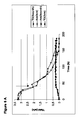
- FIG. 6 (A) shows the arabinose consumption and the dry weight of both strains
- FIG. 6 (B) illustrates the ethanol production of the two strains.
- the strains were cultivated in the fermenter aerobically until they reached a dry weight of approx. 2.8 g/l. When sufficient cell mass was present, the fermentations were switched to anaerobic conditions.
- the figure shows the plots of arabinose metabolism and ethanol production. The byproducts produced, arabitol, acetate and glycerin, have not been listed because they were produced in comparable quantities by both strains.
- ethanol production begins immediately after the switch to anaerobic conditions for both strains (the switch to anaerobic conditions is shown in FIGS. 6 (A) and (B) by an arrow).
- the ethanol that was already present in the medium at the start of the fermentation was not produced by the yeasts, it originated from the Tween80/Ergosterol solution. Under the aerobic conditions that prevailed in the beginning, ethanol was decomposed by yeast by respiration.
- the strain that has the arabinose metabolic pathway genes in codon-optimised form demonstrates significantly improved arabinose metabolism and increased ethanol production.
- the arabinose present in the medium has been completely consumed after just 150 hours. In contrast, even after 180 hours there is still arabinose in the medium with the strain with the original, reisolated plasmids.
- the vector with the expression cassette with three genes for the arabinose metabolic pathway was constructed both to circumvent the problems that can arise when several plasmids are present in the same cell at the same time (“Plasmid stress”, Review of E. coli by Bailey (1993)), and to enable stable genomic integration of the arabinose metabolic pathway genes.
- the issues associated with constructing an expression cassette of the arabinose metabolic pathway genes and integrating it individually in a manner that is genomically stable have already been shown by Becker (2003) and Wiedemann (2005).
- the expression cassette with the three genes that has now been constructed represents an excellent starting point for direct genomic integration and enables subcloning into the integrative plasmids of the series pRS303X, pRS305X und pRS306X (Taxis und Knop, 2006).
- the starting point for constructing the expression cassette was the plasmid p425H7-synthEpi, in which the codon-optimised form of epimerase was expressed from E. coli behind the shortened HXT7 promoter and in front of the CYC1 terminator.
- the codon-optimised araB mut -ORF must be expressed from E. coli between the PFK1 promoter and the FBA1 terminator, the codon-optimised araA-ORF from B. licheniformis between the FBA1 promoter and the PGK1 terminator.
- the plasmid p425147-synthEpi was opened before the HXT7 promoter with restriction endonuclease SacI, streaked on an agarose gel, and eluted from the gel.
- the araB mut ORF was amplified by PCR.
- the PFK1 promoter and FBA1 terminator were amplified from genomic DNA of S. cerevisiae , the primers having been selected so that a 500 bp long sequence of the promoter and a 300 bp long sequence of the terminator were synthesised and homologous overhangs to the plasmid p425H7-synthEpi and to the araB mut ORF were produced at the same time.
- the primer that amplified the PFK1 promoter with the homologous regions to p425H7-synthEpi also contained a sequence for a PacI restriction site.
- the three PCR products were transformed in yeast together with the linearised vector and cloned into the plasmid via in vivo recombination. Restriction analysis was used to verify that the p425H7synthEpisynthKin plasmid produced had been successfully reconstructed. The functionality of the vector was tested. To do this, yeast transform ants that contained the plasmids p425H7synthEpisynthKin and p423H7araABs re were prepared.
- the transformants were tested for arabinose growth.
- the strain was capable of growing on a medium containing arabinose.
- a yeast strain containing the vectors p424H7synthEpi and p423HXT7-6HIS was used as the negative control. This strain was not able to grow on the medium.
- the codon-optimised form of the isomerase from B. licheniformis was integrated into the vector.
- plasmid p425H7synthEpisynthKin was linearised with NgoMVI after the CYC1 terminator, streaked onto an agarose gel and eluted from the gel.
- a 500 bp long sequence of the FBA1 promoter was amplified from genomic DNA of S. cerevisiae , and the primers were selected so that homologous overhangs to plasmid p425H7synthEpisynthKin in the CYC1 terminator and to the ORF of the codon-optimised araA were produced.
- a 300 bp long sequence of the PGK1 terminator was also amplified from genomic DNA of S. cerevisiae , in which a primer had overhangs to the ORF of the codon-optimised araA and the other primer included homologous overhangs to plasmid p425H7synthEpisynthKin and an AscI restriction site.
- the three genes were cloned behind different promoters and terminators.
- the selection of the promoters was particularly important. It had been found in previous research (Becker and Boles, 2003) that the gene dose of the three genes relative to each other was critically important. In addition, all genes were to be strongly expressed. For these reasons, the decision was made to use the shortened HXT7 promoter, which is expressed strongly and constitutively, and the promoters PFK1 and FBA1, which are both known to promote strong expression of genes.
- the starter plasmid for the construction of p425H7synthAra was the plasmid p425H7synthEpi, which is based on the plasmid p425HXT7-6HIS.
- the vector is a 2 ⁇ expression plasmid that possesses a leucine marker.
- the three arabinose metabolic pathway genes were cloned into a vector one after the other under the control of various promoters and terminators.
- the expression cassette is flanked by the recognition sequences of the enzymes PacI and AscI.
Landscapes
- Life Sciences & Earth Sciences (AREA)
- Health & Medical Sciences (AREA)
- Chemical & Material Sciences (AREA)
- Engineering & Computer Science (AREA)
- Genetics & Genomics (AREA)
- Organic Chemistry (AREA)
- Zoology (AREA)
- Wood Science & Technology (AREA)
- Bioinformatics & Cheminformatics (AREA)
- Biotechnology (AREA)
- General Engineering & Computer Science (AREA)
- Biomedical Technology (AREA)
- Biochemistry (AREA)
- General Health & Medical Sciences (AREA)
- Microbiology (AREA)
- Molecular Biology (AREA)
- Mycology (AREA)
- Medicinal Chemistry (AREA)
- Physics & Mathematics (AREA)
- Biophysics (AREA)
- Plant Pathology (AREA)
- Chemical Kinetics & Catalysis (AREA)
- General Chemical & Material Sciences (AREA)
- Botany (AREA)
- Tropical Medicine & Parasitology (AREA)
- Virology (AREA)
- Micro-Organisms Or Cultivation Processes Thereof (AREA)
Applications Claiming Priority (4)
| Application Number | Priority Date | Filing Date | Title |
|---|---|---|---|
| DE102007016534 | 2007-04-05 | ||
| DE102007016534.1A DE102007016534B4 (de) | 2007-04-05 | 2007-04-05 | Neuer Expressionsvektor von Codon-optimierten Genen eines Arabinose-Stoffwechselweges zur Arabinose-Umsetzung in Hefe |
| DE102007016534.1 | 2007-04-05 | ||
| PCT/EP2008/002277 WO2008122354A1 (fr) | 2007-04-05 | 2008-03-20 | Vecteur à gènes optimisés au codon d'une voie métabolique de l'arabinose, en vue de la transformation de l'arabinose dans des levures pour la production d'éthanol |
Related Parent Applications (1)
| Application Number | Title | Priority Date | Filing Date |
|---|---|---|---|
| PCT/EP2008/002277 A-371-Of-International WO2008122354A1 (fr) | 2007-04-05 | 2008-03-20 | Vecteur à gènes optimisés au codon d'une voie métabolique de l'arabinose, en vue de la transformation de l'arabinose dans des levures pour la production d'éthanol |
Related Child Applications (1)
| Application Number | Title | Priority Date | Filing Date |
|---|---|---|---|
| US14/231,061 Continuation US8993301B2 (en) | 2007-04-05 | 2014-03-31 | Vector with codon-optimised genes for an arabinose metabolic pathway for arabinose conversion in yeast for ethanol production |
Publications (2)
| Publication Number | Publication Date |
|---|---|
| US20100151548A1 US20100151548A1 (en) | 2010-06-17 |
| US8753862B2 true US8753862B2 (en) | 2014-06-17 |
Family
ID=39540560
Family Applications (2)
| Application Number | Title | Priority Date | Filing Date |
|---|---|---|---|
| US12/531,988 Active 2030-02-11 US8753862B2 (en) | 2007-04-05 | 2008-03-20 | Vector with codon-optimised genes for an arabinose metabolic pathway for arabinose conversion in yeast for ethanol production |
| US14/231,061 Active US8993301B2 (en) | 2007-04-05 | 2014-03-31 | Vector with codon-optimised genes for an arabinose metabolic pathway for arabinose conversion in yeast for ethanol production |
Family Applications After (1)
| Application Number | Title | Priority Date | Filing Date |
|---|---|---|---|
| US14/231,061 Active US8993301B2 (en) | 2007-04-05 | 2014-03-31 | Vector with codon-optimised genes for an arabinose metabolic pathway for arabinose conversion in yeast for ethanol production |
Country Status (9)
| Country | Link |
|---|---|
| US (2) | US8753862B2 (fr) |
| EP (1) | EP2139998B1 (fr) |
| CA (1) | CA2684762C (fr) |
| DE (1) | DE102007016534B4 (fr) |
| DK (1) | DK2139998T3 (fr) |
| ES (1) | ES2463486T3 (fr) |
| PL (1) | PL2139998T3 (fr) |
| PT (1) | PT2139998E (fr) |
| WO (1) | WO2008122354A1 (fr) |
Cited By (2)
| Publication number | Priority date | Publication date | Assignee | Title |
|---|---|---|---|---|
| US20120295321A1 (en) * | 2009-11-12 | 2012-11-22 | Universiteit Utrecht Holding B.V. | Pentose Transporters and Uses Thereof |
| JP2020099308A (ja) * | 2018-12-25 | 2020-07-02 | トヨタ自動車株式会社 | 組換え酵母及びこれを用いたエタノールの製造方法 |
Families Citing this family (8)
| Publication number | Priority date | Publication date | Assignee | Title |
|---|---|---|---|---|
| US8628943B2 (en) | 2008-12-16 | 2014-01-14 | Coskata, Inc. | Genes encoding key catalyzing mechanisms for ethanol production from syngas fermentation |
| UA108853C2 (uk) | 2009-07-10 | 2015-06-25 | Спосіб ферментації галактози | |
| AU2010305447C1 (en) * | 2009-10-08 | 2018-12-13 | Versalis S.P.A. | Process for the preparation of a fermentation product from lignocellulose containing material |
| NZ604088A (en) * | 2010-06-09 | 2014-09-26 | Coskata Inc | Cloning and expression of the genes encoding key clostridial catalyzing mechanisms for syngas to ethanol production and functional characterization thereof |
| CA2832587A1 (fr) | 2011-04-11 | 2012-10-18 | Cargill, Incorporated | Compositions et procedes pour une production accrue d'ethanol a partir de biomasse |
| BR112018068981A2 (pt) | 2016-03-18 | 2019-04-16 | Lallemand Hungary Liquidity Management Llc | regulação da rota de sinalização de ras/camp/pka em leveduras |
| FR3062134B1 (fr) | 2017-01-24 | 2023-07-21 | Lesaffre & Cie | Obtention de souches de levure performantes pour la metabolisation de l'arabinose |
| CN113122528A (zh) * | 2019-12-31 | 2021-07-16 | 中国科学院天津工业生物技术研究所 | D-木酮糖4-差向异构酶、其突变体及其用途 |
Citations (5)
| Publication number | Priority date | Publication date | Assignee | Title |
|---|---|---|---|---|
| WO1998050524A1 (fr) | 1997-05-06 | 1998-11-12 | Midwest Research Institute | Souche unique de zymomonas mobilis pour fermentation de xylose et d'arabinose |
| US6030807A (en) * | 1996-09-10 | 2000-02-29 | The Rockefeller University | Highly regulable promoter for heterologous gene expression |
| WO2003008593A2 (fr) | 2001-07-16 | 2003-01-30 | Bioteknologisk Institut | Nouvelle isomerase thermostable et utilisation correspondante, notamment dans la production de tagatose |
| US20050142648A1 (en) * | 2002-05-08 | 2005-06-30 | Eckhard Boles | Modified yeast consuming L-arabinose |
| WO2006096130A1 (fr) | 2005-03-11 | 2006-09-14 | Forskarpatent I Syd Ab | Souches de saccharomyces cerevisiae capables de faire fermenter l'arabinose et le xylose |
Family Cites Families (1)
| Publication number | Priority date | Publication date | Assignee | Title |
|---|---|---|---|---|
| DE102006060381B4 (de) | 2006-12-20 | 2010-04-08 | Johann Wolfgang Goethe-Universität Frankfurt am Main | Neuer spezifischer Arabinose-Transporter aus der Hefe Pichia stipitis und dessen Verwendungen |
-
2007
- 2007-04-05 DE DE102007016534.1A patent/DE102007016534B4/de active Active
-
2008
- 2008-03-20 ES ES08734708.4T patent/ES2463486T3/es active Active
- 2008-03-20 PT PT87347084T patent/PT2139998E/pt unknown
- 2008-03-20 EP EP08734708.4A patent/EP2139998B1/fr active Active
- 2008-03-20 PL PL08734708T patent/PL2139998T3/pl unknown
- 2008-03-20 CA CA2684762A patent/CA2684762C/fr active Active
- 2008-03-20 US US12/531,988 patent/US8753862B2/en active Active
- 2008-03-20 DK DK08734708.4T patent/DK2139998T3/da active
- 2008-03-20 WO PCT/EP2008/002277 patent/WO2008122354A1/fr not_active Ceased
-
2014
- 2014-03-31 US US14/231,061 patent/US8993301B2/en active Active
Patent Citations (6)
| Publication number | Priority date | Publication date | Assignee | Title |
|---|---|---|---|---|
| US6030807A (en) * | 1996-09-10 | 2000-02-29 | The Rockefeller University | Highly regulable promoter for heterologous gene expression |
| WO1998050524A1 (fr) | 1997-05-06 | 1998-11-12 | Midwest Research Institute | Souche unique de zymomonas mobilis pour fermentation de xylose et d'arabinose |
| WO2003008593A2 (fr) | 2001-07-16 | 2003-01-30 | Bioteknologisk Institut | Nouvelle isomerase thermostable et utilisation correspondante, notamment dans la production de tagatose |
| US20050142648A1 (en) * | 2002-05-08 | 2005-06-30 | Eckhard Boles | Modified yeast consuming L-arabinose |
| WO2006096130A1 (fr) | 2005-03-11 | 2006-09-14 | Forskarpatent I Syd Ab | Souches de saccharomyces cerevisiae capables de faire fermenter l'arabinose et le xylose |
| US8129171B2 (en) * | 2005-03-11 | 2012-03-06 | Scandinavian Technology Group Ab | Arabinose- and xylose-fermenting Saccharomyces cerevisiae strains |
Non-Patent Citations (13)
| Title |
|---|
| Bennetzen et al., "Codon Selection in Yeast," The Journal of Biological Chemistry, Mar. 25, 1982, vol. 257, No. 6, pp. 3026-3031. |
| Branden et al. Introduction to Protein Structure, Garland Publishing Inc., New York, p. 247, 1991. * |
| Database NCBI, "AraA, Bacillus licheniformis," Sep. 29, 2004, Database Accession No. AAU41894. |
| Fonseca et al., "L-Arabinose transport and catabolism in yeast," The FEBS Journal, 2007, vol. 274, pp. 3589-3600. |
| Nölling, Jörk et al., "Genome Sequence and Comparative Analysis of the Solvent-Producing Bacterium Clostridium acetobutylicum", Journal of Bacteriology, Aug. 2001, vol. 183, No. 16, pp. 4823-4838. |
| Sedlak et al., "Expression of E. coli araBAD operon encoding enzymes for metabolizing L-arabinose in Saccharomyces cerevisiae," Enzyme and Microbial Technology, 2001, vol. 28, pp. 16-24. |
| UnitProt Database-Q65GC0-2004. * |
| UnitProt Database—Q65GC0—2004. * |
| UnitProt Database-Q97JE4-2001. * |
| UnitProt Database—Q97JE4—2001. * |
| Veith et al. ARAA1-BACLD. UniProtKB Database. 2007. * |
| Veith et al. ARAA1—BACLD. UniProtKB Database. 2007. * |
| Veith, Birgit et al., "The Complete Genome Sequence of Bacillus licheniformis DSM13, An Organism with Great Industrial Potential", Journal of Molecular Microbiology and Biotechnology, Sep. 2004, vol. 7, No. 4, pp. 204-211. |
Cited By (5)
| Publication number | Priority date | Publication date | Assignee | Title |
|---|---|---|---|---|
| US20120295321A1 (en) * | 2009-11-12 | 2012-11-22 | Universiteit Utrecht Holding B.V. | Pentose Transporters and Uses Thereof |
| JP2020099308A (ja) * | 2018-12-25 | 2020-07-02 | トヨタ自動車株式会社 | 組換え酵母及びこれを用いたエタノールの製造方法 |
| WO2020138020A1 (fr) * | 2018-12-25 | 2020-07-02 | トヨタ自動車株式会社 | Levure recombinante, et procédé de fabrication d'éthanol mettant en œuvre celle-ci |
| CN113272438A (zh) * | 2018-12-25 | 2021-08-17 | 丰田自动车株式会社 | 重组酵母和使用其的乙醇的制造方法 |
| CN113272438B (zh) * | 2018-12-25 | 2024-11-12 | 丰田自动车株式会社 | 重组酵母和使用其的乙醇的制造方法 |
Also Published As
| Publication number | Publication date |
|---|---|
| DK2139998T3 (da) | 2014-05-05 |
| DE102007016534A1 (de) | 2008-10-09 |
| ES2463486T3 (es) | 2014-05-28 |
| PT2139998E (pt) | 2014-05-23 |
| WO2008122354A1 (fr) | 2008-10-16 |
| US20100151548A1 (en) | 2010-06-17 |
| CA2684762C (fr) | 2018-04-17 |
| EP2139998B1 (fr) | 2014-03-12 |
| US20140206070A1 (en) | 2014-07-24 |
| PL2139998T3 (pl) | 2014-08-29 |
| CA2684762A1 (fr) | 2008-10-16 |
| US8993301B2 (en) | 2015-03-31 |
| DE102007016534B4 (de) | 2019-03-28 |
| EP2139998A1 (fr) | 2010-01-06 |
Similar Documents
| Publication | Publication Date | Title |
|---|---|---|
| US8993301B2 (en) | Vector with codon-optimised genes for an arabinose metabolic pathway for arabinose conversion in yeast for ethanol production | |
| DK2313495T3 (en) | Prokaryotic xylose isomerase for the construction of xylose-fermenting YEAST | |
| US7833764B2 (en) | DNA encoding xylitol dehydrogenase | |
| EP2495306B1 (fr) | Transporteur d'arabinose spécifique de la plante arabidosis thaliana pour la construction de levures de fermentation à base de pentose | |
| US10308692B2 (en) | Variants of GAL2 transporter and their uses | |
| CA2673310C (fr) | Nouveau transporteur d'arabinose specifique issu de la levure pichia stipitis et ses utilisations | |
| WO2014033019A1 (fr) | Souches de levures modifiées pour produire de l'éthanol à partir d'acétate | |
| Zhou | Metabolic engineering of yeast for xylose uptake and fermentation |
Legal Events
| Date | Code | Title | Description |
|---|---|---|---|
| AS | Assignment |
Owner name: JOHANN WOLFGANG GOETHE-UNIVERSITAT FRANKFURT AM MA Free format text: ASSIGNMENT OF ASSIGNORS INTEREST;ASSIGNORS:BOLES, ECKHARD;WIEDEMANN, BEATE;REEL/FRAME:023844/0541 Effective date: 20091009 |
|
| AS | Assignment |
Owner name: BUTALCO GMBH, SWITZERLAND Free format text: ASSIGNMENT OF ASSIGNORS INTEREST;ASSIGNOR:JOHANN WOLFGANG GOETHE-UNIVERSITAT FRANKFURT AM MAIN;REEL/FRAME:027116/0453 Effective date: 20110916 |
|
| STCF | Information on status: patent grant |
Free format text: PATENTED CASE |
|
| CC | Certificate of correction | ||
| FEPP | Fee payment procedure |
Free format text: PAT HOLDER NO LONGER CLAIMS SMALL ENTITY STATUS, ENTITY STATUS SET TO UNDISCOUNTED (ORIGINAL EVENT CODE: STOL); ENTITY STATUS OF PATENT OWNER: LARGE ENTITY |
|
| MAFP | Maintenance fee payment |
Free format text: PAYMENT OF MAINTENANCE FEE, 4TH YEAR, LARGE ENTITY (ORIGINAL EVENT CODE: M1551) Year of fee payment: 4 |
|
| MAFP | Maintenance fee payment |
Free format text: PAYMENT OF MAINTENANCE FEE, 8TH YEAR, LARGE ENTITY (ORIGINAL EVENT CODE: M1552); ENTITY STATUS OF PATENT OWNER: LARGE ENTITY Year of fee payment: 8 |
|
| MAFP | Maintenance fee payment |
Free format text: PAYMENT OF MAINTENANCE FEE, 12TH YEAR, LARGE ENTITY (ORIGINAL EVENT CODE: M1553); ENTITY STATUS OF PATENT OWNER: LARGE ENTITY Year of fee payment: 12 |