US8919081B2 - Packaging method for producing sealed packages of a food product pourable into a tube of packaging material - Google Patents
Packaging method for producing sealed packages of a food product pourable into a tube of packaging material Download PDFInfo
- Publication number
- US8919081B2 US8919081B2 US13/002,120 US200913002120A US8919081B2 US 8919081 B2 US8919081 B2 US 8919081B2 US 200913002120 A US200913002120 A US 200913002120A US 8919081 B2 US8919081 B2 US 8919081B2
- Authority
- US
- United States
- Prior art keywords
- jaws
- tube
- pair
- sealing
- package
- Prior art date
- Legal status (The legal status is an assumption and is not a legal conclusion. Google has not performed a legal analysis and makes no representation as to the accuracy of the status listed.)
- Active, expires
Links
- 235000013305 food Nutrition 0.000 title claims abstract description 35
- 239000005022 packaging material Substances 0.000 title claims abstract description 22
- 238000004806 packaging method and process Methods 0.000 title description 11
- 238000004519 manufacturing process Methods 0.000 title 1
- 238000007789 sealing Methods 0.000 claims abstract description 92
- 238000000034 method Methods 0.000 claims abstract description 16
- 230000001419 dependent effect Effects 0.000 claims 2
- 238000010438 heat treatment Methods 0.000 description 75
- 230000000712 assembly Effects 0.000 description 14
- 238000000429 assembly Methods 0.000 description 14
- 239000000463 material Substances 0.000 description 10
- 239000004033 plastic Substances 0.000 description 6
- 229920003023 plastic Polymers 0.000 description 6
- IKZZIQXKLWDPCD-UHFFFAOYSA-N but-1-en-2-ol Chemical compound CCC(O)=C IKZZIQXKLWDPCD-UHFFFAOYSA-N 0.000 description 4
- 229910052739 hydrogen Inorganic materials 0.000 description 4
- 238000013459 approach Methods 0.000 description 3
- 230000015572 biosynthetic process Effects 0.000 description 3
- 235000020191 long-life milk Nutrition 0.000 description 3
- -1 polypropylene Polymers 0.000 description 3
- 239000004698 Polyethylene Substances 0.000 description 2
- 239000005030 aluminium foil Substances 0.000 description 2
- 238000012937 correction Methods 0.000 description 2
- 230000007423 decrease Effects 0.000 description 2
- 230000000694 effects Effects 0.000 description 2
- 239000002657 fibrous material Substances 0.000 description 2
- 235000015203 fruit juice Nutrition 0.000 description 2
- 229920000573 polyethylene Polymers 0.000 description 2
- 238000013519 translation Methods 0.000 description 2
- 235000014101 wine Nutrition 0.000 description 2
- MHAJPDPJQMAIIY-UHFFFAOYSA-N Hydrogen peroxide Chemical compound OO MHAJPDPJQMAIIY-UHFFFAOYSA-N 0.000 description 1
- 235000007688 Lycopersicon esculentum Nutrition 0.000 description 1
- 239000004743 Polypropylene Substances 0.000 description 1
- 240000003768 Solanum lycopersicum Species 0.000 description 1
- 235000013351 cheese Nutrition 0.000 description 1
- 238000006073 displacement reaction Methods 0.000 description 1
- 230000008020 evaporation Effects 0.000 description 1
- 238000001704 evaporation Methods 0.000 description 1
- 229910052500 inorganic mineral Inorganic materials 0.000 description 1
- 239000007788 liquid Substances 0.000 description 1
- 235000021056 liquid food Nutrition 0.000 description 1
- 235000013336 milk Nutrition 0.000 description 1
- 239000008267 milk Substances 0.000 description 1
- 210000004080 milk Anatomy 0.000 description 1
- 239000011707 mineral Substances 0.000 description 1
- 235000020200 pasteurised milk Nutrition 0.000 description 1
- 229920001155 polypropylene Polymers 0.000 description 1
- 238000012545 processing Methods 0.000 description 1
- 235000015067 sauces Nutrition 0.000 description 1
- 239000003206 sterilizing agent Substances 0.000 description 1
- 239000000126 substance Substances 0.000 description 1
- 238000004260 weight control Methods 0.000 description 1
Images



Classifications
-
- B—PERFORMING OPERATIONS; TRANSPORTING
- B65—CONVEYING; PACKING; STORING; HANDLING THIN OR FILAMENTARY MATERIAL
- B65B—MACHINES, APPARATUS OR DEVICES FOR, OR METHODS OF, PACKAGING ARTICLES OR MATERIALS; UNPACKING
- B65B9/00—Enclosing successive articles, or quantities of material, e.g. liquids or semiliquids, in flat, folded, or tubular webs of flexible sheet material; Subdividing filled flexible tubes to form packages
- B65B9/10—Enclosing successive articles, or quantities of material, in preformed tubular webs, or in webs formed into tubes around filling nozzles, e.g. extruded tubular webs
- B65B9/20—Enclosing successive articles, or quantities of material, in preformed tubular webs, or in webs formed into tubes around filling nozzles, e.g. extruded tubular webs the webs being formed into tubes in situ around the filling nozzles
- B65B9/207—Enclosing successive articles, or quantities of material, in preformed tubular webs, or in webs formed into tubes around filling nozzles, e.g. extruded tubular webs the webs being formed into tubes in situ around the filling nozzles the web advancing continuously
-
- B—PERFORMING OPERATIONS; TRANSPORTING
- B29—WORKING OF PLASTICS; WORKING OF SUBSTANCES IN A PLASTIC STATE IN GENERAL
- B29C—SHAPING OR JOINING OF PLASTICS; SHAPING OF MATERIAL IN A PLASTIC STATE, NOT OTHERWISE PROVIDED FOR; AFTER-TREATMENT OF THE SHAPED PRODUCTS, e.g. REPAIRING
- B29C65/00—Joining or sealing of preformed parts, e.g. welding of plastics materials; Apparatus therefor
- B29C65/02—Joining or sealing of preformed parts, e.g. welding of plastics materials; Apparatus therefor by heating, with or without pressure
- B29C65/18—Joining or sealing of preformed parts, e.g. welding of plastics materials; Apparatus therefor by heating, with or without pressure using heated tools
-
- B—PERFORMING OPERATIONS; TRANSPORTING
- B29—WORKING OF PLASTICS; WORKING OF SUBSTANCES IN A PLASTIC STATE IN GENERAL
- B29C—SHAPING OR JOINING OF PLASTICS; SHAPING OF MATERIAL IN A PLASTIC STATE, NOT OTHERWISE PROVIDED FOR; AFTER-TREATMENT OF THE SHAPED PRODUCTS, e.g. REPAIRING
- B29C65/00—Joining or sealing of preformed parts, e.g. welding of plastics materials; Apparatus therefor
- B29C65/74—Joining or sealing of preformed parts, e.g. welding of plastics materials; Apparatus therefor by welding and severing, or by joining and severing, the severing being performed in the area to be joined, next to the area to be joined, in the joint area or next to the joint area
- B29C65/745—Joining or sealing of preformed parts, e.g. welding of plastics materials; Apparatus therefor by welding and severing, or by joining and severing, the severing being performed in the area to be joined, next to the area to be joined, in the joint area or next to the joint area using a single unit having both a severing tool and a welding tool
- B29C65/7451—Joining or sealing of preformed parts, e.g. welding of plastics materials; Apparatus therefor by welding and severing, or by joining and severing, the severing being performed in the area to be joined, next to the area to be joined, in the joint area or next to the joint area using a single unit having both a severing tool and a welding tool the severing tool and the welding tool being movable with respect to one-another
-
- B—PERFORMING OPERATIONS; TRANSPORTING
- B29—WORKING OF PLASTICS; WORKING OF SUBSTANCES IN A PLASTIC STATE IN GENERAL
- B29C—SHAPING OR JOINING OF PLASTICS; SHAPING OF MATERIAL IN A PLASTIC STATE, NOT OTHERWISE PROVIDED FOR; AFTER-TREATMENT OF THE SHAPED PRODUCTS, e.g. REPAIRING
- B29C66/00—General aspects of processes or apparatus for joining preformed parts
- B29C66/01—General aspects dealing with the joint area or with the area to be joined
- B29C66/05—Particular design of joint configurations
- B29C66/10—Particular design of joint configurations particular design of the joint cross-sections
- B29C66/11—Joint cross-sections comprising a single joint-segment, i.e. one of the parts to be joined comprising a single joint-segment in the joint cross-section
- B29C66/112—Single lapped joints
- B29C66/1122—Single lap to lap joints, i.e. overlap joints
-
- B—PERFORMING OPERATIONS; TRANSPORTING
- B29—WORKING OF PLASTICS; WORKING OF SUBSTANCES IN A PLASTIC STATE IN GENERAL
- B29C—SHAPING OR JOINING OF PLASTICS; SHAPING OF MATERIAL IN A PLASTIC STATE, NOT OTHERWISE PROVIDED FOR; AFTER-TREATMENT OF THE SHAPED PRODUCTS, e.g. REPAIRING
- B29C66/00—General aspects of processes or apparatus for joining preformed parts
- B29C66/40—General aspects of joining substantially flat articles, e.g. plates, sheets or web-like materials; Making flat seams in tubular or hollow articles; Joining single elements to substantially flat surfaces
- B29C66/41—Joining substantially flat articles ; Making flat seams in tubular or hollow articles
- B29C66/43—Joining a relatively small portion of the surface of said articles
- B29C66/431—Joining the articles to themselves
- B29C66/4312—Joining the articles to themselves for making flat seams in tubular or hollow articles, e.g. transversal seams
-
- B—PERFORMING OPERATIONS; TRANSPORTING
- B29—WORKING OF PLASTICS; WORKING OF SUBSTANCES IN A PLASTIC STATE IN GENERAL
- B29C—SHAPING OR JOINING OF PLASTICS; SHAPING OF MATERIAL IN A PLASTIC STATE, NOT OTHERWISE PROVIDED FOR; AFTER-TREATMENT OF THE SHAPED PRODUCTS, e.g. REPAIRING
- B29C66/00—General aspects of processes or apparatus for joining preformed parts
- B29C66/70—General aspects of processes or apparatus for joining preformed parts characterised by the composition, physical properties or the structure of the material of the parts to be joined; Joining with non-plastics material
- B29C66/73—General aspects of processes or apparatus for joining preformed parts characterised by the composition, physical properties or the structure of the material of the parts to be joined; Joining with non-plastics material characterised by the intensive physical properties of the material of the parts to be joined, by the optical properties of the material of the parts to be joined, by the extensive physical properties of the parts to be joined, by the state of the material of the parts to be joined or by the material of the parts to be joined being a thermoplastic or a thermoset
- B29C66/737—General aspects of processes or apparatus for joining preformed parts characterised by the composition, physical properties or the structure of the material of the parts to be joined; Joining with non-plastics material characterised by the intensive physical properties of the material of the parts to be joined, by the optical properties of the material of the parts to be joined, by the extensive physical properties of the parts to be joined, by the state of the material of the parts to be joined or by the material of the parts to be joined being a thermoplastic or a thermoset characterised by the state of the material of the parts to be joined
- B29C66/7373—Joining soiled or oxidised materials
-
- B—PERFORMING OPERATIONS; TRANSPORTING
- B29—WORKING OF PLASTICS; WORKING OF SUBSTANCES IN A PLASTIC STATE IN GENERAL
- B29C—SHAPING OR JOINING OF PLASTICS; SHAPING OF MATERIAL IN A PLASTIC STATE, NOT OTHERWISE PROVIDED FOR; AFTER-TREATMENT OF THE SHAPED PRODUCTS, e.g. REPAIRING
- B29C66/00—General aspects of processes or apparatus for joining preformed parts
- B29C66/80—General aspects of machine operations or constructions and parts thereof
- B29C66/81—General aspects of the pressing elements, i.e. the elements applying pressure on the parts to be joined in the area to be joined, e.g. the welding jaws or clamps
- B29C66/814—General aspects of the pressing elements, i.e. the elements applying pressure on the parts to be joined in the area to be joined, e.g. the welding jaws or clamps characterised by the design of the pressing elements, e.g. of the welding jaws or clamps
- B29C66/8141—General aspects of the pressing elements, i.e. the elements applying pressure on the parts to be joined in the area to be joined, e.g. the welding jaws or clamps characterised by the design of the pressing elements, e.g. of the welding jaws or clamps characterised by the surface geometry of the part of the pressing elements, e.g. welding jaws or clamps, coming into contact with the parts to be joined
- B29C66/81411—General aspects of the pressing elements, i.e. the elements applying pressure on the parts to be joined in the area to be joined, e.g. the welding jaws or clamps characterised by the design of the pressing elements, e.g. of the welding jaws or clamps characterised by the surface geometry of the part of the pressing elements, e.g. welding jaws or clamps, coming into contact with the parts to be joined characterised by its cross-section, e.g. transversal or longitudinal, being non-flat
- B29C66/81415—General aspects of the pressing elements, i.e. the elements applying pressure on the parts to be joined in the area to be joined, e.g. the welding jaws or clamps characterised by the design of the pressing elements, e.g. of the welding jaws or clamps characterised by the surface geometry of the part of the pressing elements, e.g. welding jaws or clamps, coming into contact with the parts to be joined characterised by its cross-section, e.g. transversal or longitudinal, being non-flat being bevelled
- B29C66/81419—General aspects of the pressing elements, i.e. the elements applying pressure on the parts to be joined in the area to be joined, e.g. the welding jaws or clamps characterised by the design of the pressing elements, e.g. of the welding jaws or clamps characterised by the surface geometry of the part of the pressing elements, e.g. welding jaws or clamps, coming into contact with the parts to be joined characterised by its cross-section, e.g. transversal or longitudinal, being non-flat being bevelled and flat
-
- B—PERFORMING OPERATIONS; TRANSPORTING
- B29—WORKING OF PLASTICS; WORKING OF SUBSTANCES IN A PLASTIC STATE IN GENERAL
- B29C—SHAPING OR JOINING OF PLASTICS; SHAPING OF MATERIAL IN A PLASTIC STATE, NOT OTHERWISE PROVIDED FOR; AFTER-TREATMENT OF THE SHAPED PRODUCTS, e.g. REPAIRING
- B29C66/00—General aspects of processes or apparatus for joining preformed parts
- B29C66/80—General aspects of machine operations or constructions and parts thereof
- B29C66/81—General aspects of the pressing elements, i.e. the elements applying pressure on the parts to be joined in the area to be joined, e.g. the welding jaws or clamps
- B29C66/814—General aspects of the pressing elements, i.e. the elements applying pressure on the parts to be joined in the area to be joined, e.g. the welding jaws or clamps characterised by the design of the pressing elements, e.g. of the welding jaws or clamps
- B29C66/8141—General aspects of the pressing elements, i.e. the elements applying pressure on the parts to be joined in the area to be joined, e.g. the welding jaws or clamps characterised by the design of the pressing elements, e.g. of the welding jaws or clamps characterised by the surface geometry of the part of the pressing elements, e.g. welding jaws or clamps, coming into contact with the parts to be joined
- B29C66/81427—General aspects of the pressing elements, i.e. the elements applying pressure on the parts to be joined in the area to be joined, e.g. the welding jaws or clamps characterised by the design of the pressing elements, e.g. of the welding jaws or clamps characterised by the surface geometry of the part of the pressing elements, e.g. welding jaws or clamps, coming into contact with the parts to be joined comprising a single ridge, e.g. for making a weakening line; comprising a single tooth
-
- B—PERFORMING OPERATIONS; TRANSPORTING
- B29—WORKING OF PLASTICS; WORKING OF SUBSTANCES IN A PLASTIC STATE IN GENERAL
- B29C—SHAPING OR JOINING OF PLASTICS; SHAPING OF MATERIAL IN A PLASTIC STATE, NOT OTHERWISE PROVIDED FOR; AFTER-TREATMENT OF THE SHAPED PRODUCTS, e.g. REPAIRING
- B29C66/00—General aspects of processes or apparatus for joining preformed parts
- B29C66/80—General aspects of machine operations or constructions and parts thereof
- B29C66/81—General aspects of the pressing elements, i.e. the elements applying pressure on the parts to be joined in the area to be joined, e.g. the welding jaws or clamps
- B29C66/814—General aspects of the pressing elements, i.e. the elements applying pressure on the parts to be joined in the area to be joined, e.g. the welding jaws or clamps characterised by the design of the pressing elements, e.g. of the welding jaws or clamps
- B29C66/8141—General aspects of the pressing elements, i.e. the elements applying pressure on the parts to be joined in the area to be joined, e.g. the welding jaws or clamps characterised by the design of the pressing elements, e.g. of the welding jaws or clamps characterised by the surface geometry of the part of the pressing elements, e.g. welding jaws or clamps, coming into contact with the parts to be joined
- B29C66/81431—General aspects of the pressing elements, i.e. the elements applying pressure on the parts to be joined in the area to be joined, e.g. the welding jaws or clamps characterised by the design of the pressing elements, e.g. of the welding jaws or clamps characterised by the surface geometry of the part of the pressing elements, e.g. welding jaws or clamps, coming into contact with the parts to be joined comprising a single cavity, e.g. a groove
-
- B—PERFORMING OPERATIONS; TRANSPORTING
- B29—WORKING OF PLASTICS; WORKING OF SUBSTANCES IN A PLASTIC STATE IN GENERAL
- B29C—SHAPING OR JOINING OF PLASTICS; SHAPING OF MATERIAL IN A PLASTIC STATE, NOT OTHERWISE PROVIDED FOR; AFTER-TREATMENT OF THE SHAPED PRODUCTS, e.g. REPAIRING
- B29C66/00—General aspects of processes or apparatus for joining preformed parts
- B29C66/80—General aspects of machine operations or constructions and parts thereof
- B29C66/82—Pressure application arrangements, e.g. transmission or actuating mechanisms for joining tools or clamps
- B29C66/822—Transmission mechanisms
- B29C66/8221—Scissor or lever mechanisms, i.e. involving a pivot point
-
- B—PERFORMING OPERATIONS; TRANSPORTING
- B29—WORKING OF PLASTICS; WORKING OF SUBSTANCES IN A PLASTIC STATE IN GENERAL
- B29C—SHAPING OR JOINING OF PLASTICS; SHAPING OF MATERIAL IN A PLASTIC STATE, NOT OTHERWISE PROVIDED FOR; AFTER-TREATMENT OF THE SHAPED PRODUCTS, e.g. REPAIRING
- B29C66/00—General aspects of processes or apparatus for joining preformed parts
- B29C66/80—General aspects of machine operations or constructions and parts thereof
- B29C66/82—Pressure application arrangements, e.g. transmission or actuating mechanisms for joining tools or clamps
- B29C66/822—Transmission mechanisms
- B29C66/8222—Pinion or rack mechanisms
-
- B—PERFORMING OPERATIONS; TRANSPORTING
- B29—WORKING OF PLASTICS; WORKING OF SUBSTANCES IN A PLASTIC STATE IN GENERAL
- B29C—SHAPING OR JOINING OF PLASTICS; SHAPING OF MATERIAL IN A PLASTIC STATE, NOT OTHERWISE PROVIDED FOR; AFTER-TREATMENT OF THE SHAPED PRODUCTS, e.g. REPAIRING
- B29C66/00—General aspects of processes or apparatus for joining preformed parts
- B29C66/80—General aspects of machine operations or constructions and parts thereof
- B29C66/83—General aspects of machine operations or constructions and parts thereof characterised by the movement of the joining or pressing tools
- B29C66/834—General aspects of machine operations or constructions and parts thereof characterised by the movement of the joining or pressing tools moving with the parts to be joined
- B29C66/8351—Jaws mounted on rollers, cylinders, drums, bands, belts or chains; Flying jaws
- B29C66/83541—Jaws mounted on rollers, cylinders, drums, bands, belts or chains; Flying jaws flying jaws, e.g. jaws mounted on crank mechanisms or following a hand over hand movement
- B29C66/83543—Jaws mounted on rollers, cylinders, drums, bands, belts or chains; Flying jaws flying jaws, e.g. jaws mounted on crank mechanisms or following a hand over hand movement cooperating flying jaws
-
- B—PERFORMING OPERATIONS; TRANSPORTING
- B29—WORKING OF PLASTICS; WORKING OF SUBSTANCES IN A PLASTIC STATE IN GENERAL
- B29C—SHAPING OR JOINING OF PLASTICS; SHAPING OF MATERIAL IN A PLASTIC STATE, NOT OTHERWISE PROVIDED FOR; AFTER-TREATMENT OF THE SHAPED PRODUCTS, e.g. REPAIRING
- B29C66/00—General aspects of processes or apparatus for joining preformed parts
- B29C66/80—General aspects of machine operations or constructions and parts thereof
- B29C66/84—Specific machine types or machines suitable for specific applications
- B29C66/841—Machines or tools adaptable for making articles of different dimensions or shapes or for making joints of different dimensions
- B29C66/8412—Machines or tools adaptable for making articles of different dimensions or shapes or for making joints of different dimensions of different length, width or height
-
- B—PERFORMING OPERATIONS; TRANSPORTING
- B29—WORKING OF PLASTICS; WORKING OF SUBSTANCES IN A PLASTIC STATE IN GENERAL
- B29C—SHAPING OR JOINING OF PLASTICS; SHAPING OF MATERIAL IN A PLASTIC STATE, NOT OTHERWISE PROVIDED FOR; AFTER-TREATMENT OF THE SHAPED PRODUCTS, e.g. REPAIRING
- B29C66/00—General aspects of processes or apparatus for joining preformed parts
- B29C66/80—General aspects of machine operations or constructions and parts thereof
- B29C66/84—Specific machine types or machines suitable for specific applications
- B29C66/841—Machines or tools adaptable for making articles of different dimensions or shapes or for making joints of different dimensions
- B29C66/8412—Machines or tools adaptable for making articles of different dimensions or shapes or for making joints of different dimensions of different length, width or height
- B29C66/84121—Machines or tools adaptable for making articles of different dimensions or shapes or for making joints of different dimensions of different length, width or height of different width
-
- B—PERFORMING OPERATIONS; TRANSPORTING
- B29—WORKING OF PLASTICS; WORKING OF SUBSTANCES IN A PLASTIC STATE IN GENERAL
- B29C—SHAPING OR JOINING OF PLASTICS; SHAPING OF MATERIAL IN A PLASTIC STATE, NOT OTHERWISE PROVIDED FOR; AFTER-TREATMENT OF THE SHAPED PRODUCTS, e.g. REPAIRING
- B29C66/00—General aspects of processes or apparatus for joining preformed parts
- B29C66/80—General aspects of machine operations or constructions and parts thereof
- B29C66/84—Specific machine types or machines suitable for specific applications
- B29C66/849—Packaging machines
- B29C66/8491—Packaging machines welding through a filled container, e.g. tube or bag
-
- B—PERFORMING OPERATIONS; TRANSPORTING
- B29—WORKING OF PLASTICS; WORKING OF SUBSTANCES IN A PLASTIC STATE IN GENERAL
- B29C—SHAPING OR JOINING OF PLASTICS; SHAPING OF MATERIAL IN A PLASTIC STATE, NOT OTHERWISE PROVIDED FOR; AFTER-TREATMENT OF THE SHAPED PRODUCTS, e.g. REPAIRING
- B29C66/00—General aspects of processes or apparatus for joining preformed parts
- B29C66/90—Measuring or controlling the joining process
-
- B—PERFORMING OPERATIONS; TRANSPORTING
- B29—WORKING OF PLASTICS; WORKING OF SUBSTANCES IN A PLASTIC STATE IN GENERAL
- B29C—SHAPING OR JOINING OF PLASTICS; SHAPING OF MATERIAL IN A PLASTIC STATE, NOT OTHERWISE PROVIDED FOR; AFTER-TREATMENT OF THE SHAPED PRODUCTS, e.g. REPAIRING
- B29C66/00—General aspects of processes or apparatus for joining preformed parts
- B29C66/90—Measuring or controlling the joining process
- B29C66/96—Measuring or controlling the joining process characterised by the method for implementing the controlling of the joining process
-
- B—PERFORMING OPERATIONS; TRANSPORTING
- B65—CONVEYING; PACKING; STORING; HANDLING THIN OR FILAMENTARY MATERIAL
- B65B—MACHINES, APPARATUS OR DEVICES FOR, OR METHODS OF, PACKAGING ARTICLES OR MATERIALS; UNPACKING
- B65B51/00—Devices for, or methods of, sealing or securing package folds or closures; Devices for gathering or twisting wrappers, or necks of bags
- B65B51/10—Applying or generating heat or pressure or combinations thereof
- B65B51/26—Devices specially adapted for producing transverse or longitudinal seams in webs or tubes
- B65B51/30—Devices, e.g. jaws, for applying pressure and heat, e.g. for subdividing filled tubes
- B65B51/306—Counter-rotating devices
-
- B—PERFORMING OPERATIONS; TRANSPORTING
- B65—CONVEYING; PACKING; STORING; HANDLING THIN OR FILAMENTARY MATERIAL
- B65B—MACHINES, APPARATUS OR DEVICES FOR, OR METHODS OF, PACKAGING ARTICLES OR MATERIALS; UNPACKING
- B65B9/00—Enclosing successive articles, or quantities of material, e.g. liquids or semiliquids, in flat, folded, or tubular webs of flexible sheet material; Subdividing filled flexible tubes to form packages
- B65B9/10—Enclosing successive articles, or quantities of material, in preformed tubular webs, or in webs formed into tubes around filling nozzles, e.g. extruded tubular webs
- B65B9/20—Enclosing successive articles, or quantities of material, in preformed tubular webs, or in webs formed into tubes around filling nozzles, e.g. extruded tubular webs the webs being formed into tubes in situ around the filling nozzles
- B65B9/2049—Package shaping devices acting on filled tubes prior to sealing the filling opening
-
- B—PERFORMING OPERATIONS; TRANSPORTING
- B29—WORKING OF PLASTICS; WORKING OF SUBSTANCES IN A PLASTIC STATE IN GENERAL
- B29C—SHAPING OR JOINING OF PLASTICS; SHAPING OF MATERIAL IN A PLASTIC STATE, NOT OTHERWISE PROVIDED FOR; AFTER-TREATMENT OF THE SHAPED PRODUCTS, e.g. REPAIRING
- B29C66/00—General aspects of processes or apparatus for joining preformed parts
- B29C66/70—General aspects of processes or apparatus for joining preformed parts characterised by the composition, physical properties or the structure of the material of the parts to be joined; Joining with non-plastics material
- B29C66/71—General aspects of processes or apparatus for joining preformed parts characterised by the composition, physical properties or the structure of the material of the parts to be joined; Joining with non-plastics material characterised by the composition of the plastics material of the parts to be joined
-
- B—PERFORMING OPERATIONS; TRANSPORTING
- B29—WORKING OF PLASTICS; WORKING OF SUBSTANCES IN A PLASTIC STATE IN GENERAL
- B29C—SHAPING OR JOINING OF PLASTICS; SHAPING OF MATERIAL IN A PLASTIC STATE, NOT OTHERWISE PROVIDED FOR; AFTER-TREATMENT OF THE SHAPED PRODUCTS, e.g. REPAIRING
- B29C66/00—General aspects of processes or apparatus for joining preformed parts
- B29C66/70—General aspects of processes or apparatus for joining preformed parts characterised by the composition, physical properties or the structure of the material of the parts to be joined; Joining with non-plastics material
- B29C66/72—General aspects of processes or apparatus for joining preformed parts characterised by the composition, physical properties or the structure of the material of the parts to be joined; Joining with non-plastics material characterised by the structure of the material of the parts to be joined
- B29C66/723—General aspects of processes or apparatus for joining preformed parts characterised by the composition, physical properties or the structure of the material of the parts to be joined; Joining with non-plastics material characterised by the structure of the material of the parts to be joined being multi-layered
- B29C66/7232—General aspects of processes or apparatus for joining preformed parts characterised by the composition, physical properties or the structure of the material of the parts to be joined; Joining with non-plastics material characterised by the structure of the material of the parts to be joined being multi-layered comprising a non-plastics layer
- B29C66/72321—General aspects of processes or apparatus for joining preformed parts characterised by the composition, physical properties or the structure of the material of the parts to be joined; Joining with non-plastics material characterised by the structure of the material of the parts to be joined being multi-layered comprising a non-plastics layer consisting of metals or their alloys
-
- B—PERFORMING OPERATIONS; TRANSPORTING
- B29—WORKING OF PLASTICS; WORKING OF SUBSTANCES IN A PLASTIC STATE IN GENERAL
- B29C—SHAPING OR JOINING OF PLASTICS; SHAPING OF MATERIAL IN A PLASTIC STATE, NOT OTHERWISE PROVIDED FOR; AFTER-TREATMENT OF THE SHAPED PRODUCTS, e.g. REPAIRING
- B29C66/00—General aspects of processes or apparatus for joining preformed parts
- B29C66/70—General aspects of processes or apparatus for joining preformed parts characterised by the composition, physical properties or the structure of the material of the parts to be joined; Joining with non-plastics material
- B29C66/72—General aspects of processes or apparatus for joining preformed parts characterised by the composition, physical properties or the structure of the material of the parts to be joined; Joining with non-plastics material characterised by the structure of the material of the parts to be joined
- B29C66/723—General aspects of processes or apparatus for joining preformed parts characterised by the composition, physical properties or the structure of the material of the parts to be joined; Joining with non-plastics material characterised by the structure of the material of the parts to be joined being multi-layered
- B29C66/7232—General aspects of processes or apparatus for joining preformed parts characterised by the composition, physical properties or the structure of the material of the parts to be joined; Joining with non-plastics material characterised by the structure of the material of the parts to be joined being multi-layered comprising a non-plastics layer
- B29C66/72327—General aspects of processes or apparatus for joining preformed parts characterised by the composition, physical properties or the structure of the material of the parts to be joined; Joining with non-plastics material characterised by the structure of the material of the parts to be joined being multi-layered comprising a non-plastics layer consisting of natural products or their composites, not provided for in B29C66/72321 - B29C66/72324
- B29C66/72328—Paper
-
- B—PERFORMING OPERATIONS; TRANSPORTING
- B29—WORKING OF PLASTICS; WORKING OF SUBSTANCES IN A PLASTIC STATE IN GENERAL
- B29C—SHAPING OR JOINING OF PLASTICS; SHAPING OF MATERIAL IN A PLASTIC STATE, NOT OTHERWISE PROVIDED FOR; AFTER-TREATMENT OF THE SHAPED PRODUCTS, e.g. REPAIRING
- B29C66/00—General aspects of processes or apparatus for joining preformed parts
- B29C66/70—General aspects of processes or apparatus for joining preformed parts characterised by the composition, physical properties or the structure of the material of the parts to be joined; Joining with non-plastics material
- B29C66/72—General aspects of processes or apparatus for joining preformed parts characterised by the composition, physical properties or the structure of the material of the parts to be joined; Joining with non-plastics material characterised by the structure of the material of the parts to be joined
- B29C66/723—General aspects of processes or apparatus for joining preformed parts characterised by the composition, physical properties or the structure of the material of the parts to be joined; Joining with non-plastics material characterised by the structure of the material of the parts to be joined being multi-layered
- B29C66/7234—General aspects of processes or apparatus for joining preformed parts characterised by the composition, physical properties or the structure of the material of the parts to be joined; Joining with non-plastics material characterised by the structure of the material of the parts to be joined being multi-layered comprising a barrier layer
- B29C66/72341—General aspects of processes or apparatus for joining preformed parts characterised by the composition, physical properties or the structure of the material of the parts to be joined; Joining with non-plastics material characterised by the structure of the material of the parts to be joined being multi-layered comprising a barrier layer for gases
-
- B—PERFORMING OPERATIONS; TRANSPORTING
- B29—WORKING OF PLASTICS; WORKING OF SUBSTANCES IN A PLASTIC STATE IN GENERAL
- B29C—SHAPING OR JOINING OF PLASTICS; SHAPING OF MATERIAL IN A PLASTIC STATE, NOT OTHERWISE PROVIDED FOR; AFTER-TREATMENT OF THE SHAPED PRODUCTS, e.g. REPAIRING
- B29C66/00—General aspects of processes or apparatus for joining preformed parts
- B29C66/80—General aspects of machine operations or constructions and parts thereof
- B29C66/81—General aspects of the pressing elements, i.e. the elements applying pressure on the parts to be joined in the area to be joined, e.g. the welding jaws or clamps
- B29C66/814—General aspects of the pressing elements, i.e. the elements applying pressure on the parts to be joined in the area to be joined, e.g. the welding jaws or clamps characterised by the design of the pressing elements, e.g. of the welding jaws or clamps
- B29C66/8145—General aspects of the pressing elements, i.e. the elements applying pressure on the parts to be joined in the area to be joined, e.g. the welding jaws or clamps characterised by the design of the pressing elements, e.g. of the welding jaws or clamps characterised by the constructional aspects of the pressing elements, e.g. of the welding jaws or clamps
- B29C66/81457—General aspects of the pressing elements, i.e. the elements applying pressure on the parts to be joined in the area to be joined, e.g. the welding jaws or clamps characterised by the design of the pressing elements, e.g. of the welding jaws or clamps characterised by the constructional aspects of the pressing elements, e.g. of the welding jaws or clamps comprising a block or layer of deformable material, e.g. sponge, foam, rubber
-
- B—PERFORMING OPERATIONS; TRANSPORTING
- B29—WORKING OF PLASTICS; WORKING OF SUBSTANCES IN A PLASTIC STATE IN GENERAL
- B29C—SHAPING OR JOINING OF PLASTICS; SHAPING OF MATERIAL IN A PLASTIC STATE, NOT OTHERWISE PROVIDED FOR; AFTER-TREATMENT OF THE SHAPED PRODUCTS, e.g. REPAIRING
- B29C66/00—General aspects of processes or apparatus for joining preformed parts
- B29C66/80—General aspects of machine operations or constructions and parts thereof
- B29C66/82—Pressure application arrangements, e.g. transmission or actuating mechanisms for joining tools or clamps
- B29C66/822—Transmission mechanisms
- B29C66/8225—Crank mechanisms
-
- B—PERFORMING OPERATIONS; TRANSPORTING
- B29—WORKING OF PLASTICS; WORKING OF SUBSTANCES IN A PLASTIC STATE IN GENERAL
- B29K—INDEXING SCHEME ASSOCIATED WITH SUBCLASSES B29B, B29C OR B29D, RELATING TO MOULDING MATERIALS OR TO MATERIALS FOR MOULDS, REINFORCEMENTS, FILLERS OR PREFORMED PARTS, e.g. INSERTS
- B29K2023/00—Use of polyalkenes or derivatives thereof as moulding material
- B29K2023/04—Polymers of ethylene
- B29K2023/06—PE, i.e. polyethylene
-
- B—PERFORMING OPERATIONS; TRANSPORTING
- B29—WORKING OF PLASTICS; WORKING OF SUBSTANCES IN A PLASTIC STATE IN GENERAL
- B29K—INDEXING SCHEME ASSOCIATED WITH SUBCLASSES B29B, B29C OR B29D, RELATING TO MOULDING MATERIALS OR TO MATERIALS FOR MOULDS, REINFORCEMENTS, FILLERS OR PREFORMED PARTS, e.g. INSERTS
- B29K2023/00—Use of polyalkenes or derivatives thereof as moulding material
- B29K2023/04—Polymers of ethylene
- B29K2023/08—Copolymers of ethylene
- B29K2023/086—EVOH, i.e. ethylene vinyl alcohol copolymer
-
- B—PERFORMING OPERATIONS; TRANSPORTING
- B29—WORKING OF PLASTICS; WORKING OF SUBSTANCES IN A PLASTIC STATE IN GENERAL
- B29K—INDEXING SCHEME ASSOCIATED WITH SUBCLASSES B29B, B29C OR B29D, RELATING TO MOULDING MATERIALS OR TO MATERIALS FOR MOULDS, REINFORCEMENTS, FILLERS OR PREFORMED PARTS, e.g. INSERTS
- B29K2023/00—Use of polyalkenes or derivatives thereof as moulding material
- B29K2023/10—Polymers of propylene
- B29K2023/12—PP, i.e. polypropylene
-
- B—PERFORMING OPERATIONS; TRANSPORTING
- B29—WORKING OF PLASTICS; WORKING OF SUBSTANCES IN A PLASTIC STATE IN GENERAL
- B29K—INDEXING SCHEME ASSOCIATED WITH SUBCLASSES B29B, B29C OR B29D, RELATING TO MOULDING MATERIALS OR TO MATERIALS FOR MOULDS, REINFORCEMENTS, FILLERS OR PREFORMED PARTS, e.g. INSERTS
- B29K2305/00—Use of metals, their alloys or their compounds, as reinforcement
- B29K2305/02—Aluminium
-
- B—PERFORMING OPERATIONS; TRANSPORTING
- B29—WORKING OF PLASTICS; WORKING OF SUBSTANCES IN A PLASTIC STATE IN GENERAL
- B29K—INDEXING SCHEME ASSOCIATED WITH SUBCLASSES B29B, B29C OR B29D, RELATING TO MOULDING MATERIALS OR TO MATERIALS FOR MOULDS, REINFORCEMENTS, FILLERS OR PREFORMED PARTS, e.g. INSERTS
- B29K2711/00—Use of natural products or their composites, not provided for in groups B29K2601/00 - B29K2709/00, for preformed parts, e.g. for inserts
- B29K2711/12—Paper, e.g. cardboard
- B29K2711/123—Coated
-
- B—PERFORMING OPERATIONS; TRANSPORTING
- B29—WORKING OF PLASTICS; WORKING OF SUBSTANCES IN A PLASTIC STATE IN GENERAL
- B29K—INDEXING SCHEME ASSOCIATED WITH SUBCLASSES B29B, B29C OR B29D, RELATING TO MOULDING MATERIALS OR TO MATERIALS FOR MOULDS, REINFORCEMENTS, FILLERS OR PREFORMED PARTS, e.g. INSERTS
- B29K2995/00—Properties of moulding materials, reinforcements, fillers, preformed parts or moulds
- B29K2995/0037—Other properties
- B29K2995/0065—Permeability to gases
- B29K2995/0067—Permeability to gases non-permeable
-
- B—PERFORMING OPERATIONS; TRANSPORTING
- B29—WORKING OF PLASTICS; WORKING OF SUBSTANCES IN A PLASTIC STATE IN GENERAL
- B29L—INDEXING SCHEME ASSOCIATED WITH SUBCLASS B29C, RELATING TO PARTICULAR ARTICLES
- B29L2009/00—Layered products
-
- B—PERFORMING OPERATIONS; TRANSPORTING
- B29—WORKING OF PLASTICS; WORKING OF SUBSTANCES IN A PLASTIC STATE IN GENERAL
- B29L—INDEXING SCHEME ASSOCIATED WITH SUBCLASS B29C, RELATING TO PARTICULAR ARTICLES
- B29L2031/00—Other particular articles
- B29L2031/712—Containers; Packaging elements or accessories, Packages
- B29L2031/7162—Boxes, cartons, cases
- B29L2031/7166—Cartons of the fruit juice or milk type, i.e. containers of polygonal cross sections formed by folding blanks into a tubular body with end-closing or contents-supporting elements, e.g. gable type containers
Definitions
- the present invention relates to a packaging method and unit for producing sealed packages of a food product pourable into a tube of packaging material.
- Tetra Brik Aseptic registered trademark
- a typical example of this type of package is the parallelepiped-shaped package for liquid or pourable food products known as Tetra Brik Aseptic (registered trademark), which is made by folding and sealing laminated strip packaging material.
- the packaging material has a multilayer structure substantially comprising a base layer for stiffness and strength, which may be defined by a layer of fibrous material, e.g. paper, or mineral-filled polypropylene material; and a number of layers of heat-seal plastic material, e.g. polyethylene film, covering both sides of the base layer.
- a base layer for stiffness and strength which may be defined by a layer of fibrous material, e.g. paper, or mineral-filled polypropylene material; and a number of layers of heat-seal plastic material, e.g. polyethylene film, covering both sides of the base layer.
- the packaging material also comprises a layer of gas- and light-barrier material, e.g. aluminium foil or ethyl vinyl alcohol (EVOH) film, which is superimposed on a layer of heat-seal plastic material, and is in turn covered with another layer of heat-seal plastic material forming the inner face of the package eventually contacting the food product.
- gas- and light-barrier material e.g. aluminium foil or ethyl vinyl alcohol (EVOH) film
- packages of this sort are produced on fully automatic packaging units, on which a continuous tube is formed from the web-fed packaging material; the web of packaging material is sterilized in the packaging unit, e.g. by applying a chemical sterilizing agent such as a hydrogen peroxide solution, which is subsequently removed, e.g. by heating and evaporation, from the surfaces of the packaging material.
- a chemical sterilizing agent such as a hydrogen peroxide solution
- the sterilized web is maintained in a closed, sterile environment, and is folded into a cylinder and sealed longitudinally to form a tube.
- the tube is fed in a vertical direction parallel to its axis, and is filled continuously with the sterilized or sterile-processed food product.
- Packaging units are known which interact with the tube to heat seal it at equally spaced cross sections to form pillow packs connected to the tube by transverse sealing strips.
- the unit comprises two forming assemblies movable along respective runners and which interact cyclically and successively with the tube to heat seal the packaging material of the tube.
- Each forming assembly comprises a slide movable back and forth along the respective runner; and two jaws hinged at the bottom to the respective slide, and movable between a closed position cooperating with the tube to heat seal it, and an open position detached from the tube.
- the movements of the forming assemblies are offset by a half-period: the slide of one forming assembly moves upwards with its jaws in the open position, as the slide of the other forming assembly moves downwards with its jaws in the closed position to prevent collision and interference.
- each forming assembly has respective sealing members which cooperate with opposite sides of the tube and comprise, for example, a heating member, and an elastomeric member for providing mechanical support to grip the tube to the required pressure.
- Each forming assembly also comprises two forming members comprising respective forming half-shells hinged to the respective jaws.
- Each pair of forming half-shells moves cyclically between an open position detached from the tube, and a closed position contacting the tube to fold it between two consecutive sealing sections and so define and control the volume of the package being formed.
- the sealing members of a first forming assembly seal the package at the bottom, and the half-shells of the first forming assembly control the volume of the package being formed, while the sealing members of the second forming assembly seal the top of the package.
- the volume and/or weight of the food product in the package must be controlled as accurately and repeatably as possible.
- a method of producing a sealed package of a food product pourable into a tube of packaging material is provided.
- a packaging unit for producing sealed packages of a food product pourable into a tube of packaging material.
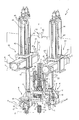
- FIG. 1 shows a view in perspective, with parts removed for clarity, of a packaging unit for producing packages of a food product pourable into a tube of packaging material;
- FIG. 2 shows a larger-scale side view of part of the FIG. 1 unit
- FIGS. 3 and 4 show further enlarged details of the FIG. 1 unit
- FIG. 5 shows a larger-scale view of two pairs of jaws of the FIG. 1 unit in the course of a first step in producing a sealed package
- FIG. 6 shows the FIG. 1 pairs of jaws in the course of a second step in producing the sealed package
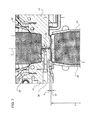
- FIG. 7 shows an enlarged detail of FIG. 6 ;
- FIG. 8 shows a schematic of the paths travelled by the jaws in FIGS. 1 , 6 and 7 .
- Number 1 in FIG. 1 indicates as a whole a packaging unit for producing sealed packages 3 ( FIGS. 1 , 5 , 6 , 7 ) of a food product from a tube 2 of sheet packaging material.
- Unit 1 preferably produces sealed packages 3 of a pourable food product, such as pasteurized or UHT milk, fruit juice, wine, etc.
- a pourable food product such as pasteurized or UHT milk, fruit juice, wine, etc.
- Unit 1 may also produce sealed packages 3 of a food product which is pourable into tube 2 when producing packages 3 , and sets after packages 3 are sealed.
- a food product is a portion of cheese, which is melted when producing packages 3 , and sets after packages 3 are sealed.
- the packaging material has a multilayer structure (not shown) and comprises a layer of fibrous material, normally paper, covered on both sides with respective layers of heat-seal plastic material, e.g. polyethylene.
- the packaging material also comprises a layer of gas- and light-barrier material, e.g. aluminium foil or ethyl vinyl alcohol (EVOH) film, which is superimposed on a layer of heat-seal plastic material, and is in turn covered with another layer of heat-seal plastic material forming the inner face of package 3 eventually contacting the food product.
- gas- and light-barrier material e.g. aluminium foil or ethyl vinyl alcohol (EVOH) film
- Tube 2 is formed in known manner by longitudinally folding and sealing a web (not shown) of heat-seal sheet material, is filled by a fill pipe (not shown) with the sterilized or sterile-processed food product for packaging, and is fed, in known manner not shown, along a vertical path indicated by a downward axis A in FIG. 1 .
- Unit 1 comprises two forming assemblies 6 , 6 ′ which move along respective vertical cylindrical runners 5 , 5 ′ symmetrical with respect to axis A, and interact cyclically with tube 2 to grip and heat seal it along respective equally spaced cross sections crosswise to axis A, to form a number of pillow packs 3 ( FIG. 6 ) connected to tube 2 by respective sealing strips 9 a , 9 b crosswise to axis A.
- sealing strips 9 a , 9 b define the bottom and top of package 3 respectively.
- assemblies 6 , 6 ′ (assembly 6 ) is described below, identical or corresponding parts of assemblies 6 , 6 ′ being indicated in the drawings using the same reference numbers.
- Assembly 6 substantially comprises:
- each jaw 8 comprises:
- assembly 6 also comprises a first fastener 13 fitted integrally to one end of arm 11 of one of jaws 8 ; a second fastener 14 hinged to one end of arm 11 of the other jaw 8 about an axis parallel to axes B; and a hydraulic cylinder 15 (only shown partly) for gripping fasteners 13 , 14 in an engaged position.
- Portions 10 of jaws 8 comprise respective sector gears ( FIG. 4 ) which mesh to ensure jaws 8 rotate by the same angle about respective axes B between the closed and open position.
- Assembly 6 also comprises a known sealing device, not shown in the drawings, for heat sealing each cross section of tube 2 of packaging material gripped between relative jaws 8 , to form sealing strip 9 a.
- the sealing device of assembly 6 substantially comprises a heating member 16 fitted to arm 11 of one jaw 8 , and which interacts with tube 2 by means of two active surfaces; and two pressure pads 17 fitted to arm 11 of the other jaw 8 , and which cooperate with respective active surfaces of heating member 16 to grip and heat seal tube 2 .
- Jaws 8 therefore perform a translatory movement parallel to axis A by virtue of the up and down movement of slide 7 ; and an opening and closing movement onto tube 2 of packaging material by rotating about respective hinge axes B to slide 7 , and which is superimposed on the vertical up and down translatory movement of slide 7 .
- heating member 16 and pads 17 of jaws 8 travel along respective endless paths F ( FIGS. 7 and 8 ), each comprising a sealing path G parallel to axis A, and a repositioning path H.
- jaws 8 are set to the closed position and cooperate with the cross section of tube 2 to form sealing strip 9 a along the sealing paths G of heating member 16 and pads 17 , and are detached from tube 2 and move from the closed to the fully-open position, and vice versa, along the repositioning paths H of heating member 16 and pads 17 .
- each repositioning path H comprises:
- the distance, measured crosswise to axis A, between heating member 16 and pads 17 of jaws 8 increases along portions H 1 , first increases and then decreases along portions H 2 , and decreases along portions H 3 of respective repositioning paths H.
- heating member 16 and pads 17 travel along sealing path G and portions H 1 , H 3 ; and, as slide 7 moves up, heating member 16 and pads 17 travel along portion H 2 of repositioning path H.
- Heating members 16 , 16 ′ and pads 17 , 17 ′ of jaws 8 , 8 ′ travel along respective paths F, F′ in offset manner, so that arms 11 ( 11 ′) of jaws 8 ( 8 ′) moving down along sealing path G in the closed position pass between arms 11 ′ ( 11 ) of jaws 8 ′ ( 8 ) moving back up along portion H 2 ′ (H 2 ) in the fully-open position.
- Heating member 16 and pads 17 of jaws 8 cooperate with one another along sealing paths G of respective paths F to form sealing strip 9 a.
- FIG. 5 shows a situation in which heating member 16 ′ and pads 17 ′ are travelling along respective portions H 3 ′; heating member 16 and pads 17 have already formed sealing strip 9 a and are coming to the end of respective sealing paths G; and heating members 16 ′ and pads 17 ′ define, on opposite sides of axis A, a channel 24 , of width M, through which a quantity of food product above sealing strip 9 a flows ( FIG. 5 ). More specifically, the formation of sealing strip 9 a pumps the quantity of pourable food product in the opposite direction to the travelling direction of tube 2 , i.e. upwards.
- slide 7 parallel to axis A The movement of slide 7 parallel to axis A is controlled by a rod 21 movable parallel to axis A and connected rigidly to and alongside slide 7 .
- the opening and closing movement of jaws 8 is controlled by a rod 22 movable parallel to axis A; and by two connecting rods 25 ( FIGS. 1 , 3 , 4 ) which have respective first ends hinged to an axial end 23 of rod 22 about an axis E parallel to axes B, and respective second ends, opposite the first ends, hinged to appendixes 12 of respective jaws 8 about respective axes C parallel to axes B.
- Assembly 6 also comprises two forming half-shells 20 ( FIGS. 1 , 6 , 7 ) facing each other on opposite sides of axis A and hinged to respective jaws 8 about respective axes parallel to axes B, C.
- half-shells 20 perform a work cycle comprising:
- half-shells 20 perform the closing stroke, volume-control stroke, and return stroke as heating member 16 and pads 17 travel along relative portions H 3 , sealing paths G, and relative portions H 1 , H 2 of relative paths F respectively.
- the above work cycle is controlled by two cams 29 ( FIG. 1 ) located on opposite sides of axis A and interacting with respective rollers fitted to half-shells 20 .
- Knife 27 is normally set to a rest position housed inside first seat 26 , and, once relative sealing strip 9 a is formed, slides into an extracted position in which its cutting end projects from first seat 26 to cut sealing strip 9 a and detach package 3 from the rest of tube 2 .
- Arm 11 of the other jaw 8 of assembly 6 has a second seat 28 for receiving the cutting end of the relative knife as each package 3 is detached from the rest of tube 2 .
- Unit 1 advantageously comprises:
- Unit 1 thus forms sealing strips 9 a , 9 b of each package 3 at a respective distance L which is a function of respective value Y.
- acquisition unit 40 receives value Y directly from an operator, or from a scale which weighs package 3 at the output of unit 1 .
- Value Y preferably corresponds to the desired weight or volume of package 3 .
- actuator assemblies 31 , 31 ′ move respective rods 21 , 21 ′ parallel to axis A to also move respective slides 7 , 7 ′ and jaws 8 , 8 ′ parallel to axis A.
- unit 30 On the basis of at least a first parameter corresponding to the viscosity of the food product, or a second parameter corresponding to the output rate of unit 1 , unit 30 also provides for adjusting the distance—measured perpendicular to axis A—between heating member 16 ′ ( 16 ) and pads 17 ′ ( 17 ) of jaws 8 ′ ( 8 ), as heating member 16 ′ ( 16 ) and pads 17 ′ ( 17 ) of jaws 8 ′ ( 8 ) travel along portions H 3 ′ (H 3 ) of repositioning paths H, H′, and after jaws 8 ( 8 ′) have formed sealing strip 9 a ( 9 b ).
- unit 30 adjusts the width M of channel 24 , defined by heating member 16 ′ ( 16 ) and pads 17 ′ ( 17 ) of jaws 8 ′ ( 8 ), on the basis of the first and/or second parameter, before jaws 8 ′ ( 8 ) form sealing strip 9 b ( 9 a ).
- Unit 1 also comprises two actuator assemblies 32 , 32 ′ for moving respective rods 22 , 22 ′ parallel to axis A and so moving respective jaws 8 , 8 ′ between the closed and open positions.
- Actuator assemblies 32 , 32 ′ are also controlled by respective control schemes P, P′ generated by unit 30 on the basis of the first and/or second parameter.
- Actuator assemblies 31 , 31 ′ and 32 , 32 ′ being identical, only actuator assemblies 31 , 32 are described below; identical or corresponding parts of actuator assemblies 31 , 31 ′ and 32 , 32 ′ being indicated in the drawings using the same reference numbers.
- Each actuator assembly 31 , 32 comprises ( FIGS. 1 and 2 ):
- pulleys 45 are fixed to a fixed structure of unit 1 to rotate about respective axes parallel to axis D.
- axis D is horizontal.
- Rods 22 , 21 slide along respective vertical guides 46 parallel to axis A.
- each control scheme Q, Q′ is generated by unit 30 as the sum of:
- Addends Q 2 (Y), Q 2 ′(Y) are generated so that, once jaws 8 ( 8 ′) are in the closed position and heating member 16 ( 16 ′) and pads 17 ( 17 ′) have formed the bottom sealing strip 9 a ( 9 b ) of each package 3 , rod 21 ′ ( 21 ) positions heating member 16 ′ ( 16 ) and pads 17 ′ ( 17 ) of jaws 8 ′ ( 8 ) at a distance L—which is a function of value Y—from heating member 16 ( 16 ′) and pads 17 ( 17 ′) of jaws 8 ( 8 ′) respectively, at least at the instant in which sealing strip 9 a ( 9 b ) is formed.
- Distance L is measured parallel to axis A, between corresponding points, e.g. the bottom ends 48 , 48 ′ of heating members 16 , 16 ′ and pads 17 , 17 ′, and is related to the final height of package 3 ( FIG. 6 ).
- actuator assemblies 31 , 31 ′ adjust the distance between bottom ends 48 ′ 48 (not shown) and, hence, the distance L between sealing strips 9 a , 9 b .
- the variation in value Y produces a shift in bottom ends 48 ′ from the positions shown by the continuous line to the positions shown by the dash line, thus producing a corresponding increase N or reduction N′ in distance L.
- Each control scheme P, P′ is generated as the sum of:
- the trajectories of jaws 8 , 8 ′ between the fully-open and closed positions are determined by the basic trajectories as heating member 16 , 16 ′ and pads 17 , 17 ′ travel along sealing paths G, G′, portions H 1 , H 1 ′ and H 2 , H 2 ′; and are determined by the sum of the basic trajectory and a correction determined by addends P 2 , P 2 ′ as heating member 16 , 16 ′ and pads 17 , 17 ′ travel along portions H 3 , H 3 ′.
- Addends P 1 , P 1 ′ are preferably generated to keep heating members 16 , 16 ′ and respective pads 17 , 17 ′ pressed against tube 2 along respective sealing paths G, G′, to prevent any slack, perpendicular to axis A, between the heating member 16 , 16 ′ and respective pads 17 , 17 ′ of each assembly 6 , 6 ′ when relative jaws 8 , 8 ′ are in the closed position.
- Addends P 1 , P 1 ′ thus compensate for any first slack, perpendicular to axis A, produced between heating members 16 , 16 ′ and respective pads 17 17 ′ by inevitable tolerances and inaccuracy in the approach trajectories of fasteners 13 , 14 , 13 ′, 14 ′ and in the gripping force of cylinders 15 , 15 ′, and which are particularly manifested at high output rates of unit 1 .
- Addends P 1 , P 1 ′ also compensate for any second slack, perpendicular to axis A, produced by fasteners 13 , 14 , 13 ′, 14 ′ being released before heating members 16 , 16 ′ and respective pads 17 , 17 ′ complete respective sealing paths G, G′ and reach respective bottom ends G 2 , G 2 ′.
- the effect of the first and second slack would be to position heating members 16 , 16 ′ and respective pads 17 , 17 ′ a given distance apart, perpendicular to axis A, when jaws 8 , 8 ′ are still in the closed position.
- addends P 2 , P 2 ′ adjust, on the basis of the first and/or second parameter, the width M of channel 24 , i.e. the distance, measured perpendicular to axis A, between heating member 16 ′ ( 16 ) and pads 17 ′ ( 17 ) of jaws 8 ′ ( 8 ).
- addends P 2 , P 2 ′ are generated to adjust the width M of channel 24 as heating member 16 ′ ( 16 ) and respective pads 17 ′ ( 17 ) of jaws 8 ( 8 ′) travel along portions H 3 (H 3 ′), and heating member 16 ′ ( 16 ) and respective pads 17 ′ ( 17 ) of jaws 8 ′ ( 8 ) travel along sealing paths G (G′).
- a software program loaded and executed on unit 30 employs an algorithm which generates respective control schemes Q, Q′ for each Y value, and respective control schemes P, P′ for each output rate of unit 1 and/or each viscosity of the food product.
- unit 30 acts like a pair of “electronic cams”, one of which assigns each Y value respective time schemes governing the movement of rods 21 parallel to axis A, and the other of which assigns each output rate of unit 1 and/or each viscosity of the food product respective time schemes governing the movement of rods 22 parallel to axis A.
- tube 2 filled with the liquid food product, is fed along axis A; and the operator, without stopping unit 1 , keys in the desired weight value Y of package 3 .
- Acquisition unit 40 acquires the Y value; and unit 30 , as a function of the Y value and by executing the software program implemented, generates control schemes Q, Q′ governing servomotors 41 , 41 ′.
- servomotors 41 , 41 ′ move respective rods 21 , 21 ′ parallel to axis A and in accordance with time schemes determined by control schemes Q, Q′, so that slides 7 , 7 ′ move up and down in offset manner with respect to each other and in accordance with respective time schemes determined by control schemes Q, Q′.
- the operator can also set the first parameter corresponding to the output rate of unit 1 and/or the second parameter corresponding to the viscosity of the pourable food product.
- unit On the basis of the first and/or second parameter, and by executing the software program implemented, unit also generates control schemes P, P′ governing servomotors 42 , 42 ′, which, by means of pulleys 47 , 45 , belts 44 , and members 43 , move rods 22 , 22 ′ parallel to axis A in accordance with time schemes determined by control schemes P, P′.
- control schemes P, P′, Q, Q′ are generated so that the heating members 16 , 16 ′ and pads 17 , 17 ′ of jaws 8 , 8 ′ travel along respective paths F, F′ in offset manner. That is, heating member 16 ( 16 ′) and pads 17 ( 17 ′) of jaws 8 ( 8 ′) “follow” heating member 16 ′ ( 16 ) and pads 17 ′ ( 17 ) of jaws 8 ′ ( 8 ).
- heating members 16 , 16 ′ and pads 17 , 17 ′ of jaws 8 , 8 ′ move along respective portions H 3 , H 3 ′ from their respective top dead-centre positions S, S′, and jaws 8 , 8 ′ move into their respective closed positions.
- heating members 16 , 16 ′ and pads 17 , 17 ′ cooperate with tube 2 and travel along respective sealing paths G, G′ while jaws 8 , 8 ′ are in their respective closed positions.
- Heating members 16 , 16 ′ and pads 17 , 17 ′ begin parting along respective portions H 1 , H 1 ′, until jaws 8 , 8 ′ reach respective bottom dead-centre positions I, I′.
- heating members 16 , 16 ′ and pads 17 , 17 ′ of jaws 8 , 8 ′ travel along portions H 2 , H 2 ′, along which they move from respective bottom dead-centre positions I, I′ to respective top dead-centre positions S, S′.
- slide 7 moves up (down) with jaws 8 moving into the fully-open (closed) position, and at the same time as slide 7 ′ moves down (up) with jaws 8 ′ nearing or in the closed (fully-open) position, so that arms 11 ′ of assembly 6 ′ pass smoothly, with no interference, between arms 11 of assembly 6 .
- heating members 16 , 16 ′ and pads 17 , 17 ′ travel along portions H 1 , H 1 ′ and H 2 , H 2 ′ and sealing paths G, G′, the movements of rods 22 are determined solely by addends P 1 , P 1 ′, and the trajectories of jaws 8 , 8 ′ between the fully-open and closed positions correspond with the basic trajectories.
- unit 1 Operation of unit 1 is described below with reference to the formation of one package 3 , and starting with heating member 16 and pads 17 of jaws 8 in their respective top dead-centre positions S.
- heating member 16 and pads 17 travel along portions H 3 of repositioning paths H, by the end of which jaws 8 are in the closed position.
- fasteners 13 , 14 are brought together into the engaged position, in which they are held by cylinder 15 .
- Heating member 16 and pads 17 then travel along sealing paths G, with jaws 8 in the closed position.
- sealing strip 9 a of package 3 Along sealing paths G, heating member 16 and pads 17 cooperate with one another to form sealing strip 9 a of package 3 .
- sealing strip 9 a causes a quantity of food product above sealing strip 9 a to be pumped into tube 2 in the direction shown in FIG. 5 , i.e. in the opposite direction to the travelling direction of tube 2 .
- the pumped quantity of product flows through channel 24 , of width M, defined on either side of axis A by heating member 16 ′ and pads 17 ′, which are coming to the end of respective portions H 3 ′ and “lagging” with respect to heating member 16 and pads 17 of jaws 8 .
- Control schemes P′ are generated to adjust width M—and therefore the resistance of channel 24 to throughflow of the pumped quantity of product—on the basis of the viscosity of the food product and/or the output rate of unit 1 .
- width M is adjusted just before fasteners 13 ′, 14 ′ move into the engaged position.
- fasteners 13 ′, 14 ′ move into the engaged position, and heating member 16 ′ and pads 17 ′ complete respective portions H 3 ′ and then cooperate to form sealing strip 9 b.
- Control schemes Q′ govern operation of rods 21 ′ so that, at least when forming sealing strip 9 b , heating member 16 and pads 17 are separated from heating member 16 ′ and pads 17 ′ by a distance L (measured parallel to axis A) which is a function of value Y.
- Acquisition unit 40 thus controls the distance between sealing strips 9 a , 9 b , and hence the height and weight of the formed package 3 , on the basis of value Y.
- sealing strip 9 b is completed, knife 27 ′ is activated to cut package 3 off tube 2 .
- fasteners 13 ′, 14 ′ move into the engaged position, fasteners 13 , 14 are released and, after sealing strip 9 b is formed, jaws 8 begin parting, and heating member 16 and pads 17 start moving along respective portions H 1 towards respective bottom dead-centre positions I.
- heating member 16 and pads 17 controlled by control schemes P, Q controlling rods 21 , 22 , each move along respective portions H 2 , H 3 and again along respective sealing path G.
- control scheme P adjusts the width M of channel 24
- control scheme Q positions heating member 16 and pads 17 at distance L—depending on value Y—from heating member 16 ′ and pads 17 ′ as the next sealing strip 9 a is formed defining the top of the next package 3 , which is defined at the bottom by the previously formed sealing strip 9 b.
- heating members 16 , 16 ′ and pads 17 , 17 ′ travel along sealing paths G, G′, respective rods 22 , 22 ′ are controlled by control schemes P, P′ to keep heating members 16 , 16 ′ and respective pads 17 , 17 ′ pressed tightly together, and so compensate for any slack caused by tolerances in the approach movements of fasteners 13 , 14 , 13 ′, 14 ′ and in the control circuits of cylinders 15 , 15 ′, and by the tendency of jaws 8 , 8 ′ and therefore of respective heating members 16 , 16 ′ and pads 17 , 17 ′ to part when fasteners 13 , 14 , 13 ′, 14 ′ are released.
- unit 30 regulates the displacements of rods 21 , 21 ′ by means of control schemes Q, Q′ and on the basis of value Y while unit 1 is running.
- distance L between sealing strips 9 a and 9 b of each package 3 can be real-time controlled and adapted precisely, continuously, and repeatably to value Y corresponding to the desired weight or volume of package 3 .
- unit 30 Since the volume of packages 3 depends on distance L, unit 30 enables the weight of packages 3 to be real-time adapted precisely, repeatably and controllably to value Y.
- Unit 1 therefore produces packages 3 of predetermined weight without having to be stopped, and without impairing the look of packages 3 , as when controlling the weight of packages 3 by applying shims to the walls of half-shells 20 cooperating with the outer faces of packages 3 .
- shims in fact, calls for repeated shutdowns of unit 1 to work out the right size of and apply the shims.
- Unit 1 has an even greater advantage over shimming when working with underfilled packages 3 , i.e. in which the volume of the food product is smaller than the volume of package 3 . In which case, shims would leave marks on the portions of the outer walls of package 3 surrounding the empty part of package 3 .
- unit 30 By means of addends P 2 , P 2 ′ of control schemes P, P′, unit 30 also enables precise, continuous, repeatable, real-time adjustment of width M of channel 24 , i.e. the distance between heating member 16 ′ ( 16 ) and pads 17 ′ ( 17 ), once sealing strip 9 a ( 9 b ) is formed, and before sealing strip 9 b ( 9 a ) is formed.
- unit 30 Depending on the viscosity of the pourable food product and/or the output rate of unit 1 , unit 30 therefore adjusts the resistance of channel 24 to outflow of the food product contained in the part of the tube defined between heating member 16 and pads 17 and heating member 16 ′ and pads 17 ′, and which is “pumped” upwards as sealing strip 9 a ( 9 b ) is formed.
- Adjusting the flow resistance of channel 24 adjusts the amount of food product left inside package 3 once jaws 8 ′ ( 8 ) reach the closed position and sealing strip 9 b ( 9 a ) is formed by heating member 16 ′ ( 16 ) and pads 17 ′ ( 17 ).
- the end weight of package 3 can therefore be adjusted even in the case of particularly viscous pourable food products, such as béchamel, and high output rates of unit 1 .
- addends P 1 , P 1 ′ of control schemes P, P′ are generated by acquisition unit 40 to keep heating members 16 , 16 ′ and respective pads 17 , 17 ′ pressed tightly together and onto tube 2 along respective sealing paths G, G′.
- Addends P 1 , P 1 ′ also compensate for any second slack, perpendicular to axis A, caused by fasteners 13 , 14 , 13 ′, 14 ′ being released while jaws 8 , 8 ′ are still in the closed position, and heating members 16 , 16 ′ and respective pads 17 , 17 ′ have not yet completed respective sealing paths G, G′.
- such second slack corresponds to the clearance, perpendicular to axis A, that would be formed between heating members 16 , 16 ′ and pads 17 , 17 ′ by fasteners 13 , 14 , 13 ′, 14 ′ being released before heating members 16 , 16 ′ and pads 17 , 17 ′ complete respective sealing paths G, G′.
- unit 1 may be of the type comprising two counter-rotating chain conveyors defining a cavity along which tube 2 is fed; one of the conveyors is equipped with a number of jaws fitted with heating members, and the other with a number of counter-jaws fitted with pressure pads and which cooperate with the jaws to grip and heat seal respective cross sections of the tube of packaging material.
Landscapes
- Engineering & Computer Science (AREA)
- Mechanical Engineering (AREA)
- Containers And Plastic Fillers For Packaging (AREA)
- Package Closures (AREA)
- Basic Packing Technique (AREA)
Applications Claiming Priority (4)
| Application Number | Priority Date | Filing Date | Title |
|---|---|---|---|
| EP08162127.8 | 2008-08-09 | ||
| EP08162127.8A EP2151390B1 (en) | 2008-08-09 | 2008-08-09 | Packaging method and unit for producing sealed packages of a food product pourable into a tube of packaging material |
| EP08162127 | 2008-08-09 | ||
| PCT/EP2009/060312 WO2010018141A1 (en) | 2008-08-09 | 2009-08-07 | Packaging method and unit for producing sealed packages of a food product pourable into a tube of packaging material |
Publications (2)
| Publication Number | Publication Date |
|---|---|
| US20110120059A1 US20110120059A1 (en) | 2011-05-26 |
| US8919081B2 true US8919081B2 (en) | 2014-12-30 |
Family
ID=40293594
Family Applications (1)
| Application Number | Title | Priority Date | Filing Date |
|---|---|---|---|
| US13/002,120 Active 2031-07-23 US8919081B2 (en) | 2008-08-09 | 2009-08-07 | Packaging method for producing sealed packages of a food product pourable into a tube of packaging material |
Country Status (8)
| Country | Link |
|---|---|
| US (1) | US8919081B2 (pt) |
| EP (1) | EP2151390B1 (pt) |
| JP (1) | JP5551162B2 (pt) |
| CN (1) | CN102119104B (pt) |
| BR (1) | BRPI0917576A2 (pt) |
| MX (1) | MX2011001449A (pt) |
| RU (1) | RU2496696C2 (pt) |
| WO (1) | WO2010018141A1 (pt) |
Cited By (4)
| Publication number | Priority date | Publication date | Assignee | Title |
|---|---|---|---|---|
| US20150135649A1 (en) * | 2012-05-11 | 2015-05-21 | Tetra Laval Holdings & Finance S.A. | Packaging unit and method for producing sealed packages |
| US20190161219A1 (en) * | 2016-05-06 | 2019-05-30 | Tetra Laval Holdings & Finance S.A. | A packaging unit for producing sealed packages containing a pourable food product from a tube of packaging material |
| US10994873B2 (en) * | 2017-10-31 | 2021-05-04 | Tetra Laval Holdings & Finance S.A. | Packaging assembly for forming and sealing a plurality of packs containing a pourable food product |
| US20220363418A1 (en) * | 2019-07-01 | 2022-11-17 | Tetra Laval Holdings & Finance S.A. | A packaging assembly for forming and sealing a plurality of packs containing a pourable product and a method for forming and sealing a plurality of packs |
Families Citing this family (19)
| Publication number | Priority date | Publication date | Assignee | Title |
|---|---|---|---|---|
| EP2468634A1 (en) | 2010-12-21 | 2012-06-27 | Tetra Laval Holdings & Finance S.A. | Forming member for forming sealed packages of pourable food products from a tube of packaging material |
| EP2586718B1 (en) * | 2011-10-31 | 2014-05-28 | Tetra Laval Holdings & Finance S.A. | Folding unit for producing folded packages of pourable food products from relative sealed packs |
| ES2429415B1 (es) * | 2012-05-11 | 2014-09-10 | Volpak, S.A.U. | Aparato para unir las paredes laterales de un envase flexible de un tren de envases flexibles suministrados a lo largo de una trayectoria |
| CN102689717A (zh) * | 2012-06-15 | 2012-09-26 | 南阳市天和机械有限公司 | 纸质砖形无菌灌装机伺服驱动装置 |
| TWI556329B (zh) * | 2012-12-27 | 2016-11-01 | Market Frontier Ltd | A sealing and packaging method and an improved structure of a sealing machine for carrying out the method |
| CN103174932B (zh) * | 2013-03-27 | 2015-08-19 | 张家港市科华化工装备制造有限公司 | 一种低温储罐 |
| GB2529431A (en) * | 2014-08-19 | 2016-02-24 | Kraft Foods R & D Inc | Packaging and a method of manufacture |
| EP3238918B1 (en) | 2016-04-28 | 2020-06-17 | Tetra Laval Holdings & Finance S.A. | An assembly for producing sealed packaging units |
| EP3381815B1 (en) * | 2017-03-28 | 2019-10-23 | Tetra Laval Holdings & Finance S.A. | A sealing member comprising a package volume controlling section |
| CN108279639A (zh) * | 2017-12-29 | 2018-07-13 | 广州市铭慧机械股份有限公司 | 一种电子凸轮成形系统 |
| WO2019158676A1 (en) * | 2018-02-19 | 2019-08-22 | Tetra Laval Holdings & Finance S.A. | A cart assembly for a conveying device |
| CN108557136A (zh) * | 2018-03-27 | 2018-09-21 | 广州市铭慧机械股份有限公司 | 一种无菌液体快速切换包装系统、包装容器及其切换方法 |
| US11109686B2 (en) * | 2018-06-13 | 2021-09-07 | L&P Property Management Company | Method of making a continuous string of pocketed springs |
| GB2586335B (en) * | 2019-06-13 | 2023-05-17 | Tna Australia Pty Ltd | An assembly for forming bags |
| CN116133949B (zh) * | 2020-07-23 | 2024-06-11 | 利乐拉瓦尔集团及财务有限公司 | 包装形成单元、具有包装形成单元的包装设备和用于形成包装的方法 |
| WO2022171856A1 (en) | 2021-02-15 | 2022-08-18 | Tetra Laval Holdings & Finance S.A. | A method for assessing quality of a transversal sealing of a food package |
| IT202300001569A1 (it) * | 2023-02-01 | 2024-08-01 | Tetra Laval Holdings & Finance | Apparato per formare pacchetti per una macchina di confezionamento e macchina di confezionamento per formare pacchetti riempiti con un prodotto versabile |
| IT202300008181A1 (it) * | 2023-04-26 | 2024-10-26 | Tetra Laval Holdings & Finance | Apparato per formare pacchetti per una macchina di confezionamento e macchina di confezionamento per formare pacchetti riempiti con un prodotto versabile |
| IT202300011751A1 (it) * | 2023-06-08 | 2024-12-08 | Tetra Laval Holdings & Finance | Apparato di formazione di pacchetti e macchina di confezionamento per formare pacchetti |
Citations (21)
| Publication number | Priority date | Publication date | Assignee | Title |
|---|---|---|---|---|
| US3522689A (en) * | 1967-08-21 | 1970-08-04 | Econ O Line Mfg Co | Seal forming machine for forming successive transverse-spaced seals between the plies of a plural-ply strip in a packaging or other apparatus |
| US3629987A (en) | 1970-05-27 | 1971-12-28 | Triangle Package Machinery Co | Bag forming, filling and sealing machine |
| US3892060A (en) * | 1970-03-30 | 1975-07-01 | Kay Laboratories Inc | Hot or cold pack and apparatus for and method of making same |
| US4128985A (en) * | 1977-10-31 | 1978-12-12 | Package Machinery Company | Control system for package making machine |
| US4750313A (en) * | 1985-12-20 | 1988-06-14 | Rovema Verpackungsmaschinen Gmbh | Packaging machine for the manufacture, filling and closing of bags and a method for operating such a machine |
| EP0469819A1 (en) | 1990-07-31 | 1992-02-05 | ISHIDA CO., Ltd. | Sealing apparatus for a form-fill-seal packaging machine |
| US5220771A (en) * | 1992-04-14 | 1993-06-22 | Milliken Research Corporation | Tetrahedron volume control |
| US5241800A (en) * | 1992-10-02 | 1993-09-07 | The Kartridg Pak Co. | Chub machine |
| DE4425207A1 (de) | 1994-07-16 | 1996-01-18 | Rovema Gmbh | Schlauchbeutelmaschine |
| EP0959007A1 (en) | 1998-05-22 | 1999-11-24 | Tetra Laval Holdings & Finance SA | Forming and sealing unit of a machine for packaging pourable food products |
| EP0960817A1 (en) | 1991-10-03 | 1999-12-01 | Ishida Co., Ltd. | Transverse sealer for packaging machine |
| US6038838A (en) * | 1997-06-27 | 2000-03-21 | Tetra Laval Holdings & Finance S.A. | Packaging unit for continuously producing sealed packages, containing pourable food products, from a tube of packaging material |
| US6044628A (en) * | 1997-07-09 | 2000-04-04 | Shikoku Kakoki Co., Ltd. | Web sealing method and device, and packaging container producing method and packaging container producing equipment |
| US6079188A (en) * | 1997-05-30 | 2000-06-27 | Shikoku Kakoki Co., Ltd. | Packaging container production equipment and packaging container production method |
| EP1266832A1 (en) | 2001-06-14 | 2002-12-18 | Tetra Laval Holdings & Finance S.A. | Decoration correction method and system for a form-and-seal unit of a machine for packaging pourable food products |
| US6604343B2 (en) * | 1999-01-08 | 2003-08-12 | Ishida Co., Ltd. | Latitudinal sealing mechanism for bag-packaging machine and a bag packaging machine having the same |
| US6625517B1 (en) * | 1999-04-26 | 2003-09-23 | Emil D. Bogdanov | Position feedback system and method for use thereof |
| US6729113B2 (en) * | 2001-04-27 | 2004-05-04 | Ishida Co., Ltd. | Lateral sealing mechanism for bag making and packaging machine, and bag making and packaging machine |
| US6877295B1 (en) * | 1998-10-07 | 2005-04-12 | Tetra Laval Holdings & Finance S.A. | Method of producing sealed packages containing pourable food products from a tube of packing material, and packing unit implementing such a method |
| US7059100B2 (en) * | 2001-06-18 | 2006-06-13 | Tetra Laval Holdings & Finance Sa | Induction sealing device for heat sealing packaging material |
| US20070017189A1 (en) * | 2003-10-14 | 2007-01-25 | Tetra Laval Holdings & Finance S.A. | Packing filling machine and lateral sealing machine |
Family Cites Families (4)
| Publication number | Priority date | Publication date | Assignee | Title |
|---|---|---|---|---|
| JPS59124209A (ja) * | 1982-12-24 | 1984-07-18 | 株式会社 東洋自動包装機製作所 | 自動包装機における横方向熱溶着手段の昇降駆動装置 |
| JP3585638B2 (ja) * | 1996-04-03 | 2004-11-04 | 三光機械株式会社 | 多連式自動包装機 |
| JP2001018909A (ja) * | 1999-07-07 | 2001-01-23 | Nihon Tetra Pak Kk | フラッシング装置 |
| EP1101700B1 (en) * | 1999-11-18 | 2004-05-06 | Tetra Laval Holdings & Finance S.A. | Form and seal unit for a machine for packaging pourable food products |
-
2008
- 2008-08-09 EP EP08162127.8A patent/EP2151390B1/en not_active Not-in-force
-
2009
- 2009-08-07 US US13/002,120 patent/US8919081B2/en active Active
- 2009-08-07 BR BRPI0917576A patent/BRPI0917576A2/pt not_active IP Right Cessation
- 2009-08-07 CN CN2009801307014A patent/CN102119104B/zh not_active Expired - Fee Related
- 2009-08-07 JP JP2011521601A patent/JP5551162B2/ja not_active Expired - Fee Related
- 2009-08-07 MX MX2011001449A patent/MX2011001449A/es active IP Right Grant
- 2009-08-07 RU RU2011108299/13A patent/RU2496696C2/ru not_active IP Right Cessation
- 2009-08-07 WO PCT/EP2009/060312 patent/WO2010018141A1/en not_active Ceased
Patent Citations (22)
| Publication number | Priority date | Publication date | Assignee | Title |
|---|---|---|---|---|
| US3522689A (en) * | 1967-08-21 | 1970-08-04 | Econ O Line Mfg Co | Seal forming machine for forming successive transverse-spaced seals between the plies of a plural-ply strip in a packaging or other apparatus |
| US3892060A (en) * | 1970-03-30 | 1975-07-01 | Kay Laboratories Inc | Hot or cold pack and apparatus for and method of making same |
| US3629987A (en) | 1970-05-27 | 1971-12-28 | Triangle Package Machinery Co | Bag forming, filling and sealing machine |
| US4128985A (en) * | 1977-10-31 | 1978-12-12 | Package Machinery Company | Control system for package making machine |
| US4750313A (en) * | 1985-12-20 | 1988-06-14 | Rovema Verpackungsmaschinen Gmbh | Packaging machine for the manufacture, filling and closing of bags and a method for operating such a machine |
| EP0469819A1 (en) | 1990-07-31 | 1992-02-05 | ISHIDA CO., Ltd. | Sealing apparatus for a form-fill-seal packaging machine |
| EP0960817A1 (en) | 1991-10-03 | 1999-12-01 | Ishida Co., Ltd. | Transverse sealer for packaging machine |
| US5220771A (en) * | 1992-04-14 | 1993-06-22 | Milliken Research Corporation | Tetrahedron volume control |
| US5241800A (en) * | 1992-10-02 | 1993-09-07 | The Kartridg Pak Co. | Chub machine |
| DE4425207A1 (de) | 1994-07-16 | 1996-01-18 | Rovema Gmbh | Schlauchbeutelmaschine |
| US6079188A (en) * | 1997-05-30 | 2000-06-27 | Shikoku Kakoki Co., Ltd. | Packaging container production equipment and packaging container production method |
| US6038838A (en) * | 1997-06-27 | 2000-03-21 | Tetra Laval Holdings & Finance S.A. | Packaging unit for continuously producing sealed packages, containing pourable food products, from a tube of packaging material |
| US6044628A (en) * | 1997-07-09 | 2000-04-04 | Shikoku Kakoki Co., Ltd. | Web sealing method and device, and packaging container producing method and packaging container producing equipment |
| EP0959007A1 (en) | 1998-05-22 | 1999-11-24 | Tetra Laval Holdings & Finance SA | Forming and sealing unit of a machine for packaging pourable food products |
| US6877295B1 (en) * | 1998-10-07 | 2005-04-12 | Tetra Laval Holdings & Finance S.A. | Method of producing sealed packages containing pourable food products from a tube of packing material, and packing unit implementing such a method |
| US6604343B2 (en) * | 1999-01-08 | 2003-08-12 | Ishida Co., Ltd. | Latitudinal sealing mechanism for bag-packaging machine and a bag packaging machine having the same |
| US6625517B1 (en) * | 1999-04-26 | 2003-09-23 | Emil D. Bogdanov | Position feedback system and method for use thereof |
| US6729113B2 (en) * | 2001-04-27 | 2004-05-04 | Ishida Co., Ltd. | Lateral sealing mechanism for bag making and packaging machine, and bag making and packaging machine |
| EP1266832A1 (en) | 2001-06-14 | 2002-12-18 | Tetra Laval Holdings & Finance S.A. | Decoration correction method and system for a form-and-seal unit of a machine for packaging pourable food products |
| US20040168407A1 (en) | 2001-06-14 | 2004-09-02 | Davide Borghi | Decoration correction method and system for a form-and-seal unit |
| US7059100B2 (en) * | 2001-06-18 | 2006-06-13 | Tetra Laval Holdings & Finance Sa | Induction sealing device for heat sealing packaging material |
| US20070017189A1 (en) * | 2003-10-14 | 2007-01-25 | Tetra Laval Holdings & Finance S.A. | Packing filling machine and lateral sealing machine |
Non-Patent Citations (2)
| Title |
|---|
| International Search Report (PCT/ISA/210) issued on Nov. 6, 2009, by European Patent Office as the International Searching Authority for International Application No. PCT/EP2009/060312. |
| Written Opinion (PCT/ISA/237) issued on Nov. 6, 2009, by European Patent Office as the International Searching Authority for International Application No. PCT/EP2009/060312. |
Cited By (6)
| Publication number | Priority date | Publication date | Assignee | Title |
|---|---|---|---|---|
| US20150135649A1 (en) * | 2012-05-11 | 2015-05-21 | Tetra Laval Holdings & Finance S.A. | Packaging unit and method for producing sealed packages |
| US9284078B2 (en) * | 2012-05-11 | 2016-03-15 | Tetra Laval Holdings & Finance S.A. | Packaging unit and method for producing sealed packages |
| US20190161219A1 (en) * | 2016-05-06 | 2019-05-30 | Tetra Laval Holdings & Finance S.A. | A packaging unit for producing sealed packages containing a pourable food product from a tube of packaging material |
| US10661924B2 (en) * | 2016-05-06 | 2020-05-26 | Tetra Laval Holdings & Finance S.A. | Packaging unit for producing sealed packages containing a pourable food product from a tube of packaging material |
| US10994873B2 (en) * | 2017-10-31 | 2021-05-04 | Tetra Laval Holdings & Finance S.A. | Packaging assembly for forming and sealing a plurality of packs containing a pourable food product |
| US20220363418A1 (en) * | 2019-07-01 | 2022-11-17 | Tetra Laval Holdings & Finance S.A. | A packaging assembly for forming and sealing a plurality of packs containing a pourable product and a method for forming and sealing a plurality of packs |
Also Published As
| Publication number | Publication date |
|---|---|
| US20110120059A1 (en) | 2011-05-26 |
| JP2011530455A (ja) | 2011-12-22 |
| BRPI0917576A2 (pt) | 2019-09-24 |
| RU2496696C2 (ru) | 2013-10-27 |
| MX2011001449A (es) | 2011-04-11 |
| WO2010018141A1 (en) | 2010-02-18 |
| EP2151390B1 (en) | 2015-09-30 |
| CN102119104A (zh) | 2011-07-06 |
| RU2011108299A (ru) | 2012-09-20 |
| EP2151390A1 (en) | 2010-02-10 |
| JP5551162B2 (ja) | 2014-07-16 |
| CN102119104B (zh) | 2013-09-25 |
Similar Documents
| Publication | Publication Date | Title |
|---|---|---|
| EP2151390B1 (en) | Packaging method and unit for producing sealed packages of a food product pourable into a tube of packaging material | |
| US10994873B2 (en) | Packaging assembly for forming and sealing a plurality of packs containing a pourable food product | |
| US6877295B1 (en) | Method of producing sealed packages containing pourable food products from a tube of packing material, and packing unit implementing such a method | |
| EP2712816B1 (en) | Packaging unit for producing sealed packs of pourable food products and intended to be folded into corresponding packages | |
| EP2143643A1 (en) | Packaging machine for producing sealed packages of a food product | |
| US6543205B1 (en) | Form and seal unit for a machine for packaging pourable food products | |
| EP2935024A2 (en) | Unit for the application of opening devices on sealed packages of food products | |
| EP3943400B1 (en) | Package forming unit, packaging apparatus having a package forming unit and method for forming packages | |
| US20100205911A1 (en) | Member and method for forming sealed packages of pourable food products from a tube of packaging material | |
| US20050028496A1 (en) | Forming unit for producing sealed packages from a tube of sheet packaging material filled with a pourable food product | |
| US7748201B2 (en) | Form-and-seal unit for a machine for packaging pourable food products | |
| EP0959007B1 (en) | Forming and sealing unit of a machine for packaging pourable food products | |
| HK1159576A (en) | Packaging method and unit for producing sealed packages of a food product pourable into a tube of packaging material | |
| EP3351478A1 (en) | Forming member for controlling the volume of packs of pourable food products formed from a tube of packaging material | |
| EP4506270A1 (en) | Forming unit for forming sealed packs containing a pourable product and method for forming sealed packs containing a pourable product | |
| EP4454864A1 (en) | Package forming apparatus for a packaging machine and packaging machine for forming packages filled with a pourable product | |
| WO2024223413A1 (en) | Package forming apparatus for a packaging machine, packaging machine for forming packages filled with a pourable product and method for forming packages |
Legal Events
| Date | Code | Title | Description |
|---|---|---|---|
| AS | Assignment |
Owner name: TETRA LAVAL HOLDINGS & FINANCE S.A., SWITZERLAND Free format text: ASSIGNMENT OF ASSIGNORS INTEREST;ASSIGNORS:ANDREOTTI, STEFANO;DONATI, ANDREA;POPPI, MARCO;REEL/FRAME:025558/0290 Effective date: 20101221 |
|
| STCF | Information on status: patent grant |
Free format text: PATENTED CASE |
|
| MAFP | Maintenance fee payment |
Free format text: PAYMENT OF MAINTENANCE FEE, 4TH YEAR, LARGE ENTITY (ORIGINAL EVENT CODE: M1551) Year of fee payment: 4 |
|
| MAFP | Maintenance fee payment |
Free format text: PAYMENT OF MAINTENANCE FEE, 8TH YEAR, LARGE ENTITY (ORIGINAL EVENT CODE: M1552); ENTITY STATUS OF PATENT OWNER: LARGE ENTITY Year of fee payment: 8 |