US8951742B2 - Assessing susceptibility to cardiac intervention, susceptibility to therapy for heart failure, risk of mortality or further cardiovascular events, and risk of subsequent pulmonary embolism in relevant patients based on determinations of GDF-15, natriuretic peptide, cardiac troponin or combinations thereof - Google Patents
Assessing susceptibility to cardiac intervention, susceptibility to therapy for heart failure, risk of mortality or further cardiovascular events, and risk of subsequent pulmonary embolism in relevant patients based on determinations of GDF-15, natriuretic peptide, cardiac troponin or combinations thereof Download PDFInfo
- Publication number
- US8951742B2 US8951742B2 US12/363,932 US36393209A US8951742B2 US 8951742 B2 US8951742 B2 US 8951742B2 US 36393209 A US36393209 A US 36393209A US 8951742 B2 US8951742 B2 US 8951742B2
- Authority
- US
- United States
- Prior art keywords
- gdf
- amount
- antibody
- sample
- complex
- Prior art date
- Legal status (The legal status is an assumption and is not a legal conclusion. Google has not performed a legal analysis and makes no representation as to the accuracy of the status listed.)
- Active, expires
Links
Images




Classifications
-
- G—PHYSICS
- G01—MEASURING; TESTING
- G01N—INVESTIGATING OR ANALYSING MATERIALS BY DETERMINING THEIR CHEMICAL OR PHYSICAL PROPERTIES
- G01N33/00—Investigating or analysing materials by specific methods not covered by groups G01N1/00 - G01N31/00
- G01N33/48—Biological material, e.g. blood, urine; Haemocytometers
- G01N33/50—Chemical analysis of biological material, e.g. blood, urine; Testing involving biospecific ligand binding methods; Immunological testing
- G01N33/68—Chemical analysis of biological material, e.g. blood, urine; Testing involving biospecific ligand binding methods; Immunological testing involving proteins, peptides or amino acids
- G01N33/6803—General methods of protein analysis not limited to specific proteins or families of proteins
- G01N33/6806—Determination of free amino acids
- G01N33/6812—Assays for specific amino acids
-
- G—PHYSICS
- G01—MEASURING; TESTING
- G01N—INVESTIGATING OR ANALYSING MATERIALS BY DETERMINING THEIR CHEMICAL OR PHYSICAL PROPERTIES
- G01N33/00—Investigating or analysing materials by specific methods not covered by groups G01N1/00 - G01N31/00
- G01N33/48—Biological material, e.g. blood, urine; Haemocytometers
- G01N33/50—Chemical analysis of biological material, e.g. blood, urine; Testing involving biospecific ligand binding methods; Immunological testing
- G01N33/74—Chemical analysis of biological material, e.g. blood, urine; Testing involving biospecific ligand binding methods; Immunological testing involving hormones or other non-cytokine intercellular protein regulatory factors such as growth factors, including receptors to hormones and growth factors
-
- A—HUMAN NECESSITIES
- A61—MEDICAL OR VETERINARY SCIENCE; HYGIENE
- A61P—SPECIFIC THERAPEUTIC ACTIVITY OF CHEMICAL COMPOUNDS OR MEDICINAL PREPARATIONS
- A61P9/00—Drugs for disorders of the cardiovascular system
- A61P9/04—Inotropic agents, i.e. stimulants of cardiac contraction; Drugs for heart failure
-
- G—PHYSICS
- G01—MEASURING; TESTING
- G01N—INVESTIGATING OR ANALYSING MATERIALS BY DETERMINING THEIR CHEMICAL OR PHYSICAL PROPERTIES
- G01N33/00—Investigating or analysing materials by specific methods not covered by groups G01N1/00 - G01N31/00
- G01N33/48—Biological material, e.g. blood, urine; Haemocytometers
- G01N33/50—Chemical analysis of biological material, e.g. blood, urine; Testing involving biospecific ligand binding methods; Immunological testing
- G01N33/68—Chemical analysis of biological material, e.g. blood, urine; Testing involving biospecific ligand binding methods; Immunological testing involving proteins, peptides or amino acids
-
- A—HUMAN NECESSITIES
- A61—MEDICAL OR VETERINARY SCIENCE; HYGIENE
- A61P—SPECIFIC THERAPEUTIC ACTIVITY OF CHEMICAL COMPOUNDS OR MEDICINAL PREPARATIONS
- A61P43/00—Drugs for specific purposes, not provided for in groups A61P1/00-A61P41/00
-
- G—PHYSICS
- G01—MEASURING; TESTING
- G01N—INVESTIGATING OR ANALYSING MATERIALS BY DETERMINING THEIR CHEMICAL OR PHYSICAL PROPERTIES
- G01N33/00—Investigating or analysing materials by specific methods not covered by groups G01N1/00 - G01N31/00
- G01N33/48—Biological material, e.g. blood, urine; Haemocytometers
- G01N33/50—Chemical analysis of biological material, e.g. blood, urine; Testing involving biospecific ligand binding methods; Immunological testing
- G01N33/68—Chemical analysis of biological material, e.g. blood, urine; Testing involving biospecific ligand binding methods; Immunological testing involving proteins, peptides or amino acids
- G01N33/6893—Chemical analysis of biological material, e.g. blood, urine; Testing involving biospecific ligand binding methods; Immunological testing involving proteins, peptides or amino acids related to diseases not provided for elsewhere
-
- G—PHYSICS
- G01—MEASURING; TESTING
- G01N—INVESTIGATING OR ANALYSING MATERIALS BY DETERMINING THEIR CHEMICAL OR PHYSICAL PROPERTIES
- G01N2333/00—Assays involving biological materials from specific organisms or of a specific nature
- G01N2333/435—Assays involving biological materials from specific organisms or of a specific nature from animals; from humans
- G01N2333/46—Assays involving biological materials from specific organisms or of a specific nature from animals; from humans from vertebrates
- G01N2333/47—Assays involving proteins of known structure or function as defined in the subgroups
- G01N2333/4701—Details
- G01N2333/4703—Regulators; Modulating activity
-
- G—PHYSICS
- G01—MEASURING; TESTING
- G01N—INVESTIGATING OR ANALYSING MATERIALS BY DETERMINING THEIR CHEMICAL OR PHYSICAL PROPERTIES
- G01N2333/00—Assays involving biological materials from specific organisms or of a specific nature
- G01N2333/435—Assays involving biological materials from specific organisms or of a specific nature from animals; from humans
- G01N2333/46—Assays involving biological materials from specific organisms or of a specific nature from animals; from humans from vertebrates
- G01N2333/47—Assays involving proteins of known structure or function as defined in the subgroups
- G01N2333/4701—Details
- G01N2333/4712—Muscle proteins, e.g. myosin, actin, protein
-
- G—PHYSICS
- G01—MEASURING; TESTING
- G01N—INVESTIGATING OR ANALYSING MATERIALS BY DETERMINING THEIR CHEMICAL OR PHYSICAL PROPERTIES
- G01N2333/00—Assays involving biological materials from specific organisms or of a specific nature
- G01N2333/435—Assays involving biological materials from specific organisms or of a specific nature from animals; from humans
- G01N2333/475—Assays involving growth factors
-
- G—PHYSICS
- G01—MEASURING; TESTING
- G01N—INVESTIGATING OR ANALYSING MATERIALS BY DETERMINING THEIR CHEMICAL OR PHYSICAL PROPERTIES
- G01N2333/00—Assays involving biological materials from specific organisms or of a specific nature
- G01N2333/435—Assays involving biological materials from specific organisms or of a specific nature from animals; from humans
- G01N2333/475—Assays involving growth factors
- G01N2333/495—Transforming growth factor [TGF]
-
- G—PHYSICS
- G01—MEASURING; TESTING
- G01N—INVESTIGATING OR ANALYSING MATERIALS BY DETERMINING THEIR CHEMICAL OR PHYSICAL PROPERTIES
- G01N2333/00—Assays involving biological materials from specific organisms or of a specific nature
- G01N2333/435—Assays involving biological materials from specific organisms or of a specific nature from animals; from humans
- G01N2333/575—Hormones
- G01N2333/58—Atrial natriuretic factor complex; Atriopeptin; Atrial natriuretic peptide [ANP]; Brain natriuretic peptide [BNP, proBNP]; Cardionatrin; Cardiodilatin
-
- G—PHYSICS
- G01—MEASURING; TESTING
- G01N—INVESTIGATING OR ANALYSING MATERIALS BY DETERMINING THEIR CHEMICAL OR PHYSICAL PROPERTIES
- G01N2800/00—Detection or diagnosis of diseases
- G01N2800/32—Cardiovascular disorders
- G01N2800/324—Coronary artery diseases, e.g. angina pectoris, myocardial infarction
-
- G—PHYSICS
- G01—MEASURING; TESTING
- G01N—INVESTIGATING OR ANALYSING MATERIALS BY DETERMINING THEIR CHEMICAL OR PHYSICAL PROPERTIES
- G01N2800/00—Detection or diagnosis of diseases
- G01N2800/32—Cardiovascular disorders
- G01N2800/325—Heart failure or cardiac arrest, e.g. cardiomyopathy, congestive heart failure
-
- G—PHYSICS
- G01—MEASURING; TESTING
- G01N—INVESTIGATING OR ANALYSING MATERIALS BY DETERMINING THEIR CHEMICAL OR PHYSICAL PROPERTIES
- G01N2800/00—Detection or diagnosis of diseases
- G01N2800/52—Predicting or monitoring the response to treatment, e.g. for selection of therapy based on assay results in personalised medicine; Prognosis
Definitions
- the present invention relates to a method of identifying a subject being susceptible to a cardiac intervention based on the determination of growth differentiation factor-15 (GDF-15) in a sample of a subject in need of a cardiac intervention. Moreover, the present invention pertains to a method for predicting the risk of mortality or an acute cardiovascular event for a subject suffering from a cardiovascular complication based on the determination of GDF-15 and a natriuretic peptide and/or a cardiac troponin in a sample the said subject. Also encompassed by the present invention are devices and kits for carrying out the aforementioned methods.
- GDF-15 growth differentiation factor-15
- An aim of modern medicine is to provide personalized or individualized treatment regimens. Those are treatment regimens which take into account a patient's individual needs or risks. Personalized or individual treatment regimens shall be also taken into account for emergency measures. Specifically, in the case of acute cardiovascular events, a decision for a certain treatment regimen must be made, usually, within a short period of time. Cardiovascular complications, particularly heart diseases, are the leading cause of morbidity and mortality in the Western hemisphere. Cardiovascular complications can remain asymptomatic for long periods of time. However, they may have severe consequences once an acute cardiovascular event, such as myocardial infarction, as a cause of the cardiovascular complication occurs.
- the conventional diagnostic techniques for cardiovascular complications include electrocardiographic and echocardiographic measurements, analysis of symptoms and previous medical history of the patient, such as chest pain, and analysis of some clinical parameters. Recently, these conventional techniques have been further strengthened by the analysis of biomarkers and, in particular, by the analysis of the levels for cardiac troponins in blood samples of emergency patients. Moreover, natriuretic peptides are also described as suitable biomarkers for diagnosing cardiovascular complications. Even more recently, GDF-15 has been suggested to be an indicator for cardiovascular complications, too (US2003/0232385; Kempf 2006, Circ Res 98: 351-360). Growth differentiation factor-15 (GDF-15) is a member of the transforming growth factor- ⁇ cytokine superfamily.
- GDF-15 was first identified as macrophage-inhibitory cytokine-1 (MIC-1), and later also named placental transforming growth factor- ⁇ (Bootcov 1997, Proc Natl Acad Sci 94:11514-11519; Tan 2000, Proc Natl Acad Sci 97:109-114). It has recently been shown that cultured cardiomyocytes express and secrete GDF-15 via nitric oxide and nitrosative stress-dependent signaling pathways when subjected to simulated ischemia and reperfusion.
- the conventional diagnostic techniques specifically for emergency situations, usually do not allow for a reliable diagnosis and/or risk assessment.
- a personalized treatment regimen can not be determined with sufficient accuracy.
- many patients will receive a treatment regimen which is insufficient or which may have adverse side effects.
- acute cardiovascular events once determined by the conventional diagnostic techniques referred to above and/or by troponin levels of the patient, are currently treated by cardiac interventions.
- cardiac interventions include various types of angioplasty-based interventions and/or coronary bypass surgery which are carried out in order to restore proper blood flow, e.g., within the coronary vessels.
- those interventions are not always successful and may be even harmful for the patient.
- the interventions are time and cost expensive.
- interventional therapies such as cardiac resynchronisation therapy (CRT) or the implantable cardioverter-defibrillator (ICD).
- CRT cardiac resynchronisation therapy
- ICD implantable cardioverter-defibrillator
- the technical problem underlying the present invention can be seen as the provision of means and methods for complying with the aforementioned needs.
- the present invention relates to a method of identifying a subject being susceptible to a cardiac intervention comprising
- the method of the present invention preferably, is an in vitro method. Moreover, it may comprise steps in addition to those explicitly mentioned above. For example, further steps may relate to sample pre-treatments or evaluation of the results obtained by the method.
- the method of the present invention may be also used for monitoring, confirmation, and subclassification of a subject in need of a cardiac intervention.
- the method may be carried out manually or assisted by automation.
- step (a) and/or (b) may in total or in part be assisted by automation, e.g., by a suitable robotic and sensory equipment for the determination in step (a) or a computer-implemented comparison in step (b).
- FIG. 2 Cumulative probability of death during 1 year according to tertiles of GDF-15 levels on admission in 2081 patients with NSTE-ACS enrolled in the GUSTO-IV trial (P ⁇ 0.001 by log rank test).
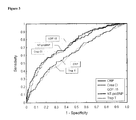
- FIG. 3 Receiver operating characteristic (ROC) curve analyses relating biomarker levels to 1-year mortality in 2081 patients with NSTE-ACS enrolled in the GUSTO-IV trial. The calculated areas under the curves were 0.757 for GDF-15, 0.735 for NT-proBNP, 0.728 for creatinine clearance, 0.629 for CRP, and 0.620 for troponin T.
- ROC Receiver operating characteristic
- FIGS. 4A-B illustrate mortality at 1-year follow-up among strata of patients with NSTE-ACS enrolled in the GUSTO-IV trial (A) without a history of previous myocardial infarction with the number of deaths per number of patients shown for each column, and (B) with a history of a previous myocardial infarction, according to tertiles of GDF-15 and NT-proBNP levels on admission, with the number of deaths per number of patients shown for each column.
- FIGS. 5 A-B illustrate cumulative survival in patients with chronic heart failure from (A) the derivation cohort according to quartiles of GDF-15 (P, 0.001 by log-rank test), and (B) from the validation cohort; patients were stratified according to the cut-off levels defined in the derivation cohort (P, 0.001 by log-rank test). The number of patients at risk is shown at the bottom.
- FIGS. 6A-B illustrate univariate predictors of mortality during follow-up in patients with chronic heart failure (A) from the derivation cohort, and (B) from the validation cohort.
- Hazard ratios with 95% confidence intervals, Chi 2 and P values are shown. Creatinine, uric acid, NT-proBNP, and GDF-15 were not normally distributed and therefore transformed to their natural logarithms before analysis; hazard ratios refer to an increase of one unit in the natural logarithms scale in these variables.
- FIGS. 7A-B illustrate survival rate without adverse events of patients within a time window of (A) 30 days. and (B) 180 days. Patients have been classified according to their GDF-15 levels (above or below 4,600 ng/L).
- identifying means assessing whether a subject will be susceptible for a cardiac intervention or not. As will be understood by those skilled in the art, such an assessment is usually not intended to be correct for all (i.e., 100%) of the subjects to be identified. The term, however, requires that a statistically significant portion of subjects can be identified (e.g., a cohort in a cohort study). Whether a portion is statistically significant can be determined without further ado by the person skilled in the art using various well known statistic evaluation tools, e.g., determination of confidence intervals, p-value determination, Student's t-test, Mann-Whitney test etc. Details are found in Dowdy and Wearden, Statistics for Research, John Wiley & Sons, New York 1983.
- Preferred confidence intervals are at least 90%, at least 95%, at least 97%, at least 98% of at least 99%.
- the p-values are, preferably, 0.1, 0.05, 0.01, 0.005, or 0.0001. More preferably, at least 60%, at least 70%, at least 80% or at least 90% of the subjects of a population can be properly identified by the method of the present invention.
- subject as used herein relates to animals, preferably mammals, and, more preferably, humans.
- the subject shall be “in need of a cardiac intervention”, i.e., exhibit symptoms and/or physical signs known to be associated with an acute cardiovascular event, e.g., chest discomfort, dyspnea, ECG changes and others as described above.
- the subject shall exhibit one or more episodes of angina lasting at least 5 min within the preceding 24 h, and have either a positive cardiac troponin T or I test or at least 0-5 mm of transient or persistent ST-segment depression not known to be preexisting and not attributable to coexisting disorders.
- the subject shall exhibit symptoms of ischemia that were increasing or occurring at rest, or that warranted the suspicion of acute myocardial infarction, with the last episode within the preceding 48 h.
- Acute cardiovascular events are, preferably, acute coronary syndromes (ACS).
- ACS patients can show unstable angina pectoris (UAP) or myocardial infarction (MI).
- MI can be an ST-elevation MI (STEMI) or a non-ST-elevated MI (NSTEMI).
- ST-elevation MI ST-elevation MI
- NSTEMI non-ST-elevated MI
- the occurring of an ACS can be followed by a left ventricular dysfunction (LVD) and symptoms of heart failure.
- LDD left ventricular dysfunction
- cardiac intervention encompasses those treatment regimens which comprise an intervention by surgery, microsurgery or other invasive therapies affecting the cardiovascular system and, preferably, the heart.
- cardiac interventions as used herein are treatment regimens which aim to restore the proper oxygen supply of the heart. This is, preferably, achieved by restoring the blood flow throughout the blood vessels supporting the heart, i.e., the coronary blood vessels. Those blood vessels may be impaired due to, e.g., thrombotic or atherosclerotic plaques.
- cardiac interventions shall, preferably, comprise a destruction and/or removal of such plaques and a restoration of the vessel, if necessary.
- sample refers to a sample of a body fluid, to a sample of separated cells or to a sample from a tissue or an organ.
- Samples of body fluids can be obtained by well known techniques and include, preferably, samples of blood, plasma, serum, or urine, more preferably, samples of blood, plasma or serum.
- Tissue or organ samples may be obtained from any tissue or organ by, e.g., biopsy.
- Separated cells may be obtained from the body fluids or the tissues or organs by separating techniques such as centrifugation or cell sorting.
- cell-, tissue- or organ samples are obtained from those cells, tissues or organs which express or produce the peptides referred to herein.
- growth differentiation factor-15 relates to polypeptide being a member of the transforming growth factor (TGF)- ⁇ cytokine superfamily.
- TGF transforming growth factor
- peptide a member of the transforming growth factor (TGF)- ⁇ cytokine superfamily.
- TGF transforming growth factor
- peptide a member of the transforming growth factor (TGF)- ⁇ cytokine superfamily.
- TGF transforming growth factor
- cytokine cytokine
- protein protein are used interchangeably throughout this specification.
- GDF-15 was originally cloned as macrophage-inhibitory cytokine-1 and later also identified as placental transforming growth factor- ⁇ , placental bone morphogenetic protein, non-steroidal anti-inflammatory drug-activated gene-1, and prostate-derived factor (Bootcov loc cit; Hromas, 1997 Biochim Biophys Acta 1354:40-44; Lawton 1997, Gene 203:17-26; Yokoyama-Kobayashi 1997
- GDF-15 is synthesized as an inactive precursor protein, which undergoes disulfide-linked homodimerization. Upon proteolytic cleavage of the N-terminal pro-peptide, GDF-15 is secreted as a ⁇ 28 kDa; dimeric protein (Bauskin 2000, Embo J 19:2212-2220). Amino acid sequences for GDF-15 are disclosed in WO99/06445, WO00/70051, WO2005/113585, Bottner 1999, Gene 237: 105-111, Bootcov loc. cit, Tan loc.
- GDF-15 as used herein encompasses, also variants of the aforementioned specific GDF-15 polypeptides. Such variants have at least the same essential biological and immunological properties as the specific GDF-15 polypeptides. In particular, they share the same essential biological and immunological properties if they are detectable by the same specific assays referred to in this specification, e.g., by ELISA assays using polyclonal or monoclonal antibodies specifically recognizing the said GDF-15 polypeptides.
- a variant as referred to in accordance with the present invention shall have an amino acid sequence which differs due to at least the one amino acid substitution, deletion and/or addition wherein the amino acid sequence of the variant is still, preferably, at least 50%, 60%, 70%, 80%, 85%, 90%, 92%, 95%, 97%, 98%, or 99% identical with the amino sequence of the specific GDF-15 polypeptides.
- the degree of identity between two amino acid sequences can be determined by algorithms well known in the art.
- the degree of identity is to be determined by comparing two optimally aligned sequences over a comparison window, where the fragment of amino acid sequence in the comparison window may comprise additions or deletions (e.g., gaps or overhangs) as compared to the reference sequence (which does not comprise additions or deletions) for optimal alignment.
- the percentage is calculated by determining the number of positions at which the identical amino acid residue occurs in both sequences to yield the number of matched positions, dividing the number of matched positions by the total number of positions in the window of comparison and multiplying the result by 100 to yield the percentage of sequence identity.
- Optimal alignment of sequences for comparison may be conducted by the local homology algorithm of Smith and Waterman Add. APL. Math.
- GAP Garnier et al. (1981), by the homology alignment algorithm of Needleman and Wunsch J. Mol. Biol. 48:443 (1970), by the search for similarity method of Pearson and Lipman Proc. Natl. Acad Sci. (USA) 85: 2444 (1988), by computerized implementations of these algorithms (GAP, BESTFIT, BLAST, PASTA, and TFASTA in the Wisconsin Genetics Software Package, Genetics Computer Group (GCG), 575 Science Dr., Madison, Wis.), or by visual inspection. Given that two sequences have been identified for comparison, GAP and BESTFIT are preferably employed to determine their optimal alignment and, thus, the degree of identify. Preferably, the default values of 5.00 for gap weight and 0.30 for gap weight length are used.
- variants referred to above may be allelic variants or any other species specific homologs, paralogs, or orthologs.
- variants referred to herein include fragments of the specific GDF-15 polypeptides or the aforementioned types of variants as long as these fragments have the essential immunological and biological properties as referred to above. Such fragments may be, e.g., degradation products of the GDF-15 polypeptides. Further included are variants which differ due to posttranslational modifications such as phosphorylation or myristylation.
- Determining the amount of GDF-15 or any other peptide or polypeptide referred to in this specification relates to measuring the amount or concentration, preferably semi-quantitatively or quantitatively. Measuring can be done directly or indirectly. Direct measuring relates to measuring the amount or concentration of the peptide or polypeptide based on a signal which is obtained from the peptide or polypeptide itself and the intensity of which directly correlates with the number of molecules of the peptide present in the sample. Such a signal—sometimes referred to herein as intensity signal—may be obtained, e.g., by measuring an intensity value of a specific physical or chemical property of the peptide or polypeptide.
- Indirect measuring includes measuring of a signal obtained from a secondary component (i.e., a component not being the peptide or polypeptide itself) or a biological read out system, e.g., measurable cellular responses, ligands, labels, or enzymatic reaction products.
- a secondary component i.e., a component not being the peptide or polypeptide itself
- a biological read out system e.g., measurable cellular responses, ligands, labels, or enzymatic reaction products.
- determining the amount of a peptide or polypeptide can be achieved by all known means for determining the amount of a peptide in a sample.
- Said means comprise immunoassay devices and methods which may utilize labeled molecules in various sandwich, competition, or other assay formats.
- Said assays will develop a signal which is indicative for the presence or absence of the peptide or polypeptide.
- the signal strength can, preferably, be correlated directly or indirectly (e.g., reverse-proportional) to the amount of polypeptide present in a sample.
- Further suitable methods comprise measuring a physical or chemical property specific for the peptide or polypeptide such as its precise molecular mass or NMR spectrum.
- Said methods comprise, preferably, biosensors, optical devices coupled to immunoassays, biochips, analytical devices such as mass-spectrometers, NMR-analyzers, or chromatography devices.
- methods include micro-plate ELISA-based methods, fully-automated or robotic immunoassays (available for example on ELECSYS analyzers, Roche Diagnostics GmbH), CBA (an enzymatic cobalt binding assay, available, for example, on Roche-Hitachi analyzers, Roche Diagnostics GmbH), and latex agglutination assays (available, for example, on Roche-Hitachi analyzers).
- determining the amount of a peptide or polypeptide comprises the steps of (a) contacting a cell capable of eliciting a cellular response the intensity of which is indicative of the amount of the peptide or polypeptide with the said peptide or polypeptide for an adequate period of time, (b) measuring the cellular response.
- the sample or processed sample is, preferably, added to a cell culture and an internal or external cellular response is measured.
- the cellular response may include the measurable expression of a reporter gene or the secretion of a substance, e.g., a peptide, polypeptide, or a small molecule.
- the expression or substance shall generate an intensity signal which correlates to the amount of the peptide or polypeptide.
- determining the amount of a peptide or polypeptide comprises the step of measuring a specific intensity signal obtainable from the peptide or polypeptide in the sample.
- a specific intensity signal may be the signal intensity observed at an m/z variable specific for the peptide or polypeptide observed in mass spectra or a NMR spectrum specific for the peptide or polypeptide.
- Determining the amount of a peptide or polypeptide may, preferably, comprises the steps of (a) contacting the peptide with a specific ligand, (b) (optionally) removing non-bound ligand, (c) measuring the amount of bound ligand.
- the bound ligand will generate an intensity signal.
- Binding according to the present invention includes both covalent and non-covalent binding.
- a ligand according to the present invention can be any compound, e.g., a peptide, polypeptide, nucleic acid, or small molecule, binding to the peptide or polypeptide described herein.
- Preferred ligands include antibodies, nucleic acids, peptides or polypeptides such as receptors or binding partners for the peptide or polypeptide and fragments thereof comprising the binding domains for the peptides, and aptamers, e.g., nucleic acid or peptide aptamers.
- Methods to prepare such ligands are well-known in the art. For example, identification and production of suitable antibodies of aptamers is also offered by commercial suppliers. The person skilled in the art is familiar with methods to develop derivatives of such ligands with higher affinity or specificity. For example, random mutations can be introduced into the nucleic acids, peptides or polypeptides.
- Antibodies as referred to herein include both polyclonal and monoclonal antibodies, as well as fragments thereof, such as Fv, Fab and F(ab)2 fragments that are capable of binding antigen or hapten.
- the present invention also includes single chain antibodies and humanized hybrid antibodies wherein amino acid sequences of a non-human donor antibody exhibiting a desired antigen-specificity are combined with sequences of a human acceptor antibody.
- the donor sequences will usually include at least the antigen-binding amino acid residues of the donor but may comprise other structurally and/or functionally relevant amino acid residues of the donor antibody as well.
- the ligand or agent binds specifically to the peptide or polypeptide.
- Specific binding according to the present invention means that the ligand or agent should not bind substantially to (“cross-react” with) another peptide, polypeptide or substance present in the sample to be analyzed.
- the specifically bound peptide of polypeptide should be bound with at least 3 times higher, more preferably at least 10 times higher and even more preferably at least 50 times higher affinity than any other relevant peptide of polypeptide.
- Non-specific binding may be tolerable, if it can still be distinguished and measured unequivocally, e.g., according to its size on a Western Blot, or by its relatively higher abundance in the sample.
- Binding of the ligand can be measured by any method known in the art. Preferably, said method is semi-quantitative or quantitative. Suitable methods are described in the following.
- binding of a ligand may be measured directly, e.g., by NMR or surface plasmon resonance.
- an enzymatic reaction product may be measured (e.g., the amount of a protease can be measured by measuring the amount of cleaved substrate, e.g., on a Western Blot).
- the ligand may exhibit enzymatic properties itself and the “ligand/peptide or polypeptide” complex or the ligand which was bound by the peptide or polypeptide, respectively, may be contacted with a suitable substrate allowing detection by the generation of an intensity signal.
- the amount of substrate is saturating.
- the substrate may also be labeled with a detectable lable prior to the reaction.
- the sample is contacted with the substrate for an adequate period of time.
- An adequate period of time refers to the time necessary for an detectable, preferably measurable, amount of product to be produced. Instead of measuring the amount of product, the time necessary for appearance of a given (e.g., detectable) amount of product can be measured.
- the ligand may be coupled covalently or non-covalently to a label allowing detection and measurement of the ligand.
- Labeling may be done by direct or indirect methods. Direct labeling involves coupling of the label directly (covalently or non-covalently) to the ligand. Indirect labeling involves binding (covalently or non-covalently) of a secondary ligand to the first ligand. The secondary ligand should specifically bind to the first ligand. Said secondary ligand may be coupled with a suitable label and/or be the target (receptor) of tertiary ligand binding to the secondary ligand. The use of secondary, tertiary or even higher order ligands is often used to increase the signal.
- Suitable secondary and higher order ligands may include antibodies, secondary antibodies, and the well-known streptavidin-biotin system (Vector Laboratories, Inc.).
- the ligand or substrate may also be “tagged” with one or more tags as known in the art. Such tags may then be targets for higher order ligands.
- Suitable tags include biotin, digoxygenin, His-tag, glutathione-S-transferase, FLAG, GFP, myc-tag, influenza A virus haemagglutinin (HA), maltose binding protein, and the like.
- the tag is preferably at the N-terminus and/or C-terminus.
- Suitable labels are any labels detectable by an appropriate detection method.
- Typical labels include gold particles, latex beads, acridan ester, luminol, ruthenium, enzymatically active labels, radioactive labels, magnetic labels (e.g., “magnetic beads”, including paramagnetic and superparamagnetic labels), and fluorescent labels.
- Enzymatically active labels include, e.g., horseradish peroxidase, alkaline phosphatase; beta-galactosidase, luciferase, and derivatives thereof.
- Suitable substrates for detection include diamino-benzidine (DAB), 3,3′-5,5′-tetramethylbenzidine, NBT-BCIP (4-nitro blue tetrazolium chloride and 5-bromo-4-chloro-3-indolyl-phosphate, available as ready-made stock solution from Roche Diagnostics), CDP-Star (Amersham Biosciences), ECF (Amersham Biosciences).
- a suitable enzyme-substrate combination may result in a colored reaction product, fluorescence or chemiluminescence, which can be measured according to methods known in the art (e.g., using a light-sensitive film of a suitable camera system). As for measuring the enzymatic reaction, the criteria given above apply analogously.
- Typical fluorescent labels include fluorescent proteins (such as GFP and its derivatives); Cy3, Cy5, Texas Red, Fluorescein, and the Alexa dyes (e.g., Alexa 568). Further fluorescent labels are available, e.g., from Molecular Probes (Oregon). Also the use of quantum dots as fluorescent labels is contemplated.
- Typical radioactive labels include 35S, 125I, 32P, 33P and the like. A radioactive label can be detected by any method known and appropriate, e.g., a light-sensitive film or a phosphor imager.
- Suitable measurement methods according the present invention also include precipitation (particularly immunoprecipitation), electrochemiluminescence (electro-generated chemiluminescence), RIA (radioimmunoassay), ELISA (enzyme-linked immunosorbent assay), sandwich enzyme immune tests, electrochemiluminescence sandwich immunoassays (ECLIA), dissociation-enhanced lanthanide fluoroimmunoassay (DELFIA), scintillation proximity assay (SPA), turbidimetry, nephelometry, latex-enhanced turbidimetry or nephelometry, or solid phase immune tests.
- precipitation particularly immunoprecipitation
- electrochemiluminescence electrochemiluminescence (electro-generated chemiluminescence)
- RIA radioimmunoassay
- ELISA enzyme-linked immunosorbent assay
- sandwich enzyme immune tests sandwich enzyme immune tests
- the amount of a peptide or polypeptide may be, also preferably, determined as follows: (a) contacting a solid support comprising a ligand for the peptide or polypeptide as specified above with a sample comprising the peptide or polypeptide and (b) measuring the amount peptide or polypeptide which is bound to the support.
- the ligand preferably chosen from the group consisting of nucleic acids, peptides, polypeptides, antibodies and aptamers, is preferably present on a solid support in immobilized form.
- Materials for manufacturing solid supports include, inter alia, commercially available column materials, polystyrene beads, latex beads, magnetic beads, colloid metal particles, glass and/or silicon chips and surfaces, nitrocellulose strips, membranes, sheets, duracytes, wells and walls of reaction trays, plastic tubes etc.
- the ligand or agent may be bound to many different carriers. Examples of well-known carriers include glass, polystyrene, polyvinylchloride, polypropylene, polyethylene, polycarbonate, dextran, nylon, amyloses, natural and modified celluloses, polyacrylamides, agaroses, and magnetite.
- the nature of the carrier can be either soluble or insoluble for the purposes of the invention.
- Suitable methods for fixing/immobilizing said ligand are well known and include, but are not limited to ionic, hydrophobic, covalent interactions, and the like. It is also contemplated to use “suspension arrays” as arrays according to the present invention (Nolan 2002, Trends Biotechnol. 20(1):9-12).
- the carrier e.g., a microbead or microsphere
- the array consists of different microbeads or microspheres, possibly labeled, carrying different ligands.
- Methods of producing such arrays for example based on solid-phase chemistry and photo-labile protective groups, are generally known (U.S. Pat. No. 5,744,305).
- amount encompasses the absolute amount of a polypeptide or peptide, the relative amount or concentration of the said polypeptide or peptide as well as any value or parameter which correlates thereto or can be derived therefrom.
- values or parameters comprise intensity signal values from all specific physical or chemical properties obtained from the said peptides by direct measurements, e.g., intensity values in mass spectra or NMR spectra.
- values or parameters which are obtained by indirect measurements specified elsewhere in this description e.g., response levels determined from biological read out systems in response to the peptides or intensity signals obtained from specifically bound ligands. It is to be understood that values correlating to the aforementioned amounts or parameters can also be obtained by all standard mathematical operations.
- comparing encompasses comparing the amount of the peptide or polypeptide comprised by the sample to be analyzed with an amount of a suitable reference source specified elsewhere in this description. It is to be understood that comparing as used herein refers to a comparison of corresponding parameters or values, e.g., an absolute amount is compared to an absolute reference amount while a concentration is compared to a reference concentration or an intensity signal obtained from a test sample is compared to the same type of intensity signal of a reference sample.
- the comparison referred to in step (b) of the method of the present invention may be carried out manually or computer assisted. For a computer assisted comparison, the value of the determined amount may be compared to values corresponding to suitable references which are stored in a database by a computer program.
- the computer program may further evaluate the result of the comparison, i.e., automatically provide the desired assessment in a suitable output format. Based on the comparison of the amount determined in step a) and the reference amount, it is possible to assess whether a subject is susceptible for a cardiac intervention, i.e., belonging to the group of subjects which can be successfully treated by the cardiac intervention. Therefore, the reference amount is to be chosen so that either a difference or a similarity in the compared amounts allows identifying those the test subject which belong into the group of subjects susceptible for cardiac intervention or identifying those test subjects which are not susceptible for a cardiac intervention.
- the term “reference amount” as used herein refers to an amount which allows assessing whether a subject in need thereof will be susceptible for a cardiac intervention as referred to above. Accordingly, the reference may either be derived from (i) a subject known to have been successfully treated, i.e., without the occurrence of adverse effects such as re-infarction or mortality or side effects caused by the treatment regimen, or (ii) a subject known to have been not successfully treated, i.e., a subject which developed re-infarction or which died due to cardiovascular complications after a cardiac intervention or did not derive benefit from the treatment regimen.
- the reference amount may define a threshold amount, whereby an amount larger than the threshold shall be indicative for a subject being susceptible for a cardiac intervention while an amount lower than the threshold amount shall be an indicator for a subject which can not be treated successfully by the cardiac intervention.
- the reference amount applicable for an individual subject may vary depending on various physiological parameters such as age, gender, or subpopulation, as well as on the means used for the determination of the polypeptide or peptide referred to herein.
- a suitable reference amount may be determined by the method of the present invention from a reference sample to be analyzed together, i.e., simultaneously or subsequently, with the test sample.
- a preferred reference amount serving as a threshold may be derived from the upper limit of normal (ULN), i.e., the upper limit of the physiological amount to be found in a population of apparently healthy subjects.
- the ULN for a given population of subjects can be determined by various well known techniques. A suitable technique may be to determine the median of the population for the peptide or polypeptide, amounts to be determined in the method of the present invention.
- a preferred threshold (i.e., reference amount) for GDF-15 is at least one to two times the ULN.
- the ULN referred to in this context is, preferably, 1200 pg/ml.
- the reference amount defining a threshold amount for GDF-15 as referred to in accordance with the present invention is 1800 pg/ml or 2400 pg/ml and, more preferably, 1200 pg/ml.
- An amount of GDF-15 larger than the reference amount is, more preferably, indicative for a subject being susceptible to a cardiac intervention.
- GDF-15 is a reliable prognostic biomarker for assessing the success of cardiac interventions for subjects in need thereof, i.e., subjects which suffer from cardiovascular complications and, in particular, those which are affected by acute cardiovascular events or heart failure.
- a risk/success stratification can be easily performed before subjecting a patient to a cardiac intervention.
- said dangerous, time and/or cost intensive therapy can be avoided.
- the method of the present invention will be beneficial for the health system in that resources will be saved. It is to be understood that according to the method of the present invention described herein above and below, the amount of GDF-15 or means for the determination thereof can be used for the manufacture of a diagnostic composition for identifying a subject being susceptible for a cardiac intervention.
- the above method of the present invention may be used to identify a subject susceptible to a cardiac therapy, preferably a drug based therapy as specified below or an anti-platelet therapy.
- said method further comprises determining the amount of a cardiac troponin in said sample of the subject and comparing the amount of the cardiac troponin to a reference amount.
- cardio troponin refers to all troponin isoforms expressed in cells of the heart and, preferably, the subendocardial cells. These isoforms are well characterized in the art as described, e.g., in Anderson 1995, Circulation Research, vol. 76, no. 4: 681-686 and Ferrieres 1998, Clinical Chemistry, 44: 487-493.
- cardiac troponin refers to troponin T and/or troponin I, and, most preferably, to troponin T. It is to be understood that isoforms of troponins may be determined in the method of the present invention together, i.e., simultaneously or sequentially, or individually, i.e., without determining the other isoform at all. Amino acid sequences for human troponin T and human troponin I are disclosed in Anderson, loc cit and Ferrieres 1998, Clinical Chemistry, 44: 487-493.
- cardiac troponin encompasses also variants of the aforementioned specific troponins, i.e., preferably, of troponin T or troponin I. Such variants have at least the same essential biological and immunological properties as the specific cardiac troponins. In particular, they share the same essential biological and immunological properties if they are detectable by the same specific assays referred to in this specification, e.g., by ELISA Assays using polyclonal or monoclonal antibodies specifically recognizing the said cardiac troponins.
- a variant as referred to in accordance with the present invention shall have an amino acid sequence which differs due to at least one amino acid substitution, deletion and/or addition wherein the amino acid sequence of the variant is still, preferably, at least 50%, 60%, 70%, 80%, 85%, 90%, 92%, 95%, 97%, 98%, or 99% identical with the amino sequence of the specific troponin.
- Variants may be allelic variants or any other species specific homologs, paralogs, or orthologs.
- the variants referred to herein include fragments of the specific cardiac troponins or the aforementioned types of variants as long as these fragments have the essential immunological and biological properties as referred to above. Such fragments may be, e.g., degradation products of the troponins. Further included are variants which differ due to posttranslational modifications such as phosphorylation or myristylation.
- a preferred reference amount serving as a threshold may be derived from the ULN.
- the ULN for a given population of subjects can be determined as specified elsewhere in this description.
- a preferred threshold (i.e., reference amount) for a cardiac troponin and, in particular for troponin T or I is at least one times, more preferably two to five times the ULN.
- the ULN for troponin T referred to in this context is 0.01 ng/ml and 0.1 ng/ml for troponin I.
- the reference amount defining a threshold for troponin T as referred to in accordance with the present invention is, preferably, 0.01 ng/ml, 0.02 ng/ml of 0.05 ng/ml.
- An amount of a cardiac troponin larger than the reference amount is, more preferably, indicative for a subject being susceptible to a cardiac intervention.
- the method further (i.e., in addition to the determination of GDF-15 and/or a cardiac troponin) comprises determining the amount of a natriuretic peptide in said sample of the subject and comparing the amount of the natriuretic peptide to a reference.
- natriuretic peptide comprises atrial natriuretic peptide (ANP)-type and brain natriuretic peptide (BNP)-type peptides and variants thereof having the same predictive potential.
- Natriuretic peptides according to the present invention comprise ANP-type and BNP-type peptides and variants thereof (see, e.g., Bonow, 1996, Circulation 93: 1946-1950).
- ANP-type peptides comprise pre-proANP, proANP, NT-proANP, and ANP.
- BNP-type peptides comprise pre-proBNP, proBNP, NT-proBNP, and BNP.
- the pre-pro peptide (134 amino acids in the case of pre-proBNP) comprises a short signal peptide, which is enzymatically cleaved off to release the pro peptide (108 amino acids in the case of proBNP).
- the pro peptide is further cleaved into an N-terminal pro peptide (NT-pro peptide, 76 amino acids in case of NT-proBNP) and the active hormone (32 amino acids in the case of BNP, 28 amino acids in the case of ANP).
- Preferred natriuretic peptides according to the present invention are NT-proANP, ANP, NT-proBNP, BNP, and variants thereof.
- ANP and BNP are the active hormones and have a shorter half-life than their respective inactive counterparts, NT-proANP and NT-proBNP.
- BNP is metabolised in the blood, whereas NT-proBNP circulates in the blood as an intact molecule and as such is eliminated renally.
- the in-vivo half-life of NT-proBNP is 120 min longer than that of BNP, which is 20 min (Smith 2000, J Endocrinol. 167: 239-46).
- NT-proBNP The most preferred natriuretic peptides according to the present invention are NT-proBNP or variants thereof.
- the human NT-proBNP as referred to in accordance with the present invention, is a polypeptide comprising, preferably, 76 amino acids in length corresponding to the N-terminal portion of the human NT-proBNP molecule.
- the structure of the human BNP and NT-proBNP has been described already in detail in the prior art, e.g., WO 02/089657, WO 02/083913 or Bonow loc. cit.
- human NT-proBNP as used herein is human NT-proBNP as disclosed in EP 0 648 228 B1.
- NT-proBNP referred to in accordance with the present invention further encompasses allelic and other variants of said specific sequence for human NT-proBNP discussed above.
- variant polypeptides which are on the amino acid level at least 60% identical, more preferably at least 70%, at least 80%, at least 90%, at least 95%, at least 98% or at least 99% identical, to human NT-proBNP.
- proteolytic degradation products which are still recognized by the diagnostic means or by ligands directed against the respective full-length peptide.
- variant polypeptides having amino acid deletions, substitutions, and/or additions compared to the amino acid sequence of human NT-proBNP as long as the said polypeptides have NT-proBNP properties.
- NT-proBNP properties as referred to herein are immunological and/or biological properties.
- the NT-proBNP variants have immunological properties (i.e., epitope composition) comparable, to those of NT-proBNP.
- the variants shall be recognizable by the aforementioned means or ligands used for determination of the amount of the natriuretic peptides.
- Biological and/or immunological NT-proBNP properties can be detected by the assay described in Karl et al.
- variants in accordance with the present invention are also a peptide or polypeptide which has been modified after collection of the sample, for example by covalent or non-covalent attachment of a label, particularly a radioactive or fluorescent label, to the peptide.
- a preferred reference amount serving as a threshold may be derived from the ULN.
- the ULN for a given population of subjects can be determined as specified elsewhere in this description.
- a preferred threshold (i.e., reference amount) for a natriuretic peptide and, in particular for NT-proBNP is at least one times, more preferably two to four times the ULN.
- the ULN for NT-proBNP referred to in this context is 300 pg/ml.
- ULNs for the other natriuretic peptides are known in the art and are, preferably, 40 pg/ml for ANP, 100 pg/ml for BNP and 500 pmol/l for NT-proANP.
- the reference amount defining a threshold for NT-proBNP as referred to in accordance with the present invention is, preferably, 600 pg/ml or 1200 pg/ml and, more preferably, 1000 pg/ml.
- An amount of a natriuretic peptide larger than the reference amount is, more preferably, indicative for a subject being susceptible to a cardiac intervention.
- the present invention further relates to a method of identifying a subject being susceptible to a therapy of heart failure comprising
- heart failure refers to an impaired systolic and/or diastolic function of the heart.
- the term relates to congestive heart failure which may be caused by various underlying diseases or disorders.
- heart failure referred to herein as also chronic heart failure.
- Heart failure can be classified into a functional classification, system according to the New York Heart Association (NYHA).
- NYHA New York Heart Association
- Patients of NYHA class I have no obvious symptoms of cardiovascular disease but already have objective evidence of functional impairment.
- Physical activity is not limited, and ordinary physical activity does not cause undue fatigue, palpitation, or dyspnea (shortness of breath).
- Patients of NYHA class II have slight limitation of physical activity.
- Patients of NYHA class III show a marked limitation of physical activity. They are comfortable at rest, but less than of ordinary activity causes fatigue, palpitation, or dyspnea. Patients of NYHA class IV are unable to carry out any physical activity without discomfort. They show symptoms of cardiac insufficiency at rest.
- the subject to be identified by the aforementioned method preferably, has objective evidence of impaired systolic and/or diastolic function of the heart as shown, for example, by echocardiography, angiography, szintigraphy, or magnetic resonance imaging.
- This functional impairment can be accompanied by symptoms of heart failure as outlined above (NYHA class II-IV), although some patients may present without significant symptoms (NYHA I.
- the said therapy to be selected for a subject by the method of the present invention is a drug-based therapy.
- the said medicament is an ACE inhibitor, preferably captopril, enalapril, fosinopril, lisinopril, perindopril, quinapril, ramipril, or trandolapril, an AT-1 receptor blocking agent, preferably, candesartan, losartan, or valsartan, a ⁇ -receptor blocking agent, preferably, bisoprolol, carvedilol, metoprolol or succinate, or an aldosterone antagonist, preferably, spironolacton or eplerenone.
- an ACE inhibitor preferably captopril, enalapril, fosinopril, lisinopril, perindopril, quinapril, ramipril, or trandolapril
- an AT-1 receptor blocking agent preferably, can
- An interventional therapy as referred to herein is a therapy which is based on physical interventions with the subject, e.g., by surgery, and/or electrophysiological interventions. More preferably, said interventional therapy is cardiac resynchronization therapy (CRT) or based on implantation of a cardioverter defibrillator (ICD).
- CTR cardiac resynchronization therapy
- ICD cardioverter defibrillator
- determining the GDF-15 amount in a sample of a subject suffering from heart failure it can be decided whether a subject will be susceptible for a therapy as referred to above. Specifically, it is envisaged that a subject having an amount of GDF-15 larger than the reference amount will be suitable to be treated by the aforementioned therapy while a subject with less GDF-15 will not benefit from the therapy.
- the present invention furthermore, relates to a method for predicting the risk of mortality or a further acute cardiovascular event for a subject suffering from a cardiovascular complication comprising
- predicting refers to assessing the probability according to which a subject suffering from a cardiovascular complication will die (i.e., mortality caused by the cardiovascular complication) or develop an acute cardiovascular event, such as myocardial (re)-infarction, within a defined time window (predictive window) in the future.
- the predictive window is an interval in which the subject will develop an acute cardiovascular event of will die according to the predicted probability.
- the predictive window may be the entire remaining lifespan of the subject upon analysis by the method of the present invention.
- the predictive window is an interval of one month, six months or one, two, three, four, five or ten years after appearance of the cardiovascular complication (more preferably and precisely, after the sample to be analyzed by the method of the present invention has been obtained).
- an assessment is usually not intended to be correct for 100% of the subjects to be analyzed.
- the term requires that the assessment will be valid for a statistically significant portion of the subjects to be analyzed. Whether a portion is statistically significant can be determined without further ado by the person skilled in the art using various well known statistic evaluation tools, e.g., determination of confidence intervals, p-value determination, Student's t-test, Mann-Whitney test, etc.
- Preferred confidence intervals are at least 90%, at least 95%, at least 97%, at least 98% or at least 99%.
- the p-values are, preferably, 0.1, 0.05, 0.01, 0.005, or 0.0001.
- the probability envisaged by the present invention allows that the prediction will be correct for at least 60%, at least 70%, at least 80%, or at least 90% of the subjects of a given cohort.
- the term “mortality” as used herein relates to mortality which is caused by the said cardiovascular complication, e.g., as a result of myocardial (re-)infarction.
- a chronic disorder of the cardiovascular system as used herein encompasses coronary heart diseases, stable angina pectoris (SAP) or heart failure, preferably chronic heart failure.
- Acute cardiovascular events are, preferably, acute coronary syndromes (ACS).
- ACS patients can show unstable angina pectoris (UAP) or myocardial infarction (MI).
- MI can be an ST-elevation MI (STEMI) or a non-ST-elevation MI (NSTEMI).
- NSTE-ACS as used herein encompasses UAP and NSTEMI. The occurring of an MI can be followed by a left ventricular dysfunction (LVD), of development of heart failure.
- Further preferred cardiovascular complications encompass cardiac brady- or tachyarrhythmias including sudden cardiac death and stroke (cerebrovascular events or accidents).
- the said cardiovascular complication is ACS or heart failure.
- predicting the risk of mortality or a further (i.e., recurrent) acute cardiovascular event means that it the subject to be analyzed by the method of the present invention is allocated cither into the group of subjects of a population having a normal, i.e., non-elevated, risk for developing an acute cardiovascular event or mortality following a cardiovascular complication or into a group of subjects having a significantly elevated risk.
- An elevated risk as referred to in accordance with the present invention means that the risk of developing a further acute cardiovascular event or the risk of mortality within a predetermined predictive window is elevated significantly for a subject with respect to the average risk for an acute cardiovascular event of cardiac mortality in a population of subjects.
- the average risk is within the range of 0.5 and 3.0%, preferably, 1.5%.
- An elevated risk as used herein preferably, relates to a risk of more than 3.0%, preferably, more than 5.0%, and, most preferably within 3.0% and 8.0% with respect to a predictive window of one year.
- the GDF-15 level (i.e., the amount) in apparently healthy elderly subjects varied between 450 pg/ml (rounded 10th percentile) and 1200 pg/ml (rounded 90th percentile, defined as the upper limit of normal) with a median of 762 pg/ml.
- the GDF-15 level i.e., the amount
- the GDF-15 level in apparently healthy elderly subjects varied between 450 pg/ml (rounded 10th percentile) and 1200 pg/ml (rounded 90th percentile, defined as the upper limit of normal) with a median of 762 pg/ml.
- 1-year mortality was low at 1.5%.
- GDF-15 levels in NSTE-ACS patients were strongly and independently related to age, current smoking, diabetes, history of heart failure, cardiac dysfunction (NT-proBNP), inflammatory activity (CRP), and renal dysfunction (creatinine clearance), indicating that elevated levels of GDF-15 integrate several important clinical and biochemical indicators of more severe cardiovascular disease and poor prognosis in patients with NSTE-ACS. Out of all these interrelated variables, GDF-15 emerged as the strongest predictor of raised 1-year mortality. Beyond GDF-15, only age, previous myocardial infarction, and the levels of NT-proBNP added independent prognostic information about mortality. Similarly, it has been found that the GDF-15 levels provide reliable prognostic information on recurrent MI; see FIG. 1 and Table 1, below.
- the amount of GDF-15 and either a natriuretic peptide, a cardiac troponin or a combination thereof or means for the determination thereof can be used for the manufacture of a diagnostic composition for predicting the risk of mortality or a further acute cardiovascular event for a subject suffering from a cardiovascular complication.
- the method of the present invention comprising the determination of GDF-15 and a natriuretic peptide can be, preferably, used for the determination of the risk for mortality while a combination of GDF-15 and a cardiac troponin can be, preferably, used for predicting the risk for a further acute cardiovascular event.
- the present invention also encompasses to a method for predicting the risk of mortality for a subject suffering from a cardiovascular complication comprising determining the amounts of GDF-15 and a natriuretic peptide in a sample of a subject; and comparing the amounts of GDF-15 and the natriuretic peptide determined in the previous step to reference amounts.
- the present invention relates to a method for predicting the risk for a further acute cardiovascular event for a subject suffering from a cardiovascular complication comprising determining the amounts of GDF-15 and a cardiac troponin in a sample of a subject; and comparing the amounts of GDF-15 and the cardiac troponin determined in the previous step to reference amounts.
- the said reference amount (i.e., the threshold amount) for GDF-15 is 1200 pg/ml. More preferably, an amount of GDF-15 larger than the reference is indicative for an elevated risk of mortality or a further acute cardiovascular event.
- the said reference amount (i.e., the threshold amount) for troponin T is 0.01 ng/ml.
- an amount of the cardiac troponin larger than the reference amount is indicative for an elevated risk of mortality or a further acute cardiovascular event.
- the said reference amount (i.e., the threshold amount) for NT-proBNP is 1000 pg/ml.
- an amount for the natriuretic peptide larger than the reference amount is indicative for an elevated risk of mortality or a further acute cardiovascular event.
- the present invention furthermore, encompasses a method for predicting the risk of an adverse cardiovascular complication for a subject suffering from heart failure comprising (a) determining the amounts of GDF-15 in a sample of a subject and (b) comparing the amounts of GDF-determined in step a) to a reference amount.
- a subject exhibiting the symptoms of heart failure and, preferably, suffering from chronic heart failure has an increased risk for adverse cardiovascular complication, preferably, a future acute cardiovascular event or, more preferably, mortality.
- adverse cardiovascular complication preferably, a future acute cardiovascular event or, more preferably, mortality.
- GDF-15 turned out to be an independent predictor for an increased risk of adverse cardiovascular complications and, in particular, mortality as specified above.
- the present invention furthermore, relates to a method for predicting the risk of mortality or a subsequent pulmonary embolism-related complication for a subject suffering from pulmonary embolism comprising
- pulmonary embolism refers to a disorder caused by occlusion or stenosis of blood vessels of the lung. As a result of the said occlusion or stenosis, gas exchange and blood supply of the pulmonary tissue will become impaired. Thus, the physiological function of the lung becomes impaired.
- Pulmonary embolism as used herein may be chronic or acute pulmonary embolism. Preferably, the term, however, refers to acute pulmonary embolism. Pulmonary embolism can be diagnosed by well known diagnostic techniques and is accompanied by symptoms as described in standard medical text books.
- a “subsequent pulmonary embolism-related complication” as referred to in accordance with the present invention is an adverse event and, preferably a cardio-pulmonary event, including a further pulmonary embolism or any other impairment of the physiological function of the lung or the cardiovascular system which requires intervention such as incubational measures, catecholamine administration or cardiopulmonary reanimation.
- the subsequent pulmonary embolism-related complication shall occur within the predictive time window after the primary pulmonary embolism the subject is suffering from.
- predicting the risk of mortality means that it the subject to be analyzed by the method of the present invention is allocated either into the group of subjects of a population having a normal, i.e., non-elevated, risk for mortality following pulmonary embolism or into a group of subjects having a significantly elevated risk.
- An elevated risk as referred to in accordance with the present invention means that the risk of mortality within a predetermined predictive window is elevated significantly for a subject with respect to the average risk for mortality in a population of subjects.
- the average risk is about 5.0%.
- An elevated risk as used herein preferably, relates to a at least 5-times increased risk or, preferably, an at least 10-times increased risk, i.e., a risk of more than 50.0%. Moreover, the term also relates to a significant increased risk within a predictive window of six month. The normal risk of mortality within said predictive window is, preferably, at least 5-times, more preferably, 7-times increased in a subject being at risk of mortality as meant herein.
- the reference amount defining a threshold in the context of predicting whether a subject is at risk of mortality or a subsequent pulmonary embolism-related complication is, preferably, 4,600 pg/ml.
- a sample having an amount of more than 4,600 pg/ml shall indicate that a subject of which the sample has been derived is at risk of mortality or a subsequent pulmonary embolism-related complication as referred to above, while an amount of less than 4,600 pg/ml indicates that a subject is not at risk.
- GDF-15 or means for determining the amount of GDF-15 can be used for the manufacture of a diagnostic composition for predicting whether a subject suffering from pulmonary embolism is at risk of mortality or a subsequent pulmonary embolism-related complication.
- risk stratification for subjects suffering from pulmonary, embolism can be reliably made based on GDF-15 as a biomarker. Based on said risk stratification, if may be decided which further measures such as specific therapies shall be applied to a subject and which degree of clinical monitoring will be required.
- GDF-15 will be determined together with other markers of embolism, preferably, a cardiac troponin and/or a natriuretic peptide as referred to elsewhere in this specification.
- a device for identifying a subject being susceptible to a cardiac intervention or a therapy for heart failure adapted to carry out the method of the present invention comprising means for determining the amount of GDF-15 in a sample of the subject and means for comparing said amount to a reference amount, whereby a subject being susceptible to a cardiac intervention or a therapy for heart failure is identified.
- the term “device” as used herein relates to a system of means comprising at least the aforementioned means operatively linked to each other as to allow the prediction.
- Preferred means for determining the amount of GDF-15, preferably, in combination with a cardiac troponin and/or a natriuretic peptides, and means for carrying out the comparison are disclosed above in connection with the method of the invention. How to link the means in an operating manner will depend on the type of means included into the device. For example, where means for automatically determining the amount of the peptides are applied, the data obtained by said automatically operating means can be processed by, e.g., a computer program in order to obtain the desired results.
- the means are comprised by a single device in such a case.
- Said device may accordingly include an analyzing unit for the measurement of the amount of the peptides or polypeptides in an applied sample and a computer unit for processing the resulting data for the evaluation.
- the means for comparison may comprise control strips or tables allocating the determined amount to a reference amount.
- the test strips are, preferably, coupled to a ligand which specifically binds to the peptides or polypeptides referred to herein.
- the strip or device preferably, comprises means for detection of the binding of said peptides or polypeptides to the said ligand. Preferred means for detection are disclosed in connection with embodiments relating to the method of the invention above.
- the means are operatively linked in that the user of the system brings together the result of the determination of the amount and the diagnostic or prognostic value thereof due to the instructions and interpretations given in a manual.
- the means may appear as separate devices in such an embodiment and are, preferably, packaged together as a kit.
- Preferred devices are those which can be applied without the particular knowledge of a specialized clinician, e.g., test strips or electronic devices which merely require loading with a sample.
- the results may be given as output of raw data, which need interpretation by the clinician.
- the output of the device is, however, processed, i.e., evaluated, raw data the interpretation of which does not require a clinician.
- preferred devices comprise the analyzing units/devices (e.g., biosensors, arrays, solid supports coupled to ligands specifically recognizing the natriuretic peptide, Plasmon surface resonance devices, NMR spectrometers, mass-spectrometers etc.) or evaluation units/devices referred to above in accordance with the method of the invention.
- analyzing units/devices e.g., biosensors, arrays, solid supports coupled to ligands specifically recognizing the natriuretic peptide, Plasmon surface resonance devices, NMR spectrometers, mass-spectrometers etc.
- the present invention also relates to a device for predicting the risk of mortality or a further acute cardiovascular event for a subject adapted to carry out the method of the present invention comprising means for determining the amount of GDF-15 and a natriuretic peptide and/or a cardiac troponin in a sample of a subject and means for comparing said amounts to reference amounts, whereby it is predicted whether a subject is at risk of mortality or a further acute cardiovascular event.
- a device for predicting the risk of an adverse cardiovascular complication for a subject suffering from heart failure adapted to carry out the method of the present invention comprising means for determining the amount of GDF-15 in a sample of the said subject and means for comparing said amount to preference amount, whereby it is predicted whether a subject is at risk of an adverse cardiovascular complication.
- the present invention also relates to a device for predicting whether a subject suffering from pulmonary embolism is a risk of mortality or a subsequent pulmonary embolism-related complication adapted to carry out the method of the present invention comprising-means for determining the amount of GDF-15, preferably, in combination with a natriuretic peptide and/or a cardiac troponin in a sample of a subject suffering from pulmonary embolism and means for comparing said amounts to reference amounts, whereby it is predicted whether a subject is at risk of mortality or a subsequent pulmonary embolism-related complication.
- kits for carrying out the method of the present invention for identifying a subject being susceptible to a cardiac intervention or a therapy for heart failure is envisaged by the present invention.
- Said kit comprising means for determining the amount of GDF-15 in a sample of a subject and means for comparing said amounts to reference amounts, whereby a subject being susceptible to a cardiac intervention or a therapy for heart failure is identified.
- kit refers to a collection of the aforementioned means, preferably, provided in separately or within a single container.
- the container also preferably, comprises instructions for carrying out the method of the present invention.
- the present invention pertains to a kit for carrying out the method of the present invention for predicting the risk of mortality or a further acute cardiovascular event comprising means for determining the amount of GDF-15 and a natriuretic peptide and/or a cardiac troponin in a sample of a subject and means for comparing said amounts to reference amounts, whereby it is predicted whether a subject is at risk of mortality or a further acute cardiovascular event.
- the present invention relates to a kit for carrying out the method of the present invention for predicting the risk of an adverse cardiovascular complication comprising means for determining the amount of GDF-15 in a sample of a subject suffering from heart failure and means for comparing said amount to a reference amount, whereby it is predicted whether a subject is at risk of an adverse cardiovascular complication.
- the present invention relates to a kit for predicting whether a subject suffering from pulmonary embolism is a risk of mortality or a subsequent pulmonary embolism-related complication adapted to carry out the method of the present invention comprising means for determining the amount of GDF-15, preferably, in combination with a natriuretic peptide and/or a cardiac troponin in a sample of a subject suffering from pulmonary embolism and means for comparing said amounts to reference amounts, whereby it is predicted whether a subject is at risk of mortality or a subsequent pulmonary embolism-related complication.
- IRMA immunoradiometric assay
- Serum or plasma samples (100 ⁇ l) were diluted 1:1 with assay buffer (30 g/l BSA, 10 g/l bovine IgG, 1% goat serum, 0.1% Na-azide, 1 M NaCl, 40 mM Na phosphate buffer, pH 7.4), added to the tubes, and incubated for 16 hours at 4° C. After two washing steps, 10 ng of [125I]-iodinated anti-GDF-15 IgG (specific activity 0.74 MBq/ ⁇ g) were diluted in 200 ⁇ l assay buffer, added to each tube, and incubated for 4 hours at room temperature. After three final washing steps, bound radioactivity was quantified in a gamma counter (LKB Wallac 1261).
- assay buffer 30 g/l BSA, 10 g/l bovine IgG, 1% goat serum, 0.1% Na-azide, 1 M NaCl, 40 mM Na phosphate buffer, pH 7.4
- Troponin T levels were determined by a third-generation assay on an ELECSYS 2010 analyzer (Roche Diagnostics GmbH) with a detection limit 0.01 ng/ml.
- NT-proBNP levels were determined with an immunoassay on an ELECSYS 2010 with a detection limit of 20 pg/ml.
- Myocardial ischemia had to be verified by electrocardiography (ST depression ⁇ 0 ⁇ 1 mV or T-wave inversion ⁇ 0 ⁇ 1 mV) or by raised biochemical markers (creatine kinase [CK]-MB>6 ⁇ g/L, troponin-T>0.10 ⁇ g/L, qualitative troponin-T test positive, or catalytic activity of CK, CK-B, or CK MB higher than the local diagnostic limit for myocardial infarction).
- Exclusion criteria were raised risk of bleeding episodes, anemia, or indication for or treatment in the past 24 h with thrombolysis, angioplasty in the past 6 months, being oh a waiting list for coronary revascularization, other acute or severe cardiac disease, renal or hepatic insufficiency, known clinically relevant osteoporosis, other severe illness, hypersensitivity to randomized drugs, anticipated difficulties with cooperation or participation in this or another clinical trial.
- the FRISC II, study was a prospective, randomized, multicentre trial with parallel groups. We compared invasive and non-invasive treatments by factorial design.
- the target was to perform all invasive procedures within 7 days of starting open-label dalteparin.
- the direct invasive treatments were coronary angiography within a few days of enrolment, aiming for revascularization within 7 days of the start of open-label treatment.
- Revascularization was recommended in all patients with an obstruction of at least 70% of the diameter of any artery supplying a substantial proportion of the myocardium.
- Percutaneous coronary intervention was recommended if there were one or two target lesions, and coronary-artery bypass surgery was preferred in patients with three-vessel or left main-artery disease.
- Non-invasive treatment included coronary angiography in patients with refractory or recurrent symptoms, despite maximum medical treatment, or severe ischemia on a symptom-limited exercise test before discharge.
- the exercise-test criteria for performing angiography and revascularization were: ST depression ⁇ 0 ⁇ 3 mV; limiting chest pain associated with a low maximum work load ( ⁇ 90 W in men or ⁇ 70 W in women) or a decrease in blood pressure; or ST elevation without preceding concomitant Q waves, or T-wave inversion on exercise testing.
- invasive procedures were considered, irrespective of randomized strategy, for all patients with incapacitating symptoms, recurrence of instability, or myocardial infarction.
- the compliance was monitored by asking patients to record all injections in diaries and by counting returned or unused syringes at outpatient visits.
- Aspirin was administered to all patients on admission at an initial dose of 300-600 mg, followed by a maintenance dose of 75-320 mg once daily. ⁇ -blockade was given unless contraindicated.
- Organic nitrates and calcium antagonists could be added as required.
- Lowering of cholesterol with statins, angiotensin converting-enzyme inhibitors for left-ventricular dysfunction, and aggressive antidiabetic treatment were recommended according to modern treatment guidelines.
- the use of abciximab was encouraged during percutaneous coronary interventions. Ticlopidine was recommended for 3-4 weeks after stent placement.
- blood samples were locally analyzed for hemoglobin concentrations, white-cell count, platelet count, prothrombin time, creatinine, glucose, hemoglobin A10 if necessary, triglycerides, cholesterol, HDL cholesterol, and LDL cholesterol.
- Biochemical markers of myocardial damage were analyzed at entry, after new episodes of severe chest pain, and before and 4-24 h after revascularization. The most frequently used marker of myocardial damage was CK-MB mass, but some centers used catalytic activity of total-CK, CK-B, or both. Quantitative determination of troponin-T was available in most hospitals.
- the primary objective was to compare the effects of invasive and non-invasive strategy on the composite endpoint of death and myocardial infarction after 6 months.
- Other predefined endpoints were total death, myocardial infarction, symptoms of angina, need for late coronary angiography and revascularization, bleeding episodes, and stroke.
- Myocardial infarction was defined by the occurrence of two of the three conventional criteria—typical chest pain, diagnostic electrocardiography recording (mainly new Q-wave), or a raised biochemical marker of myocardial damage according to the following definitions.
- concentration of CK-MB mass higher than the local hospital's diagnostic limit for myocardial infarction at one measurement
- catalytic activity of CK, CK-B, or CK-MB higher than the double local limit at one measurement For myocardial infarction in relation to percutaneous coronary interventions: CK-MB mass 1.5 times the local hospital's diagnostic limit for myocardial infarction at one measurement; catalytic activity of CK, CK-B, or CK-MB at one measurement three times higher than the limit; or at two measurements 1.5 times the local limit.
- Serum or plasma GDF-15 concentrations were determined on admission using the same Immunoradiometric Assay (IRMA) described in the GUSTO IV study (see Example 1, above).
- IRMA Immunoradiometric Assay
- the differences in proportions in outcome events (myocardial infarction at 2 years, death at 2 years, myocardial infarction and death at 2 years) in tertiles of GDF-15 levels ( ⁇ 1200 pg/mL; 1200-1800 pg/mL; >1800 pg/mL) were recorded in the group assigned to the invasive treatment strategy and in the group assigned to the non-invasive treatment strategy.
- the Kaplan-Meier method was used to illustrate the timing of events during follow-up in relation to tertiles of GDF-15 in both groups ( FIG. 1 ).
- Table 1 shows the risks for mortality (death) and/or a further acute myocardial infarction (AMI).
- Eligible patients were at least 21 years, with one or more episodes of angina lasting at least 5 minutes, within 24 hours of admission, and either a positive cardiac troponin tester at least 0.5 mm of ST-segment depression. Patients were randomly assigned to abciximab or placebo infusion for 24 hours or 48 hours in addition to standard medical treatment. During 30 days of follow-up, all-cause mortality and the rate of adjudicated myocardial infarctions were recorded.
- Baseline characteristics are presented as numbers and proportions. Continuous data are given as median and interquartile ranges. Comparisons of continuous variables between cases and controls were evaluated by non-parametric Mann-Whitney U-tests. To evaluate the relations between the levels of GDF-15 and baseline characteristics, and the levels bf troponin T, NT-proBNP, CRP, and creatinine clearance, within tertiles of GDF-15, both Spearman's rank-correlation coefficients between GDF-15 level and these factors and the Cochran-Armitage trend test for relations between proportions in several groups were used. Spearman's correlation coefficients and the Wilcoxon signed rank test were used to compare the changes of GDF-15 within the patient group over time.
- the controls consisted of 288 men (67.1%) and 141 women (32.9%) with a median age of 65 years (interquartile range, 59 to 71 years) out of whom 14.5% were current smokers.
- the median GDF-15 level in this population was 762 pg/ml, with 460 762 pg/ml and 1191 pg/ml as the 10th and 90th percentiles, respectively.
- the upper limit of normal (ULN) was therefore rounded to 1200 pg/ml.
- the median (interquartile range) levels of NT-proBNP, CRP, and creatinine clearance were 74 (46 to 113) pg/ml, 1.40 (0.79 to 2.40) ⁇ g/ml, and 73 (62 to 86) ml/min, respectively.
- the time from symptom onset to admission, the prevalence of cardiovascular risk factors, previous manifestations of and treatments for cardiovascular disease, and ECG signs of ongoing ischemia, and the baseline levels of troponin T, NT-proBNP, CRP, and creatinine clearance in this patient population are presented in Table 2.
- the NSTE-ACS patients displayed significantly (P ⁇ 0.001) higher GDF-15 levels compared to the healthy controls; the median was 1445 pg/ml, and 850 pg/ml, 1187 pg/ml, 1817 pg/ml, and 3314 pg/ml marked the 10th, 33rd, 66th, and 90th percentiles, respectively. Accordingly, about two thirds of the NSTE-ACS patients had GDF-15 levels above the ULN (90th percentile) in healthy controls. As this ULN corresponded to the lower tertile in patients, the patient material was stratified in tertiles (cut off limits 1200 and 1800 pg/ml) when related to outcome.
- GDF-15 Increasing tertiles of GDF-15 on admission were positively associated with age, female gender, history of hypertension and diabetes, previous manifestations of cardiac disease, i.e., angina pectoris, myocardial infarction, coronary revascularization, and heart failure, ACE inhibitor therapy, and also with markers of ongoing ischemia and necrosis, myocardial dysfunction, and inflammation, as indicated by ST-segment depression, and the levels of troponin T, NT-proBNP, and CRP (Table 2); GDF-15 levels were inversely related to current smoking and creatinine clearance (Table 2).
- BMI body mass index
- LVEF left ventricular ejection fraction
- ARB angiotensin receptor blocker
- GDF-15 levels were determined on admission (baseline), and after 24 hours, 48 hours, and after 72 hours. Spearman's correlation coefficients and P values were calculated to describe the relations between GDF-15 levels at follow-up and baseline. Changes in GDF-15 levels at follow-up compared to baseline were assessed by the Wilcoxon signed rank test. GDF-15 Levels and Mortality in NSTE-ACS
- the risk of death in patients with NSTE-ACS during follow-up increased markedly with increasing levels of GDF-15 on admission ( FIG. 2 ).
- the Kaplan-Meier mortality curves for the different tertiles showed an early separation, with 30-day mortality rates of 0.6%, 2.0%, and 4.3%, respectively (P ⁇ 0.001). Separation of the curves continued throughput the first year after the index event, and after 1 year of follow-up, mortality rates were 1.5%, 5.0%, and 14.1% in the respective tertiles (P ⁇ 0.001).
- AUC area under the curve
- GDF-Tertiles at Baseline 24 hours 48 hours 72 hours GDF-15 ⁇ 1200 ng/L 1 (0.8) 3 (2.5) 3 (2.7) 5 (4.5) GDF-15 1200-1800 ng/L 3 (2.4) 0 (0) 5 (4.3) 2 (1.7) GDF-15 >1800 ng/L 19 (12.7) 20 (12.1) 15 (8.7) 16 (9.5) P Value* ⁇ 0.001 ⁇ 0.001 0.037 0.051
- GDF-15 levels were determined on admission (baseline), and after 24 hours, 48 hours, and after 72 hours.
- the GDF-15 level on admission was also strongly related to the risk of the composite end-point of death or recurrent myocardial infarction at 30 days.
- the risk of death or myocardial infarction at 30 days was 5.0, 6.9, and 10.8%, respectively (P ⁇ 0.001).
- This relationship was mainly driven by the association of GDF-15 with mortality.
- the validation cohort we prospectively evaluated the principle hypothesis from the derivation cohort, i.e., that increased circulating levels of GDF-15 provide independent prognostic information in patients with CHF.
- the validation cohort included 220 patients with CHF who were recruited in Verona (Italy). All patients participated in projects designed to investigate novel neurohormonal and inflammatory prognostic biomarkers in chronic heart failure and provided written informed consent.
- GDF-15 concentrations were determined by an immunoradiometric assay (IRMA) using a polyclonal, GDF-15 affinity chromatography-purified, goat anti-human GDF-15 IgG antibody from R&D Systems (AF957), as recently described. All GDF-15 measurements were performed at Hannover Medical School by investigators that were not aware of patients' characteristics and outcomes. NT-proBNP levels were determined by a chemiluminescence immunoassay (ELICIA, Roche Diagnostics). Creatinine, uric acid, and hemoglobin measurements were performed at the participating study centers. Creatinine clearance was calculated according to the Cockcroft and Gault equation.
- Baseline characteristics are expressed as median (25th and 75th percentiles), mean ⁇ standard deviation, or absolute numbers and percentages, as appropriate.
- the Kolmogorov-Smirnov test was used to test for a normal distribution of continuous variables. Continuous variables were compared by Mann-Withney test or unpaired Student's t-test. Comparisons between strata of patients were performed by Kruskal-Wallis test or ANOVA. Proportions were compared by using the chi-square test. Multiple regression analyses were applied to identify factors that were independently associated with GDF-15 levels. Univariate and multivariate Cox proportional hazards analyses were employed to assess prognostic associations.
- the derivation cohort consisted of 235 patients with a median age of 66 years (25th and 75th percentiles, 56-72). The clinical and biochemical characteristics of the patients are summarized in Table 6.
- the median GDF-15 level was 2240 (1232-4010) ng/L. Approximately three quarters of the patients (75.3%) presented with GDF-15 levels above 1200 ng/L, the upper limit of normal (ULN) in apparently healthy elderly subjects.
- GDF-15 levels were closely related to NYHA functional class: NYHA I: 850 (646-1747) ng/L, NYHA II: 1621 (1025-2563) ng/L, NYHA III: 2510 (1385-3686) ng/L, NYHA IV: 4869 (2722-8807) ng/L (P ⁇ 0.001 for trend).
- the validation cohort consisted of 220 patients with a median age of 63 (58-69) years. Patients in the validation cohort were less symptomatic (NYHA class), presented with lower NT-proBNP levels, and were treated more often with ACE inhibitors or angiotensin receptor blockers, ⁇ -blockers, or diuretics, but had similar age, gender distribution, body mass index, heart failure etiology, LVEF, renal function, uric acid and hemoglobin levels as compared to the derivation cohort (Table 6). The median GDF-15 level was 1465 (1004-2194) ng/L, which was significantly lower than in the derivation cohort (Table 6); 60.5% of the patients in the validation cohort presented with GDF-15 levels above the ULN.
- GDF-15 levels were closely related to NYHA functional class in the validation cohort: NYHA I: 1106 (849-1682) ng/L, NYHA II: 1294 (1007-1945) ng/L, NYHA III: 1903 (1122-2650) ng/L, NYHA IV: 4147 (1971-5905) ng/L (P ⁇ 0.001 for trend).
- BMI body mass index
- LVEF left ventricular ejection fraction
- ARB angiotensin receptor blocker
- the mortality rates were 3.5, 3.8, 8.0, and 6.3% at 12 months, 5.9, 3.8, 10.7, and 26.3% at 18 months, and 10.7, 16.2, 27.2, and 53.1% at 60 months in patients with GDF-15 levels ⁇ 1200 ng/L, between 1201 and 2200 ng/L, between 2201 and 4000 ng/L, and >4000 ng/L, respectively (P ⁇ 0.001). Both, patients who died from progressive heart failure, and patients who died suddenly had significantly higher GDF-15 levels as compared to the survivors (Table 7).
- Creatinine, uric acid, NT-proBNP, and GDF-15 were not normally distributed and therefore transformed to their natural logarithms before analysis; hazard ratios refer to an increase of one unit in the natural logarithms scale in these variables. Hb denotes hemoglobin.
- AUC area under the curve
- the best GDF-15 level for predicting mortality after 18 months in the combined patient population was 2729 ng/L (sensitivity, 81.1%; specificity, 71.2%; positive likelihood ratio, 2.81) Additional ROC curve analyses indicated that 2729 ng/L was also the best cut-off value to predict mortality after 12 months (data not shown).
Landscapes
- Life Sciences & Earth Sciences (AREA)
- Health & Medical Sciences (AREA)
- Engineering & Computer Science (AREA)
- Molecular Biology (AREA)
- Chemical & Material Sciences (AREA)
- Immunology (AREA)
- Urology & Nephrology (AREA)
- Hematology (AREA)
- Biomedical Technology (AREA)
- General Health & Medical Sciences (AREA)
- Medicinal Chemistry (AREA)
- Physics & Mathematics (AREA)
- Analytical Chemistry (AREA)
- Food Science & Technology (AREA)
- Biochemistry (AREA)
- Biotechnology (AREA)
- Cell Biology (AREA)
- General Physics & Mathematics (AREA)
- Pathology (AREA)
- Microbiology (AREA)
- Proteomics, Peptides & Aminoacids (AREA)
- Bioinformatics & Cheminformatics (AREA)
- Veterinary Medicine (AREA)
- Cardiology (AREA)
- Public Health (AREA)
- Animal Behavior & Ethology (AREA)
- General Chemical & Material Sciences (AREA)
- Pharmacology & Pharmacy (AREA)
- Organic Chemistry (AREA)
- Nuclear Medicine, Radiotherapy & Molecular Imaging (AREA)
- Chemical Kinetics & Catalysis (AREA)
- Endocrinology (AREA)
- Bioinformatics & Computational Biology (AREA)
- Biophysics (AREA)
- Hospice & Palliative Care (AREA)
- Heart & Thoracic Surgery (AREA)
- Investigating Or Analysing Biological Materials (AREA)
- Peptides Or Proteins (AREA)
- Medicines That Contain Protein Lipid Enzymes And Other Medicines (AREA)
- Electrotherapy Devices (AREA)
Priority Applications (2)
| Application Number | Priority Date | Filing Date | Title |
|---|---|---|---|
| US14/617,927 US20150362511A1 (en) | 2006-08-04 | 2015-02-09 | Assessing susceptibility to cardiac intervention, susceptibility to therapy for heart failure, risk of mortality or further cardiovascular events, and risk of subsequent pulmonary embolism in relevant patients based on determinations of gdf-15, natriuretic peptide, cardiac troponin or combinations thereof |
| US16/562,894 US11199552B2 (en) | 2006-08-04 | 2019-09-06 | Assessing susceptibility to cardiac intervention, susceptibility to therapy for heart failure, risk of mortality or further cardiovascular events, and risk of subsequent pulmonary embolism in relevant patients based on determinations of GDF-15, natriuretic peptide, cardiac troponin or combinations thereof |
Applications Claiming Priority (10)
| Application Number | Priority Date | Filing Date | Title |
|---|---|---|---|
| EP06118464.4 | 2006-08-04 | ||
| EP06118464A EP1884777A1 (de) | 2006-08-04 | 2006-08-04 | Mittel und Verfahren zur Risikobewertung von Herzeingriffen auf GDF-15-Basis |
| EP06118464 | 2006-08-04 | ||
| EP06121413 | 2006-09-28 | ||
| EP06121413 | 2006-09-28 | ||
| EP06121413.6 | 2006-09-28 | ||
| EP07108854.6 | 2007-05-24 | ||
| EP07108854 | 2007-05-24 | ||
| EP07108854 | 2007-05-24 | ||
| PCT/EP2007/058007 WO2008015254A2 (en) | 2006-08-04 | 2007-08-02 | Means and methods for assessing the risk of cardiac interventions based on gdf-15 |
Related Parent Applications (1)
| Application Number | Title | Priority Date | Filing Date |
|---|---|---|---|
| PCT/EP2007/058007 Continuation WO2008015254A2 (en) | 2006-08-04 | 2007-08-02 | Means and methods for assessing the risk of cardiac interventions based on gdf-15 |
Related Child Applications (1)
| Application Number | Title | Priority Date | Filing Date |
|---|---|---|---|
| US14/617,927 Division US20150362511A1 (en) | 2006-08-04 | 2015-02-09 | Assessing susceptibility to cardiac intervention, susceptibility to therapy for heart failure, risk of mortality or further cardiovascular events, and risk of subsequent pulmonary embolism in relevant patients based on determinations of gdf-15, natriuretic peptide, cardiac troponin or combinations thereof |
Publications (2)
| Publication Number | Publication Date |
|---|---|
| US20110065204A1 US20110065204A1 (en) | 2011-03-17 |
| US8951742B2 true US8951742B2 (en) | 2015-02-10 |
Family
ID=38596870
Family Applications (3)
| Application Number | Title | Priority Date | Filing Date |
|---|---|---|---|
| US12/363,932 Active 2030-02-07 US8951742B2 (en) | 2006-08-04 | 2009-02-02 | Assessing susceptibility to cardiac intervention, susceptibility to therapy for heart failure, risk of mortality or further cardiovascular events, and risk of subsequent pulmonary embolism in relevant patients based on determinations of GDF-15, natriuretic peptide, cardiac troponin or combinations thereof |
| US14/617,927 Abandoned US20150362511A1 (en) | 2006-08-04 | 2015-02-09 | Assessing susceptibility to cardiac intervention, susceptibility to therapy for heart failure, risk of mortality or further cardiovascular events, and risk of subsequent pulmonary embolism in relevant patients based on determinations of gdf-15, natriuretic peptide, cardiac troponin or combinations thereof |
| US16/562,894 Active 2027-10-25 US11199552B2 (en) | 2006-08-04 | 2019-09-06 | Assessing susceptibility to cardiac intervention, susceptibility to therapy for heart failure, risk of mortality or further cardiovascular events, and risk of subsequent pulmonary embolism in relevant patients based on determinations of GDF-15, natriuretic peptide, cardiac troponin or combinations thereof |
Family Applications After (2)
| Application Number | Title | Priority Date | Filing Date |
|---|---|---|---|
| US14/617,927 Abandoned US20150362511A1 (en) | 2006-08-04 | 2015-02-09 | Assessing susceptibility to cardiac intervention, susceptibility to therapy for heart failure, risk of mortality or further cardiovascular events, and risk of subsequent pulmonary embolism in relevant patients based on determinations of gdf-15, natriuretic peptide, cardiac troponin or combinations thereof |
| US16/562,894 Active 2027-10-25 US11199552B2 (en) | 2006-08-04 | 2019-09-06 | Assessing susceptibility to cardiac intervention, susceptibility to therapy for heart failure, risk of mortality or further cardiovascular events, and risk of subsequent pulmonary embolism in relevant patients based on determinations of GDF-15, natriuretic peptide, cardiac troponin or combinations thereof |
Country Status (11)
| Country | Link |
|---|---|
| US (3) | US8951742B2 (de) |
| EP (2) | EP2315034A3 (de) |
| JP (1) | JP5309026B2 (de) |
| KR (1) | KR101245877B1 (de) |
| CN (1) | CN106018820B (de) |
| AT (1) | ATE511656T1 (de) |
| AU (1) | AU2007280413B2 (de) |
| BR (1) | BRPI0715126B8 (de) |
| CA (1) | CA2660691C (de) |
| MX (1) | MX2009000914A (de) |
| WO (1) | WO2008015254A2 (de) |
Families Citing this family (38)
| Publication number | Priority date | Publication date | Assignee | Title |
|---|---|---|---|---|
| EP1995596B1 (de) * | 2007-05-24 | 2011-12-14 | F. Hoffmann-La Roche AG | Verfahren zum Beurteilen von Herzinsuffizienz bei Patienten mit Vorhofflimmern mittels GDF-15 |
| JP5198565B2 (ja) * | 2007-08-30 | 2013-05-15 | エフ.ホフマン−ラ ロシュ アーゲー | 心疾患に関連する又は関連しないgdf−15の上昇の区別のための手段及び方法 |
| EP2201383B1 (de) | 2007-10-10 | 2014-01-15 | Roche Diagnostics GmbH | Mittel und verfahren zur überwachung eines myokardinfarkts und dessen behandlung |
| EP2103943A1 (de) | 2008-03-20 | 2009-09-23 | F. Hoffman-la Roche AG | GDF-15 zur Beurteilung eines kardiovaskulären Risikos hinsichtlich Verabreichung von Entzündungshemmern |
| ES2526928T3 (es) | 2008-04-30 | 2015-01-16 | The Governing Council Of The University Of Toronto | Uso de SFRP-3 en la evaluación de la insuficiencia cardíaca |
| JP2011528115A (ja) * | 2008-07-14 | 2011-11-10 | エフ.ホフマン−ラ ロシュ アーゲー | 心不全を有する患者の診断、モニター及び治療の選択のためのマルチマーカーパネル |
| US8200466B2 (en) | 2008-07-21 | 2012-06-12 | The Board Of Trustees Of The Leland Stanford Junior University | Method for tuning patient-specific cardiovascular simulations |
| US9405886B2 (en) | 2009-03-17 | 2016-08-02 | The Board Of Trustees Of The Leland Stanford Junior University | Method for determining cardiovascular information |
| EP3246708A3 (de) * | 2009-12-18 | 2018-01-03 | Roche Diagnostics GmbH | Troponins zur prognose von nierenausfall bei herzchirurgiepatienten |
| EP2388594A1 (de) * | 2010-05-17 | 2011-11-23 | Roche Diagnostics GmbH | Mittel auf GDF-15-Basis sowie Verfahren zur Überlebens- und Genesungsvorhersage bei akuter Entzündung |
| US8315812B2 (en) | 2010-08-12 | 2012-11-20 | Heartflow, Inc. | Method and system for patient-specific modeling of blood flow |
| CN108387744A (zh) * | 2010-08-26 | 2018-08-10 | 弗·哈夫曼-拉罗切有限公司 | 生物标志物在评估从动脉高血压向心力衰竭的早期转变中的用途 |
| CN103370619B (zh) * | 2010-11-29 | 2016-01-20 | 美艾利尔圣地亚哥有限公司 | 诊断或风险预测心力衰竭的方法和试剂 |
| WO2013022760A1 (en) * | 2011-08-05 | 2013-02-14 | Alere San Diego, Inc. | Methods and compositions for monitoring heart failure |
| CN103998938B (zh) | 2011-10-17 | 2016-06-15 | 霍夫曼-拉罗奇有限公司 | 风险患者和中风原因的基于肌钙蛋白和bnp的诊断 |
| CA2862516C (en) | 2012-03-27 | 2023-02-14 | Ngm Biopharmaceuticals, Inc. | Compositions and methods of use for treating metabolic disorders |
| EP3434260A1 (de) * | 2012-05-18 | 2019-01-30 | Critical Care Diagnostics, Inc. | Verfahren zur behandlung oder vorhersage des risikos des ereignisses von ventrikulärer tachyarrhythmie |
| US9002769B2 (en) * | 2012-07-03 | 2015-04-07 | Siemens Aktiengesellschaft | Method and system for supporting a clinical diagnosis |
| EP2730923A1 (de) | 2012-11-09 | 2014-05-14 | Roche Diagniostics GmbH | NTproBNP- und cTnT-basierte Therapieanleitung bei Herzversagen |
| CA2893639C (en) | 2012-12-04 | 2021-01-05 | F. Hoffmann-La Roche Ag | Biomarkers in the selection of therapy of heart failure |
| ES2791183T3 (es) | 2012-12-21 | 2020-11-03 | Aveo Pharmaceuticals Inc | Anticuerpos anti-GDF15 |
| DE102013100367A1 (de) | 2013-01-15 | 2014-07-17 | Sick Ag | Entfernungsmessender optoelektronischer Sensor und Verfahren zur Abstandsbestimmung von Objekten |
| KR101993714B1 (ko) | 2013-01-30 | 2019-06-28 | 엔지엠 바이오파마슈티컬스, 아이엔씨. | 대사 장애를 치료하는데 이용하기 위한 조성물과 방법 |
| US9161966B2 (en) | 2013-01-30 | 2015-10-20 | Ngm Biopharmaceuticals, Inc. | GDF15 mutein polypeptides |
| EP3441768A3 (de) | 2013-08-26 | 2019-03-20 | Roche Diagnostics GmbH | Marker zur statinbehandlungsstratifikation bei herzversagen |
| EP2899544B1 (de) | 2014-01-28 | 2018-12-26 | Roche Diagnostics GmbH | Biomarker zur Risikobewertung und Behandlungsüberwachung bei Patienten mit Herzinsuffizienz, die auf Basis des natriuretischen Peptids des Typs B behandelt werden |
| US20170100460A1 (en) * | 2014-06-13 | 2017-04-13 | Novartis Ag | Use of serelaxin to reduce gdf-15 |
| JP6910800B2 (ja) * | 2014-06-20 | 2021-07-28 | アベオ ファーマシューティカルズ, インコーポレイテッド | Gdf15調節剤を用いたうっ血性心不全及びその他の心機能不全の治療 |
| AU2015296640B2 (en) | 2014-07-30 | 2020-05-21 | Ngm Biopharmaceuticals, Inc. | Compositions and methods of use for treating metabolic disorders |
| EP3701969A1 (de) | 2014-10-31 | 2020-09-02 | NGM Biopharmaceuticals, Inc. | Zusammensetzungen und verfahren zur verwendung zur behandlung von stoffwechselerkrankungen |
| WO2017150314A1 (ja) | 2016-02-29 | 2017-09-08 | 公立大学法人横浜市立大学 | 去勢抵抗性前立腺癌を検出する方法及び検出試薬 |
| MY194669A (en) | 2016-03-31 | 2022-12-12 | Ngm Biopharmaceuticals Inc | Binding Proteins and Methods of use Thereof |
| US10279712B2 (en) | 2016-07-14 | 2019-05-07 | Bae Industries, Inc. | Rear row seat latch assembly with power and manual driven variants |
| US10195962B2 (en) | 2016-07-14 | 2019-02-05 | Bae Industries, Inc. | Power seat assembly with spring loaded seatback dump and motor driven design rewind and reset functionality |
| JP7127422B2 (ja) | 2017-08-30 | 2022-08-30 | 東ソー株式会社 | 癌を検出する方法及び検出試薬 |
| EP3943946A1 (de) * | 2020-07-20 | 2022-01-26 | F. Hoffmann-La Roche AG | Gdf-15 zur vorhersage der erkrankungsschwere eines patienten mit covid-19 |
| EP3961219A3 (de) * | 2020-08-31 | 2022-06-22 | The Chinese University Of Hong Kong | Verwendung von gdf-15 bei der diagnose und behandlung von gebrechlichkeit und zuständen, die mit veränderter physiologischer reserve, physischer fitness und trainingsfähigkeit verbunden sind |
| GB2621544A (en) * | 2022-07-07 | 2024-02-21 | Biohabit Ltd | Methods of detecting a disease or condition |
Citations (14)
| Publication number | Priority date | Publication date | Assignee | Title |
|---|---|---|---|---|
| WO1996024373A2 (en) * | 1995-02-10 | 1996-08-15 | G.D. Searle & Co. | Combination of angiotensin converting enzyme inhibitor and side-effect-reduced amount of aldosterone antagonist |
| WO2000070051A1 (en) | 1999-05-17 | 2000-11-23 | Biopharm Gesellschaft Zur Biotechnologischen Entwicklung Und Zum Vertrieb Von Pharmaka Mbh | NEUROPROTECTIVE PROPERTIES OF GDF-15, A NOVEL MEMBER OF THE TGF-β SUPERFAMILY |
| WO2001081928A1 (en) | 2000-04-20 | 2001-11-01 | St Vincent's Hospital Sydney Limited | Diagnostic assay and method of treatment involving macrophage inhibitory cytokine -1 (mic-1) |
| US20030004565A1 (en) * | 2000-02-04 | 2003-01-02 | Jan Harnek | Medical device |
| US20030013097A1 (en) | 2001-01-23 | 2003-01-16 | Welsh John Barnard | Genes overexpressed in prostate disorders as diagnostic and therapeutic targets |
| US20030022235A1 (en) * | 2001-04-13 | 2003-01-30 | Dahlen Jeffrey R. | Use of B-type natriuretic peptide as a prognostic indicator in acute coronary syndromes |
| US20030152519A1 (en) * | 2001-11-07 | 2003-08-14 | Reinhard Koenig | Methods for vascular imaging using nanoparticulate contrast agents |
| EP1363128A2 (de) | 2002-05-14 | 2003-11-19 | F. Hoffmann-La Roche Ag | Diagnose von Myokardinfarkt und akutem Koronarsyndrom durch Kombination von Markern |
| US20030232385A1 (en) * | 2002-06-17 | 2003-12-18 | Breit Samuel N. | Methods of diagnoisis, prognosis and treatment of cardiovascular disease |
| US20040096919A1 (en) | 2002-11-18 | 2004-05-20 | Michelle Davey | Polyclonal-monoclonal ELISA assay for detecting N-terminus proBNP |
| US20040215087A1 (en) * | 2001-06-05 | 2004-10-28 | Genero Mario Hugo | Compositions and methods for the detection of biomarkers associated with cardiovascular disease |
| US20040215240A1 (en) * | 2003-04-11 | 2004-10-28 | Lovett Eric G. | Reconfigurable subcutaneous cardiac device |
| WO2005003764A2 (en) | 2003-06-30 | 2005-01-13 | Orion Diagnostica Oy | Assay for detecting atrial and brain natriuretic peptide prohormones |
| WO2005124364A1 (en) | 2004-06-15 | 2005-12-29 | F. Hoffmann-La Roche Ag | The use of cardiac hormones for diagnosing the risk of suffering from a cardiovascular complication as a consequence of cardiotoxic medication |
Family Cites Families (10)
| Publication number | Priority date | Publication date | Assignee | Title |
|---|---|---|---|---|
| US5744101A (en) | 1989-06-07 | 1998-04-28 | Affymax Technologies N.V. | Photolabile nucleoside protecting groups |
| GB9211686D0 (en) | 1992-06-03 | 1992-07-15 | Medisinsk Innovation A S | Chemical compounds |
| US6248869B1 (en) * | 1997-05-29 | 2001-06-19 | Medical Analysis Systems, Inc. | Troponin I forms and use of the same |
| WO1999006445A1 (en) | 1997-07-31 | 1999-02-11 | The Johns Hopkins University School Of Medicine | Growth differentiation factor-15 |
| US7524635B2 (en) * | 2003-04-17 | 2009-04-28 | Biosite Incorporated | Methods and compositions for measuring natriuretic peptides and uses thereof |
| EP1322957B1 (de) | 2001-05-04 | 2009-08-12 | Biosite Incorporated | Diagnostische marker für akute herzerkrankungen und verfahren des gebrauchs |
| JP2006526140A (ja) * | 2002-12-24 | 2006-11-16 | バイオサイト インコーポレイテッド | 鑑別診断のためのマーカーおよびその使用方法 |
| ATE403157T1 (de) * | 2004-03-15 | 2008-08-15 | Hoffmann La Roche | Verwendung des bnp-art und anp-art peptiden für das festsetzen der gefahren von herzgefäss- komplikationen als folge der volumenüberlastung |
| EP2441466B1 (de) * | 2004-04-13 | 2014-07-23 | St Vincent's Hospital Sydney Limited | MIC-1 inhibierendes Mittel |
| WO2005113585A2 (en) | 2004-05-20 | 2005-12-01 | Acceleron Pharma Inc. | Modified tgf-beta superfamily polypeptides |
-
2007
- 2007-08-02 MX MX2009000914A patent/MX2009000914A/es active IP Right Grant
- 2007-08-02 EP EP11150888A patent/EP2315034A3/de not_active Withdrawn
- 2007-08-02 WO PCT/EP2007/058007 patent/WO2008015254A2/en not_active Ceased
- 2007-08-02 KR KR1020097002246A patent/KR101245877B1/ko not_active Expired - Fee Related
- 2007-08-02 BR BRPI0715126A patent/BRPI0715126B8/pt not_active IP Right Cessation
- 2007-08-02 JP JP2009522281A patent/JP5309026B2/ja active Active
- 2007-08-02 CA CA2660691A patent/CA2660691C/en active Active
- 2007-08-02 AT AT07802468T patent/ATE511656T1/de active
- 2007-08-02 AU AU2007280413A patent/AU2007280413B2/en active Active
- 2007-08-02 CN CN201610159375.1A patent/CN106018820B/zh active Active
- 2007-08-02 EP EP07802468A patent/EP2047275B1/de active Active
-
2009
- 2009-02-02 US US12/363,932 patent/US8951742B2/en active Active
-
2015
- 2015-02-09 US US14/617,927 patent/US20150362511A1/en not_active Abandoned
-
2019
- 2019-09-06 US US16/562,894 patent/US11199552B2/en active Active
Patent Citations (15)
| Publication number | Priority date | Publication date | Assignee | Title |
|---|---|---|---|---|
| WO1996024373A2 (en) * | 1995-02-10 | 1996-08-15 | G.D. Searle & Co. | Combination of angiotensin converting enzyme inhibitor and side-effect-reduced amount of aldosterone antagonist |
| WO2000070051A1 (en) | 1999-05-17 | 2000-11-23 | Biopharm Gesellschaft Zur Biotechnologischen Entwicklung Und Zum Vertrieb Von Pharmaka Mbh | NEUROPROTECTIVE PROPERTIES OF GDF-15, A NOVEL MEMBER OF THE TGF-β SUPERFAMILY |
| US20030004565A1 (en) * | 2000-02-04 | 2003-01-02 | Jan Harnek | Medical device |
| WO2001081928A1 (en) | 2000-04-20 | 2001-11-01 | St Vincent's Hospital Sydney Limited | Diagnostic assay and method of treatment involving macrophage inhibitory cytokine -1 (mic-1) |
| US20030013097A1 (en) | 2001-01-23 | 2003-01-16 | Welsh John Barnard | Genes overexpressed in prostate disorders as diagnostic and therapeutic targets |
| US20030022235A1 (en) * | 2001-04-13 | 2003-01-30 | Dahlen Jeffrey R. | Use of B-type natriuretic peptide as a prognostic indicator in acute coronary syndromes |
| US20040215087A1 (en) * | 2001-06-05 | 2004-10-28 | Genero Mario Hugo | Compositions and methods for the detection of biomarkers associated with cardiovascular disease |
| US20030152519A1 (en) * | 2001-11-07 | 2003-08-14 | Reinhard Koenig | Methods for vascular imaging using nanoparticulate contrast agents |
| EP1363128A2 (de) | 2002-05-14 | 2003-11-19 | F. Hoffmann-La Roche Ag | Diagnose von Myokardinfarkt und akutem Koronarsyndrom durch Kombination von Markern |
| US20030232385A1 (en) * | 2002-06-17 | 2003-12-18 | Breit Samuel N. | Methods of diagnoisis, prognosis and treatment of cardiovascular disease |
| US20040096919A1 (en) | 2002-11-18 | 2004-05-20 | Michelle Davey | Polyclonal-monoclonal ELISA assay for detecting N-terminus proBNP |
| US20040215240A1 (en) * | 2003-04-11 | 2004-10-28 | Lovett Eric G. | Reconfigurable subcutaneous cardiac device |
| WO2005003764A2 (en) | 2003-06-30 | 2005-01-13 | Orion Diagnostica Oy | Assay for detecting atrial and brain natriuretic peptide prohormones |
| WO2005003764A3 (en) | 2003-06-30 | 2006-12-14 | Orion Diagnostica Oy | Assay for detecting atrial and brain natriuretic peptide prohormones |
| WO2005124364A1 (en) | 2004-06-15 | 2005-12-29 | F. Hoffmann-La Roche Ag | The use of cardiac hormones for diagnosing the risk of suffering from a cardiovascular complication as a consequence of cardiotoxic medication |
Non-Patent Citations (9)
| Title |
|---|
| Brown, David A. et al., "Concentration in plasma of macrophage inhibitory cytokine-1 and risk of cardiovascular events in women: a nested case-control study," The Lancet, Jun. 22, 2002, pp. 2159-2163, vol. 359. |
| Giannitsis, Evangelos et al., "Independent Prognostic Value of Cardiac Troponin T in Patients With Confirmed Pulmonary Embolism," Circulation, 2000, pp. 211-217, vol. 102. |
| International Search Report issued Apr. 17, 2008 in Application No. PCT/EP2007/058007, 7 pages. |
| Kempf, Circulation, 2005, vol. 112, issue 17, Supplement, abstract 1420. * |
| Kempf, Ciruclation Research, 2006, vol. 98, pp. 351-360. * |
| Kempf, Tibor et al., "Growth-Differentiation Factor-15 is a New Powerful Biomarker in Patients with Chronic Heart Failure," Circulation, 79th Annual Scientific Session of the American Heart Association, Nov. 12-15, 2006, Abstracts From Scientific Sessions, Abstract No. 3389. |
| Kempf, Tibor et al., "The transforming growth factor-beta superfamily member growth differentiation factor-15 protects the heart from ischemia/reperfusion injury," Circulation Research, Online Data Supplement, Feb. 17, 2006, 6 pages, vol. 98, No. 3. |
| Ten Wolde, M. et al., "Brain Natriuretic Peptide as a Predictor of Adverse Outcome in Patients With Pulmonary Embolism," Circulation, 2003, pp. 2082-2084, vol. 107. |
| Wollert, Kai C. et al., "Prognostic Value of Growth-Differentiation Factor-15 in Patients With Non-ST-Elevation Acute Coronary Syndrome," Circulation, 2007, pp. 962-971, vol. 115. |
Also Published As
| Publication number | Publication date |
|---|---|
| HK1136627A1 (zh) | 2010-07-02 |
| CA2660691C (en) | 2020-01-14 |
| AU2007280413B2 (en) | 2010-08-26 |
| KR20090047451A (ko) | 2009-05-12 |
| JP2009545735A (ja) | 2009-12-24 |
| JP5309026B2 (ja) | 2013-10-09 |
| EP2315034A2 (de) | 2011-04-27 |
| US11199552B2 (en) | 2021-12-14 |
| BRPI0715126B8 (pt) | 2021-07-27 |
| BRPI0715126B1 (pt) | 2018-05-22 |
| ATE511656T1 (de) | 2011-06-15 |
| KR101245877B1 (ko) | 2013-03-20 |
| CN106018820B (zh) | 2018-04-27 |
| MX2009000914A (es) | 2009-06-18 |
| EP2047275A2 (de) | 2009-04-15 |
| EP2315034A3 (de) | 2011-08-17 |
| US20110065204A1 (en) | 2011-03-17 |
| US20200081020A1 (en) | 2020-03-12 |
| EP2047275B1 (de) | 2011-06-01 |
| BRPI0715126A2 (pt) | 2013-06-04 |
| CN106018820A (zh) | 2016-10-12 |
| WO2008015254A3 (en) | 2008-06-05 |
| CA2660691A1 (en) | 2008-02-07 |
| US20150362511A1 (en) | 2015-12-17 |
| WO2008015254A2 (en) | 2008-02-07 |
| AU2007280413A1 (en) | 2008-02-07 |
Similar Documents
| Publication | Publication Date | Title |
|---|---|---|
| US11199552B2 (en) | Assessing susceptibility to cardiac intervention, susceptibility to therapy for heart failure, risk of mortality or further cardiovascular events, and risk of subsequent pulmonary embolism in relevant patients based on determinations of GDF-15, natriuretic peptide, cardiac troponin or combinations thereof | |
| CN101517415B (zh) | 根据gdf-15评价心脏介入风险的工具与方法 | |
| WO2009141357A1 (en) | Gdf-15 as biomarker in type 1 diabetes | |
| US20100255594A1 (en) | Nt-probnp/troponin ratio for assessing myocardial dysfunction | |
| EP2439535A1 (de) | Diagnose von Herzerkrankungen im Zusammenhang mit Diabetes und GDF-15 und Troponin als Prädiktor für die Entwicklung von Diabetes mellitus Typ 2 | |
| EP2504705B1 (de) | Verfahren zur diagnose und überwachung von herzischämie bei patienten mit akutem brustschmerz und ohne myokardinfarkt | |
| EP2597466A1 (de) | Mittel und Verfahren zur proSP-B-basierten Diagnose von Alveolenbeschädigung bei Patienten mit pulmonaler Hypertonie | |
| WO2011113905A1 (en) | Method for staging myocardial infarction and for monitoring efficacy of intervention | |
| US20110081725A1 (en) | Assessment of complications of patients with type 1 diabetes | |
| US20110207629A1 (en) | Predicting cardiovascular events and renal failure in type 1 diabetics | |
| HK1229887A1 (en) | Means and methods for assessing the risk of cardiac interventions based on gdf-15 | |
| HK1229887B (en) | Means and methods for assessing the risk of cardiac interventions based on gdf-15 | |
| HK1136627B (en) | Means and methods for assessing the risk of cardiac interventions based on gdf-15 | |
| WO2010018123A1 (en) | Retinol binding protein 4 as a marker of peripheral insulin resistance in type 1 diabetes |
Legal Events
| Date | Code | Title | Description |
|---|---|---|---|
| AS | Assignment |
Owner name: MEDIZINISCHE HOCHSCHULE HANNOVER, GERMANY Free format text: ASSIGNMENT OF ASSIGNORS INTEREST;ASSIGNORS:WOLLERT, KAI C, DR.;WALLENTIN, LARS, DR.;KEMPF, TIBOR, DR.;AND OTHERS;SIGNING DATES FROM 20060502 TO 20060526;REEL/FRAME:024479/0802 |
|
| STCF | Information on status: patent grant |
Free format text: PATENTED CASE |
|
| MAFP | Maintenance fee payment |
Free format text: PAYMENT OF MAINTENANCE FEE, 4TH YEAR, LARGE ENTITY (ORIGINAL EVENT CODE: M1551) Year of fee payment: 4 |
|
| MAFP | Maintenance fee payment |
Free format text: PAYMENT OF MAINTENANCE FEE, 8TH YEAR, LARGE ENTITY (ORIGINAL EVENT CODE: M1552); ENTITY STATUS OF PATENT OWNER: LARGE ENTITY Year of fee payment: 8 |