US9029332B2 - Cross-linked peptides and proteins, methods of making same, and uses thereof - Google Patents
Cross-linked peptides and proteins, methods of making same, and uses thereof Download PDFInfo
- Publication number
- US9029332B2 US9029332B2 US13/994,296 US201113994296A US9029332B2 US 9029332 B2 US9029332 B2 US 9029332B2 US 201113994296 A US201113994296 A US 201113994296A US 9029332 B2 US9029332 B2 US 9029332B2
- Authority
- US
- United States
- Prior art keywords
- cross
- peptide
- linked
- peptides
- protein
- Prior art date
- Legal status (The legal status is an assumption and is not a legal conclusion. Google has not performed a legal analysis and makes no representation as to the accuracy of the status listed.)
- Active, expires
Links
- 108090000765 processed proteins & peptides Proteins 0.000 title claims abstract description 267
- 102000004169 proteins and genes Human genes 0.000 title claims abstract description 133
- 108090000623 proteins and genes Proteins 0.000 title claims abstract description 133
- 238000000034 method Methods 0.000 title claims abstract description 18
- 102000004196 processed proteins & peptides Human genes 0.000 title abstract description 138
- 125000003118 aryl group Chemical group 0.000 claims abstract description 46
- 238000004132 cross linking Methods 0.000 claims abstract description 34
- 239000000203 mixture Substances 0.000 claims abstract description 23
- 235000018102 proteins Nutrition 0.000 claims description 126
- 150000001413 amino acids Chemical class 0.000 claims description 46
- 235000001014 amino acid Nutrition 0.000 claims description 44
- 235000018417 cysteine Nutrition 0.000 claims description 40
- 125000000217 alkyl group Chemical group 0.000 claims description 16
- 125000000151 cysteine group Chemical group N[C@@H](CS)C(=O)* 0.000 claims description 16
- GNBHRKFJIUUOQI-UHFFFAOYSA-N fluorescein Chemical group O1C(=O)C2=CC=CC=C2C21C1=CC=C(O)C=C1OC1=CC(O)=CC=C21 GNBHRKFJIUUOQI-UHFFFAOYSA-N 0.000 claims description 15
- 229910052799 carbon Inorganic materials 0.000 claims description 14
- 150000001945 cysteines Chemical class 0.000 claims description 14
- 125000001424 substituent group Chemical group 0.000 claims description 13
- IJGRMHOSHXDMSA-UHFFFAOYSA-N Atomic nitrogen Chemical compound N#N IJGRMHOSHXDMSA-UHFFFAOYSA-N 0.000 claims description 12
- 229930195710 D‐cysteine Natural products 0.000 claims description 11
- XUJNEKJLAYXESH-UWTATZPHSA-N D-Cysteine Chemical compound SC[C@@H](N)C(O)=O XUJNEKJLAYXESH-UWTATZPHSA-N 0.000 claims description 10
- 229910052739 hydrogen Inorganic materials 0.000 claims description 9
- 239000001257 hydrogen Substances 0.000 claims description 9
- 125000003277 amino group Chemical group 0.000 claims description 8
- MHMNJMPURVTYEJ-UHFFFAOYSA-N fluorescein-5-isothiocyanate Chemical compound O1C(=O)C2=CC(N=C=S)=CC=C2C21C1=CC=C(O)C=C1OC1=CC(O)=CC=C21 MHMNJMPURVTYEJ-UHFFFAOYSA-N 0.000 claims description 8
- NZBONMFLYFGTAC-BYPYZUCNSA-N (2r)-2-amino-2-methyl-3-sulfanylpropanoic acid Chemical compound SC[C@@](N)(C)C(O)=O NZBONMFLYFGTAC-BYPYZUCNSA-N 0.000 claims description 7
- OKTJSMMVPCPJKN-UHFFFAOYSA-N Carbon Chemical compound [C] OKTJSMMVPCPJKN-UHFFFAOYSA-N 0.000 claims description 7
- 229910052757 nitrogen Inorganic materials 0.000 claims description 7
- 125000003282 alkyl amino group Chemical group 0.000 claims description 6
- 125000003545 alkoxy group Chemical group 0.000 claims description 5
- 239000000546 pharmaceutical excipient Substances 0.000 claims description 5
- 229910052736 halogen Inorganic materials 0.000 claims description 4
- 150000002367 halogens Chemical class 0.000 claims description 4
- 125000002496 methyl group Chemical group [H]C([H])([H])* 0.000 claims description 4
- 125000000449 nitro group Chemical group [O-][N+](*)=O 0.000 claims description 4
- 125000002023 trifluoromethyl group Chemical group FC(F)(F)* 0.000 claims description 4
- 238000002360 preparation method Methods 0.000 claims description 3
- UFHFLCQGNIYNRP-UHFFFAOYSA-N Hydrogen Chemical compound [H][H] UFHFLCQGNIYNRP-UHFFFAOYSA-N 0.000 claims 3
- 150000002431 hydrogen Chemical class 0.000 claims 2
- LRQKBLKVPFOOQJ-UHFFFAOYSA-N 2-aminohexanoic acid Chemical group CCCCC(N)C(O)=O LRQKBLKVPFOOQJ-UHFFFAOYSA-N 0.000 claims 1
- MEZFQICOVFZJQN-UHFFFAOYSA-N 2-bromo-3-chloro-4-methylbenzenesulfonyl iodide Chemical group ClC=1C(=C(S(=O)(=O)I)C=CC1C)Br MEZFQICOVFZJQN-UHFFFAOYSA-N 0.000 claims 1
- 125000002843 carboxylic acid group Chemical group 0.000 claims 1
- 230000035699 permeability Effects 0.000 abstract description 13
- 238000009472 formulation Methods 0.000 abstract description 2
- 210000004027 cell Anatomy 0.000 description 54
- ROFVEXUMMXZLPA-UHFFFAOYSA-N Bipyridyl Chemical compound N1=CC=CC=C1C1=CC=CC=N1 ROFVEXUMMXZLPA-UHFFFAOYSA-N 0.000 description 40
- XUJNEKJLAYXESH-REOHCLBHSA-N L-Cysteine Chemical compound SC[C@H](N)C(O)=O XUJNEKJLAYXESH-REOHCLBHSA-N 0.000 description 35
- XUJNEKJLAYXESH-UHFFFAOYSA-N cysteine Natural products SCC(N)C(O)=O XUJNEKJLAYXESH-UHFFFAOYSA-N 0.000 description 28
- 0 [1*]C1(CC)CSB(C)*SCC([2*])(C(C)=O)CCC1=O Chemical compound [1*]C1(CC)CSB(C)*SCC([2*])(C(C)=O)CCC1=O 0.000 description 20
- 101150074164 PMAIP1 gene Proteins 0.000 description 19
- 230000000694 effects Effects 0.000 description 19
- 231100001143 noxa Toxicity 0.000 description 19
- RTZKZFJDLAIYFH-UHFFFAOYSA-N Diethyl ether Chemical compound CCOCC RTZKZFJDLAIYFH-UHFFFAOYSA-N 0.000 description 18
- IAZDPXIOMUYVGZ-UHFFFAOYSA-N Dimethylsulphoxide Chemical group CS(C)=O IAZDPXIOMUYVGZ-UHFFFAOYSA-N 0.000 description 18
- 101001056180 Homo sapiens Induced myeloid leukemia cell differentiation protein Mcl-1 Proteins 0.000 description 18
- 102100026539 Induced myeloid leukemia cell differentiation protein Mcl-1 Human genes 0.000 description 18
- 238000006243 chemical reaction Methods 0.000 description 18
- 239000004971 Cross linker Substances 0.000 description 16
- 102000012199 E3 ubiquitin-protein ligase Mdm2 Human genes 0.000 description 14
- 108050002772 E3 ubiquitin-protein ligase Mdm2 Proteins 0.000 description 13
- WEVYAHXRMPXWCK-UHFFFAOYSA-N Acetonitrile Chemical compound CC#N WEVYAHXRMPXWCK-UHFFFAOYSA-N 0.000 description 12
- 125000000539 amino acid group Chemical group 0.000 description 11
- 239000002609 medium Substances 0.000 description 10
- 238000002965 ELISA Methods 0.000 description 9
- 239000002904 solvent Substances 0.000 description 9
- 238000006467 substitution reaction Methods 0.000 description 9
- 238000003556 assay Methods 0.000 description 8
- 238000002983 circular dichroism Methods 0.000 description 8
- 239000000243 solution Substances 0.000 description 8
- 108090000631 Trypsin Proteins 0.000 description 7
- 102000004142 Trypsin Human genes 0.000 description 7
- 230000027455 binding Effects 0.000 description 7
- 150000001875 compounds Chemical class 0.000 description 7
- 230000002401 inhibitory effect Effects 0.000 description 7
- 238000004088 simulation Methods 0.000 description 7
- 239000012588 trypsin Substances 0.000 description 7
- SLXKOJJOQWFEFD-UHFFFAOYSA-N 6-aminohexanoic acid Chemical compound NCCCCCC(O)=O SLXKOJJOQWFEFD-UHFFFAOYSA-N 0.000 description 6
- 108010079882 Bax protein (53-86) Proteins 0.000 description 6
- 102100026596 Bcl-2-like protein 1 Human genes 0.000 description 6
- 108090000317 Chymotrypsin Proteins 0.000 description 6
- 239000006144 Dulbecco’s modified Eagle's medium Substances 0.000 description 6
- WSFSSNUMVMOOMR-UHFFFAOYSA-N Formaldehyde Chemical compound O=C WSFSSNUMVMOOMR-UHFFFAOYSA-N 0.000 description 6
- 230000015572 biosynthetic process Effects 0.000 description 6
- 229960002376 chymotrypsin Drugs 0.000 description 6
- 231100000135 cytotoxicity Toxicity 0.000 description 6
- 230000003013 cytotoxicity Effects 0.000 description 6
- 102000037865 fusion proteins Human genes 0.000 description 6
- 108020001507 fusion proteins Proteins 0.000 description 6
- 238000004895 liquid chromatography mass spectrometry Methods 0.000 description 6
- 230000035515 penetration Effects 0.000 description 6
- 230000002797 proteolythic effect Effects 0.000 description 6
- 238000003786 synthesis reaction Methods 0.000 description 6
- VZGDMQKNWNREIO-UHFFFAOYSA-N tetrachloromethane Chemical compound ClC(Cl)(Cl)Cl VZGDMQKNWNREIO-UHFFFAOYSA-N 0.000 description 6
- 238000002875 fluorescence polarization Methods 0.000 description 5
- 238000004128 high performance liquid chromatography Methods 0.000 description 5
- 239000003112 inhibitor Substances 0.000 description 5
- XLYOFNOQVPJJNP-UHFFFAOYSA-N water Substances O XLYOFNOQVPJJNP-UHFFFAOYSA-N 0.000 description 5
- ADZANUJQKBIQMY-UHFFFAOYSA-N 2-(bromomethyl)-5-[6-(bromomethyl)pyridin-3-yl]pyridine Chemical compound C1=NC(CBr)=CC=C1C1=CC=C(CBr)N=C1 ADZANUJQKBIQMY-UHFFFAOYSA-N 0.000 description 4
- XKRFYHLGVUSROY-UHFFFAOYSA-N Argon Chemical compound [Ar] XKRFYHLGVUSROY-UHFFFAOYSA-N 0.000 description 4
- 239000004201 L-cysteine Substances 0.000 description 4
- 235000013878 L-cysteine Nutrition 0.000 description 4
- PCLIMKBDDGJMGD-UHFFFAOYSA-N N-bromosuccinimide Chemical compound BrN1C(=O)CCC1=O PCLIMKBDDGJMGD-UHFFFAOYSA-N 0.000 description 4
- HEDRZPFGACZZDS-MICDWDOJSA-N Trichloro(2H)methane Chemical compound [2H]C(Cl)(Cl)Cl HEDRZPFGACZZDS-MICDWDOJSA-N 0.000 description 4
- DTQVDTLACAAQTR-UHFFFAOYSA-N Trifluoroacetic acid Chemical compound OC(=O)C(F)(F)F DTQVDTLACAAQTR-UHFFFAOYSA-N 0.000 description 4
- 235000009697 arginine Nutrition 0.000 description 4
- 125000000637 arginyl group Chemical class N[C@@H](CCCNC(N)=N)C(=O)* 0.000 description 4
- -1 aryl linker compound Chemical class 0.000 description 4
- 230000004071 biological effect Effects 0.000 description 4
- 239000000872 buffer Substances 0.000 description 4
- 125000003178 carboxy group Chemical group [H]OC(*)=O 0.000 description 4
- 238000004624 confocal microscopy Methods 0.000 description 4
- 239000013078 crystal Substances 0.000 description 4
- 125000004122 cyclic group Chemical group 0.000 description 4
- ZUOUZKKEUPVFJK-UHFFFAOYSA-N diphenyl Chemical compound C1=CC=CC=C1C1=CC=CC=C1 ZUOUZKKEUPVFJK-UHFFFAOYSA-N 0.000 description 4
- 238000009826 distribution Methods 0.000 description 4
- 238000001943 fluorescence-activated cell sorting Methods 0.000 description 4
- 125000004435 hydrogen atom Chemical group [H]* 0.000 description 4
- 230000002209 hydrophobic effect Effects 0.000 description 4
- 238000011534 incubation Methods 0.000 description 4
- 230000001404 mediated effect Effects 0.000 description 4
- 230000003389 potentiating effect Effects 0.000 description 4
- 230000002829 reductive effect Effects 0.000 description 4
- 125000003088 (fluoren-9-ylmethoxy)carbonyl group Chemical group 0.000 description 3
- HMUGRILXVBKBID-UHFFFAOYSA-N 1-(bromomethyl)-4-[4-(bromomethyl)phenyl]benzene Chemical group C1=CC(CBr)=CC=C1C1=CC=C(CBr)C=C1 HMUGRILXVBKBID-UHFFFAOYSA-N 0.000 description 3
- FLJBPXKTLWYFLG-UHFFFAOYSA-N 2-methyl-5-(6-methylpyridin-3-yl)pyridine Chemical compound C1=NC(C)=CC=C1C1=CC=C(C)N=C1 FLJBPXKTLWYFLG-UHFFFAOYSA-N 0.000 description 3
- XYPDFIQYINDDDU-UHFFFAOYSA-N 4-(bromomethyl)-1-[4-(bromomethyl)-2-methoxyphenyl]-2-methoxybenzene Chemical group COC1=CC(CBr)=CC=C1C1=CC=C(CBr)C=C1OC XYPDFIQYINDDDU-UHFFFAOYSA-N 0.000 description 3
- WFDIJRYMOXRFFG-UHFFFAOYSA-N Acetic anhydride Chemical compound CC(=O)OC(C)=O WFDIJRYMOXRFFG-UHFFFAOYSA-N 0.000 description 3
- CSCPPACGZOOCGX-UHFFFAOYSA-N Acetone Chemical compound CC(C)=O CSCPPACGZOOCGX-UHFFFAOYSA-N 0.000 description 3
- OBMZMSLWNNWEJA-XNCRXQDQSA-N C1=CC=2C(C[C@@H]3NC(=O)[C@@H](NC(=O)[C@H](NC(=O)N(CC#CCN(CCCC[C@H](NC(=O)[C@@H](CC4=CC=CC=C4)NC3=O)C(=O)N)CC=C)NC(=O)[C@@H](N)C)CC3=CNC4=C3C=CC=C4)C)=CNC=2C=C1 Chemical compound C1=CC=2C(C[C@@H]3NC(=O)[C@@H](NC(=O)[C@H](NC(=O)N(CC#CCN(CCCC[C@H](NC(=O)[C@@H](CC4=CC=CC=C4)NC3=O)C(=O)N)CC=C)NC(=O)[C@@H](N)C)CC3=CNC4=C3C=CC=C4)C)=CNC=2C=C1 OBMZMSLWNNWEJA-XNCRXQDQSA-N 0.000 description 3
- 239000004215 Carbon black (E152) Substances 0.000 description 3
- PEDCQBHIVMGVHV-UHFFFAOYSA-N Glycerine Chemical compound OCC(O)CO PEDCQBHIVMGVHV-UHFFFAOYSA-N 0.000 description 3
- 101710176384 Peptide 1 Proteins 0.000 description 3
- 102100035548 Protein Bop Human genes 0.000 description 3
- 108050008794 Protein Bop Proteins 0.000 description 3
- 102000004338 Transferrin Human genes 0.000 description 3
- 108090000901 Transferrin Proteins 0.000 description 3
- 238000007792 addition Methods 0.000 description 3
- 238000005804 alkylation reaction Methods 0.000 description 3
- 238000004458 analytical method Methods 0.000 description 3
- 125000000484 butyl group Chemical group [H]C([*])([H])C([H])([H])C([H])([H])C([H])([H])[H] 0.000 description 3
- 238000003570 cell viability assay Methods 0.000 description 3
- 230000001413 cellular effect Effects 0.000 description 3
- 239000003153 chemical reaction reagent Substances 0.000 description 3
- 238000001142 circular dichroism spectrum Methods 0.000 description 3
- 230000002860 competitive effect Effects 0.000 description 3
- 238000005859 coupling reaction Methods 0.000 description 3
- 229940125436 dual inhibitor Drugs 0.000 description 3
- 238000002330 electrospray ionisation mass spectrometry Methods 0.000 description 3
- 210000001163 endosome Anatomy 0.000 description 3
- 230000002255 enzymatic effect Effects 0.000 description 3
- 125000001495 ethyl group Chemical group [H]C([H])([H])C([H])([H])* 0.000 description 3
- 239000012091 fetal bovine serum Substances 0.000 description 3
- 229930195733 hydrocarbon Natural products 0.000 description 3
- 150000002430 hydrocarbons Chemical class 0.000 description 3
- 230000003993 interaction Effects 0.000 description 3
- 125000001449 isopropyl group Chemical group [H]C([H])([H])C([H])(*)C([H])([H])[H] 0.000 description 3
- 239000003446 ligand Substances 0.000 description 3
- 238000000386 microscopy Methods 0.000 description 3
- 125000001436 propyl group Chemical group [H]C([*])([H])C([H])([H])C([H])([H])[H] 0.000 description 3
- 238000004007 reversed phase HPLC Methods 0.000 description 3
- 102220028713 rs111976362 Human genes 0.000 description 3
- 239000007787 solid Substances 0.000 description 3
- 239000012581 transferrin Substances 0.000 description 3
- 238000005406 washing Methods 0.000 description 3
- 238000005160 1H NMR spectroscopy Methods 0.000 description 2
- OZAIFHULBGXAKX-UHFFFAOYSA-N 2-(2-cyanopropan-2-yldiazenyl)-2-methylpropanenitrile Chemical compound N#CC(C)(C)N=NC(C)(C)C#N OZAIFHULBGXAKX-UHFFFAOYSA-N 0.000 description 2
- PWKSKIMOESPYIA-UHFFFAOYSA-N 2-acetamido-3-sulfanylpropanoic acid Chemical compound CC(=O)NC(CS)C(O)=O PWKSKIMOESPYIA-UHFFFAOYSA-N 0.000 description 2
- MSTVJGNONFROOR-UHFFFAOYSA-N 2-methoxy-1-(2-methoxy-4-methylphenyl)-4-methylbenzene Chemical group COC1=CC(C)=CC=C1C1=CC=C(C)C=C1OC MSTVJGNONFROOR-UHFFFAOYSA-N 0.000 description 2
- VQGHOUODWALEFC-UHFFFAOYSA-N 2-phenylpyridine Chemical compound C1=CC=CC=C1C1=CC=CC=N1 VQGHOUODWALEFC-UHFFFAOYSA-N 0.000 description 2
- FWMNVWWHGCHHJJ-SKKKGAJSSA-N 4-amino-1-[(2r)-6-amino-2-[[(2r)-2-[[(2r)-2-[[(2r)-2-amino-3-phenylpropanoyl]amino]-3-phenylpropanoyl]amino]-4-methylpentanoyl]amino]hexanoyl]piperidine-4-carboxylic acid Chemical compound C([C@H](C(=O)N[C@H](CC(C)C)C(=O)N[C@H](CCCCN)C(=O)N1CCC(N)(CC1)C(O)=O)NC(=O)[C@H](N)CC=1C=CC=CC=1)C1=CC=CC=C1 FWMNVWWHGCHHJJ-SKKKGAJSSA-N 0.000 description 2
- OFKWIQJLYCKDNY-UHFFFAOYSA-N 5-bromo-2-methylpyridine Chemical compound CC1=CC=C(Br)C=N1 OFKWIQJLYCKDNY-UHFFFAOYSA-N 0.000 description 2
- XXPBFNVKTVJZKF-UHFFFAOYSA-N 9,10-dihydrophenanthrene Chemical compound C1=CC=C2CCC3=CC=CC=C3C2=C1 XXPBFNVKTVJZKF-UHFFFAOYSA-N 0.000 description 2
- OZAIFHULBGXAKX-VAWYXSNFSA-N AIBN Substances N#CC(C)(C)\N=N\C(C)(C)C#N OZAIFHULBGXAKX-VAWYXSNFSA-N 0.000 description 2
- 239000012099 Alexa Fluor family Substances 0.000 description 2
- 102100021569 Apoptosis regulator Bcl-2 Human genes 0.000 description 2
- 239000004475 Arginine Substances 0.000 description 2
- 108091003079 Bovine Serum Albumin Proteins 0.000 description 2
- 102000020313 Cell-Penetrating Peptides Human genes 0.000 description 2
- 108010051109 Cell-Penetrating Peptides Proteins 0.000 description 2
- 241000122205 Chamaeleonidae Species 0.000 description 2
- 102000019034 Chemokines Human genes 0.000 description 2
- 108010012236 Chemokines Proteins 0.000 description 2
- 241000588724 Escherichia coli Species 0.000 description 2
- 238000012413 Fluorescence activated cell sorting analysis Methods 0.000 description 2
- 101000971171 Homo sapiens Apoptosis regulator Bcl-2 Proteins 0.000 description 2
- KFZMGEQAYNKOFK-UHFFFAOYSA-N Isopropanol Chemical compound CC(C)O KFZMGEQAYNKOFK-UHFFFAOYSA-N 0.000 description 2
- JGFZNNIVVJXRND-UHFFFAOYSA-N N,N-Diisopropylethylamine (DIPEA) Chemical compound CCN(C(C)C)C(C)C JGFZNNIVVJXRND-UHFFFAOYSA-N 0.000 description 2
- SJRJJKPEHAURKC-UHFFFAOYSA-N N-Methylmorpholine Chemical compound CN1CCOCC1 SJRJJKPEHAURKC-UHFFFAOYSA-N 0.000 description 2
- 238000005481 NMR spectroscopy Methods 0.000 description 2
- 239000007832 Na2SO4 Substances 0.000 description 2
- 229920001213 Polysorbate 20 Polymers 0.000 description 2
- PMZURENOXWZQFD-UHFFFAOYSA-L Sodium Sulfate Chemical compound [Na+].[Na+].[O-]S([O-])(=O)=O PMZURENOXWZQFD-UHFFFAOYSA-L 0.000 description 2
- 102000044159 Ubiquitin Human genes 0.000 description 2
- 108090000848 Ubiquitin Proteins 0.000 description 2
- 239000004480 active ingredient Substances 0.000 description 2
- 229960002684 aminocaproic acid Drugs 0.000 description 2
- HOPRXXXSABQWAV-UHFFFAOYSA-N anhydrous collidine Natural products CC1=CC=NC(C)=C1C HOPRXXXSABQWAV-UHFFFAOYSA-N 0.000 description 2
- 230000006907 apoptotic process Effects 0.000 description 2
- ODKSFYDXXFIFQN-UHFFFAOYSA-N arginine Natural products OC(=O)C(N)CCCNC(N)=N ODKSFYDXXFIFQN-UHFFFAOYSA-N 0.000 description 2
- 229910052786 argon Inorganic materials 0.000 description 2
- UHOVQNZJYSORNB-MZWXYZOWSA-N benzene-d6 Chemical compound [2H]C1=C([2H])C([2H])=C([2H])C([2H])=C1[2H] UHOVQNZJYSORNB-MZWXYZOWSA-N 0.000 description 2
- FZICDBOJOMQACG-UHFFFAOYSA-N benzo[h]isoquinoline Chemical compound C1=NC=C2C3=CC=CC=C3C=CC2=C1 FZICDBOJOMQACG-UHFFFAOYSA-N 0.000 description 2
- 125000002619 bicyclic group Chemical group 0.000 description 2
- 230000000975 bioactive effect Effects 0.000 description 2
- 239000006177 biological buffer Substances 0.000 description 2
- 239000004305 biphenyl Substances 0.000 description 2
- 235000010290 biphenyl Nutrition 0.000 description 2
- 150000001732 carboxylic acid derivatives Chemical class 0.000 description 2
- 230000003197 catalytic effect Effects 0.000 description 2
- 238000012054 celltiter-glo Methods 0.000 description 2
- 230000004700 cellular uptake Effects 0.000 description 2
- 230000008859 change Effects 0.000 description 2
- 238000012512 characterization method Methods 0.000 description 2
- 239000003795 chemical substances by application Substances 0.000 description 2
- 230000001427 coherent effect Effects 0.000 description 2
- 239000012043 crude product Substances 0.000 description 2
- 230000007850 degeneration Effects 0.000 description 2
- 239000000975 dye Substances 0.000 description 2
- 238000002474 experimental method Methods 0.000 description 2
- 238000003818 flash chromatography Methods 0.000 description 2
- 238000000684 flow cytometry Methods 0.000 description 2
- 229910052731 fluorine Inorganic materials 0.000 description 2
- 239000011521 glass Substances 0.000 description 2
- RWSXRVCMGQZWBV-WDSKDSINSA-N glutathione Chemical compound OC(=O)[C@@H](N)CCC(=O)N[C@@H](CS)C(=O)NCC(O)=O RWSXRVCMGQZWBV-WDSKDSINSA-N 0.000 description 2
- 239000003102 growth factor Substances 0.000 description 2
- 125000005842 heteroatom Chemical group 0.000 description 2
- 230000003834 intracellular effect Effects 0.000 description 2
- 150000002500 ions Chemical class 0.000 description 2
- 238000004811 liquid chromatography Methods 0.000 description 2
- 238000004020 luminiscence type Methods 0.000 description 2
- 238000012423 maintenance Methods 0.000 description 2
- 238000005259 measurement Methods 0.000 description 2
- 238000000302 molecular modelling Methods 0.000 description 2
- 230000036961 partial effect Effects 0.000 description 2
- 238000010647 peptide synthesis reaction Methods 0.000 description 2
- 239000008194 pharmaceutical composition Substances 0.000 description 2
- YNPNZTXNASCQKK-UHFFFAOYSA-N phenanthrene Chemical compound C1=CC=C2C3=CC=CC=C3C=CC2=C1 YNPNZTXNASCQKK-UHFFFAOYSA-N 0.000 description 2
- 239000000256 polyoxyethylene sorbitan monolaurate Substances 0.000 description 2
- 235000010486 polyoxyethylene sorbitan monolaurate Nutrition 0.000 description 2
- BWHMMNNQKKPAPP-UHFFFAOYSA-L potassium carbonate Chemical compound [K+].[K+].[O-]C([O-])=O BWHMMNNQKKPAPP-UHFFFAOYSA-L 0.000 description 2
- 125000002924 primary amino group Chemical group [H]N([H])* 0.000 description 2
- 230000000861 pro-apoptotic effect Effects 0.000 description 2
- 239000000047 product Substances 0.000 description 2
- 230000004850 protein–protein interaction Effects 0.000 description 2
- 238000000746 purification Methods 0.000 description 2
- 238000004064 recycling Methods 0.000 description 2
- 239000011347 resin Substances 0.000 description 2
- 229920005989 resin Polymers 0.000 description 2
- 210000002966 serum Anatomy 0.000 description 2
- 239000012679 serum free medium Substances 0.000 description 2
- 150000003384 small molecules Chemical class 0.000 description 2
- 229910052938 sodium sulfate Inorganic materials 0.000 description 2
- 239000007921 spray Substances 0.000 description 2
- 230000006641 stabilisation Effects 0.000 description 2
- 238000011105 stabilization Methods 0.000 description 2
- 239000000126 substance Substances 0.000 description 2
- 229910052717 sulfur Inorganic materials 0.000 description 2
- 238000004809 thin layer chromatography Methods 0.000 description 2
- DVOOXRTYGGLORL-VKHMYHEASA-N (2r)-2-(methylamino)-3-sulfanylpropanoic acid Chemical group CN[C@@H](CS)C(O)=O DVOOXRTYGGLORL-VKHMYHEASA-N 0.000 description 1
- VCFCFPNRQDANPN-IBGZPJMESA-N (2s)-2-(9h-fluoren-9-ylmethoxycarbonylamino)hexanoic acid Chemical compound C1=CC=C2C(COC(=O)N[C@@H](CCCC)C(O)=O)C3=CC=CC=C3C2=C1 VCFCFPNRQDANPN-IBGZPJMESA-N 0.000 description 1
- DHBXNPKRAUYBTH-UHFFFAOYSA-N 1,1-ethanedithiol Chemical compound CC(S)S DHBXNPKRAUYBTH-UHFFFAOYSA-N 0.000 description 1
- YJTKZCDBKVTVBY-UHFFFAOYSA-N 1,3-Diphenylbenzene Chemical group C1=CC=CC=C1C1=CC=CC(C=2C=CC=CC=2)=C1 YJTKZCDBKVTVBY-UHFFFAOYSA-N 0.000 description 1
- 238000001644 13C nuclear magnetic resonance spectroscopy Methods 0.000 description 1
- FZTIWOBQQYPTCJ-UHFFFAOYSA-N 4-[4-(4-carboxyphenyl)phenyl]benzoic acid Chemical compound C1=CC(C(=O)O)=CC=C1C1=CC=C(C=2C=CC(=CC=2)C(O)=O)C=C1 FZTIWOBQQYPTCJ-UHFFFAOYSA-N 0.000 description 1
- UBNVCKCYBYSPRI-UHFFFAOYSA-N 6-iodo-6-methoxy-2-methylcyclohexa-1,3-diene Chemical compound COC1(I)CC=CC(C)=C1 UBNVCKCYBYSPRI-UHFFFAOYSA-N 0.000 description 1
- HBAQYPYDRFILMT-UHFFFAOYSA-N 8-[3-(1-cyclopropylpyrazol-4-yl)-1H-pyrazolo[4,3-d]pyrimidin-5-yl]-3-methyl-3,8-diazabicyclo[3.2.1]octan-2-one Chemical class C1(CC1)N1N=CC(=C1)C1=NNC2=C1N=C(N=C2)N1C2C(N(CC1CC2)C)=O HBAQYPYDRFILMT-UHFFFAOYSA-N 0.000 description 1
- HPLNQCPCUACXLM-PGUFJCEWSA-N ABT-737 Chemical compound C([C@@H](CCN(C)C)NC=1C(=CC(=CC=1)S(=O)(=O)NC(=O)C=1C=CC(=CC=1)N1CCN(CC=2C(=CC=CC=2)C=2C=CC(Cl)=CC=2)CC1)[N+]([O-])=O)SC1=CC=CC=C1 HPLNQCPCUACXLM-PGUFJCEWSA-N 0.000 description 1
- 231100000582 ATP assay Toxicity 0.000 description 1
- 229920000936 Agarose Polymers 0.000 description 1
- 239000012114 Alexa Fluor 647 Substances 0.000 description 1
- 239000012664 BCL-2-inhibitor Substances 0.000 description 1
- 102100021589 Bcl-2-like protein 11 Human genes 0.000 description 1
- 229940123711 Bcl2 inhibitor Drugs 0.000 description 1
- WRMRQDWWOBXWSE-UHFFFAOYSA-N BrCC1=CC=C2C(=C1)/C=C\C1=C2C=CC(CBr)=C1 Chemical compound BrCC1=CC=C2C(=C1)/C=C\C1=C2C=CC(CBr)=C1 WRMRQDWWOBXWSE-UHFFFAOYSA-N 0.000 description 1
- LQZSOSIZRTZDJZ-UHFFFAOYSA-N BrCC1=CC=C2C(=C1)CCC1=C2C=CC(CBr)=C1 Chemical compound BrCC1=CC=C2C(=C1)CCC1=C2C=CC(CBr)=C1 LQZSOSIZRTZDJZ-UHFFFAOYSA-N 0.000 description 1
- CPELXLSAUQHCOX-UHFFFAOYSA-M Bromide Chemical compound [Br-] CPELXLSAUQHCOX-UHFFFAOYSA-M 0.000 description 1
- YGKPQOXBIILVKP-UHFFFAOYSA-N CC(C)CC1=CC=C(C2=CC=C(CC(C)C)C=C2)C=C1.CC(C)CC1=CC=C(C2=CN=C(CC(C)C)C=C2)C=N1.CC(C)CC1=CC=C2C(=C1)C=CC1=C2C=CC(CC(C)C)=C1.CC(C)CC1=CC=C2C(=C1)CCC1=C2C=CC(CC(C)C)=C1.COC1=CC(CC(C)C)=CC=C1C1=CC=C(CC(C)C)C=C1C Chemical compound CC(C)CC1=CC=C(C2=CC=C(CC(C)C)C=C2)C=C1.CC(C)CC1=CC=C(C2=CN=C(CC(C)C)C=C2)C=N1.CC(C)CC1=CC=C2C(=C1)C=CC1=C2C=CC(CC(C)C)=C1.CC(C)CC1=CC=C2C(=C1)CCC1=C2C=CC(CC(C)C)=C1.COC1=CC(CC(C)C)=CC=C1C1=CC=C(CC(C)C)C=C1C YGKPQOXBIILVKP-UHFFFAOYSA-N 0.000 description 1
- AWAXXSHETBBOEX-UHFFFAOYSA-N COC1=CC(CBr)=CC=C1C1=CC=C(CBr)C=C1C Chemical compound COC1=CC(CBr)=CC=C1C1=CC=C(CBr)C=C1C AWAXXSHETBBOEX-UHFFFAOYSA-N 0.000 description 1
- 108010001857 Cell Surface Receptors Proteins 0.000 description 1
- VEXZGXHMUGYJMC-UHFFFAOYSA-M Chloride anion Chemical compound [Cl-] VEXZGXHMUGYJMC-UHFFFAOYSA-M 0.000 description 1
- 125000000028 D-cysteine group Chemical group [H]N([H])[C@@]([H])(C(=O)[*])C(S[H])([H])[H] 0.000 description 1
- 238000012286 ELISA Assay Methods 0.000 description 1
- 239000012594 Earle’s Balanced Salt Solution Substances 0.000 description 1
- 102000004190 Enzymes Human genes 0.000 description 1
- 108090000790 Enzymes Proteins 0.000 description 1
- 108010024636 Glutathione Proteins 0.000 description 1
- 101000971078 Homo sapiens Bcl-2-like protein 11 Proteins 0.000 description 1
- 101001015963 Homo sapiens E3 ubiquitin-protein ligase Mdm2 Proteins 0.000 description 1
- 101000980354 Homo sapiens Protein Mdm4 Proteins 0.000 description 1
- 108010001336 Horseradish Peroxidase Proteins 0.000 description 1
- LEVWYRKDKASIDU-IMJSIDKUSA-N L-cystine Chemical compound [O-]C(=O)[C@@H]([NH3+])CSSC[C@H]([NH3+])C([O-])=O LEVWYRKDKASIDU-IMJSIDKUSA-N 0.000 description 1
- 101100109162 Mus musculus Pmaip1 gene Proteins 0.000 description 1
- 206010028980 Neoplasm Diseases 0.000 description 1
- 241000283973 Oryctolagus cuniculus Species 0.000 description 1
- KDLHZDBZIXYQEI-UHFFFAOYSA-N Palladium Chemical compound [Pd] KDLHZDBZIXYQEI-UHFFFAOYSA-N 0.000 description 1
- 108091005804 Peptidases Proteins 0.000 description 1
- 102000035195 Peptidases Human genes 0.000 description 1
- 102000003992 Peroxidases Human genes 0.000 description 1
- 239000004365 Protease Substances 0.000 description 1
- 108010090931 Proto-Oncogene Proteins c-bcl-2 Proteins 0.000 description 1
- 102000013535 Proto-Oncogene Proteins c-bcl-2 Human genes 0.000 description 1
- 101100163901 Rattus norvegicus Asic2 gene Proteins 0.000 description 1
- 125000000066 S-methyl group Chemical group [H]C([H])([H])S* 0.000 description 1
- HCHKCACWOHOZIP-UHFFFAOYSA-N Zinc Chemical compound [Zn] HCHKCACWOHOZIP-UHFFFAOYSA-N 0.000 description 1
- DGEZNRSVGBDHLK-UHFFFAOYSA-N [1,10]phenanthroline Chemical compound C1=CN=C2C3=NC=CC=C3C=CC2=C1 DGEZNRSVGBDHLK-UHFFFAOYSA-N 0.000 description 1
- 238000002835 absorbance Methods 0.000 description 1
- 239000003070 absorption delaying agent Substances 0.000 description 1
- 230000009056 active transport Effects 0.000 description 1
- 125000002015 acyclic group Chemical group 0.000 description 1
- 239000000654 additive Substances 0.000 description 1
- 230000000996 additive effect Effects 0.000 description 1
- 239000000556 agonist Substances 0.000 description 1
- 150000001336 alkenes Chemical group 0.000 description 1
- 230000029936 alkylation Effects 0.000 description 1
- 150000001412 amines Chemical group 0.000 description 1
- 239000003242 anti bacterial agent Substances 0.000 description 1
- 230000000844 anti-bacterial effect Effects 0.000 description 1
- 229940121375 antifungal agent Drugs 0.000 description 1
- 239000003429 antifungal agent Substances 0.000 description 1
- 238000013459 approach Methods 0.000 description 1
- 239000007864 aqueous solution Substances 0.000 description 1
- 239000003125 aqueous solvent Substances 0.000 description 1
- 125000000958 aryl methylene group Chemical group 0.000 description 1
- 239000012298 atmosphere Substances 0.000 description 1
- 125000004429 atom Chemical group 0.000 description 1
- 239000011324 bead Substances 0.000 description 1
- 230000008901 benefit Effects 0.000 description 1
- RWCCWEUUXYIKHB-UHFFFAOYSA-N benzophenone Chemical compound C=1C=CC=CC=1C(=O)C1=CC=CC=C1 RWCCWEUUXYIKHB-UHFFFAOYSA-N 0.000 description 1
- 239000012965 benzophenone Substances 0.000 description 1
- 150000001576 beta-amino acids Chemical class 0.000 description 1
- 125000005841 biaryl group Chemical group 0.000 description 1
- 239000012148 binding buffer Substances 0.000 description 1
- 210000004369 blood Anatomy 0.000 description 1
- 239000008280 blood Substances 0.000 description 1
- 239000012267 brine Substances 0.000 description 1
- 230000031709 bromination Effects 0.000 description 1
- 238000005893 bromination reaction Methods 0.000 description 1
- 229910052794 bromium Inorganic materials 0.000 description 1
- 150000001649 bromium compounds Chemical class 0.000 description 1
- 201000011510 cancer Diseases 0.000 description 1
- 239000002775 capsule Substances 0.000 description 1
- 238000001460 carbon-13 nuclear magnetic resonance spectrum Methods 0.000 description 1
- 210000000170 cell membrane Anatomy 0.000 description 1
- 230000003833 cell viability Effects 0.000 description 1
- 238000005119 centrifugation Methods 0.000 description 1
- 238000010382 chemical cross-linking Methods 0.000 description 1
- 238000007385 chemical modification Methods 0.000 description 1
- 229910052801 chlorine Inorganic materials 0.000 description 1
- 238000003776 cleavage reaction Methods 0.000 description 1
- 238000010367 cloning Methods 0.000 description 1
- 238000000576 coating method Methods 0.000 description 1
- 238000002648 combination therapy Methods 0.000 description 1
- 238000012875 competitive assay Methods 0.000 description 1
- 230000009137 competitive binding Effects 0.000 description 1
- 238000005094 computer simulation Methods 0.000 description 1
- 238000013270 controlled release Methods 0.000 description 1
- 230000008878 coupling Effects 0.000 description 1
- 238000010168 coupling process Methods 0.000 description 1
- 150000001944 cysteine derivatives Chemical class 0.000 description 1
- 210000000172 cytosol Anatomy 0.000 description 1
- 238000010511 deprotection reaction Methods 0.000 description 1
- 238000013461 design Methods 0.000 description 1
- IJKVHSBPTUYDLN-UHFFFAOYSA-N dihydroxy(oxo)silane Chemical compound O[Si](O)=O IJKVHSBPTUYDLN-UHFFFAOYSA-N 0.000 description 1
- 238000010790 dilution Methods 0.000 description 1
- 239000012895 dilution Substances 0.000 description 1
- 230000003467 diminishing effect Effects 0.000 description 1
- 239000002612 dispersion medium Substances 0.000 description 1
- 229940000406 drug candidate Drugs 0.000 description 1
- 238000001035 drying Methods 0.000 description 1
- 238000005516 engineering process Methods 0.000 description 1
- 230000002708 enhancing effect Effects 0.000 description 1
- 229940088598 enzyme Drugs 0.000 description 1
- 239000003797 essential amino acid Substances 0.000 description 1
- 235000020776 essential amino acid Nutrition 0.000 description 1
- 150000002148 esters Chemical class 0.000 description 1
- 230000005284 excitation Effects 0.000 description 1
- 235000013861 fat-free Nutrition 0.000 description 1
- 210000002950 fibroblast Anatomy 0.000 description 1
- 238000000799 fluorescence microscopy Methods 0.000 description 1
- 238000012632 fluorescent imaging Methods 0.000 description 1
- 125000000524 functional group Chemical group 0.000 description 1
- JVZRCNQLWOELDU-UHFFFAOYSA-N gamma-Phenylpyridine Natural products C1=CC=CC=C1C1=CC=NC=C1 JVZRCNQLWOELDU-UHFFFAOYSA-N 0.000 description 1
- 229960003180 glutathione Drugs 0.000 description 1
- 238000000589 high-performance liquid chromatography-mass spectrometry Methods 0.000 description 1
- 238000009815 homocoupling reaction Methods 0.000 description 1
- 102000055302 human MDM2 Human genes 0.000 description 1
- XMBWDFGMSWQBCA-UHFFFAOYSA-N hydrogen iodide Chemical compound I XMBWDFGMSWQBCA-UHFFFAOYSA-N 0.000 description 1
- 230000006872 improvement Effects 0.000 description 1
- 238000000338 in vitro Methods 0.000 description 1
- 238000001727 in vivo Methods 0.000 description 1
- 238000010348 incorporation Methods 0.000 description 1
- 230000001939 inductive effect Effects 0.000 description 1
- 238000002347 injection Methods 0.000 description 1
- 239000007924 injection Substances 0.000 description 1
- 238000007689 inspection Methods 0.000 description 1
- 238000000534 ion trap mass spectrometry Methods 0.000 description 1
- 238000000111 isothermal titration calorimetry Methods 0.000 description 1
- 239000007951 isotonicity adjuster Substances 0.000 description 1
- 238000005304 joining Methods 0.000 description 1
- 150000003951 lactams Chemical class 0.000 description 1
- 230000000670 limiting effect Effects 0.000 description 1
- 125000005647 linker group Chemical group 0.000 description 1
- 238000000464 low-speed centrifugation Methods 0.000 description 1
- 238000004519 manufacturing process Methods 0.000 description 1
- 239000000463 material Substances 0.000 description 1
- 230000007246 mechanism Effects 0.000 description 1
- 102000006240 membrane receptors Human genes 0.000 description 1
- 230000002503 metabolic effect Effects 0.000 description 1
- 125000001570 methylene group Chemical group [H]C([H])([*:1])[*:2] 0.000 description 1
- 238000001000 micrograph Methods 0.000 description 1
- 235000013336 milk Nutrition 0.000 description 1
- 239000008267 milk Substances 0.000 description 1
- 210000004080 milk Anatomy 0.000 description 1
- 239000012046 mixed solvent Substances 0.000 description 1
- 238000012544 monitoring process Methods 0.000 description 1
- 239000012120 mounting media Substances 0.000 description 1
- CMWYAOXYQATXSI-UHFFFAOYSA-N n,n-dimethylformamide;piperidine Chemical compound CN(C)C=O.C1CCNCC1 CMWYAOXYQATXSI-UHFFFAOYSA-N 0.000 description 1
- 230000007935 neutral effect Effects 0.000 description 1
- 231100000252 nontoxic Toxicity 0.000 description 1
- 230000003000 nontoxic effect Effects 0.000 description 1
- 239000012074 organic phase Substances 0.000 description 1
- YJVFFLUZDVXJQI-UHFFFAOYSA-L palladium(ii) acetate Chemical compound [Pd+2].CC([O-])=O.CC([O-])=O YJVFFLUZDVXJQI-UHFFFAOYSA-L 0.000 description 1
- 230000016446 peptide cross-linking Effects 0.000 description 1
- 239000000816 peptidomimetic Substances 0.000 description 1
- 108040007629 peroxidase activity proteins Proteins 0.000 description 1
- 125000001997 phenyl group Chemical group [H]C1=C([H])C([H])=C(*)C([H])=C1[H] 0.000 description 1
- 229910052698 phosphorus Inorganic materials 0.000 description 1
- 230000010287 polarization Effects 0.000 description 1
- 229910000027 potassium carbonate Inorganic materials 0.000 description 1
- 238000002953 preparative HPLC Methods 0.000 description 1
- 150000003141 primary amines Chemical group 0.000 description 1
- 125000006239 protecting group Chemical group 0.000 description 1
- 230000017854 proteolysis Effects 0.000 description 1
- 238000000425 proton nuclear magnetic resonance spectrum Methods 0.000 description 1
- 238000010791 quenching Methods 0.000 description 1
- 230000006340 racemization Effects 0.000 description 1
- 239000011541 reaction mixture Substances 0.000 description 1
- 230000035484 reaction time Effects 0.000 description 1
- 238000010188 recombinant method Methods 0.000 description 1
- 238000001953 recrystallisation Methods 0.000 description 1
- 230000004044 response Effects 0.000 description 1
- 238000006798 ring closing metathesis reaction Methods 0.000 description 1
- 150000003839 salts Chemical class 0.000 description 1
- 230000007017 scission Effects 0.000 description 1
- 150000003335 secondary amines Chemical class 0.000 description 1
- 230000009834 selective interaction Effects 0.000 description 1
- 230000035945 sensitivity Effects 0.000 description 1
- 238000010898 silica gel chromatography Methods 0.000 description 1
- HPALAKNZSZLMCH-UHFFFAOYSA-M sodium;chloride;hydrate Chemical compound O.[Na+].[Cl-] HPALAKNZSZLMCH-UHFFFAOYSA-M 0.000 description 1
- 239000007790 solid phase Substances 0.000 description 1
- 238000001228 spectrum Methods 0.000 description 1
- 238000003756 stirring Methods 0.000 description 1
- 230000004960 subcellular localization Effects 0.000 description 1
- 239000000758 substrate Substances 0.000 description 1
- 125000002653 sulfanylmethyl group Chemical group [H]SC([H])([H])[*] 0.000 description 1
- 239000011593 sulfur Substances 0.000 description 1
- 125000004434 sulfur atom Chemical group 0.000 description 1
- 230000008685 targeting Effects 0.000 description 1
- 150000003512 tertiary amines Chemical class 0.000 description 1
- JRMUNVKIHCOMHV-UHFFFAOYSA-M tetrabutylammonium bromide Chemical compound [Br-].CCCC[N+](CCCC)(CCCC)CCCC JRMUNVKIHCOMHV-UHFFFAOYSA-M 0.000 description 1
- 230000001225 therapeutic effect Effects 0.000 description 1
- 150000003568 thioethers Chemical class 0.000 description 1
- 125000003396 thiol group Chemical group [H]S* 0.000 description 1
- JOXIMZWYDAKGHI-UHFFFAOYSA-N toluene-4-sulfonic acid Chemical compound CC1=CC=C(S(O)(=O)=O)C=C1 JOXIMZWYDAKGHI-UHFFFAOYSA-N 0.000 description 1
- ZGYICYBLPGRURT-UHFFFAOYSA-N tri(propan-2-yl)silicon Chemical compound CC(C)[Si](C(C)C)C(C)C ZGYICYBLPGRURT-UHFFFAOYSA-N 0.000 description 1
- 238000000825 ultraviolet detection Methods 0.000 description 1
Images







Classifications
-
- C—CHEMISTRY; METALLURGY
- C07—ORGANIC CHEMISTRY
- C07K—PEPTIDES
- C07K7/00—Peptides having 5 to 20 amino acids in a fully defined sequence; Derivatives thereof
- C07K7/50—Cyclic peptides containing at least one abnormal peptide link
- C07K7/54—Cyclic peptides containing at least one abnormal peptide link with at least one abnormal peptide link in the ring
- C07K7/56—Cyclic peptides containing at least one abnormal peptide link with at least one abnormal peptide link in the ring the cyclisation not occurring through 2,4-diamino-butanoic acid
-
- C—CHEMISTRY; METALLURGY
- C07—ORGANIC CHEMISTRY
- C07K—PEPTIDES
- C07K1/00—General methods for the preparation of peptides, i.e. processes for the organic chemical preparation of peptides or proteins of any length
- C07K1/107—General methods for the preparation of peptides, i.e. processes for the organic chemical preparation of peptides or proteins of any length by chemical modification of precursor peptides
- C07K1/1072—General methods for the preparation of peptides, i.e. processes for the organic chemical preparation of peptides or proteins of any length by chemical modification of precursor peptides by covalent attachment of residues or functional groups
- C07K1/1077—General methods for the preparation of peptides, i.e. processes for the organic chemical preparation of peptides or proteins of any length by chemical modification of precursor peptides by covalent attachment of residues or functional groups by covalent attachment of residues other than amino acids or peptide residues, e.g. sugars, polyols, fatty acids
-
- C—CHEMISTRY; METALLURGY
- C07—ORGANIC CHEMISTRY
- C07K—PEPTIDES
- C07K14/00—Peptides having more than 20 amino acids; Gastrins; Somatostatins; Melanotropins; Derivatives thereof
- C07K14/435—Peptides having more than 20 amino acids; Gastrins; Somatostatins; Melanotropins; Derivatives thereof from animals; from humans
- C07K14/46—Peptides having more than 20 amino acids; Gastrins; Somatostatins; Melanotropins; Derivatives thereof from animals; from humans from vertebrates
- C07K14/47—Peptides having more than 20 amino acids; Gastrins; Somatostatins; Melanotropins; Derivatives thereof from animals; from humans from vertebrates from mammals
- C07K14/4701—Peptides having more than 20 amino acids; Gastrins; Somatostatins; Melanotropins; Derivatives thereof from animals; from humans from vertebrates from mammals not used
- C07K14/4747—Apoptosis related proteins
-
- C—CHEMISTRY; METALLURGY
- C07—ORGANIC CHEMISTRY
- C07K—PEPTIDES
- C07K7/00—Peptides having 5 to 20 amino acids in a fully defined sequence; Derivatives thereof
- C07K7/04—Linear peptides containing only normal peptide links
- C07K7/08—Linear peptides containing only normal peptide links having 12 to 20 amino acids
-
- C—CHEMISTRY; METALLURGY
- C07—ORGANIC CHEMISTRY
- C07K—PEPTIDES
- C07K2319/00—Fusion polypeptide
-
- C—CHEMISTRY; METALLURGY
- C07—ORGANIC CHEMISTRY
- C07K—PEPTIDES
- C07K2319/00—Fusion polypeptide
- C07K2319/95—Fusion polypeptide containing a motif/fusion for degradation (ubiquitin fusions, PEST sequence)
Definitions
- the present invention is related to cross-linked peptides and proteins, method of making such peptides and proteins, and uses of same. More particularly, the invention relates to peptides and proteins cross linked through cysteine and methylcysteine residues.
- peptides are rarely good drug candidates because they cannot penetrate cell membrane to reach their intracellular target.
- a growing number of chemical strategies have been developed recently to convert peptides into cell-permeable bioactive ligands targeting the intracellular protein-protein interactions. These include the use of alternative backbones such as ⁇ -peptides, the incorporation of ⁇ , ⁇ -dialkylamino acids such as Aib, the side chain-to-side chain cross linking via the lactam, hydrocarbon, or heterocyclic bridges, the backbone-to-side chain cross linking; and the use of low molecular weight peptidomimetics such as terphenyl-based helix mimics.
- Another strategy to impart peptides with improved cell permeability is to fuse peptides with the cell penetrating peptide (CPP) sequences.
- CPP cell penetrating peptide
- hydrocarbon cross linking involves the introduction of two chiral ⁇ , ⁇ -dialkylamino acids carrying the olefin side chains and the subsequent ruthenium-catalyzed ring closing metathesis, which often produces a mixture of Z- and E-olefin linkages.
- the present invention provides cross-linked proteins and peptides, where the cross link is formed between two cysteines or ⁇ -methylcysteines at the i and i+7 positions of the protein or peptide.
- the cross link is formed through a cysteine-alkylation reaction with a rigid, distance-matching cross linker.
- the cross-linked proteins and peptides have at least one cross link formed by a rigid, distance matching cross-linking bismethylene aryl moiety.
- the cross-linked peptides or proteins can have at least a partial helical structure.
- the cross-linked protein or peptides can have improved properties as compared to the parent (or the analogous non-cross-linked protein or peptide). For example, the cross-linked peptides can have improved penetration into cells with low cytotoxicity, the cross-linked peptides show increased enzymatic stability, and the cross-linked peptides or peptides exhibit improved biological activity.
- the protein or peptides have the following structure:
- [X aa ] is any amino acid.
- x is an integer from 0 to 42, including all integer values and ranges therebetween
- y is an integer from 0 to 42, including all integer values and ranges therebetween
- x+y is less than or equal to 42, including all integer values and ranges therebetween.
- x+y is greater than or equal to 43.
- BMA is a bismethylene aryl moiety and is connected to the protein or peptide through two thioether bonds.
- R 1 and R 2 are each independently hydrogen or an alkyl group having from 1 to 15 carbons.
- the present invention also provides methods for making cross-linked peptides or proteins.
- the method for preparation of cross-linked peptides or proteins comprises the steps of (a) providing a peptide or protein having the following structure:
- [X aa ] is any amino acid
- x is an integer from 0 to 42
- y is an integer from 0 to 42
- x+y is less than or equal to 42.
- x+y is greater than or equal to 43.
- R 1 and R 2 are each independently hydrogen or an alkyl group, (b) contacting said peptide to a bismethylene aryl linker, such that a cross-linked peptide or protein having the following structure:
- the present invention also provides compositions comprising the cross-linked peptides or proteins of the present invention.
- the composition comprises one or more cross-linked peptides or proteins of the present invention and one or more excipients.
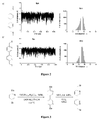
- FIG. 1 Structures of the rigid cysteine cross linkers Bph and Bpy (left), and a model of Bpy cross-linked peptide dual inhibitor (right) with two cysteines separated by a distance of 11.95 ⁇ .
- FIG. 2 Distance distributions of S-methyl Bph (a) and Bpy (b) cross linkers calculated using Langevin dynamics simulations.
- FIG. 3 An example of the synthesis of 6,6′-bis(bromomethyl)-3,3′-bipyridine (Bpy).
- FIG. 4 Examples of HPLC traces of crude products after the cross-linking reaction of PDI analogs 1 (a) and 3 (b) with either Bph or Bpy.
- FIG. 5 Possible binding modes of 1 (a), 1b (b), 3 (c), and 3b (d) toward MDMX.
- the cysteine side chains and the Bpy cross linkers were shown in CPK model and the helical peptides were shown in tube model.
- FIG. 6 An example of flow cytometry analysis of HeLa cells after treatment with 10 ⁇ M fluorescein-conjugated peptides: (a) Representative histograms; (b) Bar graph showing normalized mean fluorescence.
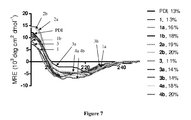
- FIG. 7 An example of CD spectra of the linear and cross-linked PDI analogs and their respective percent helicity values: The peptides were dissolved in 20% ACN/H 2 O for a final concentration of 50 ⁇ M. The percent helicity was calculated based on the [ ⁇ ] 222 values.
- FIG. 9 Confocal fluorescent microscopy of live HeLa cells after treatment with 10 ⁇ M of fluorescein-conjugated 3b for 2 hours followed by incubation with 10 ⁇ g/mL Alexa Fluor 586 labeled transferrin and 1.5 ⁇ M Hoescht 33342 dye for 30 minutes: (a) FITC channel; (b) Fluor 585 channel; (c) Hoescht channel; (d) merged image of channels a-c.
- FIG. 10 ELISA data of the cross-linked PDI analogs. The experiments were repeated three times and the resulting data were plotted with GraphPad Prism 5.0 to derive the average IC 50 values along with standard deviations.
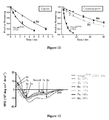
- FIG. 11 Proteolytic stability of the linear and stapled Noxa peptides against trypsin (Type IX-S, 13,000-20,000 unit/mg, Sigma) and chymotrypsin (Type II, 40 unit/mg, Sigma).
- trypsin Type IX-S, 13,000-20,000 unit/mg, Sigma
- chymotrypsin Type II, 40 unit/mg, Sigma.
- FIG. 12 CD spectra of the linear and cross-linked Noxa peptides and their respective percent helicity values.
- the peptides were dissolved in 20% ACN/H 2 O for a final concentration of 50 ⁇ M.
- the percent helicity was calculated based on the [ ⁇ ] 222 values.
- FIG. 13 Cross-linked NoxaB-BH3 peptides showed improved cellular uptake in HeLa cells.
- (a) Flow cytometry analysis of cell permeability of the FITC-labeled linear or stapled peptide. HeLa cells were treated with 10 ⁇ M of fluorescein-labeled peptides in serum-free DMEM medium for 2 hours followed by fixation with formaldehyde.
- (b) Fluorescent micrographs of HeLa cells treated with 10 ⁇ M of fluorescein-labeled (Fl) linear or cross-linked NoxaBH3 peptide. Scale bar 50 ⁇ m.
- FIG. 14 Cell viability assay after treatment with the linear or the cross-linked NoxaBH3 peptides.
- FIG. 15 An example of the synthesis of 4,4′-bis-bromomethyl-2,2′-dimethoxy-biphenyl (Bdb).
- FIG. 16 LC-MS analysis of the Noxa-ubiquitin fusion protein carrying dicysteines at residues 30 and 37 before the Bpy-mediated cross-linking reaction: Top, liquid chromatography traces monitored by ion counts; Bottom, electron-spray derived charge ladders of the intact proteins. The corresponding positive charges were marked for all major peaks.
- FIG. 17 LC-MS analysis of the Noxa-ubiquitin fusion protein carrying dicysteines at residues 30 and 37 after the Bpy-mediated cross-linking reaction: Top, liquid chromatography traces monitored by ion counts; Bottom, electron-spray derived charge ladders of the intact proteins. The corresponding positive charges were marked for all major peaks.
- the present invention provides cross-linked peptides and proteins, methods of making such peptides and proteins, and uses thereof.
- the peptides can be used in pharmaceutical formulations, which can be used to administer the peptides.
- This disclosure describes a new cross-linking chemistry that, for example, improves cell permeability of the cross-linked peptides and proteins.
- the present invention provides cross-linked proteins and peptides, where the cross link is formed between two cysteines or ⁇ -methylcysteines at the i and i+7 positions of the protein or peptide.
- the cross link is formed through a cysteine-alkylation reaction with a rigid, distance-matching cross linker.
- cysteine cross linkers FIG. 1
- PDI peptide dual inhibitor
- cysteines can be readily introduced into proteins and peptides, this cysteine cross-linking chemistry also provides a facile route to deliver bioactive peptides and proteins into cells without significant addition of mass.
- amino acid refers to a molecule containing both an amino group and a carboxyl group bound to a carbon which is designated as the ⁇ -carbon.
- Suitable amino acids include, but are not limited to, both the D- and L-isomers of the amino acids and amino acids prepared by organic synthesis or other metabolic routes. Unless the context specifically indicates otherwise, the term amino acid, as used herein, is intended to include amino acid analogs.
- suitable amino acids also include, “naturally occurring amino acids”, which refers to any one of the twenty amino acids commonly found in peptides synthesized in nature, and known by the one letter abbreviations A, R, N, C, D, Q, E, G, H, I, L, K, M, F, P, S, T, W, Y, and V.
- amino acid analog refers to a molecule which is structurally similar to an amino acid and which can be substituted for an amino acid in the formation of a cross-linked peptide.
- Amino acid analogs include, without limitation, compounds which are structurally identical to an amino acid, as defined herein, except for the inclusion of one or more additional methylene groups between the amino and carboxyl group (e.g., ⁇ -amino acids), or for the substitution of the amino or carboxy group by a similarly reactive group (e.g., substitution of the primary amine with a secondary or tertiary amine, or substitution the carboxy group with an ester), or ⁇ , ⁇ -disubstituted amino acids (e.g., ⁇ -alkyl substituted amino acids, such as ⁇ -methylcysteine). Unless the context specifically indicates otherwise, the term amino acid, is intended to include amino acid analogs.
- amino acid residue refers to an amino acid that is part of a protein or peptide.
- the residues are amino acids connected to other amino acid resides through a peptidic bond or bonds to form proteins or peptides. Unless the context specifically indicates otherwise, the term amino acid, is intended to include amino acid resides.
- cross linked refers to the intramolecular connection of two cysteine or ⁇ -alkylcysteine (e.g., ⁇ -methylcysteine residues), where the residues are at the i and i+7 positions of a protein or peptide.
- i denotes a cysteine residue in the protein or peptide sequence
- i+7 denotes a cysteine residue 7 amino acid residues away from the cysteine at the i position.
- aryl includes both aryl ring systems and heteroaryl ring systems and is a 10 to 14 carbon multicyclic (e.g., bicyclic, or tricyclic) aromatic ring system.
- the ring system can unsubstituted or substituted.
- 2, 3, 4, 5, or 6 atoms of each individual ring can be substituted by a substituent.
- a bicyclic or tricyclic ring system can also be substituted with 0-2 heteroatoms, the heteroatom being a nitrogen.
- the rings of the ring system can be fused (e.g., phenanthrene, 9,10-dihydrophenanthrene, benzoisoquinoline) or separated by a single bond (e.g., biphenyl, bipyridine, phenylpyridine).
- protein refers to an amino acid chain, where the chain has greater than 50 amino acid residues, which can be obtained, for example, from either chemical synthesis or DNA-based recombinant methods.
- peptide refers to an amino acid chain, where the chain has from 8 to 50 amino acid residues.
- structural stabilization refers to the maintenance of a defined secondary structure of peptides or proteins in solution by chemical cross linking as described herein, which can be measured by circular dichroism (CD), NMR or another biophysical measure, or resistance to proteolytic degradation in vitro or in vivo.
- helical stability refers to the maintenance of a helical structure by a cross-linked helical peptide of the invention. For example, the helical stability can be measured by circular dichroism.
- proteolytic stability refers to the ability of the peptides or proteins to stay intact in the presence of an enzyme having proteolytic activity such as trypsin and chymotrypsin in biological buffers or in human serum.
- proteolytic stability of the peptides can be measured by high-performance liquid chromatography (HPLC) and mass spectrometry.
- the present invention provides cross-linked peptides and proteins.
- the protein or peptides have the following structure:
- [X aa ] is any amino acid.
- x is an integer from 0 to 42, including all integer values and ranges therebetween
- y is an integer from 0 to 42, including all integer values and ranges therebetween
- x+y is from 0 to 42, including all integer values and ranges therebetween.
- x+y is greater than or equal to 43.
- BMA is a bismethylene aryl moiety.
- R 1 and R 2 are each independently hydrogen or an alkyl group having from 1 to 15 carbons, including all integer numbers of carbons and ranges therebetween.
- the cross-linked structure represented in this structure is a structural subpart (i.e., structural motif) of a protein.
- terminal amino acids of the protein or peptide has an amino group or carboxylic acid (or a salt thereof).
- x is 0 that terminus of the protein or peptide is an amino group
- y is 0 that terminus of the protein or peptide is a carboxylic acid.
- the cross-linked peptides can have from 8 to 50 amino acid residues, including all integer values and ranges therebetween.
- the cross-linked proteins have lengths greater than 50 amino acid residues. It is desirable that the cross-linked protein be soluble in aqueous solvents at physiological pH values (e.g., biological buffers, blood or serum) and be less than 100 kDa.
- the cross-linked protein or peptide has at least two cysteine residues, where these cysteine residues are at the i and i+7 positions of the protein or peptide (i.e., there are six amino acid residues between these two cysteine residues). In an embodiment, the cross-linked peptide or protein has only two cysteine residues.
- any protein or peptide, with appropriately placed cysteines can be cross-linked. It is desirable that the proteins and peptides exhibit biological activity. Examples of suitable proteins include, but are not limited to, growth factors and chemokines.
- the cross-linked peptide is a cross-linked PDI peptide.
- the cross-linked peptide is a cross-linked Noxa peptide, a segment of the pro-apoptotic BH3-only protein Noxa.
- amino acids and amino acid analogs are of the D-configuration. In another embodiment, amino acids and amino acid analogs are of the L-configuration. In yet another embodiment, some of the amino acids and amino acid analogs contained in the protein or peptide are of the D-configuration while some of the amino acids and amino acid analogs are of the L-configuration.
- the proteins or peptides of the present invention can have, for example, one or more asymmetric centers, and thus, occur as racemates and racemic mixtures, single enantiomers, individual diastereomers or diastereomeric mixtures. All such isomeric forms of these proteins or peptides are included in the present invention unless expressly provided otherwise.
- the proteins or peptides can also represented in multiple tautomeric forms, in such instances, the invention includes all tautomeric forms of the compounds described herein. All such isomeric forms of such compounds are included in the present invention unless expressly provided otherwise. All crystal forms of the compounds described herein are included in the present invention unless expressly provided otherwise.
- the protein or peptide is conjugated to a fluorophore.
- a protein or peptide can be conjugated to a fluorescein or fluorescein isothiocyanate (FITC) molecule.
- FITC fluorescein or fluorescein isothiocyanate
- the fluorophore can be conjugated to the protein or peptide through a linker such as, for example, aminohexanoic acid (Ahx).
- the two cysteine residues in the cross-link of the peptide or protein are both of the R- or S-configuration (i.e., which can also be described by the appropriate L or D notation) or one stereocenter is R and the other is S.
- the cysteine residues used to form the cross link have ⁇ -alkyl groups having from 1 to 15 carbons, including all integer numbers of carbons and ranges therebetween, at the ⁇ -carbon of the cysteine residues.
- suitable alkyl group include, but are not limited to, methyl, ethyl, propyl, isopropyl, or butyl groups.
- the cross-linked proteins and peptides have at least one cross link formed by a rigid, distance matching cross-linking bismethylene aryl moiety.
- the cross link forms a macrocyclic ring, which is not part of the core (i.e., it is exogeneous) or inherent structure of the protein or peptide.
- the macrocyclic ring is comprised of a bismethylene aryl moiety and includes 8 amino acids of the protein or peptide, two of which are cysteine residues connected to the bismethylene aryl moiety through thioether bonds.
- a protein can have from 1, 2 or 3 cross links.
- a protein can have one or more domains (e.g., domains of 10 to 50 amino acids), and each domain can have 1, 2, or 3 cross links.
- the bismethylene aryl moieties are of a size and/or rigidity that provide desirable stabilization of a helical motif of a peptide or a helical segment of a protein. Without intending to be bound by any particular theory, it is considered the distance matching and/or rigidity of the bismethylene aryl moiety is such that the cross-linked protein or peptide has increased helicity and increased cell permeability relative to proteins and peptides that are not cross linked according to the present invention.
- the bismethylene aryl (BMA) moiety has an aryl moiety and is connected to the protein or peptide through two thioether bonds.
- the cross-linking moiety comprises a bismethylene aryl moiety having two phenyl rings connected by a single bond.
- the bismethylene aryl moiety can be represented by the following:
- the aryl rings of the bismethylene aryl moiety can be substituted or unsubstituted. When the aryl rings are unsubstituted, the aryl rings do not have any R substituents. When the aryl rings are substituted, depending on the aryl moiety, the bismethylene aryl moiety can have one or more R substituents. For example, in the bismethylene aryl ring structure shown above, the each aryl ring of the structure can have 1, 2, 3 or 4 (where Z is a carbon) R substituents.
- the R substituents are halogens (F, Cl, Br, or I), alkyl groups (having from 1 to 15 carbons, including all integer values of carbons and ranges therebetween), alkoxy groups (wherein the alkyl moiety of the alkoxy group has from 1 to 15 carbons, including all integer values of carbons and ranges therebetween), nitro groups, amino groups, alkylamino groups (wherein the alkyl moiety or moieties of the alkylamino group, independently, has from 1 to 15 carbons, including all integer values of carbons and ranges therebetween), trifluoromethyl groups, or combinations thereof.
- two R groups are joined to form a fused ring structure.
- the ring formed by the joining of two R groups can have 5, 6, or 7 carbons. Examples of such structures are represented in the following:
- aryl rings of these structures can be substituted or unsubstituted as described herein.
- the aryl structure is symmetrical so that only one isomer (e.g., diastereomer) of the cross-linked peptide is formed due to symmetry-related degeneration.
- the aryl portion of the moiety be symmetrical (e.g., biphenyl, bipyridine, and phenanthroline, etc.) and not unsymmetrical (e.g., benzoisoquinoline) as to not form isomers.
- the protein or peptide has one of the following structure:
- R, R 1 , and R 2 are as described herein.
- the protein or peptide has the following structure:
- R, R 1 , and R 2 are as described herein.
- the cross-linked peptides are:
- AACLRRIGDCVNLRQKLLN (SEQ ID NO:6)
- AACLRAIGDCVNLAQALLN (SEQ ID NO:12), or
- the BMA is Bph and is connected to the c, C, or C m residues
- AACLRRIGDCVNLRQKLLN (SEQ ID NO:6), or
- AACLRRIGDCVNLRQKLLN (SEQ ID NO:6)
- AACLRRIGDCVNLRQKLLN (SEQ ID NO:6)
- AACLRRIGDCVNLRQKLLN (SEQ ID NO:6)
- c is D-cysteine
- C is L-cysteine
- C m is ⁇ -methylcysteine
- the cross-linked peptides are:
- the BMA is Bph and is connected to the c, C, or C m residues
- the BMA is Bpy and is connected to the c, C, or C m residues
- c is D-cysteine
- C is L-cysteine
- C m is ⁇ -methyl cysteine
- Ahx is aminohexanoic acid
- the cross-linked protein is:
- the cross-linked peptides or proteins can have at least a partial helical structure.
- a cross-linked peptide can have a helical structure (or multiple helical structures), and each helical structure is stabilized by a single cross link or multiple (e.g., two or three) cross links.
- a protein can have a helical motif (or multiple helical motifs), and each motif is stabilized by a single cross link or multiple (e.g., two or three) cross links.
- the bismethylene aryl moiety is part of the exogenous macrocyclic ring that connects two cysteines of the helical protein or peptide.
- the amino acids i to i+7 are included in the macrocyclic ring.
- the cross-linked peptides can have greater percent helicity as compared to the linear parent peptide (non-cross-linked peptide).
- the cross-linked peptides exhibit 14-34% percent helicity with 19 residues compared to only 9% percent helicity for the parent linear peptide.
- the cross-linked peptides exhibit 14-20% percent helicity with 12 amino acid residues compared to only 11-13% percent helicity for the parent linear peptides.
- the cross-linked peptides exhibit at least a 1.25, 1.5, 1.75 or 2-fold increase in ⁇ -helicity as determined by circular dichroism compared to a corresponding non-cross-linked peptide.
- the cross-linked protein can have one or more helical motifs.
- a helical motif of a protein can have from 10 to 50 amino acids, including all integer values and ranges therebetween.
- a cross-linked protein can have a single helical motif or multiple helical motifs and each helical motif can have one or multiple cross links.
- the cross-linked protein or peptides can have improved properties as compared to the parent (or the analogous non-cross-linked protein or peptide).
- the cross-linked peptides can have improved penetration into cells with low cytotoxicity.
- the cross-linked peptides show increased enzymatic stability (e.g., proteolytic stability against proteases such as trypsin and chymotrypsin).
- the cross-linked peptides or peptides exhibit improved biological activity (such inhibitory activities against protein-protein interactions, or agonist activities toward cell surface receptors).
- the present invention provides methods for making cross-linked peptides or proteins.
- Cross-linked peptides or proteins of the present invention can be made using the methods.
- the method for preparation of cross-linked peptides or proteins comprises the steps of (a) providing a peptide or protein having the following structure:
- [X aa ] is any amino acid.
- x is an integer from 0 to 42, including all integer values and ranges therebetween
- y is an integer from 0 to 42, including all integer values and ranges therebetween
- x+y is 0 to 42, including all integer values and ranges therebetween.
- x+y is greater than or equal to 43.
- R 1 and R 2 are each independently hydrogen or an alkyl group having from 1 to 15 carbons, including all integer numbers of carbons and ranges therebetween, such as, for example, methyl, ethyl, propyl, isopropyl, and butyl groups.
- the cross-linked structure represented in this structure is a structural subpart (i.e., structural motif) of a protein, (b) contacting said peptide to a bismethylene aryl linker, such that a cross-linked peptide or protein having the following structure:
- the present invention provides cross-linked peptides or proteins of the present invention made using the methods disclosed herein.
- any protein or peptide, with appropriately placed cysteines (naturally occurring or introduced) can be cross-linked. It is desirable that the proteins and peptides exhibit biological activity. Suitable proteins or peptides can be made by methods known in the art. Examples of suitable proteins include, but are not limited to, growth factors and chemokines.
- the cross-linked peptide is a cross-linked PDI peptide.
- the cross-linked peptide is a cross-linked Noxa peptide, a segment of the pro-apoptotic BH3-only protein Noxa.
- the peptides can have from 8 to 50 amino acid residues, including all integer values and ranges therebetween.
- the proteins have lengths greater than 50 amino acid residues.
- the protein or peptide has at least two cysteine residues, where these cysteine residues are at the i and i+7 positions of the protein or peptide (i.e., there are six amino acid residues between these two cysteine residues). In an embodiment, the peptide or protein has only two cysteine residues.
- the bismethylene aryl linker has an aryl moiety and two suitable leaving groups.
- the bismethylene aryl linker has the following structure:
- X is a suitable leaving group (LG) substituent and Z can be nitrogen, carbon, or a combination thereof.
- the leaving group can be a chloride, bromide, iodide, or tosylate.
- the aryl rings of the bismethylene aryl linker compound can be substituted or unsubstituted. When the aryl rings are unsubstituted, the aryl rings do not have any R substituents. When the aryl rings are substituted, each ring independently has 1, 2, 3 or 4 R substituents.
- the R substituents are halogens, alkyl groups (having from 1 to 15 carbons, including all integer values of carbons and ranges therebetween), alkoxy groups (wherein the alkyl moiety of the alkoxy group has from 1 to 15 carbons, including all integer values of carbons and ranges therebetween), nitro groups, amino groups, alkylamino groups (wherein the alkyl moiety or moieties of the alkylamino group, independently, has from 1 to 15 carbons, including all integer values of carbons and ranges therebetween), trifluoromethyl group or a combination thereof. It is desirable that the aryl structure is symmetrical so that only one isomer (e.g., diastereomer) of the cross-linked peptide is formed due to symmetry-related degeneration.
- alkyl groups having from 1 to 15 carbons, including all integer values of carbons and ranges therebetween
- alkoxy groups wherein the alkyl moiety of the alkoxy group has from 1 to 15 carbons, including
- the bismethylene aryl linker has the following structure:
- aryl rings of this structure can be substituted or unsubstituted as described herein. It is desirable that the structure be symmetrical so that isomers (e.g., diastereomers) of the cross-linked peptide or protein are not formed.
- the peptide and bismethylene aryl linker are contacted under conditions (e.g., reaction time, reaction temperature and reaction atmosphere) that result in formation of at least two carbon-sulfur bonds providing at least one cross link as described herein which comprises at least two thioether linkages. Determination of suitable conditions is within the purview of one having skill in the art.
- cross link can be formed by the reaction as described in the method above, it is considered that the cross link can be formed by reaction of bismethylene aryl linkers with functional groups other than methylene halides described herein, for example, bismethylene aryl tosylates.
- the method of the present invention consists essentially of the steps provided above. In another embodiment, the method of the present invention consists of the steps provided above. In an embodiment, the present invention provides cross-linked peptides made according to the methods described herein.
- the present invention provides compositions comprising the cross-linked peptides or proteins of the present invention.
- the composition can comprise the peptide(s) and other components (e.g., excipients) to form a composition suitable for delivery of the peptide(s) and/or protein(s).
- the compositions can be in solid form (e.g., a tablet or capsule) or a solution (e.g., an aqueous solution) comprising the peptides or proteins. It is desirable to formulate a composition with long-acting (e.g., controlled release) properties.
- the composition comprises one or more cross-linked peptides or proteins of the present invention and one or more excipients.
- excipients include, but are not limited to, any and all solvents, dispersion media, coatings, antibacterial and antifungal agents, isotonic and absorption delaying agents and the like.
- suitable excipients include, but are not limited to, any and all solvents, dispersion media, coatings, antibacterial and antifungal agents, isotonic and absorption delaying agents and the like.
- the use of such media and agents for formulation of proteins and peptides for delivery applications is well known in the art. Except insofar as any conventional media or agent is incompatible with the active ingredient, its use in the composition is contemplated.
- Supplementary active ingredients can also be incorporated into the pharmaceutical composition.
- PDI peptide was used as a model peptide because (i) PDI has shown to be an excellent dual inhibitor of the p53-MDM2 and the p53-MDMX interactions, the two validated cancer targets, and (ii) crystal structures of PDI and its analogs in complexes with MDM2 and MDMX have been solved recently. However, PDI was found to be cell impermeable, greatly diminishing its therapeutic potential.
- b IC 50 values were taken from ref. 13 where the same assay was performed.
- c C′ denotes the Bph-linked cysteine.
- d C′′ denotes the Bpy-linked cysteine.
- e c (lower case) denotes D-cysteine.
- Bph is commercially available while Bpy can be conveniently prepared through a two-step procedure ( FIG. 3 ). Briefly, 6,6′-dimethyl-3,3′-bipyridine was obtained in 51% yield through palladium-catalyzed homo-coupling of 5-bromo-2-methylpyridine under basic condition, which was subsequently transformed into Bpy in 14% isolated yield through direct bromination with 2 equiv NBS in the presence of catalytic amount of AIBN in CCl 4 .
- cysteine cross-linking by Bpy caused a larger increase in mean fluorescence ( ⁇ 6-fold for 1b over 1, ⁇ 5-fold for 2b over 2), indicating that the effect of cross linking on cell permeability is greater than that of positive charge. Moreover, these two effects are additive as the positively charged, Bpy cross-linked 2b showed an additional 2-fold increase in permeability compared to 1b. Similar enhancement was observed for peptides 3b and 4b with the D,L-configurations ( FIG. 6 b ).
- Bpy cross-linked peptides showed slightly higher percent helicity than Bph cross-linked ones. Taken together, a correlation between helicity and permeability appears to exist as peptides with higher helicity generally showed higher cell permeability (compare FIG. 7 to FIG. 6 ). For positively charged peptides 2b and 4b, other factors such as increased amphiphilicity due to appendage of hydrophobic biaryl groups resulting in an extended hydrophobic face may also play a role in enhancing cell penetration.
- FIG. 8 a To corroborate the FACS result, a confocal microscopy study was carried out and the data were collected in FIG. 8 a .
- the positively charged, Bpy cross-linked peptides 2b and 4b showed the strongest cellular fluorescence, in excellent agreement with the FACS data; however, cellular debris was detected for 2b and 4b treated cells in the DIC channel, indicating apparent cytotoxicity.
- This cytotoxicity was further confirmed by the ATP assay ( FIG. 8 b ), which was attributed to the positive charge as the Bpy cross-linked charge-neutral 1b and 3b did not show any cytotoxicity ( FIGS. 8 a and 8 b ).
- Electrospray LCMS analysis was performed using a Finnigan LCQ Advantage IonTrap mass spectrometry coupled with a Surveyor HPLC system.
- Peptides were purified using a Gilson semi-preparative reverse-phase HPLC system equipped with a Phenomenex C 18 column with a flow rate of 5 mL/min and a gradient of 10-90% ACN/H 2 O while monitoring at 220 nm and 254 nm.
- Analytical HPLC were performed using Phenomenex
- Live cell microscopy was performed on a Zeiss LSM-510 meta-NLO system equipped with a Coherent Chameleon Ultra II Ti/Sapphire laser and external non-descanned detectors.
- Fixed cell fluorescent microscopy was performed on a Zeiss LSM-710 Confocal Microscope equipped with a continuous laser and fluorescence lifetime (FLIM) detectors.
- 6,6′-Dimethyl-3,3′-bipyridine A mixture of 5-bromo-2-methyl-pyridine (1.37 g, 8 mmol), Pd(OAc) 2 (90 mg, 0.4 mmol), K 2 CO 3 (1.10 g, 8 mmol), tetra-n-butylammonium bromide (1.29 g, 4 mmol) in DMF (0.9 mL)/H 2 O (0.35 mL) was stirred at 115° C. under argon for 2 minutes. Isopropanol (480 mg, 8 mmol) was added. After stirring for 48 h, the reaction mixture was allowed to cool down to room temperature.
- 6,6′-Bis(bromomethyl)-3,3′-bipyridine (Bpy): 6,6′-dimethyl-3,3′-bipyridine (0.368 g, 2 mmol) was dissolved in 20 mL anhydrous CCl 4 . N-bromosuccinimide (0.712 g, 4 mmol) and AIBN (20 mg, catalytic amount) were added to the solution. The mixture was refluxed for 5 hours before CCl 4 was removed under vacuum.
- the Fmoc deprotection was accomplished by treating the peptide-bound resin with 20% piperidine/DMF (3 ⁇ , 8 minutes each). After the amino acids were assembled, the N-terminal amine was acylated using 10 equiv of acetic anhydride and 10 equiv of DIEA. The peptides were then cleaved by treating the resin with a cleavage cocktail containing 95% TFA, 2.5% ethane dithiol, 1.5% triisopropylsilane and 1% water for a period of 1.5 hours (extended to 2.5 hours for peptides containing Pbf protecting groups).
- the peptides were precipitated in diethyl ether, collected by centrifugation, and washed with diethyl ether prior to drying in high vacuum.
- the crude peptides were purified by Gilson reverse-phase HPLC equipped with a semi-prep Phenomenex C18 column running at a flow rate of 5 mL/min and a gradient of 10-90% acetonitrile/H 2 O containing 0.1% TFA. Fractions with greater than 90% purity were pooled and lypholized to give the desired peptides.
- chain elongation was allowed to continue with Fmoc-Ahx-OH. After removal of Fmoc, the N-terminus of the peptide was capped by incubating the peptide with 1.5 equiv of FITC overnight in presence of 2 equiv of DIEA.
- GST-MDM2 and MDMX (5 ⁇ g/ml) were mixed with peptides in PBSMT containing 10% glycerol and 10 mM dithiolthreitol prior to their additions to the wells at the specified concentrations. The incubation was allowed to proceed for 1 hour at room temperature before the plates were washed with PBST. The plates were then incubated with either anti-MDM2 antibody 5B10 or anti-MDMX antibody 8C6 in PBSTM for 1 hours, followed by washing with PBST and incubation with horseradish peroxidase-conjugated rabbit anti-mouse Ig antibody for 1 hour.
- the plates were developed by incubation with TMB peroxidase substrate (KPL, Gaithersburg, Md.) and measured by absorbance at 450 nm. The data was analyzed with the Origin 6.0 software. ELISA data was normalized such that % ligand bound at infinite dilution of inhibitor was taken to be 100%. Plotting of the data was % ligand bound vs. log of the concentration of inhibitor to yield a sigmodial plot. The sigmodial plot was then fitted to the Hill equation for one site competitive binding mode to derive IC 50 values. The IC 50 values were reported as a mean and standard deviation of three independent experiments ( FIG. 10 ).
- HeLa Cells were cultured in DMEM medium supplemented with 10% fetal bovine serum in 6-well plate in a 37° C., 5% CO 2 incubator to reach confluency of around 70%. The cells were then washed twice with PBS before switching to serum-free DMEM medium. After standing in the incubator for 30 minutes, appropriate amounts of peptides (1 mM in DMSO) were added to the culture plate to obtain a final peptide concentration of 10 ⁇ M. Cells were incubated at 37° C. for additional 2 hrs. Then the medium was removed and the cells were washed with PBS (3 ⁇ ) followed by treatment with trypsin to detach the cells. After a brief low-speed centrifugation, the HeLa cells were collected and re-suspended in PBS for the FACS analysis.
- Circular Dichroism Study Circular Dichroism spectra were recorded on JASCO J-715 CD spectrometer at room temperature using 0.1-cm path length cuvette. The spectra were recorded in the wavelength range of 190-250 nm and averaged over 3 scans with a resolution of 0.5 nm, a bandwidth of 1.0 nm and a response time of 4 s. The sensitivity and the speed of the spectrometer were set to 100 mdeg and 50 nm/min, respectively. All peptides were dissolved in 20% acetonitrile/H 2 O to reach final concentration of 50 ⁇ M.
- HeLa Cells were seeded into 35 mm glass bottom microwell dishes (MatTek, Ashland, Mass.) at a density of 3 ⁇ 105 in DMEM medium supplemented with 10% fetal bovine serum, and the cells were allowed to grow in a 37° C. 5% CO 2 incubator for 48 hours. After removing medium, the cells were washed twice with PBS and then incubated in serum-free DMEM medium for 30 minutes. Appropriate amounts of peptides (1 mM in DMSO) were then added to obtain a final concentration of 10 ⁇ M and cells were incubated at 37° C. for 2 hours. After PBS wash, cells were treated with 4% formaldehyde in PBS for 20 minutes at room temperature. The fixation medium was removed and the cells were washed with PBS (3 ⁇ ) before placing cells into the low florescent mounting medium for fluorescent imaging acquisition.
- HeLa cells were cultured in a 35-mm glass bottom microwell dish as described previously. The cells were incubated with peptide 3b for 2 hrs in a serum-free medium followed by addition of a 40 ⁇ L solution containing 500 ⁇ g/mL of Alexa Fluor 586-labeled transferring (Invitrogen, Carlsbad, Calif.) and 1.5 ⁇ M Hoescht 33342 dye and additional incubation for 30 minutes. Afterwards, cells were washed with PBS and placed into the Earle's balanced salt solution supplemented with MEM essential and non-essential amino acids. All images were taken with a Zeiss LSM-510 meta-NLO system equipped with a Coherent Chameleon Ultra II Ti/Sapphire laser and external non-descanned detectors.
- HeLa cells were seeded into an opaque 96-well plate at a density of 1 ⁇ 10 4 per well in 100 ⁇ L DMEM medium supplemented with 10% FBS and the cells were allowed to grow in a 37° C. 5% CO 2 incubator for 48 hrs to reach confluency of around 80%. Prior to the compound treatment, the medium was replaced with serum-free medium and the cells were incubated for 30 minutes. Appropriate amounts of peptides (1 mM in DMSO) were then added to obtain a final concentration of 10 ⁇ M and the cells were incubated at 37° C. for 2 hours.
- the plate was allowed to stand at room temperature for 30 minutes before 100 ⁇ L of Cell-Titer Glow reagent (Promega) was added. The plate was incubated at room temperature for 10 minutes. The luminescence signals were recorded with an FLX 800 luminescence plate reader (BioTek). The plotted data represented the average of the readings from 4 separate wells.
- NoxaBH3 peptide augments the effect of Bcl-2/Bcl-xL/Bcl-w-specific BadBH3 in inducing apoptosis in mouse embryonic fibroblasts (MEFs), suggesting that it might be useful in a combination therapy with known small-molecule Bcl-2 inhibitors such as ABT-737.
- Mcl-1 Compared to other Bcl-2 family proteins such as Bcl-xL, Mcl-1 exhibits a more constricted and discontinuous binding surface and minimal conformational change upon binding of BH3 peptides, which may explain the difficulty in identifying potent Mcl-1-selective small-molecule inhibitors. Based on these observations, we decided to use NoxaB BH3 peptide as a template to design our cross-linked peptide-based Mcl-1 inhibitors.
- NoxaB-(75-93)-C75A peptide retains the activity of full-length NoxaB peptide
- b C′ denotes the Bph-linked L-cysteine.
- c C′′ denotes the Bpy-linked L-cysteine.
- d c′ denotes the Bph-linked D-cysteine.
- e c′′ denotes the Bpy-linked D-cysteine.
- f C′ m denotes the Bph-linked ⁇ -methyl-L-cysteine.
- the Bph-cross-linked peptides 5a and 6a showed 67-fold and 37-fold increase in activity, respectively, in FPA.
- the three most potent cross-linked peptides in FPA, 5a, 5b and 6a also showed potent activities in ELISA with IC 50 values in the range of 25-75 nM, up to 14-fold improvement over the parent peptide.
- IC 50 values in the range of 25-75 nM, up to 14-fold improvement over the parent peptide.
- Mcl-1 inhibitors N-terminal fluorescein-labeled cross-linked peptides 5a and 6a were prepared and their binding affinities toward Mcl-1 and Bcl-xL were measured by FP assay.
- peptide 9a and 10A are SEQ ID NO:17; 11a and 12 a are SEQ ID NO:18; 5c, 5d, 5e, Fluo-5a, Fluo-6a, and Fluo-6b are SEQ ID NO:16; Fluo-NoxaB 75-94 -C75A is SEQ ID NO:15; and Fluo-71 is SEQ ID NO:17.
- Bdb 4,4′-bis-bromomethyl-2,2′-dimethoxy-biphenyl
- the cross-linking chemistry also works with proteins containing a helical segment with two cysteines located at the i, i+7 positions.
- Noxa was fused to the N ⁇ 1 or C-terminus of ubiquitin to produce Noxa-ubiquitin and ubiquitin-Noxa fusion protein, respectively.
Landscapes
- Chemical & Material Sciences (AREA)
- Organic Chemistry (AREA)
- Health & Medical Sciences (AREA)
- Life Sciences & Earth Sciences (AREA)
- General Health & Medical Sciences (AREA)
- Molecular Biology (AREA)
- Biochemistry (AREA)
- Biophysics (AREA)
- Proteomics, Peptides & Aminoacids (AREA)
- Genetics & Genomics (AREA)
- Medicinal Chemistry (AREA)
- General Chemical & Material Sciences (AREA)
- Analytical Chemistry (AREA)
- Chemical Kinetics & Catalysis (AREA)
- Toxicology (AREA)
- Zoology (AREA)
- Gastroenterology & Hepatology (AREA)
- Peptides Or Proteins (AREA)
- Medicines That Contain Protein Lipid Enzymes And Other Medicines (AREA)
Priority Applications (1)
| Application Number | Priority Date | Filing Date | Title |
|---|---|---|---|
| US13/994,296 US9029332B2 (en) | 2010-12-15 | 2011-12-15 | Cross-linked peptides and proteins, methods of making same, and uses thereof |
Applications Claiming Priority (3)
| Application Number | Priority Date | Filing Date | Title |
|---|---|---|---|
| US45956910P | 2010-12-15 | 2010-12-15 | |
| PCT/US2011/065282 WO2012083078A2 (fr) | 2010-12-15 | 2011-12-15 | Peptides et protéines réticulés, leurs procédés de fabrication et leurs utilisations |
| US13/994,296 US9029332B2 (en) | 2010-12-15 | 2011-12-15 | Cross-linked peptides and proteins, methods of making same, and uses thereof |
Publications (2)
| Publication Number | Publication Date |
|---|---|
| US20140057857A1 US20140057857A1 (en) | 2014-02-27 |
| US9029332B2 true US9029332B2 (en) | 2015-05-12 |
Family
ID=46245374
Family Applications (1)
| Application Number | Title | Priority Date | Filing Date |
|---|---|---|---|
| US13/994,296 Active 2032-03-23 US9029332B2 (en) | 2010-12-15 | 2011-12-15 | Cross-linked peptides and proteins, methods of making same, and uses thereof |
Country Status (3)
| Country | Link |
|---|---|
| US (1) | US9029332B2 (fr) |
| EP (1) | EP2651964B1 (fr) |
| WO (1) | WO2012083078A2 (fr) |
Families Citing this family (20)
| Publication number | Priority date | Publication date | Assignee | Title |
|---|---|---|---|---|
| DK2118123T3 (en) | 2007-01-31 | 2016-01-25 | Dana Farber Cancer Inst Inc | Stabilized p53 peptides and uses thereof |
| US8592377B2 (en) | 2007-03-28 | 2013-11-26 | President And Fellows Of Harvard College | Stitched polypeptides |
| ES2711526T3 (es) | 2010-08-13 | 2019-05-06 | Aileron Therapeutics Inc | Macrociclos peptidomiméticos |
| TW201806968A (zh) | 2011-10-18 | 2018-03-01 | 艾利倫治療公司 | 擬肽巨環化合物 |
| BR112014020103A2 (pt) | 2012-02-15 | 2018-10-09 | Aileron Therapeutics, Inc. | macrociclos peptidomiméticos |
| EP2819688A4 (fr) | 2012-02-15 | 2015-10-28 | Aileron Therapeutics Inc | Macrocycles peptidomimétiques réticulés par triazole et par thioéther |
| WO2014071241A1 (fr) | 2012-11-01 | 2014-05-08 | Aileron Therapeutics, Inc. | Acides aminés disubstitués et procédés de préparation et d'utilisation de ceux-ci |
| JP6822839B2 (ja) | 2013-09-13 | 2021-01-27 | ザ・スクリップス・リサーチ・インスティテュート | 修飾された治療剤、及びその組成物 |
| KR102455171B1 (ko) | 2013-12-18 | 2022-10-14 | 더 스크립스 리서치 인스티튜트 | 변형된 치료제, 스테이플드 펩티드 지질 접합체, 및 이의 조성물 |
| EP3126375B1 (fr) * | 2014-04-02 | 2023-12-13 | University of Rochester | Substances peptimomimétiques macrocycliques pour mimétisme d'hélice alpha |
| AU2015320545C1 (en) | 2014-09-24 | 2020-05-14 | Aileron Therapeutics, Inc. | Peptidomimetic macrocycles and formulations thereof |
| EP3197478A4 (fr) | 2014-09-24 | 2018-05-30 | Aileron Therapeutics, Inc. | Macrocycles peptidomimétiques et leurs utilisations |
| WO2016154058A1 (fr) | 2015-03-20 | 2016-09-29 | Aileron Therapeutics, Inc. | Macrocycles peptidomimétiques et leurs utilisations |
| WO2017044633A1 (fr) | 2015-09-10 | 2017-03-16 | Aileron Therapeutics, Inc. | Macrocycles peptidomimétiques en tant que modulateurs de mcl-1 |
| CN108602894A (zh) * | 2015-10-30 | 2018-09-28 | 纽约州立大学研究基金会 | 胃泌酸调节素类似物及其制备和使用方法 |
| RU2731211C1 (ru) | 2017-03-21 | 2020-08-31 | Фуджифилм Корпорэйшн | Пептидное соединение и способ его получения, композиция для скринингового использования и способ отбора пептидного соединения |
| US11091522B2 (en) | 2018-07-23 | 2021-08-17 | Aileron Therapeutics, Inc. | Peptidomimetic macrocycles and uses thereof |
| MX2022006861A (es) | 2019-12-04 | 2022-07-11 | Scripps Research Inst | Agonistas del receptor glp2 y metodos de uso. |
| KR102524369B1 (ko) * | 2020-08-14 | 2023-04-20 | 연세대학교 산학협력단 | 플루오레세인에 결합하는 펩타이드, 이를 암호화하는 핵산 분자, 단백질 발현 벡터, 이를 이용한 바이오 진단 프로브 및 바이오 진단 키트 |
| KR20240032010A (ko) | 2021-06-09 | 2024-03-08 | 더 스크립스 리서치 인스티튜트 | 장기 지속형 이중 gip/glp-1 펩타이드 접합체 및 사용 방법 |
Citations (25)
| Publication number | Priority date | Publication date | Assignee | Title |
|---|---|---|---|---|
| US5446128A (en) | 1993-06-18 | 1995-08-29 | The Board Of Trustees Of The University Of Illinois | Alpha-helix mimetics and methods relating thereto |
| WO1997000267A1 (fr) | 1995-06-16 | 1997-01-03 | Pence | Composition de banques combinatoires a limitation conformationnelle et procedes d'utilisation |
| US5859184A (en) | 1995-10-27 | 1999-01-12 | Molecumetics Ltd. | Alpha-helix mimetics and methods relating thereto |
| US20030125262A1 (en) | 2000-03-21 | 2003-07-03 | Wisconsin Alumni Research Foundation | Methods and reagents for regulation of cellular responses in biological systems |
| US20050250680A1 (en) | 2003-11-05 | 2005-11-10 | Walensky Loren D | Stabilized alpha helical peptides and uses thereof |
| US20060008848A1 (en) | 1999-05-18 | 2006-01-12 | Verdine Gregory L | Stabilized compounds having secondary structure motifs |
| US20060073518A1 (en) | 2003-02-27 | 2006-04-06 | Pepscan Systems B. V. | Method for selecting a candidate drug compound |
| US7183059B2 (en) | 1998-03-23 | 2007-02-27 | President And Fellows Of Harvard College | Synthesis of compounds and libraries of compounds |
| US7202332B2 (en) | 2004-05-27 | 2007-04-10 | New York University | Methods for preparing internally constrained peptides and peptidomimetics |
| US20070207947A1 (en) | 2003-10-16 | 2007-09-06 | Aplagen Gmbh | Stabilized Peptides |
| WO2008095063A1 (fr) | 2007-01-31 | 2008-08-07 | Dana-Farber Cancer Institute, Inc. | Peptides p53 stabilisés et utilisations de ceux-ci |
| US20080262200A1 (en) | 2007-02-23 | 2008-10-23 | Aileron Therapeutics, Inc., A Delaware Corporation | Triazole Macrocycle Systems |
| US20080313749A1 (en) | 2005-01-24 | 2008-12-18 | Peter Timmerman | Binding Compounds, Immunogenic Compounds and Peptidomimetics |
| US20090047711A1 (en) | 2006-12-14 | 2009-02-19 | Aileron Therapeutics, Inc. | Bis-sulfhydryl macrocyclization systems |
| US20090088553A1 (en) | 2006-12-14 | 2009-04-02 | Aileron Therapeutics, Inc., A Delaware Corporation | Bis-Sulfhydryl Macrocyclization Systems |
| WO2009108261A2 (fr) | 2008-01-23 | 2009-09-03 | Dana Farber Cancer Institute | Compositions et méthodes de traitement des infections virales |
| US20090275519A1 (en) | 2008-02-08 | 2009-11-05 | Aileron Therapeutics, Inc. | Therapeutic peptidomimetic macrocycles |
| US20090326192A1 (en) | 2008-04-08 | 2009-12-31 | Aileron Therapeutics, Inc. | Biologically active peptidomimetic macrocycles |
| WO2010011313A2 (fr) | 2008-07-23 | 2010-01-28 | President And Fellows Of Harvard College | Ligature de polypeptides agrafés |
| US20100093086A1 (en) | 2008-09-16 | 2010-04-15 | Qing Lin | Stapled Peptides and Method of Synthesis |
| US20100210515A1 (en) | 2008-09-22 | 2010-08-19 | Aileron Therapeutics, Inc. | Methods for preparing purified polypeptide compositions |
| US20100216688A1 (en) | 2008-09-22 | 2010-08-26 | Aileron Therapeutics, Inc. | Peptidomimetic macrocycles |
| US20100298201A1 (en) | 2008-11-24 | 2010-11-25 | Aileron Therapeutics, Inc. | Peptidomimetic macrocycles with improved properties |
| US20110144303A1 (en) | 2008-04-08 | 2011-06-16 | Aileron Therapeutics, Inc. | Biologically Active Peptidomimetic Macrocycles |
| US20110223149A1 (en) | 2009-10-14 | 2011-09-15 | Aileron Therapeutics, Inc. | Peptidomimetic macrocycles |
-
2011
- 2011-12-15 WO PCT/US2011/065282 patent/WO2012083078A2/fr not_active Ceased
- 2011-12-15 US US13/994,296 patent/US9029332B2/en active Active
- 2011-12-15 EP EP11848378.3A patent/EP2651964B1/fr active Active
Patent Citations (35)
| Publication number | Priority date | Publication date | Assignee | Title |
|---|---|---|---|---|
| US5710245A (en) | 1993-06-18 | 1998-01-20 | Molecumetics, Ltd. | Alpha-helix mimetics and methods relating thereto |
| US5446128A (en) | 1993-06-18 | 1995-08-29 | The Board Of Trustees Of The University Of Illinois | Alpha-helix mimetics and methods relating thereto |
| WO1997000267A1 (fr) | 1995-06-16 | 1997-01-03 | Pence | Composition de banques combinatoires a limitation conformationnelle et procedes d'utilisation |
| US5859184A (en) | 1995-10-27 | 1999-01-12 | Molecumetics Ltd. | Alpha-helix mimetics and methods relating thereto |
| US7183059B2 (en) | 1998-03-23 | 2007-02-27 | President And Fellows Of Harvard College | Synthesis of compounds and libraries of compounds |
| US7192713B1 (en) | 1999-05-18 | 2007-03-20 | President And Fellows Of Harvard College | Stabilized compounds having secondary structure motifs |
| US20060008848A1 (en) | 1999-05-18 | 2006-01-12 | Verdine Gregory L | Stabilized compounds having secondary structure motifs |
| US20030125262A1 (en) | 2000-03-21 | 2003-07-03 | Wisconsin Alumni Research Foundation | Methods and reagents for regulation of cellular responses in biological systems |
| US20060073518A1 (en) | 2003-02-27 | 2006-04-06 | Pepscan Systems B. V. | Method for selecting a candidate drug compound |
| US20070207947A1 (en) | 2003-10-16 | 2007-09-06 | Aplagen Gmbh | Stabilized Peptides |
| US20050250680A1 (en) | 2003-11-05 | 2005-11-10 | Walensky Loren D | Stabilized alpha helical peptides and uses thereof |
| US7723469B2 (en) | 2003-11-05 | 2010-05-25 | Dana-Farber Cancer Institute, Inc. | Stabilized alpha helical peptides and uses thereof |
| US20090149630A1 (en) | 2003-11-05 | 2009-06-11 | Walensky Loren D | Stabilized Alpha Helical Peptides and Uses Thereof |
| US7202332B2 (en) | 2004-05-27 | 2007-04-10 | New York University | Methods for preparing internally constrained peptides and peptidomimetics |
| US7863239B2 (en) | 2005-01-24 | 2011-01-04 | Pepscan Systems B.V. | Binding compounds, immunogenic compounds and peptidomimetics |
| US20080313749A1 (en) | 2005-01-24 | 2008-12-18 | Peter Timmerman | Binding Compounds, Immunogenic Compounds and Peptidomimetics |
| US20090088553A1 (en) | 2006-12-14 | 2009-04-02 | Aileron Therapeutics, Inc., A Delaware Corporation | Bis-Sulfhydryl Macrocyclization Systems |
| US7960506B2 (en) | 2006-12-14 | 2011-06-14 | Aileron Therapeutics, Inc. | Bis-sulfhydryl macrocyclization systems |
| US20090047711A1 (en) | 2006-12-14 | 2009-02-19 | Aileron Therapeutics, Inc. | Bis-sulfhydryl macrocyclization systems |
| US20100184628A1 (en) | 2006-12-14 | 2010-07-22 | Aileron Therapeutics, Inc., A Delaware Corporation | Bis-sulfhydryl macrocyclization systems |
| US7981998B2 (en) | 2006-12-14 | 2011-07-19 | Aileron Therapeutics, Inc. | Bis-sulfhydryl macrocyclization systems |
| WO2008095063A1 (fr) | 2007-01-31 | 2008-08-07 | Dana-Farber Cancer Institute, Inc. | Peptides p53 stabilisés et utilisations de ceux-ci |
| US20110263815A1 (en) | 2007-02-23 | 2011-10-27 | Aileron Therapeutics, Inc., A Delaware Corporation | Triazole macrocycle systems |
| US20080262200A1 (en) | 2007-02-23 | 2008-10-23 | Aileron Therapeutics, Inc., A Delaware Corporation | Triazole Macrocycle Systems |
| US7981999B2 (en) | 2007-02-23 | 2011-07-19 | Aileron Therapeutics, Inc. | Triazole macrocycle systems |
| WO2009108261A2 (fr) | 2008-01-23 | 2009-09-03 | Dana Farber Cancer Institute | Compositions et méthodes de traitement des infections virales |
| US20090275519A1 (en) | 2008-02-08 | 2009-11-05 | Aileron Therapeutics, Inc. | Therapeutic peptidomimetic macrocycles |
| US20090326192A1 (en) | 2008-04-08 | 2009-12-31 | Aileron Therapeutics, Inc. | Biologically active peptidomimetic macrocycles |
| US20110144303A1 (en) | 2008-04-08 | 2011-06-16 | Aileron Therapeutics, Inc. | Biologically Active Peptidomimetic Macrocycles |
| WO2010011313A2 (fr) | 2008-07-23 | 2010-01-28 | President And Fellows Of Harvard College | Ligature de polypeptides agrafés |
| US20100093086A1 (en) | 2008-09-16 | 2010-04-15 | Qing Lin | Stapled Peptides and Method of Synthesis |
| US20100216688A1 (en) | 2008-09-22 | 2010-08-26 | Aileron Therapeutics, Inc. | Peptidomimetic macrocycles |
| US20100210515A1 (en) | 2008-09-22 | 2010-08-19 | Aileron Therapeutics, Inc. | Methods for preparing purified polypeptide compositions |
| US20100298201A1 (en) | 2008-11-24 | 2010-11-25 | Aileron Therapeutics, Inc. | Peptidomimetic macrocycles with improved properties |
| US20110223149A1 (en) | 2009-10-14 | 2011-09-15 | Aileron Therapeutics, Inc. | Peptidomimetic macrocycles |
Non-Patent Citations (15)
| Title |
|---|
| Bautista et al., Bridged (beta)3-Peptide Inhibitors of p53-hDM2 Complexation: Correlation between Affinity and Cell Permeability, J. Am. Chem. Soc. 2010, 132, 2904-2906. |
| Blackwell et al., Highly Efficient Synthesis of Covalently Cross-Linked Peptide Helices by Ring-Closing Metathesis, Angew. Chem. Int. Ed. 1998, 37, 3281-3284. |
| Kumita et al., Photo-control of helix content in a short peptide, Proceedings of the National Academy of Sciences, vol. 97, No. 8, pp. 3803-3808. Apr. 11, 2000. |
| Muppidi et al., Achieving cell penetration with distance-matching cysteine cross-linkers: a facile route to cell-permeable peptide dual inhibitors of Mdm2/Mdmx, Chemical Communications, vol. 47, No. 33, p. 9396. Jan. 1, 2011. |
| Muppidi et al., Conjugation of spermine enhances cellular uptake of the stapled peptide-based inhibitors of p53-Mdm2 interaction, Bioorganic & Medicinal Chemistry Letters, vol. 21, No. 24, pp. 7412-7415. Oct. 4, 2011. |
| Schafmeister et al., An All-Hydrocarbon Cross-Linking System for Enhancing the Helicity and Metabolic Stability of Peptides, J. Am. Chem. Soc. 2000, 122, 5891-5892. |
| Sun et al., The Cystine-Knot Growth-Factor Superfamily, Annu. Rev. Biophys. Biomol. Struct., 1995, vol. 24, pp. 269-291. |
| Teeling et al., The Biological Activity of Human CD20 Monoclonal Antibodies Is Linked to Unique Epitopes on CD20, The Journal of Immunology, 2006, vol. 177, pp. 362-371. |
| Timmerman et al., A Combinatorial Approach for the Design of Complementarity-determining Region-derived Peptodimimetics with in Vitro Anti-tumoral Activity, The Journal of Biological Chemistry, Dec. 4, 2009, vol. 284, No. 49, pp. 34126-34134. |
| Timmerman et al., Binding of CDR-derived peptides is mechanistically different from that of high-affinity parental antibodies, Journal of Molecular Recognition, 2010, vol. 23, pp. 559-568. |
| Timmerman et al., Functional reconstruction and synthetic mimicry of a conformational epitope using CLIPS(TM) technology, Journal of Molecular Recognition, 2007, vol. 20, pp. 283-299. |
| Timmerman et al., Functional Reconstruction of Structurally Complex Epitopes using CLIPS(TM) Technology, Vaccine Development Conference held at the University of Pittsburgh on Sep. 28-30, 2008, 14 pages, (http://www.biacore.com/lifesciences/events/vaccine2008/home/index.html). |
| Timmerman et al., Rapid and Quantitative Cyclization of Multiple Peptide Loops onto Synthetic Scaffolds for Structural Mimicry of Protein Surfaces, ChemBioChem, 2005, vol. 6, pp. 821-824. |
| Walensky et al., Activation of Apoptosis in Vivo by a Hydrocarbon-Stapled BH3 Helix, Science 2004, 305, 1466-1470. |
| Zhang et al., Stabilization of Folded Peptide and Protein Structures via Distance Matching with a Long, Rigid Cross-Linker, J. Am. Chem. Soc., 2007, vol. 129, pp. 14154-14155. |
Also Published As
| Publication number | Publication date |
|---|---|
| WO2012083078A2 (fr) | 2012-06-21 |
| WO2012083078A3 (fr) | 2012-08-16 |
| EP2651964A4 (fr) | 2014-10-15 |
| US20140057857A1 (en) | 2014-02-27 |
| EP2651964B1 (fr) | 2018-02-28 |
| EP2651964A2 (fr) | 2013-10-23 |
Similar Documents
| Publication | Publication Date | Title |
|---|---|---|
| US9029332B2 (en) | Cross-linked peptides and proteins, methods of making same, and uses thereof | |
| CN110506049B (zh) | 用于结合mt1-mmp的肽配体 | |
| CN103906865B (zh) | 结构化多肽特异性的调控 | |
| JP6588890B2 (ja) | 構築されたポリペプチド特異性のモジュレーション | |
| US10234460B2 (en) | Macrocyclic peptide, method for producing same, and screening method using macrocyclic peptide library | |
| US9902754B2 (en) | Modified peptides as potent inhibitors of the PSD-95/NMDA receptor interaction | |
| US20240033318A1 (en) | Peptidyl inhibitors of calcineurin-nfat interaction | |
| CN111447941B (zh) | 用于细胞内递送装订肽的多肽缀合物 | |
| US20250034212A1 (en) | Peptide | |
| US10562935B2 (en) | Stapled peptides and uses thereof | |
| US20180264124A1 (en) | Drug complex | |
| US20250282824A1 (en) | Inhibitors of the Wnt Signaling Pathway and Uses Thereof | |
| EP4501941A1 (fr) | Complexe peptidique ayant une activité de liaison trkb | |
| Berg | Structure Affinity Relationship Study of Macrocyclic Peptide Scaffold Binding to PSD-95 | |
| TW202528331A (zh) | 關於基於肽之papp-a調節劑之組合物及方法 | |
| CN121925425A (zh) | 肽 | |
| WO2026071086A1 (fr) | Peptide, complexe peptidique, composition pour culture cellulaire, composition pour utilisation dans le domaine médical, du diagnostique ou de la recherche, et procédé de production d'un complexe peptidique |
Legal Events
| Date | Code | Title | Description |
|---|---|---|---|
| AS | Assignment |
Owner name: THE RESEARCH FOUNDATION FOR THE STATE UNIVERSITY O Free format text: ASSIGNMENT OF ASSIGNORS INTEREST;ASSIGNORS:LIN, QING;MUPPIDI, AVINASH;REEL/FRAME:031574/0754 Effective date: 20131108 |
|
| STCF | Information on status: patent grant |
Free format text: PATENTED CASE |
|
| MAFP | Maintenance fee payment |
Free format text: PAYMENT OF MAINTENANCE FEE, 4TH YR, SMALL ENTITY (ORIGINAL EVENT CODE: M2551); ENTITY STATUS OF PATENT OWNER: SMALL ENTITY Year of fee payment: 4 |
|
| MAFP | Maintenance fee payment |
Free format text: PAYMENT OF MAINTENANCE FEE, 8TH YR, SMALL ENTITY (ORIGINAL EVENT CODE: M2552); ENTITY STATUS OF PATENT OWNER: SMALL ENTITY Year of fee payment: 8 |