US9107823B2 - Foamable formulation - Google Patents
Foamable formulation Download PDFInfo
- Publication number
- US9107823B2 US9107823B2 US13/605,734 US201213605734A US9107823B2 US 9107823 B2 US9107823 B2 US 9107823B2 US 201213605734 A US201213605734 A US 201213605734A US 9107823 B2 US9107823 B2 US 9107823B2
- Authority
- US
- United States
- Prior art keywords
- formulation
- foam
- foamable
- formulations
- dmso
- Prior art date
- Legal status (The legal status is an assumption and is not a legal conclusion. Google has not performed a legal analysis and makes no representation as to the accuracy of the status listed.)
- Active, expires
Links
Images




Classifications
-
- A—HUMAN NECESSITIES
- A61—MEDICAL OR VETERINARY SCIENCE; HYGIENE
- A61K—PREPARATIONS FOR MEDICAL, DENTAL OR TOILETRY PURPOSES
- A61K9/00—Medicinal preparations characterised by special physical form
- A61K9/10—Dispersions; Emulsions
- A61K9/12—Aerosols; Foams
- A61K9/122—Foams; Dry foams
-
- A—HUMAN NECESSITIES
- A61—MEDICAL OR VETERINARY SCIENCE; HYGIENE
- A61K—PREPARATIONS FOR MEDICAL, DENTAL OR TOILETRY PURPOSES
- A61K31/00—Medicinal preparations containing organic active ingredients
- A61K31/185—Acids; Anhydrides, halides or salts thereof, e.g. sulfur acids, imidic, hydrazonic or hydroximic acids
- A61K31/19—Carboxylic acids, e.g. valproic acid
- A61K31/192—Carboxylic acids, e.g. valproic acid having aromatic groups, e.g. sulindac, 2-aryl-propionic acids, ethacrynic acid
-
- A—HUMAN NECESSITIES
- A61—MEDICAL OR VETERINARY SCIENCE; HYGIENE
- A61K—PREPARATIONS FOR MEDICAL, DENTAL OR TOILETRY PURPOSES
- A61K31/00—Medicinal preparations containing organic active ingredients
- A61K31/185—Acids; Anhydrides, halides or salts thereof, e.g. sulfur acids, imidic, hydrazonic or hydroximic acids
- A61K31/19—Carboxylic acids, e.g. valproic acid
- A61K31/195—Carboxylic acids, e.g. valproic acid having an amino group
- A61K31/196—Carboxylic acids, e.g. valproic acid having an amino group the amino group being directly attached to a ring, e.g. anthranilic acid, mefenamic acid, diclofenac, chlorambucil
-
- A—HUMAN NECESSITIES
- A61—MEDICAL OR VETERINARY SCIENCE; HYGIENE
- A61K—PREPARATIONS FOR MEDICAL, DENTAL OR TOILETRY PURPOSES
- A61K31/00—Medicinal preparations containing organic active ingredients
- A61K31/56—Compounds containing cyclopenta[a]hydrophenanthrene ring systems; Derivatives thereof, e.g. steroids
-
- A—HUMAN NECESSITIES
- A61—MEDICAL OR VETERINARY SCIENCE; HYGIENE
- A61K—PREPARATIONS FOR MEDICAL, DENTAL OR TOILETRY PURPOSES
- A61K47/00—Medicinal preparations characterised by the non-active ingredients used, e.g. carriers or inert additives; Targeting or modifying agents chemically bound to the active ingredient
- A61K47/06—Organic compounds, e.g. natural or synthetic hydrocarbons, polyolefins, mineral oil, petrolatum or ozokerite
- A61K47/20—Organic compounds, e.g. natural or synthetic hydrocarbons, polyolefins, mineral oil, petrolatum or ozokerite containing sulfur, e.g. dimethyl sulfoxide [DMSO], docusate, sodium lauryl sulfate or aminosulfonic acids
-
- A—HUMAN NECESSITIES
- A61—MEDICAL OR VETERINARY SCIENCE; HYGIENE
- A61K—PREPARATIONS FOR MEDICAL, DENTAL OR TOILETRY PURPOSES
- A61K9/00—Medicinal preparations characterised by special physical form
- A61K9/0012—Galenical forms characterised by the site of application
- A61K9/0014—Skin, i.e. galenical aspects of topical compositions
-
- A—HUMAN NECESSITIES
- A61—MEDICAL OR VETERINARY SCIENCE; HYGIENE
- A61P—SPECIFIC THERAPEUTIC ACTIVITY OF CHEMICAL COMPOUNDS OR MEDICINAL PREPARATIONS
- A61P19/00—Drugs for skeletal disorders
- A61P19/02—Drugs for skeletal disorders for joint disorders, e.g. arthritis, arthrosis
-
- A—HUMAN NECESSITIES
- A61—MEDICAL OR VETERINARY SCIENCE; HYGIENE
- A61K—PREPARATIONS FOR MEDICAL, DENTAL OR TOILETRY PURPOSES
- A61K31/00—Medicinal preparations containing organic active ingredients
- A61K31/095—Sulfur, selenium, or tellurium compounds, e.g. thiols
- A61K31/10—Sulfides; Sulfoxides; Sulfones
-
- A—HUMAN NECESSITIES
- A61—MEDICAL OR VETERINARY SCIENCE; HYGIENE
- A61K—PREPARATIONS FOR MEDICAL, DENTAL OR TOILETRY PURPOSES
- A61K47/00—Medicinal preparations characterised by the non-active ingredients used, e.g. carriers or inert additives; Targeting or modifying agents chemically bound to the active ingredient
- A61K47/06—Organic compounds, e.g. natural or synthetic hydrocarbons, polyolefins, mineral oil, petrolatum or ozokerite
- A61K47/08—Organic compounds, e.g. natural or synthetic hydrocarbons, polyolefins, mineral oil, petrolatum or ozokerite containing oxygen, e.g. ethers, acetals, ketones, quinones, aldehydes, peroxides
- A61K47/10—Alcohols; Phenols; Salts thereof, e.g. glycerol; Polyethylene glycols [PEG]; Poloxamers; PEG/POE alkyl ethers
Definitions
- a foam is a multiphase mixture comprising bubbles of a gas phase that are separated by a liquid or solid layer (a film).
- Pilpel N. Foams in pharmacy, Endeavour 9: 87-91 (1985); Durian, D. J. and Weitz, D. A., “Foams” in Kirk - Othmer Encyclo. Chem. Tech., 4th ed., 11: 783-805 (1994).
- Liquid-based foams are dynamic systems that eventually collapse or break to release the gas phase.
- a foam's collapsibility or breakability depends on numerous physical properties of its components, such as the liquid phase's viscosity and surface tension, the gas phase's pressure and bubble size, and the film's elasticity.
- a foam preferably includes at least one foaming agent such as a protein or surfactant.
- foaming agent such as a protein or surfactant.
- Surfactants stabilize the foam, e.g., by inhibiting bubble coalescence. Zhao, Y.; Brown, M. B.; Jones, S. J., Pharmaceutical foams: are they the answer to the dilemma of topical nanoparticles?, Nanomedicine , in press (2010).
- the types of topical foam vehicles include aqueous foams, such as commonly available shaving foams; hydroalcoholic foams; emulsion-based foams, comprising oil and water components; and oleaginous foams, which comprise high levels of oil.
- aqueous foams such as commonly available shaving foams; hydroalcoholic foams; emulsion-based foams, comprising oil and water components; and oleaginous foams, which comprise high levels of oil.
- Lower alcohol compounds may increase penetration, but may also dry the skin and may cause stinging if applied to wounds or sores.
- Oily components may be emollients, moistening the skin, but may also leave an unpleasant greasy residue.
- Some foams are long-lasting (e.g., shaving creams or gels). Other foams are quick-breaking and collapse soon after application, which can allow more rapid absorption of the foam's active agent. However, if the foam breaks too quickly, it will be difficult to apply. Quick-breaking foams may be destabilized by body heat (thermolabile) or by force (labile to mechanical stress), which allows easy spreading over the site of application.
- DMSO is a polar aprotic solvent with lower surface tension than water.
- DMSO has penetration-enhancing properties that make it an attractive as a solvent, but it is difficult to foam.
- a DMSO-based foam would likely provide improved penetration of its active ingredient in addition to the other advantages of a foam.
- a foam's properties can be difficult to predict, properties such as collapsibility or stiffness are crucial for the foam's intended use.
- properties such as collapsibility or stiffness are crucial for the foam's intended use.
- a pharmaceutical foam for internal application must sometimes persist for hours or days to release an active agent slowly.
- a pharmaceutical foam for topical application to skin must break down more quickly, but not so quickly that the liquid or solid phase will drip off the skin before absorption of sufficient active agent.
- foam stability easiness to spread, and appropriate breakability upon application to the skin or joint are desirable features. These characteristics can be measured by conducting foam formation and foam collapsibility experiments. Foam formation (foam height vs. time), for example, is predictive of the generation of a sprayable/spreadable foam. The rate of collapsibility is an important property in the appropriate administration of the foam.
- foams are generated by dispensing a foam base in combination with a dissolved, gaseous propellant that expands upon release from a container to produce the foam's bubbles (e.g., those disclosed in WO 2010/125470).
- propellant-based foams take longer to collapse as compared to quick-breaking aqueous foams and as such may not be useful in certain applications.
- Manufacturing a propellant-based composition can also be more costly and difficult, and the associated canisters can harm the environment.
- there is an increased risk in handling and transporting pressurized canisters due to the dangers associated with their explosive properties. It is therefore preferable to develop a composition comprising DMSO that is foamable in the absence of a propellant.
- foams have been used in wound and burn dressings, contraception, and topical drug delivery. They are easy to apply uniformly to skin, less messy than cream or liquid dosage forms, and less irritating to sensitive or abraded skin. Zhao, Y. et al., Id. The superior properties of foams may enhance patient compliance. The dispensing means of a foam formulation can help to prevent contamination of the container during application. For at least these reasons, foams are attractive dosage forms for topically absorbable active agents.
- Osteoarthritis is a chronic joint disease characterized by progressive degeneration of articular cartilage. Symptoms include joint pain and impaired movement. OA is one of the leading causes of disability worldwide and a major financial burden to health care systems. It is estimated to affect over 15 million adults in the United States alone. See Boh L. E. Osteoarthritis. In: DiPiro J. T., Talbert R. L., Yee G. C., et al., editors. Pharmacotherapy: a pathophysiological approach. 4th ed. Norwalk (CT): Appleton & Lange, pp. 1441-59 (1999).
- CT Norwalk
- Oral non-steroidal anti-inflammatory drugs are a mainstay in the management of OA.
- Oral NSAIDs are also commonly used in the management of pain associated with injuries such as minor strains, sprains and contusions. These drugs are thought to exert their analgesic effect by impeding the production of signaling molecules called prostaglandins through inhibition of the cyclooxygenase (“COX”) enzyme.
- COX cyclooxygenase
- the COX enzyme has two isoforms, COX-1 and COX-2.
- Traditional NSAIDs inhibit both isoforms of the COX enzyme, while the selective COX-2 (coxib) class of NSAIDs preferentially inhibits COX-2.
- NSAIDs have analgesic, anti-inflammatory, and antipyretic effects and are useful in reducing pain and inflammation. They are, however, associated with serious potential side effects including nausea, vomiting, peptic ulcer disease, and gastrointestinal (GI) hemorrhage. Although selective COX-2 inhibitors produce fewer gastrointestinal side effects, they may increase the risk of thrombotic events (e.g., stroke or heart attack). Because of this potential side effect, most of the selective COX-2 inhibitors have been withdrawn from the market.
- Topical NSAIDs offer the possibility of achieving local therapeutic benefit while reducing or eliminating the risk of systemic side effects. Difficulties in topical NSAID treatment of OA or minor injuries partially arise from the difficulty associated with delivering a therapeutically effective dose of the NSAID through the skin in a manner that makes the treatment itself tolerable. It is generally believed that clinical efficacy in OA requires absorption of the active ingredient and its penetration in sufficient quantities into underlying inflamed tissues including the synovium and synovial fluid of joints. See Rosenstein, Topical agents in the treatment of rheumatic disorders, Rheum. Dis. Clin North Am., 25: 899-918 (1999).
- Topical NSAIDs take various forms such as liquids, gels, ointments and salves.
- Pharmaceutical foams are formed from the dispersion of a gas phase in a second immiscible liquid or solid phase.
- Pharmaceutical foams have been used in wound and burn dressings, contraception and topical skin delivery.
- the collapsibility or breakability of a pharmaceutical foam is often unpredictable and follows no particular theory. However, the feature of collapsibility or stiffness of a foam is crucial for many uses.
- a topical DMSO foam formulation such as a topical NSAID foam suitable for long-term use in the treatment of OA.
- a diclofenac or ibuprofen foam would be especially useful.
- the challenge has been to develop a formulation that will deliver the active agent to the underlying tissue in sufficient concentration to treat a disorder, possibly on a long-term basis, while still providing a foam with an appropriate collapsibility or breakability.
- the present invention satisfies these and other needs.
- the present invention relates generally to foamable formulations and methods of using the foamable formulations to treat pain.
- the foamable formulation comprises dimethyl sulfoxide (DMSO) and an active agent.
- the active agent is a non-steroidal anti-inflammatory drug (NSAID) such as diclofenac sodium or ibuprofen.
- NSAID non-steroidal anti-inflammatory drug
- the method of treatment is directed to pain associated with OA or minor injuries.
- the invention provides a foamable formulation, the formulation comprising, consisting essentially of, or consisting of: (i) DMSO; (ii) an active agent; (iii) a monohydric lower alcohol; (iv) a diol; (v) a polyalkylene glycol alkyl ether; and (vi) water.
- the formulation comprises glycerol.
- the invention provides a foamable formulation, the formulation comprising: (i) DMSO; (ii) an active agent; and (iii) a polyalkylene glycol alkyl ether.
- the formulation additionally comprises (iv) a diol; and (v) water.
- the formulation comprises glycerol.
- the formulation additionally comprises a monohydric lower alcohol (e.g., ethanol).
- the formulation is propellant-free.
- the formulation is foamable by manual aeration.
- the foamable formulation comprises at least 15% w/w DMSO.
- the formulation comprises at least 25% w/w DMSO.
- the formulation comprises at least 40% w/w DMSO.
- the formulation comprises about 45% w/w DMSO.
- the active agent is a non-steroidal anti-inflammatory drug.
- the non-steroidal anti-inflammatory drug is a diclofenac salt. More preferably, the diclofenac salt is diclofenac sodium.
- the non-steroidal anti-inflammatory drug is ibuprofen.
- the active agent is diclofenac sodium (or, alternatively, ibuprofen) and is present at 1-10% w/w; DMSO is present at 5-80% w/w; the monohydric lower alcohol is present at 0-50% w/w; the diol is present at 1-15% w/w; the polyalkylene glycol alkyl ether is present at up to 10% w/w; and q.s. water.
- the polyalkylene glycol alkyl ether is present at up to 5% w/w. More preferably, the polyalkylene glycol alkyl ether is present at up to 2% w/w.
- the monohydric lower alcohol is present at 1-50% w/w.
- diclofenac sodium is present at a concentration selected from the group of 1, 1.5, 2 and 3% w/w; DMSO is present at a concentration selected from the group of 42, 43, 44, 45, 45.5, 46, 47, 48% w/w, and fractions between; the monohydric lower alcohol is present at 23-29% w/w; the diol is present at a concentration selected from the group of 9, 10, 11, 12, 13% w/w and fractions between; the polyalkylene glycol alkyl ether is present at up to 2% w/w; and q.s. water.
- ibuprofen is present at a concentration selected from the group of 3, 4, 5, 6, 7, and 8% w/w; DMSO is present at a concentration selected from the group of 14, 16, 18, 20, 22, 24, 26, 28 and 30% w/w and percentages between; the monohydric lower alcohol is present at 0, 1, 3, 5, 7, 9, 11, 13, 15, and 17% w/w; the diol is present at a concentration selected from the group of 5, 6, 7, 8, and 9% w/w and fractions between; the polyalkylene glycol alkyl ether is present at up to 3% w/w; and q.s. water.
- the formulation comprises glycerol or any other suitable polyol.
- the formulation comprises 1-15% w/w glycerol or any other suitable polyol.
- the active agent is diclofenac sodium
- the diclofenac sodium degrades by less than 2% over the course of six months.
- the diclofenac sodium degrades by less than 0.04% over the course of six months at room temperature.
- the active agent is ibuprofen, and the active agent degrades by less than 0.6% over the course of three months at 25° C.
- the ibuprofen degrades by less than 2.0% over the course of three months at 24° C.
- the foamable formulation has a pH between about 6.0 and 10.0.
- the polyalkylene glycol alkyl ether is a polyethylene glycol alkyl ether.
- the foamable formulation comprises at most 2% w/w of the polyalkylene glycol alkyl ether.
- the foamable formulation comprises a steroid. More preferably, the steroid is cholesterol. Alternatively, the formulation comprises at most 1% w/w of the steroid. Preferably, the formulation comprises at most 0.5% w/w of the steroid. Still more preferably, the formulation comprises at most 0.2% w/w of the steroid. Alternatively, the formulation comprises at most 0.15% w/w of the steroid. Alternatively, the formulation comprises at most 0.05% w/w of the steroid.
- the foamable formulation comprises a surfactant.
- the surfactant is a salt of an aryl sulfonate, alkyl sulfonate, aryl sulfate, or alkyl sulfate. More preferably, the aryl sulfonate salt is sodium dodecyl benzene sulfonate, and the alkyl sulfate salt is sodium laureth sulfate or sodium lauryl sulphate.
- the surfactant is selected from the group of a polyalkylene glycol, a polyalkylene glycol copolymer, and a phospholipid.
- the foamable formulation comprises at most 0.5% w/w of the surfactant. Still more preferably, the formulation comprises at most 0.2% w/w of the surfactant. Alternatively, the formulation comprises at most 0.15% w/w of the surfactant.
- the foamable formulation further comprises a pH adjusting agent. More preferably, the pH adjusting agent is sodium carbonate.
- the foamable formulation when foamed does not collapse to a liquid phase for at least 30 seconds at 37° C. or at skin temperature.
- the formulation when foamed does not collapse to a liquid phase for at least 60 seconds at 37° C. or at skin temperature. More preferably, the formulation when foamed does not collapse to a liquid phase for at least two minutes at 37° C. or at skin temperature. Alternatively, the formulation when foamed does not collapse to a liquid phase for at least five minutes at 37° C. or at skin temperature.
- the foamable formulation when applied topically provides a reduction of pain over 12 weeks.
- the pain is due to osteoarthritis or minor injury.
- the formulation is applied twice daily.
- the formulation is applied three times daily.
- the formulation is applied four times daily.
- the foamable formulation comprises a thickening agent.
- the composition comprises up to 2% (w/w) of the thickening agent.
- the viscosity of the composition is at most about 1000 centipoise (cP).
- the composition comprises 0.2% w/w of the thickening agent.
- the composition comprises 0.1% w/w of the thickening agent.
- the viscosity of the composition is at most about 100 cP. More preferably, the viscosity is at most about 50 cP.
- the invention provides a method for treating osteoarthritis or minor injury (e.g., minor strains, sprains, or contusions) in a subject suffering from pain, the method comprising, consisting essentially of, or consisting of the topical administration to an afflicted area of the subject a therapeutically effective amount of a foamable formulation, the formulation comprising: (i) DMSO; (ii) an active agent; and (iii) a polyalkylene glycol alkyl ether.
- the formulation comprises: (i) DMSO; (ii) an active agent; (iii) a monohydric lower alcohol; (iv) a diol; (v) a polyalkylene glycol alkyl ether; and (vi) water.
- the formulation comprises glycerol.
- the invention provides a method for treating osteoarthritis or minor injury (e.g., minor strains, sprains, or contusions) in a subject suffering from pain, the method comprising, consisting essentially of, or consisting of the topical administration to an afflicted area of the subject a therapeutically effective amount of a foamable formulation, the formulation comprising: (i) DMSO; (ii) an active agent; and (iii) a polyalkylene glycol alkyl ether.
- the formulation additionally comprises (iv) a diol; and (v) water.
- the formulation comprises glycerol.
- the formulation additionally comprises a monohydric lower alcohol (e.g., ethanol).
- the formulation is propellant-free.
- the formulation is foamable by manual aeration.
- the foamable formulation comprises at least 15% w/w DMSO.
- the formulation comprises at least 25% w/w DMSO.
- the formulation comprises at least 40% w/w DMSO.
- the formulation comprises about 45% w/w DMSO.
- the active agent is a non-steroidal anti-inflammatory drug (NSAID).
- NSAID is a diclofenac salt. More preferably, the diclofenac salt is diclofenac sodium.
- the NSAID is ibuprofen.
- the active agent is diclofenac sodium (or, alternatively, ibuprofen) and is present at 1-10% w/w; DMSO is present at 5-80% w/w; monohydric lower alcohol is present at 0-50% w/w; the diol is present at 1-15% w/w; the polyalkylene glycol alkyl ether is present at up to 10% w/w; and q.s. water.
- the polyalkylene glycol alkyl ether is present at up to 5% w/w. More preferably, the polyalkylene glycol alkyl ether is present at up to 2% w/w.
- the monohydric lower alcohol is present at 1-50% w/w.
- diclofenac sodium is present at a concentration selected from the group of 1, 1.5, 2 and 3% w/w; DMSO is present at a concentration selected from the group of 42, 43, 44, 45, 45.5, 46, 47, 48% w/w and fractions between; the monohydric lower alcohol is present at 23-29% w/w; the diol is present at a concentration selected from the group of 9, 10, 11, 12, 13% w/w and fractions between; the polyalkylene glycol alkyl ether is present at up to 2% w/w; and q.s. water.
- ibuprofen is present at a concentration selected from the group of 3, 4, 5, 6, 7, and 8% w/w; DMSO is present at a concentration selected from the group of 14, 16, 18, 20, 22, 24, 26, 28 and 30% w/w and percentages between; the monohydric lower alcohol is present at 0, 1, 3, 5, 7, 9, 11, 13, 15 and 17% w/w; the diol is present at a concentration selected from the group of 5, 6, 7, 8, and 9% w/w and fractions between; the polyalkylene glycol alkyl ether is present at up to 3% w/w; and q.s. water.
- the formulation comprises 1-15% w/w glycerol or any other suitable polyol.
- the active agent is diclofenac sodium
- the diclofenac sodium degrades by less than 2% over the course of six months.
- the diclofenac sodium degrades by less than 0.04% over the course of six months at room temperature.
- the active agent is ibuprofen, and the active agent degrades by less than 0.6% over the course of three months at 25° C.
- the ibuprofen degrades by less than 2.0% over the course of three months at 24° C.
- the foamable formulation has a pH between about 6.0 and 10.0.
- the polyalkylene glycol alkyl ether is a polyethylene glycol alkyl ether.
- the foamable formulation comprises at most 2% w/w of the polyalkylene glycol alkyl ether.
- the foamable formulation comprises a steroid. More preferably, the steroid is cholesterol. Alternatively, the formulation comprises at most 1% w/w of the steroid. Preferably, the formulation comprises at most 0.5% w/w of the steroid. Still more preferably, the formulation comprises at most 0.2% w/w of the steroid. Alternatively, the formulation comprises at most 0.15% w/w of the steroid. Alternatively, the formulation comprises at most 0.05% w/w of the steroid.
- the foamable formulation comprises a surfactant.
- the surfactant is a salt of an aryl sulfonate, alkyl sulfonate, aryl sulfate, or alkyl sulfate. More preferably, the aryl sulfonate salt is sodium dodecyl benzene sulfonate, and the alkyl sulfate is sodium laureth sulfate or sodium lauryl sulfate.
- the surfactant is selected from the group of a polyalkylene glycol, a polyalkylene glycol copolymer, and a phospholipid.
- the foamable formulation comprises at most 0.5% w/w of the surfactant. Still more preferably, the formulation comprises at most 0.2% w/w of the surfactant. Alternatively, the formulation comprises at most 0.15% w/w of the surfactant.
- the foamable formulation further comprises a pH adjusting agent. More preferably, the pH adjusting agent is sodium carbonate.
- the foamable formulation when foamed does not collapse to a liquid phase for at least 30 seconds at 37° C. or at skin temperature.
- the formulation when foamed does not collapse to a liquid phase for at least 60 seconds at 37° C. or at skin temperature. More preferably, the formulation when foamed does not collapse to a liquid phase for at least two minutes at 37° C. or at skin temperature. Alternatively, the formulation when foamed does not collapse to a liquid phase for at least five minutes at 37° C. or at skin temperature.
- the foamable formulation when applied topically provides a reduction of pain over 12 weeks.
- the formulation is applied twice daily.
- the formulation is applied three times daily.
- the formulation is applied four times daily.
- the foamable formulation comprises a thickening agent.
- the composition comprises up to 2% (w/w) of the thickening agent.
- the viscosity of the composition is at most about 1000 centipoise (cP).
- the composition comprises 0.2% w/w of the thickening agent.
- the composition comprises 0.1% w/w of the thickening agent.
- the viscosity of the composition is at most about 100 cP. More preferably, the viscosity is at most about 50 cP.
- the invention provides a dispenser comprising a reservoir operably linked (e.g., in fluid communication) with a release assembly, wherein the reservoir contains a foamable formulation as previously described, and wherein the release assembly allows the foamable formulation to be released as a foam.
- the release assembly is a dispensing head. More preferably, the foam dispensed is a quick-breaking foam.
- the invention provides a pressurized container, the container holding a foamable formulation as previously defined and optionally a propellant.
- a release assembly comprising a nozzle or sprayer is operably linked to the container (e.g., a release assembly for dispensing a foam from an aerosol spray can wherein the release assembly is in fluid communication with the spray can), wherein the release assembly allows the foamable formulation and optionally a propellant to be released as a foam.
- the present invention provides a method for manually foaming a formulation, the method comprising the steps of:
- the present invention provides a topical foam prepared according the previously described method.
- the present invention provides use of a foamable formulation in the manufacture of a medicament for the treatment of pain wherein the formulation comprises:
- FIG. 1 illustrates foams produced by manual shaking of the Example 3 formulations (Table 3). The picture was taken immediately after manual shaking for 30 sec.
- FIG. 2 illustrates foams produced by manual shaking of the Example 3 formulations (Table 3). The picture was taken 2 minutes after manual shaking for 30 sec.
- FIG. 3 illustrates foams produced by manual shaking of the Example 3 formulations (Table 3). The picture was taken 5 minutes after manual shaking for 30 sec.
- FIG. 4 illustrates foams produced by manual shaking of the Example 3 formulations (Table 3). The picture was taken 35 minutes after manual shaking for 30 sec.
- FIG. 5 illustrates foams produced by manual shaking of the Example 3 formulations (Table 3). The picture was taken 1 hour after manual shaking for 30 sec.
- FIG. 6 illustrates foams produced by manual shaking of the Example 3 formulations (Table 3). The picture was taken 2 hours after manual shaking for 30 sec.
- FIG. 7 illustrates foams produced by manual shaking of the Example 3 formulations (Table 3). The picture was taken 3 hours after manual shaking for 30 sec.
- FIG. 8 illustrates foams produced by manual shaking of the Example 3 formulations (Table 3). The picture was taken 24 hours after manual shaking for 30 sec.
- FIG. 9 illustrates the foam produced by dispensing Formulation I (Example 3) when sprayed using a hand dispenser. The picture was taken immediately after dispensing the foam.
- FIG. 10 illustrates the foam produced by dispensing Formulation I (Example 3) when sprayed using a hand dispenser. The picture was taken 2 minutes after dispensing the foam.
- FIG. 11 illustrates the foam height produced by shaking Formulation P100118-01 for 4, 8, 12, 16, 20, 24, 28, 32, 36, 40, 44, 48, 52, 56, 60, 64, 68, 72, 76 and 80 seconds.
- FIG. 12 illustrates the foam height produced by shaking Formulation P100118-02 for 4, 8, 12, 16, 20, 24, 28, 32, 36, 40, 44, 48, 52, 56, 60, 64, 68, 72, 76 and 80 seconds.
- FIG. 13 illustrates the foam height produced by shaking Formulation P100118-03 for 4, 8, 12, 16, 20, 24, 28, 32, 36, 40, 44, 48, 52, 56, 60, 64, 68, 72, 76 and 80 seconds.
- FIG. 14 illustrates the foam height produced by shaking Formulation P100118-04 for 4, 8, 12, 16, 20, 24, 28, 32, 36 and 40 seconds.
- FIG. 15 illustrates the foam height produced by shaking Formulation P100118-05 for 4, 8, 12, 16, 20, 24, 28, 32, 36, 40, 44, 48, 52, 56, 60, 64, 68, 72, 76 and 80 seconds.
- FIG. 16 illustrates the foam height produced by shaking Formulation P100118-06 for 4, 8, 12, 16, 20, 24, 28, 32, 36 and 40 seconds.
- FIG. 17 illustrates the foam height produced by shaking Formulation P100118-07 for 4, 8, 12, 16, 20, 24, 28, 32, 36 and 40 seconds.
- FIG. 18 illustrates the foam height produced by shaking Formulations P100118-01 to P100118-07 after 30 seconds of shaking.
- FIG. 19 illustrates the foam collapsibility of a series of topical formulations (P100223) at 0, 5 and 30 minutes after shaking.
- FIG. 20 illustrates the foam collapsibility of a series of topical formulations (P100223) after 30 seconds of shaking.
- FIG. 21 illustrates the foam collapsibility of a series of topical formulations (P100223) at 0, 5 and 30 minutes after shaking.
- FIG. 22 illustrates the foam collapsibility of a series of topical formulations (P100223) after 30 seconds of shaking.
- FIG. 23 illustrates diclofenac sodium permeation through dermatomed porcine skin from a series of topical formulations (P100118) at 4 and 24 hours after application.
- FIG. 25 illustrates diclofenac sodium permeation through dermatomed porcine skin from a series of topical formulations (P100223) at 4, 20 and 24 hours after application.
- FIG. 27 illustrates the foam stability of a series of formulations (P100310) over two minutes following dispensing from a Rexam M3 foamer on the back of a volunteer's hand.
- FIG. 28 illustrates the foam quality of P100310 sSeries formulations after spreading.
- FIG. 29 illustrates diclofenac sodium permeation data for P100310 series formulations (Franz diffusion cell, human cadaver skin).
- FIG. 30 illustrates foam stability assessed by the vortex mixing method using P100323 series formulations after 30 seconds of vortex mixing.
- FIG. 31 illustrates in vitro diclofenac delivery from P100323 Formulations (Franz diffusion cells, human cadaver skin).
- FIG. 32 illustrates foam stability assessed by the vortex mixing method using P100312 series formulations after 30 seconds of vortex mixing.
- FIG. 33 illustrates diclofenac sodium permeation data for P100312 series formulations (Franz diffusion cell, human cadaver skin).
- FIG. 34 illustrates foam stability assessed by the vortex mixing method using P100325 series formulations after 30 seconds of vortex mixing.
- FIG. 35 illustrates diclofenac sodium permeation data for P100325 series formulations (Franz diffusion cell, human cadaver skin).
- FIG. 36 illustrates foam stability assessed by the vortex mixing method using P100324 series formulations after 30 seconds of vortex mixing.
- FIG. 37 illustrates diclofenac sodium permeation data for P100324 series formulations (Franz diffusion cell, human cadaver skin).
- FIG. 38 illustrates a comparison of the diclofenac delivery among four selected formulations (P100310).
- FIG. 39 illustrates general properties of the Rexam M3 foaming head.
- FIG. 40 illustrates the structure of the Rexam M3 foaming head.
- FIG. 41 illustrates the material components of the Rexam M3 foaming head.
- FIG. 42 illustrates the foam collapse for formulation P100310-01 after being dispensed from a Rexam M3 foamer and after being rubbed on an application site.
- FIG. 43 illustrates the foam collapse for formulation P100310-02 after being dispensed from a Rexam M3 foamer and after being rubbed on an application site.
- FIG. 44 illustrates the foam collapse for formulation P100310-03 after being dispensed from a Rexam M3 foamer and after being rubbed on an application site.
- FIG. 45 illustrates the foam collapse for formulation P100310-04 after being dispensed from a Rexam M3 foamer and after being rubbed on an application site.
- FIG. 46 illustrates the foam collapse for formulation P100310-05 after being dispensed from a Rexam M3 foamer and after being rubbed on an application site.
- FIG. 47 illustrates the foam collapse for formulation P100310-06 after being dispensed from a Rexam M3 foamer and after being rubbed on an application site.
- FIG. 48 illustrates the foam collapse for formulation P100310-07 after being dispensed from a Rexam M3 foamer and after being rubbed on an application site.
- FIG. 49 illustrates the foam collapse for formulation P100310-08 after being dispensed from a Rexam M3 foamer and after being rubbed on an application site.
- FIG. 50 illustrates the foam collapse for formulation P100310-09 after being dispensed from a Rexam M3 foamer and after being rubbed on an application site.
- FIG. 51 illustrates the foam collapse for formulation P100312-01 after being dispensed from a Rexam M3 foamer and after being rubbed on an application site.
- FIG. 52 illustrates the foam collapse for formulation P100312-03 after being dispensed from a Rexam M3 foamer and after being rubbed on an application site.
- FIG. 53 illustrates the foam collapse for formulation P100312-04 after being dispensed from a Rexam M3 foamer and after being rubbed on an application site.
- FIG. 54 illustrates the foam collapse for formulation P100312-05 after being dispensed from a Rexam M3 foamer and after being rubbed on an application site.
- FIG. 55 illustrates the foam collapse for formulation P100312-06 after being dispensed from a Rexam M3 foamer and after being rubbed on an application site.
- FIG. 56 illustrates the effect of sodium carbonate on the delivery of ibuprofen from foam formulations.
- FIG. 57 illustrates the effect of sodium carbonate in presence of thickening agent, and reduction of total surfactant on the delivery of ibuprofen.
- FIG. 58 illustrates the effect of addition of Brij 78, increased ethanol, and removal of glycerin on delivery of ibuprofen.
- FIG. 59 illustrates the effect of anionic surfactant ratio and total surfactant concentration on delivery of ibuprofen.
- FIG. 60 illustrates the effect of non-ionic surfactant concentration on the delivery of ibuprofen.
- FIG. 61 illustrates the effect of reduced surfactant concentration and surfactant type on the delivery of ibuprofen.
- FIG. 62 illustrates the effect of non-ionic surfactants on delivery of ibuprofen.
- FIG. 63 illustrates the effect of Brij 78 levels on the delivery of ibuprofen.
- FIG. 64 illustrates the effect of cholesterol levels on the delivery of ibuprofen from DMSO based formulations.
- FIG. 65 illustrates the effect of water-based formulations on the delivery of ibuprofen.
- FIG. 66 illustrates the effect of thickening agents and Poloxamer 407 on the delivery of ibuprofen from water based formulations.
- FIG. 67 illustrates the effect of varying DMSO content on the delivery of ibuprofen.
- FIG. 68 illustrates the effect of varying ethanol and glycerin levels on the delivery of ibuprofen.
- FIG. 69 illustrates ibuprofen permeability from formulations selected for stability studies.
- FIG. 70 illustrates ibuprofen permeability from formulations selected for stability studies.
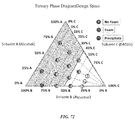
- FIG. 71 illustrates ibuprofen permeability from formulations selected for stability studies.
- FIG. 72 illustrates the qualitative properties of the ibuprofen test formulations (foam/no foam/precipitate).
- FIG. 73 illustrates the foam produced from formulation 1 (F110128-1).
- FIG. 74 illustrates the foam produced from formulation 2 (F110128-2).
- FIG. 75 illustrates the foam produced from formulation 3 (F110128-3).
- FIG. 76 illustrates the foam produced from formulation 4 (F110131-1).
- FIG. 77 illustrates the foam produced from formulation 5 (F110131-2).
- FIG. 78 illustrates the foam produced from formulation 6 (F110131-3).
- FIG. 79 illustrates the foam produced from formulation 7 (F110131-4).
- FIG. 80 illustrates the foam produced from formulation 8 (F110131-5).
- FIG. 81 illustrates the foam produced from formulation 9 (F110131-6).
- FIG. 82 illustrates the foam produced from formulation 10 (F110201-1).
- FIG. 83 illustrates the foam produced from formulation 11 (F110201-2).
- FIG. 84 illustrates the foam produced from formulation 12 (F110201-3).
- FIG. 85 illustrates the foam produced from formulation 13 (F110203-1).
- FIG. 86 illustrates the foam produced from formulation 14 (F110203-2).
- FIG. 87 illustrates the foam produced from formulation 15 (F110203-3).
- a not only includes aspects with one member, but also includes aspects with more than one member.
- an embodiment including “a cellulosic thickening agent and a lower monohydric alcohol” should be understood to present certain aspects with at least a second cellulosic thickening agents, at least a second lower monohydric alcohol, or both.
- An embodiment including “an active agent” should be understood to present certain aspects with at least a second active agent, which may be of a different class (e.g., a non-steroidal anti-inflammatory drug with an anti-inflammatory steroid or a local anesthetic).
- compositions comprising an “additional” or “second” component
- the second component as used herein is chemically different from the other components or first component.
- a “third” component is different from the other, first, and second components, and further enumerated or “additional” components are similarly different.
- Agent indicates a compound or mixture of compounds that, when added to a pharmaceutical composition, tend to produce a particular effect on the composition's properties. For example, a composition comprising a thickening agent is likely to be more viscous than an otherwise identical comparative composition that lacks the thickening agent.
- the phrase “effective amount” or “effective dose” means an amount sufficient to achieve the desired result and accordingly will depend on the ingredient and its desired result. Nonetheless, once the desired effect is known, determining the effective amount is within the skill of a person skilled in the art.
- ER Enhancement ratio
- ER is the ratio of a test result (e.g., ug/cm 2 accumulated dose of product) from a formulation comprising an active to the corresponding test result from a control composition comprising the same active at the same concentration in the formulation.
- error bars represent the standard error of the mean value
- top of the solid, shaded bar represents a single data value, which is the mean value of the distribution of data values.
- Finite dosing as used herein generally includes an application of a limited reservoir of an active agent.
- the active agent in the reservoir is depleted with time, leading to a decrease of the absorption rate after a maximum rate is reached.
- composition as used interchangeably herein are equivalent terms referring to a composition of matter for pharmaceutical use.
- “Monohydric alcohol” as used herein includes straight- or branched-chain alkyl alcohols with a single hydroxyl group.
- Representative monohydric alcohols include methanol, ethanol, n-propanol, isopropanol, n-butanol, t-butanol, n-pentanol, 3-pentanol, 2-methoxyethanol, 2-(2-ethoxyethoxy)ethanol, olelyl alcohol, and the like.
- compositions comprising A or B would typically present an aspect with a composition comprising both A and B.
- Or should, however, be construed to exclude those aspects presented that cannot be combined without contradiction (e.g., a composition pH that is between 9 and 10 or between 7 and 8).
- “Penetration enhancer”, “molecular penetration enhancer” or “MPETM” as used herein includes an agent or a combination of agents that improves the transport of molecules such as a pharmaceutically or cosmetically active agent into or through a natural membrane such as skin or nail.
- a pharmaceutically or cosmetically active agent into or through a natural membrane such as skin or nail.
- Various conditions may occur at different sites in the body, either in the skin or below the skin, creating a need to target delivery of compounds. For example, in a treatment for osteoarthritis, delivery of the active agent to the underlying tissues surrounding the joint may be necessary to achieve therapeutic benefit.
- a molecular penetration enhancer may be used to assist in the delivery of an active agent i) directly into the skin or nail; ii) locally, or regionally, into tissue(s) underlying the skin or nail; or iii) indirectly via systemic distribution to the site of the disease. If systemic distribution of an active agent (e.g., ibuprofen) would be likely to produce side effects, a molecular penetration enhancer is preferably selected to maximize direct delivery and to minimize systemic distribution.
- a molecular penetration enhancer may be a pure substance or may comprise, consist essentially of, or consist of a mixture of different chemical entities.
- pH adjusting agent refers to a compound added to the compositions of the present application for the purpose of changing the pH of the composition.
- examples of such agents include pharmaceutically acceptable acids, pharmaceutically acceptable bases, and pharmaceutically acceptable buffers.
- pharmaceutically acceptable means compatible with the treatment of animals, and in particular, humans.
- pharmaceutically acceptable salt means a pharmaceutically acceptable acid addition salt or a pharmaceutically acceptable basic addition salt.
- the formation of a desired compound salt is achieved using standard techniques. For example, the neutral compound is treated with an acid or base in a suitable solvent and the formed salt is isolated by filtration, extraction, or any other suitable method.
- subject as used herein includes all members of the animal kingdom, preferably mammals, and most preferably, humans.
- “Surfactant” as used herein includes a surface-active agent. Surfactants reduce the surface tension of a solvent in which they are dissolved.
- Thickening agent as used herein includes an agent or combination of agents that increases the viscosity of a composition.
- a thickening agent may be a pure substance, or it may comprise, consist essentially of, or consist of a mixture of different chemical entities.
- Exemplary thickening agents include cellulose polymers, carbomer polymers, carbomer derivatives, cellulose derivatives, polyvinyl alcohol, poloxamers, polysaccharides, and the like, as well as mixtures thereof.
- Topical formulation as used herein includes a composition that is suitable for topical application to the skin, a nail, or a mucosa.
- a topical formulation may, for example, be used to confer a therapeutic or cosmetic benefit to its user.
- Specific topical formulations can be used for local, regional, or transdermal application of substances.
- Transdermal as used herein includes a process that occurs through the skin.
- the terms “transdermal,” “percutaneous,” and “transcutaneous” can be used interchangeably.
- “transdermal” may also include epicutaneous.
- Transdermal application as used herein includes administration through the skin. Transdermal application can be used for systemic delivery of an active agent; however, it is also useful for delivery of an active agent to tissues underlying the skin with minimal systemic absorption. In certain embodiments, “transdermal application” may also include epicutaneous application.
- treating means an approach for obtaining beneficial or desired results in a subject's condition, including clinical results.
- beneficial or desired clinical results can include, but are not limited to, alleviation or amelioration of one or more symptoms or conditions, diminishment of the extent of a disease, stabilizing (i.e., not worsening) the state of disease, prevention of a disease's transmission or spread, delaying or slowing of disease progression, amelioration or palliation of the disease state, diminishment of the reoccurrence of disease, and remission, whether partial or total and whether detectable or undetectable.
- Treating” and “treatment” as used herein also include prophylactic treatment.
- Treatment methods comprise administering to a subject a therapeutically effective amount of an active agent.
- the administering step may consist of a single administration or may comprise a series of administrations.
- the length of the treatment period depends on a variety of factors, such as the severity of the condition, the age of the patient, the concentration of active agent, the activity of the compositions used in the treatment, or a combination thereof.
- the effective dosage of an agent used for the treatment or prophylaxis may increase or decrease over the course of a particular treatment or prophylaxis regime. Changes in dosage may result and become apparent by standard diagnostic assays known in the art. In some instances, chronic administration may be required.
- the compositions are administered to the subject in an amount and for a duration sufficient to treat the patient.
- micro as used herein can be alternatively abbreviated as “ ⁇ ” or “u.”
- micrograms are typically abbreviated as ⁇ g, but can alternatively be abbreviated as “ug.”
- w/w or “wt/wt” means a percentage expressed in terms of the weight of the ingredient or agent over the total weight of the composition multiplied by 100.
- the active agent is an anti-inflammatory agent. More preferably, the agent is a non-steroidal anti-inflammatory drug (NSAID). Preferably, the agent is a diclofenac salt. More preferably, the diclofenac salt is diclofenac sodium.
- an active agent should be understood to present certain aspects with at least a second active agent, which may be the same class or a different class (e.g., a non-steroidal anti-inflammatory drug with an anti-inflammatory steroid or a local anesthetic).
- Non-limiting examples of NSAIDs include acetic acid derivatives such as indomethacin, sulindac, etodolac, and diclofenac; propionic acid derivatives such as ibuprofen, naproxen, fenoprofen, ketoprofen, fluriprofen, and oxaprozin; coxibs such as celecoxib, rofecoxib, valdecoxib, parecoxib, lumiracoxib, and etoricoxib; fenamic acid derivatives such as mefenamic acid, meclofenamic acid, flufenamic acid, and tolfenamic acid; enolic acid derivatives such as piroxicam, meloxicam, tenoxicam, droxicam, and isoxicam; and the compounds' pharmaceutically acceptable salts such as diclofenac sodium, naproxen sodium, and diclofenac potassium.
- NSAIDs include aspirin, salicylic acid, diflunisal, etodolac, nabumetone, salsalate, bromfenac, ketorolac, tolmetin, and their pharmaceutically acceptable salts. Also included are dexibuprofen (i.e., (S)-+-ibuprofen) or ibuprofen that is enantiomerically enriched with the dexibuprofen enantiomer.
- dexibuprofen i.e., (S)-+-ibuprofen
- ibuprofen that is enantiomerically enriched with the dexibuprofen enantiomer.
- the compositions and formulations include DMSO.
- the DMSO may be present in an amount of 5% to 80% w/w.
- DMSO is present in an amount ranging from about 5-30% w/w, about 10-40% w/w, about 15-50% w/w, about 20-60% w/w, about 25-70% w/w, or about 30-80% w/w.
- a clinically effective amount of DMSO may range from 5% to 60% w/w.
- DMSO is present in an amount of at least 15% w/w. More preferably, DMSO is present in an amount of at least 25% w/w.
- DMSO is present in an amount of at least 45% w/w.
- DMSO is used at a concentration of about 12 to 48% w/w.
- DMSO is used at a concentration such as 42, 43, 44, 45, 45, 46, 47 and 48% w/w as well as all fractions between such as 42.5, 43.5 44.5, 45.5, and the like.
- DMSO is used at a concentration such as 14, 16, 18, 20, 22, 24, 26, 28 and 30% w/w as well as all percentages between.
- DMSO is a polar aprotic solvent characterized as having low surface tension.
- Producing a foamable formulation comprising DMSO (or high concentration DMSO liquids) is difficult, requiring extensive experimentation and analyses. As discussed below, the constituents required to achieve a foamable formulation are not readily discernable. In fact, the majority of compounds tested had less than desirable qualities for producing a foamable DMSO-containing formulation. Despite this, polyethylene glycol alkyl ethers (e.g., Brij 30, Brij 78, Brij 90, Brij 98, and the like) provided surprisingly good results. In addition, altering the ratio of DMSO to ethanol improved foam quality. Best foams were produced at a ratio of 0:70 to 20:60 (EtOH:DMSO).
- the compositions and formulations include a lower alcohol. More preferably, the lower alcohol is a monohydric lower alcohol, and still more preferably, the lower alcohol is selected from a C 1 to C 6 alkanol, such as methanol, ethanol, propanol, isopropanol, butanol, isobutanol, sec-butanol, pentanol, and the like, as well as a mixture thereof. Ethanol is preferred.
- the composition includes about 0% to 60% (w/w) or about 1 to 50% (w/w) of the lower alcohol (e.g., ethanol).
- the formulations include about 5, 10, 15, 20, 22, 23, 25, 30 32, 33, 35, 36, 40, 41, 42, 45, 50, 55, or 60% (w/w) of a lower alcohol. More preferably, the composition comprises from about 5% to 25% (w/w) of a lower alcohol, such as about 5, 6, 7, 8, 9, 10, 11, 11.2, 12, 13, 15, 18, 20, 22, 23, or 25%.
- the composition comprises from about 1 to 5%, about 1 to 12%, about 5 to 15%, about 5 to 22.5%, about 10 to 23%, about 15 to 30%, about 20 to 40%, about 25 to 50%, about 35 to 50%, about 35 to 60% (w/w) of a lower alcohol.
- the composition comprises about 22, 22.5, 23, 25, 30, 32, 32.5, 33, 35, 35.5, 36, 39, 39.5, 40, 41, 41.7, 42, or 50% (w/w) of a lower alcohol.
- the formulations include a diol.
- Suitable diols include, but are not limited to, propylene glycol, butanediol, butynediol, pentanediol, hexanediol, octanediol, neopentyl glycol, 2-methyl-1,3-propanediol, diethylene glycol, triethylene glycol, tetraethylene glycol, dipropylene glycol, dibutylene glycol, propylene glycol, and the like, as well as a mixture thereof.
- the formulation comprises about 0% to 15% (w/w) of propylene glycol, and preferably about 0 to 8%.
- the diol is a glycol, such as ethylene glycol, propylene glycol, or a mixture thereof. More preferably, the diol is propylene glycol.
- the formulation includes at least two alcohols.
- the formulation includes a monohydric alcohol and a diol. More preferably, the monohydric alcohol is ethanol. Alternatively, the diol is propylene glycol. Still more preferably, the monohydric alcohol is ethanol, and the diol is propylene glycol.
- the composition includes at least one pharmaceutically acceptable surfactant that is a polyalkylene glycol alkyl ether.
- the polyalkylene glycol alkyl ether may be present at up to about 5% w/w, such as about 0.1, 0.15, 0.2, 0.3, 0.4, 0.5, 1.0, 1.5, 2, 2.5, 3, 3.5, 4, 4.5 or 5% w/w. More preferably, the polyalkylene glycol alkyl ether is present at up to about 3% w/w, such as about 0.1, 0.15, 0.2, 0.3, 0.4, 0.5, 1.0, 1.25, 1.5, 1.75, 2.0; 2.25, 2.5, 2.75 or 3% w/w.
- the composition includes a polyalkyene glycol alkyl ether; more preferably, a polyalkylene glycol alkyl ether such as a polypropylene oxide alkyl ether or a polyethylene glycol alkyl ether.
- polyalkylene glycol alkyl ethers include poly(oxyethylene) cetyl ether, poly(oxyethylene) palmityl ether, polyethylene oxide hexadecyl ether, polyethylene glycol cetyl ether, Brij 30, Brij 38, Brij 52, Brij 56, Brij 58, Brij 78, Brij 98, Brij 700, Brij 700P, Brij 721, and Brij W1.
- the polyalkylene glycol alkyl ether is a combination of Brij 30 and Brij 78.
- the Brij group of non-ionic surfactants are particularly preferred for their surprising effectiveness at producing foams from formulations including large proportions of DMSO. Further, these surfactants are particularly effective in producing a foamable formulation in the absence of a propellant.
- non-limiting examples include members of the class of alkyl ether nonionic surfactants with two to 100 alkylene glycol repeat units in their polyalkylene glycol polymeric chains.
- the alkyl group is derived from a fatty acid alcohol.
- the polyalkenene glycol is polyethylene glycol.
- the composition may include a polyalkylene glycol block co-polymer such as Poloxamer 188 or Poloxamer 407.
- the formulation includes a phospholipid.
- a propellant such as octane, butane or isopentane, for conversion to a foam or for stability of the resulting foam.
- the composition may include one or more additional nonionic, cationic, anionic, and/or zwitterionic surfactants.
- the one or more surfactants may be present at about 0.1% or 0.15% to 10% w/w, such as about 0.1, 0.15, 0.2, 0.3, 0.4, 0.5, 1.0, 1.5, 2, 3, 4, 5, 6, 7, 8, 9 or 10% w/w.
- Non-limiting examples of nonionic surfactants include polysorbates, such as polysorbate 20 (Tween 20), Tween 40, Tween 60, and Tween 80; poly(oxyethylene) (POE) fatty acid esters, such as Myrj 45, Myrj 49, Myrj 52 and Myrj 59; sucrose esters; partial esters of sorbitol and its anhydrides, such as sorbitan monolaurate; mono or diglycerides; and isoceteth-20.
- polysorbates such as polysorbate 20 (Tween 20), Tween 40, Tween 60, and Tween 80
- POE poly(oxyethylene) fatty acid esters
- sucrose esters such as Myrj 45, Myrj 49, Myrj 52 and Myrj 59
- sucrose esters such as sorbitol and its anhydrides, such as sorbitan monolaurate; mono or diglycerides; and isoceteth-20.
- non-limiting examples include members of the class of alkyl ester nonionic surfactants with 8 to 100 alkylene glycol repeat units in their polyalkylene glycol polymeric chains (e.g., 8, 40, 50, or 100).
- the ester group is derived from a fatty acid.
- the polyalkenene glycol is polyethylene glycol.
- nonionic surfactants include, but are not limited to, cetomacrogol 1000, cetostearyl alcohol, cetyl alcohol, cocoamide diethanolamine, cocoamide monoethanolamine, decyl glucoside, glyceryl laurate, lauryl glucoside, polyoxyethylene ethers of fatty acids such as cetyl alcohol or stearyl alcohol, narrow-range ethoxylates, octyl glucoside, oleyl alcohol, poloxamers, polyethylene glycol, sorbitan monolaurate, polyoxyethylene sorbitan monolaurate, sorbitan dioleate, sorbitan trilaurate, sorbitan monopalmitate, polyoxyethylene (20) sorbitan monopalmitate, sorbitan monostearate, sorbitan tristearate, polyoxyethylene (20) sorbitan monostearate, sorbitan monooleate, sorbitan trioleate, polyoxyethylene sorbitan monooleate,
- non-ionic surfactants include, but are not limited to, fatty acid diesters, polyethylene glycol glycerol fatty acid esters, alcohol-oil transesterification products, polyglycerized fatty acids, sterol and sterol derivatives, polyethylene glycol alkyl ethers, sugar esters, polyethylene glycol alkyl phenols, polyoxyethylene-polyoxypropylene block copolymers, sorbitan fatty acid esters and lower alcohol fatty acid esters.
- Non-limiting examples of cationic surfactants include octyl trimethylammonium salts, cetyl trimethyl ammonium salts, stearyl trimethyl ammonium salts, benzyl trimethyl ammonium salts, alkylamines, alkylimidazoles, ethoxylated amines, non-amphoteric quaternary surfactants, esterquats, and a mixture thereof.
- Quaternary surfactants contain at least one nitrogen atom, which is covalently bonded to four alkyl or aryl groups.
- Cationic surfactants include, but are not limited to, non-amphoteric quaternary ammonium compounds, in particular benzyltrialkyl ammonium chlorides or bromides, e.g., benzyl dimethylstearyl ammonium chloride; alkyl trialkyl ammonium salts, e.g., cetyl trimethyl ammonium chloride or bromide, alkyl dimethylhydroxyethyl ammonium chloride or bromide, dialkyl dimethyl ammonium chloride or bromide, and alkylamide ethyltrimethyl ammonium ether sulfates; alkylpyridinium salts, e.g., lauryl or cetyl pyrimidinium chloride; N,N′-dialkylimidazoline derivatives; compounds having cationic character, such as amine oxides, e.g., alkyl dimethylamine oxides or alkylaminoethyl dimethylamine oxides; and the like
- anionic surfactants include alkyl sulfates, e.g., sodium, ammonium or triethylammonium (TEA) lauryl sulfate or laureth sulfate; acylamino acids (and their salts), such as acyl glutamates, e.g., sodium acyl glutamate, di-TEA palmitoyl aspartate, and sodium caprylic/capric glutamate; acyl peptides, e.g., palmitoyl-hydrolyzed milk protein, sodium cocoyl-hydrolyzed soya protein and sodium/potassium cocoyl-hydrolyzed collagen; sarcosinates, e.g., myristoyl sarcosin, TEA-lauroyl sarcosinate, sodium lauroyl sarcosinate and sodium cocoyl sarcosinate; taurates, e.g., sodium, ammonium
- anionic surfactants include carboxylic acids and derivatives, such as carboxylic acids, e.g., lauric acid, aluminum stearate, magnesium alkanolate, and zinc undecylenate; ester carboxylic acids, e.g., calcium and sodium stearoyl lactylates, laureth-6 citrate, and sodium PEG-4 lauramide carboxylate; ether carboxylic acids, e.g., sodium laureth-13 carboxylate, and sodium PEG-6 cocoamide carboxylate; and the like.
- carboxylic acids e.g., lauric acid, aluminum stearate, magnesium alkanolate, and zinc undecylenate
- ester carboxylic acids e.g., calcium and sodium stearoyl lactylates, laureth-6 citrate, and sodium PEG-4 lauramide carboxylate
- ether carboxylic acids e.g., sodium laureth-13 carboxylate, and sodium PEG-6 cocoamide carboxylate
- anionic surfactants include esters of phosphoric acid and salts, e.g., dilaureth-4 phosphate.
- anionic surfactants include sulfonic acids and salts, such as acyl isethionate, e.g., sodium-ammoniumcocoyl isethionate, alkylaryl sulfonates; alkyl sulfonates, e.g., sodium coco monoglyceride sulfate, sodium C 12-14 olefin-sulfonate, sodium lauryl sulfoacetate and magnesium PEG-3 cocamide sulfate; sulfosuccinates, e.g., dioctyl sodium sulfosuccinate, disodium laureth sulfosuccinate, disodium lauryl sulfosuccinate, disodium undecylenamido-MEA-sulfosuccinate, and PEG-5 lauryl citrate sulfosuccinate; esters of sulfuric acid, such as alkyl ether sulfate, e
- the composition comprises a zwitterionic surfactant or a charged derivative thereof.
- the zwitterionic surfactant or charged derivative thereof is selected from the group of disodium cocoamphodiacetate, sodium cocoamphodiacetate, cocoamidopropyl betaine, and a mixture thereof.
- zwitterionic surfactants or charged derivatives thereof include, but are not limited to, amino acids such as ⁇ -N-alkylaminopropionic acids, aminopropyl alkylglutamide, alkylaminopropionic acid, sodium alkylimidodipropionate, dihydroxyethyl alkyl glycinate, and lauroamphocarboxyglycinate; imino acids such as N-alkyl- ⁇ -iminodipropionic acids; imidazoline derivatives that are not N,N′-dialkylated; quaternary ammonium amino acid sulfobetaines such as alkyl amidopropyl hydroxysultaines, cocoamidopropyl hydroxysultaine, sodium cocoamphohydroxypropyl sulfonate, or sodium capryloamphohydroxypropyl sulfonate; quaternary ammonium amino acid betaines, e.g., dodecyl betaine; al
- the compositions include water.
- water is present from about 5% to 75% (w/w) such as about 5, 6, 7, 8, 9, 10, 11, 12, 12.5, 13, 14, 15, 16, 16.6, 17, 17.5, 18, 18.5, 19, 20, 21, 22, 23, 24, 25, 30, 35, 40, 45, 50, 55, 60, 65, 70 or 75% by weight.
- water is present from about 5% to 25% (w/w).
- the composition includes from about 5 to 10%, about 10 to 20%, about 10 to 15%, about 15 to 20%, about 20 to 30%, about 30 to 40%, about 40 to 50%, about 50 to 60%, about 60 to 70%, or about 70 to 75% (w/w) water.
- the mixture includes about 8, 9, 10, 12, 12.5, 13, 16, 16.6, or 17% (w/w) or q.s. water.
- the composition may include a steroid.
- a steroid Non-limiting examples include cholesterol and derivatives thereof.
- the formulation comprises at most 1% (w/w) of the steroid. More preferably, the formulation comprises at most 0.5% (w/w) of the steroid. Still more preferably, the formulation comprises at most 0.2% (w/w) of the steroid. Alternatively, the formulation comprises at most 0.15% w/w of the steroid; more preferably, at most 0.05% w/w of the steroid.
- Steroids may be included in the composition to enhance or improve foam stability.
- a steroid may be added to extend the life of the foam.
- measureable aspects of foam stability include foam formation, foam height and foam collapsibility.
- the surfactant e.g., Brij
- the surfactant may be added to the formulation by vortexing and heating.
- the surfactant may be added into the hydroalchoholic fraction and the steroid into the remaining organic part, and the resulting phases then combined. This is the preferred process as it does not require heating.
- Emollients can optionally be added to the foamable formulations of the invention so that the formulations can maintain or increase the moisture content of the stratum corneum when the composition is applied (e.g., the skin of the knee). Emollients may be added to the formulations in addition to the components already described, which may also aid in maintaining or improving the skin condition of the user.
- the use of emollients in a foamable composition is discussed in U.S. Pat. No. 7,651,990.
- added emollients are included in the compositions of the invention at a concentration between about 0.1 and 20% w/w.
- the added emollient can be present in the composition at a concentration between about 0.5% and 10% w/w.
- the emollient concentration can be between about 1% and 5% w/w.
- Emollients are generally separated into two broad classes based on their function.
- the first class of emollients functions by forming an occlusive barrier to prevent water evaporation from the stratum corneum.
- the second class of emollients penetrate into the stratum corneum and physically bind water to prevent evaporation.
- the first class of emollients is subdivided into compounds which are waxes at room temperature and compounds which are liquid oils.
- the second class of emollients includes those which are water soluble and are often referred to as humectants.
- Suitable emollients may be selected from any of the classes known in the art.
- a general list of useful emollients appears, for example, in U.S. Pat. No. 4,478,853 and in EP patent application 0 522 624A1 as well as in the CTFA Cosmetic Ingredient Handbook published by The Cosmetic, Toiletry, and Fragrance Association, Wash. D.C. (1992) under the listings “Skin Conditioning agents,” “emollients,” “humectants,” “miscellaneous” and “occlusive.”
- emollients may be chosen from the following non-limiting list of general emollients, occlusive emollients, and humectants.
- general emollients include short-chain alkyl or aryl esters (C 1 -C 7 ) of long-chain straight- or branched-chain alkyl or alkenyl alcohols or acids (C 9 -C 32 ) and their polyethoxylated derivatives; short-chain alkyl or aryl esters (C 1 -C 7 ) of C 4 -C 12 diacids or diols optionally substituted with one or more hydroxyl groups; alkyl or aryl C 1 -C 10 esters of glycerol, pentaerythritol, ethylene glycol, propylene glycol, as well as polyethoxylated derivatives of these and polyethylene glycol; C 12 -C 22 alkyl esters or ethers of polypropylene
- Non-limiting examples of occlusive emollients include cyclic and linear dimethicones; polydialkylsiloxanes; polyarylalkylsiloxanes; long chain (C 8 -C 36 )alkyl and alkenyl esters of long straight or branched chain alkyl or alkenyl alcohols or acids; long chain (C 8 -C 36 )alkyl and alkenyl amides of long straight or branched chain (C 8 -C 36 )alkyl or alkenyl amines or acids; hydrocarbons including straight and branched chain alkanes and alkenes such as squalene, squalane and mineral oil; jojoba oil; polysiloxane polyalkylene copolymers; short chain alkyl or aryl esters (C 1 -C 36 ) of C 12 -C 22 diacids or diols optionally substituted with one or more hydroxyl groups such as diisoprop
- Non-limiting examples of humectant-type emollients include glycerol, polyglycerols (including: diglycerol, triglycerol, polyglycerin-3, tetraglycerol, hexaglycerol, decaglycerols) propylene glycol, dipropylene glycol, polypropylene glycol, polyethylene glycol (PEG-2 to PEG-45M, preferably a molecular weight between about 300 and 1,000), sorbitol, polyhydric alcohol ethoxylates (e.g., sorbeth-6, sorbeth-30, glycereth-1 to glycereth-31) methoxides of polyethylene glycol (Methoxy PEG-2 to Methoxy PEG-100) methoxides of polyhydric alcohol ethoxylates (e.g., glycereth-7 methoxide), pantothenol, gluconic acid salts and the like
- humectant-type agents like that could also be employed include: 1,2,6-hexanetriol, acetamide mea, aluminum hydroxide, arginine pea, butoxypropanol, butylene glycol, dimethyl imidazolidinone, dimethylsilanol hyaluronate, dipotassium glycyrrhizate, erythritol, ethoxy-diglycol, fructose, glucamine, gluconic acid, glucose, glucose glutamate, glucuronic acid, glutamic acid, glycogen, glycyrrhizic acid, heilmoor clay, hexacosyl glycol, histidine, hyaluronic acid, hydrogenated honey, hydrogenated starch, hydrolysate, hydrolyzed collagen, hydrolyzed elastin, hydrolyzed glycosaminoglycans, hydrolyzed keratin, hydrolyzed silk, hydrolyzed soy protein
- emollients may affect the viscosity and stability of the compositions of the present invention.
- a single emollient may be added to the composition.
- two or more emollients may be added to the composition. While any of a variety of emollients may be added to the formulations of the present invention, some embodiments will include wax and oil type emollients either alone or combined with water soluble emollients.
- emollient systems can be comprised of humectants in addition to occlusive wax and oil emollients in concentrations that achieve a moisturizing effect and which maintains and improves the condition of the skin upon repeated use.
- Emollients may be non-comedogenic and chosen to avoid skin irritation or sensitization reactions.
- the formulations of the present invention are preferably not propellant-based (i.e., substantially propellant-free or propellant-free).
- the option of including a propellant in the inventive formulations is herein contemplated.
- the propellant is from about 3 to 45% (w/w) of the foamable formulation. More preferably, the propellant is about 5%, about 10%, about 15%, about 20%, about 25%, about 30%, about 35%, about 40%, or about 45% (w/w) of the foamable formulation.
- the addition of propellants to inherently foamable formulations can provide a more consistent delivery of the active agent.
- addition of a propellant to a foamable formulation may be useful in producing metered dosing of the composition, as required by certain regulatory bodies to prevent over- or under-doing.
- the addition of a propellant is not key for deriving a foam from the formulations of the invention.
- the formulations are capable of being formulated into an aerosol foam or a mousse by addition of propellant to the composition.
- the propellant may form a separate layer on the composition or the propellant may be emulsified or miscible in the composition.
- the use of emollients in a foamable composition is discussed in U.S. Pat. No. 7,651,990.
- Suitable propellants can be chosen from chlorofluorocarbons (CFCs), hydrochlorofluorocarbons (HCFCs), hydrofluorocarbons (HFCs), perfluorinated alkanes, and lower alkanes (C 1 -C 5 ) as well as nitrous oxide dimethyl ether and other solvent-soluble propellants.
- Suitable lower alkanes include n-pentane, propane, butane, and isobutane or mixtures thereof.
- the propellant can comprise a 70/30 mixture of propane/isobutane.
- the propellant is A-46, which is a blend of 84% A-31 isobutane and 16% A 108 propane.
- the composition is first formulated and charged into an appropriate pressure-rated container.
- a suitable propellant may then be added to the composition under pressure at approximately 1-30%, and preferably 3-20%, by volume.
- canisters useful in dispensing propellant-based foams include Aptar's BOV and EP systems.
- the composition comprises a foamable formulation as previously described mixed with a propellant in a ratio from about 70:30 to 99:1% (w/w). In another aspect, the composition comprises a foamable formulation as previously described mixed with a propellant in a ratio from about 85:15 to 97:3% (w/w). In a further aspect, the composition comprises a foamable formulation as previously described mixed with a propellant in a ratio of about 90:10% (w/w). Preferably, the propellant is A-46.
- the process for preparing a propellant formulation comprises adding the propellant (e.g., at 10% concentration by weight) to the foamable formulation (e.g., at 90% concentration by weight) and pressure-filling the cans using a Kartridge Pak pressure filler.
- the formulation additionally comprises an anti-oxidant.
- Preferred anti-oxidants for use in the present invention include butylated hydroxytoluene, butylated hydroxyanisole, ascorbyl linoleate, ascorbyl dipalmitate, ascorbyl tocopherol maleate, calcium ascorbate, carotenoids, kojic acid and its pharmaceutically acceptable salts, thioglycolic acid and its pharmaceutically acceptable salts (e.g., ammonium), tocopherol, tocopherol acetate, tocophereth-5, tocophereth-12, tocophereth-18, or tocophereth-80.
- Preferred anti-oxidants for use in the present invention include butylated hydroxytoluene, butylated hydroxyanisole, ascorbyl linoleate, ascorbyl dipalmitate, ascorbyl tocopherol maleate, calcium ascorbate, carotenoids, kojic acid and its
- compositions of the present application additionally comprise a pH-adjusting agent.
- the pH-adjusting agent is present in an effective amount.
- the pH-adjusting agent adjusts the pH so that the active (e.g., ibuprofen) is in a protonated form. Accordingly, the pH adjusting agent is present in an amount effective to keep the active in a protonated form.
- the pH-adjusting agent is a base.
- Suitable pH-adjusting bases include bicarbonates, carbonates, hydroxides (e.g., ammonium hydroxide, alkali or alkaline earth metal hydroxides, transition metal hydroxides), and the like.
- suitable pH-adjusting bases include amines, such as diethanolamine, triethanolamine, or aminopropanol.
- the pH-adjusting agent can be an acid, an acid salt, or mixtures thereof.
- the pH-adjusting agent comprises two agents (e.g., sodium hydroxide and hydrochloric acid) that are included as needed to adjust the final pH of the composition to a desired pH.
- the pH-adjusting agent is sodium carbonate.
- the composition comprises about 0.1% (w/w) to about 5% (w/w), about 0.15% (w/w) to about 4% (w/w), about 0.25% (w/w) to about 3.0% (w/w), about 0.5% (w/w) to about 2.0% (w/w) or about 1.0% (w/w) of a pH adjusting agent, suitably sodium carbonate.
- pH-adjusting agents can also be included in the composition, such as other acids, acid salts, or mixtures thereof.
- the pH-adjusting agent can additionally or alternatively be a buffer.
- Suitable buffers include citrate/citric acid buffers, acetate/acetic acid buffers, phosphate/phosphoric acid buffers, formate/formic acid buffers, propionate/propionic acid buffers, lactate/lactic acid buffers, carbonate/carbonic acid buffers, and the like.
- the buffer is phosphate buffered saline (PBS).
- the buffer is a citrate buffer.
- the buffer comprises or is included in the water component of the hydroalcholic chassis.
- the inventive formulation includes a buffer and a second pH-adjusting agent (e.g., sodium hydroxide or hydrochloric acid) to adjust the pH of the composition to a desired pH.
- a second pH-adjusting agent e.g., sodium hydroxide or hydrochloric acid
- the second pH-adjusting agent comprises two agents (e.g., sodium hydroxide and hydrochloric acid) that are included as needed to adjust the pH of the hydroalcoholic chassis or final composition to a desired pH.
- the formulation is acidic.
- the formulation has a pH of below about 7.5, 6.5, 5.5, 4.5, 3.5, or 2.5.
- the pH of the formulation may range from about 1.5 to 7, about 2 to 7, about 3 to 7, about 4 to 7, or about 5 to 7.
- the pH of the formulation may range from about 1.5 to 5.5, about 2.5 to 5.5, about 3.5 to 5.5, or about 4.5 to 5.5.
- the formulation may include a buffering agent to maintain its acidic pH.
- the formulation has a pH value between about 4 and 7.
- the formulation is basic. In certain aspects, the formulation has a pH of above about 7, 8, 9, 10, 11, or 12. In certain other aspects, the pH of the formulation may range from about 7 to 12.5, about 7 to 11.5, about 7 to 10.5, about 7 to 9.5, or about 7 to 8.5. In still other aspects, the pH of the formulation may range from about 9 to 12.5, about 9 to 11.5, about 9 to 10.5, or about 8.5 to 10.
- the formulation may include a buffering agent to maintain its basic pH. Preferably, the formulation has a pH value between about 7 and 10.
- the formulation is neutral.
- the formulation has a pH of about 7.
- the formulation has a pH from about 6 to about 8.5, from about 5.5 to 8, about 6 to 8, about 6.5 to 8.5, or from about 6.5 to 7.5.
- the formulation may include a buffering agent to maintain its neutral pH.
- the formulation has a pH value between about 6 and 8.5.
- the formulations of the current invention have the advantage of being foamable in the absence of a propellant.
- the formulations are foamable by manual aeration, wherein a gas is passed through the formulation to produce a foam by manual actuation of a dispensing head.
- DMSO-based formulations were foamed by actuating the pump head of a dispensing system containing the inventive formulation.
- the foamable formulations have the advantage of maintaining chemical or physical stability over a period of time.
- Table 40 for instance, the chemical attributes of preferred formulations were monitored over the course of a three-month period.
- the pharmaceutical composition is substantially stable with respect to its chemical or physical attributes over a predetermined period of time.
- the measurable attributes may include, but are not limited to, percentage of active, percentage of impurities, pH, or visual attributes, such as colour and the presence of particulates.
- the pharmaceutical composition is substantially stable following storage for about 4, 8, or 12 weeks at 25° C. In still other aspects of the invention, the pharmaceutical composition is substantially stable following storage for about 4, 8, or 12 weeks at 40° C.
- the present invention provides a method for making foamable formulations of an active agent (e.g., an NSAID, such as diclofenac sodium or ibuprofen).
- an active agent e.g., an NSAID, such as diclofenac sodium or ibuprofen.
- the formulations of the present invention may be made by carrying out the following steps: (i) dispersing some or all of formulation components in dimethyl sulfoxide (preferably, the DMSO-soluble components); (ii) dissolving diclofenac sodium in an aqueous alcohol mixture (e.g., an ethanol/water mixture); (iii) dispersing propylene glycol and glycerol into the NSAID solution from (ii); and (iv) mixing the resulting NSAID solution into the dimethyl sulfoxide blend. Any remaining ingredients (e.g., surfactants) can be added after preparation of the base solution. Heating can also be used during these mixing processes.
- an active agent e
- the formulations of the present invention may be made by carrying out the following steps: (i) dissolving the NSAID (e.g., diclofenac sodium) in an alcohol solution of DMSO (e.g., an ethanol/dimethyl sulfoxide mixture); (ii) dispersing some or all of the formulation components in a solution of water/diol/(optionally) glycerol (preferably, the components soluble in this solution); and (iii) mixing the NSAID solution from (i) into the thickener blend from (ii). Any remaining ingredients (e.g., surfactants) can be added after preparation of the base solution. Heating can also be used during these mixing processes.
- NSAID e.g., diclofenac sodium
- DMSO e.g., an ethanol/dimethyl sulfoxide mixture
- the surfactant components can be added last to a DMSO base solution comprising the other ingredients. See, e.g., Example 3.
- the invention describes a method for treating osteoarthritis comprising the step of applying a topical foamable formulation to a subject to treat the osteoarthritis.
- the invention describes a method for treating an injury such as a minor strain, sprain or contusion comprising the step of applying a topical foamable formulation to a subject to treat the injury.
- the pain is associated with osteoarthritis.
- the compositions of the present application are useful for the treatment of other chronic joint diseases characterized by joint pain, degeneration of articular cartilage, impaired movement, and stiffness. Suitable joints include, for example, the knee, elbow, hand, wrist and hip.
- the pain is associated with inflammation.
- the compositions of the application are useful for the treatment of other pain-associated disorders, including (but not limited to) muscle pain, lower-back pain, neck pain, rheumatoid arthritis, tendonitis, fibromyalgia, myofascial pain, Carpal tunnel syndrome, gout and neuropathic pain conditions.
- the pharmaceutical composition is applied to a joint of the subject.
- the pharmaceutical composition is applied to the knee and the surrounding tissue.
- the active agent (preferably, the NSAID) is delivered locally to the joint.
- the active agent is delivered to the joint with minimal systemic absorption.
- the active agent is delivered to the tissue surrounding the joint with minimal systemic absorption.
- the subject is a human.
- the subject is a non-human mammal.
- the treatment may be administered once a day. In another embodiment, the treatment may be administered twice a day. In still another embodiment, the treatment may be administered three times a day. In yet another embodiment, the treatment may be administered four times a day. Preferably, the treatment is administered one to two times a day.
- Compositions of the present invention produce foams with measurable characteristics.
- qualities such as foam stability, easiness to spread and appropriate breakability upon application to the skin or joint are desirable features. These characteristics can be measured by conducting foam formation and foam collapsibility experiments.
- Foam formation (foam height vs time), for example, is predictive of the generation of a sprayable/spreadable foam.
- the rate of collapsibility is an important property in the appropriate administration of the foam.
- foam generation may be monitored by measuring foam height following shaking of the formulation for up to 80 seconds (see FIGS. 11 to 18 ).
- Foam collapsing behavior may be monitored by measuring foam deterioration at 0, 5 and 30 minutes following shaking (see FIGS. 19 to 22 ).
- compositions of the present invention may, if desired, be presented in a canister, foaming dispenser, or other closure system approved by the Food and Drug Administration (FDA) or other government regulatory agencies, which may contain one or more unit dosage forms containing the active ingredient.
- FDA Food and Drug Administration
- the canister or dispenser may also be accompanied by a notice associated with the container in a form prescribed by a governmental agency regulating the manufacture, use, or sale of pharmaceuticals, the notice indicating approval by the agency.
- Formulation embodiments of the present invention are useful and effective when applied topically to treat a condition.
- the amount of the active agent present in the composition will be the amount that is therapeutically effective, i.e., an amount that will result in the effective treatment of the condition (e.g., joint pain) when applied.
- the therapeutically effective amount will vary depending on the subject and the severity of the affliction and can be determined routinely by one of ordinary skill in the art.
- the foamable formulation comprising an active agent provides about equal flux (as determined by the Franz cell procedure of Example 5) as a comparative formulation containing the same active agent.
- a foamable formulation comprising a diclofenac salt has a flux about equal to the flux of a known comparative formulation comprising the same diclofenac salt.
- the foamable composition flux is greater than the flux of the comparative formulation. More preferably, the foamable composition flux is at least 1.5 times the flux of a comparative formulation. In other words, the ratio of (i) the flux of the foamable composition comprising a diclofenac salt to (ii) the flux of a comparative formulation with the same diclofenac salt is preferably greater than 1.0, and more preferably at least about 1.5.
- the comparative formulation is Pennsaid as disclosed in the Examples, wherein the formulation comprises 1.5% w/w diclofenac sodium, 45.5% DMSO, water, propylene glycol, alcohol, and glycerin.
- the foamable composition comprising a diclofenac salt has a flux that is at least 2.0 times the flux of a comparative formulation having the same diclofenac salt. Yet still more preferably, the foamable composition has a flux that is at least 4.0 times the flux of a comparative formulation.
- the present invention provides a foamable composition providing a diclofenac salt flux (as determined by the Franz cell procedure of Example 5) of at least 0.1 ⁇ g/hr/cm 2 over the first 24 hours, preferably at least 0.2 ⁇ g/hr/cm 2 over the first 24 hours.
- the present invention provides a foamable composition providing an average ibuprofen flux (as determined by the Franz cell procedure of Example 5) of at least 0.4 ⁇ g/hr/cm 2 over the first 24 hours, and preferably, at least 0.8 ⁇ g/hr/cm 2 over the first 24 hours.
- compositions of the present invention may be formulated into products that can be dispensed as foams from a reservoir using a release assembly (e.g., a hand pump) whenever the release assembly is put into action.
- a release assembly e.g., a hand pump
- the amount of the foam dispensed by the pump may or may not be metered to dispense a consistent amount of the foam.
- the amount is metered to deliver a specific dose.
- Non-limiting examples of pumps useful in dispensing the compositions of the invention include the Rexam M3 foaming head (see, e.g., FIGS. 39-41 ), the Rexam G3 foaming head, and the Rexam F3 foaming head.
- the Rexam M3 foaming head see, e.g., FIGS. 39-41
- the Rexam G3 foaming head see, e.g., FIGS. 39-41
- the Rexam F3 foaming head see, e.g., U.S. Pat. No. 5,443,369; US 2010/0320232 (WO 08/133,491); US 2009/0236371 (WO 08/007,943); U.S. Pat. No. 7,757,899 (WO 06/01445); U.S. Pat. No.
- compositions of the invention are not limited to being dispensed from only one type of dispenser or through only one type of hand pump.
- the dispenser or pump head may include additional or altered features that assist in optimizing foam stability, especially for low-viscosity formulations. These features include, but are not limited to, the inclusion, arrangement, and hole size of meshes in the pump head; the size and shape of the mix chamber; and varied dip tube and nozzle lengths.
- Non-limiting pump parameters that may assist in optimizing foam include the output volume (e.g., 0.4 ml; 0.75 ml; 1.20 ml; 1.50 ml), the stroke length (e.g., 11.0 mm; 14.8 mm; 18.8 mm). and the thread diameter (e.g., 30; 40; 43).
- the hand pump includes only one reservoir.
- the dip tube length is 18.8 mm or less.
- the present invention sets forth a method of mechanically aerating a foamable DMSO formulation, thereby producing a foam.
- the foam is a quick-breaking-foam.
- the method includes a step of passing the DMSO formulation and a gas through a mesh to form a foam.
- the gas is air; alternatively, the gas may comprise up to 5%, 10%, or 15% (w/w) propellant.
- compositions of the invention are suitable for use on mammalian skin including the skin covering or surrounding a human knee joint.
- the compositions may be contained in a non-aerosol dispenser equipped with a conventional hand pump, and the composition may be pumped onto the hands or other areas of the body. The pumping action required to dispense the compositions will create a discrete volume of a dispensed composition as a stable foam.
- One method for producing a foam of the present invention comprises: providing a dispenser comprising a reservoir operably linked (e.g., in fluid communication) with a release assembly (e.g., dispensing head); filling the reservoir of the dispensing system with a foamable formulation as previously described; and actuating the release assembly to manaully aerate the formulation, thereby releasing a foam from the release assembly.
- a dispenser comprising a reservoir operably linked (e.g., in fluid communication) with a release assembly (e.g., dispensing head); filling the reservoir of the dispensing system with a foamable formulation as previously described; and actuating the release assembly to manaully aerate the formulation, thereby releasing a foam from the release assembly.
- Diclofenac sodium was obtained from Nuvo Manufacturing (Varennes). All ingredients were USP/NF grade materials, and all excipients are available from commercial sources without further custom manufacturing.
- the potential foaming qualities of excipients were tested with a DMSO solution base.
- the solution base was composed of DMSO (45.5% w/w), water, propylene glycol, ethanol, glycerin, and the active agent diclofenac sodium (1.5% w/w).
- the base could be composed of Pennsaid® (DMSO and active agent as above, glycerin, water, propylene glycol, ethanol), while in others the base contained the above amounts of DMSO and active agent, along with water (5 to 19% w/w), propylene glycol (9 to 13% w/w), ethanol (1 to 50% such as 9.8 to 29.8% w/w) and glycerin (9.2 to 11.2% w/w) (See also US 2008/0300311 A1, incorporated herein by reference.) Glycerin-free bases may also be used. Unless where indicated otherwise, “DMSO base” as used herein consistutes Pennsaid® less 2% glycerine.
- Vortexing A 40-ml glass vial containing 10 ml of the formulation was briefly vortexed. The time for the foam to collapse was then measured. For this experiment, a foam was considered collapsed when the surface of the liquid was visible in the center of the vial. Residual bubbles could still be present around the perimeter of the glass vial.
- Foaming Head The formulation was dispensed from a Rexam M3 foaming head. The dispenser was primed twice prior to dispensing on the laboratory benchtop. The collapse time for the foam was then measured. For this experiment, a foam was considered collapsed when a distinct liquid phase was visible. A dissipating foam head still existed on top of the liquid phase, but the formulation would flow freely due to the liquid phase. This was a qualitative assessment meant to give a general idea of foam characteristics.
- the specific foam dispenser utilized in the foaming studies was acquired from Airspray International, Inc, a wholly owned subsidiary of Rexam International Groups, located at 3768 Park Central Blvd, North Pompano Beach, Fla. 33064. Specific configuration and foaming properties of the Airspray (Rexam) M3 Mini Foamer are provided in FIGS. 39-41 .
- Table 2 lists the results of this study. Values are in seconds.
- the DMSO base was prepared as in Example 1. The space left by the removal of the 2% glycerin was used to incorporate up to 2% w/w foam-forming and foam-stabilizing agents.
- foam stability was estimated as the time elapsed until the foam completely collapsed, which is a different endpoint than when a distinct liquid phase is visible. The latter endpoint leads to a longer measured “stability” time.
- Cetostearyl alcohol and cetyl alcohol are relatively insoluble in the solution base, and were added at ⁇ 0.25% w/w. Both additives reduced foam stability.
- Cocamide DEA was first reported as slightly increasing the stability of the foam. After further testing, this effect was deemed negligible. It was most likely observed due to difficulties in reproducible dispensations from the dispensing head.
- Poloxamer 407 with Brij 30 led to a foam with considerable stability when vortexed in a glass vial. This increase in stability was not observed when the solution was dispensed from the foaming head. A similar trend was also observed with sole addition of Poloxamer 407 to the DMSO solution base (Example 1). It is possible that Poloxamer 407 may foam sufficiently under pressurized conditions, but that the manual foaming head dispenser is not sufficient to adequately form a poloxamer foam.
- Thickeners were also tested in conjunction with Brij 30. These thickeners included hydroxylpropyl cellulose, hydroxylpropylmethyl cellulose, hydroxyethyl cellulose, polyvinyl alcohol, and polyvinylpyrrolidone. In the cases tested, increasing the viscosity of the formulation was detrimental to the foam quality during dispensation.
- a DMSO foam formulation is difficult to make, with the majority of surfactants forming foams with less than desirable qualities.
- polyethylene glycol alkyl ethers e.g., Brij 30, Brij 78, Brij 90, Brij 98 and the like
- Other additives were tested in conjunction with Brij, but did not demonstrate any increase in foam quality/stability.
- the foams containing polyalkylene glycol alkyl ether may also contain cholesterol as a foam stabilizer.
- adding another ingredient such as a second surfactant may improve the foam characteristics.
- Foam Forming and Foam Stabilizing Agents Ingredients were incorporated into the formulation by vortexing and (if needed) by heating up to 80° C. for 10 min in a covered vial.
- the scale was approximately 20 g product per formulation batch.
- the formulations were left overnight at room temperature.
- the formulations were filtered through a LuerLock NormJect syringe, Henke Sass Wolf GmbH (Tuttlingen, Germany) equipped with a 25 mm diameter Pall filter with 0.2 ⁇ m GHP membrane.
- the product formulations were clear solutions with no suspended particles and precipitates.
- Formulations (P100118) Ingredients I II III IV V VI VII VIII IX X XI XII DMSO base 98 98 98 98 98 99.85 99.7 98 98 98 98 98 Brij 30 1.7 1.85 1.85 2 1.7 1.7 1.7 Brij 98 1.85 2 Cholesterol 0.15 0.15 0.15 0.3 0.15 Sodium dodecyl 0.15 0.15 0.15 0.15 0.15 0.15 0.15 0.15 0.15 benzene sulfonate Cetyl alcohol 0.15 Cetostearyl alcohol 0.15 Oleyl alcohol 0.15
- steroids with a polyalkylene glycol alkyl ether surfactant gave good foam stabilizing properties.
- a typical steroid such as cholesterol in conjunction with Brij gave stable foams with a duration of at least 5 minutes after spraying.
- ionic surfactant sodium dodecylbenzene sulfate
- the addition of this surfactant further improved the formulation by forming smaller foam cells (visual observation).
- foam stabilizers such as cetyl alcohol, cetostearyl alcohol, oleyl alcohol, glycerin monolaurate, glycerin monostearate, glycerin palmitate, glycerin monoricinoleate, and lecithin (of animal or vegetal origin) did not give stable foams when combined with polyethylene glycol alkyl ethers.
- Foam generation was monitored by measuring foam height following shaking of the formulation for up to 80 seconds ( FIGS. 11 to 18 ).
- Foam collapsing behavior for the P100223 series was monitored by measuring foam deterioration at 0, 5 and 30 minutes following shaking (see FIGS. 19 to 22 ; also see FIG. 25 for P100223 compositions).
- Foamable DMSO/diclofenac sodium formulations are possible.
- the ingredients in the formulation exhibited synergistic foaming activity. Only a convenient spraying head was needed to produce a usable foam.
- Franz diffusion cell experiments were used to analyze flux rates of varying foamable formulations across a substrate membrane.
- Franz diffusion cells are a common and well known method for measuring transdermal flux rates. The general Franz cell procedure is described in Franz, T. J., Percutaneous absorption: on the relevance of in vitro data. J. Invest. Derm., 64:190-195 (1975).
- Franz cells with a 3-ml receptor well volume were used with split thickness cadaver skin (0.015′′-0.018′′, AlloSource) or Dermatomed porcine skin.
- the donor well had an area of about 0.55 cm 2 .
- the receptor wells were filled with isotonic phosphate-buffered saline (PBS) doped with 0.01% sodium azide.
- PBS isotonic phosphate-buffered saline
- the receptor wells of the Franz cells were maintained at 37° C. (the temperature on the surface of the skin is often about 32° C.) in a stirring dry block with continual agitation via a stir bar.
- the flanges of the Franz cells were coated with vacuum grease to ensure a complete seal and were clamped together with uniform pressure using a pinch clamp (SS #18 VWR 80073-350).
- Porcine skin pieces were obtained from Lampire Biological Laboratories, Inc., Pipersville, Pa. Porcine skins were collected immediately following animal sacrifice, and the hairs were trimmed with clippers. Larger pieces of excess fat were removed with a filet knife. The skin was then trimmed to a set thickness of some 2 mm, cut into individual pieces, wrapped in aluminum foil, frozen, shipped, and stored at ⁇ 78° C. Prior to use, the skin pieces were allowed to thaw, in air, to room temperature. Before use, the skin was dermatomed to a thickness of 0.5 to 1 mm and cut into circular pieces of an appropriate size prior to mounting in the FDC.
- the skin was allowed to pre-hydrate for 45 minutes with PBS.
- the PBS was then removed and an appropriate amount of formulation was added to the skin.
- the dosing level was 3 ⁇ l per cell ( ⁇ 5.5 ⁇ l/cm 2 ).
- the receptor wells were maintained at 37° C. (temperature on the surface of the skin is about 30° C.) in a stirring block with continual agitation via a stir bar. Samples were drawn from the receptor wells at varying time points. Measurements were made in six-fold replicates. The concentration of diclofenac in the samples was then analyzed using high-performance liquid chromatography.
- the cumulative amount of diclofenac transported across intact porcine skin or human cadaver skin at 4 h, 21 h, and 24 h was computed using in house software.
- the enhancement ratio of diclofenac delivery from the formulations over Pennsaid® was calculated at the 24 h time point as follows:
- Enhancement ⁇ ⁇ Ratio ⁇ ⁇ ( ER ) Cumulative ⁇ ⁇ amount ⁇ ⁇ of ⁇ ⁇ diclofenac delivered ⁇ ⁇ from ⁇ ⁇ test ⁇ ⁇ formulation Cumulative ⁇ ⁇ amount ⁇ ⁇ of ⁇ ⁇ diclofenac delivered ⁇ ⁇ from ⁇ ⁇ Pennsaid ⁇ ⁇ ®
- inventive formulations performed equally or better than the comparator (Pennsaid®).
- a second set of formulations includes combinations of Brij 30, Brij 78, cholesterol, and sodium laureth sulfate (SLES); formulation compositions of these formulations are presented in Table 6 below.
- Foams were produced with a Rexam M3 foaming dispenser after the foam head was primed four times, after which the foam was dispensed to back of a volunteer's hand.
- the foam was considered to have collapsed when liquid started to appear at the base of the foam (leak).
- the following scale was used to measure collapse of foams:
- formulations P100310-01, P100310-02, P100310-03, P100310-07 and P100310-08 produced stable foams when dispensed from the Rexam M3 foaming dispenser.
- P100310-01 produced the most stable foam that did not collapse after 2 minutes.
- foam was dispensed to the back of a volunteer's hand from the Rexam M3 dispenser and was gently spread with one stroke.
- the following scale was used to measure collapse of the foam after spreading:
- Thickeners including hydroxyethyl cellulose, polyvinylpyrrolidone, polyvinyl alcohol, poloxamer 407, cetostearyl alcohol, cetyl alcohol, hydroxypropyl cellulose, hydroxypropylmethyl cellulose, oleyl alcohol, glycerine monoricinoleate, glycerine monolaurate, glycerine monosterate, glycerine palmitate and lecithin did not stabilize foams produced from the DMSO base formulation containing non-ionic surfactant Brij 30.
- Stable foams with a collapse time greater than 2 minutes were obtained from DMSO base formulation that contains a combination of non-ionic surfactants (Brij 30 and Brij 78), a steroid (cholesterol) and an anionic surfactant (SLES or SDBS) when dispensed from the Rexam M3 foaming dispenser.
- non-ionic surfactants Brij 30 and Brij 78
- cholesterol a steroid
- SLES or SDBS anionic surfactant
- Both SDBS and SLES are listed on the FDA Inactive Ingredient List (IIG) for topical use; however, SDBS is listed for use in wash off products and SLES is listed for washed off and non-washed off products. Since Pennsaid® is indicated for non-wash off use, SLES was considered as the preferred anionic surfactant for further evaluation.
- Formulations P100310-03, P100310-07, and P100310-08 have similar foam stability characteristics when dispensed onto the skin. However, formulation P100310-03 collapses much more readily than P100310-07 and P100310-08 after the formulation is spread across the application site.
- Formulation P100310-01 was coded as the P100323 series.
- the design of the formulation composition is presented in Table 10.
- Preliminary foam quality studies were conducted using the vortex mixing method and diclofenac delivery studies performed using with Franz diffusion cell system as described in Example 5.
- Formulation P100310-03 was coded as the P100312 series. Formulation compositions are presented in Table 12. Preliminary foam quality studies were conducted using both the vortex mixing method and from a Rexam M3 foaming dispenser. Diclofenac delivery from these formulations was also assessed using Franz diffusion cells as described in Example 5.
- FIGS. 51 to 55 Pictures for foam stability tests are presented in FIGS. 51 to 55 .
- Formulation P100310-07 was coded as the P100325 series.
- the formulation compositions are presented in Table 14.
- Preliminary foam quality studies were conducted using the vortex mixing method, and diclofenac delivery was assessed using Franz diffusion cells as described in Example 5.
- Formulations P100325-01 and P100325-02 showed equivalent diclofenac delivery relative to Pennsaid®; all other formulations showed higher diclofenac sodium delivery than Pennsaid®.
- Formulation P100325-01 (P100310-07) has equivalent diclofenac delivery relative to Pennsaid®, and it formed a stable foam when dispensed from the Rexam M3 foaming dispenser.
- the formulation P100310-08 was coded as the P100324 series.
- the formulation composition is presented in Table 16. Preliminary foam quality studies were conducted using the vortex mixing method, and diclofenac delivery was assessed using Franz diffusion cells was assessed.
- Diclofenac sodium, Brij 30, Brij 78, SLES, ethanol, and water are added to a suitable container and mixed until dissolved.
- DMSO, propylene glycol, glycerine, and cholesterol are added to a second suitable container and mixed until homogeneous.
- the diclofenac/Brij solution is added to the second container and mixed until homogenous. The combined mixture is stirred overnight at room temperature. The mixture is then filtered through a 0.2 micrometer pore-size filter and added into suitable containers.
- the diclofenac deliveries from the P100310 formulations were assessed using Franz diffusion cell and human cadaver skin. Pennsaid® was included as a control in this study. Compositions of the P100310 formulations are presented in the table below.
- a foamable DMSO formulation has been accomplished by (i) combining a DMSO base solution with suitable surfactants and a foam stabilizer, and (ii) dispensing from a suitable foam-dispensing pump.
- stable foams with a collapse time greater than two minutes when dispensed from a Rexam M3 foaming dispenser were obtained from the combination of Brij 30, Brij 78, cholesterol and SLES.
- Formulation P100310-01 was very stable and did not collapse quickly after application.
- Formulations P100310-03, P100310-07, and P100310-8 have similar foam stability characteristics following dispensing onto the skin surface. However, formulation P100310-03 collapses much more readily than P100310-07 and P100310-08 after the formulation is spread across the application site.
- Formulation P100310-03 has several desirable properties, including:
- a sprayable, microstructured ibuprofen formulation suitable for twice a day (b.i.d) dosing that achieves ⁇ two times the 12 hour accumulated flux of the comparator gel was investigated.
- the comparator gel IBUGEL® ibuprofen 5% w/w gel
- the comparator gel IBUGEL® is a topical product marketed in the United Kingdom, Ireland and Luxembourg for the treatment of acute pain associated with soft-tissue injuries, sprains and strains.
- Ibuprofen USP is the active pharmaceutical ingredient (API) in these formulations.
- API active pharmaceutical ingredient
- the API used for the experiments described in this application was sourced from Albemarle, USA and met the compendial requirements of USP.
- Ibuprofen i.e., 2-(4-isobutylphenyl) propanoic acid
- the ibuprofen used for the following studies was a racemic mixture.
- Ibuprofen is a white to off-white powder, practically insoluble in water ( ⁇ 0.1 mg/ml), but readily soluble in organic solvents such as ethanol and acetone.
- the compound has a melting point range of 75 to 77° C., a pKa value of 4.91 and a log P value of 3.6 (DrugBank: a comprehensive resource for in silico drug discovery and exploration.
- DrugBank a comprehensive resource for in silico drug discovery and exploration.
- Table 21 provides a list of the materials used for the formulation screening activities described in this report and the sourcing information for the materials.
- High-performance liquid chromatography was conducted with an Agilent 1200 HPLC analytical system equipped with UV detector (Model G1313D DAD; Agilent Technologies, Waldbronn, Germany).
- the dermatome procedures were conducted with a Zimmer® electric dermatome (Zimmer Orthopaedic Products, Dover, Ohio 44622 , USA)
- the other equipment used in the following procedures includes a Nichiryo 8100 Applicator (Nichiryo, Tokyo, Japan), Franz diffusion cells (FDC) 3 mL volume (Chemglass, Vineland, N.J., USA), anincubator (VWR Scientific Model 1565), and aHarris Classic Freezer (Model HLT-17V-85D14; Harris Manufacturing Co., Asheville, N.C., USA).
- Excised Yorkshire pig ( Sus domestica ) skin was provided by Lampire Biological Laboratories (Pipersville, Pa., USA). Human cadaver skin was provided by Allosource (Centennial, Colo., USA). Upon receipt, skin samples were frozen immediately and stored at Ca ⁇ 80° C. until needed. Prior to use, skin was removed from the freezer and thawed at room temperature (ca. 45 minutes). Following thawing, skin pieces were dermatomed to a thickness of 0.8 to 1.0 mm using the procedure described in Example 5.
- FDCs Franz diffusion cells
- sample aliquots were drawn from the receptor sampling ports with a Hamilton-type injector. The sample volume was replaced with fresh PBS containing 0.01% sodium azide. Aliquots were typically withdrawn at 4, 21 and 24 hours after sample application, unless specifically indicated.
- Enhancement ⁇ ⁇ ratio ⁇ ⁇ ( ER ) Mean ⁇ ⁇ cumulative ⁇ ⁇ amount ⁇ ⁇ of ibuprofen ⁇ ⁇ delivered ⁇ ⁇ from ⁇ ⁇ test formulation ⁇ ⁇ ( ⁇ ⁇ ⁇ g ⁇ / ⁇ cm 2 ) Mean ⁇ ⁇ cumulative ⁇ ⁇ amount of ⁇ ⁇ ibuprofen ⁇ delivered ⁇ ⁇ from ⁇ ⁇ Ibugel ⁇ ⁇ ( ⁇ ⁇ ⁇ g ⁇ / ⁇ cm 2 )
- formulations used in the permeability experiments were prepared as 5 to 10 g batches.
- the stability batches were prepared at 100-g scale using the same general procedure described below.
- formulation components were added to a vial and vortexed until a clear solution was obtained.
- formulations that contained methyl and propyl paraben these were added immediately after the ibuprofen and before addition of DMSO. Only formulations that were homogeneous by visual observation immediately prior to the permeability experiments were included in these studies.
- a comparator for foam formulation screening was the foamable diclofenac formulation.
- the ingredients of the foamable diclofenac formulation are provided in Table 22. See also Example 1.
- Sodium carbonate was added to the formulation to control the pH of the formulation (Table 23). Initially, 0.5% of sodium carbonate was added to the formulation, as this was estimated to raise the pH of the formulation to 6.0. All formulations contained 0.1% cholesterol as a foam stabilizing agent and the concentration of Brij 30 was maintained at 1.3%. The effect of addition of sodium carbonate to the formulation was studied in combination with each of the anionic surfactants SLS and SLES. The procedures set forth in Example 13 were used for the evaluation.
- Reducing the total surfactant concentration from 2.6% to 1.3% by eliminating non-ionic surfactant Brij 30 did not seem to affect the permeability of ibuprofen from the formulations (100810-01 vs. 100810-05). Reducing the total surfactant concentration from 2.6% to 1.3% by eliminating the anionic surfactant SLS may have improved permeation of ibuprofen from the formulations (100810-01 vs. 100810-06).
- the non-ionic surfactants were maintained constant at 2%, while the total concentration of the anionic surfactant combination was varied from 1 to 2%, both in presence and absence of cholesterol (Table 26).
- the ratio of the anionic surfactants, SLS to SLES was also varied within the formulations.
- the type of anionic surfactant used in the formulation seemed to have no impact on the permeability of ibuprofen.
- Acceptable levels of ibuprofen transport could be obtained from formulations that contain only 1.3% of a single surfactant (100810-7 vs. 100810-8), confirming findings that the surfactant concentration in the formulations can be reduced without any impact to the permeability of ibuprofen.
- Acceptable levels of ibuprofen permeation could be obtained with formulations that do not contain surfactants or cholesterol, when the formulation contained DMSO at levels greater than 28% (Ibu 100810-5).
- IbuIbu Ibu Ibu Ibu Ibu Ibu Ibu (wt %) Ibugel 100816-1 100816-2 100816-3 100816-5 100816-7 100816-8 Ibuprofen 5.0 5.0 5.0 5.0 5.0 5.0 DMSO 28.7 29.4 28.8 28.5 29.0 28.6 Water 43.7 43.9 43.7 43.6 43.8 43.6 Ethanol 7.4 7.6 7.5 7.4 7.5 7.4 Propylene 7.1 7.2 7.1 7.0 7.1 7.0 Glycol Glycerin 4.9 5.0 4.9 4.8 4.9 4.8 Brij 30 1.3 0 1.3 1.0 0 1.0 Cholesterol 0.1 0.1 0 0.1 0.1 0 SLES 1.3 1.3 1.3 1.0 1.0 1.0 Sodium 0.5 0.5 0.5 0.5 0.5 carbonate Brij 78 0 0 0 1.0 1.0 1.0 Cum amt 13.95 63.35 66.78
- Brij 30 concentration was maintained at 1% for all the formulations, and the cholesterol level was varied from 0.1 to 0.2%.
- the results are shown in FIG. 65 .
- the DMSO-free formulation failed to provide a two-fold delivery enhancement over that of Ibugel (100823-X). Based on the differences in ER, it appeared that a DMSO-free, water-based formulation seemed unlikely to meet the permeability performance characteristics needed for the product.
- the DMSO based formulation (Ibu 100802-4) met the target permeability characteristics required for the ibuprofen foam formulation.
- the results are shown in FIG. 66 .
- the water based formulations containing thickening agents failed to demonstrate any delivery enhancement for ibuprofen.
- Ibuprofen permeability from water based formulations do not meet expectations for an ibuprofen topical foam formulation.
- the DMSO content was varied from 15% to 45.5% in formulations without ethanol, propylene glycol, and glycerin. Glycerin was eliminated from the formulation, to test its impact on the drying time of the foam upon application to the skin.
- DMSO based formulations containing ethanol and glycerin e.g., 100826-01 (02);
- DMSO based formulations without ethanol and glycerine e.g., 100825-07.
- the DMSO based formulations provide greater than two-fold enhancement in the delivery of ibuprofen. Both formulation types were included in the stability studies.
- Formulation variations for the above-described formulation chassis were manufactured at the 100 g scale and tested for stability.
- Table 37 provides the composition of the formulations that were tested for stability.
- Example 28 The formulations tested are described in Example 28.
- Table 38 provides a summary of the ibuprofen delivery characteristics of the various formulations tested for stability.
- Example 28 The formulations tested are described in Example 28.
- the formulations were stored in glass vials at 25° C., 40° C. and 70° C.
- Table 39 A summary of the data is presented in Table 39.
- the presence of Compound A was not observed in the ethanol-free formulations 100825-06 and 100825-07 consistent with the hypothesis that Compound A is the ethyl ester of ibuprofen.
- Formulations in the 100826 series and formulations 100831-01 and 100831-04 indicate the presence of Compound A; on par with the production of the degradant in gel formulations containing TEC.
- the stability results indicate that the primary factors controlling the rate of production of Compound A were pH of formulation and the concentration of ethanol (decreasing concentration of Compound A produced with increasing pH and ethanol content).
- formulation 100825-07 Based on the stability data available, the lowest levels of Compound A and total impurities were observed in formulation 100825-07 and formulation 100826-05.
- the ethanol free formulation 100825-07 was expected to provide maximum optimal stability of ibuprofen, and the ethanol containing formulation 100826-05 was predicted to have the lowest rate of esterification of ibuprofen due to its higher pH value.
- Example 28 The formulations tested are described in Example 28. Concurrent with the stability studies, two DMSO-based foam formulations were tested for skin irritation using the EpiSkin® test model (In Vitro Assessment of the Dermal Irritation Potential of Three Formulations Using the EpiSkin® Test System (Study conducted at Charles River, Edinburgh, UK.).
- the two formulations were tested in the SkinEthic EpiSkin® in vitro irritation assay using human keratinocytes derived from healthy donors and grown in vitro to reconstruct a functional model of the human epidermis.
- the results of the assay were similar for the two formulations and both were demonstrated to be non-irritants (no category) when tested in the EpiSkin® in vitro irritation assay.
- the foams were prepared by shaking in a calibrated cylinder for 10 sec as described before or by use of a Rexam M3 foamining head. The results are set forth in Table 41, Table 42, and FIGS. 72 through 87 .
- Formulations 2, 4, 6, 8, 10, 12, 13, 14 and 15 formed foams. However, formulation 2 produced a cloudy solution, formulation 10 included a precipitate ( FIG. 72 ), and formulation 13 produced a foam that was not firmed and collapsed quickly.
- Formulations 1, 3, 5, 7, 9, and 11 did not produce foams.
- water and DMSO concentration variation did not seem to have impact on the foam quality. For these formulations, the more ethanol that there was in the formulation, the lower the foam's quality, and the faster the foam's collapse.
Landscapes
- Health & Medical Sciences (AREA)
- Chemical & Material Sciences (AREA)
- Medicinal Chemistry (AREA)
- Pharmacology & Pharmacy (AREA)
- Life Sciences & Earth Sciences (AREA)
- Animal Behavior & Ethology (AREA)
- General Health & Medical Sciences (AREA)
- Public Health (AREA)
- Veterinary Medicine (AREA)
- Epidemiology (AREA)
- Dispersion Chemistry (AREA)
- Chemical Kinetics & Catalysis (AREA)
- Engineering & Computer Science (AREA)
- General Chemical & Material Sciences (AREA)
- Dermatology (AREA)
- Oil, Petroleum & Natural Gas (AREA)
- Rheumatology (AREA)
- Bioinformatics & Cheminformatics (AREA)
- Physical Education & Sports Medicine (AREA)
- Immunology (AREA)
- Orthopedic Medicine & Surgery (AREA)
- Nuclear Medicine, Radiotherapy & Molecular Imaging (AREA)
- Organic Chemistry (AREA)
- Acyclic And Carbocyclic Compounds In Medicinal Compositions (AREA)
- Medicinal Preparation (AREA)
Priority Applications (3)
| Application Number | Priority Date | Filing Date | Title |
|---|---|---|---|
| US13/605,734 US9107823B2 (en) | 2010-03-10 | 2012-09-06 | Foamable formulation |
| US14/791,210 US9861579B2 (en) | 2010-03-10 | 2015-07-02 | Foamable formulation |
| US15/827,495 US10646441B2 (en) | 2010-03-10 | 2017-11-30 | Foamable formulation |
Applications Claiming Priority (3)
| Application Number | Priority Date | Filing Date | Title |
|---|---|---|---|
| US31262910P | 2010-03-10 | 2010-03-10 | |
| PCT/US2011/028004 WO2011112875A2 (fr) | 2010-03-10 | 2011-03-10 | Formulation expansible |
| US13/605,734 US9107823B2 (en) | 2010-03-10 | 2012-09-06 | Foamable formulation |
Related Parent Applications (1)
| Application Number | Title | Priority Date | Filing Date |
|---|---|---|---|
| PCT/US2011/028004 Continuation WO2011112875A2 (fr) | 2010-03-10 | 2011-03-10 | Formulation expansible |
Related Child Applications (1)
| Application Number | Title | Priority Date | Filing Date |
|---|---|---|---|
| US14/791,210 Continuation US9861579B2 (en) | 2010-03-10 | 2015-07-02 | Foamable formulation |
Publications (2)
| Publication Number | Publication Date |
|---|---|
| US20130243701A1 US20130243701A1 (en) | 2013-09-19 |
| US9107823B2 true US9107823B2 (en) | 2015-08-18 |
Family
ID=44069551
Family Applications (3)
| Application Number | Title | Priority Date | Filing Date |
|---|---|---|---|
| US13/605,734 Active 2031-11-22 US9107823B2 (en) | 2010-03-10 | 2012-09-06 | Foamable formulation |
| US14/791,210 Expired - Fee Related US9861579B2 (en) | 2010-03-10 | 2015-07-02 | Foamable formulation |
| US15/827,495 Expired - Fee Related US10646441B2 (en) | 2010-03-10 | 2017-11-30 | Foamable formulation |
Family Applications After (2)
| Application Number | Title | Priority Date | Filing Date |
|---|---|---|---|
| US14/791,210 Expired - Fee Related US9861579B2 (en) | 2010-03-10 | 2015-07-02 | Foamable formulation |
| US15/827,495 Expired - Fee Related US10646441B2 (en) | 2010-03-10 | 2017-11-30 | Foamable formulation |
Country Status (4)
| Country | Link |
|---|---|
| US (3) | US9107823B2 (fr) |
| EP (1) | EP2544662B1 (fr) |
| CA (1) | CA2828086C (fr) |
| WO (1) | WO2011112875A2 (fr) |
Cited By (2)
| Publication number | Priority date | Publication date | Assignee | Title |
|---|---|---|---|---|
| US10912811B1 (en) * | 2014-10-28 | 2021-02-09 | Felician Stancioiu | Composition for improving peripheral circulation and healing of hematomas |
| WO2021222453A1 (fr) | 2020-05-01 | 2021-11-04 | Achelon, Inc. | Formulations anesthésiques topiques à action rapide |
Families Citing this family (13)
| Publication number | Priority date | Publication date | Assignee | Title |
|---|---|---|---|---|
| CA2828086C (fr) | 2010-03-10 | 2018-07-31 | Nuvo Research Inc. | Formulation expansible |
| JP5989095B2 (ja) | 2011-05-03 | 2016-09-07 | アポニア ラボラトリーズ インコーポレイテッド | イブプロフェンの経皮組成物およびその使用方法 |
| ITMI20121205A1 (it) | 2012-07-11 | 2014-01-12 | Glycores 2000 Srl | Composizione con attivita' antinfiammatoria ed analgesica da somministrare per uso esterno mediante vaporizzazione |
| US20140113970A1 (en) * | 2012-10-22 | 2014-04-24 | Mallinckrodt LLC Covidien | Dispensing system |
| AU2013361106B2 (en) | 2012-12-21 | 2017-06-01 | Teikoku Pharma Usa, Inc. | Compositions and methods for transdermal delivery of hormones and other medicinal agents |
| KR101586791B1 (ko) | 2012-12-28 | 2016-01-19 | 주식회사 종근당 | GnRH 유도체의 서방성 지질 초기제제 및 이를 포함하는 약제학적 조성물 |
| KR101586789B1 (ko) * | 2012-12-28 | 2016-01-19 | 주식회사 종근당 | 양이온성 약리학적 활성물질의 서방성 지질 초기제제 및 이를 포함하는 약제학적 조성물 |
| US20160120803A1 (en) * | 2013-06-17 | 2016-05-05 | Contract Pharmaceuticals Limited | Non-aerosol foams for topical administration |
| US9855234B2 (en) * | 2014-07-08 | 2018-01-02 | Insys Development Company, Inc. | Diclofenac sublingual spray |
| HUE048374T2 (hu) * | 2014-11-10 | 2020-07-28 | Achelios Therapeutics Inc | Permetezhetõ fájdalomcsillapító készítmények |
| US20220273671A1 (en) * | 2019-03-26 | 2022-09-01 | Winsantor, Inc. | Topical formulations for treatment of peripheral neuropathies |
| WO2021061913A1 (fr) * | 2019-09-27 | 2021-04-01 | Encube Ethicals, Pvt. Ltd. | Solution topique de diclofénac sodique |
| EP4499036A1 (fr) | 2022-03-25 | 2025-02-05 | Glycores 2000 srl | Composition pharmaceutique topique à activité anti-inflammatoire et analgésique et ses utilisations |
Citations (48)
| Publication number | Priority date | Publication date | Assignee | Title |
|---|---|---|---|---|
| US4478853A (en) | 1982-05-17 | 1984-10-23 | S. C. Johnson & Son, Inc. | Skin conditioning composition |
| US4575515A (en) | 1984-05-14 | 1986-03-11 | Clark Pharmaceutical Laboratories Ltd. | Pharmaceutical solutions comprising dimethyl sulfoxide |
| EP0522624A1 (fr) | 1991-07-02 | 1993-01-13 | Unilever N.V. | Bâtons cosmétiques |
| US5322683A (en) | 1989-05-01 | 1994-06-21 | Leonard Mackles | Anhydrous aerosol foam |
| US5443369A (en) | 1993-06-09 | 1995-08-22 | Ingersoll-Rand Company | Self-contained instrument and seal air system for a centrifugal compressor |
| US5540853A (en) * | 1994-10-20 | 1996-07-30 | The Procter & Gamble Company | Personal treatment compositions and/or cosmetic compositions containing enduring perfume |
| EP0535327B1 (fr) | 1991-10-01 | 1996-10-23 | American Cyanamid Company | Composition à base de Felbinac |
| WO1997013585A1 (fr) | 1995-10-06 | 1997-04-17 | Park Towers International B.V. | Dispositif de distribution d'un melange air-liquide, en particulier de la mousse, et unite d'actionnement correspondante |
| WO1999054054A1 (fr) | 1998-04-17 | 1999-10-28 | Keltub B.V. | Dispositif de pulverisation de mousse |
| WO2002042005A1 (fr) | 2000-11-23 | 2002-05-30 | R+D Injector Ag | Unite de formage de mousse |
| US6428628B1 (en) * | 2000-05-24 | 2002-08-06 | Masao Umemoto | Paint-removing method, paint-removing device, and ship removed of paint |
| WO2004069418A1 (fr) | 2003-02-10 | 2004-08-19 | R + D Injector Ag | Unite de formation de mousse amelioree |
| US6818204B2 (en) | 2000-06-23 | 2004-11-16 | Combe Incorporated | Stable foam for use in disposable wipe |
| WO2005028121A1 (fr) | 2003-09-23 | 2005-03-31 | Keltec B.V. | Distributeur pour injection concentree |
| US20050152957A1 (en) | 2001-05-07 | 2005-07-14 | Corium International | Compositions and delivery systems for administration of a local anesthetic agent |
| US20050232869A1 (en) | 2002-10-25 | 2005-10-20 | Foamix Ltd. | Nonsteroidal immunomodulating kit and composition and uses thereof |
| US20050239675A1 (en) * | 2002-04-01 | 2005-10-27 | Munzer Makansi | Carrier foam to enhance liquid functional performance |
| WO2006001445A1 (fr) | 2004-06-29 | 2006-01-05 | Asahi Kasei Chemicals Corporation | Composition ignifuge a base de resine epoxyde |
| US20060078599A1 (en) * | 2004-10-12 | 2006-04-13 | Mathew Ebmeier | Pharmaceutical composition applicable to body tissue |
| US20060140984A1 (en) * | 2002-10-25 | 2006-06-29 | Foamix Ltd. | Cosmetic and pharmaceutical foam |
| WO2006112704A1 (fr) | 2005-04-20 | 2006-10-26 | Keltec B.V. | Distributeur avec moyens ameliores de fermeture d’alimentation |
| WO2006112701A1 (fr) | 2005-04-20 | 2006-10-26 | Keltec B.V. | Unite de distribution |
| US20060275218A1 (en) | 2003-08-04 | 2006-12-07 | Foamix Ltd. | Foamable vehicle and pharmaceutical compositions thereof |
| WO2007086731A1 (fr) | 2006-01-24 | 2007-08-02 | Rexam Airspray N.V. | Distributeur de mousse a pression manuelle |
| US20070243132A1 (en) | 2005-12-22 | 2007-10-18 | Apollo Life Sciences Limited | Transdermal delivery of pharmaceutical agents |
| US20070292461A1 (en) | 2003-08-04 | 2007-12-20 | Foamix Ltd. | Oleaginous pharmaceutical and cosmetic foam |
| WO2008007943A1 (fr) | 2006-07-11 | 2008-01-17 | Rexam Airspray N.V. | Distributeur de mousse |
| WO2008032227A2 (fr) | 2006-09-11 | 2008-03-20 | Biomas, Ltd. | Formulations topiques de composés contenant du tellure |
| US20080069779A1 (en) * | 2003-08-04 | 2008-03-20 | Foamix Ltd. | Foamable vehicle and vitamin and flavonoid pharmaceutical compositions thereof |
| WO2008038147A2 (fr) | 2006-07-05 | 2008-04-03 | Foamix Ltd. | Excipient moussant d'acide dicarboxylique et compositions pharmaceutiques comprenant cet excipient |
| WO2008038140A2 (fr) | 2006-06-07 | 2008-04-03 | Foamix Ltd. | Vecteur expansible à base de polypropylène glycol et compositions pharmaceutiques associées |
| WO2008045822A2 (fr) | 2006-10-10 | 2008-04-17 | Continentalafa Dispensing Company | Tête de distributeur tournante avec raccord de fermeture de verrouillage et de ventilation pour un distributeur à pompe de moussage à air |
| US20080153885A1 (en) * | 2006-12-20 | 2008-06-26 | Cheyney Meadows | Pharmaceutical compositions and method for treating inflammation in cattle and other animals |
| US20080152596A1 (en) * | 2005-07-19 | 2008-06-26 | Foamix Ltd. | Polypropylene glycol foamable vehicle and pharmaceutical compositions thereof |
| US20080169311A1 (en) | 2005-04-29 | 2008-07-17 | Rexam Airspray N.V. | Dispensing Device |
| US20080206155A1 (en) * | 2006-11-14 | 2008-08-28 | Foamix Ltd. | Stable non-alcoholic foamable pharmaceutical emulsion compositions with an unctuous emollient and their uses |
| WO2008133491A1 (fr) | 2007-04-26 | 2008-11-06 | Rexam Airspray N.V. | Dispositif distributeur |
| US20080292560A1 (en) | 2007-01-12 | 2008-11-27 | Dov Tamarkin | Silicone in glycol pharmaceutical and cosmetic compositions with accommodating agent |
| US20080299220A1 (en) | 2003-08-04 | 2008-12-04 | Dov Tamarkin | Hydrophilic, non-aqueous pharmaceutical carriers and compositions and uses |
| US20080300311A1 (en) | 2006-10-17 | 2008-12-04 | Nuvo Research | Diclofenac gel |
| WO2009090558A2 (fr) | 2008-01-14 | 2009-07-23 | Foamix Ltd. | Compositions pharmaceutiques pouvant mousser de poloxamère avec des agents actifs et/ou des cellules thérapeutiques, et utilisations |
| WO2009136781A1 (fr) | 2008-05-06 | 2009-11-12 | Rexam Airspray N.V. | Distributeur de mousse à pression manuelle |
| US7651990B2 (en) | 2005-06-13 | 2010-01-26 | 3M Innovative Properties Company | Foamable alcohol compositions comprising alcohol and a silicone surfactant, systems and methods of use |
| US20100040561A9 (en) | 2002-10-25 | 2010-02-18 | Foamix Ltd. | Penetrating pharmaceutical foam |
| CN101797239A (zh) | 2009-02-05 | 2010-08-11 | 北京因科瑞斯医药科技有限公司 | 马钱子总碱囊泡及其制备方法 |
| WO2010125470A2 (fr) | 2009-04-28 | 2010-11-04 | Foamix Ltd. | Véhicule moussant et compositions pharmaceutiques comportant des solvants polaires aprotiques et leurs utilisations |
| US20100320232A1 (en) | 2007-09-17 | 2010-12-23 | Rexam Airspray N.V. | Foam dispensing assembly |
| WO2011063531A1 (fr) * | 2009-11-27 | 2011-06-03 | Nuvo Research Inc. | Formulations topiques d'ibuprofène |
Family Cites Families (5)
| Publication number | Priority date | Publication date | Assignee | Title |
|---|---|---|---|---|
| IS1740B (is) | 1982-02-05 | 1999-12-31 | Albright & Wilson Uk Limited | Samsetning á hreinsivökva |
| DE3632359A1 (de) * | 1986-09-24 | 1988-04-07 | Troponwerke Gmbh & Co Kg | Arzneimittelzubereitungen |
| US20070292359A1 (en) * | 2002-10-25 | 2007-12-20 | Foamix Ltd. | Polypropylene glycol foamable vehicle and pharmaceutical compositions thereof |
| JP4776193B2 (ja) | 2004-09-07 | 2011-09-21 | Ntn株式会社 | 自動車車輪軸受用グリース組成物 |
| CA2828086C (fr) | 2010-03-10 | 2018-07-31 | Nuvo Research Inc. | Formulation expansible |
-
2011
- 2011-03-10 CA CA2828086A patent/CA2828086C/fr active Active
- 2011-03-10 WO PCT/US2011/028004 patent/WO2011112875A2/fr not_active Ceased
- 2011-03-10 EP EP11713105.2A patent/EP2544662B1/fr active Active
-
2012
- 2012-09-06 US US13/605,734 patent/US9107823B2/en active Active
-
2015
- 2015-07-02 US US14/791,210 patent/US9861579B2/en not_active Expired - Fee Related
-
2017
- 2017-11-30 US US15/827,495 patent/US10646441B2/en not_active Expired - Fee Related
Patent Citations (63)
| Publication number | Priority date | Publication date | Assignee | Title |
|---|---|---|---|---|
| US4478853A (en) | 1982-05-17 | 1984-10-23 | S. C. Johnson & Son, Inc. | Skin conditioning composition |
| US4575515A (en) | 1984-05-14 | 1986-03-11 | Clark Pharmaceutical Laboratories Ltd. | Pharmaceutical solutions comprising dimethyl sulfoxide |
| US4652557A (en) | 1984-05-14 | 1987-03-24 | Clark Pharmaceutical Laboratories Ltd. | Pharmaceutical solutions comprising dimethyl sulfoxide |
| US5322683A (en) | 1989-05-01 | 1994-06-21 | Leonard Mackles | Anhydrous aerosol foam |
| EP0522624A1 (fr) | 1991-07-02 | 1993-01-13 | Unilever N.V. | Bâtons cosmétiques |
| EP0535327B1 (fr) | 1991-10-01 | 1996-10-23 | American Cyanamid Company | Composition à base de Felbinac |
| US5443369A (en) | 1993-06-09 | 1995-08-22 | Ingersoll-Rand Company | Self-contained instrument and seal air system for a centrifugal compressor |
| US5540853A (en) * | 1994-10-20 | 1996-07-30 | The Procter & Gamble Company | Personal treatment compositions and/or cosmetic compositions containing enduring perfume |
| WO1997013585A1 (fr) | 1995-10-06 | 1997-04-17 | Park Towers International B.V. | Dispositif de distribution d'un melange air-liquide, en particulier de la mousse, et unite d'actionnement correspondante |
| US6053364A (en) | 1995-10-06 | 2000-04-25 | Airspray N.V. | Device for dispensing an air-liquid mixture, in particular foam, and operating unit intended therefor |
| WO1999054054A1 (fr) | 1998-04-17 | 1999-10-28 | Keltub B.V. | Dispositif de pulverisation de mousse |
| US6547162B1 (en) | 1998-04-17 | 2003-04-15 | Keltub B.V. | Foam spraying device |
| US6428628B1 (en) * | 2000-05-24 | 2002-08-06 | Masao Umemoto | Paint-removing method, paint-removing device, and ship removed of paint |
| US6818204B2 (en) | 2000-06-23 | 2004-11-16 | Combe Incorporated | Stable foam for use in disposable wipe |
| US7147133B2 (en) | 2000-11-23 | 2006-12-12 | R+D Injector Ag | Foam forming unit |
| WO2002042005A1 (fr) | 2000-11-23 | 2002-05-30 | R+D Injector Ag | Unite de formage de mousse |
| US20050152957A1 (en) | 2001-05-07 | 2005-07-14 | Corium International | Compositions and delivery systems for administration of a local anesthetic agent |
| US20050239675A1 (en) * | 2002-04-01 | 2005-10-27 | Munzer Makansi | Carrier foam to enhance liquid functional performance |
| US20050232869A1 (en) | 2002-10-25 | 2005-10-20 | Foamix Ltd. | Nonsteroidal immunomodulating kit and composition and uses thereof |
| US20060140984A1 (en) * | 2002-10-25 | 2006-06-29 | Foamix Ltd. | Cosmetic and pharmaceutical foam |
| US20100040561A9 (en) | 2002-10-25 | 2010-02-18 | Foamix Ltd. | Penetrating pharmaceutical foam |
| WO2004069418A1 (fr) | 2003-02-10 | 2004-08-19 | R + D Injector Ag | Unite de formation de mousse amelioree |
| US7673854B2 (en) | 2003-02-10 | 2010-03-09 | Meadwestvaco Calmar Netherlands B.V. | Foam forming unit |
| US20080299220A1 (en) | 2003-08-04 | 2008-12-04 | Dov Tamarkin | Hydrophilic, non-aqueous pharmaceutical carriers and compositions and uses |
| US20060275218A1 (en) | 2003-08-04 | 2006-12-07 | Foamix Ltd. | Foamable vehicle and pharmaceutical compositions thereof |
| US20100266510A1 (en) | 2003-08-04 | 2010-10-21 | Foamix Ltd. | Foamable Vehicle and Pharmaceutical Compositions Thereof |
| US20080069779A1 (en) * | 2003-08-04 | 2008-03-20 | Foamix Ltd. | Foamable vehicle and vitamin and flavonoid pharmaceutical compositions thereof |
| US20070292461A1 (en) | 2003-08-04 | 2007-12-20 | Foamix Ltd. | Oleaginous pharmaceutical and cosmetic foam |
| WO2005028121A1 (fr) | 2003-09-23 | 2005-03-31 | Keltec B.V. | Distributeur pour injection concentree |
| US7726518B2 (en) | 2003-09-23 | 2010-06-01 | Meadwestvaco Calmar Netherlands B.V. | Dispenser for concentrated injection |
| WO2006001445A1 (fr) | 2004-06-29 | 2006-01-05 | Asahi Kasei Chemicals Corporation | Composition ignifuge a base de resine epoxyde |
| US20060078599A1 (en) * | 2004-10-12 | 2006-04-13 | Mathew Ebmeier | Pharmaceutical composition applicable to body tissue |
| WO2006112701A1 (fr) | 2005-04-20 | 2006-10-26 | Keltec B.V. | Unite de distribution |
| WO2006112704A1 (fr) | 2005-04-20 | 2006-10-26 | Keltec B.V. | Distributeur avec moyens ameliores de fermeture d’alimentation |
| US20090212074A1 (en) | 2005-04-20 | 2009-08-27 | Keltec B.V. | Dispenser with improved supply-closing means |
| US20090039110A1 (en) | 2005-04-20 | 2009-02-12 | Keltec B.V. | Dispenser with Improved Supply-Closing Means |
| US7757899B2 (en) | 2005-04-29 | 2010-07-20 | Rexam Airspray N.V. | Dispensing device |
| US20080169311A1 (en) | 2005-04-29 | 2008-07-17 | Rexam Airspray N.V. | Dispensing Device |
| US7651990B2 (en) | 2005-06-13 | 2010-01-26 | 3M Innovative Properties Company | Foamable alcohol compositions comprising alcohol and a silicone surfactant, systems and methods of use |
| US20080152596A1 (en) * | 2005-07-19 | 2008-06-26 | Foamix Ltd. | Polypropylene glycol foamable vehicle and pharmaceutical compositions thereof |
| US20070243132A1 (en) | 2005-12-22 | 2007-10-18 | Apollo Life Sciences Limited | Transdermal delivery of pharmaceutical agents |
| US20080314931A1 (en) | 2006-01-24 | 2008-12-25 | Rexam Airspray N.V. | Squeeze Foamer |
| WO2007086731A1 (fr) | 2006-01-24 | 2007-08-02 | Rexam Airspray N.V. | Distributeur de mousse a pression manuelle |
| WO2008038140A2 (fr) | 2006-06-07 | 2008-04-03 | Foamix Ltd. | Vecteur expansible à base de polypropylène glycol et compositions pharmaceutiques associées |
| WO2008038147A2 (fr) | 2006-07-05 | 2008-04-03 | Foamix Ltd. | Excipient moussant d'acide dicarboxylique et compositions pharmaceutiques comprenant cet excipient |
| WO2008007943A1 (fr) | 2006-07-11 | 2008-01-17 | Rexam Airspray N.V. | Distributeur de mousse |
| US20090236371A1 (en) | 2006-07-11 | 2009-09-24 | Rexam Airspray N.V. | Foam Dispenser |
| WO2008032227A2 (fr) | 2006-09-11 | 2008-03-20 | Biomas, Ltd. | Formulations topiques de composés contenant du tellure |
| US20100055055A1 (en) * | 2006-09-11 | 2010-03-04 | Biomas Ltd. | Topical formulations of tellurium-containing compounds |
| US7735692B2 (en) | 2006-10-10 | 2010-06-15 | Meadwestvaco Calmar, Inc. | Rotating dispenser head with locking and venting closure connector for an air foaming pump dispenser |
| WO2008045822A2 (fr) | 2006-10-10 | 2008-04-17 | Continentalafa Dispensing Company | Tête de distributeur tournante avec raccord de fermeture de verrouillage et de ventilation pour un distributeur à pompe de moussage à air |
| US20080300311A1 (en) | 2006-10-17 | 2008-12-04 | Nuvo Research | Diclofenac gel |
| US20080206155A1 (en) * | 2006-11-14 | 2008-08-28 | Foamix Ltd. | Stable non-alcoholic foamable pharmaceutical emulsion compositions with an unctuous emollient and their uses |
| US20080153885A1 (en) * | 2006-12-20 | 2008-06-26 | Cheyney Meadows | Pharmaceutical compositions and method for treating inflammation in cattle and other animals |
| US20080292560A1 (en) | 2007-01-12 | 2008-11-27 | Dov Tamarkin | Silicone in glycol pharmaceutical and cosmetic compositions with accommodating agent |
| WO2008133491A1 (fr) | 2007-04-26 | 2008-11-06 | Rexam Airspray N.V. | Dispositif distributeur |
| US20100320232A1 (en) | 2007-09-17 | 2010-12-23 | Rexam Airspray N.V. | Foam dispensing assembly |
| WO2009090558A2 (fr) | 2008-01-14 | 2009-07-23 | Foamix Ltd. | Compositions pharmaceutiques pouvant mousser de poloxamère avec des agents actifs et/ou des cellules thérapeutiques, et utilisations |
| WO2009136781A1 (fr) | 2008-05-06 | 2009-11-12 | Rexam Airspray N.V. | Distributeur de mousse à pression manuelle |
| CN101797239A (zh) | 2009-02-05 | 2010-08-11 | 北京因科瑞斯医药科技有限公司 | 马钱子总碱囊泡及其制备方法 |
| WO2010125470A2 (fr) | 2009-04-28 | 2010-11-04 | Foamix Ltd. | Véhicule moussant et compositions pharmaceutiques comportant des solvants polaires aprotiques et leurs utilisations |
| US20120087872A1 (en) | 2009-04-28 | 2012-04-12 | Foamix Ltd. | Foamable Vehicles and Pharmaceutical Compositions Comprising Aprotic Polar Solvents and Uses Thereof |
| WO2011063531A1 (fr) * | 2009-11-27 | 2011-06-03 | Nuvo Research Inc. | Formulations topiques d'ibuprofène |
Non-Patent Citations (24)
| Title |
|---|
| Aguzzi et al., "Penetration and Distribution of Thiocolchicoside through Human Skin: Comparison Between a Commercial Foam (Miotens®) and a Drug Solution," AAPS PharmSciTech, vol. 9, No. 4, Dec. 2008. |
| Arzhavitina, A. et al., "Foams for pharmaceutical and cosmetic application," International Journal of Pharmacuetics, 2010, 394: 1-17. |
| Banning, Maggi, "Topical diclofenac: clinical effectiveness and current uses in osteoarthritis of the knee and soft tissue injuries," Expert Opin. Pharmacother. (2008) 9(16):2921-2929. |
| Bergstrom et al., "Medication Formulation Affects Quality of Life: A Randomized Single-Blind Study of Clobetasol Propionate Foam 0.05% Compared with a Combined Program of Clobetasol Cream 0.05% for the Treatment of Psoriasis, " Therapeutics for the Clinician, vol. 72, Nov. 2003. |
| Boh L.E. et al.: 'Pharmacotherapy: A pathophysiological approach', 1999, Appleton & Lange article 'Osteoarthritis', pp. 1441-1459. |
| CTFA Cosmetic Ingredient Handbook, 1992, The Cosmetic, Toiletry, and Fragrance Association. |
| Durian, D. J., Weitz, D. A.: 'Kirk-Othmer Encyclo. Chem. Tech.', vol. 11, 1994 article 'Foams', pp. 783-805. |
| Franz, T. J.: 'Percutaneous absorption: on the relevance of in vitro data' J. Invest. Derm. vol. 64, 1975, pp. 190-195. |
| International Search Report issued in connection with corresponding International Application No. PCT/US2011/028004, mailed Mar. 9, 2012, 2 pages. |
| Kantarci et al., "In Vitro Permeation of Diclofenac Sodium from Novel Microemulsion Formulations Through Rabbit Skin," Drug Development Research 65:17-25 (2005). |
| Lakovska, I. et al., "Investigations on the Dynamics of Drug Release from Ointment Bases," Pharm. Ind. 1977, 39(2), 174-176. |
| Moen, Marit D., "Topical Diclofenac Solution," Drugs 2009; 69 (18): 2621-2632. |
| NASA Science, "The-Strange-Physics-of-Foam," NASA Science, Science News, Jun. 9, 2003, http://science1.nasa.gov/science-news/science-at-nasa/2003/09jun-foam/, 4 pages. |
| Ostrenga, J. et al., "Significance of vehicle composition I: relationship between topical vehicle composition, skin penetrability, and clinical efficacy," Journal of Pharmaceutical Sciences, 60: 1175-1179 (1971). |
| Pilpel, N., "Foams in pharmacy," Endeavour, New Series, Pergamon Press, Great Britain, vol. 9, No. 2, 1985. |
| Purdon, Carryn H. et al., "Foam Drug Delivery in Dermatology-Beyond the Scalp," Am J Drug Deliv, 2003, 1(1): 71-75. |
| Rosenstein: 'Topical agents in the treatment of rheumatic disorders' Rheum. Dis. Clin North Am. vol. 25, 1999, pp. 899-918. |
| Shen, WW et al., "Effect of Nonionic Surfactants on Percutaneous Absorption of Salicylic Acid and Sodium Salicylate in the Presence of Dimethyl Sulfoxide," Journal of Pharmaceutical Sciences 1976, 65(12), 1780-1783. |
| Simon, Lee S., "Do topical NSAIDs work?" Nature Clinical Practice Rheumatology, Sep. 2008 vol. 4 No. 9, pp. 458-459. |
| Tamarkin, Dov et al., "Emollient foam in topical drug delivery," Expert Opin. Drug Deliv. (2006) 3(6), pp. 799-807. |
| Towheed, Tanveer E., "Pennsaid® Therapy for Osteoarthritis of the Knee: A Systematic Review and Metaanalysis of Randomized Controlled Trials," The Journal of Rheumatology 2006; 33:3, pp. 567-573. |
| Wishart, DS et al., "DrugBank: A comprehensive resource for in silico drug discovery and exploration," Nucleic Acids Res., Jan. 1, 2006; 34 (database issue): D668-672. PMID: 16381955. |
| Zhao, Yanjun et al., "Dynamic foams in topical drug delivery," Journal of Pharmacy and Pharmacology, 2010, 62: 678-684. |
| Zhao, Yanjun, M.B. Brown, S.A. Jones, "Pharmaceutical foams: are they the answer to the dilemma of topical nanoparticles?" Nanomedicine: Nanotechnology, Biology and Medicine, vol. 6, Issue 2, pp. 227-236, Apr. 2010. |
Cited By (2)
| Publication number | Priority date | Publication date | Assignee | Title |
|---|---|---|---|---|
| US10912811B1 (en) * | 2014-10-28 | 2021-02-09 | Felician Stancioiu | Composition for improving peripheral circulation and healing of hematomas |
| WO2021222453A1 (fr) | 2020-05-01 | 2021-11-04 | Achelon, Inc. | Formulations anesthésiques topiques à action rapide |
Also Published As
| Publication number | Publication date |
|---|---|
| US20150297518A1 (en) | 2015-10-22 |
| US9861579B2 (en) | 2018-01-09 |
| EP2544662A2 (fr) | 2013-01-16 |
| WO2011112875A3 (fr) | 2012-05-10 |
| CA2828086C (fr) | 2018-07-31 |
| US10646441B2 (en) | 2020-05-12 |
| WO2011112875A2 (fr) | 2011-09-15 |
| CA2828086A1 (fr) | 2011-09-15 |
| US20180147144A1 (en) | 2018-05-31 |
| EP2544662B1 (fr) | 2020-05-20 |
| US20130243701A1 (en) | 2013-09-19 |
Similar Documents
| Publication | Publication Date | Title |
|---|---|---|
| US10646441B2 (en) | Foamable formulation | |
| ES2299258T3 (es) | Compuesto esponjoso. | |
| CA2714015C (fr) | Compositions pharmaceutiques et cosmetiques moussantes a base de petrolatum, sensiblement non aqueuses et leurs utilisations | |
| CN102711835B (zh) | 局部布洛芬制剂 | |
| EP1610742B1 (fr) | Utilisation et compositions pour l'administration de la capsaïcine | |
| US20180296506A1 (en) | High concentration local anesthetic formulations | |
| US20120087872A1 (en) | Foamable Vehicles and Pharmaceutical Compositions Comprising Aprotic Polar Solvents and Uses Thereof | |
| WO2010041141A2 (fr) | Support expansible à base d’huile et préparations | |
| UA124181C2 (uk) | Знеболююча композиція місцевої дії | |
| EP2187969A2 (fr) | Formulations anesthésiques locales à concentration élevée | |
| ES2391782T3 (es) | Composición monofásica formadora de una película para la administación tópica | |
| US20200383910A1 (en) | Topical formulation | |
| WO2011060195A2 (fr) | Formulation eutectique topique | |
| AU2009273211B2 (en) | Transdermal pharmaceutical compositions comprising danazol | |
| WO2011149645A1 (fr) | Formulation topique d'étoricoxib | |
| JPWO2016136925A1 (ja) | 皮膚用組成物 |
Legal Events
| Date | Code | Title | Description |
|---|---|---|---|
| AS | Assignment |
Owner name: NUVO RESEARCH INC., CANADA Free format text: ASSIGNMENT OF ASSIGNORS INTEREST;ASSIGNORS:BUYUKTIMKIN, SERVET;BUYUKTIMKIN, NADIR;KISAK, EDWARD T.;AND OTHERS;SIGNING DATES FROM 20110401 TO 20110428;REEL/FRAME:029158/0954 |
|
| STCF | Information on status: patent grant |
Free format text: PATENTED CASE |
|
| AS | Assignment |
Owner name: CRESCITA THERAPEUTICS INC., CANADA Free format text: ASSIGNMENT OF ASSIGNORS INTEREST;ASSIGNOR:NUVO RESEARCH INC.;REEL/FRAME:040434/0653 Effective date: 20160301 |
|
| AS | Assignment |
Owner name: NUVO PHARMACEUTICALS INC., CANADA Free format text: ASSIGNMENT OF ASSIGNORS INTEREST;ASSIGNOR:CRESCITA THERAPEUTICS INC.;REEL/FRAME:043942/0119 Effective date: 20170302 |
|
| AS | Assignment |
Owner name: DEERFIELD PRIVATE DESIGN FUND III, L.P., AS AGENT, NEW YORK Free format text: SECURITY INTEREST;ASSIGNORS:NUVO PHARMACEUTICALS INC.;NUVO PHARMACEUTICALS (IRELAND) DESIGNATED ACTIVITY COMPANY;ARALEZ PHARMACEUTICALS CANADA INC.;REEL/FRAME:047875/0410 Effective date: 20181231 Owner name: DEERFIELD PRIVATE DESIGN FUND III, L.P., AS AGENT, Free format text: SECURITY INTEREST;ASSIGNORS:NUVO PHARMACEUTICALS INC.;NUVO PHARMACEUTICALS (IRELAND) DESIGNATED ACTIVITY COMPANY;ARALEZ PHARMACEUTICALS CANADA INC.;REEL/FRAME:047875/0410 Effective date: 20181231 |
|
| MAFP | Maintenance fee payment |
Free format text: PAYMENT OF MAINTENANCE FEE, 4TH YR, SMALL ENTITY (ORIGINAL EVENT CODE: M2551); ENTITY STATUS OF PATENT OWNER: SMALL ENTITY Year of fee payment: 4 |
|
| MAFP | Maintenance fee payment |
Free format text: PAYMENT OF MAINTENANCE FEE, 8TH YR, SMALL ENTITY (ORIGINAL EVENT CODE: M2552); ENTITY STATUS OF PATENT OWNER: SMALL ENTITY Year of fee payment: 8 |
|
| AS | Assignment |
Owner name: NUVO PHARMACEUTICALS (IRELAND) DESIGNATED ACTIVITY COMPANY (F/K/A NUVO PHARMACEUTICALS (IRELAND) LIMITED), IRELAND Free format text: RELEASE BY SECURED PARTY;ASSIGNOR:DEERFIELD PRIVATE DESIGN FUND III, L.P., AS AGENT;REEL/FRAME:062974/0236 Effective date: 20230314 Owner name: ARALEZ PHARMACEUTICALS CANADA INC., CANADA Free format text: RELEASE BY SECURED PARTY;ASSIGNOR:DEERFIELD PRIVATE DESIGN FUND III, L.P., AS AGENT;REEL/FRAME:062974/0236 Effective date: 20230314 Owner name: NUVO PHARMACEUTICALS INC., CANADA Free format text: RELEASE BY SECURED PARTY;ASSIGNOR:DEERFIELD PRIVATE DESIGN FUND III, L.P., AS AGENT;REEL/FRAME:062974/0236 Effective date: 20230314 |
|
| AS | Assignment |
Owner name: ARALEZ PHARMACEUTICALS CANADA INC., CANADA Free format text: CHANGE OF NAME;ASSIGNOR:NUVO PHARMACEUTICALS INC.;REEL/FRAME:063939/0541 Effective date: 20230315 |
|
| AS | Assignment |
Owner name: THE BANK OF NOVA SCOTIA, CANADA Free format text: SECURITY INTEREST;ASSIGNORS:APOTEX INC.;ARALEZ PHARMACEUTICALS CANADA INC.;REEL/FRAME:071810/0317 Effective date: 20250707 |