US9107852B2 - Uses of agonists of delta opioid receptor in cosmetic and dermocosmetic field - Google Patents
Uses of agonists of delta opioid receptor in cosmetic and dermocosmetic field Download PDFInfo
- Publication number
- US9107852B2 US9107852B2 US13/848,937 US201313848937A US9107852B2 US 9107852 B2 US9107852 B2 US 9107852B2 US 201313848937 A US201313848937 A US 201313848937A US 9107852 B2 US9107852 B2 US 9107852B2
- Authority
- US
- United States
- Prior art keywords
- acid
- skin
- peptide
- seq
- composition
- Prior art date
- Legal status (The legal status is an assumption and is not a legal conclusion. Google has not performed a legal analysis and makes no representation as to the accuracy of the status listed.)
- Expired - Fee Related
Links
Images



Classifications
-
- A—HUMAN NECESSITIES
- A61—MEDICAL OR VETERINARY SCIENCE; HYGIENE
- A61K—PREPARATIONS FOR MEDICAL, DENTAL OR TOILETRY PURPOSES
- A61K8/00—Cosmetics or similar toiletry preparations
- A61K8/18—Cosmetics or similar toiletry preparations characterised by the composition
- A61K8/30—Cosmetics or similar toiletry preparations characterised by the composition containing organic compounds
- A61K8/64—Proteins; Peptides; Derivatives or degradation products thereof
-
- A—HUMAN NECESSITIES
- A61—MEDICAL OR VETERINARY SCIENCE; HYGIENE
- A61K—PREPARATIONS FOR MEDICAL, DENTAL OR TOILETRY PURPOSES
- A61K8/00—Cosmetics or similar toiletry preparations
- A61K8/18—Cosmetics or similar toiletry preparations characterised by the composition
- A61K8/30—Cosmetics or similar toiletry preparations characterised by the composition containing organic compounds
- A61K8/64—Proteins; Peptides; Derivatives or degradation products thereof
- A61K8/645—Proteins of vegetable origin; Derivatives or degradation products thereof
-
- A—HUMAN NECESSITIES
- A61—MEDICAL OR VETERINARY SCIENCE; HYGIENE
- A61Q—SPECIFIC USE OF COSMETICS OR SIMILAR TOILETRY PREPARATIONS
- A61Q19/00—Preparations for care of the skin
-
- A—HUMAN NECESSITIES
- A61—MEDICAL OR VETERINARY SCIENCE; HYGIENE
- A61Q—SPECIFIC USE OF COSMETICS OR SIMILAR TOILETRY PREPARATIONS
- A61Q19/00—Preparations for care of the skin
- A61Q19/08—Anti-ageing preparations
-
- A—HUMAN NECESSITIES
- A61—MEDICAL OR VETERINARY SCIENCE; HYGIENE
- A61Q—SPECIFIC USE OF COSMETICS OR SIMILAR TOILETRY PREPARATIONS
- A61Q5/00—Preparations for care of the hair
-
- A—HUMAN NECESSITIES
- A61—MEDICAL OR VETERINARY SCIENCE; HYGIENE
- A61Q—SPECIFIC USE OF COSMETICS OR SIMILAR TOILETRY PREPARATIONS
- A61Q17/00—Barrier preparations; Preparations brought into direct contact with the skin for affording protection against external influences, e.g. sunlight, X-rays or other harmful rays, corrosive materials, bacteria or insect stings
- A61Q17/04—Topical preparations for affording protection against sunlight or other radiation; Topical sun tanning preparations
-
- A—HUMAN NECESSITIES
- A61—MEDICAL OR VETERINARY SCIENCE; HYGIENE
- A61Q—SPECIFIC USE OF COSMETICS OR SIMILAR TOILETRY PREPARATIONS
- A61Q5/00—Preparations for care of the hair
- A61Q5/02—Preparations for cleaning the hair
-
- A—HUMAN NECESSITIES
- A61—MEDICAL OR VETERINARY SCIENCE; HYGIENE
- A61Q—SPECIFIC USE OF COSMETICS OR SIMILAR TOILETRY PREPARATIONS
- A61Q5/00—Preparations for care of the hair
- A61Q5/10—Preparations for permanently dyeing the hair
Definitions
- the present invention relates to the cosmetic and dermocosmetic field.
- Opioids receptors are part of the super family of G-protein coupled receptors (GPCR) which have seven trans-membrane domains. Upon activation by their respective ligands outside the cell, GPCR release G-protein under an activated form in the cytoplasm, which in turns activates several target proteins in the cell such as adenylate cyclase.
- GPCR G-protein coupled receptors
- the most well-known opioid receptors are the mu receptors (MOR), for which morphine is the ligand.
- MOR mu receptors
- morphine is the ligand.
- Two other families of opioid receptors have been described in addition to the mu receptors: the delta and the kappa receptors.
- Opioid receptors are known to be involved in the control of the sensation of pain.
- opioid receptors look like interesting targets to regulate skin's differentiation, so far nobody has ever tried to act on these receptors with agonists or antagonists to control the evolution of skin or hairs, such as reversing signs of aging or modulating pigmentation.
- agonists or antagonists to control the evolution of skin or hairs, such as reversing signs of aging or modulating pigmentation.
- the main reasons for this fact are the followings:
- WO 2009/012376 suggesting the use of delta opioid receptor agonist in a cosmetic composition, in particular as anti-aging component for the skin.
- the experimental section consists in an assay with deltorphin, an endogenous component which crosses the brain-blood barrier (BBB). Accordingly, due to the endogenous nature of deltorphin and its ability to cross the BBB, the use of agonist might be associated with reverse side effects.
- BBB brain-blood barrier
- the present invention relates to the use of a DOR ligand, preferably DOR agonist, for stimulating pigmentation of skin or hair, in particular for preparing a cosmetic composition for topical, intradermic, transdermic or subcutaneous administration, preferably for topical administration, for stimulating pigmentation of skin or hair.
- the present invention also relates to a hair care product such as shampoo or a hair-conditioning comprising a DOR ligand, preferably a DOR agonist. It further relates to a DOR ligand, preferably a DOR agonist for use in stimulating pigmentation of skin or hair.
- the DOR agonist is selective for DOR.
- the DOR agonist is selected from the group consisting of BU-48, SNC-80, C-8813, DPI-287, DPI-221, TAN-67, BW373U86, SIOM, RWJ-394,674, rubiscolin-6 and its derivatives having an activity of agonist of ⁇ opioid receptor, deltorphin and its derivatives having an activity of agonist of ⁇ opioid receptor, DPDPE, DSLET, JOM-13, DSTBULET, BUBU, and BUBUC.
- the DOR agonist is a peptide selected from rubiscolin-6 and its derivatives having an activity of agonist of ⁇ opioid receptor.
- the agonist of ⁇ opioid receptor is a peptide which has or comprises the sequence of formula (I)
- X1 being a non-aromatic hydrophobic amino acid, preferably selected from the group consisting of L, I, M, V and A, more preferably selected from the group consisting of L, I, and M;
- the agonist of ⁇ opioid receptor is a peptide selected from the group consisting of or a peptide having an activity of agonist of ⁇ opioid receptor and comprising a sequence selected in the group consisting of YPLDLF (SEQ ID No 1), YPIDLF (SEQ ID No 7), YPMDLF (SEQ ID No 8), YPLDIF (SEQ ID No 9), YPLDLL (SEQ ID No 10), YPLDLI (SEQ ID No 11), YPLDLM (SEQ ID No 12), YPLDLV (SEQ ID No 13), YPLDLA (SEQ ID No 14), YPIDLV (SEQ ID No 15), YPMDLV (SEQ ID No 16), YPLDIV (SEQ ID No 17), YPIDIV (SEQ ID No 18), YPMDIV (SEQ ID No 19), YPIDLV (SEQ ID No 20), YPIDMV (SEQ ID No 21), YPIDII (SEQ ID No
- the invention in a second aspect, relates to a cosmetic composition for topical, intradermic, transdermic or subcutaneous administration, preferably for topical administration, comprising a peptide selected from rubiscolin-6 and its derivatives and at least one cosmetic additive. It also relates to the use of rubiscolin-6 and its derivatives for the preparation of a cosmetic composition for topical, intradermic, transdermic or subcutaneous administration, preferably for topical administration. It further relates to a peptide selected from rubiscolin-6 and its derivatives for use in the preparation of a cosmetic composition for topical, intradermic, transdermic or subcutaneous administration, preferably for topical administration. It relates to a peptide selected from rubiscolin-6 and its derivatives for use as cosmetic agent.
- the cosmetic composition is for preventing and/or reversing the sign of skin aging, and/or refilling wrinkles, improving skin smoothness, and/or equalizing unbalanced markers in stressed skin, and/or normalizing disturbed gene expression in skin cells, and/or erasing crow's feet wrinkles, and/or recovering skin moisturization, and/or preventing trans-epidermal water loss in skin, and/or reactivating skin cells differentiation, and/or stimulating pigmentation of skin or hair.
- the peptide is a peptide which has or comprises the sequence of formula (I)
- X1 being a non-aromatic hydrophobic amino acid, preferably selected from the group consisting of L, I, M, V and A, more preferably selected from the group consisting of L, I, and M;
- the peptide is a peptide selected from the group consisting of or a peptide having an activity of agonist of ⁇ opioid receptor and comprising a sequence selected in the group consisting of YPLDLF (SEQ ID No 1), YPIDLF (SEQ ID No 7), YPMDLF (SEQ ID No 8), YPLDIF (SEQ ID No 9), YPLDLL (SEQ ID No 10), YPLDLI (SEQ ID No 11), YPLDLM (SEQ ID No 12), YPLDLV (SEQ ID No 13), YPLDLA (SEQ ID No 14), YPIDLV (SEQ ID No 15), YPMDLV (SEQ ID No 16), YPLDIV (SEQ ID No 17), YPIDIV (SEQ ID No 18), YPMDIV (SEQ ID No 19), YPIDLV (SEQ ID No 20), YPIDMV (SEQ ID No 21), YPIDII (SEQ ID No 22
- the present invention relates to a device comprising a peptide selected from rubiscolin-6 and its derivatives, the device being capable of delivering said peptide via intraepidermal and/or intradermal and/or subcutaneous injection.
- FIGS. 1A-1C Agonist effect of compound at the Delta2 receptor (DOP).
- DOP Delta2 receptor
- FIGS. 2A-2E Effect of cytokines on the expression level of DOR in epidermis.
- FIG. 2A Normal human skin—epidermis and dermis;
- FIG. 2B Normal human skin—dermis and sebaceous glands;
- FIG. 2C Reconstructed human epidermis (RHE);
- FIG. 2D RHE treated with PMA at 2 ⁇ g;
- FIG. 2E RHE treated with mix of cytokines (IL-17+OSM+TNF- ⁇ ).
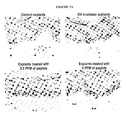
- FIGS. 3A-3C show FIG. 3A : Melanin formation in human skin explants UVA-irradiated or treated with the peptide for 6 days. Melanin: dark brown spots on the pictures.
- FIG. 3B Melanin quantification in basal layer keratinocytes from human skin explants UVA-irradiated or treated with the peptide solutions for 6 days (*p ⁇ 0.01 vs Untreated Control, Student's t Test).
- FIG. 3C Melanosomes quantification in melanocytes from human skin explants UVA irradiated or treated with the peptide solutions for 6 days.
- FIGS. 4A-4D mean of the percentage variations vs T0 obtained for the trans epidermal water loss parameter;
- FIG. 4B mean of the percentage variations vs T0 obtained for the skin moisturizing parameter;
- FIG. 4C mean of the percentage variations vs T0 obtained for the wrinkle depth parameter;
- FIG. 4D mean of the percentage variations vs T0 obtained for the Rz parameter (skin wrinkledness). Dark grey bar is PHN and white outlined bar is PHG.
- the inventors first discovered the ability of several peptides and plant proteins hydrolysate to act as antagonists or agonists of the DOR (delta opioid receptors).
- DOR delta opioid receptors
- One hexapeptide YPLDLF SEQ ID No 1
- the aging process is closely associated to an increased level of micro-inflammation in the skin (Giacomoni et al., 2005), due to accumulation of external aggressions (repeated mechanical stresses, UV irradiations, pollutants), and to the inability of skin cells to face these aggressions (lower detoxifying activity, lower level of cellular energy, lower cellular regeneration).
- This so-called “inflamm-aging” process generates feedback responses that results in visible signs of aging: wrinkles, loss of tone, dark circles, sagging, fine lines, and the like.
- the inventors simulated aging conditions on reconstructed human epidermis (RHE) with a mix of cytokines. They discovered that in these ‘aging’ conditions, the level of expression of delta opioid receptor is reduced. As it is known from literature that opioid receptors control the differentiation processes of skin and generates a thin skin phenotype, they discovered one of the causes of aging: a lower expression of delta opioid receptor due to cytokines leads to a poorer differentiation of skin.
- the inventors applied the peptide on RHE at different doses and discovered that the peptide YPLDLF (SEQ ID No 1) enables to reactivate the expression of delta opioid receptor in skin. Therefore, they discovered that this peptide can penetrate the skin and reverse the aging process due to cytokines.
- DOR Agonist Peptides can Act on Delta Opioid Receptors and Leads to the Regulation of Several Deregulated Genetic Factors in Aged Skins.
- the inventors measured the expression level of 64 human genes on reconstructed human epidermis. These epidermises were either treated with nothing, with a mix of cytokines to simulate the aging process, or with the blend of cytokines plus different quantities of peptides. The inventors discovered that, in the presence of cytokines, the majority of the genes were deregulated as compared to the control condition: they were either over or under expressed. In the conditions with the peptide, almost all the genes were brought back to a normal level of expression. The inventor therefore discovered that DOR agonist peptides can act on delta opioid receptor and equalize the unwanted effects of aging conditions.
- DOR Agonist Peptides Act on Delta Opioid Receptor and Leads to the Regulation of Several Deregulated Protein Factors in Aged Skins.
- the inventors achieved the same experiment than for genes, but measured the level of expression of key proteins, which are known to be involved in the differentiation of skin. They discovered that, in the cytokine induced condition, these proteins were deregulated (over or under expressed). But, epidermis treated with the peptides recovered a normal expression of these protein markers. The inventors discovered that DOR agonist peptides can balance and regulate the level of expression of differentiation markers in aged skins.
- DOR Agonists Act on Delta Opioid Receptor and Lead to the Activation of Melanin Pigmentation.
- the inventors had the idea to test the effect of the previously tested DOR agonists on human skin explants to see which effect it could have on skin pigmentation. After few days of incubation of these skin explants with the molecules, without any UV irradiation, they discovered that skin explants started to produce melanin and melanosomes in their melanocytes. The inventors discovered that DOR agonists can stimulate the production on pigments in skin. This result is very surprising because the receptor ⁇ (MOR) is the receptor associated with pigmentation (Kauser et al, 2004).
- DOR Agonist Peptides Act on Opioid Receptors and Lead to the Skin Regeneration.
- the present invention relates to the use of DOR agonists that act on delta opioid receptor in cosmetic and dermocosmetic applications to
- a first aspect of the present invention relates to the use of a DOR ligand for stimulating pigmentation of skin and/or hair. It also relates to a cosmetic method for stimulating pigmentation of skin or hair, comprising applying to human skin and/or hair a composition comprising a DOR ligand.
- the skin is the body and/or face skin.
- the present invention relates to a hair care product comprising a DOR ligand.
- the DOR ligand is the active agent. In a particular aspect, it can be the sole active agent. Alternatively, it can be combined with additional active agents.
- Non-exhaustive examples of such additional active agents include precursors of melanin synthesis, activators of tyrosinase expression and active compounds strengthening hair bubble.
- the DOR ligand can be a DOR agonist or a DOR antagonist. In a preferred embodiment, the DOR ligand is a DOR agonist.
- the present invention relates to the use of a DOR agonist for preparing a cosmetic composition for self tanning, hair pigmentation or repigmentation, pre-sun or sun products, hair care product such as shampoo or hair-conditioning or to a cosmetic composition comprising a DOR agonist for self tanning, hair pigmentation or repigmentation, pre-sun or sun products, hair care product such as shampoo or hair-conditioning.
- the composition is for topical, intradermic, transdermic or subcutaneous application. More preferably, the composition is for topical administration, in particular on skin or hair.
- the cosmetic composition may include at least one cosmetic additive. In a particular aspect, it can be the sole active agent. Alternatively, it can be combined with additional active agents, for instance as detailed above.
- the DOR agonist may be a peptide or a non peptide molecule.
- it may be selected from the group consisting of rubiscolin-6 and its derivatives, deltorphin and its derivatives, Leu-enkephalin, Met-enkephalin, DPDPE (D-Penicillamine(2,5)-enkephalin) and its derivatives, DSLET, biphalin, JOM-13, DTLET, DSTBULET, BUBU, BUBUC and non peptide agonists such as BU-48, BW373U86, C-8813, 7-spiroindanyloxymorphone (SIOM), N-phenethyl-14-ethoxymetopon, ADL-5859, SNC-40, SNC-80, SNC-86, SNC-162, DPI-221, DPI-287, DPI-3290, TAN-67, RWJ-394,674, and norbuprenorphine.
- the DOR agonist is selective for delta opioid receptor.
- selective is intended that the DOR agonist has a lower IC50 for delta receptor than for mu or kappa receptor.
- the ratio of IC50 for mu and/or kappa by IC50 for delta is more than 1, preferably more than 10, still more preferably more than 30.
- the selective DOR agonist can be a peptide agonist or a non-peptide agonist.
- BU-48 may be selected from the group consisting of BU-48, SNC-80, C-8813, DPI-287, DPI-221, TAN-67, BW373U86, SIOM, RWJ-394,674, rubiscolin-6 and its derivatives, deltorphin and its derivatives, DPDPE, DSLET, JOM-13, DSTBULET, BUBU, and BUBUC.
- the peptide sequences defined herein use the one letter code as following: A: Ala (alanine); R: Arg (arginine); N: Asn (asparagine); D: Asp (aspartic acid); C: Cys (cysteine); Q: Gln (glutamine); E: Glu (glutamic acid); G: Gly (glycine); H: His (histidine); I: Ile (isoleucine); L: Leu (leucine); K: Lys (lysine); M: Met (methionine); F: Phe (phenylalanine); P: Pro (proline); S: Ser (serine); T: Thr (threonine); W: Trp (tryptophan); Y: Tyr (tyrosine); V: Val (valine).
- substitutions are intended herein a peptide with substitutions, deletions or additions of 1, 2, 3, 4, or 5 amino acids and/or a peptide with modifications as detailed below, but which retains the DOR agonist activity or has a DOR agonist activity.
- the substitutions are conservative, meaning the residue is substituted by an amino acid of the same physicochemical group.
- the physicochemical groups are generally defined as following: the non-polar or hydrophobic amino acids including A, V, I, L, P, F, M, and W, but more narrowly the non-aromatic hydrophobic amino acids as including A, V, I, L, P, and M; the uncharged polar group including G, S, T, C, Y, N and Q; the negatively charged polar group including E and D; and the positively charged polar group including R and K.
- the substitution may also be non-conservative.
- the derivative may also so comprise non-naturally-occurring amino acid such as azetidinecarboxylic acid, 2-aminoadipic acid, 3-aminoadipic acid, beta-alanine, aminopropionic acid, 2-aminobutyric acid, A-aminobutyric acid, 6-aminocaproic acid, 2-aminoheptanoic acid, 2-aminoisobutyric acid, 3-aminoisobutyric acid, 2-aminopimelic acid, 2,4 diaminoisobutyric acid, desmosine, 2,2′-diaminopimelic acid, 2,3-diaminopropionic acid, N-ethylglycine, N-ethylasparagine, hydroxylysine, allo-hydroxylysine, 3-hydroxyproline, 4-hydroxyproline, isodesmosine, allo-isoleucine, N-methylglycine, N-methylisoleucine, N-methylvaline, norvaline, norleu
- the peptide derivative comprises no more than 10, 9, 8, 7 or 6 amino acids, or has 5, 6, 7, 8, 9 or 10 amino acids.
- the peptide bonds can be optionally modified in order to prevent proteolysis.
- at least peptide bond may be replaced by a bond selected for the group consisting of (—CH 2 —NH—), (—NH—CO—), (—CH 2 —O—), (—CH 2 —S—), (—CH 2 —CH 2 —), (—CO—CH 2 —), (—CHOH—CH 2 —), (—N ⁇ N—), and (—CH ⁇ CH—).
- all the peptide bonds are replaced.
- the DOR agonist peptides may present substitutions, and enzymatic and/or chemical modifications.
- the modifications may be the substitutions of all or some of residues from L amino acid to D amino acid.
- the peptides only comprise D amino acids.
- the peptides may be acetylated, conjugated to a lipid, esterified, glycosylated, amidated, and/or cyclized.
- the DOR agonist peptides may be conjugated to a lipid in order to facilitate entry across the stratum corneum.
- the peptides according to the invention can present a (or several) lipid moiety (moieties), covalently or not covalently attached.
- the lipid moiety (moieties) can be any lipid presenting from C3 to C20 carbon atoms, preferably linked at N- or C-terminal extremity.
- the lipid is conjugated at the N-terminal end of the peptide.
- the lipid is conjugated at its C-terminal end.
- Non-exhaustive examples of lipids include, but are not limited to acetic acid, butyric acid, capronic acid, caprylic acid, caprynic acid, lauric acid, myristic acid, palmitic acid, stearic acid, arachidic acid, behenic acid, lignoceratic acid, palmitolic acid, oleic acid, linoleic acid, ⁇ -linoleic acid, ⁇ -linoleic acid, eicosadinoic acid, eicosatrinoic acid, arachidonic acid, eicosapentaenoic acid, docosapentaeoic acid, and docosahexaenoic acid.
- the peptide may be palmitoylated.
- an advantage of rubiscolin-6 and its derivatives is their ability to penetrate the skin without any modification.
- the DOR agonist peptides may comprise a moiety facilitating the cellular entry of the DOR agonist peptides.
- this moiety is well-known in the art (see for instance, Vives et al, 2008).
- the DOR agonist peptides may be isolated from a natural source or can be synthesized.
- Deltorphin and its derivatives include deltrophin (Y- D M-FHLMD-NH 2 (SEQ ID No 2)) and derivatives such as the following peptides: Y- D A-FDVVG-NH 2 (SEQ ID No 3, deltorphin I), Y- D A-FEVVG-NH 2 (SEQ ID No 4, deltorphin II), and Y- D L-FADVASTIGDFFHSI-NH 2 (SEQ ID No 5, Leu-deltorphin).
- deltrophin Y- D M-FHLMD-NH 2 (SEQ ID No 2)
- derivatives such as the following peptides: Y- D A-FDVVG-NH 2 (SEQ ID No 3, deltorphin I), Y- D A-FEVVG-NH 2 (SEQ ID No 4, deltorphin II), and Y- D L-FADVASTIGDFFHSI-NH 2 (SEQ ID No 5, Leu-deltorphin).
- the DOR selective agonist is rubiscolin-6 and its derivatives.
- Rubiscolin-6 has the sequence YPLDLF (SEQ ID No 1).
- Rubiscolin-6 and its derivatives include peptides which have or comprise the sequence of formula (I)
- X1 being a non-aromatic hydrophobic amino acid, preferably selected from the group consisting of L, I, M, V and A, more preferably selected from the group consisting of L, I, and M;
- X2 being a non-aromatic hydrophobic amino acid, preferably selected from the group consisting of L, I, and M, more preferably selected from the group consisting of L and I;
- X3 present or absent, being a hydrophobic amino acid, preferably selected from the group consisting of F, L, I, M, V and A, more preferably selected from the group consisting of F, I, and V, and in particular being F or V.
- Rubiscolin-6 and its derivatives may be a peptide selected from the group consisting of or a peptide comprising a sequence selected in the group consisting of YPLDLF (SEQ ID No 1), YPIDLF (SEQ ID No 7), YPMDLF (SEQ ID No 8), YPLDIF (SEQ ID No 9), YPLDLL (SEQ ID No 10), YPLDLI (SEQ ID No 11), YPLDLM (SEQ ID No 12), YPLDLV (SEQ ID No 13), YPLDLA (SEQ ID No 14), YPIDLV (SEQ ID No 15), YPMDLV (SEQ ID No 16), YPLDIV (SEQ ID No 17), YPIDIV (SEQ ID No 18), YPMDIV (SEQ ID No 19), YPIDLV (SEQ ID No 20), YPIDMV (SEQ ID No 21), YPIDII (SEQ ID No 22), YPMDII (S
- rubiscolin-6 and its derivatives may be a peptide selected from the group consisting of YPLDLF (SEQ ID No 1), YPIDLF (SEQ ID No 7), YPMDLF (SEQ ID No 8), and YPMDL (SEQ ID No 24).
- the DOR agonist is a peptide YPLDLF (SEQ ID No 1) or a peptide comprising the sequence YPLDLF (SEQ ID No 1), optionally modified as described above.
- the present invention relates to a cosmetic composition for topical, intradermic, transdermic or subcutaneous administration, preferably topical administration, comprising a peptide selected from rubiscolin-6 and its derivatives and at least one cosmetic additive.
- Rubiscolin-6 and its derivatives are as detailed above. It further relates to the use of a peptide selected from rubiscolin-6 and its derivatives for the preparation of a cosmetic composition for topical, intradermic, transdermic or subcutaneous administration, preferably topical administration.
- the cosmetic composition is for preventing and/or reversing the sign of skin aging, and/or refilling wrinkles, improving skin smoothness, and/or equalizing unbalanced markers in stressed skin, and/or normalizing disturbed gene expression in skin cells, and/or erasing crow's feet wrinkles, and/or recovering skin moisturization, and/or preventing trans-epidermal water loss in skin, and/or reactivating skin cells differentiation, and/or stimulating pigmentation.
- the skin is the body or face skin.
- the DOR agonist peptide is the active agent.
- it can be the sole active agent.
- additional active agents may be anti-ageing agents, photo-protective agents, an antioxidant and anti-glycation agents.
- Rubiscolin-6 and its derivatives can be used for normalizing skin barrier, restructuring mature skins, smoothing skin surface and/or refilling deep wrinkles. Therefore, their applications can be eye care products, in particular eye contour, eye gel, under eye serum), products for the treatment of expression lines, anti-aging products for the reduction of deep wrinkles, face care products for mature skins, neck care products, restructuring body care products, and protection from daily aggressions.
- the DOR agonist is added in a cosmetically effective amount. The amount may vary depending on the condition to treat, the age, the severity of the condition to treat, the duration of the treatment, and the like. In a particular embodiment, at the cosmetically effective amount, the DOR agonist does not have any therapeutic effect. Indeed, the uses contemplated herein are non-therapeutic uses.
- the composition may comprise between 0.000005-0.002% in weight of the peptide with respect to the total weight of the composition, preferably between 0.00001% and 0.001%, still more preferably between 0.00003% and 0.0006%.
- the composition typically comprises from 0.05 to 20 ppm of peptide, preferably from 0.1 to 10 ppm, still more preferably from 0.3 to 6 ppm.
- the cosmetic composition may be formulated as a cream, a gel, a moisturizer, a lotion, a milk, an oil, an ointment, a wax, a mousse, a paste, a serum, a pomade, a hair care product, or a shampoo. It may optionally be applied in the form of an aerosol. It may also be in solid form, such as in the form of a stick. It may be used as a care product and/or as a makeup product for the skin.
- Cosmetic additives may be added to achieve a desired cosmetic result. Desired cosmetic results may be determined by one of ordinary skill in the art or the user of the disclosed compositions.
- Cosmetic additives may include, but are not limited to, carriers, excipients, vehicle ingredients, moisturizers, humectants, cosmetic salts, adjuvants, oils, emulsifiers, co-emulsifiers, gelling agents, absorbers, solvents, photoprotective agents, and inert bases.
- compositions useful for topical application may contain additional ingredients such as carrier, excipient, or vehicle ingredients such as, for example, water, acetone, ethanol, ethylene glycol, propylene glycol, butane-1,3-diol, isopropyl myristate, isopropyl palmitate, mineral oil, and mixtures thereof to form lotions, tinctures, creams, emulsions, gels or ointments which are non-toxic and pharmaceutically or dermatologically acceptable. Additionally, moisturizers or humectants can be added to the present compositions if desired. Examples of such additional ingredients can be found in Remington's Pharmaceutical Sciences, Eighteenth Edition, A. R. Gennaro, Ed., Mack Publishing Co., Easton, Pa., 1990.
- This cosmetic composition may be in any presentation form normally used in cosmetics, and it may, for example, be in the form of an optionally gelled aqueous solution, a dispersion of the lotion type, optionally a two-phase lotion, an emulsion obtained by dispersing a fatty phase in an aqueous phase (OAV emulsion) or conversely (W/O emulsion), a triple emulsion (W/O/W or 0/W/O emulsion), nanoemulsions, in particular O/W nanoemulsions, in which the size of the drops is less than 100 nm; or a vesicular dispersion of ionic and/or nonionic type.
- These compositions are prepared according to the usual methods.
- a composition in the form of an oil-in-water emulsion is used.
- the DOR agonist peptides can be prepared in specific conditions such as included in liposomes, niosomes, nanosomes, nanospheres or nanocapsules.
- the cosmetic composition may be in the form of aqueous, alcoholic or aqueous-alcoholic solutions; in the form of creams, gels, emulsions or mousses; in the form of aerosol compositions also comprising a propellant under pressure.
- composition when in aqueous form, especially in the form of an aqueous dispersion, emulsion or solution, it may comprise an aqueous phase, which may comprise water, a floral water and/or a mineral water.
- the cosmetic composition disclosed herein may also comprise at least one adjuvant chosen from adjuvants that are common in cosmetics, such as hydrophilic and lipophilic gelling agents, hydrophilic and lipophilic active agents, preserving agents, antioxidants, solvents, fragrances, fillers, screening agents, pigments, odor absorbers and dyestuffs.
- the at least one adjuvant is present in an amount ranging, for example, from 0.01% to 20% by weight relative to the total weight of the composition.
- the at least one adjuvant may be introduced into the fatty phase, into the aqueous phase, or into lipid vesicles. In any case, these adjuvants, and also the proportions thereof, will be chosen so as not to harm the desired properties of the combination of anti-wrinkle active agents disclosed herein.
- the proportion of the fatty phase may range from 5% to 80% by weight such as from 5% to 50% by weight relative to the total weight of the composition.
- the oils, emulsifiers and co-emulsifiers used in the cosmetic composition in emulsion form are chosen from those conventionally used in the field under consideration.
- the emulsifier and co-emulsifier are present in the composition in an amount ranging from 0.3% to 30% by weight such as from 0.5% to 20% by weight relative to the total weight of the composition.
- oils which may be used in this disclosure, mention may be made, for example, of mineral oils (liquid petroleum jelly or hydrogenated polyisobutene), oils of plant origin (avocado oil or soybean oil), oils of animal origin (lanolin), silicone oils (cyclomethicone or dimethicone) and fluoro oils (perfluoropoly ethers).
- mineral oils liquid petroleum jelly or hydrogenated polyisobutene
- oils of plant origin avocado oil or soybean oil
- oils of animal origin lanolin
- silicone oils cyclomethicone or dimethicone
- fluoro oils perfluoropoly ethers
- Fatty alcohols cetyl alcohol
- fatty acids and waxes may also be used as fatty substances.
- emulsifiers and co-emulsifiers that may be used herein, mention may be made, for example, of fatty acid esters of polyethylene glycol such as PEG-100 stearate, and fatty acid esters of glycerol such as glyceryl stearate.
- Hydrophilic gelling agents that may be included are, for example, carboxyvinyl polymers (carbomer), acrylic copolymers such as acrylate/alkylacrylate copolymers, polyacrylamides, such as crosslinked polyacrylamido-methylpropane-sulphonic acid, polysaccharides, natural gums and clays, and lipophilic gelling agents that may be mentioned include, for example, modified clays, such as bentones, metal salts of fatty acids, hydrophobic silica and poly ethylenes.
- the hydrophilic gelling agent for the composition disclosed herein is chosen from a crosslinked polyacrylamido-methylpropane-sulphonic acid as described in EP 0850642, WO9800094 or the Hostacerin AMPS commercialized by Clariant.
- the present invention relates to a device comprising a peptide selected from rubiscolin-6 and its derivatives, the device being capable of delivering said peptide via intraepidermal and/or intradermal and/or subcutaneous injection.
- the said device may be, for example, a syringe with a needle or an injection device without a needle, such as those used in the care technique known as mesotherapy.
- a kit comprising a device may also be envisaged, the said kit comprising a device, in particular a syringe or an injection device, and the DOR agonist, in particular rubiscolin-6 and its derivatives, as defined above.
- the said kit may also comprise a needle.
- the said device may be in ready-to-use form, i.e. prefilled, or may need to be filled before use.
- a composition or another device (such as a vial) comprises the DOR agonist, in particular rubiscolin-6 and its derivatives, as defined above, optionally in combination with at least one other active compound.
- the composition of the invention may be used in combination with laser treatment which improves the composition penetration.
- composition of the invention may also be used in combination with other treatments such as the light therapy or phototherapy, in particular such as Low-level laser therapy or Deep penetrating light therapy.
- topical application of the composition can be combined with the use of a facial massager.
- Frozen spinach leaves were thawed and disrupted in fine particles a blender. This juice was further treated with ultrasounds to disrupt cells and proteins were recovered by acidic precipitation. These proteins were then digested by several enzymes, including pepsin and papain. The hydrolysate was purified (ultrafiltration), fractionated and stored before testing. Meanwhile, synthetic peptides were ordered from a manufacturer. The peptides and the hydrolysates were tested on cells bearing the delta2 opioid receptor and cell impedance was measured to evaluate the binding activity of the tested compounds (Law and Loh, 1993).
- the results were expressed as a percent of control specific agonist response (DPDPE (SEQ ID No 27) was used for this purpose) ((measured specific response/control specific agonist response) ⁇ 100) obtained in the presence of the test compounds.
- the EC50 values concentration producing a half-maximal specific response
- IC50 values concentration causing a half-maximal inhibition of the control specific agonist response
- Y D+[(A D)/(1+(C/C50)nH)]
- Y specific response
- D minimum specific response
- A maximum specific response
- C compound concentration
- C50 EC50 or IC50
- nH slope factor
- TMA tissue microarray
- Formaldehyde-fixed tissues were dehydrated in multiple baths with increasing concentration of ethanol and then embedded in “Paraplast X-tra” paraffin.
- the transversal sections were carried out using a microtome (5 ⁇ m thickness) and kept at room temperature until staining.
- the sections were deparaffinized then the antigenic sites were retrieved using specific buffers (pH6 and pH9). The sections were then washed and incubated with hydrogen peroxide. After an additional washing step, the sections were incubated with the primary antibody (anti-DOR). The labeling was then revealed using a biotin-conjugated secondary antibody. After peroxidase-conjugated streptavidine and peroxidase substrate addition, nuclei were counter-stained with a solution of haematoxylin. The slices were washed in ultra-pure water and mounted in aqueous medium.
- Sections were observed using a NIKON E400 microscope. Images were captured with a NIKON DS-Ri1 and processed with NIS-Elements 3.10 software.
- FIG. 2A Normal The expression of protein DOR was observed in the human skin - granular layer of the epidermis. Moreover, some epidermis and dermal cells were slightly labeled in their cytoplasm.
- FIG. 2B Normal Some zones of the sebaceous gland expressed protein human skin - DOR dermis and sebaceous glands
- FIG. 2C Protein DOR was strongly expressed in RHE granular Reconstructed layer cell membranes. All the living cells of the basal human and supra-basal layers expressed the protein in their epidermis (RHE) cytoplasm.
- FIG. 2A Normal The expression of protein DOR was observed in the human skin - granular layer of the epidermis. Moreover, some epidermis and dermal cells were slightly labeled in their cytoplasm.
- FIG. 2B Normal Some zones of the sebaceous gland expressed protein human skin - DOR dermis and sebaceous glands
- FIG. 2C Protein DOR was strongly expressed in RHE granular Reconstructed layer
- FIG. 2D RHE Compared to the non-treated RHE, the expression of treated with DOR was decreased after Phorbol myristate PMA at 2 ⁇ g acetate(PMA) treatment at 2 ⁇ g. No more labeling was observed in the spineous layer while the expression persisted strongly in the basal layer and slightly in the granular layer.
- FIG. 2E Compared to the non-treated RHE, the expression was RHE treated strongly decreased in the RHE treated with the mix of with mix of cytokines: in the granular and spineous layer the cytokines labeling was totally vanished. Only the expression in (IL-17 + OSM + the basal layer was conserved. TNF- ⁇ )
- Reconstructed human epidermis of 11 days old was prepared according to a derived method described by Poumay et al. (2004). These RHE were cultivated at 37° C. and 5% of CO 2 in a specific maintenance medium.
- the RHE treated under basal conditions were placed in assay medium containing or not (non-stimulated control) the peptide solutions and incubated for 54 hours.
- the RHE were placed in assay medium containing or not (stimulated control) the peptide solutions or the reference OAK inhibitor I at 10 ⁇ M) and pre-incubated for 6 hours.
- Formaldehyde-fixed tissues were dehydrated in multiple baths with increasing concentration of ethanol and then embedded in paraffin.
- the transversal sections were carried out using a microtome (5 ⁇ m thickness) and kept at room temperature until staining.
- the sections were deparaffinized and the antigenic sites were retrieved using specific buffer (pH6). The sections were then washed and incubated with hydrogen peroxide. After an additional washing step, the sections were incubated with the primary antibody (anti-OPRD). The labeling was then revealed using a biotin-conjugated secondary antibody. After peroxidase-conjugated streptavidine and peroxidase substrate addition, nuclei were counter-stained with a solution of haematoxylin. The sections were washed in ultra-pure water and mounted in aqueous medium.
- Sections were observed using a NIKON E400 microscope. Images were captured using a NIKON DS-Ri1 and processed with NIS-Elements 3.10 software.
- Protein DOR was correctly detected in the reconstructed human epidermis following in situ immunohistolabeling. DOR1 was strongly and almost exclusively expressed in the granular layer. Following treatment with the cytokine mix, the expression of DOR1 in the stimulated control was strongly decreased compared to the non-stimulated control.
- the anti-inflammatory reference JAK inhibitor I tested at 10 ⁇ M, reversed the inhibitory effect of the cytokine mix on OPRD1 expression. The inhibitory effect of the cytokine mix on OPRD1 expression was also reversed following treatment with the peptide.
- DOR agonist peptide like the YPLDLF (SEQ ID No 1) peptide, can reverse the effect of a mix of cytokines on the level of expression of DOR.
- YPLDLF human epidermis
- SEQ ID No 1 Transcriptional effects of a peptide (YPLDLF, SEQ ID No 1) on gene expression were researched on a reconstructed human epidermis (RHE) model under inflammatory conditions.
- the inflammation of the RHE was induced using a mix of cytokines (IL-17+OSM+TNF- ⁇ ).
- Extracted mRNA was analyzed on a customized PCR array designed by the study sponsor and containing 64 target genes (including 2 housekeeping genes) selected for their role in keratinocyte differentiation, or their involvement in cell junctions and lipid synthesis, or their relation to opioid receptor delta (DOR).
- Reconstructed human epidermis of 11 days old was prepared according to a derived method described by Poumay et al. (2004). These RHE were cultivated at 37° C. and 5% of CO 2 in a specific maintenance medium.
- the expression of markers was analyzed using RT-qPCR method on mRNA extracted from RHE for each treatment (before RNA extraction the replicates were pooled).
- PCRs Polymerase Chain Reactions
- ⁇ LightCycler®>> system Roche Molecular System Inc.
- This system allows rapid and powerful PCRs, after determining analysis conditions of the test primers.
- the incorporation of fluorescence in amplified DNA was continuously measured during the PCR cycles. This resulted in a “fluorescence intensity” versus “PCR cycle” plot allowing the evaluation of a relative expression (RE) value for each marker.
- the value selected for RE calculations is the “output point” (Ct) of the fluorescence curve. For a considered marker, the highest is the cycle number; the lowest is the mRNA quantity.
- the RE value was expressed in arbitrary units (AU) according to the formula: (1 ⁇ 2 number of cycles ) ⁇ 10 6 .
- the Peptide tested at 0.3 ⁇ g/ml, showed overall a modulation of gene expression profile of cytokine mix-stimulated RHE.
- DOR agonist peptides like the YPLDLF (SEQ ID No 1). peptide, can reverse the deregulating effect of a mix of cytokines on the level of expression specific genes in the epidermis.
- cytokines With and peptide Relative expression cytokines 0.3 PPM of genes versus the control conditions (non stimulated RHE) % Control (Mean HK) Function of the Ref of 100 100 genes genes Name of the proteins Housekeeping RPS28 Ribosomal protein S28 104 91 GAPDH Glyceraldehyde-3-phosphate 94 116 dehydrogenase Opioid receptor delta OPRD1 Opioid receptor, delta 1 97 101 1 related markers ADRB2 Adrenergic, beta-2-, receptor, surface 62 259 CREB1 cAMP responsive element binding protein 1 120 109 GNAS GNAS complex locus 121 130 MAPK1 Mitogen-activated protein kinase 1 126 108 MAPK14 Mitogen-activated protein kinase 14 117 109 PTGS2 Prostaglandin-endoperoxide synthase 2 42 119 (prostaglandin G/H synthase and cycl
- Reconstructed human epidermis of 11 days old were prepared according to a derived method described by Poumay et al. (2004). These RHE were cultivated at 37° C. and 5% of CO 2 in a specific maintenance medium.
- the RHE were snap-frozen in liquid isopentane/N2 and stored at ⁇ 80° C.
- the transversal sections were carried out using a microtome (5 ⁇ m thickness, one slide per RHE, several sections per slide).
- the sections were fixed with an acetone/methanol mix and dried. After PBS-milk 5% saturation, the sections were incubated with the specific primary antibody solutions. After washes, the binding sites were revealed using appropriate secondary coupled-antibody and the cell nuclei were stained with propidium iodide solution. The sections were washed and then observed under epifluorescence microscopy.
- the sections were deparaffinized then the antigenic sites were retrieved.
- the sections were washed and incubated with hydrogen peroxide.
- the sections, once washed, were incubated with the primary antibody (anti-Calmodulin-like 5 or anti-SULT2B1). After washing, the labeling was revealed using a biotin-conjugated secondary antibody. After peroxidase-conjugated streptavidine and peroxidase substrate addition, nuclei were counter-stained with a solution of haematoxylin.
- the sections were washed, mounted in aqueous medium and observed under transmitted-light microscopy.
- Sections were observed using a NIKON E400 microscope. Images were captured with a NIKON DS-Ri1 and processed with NIS-Elements 3.10 software (3 pictures per replicate). The image analysis was performed by measuring the fluorescence intensity using Image J software.
- Results were expressed in % of the level of expression of each protein maker in non treated RHE.
- DOR agonist peptides like the YPLDLF (SEQ ID No 1) peptide, can normalize the deregulating effect of a mix of cytokines on the level of expression of specific proteins in the epidermis. Such compounds can therefore reverse unbalanced situations as it happens upon aging. More significantly, these compounds are regulating the expression of proteins involved in tight junctions (occluding), adherent junctions (corneodesmosin) and keratinocyte differentiation (keratin 10, involucrin, clamodulin like 5) and lipid (aceyl-coA synthetase and sulfotransferase 2B) synthesis in the skin. DOR agonist peptides, like the YPLDLF (SEQ ID No 1) peptide, can therefore have major effects in the reorganization of a proper metabolism of skin, and favor skin's restructuration.
- This study aims to explore the pro pigmenting activity of an ingredient (peptide YPLDLF, SEQ ID No 1) on human skin explants maintained in survival.
- the activity of the product was evaluated by:
- Skin explants with a diameter of 10 mm were prepared from plastic surgery skin sample from a 43 years old woman. The explants were placed in survival in a specific growth medium at 37° C. in a humid atmosphere enriched with 5% CO2.
- the peptide solutions (at 0.3 PPM or 3 PPM) were applied topically for 2 hours every day using a filter paper discs presoaked in 30 ⁇ l of each solution.
- Control explants did not receive any treatment except the renewal of the culture medium.
- the melanin was visualized by silver impregnation according to the technique of Masson Fontana variant. Labeled melanin has been evaluated by microscopic examination.
- Melan-A was a detected with a monoclonal antibody anti-Melan-A (from Santa Cruz company) for 1 h at room temperature with a RTU Vectastain Universal amplifier system VECTOR avidin/biotin and revealed by FITC.
- the cell nuclei were colored with a propidium iodide. Labeled Melan-A has been evaluated by microscopic examination and counting of melanocytes Melan-A positive and the results expressed per centimeter of epidermis.
- the aim of the study was to evaluate the efficacy of an anti-wrinkle cosmetic product in attenuating of the appearance of wrinkles, improving the skin surface and attenuating the signs of skin ageing.
- a clinical study was carried out on 20 volunteers.
- Product efficacy was evaluated 15, 30 and 60 days after daily product use by means of instrumental analysis technique as described here below. The analysis was then completed with both the clinical evaluation performed by the dermatologist and the self-assessment of the subjects participating in the study.
- Primos 3D is a non-contact in vivo skin measurement device based on structured light projection.
- the sensor allows to evaluate skin surface properties (i.e. wrinkle depth, volume, roughness etc.). In this study it is calculated the Rz parameter (ISO 4287, DIN 4768) and wrinkle depth.
- the measurement of the skin moisture is based on the internationally recognized CORNEOMETER® method (Courage+Khazaka, electronic GmbH). This measurement is based on the dielectric constant of water.
- the probe shows changes of capacitance according to the moisture content of the measuring object.
- An electric scatter field penetrates the very first layer of the skin and determines the dielectricity.
- Trans epidermal water loss is measured by means of the internationally recognized TEWAMETER® method.
- the instrument used is a Tewameter 300® (Courage+Khazaka, electronic GmbH).
- PHN placebo: AQUA, OCTYLDODECYL NEOPENTANOATE, OCTYLDODECANOL, MYRISTYL MYRISTATE, ACRYLATES/C10-30 ALKYL ACRYLATE CROSSPOLYMER, SODIUM HYDROXIDE, PHENOXYETHANOL, METHYLPARABEN, ETHYLPARABEN, BUTYLPARABEN, PROPYLPARABEN, ISOBUTYLPARABEN
- PHG (with 3 PPM of peptide YPLDLF, SEQ ID No 1): AQUA, OCTYLDODECYL NEOPENTANOATE, OCTYLDODECANOL, MYRISTYL MYRISTATE, ACRYLATES/C10-30 ALKYL ACRYLATE CROSSPOLYMER, SODIUM HYDROXIDE, PHENOXYETHANOL, METHYLPARABEN, ETHYLPARABEN, BUTYLPARABEN, PROPYLPARABEN, ISOBUTYLPARABEN, 1% PEPTIDE SOLUTION.
- the graph of FIG. 4A reports the mean of the percentage variations vs T0 obtained for the trans epidermal water loss parameter.
- the graph of FIG. 4B reports the mean of the percentage variations vs T0 obtained for the skin moisturizing parameter.
- the graph of FIG. 4C reports the mean of the percentage variations vs T0 obtained for the wrinkle depth parameter.
- the graph of FIG. 4D reports the mean of the percentage variations vs T0 obtained for the Rz parameter (skin wrinkledness).
- Regenerative cream for mature skins A-Aqueous phase Glycerin 2.0% Hexylene glycol 3.0% Xanthane gum 0.5%
- Preservatives qs Carbomer 0.35% Peptide at 300PMM 1% Water qsp. 100%
- B-Oil phase Squalane 15% Cetyl alcohol 2% Arachidyl alcohol/behenyl alcohol/arachidylglucoside) 1% Glycerol stearate 5% Water 1.5% NaOH 0.35%
- Preservative + fragrance qs Hydrating and emollient lotion A-Oil phase Ceteareth-2 3.5% Ceteareth-21 2-4% Wheat germ oil 3% Cyclomethicone 7% Octyl Palmitate 8% B-Aqueous phase Water qsp.
Landscapes
- Health & Medical Sciences (AREA)
- Life Sciences & Earth Sciences (AREA)
- Public Health (AREA)
- Veterinary Medicine (AREA)
- Animal Behavior & Ethology (AREA)
- General Health & Medical Sciences (AREA)
- Dermatology (AREA)
- Epidemiology (AREA)
- Birds (AREA)
- Gerontology & Geriatric Medicine (AREA)
- Cosmetics (AREA)
- Medicines That Contain Protein Lipid Enzymes And Other Medicines (AREA)
- Peptides Or Proteins (AREA)
Applications Claiming Priority (3)
| Application Number | Priority Date | Filing Date | Title |
|---|---|---|---|
| EP12305335.7 | 2012-03-23 | ||
| EP12305335 | 2012-03-23 | ||
| EP12305335.7A EP2641588B1 (fr) | 2012-03-23 | 2012-03-23 | Utilisation d'agonistes du récepteur opioïde delta dans le domaine cosmétique et dermocosmétique |
Publications (2)
| Publication Number | Publication Date |
|---|---|
| US20130251657A1 US20130251657A1 (en) | 2013-09-26 |
| US9107852B2 true US9107852B2 (en) | 2015-08-18 |
Family
ID=45929468
Family Applications (1)
| Application Number | Title | Priority Date | Filing Date |
|---|---|---|---|
| US13/848,937 Expired - Fee Related US9107852B2 (en) | 2012-03-23 | 2013-03-22 | Uses of agonists of delta opioid receptor in cosmetic and dermocosmetic field |
Country Status (4)
| Country | Link |
|---|---|
| US (1) | US9107852B2 (fr) |
| EP (1) | EP2641588B1 (fr) |
| CH (1) | CH706322B1 (fr) |
| FR (2) | FR2988294B1 (fr) |
Families Citing this family (1)
| Publication number | Priority date | Publication date | Assignee | Title |
|---|---|---|---|---|
| CN114373519A (zh) * | 2021-12-31 | 2022-04-19 | 苏州佩德生物医药有限公司 | 一种trpv3抑制剂的虚拟筛选方法、药物先导化合物及应用 |
Citations (2)
| Publication number | Priority date | Publication date | Assignee | Title |
|---|---|---|---|---|
| EP1595541A1 (fr) | 2004-05-12 | 2005-11-16 | Alcasynn Pharmaceuticals Gmbh | Utilisation d'antagonistes aux récepteurs opioides pour prévenir et/ou traiter les maladies associées à la cible calcineurine |
| WO2009012376A1 (fr) | 2007-07-17 | 2009-01-22 | The Ohio State University Research Foundation | Compositions et méthodes se rapportant aux soins de la peau |
Family Cites Families (2)
| Publication number | Priority date | Publication date | Assignee | Title |
|---|---|---|---|---|
| FR2750325B1 (fr) | 1996-06-28 | 1998-07-31 | Oreal | Utilisation en cosmetique d'un poly(acide 2-acrylamido 2- methylpropane sulfonique) reticule et neutralise a au moins 90 % et compositions topiques les contenant |
| FR2757767B1 (fr) | 1996-12-27 | 1999-02-05 | Oreal | Composition topique contenant au moins une proteine d'origine vegetale et/ou une proteine d'origine animale et une poly(acide 2-acrylamido 2-methylpropane sulfonique) reticule |
-
2012
- 2012-03-23 EP EP12305335.7A patent/EP2641588B1/fr not_active Not-in-force
-
2013
- 2013-03-21 CH CH00651/13A patent/CH706322B1/fr unknown
- 2013-03-21 FR FR1352550A patent/FR2988294B1/fr not_active Expired - Fee Related
- 2013-03-22 US US13/848,937 patent/US9107852B2/en not_active Expired - Fee Related
- 2013-10-10 FR FR1359833A patent/FR2995211B1/fr not_active Expired - Fee Related
Patent Citations (2)
| Publication number | Priority date | Publication date | Assignee | Title |
|---|---|---|---|---|
| EP1595541A1 (fr) | 2004-05-12 | 2005-11-16 | Alcasynn Pharmaceuticals Gmbh | Utilisation d'antagonistes aux récepteurs opioides pour prévenir et/ou traiter les maladies associées à la cible calcineurine |
| WO2009012376A1 (fr) | 2007-07-17 | 2009-01-22 | The Ohio State University Research Foundation | Compositions et méthodes se rapportant aux soins de la peau |
Non-Patent Citations (10)
| Title |
|---|
| European Search Report in priority Application No. 12305335.7, Nov. 5, 2012, pp. 1-10. |
| Hirata, H. et al. "Rubiscolin-6, a delta opioid peptide derived from spinach Rubisco, has anxiolytic effect via activating delta1 and dopamine D 1 receptors" Peptides, 2007, pp. 1998-2003, vol. 28. |
| Hirata, H. et al. "Rubiscolin-6, a δ opioid peptide derived from spinach Rubisco, has anxiolytic effect via activating δ1 and dopamine D 1 receptors" Peptides, 2007, pp. 1998-2003, vol. 28. |
| UniprotKB/Swiss-Prot Accession No. I6TF82 (accessed Jun. 14, 2014 at URL: uniprot.org/uniprot/ I6TF82). * |
| UniprotKB/Swiss-Prot Accession No. P05422, accessed Jun. 14, 2014 at URL: uniprot.org/uniprot/P05422. * |
| Yang et al. (Peptides 24:503-508 (2003). * |
| Yang et al., "Structure-activity relationship of rubiscolins as delta opioid peptides", Peptides 24:503-508 (2003)-copy provided in Applicant's IDS dated Mar. 22, 2013. * |
| Yang et al., "Structure-activity relationship of rubiscolins as δ opioid peptides", Peptides 24:503-508 (2003)-copy provided in Applicant's IDS dated Mar. 22, 2013. * |
| Yang, S. et al. "Structure-activity relationship of rubiscolins as delta opioid peptides" Peptides, 2003, pp. 503-508, vol. 24. |
| Yang, S. et al. "Structure-activity relationship of rubiscolins as δ opioid peptides" Peptides, 2003, pp. 503-508, vol. 24. |
Also Published As
| Publication number | Publication date |
|---|---|
| EP2641588A1 (fr) | 2013-09-25 |
| FR2995211A1 (fr) | 2014-03-14 |
| CH706322A2 (fr) | 2013-09-30 |
| CH706322B1 (fr) | 2017-08-31 |
| EP2641588B1 (fr) | 2017-11-22 |
| FR2988294A1 (fr) | 2013-09-27 |
| FR2995211B1 (fr) | 2017-11-10 |
| US20130251657A1 (en) | 2013-09-26 |
| FR2988294B1 (fr) | 2017-09-15 |
Similar Documents
| Publication | Publication Date | Title |
|---|---|---|
| US20030129259A1 (en) | Topical lightening compostitions and methods of use | |
| US8877713B2 (en) | Anti-aging peptides and cosmetic and/or pharmaceutical composition containing same | |
| US8435950B2 (en) | Anti-aging peptides and cosmetic and/or pharmaceutical composition containing same | |
| KR20120082888A (ko) | 세포성 노화를 지연시키기 위한 조성물 | |
| EP3236992B1 (fr) | Peptides et leur utilisation dans le traitement de la peau | |
| US20080153839A1 (en) | Use of anisic acid for promoting desquamation | |
| US8809276B2 (en) | Activator peptides for synthesizing extracellular matrix proteins, and cosmetic compositions including same | |
| TW201206494A (en) | Use of Tiliacora triandra in cosmetics and compositions thereof | |
| ES2259928B1 (es) | Composicion cosmetica o dermofarmaceutica que comprende peptidos derivados de encefalinas para reducir y/o eliminar arrugas faciales. | |
| US8933035B2 (en) | Transglutaminase-activating peptide and cosmetic or pharmaceutical composition containing same | |
| KR20210113604A (ko) | 화장품에서 사용하기 위한 펩타이드 및 조성물 | |
| US8962565B2 (en) | Peptides involved in the SCF c-Kit signaling pathway and compositions comprising same | |
| US9107852B2 (en) | Uses of agonists of delta opioid receptor in cosmetic and dermocosmetic field | |
| US8765689B2 (en) | Anti-ageing peptides modulating survivin and compositions including same | |
| JPH11158054A (ja) | 皮膚外用剤 | |
| US8546339B2 (en) | Soothing cosmetic or pharmaceutical composition comprising a peptide which activates HMG-CoA reductase | |
| US8530406B2 (en) | HMG-CoA reductase derived peptide and cosmetic or pharmaceutical composition containing same | |
| US8530623B2 (en) | Proteasome-activating lightening peptides and compositions containing same | |
| US8546340B2 (en) | Soothing pharmaceutical or cosmetic composition comprising a peptide that activates HMG-CoA reductase | |
| EP4292581A1 (fr) | Composition de repigmentation capillaire | |
| KR20060027723A (ko) | 카텝신 비 저해물질을 유효성분으로 함유하는 기능성화장료 조성물 |
Legal Events
| Date | Code | Title | Description |
|---|---|---|---|
| AS | Assignment |
Owner name: INDUCHEM HOLDING AG, SWITZERLAND Free format text: ASSIGNMENT OF ASSIGNORS INTEREST;ASSIGNORS:AURIOL, DANIEL;LEFEVRE, FABRICE;SCHWEIKERT, KUNO;AND OTHERS;SIGNING DATES FROM 20130424 TO 20130425;REEL/FRAME:030442/0597 |
|
| STCF | Information on status: patent grant |
Free format text: PATENTED CASE |
|
| CC | Certificate of correction | ||
| MAFP | Maintenance fee payment |
Free format text: PAYMENT OF MAINTENANCE FEE, 4TH YEAR, LARGE ENTITY (ORIGINAL EVENT CODE: M1551); ENTITY STATUS OF PATENT OWNER: LARGE ENTITY Year of fee payment: 4 |
|
| FEPP | Fee payment procedure |
Free format text: MAINTENANCE FEE REMINDER MAILED (ORIGINAL EVENT CODE: REM.); ENTITY STATUS OF PATENT OWNER: LARGE ENTITY |
|
| LAPS | Lapse for failure to pay maintenance fees |
Free format text: PATENT EXPIRED FOR FAILURE TO PAY MAINTENANCE FEES (ORIGINAL EVENT CODE: EXP.); ENTITY STATUS OF PATENT OWNER: LARGE ENTITY |
|
| STCH | Information on status: patent discontinuation |
Free format text: PATENT EXPIRED DUE TO NONPAYMENT OF MAINTENANCE FEES UNDER 37 CFR 1.362 |
|
| FP | Lapsed due to failure to pay maintenance fee |
Effective date: 20230818 |