US9215731B2 - Method and apparatus for transfer of a message on a common control channel for random access in a wireless communication network - Google Patents
Method and apparatus for transfer of a message on a common control channel for random access in a wireless communication network Download PDFInfo
- Publication number
- US9215731B2 US9215731B2 US12/337,383 US33738308A US9215731B2 US 9215731 B2 US9215731 B2 US 9215731B2 US 33738308 A US33738308 A US 33738308A US 9215731 B2 US9215731 B2 US 9215731B2
- Authority
- US
- United States
- Prior art keywords
- mac
- rrc message
- message
- type
- generating
- Prior art date
- Legal status (The legal status is an assumption and is not a legal conclusion. Google has not performed a legal analysis and makes no representation as to the accuracy of the status listed.)
- Active, expires
Links
Images




Classifications
-
- H—ELECTRICITY
- H04—ELECTRIC COMMUNICATION TECHNIQUE
- H04L—TRANSMISSION OF DIGITAL INFORMATION, e.g. TELEGRAPHIC COMMUNICATION
- H04L5/00—Arrangements affording multiple use of the transmission path
- H04L5/003—Arrangements for allocating sub-channels of the transmission path
- H04L5/0044—Allocation of payload; Allocation of data channels, e.g. PDSCH or PUSCH
-
- H—ELECTRICITY
- H04—ELECTRIC COMMUNICATION TECHNIQUE
- H04W—WIRELESS COMMUNICATION NETWORKS
- H04W8/00—Network data management
- H04W8/18—Processing of user or subscriber data, e.g. subscribed services, user preferences or user profiles; Transfer of user or subscriber data
- H04W8/20—Transfer of user or subscriber data
-
- H—ELECTRICITY
- H04—ELECTRIC COMMUNICATION TECHNIQUE
- H04W—WIRELESS COMMUNICATION NETWORKS
- H04W74/00—Wireless channel access
- H04W74/002—Transmission of channel access control information
- H04W74/004—Transmission of channel access control information in the uplink, i.e. towards network
-
- H—ELECTRICITY
- H04—ELECTRIC COMMUNICATION TECHNIQUE
- H04L—TRANSMISSION OF DIGITAL INFORMATION, e.g. TELEGRAPHIC COMMUNICATION
- H04L1/00—Arrangements for detecting or preventing errors in the information received
- H04L1/0001—Systems modifying transmission characteristics according to link quality, e.g. power backoff
- H04L1/0006—Systems modifying transmission characteristics according to link quality, e.g. power backoff by adapting the transmission format
-
- H—ELECTRICITY
- H04—ELECTRIC COMMUNICATION TECHNIQUE
- H04L—TRANSMISSION OF DIGITAL INFORMATION, e.g. TELEGRAPHIC COMMUNICATION
- H04L1/00—Arrangements for detecting or preventing errors in the information received
- H04L1/0001—Systems modifying transmission characteristics according to link quality, e.g. power backoff
- H04L1/0023—Systems modifying transmission characteristics according to link quality, e.g. power backoff characterised by the signalling
- H04L1/0028—Formatting
- H04L1/003—Adaptive formatting arrangements particular to signalling, e.g. variable amount of bits
-
- H—ELECTRICITY
- H04—ELECTRIC COMMUNICATION TECHNIQUE
- H04W—WIRELESS COMMUNICATION NETWORKS
- H04W12/00—Security arrangements; Authentication; Protecting privacy or anonymity
- H04W12/10—Integrity
- H04W12/106—Packet or message integrity
-
- H—ELECTRICITY
- H04—ELECTRIC COMMUNICATION TECHNIQUE
- H04W—WIRELESS COMMUNICATION NETWORKS
- H04W12/00—Security arrangements; Authentication; Protecting privacy or anonymity
- H04W12/10—Integrity
- H04W12/108—Source integrity
-
- H—ELECTRICITY
- H04—ELECTRIC COMMUNICATION TECHNIQUE
- H04W—WIRELESS COMMUNICATION NETWORKS
- H04W74/00—Wireless channel access
- H04W74/08—Non-scheduled access, e.g. ALOHA
- H04W74/0866—Non-scheduled access, e.g. ALOHA using a dedicated channel for access
-
- H—ELECTRICITY
- H04—ELECTRIC COMMUNICATION TECHNIQUE
- H04W—WIRELESS COMMUNICATION NETWORKS
- H04W76/00—Connection management
- H04W76/10—Connection setup
- H04W76/19—Connection re-establishment
-
- H—ELECTRICITY
- H04—ELECTRIC COMMUNICATION TECHNIQUE
- H04W—WIRELESS COMMUNICATION NETWORKS
- H04W8/00—Network data management
- H04W8/18—Processing of user or subscriber data, e.g. subscribed services, user preferences or user profiles; Transfer of user or subscriber data
- H04W8/183—Processing at user equipment or user record carrier
-
- H—ELECTRICITY
- H04—ELECTRIC COMMUNICATION TECHNIQUE
- H04L—TRANSMISSION OF DIGITAL INFORMATION, e.g. TELEGRAPHIC COMMUNICATION
- H04L2101/00—Indexing scheme associated with group H04L61/00
- H04L2101/60—Types of network addresses
- H04L2101/604—Address structures or formats
-
- H—ELECTRICITY
- H04—ELECTRIC COMMUNICATION TECHNIQUE
- H04L—TRANSMISSION OF DIGITAL INFORMATION, e.g. TELEGRAPHIC COMMUNICATION
- H04L2101/00—Indexing scheme associated with group H04L61/00
- H04L2101/60—Types of network addresses
- H04L2101/618—Details of network addresses
- H04L2101/654—International mobile subscriber identity [IMSI] numbers
-
- H—ELECTRICITY
- H04—ELECTRIC COMMUNICATION TECHNIQUE
- H04L—TRANSMISSION OF DIGITAL INFORMATION, e.g. TELEGRAPHIC COMMUNICATION
- H04L2101/00—Indexing scheme associated with group H04L61/00
- H04L2101/60—Types of network addresses
- H04L2101/695—Types of network addresses using masks or ranges of addresses
-
- H—ELECTRICITY
- H04—ELECTRIC COMMUNICATION TECHNIQUE
- H04L—TRANSMISSION OF DIGITAL INFORMATION, e.g. TELEGRAPHIC COMMUNICATION
- H04L63/00—Network architectures or network communication protocols for network security
- H04L63/12—Applying verification of the received information
- H04L63/123—Applying verification of the received information received data contents, e.g. message integrity
-
- H—ELECTRICITY
- H04—ELECTRIC COMMUNICATION TECHNIQUE
- H04W—WIRELESS COMMUNICATION NETWORKS
- H04W12/00—Security arrangements; Authentication; Protecting privacy or anonymity
- H04W12/06—Authentication
-
- H—ELECTRICITY
- H04—ELECTRIC COMMUNICATION TECHNIQUE
- H04W—WIRELESS COMMUNICATION NETWORKS
- H04W12/00—Security arrangements; Authentication; Protecting privacy or anonymity
- H04W12/10—Integrity
-
- H—ELECTRICITY
- H04—ELECTRIC COMMUNICATION TECHNIQUE
- H04W—WIRELESS COMMUNICATION NETWORKS
- H04W28/00—Network traffic management; Network resource management
- H04W28/02—Traffic management, e.g. flow control or congestion control
- H04W28/0278—Traffic management, e.g. flow control or congestion control using buffer status reports
-
- H—ELECTRICITY
- H04—ELECTRIC COMMUNICATION TECHNIQUE
- H04W—WIRELESS COMMUNICATION NETWORKS
- H04W52/00—Power management, e.g. Transmission Power Control [TPC] or power classes
- H04W52/04—Transmission power control [TPC]
- H04W52/30—Transmission power control [TPC] using constraints in the total amount of available transmission power
- H04W52/36—Transmission power control [TPC] using constraints in the total amount of available transmission power with a discrete range or set of values, e.g. step size, ramping or offsets
- H04W52/365—Power headroom reporting
-
- H—ELECTRICITY
- H04—ELECTRIC COMMUNICATION TECHNIQUE
- H04W—WIRELESS COMMUNICATION NETWORKS
- H04W74/00—Wireless channel access
- H04W74/08—Non-scheduled access, e.g. ALOHA
- H04W74/0833—Random access procedures, e.g. with 4-step access
Definitions
- the present disclosure relates generally to communication, and more specifically to techniques for performing random access in a wireless communication network.
- Wireless communication networks are widely deployed to provide various communication services such as voice, video, packet data, messaging, broadcast, etc. These networks may be multiple-access networks capable of supporting multiple users by sharing the available network resources. Examples of such multiple-access networks include Code Division Multiple Access (CDMA) networks, Time Division Multiple Access (TDMA) networks, Frequency Division Multiple Access (FDMA) networks, Orthogonal FDMA (OFDMA) networks, and Single-Carrier FDMA (SC-FDMA) networks.
- CDMA Code Division Multiple Access
- TDMA Time Division Multiple Access
- FDMA Frequency Division Multiple Access
- OFDMA Orthogonal FDMA
- SC-FDMA Single-Carrier FDMA
- a wireless communication network may include a number of base station that can support communication for a number of user equipments (UEs).
- UE user equipments
- a UE may perform random access in order to establish a connection with a base station.
- the UE may send pertinent information used to establish the connection. It is desirable to efficiently send the information during random access.
- a reserved channel identifier may be used to indicate a message being sent on a control channel for random access.
- a UE may send a message on a control channel for random access and may also send a reserved channel identifier to indicate the message being sent on the control channel.
- the message sent on the control channel may comprise a Radio Resource Control (RRC) message sent on a common control channel (CCCH), which may be mapped to an uplink shared channel (UL-SCH).
- RRC Radio Resource Control
- CCCH common control channel
- UL-SCH uplink shared channel
- the reserved channel identifier may comprise a reserved logical channel identifier (LCID).
- a message and additional information may be sent for random access.
- a UE may send a message in a protocol data unit (PDU), with the message being sent on a control channel for random access by the UE.
- the UE may send additional information in the PDU if the PDU can accommodate the additional information.
- the additional information may comprise a buffer status report for the UE, a power headroom report for the UE, data for a dedicated control channel, data for a dedicated traffic channel, etc.
- the PDU may have a variable size determined based on an uplink grant for the UE.
- a short message authentication code for integrity protection may be sent in a message for random access.
- a UE may generate a short MAC-I for a message sent on a control channel for random access.
- the short MAC-I may have a smaller size than a full MAC-I used for integrity protection of messages sent on a control plane.
- the short MAC-I may be for an RRC message sent on the CCCH for RRC connection re-establishment and may be used to authenticate the UE.
- a UE ID of one of multiple types may be sent for random access.
- a UE may set a format field of a message to a first value to indicate a first type of UE ID being sent in the message (e.g., for attachment) or to a second value to indicate a second type of UE ID being sent in the message (e.g., for subsequent access).
- the UE may generate the message comprising the format field and a UE ID of the type indicated by the format field.
- the UE may send the message for random access.
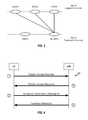
- FIG. 1 shows a wireless communication network
- FIG. 2 shows protocol stacks for a control plane in Long Term Evolution (LTE).
- LTE Long Term Evolution
- FIG. 3 shows mapping of logical channels to transport channels for the uplink.
- FIG. 4 shows a message flow for a random access procedure in LTE.
- FIG. 5 shows processing to generate Message 3 in the random access procedure.
- FIGS. 7A to 7C show three MAC sub-headers.
- FIGS. 8A to 8D show four MAC PDUs carrying a message for random access.
- FIG. 9 shows a process for sending a message on a control channel with a reserved channel identifier for random access.
- FIG. 12 shows a process for sending a UE ID for random access.
- FIG. 14 shows a block diagram of an eNB/base station and a UE.
- a CDMA network may implement a radio technology such as Universal Terrestrial Radio Access (UTRA), cdma2000, etc.
- UTRA includes Wideband CDMA (WCDMA) and other variants of CDMA.
- cdma2000 covers IS-2000, IS-95 and IS-856 standards.
- a TDMA network may implement a radio technology such as Global System for Mobile Communications (GSM).
- GSM Global System for Mobile Communications
- An OFDMA network may implement a radio technology such as Evolved UTRA (E-UTRA), Ultra Mobile Broadband (UMB), IEEE 802.11 (Wi-Fi), IEEE 802.16 (WiMAX), IEEE 802.20, Flash-OFDM®, etc.
- E-UTRA employs OFDMA on the downlink and SC-FDMA on the uplink.
- 3GPP Long Term Evolution (LTE) utilizes an air interface defined by E-UTRA and a network architecture defined by an E-UTRAN.
- UTRA, E-UTRA, E-UTRAN, LTE and GSM are described in documents from an organization named “3rd Generation Partnership Project” (3GPP).
- cdma2000 and UMB are described in documents from an organization named “3rd Generation Partnership Project 2” (3GPP2).
- 3GPP2 3rd Generation Partnership Project 2
- RLC may perform various functions such as (i) segmentation and concatenation of RLC SDUs and error correction through Automatic Repeat reQuest (ARQ) at a transmitting entity and (ii) duplicate detection of lower layer SDUs, re-ordering of RLC SDUs, and in-order delivery of upper layer PDUs at a receiving entity.
- MAC may perform various functions such as mapping between logical channels and transport channels, multiplexing and demultiplexing of RLC PDUs for logical channels into/from transport blocks for transport channels, traffic volume measurement reporting, error correction through Hybrid ARQ (HARQ), priority handling between logical channels of a UE, priority handling between UEs via dynamic scheduling, transport format selection, padding, etc.
- the functions performed by RRC, PDCP, RLC and MAC in LTE may be provided by equivalent protocols in other radio technologies.
- UE 120 further communicates with eNB 110 via E-UTRA air-link interface at the physical layer (PHY).
- Table 1 lists some logical and transport channels in LTE.
- LTE supports other logical and transport channels that are not shown in Table 1 for simplicity.
- Traffic Channel Transport RACH Random Carry random access preambles Access on uplink from a UE.
- FIG. 3 shows a mapping of some logical channels to transport channels for the uplink in LTE.
- the CCCH, DCCH and DTCH may be mapped to the UL-SCH.
- a UE may use the CCCH when the network does not know the identity of the UE and may use the DCCH when the network knows the identity of the UE.
- the CCCH may be mapped to the DL-SCH (not shown in FIG. 3 ).
- the UE may also perform the random access procedure for handover access when the UE is handed over from one eNB to another eNB.
- the UE may also perform the random access procedure for other scenarios.
- the UE may use the CCCH for RRC connection re-establishment, attachment, and subsequent access.
- FIG. 4 shows a message flow 400 for the random access procedure in LTE.
- a UE may transmit a random access (RA) preamble on the RACH whenever the UE desires to access the network and resources are available (step 1 ).
- the RA preamble may also be referred to as Message 1 .
- the RA preamble may be identified by an RA preamble identifier (ID) used as a temporary ID for the UE during the random access procedure.
- ID RA preamble identifier
- An eNB may receive the RA preamble from the UE and possibly RA preambles from other UEs.
- the eNB may send a random access response on the DL-SCH to respond to one or more RA preambles (step 2 ).
- the random access response may also be referred to as Message 2 and may include various types of information such as the RA preamble ID, timing alignment information, an initial uplink grant, an assignment of a temporary UE ID, etc.
- the UE may receive the random access response from the eNB and may send a first scheduled transmission on the UL-SCH.
- the first scheduled transmission may also be referred to as Message 3 and may include different information for different types of random access, as described below.
- the size of the first scheduled transmission may be dependent on the uplink grant conveyed in Message 2 .
- the eNB may receive the first scheduled transmission and may send a message on the DL-SCH for contention resolution, if necessary (step 4 ).
- a collision may occur when multiple UEs send the same RA preamble on the RACH. Contention resolution may be performed to resolve which UE is granted access.
- the random access procedure for LTE is described in 3GPP TS 36.213, TS 36.300, TS 36.321 and TS 36.331, which are publicly available.
- the first scheduled transmission in step 3 is referred to as Message 3 in most of the description below.
- Table 2 lists different types of information that may be sent in Message 3 for different random access scenarios/types, in accordance with one design.
- IMSI is a UE identity (ID) that is globally unique.
- S-TMSI is a UE ID that is unique within a network.
- C-RNTI Cell Radio Network Temporary Identifier
- the different types of UE IDs may be applicable for different areas and may have different lengths.
- MAC-I is a Message Authentication Code for Integrity protection and may be used to authenticate the sender of a message. Table 2 also gives the number of bits for each type of information in accordance with one design. Other types of information may also be sent for each random access type.
- the UE may be allocated an uplink grant for sending Message 3 .
- the uplink grant may be at least 80 bits and may be given in multiple of 8 bits, e.g., 80 bits, 88 bits, 96 bits, etc.
- the minimum uplink grant of 80 bits may be selected based on various factors such as the amount of information to send in Message 3 , the desired performance at cell edge, etc. Fewer bits (e.g., 72 bits) or more bits may also be supported for the minimum uplink grant.
- the total number of bits for Message 3 for each random access type exceeds the minimum uplink grant of 80 bits. It may be desirable to reduce the total number of bits for Message 3 so that Message 3 can be sent with the minimum uplink grant. It may also be desirable to define a single format for PDCP, RLC and MAC for Message 3 . The total number of bits for Message 3 may be reduced as described below.
- RRC For RRC, one of a limited number of RRC message sizes may be supported for an RRC message sent on the CCCH for Message 3 . In one design, RRC message sizes of 48 bits and 96 bits may be supported. A 48-bit RRC message or a 96-bit RRC message may be sent in Message 3 depending on the uplink grant size.
- Message 3 may comprise an RRC Connection Re-establishment Request message or some other RRC message.
- the number of bits for the RRC message for RRC connection re-establishment may be reduced by omitting the 32-bit MAC-I as well as the frequency information.
- MAC-I may be used to verify a UE sending the RRC message and may act as a trigger for switching an S 1 data path for the UE on the network side.
- the omission of MAC-I from the RRC Connection Re-establishment Request message may delay the path switching until an RRC Connection Reconfiguration Complete message (which may be integrity protected) is sent by the UE in an RRC connection re-establishment procedure.
- Message 3 may comprise an RRC Connection Request message or some other RRC message.
- an initial UE ID e.g., an IMSI
- An IMSI may be composed of a 3-digit mobile country code (MCC), a 2-digit or 3-digit mobile network code (MNC), and a mobile station identification number (MSIN) that is unique within a network.
- MCC mobile country code
- MNC 2-digit or 3-digit mobile network code
- MSIN mobile station identification number
- An IMSI may have a length of between 6 and 21 decimal digits, and 15 digits may be the typical length of the IMSI in LTE.
- the IMSI may be conveyed using binary representation (instead of hexadecimal representation) in order to increase the amount of IMSI information that can be sent in an RRC message of a given size.
- Each decimal digit of the IMSI may be conveyed with one 4-bit hexadecimal (e.g., as in UTRAN).
- a 21-digit IMSI may be conveyed with 84 bits using hexadecimal representation or 70 bits using binary representation.
- a predetermined number of least significant bits (LSBs) of the IMSI may be sent in a fixed size field of an RRC message.
- a partial UE ID may be formed with 44 LSBs of the IMSI and may be sent in a 48-bit RRC message.
- the IMSI is globally unique for each UE, using a portion of the IMSI introduces a (very low) probability of collisions due to multiple UEs having globally unique IMSIs but potentially the same partial IMSI. Since the MCC and MNC are typically the same for a given network, using the LSBs of the IMSI may reduce the likelihood of collision. It may not be feasible to detect and resolve collision of partial IMSIs at the radio level. Instead, a failure of an upper layer procedure (e.g., an authentication challenge) may be used to detect and resolve collision of partial IMSIs.
- an upper layer procedure e.g., an authentication challenge
- a partial IMSI may be composed of a portion of an IMSI and may be conveyed using binary representation. For example, 13 least significant digits of the IMSI may be conveyed with 44 bits using binary representation versus 52 bits using hexadecimal representation.
- a 44-bit partial IMSI may be sent in a 48-bit RRC message. If the IMSI is shorter than 13 digits, then the RRC message may be padded with zeros.
- the RRC message may include a 1-bit Format field that may be set to ‘0’ to indicate a 43-bit partial IMSI or to ‘1’ to indicate a full IMSI.
- a variable amount of UE ID information may be sent in the RRC message depending on the uplink grant size.
- a UE may be allocated the minimum uplink grant in rare bad situation and may send the minimum number of bits for the IMSI.
- the UE may be allocated more than the minimum uplink grant in most situations and may be able to send more bits of the IMSI in the RRC message when allowed by the larger uplink grant.
- the 1-bit Format field of the RRC message may be set to ‘1’ to indicate a variable size RRC message or to ‘0’ to indicate a predetermined sized RRC message.
- the variable size RRC message may include an IMSI length field and an IMSI field.
- the IMSI length field may indicate the length of the IMSI field, which may carry a partial or full IMSI.
- MAC may receive an uplink grant for the UE and may convey the uplink grant size to RRC.
- RRC may then include as many IMSI digits or bits as possible in the RRC message.
- Table 3 lists different types of information that may be sent on the CCCH for Message 3 for different random access types, in accordance with one design.
- Table 3 assumes a minimum uplink grant of 80 bits.
- Information for RRC may be reduced as described above.
- an RRC Connection Re-establishment Request message may include an old cell ID (9 bits), an old C-RNTI (16 bits), a short MAC-I, and padding and/or reserved bits for the minimum uplink grant.
- the RRC message may include a 16-bit MAC-I and 7 padding bits (as shown in Table 3), or a 23-bit MAC-I and no padding bits, or some other combination of MAC-I bits and padding bits.
- the RRC message may also include a larger MAC-I (e.g., a 32-bit full MAC-I normally generated by PDCP for messages on the control plane) for a larger uplink grant.
- the short MAC-I may have a variable size determined based on the uplink grant for the UE.
- an RRC Connection Request message may include (i) a partial 44-bit IMSI when the Format field is set to ‘0’ or (ii) an IMSI of a variable length (e.g., in multiple of 8 bits and up to a maximum of 96 bits) when the Format field is set to ‘1’.
- Information for PDCP and MAC may be reduced as described below.
- a random ID may be sent instead of a partial IMSI for attachment.
- the random ID may be a pseudo-random value selected by the UE, a hash value generated by hashing the IMSI or some other UE ID, or a value obtained in other manners.
- the random ID may have a fixed size (e.g., 40 bits to match the size of the S-TMSI) or a variable size (e.g., dependent the uplink grant size).
- the Format field may indicate one of multiple types of UE ID being sent in an RRC message.
- the Format field may be set (i) to ‘0’ to indicate an S-TMSI being sent in the RRC message for subsequent access or (ii) to ‘1’ to indicate a partial IMSI or a random ID being sent in the RRC message for attachment.
- FIG. 5 shows a design of processing to generate Message 3 in LTE.
- Message 3 may include all of the information for RRC shown in Table 3.
- Message 3 may have a fixed length (e.g., 80 bits) for all random access types.
- Message 3 may have different lengths for different random access types, different uplink grant sizes, etc.
- a transparent mode of operation may be defined for PDCP to support transfer of an RRC message on the CCCH for random access.
- PDCP may neither perform integrity protection nor ciphering for the CCCH carrying the RRC message, and a PDCP header may be omitted in the transfer of the CCCH.
- PDCP may be informed to operate in the transparent mode and may then perform no operation for the CCCH.
- PDCP may receive the RRC message as a PDCP SDU and may provide this RRC message as a PDCP PDU.
- RRC may pass the RRC message directly to RLC, and PDCP may be bypassed altogether for transfer of the RRC message on the CCCH.
- omitting the PDCP header may save 8 bits and may allow the size of Message 3 to be reduced to 80 bits, as shown in Table 3.
- RLC may operate in a transparent mode (TM) for the CCCH.
- RLC may receive the PDCP PDU as an RLC SDU and may simply pass the PDCP SDU as an RLC PDU.
- MAC may receive the RLC PDU as a MAC SDU and may also receive an indication of the MAC SDU comprising an RRC message sent on the CCCH.
- MAC may generate a MAC PDU containing a MAC header and a MAC payload.
- the MAC header may have the format described below.
- the MAC payload may include (i) the MAC SDU carrying the RRC message and (ii) possibly other information and/or padding.
- the physical layer may generate a 24-bit cyclic redundancy check (CRC) for the MAC PDU, append the CRC to the MAC PDU, and provide a PHY PDU.
- the PHY PDU may be sent as Message 3 .
- FIG. 6 shows a design of a MAC PDU 600 that may be used for Message 3 .
- MAC PDU 600 includes a MAC header 610 and a MAC payload 620 .
- MAC header 610 includes N MAC sub-headers 612 a through 612 n , where N may be an integer value of one or greater.
- Each MAC sub-header 612 may have a format described below.
- MAC header 610 may also include a padding sub-header 614 if MAC payload 620 includes a padding field 624 .
- MAC payload 620 includes N MAC payload units 622 a through 622 n .
- Each MAC payload unit 622 may be a MAC control element (CE) or a MAC SDU.
- CE MAC control element
- the n-th MAC sub-header 612 is associated with the n-th MAC payload unit 622 , where 1 ⁇ n ⁇ N.
- FIG. 7A shows an 8-bit MAC sub-header 710 that may be used for a MAC SDU for Message 3 .
- MAC sub-header 710 includes an R/R/E/LCID sub-header composed of two 1-bit reserved (R) fields, a 1-bit extension (E) field, and a 5-bit logical channel ID (LCID) field.
- the reserved fields are reserved for future use.
- the extension field indicates whether another MAC sub-header will follow in the MAC header.
- the LCID field carries an LCID of a logical channel having its data sent in the associated MAC SDU. Data for one or more logical channels may be sent in a stream of MAC SDUs. Each logical channel may be assigned a different LCID.
- a MAC PDU may carry (i) the LCID of a logical channel in the LCID field of a MAC sub-header and (ii) data for the logical channel in a MAC SDU.
- a specific LCID may be reserved and used to indicate that a MAC SDU carries an RRC message sent on the CCCH for Message 3 .
- the reserved LCID has a value of ‘00000’ (binary). Other values may also be used for the reserved LCID.
- a UE may send an RRC message on the CCCH for any of the random access types shown in Table 2 or on the DCCH for handover access.
- the reserved LCID may allow MAC at the UE to process the CCCH for Message 3 in the same manner as for other logical channels mapped to the UL-SCH, which may simplify processing at the UE.
- the reserved LCID may also allow an eNB to distinguish between data for the CCCH and data for other logical channels.
- MAC sub-header 710 does not include a length field.
- MAC sub-header 710 may be used for a fixed length MAC SDU and also for the last MAC sub-header in a MAC header, e.g., for MAC sub-header 612 n in FIG. 6 , with padding sub-header 614 not present.
- FIG. 7B shows a 16-bit MAC sub-header 720 that may be used for a MAC SDU.
- MAC sub-header 720 includes an R/R/E/LCID/F/L sub-header composed of two 1-bit reserved fields, a 1-bit extension field, a 5-bit LCID field, a 1-bit format (F) field, and a 7-bit length (L) field.
- the format field is set to ‘0’ when the 7-bit length field is used.
- the length field indicates the length of the MAC SDU in units of octets.
- FIG. 7C shows a 24-bit MAC sub-header 730 that may also be used for a MAC SDU.
- MAC sub-header 730 includes an R/R/E/LCID/F/L sub-header composed of two 1-bit reserved fields, a 1-bit extension field, a 5-bit LCID field, a 1-bit format field, and a 15-bit length field. The format field is set to ‘1’ when the 15-bit length field is used.
- MAC sub-header 730 may be used for a large MAC SDU with more than 127 octets.
- the length field may be omitted from MAC sub-header 710 .
- Padding at a transmitting entity and de-padding at a receiving entity may be performed in various manners without the length field.
- MAC and/or RRC at the transmitting entity may add padding bits without any indication in a MAC sub-header.
- De-padding may be implicit in MAC and/or RRC at the receiving entity.
- An uplink grant sent in Message 2 may be determined by MAC and may have a variable size. In this case, padding may be part of scheduling operation in MAC at the transmitting entity.
- MAC may simply pass a MAC SDU for CCCH up to RRC, and RRC may read only information elements in the MAC SDU and may ignore the padding.
- MAC header 610 in FIG. 6 may include a flag that may indicate whether or not MAC payload 620 is carrying the CCCH. The flag may be present in the MAC header for all MAC PDUs and would then represent overhead for all data including user data.
- 8-bit MAC sub-header 710 may be used for a MAC SDU carrying an RRC message sent on the CCCH, e.g., whenever possible in order to reduce overhead.
- 16-bit MAC sub-header 720 may be used for a MAC SDU carrying an RRC message sent on the CCCH, when required (e.g., due to the presence of padding) or if appropriate (e.g., to fill the MAC payload).
- Padding may be performed by MAC with an existing MAC sub-header for padding, which is referred to as a padding sub-header.
- MAC may be responsible for packing a transport block and generating a MAC PDU composed of a MAC header and a MAC payload.
- MAC may send a MAC SDU carrying an RRC message in the MAC payload.
- BSR buffer status report
- PHR power headroom report
- MAC may also generate a MAC CE for a buffer status report (BSR) or a power headroom report (PHR) and may send this MAC CE in the MAC payload.
- BSR buffer status report
- PHR power headroom report
- the uplink grant is larger than the MAC SDU and the MAC CE, then the remaining space in the MAC payload may be padded (instead of being filled with user data). Ciphering of user data may not be available at this stage of the random access procedure, and it may be desirable to not send user data in the MAC payload.
- An RRC message and possibly other information may be sent in a MAC PDU using various formats.
- FIG. 8A shows a design of a MAC PDU 810 carrying an RRC message on the CCCH for a minimum uplink grant of 80 bits.
- MAC PDU 810 includes a MAC sub-header 812 and a MAC SDU 814 .
- MAC sub-header 812 may be 8-bit MAC sub-header 710 shown in FIG. 7A and may be referred to as a CCCH sub-header.
- the LCID field of MAC sub-header 812 may carry the reserved LCID to indicate that MAC SDU 814 carries an RRC message sent on the CCCH.
- MAC SDU 814 may carry a 48-bit RRC message sent on the CCCH for RRC connection re-establishment, attachment, or subsequent access.
- the RRC message may include the information shown in Table 3.
- Message 3 may include 56 bits for MAC PDU 810 plus 24 bits for CRC.
- FIG. 8B shows a design of a MAC PDU 820 carrying an RRC message for a larger uplink grant of 128 bits.
- MAC PDU 820 includes a MAC sub-header 822 for CCCH (or a CCCH sub-header) and a MAC SDU 824 .
- MAC sub-header 822 may be 8-bit MAC sub-header 710 with the LCID field carrying the reserved LCID.
- MAC SDU 824 may carry a 96-bit RRC message sent on the CCCH for any of the random access types listed in Table 3.
- the larger RRC message may carry a full IMSI for attachment and/or other information.
- FIG. 8C shows a design of a MAC PDU 830 carrying an RRC message and other information.
- MAC PDU 830 includes a MAC sub-header 832 for BSR (or a BSR sub-header), a MAC sub-header 834 for CCCH, a BSR MAC CE 836 , and a MAC SDU 838 .
- BSR sub-header 832 may be a MAC sub-header that indicates the presence of BSR MAC CE 836 in the MAC PDU.
- MAC sub-header 834 may be 8-bit MAC sub-header 710 with the LCID field carrying the reserved LCID.
- BSR MAC CE 836 may carry a buffer status report (of 1 or 3 bytes in size) and may be included in the MAC PDU when the uplink grant is larger than the size of the RRC message.
- MAC SDU 838 may carry a 48-bit or 96-bit RRC message sent on the CCCH for any of the random access types listed in Table 3.
- FIG. 8D shows a design of a MAC PDU 840 carrying an RRC message, other information, and padding.
- MAC PDU 840 includes a BSR sub-header 842 , a MAC sub-header 844 for CCCH, a padding sub-header 846 , a BSR MAC CE 848 , a MAC SDU 850 , and a padding field 852 .
- BSR sub-header 842 may indicate the presence of BSR MAC CE 848 in the MAC PDU.
- MAC sub-header 844 may be 16-bit MAC sub-header 720 in FIG.
- Padding sub-header 846 may indicate the presence of padding field 852 in the MAC PDU.
- BSR MAC CE 848 may carry an 8-bit or 24-bit buffer status report.
- MAC SDU 850 may carry a 48-bit or 96-bit RRC message sent on the CCCH for any of the random access types listed in Table 3.
- Padding field 852 may include a sufficient number of padding bits to fill the MAC PDU.
- FIGS. 8A to 8D show four example designs of MAC PDUs carrying an RRC message sent on the CCCH for different uplink grant sizes.
- a MAC PDU may carry an RRC message and possibly other information using any format.
- the other information may comprise a buffer status report, a power headroom report indicating how much power headroom the UE has for uplink transmission, data for the DCCH, data for the DTCH, etc.
- An RRC message may have a variable size (e.g., of 48 or 96 bits) or a fixed size (e.g., of 48 bits) and may be sent in a MAC SDU.
- a buffer status report or a power headroom report (e.g., of 8 bits, 24 bits, or some other size) may be sent in a MAC CE.
- Other MAC control elements may also be sent in the MAC PDU for random access.
- Table 4 lists the content of a MAC PDU for the designs shown in FIGS. 8A to 8D for different uplink grant sizes.
- the second, third and fourth columns indicate (i) whether or not the BSR sub-header, the CCCH sub-header, and the padding sub-header, respectively, are included in the MAC header and (ii) the size of each sub-header if included.
- the fifth, sixth and seventh columns indicate the size of a buffer status report, an RRC message, and padding, respectively, if included in the MAC payload.
- the eighth column gives the total number of MAC bits, which is the sum of the bits in the second through seventh columns.
- the last column gives the number of CRC bits appended to the MAC PDU by the physical layer.
- an 8-bit or a 16-bit MAC sub-header may be used for a MAC SDU carrying an RRC message sent on the CCCH.
- a 48-bit or 96-bit RRC message may be sent in the MAC SDU depending on the uplink grant size.
- An 8-bit or 24-bit BSR may be sent in a MAC CE if the uplink grant size is sufficiently large.
- a MAC PDU may be filled with padding, if needed, in order to fill the MAC PDU.
- uplink grant sizes supporting incremental information may be supported, and other uplink grant sizes may be disallowed.
- uplink grant sizes 80, 96, 112, 128, 144 and 160 may be supported.
- the set of supported uplink grant sizes may be selected to utilize only the 8-bit MAC sub-header for the CCCH carrying an RRC message and to disallow padding of the MAC PDU.
- a MAC CE and/or a MAC SDU for an RRC message may be defined with more sizes in order to more fully utilize the available MAC PDU.
- a UE may receive an uplink grant of less than 80 bits and may not be able to send an RRC message in Message 3 .
- the UE may send just padding, or a BSR plus padding, or nothing for Message 3 .
- FIG. 9 shows a design of a process 900 for performing random access.
- a UE may send a message on a control channel for random access (block 912 ).
- the UE may also send a reserved channel identifier to indicate the message being sent on the control channel (block 914 ).
- the UE may send the message and the reserved channel identifier on an UL-SCH carrying the control channel (block 916 ).
- the message sent on the control channel may comprise an RRC message sent on the CCCH for random access by the UE.
- the RRC message may comprise an RRC Connection Re-establishment Request message for RRC connection re-establishment, an RRC Connection Request message for attachment or subsequent access, etc.
- the reserved channel identifier may comprise a reserved LCID, which may have a value of zero.
- the UE may generate a MAC SDU comprising the RRC message and may generate a MAC sub-header comprising the reserved LCID.
- the UE may then generate a MAC PDU comprising the MAC sub-header and the MAC SDU and may send the MAC PDU on the UL-SCH.
- FIG. 10 shows a design of a process 1000 for sending a message and additional information for random access.
- a UE may send a message in a PDU, with the message being sent on a control channel for random access by the UE (block 1012 ).
- the UE may send additional information in the PDU if the PDU can accommodate the additional information (block 1014 ).
- the additional information may comprise a buffer status report for the UE, a power headroom report for the UE, data for the DCCH, data for the DTCH, etc.
- the PDU may have a variable size determined based on an uplink grant for the UE.
- the UE may pad the message, if needed, to obtain a predetermined message length and/or may pad the PDU, if needed, to fill the PDU (block 1016 ).
- the message may comprise an RRC message sent on the CCCH for random access by the UE.
- the PDU may comprise a MAC PDU.
- the UE may generate a MAC SDU comprising the RRC message.
- the UE may also generate a MAC CE comprising a buffer status report or a power headroom report if the uplink grant for the UE can accommodate the MAC SDU and the MAC CE.
- the UE may generate the MAC PDU comprising the MAC SDU and the MAC CE, if generated.
- the UE may then send the MAC PDU for random access.
- FIG. 11 shows a design of a process 1100 for sending a message with a short MAC-I for random access.
- a UE may generate a short MAC-I for a message sent on a control channel for random access by the UE (block 1112 ).
- the short MAC-I may have a smaller size than a full MAC-I used for integrity protection of messages sent on a control plane.
- the UE may send the message comprising the short MAC-I for random access (block 1114 ).
- the short MAC-I may be for an RRC message sent on the CCCH for RRC connection re-establishment.
- the short MAC-I may have a 16-bit size and the full MAC-I may have a 32-bit size.
- the short and full MAC-Is may also have other sizes.
- FIG. 12 shows a design of a process 1200 for sending a UE ID for random access.
- a UE may set a format field of a message to a first value to indicate a first type of UE ID being sent in the message or to a second value to indicate a second type of UE ID being sent in the message (block 1212 ).
- the UE may generate the message comprising the format field and a UE ID of the type indicated by the format field (block 1214 ).
- the UE may send the message for random access (block 1216 ).
- the first type of UE ID may be for attachment by the UE, and the second type of UE ID may be for subsequent access by the UE.
- the first type of UE ID may comprise a full or partial IMSI, a random ID, or some other UE ID.
- the second type of UE ID may comprise an S-TMSI or some other UE ID.
- the full or partial IMSI may be conveyed using binary representation instead of hexadecimal representation.
- the partial IMSI may comprise a predetermined number of LSBs of the full IMSI. Alternatively, the partial IMSI may have a variable size indicated by an IMSI length field in the message.
- FIG. 13 shows a design of a process 1300 for performing random access.
- a UE may generate an RRC message on a CCCH for random access (block 1312 ).
- the UE may generate a MAC SDU comprising the RRC message (block 1314 ).
- the UE may generate a MAC sub-header comprising a reserved LCID to indicate the RRC message being sent on the CCCH (block 1316 ).
- the UE may generate a MAC PDU comprising the MAC sub-header and the MAC SDU (block 1318 ).
- the UE may send the MAC PDU for random access (block 1320 ).
- the UE may generate a short MAC-I for the RRC message.
- the short MAC-I may have a smaller size than a full MAC-I used for integrity protection of messages sent on a control plane.
- the UE may generate the RRC message comprising the short MAC-I.
- the UE may set a format field of the RRC message to a first value to indicate a first type of UE ID being sent in the RRC message for attachment or to a second value to indicate a second type of UE ID being sent in the RRC message for subsequent access.
- the UE may then generate the RRC message comprising the format field and a UE ID of the type indicated by the format field.
- the UE may generate a MAC CE including a buffer status report, a power headroom report, and/or other information, e.g., if the UE receives an uplink grant of a sufficient size.
- the UE may generate a second MAC sub-header for the MAC CE.
- the MAC PDU may further comprise the second MAC sub-header and the MAC CE, e.g., as shown in FIG. 8C or 8 D.
- An eNB may perform processing complementary to the processing by the UE in FIGS. 9 through 13 .
- the eNB may determine that a message is sent on the control channel for random access based on the reserved channel identifier.
- the eNB may extract the message and the additional information, if any, from the PDU received from the UE.
- the eNB may authenticate the UE based on the short MAC-I obtained from the message sent by the UE for random access.
- the eNB may obtain a UE ID from the message sent by the UE for random access and may determine the UE ID type based on the format field in the message.
- the eNB may determine that an RRC message is sent on the CCCH for random access based on the reserved LCID.
- FIG. 14 shows a block diagram of a design of an eNB/base station 110 and a UE 120 , which may be one of the eNBs and one of the UEs in FIG. 1 .
- UE 120 is equipped with T antennas 1434 a through 1434 t
- eNB 110 is equipped with R antennas 1452 a through 1452 r , where in general T ⁇ 1 and R ⁇ 1.
- a transmit processor 1420 may receive user data from a data source 1412 , process the user data based on one or more modulation and coding schemes, and provide data symbols. Transmit processor 1420 may also process control data (e.g., for RRC messages, buffer status report, power headroom report, etc.) and provide control symbols.
- a transmit (TX) multiple-input multiple-output (MIMO) processor 1430 may multiplex the data symbols, the control symbols, pilot symbols, and possibly other symbols. TX MIMO processor 1430 may perform spatial processing (e.g., precoding) on the multiplexed symbols, if applicable, and provide T output symbol streams to T modulators (MODs) 1432 a through 1432 t .
- Each modulator 1432 may process a respective output symbol stream (e.g., for SC-FDMA) to obtain an output sample stream. Each modulator 1432 may further process (e.g., convert to analog, amplify, filter, and upconvert) the output sample stream to obtain an uplink signal. T uplink signals from modulators 1432 a through 1432 t may be transmitted via T antennas 1434 a through 1434 t , respectively.
- antennas 1452 a through 1452 r may receive the uplink signals from UE 120 and possibly other UEs and may provide received signals to demodulators (DEMODs) 1454 a through 1454 r , respectively.
- Each demodulator 1454 may condition (e.g., filter, amplify, downconvert, and digitize) a respective received signal to obtain received samples.
- Each demodulator 1454 may further process the received samples (e.g., for SC-FDMA) to obtain received symbols.
- a MIMO detector 1456 may obtain received symbols from all R demodulators 1454 a through 1454 r , perform MIMO detection on the received symbols if applicable, and provide detected symbols.
- a receive processor 1458 may process (e.g., demodulate, deinterleave, and decode) the detected symbols and provide decoded user data for UE 120 and/or other UEs to a data sink 1460 .
- Receive processor 1458 may also provide decoded control data (e.g., RRC messages from UEs performing random access) to a controller/processor 1480 .
- user data for one or more UEs from a data source 1462 and control data from controller/processor 1480 may be processed by a transmit processor 1464 , precoded by a TX MIMO processor 1466 if applicable, conditioned by modulators 1454 a through 1454 r , and transmitted to UE 120 and other UEs.
- the downlink signals from eNB 110 may be received by antennas 1434 , conditioned by demodulators 1432 , processed by a MIMO detector 1436 if applicable, and further processed by a receive processor 1438 to recover the user data and control data transmitted by eNB 110 to UE 120 .
- DSP digital signal processor
- ASIC application specific integrated circuit
- FPGA field programmable gate array
- a general-purpose processor may be a microprocessor, but in the alternative, the processor may be any conventional processor, controller, microcontroller, or state machine.
- a processor may also be implemented as a combination of computing devices, e.g., a combination of a DSP and a microprocessor, a plurality of microprocessors, one or more microprocessors in conjunction with a DSP core, or any other such configuration.
- the functions described may be implemented in hardware, software, firmware, or any combination thereof. If implemented in software, the functions may be stored on or transmitted over as one or more instructions or code on a computer-readable medium.
- Computer-readable media includes both computer storage media and communication media including any medium that facilitates transfer of a computer program from one place to another.
- a storage media may be any available media that can be accessed by a general purpose or special purpose computer.
- such computer-readable media can comprise RAM, ROM, EEPROM, CD-ROM or other optical disk storage, magnetic disk storage or other magnetic storage devices, or any other medium that can be used to carry or store desired program code means in the form of instructions or data structures and that can be accessed by a general-purpose or special-purpose computer, or a general-purpose or special-purpose processor. Also, any connection is properly termed a computer-readable medium.
- Disk and disc includes compact disc (CD), laser disc, optical disc, digital versatile disc (DVD), floppy disk and blu-ray disc where disks usually reproduce data magnetically, while discs reproduce data optically with lasers. Combinations of the above should also be included within the scope of computer-readable media.
Landscapes
- Engineering & Computer Science (AREA)
- Signal Processing (AREA)
- Computer Networks & Wireless Communication (AREA)
- Computer Security & Cryptography (AREA)
- Quality & Reliability (AREA)
- Databases & Information Systems (AREA)
- Mobile Radio Communication Systems (AREA)
Priority Applications (24)
| Application Number | Priority Date | Filing Date | Title |
|---|---|---|---|
| US12/337,383 US9215731B2 (en) | 2007-12-19 | 2008-12-17 | Method and apparatus for transfer of a message on a common control channel for random access in a wireless communication network |
| RU2010129829/07A RU2463742C2 (ru) | 2007-12-19 | 2008-12-19 | Способ и устройство для передачи сообщения по общему каналу управления для произвольного доступа в сети беспроводной связи |
| BRPI0821093-4A BRPI0821093B1 (pt) | 2007-12-19 | 2008-12-19 | método e equipamento para transferência de uma mensagem em um canal de controle comum para acesso aleatório em uma rede de comunicação sem fio |
| KR1020107016059A KR101219480B1 (ko) | 2007-12-19 | 2008-12-19 | 무선 통신 네트워크에서 랜덤 액세스를 위한 공통 제어 채널 상에서 메시지를 전달하기 위한 방법 및 장치 |
| CA2705343A CA2705343C (en) | 2007-12-19 | 2008-12-19 | Method and apparatus for transfer of a message on a common control channel for random access in a wireless communication network |
| CN201410543599.3A CN104394598B (zh) | 2007-12-19 | 2008-12-19 | 用于在无线通信网络中在公共控制信道上传送消息以进行随机接入的方法和装置 |
| MYPI2010002024A MY159588A (en) | 2007-12-19 | 2008-12-19 | Method and apparatus for transfer of a message on a common control channel for random access in a wireless communication network |
| CA2864505A CA2864505C (en) | 2007-12-19 | 2008-12-19 | Method and apparatus for transfer of a message on a common control channel for random access in a wireless communication network |
| HK11105068.3A HK1151169B (en) | 2007-12-19 | 2008-12-19 | Method and apparatus for transfer of a message on a common control channel for random access in a wireless communication network |
| EP08867246.4A EP2243330B1 (en) | 2007-12-19 | 2008-12-19 | Method and apparatus for transfer of a message on a common control channel for random access in a wireless communication network |
| KR1020127010458A KR101276688B1 (ko) | 2007-12-19 | 2008-12-19 | 무선 통신 네트워크에서 랜덤 액세스를 위한 공통 제어 채널 상에서 메시지를 전달하기 위한 방법 및 장치 |
| TW097149940A TWI426731B (zh) | 2007-12-19 | 2008-12-19 | 無線通信網路中隨機存取之共同控制頻道上用於轉移訊息的方法及裝置 |
| EP20175220.1A EP3735089B1 (en) | 2007-12-19 | 2008-12-19 | Methods and apparatuses for transfer of a message on a common control channel for random access in a wireless communication network |
| PCT/US2008/087815 WO2009086188A2 (en) | 2007-12-19 | 2008-12-19 | Method and apparatus for transfer of a message on a common control channel for random access in a wireless communication network |
| JP2010539906A JP5318884B2 (ja) | 2007-12-19 | 2008-12-19 | ワイヤレス通信ネットワークにおいてランダムアクセス用の共通制御チャネル上でメッセージを転送するための方法および装置 |
| KR1020127030914A KR20130004931A (ko) | 2007-12-19 | 2008-12-19 | 무선 통신 네트워크에서 랜덤 액세스를 위한 공통 제어 채널 상에서 메시지를 전달하기 위한 방법 및 장치 |
| AU2008345658A AU2008345658B2 (en) | 2007-12-19 | 2008-12-19 | Method and apparatus for transfer of a message on a common control channel for random access in a wireless communication network |
| SG2012092409A SG186659A1 (en) | 2007-12-19 | 2008-12-19 | Method and apparatus for transfer of a message on a common control channel for random access in a wireless communication network |
| KR1020127010460A KR101276266B1 (ko) | 2007-12-19 | 2008-12-19 | 무선 통신 네트워크에서 랜덤 액세스를 위한 공통 제어 채널 상에서 메시지를 전달하기 위한 방법 및 장치 |
| CN200880121391.5A CN101904213B (zh) | 2007-12-19 | 2008-12-19 | 用于在无线通信网络中在公共控制信道上传送消息以进行随机接入的方法和装置 |
| IL205837A IL205837A (en) | 2007-12-19 | 2010-05-17 | Method and apparatus for transfer of a message on a common control channel for random access in a wireless communication network |
| RU2011152916/07A RU2505947C2 (ru) | 2007-12-19 | 2011-12-23 | Способ и устройство для передачи сообщения по общему каналу управления для произвольного доступа в сети беспроводной связи |
| JP2013106178A JP5694430B2 (ja) | 2007-12-19 | 2013-05-20 | ワイヤレス通信ネットワークにおいてランダムアクセス用の共通制御チャネル上でメッセージを転送するための方法および装置 |
| HK15107936.5A HK1207504B (zh) | 2007-12-19 | 2015-08-18 | 用於在无线通信网络中在公共控制信道上传送消息以进行随机接入的方法和装置 |
Applications Claiming Priority (2)
| Application Number | Priority Date | Filing Date | Title |
|---|---|---|---|
| US1515907P | 2007-12-19 | 2007-12-19 | |
| US12/337,383 US9215731B2 (en) | 2007-12-19 | 2008-12-17 | Method and apparatus for transfer of a message on a common control channel for random access in a wireless communication network |
Publications (2)
| Publication Number | Publication Date |
|---|---|
| US20090163211A1 US20090163211A1 (en) | 2009-06-25 |
| US9215731B2 true US9215731B2 (en) | 2015-12-15 |
Family
ID=40789268
Family Applications (1)
| Application Number | Title | Priority Date | Filing Date |
|---|---|---|---|
| US12/337,383 Active 2030-04-21 US9215731B2 (en) | 2007-12-19 | 2008-12-17 | Method and apparatus for transfer of a message on a common control channel for random access in a wireless communication network |
Country Status (15)
| Country | Link |
|---|---|
| US (1) | US9215731B2 (pt) |
| EP (2) | EP2243330B1 (pt) |
| JP (2) | JP5318884B2 (pt) |
| KR (4) | KR20130004931A (pt) |
| CN (2) | CN101904213B (pt) |
| AU (1) | AU2008345658B2 (pt) |
| BR (1) | BRPI0821093B1 (pt) |
| CA (2) | CA2705343C (pt) |
| IL (1) | IL205837A (pt) |
| MY (1) | MY159588A (pt) |
| RU (2) | RU2463742C2 (pt) |
| SG (1) | SG186659A1 (pt) |
| TW (1) | TWI426731B (pt) |
| UA (2) | UA100939C2 (pt) |
| WO (1) | WO2009086188A2 (pt) |
Cited By (7)
| Publication number | Priority date | Publication date | Assignee | Title |
|---|---|---|---|---|
| US20160007367A1 (en) * | 2008-02-01 | 2016-01-07 | Optis Wireless Technology, Llc | Communication terminal and method with prioritized control information |
| US20180115999A1 (en) * | 2015-05-22 | 2018-04-26 | Telefonaktiebolaget Lm Ericsson (Publ) | Classification of non-standard user equipment in wireless communication network |
| US11317462B2 (en) | 2018-11-05 | 2022-04-26 | Apple Inc. | Apparatus, systems, and methods for transmitting large network configuration messages |
| US11350465B2 (en) | 2018-05-09 | 2022-05-31 | Kyocera Corporation | Communication control method, radio terminal, and base station |
| US20220322455A1 (en) * | 2019-07-29 | 2022-10-06 | Datang Mobile Communications Equipment Co., Ltd. | Information processing method, device and apparatus, and computer-readable storage medium |
| US11672018B2 (en) | 2008-08-11 | 2023-06-06 | Equo Ip Llc | Data transmission method and user equipment for the same |
| US12302406B2 (en) | 2018-04-30 | 2025-05-13 | Samsung Electronics Co., Ltd. | Apparatus and method of transmitting and receiving message 3 protocol data unit |
Families Citing this family (116)
| Publication number | Priority date | Publication date | Assignee | Title |
|---|---|---|---|---|
| ES2799299T3 (es) | 2005-10-31 | 2020-12-16 | Evolved Wireless Llc | Método de transmisión y recepción de información de acceso radioeléctrico en un sistema de comunicaciones móviles inalámbrico |
| TWI378690B (en) | 2005-11-28 | 2012-12-01 | Lg Electronics Inc | Method and apparatus for generatin and transmitting code sequence in a wireless communication system |
| KR101187076B1 (ko) * | 2006-01-05 | 2012-09-27 | 엘지전자 주식회사 | 이동 통신 시스템에 있어서 신호 전송 방법 |
| KR101265628B1 (ko) | 2006-01-05 | 2013-05-22 | 엘지전자 주식회사 | 이동 통신 시스템에서의 무선 자원 스케줄링 방법 |
| KR101203841B1 (ko) | 2006-01-05 | 2012-11-21 | 엘지전자 주식회사 | 무선 통신 시스템에서의 페이징 메시지 전송 및 수신 방법 |
| KR101319870B1 (ko) | 2006-01-05 | 2013-10-18 | 엘지전자 주식회사 | 이동 통신 시스템에서의 핸드오버 방법 |
| EP1980062A4 (en) | 2006-01-05 | 2011-03-30 | Lg Electronics Inc | TRANSFER OF DATA IN A MOBILE COMMUNICATION SYSTEM |
| CN105515736A (zh) | 2006-01-05 | 2016-04-20 | Lg电子株式会社 | 在移动通信系统中发送数据 |
| US9456455B2 (en) | 2006-01-05 | 2016-09-27 | Lg Electronics Inc. | Method of transmitting feedback information in a wireless communication system |
| KR101387475B1 (ko) | 2006-03-22 | 2014-04-22 | 엘지전자 주식회사 | 복수의 네트워크 엔터티를 포함하는 이동 통신시스템에서의 데이터 처리 방법 |
| TWI726632B (zh) | 2006-06-09 | 2021-05-01 | 美商進化無線責任有限公司 | 行動通訊系統中傳送資料之方法和裝置 |
| EP2618517B1 (en) | 2006-06-21 | 2023-08-02 | LG Electronics Inc. | Method of supporting data retransmission in a mobile communication system |
| US7796648B2 (en) * | 2007-10-09 | 2010-09-14 | Samsung Electronics Co., Ltd. | Apparatus and method for generating and parsing MAC PDU in a mobile communication system |
| CN101933385B (zh) | 2008-02-01 | 2013-11-13 | 交互数字专利控股公司 | 用于优先化逻辑信道的方法和设备 |
| EP3048835B1 (en) | 2008-02-20 | 2020-09-30 | Amazon Technologies, Inc. | Apparatus and method for constructing a data unit that includes a buffer status report |
| JP4976440B2 (ja) * | 2008-05-19 | 2012-07-18 | 創新音▲速▼股▲ふん▼有限公司 | 接続を再確立する方法及び通信装置 |
| US8223708B2 (en) * | 2008-06-10 | 2012-07-17 | Innovative Sonic Limited | Method and apparatus for handling scheduling information report |
| GB2461158B (en) | 2008-06-18 | 2011-03-02 | Lg Electronics Inc | Method for performing random access procedures and terminal therof |
| GB2461780B (en) | 2008-06-18 | 2011-01-05 | Lg Electronics Inc | Method for detecting failures of random access procedures |
| EP2136599B1 (en) | 2008-06-18 | 2017-02-22 | LG Electronics Inc. | Detection of failures of random access procedures |
| US11272449B2 (en) | 2008-06-18 | 2022-03-08 | Optis Cellular Technology, Llc | Method and mobile terminal for performing random access |
| EP2136586B1 (en) | 2008-06-18 | 2017-11-08 | LG Electronics Inc. | Method of transmitting power headroom reporting in wireless communication system |
| GB2461159B (en) | 2008-06-18 | 2012-01-04 | Lg Electronics Inc | Method for transmitting Mac PDUs |
| KR100968020B1 (ko) * | 2008-06-18 | 2010-07-08 | 엘지전자 주식회사 | 랜덤 액세스 절차를 수행하는 방법 및 그 단말 |
| JP4384700B1 (ja) * | 2008-06-23 | 2009-12-16 | 株式会社エヌ・ティ・ティ・ドコモ | 移動通信方法、移動局及び無線基地局 |
| KR101548748B1 (ko) * | 2008-08-07 | 2015-09-11 | 엘지전자 주식회사 | 랜덤 접속 절차를 수행하는 방법 |
| US8279818B2 (en) * | 2008-10-31 | 2012-10-02 | Htc Corporation | Methods of packet element transmission in wireless communications system |
| KR100949972B1 (ko) | 2009-01-02 | 2010-03-29 | 엘지전자 주식회사 | 단말의 임의접속 수행 기법 |
| KR101122095B1 (ko) | 2009-01-05 | 2012-03-19 | 엘지전자 주식회사 | 불필요한 재전송 방지를 위한 임의접속 기법 및 이를 위한 단말 |
| CN102026165B (zh) * | 2009-09-14 | 2014-11-05 | 中兴通讯股份有限公司 | 一种用于识别终端的方法及系统 |
| CN102026411B (zh) * | 2009-09-18 | 2014-07-23 | 电信科学技术研究院 | 一种mac pdu的发送方法、系统和装置 |
| EP3474621B2 (en) | 2009-09-25 | 2025-01-15 | BlackBerry Limited | System and method for multi-carrier network operation |
| CA2775371C (en) | 2009-09-25 | 2018-03-13 | Research In Motion Limited | System and method for multi-carrier network operation |
| KR101785997B1 (ko) * | 2009-10-30 | 2017-10-17 | 주식회사 골드피크이노베이션즈 | 무선통신 시스템에서 요소 반송파 집합 정보 전송방법 및 그 기지국, 단말의 수신방법 |
| EP2317815A1 (en) | 2009-11-02 | 2011-05-04 | Panasonic Corporation | Power-limit reporting in a communication system using carrier aggregation |
| US8923218B2 (en) | 2009-11-02 | 2014-12-30 | Qualcomm Incorporated | Apparatus and method for random access signaling in a wireless communication system |
| PL3121988T3 (pl) | 2009-12-14 | 2018-03-30 | Telefonaktiebolaget Lm Ericsson (Publ) | Sposoby i urządzenia do transmisji danych poprzez wiele nośnych |
| WO2011082822A1 (en) * | 2010-01-05 | 2011-07-14 | Nokia Siemens Networks Oy | Re-establishment of component carriers in a wireless communication system |
| US9065908B2 (en) * | 2010-02-12 | 2015-06-23 | Broadcom Corporation | Method and system for ensuring user and/or device anonymity for location based services (LBS) |
| JP5425679B2 (ja) * | 2010-03-24 | 2014-02-26 | シャープ株式会社 | 移動局装置、基地局装置、通信システム、通信方法、集積回路および移動局装置の制御プログラム |
| US10667241B2 (en) | 2010-04-09 | 2020-05-26 | Nokia Solutions And Networks Oy | Signalling report transmission in carrier aggregation |
| US8855095B2 (en) * | 2010-04-29 | 2014-10-07 | Innovative Sonic Corporation | Method and apparatus for a component carrier deactivation timer in a wireless communication system |
| RU2682329C2 (ru) | 2010-06-18 | 2019-03-19 | Телефонактиеболагет Л М Эрикссон (Пабл) | Способы обеспечения отчетов о запасе по мощности, скомпонованных в порядке индексов компонентных несущих, и связанные беспроводные терминалы и базовые станции |
| EP2398273B1 (en) * | 2010-06-18 | 2018-02-14 | Acer Incorporated | Method of handling buffer status report and communication device thereof |
| CN102300335B (zh) * | 2010-06-22 | 2016-12-21 | 中兴通讯股份有限公司 | 一种处理无线链路错误的方法及装置 |
| US8695079B1 (en) * | 2010-09-29 | 2014-04-08 | Amazon Technologies, Inc. | Allocating shared resources |
| WO2012060565A2 (en) * | 2010-11-04 | 2012-05-10 | Lg Electronics Inc. | Method and apparatus for reconfiguring connection to base station at relay node in a wireless communication system |
| US9661510B2 (en) | 2012-03-30 | 2017-05-23 | Mediatek Inc. | Failure event report extension for inter-RAT radio link failure |
| TWI450545B (zh) * | 2011-03-31 | 2014-08-21 | Mediatek Inc | 通過相關資訊報告並處理失敗事件的方法和用戶設備 |
| KR101929307B1 (ko) | 2011-04-11 | 2018-12-17 | 삼성전자 주식회사 | Csg 셀에서 단말이 셀 재선택 우선 순위를 효율적으로 제어하는 방법 및 장치 |
| KR101690660B1 (ko) * | 2011-04-29 | 2016-12-29 | 후지쯔 가부시끼가이샤 | 최대 구성 전송 전력을 보고하기 위한 방법 및 단말 기기 |
| EP3570628B1 (en) | 2011-08-12 | 2020-12-30 | BlackBerry Limited | Handling a connection in a wireless communication system |
| EP2789190B1 (en) * | 2011-11-10 | 2021-02-24 | Nokia Technologies Oy | Method and apparatus to route packet flows over two transport radios |
| CN103458386B (zh) * | 2012-05-29 | 2016-12-14 | 华为技术有限公司 | 一种数据传输的方法及装置 |
| WO2014010945A1 (ko) * | 2012-07-10 | 2014-01-16 | 한국전자통신연구원 | 무선랜 시스템에서 플렉서블한 전송 슬롯 할당 방법 및 장치 |
| US11184847B2 (en) * | 2012-07-10 | 2021-11-23 | Electronics And Telecommunications Research Institute | Method and apparatus for allocating flexible transmission slot in wireless LAN system |
| WO2014047832A1 (zh) * | 2012-09-27 | 2014-04-03 | 华为技术有限公司 | 测量报告处理方法、基站及用户设备 |
| WO2014107880A1 (zh) * | 2013-01-11 | 2014-07-17 | 华为技术有限公司 | 调度信令的传输方法和设备 |
| US9479230B2 (en) | 2013-05-31 | 2016-10-25 | Blackberry Limited | Systems and methods for data offload in wireless networks |
| CN111093210B (zh) * | 2013-07-17 | 2023-02-17 | 三菱电机株式会社 | 通信系统 |
| CN105264999B (zh) * | 2013-09-16 | 2020-01-31 | 华为技术有限公司 | 随机接入中预先确定资源的方法、用户设备和基站 |
| US10237729B2 (en) * | 2015-03-05 | 2019-03-19 | Qualcomm Incorporated | Identity privacy in wireless networks |
| CN104853443B (zh) * | 2015-04-08 | 2018-08-07 | 电信科学技术研究院 | 一种处理控制信令的方法及设备 |
| RU2685023C1 (ru) | 2015-05-15 | 2019-04-16 | Хуавэй Текнолоджиз Ко., Лтд. | Терминал, базовая станция и способ передачи запроса планирования |
| CN104915064B (zh) | 2015-07-02 | 2018-05-08 | 合肥鑫晟光电科技有限公司 | 一种触控液晶显示装置 |
| WO2017119733A1 (en) * | 2016-01-06 | 2017-07-13 | Lg Electronics Inc. | Method for transmitting a mac pdu in wireless communication system and a device therefor |
| CN106961698A (zh) * | 2016-01-09 | 2017-07-18 | 华为技术有限公司 | 一种指示功率余量报告的方法和装置 |
| KR102115240B1 (ko) * | 2016-01-30 | 2020-05-26 | 후아웨이 테크놀러지 컴퍼니 리미티드 | 단말 장치, 네트워크 장치, 및 데이터 전송 방법 |
| CN107046728B (zh) * | 2016-02-06 | 2020-09-22 | 中兴通讯股份有限公司 | 信息的上报方法及装置、非连续传输的方法 |
| JP2017163519A (ja) * | 2016-03-04 | 2017-09-14 | 株式会社Nttドコモ | ユーザ装置、及びランダムアクセス方法 |
| US20170273072A1 (en) * | 2016-03-21 | 2017-09-21 | Telefonaktiebolaget Lm Ericsson (Publ) | Uplink data indication |
| US11287533B2 (en) | 2016-04-01 | 2022-03-29 | Samsung Electronics Co., Ltd. | Method and apparatus for wireless communication in wireless communication system |
| CN107347197B (zh) * | 2016-05-06 | 2019-09-17 | 普天信息技术有限公司 | 一种业务传输方法及装置 |
| EP3986070B1 (en) * | 2016-05-18 | 2024-07-10 | Samsung Electronics Co., Ltd. | Method and apparatus for performing efficient layer 2 function in mobile communication system |
| US10313074B1 (en) * | 2016-08-30 | 2019-06-04 | Sprint Communications Company L.P. | Channel condition estimation using static user data symbols over user equipment (UE) specific reference signals |
| CN109906565B (zh) * | 2016-09-08 | 2022-06-14 | 交互数字专利控股公司 | Mmw wlan系统中的多信道传输 |
| TWI657708B (zh) * | 2016-09-30 | 2019-04-21 | 聯發科技股份有限公司 | 用於新型無線電系統的分段與級聯方法及使用者設備 |
| EP3499949B1 (en) * | 2016-09-30 | 2020-12-23 | Huawei Technologies Co., Ltd. | Method, device and system for processing control signalling |
| EP3319252A1 (en) | 2016-11-04 | 2018-05-09 | Panasonic Intellectual Property Corporation of America | Efficient multiplexing of control information in transport block |
| WO2018097497A1 (ko) * | 2016-11-23 | 2018-05-31 | 한국전자통신연구원 | 통신 시스템에서 접속 방법 및 이를 수행하는 장치 |
| KR102421645B1 (ko) * | 2016-12-30 | 2022-07-18 | 한국전자통신연구원 | NB-IoT 시스템에서 다운링크 데이터와 업링크 데이터를 전송하는 방법 및 장치 |
| WO2018127982A1 (ja) * | 2017-01-06 | 2018-07-12 | 富士通株式会社 | 無線通信装置、無線通信システム、および無線通信方法 |
| US11202279B2 (en) * | 2017-01-16 | 2021-12-14 | Samsung Electronics Co., Ltd | Method and apparatus for processing data in wireless communication system |
| KR102333327B1 (ko) * | 2017-01-16 | 2021-12-02 | 삼성전자 주식회사 | 무선 통신 시스템에서 데이터 처리 방법 및 장치 |
| EP3571864B1 (en) * | 2017-01-18 | 2022-09-21 | LG Electronics Inc. | Method and device for transmitting data unit, and method and device for receiving data unit |
| WO2018135874A1 (en) * | 2017-01-19 | 2018-07-26 | Lg Electronics Inc. | Method and device for transmitting data unit |
| JP7018952B2 (ja) * | 2017-02-03 | 2022-02-14 | テレフオンアクチーボラゲット エルエム エリクソン(パブル) | ヘッダ拡張フォーマット |
| CN108632885B (zh) | 2017-03-21 | 2021-02-12 | 华为技术有限公司 | 缓存器状态报告发送的方法、终端设备和网络设备 |
| CN108631918B (zh) * | 2017-03-24 | 2021-02-26 | 华为技术有限公司 | 数据传输的方法和装置 |
| CN108738142B (zh) * | 2017-04-21 | 2023-07-14 | 中兴通讯股份有限公司 | 一种调度信息传输方法及装置 |
| WO2018208076A1 (ko) * | 2017-05-10 | 2018-11-15 | 엘지전자 주식회사 | Rrc 연결을 요청하는 방법 및 이를 지원하는 장치 |
| US11451961B2 (en) * | 2017-09-28 | 2022-09-20 | Telefonaktiebolaget Lm Ericsson (Publ) | Security enhancements for early data transmissions |
| CN111316742B (zh) * | 2017-11-01 | 2024-02-13 | Oppo广东移动通信有限公司 | 缓冲状态报告的上报方法、用户设备及计算机存储介质 |
| KR102500134B1 (ko) * | 2017-11-01 | 2023-02-15 | 삼성전자주식회사 | 무선 통신 시스템에서 패킷 데이터 정보를 송수신하기 위한 장치 및 방법 |
| JP2021511710A (ja) * | 2018-01-11 | 2021-05-06 | テレフオンアクチーボラゲット エルエム エリクソン(パブル) | ビーム障害回復のためのコンテンションベースランダムアクセス |
| WO2019140619A1 (zh) * | 2018-01-19 | 2019-07-25 | Oppo广东移动通信有限公司 | 一种信息指示方法及装置、计算机存储介质 |
| EP3840515B1 (en) | 2018-02-15 | 2022-06-15 | Telefonaktiebolaget LM Ericsson (publ) | Wireless device, network node, and methods performed thereby |
| CN110351708B (zh) * | 2018-04-03 | 2020-11-13 | 维沃移动通信有限公司 | 标识上报的方法、设备和介质 |
| JP7227524B2 (ja) * | 2018-04-03 | 2023-02-22 | 富士通株式会社 | 基地局装置、端末装置、及び無線通信方法 |
| US11516693B2 (en) | 2018-04-04 | 2022-11-29 | Sony Corporation | Method and apparatus for management of extended mobile device identity information |
| WO2019196125A1 (en) * | 2018-04-13 | 2019-10-17 | Nokia Shanghai Bell Co., Ltd. | Enhancement of medium access control subheaders |
| CN110418421B (zh) * | 2018-04-27 | 2021-05-11 | 华为技术有限公司 | 一种随机接入竞争解决的方法和装置 |
| CN110418419B (zh) * | 2018-04-28 | 2022-03-25 | 中国移动通信有限公司研究院 | 一种随机接入方法、终端及网络设备 |
| US10827441B2 (en) * | 2018-06-20 | 2020-11-03 | Lenovo (Singapore) Pte. Ltd. | Power headroom report generation |
| CN111064673B (zh) * | 2018-10-16 | 2022-04-01 | 中国移动通信有限公司研究院 | 一种用户面数据完整性保护方法、装置、电子设备及介质 |
| US11503645B2 (en) | 2018-11-28 | 2022-11-15 | Samsung Electronics Co., Ltd. | Method and apparatus for performing communication in wireless communication system |
| US11917410B2 (en) | 2019-01-29 | 2024-02-27 | Google Llc | Integrity protection with message authentication codes having different lengths |
| US11106739B2 (en) * | 2019-03-29 | 2021-08-31 | Microsoft Technology Licensing, Llc | Document structures for searching within and across messages |
| ES3037743T3 (en) | 2019-07-30 | 2025-10-06 | Zte Corp | Architecture for random access messaging |
| WO2021030023A1 (en) | 2019-08-14 | 2021-02-18 | Google Llc | Accessing a communication channel by multiple user devices at the same time |
| CN115280852A (zh) * | 2020-03-20 | 2022-11-01 | 哲库科技有限公司 | 无线通信系统中的竞争解决 |
| KR20230122669A (ko) * | 2021-02-26 | 2023-08-22 | 엘지전자 주식회사 | 무선 통신 시스템에서 제어 상향링크 그랜트 에 기반하여데이터 단위를 전송하는 방법 및 그 장치 |
| US11683849B2 (en) | 2021-03-24 | 2023-06-20 | Nokia Technologies Oy | Redcap UE identification |
| US12177721B2 (en) * | 2022-03-10 | 2024-12-24 | Qualcomm Incorporated | Protocol overhead reduction for medium access control |
| CN117528526A (zh) * | 2022-07-29 | 2024-02-06 | 华为技术有限公司 | 一种通信方法及装置 |
| KR102577958B1 (ko) * | 2022-10-20 | 2023-09-14 | 한국해양과학기술원 | eLoran 시스템의 통합 운영제어 시스템 및 이의 제어 방법 |
Citations (28)
| Publication number | Priority date | Publication date | Assignee | Title |
|---|---|---|---|---|
| JPH11261470A (ja) | 1998-03-09 | 1999-09-24 | Toshiba Corp | 無線基地局 |
| WO2001052565A2 (en) | 2000-01-14 | 2001-07-19 | Interdigital Technology Corporation | Wireless communication system with selectively sized data transport blocks |
| WO2001065883A1 (en) | 2000-03-01 | 2001-09-07 | Nokia Corporation | Counter initialization, particularly for radio frames |
| US20020071480A1 (en) * | 1999-03-08 | 2002-06-13 | Pekka Marjelund | Method for establishing a communication between a user equipment and a radio network |
| US20020174332A1 (en) * | 2000-11-08 | 2002-11-21 | Nokia Corporation | Adaptive message authentication code |
| US6487184B1 (en) | 2000-08-25 | 2002-11-26 | Motorola, Inc. | Method and apparatus for supporting radio acknowledgement information for a uni-directional user data channel |
| WO2003009612A1 (en) | 2001-07-18 | 2003-01-30 | Trueposition, Inc. | Monitoring of call information in a wireless location system |
| US20030147371A1 (en) * | 2002-02-07 | 2003-08-07 | Samsung Electronics Co., Ltd. | Apparatus and method for transmitting/receiving serving HS-SCCH set information in an HSDPA communication system |
| US20040014452A1 (en) | 2000-10-17 | 2004-01-22 | Kwang-Jae Lim | Random access channal access apparatus for mobile satellite communication system and method therefor |
| RU2232477C2 (ru) | 2001-08-24 | 2004-07-10 | Самсунг Электроникс Ко., Лтд. | Способ сигнализации между объектами управления доступом к среде в системе передачи пакетных данных |
| US20040146067A1 (en) * | 2002-11-05 | 2004-07-29 | Lg Electronics, Inc. | Processing data units for transfer over the same channel |
| US20050186959A1 (en) * | 1999-03-10 | 2005-08-25 | Nokia Networks Oy | Identifier allocation method |
| US20060229091A1 (en) | 2005-04-08 | 2006-10-12 | Ramin Rezaiifar | Multiplexing on the reverse link feedbacks for multiple forward link frequencies |
| WO2006121262A2 (en) | 2005-05-06 | 2006-11-16 | Lg Electronics Inc. | Communicating control information in mobile communication system |
| JP2007024098A (ja) | 2005-07-13 | 2007-02-01 | Ntn Corp | 転がり軸受用スリーブ部材の製造方法 |
| WO2007077250A2 (en) | 2006-01-04 | 2007-07-12 | Ipwireless Inc | Method to send rrc messages in a wireless communication system |
| WO2007083230A2 (en) | 2006-01-20 | 2007-07-26 | Nokia Corporation | Random access procedure with enhanced coverage |
| WO2007087842A1 (en) | 2006-02-03 | 2007-08-09 | Matsushita Electric Industrial Co., Ltd. | Uplink resource allocation in a mobile communication system |
| CN101064943A (zh) | 2006-04-30 | 2007-10-31 | 中兴通讯股份有限公司 | 移动通讯系统基站间上行随机信道或共享信道的切换方法 |
| US20080025314A1 (en) * | 2006-07-31 | 2008-01-31 | Lg Electronics Inc. | Method of processing control information in a mobile communication system |
| US20080081613A1 (en) * | 2006-10-03 | 2008-04-03 | Yunsong Yang | Sending Quick Paging Messages and Regular Paging Messages in a Wireless Communications System |
| US20090061878A1 (en) * | 2007-08-12 | 2009-03-05 | Lg Electronics Inc. | Handover method with link failure recovery, wireless device and base station for implementing such method |
| US20090088195A1 (en) * | 2007-09-28 | 2009-04-02 | Nokia Corporation | Method and apparatus for signaling of scheduling information |
| US20090104916A1 (en) * | 2007-09-26 | 2009-04-23 | Nokia Siemens Networks Oy | Method, apparatus and system for signalling of buffer status information |
| US20090239545A1 (en) * | 2006-05-03 | 2009-09-24 | Electronics And Telecommunications Research Intitu | Method for random access in cellular system |
| US20100195640A1 (en) * | 2007-09-28 | 2010-08-05 | Sung Jun Park | Method of performing uplink time alignment in wireless communication system |
| US20100226325A1 (en) * | 2007-10-23 | 2010-09-09 | Sung-Duck Chun | Method for transmitting data of common control channel |
| JP2010541464A (ja) | 2007-10-23 | 2010-12-24 | エルジー エレクトロニクス インコーポレイティド | 共通制御チャネルのデータ送信方法 |
Family Cites Families (6)
| Publication number | Priority date | Publication date | Assignee | Title |
|---|---|---|---|---|
| GB0103416D0 (en) * | 2001-02-12 | 2001-03-28 | Nokia Networks Oy | Message authentication |
| CN100452674C (zh) * | 2002-09-30 | 2009-01-14 | Ut斯达康(中国)有限公司 | 码分多址系统中下行链路公共信道开环功率控制方法 |
| KR100889865B1 (ko) * | 2002-11-07 | 2009-03-24 | 엘지전자 주식회사 | 무선 이동통신 시스템의 통신방법 |
| KR101042803B1 (ko) * | 2003-11-06 | 2011-06-20 | 삼성전자주식회사 | 이동통신시스템에서 방송 서비스를 위한 호출 방법 |
| US7904055B2 (en) * | 2005-08-23 | 2011-03-08 | Lg Electronics Inc. | Communicating message in mobile communication system |
| CN101026410B (zh) * | 2006-02-22 | 2010-05-12 | 华为技术有限公司 | 基于演进架构的基站和终端及其数据发射和接收方法 |
-
2008
- 2008-12-17 US US12/337,383 patent/US9215731B2/en active Active
- 2008-12-19 EP EP08867246.4A patent/EP2243330B1/en active Active
- 2008-12-19 UA UAA201110553A patent/UA100939C2/ru unknown
- 2008-12-19 KR KR1020127030914A patent/KR20130004931A/ko not_active Withdrawn
- 2008-12-19 CA CA2705343A patent/CA2705343C/en active Active
- 2008-12-19 SG SG2012092409A patent/SG186659A1/en unknown
- 2008-12-19 CA CA2864505A patent/CA2864505C/en active Active
- 2008-12-19 WO PCT/US2008/087815 patent/WO2009086188A2/en not_active Ceased
- 2008-12-19 RU RU2010129829/07A patent/RU2463742C2/ru active
- 2008-12-19 TW TW097149940A patent/TWI426731B/zh active
- 2008-12-19 MY MYPI2010002024A patent/MY159588A/en unknown
- 2008-12-19 CN CN200880121391.5A patent/CN101904213B/zh active Active
- 2008-12-19 KR KR1020127010460A patent/KR101276266B1/ko active Active
- 2008-12-19 JP JP2010539906A patent/JP5318884B2/ja active Active
- 2008-12-19 KR KR1020107016059A patent/KR101219480B1/ko active Active
- 2008-12-19 AU AU2008345658A patent/AU2008345658B2/en active Active
- 2008-12-19 UA UAA201008909A patent/UA97721C2/ru unknown
- 2008-12-19 KR KR1020127010458A patent/KR101276688B1/ko active Active
- 2008-12-19 CN CN201410543599.3A patent/CN104394598B/zh active Active
- 2008-12-19 EP EP20175220.1A patent/EP3735089B1/en active Active
- 2008-12-19 BR BRPI0821093-4A patent/BRPI0821093B1/pt active IP Right Grant
-
2010
- 2010-05-17 IL IL205837A patent/IL205837A/en active IP Right Grant
-
2011
- 2011-12-23 RU RU2011152916/07A patent/RU2505947C2/ru active
-
2013
- 2013-05-20 JP JP2013106178A patent/JP5694430B2/ja active Active
Patent Citations (33)
| Publication number | Priority date | Publication date | Assignee | Title |
|---|---|---|---|---|
| JPH11261470A (ja) | 1998-03-09 | 1999-09-24 | Toshiba Corp | 無線基地局 |
| US20020071480A1 (en) * | 1999-03-08 | 2002-06-13 | Pekka Marjelund | Method for establishing a communication between a user equipment and a radio network |
| US20050186959A1 (en) * | 1999-03-10 | 2005-08-25 | Nokia Networks Oy | Identifier allocation method |
| WO2001052565A2 (en) | 2000-01-14 | 2001-07-19 | Interdigital Technology Corporation | Wireless communication system with selectively sized data transport blocks |
| JP2003520517A (ja) | 2000-01-14 | 2003-07-02 | インターデイジタル テクノロジー コーポレーション | 選択的にサイズを定めたデータ伝送ブロックを用いる無線通信システム |
| WO2001065883A1 (en) | 2000-03-01 | 2001-09-07 | Nokia Corporation | Counter initialization, particularly for radio frames |
| RU2256299C2 (ru) | 2000-08-25 | 2005-07-10 | Моторола, Инк. | Способ и устройство для поддержания информации о подтверждении радиосвязи для однонаправленного канала передачи пользовательских данных |
| US6487184B1 (en) | 2000-08-25 | 2002-11-26 | Motorola, Inc. | Method and apparatus for supporting radio acknowledgement information for a uni-directional user data channel |
| US20040014452A1 (en) | 2000-10-17 | 2004-01-22 | Kwang-Jae Lim | Random access channal access apparatus for mobile satellite communication system and method therefor |
| US20020174332A1 (en) * | 2000-11-08 | 2002-11-21 | Nokia Corporation | Adaptive message authentication code |
| WO2003009612A1 (en) | 2001-07-18 | 2003-01-30 | Trueposition, Inc. | Monitoring of call information in a wireless location system |
| RU2232477C2 (ru) | 2001-08-24 | 2004-07-10 | Самсунг Электроникс Ко., Лтд. | Способ сигнализации между объектами управления доступом к среде в системе передачи пакетных данных |
| US7359345B2 (en) | 2001-08-24 | 2008-04-15 | Samsung Electronics Co., Ltd | Signaling method between MAC entities in a packet communication system |
| US20030147371A1 (en) * | 2002-02-07 | 2003-08-07 | Samsung Electronics Co., Ltd. | Apparatus and method for transmitting/receiving serving HS-SCCH set information in an HSDPA communication system |
| US20040146067A1 (en) * | 2002-11-05 | 2004-07-29 | Lg Electronics, Inc. | Processing data units for transfer over the same channel |
| US20060229091A1 (en) | 2005-04-08 | 2006-10-12 | Ramin Rezaiifar | Multiplexing on the reverse link feedbacks for multiple forward link frequencies |
| WO2006121262A2 (en) | 2005-05-06 | 2006-11-16 | Lg Electronics Inc. | Communicating control information in mobile communication system |
| JP2007024098A (ja) | 2005-07-13 | 2007-02-01 | Ntn Corp | 転がり軸受用スリーブ部材の製造方法 |
| WO2007077250A2 (en) | 2006-01-04 | 2007-07-12 | Ipwireless Inc | Method to send rrc messages in a wireless communication system |
| US20070161377A1 (en) * | 2006-01-04 | 2007-07-12 | Kodikara Patabandi Chandrika K | Initial connection establishment in a wireless communication system |
| WO2007083230A2 (en) | 2006-01-20 | 2007-07-26 | Nokia Corporation | Random access procedure with enhanced coverage |
| JP2009525644A (ja) | 2006-02-03 | 2009-07-09 | パナソニック株式会社 | 移動通信システムにおけるアップリンクリソースの割当て |
| WO2007087842A1 (en) | 2006-02-03 | 2007-08-09 | Matsushita Electric Industrial Co., Ltd. | Uplink resource allocation in a mobile communication system |
| CN101064943A (zh) | 2006-04-30 | 2007-10-31 | 中兴通讯股份有限公司 | 移动通讯系统基站间上行随机信道或共享信道的切换方法 |
| US20090239545A1 (en) * | 2006-05-03 | 2009-09-24 | Electronics And Telecommunications Research Intitu | Method for random access in cellular system |
| US20080025314A1 (en) * | 2006-07-31 | 2008-01-31 | Lg Electronics Inc. | Method of processing control information in a mobile communication system |
| US20080081613A1 (en) * | 2006-10-03 | 2008-04-03 | Yunsong Yang | Sending Quick Paging Messages and Regular Paging Messages in a Wireless Communications System |
| US20090061878A1 (en) * | 2007-08-12 | 2009-03-05 | Lg Electronics Inc. | Handover method with link failure recovery, wireless device and base station for implementing such method |
| US20090104916A1 (en) * | 2007-09-26 | 2009-04-23 | Nokia Siemens Networks Oy | Method, apparatus and system for signalling of buffer status information |
| US20090088195A1 (en) * | 2007-09-28 | 2009-04-02 | Nokia Corporation | Method and apparatus for signaling of scheduling information |
| US20100195640A1 (en) * | 2007-09-28 | 2010-08-05 | Sung Jun Park | Method of performing uplink time alignment in wireless communication system |
| US20100226325A1 (en) * | 2007-10-23 | 2010-09-09 | Sung-Duck Chun | Method for transmitting data of common control channel |
| JP2010541464A (ja) | 2007-10-23 | 2010-12-24 | エルジー エレクトロニクス インコーポレイティド | 共通制御チャネルのデータ送信方法 |
Non-Patent Citations (19)
| Title |
|---|
| "Universal Mobile Telecommunications System (UMTS); 3G security; Security architecture (3GPP TS 33.102 version 7.1.0 Release 7); ETSI TS 133 102" ETSI Standards, Lis, Sophia Antipolis Cedex, France, vol. 3-SA3, No. V7.1.0, Dec. 1, 2006, XP014040243. |
| 3GPP : "3GPP 'TS 23.401 V8.0.0 (Dec. 2007) 3rd Generation Partnership Project; Technical Specification Group Services and System Aspects; General Packet Radio Service (GPRS) enhancements for Evolved Universal Terrestria1 Radio Access Network (E-UTRAN) access (Release 8)" 3GPP, [Online Dec. 13, 2007, pp. 1-167, XP002538856 Retrieved from the Internet:URL: http://www. 3gpp.org/ftp/Specs/html-info/23401. htm>. |
| 3GPP TS 36.321 v2.0.0 (Nov. 2007) 3rd Generation Partnership Project; Technical Specification Group Radio Access Network; Evolved Universal Terrestrial Radio Access (E-UTRA) Medium Access Control (MAC) protocol specification (Release 8) vol. 36.321, Nr:V2.0.0, pp. 1-23 XP002521802. |
| 3GPP TS 36.321 V8.0.0 (Dec. 2007), "3rd Generation Partnership Project; Technical Specification Group Radio Access Network; Evolved Universal Terrestrial, Radio Access (E-UTRA) Medium Access Control (MAC) protocol specification," Release 8. |
| 3GPP: "3GPP TS 36.213 v8.0.0 (Sep. 2007) 3rd Generation Partnership Project; Technical Specification Group Radio Access Network; Evolved Universa1 Terrestria1 Radio Acess (E-UTRA); Physical layer procedures (Release 8)" 3GPP, [Online] Sep. 2007, pp. 1-13, XP002521804 Retrieved from the Internet:URL:http://www.3gpp.org/ftp/Specs/html-info/36213. htm>. |
| 3GPP; Technical Specification Group Radio Access Network;: "TS 36.300 V8.2.0-Evolved Universal Terrestrial Radio Access (E-UTRA) and Evolved Universal Terrestrial Radio Access Network (E-UTRAN); Overall description; Stage 2" 3rd Generation Partnership Project; Technical Specification (TS), vol. 36.300, No. v8.2.0, Sep. 1, 2007, XP002595686. |
| Ericsson, "MAC Length field optimization", 3GPP TSG-RAN WG2 #59 Tdoc R2-073558, Athens, Greece, Aug. 20-24, 2007. |
| International Search Report and Written Opinion-PCT/US2008/087815-ISA/EPO-Aug. 6, 2009. |
| LG Electronics Inc, "Discussion on RACH message 3", 3GPP TSG-RAN WG2 #60bis, R2-080383, Jan. 14-18, 2008, Seville, Spain. |
| LG Electronics Inc., Nokia Corporation, Nokia Siemens Networks, "Applicability for PDCP," 3GPP TSG RAN WG2 #60, Tdoc R2-075077, Jeju, South Korea, Nov. 5-9, 2007. |
| LG Electronics Inc: "Discussion on MAC PDU over RACH", 3GPP TSG-RAN WG2 #60, R2-074985, Nov. 5-9, 2007. |
| Qualcomm Europe, "Missing-frequency info in RRC Connection Re-establishment," 3GPP TSG-RAN WG 2 meeting #60-bis, R2-080360, Sevilla, Spain, Jan. 14-18, 2008. |
| Soldani D Packet Data Transfer across EGPRS and WCDMA networks XP002521803 http://keskus.tct.hut.fi/opetus/s383215/2006/QoE3.pdf. |
| Taiwan Search Report-TW097149940-TIPO-Jan. 1, 2012. |
| Taiwan Search Report-TW097149940-TIPO-Oct. 2, 2012. |
| Yi et al, Handling of Correctly Receive But Decompression Failed Packets, U.S. Appl. No. 60/974,072, Sep. 20, 2007. * |
| Yi et al, Message Structure Based on the Allocation Method, U.S. Appl. No. 60/982,120, Oct. 23, 2007. * |
| Yi et al, Security Context Recovery in Communication, U.S. Appl. No. 60/983,304, Oct. 29, 2007. * |
| Yi et al, Timing Advance Stage 3 Issues, U.S. Appl. No. 60/975,819, Sep. 28, 2007. * |
Cited By (17)
| Publication number | Priority date | Publication date | Assignee | Title |
|---|---|---|---|---|
| US11723060B2 (en) | 2008-02-01 | 2023-08-08 | Optis Wireless Technology, Llc | Communication terminal and method with prioritized control information |
| US20160007367A1 (en) * | 2008-02-01 | 2016-01-07 | Optis Wireless Technology, Llc | Communication terminal and method with prioritized control information |
| US20170280470A1 (en) * | 2008-02-01 | 2017-09-28 | Optis Wireless Technology, Llc | Communication terminal and method with prioritized control information |
| US10251186B2 (en) * | 2008-02-01 | 2019-04-02 | Optis Wireless Technology, Llc | Communication terminal and method with prioritized control information |
| US11026243B2 (en) | 2008-02-01 | 2021-06-01 | Optis Wireless Technology, Llc | Communication terminal and method with prioritized control information |
| US9713162B2 (en) * | 2008-02-01 | 2017-07-18 | Optis Wireless Technology, Llc | Communication terminal and method with prioritized control information |
| US12127264B2 (en) | 2008-08-11 | 2024-10-22 | Equo Ip Llc | Timing alignment procedure for a user equipment |
| US11672018B2 (en) | 2008-08-11 | 2023-06-06 | Equo Ip Llc | Data transmission method and user equipment for the same |
| US20180115999A1 (en) * | 2015-05-22 | 2018-04-26 | Telefonaktiebolaget Lm Ericsson (Publ) | Classification of non-standard user equipment in wireless communication network |
| US10536978B2 (en) * | 2015-05-22 | 2020-01-14 | Telefonaktiebolaget Lm Ericsson (Publ) | Classification of non-standard user equipment in wireless communication network |
| US12302406B2 (en) | 2018-04-30 | 2025-05-13 | Samsung Electronics Co., Ltd. | Apparatus and method of transmitting and receiving message 3 protocol data unit |
| US12082267B2 (en) | 2018-05-09 | 2024-09-03 | Kyocera Corporation | Communication control method, radio terminal, apparatus and base station |
| US11683845B2 (en) | 2018-05-09 | 2023-06-20 | Kyocera Corporation | Communication control method, radio terminal, apparatus and base station |
| US11350465B2 (en) | 2018-05-09 | 2022-05-31 | Kyocera Corporation | Communication control method, radio terminal, and base station |
| US11317462B2 (en) | 2018-11-05 | 2022-04-26 | Apple Inc. | Apparatus, systems, and methods for transmitting large network configuration messages |
| US20220322455A1 (en) * | 2019-07-29 | 2022-10-06 | Datang Mobile Communications Equipment Co., Ltd. | Information processing method, device and apparatus, and computer-readable storage medium |
| US12550197B2 (en) * | 2019-07-29 | 2026-02-10 | Datang Mobile Communications Equipment Co., Ltd. | Information processing method, device and apparatus, and computer-readable storage medium |
Also Published As
Similar Documents
| Publication | Publication Date | Title |
|---|---|---|
| CA2864505C (en) | Method and apparatus for transfer of a message on a common control channel for random access in a wireless communication network | |
| EP2064908B1 (en) | Method and apparatuses for random access in wireless communication system | |
| EP2232939B1 (en) | Methods,user equipment and computer readable medium for transmitting and receiving random access response in a wireless communication system | |
| US8509167B2 (en) | Method of effectively transmitting identification information of terminal during the generation of data block | |
| AU2013228044B2 (en) | Method and apparatus for transfer of a message on a common control channel for random access in a wireless communication network | |
| HK1151169B (en) | Method and apparatus for transfer of a message on a common control channel for random access in a wireless communication network | |
| HK1207504B (zh) | 用於在无线通信网络中在公共控制信道上传送消息以进行随机接入的方法和装置 |
Legal Events
| Date | Code | Title | Description |
|---|---|---|---|
| AS | Assignment |
Owner name: QUALCOMM INCORPORATED,CALIFORNIA Free format text: ASSIGNMENT OF ASSIGNORS INTEREST;ASSIGNORS:KITAZOE, MASATO;MEYLAN, ARNAUD;SIGNING DATES FROM 20081216 TO 20081217;REEL/FRAME:021996/0779 Owner name: QUALCOMM INCORPORATED, CALIFORNIA Free format text: ASSIGNMENT OF ASSIGNORS INTEREST;ASSIGNORS:KITAZOE, MASATO;MEYLAN, ARNAUD;SIGNING DATES FROM 20081216 TO 20081217;REEL/FRAME:021996/0779 |
|
| STCF | Information on status: patent grant |
Free format text: PATENTED CASE |
|
| MAFP | Maintenance fee payment |
Free format text: PAYMENT OF MAINTENANCE FEE, 4TH YEAR, LARGE ENTITY (ORIGINAL EVENT CODE: M1551); ENTITY STATUS OF PATENT OWNER: LARGE ENTITY Year of fee payment: 4 |
|
| MAFP | Maintenance fee payment |
Free format text: PAYMENT OF MAINTENANCE FEE, 8TH YEAR, LARGE ENTITY (ORIGINAL EVENT CODE: M1552); ENTITY STATUS OF PATENT OWNER: LARGE ENTITY Year of fee payment: 8 |