US9234875B2 - Simultaneous purification of cell components - Google Patents
Simultaneous purification of cell components Download PDFInfo
- Publication number
- US9234875B2 US9234875B2 US13/669,012 US201213669012A US9234875B2 US 9234875 B2 US9234875 B2 US 9234875B2 US 201213669012 A US201213669012 A US 201213669012A US 9234875 B2 US9234875 B2 US 9234875B2
- Authority
- US
- United States
- Prior art keywords
- chamber
- cells
- components
- cell
- injector
- Prior art date
- Legal status (The legal status is an assumption and is not a legal conclusion. Google has not performed a legal analysis and makes no representation as to the accuracy of the status listed.)
- Active, expires
Links
Images







Classifications
-
- G—PHYSICS
- G01—MEASURING; TESTING
- G01N—INVESTIGATING OR ANALYSING MATERIALS BY DETERMINING THEIR CHEMICAL OR PHYSICAL PROPERTIES
- G01N27/00—Investigating or analysing materials by the use of electric, electrochemical, or magnetic means
- G01N27/26—Investigating or analysing materials by the use of electric, electrochemical, or magnetic means by investigating electrochemical variables; by using electrolysis or electrophoresis
- G01N27/416—Systems
- G01N27/447—Systems using electrophoresis
- G01N27/44756—Apparatus specially adapted therefor
- G01N27/44795—Isoelectric focusing
-
- C—CHEMISTRY; METALLURGY
- C07—ORGANIC CHEMISTRY
- C07K—PEPTIDES
- C07K1/00—General methods for the preparation of peptides, i.e. processes for the organic chemical preparation of peptides or proteins of any length
- C07K1/14—Extraction; Separation; Purification
- C07K1/24—Extraction; Separation; Purification by electrochemical means
- C07K1/26—Electrophoresis
- C07K1/28—Isoelectric focusing
-
- G—PHYSICS
- G01—MEASURING; TESTING
- G01N—INVESTIGATING OR ANALYSING MATERIALS BY DETERMINING THEIR CHEMICAL OR PHYSICAL PROPERTIES
- G01N27/00—Investigating or analysing materials by the use of electric, electrochemical, or magnetic means
- G01N27/26—Investigating or analysing materials by the use of electric, electrochemical, or magnetic means by investigating electrochemical variables; by using electrolysis or electrophoresis
- G01N27/416—Systems
- G01N27/447—Systems using electrophoresis
- G01N27/453—Cells therefor
Definitions
- FIGS. 1A and 1B illustrate a proton and hydroxide injector, respectively, comprising a small compartment adjacent to the channel, with a Pt electrode dipped inside it, and a bipolar membrane separating the compartment from the channel.
- FIG. 2 illustrates possible electrolytes and their interaction with a proton injector.
- FIG. 3 illustrates an embodiment for a system controlling a proton/hydroxide injector device.
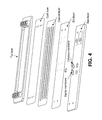
- FIG. 4 illustrates an embodiment of an integrated disposable channel for use in a proton/hydroxide injector device.
- Slits for fluid contact to proton/hydroxide injector compartments can be arranged as desired.
- slits in the chamber are 1-1000 microns, and in some embodiments, about 100 micron.
- the number and size of slits can be designed to generate step-wise pH gradients as desired.
- Cellulose, or other hydrophilic, membranes, for example, as shown in FIG. 4 are optional, and function to cover unused slits and/or can optionally cover bipolar membranes to the extent sample components have affinity to the bipolar membrane.
- hydrophilic coatings may be used to cover the bipolar membranes and prevent binding of the sample components to it.
- Further slits can be used to extract from, and inject samples to, the channel.
- FIGS. 5A-C illustrate generation of a pH step gradient and isolation of target molecules with the gradient.
- a bipolar membrane ( 2 ) generates a large pH differential, thereby focusing unwanted components ( 1 ) of the sample away from the target analyte.
- a second bipolar membrane ( 4 ) generates a small pH differential centered at the pI for the target analyte ( 3 ).
- the target analyte ( 3 ) can optionally be collected in a channel ( 5 ) in the chamber.
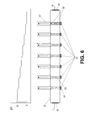
- FIG. 6 illustrates generation of a pH step gradient and isolation of multiple target molecules with the gradient. This embodiment can be used for subsequent application to electrophoresis or other applications.
- FIG. 7 illustrates an embodiment in which different cellular components (nucleic acid, proteins, etc., are purified from the same sample.
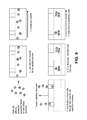
- FIG. 8 illustrates an embodiment in which different subcellular compartments are separated and purified.
- FIG. 9 illustrates an embodiment in which different cell types in a mixture are separated based on their pI and subsequently collected. While the cells are shown in the figure to be isolated via side channels in the chamber, alternatively, cells, once separated by pI, can be pumped out of an end (left or right as shown in the figure) sequentially and substantially free of the other cell type.
- FIG. 10 shows separation of two different peptides having different pI.
- FIG. 11A-B shows separation of a peptide and dsDNA.
- FIG. 12 presents a schematic description of a system that focuses cells, induces their lysis, and captures their mRNA using a proper ligand.
- a method of purifying at least one cellular component from a biological sample comprises one or more cells.
- the method comprises providing into a chamber the sample comprising a cell lysate from the one or more cells; and generating a pH gradient or pH step in the chamber with one or more proton injector(s) and/or hydroxide injector(s), such that at least two components from the cells in different positions are positioned in the chamber based on the isoelectric point (pI) of the components, thereby purifying at least one cellular component from a different cellular component.
- pI isoelectric point
- the method comprises detecting the presence or quantity of at least one of the at least two components.
- the method comprises collecting the at least one of the at least two different components, thereby purifying at least component from the same biological sample.
- the method comprises separately collecting two different cellular components from the same biological sample, thereby purifying the two components from the same biological sample.
- the components are moved through the inside of the chamber in one path and at least some of the components are separately collected from an orifice in the chamber. In some embodiments, the components are moved down the inside of the chamber in one path and the components are separately collected from orifices in the chamber perpendicular to the path of the components. In some embodiments, the orifices (e.g., slits or other openings) are positioned in the chamber to correspond to the pI of the components.
- the components are moved electrophoretically. In some embodiments, the components are moved by pumping fluid in the chamber.
- the at least two components are positioned electrophoretically in the chamber.
- one or more cells are lysed and subsequently provided into the chamber to generate the cell lysate.
- the cells are lysed in the chamber.
- the cells are lysed by generation of a pH sufficiently high or low to lyse the one or more cells.
- the at least one or two components are selected from nuclei, DNA, RNA, peptide, and protein.
- the different components are different subcellular compartments and/or organelles.
- the lysate is from a single cell.
- an agent having affinity for a target cellular component is linked to a position in the chamber and components of the cell lysate are moved to or passed the agent, thereby binding the target cellular component to the agent.
- the target cellular component is RNA and the agent comprises an oligonucleotide.
- the oligonucleotide comprises a poly-T sequence sufficient to bind poly adenylated RNA.
- the device or system comprises: a chamber for containing a solution having a biological sample along an axis, wherein the chamber comprises one or more slit or other opening in the surface of the chamber in communication with one or more proton injector(s) or hydroxide injector(s), and wherein the chamber comprises an agent linked to a position in the chamber, wherein the agent has affinity for a target cellular component, cell, or virus; an electrical source for applying an electric field in the injector(s) and optionally along the axis in the chamber; the one or more proton injector(s) or hydroxide injector(s) for establishing a pH gradient along said axis in said chamber by injecting ion flows, capable of forming one or more pH steps in a pH gradient; and a controller which operates said one or more ion sources to adjust the pH gradient so as to induce positioning of charged components, cells or viruses along the
- the method comprises providing into a chamber the mixture and buffered solution; and generating a pH gradient or pH step in the chamber with one or more proton and/or hydroxide injector, thereby positioning cells in the chamber based on the isoelectric point (pI) of the cells or viruses.
- pI isoelectric point
- the method further comprises detecting the presence or quantity of cells or viruses at one position in the chamber.
- the method further comprises collecting one or more cell or virus based on the one or more cell's or virus' pI.
- the method further comprises separately collecting one or more cell or virus based on two or more separate pI of different cells or viruses.
- the cells or viruses are moved down the inside of the chamber in one path and at least some of the cells or viruses are separately collected from an orifice in the chamber. In some embodiments, wherein the cells or viruses are moved down the inside of the chamber in one path and the cells or viruses are separately collected from orifices in the chamber perpendicular to the path of the cells or viruses. In some embodiments, the orifices are positioned in the chamber to correspond to the pI of the cells or viruses.
- the cells or viruses are moved from the chamber electrophoretically. In some embodiments, the cells or viruses are moved from the chamber by pumping fluid in the chamber.
- the cells or viruses are positioned within the chamber electrophoretically.
- the method further comprises detecting one or more target cell type or virus positioned in the chamber.
- the method further comprises isolating one or more target cell type or virus from the chamber, thereby separating the target cell type or virus from at least one other cell type in the mixture.
- the method comprises concentrating a cell type or virus from the mixture.
- the cell type is a bacterium.
- the pH step or pH gradient separates a virus from at least one cell in the mixture.
- the target cell is a eukaryotic cell or a prokaryotic cell. In some embodiments, the target cell is a tumor cell. In some embodiments, the target cell is a B-lymphocyte cell or a T-lymphocyte cell. In some embodiments, the mixture is a biological sample from a human.
- the sample is a blood, fecal, or urine sample. In some embodiments, the sample is a waste water sample.
- an agent having affinity for a target cell or virus is linked to a position in the chamber and components of the mixture are moved to or passed the agent, thereby binding the target cell or virus to the agent.
- affinity agent refers to a molecule that specifically binds a target molecule.
- exemplary affinity agents include, e.g., an antibody, antibody fragment, or aptamer.
- the affinity agent can be, for example, a complementary nucleic acid.
- a “label” or a “detectable moiety” is a composition detectable by spectroscopic, photochemical, biochemical, immunochemical, chemical, or other physical means.
- useful labels include 32 P, fluorescent dyes, electron-dense reagents, enzymes (e.g., as commonly used in an ELISA), biotin, digoxigenin, or haptens and proteins or other entities which can be made detectable, e.g., by incorporating a radiolabel into the peptide or used to detect antibodies specifically reactive with the peptide.
- the labels may be incorporated into, e.g., antibodies and/or other proteins at any position.
- any method known in the art for conjugating the antibody to the label may be employed, e.g., using methods described in Hermanson, Bioconjugate Techniques 1996, Academic Press, Inc., San Diego.
- methods using high affinity interactions may achieve the same results where one of a pair of binding partners binds to the other, e.g., biotin, streptavidin.
- an affinity agent can be directly labeled with isotopes, chromophores, lumiphores, chromogens, or indirectly labeled such as with biotin to which a streptavidin complex (optionally including, e.g., a fluorescent, radioactive, or other moiety that can be directly detected) may later bind.
- a biotinylated antibody is considered a “labeled antibody” as used herein.
- antibodies bind to a particular protein and do not bind in a significant amount to other proteins present in the sample.
- Specific binding to an antibody under such conditions may require an antibody that is selected for its specificity for a particular protein.
- antibodies raised against a protein can be selected to obtain antibodies specifically immunoreactive with that protein and not with other proteins.
- immunoassay formats may be used to select antibodies specifically immunoreactive with a particular protein.
- solid-phase ELISA immunoassays, Western blots, or immunohistochemistry are routinely used to select monoclonal antibodies specifically immunoreactive with a protein. See, Harlow and Lane Antibodies, A Laboratory Manual , Cold Spring Harbor Publications, NY (1988) for a description of immunoassay formats and conditions that can be used to determine specific immunoreactivity.
- a specific or selective reaction will be at least twice the background signal or noise and more typically more than 10 to 100 times background.
- biological sample encompasses a variety of sample types obtained from an organism.
- the term encompasses bodily fluids such as blood, saliva, serum, plasma, urine and other liquid samples of biological origin, solid tissue samples, such as a biopsy specimen or tissue cultures or cells derived therefrom and the progeny thereof.
- the term encompasses samples that have been manipulated in any way after their procurement, such as by treatment with reagents, solubilization, sedimentation, or enrichment for certain components.
- the term encompasses a clinical sample, and also includes cells in cell culture, cell supernatants, cell lysates, serum, plasma, other biological fluids, and tissue samples.
- the term is not limited to human-derived, or medical-related samples, and thus can include, e.g., plant-based, prokaryotic-based, or other samples of biological origin.
- antibody refers to a polypeptide comprising a framework region (e.g., from an immunoglobulin gene), or fragments thereof, that specifically bind and recognize an antigen or desired target.
- framework region e.g., from an immunoglobulin gene
- the “variable region” contains the antigen-binding region of the antibody (or its functional equivalent) and controls specificity and affinity of binding. See Paul, Fundamental Immunology (2003).
- An exemplary immunoglobulin (antibody) structural unit comprises a tetramer.
- Each tetramer is composed of two identical pairs of polypeptide chains, each pair having one “light” (about 25 kD) and one “heavy” chain (about 50-70 kD).
- the N-terminus of each chain defines a variable region of about 100 to 110 or more amino acids primarily responsible for antigen recognition.
- the terms variable light chain (V L ) and variable heavy chain (V H ) refer to these light and heavy chains respectively.
- Immunoglobulin genes include the kappa, lambda, alpha, gamma, delta, epsilon, and mu constant region genes.
- Light chains are classified as either kappa or lambda.
- Heavy chains are classified as gamma, mu, alpha, delta, or epsilon, which in turn define the isotype classes, IgG, IgM, IgA, IgD and IgE, respectively.
- Antibodies can exist as intact immunoglobulins or as any of a number of well-characterized fragments that include specific antigen-binding activity. Such fragments can be produced by digestion with various peptidases. Pepsin digests an antibody below the disulfide linkages in the hinge region to produce F(ab)′ 2 , a dimer of Fab which itself is a light chain joined to V H —C H 1 by a disulfide bond. The F(ab)′ 2 may be reduced under mild conditions to break the disulfide linkage in the hinge region, thereby converting the F(ab)′ 2 dimer into an Fab′ monomer.
- the Fab′ monomer is essentially Fab with part of the hinge region (see Fundamental Immunology (Paul ed., 3d ed. 1993). While various antibody fragments are defined in terms of the digestion of an intact antibody, one of skill will appreciate that such fragments may be synthesized de novo either chemically or by using recombinant DNA methodology. Thus, the term antibody, as used herein, also includes antibody fragments either produced by the modification of whole antibodies, or those synthesized de novo using recombinant DNA methodologies (e.g., single chain Fv) or those identified using phage display libraries (see, e.g., McCafferty et al., Nature 348:552-554 (1990)).
- Target analyte can include a biomolecule, or molecule of biological origin.
- Target molecules include, but are not limited to, proteins, polynucleotides, metabolites, viruses, and virus-like particles and cells.
- proteins include but are not limited to antibodies, enzymes, growth regulators, clotting factors, and phosphoproteins.
- polynucleotides include DNA and RNA.
- viruses include enveloped and non-enveloped viruses.
- nucleic acid and “polynucleotide” are used interchangeably herein to refer to deoxyribonucleotides or ribonucleotides and polymers thereof in either single- or double-stranded form.
- the term encompasses nucleic acids containing known nucleotide analogs or modified backbone residues or linkages, which are synthetic, naturally occurring, and non-naturally occurring, which have similar binding properties as the reference nucleic acid, and which are metabolized in a manner similar to the reference nucleotides.
- Examples of such analogs include, without limitation, phosphorothioates, phosphoramidates, methyl phosphonates, chiral-methyl phosphonates, 2-O-methyl ribonucleotides, and peptide nucleic acids (PNAs).
- PNAs peptide nucleic acids
- polypeptide “peptide,” and “protein” are used interchangeably herein to refer to a polymer of amino acid residues.
- the terms apply to amino acid polymers in which one or more amino acid residue is an artificial chemical mimetic of a corresponding naturally occurring amino acid, as well as to naturally occurring amino acid polymers and non-naturally occurring amino acid polymers.
- targets e.g., cells or viruses, organelles, or other cell components
- the methods take advantage of the pH-dependence of charge of targets, for example allowing for localization of charged targets to a particular sub-area by setting the pH of solution in proximity to the sub-area to a pH at or close to the pI of the target of interest.
- an electric field is applied in the chamber, and at a target's pI, the target becomes uncharged and therefore does not move further in the electric field.
- the apparatus can have a variety of configurations.
- the chamber can comprise one or more (e.g., 1, 2, 3, 4, 5, or more) proton or hydroxide injector separated from the chamber by a bipolar membrane, wherein the injector comprises an electrode, thereby allowing for electro-hydrolysis of water molecules and localized control of pH within a region of the chamber. See, e.g., FIG. 2 .
- the apparatus comprises at least one chamber having a first and second electrode, which allow for moving a charged target in an electric field.
- chamber and “channel” are used synonymously.
- the terms encompass containers that are considerably (e.g., 10 ⁇ , 100 ⁇ , 1000 ⁇ ) longer than wide, which allow for multiple injectors along the long axis of the chamber. Without intending to limit the scope of the invention, it is noted that chambers of the following dimensions have been constructed:
- the chamber/channel can also comprise one or more opening (e.g., orifice or port), optionally controlled by a valve, for collection.
- opening e.g., orifice or port
- the orientation of the electrodes (i.e., which is a cathode and which an anode) will depend on the charge of the molecules to be moved in the solution and the direction the molecules are to be moved. For example, a positively-charged molecule moves towards a cathode and a negatively-charged molecule moves towards an anode when an electrical voltage difference is present through the solution in the chamber between the cathode to the anode.
- the electrodes should be oriented so that they are as close to each other as possible, i.e., directly across from each other. While other configurations are contemplated and possible, voltage and resistance increases as a function of distance.
- Electrodes in the chamber can in some circumstances interfere and/or bind target molecules (e.g., protein) in the chamber.
- target molecules e.g., protein
- the electrodes are separated from the chamber by a membrane or gel, thereby preventing target molecules from binding the electrodes.
- the size and shape of the chamber can vary. While the chamber is depicted as a tube or channel (i.e., longer between the electrodes than across other axis), other configurations are also possible. In some embodiments, the channel can be constructed as illustrated in FIG. 4 .
- An ion “injector” refers to one or more compartments, separated from a sub-chamber or other vessel (e.g., such as a reservoir), by a hole or “slit” and divided by a bipolar membrane(s), wherein the compartment(s) contain an electrode(s).
- the compartment(s) can be designed to inject protons or hydroxide ions through the selective membrane(s) and into the adjacent chamber.
- the membrane(s) “divides” the compartments from the chamber by forming a barrier that separates solution in a compartment from the chamber, e.g., at least to the level of solution in the chamber.
- the membrane(s) can be designed to completely divide a compartment from the chamber at least up to the level of solution in the chamber and/or compartment, or to a level designated as a maximum for solution loading.
- the membranes can be designed to be higher than the solution level so as to avoid accidental transfer (e.g., splashing) from one portion to another.
- the membranes can be “framed” by a solid material (e.g., plastic) or otherwise anchored between the chamber and the compartment.
- the electrodes can be formed from any conducting or semi-conducting substance.
- one or more electrode comprises a metal.
- the metal is zinc, copper, or platinum.
- the electrodes can be platinum or can be platinum-plated.
- maximal surface area for electrodes is desirable.
- a flattened electrode, for example, provides more surface area than a wire.
- International Patent Application Publication No. WO2009/027970 describes methods and devices (i.e., proton or hydroxide injectors) useful in producing local concentrations of protons or hydroxide ions, proton or hydroxide concentration gradients, and desired proton or hydroxide concentration topographies in an environment, such as an electrolyte solution, a gel, and the like.
- International Patent Application Publication No. WO2011/021195 and WO2011/021196 describe methods and devices for isoelectric focusing proton/hydroxide injectors and also describes display of data.
- Proton/hydroxide injector technology can be used to affect the pH of the solution in a chamber, or at least the solution in the chamber in proximity to the injector.
- the proton/hydroxide injector comprises a compartment adjacent to the apparatus chamber, with an electrode inside the compartment, and a bipolar membrane separating the compartment from the channel. See, e.g., FIGS. 1A-1B .
- a bipolar membrane is an ion-exchange membrane having a structure in which a cation-exchange membrane and an anion-exchange membrane are joined together, and allows for water molecules to be split into protons and hydroxide ions.
- Voltage applied between the compartment and the channel divided by the bipolar membrane leads to water splitting and injection of protons or hydroxide ions into the channel.
- Some advantages of this technology can include, for example, bubble-free water hydrolysis and injection of generated ions directly to the channel, allowing short response time (e.g., if desired, below 1 minute).
- the charged molecules can be added in proximity to the anode or cathode in the chamber (in which the pH is controlled at least in part by a proton injector or a hydroxide injector), and subsequently the voltage is applied, thereby delivering the charged molecule, cell, virus, organelle, etc. to a desired position in the chamber at a time determined by the user.
- the direction of movement of the molecule will depend on the charge of the molecule and the polarity of the applied voltage.
- Systems incorporating the apparatus are provided.
- Systems can include, for example, a power supply and power regulator to control current and/or voltage to electrodes in the chamber and/or injectors. See, e.g., FIG. 3 .
- Pumps for regulating flow of liquids, a mechanism for stirring or mixing solution in the chamber, and heating or cooling units can be included.
- the system includes a pH and/or conductivity probe in the chamber. Generally, it can be desirable to place the probe at a distance from the electric field lines between electrodes to improve readings.
- Dynamically adjustable pH ‘step/s’ spanning the pH range of ⁇ 2-12 can be generated within a chamber filled with suitable buffers using proton or hydroxide injectors as described herein.
- An example of such a gradient is displayed in FIG. 5A .
- Extreme pH conditions especially basic ones, induces cell lysis by disrupting the structure of the membrane. Inducing cell lysis can be done in a highly controlled fashion by injecting OH-ions from a hydroxide injector. Subsequent cell analysis can be achieved, for example, by separating the lysate electrophoretically and/or or by affinity capture for one or more target molecules or cellular components. Using the appropriate dimensions, cell analysis can be performed with digital pH on a single cell.
- cellular components e.g., complex mixtures of suitably buffered organelles or other subcellular compartments (e.g., rom lysed cells so as to maintain organelles substantially intact) or cellular components (e.g., protein, DNA, and RNA) are separated from other components, and optionally detected, quantified and/or collected and analyzed further.
- one or more affinity agents in the chamber e.g., linked to a position in the chamber
- Affinity agents can include, e.g., antibodies, aptamers, proteins, or other molecules with specific affinity for a target (e.g., biotin and avidin, complementary nucleic acids, etc.).
- FIG. 12 presents a schematic description of a system that focuses one or more cells, induces cell lysis, and captures mRNA from the cells using a ligand.
- the cells migrate in a channel where a longitudinal electric field is maintained.
- a hydroxide injector injector is placed at one or more position along the channel creating alkaline conditions.
- Cells migrating focus on the pH step, and, due to the alkaline conditions, are lysed.
- the pH step is shut down.
- a cell lysate or a partially purified lysate is added to the channel/chamber.
- the lysate subsequently leaves the region of the chamber in proximity to the hydroxide injector and continues its migration (to the right in the figure) due to the electric field generated by electrodes at either end of the channel.
- a ligand having specific affinity for one of the lysate components is positioned in the channel (in the figure it is an oligo-T that binds mRNA through its polyA tail, though other sequence-specific oligonucleotides are contemplated as well as other affinity agents such as antibodies, aptamers, etc., having specific affinity for the component).
- This ligand binds its corresponding molecule (i.e., the target cellular component) as the lysate migrates through the channel, thereby isolating the target component from other components in the sample.
- Release of the isolated component can be achieved, if desired by, for example, injecting an elution buffer that eliminates the affinity of the component to the ligand.
- the elution buffer is generated with one or more proton and/or hydroxide injectors or by addition of the appropriate buffer.
- the lysate components can be separated by electrophoresis (not shown in the figure). In some of these embodiments, no ligand is present or used. Instead, after switching off the pH step, the whole lysate can be moved freely in the electric field generated by electrodes in the channel, and after a certain distance, will be separated from other components according to mobility. Thus, pI, mobility, or both may be used to separate components in the channel.
- complex mixtures of (e.g., suitably-buffered) organelles or other subcellular compartments (from lysed cells so as to maintain organelles substantially intact) or cellular components (e.g., protein, DNA, and RNA) will be electrophoresed within chamber so as to ‘capture’ the separate organelle or components at their respective isoelectric points in either a single pH step (see FIG. 5B ) or multiple pH ‘step/s’ spanning the desired pH range. Subsequently, electronic adjustment of H+/OH-generation at (each) ‘step’ will be used to ‘release’ simplified mixtures of ampholyte-free, charged species towards a harvesting chamber for collection and downstream analysis. See, e.g. FIG. 5C .
- This approach enables optimized fractionation of various organelle or other subcellular compartments or various cellular components (DNA, RNA, protein) (via adjusting component capture and release in a sample-dependent manner) without contamination by chemical ampholytes.
- this approach can also be adapted to isolate cells and/or separate cell mixtures, based on the target cells' pI.
- bipolar membranes ( 61 ) are placed in slots in a channel ( 62 ) (also referred to herein as a “chamber”). See, FIG. 6 .
- the channel can be filled with a suitable buffer. Either protons or hydroxide ions are injected by each membrane to create a step gradient is created as shown on the pH graph ( FIG. 6 ).
- the cells ( 63 ) focus in the steps corresponding to their pI by applying orthogonal electric field through electrodes ( 64 ) and ( 65 ).
- Optional permeable membranes or screens ( 66 ) can be used to create chambers where the organelles or cellular components are focused. After the focusing is completed the organelles or cellular components are harvested through harvesting ports or channels ( 67 ).
- the pI fractions can be precisely positioned where desired (for example on the top of the second dimension channel) when using a proton/hydroxide injector.
- the target bands target organelles or cellular components
- the detector thereby simplifying design.
- the present application provides methods and devices for isolating simultaneously different components from cells without splitting a sample and simply purifying different components from different portions.
- the proton/hydroxide injector technology enables the isolation of all three types of biomolecules from the same sample by separating target components based on differential pI.
- cells are moved (e.g., pumped or electrophoretically) down a channel that contains proton/hydroxide injectors at varying points along its length. See, e.g., FIG. 7 .
- the cells are halted and the pH is changed to lyse the cells (for example, either low pH, e.g., pH ⁇ 3 or lower or high pH, e.g., pH ⁇ 11 or higher).
- lyse the cells for example, either low pH, e.g., pH ⁇ 3 or lower or high pH, e.g., pH ⁇ 11 or higher.
- a cell lysate can be provided into the channel.
- the nucleus can be separated from the rest of the cell material by pumping or electrophoretically moving the nuclei into a side channel and subsequent DNA isolation can be performed.
- the cellular material in the main channel can also be moved to a pump where the pH is changed (e.g., again) to separate the total RNA from the cellular material.
- the isolated RNA will then be pumped into a side channel for collection.
- enzymes that specifically digest DNA (DNases) or RNA (RNases) or protein (proteases) may be included in buffer-filled channel to allow for isolation of desired components and elimination of undesired components.
- the total protein is removed from the rest of the cellular debris, e.g., by changing the pH and pumping the proteins down a collection channel. This can be performed on a single cell only for single cell analysis or on populations of cells up to at least several thousand (or more, e.g., several hundred thousand or a million).
- Subcellular structures to be separated can include, but are not limited to, nuclei, mitochondria, lyzosome, peroxisome and the endoplasmic reticulum ER. Except for the ER, which is an integrated membrane structure and cannot easily be separated from the cell membrane with available methods, all other organelles have surface proteins and therefore surface charge or pI.
- organelles precipitate at their pI
- surface charge based isolation of one or more organelle of interest can be employed or appropriate buffer additives used to reduce or eliminate precipitation at pI or precipitation of non-desired organelles (or other cellular components) carried out at the pI of the non-desired organelles can be achieved, so as to maintain the organelle(s) of interest soluble for collection downstream.
- Organelle isolation can also be performed via proton or hydroxide ion injector technology as a second ‘polishing’ step starting with enriched preparations of organelle of interest.
- Organelles can be subsequently detected and/or quantified. Exemplary detection of quantification methods include, e.g., immunoassays and/or nucleic acid amplification or sequencing (for those organelles that contain nucleic acids).
- the methods allow for isolation of organelles for study of organelle-mediated diseases. Some specific diseases, associated with a particular organelles can be studies much easier. Numerous energy related processes are linked to mitochondria, for example, heart diseases and a number of age-related neural diseases, and thus the present methods could be useful for diagnostic assays for these or other diseases and conditions.
- the cellular components may be separated based on their pI and in other embodiments, on their mobility, or using combination of both (pI and mobility).
- Standard cellular separation techniques are carried out using a range of cellular parameters including size, internal complexity, dielectric properties and or most notably presence of cell surface proteins. Much of this type of work is performed using blood samples that contain a variety of cell types. Some can be readily separated using bivariate analysis of size and internal complexity while others require immunostaining for differentiation, such as classification of B versus T lymphocytes.
- a mixture of at least two types of cells is loaded into the chamber, optionally without a pH gradient set by proton or hydroxide injectors in the chamber.
- a pH gradient is subsequently set by the injector(s), thereby focusing the at least two cell types to different positions in the chamber, based on pI.
- collection channels can be positioned at particular positions in the gradient, thereby allowing for collection of one or more cell type. Multiple collection channels can be designed as desired.
- Exemplary cells include, e.g., prokaryotic or eukaryotic cells.
- This approach can be used, for example, to accurately distinguish B versus T lymphocytes prior to analysis and sorting by FACS.
- This approach can also be used to distinguish and allow for early detection and removal of dead or dying cells, which often confound FACS analysis.
- This technology allows for resolution of two of more cell types that are otherwise difficult to resolve (e.g., such as the T- and B-cells discussed above) as well as concentration of cells. Concentration of cells is of particular use in situations in which low concentrations of cells are to be detected.
- Examples of such embodiments include testing of waste water or food or liquids for human or animal consumption, as well as for medical testing, including but not limited to, detection and/or isolation of stem cells, tumor cells, and cancer stem cells, detection or isolation of viruses or bacteria from blood or other bodily fluids or biological samples, etc.
- Cells to be detected or isolated can also include, e.g., mammalian cells, plant cells, protozoa, etc.
- Detection and/or quantification of the cell or virus can be achieved in a variety of ways.
- a detectably-labeled antibody or other affinity agent is contacted to the target cell or virus after the cell or virus is localized based on pI and/or is separated or collected.
- Rotofor protein standard was injected at the cathode ( ⁇ ) end of a channel having an electrode at either end and was operated at 300 V, 14.5 mA.
- the channel had the following attributes:
- a first proton injector was set at 100 mA and ramped manually up to 210 mA.
- a second proton injector was set at 100 mA and ramped manually down to 0 mA.
- Buffer used 4 mM Sodium Citrate, 4 mM Sodium Phosphate (dibasic), 7 mM Sodium Pyrophosphate, 13 mM Sodium Sulphate, pH 10.2 (pH adjusted with NaOH)
- Hemoglobin (pI ⁇ 7 ) was separated from Cytochrome b (pI ⁇ 9.5).
- Phycocyanin (pI ⁇ 4.5) was removed from mixture.
- Buffer used 4 mM Sodium Citrate, 4 mM Sodium Phosphate (dibasic), 4 mM Sodium Pyrophosphate, 13 mM Sodium Sulphate, pH adjusted to 8.5 (with H 2 SO 4 )
- Buffer used 4 mM Sodium Citrate, 4 mM Sodium Phosphate (dibasic), 4 mM Sodium Pyrophosphate, 13 mM Sodium Sulphate, pH adjusted to 8.5 (with H 2 SO 4 ).
- a band of cy3 fluorescent mitochondria was focused in a channel between H+ and OH-injectors.
- the running solution in the channel contained the following ingredients: 4 mM citrate, 4 mM phosphate, 4 mM pyrophosphate, 13 mM Na2SO4, 1% PVP40, 250 mM Sucrose, pH 7.5.
- the mitochondria was fluorescently labeled with JC-1.
- the channel had the following dimensions:
Landscapes
- Chemical & Material Sciences (AREA)
- Health & Medical Sciences (AREA)
- Life Sciences & Earth Sciences (AREA)
- Molecular Biology (AREA)
- Chemical Kinetics & Catalysis (AREA)
- Electrochemistry (AREA)
- Analytical Chemistry (AREA)
- Biochemistry (AREA)
- General Health & Medical Sciences (AREA)
- Organic Chemistry (AREA)
- General Physics & Mathematics (AREA)
- Immunology (AREA)
- Pathology (AREA)
- Physics & Mathematics (AREA)
- General Chemical & Material Sciences (AREA)
- Biophysics (AREA)
- Genetics & Genomics (AREA)
- Medicinal Chemistry (AREA)
- Proteomics, Peptides & Aminoacids (AREA)
- Apparatus Associated With Microorganisms And Enzymes (AREA)
- Micro-Organisms Or Cultivation Processes Thereof (AREA)
Priority Applications (1)
| Application Number | Priority Date | Filing Date | Title |
|---|---|---|---|
| US13/669,012 US9234875B2 (en) | 2011-11-04 | 2012-11-05 | Simultaneous purification of cell components |
Applications Claiming Priority (3)
| Application Number | Priority Date | Filing Date | Title |
|---|---|---|---|
| US201161555689P | 2011-11-04 | 2011-11-04 | |
| US201161555708P | 2011-11-04 | 2011-11-04 | |
| US13/669,012 US9234875B2 (en) | 2011-11-04 | 2012-11-05 | Simultaneous purification of cell components |
Publications (2)
| Publication Number | Publication Date |
|---|---|
| US20130126356A1 US20130126356A1 (en) | 2013-05-23 |
| US9234875B2 true US9234875B2 (en) | 2016-01-12 |
Family
ID=48192903
Family Applications (1)
| Application Number | Title | Priority Date | Filing Date |
|---|---|---|---|
| US13/669,012 Active 2034-04-13 US9234875B2 (en) | 2011-11-04 | 2012-11-05 | Simultaneous purification of cell components |
Country Status (4)
| Country | Link |
|---|---|
| US (1) | US9234875B2 (de) |
| EP (1) | EP2773221B1 (de) |
| CN (1) | CN104023551A (de) |
| WO (1) | WO2013067509A1 (de) |
Citations (59)
| Publication number | Priority date | Publication date | Assignee | Title |
|---|---|---|---|---|
| US4396477A (en) | 1981-06-29 | 1983-08-02 | Ionics, Incorporated | Separation of proteins using electrodialysis-isoelectric focusing combination |
| US4868130A (en) | 1985-08-21 | 1989-09-19 | Biotope, Inc. | Methods for conducting specific binding assays |
| US4880513A (en) | 1986-06-20 | 1989-11-14 | The Graver Company | Method and apparatus for generating acid and base regenerants and the use thereof to regenerate ion-exchange resins |
| US4900414A (en) | 1988-08-19 | 1990-02-13 | Drug Delivery Systems Inc. | Commercial separation system and method using electrokinetic techniques |
| US4936962A (en) | 1989-03-01 | 1990-06-26 | Fmc Corporation | Process for adjusting the pH of an aqueous flowable fluid |
| US5045204A (en) | 1990-02-13 | 1991-09-03 | Dionex Corporation | Method and apparatus for generating a high purity chromatography eluent |
| US5078853A (en) | 1991-03-22 | 1992-01-07 | Assay Technology, Inc. | Segmented electrophoretic separation system useful for lipid profiling |
| US5082548A (en) | 1987-04-11 | 1992-01-21 | Ciba-Geigy Corporation | Isoelectric focusing apparatus |
| US5160594A (en) | 1989-03-08 | 1992-11-03 | Board Of Regents Of The University Of Texas System | Apparatus and methods for isoelectric focusing of amphoteric substances incorporating ion selective membranes in electrode chambers |
| US5198086A (en) | 1990-12-21 | 1993-03-30 | Allied-Signal | Electrodialysis of salts of weak acids and/or weak bases |
| US5437774A (en) | 1993-12-30 | 1995-08-01 | Zymogenetics, Inc. | High molecular weight electrodialysis |
| US5567293A (en) | 1994-12-22 | 1996-10-22 | Pulp And Paper Research Institute Of Canada | Electromembrane processes for the treatment of kraft mill electrostatic precipitator catch |
| US5646001A (en) | 1991-03-25 | 1997-07-08 | Immunivest Corporation | Affinity-binding separation and release of one or more selected subset of biological entities from a mixed population thereof |
| US5650055A (en) | 1993-04-07 | 1997-07-22 | Margolis; Joel | Electrophoresis separation method and apparatus using barrier separation and polarity reversing |
| US5773645A (en) | 1997-05-05 | 1998-06-30 | Bio-Rad Laboratories, Inc. | Two-dimensional electrophoresis device |
| WO1999026724A2 (en) | 1997-11-25 | 1999-06-03 | Mosaic Technologies | Devices and methods for detecting target molecules in biological samples |
| EP0979868A2 (de) | 1998-08-04 | 2000-02-16 | Ortho-Clinical Diagnostics, Inc. | Elektrophoretischer Trennung von Nukleinsäuren und Proteinen bei niedrigem pH-Wert |
| US6077434A (en) | 1999-01-15 | 2000-06-20 | Dionex Corporation | Current-efficient suppressors and method of use |
| US6084091A (en) | 1995-08-16 | 2000-07-04 | Max-Planck-Gesellschaft Zur Forerung Der Wissenschaften E.V. | Process for purifying, stabilising or isolating nucleic acids from biological materials |
| US6129832A (en) | 1995-11-14 | 2000-10-10 | Gunter Fuhr | Device and method for adjusting ion concentrations |
| US6225129B1 (en) | 1998-02-02 | 2001-05-01 | Dionex Corporation | Large capacity acid or base generation apparatus and method of use |
| WO2001036449A1 (en) | 1999-11-15 | 2001-05-25 | Proteome Systems Ltd | Multi-compartment electrophoresis |
| US20020043462A1 (en) | 1998-05-06 | 2002-04-18 | Washington State University Research Foundation | Device and method for focusing solutes in an electric field gradient |
| WO2003019172A2 (en) | 2001-08-31 | 2003-03-06 | Diagnoswiss S.A. | Apparatus and method for separating an analyte |
| US20030083823A1 (en) | 1998-05-29 | 2003-05-01 | Parekh Rajesh Bhikhu | Gels, methods and apparatus for identification and characterization of biomolecules |
| US20030168576A1 (en) | 2002-03-11 | 2003-09-11 | Bio-Rad Laboratories, Inc. | Assembly for casting and use of an isoelectric focusing strip |
| US20030205471A1 (en) | 2000-04-03 | 2003-11-06 | The Wistar Institute | Method and device for separation of charged molecules by solution isoelectric focusing |
| US20030206894A1 (en) | 1997-02-20 | 2003-11-06 | Cerberus Enterprises B.V. | Method and apparatus for continuous flow isoelectric focus for purifying biological substances |
| US6660150B2 (en) | 2000-04-14 | 2003-12-09 | Gradipore Limited | Separation of micromolecules |
| US20030226752A1 (en) | 2002-06-05 | 2003-12-11 | Gradipore Limited | Method for pH-biased isoelectric trapping separation |
| WO2004083405A2 (en) | 2003-03-19 | 2004-09-30 | Alfa Wassermann, Inc. | Separation and accumulation of subcellular components, and proteins derived therefrom |
| US20040242849A1 (en) | 1998-06-02 | 2004-12-02 | Gradipore Limited | Purification of antibodies |
| US6969614B1 (en) | 1999-02-16 | 2005-11-29 | The United States Of America As Represented By The Department Of Health And Human Services | Methods for the isolation and analysis of cellular protein content |
| US6969453B2 (en) | 2000-04-18 | 2005-11-29 | Gradipore Limited | Small separation apparatus |
| US20060029978A1 (en) | 2004-07-19 | 2006-02-09 | O'neill Roger A | Methods and devices for analyte detection |
| EP1456667B1 (de) | 2001-12-08 | 2006-05-24 | Micromass UK Limited | Massenspektrometrie-verfahren |
| WO2006063625A1 (en) | 2004-12-17 | 2006-06-22 | Agilent Technologies, Inc. | Fractionation using electro elution |
| US7077942B1 (en) | 1999-12-23 | 2006-07-18 | Gradipore Limited | Removal of biological contaminants |
| EP1748340A2 (de) | 2005-06-21 | 2007-01-31 | Samsung Electronics Co., Ltd. | Mikrofluidische Vorrichtung und Verfahren zur elektrischen Regulierung des pH-Wertes einer Flüssigkeit |
| WO2007051492A1 (en) | 2005-11-02 | 2007-05-10 | Agilent Technologies, Inc. | Force-promoted sample recovery in gel electrophoresis |
| US20070163884A1 (en) | 2003-01-15 | 2007-07-19 | David Strand | Method and apparatus determining the isoelectric point of charged analyte |
| US20070205106A1 (en) | 2003-10-24 | 2007-09-06 | The Texas A&M University System | Electrophoresis Apparatus |
| US20080035484A1 (en) * | 2006-07-10 | 2008-02-14 | Jiaqi Wu | Method and apparatus for precise selection and extraction of a focused component in isoelectric focusing performed in micro-channels |
| WO2009027970A2 (en) | 2007-08-27 | 2009-03-05 | Technion - Research & Development Foundation Ltd | Ph gradients controlled by electrolysis, and their use in isoelectric focusing |
| US7517696B2 (en) | 2003-01-30 | 2009-04-14 | Dionex Corporation | Chemical suppressors and method of use |
| US20090101491A1 (en) | 2003-09-03 | 2009-04-23 | Shmuel Bukshpan | Methods and apparatus for rapid crystallization of biomolecules |
| US20090145777A1 (en) | 2007-12-06 | 2009-06-11 | Dionex Corporation | Titration device and method |
| WO2009133153A1 (en) | 2008-04-29 | 2009-11-05 | Becton, Dickinson And Company | Methods and systems for the separation and analysis of analytes using ffe |
| US7615354B2 (en) | 2000-05-05 | 2009-11-10 | Ecole Polytechnique Federale De Lausanne | Electrophoretic separation of compounds |
| US7651838B2 (en) | 2001-04-30 | 2010-01-26 | Institut National De La Sante Et De La Recherche Medicale | Prenatal diagnosis method on isolated foetal cell of maternal blood |
| WO2010048173A2 (en) | 2008-10-20 | 2010-04-29 | Stc.Unm | High resolution focusing and separation of proteins in nanofluidic channels |
| US20100155243A1 (en) | 2003-02-26 | 2010-06-24 | Thomas Wayne Schneider | System and Method For the Separation of Analytes |
| US20100155246A1 (en) | 2006-01-18 | 2010-06-24 | Perkinelmer Cellular Technologies Germany Gmbh | Electric field cage and associated operating method |
| WO2010118890A1 (en) | 2009-04-16 | 2010-10-21 | Charite - Universitätsmedizin Berlin | B-lymphocyte targeting agents for use in a method for the treatment of a disease |
| WO2011021195A1 (en) | 2009-08-18 | 2011-02-24 | Technion Research & Development Foundation Ltd. | Methods and devices of separating molecular analytes |
| WO2011021196A2 (en) | 2009-08-18 | 2011-02-24 | Technion Research & Development Foundation Ltd. | Proton concentration topographies, methods and devices for producing the same |
| CN102079781A (zh) | 2010-04-22 | 2011-06-01 | 中国疾病预防控制中心寄生虫病预防控制所 | 日本血吸虫可溶性虫卵抗原中的免疫原性蛋白及其筛选方法和用途 |
| US7989614B2 (en) | 1994-12-12 | 2011-08-02 | Invitrogen Dynal As | Isolation of nucleic acid |
| US20110195527A1 (en) | 2004-07-19 | 2011-08-11 | Cell Biosciences, Inc. | Methods and devices for analyte detection |
Family Cites Families (2)
| Publication number | Priority date | Publication date | Assignee | Title |
|---|---|---|---|---|
| CN1842706A (zh) * | 2003-03-19 | 2006-10-04 | 阿尔法沃塞曼公司 | 亚细胞组分的分离和积累和从其得到的蛋白质 |
| EP1816187A4 (de) * | 2004-11-22 | 2011-08-03 | Nissui Seiyaku Co | Mikrochip |
-
2012
- 2012-11-05 EP EP12845686.0A patent/EP2773221B1/de not_active Not-in-force
- 2012-11-05 CN CN201280065453.1A patent/CN104023551A/zh active Pending
- 2012-11-05 WO PCT/US2012/063571 patent/WO2013067509A1/en not_active Ceased
- 2012-11-05 US US13/669,012 patent/US9234875B2/en active Active
Patent Citations (66)
| Publication number | Priority date | Publication date | Assignee | Title |
|---|---|---|---|---|
| US4396477A (en) | 1981-06-29 | 1983-08-02 | Ionics, Incorporated | Separation of proteins using electrodialysis-isoelectric focusing combination |
| US4868130A (en) | 1985-08-21 | 1989-09-19 | Biotope, Inc. | Methods for conducting specific binding assays |
| US4880513A (en) | 1986-06-20 | 1989-11-14 | The Graver Company | Method and apparatus for generating acid and base regenerants and the use thereof to regenerate ion-exchange resins |
| US5082548A (en) | 1987-04-11 | 1992-01-21 | Ciba-Geigy Corporation | Isoelectric focusing apparatus |
| US4900414A (en) | 1988-08-19 | 1990-02-13 | Drug Delivery Systems Inc. | Commercial separation system and method using electrokinetic techniques |
| US4936962A (en) | 1989-03-01 | 1990-06-26 | Fmc Corporation | Process for adjusting the pH of an aqueous flowable fluid |
| US5160594A (en) | 1989-03-08 | 1992-11-03 | Board Of Regents Of The University Of Texas System | Apparatus and methods for isoelectric focusing of amphoteric substances incorporating ion selective membranes in electrode chambers |
| US5045204A (en) | 1990-02-13 | 1991-09-03 | Dionex Corporation | Method and apparatus for generating a high purity chromatography eluent |
| US5198086A (en) | 1990-12-21 | 1993-03-30 | Allied-Signal | Electrodialysis of salts of weak acids and/or weak bases |
| US5078853A (en) | 1991-03-22 | 1992-01-07 | Assay Technology, Inc. | Segmented electrophoretic separation system useful for lipid profiling |
| US5646001A (en) | 1991-03-25 | 1997-07-08 | Immunivest Corporation | Affinity-binding separation and release of one or more selected subset of biological entities from a mixed population thereof |
| US5650055A (en) | 1993-04-07 | 1997-07-22 | Margolis; Joel | Electrophoresis separation method and apparatus using barrier separation and polarity reversing |
| US5437774A (en) | 1993-12-30 | 1995-08-01 | Zymogenetics, Inc. | High molecular weight electrodialysis |
| US7989614B2 (en) | 1994-12-12 | 2011-08-02 | Invitrogen Dynal As | Isolation of nucleic acid |
| US5567293A (en) | 1994-12-22 | 1996-10-22 | Pulp And Paper Research Institute Of Canada | Electromembrane processes for the treatment of kraft mill electrostatic precipitator catch |
| US6084091A (en) | 1995-08-16 | 2000-07-04 | Max-Planck-Gesellschaft Zur Forerung Der Wissenschaften E.V. | Process for purifying, stabilising or isolating nucleic acids from biological materials |
| US6129832A (en) | 1995-11-14 | 2000-10-10 | Gunter Fuhr | Device and method for adjusting ion concentrations |
| US20030206894A1 (en) | 1997-02-20 | 2003-11-06 | Cerberus Enterprises B.V. | Method and apparatus for continuous flow isoelectric focus for purifying biological substances |
| US5773645A (en) | 1997-05-05 | 1998-06-30 | Bio-Rad Laboratories, Inc. | Two-dimensional electrophoresis device |
| WO1999026724A2 (en) | 1997-11-25 | 1999-06-03 | Mosaic Technologies | Devices and methods for detecting target molecules in biological samples |
| US6225129B1 (en) | 1998-02-02 | 2001-05-01 | Dionex Corporation | Large capacity acid or base generation apparatus and method of use |
| US20020043462A1 (en) | 1998-05-06 | 2002-04-18 | Washington State University Research Foundation | Device and method for focusing solutes in an electric field gradient |
| US20030083823A1 (en) | 1998-05-29 | 2003-05-01 | Parekh Rajesh Bhikhu | Gels, methods and apparatus for identification and characterization of biomolecules |
| US20040242849A1 (en) | 1998-06-02 | 2004-12-02 | Gradipore Limited | Purification of antibodies |
| EP0979868A2 (de) | 1998-08-04 | 2000-02-16 | Ortho-Clinical Diagnostics, Inc. | Elektrophoretischer Trennung von Nukleinsäuren und Proteinen bei niedrigem pH-Wert |
| US6077434A (en) | 1999-01-15 | 2000-06-20 | Dionex Corporation | Current-efficient suppressors and method of use |
| US6969614B1 (en) | 1999-02-16 | 2005-11-29 | The United States Of America As Represented By The Department Of Health And Human Services | Methods for the isolation and analysis of cellular protein content |
| WO2001036449A1 (en) | 1999-11-15 | 2001-05-25 | Proteome Systems Ltd | Multi-compartment electrophoresis |
| US7077942B1 (en) | 1999-12-23 | 2006-07-18 | Gradipore Limited | Removal of biological contaminants |
| US20050087445A1 (en) | 2000-04-03 | 2005-04-28 | The Wistar Institute | Method and device for separation of charged molecules by solution isoelectric focusing |
| US20030205471A1 (en) | 2000-04-03 | 2003-11-06 | The Wistar Institute | Method and device for separation of charged molecules by solution isoelectric focusing |
| US6660150B2 (en) | 2000-04-14 | 2003-12-09 | Gradipore Limited | Separation of micromolecules |
| US20060037860A1 (en) | 2000-04-18 | 2006-02-23 | Gradipore Limited | Small separation apparatus |
| US6969453B2 (en) | 2000-04-18 | 2005-11-29 | Gradipore Limited | Small separation apparatus |
| US7615354B2 (en) | 2000-05-05 | 2009-11-10 | Ecole Polytechnique Federale De Lausanne | Electrophoretic separation of compounds |
| US7651838B2 (en) | 2001-04-30 | 2010-01-26 | Institut National De La Sante Et De La Recherche Medicale | Prenatal diagnosis method on isolated foetal cell of maternal blood |
| US7390389B2 (en) | 2001-08-31 | 2008-06-24 | Diagnoswiss S.A. | Apparatus and method for separating an analyte |
| WO2003019172A2 (en) | 2001-08-31 | 2003-03-06 | Diagnoswiss S.A. | Apparatus and method for separating an analyte |
| EP1456667B1 (de) | 2001-12-08 | 2006-05-24 | Micromass UK Limited | Massenspektrometrie-verfahren |
| US20030168576A1 (en) | 2002-03-11 | 2003-09-11 | Bio-Rad Laboratories, Inc. | Assembly for casting and use of an isoelectric focusing strip |
| US20030226752A1 (en) | 2002-06-05 | 2003-12-11 | Gradipore Limited | Method for pH-biased isoelectric trapping separation |
| US20070163884A1 (en) | 2003-01-15 | 2007-07-19 | David Strand | Method and apparatus determining the isoelectric point of charged analyte |
| US7517696B2 (en) | 2003-01-30 | 2009-04-14 | Dionex Corporation | Chemical suppressors and method of use |
| US20100155243A1 (en) | 2003-02-26 | 2010-06-24 | Thomas Wayne Schneider | System and Method For the Separation of Analytes |
| WO2004083405A2 (en) | 2003-03-19 | 2004-09-30 | Alfa Wassermann, Inc. | Separation and accumulation of subcellular components, and proteins derived therefrom |
| US20090101491A1 (en) | 2003-09-03 | 2009-04-23 | Shmuel Bukshpan | Methods and apparatus for rapid crystallization of biomolecules |
| US20070205106A1 (en) | 2003-10-24 | 2007-09-06 | The Texas A&M University System | Electrophoresis Apparatus |
| US20110195527A1 (en) | 2004-07-19 | 2011-08-11 | Cell Biosciences, Inc. | Methods and devices for analyte detection |
| US20060029978A1 (en) | 2004-07-19 | 2006-02-09 | O'neill Roger A | Methods and devices for analyte detection |
| WO2006063625A1 (en) | 2004-12-17 | 2006-06-22 | Agilent Technologies, Inc. | Fractionation using electro elution |
| US8293095B2 (en) * | 2005-06-21 | 2012-10-23 | Samsung Electronics Co., Ltd. | Microfluidic device for electrically regulating the pH of a fluid therein and method of regulating the pH of a fluid in a microfluidic device using the same |
| EP1748340A2 (de) | 2005-06-21 | 2007-01-31 | Samsung Electronics Co., Ltd. | Mikrofluidische Vorrichtung und Verfahren zur elektrischen Regulierung des pH-Wertes einer Flüssigkeit |
| WO2007051492A1 (en) | 2005-11-02 | 2007-05-10 | Agilent Technologies, Inc. | Force-promoted sample recovery in gel electrophoresis |
| US20100155246A1 (en) | 2006-01-18 | 2010-06-24 | Perkinelmer Cellular Technologies Germany Gmbh | Electric field cage and associated operating method |
| US20080035484A1 (en) * | 2006-07-10 | 2008-02-14 | Jiaqi Wu | Method and apparatus for precise selection and extraction of a focused component in isoelectric focusing performed in micro-channels |
| US20100307920A1 (en) | 2007-08-27 | 2010-12-09 | Technion Research & Development Foundation Ltd. | pH GRADIENTS CONTROLLED BY ELECTROLYSIS, AND THEIR USE IN ISOELECTRIC FOCUSING |
| WO2009027970A2 (en) | 2007-08-27 | 2009-03-05 | Technion - Research & Development Foundation Ltd | Ph gradients controlled by electrolysis, and their use in isoelectric focusing |
| US20090145777A1 (en) | 2007-12-06 | 2009-06-11 | Dionex Corporation | Titration device and method |
| WO2009133153A1 (en) | 2008-04-29 | 2009-11-05 | Becton, Dickinson And Company | Methods and systems for the separation and analysis of analytes using ffe |
| WO2010048173A2 (en) | 2008-10-20 | 2010-04-29 | Stc.Unm | High resolution focusing and separation of proteins in nanofluidic channels |
| WO2010118890A1 (en) | 2009-04-16 | 2010-10-21 | Charite - Universitätsmedizin Berlin | B-lymphocyte targeting agents for use in a method for the treatment of a disease |
| WO2011021195A1 (en) | 2009-08-18 | 2011-02-24 | Technion Research & Development Foundation Ltd. | Methods and devices of separating molecular analytes |
| WO2011021196A2 (en) | 2009-08-18 | 2011-02-24 | Technion Research & Development Foundation Ltd. | Proton concentration topographies, methods and devices for producing the same |
| US20120138468A1 (en) | 2009-08-18 | 2012-06-07 | Technion Research & Development Foundation Ltd. | Proton concentration topographies, methods and devices for producing the same |
| US20120145548A1 (en) | 2009-08-18 | 2012-06-14 | Technion Research & Development Foundation Ltd. | Methods and devices of separating molecular analytes |
| CN102079781A (zh) | 2010-04-22 | 2011-06-01 | 中国疾病预防控制中心寄生虫病预防控制所 | 日本血吸虫可溶性虫卵抗原中的免疫原性蛋白及其筛选方法和用途 |
Non-Patent Citations (112)
| Title |
|---|
| "Adjusting acidity with impunity." PHYSorg.com. Dec. 22, 2009. Retrieved at physorg.com/news180726696.html (author unknown). |
| "Isoelectric Focusing" from European Pharmacopoeia Edition 5.0, Chapter 2 "Method of Analysis", Section 2.2.54 (p. 81-82). Published by the Council of Europe, Jun. 15, 2004. |
| "Isoelectric Focusing," AES Application Focus adapted from Chapter 7, Gel Electrophoresis of Proteins by David E. Garfin, pp. 197-268 in Essential Cell Biology, vol. 1: Cell Structure, A Practical Approach John Davey and Mike Lord, Oxford University Press, Oxford UK (2003). |
| Ameridia, "Bipolar Membrane Electrodialysis-Applications of Bipolar Membrane Electrodialysis"; retrieved online at ameridia.com/htm/eba.html Jul. 12, 2011. |
| Ameridia, "Bipolar Membrane Electrodialysis-Process Description"; retrieved online at ameridia.com/htm/ebp.html Jul. 12, 2011. |
| Ameridia, "Bipolar Membrane Electrodialysis-Production of Organic or Amino Acids by Bipolar Membrane Electrodialysis"; retrieved online at ameridia.com/htm/ebc.html Jul. 12, 2011. |
| Amersham Pharmacia Biotech, "Hoefer IsoPrime IEF Purification Unit," User Manual (47 pages), 1999. |
| Armstrong et al., "Separating Microbes in the Manner of Molecules. 1. Capillary Electrokinetic Approaches", Anal. Chem, 71: 5465-5469 (1999). |
| Bazinet et al.; "Bipolar Membrane Electroacidification To Produce Bovine Milk Casein Isolate"; J. Agric. Food Chem.; 47:5291-5296 (1999). |
| Bazinet et al.; "Effect of Number of Bipolar Membranes and Temperature on the Performance of Bipolar Membrane Electroacidification"; J. Agric. Food Chem.; 45:3788-3794 (1997). |
| Bazinetet al.; "Effect of KCI and Soy Protein Concentrations on the Performance of Bipolar Membrane Electroacidification"; J. Agric. Food Chem.; 45:2419-2425 (1997) |
| Biotech Daily, "Daily news on ASX-listed biotechnology companies," 4 pages, Oct. 10, 2008. |
| Cabrera et al., "Continous concentration of bacteria in a microfluidic flow cell using electrokinetic techniques", Eletrophoresis, 22:355-362 (2001). |
| Cao, Liming (2005) Protein Separation with Ion-exchange Membrane Chromatography. (Master's Thesis) Retrieved online at wpi.edu/Pubs/ETD/Available/etd-050405-174109/. |
| Chen et al.; "Electrodialytic Membrane Suppressors for Ion Chromatography Make Programmable Buffer Generators"; Anal. Chem.; 84:67-75 (2012) ePub Nov. 21, 2011. |
| Chen et al.; "pH- and Concentration-Programmable Electrodialytic Buffer Generator"; Anal. Chem.; 84:59-66(2012) ePub Dec. 12, 2011. |
| Cheng et al.; "High-performance protein separation by ion exchange membrane partitioned free-flowisoelectric focusing system"; Chem. Eng. Sci.; 63:2241-2251 (2008). |
| Cheng et al.; "Micro-pH Control by Breaking Water and Its Applications". 15th International Conference on Miniaturized Systems for Chemistry and Life Sciences. Oct. 2-6, 2011, Seattle, Washington, USA (3 pages). |
| Cheng et al.; "Microscale pH Regulation by Breaking Water"; Biomicrofluidics; vol. 5, 046502, published online Nov. 2, 2011 (8 pages). |
| Cretich et al.; "Electroosmotic flow suppression in capillary electrophoresis: Chemisorption of trimethoxy silane-modified polydimethylacrylamide"; Electrophoresis; 26:1913-1919 (2005). |
| Das et al.; "Effects of separation length and voltage on isoelectric focusing in a plastic microfluidic device"; Electrophoresis; 27:3619-3626 (2006). |
| Denver Instrument, "Titration-Coulometric Karl Fischer Titration" brochure. (n.d.). |
| Dionex Corporation, "Eluent Suppressors for Ion Chromatography," Data Sheet (24 pages), 2010. |
| DKK-TOA Corporation, "AUT-701 Automatic Titrator" brochure. Jan. 10, 2008. |
| Douglas Instruments, "Oryx8" brochure. (n.d.). |
| Final OA mailed Mar. 26, 2014 for U.S. Appl. No. 13/669,023, filed Nov. 5, 2012. |
| Gregor, H.; "Ion-Exchange Membranes-Correlation Between Structure and Function"; Pure Appl. Chem.; 16(2-3)329-350 (1968). |
| Horvath et al.; "Multifunctional apparatus for electrokinetic processing of proteins"; Electrophoresis; 15:968-971 (1994). |
| Huang et al.; "Application of electrodialysis to the production of organic acids: State-of-the-art and recent developments"; J. Membr. Sci.; 288:1-12 (2007) ePub Nov. 25, 2006. |
| Huang et al.; "Capillary Isoelectric Focusing without Carrier Ampholytes"Anal. Chem.; 72:4758-4761 (2000). |
| Huang et al.; "Digitally Controlled Electrophoretic Focusing"; Anal. Chem.; 71(8):1628-1632 (1999) ePub Mar. 9, 1999. |
| Huang et al.; "The transitional isoelectric focusing process"; Anal. Bioanal. Chem.; 382:783-788 (2005). |
| Hughes et al., "Microfluidic integration for automated targeted proteomic assays", Proceeding of the National Academy of Sciences, 109(16):5972-5977 (2012). |
| International Search Report and Written Opinion from PCT/US2012/063502, dated Jan. 22, 2013 (13 pages). |
| International Search Report and Written Opinion from PCT/US2012/063571, dated Feb. 20, 2013 (14 pages). |
| International Search Report and Written Opinion from PCT/US2012/063601, dated Feb. 15, 2013 (12 pages). |
| International Search Report and Written Opinion from PCT/US2013/026485, dated Apr. 19, 2013 (14 pages). |
| International Search Report and Written Opinion from PCT/US2013/032906, dated Jun. 14, 2013 (9 pages). |
| Ivory, C.F.; "A Brief Review of Alternative Electrofocusing Techniques"; Separation Science and Technology; 35(11):1777-1793 (2000). |
| Jong et al., "Membranes and microfluidics: a review"; Lab Chip; (6):1125-1139 (2006). |
| Karaltay Scientific Instruments, "Laboratory electrochemical analytical instruments-Automatic potentiometric titrators." 5 pages. (n.d.). |
| Karimi et al.; "Electroosmotic flow through polymer electrolyte membranes in PEM fuel cells"; Journal of Power Sources; 140:1-11 (2005). |
| Kelly et al.; "Electric field gradient focusing"; J. Sep. Sci.; 28:1985-1993 (2005). |
| Knittle et al., "Laser-induced flurescence detector for capillary-based isoelectric immunoblot assay", Analytical Chemistry, 79(24): 9478-9483 (2007). |
| Kohlmann, F.J.; "What is pH and how is it measured?-A Technical Handbook for Industry"; Lit. No. G004. 24 pages. Hach Company (2003). |
| Lee et al.; "Polymer Electrolyte Membranes for Fuel Cells"; J. Ind. Eng. Chem.; 12(2):175-183 (2006). |
| Li et al.; "An electrokinetic bioreactor: using direct electric current for enhanced lactic acid fermentation and product recovery"; Tetrahedron; 60:655-661 (2004). |
| Lu et al., "A Microfabricated Device for Subcellular Organelle Sorting," Anal. Chem. 2004, 76, 5705-5712. * |
| Lutin et al.; "Keep it natural ? Adjusting the pH of food products without chemical additives thanks to Bipolar Membrane Electrodialysis." Presented on May 15, 2007. NAMS 2007 Annual Meeting May 11-16, 2007, Orlando, Florida (3 pages). |
| Ly, Linda. (2008). Development of Selective Electrophoresis for Proteins and Peptides within Proteomes. (Doctoral Dissertation) Retrieved from web at http://www.unsworks.unsw.edu.au/primo-library/libweb/action/dlDisplay.do?vid=UNSWORKS&docId=unsworks-4279. |
| Mettler Toledo, "Compact Titrator G20" brochure. Sep. 2009. |
| Michél et al.; "Protein fractionation in a multicompartment device using Off-Gel(TM) isolectric focusing"; Electrophoresis; 24:3-11 (2003). |
| Michél et al.; "Protein fractionation in a multicompartment device using Off-Gel™ isolectric focusing"; Electrophoresis; 24:3-11 (2003). |
| Montgomery et al.; "Dynamic Isoelectric Focusing for Proteomics"; Anal. Chem.; 78:6511-6518 (2006). |
| Munce et al., "Microfabricated System for Parallel Single-Cell Capillary Electrophoresis," Anal. Chem. 2004, 76, 4983-4989. * |
| Nagasubramanian et al.; "Use of Bipolar Membranes for Generation of Acid and Base-An Engineering and Economic Analysis"; J. Membr. Sci.; 2:109-124 (1977). |
| Nguyen et al.; "A Water and Heat Management Modle for Proton-Exchange-Membrane Fuel Cells"; J. Electrochem. Soc.; J. Electrochem. Soc., 140(8):2178-2186 (Aug. 1993). |
| Non-Final OA mailed on Sep. 10, 2013 for U.S. Appl. No. 13/669,023, filed Nov. 5, 2012. |
| Non-Final Office Action dated Aug. 5, 2015 for U.S. Appl. No. 13/803,564, 24 pages. |
| NuSep Press Release, "NuSep Increases Profit Forecast to $1m after it Acquires BioInquire and completes Placement at 30c"; 2009 (4 pages). |
| NuSep Press Release, "NuSep Investor Presentations"; 2009 (4 pages). |
| NuSep, "Desalting protein samples by electro-dialysis using the ProteomeSep MF10," Application Note NAN004 (2 pages), n.d. |
| NuSep, "ProteomeSep-MF10 Membrane Fractionation Instrument for protein separations," Operators Manual (22 pages), 2008. |
| NuSep, "Removal of urea from protein samples using the ProteomeSep MF10," Application Note NAN005 (2 pages), n.d. |
| NuSep, "Separation of protein based on isoelectric point using the NuSep MF10," Application Note NAN001, Insert PII-055v1.1 (2 pages), n.d. |
| NuSep, MF10 Brochure (8 pages), (2008). |
| Ogle et al.; "Preparative-scale isoelectric trapping separations using a modified Gradiflow unit"; J. Chromatogr. A; 979:155-161 (2002). |
| O'Neill et al., "Isoelectric focusing technology quantifies protein signaling in 25 cells", Proceedings of the National Academy of Sciences, National Academy of Sciences, 103(44): 16153-16158 (2006). |
| PC Cell GmbH, "PCCell EE 64 0 04" brochure. (n.d.). |
| Pearson et al.; "Production of synthetic ampholytes for isolectric focusing." (1979). Nebraska Game and Parks Commission-White Papers, Conference Presentations, & Manuscripts. Paper 13. Retrived onling at digitalcommons.unl.edu/nebgamewhitepap/13. |
| Piruska et al.; "The autofluorescence of plastic materials and chips measured under laser irradiation"; Lab Chip; 5:1348-1354 (2005) ePub Nov. 1, 2005. |
| Posp{hacek over (i)}chal et al., "Micropreparative Focusing of Proteins in Carrier-Ampholyte-free Solution with Electrically Controlled Composition of Electrolytes," J. Microcolumn Separations, 7(3) 213-219 (1995). * |
| Pospíchal et al.; "Analytical aspects of carrier ampholyte-free isoelectric focusing"; J. Chromatog. A; 918:195-203 (2001). |
| Pospíchal et al.; "Electrically controlled electrofocusing of ampholytes between two zones of modified electrolyte with two different values of pH"; J. Chromatog.; 638:179-186 (1993). |
| Pospíchal et al.; "Micropreparative Focusing of Proteins in Carrier-Ampholyte-free Solution with Electrically Controlled Compositions of Electrolytes"; J. Microcolumn Separations; 7(3):213-219 (1995). |
| Procházková et al., "The Use of Carrier Ampholyte-Free Isoelectric Focusing for Proteomic Analysis," Chromatographia Supplement vol. 67, 2008, pp. S55-S61. * |
| Ramierz et al.; "Current-voltage curves of bipolar membranes"; J. Appl. Phys., 72(1):259-264 (Jul. 1992). |
| Shimura et al., "Affinity Probe Capillary Electrophoresis: Analysis of Recombinant Human Growth Hormone with a Fluorescent Labeled Antibody Fragment", Analytical Chemistry, 66(1): 9-15 (1994). |
| Silvertand et al.; "Recent developments in capillary isoelectric focusing"; J. Chromatog. A; 1204:157-170 (2008). |
| Silvertand, Linda H.H. (2009) Isoelectric Focusing: Sample Pretreatment-Separation-Hyphenation. (Doctoral Dissertation) Retreived online at igitur-archive.library.uu.nl/dissertations/2010-0106-200200/UUindex.html. |
| Song et al.; "Fabrication and Characterization of Photpatterned Polymer Membranes for Protein Concentration and Dialysis in Microchips" in Hilton Head, South Carolina MEMS Workshop Jun. 6-10, 2004 (May 2004). |
| Standard Operating Procedure, "SOP for Gradiflow MF10 (prototype)," 6 pages, (2007). |
| Supplementary European Search Report dated Apr. 15, 2015 for EP Application No. 12845192.9, 6 pages. |
| TechniKrom, "New cGMP Bioprocessing Tool: Automated Rapid pH Adjustment Systems" brochure. (2006). |
| The Extended European Searach Report dated Jun. 22, 2015 for European Patent Application No. 12844702.6, 7 pages. |
| The Extended European Search Report dated Sep. 18, 2015 for European Patent Application No. 12845686.0, 11 pages. |
| Thomas et al.; "Gradipore(TM)-The Preparative Electrophoresis System, Gradiflow(TM)"; Poster MB-04, 1 page, n.d. |
| Thomas et al.; "Gradipore™-The Preparative Electrophoresis System, Gradiflow™"; Poster MB-04, 1 page, n.d. |
| Thomas et al.; "Preparative electrophoresis: a general method for the purification of polyclonal antibodies"; J. Chromatogr. A; 944:161-168 (2002). |
| Thomas et al.; Gradipore, "Comparison of Gradiflow and Affinity Chromatography Methods of Antibody Preparation," Gradipore Application Note AN3004 (Jul. 2003). |
| Thormann et al.; "High-resolution computer simulation of the dynamics of isoelectric focusing using carrier ampholytes: Focusing with concurrent electrophoretic mobilization is an isotachophoretic process"; Electrophoresis; 27:968-983 (2006). |
| Tongwen et al.; "Citric acid production by electrodialysis with bipolar membranes"; Chemical Engineering and Processing; 41:519-524 (2002). |
| U.S. Appl. No. 13/668,651, filed Nov. 5, 2012 (43 pages). |
| U.S. Appl. No. 13/669,023, filed Nov. 5, 2012 (69 pages). |
| U.S. Appl. No. 13/768,253, filed Feb. 15, 2013 (90 pages). |
| U.S. Appl. No. 13/803,564, filed Mar. 14, 2013 (52 pages). |
| U.S. Appl. No. 14/468,730, filed Aug. 26, 2014 (108 pages). |
| Walter et al.; "Protein microarrays: Reduced autofluorescence and improved LOD"; Eng. Life Sci.; 10(2):103-108 (2010). |
| Wei et al.; "One-step concentration of analytes based on dynamic change in pH in capillary zone electrophoresis"; Anal. Chem.; 74:934-940 (2002). |
| Wei et al.; "On-line concentration of proteins and peptides in capillary zone electrophoresis with an etched porous joint"; Anal. Chem.; 74:3899-3905 (2002). |
| Wellhausen et al.; "Facing Current Quantification Challenges in ProteinMicroarrays"; J. Biomed. Biotechnol.; vol. 2012, Article ID 831347, 8 pages, ePub Apr. 24, 2012. |
| Westermeier et al.; "Protein Detection Methods in Proteomics Research"; Bioscience Reports; 25(1/2):19-32 (2005). |
| Wilhelm, Friedrich G. (2001) Bipolar Membrane Electrodialysis. (Doctoral Thesis) Retrieved online at tup.utwente.nl/uk/catalogue/technical/electrodialysis. |
| Wong et al.; "Application of bipolar electrodialysis to E. coli fermentation for simultaneous acetate removal and pH control"; Biotechnol. Lett.; 32:1053-1057 (2010) ePub Apr. 11, 2010. |
| Wong, Michael. (2011) Application of electrodialysis in integrated microbial fermentation and enzymatic biotransformation processes. (Doctoral Thesis) Retreived online at discovery.ucl.ac.uk/1310480/1/1310480. pdf. |
| Wu et al.; "Isoelectric focusing sample injection for capillary electrophoresis of proteins"; Electrophoresis; 26:563-570 (2005). |
| Xu et al.; "Development of bipolar membrane-based processes"; Desalination; 140:247-258 (2001). |
| Xu et al.; "Electrodialysis-Based Separation Technologies: A Critical Review"; American Institute of Chemical Engineers Journal; 54(12):3147-3159 (2008) ePub Oct. 2, 2008. |
| Xu et al.; "Ion exchange membranes: State of their development and perspective"; J. Membr. Sci.; 263:1-29 (2005). |
| Zhan et al., Development of a simple ampholyte-free isoelectric focusing slab electrophoresis for protein fractionation, Journal of Chromatography A, 1216 (2009) 2929-2933. * |
| Zhang et al.; "Isoelectric Focusing Sample Injection for Capillary Zone Electrophoresis in a Fused Silica Capillary"; Analytical Sciences; 22:1039-1041 (Jul. 2006). |
| Zuo et al.; "A Method for Global Analysis of Complex Proteomes Using Sample Prefractionation by Solution Isoelectrofocusing Prior to Two-Dimensional Electrophoresis"; Anal. Biochem.; 284:266-278 (2000). |
Also Published As
| Publication number | Publication date |
|---|---|
| US20130126356A1 (en) | 2013-05-23 |
| WO2013067509A1 (en) | 2013-05-10 |
| EP2773221A4 (de) | 2015-10-21 |
| CN104023551A (zh) | 2014-09-03 |
| EP2773221A1 (de) | 2014-09-10 |
| EP2773221B1 (de) | 2019-01-09 |
Similar Documents
| Publication | Publication Date | Title |
|---|---|---|
| JP5221529B2 (ja) | 電気泳動を利用してある種のタンパク質および粒子を分離して枯渇させる方法および装置 | |
| EP1421373B1 (de) | Vorrichtung und verfahren für die trennung von analyten | |
| JP4866430B2 (ja) | キャピラリー等電点電気泳動−中空糸フローフィールドフロー分画法を用いたタンパク質分離装置およびその方法 | |
| US20140021053A1 (en) | Method and apparatus for precise seletion and extraction of a focused component in isoelectric focusing performed in micro-channels | |
| KR100958165B1 (ko) | 비젤방식의 2차원 단백질분리용 다중채널장치 | |
| Stastna | Continuous flow electrophoretic separation—Recent developments and applications to biological sample analysis | |
| CN114728213B (zh) | 用于具有顺序pH调整的单通道自由流电泳的方法 | |
| US12540920B2 (en) | Sheath channel formation between capillaries for high throughput capillary electrophoresis | |
| EP2773959B1 (de) | Proteinfraktionierung durch isoelektrische fokussierung | |
| US9658195B2 (en) | Electronic control of pH and ionic strength | |
| US9234875B2 (en) | Simultaneous purification of cell components | |
| US20060134620A1 (en) | Method and apparatus for concentration and purification of nucleic acid | |
| US20040175299A1 (en) | Microscale affinity purification system | |
| US9766207B2 (en) | Affinity methods and compositions employing electronic control of pH | |
| US20130164860A1 (en) | Affinity methods and compositions employing electronic control of ph | |
| US20260092892A1 (en) | Sheath channel formation between capillaries for high throughput capillary electrophoresis | |
| WO2006021465A1 (en) | Electrophoretic separation in a moving fluid | |
| Komoda | Protein electrophoresis in pathological biochemistry |
Legal Events
| Date | Code | Title | Description |
|---|---|---|---|
| AS | Assignment |
Owner name: BIO-RAD LABORATORIES, INC., CALIFORNIA Free format text: ASSIGNMENT OF ASSIGNORS INTEREST;ASSIGNORS:PAULUS, ARAN;DIGES, CAMILLE;BOGOEV, ROUMEN;AND OTHERS;SIGNING DATES FROM 20130116 TO 20130321;REEL/FRAME:030577/0539 Owner name: TECHNION RESEARCH & DEVELOPMENT FOUNDATION LTD., I Free format text: ASSIGNMENT OF ASSIGNORS INTEREST;ASSIGNORS:BROD, ELAD;SIVAN, URI;SIGNING DATES FROM 20121212 TO 20121220;REEL/FRAME:030577/0651 |
|
| STCF | Information on status: patent grant |
Free format text: PATENTED CASE |
|
| MAFP | Maintenance fee payment |
Free format text: PAYMENT OF MAINTENANCE FEE, 4TH YEAR, LARGE ENTITY (ORIGINAL EVENT CODE: M1551); ENTITY STATUS OF PATENT OWNER: LARGE ENTITY Year of fee payment: 4 |
|
| FEPP | Fee payment procedure |
Free format text: 7.5 YR SURCHARGE - LATE PMT W/IN 6 MO, LARGE ENTITY (ORIGINAL EVENT CODE: M1555); ENTITY STATUS OF PATENT OWNER: LARGE ENTITY |
|
| MAFP | Maintenance fee payment |
Free format text: PAYMENT OF MAINTENANCE FEE, 8TH YEAR, LARGE ENTITY (ORIGINAL EVENT CODE: M1552); ENTITY STATUS OF PATENT OWNER: LARGE ENTITY Year of fee payment: 8 |
|
| FEPP | Fee payment procedure |
Free format text: ENTITY STATUS SET TO SMALL (ORIGINAL EVENT CODE: SMAL); ENTITY STATUS OF PATENT OWNER: SMALL ENTITY |