US9355390B2 - Prepaid account funds transfer apparatuses, methods and systems - Google Patents
Prepaid account funds transfer apparatuses, methods and systems Download PDFInfo
- Publication number
- US9355390B2 US9355390B2 US13/028,175 US201113028175A US9355390B2 US 9355390 B2 US9355390 B2 US 9355390B2 US 201113028175 A US201113028175 A US 201113028175A US 9355390 B2 US9355390 B2 US 9355390B2
- Authority
- US
- United States
- Prior art keywords
- prepaid account
- transferee
- prepaid
- user
- account
- Prior art date
- Legal status (The legal status is an assumption and is not a legal conclusion. Google has not performed a legal analysis and makes no representation as to the accuracy of the status listed.)
- Active, expires
Links
Images




Classifications
-
- G—PHYSICS
- G06—COMPUTING OR CALCULATING; COUNTING
- G06Q—INFORMATION AND COMMUNICATION TECHNOLOGY [ICT] SPECIALLY ADAPTED FOR ADMINISTRATIVE, COMMERCIAL, FINANCIAL, MANAGERIAL OR SUPERVISORY PURPOSES; SYSTEMS OR METHODS SPECIALLY ADAPTED FOR ADMINISTRATIVE, COMMERCIAL, FINANCIAL, MANAGERIAL OR SUPERVISORY PURPOSES, NOT OTHERWISE PROVIDED FOR
- G06Q20/00—Payment architectures, schemes or protocols
- G06Q20/08—Payment architectures
- G06Q20/10—Payment architectures specially adapted for electronic funds transfer [EFT] systems; specially adapted for home banking systems
-
- G—PHYSICS
- G06—COMPUTING OR CALCULATING; COUNTING
- G06Q—INFORMATION AND COMMUNICATION TECHNOLOGY [ICT] SPECIALLY ADAPTED FOR ADMINISTRATIVE, COMMERCIAL, FINANCIAL, MANAGERIAL OR SUPERVISORY PURPOSES; SYSTEMS OR METHODS SPECIALLY ADAPTED FOR ADMINISTRATIVE, COMMERCIAL, FINANCIAL, MANAGERIAL OR SUPERVISORY PURPOSES, NOT OTHERWISE PROVIDED FOR
- G06Q20/00—Payment architectures, schemes or protocols
- G06Q20/22—Payment schemes or models
- G06Q20/28—Pre-payment schemes, e.g. "pay before"
Definitions
- the present inventions are directed generally to apparatuses, methods, and systems for account-based transactions, and more particularly, to PREPAID ACCOUNT FUNDS TRANSFER APPARATUSES, METHODS AND SYSTEMS (“PAFT”).
- PAFT PREPAID ACCOUNT FUNDS TRANSFER APPARATUSES, METHODS AND SYSTEMS
- account-based transactions such as credit or debit transactions
- Prepaid cards are particularly attractive because they provide additional advantages such as spending alerts and controls.
- the range of account-based transactions is currently limited in terms of the types of transactions possible, and the persons with whom such transactions may be conducted.
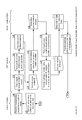
- FIG. 1 shows a block diagram illustrating example aspects of prepaid account funds transfer in some embodiments of the PAFT
- FIG. 2 shows a data flow diagram illustrating an example procedure to generate a customized invitation for a user to open a new prepaid account in some embodiments of the PAFT;
- FIGS. 3A-B show logic flow diagrams illustrating example aspects of generating a customized invitation for a user to open a new prepaid account in some embodiments of the PAFT, e.g., a Prepaid Account Application Invitation (PAAI) component 300 ;
- PAAI Prepaid Account Application Invitation
- FIGS. 5A-D show logic flow diagrams illustrating example aspects of registering a new prepaid account for a user in some embodiments of the PAFT, e.g., a Prepaid Account Registration (PAR) component 500 ;
- PAR Prepaid Account Registration
- FIGS. 6A-B show data flow diagrams illustrating an example procedure to transfer funds from a prepaid account of a user to a prepaid account of another user in some embodiments of the PAFT;
- FIG. 7 shows a logic flow diagram illustrating example aspects of implementing a transferor user-initiated trigger for prepaid account funds transfer in some embodiments of the PAFT, e.g., a Transferor-Initiated Funds Transfer Trigger (Tr-FTT) component 700 ;
- Tr-FTT Transferor-Initiated Funds Transfer Trigger
- FIG. 9 shows a logic flow diagram illustrating example aspects of implementing a server-initiated trigger for prepaid account funds transfer in some embodiments of the PAFT, e.g., a Server-Initiated Funds Transfer Trigger (S-FTT) component 900 ;
- S-FTT Server-Initiated Funds Transfer Trigger
- FIGS. 10A-C show logic flow diagrams illustrating example aspects of transferring funds from a prepaid account of a user to a prepaid account of another user in some embodiments of the PAFT, e.g., a Prepaid Account Funds Transfer Processing (PA-FTP) component 1000 ;
- PA-FTP Prepaid Account Funds Transfer Processing
- FIG. 11 shows a user interface diagram illustrating example aspects of managing prepaid account funds transfers in some embodiments of the PAFT.
- FIG. 12 shows a block diagram illustrating embodiments of a PAFT controller.
- FIG. 1 shows a block diagram illustrating example aspects of prepaid account funds transfer in some embodiments of the PAFT.
- a prepaid account holder e.g., 101
- the prepaid account holder may owe funds for services rendered, e.g., in the example of users 103 and 103 .
- the user to whom funds are owe may not be able to accept the funds (see, e.g., in) via account-based transactions such as credit card payment, for example, because they may not have the infrastructure to process such transactions as a merchant (e.g., gardener, repairman).
- account-based transactions such as credit card payment
- a long schedule of payment of funds owed may be pre-determined, exacerbating the problems of transferring funds owed from the prepaid account holder to the user(s).
- the prepaid account holder may wish to transfer funds (see, e.g., 117 ) to a user, e.g., 104 , but may wish to exercise spending controls on the user for whom the prepaid account holder wishes to transfer funds owed (see, e.g., 118 ).
- the PAFT may allow the prepaid account holder 101 to invite the users 102 - 104 (to whom the prepaid account holder desires to transfer funds owed), to open prepaid accounts via the PAFT.
- the PAFT may open prepaid accounts for such users, and may provide links between the prepaid account of the prepaid account holder 101 and the user 102 - 104 .
- the PAFT may facilitate fast, reliable, and secure transfer of funds from the prepaid account of the prepaid account holder 101 to the prepaid accounts of the users 102 - 104 .
- the PAFT may initiate funds transfer immediately upon opening of the prepaid accounts of the users 102 - 104 .
- the PAFT may, in some implementations, conduct real-time secure transfer of funds from the prepaid account holder to the users.
- the PAFT may also allow the account holders and/or users to create transfer schedules for future funds transfers.
- the PAFT may enable the users who received new accounts to similarly invite others who do not have prepaid accounts to establish new prepaid accounts with the PAFT to facilitate further funds transfers.
- Such prepaid account funds transfers may also allow the transferors of funds owed to exercise spending controls for themselves via their prepaid accounts.
- the user input may include, but not be limited to: keyboard entry, mouse clicks, depressing buttons on a joystick/game console, voice commands, single/multi-touch gestures on a touch-sensitive interface, touching user interface elements on a touch-sensitive display, and/or the like.
- the user may provide invitation request input, e.g., 211 , to the transferor client indicating that the user desires to invite the transferee user to apply for a prepaid account.
- the transferor user may desire for the transferee user to open the prepaid account so that the transferor user can transfer funds to the transferee user's newly opened prepaid account.
- the transferor user may wish to obtain funds from the transferee user on a regular basis (e.g., according to a predetermined schedule), and may wish for the transferee user to utilize a prepaid account to provide the payments for funds transfer for risk minimization and/or security purposes.
- the server 203 may parse the invitation request to extract the included invitation request data. Parsing procedures that the server may employ are outlined in the description below with reference to FIG. 12 .
- the server may generate a unique ID associated with the invitation to be generated based on the request.
- the server may extract, based on parsing the request message, data regarding the messaging mode (e.g., SMS, email, voicemail, automated/manual phone call, postal mail, etc.) by which the transferor user desires the PAFT to provide a prepaid account invitation for the transferee user.
- the messaging mode e.g., SMS, email, voicemail, automated/manual phone call, postal mail, etc.
- the server may store, e.g., 218 , the generated customized invitation, unique ID, and/or other invitation data to a database, eg., invitations database 204 b .
- a database e.g., invitations database 204 b .
- An example listing, written substantially in the form of PHP/SQL commands, to store the invitation data to a database is provided below:
- the server may provide the generated customized prepaid account invitation, e.g., 219 , for a transferee client, e.g., 205 , of a transferee user, e.g., 206 , specified by the invitation request of the transferor user.
- the server may send an electronic mail message to an electronic mail messaging account of the transferee user.
- An example listing, written substantially in the form of PHP/SQL commands, for the server to send an electronic mail message to an electronic mail messaging account of the transferee user is provided below:
- the transferee client may render, e.g., 220 , the customized prepaid account invitation for presentation to the transferee user.
- the transferee client may render a webpage, electronic message, text/SMS message, buffer a voicemail, emit a ring tone for the transferee user to answer a phone and/or play an audio message, etc.
- the transferee client may then present the customized prepaid account invitation for the transferee user, e.g., 221 .
- the transferee client may provide output including, but not limited to: sounds, music, audio, video, images, tactile feedback, vibration alerts (e.g., on vibration-capable client devices such as a smartphone etc.), and/or the like.
- the server may also provide an invitation confirmation message, e.g., 222 , for the transferor client of the transferor user.
- the server may send an electronic mail message to an electronic mail messaging account of the transferor user.
- the transferor client may render, e.g., 223 , the customized prepaid account invitation for presentation to the transferor user.
- the transferee client may render a webpage, electronic message, text/SMS message, buffer a voicemail, emit a ring tone for the transferee user to answer a phone and/or play an audio message, etc.
- the transferor client may then present the customized prepaid account invitation for the transferor user, e.g., 224 .
- the transferor client may provide output including, but not limited to: sounds, music, audio, video, images, tactile feedback, vibration alerts (e.g., on vibration-capable client devices such as a smartphone etc.), and/or the like.
- FIGS. 3A-B show logic flow diagrams illustrating example aspects of generating a customized invitation for a user to open a new prepaid account in some embodiments of the PAFT, e.g., a Prepaid Account Application Invitation (PAAI) component 300 .
- a transferor user may invite a transferee user to open a prepaid account for funds transfer.
- the transferor user may provide invitation request input, e.g. 301 , into the transferor client.
- the user provided invitation request input may indicate to the transferor client that the user desires to invite the transferee user to apply for a prepaid account.
- the server may extract data fields including, but not limited to: request_id, timestamp, transferor_id, client_IP, transferee_details_list, transferee_type, first_name, last_name, contact_type, contact_info, alt_contact_info, alt_contact_type, alt_contact_info, client_type, num_invite_attempts, account_params_list, same_bank_flag, same_branch_flag, persistent_link_flag, transfer_param_list, on_schedule_flag, one_time_flag, amount, instant_transfer_flag, custom_invitation, transferee_details_list, transferee_client_IP, and/or the like.
- the server may generate a unique ID associated with the invitation to be generated based on the request, e.g., 306 .
- the server may execute a hypertext preprocess (“PHP”) script which invokes the md5( ) command to generate a hash of the invitation request message, and utilize the generated message hash as the unique invitation ID.
- PGP hypertext preprocess
- the server may utilize the rand( ) command to generate a random number to be utilized as the unique invitation ID.
- the server may extract, based on parsing the request message, data regarding the messaging mode (e.g., SMS, email, voicemail, automated/manual phone call, postal mail, etc.) by which the transferor user desires the PAFT to provide a prepaid account invitation for the transferee user.
- the server may generate a query, e.g., 307 , for a template from a database which the server can utilize to generate a customized prepaid account invitation message for the transferee user in accordance with the messaging mode preferences of the transferor user.
- the server may issue the query to a database storing invitation templates, e.g., a forms database.
- the forms database may provide, e.g., 308 , the invitation template to the server.
- the customized prepaid account invitation may take the form of a text message, SMS, email, electronic communication, fax, voicemail, automated phone call, script print-out for a customer service representative to make a manual phone call, automated/manual online chat script, webpage, and/or the like.
- the server may generate, e.g., 311 , a customized invitation data record including the data fields, unique ID, customized invitation, and/or other invitation data, and provide the invitation data record to a database, e.g., invitations database for storing the invitation data, e.g., 312 .
- the server may provide the generated customized prepaid account invitation, e.g., 313 , for a transferee client of a transferee user specified by the invitation request of the transferor user.
- the transferee client may render, e.g., 314 , the customized prepaid account invitation for presentation to the transferee user.
- the transferee client may then present the customized prepaid account invitation for the transferee user, e.g., 315 .
- the server may also provide an invitation confirmation message, e.g., 316 , for the transferor client of the transferor user.
- the transferor client may render, e.g., 317 , the customized prepaid account invitation for presentation to the transferor user.
- the transferor client may then present the customized prepaid account invitation for the transferor user, e.g., 318 .
- FIGS. 4A-C show data flow diagrams illustrating an example procedure to register a new prepaid account for a user in some embodiments of the PAFT.
- the transferee user may desire to accept the invitation offer by the server to open a prepaid account with the PAFT.
- the transferee user 406 may provide invitation acceptance input, e.g., 411 , to the transferee client to convey acceptance of the invitation.
- the user input may include, but not be limited to: keyboard entry, mouse clicks, depressing buttons on a joystick/game console, voice commands, single/multi-touch gestures on a touch-sensitive interface, touching user interface elements on a touch-sensitive display, and/or the like.
- the transferee client may execute the prepaid account application for presentation to the user, e.g., 422 .
- a web browser executing on the transferee client device may render, e.g., 421 , the HTML web page and may communicate with the server to download the Adobe® Flash object.
- An Adobe® Flash browser plug-in installed on the transferee client and operating in conjunction with the browser may play/execute the downloaded Flash object for presentation, e.g., 422 , to the transferee user.
- the transferee user may provide application form input, e.g., 423 , to the transferee client.
- the Adobe® Flash object including the prepaid account application may provide interactive features, and may allow the user to enter user input/feedback, e.g. 423 , via a variety of mechanisms (e.g., keyboard entry into a command-line interface, mouse input in a graphical user interface, gestures on a touch-sensitive interface, voice commands, etc.).
- the client may generate, e.g., 424 , a completed prepaid account application.
- the transferee client executing the Adobe® Flash object may generate, maintain, update and/or store data pertaining to the user's interaction with the Adobe® Flash object (e.g., an application state, an application data structure, a block of memory with data variables, etc.).
- the Adobe® Flash object may store a prepaid account application data structure encoded according to the JavaScript Object Notation (“JSON”) format.
- JSON JavaScript Object Notation
- prepaid_account_application_data ⁇ “timestamp”: “2010-06-30 09:23:47”, “application_id”: “A236269”, “md5_auth”: “f585e3efede0c3b400b25908f8fa3f6d”, “applicant_details”: ⁇ “applicant_id”: “jqpublic”, “applicant_name”: “John Q.
- the server may be executing a PHP script implementing a SSL socket server which listens to incoming communications on a server port to which the transferee client may send data, e.g., prepaid account application 425 , encoded according to the JSON format.
- the PHP script may read the incoming data from the transferee client into a memory variable which can then be operated upon by the transferee client.
- An example listing, written substantially in the form of PHP/SQL commands, to accept JSON-encoded prepaid account application data from a transferee client via a SSL connection is provided below:
- the server may parse the obtained completed prepaid account application form from the transferee client, and extract the application data from the completed prepaid account application form. Based on the application data, the server may generate an application screening request, e.g., 426 . In some implementations, the server may generate a request to perform a security and/or credit check on the applicant. For example, the server may generate an applicant screening request, e.g., 427 , for a credit check service such as Equifax®. In such an example, the server may provide a HTTP(S) POST message to a screening server, e.g., 407 , including applicant details extracted from the completed prepaid account application.
- An example HTTP(S) POST message including an applicant screening request that may be sent by the PAFT server to a screening server is provided below:
- the PAFT server may determine whether the transferee user applicant passed the screening tests. If the applicant failed the screening tests, the server may generate an application denial notification, e.g., 429 a . For example, the server may generate a HTTP(S) POST message similar to the example described above. The server may provide the application denial notification to the transferee client, and the transferee client may render, e.g., 430 a , and display, e.g., 431 a , the application denial notification for the transferee user.
- an application denial notification e.g., 429 a .
- the server may provide the application denial notification to the transferee client, and the transferee client may render, e.g., 430 a , and display, e.g., 431 a , the application denial notification for the transferee user.
- the server may generate a new user profile and/or user account database record(s) reflecting a new prepaid account for the transferee user, e.g., 429 b .
- the PAFT server may generate a prepaid account opening request message, e.g., 430 b , for the bank/branch server.
- the PAFT server may generate a HTTP(S) GET message including a prepaid account opening request message, similar to the example provided below:
- the PAFT server may in response generate, e.g., 434 , an additional user information message, for example, in the form of a HTTP(S) POST message similar to the examples above, and provide the message to the bank/branch server.
- the bank/branch server may create a new prepaid account for the transferee user based on the information provided by the PAFT server, e.g., 435 .
- the bank/branch server may provide an account issue message, e.g., 436 , to notify the PAFT server and/or other PAFT entities and/or components that a prepaid account has been created at the bank/branch server for the transferee user.
- the PAFT server may, upon creating the prepaid account for the transferee server (e.g., locally, or at another server such as the bank/branch server), generate a prepaid account link data record that provides a link between the prepaid accounts of the transferor and transferee user.
- the server may also generate, e.g., 437 a transfer schedule that may specify funds transfer attributes between the transferor and transferee prepaid accounts, such attributes including, but not limited to: number of transfers, transfer dates, transfer frequency, transfer intervals, transfer amounts, transfer notification settings, and/or the like.
- An example transfer schedule encoded according to the XML format is provided below:
- the server may store a user profile record, e.g., 438 , prepaid account link data record, e.g., 439 , and prepaid account funds transfer schedule record, e.g., 440 , to database(s), e.g., users database 404 c , links database 404 d , and schedules database 404 e .
- the server may issue PHP/SQL commands similar to the example below to store the user profile, prepaid account link data, and prepaid account funds transfer schedule records in database(s):
- the server may provide an account issue notification, e.g., 441 , for the transferee (and/or transferor) user(s).
- the server may provide a HTTP(S) POST message similar to the examples above.
- the client(s) may render, e.g., 442 , the account issue notification for presentation to the user(s).
- the client(s) may render a webpage, electronic message, text/SMS message, buffer a voicemail, emit a ring tone for the user(s) to answer a phone and/or play an audio message, etc.
- the client(s) may then present the account issue notification for the user(s), e.g., 443 .
- the client(s) may provide output including, but not limited to: sounds, music, audio, video, images, tactile feedback, vibration alerts (e.g., on vibration-capable client devices such as a smartphone etc.), and/or the like.
- FIGS. 5A-D show logic flow diagrams illustrating example aspects of registering a new prepaid account for a user in some embodiments of the PAFT, e.g., a Prepaid Account Registration (PAR) component 500 .
- the transferee user may desire to accept the invitation offer by the server to open a prepaid account with the PAFT.
- the transferee user may provide invitation acceptance input, e.g., 501 , to the transferee client to convey acceptance of the invitation.
- the transferee client may generate a prepaid account invitation acceptance message, e.g., 502 , for the PAFT server.
- the server may parse the invitation acceptance to extract the included invitation acceptance data, e.g., 504 .
- the server may extract data fields including, but not limited to: request_id, timestamp, transferor_id, client_IP, transferee_type, first_name, last_name, contact_type, contact_info, client_type, account_params_list, same_bank_flag, same_branch_flag, persistent_link_flag, transfer_param_list, on_schedule_flag, one_time_flag, amount, instant_transfer_flag, custom_invitation, transferee_details_list, transferee_client_IP, client_type, client_MAC, client_IP, presentation_format, pixel_count, resolution, screen_size, audio_fidelity, hardware_settings_list, software_compatibilities_list, installed_app
- the server may determine the type of transferee client, e.g., 505 .
- the server may determine whether the transferee client is a desktop computer, tablet computer, mobile phone accessing email, text voice messages, etc.
- the server may determine the attributes of the client device such as the screen resolution, screen size, audio/video capabilities, hardware configuration, software configuration, applications installed on the client, and/or the like.
- the server may also extract the unique ID of the invitation from the invitation acceptance, e.g., 506 .
- the server may, in some implementations, generate a query for the type of the invitation, e.g., 507 , and provide the query to a database, e.g., an invitations database.
- the server may query for invitation attributes such as, but not limited to: transferee_type, account_params_list, account_mode, account_type, account_expiry, preferred_bank, preferred_branch, and/or the like. For example, using such data fields server may determine such details as whether the invitation is for an individual/merchant for opening of a credit/debit account, whether the account is prepaid/savings/checking/money market account etc.
- the database may provide the requested information, e.g., 508 .
- the server may generate a query for a prepaid account application form using the invitation type and client type of the transferee user.
- the server may generate a query for a prepaid application form, e.g., 509 , that is customized to the transferee client and/or transferee user, and issue the query to a database, e.g., a forms database.
- the database may provide a prepaid account application form, e.g., 510 , that is customized to the attributes and/or preferences of the transferee client and/or transferee user.
- the server may provide the obtained prepaid account application form, e.g., 511 , to the transferee client.
- the transferee client may render/execute, e.g, 512 , the prepaid account application, and present the prepaid account application for the transferee user, e.g., 513 .
- the transferee user may provide application form input, e.g., 514 , to the transferee client.
- the client may generate, e.g., 515 , a completed prepaid account application.
- the transferee client may provide the completed prepaid account application for the server.
- the server may obtain the completed prepaid account application form from the transferee client, e.g., 516 , and parse, e.g., 517 , the completed application to extract the application data from the completed prepaid account application form.
- the server may obtain fields such as, but not limited to: applicant_ID, applicant_firstname, applicant_lastname, dob, ssn, credit_check_ok_flag, address_line 1 , address_line 2 , zipcode, city, state, account_params_list, account_mode, account_type, account_expiry, bank_name, branch_name, and/or the like.
- the server may generate an application screening request, e.g., 518 .
- the server may generate a request to perform a security and/or credit check on the applicant.
- the server may determine that the transferee user applicant passed the screening tests performed by the screening server based on parsing the applicant screening report, e.g., 523 , option “Yes.” In such implementations, the server may proceed with creation of a new prepaid account for the transferee user.
- the server may generate a user profile for the transferee user applicant, e.g., 524 .
- the server may also determine whether the new prepaid account can be hosted locally, of if the prepaid account should be hosted at a different bank/branch/server, e.g., 525 . For example, the server may obtain the prepaid account preferences from the transferor user's prepaid account application invitation request and/or from the transferee user's completed prepaid application.
- the bank/branch server may, upon obtaining the prepaid account opening request, e.g., 528 , parse the prepaid account opening request, e.g., 529 , and extract request data. For example, the bank/branch server may extract fields including, but not limited to: applicant_firstname, applicant_lastname, applicant_address_line 1 , applicant_address_line 2 , applicant_clear_flag, and/or the like.
- the bank/branch server may generate an additional user information request, e.g., 531 , and provide the request for additional user information to the PAFT server.
- the PAFT server may parse, e.g., 532 , the additional user information request from the bank/branch server, and determine the additional user information requested, e.g., 533 .
- the PAFT server may generate an additional user information message, e.g., 534 , using, for example, information obtained from local storage, database(s) and/or any PAFT-affiliated entities and/or components.
- the server may also generate a user profile record, e.g., 540 .
- the server may provide the user account data record, prepaid account link data record, and/or prepaid account funds transfer schedule record to database(s), e.g., users database, links database, and/or schedules database.
- the server may provide an account issue notification, e.g., 543 , for the transferee (and/or transferor) user(s).
- the client(s) may render, e.g., 545 , the account issue notification for presentation to the user(s).
- the client(s) may then present the account issue notification for the user(s), e.g., 546 .
- the server may spontaneously initiate a prepaid accounts funds transfer upon creation of a new prepaid account (e.g., a transferor and/or transferee user account) by the PAFT and/or affiliated entities and/or components.
- a new prepaid account e.g., a transferor and/or transferee user account
- a transferee user may provide a receivables request input, e.g., 611 b , into a transferee client, e.g., 605 , requesting that funds owed be transferred from the transferor user's prepaid account into the transferee user's prepaid account.
- the transferee client may utilize the transferee user's receivables request input to generate a prepaid account receivables request, e.g., 612 b .
- the transferee client may provide the prepaid account receivables request, e.g., 613 b , to the server, e.g., 603 , which may trigger the server to execute transfer of funds as requested by the transferee user.
- the server may query a database, e.g., schedules database 604 e , for a transfer schedule, e.g., 611 c .
- the server may query the database on a continuous, periodically, on-demand, on-trigger and/or like basis.
- the database may provide a transfer schedule, e.g., 612 c .
- the server may obtain the transfer schedule, and parse it to extract schedule data pertaining to transfers between the transferor user, e.g., 601 , and the transferee user, e.g., 606 .
- the server may analyze the data, e.g., 613 c , to determine whether a transfer should be initiated between the prepaid account of the transferor user and the prepaid account of the transferee user.
- the PAFT server may obtain a trigger, such as those described above, to perform prepaid account funds transfer from a transferor user's prepaid account to a transferee user's prepaid account.
- the server may generate a query for a link data record, and provide the query, e.g., 614 , to a database, e.g., links database 604 d .
- the server may issue PHP/SQL commands similar to the example provided below:
- the database may provide the transfer link data record, e.g., 615 , in response to obtaining the query from the server.
- the server may generate a query for one or more user profile data records (e.g., the user profile data records of the transferor user and/or transferee user).
- the server may provide the user profile data query, e.g., 616 , to a database, e.g., users database 604 c .
- the server may issue PHP/SQL commands similar to the example above to the users database.
- the users database may provide the requested user profile data records.
- the server may initiate transfer for funds from the prepaid account of the transferor user to the prepaid account of the transferee user. For example, the server may determine whether the prepaid accounts of the transferor user and the transferee user are both stored locally. If the prepaid accounts are both stored locally, the server may debit the prepaid account of the transferor user, and credit the prepaid account of the transferee user, e.g., 618 .
- the server may generate one or more transaction request messages using the link data and/or user profile data, and provide the transaction request messages, e.g., 619 , to one or more bank/branch servers, e.g., 608 .
- the server may provide a HTTP(S) POST message for the bank/branch server similar to the example provided below:
- FIG. 7 shows a logic flow diagram illustrating example aspects of implementing a transferor user-initiated trigger for prepaid account funds transfer in some embodiments of the PAFT, e.g., a Transferor-Initiated Funds Transfer Trigger (Tr-FTT) component 700 .
- a transferor user may provide payment order input, e.g., 701 , into a transferor client.
- the transferor client may generate a prepaid account payment order, e.g., 702 .
- the transferor client may provide the generated prepaid account payment order to the PAFT server.
- the server may generate a prepaid account funds transfer trigger, e.g., 710 .
- the server may push the generated prepaid account funds transfer trigger to a queue of prepaid account funds transfer triggers.
- the server may determine that the prepaid account funds transfer should not take place, e.g., 706 , option “No.”
- the server may, in such implementations, generate a payment order cancel notice, e.g., 707 , and provide the generated payment order cancel notice for the transferor client.
- the transferor client may render the obtained payment order cancel notice, e.g., 708 , and provide the rendered payment order cancel notice for the transferor user, e.g., 709 .
- the client(s) may provide output including, but not limited to: sounds, music, audio, video, images, tactile feedback, vibration alerts (e.g., on vibration-capable client devices such as a smartphone etc.), and/or the like.
- FIG. 8 shows a logic flow diagram illustrating example aspects of implementing a transferee user-initiated trigger for prepaid account funds transfer in some embodiments of the PAFT, e.g., a Transferee-Initiated Funds Transfer Trigger (Te-FTT) component 800 .
- a transferee user may provide receivables request input, e.g., 801 , into a transferee client.
- the transferee client may generate a prepaid account receivables request, e.g., 802 .
- the transferee client may provide the generated prepaid account receivables request to the PAFT server.
- the server may, upon obtaining the prepaid account receivables request, e.g., 803 , parse the obtained prepaid account receivables request, e.g., 804 .
- the server may extract the details of the prepaid account receivables request, and determine, e.g., 805 , whether funds should be transferred from a prepaid account of the transferor user to the prepaid account of the transferee user, based on the details provided in the prepaid account receivables request. For example, server may perform security checks to ensure that the order is issued by an authorized entity, that the amount of the transfer passes fraud checks, and/or the like. The server may also determine whether the account information, amount information, etc.
- FIG. 9 shows a logic flow diagram illustrating example aspects of implementing a server-initiated trigger for prepaid account funds transfer in some embodiments of the PAFT, e.g., a Server-Initiated Funds Transfer Trigger (S-FTT) component 900 .
- the PAFT server may generate, e.g., 901 , a request for a transfer schedule for specified transferor and transferee user(s), and may provide the request for a database, e.g., schedules database.
- the server may query the database on a continuous, periodically, on-demand, on-trigger and/or like basis.
- the database may provide the requested transfer schedule, e.g., 902 .
- the server may obtain the transfer schedule, e.g., 903 , and parse it to extract schedule data pertaining to transfers between the transferor user(s) and transferee user(s), e.g., 904 .
- the server may analyze the data, e.g., 905 , to determine whether a transfer should be initiated between the prepaid account of the transferor user and the prepaid account of the transferee user. If the server determines that a transfer should be initiated between the prepaid account of the transferor user and prepaid account of the transferee user, e.g., 906 , option “Yes,” the server may generate a prepaid account funds transfer trigger, e.g., 907 .
- the server may obtain the trigger from a queue of prepaid account funds transfer triggers, from a Tr-FTT component, e.g., 700 , a Te-FTT component, e.g., 800 , a S-FTT component, e.g., 900 , and/or the like PAFT entity and/or component.
- the server may determine an amount of the funds to be transferred from the prepaid account of the transferor user to the prepaid account of the transferee user, e.g., 1002 .
- the server may parse a payment order, a receivables request, a transfer schedule, and/or the like data records to obtain an amount of funds to be transferred.
- the server may generate a transfer link query for link data pertaining to a link between the prepaid accounts of the transferor user and the transferee user, e.g., 1003 .
- the server may provide the transfer link query to a database, e.g., a links database.
- the database may provide the requested link data, e.g., 1004 .
- the server may generate a query for user profile data of the transferor and/or transferee user(s), e.g., 1005 .
- the server may issue the user profile data queries to a database, e.g., a users database.
- the server may debit the prepaid account of the transferor user by the determined amount of the prepaid account funds transfer, and credit the prepaid account of the transferee user by the determined amount of the prepaid account funds transfer, e.g., 1009 .
- the server may determine that both prepaid accounts are not stored locally, e.g., 1008 , option “No.”
- the server may, in such implementations, generate one or more transaction request message(s) to perform prepaid account actions (e.g., credit and/or debit).
- the server may provide the transaction request message(s) to one or more bank/branch servers.
- the interface may provide a listing of contacts, e.g., 1103 .
- the contacts listing may include a listing of others users with whom the user has engaged in prepaid account funds transfers (e.g., as transferor and/or transferee).
- the user may be able to activate a link (see, e.g., 1104 a ) to initiate a transfer with another user, and/or to create a transfer schedule for prepaid account funds transfers with that user.
- the user interface may provide various elements for inviting (see, e.g., 1107 ) other users to apply for obtaining new prepaid accounts with the PAFT.
- the user interface may provide a hyperlink, e.g., 1108 , upon activation of which the user may be provided with graphical user interface elements to generate and send invitation requests for the PAFT.
- the user may e able to invite other user to create prepaid accounts with the PAFT via text message, e.g., 1109 , phone, e.g., 1110 , chat, social networking, e.g., 1111 , and/or the like.
- FIG. 12 illustrates inventive aspects of a PAFT controller 1201 in a block diagram.
- the PAFT controller 1201 may serve to aggregate, process, store, search, serve, identify, instruct, generate, match, and/or facilitate interactions with a computer through various technologies, and/or other related data.
- These stored instruction codes may engage the CPU circuit components and other motherboard and/or system components to perform desired operations.
- One type of program is a computer operating system, which, may be executed by CPU on a computer; the operating system enables and facilitates users to access and operate computer information technology and resources.
- Some resources that may be employed in information technology systems include: input and output mechanisms through which data may pass into and out of a computer; memory storage into which data may be saved; and processors by which information may be processed.
- These information technology systems may be used to collect data for later retrieval, analysis, and manipulation, which may be facilitated through a database program.
- These information technology systems provide interfaces that allow users to access and operate various system components.
- Networks are commonly thought to comprise the interconnection and interoperation of clients, servers, and intermediary nodes in a graph topology.
- server refers generally to a computer, other device, program, or combination thereof that processes and responds to the requests of remote users across a communications network. Servers serve their information to requesting “clients.”
- client refers generally to a computer, program, other device, user and/or combination thereof that is capable of processing and making requests and obtaining and processing any responses from servers across a communications network.
- a computer, other device, program, or combination thereof that facilitates, processes information and requests, and/or furthers the passage of information from a source user to a destination user is commonly referred to as a “node.”
- Networks are generally thought to facilitate the transfer of information from source points to destinations.
- a node specifically tasked with furthering the passage of information from a source to a destination is commonly called a “router.”
- There are many forms of networks such as Local Area Networks (LANs), Pico networks, Wide Area Networks (WANs), Wireless Networks (WLANs), etc.
- LANs Local Area Networks
- WANs Wide Area Networks
- WLANs Wireless Networks
- the Internet is generally accepted as being an interconnection of a multitude of networks whereby remote clients and servers may access and interoperate with one another.
- the PAFT controller 1201 may be based on computer systems that may comprise, but are not limited to, components such as: a computer systemization 1202 connected to memory 1229 .
- the computer systemization may be connected to an internal power source 1286 ; e.g., optionally the power source may be internal.
- a cryptographic processor 1226 and/or transceivers e.g., ICs
- the cryptographic processor and/or transceivers may be connected as either internal and/or external peripheral devices 1212 via the interface bus I/O.
- the transceivers may be connected to antenna(s) 1275 , thereby effectuating wireless transmission and reception of various communication and/or sensor protocols; for example the antenna(s) may connect to: a Texas Instruments WiLink WL1283 transceiver chip (e.g., providing 802.11n, Bluetooth 3.0, FM, global positioning system (GPS) (thereby allowing PAFT controller to determine its location)); Broadcom BCM4329FKUBG transceiver chip (e.g., providing 802.11n, Bluetooth 2.1+ EDR, FM, etc.); a Broadcom BCM4750IUB8 receiver chip (e.g., GPS); an Infineon Technologies X-Gold 618-PMB9800 (e.g., providing 2G/3G HSDPA/HSUPA communications); and/or the like.
- a Texas Instruments WiLink WL1283 transceiver chip e.g., providing 802.11n, Bluetooth 3.0, FM, global positioning system (GPS) (thereby allowing PAFT controller to determine its
- the system clock typically has a crystal oscillator and generates a base signal through the computer systemization's circuit pathways.
- the clock is typically coupled to the system bus and various clock multipliers that will increase or decrease the base operating frequency for other components interconnected in the computer systemization.
- the clock and various components in a computer systemization drive signals embodying information throughout the system.
- Such transmission and reception of instructions embodying information throughout a computer systemization may be commonly referred to as communications.
- These communicative instructions may further be transmitted, received, and the cause of return and/or reply communications beyond the instant computer systemization to: communications networks, input devices, other computer systemizations, peripheral devices, and/or the like.
- any of the above components may be connected directly to one another, connected to the CPU, and/or organized in numerous variations employed as exemplified by various computer systems.
- the processor may access this memory through the use of a memory address space that is accessible via instruction address, which the processor can construct and decode allowing it to access a circuit path to a specific memory address space having a memory state.
- the CPU may be a microprocessor such as: AMD's Athlon, Duron and/or Opteron; ARM's application, embedded and secure processors; IBM and/or Motorola's DragonBall and PowerPC; IBM's and Sony's Cell processor; Intel's Celeron, Core (2) Duo, Itanium, Pentium, Xeon, and/or XScale; and/or the like processor(s).
- the CPU interacts with memory through instruction passing through conductive and/or transportive conduits (e.g., (printed) electronic and/or optic circuits) to execute stored instructions (i.e., program code) according to conventional data processing techniques.
- instruction passing facilitates communication within the PAFT controller and beyond through various interfaces.
- distributed processors e.g., Distributed PAFT
- mainframe multi-core
- parallel parallel
- super-computer architectures may similarly be employed.
- PDAs Personal Digital Assistants
- features of the PAFT may be achieved by implementing a microcontroller such as CAST's R8051XC2 microcontroller; Intel's MCS 51 (i.e., 8051 microcontroller); and/or the like.
- some feature implementations may rely on embedded components, such as: Application-Specific Integrated Circuit (“ASIC”), Digital Signal Processing (“DSP”), Field Programmable Gate Array (“FPGA”), and/or the like embedded technology.
- ASIC Application-Specific Integrated Circuit
- DSP Digital Signal Processing
- FPGA Field Programmable Gate Array
- any of the PAFT component collection (distributed or otherwise) and/or features may be implemented via the microprocessor and/or via embedded components; e.g., via ASIC, coprocessor, DSP, FPGA, and/or the like.
- some implementations of the PAFT may be implemented with embedded components that are configured and used to achieve a variety of features or signal processing.
- the embedded components may include software solutions, hardware solutions, and/or some combination of both hardware/software solutions.
- PAFT features discussed herein may be achieved through implementing FPGAs, which are a semiconductor devices containing programmable logic components called “logic blocks”, and programmable interconnects, such as the high performance FPGA Virtex series and/or the low cost Spartan series manufactured by Xilinx.
- Logic blocks and interconnects can be programmed by the customer or designer, after the FPGA is manufactured, to implement any of the PAFT features.
- a hierarchy of programmable interconnects allow logic blocks to be interconnected as needed by the PAFT system designer/administrator, somewhat like a one-chip programmable breadboard.
- An FPGA's logic blocks can be programmed to perform the function of basic logic gates such as AND, and XOR, or more complex combinational functions such as decoders or simple mathematical functions.
- the logic blocks also include memory elements, which may be simple flip-flops or more complete blocks of memory.
- the PAFT may be developed on regular FPGAs and then migrated into a fixed version that more resembles ASIC implementations. Alternate or coordinating implementations may migrate PAFT controller features to a final ASIC instead of or in addition to FPGAs.
- all of the aforementioned embedded components and microprocessors may be considered the “CPU” and/or “processor” for the PAFT.
- Interface bus(ses) 1207 may accept, connect, and/or communicate to a number of interface adapters, conventionally although not necessarily in the form of adapter cards, such as but not limited to: input output interfaces (I/O) 1208 , storage interfaces 1209 , network interfaces 1210 , and/or the like.
- cryptographic processor interfaces 1227 similarly may be connected to the interface bus.
- the interface bus provides for the communications of interface adapters with one another as well as with other components of the computer systemization.
- Interface adapters are adapted for a compatible interface bus.
- Interface adapters conventionally connect to the interface bus via a slot architecture.
- Conventional slot architectures may be employed, such as, but not limited to: Accelerated Graphics Port (AGP), Card Bus, (Extended) Industry Standard Architecture ((E)ISA), Micro Channel Architecture (MCA), NuBus, Peripheral Component Interconnect (Extended) (PCI(X)), PCI Express, Personal Computer Memory Card International Association (PCMCIA), and/or the like.
- AGP Accelerated Graphics Port
- Card Bus Card Bus
- E Industry Standard Architecture
- MCA Micro Channel Architecture
- NuBus NuBus
- PCI(X) Peripheral Component Interconnect Express
- PCMCIA Personal Computer Memory Card International Association
- Storage interfaces 1209 may accept, communicate, and/or connect to a number of storage devices such as, but not limited to: storage devices 1214 , removable disc devices, and/or the like.
- Storage interfaces may employ connection protocols such as, but not limited to: (Ultra) (Serial) Advanced Technology Attachment (Packet Interface) ((Ultra) (Serial) ATA(PI)), (Enhanced) Integrated Drive Electronics ((E)IDE), Institute of Electrical and Electronics Engineers (IEEE) 1394, fiber channel, Small Computer Systems Interface (SCSI), Universal Serial Bus (USB), and/or the like.
- connection protocols such as, but not limited to: (Ultra) (Serial) Advanced Technology Attachment (Packet Interface) ((Ultra) (Serial) ATA(PI)), (Enhanced) Integrated Drive Electronics ((E)IDE), Institute of Electrical and Electronics Engineers (IEEE) 1394, fiber channel, Small Computer Systems Interface (SCSI), Universal Serial Bus (USB), and/or the like.
- a communications network may be any one and/or the combination of the following: a direct interconnection; the Internet; a Local Area Network (LAN); a Metropolitan Area Network (MAN); an Operating Missions as Nodes on the Internet (OMNI); a secured custom connection; a Wide Area Network (WAN); a wireless network (e.g., employing protocols such as, but not limited to a Wireless Application Protocol (WAP), I-mode, and/or the like); and/or the like.
- a network interface may be regarded as a specialized form of an input output interface.
- multiple network interfaces 1210 may be used to engage with various communications network types 1213 . For example, multiple network interfaces may be employed to allow for the communication over broadcast, multicast, and/or unicast networks.
- I/O 1208 may accept, communicate, and/or connect to user input devices 1211 , peripheral devices 1212 , cryptographic processor devices 1228 , and/or the like.
- I/O may employ connection protocols such as, but not limited to: audio: analog, digital, monaural, RCA, stereo, and/or the like; data: Apple Desktop Bus (ADB), IEEE 1394a-b, serial, universal serial bus (USB); infrared; joystick; keyboard; midi; optical; PC AT; PS/2; parallel; radio; video interface: Apple Desktop Connector (ADC), BNC, coaxial, component, composite, digital, Digital Visual Interface (DVI), high-definition multimedia interface (HDMI), RCA, RF antennae, S-Video, VGA, and/or the like; wireless transceivers: 802.11a/b/g/n/x; Bluetooth; cellular (e.g., code division multiple access (CDMA), high speed packet access (HSPA(+)), high-speed downlink packet access (HS), etc.
- One typical output device may include a video display, which typically comprises a Cathode Ray Tube (CRT) or Liquid Crystal Display (LCD) based monitor with an interface (e.g., DVI circuitry and cable) that accepts signals from a video interface, may be used.
- the video interface composites information generated by a computer systemization and generates video signals based on the composited information in a video memory frame.
- Another output device is a television set, which accepts signals from a video interface.
- the video interface provides the composited video information through a video connection interface that accepts a video display interface (e.g., an RCA composite video connector accepting an RCA composite video cable; a DVI connector accepting a DVI display cable, etc.).
- User input devices 1211 often are a type of peripheral device 512 (see below) and may include: card readers, dongles, finger print readers, gloves, graphics tablets, joysticks, keyboards, microphones, mouse (mice), remote controls, retina readers, touch screens (e.g., capacitive, resistive, etc.), trackballs, trackpads, sensors (e.g., accelerometers, ambient light, GPS, gyroscopes, proximity, etc.), styluses, and/or the like.
- peripheral device 512 may include: card readers, dongles, finger print readers, gloves, graphics tablets, joysticks, keyboards, microphones, mouse (mice), remote controls, retina readers, touch screens (e.g., capacitive, resistive, etc.), trackballs, trackpads, sensors (e.g., accelerometers, ambient light, GPS, gyroscopes, proximity, etc.), styluses, and/or the like.
- Peripheral devices 1212 may be connected and/or communicate to I/O and/or other facilities of the like such as network interfaces, storage interfaces, directly to the interface bus, system bus, the CPU, and/or the like. Peripheral devices may be external, internal and/or part of the PAFT controller.
- Peripheral devices may include: antenna, audio devices (e.g., line-in, line-out, microphone input, speakers, etc.), cameras (e.g., still, video, webcam, etc.), dongles (e.g., for copy protection, ensuring secure transactions with a digital signature, and/or the like), external processors (for added capabilities; e.g., crypto devices 528 ), force-feedback devices (e.g., vibrating motors), network interfaces, printers, scanners, storage devices, transceivers (e.g., cellular, GPS, etc.), video devices (e.g., goggles, monitors, etc.), video sources, visors, and/or the like. Peripheral devices often include types of input devices (e.g., cameras).
- audio devices e.g., line-in, line-out, microphone input, speakers, etc.
- cameras e.g., still, video, webcam, etc.
- dongles e.g., for copy protection
- the PAFT controller may be embodied as an embedded, dedicated, and/or monitor-less (i.e., headless) device, wherein access would be provided over a network interface connection.
- Cryptographic units such as, but not limited to, microcontrollers, processors 1226 , interfaces 1227 , and/or devices 1228 may be attached, and/or communicate with the PAFT controller.
- a MC68HC16 microcontroller manufactured by Motorola Inc., may be used for and/or within cryptographic units.
- the MC68HC16 microcontroller utilizes a 16-bit multiply-and-accumulate instruction in the 16 MHz configuration and requires less than one second to perform a 512-bit RSA private key operation.
- Cryptographic units support the authentication of communications from interacting agents, as well as allowing for anonymous transactions.
- Cryptographic units may also be configured as part of CPU. Equivalent microcontrollers and/or processors may also be used.
- Typical commercially available specialized cryptographic processors include: the Broadcom's CryptoNetX and other Security Processors; nCipher's nShield, SafeNet's Luna PCI (e.g., 7100) series; Semaphore Communications' 40 MHz Roadrunner 184; Sun's Cryptographic Accelerators (e.g., Accelerator 6000 PCIe Board, Accelerator 500 Daughtercard); Via Nano Processor (e.g., L2100, L2200, U2400) line, which is capable of performing 500+ MB/s of cryptographic instructions; VLSI Technology's 33 MHz 6868; and/or the like.
- the Broadcom's CryptoNetX and other Security Processors include: the Broadcom's CryptoNetX and other Security Processors; nCipher's nShield, SafeNet's Luna PCI (e.g., 7100) series; Semaphore Communications' 40 MHz Roadrunner 184; Sun's Cryptographic Accelerators
- any mechanization and/or embodiment allowing a processor to affect the storage and/or retrieval of information is regarded as memory 1229 .
- memory is a fungible technology and resource, thus, any number of memory embodiments may be employed in lieu of or in concert with one another.
- the PAFT controller and/or a computer systemization may employ various forms of memory 1229 .
- a computer systemization may be configured wherein the functionality of on-chip CPU memory (e.g., registers), RAM, ROM, and any other storage devices are provided by a paper punch tape or paper punch card mechanism; of course such an embodiment would result in an extremely slow rate of operation.
- memory 1229 will include ROM 1206 , RAM 1205 , and a storage device 1214 .
- a storage device 1214 may be any conventional computer system storage. Storage devices may include a drum; a (fixed and/or removable) magnetic disk drive; a magneto-optical drive; an optical drive (i.e., Blueray, CD ROM/RAM/Recordable (R)/ReWritable (RW), DVD R/RW, HD DVD R/RW etc.); an array of devices (e.g., Redundant Array of Independent Disks (RAID)); solid state memory devices (USB memory, solid state drives (SSD), etc.); other processor-readable storage mediums; and/or other devices of the like.
- a computer systemization generally requires and makes use of memory.
- the memory 1229 may contain a collection of program and/or database components and/or data such as, but not limited to: operating system component(s) 1215 (operating system); information server component(s) 1216 (information server); user interface component(s) 1217 (user interface); Web browser component(s) 1218 (Web browser); database(s) 1219 ; mail server component(s) 1221 ; mail client component(s) 1222 ; cryptographic server component(s) 1220 (cryptographic server); the PAFT component(s) 1235 ; and/or the like (i.e., collectively a component collection). These components may be stored and accessed from the storage devices and/or from storage devices accessible through an interface bus.
- operating system component(s) 1215 operating system
- information server component(s) 1216 information server
- user interface component(s) 1217 user interface
- Web browser component(s) 1218 Web browser
- database(s) 1219 ; mail server component(s) 1221 ; mail client component(s) 1222 ; cryptographic server component
- non-conventional program components such as those in the component collection, typically, are stored in a local storage device 1214 , they may also be loaded and/or stored in memory such as: peripheral devices, RAM, remote storage facilities through a communications network, ROM, various forms of memory, and/or the like.
- the operating system component 1215 is an executable program component facilitating the operation of the PAFT controller. Typically, the operating system facilitates access of I/O, network interfaces, peripheral devices, storage devices, and/or the like.
- the operating system may be a highly fault tolerant, scalable, and secure system such as: Apple Macintosh OS X (Server); AT&T Nan 9; Be OS; Unix and Unix-like system distributions (such as AT&T's UNIX; Berkley Software Distribution (BSD) variations such as FreeBSD, NetBSD, OpenBSD, and/or the like; Linux distributions such as Red Hat, Ubuntu, and/or the like); and/or the like operating systems.
- Apple Macintosh OS X Server
- AT&T Nan 9 Be OS
- Unix and Unix-like system distributions such as AT&T's UNIX
- Berkley Software Distribution (BSD) variations such as FreeBSD, NetBSD, OpenBSD, and/or the like
- Linux distributions such as
- an operating system may communicate to and/or with other components in a component collection, including itself, and/or the like. Most frequently, the operating system communicates with other program components, user interfaces, and/or the like. For example, the operating system may contain, communicate, generate, obtain, and/or provide program component, system, user, and/or data communications, requests, and/or responses.
- the operating system may enable the interaction with communications networks, data, I/O, peripheral devices, program components, memory, user input devices, and/or the like.
- the operating system may provide communications protocols that allow the PAFT controller to communicate with other entities through a communications network 1213 .
- Various communication protocols may be used by the PAFT controller as a subcarrier transport mechanism for interaction, such as, but not limited to: multicast, TCP/IP, UDP, unicast, and/or the like.
- An information server component 1216 is a stored program component that is executed by a CPU.
- the information server may be a conventional Internet information server such as, but not limited to Apache Software Foundation's Apache, Microsoft's Internet Information Server, and/or the like.
- the information server may allow for the execution of program components through facilities such as Active Server Page (ASP), ActiveX, (ANSI) (Objective ⁇ ) C (++), C# and/or .NET, Common Gateway Interface (CGI) scripts, dynamic (D) hypertext markup language (HTML), FLASH, Java, JavaScript, Practical Extraction Report Language (PERL), Hypertext Pre-Processor (PHP), pipes, Python, wireless application protocol (WAP), WebObjects, and/or the like.
- ASP Active Server Page
- ActiveX ActiveX
- ANSI Objective ⁇
- C C#
- CGI Common Gateway Interface
- D hypertext markup language
- FLASH Java
- JavaScript JavaScript
- Practical Extraction Report Language PROL
- PGP Hypertext Pre-Processor
- the information server may support secure communications protocols such as, but not limited to, File Transfer Protocol (FTP); HyperText Transfer Protocol (HTTP); Secure Hypertext Transfer Protocol (HTTPS), Secure Socket Layer (SSL), messaging protocols (e.g., America Online (AOL) Instant Messenger (AIM), Application Exchange (APEX), ICQ, Internet Relay Chat (IRC), Microsoft Network (MSN) Messenger Service, Presence and Instant Messaging Protocol (PRIM), Internet Engineering Task Force's (IETF's) Session Initiation Protocol (SIP), SIP for Instant Messaging and Presence Leveraging Extensions (SIMPLE), open XML-based Extensible Messaging and Presence Protocol (XMPP) (i.e., Jabber or Open Mobile Alliance's (OMA's) Instant Messaging and Presence Service (IMPS)), Yahoo!
- FTP File Transfer Protocol
- HTTP HyperText Transfer Protocol
- HTTPS Secure Hypertext Transfer Protocol
- SSL Secure Socket Layer
- messaging protocols e.g., America Online (A
- a request such as http://123.124.125.126/myInformation.html might have the IP portion of the request “123.124.125.126” resolved by a DNS server to an information server at that IP address; that information server might in turn further parse the http request for the “/myInformation.html” portion of the request and resolve it to a location in memory containing the information “myInformation.html.”
- other information serving protocols may be employed across various ports, e.g., FTP communications across port 21 , and/or the like.
- An information server may communicate to and/or with other components in a component collection, including itself, and/or facilities of the like. Most frequently, the information server communicates with the PAFT database 1219 , operating systems, other program components, user interfaces, Web browsers, and/or the like.
- the parser may generate queries in standard SQL by instantiating a search string with the proper join/select commands based on the tagged text entries, wherein the resulting command is provided over the bridge mechanism to the PAFT as a query.
- the results are passed over the bridge mechanism, and may be parsed for formatting and generation of a new results Web page by the bridge mechanism. Such a new results Web page is then provided to the information server, which may supply it to the requesting Web browser.
- an information server may contain, communicate, generate, obtain, and/or provide program component, system, user, and/or data communications, requests, and/or responses.
- Computer interfaces in some respects are similar to automobile operation interfaces.
- Automobile operation interface elements such as steering wheels, gearshifts, and speedometers facilitate the access, operation, and display of automobile resources, and status.
- Computer interaction interface elements such as check boxes, cursors, menus, scrollers, and windows (collectively and commonly referred to as widgets) similarly facilitate the access, capabilities, operation, and display of data and computer hardware and operating system resources, and status. Operation interfaces are commonly called user interfaces.
- GUIs Graphical user interfaces
- GUIs such as the Apple Macintosh Operating System's Aqua, IBM's OS/2, Microsoft's Windows 2000/2003/3.1/95/98/CE/Millenium/NT/XP/Vista/7 (i.e., Aero), Unix's X-Windows (e.g., which may include additional Unix graphic interface libraries and layers such as K Desktop Environment (KDE), mythTV and GNU Network Object Model Environment (GNOME)), web interface libraries (e.g., ActiveX, AJAX, (D)HTML, FLASH, Java, JavaScript, etc. interface libraries such as, but not limited to, Dojo, jQuery(UI), MooTools, Prototype, script.aculo.us, SWFObject, Yahoo! User Interface, any of which may be used and) provide a baseline and means of accessing and displaying information graphically to users.
- KDE K Desktop Environment
- GNOME GNU Network Object Model Environment
- web interface libraries e.g., ActiveX
- a user interface component 1217 is a stored program component that is executed by a CPU.
- the user interface may be a conventional graphic user interface as provided by, with, and/or atop operating systems and/or operating environments such as already discussed.
- the user interface may allow for the display, execution, interaction, manipulation, and/or operation of program components and/or system facilities through textual and/or graphical facilities.
- the user interface provides a facility through which users may affect, interact, and/or operate a computer system.
- a user interface may communicate to and/or with other components in a component collection, including itself, and/or facilities of the like. Most frequently, the user interface communicates with operating systems, other program components, and/or the like.
- the user interface may contain, communicate, generate, obtain, and/or provide program component, system, user, and/or data communications, requests, and/or responses.
- a Web browser component 1218 is a stored program component that is executed by a CPU.
- the Web browser may be a conventional hypertext viewing application such as Microsoft Internet Explorer or Netscape Navigator. Secure Web browsing may be supplied with 128 bit (or greater) encryption by way of HTTPS, SSL, and/or the like.
- Web browsers allowing for the execution of program components through facilities such as ActiveX, AJAX, (D)HTML, FLASH, Java, JavaScript, web browser plug-in APIs (e.g., FireFox, Safari Plug-in, and/or the like APIs), and/or the like.
- Web browsers and like information access tools may be integrated into PDAs, cellular telephones, and/or other mobile devices.
- a Web browser may communicate to and/or with other components in a component collection, including itself, and/or facilities of the like. Most frequently, the Web browser communicates with information servers, operating systems, integrated program components (e.g., plug-ins), and/or the like; e.g., it may contain, communicate, generate, obtain, and/or provide program component, system, user, and/or data communications, requests, and/or responses.
- information servers operating systems, integrated program components (e.g., plug-ins), and/or the like; e.g., it may contain, communicate, generate, obtain, and/or provide program component, system, user, and/or data communications, requests, and/or responses.
- a combined application may be developed to perform similar functions of both. The combined application would similarly affect the obtaining and the provision of information to users, user agents, and/or the like from the PAFT enabled nodes.
- the combined application may be nugatory on systems employing standard Web browsers.
- a mail server component 1221 is a stored program component that is executed by a CPU 1203 .
- the mail server may be a conventional Internet mail server such as, but not limited to sendmail, Microsoft Exchange, and/or the like.
- the mail server may allow for the execution of program components through facilities such as ASP, ActiveX, (ANSI) (Objective ⁇ ) C (++), C# and/or .NET, CGI scripts, Java, JavaScript, PERL, PHP, pipes, Python, WebObjects, and/or the like.
- the mail server may support communications protocols such as, but not limited to: Internet message access protocol (IMAP), Messaging Application Programming Interface (MAPI)/Microsoft Exchange, post office protocol (POPS), simple mail transfer protocol (SMTP), and/or the like.
- the mail server can route, forward, and process incoming and outgoing mail messages that have been sent, relayed and/or otherwise traversing through and/or to the PAFT.
- Access to the PAFT mail may be achieved through a number of APIs offered by the individual Web server components and/or the operating system.
- a mail client component 1222 is a stored program component that is executed by a CPU 1203 .
- the mail client may be a conventional mail viewing application such as Apple Mail, Microsoft Entourage, Microsoft Outlook, Microsoft Outlook Express, Mozilla, Thunderbird, and/or the like.
- Mail clients may support a number of transfer protocols, such as: IMAP, Microsoft Exchange, POPS, SMTP, and/or the like.
- a mail client may communicate to and/or with other components in a component collection, including itself, and/or facilities of the like. Most frequently, the mail client communicates with mail servers, operating systems, other mail clients, and/or the like; e.g., it may contain, communicate, generate, obtain, and/or provide program component, system, user, and/or data communications, requests, information, and/or responses.
- the mail client provides a facility to compose and transmit electronic mail messages.
- the cryptographic component may employ cryptographic techniques such as, but not limited to: digital certificates (e.g., X.509 authentication framework), digital signatures, dual signatures, enveloping, password access protection, public key management, and/or the like.
- the cryptographic component will facilitate numerous (encryption and/or decryption) security protocols such as, but not limited to: checksum, Data Encryption Standard (DES), Elliptical Curve Encryption (ECC), International Data Encryption Algorithm (IDEA), Message Digest 5 (MD5, which is a one way hash function), passwords, Rivest Cipher (RC5), Rijndael, RSA (which is an Internet encryption and authentication system that uses an algorithm developed in 1977 by Ron Rivest, Adi Shamir, and Leonard Adleman), Secure Hash Algorithm (SHA), Secure Socket Layer (SSL), Secure Hypertext Transfer Protocol (HTTPS), and/or the like.
- digital certificates e.g., X.509 authentication
- the PAFT may encrypt all incoming and/or outgoing communications and may serve as node within a virtual private network (VPN) with a wider communications network.
- the cryptographic component facilitates the process of “security authorization” whereby access to a resource is inhibited by a security protocol wherein the cryptographic component effects authorized access to the secured resource.
- the cryptographic component may provide unique identifiers of content, e.g., employing and MD5 hash to obtain a unique signature for an digital audio file.
- a cryptographic component may communicate to and/or with other components in a component collection, including itself, and/or facilities of the like.
- the cryptographic component supports encryption schemes allowing for the secure transmission of information across a communications network to enable the PAFT component to engage in secure transactions if so desired.
- the cryptographic component facilitates the secure accessing of resources on the PAFT and facilitates the access of secured resources on remote systems; i.e., it may act as a client and/or server of secured resources.
- the cryptographic component communicates with information servers, operating systems, other program components, and/or the like.
- the cryptographic component may contain, communicate, generate, obtain, and/or provide program component, system, user, and/or data communications, requests, and/or responses.
- the PAFT database component 1219 may be embodied in a database and its stored data.
- the database is a stored program component, which is executed by the CPU; the stored program component portion configuring the CPU to process the stored data.
- the database may be a conventional, fault tolerant, relational, scalable, secure database such as Oracle or Sybase.
- Relational databases are an extension of a flat file. Relational databases consist of a series of related tables. The tables are interconnected via a key field. Use of the key field allows the combination of the tables by indexing against the key field; i.e., the key fields act as dimensional pivot points for combining information from various tables. Relationships generally identify links maintained between tables by matching primary keys. Primary keys represent fields that uniquely identify the rows of a table in a relational database. More precisely, they uniquely identify rows of a table on the “one” side of a one-to-many relationship.
- the PAFT database 1219 may be integrated into another component such as the PAFT component 1235 .
- the database may be implemented as a mix of data structures, objects, and relational structures. Databases may be consolidated and/or distributed in countless variations through standard data processing techniques. Portions of databases, e.g., tables, may be exported and/or imported and thus decentralized and/or integrated.
- the database component 1219 includes several tables 1219 a - k .
- a User table 1219 a may include fields such as, but not limited to: user_id, applicant_id, firstname, lastname, address_line 1 , address_line 2 , dob, ssn, credit_check_flag, zipcode, city, state, account_params_list, account_mode, account_type, account_expiry, preferred_bank_name, preferred_branch_name, credit_report, and/or the like.
- the User table may support and/or track multiple entity accounts on a PAFT.
- a Clients table 1219 b may include fields such as, but not limited to: client_ID, client_type, client_MAC, client_IP, presentation_format, pixel_count, resolution, screen_size, audio_fidelity, hardware_settings_list, software_compatibilities_list, installed_apps_list, and/or the like.
- An invitations table 1219 c may include fields such as, but not limited to: request_id, timestamp, transferor_id, client_IP, transferee_details_list, transferee_type, first_name, last_name, contact_type, contact_info, alt_contact_info, alt_contact_type, alt_contact_info, client_type, num_invite_attempts, account_params_list, same_bank_flag, same_branch_flag, persistent_link_flag, transfer_param_list, on_schedule_flag, one_time_flag, amount, instant_transfer_flag, custom_invitation, transferee_details_list, transferee_client_IP, and/or the like.
- a Forms table 1219 d may include fields such as, but not limited to: invitation_template_list, invitation_type, invitation_data, and/or the like.
- a Clearance table 1219 e may include fields such as, but not limited to: applicant_firstname, applicant_lastname, applicant_address_line 1 , applicant_address_line 2 , consumer_bureau_data_list, consumer_bureau_data, applicant_clear_flag, credit_limit, credit_score, account_balances, delinquency_flag, quality_flags, and/or the like.
- a Links table 1219 f may include fields such as, but not limited to: timestamp, link_ID, bidirectional_flag, transferor_ID, transferor_account_num, transferor_bank, transferor_branch, transferor_ABA, transferee_ID, transferee_account_num, transferee_bank, transferee_branch, transferee_ABA, and/or the like.
- a Schedules table 1219 g may include fields such as, but not limited to: timestamp, transferor_ID, transferee_ID, link_ID, num_transfers transfer_date, transfer_frequency, transfer_interval, notify_transfers_settings, and/or the like.
- a Bank Accounts table 1219 h may include fields such as, but not limited to: account_id, account_firstname, account_lastname, accountholder_type, account_type, contact_type, contact_info, opening_balance, current_balance, and/or the like.
- a Transfers table 1219 i may include fields such as, but not limited to: transfer_ID, transferor_ID, transferee_ID, link_ID, transfer_amount, timestamp, notify_transfers_flags, and/or the like.
- An App Modules table 1219 j may include fields such as, but not limited to: app_ID, app_name, app_type, OS_compatibilities_list, version, timestamp, developer_ID, and/or the like.
- a Market Data table 1219 k may include fields such as, but not limited to: market_data_feed_ID, asset_ID, asset_symbol, asset_name, spot_price, bid_price, ask_price, and/or the like; in one embodiment, the market data table is populated through a market data feed (e.g., Bloomberg's PhatPipe, Dun & Bradstreet, Reuter's Tib, Triarch, etc.), for example, through Microsoft's Active Template Library and Dealing Object Technology's real-time toolkit Rtt.Multi.
- a market data feed e.g., Bloomberg's PhatPipe, Dun & Bradstreet, Reuter's Tib, Triarch, etc.
- the PAFT database may interact with other database systems. For example, employing a distributed database system, queries and data access by search PAFT component may treat the combination of the PAFT database, an integrated data security layer database as a single database entity.
- user programs may contain various user interface primitives, which may serve to update the PAFT.
- various accounts may require custom database tables depending upon the environments and the types of clients the PAFT may need to serve. It should be noted that any unique fields may be designated as a key field throughout.
- these tables have been decentralized into their own databases and their respective database controllers (i.e., individual database controllers for each of the above tables). Employing standard data processing techniques, one may further distribute the databases over several computer systemizations and/or storage devices. Similarly, configurations of the decentralized database controllers may be varied by consolidating and/or distributing the various database components 1219 a - k .
- the PAFT may be configured to keep track of various settings, inputs, and parameters via database controllers.
- the PAFT database may communicate to and/or with other components in a component collection, including itself, and/or facilities of the like. Most frequently, the PAFT database communicates with the PAFT component, other program components, and/or the like. The database may contain, retain, and provide information regarding other nodes and data.
- the PAFT component 1235 is a stored program component that is executed by a CPU.
- the PAFT component incorporates any and/or all combinations of the aspects of the PAFT discussed in the previous figures. As such, the PAFT affects accessing, obtaining and the provision of information, services, transactions, and/or the like across various communications networks.
- the PAFT component may transform prepaid account invitation requests via PAFT components into scheduled prepaid account transactions, and/or the like and use of the PAFT.
- the PAFT component 1235 takes inputs (e.g., invitation request input 211 , invitation template 216 , invitation acceptance input 411 , invitation type 416 , prepaid account application form 419 , application form input 423 , applicant screening failure report 428 a , applicant screening success report 428 b , payment order input 611 a , receivables request input 611 b , transfer schedule 612 c , transfer link data 615 , user profile data 617 , and/or the like) etc., and transforms the inputs via various components (e.g., PAM component 1241 , PAR component 1242 , Tr-FTT component 1243 , Te-FTT component 1244 , S-FTT component 1245 , PA-FTP component 1246 , and/or the like), into outputs (e.g., invitation data 218 , customized
- the PAFT component enabling access of information between nodes may be developed by employing standard development tools and languages such as, but not limited to: Apache components, Assembly, ActiveX, binary executables, (ANSI) (Objective ⁇ ) C (++), C# and/or .NET, database adapters, CGI scripts, Java, JavaScript, mapping tools, procedural and object oriented development tools, PERL, PHP, Python, shell scripts, SQL commands, web application server extensions, web development environments and libraries (e.g., Microsoft's ActiveX; Adobe AIR, FLEX & FLASH; AJAX; (D)HTML; Dojo, Java; JavaScript; jQuery(UI); MooTools; Prototype; script.aculo.us; Simple Object Access Protocol (SOAP); SWFObject; Yahoo!
- Apache components Assembly, ActiveX, binary executables, (ANSI) (Objective ⁇ ) C (++), C# and/or .NET
- database adapters CGI scripts
- Java JavaScript
- mapping tools procedural and object
- the PAFT server employs a cryptographic server to encrypt and decrypt communications.
- the PAFT component may communicate to and/or with other components in a component collection, including itself, and/or facilities of the like. Most frequently, the PAFT component communicates with the PAFT database, operating systems, other program components, and/or the like.
- the PAFT may contain, communicate, generate, obtain, and/or provide program component, system, user, and/or data communications, requests, and/or responses.
- any of the PAFT node controller components may be combined, consolidated, and/or distributed in any number of ways to facilitate development and/or deployment.
- the component collection may be combined in any number of ways to facilitate deployment and/or development. To accomplish this, one may integrate the components into a common code base or in a facility that can dynamically load the components on demand in an integrated fashion.
- the component collection may be consolidated and/or distributed in countless variations through standard data processing and/or development techniques. Multiple instances of any one of the program components in the program component collection may be instantiated on a single node, and/or across numerous nodes to improve performance through load-balancing and/or data-processing techniques. Furthermore, single instances may also be distributed across multiple controllers and/or storage devices; e.g., databases. All program component instances and controllers working in concert may do so through standard data processing communication techniques.
- the configuration of the PAFT controller will depend on the context of system deployment. Factors such as, but not limited to, the budget, capacity, location, and/or use of the underlying hardware resources may affect deployment requirements and configuration. Regardless of if the configuration results in more consolidated and/or integrated program components, results in a more distributed series of program components, and/or results in some combination between a consolidated and distributed configuration, data may be communicated, obtained, and/or provided. Instances of components consolidated into a common code base from the program component collection may communicate, obtain, and/or provide data. This may be accomplished through intra-application data processing communication techniques such as, but not limited to: data referencing (e.g., pointers), internal messaging, object instance variable communication, shared memory space, variable passing, and/or the like.
- data referencing e.g., pointers
- internal messaging e.g., object instance variable communication, shared memory space, variable passing, and/or the like.
- API Application Program Interfaces
- DCOM Component Object Model
- D Distributed
- CORBA Common Object Request Broker Architecture
- JSON JavaScript Object Notation
- RMI Remote Method Invocation
- SOAP SOAP
- a grammar may be developed by using development tools such as lex, yacc, XML, and/or the like, which allow for grammar generation and parsing capabilities, which in turn may form the basis of communication messages within and between components.
- a grammar may be arranged to recognize the tokens of an HTTP post command, e.g.:
- Value1 is discerned as being a parameter because “http://” is part of the grammar syntax, and what follows is considered part of the post value.
- a variable “Value1” may be inserted into an “http://” post command and then sent.
- the grammar syntax itself may be presented as structured data that is interpreted and/or otherwise used to generate the parsing mechanism (e.g., a syntax description text file as processed by lex, yacc, etc.). Also, once the parsing mechanism is generated and/or instantiated, it itself may process and/or parse structured data such as, but not limited to: character (e.g., tab) delineated text, HTML, structured text streams, XML, and/or the like structured data.
- character e.g., tab
- inter-application data processing protocols themselves may have integrated and/or readily available parsers (e.g., JSON, SOAP, and/or like parsers) that may be employed to parse (e.g., communications) data.
- parsing grammar may be used beyond message parsing, but may also be used to parse: databases, data collections, data stores, structured data, and/or the like. Again, the desired configuration will depend upon the context, environment, and requirements of system deployment.
- the PAFT controller may be executing a PHP script implementing a Secure Sockets Layer (“SSL”) socket server via the information server, which listens to incoming communications on a server port to which a client may send data, e.g., data encoded in JSON format.
- the PHP script may read the incoming message from the client device, parse the received JSON-encoded text data to extract information from the JSON-encoded text data into PHP script variables, and store the data (e.g., client identifying information, etc.) and/or extracted information in a relational database accessible using the Structured Query Language (“SQL”).
- SQL Structured Query Language
- aspects of the PAFT may be implemented that enable a great deal of flexibility and customization.
- aspects of the PAFT may be adapted for credit cards, certificates of deposit (CDs), money market accounts, stock purchases, trading systems, mortgages, insurance policies, and/or the like.
- CDs certificates of deposit
- aspects of the PAFT may be adapted for any mode of transfer of wealth from one entity to another. While various embodiments and discussions of the PAFT have been directed to account-based transactions, however, it is to be understood that the embodiments described herein may be readily configured and/or customized for a wide variety of other applications and/or implementations.
Landscapes
- Business, Economics & Management (AREA)
- Accounting & Taxation (AREA)
- Engineering & Computer Science (AREA)
- Physics & Mathematics (AREA)
- General Business, Economics & Management (AREA)
- General Physics & Mathematics (AREA)
- Strategic Management (AREA)
- Theoretical Computer Science (AREA)
- Finance (AREA)
- Development Economics (AREA)
- Economics (AREA)
- Financial Or Insurance-Related Operations Such As Payment And Settlement (AREA)
- Management, Administration, Business Operations System, And Electronic Commerce (AREA)
Priority Applications (1)
| Application Number | Priority Date | Filing Date | Title |
|---|---|---|---|
| US13/028,175 US9355390B2 (en) | 2010-02-15 | 2011-02-15 | Prepaid account funds transfer apparatuses, methods and systems |
Applications Claiming Priority (2)
| Application Number | Priority Date | Filing Date | Title |
|---|---|---|---|
| US30459410P | 2010-02-15 | 2010-02-15 | |
| US13/028,175 US9355390B2 (en) | 2010-02-15 | 2011-02-15 | Prepaid account funds transfer apparatuses, methods and systems |
Publications (2)
| Publication Number | Publication Date |
|---|---|
| US20110202455A1 US20110202455A1 (en) | 2011-08-18 |
| US9355390B2 true US9355390B2 (en) | 2016-05-31 |
Family
ID=44368206
Family Applications (1)
| Application Number | Title | Priority Date | Filing Date |
|---|---|---|---|
| US13/028,175 Active 2034-01-13 US9355390B2 (en) | 2010-02-15 | 2011-02-15 | Prepaid account funds transfer apparatuses, methods and systems |
Country Status (7)
| Country | Link |
|---|---|
| US (1) | US9355390B2 (pt) |
| CN (1) | CN102428487A (pt) |
| AU (1) | AU2011216221B2 (pt) |
| BR (1) | BRPI1106076A2 (pt) |
| CA (1) | CA2757644A1 (pt) |
| MX (1) | MX2011010134A (pt) |
| WO (1) | WO2011100764A1 (pt) |
Cited By (1)
| Publication number | Priority date | Publication date | Assignee | Title |
|---|---|---|---|---|
| US20150095231A1 (en) * | 2013-09-27 | 2015-04-02 | Insperity Services, L.P. | Method, apparatus and system for automatically triggering a transaction |
Families Citing this family (9)
| Publication number | Priority date | Publication date | Assignee | Title |
|---|---|---|---|---|
| US20120130731A1 (en) * | 2010-06-27 | 2012-05-24 | Matt Steven Canetto | Scheduled funds transfer platform apparatuses, methods and systems |
| US9971998B2 (en) | 2011-02-25 | 2018-05-15 | Paypal, Inc. | Location-based automatic payment system |
| US8832210B2 (en) * | 2011-08-30 | 2014-09-09 | Oracle International Corporation | Online monitoring for customer service |
| US9230285B2 (en) * | 2011-12-01 | 2016-01-05 | At&T Intellectual Property I, L.P. | Method and apparatus for providing a social event opportunity notification |
| SG10201802384QA (en) | 2013-09-23 | 2018-05-30 | Chevron Japan Ltd | A Fuel Economy Engine Oil Composition |
| US10504074B2 (en) * | 2013-10-10 | 2019-12-10 | The Western Union Company | Systems and methods for transferring funds to a pre-paid account |
| US20180039969A1 (en) * | 2015-02-09 | 2018-02-08 | Koninklijke Philips N.V. | Reusable payment devices for pay-as-you-go products |
| CN108305169B (zh) * | 2018-02-28 | 2022-05-20 | 易百信息技术(上海)股份有限公司 | 预付卡交易数据保存方法及装置 |
| JP2021026249A (ja) * | 2019-07-31 | 2021-02-22 | 株式会社メルカリ | 情報処理方法及び端末 |
Citations (20)
| Publication number | Priority date | Publication date | Assignee | Title |
|---|---|---|---|---|
| US6021397A (en) * | 1997-12-02 | 2000-02-01 | Financial Engines, Inc. | Financial advisory system |
| US20010042785A1 (en) * | 1997-06-13 | 2001-11-22 | Walker Jay S. | Method and apparatus for funds and credit line transfers |
| US20030080185A1 (en) | 2001-10-26 | 2003-05-01 | Werther Ellen R. | Money transfer method and system |
| US20030126015A1 (en) * | 2001-11-19 | 2003-07-03 | Jenny Chan | System and Method for Cardmember Acquisition |
| US20040117302A1 (en) * | 2002-12-16 | 2004-06-17 | First Data Corporation | Payment management |
| US6934528B2 (en) | 2000-12-20 | 2005-08-23 | American Management Systems, Inc. | Method for creating self-built customer hierarchies |
| US20060277143A1 (en) | 2002-06-21 | 2006-12-07 | American Express Bank Ltd. | System and method for facilitating electronic transfer of funds |
| US7156294B2 (en) * | 2004-04-20 | 2007-01-02 | Utix Group Incorporated | System for marketing leisure activity services through prepaid tickets |
| US20070208662A1 (en) | 2006-02-10 | 2007-09-06 | The Western Union Company | Biometric based authorization systems for electronic fund transfers |
| US20080040261A1 (en) | 2006-04-24 | 2008-02-14 | Robert Nix | Systems and methods for implementing financial transactions |
| US7356505B2 (en) | 2000-06-06 | 2008-04-08 | Universal Transactions Systems Limited | System and method for transferring funds |
| US20100268645A1 (en) * | 2009-04-15 | 2010-10-21 | First Data Corporation | Systems and methods providing multiple account holder functionality |
| US20110055083A1 (en) * | 2009-08-31 | 2011-03-03 | Grinhute Mordechai S | System and method of funds transfer using a secure financial account |
| US20110137791A1 (en) * | 2008-06-30 | 2011-06-09 | Redknee Inc | System, method and apparatus for providing a universal financial transaction gateway for computing devices |
| US20120116970A1 (en) * | 2010-11-05 | 2012-05-10 | Shawn Hagmeier | Remittance system with improved service for unbanked individuals |
| US20130054468A1 (en) * | 2011-08-25 | 2013-02-28 | Platamovil International BV | System and method for conducting financial transactions |
| US8510188B2 (en) * | 2010-07-28 | 2013-08-13 | The Western Union Company | Receiver driven money transfer alert system |
| US8660923B2 (en) * | 2010-08-02 | 2014-02-25 | The Western Union Company | Recurring money transfer |
| US20140156512A1 (en) * | 2012-12-04 | 2014-06-05 | Pangea Universal Holdings, Inc. | Providing money transfer using a money transfer platform |
| US20140379361A1 (en) * | 2011-01-14 | 2014-12-25 | Shilpak Mahadkar | Healthcare Prepaid Payment Platform Apparatuses, Methods And Systems |
Family Cites Families (1)
| Publication number | Priority date | Publication date | Assignee | Title |
|---|---|---|---|---|
| US7873573B2 (en) * | 2006-03-30 | 2011-01-18 | Obopay, Inc. | Virtual pooled account for mobile banking |
-
2011
- 2011-02-15 WO PCT/US2011/024941 patent/WO2011100764A1/en not_active Ceased
- 2011-02-15 BR BRPI1106076A patent/BRPI1106076A2/pt not_active Application Discontinuation
- 2011-02-15 US US13/028,175 patent/US9355390B2/en active Active
- 2011-02-15 CN CN201180002089XA patent/CN102428487A/zh active Pending
- 2011-02-15 CA CA2757644A patent/CA2757644A1/en not_active Abandoned
- 2011-02-15 MX MX2011010134A patent/MX2011010134A/es not_active Application Discontinuation
- 2011-02-15 AU AU2011216221A patent/AU2011216221B2/en active Active
Patent Citations (21)
| Publication number | Priority date | Publication date | Assignee | Title |
|---|---|---|---|---|
| US20010042785A1 (en) * | 1997-06-13 | 2001-11-22 | Walker Jay S. | Method and apparatus for funds and credit line transfers |
| US6021397A (en) * | 1997-12-02 | 2000-02-01 | Financial Engines, Inc. | Financial advisory system |
| US7356505B2 (en) | 2000-06-06 | 2008-04-08 | Universal Transactions Systems Limited | System and method for transferring funds |
| US6934528B2 (en) | 2000-12-20 | 2005-08-23 | American Management Systems, Inc. | Method for creating self-built customer hierarchies |
| US20030080185A1 (en) | 2001-10-26 | 2003-05-01 | Werther Ellen R. | Money transfer method and system |
| US20030126015A1 (en) * | 2001-11-19 | 2003-07-03 | Jenny Chan | System and Method for Cardmember Acquisition |
| US20060277143A1 (en) | 2002-06-21 | 2006-12-07 | American Express Bank Ltd. | System and method for facilitating electronic transfer of funds |
| US20040117302A1 (en) * | 2002-12-16 | 2004-06-17 | First Data Corporation | Payment management |
| US7156294B2 (en) * | 2004-04-20 | 2007-01-02 | Utix Group Incorporated | System for marketing leisure activity services through prepaid tickets |
| US20070208662A1 (en) | 2006-02-10 | 2007-09-06 | The Western Union Company | Biometric based authorization systems for electronic fund transfers |
| US20100299195A1 (en) * | 2006-04-24 | 2010-11-25 | Robert Nix | Systems and methods for implementing financial transactions |
| US20080040261A1 (en) | 2006-04-24 | 2008-02-14 | Robert Nix | Systems and methods for implementing financial transactions |
| US20110137791A1 (en) * | 2008-06-30 | 2011-06-09 | Redknee Inc | System, method and apparatus for providing a universal financial transaction gateway for computing devices |
| US20100268645A1 (en) * | 2009-04-15 | 2010-10-21 | First Data Corporation | Systems and methods providing multiple account holder functionality |
| US20110055083A1 (en) * | 2009-08-31 | 2011-03-03 | Grinhute Mordechai S | System and method of funds transfer using a secure financial account |
| US8510188B2 (en) * | 2010-07-28 | 2013-08-13 | The Western Union Company | Receiver driven money transfer alert system |
| US8660923B2 (en) * | 2010-08-02 | 2014-02-25 | The Western Union Company | Recurring money transfer |
| US20120116970A1 (en) * | 2010-11-05 | 2012-05-10 | Shawn Hagmeier | Remittance system with improved service for unbanked individuals |
| US20140379361A1 (en) * | 2011-01-14 | 2014-12-25 | Shilpak Mahadkar | Healthcare Prepaid Payment Platform Apparatuses, Methods And Systems |
| US20130054468A1 (en) * | 2011-08-25 | 2013-02-28 | Platamovil International BV | System and method for conducting financial transactions |
| US20140156512A1 (en) * | 2012-12-04 | 2014-06-05 | Pangea Universal Holdings, Inc. | Providing money transfer using a money transfer platform |
Non-Patent Citations (2)
| Title |
|---|
| Australian Patent Office "Examination Report No. 1" issued in connection with AU App. No. 2011216221 on Oct. 4, 2012 (3 pages). |
| International Search Report and Written Opinion mailed on Apr. 19, 2011 corresponding to PCT/US11/24941. |
Cited By (2)
| Publication number | Priority date | Publication date | Assignee | Title |
|---|---|---|---|---|
| US20150095231A1 (en) * | 2013-09-27 | 2015-04-02 | Insperity Services, L.P. | Method, apparatus and system for automatically triggering a transaction |
| US11216871B2 (en) | 2013-09-27 | 2022-01-04 | Insperity Services, L.P. | Method, apparatus and system for automated funding |
Also Published As
| Publication number | Publication date |
|---|---|
| WO2011100764A1 (en) | 2011-08-18 |
| BRPI1106076A2 (pt) | 2016-05-03 |
| AU2011216221B2 (en) | 2013-10-24 |
| MX2011010134A (es) | 2011-11-18 |
| CA2757644A1 (en) | 2011-08-18 |
| CN102428487A (zh) | 2012-04-25 |
| US20110202455A1 (en) | 2011-08-18 |
| AU2011216221A1 (en) | 2011-10-06 |
Similar Documents
| Publication | Publication Date | Title |
|---|---|---|
| US11853977B2 (en) | Electronic receipt manager apparatuses, methods and systems | |
| US9355390B2 (en) | Prepaid account funds transfer apparatuses, methods and systems | |
| US20110264582A1 (en) | Direct bill payment apparatuses, methods and systems | |
| US10659547B2 (en) | Actionable notifications apparatuses, methods and systems | |
| AU2011261259B2 (en) | Payment tokenization apparatuses, methods and systems | |
| US11763294B2 (en) | Remote decoupled application persistent state apparatuses, methods and systems | |
| US20190005469A1 (en) | Collateral Management With Blockchain and Smart Contracts Apparatuses, Methods and Systems | |
| US9846880B2 (en) | Product recall platform apparatuses, methods and systems | |
| US20130246199A1 (en) | Point-of-transaction account feature redirection apparatuses, methods and systems | |
| US20130054454A1 (en) | Wallet Service Enrollment Platform Apparatuses, Methods and Systems | |
| US20110218838A1 (en) | Econometrical investment strategy analysis apparatuses, methods and systems | |
| US20160063486A1 (en) | Wallet Service Enrollment Platform Apparatuses, Methods and Systems | |
| US20130212487A1 (en) | Dynamic Page Content and Layouts Apparatuses, Methods and Systems | |
| US10026128B2 (en) | Apparatuses, methods and systems for a volatility expiration index platform | |
| US20150100417A1 (en) | Dynamic Checkout Button Apparatuses, Methods and Systems | |
| US20250335924A1 (en) | Antifraud Resilient Transaction Identifier Datastructure Apparatuses, Methods and Systems | |
| US20160253758A1 (en) | Insulated Account Datastructure Apparatuses, Methods and Systems | |
| US20230087672A1 (en) | AI-Based Real-Time Prediction Engine Apparatuses, Methods and Systems | |
| HK1168182A (en) | Prepaid account funds transfer apparatuses, methods and systems |
Legal Events
| Date | Code | Title | Description |
|---|---|---|---|
| AS | Assignment |
Owner name: VISA U.S.A. INC., CALIFORNIA Free format text: ASSIGNMENT OF ASSIGNORS INTEREST;ASSIGNORS:VASTEN, BRETT;MATHIAS, VIRGIL M.;REEL/FRAME:026211/0242 Effective date: 20110502 |
|
| STCF | Information on status: patent grant |
Free format text: PATENTED CASE |
|
| MAFP | Maintenance fee payment |
Free format text: PAYMENT OF MAINTENANCE FEE, 4TH YEAR, LARGE ENTITY (ORIGINAL EVENT CODE: M1551); ENTITY STATUS OF PATENT OWNER: LARGE ENTITY Year of fee payment: 4 |
|
| MAFP | Maintenance fee payment |
Free format text: PAYMENT OF MAINTENANCE FEE, 8TH YEAR, LARGE ENTITY (ORIGINAL EVENT CODE: M1552); ENTITY STATUS OF PATENT OWNER: LARGE ENTITY Year of fee payment: 8 |