US9487522B2 - SSH-2 (slingshot-2) inhibitors and methods for making and using them - Google Patents
SSH-2 (slingshot-2) inhibitors and methods for making and using them Download PDFInfo
- Publication number
- US9487522B2 US9487522B2 US14/005,653 US201214005653A US9487522B2 US 9487522 B2 US9487522 B2 US 9487522B2 US 201214005653 A US201214005653 A US 201214005653A US 9487522 B2 US9487522 B2 US 9487522B2
- Authority
- US
- United States
- Prior art keywords
- composition
- formulation
- cell
- compound
- actin
- Prior art date
- Legal status (The legal status is an assumption and is not a legal conclusion. Google has not performed a legal analysis and makes no representation as to the accuracy of the status listed.)
- Active, expires
Links
- 0 [1*]c1c([2*])ccc2c1C(=O)OC2Nc1cc(C(=O)O)ccc1[3*] Chemical compound [1*]c1c([2*])ccc2c1C(=O)OC2Nc1cc(C(=O)O)ccc1[3*] 0.000 description 17
- FFLKHZRYVRSJAQ-UHFFFAOYSA-N O=C(O)c1nccnc1C(=O)Cc1cc(Cl)c(-n2cccc2)cc1Cl Chemical compound O=C(O)c1nccnc1C(=O)Cc1cc(Cl)c(-n2cccc2)cc1Cl FFLKHZRYVRSJAQ-UHFFFAOYSA-N 0.000 description 14
- BRXFWBZYIASROL-UHFFFAOYSA-N CCOc1ccc(S(=O)(=O)N2CCC(c3ccccc3)CC2)cc1C(=O)O Chemical compound CCOc1ccc(S(=O)(=O)N2CCC(c3ccccc3)CC2)cc1C(=O)O BRXFWBZYIASROL-UHFFFAOYSA-N 0.000 description 2
- SWDHUAAHZSDXPZ-UHFFFAOYSA-N COCCN(CCOC)S(=O)(=O)c1cccc(C(=O)O)c1 Chemical compound COCCN(CCOC)S(=O)(=O)c1cccc(C(=O)O)c1 SWDHUAAHZSDXPZ-UHFFFAOYSA-N 0.000 description 2
- VSKYDLWWRSGQGR-UHFFFAOYSA-N COc1ccc2c(c1OC)C(=O)OC2Nc1cc(C(=O)O)ccc1C Chemical compound COc1ccc2c(c1OC)C(=O)OC2Nc1cc(C(=O)O)ccc1C VSKYDLWWRSGQGR-UHFFFAOYSA-N 0.000 description 2
- IWPBCMPQTRUVGR-UHFFFAOYSA-L C=C(C)C1=CC(NC(=O)C2=NC=CN=C2C(=O)[O-])=CC=C1.CC1=CC=CC(Cl)=C1OCCN1N=C(C(=O)[O-])C2=C(C=CC=C2)C1=O.O=C(O)c1nn(CCOc2c(Cl)cccc2Cl)c(=O)c2ccccc12 Chemical compound C=C(C)C1=CC(NC(=O)C2=NC=CN=C2C(=O)[O-])=CC=C1.CC1=CC=CC(Cl)=C1OCCN1N=C(C(=O)[O-])C2=C(C=CC=C2)C1=O.O=C(O)c1nn(CCOc2c(Cl)cccc2Cl)c(=O)c2ccccc12 IWPBCMPQTRUVGR-UHFFFAOYSA-L 0.000 description 1
- IKNOZQADLVJGSO-UHFFFAOYSA-M CC(=O)C1=CC(NC(=O)C2=NC=CN=C2C(=O)[O-])=CC=C1 Chemical compound CC(=O)C1=CC(NC(=O)C2=NC=CN=C2C(=O)[O-])=CC=C1 IKNOZQADLVJGSO-UHFFFAOYSA-M 0.000 description 1
- FNQMLUFZHRJAOY-LSCVHKIXSA-N CC(=O)c1ccc(C)c(NC2=NC(=O)/C(=C/c3ccc4c(c3)OCO4)S2)c1 Chemical compound CC(=O)c1ccc(C)c(NC2=NC(=O)/C(=C/c3ccc4c(c3)OCO4)S2)c1 FNQMLUFZHRJAOY-LSCVHKIXSA-N 0.000 description 1
- RZRCCDPNNDQDME-UHFFFAOYSA-M CC1=NC2=C(C(=O)[O-])C=NN2C(C)=C1CC1=C(F)C=CC=C1 Chemical compound CC1=NC2=C(C(=O)[O-])C=NN2C(C)=C1CC1=C(F)C=CC=C1 RZRCCDPNNDQDME-UHFFFAOYSA-M 0.000 description 1
- QWCGOOBEIVXAPN-UHFFFAOYSA-M CCC1=C(CC2=C(C)C(C(C)=O)=C(C)N2)CC(C(=O)[O-])=C1C Chemical compound CCC1=C(CC2=C(C)C(C(C)=O)=C(C)N2)CC(C(=O)[O-])=C1C QWCGOOBEIVXAPN-UHFFFAOYSA-M 0.000 description 1
- IYSQYYJXMHLPAC-UHFFFAOYSA-L CCC1=C(CC2=C(C)C(C(C)=O)=C(C)N2)CC(C)=C1C.Cc1ccc(OCCn2nc(C(=O)O)c3ccccc3c2=O)cc1.O=C(CN1N=C(C(=O)[O-])C2=C(C=CC=C2)C1=O)NC1=C(F)C=C(F)C=C1.O=C(CN1N=C(C(=O)[O-])C2=C(C=CC=C2)C1=O)NC1=C(F)C=C(F)C=C1.O=C(Cc1ccc(F)cc1F)Cn1nc(C(=O)O)c2ccccc2c1=O.O=C(O)c1nccnc1C(=O)NCc1ccco1 Chemical compound CCC1=C(CC2=C(C)C(C(C)=O)=C(C)N2)CC(C)=C1C.Cc1ccc(OCCn2nc(C(=O)O)c3ccccc3c2=O)cc1.O=C(CN1N=C(C(=O)[O-])C2=C(C=CC=C2)C1=O)NC1=C(F)C=C(F)C=C1.O=C(CN1N=C(C(=O)[O-])C2=C(C=CC=C2)C1=O)NC1=C(F)C=C(F)C=C1.O=C(Cc1ccc(F)cc1F)Cn1nc(C(=O)O)c2ccccc2c1=O.O=C(O)c1nccnc1C(=O)NCc1ccco1 IYSQYYJXMHLPAC-UHFFFAOYSA-L 0.000 description 1
- UNCGTBFKNZWNNV-UHFFFAOYSA-N Cc(c(NCC(c(c1c2OC)ccc2OC)OC1=O)c1)ccc1C(O)=O Chemical compound Cc(c(NCC(c(c1c2OC)ccc2OC)OC1=O)c1)ccc1C(O)=O UNCGTBFKNZWNNV-UHFFFAOYSA-N 0.000 description 1
- FNSQRHZJRRRKPT-UHFFFAOYSA-N O=C(O)c1nn(CCOc2c(Cl)cccc2Cl)c(=O)c2ccccc12 Chemical compound O=C(O)c1nn(CCOc2c(Cl)cccc2Cl)c(=O)c2ccccc12 FNSQRHZJRRRKPT-UHFFFAOYSA-N 0.000 description 1
- RJXRTZBYMSGSNU-UHFFFAOYSA-O OC(C(c1ccccc11)NN(CCSc(cc2)ccc2[FH+])C1=O)=O Chemical compound OC(C(c1ccccc11)NN(CCSc(cc2)ccc2[FH+])C1=O)=O RJXRTZBYMSGSNU-UHFFFAOYSA-O 0.000 description 1
- NZPUEMLZGFSHFR-UHFFFAOYSA-N OC(C1N=CC=NC1C(Nc(cc(c(N1CC=CC1)c1)Cl)c1Cl)=O)=O Chemical compound OC(C1N=CC=NC1C(Nc(cc(c(N1CC=CC1)c1)Cl)c1Cl)=O)=O NZPUEMLZGFSHFR-UHFFFAOYSA-N 0.000 description 1
Images






Classifications
-
- C—CHEMISTRY; METALLURGY
- C07—ORGANIC CHEMISTRY
- C07D—HETEROCYCLIC COMPOUNDS
- C07D487/00—Heterocyclic compounds containing nitrogen atoms as the only ring hetero atoms in the condensed system, not provided for by groups C07D451/00 - C07D477/00
- C07D487/02—Heterocyclic compounds containing nitrogen atoms as the only ring hetero atoms in the condensed system, not provided for by groups C07D451/00 - C07D477/00 in which the condensed system contains two hetero rings
- C07D487/04—Ortho-condensed systems
-
- A—HUMAN NECESSITIES
- A61—MEDICAL OR VETERINARY SCIENCE; HYGIENE
- A61K—PREPARATIONS FOR MEDICAL, DENTAL OR TOILETRY PURPOSES
- A61K31/00—Medicinal preparations containing organic active ingredients
- A61K31/185—Acids; Anhydrides, halides or salts thereof, e.g. sulfur acids, imidic, hydrazonic or hydroximic acids
- A61K31/19—Carboxylic acids, e.g. valproic acid
- A61K31/192—Carboxylic acids, e.g. valproic acid having aromatic groups, e.g. sulindac, 2-aryl-propionic acids, ethacrynic acid
-
- A—HUMAN NECESSITIES
- A61—MEDICAL OR VETERINARY SCIENCE; HYGIENE
- A61K—PREPARATIONS FOR MEDICAL, DENTAL OR TOILETRY PURPOSES
- A61K31/00—Medicinal preparations containing organic active ingredients
- A61K31/33—Heterocyclic compounds
- A61K31/335—Heterocyclic compounds having oxygen as the only ring hetero atom, e.g. fungichromin
- A61K31/365—Lactones
-
- A—HUMAN NECESSITIES
- A61—MEDICAL OR VETERINARY SCIENCE; HYGIENE
- A61K—PREPARATIONS FOR MEDICAL, DENTAL OR TOILETRY PURPOSES
- A61K31/00—Medicinal preparations containing organic active ingredients
- A61K31/33—Heterocyclic compounds
- A61K31/395—Heterocyclic compounds having nitrogen as a ring hetero atom, e.g. guanethidine or rifamycins
- A61K31/40—Heterocyclic compounds having nitrogen as a ring hetero atom, e.g. guanethidine or rifamycins having five-membered rings with one nitrogen as the only ring hetero atom, e.g. sulpiride, succinimide, tolmetin, buflomedil
- A61K31/4025—Heterocyclic compounds having nitrogen as a ring hetero atom, e.g. guanethidine or rifamycins having five-membered rings with one nitrogen as the only ring hetero atom, e.g. sulpiride, succinimide, tolmetin, buflomedil not condensed and containing further heterocyclic rings, e.g. cromakalim
-
- A—HUMAN NECESSITIES
- A61—MEDICAL OR VETERINARY SCIENCE; HYGIENE
- A61K—PREPARATIONS FOR MEDICAL, DENTAL OR TOILETRY PURPOSES
- A61K31/00—Medicinal preparations containing organic active ingredients
- A61K31/33—Heterocyclic compounds
- A61K31/395—Heterocyclic compounds having nitrogen as a ring hetero atom, e.g. guanethidine or rifamycins
- A61K31/41—Heterocyclic compounds having nitrogen as a ring hetero atom, e.g. guanethidine or rifamycins having five-membered rings with two or more ring hetero atoms, at least one of which being nitrogen, e.g. tetrazole
- A61K31/42—Oxazoles
- A61K31/422—Oxazoles not condensed and containing further heterocyclic rings
-
- A—HUMAN NECESSITIES
- A61—MEDICAL OR VETERINARY SCIENCE; HYGIENE
- A61K—PREPARATIONS FOR MEDICAL, DENTAL OR TOILETRY PURPOSES
- A61K31/00—Medicinal preparations containing organic active ingredients
- A61K31/33—Heterocyclic compounds
- A61K31/395—Heterocyclic compounds having nitrogen as a ring hetero atom, e.g. guanethidine or rifamycins
- A61K31/435—Heterocyclic compounds having nitrogen as a ring hetero atom, e.g. guanethidine or rifamycins having six-membered rings with one nitrogen as the only ring hetero atom
- A61K31/44—Non condensed pyridines; Hydrogenated derivatives thereof
- A61K31/445—Non condensed piperidines, e.g. piperocaine
- A61K31/451—Non condensed piperidines, e.g. piperocaine having a carbocyclic group directly attached to the heterocyclic ring, e.g. glutethimide, meperidine, loperamide, phencyclidine, piminodine
-
- A—HUMAN NECESSITIES
- A61—MEDICAL OR VETERINARY SCIENCE; HYGIENE
- A61K—PREPARATIONS FOR MEDICAL, DENTAL OR TOILETRY PURPOSES
- A61K31/00—Medicinal preparations containing organic active ingredients
- A61K31/33—Heterocyclic compounds
- A61K31/395—Heterocyclic compounds having nitrogen as a ring hetero atom, e.g. guanethidine or rifamycins
- A61K31/495—Heterocyclic compounds having nitrogen as a ring hetero atom, e.g. guanethidine or rifamycins having six-membered rings with two or more nitrogen atoms as the only ring heteroatoms, e.g. piperazine or tetrazines
- A61K31/4965—Non-condensed pyrazines
- A61K31/497—Non-condensed pyrazines containing further heterocyclic rings
-
- A—HUMAN NECESSITIES
- A61—MEDICAL OR VETERINARY SCIENCE; HYGIENE
- A61K—PREPARATIONS FOR MEDICAL, DENTAL OR TOILETRY PURPOSES
- A61K31/00—Medicinal preparations containing organic active ingredients
- A61K31/33—Heterocyclic compounds
- A61K31/395—Heterocyclic compounds having nitrogen as a ring hetero atom, e.g. guanethidine or rifamycins
- A61K31/495—Heterocyclic compounds having nitrogen as a ring hetero atom, e.g. guanethidine or rifamycins having six-membered rings with two or more nitrogen atoms as the only ring heteroatoms, e.g. piperazine or tetrazines
- A61K31/50—Pyridazines; Hydrogenated pyridazines
- A61K31/502—Pyridazines; Hydrogenated pyridazines ortho- or peri-condensed with carbocyclic ring systems, e.g. cinnoline, phthalazine
-
- A—HUMAN NECESSITIES
- A61—MEDICAL OR VETERINARY SCIENCE; HYGIENE
- A61K—PREPARATIONS FOR MEDICAL, DENTAL OR TOILETRY PURPOSES
- A61K31/00—Medicinal preparations containing organic active ingredients
- A61K31/33—Heterocyclic compounds
- A61K31/395—Heterocyclic compounds having nitrogen as a ring hetero atom, e.g. guanethidine or rifamycins
- A61K31/495—Heterocyclic compounds having nitrogen as a ring hetero atom, e.g. guanethidine or rifamycins having six-membered rings with two or more nitrogen atoms as the only ring heteroatoms, e.g. piperazine or tetrazines
- A61K31/505—Pyrimidines; Hydrogenated pyrimidines, e.g. trimethoprim
- A61K31/506—Pyrimidines; Hydrogenated pyrimidines, e.g. trimethoprim not condensed and containing further heterocyclic rings
-
- A—HUMAN NECESSITIES
- A61—MEDICAL OR VETERINARY SCIENCE; HYGIENE
- A61K—PREPARATIONS FOR MEDICAL, DENTAL OR TOILETRY PURPOSES
- A61K31/00—Medicinal preparations containing organic active ingredients
- A61K31/33—Heterocyclic compounds
- A61K31/395—Heterocyclic compounds having nitrogen as a ring hetero atom, e.g. guanethidine or rifamycins
- A61K31/495—Heterocyclic compounds having nitrogen as a ring hetero atom, e.g. guanethidine or rifamycins having six-membered rings with two or more nitrogen atoms as the only ring heteroatoms, e.g. piperazine or tetrazines
- A61K31/505—Pyrimidines; Hydrogenated pyrimidines, e.g. trimethoprim
- A61K31/519—Pyrimidines; Hydrogenated pyrimidines, e.g. trimethoprim ortho- or peri-condensed with heterocyclic rings
-
- C—CHEMISTRY; METALLURGY
- C07—ORGANIC CHEMISTRY
- C07C—ACYCLIC OR CARBOCYCLIC COMPOUNDS
- C07C311/00—Amides of sulfonic acids, i.e. compounds having singly-bound oxygen atoms of sulfo groups replaced by nitrogen atoms, not being part of nitro or nitroso groups
- C07C311/15—Sulfonamides having sulfur atoms of sulfonamide groups bound to carbon atoms of six-membered aromatic rings
- C07C311/16—Sulfonamides having sulfur atoms of sulfonamide groups bound to carbon atoms of six-membered aromatic rings having the nitrogen atom of at least one of the sulfonamide groups bound to hydrogen atoms or to an acyclic carbon atom
- C07C311/17—Sulfonamides having sulfur atoms of sulfonamide groups bound to carbon atoms of six-membered aromatic rings having the nitrogen atom of at least one of the sulfonamide groups bound to hydrogen atoms or to an acyclic carbon atom to an acyclic carbon atom of a hydrocarbon radical substituted by singly-bound oxygen atoms
-
- C—CHEMISTRY; METALLURGY
- C07—ORGANIC CHEMISTRY
- C07D—HETEROCYCLIC COMPOUNDS
- C07D211/00—Heterocyclic compounds containing hydrogenated pyridine rings, not condensed with other rings
- C07D211/92—Heterocyclic compounds containing hydrogenated pyridine rings, not condensed with other rings with a hetero atom directly attached to the ring nitrogen atom
- C07D211/96—Sulfur atom
-
- C—CHEMISTRY; METALLURGY
- C07—ORGANIC CHEMISTRY
- C07D—HETEROCYCLIC COMPOUNDS
- C07D237/00—Heterocyclic compounds containing 1,2-diazine or hydrogenated 1,2-diazine rings
- C07D237/26—Heterocyclic compounds containing 1,2-diazine or hydrogenated 1,2-diazine rings condensed with carbocyclic rings or ring systems
- C07D237/30—Phthalazines
- C07D237/32—Phthalazines with oxygen atoms directly attached to carbon atoms of the nitrogen-containing ring
-
- C—CHEMISTRY; METALLURGY
- C07—ORGANIC CHEMISTRY
- C07D—HETEROCYCLIC COMPOUNDS
- C07D307/00—Heterocyclic compounds containing five-membered rings having one oxygen atom as the only ring hetero atom
- C07D307/77—Heterocyclic compounds containing five-membered rings having one oxygen atom as the only ring hetero atom ortho- or peri-condensed with carbocyclic rings or ring systems
- C07D307/87—Benzo [c] furans; Hydrogenated benzo [c] furans
- C07D307/90—Benzo [c] furans; Hydrogenated benzo [c] furans with an oxygen atom in position 1 and a nitrogen atom in position 3, or vice versa
-
- C—CHEMISTRY; METALLURGY
- C07—ORGANIC CHEMISTRY
- C07D—HETEROCYCLIC COMPOUNDS
- C07D417/00—Heterocyclic compounds containing two or more hetero rings, at least one ring having nitrogen and sulfur atoms as the only ring hetero atoms, not provided for by group C07D415/00
- C07D417/02—Heterocyclic compounds containing two or more hetero rings, at least one ring having nitrogen and sulfur atoms as the only ring hetero atoms, not provided for by group C07D415/00 containing two hetero rings
- C07D417/06—Heterocyclic compounds containing two or more hetero rings, at least one ring having nitrogen and sulfur atoms as the only ring hetero atoms, not provided for by group C07D415/00 containing two hetero rings linked by a carbon chain containing only aliphatic carbon atoms
-
- A—HUMAN NECESSITIES
- A61—MEDICAL OR VETERINARY SCIENCE; HYGIENE
- A61K—PREPARATIONS FOR MEDICAL, DENTAL OR TOILETRY PURPOSES
- A61K9/00—Medicinal preparations characterised by special physical form
- A61K9/10—Dispersions; Emulsions
- A61K9/127—Synthetic bilayered vehicles, e.g. liposomes or liposomes with cholesterol as the only non-phosphatidyl surfactant
- A61K9/1271—Non-conventional liposomes, e.g. PEGylated liposomes or liposomes coated or grafted with polymers
Definitions
- compositions and methods of the invention are used to slow or inhibit cell motility and/or internal remodeling.
- compositions and methods of the invention are used to slow or inhibit, or reverse, or ameliorate the progression of a cancer or a metastasis or other uncontrolled or unregulated cell growth, and/or Alzheimer's disease or dementia.
- compositions of the invention are pharmaceutical compositions or formulations.
- Cofilin is normally phosphorylated at serine 3; this phosphorylation prevents it from interacting with assembled F-actin filaments.
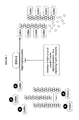
- the phosphatase SSH-2, or SlingSHot-2 dephosphorylates cofilin, allowing it to bind to F-actin and promote the disassembly of the actin filaments, as illustrated in FIG. 1 .
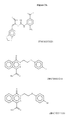
- the invention provides pharmaceutical compounds, formulations or compositions or compounds comprising or consisting of: 3-[(4,5-dimethoxy-3-oxo-1Hisobenzofuran-1-yl)amino]-4-methylbenzoic acid; 2-ethoxy-5-(4-phenylpiperidine-1-sulfonyl)benzoic acid; 3-[bis(2-methoxyethyl)sulfamoyl]benzoic acid; or any combination thereof, or any analog or derivative, or stereoisomer or bioisostere, thereof.
- the invention provides pharmaceutical compounds, formulations or compositions or compounds selected from the group consisting of (or having a structure comprising):
- R1 and R2 can be any alkoxy group, including methoxy-, ethox-, butoxy-, etc.) or having a longer alkyl or alkene group, or any combination thereof
- R3 can be any alkyl group, including a methyl, ethyl, propyl or butyl or longer alkyl or alkene group, or any combination thereof;
- the pharmaceutical compounds, formulations or compositions of the invention are formulated for enteral or parenteral administration; or formulated as a pill, tablet, geltab, powder, liquid, gel, aerosol or implant.
- the invention provides methods for inhibiting or slowing the dephosphorylating of a cofilin in a cell, comprising:
- the invention provides methods for inhibiting or preventing the binding of a cofilin to an F-actin, comprising:
- the invention provides methods for stabilizing F-actin polymers, actin filaments, or actin-comprising microtubules, in a cell, comprising:
- the invention provides methods for decreasing cell motility, comprising:
- the invention provides methods for ameliorating a disease or condition responsive to inhibiting or decreasing cell motility and/or stabilizing F-actin polymers, actin filaments, or actin-comprising microtubules in a cell, comprising:
- the invention provides methods for decreasing or inhibiting cell growth, comprising:
- FIG. 1 while the invention is not limited by any particular mechanism of action,
- FIG. 1 illustrates exemplary mechanisms of action for the compositions and methods of this invention; illustrating that phosphatase SSH-2, or SlingSHot-2, dephosphorylates cofilin, allowing it to bind to F-actin and promote the disassembly of the actin filaments.
- FIG. 2 is an illustration showing the interaction between the catalytic site of SSH-2 and the compound ZINC ID 05375291, or 3-[(4,5-dimethoxy-3-oxo-1,3-dihydro-2-benzofuran-1-yl)amino]-4-methylbenzoic acid.
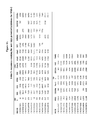
- FIGS. 3A, 3B, 3C, 3D and 3E illustrate exemplary compounds of the invention, and these compounds have specificity for SSH-2: as shown in Tables 3 and 4, as illustrated in FIGS. 4A and 4B respectively, e.g., the exemplary ZINC 06601214 and ZINC 03377116 compounds of this invention, as described e.g. in Example 1, below.
- FIGS. 4A and 4B illustrate SSH-2 specificity of exemplary compounds of the invention, as described e.g. in Example 1, below.
- FIG. 5 illustrates an immunoblot of cells treated with the exemplary compound of the invention ZINC4307500; in FIG. 5(A) , cells treated with ZINC4307500 show an increase in p-cofilin levels at 100 ⁇ M and 10 ⁇ M; and, FIG. 5(B) graphically illustrates data summarizing the levels of p-cofilin over 5 experimental repeats as described e.g. in Example 1, below.
- compositions that inhibit the polypeptide SSH-2, or SlingSHot-2, a phosphatase enzyme that regulates actin filaments and methods for making and using them, including methods comprising administering compositions of the invention to regulate or modify actin filament polymerization by inhibiting SSH-2 enzyme activity (i.e., inhibit dephosphorylation), where in one embodiment compositions of the invention inhibit or prevent F-actin depolymerization and severing.
- compositions and methods of the invention, by inhibiting SSH-2 can be used to control cell growth and movement. While the invention is not limited by any particular mechanism of action, in one embodiment, compositions and methods of the invention, by inhibiting SSH-2, are used to control cell growth and movement by inhibiting or preventing dephosphorylation of cofilin at serine 3, thereby inhibiting or preventing cofilin to bind to F-actin and stimulate F-actin depolymerization and severing (thus depolymerization and severing are inhibited or prevented.
- compositions and methods of the invention inhibit the SSH-2 enzyme, resulting in inhibiting or preventing subsequent F-actin depolymerization; severing is also inhibited or prevented, and cell motility and/or internal remodeling are inhibited or prevented
- compositions and methods of the invention by inhibiting SSH-2, can be used to slow or inhibit, or reverse, or ameliorate (decrease the symptoms of, slow the onset or progression of, reverse, or prevent) the progression of a cancer or a metastasis or other uncontrolled or unregulated cell growth, and/or Alzheimer's disease or dementia.
- the invention also provides bioisosteres of compounds of the invention, e.g., compounds having a structure as set forth herein.
- bioisosteres of the invention are compounds of the invention comprising one or more substituent and/or group replacements with a substituent and/or group having substantially similar physical or chemical properties which produce substantially similar biological properties to a compound of the invention, or stereoisomer, racemer or isomer thereof.
- the purpose of exchanging one bioisostere for another is to enhance the desired biological or physical properties of a compound without making significant changes in chemical structures.
- bioisosteres of compounds of the invention are made by replacing one or more hydrogen atom(s) with one or more fluorine atom(s), e.g., at a site of metabolic oxidation; this may prevent metabolism (catabolism) from taking place.
- fluorine atom is similar in size to the hydrogen atom the overall topology of the molecule is not significantly affected, leaving the desired biological activity unaffected.
- the molecule may have a longer half-life or be less toxic, and the like.
- the invention provides compositions for use in in vivo, in vitro or ex vivo methods for inhibiting an SSH-2 enzyme, resulting in inhibiting or preventing subsequent F-actin depolymerization; and also for decreasing or inhibiting cell growth comprising administering to a cell or contacting a cell with a compound or a formulation or a pharmaceutical composition of the invention in vitro, ex vivo or in vivo.
- compositions of the invention are used in in vivo, in vitro or ex vivo methods for treating, preventing and/or ameliorating a disease or condition that can be responsive to or ameliorated by decreasing or inhibiting cell growth, e.g., a pathological, uncontrolled or unwanted cell growth, e.g., a cancer or a metastases, or any disease or condition or infection having a hyperproliferative cell growth component.
- the compositions of the invention are used for ameliorating or preventing an inflammatory disease or condition that can be ameliorated by decreasing or inhibiting cell growth or proliferation.
- the compositions of the invention are used for ameliorating or preventing the progression of cancer, metastases and Alzheimer's disease.
- the pharmaceutical compositions of the invention can be administered parenterally, topically, orally or by local administration, such as by aerosol or transdermally.
- the pharmaceutical compositions can be formulated in any way and can be administered in a variety of unit dosage forms depending upon the condition or disease and the degree of illness, the general medical condition of each patient, the resulting preferred method of administration and the like. Details on techniques for formulation and administration are well described in the scientific and patent literature, see, e.g., the latest edition of Remington's Pharmaceutical Sciences , Maack Publishing Co., Easton Pa. (“Remington's”).
- these compositions of the invention are formulated in a buffer, in a saline solution, in a powder, an emulsion, in a vesicle, in a liposome, in a nanoparticle, in a nanolipoparticle and the like.
- the compositions can be formulated in any way and can be applied in a variety of concentrations and forms depending on the desired in vivo, in vitro or ex vivo conditions, a desired in vivo, in vitro or ex vivo method of administration and the like. Details on techniques for in vivo, in vitro or ex vivo formulations and administrations are well described in the scientific and patent literature.
- Formulations and/or carriers used to practice this invention can be in forms such as tablets, pills, powders, capsules, liquids, gels, syrups, slurries, suspensions, etc., suitable for in vivo, in vitro or ex vivo applications.
- the compounds (e.g., formulations) of the invention can comprise a solution of compositions of the invention disposed in or dissolved in a pharmaceutically acceptable carrier, e.g., acceptable vehicles and solvents that can be employed include water and Ringer's solution, an isotonic sodium chloride.
- a pharmaceutically acceptable carrier e.g., acceptable vehicles and solvents that can be employed include water and Ringer's solution, an isotonic sodium chloride.
- sterile fixed oils can be employed as a solvent or suspending medium.
- any fixed oil can be employed including synthetic mono- or diglycerides, or fatty acids such as oleic acid.
- solutions and formulations used to practice the invention are sterile and can be manufactured to be generally free of undesirable matter. In one embodiment, these solutions and formulations are sterilized by conventional, well known sterilization techniques.
- solutions and formulations used to practice the invention can comprise auxiliary substances as required to approximate physiological conditions such as pH adjusting and buffering agents, toxicity adjusting agents, e.g., sodium acetate, sodium chloride, potassium chloride, calcium chloride, sodium lactate and the like.
- concentration of active agent in these formulations can vary widely, and can be selected primarily based on fluid volumes, viscosities and the like, in accordance with the particular mode of in vivo, in vitro or ex vivo administration selected and the desired results.
- compositions and formulations of the invention can be delivered by the use of liposomes.
- liposomes particularly where the liposome surface carries ligands specific for target cells (e.g., a cancer cell), or are otherwise preferentially directed to a specific tissue or organ type, one can focus the delivery of the active agent into a target cells in an in vivo, in vitro or ex vivo application.
- the invention also provides nanoparticles, nanolipoparticles, vesicles and liposomal membranes comprising compounds used to practice the methods of this invention, e.g., to deliver compositions of the invention to mammalian cells in vivo, in vitro or ex vivo.
- these compositions are designed to target specific molecules, including biologic molecules, such as polypeptides, including cell surface polypeptides, e.g., for targeting a desired cell type, e.g., a cancer cell, a stem cell, a cancer stem cell, a mammalian cell, an epithelial cell, an intestinal epithelial cell, or a mucosal cell and the like.
- the invention provides multilayered liposomes comprising compounds used to practice this invention, e.g., as described in Park, et al., U.S. Pat. Pub. No. 20070082042.
- the multilayered liposomes can be prepared using a mixture of oil-phase components comprising squalane, sterols, ceramides, neutral lipids or oils, fatty acids and lecithins, to about 200 to 5000 nm in particle size, to entrap a composition used to practice this invention.
- Liposomes can be made using any method, e.g., as described in Park, et al., U.S. Pat. Pub. No. 20070042031, including method of producing a liposome by encapsulating an active agent (e.g., a composition of the invention), the method comprising providing an aqueous solution in a first reservoir; providing an organic lipid solution in a second reservoir, and then mixing the aqueous solution with the organic lipid solution in a first mixing region to produce a liposome solution, where the organic lipid solution mixes with the aqueous solution to substantially instantaneously produce a liposome encapsulating the active agent; and immediately then mixing the liposome solution with a buffer solution to produce a diluted liposome solution.
- an active agent e.g., a composition of the invention
- liposome compositions used to practice this invention comprise a substituted ammonium and/or polyanions, e.g., for targeting delivery of a compound used to practice this invention to a desired cell type (e.g., a cancer cell), as described e.g., in U.S. Pat. Pub. No. 20070110798.
- a desired cell type e.g., a cancer cell
- the invention also provides nanoparticles comprising used to practice this invention in the form of active agent-containing nanoparticles (e.g., a secondary nanoparticle), as described, e.g., in U.S. Pat. Pub. No. 20070077286.
- the invention provides nanoparticles comprising a fat-soluble active agent of this invention or a fat-solubilized water-soluble active agent to act with a bivalent or trivalent metal salt.
- solid lipid suspensions can be used to formulate and to deliver compositions used to practice this invention to mammalian cells in vivo, in vitro or ex vivo, as described, e.g., in U.S. Pat. Pub. No. 20050136121.
- any delivery vehicle can be used to practice the methods or used to practice this invention, e.g., to deliver compositions of the invention to mammalian cells in vivo, in vitro or ex vivo.
- delivery vehicles comprising polycations, cationic polymers and/or cationic peptides, such as polyethyleneimine derivatives, can be used e.g. as described, e.g., in U.S. Pat. Pub. No. 20060083737.
- a dried polypeptide-surfactant complex is used to formulate a composition used to practice this invention, e.g. as described, e.g., in U.S. Pat. Pub. No. 20040151766.
- a composition used to practice this invention can be applied to cells using vehicles with cell membrane-permeant peptide conjugates, e.g., as described in U.S. Pat. Nos. 7,306,783; 6,589,503.
- the composition to be delivered is conjugated to a cell membrane-permeant peptide.
- the composition to be delivered and/or the delivery vehicle are conjugated to a transport-mediating peptide, e.g., as described in U.S. Pat. No. 5,846,743, describing transport-mediating peptides that are highly basic and bind to poly-phosphoinositides.
- electro-permeabilization is used as a primary or adjunctive means to deliver the composition to a cell, e.g., using any electroporation system as described e.g. in U.S. Pat. Nos. 7,109,034; 6,261,815; 5,874,268.
- compositions and formulations of the invention can be administered for prophylactic and/or therapeutic treatments.
- compositions are administered to a subject already suffering from a cancer, disease, condition, infection or disease in an amount sufficient to cure, alleviate or partially arrest the clinical manifestations of the cancer, disease, condition, infection or disease and its complications (a “therapeutically effective amount”).
- pharmaceutical compositions and formulations of the invention are administered in an amount sufficient to treat, prevent and/or ameliorate a disease or condition that can be ameliorated by decreasing or inhibiting cell growth, e.g., a cancer or metastasis, or any unwanted cell growth.
- the amount of pharmaceutical composition adequate to accomplish this is defined as a “therapeutically effective dose.”
- the dosage schedule and amounts effective for this use, i.e., the “dosing regimen,” will depend upon a variety of factors, including the stage of the disease or condition, the severity of the disease or condition, the general state of the patient's health, the patient's physical status, age and the like. In calculating the dosage regimen for a patient, the mode of administration also is taken into consideration.
- the dosage regimen also takes into consideration pharmacokinetics parameters well known in the art, i.e., the active agents' rate of absorption, bioavailability, metabolism, clearance, and the like (see, e.g., Hidalgo-Aragones (1996) J. Steroid Biochem. Mol. Biol. 58:611-617; Groning (1996) Pharmazie 51:337-341; Fotherby (1996) Contraception 54:59-69; Johnson (1995) J. Pharm. Sci. 84:1144-1146; Rohatagi (1995) Pharmazie 50:610-613; Brophy (1983) Eur. J. Clin. Pharmacol. 24:103-108; the latest Remington's, supra).
- pharmacokinetics parameters well known in the art, i.e., the active agents' rate of absorption, bioavailability, metabolism, clearance, and the like (see, e.g., Hidalgo-Aragones (1996) J. Steroid Biochem. Mol. Biol. 58:611-617
- formulations can be given depending on the dosage and frequency as required and tolerated by the patient.
- the formulations should provide a sufficient quantity of active agent to effectively treat, prevent or ameliorate a conditions, diseases or symptoms as described herein.
- alternative exemplary pharmaceutical formulations for oral administration of compositions used to practice the invention are in a daily amount of between about 0.1 to 0.5 to about 20, 50, 100 or 1000 or more ug per kilogram of body weight per day.
- dosages are from about 1 mg to about 4 mg per kg of body weight per patient per day are used.
- Lower dosages can be used, in contrast to administration orally, into the blood stream, into a body cavity or into a lumen of an organ.
- Substantially higher dosages can be used in topical or oral administration or administering by powders, spray or inhalation.
- Actual methods for preparing parenterally or non-parenterally administrable formulations will be known or apparent to those skilled in the art and are described in more detail in such publications as Remington's, supra.
- the methods of the invention can further comprise co-administration with other drugs or pharmaceuticals, e.g., compositions for treating cancer, and inflammatory disease and the like.
- the methods and/or compositions and formulations of the invention can be co-formulated with and/or co-administered with, fluids, cytokines, immunoregulatory agents, anti-inflammatory agents, complement activating agents, such as peptides or proteins comprising collagen-like domains or fibrinogen-like domains (e.g., a ficolin), carbohydrate-binding domains, and the like and combinations thereof.
- the invention also provides products of manufacture, kits and pharmaceuticals for practicing the methods of this invention.
- the invention provides products of manufacture, kits and/or pharmaceuticals comprising all the components needed to practice a method of the invention, including at least one compound of the invention, and/or instructions for practicing a method of this invention.
- FIG. 2 is an illustration showing the interaction between the catalytic site of SSH-2 and the compound ZINC ID 05375291, or 3-[(4,5-dimethoxy-3-oxo-1,3-dihydro-2-benzofuran-1-yl)amino]-4-methylbenzoic acid, with hydrogen bonds highlighted in green;
- FIG. 2 illustrates 3-[(4,5-dimethoxy-3-oxo-1Hisobenzofuran-1-yl)amino]-4-methylbenzoic acid (ZINC ID 05375291) bound to the catalytic site of SSH-2.
- SSH-2 inhibitors of the invention can be used as novel therapeutics for cancer, metastases, Alzheimer's disease and other diseases or conditions responsive to inhibition of SSH-2.
- ZINC ID 05375291 19269 18047 3382 6652 11837 8003 04107594 19794 1727 4185 617 6580 8934 02655717 12600 193 145 872 3452 6107
- ZINC ID 05375291 3-[(4,5dimethoxy- 3-oxo-1,3- dihydro-2- benzofuran- 1-yl)amino]-4- methylbenzoic acid
- ZINC ID 04107594 2-ethoxy-5-(4- phenylpiperidine- 1-sulfonyl) benzoic acid
- ZINC ID 02655717 3-[bis(2- methoxyethyl) sulfamoyl] benzoic acid
- FIGS. 3A, 3B, 3C, 3D and 3E Data shows that eleven new compounds, exemplary compounds of the invention as illustrated in FIGS. 3A, 3B, 3C, 3D and 3E , have specificity for SSH-2: as shown in Tables 3 and 4 ( FIGS. 4A and 4B respectively), e.g., the exemplary ZINC 06601214 and ZINC 03377116 compounds of this invention.
- Two exemplary compounds (ZINC 06601214 and ZINC 03377116) have very similar chemical structures; see FIGS. 3A, 3B, 3C, 3D and 3E .
- exemplary compounds of the invention also include ZINC 06601214, ZINC 03377116, ZINC 03313382, ZINC 03271868, and ZINC 03429974. These five compounds have very similar chemical structures.
- the exemplary compound of the invention ZINC04307500 was demonstrated to inhibit SSH-2.
- HeLa cells were used for the in vitro verification portion of the study. Cells were first seeded onto 2 cm diameter plates and allowed to attach and proliferate for 24 hours. Compounds dissolved in dimethyl sulfoxide (DMSO) were applied the next day at 100 ⁇ m, 10 ⁇ m, 1 ⁇ m, 0.1 ⁇ m, and 0.01 ⁇ m concentrations and a DMSO vehicle control was used. The cells were incubated for a period of 24 hours and lysed (1% Triton X-100/10 mM Tris base/50 mM NaCl/30 mM Na pyrophosphate/50 mM NaF) in the presence of protease inhibitors and 1 mM Na 3 VO 4 .
- DMSO dimethyl sulfoxide
- FIG. 5A illustrates a representative example of an immunoblot of cell lysate treated with ZINC04307500.
- FIG. 5(A) illustrates an immunoblot of cells treated with the exemplary compound of the invention ZINC04307500.
- cells treated with ZINC04307500 show an increase in p-cofilin levels at 100 ⁇ M and 10 ⁇ M.
- FIG. 5(B) graphically illustrates data summarizing the levels of p-cofilin over 5 experimental repeats. Significant increase in p-cofilin level is observed in cells treated with 100 ⁇ M and 10 ⁇ M of ZINC04307500 in comparison to vehicle. This data demonstrates that SSH-2 is inhibited by the exemplary compound of the invention ZINC04307500.
- * indicates statistically significant difference in p-cofilin level compared to vehicle p ⁇ 0.05.
Landscapes
- Chemical & Material Sciences (AREA)
- Health & Medical Sciences (AREA)
- Organic Chemistry (AREA)
- Life Sciences & Earth Sciences (AREA)
- Pharmacology & Pharmacy (AREA)
- Epidemiology (AREA)
- Medicinal Chemistry (AREA)
- Animal Behavior & Ethology (AREA)
- General Health & Medical Sciences (AREA)
- Public Health (AREA)
- Veterinary Medicine (AREA)
- Pharmaceuticals Containing Other Organic And Inorganic Compounds (AREA)
- Medicines That Contain Protein Lipid Enzymes And Other Medicines (AREA)
Priority Applications (1)
| Application Number | Priority Date | Filing Date | Title |
|---|---|---|---|
| US14/005,653 US9487522B2 (en) | 2011-03-18 | 2012-03-15 | SSH-2 (slingshot-2) inhibitors and methods for making and using them |
Applications Claiming Priority (3)
| Application Number | Priority Date | Filing Date | Title |
|---|---|---|---|
| US201161454148P | 2011-03-18 | 2011-03-18 | |
| US14/005,653 US9487522B2 (en) | 2011-03-18 | 2012-03-15 | SSH-2 (slingshot-2) inhibitors and methods for making and using them |
| PCT/US2012/029267 WO2012129057A2 (fr) | 2011-03-18 | 2012-03-15 | Inhibiteurs de ssh-2 (slingshot-2) et procédés pour les préparer et les utiliser |
Publications (2)
| Publication Number | Publication Date |
|---|---|
| US20140094466A1 US20140094466A1 (en) | 2014-04-03 |
| US9487522B2 true US9487522B2 (en) | 2016-11-08 |
Family
ID=46879971
Family Applications (1)
| Application Number | Title | Priority Date | Filing Date |
|---|---|---|---|
| US14/005,653 Active 2032-05-04 US9487522B2 (en) | 2011-03-18 | 2012-03-15 | SSH-2 (slingshot-2) inhibitors and methods for making and using them |
Country Status (2)
| Country | Link |
|---|---|
| US (1) | US9487522B2 (fr) |
| WO (1) | WO2012129057A2 (fr) |
Families Citing this family (4)
| Publication number | Priority date | Publication date | Assignee | Title |
|---|---|---|---|---|
| TWI800498B (zh) * | 2016-12-21 | 2023-05-01 | 義大利商吉斯藥品公司 | 作為Rho-激酶抑制劑之雙環二氫嘧啶-羧醯胺衍生物 |
| CA3177672A1 (fr) * | 2020-05-28 | 2021-12-02 | Michael Eric MURATORE | Composes |
| CN116261456B (zh) * | 2020-08-14 | 2025-07-08 | 戴纳立制药公司 | 化合物、组合物和方法 |
| WO2023158708A1 (fr) * | 2022-02-16 | 2023-08-24 | Denali Therapeutics Inc. | Composés, compositions et procédés |
-
2012
- 2012-03-15 WO PCT/US2012/029267 patent/WO2012129057A2/fr not_active Ceased
- 2012-03-15 US US14/005,653 patent/US9487522B2/en active Active
Non-Patent Citations (11)
| Title |
|---|
| Baharlou, Simin, International Preliminary Report on Patentability issued in PCT/US2012/029267, The International Bureau of WIPO, Date of Mailing: Oct. 3, 2013. |
| Danziger, Automated Site-Directed Drug Design: A General Algorithm for Knowledge Acquisition about Hydrogen-Bonding Regions at Protein Surfaces, Proceedings of the Royal Society of London. Series B, Biological Sciences, 1989, 236(1283), pp. 101-113. * |
| Fenteany, G et al., "Small-molecule inhibitors of actin dynamics and cell motility", Current Topics in Medicinal Chemistry, 2003, 3(6):593-616. |
| Huang, et al. "Cofilin phosphatases and regulation of actin dynamics," Curr Opin Cell Biol 18: 26-31, 2006. |
| Lee, Dong Wook, International Search Report and Written Opinion issued in PCT/US2012/029267, Korean Intellectual Property Office, Date of Mailing: Sep. 14, 2012. |
| PubChem Compound, datasheet (online compound summary) Retrieved from the Internet: "URL: http://pubchem.ncbi.nlm.nih.gov/search/search.cgi", CID 2119389 (create date: Jul. 15, 2005). |
| PubChem Compound, datasheet (online compound summary) Retrieved from the Internet: "URL: http://pubchem.ncbi.nlm.nih.gov/search/search.cgi", CID 3776753 (create date: Sep. 11, 2005). |
| PubChem Compound, datasheet (online compound summary) Retrieved from the Internet: "URL: http://pubchem.ncbi.nlm.nih.gov/search/search.cgi", CID 4763376 (create date: Sep. 17, 2005). |
| Rao et al., "Microfilament Acting Remodeling as a Potential Target for Cancer Drug Development", Current Cancer Drug Targets, 2004, 4, 345-354. |
| Saito, "Toxins Affecting Actin Filaments and Microtubules", Prog Mol Subcell Biol. 2009;46:187-219. |
| Wang et al., "The cofilin pathway in breast cancer invasion and metastasis," Nat Rev Cancer. Jun. 2007;7(6):429-40. |
Also Published As
| Publication number | Publication date |
|---|---|
| WO2012129057A2 (fr) | 2012-09-27 |
| WO2012129057A3 (fr) | 2013-01-10 |
| US20140094466A1 (en) | 2014-04-03 |
Similar Documents
| Publication | Publication Date | Title |
|---|---|---|
| Singh et al. | Niclosamide—A promising treatment for COVID‐19 | |
| TWI866455B (zh) | 用於治療病毒感染之方法 | |
| TWI905508B (zh) | 用於治療病毒感染之方法 | |
| JP2011105733A5 (fr) | ||
| JP2009538317A (ja) | 癌治療のための置換ジアリールウレアを用いた薬物の組み合わせ | |
| WO2017162108A1 (fr) | Complexe de pillararène, son procédé de préparation, composition pharmaceutique et utilisation correspondantes | |
| TW201919599A (zh) | 用於治療病症之cxcr-2抑制劑 | |
| JP2021102615A (ja) | 心血管疾患を処置するか又は心血管疾患のリスクを低減させるためのetc1002及び1種以上のスタチンを含む固定用量組合せ物 | |
| US20140094466A1 (en) | Ssh-2 (slingshot-2) inhibitors and methods for making and using them | |
| US11432547B2 (en) | Inhibitors of GRB2-associated binding protein 1 (GAB1) and methods of treating cancer using the same | |
| US12161611B2 (en) | Niclosamide formulations and methods of use | |
| Ghosh et al. | Effectiveness and safety of inclisiran, a novel long-acting RNA therapeutic inhibitor of proprotein convertase subtilisin/kexin 9 | |
| WO2025059427A1 (fr) | Composés et méthodes de traitement d'infections virales | |
| BRPI0716214A2 (pt) | Composições farmacêuticas para o tratamento de infecções fúngicas. | |
| Zhuang et al. | Treatment of rheumatoid arthritis based on the inherent bioactivity of black phosphorus nanosheets | |
| CN111494380A (zh) | Db-1在制备防治nlrp3炎症小体相关疾病的药物中的应用及其药物组合物 | |
| US20230293469A1 (en) | Novel pharmaceutical compositions | |
| EP2686429A1 (fr) | Compositions, procédé de préparation de ces compositions et méthode de traitement de maladies inflammatoires | |
| US9073884B2 (en) | Anti-inflammatory and quorum sensing inhibition compounds and methods of making and using them | |
| BR112012011261A2 (en) | treatment of microbial infections | |
| JP2021533192A (ja) | 薬剤を含む共晶溶媒、並びにその製造および使用方法 | |
| JP2020530471A (ja) | MEK/PI3K、JAK/MEK、JAK/PI3K/mTORおよびMEK/PI3K/mTORの生物学的経路の阻害剤、および治療化合物のリンパ取り込み、生物学的利用能、および溶解性を改善する方法 | |
| Suh et al. | Statin intolerance: An overview of the current status and possible treatment options | |
| JP2011513400A (ja) | 炎症のフラーレン治療 | |
| CN101732255A (zh) | 一种氟比洛芬脂质体及其制备方法 |
Legal Events
| Date | Code | Title | Description |
|---|---|---|---|
| AS | Assignment |
Owner name: NATIONAL INSTITUTES OF HEALTH (NIH), U.S. DEPT. OF Free format text: CONFIRMATORY LICENSE;ASSIGNOR:UNIVERSITY OF CALIFORNIA SAN DIEGO;REEL/FRAME:031515/0111 Effective date: 20131018 |
|
| AS | Assignment |
Owner name: THE REGENTS OF THE UNIVERSITY OF CALIFORNIA, CALIF Free format text: ASSIGNMENT OF ASSIGNORS INTEREST;ASSIGNORS:HAGA, JASON H.;CHIEN, SHU;MUI, MATT;SIGNING DATES FROM 20110118 TO 20110126;REEL/FRAME:036122/0523 |
|
| STCF | Information on status: patent grant |
Free format text: PATENTED CASE |
|
| MAFP | Maintenance fee payment |
Free format text: PAYMENT OF MAINTENANCE FEE, 4TH YR, SMALL ENTITY (ORIGINAL EVENT CODE: M2551); ENTITY STATUS OF PATENT OWNER: SMALL ENTITY Year of fee payment: 4 |
|
| MAFP | Maintenance fee payment |
Free format text: PAYMENT OF MAINTENANCE FEE, 8TH YR, SMALL ENTITY (ORIGINAL EVENT CODE: M2552); ENTITY STATUS OF PATENT OWNER: SMALL ENTITY Year of fee payment: 8 |