US9487849B2 - Ferritic stainless steel - Google Patents
Ferritic stainless steel Download PDFInfo
- Publication number
- US9487849B2 US9487849B2 US14/360,192 US201214360192A US9487849B2 US 9487849 B2 US9487849 B2 US 9487849B2 US 201214360192 A US201214360192 A US 201214360192A US 9487849 B2 US9487849 B2 US 9487849B2
- Authority
- US
- United States
- Prior art keywords
- stainless steel
- ferritic stainless
- content
- corrosion resistance
- nitrogen
- Prior art date
- Legal status (The legal status is an assumption and is not a legal conclusion. Google has not performed a legal analysis and makes no representation as to the accuracy of the status listed.)
- Active
Links
- 229910001220 stainless steel Inorganic materials 0.000 title claims abstract description 51
- 229910052757 nitrogen Inorganic materials 0.000 claims abstract description 54
- 229910052719 titanium Inorganic materials 0.000 claims abstract description 22
- 229910052782 aluminium Inorganic materials 0.000 claims abstract description 18
- 229910052799 carbon Inorganic materials 0.000 claims abstract description 14
- 229910052804 chromium Inorganic materials 0.000 claims abstract description 14
- 229910052758 niobium Inorganic materials 0.000 claims abstract description 14
- 229910052710 silicon Inorganic materials 0.000 claims abstract description 13
- 229910052750 molybdenum Inorganic materials 0.000 claims abstract description 9
- 229910052720 vanadium Inorganic materials 0.000 claims abstract description 9
- 229910052759 nickel Inorganic materials 0.000 claims abstract description 6
- 229910052802 copper Inorganic materials 0.000 claims abstract description 5
- 239000012535 impurity Substances 0.000 claims abstract description 5
- 229910052748 manganese Inorganic materials 0.000 claims abstract description 5
- 229910052698 phosphorus Inorganic materials 0.000 claims abstract description 4
- 229910052717 sulfur Inorganic materials 0.000 claims abstract description 4
- 230000007420 reactivation Effects 0.000 claims description 13
- 239000000126 substance Substances 0.000 claims description 13
- 230000014509 gene expression Effects 0.000 claims description 7
- 229910052721 tungsten Inorganic materials 0.000 claims description 7
- 229910052796 boron Inorganic materials 0.000 claims description 6
- 230000007797 corrosion Effects 0.000 abstract description 64
- 238000005260 corrosion Methods 0.000 abstract description 64
- 238000003466 welding Methods 0.000 abstract description 33
- 206010070834 Sensitisation Diseases 0.000 abstract description 25
- 230000008313 sensitization Effects 0.000 abstract description 25
- 230000001747 exhibiting effect Effects 0.000 abstract description 2
- IJGRMHOSHXDMSA-UHFFFAOYSA-N Atomic nitrogen Chemical compound N#N IJGRMHOSHXDMSA-UHFFFAOYSA-N 0.000 description 102
- 239000011324 bead Substances 0.000 description 43
- 239000007789 gas Substances 0.000 description 39
- 239000011651 chromium Substances 0.000 description 33
- 239000010936 titanium Substances 0.000 description 32
- 230000000694 effects Effects 0.000 description 28
- 239000010955 niobium Substances 0.000 description 22
- 230000007423 decrease Effects 0.000 description 19
- XAGFODPZIPBFFR-UHFFFAOYSA-N aluminium Chemical compound [Al] XAGFODPZIPBFFR-UHFFFAOYSA-N 0.000 description 15
- RTAQQCXQSZGOHL-UHFFFAOYSA-N Titanium Chemical compound [Ti] RTAQQCXQSZGOHL-UHFFFAOYSA-N 0.000 description 14
- 229910000831 Steel Inorganic materials 0.000 description 13
- 239000010959 steel Substances 0.000 description 13
- OKTJSMMVPCPJKN-UHFFFAOYSA-N Carbon Chemical compound [C] OKTJSMMVPCPJKN-UHFFFAOYSA-N 0.000 description 11
- 229910052761 rare earth metal Inorganic materials 0.000 description 11
- XUIMIQQOPSSXEZ-UHFFFAOYSA-N Silicon Chemical compound [Si] XUIMIQQOPSSXEZ-UHFFFAOYSA-N 0.000 description 10
- 230000001965 increasing effect Effects 0.000 description 10
- PXHVJJICTQNCMI-UHFFFAOYSA-N nickel Substances [Ni] PXHVJJICTQNCMI-UHFFFAOYSA-N 0.000 description 10
- 150000002910 rare earth metals Chemical class 0.000 description 10
- 239000010703 silicon Substances 0.000 description 10
- VYZAMTAEIAYCRO-UHFFFAOYSA-N Chromium Chemical compound [Cr] VYZAMTAEIAYCRO-UHFFFAOYSA-N 0.000 description 9
- 239000011572 manganese Substances 0.000 description 8
- 239000010935 stainless steel Substances 0.000 description 8
- 230000015572 biosynthetic process Effects 0.000 description 7
- 239000010949 copper Substances 0.000 description 7
- 238000001556 precipitation Methods 0.000 description 7
- 238000012360 testing method Methods 0.000 description 7
- 239000000203 mixture Substances 0.000 description 6
- GUCVJGMIXFAOAE-UHFFFAOYSA-N niobium atom Chemical compound [Nb] GUCVJGMIXFAOAE-UHFFFAOYSA-N 0.000 description 6
- 230000001681 protective effect Effects 0.000 description 6
- LEONUFNNVUYDNQ-UHFFFAOYSA-N vanadium atom Chemical compound [V] LEONUFNNVUYDNQ-UHFFFAOYSA-N 0.000 description 6
- ZOKXTWBITQBERF-UHFFFAOYSA-N Molybdenum Chemical compound [Mo] ZOKXTWBITQBERF-UHFFFAOYSA-N 0.000 description 5
- 239000002253 acid Substances 0.000 description 5
- 230000003247 decreasing effect Effects 0.000 description 5
- 238000000034 method Methods 0.000 description 5
- 239000011733 molybdenum Substances 0.000 description 5
- 230000003647 oxidation Effects 0.000 description 5
- 238000007254 oxidation reaction Methods 0.000 description 5
- 238000005554 pickling Methods 0.000 description 5
- 229910052726 zirconium Inorganic materials 0.000 description 5
- FAPWRFPIFSIZLT-UHFFFAOYSA-M Sodium chloride Chemical compound [Na+].[Cl-] FAPWRFPIFSIZLT-UHFFFAOYSA-M 0.000 description 4
- QCWXUUIWCKQGHC-UHFFFAOYSA-N Zirconium Chemical compound [Zr] QCWXUUIWCKQGHC-UHFFFAOYSA-N 0.000 description 4
- 239000010941 cobalt Substances 0.000 description 4
- 229910017052 cobalt Inorganic materials 0.000 description 4
- GUTLYIVDDKVIGB-UHFFFAOYSA-N cobalt atom Chemical compound [Co] GUTLYIVDDKVIGB-UHFFFAOYSA-N 0.000 description 4
- XEEYBQQBJWHFJM-UHFFFAOYSA-N iron Substances [Fe] XEEYBQQBJWHFJM-UHFFFAOYSA-N 0.000 description 4
- WFKWXMTUELFFGS-UHFFFAOYSA-N tungsten Chemical compound [W] WFKWXMTUELFFGS-UHFFFAOYSA-N 0.000 description 4
- 239000010937 tungsten Substances 0.000 description 4
- XLYOFNOQVPJJNP-UHFFFAOYSA-N water Substances O XLYOFNOQVPJJNP-UHFFFAOYSA-N 0.000 description 4
- ZOXJGFHDIHLPTG-UHFFFAOYSA-N Boron Chemical compound [B] ZOXJGFHDIHLPTG-UHFFFAOYSA-N 0.000 description 3
- 239000013078 crystal Substances 0.000 description 3
- 239000000463 material Substances 0.000 description 3
- 238000005259 measurement Methods 0.000 description 3
- 150000004767 nitrides Chemical class 0.000 description 3
- 238000002161 passivation Methods 0.000 description 3
- 239000000243 solution Substances 0.000 description 3
- PWHULOQIROXLJO-UHFFFAOYSA-N Manganese Chemical compound [Mn] PWHULOQIROXLJO-UHFFFAOYSA-N 0.000 description 2
- 238000013459 approach Methods 0.000 description 2
- 229910000963 austenitic stainless steel Inorganic materials 0.000 description 2
- 239000004566 building material Substances 0.000 description 2
- 230000000052 comparative effect Effects 0.000 description 2
- 125000004122 cyclic group Chemical group 0.000 description 2
- 230000007547 defect Effects 0.000 description 2
- 230000002708 enhancing effect Effects 0.000 description 2
- 238000004519 manufacturing process Methods 0.000 description 2
- 238000002844 melting Methods 0.000 description 2
- 230000008018 melting Effects 0.000 description 2
- 230000007935 neutral effect Effects 0.000 description 2
- 239000002244 precipitate Substances 0.000 description 2
- 150000003839 salts Chemical class 0.000 description 2
- 239000011780 sodium chloride Substances 0.000 description 2
- 239000006104 solid solution Substances 0.000 description 2
- 239000007921 spray Substances 0.000 description 2
- RYGMFSIKBFXOCR-UHFFFAOYSA-N Copper Chemical compound [Cu] RYGMFSIKBFXOCR-UHFFFAOYSA-N 0.000 description 1
- OAICVXFJPJFONN-UHFFFAOYSA-N Phosphorus Chemical compound [P] OAICVXFJPJFONN-UHFFFAOYSA-N 0.000 description 1
- NINIDFKCEFEMDL-UHFFFAOYSA-N Sulfur Chemical compound [S] NINIDFKCEFEMDL-UHFFFAOYSA-N 0.000 description 1
- 238000000137 annealing Methods 0.000 description 1
- QVGXLLKOCUKJST-UHFFFAOYSA-N atomic oxygen Chemical compound [O] QVGXLLKOCUKJST-UHFFFAOYSA-N 0.000 description 1
- 230000006399 behavior Effects 0.000 description 1
- 238000005266 casting Methods 0.000 description 1
- 238000009749 continuous casting Methods 0.000 description 1
- 238000012937 correction Methods 0.000 description 1
- 238000005336 cracking Methods 0.000 description 1
- 238000004090 dissolution Methods 0.000 description 1
- 238000011156 evaluation Methods 0.000 description 1
- 238000005098 hot rolling Methods 0.000 description 1
- 230000001939 inductive effect Effects 0.000 description 1
- 229910052742 iron Inorganic materials 0.000 description 1
- 229910021645 metal ion Inorganic materials 0.000 description 1
- 229910052760 oxygen Inorganic materials 0.000 description 1
- 239000001301 oxygen Substances 0.000 description 1
- 230000035515 penetration Effects 0.000 description 1
- 239000011574 phosphorus Substances 0.000 description 1
- 238000005498 polishing Methods 0.000 description 1
- 230000001737 promoting effect Effects 0.000 description 1
- 239000002994 raw material Substances 0.000 description 1
- 238000005096 rolling process Methods 0.000 description 1
- 239000003566 sealing material Substances 0.000 description 1
- 239000007787 solid Substances 0.000 description 1
- 238000007711 solidification Methods 0.000 description 1
- 230000008023 solidification Effects 0.000 description 1
- 230000000087 stabilizing effect Effects 0.000 description 1
- 238000003860 storage Methods 0.000 description 1
- 239000011593 sulfur Substances 0.000 description 1
- 230000001629 suppression Effects 0.000 description 1
- 230000002195 synergetic effect Effects 0.000 description 1
- 229910000859 α-Fe Inorganic materials 0.000 description 1
Images


Classifications
-
- C—CHEMISTRY; METALLURGY
- C22—METALLURGY; FERROUS OR NON-FERROUS ALLOYS; TREATMENT OF ALLOYS OR NON-FERROUS METALS
- C22C—ALLOYS
- C22C38/00—Ferrous alloys, e.g. steel alloys
- C22C38/18—Ferrous alloys, e.g. steel alloys containing chromium
- C22C38/40—Ferrous alloys, e.g. steel alloys containing chromium with nickel
- C22C38/52—Ferrous alloys, e.g. steel alloys containing chromium with nickel with cobalt
-
- C—CHEMISTRY; METALLURGY
- C21—METALLURGY OF IRON
- C21D—MODIFYING THE PHYSICAL STRUCTURE OF FERROUS METALS; GENERAL DEVICES FOR HEAT TREATMENT OF FERROUS OR NON-FERROUS METALS OR ALLOYS; MAKING METAL MALLEABLE, e.g. BY DECARBURISATION OR TEMPERING
- C21D9/00—Heat treatment, e.g. annealing, hardening, quenching or tempering, adapted for particular articles; Furnaces therefor
- C21D9/46—Heat treatment, e.g. annealing, hardening, quenching or tempering, adapted for particular articles; Furnaces therefor for sheet metals
-
- C—CHEMISTRY; METALLURGY
- C22—METALLURGY; FERROUS OR NON-FERROUS ALLOYS; TREATMENT OF ALLOYS OR NON-FERROUS METALS
- C22C—ALLOYS
- C22C38/00—Ferrous alloys, e.g. steel alloys
-
- C—CHEMISTRY; METALLURGY
- C22—METALLURGY; FERROUS OR NON-FERROUS ALLOYS; TREATMENT OF ALLOYS OR NON-FERROUS METALS
- C22C—ALLOYS
- C22C38/00—Ferrous alloys, e.g. steel alloys
- C22C38/001—Ferrous alloys, e.g. steel alloys containing N
-
- C—CHEMISTRY; METALLURGY
- C22—METALLURGY; FERROUS OR NON-FERROUS ALLOYS; TREATMENT OF ALLOYS OR NON-FERROUS METALS
- C22C—ALLOYS
- C22C38/00—Ferrous alloys, e.g. steel alloys
- C22C38/004—Very low carbon steels, i.e. having a carbon content of less than 0,01%
-
- C—CHEMISTRY; METALLURGY
- C22—METALLURGY; FERROUS OR NON-FERROUS ALLOYS; TREATMENT OF ALLOYS OR NON-FERROUS METALS
- C22C—ALLOYS
- C22C38/00—Ferrous alloys, e.g. steel alloys
- C22C38/005—Ferrous alloys, e.g. steel alloys containing rare earths, i.e. Sc, Y, Lanthanides
-
- C—CHEMISTRY; METALLURGY
- C22—METALLURGY; FERROUS OR NON-FERROUS ALLOYS; TREATMENT OF ALLOYS OR NON-FERROUS METALS
- C22C—ALLOYS
- C22C38/00—Ferrous alloys, e.g. steel alloys
- C22C38/02—Ferrous alloys, e.g. steel alloys containing silicon
-
- C—CHEMISTRY; METALLURGY
- C22—METALLURGY; FERROUS OR NON-FERROUS ALLOYS; TREATMENT OF ALLOYS OR NON-FERROUS METALS
- C22C—ALLOYS
- C22C38/00—Ferrous alloys, e.g. steel alloys
- C22C38/04—Ferrous alloys, e.g. steel alloys containing manganese
-
- C—CHEMISTRY; METALLURGY
- C22—METALLURGY; FERROUS OR NON-FERROUS ALLOYS; TREATMENT OF ALLOYS OR NON-FERROUS METALS
- C22C—ALLOYS
- C22C38/00—Ferrous alloys, e.g. steel alloys
- C22C38/06—Ferrous alloys, e.g. steel alloys containing aluminium
-
- C—CHEMISTRY; METALLURGY
- C22—METALLURGY; FERROUS OR NON-FERROUS ALLOYS; TREATMENT OF ALLOYS OR NON-FERROUS METALS
- C22C—ALLOYS
- C22C38/00—Ferrous alloys, e.g. steel alloys
- C22C38/18—Ferrous alloys, e.g. steel alloys containing chromium
- C22C38/40—Ferrous alloys, e.g. steel alloys containing chromium with nickel
- C22C38/42—Ferrous alloys, e.g. steel alloys containing chromium with nickel with copper
-
- C—CHEMISTRY; METALLURGY
- C22—METALLURGY; FERROUS OR NON-FERROUS ALLOYS; TREATMENT OF ALLOYS OR NON-FERROUS METALS
- C22C—ALLOYS
- C22C38/00—Ferrous alloys, e.g. steel alloys
- C22C38/18—Ferrous alloys, e.g. steel alloys containing chromium
- C22C38/40—Ferrous alloys, e.g. steel alloys containing chromium with nickel
- C22C38/44—Ferrous alloys, e.g. steel alloys containing chromium with nickel with molybdenum or tungsten
-
- C—CHEMISTRY; METALLURGY
- C22—METALLURGY; FERROUS OR NON-FERROUS ALLOYS; TREATMENT OF ALLOYS OR NON-FERROUS METALS
- C22C—ALLOYS
- C22C38/00—Ferrous alloys, e.g. steel alloys
- C22C38/18—Ferrous alloys, e.g. steel alloys containing chromium
- C22C38/40—Ferrous alloys, e.g. steel alloys containing chromium with nickel
- C22C38/46—Ferrous alloys, e.g. steel alloys containing chromium with nickel with vanadium
-
- C—CHEMISTRY; METALLURGY
- C22—METALLURGY; FERROUS OR NON-FERROUS ALLOYS; TREATMENT OF ALLOYS OR NON-FERROUS METALS
- C22C—ALLOYS
- C22C38/00—Ferrous alloys, e.g. steel alloys
- C22C38/18—Ferrous alloys, e.g. steel alloys containing chromium
- C22C38/40—Ferrous alloys, e.g. steel alloys containing chromium with nickel
- C22C38/48—Ferrous alloys, e.g. steel alloys containing chromium with nickel with niobium or tantalum
-
- C—CHEMISTRY; METALLURGY
- C22—METALLURGY; FERROUS OR NON-FERROUS ALLOYS; TREATMENT OF ALLOYS OR NON-FERROUS METALS
- C22C—ALLOYS
- C22C38/00—Ferrous alloys, e.g. steel alloys
- C22C38/18—Ferrous alloys, e.g. steel alloys containing chromium
- C22C38/40—Ferrous alloys, e.g. steel alloys containing chromium with nickel
- C22C38/50—Ferrous alloys, e.g. steel alloys containing chromium with nickel with titanium or zirconium
-
- C—CHEMISTRY; METALLURGY
- C22—METALLURGY; FERROUS OR NON-FERROUS ALLOYS; TREATMENT OF ALLOYS OR NON-FERROUS METALS
- C22C—ALLOYS
- C22C38/00—Ferrous alloys, e.g. steel alloys
- C22C38/18—Ferrous alloys, e.g. steel alloys containing chromium
- C22C38/40—Ferrous alloys, e.g. steel alloys containing chromium with nickel
- C22C38/54—Ferrous alloys, e.g. steel alloys containing chromium with nickel with boron
-
- C—CHEMISTRY; METALLURGY
- C21—METALLURGY OF IRON
- C21D—MODIFYING THE PHYSICAL STRUCTURE OF FERROUS METALS; GENERAL DEVICES FOR HEAT TREATMENT OF FERROUS OR NON-FERROUS METALS OR ALLOYS; MAKING METAL MALLEABLE, e.g. BY DECARBURISATION OR TEMPERING
- C21D2211/00—Microstructure comprising significant phases
- C21D2211/005—Ferrite
Definitions
- the present invention relates to ferritic stainless steels having a low probability of a decrease in corrosion resistance due to the entering of nitrogen from a weld shielding gas into a weld bead.
- ferritic stainless steel As compared to austenitic stainless steel, ferritic stainless steel has a higher cost performance in terms of corrosion resistance as well as a better heat thermal conductivity and a smaller coefficient of thermal expansion and is more resistant to stress corrosion cracking. Due to these excellent characteristics, ferritic stainless steel has been used in a wide range of applications including automobile exhaust system components, building materials such as roofs and fittings, and materials used in wet condition such as kitchen furniture, water tanks and hot water tanks.
- Patent Literature 1 discloses ferritic stainless steel improved in grain boundary corrosion resistance by the combined addition of titanium and niobium.
- Patent Literature 2 discloses ferritic stainless steel with excellent corrosion resistance at welds
- Patent Literature 3 discloses ferritic stainless steel with excellent corrosion resistance at weld gaps
- Patent Literature 4 discloses ferritic stainless steel with excellent corrosion resistance at welds with austenitic stainless steel. Even with these ferritic stainless steels, however, sufficient corrosion resistance cannot be always ensured under such welding conditions that nitrogen will enter from a shielding gas into a weld bead.
- the invention therefore aims to provide ferritic stainless steels exhibiting good weldability and excellent corrosion resistance even when welded under such welding conditions that sufficient gas shielding is infeasible for reasons such as the shapes of workpieces and consequently nitrogen is mixed to the shielding gas to raise the nitrogen content in the weld bead and to induce the occurrence of sensitization.
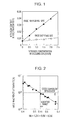
- the nitrogen content in the weld bead was increased in proportion to the increase in the nitrogen concentration in the shielding gas.
- the nitrogen content in the weld bead remained substantially unchanged even when the nitrogen concentration in the shielding gas was increased. This result is probably ascribed to the condition that the face shielding gas is continuously blown from a nozzle to the molten pool while the back shielding gas is brought into a mild contact therewith. Sensitization occurred at the weld beads more markedly with increasing amount of nitrogen that had entered the weld beads. From this result, it is probable that the sensitization at weld beads occurs due to the entering into the weld beads of nitrogen mixed in the face shielding gas.
- the logarithm of the reactivation rate was decreased in proportion to Nb+1.3Ti+0.9V+0.2Al (the chemical symbols in the expression represent the contents (mass %) of the respective elements) (hereinafter, referred to as the value N).
- N the number of elements
- a smaller value of reactivation rate indicates a lower degree of sensitization, and it is understood that substantially no sensitization has occurred when the reactivation rate is 0.01% or less.
- the reactivation rate was 0.01% or less when the value N was larger than 0.55.
- the pitting potential was in the range of ⁇ 200 to ⁇ 150 mVolts irrespective of the content of silicon plus aluminum plus titanium, indicating low corrosion resistance.
- the pitting potential was 0 mVolt or above, namely, the corrosion resistance was improved when Si+Al+Ti (the chemical symbols in the expression represent the contents (mass %) of the respective elements) (hereinafter, referred to as the value S) was in the range of 0.6 to 1.8.
- the present invention has been made based on the aforementioned findings and on further studies.
- the summary of the invention includes the following.
- a ferritic stainless steel with excellent corrosion resistance at welds including, by mass %, C: 0.001 to 0.030%, Si: more than 0.3 to 0.55%, Mn: 0.05 to 0.50%, P: not more than 0.05%, S: not more than 0.01%, Cr: 19.0 to 28.0%, Ni: 0.01 to less than 0.30%, Mo: 0.2 to 3.0%, Al: more than 0.08 to 1.2%, V: 0.02 to 0.50%, Cu: less than 0.1%, Nb: 0.005 to 0.50%, Ti: 0.05 to 0.50%, and N: 0.001 to 0.030%, the balance being Fe and inevitable impurities, the ferritic stainless steel satisfying the following equations (1) and (2): 0.6 ⁇ Si+Al+Ti ⁇ 1.8 (1) Nb+1.3Ti+0.9V+0.2Al>0.55 (2)
- ferritic stainless steels are obtained which exhibit excellent corrosion resistance even under such welding conditions that sensitization is induced by the entering of nitrogen from a shielding gas into a weld bead. Further, the ferritic stainless steels of the invention have good weldability comparable to that of conventional steels.
- FIG. 1 is a view illustrating how the nitrogen content in a weld bead is affected by the nitrogen concentration in a shielding gas.
- FIG. 2 is a view illustrating the influences of elements on the reactivation rate of a weld bead.
- FIG. 3 is a view illustrating the influences of elements on the pitting potential of a weld bead.
- % indicates mass % at each occurrence.
- Carbon is an element that is inevitably found in steel. Increasing the C content enhances strength, and decreasing the C content enhances workability. In order to obtain sufficient strength, it is appropriate to add carbon to a content of not less than 0.001%. Adding carbon in excess of 0.030% results in a marked decrease in workability as well as increases the risk that corrosion resistance will be lowered by the precipitation of Cr carbide which causes local Cr depletion.
- the C content is specified to be in the range of 0.001 to 0.030%.
- the C content is preferably in the range of 0.002 to 0.018%, more preferably in the range of 0.003 to 0.015%, and still more preferably in the range of 0.003 to 0.010%.
- Si more than 0.3 to 0.55%
- Silicon is an element effective for deoxidation.
- this element plays an important role by being concentrated, together with aluminum and titanium, in a temper color formed by welding so as to improve the protective performance of the oxide layer and to improve the corrosion resistance of the weld. Under such welding conditions that nitrogen will enter from a shielding gas, the concentrating of aluminum and titanium at the temper color is small because these elements form precipitates by bonding to the nitrogen that has entered.
- silicon plays a relatively larger role in the enhancement of the protective performance of the temper color. This effect may be obtained by adding silicon in excess of 0.3%. However, the addition in excess of 0.55% results in a marked decrease in workability and makes forming and working difficult.
- the Si content is specified to be in the range of more than 0.3 to 0.55%.
- the Si content is preferably in the range of 0.33 to 0.50%, and more preferably in the range of 0.35 to 0.48%.
- Manganese is an element that is inevitably contained in steel and has an effect on increasing strength. This effect may be obtained by adding manganese to 0.05% or more. However, any excessive addition facilitates the precipitation of MnS which serves as a corrosion starting point, and thus deteriorates corrosion resistance. It is therefore appropriate that the Mn content be not more than 0.50%. Thus, the Mn content is specified to be in the range of 0.05 to 0.50%. The Mn content is preferably in the range of 0.08 to 0.40%, and more preferably in the range of 0.09 to 0.35%.
- Phosphorus is an element that is inevitably contained in steel. An excessively high content thereof causes a decrease in weldability and facilitates the occurrence of grain boundary corrosion. This tendency becomes marked when the P content exceeds 0.05%.
- the P content is specified to be not more than 0.05%.
- the P content is preferably not more than 0.04%.
- Sulfur is an element that is inevitably contained in steel. Any S content exceeding 0.01% causes a decrease in corrosion resistance. Thus, the S content is specified to be not more than 0.01%. The S content is more preferably not more than 0.006%.
- Chromium is the most important element for ensuring the corrosion resistance of stainless steel. If the Cr content is less than 19.0%, sufficient corrosion resistance cannot be obtained at and in the vicinity of weld beads where the Cr content in the superficial layer is decreased by oxidation during welding. On the other hand, adding chromium in excess of 28.0% results in decreases in workability and productivity. Thus, the Cr content is specified to be in the range of 19.0 to 28.0%. The Cr content is preferably in the range of 21.0 to 26.0%, and more preferably in the range of 21.0 to 24.0%.
- Ni 0.01 to less than 0.30%
- Nickel is an element that enhances the corrosion resistance of stainless steel. This element suppresses the progress of corrosion in a corrosive environment in which any passivation film is not formed and consequently active dissolution takes place. This effect may be obtained by adding nickel to 0.01% or more. However, the addition of nickel to 0.30% or more results in a decrease in workability as well as an increase in cost due to the expensiveness of the element. Thus, the Ni content is specified to be in the range of 0.01 to less than 0.30%. The Ni content is preferably in the range of 0.03 to 0.24%.
- Molybdenum is an element that enhances the corrosion resistance of stainless steel by promoting the repassivation of a passivation film. This effect is exhibited more markedly when stainless steel contains molybdenum together with chromium.
- the corrosion resistance enhancement effect by molybdenum may be obtained by adding molybdenum to 0.2% or more. If the Mo content exceeds 3.0%, however, strength is so increased that a high rolling load is incurred to lower productivity. Thus, the Mo content is specified to be in the range of 0.2 to 3.0%.
- the Mo content is preferably in the range of 0.6 to 2.4%, and more preferably in the range of 0.6 to 2.0%.
- Aluminum is an element effective for deoxidation.
- aluminum is concentrated at a temper color formed by welding together with silicon and titanium to enhance the corrosion resistance of the weld.
- this element is effective for suppressing the occurrence of sensitization which caused by the precipitation of chromium with nitrogen in the case that nitrogen has entered from a shielding gas into the weld bead. This effect is probably exhibited by a process in which aluminum having higher affinity for nitrogen than does chromium forms AlN with the nitrogen that has entered the weld bead from the shielding gas, thus suppressing the formation of Cr nitride. This effect may be obtained by adding aluminum in excess of 0.08%.
- the Al content is specified to be in the range of more than 0.08 to 1.2%.
- the Al content is preferably in the range of 0.09 to 0.8%, and more preferably in the range of 0.10 to 0.40%.
- V 0.02 to 0.50%
- Vanadium is an element that enhances corrosion resistance and workability.
- vanadium when nitrogen has entered from a shielding gas into a weld bead, vanadium suppresses the occurrence of sensitization by combining with nitrogen to form VN. This effect may be obtained by adding vanadium to 0.02% or more. However, the addition in excess of 0.50% results in a decrease in workability.
- the V content is specified to be in the range of 0.02 to 0.50%.
- the V content is preferably in the range of 0.03 to 0.40%.
- Copper is an impurity possibly mixed in stainless steel, originating from raw material scraps.
- this element is present in the ferritic stainless steel with excellent corrosion resistance having the preferred Cr and Mo contents, the passivity-maintaining current is increased and the passivation film is destabilized. Consequently, a decrease in corrosion resistance is caused. This effect of decreasing the corrosion resistance becomes marked when the Cu content is 0.1% or more. Thus, the Cu content is specified to be less than 0.1%.
- Niobium bonds preferentially to carbon and nitrogen to suppress the decrease in corrosion resistance by the precipitation of Cr carbonitride.
- niobium is an important element for suppressing the occurrence of sensitization by the entering of nitrogen from a shielding gas. This effect may be obtained when the Nb content is 0.005% or more. If the Nb content exceeds 0.50%, however, hot strength is so increased that a high hot rolling load is incurred to lower productivity. Further, niobium, when present in such an excessively high content, is precipitated at crystal grain boundaries in welds to increase the risk of weld cracks.
- the Nb content is specified to be in the range of 0.005 to 0.50%.
- the Nb content is preferably in the range of 0.01 to 0.38%, and more preferably in the range of 0.05 to 0.35%.
- Titanium bonds preferentially to carbon and nitrogen to suppress the decrease in corrosion resistance by the precipitation of Cr carbonitride.
- titanium is an important element for suppressing the occurrence of sensitization by the entering of nitrogen from a shielding gas. Further, titanium is concentrated in a complex manner with silicon and aluminum in a temper color at a weld so as to improve the protective performance of the oxide layer. These effects may be obtained when the Ti content is 0.05% or more. If the Ti content exceeds 0.50%, however, workability is deteriorated and Ti carbonitride becomes coarsened to cause surface defects. Thus, the Ti content is specified to be in the range of 0.05 to 0.50%. The Ti content is preferably in the range of 0.08 to 0.38%.
- Nitrogen is an element that is inevitably contained in steel similarly to carbon. This element has an effect of increasing the strength of steel by solid solution hardening. This effect may be obtained when the N content is 0.001% or more.
- the N content is appropriately not more than 0.030% because the precipitation of Cr nitride deteriorates corrosion resistance.
- the N content is specified to be in the range of 0.001 to 0.030%.
- the N content is preferably in the range of 0.002 to 0.018%.
- Silicon, aluminum and titanium all have high affinity for oxygen.
- these elements become concentrated in a lower layer (on the base iron side) of the oxide scales.
- the Si-, Al- and Ti-enriched layer formed by the complex oxidation of silicon, aluminum and titanium is a dense and highly protective oxide layer which achieves higher corrosion resistance compared to when the contents of these elements are low. This effect may be obtained when the value S is 0.6 or more. Under such welding conditions that nitrogen will enter from a shielding gas into a weld bead, as illustrated in FIG.
- the effect of enhancing the corrosion resistance of a temper color at the weld is clearly exhibited only when the value N described later is 0.55 or more. This fact suggests that the protective effect by silicon, aluminum and titanium works in a complex manner with the effect of the value N so as to enhance the corrosion resistance of the welds.
- the value S exceeds 1.8, on the other hand, the crystallinity of the oxide layer is so increased that the effect of suppressing the penetration of metal ions or the like is lowered. Consequently, as illustrated in FIG. 3 , the corrosion resistance is decreased again when the value S is in excess of 1.8. From these results, the value S is specified to be from 0.6 to 1.8.
- the value S is preferably from 0.6 to 1.4.
- the sensitization of weld beads treated in the present invention is mainly ascribed to the occurrence of a local Cr depletion region as a result of the formation of Cr nitride by the bonding of chromium with nitrogen that has entered from a shielding gas into the weld beads.
- the addition of elements having higher affinity for nitrogen than chromium has is considered effective.
- titanium and niobium are well known to stabilize carbon and nitrogen, it has been newly found in the invention that aluminum and vanadium have an effect of stabilizing carbon and nitrogen in a weld bead under such welding conditions that nitrogen will enter from a shielding gas into the weld bead.
- the logarithm of the weld bead reactivation rate is in proportion to the value N as illustrated in FIG. 2 , the contributions of the elements to the effect relative to their mass % are greater in the order of Ti>Nb>V>Al.
- the weld bead reactivation rate is 0.01% or less, indicating that substantially no sensitization has occurred.
- the value N is specified to be more than 0.55.
- Precipitates in a weld bead were observed with a SEM (scanning electron microscope). The observation confirmed that aluminum and vanadium were present forming complexes with Ti and Nb carbonitrides. It is considered that vanadium and aluminum are allowed to exhibit the nitrogen-stabilizing effect more markedly as a result of the facilitated precipitation of AlN and VN on the Ti and Nb carbonitrides as nuclei.
- the basic chemical composition in the invention is as described above, and the balance is Fe and inevitable impurities. Further, the Cu content may be limited from the viewpoint of corrosion resistance. In order to improve corrosion resistance and toughness, zirconium, tungsten, rare earth metals, cobalt and boron may be added as optional elements.
- Zirconium has an effect of suppressing the occurrence of sensitization by bonding to carbon and nitrogen. This effect may be obtained by the addition of zirconium to 0.01% or more. However, any excessive addition results in a decrease in workability and an increase in cost because of the expensiveness of the element. Thus, when zirconium is added, the Zr content is preferably not more than 1.0%, and more preferably not more than 0.2%.
- Tungsten has an effect of enhancing corrosion resistance similarly to molybdenum. This effect may be obtained by the addition of tungsten to 0.01% or more. However, any excessive addition results in an increase in strength and a decrease in productivity. Thus, when tungsten is added, the W content is preferably not more than 1.0%, and more preferably not more than 0.2%.
- Rare earth metals enhance oxidation resistance to suppress the formation of oxide scales and to suppress the formation of a Cr depletion region immediately below a temper color at a weld. This effect may be obtained by adding REM to 0.0001% or more. However, any excessive addition results in a decrease in productivity such as acid pickling properties as well as an increase in cost.
- the REM content is preferably not more than 0.1%, and more preferably not more than 0.05%.
- Cobalt is an element that enhances toughness. This effect may be obtained by adding cobalt to 0.001% or more. However, any excessive addition results in a decrease in productivity. Thus, when cobalt is added, the Co content is preferably not more than 0.3%, and more preferably not more than 0.1%.
- Boron is an element that improves secondary working brittleness resistance.
- the B content is appropriately 0.0001% or more.
- an excessively high B content causes a decrease in ductility by solid solution hardening.
- the B content is preferably not more than 0.1%, and more preferably not more than 0.05%.
- a steel having the aforementioned chemical composition is smelted by a known method such as a converter furnace, an electric furnace or a vacuum melting furnace, and is processed into a steel material (slab) by continuous casting or ingot casting and slabbing process.
- the slab is then heated to 1100 to 1300° C. and hot rolled to a sheet thickness of 2.0 mm to 5.0 mm at a finishing temperature of 700° C. to 1000° C. and a coiling temperature of 500° C. to 850° C.
- the resultant hot rolled strip is annealed at a temperature of 800° C. to 1200° C., then subjected to acid pickling, and cold rolled.
- the cold rolled sheet is annealed at a temperature of 700° C. to 1100° C. After the annealing of the cold rolled sheet, acid pickling is performed to remove scales.
- the descaled cold rolled strip may be skin-pass rolled.
- Stainless steels described in Table 1 were vacuum smelted. After being heated to 1200° C., the steels were hot rolled to a sheet thickness of 4 mm, annealed in the range of 850 to 1050° C., and subjected to acid pickling to remove scales. Further, the steel sheets were cold rolled to a sheet thickness of 0.8 mm, annealed in the range of 800° C. to 1000° C., and subjected to acid pickling to give specimens.
- the value S and the value N in Table 1 are defined by Si+Al+Ti and Nb+1.3Ti+0.9V+0.2Al (the chemical symbols in the expressions represent mass %), respectively.
- the specimens were subjected to bead-on-plate TIG welding.
- the welding current was 90 Ampere, and the welding speed was 60 cm/min.
- the shielding gas used on the face side was Ar gas containing 2 vol % nitrogen which was supplied at a flow rate of 15 Liter/min, and that on the back side was 100% Ar gas which was supplied at a flow rate of 10 Liter/min.
- the width of the weld bead on the face side was about 4 mm.
- a 20 mm square test piece including the weld bead was sampled and was covered with a sealing material while leaving a 10 mm square zone exposed for measurement.
- the pitting potential was measured in a 3.5% NaCl solution at 30° C. without removing the temper color that had been formed by the welding.
- the test piece had not been polished or passivated.
- Other measurement conditions were in accordance with JIS G 0577 (2005).
- the measured pitting potentials V′ C100 are described in Table 2.
- V′ C100 values in Inventive Examples were all above 0 mVolt, while the V′ C100 values in Comparative Examples were all below 0 mVolt. Thus, it has been shown that excellent corrosion resistance was obtained in Inventive Examples. Separately, a 60 ⁇ 80 mm test piece including the weld bead was sampled, and the face side as the testing surface was subjected to a neutral salt spray cyclic corrosion test specified in JIS H 8502 (1999). The number of cycles was 3 cycles. After the test, the weld bead was visually inspected for the presence or absence of corrosion. The results are described in Table 2.
- Nos. 1 to 3 in Table 1 show that the Si content in the preferred range ensures good corrosion resistance at welds.
- the Si content was outside the preferred range.
- No. 20 failed to satisfy the preferred ranges of the Si content and the value S.
- the Al content and the value S did not satisfy the preferred ranges.
- Nos. 22 to 24 did not satisfy the preferred ranges in any of the V content, the Nb content and the Ti content, as well as in the value N.
- the value N was outside the preferred range.
- ferritic stainless steels obtained in the present invention are suited for applications where structures are manufactured by welding, for example, such applications as automobile exhaust system components including mufflers, hot water storage can materials for electrical water heaters, and building materials such as fittings, ventilating openings and ducts.
Landscapes
- Chemical & Material Sciences (AREA)
- Engineering & Computer Science (AREA)
- Mechanical Engineering (AREA)
- Materials Engineering (AREA)
- Metallurgy (AREA)
- Organic Chemistry (AREA)
- Physics & Mathematics (AREA)
- Thermal Sciences (AREA)
- Crystallography & Structural Chemistry (AREA)
- Heat Treatment Of Sheet Steel (AREA)
Applications Claiming Priority (3)
| Application Number | Priority Date | Filing Date | Title |
|---|---|---|---|
| JP2011261094 | 2011-11-30 | ||
| JP2011-261094 | 2011-11-30 | ||
| PCT/JP2012/007614 WO2013080526A1 (ja) | 2011-11-30 | 2012-11-28 | フェライト系ステンレス鋼 |
Publications (2)
| Publication Number | Publication Date |
|---|---|
| US20140308154A1 US20140308154A1 (en) | 2014-10-16 |
| US9487849B2 true US9487849B2 (en) | 2016-11-08 |
Family
ID=48535020
Family Applications (1)
| Application Number | Title | Priority Date | Filing Date |
|---|---|---|---|
| US14/360,192 Active US9487849B2 (en) | 2011-11-30 | 2012-11-28 | Ferritic stainless steel |
Country Status (8)
| Country | Link |
|---|---|
| US (1) | US9487849B2 (de) |
| EP (1) | EP2787097B1 (de) |
| JP (1) | JP5387802B1 (de) |
| KR (1) | KR101669740B1 (de) |
| CN (1) | CN103958717B (de) |
| ES (1) | ES2657023T3 (de) |
| TW (1) | TWI496899B (de) |
| WO (1) | WO2013080526A1 (de) |
Cited By (2)
| Publication number | Priority date | Publication date | Assignee | Title |
|---|---|---|---|---|
| US20160115562A1 (en) * | 2012-09-03 | 2016-04-28 | Aperam Stainless France | Ferritic stainless steel sheet, method for the production thereof, and use of the same, especially in exhaust lines |
| US10975459B2 (en) | 2015-09-29 | 2021-04-13 | Jfe Steel Corporation | Ferritic stainless steel |
Families Citing this family (13)
| Publication number | Priority date | Publication date | Assignee | Title |
|---|---|---|---|---|
| CN104736734B (zh) | 2012-10-22 | 2017-06-09 | 杰富意钢铁株式会社 | 铁素体系不锈钢及其制造方法 |
| EP3064606B1 (de) * | 2013-11-01 | 2022-03-02 | NIPPON STEEL Stainless Steel Corporation | Ferritischer edelstahl zur verwendung in einem brennstoffreformer und verfahren zur herstellung von ferritischem edelstahl |
| KR20170018457A (ko) * | 2014-07-31 | 2017-02-17 | 제이에프이 스틸 가부시키가이샤 | 플라즈마 용접용 페라이트계 스테인리스 강판 및 그 용접 방법 |
| CN105018850A (zh) * | 2014-08-21 | 2015-11-04 | 太仓钧浩自行车科技有限公司 | 一种低钨钼耐热耐腐蚀不锈钢及其制备方法 |
| ES2901964T3 (es) * | 2014-08-29 | 2022-03-24 | Jfe Steel Corp | Lámina de acero inoxidable ferrítico y método de producción de la misma |
| CN105506502A (zh) * | 2014-09-25 | 2016-04-20 | 宝钢不锈钢有限公司 | 一种耐硫酸用铁素体不锈钢及其制造方法 |
| JP6425959B2 (ja) * | 2014-10-14 | 2018-11-21 | 山陽特殊製鋼株式会社 | 耐高温酸化性、高温クリープ強度および高温引張強度に優れたフェライト系ステンレス鋼 |
| CN107747050A (zh) * | 2017-09-29 | 2018-03-02 | 江苏理工学院 | 一种铁素体不锈钢合金材料及其制备方法 |
| CN107541662A (zh) * | 2017-09-29 | 2018-01-05 | 江苏理工学院 | 一种耐腐蚀的铁素体不锈钢合金材料及其制备方法 |
| JP7392387B2 (ja) * | 2019-10-23 | 2023-12-06 | 株式会社デンソー | 接合構造体 |
| JP2021070857A (ja) * | 2019-11-01 | 2021-05-06 | 山陽特殊製鋼株式会社 | 高温クリープ強度と優れた加工性を有するフェライト系ステンレス鋼 |
| JP7099436B2 (ja) * | 2019-12-11 | 2022-07-12 | Jfeスチール株式会社 | 土木用フェライト系ステンレス鋼板およびその製造方法ならびに前記鋼板を用いてなる土木構造物 |
| DE112023005708T5 (de) * | 2023-01-30 | 2025-12-04 | Mitsubishi Electric Corporation | Warmwasserspeicher, verfahren zur herstellung desselben und warmwasserbereiter |
Citations (14)
| Publication number | Priority date | Publication date | Assignee | Title |
|---|---|---|---|---|
| JPS5188413A (en) | 1975-02-01 | 1976-08-03 | Kotaishokuseifueraitosutenresuko | |
| US5413754A (en) * | 1993-05-19 | 1995-05-09 | Kawasaki Steel Corporation | Ferritic stainless steel exhibiting excellent atmospheric corrosion resistance and crevice corrosion resistance |
| JPH11323502A (ja) | 1998-05-12 | 1999-11-26 | Sumitomo Metal Ind Ltd | 加工性と靭性に優れたフェライト系ステンレス鋼およびその鋳片 |
| US6786981B2 (en) * | 2000-12-22 | 2004-09-07 | Jfe Steel Corporation | Ferritic stainless steel sheet for fuel tank and fuel pipe |
| KR100733016B1 (ko) | 2002-06-17 | 2007-06-27 | 제이에프이 스틸 가부시키가이샤 | Тi첨가 페라이트계 스테인레스 강판 및 그 제조방법 |
| JP2007270290A (ja) | 2006-03-31 | 2007-10-18 | Jfe Steel Kk | 溶接部の耐食性に優れたフェライト系ステンレス鋼。 |
| JP2008190035A (ja) | 2007-01-12 | 2008-08-21 | Jfe Steel Kk | 温水器用フェライト系ステンレス鋼板 |
| JP2009161836A (ja) | 2008-01-09 | 2009-07-23 | Nisshin Steel Co Ltd | 溶接隙間部の耐食性に優れるフェライト系ステンレス鋼板 |
| JP2009174046A (ja) | 2007-12-28 | 2009-08-06 | Nippon Steel & Sumikin Stainless Steel Corp | ろう付け性に優れたフェライト系ステンレス鋼 |
| US20100122800A1 (en) | 2008-11-14 | 2010-05-20 | Yukihiro Nishida | Ferritic stainless steel and steel sheet for heat pipes, and heat pipe and high-temperature exhaust heat recovery system |
| JP2010202916A (ja) | 2009-03-02 | 2010-09-16 | Nisshin Steel Co Ltd | オーステナイト系ステンレス鋼との溶接部の耐食性に優れたフェライト系ステンレス鋼 |
| US7806993B2 (en) * | 2002-06-14 | 2010-10-05 | Jfe Steel Corporation | Heat-resistant ferritic stainless steel and method for production thereof |
| EP2280090A1 (de) | 2008-05-12 | 2011-02-02 | Nisshin Steel Co., Ltd. | Ferritischer edelstahl |
| JP2011190524A (ja) | 2010-03-17 | 2011-09-29 | Nisshin Steel Co Ltd | 耐酸化性、二次加工脆性および溶接部の靭性に優れたフェライト系ステンレス鋼 |
Family Cites Families (3)
| Publication number | Priority date | Publication date | Assignee | Title |
|---|---|---|---|---|
| US4721600A (en) * | 1985-03-28 | 1988-01-26 | Sumitomo Metal Industries, Ltd. | Superplastic ferrous duplex-phase alloy and a hot working method therefor |
| JP4949124B2 (ja) * | 2007-05-22 | 2012-06-06 | 新日鐵住金ステンレス株式会社 | 形状凍結性に優れた高強度複相ステンレス鋼板及びその製造方法 |
| WO2011096454A1 (ja) * | 2010-02-02 | 2011-08-11 | Jfeスチール株式会社 | 靭性に優れた高耐食性フェライト系ステンレス冷延鋼板およびその製造方法 |
-
2012
- 2012-11-28 JP JP2013523396A patent/JP5387802B1/ja active Active
- 2012-11-28 KR KR1020147015802A patent/KR101669740B1/ko active Active
- 2012-11-28 CN CN201280059099.1A patent/CN103958717B/zh active Active
- 2012-11-28 EP EP12853515.0A patent/EP2787097B1/de active Active
- 2012-11-28 US US14/360,192 patent/US9487849B2/en active Active
- 2012-11-28 ES ES12853515.0T patent/ES2657023T3/es active Active
- 2012-11-28 WO PCT/JP2012/007614 patent/WO2013080526A1/ja not_active Ceased
- 2012-11-30 TW TW101145044A patent/TWI496899B/zh active
Patent Citations (18)
| Publication number | Priority date | Publication date | Assignee | Title |
|---|---|---|---|---|
| US4059440A (en) | 1975-02-01 | 1977-11-22 | Nippon Steel Corporation | Highly corrosion resistant ferritic stainless steel |
| JPS5188413A (en) | 1975-02-01 | 1976-08-03 | Kotaishokuseifueraitosutenresuko | |
| US5413754A (en) * | 1993-05-19 | 1995-05-09 | Kawasaki Steel Corporation | Ferritic stainless steel exhibiting excellent atmospheric corrosion resistance and crevice corrosion resistance |
| JPH11323502A (ja) | 1998-05-12 | 1999-11-26 | Sumitomo Metal Ind Ltd | 加工性と靭性に優れたフェライト系ステンレス鋼およびその鋳片 |
| US6786981B2 (en) * | 2000-12-22 | 2004-09-07 | Jfe Steel Corporation | Ferritic stainless steel sheet for fuel tank and fuel pipe |
| KR100501625B1 (ko) | 2000-12-22 | 2005-07-18 | 제이에프이 스틸 가부시키가이샤 | 연료 탱크 및 연료 파이프용 페라이트계 스테인리스 강판및 그의 제조방법 |
| US7806993B2 (en) * | 2002-06-14 | 2010-10-05 | Jfe Steel Corporation | Heat-resistant ferritic stainless steel and method for production thereof |
| KR100733016B1 (ko) | 2002-06-17 | 2007-06-27 | 제이에프이 스틸 가부시키가이샤 | Тi첨가 페라이트계 스테인레스 강판 및 그 제조방법 |
| US7494551B2 (en) * | 2002-06-17 | 2009-02-24 | Jfe Steel Corporation | Ferritic stainless steel plate with Ti and method for production thereof |
| JP2007270290A (ja) | 2006-03-31 | 2007-10-18 | Jfe Steel Kk | 溶接部の耐食性に優れたフェライト系ステンレス鋼。 |
| JP2008190035A (ja) | 2007-01-12 | 2008-08-21 | Jfe Steel Kk | 温水器用フェライト系ステンレス鋼板 |
| US20100061878A1 (en) * | 2007-01-12 | 2010-03-11 | Kunio Fukuda | Ferritic stainless steel sheet for water heater excellent in corrosion resistance at welded part and steel sheet toughness |
| JP2009174046A (ja) | 2007-12-28 | 2009-08-06 | Nippon Steel & Sumikin Stainless Steel Corp | ろう付け性に優れたフェライト系ステンレス鋼 |
| JP2009161836A (ja) | 2008-01-09 | 2009-07-23 | Nisshin Steel Co Ltd | 溶接隙間部の耐食性に優れるフェライト系ステンレス鋼板 |
| EP2280090A1 (de) | 2008-05-12 | 2011-02-02 | Nisshin Steel Co., Ltd. | Ferritischer edelstahl |
| US20100122800A1 (en) | 2008-11-14 | 2010-05-20 | Yukihiro Nishida | Ferritic stainless steel and steel sheet for heat pipes, and heat pipe and high-temperature exhaust heat recovery system |
| JP2010202916A (ja) | 2009-03-02 | 2010-09-16 | Nisshin Steel Co Ltd | オーステナイト系ステンレス鋼との溶接部の耐食性に優れたフェライト系ステンレス鋼 |
| JP2011190524A (ja) | 2010-03-17 | 2011-09-29 | Nisshin Steel Co Ltd | 耐酸化性、二次加工脆性および溶接部の靭性に優れたフェライト系ステンレス鋼 |
Non-Patent Citations (3)
| Title |
|---|
| European Search Report mailed Sep. 23, 2015 in European Application No. 12853515.0. |
| International Search Report dated Jan. 15, 2013, application No. PCT/JP2012/007614. |
| Korean Office Action dated Jan. 21, 2016 for Korean Application No. 2014-7015802 with partial translation. |
Cited By (3)
| Publication number | Priority date | Publication date | Assignee | Title |
|---|---|---|---|---|
| US20160115562A1 (en) * | 2012-09-03 | 2016-04-28 | Aperam Stainless France | Ferritic stainless steel sheet, method for the production thereof, and use of the same, especially in exhaust lines |
| US9873924B2 (en) * | 2012-09-03 | 2018-01-23 | Aperam Stainless France | Ferritic stainless steel sheet, method for the production thereof, and use of the same, especially in exhaust lines |
| US10975459B2 (en) | 2015-09-29 | 2021-04-13 | Jfe Steel Corporation | Ferritic stainless steel |
Also Published As
| Publication number | Publication date |
|---|---|
| EP2787097A4 (de) | 2015-10-21 |
| KR20140091744A (ko) | 2014-07-22 |
| US20140308154A1 (en) | 2014-10-16 |
| CN103958717A (zh) | 2014-07-30 |
| TWI496899B (zh) | 2015-08-21 |
| JP5387802B1 (ja) | 2014-01-15 |
| WO2013080526A1 (ja) | 2013-06-06 |
| EP2787097B1 (de) | 2018-01-10 |
| JPWO2013080526A1 (ja) | 2015-04-27 |
| CN103958717B (zh) | 2016-05-18 |
| EP2787097A1 (de) | 2014-10-08 |
| TW201339324A (zh) | 2013-10-01 |
| KR101669740B1 (ko) | 2016-10-27 |
| ES2657023T3 (es) | 2018-03-01 |
Similar Documents
| Publication | Publication Date | Title |
|---|---|---|
| US9487849B2 (en) | Ferritic stainless steel | |
| JP5435179B2 (ja) | フェライト系ステンレス鋼 | |
| JP5534119B1 (ja) | フェライト系ステンレス鋼 | |
| US20190106775A1 (en) | Ferritic stainless steel sheet | |
| EP3556880A1 (de) | Warmgewalztes ferritedelstahlblech und herstellungsverfahren dafür | |
| JP5903881B2 (ja) | 溶接部の耐食性に優れたフェライト系ステンレス鋼 | |
| TWI526547B (zh) | And the corrosion resistance of the welded portion is excellent | |
| JP5935792B2 (ja) | フェライト系ステンレス鋼 | |
| JP5867243B2 (ja) | 溶接部の耐食性に優れるフェライト系ステンレス鋼 | |
| JP6354772B2 (ja) | フェライト系ステンレス鋼 | |
| JP5556951B2 (ja) | フェライト系ステンレス鋼 | |
| JP5838929B2 (ja) | オーステナイト系ステンレス鋼との溶接部の耐食性に優れたフェライト系ステンレス鋼 | |
| JP2000273591A (ja) | 高温強度および耐粒界腐食性に優れた高耐食性クロム含有鋼 |
Legal Events
| Date | Code | Title | Description |
|---|---|---|---|
| AS | Assignment |
Owner name: JFE STEEL CORPORATION, JAPAN Free format text: ASSIGNMENT OF ASSIGNORS INTEREST;ASSIGNORS:ISHII, TOMOHIRO;ISHIKAWA, SHIN;OGATA, HIROYUKI;SIGNING DATES FROM 20150114 TO 20150116;REEL/FRAME:034887/0945 |
|
| STCF | Information on status: patent grant |
Free format text: PATENTED CASE |
|
| MAFP | Maintenance fee payment |
Free format text: PAYMENT OF MAINTENANCE FEE, 4TH YEAR, LARGE ENTITY (ORIGINAL EVENT CODE: M1551); ENTITY STATUS OF PATENT OWNER: LARGE ENTITY Year of fee payment: 4 |
|
| MAFP | Maintenance fee payment |
Free format text: PAYMENT OF MAINTENANCE FEE, 8TH YEAR, LARGE ENTITY (ORIGINAL EVENT CODE: M1552); ENTITY STATUS OF PATENT OWNER: LARGE ENTITY Year of fee payment: 8 |