US9591617B2 - Communication controller and method for transmitting data - Google Patents
Communication controller and method for transmitting data Download PDFInfo
- Publication number
- US9591617B2 US9591617B2 US13/792,595 US201313792595A US9591617B2 US 9591617 B2 US9591617 B2 US 9591617B2 US 201313792595 A US201313792595 A US 201313792595A US 9591617 B2 US9591617 B2 US 9591617B2
- Authority
- US
- United States
- Prior art keywords
- communication
- connections
- controller
- communication connections
- network
- Prior art date
- Legal status (The legal status is an assumption and is not a legal conclusion. Google has not performed a legal analysis and makes no representation as to the accuracy of the status listed.)
- Active, expires
Links
Images






Classifications
-
- H—ELECTRICITY
- H04—ELECTRIC COMMUNICATION TECHNIQUE
- H04W—WIRELESS COMMUNICATION NETWORKS
- H04W72/00—Local resource management
- H04W72/02—Selection of wireless resources by user or terminal
-
- H—ELECTRICITY
- H04—ELECTRIC COMMUNICATION TECHNIQUE
- H04W—WIRELESS COMMUNICATION NETWORKS
- H04W36/00—Hand-off or reselection arrangements
- H04W36/0005—Control or signalling for completing the hand-off
- H04W36/0011—Control or signalling for completing the hand-off for data sessions of end-to-end connection
- H04W36/0022—Control or signalling for completing the hand-off for data sessions of end-to-end connection for transferring data sessions between adjacent core network technologies
-
- H—ELECTRICITY
- H04—ELECTRIC COMMUNICATION TECHNIQUE
- H04W—WIRELESS COMMUNICATION NETWORKS
- H04W36/00—Hand-off or reselection arrangements
- H04W36/0005—Control or signalling for completing the hand-off
- H04W36/0011—Control or signalling for completing the hand-off for data sessions of end-to-end connection
- H04W36/0022—Control or signalling for completing the hand-off for data sessions of end-to-end connection for transferring data sessions between adjacent core network technologies
- H04W36/00224—Control or signalling for completing the hand-off for data sessions of end-to-end connection for transferring data sessions between adjacent core network technologies between packet switched [PS] and circuit switched [CS] network technologies, e.g. circuit switched fallback [CSFB]
- H04W36/00226—Control or signalling for completing the hand-off for data sessions of end-to-end connection for transferring data sessions between adjacent core network technologies between packet switched [PS] and circuit switched [CS] network technologies, e.g. circuit switched fallback [CSFB] wherein the core network technologies comprise IP multimedia system [IMS], e.g. single radio voice call continuity [SRVCC]
-
- H—ELECTRICITY
- H04—ELECTRIC COMMUNICATION TECHNIQUE
- H04W—WIRELESS COMMUNICATION NETWORKS
- H04W36/00—Hand-off or reselection arrangements
- H04W36/0005—Control or signalling for completing the hand-off
- H04W36/0011—Control or signalling for completing the hand-off for data sessions of end-to-end connection
- H04W36/0027—Control or signalling for completing the hand-off for data sessions of end-to-end connection for a plurality of data sessions of end-to-end connections, e.g. multi-call or multi-bearer end-to-end data connections
-
- H—ELECTRICITY
- H04—ELECTRIC COMMUNICATION TECHNIQUE
- H04W—WIRELESS COMMUNICATION NETWORKS
- H04W48/00—Access restriction; Network selection; Access point selection
- H04W48/18—Selecting a network or a communication service
Definitions
- the present disclosure relates to communication controllers and methods for transmitting data.
- Future mobile communication terminals such as smartphones can be expected to be able to operate communication links according to different radio access technologies (RATs) at the same time, e.g. a communication link based on WiFi in parallel to a communication link based on LTE. Efficient approaches to make use of such parallel communication links are desirable.
- RATs radio access technologies
- a communication controller including a determiner configured to determine, for each communication connection of a set of communication connections between a communication device and another communication device, a characteristic of the communication connection, a selector configured to select a plurality of the communication connections based on the characteristics of the communication connections and a controller configured to control a transmission of data between the communication device and the other communication device to use the selected plurality of communication connections.
- FIG. 1 shows communication systems
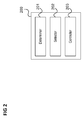
- FIG. 2 shows a communication controller
- FIG. 3 shows a flow diagram illustrating a method for transmitting data.
- FIG. 4 shows a communication arrangement including a multi-link management entity.
- FIG. 5 shows a communication arrangement including a gateway arranged between a private IP sub-net and the Internet.
- FIG. 6 shows a flow diagram illustrating an interaction for information provision on IP sub-nets.
- FIG. 7 shows a flow diagram illustrating mobile device centric link selection.
- FIG. 8 shows a flow diagram illustrating network/server centric link selection.
- FIG. 9 shows a message flow diagram illustrating the setting up of a transmission of service data using a plurality of communication links.
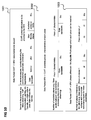
- FIG. 10 and FIG. 11 show examples for the messages exchanged according to the message flow diagram shown in FIG. 9 .
- FIG. 12 shows an example for a web-Interface for adding a number of IP links to be used for provision of service data.
- RATs Radio Access Technologies
- WiFi Wireless Fidelity
- 3GPP LTE 3rd Generation Partnership Project Long Term Evolution
- TV White Space Communication IEEE 802.11af
- Bluetooth Digital Radio
- GPS Global Positioning System
- a mobile device may jointly and simultaneously use a number of distinct heterogeneous RATs, which leads to an aggregation of all radio resources available to a user.
- a radio access technology may for example refer to any one of the following: A cellular wide area radio communication technology (which may include e.g. a Global System for Mobile Communications (GSM) radio communication technology, a General Packet Radio Service (GPRS) radio communication technology, an Enhanced Data Rates for GSM Evolution (EDGE) radio communication technology, and/or a Third Generation Partnership Project (3GPP) radio communication technology (e.g.
- GSM Global System for Mobile Communications
- GPRS General Packet Radio Service
- EDGE Enhanced Data Rates for GSM Evolution
- 3GPP Third Generation Partnership Project
- UMTS Universal Mobile Telecommunications System
- FOMA Freedom of Multimedia Access
- 3GPP LTE Long Term Evolution
- 3GPP LTE Advanced Long Term Evolution Advanced
- CDMA2000 Code division multiple access 2000
- CDPD Cellular Digital Packet Data
- Mobitex 3G (Third Generation)
- CSD Circuit Switched Data
- HSCSD High-Speed Circuit-Switched Data
- UMTS 3G
- W-CDMA UMTS
- HSPA High Speed Packet Access
- HSDPA High-Speed Downlink Packet Access
- HSUPA High-Speed Uplink Packet Access
- UMTS-TDD Universal Mobile Telecommunications System—Time-Division Duplex
- TD-CDMA Time Division—Code Division Multiple Access
- TD-CDMA Time Division—Syn
- the simultaneous usage of multiple routes in a network is referred to as multipath routing.
- the efficient exploitation of multiple routes by applying a coding scheme tailored to the presence of multiple routes is referred to as network coding. These approaches typically apply to fixed, cabled networks.
- Simultaneous usage of multiple links in a wireless mobile device may for example be applied in the following contexts:
- 3GPP technologies such as IFOM provide a technological basis for the specific case of maintaining WiFi and 3GPP simultaneously and for managing corresponding handovers.
- a number of heterogeneous RATs are jointly used for accessing a single service, such as video streaming, etc.
- the principle is illustrated in FIG. 1 .
- FIG. 1 shows communication systems 101 , 102 .
- a mobile device access an IP network (such as the Internet or a private IP sub-net) 103 via a single radio link 104 and requests and receives data from a server 105 connected to the IP network 103 .
- IP network such as the Internet or a private IP sub-net
- a mobile device 106 has a plurality of radio links 107 to a plurality of IP networks 108 and requests and receives data from a server 109 jointly via the radio links 107 .
- the radio links 107 for example correspond to different communication connections, e.g. different IP connections.
- a challenge for a multicomm multi-link multi-RAT approach may be seen in how to efficiently split data transmission of a single service (e.g. video streaming) over a multitude of RATs being operated simultaneously. This may for example involve techniques for:
- a communication controller 200 that may be used to provide a multicomm multi-link/multi-RAT communication is described in the following with reference to FIG. 2 .
- FIG. 2 shows a communication controller 200 .
- the communication controller 200 includes a determiner 201 configured to determine, for each communication connection of a set of communication connections between a communication device and another communication device, a characteristic of the communication connection.
- the communication controller 200 further includes a selector 202 configured to select a plurality of the communication connections (i.e. two or more communication connections) based on the characteristics of the communication connections.
- the communication controller 200 includes a controller (e.g. a signaling circuit or a processing circuit) 203 configured to control a transmission of data between the communication device and the other communication device to use the selected plurality of communication connections.
- a controller e.g. a signaling circuit or a processing circuit
- a communication controller (which may be located on the terminal side or to the network side) selects a plurality of communication connections to be used (e.g. for a multicomm multi-link/multi RAT approach) based on characteristics of the communication connections.
- Using the selected plurality of communication connections may be understood as using all of the communciation connection of the plurality of communication connections for data transportation, e.g. over each of the communication connections, a part of the data to be transmitted in the data communication is transmitted. For example, this may mean that the communication connections are not merely active but are used for actual data transmission.
- the communication controller considers how to efficiently split a single service over a multitude of simultaneously operated wireless links, e.g. combined with a dynamic adaptation of the selected technologies.
- IFOM IP Flow Mobility
- the determination and selection may for example be done based on information by the user of the communication terminal.
- a user of a communication terminal may for example provide
- the characteristic is for example a priority of the communication connection.
- the characteristic is for example based on at least one of a transmission quality via the communication connection, a bandwidth of the communication connection, a reliability of the communication connection and a cost of data transmission via the communication connection.
- the communication controller may further include a transmitter configured to transmit an indication of the selected communication connections to the communication device, the other communication device or both.
- the transmitter may for example be the transmitter of a communication device of which the communication controller is part.
- the communication controller may be part of the communication device, of the other communication device or of a separate device (e.g. network component).
- the communication device is for example a communication terminal and the other communication device is for example a component of the network side of a communication system (e.g. a server).
- a communication system e.g. a server
- the communication device is a subscriber terminal of a cellular radio communication network.
- the other communication device is a network component of a cellular radio communication network.
- a network component provides a connection selection policy (i.e. rules to be considered for the decision making, i.e. the selection) and the mobile terminal (i.e. the communication terminal), including the communication controller in this example, selects the connections to be used subject to the policy, e.g. with the objective to maximize its own objectives.
- the server side delivers the stream on the RATs imposed by the mobile device.
- the communication terminal may communicate preferences (priorities) for the communication connections and the network side (or server side), comprising the communication controller in this example, for example decides based on these preferences.
- the communication controller selecting the communication connections may for example be located in the mobile device and select the communication connections subject to a network (and possibly server) policy, in the network component (and possibly select the communication connections subject to mobile device priorities and/or server priorities and/or a server policy) or on the server side and select the communication connections subject to mobile device priorities and/or a network policy.
- the terminal may decide (i.e. the communication controller may be part of the communication terminal) also in case that the communication connections are provided (at least partially) by multiple operators. If the decision is performed on the network side, it may be desirable that all communication connections are offered by the same operator, which may be restrictive. For performing the decision on the (content) server side the server needs to know, e.g., IPs, ports, the network status, policies and various other things which might be wished to be kept confidential between the operator and the client device (i.e. the mobile terminal).
- the communication controller may for example include a receiver configured to receive, for each communication connection, an indication of the characteristic of the communication connection.
- the communication connections are for example network layer connections.
- the communication connections are IP connections.
- the transmission of data is for example transmission of a file.
- the controller is configured to initiate splitting of the file in a part for each communication connection of the selected communication connections and control the transmission to transmit the part over the communication connection.
- the controller is for example configured to initiate the splitting of the file at the network layer.
- the communication connections of the set of communication connections are for example based on different radio access technologies.
- the communication controller may select from various radio technologies like WiFi, WiFi for TVWS (IEEE 802.11af), etc.
- the communication controller may further include a receiver configured to receive an indication of the set of communication connections.
- a “circuit” may be understood as any kind of a logic implementing entity, which may be special purpose circuitry or a processor executing software stored in a memory, firmware, or any combination thereof.
- a “circuit” may be a hard-wired logic circuit or a programmable logic circuit such as a programmable processor, e.g. a microprocessor (e.g. a Complex Instruction Set Computer (CISC) processor or a Reduced Instruction Set Computer (RISC) processor).
- a “circuit” may also be a processor executing software, e.g. any kind of computer program, e.g. a computer program using a virtual machine code such as e.g. Java. Any other kind of implementation of the respective functions which will be described in more detail below may also be understood as a “circuit”.
- the communication controller 200 for example carries out a method as illustrated in FIG. 3 .
- FIG. 3 shows a flow diagram 300 .
- the flow diagram 300 illustrates a method for transmitting data, for example carried out by a communication controller.
- the communication controller determines, for each communication connection of a set of communication connections between a communication device and another communication device, a characteristic of the communication connection.
- the communication controller selects a plurality of the communication connections based on the characteristics of the communication connections.
- the communication controller controls a data transmission between the communication device and the other communication device to use the selected plurality of communication connections.
- the decision making mechanisms for the efficient selection of the multi-RAT radio links 107 to be operated simultaneously can for example be either done within the concerned mobile device 106 or in the server 109 or another network component providing the concerned service (e.g. video streaming) These approaches are described in the following.
- a multi-link management entity is for example introduced on the network/server side which serves for interactions with the concerned mobile device 106 . This is illustrated in FIG. 4 .
- FIG. 4 shows a communication arrangement 400 .
- the communication arrangement 400 includes IP networks 401 for example corresponding to the IP networks 108 , a server 402 for example corresponding to the server 109 and a multi-link management entity 403 .
- the multi-link management entity 403 provides a first sub-entity 404 for information provision on available multi-link configurations, a second sub-entity 402 for information provision on supported IP sub-nets and a third sub-entity 403 for buffering predefined mobile device configurations, e.g. to be changed via triggers.
- the exclusion of a configuration can also be enforced for cost reasons.
- the notion of cost is dynamic, for example if the user pays a monthly subscription for sending and receiving a fixed amount of data and while there are only two days remaining he has not used the service at all, the cost will be considered almost zero.
- Sub-entity 404 for Information provision on available multi-link configurations For example, for using a service via multiple radio links 107 (or more generally multiple communication links) the mobile device 106 initially contacts the first sub-entity 404 for Information provision on available multi-link configurations.
- the first sub-entity 404 for example gives (e.g. technology-independent) information on the available multi-link configurations possible.
- the first sub-entity 404 for example feeds back information to the mobile device 106 indicating how many independent links can be operated for the concerned service.
- information on the related user experience is for example given in case that the QoS (Quality of Service) of one of the links 107 is degraded.
- QoS Quality of Service
- the mobile device 106 requests a video streaming service.
- the video service is able to provide i) the full video stream over a single communication link, ii) a base video stream including audio over one communication link and an incremental redundancy stream over a second communication link and iii) the base video stream over one communication link, an incremental redundancy stream over a second communication link and audio over a third communication link.
- the first sub-entity 404 for example provides the information as shown in table 1a about the possible communication links.
- Configuration 1 All video and audio data is transported One single over a single link. If the link fails, the communication video/audio stream stops.
- link Configuration 2 Video (base stream) and audio data is Two transported over one link, incremental communication redundancy video data is transported over a links operated second link. If the second link breaks, the simultaneously user suffers a reduction in QoS, but the Video is not interrupted. If the first link fails, the video/audio stream stops.
- Configuration 3 Video (base stream) is transported over one Three link, incremental redundancy Video data is communication transported over a second link and audio links operated data is transported over a third link. simultaneously
- This information may be used by the mobile device 106 in order to efficiently split the video stream over available radio access technologies.
- the mobile device 106 for example uses a robust link for the video (base stream) and the audio data, such as a 3GPP LTE radio link or similar.
- the incremental redundancy stream may be transported via a high-throughput but less reliable communication link, e.g. a WLAN radio link. In case that the WLAN link breaks, the user will still be able to enjoy the video/audio stream, however at a lower QoS.
- the mobile device 106 starts a Web Browsing service.
- a Web Browsing service There is a setting in the device's browser that disables the automatic download of images and other bandwidth consuming objects (“heavy” objects) in the web page, not only for speeding up the browsing process, but for cost reasons as well.
- the web browsing service is able to provide i) The full web page data through a single link, with or without the “heavy” objects ii)
- the pure text of the web page is transported on one link and any contained “heavy” objects are transported over a second link and iii)
- the pure text of the web page is transported on one link, any contained “heavy” objects with size up to a predefined threshold are transported over a second link and any contained “heavy” objects with size above the predefined threshold are transported over a third link.
- the information provided by the first sub-entity 404 is for example as indicated in table 1b.
- Configuration 1 All web page data is transported over a One single link single link. If the link fails, the web browsing stops.
- Configuration 2 The pure text of the web page is Two links transported over one link, any contained operated “heavy” objects are transported over a simultaneously second link. If the second link breaks, the User suffers a reduction in his experience, but the browsing service is not interrupted. If the first link fails, the web browsing stops.
- Configuration 3 The pure text of the web page is Three links transported over one link, any contained operated “heavy” objects with size up to a simultaneously predefined threshold are transported over a second link, any contained “heavy” objects with size above the predefined threshold are transported over a third link.
- this information may be used by the concerned mobile device 106 in order to efficiently receive the various files over available Radio Access Technologies.
- the mobile device uses a very robust link for the core web page data, such as 3GPP LTE or similar.
- the images, flash animations or any other bandwidth consuming objects that are also part of the web page may be transported via a high-throughput but less reliable link, e.g. WLAN.
- WLAN link breaks, the User will still be able to continue browsing, however at a lower level of experience, due to the missing data or the need to explicitly request it over the first link.
- a third example is the following:
- the mobile device 106 is running in the background a service like an e-mail client, a service that does not require real time communication or immediate user interaction.
- the service is able to provide i) The full data through a single link ii)
- the headers and the pure text body of the e-mails are transported on one link and any attached files are transported over a second link and iii)
- the headers and the pure text body of the e-mails are transported on one link, any attached files with size up to a predefined threshold are transported over a second link and any attached files with size above the predefined threshold are transported over a third link.
- the information provided by the first sub-entity 404 is for example as indicated in table 1c.
- Configuration 1 All e-mail data is transported over a single One single link link. If the link fails, the e-mail download stops.
- Configuration 2 The headers and the pure text body of the Two links e-mails are transported over one link, any operated attached files are transported over a second simultaneously link. If the second link breaks, the User suffers a reduction in his experience, but the e-mail service is not interrupted. If the first link fails, the e-mail download stops.
- Configuration 3 The headers and the pure text body of the Three links e-mails are transported over one link, any operated attached files with size up to a predefined simultaneously threshold are transported over a second link, any attached files with size above the predefined threshold are transported over a third link.
- this information may be used by the concerned mobile device 106 in order to efficiently receive the various files over available Radio Access Technologies.
- the mobile device 106 uses a very robust link for the body of the e-mail data, such as 3GPP LTE or similar.
- the attachments may be transported via a high-throughput but less reliable link, e.g. WLAN.
- WLAN link breaks, the User will still be able to be informed about his e-mails, however at a lower level of experience, since he will not be able to access any attachments.
- the multi-management link entity 403 may for example only send link priorities to the mobile device 106 .
- the priorities as given in table 2 are provided.
- Configuration 1 Link Priority: 1 One single Comment: All video and audio data is communication transported over a single link. If the link link fails, the video/audio stream stops.
- Configuration 2 Link Priority, Link 1: 1 Two Link Priority, Link 2: 2 communication Comment: Video (base stream) and audio links operated data is transported over one link, simultaneously incremental redundancy video data is transported over a second link. If the second link breaks, the user suffers a reduction in QoS, but the video is not interrupted. If the first link fails, the video/audio stream stops.
- Link Priority Link 1: 2 Three Link Priority
- Link 2 3 communication
- Link Priority Link 3: 1 links operated Comment: video (base stream) is simultaneously transported over one link, incremental redundancy video data is transported over a second link and audio data is transported over a third link.
- the audio stream is for example considered to be the stream requiring the highest protection level since even in case that the video stream fails, the user will be able to enjoy Audio only. Therefore, the fact that the third radio link has the highest priority in this example indicates that audio would be transmitted over link 3 according to configuration 3. Similarly, the information about the link priorities indicates that the incremental redundancy video data (being the least important) would be transmitted over link 2 and that the video base layer would be transmitted over link 1 according to configuration 3.
- Sub-entity 405 for information provision on supported IP sub-nets Many cellular operators do not provide public IP addresses to mobile devices.
- a mobile device may be part of a private IP sub-net within the operator network.
- Such a configuration typically allows for a “pull” type of information flow (i.e. the mobile device requests information from a distant server), but not for a “push” type of information flow (i.e. a device external to the IP sub-net cannot directly address the concerned mobile device since the sub-net IP address of the mobile device is not available to external entities).
- the second sub-entity 405 may for example provide a service to allow streaming services into such a private IP sub-net as it is illustrated in FIG. 5 .
- FIG. 5 shows a communication arrangement 500 .
- the communication arrangement includes the Internet 501 and a private IP sub-net (e.g. a sub-net of an operator of a radio communication network providing one of the radio links 107 ) 502 .
- the Internet 501 and the private IP sub-net 502 for example correspond to the IP networks 108 , wherein in this example the mobile device 106 accesses the Internet 501 via the private IP sub-net 502 .
- the communication arrangement 500 further includes a server 503 connected to the Internet for example corresponding to the server 109 and the server 402 .
- the private IP sub-net 502 is connected to the Internet 501 via a gateway 504 which may be accessed by a public IP address from the Internet side.
- the communication arrangement includes a service for accessing the private sub-net 502 .
- This service eliminates the need for using protocols like STUN (Session Traversal Utilities for NAT), since the operator is fully aware of the applied network settings.
- the mobile device 106 may inform this “Operator Service” (i.e. a corresponding entity providing this service such as the gateway 504 ) that it needs to receive an incoming data stream from an external device, providing specific details on the IP and the port of that device, as well as its own port where it expects the communication.
- the entity providing the “Operator Service” accepts the mobile device's request, it sends back information on the public IP and port that have to be reported to the external device to establish the communication and makes the necessary arrangements to the network routing and protection service. Then the mobile device requests the data stream from the external device (i.e. the server 503 in this example) and when the incoming stream arrives it is recognized and it is routed (e.g. by the gateway 504 ) to the correct internal IP and port, namely the one of the mobile device.
- the external device i.e. the server 503 in this example
- radio network operators typically do not use a single private IP sub-net but multiple ones. This means that two mobile devices connecting via 3GPP UMTS/LTE/etc. are not necessarily in the same private IP sub-net, but most likely in independent ones. In such a case, the mobile devices can not directly route traffic from one to another.
- the gateway 504 provides a service for accessing the private sub-net 502 .
- the mobile device 106 for example communicates with the second sub-entity 405 in the context of the operator service provide by the gateway 504 as follows.
- FIG. 6 shows a flow diagram 600 .
- the mobile device 106 contacts the second sub-entity 405 .
- the mobile device provides an indication on the target geographic area where it wants to use the service provided by the server 503 (e.g., Germany, US, etc.) and/or a selection of the relevant operator (e.g., T-Mobile Germany, Vodaphone Germany, etc.) providing communication links in the target geographic area.
- the server 503 e.g., Germany, US, etc.
- a selection of the relevant operator e.g., T-Mobile Germany, Vodaphone Germany, etc.
- the second sub-entity 404 provides a list of supported operators which provide services for routing into their private IP sub-nets or which provide open access (e.g., via public IP addresses granted to each mobile device). If required, the second sub-entity 404 communicates the information required by the operator service (e.g. required by the gateway 504 ) in order to access the concerned private IP sub-nets (e.g., a mobile device ID, the sub-net IP address of the concerned IP address, etc.).
- the operator service e.g. required by the gateway 504
- the concerned private IP sub-nets e.g., a mobile device ID, the sub-net IP address of the concerned IP address, etc.
- the mobile device 106 provides the sub-entity “Information provision on supported IP sub-nets” with the required information for accessing the private IP sub-nets maintained by the concerned operator (e.g. the IP sub-net 502 ). If the mobile device 106 chooses not to provide the required access parameters for all/some operators, the corresponding sub-net cannot be accessed and the corresponding link(s) (i.e. the communication links using this sub-net) cannot be used.
- Sub-entity 406 for buffering predefined mobile device configurations :
- the third sub-entity 406 stores a plurality of pre-defined configurations for transmitting data to the mobile device 106 .
- the mobile device 106 indicates a number of sets of IP addresses (or details on private IP sub-nets if required) to the third sub-entity 406 which may be used for the service provided by the server 109 , e.g. to transmit data to the mobile device 106 .
- a pre-defined configuration may correspond to a set of IP addresses of the mobile device 106 corresponding to IP connections to be used for transmitting data to the mobile device 106 according to this configuration.
- the pre-defined sets of IP addresses provided by the mobile device 106 is for example communicated in a format as by table 3.
- Predefined link set 1 IP address “IP-A1”
- IP-A2 public IP address, corresponds for example to WLAN
- IP-A3 public IP address, corresponds for example to IEEE 802.11af, i.e. WIFI for TVWS
- Predefined link set 1 IP address “IP-B1”
- IP address “IP-B2” for Link 2 corresponds for example simultaneously to 3GPP LTE
- IP address “IP-B2” for Link 2 corresponds for example to WLAN
- Predefined link set 1 IP address “IP-B3” for Link 1 (within a private sub-net of Operator “xyz”, corresponds for example to 3GPP LTE)
- IP address “IP-B4” for Link 2 corresponds for example to IEEE 802.11af, i.e. WiFi for TVWS) Comment: Video (base stream) and audio data is transported over one link, incremental redundancy video data is transported over a second link.
- Configuration 3 Predefined link set 1: IP address “IP-C1” Three links for Link 3 (within a private sub-net of operated Operator “xyz”, corresponds for example simultaneously to 3GPP LTE), IP address “IP-C2” for Link 1 (corresponds for example to WLAN), “IP-C3” for Link 2 (corresponds for example to IEEE 802.11af, i.e. WiFi for TVWS) Comment: Video (base stream) is transported over one link, incremental redundancy video data is transported over a second link and audio data is transported over a third link.
- the mobile device 106 can also take hardware constraints into account. For example, the simultaneous operation of some RATs may not be possible in a mobile device 106 . Those configurations can be excluded by the mobile device 106 when communicating the sets of IP addresses to the third sub-entity 406 .
- the set-up and management of a multi-RAT based service access with mobile device centric decision making is for example performed as illustrated in FIG. 7 .
- FIG. 7 shows a flow diagram 700 .
- the mobile device 106 interacts with the first sub-entity 404 in order to obtain information on available multi-link configurations.
- the mobile device 106 interacts with the second sub-entity 405 .
- Information on available operators' networks in a given geographic area is exchanged.
- Information for accessing the concerned private IP sub-nets of operators is given by the mobile device 106 if the information is available.
- the mobile device 106 interacts with the third sub-entity 406 .
- the mobile device 106 communicates sets of pre-defined link configurations. One of those sets is chosen for an initial configuration.
- the server 109 provides the service to the mobile device 106 .
- the mobile device 106 (or another entity) checks whether the QoS at which the service is provided is sufficient. If yes, the server 109 continues to provide the service in 704 . For example, 705 is carried out periodically.
- the mobile device 106 in 706 , interacts with the third sub-entity 406 in order to change the current configuration.
- the network/server has the authority to perform the configuration change autonomously, or after a certain period during which no trigger from the concerned mobile device 106 arrives.
- the server 109 then continues to provide the service with the changed configuration in 704
- a multi-link management entity 403 may also be introduced as described above for mobile device centric decision making.
- the functionalities of the sub-entities 404 , 405 , 406 are for example adapted as follows.
- Sub-entity 404 for Information provision on available multi-link configurations The first sub-entity 404 on the network side stores a list of feasible configurations, e.g. indicating how many independent links can be supported for providing the concerned service requested by the mobile device 106 from the server 109 .
- the mobile device 106 can request this information but does not have to since the final decision on the link selection is taken on the network/server side. However, the information may be used by the mobile device in order to only deliver the link information to the network/server that finally lead to feasible configurations. Also, it helps the mobile device 106 (or its user) to better understand the behavior of the network/server centric decision making processes in case that the current link situation makes the QoS drop and a reconfiguration is required.
- Sub-entity 405 for information provision on supported IP sub-nets The second sub-entity 405 is used by the network/server in order to identify the feasible connections through private IP sub-nets.
- the network/server requests location information from the mobile device 106 or take the information from the network (for example, information on a base station location may be sufficient if the mobile device 106 is connected to this base station). Then, the network/server requests corresponding access information from the mobile device 106 . This information can be expected to be required by the relevant operators in order to grant access to the concerned private IP sub-nets.
- Sub-entity 406 for buffering predefined mobile device configurations The third sub-entity 406 is for example used in case that the mobile device 106 (or its user) prefers to communicate preferred multi-RAT link configurations in case of a link reconfiguration.
- the triggers for a reconfiguration change are however for example initiated by the network/server and communicated to the mobile device 106 , forcing a reconfiguration.
- the set-up and management of a multi-RAT based service access with network/server centric decision making is for example performed as illustrated in FIG. 8 .
- FIG. 8 shows a flow diagram 800 .
- the mobile device 106 optionally interacts with the first sub-entity 404 in order to obtain information on available multi-link configurations.
- the mobile device 106 interacts with the second sub-entity 405 .
- This interaction is for example triggered by the network/server.
- information on available operators' networks in a given geographic area is exchanged.
- the location of the mobile device 106 is for example either detected by the network, i.e. by a component of the network side, for example by identifying a specific cell to which the mobile device 106 is attached, or requested to be provided by the mobile device 106 .
- Information for accessing the concerned private IP sub-nets of operators are given by the mobile device 106 if the information is available.
- the mobile device 106 optionally interacts with the third sub-entity 406 .
- the mobile device 106 may communicate sets of pre-defined link configurations.
- the network/server chooses an initial configuration, e.g. taken from one of the provided sets.
- the server 109 provides the service to the mobile device 106 .
- the mobile device 106 (or another entity) checks whether the QoS at which the service is provided is sufficient. If yes, the server 109 continues to provide the service in 804 . For example, 805 is carried out periodically.
- the third sub-entity 406 sends triggers to the mobile device 106 in order to change the current configuration and the server 109 continues to provide the service with the changed configuration in 804 .
- the mobile device 106 may learn how to receive the various desired parts of the data provided by the server 109 , e.g. which parts of the data are sent via which radio link.
- the splitting of the data provided by the server 109 e.g. a multimedia resource
- the issue after the splitting is how the client (i.e. the mobile device 106 ) learns about how to receive the desired pieces of the data.
- the network/server for example communicates to the mobile device 106 the characteristics of each part of the data, as well as for example, for each part of the data, the IP address/port by means of which the part of the data is communicated.
- the client may inform the network/server about the existence of its other interfaces (i.e. supported communication links) as well (e.g. indicating their public addresses).
- the network/server may send back information on alternative IP/ports where the same resource pieces are available, i.e. by means of which the part of the data is communicated.
- Some of these alternative communication links may for example use the same subnet as the mobile device 106 . Identifying subnets is of course also an issue, but it can be done based on the public IP.
- the protocol as illustrated in FIG. 9 is for example used.
- FIG. 9 shows a message flow diagram 900 .
- the message flow takes place between a client 901 , e.g. corresponding to the mobile device 106 and the network or server (e.g. a plurality of network components, e.g. including the server 109 and the multi-link management entity 403 or any of its sub-entities 404 , 405 , 406 or any other network component, e.g. an intermediate network component handling the data transfer between the server 109 and the mobile device 106 ).
- the network or server e.g. a plurality of network components, e.g. including the server 109 and the multi-link management entity 403 or any of its sub-entities 404 , 405 , 406 or any other network component, e.g. an intermediate network component handling the data transfer between the server 109 and the mobile device 106 ).
- FIG. 10 and FIG. 11 show examples for the messages exchanged according to the message flow diagram 900 .
- the client 901 transmits a first message 904 to the network/server, e.g. to a network entity, for example, the first sub-entity 404 .
- the first message 904 is a resource/service request which for example relates to
- An example for the first message 904 is the message 1001 shown in FIG. 10 .
- the network/server 902 informs the client 901 about the available pieces of data and the characteristics of each piece of data with a second message 906 .
- An example for the second message 906 is the message 1002 shown in FIG. 10 .
- the client 901 informs the network/server 902 by means of a third message 908 about the pieces of interest for the client 901 and gives, for each piece of interest (e.g. audio, base layer of a video, enhancement layer of a video), a public IP address by means of which the piece of interest can be transmitted to the client 901 .
- a third message 908 about the pieces of interest for the client 901 and gives, for each piece of interest (e.g. audio, base layer of a video, enhancement layer of a video), a public IP address by means of which the piece of interest can be transmitted to the client 901 .
- An example for the third message 908 is the message 1003 shown in FIG. 10 .
- the network/server 902 informs the client 901 about the IP addresses and ports used for transmitting the pieces of interest by means of a fourth message 910 .
- the network/server 902 may have identified that an interface of the client 901 and a resource point are on the same subnet (e.g. both have public Ws known to belong to the same 3G Operator). In that case the server could send to the client the local IP/port of the resource point as well, resolving connectivity issues because of firewalls and NATs.
- An example for the fourth message 910 is the message 1101 shown in FIG. 11 .
- the client requests to start transmission of the pieces of interest using a specific IP address and port per piece by sending a fifth message 912 to the network/server 902 .
- the transmission may thus be controlled by the client, i.e. the server has sent all the necessary information and the client decides which pieces of data should be communicated over which communication link.
- the network/server 902 starts providing the requested data to the client 901 .
- An example for the fifth message 912 is the message 1102 shown in FIG. 11 .
- the client 901 changes the client context in 913 by means of a sixth message 914 .
- Such a client context change may trigger the re-negotiation of the service parameters, i.e. a change of the communication links used (including e.g. a change of the IP addresses and ports used).
- Some or all of 903 , 905 , 907 , 911 may be carried out perform this adaptation of the service parameters.
- An example for the sixth message 914 is the message 1103 shown in FIG. 11 .
- the pieces of data or parts of the data that the mobile device 106 requests and that are provided according to the service provided by the server 109 are not necessarily sub-streams of a stream (e.g. an audio stream or a base layer or an enhancement layer of a video stream).
- the server 109 may for example provide a file and the parts of the data are parts of the file.
- the splitting of a file or stream may happen at a lower layers than the application layer (e.g. at a lower layer than the layer of the codec as in case of the parts of data being an audio stream and a base layer and an enhancement layer of a video stream).
- an entity at the network layer may receive a file or stream and separates it into sub-files or sub-stream, e.g. cyclically distributes consecutive parts (e.g. parts of data corresponding to one or more frames) to the different communication links to be used for the transmission.
- FIG. 12 shows an example for a web-Interface for adding a number of IP links to be used simultaneously in order to provide a single service which is split over a number of independent communication links.
- the user may enter an IP address in a first IP address field 1201 corresponding to a first communication link over which audio data is to be transmitted to the client 106 .
- a second IP address field 1202 the user may enter an IP address corresponding to a second communication link over which video data is to be transmitted to the client 106 .
- a user of a web-based service in this example video streaming, may enter a number of IP addresses to be used simultaneously for an efficient split of the service.
Landscapes
- Engineering & Computer Science (AREA)
- Computer Networks & Wireless Communication (AREA)
- Signal Processing (AREA)
- Multimedia (AREA)
- Mobile Radio Communication Systems (AREA)
Priority Applications (4)
| Application Number | Priority Date | Filing Date | Title |
|---|---|---|---|
| US13/792,595 US9591617B2 (en) | 2013-03-11 | 2013-03-11 | Communication controller and method for transmitting data |
| EP14706492.7A EP2974444A1 (fr) | 2013-03-11 | 2014-01-28 | Contrôleur de communication, et procédé pour transmettre des données |
| CN201480007326.5A CN104969614B (zh) | 2013-03-11 | 2014-01-28 | 用于传输数据的通信控制器及方法 |
| PCT/EP2014/051623 WO2014139720A1 (fr) | 2013-03-11 | 2014-01-28 | Contrôleur de communication, et procédé pour transmettre des données |
Applications Claiming Priority (1)
| Application Number | Priority Date | Filing Date | Title |
|---|---|---|---|
| US13/792,595 US9591617B2 (en) | 2013-03-11 | 2013-03-11 | Communication controller and method for transmitting data |
Publications (2)
| Publication Number | Publication Date |
|---|---|
| US20140254498A1 US20140254498A1 (en) | 2014-09-11 |
| US9591617B2 true US9591617B2 (en) | 2017-03-07 |
Family
ID=50179561
Family Applications (1)
| Application Number | Title | Priority Date | Filing Date |
|---|---|---|---|
| US13/792,595 Active 2035-05-22 US9591617B2 (en) | 2013-03-11 | 2013-03-11 | Communication controller and method for transmitting data |
Country Status (4)
| Country | Link |
|---|---|
| US (1) | US9591617B2 (fr) |
| EP (1) | EP2974444A1 (fr) |
| CN (1) | CN104969614B (fr) |
| WO (1) | WO2014139720A1 (fr) |
Families Citing this family (15)
| Publication number | Priority date | Publication date | Assignee | Title |
|---|---|---|---|---|
| US9819469B2 (en) * | 2013-07-01 | 2017-11-14 | Qualcomm Incorporated | Techniques for enabling quality of service (QoS) on WLAN for traffic related to a bearer on cellular networks |
| US9294982B2 (en) | 2014-01-27 | 2016-03-22 | Cisco Technology, Inc. | System and method for robust multiple access network mobility in a network environment |
| WO2015127294A1 (fr) * | 2014-02-21 | 2015-08-27 | Broadcom Corporation | Agrégation de porteuses sur lte et wi-fi |
| JP6381330B2 (ja) * | 2014-07-23 | 2018-08-29 | キヤノン株式会社 | 通信装置、通信装置の制御方法、プログラム |
| US9635686B2 (en) | 2014-11-11 | 2017-04-25 | Cisco Technology, Inc. | System and method for providing internet protocol flow mobility in a network environment |
| US9674764B2 (en) | 2014-11-11 | 2017-06-06 | Cisco Technology, Inc. | System and method for providing Internet protocol flow mobility in a network environment |
| WO2016122589A1 (fr) * | 2015-01-30 | 2016-08-04 | Nokia Solutions And Networks Oy | Amélioration de transferts entre différents réseaux d'accès |
| US9420510B1 (en) | 2015-05-08 | 2016-08-16 | Bandwidth.Com, Inc. | Optimal use of multiple concurrent internet protocol (IP) data streams for voice communications |
| US9398506B1 (en) | 2015-05-08 | 2016-07-19 | Bandwidth.Com, Inc. | Optimal use of multiple concurrent internet protocol (IP) data streams for voice communications |
| US20150326636A1 (en) * | 2015-05-08 | 2015-11-12 | Bandwidth.Com, Inc. | Optimal use of multiple concurrent internet protocol (ip) data streams for voice communications |
| US9549355B2 (en) | 2015-05-08 | 2017-01-17 | Bandwidth.Com, Inc. | Optimal use of multiple concurrent internet protocol (IP) data streams for voice communications |
| CN106714270B (zh) * | 2015-07-14 | 2020-10-16 | Oppo广东移动通信有限公司 | 业务传输的方法、终端及网络设备 |
| CN106358218A (zh) * | 2015-07-14 | 2017-01-25 | 广东欧珀移动通信有限公司 | 用于业务传输的方法及传输设备 |
| CN105892298A (zh) * | 2015-11-02 | 2016-08-24 | 乐卡汽车智能科技(北京)有限公司 | 车载终端、路侧设备和智能家居系统 |
| JP6851506B2 (ja) * | 2017-05-22 | 2021-03-31 | 華為技術有限公司Huawei Technologies Co.,Ltd. | データ分配方法、装置及びシステム |
Citations (10)
| Publication number | Priority date | Publication date | Assignee | Title |
|---|---|---|---|---|
| US20050025188A1 (en) * | 2001-11-08 | 2005-02-03 | Keiko Numakura | Wireless communication method and mobile terminal used therefor |
| WO2007024887A2 (fr) | 2005-08-22 | 2007-03-01 | Telcordia Technologies, Inc. | Mobilite transparente pour un dispositif a interface multiple dans un environnement sans fil colocalise |
| US20090141683A1 (en) | 2007-11-30 | 2009-06-04 | Edward Grinshpun | Method of best effort handoff to maintain radio bearer and mip session continuity for multi-mode mobile units |
| US20090222591A1 (en) | 2008-02-28 | 2009-09-03 | Nokia Corporation | Method and Apparatus for Selecting an Access |
| WO2011056046A2 (fr) | 2009-11-09 | 2011-05-12 | Samsung Electronics Co., Ltd. | Procédé et système de support de continuité d'appel radio vidéo unique pendant un transfert |
| EP2393324A2 (fr) | 2010-06-02 | 2011-12-07 | HTC Corporation | Procédés de gestion de service de communication ps et cs |
| US20120275323A1 (en) * | 2010-10-27 | 2012-11-01 | Interdigital Patent Holdings, Inc. | Scalable policy-controlled packet inspection systems and methods for advanced application interface |
| US20140010221A1 (en) * | 2012-07-06 | 2014-01-09 | Qualcomm Incorporated | Configurable host interface using multi-radio device and architecture for wlan offload |
| US20140198637A1 (en) * | 2013-01-14 | 2014-07-17 | Intel IP Corporation | Handling User Plane Congestion |
| US8942104B2 (en) * | 2010-08-05 | 2015-01-27 | Apple Inc. | Packet classification and prioritization using a UDP checksum in a mobile wireless device |
Family Cites Families (5)
| Publication number | Priority date | Publication date | Assignee | Title |
|---|---|---|---|---|
| US20080311912A1 (en) * | 2007-06-15 | 2008-12-18 | Qualcomm Incorporated | System selection based on application requirements and preferences |
| FI20075686A0 (fi) * | 2007-09-28 | 2007-09-28 | Nokia Corp | Konfigurointimenetelmä ja -laite |
| US20110317560A1 (en) * | 2009-01-06 | 2011-12-29 | Sharp Kabushiki Kaisha | MOBILE COMMUNICATION SYSTEM, QoS CONTROL STATION AND MOBILE STATION |
| JP6655274B2 (ja) * | 2011-08-12 | 2020-02-26 | エスケーテレコム株式会社Sk Telecom Co.,Ltd. | 多重ネットワークに基づく同時データ伝送サービス方法及びその装置 |
| CN102497660B (zh) * | 2011-12-09 | 2014-08-13 | 电子科技大学 | 一种用于异构无线网络的多业务并发接入方法 |
-
2013
- 2013-03-11 US US13/792,595 patent/US9591617B2/en active Active
-
2014
- 2014-01-28 CN CN201480007326.5A patent/CN104969614B/zh not_active Expired - Fee Related
- 2014-01-28 EP EP14706492.7A patent/EP2974444A1/fr not_active Withdrawn
- 2014-01-28 WO PCT/EP2014/051623 patent/WO2014139720A1/fr not_active Ceased
Patent Citations (10)
| Publication number | Priority date | Publication date | Assignee | Title |
|---|---|---|---|---|
| US20050025188A1 (en) * | 2001-11-08 | 2005-02-03 | Keiko Numakura | Wireless communication method and mobile terminal used therefor |
| WO2007024887A2 (fr) | 2005-08-22 | 2007-03-01 | Telcordia Technologies, Inc. | Mobilite transparente pour un dispositif a interface multiple dans un environnement sans fil colocalise |
| US20090141683A1 (en) | 2007-11-30 | 2009-06-04 | Edward Grinshpun | Method of best effort handoff to maintain radio bearer and mip session continuity for multi-mode mobile units |
| US20090222591A1 (en) | 2008-02-28 | 2009-09-03 | Nokia Corporation | Method and Apparatus for Selecting an Access |
| WO2011056046A2 (fr) | 2009-11-09 | 2011-05-12 | Samsung Electronics Co., Ltd. | Procédé et système de support de continuité d'appel radio vidéo unique pendant un transfert |
| EP2393324A2 (fr) | 2010-06-02 | 2011-12-07 | HTC Corporation | Procédés de gestion de service de communication ps et cs |
| US8942104B2 (en) * | 2010-08-05 | 2015-01-27 | Apple Inc. | Packet classification and prioritization using a UDP checksum in a mobile wireless device |
| US20120275323A1 (en) * | 2010-10-27 | 2012-11-01 | Interdigital Patent Holdings, Inc. | Scalable policy-controlled packet inspection systems and methods for advanced application interface |
| US20140010221A1 (en) * | 2012-07-06 | 2014-01-09 | Qualcomm Incorporated | Configurable host interface using multi-radio device and architecture for wlan offload |
| US20140198637A1 (en) * | 2013-01-14 | 2014-07-17 | Intel IP Corporation | Handling User Plane Congestion |
Non-Patent Citations (11)
| Title |
|---|
| "Linear Network Coding", http://en.wikipedia.org/wiki/Network-coding, pp. 1-4. |
| "Multipath Routing", http://en.wikipedia.org/wiki/Multipath-routing, pp. 1-3. |
| 3GPP TS 23.261 V10.2.0, 3rd Generation Partnership Project; Technical Specification Group Services and System Aspects; IP flow mobility and seamless Wireless Local Area Network (WLAN) offload; Stage 2 (Release 10), Mar. 2012, pp. 1-22. |
| International Search Report and Written Opinion in related PCT Patent Application No. PCT/EP2014/051623, mailed Jul. 4, 2014, 12 pages. |
| Markus Mueck, "Self-Growing/Opportunistic Networks Proof-of-Concept Handbook", Jun. 22, 2012, pp. 1-27. |
| Ranveer Chandra et al. "Multinet: Connecting to Multiple IEEE 802.11 Networks-Using a Single Radio" pp. 1-13. |
| Ranveer Chandra, et al.; "MultiNet: Connecting to Multiple IEEE 802.11 Networks Using a Single Wireless Card," Proceedings of IEEE Infocom 2004, Cornell University, Ithaca, NY; Mar. 7-11, 2004; 25 pages. |
| Wei Song et al. "Performance Analysis of Probabilistic Multipath Transmission of Video Streaming Traffic over Multi-Radio Wireless Devices", IEEE Transactions on Wireless Communications, pp. 1-11. |
| Wei Song et al., "Performance Analysis of Probabilistic Multipath Transmission of Video Streaming Traffic over Multi-Radio Wireless Devices;" IEEE Transactions on Wireless Communications; Apr. 2012; 11 pages. |
| Wikipedia; "Linear Network Coding," Feb. 4, 2013; 4 pages. |
| Wikipedia; "Multipath Routing," Aug. 24, 2012; 3 pages. |
Also Published As
| Publication number | Publication date |
|---|---|
| CN104969614A (zh) | 2015-10-07 |
| CN104969614B (zh) | 2019-11-26 |
| WO2014139720A1 (fr) | 2014-09-18 |
| EP2974444A1 (fr) | 2016-01-20 |
| US20140254498A1 (en) | 2014-09-11 |
Similar Documents
| Publication | Publication Date | Title |
|---|---|---|
| US9591617B2 (en) | Communication controller and method for transmitting data | |
| CN111770531B (zh) | 获取数据包延迟参数的方法、系统和装置 | |
| US10201029B2 (en) | Access management with multipath transport | |
| US11419035B2 (en) | Method and function for handling traffic for an application | |
| US9277522B2 (en) | Exchanging rich communication suite capability information in a communications system | |
| KR101274289B1 (ko) | 3세대 파트너쉽 프로젝트 다중 네트워크간 서비스 품질 연속성을 위한 메카니즘 | |
| KR20180124033A (ko) | 네트워크 슬라이싱 동작 | |
| EP2827649B1 (fr) | Équipement utilisateur et procédé permettant une rétroaction d'un équipement utilisateur de préférences de mappage flow-to-RAT | |
| EP3099111B1 (fr) | Procédé, dispositif et système de traitement de données | |
| EP3651495B1 (fr) | Système de commutation de réseau | |
| US11297532B2 (en) | Legacy network maximum transmission unit isolation capability through deployment of a flexible maximum transmission unit packet core design | |
| EP3425959A1 (fr) | Transmissions de communication entre réseaux au moyen du spectre sans licence pour réseaux à commutation de circuits | |
| US9455910B2 (en) | Exchanging internet protocol version capability information between client devices over a communications network | |
| JP2024533927A (ja) | 事前構成された測定ギャップをアクティブにするueの能力 | |
| EP4289126A1 (fr) | Gestion de politiques de trajets multiples de fournisseur de contenu | |
| TR201810350T4 (tr) | Oturum sürekliliğinin geliştirilmesi için usuller ve aygıtlar. | |
| EP2858392A1 (fr) | Procédé et appareil de service direct de dispositif à dispositif dans un système de communication sans fil | |
| CN109842956B (zh) | 一种业务数据的路由方法、服务网关及移动管理实体 | |
| US11949721B2 (en) | Communication devices and methods for operating a communication device | |
| Svigelj et al. | A novel SIP based procedure for congestion aware handover in heterogeneous networks | |
| WO2016115911A1 (fr) | Procédé et appareil d'émission d'informations d'indication | |
| KR101783319B1 (ko) | 동적 pcc 프로비저닝 제어 시스템, 장치 및 방법 | |
| Costa et al. | Wireless Multi-Access Delivery for SVC-based Video Applications |
Legal Events
| Date | Code | Title | Description |
|---|---|---|---|
| AS | Assignment |
Owner name: INTEL MOBILE COMMUNICATIONS GMBH, GERMANY Free format text: ASSIGNMENT OF ASSIGNORS INTEREST;ASSIGNORS:MUECK, MARKUS DOMINIK;KOUTSOURIS, NIKOS;DEMESTICHAS, PANAGIOTIS;SIGNING DATES FROM 20130307 TO 20130308;REEL/FRAME:030039/0277 |
|
| AS | Assignment |
Owner name: INTEL DEUTSCHLAND GMBH, GERMANY Free format text: CHANGE OF NAME;ASSIGNOR:INTEL MOBILE COMMUNICATIONS GMBH;REEL/FRAME:037057/0061 Effective date: 20150507 |
|
| FEPP | Fee payment procedure |
Free format text: PAYOR NUMBER ASSIGNED (ORIGINAL EVENT CODE: ASPN); ENTITY STATUS OF PATENT OWNER: LARGE ENTITY |
|
| STCF | Information on status: patent grant |
Free format text: PATENTED CASE |
|
| AS | Assignment |
Owner name: INTEL CORPORATION, CALIFORNIA Free format text: CONFIRMATORY ASSIGNMENT EFFECTIVE AS OF JANUARY 1, 2018;ASSIGNOR:INTEL DEUTSCHLAND GMBH;REEL/FRAME:053477/0001 Effective date: 20200615 |
|
| AS | Assignment |
Owner name: APPLE INC., CALIFORNIA Free format text: ASSIGNMENT OF ASSIGNORS INTEREST;ASSIGNOR:INTEL CORPORATION;REEL/FRAME:053518/0586 Effective date: 20191130 |
|
| MAFP | Maintenance fee payment |
Free format text: PAYMENT OF MAINTENANCE FEE, 4TH YEAR, LARGE ENTITY (ORIGINAL EVENT CODE: M1551); ENTITY STATUS OF PATENT OWNER: LARGE ENTITY Year of fee payment: 4 |
|
| MAFP | Maintenance fee payment |
Free format text: PAYMENT OF MAINTENANCE FEE, 8TH YEAR, LARGE ENTITY (ORIGINAL EVENT CODE: M1552); ENTITY STATUS OF PATENT OWNER: LARGE ENTITY Year of fee payment: 8 |