US9789864B2 - Devices and methods for distributing an overall target torque specification - Google Patents
Devices and methods for distributing an overall target torque specification Download PDFInfo
- Publication number
- US9789864B2 US9789864B2 US15/100,133 US201415100133A US9789864B2 US 9789864 B2 US9789864 B2 US 9789864B2 US 201415100133 A US201415100133 A US 201415100133A US 9789864 B2 US9789864 B2 US 9789864B2
- Authority
- US
- United States
- Prior art keywords
- axle
- axle torque
- torque
- redistributed
- torque specification
- Prior art date
- Legal status (The legal status is an assumption and is not a legal conclusion. Google has not performed a legal analysis and makes no representation as to the accuracy of the status listed.)
- Active, expires
Links
Images


Classifications
-
- B—PERFORMING OPERATIONS; TRANSPORTING
- B60—VEHICLES IN GENERAL
- B60W—CONJOINT CONTROL OF VEHICLE SUB-UNITS OF DIFFERENT TYPE OR DIFFERENT FUNCTION; CONTROL SYSTEMS SPECIALLY ADAPTED FOR HYBRID VEHICLES; ROAD VEHICLE DRIVE CONTROL SYSTEMS FOR PURPOSES NOT RELATED TO THE CONTROL OF A PARTICULAR SUB-UNIT
- B60W20/00—Control systems specially adapted for hybrid vehicles
- B60W20/10—Controlling the power contribution of each of the prime movers to meet required power demand
- B60W20/15—Control strategies specially adapted for achieving a particular effect
-
- B—PERFORMING OPERATIONS; TRANSPORTING
- B60—VEHICLES IN GENERAL
- B60K—ARRANGEMENT OR MOUNTING OF PROPULSION UNITS OR OF TRANSMISSIONS IN VEHICLES; ARRANGEMENT OR MOUNTING OF PLURAL DIVERSE PRIME-MOVERS IN VEHICLES; AUXILIARY DRIVES FOR VEHICLES; INSTRUMENTATION OR DASHBOARDS FOR VEHICLES; ARRANGEMENTS IN CONNECTION WITH COOLING, AIR INTAKE, GAS EXHAUST OR FUEL SUPPLY OF PROPULSION UNITS IN VEHICLES
- B60K23/00—Arrangement or mounting of control devices for vehicle transmissions, or parts thereof, not otherwise provided for
- B60K23/08—Arrangement or mounting of control devices for vehicle transmissions, or parts thereof, not otherwise provided for for changing number of driven wheels, for switching from driving one axle to driving two or more axles
- B60K23/0808—Arrangement or mounting of control devices for vehicle transmissions, or parts thereof, not otherwise provided for for changing number of driven wheels, for switching from driving one axle to driving two or more axles for varying torque distribution between driven axles, e.g. by transfer clutch
-
- B—PERFORMING OPERATIONS; TRANSPORTING
- B60—VEHICLES IN GENERAL
- B60K—ARRANGEMENT OR MOUNTING OF PROPULSION UNITS OR OF TRANSMISSIONS IN VEHICLES; ARRANGEMENT OR MOUNTING OF PLURAL DIVERSE PRIME-MOVERS IN VEHICLES; AUXILIARY DRIVES FOR VEHICLES; INSTRUMENTATION OR DASHBOARDS FOR VEHICLES; ARRANGEMENTS IN CONNECTION WITH COOLING, AIR INTAKE, GAS EXHAUST OR FUEL SUPPLY OF PROPULSION UNITS IN VEHICLES
- B60K6/00—Arrangement or mounting of plural diverse prime-movers for mutual or common propulsion, e.g. hybrid propulsion systems comprising electric motors and internal combustion engines
- B60K6/20—Arrangement or mounting of plural diverse prime-movers for mutual or common propulsion, e.g. hybrid propulsion systems comprising electric motors and internal combustion engines the prime-movers consisting of electric motors and internal combustion engines, e.g. HEVs
- B60K6/42—Arrangement or mounting of plural diverse prime-movers for mutual or common propulsion, e.g. hybrid propulsion systems comprising electric motors and internal combustion engines the prime-movers consisting of electric motors and internal combustion engines, e.g. HEVs characterised by the architecture of the hybrid electric vehicle
- B60K6/48—Parallel type
-
- B—PERFORMING OPERATIONS; TRANSPORTING
- B60—VEHICLES IN GENERAL
- B60K—ARRANGEMENT OR MOUNTING OF PROPULSION UNITS OR OF TRANSMISSIONS IN VEHICLES; ARRANGEMENT OR MOUNTING OF PLURAL DIVERSE PRIME-MOVERS IN VEHICLES; AUXILIARY DRIVES FOR VEHICLES; INSTRUMENTATION OR DASHBOARDS FOR VEHICLES; ARRANGEMENTS IN CONNECTION WITH COOLING, AIR INTAKE, GAS EXHAUST OR FUEL SUPPLY OF PROPULSION UNITS IN VEHICLES
- B60K6/00—Arrangement or mounting of plural diverse prime-movers for mutual or common propulsion, e.g. hybrid propulsion systems comprising electric motors and internal combustion engines
- B60K6/20—Arrangement or mounting of plural diverse prime-movers for mutual or common propulsion, e.g. hybrid propulsion systems comprising electric motors and internal combustion engines the prime-movers consisting of electric motors and internal combustion engines, e.g. HEVs
- B60K6/50—Architecture of the driveline characterised by arrangement or kind of transmission units
- B60K6/52—Driving a plurality of drive axles, e.g. four-wheel drive
-
- B—PERFORMING OPERATIONS; TRANSPORTING
- B60—VEHICLES IN GENERAL
- B60W—CONJOINT CONTROL OF VEHICLE SUB-UNITS OF DIFFERENT TYPE OR DIFFERENT FUNCTION; CONTROL SYSTEMS SPECIALLY ADAPTED FOR HYBRID VEHICLES; ROAD VEHICLE DRIVE CONTROL SYSTEMS FOR PURPOSES NOT RELATED TO THE CONTROL OF A PARTICULAR SUB-UNIT
- B60W20/00—Control systems specially adapted for hybrid vehicles
-
- B—PERFORMING OPERATIONS; TRANSPORTING
- B60—VEHICLES IN GENERAL
- B60W—CONJOINT CONTROL OF VEHICLE SUB-UNITS OF DIFFERENT TYPE OR DIFFERENT FUNCTION; CONTROL SYSTEMS SPECIALLY ADAPTED FOR HYBRID VEHICLES; ROAD VEHICLE DRIVE CONTROL SYSTEMS FOR PURPOSES NOT RELATED TO THE CONTROL OF A PARTICULAR SUB-UNIT
- B60W30/00—Purposes of road vehicle drive control systems not related to the control of a particular sub-unit, e.g. of systems using conjoint control of vehicle sub-units
- B60W30/18—Propelling the vehicle
- B60W30/188—Controlling power parameters of the driveline, e.g. determining the required power
-
- B—PERFORMING OPERATIONS; TRANSPORTING
- B60—VEHICLES IN GENERAL
- B60W—CONJOINT CONTROL OF VEHICLE SUB-UNITS OF DIFFERENT TYPE OR DIFFERENT FUNCTION; CONTROL SYSTEMS SPECIALLY ADAPTED FOR HYBRID VEHICLES; ROAD VEHICLE DRIVE CONTROL SYSTEMS FOR PURPOSES NOT RELATED TO THE CONTROL OF A PARTICULAR SUB-UNIT
- B60W2520/00—Input parameters relating to overall vehicle dynamics
-
- B—PERFORMING OPERATIONS; TRANSPORTING
- B60—VEHICLES IN GENERAL
- B60W—CONJOINT CONTROL OF VEHICLE SUB-UNITS OF DIFFERENT TYPE OR DIFFERENT FUNCTION; CONTROL SYSTEMS SPECIALLY ADAPTED FOR HYBRID VEHICLES; ROAD VEHICLE DRIVE CONTROL SYSTEMS FOR PURPOSES NOT RELATED TO THE CONTROL OF A PARTICULAR SUB-UNIT
- B60W2540/00—Input parameters relating to occupants
- B60W2540/10—Accelerator pedal position
-
- B—PERFORMING OPERATIONS; TRANSPORTING
- B60—VEHICLES IN GENERAL
- B60W—CONJOINT CONTROL OF VEHICLE SUB-UNITS OF DIFFERENT TYPE OR DIFFERENT FUNCTION; CONTROL SYSTEMS SPECIALLY ADAPTED FOR HYBRID VEHICLES; ROAD VEHICLE DRIVE CONTROL SYSTEMS FOR PURPOSES NOT RELATED TO THE CONTROL OF A PARTICULAR SUB-UNIT
- B60W2710/00—Output or target parameters relating to a particular sub-units
- B60W2710/06—Combustion engines, Gas turbines
- B60W2710/0666—Engine torque
-
- B—PERFORMING OPERATIONS; TRANSPORTING
- B60—VEHICLES IN GENERAL
- B60W—CONJOINT CONTROL OF VEHICLE SUB-UNITS OF DIFFERENT TYPE OR DIFFERENT FUNCTION; CONTROL SYSTEMS SPECIALLY ADAPTED FOR HYBRID VEHICLES; ROAD VEHICLE DRIVE CONTROL SYSTEMS FOR PURPOSES NOT RELATED TO THE CONTROL OF A PARTICULAR SUB-UNIT
- B60W2710/00—Output or target parameters relating to a particular sub-units
- B60W2710/08—Electric propulsion units
- B60W2710/083—Torque
-
- B—PERFORMING OPERATIONS; TRANSPORTING
- B60—VEHICLES IN GENERAL
- B60W—CONJOINT CONTROL OF VEHICLE SUB-UNITS OF DIFFERENT TYPE OR DIFFERENT FUNCTION; CONTROL SYSTEMS SPECIALLY ADAPTED FOR HYBRID VEHICLES; ROAD VEHICLE DRIVE CONTROL SYSTEMS FOR PURPOSES NOT RELATED TO THE CONTROL OF A PARTICULAR SUB-UNIT
- B60W2720/00—Output or target parameters relating to overall vehicle dynamics
- B60W2720/40—Torque distribution
- B60W2720/403—Torque distribution between front and rear axle
-
- B—PERFORMING OPERATIONS; TRANSPORTING
- B60—VEHICLES IN GENERAL
- B60Y—INDEXING SCHEME RELATING TO ASPECTS CROSS-CUTTING VEHICLE TECHNOLOGY
- B60Y2200/00—Type of vehicle
- B60Y2200/90—Vehicles comprising electric prime movers
- B60Y2200/92—Hybrid vehicles
-
- Y—GENERAL TAGGING OF NEW TECHNOLOGICAL DEVELOPMENTS; GENERAL TAGGING OF CROSS-SECTIONAL TECHNOLOGIES SPANNING OVER SEVERAL SECTIONS OF THE IPC; TECHNICAL SUBJECTS COVERED BY FORMER USPC CROSS-REFERENCE ART COLLECTIONS [XRACs] AND DIGESTS
- Y02—TECHNOLOGIES OR APPLICATIONS FOR MITIGATION OR ADAPTATION AGAINST CLIMATE CHANGE
- Y02T—CLIMATE CHANGE MITIGATION TECHNOLOGIES RELATED TO TRANSPORTATION
- Y02T10/00—Road transport of goods or passengers
- Y02T10/60—Other road transportation technologies with climate change mitigation effect
- Y02T10/62—Hybrid vehicles
Definitions
- the invention relates to a hybrid manager control unit for a drive train of a motor vehicle.
- the hybrid manager control unit has an overall target torque distribution device for optimizing an efficiency level by means of dividing an overall target torque specification into a first axle torque specification for a first axle of the motor vehicle and a second axle torque specification for a second axle of the motor vehicle.
- the hybrid manager control unit has a redistribution device for generating a first and a second redistributed axle torque specification by means of the partial or complete redistribution of the first or the second axle torque specification to the second redistributed axle torque specification or to the first redistributed axle torque specification. At least one driving dynamic parameter is taken into consideration.
- One or more motors and/or generators can be connected to the first axle.
- an electric machine which can be operated either as a motor or as a generator or, alternatively, as a motor and as a generator may be connected to the first axle.
- a combustion engine that can only be operated as a motor (drive machine) can be connected to the first axle.
- a plurality of electrical machines are connected to the first axle, each of which is selectively operable as a motor or as a generator.
- a plurality of combustion engines that can be operated as a motor can be connected to the first axle.
- Each of the respective drive and/or energy recovery variants for the second axle may be combined with each of the said drive and/or energy recovery variants of the first axle.
- At least one drive machine is connected to the first or to the second axle.
- one or more combustion engines on the first and/or on the second axle for braking when needed.
- An operation in which the electric power that is generated by an electric machine is converted into heat in the electrical machine itself (for example, in a short circuit operation for braking) is here regarded as an energy recovery variant (though not for efficiency considerations).
- a combustion engine combined with at least one electric machine on the first axle is provided and at least one electric machine is provided on the second axle (preferably without a combustion engine).
- Combustion engine in the sense of the present invention may also be referred to as internal combustion engines or internal combustion motors.
- the invention relates to a vehicle control which includes such a hybrid manager control unit and a chassis control unit for providing a torque distribution target specification and/or for providing a specification for a maximum axle torque of the first axle and/or for providing a specification for a maximum axle torque of the second axle.
- the invention relates to a motor vehicle that includes such a hybrid manager control unit or such a vehicle control.
- the invention also relates to a method for distributing an overall target torque specification for a motor vehicle:
- the DE 10 2010 015 423 A1 describes a control device for an all-wheel drive motor vehicle.
- the control device is assigned a torque distribution unit with which a driving torque can be distributed to a front wheel drive and rear wheel drive.
- the controller determines an efficiency mode.
- the electronic control device can control the drive device with an all-wheel drive mode.
- the known control device has the disadvantage that the all-wheel control has a limiting effect on a servo control of the drive torque (and possibly braking torques) and thus affects the motor vehicle's longitudinal acceleration.
- the object is attained by a hybrid manager control unit for a drive train of a motor vehicle, is with the hybrid manager control unit including an overall target torque distribution device for optimizing efficiency by means of dividing an overall target torque specification into a first axle torque specification for a first axle of the motor vehicle and into a second axle torque specification for a second axle of the motor vehicle.
- the hybrid manager control unit includes a redistribution device for generating a first and a second redistributed axle torque specification by means of the partial or complete redistribution of the first or the second axle torque specification to the second redistributed axle torque specification or to the first redistributed axle torque specification taking into account at least one driving dynamic parameter.
- a vehicle control which includes a hybrid manager control unit as set forth above, and a chassis control unit for providing a torque distribution target specification and/or for providing a specification for a maximum axle torque of the first axle and/or for providing a specification for a maximum axle torque of the second axle.
- the object is attained by a motor vehicle which includes a hybrid manager control unit as set forth above, or a vehicle control as set forth above.
- the object is attained by a corresponding method for distributing an overall target torque specification for a motor vehicle, which method includes the following steps.
- an efficiency level is optimized by distributing an overall target torque specification into a first axle torque specification for a first axle of the motor vehicle and into a second axle torque specification for a second axle of the motor vehicle.
- a first and a second redistributed axle torque specification is generated by means of partial or complete redistribution of the first or the second axle torque specification to the other of the two axle torque specifications taking into account at least one driving dynamic parameter.
- a concept of the present invention can be seen where priority is granted to driving dynamic functions in driving dynamic critical operating states of the motor vehicle while priority is granted to efficiency optimization in driving dynamic uncritical operating states.
- An additional concept of the invention is that functions for the distribution of torques are clearly separated from functions for the limitation of torques. No consideration of a possibly unintended drive torque reduction needs to be taken in the design of distributed open and closed loop controllers. Feed-forward controller components can be designed so that these never limit. Limitations can be reserved for a subset of the functions regulated. The redistribution of target torque specifications can be done even with small torques based on a percentage value. Depending on the application situation, the redistribution can be set only as a constant remaining drive torque distribution. Servo controls act here directly without time delay through the exchange of efficient and driving dynamic target torques.
- the axle torques can be individually reduced by wheel controller.
- a desired driving behavior can be set if, for reasons of performance limitations of a drive axle, no further distribution of drive torques is possible.
- the all-wheel-dynamics software distributes the overall target torque specification when cornering to the second axle (for example, rear axle) in order to improve driving behavior. But when the second axle is not so powerful that it can provide the required torque, it may be advantageous to avoid slowing down the motor vehicle in which a torque specification or a portion of the torque specification of an axle (for example, the front axle) is still not redistributed to the other axle (for example, rear axle).
- the most efficient (efficiency-optimized) drive torque distribution can be maintained. Nevertheless, a clear separation of drive control (efficiency) and driving dynamics control (driving safety) can be preserved. If the target torque changes, the distribution can remain preserved without time delay, since their percentage value is already present and the torque specifications need not be routed through the chassis control unit. If the torque of an axle is limited, this takes place via defined axle torque limiting interfaces at the end of the torque path in the hybrid manager control unit.
- the longitudinal motor vehicle acceleration can usually be maintained when both axles can transmit the requested overall target torque.
- the hybrid manager control unit has a first axle torque limiter for limiting the first redistributed axle torque specification.
- the hybrid manager control unit includes a second axle torque limiter for limiting the second redistributed axle torque specification. This can avoid an overload of the first and/or second axle.
- the hybrid manager control unit has a device for compensating a decrease of the first redistributed axle torque specification, which takes place by limiting the first redistributed axle torque specification.
- the hybrid manager control unit has a device for compensating a reduction in the redistributed second axle torque specification, which takes place by limiting the second redistributed axle torque specification. In this way, when the axle torque limiter grips only one of the two axle torque limiters, an overall target torque specification can still be fulfilled despite the limitation in many cases.
- the hybrid manager control unit has an overall target torque specification determining device for determining an overall target torque specification.
- the recording of the determining function for the overall target torque specification in the control unit according to the invention can increase reliability of the vehicle control.
- the overall target torque specification determining device is prepared to generate the overall target torque specification taking into account an accelerator activation.
- the invention can be used in motor vehicles whose speed is controlled by a driver.
- the accelerator is commonly referred to as a gas pedal.
- the efficiency level is an energy efficiency level or a wear efficiency level or a combination of both efficiency levels.
- the economics of using the motor vehicle is increased by taking into account such an efficiency level.
- the method after the step of generating a first and a second axle redistributed torque specification also includes at least one of the following two steps: Limiting the first redistributed axle torque specification; limiting the second redistributed axle torque specification. In this way, an overload of the first and/or second axles can be avoided.
- FIG. 1 schematically a motor vehicle with a front axle, which is driven by a combustion engine, and with a rear axle that is driven by an electric motor;
- FIG. 2 schematically a block diagram of a vehicle control for generating and distributing an overall target torque specification for a motor vehicle
- FIG. 3 an overview of possible pairings of torques on both motor vehicle axles; and overall target torque specification for a motor vehicle.
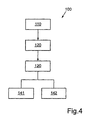
- FIG. 4 schematically a flow chart of a method for the distribution of an overall target torque specification for a motor vehicle.
- the motor vehicle FZ shown in FIG. 1 includes a first A 1 and second A 2 axle and two drives MOT 1 , MOT 2 .
- the two axles A 1 , A 2 are suspended in a common chassis FG.
- a combustion engine MOTZ for example, is provided for driving the first axle A 1 .
- An electric motor MOT 2 is provided, for example, for driving the second axle A 2 .
- Such a drive may be referred to as ‘hybrid drive’.
- No mechanical coupling, especially no (central) cardan shaft and no (central) difference gear is provided between the drive shaft of the first axle A 1 and the second axle A 2 .
- at least an operation of the motor vehicle FZ with uncoupled central cardan shaft is possible.
- the vehicle control FS shown in FIG. 2 includes a hybrid control unit manager SGHM, a chassis control unit SGFW and an all-wheel interface ARSS between the chassis control unit SGFW and the hybrid manager control unit SGHM.
- the hybrid manager control unit SGHM includes an overall target torque specification determining device 10 , an overall target torque distribution device 20 , a redistribution device 30 , a first axle torque limiter M 1 B and a second axle torque limiter M 2 B.
- Control functions in the chassis control unit SGFW are typically realized by means of driving dynamics software (all-wheel motor vehicle dynamics software) FDSW.
- the hybrid manager control unit SGHM and the chassis control unit SGFW can be combined to form a common control unit.
- the overall target torque specification determining device 10 determines an overall target torque specification GSM from an actuation signal of an accelerator FP.
- the actuation signal FPBS of the accelerator FP may be supplied to the hybrid manager control unit SGHM via a first interface SS 1 .
- the overall target torque distribution device 20 has an output for outputting a first axle torque specification M 1 and an output for outputting a second axle torque specification M 2 .
- the two outputs are each connected to one input of the redistribution device 30 .
- the redistribution device 30 has an output for outputting a first redistributed axle torque specification uM 1 and an output for outputting a second redistributed axle torque specification uM 2 .
- the output for outputting the first redistributed axle torque specification uM 1 is connected to an input of the first axle torque limiter M 1 B.
- the output for outputting the second redistributed axle torque specification uM 2 is connected to an input of the second axle torque limiter M 2 B.
- An output of the first axle torque limiter M 1 B is connected to an input of a (not shown in the figure) first actuator for setting a torque on the first axle A 1 (for example, on the front axle).
- An output of the second axle torque limiter M 2 B is connected to an input of a (not shown in the figure) second actuator for setting a torque on the second axle A 2 (for example, on the rear axle).
- the two actuators are typically engine control units.
- the engine control units can be combined with the hybrid manager control unit SGHM to a common unit.
- the chassis control unit SGFW can specify following operating parameters to the hybrid manager control unit SGHM via the all-wheel interface ARSS, which can influence the distribution of an overall target torque specification in the GSM hybrid manager control unit SGHM:
- chassis control unit SGFW can specify an upper limit M 2 max for the torque on the second axle A 2 (for example, rear axle) of the motor vehicle FZ taking into account the current driving dynamic state of the motor vehicle FZ.
- the corresponding can be provided (for example, for braking or recuperation operation) for a lower limit of a torque with a negative sign to the second axle A 2 of the motor vehicle FZ.
- the all-wheel interface ARSS also provides a transfer of the first M 1 and/or the second M 2 axle torque specification to the chassis control unit SGFW.
- the chassis control unit SGFW can then detect an arbitrary (real of unreal) subset of the aforementioned three operating parameters, taking into account the first M 1 and/or the second axle torque M 2 specification.
- FIG. 3 gives an overview about a variability of the drive torque distribution of an all-wheel drive.
- the abscissa value here represents the driving torque AM 1 which is applied to the first axle A 1 .
- the ordinate value describes the percentage AM 2 /(AM 1 +AM 2 ) of the torque AM 2 to the second axle A 2 relative to the sum AM 1 +AM 2 of the torques AM 1 , AM 2 on the two axles A 1 , A 2 .
- the line L 1 marks a limitation of the operating range BB due to a limited capacity of the first axle A 1 .
- the line L 2 marks a limitation of the operating range BB due to a limited capacity of the second axle A 2 .
- the overall target torque distribution device 20 assigns an overall target torque specification GSM for example, 2,000 Nm completely to the first axle A 1 (for example, front axle).
- a monitoring function in the chassis control unit SGFW comes to the conclusion that the driving state of the motor vehicle FZ appropriately lets no driving dynamic engagement appear. It therefore causes no redistribution of the already divided overall target torque specification GSM. The complete assignment of the overall target torque specification GSM of 2,000 Nm to the first axle A 1 therefore remains unchanged.
- the monitoring function in the chassis control unit SGFW comes to the conclusion that the state of the motor vehicle FZ, from the driving dynamic point of view, also appropriately lets no limitation of one of the axle torques appear.
- the chassis control unit SGFW requests a target distribution MV of 0% in this case.
- a special signal can be reserved for the non-request of a redistribution 130 (in the sense of a data value which is designated with NULL, NIL or VOID in the data processing, for example).
- a monitoring function in the chassis control unit SGFW comes to the conclusion that the driving state of the motor vehicle FZ appropriately lets a driving dynamic engagement appear. It therefore causes a redistribution 130 of the already divided overall target torque specification GSM, so that the division of the overall target torque specification GSM that was made by the overall target torque distribution device 20 is overwritten by the redistribution device 30 and the second axle is assigned 30% of the torque of the overall target torque specification GSM. Of the entire 2000 Nm, 1400 Nm are assigned to the first axle and 600 Nm to the second axle.
- the monitoring function in the chassis control unit SGFW comes to the conclusion that the driving state of the motor vehicle FZ, from a driving dynamic point of view, appropriately lets no limitation of one of the axle torques appear.
- a monitoring function in the chassis control unit SGFW comes to the conclusion that the driving state of the motor vehicle FZ appropriately lets a driving dynamic engagement appear. It therefore causes a redistribution 130 of the already divided overall target torque specification GSM, so that the division of the overall target torque specification GSM that was made by the overall target torque distribution device 20 is overwritten by the redistribution device 30 and the second axle is assigned 30% of the torque of the overall target torque specification GSM. Of the entire 2000 Nm, 1400 Nm are assigned to the first axle and 600 Nm to the second axle.
- the monitoring function in the chassis control unit SGFW comes to the conclusion that the driving state of the motor vehicle FZ, from a driving dynamic point of view, appropriately lets a limitation of the axle torque of the second axle A 2 (but not the first axle) appear.
- the axle torque to the second axle A 2 is therefore, for example, limited to 400 Nm (see operating point which is designated in FIG. 3 with III).
- the difference (here 200 Nm) arising through the limitation of the axle torque is redistributed to the first axle A 1 , and as far as possible as this permits a limitation of the axle torque of the first axle A 1 (see operating point that is referred to in FIG. 3 ).
- a monitoring function in the chassis control unit SGFW comes to the conclusion that the driving state of the motor vehicle FZ appropriately lets a driving dynamic engagement appear. It therefore causes a redistribution 130 of the already divided overall target torque specification GSM, so that the division of the overall target torque specification GSM that was made by the overall target torque distribution device 20 is overwritten by the redistribution device 30 and the second axle is assigned 30% of the torque of the overall target torque specification GSM. Of the entire 2000 Nm, 1400 Nm are assigned to the first axle and 600 Nm to the second axle.
- the monitoring function in the chassis control unit SGFW comes to the conclusion that the driving state of the motor vehicle FZ, from a driving dynamic point of view, appropriately lets a limitation of the axle torque of both axles A 1 , A 2 appear.
- the axle torque to the first axle A 1 , A 2 is therefore limited, for example, to 1000 Nm and the second axle A 2 , for example, to 400 Nm.
- the difference arising by limiting the axle torque difference for the second axle A 2 can not be distributed back to the first axle A 1 here since the current limitation of the axle torque of the first axle A 1 does not allow this (see the operating point, which is designated in FIG. 3 with IV).
- FIG. 4 shows a flowchart of a method 100 for distributing an overall target torque specification GSM for a motor vehicle FZ, wherein the method 100 includes the following steps.
- an overall target torque specification determining device generates an overall target torque specification GSM taking into account an accelerator activation FPB.
- an efficiency level is optimized by dividing 120 an overall target torque specification GSM into a first axle torque specification M 1 for a first axle A 1 of the motor vehicle FZ and into a second axle torque specification M 2 for a second axle A 2 of the motor vehicle FZ.
- a first uM 1 and a second uM 2 redistributed axle torque specification is generated by means of partial or complete redistribution 130 of the first M 1 and second M 2 axle torque specification to the other of the two axle torque specifications. This is done taking into account at least one driving dynamic parameter FDP.
- the first redistributed axle torque specification uM 1 is limited and/or the second redistributed axle torque specification uM 2 is limited.
- Embodiments of the present invention may have the following features.
- the all-wheel interface ARSS initially provides a percentage assignment of the overall target torque specification GSM for both axles A 1 , A 2 and subsequent limitation of individual axle torques AM 1 , AM 2 . To do this, a drive torque distribution desired from an efficiency point of view is calculated in the hybrid manager control unit. The determined two target torques for the two drive axles A 1 , A 2 are notified of the chassis control SGFW (driving dynamics control).
- the distribution control can be carried out on an overall target torque specification GSM, which is filtered for reasons of comfort.
- GSM overall target torque specification
- the distributed M 1 , M 2 and/or redistributed uM 1 , uM 2 torque specifications can be performed through driving behavior filtering in order to avoid too rapid torque build-up, which can lead to drive train vibrations. Driving comfort is thereby considerably enhanced.
- the drive control can determine an optimal division of the overall target torque specification GSM to both drive axles A 1 , A 2 as viewed from the operation strategy from a driver's desired torque GSM.
- the division A 1 , A 2 of the overall target torque specification GSM can be communicated to the chassis control SGFW of the power train via the all-wheel interface ARSS.
- a percentage shift in favor of one of the two drive axles A 1 , A 2 can be done.
- the percentage MV for the proportion of the drive torque AM 2 to the second axle A 2 can be selected so that a desired distribution AM 2 /(AM 1 +AM 2 ) of drive torques AM 1 , AM 2 is set.
- the percentage target proportion MV of the primary A 1 or the secondary A 2 drive axle can be communicated to the hybrid manager control unit SGHM.
- a distribution AM 2 /(AM 1 +AM 2 ) of drive torques uM 1 , uM 2 is set, which operates the underperforming axle A 1 , A 2 at its performance limit.
- a drive torque distribution AM 2 /(AM 1 +AM 2 ) results, which takes into account as best as possible driving dynamic issues without unnecessarily reducing the drive torque of the other axle.
- axle torque of the one drive axle, from which the drive torque is shifted away can be further reduced via the axle torque limiting interface BSS 1 , BSS 2 in order to set a desired driving behavior.
- the torque limit 141 , 142 can be done to timely unfiltered actual torques.
- the inclusion of the limit can be carried out without driving behavior filtering to ensure rapid control and to quickly counteract the wheel slip if wheel slip occurs.
- a quick slip limiting and/or taking account of power limitation of a drive axle A 1 , A 2 is done according to a load-reversal damping. This ensures control at the required speed.
- the torque distribution 120 and/or the torque redistribution 130 can be carried out after a load-reversal damping and before axle-selective load-reversal damping.
- the axle-selective load-reversal damping can be adjusted so that the filtering does not lead to a reaction on the overall torque AM 1 , AM 2 .
Landscapes
- Engineering & Computer Science (AREA)
- Transportation (AREA)
- Mechanical Engineering (AREA)
- Chemical & Material Sciences (AREA)
- Combustion & Propulsion (AREA)
- Automation & Control Theory (AREA)
- Electric Propulsion And Braking For Vehicles (AREA)
- Hybrid Electric Vehicles (AREA)
Applications Claiming Priority (4)
| Application Number | Priority Date | Filing Date | Title |
|---|---|---|---|
| DE102013019902.6 | 2013-11-28 | ||
| DE102013019902 | 2013-11-28 | ||
| DE102013019902.6A DE102013019902A1 (de) | 2013-11-28 | 2013-11-28 | Vorrichtungen und Verfahren zum Verteilen einer Gesamtsollmoment-Vorgabe |
| PCT/EP2014/003018 WO2015078557A1 (de) | 2013-11-28 | 2014-11-11 | Vorrichtungen und verfahren zum verteilen einer gesamtsollmoment-vorgabe |
Publications (2)
| Publication Number | Publication Date |
|---|---|
| US20170267228A1 US20170267228A1 (en) | 2017-09-21 |
| US9789864B2 true US9789864B2 (en) | 2017-10-17 |
Family
ID=51900841
Family Applications (1)
| Application Number | Title | Priority Date | Filing Date |
|---|---|---|---|
| US15/100,133 Active 2034-11-12 US9789864B2 (en) | 2013-11-28 | 2014-11-11 | Devices and methods for distributing an overall target torque specification |
Country Status (5)
| Country | Link |
|---|---|
| US (1) | US9789864B2 (de) |
| EP (1) | EP3074258B1 (de) |
| CN (1) | CN105793089B (de) |
| DE (1) | DE102013019902A1 (de) |
| WO (1) | WO2015078557A1 (de) |
Cited By (1)
| Publication number | Priority date | Publication date | Assignee | Title |
|---|---|---|---|---|
| SE2251147A1 (en) * | 2022-10-03 | 2024-04-04 | Borgwarner Sweden Ab | A vehicle, and a control method for such vehicle |
Families Citing this family (5)
| Publication number | Priority date | Publication date | Assignee | Title |
|---|---|---|---|---|
| DE102016223186A1 (de) * | 2016-11-23 | 2018-05-24 | Audi Ag | Allradsystem für ein Kraftfahrzeug und Verfahren zum Betreiben eines Allradsystems eines Kraftfahrzeugs |
| DE102017211978A1 (de) | 2017-07-12 | 2019-01-17 | Bayerische Motoren Werke Aktiengesellschaft | Verfahren zum Betreiben eines Antriebsstrangs für ein Kraftfahrzeug, insbesondere für einen Kraftwagen, sowie Antriebsstrang für ein Kraftfahrzeug |
| DE102021125350B4 (de) * | 2021-09-30 | 2023-07-27 | Audi Aktiengesellschaft | Verfahren zum Fahren eines Kraftfahrzeugs |
| FR3133569A1 (fr) * | 2022-03-17 | 2023-09-22 | Psa Automobiles Sa | Procédé de commande d'un systeme de trains roulants d'un véhicule automobile |
| DE102023204647A1 (de) * | 2023-05-17 | 2024-11-21 | Vitesco Technologies GmbH | Verfahren zum Steuern eines Antriebs, Steuervorrichtung und Kraftfahrzeug |
Citations (14)
| Publication number | Priority date | Publication date | Assignee | Title |
|---|---|---|---|---|
| US20050060079A1 (en) | 2003-09-11 | 2005-03-17 | Ford Global Technologies, Llc | Vehicle torque coordination |
| US20060076915A1 (en) | 2004-10-09 | 2006-04-13 | Johannes Kaltenbach | Method for steering and regulating the driving dynamics in vehicles with hybrid drive |
| DE102005026874A1 (de) | 2005-06-10 | 2006-12-14 | Volkswagen Ag | Vorrichtung und Verfahren zum Antrieb eines Fahrzeuges |
| US20090108671A1 (en) | 2006-06-22 | 2009-04-30 | Toyota Jidosha Kabushiki Kaisha | Vehicle drive apparatus |
| DE102008041897A1 (de) | 2008-09-09 | 2010-03-11 | Robert Bosch Gmbh | Verfahren zum Betreiben eines Antriebs eines Kraftfahrzeugs sowie Antriebsvorrichtung und elektronisches Steuergerät |
| DE102008043853A1 (de) | 2008-11-19 | 2010-05-20 | Zf Friedrichshafen Ag | Verfahren zum Betreiben eines Antriebsstrangs |
| DE102009045234A1 (de) | 2009-10-01 | 2011-04-28 | Robert Bosch Gmbh | Verfahren zum Betreiben einer Antriebsvorrichtung, Antriebsvorrichtung |
| DE102010014971A1 (de) | 2010-04-14 | 2011-10-20 | Audi Ag | Verfahren zum Betreiben eines Kraftfahrzeugs mit zumindest zwei Antrieben sowie Kraftfahrzeug mit zumindest zwei Antrieben |
| DE102010015423A1 (de) | 2010-04-19 | 2011-10-20 | Audi Ag | Antriebsvorrichtung für ein allradgetriebenes Fahrzeug |
| DE102011056168A1 (de) | 2011-12-08 | 2013-06-13 | Dr. Ing. H.C. F. Porsche Aktiengesellschaft | Steuerungseinrichtung für ein Kraftfahrzeug, Verfahren zum Betreiben der Steuereinrichtung |
| DE102011056600A1 (de) | 2011-12-19 | 2013-06-20 | Dr. Ing. H.C. F. Porsche Aktiengesellschaft | Antriebssystem für ein Kraftfahrzeug sowie Verfahren zum Betrieb eines derartigen Antriebssystems |
| US8565973B2 (en) | 2010-06-19 | 2013-10-22 | Audi Ag | Method for operating a motor vehicle, and motor vehicle |
| US8731759B2 (en) | 2010-05-29 | 2014-05-20 | Audi Ag | Method for operating two drives and motor vehicle having two drives which operate on wheels decoupled from each other |
| US8738266B2 (en) | 2010-03-20 | 2014-05-27 | Audi Ag | Vehicle having at least two single-wheel drive units |
-
2013
- 2013-11-28 DE DE102013019902.6A patent/DE102013019902A1/de not_active Withdrawn
-
2014
- 2014-11-11 EP EP14799105.3A patent/EP3074258B1/de active Active
- 2014-11-11 US US15/100,133 patent/US9789864B2/en active Active
- 2014-11-11 WO PCT/EP2014/003018 patent/WO2015078557A1/de not_active Ceased
- 2014-11-11 CN CN201480064925.0A patent/CN105793089B/zh active Active
Patent Citations (17)
| Publication number | Priority date | Publication date | Assignee | Title |
|---|---|---|---|---|
| US20050060079A1 (en) | 2003-09-11 | 2005-03-17 | Ford Global Technologies, Llc | Vehicle torque coordination |
| US20060076915A1 (en) | 2004-10-09 | 2006-04-13 | Johannes Kaltenbach | Method for steering and regulating the driving dynamics in vehicles with hybrid drive |
| DE102004049324A1 (de) | 2004-10-09 | 2006-04-20 | Zf Friedrichshafen Ag | Verfahren zur Steuerung und Regelung der Fahrdynamik bei Kraftfahrzeugen mit Hybridantrieb |
| DE102005026874A1 (de) | 2005-06-10 | 2006-12-14 | Volkswagen Ag | Vorrichtung und Verfahren zum Antrieb eines Fahrzeuges |
| US20090108671A1 (en) | 2006-06-22 | 2009-04-30 | Toyota Jidosha Kabushiki Kaisha | Vehicle drive apparatus |
| US20110276207A1 (en) | 2008-09-09 | 2011-11-10 | Jens-Werner Falkenstein | Method for operating a drive of a motor vehicle, as well as a drive device and an electronic control unit |
| DE102008041897A1 (de) | 2008-09-09 | 2010-03-11 | Robert Bosch Gmbh | Verfahren zum Betreiben eines Antriebs eines Kraftfahrzeugs sowie Antriebsvorrichtung und elektronisches Steuergerät |
| DE102008043853A1 (de) | 2008-11-19 | 2010-05-20 | Zf Friedrichshafen Ag | Verfahren zum Betreiben eines Antriebsstrangs |
| DE102009045234A1 (de) | 2009-10-01 | 2011-04-28 | Robert Bosch Gmbh | Verfahren zum Betreiben einer Antriebsvorrichtung, Antriebsvorrichtung |
| US8738266B2 (en) | 2010-03-20 | 2014-05-27 | Audi Ag | Vehicle having at least two single-wheel drive units |
| DE102010014971A1 (de) | 2010-04-14 | 2011-10-20 | Audi Ag | Verfahren zum Betreiben eines Kraftfahrzeugs mit zumindest zwei Antrieben sowie Kraftfahrzeug mit zumindest zwei Antrieben |
| US20130035818A1 (en) * | 2010-04-14 | 2013-02-07 | Karl-Heinz Meitinger | Method for operating a motor vehicle having at least two drives and a motor vehicle having at least two drives |
| DE102010015423A1 (de) | 2010-04-19 | 2011-10-20 | Audi Ag | Antriebsvorrichtung für ein allradgetriebenes Fahrzeug |
| US8731759B2 (en) | 2010-05-29 | 2014-05-20 | Audi Ag | Method for operating two drives and motor vehicle having two drives which operate on wheels decoupled from each other |
| US8565973B2 (en) | 2010-06-19 | 2013-10-22 | Audi Ag | Method for operating a motor vehicle, and motor vehicle |
| DE102011056168A1 (de) | 2011-12-08 | 2013-06-13 | Dr. Ing. H.C. F. Porsche Aktiengesellschaft | Steuerungseinrichtung für ein Kraftfahrzeug, Verfahren zum Betreiben der Steuereinrichtung |
| DE102011056600A1 (de) | 2011-12-19 | 2013-06-20 | Dr. Ing. H.C. F. Porsche Aktiengesellschaft | Antriebssystem für ein Kraftfahrzeug sowie Verfahren zum Betrieb eines derartigen Antriebssystems |
Non-Patent Citations (1)
| Title |
|---|
| English International Search Report issued by the European Patent Office in International Application PCT/EP2014/003018. |
Cited By (2)
| Publication number | Priority date | Publication date | Assignee | Title |
|---|---|---|---|---|
| SE2251147A1 (en) * | 2022-10-03 | 2024-04-04 | Borgwarner Sweden Ab | A vehicle, and a control method for such vehicle |
| SE546764C2 (en) * | 2022-10-03 | 2025-02-18 | Borgwarner Sweden Ab | A vehicle, and a control method for such vehicle |
Also Published As
| Publication number | Publication date |
|---|---|
| DE102013019902A1 (de) | 2015-05-28 |
| CN105793089A (zh) | 2016-07-20 |
| WO2015078557A1 (de) | 2015-06-04 |
| US20170267228A1 (en) | 2017-09-21 |
| CN105793089B (zh) | 2018-04-13 |
| EP3074258B1 (de) | 2017-07-05 |
| EP3074258A1 (de) | 2016-10-05 |
Similar Documents
| Publication | Publication Date | Title |
|---|---|---|
| JP5137239B2 (ja) | ハイブリッド車両のアイドリングストップモードの制御方法 | |
| US9789864B2 (en) | Devices and methods for distributing an overall target torque specification | |
| EP2858867B1 (de) | Steuerungssystem und -verfahren für antriebsstrang | |
| JP5074876B2 (ja) | ハイブリッド車両のアイドルストップモード制御方法 | |
| CN102892658B (zh) | 用于运行具有至少两个驱动装置的机动车的方法以及具有至少两个驱动装置的机动车 | |
| US10128780B2 (en) | Method and system for controlling the regenerative braking of a vehicle | |
| US7216943B2 (en) | Hybrid vehicle | |
| US8290655B2 (en) | Hybrid drive motor vehicle control system comprising distributed functional components for controlling hybrid drive operating status | |
| US7668630B2 (en) | Regulating strategy for electromechanically power-branching hybrid drives | |
| KR102343953B1 (ko) | 하이브리드 자동차 및 그를 위한 변속 제어 방법 | |
| KR101272515B1 (ko) | 전기자동차의 오토크루즈 제어 방법 | |
| DE102015100290A1 (de) | System und Verfahren zur Bestimmung der Bremsgrenze eines Hybridfahrzeugs | |
| CN107487318B (zh) | 用于控制车辆动力传动系的系统和方法 | |
| CN105437983B (zh) | 用于调整抬升踏板再生的车辆系统和方法 | |
| CN107150688B (zh) | 混合动力车辆和间隙减轻策略 | |
| CN102398521A (zh) | 车辆扭矩控制的分频和独立限制 | |
| CN103523004A (zh) | 用于改善低电量极限时的性能的方法及车辆 | |
| JP3909328B2 (ja) | 車両のハイブリッドドライブの制御方法 | |
| CN105339229A (zh) | 用于运行机动车的控制系统和方法 | |
| US8751080B2 (en) | Method and device for operating a drive train for a vehicle | |
| KR20230125836A (ko) | 도로 결합형 사륜 구동 차량을 작동하기 위한 제어장치 | |
| US20030205930A1 (en) | High idle creep control by brake-by-wire braking | |
| CN103101441B (zh) | 用于对车辆的制动功率进行控制和/或调整的方法以及控制和/或调整装置 | |
| CN107466276B (zh) | 带有自动变速箱的混合动力车辆在该变速箱发生故障时的管理方法 | |
| JP6406082B2 (ja) | 制御システム |
Legal Events
| Date | Code | Title | Description |
|---|---|---|---|
| AS | Assignment |
Owner name: AUDI AG, GERMANY Free format text: ASSIGNMENT OF ASSIGNORS INTEREST;ASSIGNORS:WEIN, MICHAEL;BUROW, CLEMENS;BEYER, STEFAN;REEL/FRAME:038739/0055 Effective date: 20160526 |
|
| STCF | Information on status: patent grant |
Free format text: PATENTED CASE |
|
| MAFP | Maintenance fee payment |
Free format text: PAYMENT OF MAINTENANCE FEE, 4TH YEAR, LARGE ENTITY (ORIGINAL EVENT CODE: M1551); ENTITY STATUS OF PATENT OWNER: LARGE ENTITY Year of fee payment: 4 |
|
| MAFP | Maintenance fee payment |
Free format text: PAYMENT OF MAINTENANCE FEE, 8TH YEAR, LARGE ENTITY (ORIGINAL EVENT CODE: M1552); ENTITY STATUS OF PATENT OWNER: LARGE ENTITY Year of fee payment: 8 |