US9801580B2 - Driving assistance device, driving assistance method, information-providing device, information-providing method, navigation device and navigation method - Google Patents
Driving assistance device, driving assistance method, information-providing device, information-providing method, navigation device and navigation method Download PDFInfo
- Publication number
- US9801580B2 US9801580B2 US14/777,138 US201314777138A US9801580B2 US 9801580 B2 US9801580 B2 US 9801580B2 US 201314777138 A US201314777138 A US 201314777138A US 9801580 B2 US9801580 B2 US 9801580B2
- Authority
- US
- United States
- Prior art keywords
- driver
- concentration level
- state
- driving assistance
- biometric information
- Prior art date
- Legal status (The legal status is an assumption and is not a legal conclusion. Google has not performed a legal analysis and makes no representation as to the accuracy of the status listed.)
- Active, expires
Links
Images




Classifications
-
- A—HUMAN NECESSITIES
- A61—MEDICAL OR VETERINARY SCIENCE; HYGIENE
- A61B—DIAGNOSIS; SURGERY; IDENTIFICATION
- A61B5/00—Measuring for diagnostic purposes; Identification of persons
- A61B5/16—Devices for psychotechnics; Testing reaction times ; Devices for evaluating the psychological state
- A61B5/18—Devices for psychotechnics; Testing reaction times ; Devices for evaluating the psychological state for vehicle drivers or machine operators
-
- A—HUMAN NECESSITIES
- A61—MEDICAL OR VETERINARY SCIENCE; HYGIENE
- A61B—DIAGNOSIS; SURGERY; IDENTIFICATION
- A61B3/00—Apparatus for testing the eyes; Instruments for examining the eyes
- A61B3/10—Objective types, i.e. instruments for examining the eyes independent of the patients' perceptions or reactions
- A61B3/11—Objective types, i.e. instruments for examining the eyes independent of the patients' perceptions or reactions for measuring interpupillary distance or diameter of pupils
- A61B3/112—Objective types, i.e. instruments for examining the eyes independent of the patients' perceptions or reactions for measuring interpupillary distance or diameter of pupils for measuring diameter of pupils
-
- A—HUMAN NECESSITIES
- A61—MEDICAL OR VETERINARY SCIENCE; HYGIENE
- A61B—DIAGNOSIS; SURGERY; IDENTIFICATION
- A61B5/00—Measuring for diagnostic purposes; Identification of persons
- A61B5/02—Detecting, measuring or recording for evaluating the cardiovascular system, e.g. pulse, heart rate, blood pressure or blood flow
- A61B5/0205—Simultaneously evaluating both cardiovascular conditions and different types of body conditions, e.g. heart and respiratory condition
-
- A—HUMAN NECESSITIES
- A61—MEDICAL OR VETERINARY SCIENCE; HYGIENE
- A61B—DIAGNOSIS; SURGERY; IDENTIFICATION
- A61B5/00—Measuring for diagnostic purposes; Identification of persons
- A61B5/02—Detecting, measuring or recording for evaluating the cardiovascular system, e.g. pulse, heart rate, blood pressure or blood flow
- A61B5/024—Measuring pulse rate or heart rate
- A61B5/0245—Measuring pulse rate or heart rate by using sensing means generating electric signals, i.e. ECG signals
-
- A61B5/0476—
-
- A—HUMAN NECESSITIES
- A61—MEDICAL OR VETERINARY SCIENCE; HYGIENE
- A61B—DIAGNOSIS; SURGERY; IDENTIFICATION
- A61B5/00—Measuring for diagnostic purposes; Identification of persons
- A61B5/72—Signal processing specially adapted for physiological signals or for diagnostic purposes
- A61B5/7271—Specific aspects of physiological measurement analysis
- A61B5/7275—Determining trends in physiological measurement data; Predicting development of a medical condition based on physiological measurements, e.g. determining a risk factor
-
- A—HUMAN NECESSITIES
- A61—MEDICAL OR VETERINARY SCIENCE; HYGIENE
- A61B—DIAGNOSIS; SURGERY; IDENTIFICATION
- A61B5/00—Measuring for diagnostic purposes; Identification of persons
- A61B5/72—Signal processing specially adapted for physiological signals or for diagnostic purposes
- A61B5/7271—Specific aspects of physiological measurement analysis
- A61B5/7278—Artificial waveform generation or derivation, e.g. synthesizing signals from measured signals
-
- A—HUMAN NECESSITIES
- A61—MEDICAL OR VETERINARY SCIENCE; HYGIENE
- A61B—DIAGNOSIS; SURGERY; IDENTIFICATION
- A61B5/00—Measuring for diagnostic purposes; Identification of persons
- A61B5/74—Details of notification to user or communication with user or patient; User input means
- A61B5/742—Details of notification to user or communication with user or patient; User input means using visual displays
-
- B—PERFORMING OPERATIONS; TRANSPORTING
- B60—VEHICLES IN GENERAL
- B60K—ARRANGEMENT OR MOUNTING OF PROPULSION UNITS OR OF TRANSMISSIONS IN VEHICLES; ARRANGEMENT OR MOUNTING OF PLURAL DIVERSE PRIME-MOVERS IN VEHICLES; AUXILIARY DRIVES FOR VEHICLES; INSTRUMENTATION OR DASHBOARDS FOR VEHICLES; ARRANGEMENTS IN CONNECTION WITH COOLING, AIR INTAKE, GAS EXHAUST OR FUEL SUPPLY OF PROPULSION UNITS IN VEHICLES
- B60K28/00—Safety devices for propulsion-unit control, specially adapted for, or arranged in, vehicles, e.g. preventing fuel supply or ignition in the event of potentially dangerous conditions
-
- B—PERFORMING OPERATIONS; TRANSPORTING
- B60—VEHICLES IN GENERAL
- B60W—CONJOINT CONTROL OF VEHICLE SUB-UNITS OF DIFFERENT TYPE OR DIFFERENT FUNCTION; CONTROL SYSTEMS SPECIALLY ADAPTED FOR HYBRID VEHICLES; ROAD VEHICLE DRIVE CONTROL SYSTEMS FOR PURPOSES NOT RELATED TO THE CONTROL OF A PARTICULAR SUB-UNIT
- B60W40/00—Estimation or calculation of non-directly measurable driving parameters for road vehicle drive control systems not related to the control of a particular sub unit, e.g. by using mathematical models
- B60W40/08—Estimation or calculation of non-directly measurable driving parameters for road vehicle drive control systems not related to the control of a particular sub unit, e.g. by using mathematical models related to drivers or passengers
-
- B—PERFORMING OPERATIONS; TRANSPORTING
- B60—VEHICLES IN GENERAL
- B60W—CONJOINT CONTROL OF VEHICLE SUB-UNITS OF DIFFERENT TYPE OR DIFFERENT FUNCTION; CONTROL SYSTEMS SPECIALLY ADAPTED FOR HYBRID VEHICLES; ROAD VEHICLE DRIVE CONTROL SYSTEMS FOR PURPOSES NOT RELATED TO THE CONTROL OF A PARTICULAR SUB-UNIT
- B60W50/00—Details of control systems for road vehicle drive control not related to the control of a particular sub-unit, e.g. process diagnostic or vehicle driver interfaces
- B60W50/08—Interaction between the driver and the control system
- B60W50/12—Limiting control by the driver depending on vehicle state, e.g. interlocking means for the control input for preventing unsafe operation
-
- G—PHYSICS
- G08—SIGNALLING
- G08G—TRAFFIC CONTROL SYSTEMS
- G08G1/00—Traffic control systems for road vehicles
- G08G1/16—Anti-collision systems
-
- B—PERFORMING OPERATIONS; TRANSPORTING
- B60—VEHICLES IN GENERAL
- B60W—CONJOINT CONTROL OF VEHICLE SUB-UNITS OF DIFFERENT TYPE OR DIFFERENT FUNCTION; CONTROL SYSTEMS SPECIALLY ADAPTED FOR HYBRID VEHICLES; ROAD VEHICLE DRIVE CONTROL SYSTEMS FOR PURPOSES NOT RELATED TO THE CONTROL OF A PARTICULAR SUB-UNIT
- B60W40/00—Estimation or calculation of non-directly measurable driving parameters for road vehicle drive control systems not related to the control of a particular sub unit, e.g. by using mathematical models
- B60W40/08—Estimation or calculation of non-directly measurable driving parameters for road vehicle drive control systems not related to the control of a particular sub unit, e.g. by using mathematical models related to drivers or passengers
- B60W2040/0872—Driver physiology
-
- B—PERFORMING OPERATIONS; TRANSPORTING
- B60—VEHICLES IN GENERAL
- B60W—CONJOINT CONTROL OF VEHICLE SUB-UNITS OF DIFFERENT TYPE OR DIFFERENT FUNCTION; CONTROL SYSTEMS SPECIALLY ADAPTED FOR HYBRID VEHICLES; ROAD VEHICLE DRIVE CONTROL SYSTEMS FOR PURPOSES NOT RELATED TO THE CONTROL OF A PARTICULAR SUB-UNIT
- B60W50/00—Details of control systems for road vehicle drive control not related to the control of a particular sub-unit, e.g. process diagnostic or vehicle driver interfaces
- B60W2050/0062—Adapting control system settings
- B60W2050/0063—Manual parameter input, manual setting means, manual initialising or calibrating means
- B60W2050/0064—Manual parameter input, manual setting means, manual initialising or calibrating means using a remote, e.g. cordless, transmitter or receiver unit, e.g. remote keypad or mobile phone
-
- B—PERFORMING OPERATIONS; TRANSPORTING
- B60—VEHICLES IN GENERAL
- B60W—CONJOINT CONTROL OF VEHICLE SUB-UNITS OF DIFFERENT TYPE OR DIFFERENT FUNCTION; CONTROL SYSTEMS SPECIALLY ADAPTED FOR HYBRID VEHICLES; ROAD VEHICLE DRIVE CONTROL SYSTEMS FOR PURPOSES NOT RELATED TO THE CONTROL OF A PARTICULAR SUB-UNIT
- B60W2540/00—Input parameters relating to occupants
- B60W2540/22—Psychological state; Stress level or workload
-
- B—PERFORMING OPERATIONS; TRANSPORTING
- B60—VEHICLES IN GENERAL
- B60W—CONJOINT CONTROL OF VEHICLE SUB-UNITS OF DIFFERENT TYPE OR DIFFERENT FUNCTION; CONTROL SYSTEMS SPECIALLY ADAPTED FOR HYBRID VEHICLES; ROAD VEHICLE DRIVE CONTROL SYSTEMS FOR PURPOSES NOT RELATED TO THE CONTROL OF A PARTICULAR SUB-UNIT
- B60W2540/00—Input parameters relating to occupants
- B60W2540/221—Physiology, e.g. weight, heartbeat, health or special needs
-
- B—PERFORMING OPERATIONS; TRANSPORTING
- B60—VEHICLES IN GENERAL
- B60W—CONJOINT CONTROL OF VEHICLE SUB-UNITS OF DIFFERENT TYPE OR DIFFERENT FUNCTION; CONTROL SYSTEMS SPECIALLY ADAPTED FOR HYBRID VEHICLES; ROAD VEHICLE DRIVE CONTROL SYSTEMS FOR PURPOSES NOT RELATED TO THE CONTROL OF A PARTICULAR SUB-UNIT
- B60W2540/00—Input parameters relating to occupants
- B60W2540/229—Attention level, e.g. attentive to driving, reading or sleeping
-
- Y—GENERAL TAGGING OF NEW TECHNOLOGICAL DEVELOPMENTS; GENERAL TAGGING OF CROSS-SECTIONAL TECHNOLOGIES SPANNING OVER SEVERAL SECTIONS OF THE IPC; TECHNICAL SUBJECTS COVERED BY FORMER USPC CROSS-REFERENCE ART COLLECTIONS [XRACs] AND DIGESTS
- Y02—TECHNOLOGIES OR APPLICATIONS FOR MITIGATION OR ADAPTATION AGAINST CLIMATE CHANGE
- Y02T—CLIMATE CHANGE MITIGATION TECHNOLOGIES RELATED TO TRANSPORTATION
- Y02T10/00—Road transport of goods or passengers
- Y02T10/80—Technologies aiming to reduce greenhouse gasses emissions common to all road transportation technologies
- Y02T10/84—Data processing systems or methods, management, administration
Definitions
- One embodiment of the present invention relates to a driving assistance device, a driving assistance method, an information-providing device, an information-providing method, a navigation device, and a navigation method.
- Patent Literature 1 there is disclosed a device that predicts the future occurrence of sleepiness, fatigue, and the like of a driver until the driver reaches a predetermined position on the basis of biometric information such as heart rate, respiratory rate, blink speed, and the like of the driver of a vehicle and on the basis of load exerted on the driver by a road until the vehicle reaches the predetermined position.
- the device of Patent Literature 1 calls to the attention of the driver in advance on the basis of the sleepiness of the driver at the predetermined position.
- Patent Literature 1 Japanese Unexamined Patent Application Publication No. 2003-61939
- One embodiment of the present invention is devised with consideration of the problem above, and an object thereof is to provide a driving assistance device, a driving assistance method, an information-providing device, an information-providing method, a navigation device, and a navigation method, in which a driver feels less inconvenienced by performing driving assistance that is more appropriate for a situation where a vehicle is traveling.
- a driving assistance device including: a biometric information obtaining unit configured to obtain biometric information of a driver; a driver state estimating unit configured to estimate, on the basis of the biometric information obtained by the biometric information obtaining unit, a state of the driver at a time later than a timing of obtaining the biometric information by the biometric information obtaining unit; and a control unit configured to control driving assistance of a vehicle on the basis of a comparison of the state of the driver estimated by the driver state estimating unit with a condition for the state of the driver that is set in association with any one of a position and an environment in which the vehicle driven by the driver is predicted to travel.
- the biometric information obtaining unit obtains the biometric information of the driver.
- the driver state estimating unit estimates the state of the driver at a time later than the timing of obtaining the biometric information by the biometric information obtaining unit.
- the control unit controls the driving assistance of the vehicle on the basis of the comparison of the state of the driver estimated by the driver state estimating unit with the condition for the state of the driver that is set in association with any one of the position and the environment in which the vehicle driven by the driver is predicted to travel.
- current driving assistance is controlled on the basis of the comparison of the future state of the driver based on the actual obtained biometric information with the condition for the state of the driver that is obtained in the position or the environment in which the vehicle travels in the future.
- driving assistance is performed more appropriately for the situation in which the driver performs driving in the position or the environment, and the possibility of causing the driver to feel inconvenienced can be reduced.
- the control unit may promote the driving assistance as the degree to which the state of the driver estimated by the driver state estimating unit does not satisfy the condition for the state of the driver that is set in association with any one of the position and the environment in which the vehicle driven by the driver is predicted to travel is greater.
- the control unit promotes the driving assistance as the degree to which the state of the driver estimated by the driver state estimating unit does not satisfy the condition for the state of the driver that is set in association with any one of the position and the environment in which the vehicle driven by the driver is predicted to travel is greater. Accordingly, driving assistance is promoted as the state of the driver is worse in the situation in which the driver performs driving in the position or the environment. Thus, driving assistance is performed more appropriately for the state of the driver and the condition corresponding to the position and the environment, and the possibility of causing the driver to feel inconvenienced can be reduced.
- the control unit may control the driving assistance to be initiated when the state of the driver estimated by the driver state estimating unit does not satisfy the condition for the state of the driver that is set in association with any one of the position and the environment in which the vehicle driven by the driver is predicted to travel.
- the control unit initiates the driving assistance when the state of the driver estimated by the driver state estimating unit does not satisfy the condition for the state of the driver that is set in association with any one of the position and the environment in which the vehicle driven by the driver is predicted to travel.
- driving assistance is performed for the state of the driver and the condition corresponding to the position and the environment when necessary, and the possibility of causing the driver to feel inconvenienced can be reduced.
- the state of the driver may be a concentration level of the driver.
- the state of the driver is the concentration level of the driver. Accordingly, current driving assistance is controlled on the basis of the comparison of the future concentration level of the driver based on the actual obtained biometric information with the condition for the concentration level of the driver that is obtained in the position or the environment in which the vehicle travels in the future.
- driving assistance is performed more appropriately for the concentration level that is required in the situation in which the driver performs driving in the position or the environment, and the possibility of causing the driver to feel inconvenienced can be reduced.
- the driver state estimating unit may estimate a tendency of the concentration level of the driver to decrease over time.
- the driver state estimating unit on the basis of the biometric information obtained by the biometric information obtaining unit, estimates a tendency of the concentration level of the driver to decrease over time. Accordingly, the concentration level of the driver when the vehicle actually travels in the position or the environment can be estimated more accurately, and driving assistance can be performed more appropriately for the concentration level of the driver.
- the driver state estimating unit may estimate a tendency of the concentration level of the driver to decrease over time by estimating a degree of accumulation of the concentration level of the driver over time.
- the driver state estimating unit estimates a tendency of the concentration level of the driver to decrease over time by estimating a degree of accumulation of the concentration level of the driver over time.
- the degree of accumulation of the concentration level over time is unlikely to be affected by temporary variation of the concentration level of the driver. Therefore, a tendency of the concentration level of the driver to decrease over time can be estimated more accurately regardless of temporary variation of the concentration level of the driver by estimating the degree of accumulation of the concentration level over time.
- the driver state estimating unit may estimate a period of time until the degree of accumulation of the concentration level of the driver over time is saturated and may estimate a tendency of the concentration level of the driver to decrease over time on the basis of the time period until the degree of accumulation is saturated.
- the driver state estimating unit estimates a period of time until the degree of accumulation of the concentration level of the driver over time is saturated and estimates a tendency of the concentration level of the driver to decrease over time on the basis of the time period until the degree of accumulation is saturated.
- the period of time until the degree of accumulation of the concentration level of the driver over time is saturated is unlikely to be affected by temporary variation of the concentration level of the driver. Therefore, a tendency of the concentration level of the driver to decrease over time can be estimated more accurately regardless of temporary variation of the concentration level of the driver by estimating the period of time until the degree of accumulation of the concentration level of the driver over time is saturated.
- the control unit on the basis of the biometric information obtained by the biometric information obtaining unit, may associate the state of the driver estimated at the timing of obtaining the biometric information by the biometric information obtaining unit with any one of the position and the environment in which the vehicle driven by the driver travels and may record the association.
- the control unit on the basis of the biometric information obtained by the biometric information obtaining unit, associates the state of the driver estimated at the timing of obtaining the biometric information by the biometric information obtaining unit with any one of the position and the environment in which the vehicle driven by the driver travels and records the association. Accordingly, the state of the driver when the vehicle travels in the position or the environment can be correlated with the position or the environment.
- the condition for the state of the driver that is set in association with any one of the position and the environment in which the vehicle driven by the driver is predicted to travel may be set on the basis of the state of the driver that is recorded in association with any one of the position and the environment in which the vehicle driven by the driver travels.
- the condition for the state of the driver that is set in association with any one of the position and the environment in which the vehicle driven by the driver is predicted to travel is set on the basis of the state of the driver that is recorded in association with any one of the position and the environment in which the vehicle driven by the driver travels. Therefore, the condition for the state of the driver corresponds to the state of the driver when the vehicle travels in the position or the environment, and the condition can be set more realistically.
- the control unit may perform the driving assistance that is set in association with any one of the position and the environment in which the vehicle driven by the driver is predicted to travel.
- control unit performs the driving assistance that is set in association with any one of the position and the environment in which the vehicle driven by the driver is predicted to travel.
- driving assistance that is more appropriate for the position or the environment in which the vehicle travels.
- the control unit may call attention of the driver when the state of the driver estimated by the driver state estimating unit is below a first threshold and may perform the driving assistance of intervening in a driving operation by the driver when the state of the driver estimated by the driver state estimating unit is below a second threshold that is lower than the first threshold.
- the control unit calls to the attention of the driver when the state of the driver estimated by the driver state estimating unit is below a first threshold and performs the driving assistance of intervening in a driving operation by the driver when the state of the driver estimated by the driver state estimating unit is below a second threshold that is lower than the first threshold. Accordingly, the concentration level and the like required for the driver to drive the vehicle can be reduced. In addition, an inconvenient feeling of the driver can be reduced because assistance that the driver needs is provided.
- a driving assistance method including a biometric information obtaining step of obtaining biometric information of a driver, a driver state estimating step of estimating, on the basis of the biometric information obtained through the biometric information obtaining step, a state of the driver at a time later than a timing of obtaining the biometric information through the biometric information obtaining step, and a control step of controlling driving assistance of a vehicle on the basis of a comparison of the state of the driver estimated through the driver state estimating step with a condition for the state of the driver that is set in association with any one of a position and an environment in which the vehicle driven by the driver is predicted to travel.
- an information-providing device including a biometric information obtaining unit configured to obtain biometric information of a driver, a driver state estimating unit configured to estimate, on the basis of the biometric information obtained by the biometric information obtaining unit, a state of the driver at a time later than a timing of obtaining the biometric information by the biometric information obtaining unit, and a reporting unit configured to call attention of the driver of a vehicle on the basis of a comparison of the state of the driver estimated by the driver state estimating unit with a condition for the state of the driver that is set in association with any one of a position and an environment in which the vehicle driven by the driver is predicted to travel.
- the biometric information obtaining unit obtains the biometric information of the driver.
- the driver state estimating unit estimates the state of the driver at a time later than the timing of obtaining the biometric information by the biometric information obtaining unit.
- the reporting unit calls to the attention of the driver of the vehicle on the basis of the comparison of the state of the driver estimated by the driver state estimating unit with the condition for the state of the driver that is set in association with any one of the position and the environment in which the vehicle driven by the driver is predicted to travel.
- an information-providing method including a biometric information obtaining step of obtaining biometric information of a driver, a driver state estimating step of estimating, on the basis of the biometric information obtained through the biometric information obtaining step, a state of the driver at a time later than a timing of obtaining the biometric information through the biometric information obtaining step, and a reporting step of calling attention of the driver of a vehicle on the basis of a comparison of the state of the driver estimated through the driver state estimating step with a condition for the state of the driver that is set in association with any one of a position and an environment in which the vehicle driven by the driver is predicted to travel.
- a navigation device including a biometric information obtaining unit configured to obtain biometric information of a driver, a driver state estimating unit configured to estimate, on the basis of the biometric information obtained by the biometric information obtaining unit, a state of the driver at a time later than a timing of obtaining the biometric information by the biometric information obtaining unit, and a course selecting unit configured to select a course to guide the driver from a plurality of courses on the basis of a comparison of the state of the driver estimated by the driver state estimating unit with a condition for the state of the driver that is set in association with any one of a position and an environment in which the vehicle driven by the driver is predicted to travel in the plurality of courses.
- the biometric information obtaining unit obtains the biometric information of the driver.
- the driver state estimating unit estimates the state of the driver at a time later than the timing of obtaining the biometric information by the biometric information obtaining unit.
- the course selecting unit selects the course to guide the driver from the plurality of courses on the basis of the comparison of the state of the driver estimated by the driver state estimating unit with the condition for the state of the driver that is set in association with any one of the position and the environment in which the vehicle driven by the driver is predicted to travel in the plurality of courses.
- the course to guide the driver is selected on the basis of the comparison of the future state of the driver based on the actual obtained biometric information with the condition for the state of the driver obtained in the position or the environment in which the vehicle is predicted to travel in the future in the multiple courses.
- the course that is more appropriate for the situation in which the driver performs driving in the position or the environment is guided, and the possibility of causing the driver to feel inconvenienced can be reduced.
- a navigation method including a biometric information obtaining step of obtaining biometric information of a driver, a driver state estimating step of estimating, on the basis of the biometric information obtained through the biometric information obtaining step, a state of the driver at a time later than a timing of obtaining the biometric information through the biometric information obtaining step, and a course selecting step of selecting the course to guide the driver from a plurality of courses on the basis of a comparison of the state of the driver estimated through the driver state estimating step with a condition for the state of the driver that is set in association with any one of a position and an environment in which the vehicle driven by the driver is predicted to travel in the plurality of courses.
- a driver feels less inconvenienced by performing driving assistance that is more appropriate for a situation where a vehicle is traveling.
- FIG. 1 is a block diagram illustrating a basic configuration of a driving assistance system according to an embodiment.
- FIG. 2 is a block diagram illustrating in detail a state estimation system and a driving assistance device according to the embodiment.
- FIG. 3 is a diagram illustrating an example of hardware that constitutes the state estimation system and the driving assistance device of FIG. 2 .
- FIG. 4 is a flowchart illustrating an operation of estimating the concentration level of a driver in the driving assistance system according to the embodiment.
- FIG. 5 is a flowchart illustrating an operation of creating a concentration map and computing an on-road target concentration level in the driving assistance system according to the embodiment.
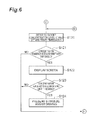
- FIG. 6 is a flowchart illustrating an operation of performing driving assistance through a comparison of a concentration tendency of a driver with a threshold based on a target concentration level in the driving assistance system according to the embodiment.
- FIG. 7 is a flowchart illustrating an operation of performing driving assistance through a comparison of a target concentration level with a measured concentration level in the driving assistance system according to the embodiment.
- FIG. 8 is a graph illustrating a temporal decrease in the concentration level of a driver.
- FIG. 9 is a plan view illustrating locations where the concentration level of a driver increases on a course along which a vehicle travels.
- FIG. 10 is a graph illustrating the amount of change of a ⁇ wave content ratio with respect to the number of laps of a course for each driver.
- FIG. 11 is a graph illustrating the amount of change of a ⁇ wave content ratio of a driver with respect to the number of laps of a course that is assumed to be a highway.
- FIG. 12 is a graph illustrating the concept of a temporal change in a cumulative concentration level.
- FIG. 13 is a graph illustrating a measured value of a cumulative concentration level with respect to time corresponding to the number of laps of a course.
- FIG. 14 is a diagram illustrating a manner of creating the concentration map of the embodiment.
- a driving assistance system 10 of the present embodiment is provided with a biometric information detecting unit 11 , a concentration level computing unit 12 , a vehicle information detecting unit 13 , a concentration tendency computing unit 14 , a concentration map computing unit 15 , a state determining unit 16 , a stimulus presentation unit 17 , and an information presentation unit 18 .
- the biometric information detecting unit 11 obtains biometric information of a subject such as a driver.
- the biometric information detecting unit 11 estimates the concentration level of a driver by estimating the state of brainwaves of the driver and the like from biometric information other than brainwaves. Accordingly, the concentration level of a driver can be estimated without detecting brainwaves that are comparatively difficult to detect. Brainwaves may be measured to correct estimation made by other indexes, with the purpose of improving the accuracy of the estimation. In this case, the brainwaves of a driver are required to be measured at one or more locations.
- the biometric information detecting unit 11 obtains biometric information that represents pulsation of a heart such as a heartbeat and a pulse wave required in estimating the concentration level of a driver.
- a method for obtaining biometric information may be any of a contact type and a contactless type.
- the biometric information detecting unit 11 can be either a physiological index detecting device, a piezoelectric element, an acceleration sensor, or the like installed in a seat or a steering wheel of a vehicle.
- the biometric information detecting unit 11 may use other biometric information such as a breath and a blink so as to estimate the concentration level of a driver.
- the biometric information detecting device for a heartbeat or a pulse wave may measure a potential difference thereof or may measure a potential difference from the amount of transmission of a light ray or the amount of reflection thereof.
- the biometric information detecting unit 11 can be a heartbeat sensor or the like that is attached to the body of a driver even when the driver is not in the vehicle.
- the concentration level of a driver can be estimated independently of environmental noise by not using the speed, the acceleration, and the like of the vehicle in estimating the concentration level of the driver.
- the state of a driver before the driver enters the vehicle can be observed and be reflected in estimating a concentration level by providing the biometric information detecting unit 11 as a heartbeat sensor or the like that is attached to the body of the driver even when the driver is not in the vehicle because the biometric information detecting unit 11 is independent of the vehicle.
- the concentration level computing unit 12 computes the amount of features required in estimating, for example, a ⁇ wave content ratio which indicates the state of the brainwaves of a driver from the biometric information obtained from the biometric information detecting unit 11 . Then, the concentration level computing unit 12 estimates the concentration level of a driver. For a heartbeat, the interval between characteristic sharp waves which are called R waves can be used as the amount of features obtained from pulsation. For a pulse wave, the interval between peak values can be used as the amount of features obtained from pulsation.
- the heart rate of a driver can be computed from the number of intervals per unit time. An instantaneous heart rate can be computed by dividing 60 seconds by the interval of one waveform.
- the concentration level computing unit 12 for the fluctuation of a heartbeat, may use a distribution, a standard deviation, and a coefficient of variation of the intervals of pulsation. In addition, the concentration level computing unit 12 may compute the amount of the fluctuation by performing frequency conversion on the intervals of pulsation per unit time.
- the concentration level computing unit 12 for brainwaves, can compute the amount of features of brainwaves which is a power spectrum of a ⁇ wave, an ⁇ wave, a ⁇ wave, a ⁇ wave, a ⁇ wave, a ⁇ wave, and an arbitrary frequency band of brainwaves.
- the vehicle information detecting unit 13 obtains information related to the latitude and the longitude of the vehicle from a global positioning system (GPS) so as to correlate map information with a concentration level. In addition, the vehicle information detecting unit 13 obtains map information such as the curvature, the width, the gradient, the speed limit, and the amount of traffic of the road on which the vehicle travels, from the map information that corresponds to the latitude and the longitude of the vehicle. The vehicle information detecting unit 13 can obtain signals related to the state of the vehicle such as the extent of braking, the degree to which an accelerator is opened, and a steering angle of the vehicle from a controller area network (CAN).
- CAN controller area network
- the concentration tendency computing unit 14 computes a temporal trend in concentration level from the ⁇ wave content ratio obtained by the concentration level computing unit 12 .
- the concentration tendency computing unit 14 computes a tendency of the concentration level of a driver to be attenuated from a temporal trend in the ⁇ wave content ratio. Accordingly, in the present embodiment, it is possible to report to a driver and perform driving assistance before driving becomes inappropriate for the driver by predicting the tendency of the concentration level of the driver to decrease.
- the concentration tendency computing unit 14 measures the cumulative number of concentration levels over time.
- the concentration tendency computing unit 14 formalizes a trend in concentration level from the period of time until the cumulative number of concentration levels reaches an arbitrary threshold.
- the concentration tendency computing unit 14 can accurately estimate a temporal trend in concentration level by estimating the period of time until the cumulative number of concentration levels is saturated.
- the concentration tendency computing unit 14 can estimate a temporal trend in concentration level in accordance with individual drivers. As such, in the present embodiment, even when the tendency of the concentration level of a driver to decrease is different for each day, a trend in concentration level can be measured with the cumulative number of concentration levels for each individual driver independently of an absolute value that is likely to vary.
- the concentration map computing unit 15 collectively stores the ⁇ wave content ratio obtained by the concentration level computing unit 12 and the map information obtained by the vehicle information detecting unit 13 such as the curvature, the width, the gradient, the speed limit, and the amount of traffic of the road.
- the concentration map computing unit 15 it is possible to obtain a change in the concentration level of a driver in the situation of the road on which the vehicle has actually traveled.
- the state determining unit 16 determines whether it is necessary to report to a driver or to intervene in a driving operation from a change in concentration level computed by the concentration tendency computing unit 14 .
- the stimulus presentation unit 17 performs stimulus presentation so as to maintain or improve the concentration level of a driver when the state determining unit 16 determines that the concentration level of a driver exceeds a certain threshold or when the state determining unit 16 determines that the amount of change in the concentration level of a driver exceeds a certain threshold.
- the stimulus presentation unit 17 may include a map on which stimulus presentation methods associated with individual situations are recorded so as to determine the stimulus presentation method.
- the stimulus presentation unit 17 may use physical stimuli.
- the stimulating presentation unit 17 can use, for example, light, sound, vibration, heating, cold wind, smell, and video.
- the information display unit 18 presents the result of estimation of the concentration level of a driver to the driver.
- the information display unit 18 performs driving assistance for a driver depending on the concentration level of the driver.
- the information display unit 18 can perform, in order, driving assistance of maintaining a lane, driving assistance of maintaining a vehicle speed and the distance between vehicles, driving assistance of avoiding collision and reducing the damage of collision, driving assistance of guiding the course of the vehicle, and driving assistance of causing the vehicle to avoid obstacles in response to a decrease in the concentration level of a driver.
- a concentration level necessary for driving can be decreased by performing driving assistance that intervenes in a driving operation by a driver, such as driving assistance of maintaining a vehicle speed and the distance between vehicles, and the driver can drive with a low concentration level.
- driving assistance such as driving assistance of maintaining a vehicle speed and the distance between vehicles
- inconvenience due to driving assistance can be reduced because the driving assistance that the driver actually needs is provided.
- a vehicle information detecting unit 110 and a feature amount computing unit 112 that correspond to the vehicle information detecting unit 13 of FIG. 1 are configured as a device mounted in the vehicle.
- An on-board device 115 includes the feature amount computing unit 112 and a concentration map computing unit 114 that corresponds to the concentration map computing unit 15 of FIG. 1 .
- the concentration map computing unit 114 communicates with a server 175 outside the vehicle through a network 170 .
- the server 175 for each driver, stores a concentration map on which the position, the shape, and the environment of each traveled road are correlated with the concentration level at that time.
- a display device 210 and an assistance device 220 that correspond to the stimulus presentation unit 17 and the information presentation unit 18 of FIG. 1 are mounted in a driving device 200 of the vehicle.
- the display device 210 is, for example, a display in a navigation system. As illustrated in FIG. 3 , the display device 210 displays a map 212 and a concentration power 214 as a graph. As such, the display device 210 can display the information related to the concentration level of a driver to the driver and can lead the driver to control the course of the vehicle in a specific direction.
- the assistance device 200 exerts predetermined reaction or vibration on the steering wheel, the accelerator pedal, and the brake pedal and leads a driving operation by a driver.
- the assistance device 220 may be a type that controls the steering angle, the degree to which the accelerator is opened, and the extent of braking of the vehicle independently of a driving operation by a driver.
- a brainwave sensor 121 , a heartbeat sensor 122 , a pupil sensor 123 , and the like of a biometric information detecting unit 120 that corresponds to the biometric information detecting unit 11 of FIG. 1 can be configured like, for example, the heartbeat sensor 122 and the like as illustrated in FIG. 3 that are mounted on a driver even when the driver is not in the vehicle.
- the heartbeat sensor 122 can be configured as, for example, a wireless electrocardiographic sensor that measures the heartbeat of a driver with a disposable electrode installed in the chest portion of the driver and that transmits the measurement result wirelessly.
- a brainwave feature amount computing unit 131 , a heartbeat feature amount computing unit 132 , a pupil feature amount computing unit 133 , and a concentration level computing unit 140 of FIG. 2 that correspond to the concentration level computing unit 12 of FIG. 1 can be stored in a portable terminal 130 that a driver carries as illustrated in FIG. 2 and FIG. 3 .
- a concentration change computing unit 152 and a time constant computing unit 154 of a concentration tendency computing unit 150 of FIG. 2 that corresponds to the concentration tendency computing unit 14 of FIG. 1 can be stored in the portable terminal 130 that a driver carries as illustrated in FIG. 2 and FIG. 3 .
- a state determining unit 160 of FIG. 2 that corresponds to the state determining unit 16 of FIG. 1 can be stored in the portable terminal 130 that a driver carries as illustrated in FIG. 2 and FIG. 3 .
- the concentration level of the driver can be estimated on the basis of data that is obtained under different conditions over a longer period of time, and the accuracy of estimation of a concentration level can be improved.
- the concentration level of the driver can be estimated by each configuration in the portable terminal 130 while the heartbeat sensor 122 and the like are mounted on the driver.
- the driver can receive driving assistance that will be described below by connecting the portable terminal 130 to the on-board device 115 or the driving assistance device 200 in the vehicle via a wired or wireless connection.
- the display device 210 is not limited to an on-board display.
- a display of the portable terminal 130 that a driver carries can be configured as the display device 210 of the present embodiment. In this case, even when the driver is in the vehicle, the display of the portable terminal 130 can be configured as the display device 210 of the present embodiment.
- the heartbeat of a driver is used to estimate a ⁇ wave of the brainwaves of the driver and the concentration level of the driver.
- a characteristic sharp wave such as a ⁇ wave called Fm ⁇ is generated in the frontal lobes when a human being concentrates.
- the concentration level of a driver is estimated from the state quantities of the vehicle, environmental information, the situation that the driver observes, and the like. In the estimation with these factors, errors occur due to the environment such as steering deviation caused by ruts.
- the concentration level of a human being can be estimated independently of interruption by using biometric information that is the internal information of a human being.
- the heartbeat sensor 122 mounted on a driver measures biometric information such as the heartbeat of the driver when the driver is in the vehicle or not in the vehicle (S 101 ).
- the heartbeat feature amount computing unit 130 of the portable terminal 130 that receives the heartbeat of the driver from the heartbeat sensor 122 computes, among types of data related to the heartbeat, the ⁇ wave content ratio from the interval or fluctuation of R waves as the amount of features of the heartbeat (S 102 ).
- the concentration level computing unit 140 in the portable terminal 130 computes the concentration level of the driver from the ⁇ wave content ratio (S 103 ).
- a ⁇ wave of the driver can be extracted through frequency analysis by the brainwave sensor 121 (S 104 ), and the concentration level of the driver can be computed with the obtained ⁇ wave (S 105 ).
- the concentration change computing unit 152 of the concentration tendency computing unit 150 temporarily stores the concentration level of the driver that is obtained for each point in time (S 107 ).
- the concentration change computing unit 152 computes the tendency of the concentration level of the driver to decrease by extracting a direct current component or a low-frequency component from a change in the time series of the concentration level configured of the ⁇ wave content ratio (S 108 ).
- the concentration level of the driver decreases linearly as illustrated by a straight line in FIG. 8 during driving of the vehicle on an even road. Meanwhile, the concentration level of the driver temporarily rises at points in time tc 1 to tc 4 when the vehicle passes through a curve. However, the concentration level of the driver decreases over time. As illustrated by a broken line, the concentration level decreases when the driver takes a rest at a point in time tx. In the traveling thereafter, the concentration level is recovered more than when driving is continued. Therefore, it is considered that the concentration level of the driver can be maintained by prompting the driver to take an appropriate rest.
- the concentration change computing unit 152 can estimate the tendency of the concentration level of the driver to decrease by measuring the period of time until the concentration level reaches an arbitrary concentration level.
- the concentration change computing unit 152 can predict the tendency of the concentration level to decrease from the direct current component of the concentration level in an arbitrary section.
- the concentration change computing unit 152 can predict a driver-specific tendency of the concentration level to decrease from the direct current component of the concentration level.
- the concentration change computing unit 152 can predict the tendency of the concentration level to decrease due to the condition of the driver in a day from the direct current component of the concentration level.
- the concentration change computing unit 152 can predict the period of time until the concentration level drops to an arbitrary threshold from the tendency of the concentration level to decrease.
- the concentration change computing unit 152 measures the concentration level from when driving starts or when the vehicle passes through the entrance of the highway. The concentration change computing unit 152 computes the average concentration level from the initiation of the measurement for five minutes. The concentration change computing unit 152 then can compute the average concentration level for every five minutes or 10 minutes and can compute the proportion of attenuation of the concentration level from the differences.
- the concentration change computing unit 152 computes with a linear equation the period of time until the ⁇ wave content ratio reaches an arbitrary threshold from an initial concentration level, in which the arbitrary threshold is, for example, 0.54 which is a statistical value. As will be described below, the display device 210 reports a decrease in the concentration level to the driver 15 minutes prior to the time when the ⁇ wave content ratio reaches an arbitrary threshold.
- the concentration change computing unit 152 can accumulate data for a long period of time for each driver and can compute a straight line or a curve other than a straight line that indicates the tendency of the concentration level to decrease from least squares of the data.
- the time constant computing unit 154 of the concentration tendency computing unit 150 can compute the period of time until the degree of fatigue of the driver or the degree of accumulation of the concentration level of the driver is saturated from the period of time until the degree of accumulation of the concentration level reaches an arbitrary threshold. As illustrated in FIG. 12 and FIG. 13 , the cumulative amount of the concentration level of the driver over time is saturated after a certain period of time like a temporary delay. Thus, the time constant computing unit 154 can compute a time constant from the cumulative amount of the concentration level. The time constant computing unit 154 can compute a time limit within which the driver can concentrate or the degree of fatigue of the driver from the time constant.
- the time constant computing unit 154 measures the concentration level from when driving starts or when the vehicle passes through the entrance of the highway.
- the time constant computing unit 154 classifies the ⁇ wave content ratio with an arbitrary threshold, for example, 0.65.
- the time constant computing unit 154 defines the case where the ⁇ wave content ratio is greater than or equal to the threshold as 1, defines the case where the ⁇ wave content ratio is less than the threshold as 0, and obtains the cumulative concentration level for each unit time.
- the time constant computing unit 154 measures the time when the cumulative concentration level of the driver reaches an arbitrary value and computes the time constant from the measured time.
- the time constant computing unit 154 computes the period of time until the cumulative concentration level is saturated from the time constant.
- the time constant computing unit 154 when the value of the added cumulative concentration level is below 1, may compute the time constant from the period of time thereuntil and may compute the period of time until the cumulative concentration level is saturated.
- the period of time until the cumulative amount of the concentration level is saturated can be computed independently of the accuracy of the data.
- the vehicle information detecting unit 110 and the feature amount computing unit 112 obtain, from the GPS, the navigation system, and the CAN, positional information such as the latitude and the longitude of the road that the vehicle currently travels or the road that is predicted to be traveled by the vehicle in the future, time, the vehicle speed, the degree to which the accelerator is opened, a braking signal, the yaw rate, the steering angle, and the like (S 110 and S 111 ).
- the concentration level is computed from the ⁇ wave content ratio of the driver in the concentration level computing unit 140 .
- the concentration map computing unit 114 computes the concentration map on which the positional information of the vehicle and information such as the vehicle speed are recorded after being correlated with the concentration level (S 112 and S 113 ).
- the concentration map can be simply created independently of multivariate environmental information related to the road.
- influence of locations and time on the concentration level can be easily perceived.
- the curvature, the width, the gradient, the speed limit, the amount of traffic, and the like of the road recorded on the map data of the navigation system may be recorded after being correlated with the concentration level.
- the concentration map computing unit 140 updates the concentration map stored on the server 175 through the network 170 (S 113 and S 114 ). Reference points having reference coordinates are prepared for each certain section in the map data of the navigation system. When a certain amount of learning data is accumulated (S 115 ), the concentration map computing unit 140 updates the concentration map by obtaining the average value of the data on the basis of the data in the case where data related to a latitude and a longitude near the reference point exceeds an arbitrary number, for example, 50 (S 116 ).
- the concentration map is updated when five pieces of data are collected. As illustrated in FIG. 14 , it is assumed that there are obtained five pieces of data that are related to the concentration level and are illustrated by black points within a certain distance from the reference coordinates. In this case, the concentration map computing unit 140 computes the average value of the five points of the concentration levels and updates the concentration level of the reference coordinates as the average value. Similarly, the concentration map computing unit 140 updates the concentration map again each time the data near the reference coordinates is increased as 50, 100, and 150.
- the state determining unit 160 when the shape, the gradient, the curvature, the speed limit, the amount of traffic, and the like of the road that the vehicle currently travels or the road that the vehicle is supposed to travel are the same as or similar to the shape and the like of the road recorded on the concentration map (S 118 ), computes a target concentration level C* by referring to the concentration map (S 119 ).
- the target concentration level C* can be set as the concentration level that is the same as or higher by a predetermined margin than the concentration level of each of the reference coordinates recorded on the concentration map. Accordingly, the target concentration level C* can be computed even on a road that the vehicle travels for the first time.
- the state determining unit 160 refers to the target concentration level C* computed from the concentration map and sets an arbitrary threshold (S 120 ).
- This arbitrary threshold may be the same value as the target concentration level C*, may be a value higher by a predetermined value than the target concentration level C*, or may be a value lower by a predetermined value than the target concentration level C*.
- the arbitrary threshold in this case is set as a higher value than a lower limit of the concentration level that is required for the driver to drive on the road which is predicted to be traveled by the vehicle.
- the state determining unit 160 compares the concentration level that is required on the road which is predicted to be traveled by the vehicle with the future concentration level of the driver. Regarding the tendency of the concentration level of the driver to decrease over time, which is estimated by the concentration tendency computing unit 150 , the state determining unit 160 determines whether the concentration level of the driver is below an arbitrary threshold after an arbitrary period of time (S 121 ).
- the display device 210 plays a video or a sound to call attention of the driver about a decrease in the concentration level and displays the most recent route traveled for a rest to a service area or a parking area, a guide to rest facilities, and advertisements such as information, products, and the like of stores in the resting facilities (S 122 ).
- the state determining unit 160 determines whether the concentration level of the driver is below the threshold that is the lower limit of the concentration level required for driving after an arbitrary period of time (S 123 ).
- the threshold that is the lower limit of the concentration level required for driving can be set as the concentration level when the degree of accumulation of the concentration level of the driver is saturated.
- the arbitrary period of time is set as a period of time during which the driver can drive the vehicle safely.
- the assistance device 220 When the concentration level of the driver is below the threshold that is the lower limit of the concentration level required for driving after an arbitrary period of time (S 123 ), the assistance device 220 first performs driving assistance in which the vehicle travels at a constant speed and follows another vehicle independently of a driving operation by the driver and reduces load of a vehicle speed control on the driver (S 124 ). When the concentration level does not rise even after a predetermined period of time elapses (S 101 to S 123 ), the assistance device 220 performs driving assistance of maintaining the lane traveled by the vehicle independently of a driving operation by the driver, and in the meantime, the display device 210 prompts the driver to take a rest in a service area or a parking area (S 124 ).
- the assistance device 220 may forcibly intervene in the driving operation by the driver and guide the method of traveling of the vehicle.
- the assistance device 220 when the vehicle has a possibility of contacting an obstacle until reaching the place where the driver can take a rest, can perform driving assistance for avoiding contact or reducing damage of the contact.
- Driving assistance for avoiding contact or reducing damage of the contact includes avoiding contact by intervening in a braking operation by the driver and avoiding contact by intervening in a steering operation by the driver.
- the display device 210 can perform driving assistance for avoiding contact or reducing damage of the contact by calling attention of the driver to the obstacle.
- the assistance device 220 can perform driving assistance for stabilizing traveling of the vehicle.
- the display device 210 and the assistance device 220 can determine the content of driving assistance depending on the position or the environment in which the vehicle travels. For example, when the vehicle travels along a curve, the assistance device 220 can perform driving assistance of maintaining the lane traveled by the vehicle independently of a driving operation by the driver. For example, when the vehicle travels a corner that has a blind spot, the display device 210 can display the blind spot. When the display device 210 performs driving assistance for the driver, the display device 210 can perform any of displaying a captured image of the area around the vehicle and prompting the driver to see a direction around the vehicle.
- S 101 to S 108 and S 120 to S 124 can be performed in an aspect of displaying whether the concentration level of the driver is sufficient for driving of the vehicle on the portable terminal 130 even when the driver is not in the vehicle.
- the state determining unit 160 compares the concentration level that is required on the road which the vehicle currently travels with the current concentration level of the driver. As illustrated in FIG. 7 , the state determining unit 160 compares a concentration level C of the driver that is currently measured and computed by the concentration level computing unit 140 with the above target concentration level C* that is required on the road which the vehicle currently travels (S 125 ).
- the display device 210 When the concentration level C measured is higher than the target concentration level C* (S 125 ), the display device 210 does not perform displaying (S 126 ). When the concentration level C measured is the same as the target concentration level C*, the display device 210 may perform displaying as described in S 122 or may not perform displaying (S 127 and S 129 ). When the concentration level C measured is lower than the target concentration level C* (S 125 ), the display device 210 and the assistance device 220 perform displaying and driving assistance as described in S 122 and S 124 (S 128 to S 130 ). The above operations of S 109 to S 130 are continued until driving of the vehicle ends (S 131 ).
- the heartbeat sensor 122 obtains the heartbeat of the driver.
- the concentration level computing unit 140 estimates the concentration level of the driver at a time later than the timing of obtaining the heartbeat by the heartbeat sensor 122 , on the basis of the heartbeat obtained by the heartbeat sensor 122 .
- the state determining unit 160 controls driving assistance for the vehicle on the basis of the comparison of the concentration level of the driver estimated by the concentration level computing unit 140 with the target concentration level of the driver that is set in association with the position or the environment in which the vehicle driven by the driver is predicted to travel.
- current driving assistance is controlled on the basis of the comparison of the future concentration level of the driver based on the actual obtained heartbeat with the target concentration level of the driver that is obtained in the position or the environment in which the vehicle travels in the future.
- driving assistance is performed more appropriately for the situation in which the driver performs driving in the position or the environment, and the possibility of causing the driver to feel inconvenienced can be reduced.
- the state determining unit 160 promotes driving assistance as the degree to which the concentration level of the driver estimated by the concentration level computing unit 140 does not satisfy the target concentration level of the driver that is set in association with the position or the environment in which the vehicle driven by the driver is predicted to travel is greater. Accordingly, driving assistance is promoted as the concentration level of the driver is lower in the situation in which the driver performs driving in the position or the environment. Thus, driving assistance is performed more appropriately for the concentration level of the driver and the conditions corresponding to the position or the environment, and the possibility of causing the driver to feel inconvenienced can be reduced.
- the “promotion of driving assistance” in the present embodiment is not limited to the promotion above through the initiation of driving assistance and includes the case where, for an obstacle which is the target of driving assistance, the obstacle is easily detected by increasing a detection range, by increasing detection accuracy, and the like.
- the “promotion of driving assistance” in the present embodiment includes the case where conditions for initiating driving assistance are relaxed by decreasing a threshold for initiating driving assistance.
- the “promotion of driving assistance” in the present embodiment includes the case where the time of initiating driving assistance is hastened.
- the “promotion of driving assistance” in the present embodiment includes the case where driving assistance is promoted by increasing the degree of driving assistance from simple presentation of information to reporting and intervening in the driving of the driver.
- the state determining unit 160 initiates driving assistance when the concentration level of the driver estimated by the concentration level computing unit 140 does not satisfy the target concentration level of the driver that is set in association with the position or the environment in which the vehicle driven by the driver is predicted to travel.
- driving assistance is performed for the concentration level of the driver and the conditions corresponding to the position or the environment when necessary, and the possibility of causing the driver to feel inconvenienced can be reduced.
- the concentration change computing unit 152 of the concentration tendency computing unit 150 estimates the tendency of the concentration level of the driver to decrease over time on the basis of the heartbeat obtained by the heartbeat sensor 122 . Accordingly, the concentration level of the driver when the vehicle actually travels in the position or the environment can be estimated more accurately, and driving assistance can be performed more appropriately for the concentration level of the driver.
- the time constant computing unit 154 of the concentration tendency computing unit 150 estimates the period of time until the degree of accumulation of the concentration level of the driver over time is saturated on the basis of the heartbeat obtained by the heartbeat sensor 122 and estimates the tendency of the concentration level of the driver to decrease over time on the basis of the period of time until the degree of accumulation is saturated.
- the period of time until the degree of accumulation of the concentration level of the driver over time is saturated is unlikely to be affected by temporary variation of the concentration level of the driver. Therefore, a tendency of the concentration level of the driver to decrease over time can be estimated more accurately regardless of temporary variation of the concentration level of the driver by estimating the period of time until the degree of accumulation of the concentration level of the driver over time is saturated.
- the state determining unit 160 on the basis of the heartbeat obtained by the heartbeat sensor 122 , associates the concentration level of the driver at the timing of obtaining biometric information by the heartbeat sensor 122 with the position or the environment in which the vehicle driven by the driver travels and records the association. Accordingly, the concentration level of the driver when the vehicle travels in the position or the environment can be correlated with the position or the environment.
- the target concentration level of the driver that is set in association with any of the position and the environment in which the vehicle driven by the driver is predicted to travel is set on the basis of the concentration level of the driver that is recorded after being associated with the position or the environment in which the vehicle driven by the driver travels. Therefore, the target concentration level of the driver corresponds to the concentration level of the driver when the vehicle travels in the position or the environment, and conditions can be set more realistically.
- the display device 210 and the assistance device 220 perform driving assistance that is set in association with the position or the environment in which the vehicle driven by the driver is predicted to travel. Thus, it is possible to perform driving assistance that is more appropriate for the position or the environment in which the vehicle travels.
- the display device 210 calls to the attention of the driver when the state of the driver estimated by the concentration level computing unit 140 is below an arbitrary threshold.
- the assistance device 220 performs driving assistance of intervening in a driving operation by the driver when the state of the driver estimated by the concentration level computing unit 140 is below the lower limit of the concentration level that is lower than an arbitrary threshold. Accordingly, the concentration level that is required for the driver to drive the vehicle can be reduced. In addition, an inconvenient feeling of the driver can be reduced because assistance that the driver needs is provided.
- the heartbeat sensor 122 obtains the heartbeat of the driver.
- the concentration level computing unit 140 estimates the concentration level of the driver at a time later than the timing of obtaining the heartbeat by the heartbeat sensor 122 , on the basis of the heartbeat obtained by the heartbeat sensor 122 .
- the display device 210 selects a course to guide the driver from multiple courses on the basis of the comparison of the concentration level of the driver estimated by the concentration level computing unit 140 with the target concentration level of the driver that is set in association with the position or the environment in which the vehicle driven by the driver is predicted to travel in the multiple courses.
- the course to be guided to the driver is selected on the basis of the comparison of the future concentration level of the driver based on the actual obtained heartbeat with the target concentration level of the driver obtained in the position or the environment in which the vehicle is predicted to travel in the future in the multiple courses.
- the course that is more appropriately for the situation in which the driver performs driving in the position or the environment is guided, and the possibility of causing the driver to feel inconvenienced can be reduced.
- the present invention is not limited to the embodiment above and is able to be modified in various manners.
- the period of time of computing the concentration level is not limited to five minutes or 10 minutes and may be an arbitrary period of time.
- the direct current component in the computation of the concentration level may be represented by a non-linear function such as an exponential function.
- the information-providing device of the present embodiment is mainly described as being applied to a vehicle.
- the display device 210 can be set as a display of a personal computer. In this case, as described above, the display displays the concentration level 214 only when the concentration level of the subject decreased during work with the personal computer and notifies the subject of a decrease in the concentration level. When the concentration level is below a predetermined threshold, the display can present suggestions and the like of work other than work with the display or less burdening monotonous work to the subject.
- Driving assistance for the driver performed by the driving assistance device 200 is not limited to the aspect in which the state where driving assistance such as reporting of warning is not performed at all is transitioned to the state where driving assistance such as reporting of warning is performed.
- the present embodiment includes the aspect in which the state where driving assistance such as reporting of warning is performed is switched to the state where different driving assistance such as intervention in the driving of the driver is performed.
- the present embodiment includes the aspect in which the state where driving assistance such as reporting of warning is performed is transitioned to the state where different driving assistance such as intervention in the driving of the driver is performed in addition to warning.
- a driver feels less inconvenienced by performing driving assistance that is more appropriate for a situation where a vehicle is traveling.
Landscapes
- Health & Medical Sciences (AREA)
- Engineering & Computer Science (AREA)
- Life Sciences & Earth Sciences (AREA)
- Physics & Mathematics (AREA)
- Medical Informatics (AREA)
- Molecular Biology (AREA)
- Veterinary Medicine (AREA)
- Public Health (AREA)
- General Health & Medical Sciences (AREA)
- Animal Behavior & Ethology (AREA)
- Surgery (AREA)
- Biomedical Technology (AREA)
- Heart & Thoracic Surgery (AREA)
- Biophysics (AREA)
- Pathology (AREA)
- Physiology (AREA)
- Cardiology (AREA)
- Automation & Control Theory (AREA)
- Psychiatry (AREA)
- Transportation (AREA)
- Signal Processing (AREA)
- Mechanical Engineering (AREA)
- Artificial Intelligence (AREA)
- Computer Vision & Pattern Recognition (AREA)
- Developmental Disabilities (AREA)
- Psychology (AREA)
- Social Psychology (AREA)
- Educational Technology (AREA)
- Hospice & Palliative Care (AREA)
- Human Computer Interaction (AREA)
- Child & Adolescent Psychology (AREA)
- General Physics & Mathematics (AREA)
- Ophthalmology & Optometry (AREA)
- Mathematical Physics (AREA)
- Pulmonology (AREA)
- Combustion & Propulsion (AREA)
- Chemical & Material Sciences (AREA)
- Traffic Control Systems (AREA)
- Measurement Of The Respiration, Hearing Ability, Form, And Blood Characteristics Of Living Organisms (AREA)
- Control Of Driving Devices And Active Controlling Of Vehicle (AREA)
Applications Claiming Priority (1)
| Application Number | Priority Date | Filing Date | Title |
|---|---|---|---|
| PCT/JP2013/058364 WO2014147828A1 (ja) | 2013-03-22 | 2013-03-22 | 運転支援装置、運転支援方法、情報提供装置、情報提供方法、ナビゲーション装置及びナビゲーション方法 |
Publications (2)
| Publication Number | Publication Date |
|---|---|
| US20160029940A1 US20160029940A1 (en) | 2016-02-04 |
| US9801580B2 true US9801580B2 (en) | 2017-10-31 |
Family
ID=51579557
Family Applications (1)
| Application Number | Title | Priority Date | Filing Date |
|---|---|---|---|
| US14/777,138 Active 2033-05-17 US9801580B2 (en) | 2013-03-22 | 2013-03-22 | Driving assistance device, driving assistance method, information-providing device, information-providing method, navigation device and navigation method |
Country Status (5)
| Country | Link |
|---|---|
| US (1) | US9801580B2 (de) |
| EP (1) | EP2977975B1 (de) |
| JP (1) | JP5950025B2 (de) |
| CN (1) | CN105072986B (de) |
| WO (1) | WO2014147828A1 (de) |
Cited By (12)
| Publication number | Priority date | Publication date | Assignee | Title |
|---|---|---|---|---|
| US20190205990A1 (en) * | 2016-02-02 | 2019-07-04 | Allstate Insurance Company | Subjective route risk mapping and mitigation |
| US10664918B1 (en) | 2014-01-24 | 2020-05-26 | Allstate Insurance Company | Insurance system related to a vehicle-to-vehicle communication system |
| US10733673B1 (en) | 2014-01-24 | 2020-08-04 | Allstate Insurance Company | Reward system related to a vehicle-to-vehicle communication system |
| US10740850B1 (en) | 2014-01-24 | 2020-08-11 | Allstate Insurance Company | Reward system related to a vehicle-to-vehicle communication system |
| US10783586B1 (en) | 2014-02-19 | 2020-09-22 | Allstate Insurance Company | Determining a property of an insurance policy based on the density of vehicles |
| US10783587B1 (en) | 2014-02-19 | 2020-09-22 | Allstate Insurance Company | Determining a driver score based on the driver's response to autonomous features of a vehicle |
| US10796369B1 (en) | 2014-02-19 | 2020-10-06 | Allstate Insurance Company | Determining a property of an insurance policy based on the level of autonomy of a vehicle |
| US10803525B1 (en) | 2014-02-19 | 2020-10-13 | Allstate Insurance Company | Determining a property of an insurance policy based on the autonomous features of a vehicle |
| US10872380B2 (en) | 2007-05-10 | 2020-12-22 | Allstate Insurance Company | Route risk mitigation |
| US10956983B1 (en) | 2014-02-19 | 2021-03-23 | Allstate Insurance Company | Insurance system for analysis of autonomous driving |
| US11062341B2 (en) | 2007-05-10 | 2021-07-13 | Allstate Insurance Company | Road segment safety rating system |
| US11565695B2 (en) | 2007-05-10 | 2023-01-31 | Arity International Limited | Route risk mitigation |
Families Citing this family (60)
| Publication number | Priority date | Publication date | Assignee | Title |
|---|---|---|---|---|
| US20150313475A1 (en) | 2012-11-27 | 2015-11-05 | Faurecia Automotive Seating, Llc | Vehicle seat with integrated sensors |
| WO2015127193A1 (en) | 2014-02-20 | 2015-08-27 | Faurecia Automotive Seating, Llc. | Vehicle seat with integrated sensors |
| JP6330601B2 (ja) * | 2014-09-18 | 2018-05-30 | 株式会社デンソー | 運転負荷推定装置、運転負荷推定方法 |
| JP6552813B2 (ja) * | 2014-12-03 | 2019-07-31 | 俊徳 加藤 | 移動体に搭乗している生体の評価システム及び評価方法 |
| WO2016112353A1 (en) * | 2015-01-09 | 2016-07-14 | Harman International Industries, Incorporated | Techniques for adjusting the level of detail of driving instructions |
| JP2016152859A (ja) * | 2015-02-20 | 2016-08-25 | セイコーエプソン株式会社 | 生体情報処理システム、サーバーシステム及び制御方法 |
| JP2016162109A (ja) * | 2015-02-27 | 2016-09-05 | パイオニア株式会社 | 精神状態誘導装置、精神状態誘導方法、精神状態誘導プログラムおよび記録媒体 |
| FR3033303B1 (fr) * | 2015-03-03 | 2017-02-24 | Renault Sas | Dispositif et procede de prediction d'un niveau de vigilance chez un conducteur d'un vehicule automobile. |
| US10046671B2 (en) | 2015-08-14 | 2018-08-14 | Faurecia Automotive Seating, Llc | Occupant-recognition system for vehicle seat |
| JP6509686B2 (ja) * | 2015-09-04 | 2019-05-08 | 株式会社東芝 | 電子機器及び方法 |
| JP6055535B1 (ja) * | 2015-12-04 | 2016-12-27 | 株式会社ガイア・システム・ソリューション | 集中度処理システム |
| JP6365554B2 (ja) * | 2016-01-14 | 2018-08-01 | マツダ株式会社 | 運転支援装置 |
| DE102016201939B4 (de) * | 2016-02-09 | 2025-09-04 | Volkswagen Aktiengesellschaft | Verfahren und System zur Verbesserung der Wahrnehmung bei Kollisionsvermeidungssystemen |
| JP6332838B2 (ja) * | 2016-02-15 | 2018-05-30 | マツダ株式会社 | 運転支援装置 |
| CN107180220B (zh) * | 2016-03-11 | 2023-10-31 | 松下电器(美国)知识产权公司 | 危险预测方法 |
| JP2017173286A (ja) * | 2016-03-26 | 2017-09-28 | アルパイン株式会社 | 走行経路設定装置および走行経路設定方法 |
| DE102016205153A1 (de) * | 2016-03-29 | 2017-10-05 | Avl List Gmbh | Verfahren zum Erzeugen von Steuerdaten für ein regelbasiertes Unterstützen eines Fahrers |
| JP6699831B2 (ja) | 2016-04-28 | 2020-05-27 | トヨタ自動車株式会社 | 運転意識推定装置 |
| US10918337B2 (en) | 2016-06-03 | 2021-02-16 | Faurecia Automotive Seating, Llc | Vehicle seat with integrated sensors |
| US20170357980A1 (en) * | 2016-06-10 | 2017-12-14 | Paypal, Inc. | Vehicle Onboard Sensors and Data for Authentication |
| US11197637B2 (en) | 2016-06-20 | 2021-12-14 | Faurecia Automotive Seating, Llc | Control system for a vehicle seat |
| JP6778872B2 (ja) * | 2016-06-28 | 2020-11-04 | パナソニックIpマネジメント株式会社 | 運転支援装置及び運転支援方法 |
| JP6694649B2 (ja) * | 2016-07-07 | 2020-05-20 | 国立研究開発法人産業技術総合研究所 | 生理状態判定装置、生理状態判定方法、生理状態判定装置用プログラムおよび、生理状態判定システム |
| JP6878785B2 (ja) * | 2016-07-29 | 2021-06-02 | 日産自動車株式会社 | 制動制御方法及び制動制御装置 |
| US9932041B2 (en) * | 2016-08-10 | 2018-04-03 | Toyota Jidosha Kabushiki Kaisha | Personalized medical emergency autopilot system based on portable medical device data |
| US10730524B2 (en) | 2016-09-07 | 2020-08-04 | Faurecia Automotive Seating, Llc | Vehicle seat |
| JP2018041238A (ja) * | 2016-09-07 | 2018-03-15 | アルパイン株式会社 | 運転支援システム |
| JP2018089091A (ja) * | 2016-12-02 | 2018-06-14 | 東京電力ホールディングス株式会社 | 心理状態判定装置、心理状態判定方法、及び心理状態判定プログラム |
| JP7045639B2 (ja) * | 2017-02-28 | 2022-04-01 | パナソニックIpマネジメント株式会社 | 作業適正度判定システム |
| JP6627810B2 (ja) * | 2017-03-09 | 2020-01-08 | オムロン株式会社 | 運転モード切替制御装置、方法およびプログラム |
| JP2018151907A (ja) * | 2017-03-14 | 2018-09-27 | オムロン株式会社 | 集中度判定装置、集中度判定方法及び集中度判定のためのプログラム |
| JP7152133B2 (ja) * | 2017-03-30 | 2022-10-12 | 住友建機株式会社 | ショベル |
| JP6555646B2 (ja) * | 2017-03-30 | 2019-08-07 | マツダ株式会社 | 車両運転支援システム |
| JP6874516B2 (ja) | 2017-05-11 | 2021-05-19 | いすゞ自動車株式会社 | 車両の運転制御システム及び車両の運転制御方法 |
| DE102017211931B4 (de) * | 2017-07-12 | 2022-12-29 | Volkswagen Aktiengesellschaft | Verfahren zum Anpassen zumindest eines Betriebsparameters eines Kraftfahrzeugs, System zum Anpassen zumindest eines Betriebsparameters eines Kraftfahrzeugs und Kraftfahrzeug |
| US11083379B2 (en) | 2017-08-02 | 2021-08-10 | Faurecia Automotive Seating, Llc | Health-monitoring seat cover |
| JP7021429B2 (ja) * | 2017-08-17 | 2022-02-17 | テイ・エス テック株式会社 | 異常検知装置及びシート |
| JP6598141B2 (ja) * | 2017-11-16 | 2019-10-30 | マツダ株式会社 | 認知時機推定装置及び認知時機推定方法 |
| JP6684295B2 (ja) * | 2018-02-09 | 2020-04-22 | 株式会社日立物流 | 管理支援システム |
| WO2019185303A1 (en) * | 2018-03-28 | 2019-10-03 | Robert Bosch Gmbh | In-vehicle system for estimating a scene inside a vehicle cabin |
| DE102018206666A1 (de) * | 2018-04-30 | 2019-10-31 | Robert Bosch Gmbh | Verfahren zum Anlegen eines Prädikationsprofils eines Fahrers eines Fahrzeugs und Verfahren zum Warnen eines Fahrers eines Fahrzeugs vor einer Situation mit einer zu geringen Leistungsfähigkeit des Fahrers |
| WO2020003788A1 (ja) * | 2018-06-25 | 2020-01-02 | パナソニックIpマネジメント株式会社 | 運転支援装置 |
| US11180158B1 (en) * | 2018-07-31 | 2021-11-23 | United Services Automobile Association (Usaa) | Routing or driving systems and methods based on sleep pattern information |
| CN110834640B (zh) * | 2018-08-10 | 2022-05-03 | 上海博泰悦臻网络技术服务有限公司 | 安全驾驶提醒方法、车机及车辆 |
| US11861458B2 (en) | 2018-08-21 | 2024-01-02 | Lyft, Inc. | Systems and methods for detecting and recording anomalous vehicle events |
| WO2020054458A1 (ja) * | 2018-09-13 | 2020-03-19 | ソニーセミコンダクタソリューションズ株式会社 | 情報処理装置、移動装置、および方法、並びにプログラム |
| KR102612925B1 (ko) * | 2018-10-18 | 2023-12-13 | 주식회사 에이치엘클레무브 | 차량 긴급 제어 장치 |
| JP7328828B2 (ja) * | 2019-08-27 | 2023-08-17 | フォルシアクラリオン・エレクトロニクス株式会社 | 状態推定装置、状態推定プログラムおよび状態推定方法 |
| JP2021037033A (ja) * | 2019-09-02 | 2021-03-11 | 株式会社安藤・間 | ドライバーの状態推定方法及びシステム |
| JP7107329B2 (ja) * | 2020-02-12 | 2022-07-27 | トヨタ自動車株式会社 | 運転支援システム |
| WO2021181699A1 (ja) * | 2020-03-13 | 2021-09-16 | ヤマハ発動機株式会社 | 位置評価装置及び位置評価システム |
| TWI752644B (zh) * | 2020-09-23 | 2022-01-11 | 亞東學校財團法人亞東科技大學 | 物聯網車輛控制系統及物聯網車輛控制方法 |
| JP7653609B2 (ja) * | 2020-09-29 | 2025-03-31 | パナソニックIpマネジメント株式会社 | 集中度予測システム、集中度予測方法、及びプログラム |
| WO2022172358A1 (ja) * | 2021-02-10 | 2022-08-18 | 日本電信電話株式会社 | 外部刺激変調方法、外部刺激変調装置、およびプログラム |
| JP7650024B2 (ja) * | 2021-03-29 | 2025-03-24 | 国立大学法人 東京大学 | 生産性判定装置及び生産性判定方法 |
| JP7742726B2 (ja) * | 2021-06-21 | 2025-09-22 | 三菱電機株式会社 | 設備制御装置、設備制御システム、設備制御方法及びプログラム |
| US20250009269A1 (en) * | 2021-11-22 | 2025-01-09 | Nippon Telegraph And Telephone Corporation | State estimation apparatus, state estimation method, and program |
| JP7475388B2 (ja) * | 2022-03-31 | 2024-04-26 | 本田技研工業株式会社 | 生体状態誘導装置、生体状態誘導方法、及びプログラム |
| JP7842624B2 (ja) * | 2022-04-22 | 2026-04-08 | 株式会社Subaru | 感情判別装置 |
| WO2025074748A1 (ja) * | 2023-10-05 | 2025-04-10 | ソニーグループ株式会社 | 情報処理システム |
Citations (19)
| Publication number | Priority date | Publication date | Assignee | Title |
|---|---|---|---|---|
| JPH06255520A (ja) | 1993-03-09 | 1994-09-13 | Mazda Motor Corp | 車両の制御装置 |
| JP2003061939A (ja) | 2001-08-28 | 2003-03-04 | Pioneer Electronic Corp | 情報提供システム、情報提供方法、情報提供プログラム、情報提供システムにおけるサーバ装置および、情報提供システムにおける端末装置 |
| JP2007064797A (ja) | 2005-08-31 | 2007-03-15 | Aisin Aw Co Ltd | ナビゲーション装置 |
| WO2007090896A1 (en) | 2006-02-10 | 2007-08-16 | Ferrari S.P.A. | Method of controlling a vehicle to adapt dynamic performance of the vehicle to the psycho-physical state of the driver |
| JP2008015561A (ja) | 2006-06-30 | 2008-01-24 | Equos Research Co Ltd | 情報提供車両及び運転支援装置 |
| US20080180257A1 (en) * | 2007-01-29 | 2008-07-31 | Denso Corporation | Wakefulness maintaining apparatus and method of maintaining wakefulness |
| JP2009039167A (ja) | 2007-08-06 | 2009-02-26 | Toyota Motor Corp | 眠気判定装置 |
| JP2009073465A (ja) | 2007-08-28 | 2009-04-09 | Fuji Heavy Ind Ltd | 安全運転支援システム |
| US20100241021A1 (en) | 2008-09-19 | 2010-09-23 | Koji Morikawa | Distraction detection apparatus, distraction detection method, and computer program |
| US20110224875A1 (en) * | 2010-03-10 | 2011-09-15 | Cuddihy Mark A | Biometric Application of a Polymer-based Pressure Sensor |
| US20110313259A1 (en) | 2009-02-13 | 2011-12-22 | Toyota Jidosha Kabushiki Kaisha | Physiological condition estimation device and vehicle control device |
| US20120095358A1 (en) | 2010-10-14 | 2012-04-19 | Denso Corporation | Living body state monitor apparatus |
| JP2012112853A (ja) | 2010-11-26 | 2012-06-14 | Fujitsu Ten Ltd | 情報処理装置、車載用ナビゲーション装置、及び、情報処理方法 |
| US20120256749A1 (en) * | 2011-04-11 | 2012-10-11 | Ford Global Technologies, Llc | Method and Apparatus for Health Monitoring |
| WO2012144948A1 (en) | 2011-04-20 | 2012-10-26 | Scania Cv Ab | Vehicle with a safety system involving prediction of driver tiredness |
| DE102011109564A1 (de) | 2011-08-05 | 2013-02-07 | Daimler Ag | Verfahren und Vorrichtung zur Überwachung zumindest eines Fahrzeuginsassen und Verfahren zum Betrieb zumindest einer Assistenzvorrichtung |
| US20130231800A1 (en) * | 2011-11-16 | 2013-09-05 | Flextronics Ap, Llc | Vehicle occupant health data gathering and monitoring |
| JP2014202733A (ja) | 2013-04-10 | 2014-10-27 | トヨタ自動車株式会社 | ナビゲーション装置及びナビゲーション方法 |
| US20160001781A1 (en) * | 2013-03-15 | 2016-01-07 | Honda Motor Co., Ltd. | System and method for responding to driver state |
Family Cites Families (6)
| Publication number | Priority date | Publication date | Assignee | Title |
|---|---|---|---|---|
| JPH06255519A (ja) * | 1993-03-09 | 1994-09-13 | Mazda Motor Corp | 車両の制御装置 |
| JPH09309358A (ja) * | 1996-05-23 | 1997-12-02 | Suzuki Motor Corp | 車間距離警報装置 |
| JP2009022519A (ja) * | 2007-07-19 | 2009-02-05 | Toyota Motor Corp | 心理状態緩和装置 |
| EP2312551A4 (de) * | 2008-08-05 | 2014-10-15 | Panasonic Corp | Vorrichtung, verfahren und programm zur bewertung des bewusstheitsgrades eines fahrers |
| WO2011007886A1 (ja) * | 2009-07-16 | 2011-01-20 | 株式会社デルタツーリング | 生体状態推定装置及びコンピュータプログラム |
| CN102396009B (zh) * | 2009-11-09 | 2014-06-25 | 松下电器产业株式会社 | 注意力状态判定装置、方法 |
-
2013
- 2013-03-22 US US14/777,138 patent/US9801580B2/en active Active
- 2013-03-22 CN CN201380074925.4A patent/CN105072986B/zh active Active
- 2013-03-22 WO PCT/JP2013/058364 patent/WO2014147828A1/ja not_active Ceased
- 2013-03-22 JP JP2015506517A patent/JP5950025B2/ja not_active Expired - Fee Related
- 2013-03-22 EP EP13879000.1A patent/EP2977975B1/de active Active
Patent Citations (24)
| Publication number | Priority date | Publication date | Assignee | Title |
|---|---|---|---|---|
| JPH06255520A (ja) | 1993-03-09 | 1994-09-13 | Mazda Motor Corp | 車両の制御装置 |
| JP2003061939A (ja) | 2001-08-28 | 2003-03-04 | Pioneer Electronic Corp | 情報提供システム、情報提供方法、情報提供プログラム、情報提供システムにおけるサーバ装置および、情報提供システムにおける端末装置 |
| US20030043045A1 (en) | 2001-08-28 | 2003-03-06 | Pioneer Corporation | Information providing system and information providing method |
| JP2007064797A (ja) | 2005-08-31 | 2007-03-15 | Aisin Aw Co Ltd | ナビゲーション装置 |
| WO2007090896A1 (en) | 2006-02-10 | 2007-08-16 | Ferrari S.P.A. | Method of controlling a vehicle to adapt dynamic performance of the vehicle to the psycho-physical state of the driver |
| JP2008015561A (ja) | 2006-06-30 | 2008-01-24 | Equos Research Co Ltd | 情報提供車両及び運転支援装置 |
| US20080180257A1 (en) * | 2007-01-29 | 2008-07-31 | Denso Corporation | Wakefulness maintaining apparatus and method of maintaining wakefulness |
| JP2009039167A (ja) | 2007-08-06 | 2009-02-26 | Toyota Motor Corp | 眠気判定装置 |
| US20100234747A1 (en) | 2007-08-06 | 2010-09-16 | Toyota Jidosha Kabushiki Kaisha | Sleepiness judging device |
| JP2009073465A (ja) | 2007-08-28 | 2009-04-09 | Fuji Heavy Ind Ltd | 安全運転支援システム |
| CN101980660B (zh) | 2008-09-19 | 2013-01-16 | 松下电器产业株式会社 | 注意力分散检测装置、及注意力分散检测方法 |
| US20100241021A1 (en) | 2008-09-19 | 2010-09-23 | Koji Morikawa | Distraction detection apparatus, distraction detection method, and computer program |
| US20110313259A1 (en) | 2009-02-13 | 2011-12-22 | Toyota Jidosha Kabushiki Kaisha | Physiological condition estimation device and vehicle control device |
| US20110224875A1 (en) * | 2010-03-10 | 2011-09-15 | Cuddihy Mark A | Biometric Application of a Polymer-based Pressure Sensor |
| US20120095358A1 (en) | 2010-10-14 | 2012-04-19 | Denso Corporation | Living body state monitor apparatus |
| JP2012081194A (ja) | 2010-10-14 | 2012-04-26 | Denso Corp | 生体状態監視装置 |
| JP2012112853A (ja) | 2010-11-26 | 2012-06-14 | Fujitsu Ten Ltd | 情報処理装置、車載用ナビゲーション装置、及び、情報処理方法 |
| US20120256749A1 (en) * | 2011-04-11 | 2012-10-11 | Ford Global Technologies, Llc | Method and Apparatus for Health Monitoring |
| WO2012144948A1 (en) | 2011-04-20 | 2012-10-26 | Scania Cv Ab | Vehicle with a safety system involving prediction of driver tiredness |
| DE102011109564A1 (de) | 2011-08-05 | 2013-02-07 | Daimler Ag | Verfahren und Vorrichtung zur Überwachung zumindest eines Fahrzeuginsassen und Verfahren zum Betrieb zumindest einer Assistenzvorrichtung |
| US20140135598A1 (en) | 2011-08-05 | 2014-05-15 | Daimler Ag | Method and Device to Monitor at Least One Vehicle Passenger and Method to Control at Least One Assistance Device |
| US20130231800A1 (en) * | 2011-11-16 | 2013-09-05 | Flextronics Ap, Llc | Vehicle occupant health data gathering and monitoring |
| US20160001781A1 (en) * | 2013-03-15 | 2016-01-07 | Honda Motor Co., Ltd. | System and method for responding to driver state |
| JP2014202733A (ja) | 2013-04-10 | 2014-10-27 | トヨタ自動車株式会社 | ナビゲーション装置及びナビゲーション方法 |
Cited By (25)
| Publication number | Priority date | Publication date | Assignee | Title |
|---|---|---|---|---|
| US11847667B2 (en) | 2007-05-10 | 2023-12-19 | Allstate Insurance Company | Road segment safety rating system |
| US10872380B2 (en) | 2007-05-10 | 2020-12-22 | Allstate Insurance Company | Route risk mitigation |
| US11062341B2 (en) | 2007-05-10 | 2021-07-13 | Allstate Insurance Company | Road segment safety rating system |
| US12060062B2 (en) | 2007-05-10 | 2024-08-13 | Arity International Limited | Route risk mitigation |
| US11565695B2 (en) | 2007-05-10 | 2023-01-31 | Arity International Limited | Route risk mitigation |
| US11037247B2 (en) | 2007-05-10 | 2021-06-15 | Allstate Insurance Company | Route risk mitigation |
| US11087405B2 (en) | 2007-05-10 | 2021-08-10 | Allstate Insurance Company | System for risk mitigation based on road geometry and weather factors |
| US11004152B2 (en) | 2007-05-10 | 2021-05-11 | Allstate Insurance Company | Route risk mitigation |
| US12175541B2 (en) | 2014-01-24 | 2024-12-24 | Allstate Insurance Company | Reward system related to a vehicle-to-vehicle communication system |
| US11295391B1 (en) | 2014-01-24 | 2022-04-05 | Allstate Insurance Company | Reward system related to a vehicle-to-vehicle communication system |
| US12315014B2 (en) | 2014-01-24 | 2025-05-27 | Allstate Insurance Company | Reward system related to a vehicle-to-vehicle communication system |
| US10733673B1 (en) | 2014-01-24 | 2020-08-04 | Allstate Insurance Company | Reward system related to a vehicle-to-vehicle communication system |
| US10664918B1 (en) | 2014-01-24 | 2020-05-26 | Allstate Insurance Company | Insurance system related to a vehicle-to-vehicle communication system |
| US10740850B1 (en) | 2014-01-24 | 2020-08-11 | Allstate Insurance Company | Reward system related to a vehicle-to-vehicle communication system |
| US11551309B1 (en) | 2014-01-24 | 2023-01-10 | Allstate Insurance Company | Reward system related to a vehicle-to-vehicle communication system |
| US10796369B1 (en) | 2014-02-19 | 2020-10-06 | Allstate Insurance Company | Determining a property of an insurance policy based on the level of autonomy of a vehicle |
| US10783587B1 (en) | 2014-02-19 | 2020-09-22 | Allstate Insurance Company | Determining a driver score based on the driver's response to autonomous features of a vehicle |
| US10783586B1 (en) | 2014-02-19 | 2020-09-22 | Allstate Insurance Company | Determining a property of an insurance policy based on the density of vehicles |
| US12086884B1 (en) | 2014-02-19 | 2024-09-10 | Allstate Insurance Company | Insurance system for analysis of autonomous driving |
| US10803525B1 (en) | 2014-02-19 | 2020-10-13 | Allstate Insurance Company | Determining a property of an insurance policy based on the autonomous features of a vehicle |
| US12315013B1 (en) | 2014-02-19 | 2025-05-27 | Allstate Insurance Company | Determining a property of an insurance policy based on the autonomous features of a vehicle |
| US10956983B1 (en) | 2014-02-19 | 2021-03-23 | Allstate Insurance Company | Insurance system for analysis of autonomous driving |
| US20190205990A1 (en) * | 2016-02-02 | 2019-07-04 | Allstate Insurance Company | Subjective route risk mapping and mitigation |
| US10885592B2 (en) * | 2016-02-02 | 2021-01-05 | Allstate Insurance Company | Subjective route risk mapping and mitigation |
| US12361494B2 (en) * | 2016-02-02 | 2025-07-15 | Allstate Insurance Company | Subjective route risk mapping and mitigation |
Also Published As
| Publication number | Publication date |
|---|---|
| WO2014147828A1 (ja) | 2014-09-25 |
| EP2977975B1 (de) | 2017-08-16 |
| CN105072986B (zh) | 2018-12-04 |
| EP2977975A1 (de) | 2016-01-27 |
| EP2977975A4 (de) | 2016-03-09 |
| JP5950025B2 (ja) | 2016-07-13 |
| JPWO2014147828A1 (ja) | 2017-02-16 |
| US20160029940A1 (en) | 2016-02-04 |
| CN105072986A (zh) | 2015-11-18 |
Similar Documents
| Publication | Publication Date | Title |
|---|---|---|
| US9801580B2 (en) | Driving assistance device, driving assistance method, information-providing device, information-providing method, navigation device and navigation method | |
| US9676395B2 (en) | Incapacitated driving detection and prevention | |
| EP2778007B1 (de) | Verfahren und System zur Beurteilung von anormalem Fahrverhalten von Fahrzeugen auf einer Straße | |
| US20110313259A1 (en) | Physiological condition estimation device and vehicle control device | |
| CN105741494B (zh) | 一种基于线下数据匹配的驾驶员疲劳监测方法 | |
| US10346697B2 (en) | Driver state monitoring using corneal reflection detection | |
| US8731736B2 (en) | System and method for reducing driving skill atrophy | |
| US6974326B2 (en) | Method of and an apparatus for measuring a person's ability to perform a motor control task | |
| US20160246298A1 (en) | Drive assist apparatus | |
| US20240000354A1 (en) | Driving characteristic determination device, driving characteristic determination method, and recording medium | |
| US10528833B1 (en) | Health monitoring system operable in a vehicle environment | |
| KR101646418B1 (ko) | 심박 신호 기반 운전자 상태 판단 장치 및 방법 | |
| KR20140147233A (ko) | 차량의 주행 패턴을 이용한 졸음 운전 판단 장치 및 방법 | |
| JP5862407B2 (ja) | 生体情報処理装置及び生体情報処理方法 | |
| US20200276978A1 (en) | Sleepiness level prediction device and sleepiness level prediction method | |
| JP2005092285A (ja) | 車両運転状態推定装置、及びドライバの車両運転特性推定装置 | |
| JP7825347B2 (ja) | ドライバー支援装置、ドライバー支援システム及びドライバー支援方法 | |
| JP2010063682A (ja) | 運転者監視装置 | |
| EP2962638A1 (de) | Einschlafverhinderungsverfahren und einschlafverhinderungsvorrichtung | |
| JPWO2014002418A1 (ja) | ストレス状態推定装置 | |
| JP6472709B2 (ja) | 自動車運転能力判定装置 | |
| JP2018045451A (ja) | 車両制御装置 | |
| KR101312540B1 (ko) | 주행안전장치 | |
| US20250249911A1 (en) | Driver state estimation apparatus, system and associated methods | |
| US20250249910A1 (en) | Driver state estimation apparatus, system and associated methods |
Legal Events
| Date | Code | Title | Description |
|---|---|---|---|
| AS | Assignment |
Owner name: TOYOTA JIDOSHA KABUSHIKI KAISHA, JAPAN Free format text: ASSIGNMENT OF ASSIGNORS INTEREST;ASSIGNORS:IIZUKA, HISASHI;KAJI, HIROTAKA;KIKUCHI, HIROKAZU;REEL/FRAME:036569/0162 Effective date: 20150731 |
|
| STCF | Information on status: patent grant |
Free format text: PATENTED CASE |
|
| MAFP | Maintenance fee payment |
Free format text: PAYMENT OF MAINTENANCE FEE, 4TH YEAR, LARGE ENTITY (ORIGINAL EVENT CODE: M1551); ENTITY STATUS OF PATENT OWNER: LARGE ENTITY Year of fee payment: 4 |
|
| MAFP | Maintenance fee payment |
Free format text: PAYMENT OF MAINTENANCE FEE, 8TH YEAR, LARGE ENTITY (ORIGINAL EVENT CODE: M1552); ENTITY STATUS OF PATENT OWNER: LARGE ENTITY Year of fee payment: 8 |