US9855279B2 - Methods of treating oral mucositis - Google Patents
Methods of treating oral mucositis Download PDFInfo
- Publication number
- US9855279B2 US9855279B2 US11/871,848 US87184807A US9855279B2 US 9855279 B2 US9855279 B2 US 9855279B2 US 87184807 A US87184807 A US 87184807A US 9855279 B2 US9855279 B2 US 9855279B2
- Authority
- US
- United States
- Prior art keywords
- alkyl
- aryl
- day
- group
- acid
- Prior art date
- Legal status (The legal status is an assumption and is not a legal conclusion. Google has not performed a legal analysis and makes no representation as to the accuracy of the status listed.)
- Active, expires
Links
- 0 [1*][C@]1(C)[C@@]([2*])(C)[N@@]2([H])[C@@]([3*])(C)[C@@]([4*])(C)[N@@]3([H])[C@@]([5*])(C)[C@@]([6*])(C)[N@@]4([H])[C@@]([7*])(C)[C@@]([8*])(C)N5([H])[C@@]([9*])(C)[C@@]([10*])(C)N1([H])C5234(C)[Y] Chemical compound [1*][C@]1(C)[C@@]([2*])(C)[N@@]2([H])[C@@]([3*])(C)[C@@]([4*])(C)[N@@]3([H])[C@@]([5*])(C)[C@@]([6*])(C)[N@@]4([H])[C@@]([7*])(C)[C@@]([8*])(C)N5([H])[C@@]([9*])(C)[C@@]([10*])(C)N1([H])C5234(C)[Y] 0.000 description 10
Images



Classifications
-
- A—HUMAN NECESSITIES
- A61—MEDICAL OR VETERINARY SCIENCE; HYGIENE
- A61K—PREPARATIONS FOR MEDICAL, DENTAL OR TOILETRY PURPOSES
- A61K31/00—Medicinal preparations containing organic active ingredients
- A61K31/33—Heterocyclic compounds
- A61K31/555—Heterocyclic compounds containing heavy metals, e.g. hemin, hematin, melarsoprol
-
- A—HUMAN NECESSITIES
- A61—MEDICAL OR VETERINARY SCIENCE; HYGIENE
- A61K—PREPARATIONS FOR MEDICAL, DENTAL OR TOILETRY PURPOSES
- A61K45/00—Medicinal preparations containing active ingredients not provided for in groups A61K31/00 - A61K41/00
- A61K45/06—Mixtures of active ingredients without chemical characterisation, e.g. antiphlogistics and cardiaca
-
- A—HUMAN NECESSITIES
- A61—MEDICAL OR VETERINARY SCIENCE; HYGIENE
- A61P—SPECIFIC THERAPEUTIC ACTIVITY OF CHEMICAL COMPOUNDS OR MEDICINAL PREPARATIONS
- A61P1/00—Drugs for disorders of the alimentary tract or the digestive system
- A61P1/02—Stomatological preparations, e.g. drugs for caries, aphtae, periodontitis
-
- A—HUMAN NECESSITIES
- A61—MEDICAL OR VETERINARY SCIENCE; HYGIENE
- A61P—SPECIFIC THERAPEUTIC ACTIVITY OF CHEMICAL COMPOUNDS OR MEDICINAL PREPARATIONS
- A61P29/00—Non-central analgesic, antipyretic or antiinflammatory agents, e.g. antirheumatic agents; Non-steroidal antiinflammatory drugs [NSAID]
-
- A—HUMAN NECESSITIES
- A61—MEDICAL OR VETERINARY SCIENCE; HYGIENE
- A61P—SPECIFIC THERAPEUTIC ACTIVITY OF CHEMICAL COMPOUNDS OR MEDICINAL PREPARATIONS
- A61P35/00—Antineoplastic agents
-
- A—HUMAN NECESSITIES
- A61—MEDICAL OR VETERINARY SCIENCE; HYGIENE
- A61P—SPECIFIC THERAPEUTIC ACTIVITY OF CHEMICAL COMPOUNDS OR MEDICINAL PREPARATIONS
- A61P39/00—General protective or antinoxious agents
-
- A—HUMAN NECESSITIES
- A61—MEDICAL OR VETERINARY SCIENCE; HYGIENE
- A61P—SPECIFIC THERAPEUTIC ACTIVITY OF CHEMICAL COMPOUNDS OR MEDICINAL PREPARATIONS
- A61P39/00—General protective or antinoxious agents
- A61P39/06—Free radical scavengers or antioxidants
Definitions
- This invention relates generally to the treatment of oral mucositis and, more particularly, to methods for treating oral mucositis with a Reactive Oxygen Species (“ROS”) scavenger.
- the compositions and methods are useful in treating oral mucositis.
- Oral ulcerative mucositis is a common, painful, dose-limiting toxicity of drug and radiation therapy for cancer (1).
- the disorder is characterized by breakdown of the oral mucosa that results in the formation of ulcerative lesions.
- the ulcerations that accompany mucositis are frequent portals of entry for indigenous oral bacteria often leading to sepsis or bacteremia (2).
- Mucositis occurs to some degree in more than one third of patients receiving anti-neoplastic drug therapy (3).
- the frequency and severity are significantly greater among patients who are treated with induction therapy for leukemia or with many of the conditioning regimens for bone marrow transplant (4).
- moderate to severe mucositis can occur in more than three-quarters of patients.
- Moderate to severe mucositis occurs in virtually all patients who receive radiation therapy for tumors of the head and neck and typically begins with cumulative exposures of 15 Gy and then worsens as total doses of 60 Gy or more are reached (1-4).
- Standard therapy for mucositis is predominantly palliative, including application of topical analgesics such as lidocaine and/or systemic administration of narcotics and antibiotics.
- topical analgesics such as lidocaine and/or systemic administration of narcotics and antibiotics.
- palifermin Korean amino acid sequence
- FGF fibroblast growth factor
- mucositis as a biological process has only been recently appreciated (5-7). It has been suggested that the condition represents a sequential interaction of oral mucosal cells and tissues, reactive oxygen species, pro-inflammatory cytokines, mediators of apoptosis and local factors such as saliva and the oral microbiota. While epithelial degeneration and breakdown ultimately result in mucosal ulceration, it appears that the early changes associated with radiation-induced mucosal toxicity occur within the endothelium, and connective tissue of the submucosa. For example, electron microscopic evaluation of mucosa within 1 week of radiation shows damage to both endothelium and connective tissue, but not epithelium. It appears that the overall mechanism for mucositis development is similar for both radiation and chemotherapy (8).
- M40403 a superoxide dismutase mimetic, M40403, was shown to be effective in an animal models of inflammation (Salvemini et al., Science 286:304-306, 1999) and, more specifically, in an animal model of rheumatoid arthritis (Salvemini et al., Arthritis & Reumatism 44:2909-2921, 2001). Nevertheless, treatment of oral mucositis using M40403 has neither been reported nor suggested.
- a method comprises administering administering to a patient in need thereof, a superoxide dismutase mimetic.
- a superoxide dismutase mimetic can be represented by the formula:
- R 1 , R′ 1 , R 2 , R′ 2 , R 3 , R′ 3 , R 4 , R′ 4 , R 5 , R′ 5 , R 6 , R′ 6 , R 7 , R′ 7 , R 8 , R′ 8 , R 9 , R′ 9 , R 10 , and R′ 10 are independently:
- (i b ) a moiety independently selected from the group consisting of alkenyl, alkenylcycloalkenyl, alkenylcycloalkyl, alkyl, alkylcycloalkenyl, alkylcycloalkyl, alkynyl, aralkyl, aryl, cycloalkenyl, cycloalkyl, cycloalkylalkyl, cycloalkylcycloalkyl, cycloalkenylalkyl, heterocyclyl, and aralkyl radicals and radicals attached to the ⁇ -carbon or ⁇ -amino acids; or
- (i c ) a moiety independently selected from the group consisting of —OR 11 , —NR 11 R 12 , —COR 11 , —CO 2 R 11 , —CONR 11 R 12 , —SR 11 , —SOR 11 , —SO 2 R 11 , —SO 2 NR 11 R 12 , —N(OR 11 )(R 12 ), —P(O)(OR 11 )(OR 12 ), —P(O)(OR 11 )(R 12 ), —OP(O)(OR 11 )(OR 12 ), and substituents attached to the ⁇ -carbon of ⁇ -amino acids, wherein R 11 and R 12 are independently hydrogen or alkyl; and
- R and S are independently selected from the group consisting of alkenyl, alkenylcycloalkenyl, alkenylcycloalkyl, alkyl, alkylcycloalkenyl, alkylcycloalkyl, alkynyl, aralkyl, aryl, cycloalkenyl, cycloalkyl, cycloalkylalkyl, cycloalkylcycloalkyl, cycloalkenylalkyl, and heterocyclyl, aza, amide, ammonium, oxa, thia, sulfonyl, sulfinyl, sulfonamide, phosphoryl, phosphinyl, phosphino, phosphonium, keto, ester, alcohol, carbamate, urea, thiocarbonyl, borates, boranes, boraza, silyl, sil
- M is a transition metal
- X, Y and Z are independently selected from the group consisting of halide, oxo, aquo, hydroxo, alcohol, phenol, dioxygen, peroxo, hydroperoxo, alkylperoxo, arylperoxo, ammonia, alkylamino, arylamino, heterocycloalkyl amino, heterocycloaryl amino, amine oxides, hydrazine, alkyl hydrazine, aryl hydrazine, nitric oxide, cyanide, cyanate, thiocyanate, isocyanate, isothiocyanate, alkyl nitrile, aryl nitrile, alkyl isonitrile, aryl isonitrile, nitrate, nitrite, azido, alkyl sulfonic acid, aryl sulfonic acid, alkyl sulfoxide, aryl sulfoxide, alkyl aryl sulfoxide, al
- X, Y and Z are independently selected from the group consisting of charge-neutralizing anions which are derived from any monodentate or polydentate coordinating ligand and a ligand system and the corresponding anion thereof; or
- X, Y and Z are independently attached to one or more of R 1 , R′ 1 , R 2 , R′ 2 , R 3 , R′ 3 , R 4 , R′ 4 , R 5 , R′ 5 , R 6 , R′ 6 , R 7 , R′ 7 , R 8 , R′ 8 , R 9 , R′ 9 , R 10 , and R′ 10 ; and
- n is an integer from 0 to 3.
- M is selected from the group consisting of Mn 2+ , Mn 3+ , Mn 4+ , Mn 6+ , Mn 7+ , Fe 2+ , Fe 3+ , Fe 4+ , Fe 6+ , Ni 2+ , Ni 3+ , Cu 1+ , Cu 2+ , V 2+ , V 3+ , V 4+ , and V 5+ .
- the superoxide dismutase mimetic can be represented by the formula:
- a nitrogen of the macrocycle and two adjacent carbon atoms to which the nitrogen is attached independently form a substituted or unsubstituted, saturated, partially saturated or unsaturated nitrogen-containing heterocycle W having 2 to 20 carbon atoms, which may be an aromatic heterocycle in which case the hydrogen attached to the nitrogen which is both part of the heterocycle and the macrocycle and the R groups attached to the carbon atoms which are both part of the heterocycle and the macrocycle are absent; and
- R 1 , R 2 , R′ 2 , R 3 , R′ 3 , R 4 , R′ 4 , R 5 , R′ 5 , R 6 , R′ 6 , R 7 , R′ 7 , R 8 , R′ 8 , R 9 , R′ 9 , and R 10 are independently:
- (ii b ) a moiety independently selected from the group consisting of alkenyl, alkenylcycloalkenyl, alkenylcycloalkyl, alkyl, alkylcycloalkenyl, alkylcycloalkyl, alkynyl, aralkyl, aryl, cycloalkenyl, cycloalkyl, cycloalkylalkyl, cycloalkylcycloalkyl, cycloalkenylalkyl, heterocyclyl, and aralkyl radicals and radicals attached to the ⁇ -carbon or ⁇ -amino acids; or
- (ii c ) a moiety independently selected from the group consisting of —OR 11 , —NR 11 R 12 , —COR 11 , —CO 2 R 11 , —CONR 11 R 12 , —SR 11 , —SOR 11 , —SO 2 R 11 , —SO 2 NR 11 R 12 , —N(OR 11 )(R 12 ), —P(O)(OR 11 )(OR 12 ), —P(O)(OR 11 )(R 12 ), —OP(O)(OR 11 )(OR 12 ), and substituents attached to the ⁇ -carbon of ⁇ -amino acids, wherein R 11 and R 12 are independently hydrogen or alkyl; and
- R 2 and R′ 2 , R 3 and R′ 3 , R 4 and R′ 4 , R 5 and R′ 5 , R 6 and R′ 6 , R 7 and R′ 7 , R 8 and R′ 8 , and R 9 and R′ 9 together with the carbon atom to which they are attached independently form a substituted or unsubstituted and saturated, partially saturated, or unsaturated cycle or heterocycle having 3 to 20 carbon atoms;
- R 1 , R 2 , R′ 2 , R 3 , R′ 3 , R 4 , R′ 4 , R 5 , R′ 5 , R 6 , R′ 6 , R 7 , R′ 7 , R 8 , R′ 8 , R 9 , R′ 9 , and R 10 together with a different one of R 1 , R 2 , R′ 2 , R 3 , R′ 3 , R 4 , R′ 4 , R 5 , R′ 5 , R 6 , R′ 6 , R 7 , R′ 7 , R′ 8 , R 9 , R′ 9 , and R 10 , which is attached to a different carbon atom in the macrocyclic ligand may be bound to form a strap represented by the formula: —(CH 2 ) I -Q-(CH 2 ) J —R—(CH 2 ) K —S—(CH 2 ) L —
- R and S are independently selected from the group consisting of alkenyl, alkenylcycloalkenyl, alkenylcycloalkyl, alkyl, alkylcycloalkenyl, alkylcycloalkyl, alkynyl, aralkyl, aryl, cycloalkenyl, cycloalkyl, cycloalkylalkyl, cycloalkylcycloalkyl, cycloalkenylalkyl, and heterocyclyl, aza, amide, ammonium, oxa, thia, sulfonyl, sulfinyl, sulfonamide, phosphoryl, phosphinyl, phosphino, phosphonium, keto, ester, alcohol, carbamate, urea, thiocarbonyl, borates, boranes, boraza, silyl, sil
- R 1 , R 2 , R′ 2 , R 3 , R′ 3 , R 4 , R′ 4 , R 5 , R′ 5 , R 6 , R′ 6 , R 7 , R′ 7 , R 8 , R′ 8 , R 9 , R′ 9 , and R 10 may be bound to an atom of heterocycle W to form a strap represented by the formula: —(CH 2 ) I -Q-(CH 2 ) J —R—(CH 2 ) K —S—(CH 2 ) L —
- R and S are independently selected from the group consisting of alkenyl, alkenylcycloalkenyl, alkenylcycloalkyl, alkyl, alkylcycloalkenyl, alkylcycloalkyl, alkynyl, aralkyl, aryl, cycloalkenyl, cycloalkyl, cycloalkylalkyl, cycloalkylcycloalkyl, cycloalkenylalkyl, and heterocyclyl, aza, amide, ammonium, oxa, thia, sulfonyl, sulfinyl, sulfonamide, phosphoryl, phosphinyl, phosphino, phosphonium, keto, ester, alcohol, carbamate, urea, thiocarbonyl, borates, boranes, boraza, silyl, sil
- M is a transition metal
- X, Y and Z are independently selected from the group consisting of halide, oxo, aquo, hydroxo, alcohol, phenol, dioxygen, peroxo, hydroperoxo, alkylperoxo, arylperoxo, ammonia, alkylamino, arylamino, heterocycloalkyl amino, heterocycloaryl amino, amine oxides, hydrazine, alkyl hydrazine, aryl hydrazine, nitric oxide, cyanide, cyanate, thiocyanate, isocyanate, isothiocyanate, alkyl nitrile, aryl nitrile, alkyl isonitrile, aryl isonitrile, nitrate, nitrite, azido, alkyl sulfonic acid, aryl sulfonic acid, alkyl sulfoxide, aryl sulfoxide, alkyl aryl sulfoxide, al
- X, Y and Z are independently selected from the group consisting of charge-neutralizing anions which are derived from any monodentate or polydentate coordinating ligand and a ligand system and the corresponding anion thereof; or
- X, Y and Z are independently attached to one or more of R 1 , R 2 , R′ 2 , R 3 , R′ 3 , R 4 , R′ 4 , R 5 , R′ 5 , R 6 , R′ 6 , R 7 , R′ 7 , R 8 , R′ 8 , R 9 , R′ 9 , and R 10 ; and
- n is an integer from 0 to 3.
- M is selected from the group consisting of Mn 2+ , Mn 3+ , Mn 4+ , Mn 6+ , Mn 7+ , Fe 2+ , Fe 3+ , Fe 4+ , Fe 6+ , Ni 2+ , Ni 3+ , Cu 1+ , Cu 2+ , V 2+ , V 3+ , V 4+ , and V 5+ , and W is a substituted or unsubstituted pyridino moiety.
- the superoxide dismutase mimetic can be represented by the formula:
- a nitrogen of the macrocycle and two adjacent carbon atoms to which the nitrogen is attached independently form a substituted or unsubstituted, saturated, partially saturated or unsaturated nitrogen-containing heterocycle W having 2 to 20 carbon atoms, which may be an aromatic heterocycle in which case the hydrogen attached to the nitrogen which is both part of the heterocycle and the macrocycle and the R groups attached to the carbon atoms which are both part of the heterocycle and the macrocycle are absent; and
- R 1 , R 2 , R′ 2 , R 3 , R 4 , R 5 , R′ 5 , R 6 , R′ 6 , R 7 , R 8 , R 9 , R′ 9 , and R 10 are independently:
- (iii b ) a moiety independently selected from the group consisting of alkenyl, alkenylcycloalkenyl, alkenylcycloalkyl, alkyl, alkylcycloalkenyl, alkylcycloalkyl, alkynyl, aralkyl, aryl, cycloalkenyl, cycloalkyl, cycloalkylalkyl, cycloalkylcycloalkyl, cycloalkenylalkyl, heterocyclyl, and aralkyl radicals and radicals attached to the ⁇ -carbon or ⁇ -amino acids; or
- (iii c ) a moiety independently selected from the group consisting of —OR 11 , —NR 11 R 12 , —COR 11 , —CO 2 R 11 , —CONR 11 R 12 , —SR 12 , —SOR 11 , —SO 2 R 11 , —SO 2 NR 11 R 12 , —N(OR 11 )(R 12 ), —P(O)(OR 11 )(OR 12 ), —P(O)(OR 11 )(R 12 ), —OP(O)(OR 11 )(OR 12 ), and substituents attached to the ⁇ -carbon of ⁇ -amino acids, wherein R 11 and R 12 are independently hydrogen or alkyl; and
- R 2 and R′ 2 , R 5 and R′ 5 , R 6 and R′ 6 , and R 9 and R′ 9 together with the carbon atom to which they are attached independently form a substituted or unsubstituted and saturated, partially saturated, or unsaturated cycle or heterocycle having 3 to 20 carbon atoms;
- R 2 or R′ 2 and R 3 , R 4 and R 5 or R′ 5 , R 6 or R′ 6 and R 7 , or R 8 and R 9 or R′ 9 together with the carbon atoms to which they are attached independently form a substituted or unsubstituted nitrogen containing heterocycle having 3 to 20 carbon atoms, which may be an aromatic heterocycle in which case the hydrogen attached to the nitrogen which is both part of the heterocycle and the macrocycle and the R groups attached to the carbon atoms which are both part of the heterocycle and the macrocycle are absent; and
- R 1 , R 2 , R′ 2 , R 3 , R 4 , R 5 , R′ 5 , R 6 , R′ 6 , R 7 , R 8 , R 9 , R′ 9 , and R 10 together with a different one of R 1 , R 2 , R′ 2 , R 3 , R 4 , R 5 , R′ 5 , R 6 , R′ 6 , R 7 , R 8 , R 9 , R′ 9 , and R 10 , which is attached to a different carbon atom in the macrocyclic ligand may be bound to form a strap represented by the formula: —(CH 2 ) I -Q-(CH 2 ) J —R—(CH 2 ) K —S—(CH 2 ) L —
- R and S are independently selected from the group consisting of alkenyl, alkenylcycloalkenyl, alkenylcycloalkyl, alkyl, alkylcycloalkenyl, alkylcycloalkyl, alkynyl, aralkyl, aryl, cycloalkenyl, cycloalkyl, cycloalkylalkyl, cycloalkylcycloalkyl, cycloalkenylalkyl, and heterocyclyl, aza, amide, ammonium, oxa, thia, sulfonyl, sulfinyl, sulfonamide, phosphoryl, phosphinyl, phosphino, phosphonium, keto, ester, alcohol, carbamate, urea, thiocarbonyl, borates, boranes, boraza, silyl, sil
- R 1 , R 2 , R′ 2 , R 3 , R 4 , R 5 , R′ 5 , R 6 , R′ 6 , R 7 , R 8 , R 9 , R′ 9 , and R 10 may be individually bound to an atom of heterocycles U, V and W to form a strap represented by the formula: —(CH 2 ) I -Q-(CH 2 ) J —R—(CH 2 ) K —S—(CH 2 ) L —
- R and S are independently selected from the group consisting of alkenyl, alkenylcycloalkenyl, alkenylcycloalkyl, alkyl, alkylcycloalkenyl, alkylcycloalkyl, alkynyl, aralkyl, aryl, cycloalkenyl, cycloalkyl, cycloalkylalkyl, cycloalkylcycloalkyl, cycloalkenylalkyl, and heterocyclyl, aza, amide, ammonium, oxa, thia, sulfonyl, sulfinyl, sulfonamide, phosphoryl, phosphinyl, phosphino, phosphonium, keto, ester, alcohol, carbamate, urea, thiocarbonyl, borates, boranes, boraza, silyl, sil
- M is a transition metal
- X, Y and Z are independently selected from the group consisting of halide, oxo, aquo, hydroxo, alcohol, phenol, dioxygen, peroxo, hydroperoxo, alkylperoxo, arylperoxo, ammonia, alkylamino, arylamino, heterocycloalkyl amino, heterocycloaryl amino, amine oxides, hydrazine, alkyl hydrazine, aryl hydrazine, nitric oxide, cyanide, cyanate, thiocyanate, isocyanate, isothiocyanate, alkyl nitrile, aryl nitrile, alkyl isonitrile, aryl isonitrile, nitrate, nitrite, azido, alkyl sulfonic acid, aryl sulfonic acid, alkyl sulfoxide, aryl sulfoxide, alkyl aryl sulfoxide, al
- X, Y and Z are independently selected from the group consisting of charge-neutralizing anions which are derived from any monodentate or polydentate coordinating ligand and a ligand system and the corresponding anion thereof; or
- X, Y and Z are independently attached to one or more of R 1 , R 2 , R′ 2 , R 3 , R 4 , R 5 , R′ 5 , R 6 , R′ 6 , R 7 , R 8 , R 9 , R′ 9 , and R 10 ; and
- n is an integer from 0 to 3.
- M is selected from the group consisting of Mn 2+ , Mn 3+ , Mn 4+ , Mn 6+ , Mn 7+ , Fe 2+ , Fe 3+ , Fe 4+ , Fe 6+ , Ni 2+ , Ni 3+ , Cu 1+ , Cu 2+ , V 2+ , V 3+ , V 4+ and V 5+ .
- U and V are saturated cycloalkyl heterocycles having 3 to 20 carbon atoms preferably saturated cycloalkyl heterocycles having 4 to 10 carbon atoms, and still more preferably U and V are trans-cyclohexanyl fused rings.
- W is a substituted or unsubstituted pyridino moiety, more preferably, U and V are trans-cyclohexanyl fused rings and W is a substituted pyridino moiety.
- the superoxide dismutase mimetic can be represented by the formula:
- the ROS scavenger can be administered in an amount of at most 0.015 mg/kg, or preferably at most 2 mg/kg.
- the pharmaceutically acceptable formulation is a pharmaceutically acceptable oral formulation and administering comprises administering orally.
- the patient is a human patient and the oral mucositis is a result of chemotherapy or radiation therapy.
- Another aspect of the invention can be a method of treating a cancer, the method comprising: a) administering to a subject in need of cancer treatment a pharmaceutical composition comprising a superoxide dismutase mimetic; and b) administering to the subject an effective amount of a cancer treatment, whereby the superoxide dismutase mimetic prevents or reduces oral mucositis in the subject.
- the cancer treatment can be comprised of radiation therapy and chemotherapy.
- the superoxide dismutase mimetic can be a reactive oxygen species scavenger
- the pharmaceutical composition can further comprise at least one additional reactive oxygen species scavenger selected from the group consisting of amifostine and N-acetylcysteine.
- the method of treating a cancer can further comprise administering a pharmaceutical composition which upregulates expression of at least one transcription factor which increases expression of one or more genes controlling at least one naturally occurring antioxidant pathway.
- the composition which upregulates expression of at least one transcription factor can be palifermin, and the transcription factor upregulated can be Nrf-2.
- a kit for treating oral mucositis, the kit comprising: (a) a ROS scavenger, wherein the ROS scavenger can be a superoxide dismutase; (b) one additional pharmaceutical compound selected from the group consisting of a chemotherapeutic agent; (c) a non-superoxide dismustase mimetic radical scavenger; and (d) instructions for administering the superoxide dismutase to a subject in need of cancer therapy.
- a chemotherapeutic agent can be selected from a group consisting of all-trans retinoic acid, azacitidine, azathioprine, bleomycin, carboplatin, capecitabine, cisplatin, chlorambucil, cyclophosphamide, cytarabine, daunorubicin, docetaxel, doxifluridine, doxorubicin, epirubicin, epothilone, etoposide, fluorouracil, gemcitabine, hydroxyurea, idarubicin, imatinib, mechlorethamine, mercaptopurine, methotrexate, mitoxantrone, oxaliplatin, paclitaxel, pemetrexed, teniposide, tiguanine, valrubicin, vinblastine, vincristine, vindesine, vinorelbine.
- FIG. 1 is a timeline of a study for treatment groups 1-6 to evaluate the effect of M40403, administered by either ip or topical routes. The grade of mucositis was scored, beginning on day 6, and for every second day thereafter, through and including day 28.
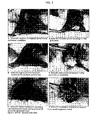
- FIG. 2 is a validated photographic scale for mucositis scoring.
- FIG. 3 illustrates the percent daily weight change for the groups treated with intraperitoneal (ip) injection of M40403 (i.e. groups 1, 2, 3, and 6), including the control group, and for the groups treated topically with M40403 (i.e. groups 4 and 5).
- FIG. 4 illustrates the mean percent weight gain for the groups treated ip with M40403 (i.e. groups 1, 2, 3 and 6), including the control group, and for the groups treated topically with M40403 (i.e. groups 4 and 5).
- FIG. 5 illustrates the mean daily mucositis scores the groups treated ip with M40403 (i.e. groups 1, 2, 3, and 6), including the control group, and for the groups treated topically with M40403 (i.e. groups 4 and 5).
- FIG. 6 illustrates the percentage of animal days with a mucositis score of 3 or higher for groups treated ip with M40403 (i.e. groups 1, 2, 3 and 6), including the control group, and for the groups treated topically with M40403 (i.e. groups 4 and 5).
- FIG. 7 is a timeline of a study for treatment groups 1-9 to evaluate the effect of M40403, administered by either ip or topical routes. The grade of mucositis was scored, beginning on day 6, and for every second day thereafter, through and including day 28.
- FIG. 8 is a validated photographic scale for mucositis scoring.
- FIG. 9 illustrates the percent daily weight change for the groups treated ip with M40403 (i.e. groups 2-9) and for the control group (i.e. group 1).
- FIG. 10 illustrates the mean percent weight gain for the groups treated ip with M40403 (i.e. groups 2-9) and for the control group (i.e. group 1).
- FIG. 11 illustrates the mean daily mucositis scores the groups treated ip with M40403 (i.e. groups 2-9) and for the control group (i.e. group 1).
- FIG. 12 illustrates the percentage of animal days with a mucositis score of 3 or higher for groups treated ip with M40403 (i.e. groups 2-9) and for the control group (i.e. group 1).
- alkenyl means an alkyl substituent having one or more double bonds.
- alkenyl substituents include, but are not limited to, ethenyl, propenyl, 1-butenyl, cis-2-butenyl, trans-2-butenyl, iso-butylenyl, cis-2-pentenyl, trans-2-pentenyl, 3-methyl-1-butenyl, 2,3-dimethyl-2-butenyl, 1-pentenyl, 1-hexenyl, 1-octenyl, decenyl, dodecenyl, tetradecenyl, hexadecenyl, cis- and trans-9-octadecenyl, 1,3-pentadienyl, 2,4-pentadienyl, 2,3-pentadienyl, 1,3-hexadienyl, 2,4-hexadienyl
- alkyl alone or in combination, means a straight-chain or branched-chain alkyl substituent containing from 1 to about 22 carbon atoms, preferably from about 1 to about 18 carbon atoms, and most preferably from about 1 to about 12 carbon atoms.
- substituents include, but are not limited to, methyl, ethyl, n-propyl, isopropyl, n-butyl, isobutyl, sec-butyl, tert-butyl, pentyl, iso-amyl, hexyl, octyl, nonyl, decyl, dodecyl, tetradecyl, hexadecyl, octadecyl and eicosyl.
- alkylcycloalkyl and alkenylcycloalkyl mean a cycloalkyl substituent as defined above which is substituted by an alkyl or alkenyl substituent as defined above.
- alkylcycloalkyl and alkenylcycloalkyl substituents include, but are not limited to, 2-ethylcyclobutyl, 1-methylcyclopentyl, 1-hexylcyclopentyl, 1-methylcyclohexyl, 1-(9-octadecenyl)cyclopentyl and 1-(9-octadecenyl)cyclohexyl.
- alkylcycloalkenyl and “alkenylcycloalkenyl” means a cycloalkenyl substituent as defined above which is substituted by an alkyl or alkenyl substituent as defined above.
- alkylcycloalkenyl and alkenylcycloalkenyl substituents include, but are not limited to, 1-methyl-2-cyclopentyl, 1-hexyl-2-cyclopentenyl, 1-ethyl-2-cyclohexenyl, 1-butyl-2-cyclohexenyl, 1-(9-octadecenyl)-2-cyclohexenyl and 1-(2-pentenyl)-2-cyclohexenyl.
- alkynyl alone or in combination, means an alkyl substituent having one or more triple bonds.
- alkynyl groups include, but are not limited to, ethynyl, propynyl (propargyl), 1-butynyl, 1-octynyl, 9-octadecenyl, 1,3-pentadiynyl, 2,4-pentadiynyl, 1,3-hexadienyl, and 2,4-hexadienyl.
- aralkyl alone or in combination, means an alkyl or cycloalkyl substituent as defined above in which one hydrogen atom is replaced by an aryl substituent as defined above, such as benzyl, 2-phenylethyl, and the like.
- aryl alone or in combination, means a phenyl or naphthyl substituent which optionally carries one or more substituents selected from alkyl, cycloalkyl, cycloalkenyl, aryl, heterocycle, alkoxyaryl, alkaryl, alkoxy, halogen, hydroxy, amine, cyano, nitro, alkylthio, phenoxy, ether, trifluoromethyl and the like, such as phenyl, p-tolyl, 4-methoxyphenyl, 4-(tert-butoxy)phenyl, 4-fluorophenyl, 4-chlorophenyl, 4-hydroxyphenyl, 1-naphthyl, 2-naphthyl, and the like.
- cycloalkenyl alone or in combination, means a cycloalkyl substituent having one or more double bonds.
- cycloalkenyl substituents include, but are not limited to, cyclopentenyl, cyclohexenyl, cyclooctenyl, cyclopentadienyl, cyclohexadienyl and cyclooctadienyl.
- cyclic means a ring structure containing 3 to 20 carbon atoms, preferably 5 to 10 carbon atoms, which may be heterocyclic.
- the cyclic, cycle or cycylyl can also contain more than one ring.
- cycloalkenylalkyl means an alkyl substituent as defined above which is substituted by a cycloalkenyl substituent as defined above.
- Examples of cycloalkenylalkyl substituents include, but are not limited to, 2-cyclohexen-1-ylmethyl, 1-cyclopenten-1-ylmethyl, 2-(1-cyclohexen-1-yl)ethyl, 3-(1-cyclopenten-1-yl)propyl, 1-(1-cyclohexen-1-ylmethyl)pentyl, 1-(1-cyclopenten-1-yl)hexyl, 6-(1-cyclohexen-1-1-yl)hexyl, 1-(1-cyclopenten-1-yl)nonyl and 1-(1-cyclohexen-1-yl)nonyl.
- cycloalkyl alone or in combination means a cycloalkyl radica containing from 3 to about 10, preferably from 3 to about 8, and most preferably from 3 to about 6, carbon atoms.
- cycloalkyl substituents include, but are not limited to, cyclopropyl, cyclobutyl, cyclopentyl, cyclohexyl, cycloheptyl, cyclooctyl, and perhydronaphthyl.
- cycloalkylalkyl means an alkyl substituent as defined above which is substituted by a cycloalkyl substituent as defined above.
- examples of cycloalkylalkyl substituents include, but are not limited to, cyclohexylmethyl, cyclopentylmethyl, (4-isopropylcyclohexyl)methyl, (4-t-butyl-cyclohexyl)methyl, 3-cyclohexylpropyl, 2-cyclohexylmethylpentyl, 3-cyclopentylmethylhexyl, 1-(4-neopentylcyclohexyl)methylhexyl, and 1-(4-isopropylcyclohexyl)methylheptyl.
- cycloalkylcycloalkyl means a cycloalkyl substituent as defined above which is substituted by another cycloalkyl substituent as defined above.
- cycloalkylcycloalkyl substituents include, but are not limited to, cyclohexylcyclopentyl and cyclohexylcyclohexyl.
- halide means chloride, fluoride, iodide, or bromide.
- heterocyclic means a cyclic, cycle or cycylyl containing at least one other kind of atom, in addition to carbon, in the ring.
- Such atoms include, but are not limited to, nitrogen, oxygen and sulfur.
- the heterocyclic can also contain more than one ring.
- heterocyclics include, but are not limited to, pyrrolidinyl, piperidyl, imidazolidinyl, tetrahydrofuryl, tetrahydrothienyl, furyl, thienyl, pyridyl, quinolyl, isoquinolyl, pyridazinyl, pyrazinyl, indolyl, imidazolyl, oxazolyl, thiazolyl, pyrazolyl, pyridinyl, benzoxadiazolyl, benzothiadiazolyl, triazolyl and tetrazolyl groups.
- nitrogen containing heterocycle means a ring structure in which 2 carbons and a nitrogen of the ring are shared with the fifteen-membered macrocyclic ligand.
- the nitrogen containing heterocycle can contain 2 to 20, preferably 4 to 10, carbon atoms, can be substituted or unsubstituted, saturated, partially saturated or unsaturated, and can also contain nitrogen, oxygen and/or sulfur atoms in the portion of the ring which is not also part of the fifteen-membered macrocyclic ligand.
- oral mucositis shall also include stomatitis, small intestine-titis, large intestine-titis, proctitis, and similar conditions affecting the mucosal lining of the entire gastrointestinal tract, and related conditions.
- R groups means the group of variable substituents designated as “R” attached to the carbon atoms of the macrocycle, i.e., R 1 , R′ 1 , R 2 , R′ 2 , R 3 , R′ 3 , R 4 , R′ 4 , R 5 , R′ 5 , R 6 , R′ 6 , R 7 , R′ 7 , R 8 , R′ 8 , R 9 , R′ 9 , R 10 , and R′ 10 .
- saturated, partially saturated or unsaturated cycle or heterocycle means a fused ring structure in which 2 carbons of the ring are also part of the fifteen-membered macrocyclic ligand in which the ring can contain no double bonds (in the case of a saturated ring structure) or at least one double bond, which may be conjugated or unconjugated with another double bond.
- the ring structure can contain 3 to 20 carbon atoms, preferably 5 to 10 carbon atoms, which may be heterocyclic.
- the cyclic can also contain more than one ring.
- AUC Area under the curve bid Twice daily FGF Fibroblast growth factor g, mg, ml, kg Gram, milligram, milliliter, kilogram Gy Gray ip Intraperitoneal ma Milliamp mM Millimolar mm, cm Millimeter, centimeter SEM Standard error of the mean top Topical
- a ROS scavenger of the present invention is a superoxide dismutase mimetic, a non-proteinaceous molecule that catalyzes the conversion the of the superoxide radical, O 2 ⁇ 1 , to molecular oxygen and hydrogen peroxide.
- a molecule can, like a native superoxide dismutase enzyme, reduce cell injury resulting from superoxide radical found in diseases involving oxidative stress such as inflammation (Salvemini et al, Arthritis & Rheumatism 44:2909-2921, 2001).
- the ROS scavengers of the present invention can be pentaaza-macrocyclic complexes, and more specifically, those compositions as disclosed in U.S. Pat. Nos. 5,610,293, 5,637,578, 5,874,421, 5,976,498, 6,084,093, 6,180,620, 6,204,259, 6,214,817, 6,245,758, 6,395,725, and 6,525,041, each of which is incorporated herein by reference in its entirety.
- the superoxide dismutase mimetics of the present invention can be represented by the following formula:
- R 1 , R′ 1 , R 2 , R′ 2 , R 3 , R′ 3 , R 4 , R′ 4 , R 5 , R′ 5 , R 6 , R′ 6 , R 7 , R′ 7 , R 8 , R′ 8 , R 9 , R′ 9 , R 10 , and R′ 10 are independently:
- (i b ) a moiety independently selected from the group consisting of alkenyl, alkenylcycloalkenyl, alkenylcycloalkyl, alkyl, alkylcycloalkenyl, alkylcycloalkyl, alkynyl, aralkyl, aryl, cycloalkenyl, cycloalkyl, cycloalkylalkyl, cycloalkylcycloalkyl, cycloalkenylalkyl, and aralkyl radicals and radicals attached to the ⁇ -carbon or ⁇ -amino acids heterocyclyl; or
- (i c ) a moiety independently selected from the group consisting of —OR 11 , —NR 11 R 12 , —COR 11 , —CO 2 R 11 , —CONR 11 R 12 , —SR 11 , —SOR 11 , —SO 2 R 11 , —SO 2 NR 11 R 12 , —N(OR 11 )(R 12 ), —P(O)(OR 11 )(OR 12 ), —P(O)(OR 11 )(R 12 ), —OP(O)(OR 11 )(OR 12 ), and substituents attached to the ⁇ -carbon of ⁇ -amino acids, wherein R 11 , and R 12 are independently hydrogen or alkyl; and
- R and S are independently selected from the group consisting of alkenyl, alkenylcycloalkenyl, alkenylcycloalkyl, alkyl, alkylcycloalkenyl, alkylcycloalkyl, alkynyl, aralkyl, aryl, cycloalkenyl, cycloalkyl, cycloalkylalkyl, cycloalkylcycloalkyl, cycloalkenylalkyl, and heterocyclyl, aza, amide, ammonium, oxa, thia, sulfonyl, sulfinyl, sulfonamide, phosphoryl, phosphinyl, phosphino, phosphonium, keto, ester, alcohol, carbamate, urea, thiocarbonyl, borates, boranes, boraza, silyl, sil
- the pentaaza-macrocyclic ligand compositions useful in the present invention can have any combinations of substituted or unsubstituted R groups, saturated, partially saturated or unsaturated cyclics, heterocyclics, nitrogen containing heterocycles, or straps as defined above.
- M can be a transition metal, preferably Mn 2+ , Mn 3+ , Mn 4+ , Mn 6+ , Mn 7+ , Fe 2+ , Fe 3+ , Fe 4+ , Fe 6+ , Ni 2+ , Ni 3+ , Cu 1+ , Cu 2+ , V 2+ , V 3+ , V 4+ , or V 5+ .
- X, Y and Z can independently be selected from the group consisting of halide, oxo, aquo, hydroxo, alcohol, phenol, dioxygen, peroxo, hydroperoxo, alkylperoxo, arylperoxo, ammonia, alkylamino, arylamino, heterocycloalkyl amino, heterocycloaryl amino, amine oxides, hydrazine, alkyl hydrazine, aryl hydrazine, nitric oxide, cyanide, cyanate, thiocyanate, isocyanate, isothiocyanate, alkyl nitrile, aryl nitrile, alkyl isonitrile, aryl isonitrile, nitrate, nitrite, azido, alkyl sulfonic acid, aryl sulfonic acid, alkyl sulfoxide, aryl sulfoxide, alkyl aryl sulfoxide,
- X, Y and Z are independently selected from the group consisting of charge-neutralizing anions which are derived from any monodentate or polydentate coordinating ligand and a ligand system and the corresponding anion thereof; or
- X, Y and Z are independently attached to one or more of R 1 , R′ 1 , R 2 , R′ 2 , R 3 , R′ 3 , R 4 , R′ 4 , R 5 , R′ 5 , R 6 , R′ 6 , R 7 , R′ 7 , R 8 , R′ 8 , R 9 , R′ 9 , R 10 , and R′ 10 .
- n is preferably an integer from 0 to 3.
- the superoxide dismutase mimetic can be represented by the formula:
- a nitrogen of the macrocycle and two adjacent carbon atoms to which the nitrogen is attached independently form a substituted or unsubstituted, saturated, partially saturated or unsaturated nitrogen-containing heterocycle W having 2 to 20 carbon atoms, which may be an aromatic heterocycle in which case the hydrogen attached to the nitrogen which is both part of the heterocycle and the macrocycle and the R groups attached to the carbon atoms which are both part of the heterocycle and the macrocycle are absent; and
- R 1 , R 2 , R′ 2 , R 3 , R′ 3 , R 4 , R′ 4 , R 5 , R′ 5 , R 6 , R′ 6 , R 7 , R′ 7 , R 8 , R′ 8 , R 9 , R′ 9 , and R 10 are independently:
- (ii b ) a moiety independently selected from the group consisting of alkenyl, alkenylcycloalkenyl, alkenylcycloalkyl, alkyl, alkylcycloalkenyl, alkylcycloalkyl, alkynyl, aralkyl, aryl, cycloalkenyl, cycloalkyl, cycloalkylalkyl, cycloalkylcycloalkyl, cycloalkenylalkyl, heterocyclyl, and aralkyl radicals and radicals attached to the ⁇ -carbon or ⁇ -amino acids; or
- (ii c ) a moiety independently selected from the group consisting of —OR 11 , —NR 11 R 12 , —COR 11 , —CO 2 R 11 , —CONR 11 R 12 , —SR 11 , —SOR 11 , —SO 2 R 11 , —SO 2 NR 11 R 12 , —N(OR 11 )(R 12 ), —P(O)(OR 11 )(OR 12 ), —P(O)(OR 11 )(R 12 ), —OP(O)(OR 11 )(OR 12 ), and substituents attached to the ⁇ -carbon of ⁇ -amino acids, wherein R 1 , and R 12 are independently hydrogen or alkyl; and
- R 2 and R′ 2 , R 3 and R′ 3 , R 4 and R′ 4 , R 5 and R′ 5 , R 6 and R′ 6 , R 7 and R′ 7 , R 8 and R′ 8 , and R 9 and R′ 9 together with the carbon atom to which they are attached independently form a substituted or unsubstituted and saturated, partially saturated, or unsaturated cycle or heterocycle having 3 to 20 carbon atoms;
- R 1 , R 2 , R′ 2 , R 3 , R′ 3 , R 4 , R′ 4 , R 5 , R′ 5 , R 6 , R′ 6 , R 7 , R′ 7 , R 8 , R′ 8 , R 9 , R′ 9 , and R 10 together with a different one of R 1 , R 2 , R′ 2 , R 3 , R′ 3 , R 4 , R′ 4 , R 5 , R′ 5 , R 6 , R′ 6 , R 7 , R′ 7 , R 8 , R′ 8 , R 9 , R′ 9 , and R 10 , which is attached to a different carbon atom in the macrocyclic ligand may be bound to form a strap represented by the formula: —(CH 2 ) I -Q-(CH 2 ) J —R—(CH 2 ) K —S—(CH 2 ) L —
- R and S are independently selected from the group consisting of alkenyl, alkenylcycloalkenyl, alkenylcycloalkyl, alkyl, alkylcycloalkenyl, alkylcycloalkyl, alkynyl, aralkyl, aryl, cycloalkenyl, cycloalkyl, cycloalkylalkyl, cycloalkylcycloalkyl, cycloalkenylalkyl, and heterocyclyl, aza, amide, ammonium, oxa, thia, sulfonyl, sulfinyl, sulfonamide, phosphoryl, phosphinyl, phosphino, phosphonium, keto, ester, alcohol, carbamate, urea, thiocarbonyl, borates, boranes, boraza, silyl, sil
- R 1 , R 2 , R′ 2 , R 3 , R′ 3 , R 4 , R′ 4 , R 5 , R′ 5 , R 6 , R′ 6 , R 7 , R′ 7 , R 8 , R′ 8 , R 9 , R′ 9 , and R 10 may be bound to an atom of heterocycle W to form a strap represented by the formula: —(CH 2 ) I -Q-(CH 2 ) J —R—(CH 2 ) K —S—(CH 2 ) L —
- R and S are independently selected from the group consisting of alkenyl, alkenylcycloalkenyl, alkenylcycloalkyl, alkyl, alkylcycloalkenyl, alkylcycloalkyl, alkynyl, aralkyl, aryl, cycloalkenyl, cycloalkyl, cycloalkylalkyl, cycloalkylcycloalkyl, cycloalkenylalkyl, and heterocyclyl, aza, amide, ammonium, oxa, thia, sulfonyl, sulfinyl, sulfonamide, phosphoryl, phosphinyl, phosphino, phosphonium, keto, ester, alcohol, carbamate, urea, thiocarbonyl, borates, boranes, boraza, silyl, sil
- the pentaaza-macrocyclic ligand compositions useful in the present invention can have any combinations of substituted or unsubstituted R groups, saturated, partially saturated or unsaturated cyclics, heterocyclics, nitrogen containing heterocycles, or straps as defined above, which may or may not independently connect the W loop and the pentaaza macrocycle.
- M can be a transition metal, preferably Mn 2+ , Mn 3+ , Mn 4+ , Mn 5+ , Mn 7+ , Fe 2+ , Fe 3+ , Fe 4+ , Fe 6+ , Ni 2+ , Ni 3+ , Cu 1+ , Cu 2+ , V 2+ , V 3+ , V 4+ , or V 5+ .
- X, Y and Z can independently be selected from the group consisting of halide, oxo, aquo, hydroxo, alcohol, phenol, dioxygen, peroxo, hydroperoxo, alkylperoxo, arylperoxo, ammonia, alkylamino, arylamino, heterocycloalkyl amino, heterocycloaryl amino, amine oxides, hydrazine, alkyl hydrazine, aryl hydrazine, nitric oxide, cyanide, cyanate, thiocyanate, isocyanate, isothiocyanate, alkyl nitrile, aryl nitrile, alkyl isonitrile, aryl isonitrile, nitrate, nitrite, azido, alkyl sulfonic acid, aryl sulfonic acid, alkyl sulfoxide, aryl sulfoxide, alkyl aryl sulfoxide,
- the superoxide dismutase mimetic can be represented by the formula
- a nitrogen of the macrocycle and two adjacent carbon atoms to which the nitrogen is attached independently form a substituted or unsubstituted, saturated, partially saturated or unsaturated nitrogen-containing heterocycle W having 2 to 20 carbon atoms, which may be an aromatic heterocycle in which case the hydrogen attached to the nitrogen which is both part of the heterocycle and the macrocycle and the R groups attached to the carbon atoms which are both part of the heterocycle and the macrocycle are absent; and
- R 1 , R 2 , R′ 2 , R 3 , R 4 , R 5 , R′ 5 , R 6 , R′ 6 , R 7 , R 8 , R 9 , R′ 9 , and R 10 are independently:
- (iii b ) a moiety independently selected from the group consisting of alkenyl, alkenylcycloalkenyl, alkenylcycloalkyl, alkyl, alkylcycloalkenyl, alkylcycloalkyl, alkynyl, aralkyl, aryl, cycloalkenyl, cycloalkyl, cycloalkylalkyl, cycloalkylcycloalkyl, cycloalkenylalkyl, heterocyclyl, and aralkyl radicals and radicals attached to the ⁇ -carbon or ⁇ -amino acids; or
- (iii c ) a moiety independently selected from the group consisting of —OR 11 , —NR 11 R 12 , —COR 11 , —CO 2 R 11 , —CONR 11 R 12 , —SR 11 , —SOR 11 , —SO 2 R 11 , —SO 2 NR 11 R 12 , —N(OR 11 )(R 12 ), —P(O)(OR 11 )(OR 12 ), —P(O)(OR 11 )(R 12 ), —OP(O)(OR 11 )(OR 12 ), and substituents attached to the ⁇ -carbon of ⁇ -amino acids, wherein R 1 , and R 12 are independently hydrogen or alkyl; and
- R 2 and R′ 2 , R 5 and R′ 5 , R 6 and R′ 6 , and R 9 and R′ 9 together with the carbon atom to which they are attached independently form a substituted or unsubstituted and saturated, partially saturated, or unsaturated cycle or heterocycle having 3 to 20 carbon atoms;
- R 2 or R′ 2 and R 3 , R 4 and R 5 or R′ 5 , R 6 or R 16 and R 7 , or R 8 and R 9 or R′ 9 together with the carbon atoms to which they are attached independently form a substituted or unsubstituted nitrogen containing heterocycle having 3 to 20 carbon atoms, which may be an aromatic heterocycle in which case the hydrogen attached to the nitrogen which is both part of the heterocycle and the macrocycle and the R groups attached to the carbon atoms which are both part of the heterocycle and the macrocycle are absent; and
- R 1 , R 2 , R′ 2 , R 3 , R 4 , R 5 , R′ 5 , R 6 , R′ 6 , R 7 , R 8 , R 9 , R′ 9 , and R 10 together with a different one of R 1 , R 2 , R′ 2 , R 3 , R 4 , R 5 , R′ 5 , R 6 , R′ 6 , R 7 , R 8 , R 9 , R′ 9 , and R 10 , which is attached to a different carbon atom in the macrocyclic ligand may be bound to form a strap represented by the formula: —(CH 2 ) I -Q-(CH 2 ) J —R—(CH 2 ) K —S—(CH 2 ) L —
- R and S are independently selected from the group consisting of alkenyl, alkenylcycloalkenyl, alkenylcycloalkyl, alkyl, alkylcycloalkenyl, alkylcycloalkyl, alkynyl, aralkyl, aryl, cycloalkenyl, cycloalkyl, cycloalkylalkyl, cycloalkylcycloalkyl, cycloalkenylalkyl, and heterocyclyl, aza, amide, ammonium, oxa, thia, sulfonyl, sulfinyl, sulfonamide, phosphoryl, phosphinyl, phosphino, phosphonium, keto, ester, alcohol, carbamate, urea, thiocarbonyl, borates, boranes, boraza, silyl, sil
- R 1 , R 2 , R′ 2 , R 3 , R 4 , R 5 , R′ 5 , R 6 , R′ 6 , R 7 , R 8 , R 9 , R′ 9 , and R 10 may be individually bound to an atom of heterocycles U, V and W to form a strap represented by the formula: —(CH 2 ) I -Q-(CH 2 ) J —R—(CH 2 ) K —S—(CH 2 ) L —
- R and S are independently selected from the group consisting of alkenyl, alkenylcycloalkenyl, alkenylcycloalkyl, alkyl, alkylcycloalkenyl, alkylcycloalkyl, alkynyl, aralkyl, aryl, cycloalkenyl, cycloalkyl, cycloalkylalkyl, cycloalkylcycloalkyl, cycloalkenylalkyl, and heterocyclyl, aza, amide, ammonium, oxa, thia, sulfonyl, sulfinyl, sulfonamide, phosphoryl, phosphinyl, phosphino, phosphonium, keto, ester, alcohol, carbamate, urea, thiocarbonyl, borates, boranes, boraza, silyl, sil
- the pentaaza-macrocyclic ligand compositions useful in the present invention can have any combinations of substituted or unsubstituted R groups, saturated, partially saturated or unsaturated cyclics, heterocyclics, nitrogen containing heterocycles, or straps as defined above, which may or may not independently connect the W, U or V loops and the pentaaza macrocycle.
- M can be a transition metal, preferably Mn 2+ , Mn 3+ , Mn 4+ , Mn 5+ , Mn 7+ , Fe 2+ , Fe 3+ , Fe 4+ , Fe 6+ , Ni 2+ , Ni 3+ , Cu 1+ , Cu 2+ , V 2+ , V 3+ , V 4+ , or V 5+ .
- X, Y and Z can independently be selected from the group consisting of halide, oxo, aquo, hydroxo, alcohol, phenol, dioxygen, peroxo, hydroperoxo, alkylperoxo, arylperoxo, ammonia, alkylamino, arylamino, heterocycloalkyl amino, heterocycloaryl amino, amine oxides, hydrazine, alkyl hydrazine, aryl hydrazine, nitric oxide, cyanide, cyanate, thiocyanate, isocyanate, isothiocyanate, alkyl nitrile, aryl nitrile, alkyl isonitrile, aryl isonitrile, nitrate, nitrite, azido, alkyl sulfonic acid, aryl sulfonic acid, alkyl sulfoxide, aryl sulfoxide, alkyl aryl sulfoxide,
- n is preferably an integer from 0 to 3.
- W can be a substituted or unsubstituted pyridino moiety.
- U and V can be independently saturated cycloalkyl heterocycles having 3 to 20 carbon atoms, more preferably 4 to 10 carbon atoms, still more preferably trans-cyclohexanyl fused rings.
- U and V can be trans-cyclohexanyl fused rings while W is a substituted pyridino moiety.
- the superoxide dismutase mimetic can be the compound identified as M40403, which can be represented by the formula:
- the present invention can involve administration of a ROS scavenger, in particular, M40403 or a suitable derivative or analog thereof as described above, to a patient in need thereof.
- Administration of the ROS scavenger, in particular M40403 can be by numerous routes of administration well known to those of skill in the art.
- Administration of the ROS scavenger can be by any suitable route of administration such as, for example, oral, buccal, sublingual, intranasal, inhalation, rectal, intravaginal, transdermal, intradermal, subcutaneous, intramuscular, intraperitoneal, intravenous, intraarterial, intrasternal, intrathecal and the like.
- compositions and methods of treatment disclosed herein can be determined using standard methods known to skilled artisans, for example as set forth in standard references such as Remington: the Science and Practice of Pharmacy (Alfonso R. Gennaro ed. 19th ed. 1995); Hardman, J. G., et al., Goodman & Gilman's The Pharmacological Basis of Therapeutics, Ninth Edition, McGraw-Hill, 1996; and Rowe, R. C., et al., Handbook of Pharmaceutical Excipients, Fourth Edition, Pharmaceutical Press, 2003.
- compositions can be formulated to be compatible with the intended route of administration.
- Solutions or suspensions used for parenteral, intradermal or subcutaneous application can include: a sterile diluent, such as water for injection, saline solution, fixed oils, polyethylene glycols, glycerine, propylene glycol or other synthetic solvents; antibacterial agents, such as benzyl alcohol or methyl parabens; antioxidants, such as ascorbic acid or sodium bisulfite; chelating agents, such as ethylenediaminetetraacetic acid (EDTA); buffers such as acetates, citrates or phosphates, and agents for the adjustment of tonicity, such as sodium chloride or dextrose.
- a sterile diluent such as water for injection, saline solution, fixed oils, polyethylene glycols, glycerine, propylene glycol or other synthetic solvents
- antibacterial agents such as benzyl alcohol or methyl parabens
- Suitable carriers include physiological saline, bacteriostatic water, Cremophor® EL (BASF, Parsippany, N.J.) or phosphate buffered saline (PBS).
- the compositions can be stable during manufacture and storage and preserved against contamination from microorganisms, such as bacteria and fungi. Proper fluidity can be maintained, for example, by using a coating such as lecithin; by maintaining the required particle size in the case of dispersion, and by using surfactants.
- Various antibacterial and antifungal agents such as parabens, chlorobutanol, phenol, ascorbic acid, and thimerosal, can control microorganism contamination.
- Isotonic agents such as sugars, polyalcohols such as manitol, sorbitol, and sodium chloride can be included in the composition.
- Compositions that delay absorption can be prepared by including such agents as aluminum monostearate and gelatin.
- Sterile injectable solutions can be prepared by incorporating the active compound (e.g., an SCMP) in an appropriate solvent with one or more ingredient, followed by sterilization.
- active compound e.g., an SCMP
- dispersions are prepared by incorporating the active compound into a sterile vehicle that contains a basic dispersion medium and any other required ingredients.
- Sterile powders for the preparation of sterile injectable solutions include vacuum- and freeze-drying that yield a powder containing the active ingredient and any desired ingredient from a sterile solution.
- the concentration of active drug i.e.
- the ROS scavenger can be from about 0.1% to about 90% by weight, from about 5% to about 20% by weight, from about 5% to about 17% by weight, from about 8% to about 14% by weight or, in certain embodiments, about 10% by weight.
- Oral compositions generally include an inert diluent or an edible carrier. They can be enclosed in gelatin capsules or compressed into tablets. For the purpose of oral therapeutic administration, the active compound can be incorporated with excipients and used in the form of tablets, troches, or capsules. Oral compositions can also be prepared using a fluid carrier for use as a mouthwash, wherein the compound in the fluid carrier is applied orally. Pharmaceutically compatible binding agents, and/or adjuvant materials can be included.
- Tablets, pills, capsules, troches and the like can contain any of the following ingredients, or compounds of a similar nature: a binder such as microcrystalline cellulose, gum tragacanth or gelatin; an excipient such as starch or lactose, a disintegrating agent such as alginic acid, primogel, or corn starch; a lubricant such as magnesium stearate or sterotes; a glidant such as colloidal silicon dioxide; a sweetening agent such as sucrose or saccharin; or a flavoring agent such as peppermint, methyl salicylate, or orange flavoring.
- a binder such as microcrystalline cellulose, gum tragacanth or gelatin
- an excipient such as starch or lactose, a disintegrating agent such as alginic acid, primogel, or corn starch
- a lubricant such as magnesium stearate or sterotes
- a glidant such as colloidal silicon dioxide
- the ROS scavenger can be from about 0.1% to about 99% by weight, from about 5% to about 95% by weight, from about 10% to about 90% by weight, from about 15% to about 85% by weight, from about 20% to about 80% by weight, from about 25% to about 75% by weight, from about 30% to about 70% by weight, from about 35% to about 64% by weight or from about 40% to about 60% by weight.
- Administration by inhalation can be by aerosol spray from a nebulizer or a pressurized container that contains a suitable propellant, e.g., a gas such as carbon dioxide.
- a suitable propellant e.g., a gas such as carbon dioxide.
- Systemic administration can also be transmucosal or transdermal.
- penetrants that can permeate the target barrier(s) are selected.
- Transmucosal penetrants include detergents, bile salts and fusidic acid derivatives.
- Nasal sprays or suppositories can be used for transmucosal administration.
- the active compounds are formulated into ointments, salves, gels or creams.
- the compounds can also be prepared as suppositories (with bases such as cocoa butter and other glycerides) or retention enemas for rectal delivery.
- the active compounds can be prepared with carriers that protect the compound against rapid elimination from the body, such as a controlled release formulation, including implants and microencapsulated delivery systems.
- a controlled release formulation including implants and microencapsulated delivery systems.
- Biodegradable, biocompatible polymers can be used, such as ethylene vinyl acetate, polyanhydrides, polyglycolic acid, collagen, polyorthoesters, and polylactic acid (Alza Corporation; Mountain View, Calif. and Nova Pharmaceuticals, Inc.; Lake Elsinore, Calif.).
- Liposomal suspensions can also be used as pharmaceutically acceptable carriers (Eppstein, 1985).
- Unit dosage form refers to physically discrete units suited as single doses for a subject to be treated, containing a therapeutically effective quantity of active compound in association with the required pharmaceutical carrier.
- the specification for unit dosage forms are dictated by, and directly dependent on, the unique characteristics of the active compound and the particular desired therapeutic effect, and the inherent limitations of compounding the active compound.
- a typical dose of the ROS scavenger can be from about 0.1 mg up to about 1000 mg or from about 0.001 up to about 10 mg/kg body weight.
- Doses of 5 mg/kg and 10 mg/kg administered intraperitoneally have shown to produce beneficial effects in rats treated with type II collagen to induced arthritis (Salvemini et al., Arthritis & Rheumatism, 44:2909-2921, 2001).
- a dose of 2 mg/kg produced less of an effect that was nevertheless significantly different from that in placebo animals.
- Low doses of a ROS scavenger can be doses of less than about 5 mg/kg or doses equal to or less than about 2 mg/kg body weight, in particular, a dose of about 0.1 mg, about 0.2 mg, about 0.5 mg, about 0.8 mg, about 1 mg, about 2 mg, about 5 mg, about 8 mg, about 10 mg, about 20 mg, about 50 mg, about 80 mg, about 100 mg or about 200 mg or about 0.001 mg/kg, about 0.002 mg/kg, about 0.005 mg/kg, about 0.01 mg/kg, about 0.02 mg/kg, about 0.05 mg/kg, about 0.1 mg/kg, about 0.2 mg/kg, about 0.5 mg/kg, about 1 mg/kg, about 2 mg/kg, about 3 mg/kg or about 4 mg/kg body weight.
- Total daily doses of the ROS scavenger can be administered in single or divided doses and in amounts such as, for example, from about 1 to about 2 mg/kg body weight daily and more usually about 0.05 to 1 mg/kg. Dosage unit compositions may contain such amounts of submultiples thereof to make up the total dose. However, one skilled in the art will recognize that the total dosage will vary on the particular composition the particular ROS scavenger administered.
- patients receiving treatment are, typically, human patients, however, patients receiving treatment can also be animal including companion animal such as dogs and cats, farm animal such as cows, horses, swine as well as birds and exotic animal such as zoo animals.
- companion animal such as dogs and cats
- farm animal such as cows, horses, swine as well as birds and exotic animal such as zoo animals.
- the amount of active ingredients that may be combined with the carrier materials to produce a single dosage form can vary depending upon the host treated and the particular mode of administration. It will be appreciated that the unit content of active ingredients contained in an individual dose of each dosage form need not in itself constitute an effective amount, as the necessary effective amount could be reached by administration of a number of individual doses. The selection of dosage depends upon the dosage form utilized, the condition being treated, and the particular purpose to be achieved according to the determination of those skilled in the art.
- the dosage regimen for treating a disease condition with the compounds and/or compositions of this invention can be selected in accordance with a variety of factors, including the type, age, weight, sex, diet and medical condition of the patient, the route of administration, pharmacological considerations such as the activity, efficacy, pharmacokinetic and toxicology profiles of the particular compound employed, whether a drug delivery system is utilized and whether the compound is administered as part of a drug combination.
- the dosage regimen actually employed can, therefore, can deviate from the preferred dosage regimen set forth above.
- kits can include pharmaceutical compositions and, in addition in certain embodiments, instructions for administration.
- the different components of the composition can be packaged in separate containers and admixed immediately before use. Such packaging of the components separately can, in certain instances, permit long-term storage without losing activity of the components.
- the different components can be packaged separately and not mixed prior to use.
- the different components can be packaged in one composition for administration together.
- Kits may also include reagents in separate containers such as, for example sterile water or saline to be added to a lyophilized active component packaged separately.
- sealed glass ampules may contain lyophilized ROS scavenger, sterile water, sterile saline or sterile each of which has been packaged under a neutral non-reacting gas, such as nitrogen.
- Ampules may consist of any suitable material, such as glass, organic polymers, such as polycarbonate, polystyrene, etc., ceramic, metal or any other material typically employed to hold reagents.
- suitable containers include bottles that may be fabricated from similar substances as ampules, and envelopes that may consist of foil-lined interiors, such as aluminum or an alloy.
- Other containers include test tubes, vials, flasks, bottles, syringes, etc.
- Containers may have a sterile access port, such as a bottle having a stopper that can be pierced by a hypodermic injection needle.
- Other containers may have two compartments that are separated by a readily removable membrane that upon removal permits the components to mix. Removable membranes may be glass, plastic, rubber, etc.
- kits can be supplied with instructional materials. Instructions may be printed on paper or other substrate, and/or may be supplied as an electronic-readable medium, such as a floppy disc, mini-CD-ROM, CD-ROM, DVD-ROM, Zip disc, videotape, audio tape, etc. Detailed instructions may not be physically associated with the kit; instead, a user may be directed to an internet web site specified by the manufacturer or distributor of the kit, or supplied as electronic mail.
- the objective of this study is to evaluate the effect of M40403, administered by either ip or topical routes, with 2 different schedules, on the frequency, severity and duration of oral mucositis induced in hamsters by acute radiation.
- M40403 was given as an intraperitoneal (ip) injection at a 30 mg/kg/dose twice daily (a) from day ⁇ 1 to day 15, or (b) day ⁇ 1 to day 3. M40403 was also given by ip injection at a dose of 3 mg/kg twice daily from day ⁇ 1 to day 15. In addition, M40403 was given as a topical dose directed to the buccal mucosa in 0.2 ml doses of either 3 mg/ml or 30 mg/ml twice daily from day ⁇ 1 to day 15. The greatest reduction in oral mucositis was seen in the group treated with M40403 at 30 mg/kg/dose ip twice daily from day ⁇ 1 to day 3.
- No other treatment groups in this study showed a reduction in mucositis either by long term (day-1 to day 15) ip dosing or by topical dosing.
- This study establishes a schedule-dependant dosing method for the treatment of oral mucositis with M40403.
- the acute radiation model in hamsters developed by the Principal Investigator, has proven to be an accurate, efficient and cost-effective technique to provide a preliminary evaluation of anti-mucositis compounds (9).
- the course of mucositis in this model is well defined and results in peak scores approximately 14-16 Days following radiation.
- the grade of mucositis was scored, beginning on day 6, and for every second day thereafter, through and including day 28 (for scoring scheme, see Table 2 and FIG. 2 ).
- the effect on mucositis of each drug treatment compared to ip vehicle-treated controls was assessed according to the following parameters:
- mice in group 1 were used in a modified pK study as follows: Two animals were injected with vehicle and blood was drawn 30 minutes after the injection. Six animals were injected with 30 mg/kg of M40403. At 15, 30 and 90 minutes post injection, 2 animals from this group were sacrificed and blood was obtained by cardiac puncture. Blood was collected in lithium heparin, kept on ice for 30 minutes and the plasma was obtained after centrifugation. Plasma was transferred to labeled tubes, snap frozen in liquid nitrogen and shipped to ActivBiotics.
- the study was performed in animal rooms provided with filtered air at a temperature of 70° F.+/ ⁇ 5° F. and 50%+/ ⁇ 20% relative humidity. Animal rooms were set to maintain a minimum of 12 to 15 air changes per hour. The room was on an automatic timer for a light/dark cycle of 12 hours on and 12 hours off with no twilight. Bed-O-Cobs® bedding was used. Bedding was changed a minimum of once per week. Cages, tops, bottles, etc. were washed with a commercial detergent and allowed to air dry. A commercial disinfectant was used to disinfect surfaces and materials introduced into the hood. Floors were swept daily and mopped a minimum of twice weekly with a commercial detergent.
- Walls and cage racks were sponged a minimum of once per month with a dilute bleach solution.
- a cage card or label with the appropriate information necessary to identify the study, dose, animal number and treatment group marked all cages. The temperature and relative humidity was recorded during the study, and the records were retained.
- Animals were randomly and prospectively divided into eight (8) treatment groups prior to irradiation. Each animal was identified by an ear punch corresponding to an individual number. For more consistent identification, ear punch numbering was used rather than tagging, since tags may become dislodged during the course of the study. A cage card was used to identify each cage and was marked with the study number, treatment group number and animal numbers.
- Mucositis was induced using a standardized acute radiation protocol.
- a single dose of radiation (40 Gy/dose) was administered to all animals on day 0.
- Radiation was generated with a 250 kilovolt potential (15-ma) source at a focal distance of 50 cm, hardened with a 0.35 mm Cu filtration system.
- Irradiation targeted the left buccal pouch mucosa at a rate of 3.2 Gy/minute.
- animals Prior to irradiation, animals were anesthetized with an intra-peritoneal injection of Ketamine (160 mg/kg) and Xylazine (8 mg/kg). The left buccal pouch was everted, fixed and isolated using a lead shield.
- a score of 1-2 is considered to represent a mild stage of the disease, whereas a score of 3-5 is considered to indicate moderate to severe mucositis.
- a photograph was taken of each animal's mucosa using a standardized technique.
- all films were developed and the photographs randomly numbered.
- At least two independent trained observers graded the photographs in blinded fashion using the above described scale (blinded scoring).
- the percent daily weight change for each group is shown in FIG. 3 .
- the groups treated by ip injection were groups 1, 2, 3 and 6.
- the control animals (group 1) gained an average of 64.0% of their starting weights by the end of the study.
- the animals treated ip with M40403 at 3 mg/kg/dose twice daily from day ⁇ 1 to day 15 (group 2) gained an average of 66.0% of their starting weight during the study.
- the group treated ip with M40403 at 30 mg/kg/dose twice daily from day ⁇ 1 to day 15 (group 3) gained an average of 33.9% of their starting weight by day 28.
- the group treated ip with M40403 at 30 mg/kg/dose twice daily from day 1 to day 3 gained an average of 54.7% of their starting weight during the study.
- both groups treated by ip injection with 30 mg/kg M40403 there was a general lack of weight gain during dosing.
- the groups treated by ip injection were groups 1, 2, 3 and 6.
- the control animals (group 1) had a peak mean mucositis score of 2.8 which occurred on day 16.
- the animals treated with M40403 at 3 mg/kg/dose ip twice daily from day ⁇ 1 to day 15 (group 2) had a peak mucositis score of 2.8 on day 18, and the overall progression of mucositis severity in this group was very similar to that observed in the control group.
- the group treated with M40403 at 30 mg/kg/dose twice daily from day ⁇ 1 to day 15 had a peak mucositis score of 3.0 on day 18 and had a mucositis progression that was indistinguishable from that observed in groups 1 and 2.
- the group treated with M40403 at 30 mg/kg/dose ip twice daily from day ⁇ 1 to day 3 had a peak mucositis score of 3.0 on day 14, but from day 16 to day 28, the mucositis severity in this group decreased much more rapidly than the control group suggesting that this schedule of treatment was efficacious.
- the significance of the reductions in the mucositis scores seen in the groups treated with M40403 were evaluated by calculating the percentage of animal days with a score of 3 or higher. The results of this analysis are shown in FIG. 6 and Table 3.
- the percentage of animal days with a mucositis score of 3 or higher was 31%.
- Treatment by ip injection with M40403 at 3 mg/kg/dose twice daily from day ⁇ 1 to day 15 resulted in a percentage of animal days with a score of 3 or higher of 34%.
- Treatment by ip injection with M40403 at 30 mg/kg/dose twice daily from day to ⁇ 1 to day 15 resulted in 37% percent of animal days with a score of 3 or higher.
- Treatment by ip injection with M40403 at 30 mg/kg twice daily from day ⁇ 1 to day 3 (group 6) resulted in a decrease in the number of animal days with a score of 3 or higher to 17%.
- Topical treatment with M40403 at 3 mg/ml twice daily from day ⁇ 1 to day 15 resulted in an increase in the number of animal days with a score of 3 or higher to 38%.
- Topical treatment with M40403 at 30 mg/ml twice daily from days ⁇ 1 to 15 resulted in 33% of animal days with a score of 3 or higher.
- Topical dosing of M40403 did not appear to have any effect on either weight or mucositis severity. It appears the topical dosing, in the formulation used here, is an ineffective method of delivery of M40403 in this model.
- Example 2 Repeat of day ⁇ 1 to 3 of 30 mg/kg IV of Example 1 Study Acute Radiation Model
- the acute radiation model in hamsters developed by the Principal Investigator, has proven to be an accurate, efficient and cost-effective technique to provide a preliminary evaluation of anti-mucositis compounds (9).
- the course of mucositis in this model is well defined and results in peak scores approximately 14-16 Days following radiation.
- the grade of mucositis was scored, beginning on day 6, and for every second day thereafter, through and including day 28 (for scoring scheme, see Table 6 and FIG. 8 ).
- the effect on mucositis of each drug treatment compared to ip vehicle-treated controls was assessed according to the following parameters:
- the study was performed in animal rooms provided with filtered air at a temperature of 70° F.+/ ⁇ 5° F. and 50%+/ ⁇ 20% relative humidity. Animal rooms were set to maintain a minimum of 12 to 15 air changes per hour. The room was on an automatic timer for a light/dark cycle of 12 hours on and 12 hours off with no twilight. Bed-O-Cobs® bedding was used. Bedding was changed a minimum of once per week. Cages, tops, bottles, etc. were washed with a commercial detergent and allowed to air dry. A commercial disinfectant was used to disinfect surfaces and materials introduced into the hood. Floors were swept daily and mopped a minimum of twice weekly with a commercial detergent.
- Walls and cage racks were sponged a minimum of once per month with a dilute bleach solution.
- a cage card or label with the appropriate information necessary to identify the study, dose, animal number and treatment group marked all cages. The temperature and relative humidity was recorded during the study, and the records were retained.
- Animals were randomly and prospectively divided into eight (8) treatment groups prior to irradiation. Each animal was identified by an ear punch corresponding to an individual number. For more consistent identification, ear punch numbering was used rather than tagging, since tags may become dislodged during the course of the study. A cage card was used to identify each cage and was marked with the study number (ACT-03), treatment group number and animal numbers.
- Mucositis was induced using a standardized acute radiation protocol.
- a single dose of radiation (40 Gy/dose) was administered to all animals on day 0.
- Radiation was generated with a 250 kilovolt potential (15-ma) source at a focal distance of 50 cm, hardened with a 0.35 mm Cu filtration system.
- Irradiation targeted the left buccal pouch mucosa at a rate of 3.2 Gy/minute.
- animals Prior to irradiation, animals were anesthetized with an intra-peritoneal injection of Ketamine (160 mg/kg) and Xylazine (8 mg/kg). The left buccal pouch was everted, fixed and isolated using a lead shield.
- a score of 1-2 is considered to represent a mild stage of the disease, whereas a score of 3-5 is considered to indicate moderate to severe mucositis.
- a photograph was taken of each animal's mucosa using a standardized technique.
- all films were developed and the photographs randomly numbered.
- At least two independent trained observers graded the photographs in blinded fashion using the above-described scale (blinded scoring).
- the percent daily weight change for each group is shown in FIG. 9 .
- the control animals (group 1) gained an average of 62.5% of their starting weights by the end of the study.
- the animals treated ip with M40403 at 30 mg/kg/dose once daily from day ⁇ 1 to day 3 (group 2) gained an average of 60.7% of their starting weight during the study.
- the group treated ip with M40403 at 3 mg/kg/dose twice daily from day ⁇ 1 to day 3 (group 3) gained an average of 59.3% of their starting weight by day 28.
- the group treated ip with M40403 at 10 mg/kg/dose twice daily from day ⁇ 1 to day 3 (group 4) gained an average of 56.2% of their starting weight during the study.
- the group treated ip with M40403 at 30 mg/kg/dose twice daily from day ⁇ 1 to day 3 (group 5) gained an average of 52.9% of their starting weight during the study.
- the group treated ip with M40403 at 30 mg/kg/dose once daily from day 0 to day 3 (group 6) gained an average of 54.8% of their starting weight during the study.
- the group treated ip with M40403 at 30 mg/kg/dose twice daily from day 0 to day 3 (group 7) gained an average of 58.1% of their starting weight during the study.
- the group treated ip with M40403 at 30 mg/kg/dose twice daily on day 0 (group 8) gained an average of 59.3% of their starting weight during the study.
- the group treated ip with M40403 at 30 mg/kg/dose twice daily on day 0 and on day 7 (group 9) gained an average of 57.3% of their starting weight during the study.
- Mean daily mucositis scores for each group are shown in FIG. 11 .
- the control animals (group 1) had a peak mean mucositis score of 3.1 on day 16.
- the animals treated ip with M40403 at 30 mg/kg/dose once daily from day ⁇ 1 to day 3 (group 2) had a peak mean mucositis score of 2.8 on day 16.
- the group treated ip with M40403 at 3 mg/kg/dose twice daily from day ⁇ 1 to day 3 (group 3) had a peak mean mucositis score of 2.9, which occurred on days 16 and 18.
- the group treated ip with M40403 at 30 mg/kg/dose twice daily from day 0 to day 3 (group 7) had a peak mean mucositis score of 2.2 on day 16.
- Treatment with M40403 at 10 mg/kg/dose twice daily from day ⁇ 1 to day 3 resulted in a percentage of animal days with a score of 3 or higher of 29.2%.
- Treatment with M40403 at 30 mg/kg/dose twice daily from day ⁇ 1 to day 3 resulted in a percentage of animal days with a score of 3 or higher of 22.2%.
- Treatment with M40403 at 30 mg/kg/dose once daily from day 0 to day 3 (group 6) resulted in a percentage of animal days with a score of 3 or higher of 30.6%.
- Treatment with M40403 at 30 mg/kg/dose twice daily from day 0 to day 3 resulted in a percentage of animal days with a score of 3 or higher of 9.4%.
- Treatment with M40403 at 30 mg/kg/dose twice daily on day 0 resulted in a percentage of animal days with a score of 3 or higher of 13.5%.
- Treatment with M40403 at 30 mg/kg/dose twice daily on day 0 and on day 7 resulted in a percentage of animal days with a score of 3 or higher of 15.5%.
Landscapes
- Health & Medical Sciences (AREA)
- Life Sciences & Earth Sciences (AREA)
- Chemical & Material Sciences (AREA)
- Animal Behavior & Ethology (AREA)
- Public Health (AREA)
- Medicinal Chemistry (AREA)
- Veterinary Medicine (AREA)
- General Health & Medical Sciences (AREA)
- Pharmacology & Pharmacy (AREA)
- Chemical Kinetics & Catalysis (AREA)
- Organic Chemistry (AREA)
- General Chemical & Material Sciences (AREA)
- Nuclear Medicine, Radiotherapy & Molecular Imaging (AREA)
- Epidemiology (AREA)
- Bioinformatics & Cheminformatics (AREA)
- Engineering & Computer Science (AREA)
- Toxicology (AREA)
- Pain & Pain Management (AREA)
- Rheumatology (AREA)
- Biochemistry (AREA)
- Pharmaceuticals Containing Other Organic And Inorganic Compounds (AREA)
- Medicines That Contain Protein Lipid Enzymes And Other Medicines (AREA)
- Medicinal Preparation (AREA)
Priority Applications (19)
| Application Number | Priority Date | Filing Date | Title |
|---|---|---|---|
| DK07839531.6T DK2056675T3 (en) | 2006-10-12 | 2007-10-12 | Methods for treating oral mucositis |
| LTEP07839531.6T LT2056675T (lt) | 2006-10-12 | 2007-10-12 | Burnos gleivinės mukozito gydymo būdai |
| SI200732103T SI2056675T1 (sl) | 2006-10-12 | 2007-10-12 | Postopki za zdravljenje oralnega mukozitisa |
| PL07839531T PL2056675T3 (pl) | 2006-10-12 | 2007-10-12 | Metody leczenia zapalenia błony śluzowej jamy ustnej |
| TR2019/05213T TR201905213T4 (tr) | 2007-10-12 | 2007-10-12 | Oral mukozit tedavisi yöntemleri. |
| AU2007308141A AU2007308141B2 (en) | 2006-10-12 | 2007-10-12 | Methods of treating oral mucositis |
| ES07839531T ES2725023T3 (es) | 2006-10-12 | 2007-10-12 | Métodos para el tratamiento de la mucositis oral |
| EP07839531.6A EP2056675B1 (fr) | 2006-10-12 | 2007-10-12 | Procédés de traitement de mucosites orales |
| PCT/US2007/021897 WO2008045559A2 (fr) | 2006-10-12 | 2007-10-12 | Procédés de traitement de mucosites orales |
| EP18215666.1A EP3527079A1 (fr) | 2006-10-12 | 2007-10-12 | Procédés de traitement de la mucosite orale |
| US11/871,848 US9855279B2 (en) | 2006-10-12 | 2007-10-12 | Methods of treating oral mucositis |
| CA2665984A CA2665984C (fr) | 2006-10-12 | 2007-10-12 | Mimetiques de superoxyde dismutase pour le traitement de la mucosite orale |
| PT07839531T PT2056675T (pt) | 2006-10-12 | 2007-10-12 | Métodos de tratamento da mucosite oral |
| HUE07839531 HUE044234T2 (hu) | 2006-10-12 | 2007-10-12 | Eljárások szájnyálkahártya-gyulladás kezelésére |
| US14/302,082 US9642861B2 (en) | 2006-10-12 | 2014-06-11 | Methods of treating oral mucositis |
| US15/841,586 US10610533B2 (en) | 2006-10-12 | 2017-12-14 | Methods of treating oral mucositis |
| CY20191100393T CY1121530T1 (el) | 2006-10-12 | 2019-04-09 | Μεθοδοι θεραπειας της στοματικης βλεννογονιτιδας |
| US16/802,916 US11612608B2 (en) | 2006-10-12 | 2020-02-27 | Methods of treating oral mucositis |
| US18/124,671 US20230218633A1 (en) | 2006-10-12 | 2023-03-22 | Methods of treating oral mucositis |
Applications Claiming Priority (2)
| Application Number | Priority Date | Filing Date | Title |
|---|---|---|---|
| US82929106P | 2006-10-12 | 2006-10-12 | |
| US11/871,848 US9855279B2 (en) | 2006-10-12 | 2007-10-12 | Methods of treating oral mucositis |
Related Child Applications (2)
| Application Number | Title | Priority Date | Filing Date |
|---|---|---|---|
| US14/302,082 Continuation US9642861B2 (en) | 2006-10-12 | 2014-06-11 | Methods of treating oral mucositis |
| US15/841,586 Continuation US10610533B2 (en) | 2006-10-12 | 2017-12-14 | Methods of treating oral mucositis |
Publications (2)
| Publication Number | Publication Date |
|---|---|
| US20080269185A1 US20080269185A1 (en) | 2008-10-30 |
| US9855279B2 true US9855279B2 (en) | 2018-01-02 |
Family
ID=39283481
Family Applications (5)
| Application Number | Title | Priority Date | Filing Date |
|---|---|---|---|
| US11/871,848 Active 2028-07-01 US9855279B2 (en) | 2006-10-12 | 2007-10-12 | Methods of treating oral mucositis |
| US14/302,082 Active US9642861B2 (en) | 2006-10-12 | 2014-06-11 | Methods of treating oral mucositis |
| US15/841,586 Active US10610533B2 (en) | 2006-10-12 | 2017-12-14 | Methods of treating oral mucositis |
| US16/802,916 Active US11612608B2 (en) | 2006-10-12 | 2020-02-27 | Methods of treating oral mucositis |
| US18/124,671 Abandoned US20230218633A1 (en) | 2006-10-12 | 2023-03-22 | Methods of treating oral mucositis |
Family Applications After (4)
| Application Number | Title | Priority Date | Filing Date |
|---|---|---|---|
| US14/302,082 Active US9642861B2 (en) | 2006-10-12 | 2014-06-11 | Methods of treating oral mucositis |
| US15/841,586 Active US10610533B2 (en) | 2006-10-12 | 2017-12-14 | Methods of treating oral mucositis |
| US16/802,916 Active US11612608B2 (en) | 2006-10-12 | 2020-02-27 | Methods of treating oral mucositis |
| US18/124,671 Abandoned US20230218633A1 (en) | 2006-10-12 | 2023-03-22 | Methods of treating oral mucositis |
Country Status (13)
| Country | Link |
|---|---|
| US (5) | US9855279B2 (fr) |
| EP (2) | EP3527079A1 (fr) |
| AU (1) | AU2007308141B2 (fr) |
| CA (1) | CA2665984C (fr) |
| CY (1) | CY1121530T1 (fr) |
| DK (1) | DK2056675T3 (fr) |
| ES (1) | ES2725023T3 (fr) |
| HU (1) | HUE044234T2 (fr) |
| LT (1) | LT2056675T (fr) |
| PL (1) | PL2056675T3 (fr) |
| PT (1) | PT2056675T (fr) |
| SI (1) | SI2056675T1 (fr) |
| WO (1) | WO2008045559A2 (fr) |
Cited By (6)
| Publication number | Priority date | Publication date | Assignee | Title |
|---|---|---|---|---|
| US11219614B2 (en) | 2016-09-01 | 2022-01-11 | Galera Labs, Llc | Combination cancer therapy with pentaaza macrocyclic ring complex and ascorbate compound |
| US11246950B2 (en) | 2017-04-13 | 2022-02-15 | Galera Labs, Llc | Combination cancer immunotherapy with pentaaza macrocyclic ring complex |
| US11612608B2 (en) | 2006-10-12 | 2023-03-28 | Galera Labs, Llc | Methods of treating oral mucositis |
| US11826373B2 (en) | 2011-09-26 | 2023-11-28 | Galera Labs, Llc | Methods for treatment of diseases |
| US12077549B2 (en) | 2015-08-11 | 2024-09-03 | Galera Labs, Llc | Pentaaza macrocyclic ring complexes possessing oral bioavailability |
| US12220420B2 (en) | 2016-05-03 | 2025-02-11 | Galera Labs, Llc | Combination therapy for cancer treatment |
Families Citing this family (12)
| Publication number | Priority date | Publication date | Assignee | Title |
|---|---|---|---|---|
| EP2296645B1 (fr) * | 2008-05-22 | 2014-11-19 | Galera Therapeutics, LLC | Combinaison thérapeutique anticancéreuse |
| LT3284459T (lt) | 2011-04-29 | 2021-04-12 | Moberg Pharma Ab | Farmacinės kompozicijos, apimančios vietinį anestetiką, tokį kaip bupivakainas, skirtos vietiniam įvedimui į burną arba gerklę |
| DE102012013482A1 (de) * | 2012-07-09 | 2014-01-09 | Bitop Ag | Zusammensetzung zur Förderung der Wiederherstellung von verletztem Körpergewebe |
| AU2018221043A1 (en) * | 2017-02-15 | 2019-09-12 | Galera Labs, Llc | Pentaaza macrocyclic ring complexes for local intestinal delivery |
| IL276407B2 (en) * | 2018-01-31 | 2025-01-01 | Galera Labs Llc | Combination cancer therapy with a pentase macrocyclic ring complex and a platinum-based anticancer agent |
| WO2020036975A1 (fr) | 2018-08-14 | 2020-02-20 | Tosk, Inc. | Méthodes et compositions pour réduire la toxicité induite par le fluorouracile |
| US11446303B2 (en) | 2019-06-21 | 2022-09-20 | Tosk, Inc. | Uridine phosphorylase (UPase) inhibitors for treatment of liver conditions |
| WO2021030359A1 (fr) * | 2019-08-13 | 2021-02-18 | Peptinovo Biopharma, Llc | Palm pour le traitement d'une neuropathie périphérique induite par la chimiothérapie incidente au traitement du cancer |
| IL299703A (en) | 2020-07-07 | 2023-03-01 | Tosk Inc | Uridine phosphorylase inhibitors for the treatment or prevention of lung disease |
| WO2023009500A1 (fr) * | 2021-07-27 | 2023-02-02 | Galera Labs, Llc | Complexe de type cycle macrocyclique pentaaza pour un traitement chirurgical amélioré |
| US20260000737A1 (en) * | 2022-05-16 | 2026-01-01 | Genofocus, Inc. | Superoxide dismutase and uses thereof for preventing or treating mucositis |
| WO2024026273A1 (fr) * | 2022-07-25 | 2024-02-01 | Galera Labs, Llc | Thérapie pour une ototoxicité réduite à partir d'un agent chimiothérapeutique avec un complexe cyclique pentaaza macrocyclique |
Citations (21)
| Publication number | Priority date | Publication date | Assignee | Title |
|---|---|---|---|---|
| US3930867A (en) | 1974-01-07 | 1976-01-06 | E. I. Du Pont De Nemours And Company | Macrocyclic polyamines as sensitizers for silver halide emulsions |
| US4001212A (en) | 1973-10-03 | 1977-01-04 | E. I. Du Pont De Nemours And Company | Macrocyclic polyamines |
| US4702998A (en) | 1985-03-30 | 1987-10-27 | Konishiroku Photo Industry Co., Ltd. | Processing solution for light-sensitive silver halide photographic material comprises metal complexes of large polyamine derivatives |
| WO1991010645A2 (fr) | 1990-01-19 | 1991-07-25 | Cockbain, Julian, Roderick, Michaelson | Agents de chelation |
| US5096724A (en) | 1988-06-03 | 1992-03-17 | Aquanautics Corporation | Methods, compositions, and systems for ligand extraction |
| US5610293A (en) | 1991-07-19 | 1997-03-11 | Monsanto Company | Methods of preparing manganese complexes of nitrogen-containing macrocyclic ligands |
| US5976498A (en) | 1995-08-17 | 1999-11-02 | Neumann; William L. | Methods of diagnostic image analysis using metal complexes of nitrogen-containing macrocyclic ligands |
| US6180620B1 (en) | 1997-06-20 | 2001-01-30 | G.D. Searle & Co. | Analgesic methods using synthetic catalysts for the dismutation of superoxide radicals |
| US6204259B1 (en) | 1993-01-14 | 2001-03-20 | Monsanto Company | Manganese complexes of nitrogen-containing macrocyclic ligands effective as catalysts for dismutating superoxide |
| US6214817B1 (en) | 1997-06-20 | 2001-04-10 | Monsanto Company | Substituted pyridino pentaazamacrocyle complexes having superoxide dismutase activity |
| US6245758B1 (en) | 1994-05-13 | 2001-06-12 | Michael K. Stern | Methods of use for peroxynitrite decomposition catalysts, pharmaceutical compositions therefor |
| US20020128248A1 (en) | 1997-06-20 | 2002-09-12 | Metaphore Pharmaceuticals, Inc | SODm therapy for prevention and/or treatment of inflammatory disease |
| WO2002100395A1 (fr) * | 2001-06-08 | 2002-12-19 | Genzyme Corporation | Sels de bismuth d'antioxydants et d'entraineurs a radical destines a la prevention et au traitement d'ulceres de muqueuse |
| US6525041B1 (en) | 1995-06-06 | 2003-02-25 | Pharmacia Corporation | Manganese or iron complexes of nitrogen-containing macrocyclic ligands effective as catalysts for dismutating superoxide |
| US20030050297A1 (en) * | 2001-01-19 | 2003-03-13 | Crapo James D. | Cancer therapy |
| US20050101581A1 (en) | 2002-08-28 | 2005-05-12 | Reading Christopher L. | Therapeutic treatment methods 2 |
| WO2005042718A2 (fr) | 2003-10-31 | 2005-05-12 | Metaphore Pharmaceuticals, Inc. | Compositions et methodes permettant de traiter, de prevenir, d'inverser et d'inhiber la douleur |
| US20050171198A1 (en) * | 1997-06-20 | 2005-08-04 | Metaphore Pharmaceuticals, Inc. | SODm therapy for treatment, prevention, inhibition and reversal of inflammatory disease |
| US20050222250A1 (en) * | 2002-04-16 | 2005-10-06 | Mohiaddin Rezvani | Curcumin for the prevention and/or treatment of tissue damage |
| US20060140953A1 (en) | 2004-01-08 | 2006-06-29 | Evan Newell | Systems and methods for treating human inflammatory and proliferative diseases and wounds, with UCP and/or FAS antibody or other inhibitor, optionally with a fatty acid metabolism inhibitor and/or a glucose metabolism inhibitor |
| US20060223808A1 (en) | 2005-03-31 | 2006-10-05 | Samuel Chackalamannil | Spirocyclic thrombin receptor antagonists |
Family Cites Families (50)
| Publication number | Priority date | Publication date | Assignee | Title |
|---|---|---|---|---|
| KR0145953B1 (ko) | 1991-07-19 | 1998-08-17 | 제임스 클리프튼 보올딩 | 슈퍼옥사이드의 불균화촉매로서 효과적인 질소를 포함하는 마크로사이클 릭리간드의 망간착물 |
| AU706642B2 (en) | 1994-04-22 | 1999-06-17 | G.D. Searle & Co. | Diagnostic image analysis with metal complexes |
| JPH0840941A (ja) | 1994-07-29 | 1996-02-13 | Kanegafuchi Chem Ind Co Ltd | 炎症性腸疾患治療製剤 |
| AU6896796A (en) | 1995-08-17 | 1997-03-12 | Monsanto Company | Methods of diagnostic image analysis using bioconjugates of metal complexes of nitrogen-containing macrocyclic ligands |
| US20060270639A1 (en) | 1997-06-20 | 2006-11-30 | Daniela Salvemini | Combinations of superoxide dismutase mimetics and nonsteroidal analgesic/anti-inflammatory drugs |
| JP2991172B2 (ja) | 1997-10-24 | 1999-12-20 | 日本電気株式会社 | 半導体装置 |
| JP2001521939A (ja) | 1997-11-03 | 2001-11-13 | デューク・ユニバーシティー | 置換されたポルフィリン類 |
| GB9817845D0 (en) | 1998-08-17 | 1998-10-14 | Glaxo Group Ltd | Chemical compounds |
| US6040330A (en) | 1999-01-08 | 2000-03-21 | Bionumerik Pharmaceuticals, Inc. | Pharmaceutical formulations of taxanes |
| US7445641B1 (en) | 1999-05-27 | 2008-11-04 | Pharmacia Corporation | Biomaterials modified with superoxide dismutase mimics |
| US6448239B1 (en) | 1999-06-03 | 2002-09-10 | Trustees Of Princeton University | Peroxynitrite decomposition catalysts and methods of use thereof |
| EP2343047B2 (fr) | 2000-02-08 | 2021-03-17 | Rice University | Nanoparticules actives optiquement à utiliser dans les procédés thérapeutiques et de diagnostic |
| US7279160B2 (en) | 2000-05-02 | 2007-10-09 | The Uab Research Foundation | Combinations of DR5 antibodies and other therapeutic agents |
| JP2004507487A (ja) | 2000-08-29 | 2004-03-11 | メファ・アクチェンゲゼルシャフト | 腸疾患治療薬 |
| US7166910B2 (en) | 2000-11-28 | 2007-01-23 | Knowles Electronics Llc | Miniature silicon condenser microphone |
| US20020072512A1 (en) | 2000-12-08 | 2002-06-13 | Metaphore Pharmaceuticals, Inc | Method of preventing and treating HIV-mediated central nervous system damage |
| EP1347773B1 (fr) | 2001-01-05 | 2010-04-14 | Metaphore Pharmaceuticals Inc. | Compositions et methodes permettant d'ameliorer l'activite d'une cytokine et de traiter l'hypotension associee a l'administration de cytokines |
| WO2002058686A2 (fr) | 2001-01-26 | 2002-08-01 | Metaphore Pharmaceuticals, Inc. | Methode de traitement de troubles neurodegeneratifs |
| EP1405066B1 (fr) | 2001-03-02 | 2015-06-17 | Galera Therapeutics LLC | Chromatographie de complexes metalliques |
| US20040137638A1 (en) | 2002-03-04 | 2004-07-15 | Slomczynska Urszula J. | Chromatography of metal complexes |
| US20040132706A1 (en) | 2001-10-05 | 2004-07-08 | Daniela Salvemini | Composition comprising a catalyst for the dismutation of superoxide and use of the composition for preventing and treating hypotension |
| IL161686A0 (en) | 2001-11-01 | 2004-09-27 | Uab Research Foundation | Combinations of antibodies selective for a tumor necrosis factor-related apoptosis-inducing ligand receptor and other therapeutic agents |
| US6781231B2 (en) | 2002-09-10 | 2004-08-24 | Knowles Electronics Llc | Microelectromechanical system package with environmental and interference shield |
| US6798047B1 (en) | 2002-12-26 | 2004-09-28 | Amkor Technology, Inc. | Pre-molded leadframe |
| KR20060135922A (ko) | 2004-03-29 | 2006-12-29 | 이노텍 파마슈티컬스 코포레이션 | 피리딜 치환된 포르피린 화합물 및 이의 사용 방법 |
| US7262498B2 (en) | 2004-10-19 | 2007-08-28 | Hewlett-Packard Development Company, L.P. | Assembly with a ring and bonding pads formed of a same material on a substrate |
| US20070148154A1 (en) | 2004-12-17 | 2007-06-28 | Universite Rene Descartes (Paris V) | Use of superoxide dismutase mimetics and reductase gultatione in the form of anticancer drugs |
| US8217166B2 (en) | 2005-05-05 | 2012-07-10 | Galera Therapeutics, Llc | Polyethylene glycolated superoxide dismutase mimetics |
| WO2006083508A2 (fr) | 2005-01-10 | 2006-08-10 | Metaphore Pharmaceuticals Inc. | Combinaisons de mimetiques de superoxyde dismutase et d'analgesiques/anti-inflammatoires non steroides |
| US20090099150A1 (en) | 2005-01-19 | 2009-04-16 | Daniela Salvemini | Methotrexate Combinations For Treating Inflammatory Diseases |
| CN2870352Y (zh) | 2005-12-23 | 2007-02-14 | 瑞声声学科技(深圳)有限公司 | 微机电系统传声器扣合式封装结构 |
| EP2020998A4 (fr) | 2006-05-23 | 2010-07-21 | Univ Utah Res Found | Compositions et méthodes pour inhiber l'activité des synthases endothéliales du monoxyde d'azote |
| US20080139525A1 (en) | 2006-08-31 | 2008-06-12 | The Brigham And Women's Hospital, Inc. | Antioxidant therapies |
| US20080161324A1 (en) | 2006-09-14 | 2008-07-03 | Johansen Lisa M | Compositions and methods for treatment of viral diseases |
| CA2665984C (fr) | 2006-10-12 | 2017-02-28 | Activbiotics, Inc. | Mimetiques de superoxyde dismutase pour le traitement de la mucosite orale |
| TWI333264B (en) | 2007-01-10 | 2010-11-11 | Advanced Semiconductor Eng | Packaging structure and method of mems microphone |
| EP2259776A4 (fr) | 2008-02-29 | 2011-03-16 | Eagle Pharmaceuticals Inc | Solutions de topotécan prêtes à l'emploi |
| US20090257979A1 (en) | 2008-04-15 | 2009-10-15 | Intermune, Inc. | Novel Inhibitors of Hepatitis C Virus Replication |
| EP2296645B1 (fr) | 2008-05-22 | 2014-11-19 | Galera Therapeutics, LLC | Combinaison thérapeutique anticancéreuse |
| EP2545073B1 (fr) | 2010-03-12 | 2015-09-30 | AbbVie Biotherapeutics Inc. | Protéines ctla4 et leurs utilisations |
| CA2849456C (fr) | 2011-09-26 | 2021-12-07 | Galera Therapeutics, Llc | Methodes de traitement de maladies |
| US9238659B2 (en) | 2012-11-19 | 2016-01-19 | The University Of Hong Kong | Method of using binuclear gold (I) compounds for cancer treatment |
| HUE049926T2 (hu) | 2015-08-11 | 2020-11-30 | Galera Labs Llc | Makrociklusos pentaazagyûrûkomplexek orális biológiai hozzáférhetõséggel |
| CN109414454A (zh) | 2016-05-03 | 2019-03-01 | 加莱拉实验室有限责任公司 | 用于癌症治疗的组合疗法 |
| EP3506907B1 (fr) | 2016-09-01 | 2023-06-07 | Galera Labs, LLC | Polythérapie anticancéreuse avec un complexe d'un cycle macrocyclique pentaaza et un composé ascorbate |
| AU2018221043A1 (en) | 2017-02-15 | 2019-09-12 | Galera Labs, Llc | Pentaaza macrocyclic ring complexes for local intestinal delivery |
| WO2018191676A1 (fr) | 2017-04-13 | 2018-10-18 | Galera Labs, Llc | Poly-immunothérapie anticancéreuse basée sur un complexe de type cycle macrocyclique pentaaza |
| EP3388082A1 (fr) | 2017-04-13 | 2018-10-17 | Galera Labs, LLC | Poly-immunothérapie anticancéreuse avec un complexe de cycle pentaaza macrocyclique |
| EA201992431A1 (ru) | 2017-10-13 | 2020-03-13 | ГАЛЕРА ЛЭБЗ, ЭлЭлСи | Комбинированная иммунотерапия рака с использованием пента-аза-макроциклического кольцевого комплекса |
| IL276407B2 (en) | 2018-01-31 | 2025-01-01 | Galera Labs Llc | Combination cancer therapy with a pentase macrocyclic ring complex and a platinum-based anticancer agent |
-
2007
- 2007-10-12 CA CA2665984A patent/CA2665984C/fr active Active
- 2007-10-12 LT LTEP07839531.6T patent/LT2056675T/lt unknown
- 2007-10-12 HU HUE07839531 patent/HUE044234T2/hu unknown
- 2007-10-12 AU AU2007308141A patent/AU2007308141B2/en not_active Ceased
- 2007-10-12 WO PCT/US2007/021897 patent/WO2008045559A2/fr not_active Ceased
- 2007-10-12 EP EP18215666.1A patent/EP3527079A1/fr not_active Withdrawn
- 2007-10-12 PT PT07839531T patent/PT2056675T/pt unknown
- 2007-10-12 DK DK07839531.6T patent/DK2056675T3/en active
- 2007-10-12 PL PL07839531T patent/PL2056675T3/pl unknown
- 2007-10-12 SI SI200732103T patent/SI2056675T1/sl unknown
- 2007-10-12 US US11/871,848 patent/US9855279B2/en active Active
- 2007-10-12 EP EP07839531.6A patent/EP2056675B1/fr active Active
- 2007-10-12 ES ES07839531T patent/ES2725023T3/es active Active
-
2014
- 2014-06-11 US US14/302,082 patent/US9642861B2/en active Active
-
2017
- 2017-12-14 US US15/841,586 patent/US10610533B2/en active Active
-
2019
- 2019-04-09 CY CY20191100393T patent/CY1121530T1/el unknown
-
2020
- 2020-02-27 US US16/802,916 patent/US11612608B2/en active Active
-
2023
- 2023-03-22 US US18/124,671 patent/US20230218633A1/en not_active Abandoned
Patent Citations (25)
| Publication number | Priority date | Publication date | Assignee | Title |
|---|---|---|---|---|
| US4001212A (en) | 1973-10-03 | 1977-01-04 | E. I. Du Pont De Nemours And Company | Macrocyclic polyamines |
| US3930867A (en) | 1974-01-07 | 1976-01-06 | E. I. Du Pont De Nemours And Company | Macrocyclic polyamines as sensitizers for silver halide emulsions |
| US4702998A (en) | 1985-03-30 | 1987-10-27 | Konishiroku Photo Industry Co., Ltd. | Processing solution for light-sensitive silver halide photographic material comprises metal complexes of large polyamine derivatives |
| US5096724A (en) | 1988-06-03 | 1992-03-17 | Aquanautics Corporation | Methods, compositions, and systems for ligand extraction |
| WO1991010645A2 (fr) | 1990-01-19 | 1991-07-25 | Cockbain, Julian, Roderick, Michaelson | Agents de chelation |
| US5637578A (en) | 1991-07-19 | 1997-06-10 | Riley; Dennis P. | Manganese complexes of nitrogen-containing macrocyclic ligands effective as catalysts for dismutating superoxide |
| US5874421A (en) | 1991-07-19 | 1999-02-23 | G. D. Searle & Co. | Manganese complexes of nitrogen-containing macrocyclic ligands effective as catalysts for dismutating superoxide |
| US6084093A (en) | 1991-07-19 | 2000-07-04 | G. D. Searle & Co. | Manganese complexes of nitrogen-containing macrocyclic ligands effective as catalysts for dismutating superoxide |
| US5610293A (en) | 1991-07-19 | 1997-03-11 | Monsanto Company | Methods of preparing manganese complexes of nitrogen-containing macrocyclic ligands |
| US6204259B1 (en) | 1993-01-14 | 2001-03-20 | Monsanto Company | Manganese complexes of nitrogen-containing macrocyclic ligands effective as catalysts for dismutating superoxide |
| US6245758B1 (en) | 1994-05-13 | 2001-06-12 | Michael K. Stern | Methods of use for peroxynitrite decomposition catalysts, pharmaceutical compositions therefor |
| US6525041B1 (en) | 1995-06-06 | 2003-02-25 | Pharmacia Corporation | Manganese or iron complexes of nitrogen-containing macrocyclic ligands effective as catalysts for dismutating superoxide |
| US5976498A (en) | 1995-08-17 | 1999-11-02 | Neumann; William L. | Methods of diagnostic image analysis using metal complexes of nitrogen-containing macrocyclic ligands |
| US6214817B1 (en) | 1997-06-20 | 2001-04-10 | Monsanto Company | Substituted pyridino pentaazamacrocyle complexes having superoxide dismutase activity |
| US6395725B1 (en) | 1997-06-20 | 2002-05-28 | G.D. Searle & Co. | Analgesic methods using synthetic catalysts for the dismutation of superoxide radicals |
| US20020128248A1 (en) | 1997-06-20 | 2002-09-12 | Metaphore Pharmaceuticals, Inc | SODm therapy for prevention and/or treatment of inflammatory disease |
| US6180620B1 (en) | 1997-06-20 | 2001-01-30 | G.D. Searle & Co. | Analgesic methods using synthetic catalysts for the dismutation of superoxide radicals |
| US20050171198A1 (en) * | 1997-06-20 | 2005-08-04 | Metaphore Pharmaceuticals, Inc. | SODm therapy for treatment, prevention, inhibition and reversal of inflammatory disease |
| US20030050297A1 (en) * | 2001-01-19 | 2003-03-13 | Crapo James D. | Cancer therapy |
| WO2002100395A1 (fr) * | 2001-06-08 | 2002-12-19 | Genzyme Corporation | Sels de bismuth d'antioxydants et d'entraineurs a radical destines a la prevention et au traitement d'ulceres de muqueuse |
| US20050222250A1 (en) * | 2002-04-16 | 2005-10-06 | Mohiaddin Rezvani | Curcumin for the prevention and/or treatment of tissue damage |
| US20050101581A1 (en) | 2002-08-28 | 2005-05-12 | Reading Christopher L. | Therapeutic treatment methods 2 |
| WO2005042718A2 (fr) | 2003-10-31 | 2005-05-12 | Metaphore Pharmaceuticals, Inc. | Compositions et methodes permettant de traiter, de prevenir, d'inverser et d'inhiber la douleur |
| US20060140953A1 (en) | 2004-01-08 | 2006-06-29 | Evan Newell | Systems and methods for treating human inflammatory and proliferative diseases and wounds, with UCP and/or FAS antibody or other inhibitor, optionally with a fatty acid metabolism inhibitor and/or a glucose metabolism inhibitor |
| US20060223808A1 (en) | 2005-03-31 | 2006-10-05 | Samuel Chackalamannil | Spirocyclic thrombin receptor antagonists |
Non-Patent Citations (82)
| Title |
|---|
| "Radiation," Free Radical Biology and Medicine, 2006, vol. 41, pp. S157-S160 (available online Oct. 25, 2006). |
| Aghazadeh-Habashi et al., "Single Dose Pharmacokinetics and Bioavailability of Glucosamine in the Rat", J. Pharm. Phar. Sci 5(2): 181-184, 2002, www.ualberta.ca/˜csps. |
| Ahmad et al., Mitochondrial O.sub2. and H2O2 mediate glucose deprivation-induced cytotoxicity and oxidative stress in human cancer cells, J. Bo. Chem. 2005, 280(6): 4254-4263. |
| Alexandre, J., et al., Novel Action of Paclitaxel against Cancer Cells: Bystander Effect Mediated by Reactive Oxygen Species, Cancer Research, 2007, 67(8), 3512-3517 Apr. 17, 2007. |
| Anderson et al., Phase 1b Trial of Superoxide Dismutase Mimetic GC4419 to Reduce Chemoradiotherapy-induced Oral Mucositis in Patients with Oral Cavity or Oropharyngeal Carcinoma, Multidisciplinary Head and Neck Cancer Symposium, Scottsdale, Arizona, 17 pgs Feb. 18, 2016. |
| Aston et al., Computer-Aided Design (CAD) of Mn(II) Complexes: Superoxide Dismutase Mimetics with Catalytic Activity Exceeding the Native Enzyme, Inorg. Chem., 2001, 40: 1779-1789. |
| Aykin-Burns et al., Increased levels of superoxide and H202 mediate the differential susceptibility of cancer cells versus normal cells to glucose deprivation, Biochem. J. 2009, 418: 29-37. |
| Batinic-Haberle et al., Pure MnTBAP selectively scavenges peroxynitrite over superoxide: comparison of pure and commercial MnTBAP samples to MnTE-2-PyP in two models of oxidative stress injury, an SOD-specific Escherichia coli model and carrageenan-induced pleurisy, Free Radic Biol Med, 2009, 46:192-201. |
| Batinic-Haberle et al., The ortho effect makes manganese(III) meso-tetrakis(N-methylpyridinium-2-yl)porphyrin a powerful and potentially useful superoxide dismutase mimic, J Biol Chem, 1998, 273: 24521-24528. |
| Boero et al., Importance of Radiation Oncologist Experience Among Patients With Head-and-Neck Cancer Treated With Intensity-Modulated Radiation Therapy, Journal of Clinical Oncology, 2016, 34(7): 684-696. |
| Buettner, G. R., et al., A New Paradigm: Manganese Superoxide Dismutase Influences the Production of H2O2 in Cells and Thereby Their Biological State, Free Radical Biology and Medicine, 2006, 41(8), 1338-50 Oct. 15, 2006. |
| Chen, Q., et al., Pharmacologic ascorbic acid concentrations selectively kill cancer cells: action as a pro-drug to deliver hydrogen peroxide to tissues, PNAS, 2005, 102(38), 13604-9 Sep. 20, 2005. |
| Cuzzocrea, S. et al., "Protective Effects of M40403, a Superoxide Dismutase Mimetic, in a Rodent Model of Colitis," European Journal of Pharmacology, Nov. 2001, vol. 432, No. 1, pp. 79-89. |
| D. J. Fretland, et al., "Superoxide Dismutase (SOD) Modulates Acetic Acid-Induced Colitis in Rodents," 1991 (Gastroenterology, vol. 100) p. A581. |
| D. J. Fretland, et al., "Superoxide Dismutase(SOD) Modulates Acetic Acid-Induced Colitis in Rodents," 1991 (Gastroenterology, vol. 100) p. A581. |
| Day et al., A metalloporphyrin superoxide dismutase mimetic protects against paraquat-induced endothelial cell injury, in vitro, J Pharmacol Exp Ther, 1995, 275: 1227-1232. |
| Day et al., Metalloporphyrins are potent inhibitors of lipid peroxidation, Free Radic Biol Med, 1999, 26: 730-736. |
| Day, B. J. et al., Manganic Porphyrins Possess Catalase Activity and Protect Endothelial Cells against Hydrogen Peroxide-Mediated Injury, Arch. Biochem. & Biophysics, 1997, 347(2), 256-262 Nov. 15, 1997. |
| Day, B. J., Catalase and glutathione peroxidase mimics, Biochem Pharmacol, 2009, 77(3), 285-296 Feb. 1, 2009. |
| Dennis P. Riley, et al., "Stopped-Flow Kinetic Analysis for Monitoring Superoxide Decay in Aqueous Systems," 1991, (Analytical Biochemistry, vol. 196) pp. 344-349. |
| Di Paola R. et al., "Reduced Development of Experimental Periodontitis by Treatment with M40403, a Superoxide Dismutase Mimetic," European Journal of Pharmacology, Jun. 2005, vol. 2, pp. 151-157. |
| Eiichi Kimura, et al., "Further Studies on Superoxide Dismutase Activities of Macrocyclic Polyamine Complexes of Copper(II)," 1983, (Biochemica et Biophysica Acta, vol. 745) pp. 37-43. |
| Eiichi Kimura, et al., "Superoxide Dismutase Activity of Macrocylic Polyamine Complexes," 1981 (Biochimica et Biophysica Acta, vol. 678) pp. 172-179. |
| Eldor, A. et al., Perturbation of endothelial functions by ionizing irradiation: effects on prostaglandins, chemoattractants and mitogens. Semin Thromb Hemost 1989; 15(2):215-225. |
| Escribano, et al., "Aerosol Orgotein (Ontosein) for the Prevention of Radiotherapy-Induced Adverse Effects in Head and Neck Cancer Patients: A feasibility study," Neoplasma, vol. 49(3), pp. 201-209 (2002). |
| Ferreira et al., Effect of radiotherapy delay in overall treatment time on local control and survival in head and neck cancer: Review of the literature, Reports of Practical Oncology and Radiotherapy, 2015, 20: 328-339. |
| Ferrer-Sueta et al., Reactions of Manganese Porphyrins with Peroxynitrite and Carbonate Radical Anion, J Biol Chem, 2003, 278: 27432-27438. |
| Fike et al., Reactive oxygen species from NADPH oxidase contribute to altered pulmonary vascular responses in piglets with chronic hypoxia-induced pulmonary hypertension, 2008, 295(5): L881-L888. |
| Goodman & Gilman, "The Pharmacological Basis of Therapeutics", 9th Ed, McGraw Hill at p. 8. |
| Gridley et al., Chapter 16, Therapeutic Application of Superoxide Dismutase (SOD) (Salvemini and Cuzzocrea, eds. 2004), pp. 1-20. |
| Guidelines for Handling, "Restraint, Injections and Blood Collection from Small Laboratory Animals", Washington State University website; http://campusvet.wsu.edu/infofac/handling.htm. |
| Guo H., et al., "Prevention of Radiation-Induced Oral Cavity Mucositis by Plasmid/Liposome Delivery of the Human Manganese Superoxide Dismutase (SOD2) Transgene", Radiat. Res. vol. 159(3), pp. 361-370 (2003). |
| Jack E. Richman, et al., "Nitrogen Analogs of Crown Ethers," Apr. 3, 1974, (Journal of the American Chemical Society. vol. 96:7). |
| James E. Newton, et al., "Synthesis and Characterization of the Mn(II) Complex of [15]aneN.sub.5," 1988, (J. Coord. Chem, vol. 19) pp. 265-277. |
| Jerald S. Bradshaw, et al., "A Simple Crab-Like Cyclization Procedure to Prepare Polyaza-Crowns and Cyclams with One or Two Unsubstituted Macroring Nitrogen Atoms or with a Hydroxy Group," Sep./Oct. 1989, (J. Heterocyclic Chem., vol. 26) pp. 1431-1435. |
| Joe V. Bannister, et al., "Aspects of the Structure, Function, and Applications of Superoxide Dismutase," 1987, (CRC Critical Reviews in Biochemistry, vol. 22, Issue 2) pp. 111-180. |
| Kachadourian et al., Flavin-dependent antioxidant properties of a new series of meso-N,N′-dialkyl-imidazolium substituted manganese(III) porphyrins, Biochem Pharmacol, 2004, 67:77-85. |
| Knox, et al., "Chemotherapy-induced oral mucositis. Prevention and Management." Drugs Aging 2000; 17(4); pp. 257-267. |
| Krzysztof E. Karkowiak, et al., "Preparation of Triaza-, Tetraaza- and Peraza-Crown Compounds Containing Aminoalkyl Side Groups or Unsubstituted Ring Nitrogen Atoms," 1990, (J. Org. Chem., vol. 55, No. 10) pp. 3364-3368. |
| Leussink et al., "Pathways of Proximal Tubular Cell Death in Bismuth Nephrotoxicity", Toxicol. Appl. Pharmacol., vol. 180(2), pp. 100-109 (2002). |
| Li, S., et al., The Role of Cellular Glutathione Peroxidase Redox Regulation in the Suppression of Tumor Cell Growth by Manganese Superoxide Dismutase, Cancer Res., 2000, 60(14), 3927-3939 Jul. 15, 2000. |
| M Dale Alexander, et al., "Managanese(II) Complexes of a Macrocyclic Ligand," 1970, (Inorganic Nuclear Chemistry Letters, vol. 6) pp. 445-448. |
| Macarthur et al., Inactivation of catecholamines by superoxide gives new insights on the pathogenesis of septic shock, PNAS, 2000, 97(17): 9753-9758. |
| Macarthur et al., Modulation of serum cytokine levels by a novel superoxide dismutase mimetic, M40401, in an Escherichia coli model of septic shock: Correlation with preserved circulating catecholamines, Crit. Care Med., 2003, 31(1): 237245. |
| McFadden, S. et al., "M40403, a Superoxide Dismutase Mimetic, Protects Cochlear Hair Cells From Gentamicin, But Not Cisplatin Toxicity," Toxiocology and Applied Pharmacology, vol. 186, No. 1, Jan. 2003, pp. 46-54. |
| Murphy et al., Efficacy of Superoxide Dismutase Mimetic M40403 in Attenuating Radiation-Induced Oral Mucositis in Hamsters, Clin. Cancer Res. 14(13), 2008, pp. 4292-4297. |
| Murphy, C. et al., "Efficacy of Superoxide Dismutase Mimetic M40403 in Attenuating Radiation-Induced Oral Mucositis in Hamsters," Clinical Cancer Research, Jul. 2008, vol. 14, No. 13, pp. 4292-4297. |
| Muscoli, C., et al., On the selectivity of superoxide dismutase mimetics and its importance in pharmacological studies, British Journal of Pharmacology, 2003, 140(3), 445-460 Oct. 1, 2003. |
| Orrell, R.W., "AEOL-10150 (Aeolus)," Current Opinion Investig. Drugs., vol. 7(1), pp. 70-80 (2006). |
| Park et al., Facility case volume and outcomes for intensity-modulated radiotherapy in head and neck cancer, Department of Therapeutic Radiology, Yale School of Medicine, 2016, 1 pg. |
| Peterson, D.E. "Research advances in oral mucositis." Current Opinion Oncol. 1999; 11(4): pp. 261-266. |
| Plevova, P. "Prevention and treatment of chemotherapy- and radiotherapy-induced oral mucositis: a review." Oral Oncol. 1999; 35(5), pp. 453-470. |
| R. J. Gryglewski, et al., "Superoxide Anion is Involved in the Breakdown of Endothelium-Derived Vascular Relaxing Factor," Apr. 1986, (Nature, vol. 320) pp. 454-456. |
| Randy H. Weiss, et al., "Catalytic Efficacies of Agents that Dismutate Superoxide," 1991, (J. Cell. Biochem. Supplement 15C) p. 216. |
| Randy H. Weiss, et al., "Catalytic Efficacies of Agents that Dismutate Superoxide," 1991, (J. Cell. Biochem., Supplement 15C) p. 216. |
| Riley, D. et al., "Synthesis, Characterization, and Stability of Manganese(II) C-Substituted 1,4,7,10,13-Pentaazacyclopentadecane Complexes Exhibiting Superoxide Dismutase Activity," Inorganic Chemistry, 1996, vol. 35, No. 18, pp. 5213-5231. |
| Riley, D., "Functional Mimics of Superoxide Dismutase Enzymes as Therapeutic Agents," Chem. Rev., 1999, vol. 99, No. 9, pp. 2573-2587. |
| Riley, P.A., Free radicals in biology: oxidative stress and the effects of ionizing radiation, Int. J. Radiat. Biol, 1994, 65(1): 27-33. |
| Rodriguez, et al., Mitochondrial or cytosolic catalase reverses the MnSOD-dependent inhibition of proliferation by enhancing respiratory chain activity, net ATP production, and decreasing the steady state levels of H2O2, Free Rad. Bio. & Med May 26, 2000. |
| Salvemini et al., "Amelioration of Joint Disease in a Rat Model of Collagen-Induced Arthritis by M40403, a Superoxide Dismutase Mimetic," Arthritis & Rheumatism 44, 2001, pp. 2909-2921. |
| Salvemini et al., Nonpeptidyl mimetics of superoxide dismutase in clinical therapies for diseases, Cell and Mol Life Sci, 2000, 57: 1489-1492. |
| Salvemini, D. et al., "SOD Mimetics Are Coming of Age," Nature Reviews. Drug Discovery, May 2002, vol. 1, No. 5, pp. 367-374. |
| Salvemini, et al., "A Nonpeptidyl Mimic of Superoxide Dismutase with Therapeutic Activity in Rats," Science 286, 1999, pp. 304-306. |
| Sawyer, D. T. et al., How super is superoxide?, Acc. Chem. Res., 1981, 14, 393-400 Mar. 12, 1981. |
| Shimizu et al., Neurprotection against hypoxia-ischemia in neonatal rat brain by novel superoxide dismutase mimetics, Neuroscience Letters, 2003, 346: 41-44. |
| Slikkerveer et al., "Pharmacokinetics and Toxicity of Bismuth Compounds", Med. Toxicol. Adverse Drug Exp., vol. 4(5), pp. 303-323 (1989). |
| Sonis et al., "An animal model for mucositis induced by cancer chemotherapy," Oral Surg. Oral Med. Oral. Pathol 1990; 69(4); pp. 437-448. |
| Sonis et al., "Defining Mechanisms of action of interleukin-11 on the progression of radiation-induced oral mucositis in hamsters," Oral Oncol. 2000; 36(4); pp. 373-381. |
| Sonis et al., "Mitigating Effects of Interleukin 11 on Consecutive Courses of 5-Fluorouracil-Induced Ulcerative Mucositis in Hamsters," Cytokine, 9(8): 1997, pp. 605-612. |
| Sonis et al., "Oral Mucositis and the Clinical and Economic Outcomes of Hematopietic Stem-Cell Transplantation," J. Clin. Oncol. 2001; 19(8), pp. 2201-2205. |
| Sonis et al., "Transforming Growth Factor-B3 Mediated Modulation of Cell Cycling and Attenuation of 5-Fluorouracil Induced Oral Mucositis," Oral Oncol. 1997; 33(1); pp. 47-54. |
| Sonis et al., "Transforming Growth Factor—B3 Mediated Modulation of Cell Cycling and Attenuation of 5-Fluorouracil Induced Oral Mucositis," Oral Oncol. 1997; 33(1); pp. 47-54. |
| Sonis S., "Oral Mucositis in Cancer Therapy," Support. Oncol. 2 (supple.3), 2004, pp. 003-008. |
| Sonis, S. T., "A Biological Approach to Mucositis," Journal of Supportive Oncology, Jan. 2004, vol. 2, No. 1, pp. 21-36. |
| Stephen F. Brady, et al., "Practical Synthesis of Cyclic Peptides, with an Example of Dependence of Cyclization Yield Upon Linear Sequence" 1979, (Journal of Organic Chemistry, vol. 44, No. 18) pp. 3101-3105. |
| Stephen F. Brady, et al., "Practical Synthesis of Cyclic Peptides, with an Example of Dependence of Cyclization Yield Upon Linear Sequence," 1979, (Journal of Organic Chemistry, vol. 44, No. 18) pp. 3101-3105. |
| Supplementary European Search Report for Application No. 07 83 9531 dated Dec. 7, 2010. |
| Szabo et al., Evaluation of the relative contribution of nitric oxide and peroxynitrite to the suppression of mitochondrial respiration in immunostimulated macrophages using a manganese mesoporphyrin superoxide dismutase mimetic and peroxynitrite scavenger, FEBS Letters, 1996, 381:82-86. |
| The University of Iowa, Animal Research "Blood Collection and Administration of Fluids and Drugs (mouse)", 2002, http://research.uiowa.edu/animal?get=msetech. |
| Tuder et al., Oxidative Stress and Apoptosis Interact and Cause Emphysema Due to Vascular Endothelial Growth Factor Receptor Blockade, Am. J. Respir. Cell Mol. Biol., 2003, 29: 88-97. |
| Valencia et al., "The Efficacy of Orgotein in the Treatment of Acute Toxicity Due to Radiotherapy on Head and Neck Tumors", Tumori., 2002, vol. 88(5); pp. 385-389. |
| Wagner, B. A., et al., Myeloperoxidase is involved in H2O2-induced apoptosis of HL-60 human leukemia cells, J. Biol. Chem, 2000, 272(29), 22461-9 Jul. 21, 2000. |
Cited By (8)
| Publication number | Priority date | Publication date | Assignee | Title |
|---|---|---|---|---|
| US11612608B2 (en) | 2006-10-12 | 2023-03-28 | Galera Labs, Llc | Methods of treating oral mucositis |
| US11826373B2 (en) | 2011-09-26 | 2023-11-28 | Galera Labs, Llc | Methods for treatment of diseases |
| US12077549B2 (en) | 2015-08-11 | 2024-09-03 | Galera Labs, Llc | Pentaaza macrocyclic ring complexes possessing oral bioavailability |
| US12220420B2 (en) | 2016-05-03 | 2025-02-11 | Galera Labs, Llc | Combination therapy for cancer treatment |
| US11219614B2 (en) | 2016-09-01 | 2022-01-11 | Galera Labs, Llc | Combination cancer therapy with pentaaza macrocyclic ring complex and ascorbate compound |
| US12156863B2 (en) | 2016-09-01 | 2024-12-03 | Galera Labs, Llc | Combination cancer therapy with pentaaza macrocyclic ring complex and ascorbate compound |
| US11246950B2 (en) | 2017-04-13 | 2022-02-15 | Galera Labs, Llc | Combination cancer immunotherapy with pentaaza macrocyclic ring complex |
| US12551581B2 (en) | 2017-04-13 | 2026-02-17 | Galera Labs, Llc | Combination cancer immunotherapy with pentaaza macrocyclic ring complex |
Also Published As
| Publication number | Publication date |
|---|---|
| EP2056675A4 (fr) | 2011-01-19 |
| US11612608B2 (en) | 2023-03-28 |
| HUE044234T2 (hu) | 2019-10-28 |
| US20180333421A1 (en) | 2018-11-22 |
| DK2056675T3 (en) | 2019-04-23 |
| US20080269185A1 (en) | 2008-10-30 |
| LT2056675T (lt) | 2019-05-27 |
| CY1121530T1 (el) | 2020-05-29 |
| CA2665984A1 (fr) | 2008-04-17 |
| US20230218633A1 (en) | 2023-07-13 |
| CA2665984C (fr) | 2017-02-28 |
| ES2725023T3 (es) | 2019-09-18 |
| WO2008045559A3 (fr) | 2008-07-31 |
| EP2056675B1 (fr) | 2019-01-09 |
| US9642861B2 (en) | 2017-05-09 |
| AU2007308141A1 (en) | 2008-04-17 |
| PT2056675T (pt) | 2019-05-09 |
| SI2056675T1 (sl) | 2019-08-30 |
| US20140343028A1 (en) | 2014-11-20 |
| EP2056675A2 (fr) | 2009-05-13 |
| AU2007308141B2 (en) | 2013-08-29 |
| US10610533B2 (en) | 2020-04-07 |
| WO2008045559A2 (fr) | 2008-04-17 |
| US20200215077A1 (en) | 2020-07-09 |
| EP3527079A1 (fr) | 2019-08-21 |
| PL2056675T3 (pl) | 2019-08-30 |
Similar Documents
| Publication | Publication Date | Title |
|---|---|---|
| US20230218633A1 (en) | Methods of treating oral mucositis | |
| EP1392328B1 (fr) | Medicament pour la protection dans la therapie radiologique | |
| US8217166B2 (en) | Polyethylene glycolated superoxide dismutase mimetics | |
| JP2009242421A5 (fr) | ||
| AU2002248366A1 (en) | Cancer therapy | |
| US20210393666A1 (en) | Methods and compositions for treating oral mucositis | |
| US6319923B1 (en) | Method of treating a tumor | |
| EP1345604B1 (fr) | Utilisation des derives de l'alpha-acryloyl-distamycine pour la preparation d'un medicament pour le traitement du cancer | |
| US20090099150A1 (en) | Methotrexate Combinations For Treating Inflammatory Diseases | |
| HK40012719A (en) | Methods of treating oral mucositis | |
| US20110117211A1 (en) | Method of Treating or Preventing Tissue Deterioration, Injury or Damage Due to Disease of Mucosa | |
| EP3010508B1 (fr) | Combinaison de ro5503781, de capécitabine et d'oxaliplatine pour le traitement du cancer | |
| US8163796B1 (en) | Treatment of cancer by oxidation-reduction potentiation of cancerostatic dicarbonyls | |
| WO2026085172A1 (fr) | Thérapie combinée pour le traitement de cancers hématologiques |
Legal Events
| Date | Code | Title | Description |
|---|---|---|---|
| AS | Assignment |
Owner name: ACTIVBIOTICS, INC,MASSACHUSETTS Free format text: ASSIGNMENT OF ASSIGNORS INTEREST;ASSIGNORS:WONG, VIVIEN;ROTHSTEIN, DAVID M;MURPHY, CHRIS;AND OTHERS;SIGNING DATES FROM 20090921 TO 20091005;REEL/FRAME:024206/0312 Owner name: ACTIVBIOTICS, INC,MASSACHUSETTS Free format text: RELEASE BY SECURED PARTY;ASSIGNOR:HORIZON TECHNOLOGY FUNDING COMPANY, LLC;REEL/FRAME:024202/0367 Effective date: 20080324 Owner name: KEREOS, INC,MISSOURI Free format text: ASSIGNMENT OF ASSIGNORS INTEREST;ASSIGNOR:ACTIVBIOTICS, INC;REEL/FRAME:024206/0733 Effective date: 20080325 Owner name: INOTEK PHARMACEUTICAL CORPORATION,MASSACHUSETTS Free format text: ASSIGNMENT OF ASSIGNORS INTEREST;ASSIGNOR:ACTIVBIOTICS, INC;REEL/FRAME:024206/0733 Effective date: 20080325 Owner name: KEREOS, INC, MISSOURI Free format text: ASSIGNMENT OF ASSIGNORS INTEREST;ASSIGNOR:ACTIVBIOTICS, INC;REEL/FRAME:024206/0733 Effective date: 20080325 Owner name: INOTEK PHARMACEUTICAL CORPORATION, MASSACHUSETTS Free format text: ASSIGNMENT OF ASSIGNORS INTEREST;ASSIGNOR:ACTIVBIOTICS, INC;REEL/FRAME:024206/0733 Effective date: 20080325 Owner name: ACTIVBIOTICS, INC, MASSACHUSETTS Free format text: RELEASE BY SECURED PARTY;ASSIGNOR:HORIZON TECHNOLOGY FUNDING COMPANY, LLC;REEL/FRAME:024202/0367 Effective date: 20080324 Owner name: ACTIVBIOTICS, INC, MASSACHUSETTS Free format text: ASSIGNMENT OF ASSIGNORS INTEREST;ASSIGNORS:WONG, VIVIEN;ROTHSTEIN, DAVID M;MURPHY, CHRIS;AND OTHERS;SIGNING DATES FROM 20090921 TO 20091005;REEL/FRAME:024206/0312 |
|
| AS | Assignment |
Owner name: GALERA THERAPEUTICS, MISSOURI Free format text: ASSIGNMENT OF ASSIGNORS INTEREST;ASSIGNORS:BUCKLER, PHILLIP M.;BEARDSLEY, ROBERT A.;REEL/FRAME:028751/0156 Effective date: 20110908 |
|
| AS | Assignment |
Owner name: GALERA THERAPEUTICS, LLC, MISSOURI Free format text: ASSIGNMENT OF ASSIGNORS INTEREST;ASSIGNOR:KEREOS, INC.;REEL/FRAME:035276/0653 Effective date: 20110908 Owner name: KEREOS, INC., MISSOURI Free format text: ASSIGNMENT OF ASSIGNORS INTEREST;ASSIGNORS:ACTIVBIOTICS, INC.;METAPHORE PHARMACEUTICALS, INC.;REEL/FRAME:035277/0313 Effective date: 20080326 Owner name: INOTEK PHARMACEUTICALS CORPORATION, MASSACHUSETTS Free format text: ASSIGNMENT OF ASSIGNORS INTEREST;ASSIGNORS:ACTIVBIOTICS, INC.;METAPHORE PHARMACEUTICALS, INC.;REEL/FRAME:035277/0313 Effective date: 20080326 Owner name: GALERA THERAPEUTICS, LLC, MISSOURI Free format text: ASSIGNMENT OF ASSIGNORS INTEREST;ASSIGNOR:INOTEK PHARMACEUTICALS CORPORATION;REEL/FRAME:035277/0507 Effective date: 20110520 |
|
| AS | Assignment |
Owner name: GALERA LABS, LLC, MISSOURI Free format text: CHANGE OF NAME;ASSIGNOR:GALERA THERAPEUTICS, LLC;REEL/FRAME:036427/0622 Effective date: 20130123 |
|
| STCF | Information on status: patent grant |
Free format text: PATENTED CASE |
|
| AS | Assignment |
Owner name: GALERA THERAPEUTICS, LLC, MISSOURI Free format text: ASSIGNMENT OF ASSIGNORS INTEREST;ASSIGNOR:INOTEK PHARMACEUTICALS CORPORATION;REEL/FRAME:046743/0720 Effective date: 20120112 Owner name: KEREOS, INC., MISSOURI Free format text: BILL OF SALE;ASSIGNORS:ACTIVBIOTICS, INC.;METAPHORE PHARMACEUTICALS, INC.;REEL/FRAME:046971/0656 Effective date: 20080326 Owner name: GALERA THERAPEUTICS, LLC, MISSOURI Free format text: LICENSE;ASSIGNOR:INOTEK PHARMACEUTICALS CORPORATION;REEL/FRAME:046971/0563 Effective date: 20110520 Owner name: INOTEK PHARMACEUTICALS CORPORATION, MASSACHUSETTS Free format text: BILL OF SALE;ASSIGNORS:ACTIVBIOTICS, INC.;METAPHORE PHARMACEUTICALS, INC.;REEL/FRAME:046971/0656 Effective date: 20080326 |
|
| MAFP | Maintenance fee payment |
Free format text: PAYMENT OF MAINTENANCE FEE, 4TH YR, SMALL ENTITY (ORIGINAL EVENT CODE: M2551); ENTITY STATUS OF PATENT OWNER: SMALL ENTITY Year of fee payment: 4 |
|
| MAFP | Maintenance fee payment |
Free format text: PAYMENT OF MAINTENANCE FEE, 8TH YR, SMALL ENTITY (ORIGINAL EVENT CODE: M2552); ENTITY STATUS OF PATENT OWNER: SMALL ENTITY Year of fee payment: 8 |
|
| AS | Assignment |
Owner name: BIOSSIL INC., CANADA Free format text: ASSIGNMENT OF ASSIGNORS INTEREST;ASSIGNOR:GALERA LABS, LLC;REEL/FRAME:073778/0476 Effective date: 20251015 |