US9888095B2 - Lightweight transport protocol - Google Patents
Lightweight transport protocol Download PDFInfo
- Publication number
- US9888095B2 US9888095B2 US14/752,713 US201514752713A US9888095B2 US 9888095 B2 US9888095 B2 US 9888095B2 US 201514752713 A US201514752713 A US 201514752713A US 9888095 B2 US9888095 B2 US 9888095B2
- Authority
- US
- United States
- Prior art keywords
- packets
- ltp
- nic
- nics
- host
- Prior art date
- Legal status (The legal status is an assumption and is not a legal conclusion. Google has not performed a legal analysis and makes no representation as to the accuracy of the status listed.)
- Active, expires
Links
Images


Classifications
-
- H—ELECTRICITY
- H04—ELECTRIC COMMUNICATION TECHNIQUE
- H04L—TRANSMISSION OF DIGITAL INFORMATION, e.g. TELEGRAPHIC COMMUNICATION
- H04L69/00—Network arrangements, protocols or services independent of the application payload and not provided for in the other groups of this subclass
- H04L69/16—Implementation or adaptation of Internet protocol [IP], of transmission control protocol [TCP] or of user datagram protocol [UDP]
- H04L69/165—Combined use of TCP and UDP protocols; selection criteria therefor
-
- H—ELECTRICITY
- H04—ELECTRIC COMMUNICATION TECHNIQUE
- H04L—TRANSMISSION OF DIGITAL INFORMATION, e.g. TELEGRAPHIC COMMUNICATION
- H04L12/00—Data switching networks
- H04L12/28—Data switching networks characterised by path configuration, e.g. LAN [Local Area Networks] or WAN [Wide Area Networks]
- H04L12/46—Interconnection of networks
- H04L12/4633—Interconnection of networks using encapsulation techniques, e.g. tunneling
-
- H—ELECTRICITY
- H04—ELECTRIC COMMUNICATION TECHNIQUE
- H04L—TRANSMISSION OF DIGITAL INFORMATION, e.g. TELEGRAPHIC COMMUNICATION
- H04L49/00—Packet switching elements
- H04L49/25—Routing or path finding in a switch fabric
-
- H—ELECTRICITY
- H04—ELECTRIC COMMUNICATION TECHNIQUE
- H04L—TRANSMISSION OF DIGITAL INFORMATION, e.g. TELEGRAPHIC COMMUNICATION
- H04L49/00—Packet switching elements
- H04L49/30—Peripheral units, e.g. input or output ports
Definitions
- Protocols are often designed for current or near-term hardware capabilities. Protocols often become widely adapted while at the same time networking hardware improves. Processors become more efficient and capable and communication mediums gain reliability and capacity. Over time, networking protocols designed in the past may become less suitable for the hardware that is available in the present. For example, a transport protocol might have mechanisms for ensuring reliability, responsiveness to congestion, and ordered delivery. Such mechanisms are often not well suited for new types of networks. Yet, to maintain continuous inter-network operability, older protocols are not practical to modify. There is a need for techniques that can translate advances in networking technology into improvements in the overall performance of possibly older protocols without having to change those protocols or their existing implementations.
- So-called smart NICs Network Interface Cards
- FPGA Field Programmable Gate Array
- These newer interfaces like traditional NICs, provide physical and media connectivity. They also include additional processing capability, sometimes in the form of reconfigurable circuitry (e.g., FPGAs).
- FPGA Field Programmable Gate Array
- These processing-augmented NICs may allow features of some protocols to be offloaded from the host's CPU (Central Processing Unit) to the NIC.
- Some smart NICs may even allow an entire transport protocol to be fully offloaded from a host's CPU to the smart NIC. However, this approach often requires significant host-side changes.
- host-side software might need to be re-written to communicate directly with its NIC via a custom application programming interface (API) rather than via a standard transport protocol.
- API application programming interface
- most smart NICs with off-load functionality do not function as “bump in the line” (“in-line”) devices (i.e., devices that connect to a host's existing NIC).
- in-line in-line devices
- the host's ordinary NIC must be physically replaced with a new smart NIC.
- Large scale upgrades can be expensive and disruptive.
- smart NICs that can be provided to hosts to improve network and host performance without necessarily requiring host-side software or hardware changes.
- smart NICs As realized only by the inventors, the development of smart NICs has also made it possible to off-load application-level functionality to smart NICs. For example, a distributed application might have elements throughout a data center that need to exchange data. Some of those elements or their helper agents might be capable of being executed by a smart NIC. However, it has not been realized that application-level code (or other code) on in-line smart NICs might be capable of direct network communication without having to traverse their respective hosts and host network stacks.
- a smart NIC Network Interface Card
- the smart NIC provides pass-through transmission of network flows for the host. Packets sent to and from the host pass through the smart NIC. As a pass-through point, the smart NIC is able to accelerate the performance of the pass-through network flows by analyzing packets, inserting packets, dropping packets, inserting or recognizing congestion information, and so forth.
- the smart NIC provides a lightweight transport protocol (LTP) module that enables it to communicate directly with other smart NICs without passing network traffic through their respective hosts.
- LTP lightweight transport protocol
- FIG. 1 shows hosts arranged to communicate with each other via a data network.
- FIG. 2 shows high level features of an in-line smart NIC.
- FIG. 3 shows another view of a smart NIC.
- FIG. 4 shows details of a switch.
- FIG. 5 shows details of a lightweight transport protocol (LTP) module.
- LTP lightweight transport protocol
- FIG. 6 shows a process for transmitting application LTP data.
- Embodiments described below relate to in-line smart NICs accelerating network flows of hosts for which they provide network connectivity. Embodiments described below also relate to enabling direct inter-NIC network communication. Technical details that support and enhance these features are also described below.
- FIG. 1 shows hosts 100 arranged to communicate with each other via a data network 102 .
- the hosts 100 may be any type of computing device that can operate as network flow endpoints.
- the form of a host 100 is not important (e.g., a blade, server, workstation, laptop, etc.), but processing hardware (e.g., a CPU, graphics processing units, etc.), storage hardware (e.g., memory, disk drives, etc.), and hardware for their cooperation (buses, input/output controllers and ports, etc.) are assumed.
- processing hardware e.g., a CPU, graphics processing units, etc.
- storage hardware e.g., memory, disk drives, etc.
- hardware for their cooperation buses, input/output controllers and ports, etc.
- details of the data network 102 are not significant.
- the data network 102 at the physical/link level, might include segments of shared medium (e.g., Ethernet), one or more switched fabrics (e.g.
- IP Internet Protocol
- the hosts 100 are provided with respective smart NICs 104 .
- the hosts 100 may have their own NICs (not shown), and the smart NICs 104 (which may also be referred to as “in-line NICs”) are configured to intermediate network flows 106 between the host NICs and the data network 102 .
- the network flows 106 can be Transmission Control Protocol (TCP)) flows, for example.
- TCP Transmission Control Protocol
- the smart NICs 104 are able to exchange network packets with the data network 102 via media/physical links 105 and are able to exchange network packets with their respective hosts 100 via media/physical links (not shown) to the host NICs.
- hosts 100 are able to communicate with each other (and other nodes) using the intermediated network flows 106 .
- a smart NIC 104 of a host 100 will intermediate packets of network flows 106 that terminate at the host 100 .
- the type of intermediation provided by a smart NIC 104 can range from basic pass-through logic that does not attempt to affect its network flows 106 to pass-through logic capable of improving the performance of its network flows 106 .
- the smart NICs 104 may implement a lightweight transport protocol (LTP).
- LTP is a connection-oriented protocol that provides reliability and ordering with low overhead.
- LTP connections 108 begin and end at the smart NICs 104 and thus provide a form of inter-NIC communication that does not burden the hosts 100 , since the hosts 100 do not receive or otherwise handle LTP packets.
- the smart NICs 104 are able to, at their own initiative, (i) open and close LTP connections 108 , (ii) generate LTP packets, and (iii) send and receive LTP packets via the LTP connections 108 .
- FIG. 2 shows high level features of an in-line smart NIC 104 .
- a smart NIC 104 may be arranged in-line between a host 100 and the data network 102 (as used herein “in-line” is a term used to identify a type of smart NIC and does not imply that such a NIC is presently connected to a host and network).
- a smart NIC 104 may have a first physical/link connection 120 physically connecting the smart NIC 104 with its host 100 .
- the smart NIC also has a second physical/link connection 122 connecting to the data network 102 .
- the physical/link connections may each be any type, for instance Ethernet, Fibre Channel, InfinBand, etc.
- a physical/link connection may also be a wireless medium.
- the smart NIC is provided with media access controllers (MACs) to interface with the physical/link connections 120 , 122 .
- MACs media access controllers
- a pass-through component 124 provides store-and-forward buffering of flow packets.
- a pass-through component 124 may also include logic to improve the performance of the flows that it is handling. As described further below, a pass-through component 124 can use a variety of factors to improve a flow's performance, including, for example, explicit congestion notifications (ECNs), classifications of flows (e.g. lossy and lossless), information about the state of the network 102 , features of the flows themselves, etc.
- ECNs explicit congestion notifications
- classifications of flows e.g. lossy and lossless
- a network flow 106 used by applications to exchange data may pass through a smart NIC as follows.
- a host-based application 126 (any application-layer code on a host 100 ) has data to convey.
- the data is passed through an operating system API/facility (e.g., a stream or socket) to a network stack 128 , where the data is placed in transport packet(s) (e.g., TCP packets), which are encapsulated in network packet(s) (e.g., IP packets with the host's IP address as the sender), which are in turn placed in the payload(s) of physical layer frames (e.g., Ethernet frames).
- transport packet(s) e.g., TCP packets
- network packet(s) e.g., IP packets with the host's IP address as the sender
- the frames are passed through the first physical/link connection 120 to the smart NIC 104 .
- the smart NIC 104 strips the network frames, stores the transport packets, and optionally checks the IP and/or transport packets for features such as ECN markers, stream-classification flags, etc.
- the smart NIC encapsulates them in an IP packet with the same source and destination addresses as the IP packets received from the host.
- the IP packets are then framed for the second link/media connection 122 and transmitted thereon.
- the IP packets transmitted by the smart NIC to the data network are generally the same as those originally received from the host.
- Flow packets received by a smart NIC from the data network 102 are generally forwarded to the host in the same fashion, and the host's network stack 128 similarly provides the application data to the host-based application 126 .
- the in-line arrangement of the smart NIC and the bi-directional pack passing of packets allows a smart NIC and its host to use the same IP address. This can allow the host's smart NIC to be added or removed transparently to the host and to the routing of the data network.
- LTP packets can also use the hosts' IP addresses as source and destination addresses for IP routing, even though the LTP packets are not sent or received by the hosts.
- smart NICs 104 may be provided with respective LTP modules 130 .
- the LTP modules 130 implement the LTP.
- An LTP module 130 receives a request from a NIC-based application 132 to send data.
- the NIC-based application 132 can be any type of code.
- the NIC-based application 132 might be an application that supports the cooperation between smart NICs.
- the NIC-based application might be part of a distributed application that, through other means, shares data with a host-based application.
- the smart NICs have a bus interface to connect with a host bus (e.g., a Peripheral Component Interconnect Express bus). Software on the host can send data through the bus to its smart NIC.
- a host bus e.g., a Peripheral Component Interconnect Express bus
- An agent on the smart NIC interacts with the local LTP module 130 by: requesting a connection to a remote LTP module (the request specifying the destination network address, and providing data to the LTP module 130 , which in turn packetizes the data into LTP packets and manages transmission of the LTP packets, as per the LTP, to the remote LTP module.
- the LTP connections 108 are one-way (not bi-directional).
- the LTP packets used by the LTP modules 130 are UDP (Universal Datagram Protocol) packets that are ultimately routed in IP packets.
- a smart NIC 104 can include an FPGA 131 or other form of programmable logic device. The FPGA 131 can be configured to implement the LTP module 130 , the pass-through components 124 , the NIC-based application 132 , or other elements of a smart NIC.
- FIG. 3 shows another view of a smart NIC 104 .
- the smart NIC 104 includes a first MAC 150 , a second MAC 152 , a bypass module 154 , a switch 156 , the LTP module 130 , and a NIC-based application 132 .
- the bypass module 154 can implement basic “dumb” pass-through handling of flow packets for the smart NIC.
- the switch 156 can extend the pass-through handling to include flow-processing functions such as injecting packets into flows, removing packets from flows, altering flow behavior, etc.
- the bypass circuit 154 allows the smart NIC 104 to function as a basic bridge under conditions when flow processing might not be available. For instance, when the smart NIC is in a certain state such as a booting state, a resetting state, an error state, etc.
- a bypass control 158 can be signaled to cause the MACs 150 , 152 to either communicate directly via their respective FIFO buffers, or indirectly by passing packets through the switch 156 for in-line processing.
- the switch 156 can also signal the bypass control 158 (see dashed line from switch 156 to bypass control 158 ).
- the smart NIC may include error checking facilities to determine if the bypass should be triggered. If an error condition is detected then the bypass mode is entered. Detectable conditions might be: a packet is being transmitted that doesn't have data ready (data stuttering), two end-of-packet flags occur without a start-of-packet flag between them, or two start-of-packet flags occur without an end-of-packet flag between them.
- the smart NIC can track packet ingress and egress counts on both MACs and can provide configurable minimum packets-per-interval levels that can indicate error conditions.
- the ingress/egress counters can be used to determine if traffic in either direction through the smart NIC has ceased to flow, or if internally produced traffic has stopped.
- FIG. 4 shows details of the switch 156 (solid lines represent data paths, and dashed lines represent control signals).
- the switch 156 provides features to allow the smart NIC 104 to add packets to outgoing network-bound flows and to prevent LTP packets from being sent on to the host system. If the data network 102 supports several lossless classes of traffic, the switch 156 can be configured to provide sufficient support to buffer and pause incoming lossless flows to allow it to insert its own traffic into the network. To support that, the switch 156 can be configured to distinguish lossless traffic classes (e.g., Remote Direct Memory Access (RDMA)) from lossy (e.g., TCP/IP) classes of flows.
- RDMA Remote Direct Memory Access
- a field in a packet header can be used to identify which traffic class the packet belongs to.
- the switch 156 has a first port 170 (host-side) to connect to the first MAC 150 , and a second port 172 (network-side) to connect to the second MAC 152 .
- a third local port 174 provides internal service to the smart NIC, for example, to the LTP module 130 . This port can apply backpressure if needed.
- the switch 156 may generally operate as a network switch, with some limitations. Specifically, the switch 156 may be configured to pass packets received on the local port 174 (e.g., LTP packets) only to the second port 172 (not the first port 170 ). Similarly, the switch 156 may be designed to not deliver packets from the first port 170 to the local port 174 .
- the switch 156 has two packet buffers; one for the receiving (Rx) first port 170 and one for the receiving second port 172 .
- the packet buffers are split into several regions. Each region corresponds to a packet traffic class. As packets arrive and are extracted from their frames (e.g., Ethernet frames) they are classified by packet classifiers into one of the available packet classes (lossy, lossless, etc.) and written into a corresponding packet buffer. If no buffer space is available for an inbound packet then the packet will be dropped.
- an arbiter selects from among the available packets and transmits the packet (the packet may be framed by the switch 156 or another element of the smart NIC).
- a PFC insertion block allows the switch 156 to insert PFC frames between flow packets at the transmit half of either of the ports 170 , 172 .
- the switch 156 can handle a lossless traffic class as follows. All packets arriving on the receiving half of the first port 170 and on the receiving half of the second port 172 should eventually be transmitted on the corresponding transmit (Tx) halves of the ports. Packets are store-and-forward routed. Priority flow control (PFC) can be implemented to avoid packet loss.
- PFC Priority flow control
- the switch 156 may generate PFC messages and send them on the transmit parts of the first and second ports 170 , 172 .
- PFC messages are sent when a packet buffer fills up. When a buffer is full or about to be full, a PFC message is sent to the link partner requesting that traffic of that class be paused. PFC messages can also be received and acted on.
- the switch 156 will suspend sending packets on the transmit part of the port that received the control frame. Packets will buffer internally until the buffers are full, at which point a PFC frame will be generated to the link partner.
- the switch 156 can handle a lossy traffic class as follows. Lossy traffic (everything not classified as lossless) is forwarded on a best-effort basis. The switch 156 is free to drop packets if congestion is encountered. Random Early Drops (REDs) can be implemented on the receive part of the first port 170 . REDs can help cap host generated lossy traffic to a target bandwidth. Limiting host bandwidth ensures that when the smart NIC starts introducing its own traffic there will not be a corresponding sudden drop in available bandwidth, which would interact poorly with TCP/IP streams using the link. A control parameter can be provided to set the RED thresholds.
- REDs Random Early Drops
- a smart NIC 104 is able to act as a throughput for its host while improving the performance of the host's flows.
- Signs of congestion can be detected in packets or flows before the packets traverse a host and its network stack.
- a smart NIC can react to those signs more quickly than the host. For example, if a congestion marker is detected in a packet on its way to the host, the smart NIC can quickly stop or start the flow, increase or decrease available bandwidth, throttle other flows/connections, etc., before effects of congestion start to manifest at the host.
- congestion markers or the like can be removed from a flow before they reach the host, thus reducing the flow-handling load at the host.
- the host can run an ordinary network stack (e.g., TCP/IP) and many of the high-overhead features of that stack can remain dormant. For example, window size adjustments can be minimized or avoided, less packet buffering may be needed, handling of malformed or inconsistent packets may not be necessary (the smart NIC can intercept and remove such packets and possibly request retransmission), congestion signaling can become unnecessary at the host, the need for packet fragmentation or MTU adjustments, etc.
- Flow transformations such as compression, encryption, and flow tables can also be transparently assumed.
- Smart NICs in general, are ordinary NICs that are augmented with processing hardware that might not be needed for the minimal networking functions of a NIC.
- General purpose processors accompanied with appropriate software in static memory can be one form of processing hardware used to augment a NIC.
- Reconfigurable digital circuits are another form of processing hardware that are convenient due to their flexibility and speed.
- Such reconfigurable circuits referred to herein as programmable logic devices (PLDs), can be FPGAs or known equivalents.
- PLDs programmable logic devices
- NIC-based supplemental processing can also be provided with ASICs (application-specific integrated circuits), ASSPs (application-specific standard parts), SoCs (system on a chip), etc.
- a smart NIC in particular one with a PLD, can be configured to act as a thin autonomous node on a network.
- a smart NIC can be configured with an environment or shell within which arbitrary processes or execution units can be instantiated.
- NIC-based application-level code (or hardware) can be advantageous due to close proximity to the network and lack of host-based burdens such as a complex network stack, interrupt handling, resource sharing, etc.
- NIC-based applications may be able to communicate with latencies and throughputs close to the maximum possible on a network. Moreover, they may be capable of assured performance due to their use of dedicated hardware.
- NIC-based application code/circuitry can also cooperate with host-based software at high data rates if the smart NIC has a bus connection with the host.
- a smart NIC can itself be an agent of sorts that generates and consumes network traffic for its own purposes.
- FIG. 5 shows details of the LTP module 130 .
- the LTP module 130 may include one or more data buffers 190 to buffer payload, a transmit buffer 192 , a connection table 194 , connection management logic 196 , and data transmission logic 198 . These elements can operate to provide efficient and reliable connection-based communication between smart NICs.
- the connection management logic 196 provides an interface with which a NIC-based application 132 can open a connection.
- the application passes a destination network IP address to the connection management logic 196 .
- the connection management logic 196 creates a new entry in the connection table 194 .
- the entry includes an index or handle, the destination IP address, and the current sequence number for the connection (initially zero.
- An LTP connection request is then send to the destination IP.
- the recipient smart NIC responds by adding a corresponding entry in its connection table.
- each smart NIC also maintains a receiving connection table for connections opened by other smart NICs. While not necessary, use of both send and receive connection tables can reduce overhead and possibly avoid explicit identification of one-way vs two-way communication between devices.
- the smart NIC may include facilities for providing and managing streams or virtual channels for applications.
- the application's connection request may also specify or associate a stream 200 with the requested connection. Data from the stream is then automatically passed to the connection as it becomes available.
- the application itself passes data to its connection using the index/handle to specify the connection.
- a connection entry can be removed from the connection table 194 either by an explicit call from the application or by a monitor that removes connections that have no activity for a defined time period.
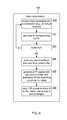
- FIG. 6 shows a process for transmitting application data 202 performed by the data transmitting logic 198 .
- application data 202 is passed to the LTP module 130 either directly from the application or from a stream 200 associated with the connection. In the former case, the application passes the application data 202 and the handle of the connection (e.g., index “5” in FIG. 5 ).
- the application data is received, and at step 222 the incoming data is added to a corresponding buffer in the data buffer 190 .
- the buffer is checked. In one embodiment, the buffer is considered full when a next portion of data (or the current application data 202 ) would fill the buffer up to a size such as the maximum transmission unit (MTU) of the data network.
- MTU maximum transmission unit
- incoming application data that is to be transmitted it buffered until there is sufficient data to form an LTP packet. If step 224 determines that the buffer is not ready to transmit, then the data transmission logic 198 waits for additional application data.
- the LTP module 130 may also be configured to receive a flag or signal that indicates that the application data (e.g., a message) is complete, which will trigger transmission of an LTP packet.
- an LTP payload is formed from the buffered data and the buffer is reset (the incoming data is either included in the payload or in the empty buffer).
- an LTP packet 204 is formed for the payload.
- the sequence number for the relevant connection is incremented in the connection table 194 and is added to the new LTP packet's header.
- the destination IP address is obtained from the appropriate entry in the connection table 194 and is added to the LTP packet's header.
- the LTP packet 204 is formatted as a standard UDP packet.
- the UDP packet format is only a convenience, and the UDP standard itself need not be implemented.
- LTP packets are routed in IP packets and are parsed only by the smart NICs, any format may be used for the LTP. If the UDP packet format is used, a port number can be defined to identify LTP packets. In this way, the smart NIC can differentiate between LTP packets and UDP packets that are not LTP packets and therefore are to be passed through. LTP control/overhead packets such acknowledgment packets, connection setup and takedown packets, etc., are also formatted to be identifiable as LTP packets (e.g., UDP packets with a specific port number). Note that in one embodiment, the LTP module also forms the IP packets that will carry the LTP packets. That is, the switch receives a complete, well-framed, and formatted packet.
- the LTP packet 204 is copied to the transmit buffer 192 and then forwarded to the local port 174 of the switch 156 , which frames and transmits the LTP packet 204 from the transmit part of its second port 172 (the network-facing port).
- the LTP module provides ordered reliable delivery.
- acknowledgment (ACK) LTP packets 206 are transmitted to confirm receipt.
- Each LTP ACK includes the sequence number of the LTP packet being acknowledged.
- NAKS negative acknowledgements
- timeouts can be used to trigger retransmission of buffered LTP packets.
- the LTP module 130 also handles incoming LTP packets. When packets arrive on the local port 174 from the switch 130 , the LTP module 130 determines which entry in the connection table 194 pairs with the packet. If no matching entry exists the packet is dropped. The LTP module 130 checks that the incoming sequence number matches the expected value from the connection table 194 entry. If the sequence number is greater than the connection table entry, the packet is dropped. If the sequence number is less than expected, an LTP ACK is generated and the packet is dropped. If the incoming LTP packet's sequence number matches the entry in the connection table 194 then the packet's payload is unloaded and passed to an application or a stream associated with the connection (as the case may be).
- the incoming LTL packet can be dropped.
- an LTP ACK is generated and the sequence number for the connection is incremented in the connection table 194 .
- inbound LTP packets can be buffered to re-order out-of-order packets.
- a NACK may be generated when a dropped packet is detected (via a skipped sequence number, etc.).
- LTP packets can be classified and managed in the same way that the packets of host-based network flows can be managed. LTP connections can therefore adhere to PFC stalls and ECNs, for instance. LTP traffic can also be provided with a bandwidth amount or a quality of service setting. Unused header space, if available, can be used to send ECN and/or QCN/DC (Quantized Congestion Notification with Delay-Based Congestion Detection) information.
- QCN/DC Quality of Service
Landscapes
- Engineering & Computer Science (AREA)
- Computer Networks & Wireless Communication (AREA)
- Signal Processing (AREA)
- Computer Security & Cryptography (AREA)
- Data Exchanges In Wide-Area Networks (AREA)
Priority Applications (7)
| Application Number | Priority Date | Filing Date | Title |
|---|---|---|---|
| US14/752,713 US9888095B2 (en) | 2015-06-26 | 2015-06-26 | Lightweight transport protocol |
| EP16744948.7A EP3298739B1 (fr) | 2015-06-26 | 2016-06-23 | Protocole de transport léger |
| ES16744948T ES2826404T3 (es) | 2015-06-26 | 2016-06-23 | Protocolo de transporte ligero |
| CN201680033456.5A CN107787570B (zh) | 2015-06-26 | 2016-06-23 | 网络接口卡和使能网络接口卡间通信的方法 |
| PCT/US2016/038839 WO2016210017A1 (fr) | 2015-06-26 | 2016-06-23 | Protocole de transport léger |
| CN202110067736.0A CN112769718B (zh) | 2015-06-26 | 2016-06-23 | 网络接口卡 |
| US15/849,609 US10455061B2 (en) | 2015-06-26 | 2017-12-20 | Lightweight transport protocol |
Applications Claiming Priority (1)
| Application Number | Priority Date | Filing Date | Title |
|---|---|---|---|
| US14/752,713 US9888095B2 (en) | 2015-06-26 | 2015-06-26 | Lightweight transport protocol |
Related Child Applications (1)
| Application Number | Title | Priority Date | Filing Date |
|---|---|---|---|
| US15/849,609 Division US10455061B2 (en) | 2015-06-26 | 2017-12-20 | Lightweight transport protocol |
Publications (2)
| Publication Number | Publication Date |
|---|---|
| US20160381189A1 US20160381189A1 (en) | 2016-12-29 |
| US9888095B2 true US9888095B2 (en) | 2018-02-06 |
Family
ID=56551533
Family Applications (2)
| Application Number | Title | Priority Date | Filing Date |
|---|---|---|---|
| US14/752,713 Active 2035-10-23 US9888095B2 (en) | 2015-06-26 | 2015-06-26 | Lightweight transport protocol |
| US15/849,609 Active US10455061B2 (en) | 2015-06-26 | 2017-12-20 | Lightweight transport protocol |
Family Applications After (1)
| Application Number | Title | Priority Date | Filing Date |
|---|---|---|---|
| US15/849,609 Active US10455061B2 (en) | 2015-06-26 | 2017-12-20 | Lightweight transport protocol |
Country Status (5)
| Country | Link |
|---|---|
| US (2) | US9888095B2 (fr) |
| EP (1) | EP3298739B1 (fr) |
| CN (2) | CN107787570B (fr) |
| ES (1) | ES2826404T3 (fr) |
| WO (1) | WO2016210017A1 (fr) |
Cited By (3)
| Publication number | Priority date | Publication date | Assignee | Title |
|---|---|---|---|---|
| US20180139310A1 (en) * | 2015-06-26 | 2018-05-17 | Microsoft Technology Licensing, Llc | Lightweight transport protocol |
| US20190097947A1 (en) * | 2015-04-22 | 2019-03-28 | Gigamon Inc. | Redundant inline-bypass switch |
| US11315013B2 (en) * | 2018-04-23 | 2022-04-26 | EMC IP Holding Company LLC | Implementing parameter server in networking infrastructure for high-performance computing |
Families Citing this family (8)
| Publication number | Priority date | Publication date | Assignee | Title |
|---|---|---|---|---|
| US10555010B2 (en) * | 2016-08-24 | 2020-02-04 | Liquidsky Software, Inc. | Network-enabled graphics processing module |
| PT3744066T (pt) | 2018-01-28 | 2024-10-16 | Drivenets Ltd | Método e dispositivo para melhorar a utilização da largura de banda numa rede de comunicação |
| US10785161B2 (en) * | 2018-07-10 | 2020-09-22 | Cisco Technology, Inc. | Automatic rate limiting based on explicit network congestion notification in smart network interface card |
| DE112020002491T5 (de) | 2019-05-23 | 2022-04-28 | Hewlett Packard Enterprise Development Lp | System und verfahren zur erleichterung der dynamischen befehlsverwaltung in einer netzwerkschnittstellensteuerung (nic) |
| US12046578B2 (en) | 2020-06-26 | 2024-07-23 | Intel Corporation | Stacked die network interface controller circuitry |
| CN114528032B (zh) * | 2020-10-30 | 2024-11-22 | 华为云计算技术有限公司 | 一种服务器系统以及数据处理的方法 |
| US20230020114A1 (en) | 2021-06-30 | 2023-01-19 | Juniper Networks, Inc. | Service aware routing using network interface cards having processing units |
| WO2023279050A1 (fr) * | 2021-06-30 | 2023-01-05 | Juniper Networks, Inc. | Services périphériques utilisant des cartes d'interface réseau ayant des unités de traitement |
Citations (22)
| Publication number | Priority date | Publication date | Assignee | Title |
|---|---|---|---|---|
| WO1996000468A1 (fr) | 1994-06-24 | 1996-01-04 | Metricom, Inc. | Procede d'utilisation d'un protocole point a point au-dessus d'un reseau a mailles imparfaites |
| US5857075A (en) * | 1995-01-11 | 1999-01-05 | Sony Corporation | Method and integrated circuit for high-bandwidth network server interfacing to a local area network |
| US6247060B1 (en) * | 1997-10-14 | 2001-06-12 | Alacritech, Inc. | Passing a communication control block from host to a local device such that a message is processed on the device |
| US6504851B1 (en) * | 1997-11-21 | 2003-01-07 | International Business Machines Corporation | Dynamic detection of LAN network protocol |
| US6658480B2 (en) * | 1997-10-14 | 2003-12-02 | Alacritech, Inc. | Intelligent network interface system and method for accelerated protocol processing |
| US20040073724A1 (en) * | 2000-10-03 | 2004-04-15 | Adaptec, Inc. | Network stack layer interface |
| US6738821B1 (en) * | 1999-01-26 | 2004-05-18 | Adaptec, Inc. | Ethernet storage protocol networks |
| US7031904B1 (en) * | 1999-01-26 | 2006-04-18 | Adaptec, Inc. | Methods for implementing an ethernet storage protocol in computer networks |
| US7376731B2 (en) | 2002-01-29 | 2008-05-20 | Acme Packet, Inc. | System and method for providing statistics gathering within a packet network |
| US20080262990A1 (en) * | 2000-09-25 | 2008-10-23 | Harsh Kapoor | Systems and methods for processing data flows |
| US20100008248A1 (en) | 2008-07-08 | 2010-01-14 | Barry Constantine | Network tester for real-time measuring of tcp throughput |
| US7711844B2 (en) | 2002-08-15 | 2010-05-04 | Washington University Of St. Louis | TCP-splitter: reliable packet monitoring methods and apparatus for high speed networks |
| US7953014B2 (en) | 2005-09-16 | 2011-05-31 | National Institute Of Advanced Industrial Science And Technology | FPGA-based network device testing equipment for high load testing |
| US7953838B1 (en) | 2006-12-29 | 2011-05-31 | F5 Networks, Inc. | TCP-over-TCP using multiple TCP streams |
| US8265139B2 (en) | 2008-01-02 | 2012-09-11 | Cisco Technology, Inc. | Packet comparator |
| US20130343181A1 (en) | 2012-06-21 | 2013-12-26 | Jonathan Stroud | Systems and methods of data processing using an fpga-implemented hash function |
| US20140059170A1 (en) * | 2012-05-02 | 2014-02-27 | Iosif Gasparakis | Packet processing of data using multiple media access controllers |
| US20140101751A1 (en) | 2012-10-09 | 2014-04-10 | Somansa Co., Ltd. | Hardware engine for high-capacity packet processing of network based data loss prevention appliance |
| US8797880B2 (en) | 2010-02-09 | 2014-08-05 | Juniper Networks, Inc. | Remote network device component testing |
| US20140244204A1 (en) | 2013-02-28 | 2014-08-28 | Advantest Corporation | Tester with acceleration for packet building within a fpga block |
| US20140254594A1 (en) | 2013-03-05 | 2014-09-11 | Iosif Gasparakis | In nic flow switching |
| US20160380896A1 (en) * | 2015-06-26 | 2016-12-29 | Microsoft Technology Licensing, Llc | In-line network accelerator |
Family Cites Families (12)
| Publication number | Priority date | Publication date | Assignee | Title |
|---|---|---|---|---|
| US6651117B1 (en) * | 1999-11-03 | 2003-11-18 | Adaptec, Inc. | Network stack layer interface |
| US7535913B2 (en) * | 2002-03-06 | 2009-05-19 | Nvidia Corporation | Gigabit ethernet adapter supporting the iSCSI and IPSEC protocols |
| EP1977557A2 (fr) * | 2006-01-12 | 2008-10-08 | Broadcom Corporation | Procédé et système de transport utilisant le protocole léger soap, destinés à des applications de gestion basées sur des services web |
| US8300647B2 (en) * | 2007-05-18 | 2012-10-30 | Nvidia Corporation | Intelligent load balancing and failover of network traffic |
| US8645567B2 (en) * | 2009-01-28 | 2014-02-04 | Broadcom Corporation | Method and system for packet filtering for local host-management controller pass-through communication via network controller |
| US8174984B2 (en) * | 2009-05-29 | 2012-05-08 | Oracle America, Inc. | Managing traffic on virtualized lanes between a network switch and a virtual machine |
| CN102640134B (zh) * | 2009-09-23 | 2015-03-18 | 威罗门飞行公司 | 基于帧的容错通信系统 |
| US8989017B2 (en) * | 2012-12-14 | 2015-03-24 | Intel Corporation | Network congestion management by packet circulation |
| US9197596B2 (en) * | 2012-12-18 | 2015-11-24 | Dell Products, Lp | System and method to use common addresses on a management controller without conflict |
| US10057135B2 (en) * | 2013-12-02 | 2018-08-21 | Ciena Corporation | Unified management of computing networks |
| US9619381B2 (en) * | 2013-12-24 | 2017-04-11 | International Business Machines Corporation | Collaborative health management in a storage system |
| US9888095B2 (en) * | 2015-06-26 | 2018-02-06 | Microsoft Technology Licensing, Llc | Lightweight transport protocol |
-
2015
- 2015-06-26 US US14/752,713 patent/US9888095B2/en active Active
-
2016
- 2016-06-23 CN CN201680033456.5A patent/CN107787570B/zh active Active
- 2016-06-23 WO PCT/US2016/038839 patent/WO2016210017A1/fr not_active Ceased
- 2016-06-23 ES ES16744948T patent/ES2826404T3/es active Active
- 2016-06-23 CN CN202110067736.0A patent/CN112769718B/zh active Active
- 2016-06-23 EP EP16744948.7A patent/EP3298739B1/fr active Active
-
2017
- 2017-12-20 US US15/849,609 patent/US10455061B2/en active Active
Patent Citations (23)
| Publication number | Priority date | Publication date | Assignee | Title |
|---|---|---|---|---|
| WO1996000468A1 (fr) | 1994-06-24 | 1996-01-04 | Metricom, Inc. | Procede d'utilisation d'un protocole point a point au-dessus d'un reseau a mailles imparfaites |
| US5857075A (en) * | 1995-01-11 | 1999-01-05 | Sony Corporation | Method and integrated circuit for high-bandwidth network server interfacing to a local area network |
| US6247060B1 (en) * | 1997-10-14 | 2001-06-12 | Alacritech, Inc. | Passing a communication control block from host to a local device such that a message is processed on the device |
| US6658480B2 (en) * | 1997-10-14 | 2003-12-02 | Alacritech, Inc. | Intelligent network interface system and method for accelerated protocol processing |
| US6504851B1 (en) * | 1997-11-21 | 2003-01-07 | International Business Machines Corporation | Dynamic detection of LAN network protocol |
| US6738821B1 (en) * | 1999-01-26 | 2004-05-18 | Adaptec, Inc. | Ethernet storage protocol networks |
| US7031904B1 (en) * | 1999-01-26 | 2006-04-18 | Adaptec, Inc. | Methods for implementing an ethernet storage protocol in computer networks |
| US20080262990A1 (en) * | 2000-09-25 | 2008-10-23 | Harsh Kapoor | Systems and methods for processing data flows |
| US20040073724A1 (en) * | 2000-10-03 | 2004-04-15 | Adaptec, Inc. | Network stack layer interface |
| US7376731B2 (en) | 2002-01-29 | 2008-05-20 | Acme Packet, Inc. | System and method for providing statistics gathering within a packet network |
| US7711844B2 (en) | 2002-08-15 | 2010-05-04 | Washington University Of St. Louis | TCP-splitter: reliable packet monitoring methods and apparatus for high speed networks |
| US7953014B2 (en) | 2005-09-16 | 2011-05-31 | National Institute Of Advanced Industrial Science And Technology | FPGA-based network device testing equipment for high load testing |
| US7953838B1 (en) | 2006-12-29 | 2011-05-31 | F5 Networks, Inc. | TCP-over-TCP using multiple TCP streams |
| US8265139B2 (en) | 2008-01-02 | 2012-09-11 | Cisco Technology, Inc. | Packet comparator |
| US20100008248A1 (en) | 2008-07-08 | 2010-01-14 | Barry Constantine | Network tester for real-time measuring of tcp throughput |
| US8797880B2 (en) | 2010-02-09 | 2014-08-05 | Juniper Networks, Inc. | Remote network device component testing |
| US20140059170A1 (en) * | 2012-05-02 | 2014-02-27 | Iosif Gasparakis | Packet processing of data using multiple media access controllers |
| US20130343181A1 (en) | 2012-06-21 | 2013-12-26 | Jonathan Stroud | Systems and methods of data processing using an fpga-implemented hash function |
| US20140101751A1 (en) | 2012-10-09 | 2014-04-10 | Somansa Co., Ltd. | Hardware engine for high-capacity packet processing of network based data loss prevention appliance |
| US20140244204A1 (en) | 2013-02-28 | 2014-08-28 | Advantest Corporation | Tester with acceleration for packet building within a fpga block |
| US20140254594A1 (en) | 2013-03-05 | 2014-09-11 | Iosif Gasparakis | In nic flow switching |
| US20160380896A1 (en) * | 2015-06-26 | 2016-12-29 | Microsoft Technology Licensing, Llc | In-line network accelerator |
| US9674090B2 (en) * | 2015-06-26 | 2017-06-06 | Microsoft Technology Licensing, Llc | In-line network accelerator |
Non-Patent Citations (8)
| Title |
|---|
| "International Preliminary Report on Patentability Issued in PCT Application No. PCT/US2016/038839", Dated: Sep. 25, 2017, 7 pages. |
| "International Search Report and Written Opinion Issued in PCT Application No. PCT/US2016/038839", dated Aug. 26, 2016,11 Pages. |
| "Second Written Opinion Issued in PCT Application No. PCT/US2016/038839", dated Nov. 2, 2016, 4 Pages. |
| Covington, et al., "A Packet Generator on the NetFPGA Platform", In Proceedings of 17th IEEE Symposium on Field Programmable Custom Computing Machines, Apr. 5, 2009, pp. 235-238. |
| Denholm, et al., "Low Latency Fpga Acceleration of Market Data Feed Arbitration", In Proceedings of IEEE 25th International Conference on Application-specific Systems, Architectures and Processors, Jun. 18, 2014, 5 pages. |
| Fujita, et al., "A TCP/IP Hardware Stack Directly Connectable to WEB Application Circuit", n Proceedings of IEEE Symposium on Low-Power and High-Speed Chips, Retrieved on: Mar. 3, 2015, 1 page. |
| Hong, et al., "Implementation of FPGA Card in Content Filtering Solutions for Securing Computer Networks", In Proceedings of ICIC Express Letters, vol. 1, Issue 1, Sep. 2010, pp. 71-76. |
| Whelan, Timothy, "Hardware Based Packet Filtering Using Field Programmable Gate Arrays" Published on: Apr. 15, 2010 Available at: http://www.cs.ru.ac.za/research/g07w1974/documents/proposal.pdf. |
Cited By (5)
| Publication number | Priority date | Publication date | Assignee | Title |
|---|---|---|---|---|
| US20190097947A1 (en) * | 2015-04-22 | 2019-03-28 | Gigamon Inc. | Redundant inline-bypass switch |
| US10659392B2 (en) * | 2015-04-22 | 2020-05-19 | Gigamon Inc. | Redundant inline-bypass switch |
| US20180139310A1 (en) * | 2015-06-26 | 2018-05-17 | Microsoft Technology Licensing, Llc | Lightweight transport protocol |
| US10455061B2 (en) * | 2015-06-26 | 2019-10-22 | Microsoft Technology Licensing, Llc | Lightweight transport protocol |
| US11315013B2 (en) * | 2018-04-23 | 2022-04-26 | EMC IP Holding Company LLC | Implementing parameter server in networking infrastructure for high-performance computing |
Also Published As
| Publication number | Publication date |
|---|---|
| WO2016210017A1 (fr) | 2016-12-29 |
| US20160381189A1 (en) | 2016-12-29 |
| US10455061B2 (en) | 2019-10-22 |
| EP3298739A1 (fr) | 2018-03-28 |
| CN107787570A (zh) | 2018-03-09 |
| CN112769718A (zh) | 2021-05-07 |
| ES2826404T3 (es) | 2021-05-18 |
| EP3298739B1 (fr) | 2020-07-22 |
| CN107787570B (zh) | 2021-01-22 |
| CN112769718B (zh) | 2023-04-07 |
| US20180139310A1 (en) | 2018-05-17 |
Similar Documents
| Publication | Publication Date | Title |
|---|---|---|
| US10129153B2 (en) | In-line network accelerator | |
| US10455061B2 (en) | Lightweight transport protocol | |
| US20250126055A1 (en) | System and method for facilitating efficient packet forwarding in a network interface controller (nic) | |
| US11876880B2 (en) | TCP processing for devices | |
| CN110061923B (zh) | 流量控制方法、装置、交换机、发送端服务器及介质 | |
| EP3361389A1 (fr) | Traitement tcp pour dispositifs | |
| US10440157B2 (en) | Distributed measurement arrangement for an embedded automotive acquisition device with TCP acceleration | |
| US8935329B2 (en) | Managing message transmission and reception | |
| CN117354253A (zh) | 一种网络拥塞通知方法、装置及存储介质 | |
| US10326696B2 (en) | Transmission of messages by acceleration components configured to accelerate a service | |
| US20240089219A1 (en) | Packet buffering technologies | |
| EP3319297B1 (fr) | Dispositif d'interface de réseau et dispositif de traitement hôte |
Legal Events
| Date | Code | Title | Description |
|---|---|---|---|
| AS | Assignment |
Owner name: MICROSOFT TECHNOLOGY LICENSING, LLC, WASHINGTON Free format text: ASSIGNMENT OF ASSIGNORS INTEREST;ASSIGNORS:CAULFIELD, ADRIAN;BURGER, DOUG;CHUNG, ERIC;AND OTHERS;SIGNING DATES FROM 20150626 TO 20150728;REEL/FRAME:036242/0238 |
|
| AS | Assignment |
Owner name: MICROSOFT TECHNOLOGY LICENSING, LLC, WASHINGTON Free format text: ASSIGNMENT OF ASSIGNORS INTEREST;ASSIGNOR:MICROSOFT CORPORATION;REEL/FRAME:038238/0077 Effective date: 20150702 |
|
| STCF | Information on status: patent grant |
Free format text: PATENTED CASE |
|
| MAFP | Maintenance fee payment |
Free format text: PAYMENT OF MAINTENANCE FEE, 4TH YEAR, LARGE ENTITY (ORIGINAL EVENT CODE: M1551); ENTITY STATUS OF PATENT OWNER: LARGE ENTITY Year of fee payment: 4 |
|
| MAFP | Maintenance fee payment |
Free format text: PAYMENT OF MAINTENANCE FEE, 8TH YEAR, LARGE ENTITY (ORIGINAL EVENT CODE: M1552); ENTITY STATUS OF PATENT OWNER: LARGE ENTITY Year of fee payment: 8 |