US9934012B2 - Parallelization compiling method, parallelization compiler, and vehicular device - Google Patents
Parallelization compiling method, parallelization compiler, and vehicular device Download PDFInfo
- Publication number
- US9934012B2 US9934012B2 US15/083,526 US201615083526A US9934012B2 US 9934012 B2 US9934012 B2 US 9934012B2 US 201615083526 A US201615083526 A US 201615083526A US 9934012 B2 US9934012 B2 US 9934012B2
- Authority
- US
- United States
- Prior art keywords
- program
- macro
- cores
- sequential program
- task
- Prior art date
- Legal status (The legal status is an assumption and is not a legal conclusion. Google has not performed a legal analysis and makes no representation as to the accuracy of the status listed.)
- Active
Links
Images




Classifications
-
- G—PHYSICS
- G06—COMPUTING OR CALCULATING; COUNTING
- G06F—ELECTRIC DIGITAL DATA PROCESSING
- G06F8/00—Arrangements for software engineering
- G06F8/40—Transformation of program code
- G06F8/41—Compilation
- G06F8/45—Exploiting coarse grain parallelism in compilation, i.e. parallelism between groups of instructions
- G06F8/451—Code distribution
-
- Y—GENERAL TAGGING OF NEW TECHNOLOGICAL DEVELOPMENTS; GENERAL TAGGING OF CROSS-SECTIONAL TECHNOLOGIES SPANNING OVER SEVERAL SECTIONS OF THE IPC; TECHNICAL SUBJECTS COVERED BY FORMER USPC CROSS-REFERENCE ART COLLECTIONS [XRACs] AND DIGESTS
- Y02—TECHNOLOGIES OR APPLICATIONS FOR MITIGATION OR ADAPTATION AGAINST CLIMATE CHANGE
- Y02D—CLIMATE CHANGE MITIGATION TECHNOLOGIES IN INFORMATION AND COMMUNICATION TECHNOLOGIES [ICT], I.E. INFORMATION AND COMMUNICATION TECHNOLOGIES AIMING AT THE REDUCTION OF THEIR OWN ENERGY USE
- Y02D10/00—Energy efficient computing, e.g. low power processors, power management or thermal management
Definitions
- the present disclosure relates to a parallelization compiling method, a parallelization compiler, and a vehicular device, each of which generates a segmented parallelized program for a multi-core processor from a sequential program prepared for a single-core processor.
- a process of a sequential program for the single-core processor needs to be divided into sub-processes, and the respective sub-processes need to be assigned to respective processing cores so that a communication among the respective processing cores is minimized.
- the work for parallelizing the sequential program as described above needs to be manually performed. However, such work is very difficult, and requires a long period of time, and suffers from many problems such as an increase in development costs and the reliability of the parallelized program.
- JP 2015-001807 A (corresponding to US 2014/0372995 A1) proposes a parallelization compiling method that is capable of creating a parallelized program for a vehicular device built-in system which is high in reliability and can perform high-speed processing while suppressing a development period of time and the development costs.
- a macro task assigned to a first core in a first parallelizing process may be assigned to a second core in a subsequent parallelizing process. That is, the macro task to which no change is carried out compared with a state in which the macro task is included in the first sequential program, that is, the macro task to which no addition or no deletion is carried out may move between the cores.
- the movement of the macro tasks between or among the cores may cause a substantial change of the overall program and an increase of test man-hours after the parallelization is carried out.
- a parallelization compiling method for generating a segmented program, which is executable by a multi-core processor, from a sequential program, which is executable by a single-core processor, by parallelizing the sequential program is provided.
- the parallelization compiling method includes assigning one or more macro tasks included in the sequential program to a plurality of cores included in the multi-core processor in order to generate the segmented program, adding a new macro task to the sequential program or deleting one of the one or more macro tasks from the sequential program, and compiling the sequential program into the segmented program in response to the adding of the new macro task under a condition that the one or more macro tasks assigned to the plurality of cores do not migrate among the plurality of cores or compiling the sequential program into the segmented program in response to the deleting of the one of the one or more macro tasks under a condition that remains of the one or more macro tasks assigned to the plurality of cores do not migrate among the plurality of cores.
- a parallelization compiler stored in a non-transitory tangible computer readable storage medium as a program product.
- the parallelization compiler generates a segmented program, which is executable by a multi-core processor, from a sequential program, which is executable by a single-core processor, by parallelizing the sequential program.
- the parallelization compiler includes instructions to be executed by a parallelization compiling device.
- a vehicular device including a multi-core processor including a multi-core processor.
- the multi-core processor of the vehicular device operates based on a segmented program, which is executable by the multi-core processor and is generated by parallelization from a sequential program executable by a single-core processor.
- the multi-core processor is configured to assign one or more macro tasks included in the sequential program to a plurality of cores included in the multi-core processor in order to generate the segmented program, add a new macro task to the sequential program or deleting one of the one or more macro tasks from the sequential program, and compile the sequential program into the segmented program in response to the adding of the new macro task under a condition that the one or more macro tasks assigned to the plurality of cores do not migrate among the plurality of cores or compile the sequential program into the segmented program in response to the deleting of the one of the one or more macro tasks under a condition that remains of the one or more macro tasks assigned to the plurality of cores do not migrate among the plurality of cores.
- the sequential program is compiled into the segmented program in response to the addition and/or the deletion of the macro task under a condition that the macro tasks assigned to the multiple cores do not move or migrate between or among the multiple cores.
- program change may include program addition or program deletion.
- FIG. 1 is a block diagram illustrating a parallelization compiler according to an embodiment of the present disclosure
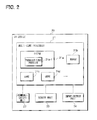
- FIG. 2 is a block diagram illustrating a vehicular device according to an embodiment of the present disclosure
- FIGS. 3A and 3B are diagrams illustrating a parallelization compiling method according to an embodiment of the present disclosure
- FIGS. 4A and 4B are diagrams illustrating the parallelization compiling method according to an embodiment of the present disclosure
- FIGS. 5A and 5B are diagrams illustrating the parallelization compiling method according to an embodiment of the present disclosure
- FIGS. 6A and 6B are diagrams illustrating the parallelization compiling method according to an embodiment of the present disclosure
- FIGS. 7A and 7B are diagrams illustrating the parallelization compiling method according to an embodiment of the present disclosure.
- FIGS. 8A and 8B are diagrams illustrating the parallelization compiling method according to an embodiment of the present disclosure.
- An automatic parallelization compiler has a function of generating a parallelized program (segmented program) for a multi-core processor system of a built-in system.
- the parallelized program is also referred to as a segmented program, and is generated from a sequential program, which is also referred to as a source program.
- the sequential program is prepared for a single-core processor system of a built-in system.
- the automatic parallelization compiler according to the present embodiment has the following functions.
- the automatic parallelization compiler has three stages of a front end (FE), a middle path (MP), and a back end (BE). Each of these stages is independent from one another when being executed, and code transfer is performed by an intermediate language generated from the FE and the MP.
- the FE is configured to perform a lexical analysis and a syntax analysis of a source code of the sequential program and generate a parsable intermediate language in the MP.
- the intermediate language generated by the FE is basically expressed by a parse tree having four operands, and forms one block as a whole and is not structured.
- the MP is configured to perform a control dependency analysis, a data dependency analysis, optimization and the like, and performs multi-grain parallel processing of coarse grain, medium grain, and near fine grain parallelization with the use of data.
- the BE is configured to read a parallelization intermediate language generated by the MP and generate an actual machine code.
- the BE has a BE for generating an assembler code of a multi-core architecture that is targeted as well as a BE for generating a parallelized Fortran code and a C code for OpenMP.
- the BE has a BE for outputting codes corresponding to a variety of architectures such as a BE for generating a code parallelized with the inclusion of a memory arrangement and data transmission by a parallelization API to be described later.
- the automatic parallelization compiler performs a macro data flow processing for segmenting a sequential program into three kinds of coarse grain tasks a basic block (BB), a repetition block (RB), and a subroutine block (SB).
- the coarse grain task is also referred to as a macro task (MT).
- the macro data flow processing suffers from such a problem that a utilization efficiency of the processor is not enhanced due to a shape of the program, and a sufficient coarse grain parallelism cannot be extracted.
- the automatic parallelization compiler employs hierarchical macro data flow processing that expands a conventional single hierarchical macro data flow processing technique, and hierarchically uses macro data flow processing within the MT.
- the MT is hierarchically defined, and the parallelism between the macro tasks is analyzed for each hierarchy.
- the automatic parallelization compiler first analyzes a control dependency and a data dependency between the macro tasks for the generated macro tasks of the respective hierarchies.
- the analysis results are expressed as a macro flow graph (MFG).
- the MFG represents the control dependency and the data dependency among the macro tasks, but does not represent the parallelism.
- the earliest executable condition is a condition under which the MT is executable at an earliest time point, and is obtained from the following execution conditions.
- the earliest executable condition of the macro task is represented by a macro task graph (MTG).
- MMG macro task graph
- the automatic parallelization compiler realizes, in addition to the conventional loop parallelization, multi-grain parallel processing that effectively combines a coarse grain task parallel processing with a near fine grain parallel processing (refer to “parallelism detection method between Fortran program coarse grain tasks” in Institute of Electronics, Information and Communication Engineers Journal, 1990 by Hiroki Honda, Masahiko Iwata, and Hironori Kasahara).
- the coarse grain task parallel processing uses the parallelism between the coarse grain tasks between loops and between the subroutines, and the near fine grain parallel processing uses the parallelism between statements.
- the automatic parallelization compiler generates a macro flow graph (MFG) representing the control dependency and the data dependency between the MTs of the BB, the RB, and the SB.
- the automatic parallelization compiler further expresses the parallelism of the MTs extracted from the MFG by the earliest executable condition analysis as the macro task graph (MTG) (refer to “parallelism detection method between Fortran program coarse grain tasks” in Institute of Electronics, Information and Communication Engineers Journal, 1990 by Hiroki Honda, Masahiko Iwata, and Hironori Kasahara and “Macro task generation method of Fortran macro data flow processing”, IEICE, 1992, Vol. J75-D-I, No. 8, pp. 511-525 by Kasahara, Goda, Yoshida, Okamoto, and Nissan,).
- the automatic parallelization compiler assigns the MT on the MTG to a processor group (PG) into which one or more processor elements (PE) are grouped.
- PG processor group
- PE processor elements
- the MT assigned to the PG is subjected to medium grain parallel processing by a processor within a processor cluster if the parallel processing is enabled in the MT in a DOALL loop or at an iteration level.
- the medium grain parallel processing represents parallel processing using the parallelism between DO loop iterations, and is most general in the parallel processing in the multi-core processor.
- the parallel processing of the statement level for the near-fine grain tasks is called “near fine grain parallel processing”.
- the parallel execution can be performed in the statement without dependency, and an execution duration is reduced.
- the macro task generated in each hierarchy is assigned to the PG and executed.
- a scheduling technique for determining to which PG the macro task is assigned includes a dynamic scheduling and a static scheduling, which will be described below, and those scheduling are selected on the basis of a shape of the macro task graph, an execution time non-determinacy and the like.
- the macro task is assigned to the PG during the execution by the dynamic scheduling.
- the dynamic scheduling routine operates a macro task execution management table according to the termination of the macro task or the determination of a branch direction, and examines the earliest executable condition for each macro task.
- the macro tasks are put into a ready queue.
- the macro tasks within the ready queue are sorted according to its priority, and a head macro task in the ready queue is assigned to the processor cluster of an idle state.
- a centralized scheduling system and a distributed scheduling system can be selectively used according to the number of processors to be used, and a synchronization overhead of the system.
- the centralized scheduling system one dedicated processor performs scheduling, and in the distributed scheduling system, a scheduling function is distributed to the respective processors.
- the static scheduling is a system used when the macro task graph has only a data dependency edge, in which the automatic parallelization compiler determines the assignment of the macro task to the PG during the compiling.
- the static scheduling can be effectively used for the scheduling of the task fine in the grain because the static scheduling can eliminate an execution time scheduling overhead, and minimize the overhead synchronous with data transmission.
- the costs of the task are applied with a task cost estimate value in the automatic parallelization compiler, but the task scheduling can be performed in a real cost with the use of a profile automatic feedback function of the automatic parallelization compiler.
- the sequential program is decomposed into the MT as a first phase, and a profiler function is inserted for each MT to generate the sequential program.
- a task execution cost (clock cycle) and the number of times of task execution are measured.
- the sequential program into which the profiler function is inserted is executed on a machine to be targeted once, and a file having information on the task execution cost and the number of times of tasks on the machine to be targeted is output.
- the parallelized program scheduled on the basis of the real cost is generated with the output file and the sequential program as inputs.
- the automatic parallelization compiler can perform a cache optimization over the entire program.
- the automatic parallelization compiler finds that there is a data dependency between the loops after analyzing the parallelism, the automatic parallelization compiler attempts the global optimization of the cache between the loops having the dependency (refer to Japanese Patent No. 4177681).
- the above localization technology has evolved into a local memory management, and data transmission technology described below (refer to GB Patent No. 2,478,874).
- the DTU retracts the data into a centralized shared memory behind a task execution by the CPU, and reloads the data into the memory till a use time.
- parallelization can be performed in source-to-source such as parallelization C or parallelization Fortran with the use of automatic parallelization API (refer to “Optimally Scheduled Advanced Multiprocessor Application Program Interface”, 2008 by Waseda University).
- the automatic parallelization compiler converts a directive portion of the C or Fortran for each processor into a run-time library call with the use of, for example, an automatic parallelization API standard interpretation system to be described later.
- the automatic parallelization API standard is an example of a predetermined standard.
- the built-in system may be, for example, a vehicular device or an electronic device other than the vehicular device.
- the sequential program may be automatically generated by a model base design (as an example, sequential program automatically generated by Matlab (registered trademark) or Simulink (registered trademark) provided by MathWorks, Inc.).
- the automatic parallelization compiler is configured by a conditional branch and an assignment statement, performs inline expansion and renaming on the sequential program fine in the processing, and extracts the parallelism.
- the automatic parallelization compiler performs a task aggregation for a conditional branch concealment for the purpose of complying with real-time, and performs static scheduling so that overhead becomes low. Furthermore, in order to perform the static scheduling in the real cost, the automatic parallelization compiler may employ the profile automatic feedback function.
- a conditional compilation for selecting a description to be compiled according to each type of the built-in system different in destination, function, and the configuration of hardware may be performed by a conditional compilation switch (command to the preprocessor).
- information information indicative of the destination, etc.
- information is set as an argument of each conditional compilation switch of the sequential program to generate a binary code corresponding to the type from the sequential program.
- the automatic parallelization compiler ignores the selection of a target to be compiled by the conditional compilation, performs the segmentation of the macro task, the extraction of parallelism, and static scheduling for all portions of the sequential program, and the like and generates the parallelized program. Thereafter, the automatic parallelization compiler identifies a description to be excluded from compilation by the conditional compilation, and generates binary data for operating the multi-core processor from the parallelized program in a state where the above description is excluded.
- An automatic parallelization compiler (AUTO PRLZ COMPILER) 1 is provided to a user in a state to be stored in a storage medium (STORAGE) 18 configured by an optical disc such as a digital versatile disc (DVD), a compact disk read-only memory (CD-ROM), a universal serial bus (USB) memory, or a memory card (registered trademark), a magnetic disc, or a semiconductor memory (refer to FIG. 1 ). It is needless to say that the automatic parallelization compiler 1 may be supplied to the user through a network.
- a personal computer (PC) 10 in which the automatic parallelization compiler 1 is installed operates as an automatic parallelization compiling device.
- the PC 10 includes a display unit 11 , a hard disk driver (HDD) 12 , a central processing unit (CPU) 13 , a read-only memory (ROM) 14 , a random access memory (RAM) 15 , an input device 16 , and a reading unit 17 .
- HDD hard disk driver
- CPU central processing unit
- ROM read-only memory
- RAM random access memory
- the display unit 11 displays an image for the user based on an image signal transmitted from the CPU 13 .
- the input device 16 is configured by a keyboard a mouse and the like, and operated by the user to output a signal corresponding to the operation to the CPU 13 .
- the reading unit 17 is configured to read data from the storage medium 18 in which the automatic parallelization compiler 1 and so on are stored.
- the RAM 15 is a readable and writable volatile memory
- the ROM 14 is a read-only nonvolatile memory
- the HDD 12 is a readable and writable nonvolatile memory. Programs to be read and executed by the CPU 13 and the like are stored in the ROM 14 and the HDD 12 in advance.
- the RAM 15 is used as a storage area for temporarily storing the programs or a storage area for temporarily storing data for work when the CPU 13 executes the programs stored in the ROM 14 and the HDD 12 .
- the CPU 13 reads an OS from the HDD 12 to execute the OS, and executes a variety of programs recorded in the HDD 12 as a process on the OS.
- the CPU 13 receives an input of a signal from the input device 16 as occasion demands, outputs the image signal to the display unit 11 , and controls the read/write of the data with respect to the RAM 15 and the HDD 12 .
- the automatic parallelization compiler 1 read from the storage medium 18 through the reading unit 17 is installed in the PC 10 , and the automatic parallelization compiler 1 functions as one of applications that are stored in the HDD 12 , and executed as a process on the OS.
- the automatic parallelization compiling device is used in the development of the parallelized program for the built-in system such as the vehicular device.
- the automatic parallelization compiling device is not limited to the above, but can be used in the development of the parallelized program for a built-in system for various applications, such as information appliances, or the development of the parallelized program in other applications aside from the built-in system.
- VH DEVICE vehicular device
- the automatic parallelization compiler 1 is not limited to the vehicular device 20 , but can generate the parallelized program for operating a variety of electronic devices having the same configuration.
- the vehicular device 20 includes a multi-core processor 21 , a communication unit 22 , a sensor unit 23 , an input/output port 24 and the like.
- the multi-core processor 21 includes a ROM 21 a , a RAM 21 b , and multiple cores 21 c , 21 d , etc.
- the ROM 21 a stores a parallelized program 21 a - 1 (binary data) generated by the automatic parallelization compiler 1 therein.
- the multi-core processor 21 operates according to the parallelized program 21 a - 1 , and comprehensively controls the vehicular device 20 .
- the RAM 21 b is configured to be accessed by the cores 21 c , 21 d , etc.
- the communication unit 22 is configured to communicate with another ECU connected to the communication unit 22 through an in-vehicle LAN or the like.
- the sensor unit 23 is configured by a variety of sensors for detecting a state of an object to be controlled and the like.
- the input/output port 24 is configured to transmit and receive a variety of signals for controlling the object to be controlled.
- each process a, b, c and so on represents a description of a series of processes including various operations, assignments, branching processing, function calls and so on.
- FIGS. 3A and 3B show a parallelizing process when no change scale minimization option is applied to the parallelization.
- FIG. 3A illustrates a sequential program before the macro task is added, and a segmented program obtained by parallelizing the sequential program.
- FIG. 3B illustrates a sequential program after a macro task x is newly added, and a segmented program obtained by parallelizing the sequential program.
- the sequential program is configured so that process a, process b, process c, process d, and process e are sequentially executed.
- Execution durations required by the process a, the process b, and the process e are the same with one another.
- the process d requires an execution duration twice as long as the execution duration of the process a.
- the process c requires an execution duration twice as long as the execution duration of the process d.
- the process a and the process c are assigned to the core 0
- the process b, the process d, and the process e are assigned to the core 1 .
- a process x that is a macro task is added to the sequential program shown in FIG. 3A .
- the process a, the process x, and the process d are assigned to the core 0
- the process b, the process c, and the process e are assigned to the core 1 .
- FIG. 3A When FIG. 3A is compared with FIG. 3B , it is sure that the parallelization is optimal from the viewpoint of shortening the overall execution duration maximally.
- the process c assigned to the core 0 in FIG. 3A is assigned to the core 1 in FIG. 3B
- the process d assigned to the core 1 in FIG. 3A is assigned to the core 0 in FIG. 3B .
- each of the process c and the process d is assigned to the different cores before and after the addition of the process x. That is, the process c and the process d move or migrate between the core 0 and core 1 when the program change is made to the sequential program.
- FIGS. 4A and 4B show a parallelizing process when the change scale minimization option is applied to the compiling of the sequential program to the parallelized program.
- FIG. 4A illustrates a sequential program before the macro task is added, and a segmented program obtained by parallelizing the sequential program (first unit).
- FIG. 4B illustrates a sequential program after the macro task x is newly added (second unit), and a segmented program obtained by parallelizing the sequential program to which the macro task is added (third unit).
- the sequential program is configured so that process a, process b, process c, process d, and process e are sequentially executed.
- Execution durations required by the process a, the process b, and the process e are the same with one another.
- the process d requires an execution duration twice as long as the execution duration of the process a.
- the process c requires an execution duration twice as long as the execution duration of the process d.
- the process a and the process c are assigned to the core 0
- the process b, the process d, and the process e are assigned to the core 1 .
- the process x that is a macro task is added to the sequential program shown in FIG. 4A .
- the processes that are assigned to respective cores in a prior assignment shown in FIG. 4A are not changed.
- the process x is assigned to the core 1 having shorter execution duration without changing the assignment of the processes to the cores.
- assignment of the process a and the process c to the core 0 , and the assignment of the process b, the process d, and the process e to the core 1 are not changed caused by the addition of the process x to the sequential program.
- FIG. 3B When FIG. 3B is compared with FIG. 4B , the parallelization illustrated in FIG. 3B is more excellent from the viewpoint of shortening the overall execution duration maximally. However, the parallelization illustrated in FIG. 4B is more excellent from the viewpoint of maximally reducing the movement or migration of the process that has already been assigned.
- FIGS. 5A and 5B show a parallelizing process when the change scale minimization option is applied to the parallelization.
- FIG. 5A illustrates a sequential program before the macro task is added, and a segmented program obtained by parallelizing the sequential program (first unit).
- FIG. 5B illustrates a sequential program after the macro task x is newly added (second unit), and a segmented program obtained by parallelizing the sequential program to which the macro task is added (third unit).
- the sequential program is configured so that process a, process b, process c, process d, and process e are sequentially executed.
- Execution durations required by the process a, the process b, and the process e are the same with one another.
- the process d requires an execution duration twice as long as the execution duration of the process a.
- the process c requires an execution duration twice as long as the execution duration of the process d.
- the process x that is a macro task is added to the sequential program in FIG. 5A .
- the process x is assigned to the core 0 having shorter execution duration without changing the assignment of the process a, the process b, and the process d to the core 0 , and the assignment of the process c and the process e to the core 1 .
- FIGS. 6A and 6B show a parallelizing process when no change scale minimization option is applied to the parallelization.
- FIG. 6A illustrates a sequential program before the macro task is deleted, and a segmented program obtained by parallelizing the sequential program (first unit).
- FIG. 6B illustrates a sequential program after the macro task is deleted (second unit), and a segmented program obtained by parallelizing the sequential program (third unit).
- the sequential program is configured so that process a, process b, process c, process d, and process e are sequentially executed.
- Execution durations required by the process a, the process b, and the process e are the same with one another.
- the process d requires an execution duration twice as long as the execution duration of the process a.
- the process c requires an execution duration twice as long as the execution duration of the process d.
- the process a and the process c are assigned to the core 0
- the process b, the process d, and the process e are assigned to the core 1 .
- the process d which is a macro task is deleted from the sequential program in FIG. 6A .
- the process c is assigned to the core 0
- the process a, the process b, and the process e are assigned to the core 1 .
- FIG. 6A When FIG. 6A is compared with FIG. 6B , it is sure that the parallelization is optimal from the viewpoint of shortening the overall execution duration maximally.
- the process a assigned to the core 0 in FIG. 6A is assigned to the core 1 in FIG. 6B .
- the process a is assigned to the different cores before and after the deletion of the process d. That is, the process a moves or migrates between the core 0 and core 1 when the program change is made to the sequential program.
- FIGS. 7A and 7B show a parallelizing process when the change scale minimization option is applied to the parallelization.
- FIG. 7A illustrates a sequential program before the macro task d is deleted, and a segmented program obtained by parallelizing the sequential program (first unit).
- FIG. 7B illustrates a sequential program after the macro task d is deleted (second unit), and a segmented program obtained by parallelizing the sequential program from which the macro task is deleted (third unit).
- the sequential program is configured so that process a, process b, process c, process d, and process e are sequentially executed.
- Execution durations required by the process a, the process b, and the process e are the same with one another.
- the process d requires an execution duration twice as long as the execution duration of the process a.
- the process c requires an execution duration twice as long as the execution duration of the process d.
- the process a and the process c are assigned to the core 0
- the process b, the process d, and the process e are assigned to the core 1 .
- FIG. 7B the process d, which is a macro task, is deleted from the sequential program shown in FIG. 7A .
- the process d which is a macro task, is deleted from the sequential program shown in FIG. 7A .
- the change scale minimization option is applied to the parallelization, the processes that have already been assigned to respective cores shown in FIG. 7A are not changed. Specifically, only the process d that has been assigned to the core 1 is deleted without changing the assignment of the process a and the process c to the core 0 and the assignment of the process b and the process e to the core 1 .
- FIG. 6B When FIG. 6B is compared with FIG. 7B , the parallelization illustrated in FIG. 6B is more excellent from the viewpoint of shortening the overall execution duration maximally. However, the parallelization illustrated in FIG. 7B is more excellent from the viewpoint of maximally reducing the movement or migration of the process that has already been assigned.
- FIGS. 8A and 8B shows a parallelizing process when the change scale minimization option is applied to the parallelization and data dependencies are defined between macro tasks included in the sequential program.
- FIG. 8A illustrates a sequential program before the macro task is deleted, and a segmented program obtained by parallelizing the sequential program (first unit).
- FIG. 8B illustrates a sequential program after the macro task has been deleted (second unit), and a segmented program obtained by parallelizing the sequential program from which the macro task is deleted (third unit).
- the sequential program is configured so that process a, process b, process c, process d, and process e are sequentially executed.
- Execution durations required by the process a, the process b, and the process e are the same with one another.
- the process d requires an execution duration twice as long as the execution duration of the process a.
- the process c requires an execution duration twice as long as the execution duration of the process d.
- the process a and the process c are assigned to the core 0
- the process b, the process d, and the process e are assigned to the core 1 .
- FIG. 8B the process d, which is a macro task, is deleted from the sequential program in FIG. 8A .
- the process d which is a macro task
- the process d is deleted from the sequential program in FIG. 8A .
- the change scale minimization option is applied to the parallelization, the processes that have already been assigned to respective cores shown in FIG. 8A are not changed. Specifically, the assignment of the process a and the process c to the core 0 , and the assignment of the process b and the process e to the core 1 are not changed.
- the above-described parallelization compiling method may be executed by the automatic parallelization compiling device 10 , or may also be executed by the multi-core processor 21 of the vehicular device 20 instead of the automatic parallelization compiling device 10 .
Landscapes
- Engineering & Computer Science (AREA)
- General Engineering & Computer Science (AREA)
- Theoretical Computer Science (AREA)
- Software Systems (AREA)
- Physics & Mathematics (AREA)
- General Physics & Mathematics (AREA)
- Devices For Executing Special Programs (AREA)
Applications Claiming Priority (2)
| Application Number | Priority Date | Filing Date | Title |
|---|---|---|---|
| JP2015072812A JP6427053B2 (ja) | 2015-03-31 | 2015-03-31 | 並列化コンパイル方法、及び並列化コンパイラ |
| JP2015-72812 | 2015-03-31 |
Publications (2)
| Publication Number | Publication Date |
|---|---|
| US20160291948A1 US20160291948A1 (en) | 2016-10-06 |
| US9934012B2 true US9934012B2 (en) | 2018-04-03 |
Family
ID=56937620
Family Applications (1)
| Application Number | Title | Priority Date | Filing Date |
|---|---|---|---|
| US15/083,526 Active US9934012B2 (en) | 2015-03-31 | 2016-03-29 | Parallelization compiling method, parallelization compiler, and vehicular device |
Country Status (3)
| Country | Link |
|---|---|
| US (1) | US9934012B2 (ja) |
| JP (1) | JP6427053B2 (ja) |
| DE (1) | DE102016204960B4 (ja) |
Families Citing this family (4)
| Publication number | Priority date | Publication date | Assignee | Title |
|---|---|---|---|---|
| JP6427054B2 (ja) * | 2015-03-31 | 2018-11-21 | 株式会社デンソー | 並列化コンパイル方法、及び並列化コンパイラ |
| JP7139633B2 (ja) * | 2018-03-14 | 2022-09-21 | 株式会社デンソー | 並列化方法、並列化ツール、及びマルチコアマイコン |
| CN109522720A (zh) * | 2018-11-29 | 2019-03-26 | 北京元心科技有限公司 | 动态度量的方法、装置、电子设备及计算机可读存储介质 |
| WO2020188731A1 (ja) * | 2019-03-19 | 2020-09-24 | 日本電気株式会社 | 情報処理装置、情報処理方法及び記録媒体 |
Citations (13)
| Publication number | Priority date | Publication date | Assignee | Title |
|---|---|---|---|---|
| US5452461A (en) * | 1989-04-28 | 1995-09-19 | Hitachi, Ltd. | Program parallelizing apparatus capable of optimizing processing time |
| US20030033588A1 (en) * | 2001-01-29 | 2003-02-13 | John Alexander | System, method and article of manufacture for using a library map to create and maintain IP cores effectively |
| US20030105620A1 (en) * | 2001-01-29 | 2003-06-05 | Matt Bowen | System, method and article of manufacture for interface constructs in a programming language capable of programming hardware architetures |
| US20040172626A1 (en) * | 2002-08-29 | 2004-09-02 | Indian Institute Of Information Technology | Method for executing a sequential program in parallel with automatic fault tolerance |
| JP2004252728A (ja) | 2003-02-20 | 2004-09-09 | Univ Waseda | コンパイル方法、コンパイラ、コンパイル装置、プログラムコード作成方法、プログラム、キャッシュ最適利用演算方法、およびキャッシュ最適利用演算装置 |
| JP2004310651A (ja) | 2003-04-10 | 2004-11-04 | Fujitsu Ltd | コスト解析に基づいてループの自動並列化処理を行う情報処理装置 |
| US20080086617A1 (en) | 2006-10-06 | 2008-04-10 | Hitachi , Ltd., | Processor and data transfer unit |
| US20080229297A1 (en) * | 2005-10-13 | 2008-09-18 | International Business Machines Corporation | Method and system for reducing memory reference overhead associated with treadprivate variables in parallel programs |
| US20100070958A1 (en) * | 2007-01-25 | 2010-03-18 | Nec Corporation | Program parallelizing method and program parallelizing apparatus |
| US20100153654A1 (en) * | 2002-08-07 | 2010-06-17 | Martin Vorbach | Data processing method and device |
| US20100174876A1 (en) | 2007-02-28 | 2010-07-08 | Waseda University | Memory management method, information processing device, program creation method, and program |
| US20120131309A1 (en) * | 2010-11-18 | 2012-05-24 | Texas Instruments Incorporated | High-performance, scalable mutlicore hardware and software system |
| US20140372995A1 (en) | 2013-06-14 | 2014-12-18 | Denso Corporation | Parallelizing compile method, parallelizing compiler, parallelizing compile apparatus, and onboard apparatus |
Family Cites Families (5)
| Publication number | Priority date | Publication date | Assignee | Title |
|---|---|---|---|---|
| JPH05265721A (ja) * | 1992-03-03 | 1993-10-15 | Nec Corp | 差分コンパイル方法および装置 |
| JPH0721015A (ja) * | 1993-06-23 | 1995-01-24 | Nec Software Ltd | リンク処理方式 |
| JP2007226739A (ja) * | 2006-02-27 | 2007-09-06 | Seiko Epson Corp | ソフトウェア開発装置およびプログラム |
| JP5971334B2 (ja) * | 2012-04-18 | 2016-08-17 | 日本電気株式会社 | タスク配置装置、タスク配置方法、および、コンピュータ・プログラム |
| US9501449B2 (en) | 2013-09-10 | 2016-11-22 | Sviral, Inc. | Method, apparatus, and computer-readable medium for parallelization of a computer program on a plurality of computing cores |
-
2015
- 2015-03-31 JP JP2015072812A patent/JP6427053B2/ja active Active
-
2016
- 2016-03-24 DE DE102016204960.7A patent/DE102016204960B4/de active Active
- 2016-03-29 US US15/083,526 patent/US9934012B2/en active Active
Patent Citations (13)
| Publication number | Priority date | Publication date | Assignee | Title |
|---|---|---|---|---|
| US5452461A (en) * | 1989-04-28 | 1995-09-19 | Hitachi, Ltd. | Program parallelizing apparatus capable of optimizing processing time |
| US20030033588A1 (en) * | 2001-01-29 | 2003-02-13 | John Alexander | System, method and article of manufacture for using a library map to create and maintain IP cores effectively |
| US20030105620A1 (en) * | 2001-01-29 | 2003-06-05 | Matt Bowen | System, method and article of manufacture for interface constructs in a programming language capable of programming hardware architetures |
| US20100153654A1 (en) * | 2002-08-07 | 2010-06-17 | Martin Vorbach | Data processing method and device |
| US20040172626A1 (en) * | 2002-08-29 | 2004-09-02 | Indian Institute Of Information Technology | Method for executing a sequential program in parallel with automatic fault tolerance |
| JP2004252728A (ja) | 2003-02-20 | 2004-09-09 | Univ Waseda | コンパイル方法、コンパイラ、コンパイル装置、プログラムコード作成方法、プログラム、キャッシュ最適利用演算方法、およびキャッシュ最適利用演算装置 |
| JP2004310651A (ja) | 2003-04-10 | 2004-11-04 | Fujitsu Ltd | コスト解析に基づいてループの自動並列化処理を行う情報処理装置 |
| US20080229297A1 (en) * | 2005-10-13 | 2008-09-18 | International Business Machines Corporation | Method and system for reducing memory reference overhead associated with treadprivate variables in parallel programs |
| US20080086617A1 (en) | 2006-10-06 | 2008-04-10 | Hitachi , Ltd., | Processor and data transfer unit |
| US20100070958A1 (en) * | 2007-01-25 | 2010-03-18 | Nec Corporation | Program parallelizing method and program parallelizing apparatus |
| US20100174876A1 (en) | 2007-02-28 | 2010-07-08 | Waseda University | Memory management method, information processing device, program creation method, and program |
| US20120131309A1 (en) * | 2010-11-18 | 2012-05-24 | Texas Instruments Incorporated | High-performance, scalable mutlicore hardware and software system |
| US20140372995A1 (en) | 2013-06-14 | 2014-12-18 | Denso Corporation | Parallelizing compile method, parallelizing compiler, parallelizing compile apparatus, and onboard apparatus |
Non-Patent Citations (2)
| Title |
|---|
| U.S. Appl. No. 15/083,502, filed Mar. 29, 2016, Yatou etal. |
| U.S. Appl. No. 15/083,592, filed Mar. 29, 2016, Mineda et al. |
Also Published As
| Publication number | Publication date |
|---|---|
| JP6427053B2 (ja) | 2018-11-21 |
| DE102016204960A1 (de) | 2016-10-06 |
| JP2016192152A (ja) | 2016-11-10 |
| DE102016204960B4 (de) | 2025-01-23 |
| US20160291948A1 (en) | 2016-10-06 |
Similar Documents
| Publication | Publication Date | Title |
|---|---|---|
| US10228923B2 (en) | Parallelization compiling method, parallelization compiler, and vehicular device | |
| JP6018022B2 (ja) | 並列化コンパイル方法、並列化コンパイラ、並列化コンパイル装置、及び、車載装置 | |
| JP6319880B2 (ja) | 並列性の抽出方法及びプログラムの作成方法 | |
| EP1881405B1 (en) | Global compiler for controlling heterogeneous multiprocessor | |
| US8683468B2 (en) | Automatic kernel migration for heterogeneous cores | |
| JP4936517B2 (ja) | ヘテロジニアス・マルチプロセッサシステムの制御方法及びマルチグレイン並列化コンパイラ | |
| US20090077545A1 (en) | Pipelined parallelization of multi-dimensional loops with multiple data dependencies | |
| US9477451B1 (en) | Generating dynamic measurement metadata for efficient compilation and optimization on a target device | |
| US9934012B2 (en) | Parallelization compiling method, parallelization compiler, and vehicular device | |
| US10430191B2 (en) | Methods and apparatus to compile instructions for a vector of instruction pointers processor architecture to enable speculative execution and avoid data corruption | |
| CN108255492A (zh) | 并行程序的生成方法以及并行化编译装置 | |
| JP6488739B2 (ja) | 並列化コンパイル方法、及び、並列化コンパイラ | |
| US11556357B1 (en) | Systems, media, and methods for identifying loops of or implementing loops for a unit of computation | |
| JP6488738B2 (ja) | 並列化コンパイル方法、及び、並列化コンパイラ | |
| Santos et al. | A Flexible-Granularity Task Graph Representation and Its Generation from C Applications (WIP) | |
| US20240231910A9 (en) | Optimization of Scratchpad Memory Allocation for Heterogeneous Devices Using A Cooperative Compiler Framework | |
| Reder et al. | Wcet-aware code generation and communication optimization for parallelizing compilers | |
| Gebrewahid et al. | Programming real-time image processing for manycores in a high-level language | |
| JP2018109943A (ja) | 並列化コンパイラ、並列化コンパイル装置、及び並列プログラムの生成方法 |
Legal Events
| Date | Code | Title | Description |
|---|---|---|---|
| AS | Assignment |
Owner name: WASEDA UNIVERSITY, JAPAN Free format text: ASSIGNMENT OF ASSIGNORS INTEREST;ASSIGNORS:NOBUTA, KAZUSHI;SUZUKI, NORIYUKI;KASAHARA, HIRONORI;AND OTHERS;SIGNING DATES FROM 20160321 TO 20160404;REEL/FRAME:038317/0801 Owner name: DENSO CORPORATION, JAPAN Free format text: ASSIGNMENT OF ASSIGNORS INTEREST;ASSIGNORS:NOBUTA, KAZUSHI;SUZUKI, NORIYUKI;KASAHARA, HIRONORI;AND OTHERS;SIGNING DATES FROM 20160321 TO 20160404;REEL/FRAME:038317/0801 |
|
| STCF | Information on status: patent grant |
Free format text: PATENTED CASE |
|
| MAFP | Maintenance fee payment |
Free format text: PAYMENT OF MAINTENANCE FEE, 4TH YEAR, LARGE ENTITY (ORIGINAL EVENT CODE: M1551); ENTITY STATUS OF PATENT OWNER: LARGE ENTITY Year of fee payment: 4 |
|
| MAFP | Maintenance fee payment |
Free format text: PAYMENT OF MAINTENANCE FEE, 8TH YEAR, LARGE ENTITY (ORIGINAL EVENT CODE: M1552); ENTITY STATUS OF PATENT OWNER: LARGE ENTITY Year of fee payment: 8 |