USPP3352P - Azalea plant - Google Patents
Azalea plant Download PDFInfo
- Publication number
- USPP3352P USPP3352P US PP3352 P USPP3352 P US PP3352P
- Authority
- US
- United States
- Prior art keywords
- long
- plant
- color
- variety
- wide
- Prior art date
Links
- 241000208422 Rhododendron Species 0.000 title description 12
- 241001164374 Calyx Species 0.000 description 10
- 241001573881 Corolla Species 0.000 description 10
- 210000004276 Hyalin Anatomy 0.000 description 10
- 241000124429 Phlox Species 0.000 description 8
- 241001070941 Castanea Species 0.000 description 6
- 235000014036 Castanea Nutrition 0.000 description 6
- 241000196324 Embryophyta Species 0.000 description 6
- 241000223782 Ciliophora Species 0.000 description 4
- 240000003453 Spinacia oleracea Species 0.000 description 4
- 235000009337 Spinacia oleracea Nutrition 0.000 description 4
- 206010069754 Acquired gene mutation Diseases 0.000 description 2
- 210000004081 Cilia Anatomy 0.000 description 2
- 206010014970 Ephelide Diseases 0.000 description 2
- 210000001672 Ovary Anatomy 0.000 description 2
- 210000003800 Pharynx Anatomy 0.000 description 2
- 241001635574 Sabatia angularis Species 0.000 description 2
- 241000208000 Striga Species 0.000 description 2
- 230000001154 acute Effects 0.000 description 2
- 230000001174 ascending Effects 0.000 description 2
- 230000011681 asexual reproduction Effects 0.000 description 2
- 239000004927 clay Substances 0.000 description 2
- 229910052570 clay Inorganic materials 0.000 description 2
- 230000023753 dehiscence Effects 0.000 description 2
- 230000001788 irregular Effects 0.000 description 2
- 230000000644 propagated Effects 0.000 description 2
- 239000002023 wood Substances 0.000 description 2
Images
Definitions
- the invention relates to a new and distinct variety of azalea plant of the Belgian Indica class, discovered by me in a cultivated area, namely in the greenhouses of Nurserymens Exchange at Half Moon Bay, Calif. My new azalea plant is a sport of Improved Red Wing, Plant Patent 2,918.
- My new variety is primarily characterized by: its vegetative similarity to Improved Red Wing, above identified, of which it is a sport, by its fast and vigorous growth and by its Phlox Pink (H.C.C. -625/1).
- Foliage evergreen of two size classes. Leaves of vigorous growth about 1 /2 to 1% inches long between to 1% inches wide, petiolate, the petioles about 91 inch long, lamina decurrent, descending the petiole up to A; elliptic. The margin is entire, somewhat ciliate, the cilia small, inconspicuous. The apex is acute. The midrib is pubescent, especially below. The trichomes are flat, lanceolate, slender up to in length, conspicuous, hyaline, abundant on the lower surface, smaller, sparser, and hyaline on the upper surface of the midrib. The lamina is sparsely pubescent above and somewhat heavier below. Leaves Plant Pat. 3,352
- the bud of the inflorescence is Pod Green (H.C.C. 061)
- the scales are small, about A" wide by about /2" long, heart shaped to strap shaped becoming cucullate at anthesis. Pubescence is moderate to heavy, small, golden brown essentially restricted to the rib. The scales become scarious with sub-hyaline margins at dehiscence.
- the inflorescence is 23 flowered.
- the flowers are borne in an umbellate corymb.
- One flower of the three-flowered inflorescences matures several days later than the more precocious pair and has a shorter peduncle.
- the peduncles are short, stout 7 43" long by wide, pubescent, light green to red (where exposed to sunlight).
- Pubescence moderately dense, hyaline to chestnut, where exposed to sunlight, wtih pink bases, short and silky.
- Calyx corolliform sepals imperfect, ragged, 5 lobed. Tube of calyx about deep by across, broadly flared, lightly fluted, very irregular and fimbriate.
- Phlox Pink, H.C.C. 625 1 The reverse is Phlox Pink, H.C.C. 625 1) on the corolla lobes and tube.
- the calyx and appendages are the same color as the corolla.
- the tube is about 1%" long by 1% across at the throat, flaring bilaterally symmetrical, slightly gibrous, somewhat higher than broads, more or less prominently fluted.
- the five corolla lobes are of two size classes, the ventral two larger about PAW-1%" across by 1%-1 /2" long undulate.
- the dorsal 3 lobes are smaller, about PAW-1%" across by %1 long.
- the flower is about 33 /2 across by 24%.” deep.
- the Stamens are five, filaments slender, Rose Madder (H.C.C. 23/ 1), %-l%" long, the staminodia are petaloid and are 4-5 in number. They come in two sizes; the larger 2 measure about /2 wide and 22 /s" long, the smaller 2-3, measure about wide by %%4" long. Anthers small, black, about A by pollen white.
- the pistil is long, lMi-P/Z long, stigma Rose pink, capitate, 5 lobed, receptive surface divided into 5 sections; style slender, 1%" long (about), curved not sigmoid, not expanded at base. Ovary about long by /8" across, heavily pubescent, the pubescence dense, long, silky, hyaline.
Description
June 5, 1973 c. PEARLSTEIN Plant Pat. 3,352
AZALEA PLANT Filed May 4, 1970 United States Patent Int. Cl. A01h /00 US. Cl. Plt.-57 1 Claim The invention relates to a new and distinct variety of azalea plant of the Belgian Indica class, discovered by me in a cultivated area, namely in the greenhouses of Nurserymens Exchange at Half Moon Bay, Calif. My new azalea plant is a sport of Improved Red Wing, Plant Patent 2,918.
This sport was selected and propagated because of its novel color, i.e. the color of its blossoms is of a lighter hue. This characteristic in combination with the superior vegetative characteristics of the parent make this variety novel and superior to other Belgian Indica varieties in its color class. This color characteristic which is outstanding in the new variety distinguish it from its parent as well as from all other varieties of which I am aware.
My new variety is primarily characterized by: its vegetative similarity to Improved Red Wing, above identified, of which it is a sport, by its fast and vigorous growth and by its Phlox Pink (H.C.C. -625/1).
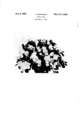
Asexual reproduction of my new variety by cuttings, through a series of propagations at the greenhouses of Nurserymens Exchange at Half Moon Bay, Ca1if., shows that all characteristics of the variety come true to form through succeeding propagations. The accompanying photograph illustrates the primary characteristics of my new variety as nearly true as is reasonably possible to make them with presently available techniques. The color reference cited is that of the Horticultural Colour Charts of the Royal Horticultural Society.
The following botanical description is based upon observations of plants in clay pots grown under greenhouse conditions at Half Moon Bay, Calif.
A new variety of Florists Azalea of the Belgian Indica class characterized by its vegetative similarity to Improved Red Wing of which it is a somatic mutation, but differing from the parent variety in color. Large, robust ascending plant spreading 40-48 inches high and 30-36 inches across at maturity. Branches stout, but supple, gently arching. Basal shoots vigorous, about A; inch in diameter, axillary branches about inch the first season. Internodes of basal shoots between A3 inch and /8 inch long. Stems eret to slightly pendulous; rufous when young, becoming light green at the base and becoming rufous to brown when old. Bark more or less conspicuously striate, young stems bearing prominent hyaline to chestnut striga (becoming chestnut with age, i.e. located on basal portion of stem).
Foliage evergreen, of two size classes. Leaves of vigorous growth about 1 /2 to 1% inches long between to 1% inches wide, petiolate, the petioles about 91 inch long, lamina decurrent, descending the petiole up to A; elliptic. The margin is entire, somewhat ciliate, the cilia small, inconspicuous. The apex is acute. The midrib is pubescent, especially below. The trichomes are flat, lanceolate, slender up to in length, conspicuous, hyaline, abundant on the lower surface, smaller, sparser, and hyaline on the upper surface of the midrib. The lamina is sparsely pubescent above and somewhat heavier below. Leaves Plant Pat. 3,352
Patented June 5, 1973 of the branches from the older wood smaller, about /1- l /s" long by /s /2" wide with proportionally smaller trichomes, but otherwise similar to the larger leaves. The color of the leaves is Spinach Green (H.C.C. 0960) 26 above and Spinach Green (H.C.C. 0960/2) below.
The bud of the inflorescence is Pod Green (H.C.C. 061) The scales are small, about A" wide by about /2" long, heart shaped to strap shaped becoming cucullate at anthesis. Pubescence is moderate to heavy, small, golden brown essentially restricted to the rib. The scales become scarious with sub-hyaline margins at dehiscence.
The inflorescence is 23 flowered. The flowers are borne in an umbellate corymb. One flower of the three-flowered inflorescences matures several days later than the more precocious pair and has a shorter peduncle. The peduncles are short, stout 7 43" long by wide, pubescent, light green to red (where exposed to sunlight). Pubescence moderately dense, hyaline to chestnut, where exposed to sunlight, wtih pink bases, short and silky. Calyx corolliform, sepals imperfect, ragged, 5 lobed. Tube of calyx about deep by across, broadly flared, lightly fluted, very irregular and fimbriate. Lobes from it- K1" wide by %1% long or some lobes entirely missing; highly variable as to shape and size, secondarily lobed and incised. The margins of the lobes are long ciliate. The reverse of the calyx is splotched with Rose Madder (H.C.C. 23) and is sparsely pubescent. Located between the calyx and corolla are from 14 corolline appendages from /2" long. The corolla is Phlox Pink (H.C.C. 625/ 1) with freckles of Rose Madder (H.C.C. 23) on the tube of the standard.
The reverse is Phlox Pink, H.C.C. 625 1) on the corolla lobes and tube. The calyx and appendages are the same color as the corolla. The tube is about 1%" long by 1% across at the throat, flaring bilaterally symmetrical, slightly gibrous, somewhat higher than broads, more or less prominently fluted. The five corolla lobes are of two size classes, the ventral two larger about PAW-1%" across by 1%-1 /2" long undulate. The dorsal 3 lobes are smaller, about PAW-1%" across by %1 long. The flower is about 33 /2 across by 24%." deep.
The Stamens are five, filaments slender, Rose Madder (H.C.C. 23/ 1), %-l%" long, the staminodia are petaloid and are 4-5 in number. They come in two sizes; the larger 2 measure about /2 wide and 22 /s" long, the smaller 2-3, measure about wide by %%4" long. Anthers small, black, about A by pollen white. The pistil is long, lMi-P/Z long, stigma Rose pink, capitate, 5 lobed, receptive surface divided into 5 sections; style slender, 1%" long (about), curved not sigmoid, not expanded at base. Ovary about long by /8" across, heavily pubescent, the pubescence dense, long, silky, hyaline.
Having thus disclosed my invention, I claim:
1. A new and distinct variety of azalea plant of the Belgian Indica class substantially as herein shown and described primarily characterized by: its vegetative similarity to Improved Red Wing of which it is a sport and by its Phlox Pink (H.C.C. 625/1).
No references cited.
ROB T B GW L Pr y Exami r
Family
ID=
Similar Documents
| Publication | Publication Date | Title |
|---|---|---|
| USPP17161P3 (en) | Eastern redbud tree named ‘Ace of Hearts’ | |
| USPP3352P (en) | Azalea plant | |
| USPP2918P (en) | Azalea plant | |
| USPP2770P (en) | Kerrigan | |
| USPP37350P2 (en) | Distylium plant named ‘T3-01-22’ | |
| USPP2939P (en) | Kerrigan | |
| USPP3356P (en) | Kerrigan | |
| USPP33040P2 (en) | Paulownia tree named ‘WEGROW-B7’ | |
| USPP7319P (en) | Rose plant Macminmo | |
| USPP12822P2 (en) | Plumbago plant named ‘BCT9805PLU’ | |
| USPP31586P3 (en) | Crapemyrtle plant named ‘DJ 05-14’ | |
| USPP31691P3 (en) | Crapemyrtle plant named ‘DJ 01-14’ | |
| USPP2523P (en) | howard | |
| USPP3419P (en) | Dicentra plant | |
| USPP4180P (en) | Lily plant: Lilium `charisma` | |
| USPP30318P2 (en) | Colocasia plant named ‘Black Swan’ | |
| USPP11965P2 (en) | Astilbe plant named ‘Vision In Red’ | |
| USPP2668P (en) | Camellia plant | |
| USPP13595P3 (en) | Cuphea plant named ‘Firecracker’ | |
| USPP3237P (en) | marshall | |
| USPP30813P3 (en) | Mango plant named ‘NMBP-4069’ | |
| USPP3732P (en) | Gladiolus | |
| USPP2652P (en) | Rose plant | |
| US20030182698P1 (en) | Chinese kousa Dogwood named 'Elsbry' | |
| USPP2454P (en) | Black locust tree |