WO1987005291A2 - Liquid crystal compounds, mixtures and devices - Google Patents
Liquid crystal compounds, mixtures and devices Download PDFInfo
- Publication number
- WO1987005291A2 WO1987005291A2 PCT/GB1987/000132 GB8700132W WO8705291A2 WO 1987005291 A2 WO1987005291 A2 WO 1987005291A2 GB 8700132 W GB8700132 W GB 8700132W WO 8705291 A2 WO8705291 A2 WO 8705291A2
- Authority
- WO
- WIPO (PCT)
- Prior art keywords
- alkyl
- formula
- alkoxy
- liquid crystal
- mixture
- Prior art date
- Legal status (The legal status is an assumption and is not a legal conclusion. Google has not performed a legal analysis and makes no representation as to the accuracy of the status listed.)
- Ceased
Links
- 0 CC(*)(C*1)[C@@](CC2)C1C1C2*(C)(CC*)C*1 Chemical compound CC(*)(C*1)[C@@](CC2)C1C1C2*(C)(CC*)C*1 0.000 description 3
- HPBVGPRJZWIJCM-UHFFFAOYSA-N CCCCc1ccc(C(C=CC(c2ccc(C)cc2)=C2)C2=C)cc1C Chemical compound CCCCc1ccc(C(C=CC(c2ccc(C)cc2)=C2)C2=C)cc1C HPBVGPRJZWIJCM-UHFFFAOYSA-N 0.000 description 1
- URLKBWYHVLBVBO-UHFFFAOYSA-N Cc1ccc(C)cc1 Chemical compound Cc1ccc(C)cc1 URLKBWYHVLBVBO-UHFFFAOYSA-N 0.000 description 1
Classifications
-
- C—CHEMISTRY; METALLURGY
- C07—ORGANIC CHEMISTRY
- C07D—HETEROCYCLIC COMPOUNDS
- C07D239/00—Heterocyclic compounds containing 1,3-diazine or hydrogenated 1,3-diazine rings
- C07D239/02—Heterocyclic compounds containing 1,3-diazine or hydrogenated 1,3-diazine rings not condensed with other rings
- C07D239/24—Heterocyclic compounds containing 1,3-diazine or hydrogenated 1,3-diazine rings not condensed with other rings having three or more double bonds between ring members or between ring members and non-ring members
- C07D239/26—Heterocyclic compounds containing 1,3-diazine or hydrogenated 1,3-diazine rings not condensed with other rings having three or more double bonds between ring members or between ring members and non-ring members with only hydrogen atoms, hydrocarbon or substituted hydrocarbon radicals, directly attached to ring carbon atoms
-
- C—CHEMISTRY; METALLURGY
- C07—ORGANIC CHEMISTRY
- C07C—ACYCLIC OR CARBOCYCLIC COMPOUNDS
- C07C1/00—Preparation of hydrocarbons from one or more compounds, none of them being a hydrocarbon
- C07C1/32—Preparation of hydrocarbons from one or more compounds, none of them being a hydrocarbon starting from compounds containing hetero-atoms other than or in addition to oxygen or halogen
- C07C1/325—Preparation of hydrocarbons from one or more compounds, none of them being a hydrocarbon starting from compounds containing hetero-atoms other than or in addition to oxygen or halogen the hetero-atom being a metal atom
- C07C1/326—Preparation of hydrocarbons from one or more compounds, none of them being a hydrocarbon starting from compounds containing hetero-atoms other than or in addition to oxygen or halogen the hetero-atom being a metal atom the hetero-atom being a magnesium atom
-
- C—CHEMISTRY; METALLURGY
- C07—ORGANIC CHEMISTRY
- C07C—ACYCLIC OR CARBOCYCLIC COMPOUNDS
- C07C255/00—Carboxylic acid nitriles
-
- C—CHEMISTRY; METALLURGY
- C09—DYES; PAINTS; POLISHES; NATURAL RESINS; ADHESIVES; COMPOSITIONS NOT OTHERWISE PROVIDED FOR; APPLICATIONS OF MATERIALS NOT OTHERWISE PROVIDED FOR
- C09K—MATERIALS FOR MISCELLANEOUS APPLICATIONS, NOT PROVIDED FOR ELSEWHERE
- C09K19/00—Liquid crystal materials
- C09K19/02—Liquid crystal materials characterised by optical, electrical or physical properties of the components, in general
- C09K19/0225—Ferroelectric
-
- C—CHEMISTRY; METALLURGY
- C09—DYES; PAINTS; POLISHES; NATURAL RESINS; ADHESIVES; COMPOSITIONS NOT OTHERWISE PROVIDED FOR; APPLICATIONS OF MATERIALS NOT OTHERWISE PROVIDED FOR
- C09K—MATERIALS FOR MISCELLANEOUS APPLICATIONS, NOT PROVIDED FOR ELSEWHERE
- C09K19/00—Liquid crystal materials
- C09K19/04—Liquid crystal materials characterised by the chemical structure of the liquid crystal components, e.g. by a specific unit
- C09K19/06—Non-steroidal liquid crystal compounds
- C09K19/08—Non-steroidal liquid crystal compounds containing at least two non-condensed rings
- C09K19/10—Non-steroidal liquid crystal compounds containing at least two non-condensed rings containing at least two benzene rings
- C09K19/12—Non-steroidal liquid crystal compounds containing at least two non-condensed rings containing at least two benzene rings at least two benzene rings directly linked, e.g. biphenyls
- C09K19/126—Compounds containing at least one asymmetric carbon atom
-
- C—CHEMISTRY; METALLURGY
- C09—DYES; PAINTS; POLISHES; NATURAL RESINS; ADHESIVES; COMPOSITIONS NOT OTHERWISE PROVIDED FOR; APPLICATIONS OF MATERIALS NOT OTHERWISE PROVIDED FOR
- C09K—MATERIALS FOR MISCELLANEOUS APPLICATIONS, NOT PROVIDED FOR ELSEWHERE
- C09K19/00—Liquid crystal materials
- C09K19/04—Liquid crystal materials characterised by the chemical structure of the liquid crystal components, e.g. by a specific unit
- C09K19/06—Non-steroidal liquid crystal compounds
- C09K19/08—Non-steroidal liquid crystal compounds containing at least two non-condensed rings
- C09K19/10—Non-steroidal liquid crystal compounds containing at least two non-condensed rings containing at least two benzene rings
- C09K19/20—Non-steroidal liquid crystal compounds containing at least two non-condensed rings containing at least two benzene rings linked by a chain containing carbon and oxygen atoms as chain links, e.g. esters or ethers
- C09K19/2007—Non-steroidal liquid crystal compounds containing at least two non-condensed rings containing at least two benzene rings linked by a chain containing carbon and oxygen atoms as chain links, e.g. esters or ethers the chain containing -COO- or -OCO- groups
- C09K19/2021—Compounds containing at least one asymmetric carbon atom
- C09K19/2028—Compounds containing at least one asymmetric carbon atom containing additionally a linking group other than -COO- or -OCO-, e.g. -CH2-CH2-, -CH=CH-, -C=C-; containing at least one additional carbon atom in the chain containing -COO- or -OCO- groups, e.g. -COO-CH*-CH3
-
- C—CHEMISTRY; METALLURGY
- C09—DYES; PAINTS; POLISHES; NATURAL RESINS; ADHESIVES; COMPOSITIONS NOT OTHERWISE PROVIDED FOR; APPLICATIONS OF MATERIALS NOT OTHERWISE PROVIDED FOR
- C09K—MATERIALS FOR MISCELLANEOUS APPLICATIONS, NOT PROVIDED FOR ELSEWHERE
- C09K19/00—Liquid crystal materials
- C09K19/04—Liquid crystal materials characterised by the chemical structure of the liquid crystal components, e.g. by a specific unit
- C09K19/06—Non-steroidal liquid crystal compounds
- C09K19/08—Non-steroidal liquid crystal compounds containing at least two non-condensed rings
- C09K19/30—Non-steroidal liquid crystal compounds containing at least two non-condensed rings containing saturated or unsaturated non-aromatic rings, e.g. cyclohexane rings
- C09K19/3001—Cyclohexane rings
- C09K19/3003—Compounds containing at least two rings in which the different rings are directly linked (covalent bond)
-
- C—CHEMISTRY; METALLURGY
- C09—DYES; PAINTS; POLISHES; NATURAL RESINS; ADHESIVES; COMPOSITIONS NOT OTHERWISE PROVIDED FOR; APPLICATIONS OF MATERIALS NOT OTHERWISE PROVIDED FOR
- C09K—MATERIALS FOR MISCELLANEOUS APPLICATIONS, NOT PROVIDED FOR ELSEWHERE
- C09K19/00—Liquid crystal materials
- C09K19/04—Liquid crystal materials characterised by the chemical structure of the liquid crystal components, e.g. by a specific unit
- C09K19/06—Non-steroidal liquid crystal compounds
- C09K19/34—Non-steroidal liquid crystal compounds containing at least one heterocyclic ring
- C09K19/3402—Non-steroidal liquid crystal compounds containing at least one heterocyclic ring having oxygen as hetero atom
-
- C—CHEMISTRY; METALLURGY
- C09—DYES; PAINTS; POLISHES; NATURAL RESINS; ADHESIVES; COMPOSITIONS NOT OTHERWISE PROVIDED FOR; APPLICATIONS OF MATERIALS NOT OTHERWISE PROVIDED FOR
- C09K—MATERIALS FOR MISCELLANEOUS APPLICATIONS, NOT PROVIDED FOR ELSEWHERE
- C09K19/00—Liquid crystal materials
- C09K19/04—Liquid crystal materials characterised by the chemical structure of the liquid crystal components, e.g. by a specific unit
- C09K19/06—Non-steroidal liquid crystal compounds
- C09K19/34—Non-steroidal liquid crystal compounds containing at least one heterocyclic ring
- C09K19/3441—Non-steroidal liquid crystal compounds containing at least one heterocyclic ring having nitrogen as hetero atom
-
- C—CHEMISTRY; METALLURGY
- C09—DYES; PAINTS; POLISHES; NATURAL RESINS; ADHESIVES; COMPOSITIONS NOT OTHERWISE PROVIDED FOR; APPLICATIONS OF MATERIALS NOT OTHERWISE PROVIDED FOR
- C09K—MATERIALS FOR MISCELLANEOUS APPLICATIONS, NOT PROVIDED FOR ELSEWHERE
- C09K19/00—Liquid crystal materials
- C09K19/04—Liquid crystal materials characterised by the chemical structure of the liquid crystal components, e.g. by a specific unit
- C09K19/06—Non-steroidal liquid crystal compounds
- C09K19/34—Non-steroidal liquid crystal compounds containing at least one heterocyclic ring
- C09K19/3441—Non-steroidal liquid crystal compounds containing at least one heterocyclic ring having nitrogen as hetero atom
- C09K19/3444—Non-steroidal liquid crystal compounds containing at least one heterocyclic ring having nitrogen as hetero atom the heterocyclic ring being a six-membered aromatic ring containing one nitrogen atom, e.g. pyridine
-
- C—CHEMISTRY; METALLURGY
- C09—DYES; PAINTS; POLISHES; NATURAL RESINS; ADHESIVES; COMPOSITIONS NOT OTHERWISE PROVIDED FOR; APPLICATIONS OF MATERIALS NOT OTHERWISE PROVIDED FOR
- C09K—MATERIALS FOR MISCELLANEOUS APPLICATIONS, NOT PROVIDED FOR ELSEWHERE
- C09K19/00—Liquid crystal materials
- C09K19/04—Liquid crystal materials characterised by the chemical structure of the liquid crystal components, e.g. by a specific unit
- C09K19/06—Non-steroidal liquid crystal compounds
- C09K19/34—Non-steroidal liquid crystal compounds containing at least one heterocyclic ring
- C09K19/3441—Non-steroidal liquid crystal compounds containing at least one heterocyclic ring having nitrogen as hetero atom
- C09K19/345—Non-steroidal liquid crystal compounds containing at least one heterocyclic ring having nitrogen as hetero atom the heterocyclic ring being a six-membered aromatic ring containing two nitrogen atoms
- C09K19/3458—Uncondensed pyrimidines
- C09K19/3463—Pyrimidine with a carbon chain containing at least one asymmetric carbon atom, i.e. optically active pyrimidines
-
- C—CHEMISTRY; METALLURGY
- C09—DYES; PAINTS; POLISHES; NATURAL RESINS; ADHESIVES; COMPOSITIONS NOT OTHERWISE PROVIDED FOR; APPLICATIONS OF MATERIALS NOT OTHERWISE PROVIDED FOR
- C09K—MATERIALS FOR MISCELLANEOUS APPLICATIONS, NOT PROVIDED FOR ELSEWHERE
- C09K19/00—Liquid crystal materials
- C09K19/04—Liquid crystal materials characterised by the chemical structure of the liquid crystal components, e.g. by a specific unit
- C09K19/06—Non-steroidal liquid crystal compounds
- C09K19/34—Non-steroidal liquid crystal compounds containing at least one heterocyclic ring
- C09K19/3441—Non-steroidal liquid crystal compounds containing at least one heterocyclic ring having nitrogen as hetero atom
- C09K19/3475—Non-steroidal liquid crystal compounds containing at least one heterocyclic ring having nitrogen as hetero atom the heterocyclic ring being a six-membered aromatic ring containing at least three nitrogen atoms
Definitions
- This invention relates to liquid crystal mixtures ana to compounds for use in them.
- the invention is particularly concerned with ferroelectric smectic liquid crystal mixtures and compounds.
- the invention also relates to electro-optical devices incorporating these mixtures.
- Ferroelectric smectic liquid crystal materials utilise the ferroelectric properties of the chiral tilted smectic phase, ie the chiral smectic C, F, G, H, I, F and K phases (hereinafter designated S* c etc, the asterisk * denoting chirality).
- the S* c phase is most commonly sought for use in electro-optical ⁇ evices as it is the most fluid, and it is also desirable that the material shows an S A phase at a temperature above the S* c phase, to assist in surface alignment.
- Ferroelectric liquid crystal materials ideally have a low viscosity, a broad smectic liquid crystal temperature range, stability ect, and in particular should show a hi&h spontaneous polarisation co-efficient (Ps, measured in nCcm -2 ). Although some single component materials show these properties, it has become common practice to use a mixture which shows a smectic phase. At least one of the compounds in the mixture is optically active (chiral) so as to induce the smectic phase shown by the mixtu ⁇ e to be chiral, especially S c *. Such optically active compounds are called "chiral dopants". According to the present invention a novel compound suitable for inclusion in a ferroelectric smectic liquid crystal mixture has a formula I:
- a ferroelectric smectic liquid crystal mixture being a mixture of compounds at least one of which is a compound of formula I above or of formula II below:
- R 1 is alkyl or alkoxy containing up to 15 carbon atoms
- R 5 is n-alkyl or n-alkoxy, or optically active alkyl or alkoxy and contains up to 15 carbon atoms.
- EPA 0104327 and JPA laid open N°. 199856/1985 describe compounds of similar structure to formula I and II but exclusively for use in nematic liquid crystal mixtures. It is well known that the physics and chemistry of nematic and ferroelectric smectic liquid crystal mixtures is very substantially different, and the understanding of nematic systems has little bearing on smectic systems.
- R 1 may be n-alkyl or n-alkoxy, or may be optically active.
- R 1 may be n-alkyl or n-alkoxy, or may be optically active.
- Z is a single bond.
- m and a are 1 so that preferred compounds of formula I and II have formulae IA and IIA respectively;
- R 1 contains 5 or more carbon atoms
- R 3 or R 4 when optically active are selected from 2-methyl butyl or 2-octyl (2-methylheptyl).
- R 3 or R 4 when optically active are selected from 2-methyl butyl or 2-octyl (2-methylheptyl).
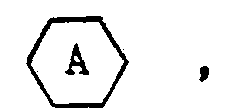
- A, B, D and E are either all hydrogen or else only one is fluorine.
- Particularly preferred structural forms of formula I and II are therefore listed below:
- R A is n-alkyl or n-alkoxy, or optically active alkyl or alkoxy
- R B is alkyl, eg straight chain, branched or chiral
- (F) indicates that the structure may carry one fluorine substituent at one of the substitution positions indicated in the structure
- R C is n-alkyl
- R D is n-alkyl, n-alkoxy or optically active alkyl or alkoxy.
- Each of R A , R B , R C and R D contains up to 15 carbon atoms.
- the compound of formula I or II may be in an optically active, racemic or non-optically active form, and the compound may be used in a ferroelectric smectic liquid crystal mixture in any of these forms. Optically active groups may be present in their racemic form.
- Such a ferroelectric smectic mixture will normally consist of one or more racemic or non-optically active compounds, which may include one or more racemic or non-optically active compounds of formula I or II, together with one or more optically active compounds, which may be compounds of formula I or II.
- smectic hosts' The non-optically active or racemic components of such a mixture are often referred to individually or collectivelly as 'smectic hosts' .
- smectic hosts A wide range of smectic hosts is known, but some particularly preferred hosts are :
- R A is n-alkyl or n-alkoxy and R B is n-alkyl, or mixtures thereof, especially eutectic mixtures.
- R A and R B are independently selected from n-alkyl and n-alkoxy, or mixtures thereof, especially eutectic mixtures.
- Other known examples of smectic hosts include compounds of the following general formulae:
- R A and R B are independently selected from n-alkyl and n-alkoxy and R C is n-alkyl, preferably ethyl.
- the mixture may also contain other optically active compounds which are miscible with smectic materials, for example the lactic acid derivatives disclosed in PCT GB/85/00512, eg
- R A contains from 1 to 12 carbon atoms and is n-alkyl or n-alkoxy
- X is fluorine or chlorine
- R B is n-alkyl containing 1 to 12 carbon atoms.
- the mixture may also contain other known additives to improve the properties, eg Ps, Sc phase breadth, viscosity etc or to induce the appearance of an S A phase of a temperature above the S* to assist alignment.
- Ps e.g Ps, Sc phase breadth, viscosity etc
- S A phase e.g S A phase of a temperature above the S* to assist alignment.
- An example of a class of compounds which may be used to broaden the Sc phase is:
- R A and R A are independently C 1-12 n-alkyl or n-alkoxy.
- the mixture may also contain pleochroic dyes.
- a ferroelectric smectic liquid crystal mixture of the invention will have the following composition:
- One or more smectic host compounds which may include one or more non- 50 - 99 wt %optically active or racemic compounds of formula I or II.
- One or more optically active compounds (dopants) which may include 1 - 50 wt % one or more compounds of formula I (especially up to or II. ca. 20 wt %)
- the liquid crystal materials of the invention may be used in any of the known types of ferroelectric smectic liquid crystal display device, eg the "Clark-Lagerwall Device” described in Appl. Phys Lett (1980), 36899 and in Recent Developments in Condensed Matter Physics (1981), 4, 309.
- the physics of this type of device and the method of constructing it are well known, and are described for example in PCT/GB85/00512, and PCT/GB86/0040.
- such a device usually consists of two substrates, at leastvone of which is optically transparent, electrodes on the inner surfaces of the substrates by which a voltage may be applied and a layer of the liquid crystal materials sandwiched between the substrates.
- the helical pitch length of the S C * phase is comparable to the thickness of the material, which is why long pitch mixtures are useful.
- the materials of the invention may be used in both the birefringence type display mode and the guest-host type display mode of the Clark-Lagerwall device/
- the device may for example be in the form of a clock, calculator or video screen display, and methods of making the device in this form will be well known to those skilled in the art.
- a generally applicable preparative route for compounds of formulae I and II, particularly for those of formula IA and IIA is route A shown in Fig. 1.
- Compound (A) may be prepared by simple methods from the commercially available methoxy-cyanobiphenyl.
- the carboxylic acid (B) may then be esterified with the appropriate alcohol or phenol.
- Fig. 1 for the preparation of a compound of formula II.2 the adaptation of the method to the preparation of other compounds of formula I and II will be apparent to one skilled in the art.
- the invention will now be described by way of example only with reference to the following figures:
- Fig 1. shows preparative route A.
- Figs 2, 3 and 4. show graphs of Ps vs T and response time vs voltage for liquid crystal mixtures of the invention.
- Fig. 5. shows a liquid crystal device of the invention.
- diethyl malonate (42ml., .0.27 mol) was added to yield a clear solution which was then evaporated to dryness.
- 4-Bromomethyl-4 '-methoxybiphenyl (16.3 g, 0.059mol) in dry benzene (125 ml) was added in one portion to the sodium salt of diethyl malonate and the mixture was heated at 75°C for 51 ⁇ 2 hours. The cooled mixture was poured into water and the whole was shaken with ether. Separation of the ether layer and washing with water were followed by drying (MgSO 4 ) and removal of the solvent.
- the oil obtained was hydrolysed by boiling with a mixture of 10M NaOH (55ml) and 1:1 water : ethanol (450 ml) for 2 hr. Removal of the ethanol by distillation was followed by addition of a large volume of water to obtain a solution of the sodium salt of the dicarboxylic acid. This solution was washed with ether to remove some insoluble oil. The aqueous solution was acidified (to pH l) with cone. HCl. The precipitate of the di-acid (94 %) was filtered off and dried.
- the cooled reaction mixture was poured into a large volume (1.5 L) of water, and acidified to Congo Red with cone. HCl.
- the suspension of free acid was stirred for about 2 hours before the product was filtered off, washed and crystallised from 95% acetic acid.
- a liquid crystal cell comprises a layer 1 of liquid crystal material exhibiting a chiral smectic phase sandwiched between a glass slide 2 having a transparent conducting layer 3 on its surface, eg of tin oxide or indium oxide, and a glass slide 4 having a transparent conducting layer 5 on its surface.
- the slides 2,4 bearing the layers 3,5 are respectively coated by films 6,7 of a polyimide polymer.
- films 6 and 7 Prior to construction of the cell the films 6 and 7 are rubbed with a soft tissue in a given direction the rubbing directions being arranged parallel upon construction of the cell.
- a spacer 8 eg of polymethylmethacrylate, separates the slides 2,4 to the required distance, eg 5 microns.
- the liquid crystal material 1 is introduced between the slides 2,4 to the required distance, eg 5 microns.
- the liquid crystal material 1 is introduced between the slides 2,4 by filling the space between the slides 2,4 and spacer 8 and sealing the spacer 8 in a vacuum in a known way.
- the liquid crystal material in the smectic A or isotropic liquid phase (obtained by heating the material) when it is introduced beteen the slides 2,4 to facilitate alignment of the liquid crystal molecules with the rubbing directions on the slides 2,4.
- a polarizer 9 is arranged with its polarization axis parallel to the rubbing direction on the films 6,7 and an analyzer (crossed polarizer) 10 is arranged with its polarization axis perpendicular to that rubbing direction.
- the layers 3 and 5 may be selectively shaped in a known way, eg by photoetching or deposition through a mask, eg to provide one or more display symbols, eg letters, numerals, words or graphics and the like as conventionally seen on displays.
- the electrode portions formed thereby may be addressed in a variety of ways which include multiplexed operation.
- Codes used f o identify States party to the PCT on the front pages of pamphlets publishing international applications under the PCT.
Landscapes
- Chemical & Material Sciences (AREA)
- Organic Chemistry (AREA)
- Crystallography & Structural Chemistry (AREA)
- Engineering & Computer Science (AREA)
- Materials Engineering (AREA)
- Liquid Crystal Substances (AREA)
- Organic Low-Molecular-Weight Compounds And Preparation Thereof (AREA)
- Liquid Crystal (AREA)
Abstract
Description



Claims


Priority Applications (1)
| Application Number | Priority Date | Filing Date | Title |
|---|---|---|---|
| AT87901551T ATE88457T1 (en) | 1986-02-26 | 1987-02-20 | LIQUID CRYSTAL COMPOUNDS, MIXTURES AND ARRANGEMENTS. |
Applications Claiming Priority (4)
| Application Number | Priority Date | Filing Date | Title |
|---|---|---|---|
| GB868604739A GB8604739D0 (en) | 1986-02-26 | 1986-02-26 | Liquid crystal compounds |
| GB8615095 | 1986-06-20 | ||
| GB8604739 | 1986-06-20 | ||
| GB868615095A GB8615095D0 (en) | 1986-06-20 | 1986-06-20 | Liquid crystal compounds |
Publications (2)
| Publication Number | Publication Date |
|---|---|
| WO1987005291A2 true WO1987005291A2 (en) | 1987-09-11 |
| WO1987005291A3 WO1987005291A3 (en) | 1988-02-11 |
Family
ID=26290406
Family Applications (1)
| Application Number | Title | Priority Date | Filing Date |
|---|---|---|---|
| PCT/GB1987/000132 Ceased WO1987005291A2 (en) | 1986-02-26 | 1987-02-20 | Liquid crystal compounds, mixtures and devices |
Country Status (5)
| Country | Link |
|---|---|
| EP (1) | EP0259423B1 (en) |
| JP (2) | JP2695170B2 (en) |
| AT (1) | ATE88457T1 (en) |
| DE (1) | DE3785527T2 (en) |
| WO (1) | WO1987005291A2 (en) |
Cited By (3)
| Publication number | Priority date | Publication date | Assignee | Title |
|---|---|---|---|---|
| US4834905A (en) * | 1982-07-07 | 1989-05-30 | Merck Patent Gesellschaft Mit Beschrankter Haftung | Ring compounds |
| GB2235192A (en) * | 1989-08-16 | 1991-02-27 | Secr Defence | Difluorophenyl esters and their use as liquid crystal materials |
| US5948551A (en) * | 1994-07-01 | 1999-09-07 | Hoechst Aktiengesellschaft | Use of conjugated compounds containing pyrimidine groups as electroluminescence materials |
Families Citing this family (1)
| Publication number | Priority date | Publication date | Assignee | Title |
|---|---|---|---|---|
| JP4595293B2 (en) * | 2002-06-07 | 2010-12-08 | チッソ株式会社 | Propionate derivative, liquid crystal composition containing the derivative, and liquid crystal display device containing the liquid crystal composition |
Family Cites Families (1)
| Publication number | Priority date | Publication date | Assignee | Title |
|---|---|---|---|---|
| DE3225290A1 (en) * | 1982-07-07 | 1984-01-12 | Merck Patent Gmbh | RING CONNECTIONS |
-
1987
- 1987-02-20 AT AT87901551T patent/ATE88457T1/en not_active IP Right Cessation
- 1987-02-20 EP EP87901551A patent/EP0259423B1/en not_active Expired - Lifetime
- 1987-02-20 DE DE87901551T patent/DE3785527T2/en not_active Expired - Fee Related
- 1987-02-20 JP JP62501485A patent/JP2695170B2/en not_active Expired - Fee Related
- 1987-02-20 WO PCT/GB1987/000132 patent/WO1987005291A2/en not_active Ceased
-
1995
- 1995-12-08 JP JP7320353A patent/JP2786414B2/en not_active Expired - Fee Related
Cited By (3)
| Publication number | Priority date | Publication date | Assignee | Title |
|---|---|---|---|---|
| US4834905A (en) * | 1982-07-07 | 1989-05-30 | Merck Patent Gesellschaft Mit Beschrankter Haftung | Ring compounds |
| GB2235192A (en) * | 1989-08-16 | 1991-02-27 | Secr Defence | Difluorophenyl esters and their use as liquid crystal materials |
| US5948551A (en) * | 1994-07-01 | 1999-09-07 | Hoechst Aktiengesellschaft | Use of conjugated compounds containing pyrimidine groups as electroluminescence materials |
Also Published As
| Publication number | Publication date |
|---|---|
| JPS63502988A (en) | 1988-11-02 |
| WO1987005291A3 (en) | 1988-02-11 |
| DE3785527D1 (en) | 1993-05-27 |
| EP0259423A1 (en) | 1988-03-16 |
| EP0259423B1 (en) | 1993-04-21 |
| JP2695170B2 (en) | 1997-12-24 |
| ATE88457T1 (en) | 1993-05-15 |
| JP2786414B2 (en) | 1998-08-13 |
| DE3785527T2 (en) | 1993-10-14 |
| JPH08239346A (en) | 1996-09-17 |
Similar Documents
| Publication | Publication Date | Title |
|---|---|---|
| EP0131373B1 (en) | Liquid crystalline biphenyl derivatives and mixtures thereof | |
| EP0191600B1 (en) | Polyphenyl-based ester compounds and liquid crystal compositions containing same | |
| EP0263843B1 (en) | Liquid crystal compounds, mixtures and devices | |
| EP0110299B1 (en) | Smectic liquid crystal compounds and liquid crystal compositions | |
| EP0164814A2 (en) | Liquid crystalline ester compounds and mixtures thereof | |
| EP0302875B1 (en) | Optically active naphthalene compounds and liquid crystal compositions containing them | |
| JPH0623135B2 (en) | Liquid crystal substance and liquid crystal composition | |
| WO1986002937A1 (en) | Compounds for ferroelectric liquid crystal devices | |
| EP0780456B1 (en) | Anti-ferroelectric liquid crystal compound and anti-ferroelectric liquid crystal composition | |
| JPS59118744A (en) | Liquid crystal substance and liquid crystal composition | |
| EP0333760B1 (en) | Cyano-alicyclic esters and liquid crystal compositions | |
| EP0259423A1 (en) | LIQUID CRYSTAL COMPOUNDS, MIXTURES AND ARRANGEMENTS. | |
| JPH08217728A (en) | Dimeric optically active compound | |
| EP0329153A2 (en) | Novel lactic acid derivatives and liquid crystal compositions containing the same | |
| JP2925682B2 (en) | Novel ester compound, liquid crystal composition containing the same, and optical switching element | |
| JPH0768519B2 (en) | Liquid crystal composition | |
| JP2923001B2 (en) | Novel ester compound, liquid crystal composition containing the same, and optical switching element | |
| EP0354355A1 (en) | Optically active compound and liquid crystal composition | |
| JP2938623B2 (en) | Novel phenylquinoline compound, liquid crystal composition containing the same, and optical switching device | |
| JPH06211865A (en) | Chiral valerolactone derivative | |
| JP2742548B2 (en) | Optically active compound and liquid crystal composition containing the same | |
| JP2869236B2 (en) | Fluorine-containing optically active compound and liquid crystal composition | |
| JPS5998051A (en) | Liquid crystal compounds and liquid crystal compositions | |
| JPH089565B2 (en) | Liquid crystal compound | |
| JPH08127556A (en) | Novel optically active difluoromethyl compound, liquid crystal composition containing the same and optical switching element |
Legal Events
| Date | Code | Title | Description |
|---|---|---|---|
| AK | Designated states |
Kind code of ref document: A2 Designated state(s): GB JP |
|
| AL | Designated countries for regional patents |
Kind code of ref document: A2 Designated state(s): AT BE CH DE FR GB IT LU NL SE |
|
| WWE | Wipo information: entry into national phase |
Ref document number: 1987901551 Country of ref document: EP |
|
| AK | Designated states |
Kind code of ref document: A3 Designated state(s): GB JP |
|
| AL | Designated countries for regional patents |
Kind code of ref document: A3 Designated state(s): AT BE CH DE FR GB IT LU NL SE |
|
| WWP | Wipo information: published in national office |
Ref document number: 1987901551 Country of ref document: EP |
|
| WWG | Wipo information: grant in national office |
Ref document number: 1987901551 Country of ref document: EP |