WO1993005777A1 - Preparation transoculaire - Google Patents
Preparation transoculaire Download PDFInfo
- Publication number
- WO1993005777A1 WO1993005777A1 PCT/JP1992/001177 JP9201177W WO9305777A1 WO 1993005777 A1 WO1993005777 A1 WO 1993005777A1 JP 9201177 W JP9201177 W JP 9201177W WO 9305777 A1 WO9305777 A1 WO 9305777A1
- Authority
- WO
- WIPO (PCT)
- Prior art keywords
- group
- alkyl
- rubamoyl
- formula
- ophthalmic preparation
- Prior art date
- Legal status (The legal status is an assumption and is not a legal conclusion. Google has not performed a legal analysis and makes no representation as to the accuracy of the status listed.)
- Ceased
Links
Classifications
-
- A—HUMAN NECESSITIES
- A61—MEDICAL OR VETERINARY SCIENCE; HYGIENE
- A61K—PREPARATIONS FOR MEDICAL, DENTAL OR TOILETRY PURPOSES
- A61K31/00—Medicinal preparations containing organic active ingredients
- A61K31/33—Heterocyclic compounds
- A61K31/335—Heterocyclic compounds having oxygen as the only ring hetero atom, e.g. fungichromin
-
- A—HUMAN NECESSITIES
- A61—MEDICAL OR VETERINARY SCIENCE; HYGIENE
- A61K—PREPARATIONS FOR MEDICAL, DENTAL OR TOILETRY PURPOSES
- A61K9/00—Medicinal preparations characterised by special physical form
- A61K9/0012—Galenical forms characterised by the site of application
- A61K9/0048—Eye, e.g. artificial tears
Definitions
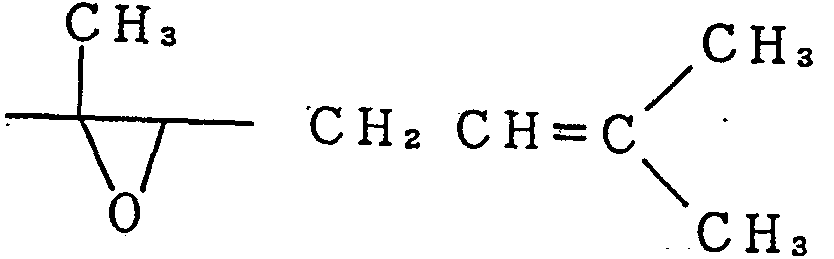
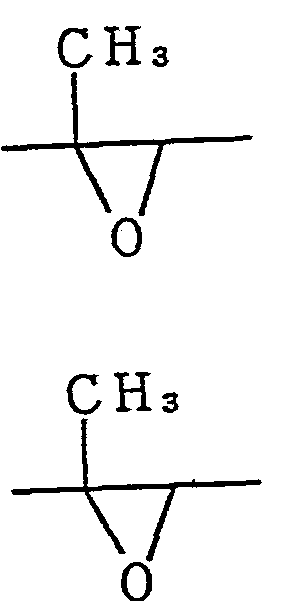
- the present invention relates to a novel ophthalmic preparation. More specifically, the present invention relates to an ophthalmic preparation containing, as an active ingredient, an oxaspirooctane derivative represented by the following general formula (I) or a salt thereof, and a pharmaceutically acceptable carrier. .
- an oxaspirooctane derivative represented by the following general formula (I) or a salt thereof and a pharmaceutically acceptable carrier.
- the oxaspirooctane derivative (I), its salts, their production methods and their angiogenesis inhibitory effects are known, for example, as described in Japanese Patent Publication No. 85272/1990. Since the oxaspirooctane derivative (I) has an inhibitory effect on angiogenesis, it is expected to be used for treatment of diseases in which angiogenesis is deeply involved, such as proliferative diabetic retinopathy and senile macular degeneration. However, when it is administered systemically to patients by oral or injection, it not only suppresses angiogenesis at the lesion site, but also suppresses angiogenesis necessary for the growth and maintenance of the patient's body at the normal site. With side effects.
- the present inventors have conducted various studies. As a result, despite the common technical knowledge that it is difficult to absorb drugs into the posterior segment of the eye at high concentrations even if the drug is administered through the eye, the oxas pyrooctane derivative (I) can be used as an ophthalmic preparation.
- the oxas pyrooctane derivative (I) can be used as an ophthalmic preparation.
- high concentrations are immediately transferred to the posterior segment of the retina, etc., and the ratio of intraocular tissue concentration to blood concentration is similar to subcutaneous administration.
- a remarkable effect was found to be extremely high as compared with the above, and as a result of intensive research, the present invention was completed.
- the ophthalmic preparation of the present invention has the general formula
- R 1 is a rubamoyl group; a lower alkyl rubamoyl group; a hydroxy (lower) alkyl rubamoyl group; a lower alkoxy (lower) alkyl rubamoyl group; a lower alkylthio (lower) alkyl rubamoyl group; Carbonyl (lower) alkyl rubamoyl group; lower alkyl rubamoyloxy (lower) alkyl rubamoyl group, di (lower) alkyl rubamoyl group; N— [hydroxy (lower) alkyl] (lower) alkyl rubamoyl group N— [Hydroxy (lower) alkyl] (lower) Alkyl Rubamoyloxy (lower) Alkyl Rubamoyl; Lower Alkyl Rubamoyloxy (lower) Alkenol; N— [Heterocyclic carbonyloxy (lower) alkyl ] (Lower
- R 7 is a protected carboxy (and) alkyl group or an ar (») alkyl group optionally having a nitrogen atom), or
- R 0 represents an acyl group
- R 0 represents an acyl group
- “Lower” means 1 to 6 carbon atoms, unless otherwise specified.
- lower alkoxy group in “lower alkoxycarbonyl group” and “lower alkoxy (lower) alkyl group” includes methoxy group, ethoxy group, propoxy group, butoxy group, pentyloxy group, hexyloxy group and the like. No.
- Suitable "lower alkylthio groups" in the “lower alkylthio (lower) alkyl rubamoyl group” include methylthio, ethylthio, propylthio, butylthio, pentylthio, hexylthio and the like.
- Lower alkyl group Preferred examples of the “lower alkenoyl group” include c 3 -C g alkenoyl groups such as an acryloyl group and a crotonyl group.
- the preferred “cyclo (lower) alkyl rubamoyl group” is a “cyclo (c 3 -c 7 ) alkyl rubamoyl group”, which is a cyclopropyl propyl rubamoyl group, a cyclopentylcarbamoyl group, a cyclopentylcarbamoyl group, a cyclopentylcarbamoyl group, And a cyclohexylcarbamoyl group and a cycloheptylcarbamoyl group.
- Suitable halogens in "haloaryl” and “halogen” include chlorine, bromine, iodine and fluorine
- heterocycle in the "heterocyclic rubamoyl group” and the “heterocycle (lower) alkyl group” is a nitrogen-containing heteromonocycle.
- pyridyl pyrrolidyl, piperidyl, piperazinyl, 2-oxopyrrolidyl, etc.
- nitrogen and oxygen-containing heteromonocycles eg, morpholinyl
- nitrogen and sulfur-containing heteromonocycles for example, a thiomorpholinyl group
- a benzene condensed nitrogen-containing heterocyclic ring for example, a quinolyl group
- the preferred "protected lubamoyl group” refers to a lembamoyl group protected with a conventional lubamoyl protecting group such as a halo (lower) alkanoyl group such as trichloroacetyl, dichloroacetyl or monochloroacetyl group. means.
- Suitable “protected carboxy group” in “protected carboxy (lower) alkyl group” and “protected carboxy group” includes lower alkoxycarbonyl group (for example, methoxycarbonyl group, ethoxycarbonyl group).
- acyl group in the "acyloxy (lower) alkenoyl group” and the diacyloxy (lower) alkenoyl group, a lower alkanoyl group (for example, formyl group, acetyl group, propionyl group and the like), an arylo group (for example, Benzyl, etc.) and lower alkanesulfonyl groups (eg, methanesulfonyl group, ethanesulfonyl group, etc.).
- a lower alkanoyl group for example, formyl group, acetyl group, propionyl group and the like
- an arylo group for example, Benzyl, etc.
- lower alkanesulfonyl groups eg, methanesulfonyl group, ethanesulfonyl group, etc.
- Examples of the salt of the oxaspirooctane derivative (I) include conventional pharmaceutically acceptable salts.
- the dosage form of the ophthalmic preparation of the present invention is not particularly limited, but typical examples include an aqueous solution, a non-aqueous solution, a suspension, an eye ointment and the like.
- an ophthalmic insert filled with the active ingredient may be used.
- Pharmaceutically acceptable carriers used in the ophthalmic preparations of the present invention include, for example, solvents or suspending agents such as water and olive oil, and thickening agents such as carboxymethylcellulose and hydroxypropylmethylcellulose, such as chloride.
- Isotonic agents such as sodium, for example, buffers such as boric acid, sodium monohydrogen phosphate, sodium dihydrogen phosphate, and preservatives, such as benzalconium chloride, for example, petrolatum, polyethylene glycol, and hydrocarbon Ointment bases such as gel (a mixture of liquid paraffin and polyethylene resin), and resins such as ethylene vinyl acetate and polylactic acid.
- aqueous preparations are powdered
- the oxaspirooctane derivative (I) or a salt thereof is added to an appropriate aqueous solution containing a buffer to form a solution, which is filtered, if necessary, to prepare the solution.
- a solubilizing agent or a surfactant may be used in combination.
- Ophthalmic ointments include preparations prepared by kneading based on cellulose, liquid paraffin, lanolin, or a mixture thereof, or a mixture of these with a thermoplastic resin such as a polyethylene resin. Besides, a preparation by a melting method particularly recommended in the present invention is mentioned as a preferable one.
- the ophthalmic ointment prepared by the melting method is a method in which the oxaspirooctane derivative (I) or a salt thereof is kneaded with a base as exemplified above, in particular, a hydrocarbon gel base composed of liquid paraffin and polyethylene resin.
- Optimum dose of an active ingredient the Okisasupiro octane derivative (I) or a salt thereof ⁇ ocular formulation of the invention depends on the type of disease, it varies symptoms like, the range of usually 0. 01 ⁇ 10mg / / day Inside The concentration of the active ingredient in the ophthalmic preparation is 0.01
- the optimal concentration according to the dosage form is selected from the range of ⁇ 50% (w / w).
- Kishikari can be administered in several divided doses or continuously, taking into account the patient's symptoms.
- test compound was dissolved in propylene glycol to a concentration of 8.8 mg / ml, and filtered through a Millipore filter to prepare a subcutaneous preparation.
- An osmotic minipump (AL zet, model 2ML1, release 0.228 ml Z day, 1 week release type).
- the experiment was carried out using three JW (c 1 ean) female rabbits (body weight 2.3 to 2.6 kg) in one group. Intake and drinking before and after administration Free.
- ⁇ fix the egret on a shackle fixing base apply the above-mentioned eye drops to both eyes in drops of about 0.05 ml each time using an eye dropper, and wait 5 minutes Repeated 5 times and returned to the cage. The dose at this time is 1 mgZ rabbit.
- the heron was anesthetized with Nembutal (0.5 to 0.6 ml / kg, iv), the back was shaved, and a 3 cm incision was made in the back using a surgical scalpel.
- the dose at this time is 2.5 mg / rabbit / day.
- Nembutal was injected into the ear vein on Day 5, and decapitation was performed under anesthesia, and the eyes were enucleated. Blood was collected on Day 1, 4 and 5 for measurement of blood concentration.
- the extracted eyeballs were washed with saline under ice-cooling, then divided into individual parts (cornea, anterior aqueous humor, iris, lens, vitreous, retinochoroid, sclera), and after a weight tick ⁇ , pH 7. 4 Phosphate buffer was added, homogenized with a glass potter-type homogenizer, and immediately extracted with ethyl acetate and dried to obtain a measurement sample.
- the blood (whole blood) was collected, after which a pH 7.4 phosphate buffer was added to the whole blood, extracted with ethyl acetate, and dried to obtain a measurement sample.
- the quantification of the test compound in the sample is based on the purified
- the assay was performed by two-step enzyme immunoassay (EIA) using a clonal antibody.
- EIA enzyme immunoassay
- the production of the polyclonal antibody against the test compound and the enzyme immunoassay were performed according to the method described in Transplantation Proceeding, 14 (5), 23-29 (1987). The results are shown in Tables 1 and 2.
- test compound showed excellent intraocular penetration after ocular administration, reaching extremely high concentrations to intraocular tissues, especially the choroid, etc., compared to continuous subcutaneous administration. did.
- Test example 2
- the cyclin was administered twice a day for 12 days. After 12 days, the eyes were enucleated and the presence or absence of neovessels was observed histologically. As a result, angiogenesis was completely inhibited in 42.9% of the eyes, and the intravascular neovascularization was inhibited in 85.7% of eyes including the partial inhibition.
- test compound was dispersed in a hydrocarbon gel ointment base to a concentration of 10%.
- base of the hydrocarbon gel ointment Plastibase (95% liquid paraffin, 5% polyethylene resin) manufactured by Taisho Pharmaceutical Co., Ltd. was used.
- test compound and the above-mentioned ointment base are heated and melted in an oil bath at 150 * C for about 5 minutes to form a clear solution, which is rapidly cooled in ice with stirring to finely crystallize the test compound.
- a suspension type eye ointment was prepared. In filling the ophthalmic ointment into an eye dropper, the finely dispersed test compound was not melted, but was heated and stirred at a temperature (85-95 ⁇ ) at which only the plastic base was melted and fluidized, and then filled. The container was immediately cooled to prevent the test compound from settling in the container.
- the extracted eyeballs were washed with saline solution under ice-cooling, anterior aqueous humor, iris
- a pH 7.4 phosphate buffer was added and homogenized with a biotope. Immediately thereafter, it was extracted with ethyl acetate and dried to obtain a measurement sample for EIA. Immediately after blood collection, add PH7.4 phosphate buffer, extract with ethyl acetate, and dry to dryness.
- Table 3 shows the concentrations in the intraocular tissue after a single instillation of 10% ophthalmic ointment to rabbits. The results at the time of administration of 0.2% ophthalmic solution are added for reference. As a result, the concentration in the intraocular tissue after the administration of the ophthalmic ointment reached C max 30 minutes after the administration, and the transmigration to the intraocular tissue after the administration of the ointment was rapid. In addition, the anterior aqueous humor and the vitreous showed a higher concentration transition than that of the ophthalmic solution, so that the ophthalmic ointment can significantly increase the single dose, which is an important factor for effective expression. Can be determined to be effective. Table 3 Intraocular fiber transfer of a small egret to a magpie ⁇
- the ophthalmic preparation of the present invention mainly produces proliferative diabetic retinopathy, which can lead to newborn blood vessels in the retina and lead to blindness from intraocular hemorrhage, and discoid lesions based on subretinal new blood vessels. It is extremely useful for the prevention and treatment of diseases such as senile discoid macular degeneration.
Landscapes
- Health & Medical Sciences (AREA)
- Animal Behavior & Ethology (AREA)
- Public Health (AREA)
- Pharmacology & Pharmacy (AREA)
- Epidemiology (AREA)
- Life Sciences & Earth Sciences (AREA)
- Chemical & Material Sciences (AREA)
- General Health & Medical Sciences (AREA)
- Medicinal Chemistry (AREA)
- Veterinary Medicine (AREA)
- Ophthalmology & Optometry (AREA)
- Pharmaceuticals Containing Other Organic And Inorganic Compounds (AREA)
- Medicinal Preparation (AREA)
- Acyclic And Carbocyclic Compounds In Medicinal Compositions (AREA)
- Organic Low-Molecular-Weight Compounds And Preparation Thereof (AREA)
Description




Claims


Priority Applications (1)
| Application Number | Priority Date | Filing Date | Title |
|---|---|---|---|
| EP92920034A EP0608419A4 (en) | 1991-09-18 | 1992-09-16 | TRANSOCULAR PREPARATION. |
Applications Claiming Priority (4)
| Application Number | Priority Date | Filing Date | Title |
|---|---|---|---|
| JP26822891 | 1991-09-18 | ||
| JP3/268228 | 1991-09-18 | ||
| JP20360092 | 1992-07-30 | ||
| JP4/203600 | 1992-07-30 |
Publications (1)
| Publication Number | Publication Date |
|---|---|
| WO1993005777A1 true WO1993005777A1 (fr) | 1993-04-01 |
Family
ID=26514011
Family Applications (1)
| Application Number | Title | Priority Date | Filing Date |
|---|---|---|---|
| PCT/JP1992/001177 Ceased WO1993005777A1 (fr) | 1991-09-18 | 1992-09-16 | Preparation transoculaire |
Country Status (3)
| Country | Link |
|---|---|
| EP (1) | EP0608419A4 (ja) |
| CA (1) | CA2119233A1 (ja) |
| WO (1) | WO1993005777A1 (ja) |
Families Citing this family (2)
| Publication number | Priority date | Publication date | Assignee | Title |
|---|---|---|---|---|
| DE4225489A1 (de) * | 1992-07-30 | 1994-02-03 | Michael Prof Dr Rer Na Dittgen | Verfahren zur Herstellung bioadhäsiver Augentropfen |
| US5710148A (en) * | 1995-03-06 | 1998-01-20 | Senju Pharmaceuticals Co., Ltd. | Corneal opacification inhibitory composition |
Citations (1)
| Publication number | Priority date | Publication date | Assignee | Title |
|---|---|---|---|---|
| JPH0285272A (ja) * | 1988-08-12 | 1990-03-26 | Fujisawa Pharmaceut Co Ltd | オキサスピロオクタン誘導体 |
Family Cites Families (5)
| Publication number | Priority date | Publication date | Assignee | Title |
|---|---|---|---|---|
| GB1070593A (en) * | 1962-12-26 | 1967-06-01 | Olin Mathieson | Ophthalmic ointment composition and the preparation thereof |
| EP0325199B1 (en) * | 1988-01-19 | 1993-10-27 | Takeda Chemical Industries, Ltd. | Fumagillin as angiostatic agent |
| KR0141692B1 (ko) * | 1988-09-01 | 1998-06-01 | 우메모또 요시마사 | 맥관 형성 억제제 |
| US5135920A (en) * | 1988-11-16 | 1992-08-04 | Takeda Chemical Industries, Ltd. | Angiostatic agents |
| US5227372A (en) * | 1990-03-07 | 1993-07-13 | Children's Medical Center Corporation | Method for retaining ophthalmological agents in ocular tissues |
-
1992
- 1992-09-16 WO PCT/JP1992/001177 patent/WO1993005777A1/ja not_active Ceased
- 1992-09-16 CA CA 2119233 patent/CA2119233A1/en not_active Abandoned
- 1992-09-16 EP EP92920034A patent/EP0608419A4/en not_active Withdrawn
Patent Citations (1)
| Publication number | Priority date | Publication date | Assignee | Title |
|---|---|---|---|---|
| JPH0285272A (ja) * | 1988-08-12 | 1990-03-26 | Fujisawa Pharmaceut Co Ltd | オキサスピロオクタン誘導体 |
Non-Patent Citations (1)
| Title |
|---|
| See also references of EP0608419A4 * |
Also Published As
| Publication number | Publication date |
|---|---|
| EP0608419A4 (en) | 1995-01-11 |
| CA2119233A1 (en) | 1993-04-01 |
| EP0608419A1 (en) | 1994-08-03 |
Similar Documents
| Publication | Publication Date | Title |
|---|---|---|
| EP0093380B1 (en) | Use of eicosanoids and their derivatives for treatment of ocular hypertension and glaucoma | |
| JP2022116191A (ja) | 異常な新生血管形成を伴う眼疾患を処置するためにニンテダニブを使用する組成物および方法 | |
| JP2002535368A (ja) | 偽水晶体眼において調節を回復および/または増大する方法 | |
| US20130317036A1 (en) | Folic acid - ramipril combination: cellprotective, neuroprotective and retinoprotective ophtalmologic compositions | |
| KR20060127843A (ko) | 가령 황반 변성 치료제 | |
| US20230025836A1 (en) | Eye drop composition for preventing or treating eye disease | |
| US7638516B2 (en) | Agent for therapeutic treatment of optic nerve diseases and the like | |
| US6451799B1 (en) | Drugs for ameliorating ocular circulatory disorders | |
| KR980008226A (ko) | 시각기능장애의 예방 및 치료제 | |
| HUT71497A (en) | New pharmaceutical use of 1,2,3,4,4a,5,10,10a-octahydro-benzo(g) quinoline derivatives | |
| JPWO1993005777A1 (ja) | 経眼製剤 | |
| WO1995034298A1 (en) | Inhibition of intraoperative miosis/production of mydriasis by local anesthetics | |
| EP0608419A1 (en) | Transocular preparation | |
| AU2022242943B2 (en) | Ophthalmic composition inhibiting occurrence of n-oxopyridine compound for preventing or treating eye disease | |
| WO2025135087A1 (ja) | 慢性移植片対宿主病における眼合併症の予防治療用医薬組成物 | |
| JPH10316571A (ja) | 眼循環障害改善剤 | |
| WO1998029135A1 (fr) | Medicaments pour soigner les troubles de la circulation ophtalmiques | |
| CA2929965C (en) | Method and composition for treating glaucoma | |
| JPWO2002051431A1 (ja) | 網膜虚血に基づく疾患の治療および/または予防剤 | |
| JP2004250347A (ja) | 網膜虚血に基づく疾患の治療および/又は予防剤 | |
| JPH10203979A (ja) | チアプロフェン酸を含有する抗眼炎症剤 | |
| JP2002356431A (ja) | ステロイドを有効成分とする網脈絡膜疾患治療剤 | |
| EP1624879A2 (en) | Method and composition for preventing, reducing and reversing ocular ischemic neuronal damage | |
| JP2001240543A (ja) | 虚血性網膜疾患並びに網膜及び視神経障害の治療及び/または予防薬 | |
| CN1226161A (zh) | 眼循环障碍改善剂 |
Legal Events
| Date | Code | Title | Description |
|---|---|---|---|
| AK | Designated states |
Kind code of ref document: A1 Designated state(s): CA JP KR US |
|
| AL | Designated countries for regional patents |
Kind code of ref document: A1 Designated state(s): AT BE CH DE DK ES FR GB GR IE IT LU MC NL SE |
|
| DFPE | Request for preliminary examination filed prior to expiration of 19th month from priority date (pct application filed before 20040101) | ||
| WWE | Wipo information: entry into national phase |
Ref document number: 2119233 Country of ref document: CA |
|
| WWE | Wipo information: entry into national phase |
Ref document number: 1992920034 Country of ref document: EP |
|
| ENP | Entry into the national phase |
Ref document number: 1994 204387 Country of ref document: US Date of ref document: 19940622 Kind code of ref document: A |
|
| WWP | Wipo information: published in national office |
Ref document number: 1992920034 Country of ref document: EP |
|
| WWW | Wipo information: withdrawn in national office |
Ref document number: 1992920034 Country of ref document: EP |