WO1994005696A1 - Nouveau peptide et agent antithrombotique, anticoagulant pour la circulation extracorporelle, inhibiteur de fusion cellulaire, inhibiteur de metastases cancereuses, agent de protection de preparation plaquettaire pour la transfusion, et ensemble contenant une preparation plaquettaire pour la transfusion - Google Patents
Nouveau peptide et agent antithrombotique, anticoagulant pour la circulation extracorporelle, inhibiteur de fusion cellulaire, inhibiteur de metastases cancereuses, agent de protection de preparation plaquettaire pour la transfusion, et ensemble contenant une preparation plaquettaire pour la transfusion Download PDFInfo
- Publication number
- WO1994005696A1 WO1994005696A1 PCT/JP1993/001262 JP9301262W WO9405696A1 WO 1994005696 A1 WO1994005696 A1 WO 1994005696A1 JP 9301262 W JP9301262 W JP 9301262W WO 9405696 A1 WO9405696 A1 WO 9405696A1
- Authority
- WO
- WIPO (PCT)
- Prior art keywords
- peptide
- derivative
- acid
- blood
- platelet
- Prior art date
- Legal status (The legal status is an assumption and is not a legal conclusion. Google has not performed a legal analysis and makes no representation as to the accuracy of the status listed.)
- Ceased
Links
Classifications
-
- C—CHEMISTRY; METALLURGY
- C07—ORGANIC CHEMISTRY
- C07K—PEPTIDES
- C07K7/00—Peptides having 5 to 20 amino acids in a fully defined sequence; Derivatives thereof
- C07K7/04—Linear peptides containing only normal peptide links
- C07K7/06—Linear peptides containing only normal peptide links having 5 to 11 amino acids
-
- C—CHEMISTRY; METALLURGY
- C07—ORGANIC CHEMISTRY
- C07K—PEPTIDES
- C07K14/00—Peptides having more than 20 amino acids; Gastrins; Somatostatins; Melanotropins; Derivatives thereof
- C07K14/435—Peptides having more than 20 amino acids; Gastrins; Somatostatins; Melanotropins; Derivatives thereof from animals; from humans
- C07K14/78—Connective tissue peptides, e.g. collagen, elastin, laminin, fibronectin, vitronectin or cold insoluble globulin [CIG]
-
- A—HUMAN NECESSITIES
- A61—MEDICAL OR VETERINARY SCIENCE; HYGIENE
- A61P—SPECIFIC THERAPEUTIC ACTIVITY OF CHEMICAL COMPOUNDS OR MEDICINAL PREPARATIONS
- A61P7/00—Drugs for disorders of the blood or the extracellular fluid
- A61P7/02—Antithrombotic agents; Anticoagulants; Platelet aggregation inhibitors
-
- C—CHEMISTRY; METALLURGY
- C07—ORGANIC CHEMISTRY
- C07K—PEPTIDES
- C07K14/00—Peptides having more than 20 amino acids; Gastrins; Somatostatins; Melanotropins; Derivatives thereof
- C07K14/435—Peptides having more than 20 amino acids; Gastrins; Somatostatins; Melanotropins; Derivatives thereof from animals; from humans
- C07K14/745—Blood coagulation or fibrinolysis factors
-
- A—HUMAN NECESSITIES
- A61—MEDICAL OR VETERINARY SCIENCE; HYGIENE
- A61K—PREPARATIONS FOR MEDICAL, DENTAL OR TOILETRY PURPOSES
- A61K38/00—Medicinal preparations containing peptides
-
- Y—GENERAL TAGGING OF NEW TECHNOLOGICAL DEVELOPMENTS; GENERAL TAGGING OF CROSS-SECTIONAL TECHNOLOGIES SPANNING OVER SEVERAL SECTIONS OF THE IPC; TECHNICAL SUBJECTS COVERED BY FORMER USPC CROSS-REFERENCE ART COLLECTIONS [XRACs] AND DIGESTS
- Y02—TECHNOLOGIES OR APPLICATIONS FOR MITIGATION OR ADAPTATION AGAINST CLIMATE CHANGE
- Y02P—CLIMATE CHANGE MITIGATION TECHNOLOGIES IN THE PRODUCTION OR PROCESSING OF GOODS
- Y02P20/00—Technologies relating to chemical industry
- Y02P20/50—Improvements relating to the production of bulk chemicals
- Y02P20/55—Design of synthesis routes, e.g. reducing the use of auxiliary or protecting groups
Definitions
- New peptides and platelet aggregation inhibitors using them blood coagulation inhibitors for extracorporeal circulation, cell adhesion inhibitors, cancer metastasis inhibitors, platelets for blood transfusions, and platelets for blood transfusions.
- the present invention relates to a novel peptide having a platelet aggregation inhibitory activity, a platelet aggregation inhibitor containing the peptide as an active ingredient, a blood coagulation inhibitor for extracorporeal circulation, a cell adhesion inhibitor, and a cancer metastasis inhibitor.
- the present invention relates to a platelet preparation for blood transfusion, which is characterized in that the peptide or the like is contained in a platelet preparation for blood transfusion in a package and a platelet preparation for blood transfusion.
- platelets play a major role in preventing bleeding by adsorbing to the surface of damaged blood vessels.
- thrombus a major cause of thrombus formation, and it is known that this thrombus causes blood vessel obstruction. This obstruction prevents adequate supply of oxygen and nutrients to tissues and organs, which is a significant cause of cardiovascular ischemic diseases such as myocardial infarction and stroke. And today, such ischemic diseases represent the second highest mortality rate after cancer, and represent a major social problem.
- platelets are activated by binding to connective tissue proteins such as collagen present in subendothelial tissues exposed due to vascular damage and the like, and to platelet membrane receptors such as thrombin present in plasma. It is also activated by the release of adenosine diphosphite (ADP), adrenaline, serotonin, and thromboxane (TX) A2, which are present in platelets, by autocrine binding to membrane receptors. It is Then, two types of glycoprotein units constituting the fibrinogen receptor are displayed on the cell surface, associate with each other, and form a receptor complex (gpllbIlia) to form a fibrinogen receptor. Aggregation is induced via brinogen crosslinking.
- ADP adenosine diphosphite
- adrenaline adrenaline
- TX thromboxane
- the monoclonal antibody certainly has potential as a therapeutic agent for suppressing platelet aggregation.
- the monoclonal antibody since it is a high molecular weight protein itself, there is a concern that an antibody acting on the monoclonal antibody itself will be produced if the drug is administered repeatedly.
- a platelet aggregation inhibitor that has properties as an antagonist to the gpllbllla complex and contains a low molecular weight compound having no immunogenicity as an active ingredient is expected.
- a synthetic peptide containing the RGD sequence will inhibit platelet aggregation by inhibiting the binding of the gpHbIIIa complex to fibrinogen. It has been reported that the peptide GRGDSP completely inhibited the aggregation of ADP-activated platelets (Plow et al., Proc. Natl. Acad. Sci. USA., 82, 8057-8061 (1985). ). RGDS has been shown to inhibit platelet aggregation by 80-90% in a concentration-dependent manner at a concentration of 46-50 ⁇ M, and the peptide RGDF is 4-5 times more potent than RGDS. It has been shown to show strong platelet aggregation inhibitory activity (Plow et al., Blood, 70, 110-115 (1987) or Harfinest et al., 71, 132-136 (1988)).
- Tetrapeptide derivatives having an RGD peptide are described in JP-A-190699, JP-A-2-62892, EP-A-422937A1, and US Pat. No. 4,952,562. Derivatives composed of peptides are further described in JP-A-63-215696. The cyclic structure derivatives of the RGD peptide are described in JP-A-3-118331, JP-A-2-62892 or WO 91/01331.
- Platelet products for blood transfusion used for such component blood transfusions may be prepared by treating whole blood obtained by blood donation or by component blood donation using the apheresis method. It is one of the blood products prepared by any of the methods. Immediately after the preparation, these platelet preparations are usually placed in a special storage bag made of polyolefin or polyvinyl chloride and stored with shaking at room temperature.
- cancer metastasis can be divided into two very important steps: detachment of cancer cells from the primary focus into blood and lymphocytes and migration of cancer cells from blood and lymph fluid into tissues. Can be. At both stages, it is thought that the extracellular matrix proteins constituting the basement membrane of blood vessels and the like provide a scaffold for cell migration.
- the vascular basement membrane contains extracellular basal proteins having various RGD sequences such as fibronectin, collagen, vitronectin, and laminin.
- RGD sequence plays a very important role in adhesion to quality. Therefore, compounds that suppress the adhesion between cancer cells and the vascular basement membrane, especially RGD-like compounds, dissociate cancer cells into blood and inhibit the migration of blood from blood to outside blood vessels. The possibility of suppressing cancer metastasis has been pointed out.
- the improvement of the in vivo stability of the compound leads to the maintenance of the platelet aggregation inhibitory action and blood coagulation inhibitory action, leading to a bleeding tendency, etc., thereby stopping the essential physiological action inherent in platelets for a long time. There is a possibility.
- platelet aggregation When a platelet aggregation inhibitor is used for the purpose of temporarily suppressing the ability, it is needless to say that the agent should have excellent platelet aggregation inhibitory ability, but at the same time, it should be suitable for the intended use. It is necessary that the compound has a long duration of drug action and has excellent safety properties that can be rapidly metabolized to a compound without side effects after inactivation of the drug. As mentioned earlier, the platelet aggregation inhibitory activity and blood coagulation inhibitory activity of the RGD peptide itself are not high enough for practical use. However, this RGD peptide has an excellent feature that it is degraded to amino acids that are safe and useful for living organisms by proteolytic enzymes originally present in living organisms.
- the present inventor has made great use of this feature, has a variety of retention times in the living body depending on the purpose of use, has an excellent ability to inhibit platelet aggregation or blood coagulation, and has a structure as close as possible to a natural peptide. It is intended to produce an induced peptide having high activity and to provide a platelet aggregation inhibitor containing this as an active ingredient. In addition, the present invention intends to provide a blood coagulation inhibitor having few side effects, which is suitable for extracorporeal circulation or surgery.
- the function of platelets is significantly reduced with storage at present, which is one of the factors that hinders effective transfusion.
- the present invention intends to provide a platelet preparation protective agent for blood circulation containing the above-mentioned peptide or the like as an active ingredient.
- the decrease in platelet function due to storage is as follows: 1 Blood collection, preparation processing, storage Platelet activation and aggregation during storage caused by various physical stimuli during storage
- the main cause is considered to be a decrease in the pH of the preservative solution.
- preservation solutions and preservation systems for controlling pH have been actively improved in recent years, but at present they are not sufficiently effective.
- the platelet aggregation ability and the number of platelets decrease during storage. Thought that it could be prevented. That is, it is an object of the present invention to develop a compound having an action of protecting platelets in a pharmaceutical pack during storage.
- the present inventor when obtaining a highly active compound that can withstand practical use, adds to the RGD-like sequence a compound useful for living organisms with few side effects, such as aminoaminoacid bisubimin. This led to the creation of peptides with high activity and appropriate action time. When this peptide or the like is decomposed, the added portion is accepted by the living body as an originally useful substance.
- the present application has the following matters as its gist.
- A-B-A rg -Gly -A sp -C -D (where A is an amino acid, an amino acid derivative, a vitamin, a vitamin derivative, a vitamin-like substance)
- B is an amino acid;
- C is a compound having a hydrophobic functional group.
- Amino acid; D represents a hydroxyl group or an amino group
- amino acid or amino acid derivative in A is proline, thioproline, hydroxyproline, dehydroproline, 2-oxo-14-thiazolidincarboxylic acid, N- Alkyl glycine or the following general formula
- R> is a hydrogen atom, a general formula (CH 2 ) P CH] or a general formula
- R 2 is a hydrogen atom or an alkyl group
- R 3 is a hydrogen atom or a monoalkyl group
- R ⁇ is a hydrogen atom or an alkyl group
- R 5 is a hydrogen atom, an amino group or an amino acyl group
- q is an integer of 0 to 3
- the peptide according to the above (1) which is a triptophan derivative, pyroglutamic acid or 2-azetidinone-14 monocarboxylic acid; Peptide derivatives or salts thereof.
- the vitamin-like substance or the derivative of the vitamin-like substance is The peptide, peptide derivative or salt thereof according to the above (1), which is rotinoic acid or hydrorotinic acid.
- a platelet aggregation inhibitor comprising, as an active ingredient, the peptide, the peptide derivative or the salt thereof according to any one of (1) to (5).
- a blood coagulation inhibitor for extracorporeal circulation comprising as an active ingredient the peptide, the peptide derivative or a salt thereof described in any one of the above (1) to (5).
- a cell adhesion inhibitor comprising, as an active ingredient, the peptide, the peptide derivative or the salt thereof described in any one of the above (1) to (5).
- a cancer metastasis inhibitor comprising, as an active ingredient, the peptide, the peptide derivative or the salt thereof described in any one of the above (1) to (5).
- a protective agent for a blood transfusion platelet preparation comprising as an active ingredient the peptide, the peptide derivative or a salt thereof described in any one of the above (1) to (5).
- the platelet protective agent for transfusion described in any one of the above (1) to (5) is contained in a platelet preparation for transfusion in a pack. Platelets for transfusion.
- the present invention will be described in detail.
- A is amino acid, amino acid derivative, vitamin, vitamin derivative, vitamin-like substance, derivative of vitamin-like substance, base of nucleic acid And a compound selected from the group consisting of nucleic acid base derivatives and hydantoinacetic acid.
- amino acid refers to a molecule having an amino group and a carboxy group in the molecule.
- amino acid or the amino acid derivative A preferred in the present invention are imino acid containing proline, and a peptide bond (in the molecule). Lactam), tributophan, and derivatives of these amino acids.
- the peptide of the present invention or the like When the peptide of the present invention or the like is used as an active ingredient of a platelet aggregation inhibitor or a blood coagulation inhibitor for extracorporeal circulation, the presence of proline at the site A is determined by the formula (I).
- the peptide and the like (hereinafter referred to as the peptide of the present invention, etc.) are preferable because they can remarkably amplify the platelet aggregation inhibitory activity and the blood coagulation inhibitory activity.
- proline derivative examples include those having another hetero atom in the ring structure and those having a functional group added to the ring. Specific examples thereof include thioproline, quinproline in the mouth, hydrin in the mouth, oxothiazolidincarboxylic acid, N_methylproline, and N-acetylproline.
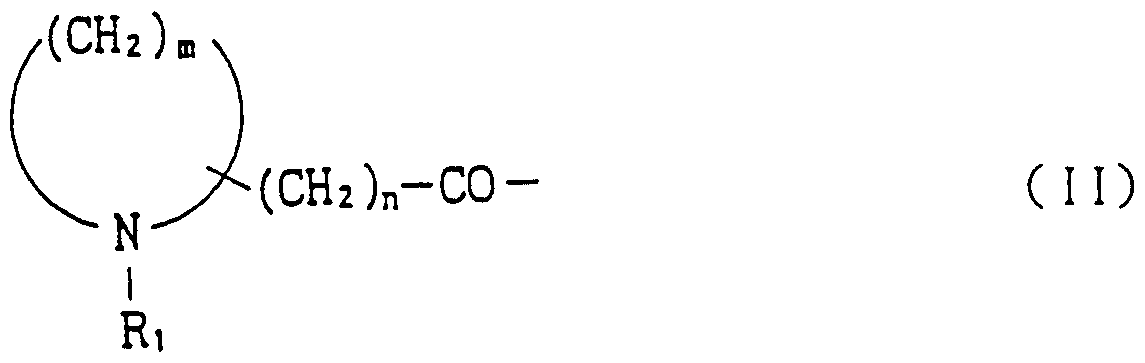
- the imino acids preferably include N-alkylglycines and cyclic imino acids represented by the general formula (II) having different ring sizes (R and are hydrogen atoms).
- the alkyl moiety of N-alkylglycine is preferably a lower alkyl chain. Specific examples include N-methylglycine (sarcosine), N-ethylglycine, N-ethylglycine, N-propylglycine, N-isopropylglycine and the like.
- R 1 and R 2 are an alkyl group or a C 0 -alkyl group, and each is preferably a lower alkyl group or a lower C 0 -alkyl group.
- p is an integer of 0 to 5 are preferable in that they have appropriate basicity and have low steric hindrance.
- the size of the ring structure of the cyclic imino acid can be selected from m in the range of 2 to 8.However, it is necessary to reduce the steric hindrance of the ring itself. Is preferably 2-5.
- the position of the carboxylic acid in the general formula (II) does not directly affect the platelet aggregation inhibitory activity of the present invention but the orientation of the basic amino group, imino group. With consideration, the position 2 adjacent to the imino group can be raised, preferably. Also, an alkyl chain may be introduced between the ring and the carbonyl.
- N which represents the number of the alkyl chains, can be selected from the range of 0 to 6, but is preferably 0 to 2 in consideration of the necessity of keeping an appropriate distance from the carbonyl to the imino group.
- preferred specific examples of the cyclic imino acids include, for example, L-2-azetidine carboxylic acid, 0-, m-, and p-piperidine carboxylic acids, and pyrrolidine-13. —Carboxylic acid, pyrrolidine-12-acetic acid and the like.
- the platelet aggregation inhibitor and blood coagulation of the present invention containing the peptide of the present invention as an active ingredient, depending on whether A is a compound which is susceptible to degradation by enzymes in blood or a compound which is less susceptible to the degradation.
- the duration of action of the inhibitor can be ensured according to the purpose of use.
- A a compound which is easily decomposed by enzymes in blood.
- the compound include azetidine carboxylic acid of a four-membered ring compound and proline of a five-membered ring compound.
- the action time in vivo can be extended by making A a compound that is hardly decomposed.
- the compound include a 6-membered ring compound such as L-pipecolic acid.
- the imino group may have a structure (lactam) in which the imino group is changed to an imido group.
- Such a structure also provides a peptide compound having a moderate stability to a degrading enzyme and a high activity.
- Preferable examples include pyroglutamic acid 2- 2-azetidinone 14-carboxylic acid.
- the platelet aggregation inhibitory activity of the peptide of the present invention is also improved. This is thought to be due to the hydrophobic action of the indole ring in the tributane.
- R 2 is a hydrogen atom or an alkyl group, preferably a hydrogen atom or a branched alkyl group
- R 3 is a hydrogen atom or a 0-alkyl group; preferred and rather is hydrogen atom or a lower O-alkyl group
- R ⁇ is a hydrogen atom or an alkyl group, good or to rather a hydrogen atom or a lower alkyl group
- R 5 is a hydrogen atom, ⁇ Mi Roh group or Huh Mi Bruno acyl Group.
- the amino group include, for example, an amino acetyl group and a diaminopropyl group.
- A is hydantoinacetic acid
- the activity is also improved.
- the type of vitamin used as A is not particularly limited.
- nicotinic acid, P-pantothenic acid, piotin, pterylglutamic acid and the like can be mentioned.
- a vitamin-like substance is a substance whose physiological action is close to that of vitamin, but in general, especially in humans and mammals, it is not necessary to take it as a nutrient from outside.
- Self in vivo A group of compounds that can be synthesized. Specific examples include orotic acid and lipoic acid.
- Both vitamins and vitamin-like agents are characterized in that they are covalently bonded to the peptide skeleton, but they need to have a corresponding functional group in order to bind to the peptide skeleton.
- the functional group include a carboxyl group.
- a vitamin or the like which does not have a corresponding functional group may be any as long as the corresponding functional group can be derived by a simple treatment.
- An example thereof is a case in which a carboxylic acid is induced by hydrolysis of an amide in a nicotinic acid amide molecule.
- bonds to the peptide skeleton are easily degraded by enzymes present in the living body, and as a result, useful vitamins or vitamin-like substances or intermediate metabolites or toxic substances useful for living organisms.
- Any compound that can be replaced by a compound having almost no compound may be used. Examples thereof include an amide bond and an ester bond.
- nucleic acid base or the derivative thereof according to the present invention may be In general, it refers to the base components constituting nucleotides and their derivatives, but they have the same structural characteristics as those described for the vitamin-bitamine-like substance or derivatives thereof. is there.
- Preferable examples include pyrimidine derivatives and the like, for example, 5-carboxymethylperacyl, 5-carboxythioperacyl and the like.
- the acid is B, for example, serine, glycine, parin, alanine, threonine or 3-alanine. Particularly preferred is serine because of its high activity.
- C refers to an amino acid having a hydrophobic functional group as a hydrophobic domain that binds to the receptor. Preference is given to tryptophan or phenylalanine.
- D is a hydroxyl group or an amino group.
- D is a hydroxyl group
- the platelet aggregation inhibitory activity, blood coagulation inhibitory activity, and cell adhesion inhibitory activity tend to be higher than when the amino group is D.
- the action time is longer for amino groups, and can be selected according to the purpose.
- the peptides of the present invention are used as an active ingredient of a blood coagulation inhibitor for extracorporeal circulation, it is advantageous in that the peptides of the present invention have different half-lives. Become.
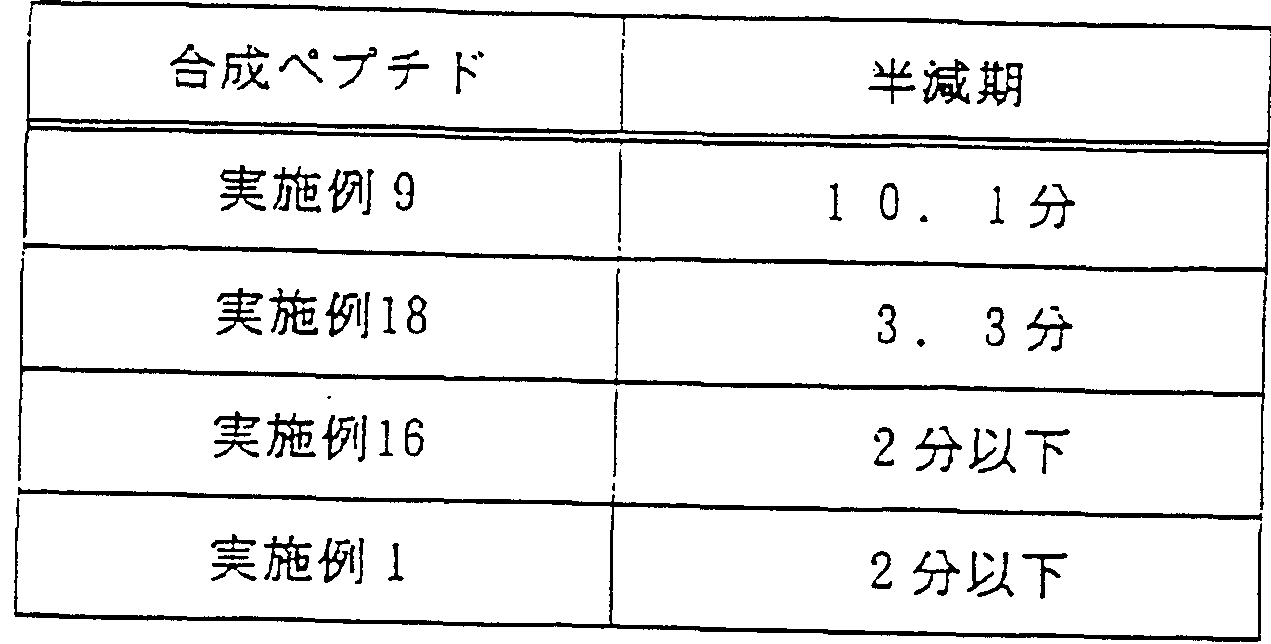
- the half-life of the peptide of the present invention in plasma ranges from about 10 minutes to longer than 4 hours. However, many of them have the property of being rapidly degraded in the body, and most of the peptides of the present invention and the like. In vivo, the half-life of the body is too short to be identifiable (within about 2 minutes) to within 10 minutes. Therefore, when these peptides and the like are applied to extracorporeal circulation, they are stable in the blood circulating in the device, but when they enter the body, they quickly turn into compounds that are beneficial to the living body by various degrading enzymes. It has the advantage of being degraded and losing blood clotting activity.
- the serious side effect of increased bleeding tendency due to anti-thrombotic drugs during extracorporeal circulation which has been a problem in the past, has been overcome by replacing heparin with the peptide of the present invention. It is possible to That is, the peptides of the present invention are very useful as an active ingredient of a blood coagulation inhibitor for extracorporeal circulation.
- the preferred action time of the blood coagulation inhibitor varies depending on the circulatory apparatus and the purpose of use. It can be used properly depending on the length of circulation time and the purpose of use.
- Trp or W Tribute fan
- Fmoc 9-fluorenylmethoxycarbonyl
- the peptide of the present invention and its analogous compound can be easily synthesized by a simple operation using a commercially available amino acid. That is, methods commonly used in peptide chemistry, for example, “The Peptides”, Vol. 1 [Schroder and Luhke, Acad emic Press, New York, USA (1966)], “Peptides” Basics and Experiments on Synthesis ”[Nobuo Izumiya et al., Maruzen (1985)], etc., and can be manufactured by either the liquid phase method or the solid phase method. it can. Furthermore, any of the column method and the batch method can be used.
- Condensation methods for forming peptide bonds include the azide method, the acid chloride method, the acid anhydride method, the sulfoimide method, and the carbodiimide method. Additive method, Activated ester method, Carbonyl midazo method
- Examples thereof include a redox method, an enzymatic method, and a method using the adword reagent K.
- the acid anhydride method, the carbodiimide method, and the active ester method are the main methods.
- the peptide chain is bound to a support such as a resin insoluble in an organic solvent using a C-terminal amino acid.
- a resin in which a functional group is introduced for the purpose of binding amino acid to the resin a spacer in which a spacer is inserted between the resin and the functional group, and a resin that can be cut at various locations depending on conditions.
- Resins into which chains called dollars (handles) are introduced may be used according to the purpose.
- Such resins include, for example, halomethyl resins such as chloromethyl resin, oxymethyl resin, 4- (oxymethyl) phenylacetamide amide methyl resin, and 4— (oxymethyl) phenyloxymethyl resin. Examples include chill resin and resin for C-terminal amide.
- Protecting groups used in the protective means include protecting groups commonly used in the field of organic chemistry, for example, “Protective Groups in Organic Synthesis” [Greened, John Wiley & Sons, Inc. (1981)] and the like.
- Examples of a hydroxyl-protecting group in an amino acid residue containing a hydroxyl group such as a serine residue include tributyl, benzyl, trimethylsilyl, and tetrahydrovinylyl groups. And so on.
- carboxyl-protecting group examples include commonly known protective groups such as various methyl esters, ethyl esters, benzene esters, p-nitrobenzene esters, t-butyl esters, and cyclohexyl esters. Groups can be mentioned.
- amino-protecting group examples include a benzyloxycarbonyl group, a t-butoxycarbonyl group, an isobornyloxycarbonyl group, and a 9-fluoroenylmethoxycarbonyl group. be able to.
- Examples of the protecting group for the guanidino group in the arginine residue include a nitro group, a tosyl group, a mesitylenesulfonyl group, a 4-methoxy-1,2,3,6—trimethylbenzenesulfonyl group , 2,2,5,7,8-Pentamethylchroman-6-sulfonyl group.
- activated carboxyl groups include, for example, an acid anhydride corresponding to the carboxylic group; azide; pentafluorophenol, 2,4-dinitrophenol, and cyanomethyl.
- Alcohol p-Nitrophenol, N-Hydroxysuccinic acid imid, N-Hydroxy-1-5-Nonolebornene-2,3-dicarboxymide, N-Hydroxyphthalimid, 1-Hydroxybenzotriazole, etc. And the like.
- Examples of the activated amino group include a phosphoric acid amide or the like corresponding to the amino group.
- the condensation reaction at the time of peptide synthesis is usually performed in a solvent.
- the solvent include c-form form, dichloromethane, ethyl acetate, N, N-dimethylformamide, dimethylsulfoxide, pyridine, dioxane, tetrahydrofuran, and N_metholane. Tilpyrrolidone, water, methanol, etc., or a mixture thereof can be mentioned.
- the reaction temperature of the condensation reaction can be in the range of ⁇ 30 ° C. to 50 ° C. as in a normal case.
- the type of the elimination reaction of the protective group in the peptide production process of the present invention depends on the type of the protective group to be used as long as the protective group can be eliminated without affecting the peptide bond. You can select one according to your needs. For example, acid treatment with hydrogen chloride, hydrogen bromide, hydrogen fluoride, methanesulfonic acid, trifluoromethansulfonic acid, trifluoracetic acid, or a mixture thereof, sodium hydroxide, water Alkali treatment with calcium oxide, hydrazine, getylamine, pyridin, etc .; sodium treatment in liquid ammonia or reduction with palladium carbon; and trimethylsilyl chloride Examples include silylation treatment such as reflux and trimethylsilyl bromide.
- a cation scavenger such as anisol, phenol, cresol, thioanisole or ethanedithiol is a deprotection group. Preferred in that the reaction is performed efficiently.
- the method for cleaving the peptide of the present invention synthesized by the solid phase method from the solid phase generally follows a known method.
- the above-mentioned treatment with an acid or a silylating agent can be mentioned as the cutting method.
- the peptide of the present invention thus produced, After the end of the series of reactions, known separation and purification means can be used.
- the peptide of the present invention can be obtained in a more pure form by extraction, distribution, reprecipitation, recrystallization, column chromatography, and the like.
- the peptide of the present invention can be obtained in the form of a salt depending on the reaction conditions in the production process.
- the salts include inorganic acid salts such as hydrochloric acid, sulfuric acid, nitric acid, and phosphoric acid; formic acid, acetic acid, propionic acid, glycolic acid, succinic acid, lingoic acid, tartaric acid, citric acid, and triflic acid.
- Organic acids such as chloroacetic acid; alkali metal salts such as sodium and potassium; alkaline earth metal salts such as calcium salts; ammonium, ethanolamine, triethylamine, diamine
- Organic amines such as cyclohexylamine can be exemplified.
- the peptide of the present invention obtained above is used as an active ingredient of a platelet aggregation inhibitor, a cell adhesion inhibitor, a cancer metastasis inhibitor, or a platelet preparation protector for blood transfusion (hereinafter referred to as a platelet aggregation inhibitor).
- a platelet aggregation inhibitor a platelet aggregation inhibitor, a cell adhesion inhibitor, a cancer metastasis inhibitor, or a platelet preparation protector for blood transfusion (hereinafter referred to as a platelet aggregation inhibitor).
- a platelet aggregation inhibitor a platelet preparation protector for blood transfusion
- the ratio of the active ingredient to the carrier ingredient can be varied between 1 and 90% by weight.
- the dosage form and administration form of the preparation can be used in the form of granules, fine granules, powders, tablets, capsules, pills or liquids. In addition, it can be administered orally as it is, and it can be administered as an injection intravenously, intramuscularly, or subcutaneously.
- the peptide of the present invention or the like can be prepared as a powder for injection before use.
- an organic or inorganic carrier or diluent suitable for oral, enteral or parenteral administration, and further used for solid or liquid medicine is used. Can be used.
- a stabilizer, a wetting agent, or an emulsifier can be added, and a salt can be used as an osmotic pressure adjusting agent or a pH adjusting agent, as an adjuvant.
- the platelet aggregation inhibitor of the present invention may be used in the treatment of various diseases.
- An inhibitory component and the like can be contained.
- the active ingredient When it is in the form of granules, fine granules, powders, tablets or capsules, it is preferable to contain 5-80% by weight of the active ingredient. In the case of a liquid, it is preferable to contain the active ingredient in a ratio of 1 to 30% by weight. Further, among parenteral administration preparations, when used as an injection, it is preferable to contain the active ingredient in a ratio of 1 to 10% by weight.
- an adult In the case of oral administration, it is preferable for an adult to take 500 to 1000 mg of the above active ingredient daily for an adult. However, the dosage can be adjusted as appropriate depending on the age, symptoms, etc. of the patient.
- the platelet aggregation inhibitor of the present invention described above can be administered once a day, but it can also be administered at appropriate intervals in two or three divided doses. Wear.
- the peptides of the present invention and the like include those characterized by high degradability in the body, and it is necessary to maintain high blood concentrations of these compounds for several hours to several days continuously. May be continuously infused by drip or other means. In such a case, the injection amount is about 50 to 500 mg / Kg per hour, but it is possible to further reduce the amount when combined with other drugs.
- the peptide of the present invention or the like when used for extracorporeal circulation, it can be used in the form of the above-mentioned injection or infusion.
- the place of administration and the dose vary depending on the extracorporeal circulation system and the duration of the system.For example, it is possible to continuously inject 1 to 100 mg / kg per hour from the entrance to the extracorporeal circulation system. it can.
- the dosage, whether administered alone or in combination with other drugs, is less effective in the extracorporeal circulatory system than in the body, where there are large amounts of degrading enzymes.
- heparin which has been conventionally used as an anticoagulant for extracorporeal circulation, in combination with the peptide of the present invention, etc.
- platelet aggregation and coagulation related to blood coagulation It is thought that the pathway can be suppressed and blood coagulation can be more completely suppressed.
- a synergistic effect of the two can be expected, so that the amount of heparin used can be reduced because of the above-mentioned side effects.
- the platelet protective agent for blood transfusion of the present invention is contained in the platelet preparation for blood transfusion in the package.
- the form is not particularly limited. In other words, all forms that can be used for the platelet product pack for blood transfusion usually used in clinical practice can be adopted. Specifically, it is possible to take the form of a bag, a bottle, or the like. Moreover, those materials are not particularly limited.
- the platelet protective agent for transfusion of the present invention when converted to the amount of the peptide of the present invention, is 1 M to 1 mM as a final concentration, preferably 10 M to 50 M with respect to the platelet component amount. Can be added.
- other components which are usually added to the platelet preparation package for blood transfusion can also be added together with the platelet protective agent for blood transfusion of the present invention.
- FIG. 1 shows the stability of synthetic peptides in human plasma (1).
- Figure 2 shows the stability of synthetic peptides in human plasma. 2)
- Fig. 3 shows the stability of the synthetic peptide in the mouse body
- Fig. 4 shows the platelet aggregation inhibitory activity
- Fig. 5 is a schematic diagram of an artificial dialysis model dialysis circuit using a beagle dog.
- Fig. 6 shows the effect of blood coagulation in an artificial dialysis model using beagle dogs.
- Fig. 7 shows the change in platelet count with storage, and
- Fig. 8 shows the platelet aggregation.
- FIG. 9 is a graph showing the time-dependent changes associated with the preservation of the ability, and FIG.
- FIG. 9 is a graph showing the effect of the peptide and the like of Example 9 on the adhesion of various extracellular matrix proteins to HeLa cells.
- FIG. 0 is a diagram in which the effect of the peptide and the like of Example 9 on the adhesion of various extracellular matrix proteins to B16F10 melanoma cells was examined.
- Trp-Arg (Mtr) -Gly-Asp (0Bu 1 ) -Trp-resin Formula (3) was obtained.
- the resulting protected peptide resin was treated with 1M trimethylsilylbutane and 1M thioanisole for 1 hour in trifluoroacetic acid at 0 ° C in the presence of m-cresol and ethanedithiol. I got it. After distilling off the trimethylsilyl bromide in a nitrogen stream, the resin was removed by filtration, and getyl ether was added to the filtrate under ice-cooling to obtain a peptide cut from the resin as a powder. Then, the powder was washed with getyl ether.
- the washed material was desalted by gel filtration chromatography using Sephadex G-10 (manufactured by Pharmacia) as a support, and the salt was freeze-dried to obtain a crude peptide.
- This crude peptide was subjected to high performance liquid chromatography (HPLC) [column: 0DS 5C, 8 ( (PL bondasphere, ⁇ 20 x 150mm).
- Trp-Ser-Arg-Gly-Asp-Trp-OH 100 mg of the formula (1) was obtained.
- Tributane cannot be detected by this detection method because it is degraded during acid hydrolysis.
- the amino acid used as an external standard for quantification is a standard amino acid, it is not possible to detect even amino acids that are not contained in the standard amino acid.
- Trp- Ser (tBu) -Arg (Mtr) -Gly-Asp (OBu ') - to give Trp-C Suea Mi de resin equation (8).
- the obtained protective peptide resin was obtained in the same manner as in Example 1 to obtain 20 mg of the title peptide.
- Trp- ⁇ Ala-Arg-Gly-Asp-Trp-OH Synthesis of Formula (17): In the same manner as in Example 1, 100 mg of the peptide shown in the title was synthesized.
- the obtained protected peptide resin was treated for 1 hour in trifluoracetic acid at 0 ° C. in the presence of m-cresol, ethanedithiol and thiodisole. After distilling off trifluoroacetic acid with an evaporator, the resin was filtered off, and getyl ether was added to the filtrate under ice-cooling to obtain a peptide cut from the resin as a powder. Then, the powder was washed with getyl ether. The washed product was desalted by gel chromatography using SEF ADEX G-10 (manufactured by Pharmacia) as a support, and lyophilized to obtain a crude peptide.
- SEF ADEX G-10 manufactured by Pharmacia
- HPLC high performance liquid chromatography
- Subjects were healthy men who had not taken any medication for at least two weeks. Blood was collected using a No. 19 injection needle and a plastic syringe pre-filled with 1/10 volume of 3.8% sodium citrate solution, and blood was collected from the vein of the lower stomach on an empty stomach. Was. Immediately after blood collection, the syringe was gently stirred to mix both solutions. The blood was centrifuged at room temperature for 15 minutes (llOOrpm, 250g), the rotation was stopped without applying a brake, and the supernatant was collected with a Komagome pipet and stored at room temperature as platelet-rich plasma (PRP). .
- PRP platelet-rich plasma
- the remaining blood after centrifugation was further centrifuged at room temperature for 15 minutes (3500 rpm, 1500 g), and the supernatant after stopping without applying a brake was taken as platelet-poor plasma (PPP). After PRP adjustment, the number of platelets was counted, and the following experiments were performed only on platelets having a platelet count of 2 ⁇ 10 8 Zml or more.
- Platelet aggregation was measured from the change in the light transmittance of PRP using an 8-channel platelet aggregometer (Hemat racer, Nikoh Bioscience, Tokyo, Japan).
- 200 / zl of PPP and PRP were placed in a glass scab, and after incubating at 37 ° C, the transmittance was measured.
- the transmittance of PPP was set to 100%, and the transmittance of PRP was set to 0%.
- the experiment first confirmed that aggregation occurred using collagen and ADP, and the maximum aggregation rate of collagen was 70%. Only those with more than% were used in the experiments.
- Samples were dissolved in physiological saline so that 2.2 X 10- 2 M, was used to adjust the 2-fold dilution series based on Re this experiment. Samples that were insoluble in saline were dissolved in saline containing 10% DMS ⁇ (Dimethyl sulfoxide).
- Aggregation inhibition rate (1 ——] X inn ⁇ ⁇ ? ⁇ ( ⁇ , maximum aggregation rate when only raw food is added J ⁇ tool ⁇ u) Plot a graph that plots the aggregation inhibition rate against the sample concentration, From this figure, the concentration that inhibits aggregation by 50% (IC 5 ) was calculated.Table 2 shows the IC 5 of each sample.
- the RGD sequence compared to RGDS, which is the amino acid sequence present in the fibrinogen molecule (Table 2, Comparative Example 1), the RGD sequence has a hydrophobic group such as Trp at both ends of the RGD sequence. It was found that introduction of the molecule significantly increased the activity of inhibiting platelet aggregation.
- RGDS-0H purchased from Peptide Research Institute (Minoh City)
- the peptide of the present invention was used. It has been found that the platelet aggregation inhibiting ability of the is significantly improved.
- the samples were analyzed on reversed phase HPLC.
- the peak area of each synthetic peptide was calculated, and the stability in blood or plasma was evaluated using the change in the peak area as an index.
- FIG. 1 to 3 show the general formula
- FIG. 3 is a diagram comparing the stability of a vitamin-like substance or a derivative thereof, a nucleic acid base or a derivative thereof) in plasma. Table 3 summarizes their half-lives.o
- Example 9 240 minutes or more
- Example 18 1 2 0 minutes or more
- Example 11 240 minutes or more In the case where A is a natural amino acid and is a triptophan having a primary amino group, the degradation was very rapid, and its half-life was 11.5 minutes. In contrast, A is a natural amino acid, but proline with a secondary amino group (imino group) is more stable in plasma than proline. The half-life was 74.5 minutes. On the other hand, even in the case of a proline derivative having the same secondary amino group (imino group), the stability in plasma greatly differs depending on the number of carbon atoms in the heterocycle or the presence of the side chain.
- a compound in which azetidine carboxylic acid having a hetero 4-membered ring structure is introduced into proline having a hetero 5-membered ring structure has a half-life of 49 minutes and is more degradable in plasma than proline. High.
- the compound introduced with pipecolic acid having a hetero 6-membered ring structure had a plasma half-life of 120 minutes or more and was very stable.
- Compounds containing amino acids, nucleic acids, and vitamin derivatives having a carboxy group in the heterocyclic structure, such as phosphoric acid were all extremely stable in plasma and had a half-life of 240 minutes or more.
- various compounds having different stability in plasma can be obtained by changing the compounds introduced at both ends of the synthetic peptide into various ones.
- Compounds having such different stability in blood may cause differences in extracorporeal circulation systems such as artificial dialysis and cardiopulmonary bypass, for example, when considering application to blood coagulation inhibitors for extracorporeal circulation.
- mice of the MCH (ICR) strain (oss, body weight 28 to 32 g) were used.
- a solution prepared by dissolving each synthetic peptide in sterile physiological saline at a concentration of 10 mM to 20 mM was used as a sample solution, and intravenously administered at 0.15 ml per mouse via the tail vein (1-2 mg). / mouse).
- blood was collected from the abdominal vein using a syringe that had been parinized. After blood collection, the blood was immediately centrifuged at 4 ° C (1500g [3 minutes]), and the supernatant was stored frozen at -20 ° C. Each supernatant was analyzed by reversed-phase HPLC as in the case of the stability evaluation in plasma described above.
- A-Ser-Arg-G1y—Asp—Trp—OH peptide and its analogous compounds (where A is amino acid or amino acid derivative, vitamin 'Shows the results of examining the in vivo stability of vitamin-like substances or their derivatives, nucleic acid bases or their derivatives).
- the peptide compound represented by the above general formula has a characteristic of being highly degradable in a living body as a whole. This is an extremely significant point when considering the application of the peptides of the present invention to blood coagulation inhibitors for extracorporeal circulation. That is, these compounds maintain a half-life of several minutes to several hours during circulation outside the body and inhibit platelet aggregation, whereas they are degraded within a few minutes when blood returns to the body. In other words, despite its antithrombotic effect in the extracorporeal circulation system, it is a compound having extremely excellent characteristics of not having an effect of extending the hemostasis time in the body.
- the peptide of the present invention and the like have an action of inhibiting platelet aggregation
- blood is collected over time after administering the compound intravenously to the body, and the platelet aggregation inhibitory activity of blood at each time point is measured.
- the platelet aggregation inhibitory activity of blood at each time point is measured.
- Example 9 Male beagle dogs weighing about l OKg were used.
- the peptide of the present invention etc. obtained in Example 9 was dissolved in physiological saline, The drug was administered using a syringe equipped with a 21G needle.
- spontaneous blood flow was performed at 5, 15, 30, 60, 12, 180, and 360 minutes from the beagle dog's caudal vein under anesthesia with an extension tube attached to a 20-G injection needle under anesthesia. Blood was collected at a ratio of 1% of 3.8% sodium citrate and 9 volumes of whole blood.
- the collected blood was centrifuged at 100 rpm for 10 minutes to collect platelet-rich plasma (PRP), and then centrifuged at 3000 rpm for 15 minutes to collect platelet-poor plasma (PPP).
- PRP platelet-rich plasma
- PPPP platelet-poor plasma
- the platelet aggregation was measured using the above PRP, and the platelet aggregation by collagen and ADP was measured with an aggregometer.
- the final concentrations of ADP and collagen were adjusted to 80 to 10,000 / M at a final concentration of 80, and to 7.5 to 10.0 ⁇ g / ml at a final concentration of collagen.
- a of FIG. 4 shows the time course of the recovery of platelet aggregation activity when the peptide of the present invention of Example 9 was administered at a dose of 5 mg / Kg body weight of a beagle dog.
- Agglutinin is 10 / z g / mi of collagen.
- Platelet aggregation was completely inhibited 5 minutes after administration, but platelet aggregation activity was recovered over time, and completely recovered to the level before administration 45 to 60 minutes later.
- Exactly the same results were obtained when the collagen concentration was changed or when ADP was used as agglutinin. This indicates that the peptide or the like was decomposed in the body or excreted from the kidney outside the body within 60 minutes at most, and the concentration in the blood decreased.
- Heparin which is currently used as an anticoagulant, was used as a comparative example for the peptide of the present invention.
- heparin has no effect on platelets, and the method described in (1) above must be used to measure stability in the body. Can not. Therefore, the stability in the body was estimated by measuring changes in the anticoagulant action, which is the main action of heparin, over time.
- heparin dissolved in physiological saline was intravenously administered in the same manner as in (1) above, blood was collected over time, and PPP was prepared.
- the measurement was performed by measuring prothrombin time and activated part thromboplastin time, which are indicators of blood coagulation activity in a test tube. Each measurement was performed at 37 ° C.
- FIG. 4B shows the time course of the prolongation of prothrombin time when beagle dogs were administered 200 U of heparin per kg of body weight intravenously.
- the prothrombin time was increased to 1.5 to 2.0 times that before administration, but as time passed, the prothrombin time gradually returned to the level before administration. It is. However, it took 2-3 hours to completely return to pre-dose levels. Similar results were obtained for the activated part thromboplastin time. This indicates that heparin is slowly decomposed or eliminated from the body, and its effects remain for several hours.
- Example 9 the present invention prepared in Example 9 was compared with heparin conventionally used as an anticoagulant during extracorporeal circulation. Cides etc. lost their effects very quickly. This compensates for the disadvantage of the current anticoagulant heparin, which has a problem that the bleeding tendency continues for several hours even after the use of the extracorporeal circulation system such as dialysis, etc. This indicates that the peptide and the like can be sufficiently expected as a new blood coagulation inhibitor.
- the measurement parameters during the experiment are: 1) pressure at the upstream of the dialysis membrane (perfusion pressure), 2) platelet adhesion, and 3) coagulation time of whole blood.
- perfusion pressure pressure at the upstream of the dialysis membrane
- platelet adhesion a pressure gauge incorporated in the dialysis circuit upstream of the dialysis membrane.
- the dialysis membrane site has a lot of contact with foreign matter and the blood flow passes through a narrow space, so the blood is the most blood in the dialysis circuit This is the area where coagulation is likely to occur. If blood coagulation occurs here, the permeable membrane will be clogged and the blood pressure in the upstream will rise. That is, the change in the perfusion pressure in this part is an indicator of the degree of blood coagulation in the dialysis circuit.
- FIG. 6 shows the results of an experiment in which the inhibitory effect of the compound of Example 9 on the perfusion pressure was measured.
- the horizontal axis shows the time after the start of drug administration, and the vertical axis shows the perfusion pressure.
- the perfusion pressure is 0 mm immediately after mounting the circuit, and this value increases when blood coagulation occurs.
- a sharp increase in perfusion pressure was observed after 10 minutes, and the measured value exceeded 500 minHg in 25 minutes, making measurement impossible.
- blood coagulation occurs rapidly in the dialysis circuit, especially at the dialysis membrane site.
- the platelet aggregation ability and the whole blood clotting time also showed changes almost parallel to the pattern of rising perfusion pressure (not shown). That is, in the control group, the platelet aggregation ability increased and the whole blood clotting time decreased with time. This indicates that platelets were activated and that the blood coagulation system was also activated, and blood coagulation was very likely to occur.
- the peptide of the present invention and the like in Example 9 it was found that during continuous infusion, blood adhesive ability was reduced to almost 0%, and the platelet activity was completely suppressed. . Also, the whole blood coagulation time was significantly prolonged during this period.
- the peptides of the present invention and the like almost completely suppressed blood coagulation in the extracorporeal circulation system.
- the peptide of the present invention can be sufficiently used as an alternative to the currently used heparin.
- heparin completely suppresses blood coagulation in the extracorporeal circulation system, but also has a slow rate of excretion from the body, and suppresses blood coagulation and promotes bleeding tendency for several hours after the system is removed.
- the peptide of the present invention as already shown in FIG. 4, is very good in degradability in the body unlike heparin, and relatively promptly stops blood coagulation before drug administration, when injection is stopped. It has the advantage of restoring normal levels.
- the peptide of the present invention since the peptide of the present invention has extremely low toxicity, it is extremely useful as a completely new blood coagulation inhibitor that compensates for the above-mentioned disadvantage of heparin. And promising.
- the peptide of the present invention is dissolved in physiological saline or citric acid solution and continuously infused at about 3 mg per hour by drip or the like from near the entrance of the extracorporeal circulation system.
- a blood coagulation effect can be expected. In actual application to humans, it may be possible to further reduce the dose.
- the platelet fraction is placed in a polypropylene test tube, covered with a membrane filter to ensure air permeability, placed on a shaker, and shaken under the conditions of 20 cm amplitude and 2 Hz shaking. Store at room temperature Was. All of the above operations were performed aseptically to prevent bacterial growth during storage.
- FIG. 7 is a diagram showing a change in platelet count with storage.
- the platelet count decreased almost in proportion to the storage time.
- the compound of Example 9 formula (14)
- This protective effect was dependent on the concentration of the added peptide, and when 400 fi was added, there was almost no decrease in the number of platelets during storage for 72 hours.
- FIG. 8 shows the time-dependent change of the platelet aggregation ability with storage.
- the aggregation activity of platelets was reduced to 25% after storage for 72 hours, but in the group to which the compound of Example 9 (formula (14)) was added, the decrease in aggregation activity was significantly suppressed. .
- the inhibitory effect on the reduction of the aggregation activity depends on the concentration of the added peptide compound.When 400 is added, 60-70% of the platelet aggregation activity remains even after storage for 72 hours. Was.
- peptide compounds such as RGDS and RGDF, which are conventionally known, are degraded within several hours by the action of enzymes in plasma even when added to the platelet fraction. It is clear that these compounds cannot be used for prolonged platelet storage. Conversely, compounds that are very stable and are not easily degraded when they enter the body will inhibit the function of all platelets in the body after blood transfusion, reducing the effectiveness of blood transfusion.
- the peptide of the present invention is considered to be a very excellent platelet protective agent in that it has high stability in platelet fractionation, high degradability in the body, and low toxicity.
- an effect of adding a buffering effect and suppressing a change in pH accompanying storage of the platelet fraction can be expected.
- an effect can be expected not only by administering the peptide of the present invention alone but also by using it in combination with a platelet aggregation inhibitor having a different action mechanism, such as aspirin.
- Collagen is diluted with saline adjusted to pH 3.0 with hydrochloric acid, The diluted solution adjusted to 100 ⁇ g / ml was used for adsorption. On the other hand, the remaining three proteins were diluted with PBS at pH 7.4, adjusted to 20 g / ml, and used. -:
- a type 1 collagen adsorption plate when preparing a type 1 collagen adsorption plate, add 0.4 ml of a diluted solution of type 1 collagen to a 24-well plastic plate, incubate at 37 ° C for 10 minutes, and plate the type 1 collagen adsorption plate. Was adsorbed. Furthermore, PBS containing 3% bovine serum albumin (manufactured by Sigma) was added to each well to prevent nonspecific cell adsorption, and the cells were treated at 37 ° C for 1 to 2 hours. Finally, the plate was washed three times with PBS to obtain a type 1 collagen adsorption plate. For other extracellular matrix proteins, adsorption plates were prepared in exactly the same manner.
- the peptides of the present invention were diluted in a serum-free EMEM medium (manufactured by Nissi) to prepare a dilution series of 5 mM, 0.5 mM, 50 ⁇ . And 5 (iM.
- the adsorption plate was previously filled with 300 serum-free EMEM media, and then 100 n1 of each concentration of the peptide solution was added to each well. However, as a control group to which no peptide was added, only serum-free EMEM medium was added at 100 a 1.
- HeLa cells or B16F10 melanoma cells were added. suspension (5 X 10 6 cells / ml) were use mind was added in 0.1ml into each well. plastic Kupure preparative lightly rocking the horizontal, after stirring, C0 2 Lee Nkyubeta 1 hour Lee Nki Yupe preparative one among did.
- the concentration of methylene blue released from the cells was measured using a spectrophotometer by the absorbance of light at 600 nm.
- the number of cells attached to the extracellular matrix protein is proportional to the absorbance at 600 ⁇ , so that accurate measurement of the number of cells is possible.
- the peptides of the present invention suppress cell adhesion of various cancer cells to extracellular matrix proteins. This indicates that these peptides and the like can suppress the adhesion of cancer cells to the vascular basement membrane, and strongly suggests their potential as cancer metastasis inhibitors. .
- the compounds of the present invention which have extremely low toxicity, can withstand long-term administration, and have been used in the field of cancer metastasis inhibitors, which have never existed before and are new drugs. It can be expected enough.
- a novel peptide having a platelet aggregation inhibitory action and a blood coagulation inhibitory action, and platelet thrombosis and thrombosis containing the peptide as an active ingredient during and after thrombolysis treatment Provide platelet aggregation inhibitors that are effective against obstruction and can also prevent reocclusion and myocardial infarction, and blood coagulation inhibitors that can suppress blood clotting, which is the main cause of thrombus formation during extracorporeal circulation Is done.
- the present invention provides a platelet preparation protective agent for blood transfusion, a cell adhesion inhibitor, and a cancer metastasis inhibitor.
- a platelet preparation for blood transfusion characterized in that the above-mentioned protective agent for platelet preparation for blood transfusion is contained in the platelet preparation for blood transfusion.
Landscapes
- Health & Medical Sciences (AREA)
- Chemical & Material Sciences (AREA)
- Organic Chemistry (AREA)
- Life Sciences & Earth Sciences (AREA)
- General Health & Medical Sciences (AREA)
- Medicinal Chemistry (AREA)
- Genetics & Genomics (AREA)
- Biophysics (AREA)
- Biochemistry (AREA)
- Molecular Biology (AREA)
- Proteomics, Peptides & Aminoacids (AREA)
- Gastroenterology & Hepatology (AREA)
- Zoology (AREA)
- Toxicology (AREA)
- Hematology (AREA)
- Engineering & Computer Science (AREA)
- Diabetes (AREA)
- Bioinformatics & Cheminformatics (AREA)
- Chemical Kinetics & Catalysis (AREA)
- General Chemical & Material Sciences (AREA)
- Nuclear Medicine, Radiotherapy & Molecular Imaging (AREA)
- Pharmacology & Pharmacy (AREA)
- Animal Behavior & Ethology (AREA)
- Public Health (AREA)
- Veterinary Medicine (AREA)
- Medicines That Contain Protein Lipid Enzymes And Other Medicines (AREA)
- Peptides Or Proteins (AREA)
- Pharmaceuticals Containing Other Organic And Inorganic Compounds (AREA)
Description


Claims


Priority Applications (3)
| Application Number | Priority Date | Filing Date | Title |
|---|---|---|---|
| US08/232,261 US5498601A (en) | 1992-07-09 | 1993-09-07 | Platelet aggregation-inhibiting peptides |
| KR1019940701533A KR950701645A (ko) | 1992-09-07 | 1993-09-07 | 신규펩티드와 그것을 사용한 혈소판응집억제제, 체외순환용혈액 응고억제제, 세포접착저지제, 암전이저지제, 수혈용 혈소판제제보호제 및 수혈용혈소판제제팩 |
| EP93919619A EP0628571A4 (en) | 1992-09-07 | 1993-09-07 | NOVEL PEPTIDE AND ANTITHROMBOTIC AGENT, ANTICOAGULANT FOR EXTRACORPOREAL CIRCULATION, CELL FUSION INHIBITOR, CANCER METASTASIS INHIBITOR, PLAQUETATIVE PROTECTION AGENT FOR TRANSFUSION, AND PACKAGING CONTAINER. |
Applications Claiming Priority (4)
| Application Number | Priority Date | Filing Date | Title |
|---|---|---|---|
| JP23862492 | 1992-09-07 | ||
| JP4/238624 | 1992-09-07 | ||
| JP5203962A JPH06192291A (ja) | 1992-09-07 | 1993-08-18 | 新規ペプチドとそれを用いた血小板凝集抑制剤及び血液凝固抑制剤 |
| JP5/203962 | 1993-08-18 |
Publications (1)
| Publication Number | Publication Date |
|---|---|
| WO1994005696A1 true WO1994005696A1 (fr) | 1994-03-17 |
Family
ID=26514200
Family Applications (1)
| Application Number | Title | Priority Date | Filing Date |
|---|---|---|---|
| PCT/JP1993/001262 Ceased WO1994005696A1 (fr) | 1992-07-09 | 1993-09-07 | Nouveau peptide et agent antithrombotique, anticoagulant pour la circulation extracorporelle, inhibiteur de fusion cellulaire, inhibiteur de metastases cancereuses, agent de protection de preparation plaquettaire pour la transfusion, et ensemble contenant une preparation plaquettaire pour la transfusion |
Country Status (6)
| Country | Link |
|---|---|
| US (1) | US5498601A (ja) |
| EP (1) | EP0628571A4 (ja) |
| JP (1) | JPH06192291A (ja) |
| KR (1) | KR950701645A (ja) |
| CA (1) | CA2122912A1 (ja) |
| WO (1) | WO1994005696A1 (ja) |
Cited By (3)
| Publication number | Priority date | Publication date | Assignee | Title |
|---|---|---|---|---|
| WO1995009185A1 (en) * | 1993-09-30 | 1995-04-06 | Nippon Steel Corporation | Novel peptide, active as inhibitors of platelet aggregation |
| RU2119354C1 (ru) * | 1996-01-05 | 1998-09-27 | Виктор Савельевич Гуревич | Способ направленного транспорта фармакологических препаратов путем их конъюгации с аргинил-глицил-аспартил (rgd) содержащими пептидами |
| JP2014506319A (ja) * | 2010-12-02 | 2014-03-13 | ベクトン・ディキンソン・アンド・カンパニー | 血液安定剤を含む採血用デバイス |
Families Citing this family (16)
| Publication number | Priority date | Publication date | Assignee | Title |
|---|---|---|---|---|
| US6231834B1 (en) | 1995-06-07 | 2001-05-15 | Imarx Pharmaceutical Corp. | Methods for ultrasound imaging involving the use of a contrast agent and multiple images and processing of same |
| US6521211B1 (en) * | 1995-06-07 | 2003-02-18 | Bristol-Myers Squibb Medical Imaging, Inc. | Methods of imaging and treatment with targeted compositions |
| US6139819A (en) | 1995-06-07 | 2000-10-31 | Imarx Pharmaceutical Corp. | Targeted contrast agents for diagnostic and therapeutic use |
| US5839443A (en) * | 1996-05-16 | 1998-11-24 | The Trustees Of Columbia University In The City Of New York | Method for inhibiting thrombosis in a patient whose blood is subjected to extracorporeal circulation |
| EP0952228A3 (en) * | 1996-09-24 | 1999-12-15 | Rapigene, Inc. | Compositions and methods for enhancing hybridization specificity |
| CA2266847A1 (en) * | 1996-09-24 | 1998-04-02 | Rapigene, Inc. | Compositions and methods for enhancing hybridization specificity |
| US6361940B1 (en) | 1996-09-24 | 2002-03-26 | Qiagen Genomics, Inc. | Compositions and methods for enhancing hybridization and priming specificity |
| US6120751A (en) | 1997-03-21 | 2000-09-19 | Imarx Pharmaceutical Corp. | Charged lipids and uses for the same |
| US6548047B1 (en) | 1997-09-15 | 2003-04-15 | Bristol-Myers Squibb Medical Imaging, Inc. | Thermal preactivation of gaseous precursor filled compositions |
| US6123923A (en) | 1997-12-18 | 2000-09-26 | Imarx Pharmaceutical Corp. | Optoacoustic contrast agents and methods for their use |
| US20050250688A1 (en) * | 1999-04-01 | 2005-11-10 | The Trustees Of Columbia University In The City Of New York | Methods for treating an ischemic disorder and improving stroke outcome |
| WO2003099835A1 (en) * | 2002-05-21 | 2003-12-04 | Emory University | Multivalent polymers with chain-terminating binding groups |
| ATE452649T1 (de) | 2003-03-28 | 2010-01-15 | Fuji Film Mfg Europ B V | Rgd-angereicherte, gelatine-ähnliche proteine zur verhinderung der zelladhäsion |
| ES2679400T3 (es) | 2010-11-01 | 2018-08-27 | Industry-Academic Cooperation Foundation, Yonsei University | Composición para su uso para la disolución de trombos |
| CN103113456B (zh) * | 2013-03-05 | 2014-07-16 | 中国药科大学 | 具有抗血小板聚集活性的僵蚕多肽及其制备方法和应用 |
| WO2016201374A1 (en) * | 2015-06-11 | 2016-12-15 | University Of Florida Research Foundation, Incorporated | Sulfanide adenosine derivatives and uses thereof |
Citations (2)
| Publication number | Priority date | Publication date | Assignee | Title |
|---|---|---|---|---|
| JPS63215696A (ja) * | 1986-12-15 | 1988-09-08 | アンスティテュ ナシオナル ドウ ラサントゥ エ ドゥ ラ ルシェルシェメディカル(イーエヌエスエーエールエム) | 新規ペプチドおよびこのペプチドを含む血栓治療剤 |
| JPH03118398A (ja) * | 1989-07-28 | 1991-05-20 | Merck & Co Inc | フイブリノーゲンレセプター拮抗剤 |
-
1993
- 1993-08-18 JP JP5203962A patent/JPH06192291A/ja active Pending
- 1993-09-07 CA CA002122912A patent/CA2122912A1/en not_active Abandoned
- 1993-09-07 KR KR1019940701533A patent/KR950701645A/ko not_active Withdrawn
- 1993-09-07 US US08/232,261 patent/US5498601A/en not_active Expired - Fee Related
- 1993-09-07 WO PCT/JP1993/001262 patent/WO1994005696A1/ja not_active Ceased
- 1993-09-07 EP EP93919619A patent/EP0628571A4/en not_active Withdrawn
Patent Citations (2)
| Publication number | Priority date | Publication date | Assignee | Title |
|---|---|---|---|---|
| JPS63215696A (ja) * | 1986-12-15 | 1988-09-08 | アンスティテュ ナシオナル ドウ ラサントゥ エ ドゥ ラ ルシェルシェメディカル(イーエヌエスエーエールエム) | 新規ペプチドおよびこのペプチドを含む血栓治療剤 |
| JPH03118398A (ja) * | 1989-07-28 | 1991-05-20 | Merck & Co Inc | フイブリノーゲンレセプター拮抗剤 |
Non-Patent Citations (2)
| Title |
|---|
| FEBS Lett., Vol. 291, No. 1 (1991), MONIQUE AUMAILLEY et al.: "Arg-Gly-Asp Constrained within Cyclic Pentapeptides. Strong and Selective Inhibitors of Cell Adhesion to Vitronectin and Laminin Fragment P1", pp. 50-54. * |
| See also references of EP0628571A4 * |
Cited By (4)
| Publication number | Priority date | Publication date | Assignee | Title |
|---|---|---|---|---|
| WO1995009185A1 (en) * | 1993-09-30 | 1995-04-06 | Nippon Steel Corporation | Novel peptide, active as inhibitors of platelet aggregation |
| RU2119354C1 (ru) * | 1996-01-05 | 1998-09-27 | Виктор Савельевич Гуревич | Способ направленного транспорта фармакологических препаратов путем их конъюгации с аргинил-глицил-аспартил (rgd) содержащими пептидами |
| JP2014506319A (ja) * | 2010-12-02 | 2014-03-13 | ベクトン・ディキンソン・アンド・カンパニー | 血液安定剤を含む採血用デバイス |
| US10299714B2 (en) | 2010-12-02 | 2019-05-28 | Becton, Dickinson And Company | Blood collection devices containing blood stabilization agent including variegin or analog thereof and/or a polysulfated disaccharide |
Also Published As
| Publication number | Publication date |
|---|---|
| EP0628571A1 (en) | 1994-12-14 |
| KR950701645A (ko) | 1995-04-28 |
| JPH06192291A (ja) | 1994-07-12 |
| EP0628571A4 (en) | 1998-03-11 |
| CA2122912A1 (en) | 1994-03-17 |
| US5498601A (en) | 1996-03-12 |
Similar Documents
| Publication | Publication Date | Title |
|---|---|---|
| WO1994005696A1 (fr) | Nouveau peptide et agent antithrombotique, anticoagulant pour la circulation extracorporelle, inhibiteur de fusion cellulaire, inhibiteur de metastases cancereuses, agent de protection de preparation plaquettaire pour la transfusion, et ensemble contenant une preparation plaquettaire pour la transfusion | |
| KR100438244B1 (ko) | 사이클릭결합저해제 | |
| CN103665107B (zh) | 同时具溶血栓、清除自由基和血栓靶向功能的新颖化合物及其制备方法和用途 | |
| JPH01190699A (ja) | 血小板凝集インヒビターペプチド誘導体 | |
| RU2151776C1 (ru) | Циклопептиды, способ их получения | |
| MXPA96004100A (en) | Cyclic compounds, adhes inhibitors | |
| EP0665853B1 (en) | Multimeric polyvalent antithrombotic agents | |
| KR100438378B1 (ko) | 고리형부착억제제 | |
| JP2011523634A (ja) | ペプチド、ペプチド模倣物およびそれらの誘導体、それらの製造、ならびに治療および/または予防活性のある医薬組成物を調製するためのそれらの使用 | |
| EP1987063A1 (en) | Peptides and peptide derivatives, the production thereof as well as their use for preparing a therapeutically and/or preventively active pharmaceutical composition | |
| KR100186656B1 (ko) | 신규한 펩타이드, 및 전기 펩타이드를 이용하는 혈소판 응집저해제, 체외순환하는 혈액의 혈액응고 저해제, 세포점착저해제, 종양전이 저해제, 수혈용 혈소판 제제의 보호제, 수혈용 혈소판 제제 및 혈소판 제제 팩 | |
| US5338725A (en) | Anti-aggregatory agents for platelets | |
| JP3581174B2 (ja) | 新規ペプチド並びにそれを用いた血小板凝集抑制剤、体外循環用血液凝固抑制剤及び輸血用血小板製剤保護剤 | |
| JP2011519957A (ja) | ペプチドおよびそれらの誘導体、それらの製造、ならびに治療および/または予防活性のある医薬組成物を調製するためのそれらの使用 | |
| WO1995001371A1 (en) | Novel peptide and antiplatelet aggregation containing the same | |
| US11643439B2 (en) | Multi-target compound with anticoagulation and antiplatelet activity, preparation method therefor, and use thereof | |
| JP2011519958A (ja) | ペプチドおよびそれらの誘導体、それらの製造、ならびに治療および/または予防活性のある医薬組成物を調製するためのそれらの使用 | |
| JPH0797397A (ja) | 新規ペプチド及びそれを用いた血小板凝集抑制剤 | |
| RU2200166C2 (ru) | Производные циклопептидов в качестве ингибиторов адгезии | |
| JPH069687A (ja) | 新規ペプチドおよびそれを用いた血小板凝集阻害剤 | |
| JPH07242552A (ja) | 輸血用血小板保護剤 | |
| JPH07242563A (ja) | ガン転移抑制剤 |
Legal Events
| Date | Code | Title | Description |
|---|---|---|---|
| AK | Designated states |
Kind code of ref document: A1 Designated state(s): CA KR US |
|
| AL | Designated countries for regional patents |
Kind code of ref document: A1 Designated state(s): BE CH DE ES FR GB IT NL SE |
|
| WWE | Wipo information: entry into national phase |
Ref document number: 2122912 Country of ref document: CA |
|
| WWE | Wipo information: entry into national phase |
Ref document number: 08232261 Country of ref document: US |
|
| WWE | Wipo information: entry into national phase |
Ref document number: 1993919619 Country of ref document: EP |
|
| 121 | Ep: the epo has been informed by wipo that ep was designated in this application | ||
| WWP | Wipo information: published in national office |
Ref document number: 1993919619 Country of ref document: EP |
|
| WWW | Wipo information: withdrawn in national office |
Ref document number: 1993919619 Country of ref document: EP |