WO1996026930A1 - Process for the preparation of 3-(substituted phenyl)-5-alkylidene-1,3-oxazolidine-2,4-dione derivatives - Google Patents

Process for the preparation of 3-(substituted phenyl)-5-alkylidene-1,3-oxazolidine-2,4-dione derivatives Download PDF

Info

Publication number
WO1996026930A1
WO1996026930A1 PCT/JP1996/000430 JP9600430W WO9626930A1 WO 1996026930 A1 WO1996026930 A1 WO 1996026930A1 JP 9600430 W JP9600430 W JP 9600430W WO 9626930 A1 WO9626930 A1 WO 9626930A1
Authority
WO
WIPO (PCT)
Prior art keywords
group
carbon atoms
alkyl group
general formula
reaction
Prior art date
Legal status (The legal status is an assumption and is not a legal conclusion. Google has not performed a legal analysis and makes no representation as to the accuracy of the status listed.)
Ceased
Application number
PCT/JP1996/000430
Other languages
English (en)
French (fr)
Inventor
Kenji Hirai
Katsuyuki Masuda
Tomoyuki Yano
Ryuta Ohno
Tomoko Matukawa
Kiyomi Imai
Natsuko Okano
Tomoko Yoshii
Takehito Mouri
Current Assignee (The listed assignees may be inaccurate. Google has not performed a legal analysis and makes no representation or warranty as to the accuracy of the list.)
Kaken Pharmaceutical Co Ltd
Sagami Chemical Research Institute
Original Assignee
Kaken Pharmaceutical Co Ltd
Sagami Chemical Research Institute
Priority date (The priority date is an assumption and is not a legal conclusion. Google has not performed a legal analysis and makes no representation as to the accuracy of the date listed.)
Filing date
Publication date
Application filed by Kaken Pharmaceutical Co Ltd, Sagami Chemical Research Institute filed Critical Kaken Pharmaceutical Co Ltd
Priority to DE69613460T priority Critical patent/DE69613460T2/de
Priority to US08/894,655 priority patent/US6090946A/en
Priority to EP96903234A priority patent/EP0812834B1/en
Publication of WO1996026930A1 publication Critical patent/WO1996026930A1/ja
Anticipated expiration legal-status Critical
Ceased legal-status Critical Current

Links

Classifications

    • CCHEMISTRY; METALLURGY
    • C07ORGANIC CHEMISTRY
    • C07DHETEROCYCLIC COMPOUNDS
    • C07D263/00Heterocyclic compounds containing 1,3-oxazole or hydrogenated 1,3-oxazole rings
    • C07D263/02Heterocyclic compounds containing 1,3-oxazole or hydrogenated 1,3-oxazole rings not condensed with other rings
    • C07D263/30Heterocyclic compounds containing 1,3-oxazole or hydrogenated 1,3-oxazole rings not condensed with other rings having two or three double bonds between ring members or between ring members and non-ring members
    • C07D263/34Heterocyclic compounds containing 1,3-oxazole or hydrogenated 1,3-oxazole rings not condensed with other rings having two or three double bonds between ring members or between ring members and non-ring members with hetero atoms or with carbon atoms having three bonds to hetero atoms with at the most one bond to halogen, e.g. ester or nitrile radicals, directly attached to ring carbon atoms
    • C07D263/44Two oxygen atoms
    • BPERFORMING OPERATIONS; TRANSPORTING
    • B01PHYSICAL OR CHEMICAL PROCESSES OR APPARATUS IN GENERAL
    • B01JCHEMICAL OR PHYSICAL PROCESSES, e.g. CATALYSIS OR COLLOID CHEMISTRY; THEIR RELEVANT APPARATUS
    • B01J27/00Catalysts comprising the elements or compounds of halogens, sulfur, selenium, tellurium, phosphorus or nitrogen; Catalysts comprising carbon compounds
    • B01J27/06Halogens; Compounds thereof
    • B01J27/128Halogens; Compounds thereof with iron group metals or platinum group metals
    • CCHEMISTRY; METALLURGY
    • C07ORGANIC CHEMISTRY
    • C07CACYCLIC OR CARBOCYCLIC COMPOUNDS
    • C07C67/00Preparation of carboxylic acid esters
    • C07C67/30Preparation of carboxylic acid esters by modifying the acid moiety of the ester, such modification not being an introduction of an ester group
    • C07C67/31Preparation of carboxylic acid esters by modifying the acid moiety of the ester, such modification not being an introduction of an ester group by introduction of functional groups containing oxygen only in singly bound form

Definitions

  • the present invention relates to a method for producing a 3-substituted funinyl-5-alkylidene-1,3-oxazolidin-2,4-dione derivative having a strong herbicidal effect.
  • a substituted phenylisocyanate unit and a 2-hydroxy-3-argenate ester are used as a method for producing a 3-substituted phenyl-5-alkylidene-1,3-oxazolidin-2,4-dione derivative.
  • a method is known in which the reaction is carried out in the presence and then the cyclization and the double bond are isomerized [WO87 / 02357 (EP-A-0241559, USP-4818272, USP-4983751)].
  • phosgene or phosgene dimer which is very dangerous in the production process of the isocyanate as a raw material, and this is not always satisfactory as an industrial production method. Disclosure of the invention
  • the present inventors have proposed a method for efficiently producing a 3-substituted phenyl-1,3-oxazolidin-2,4-dione derivative having an alkylidene group at the 5-position without using dangerous phosgene or phosgene dimer. Diligently examined.
  • the N-substituted phenylcarbamate and the 2-hydroxy-3-butenoate can be heated and reacted in the presence of a catalyst, if necessary, to give a 3-substituted phenyl-5-alkylidene-1,3- Oxazolidine-2,4-dione derivative can be produced in good yield, and N-substituted phenylcarbamic acid ester and 3-alkoxy-2-hydroxycarboxylic acid ester can be prepared in the presence of a metal compound catalyst.
  • 3-substituted phenyl-5-alkylidene-1,3-oxazoly..gin-2,4-dione derivative can be produced at once, and it can be used as a raw material for production.
  • the inventors have found that -alkoxy-2-hydroxyalkanoic acid esters can produce glycidic acid esters and alcohols in the presence of an acid catalyst, and have completed the present invention.
  • the present invention provides a compound represented by the general formula (I):
  • R 2 and R 3 are each independently a hydrogen atom or an atom having 1 to 12 carbon atoms.
  • the present invention relates to a process for producing 1,3-oxazolidin-2,4-dione derivatives.
  • the present invention is based on the general formula (I)
  • R 2 and R 3 independently represent a hydrogen atom or an alkyl group having 1 to 12 carbon atoms
  • R 4 and R s independently represent an alkyl group having 1 to 6 carbon atoms.
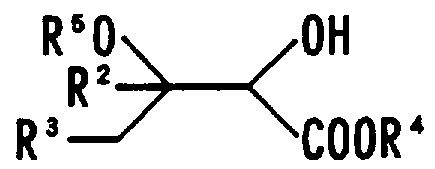
  • the 3-alkoxy-2-hydroxyalkanoic acid ester of the formula (H) is reacted under heating in the presence of a metal compound catalyst.
  • R 2 and R 3 independently represent a hydrogen atom or an alkyl group having 1 to 12 carbon atoms, and R 4 represents an alkyl group having 1 to 6 carbon atoms.
  • R 5 represents an alkyl group having 1 to 6 carbon atoms.
  • R 5 represents an alkyl group having 1 to 6 carbon atoms.
  • an acid catalyst to give a 3-alkoxy group represented by the above general formula (IV).
  • a 2-hydroxyl carboxylic acid ester was produced, and then the N-substituted phenylcarbamic acid ester represented by the above general formula (I) and the obtained 3-alkoxy-2-hydroxyl carboxylic acid ester (W) were added.
  • the 3-substituted fuynyl-5-alkylidene-1,3-oxazolidin-2,4-dione represented by the above general formula (1) characterized in that the reaction is carried out under heating in the presence of a metal compound catalyst.
  • the present invention relates to a method for producing a derivative.
  • the present invention is characterized in that a glycidic acid ester represented by the general formula (V) is reacted with an alcohol represented by the general formula (VI) in the presence of an acid catalyst.
  • 3-alkoxy represented by (IV) The present invention relates to a method for producing ci-2-hydroxyl carboxylic acid ester.
  • Bases include, for example, trimethylamine, triethylamine, tripropylamine, triisopropylamine, tributylamine, triisobutylamine, tripentylamine, trihexylamine, triheptylamine, trioctylamine, trioctylamine, triethylamine.
  • the amount of the base used is not particularly limited, but is preferably 0.001 to 0.5 equivalent, more preferably 0.01 to 0.1 equivalent, based on the substrate.
  • the reaction can be carried out in the presence of a catalyst.
  • a metal compound, a quaternary ammonium salt, or the like can be used as a catalyst, and in this case, the above base can coexist.
  • the metal compound when used alone as a catalyst, or in some cases, in combination with a base, the target compound can be efficiently obtained in a short time.
  • Metal compounds include iron, ruthenium, osmium, cobalt, rhodium, iridium, nickel, and c.
  • fluoride, chloride, bromide, iodide, and carboxylate of radium, platinum, copper, silver, gold, zinc, potassium, mercury, tin or lead such as iron fluoride (E), Iron fluoride (m), iron chloride (E), iron chloride (11), iron bromide (E), iron bromide (m).
  • a quaternary ammonium salt can be used as a catalyst.
  • pyridinium whose counter anion is fluorine ion, chloride ion, bromide ion, iodine ion, BF 4 —, C 10 4 —, or sulfonate
  • quaternary ammonium salts including ammonium salts, and more specifically, tetramethylammonium chloride, tetramethylammonium bromide, tetramethylammonium iodide, and borofluoride.
  • Nmoniumu salt Nmoniumu salt.
  • pyridine salts such as pyridine hydrochloride and pyridine paratoluenesulfonate can be exemplified.
  • the amount of the catalyst to be used is preferably 0.0001 to 0.5 equivalent, more preferably 0.001 to 0.1 equivalent to the substrate.
  • This method can be carried out without a solvent, but can also be carried out in a suitable organic solvent.
  • the organic solvent include aliphatic hydrocarbon solvents such as decane, dodecane, tridecane, and tetradecane; aromatic solvents such as toluene, xylene, benzene, dichlorobenzene, and tetralin; and mixed solvents thereof.
  • the reaction can be carried out in any other solvent that does not adversely affect the reaction.
  • the reaction temperature varies depending on the catalyst or solvent used, etc., but the reaction can be carried out at a temperature at which the compound does not decompose. It is selected from the range of 100-250. Also, the 3-substituted phenyl-5-alkylidene-1.3-oxazolidin-2,4-dione using the 3-alkoxy-2-hydroxyalkanoate (IV) of the present invention as a part of the production raw material.
  • the reaction is carried out in the presence of a metal compound catalyst.
  • Gold compounds include iron, ruthenium, osmium, cobalt, rhodium, iridium, nickel, and nickel.
  • Fluoride, chloride, bromide, iodide, and carboxylate of radium, platinum, copper, silver, gold, zinc, cadmium, mercury, tin, or lead are listed.
  • compounds of tin are particularly preferred, for example, iron fluoride ( ⁇ ), iron fluoride (dish iron chloride ( ⁇ ), iron chloride ( ⁇ ), iron bromide ( ⁇ ), iron bromide (m), Iron iodide ( ⁇ ), iron acetate (ox), iron (m) acetyl acetatetonate, tin fluoride ( ⁇ ), tin fluoride (W), tin chloride ( ⁇ ), tin chloride (IV), odor Examples include tin (II) bromide, tin (IV) bromide, tin (II) iodide, tin acetate (II), and hydrates of these metal compounds may also be used as catalysts.
  • the amount of the catalyst used is preferably from 0.0001 to
  • the target compound can be obtained more efficiently and in a shorter time by combining a base with the catalyst of the metal compound.
  • the base include, for example, trimethylamine, triethylamine, tripropylamine, triisopropylamine, tributylamine, triisobutylamine, tripentylamine, trihexylamine, triheptylamine, trioctylamine, tridecylamine.
  • Triphenylamine, tribenzylamine, 4-methylmorpholine, ⁇ , N-dimethylaniline, pyridine, 4-t-butylpyridine and the like can be mentioned, but any other amines can be used in the reaction as long as they do not adversely affect the reaction.
  • the amount of the base used is not particularly limited, but is preferably 0.001 to 0.5 equivalent, more preferably 0.01 to 0.1 equivalent, relative to the substrate.
  • This method can be carried out without a solvent, but can also be carried out in a suitable organic solvent.
  • organic solvent include aliphatic hydrocarbon solvents such as decane, dodecane, and tridecane; aromatic solvents such as toluene, cumene, xylene, mesitylene, benzene, dichlorobenzene, dibenzene, tetralin, and the like; Although a mixed solvent can be mentioned, the reaction can be performed in any other solvent that does not adversely affect the reaction.
  • the reaction temperature varies depending on the catalyst, base or solvent used, etc., but it can be carried out at a temperature of about L, at which the compound does not decompose, and is preferably selected from the range of 100 to 250, especially 180 to 220. The range is more preferred.
  • the acid catalyst that can be used includes: Protic acids such as sulfuric acid, P-toluenesulfonic acid, trifluoromethanesulfonic acid, phosphoric acid, and perchloric acid can be exemplified.
  • the amount of the catalyst used is not particularly limited, and the desired 3-alkoxy-2-hydroxyl carboxylic acid ester can be obtained in good yield by using 0.0001 to 0.5 equivalent to the glycidic acid ester as a substrate. (IV) can be obtained.
  • the alkyl group having 1 to 6 carbon atoms is a straight-chain or branched-chain alkyl group, for example, a methyl group, an ethyl group, a propyl group, an isopropyl group, a butyl group, an isobutyl group, a sec group. -Butyl, butyl, pentyl, neopentyl, 3-pentyl, hexyl, 3-hexyl, 3,3-dimethyl-2-butyl and the like.
  • the alkyl groups having 12 carbon atoms represented by R 2 and R 3 are linear or branched alkyl groups unless otherwise specified.
  • Groups such as methyl, ethyl, propyl, isopropyl, butyl, isobutyl, sec-butyl, t-butyl, pentyl, neopentyl, 3-pentyl, hexyl, 3-hexyl, 3,3-dimethyl-2-butyl, heptyl, 2-heptyl, 3-heptyl, octyl, t-octyl, 2-octyl, 3-octyl, nonanyl Group, decyl group, dodecyl group and the like.
  • Examples of the substituted phenyl group represented by Ar in the general formulas (I) and (1E) include a halogen atom, an alkyl group, an alkyloxy group, a cycloalkyloxy group, an alkenyloxy group, an alkynyloxy group, and a lower alkyloxycarbonyl. It is a phenyl group substituted by one or more substituents such as a oxy group, a nitro group and a cyano group.
  • Examples of the halogen atom include a fluorine atom, a chlorine atom, a bromine atom, and an iodine atom. Wear.
  • alkyl group examples include a linear or branched alkyl group having 1 to 12 carbon atoms, such as a methyl group, an ethyl group, a propyl group, an isopropyl group, a butyl group, an isobutyl group, and a sec-butyl group.
  • alkyloxy group examples include a linear or branched alkyloxy group having 1 to 12 carbon atoms, such as a methoxy group, an ethoxy group, a propyloxy group, an isopropyloxy group, a butyloxy group, and an isobutyloxy group.
  • Sec-butyloxy pentyloxy, neopentyloxy, hexyloxy, hexyl-3-oxy, heptyloxy, octyloxy, octyl-2-oxy, dodecyloxy, etc. i can.
  • Examples of the cycloalkyloxy group include a cycloalkyloxy group having 3 to 12 carbon atoms, and examples thereof include a cyclopropyloxy group, a cyclobutyloxy group, a cyclopentyloxy group, a cyclohexyloxy group, and a cyclohexyl group.
  • Examples include a butyloxy group, a cyclooctyloxy group, a cyclodecyloxy group, and a cyclododecyloxy group.
  • alkenyloxy group examples include a linear or branched alkenyloxy group having 2 to 12 carbon atoms having a double bond, such as a vinyloxy group, an aryloxy group, a methallyloxy group, a 2-butenyloxy group, 3-butenyloxy, 3-methyl-2-butenyloxy, 2-methyl-3-butenyloxy, 1-pentenyl-3-oxy, 2-pentenyloxy, 3-pentenyl-2-oxy, 4-pentenyl Examples thereof include a hydroxy group, a 3-hexenyloxy group, a 3-heptenyloxy group, a 3-octenyloxy group, a 3-decanyloxy group, and a 3-dodecanyloxy group.
  • An alkynyloxy group has a triple bond
  • Examples thereof include linear or branched alkynyloxy groups having 3 to 8 carbon atoms, such as propargyloxy, 1-methyl-propargyloxy, 1,1-dimethylpropargyloxy, and 2 -Butynyloxy, 1-methyl-2-butynyloxy, 3-butynyloxy, 2-pentynyloxy, 3-pentynyloxy, 3-octynyloxy and the like.
  • Examples of the lower alkyloxycarbonyloxy group include a methoxycarbonyloxy group, a propyloxycarbonyloxy group, and a butyloxycarbonyloxy group.
  • More specific substituted phenyl groups include a 2-fluorophenyl group,
  • the raw acid ester of general formula (I), which is a raw material of the present invention, can be synthesized, for example, by the method described in JP-A-5-17427, EP-A-0496347 (USP-5281742). It can be easily produced by reacting an aniline derivative with a chloroformate in the presence of a base. Further, the 2-hydroxy-3-argenic acid ester represented by the general formula (E), which is a raw material of the present invention, can be easily synthesized, for example, by the method described in EP-A-0153692 (USP-4621150). Further, the glycidic acid ester represented by the general formula (V), which is a raw material of the present invention, can be easily synthesized by the method described in, for example, Organic Reactions, Vol. V, p413. (1960).
  • Ethyl N- (4-chloro-5-cyclopentyloxy-2-fluorophenyl) carbamate (3. Olg, lOmmol) and 2-hydroxy-3- were placed in a flask (100cc) equipped with an air-cooled tube (20cm).
  • methyl 3-ethyl butenoate (4.32 g, 30 mmo 1) and tributylamine (92.7 mg, 0.5 ⁇ 1) were placed under reduced pressure such that the ethyl butene refluxes below half the height of the air-cooled tube. The reaction was performed for 15 hours.
  • Ethyl N- (4-chloro-5-cyclopentyloxy-2-fluorophenyl) carbamate (3.Olg, lOmmol) and 2-hydroxy-3-methyl were placed in a flask (25 cc) equipped with an air-cooled tube (20 cm).
  • 3-Ethyl butenoate (2.02 g, Hmmol) and stannous acetate (23.7 mg, 0.1 ⁇ ) are added, and the pressure is reduced so that the ethyl butylate refluxes below half the height of the air-cooled tube.
  • the reaction was performed at 200 ° C for 2.5 hours.
  • reaction solution was allowed to cool to 70 to 80 ° C., mixed with a mixed solution of methanol (10 m and 6N ′ hydrochloric acid (0.5 mL)), and allowed to stand at room temperature.
  • the furnace is washed, washed with a mixed solution of methanol (20 DIL) and 6N hydrochloric acid (lmU, then with water (20 inL), and sufficiently dried under reduced pressure to obtain 3- (4-chloro-5-cyclopentyloxy).
  • 2-fluorophenyl) -5-isopropylidene-1,3-oxazolidin-2,4-dione (4,77 g, yield 67.4%) was obtained c :
  • N- (4-chloro-5-cyclopentylquino-2-fluorophenyl) -ethyl butylamine (3. Olg, lOmmo 1) and 2-hydroxy-3-methyl- Isobutyl 3-butenoate (4.22 g, 24.5 mmol) and tetrabutylammonium chloride (278 mg, 1.0 bandol) were added, and the mixture was reacted at 200 and 9 hours.
  • Ethyl N- (4-chloro-5-cyclopentyloxy-2-fluorophenyl) carbamate (3. Olg, lOmio 1) and 2-hydroxy-3-methyl-3-butenoic acid are placed in a flask (25 cc) equipped with a distillation apparatus. After adding ethyl (2.16 g, 15 ⁇ 1) and tetrabutylammonium chloride (278 mg, 1.0 mmol), the mixture was reacted at 200 for 1.5 hours. After the reaction is completed, the reaction solution is The mixture was allowed to cool to room temperature, and a mixed solution of methanol (5 mL) and 6N hydrochloric acid (0.25 mL) was added to make it uniform.
  • N- (4-chloro-5-cyclopentyloxy-2-fluorophenyl) -powered ethyl ester (3.01 g, lOmmo 1) and 2-hydroxy-3-methyl-3 -Ethyl butenoate (1.16 g, l.-2 mmol) and tetraethylammonium p-toluenesulfonate (151 rag, 0.50 mmol) were added and reacted at 200 for 3.5 hours.
  • N- (4-chloro-5-cyclopentyloxy-2-fluorophenyl) N- (4-chloro-5-cyclopentyloxy-2-fluorophenyl) N- (4-cyclopentyloxy) -fluoroethyl ester (3. Olg, 10C1), ferric chloride Hexahydrate (27 mg, 0.1 excitation 1) and triethylamine (129 mg. 1.27 ⁇ 1) were added, and the mixture was heated to 200 with stirring to obtain a homogeneous solution. Next, ethyl 2-hydroxy-3-methyl-3-butenoate (4.33 g, 30 mmol) was added dropwise, and the mixture was stirred for 1 hour after the addition.
  • N- (4-chloro-5-cyclopentyloxy-2-fluorophenyl) -powered ethyl ethyl ester (674 g, 2.24 mol), ferric chloride ( 3.7 g, 22.8 ramol) and tributylamine (21 g, 0.113 mol) were added and the mixture was heated to 200 with stirring to form a homogeneous solution. Then, 2-hydroxy-3-methyl-3-ethylbutenoate (484 g, 3.51raol) was added dropwise over 5.5 hours, and after the addition, the mixture was further stirred for 2.5 hours.
  • N '-(4-chloro-5-cyclohexylpentyloxy-2-fluorophenyl) carba'ethyl ester (10. Og, 33. lmraol) in a nickel-mouthed flask (50 cc) equipped with Din Stark Methyl 3-ethoxy-2-hydroxy-3-methylbutanoate (11.7 g, 66.4 mmol), ferric chloride (5.4 mg, 0.331 mmo 1), triptylamin (0.308 g, 1. 66ramol) and stirred while heating at 200 for 4 hours. After completion of the reaction, low-boiling compounds were removed under reduced pressure, and the mixture was cooled to room temperature.
  • N- (4-chloro-5-cyclopentyloxy-2-fluorophenyl) N- (4-chloro-5-pentyloxy-2-fluorophenyl) -potassium ethyl ester (2.00 g, 6.63 mmol) was added to a Nikon eggplant-shaped flask (50 cc) equipped with Dean Stark. Methyl 2-hydroxy-3-methoxy-3-methylbutanoate (2.69 g, 16.6 iraol) and stannous acetate (0.20 g) were added, and the mixture was stirred while heating at 195 for 3 hours. After the reaction was completed, hexane (10 mL) was added, and unnecessary substances were separated by filtration.
  • Nylon-type flask 200cc equipped with Dean Stark and Dimroth, and ethyl N- (4-chloro-5-cyclopentyloxy-2-fluorophenyl) carbamate (10.0g, 33.1 maraudal ol ), 3-ethoxy-2-hydroxy-3-Atil.
  • Ethyl butyl citrate (9.44 g, 49.7 mmol)
  • ferric chloride hexahydrate 9 (L2 mg, 0.03 mniol) and Tributylamine (309.5 mg, 1.7 mmol) was added, and the mixture was stirred with heating in an oil bath at 205.
  • Ethyl 3,3-dimethylglycidate (73.8 g, 0.512 mol) and ethanol (250 mL) are placed in an eggplant-shaped flask (100 cc), and 703 ⁇ 4 perchloric acid (90 ing) is slowly added with stirring at room temperature. then, after the end 60 in 5 hours ⁇ the c the reaction, the reaction solution was concentrated under reduced pressure, toluene was added (100 mL), while at Kuwawae room temperature and sulfuric acid Na Bok helium and a small amount of carbonic anhydride Natoriumu I left it. The solid is removed by filtration, and the solvent is removed from the filtrate under reduced pressure. By removal, ethyl 3-ethoxy-2-hydroxy-3-methylbutyrate (82.2 g, yield 84.43 ⁇ 4) was obtained as a transparent liquid.
  • the present invention provides a method for efficiently synthesizing a 3-substituted fuynyl-5-alkylidene-1,3-oxazolidine-2.4-dione derivative having a strong herbicidal effect without using dangerous phosgene or phosgene dimer. Provide possible industrial processes.

Landscapes

  • Chemical & Material Sciences (AREA)
  • Organic Chemistry (AREA)
  • Engineering & Computer Science (AREA)
  • Materials Engineering (AREA)
  • Chemical Kinetics & Catalysis (AREA)
  • Heterocyclic Carbon Compounds Containing A Hetero Ring Having Nitrogen And Oxygen As The Only Ring Hetero Atoms (AREA)
  • Organic Low-Molecular-Weight Compounds And Preparation Thereof (AREA)

Description

明 細 書
3-置換フユニル- 5-アルキリデン - 1, 3-ォキサゾリジン -2, 4-ジォ ン誘導体の製造方法 技術分野
本発明は、 強い除草効果を有する 3-置換フニニル -5-アルキリデ ン - 1, 3-ォキサゾリジン -2, 4-ジォン誘導体の製造方法に関するもの である。 背景技術
従来、 置換フヱニル- 1, 3-ォキサゾリジン- 2, 4-ジオン誘導体の 製造方法として ν,.Ν-ァリールカルバミ ン酸エステルと 2-ヒドロキシ アル力ン酸エステルを場合によっては触媒の存在下に加熱反応させ る方法 [EP-A-0004582(USP-4220787)]が知られている。 しかしなが ら、 この方法では 5位にアルキリデン基を有する化合物は製造でき ない。
また、 3-置換フ ニル -5-アルキリデン - 1, 3-ォキサゾリジン- 2, 4 -ジォン誘導体を製造する方法としては、 置換フエ二ルイソシァネ 一卜と 2-ヒドロキシ- 3-アルゲン酸エステルを塩基の存在下に反応 させ、 次いで環化と二重結合を異性化させる方法 [WO87/02357(EP-A -0241559, USP-4818272, USP- 4983751 )]が知られている。 しかしなが ら、 この方法においては原料となるイソシァネー卜の製造過程で取 扱が非常に危険であるホスゲンあるいはホスゲンダイマーを用いる 必要があり、 工業的製法としては必ずしも満足できるものではない 発明の開示
本発明者らは、 危険なホスゲンあるいはホスゲンダイマーを用い ること無く、 効率良く 5位にアルキリデン基を有する 3-置換フエ二 ル- 1, 3-ォキサゾリジン- 2, 4-ジォン誘導体の製造方法について鋭意 検討した。 その結果、 N-置換フヱニルカルバミ ン酸エステルと 2-ヒ ドロキシ- 3-ブテン酸エステルを、 場合によっては触媒の存在下に 加熱反応させることにより、 3-置換フヱニル -5-アルキリデン - 1, 3- ォキサゾリジン- 2, 4-ジオン誘導体が収率良く製造しうること、 ま た、 N-置換フヱニルカルバミ ン酸エステルと 3-アルコキシ -2-ヒ ド ロキシアル力ン酸エステルを金属化合物の触媒の存在下に加熱反応 させることにより、 同様に、 3-置換フヱニル -5-アルキリデン- 1, 3- ォキサゾリ..ジン- 2, 4-ジオン誘導体が一挙に製造しうること、 なら びに、 製造原料と.なる 3-アルコキシ -2-ヒ ドロキシアルカン酸エス テルがグリシド酸エステルとアルコールを酸触媒の存在下に製造し うることを見い出し、 本発明を完成させた。
すなわち本発明は、 一般式( I )
Ar-N-COOR1 ( I )
H
(式中、 Arは置換フエ二ル基を表し、 R1は炭素数 1から 6個のアルキ ル基、 またはベンジル基を表す。 )で示される N-置換フ ニルカル ノく-ミン酸エステルと、 一般式(Π )
Figure imgf000004_0001
(式中、 R2および R3は独立に、 水素原子または炭素数 1から 12個のァ CT/ 96/00430
ルキル基を表し、 は炭素数 1から 6個のアルキル基を表す。 )で示 される 2-ヒドロキシ -3-アルゲン酸エステルを、 加熱下に反応させ ることを特徴とする、 一般式(m)
Figure imgf000005_0001
(式中、 Arは置換フヱニル基を表し、 R2および R3は独立に、 水素原 子または炭素数 1から 12個のアルキル基を表す。 )で示される 3-置換 フエニル -5-アルキリデン 】, 3-ォキサゾリジン- 2, 4 -ジォン誘導体 の製造方法に関する。
また、 本 明は、 一般式( I )
Ar-N-COOR1 ' ( I )
H
(式中、 Arは置換フエ二ル基を表し、 R1は炭素数 1から 6個のアルキ ル基、 またはベンジル基を表す。 )で示される N-置換フエニルカル バミン酸エステルと、 一般式 (W)
Figure imgf000005_0002
(IV )
(式中、 R2および R3は独立に、 水素原子または炭素数 1から 12個のァ ルキル基を表し、 R4および Rsは独立に、 炭素数 1から 6個のアルキル 基を表す。 )で示される 3-アルコキシ -2-ヒドロキシアルカン酸エス テルを金属化合物の触媒の存在下に加熱下に反応させることを特徴 とする、 一般式(H )
Figure imgf000006_0001
(式中、 Ar、 R2および R3は、 上記と同じ意味を表す。 )で示される 3- 置換フヱニル- 5-アルキリデン - 1, 3-ォキサゾリジン- 2, 4-ジオン誘 導体の製造方法に関する。
さらに、 本発明は、 一般式(V )
Figure imgf000006_0002
(式中、 R2および R3は独立に、 水素原子または炭素数 1から 12個のァ ルキル基を.表し、 R4は炭素数 1から 6個のアルキル基を表す。 )で示 されるグリシド酸エステルと、 一般式 (^VI)
R$0H (VI)
(式中、 R5は炭素数 1から 6個のアルキル基を表す。 )で示されるアル コールを酸触媒の存在下に反応させることにより、 上記一般式(IV) で示される 3-アルコキシ -2-ヒ ドロキシアル力ン酸エステルを製造 し、 次いで上記一般式( I )で示される N-置換フヱニルカルバミ ン酸 エステルと得られた 3-アルコキシ -2-ヒ ドロキシアル力ン酸エステ ル (W)を金属化合物の触媒の存在下に加熱下に反応させることを特 徴とする、 上記一般式(1 )で示される 3-置換フユニル- 5-アルキリ デン- 1, 3-ォキサゾリジン- 2, 4-ジォン誘導体の製造方法に関する。 さらに、 本発明は、 上記一般式(V )で示されるグリシド酸エステ ルと、 上記一般式 (VI)で示されるアルコールを酸触媒の存在下に反 応させることを特徴とする、 上記一般式(IV)で示される 3-アルコキ シ -2-ヒ ドロキシアル力ン酸エステルの製造方法に関する。 本発明の前記、 2-ヒ ドロキシ -3-アルゲン酸エステル(H )を製造 原料の一部として用いる 3-置換フエニル -5-アルキリデン - 1, 3-ォキ サゾリジン- 2, 4-ジオン誘導体(EI )の製造方法においては、 塩基を 共存させることができる。 塩基としては、 例えばトリメチルァミ ン、 トリェチルァミ ン、 ト リプロピルァミ ン、 ト リイソプロピルァミ ン、 ト リブチルァミ ン、 ト リイソブチルァミ ン、 ト リペンチルァミ ン、 ト リへキシルァミ ン、 ト リへプチルァミ ン、 トリオクチルァミ ン、 ト リデシルァミ ン、 ト リフヱニルァミ ン、 卜 リベンジルァミ ン、 4- メチルモルホリ ン、 N, N-ジメチルァニリ ン、 ピリジン、 4-t-ブチル ピリジン^^挙げることができるが、 反応に悪影響を及ぼさなけれ ばその他いかなるアミ ン類でも反応に用いることができる。 塩基の 使用量としては、 特に制限はないが、 基質に対して 0. 001〜0. 5当量 が好ましく、 0. 01〜0. 1当量がより好ましい。
また、 本方法において、 触媒の存在下に反応を行うこともできる < 触媒として金属化合物や第 4級アンモニゥム塩等を用いることがで き、 この際、 上記塩基を共存させることができる。 とくに、 触媒と して金属化合物単独、 場合によっては塩基と組み合わせて用いるこ とにより、 効率良く短時間に目的物を得ることができる。
金属化合物としては、 鉄、 ルテニウム、 オスミウム、 コバルト、 ロジウム、 イリジウム、 ニッケル、 ハ。ラジウム、 白金、 銅、 銀、 金, 亜鉛、 力 ドミゥ厶、 水銀、 スズまたは鉛の、 フッ化物、 塩化物、 臭 化物、 ヨウ化物、 カルボン酸塩を例示でき、 例えばフッ化鉄(E )、 フッ化鉄(m)、 塩化鉄(E )、 塩化鉄(11 )、 臭化鉄(E )、 臭化鉄(m). ヨウ化鉄(π)、 酢酸鉄(n)、 鉄(m)ァセチルァセトナー卜、 塩化ル テニゥム(皿八 臭化ルテニウム(π八 ヨウ化ルテニウム(ic)、 塩 化オスミウム(m)、 フッ化コバルト(E)、 塩化コバルト(n)、 臭化 コバノレト(E;)、 ヨウ化コバルト(Π八 酢酸コバルト(E)、 コバルト (HOァセチルァセトナー卜、 塩化ロジウム(11〕、 酢酸ロジウム(E)、 塩化ィリジゥム(1)、 臭化ィリジゥム(ΙΠ)、 フッ化ニッケル(n)、 塩化ニッケル(π)、 臭化ニッケル(π)、 ヨウ化ニッケル(π)、 酢酸 ニッケル(Ε)、 ニッケル(Π)ァセチルァセトナー卜、 フッ化パラジ ゥ厶(π)、 塩化パラジウム(n)、 臭化パラジウム(π)、 ヨウ化パラ ジゥム(1)、 酢酸パラジウム(n)、 パラジウム(Π)ァセチルァセト ナート、 ジクロロジァミン白金(H)、 塩化白金酸(IV)、 塩化白金 (E)、 塩t白金 (IV)、 臭化白金酸 (IV)、 臭化白金(H)、 ヨウ化白金 (Π)、 白金(H),ァセチルァセトナート、 フッ化銅(E)、 塩化銅( I )、 塩化銅(Π)、 臭化銅(1)、 臭化銅(]1)、 ヨウ化銅(1)、 ヨウ化銅 (Π)、 酢酸銅(1)、 酢酸銅(Π)、 銅(Ε)ァセチルァセ トナー 卜、 フ ッ化銀( I )、 塩化銀( I )、 臭化銀( I )、 ョゥ化銀( I )、 酢酸銀( I )、 塩化金(皿)、 臭化金(皿)、 ヨウ化金(m;)、 フッ化亜鉛(E)、 塩化亜 鉛(1)、 臭化亜鉛(Π)、 ヨウ化亜鉛(Ε)、 酢酸亜鉛(Π)、 亜鉛(Π) ァセチルァセトナート、 フッ化カドミゥム(π)、 塩化力 ドミゥム (Ε)、 臭化力 ドミゥム(Π)、 ヨウ化力ドミゥ厶(Π)、 酢酸力 ドミゥ 厶(1)、 プロピオン酸カ ドミゥム(H)、 カ ドミゥム(E)ァセチルァ セトナート、 フッ化水銀(1)、 フッ化水銀(E〕、 塩化水銀(1)、 塩 化水銀(E)、 臭化水銀(H)、 ヨウ化水銀(E)、 酢酸水銀(E)、 フッ 化スズ(Π)、 フッ化スズ(IV)、 塩化スズ(E)、 塩化スズ (IV)、 臭化 スズ(Π)、 臭化スズ(IV)、 ヨウ化スズ(E)、 ヨウ化スズ(IV)、 酢酸 スズ(m、 フッ化鉛(1 )、 塩化鉛(π )、 臭化鉛(n )、 ヨウ化鉛(π )、 酢酸鉛(Ε )、 鉛(I )ァセチルァセトナー卜を挙げることができる。 またこれらの金属化合物の水和物も触媒として用いることができる c 触媒の使用量は、 基質に対して 0. 0001〜0. 5当量が好ましく、 0. 001 〜0· 1当量がより好ましい。
また、 本方法において第 4級アンモニゥ厶塩を触媒として用いる ことができ、 例えば対ァニオンがフッ素イオン、 塩素イオン、 臭素 イオン、 ヨウ素イオン、 BF 4—、 C 104—、 スルホネートであるピリジ 二ゥ厶塩を含む第 4級アンモニゥ厶塩を例示することができ、 さら に具体的には、 塩化テ卜ラメチルアンモニゥ厶、 臭化テトラメチル アンモニゥ厶、 ヨウ化テトラメチルアンモニゥ厶、 ホウフッ化テト ラメチル^ンモニゥ厶、 過塩素酸テ卜ラメチルアンモニゥ厶、 ホウ フッ化テトラメチルアンモニゥ厶、 P-トルエンスルホン酸テトラメ チルアンモニゥム、 塩化テトラエチルアンモニゥ厶、 臭化テトラエ チルアンモニゥ厶、 ヨウ化テトラェチルアンモニゥム、 ホウフッ化 テトラェチルアンモニゥ厶、 過塩素酸テトラェチルアンモニゥ厶、 ホウフッ化テトラェチルアンモニゥ厶、 ハ°ラ トルエンスルホン酸テ トラェチルアンモニゥム、 塩化テ卜ラプロピルアンモニゥム、 臭化 テトラプロピルアンモニゥム、 ヨウ化テトラプロピルアンモニゥ厶、 塩化テトラプチルアンモニゥ厶、 臭化テトラプチルアンモニゥ厶、 ヨウ化テトラブチルァンモニゥ厶、 ホウフッ化テトラブチルァンモ 二ゥム、 過塩素酸テトラプチルアンモニゥ厶、 ホウフッ化テ卜ラブ チルアンモニゥム、 パラトルエンスルホン酸テトラブチルアンモニ ゥ厶、 塩化テトラペンチルアンモニゥム、 臭化テトラペンチルアン モニゥム、 ヨウ化テトラペンチルアンモニゥ厶、 塩化テトラへキシ ルアンモニゥム、 臭化テトラへキシルアンモニゥム、 ヨウ化テトラ へキシルアンモニゥ厶、 塩化テトラへプチルアンモニゥム、 臭化テ トラへプチルアンモニゥ厶、 ヨウ化テトラへプチルアンモニゥ厶、 臭化テ卜ラオクチルアンモニゥ厶、 ヨウ化テトラオクチルアンモニ ゥム、 塩化テトラフエ二ルアンモニゥム、 臭化テトラフヱ二ルアン モニゥ厶、 ヨウ化テトラフエ二ルアンモニゥム、 塩化メチルトリオ クチルアンモニゥ厶、 塩化べンジルトリブチルアンモニゥ厶、 塩化 ベンジル卜リェチルァンモニゥム、 臭化べンジルトリェチルァンモ 二ゥム、 ヨウ化工チルトリプロピルアンモニゥム、 塩化フヱニルト リメチルアンモニゥ厶、 臭化フヱニルトリメチルアンモニゥム、 塩 化フヱニルトリエチルアンモニゥ厶、 N-アルキルピリジニゥム塩を 例示する £とができるが、 反応に悪影響を及ぼさなければその他の いかなる第 4級ァ'.ンモニゥム塩でも反応に用いることができる。 そ の他、 ピリジン塩酸塩やピリジンパラ トルエンスルホン酸塩等のピ リジン塩を例示することができる。 触媒の使用量は、 基質に対して 0. 0001〜0. 5当量が好ましく、 0. 001〜0. 1当量がより好ましい。 本方法は無溶媒で行うことができるが、 適当な有機溶媒中でも実 施することができる。 有機溶媒としてはデカン、 ドデカン、 トリデ カン、 テトラデカン等の脂肪族炭化水素系溶媒、 トルエン、 キシレ ン、 クロ口ベンゼン、 ジクロロベンゼン、 テトラリン等の芳香族系 溶媒およびそれらの混合溶媒を挙げることができるが、 反応に悪影 響を及ぼさない溶媒であればその他いかなる溶媒中でも反応を行う ことができる。
反応温度は、 使用する触媒あるいは溶媒等によつても異なるが、 化合物が分解しない程度の温度で実施することができ、 好ましくは 100〜250ての範囲から選ばれる。 また、 本発明の前記、 3-アルコキシ -2-ヒドロキシアルカン酸ェ ステル (IV)を製造原料の一部として用いる 3-置換フヱニル -5-アル キリデン -1. 3-ォキサゾリジン -2, 4-ジォン誘導体(II )の製造方法に おいては、 金属化合物の触媒の存在下に反応を行うものである。 金 厲化合物としては、 鉄、 ルテニウム、 オスミウム、 コバルト、 ロジ ゥム、 イリジウム、 ニッケル、 ノヽ。ラジウム、 白金、 銅、 銀、 金、 亜 鉛、 カドミウム、 水銀、 スズまたは鉛の、 フッ化物、 塩化物、 臭化 物、 ヨウ化物、 カルボン酸塩が挙げられるが、 反応効率の点で鉄あ るいはスズの化合物がとくに好ましく、 例えば、 フッ化鉄(Π )、 フ ッ化鉄(皿 塩化鉄(π )、 塩化鉄(羾)、 臭化鉄(π )、 臭化鉄(m )、 ヨウ化鉄(π )、 酢酸鉄(丑)、 鉄(m )ァセチルァセトナート、 フッ化 スズ(Π )、 フッ化スズ(W)、 塩化スズ(Π )、 塩化スズ(IV)、 臭化ス ズ(Π )、 臭化スズ (IV)、 ヨウ化スズ(Π )、 酢酸スズ(Π )等を例示す ることができる。 またこれらの金属化合物の水和物も触媒として用 いることができる。 触媒の使用量は基質に対して 0. 0001〜0. 5当量 が好ましく、 0. 001〜0. 1当量がより好ましい。
また、 本方法において、 金属化合物の触媒に塩基を組み合わせる ことにより、 より効率よく短時間に目的物を得ることができる。 塩 基としては、 例えば、 卜リメチルァミン、 トリェチルァミ ン、 トリ プロピルァミ ン、 トリイソプロピルァミン、 トリブチルァミン、 ト リイソブチルァミン、 トリペンチルァミン、 トリへキシルァミ ン、 トリへプチルァミン、 トリオクチルァミ ン、 トリデシルァミ ン、 卜 リフエニルァミン、 卜リベンジルァミン、 4-メチルモルホリン、 Ν, N -ジメチルァニリン、 ピリジン、 4- t-ブチルピリジン等を挙げるこ とができるが、 反応に悪影響を及ぼさなければその他のいかなるァ ミ ン類でも反応に用いることができる。 塩基の使用量としては特に 制限はないが、 基質に対して 0. 001〜0. 5当量が好ましく、 0. 01〜0. 1 当量がより好ましい。
本方法は無溶媒で行うことができるが、 適当な有機溶媒中でも実 施することができる。 有機溶媒としては、 デカン、 ドデカン、 トリ デカン等の脂肪族炭化水素系溶媒、 トルエン、 クメン、 キシレン、 メシチレン、 クロ口ベンゼン、 ジクロロベンゼン、 二卜口ベンゼン、 テトラリン等の芳香族系溶媒およびこれらの混合溶媒を挙げること ができるが、 反応に悪影響を及ぼさない溶媒であればその他いかな る溶媒中でも反応を行うことができる。 反応温度は、 使用する触媒、 塩基あるいは溶媒等によっても異なるが、 化合物が分解しな L、程度 の温度で実施することができ、 好ましくは 100〜250 の範囲から選 ばれ、 とくに 180〜220 の範囲がより好ましい。 さらに、 本発明の前記、 グリシド酸エステル(V )を製造原料の一 部として用いる 3-アルコキシ -2-ヒ ドロキシアル力ン酸エステル(IV) の製造方法において、 用いることのできる酸触媒としては、 硫酸、 P-トルエンスルホン酸、 トリフルォロメタンスルホン酸、 燐酸、 過 塩素酸等のプロトン酸を例示することができる。 触媒の使用量に特 に制限はなく、 基質であるグリシド酸エステルに対して 0. 0001〜0. 5当量用いることにより収率よく目的とする 3-アルコキシ -2-ヒ ドロ キシアル力ン酸エステル(IV)を得ることができる。 次に、 本明細書の記載において、 本発明内に包含される種々の置 換基の好適例および説明を以下に詳細に述べる。
前記一般式( I )において R'、 一般式(E )において R4、 一般式(IV) にお 、て R4、 一般式( V )にお 、て および一般式(VI)において R5で 表される炭素数 1から 6個のアルキル基としては、 特記しない限り直 鎖状又は分岐鎖状アルキル基であり、 例えばメチル基、 ェチル基、 プロピル基、 イソプロピル基、 ブチル基、 イソブチル基、 sec-ブチ ル基、 ブチル基、 ペンチル基、 ネオペンチル基、 3-ペンチル基、 へキシル基、 3-へキシル基、 3, 3-ジメチル -2-ブチル基等を例示す ることができる。
前記一般式(H )、 CI ), (IV)と(V )において R2および R3で表され る炭素数 、ら 12個のアルキル基としては、 特記しない限り直鎖状 又は分岐鎖状アルキル基であり、 例えばメチル基、 ェチル基、 プロ ピル基、 イソプロピル基、 ブチル基、 イソブチル基、 sec-ブチル基、 t-ブチル基、 ペンチル基、 ネオペンチル基、 3-ペンチル基、 へキシ ル基、 3-へキシル基、 3, 3-ジメチル -2-ブチル基、 ヘプチル基、 2- ヘプチル基、 3-ヘプチル基、 ォクチル基、 t-ォクチル基、 2-ォクチ ル基、 3-ォクチル基、 ノナニル基、 デシル基、 ドデシル基等を例示 することができる。
前記一般式( I )および(1E )において Arで示される置換フエニル基 としては、 ハロゲン原子、 アルキル基、 アルキルォキシ基、 シクロ アルキルォキシ基、 アルケニルォキシ基、 アルキニルォキシ基、 低 級アルキルォキシカルボニルォキシ基、 ニトロ基、 シァノ基等の置 換基で 1個以上置換したフエニル基である。 ハロゲン原子としては、 フッ素原子、 塩素原子、 臭素原子、 ヨウ素原子等を挙げることがで きる。 アルキル基としては、 炭素数 1〜12個を有する直鎖状又は分 岐鎖状アルキル基を例示でき、 例えばメチル基、 ェチル基、 プロピ ル基、 イソプロピル基、 ブチル基、 イソブチル基、 sec-ブチル基、 ペンチル基、 ネオペンチル基、 へキシル基、 ヘプチル基、 ォクチル 基、 ドデシル基等を例示することができる。 アルキルォキシ基とし ては、 炭素数 1〜12個を有する直鎖状又は分岐鎖状アルキルォキシ 基を例示でき、 例えばメ トキシ基、 エトキシ基、 プロピルォキシ基、 イソプロピルォキシ基、 ブチルォキシ基、 イソブチルォキシ基、 sec -ブチルォキシ基、 ペンチルォキシ基、 ネオペンチルォキシ基、 へ キシルォキシ基、 へキシル -3-ォキシ基、 ヘプチルォキシ基、 ォク チルォキシ基、 ォクチル -2-ォキシ基、 ドデシルォキシ基等を例示 すること力 iできる。 シクロアルキルォキシ基としては、 炭素数 3〜12 個を有するシク,口アルキルォキシ基を例示でき、 例えば、 シクロプ 口ピルォキシ基、 シクロブチルォキシ基、 シクロペンチルォキシ基、 シクロへキシルォキシ基、 シクロへプチルォキシ基、 シクロォクチ ルォキシ基、 シクロデシルォキシ基、 シクロ ドデシルォキシ基等を 挙げるができる。 アルケニルォキシ基としては、 二重結合を有する 炭素数 2〜12個の直鎖状又は分岐鎖状アルケニルォキシ基を例示で き、 例えばビニロキシ基、 ァリルォキシ基、 メタリルォキシ基、 2 - ブテニルォキシ基、 3-ブテニルォキシ基、 3-メチル -2-ブテニルォ キシ基、 2-メチル -3-ブテニルォキシ基、 1 -ペンテニル -3-ォキシ基、 2-ペンテニルォキシ基、 3-ペンテニル -2-ォキシ基、 4-ペンテニル ォキシ基、 3-へキセニルォキシ基、 3-ヘプテニルォキシ基、 3-ォク テニルォキシ基、 3-デカニルォキン基、 3-ドデカ二ルォキシ基等を 例示することができる。 アルキニルォキシ基としては、 三重結合を 有する炭素数 3〜8個の直鎖状又は分岐鎖状アルキニルォキシ基を例 示でき、 例えばプロパルギルォキシ基、 1 -メチル -プロパルギルォ キシ基、 1, 1 -ジメチルプロパルギルォキシ基、 2-ブチニルォキシ 基、 1 -メチル -2-プチニルォキシ基、 3-プチニルォキシ基、 2-ペン チニルォキシ基、 3-ペンチニルォキシ基、 3-ォクチ二ルォキシ基等 を挙げることができる。 低級アルキルォキシカルボニルォキシ基と しては、 例えばメ トキシカルボニルォキシ基、 プロピルォキシカル ボニルォキシ基、 ブチルォキシ力ルボニルォキシ基等を例示するこ とができる。
さらに具体的な置換フ ニル基としては、 2-フルオロフヱニル基、
3-フルオロフヱニル基、 4-フルオロフヱニル基、 2-クロロフヱニル 基、 3-ク. ttロフ ニル基、 4-クロロフヱ二ル基、 2-ブロモフヱニル 基、 3-ブロモフ.ェニル基、 4-ブロモフヱニル基、 2-ョードフヱニル 基、 3-ョー ドフヱニル基、 4-ョードフヱニル基、 2-メチルフヱニル 基、 3-メチルフヱ二ル基、 4-メチルフヱニル基、 2-ェチルフヱニル 基、 3-ェチルフヱニル基、 4-ェチルフヱ二ル基、 2-メ トキシフエ二 ル基、 3-メ 卜キシフヱニル基、 4-メ トキシフヱニル基、 2-イソプロ ピルォキシフヱニル基、 3-イソプロピルォキシフヱニル基、 4-イソ プロピルォキシフエニル基、 2-ニトロフヱニル基、 3-ニトロフエ二 ル基、 4-ニトロフヱニル基、 2-シァノフエニル基、 3-シァノフエ二 ル基、 4-シァノフヱ二ル基、 2, 3-ジフルオロフヱニル基、 2, 4-ジフ ルオロフヱニル基、 2, 5-ジフルオロフヱニル基、 2, 6-ジフルオロフ ェニル基、 3, 4-ジフルオロフヱニル基、 3, 5-ジフルオロフヱニル基- 2, 3-ジクロロフヱニル基、 2, 4-ジクロロフヱニル基、 2, 5-ジクロロ フヱニル基、 2, 6-ジクロロフヱニル基、 3, 4-ジクロロフヱニル基、 3, 5-ジクロロフ ニル基、 2, 3-ジブロモフエニル基、 2, 4-ジブロモ フエニル基、 3, 4-ジブロモフヱニル基、 3, 5-ジブロモフヱニル基、 4-クロ口- 2-フルオロフヱニル基、 3-クロロ- 4-フルオロフヱニル基、
4-ブロモ -2-フルオロフヱ二ル基、 2-フルォ口- 5-ィソプロピルォキ シフヱニル基、 2-フルォ口- 5-プロパギルォキシフヱニル基、 2-フ ルォ口- 5-メ トキシカルボニルォキシフエ二ル基、 4-ブロモ -2-クロ ロフヱニル基、 2, 3-ジメチルフヱニル基、 2,4-ジメチルフヱニル基、 2, 5-ジメチルフエニル基、 3, 4 -ジメチルフヱニル基、 3, 5-ジメチ ノレフヱニル基、 2-フノレオ口- 5-メチルフヱニル基、 3-フルォ口- 4-メ チルフエニル基、 3-フルォ口- 2-メ 卜キシフヱニル基、 2-フルォ口-
5-ニトロフヱニル基、 2-クロ口- 4-メチルフヱニル基、 2-クロ口- 4- イソプロ.,.ピルフヱニル基、 2-クロ口- 4-ニトロフヱニル基、 4-クロ 口- 2-ニトロフ; I二ル基、 2-メチル -4-ニトロフヱニル基、 4-メチル -3-ニトロフヱニル基、 2-メ 卜キシ -4-ニトロフヱニル基、 4-メ トキ シ -2-二トロフヱニル基、 2, 4, 6-トリクロロフェニル基、 2, 4, 5-ト リクロロフヱニル基、 3, 4, 5-トリクロロフヱニル基、 2, 4, 6-トリフ ルオロフェニル基、 2, 4-ジクロロ- 6-フルオロフヱニル基、 3, 5-ジ クロロ- 4-フルオロフヱニル基、 3, 4-ジクロロ- 5-フルオロフヱニル 基、 2, 4-ジクロロ- 5-フルオロフヱニル基、 6-ブロモ -2, 4-ジクロロ フヱニル基、 5-ブロモ -2, 4-ジクロロフヱニル基、 6-クロ口- 2, 4-ジ フルオロフヱ二ル基、 2, 4-ジフルォ口- 5-メチルフヱニル基、 2, 4- ジクロロ- 5-ィソプロピルォキシフエ二ル基、 5-(2 -ブテニルォキシ ) -2, 4-ジクロロフェニル基、 2, 4-ジクロロ- 5-プロパギルォキシフ ヱ二ル基、 2, 4-ジクロロ- 5-メ トキシカルボニルォキシフヱニル基、 2, 4-ジクロロ- 5-ニトロフヱニル基、 4-クロ口- 2-フルォ口- 5-ニト ロフヱニル基、 4-クロロ- 2 -フルォロ- 5-ィソプロピルォキシフエ二 ル基、 4-クロ口- 2-フルォ口- 5-sec-ブチルォキシフエニル基、 4-ク ロロ- 5-シクロプロピルォキシ -2-フルオロフヱニル基、 4-クロ口- 5 -シク口ペンチルォキシ -2-フルォロォキシフヱニル基、 5-ァリルォ キシ -4-クロ口- 2-フルオロフヱニル基、 4-ブロモ -2 -フルォ口- 5-プ 口パルギルォキシフ ニル基、 4-クロ口- 2-フルォロ- 5-( 1 -メチル プロパルギルォキシ)フヱニル基、 4-クロ口- 2 -フルォ口- 5-メ トキ シフヱニル基、 4-クロ口- 2-フルォ口- 5-メ トキシカルボニルォキシ フエ二ル基等を例示することができる。
本発明の原料である一般式( I )で示される力ルバミ ン酸エステル は、 例えば,特開平 5- 17427号、 EP- A-0496347(USP-5281742)に記載 の方法によって合成できるが、 対応するァニリン誘導体とクロロギ 酸エステルを塩基の存在下に反応させることにより容易に製造でき る。 また、 本発明の原料である一般式(E )で示される 2-ヒ ドロキシ -3-アルゲン酸エステルは、 例えば EP-A-0153692(USP-4621150 )に記 載の方法によって容易に合成できる。 さらに、 本発明の原料である 一般式(V )で示されるグリシド酸エステルは、 例えば、 Organic Reactions, Vol. V, p413. ( 1960)に記載の方法によつて容易に合成で さる。
発明を実施するための最良の形態
以下、 実施例を挙げて本発明をさらに詳細に説明するが、 本発明 はこれら実施例に何ら限定されるものではない。 実施例一 1
Figure imgf000018_0001
蒸留装置を装着したフラスコ(25cc)に N- (4-クロ口- 5-シクロペン チルォキシ -2-フルオロフヱニル)力ルバミ ン酸ェチル(3. Olg, lOmmo 1)と 2-ヒ ドロキシ- 3-メチル -3-ブテン酸ェチル(4.32g, 30. Omniol)を 加え、 215てで 16.5時間反応させた。 反応溶液を室温まで冷却した 後、 トルエン(20mL)を加え、 水(20mL)、 次いで IN水酸化ナトリウム (20niL)、 IN塩酸(20mL)で洗浄し、 有機層を硫酸マグネシウムで乾燥 した。 乾燥剤を據過後、 減圧下に濃縮し、 得られた油状の粗生成物 に塩酸酸性メ久ノ一ル(3.5mL)を加え均一溶液とし、 さらに 6N塩酸( 0.4inL)を加え室温下に放置した。 析出した結晶を滤取し、 メタノー ルと 6N塩酸の 10:1混合溶媒で洗浄し、 乾燥することにより、 3-(4- クロ口- 5-シク口ペンチルォキシ- 2-フルオロフヱニル) -5-ィソプロ ピリデン -1, 3-ォキサゾリジン- 2, 4-ジオン(1.80g,収率 50.9%)を得 た。
'H-NMRCCDCls, TMS, ppm): <5 1.58-1.9K8H, m), 2.00C3H, s), 2.26C3H , s), 4.73C1H, m), 6.77(1H, d, JHF=6.6Hz), 7.27(1H, d, J„F=8.5Hz). 融点: 104.5〜105°C.
IR( Br disk, cm—り: 1820, 1743, 1693. 実施例一 2
Figure imgf000019_0001
空冷管(20cm)を装着したフラスコ(lOOcc)に N-(4-クロ口- 5-シク 口ペンチルォキシ -2-フルオロフヱニル)カルバミ ン酸ェチル(3. Olg , lOmmol)と 2-ヒ ドロキシ -3-メチル -3-ブテン酸ェチル(4.32g, 30mmo 1)及び卜リブチルァミン(92.7mg, 0.5ιηπιο1)を加え、 ブテン酸ェチル が空冷管の半分の高さ以下で還流するような減圧下に 210てで 15時 間反応させた。 反応溶液を室温まで冷却した後、 トルエン(30mL)を 加え、 ΙΝτΚ麼化ナトリウム(20mLx2)、 次いで IN塩酸(20mL x 2)で洗 浄し、 有機層を硫酸マグネシウムで乾燥した。 乾燥剤 を濾過後、 減圧下に濃縮し、 得られた油状の粗生成物に酸性メタノール(3.5mL )を加え均一溶液とし、 さらに 6N塩酸(0.4mL)を加え室温下に放置し た。 析出した結晶を濾取し、 メタノール(10mL)と 6N塩酸(2, 5mL)の 混合溶媒で洗浄し、 乾燥することにより、 白色固体の 3-(4-クロロ- 5-シクロペンチルォキシ -2-フルオロフェニル)-5-ィソプロピリデ ン -1, 3-ォキサゾリジン -2, 4-ジオン(2.53g,収率 71.5%)を得た。 実施例一 3
Figure imgf000019_0002
空冷管(20cm)を装着したフラスコ(lOOcc)に '- (4-クロ口- 5-シク 口ペンチルォキシ- 2-フルオロフヱニル)力ルバミ ン酸ェチル(3. Olg , IO OI)と 2-ヒ ドロキシ -3-メチル -3-ブテン酸ェチル(4.32g, 30mmo 1)、 塩化第二鉄(162mg, 1.0動 1)及び卜リプチルァミ ン(92.7mg, 0.5 ol)を加え、 ブテン酸ェチルが空冷管の半分の高さ以下で還流す るような減圧下に 210てで 3.5時間反応させた。 反応溶液を室温まで 冷却した後、 トルエン(30inL)を加え、 1N水酸化ナトリウム(20mLx2 )、 次いで IN塩酸(20mLx2)で洗浄し、 有機層を硫酸マグネシウムで 乾燥した。 乾燥剤を濾過後、 減圧下に濃縮し、 得られた油状の粗生 成物に塩酸酸性メタノール(3.5mL)を加え均一溶液とし、 さらに 6N' 塩酸(0.4mL)を加え室温下に放置した。 析出した結晶を濾取し、 メ タノール 塩酸の 4:1混合溶媒で洗浄し、 乾燥することにより、 3 -(4-クロ口- 5-シ'ク口ペンチルォキシ -2-フルオロフヱ二ル)- 5-ィソ プロピリデン -1,3-ォキサゾリジン- 2, 4-ジオン(2.05g,収率 57.9%) を得た。 実施例一 4
Figure imgf000020_0001
さらに、 金厲化合物の触媒として酢酸スズ、 塩化亜鉛、 酢酸鉛、 塩化ニッケルを用いた以外は、 実施例— 2と同様に反応を行った。 触媒使用量、 反応時間および目的物である 3-(4-クロ口- 5-シクロべ ンチルォキシ -2-フルオロフェニル)-5-ィソプロピリデン -1,3-ォキ サゾリジン- 2, 4-ジオンの収率を表— 1に示した ( 表一 1
Figure imgf000021_0002
実施例一 8
Figure imgf000021_0001
空冷管(20cm)を装着したフラスコ(25cc)に N-(4 -クロ口- 5-シクロ ペンチルォキシ -2-フルオロフヱニル)カルバミ ン酸ェチル(3. O lg, lOmmol )と 2-ヒドロキシ- 3-メチル -3-ブテン酸ェチル(2. 02g, Hmmol )及び酢酸第一錫(23. 7mg, 0. Ιπιιποΐ )を加え、 ブテン酸ェチルが空冷 管の半分の高さ以下で還流するような減圧下に 200°Cで 2. 5時間反応 させた。 反応溶液を室温まで冷却した後、 トルエン(20mL)を加え、 水(20mL)、 次いで IN塩酸(20mL)、 IN水酸化ナトリウム(20mL)、 IN塩 酸(20mL)で洗浄し、 有機層を硫酸マグネシウムで乾燥した。 乾燥剤 を據過後、 減圧下に濃縮し、 得られた油状の粗生成物に酸性メタノ —ル(3. 5mL)を加え均一溶液とし、 さらに 6N塩酸(0. 4inUを加え室温 下に放置した。 析出した結晶を爐取し、 メタノールと 6N塩酸の 20 : 1 混合溶媒で洗浄し、 乾燥することにより、 3-(4-クロ口- 5-シクロべ ンチルォキシ -2-フルオロフュニル)-5-ィソプロピリデン - 1, 3-ォキ サゾリジン- 2, 4 -ジオン( 1. 97g,収率 55. 6 % )を得た。 実施例一 9
Figure imgf000022_0001
蒸留装置を装着したフラスコ(200cc)に N- -クロ口- 5-シクロべ ンチルォキシ -2-フルオロフヱニル)力ルバミ ン酸ェチル(19. 6g, 65m mol)と 2-匕ドロキシ -3-メチル -3-ブテン酸ェチル(15. lg, 105πππο1 )、 塩化第二鉄(105mg, 0. 65mmol)及びトリブチルァミ (611mg, 3. 3mmol )を加え、 200 で 5時間反応させた。 反応溶液を室温まで冷却した 後、 トルエン(100mL)を加え、 1N水酸化ナトリウム(100mL x 2)、 次 いで 1N塩酸(100mL x 2)で洗浄し、 有機層を硫酸マグネシウムで乾燥 した。 乾燥剤を濂過後、 減圧下に濃縮し、 得られた油状の粗生成物 に酸性メタノール(15niL)を加え均一溶液とし、 さらに 6N塩酸(2mL) を加え室温下に放置した。 析出した結晶を滤取し、 メタノール(20m と 6N塩酸(5mL)の混合溶媒で洗浄し、 乾燥することにより、 3-(4- クロ口- 5-シク口ペンチルォキシ -2-フルオロフヱニル) -5-ィソプロ ピリデン - 1, 3-ォキサゾリジン -2, 4-ジォン(16. 7g,収率 72, 5 % )を得 た。 実施例一 1 0
Figure imgf000023_0001
蒸留装置を装着したフラスコ(200cc)に N-(4-クロ口- 5-シクロべ ンチルォキシ -2-フルオロフヱニル)カルバミ ン酸ェチル(19.6g, 65m mol)と 2-ヒ ドロキシ -3-メチル -3-ブテン酸ェチル(13.4g, 93蘭 ol)、 塩化第二鉄(53.5 nig, 0.33mmol)及びトリブチルァミ ン(182rag, 0.98mm ol)を加え、 200てで 5時間反応させた。 反応溶液を室温まで冷却し た後、 トルエン(lOOmL)を加え、 1N水酸化ナトリウム(100niLx2)、 次いで IN塩酸(100mLx2)で洗浄し、 有機層を硫酸マグネシウムで乾 燥した。 乾燥剤を濾過後、 減圧下に濃縮し、 得られた油状の粗生成 物にほぼ等容量のへキサン(20mいを加え均一溶液とし、 室温下に放 置した。 析出した結晶を濾取し、 少量のへキサンで洗浄し、 乾燥す ることにより、 3- (4-クロ口- 5-シクロペンチルォキシ -2-フルォロ フエ二ル)- 5-ィソプロピリデン -1, 3-ォキサゾリジン- 2, 4-ジォン(1 5.7g,収率 68.2%)を得た。 実施例一 1 1
Figure imgf000023_0002
N-(4-クロ口- 5-シク口ペンチルォキシ -2-フルオロフヱニル)カル バミ ン酸ェチル(6.02g, 20DHDO1)と塩化第二鉄(53.5 nig, 0.33ramol)及 びト リプチルァミ ン(185nig, 1.00醫 ol)を蒸留装置を装着した二つ口 フラスコ(50cc)に入れ、 200てに加熱した。 この混合液に 2-ヒ ドロ キシ -3-メチル -3-ブテン酸ェチル(4.33g, 30ramol)を 30分かけて滴下 し、 滴下終了後さらに 200°Cで 3.5時間撹拌した。 反応終了後、 反応 溶液を 70~80°Cまで放冷し、 これにメタノール(10mいと 6N'塩酸(0.5 mL)の混合溶液を加え均一にした後、 室温下で放置した。 析出した 固体を爐取し、 メタノール(20DIL)と 6N塩酸(lmUの混合溶液、 次い で水(20inL)で洗浄し、 減圧下で十分乾燥することにより、 3-(4-ク ロロ- 5-シク口ペンチルォキシ -2-フルオロフヱニル) -5-ィソプロピ リデン -1, 3-ォキサゾリジン- 2, 4-ジオン(4, 77g,収率 67.4%)を得た c
実施例一 1 2 .„
Figure imgf000024_0001
蒸留装置を装着したフラスコ(25cc)に N-(4-クロ口- 5-シクロペン チルォキシ- 2-フルオロフヱニル)力ルバミ ン酸メチル(2.87g, lOmmo 1)と 2-ヒ ドロキシ -3-メチル -3-ブテン酸ェチル(4.32g.30minol)、 塩 化第二鉄(162mg.1. Ommol)及び卜 リブチルァミ ン(92.7mg, 0.5嶋 1) を加え、 200°Cで 3時間反応させた。 反応終了後、 反応溶液を 70〜80 まで放冷し、 これにメタノール(5mL)と 6N塩酸(0.25mL)の混合溶 液を加え均一にした後、 室温下で放置した。 析出した固体を瀘取し、 メタノール(8mL)と 6N塩酸(0.8mL)の混合溶液、 次いで水(10mL)で洗 浄し、 減圧下で十分乾燥することにより、 3- (4-クロ口- 5-シクロべ ンチルォキシ -2-フルオロフェニル)-5-ィソプロピリデン -1,3-ォキ サゾリジン- 2, 4 -ジオン( 1.93g,収率 54.5 % )を得た。 実施例一 1 3
Figure imgf000025_0001
蒸留装置を装着したフラスコ(25cc)に N- -クロ口- 5-シクロペン チルォキシ -2-フルオロフヱニル)力ルバミ ン酸ェチル(3. Olg, lOmmo 1)と 2-ヒ ロキシ -3-メチル -3-ブテン酸メチル(3.90g, 30匪 ol)、 塩化第二鉄(162mg, 1. Omraol)及びトリブチルァミン(92.7mg, 0.5mmol )を加え、 200 で 3時間反応させた。 反応溶液を室温まで冷却した 後、 トルエン(30iiiL)を加え、 IN水酸化ナトリウム(20mLx2)、 次い で 1N塩酸(20mLx2)で洗浄し、 有機層を硫酸マグネシウムで乾燥し た。 乾燥剤を攄過後、 減圧下に濃縮し、 得られた油状の粗生成物に 酸性メタノール(5. OmL)を加え均一溶液とし、 さらに 塩酸(0.25mL )を加え室温下に放置した。 析出した結晶を爐取し、 メタノールと 6 N塩酸の 20:1混合溶媒で洗浄し、 乾燥することにより、 3-(4-クロ口 -5-シクロペンチルォキシ -2-フルオロフェニル)-5-ィソプロピリデ ン -1, 3-ォキサゾリジン- 2, 4-ジォン(2.36g,収率 66.8%)を得た。 実施例一 1 4
Figure imgf000026_0001
蒸留装置を装着したフラスコ(25cc)に N- (4 -クロ口- 5-シクロペン チルォキン- 2-フルオロフヱニル)力ルバミ ン酸ェチル(3. Olg, lOmmo 1 )と 2-ヒ ドロキシ -3-メチル -3-ブテン酸イソブチル(4. 22g, 24. 5mmo 1 )、 及び塩化テトラプチルアンモニゥム(278mg, 1. 0匪 ol )を加え、 2 00てで 9時間反応させた。 反応溶液を室温まで冷却した後、 トルェ ン(20mL)を加え、 水(20mL)、 次いで IN水酸化ナトリウム(20mL)、 IN 塩酸(20mLlで洗浄し、 有機層を硫酸マグネシウムで乾燥した。 乾燥 剤を爐過後、 減圧下に濃縮し、 得られた油状の粗生成物に酸性メタ ノール(3. 5mL)を加え均一溶液とし、 さらに 6N塩酸(0. 4mL)を加え室 温下に放置した。 析出した結晶を滤取し、 メタノール(8mL)と 6N塩 酸(0. 8mL)の混合溶媒、 次いで水(10mL〉で洗浄し、 乾燥することに より、 3- (4-ク口口- 5-シク口ペンチルォキシ -2-フルオロフェニル) -5-ィソプロピリデン - 1, 3-ォキサゾリジン- 2, 4-ジオン(1. 34g,収率 37. 8% )を得た。 実施例一 1 5
Figure imgf000026_0002
蒸留装置を装着したフラスコ(25cc)に N- (4-クロロ- 5-シクロペン チルォキシ -2-フルオロフヱニル)カルバミン酸ェチル(3. Olg, lOmio 1)と 2-ヒドロキシ -3-メチル -3-ブテン酸ェチル(2. 16g, 15ιωο1)、 塩化テトラプチルアンモニゥム(278mg,1. 0mmol)を加え、 200 で 1. 5時間反応させた。 反応終了後、 反応溶液を
Figure imgf000027_0001
まで放冷し、 これにメタノール(5mL)と 6N塩酸(0. 25mL)の混合溶液を加え均一に した後、 室温下で放置した。 析出した固体を瀘取し、 メタノール (8 mL)と 6N塩酸(0. 4mL)の混合溶液、 次いで水(10mL)で洗浄し、 減圧下 で十分乾燥することにより、 3- (4-クロ口- 5-シクロペンチルォキシ -2-フルオロフェニル)-5-ィソプロピリデン - 1, 3-ォキサゾリジン- 2 , 4-ジオン(1. 30g,収率 36. 7 % )を得た。 実施例一 1 6
Figure imgf000027_0002
蒸留装置を装着したフラスコ(25cc)に N-(4-クロ口- 5-シクロペン チルォキシ -2-フルオロフヱニル)カルハ'ミ ン酸ェチル(3. Olg, Ι ΟΦΠΙΟ 1)と 2-ヒドロキシ -3-メチル - 3-ブテン酸ェチル(2. 16g, 15mmol )、 塩 化テトラメチルァンモニゥム(278mg, 1. Ommol)を加え、 200 で 2時 間反応させた。 反応溶液を室温まで冷却した後、 トルエン(20mL)を 加え、 水(20mL)、 次いで IN水酸化ナトリウム(20mL)、 IN塩酸(20mL) で洗浄し、 有機層を硫酸マグネシウムで乾燥した。 乾燥剤を濾過後、 減圧下に濃縮し、 得られた油状の粗生成物に塩酸酸性メタノール (3 . 5mL)を加え均一溶液とし、 さらに 6N塩酸(0. 4mL)を加え室温下に放 置した。 析出した結晶を濂取し、 メタノールと 6N塩酸の 10 : 1混合溶 媒で洗浄し、 乾燥することにより、 3- (4-クロ口- 5-シクロペンチル ォキシ -2-フルオロフェニル)-5-イソプロピリデン 1, 3-ォキサゾリ ジン- 2, 4-ジォン(0. 323g,収率 9. 1 % )を得た。 実施例一 1 7
Figure imgf000028_0001
蒸留装置を装着したフラスコ(25cc〕に N- (4-クロ口- 5-シクロペン チルォキシ -2-フルオロフヱニル)力ルバミ ン酸ェチル(3. 01g, lOmmo 1)と 2-ヒドロキシ -3-メチル -3-ブテン酸ェチル(1. 16g, l l.-2mmol)、 p- トルエンスルホン酸テトラェチルァンモニゥ厶(151rag, 0. 50mmol ) を加え、 200 で 3. 5時間反応させた。 反応溶液を室温まで冷却した 後、 トルエン(20mL)を加え、 水(20mL)、 次いで IN水酸化ナトリウム (20mL)、 IN塩酸(20mL)で洗浄し、 有機層を硫酸マグネシウムで乾燥 した。 乾燥剤を濂過後、 減圧下に濃縮し、 得られた油状の粗生成物 に塩酸酸性メタノール(3. 5mL)を加え均一溶液とし、 さらに 6N塩酸( 0. 4mL)を加え室温下に放置した。 析出した結晶を濾取し、 メタノー ルと 6N塩酸の 20 : 1混合溶媒で洗浄し、 乾燥することにより、 3- (4- クロ口- 5-シク口ペンチルォキシ- 2-フルオロフェニル)-5-ィソプロ ピリデン - 1, 3-ォキサゾリジン- 2, 4-ジォン(1. 76g,収率 49. 7%)を得 た。 実施例一 1 8
CI COOEt
H
Figure imgf000029_0001
蒸留装置を装着したフラスコ(25cc)に N-(4-ク口口フユニル)カル バミ ン酸ェチル(2.02g.10. I OI)と 2-ヒ ドロキシ- 3-メチル -3-ブテ ン酸ェチル(2.97g, 22.8雌 ol)、 臭化テトラブチルアンモニゥム(243 mg, 1.5minol)を加え、 200 で 3.5時間反応させた。 反応溶液を室温 まで冷却した後、 トルエン(20mL)を加え、 水(20mL)、 次いで IN水酸 化ナトリウム(20mL)、 IN塩酸(20mL)洗浄し、 有機層を硫酸マグネシ ゥムで乾燥した。 乾燥剤を濾過後、 減圧下に濃縮した。 得られた油 状の粗生成物にメ,,タノ一ル(5mL)と 6N塩酸(0.25mL)の混合溶液を加 え、 析出した固体を逋取し、 メタノールと 6N塩酸の 10:1混合溶媒で 洗浄し、 乾燥することにより、 3-(4-クロロフヱニル) -5-イソプロ ピリデン - 1.3-ォキサゾリジン- 2, 4-ジォン(1.03g,収率 40.5%)を得 た。
!H-NMR(CDC13, T S, ppm): δ 2.05C3H, s), 2.00(3H, s), 2.30C3H, s).7. 43(4H,s).
融点: 135~135.5 .
IRC Br disk, cm— '):1813, 1730, 1685. 実施例一 1 9
COOEt
COOEt
Figure imgf000030_0001
蒸留装置を装着したフラスコ(25cc)に N- (4-メチルフヱニル)カル バミ ン酸ェチル(2.87g, lOmmol)と 2-ヒ ドロキシ- 3-メチル -3-ブテン 酸ェチル(3.90g, 30ramol)、 塩化テトラプチルアンモニゥム(139mg, 0.5關 ol)、 卜リブチルァミ ン(92.7mg, 0.5mmol)を加え、 200 で 8時 間反応させた。 反応溶液を室温まで冷却した後、 トルエン(20mL)を 加え、 水(20mL)、 次いで IN水酸化ナトリウム(20mL)、 IN塩酸(20mL) で洗净し、-有機層を硫酸マグネシウムで乾燥した。 乾燥剤を璩過後、 減圧下に濃縮し、..,得られた油状の粗生成物に塩酸酸性メタノール (3 .5mL)を加え均一溶液とし、 -さらに 6N塩酸(0.4mL〉を加え室温下に放 置した。 析出した結晶を濂取し、 メタノールと 6N塩酸の 20:1混合溶 媒で洗浄し、 乾燥することにより、 3-(4-メチルフヱニル)- 5-イソ プロピリデン -1,3-ォキサゾリジン- 2,4-ジォン(1.078,収率 46.1%) を得た。
融点: 135.5〜136.5て. 実施例一 2 0
CI -' COOEt +
Figure imgf000030_0002
ディーン'スタークを装備したニッロフラスコ(lOOcc)に、 N-(4- クロ口- 5 -シクロペンチルォキシ -2-フルオロフヱニル)力ルバミ ン 酸ェチル(3. Olg, 10議1)、 塩化第二鉄 ·六水和物(27mg, 0. 1励 1)及 びトリェチルアミ ン(129mg. 1. 27πιπιο1)を加え、 この混合物を攪拌し ながら 200 まで加熱して均一の溶液とした。 次いで、 2-ヒ ドロキ シ -3-メチル -3-ブテン酸ェチル(4. 33g, 30mmol )を滴下し、 滴下後 1 時間攪拌した。 反応終了後、 反応混合物に実施例 - 2と同様の操作 を行うことにより、 3 (4-クロ口- 5-シクロペンチルォキシ -2-フル オロフュニル)-5-ィソプロピリデン- 1, 3-ォキサゾリジン- 2, 4-ジォ ン(2. 70g,収率 76· 3¾)を白色固体として得た。 実施例一 2» 1
Figure imgf000031_0001
ディーン'スタークを装備したニッロフラスコ(lOOcc)に、 -(4- クロ口- 5-シクロペンチルォキシ -2-フルオロフヱニル)カルパ'ミ ン 酸ェチル(3. Olg, l Omol ), 塩化第二鉄(162nig, 1. 0随 ol)及びトリペン チルアミ ン(114mg, 0. 5minol)を加え、 この混合物を攪拌しながら 200 てまで加熱して均一の溶液とした。 次いで、 2-ヒ ドロキシ -3-メチ ル -3-ブテン酸ェチル (4. 33g, 30minol)を滴下し、 滴下後 1時間攪拌し た。 反応終了後、 反応混合物を実施例一 2と同様の操作を行うこと により、 3 (4-クロ口- 5-シクロペンチルォキシ -2-フルオロフェニ ル) -5-ィソプロピリデン - 1, 3-ォキサゾリジン- 2, 4-ジォン(1. 398, 収率 39. 3¾)を白色固体として得た。 実施例一 2 2
Figure imgf000032_0001
攪拌機とディーン ·スタークを装備した三ッロフラスコ(3L)に、 N -(4-クロロ- 5-シク口ペンチルォキシ -2-フルオロフヱニル)力ルバ ミン酸ェチル(674g, 2. 24mol)、 塩化第二鉄(3. 7g, 22. 8ramol)及び卜 リブチルアミン(21g, 0. 113mol)を加え、 この混合物を攪拌しながら 200てまで加熱して均一の溶液とした。 次いで、 2-ヒ ドロキシ -3-メ チル -3-ブテン酸ェチル(484g, 3. 51raol)を 5. 5時間かけて滴下し、 滴 下後更に 2. 5時間攪拌した。 加熱擾拌中に発生したェタノ一ルはデ ィーン,スタークより留去した。 反応終了後、 反応混合物を約 100て 程度まで放冷し、 次いでトルエン(2. 0L)を加えて溶液とした後、 1N 塩酸(1L)及び水(1L)で洗浄した。 有機層を減圧下に濃縮し、 得られ た油状の粗生成物を硫酸酸性エタノール (3. 85L)から結晶化させた。 析出した結晶を濂取し、 少量の酸性エタノール次いでへキサンで洗 浄することにより、 3-(4-クロ口- 5-シクロペンチルォキシ -2-フル オロフ ニル)-5-ィソプロピリデン -1, 3-ォキサゾリジン- 2, 4-ジォ ン(590g,収率 74. 5¾)を白色結晶として得た。 実施例一 2 3
Figure imgf000033_0001
攪拌機とディーン,スタークを装備した三ッロフラスコ(1L)に、 塩化第二鉄 ·六水和物(2. 7g, 0. Olmol) , トリブチルァミ ン(9, 3g. 0. 0 5mol)及び N-(4-クロロ- 5-シク口ペンチルォキシ -2-フルオロフヱ二 ル)カルバミ ン酸ェチル(151g, 0. 5mol )を加えた。 この混合物を攪拌 しながら 200 まで加熱し、 均一の溶液とした。 次いで、 2-ヒ ドロ キシ -3-メチル -3-ブテン酸ェチル(108g, 0. 750101 )を4. 8時間かけて 滴下し、 滴 後更に 2時間攪拌した。 加熱攪拌中に発生したェタノ ールはディーン *.スタークより留去した。 反応終了後、 反応混合物 を約 100て程度まで放冷し、 次いでトルエン(500mL)を加えて溶液と した後、 1N塩酸(250niL)及び水(250mL)で洗浄した。 有機層を減圧下 に濃縮し、 得られた油状の粗生成物を硫酸酸性エタノール(200mL) から結晶化させた。 析出した結晶を璩取し、 少量の酸性エタノール 次いでへキサンで洗浄することにより、 3-(4-クロ口- 5-シクロペン チルォキシ- 2-フルオロフェニル)-5-ィソプロピリデン - 1, 3-ォキサ ゾリジン- 2, 4-ジオン(150. 5g,収率 85. 1¾)を白色結晶として得た。 実施例一 2 4
Figure imgf000034_0001
ディ一ン ·スタークを装備したニッ口ナス型フラスコ(50cc)に、 N'- (4-クロロ- 5-シク口ペンチルォキシ -2-フルオロフヱニル)カルパ' ミン酸ェチル(10. Og, 33. lmraol)、 3-ェトキシ -2-ヒ ドロキシ -3-メチ ルブタン酸メチル(11. 7g, 66. 4mmol )、 塩化第二鉄(5. 4mg, 0. 331mmo 1)、 トリプチルァミ ン(0. 308g, 1. 66ramol )を加え、 200 で 4時間加 熱しながら攪拌した。 反応終了後、 減圧下に低沸点化合物を除去し、 室温まで冷却した。 トルエン(9mL)を加え、 均一溶液とした後、 1N 塩酸( 25mL X 2 )で洗浄した。 有機層を無水硫酸マグネシウムで乾燥 し、 乾燥剤を攄別した後、 濾液から減圧下に溶媒を留去した。 得ら れた粗生成物をトルエン へキサンより再結晶することにより、 3- (4-クロ口- 5-シク口ペンチルォキシ -2-フルオロフヱ二ル)- 5-ィソ プロピリデン - 1, 3-ォキサゾリジン- 2, 4-ジオンの白色結晶(5. 27g, 収率 45. 0%)を得た。 実施例一 2 5
Figure imgf000034_0002
ディーン .スタークを装備したニッロナス型フラスコ(50cc)に, N- (4-クロ口- 5-シク口ペンチルォキシ -2-フルオロフェニル)力ルバ ミ ン酸イソブチル(5. Og, 15. 2mmol )、 2-ヒ ドロキシ- 3-メ トキシ- 3- メチルブタン酸メチル(5. 90g, 26. 4ιππιο1 )、 酢酸第一スズ(0· 50g)を 加え、 195〜200 で 4時間加熱しながら攪拌した。 反応終了後、 へ キサン(15mL)を加え不要物を濾別した。 濾液を減圧下に濃縮し、 得 られた油状物をベンゼン Zへキサン(1/3)の混合溶液に溶解させ、 シリカゲルカラムを通した。 展開液を減圧下に濃縮し、 得られた油 状物(2. 33g)をメタノールから 再結晶することにより、 3- (4-クロ 口- 5-シク口ペンチルォキシ -2-フルオロフヱニル) -5-ィソプロピリ デン - 1, 3-ォキサゾリジン- 2, 4-ジォンの白色結晶(1. 12g,収率 20. 9¾ )を得た。 実施例一 2 6
Figure imgf000035_0001
ディーン · スタークを装備したニッ口ナス型フラスコ(50cc)に、 N-(4-クロ口- 5-シク口ペンチルォキシ -2-フルオロフヱニル)力ルバ ミ ン酸ェチル(2. 00g, 6. 63mmol )、 2-ヒ ドロキシ -3-メ トキシ -3-メ チルブタン酸メチル(2. 69g, 16. 6iraol )および酢酸第一スズ(0. 20g) を加え、 195 で 3時間加熱しながら攬拌した。 反応終了後、 へキ サン(10mL)を加え不要物を濾別した。 濾液を減圧下に濃縮し、 得ら れた油状物をシリ力ゲルカラム(ベンゼ ン /へキサン = 1/3)で精製 することにより、 3- (4-クロ口- 5-シクロペンチルォキシ -2-フルォ 口フエ二ル)- 5-ィソプロピリデン - 1, 3-ォキサゾリジン- 2, 4-ジォン の白色結晶(0. 50g, 収率 21. 3%)を得た。 実施例一 2 7
Figure imgf000036_0001
ディーン .スタークとジムロートを装備したニッロナス型フラス コ(200cc)に、 N-(4-クロ口- 5-シク口ペンチルォキシ- 2-フルオロフ ヱニル)カルバミ ン酸ェチル(10. 0g, 33. 1匪 ol )、 3-ェトキシ -2-ヒ ド ロキシ -3-乂.チルブ夕ン酸ェチル(9. 44g,49. 7mmol )、 および塩化第 二鉄六水和物(9(L2mg, 0. 03mniol)およびトリブチルァミ ン(309· 5mg , 1. 7mmol )を加え、 205て(油浴)で 10時間加熱しながら浸拌した。 反 応終了後、 反応溶液を室温まで冷却し、 トルエン(60mL)を加え、 水 ( lOOmL)で洗浄した。 有機層を減圧下に濃縮し、 得られた油状物に 塩酸酸性エタノール (35mL)を加え、 均一溶液とした後、 室温下に放 置した。 析出した結晶を據取し、 塩酸酸性エタノールで洗浄後乾燥 させることにより、 3-(4-クロ口- 5-シクロペンチルォキシ -2-フル オロフェニル)-5-イソプロピリデン - 1, 3-ォキサゾリジン- 2, 4-ジォ ンの白色結晶(5. 40g, 収率 46. 1%)を得た。 実施例一 2 8
Figure imgf000037_0001
ディーン · スタークを装備したニッ口ナス型フラスコ(50cc)に、 N-(4-クロ口- 5-シク口ペンチルォキシ -2-フルオロフェニル)力ルバ ミン酸ェチル(5. Og, 16. 6mmol)、 3-ェトキシ- 2-ヒ ドロキシ -3-メチ ルブタン酸ェチル(8. 32g, 43. 7腿 ol)、 および塩化第二鉄(135mg, 0. 8 32minol)および N-メチルモルホリン(0, 30g, 2. 97ππηο1)を加え、 205〜 210 (油浴)で 2. 5時間加熱しながら攪拌した。 反応終了後、 反応溶 液を HPLCで分析したところ、 3-(4-クロ口- 5-シクロペンチルォキシ -2-フルオロフェ;ル) -5-ィソプロピリデン - 1, 3-ォキサゾリジン- 2 , 4 -ジォンが 77. 3¾の収率で生成していることを確認した。 実施例一 2 9
Mevノ 0、
Me / C00Me
Figure imgf000037_0002
ナス型フラスコ(500cc)に 3, 3-ジメチルグリシド酸メチル(100g, 0. 768mol )とメタノール(150raL)を入れ、 室温で 70¾過塩素酸(5滴)を 携拌しながらゆつく り加え、 次いで、 50てで 2時間加熱携拌した。 反応終了後、 反応液を減圧下に濃縮し、 少量の無水炭酸ナトリウム を加え室温で 15分放置した後、 滤過により固体を除去することによ り、 2-ヒドロキシ -3-メ トキシ -3-メチルブ夕ン酸メチル(119. 5g,収 率 96. 0 )を淡黄色液体として得た。 90MHz 'H-NM CCDCla.T S, ppni): δ 1.27(6H, s), 3.27C3H, s), 3.27(1H ,br s),3.82(3H,s),4.07(lH,s). 実施例一 30
Mev A EtOv ノ OH
Y-\ —— > Me→ ~ <
Me x COOMe Mex xC00Me
ナス型フラスコ(lOOcc)に 3, 3-ジメチルグリシド酸メチル(20. Og,
0.154mol)とエタノール(30mL)を入れ、 室温で 70¾過塩素酸(5滴)を 攪拌しながらゆつく り加え、 次いで、 50てで 2時間加熱攪拌した。 反 応終了後、 反応液を減圧下に濃縮し、 少量の無水炭酸ナトリウムを 加え室温で暫く放置した後、 滤過により固体を除去することにより
、 3-ェトキシ -2-ヒ ドロキシ- 3-メチルブタン酸メチル(24.9g,収率 9
1.6¾)を透明液体'として得た。
90MHz 'H-NMRCCDCls, TMS, ppm): δ 1.13(3H, t, J = 6.5Hz), 1.27C6H, s) , 3.07(1H, br s), 3.47(2H, q, J = 6.5Hz), 3.79C3H, s), 4.07(1H, s). 実施例一 31
Figure imgf000038_0001
ナス型フラスコ(lOOcc)に 3, 3-ジメチルグリシド酸ェチル(73.8g, 0.512mol)とェタノール(250mL)を入れ、 室温で 70¾過塩素酸(90ing) を援拌しながらゆっく り加え、 次いで、 60 で 5時間加熱攛拌した c 反応終了後、 反応液を減圧下に濃縮し、 トルエン(100mL)を加えた 後、 硫酸ナ卜リウムと少量の無水炭酸ナトリゥムとを加わえ室温で 暫く放置した。 濾過により固体を除去し、 濾液から減圧下に溶媒を 除去することにより、 3-エトキシ -2-ヒ ドロキシ -3-メチルブ夕ン酸 ェチル (82.2g,収率 84.4¾)を透明液体として得た。
90MHz 'H-NMRCCDC .TMS, ppm): <5 1.13C3H, t, J=7.0Hz), 1.27C6H, s) , 1.30C3H, t, J=7.0Hz), 3.17C1H, br s), 3.48(2H, q, J=7. OHz), 4.05(1 H,s),4.28(2H, q,J=7. OHz). 産業上の利用可能性
本発明は、 強い除草効果を有する 3-置換フユニル- 5-アルキリデ ン 1,3-ォキサゾリジン- 2.4-ジオン誘導体を、 危険なホスゲンある いはホスゲンダイマーを用いること無く、 効率的に合成することが 可能な工業的製法を提供する。

Claims

請 求 の 範 囲 一般式( I )
Ar-N-COOR1 ( I )
H
(式中、 Arは置換フヱニル基を表し、 R1は炭素数 1から 6のアルキル 基を表す。 )で示されるカルバミ ン酸エステルと、 一般式(Π)
Figure imgf000040_0001
(式中、 R2および R3は独立に、 水素原子または炭素数 1から 12のアル キル基を裹 、 は炭素数 1から 6のアルキル基を表す。 )で示され る 2-ヒ ドロキシ -3,-アルゲン酸エステルを、 加熱下に反応させるこ とを特徴とする、 一般式(m)
Figure imgf000040_0002
(式中、 Arは置換フエ二ル基を表し、 R2および R3は独立に、 水素原 子または炭素数 1から 12のアルキル基を表す。 )で示される 3-置換フ ヱニル -5-アルキリデン -1,
3-ォキサゾリジン- 2, 4-ジオン誘導体の 製造方法。
2 · 金属化合物存在下に反応を行う、 請求項 1記載の製造方法 c 3. 周期律表第 8族、 第 9族、 第 1 0族、 第 1 1族および第 1 2族の元素、 スズ、 ならびに鉛から選ばれる金属の化合物存在下に 反応を行う、 請求項 1または 2記載の製造方法。
4 . 鉄、 ルテニウム、 オスミウム、 コノく'ルト、 ロジウム、 イ リ ジゥム、 ニッケル、 ハ。ラジウム、 白金、 銅、 銀、 金、 亜鉛、 力 ドミゥ ム、 水銀、 スズ、 および鉛から選ばれる金属のフッ化物、 塩化物、 臭化物、 ヨウ化物あるいはカルボン酸塩存在下に反応を行う、 請求 項 1、 2または 3記載の製造方法。
5 . 塩基共存下に反応を行う、 請求項 1、 2、 3または 4記載 の製造方法。
6 . 第 3級ァミン共存下に反応を行う、 請求項 1、 2、 3、 4 または 5記載の製造方法。
7 . 第 4級アンモニゥム塩存在下に反応を行う、 請求項 1記載 の製造方法^
8 . フッ素ィ,オン、 塩素イオン、 臭素イオン、 ヨウ素イオン、 BF4—、 ClOr、 スルホネートを対ァニオンとして有する第 4級アン モニゥ厶塩またはピリジニゥム塩存在下に反応を行う、 請求項 1記 載の製造方法。
9 . 一般式( I )
Ar-N-COOR1 ( I )
H
(式中、 Arは置換フヱニル基を表し、 R1は炭素数 1から 6個のアルキ ル基、 またはベンジル基を表す。 )で示される N-置換フヱニルカル バミ ン酸エステルと、 一般式(IV)
Figure imgf000041_0001
(IV) (式中、 R2および R3は独立に、 水素原子または炭素数 1から 12個のァ ルキル基を表し、 R4および R5は独立に、 炭素数 1から 6個のアルキル 基を表す。 )で示される 3-アルコキシ -2-ヒ ドロキシアル力ン酸エス テルを金属化合物の触媒の存在下に加熱下に反応させることを特徴 とする、 一般式(正)
Figure imgf000042_0001
(式中、 Ar、 Rzおよび R3は、 上記と同じ意味を表す。 )で示される 3- 置換フエニル- 5-アルキリデン- 1, 3-ォキサゾリジン- 2, 4-ジオン誘 導体の製造方法。
1 0 . 一般式 cy )
Figure imgf000042_0002
(式中、 R2および R3は独立に、 水素原子または炭素数 1から 12個のァ ルキル基を表し、 は炭素数 1から 6個のアルキル基を表す。 )で示 されるグリシド酸エステルと、 一般式("VI)
R50H (VI)
(式中、 R5は炭素数 1から 6個のアルキル基を表す。 )で示されるアル コールを酸触媒の存在下に反応させることにより、 一般式(IV)
Figure imgf000042_0003
4 (IV) (式中、 Rzおよび R3は独立に、 水素原子または炭素数 1から 12個のァ ルキル基を表し、 および R5は独立に、 炭素数 1から 6個のアルキル 基を表す。 )で示される 3-アルコキシ -2-ヒ ドロキシアル力ン酸エス テルを製造し、 次いで、 一般式( I )
Ar-N-COOR* (I )
H
(式中、 Arは置換フエ二ル基を表し、 R1は炭素数 1から 6個のアルキ ル基、 またはベンジル基を表す。 )で示される N-置換フヱ二ルカル ノ 'ミ ン酸エステルと、 得られた 3-アルコキシ -2-ヒ ドロキシアル力 ン酸エステル(W)を金属化合物の触媒の存在下に加熱下に反応させ ることを特徴とする、 一般式(IE)
Figure imgf000043_0001
(式中、 Ar、 R2および R3は、 上記と同じ意味を表す。 )で示される 3- 置換フヱニル -5-アルキリデン -1, 3-ォキサゾリジン -2, 4-ジォン誘 導体の製造方法。
1 1. 金属化合物の触媒が、 鉄またはスズのフッ化物、 塩化物、 臭化物、 ヨウ化物あるいはカルボン酸塩である、 請求項 9または 1 0記載の製造方法。
1 2. 一般式(I )と一般式(IV)の反応を第 3級アミンの存在下に 反応を行う、 請求項 9、 1 0または 1 1に記載の製造方法。
1 3. —般式(V)
R2 0
3— / 、C00IT (V) (式中、 Rzおよび R3は独立に、 水素原子または炭素数 1から 12個のァ ルキル基を表し、 R4は炭素数 1から 6個のアルキル基を表す。 )で示 されるグリシド酸エステルと、 一般式(VI )
R50H (VI )
(式中、 R5は炭素数 1から 6個のアルキル基を表す。 )で示されるアル コールを酸触媒の存在下に反応させることを特徴とする、 一般式 (IV)
Figure imgf000044_0001
(IV )
(式中、 R2および R3は独立に、 水素原子または炭素数 1から 12個のァ ルキル基を'表し、 および R5は独立に、 炭素数 1から 6個のアルキル 基を表す。 )で される 3-アルコキシ -2-ヒドロキシアルカン酸エス テルの製造方法。
PCT/JP1996/000430 1995-02-27 1996-02-26 Process for the preparation of 3-(substituted phenyl)-5-alkylidene-1,3-oxazolidine-2,4-dione derivatives Ceased WO1996026930A1 (en)

Priority Applications (3)

Application Number Priority Date Filing Date Title
DE69613460T DE69613460T2 (de) 1995-02-27 1996-02-26 Verfahren zur herstellung von 3-(substituiert phenyl)-5-alkyliden-1,3-oxazolidin-2,4-dion-derivaten
US08/894,655 US6090946A (en) 1995-02-27 1996-02-26 Process for the preparation of 3-(substituted phenyl)-5-alkylidene-1,3-oxazolidine-2,4-dione derivatives
EP96903234A EP0812834B1 (en) 1995-02-27 1996-02-26 Process for the preparation of 3-(substituted phenyl)-5-alkylidene-1,3-oxazolidine-2,4-dione derivatives

Applications Claiming Priority (2)

Application Number Priority Date Filing Date Title
JP7/37843 1995-02-27
JP3784395 1995-02-27

Publications (1)

Publication Number Publication Date
WO1996026930A1 true WO1996026930A1 (en) 1996-09-06

Family

ID=12508822

Family Applications (1)

Application Number Title Priority Date Filing Date
PCT/JP1996/000430 Ceased WO1996026930A1 (en) 1995-02-27 1996-02-26 Process for the preparation of 3-(substituted phenyl)-5-alkylidene-1,3-oxazolidine-2,4-dione derivatives

Country Status (7)

Country Link
US (1) US6090946A (ja)
EP (1) EP0812834B1 (ja)
KR (1) KR100401275B1 (ja)
CN (1) CN1083836C (ja)
DE (1) DE69613460T2 (ja)
ES (1) ES2159719T3 (ja)
WO (1) WO1996026930A1 (ja)

Citations (1)

* Cited by examiner, † Cited by third party
Publication number Priority date Publication date Assignee Title
JPS62167713A (ja) * 1985-10-11 1987-07-24 Sagami Chem Res Center 除草剤

Family Cites Families (6)

* Cited by examiner, † Cited by third party
Publication number Priority date Publication date Assignee Title
BE756350A (fr) * 1969-09-18 1971-03-18 Basf Ag Procede pour la preparation de 5-methylene-2, 4-oxazolidine-diones et composes ainsi obtenus
DE2813873A1 (de) * 1978-03-31 1979-10-11 Basf Ag Verfahren zur herstellung von oxazolidin-2,4-dionen
DE2913522A1 (de) * 1979-04-04 1980-10-23 Basf Ag Verfahren zur herstellung von n-aryloxazolidin-2,4-dionen
WO1987002357A1 (fr) * 1985-10-11 1987-04-23 Sagami Chemical Research Center Derives d'oxazolidinedione, procede de preparation et herbicides les contenant
DE69226813T2 (de) * 1991-06-07 1999-02-18 Ube Industries, Ltd., Ube, Yamaguchi Pyrimidin- oder Triazin-Derivate, Verfahren zu ihrer Herstellung und diese enthaltende Herbizide
US5739337A (en) * 1996-03-08 1998-04-14 Neurogen Corporation Process for preparing dibenzo-1-carboxamido-1,4-azabicyclo 3.2.1!octanes

Patent Citations (1)

* Cited by examiner, † Cited by third party
Publication number Priority date Publication date Assignee Title
JPS62167713A (ja) * 1985-10-11 1987-07-24 Sagami Chem Res Center 除草剤

Also Published As

Publication number Publication date
EP0812834B1 (en) 2001-06-20
CN1175946A (zh) 1998-03-11
KR100401275B1 (ko) 2003-12-31
EP0812834A1 (en) 1997-12-17
US6090946A (en) 2000-07-18
EP0812834A4 (en) 1998-05-06
DE69613460T2 (de) 2001-11-22
CN1083836C (zh) 2002-05-01
ES2159719T3 (es) 2001-10-16
KR19980702531A (ko) 1998-07-15
DE69613460D1 (de) 2001-07-26

Similar Documents

Publication Publication Date Title
US6803469B2 (en) Process for preparing quinolone antibiotic intermediates
EA007965B1 (ru) Способ получения комбретастатинов
HU207279B (en) Process for producing naphtalene derivatives
JPH09216881A (ja) トリアゾロン化合物の製法及びトリアゾロン化合物
WO1996026930A1 (en) Process for the preparation of 3-(substituted phenyl)-5-alkylidene-1,3-oxazolidine-2,4-dione derivatives
JP3002791B2 (ja) ベンジルフェニルケトン誘導体
JPH01305071A (ja) オキサゾロン誘導体の製造方法
JP3697045B2 (ja) β−ヒドラジノエステル類並びにピラゾリジノン類、ピラゾロン類およびβ−アミノ酸誘導体の製造方法
JP3863589B2 (ja) 3−置換フェニル−5−アルキリデン−1,3−オキサゾリジン−2,4−ジオン誘導体の製造方法
JPH0784427B2 (ja) 医・農薬中間原料の製造方法
JPH09227535A (ja) 3−置換フェニル−5−アルキリデン−1,3−オキサゾリジン−2,4−ジオン誘導体の製造法
US5476940A (en) 3-substituted quinoline-5-carboxylic acids
JPH0692913A (ja) アニリン誘導体の製造方法
JPH0676361B2 (ja) アテローム性動脈硬化症の治療または予防のための医薬組成物
JP3385353B2 (ja) 官能基を有する環状ケイ素化合物
JPH11171876A (ja) 2,4−オキサゾリジンジオン類の製造方法
JP2726337B2 (ja) ジフェニルカーボネート誘導体及びその製造方法
JP2751970B2 (ja) アゾリジン及びその製法
JP3323917B2 (ja) インドール化合物の製造方法
JPH08225483A (ja) ブロモメチル−置換フェニルケトンの製造方法
JPH03264557A (ja) フッ素含有化合物
EA015450B1 (ru) Фармацевтические промежуточные соединения в синтезе ингибиторов ацетилхолинэстеразы (асе) и их применение
JP2004359583A (ja) 鎖状乳酸オリゴマー誘導体およびその製造方法
JP2002363171A (ja) 4−置換−3−アミノイソオキサゾール誘導体の製法
JPH1135563A (ja) アゾール−1−イルアルキルニトリル類の製造法

Legal Events

Date Code Title Description
WWE Wipo information: entry into national phase

Ref document number: 96191993.0

Country of ref document: CN

AK Designated states

Kind code of ref document: A1

Designated state(s): CN KR US

AL Designated countries for regional patents

Kind code of ref document: A1

Designated state(s): AT BE CH DE DK ES FR GB GR IE IT LU MC NL PT SE

DFPE Request for preliminary examination filed prior to expiration of 19th month from priority date (pct application filed before 20040101)
121 Ep: the epo has been informed by wipo that ep was designated in this application
WWE Wipo information: entry into national phase

Ref document number: 1019970705934

Country of ref document: KR

WWE Wipo information: entry into national phase

Ref document number: 1996903234

Country of ref document: EP

WWE Wipo information: entry into national phase

Ref document number: 08894655

Country of ref document: US

WWP Wipo information: published in national office

Ref document number: 1996903234

Country of ref document: EP

WWP Wipo information: published in national office

Ref document number: 1019970705934

Country of ref document: KR

WWG Wipo information: grant in national office

Ref document number: 1996903234

Country of ref document: EP

WWG Wipo information: grant in national office

Ref document number: 1019970705934

Country of ref document: KR