WO1997010703A1 - Conditionally male-fertile plants and methods and compositions for restoring the fertility thereof - Google Patents

Conditionally male-fertile plants and methods and compositions for restoring the fertility thereof Download PDF

Info

Publication number
WO1997010703A1
WO1997010703A1 PCT/US1996/015131 US9615131W WO9710703A1 WO 1997010703 A1 WO1997010703 A1 WO 1997010703A1 US 9615131 W US9615131 W US 9615131W WO 9710703 A1 WO9710703 A1 WO 9710703A1
Authority
WO
WIPO (PCT)
Prior art keywords
plant
male
plants
fertile
acid
Prior art date
Legal status (The legal status is an assumption and is not a legal conclusion. Google has not performed a legal analysis and makes no representation as to the accuracy of the status listed.)
Ceased
Application number
PCT/US1996/015131
Other languages
French (fr)
Inventor
John Anthony Browse
Current Assignee (The listed assignees may be inaccurate. Google has not performed a legal analysis and makes no representation or warranty as to the accuracy of the list.)
University of Washington
Washington State University Research Foundation
Original Assignee
University of Washington
Washington State University Research Foundation
Priority date (The priority date is an assumption and is not a legal conclusion. Google has not performed a legal analysis and makes no representation as to the accuracy of the date listed.)
Filing date
Publication date
Application filed by University of Washington, Washington State University Research Foundation filed Critical University of Washington
Priority to BR9610756A priority Critical patent/BR9610756A/en
Priority to JP9512927A priority patent/JPH11511474A/en
Priority to AU73670/96A priority patent/AU706527B2/en
Priority to NZ320845A priority patent/NZ320845A/en
Priority to EP96935888A priority patent/EP0868119A4/en
Publication of WO1997010703A1 publication Critical patent/WO1997010703A1/en
Priority to MXPA/A/1998/002247A priority patent/MXPA98002247A/en
Anticipated expiration legal-status Critical
Ceased legal-status Critical Current

Links

Classifications

    • AHUMAN NECESSITIES
    • A01AGRICULTURE; FORESTRY; ANIMAL HUSBANDRY; HUNTING; TRAPPING; FISHING
    • A01NPRESERVATION OF BODIES OF HUMANS OR ANIMALS OR PLANTS OR PARTS THEREOF; BIOCIDES, e.g. AS DISINFECTANTS, AS PESTICIDES OR AS HERBICIDES; PEST REPELLANTS OR ATTRACTANTS; PLANT GROWTH REGULATORS
    • A01N37/00Biocides, pest repellants or attractants, or plant growth regulators containing organic compounds containing a carbon atom having three bonds to hetero atoms with at the most two bonds to halogen, e.g. carboxylic acids
    • A01N37/42Biocides, pest repellants or attractants, or plant growth regulators containing organic compounds containing a carbon atom having three bonds to hetero atoms with at the most two bonds to halogen, e.g. carboxylic acids containing within the same carbon skeleton a carboxylic group or a thio analogue, or a derivative thereof, and a carbon atom having only two bonds to hetero atoms with at the most one bond to halogen, e.g. keto-carboxylic acids
    • AHUMAN NECESSITIES
    • A01AGRICULTURE; FORESTRY; ANIMAL HUSBANDRY; HUNTING; TRAPPING; FISHING
    • A01HNEW PLANTS OR NON-TRANSGENIC PROCESSES FOR OBTAINING THEM; PLANT REPRODUCTION BY TISSUE CULTURE TECHNIQUES
    • A01H1/00Processes for modifying genotypes ; Plants characterised by associated natural traits
    • A01H1/02Methods or apparatus for hybridisation; Artificial pollination ; Fertility
    • A01H1/026Methods or apparatus for hybridisation; Artificial pollination ; Fertility by treatment with chemicals
    • AHUMAN NECESSITIES
    • A01AGRICULTURE; FORESTRY; ANIMAL HUSBANDRY; HUNTING; TRAPPING; FISHING
    • A01NPRESERVATION OF BODIES OF HUMANS OR ANIMALS OR PLANTS OR PARTS THEREOF; BIOCIDES, e.g. AS DISINFECTANTS, AS PESTICIDES OR AS HERBICIDES; PEST REPELLANTS OR ATTRACTANTS; PLANT GROWTH REGULATORS
    • A01N37/00Biocides, pest repellants or attractants, or plant growth regulators containing organic compounds containing a carbon atom having three bonds to hetero atoms with at the most two bonds to halogen, e.g. carboxylic acids
    • A01N37/06Unsaturated carboxylic acids or thio analogues thereof; Derivatives thereof
    • AHUMAN NECESSITIES
    • A01AGRICULTURE; FORESTRY; ANIMAL HUSBANDRY; HUNTING; TRAPPING; FISHING
    • A01NPRESERVATION OF BODIES OF HUMANS OR ANIMALS OR PLANTS OR PARTS THEREOF; BIOCIDES, e.g. AS DISINFECTANTS, AS PESTICIDES OR AS HERBICIDES; PEST REPELLANTS OR ATTRACTANTS; PLANT GROWTH REGULATORS
    • A01N61/00Biocides, pest repellants or attractants, or plant growth regulators containing substances of unknown or undetermined composition, e.g. substances characterised only by the mode of action
    • CCHEMISTRY; METALLURGY
    • C12BIOCHEMISTRY; BEER; SPIRITS; WINE; VINEGAR; MICROBIOLOGY; ENZYMOLOGY; MUTATION OR GENETIC ENGINEERING
    • C12NMICROORGANISMS OR ENZYMES; COMPOSITIONS THEREOF; PROPAGATING, PRESERVING, OR MAINTAINING MICROORGANISMS; MUTATION OR GENETIC ENGINEERING; CULTURE MEDIA
    • C12N15/00Mutation or genetic engineering; DNA or RNA concerning genetic engineering, vectors, e.g. plasmids, or their isolation, preparation or purification; Use of hosts therefor
    • C12N15/09Recombinant DNA-technology
    • C12N15/63Introduction of foreign genetic material using vectors; Vectors; Use of hosts therefor; Regulation of expression
    • C12N15/79Vectors or expression systems specially adapted for eukaryotic hosts
    • C12N15/82Vectors or expression systems specially adapted for eukaryotic hosts for plant cells, e.g. plant artificial chromosomes (PACs)
    • C12N15/8241Phenotypically and genetically modified plants via recombinant DNA technology
    • C12N15/8242Phenotypically and genetically modified plants via recombinant DNA technology with non-agronomic quality (output) traits, e.g. for industrial processing; Value added, non-agronomic traits
    • C12N15/8243Phenotypically and genetically modified plants via recombinant DNA technology with non-agronomic quality (output) traits, e.g. for industrial processing; Value added, non-agronomic traits involving biosynthetic or metabolic pathways, i.e. metabolic engineering, e.g. nicotine, caffeine
    • CCHEMISTRY; METALLURGY
    • C12BIOCHEMISTRY; BEER; SPIRITS; WINE; VINEGAR; MICROBIOLOGY; ENZYMOLOGY; MUTATION OR GENETIC ENGINEERING
    • C12NMICROORGANISMS OR ENZYMES; COMPOSITIONS THEREOF; PROPAGATING, PRESERVING, OR MAINTAINING MICROORGANISMS; MUTATION OR GENETIC ENGINEERING; CULTURE MEDIA
    • C12N15/00Mutation or genetic engineering; DNA or RNA concerning genetic engineering, vectors, e.g. plasmids, or their isolation, preparation or purification; Use of hosts therefor
    • C12N15/09Recombinant DNA-technology
    • C12N15/63Introduction of foreign genetic material using vectors; Vectors; Use of hosts therefor; Regulation of expression
    • C12N15/79Vectors or expression systems specially adapted for eukaryotic hosts
    • C12N15/82Vectors or expression systems specially adapted for eukaryotic hosts for plant cells, e.g. plant artificial chromosomes (PACs)
    • C12N15/8241Phenotypically and genetically modified plants via recombinant DNA technology
    • C12N15/8242Phenotypically and genetically modified plants via recombinant DNA technology with non-agronomic quality (output) traits, e.g. for industrial processing; Value added, non-agronomic traits
    • C12N15/8243Phenotypically and genetically modified plants via recombinant DNA technology with non-agronomic quality (output) traits, e.g. for industrial processing; Value added, non-agronomic traits involving biosynthetic or metabolic pathways, i.e. metabolic engineering, e.g. nicotine, caffeine
    • C12N15/8247Phenotypically and genetically modified plants via recombinant DNA technology with non-agronomic quality (output) traits, e.g. for industrial processing; Value added, non-agronomic traits involving biosynthetic or metabolic pathways, i.e. metabolic engineering, e.g. nicotine, caffeine involving modified lipid metabolism, e.g. seed oil composition
    • CCHEMISTRY; METALLURGY
    • C12BIOCHEMISTRY; BEER; SPIRITS; WINE; VINEGAR; MICROBIOLOGY; ENZYMOLOGY; MUTATION OR GENETIC ENGINEERING
    • C12NMICROORGANISMS OR ENZYMES; COMPOSITIONS THEREOF; PROPAGATING, PRESERVING, OR MAINTAINING MICROORGANISMS; MUTATION OR GENETIC ENGINEERING; CULTURE MEDIA
    • C12N15/00Mutation or genetic engineering; DNA or RNA concerning genetic engineering, vectors, e.g. plasmids, or their isolation, preparation or purification; Use of hosts therefor
    • C12N15/09Recombinant DNA-technology
    • C12N15/63Introduction of foreign genetic material using vectors; Vectors; Use of hosts therefor; Regulation of expression
    • C12N15/79Vectors or expression systems specially adapted for eukaryotic hosts
    • C12N15/82Vectors or expression systems specially adapted for eukaryotic hosts for plant cells, e.g. plant artificial chromosomes (PACs)
    • C12N15/8241Phenotypically and genetically modified plants via recombinant DNA technology
    • C12N15/8261Phenotypically and genetically modified plants via recombinant DNA technology with agronomic (input) traits, e.g. crop yield
    • C12N15/8287Phenotypically and genetically modified plants via recombinant DNA technology with agronomic (input) traits, e.g. crop yield for fertility modification, e.g. apomixis
    • C12N15/8289Male sterility

Definitions

  • the present invention is related to male sterility in plants and more particularly to compositions and methods for producing and/or identifying conditionally male-fertile plants and for restoring fertility to such conditionally male-fertile plants.
  • male fertility in higher plants has tremendous practical importance to the breeding of crop and horticultural plants. Dominant, recessive, nuclear, and cytoplasmic male-sterile genetic traits are used in various breeding schemes. The most economically-important use of male sterility is in hybrid plant breeding. In most higher plant species, hybrid cultivars are generally superior to open-pollinated cultivars in yield or in other production-related characteristics. Hybrid plant breeding requires a functionally male-sterile plant as the female parent, but the hybrid must be fully fertile if seeds or fruit are the harvested crop. Furthermore, to take full advantage of heterosis, the female parent must come from an inbred line.
  • a cytoplasmic male-sterile line and a normal-cytoplasm maintainer are used during in-breeding of the female parent.
  • the male parental line in the breeding program contains a fertility-restoring allele (e.g., of a nuclear gene, Rf) that overcomes the cytoplasmic male-sterility trait to ensure that the hybrid is fertile.
  • Rf a fertility-restoring allele
  • a breeding scheme employing a cytoplasmic male-sterile parental line is complex, requiring identification of both a suitable cytoplasmic male-sterile trait and a suitable dominant fertility-restoring allele.
  • the cytoplasmic male-sterile and maintainer lines must be carried together during the inbreeding phase.
  • Nuclear-encoded male-sterile traits have not been widely used in hybrid breeding systems. In principle, recessive male-sterile traits can be maintained as heterozygotes during inbreeding with homozygous plants being chosen for crosses with the male parental line.
  • Several strategies have been developed to assist this approach, but the difficulty of obtaining homozygous male-sterile plants for the production phase has limited the use of this approach in practice. These strategies are described in greater detail, e.g. , in Kaul, Male Sterility in Higher Plants, Springer-Verlag, Berlin, 1988, and U.S. Patents 4,654,465 and 4,727,219, which are incorporated herein by reference.
  • the emasculation treatment or genotype must have no significant effect on female fertility, since this would compromise hybrid seed production.
  • the female parent used must be free of any barriers to cross- pollination by the male parent.
  • a cytoplasmic male-sterile trait must be completely recessive in the presence of the restorer and preferably does not confer an undesirable phenotype such as susceptibility to a plant pathogen.
  • a nuclear male-sterile trait must also be completely recessive and free of undesirable pleiotropic effects.
  • a complex system for the establishment of conditional male fertility involves incorporating into the genome of a plant a transgene the expression of which can be induced by administration of a chemical inducer.
  • the transgenic plant is normally male sterile but is rendered male-fertile upon expression of the transgene.
  • Such a system is described in U.S. Patent No. 5,432,068.
  • FIG. 1 shows the relative growth rate of wild-type Arabidopsis and the fad3 fad7-2 fad ⁇ triple mutant. At intervals between 8 and 24 days after sowing, samples of plants were harvested and the fresh weight of the above- ground parts was measured. The relative growth rate ( ⁇ 1 ) for the wild-type (•) was 0.388 ⁇ 0.025 and that for the mutant (o) was 0.388 ⁇ 0.033.
  • the conditionally male-fertile phenotype is caused by mutations that interfere with normal jasmonic acid metabolism.
  • mutations can include, but are not limited to, mutations that: interfere with biosynthesis of jasmonic acid from ⁇ -linolenate (e.g., mutations in structural genes for enzymes in the jasmonate biosynthetic pathway) or tr ⁇ /w-acting regulators of such structural genes or their binding sites; receptors for jasmonate or its precursors; etc.
  • the present invention is useful for identifying conditionally male- fertile plants arising naturally or as a result of various conventional mutagenesis techniques, including genetic engineering. This discovery also facilitates the production of additional conditionally male-fertile plant varieties for use, for example, in hybrid breeding programs.
  • the ability to produce and/or identify conditionally male-fertile plants and to rescue the male-fertility of these plants by simply applying a chemical compound forms the basis for a conditional male-fertility system that is broadly applicable to hybrid breeding of crop and horticultural plants.
  • compositions that include a conditionally male-fertile plant and an effective amount of jasmonate or a related compound, i.e., an amount of a composition comprising jasmonate or a related compound that is effective to restore male fertility to the plant when applied to the plant, preferably jasmonic acid, methyl jasmonate, or mixtures thereof.
  • conditionally male-sterile plants may be jasmonate-deficient (including, for example, plants having at least one mutation at a FAD locus, but are not necessarily so (e.g., Arabidopsis line CS2338).
  • Conditionally male-fertile plants may, for example, have one or more mutations of a FAD gene and/or one or more mutations in the locus that causes male- sterility in CS2338.
  • Another aspect of the present invention encompasses methods of identifying a conditionally male-fertile plant by applying to a male-sterile plant an effective amount of a composition comprising jasmonic acid or a related compound and detecting whether male fertility is thereby restored to the plant.
  • Such methods can be used to screen a population of male-sterile plants produced by mutagenizing fertile plants by conventional methods (e.g., by chemical mutagenesis, irradiation, gene disruption by mobile genetic elements, antisense expression, cosuppression, gene replacement, etc.).
  • Another aspect of the present invention encompasses methods is the use of conditionally male-fertile plants for the production of hybrid plants in plant breeding programs.
  • a conditionally male-fertile plant is made fertile by application of a composition that includes an effective amount of jasmonic acid or a related compound and the plant is self-fertilized to produce an inbred plant. Then, during the production phase, the inbred plant (which is allowed to exhibit the male-sterile phenotype) is crossed with a second plant to produce a hybrid plant.
  • conditionally male-fertile refers to a plant having a dominant or recessive male-sterile trait (which is inherited in a Mendelian manner), whereby the fertility of the plant can be recovered by the administration of exogenous jasmonate or a related compound(s).
  • an "effective amount" of a composition comprising jasmonate or a related compound(s) is an amount that, when applied to a conditionally male fertile plant as described herein, restores the fertility of the plant to a level acceptable for plant breeding purposes.
  • conditionally male-fertile plants that are useful, for example, for hybrid breeding programs.
  • conditionally male-fertile plants may be found in any plant species in which jasmonate or related compounds are required for pollen fertility including, but not limited to, rapeseed, canola and other Brassica species, soybean, wheat, barley, corn, sunflower, tomato, tobacco, cotton, and rice.
  • male-sterile lines are, in fact, conditionally male fertile by determining whether the lines recover male fertility upon administration of jasmonate or a related compound.
  • line CS23308 it is practical to grow progeny from a plant that is heterozygous for a particular male-sterile trait. Once homozygous (male-sterile) segregants have been identified among the progeny by their inability to set seed (or by other criteria), then these sterile individuals are treated with jasmonate or a related compound. If the plants produce seed after jasmonate treatment, but not after control treatments lacking jasmonate or a related compound, then it can be concluded that these plants come from a line that contains a conditionally male- fertile trait.
  • conditionally male-fertile lines according to the invention are substantially deficient in jasmonic acid in their vegetative tissues as the result of a mutation affecting the biosynthesis of jasmonic acid from or-linolenate.
  • Such mutants can be identified by conventional techniques for identifying a deficiency in jasmonic acid or the buildup of a precursor compound, e.g., by enzyme assays, radiotracer studies, gas chromatography (Creelman et al. , Proc. Natl. Acad. Sci. USA 89:4938-4941, 1992), high performance liquid chromatography, or other techniques.
  • jasmonic acid and some related compounds are involved in the defense of plants from insect attack, it is possible to visually screen male-sterile plants for conditional male fertility on the basis of their greater susceptibility to insect attack and damage.
  • a conditionally male-fertile fad3-2 fad.7-2 fad8 triple mutant of Arabidopsis thaliana and of the Arabidopsis line CS2338 displayed normal anther and pollen development up until the very last stages of pollen maturation and/or dehiscence of the anther locules.
  • Visual inspection and other experimental procedures e.g., as described in Regan and Moffatt, Plant Cell 2:877-889, 1990
  • conditionally male-fertile plants by conventional mutagenesis techniques.
  • conditionally male-fertile plants are produced by mutations that eliminate or substantially reduce the expression of genes encoding, for example: enzymes for the biosynthesis of jasmonate from ⁇ -linolenate; polypeptides that are responsible for the regulation of such genes; receptors for precursors of jasmonate; polypeptides necessary for intra- or intercellular transport of jasmonate or related compounds or the intermediates or products of its biosynthesis or metabolism.
  • genes include, but are not limited, to: FAD (fatty acid desaturation) genes (Somerville and Browse, Trends in Cell. Biol.
  • Mutagenesis techniques useful for producing conditionally male-sterile plants include, but are not limited to, genetic approaches such as the use of ionizing radiation (e.g., irradiation with X-rays or gamma rays) or chemical mutagens, gene disruption by mobile genetic elements such as transposons, or genetic engineering techniques, include targeted gene disruption or gene replacement (mediated by homologous recombination or other means), antisense expression, or cosuppression of an appropriate gene, or other conventional techniques.
  • genetic approaches such as the use of ionizing radiation (e.g., irradiation with X-rays or gamma rays) or chemical mutagens, gene disruption by mobile genetic elements such as transposons, or genetic engineering techniques, include targeted gene disruption or gene replacement (mediated by homologous recombination or other means), antisense expression, or cosuppression of an appropriate gene, or other conventional techniques.
  • Targeted gene disruption will produce a recessive conditionally male- fertile trait similar to those identified from mutant screens.
  • antisense expression or cosuppression will produce a dominant trait, causing Fl hybrids to express the conditionally male-fertile phenotype.
  • This problem can be overcome in a breeding program by incorporating into the nuclear genome of the male line a second gene that is functionally equivalent to the suppressed gene but which has a DNA sequence that is sufficiently different from the suppressed gene to prevent its own suppression (e.g., homologs of the inactivated gene from the same plant species or from other organisms or genes that have been mutagenized in vitro to introduce silent or conservative mutations that do not substantially interfere with biological function).
  • a fad3-2 fad7-2 fadS triple mutant of Arabidopsis thaliana in which ⁇ -linolenic acid was substantially eliminated in all tissues was found to be male-sterile but was otherwise apparently normal with regard to its growth rate and other characteristics, at least under laboratory conditions.
  • both ⁇ -linolenic acid and jasmonic acid, a product of ⁇ -linolenic acid metabolism restored fertility to the triple-mutant plants.
  • Metabolic and developmental processes are highly conserved among higher plants; many of the genes controlling such processes are also highly conserved in both sequence and function. Mutations in one or more genes encoding an enzyme in the biochemical pathway for jasmonic acid biosynthesis, including mutations analogous to those described herein for Arabidopsis thaliana, produce conditional male fertility in other plant species. Such genetic variants form the basis for successful hybrid breeding of these crops. Mutations in genes encoding regulators of the pathway for the biosynthesis or intracellular or intercellular transport of jasmonate or related compounds or the intermediates or products of its biosynthesis or metabolism also give rise to conditional male fertility.
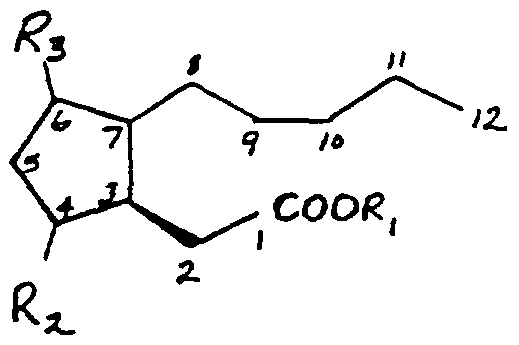
  • related compound includes compounds that function like jasmonic acid in restoring the fertility of conditionally male-fertile plants, preferably compounds that are structurally related to jasmonic acid, including, but not limited to, compounds having the formula:
  • R is H or a lower alkyl chain of 1 to 6 carbon atoms
  • the compound is optionally single or double bonded at one or more of C ⁇ C ⁇ C 3 :C , C 4 :C 5 , C 5 :C 6 , C 6 :C 7 , C 9 :C 10 , or C u :Cj 2 , and where additional -OH groups may be optionally located at one or more of C g , C n , or C ⁇ .
  • Representative compounds that are structurally related to jasmonate include, but are not limited to: cucurbic acid 7-wo-jasmonic acid,
  • Preferred related compounds include jasmonic acid [(3R,7S)- jasmonic acid], the methyl ester of jasmonic acid ("methyl jasmonate”), and mixtures thereof, including racemic mixtures containing related enantiomers and/ or diastereomers.
  • metabolic precursors of jasmonic acid and related compounds including, but not limited to, ⁇ -linolenic acid (9Z, 12Z, 15Z octadecatrienoic acid), 13(S)-hydroperoxy linolenic acid (13-hydroperoxy-9Z, 1 IE, 15Z-octadecatrienoic acid), allene oxide (12,13(S)-epoxy-9Z,ll,15Z-octadecatrienoic acid),
  • 12-oxo-phytodienoic acid (8-[2- .s-2'-pentenyl)- 3-oxo-cyclopent-4-enyl]octanoic acid) (Blechert et al. , Proc. Natl. Acad. Sci. USA 92:4099-4105, 1995), (lS,2S)3-oxo-2-(2'-pentenyl)cyclopentane-octanoic acid, (lS,2S)3-oxo-2-(2'- pentenyl)cyclopentanehexanoic acid, (lS,2S)3-oxo-2-(2'- pentenyl)cyclopentanetetranoic acid.
  • Structurally-related compounds may act directly as fertility-restoring agents or may be metabolized in the plant to fertility restoring agents.
  • Structurally-related compounds also include conjugates of these compounds with other moieties that do not interfere with fertility-restoring activity, including, for example, mono- or polysaccharides, amino acids, or polypeptides.
  • “Related compounds” also include other compounds that restore at least partial fertility to conditionally male-fertile plants, e.g., compounds that interact with a jasmonic acid receptor, such as coronatine and coronofacic acid, or that affect other molecules involved in the jasmonate signaling pathway, including proteinase inhibitors such as bestatin (Schaller et al. , Plant Cell 7:1893-1898, 1995).
  • a jasmonic acid receptor such as coronatine and coronofacic acid
  • proteinase inhibitors such as bestatin (Schaller et al. , Plant Cell 7:1893-1898, 1995).
  • Admimstration of Compositions That Include Jasmonate or Related Compound(s) Jasmonate acid and related compounds may be administered to a plant by any conventional means, including direct application to the flowers or other tissues of the plant, e.g. , by painting or spraying on the flowers or other plant tissues a composition that includes jasmonate or related compound(s) or a mixture thereof.
  • a composition that includes jasmonate or a related compound may be painted or sprayed onto the flower, flower bud, or other plant tissue, for example.
  • the composition may be a solution of jasmonate or a related compound in water (or another suitable non-phytotoxic solvent such as glycerol) and may optionally include a wetting or sticking agent, e.g. , a low concentration of a suitable surfactant.
  • the composition may be applied directly to a flower or other plant tissue by any conventional means, such as by painting, misting, spraying, drenching, etc.
  • Jasmonic acid or a related compound can also be "applied" to plant tissue via airborne transmission in which volatile source of the inducing agent is placed in the vicinity of the plant tissue and the agent is allowed to diffuse or disperse through the atmosphere to contact the plant tissue.
  • the volatile source may be, for example, plant materials which naturally produce the inducing agent or a volatile solution of the agent, such as a solution comprising a volatile solvent and the inducing agent.
  • Suitable solvents for this purpose include organic solvents, e.g. , alcohols (e.g., methanol and ethanol), or water.
  • the manner in which the volatile source of the inducing agent is placed in the vicinity of the plant tissue to be treated is not critical to the practice of the invention.
  • the inducing agent may be placed in an open container in the vicinity of the plant tissue, on a matrix support, such as a fiber matrix, in the vicinity of the plant tissue.
  • Amounts of jasmonic acid or related compounds effective to induce fertility in treated plants of a given male-sterile line depend on many factors, including the nature, environment and condition of the plants to be treated, the method of contact of the inducing agent with plant tissue to be treated and other factors.
  • a solution of jasmonic acid or a related compound for direct application comprises from about 1 pg/ml to about 100 mg/ml of the inducing agent, more preferably from about 1 ng/ml to about 10 mg/ml of the inducing agent, and most preferably from about 1 ⁇ g/ml to about 1 mg/ml of the inducing agent.
  • a higher jasmonate concentration will be required to induce fertility if the jasmonate is sprayed onto a plant tissue rather than painted on the tissue.
  • Jasmonic acid and related compounds induce compounds that act in the defense of plants from insect attack. It is possible that conditionally male- fertile plants that are rendered fertile by the administration of exogenous jasmonic acid or related compounds will be more susceptible to insect damage (Farmer and Ryan, Proc. Natl. Acad. Sci. USA 87:7713-7716, 1990). Protection against insect damage can be provided through the use of insecticidal treatments. Application of jasmonic acid or related compounds may itself reduce insect damage, as described in WO 91/18512, which is incorporated herein by reference.
  • the biophysical reactions of light harvesting and electron transport during photosynthesis take place in a uniquely constructed bilayer membrane, the thylakoid.
  • the complement of atypical glycerolipid molecules that form the foundation of this membrane is characterized by sugar headgroups and a very high level of unsaturation in the fatty acid chains that compose the central portion of the thylakoid lamella bilayer.
  • monogalactosyldiacyl-glycerol the major thylakoid lipid
  • monogalactosyldiacyl-glycerol typically contains more than 90% of ⁇ -linolenic acid (18:3) or a combination of 18:3 and hexadecatrienoic (16:3) acids, depending on the plant species (Jamieson and Reid, Phytochemistry 10: 1837-1843, 1971).
  • Both pathways are initiated by the synthesis of 16:0-ACP and 18: 1-ACP by the combined action of a Type II fatty acid synthase and a soluble stearoyl-ACP desaturase located in the chloroplasts or other plastids.
  • the "prokaryotic pathway" located in the chloroplast inner envelope uses 18:1-ACP and 16:0-ACP for the sequential acylation of glycerol-3-phosphate and synthesis of glycerolipid components for the chloroplast membranes.
  • the "eukaryotic pathway” involves export of 16:0 and 18: 1 fatty acids from the chloroplast to the endoplasmic reticulum and their incorporation into phosphatidylcholine and other phospholipids that are the principal structural lipids of all the membranes of the cell except for the chloroplast.
  • the diacylglycerol moiety of phosphatidylcholine can be returned to the chloroplast envelope and used as a second source of precursors for the synthesis of chloroplast glycerolipids.
  • the FAD 3 gene product localized predominantly in the endoplasmic reticulum, utilizes 18:2 on phosphatidylcholine as its major substrate although it is possible that it also acts on 18:2 groups of other phospholipids (Browse et al., J. Biol. Chem. 268: 16345-16351, 1993).
  • fad7-2fad8 double mutant plants contain no 16:3 but approximately 17% 18:3 in their chloroplast membranes (McConn et al. , Plant Physiol. 106: 1609-1614, 1994).
  • the extrachloroplast membranes in leaves of fad3 mutant plants contain considerable 18:3 because 18:2 lipid can be transferred to the chloroplast on the eukaryotic pathway, desaturated by the FAD7 and FAD8 enzymes, and then returned to the endoplasmic reticulum and other extrachloroplast membranes (Browse et al. , J. Biol. Chem. 268:16345-16351, 1993).
  • the F 2 progeny from these crosses were screened by gas chromatographic analysis and fad7-2 fad8 and fad.3-2 fad.7-2 double mutant plants were identified.
  • To screen the leaf fatty acid compositions of individual F 2 progeny samples of leaf tissue were rapidly immersed in liquid nitrogen, ground to a fine powder, extracted and analyzed for their content of trienoic fatty acids using gas chromatography essentially as described by Miquel and Browse (/. Biol. Chem. 267: 1502-1509, 1992).
  • the two double mutant plants were crossed, and an F, plant derived from a cross between the two double mutant plants was allowed to self -pollinate. The resulting seeds were germinated.
  • the leaf fatty acid compositions of individual F 2 progeny were examined for their content of trienoic fatty acids. Of 240 F 2 plants analyzed, 17 contained no detectable 16:3 or 18:3 (detection limit approximately 0.1 % of total) while the remaining plants exhibited a range in the proportion of total trienoic fatty acids from 10% to 40% (Table 1).
  • triple-mutant plants were identified by fatty acid analysis from among the progeny of plants that contained just one wild-type allele at the fad8 locus, that is, fad3-2(- 1 -) fad7-2(- 1 -) fad8(+ 1 -).
  • wild-type plants began to bolt about three weeks after sowing of the seed and flowers are produced continuously for 4-6 weeks thereafter until the plant became senescent.
  • the growth rate of linolenate-deficient triple-mutant plants was indistinguishable from the wild-type plant during vegetative development at this temperature (FIG. 1) and triple-mutant and wild-type plants displayed a similar timing for bolting and the start of flowering.
  • EXAMPLE 2 The Arabidopsis fa/3-2 faal-2 fadS Triple Mutant is Male Sterile
  • anthers from wild-type flowers it was always possible to pollinate the mutant and produce mature seeds. In contrast, anthers from mutant flowers were unable to induce seed set on emasculated wild- type flowers. Closer examination of wild-type and mutant flowers revealed that the locules of the mutant anthers had not dehisced to deposit pollen on the stigmatic surface. Manual disruption of the anther locules to release the enclosed pollen did not result in any seed set.
  • the samples were transferred to a Samdri-PVT-3D drying apparatus and critical point dried in CO 2 (Boyde, Scanning Electron Microscopy 2:5945-5951 , 1978; Cohen, Scanning Electron Microscopy 2:303-323, 1979).
  • the specimens were then affixed to stubs with paraffin, coated with gold in argon with a Technics Hummer V sputtering device (Echlin, Scanning Electron Microscopy 1:79-80, 1981) and viewed on a Hitachi S-570 scanning electron microscope. Two independent preparations were examined.
  • triple-mutant progeny were produced in a Mendelian ratio from eit er fad3-2(+ 1 -) fad7-2(+ 1 -) fad8 (+/-) or fad3-2(-l-) fad7-2(-l-)fad8 (+/-) (where " + " indicates a wild-type allele and "-” indicates a mutant allele at each locus in the diploid genome) parents indicates that the genotype of the maternal tissue (rather than the genotype of the segregating, haploid microspores) mediates the male-sterile phenotype and that very low levels of 18:3 are probably sufficient to ensure fertility.
  • flowering triple-mutant plants were grown under different environmental conditions without restoring fertility to them. These conditions included: light intensity ranging from 100-150 and 300 ⁇ mole quanta/m 2 s; photoperiods including continuous light; 12 hr light, 12 hr darkness; and 10 hr light, 14 hr darkness; and a variety of temperatures from 5°C to 22 °C.
  • the male sterility of the fad3-2 fad7-2 fad8 triple-mutant plants persisted under a range of environmental conditions. From a total of 15,000 flowers on more than 150 untreated triple- mutant plants, not a single seed of the parental genotype fad3-2 fad7-2 fad8 was ever recovered.
  • EXAMPLE 3 Germination and Viability of Pollen from the Triple Mutant Pollen viability was assessed by double staining pollen grains with fluorescein diacetate and propidium iodide essentially as described by Heslop-Harrison and Heslop-Harrison (Stain Technol. 45: 115-120, 1970) and by Regan and Moffatt (Plant Cell 2:877-889, 1990). Equal amounts of fluorescein diacetate and propidium iodide solutions were added to freshly isolated pollen. The pollen was transferred to a glass slide, covered with a coverslip, and viewed under ultraviolet light using filter block 13 with excitation filters BP450-490, dichromatic mirror RKP510 and suppression filter LP520.
  • the pollen was transferred to a glass slide, covered with a coverslip, and viewed under ultraviolet light using filter block 13 (Leitz) with excitation filters BP450-490, dichromatic mirror RKP510 and suppression filter LP520 (all from Leitz).
  • Fluorescein diacetate a vital stain, is taken up by living cells and converted to impermeant fluorescein, which emits a green fluorescence under ultraviolet light (Heslop-Harrison and Heslop-Harrison, Stain Technology 45:115-120, 1970).
  • Propidium iodide is excluded from living cells but labels dead cells with a red-orange fluorescence under ultraviolet light (Regan and Moffatt, Plant Cell 2:877-889, 1990).
  • Wild-type and triple-mutant plants were grown side-by-side in four separate experiments. Pollen was isolated from mature flowers by gently releasing them from the anther locules into 17% (w/v) sucrose. The liberated pollen was then placed onto plates of pollen germination medium, consisting of 17% (w/v) sucrose, 2 mM CaCl 2 , 1.65 mM H 3 BO 3 at pH 7 (Preuss et al., Genes and Development 7:974-985, 1993) and solidified with 6% (w/v) agar. Pollen was incubated for 12 hours at room temperature then analyzed for pollen tube formation.
  • Pollen development in the mutant followed a course that was very similar to that of wild-type pollen.
  • Pollen mother cells undergoing the first division of meiosis formed haploid progeny which, following the second meiotic division, become organized into tetrads of microspores encased in a callose wall.
  • the individual microspores were released by the action of a callase enzyme secreted by cells of the parental tissues.
  • the layer of specialized tapetal cells that provides many of the nutrients and other factors (including the extracellular callase) required for pollen development persisted until late in development.
  • DAPI stain 4',6-diamidino-2- phenylindole which binds specifically to double-stranded DNA, was used to stain pollen from wild ⁇ type and mutant plants that had been removed from anthers at stages immediately before or immediately after flower opening. DAPI staining was performed following the procedure of Coleman and Goff (Stain Technology 60: 145-154, 1985).
  • the pollen was double stained with fluorescein diacetate and propidium iodide to show viable (blue-green) and dead (red-orange) pollen grains.
  • D API- stained pollen was viewed with ultraviolet light using filter block A, with excitation filters BP340-380 dichromatic mirror RKP400 and suppression filter LP430 (all from Leitz). (Staining for DNA with mithramycin in the same manner provided similar results.)
  • the male-sterility of the mutant was evident by the lack of any such enlarged siliques.
  • One pot of wild-type and one pot of mutant plants were sprayed with 2 ml of 0.1 % solution of ⁇ -linolenic acid sodium soap each day for 10 consecutive days, during which time the plants were kept on a regime of 12 hours light/ 12 hours dark (at 22°C, 140 ⁇ mole quanta/m 2 /s during the lighted portion of the cycle) and sprayed at the start of the darkened portion of the cycle.
  • ⁇ -linolenate content (as a proportion of the total fatty acids) in leaves, roots, and flower tissues (sepals, petals, carpels, and anthers) was determined by gas chromatography as described above after derivatization with 2.5% (v/v) H 2 SO 4 in methanol (Miquel and Browse, J. Biol. Chem. 267: 1502-1509, 1992).
  • the results for flowers of fad3-2 fad.7-2 fad8 triple-mutant plants treated in this way and for untreated mutant and wild- type flowers are shown in Table 2. As expected, wild-type plants produced seeds while untreated mutant plants were sterile.
  • the octadecanoid signalling compounds jasmonic acid and methyl jasmonate (available from Bedoukian Research Inc. , Danbury, CT), activate wound responses in plants (Farmer and Ryan, Proc. Natl. Acad. Sci. USA 87:7713-7716, 1990) and have been postulated to perform roles in several other developmental and environmental response processes (Sembdner and Parthier, Ann. Rev. Plant Physiol. Plant Mol. Biol. 44:569-589, 1993).
  • the structure and biosynthesis of jasmonic acid have encouraged plant biologists because of parallels to eicosanoid second messengers that are central to inflammatory responses and other physiological processes in mammals (Creelman et al., Proc. Natl. Acad. Sci. -75-4 89:4938-4941 , 1992).
  • Jasmonic acid in plants is synthesized from ⁇ -linolenic acid (9Z, 12Z, 15Z octadecatrienoic acid), a component of plant cell membranes (which is presumably released from membrane lipids by the action of a phospholipase A 2 ) by a pathway that is initiated by lipoxygenase. Cyclization and 3-oxidation of the lipoxygenase product, 13 (S)-hydroperoxy linolenic acid, result in the formation of jasmonic acid, which has a structure analogous in some respects to the prostaglandin E series of eicosanoids (Vick and Zimmerman, Plant Physiol. 75:458-461, 1984).
  • 13(S)-Hydroperoxy linolenic acid may also give rise to other compounds, including products derived from a hydroperoxide lyase reaction sequence: 3Z-hexen-l-ol, 2E-hexen-l-al, 3E-hexen-l-ol, and traumatic acid (Croft et al., Plant Physiol. 101: 13-24, 1993).
  • the male-sterile phenotype in the triple mutant is controlled by the genotype of the sporophytic tissue. This is true of the majority of male-sterile mutants and the defects are often localized by direct or circumstantial evidence to processes occurring in the tapetum, the anther cell layer that bounds the locule and is intimately involved in all aspects of pollen microspore development (Chapman, Int'l. Rev. Cytology 107:111-125, 1987; Goldberg et al. , Plant Cell 5:1217-1229, 1993). It would seem reasonable to implicate the tapetum as the physiological source of jasmonic acid, thereby regulating final maturation processes in pollen grains.
  • methyl jasmonate which is normally present in the plants
  • methyl jasmonate which is normally present in the plants
  • specific translocation of jasmonic acid or its derivatives in the vascular system may be involved.
  • a second component of male-sterility in the triple mutant is the failure of the anther locules to dehisce correctly. In some male-sterile mutants, the pollen is fully viable and the failure of pollination and fertilization is attributable solely to the fact that anther dehiscence does not occur (Dawson et al. , Can. J. Bot. 71:629-638, 1993).
  • jasmonic acid performs (at least) two separate signalling functions during flower development, first, to ensure the maturation of viable pollen, and second, to orchestrate the changes in cell wall structure of the stomium and in the cellular water relations within the endothecium that result in successful dehiscence of the anthers (Stanley and Linskens, Pollen Biology,
  • ⁇ -linolenic acid could restore fertility to flowers without penetrating the flower bud to increase the proportion of ⁇ -linolenic acid in the anthers to measurable levels (detection limit approximately 0.1 % of total fatty acids) suggests that jasmonic acid may be produced in other flower organs on mutant plants and then diffuse or be transported to anthers.
  • the male-sterile phenotype of line CS2338 included morphological features in common with that of the fad3-2 fad7-2 fad8 triple mutant. Floral organs developed normally and the anther locules were not dehisced in flowers that had developed for two days after the petals appeared at the tip of the bud. When the anther locules were disrupted, the pollen that was released was not capable of fertilizing emasculated wild-type flowers. These results indicated that line CS2338 was indeed segregating for a male-sterile trait. Seed was collected separately from several individual fertile segregants of line CS2338 to form a series of sublines. Seeds from each subline were germinated and the plants grown to maturity.

Landscapes

  • Life Sciences & Earth Sciences (AREA)
  • Health & Medical Sciences (AREA)
  • Genetics & Genomics (AREA)
  • Engineering & Computer Science (AREA)
  • Wood Science & Technology (AREA)
  • Chemical & Material Sciences (AREA)
  • Zoology (AREA)
  • General Health & Medical Sciences (AREA)
  • Biotechnology (AREA)
  • Plant Pathology (AREA)
  • Bioinformatics & Cheminformatics (AREA)
  • Organic Chemistry (AREA)
  • Molecular Biology (AREA)
  • General Engineering & Computer Science (AREA)
  • Biomedical Technology (AREA)
  • Environmental Sciences (AREA)
  • Biophysics (AREA)
  • Physics & Mathematics (AREA)
  • Cell Biology (AREA)
  • Dentistry (AREA)
  • Microbiology (AREA)
  • Pest Control & Pesticides (AREA)
  • Biochemistry (AREA)
  • Agronomy & Crop Science (AREA)
  • Nutrition Science (AREA)
  • Chemical Kinetics & Catalysis (AREA)
  • General Chemical & Material Sciences (AREA)
  • Botany (AREA)
  • Developmental Biology & Embryology (AREA)
  • Oil, Petroleum & Natural Gas (AREA)
  • Breeding Of Plants And Reproduction By Means Of Culturing (AREA)
  • Agricultural Chemicals And Associated Chemicals (AREA)
  • Investigating Or Analysing Biological Materials (AREA)
  • Nitrogen Condensed Heterocyclic Rings (AREA)
  • Polysaccharides And Polysaccharide Derivatives (AREA)

Abstract

Fertility can be restored to certain male-sterile plants by exogenous jasmonate or a related compound. Methods are disclosed for identifying and producing 'conditionally male-fertile' plants are produced by mutations that interfere with normal jasmonic acid metabolism. The ability to produce and/or identify conditionally male-fertile plants and to rescue the fertility of these plants by simple application of a chemical compound forms the basis for a conditional male-fertility system that is broadly applicable to hybrid breeding of crop and horticultural plants.

Description

CONDITIONALLY MALE-FERTILE PLANTS AND METHODS AND COMPOSITIONS FOR RESTORING THE FERTILITY THEREOF
CROSS REFERENCE TO RELATED APPLICATION
This application claims priority to co-pending U.S. provisional patent application serial no. 60/004,214, filed on September 21, 1995, which is incorporated herein by reference.
TECHNICAL FIELD
The present invention is related to male sterility in plants and more particularly to compositions and methods for producing and/or identifying conditionally male-fertile plants and for restoring fertility to such conditionally male-fertile plants.
BACKGROUND ART
The regulation of male fertility in higher plants has tremendous practical importance to the breeding of crop and horticultural plants. Dominant, recessive, nuclear, and cytoplasmic male-sterile genetic traits are used in various breeding schemes. The most economically-important use of male sterility is in hybrid plant breeding. In most higher plant species, hybrid cultivars are generally superior to open-pollinated cultivars in yield or in other production-related characteristics. Hybrid plant breeding requires a functionally male-sterile plant as the female parent, but the hybrid must be fully fertile if seeds or fruit are the harvested crop. Furthermore, to take full advantage of heterosis, the female parent must come from an inbred line.
Two basic approaches have been employed in plant breeding in order to balance these requirements. In the first approach, a male-fertile line is employed during inbreeding, then the inbred line is rendered male-sterile during the production phase (i.e. , the step in which the cross is made to the male parental line to produce seed). Mechanical detasseling of corn, the use of male gametocides in wheat, and hand emasculation in tomato are examples of this approach. A drawback to this first approach is the necessity of handling the large numbers of flowers involved in the production phase.
In the second approach, a cytoplasmic male-sterile line and a normal-cytoplasm maintainer (fertile analagon line) are used during in-breeding of the female parent. The male parental line in the breeding program contains a fertility-restoring allele (e.g., of a nuclear gene, Rf) that overcomes the cytoplasmic male-sterility trait to ensure that the hybrid is fertile. A breeding scheme employing a cytoplasmic male-sterile parental line is complex, requiring identification of both a suitable cytoplasmic male-sterile trait and a suitable dominant fertility-restoring allele. The cytoplasmic male-sterile and maintainer lines must be carried together during the inbreeding phase.
Nuclear-encoded male-sterile traits have not been widely used in hybrid breeding systems. In principle, recessive male-sterile traits can be maintained as heterozygotes during inbreeding with homozygous plants being chosen for crosses with the male parental line. Several strategies have been developed to assist this approach, but the difficulty of obtaining homozygous male-sterile plants for the production phase has limited the use of this approach in practice. These strategies are described in greater detail, e.g. , in Kaul, Male Sterility in Higher Plants, Springer-Verlag, Berlin, 1988, and U.S. Patents 4,654,465 and 4,727,219, which are incorporated herein by reference.
Several criteria are important for practical application of these approaches in hybrid breeding programs, including the following:
1. During the production phase there is a more or less absolute requirement for functional male-sterility. Self-pollination of the female parent compromises the purity of hybrid seed produced. This consideration is particularly important for species, such as corn, for which the inbred lines used show strong inbreeding depression and the heterosis observed in the hybrids is high. In other crops in which inbreeding depression and heterosis are modest, a low level of non-hybrid seed may be acceptable. Ensuring male-sterility in the female parent requires careful control of emasculation techniques such as detasseling or the use of male gametocides. When genetic male-sterility is employed, the female parent must be consistently male-sterile under all the environmental conditions (and in all genetic backgrounds) used in the production phase.
2. The emasculation treatment or genotype must have no significant effect on female fertility, since this would compromise hybrid seed production. In addition, the female parent used must be free of any barriers to cross- pollination by the male parent.
3. Similarly, the emasculation treatment or genotype must not significantly reduce the growth and productivity of the hybrid plants. A cytoplasmic male-sterile trait must be completely recessive in the presence of the restorer and preferably does not confer an undesirable phenotype such as susceptibility to a plant pathogen. A nuclear male-sterile trait must also be completely recessive and free of undesirable pleiotropic effects.
It would be highly advantageous to use a recessive nuclear male-sterile trait as a hybrid breeding tool. This would be possible if the line could be maintained as a homozygous male-sterile line and rendered conditionally fertile during each generation of the inbreeding phase. Such an approach could provide the large numbers of uniformly male-sterile plants needed during the production phase while requiring restoration of fertility in the small numbers of plants handled during each inbreeding cycle. There have been attempts to produce conditional male fertility by the administration of exogenous chemicals, including flavonoid compounds (Taylor et al., J. Hered. 83: 11-17, 1992; WO 93/18142) and plant growth regulators, including gibberellic acid (Kaul, Male Sterility in Higher Plants, Springer-Verlag, Berlin, Heidelberg, pp. 15-96, 1988). In general, however, these technologies are not widely used in the production of hybrid plants.
A complex system for the establishment of conditional male fertility involves incorporating into the genome of a plant a transgene the expression of which can be induced by administration of a chemical inducer. The transgenic plant is normally male sterile but is rendered male-fertile upon expression of the transgene. Such a system is described in U.S. Patent No. 5,432,068. BRIEF DESCRIPTION OF THE DRAWINGS
FIG. 1 shows the relative growth rate of wild-type Arabidopsis and the fad3 fad7-2 fadδ triple mutant. At intervals between 8 and 24 days after sowing, samples of plants were harvested and the fresh weight of the above- ground parts was measured. The relative growth rate (ω 1) for the wild-type (•) was 0.388 ± 0.025 and that for the mutant (o) was 0.388 ± 0.033.
SUMMARY OF THE INVENΗON
It has been discovered that the fertility of certain male-sterile plants can be restored by the application of exogenous jasmonate or a related compound to the plants. These male-sterile plants are referred to herein as "conditionally male-fertile" plants.
The conditionally male-fertile phenotype is caused by mutations that interfere with normal jasmonic acid metabolism. Such mutations can include, but are not limited to, mutations that: interfere with biosynthesis of jasmonic acid from α-linolenate (e.g., mutations in structural genes for enzymes in the jasmonate biosynthetic pathway) or trα/w-acting regulators of such structural genes or their binding sites; receptors for jasmonate or its precursors; etc.
The present invention is useful for identifying conditionally male- fertile plants arising naturally or as a result of various conventional mutagenesis techniques, including genetic engineering. This discovery also facilitates the production of additional conditionally male-fertile plant varieties for use, for example, in hybrid breeding programs. The ability to produce and/or identify conditionally male-fertile plants and to rescue the male-fertility of these plants by simply applying a chemical compound forms the basis for a conditional male-fertility system that is broadly applicable to hybrid breeding of crop and horticultural plants.
Therefore, one aspect of the present invention encompasses compositions that include a conditionally male-fertile plant and an effective amount of jasmonate or a related compound, i.e., an amount of a composition comprising jasmonate or a related compound that is effective to restore male fertility to the plant when applied to the plant, preferably jasmonic acid, methyl jasmonate, or mixtures thereof. Conditionally male-sterile plants may be jasmonate-deficient (including, for example, plants having at least one mutation at a FAD locus, but are not necessarily so (e.g., Arabidopsis line CS2338). Conditionally male-fertile plants may, for example, have one or more mutations of a FAD gene and/or one or more mutations in the locus that causes male- sterility in CS2338.
Another aspect of the present invention encompasses methods of identifying a conditionally male-fertile plant by applying to a male-sterile plant an effective amount of a composition comprising jasmonic acid or a related compound and detecting whether male fertility is thereby restored to the plant. Such methods can be used to screen a population of male-sterile plants produced by mutagenizing fertile plants by conventional methods (e.g., by chemical mutagenesis, irradiation, gene disruption by mobile genetic elements, antisense expression, cosuppression, gene replacement, etc.). Another aspect of the present invention encompasses methods is the use of conditionally male-fertile plants for the production of hybrid plants in plant breeding programs. During each cycle of the repeated cycles of the inbreeding phase, a conditionally male-fertile plant is made fertile by application of a composition that includes an effective amount of jasmonic acid or a related compound and the plant is self-fertilized to produce an inbred plant. Then, during the production phase, the inbred plant (which is allowed to exhibit the male-sterile phenotype) is crossed with a second plant to produce a hybrid plant.
DETAILED DESCRIPTION OF THE INVENTION As used herein, the term "conditionally male-fertile" plant refers to a plant having a dominant or recessive male-sterile trait (which is inherited in a Mendelian manner), whereby the fertility of the plant can be recovered by the administration of exogenous jasmonate or a related compound(s).
An "effective amount" of a composition comprising jasmonate or a related compound(s) is an amount that, when applied to a conditionally male fertile plant as described herein, restores the fertility of the plant to a level acceptable for plant breeding purposes. Identifying Conditionally Male-Fertile Plants
The present invention provides methods for identifying conditionally male-fertile plants varieties that are useful, for example, for hybrid breeding programs. Such conditionally male-fertile plants may be found in any plant species in which jasmonate or related compounds are required for pollen fertility including, but not limited to, rapeseed, canola and other Brassica species, soybean, wheat, barley, corn, sunflower, tomato, tobacco, cotton, and rice.
Lines of male-sterile plants have been reported for a large number of plant species. See, e.g. , "Genie Male Sterility," In: Kaul, Male Sterility in Higher Plants, Springer-Verlag, Berlin, Heidelberg, pp. 15-96, 1988.
It is possible to determine whether such male-sterile lines are, in fact, conditionally male fertile by determining whether the lines recover male fertility upon administration of jasmonate or a related compound. The Examples below demonstrate the effectiveness of such an approach. As described below for line CS2338, it is practical to grow progeny from a plant that is heterozygous for a particular male-sterile trait. Once homozygous (male-sterile) segregants have been identified among the progeny by their inability to set seed (or by other criteria), then these sterile individuals are treated with jasmonate or a related compound. If the plants produce seed after jasmonate treatment, but not after control treatments lacking jasmonate or a related compound, then it can be concluded that these plants come from a line that contains a conditionally male- fertile trait.
Many conditionally male-fertile lines according to the invention are substantially deficient in jasmonic acid in their vegetative tissues as the result of a mutation affecting the biosynthesis of jasmonic acid from or-linolenate. Such mutants can be identified by conventional techniques for identifying a deficiency in jasmonic acid or the buildup of a precursor compound, e.g., by enzyme assays, radiotracer studies, gas chromatography (Creelman et al. , Proc. Natl. Acad. Sci. USA 89:4938-4941, 1992), high performance liquid chromatography, or other techniques. In addition, because jasmonic acid and some related compounds are involved in the defense of plants from insect attack, it is possible to visually screen male-sterile plants for conditional male fertility on the basis of their greater susceptibility to insect attack and damage.
A conditionally male-fertile fad3-2 fad.7-2 fad8 triple mutant of Arabidopsis thaliana and of the Arabidopsis line CS2338 (discussed below) displayed normal anther and pollen development up until the very last stages of pollen maturation and/or dehiscence of the anther locules. Visual inspection and other experimental procedures (e.g., as described in Regan and Moffatt, Plant Cell 2:877-889, 1990) can thus be used to screen male-sterile plants for lines that display anther and pollen development similar to these conditionally male-fertile lines and are thus more likely to be conditionally male-fertile.
Plant breeding programs incoφorating male-sterile plants for the production of hybrids are described, for example, in U.S. Patent Nos. 4,654,465, 4,727,219, 5,356,799, and 5,436,386.
Production of Conditionally Male-Fertile Plants
Another embodiment of the present invention involves the production of conditionally male-fertile plants by conventional mutagenesis techniques. Such conditionally male-fertile plants are produced by mutations that eliminate or substantially reduce the expression of genes encoding, for example: enzymes for the biosynthesis of jasmonate from α-linolenate; polypeptides that are responsible for the regulation of such genes; receptors for precursors of jasmonate; polypeptides necessary for intra- or intercellular transport of jasmonate or related compounds or the intermediates or products of its biosynthesis or metabolism. Such genes include, but are not limited, to: FAD (fatty acid desaturation) genes (Somerville and Browse, Trends in Cell. Biol. 6: 148-153, 1996), including, but not limited to, an ω-3 fatty acid desaturase, e.g. , FAD3 (Arondel et al. , Science 258:1353-1355, 1992), E_4E>7 (Yadav et al., Plant Physiol. 103:467-476, 1993), and FAD8 (Gibson et al. , Plant Physiol. 106: 1615-1621, 1994); lipoxygenases, e.g. , LOX1 (Melan et al. , Plant Physiol. 101:441-450, 1993), and LOX2 (Bell and Mullet, Plant Physiol. 103: 1133-1137, 1993); allene oxide synthase (Song et al. , Proc. Natl. Acad. Sci. USA 90:8519-8523, 1993); allene oxide cyclase; and the gene responsible for the conditionally male-fertile phenotype in the line CS2338 (discussed in the Examples below).
Mutagenesis techniques useful for producing conditionally male-sterile plants include, but are not limited to, genetic approaches such as the use of ionizing radiation (e.g., irradiation with X-rays or gamma rays) or chemical mutagens, gene disruption by mobile genetic elements such as transposons, or genetic engineering techniques, include targeted gene disruption or gene replacement (mediated by homologous recombination or other means), antisense expression, or cosuppression of an appropriate gene, or other conventional techniques.
Targeted gene disruption will produce a recessive conditionally male- fertile trait similar to those identified from mutant screens. By contrast, antisense expression or cosuppression will produce a dominant trait, causing Fl hybrids to express the conditionally male-fertile phenotype. This problem can be overcome in a breeding program by incorporating into the nuclear genome of the male line a second gene that is functionally equivalent to the suppressed gene but which has a DNA sequence that is sufficiently different from the suppressed gene to prevent its own suppression (e.g., homologs of the inactivated gene from the same plant species or from other organisms or genes that have been mutagenized in vitro to introduce silent or conservative mutations that do not substantially interfere with biological function).
As described in greater detail in the Examples below, a fad3-2 fad7-2 fadS triple mutant of Arabidopsis thaliana in which α-linolenic acid was substantially eliminated in all tissues was found to be male-sterile but was otherwise apparently normal with regard to its growth rate and other characteristics, at least under laboratory conditions. Surprisingly, both α-linolenic acid and jasmonic acid, a product of α-linolenic acid metabolism, restored fertility to the triple-mutant plants. The restoration of fertility to the triple-mutant plants was especially surprising in light of previous experiments in which the application of jasmonic acid (10 μM to 400 μM) and the methyl ester of jasmonic acid (saturating concentrations) for ten days to the same fad3-2 fad.7-2 fad8 triple mutant failed to complement the male-sterile phenotype of the mutants (McConn, Ph.D. Thesis, Washington State University, December 1994).
In an effort to obtain more suitable conditionally male-sterile traits that might form the basis for hybrid breeding schemes, a survey of 24 presently available male-sterile Arabidopsis lines resulted in the discovery of one line, designated CS2338, that segregated male-sterile individuals that could be induced to set seed by the administration of jasmonic acid to developing flower buds. This line was subsequently established to have wild-type levels of α-linolenic acid in leaf and flower tissues. This result demonstrated the existence of conditional male fertility that is contingent on the administration of jasmonic acid or related compounds is not limited to lines that lack α-linolenic acid.
Metabolic and developmental processes are highly conserved among higher plants; many of the genes controlling such processes are also highly conserved in both sequence and function. Mutations in one or more genes encoding an enzyme in the biochemical pathway for jasmonic acid biosynthesis, including mutations analogous to those described herein for Arabidopsis thaliana, produce conditional male fertility in other plant species. Such genetic variants form the basis for successful hybrid breeding of these crops. Mutations in genes encoding regulators of the pathway for the biosynthesis or intracellular or intercellular transport of jasmonate or related compounds or the intermediates or products of its biosynthesis or metabolism also give rise to conditional male fertility.
It is possible that in other plant species genotypes substantially deficient in α-linolenate would be unsuitable for hybrid breeding because of the considerable breeding effort required to identify suitable alleles and to backcross them into agronomically suitable lines. In Arabidopsis, for example, the substantial elimination of α-linolenate required the accumulation of at least three genetic loci. A substantial breeding effort would be required to identify suitable alleles and to backcross them into agronomically suitable lines. In addition, it is possible that male sterility will require a deficiency in α-linolenate in all tissues. Finally, genes encoding linoleoyl desaturases are codominant in Arabidopsis and other plant species studied (Ohlrogge et al. , Biochim Biophys Acta 1082:1-26, 1991).
The biochemical steps in the synthesis of jasmonic acid from α- linolenate have been described (e.g., Vick, In: Moor, ed., Lipid Metabolism in Plants, CRC Press, Boca Raton, FL, 1993). For additional information regarding plant lipid metabolism, see Plant Lipid Metabolism, ed. Kader and Mazliak, Lluwer Academic Publishers, Dordrecht, 1995, particularly Browse et al. , pp. 9-14 therein, which discusses a triple-mutant line of Arabidopsis thaliana that is substantially deficient in α-linolenic acid. See also, McConn, Ph.D. Thesis, Washington State University, December 1994.
Jasmonic Acid and Related Compounds
In order to restore fertility to conditionally male-fertile plants, one may apply to the plant an effective amount of a composition comprising jasmonate or a "related compound. "
The term "related compound" includes compounds that function like jasmonic acid in restoring the fertility of conditionally male-fertile plants, preferably compounds that are structurally related to jasmonic acid, including, but not limited to, compounds having the formula:
Figure imgf000012_0001
wherein R, is H or a lower alkyl chain of 1 to 6 carbon atoms; R2 and R3 are independently selected from H, -OH, =O, or a lower alkyl having from 1 to 6 carbon atoms; and wherein the compound is optionally single or double bonded at one or more of C^C^ C3:C , C4:C5, C5:C6, C6:C7, C9:C10, or Cu:Cj2, and where additional -OH groups may be optionally located at one or more of Cg, Cn, or Cπ. Representative compounds that are structurally related to jasmonate include, but are not limited to: cucurbic acid 7-wo-jasmonic acid,
9,10-dihydrojasmonic acid, 2,3-didehydrojasmonic acid, 3,4-didehydrojasmonic acid, 3,7-didehydrojasmonic acid, 4,5-didehydrojasmonic acid, 5,6-didehydrojasmonic acid, and derivatives thereof including lower alkyl esters and stereoisomers. Preferred related compounds include jasmonic acid [(3R,7S)- jasmonic acid], the methyl ester of jasmonic acid ("methyl jasmonate"), and mixtures thereof, including racemic mixtures containing related enantiomers and/ or diastereomers.
Also included among these "related compounds" are metabolic precursors of jasmonic acid and related compounds, including, but not limited to, α-linolenic acid (9Z, 12Z, 15Z octadecatrienoic acid), 13(S)-hydroperoxy linolenic acid (13-hydroperoxy-9Z, 1 IE, 15Z-octadecatrienoic acid), allene oxide (12,13(S)-epoxy-9Z,ll,15Z-octadecatrienoic acid),
12-oxo-phytodienoic acid (8-[2- .s-2'-pentenyl)- 3-oxo-cyclopent-4-enyl]octanoic acid) (Blechert et al. , Proc. Natl. Acad. Sci. USA 92:4099-4105, 1995), (lS,2S)3-oxo-2-(2'-pentenyl)cyclopentane-octanoic acid, (lS,2S)3-oxo-2-(2'- pentenyl)cyclopentanehexanoic acid, (lS,2S)3-oxo-2-(2'- pentenyl)cyclopentanetetranoic acid. Such compounds may act directly as fertility-restoring agents or may be metabolized in the plant to fertility restoring agents. Structurally-related compounds also include conjugates of these compounds with other moieties that do not interfere with fertility-restoring activity, including, for example, mono- or polysaccharides, amino acids, or polypeptides.
"Related compounds" also include other compounds that restore at least partial fertility to conditionally male-fertile plants, e.g., compounds that interact with a jasmonic acid receptor, such as coronatine and coronofacic acid, or that affect other molecules involved in the jasmonate signaling pathway, including proteinase inhibitors such as bestatin (Schaller et al. , Plant Cell 7:1893-1898, 1995).
Admimstration of Compositions That Include Jasmonate or Related Compound(s) Jasmonate acid and related compounds may be administered to a plant by any conventional means, including direct application to the flowers or other tissues of the plant, e.g. , by painting or spraying on the flowers or other plant tissues a composition that includes jasmonate or related compound(s) or a mixture thereof.
For direct application, a composition that includes jasmonate or a related compound may be painted or sprayed onto the flower, flower bud, or other plant tissue, for example. The composition may be a solution of jasmonate or a related compound in water (or another suitable non-phytotoxic solvent such as glycerol) and may optionally include a wetting or sticking agent, e.g. , a low concentration of a suitable surfactant. The composition may be applied directly to a flower or other plant tissue by any conventional means, such as by painting, misting, spraying, drenching, etc.
Jasmonic acid or a related compound can also be "applied" to plant tissue via airborne transmission in which volatile source of the inducing agent is placed in the vicinity of the plant tissue and the agent is allowed to diffuse or disperse through the atmosphere to contact the plant tissue. The volatile source may be, for example, plant materials which naturally produce the inducing agent or a volatile solution of the agent, such as a solution comprising a volatile solvent and the inducing agent. Suitable solvents for this purpose include organic solvents, e.g. , alcohols (e.g., methanol and ethanol), or water. The manner in which the volatile source of the inducing agent is placed in the vicinity of the plant tissue to be treated is not critical to the practice of the invention. For example, the inducing agent may be placed in an open container in the vicinity of the plant tissue, on a matrix support, such as a fiber matrix, in the vicinity of the plant tissue.
Amounts of jasmonic acid or related compounds effective to induce fertility in treated plants of a given male-sterile line depend on many factors, including the nature, environment and condition of the plants to be treated, the method of contact of the inducing agent with plant tissue to be treated and other factors. Preferably, a solution of jasmonic acid or a related compound for direct application comprises from about 1 pg/ml to about 100 mg/ml of the inducing agent, more preferably from about 1 ng/ml to about 10 mg/ml of the inducing agent, and most preferably from about 1 μg/ml to about 1 mg/ml of the inducing agent. Experience with the mutants described herein suggests that a higher jasmonate concentration will be required to induce fertility if the jasmonate is sprayed onto a plant tissue rather than painted on the tissue.
Additional information regarding methods for applying jasmonic acid and related compounds to plants may be found in WO 91/18512. Jasmonic acid and related compounds induce compounds that act in the defense of plants from insect attack. It is possible that conditionally male- fertile plants that are rendered fertile by the administration of exogenous jasmonic acid or related compounds will be more susceptible to insect damage (Farmer and Ryan, Proc. Natl. Acad. Sci. USA 87:7713-7716, 1990). Protection against insect damage can be provided through the use of insecticidal treatments. Application of jasmonic acid or related compounds may itself reduce insect damage, as described in WO 91/18512, which is incorporated herein by reference.
The foregoing may be better understood in connection with the following Examples.
EXAMPLE 1 : Sterility and Flower Morphology of Linolenate-Deficient Arabidopsis
The biophysical reactions of light harvesting and electron transport during photosynthesis take place in a uniquely constructed bilayer membrane, the thylakoid. In all photosynthetic eukaryotes, the complement of atypical glycerolipid molecules that form the foundation of this membrane is characterized by sugar headgroups and a very high level of unsaturation in the fatty acid chains that compose the central portion of the thylakoid lamella bilayer. For example, monogalactosyldiacyl-glycerol, the major thylakoid lipid, typically contains more than 90% of α-linolenic acid (18:3) or a combination of 18:3 and hexadecatrienoic (16:3) acids, depending on the plant species (Jamieson and Reid, Phytochemistry 10: 1837-1843, 1971). These very high levels of trienoic fatty acids are noteworthy because free radicals that are by-products of the photosynthetic light reactions stimulate oxidation of polyunsaturated fatty acids. Since mis might be expected to mediate against a high degree of unsaturation, it has been inferred that there is a strong selective advantage to having such high levels of trienoic acids in the thylakoid. These lipid structures, it is reasoned, must have some critical role in maintaining photosynthetic function. There are two distinct pathways in plant cells for the biosynthesis of glycerolipids and the associated production of polyunsaturated fatty acids (Browse and Somerville, Ann. Rev. Plant Physiol. Plant Mol. Biol. 42:467-506, 1991). Both pathways are initiated by the synthesis of 16:0-ACP and 18: 1-ACP by the combined action of a Type II fatty acid synthase and a soluble stearoyl-ACP desaturase located in the chloroplasts or other plastids. The "prokaryotic pathway" located in the chloroplast inner envelope uses 18:1-ACP and 16:0-ACP for the sequential acylation of glycerol-3-phosphate and synthesis of glycerolipid components for the chloroplast membranes. The "eukaryotic pathway" involves export of 16:0 and 18: 1 fatty acids from the chloroplast to the endoplasmic reticulum and their incorporation into phosphatidylcholine and other phospholipids that are the principal structural lipids of all the membranes of the cell except for the chloroplast. In addition, the diacylglycerol moiety of phosphatidylcholine can be returned to the chloroplast envelope and used as a second source of precursors for the synthesis of chloroplast glycerolipids.
In each pathway, further desaturation of 16:0 and 18:1 occurs only after these fatty acids have been incorporated into the major membrane lipids. Thus, most of the plant desaturases responsible for the synthesis of 18:3 and 16:3 are integral membrane proteins that utilize glycerolipids as substrates. In Arabidopsis, for example, there are three desaturase enzymes that mediate the conversion of 18:2 and 16:2 acyl groups to 18:3 and 16:3. The FAD 7 and FAD8 genes encode two chloroplast isozymes, both of which can recognize as a substrate, either 18:2 or 16:2 attached to any of the chloroplast glycerolipids. The FAD 3 gene product, localized predominantly in the endoplasmic reticulum, utilizes 18:2 on phosphatidylcholine as its major substrate although it is possible that it also acts on 18:2 groups of other phospholipids (Browse et al., J. Biol. Chem. 268: 16345-16351, 1993).
The operation of parallel pathways of glycerolipid desaturation complicates the task of eliminating trienoic fatty acids from the plant. For example, fad7-2fad8 double mutant plants contain no 16:3 but approximately 17% 18:3 in their chloroplast membranes (McConn et al. , Plant Physiol. 106: 1609-1614, 1994). The extrachloroplast membranes in leaves of fad3 mutant plants contain considerable 18:3 because 18:2 lipid can be transferred to the chloroplast on the eukaryotic pathway, desaturated by the FAD7 and FAD8 enzymes, and then returned to the endoplasmic reticulum and other extrachloroplast membranes (Browse et al. , J. Biol. Chem. 268:16345-16351, 1993).
To investigate the relevance of 18:3 and 16:3 fatty acids to the biology of higher plants, crosses were made between lines of Arabidopsis thaliana (L.) Heynh.: fad.7-2 (McConn et al., Plant Physiol. 106:1609-1614, 1994) and fad8 (ibid.) and between fad3-2 (Browse et al. , J. Biol. Chem. 268:16345-16351, 1993) and fad7-2. (Additional mutant lines were created using fad7-l, Browse et al., Plant Physiol. 81:859-864, 1986). The ecotype of Arabidopsis used in generating the triple-mutant plants and as the wild type controls was Columbia. Wild-type and mutant Arabidopsis plants were grown on commercial potting mix in controlled environment chambers at 22 °C and continuous fluorescent illumination of 140 μmole quanta/m2/s. Earlier results had indicated that the fad3-l iidfad7-l mutations probably represent leaky alleles, each of which retains a small amount of the relevant desaturase activity (Browse et al., J. Biol. Chem. 268:16345-16351, 1993; McConn et al. , Plant Physiol. 106:1609-1614, 1994). The F2 progeny from these crosses were screened by gas chromatographic analysis and fad7-2 fad8 and fad.3-2 fad.7-2 double mutant plants were identified. To screen the leaf fatty acid compositions of individual F2 progeny, samples of leaf tissue were rapidly immersed in liquid nitrogen, ground to a fine powder, extracted and analyzed for their content of trienoic fatty acids using gas chromatography essentially as described by Miquel and Browse (/. Biol. Chem. 267: 1502-1509, 1992).
The two double mutant plants were crossed, and an F, plant derived from a cross between the two double mutant plants was allowed to self -pollinate. The resulting seeds were germinated. The leaf fatty acid compositions of individual F2 progeny were examined for their content of trienoic fatty acids. Of 240 F2 plants analyzed, 17 contained no detectable 16:3 or 18:3 (detection limit approximately 0.1 % of total) while the remaining plants exhibited a range in the proportion of total trienoic fatty acids from 10% to 40% (Table 1). Such a segregation pattern is a good fit to the Mendelian expectation (chi-squared = 0.284, p > 0.5), indicating that the homozygous fad3-2 fad7-2 fad8 progeny were not selected against during embryogenesis or seed germination. Visual comparison of wild-type Arabidopsis and fad3 fad7-2 fad8 triple-mutant plants grown for four weeks at 22 °C under continuous illumination (140 μmol quanta/m2^1) revealed no striking difference in vegetative growth and development between the triple mutant and wild type.
In later experiments, triple-mutant plants were identified by fatty acid analysis from among the progeny of plants that contained just one wild-type allele at the fad8 locus, that is, fad3-2(- 1 -) fad7-2(- 1 -) fad8(+ 1 -).
Under the growth conditions used, wild-type plants began to bolt about three weeks after sowing of the seed and flowers are produced continuously for 4-6 weeks thereafter until the plant became senescent. The growth rate of linolenate-deficient triple-mutant plants (genotype fad3-2 fad.7-2 fad8) was indistinguishable from the wild-type plant during vegetative development at this temperature (FIG. 1) and triple-mutant and wild-type plants displayed a similar timing for bolting and the start of flowering.
Moreover, there was no difference between wild-type and mutant plants with regard to increases in shoot fresh weight or the overall capacity of photosynthetic processes at 25 °C. Photosynthesis appeared to be reduced relative to wild-type at low temperatures, but triple-mutant plants grew well at temperatures as low as 6°C.
Because trienoic fatty acids are invariably abundant components in membranes of photosynthetic eukaryotes, it was surprising that Arabidopsis mutants lacking 16:3 and 18:3 would be viable, and more suφrising yet that the growth rate of these mutants would be the same as that of wild-type plants. These findings indicate that the highly unsaturated trienoic fatty acids are not absolutely required as components of the thylakoid or other cell membranes. The only essential requirement for 18:3 in the plant life cycle appears to be as a substrate for the production of octadecanoid compounds, including jasmonic acid. TABLE 1. The Linolenic Acid Content of Leaves and Floral Organs of Wild-Type and Mutant Arabidopsis Plants
Plant- Floral Organs Genotype Leaves Sepals Petals Carpels Anthers
Wild Type 46.4a 43.5 32.8 36.7 39.7 fadl -2 fadl-1 fad8 5.7 4.9 2.2 3.0 2.2 fad3 -2 fadl-1/ fadl-2 fadB 3.1 2.8 1.1 1.7 1.0 fad3 -2 fadl-2 fadB <0.1 <0.1 <0.1 <0.1 <0.1
Data are mole % of total fatty acids (n = 6)
EXAMPLE 2: The Arabidopsis fa/3-2 faal-2 fadS Triple Mutant is Male Sterile An unanticipated consequence of the lack of 18:3 and 16:3 lipids was the fact that the triple-mutant plants were profoundly male sterile under all the growth conditions used. The first generation of homozygous fad3-2 fad7-2 fad8 plants did not set any seed, and flowers of the mutant retained their petals longer than wild-type flowers. The failure of the petals to senesce is typical of such sterile flowers. To determine the nature of flower sterility, reciprocal crosses were performed between wild-type and triple-mutant plants. Using anthers from wild-type flowers, it was always possible to pollinate the mutant and produce mature seeds. In contrast, anthers from mutant flowers were unable to induce seed set on emasculated wild- type flowers. Closer examination of wild-type and mutant flowers revealed that the locules of the mutant anthers had not dehisced to deposit pollen on the stigmatic surface. Manual disruption of the anther locules to release the enclosed pollen did not result in any seed set.
Eventually, the majority of mutant anthers did open, but separation of the stomium occurred later and the outward bending of the locule walls, which leads to pollen release in the wild-type, did not occur. Scanning electron micrographs revealed that pollen in the mutant anther appeared moφhologically normal. For scanning electron microscopy, mature flowers were harvested and fixed overnight in 3% glutaraldehyde at 4°C. Samples were then washed three times for 10 minutes each on 0.1 M PIPES pH 7.2 and incubated in 2% (v/v) OsO4 for two hours, then dehydrated through a graded ethanol series (50, 60, 70, 80, 90, 95, 100%; v/v). Once in 100% ethanol, the samples were transferred to a Samdri-PVT-3D drying apparatus and critical point dried in CO2 (Boyde, Scanning Electron Microscopy 2:5945-5951 , 1978; Cohen, Scanning Electron Microscopy 2:303-323, 1979). The specimens were then affixed to stubs with paraffin, coated with gold in argon with a Technics Hummer V sputtering device (Echlin, Scanning Electron Microscopy 1:79-80, 1981) and viewed on a Hitachi S-570 scanning electron microscope. Two independent preparations were examined. The observation that triple-mutant progeny were produced in a Mendelian ratio from eit er fad3-2(+ 1 -) fad7-2(+ 1 -) fad8 (+/-) or fad3-2(-l-) fad7-2(-l-)fad8 (+/-) (where " + " indicates a wild-type allele and "-" indicates a mutant allele at each locus in the diploid genome) parents indicates that the genotype of the maternal tissue (rather than the genotype of the segregating, haploid microspores) mediates the male-sterile phenotype and that very low levels of 18:3 are probably sufficient to ensure fertility.
In subsequent experiments, flowering triple-mutant plants were grown under different environmental conditions without restoring fertility to them. These conditions included: light intensity ranging from 100-150 and 300 μmole quanta/m2s; photoperiods including continuous light; 12 hr light, 12 hr darkness; and 10 hr light, 14 hr darkness; and a variety of temperatures from 5°C to 22 °C. The male sterility of the fad3-2 fad7-2 fad8 triple-mutant plants persisted under a range of environmental conditions. From a total of 15,000 flowers on more than 150 untreated triple- mutant plants, not a single seed of the parental genotype fad3-2 fad7-2 fad8 was ever recovered. This represents a seed-production capability that was less than IO 5 of wild-type plants, based on typical average values for seeds produced per flower for wild-type Arabidopsis under the growth conditions used. Successful pollination and fertilization of flowers on fad3-2 fad7-2 fad8 plants were readily achieved using pollen from wild-type plants. This observation indicates that it was the male-fertility of mutant plants which was specifically affected.
EXAMPLE 3: Germination and Viability of Pollen from the Triple Mutant Pollen viability was assessed by double staining pollen grains with fluorescein diacetate and propidium iodide essentially as described by Heslop-Harrison and Heslop-Harrison (Stain Technol. 45: 115-120, 1970) and by Regan and Moffatt (Plant Cell 2:877-889, 1990). Equal amounts of fluorescein diacetate and propidium iodide solutions were added to freshly isolated pollen. The pollen was transferred to a glass slide, covered with a coverslip, and viewed under ultraviolet light using filter block 13 with excitation filters BP450-490, dichromatic mirror RKP510 and suppression filter LP520.
Pollen from wild-type Arabidopsis plants was fertile both in self- pollination, which usually occurs as a flower opens, or in pollination of flowers of another plant such as the male-sterile triple mutant when pollination was performed manually. Pollen released by disruption of non-dehiscent locules from triple-mutant flowers failed to induce seed set after transfer to the stigmas of emasculated wild- type flowers.
To determine the viability of pollen produced on the wild-type and fad3-2 fad.7-2 fad8 mutant plants, the contents of wild-type and mutant anthers were released into osmoticum on microscope slides and double stained with fluorescein diacetate and propidium iodide following the method of Regan and Moffatt (Plant Cell 2:877-889, 1990) with some alterations. A stock solution of 2 mg/ml fluorescein diacetate was made in acetone and added dropwise to 17% sucrose (w/v). Equal amounts of fluorescein diacetate and propidium iodide solutions were added to freshly isolated pollen. The pollen was transferred to a glass slide, covered with a coverslip, and viewed under ultraviolet light using filter block 13 (Leitz) with excitation filters BP450-490, dichromatic mirror RKP510 and suppression filter LP520 (all from Leitz). Fluorescein diacetate, a vital stain, is taken up by living cells and converted to impermeant fluorescein, which emits a green fluorescence under ultraviolet light (Heslop-Harrison and Heslop-Harrison, Stain Technology 45:115-120, 1970). Propidium iodide is excluded from living cells but labels dead cells with a red-orange fluorescence under ultraviolet light (Regan and Moffatt, Plant Cell 2:877-889, 1990).
The viability of pollen from mutant plants was very low relative to wild-type pollen. Counting of live and dead pollen (based on their fluorescence) in 23 microscope fields in four independent experiments indicated an average of 11 % viable pollen from the fad.3-2 fad.7 -2 fad8 mutant compared with 84% from the wild-type.
A significant proportion of the pollen from the triple-mutant plants was alive at maturity, but this pollen did not induce seed set when removed from anthers and applied to the stigmas of mutant or emasculated wild-type flowers. Apparently, the viability of pollen grains from triple-mutant plants was considerably reduced compared with pollen grains from wild-type plants. However, pollen was produced in amounts greatly in excess of the minimum needed to fertilize all the ovules in a typical flower; in principle, the 11 % viable pollen released from the disrupted locules of triple-mutant plants should have effected at least some fertilization and seed production when applied to the stigmas of mutant or emasculated wild-type flowers.
To further characterize pollen produced on the wild-type and triple- mutant plants, the ability of wild-type and mutant pollen to germinate and produce a pollen tube was measured in vitro. Pollen from wild- type Arabidopsis plants normally germinates with high efficiency on a germination medium in vitro and most grains produce a long pollen tube. When germination occurs on the stigma of a flower, this pollen tube grows down within the conducting tissue of the style to facilitate transfer of two sperm cells for the double fertilization of the female gametophyte (Mascarenhas, Plant Cell 5:1303-1314, 1993).
Wild-type and triple-mutant plants were grown side-by-side in four separate experiments. Pollen was isolated from mature flowers by gently releasing them from the anther locules into 17% (w/v) sucrose. The liberated pollen was then placed onto plates of pollen germination medium, consisting of 17% (w/v) sucrose, 2 mM CaCl2, 1.65 mM H3BO3 at pH 7 (Preuss et al., Genes and Development 7:974-985, 1993) and solidified with 6% (w/v) agar. Pollen was incubated for 12 hours at room temperature then analyzed for pollen tube formation. A total of more than 1 ,000 pollen grains from wild-type plants viewed in twenty microscope fields showed an average germination of 82%, a figure agreeing closely with the determination of average viability. In contrast, only eight germinated pollen grains were observed in twenty-eight microscope fields (approximately 1 ,400 grains) of pollen from mutant plants (germination less than 0.6%). It was consistently observed that pollen grains from mutant plants that did germinate produced pollen tubes that were less than one-third the length of pollen tubes produced by wild-type pollen. EX AMPLE 4: Development of Mutant and Wild-Type Pollen
To examine possible differences in the development of wild-type and mutant pollen, young floral buds were fixed and cleared by a technique that permitted examination and optical sectioning of intact tissues, as described in Herr, Amer. J. Bot. 58:785-790, 1971). Flowers were fixed in FPA50 (Sass, Botanical Microtechnique, Ames, Iowa, Iowa University Press, 1958) overnight at room temperature and dehydrated through a graded ethanol series (50, 60, 70, 80, 90, 95, 100%, v/v), then cleared in Herr fluid (Herr, Amer. J. Bot. 58:785-790, 1971) at room temperature. After 48 hours in Herr fluid, the flowers were dissected, immersed in fluid, and viewed on Raj slides. Both phase-contrast and differential interference-contrast optics were used to view clearings on a Leitz (Wetzlar, Germany) Austoplan microscope. Images were recorded on Kodak Technical Pan film and Ektachrome color slide film.
Pollen development in the mutant followed a course that was very similar to that of wild-type pollen. Pollen mother cells undergoing the first division of meiosis formed haploid progeny which, following the second meiotic division, become organized into tetrads of microspores encased in a callose wall. The individual microspores were released by the action of a callase enzyme secreted by cells of the parental tissues. The layer of specialized tapetal cells that provides many of the nutrients and other factors (including the extracellular callase) required for pollen development persisted until late in development. Shortly before flower opening and the associated dehiscence of the wild-type anthers, the tapetum broke down in a process that resulted in deposition of a lipid-based material, sporopollenin, on the exine of the mature pollen grains. The fluorochrome stain 4',6-diamidino-2- phenylindole (DAPI), which binds specifically to double-stranded DNA, was used to stain pollen from wild¬ type and mutant plants that had been removed from anthers at stages immediately before or immediately after flower opening. DAPI staining was performed following the procedure of Coleman and Goff (Stain Technology 60: 145-154, 1985). The pollen was double stained with fluorescein diacetate and propidium iodide to show viable (blue-green) and dead (red-orange) pollen grains. D API- stained pollen was viewed with ultraviolet light using filter block A, with excitation filters BP340-380 dichromatic mirror RKP400 and suppression filter LP430 (all from Leitz). (Staining for DNA with mithramycin in the same manner provided similar results.)
The majority of pollen from both wild-type and mutant plants exhibited three fluorescent spots corresponding to one vegetative nucleus and two smaller generative nuclei (Stanley and Linskens, Pollen Biology, Biochemistry and Management, New York, Springer-Verlag, 1974), indicating that the pollen had matured to the trinuclear stage (Stanley and Linskens, Pollen Biology, Biochemistry and Management, New York, Springer-Verlag, 1974). Because pollen grains of Arabidopsis become trinucleate only during the final stages of development, these results strongly suggested that male-sterility in the fad3-2 fad.7-2 fad8 triple-mutant plants was determined by events which occur very late in pollen development. It appeared that all essential processes during the earlier stages occured in the mutant plants as in the wild- type.
EXAMPLE 5: Restoration of Fertility of the Triple Mutant with Exogenous α-Linolenic Acid
The observation that fad3-2 fad.7-1 fad8 plants were fully fertile despite having less than 5% 18:3 in their tissues suggested that the threshold requirement for 18:3 must be very low. We therefore treated wild-type and triple-mutant plants during flowering by spraying them with a 0.1 % (w/v) solution of the normal plant isomer of 18:3 (Δ9,12, 15 all cis) as the sodium salt.
Other plants were treated with sodium salts of either 18:2 or a second isomer of linolenate, γl8:3 (Δ6,9,12 all cis), as controls.
Sodium soaps of α-linolenic acid (9Z, 12Z, 15Z-octadecatrienoic acid) and other fatty acids (Nuchek, Elysian, MN) were dissolved in water to make 0.1 % (w/v) solutions. The solutions were applied either by spraying plants that were flowering or by painting the solutions onto unopened flower buds. Three pots containing wild-type Arabidopsis plants and three pots containing fad3-2 fad7-2 fad8 triple-mutant plants were grown for approximately four weeks under continuous light (140 μmole quanta/m2/s at 22 °C). At this stage, enlarged, fertile siliques were present on all the wild-type plants. The male-sterility of the mutant was evident by the lack of any such enlarged siliques. One pot of wild-type and one pot of mutant plants were sprayed with 2 ml of 0.1 % solution of α-linolenic acid sodium soap each day for 10 consecutive days, during which time the plants were kept on a regime of 12 hours light/ 12 hours dark (at 22°C, 140 μmole quanta/m2/s during the lighted portion of the cycle) and sprayed at the start of the darkened portion of the cycle. Other pots of wild-type and mutant plants were sprayed with the sodium soap of either linoleic acid (9Z, 12Z octadecadienoic acid) or 7-linolenic acid (6Z, 9Z, 12Z octadecatrienoic acid) under the same conditions. The plants were monitored for silique production. Mature siliques were harvested and the seed in them allowed to desiccate for one week before planting. Leaves of the progeny were analyzed for their fatty acid composition by gas chromatography as described above.
Analysis of rosette leaves from triple-mutant plants harvested at the end of the spraying treatment indicated that each of the exogenous fatty acids was taken up and incorporated into membrane glycerolipids to a level accounting for 5% of the total acyl groups. Plants treated with linoleic or 7-linolenic acids did not produce any seeds. However, plants sprayed with α-linolenic acid yielded, on average, more than 300 seeds per plant. When these seeds were germinated, all the progeny plants exhibited the fad3-2 fad7-2 fad8 fatty acid phenotype, indicating that the seeds could not have resulted from fertilization by pollen from other plants. In later trials, it was determined that painting the sodium salt of α-linolenic acid onto unopened flower buds of the fad3-2 fad.7-2 fad8 triple mutant also resulted in seed set.
Relatively low levels of exogenous 18:3 met the requirements for pollen maturation and release. However, pollen on untreated mutant plants died shortly before the flower buds opened. To determine whether α-linolenate penetrated the unopened flower buds and became incorporated into the tissues of the anthers, newly opened flowers that had been painted with a 0.1 % solution of the sodium salt of α-linolenic acid were dissected. The α-linolenate content (as a proportion of the total fatty acids) in leaves, roots, and flower tissues (sepals, petals, carpels, and anthers) was determined by gas chromatography as described above after derivatization with 2.5% (v/v) H2SO4 in methanol (Miquel and Browse, J. Biol. Chem. 267: 1502-1509, 1992). The results for flowers of fad3-2 fad.7-2 fad8 triple-mutant plants treated in this way and for untreated mutant and wild- type flowers are shown in Table 2. As expected, wild-type plants produced seeds while untreated mutant plants were sterile. On mutant plants that were treated with the sodium salt of α-linolenate, flower buds that were not harvested for analysis did produce seeds. Analysis of the different floral organs from similarly treated buds revealed that the α-linolenic acid content of the anthers remained below the level of detection (<0.1%). In contrast, the sepals, petals, and carpels of these flowers, which are at least partly exposed at the bud stage, were found to contain measurable levels of α-linolenate.
Mutant genotypes in which the anthers contain only 1-2% α-linolenic acid (compared with 44% for wild-type plants) are fertile. However, plants with a fad3-2 fad7-llfad7-2 fad8 genotype exhibited reduced seed set (approximately 25% fewer siliques than on wild-type and fad3-2 fad.7-1 fad8 plants), suggesting that a level of α-linolenic acid of 1 % in the floral organs may represent an approximate lower limit for fertility. As expected, infertile fad3-2 fad7-2 fad8 flowers did not contain detectable α-linolenic acid. Painting flower buds with the sodium salt of α-linolenic acid restored fertility, but, even though the outer sepals contained 14% α-linolenic acid, this fatty acid was not detected in the anthers of either unopened or opened flowers.
These findings indicated that 18:3 is not specifically required in the anther tissue. The critical requirement for 18:3 is not likely to be as a structural component either of cell membranes or of the outer sporopollenin and tryphine layers of mature pollen. Instead, these findings suggest that 18:3 in other flower organs is converted to a compound that regulates cellular functions in the anthers and thereby mediates maturation and release of viable pollen. TABLE 2. The Linolenic Acid Content of Floral Organs, and Seed Set Observed in Wild Type and Mutant Arabidopsis Plants
Plant Floral Organs Seed Genotype Sepals Petals Carpels Anthers Set
Wild Type 43.5 ± 1.9" 32.8 ± 1.1 36.7 ± 1.1 39.7 ± 0.9 + fad3 -2 fadl-1 fad8 4.9 ± 0.3 2.2 ± 0.3 3.0 ± 0.4 2.2 ± 0.3 + fad3 -2 fadl-1/ fadl-2 fadβ 2.8 ± 0.1 1.1 ± 0.3 1.7 ± 0.1 1.0 ± 0.1 +/- fad3-2 fadl-2 fad8 <0.1 <0.1 <0.1 <0.1 - fad3 -2 fadl-2 fadB 14.3 ± 0.9 1.7 ± 0.4 1.5 ± 0.7 <0.1 + after application of 18.3
Data are mole % of total fatty acids ± std error (n = 6) . Unopened flower buds on some fad3-2 fadl-2 fade plants were painted with Nal8:3 at the start of the dark period for ten consecutive days. At the end of this time, the earliest-treated buds had already formed fertile siliques. Open flowers above these siliques were sampled for analysis.
EXAMPLE 6: Restoration of Fertility with Exogenous Jasmonic Acid
The octadecanoid signalling compounds, jasmonic acid and methyl jasmonate (available from Bedoukian Research Inc. , Danbury, CT), activate wound responses in plants (Farmer and Ryan, Proc. Natl. Acad. Sci. USA 87:7713-7716, 1990) and have been postulated to perform roles in several other developmental and environmental response processes (Sembdner and Parthier, Ann. Rev. Plant Physiol. Plant Mol. Biol. 44:569-589, 1993). The structure and biosynthesis of jasmonic acid have intrigued plant biologists because of parallels to eicosanoid second messengers that are central to inflammatory responses and other physiological processes in mammals (Creelman et al., Proc. Natl. Acad. Sci. -75-4 89:4938-4941 , 1992).
Jasmonic acid in plants is synthesized from α-linolenic acid (9Z, 12Z, 15Z octadecatrienoic acid), a component of plant cell membranes (which is presumably released from membrane lipids by the action of a phospholipase A2) by a pathway that is initiated by lipoxygenase. Cyclization and 3-oxidation of the lipoxygenase product, 13 (S)-hydroperoxy linolenic acid, result in the formation of jasmonic acid, which has a structure analogous in some respects to the prostaglandin E series of eicosanoids (Vick and Zimmerman, Plant Physiol. 75:458-461, 1984). 13(S)-Hydroperoxy linolenic acid may also give rise to other compounds, including products derived from a hydroperoxide lyase reaction sequence: 3Z-hexen-l-ol, 2E-hexen-l-al, 3E-hexen-l-ol, and traumatic acid (Croft et al., Plant Physiol. 101: 13-24, 1993).
To determine whether jasmonic acid or other products of 18:3 metabolism could restore fertility to flowers of fad3-2 fad.7 -2 fad8 triple-mutant plants, plants were grown under the conditions described above for approximately four weeks so that the sterility of the plants was evident by the absence of enlarged, developing siliques. Aqueous solutions contaimng 2 μmol/ml of jasmonic acid (7-epi-jasmonic acid, Cayman Chemicals, Ann Arbor, MI) were sprayed on unopened flower buds of these plants once a day for 10 days. These solutions alternatively contained 0.1 % sodium linoleate as a surfactant or were made up in pure water without surfactant. The results were comparable in either case. By the end of the treatment period, the earliest- treated buds had already formed fertile siliques. Mature seeds from these siliques were subsequently germinated and gave rise to plants with the fad3-2 fad.7-2 fad8 fatty acid phenotype (<0.1 % α-linolenic acid) that were male sterile. This result indicates that the seeds produced were not the result of cross-pollination by another plant.
Apart from the biochemical reactions that lead to the synthesis of jasmonic acid, there are other pathways for the further metabolism of α-linolenic acid in plant tissues. A partial list of the chemical compounds produced by these pathways includes 3Z-hexen-l-ol, 2E-hexen-l-al, 3E-hexen-l-ol, and traumatic acid (Croft et al., Plant Physiol. 101:13-20, 1993). Each of these compounds was prepared as a 0.1 % aqueous solution using the sodium salt of linoleic acid (0.1 %) as a surfactant and applied to fad3-2 fad.7-2 fad8 triple-mutant plants as described above. None of these compounds promoted any seed set on the mutant plants. These results suggest that restoration of fertility in the fad3-2 fad.7-2 fad8 triple mutant is likely to be specific for intermediates in jasmonic acid synthesis and for compounds that are structurally-related to jasmonic acid.
Flower buds on fad3-2 fad7-2 fad8 triple-mutant plants that were treated with jasmonic acid opened into flowers in which the anther locules dehisced and released pollen in a manner similar to wild-type controls. The fluorescein diacetate/propidium iodide double-staining technique was used to examine pollen from jasmonate-treated mutant flowers as well as from untreated mutant flowers and flowers from control wild-type plants. The results (Table 3) indicate that jasmonic-acid treatment increased the viability of pollen produced from 15% of the wild-type value to 80% of the wild-type value. Although pollen germination tests were not conducted in this case, it is reasonable to assume that the restoration of male fertility, which was evidenced by the production of viable seeds, was mediated through the correction of defects in the maturation of pollen on the mutant plants by the applied jasmonic acid. Table 3: Percentage viability of pollen from wild-type d.ndfadi-2 fadl-2 fadi\ plants treated with fatty acids, jasmonic acid, or methyl jasmonate
Pollen Source Viability
Wild-type 78.8% fad3-2 faal-2 fadH 12.2% fad -2faal-2fad.il + 18.3--y 13.8% fadl-2 fadl -2 fad8 + 18.3-α 61.8% fad3-2fad7-2fadS + jasmonic acid 64.1 % fad3-2 fadl-2 fadS + methyl jasmonate 63.9%
During some experiments involving regular daily applications of jasmonic acid solutions, it was occasionally necessary to omit applications for one or two days during the treatment. When this was done, infertile siliques (undeveloped siliques containing no seeds) were sometimes observed in the middle of the series of fertile siliques that were produced following jasmonic acid treatment. These findings indicated that jasmonic acid must be present in flower tissues during a relatively narrow window during pollen development. Application of jasmonic acid outside this window (at the levels used in these experiments) was insufficient to cause the development and release of fertile pollen.
The only essential requirement for 18:3 in the plant life cycle appears to be as a substrate for the production of octadecanoid compounds, including jasmonic acid. A role for jasmonate signaling in flower development has been inferred from characterization of coil mutants of Arabidopsis thaliana which are also male-sterile. The coil plants are resistant to the bacterial phytotoxin coronatine (whose structure is analogous in certain respects to that of jasmomc acid) and they fail to exhibit several typical responses when exposed to jasmonate (Feys et al., Plant Cell 6:751-759, 1994). It has been suggested that coil plants lack the jasmonate receptor, which acts also as the target for coronatine action. Some limited evidence has also existed for a role of jasmonate in pollen germination with low concentrations (10"7 to 10 ° M) stimulating germination and a higher concentration (10"5 M) inhibiting germination (Sembdner and Parthier, Annu. Rev. Plant Physiol. Plant Mol. Biol. 44:569-589, 1993).
The characterization of the fad3-2 fad.7-2 fad8 mutant and the ability to chemically complement the mutant's male-sterile phenotype with exogenous jasmonate establish an essential role for jasmonate in pollen maturation and anther dehiscence. Although a large number of male-sterile mutant plants of various species have been isolated and characterized at the genetic level, the fad3-2 fadl-2 fad8 triple mutant is one of the few for which the genetic defect has been defined at the biochemical level. This mutant and others described herein and the associated chemical complementation assay provide powerful tools to further dissect the signalling processes involved in pollen and anther development.
The lack of 18:3 and jasmonic acid appears to affect pollen development at a later stage than any previously-described mutation that results in the production of aborted or dead pollen in Arabidopsis (Chaudhury, Plant Cell 5:1277-1283, 1993); Regan and Moffatt, Plant Cell 2:877-889 1990). The best estimate of the timing of jasmonate actions suggests that jasmomc acid or sodium-18:3 must be applied 12-24 hr before flower opening to ensure seed set, which corresponds to the middle of stage 12 as defined by Smyth et al. (Plant Cell 2:755-767, 1990). This timing would be consistent with a malfunction or cessation of pollen cell function in the 24 hr immediately prior to flower opening.
The male-sterile phenotype in the triple mutant is controlled by the genotype of the sporophytic tissue. This is true of the majority of male-sterile mutants and the defects are often localized by direct or circumstantial evidence to processes occurring in the tapetum, the anther cell layer that bounds the locule and is intimately involved in all aspects of pollen microspore development (Chapman, Int'l. Rev. Cytology 107:111-125, 1987; Goldberg et al. , Plant Cell 5:1217-1229, 1993). It would seem reasonable to implicate the tapetum as the physiological source of jasmonic acid, thereby regulating final maturation processes in pollen grains. However, 18:3 applied to the flower buds can bring about seed set without significantly raising the 18:3 content of the anther tissues, which strongly suggests that other floral tissues can be effective sources of eicosanoid compounds to complement the male-sterile phenotype in the mutant. Indeed, it is possible that sepals and other floral organs are sources of jasmonic acid in wild-type Arabidopsis and that the tapetum is the target. In either case, transfer of jasmonate may occur by simple diffusion.
This could be assisted by the fact that methyl jasmonate (which is normally present in the plants) is volatile and could be transferred through the vapor phase within the closed bud. Alternatively, specific translocation of jasmonic acid or its derivatives in the vascular system may be involved. A second component of male-sterility in the triple mutant is the failure of the anther locules to dehisce correctly. In some male-sterile mutants, the pollen is fully viable and the failure of pollination and fertilization is attributable solely to the fact that anther dehiscence does not occur (Dawson et al. , Can. J. Bot. 71:629-638, 1993). Other male-sterile plants, in which pollen death results from selective destruction of the tapetum, are able to undergo anther dehiscence normally (Mariani et al., Nature 347:737-741, 1990). These examples indicate that the mamration of viable pollen is not directly linked to the complex processes that lead to dehiscence of the anther locules and release of the pollen (Keijzer, New Phytol. 105:487-498, 1987). In addition, the possibility that jasmonic acid affects dehiscence only through its actions in pollen mamration can not be ruled out. However, in light of the findings of Mariani et al. (Nature 347:737-741, 1990) and Dawson et al. (Can. J. Bot. 71:629-638, 1993), it is more likely that jasmonic acid performs (at least) two separate signalling functions during flower development, first, to ensure the maturation of viable pollen, and second, to orchestrate the changes in cell wall structure of the stomium and in the cellular water relations within the endothecium that result in successful dehiscence of the anthers (Stanley and Linskens, Pollen Biology,
Biochemistry and Management , New York, Springer-Verlag, 1974).
EXAMPLE 7: Proximity Requirements in the Administration of Fertilitv- Restoring Agents
The observation that α-linolenic acid could restore fertility to flowers without penetrating the flower bud to increase the proportion of α-linolenic acid in the anthers to measurable levels (detection limit approximately 0.1 % of total fatty acids) suggests that jasmonic acid may be produced in other flower organs on mutant plants and then diffuse or be transported to anthers.
When jasmonate was painted on the flower buds of fad3-2 fad7-2 fad8 triple-mutant plants, consistent seed set was observed as described above. However, when the application of jasmomc acid was stopped, further flowers on the plants were sterile even though these sterile flowers developed in close proximity to the jasmonate-treated buds that produced fertile flowers. Furthermore, neither wild-type plants nor triple-mutant plants that were rendered fertile through the application of exogenous jasmonic acid induced any seed set in untreated triple-mutant plants growing in close proximity to them.
These observations indicate that the fertility restoring effects of jasmonic acid and related compounds requires direct or close contact of the jasmonic acid or related compound to the individual flowers that are to produce fertile pollen. Such a proximity requirement is likely to be an asset in the use of conditionally male-fertile plants for hybrid breeding because it is unlikely that fertility will be inadvertently restored by, for example, the presence of male-fertile plants grown close to plants of the male-sterile line.
EXAMPLE 8: A Second Male-Sterile Line in Which Fertility is Restored by Jasmonic Acid
In the catalogs of the Arabidopsis Biological Resource Center at Ohio
State University (Columbus, Ohio 43210, USA) and the National Arabidopsis
Stock Center at the University of Nottingham (Nottingham, UK), a total of 24 unrelated lines of Arabidopsis (ecotypes Wassilewskija and Columbia) are listed as lines that segregate male-sterile individuals: CS2321 , CS2322, CS2324, CS2811, CS2326, CS2328, CS2329, CS2331, CS2332, CS2336, CS2337, CS2338, CS2814, CS2340, CS2341, CS2342, CS2343, CS2347, CS2349, CS2350, CS2351, CS2352, NW75, N393.
Sixteen seeds from each of these lines were germinated and the resulting plants grown as described above for approximately four weeks. At this stage, fertile segregants in each line could be identified by the presence of enlarged, fertile siliques. Conversely, sterile segregants lacked enlarged siliques. Sixteen of the lines yielded sterile segregants and unopened flower buds on these sterile plants were painted either with water or with an aqueous solution containing 0.1 μmol/ml of jasmonic acid. Of the lines tested in this way, only the sterile segregants of line CS2338 remained consistently sterile after treatment of buds with water and produced seeds when buds were painted with jasmonic acid solution. This result was subsequently confirmed on other sterile plants of this line. The seeds produced on sterile plants following treatment with jasmonic acid consistently gave rise to progeny plants that were sterile, indicating that the seeds could not have resulted by fertilization by pollen from other plants. In subsequent experiments, flower buds on sterile plants of line CS2338 were treated with solutions of bestatin made up in 10 mM potassium phosphate buffer (pH 6.3). The flower buds on twelve stems were treated with a solution containing 1.0 mM bestatin each day for three days. These stems subsequently produced more than 100 siliques from the treated buds, presumably because bestatin treatment led to the production of viable pollen. The restoration of fertility resulting from application of bestatin was quantitatively similar to that obtained using 0.1 μmol/ml of jasmonic acid or methyl jasmonate. A solution containing 100 μM bestatin was approximately half as efficacious, while a 10 mM potassium phosphate buffer solution, pH 6.3 (without bestatin) was approximately one-tenth as efficacious, as 1 mM bestatin in restoring fertility. Treatment of fad3-2 fad7-2 fad8 plants with 1 mM bestatin did not result in production of any seeds. These results indicate that bestatin is able to restore fertility in at least some jasmonate-dependent conditionally-fertile plant lines.
The male-sterile phenotype of line CS2338 included morphological features in common with that of the fad3-2 fad7-2 fad8 triple mutant. Floral organs developed normally and the anther locules were not dehisced in flowers that had developed for two days after the petals appeared at the tip of the bud. When the anther locules were disrupted, the pollen that was released was not capable of fertilizing emasculated wild-type flowers. These results indicated that line CS2338 was indeed segregating for a male-sterile trait. Seed was collected separately from several individual fertile segregants of line CS2338 to form a series of sublines. Seeds from each subline were germinated and the plants grown to maturity. Some of the sublines produced 100% fertile plants, while some produced both fertile and sterile plants in ratios that approximated 3 fertile :1 sterile. These results indicated that the male-sterile trait in line CS2338 resulted from a recessive allele of a single nuclear mutation. The fatty acid composition of leaves, whole flowers and anthers from a sterile plant of line CS2338 and a wild-type control (Arabidopsis ecotype Wassilewskija) were determined by gas chromatography analysis essentially as described by Miquel and Browse (J. Biol. Chem. 267:1502-1509, 1992). The mutant line showed no substantial deficiency in α-linolenate in any of the tissues analyzed. Therefore, sterility in the mutant did not result primarily from a deficiency of α-linolenic acid, as appears to be the case in the fad3-2 fad7-2 fad8 triple mutant line.
Furthermore, attempts to make male-sterile plants of the CS2338 line fertile by applying the sodium soap of α-linolenic acid did not result in any seed set. Clearly, the mutation in line CS2338 affected a step in jasmonate synthesis or action that is independent of the supply of α-linolenic acid substrate. Flower buds from sterile plants of line CS2338 and wild-type Arabidopsis were harvested and assayed for jasmonate content using the method of Albrecht et al. (Planta 191:86-94, 1993). The concentrations of jasmonate in sterile and wild-type (fertile) flowers were comparable (averaging 193 and 205 pmol/g fresh weight, respectively), suggesting that the defect in sterile plants of line CS2338 either affects the availability of endogenous jasmonate (or related compounds) to its receptor in the signalling pathway or involves a mutation in the receptor system that necessitates the application of exogenous jasmonate in order to activate the signalling system and render the plants fertile.
This invention has been detailed both by example and by direct description. These Examples, while indicating preferred embodiments of the invention, are illustrative only. From the description given above, one skilled in the art can ascertain the essential characteristics of this invention and, without departing from the spirit and scope thereof, can make various changes and modifications of the invention, which are to be included within the scope of the invention.

Claims

WHAT IS CLAIMED IS:
1. A composition comprising: a conditionally male-fertile plant, and an amount of a formulation comprising jasmonate or a related compound that is effective to restore male fertility to the plant when applied to the plant.
2. The composition of claim 1 wherein the formulation comprises a compound selected from the group consisting of: (a) a compound of the formula:
Figure imgf000037_0001
wherein R, is H or alkyl of one to six carbons; R2 and R3 are independently selected from H, -OH, =O, or alkyl of one to six carbons; C2:C3, C3:C4, C4:C5,
C5:C6, C6:C7, C9:C10, or Cn:C12 may be single-bonded or double-bonded; and an
-OH may be present at C8, Cπ, or C12;
(b) a metabolic precursor of (a); (c) a member of the group consisting of coronatine, coronofacic acid, and bestatin; and salts thereof.
3. The composition of claim 2 wherein the formulation comprises a compound selected from the group consisting of jasmonic acid, methyl jasmonate, and mixtures thereof.
4. The composition of claim 1 wherein the plant is jasmonate- def icient.
5. The composition of claim 1 wherein the plant has at least one mutation of a FAD gene, of a locus that causes conditional male-sterility in
CS2338, or both.
6. A method of identifying a conditionally male-fertile plant comprising: applying to a male-sterile plant an amount of a composition comprising jasmonic acid or a related compound that is effective to restore male fertility to a conditionally male-fertile plant; and detecting whether male fertility is restored to the plant by application of the composition.
7. The method of claim 6 wherein the composition comprises a compound selected from the group consisting of:
(a) a compound of the formula:
Figure imgf000038_0001
wherein R, is H or alkyl of one to six carbons; R2 and R3 are independently selected from H, -OH, =O, or alkyl of one to six carbons; C2:C3, C3:C4, C4:C5, C5:C6, C6:C7, C9:Cι0, or Cn:C,2 may be single-bonded or double-bonded; and an -OH may be present at Cg, C,,, or Cπ;
(b) a metabolic precursor of (a);
(c) a member of the group consisting of coronatine, coronofacic acid, and bestatin; and (d) salts of (a)-(c).
8. The method of claim 7 wherein the composition comprises a compound selected from the group consisting of jasmonic acid, methyl jasmonate, and mixmres thereof.
9. The method of claim 6 wherein the plant is jasmonate-deficient.
10. The method of claim 6 wherein the plant has at least one mutation of a FAD gene, of a locus that causes conditional male-sterility in CS2338, or both.
11. A method of producing a hybrid plant comprising the steps of: applying to a conditionally male-fertile plant an amount of a composition comprising jasmonic acid or a related compound that is effective to restore fertility to the conditionally male-fertile plant; self-fertilizing the conditionally male-fertile plant, thereby producing an inbred conditionally male-fertile plant; and crossing the inbred conditionally male-fertile plant with another plant to produce the hybrid plant.
12. The method of claim 11 wherein the composition comprises a compound selected from the group consisting of:
(a) a compound of the formula:
Figure imgf000039_0001
wherein R] is H or alkyl of one to six carbons; R2 and R3 are independently selected from H, -OH, =O, or alkyl of one to six carbons;
Figure imgf000039_0002
C3:C4, C4:C5, C5:C6, C6:C7, C9:C10, or Cπ:C12 may be single-bonded or double-bonded; and an -OH may be present at C8, Cn, or Cn;
(b) a metabolic precursor of (a);
(c) a member of the group consisting of coronatine, coronofacic acid, and bestatin; and
(d) salts of (a)-(c).
13. The method of claim 12 wherein the composition comprises a compound selected from the group consisting of jasmonic acid, methyl jasmonate, and mixmres thereof.
14. The method of claim 11 wherein the plant is jasmonate-deficient.
15. The method of claim 11 wherein the plant has at least one mutation of a FAD gene, of a locus that causes conditional male-sterility in
CS2338, or both.
16. A method of producing a conditionally male-fertile plant comprising the steps of: mutagenizing a fertile plant, thereby producing a male-sterile mutant plant; and selecting the plant on the basis of restoration of male fertility upon application to the mutant plant of a composition comprising jasmonic acid or a related compound.
17. The method of claim 16 wherein the composition comprises a compound selected from the group consisting of:
(a) a compound of the formula:
Figure imgf000040_0001
wherein R, is H or alkyl of one to six carbons; R2 and R3 are independently selected from H, -OH, =O, or alkyl of one to six carbons; C2:C3, C3:C4, C4:C5, C5:C6, C6:C7, C9:C,0, or Cn:Cι2 may be single-bonded or double-bonded; and an -OH may be present at one or more of C8, CH, or CJ2; (b) a metabolic precursor of (a);
(c) a member of the group consisting of coronatine, coronofacic acid, and bestatin; and
(d) salts of (a)-(c).
18. The method of claim 17 wherein the composition comprises a compound selected from the group consisting of jasmonic acid, methyl jasmonate, and mixtures thereof.
19. The method of claim 16 wherein the plant is jasmonate-deficient.
20. The method of claim 16 wherein the plant has at least one mutation of a FAD gene, of a locus that causes conditional male-sterility in CS2338, or both.
PCT/US1996/015131 1995-09-21 1996-09-20 Conditionally male-fertile plants and methods and compositions for restoring the fertility thereof Ceased WO1997010703A1 (en)

Priority Applications (6)

Application Number Priority Date Filing Date Title
BR9610756A BR9610756A (en) 1995-09-21 1996-09-20 Conditionally fertile male vegetables and methods and compositions for restoring their fertility
JP9512927A JPH11511474A (en) 1995-09-21 1996-09-20 Conditional male fertile plants and methods and compositions for restoring their fertility
AU73670/96A AU706527B2 (en) 1995-09-21 1996-09-20 Conditionally male-fertile plants and methods and compositions for restoring the fertility thereof
NZ320845A NZ320845A (en) 1995-09-21 1996-09-20 Conditionally male-fertile plants and methods and compositions for restoring the fertility thereof
EP96935888A EP0868119A4 (en) 1995-09-21 1996-09-20 Conditionally male-fertile plants and methods and compositions for restoring the fertility thereof
MXPA/A/1998/002247A MXPA98002247A (en) 1995-09-21 1998-03-19 Conditionally androphertile plants and methods and compositions to restore the fertility of mis

Applications Claiming Priority (2)

Application Number Priority Date Filing Date Title
US421495P 1995-09-21 1995-09-21
US60/004,214 1995-09-21

Publications (1)

Publication Number Publication Date
WO1997010703A1 true WO1997010703A1 (en) 1997-03-27

Family

ID=21709717

Family Applications (1)

Application Number Title Priority Date Filing Date
PCT/US1996/015131 Ceased WO1997010703A1 (en) 1995-09-21 1996-09-20 Conditionally male-fertile plants and methods and compositions for restoring the fertility thereof

Country Status (8)

Country Link
EP (1) EP0868119A4 (en)
JP (1) JPH11511474A (en)
CN (1) CN1196655A (en)
AU (1) AU706527B2 (en)
BR (1) BR9610756A (en)
CA (1) CA2232623A1 (en)
NZ (1) NZ320845A (en)
WO (1) WO1997010703A1 (en)

Cited By (7)

* Cited by examiner, † Cited by third party
Publication number Priority date Publication date Assignee Title
WO1999023233A1 (en) * 1997-10-30 1999-05-14 Mogen International N.V. Nuclear male sterile plants, method of producing same and methods to restore fertility
WO1999045122A1 (en) * 1998-03-06 1999-09-10 Metabolix, Inc. Modification of fatty acid metabolism in plants
US6586658B1 (en) 1998-03-06 2003-07-01 Metabolix, Inc. Modification of fatty acid metabolism in plants
WO2004062350A3 (en) * 2003-01-13 2004-12-29 Florisys Inc Methods and compositions for producing male sterile plants
US6890525B2 (en) 1999-12-10 2005-05-10 Plant Bioscience Limited Semiochemical
WO2010081005A1 (en) * 2009-01-08 2010-07-15 Yale University Method for controlling flower development in plants
EP2781151A1 (en) 2013-03-18 2014-09-24 Bayer CropScience AG Methods of separating hybrid seed from a mixture of seeds

Families Citing this family (4)

* Cited by examiner, † Cited by third party
Publication number Priority date Publication date Assignee Title
US8603502B2 (en) 2002-02-04 2013-12-10 L'oreal S.A. Compositions comprising jasmonic acid derivatives and use of these derivatives
CN112662684B (en) * 2020-05-31 2022-10-11 华中农业大学 Method for improving male fertility of cotton at high temperature
CN113261464A (en) * 2021-05-25 2021-08-17 中国农业科学院郑州果树研究所 Method for inducing fruitage of male flowers of delicious kiwi fruits
CN114793792B (en) * 2022-04-24 2023-06-20 河南科技学院 A method for restoring pollen fertility of different fertility populations of BNS series thermosensitive genic male sterile wheat

Citations (9)

* Cited by examiner, † Cited by third party
Publication number Priority date Publication date Assignee Title
US4654465A (en) 1985-07-18 1987-03-31 Agracetus Genic male-sterile maize
US4686319A (en) * 1985-09-25 1987-08-11 Rutgers, The State University Of New Jersey Synthesis of genetic females and their use in hybrid seed production
US4727219A (en) 1986-11-28 1988-02-23 Agracetus Genic male-sterile maize using a linked marker gene
US4954158A (en) * 1983-08-16 1990-09-04 University Of Georgia Research Foundation, Inc. 2,3-methanoproline
WO1991018512A1 (en) 1990-05-25 1991-12-12 Washington State University Research Foundation, Inc. Method of inducing plant defense mechanisms
WO1993018142A1 (en) 1992-03-09 1993-09-16 Washington State University Research Foundation Methods for the regulation of plant fertility
US5356799A (en) 1988-02-03 1994-10-18 Pioneer Hi-Bred International, Inc. Antisense gene systems of pollination control for hybrid seed production
US5432068A (en) 1990-06-12 1995-07-11 Pioneer Hi-Bred International, Inc. Control of male fertility using externally inducible promoter sequences
US5436386A (en) 1993-10-05 1995-07-25 Seedtec International Inc. Hybrid safflower production utilizing genetic dwarf male sterility

Patent Citations (9)

* Cited by examiner, † Cited by third party
Publication number Priority date Publication date Assignee Title
US4954158A (en) * 1983-08-16 1990-09-04 University Of Georgia Research Foundation, Inc. 2,3-methanoproline
US4654465A (en) 1985-07-18 1987-03-31 Agracetus Genic male-sterile maize
US4686319A (en) * 1985-09-25 1987-08-11 Rutgers, The State University Of New Jersey Synthesis of genetic females and their use in hybrid seed production
US4727219A (en) 1986-11-28 1988-02-23 Agracetus Genic male-sterile maize using a linked marker gene
US5356799A (en) 1988-02-03 1994-10-18 Pioneer Hi-Bred International, Inc. Antisense gene systems of pollination control for hybrid seed production
WO1991018512A1 (en) 1990-05-25 1991-12-12 Washington State University Research Foundation, Inc. Method of inducing plant defense mechanisms
US5432068A (en) 1990-06-12 1995-07-11 Pioneer Hi-Bred International, Inc. Control of male fertility using externally inducible promoter sequences
WO1993018142A1 (en) 1992-03-09 1993-09-16 Washington State University Research Foundation Methods for the regulation of plant fertility
US5436386A (en) 1993-10-05 1995-07-25 Seedtec International Inc. Hybrid safflower production utilizing genetic dwarf male sterility

Non-Patent Citations (4)

* Cited by examiner, † Cited by third party
Title
PHYTOCHEMISTRY, February 1995, Vol. 38, No. 3, KNOFEL et al., "Jasmonates From Pine Pollen", pages 569-571. *
PLANT BREEDING REVIEWS, 1985, Vol. 3, MICRAE, "Advances in Chemical Hybridization", pages 169-191. *
PLANT CELL, May 1994, Vol. 6, FEYS et al., "Arabidopsis Mutants Selected for Resistance to the Phytotoxin Coronatine Are Male Sterile, Insensitive to Methyl Jasmonate and Resistant to a Bacterial Pathogen", pages 751-759. *
See also references of EP0868119A4

Cited By (12)

* Cited by examiner, † Cited by third party
Publication number Priority date Publication date Assignee Title
WO1999023233A1 (en) * 1997-10-30 1999-05-14 Mogen International N.V. Nuclear male sterile plants, method of producing same and methods to restore fertility
US6603064B1 (en) 1997-10-30 2003-08-05 Syngenta Mogen B.V. Nuclear male sterile plants, method of producing same and methods to restore fertility
WO1999045122A1 (en) * 1998-03-06 1999-09-10 Metabolix, Inc. Modification of fatty acid metabolism in plants
US6586658B1 (en) 1998-03-06 2003-07-01 Metabolix, Inc. Modification of fatty acid metabolism in plants
US6890525B2 (en) 1999-12-10 2005-05-10 Plant Bioscience Limited Semiochemical
US7820153B2 (en) 1999-12-10 2010-10-26 Plant Bioscience Limited Semiochemical
US8221736B2 (en) 1999-12-10 2012-07-17 Rothamsted Research Limited Semiochemical
WO2004062350A3 (en) * 2003-01-13 2004-12-29 Florisys Inc Methods and compositions for producing male sterile plants
WO2010081005A1 (en) * 2009-01-08 2010-07-15 Yale University Method for controlling flower development in plants
US20120010077A1 (en) * 2009-01-08 2012-01-12 Yale University Methods for Controlling Flower Development in Plants
US9258998B2 (en) 2009-01-08 2016-02-16 Yale University Methods for controlling flower development in plants
EP2781151A1 (en) 2013-03-18 2014-09-24 Bayer CropScience AG Methods of separating hybrid seed from a mixture of seeds

Also Published As

Publication number Publication date
MX9802247A (en) 1998-08-30
EP0868119A4 (en) 2000-08-09
CN1196655A (en) 1998-10-21
NZ320845A (en) 1998-10-28
AU7367096A (en) 1997-04-09
CA2232623A1 (en) 1997-03-27
EP0868119A1 (en) 1998-10-07
JPH11511474A (en) 1999-10-05
AU706527B2 (en) 1999-06-17
BR9610756A (en) 1999-07-13

Similar Documents

Publication Publication Date Title
McConn et al. The critical requirement for linolenic acid is pollen development, not photosynthesis, in an Arabidopsis mutant.
US6297426B1 (en) Methods of mediating female fertility in plants
Ishiguro et al. The DEFECTIVE IN ANTHER DEHISCENCE1 gene encodes a novel phospholipase A1 catalyzing the initial step of jasmonic acid biosynthesis, which synchronizes pollen maturation, anther dehiscence, and flower opening in Arabidopsis
Footitt et al. The COMATOSE ATP-binding cassette transporter is required for full fertility in Arabidopsis
US5432068A (en) Control of male fertility using externally inducible promoter sequences
US5850014A (en) Nucleotide sequences mediating ferility and method of using same
US5824524A (en) Nucleotide sequences mediating fertility and method of using same
US5162602A (en) Corn plants tolerant to sethoxydim and haloxyfop herbicides
Dawson et al. Characterization and genetic mapping of a mutation (ms35) which prevents anther dehiscence in Arabidopsis thaliana by affecting secondary wall thickening in the endothecium
Browse The power of mutants for investigating jasmonate biosynthesis and signaling
US5290696A (en) Method for imparting cyclohexanedione and/or aryloxyphenoxypropanioc acid herbicide tolerance to maize plants
AU706527B2 (en) Conditionally male-fertile plants and methods and compositions for restoring the fertility thereof
Lung et al. Deciphering the roles of acyl-CoA-binding proteins in plant cells
EP0630403A4 (en) METHOD FOR REGULATING THE FERTILITY OF PLANTS.
Dai et al. Generating novel male sterile tomatoes by editing respiratory burst oxidase homolog genes
US5428001A (en) Method for combating weeds among maize plants
Damayanti et al. Functional disruption of the tomato putative ortholog of HAWAIIAN SKIRT results in facultative parthenocarpy, reduced fertility and leaf morphological defects
Cross et al. Chemical agents that inhibit pollen development: tools for research
MXPA98002247A (en) Conditionally androphertile plants and methods and compositions to restore the fertility of mis
McConn Mutants of Arabidopsis deficient in polyunsaturated fatty acids
Koltunow et al. Paternal transmission of a seed size reduction gene varies with age of a primary transformant and seed set is also influenced by gene expression in maternal tissues
Sanderson Genetic and phenotypic characterisation of an Arabidopsis thaliana jasmonic acid signalling mutant, jam2
Ribarits et al. Dominant-negative inhibition of cytoplasmic glutamine synthetase in developing anthers and pollen leads to reversible male sterility
Tiryaki Characterization of a new jasmonate signaling mutant in Arabidopsis
Jewell Jasmonate metabolism and signaling in abiotic stress and male reproductive development

Legal Events

Date Code Title Description
WWE Wipo information: entry into national phase

Ref document number: 96197098.7

Country of ref document: CN

AK Designated states

Kind code of ref document: A1

Designated state(s): AL AM AT AU AZ BB BG BR BY CA CH CN CZ DE DK EE ES FI GB GE HU IL IS JP KE KG KP KR KZ LK LR LS LT LU LV MD MG MK MN MW MX NO NZ PL PT RO RU SD SE SG SI SK TJ TM TR TT UA UG UZ VN AM AZ BY KG KZ MD RU TJ TM

AL Designated countries for regional patents

Kind code of ref document: A1

Designated state(s): KE LS MW SD SZ UG AT BE CH DE DK ES FI FR GB GR IE IT LU MC NL PT SE BF BJ CF CG CI CM GA GN

121 Ep: the epo has been informed by wipo that ep was designated in this application
DFPE Request for preliminary examination filed prior to expiration of 19th month from priority date (pct application filed before 20040101)
ENP Entry into the national phase

Ref document number: 2232623

Country of ref document: CA

Ref document number: 2232623

Country of ref document: CA

Kind code of ref document: A

WWE Wipo information: entry into national phase

Ref document number: PA/a/1998/002247

Country of ref document: MX

ENP Entry into the national phase

Ref document number: 1997 512927

Country of ref document: JP

Kind code of ref document: A

WWE Wipo information: entry into national phase

Ref document number: 320845

Country of ref document: NZ

WWE Wipo information: entry into national phase

Ref document number: 1996935888

Country of ref document: EP

REG Reference to national code

Ref country code: DE

Ref legal event code: 8642

WWP Wipo information: published in national office

Ref document number: 1996935888

Country of ref document: EP

WWR Wipo information: refused in national office

Ref document number: 1996935888

Country of ref document: EP

WWW Wipo information: withdrawn in national office

Ref document number: 1996935888

Country of ref document: EP