WO1998004570A1 - Organochrom-verbindungen enthaltende katalysatoren und ihre verwendung in der alkenpolymerisation - Google Patents
Organochrom-verbindungen enthaltende katalysatoren und ihre verwendung in der alkenpolymerisation Download PDFInfo
- Publication number
- WO1998004570A1 WO1998004570A1 PCT/EP1997/003868 EP9703868W WO9804570A1 WO 1998004570 A1 WO1998004570 A1 WO 1998004570A1 EP 9703868 W EP9703868 W EP 9703868W WO 9804570 A1 WO9804570 A1 WO 9804570A1
- Authority
- WO
- WIPO (PCT)
- Prior art keywords
- alkenes
- polymerization catalyst
- catalyst according
- thf
- mmol
- Prior art date
- Legal status (The legal status is an assumption and is not a legal conclusion. Google has not performed a legal analysis and makes no representation as to the accuracy of the status listed.)
- Ceased
Links
- 0 CCC(C(C*)C(C)[C@@](CCC(C)C)CC1)C1Cl Chemical compound CCC(C(C*)C(C)[C@@](CCC(C)C)CC1)C1Cl 0.000 description 1
Classifications
-
- C—CHEMISTRY; METALLURGY
- C07—ORGANIC CHEMISTRY
- C07F—ACYCLIC, CARBOCYCLIC OR HETEROCYCLIC COMPOUNDS CONTAINING ELEMENTS OTHER THAN CARBON, HYDROGEN, HALOGEN, OXYGEN, NITROGEN, SULFUR, SELENIUM OR TELLURIUM
- C07F17/00—Metallocenes
-
- C—CHEMISTRY; METALLURGY
- C08—ORGANIC MACROMOLECULAR COMPOUNDS; THEIR PREPARATION OR CHEMICAL WORKING-UP; COMPOSITIONS BASED THEREON
- C08F—MACROMOLECULAR COMPOUNDS OBTAINED BY REACTIONS ONLY INVOLVING CARBON-TO-CARBON UNSATURATED BONDS
- C08F10/00—Homopolymers and copolymers of unsaturated aliphatic hydrocarbons having only one carbon-to-carbon double bond
-
- C—CHEMISTRY; METALLURGY
- C08—ORGANIC MACROMOLECULAR COMPOUNDS; THEIR PREPARATION OR CHEMICAL WORKING-UP; COMPOSITIONS BASED THEREON
- C08F—MACROMOLECULAR COMPOUNDS OBTAINED BY REACTIONS ONLY INVOLVING CARBON-TO-CARBON UNSATURATED BONDS
- C08F110/00—Homopolymers of unsaturated aliphatic hydrocarbons having only one carbon-to-carbon double bond
- C08F110/04—Monomers containing three or four carbon atoms
- C08F110/06—Propene
-
- C—CHEMISTRY; METALLURGY
- C08—ORGANIC MACROMOLECULAR COMPOUNDS; THEIR PREPARATION OR CHEMICAL WORKING-UP; COMPOSITIONS BASED THEREON
- C08F—MACROMOLECULAR COMPOUNDS OBTAINED BY REACTIONS ONLY INVOLVING CARBON-TO-CARBON UNSATURATED BONDS
- C08F2420/00—Metallocene catalysts
- C08F2420/01—Cp or analog bridged to a non-Cp X neutral donor
-
- C—CHEMISTRY; METALLURGY
- C08—ORGANIC MACROMOLECULAR COMPOUNDS; THEIR PREPARATION OR CHEMICAL WORKING-UP; COMPOSITIONS BASED THEREON
- C08F—MACROMOLECULAR COMPOUNDS OBTAINED BY REACTIONS ONLY INVOLVING CARBON-TO-CARBON UNSATURATED BONDS
- C08F4/00—Polymerisation catalysts
- C08F4/42—Metals; Metal hydrides; Metallo-organic compounds; Use thereof as catalyst precursors
- C08F4/44—Metals; Metal hydrides; Metallo-organic compounds; Use thereof as catalyst precursors selected from light metals, zinc, cadmium, mercury, copper, silver, gold, boron, gallium, indium, thallium, rare earths or actinides
- C08F4/60—Metals; Metal hydrides; Metallo-organic compounds; Use thereof as catalyst precursors selected from light metals, zinc, cadmium, mercury, copper, silver, gold, boron, gallium, indium, thallium, rare earths or actinides together with refractory metals, iron group metals, platinum group metals, manganese, rhenium technetium or compounds thereof
- C08F4/62—Refractory metals or compounds thereof
- C08F4/639—Component covered by group C08F4/62 containing a transition metal-carbon bond
- C08F4/63912—Component covered by group C08F4/62 containing a transition metal-carbon bond in combination with an organoaluminium compound
-
- C—CHEMISTRY; METALLURGY
- C08—ORGANIC MACROMOLECULAR COMPOUNDS; THEIR PREPARATION OR CHEMICAL WORKING-UP; COMPOSITIONS BASED THEREON
- C08F—MACROMOLECULAR COMPOUNDS OBTAINED BY REACTIONS ONLY INVOLVING CARBON-TO-CARBON UNSATURATED BONDS
- C08F4/00—Polymerisation catalysts
- C08F4/42—Metals; Metal hydrides; Metallo-organic compounds; Use thereof as catalyst precursors
- C08F4/44—Metals; Metal hydrides; Metallo-organic compounds; Use thereof as catalyst precursors selected from light metals, zinc, cadmium, mercury, copper, silver, gold, boron, gallium, indium, thallium, rare earths or actinides
- C08F4/60—Metals; Metal hydrides; Metallo-organic compounds; Use thereof as catalyst precursors selected from light metals, zinc, cadmium, mercury, copper, silver, gold, boron, gallium, indium, thallium, rare earths or actinides together with refractory metals, iron group metals, platinum group metals, manganese, rhenium technetium or compounds thereof
- C08F4/62—Refractory metals or compounds thereof
- C08F4/639—Component covered by group C08F4/62 containing a transition metal-carbon bond
- C08F4/63916—Component covered by group C08F4/62 containing a transition metal-carbon bond supported on a carrier, e.g. silica, MgCl2, polymer
-
- C—CHEMISTRY; METALLURGY
- C08—ORGANIC MACROMOLECULAR COMPOUNDS; THEIR PREPARATION OR CHEMICAL WORKING-UP; COMPOSITIONS BASED THEREON
- C08F—MACROMOLECULAR COMPOUNDS OBTAINED BY REACTIONS ONLY INVOLVING CARBON-TO-CARBON UNSATURATED BONDS
- C08F4/00—Polymerisation catalysts
- C08F4/42—Metals; Metal hydrides; Metallo-organic compounds; Use thereof as catalyst precursors
- C08F4/44—Metals; Metal hydrides; Metallo-organic compounds; Use thereof as catalyst precursors selected from light metals, zinc, cadmium, mercury, copper, silver, gold, boron, gallium, indium, thallium, rare earths or actinides
- C08F4/60—Metals; Metal hydrides; Metallo-organic compounds; Use thereof as catalyst precursors selected from light metals, zinc, cadmium, mercury, copper, silver, gold, boron, gallium, indium, thallium, rare earths or actinides together with refractory metals, iron group metals, platinum group metals, manganese, rhenium technetium or compounds thereof
- C08F4/62—Refractory metals or compounds thereof
- C08F4/639—Component covered by group C08F4/62 containing a transition metal-carbon bond
- C08F4/6392—Component covered by group C08F4/62 containing a transition metal-carbon bond containing at least one cyclopentadienyl ring, condensed or not, e.g. an indenyl or a fluorenyl ring
-
- Y—GENERAL TAGGING OF NEW TECHNOLOGICAL DEVELOPMENTS; GENERAL TAGGING OF CROSS-SECTIONAL TECHNOLOGIES SPANNING OVER SEVERAL SECTIONS OF THE IPC; TECHNICAL SUBJECTS COVERED BY FORMER USPC CROSS-REFERENCE ART COLLECTIONS [XRACs] AND DIGESTS
- Y10—TECHNICAL SUBJECTS COVERED BY FORMER USPC
- Y10S—TECHNICAL SUBJECTS COVERED BY FORMER USPC CROSS-REFERENCE ART COLLECTIONS [XRACs] AND DIGESTS
- Y10S526/00—Synthetic resins or natural rubbers -- part of the class 520 series
- Y10S526/943—Polymerization with metallocene catalysts
Definitions
- the invention relates to a class of organochrome catalysts, which
- Lewis acids are formed, and which have a high catalytic activity in the polymerization and copolymerization of alkenes.
- transition metal compounds with Am ⁇ -substituted cyclopentadienyl ligands catalyze alkene polymerization in the presence of methylaluminoxane (MAO) [K.B. Sinclair and R.B. Wilson, Chem. Ind. 857 (1994); Dow Chemicals, Eur. Pat. 416,815 (1991); Exxon Chemicals, Eur. Pat. 420,436 (1991)], however, corresponding systems with a donor ligand of the 15th group (N, P, As, Sb, Bi) of the periodic table as a substituent have not yet been reported.
- MAO methylaluminoxane
- organochrome compounds of the general formula (I) in the presence of Lewis acids such as organyl compounds of boron or aluminum, such as. B. methylaluminoxane can be used for the polymerization and copolymerization of alkenes,
- R contains a delocalized ⁇ -coordinated ⁇ system such as cyclopentadienyl, indenyl, fluorenyl, where X is an electronegative atom or group, such as halide or amide, or an organyl group, such as alkyl or aryl, or CrX2 is a metallacycliscb.es
- Fragment such as CrCHaC2H4CH2 1 i st; wherein Y is a donor atom of the 15th group (N, P, As, Sb, Bi) of the periodic table, wherein Z is an atom of the 14th group (C, Si, Ge, Sn, Pb) of the periodic table; where R 'is H, alkyl or organyl groups, where R "is H, alkyl or organyl groups, and n> 1.
- Exemplary examples are the compounds (II) - (DC);
- the substituents R 1 , R ', R "and X, Y and Z are defined in Table 1 (Cy stands for cyclohexyl, Me for methyl and Et for ethyl).
- the molecular structure of the new compounds VI and IX was determined by X-ray analysis and in Figure 1 and 2 shown.
- the resulting Cr dihalide derivatives can be used as starting compounds for the preparation of further examples, for. B.
- the new Cr compounds catalyze the polymerization of ethene in the presence of MAO to give highly linear polyethylene which has a bimodal molecular weight distribution (Table 3).
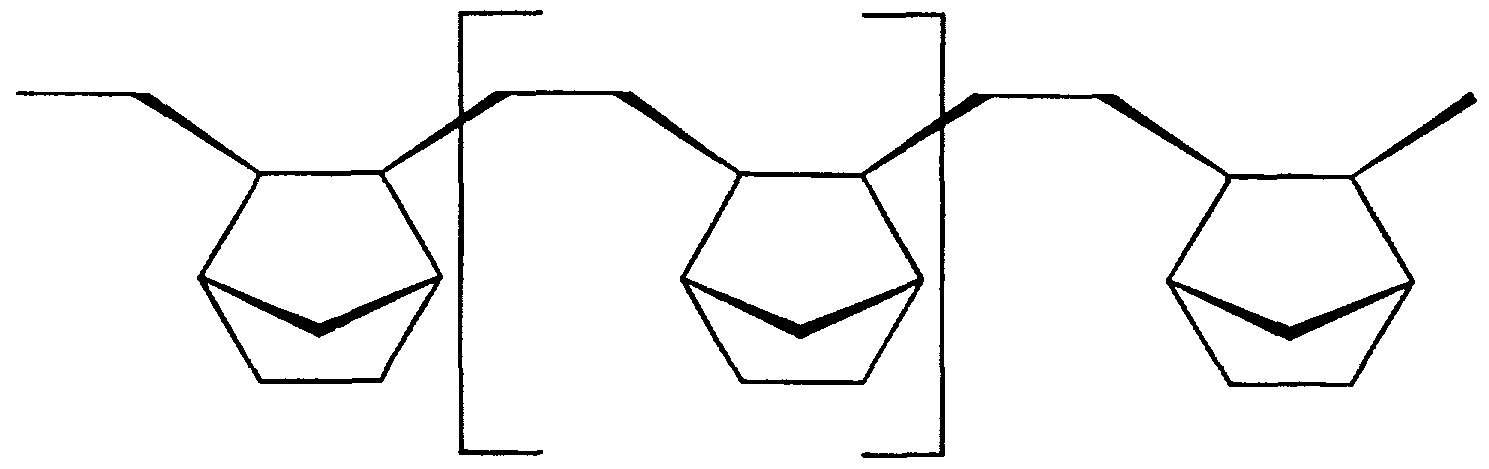
- homologous alkenes such as propene can be polymerized (atactic polypropylene) and, for example, ethene can be copolymerized with norbornene. In the latter case an almost pure arises
- Ethene contains and is exclusively exo-configured on the bicyclic ring.
- Trichlorobenzene / CHD2CHD2, 395 K shows that an alternating polymer was formed which contains 43% norbornene and 57% ethene.
Landscapes
- Chemical & Material Sciences (AREA)
- Organic Chemistry (AREA)
- Health & Medical Sciences (AREA)
- Chemical Kinetics & Catalysis (AREA)
- Medicinal Chemistry (AREA)
- Polymers & Plastics (AREA)
- Transition And Organic Metals Composition Catalysts For Addition Polymerization (AREA)
- Addition Polymer Or Copolymer, Post-Treatments, Or Chemical Modifications (AREA)
Abstract
Description




Claims


Priority Applications (3)
| Application Number | Priority Date | Filing Date | Title |
|---|---|---|---|
| US09/230,326 US6255418B1 (en) | 1996-07-30 | 1997-07-18 | Catalysts containing organochromium compounds and their use for polymerizing alkenes |
| EP97936643A EP0915896A1 (de) | 1996-07-30 | 1997-07-18 | Organochrom-verbindungen enthaltende katalysatoren und ihre verwendung in der alkenpolymerisation |
| JP50844998A JP4001386B2 (ja) | 1996-07-30 | 1997-07-18 | アルケン重合のための有機クロム化合物を含有する触媒およびそれらの使用 |
Applications Claiming Priority (4)
| Application Number | Priority Date | Filing Date | Title |
|---|---|---|---|
| DE19630580.2 | 1996-07-30 | ||
| DE1996130580 DE19630580A1 (de) | 1996-07-30 | 1996-07-30 | Organochrom-Verbindungen enthaltende Katalysatoren und ihre Verwendung in der Alkenpolymerisation |
| DE19710615.3 | 1997-03-14 | ||
| DE19710615A DE19710615A1 (de) | 1997-03-14 | 1997-03-14 | Organochrom-Verbindungen enthaltende Katalysatoren und ihre Verwendung in der Alkenpolymerisation |
Publications (1)
| Publication Number | Publication Date |
|---|---|
| WO1998004570A1 true WO1998004570A1 (de) | 1998-02-05 |
Family
ID=26027921
Family Applications (1)
| Application Number | Title | Priority Date | Filing Date |
|---|---|---|---|
| PCT/EP1997/003868 Ceased WO1998004570A1 (de) | 1996-07-30 | 1997-07-18 | Organochrom-verbindungen enthaltende katalysatoren und ihre verwendung in der alkenpolymerisation |
Country Status (5)
| Country | Link |
|---|---|
| US (1) | US6255418B1 (de) |
| EP (1) | EP0915896A1 (de) |
| JP (1) | JP4001386B2 (de) |
| CA (1) | CA2260003A1 (de) |
| WO (1) | WO1998004570A1 (de) |
Cited By (9)
| Publication number | Priority date | Publication date | Assignee | Title |
|---|---|---|---|---|
| WO2001098377A3 (de) * | 2000-06-20 | 2002-11-07 | Basf Ag | Oxidierte polyolefinwachse |
| WO2003013724A1 (en) * | 2001-08-03 | 2003-02-20 | Avecia Limited | Chiral organometallic compounds for use in asymmetric synthesis |
| JP2003507387A (ja) * | 1999-08-13 | 2003-02-25 | バーゼル、ポリオレフィン、ゲゼルシャフト、ミット、ベシュレンクテル、ハフツング | クロム、モリブデンまたはタングステンのモノシクロペンタジエニル錯体 |
| US6723675B1 (en) | 2000-05-25 | 2004-04-20 | Univation Technologies, Llc | Catalyst for the production of olefin polymers |
| US6815514B2 (en) | 2000-08-21 | 2004-11-09 | Borealis Technology Oy | Catalysts |
| US6911516B1 (en) | 1999-08-13 | 2005-06-28 | Basell Polyolefine Gmbh | Copolymers of ethylene with c3-c12 α-olefins |
| CN1310929C (zh) * | 2001-09-14 | 2007-04-18 | 巴塞尔聚烯烃股份有限公司 | 具有稠合杂环的-环戊二烯基配合物 |
| WO2016153574A1 (en) * | 2015-03-23 | 2016-09-29 | Exxonmobil Chemical Patents Inc. | Group 6 transition metal catalyst compound and use thereof |
| US10329363B2 (en) | 2015-03-23 | 2019-06-25 | Exxonmobil Chemical Patents Inc. | Group 6 transition metal catalyst compound and use thereof |
Families Citing this family (23)
| Publication number | Priority date | Publication date | Assignee | Title |
|---|---|---|---|---|
| DE10028432A1 (de) * | 2000-06-13 | 2001-12-20 | Basell Polyolefine Gmbh | Auf calciniertes Hydrotalcit geträgerter Katalysatorfeststoff zur Olefinpolymerisation |
| GB0021301D0 (en) * | 2000-08-30 | 2000-10-18 | Borealis Tech Oy | Supported catalyst |
| EP1322680B1 (de) * | 2000-09-28 | 2006-07-26 | Basell Polyolefine GmbH | Verfahren zur herstellung von hochverzweigten ethylenpolymerisaten |
| ATE412016T1 (de) * | 2001-09-14 | 2008-11-15 | Basell Polyolefine Gmbh | Verfahren zur polymerisation von olefinen |
| DE10163154A1 (de) * | 2001-12-20 | 2003-07-03 | Basell Polyolefine Gmbh | Pyrogene Kieselsäuren enthaltender Katalysatorfeststoff zur Olefinpolymerisation |
| US20060089253A1 (en) * | 2002-08-13 | 2006-04-27 | Shahram Mihan | Monocyclopentadienyl complexes |
| ATE364047T1 (de) | 2002-08-22 | 2007-06-15 | Basell Polyolefine Gmbh | Monocyclopentadienylkomplexe |
| BR0314837A (pt) * | 2002-11-04 | 2005-08-09 | Basell Polyolefine Gmbh | Processo para a preparação de uma composição de catalisador e sistema de catalisador para polimerização de olefina, usos de uma composição de catalisador, e de um sistema de catalisador, e, processo para a polimerização de olefinas |
| KR101028673B1 (ko) * | 2002-12-20 | 2011-04-14 | 바젤 폴리올레핀 게엠베하 | 에틸렌과 α-올레핀의 공중합체 |
| WO2004056481A1 (en) * | 2002-12-20 | 2004-07-08 | Basell Polyolefine Gmbh | Monocyclopentadienyl complexes |
| ATE364641T1 (de) * | 2003-04-03 | 2007-07-15 | Basell Polyolefine Gmbh | Herstellung von hochmolekularen polyolefinen in gegenwart einer organischen übergangsmetallverbindung in einem gasphasen- wirbelschichtreaktor |
| US7544826B2 (en) * | 2003-12-16 | 2009-06-09 | Basell Polyolefine Gmbh | Monocyclopentadienyl complexes |
| EP1694719A2 (de) * | 2003-12-19 | 2006-08-30 | Basell Polyolefine GmbH | Monocyclopentadienylkomplexe |
| KR20060118564A (ko) * | 2003-12-23 | 2006-11-23 | 바젤 폴리올레핀 게엠베하 | 올레핀 중합용 촉매계 |
| BRPI0418117B1 (pt) * | 2003-12-23 | 2015-10-13 | Basell Polyolefine Gmbh | preparação de cocatalisadores suportados |
| DE102004020524A1 (de) | 2004-04-26 | 2005-11-10 | Basell Polyolefine Gmbh | Polyethylen und Katalysatorzusammensetzung zu dessen Herstellung |
| DE102004061618A1 (de) * | 2004-12-17 | 2006-06-22 | Basell Polyolefine Gmbh | Monocyclopentadienylkomplexe |
| DE102005014395A1 (de) * | 2005-03-24 | 2006-09-28 | Basell Polyolefine Gmbh | Monocyclopentadienylkomplexe |
| DE102005035477A1 (de) * | 2005-07-26 | 2007-02-01 | Basell Polyolefine Gmbh | Verfahren zur Steuerung der relativen Aktivität der unterschiedlichen aktiven Zentren von Hybridkatalysatoren |
| US7723448B2 (en) * | 2005-10-14 | 2010-05-25 | Basell Polyolefine Gmbh | Hybrid catalyst systems supported on magnesium halide |
| DE102007017903A1 (de) | 2007-04-13 | 2008-10-16 | Basell Polyolefine Gmbh | Polyethylen und Katalysatorzusammensetzung und Verfahren zu dessen Herstellung |
| EP2222720B1 (de) | 2007-12-19 | 2016-02-10 | Basell Polyolefine GmbH | Monohydroindacenyl-komplexe |
| GB201522437D0 (en) * | 2015-12-18 | 2016-02-03 | Univ Leeds | Tethered ligands |
Citations (6)
| Publication number | Priority date | Publication date | Assignee | Title |
|---|---|---|---|---|
| US4015059A (en) * | 1975-12-29 | 1977-03-29 | Union Carbide Corporation | Fused ring catalyst and ethylene polymerization process therewith |
| EP0416815A2 (de) * | 1989-08-31 | 1991-03-13 | The Dow Chemical Company | Additionspolymerisationskatalysatoren mit eingeschränkter Geometrie, Verfahren zur Herstellung davon, VorlÀ¤ufer dafür, Verfahren zur Verwendung und daraus hergestellte Polymere |
| WO1994011410A1 (en) * | 1992-11-06 | 1994-05-26 | Chevron Research And Technology Company, A Division Of Chevron U.S.A. Inc. | ALPHA-OLEFIN POLYMERIZATION CATALYSTS COMPRISING SUPPORTED CYCLOPENTADIENYL GROUP 6b METAL OXO, THIO, IMIDO AND PHOSPHIDO COMPOUNDS AND PROCESS FOR POLYMERIZING ALPHA-OLEFINS |
| US5418200A (en) * | 1991-03-29 | 1995-05-23 | Chevron Chemical Company | Cyclopentadienyl group 6B metal α-olefin polymerization catalysts and process for polymerizing α-olefins |
| EP0682037A2 (de) * | 1994-05-13 | 1995-11-15 | BASF Aktiengesellschaft | Verfahren zur Herstellung von verbrückten Halbsandwichkomplexen |
| DE4431838A1 (de) * | 1994-09-07 | 1996-03-14 | Basf Ag | Geträgerte Metallocen-Katalysatorsysteme |
Family Cites Families (1)
| Publication number | Priority date | Publication date | Assignee | Title |
|---|---|---|---|---|
| DE69502028T2 (de) * | 1994-10-31 | 1998-12-10 | Dsm N.V., Heerlen | Katalytische zusammensetzung und verfahren zur olefinpolymerisation |
-
1997
- 1997-07-18 JP JP50844998A patent/JP4001386B2/ja not_active Expired - Lifetime
- 1997-07-18 US US09/230,326 patent/US6255418B1/en not_active Expired - Lifetime
- 1997-07-18 EP EP97936643A patent/EP0915896A1/de not_active Withdrawn
- 1997-07-18 WO PCT/EP1997/003868 patent/WO1998004570A1/de not_active Ceased
- 1997-07-18 CA CA002260003A patent/CA2260003A1/en not_active Abandoned
Patent Citations (6)
| Publication number | Priority date | Publication date | Assignee | Title |
|---|---|---|---|---|
| US4015059A (en) * | 1975-12-29 | 1977-03-29 | Union Carbide Corporation | Fused ring catalyst and ethylene polymerization process therewith |
| EP0416815A2 (de) * | 1989-08-31 | 1991-03-13 | The Dow Chemical Company | Additionspolymerisationskatalysatoren mit eingeschränkter Geometrie, Verfahren zur Herstellung davon, VorlÀ¤ufer dafür, Verfahren zur Verwendung und daraus hergestellte Polymere |
| US5418200A (en) * | 1991-03-29 | 1995-05-23 | Chevron Chemical Company | Cyclopentadienyl group 6B metal α-olefin polymerization catalysts and process for polymerizing α-olefins |
| WO1994011410A1 (en) * | 1992-11-06 | 1994-05-26 | Chevron Research And Technology Company, A Division Of Chevron U.S.A. Inc. | ALPHA-OLEFIN POLYMERIZATION CATALYSTS COMPRISING SUPPORTED CYCLOPENTADIENYL GROUP 6b METAL OXO, THIO, IMIDO AND PHOSPHIDO COMPOUNDS AND PROCESS FOR POLYMERIZING ALPHA-OLEFINS |
| EP0682037A2 (de) * | 1994-05-13 | 1995-11-15 | BASF Aktiengesellschaft | Verfahren zur Herstellung von verbrückten Halbsandwichkomplexen |
| DE4431838A1 (de) * | 1994-09-07 | 1996-03-14 | Basf Ag | Geträgerte Metallocen-Katalysatorsysteme |
Non-Patent Citations (2)
| Title |
|---|
| RAINER EMRICH ET AL,: "The Role of Metallacycles in the Chromium-Catalyzed Trimerization of Ethylene", ORGANOMETALLICS, vol. 16, no. 8, April 1997 (1997-04-01) * |
| YUANFENG LIANG ET AL,: "Constrained Geometry Chromium Catalysts for Olefin Polymerization", ORGANOMETALLICS, vol. 15, 1996 * |
Cited By (11)
| Publication number | Priority date | Publication date | Assignee | Title |
|---|---|---|---|---|
| JP2003507387A (ja) * | 1999-08-13 | 2003-02-25 | バーゼル、ポリオレフィン、ゲゼルシャフト、ミット、ベシュレンクテル、ハフツング | クロム、モリブデンまたはタングステンのモノシクロペンタジエニル錯体 |
| US6911516B1 (en) | 1999-08-13 | 2005-06-28 | Basell Polyolefine Gmbh | Copolymers of ethylene with c3-c12 α-olefins |
| US6723675B1 (en) | 2000-05-25 | 2004-04-20 | Univation Technologies, Llc | Catalyst for the production of olefin polymers |
| WO2001098377A3 (de) * | 2000-06-20 | 2002-11-07 | Basf Ag | Oxidierte polyolefinwachse |
| US6815514B2 (en) | 2000-08-21 | 2004-11-09 | Borealis Technology Oy | Catalysts |
| WO2003013724A1 (en) * | 2001-08-03 | 2003-02-20 | Avecia Limited | Chiral organometallic compounds for use in asymmetric synthesis |
| US7019158B1 (en) | 2001-08-03 | 2006-03-28 | Avecia Limited | Chiral organometallic compounds for use in asymmetric synthesis |
| CN1310929C (zh) * | 2001-09-14 | 2007-04-18 | 巴塞尔聚烯烃股份有限公司 | 具有稠合杂环的-环戊二烯基配合物 |
| WO2016153574A1 (en) * | 2015-03-23 | 2016-09-29 | Exxonmobil Chemical Patents Inc. | Group 6 transition metal catalyst compound and use thereof |
| CN107428873A (zh) * | 2015-03-23 | 2017-12-01 | 埃克森美孚化学专利公司 | 第6族过渡金属催化剂化合物及其用途 |
| US10329363B2 (en) | 2015-03-23 | 2019-06-25 | Exxonmobil Chemical Patents Inc. | Group 6 transition metal catalyst compound and use thereof |
Also Published As
| Publication number | Publication date |
|---|---|
| EP0915896A1 (de) | 1999-05-19 |
| JP2000516649A (ja) | 2000-12-12 |
| US6255418B1 (en) | 2001-07-03 |
| JP4001386B2 (ja) | 2007-10-31 |
| CA2260003A1 (en) | 1998-02-05 |
Similar Documents
| Publication | Publication Date | Title |
|---|---|---|
| WO1998004570A1 (de) | Organochrom-verbindungen enthaltende katalysatoren und ihre verwendung in der alkenpolymerisation | |
| DE19710615A1 (de) | Organochrom-Verbindungen enthaltende Katalysatoren und ihre Verwendung in der Alkenpolymerisation | |
| EP0582195B1 (de) | Verfahren zur Herstellung eines Olefinpolymers unter Verwendung spezieller Metallocene | |
| DE69331752T2 (de) | Verfahren zur Kontrolle des Schmelzpunktes und Molekulargewichtes von syndiotaktischen Olefinpolymeren unter Anwendung eines Metallocen-Katalysatorsystems | |
| DE69328955T2 (de) | Katalysatorzusammensetzungen und Verfahren zur Herstellung von Polyolefinen | |
| EP0528287B1 (de) | Verbrückte, chirale Metallocene, Verfahren zu ihrer Herstellung und ihre Verwendung als Katalysatoren | |
| EP0490256B1 (de) | Metallocene mit bicyclischen Cyclopentadienderivaten als Liganden, Verfahren zu ihrer Herstellung und ihre Verwendung als Katalysatoren | |
| EP0537686B1 (de) | Verfahren zur Herstellung eines Olefinpolymers unter Verwendung von Metallocenen mit speziell substituierten Indenylliganden | |
| DE69033719T2 (de) | Verfahren zur Herstellung von syndiotaktischen Polymeren | |
| DE69712667T2 (de) | Unverbrückte substituierte Indenyl-Metallocene | |
| DE69829365T2 (de) | Substituierte metallocenverbindungen für olefinpolymerisationkatalysatorsysteme, deren zwischenverbindungen und verfahren zu ihrer herstellung | |
| DE69210276T2 (de) | Herstellung von Alpha-Olefinpolymeren | |
| EP0633897B1 (de) | Katalysatorsysteme zur polymerisation von c 2 - bis c 10 -alk-1-enen | |
| DE2615390B2 (de) | Verfahren zur Polymerisation von Äthylen, allein oder zusammen mit a -Olefinen mit 3 - 20 C-Atomen oder mit Diolefinen | |
| DE4344688A1 (de) | Metallocenverbindung | |
| DE3889866T2 (de) | Katalysatoren zur Olefinpolymerisation. | |
| DE69319837T2 (de) | Cyclopentadienylgruppe enthaltende Alpha-Olefin-Polymerisationskatalysatoren auf Basis von Chrom und Verfahren zur Polymerisation von Alpha-Olefinen | |
| EP0250999A2 (de) | Verfahren zur Herstellung von verzweigtem Niederdruckpolyethen, neue Niederdruckpolyethene und präformierte bifunktionelle Katalysatoren | |
| DE69310140T2 (de) | Alpha-olefin-polymersisationskatalysator aus einer geträgerten cyclopentodienylgruppe enthaltenden komponente eines metalls der 6b-gruppe mit oxo, thio, imido und phosphido-gruppen | |
| DE10003581A1 (de) | Metallorganische Verbindungen mit anellierten Indenyl Liganden | |
| DE69608426T2 (de) | Cylcopentadienyl-metall-alkalimetall der gruppe 6 b alpha-olefin polymerisationsaustauschkatalysatoren und ihre verwendung im polymersisationsverfahren | |
| EP0742225A1 (de) | Organometallverbindung | |
| EP0940408A1 (de) | Metallorganische Verbindungen | |
| DE19630580A1 (de) | Organochrom-Verbindungen enthaltende Katalysatoren und ihre Verwendung in der Alkenpolymerisation | |
| DE69310139T2 (de) | Dimere und tetramere cyclopentdienyl-gruppe 6b-alpha-olefinpolymerisationskatalysatore und verfahren zur olefinpolymerisation |
Legal Events
| Date | Code | Title | Description |
|---|---|---|---|
| AK | Designated states |
Kind code of ref document: A1 Designated state(s): CA JP US |
|
| AL | Designated countries for regional patents |
Kind code of ref document: A1 Designated state(s): AT BE CH DE DK ES FI FR GB GR IE IT LU MC NL PT SE |
|
| DFPE | Request for preliminary examination filed prior to expiration of 19th month from priority date (pct application filed before 20040101) | ||
| 121 | Ep: the epo has been informed by wipo that ep was designated in this application | ||
| ENP | Entry into the national phase |
Ref document number: 2260003 Country of ref document: CA Ref country code: CA Ref document number: 2260003 Kind code of ref document: A Format of ref document f/p: F |
|
| WWE | Wipo information: entry into national phase |
Ref document number: 1997936643 Country of ref document: EP |
|
| WWE | Wipo information: entry into national phase |
Ref document number: 09230326 Country of ref document: US |
|
| ENP | Entry into the national phase |
Ref country code: JP Ref document number: 1998 508449 Kind code of ref document: A Format of ref document f/p: F |
|
| WWP | Wipo information: published in national office |
Ref document number: 1997936643 Country of ref document: EP |
|
| WWW | Wipo information: withdrawn in national office |
Ref document number: 1997936643 Country of ref document: EP |