DESCRIPTION
INDOLE-UREA DERIVATIVES WITH 5-HT ANTAGONIST PROPERTIES
TECHNICAL FIELD
The present invention relates to novel urea derivatives and a pharmaceutically acceptable salt thereof. More particularly, it relates to novel urea derivatives and a pharmaceutically acceptable salt thereof which have pharmacological activities such as 5 - hydroxytryptamine (5 - HT) antagonism and the like.
Said urea derivatives or a pharmaceutically acceptable salt thereof are useful as a 5 — HT antagonist for treating or preventing central nervous system (CNS) disorders such as anxiety, depression, obsessive compulsive disorders, migraine, anorexia, Alzheimer's disease,sleep disorders, bulimia, panic attacks, withdrawal from drug abuse such as cocaine, ethanol, nicotine and benzodiazepines , schizophrenia , and also disorders associated with spinal trauma and/or head injufy such as hydrocephalus, and the like in human being or animals.
BACKGROUND ART
As urea derivatives having 5 - HT C receptor antagonism activity are described in the international patent application (International Publication Number W095 / 21844 ) W095 / 29177 published based on the Patent Cooperation Treaty.
DISCLOSURE OF INVENTION
As a result of an extensive study, the inventors of the present invention could obtain the urea derivatives which have strong pharmacological activities.
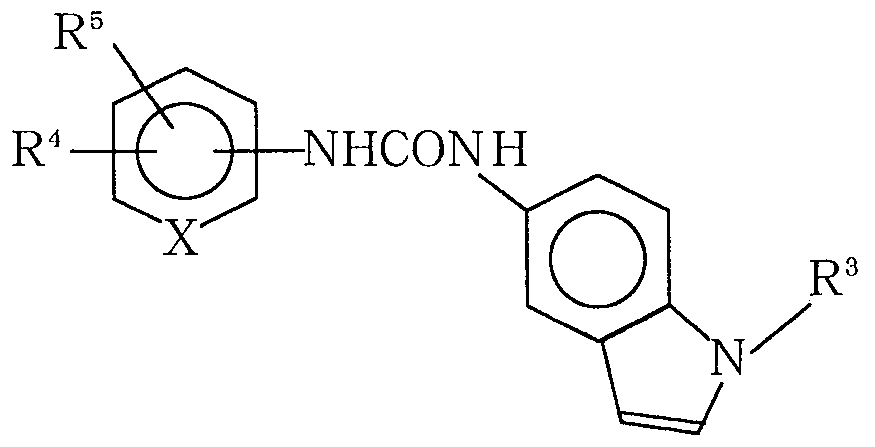
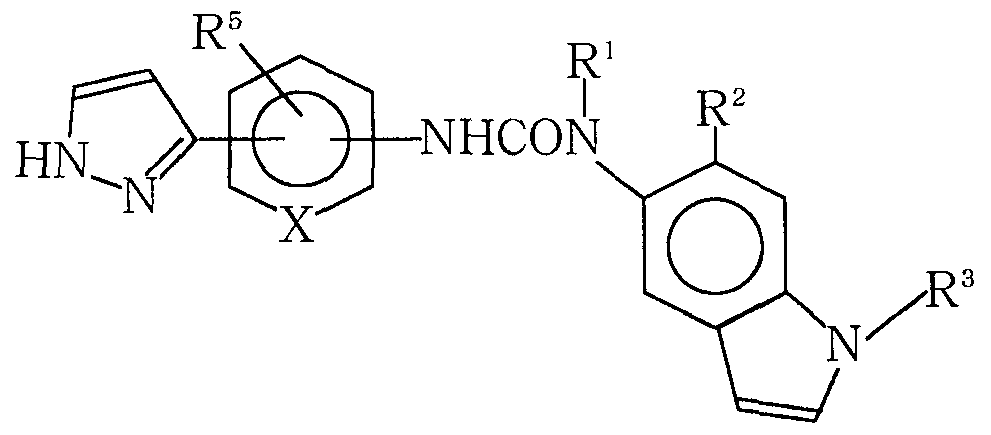
The urea derivatives of the present invention are novel and can be represented by the following general formula (I) :
wherein R1 and R2 are each hydrogen or linked together to form ethylene,
R3 is hydrogen or lower alkyl, R" is heterocyclic group, R5 is hydrogen or nitro, and X is CH or N.
According to the present invention, the object compounds (I) can pared by the following processes :
Process 1
thereof
reduction reaction
thereof
thereof
Process 2
thereof
Process 3
thereof
thereof
Process 4
reof
thereof
Process 5
eof
thereof
thereof
thereof
Process 7
thereof
Process 8
thereof
thereof
thereof
wherein R\R2,R3,R,R5 and X are each as defined above.and Z is acyl.
Further, the object compounds (I) prepared by the above Processes 1 to 9 can be achieved conversion of their side chain within the scope of the compounds of the present invention as shown in the Examples below.
Suitable salt of the compounds (I)ΛIa)ΛIb)ΛIc)ΛIdUIe)ΛIf),(π),(III), (IV))(V),(VI)!(VII),(VIII),(IX),(X),(XI),(XII),(XIII),(XIV) and (XV) are conventional non — toxic pharmaceutically acceptable salt and may include a salt with a base or an acid addition salt such as a salt with an inorganic
base, for example, an alkali metal salt (e.g. sodium salt, potassium salt, cesium salt, etc.) , and alkaline earth metal salt (e.g. calcium salt, magnesium salt, etc.) , an ammonium salt ; a salt with an organic base, for example, an organic amine salt (e. g . triethylamine salt , pyridine salt , picoline salt , ethanolamine salt , triethanolamine salt, dicyclohexylamine salt, N,N' — dibenzylethylenediamine salt, etc.) ; inorganic acid addition salt ( e . g . hydrochloride , hydrobromide , hydriodide, sulfate, phosphate, etc.) ; organic carboxylic or sulfonic acid addition salt (e.g. formate, acetate, trifluoroacetate, maleate, tartrate, methanesulfonate, benzenesulfonate, p — toluenesulfonate, etc.) ; a salt with a basic or acidic amino acid (e.g. arginine, aspartic acid, glutamic acid, etc.) ; and the like, and the preferable example thereof is an acid addition salt.
In the above and subsequent descriptions of the present specification, suitable examples and illustrations of the various definitions which the present invention include within the scope thereof are explained in detail as follows.
The term "lower" is intended to mean 1 to 6 carbon atoms, preferably 1 to 4 carbon atoms, unless otherwise indicated.
Suitable " lower alkyl" may include a straight or branched one having 1 to 6 carbon atom (s) such as methyl, ethyl, n — propyl.isopropyl, butyl, isobutyl, t — butyl, pentyl, hexyl, preferably one having 1 to 4 carbon atoms, and the like, in which the most preferred one is methyl, isopropyl or t — butyl.
The "heterocyclic group " means, in detail, saturated or unsaturated monocyclic or polycyclic heterocyclic group containing at least one hetero — atom such as an oxygen, sulfur, nitrogen atom and the like.
And, especially preferable heterocyclic group may be heterocyclic group such as unsatureted 3 to 8 — membered (more preferably 5 or 6 — membered)
heteromonocyclic group containing 1 to 4 nitrogen atom (s) , for example, pyrrolyl , pyrrolinyl , imidazolyl , pyrazolyl , pyridyl and its N — oxide , dihydropyridyl, pyrimidinyl, pyrazinyl, pyridazinyl, triazolyl [e.g.4H — 1,2,4 — triazolyl, 1H - 1,2,4 - triazolyl, 1H - 1,2,3 - triazolyl, 2H - 1,2,3 - triazolyl, etc.] , tetrazolyl [ e . g . 1H — tetrazolyl , 2H — tetrazolyl , etc . ] , imidazolinyl , 2 — imidazolonyl, etc. ; saturated 3 to 8 — membered (more preferably 5 or 6 — membered) heteromonocyclic group containing 1 to 4 nitrogen atom (s) ,for example, pyrrolidinyl, imidazolidinyl, piperidino, piperazinyl, 2 — imidazolinonyl, etc. ; unsaturated condensed heterocyclic group containing 1 to 4 nitrogen atom (s) , for example, indolyl, isoindolyl, indolinyl, indolizinyl, benzimidazolyl ( e . g . 1H - benzimidazolyl , etc . ) , quinolyl , isoquinolyl , dihydroquinolyl , dihydroisoquinolyl, tetrahydroisoquinolyl (e.g.1,2, 3,4 - tetrahydroisoquinolyl, etc.) , indazolyl, benzotriazolyl, quinazolinyl, quinoxalinyl, phthalazinyl, etc. ; unsaturated 3 to 8 — membered (more preferably 5 or 6 — membered) heteromonocyclic group containing 1 to 2 oxygen atom (s) and 1 to 3 nitrogen atom (s) , for example, oxazolyl, isoxazolyl, oxadiazolyl [e.g. 1,2,4 — oxadiazolyl, 1,3,4 — oxadiazolyl, 1,2,5 - oxadiazolyl, etc.] , etc. ; saturated 3 to 8 — membered (more preferably 5 or 6 — membered) heteromonocyclic group containing 1 to 2 oxygen atom (s) and 1 to 3 nitrogen atom (s), for example, morpholinyl, sydnonyl, etc. ; unsaturated condensed heterocyclic group containing 1 to 2 oxygen atom ( s ) and 1 to 3 nitrogen atom ( s ) , for example , benzoxazolyl , benzoxadiazolyl, etc. ; unsaturated 3 to 8 — membered (more preferably 5 or 6 - membered) heteromonocyclic group containing 1 to 2 sulfur atom (s) and 1 to 3 nitrogen atom ( s) , for example, thiazolyl, isothiazolyl , thiadiazolyl [e.g . 1 , 2, 3 — thiadiazolyl, 1,2,4 — thiadiazolyl, 1,3,4 — thiadiazolyl, 1,2,5 — thiadiazolyl, etc.] , dihydrothiazinyl, etc. ; saturated 3 to 8 - membered (more preferably 5 or 6 — membered) heteromonocyclic group containing 1 to 2 sulfur atom (s) and 1 to 3 nitrogen atom (s) , for example, thiomorpholinyl, thiazolidinyl, etc. ; unsaturated 3 to 8 - membered (more preferably 5 or 6 — membered)
heteromonocyclic group containing 1 to 2 sulfur atom ( s) , for example, thienyl, dihydrodithiinyl, dihydrodithionyl, etc. ; unsaturated condensed heterocyclic group containing 1 to 2 sulfur atom ( s ) and 1 to 3 nitrogen atom ( s ) , for example , benzothiazolyl , benzothiadiazolyl, etc. ; unsaturated 3 to 8 — membered (more preferably 5 or 6 — membered) heteromonocyclic group containing an oxygen atom, for example, furyl, etc. ; unsaturated 3 to 8 — membered (more preferably 5 or 6 — membered) heteromonocyclic group containing an oxygen atom and 1 to 2 sulfur atom (s) , for example, dihydrooxathiinyl, etc. ; unsaturated condensed heterocyclic group containing 1 to 2 sulfur atom (s) , for example, benzothienyl [e.g. benzo [b] thienyl, etc.] ,benzodithiinyl, etc. ; unsaturated condensed heterocyclic group containing an oxygen atom and 1 to 2 sulfur atom (s) , for example, benzoxathiinyl, etc. and the like.
The heterocyclic group may have one or more suitable substituent (s) such as hydroxy, lower alkoxy, lower alkyl, mono — or di — or trihalo — (lower) alkyl (e.g. trifluoromethyl, etc.) , amino, protected amino,mono - or di — substituted lower alkyl amino, cyclic amino, nitro, halogen [e.g.fluoro, chloro, bromo, iodo, etc.] , acyl, aryl, ar (lower) alkyl, and the like.
Suitable " lower alkoxy " may include methoxy, ethoxy , propoxy, isopropoxy, butoxy, isobutoxy, pentyloxy, isopentyloxy, hexyloxy, and the like.
Suitable "mono — or di — substituted lower alkylamino" may include amino group substituted by one or two lower alkyl (s) [e.g. methyl, ethyl, isopropyl, t - butyl, t - pentyl, etc.] , preferably methylamino, ethylamino, dimethylamino , diethylamino , di — n — propylamino , diisopropylamino , dibutylamino, etc.
"Amino protective group" in the term "protected amino" may include acyl such as lower alkanoyl [e.g. formyl, acetyl, propionyl,pivaloyl, hexanoyl, etc.] , mono (or di or tri) halo (lower) alkanoyl [e.g. chloroacetyl, bromoacetyl, dichloroacetyl , trifluoroacetyl , etc . ] , loweralkoxycarbonyl [ e . g . methoxycarbonyl, ethoxycarbonyl, propoxycarbonyl. t - butoxy carbonyl, t - pentyloxycarbonyl.hexyloxycarbonyl, etc.] , carbamoyl, aroyl [e.g. benzoyl,
toluoyl.naphthoyl, etc.] , ar (lower) alkanoyl [e.g. phenylacetyl, phenylpropionyl, etc.] , aryloxycarbonyl [e.g. phenoxycarbonyl,naphthyloxycarbonyl,etc] , aryloxy (lower) alkanoyl [e.g. phenoxyacetyl, phenoxypropionyl, etc.] , arylglyoxyloyl [e.g.phenylglyoxyloyl, naphthylglyoxyloyl, etc.] , ar (lower) alkoxycarbonyl which may have suitable substituent ( s ) [ e . g . benzyloxycarbonyl , phenethyloxycarbonyl, p — nitrobenzyloxycarbonyl, etc.] ; ar (lower) alkyl such as ar (lower) alkylidene which may have substituent (s) [e.g. benzylidene, hydroxybenzylidene, etc.] , mono (or di or tri) phenyl (lower) alkyl [e.g. benzyl, phenethyl,benzhydryl, trityl, etc.] ; and the like.
Above — mentioned amino protective group contains the protective group which has the function to temporarily protect amino group and is often used in the field of amino acid and peptide chemistry.
Suitable " cyclic amino" may be an aromatic ring or an alicyclic compound which has one or more than one nitrogen atom (s) as hetero atom (s) and may be monocyclic or condensed polycyclic group which may be saturated or unsaturated. Cyclic amono group may further contain hereto atom (s) such as one more than one nitrogen atom (s), oxygen atom (s) , sulfur atom (s) , and the like.
Still further the cyclic amino group may be a spiro ring or a bridged cyclic compound. The number of the constructive atoms of the cyclic amino group is not limited, but, for example, monocyclic group has a 3 to 8 — membered ring and bicyclic group has 7 to 11 — membered rings.
Example of such cyclic amino may include saturated or unsaturated monocyclic group containing one nitrogen atoms as hereto atom such as 1 - azetidinyl, pyrrolidino, 2 - pyrroline — 1 - yl, 1 — pyrrolyl, piperidino, 1,4 - dihydropyridine — 1 — yl, 1,2,5,6 — tetrahydropyridine — 1 — yl, homopiperidino ; saturated or unsaturated monocyclic group containing more than one nitrogen atoms as hetero atoms such as 1 — imidazolidinyl, 1 — imidazolyl, 1 — pyrazolyl, 1 — triazolyl, 1 — tetrazolyl, 1 — piperazinyl, 1 — homopiperazinyl, 1 , 2 — dihydropyridazin — 1 — yl , 1 , 2 — dihydropyrimidin — 1 — yl , perhydropyrimidin — 1 - yl, 1,4 - diazacycloheptan — 1 - yl ; saturated or unsaturated monocyclic group containing 1 to 2 oxygen atom (s) and 1 to 3 nitorogen atom (s) as hereto atoms such as oxazolidin
— 3 — yl, 2,3 — dihydroisoxazol — 2 — yl, morpholino ; saturated or unsaturated monocyclic group containing 1 to 2 sulfur atom (s) and 1 to 3 nitrogen atom (s) as hereto atoms such as thiazolidin
— 3 — yl, isothiazolin — 2 — yl,thiomorpholino ; condensed polycyclic group such as indole — 1 — yl , 1 , 2 — dihydrobenzimidazol — 1 — yl, perhydropyrrolo [1,2 - a] pyrazin — 2 - yl ; spirocyclic group such as 2 - azaspiro [4,5] decan - 2 — yl ; bridged heterocyclic group such as 7 - azabicyclo [2,2,1] heptan — 7
- yl ; and the like.
Suitable "acyl" may include carbamoyl,aliphatic acyl and acyl group containing an aromatic ring, which is referred to as aromatic acyl, or an heterocyclic ring,which is referred to as heterocyclic acyl.
This acyl group may be derived , for example, from an organic carboxylic acid.an organic carbonic acid, an organic sulfuric acid,an organic sulfonic acid and an organic carbamic acid.
Suitable example of said acyl may be illustrated as follows :
Carbamoyl ;
Aliphatic acyl such as lower or higher alkanoyl [e.g. formyl, acetyl, propanoyl, butanoyl, 2 - methylpropanoyl, pentanoyl, 2,2 - dimethylpropanoyl, hexanoyl, heptanoyl, octanoyl, nonanoyl, decanoyl, undecanoyl, dodecanoyl, tridacanoyl , tetradecanoyl , pentadecanoyl , hexadecanoyl , heptadecanoyl , octadecanoyl , nonadecanoyl , icosanoyl , etc . ] ; lower or higher cycloalkylcarbonyl [ e . g . cyclopropylcarbonyl , cyclobutylcarbonyl , cyclopentylcarbonyl, cyclohexylcarbonyl, etc.] ; lower or higher alkylsulfonyl [e.g. methylsulfonyl, ethylsulfonyl, etc.] ; lower or higher alkoxysulfonyl [e. g. methoxysulfonyl, ethoxysulfonyl, etc.] ; or the like ;
Aromatic acyl such as royl [e.g. benzoyl, toluoyl, naphthoyl.etc] ; ar ( lower ) alkanoyl [ e . g . phenyl ( lower ) alkanoyl ( e . g . phenylacetyl , phenylpropanoyl , phenylbutanoyl , phenylisobutylyl , phenylpentanoyl , phenylhexanoyl , etc . ) , naphthyl ( lower ) alkanoyl ( e . g . naphthylacetyl , naphthylpropanoyl, naphthylbutanoyl, etc.) , etc.] ; ar (lower) alkenoyl [e.g. phenyl ( lower ) alkenoyl ( e . g . phenylpropenoyl , phenylbutenoyl ,
phenylmethacryloyl, phenylpentenoyl,phenylhexenoyl,etc) , naphthyl ( lower) alkenoyl (e.g. naphylpropenoyl, naphthylbutenoyl, naphthylpentenoyl, etc.) , etc.] ; ar (lower) alkoxycarbonyl [e.g. phenyl (lower) alkoxycarbonyl (e.g. benzyloxycarbonyl , etc . ) , etc ] ; aryloxycarbonyl [ e . g . phenoxycarbonyl , naphthyloxycarbonyl, etc.] ; aryloxy (lower) alkanoyl [e.g. phenoxyacetyl, phenoxypropionyl , etc . ] ; arylcarbamoyl [ e . g . phenylcarbamoyl , etc ] ; arylthiocarbamoyl [e.g . phenylthiocarbamoyl .etc] ; arylglyoxyloyl [e.g . phenylglyoxyloyl,naphthylglyoxyloyl, etc.] ; arylsulfonyl [e.g. phenylsulfonyl, naphthylsulfonyl.etc] ; or the like ;
Heterocyclic acyl such as heterocycliccarbonyl ; heterocyclic (lower) alkanoyl [ e . g . thienylacetyl , thienylpropanoyl , thienylbutanoyl , thienylpentanoyl , thienylhexanoyl , thiazolylacetyl , thiadiazolylacetyl , tetrazolylacetyl,etc] ; heterocyclic (lower) alkenoyl [e.g. heterocyclicpropenoyl, heterocyclicbutenoyl , heterocyclicpentenoyl , heterocyclichexenoyl , etc . ] ; heterocyclicglyoxyloyl [e.g. thiazolylglyoxyloyl, thienylglyoxyloyl, etc.] ; or the like.
" Heterocyclic moiety " in the terms " heterocycliccarbonyl " , heterocyclic (lower) alkanoyl", "heterocyclic (lower) alkenoyl" and "heterocyclic glyoxyloyl " means saturated or unsaturated . monocyclic or polycyclic heterocyclic group containing at least one hetero — atom such as an oxygen, sulfur, nitrogen atom and the like.
Suitable " aryl" may include phenyl, naphthyl, tolyl,xylyl,mesityl, cumenyl,and the like, in which the preferable one is phenyl or naphthyl.
Suitable " ar ( lower ) alkyl " may include benzyl , phenethyl , phenylpropyl,benzhydryl,trityl,and the like.
The processes 1 to 9 for preparing the object compounds (I ) of present invention are explained in detail in the following.
Process 1
The object compound (la) or salts thereof can be prepared by the compound (II) or a salt thereof .
This reaction can be carried out by reducing nitro, and reacting with
carbonyldiimidazol and the compound (IV) or a salt thereof.
Suitable salts of the compounds (la) , (II) , (III) , and (IV) can be referred to the ones as exemplified for the compound (I) .
At the 1st step, the compound (II) is subjected to reduction reaction to give the compound (III) or salts thereof.
The reduction reaction may include chemical reduction and catalytic reduction.
Suitable reducing agents to be used in chemical reduction are a combination of metal [e.g. tin, zinc, iron, etc.] or metallic compound [e.g. chromium chloride, chromium acetate, etc.] and an organic or inorganic acid [ e . g . formic acid , acetic acid , propionic acid , trifluoroacetic acid , p — toluenesulfonic acid, hydrochloric acid, hydrobromic acid, etc.] .
Suitable catalysts to be used in catalytic reduction are conventional ones such as platinum catalysts [e.g . platinum plate, spongy platinum , platinum black , colloidal platinum , platinum oxide, platinum wire, etc. ] . palladium catalysts [e.g. spongy palladium, palladium black.palladium oxide, palladium on carbon , colloidal palladium , palladium on barium sulfate , palladium on barium carbonte, etc.] , nickel catalysts [e.g. reduced nickel, nickel oxide, Raney nickel, etc.] , cobalt catalysts [e.g. reduced cobalt, Raney cobalt, etc.] , iron catalysts [e.g. reduced iron, Raney iron etc.] , copper catalysts [e.g. reduced copper, Raney copper, Ullman copper, etc.] and the like.
The reduction is usually carried out in a conventional solvent which does not adversely influence the reaction such as water, methanol, ethanol, propanol, N,N — dimethylformamide, aceton, or a mixture thereof. Additionally, in case that the above — mentioned acid to be used in chemical reduction are in liquid, they can also be used as a solvent, Further, a suitable solvent to be used in catalytic reduction may be the above — mentioned solvent, and other conventional solvent such as diethtyl ether, dioxane, tetrahydrofuran, etc., or a mixture thereof.
The reaction temperature of this reduction is not critical and the reaction is usually carried out under cooling , at ambient temperature or under heating.
At the 2nd step, the reduction product (III) or a salt thereof is subjected to reaction with carbonyldiimidazol, and then subjected to reaction with the compound (IV) or a salt thereof.
The reactions are usually carried out in a conventional solvent which do not adversely influence the reaction such as water, methanol, ethanol, propanol, diethyl ether, dioxane, tetrahydrofuran, N,N - dimethylformamide, acetone, acetonitrile, chloroform, methylene chloride, ethylene chloride, ethyl acetate, pyridine,triethylamine, benzene, or a mixture thereof.
The reaction temperatures of these reactions are not critical and the reactions are usually carried out under cooling, at ambient temperature or under heating.
Process 2
The object compound (I) or salts thereof can be prepared by the compound (V) or a salt thereof.
The compound (V) or a salt thereof is subjected to reaction with diphenylphosphorousazid, and then subjected to reaction with the compound (VI) or a salt thereof.
Suitable salts of the compounds (V) and (VI) can be referred to the ones as exemplified for the compound (I) .
The reactions are usually carried out in a conventional solvent which do not adversely influence the reaction such as water, methanol, ethanol, propanol, diethyl ether, dioxane, tetrahydrofuran, N,N - dimethylformamide, acetone, acetonitrile, chloroform, methylene chloride, ethylene chloride, ethyl acetate, pyridine.triethylamine, benzene, or a mixture thereof
The reaction temperatures of these reactions are not critical and the reactions are usually carried out under cooling, at ambient temperature or under heating.
Process 3
The object compound (Ic) or salts thereof can be prepared by subjecting the compound (lb) or a salt thereof to reduction reaction.
Suitable salts of the compounds (lb) and (Ic) can be referred to
the ones as exemplified for the compound (I) .
This reaction can be carried out in a similar manner to that of the aforementioned 1st step of Process 1.
Process 4
The object compound (Id) or salts thereof can be prepared by reacting the compound (VII) or a salt thereof with the compound (VIII) or a salt thereof.
Suitable salts of the compounds (Id) , (VII) , and (VIII) can be referred to the ones as exemplified for the compound (I) .
The reaction is preferably carried out in the presence of an acid.
Suitable acid may include an organic acid [e.g. formic acid, acetic acid, propionic acid, trichloroacetic acid, trif luoroacetic acid, p — toluenesulfonic acid, etc.] and an inorganic acid [e.g. hydrochloric acid, hydrobromic acid, sulfonic acid, hydrogen chloride, hydrogen bromide, etc.] .
The reaction is usually carried out in a conventional solvent which does not adversely influence the reaction such as water, methanol, ethanol, propanol, diethyl ether, dioxane, tetrahydrofuran, N,N - dimethylformamide, or a mixture thereof.Additionally, in case that the above - mentioned acids to be used in the reaction are liquid, they can be also be used as a solvent.
The reaction temperature of this reaction is not critical and the reaction is usually carried out under cooling, at ambient temperature or under heating.
Process 5
The object compound (Ie) or salts thereof can be prepared by the compound (IX) or a salt thereof.
The compound (IX) or a salt thereof is subjected to reaction with the compound (XVI) or a salt thereof.
Suitable salts of the compounds (Ie) and (IX) can be referred to the ones as exemplified for the compound (I) .
The reaction is usually carried out in a conventional solvent which does not adversely influence the reaction such as water, methanol, ethanol,
propanol, diethyl ether, dioxane, tetrahydrofuran, N,N - dimethylformamide, acetone, acetonitrile, chloroform, methylene chloride, ethylene chloride, ethyl acetate, pyridine,triethylamine, benzene, or a mixture thereof
The reaction temperatures of these reactions are not critical and the reactions are usually carried out under cooling, at ambient temperature or under heating.
Process 6
The object compound (I) or salts thereof can be prepared by the compound (X) or a salt thereof.
The compound (X) or a salt thereof is subjected to reaction with the compound (XI) or a salt thereof.
Suitable salts of the compounds (X) and (XI) can be referred to the ones as exemplified for the compound (I) .
The reaction is usually carried out in a conventional solvent which does not adversely influence the reaction such as water, methanol, ethanol, propanol, diethyl ether, dioxane, tetrahydrofuran, N,N — dimethylformamide, acetone, acetonitrile, chloroform, methylene chloride, ethylene chloride, ethyl acetate, pyridine.triethylamine, benzene, or a mixture thereof.
The reaction temperatures of these reactions are not critical and the reactions are usually carried out under cooling, at ambient temperature or under heating.
Process 7
The object compound (If) or salts thereof can be prepared by the compound (XII) or a salt thereof.
The compound (XII) or a salt thereof is subjected to reaction with carbonyldiimidazol, and then subjected to reaction with the compound (XIII) or a salt thereof.
Suitable salts of the compounds (If) , (XII) , and (XIII) can be referred to the ones as exemplified for the compound (I) .
This reaction can be carried out in a similar manner to that of the aforementioned 2nd step of Process 1.
Process 8
The object compound (I) or salts thereof can be prepared by the compound (XIV) or a salt thereof.
The compound (XIV) or a salt thereof is subjected to reaction with the compound (XV) or a salt thereof.
Suitable salts of the compounds (XIV) and (XV) can be referred to the ones as exemplified for the compound (I) .
This reaction can be carried out in a similar manner to that of the aforementioned Process 6.
Process 9
The object compound (I) or salts thereof can be prepared by reacting the compound (X) or a salt thereof with the compound (XVI) and then with the compound (VI) or a salt thereof.
Suitable salts of the compounds (VI) can be referred to the ones as exemplified for the compound (I) .
This reaction can be carried out in a similar manner to that of the aforementioned 2nd step of Process 1.
The object compound (I) of the present invention can be isolated and purified in a conventional manner, for example, extraction, precipitation, fractional, crystallization, recrystallization, chromatography, and the like.
The object compound (I) thus obtained can be converted to its salt by a conventional method.
The object compound (I) and pharmaceutically acceptable salt thereof may include a solvate [e.g., enclosure compound (e.g., hydrate, etc.)] .
The object compound ( I ) of the present invention and pharmaceutically acceptable salt thereof exhibit pharmacological activities
such as 5 — HT "antagonism, especially, 5HT2C antagonism, and the like and therefore are useful as 5 - HT antagonist for treating or preventing central nervous system (CNS) disorders such as anxiety, depression, obsessive compulsive disorders, migraine, anorexia, Alzheimer's disease, sleep disorders, bulimia, panic attacks, withdrawal from drug abuse such as cocaine, ethanol, nicotine, and benzodiazepines, schizophrenia and also disorders associated with spinal trauma and/or head injury such as hydrocephalus, and the like.
In order to illustrate the usefulness of the object compounds (I) , pharmacological activity of the representative compounds of the present invention are shown below.
(1) Test Method
[3H] - mesulergine binding
The affinity of test drugs for the 5 - HT2c binding site can be determined by assessing their ability to displace [3H] - mesulergine in the rat prefrontal cortex. the method employed was similar to that of Pazos et al, 1984.
The membrane suspesion (500 μ 1) was incubated with [3H] - mesulergine (1 nM) in Tris HCI buffer containing CaCl2 4mM and ascorbic acid 0.1 % (ph 7.4) at 37 °C for 30 minutes. Non - specific binding was measured in the presence of mianserin ( 1 μ M) . 30 nM spiperone was used to prevent binding to 5 - HT2A sites. Test drugs (10 δ M) were added in a volume of 100 μ 1. The total assay volume was 1000 μ 1. Incubation was stopped by rapid filtration using a Brandel cell harvester and radioactivity measured by scintillation counting.
(2) Test compounds
(a) N - (1 - Methylindol - 5 - yl) - NT - [5 - (5 - methylpyrazol - 3 _ yl) pyridin — 3 - yl] urea
(b) N - [3 - (Imidazol - 1 - yl) phenyl] - N* - (1 - methylindol - 5 -
yl) urea
(c) 1 - [ [3 - (2 - Imidazolin - 2 - yl) phenyl] carbamoyl] - 5 - methyl — 2,3 — dihydropyrrolo [2,3 - f] indole hydriodide
(3) Test Results
For therapeutic or preventive administration, the object compound (I) of the present invention and pharmaceutically acceptable salts thereof are used in the form of the conventional pharmaceutical preparation which contains said compounds as an active ingredient, in admixture with a conventional pharmaceutically acceptable carrier such as an organic or inorganic solid or liquid excipient suitable for oral, parenteral and external administration. The pharmaceutical preparations may be in solid form such as tablet, granule, powder, capsule, or liquid form such as solution, suspension, syrup, emulsion, lemonade, and the like.
If needed, there may be included in the above preparation auxiliary substances , stabilizing agents, wetting agents and other commonly used additives such as lactose, citric acid, tartaric acid, stearic acid, magnesium stearate, terra alba, sucrose, corn starch, talc, gelatin, agar, pectin, peanut oil, olive oil, cacao butter, ethylene glycol, and the like.
While the dosage of the compound (I) may vary from and also depend upon the age, conditions of the patient , a kind of diseases or conditions, a kind of the compound (I) to be applied, etc. In general amounts between 0.01 mg and about 500 mg or even more per day may be administered to a patient. An average single dose of about 0.05 mg, 0.1 mg, 0.25 mg, 0.5 mg, 1 mg, 20 mg, 50 mg, 100 mg of the object compound (I)
of the present Invention may be used in treating diseases.
The following Examples are given for the purpose of illustrating the present invention in more detail.
Example 1
A 0.20g of 1 — methyl — 5 — nitroindole was hydrogenated in methanol (10 ml) by palladium on carbon (10%, 0.10g) for 3 hours. After catalyst was filtered off, resulting solution was evaporated and dried in vacuo. Obtained amine was dissolved in tetrahydrofuran (10ml) and carbonyldiimidazole (0.184g) was added. The mixture was stirred at ambient temperature for 1 hour. Then 3- (2 - benzylpyrazol - 3 - yl) aniline (0.31g) was added with N,N - dimethylformamide (5ml). The mixture was stirred for 66 hours at ambient temperature, and evaporated.
The resulting mixture was partitioned between ethyl acetate and water. The organic layer was washed by aqueous sodium bicarbonate, dried over sodium sulfate, and chromatographed on silica gel eluted by chloroform
- methanol (0 - 10 % v/v), to give N - [3 - (2 - benzylpyrazol - 3 - yl) phenyl] - N' — (1 - methylindol - 5 - yl) urea m.p. : 108- 112 °C
IR (Nujol, cm _ : 1640, 1605
NMR (DMSO-d6,(5) : 3.75 (3H,s), 5.41 (2H,s), 6.34 (lH,d,J = 3Hz), 6.43 (1H, d,J = 2Hz), 6.90-7.05 (2H,s), 7.10-7.50 (7H,m), 7.58 (lH,d,J = 2Hz), 7.60-7.
70 (2H,m), 8.47 (lH,s), 8.68 (lH,s)
Mass : 422 (M + 1 + )
Example 2
The following compound was obtained according to a similar manner to that of Example 1. N - [3 - (1 - Benzyloxycarbonylpyrazol - 3 - yl) phenyl] - N' - (1 - methylindol
— 5 — yl) urea
NMR (DMSO-d6,<5) : 3.76 (3H,s), 5.50 (2H,s), 6.35 (lH,d,J = 3Hz), 7.03 (1H, d,J = 3Hz), 7.10-7.60 (13H,m), 7.69 (lH.br.s), 8.05 (2H,m), 8.30-8.50 (2H,m),
8.75 (lH.br.s) -
Example 3
The following compound was obtained according to a similar manner to that of Example 1.
N - [3 - (2 - Aminothiazol - 4 - yl) phenyl] - N' - (1 - methylindol - 5 - yl) urea m.p. : 200 - 205 °C IR (Nujol, cm" 1) : 1640, 1610
NMR (DMSO-d6,(5) : 3.76 (3H,s), 6.34 (lH,d,J = 3Hz), 6.91 (lH.s), 7.01 (2H, br.s), 7.10-7.40 (6H,m), 7.69 (lH,d,J = 2Hz), 7.96 (lH,s), 8.38 (lH,s), 8.58 (IH, s) Mass : 364 (M + 1 + )
Example 4
The following compound was obtained according to a similar manner to that of Example 1. N — [3 — (2 — Imidazol - 4 — yl) phenyl] - N' - (1 - methylindol - 5 - yl) urea
m.p. : 200 - 203 °C
IR (Nujol, cm ~ : 1620
NMR (DMSO - d6, δ ) : 3.76 (3H,s), 6.34 (lH,d,J - 3Hz), 7.05 - 7.04 (6H,m), 7.
50 (lH,s), 7.71 (2H,d,J = lHz), 7.85 (lH,s), 8.41 (lH.br.s), 8.57 (lH.br.s), 12.21
(lH,br.s)
Mass : 332 (M + 1 + )
Example 5
The following compound was obtained according to a similar manner to that of Example 1.
N- [3- (1 - Benzylpyrazol - 3 - yl) phenyl] - N' - (1 - methylindol - 5 - yl) urea m.p. : 165 - 170 °C
IR (Nujol, cm ~ λ) : 1620
NMR (DMSO-d6,5) : 3.75 (3H,s), 5.38 (2H,s), 6.34 (lH,d,J = 2Hz), 6.67 (IH,
d,J = 2Hz), 7.00-7.40 (llH.m), 7.69 (lH,s), 7.80-7.95 (2H,m), 8.37 (lH,s), 8.
64 (lH,s)
Mass : 422 (M + 1 + )
Example 6
To a suspension of 5 — (3 — methylpyrazol — 5 — yl) pyridine — 3 — carboxylic acid ( 70mg ) were added triethylamine ( 0.048ml ) and diphenylphosphorous azide (0.073ml). The mixture was refluxed for 3 hours, then cooled. 5 — Amino — 1 — methylindole (61mg) was added to the mixture with benzene (5ml). The mixture was refluxed for 1 day. After cooled, the mixture was dissolved in chloroform, washed by agueous sodium bicarbonate, dried over sodium sulfate, and chromatographed on silica gel eluted by chloroform — methanol (9 : 1 v/v), to give N — (1 — methylindol — 5 — yl) — N' — [5— (5 — methylpyrazol — 3 — yl) pyridin - 3 - yl] urea (61mg). m.p. : 208-211 °C IR (Nujol, cm ~ : 1620
NMR (DMSO-d6,(5) : 2.29 (3H,s), 3.75 (3H,s), 6.35 (lH.d = 3Hz), 6.49 (IH, s), 7.17 QH,dd,J = 9Hz,2Hz), 7.27 (lH,d,J = 2Hz), 8.34 (lH.br.s), 8.40-8.60 (3H, m), 8.78 (lH.br.s), 12.70 (lH.br.s) Mass : 347 (M + 1 + )
Example 7
N- [3- (1 - Benzyloxycarbonylpyrazol - 3 - yl)] — N' - (1 - methylindol — 5 — yl) urea (0.21g) was hydrogenated in methanol (40ml) by palladium — carbon (10%, O.lg) for 8 hours. Catalists were filtered off. Filtrate was evaporated, and chromatographed on silica gel eluted by chloroform — methanol (0 - 3 % v/v), to give N - [3 - (pyrazol — 3 - yl) phenyl] — N' — (1 — methylindol - 5 - yl) urea (86mg). m.p. : 173 - 178 °C IR (Nujol, cm- 1) : 1630
NMR (DMSO-d6,<5) : 3.76 (3H,s), 6.35 (lH,d,J = 3Hz), 6.63 (lH,br.s), 7.16 (IH, dd,J-9Hz,2Hz), 7.20-7.40 (5H,m), 7.70 (lH,d,J = 2Hz), 7.77 (lH.br.s), 7.93 (IH, br.s), 8.41 (lH.br.s), 8.62 (lH.br.s), 12.86 (lH.br.s)
Mass : 332 (M + 1 + )
Example 8
The following compound was obtained according to a similar manner to that of Example 1.
N- (1 -Methylindol -5 -yl) - N' - [3- (5 - methylpyrazol - 3 - yl) phenyl] urea m.p. : 185 - 188 °C IR (Nujol, cm"" 1) : 1630
NMR (DMSO-d6,5) : 2.26 (3H,s), 3.76 (3H,s), 6.30-6.40 (2H,m), 7.15 (IH, dd,J = 9Hz,2Hz), 7.20-7.40 (5H,m), 7.71 (lH,d,J = 2Hz), 7.88 (lH.br.s), 8.43 (IH, br.s), 8.61 (lH,s), 12.54 (lH.br.s) Mass : 346 (M + 1 + )
Example 9
The following compound was obtained according to a similar manner to that of Example 1.
N - [3 - (3,5 - Dimethylpyrazol - 1 - yl) phenyl] - N' - (1 - methylindol - 5 — yl) urea m.p. : 163 - 171 °C IR (Nujol, cm" 1) : 1620, 1600
NMR (DMSO-d6,<S) : 2.18 (3H,s), 2.31 (3H,s), 3.76 (3H,s), 6.06 (lH,s), 6.34 (lH,d,J = 3Hz), 7.05 (lH,d,J = 7Hz), 7.15 (lH,d,J = 9Hz), 7.20-7.40 (4H,m), 7.69 (lH,s), 7.77 (lH,s), 8.47 (lH,s), 8.78 (lH,s) Mass : 360 (M + 1 + )
Example 10
The following compound was obtained according to a similar manner to that of Example 1. N- (1 - Methylindol - 5 - yl) - N' - [3- (pyrimidin - 4 - yl) phenyl] urea
m.p. : 206 - 209 °C
IR (Nujol, cm- 1) : 1620
NMR (DMSO-d6, 5) : 3.77 (3H,s), 6.36 (lH.d.J = 3Hz), 7.17 (lH.dd.J = 9Hz, 2Hz), 7.27 (lH,d,J = 3Hz), 7.35 (lH,d,J = 8Hz), 7.43 (lH,d,J = 8Hz), 7.62 (lH.br. d,J = 9Hz), 7.70-7.80 (2H,m), 8.02 (lH.dd.J = 5Hz,lHz), 8.41 (lH,br.s), 8.48 (IH, br.s), 8.81 (lH.br.s), 8.89 (lH,d,J = 5Hz), 9.26 (lH,d,J = 1Hz) Mass : 344 (M + 1 + )
Example 11
The following compound was obtained according to a similar manner to that of Example 6.
N - (1 - Methylindol - 5 - yl) - N' - [3 - (2 - pyridyl) phenyl] urea m.p. : 199 - 200 °C IR (Nujol, cm" 1) : 3250, 1610
NMR (DMSO-d6,(5) : 3.76 (3H,s), 6.36 (lH,d,J - 2.9Hz), 7.15-7.91 ClOH.m), 8.28 (lH,s), 8.46 (lH,s), 8.67 (lH.d = 4.7Hz), 8.76 (lH.s) Mass : 343 (M + 1)
Example 12
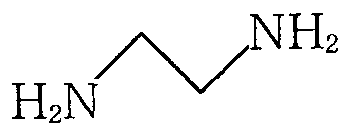
To a solution of N - (1 - Methylindol - 5 - yl) -N' - [3- [methylthio (imino) methyl] phenyl] urea hydriodide (0.22g) in ethanol (20ml) were added ethylenediamine (0.13ml) and acetic acid (0.22ml).
The mixture was refluxed for 7hours, coold, evaporated in vacuo, and triturated with water.
Resulted precipitates were collected, washed by water and diethyl ether, and dried to give N — [3 — (2 - imidazolin - 2 - yl) phenyl] — N' - (1 — methylindol — 5 — yl) urea hydriodide. m.p. : 165 - 170 °C (dec.) IR (Nujol, cm" 1) : 1680, 1610
NMR (DMSO-d6,5) : 3.76 (3H,s), 3.89 (4H,s), 6.35 (lH,d,J = 3Hz), 7.10 - 7. 80 (7H,m), 8.11 (lH.br.s), 8.69 (lH.br.s), 8.99 (lH.br.s) Mass : 334 (M + 1 + )
Example 13
To a solution of N - (1 - methylindol - 5 - yl) - N' - (3 -
thiocarbamoylphenyl) urea (0.20g) in N,N — dimethylformamide (3ml) was added chloroacetone (0.05ml). The mixture was stirred at 100 °C for 1.5 hours. After being cooled, the solution was poured into water (30ml). The pH was adjusted to 9 with aqueous sodium bicarbonate. Resulted precipitates were collected, dissolved in chloroform — methanol (9 : lv/v), dried over sodium sulfate, and chromatographed on silica gel eluted with chloroform — methanol (0 - 3 % v/v) to give N - (1 - methylindol - 5 - yl) - N' - [3 - (4 — methylthiazol - 2 - yl) phenyl] urea (0.88g). m.p. : 228 - 230 °C IR (Nujol, cm" 1) : 1625
NMR (DMSO-d6,f5) : 2.44 (3H,s), 3.77 (4H,s), 6.35 (lH,d,J = 3Hz), 7.10-7. 55 (7H,m), 7.71 (lH,d,J - 2Hz), 8.23 (lH.br.s), 8.47 (lH.br.s), 8.83 (lH.br.s) Mass : 363 (M + 1 + )
Example 14
The following compound was obtained according to a similar manner to that of Example 13.
N- (1- Methylindol- 5 -yl) - NT - [3- (4 - phenylthiazol - 2 - yl) phenyl] urea m.p. : 220 - 223 °C IR (Nujol, cm" 1) : 1620
NMR (DMSO-d6,<5) : 3.77 (3H,s), 6.37 (lH,d,J = 3Hz), 7.17 (lH,dd,J = 9Hz, 2Hz), 7.25-7.65 (8H,m), 7.72 (lH,d,J = 2Hz), 8.06 (2H,d,J = 7Hz), 8.18 (lH,s), 8.29 (lH.br.s), 8.48 (lH,s), 8.89 (lH.s) Mass : 425 (M + 1 + )
Example 15
The following compound was obtained according to a similar manner to that of Example 1.
N- [3- (IH- l,2,4-Triazol-3-yl) phenyl] - NT - (1 - methylindol - 5 - yl) urea m.p. : > 220 °C IR (Nujol, cm" 1) : 1640
NMR (DMSO-d6,5) : 3.76 (3H,s), 6.35 (lH,d,J = 3Hz), 7.17 (lH,dd,J = 2,9Hz), 7.27 (lH,d,J = 3Hz), 7.33 (lH,s), 7.37 (lH,s), 7.48 (lH,m), 7.58 (lH,m), 7.70 (IH, d,J = 3Hz), 8.18 (lH.br.s), 8.44 (lH.br.s), 8.74 (lH.br.s) Mass : 333 (M + 1 + )
Example 16
The following compound was obtained according to a similar manner to that of Example 1.
N — [3 — (Thiazol — 4 — yl) phenyl] — N' — (1 — methylindol — 5 — yl) urea m.p. : 213 - 215 °C IR (Nujol, cm" 1) : 1640
NMR (DMSO - d6,(5) : 3.76 (3H,s), 6.34 (lH,d,J = 3.0Hz), 7.16 (lH,dd,J = 8.7Hz, 2.0Hz), 7.27 (lH,d,J = 3.0Hz), 7.56 (lH,d,J = 7.4Hz), 7.28-7.50 (4H,m), 7.71 (IH, d,J = 1.7Hz), 8.08 (lH,d,J = 1.9Hz), 8.15 (lH,s), 8.45 (lH,s), 8.71 (lH,s), 9.20 (IH, d,J - 1.9Hz) Mass : 349 (M + 1 + )
Example 17
The following compound was obtained acoording to a similar manner to that of Example 1.
N- [3- (2 - Methylthiazol - 4 - yl) phenyl] - N' - (1 - methylindol - 5 - yl) urea m.p. : 198 - 199 °C IR (Nujol, cm" 1) : 1630
NMR (DMSO-d6,f5) : 2.73 (3H,s), 3.76 (3H,s), 6.35 (lH,d,J - 3.0Hz), 7.15 (IH, dd,J = 8.7Hz,1.9Hz), 7.26-7.52 (5H,m), 7.71 (lH,d,J = 1.8Hz), 7.85 (lH,s), 8.09 (IH, s), 8.41 (lH,s), 8.71 (lH.s) Mass : 363 (M + 1 + )
Example 18
The following compound was obtained acoording to a similar manner to that of Example 1. N - [3 - (5 - Methylimidazol - 4 - yl) phenyl] - N' - (1 - methylindol - 5 -
yl) urea m.p. : 229 - 231 °C
IR (Nujol, cm " !) : 1665
NMR (DMSO-d6,(5) : 2.39 (3H,br.s), 3.76 (3H,s), 6.35 (lH,d,J = 3.0Hz), 7.14
QH,dd,J = 8.8Hz,1.7Hz), 7.17-7.40 (5H,m), 7.55 (lH,s), 7.69 (lH,d,J = 1.7Hz), 7.
77 (lH.br.s), 8.41 (lH.br.s), 8.61 (lH.br.s), 11.95 (lH.br.s)
Mass : 346 (M + 1 + )
Example 19
The following compound was obtained acoording to a similar manner to that of Example 1.
N- [3- (1 - Methylimidazol -4- yl) phenyl] - N' - (1 - methylindol - 5 - yl) urea m.p. : 90-110 °C IR (Nujol, cm" 1) : 1660, 1610
NMR (DMSO-d6,r5) : 3.69 (3H,s), 3.76 (3H,s), 6.34 (lH,d,J = 2Hz), 7.10-7. 40 (6H,m), 7.52 (lH,s), 7.62 (lH,s), 7.70 (lH.d.J = 2Hz), 7.87 (lH,s), 8.39 (IH, s), 8.56 (lH,s) Mass : 346 (M + 1 + )
Example 20
The following compound was obtained acoording to a similar manner to that of Example 1.
N — [3 — (Isoxazol — 5 — yl) phenyl] — N' — (1 — methylindol — 5 — yl) urea m.p. : 199 - 202 °C IR (Nujol, cm" 1) : 1630
NMR (DMSO-d6,5) : 3.77 (3H,s), 6.35 (lH,d,J = 3Hz), 6.97 (lH.d.J = 2Hz), 7.17 (lH,dd,J = 9Hz,2Hz), 7.20-7.50 (5H,m), 7.71 (lH,d,J = 2Hz), 8.09 (lH,s), 8. 54 (lH,s), 8.66 (lH,d,J = 2Hz), 8.83 (lH,s) Mass : 333 (M + 1 + )
Example 21
The following compound was obtained acoording to a similar
manner to that of Example 1.
N - [3 - (Imidazol - 2 - yl) phenyl] - N' - (1 - methylindol - 5 - yl) urea m.p. : 230 - 235 (dec.) °C
IR (Nujol, cm " l) : 1633
NMR (DMSO-dg,^) : 3.76 (3H,s), 6.35 (lH,s), 7.10-7.55 (8H,m), 7.71 (IH, s), 8.05 (lH,s), 8.47 (lH.s), 8.67 (lH,s), 12.50 (lH.br.s)
Mass : 332 (M + 1 + )
Example 22
The following compound was obtained acoording to a similar manner to that of Example 1.
N - [3 - (Imidazol - 1 - yl) phenyl] - N' - (1 - methylindol - 5 - yl) urea m.p. : 180 - 185 °C IR (Nujol, cm" 1) : 1630
NMR (DMSO - dg, δ ) : 3.76 (3H,s), 6.35 (lH,d,J = 3Hz), 7.10 - 7.45 (7H,m), 7. 60-7.70 (2H,m), 7.78 (lH,s), 8.16 (lH,s), 8.56 (lH,s), 8.79 (lH,s) Mass : 332 (M + 1 + )
Example 23
The following compound was obtained acoording to a similar manner to that of Example 1.
N — [4 — (Imidazol — 1 — yl) phenyl] — N' - (1 — methylindol — 5 — yl) urea m.p. : 234 - 239 °C IR (Nujol, cm" 1) : 1640
NMR (DMSO-d6,5) : 3.76 (3H,s), 6.35 (lH,d,J = 3Hz), 7.08 (lH,s), 7.15 (IH, dd,J = 9Hz,2Hz), 7.27 (lH,d,J = 3Hz), 7.35 (lH,d = 9Hz), 7.50-7.65 (4H,m), 7. 66 (lH,s), 7.69 (lH,d,J = 2Hz), 8.16 (lH,s), 8.49 (lH.s), 8.76 (lH.s) Mass : 332 (M + 1 + )
Example 24
The following compound was obtained acoording to a similar manner to that of Example 1. N - [2 - (Imidazol - 1 - yl) pyridin - 5 - yl] - N' - (1 - methylindol - 5 - yl)
urea m.p. : 230 - 235 °C
IR (Nujol, cm " l) : 1630
NMR (DMSO-d6,f5) : 3.77 (3H,s), 6.36 (lH,d,J = 3Hz), 7.11 (lH,s), 7.17 (IH, dd,J = 9Hz,2Hz), 7.28 (lH,d,J = 3Hz), 7.36 (lH,d,J = 9Hz), 7.65-7.80 (2H,m), 7.
89 (lH,s), 8.15 (lH,dd,J = 9Hz,3Hz), 8.32 (lH,s), 8.54 (lH,d,J = 2Hz), 8.64 (IH, s), 8.91 (lH,s)
Mass : 333 (M + 1 + )
Example 25
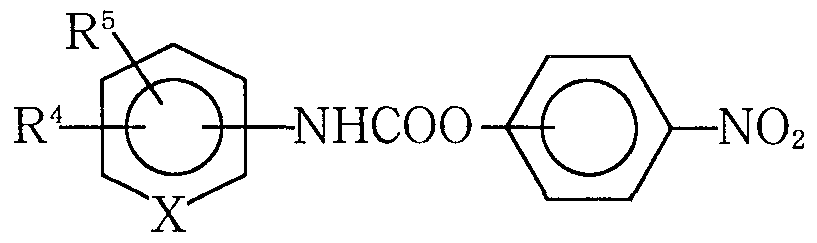
To a solution of 3 - (2 - imidazolon - 1 — yl) aniline (0.17g) in N,N — dimethylformamide were added 4 — nitrophenyl N— (1 — methylindol — 5 - yl) carbamate (0.30g) and triethylamine (0.14ml). The mixture was stirred at ambient temperature for 6 hours, and partitioned between ethyl acetate and aqueous sodium hydrogencarbonate. Organic layer was dried over sodium sulfate, evaporated, and triturated with chloroform to give N - [3 — (2 - imidazolon - 1 - yl) phenyl] — N' - (1 - methylindol - 5 - yl) urea (0.21g).
m.p. : 199 - 201 °C
IR (Nujol, cm" 1) : 1680, 1640
NMR (DMSO-d6,(5) : 3.76 (3H,s), 6.35 (lH,d,J - 3Hz), 6.60 (lH,t,J = 3Hz),
6.88 (lH,t,J = 3Hz), 7.05-7.45 (6H,m), 7.70 (lH,d,J = 2Hz), 7.91 (lH,d,J = 2Hz),
8.44 (lH,s), 8.77 (lH,s), 10.32 (lH.br.s)
Mass : 348 (M + 1 + )
Example 26
The following compound was obtained acoording to a similar manner to that of Example 25.
N- [3- (2 - Imidazolinon - 1 - yl) phenyl] - N' - (1 - methylindol - 5 - yl) urea m.p. : 198 - 200 °C
IR (Nujol, cm" 1) : 1710, 1680, 1630 NMR (DMSO-d6,5) : 3.40 (2H,t,J = 7Hz), 3.75 (3H,s), 3.83 (2H,t), 6.34 (IH,
d,J = 3Hz), 6.94 (lH,s), 7.00-7.40 (6H,m), 7.65-7.80 (2H,m), 8.42 (lH,s), 8.69
(lH,s)
Mass : 350 (M + 1 + )
Example 27
The following compound was obtained acoording to a similar manner to that of Example 25.
N- [3- (Oxazol - 5 - yl) phenyl] - N' - (1 - methylindol - 5 - yl) urea m.p. : 204 - 206 °C IR (Nujol, cm" 1) : 1630
NMR (DMSO-d6,r5) : 3.76 (3H,s), 6.35 (lH,d,J = 3.0Hz), 7.16 (lH,dd,J = 8.7Hz, 2.0Hz), 7.28 (lH,d,J = 3.0Hz), 7.30-7.36 (4H,m), 7.64 (lH,s), 7.71 (lH,d,J = 1.8Hz), 7.95 (lH,br.s), 8.45 (lH,s), 8.49 (lH.br.s), 8.76 (lH.br.s) Mass : 333 (M + 1 + )
Example 28
The following compound was obtained acoording to a similar manner to that of Example 25.
N - [3 - (Thiazol - 5 - yl) phenyl] - N' - (1 - methylindol - 5 — yl) urea m.p. : 190 - 191 °C IR (Nujol, cm" 1) : 1630
NMR (DMSO-d6,5) : 3.76 (3H,s), 6.35 (lH,d,J = 3.0Hz), 7.15 (lH,dd,J = 8.7Hz, 2.0Hz), 7.25-7.45 (5H,m), 7.70 (lH,d,J = 1.8Hz), 7.86 (lH.s), 8.26 (lH,s), 8.51 (lH,s), 8.76 (lH,s), 9.09 (lH.s) Mass : 349 (M + 1 + )
Example 29
The following compound was obtained acoording to a similar manner to that of Example 25.
N- [3- (4H - 1,2,4 - Triazol - 4 - yl) phenyl] - N' - (1 - methylindol - 5 - yl) urea m.p. : 197 - 198 °C IR (Nujol, cm" 1) : 1690
NMR (DMSO - dg, δ ) : 3.76 (3H,s), 6.35 (lH,d,J - 2.6Hz), 7.16 (lH,dd,J = 8.7Hz, 1.9Hz), 7.20-7.48 (2H,m), 7.35 (lH,d,J = 8.7Hz), 7.44-7.48 (2H,m), 7.70 (IH, d,J = 1.9Hz), 7.80 (lH.br.s), 8.61 (lH.br.s), 8.86 (lH.br.s), 9.06 (2H,s) Mass : 333 (M + 1 + )
Example 30
The following compound was obtained acoording to a similar manner to that of Example 25.
N- [3- (IH - 1,2,4 - Triazol - 1 - yl) phenyl] - N' - (1 - methylindol - 5 - yl) urea m.p. : 218 - 219 °C IR (Nujol, cm" 1) : 1640
NMR (DMSO-dg,f5) : 3.76 (3H,s), 6.35 (lH,d,J = 3.2Hz), 7.16 (lH,dd,J = 8.7Hz, 2.1Hz), 7.28 (lH,d,J = 3.2Hz), 7.33-7.43 (4H,m), 7.70 (lH,d,J = 1.9Hz), 8.11 (IH, br.s), 8.24 (lH,s), 8.53 (lH.br.s), 8.89 (lH.br.s), 9.25 (2H,br.s) Mass : 333 (M + 1 + )
Example 31
The following compound was obtained acoording to a similar manner to that of Example 25.
N- [3- (1 - Methylimidazol -5 -yl) phenyl] - N' - (1 - methylindol - 5 - yl) urea
IR (Nujol, cm- 1) : 1660
NMR (DMSO-d6,r5) : 3.69 (3H,s), 3.76 (3H,s), 6.34 (lH,d,J = 2.9Hz), 7.04- 7.08 (2H,m), 7.14 (lH,dd,J = 8.7Hz,1.9Hz), 7.26-7.44 (4H,m), 7.63 (lH,s), 7.68 -7.71 (2H,m), 8.49 (lH,s), 8.69 (lH,s) Mass : 346 (M + 1 + )
Example 32
To a solution of 3 - (Imidazol - 4 - yl) aniline (0.17g) in tetrahydrofuran (15ml) was added carbonyldiimidazol (0.173g), and was stirred at ambient temperature for 5 hours. To the reaction mixture was added a solution of 5 - Methyl - 2,3 - dihydropyrrolo [2,3 - f] indole (0.18g)
in tetrahydrofuran (5ml). The mixture was stirred at ambient temperature for 24 hours and evaporated. The residue was partitioned between ethyl acetate and water. Organic layer was dried over sodium sulfate and chromatographed on silica gel eluted by chloroform - methanol (0 - 10 % v
/v) to give 1— [[3— (Imidazol — 4 — yl) phenyl] carbamoyl] — 5 — methyl
- 2,3 - dihydropyrrolo [2,3 - f] indole (0.14g). m.p. : 252 - 256 °C
IR (Nujol, cm" 1) : 1635, 1610
NMR (DMSO-dg.S) : 3.26 (2H,t,J = 8Hz), 3.73 (3H,s), 4.18 (2H,t,J = 8Hz), 6.
30 (lH,d,J = 3Hz), 7.17 (lH,d,J = 3Hz), 7.20-7.50 (5H,m), 7.73 (lH.d.J = 1Hz), 7.97 (lH,s), 8.05 (lH,s), 8.43 (lH,s), 12.00-12.50 (lH.br.s)
Mass : 358 (M + 1 + )
Example 33
The following compound was obtained acoording to a similar manner to that of Example 32.
1- [[3- (IH - 1,2,4 - Triazol - 3 - yl) phenyl] carbamoyl] - 5 - methyl - 2, 3 — dihydropyrrolo [2,3 — f] indole m.p. : > 220 °C IR (Nujol, cm" 1) : 1680 NMR (DMSO-dg,f5) : 3.27 (2H,t,J = 8Hz), 3.73 (3H,s), 4.19 (2H,t,J = 8Hz), 6.
31 (lH,d,J = 3Hz), 7.18 (lH,d,J = 3Hz), 7.26 (lH,s), 7.38 (lH,m), 7.67 (2H,m), 8. 06 (lH.br.s), 8.30 (lH.br.s), 8.60 (lH.br.s), 14.10 (lH.br.s)
Mass : 359 (M + 1 + )
Example 34
The following compound was obtained acoording to a similar manner to that of Example 12.
1- [[3- (2 - Imidazolin - 2 - yl) phenyl] carbamoyl] - 5 - methyl - 2,3 - dihydropyrrolo [2,3 — f] indole hydriodide m.p. : 191 - 193 °C
IR (Nujol, cm" 1) : 1650
NMR (DMSO-dg,(5) : 3.29 (2H,t,J = 8Hz), 3.74 (3H,s), 4.02 (4H,br.s), 4.18 (2H,
t,J = 8Hz), 6.31 (lH,d,J = 3Hz), 7.20 (lH,d,J = 3Hz), 7.29 (lH,s), 7.66 (3H,m), 8. 05 (lH,s), 8.31 (lH,d,J = 3Hz), 8.83 (lH.br.s), 10.45 (lH.br.s) Mass : 360 (M + 1 + )
Example 35
To a 10ml round bottom flask was added in under 4 — nitrophenyl N— [3— (thiazol — 5 — yl) phenyl] carbamate (171mg), 5 — methyl — 2,3 — dihydropyrrolo [2,3 — f] indole (86mg), dimethylformamide (1ml), and triethylamine (91 μ 1), stirred at ambient temperature for 65 hours. Diluted with water (10ml). After 30 minutes, collected by filtration, washed with water many times. Recrystallized from 95% ethanol (8ml) to give 1— [[3 — (thiazol — 5 — yl) phenyl] carbamoyl] — 5 — methyl — 2,3 — dihydropyrrolo [2, 3-f] indole (141mg). m.p. : 175- 176 °C IR (Nujol, cm" 1) : 1645
NMR (DMSO-dg.5) : 3.27 (2H,t,J = 8,2), 3.73 (3H,s), 4.18 (2H,t,J = 8,2), 6.32 (IH, d,J = 3.0), 7.19 (lH,d,J = 3.0), 7.26 (lH,s), 7.33-7.38 (2H,m), 7.58-7.70 (lH,m), 7.91 (lH.br.s), 8.05 (lH,s), 8.26 (lH,s), 8.56 (lH.br.s), 9.09 (lH,s).
Example 36
The following compound was obtained acoording to a similar manner to that of Example 25.
N - [3 - (2 - Methylimidazol - 5 - yl) phenyl] - N' - (1 - methylindol - 5 - yl) urea m.p. : 214 - 216 (dec.) °C
FT - IR (KBr, cm"1) : 3370, 3290, 1640, 1610, 1590, 1550, 1510, 1490, 1440, 1420, 1300, 1230
NMR (DMSO-dg,5) : 2.31 (3H,s), 3.76 (3H,s), 6.35 (lH,dd,J = 3Hz), 7.1-7.4 (7H,m), 7.71 (lH,d,J = 1.7Hz), 7.83 (IH, bs), 8.40 (IH, bs), 8.56 (lH.s), 11.8 (lH.bs) APCI - Mass : 346 (M + Hτ)
Example 37
The following compound was obtained acoording to a similar manner to that of Example 25.
N - [3 — (2 — Isopropylimidazol — 5 - yl) phenyl] — N' — (1 - methylindol — 5 — yl) urea m.p. : 140 - 205 (amorphous) °C
FT - IR (KBr, cm" 1) : 3370, 3270, 2970, 1660, 1610, 1590, 1550, 1490, 1440, 1230
NMR (DMSO-dg,<5) : 1.28 (6H,d,J = 7Hz), 2.9-3.1 (lH.m), 3.76 (3H,s), 6.35 (IH, d,J = 3Hz), 7.1-7.4 (7H,m), 7.70 (lH,d,J = 1.6Hz), 7.80 (lH,s), 8.37 (lH,s), 8.60 (lH,s), 11.83 (lH,bs) APCI-Mass : 374 (M + H
Example 38
The following compound was obtained acoording to a similar manner to that of Example 25.
N - (1 - Methylindol - 5 - yl) - N' - [3 - (2 - tert - butylimidazol - 5 - yl) phenyl] urea m.p. : 129 - 150 (dec.) °C
IR (Nujol, cm" 1) : 3300 - 3100, 1650, 1580, 1530, 1450, 1320, 1280, 1220 NMR (DMSO-dg,f5) : 1.34 (9H,s), 3.76 (3H,s), 6.35 (lH,dd,J = 3Hz), 7.1-7.4 (7H,m), 7.71 (lH,d,J = 2Hz), 7.76 (lH,m), 8.36 (lH,s), 8.63 (lH,s), 11. 77 (lH,bs) APCI-Mass : 388 (M + H
Example 39
The following compound was obtained acoording to a similar manner to that of Example 25.
N - (1 - Methylindol - 5 - yl) - N' - [3 - (2 - trifluoromethylimidazol - 5 - yl) phenyl] urea m.p. : 208 - 210 °C
FT - IR (KBr, cm " : 3288, 3126, 3074, 2922, 1660, 1616, 1583, 1556, 1514, 1485, 1444, 1422, 1398, 1302, 1230 crrr1 NMR (DMSO-dg,(5) : 3.76 (3H,s), 6.35 (lH,d,J = 3Hz), 7.12-7.19 (lH.m), 7.26
-7.37 (5H,m), 7.71 (lH,d,J = 1.7Hz), 7.89 (lH.bs), 7.97 (lH.bs), 8.40 (lH.bs), 8.67 (lH,s), 13.71 (lH.bs) APCI-Mass : 400 (M + H
Example 40
The following compound was obtained acoording to a similar manner to that of Example 25.
N - [3 - (1,2 - Dimethylimidazol - 5 - yl) phenyl] - N' - (1 - methylindol - 5 — yl) urea m.p. : 209 - 210 °C
FT - IR (KBr, cm" 1) : 3325, 3099, 1703, 1583, 1543, 1493, 1429, 1296, 1250, 1211 cm '
NMR (DMSO-dg, 5) : 2.35 (3H,s), 3.53 (3H,s), 3.76 (3H,s), 6.34 (lH,d,J = 3Hz), 6.84 (lH,s), 6.9-7.0 (lH,m), 7.1-7.2 (lH.m), 7.2-7.5 (4H,m), 7.56 (lH.bs), 7.69 (lH,d,J = 2Hz), 8.47 (lH,s), 8.68 (lH.s) APCI - Mass : 360 (M + H+)
Example 41
The following compound was obtained acoording to a similar manner to that of Example 25.
N - [3 - (4 - Methylimidazol - 1 - yl) phenyl] - N' - (1 - methylindol - 5 - yl) urea m.p. : 194 - 197 °C IR (Nujol, cm" 1) : 1640, 1605
NMR (DMSO-dg,όO : 2.17 (3H,s), 3.76 (3H,s), 6.35 (lH,d,J = 3Hz), 7.1-7.4 (7H,m), 7.70 (lH,s), 7.76 (lH,s), 8.03 (lH,s), 8.56 (lH.s), 8.78 (lH.s) APCI - Mass : 346 (M + 1 + )
Example 42
The following compound was obtained acoording to a similar manner to that of Example 25.
N- (1 -Methylindol -5 -yl) - NT - [3 - (2 - methylthiazol - 5 - yl) phenyl] urea
m.p. : 209 - 212 °C
FT - IR (KBr, cm^ 1) : 3286, 1624, 1589, 1558, 1487, 1431, 1333, 1300, 1242 cπ 1
NMR (DMSO-dg,c5) : 2.68 (3H,s), 3.76 (3H,s), 6.35 (lH,d,J = 3Hz),
7.1-7.4 (6H,m), 7.70 (lH,m), 7.78 (lH,m), 7.96 (lH,s), 8.48 (lH,s),
8.72 (lH,s)
APCI-Mass : 363 (M + HO
Example 43
The following compound was obtained acoording to a similar manner to that of Example 6.
N - (1 - Methylindol - 5 - yl) - N' - [3 - (pyridin - 3 - yl) phenyl] urea m.p. : 172 - 174 °C IR (Nujol, cm- 1) : 3260, 1630
NMR (DMSO-dg,ό : 3.76 (3H,s), 6.35 (lH,d,J = 2.9Hz), 7.16 (lH,dd,J = 8.7Hz, 2.0Hz), 7.27-7.54 (lH,s), 8.59 (lH,dd,J = 4.7Hz, 1.5Hz), 8.75 (lH,s), 8.85 (lH,d, J = 1.8Hz) Mass : 343 (M + 1) +
Example 44
The following compound was obtained acoording to a similar manner to that of Example 6.
1 - [ [3 - (Pyridin — 3 — yl) phenyl] carbamoyl] — 5 - methyl — 2,3 — dihydropyrrolo [2,3 — f] indole m.p. : 181 (dec.) °C IR (Nujol, cm" 1) : 1640, 1600
NMR (DMSO-dg,όO : 3.28 (2H,t,J = 8.3Hz), 3.73 (3H,s), 4.19 (2H,t,J = 8.3Hz), 6.31 (lH,d,J = 2.8Hz), 7.18 (lH,d,J = 3.0Hz), 7.27 (lH,s), 7.33-7.54 (3H,m), 7.67 (lH,d,J = 7.8Hz), 7.95 (lH,s), 8.02-8.06 (2H,m), 8.56-8.60 (2H,m), 8.87 (lH,d, J = 1.8Hz) Mass : 369 (M + 10
Example 45
To a suspension of 1 — methylindole — 5 — carboxylic acid (lOOmg) in benzene ( 5ml ) were added triethylamine ( 159 μ 1 ) and diphenylphosphorous azide (121 μ 1). The mixture was refluxed for 4 hours, then cooled to room temperature. 3 — (Imidazol — 1 — yl) — 6 — nitroaniline (140mg) was added to the mixture. The mixture was refluxed for 4 hours. After cooled, the mixture was dissolved in ethyl acetate, washed with water and dried over sodium sulfate, and chromatographed on silica gel eluted by chloroform — methanol (10 : 1) to give N — [3 — (imidazol — 1 — yl) — 6 — nitrophenyl] — N' — (1 — methylindol - 5 - yl) urea (lOmg). m.p. : 220 °C (dec.) IR (Nujol, cm " l) : 3300, 1710, 1615
NMR (DMSO-dg.S) : 3.77 (3H,s), 6.38 (lH,d,J = 2.5Hz), 7.17-7.22 (3H,m), 7. 30 (lH,d,J = 3.0), 7.39 (lH,d,J = 8.7Hz), 7.49 (lH,dd,J = 9.2Hz, 2.3Hz), 7.77 (IH, d,J = 2.0Hz), 7.81 (lH,t,J = 1.5Hz), 8.26 (lH,s), 8.31 (lH,d,J = 3.0Hz), 8.37 (lH,s), 8.68 (lH,d,J = 2.4Hz) Mass : 377 (M + lO
Example 46
To a solution of 3 — (imidazol — 1 — yl) aniline (0.48g) in dichloromethane (50ml) was added 4 — nitrophenoxycarbonyl chloride (0.61g). The mixture was stirred at ambient temperature for 10 minutes. Then 5 — methyl — 2,3 - dihydropyrrolo [2,3 - f] indole (0.52g) and triethylamine (0. 84ml) were added. The mixture was stirred at ambient temperature for 7 hours, washed by aqueous sodium hydrogencarbonate and water successively, dried over sodium sulfate , and evaporated in vacuo . Residue was chromatographed on silica gel eluted by chloroform — methanol (0 — 3%) to give 1 — [[3- (imidazol - 1 - yl) phenyl] carbamoyl] - 5 — methyl — 2,3 - dihydropyrrolo [2,3 - f] indole (0.61g). m.p. : 211-214 °C IR (Nujol, cm" 1) : 1665, 1645
NMR (DMSO-dg,όO : 3.27 (2H,t,J = 8Hz), 3.73 (3H,s), 4.18 (2H,t,J = 8Hz), 6.31 (lH,d,J = 3Hz), 7.12 (lH.s), 7.15-7.30 (3H,m), 7.43 (lH,t,J = 8Hz), 7.50-7.70 (2H, m), 7.87 (lH,t,J = 2Hz), 8.05 (lH,s), 8.16 (lH,s), 8.64 (lH,s)
APCI - Mass : 358 (M + 10
Example 47
To a solution of 3 — (1 - methylimidazol — 5 — yl) aniline (87mg), dimethylformamide (1ml), and pyridine (40 μ 1) at 5 °C was added 4 — nitrophenyl chloroformate (lOlmg). Stirred 30 minutes, then added 5 — methyl — 2,3 - dihydropyrrolo [2,3 - f] indole (86mg), then triethylamine (0.14ml).
Stirred at room tempereture overnight (lδhours.). Poured with water (30ml), after 30 minutes collected by filtration, washed with water, dissolved in silica gel column washed with brine, dried (magnesium sulfate), filtered, evaporated.
Purified by silica gel column. Stirred in isopropyl ether ( 10ml) to give 1- [[3- (1 — methylimidazol - 5 - yl) phenyl] carbamoyl] - 5 - methyl - 2, 3 — dihydropyrrolo [2,3 — f] indole. m.p. : 224 - 226 °C Mass : 372 (M + 1) IR (Nujol, cm" 1) : 1655
NMR (DMSO, δ) : 3.27 (2H,t,J = 8.2Hz), 3.71 (3H,s), 3.73 (3H,s), 4.17 (2H,t,J = 8.2Hz), 6.31 (lH,d,J = 2.5Hz), 7.03 (lH,bs), 7.11 (lH,d,J = 8.0Hz), 7.18 (lH,d,J = 3.0Hz), 7.26 (lH,s), 7.37 (lH,dd,J - 7.8Hz, 7.8Hz), 7.60 (lH,d,J = 8.1Hz), 7.70 (IH, s), 7.71 (lH,s), 8.03 (lH,s), 8.52 (lH,s).
Example 48
The following compound was obtained according to a similar manner to that of Example 47.
1— [[3- (1,2 — Dimethylimidazol — 5 - yl) phenyl] carbamoyl] - 5 - methyl - 2,3 - dihydropyrrolo [2,3 - f] indole m.p. : 224 - 227 °C
FT-IR (KBr, cm 1) : 3263, 2941, 1662, 1610, 1564, 1529, 1473, 1425, 1331, 1279, 1246cm 1
NMR (DMSO-d6)f5) : 2.36 (3H,s), 3.26 (2H,t,J = 8Hz), 3.56 (3H,s), 3.73 (3H,s), 4.17 (2H,t = 8Hz), 6.31 (lH,d,J = 3Hz), 6.85 (lH.s), 7.0-7.10 (lH.m), 7.17 (IH, d,J = 3Hz), 7.26 (lH,bs), 7.36 (lH,t,J = 8Hz), 7.5-7.6 (lH,m), 7.66 (lH,bs), 8.03 (lH,s), 8.51 (lH,bs)
APCI - MS : 386" (M + HO
Example 49
The following compound was obtained according to a similar manner to that of Example 25.
N— [3— (1 — Isopropylimidazol — 5 - yl) phenyl] — N' - (1 - methylindol - 5 — yl) urea m.p. : 213- 215 °C
FT-IR (KBr, cm 1) : 3313, 3099, 2973, 1697, 1662, 1581, 1544, 1487, 1423, 1290, 1230cm 1
NMR (DMSO-d6,5) : 1.42 (6H,d,J = 7Hz), 3.76 (3H,s), 4.35-4.49 (lH,m), 6.35 (lH,d,J = 3Hz), 6.92 (lH,d,J = 0.8Hz), 6.94-6.98 (IH, m), 7.12-7.18 (IH, m), 7.26-7.47 (4H,m), 7.56 (lH,m), 7.68 (lH,d,J = 1.7Hz), 7.93 QH,m), 8.48 (lH,s), 8.71 (lH,s) APCI - MS : 374 (M + HO
Example 50
The following compound was obtained according to a similar manner to that of Example 25.
N - [3 - (2 - Imidazolon - 4 - yl) phenyl] - N' - (1 - methylindol - 5 - yl) urea m.p. : 222 - 227 °C
FT-IR (KBr, cm"1) : 3276, 3215, 3099, 1728, 1684, 1616, 1591, 1554, 1491, 1442, 1439, 1335, 1302, 1232
NMR (DMSO-d6,ό : 3.76 (3H,s), 6.34 (lH,d,J = 2.6Hz), 6.76 (lH,m) ,7.06 - 7.36 (6H,m), 7.46 (lH,m), 7.69 (lH,d,J = 1.7Hz), 8.48 (lH,s), 8.52 (lH,s), 10.0 (lH.bs), 10.5 (lH,bs) APCI - MS : 348 (M + HO
Example 51
The following compound was obtained according to a similar manner to that of Example 47. N - (1 - Methylindol - 5 - yl) - N' - [3 - (pyrimidin - 5 - yl) phenyl] urea
m.p. : 228- 230 °C (dec.)
IR (KBr, cirr1) : 3300, 3140, 3101, 3041, 1649, 1608cm 1
NMR (DMSO-d6,S) : 3.76 (3H,s), 6.35 (lH,d,J = 3.0), 7.13-7.18 (lH,m), 7.27
(1H,U = 3.0), 7.33-7.49 (3H,m), 7.54-7.59 (lH,m), 7.70 (lH,s), 7.85 (lH,s),
8.55 (lH,s), 8.74 (lH.s), 9.09 (2H,s), 9.21 (lH,s)
MS : 344 (M + 10
Example 52
The following compound was obtained according to a similar manner to that of Example 46.
1- [[3- (Imidazol - 1 - yl) phenyl] carbamoyl] - 2,3 - dihydropyrrolo [2,3- f] indole m.p. : 133- 140 °C IR (Nujol, cπr1) : 1620, 1600
NMR (DMS0-d6,cO 3.24 (2H,t,J = 8Hz), 4.16 (2H,t,J = 8Hz), 6.32 (lH,s), 7.10 -7.40 (4H,m), 7.43 (lH,t,J = 8Hz), 7.50-7.70 (2H,m), 7.88 (lH,s), 8.04 (lH,s), 8.17 (lH,s), 8.63 (lH,s), 10.84 (lH,s) MS 344 (M + 10
Example 53
The following compound was obtained according to a similar manner to that of Example 46.
1 - [[3 - (1 - Methylimidazol - 5 - yl) phenyl] carbamoyl] - 2,3 - dihydropyrrolo [2,3 -f] indole. m.p. : 235 - 243 °C (dec.) IR (Nujol, cπr1) : 1665
NMR (DMSO-d6,5) : 3.24 (2H,t,J = 8Hz), 3.71 (3H,s), 4.16 (2H,t,J = 8Hz), 6.32 (lH,s), 7.04 (lH.s), 7.11 (lH,d,J = 8Hz), 7.20 (2H,s), 7.37 (lH,t,J = 8Hz), 7.60 (IH, d,J = 9Hz), 7.70-7.72 (2H,m), 8.03 (lH.s), 8.50 (lH.s), 10.83 (IH, br.s). MS : 358 (M + 10