WO1998029341A1 - Oxyde de compose zirconium et cerium, procede d'elaboration correspondant et co-catalyseur d'epuration des gaz - Google Patents
Oxyde de compose zirconium et cerium, procede d'elaboration correspondant et co-catalyseur d'epuration des gaz Download PDFInfo
- Publication number
- WO1998029341A1 WO1998029341A1 PCT/JP1997/004786 JP9704786W WO9829341A1 WO 1998029341 A1 WO1998029341 A1 WO 1998029341A1 JP 9704786 W JP9704786 W JP 9704786W WO 9829341 A1 WO9829341 A1 WO 9829341A1
- Authority
- WO
- WIPO (PCT)
- Prior art keywords
- zirconium
- cerium
- oxide
- surface area
- composite oxide
- Prior art date
- Legal status (The legal status is an assumption and is not a legal conclusion. Google has not performed a legal analysis and makes no representation as to the accuracy of the status listed.)
- Ceased
Links
Classifications
-
- C—CHEMISTRY; METALLURGY
- C01—INORGANIC CHEMISTRY
- C01G—COMPOUNDS CONTAINING METALS NOT COVERED BY SUBCLASSES C01D OR C01F
- C01G25/00—Compounds of zirconium
- C01G25/02—Oxides
-
- C—CHEMISTRY; METALLURGY
- C01—INORGANIC CHEMISTRY
- C01G—COMPOUNDS CONTAINING METALS NOT COVERED BY SUBCLASSES C01D OR C01F
- C01G25/00—Compounds of zirconium
-
- B—PERFORMING OPERATIONS; TRANSPORTING
- B01—PHYSICAL OR CHEMICAL PROCESSES OR APPARATUS IN GENERAL
- B01D—SEPARATION
- B01D53/00—Separation of gases or vapours; Recovering vapours of volatile solvents from gases; Chemical or biological purification of waste gases, e.g. engine exhaust gases, smoke, fumes, flue gases, aerosols
- B01D53/34—Chemical or biological purification of waste gases
- B01D53/74—General processes for purification of waste gases; Apparatus or devices specially adapted therefor
- B01D53/86—Catalytic processes
-
- B—PERFORMING OPERATIONS; TRANSPORTING
- B01—PHYSICAL OR CHEMICAL PROCESSES OR APPARATUS IN GENERAL
- B01D—SEPARATION
- B01D53/00—Separation of gases or vapours; Recovering vapours of volatile solvents from gases; Chemical or biological purification of waste gases, e.g. engine exhaust gases, smoke, fumes, flue gases, aerosols
- B01D53/34—Chemical or biological purification of waste gases
- B01D53/92—Chemical or biological purification of waste gases of engine exhaust gases
- B01D53/94—Chemical or biological purification of waste gases of engine exhaust gases by catalytic processes
-
- B—PERFORMING OPERATIONS; TRANSPORTING
- B01—PHYSICAL OR CHEMICAL PROCESSES OR APPARATUS IN GENERAL
- B01J—CHEMICAL OR PHYSICAL PROCESSES, e.g. CATALYSIS OR COLLOID CHEMISTRY; THEIR RELEVANT APPARATUS
- B01J35/00—Catalysts, in general, characterised by their form or physical properties
- B01J35/40—Catalysts, in general, characterised by their form or physical properties characterised by dimensions, e.g. grain size
-
- B—PERFORMING OPERATIONS; TRANSPORTING
- B01—PHYSICAL OR CHEMICAL PROCESSES OR APPARATUS IN GENERAL
- B01J—CHEMICAL OR PHYSICAL PROCESSES, e.g. CATALYSIS OR COLLOID CHEMISTRY; THEIR RELEVANT APPARATUS
- B01J35/00—Catalysts, in general, characterised by their form or physical properties
- B01J35/60—Catalysts, in general, characterised by their form or physical properties characterised by their surface properties or porosity
- B01J35/61—Surface area
- B01J35/613—10-100 m2/g
-
- B—PERFORMING OPERATIONS; TRANSPORTING
- B01—PHYSICAL OR CHEMICAL PROCESSES OR APPARATUS IN GENERAL
- B01J—CHEMICAL OR PHYSICAL PROCESSES, e.g. CATALYSIS OR COLLOID CHEMISTRY; THEIR RELEVANT APPARATUS
- B01J35/00—Catalysts, in general, characterised by their form or physical properties
- B01J35/60—Catalysts, in general, characterised by their form or physical properties characterised by their surface properties or porosity
- B01J35/61—Surface area
- B01J35/615—100-500 m2/g
-
- B—PERFORMING OPERATIONS; TRANSPORTING
- B01—PHYSICAL OR CHEMICAL PROCESSES OR APPARATUS IN GENERAL
- B01J—CHEMICAL OR PHYSICAL PROCESSES, e.g. CATALYSIS OR COLLOID CHEMISTRY; THEIR RELEVANT APPARATUS
- B01J35/00—Catalysts, in general, characterised by their form or physical properties
- B01J35/70—Catalysts, in general, characterised by their form or physical properties characterised by their crystalline properties, e.g. semi-crystalline
-
- B—PERFORMING OPERATIONS; TRANSPORTING
- B01—PHYSICAL OR CHEMICAL PROCESSES OR APPARATUS IN GENERAL
- B01J—CHEMICAL OR PHYSICAL PROCESSES, e.g. CATALYSIS OR COLLOID CHEMISTRY; THEIR RELEVANT APPARATUS
- B01J21/00—Catalysts comprising the elements, oxides, or hydroxides of magnesium, boron, aluminium, carbon, silicon, titanium, zirconium, or hafnium
- B01J21/06—Silicon, titanium, zirconium or hafnium; Oxides or hydroxides thereof
- B01J21/066—Zirconium or hafnium; Oxides or hydroxides thereof
-
- B—PERFORMING OPERATIONS; TRANSPORTING
- B01—PHYSICAL OR CHEMICAL PROCESSES OR APPARATUS IN GENERAL
- B01J—CHEMICAL OR PHYSICAL PROCESSES, e.g. CATALYSIS OR COLLOID CHEMISTRY; THEIR RELEVANT APPARATUS
- B01J2235/00—Indexing scheme associated with group B01J35/00, related to the analysis techniques used to determine the catalysts form or properties
- B01J2235/15—X-ray diffraction
-
- B—PERFORMING OPERATIONS; TRANSPORTING
- B01—PHYSICAL OR CHEMICAL PROCESSES OR APPARATUS IN GENERAL
- B01J—CHEMICAL OR PHYSICAL PROCESSES, e.g. CATALYSIS OR COLLOID CHEMISTRY; THEIR RELEVANT APPARATUS
- B01J23/00—Catalysts comprising metals or metal oxides or hydroxides, not provided for in group B01J21/00
- B01J23/10—Catalysts comprising metals or metal oxides or hydroxides, not provided for in group B01J21/00 of rare earths
-
- C—CHEMISTRY; METALLURGY
- C01—INORGANIC CHEMISTRY
- C01F—COMPOUNDS OF THE METALS BERYLLIUM, MAGNESIUM, ALUMINIUM, CALCIUM, STRONTIUM, BARIUM, RADIUM, THORIUM, OR OF THE RARE-EARTH METALS
- C01F17/00—Compounds of rare earth metals
- C01F17/20—Compounds containing only rare earth metals as the metal element
- C01F17/206—Compounds containing only rare earth metals as the metal element oxide or hydroxide being the only anion
-
- C—CHEMISTRY; METALLURGY
- C01—INORGANIC CHEMISTRY
- C01P—INDEXING SCHEME RELATING TO STRUCTURAL AND PHYSICAL ASPECTS OF SOLID INORGANIC COMPOUNDS
- C01P2004/00—Particle morphology
- C01P2004/60—Particles characterised by their size
- C01P2004/61—Micrometer sized, i.e. from 1-100 micrometer
Definitions
- the present invention can be used in the field of catalysts, functional ceramics, solid electrolytes for fuel cells, etc., and has excellent heat resistance, which can be suitably used particularly as an exhaust gas purifying cocatalyst for automobiles.
- the present invention relates to a zirconium-cerium composite oxide, a method for producing the same, and an exhaust gas purifying cocatalyst.
- Exhaust gas purifying catalysts for automobiles and the like are composed of a catalyst carrier such as alumina, cordierite or the like, on which platinum, palladium, rhodium or the like as a catalytic metal and a co-catalyst for enhancing these catalytic actions are supported.
- the cerium oxide-based material as the co-catalyst absorbs oxygen in an oxidizing atmosphere and releases the oxygen in a reducing atmosphere. Purifies harmful components such as hydrocarbons, carbon monoxide and nitrogen oxides with excellent efficiency. For this reason, cerium oxide-based materials are used in large quantities as co-catalysts.
- zirconium oxide enhances the characteristics of the cerium oxide, so that as a co-catalyst, a zirconium-cerium-based composite oxide is currently mainstream and its use is increasing.
- the current zirconium-cerium-based composite oxide particles are not sufficient in terms of heat resistance because the specific surface area decreases due to grain growth in a high-temperature and long-time use environment. There is a strong need for a co-catalyst that is maintained.
- Japanese Patent Application Laid-Open No. 1993-94848 discloses that a mixture of a hydrated zirconazole having an average particle size of 0.2 ⁇ or less and a compound such as Ce, Y, Ca, Mg is fired.
- a method for producing a mixed oxide has been proposed, and it is described that the heat resistance of the obtained mixed oxide is 12 m 2 / g after calcining at 150 ° C.
- Japanese Patent Application Laid-Open No. 5-116945 discloses a hydrated zirconazole having an average particle size of 0.05 to 0.3 ⁇ m and a crystallite diameter of 4 nm or less, Ce, Y, Ca, A method for producing a mixed oxide by firing a mixture with a compound such as Mg has been proposed. The heat resistance of the obtained mixed oxide is described as a specific surface area after firing at 850 ° C. of 1 S.
- JP-A-5-155622 discloses a zirconium salt aqueous solution containing a hydroxide of a divalent or higher-valent metal, A method has been proposed in which hydrated oxides, oxides, and the like are mixed and hydrolyzed. The heat resistance of the obtained mixed oxide is described as having a specific surface area of 8 m 2 Z g after firing at 100 ° C.
- All of the above methods have a problem that the operation time for producing the target oxide is long.
- the method using zirconazole has a problem in productivity such that the hydrolysis time of the aqueous solution of zirconium salt exceeds 100 hours.
- the crystallite diameter of the oxide As a method for obtaining a high specific surface area, the crystallite diameter of the oxide, that is, the degree of crystal growth may be suppressed.
- Japanese Patent Application Laid-Open No. Hei 6-27907 and Japanese Patent Publication No. Hei 8-1 The production method using a zirconazole (zircoure 'colloid particles having a diameter of 5 to 500 nm) described in Japanese Patent Application Laid-Open No. 6-015 is optimal.
- the oxides are very sensitive to thermal energy due to their fine crystal and particle diameters, and the oxides obtained by these known manufacturing methods are more than 900 ° C.
- the specific surface area is remarkably reduced and the heat resistance is poor. That is, it is not suitable for a cocatalyst used at a high temperature.
- many of the production methods proposed so far have a problem that impurities such as chlorine and sulfur which are harmful to the catalyst due to the raw material cannot be avoided.
- An object of the present invention is to provide a zirconium-cerium composite oxide which has excellent heat resistance, particularly as an exhaust gas purifying co-catalyst, and can maintain a high specific surface area even when used in a high temperature environment.
- An object of the present invention is to provide a production method thereof and an exhaust gas purifying cocatalyst.
- Another object of the present invention is to provide a zirconium-cerium-based composite oxide having excellent heat resistance with good reproducibility and economical preparation. It is to provide a manufacturing method.
- Another object of the present invention is to provide a method for producing a zirconium-cerium-based composite oxide which has excellent heat resistance and does not contain impurities such as chlorine and sulfur which are harmful to the catalyst.
- the present inventor has conducted a detailed study on the effect of zirconium raw materials in order to investigate the cause of a sudden decrease in the specific surface area when heated at high temperatures, even if the zirconium-cerium composite oxide power of the prior art has a large specific surface area. Was done.
- an aqueous solution of zirconium sol or zirconium salt, an aqueous solution of cerium sol or cerium salt which is conventionally known as a method for obtaining a composite oxide having high solid solubility of zirconium oxide and cerium oxide
- the mixed oxide precursor which is mixed with an aqueous solution and precipitated by adding a base, is extremely sensitive to thermal energy, probably because it is microcrystalline, and a single phase with high solid solubility upon firing
- a zirconium-cerium-based composite oxide with a crystalline phase of was produced, it was confirmed that the specific surface area was significantly reduced by sintering at a high temperature range, and that a high specific surface area could not be maintained.
- the zirconium and cerium containing zirconium and cerium, and the mixing ratio of the zirconium and cerium in terms of zirconium oxide and cerium oxide are from 51 to 95:49 to 100 by weight. 5 and, if necessary, additional yttrium, scandium, lanthanum, praseodymium, neo Jim, samarium, europium, gadolinium, magnesium, potassium, barium, aluminum, titanium, hafnium, and metals selected from the group consisting of these, and the total amount of oxides as the total amount of composite oxide 0.1 to 20% by weight, with a specific surface area of 50 m 2 / g or more, and a specific surface area of 20 m 2 / g or more after heating at 110 for 6 hours.
- the present invention provides a zirconium-cerium-based composite oxide and a cocatalyst for purifying exhaust gas containing the zirconium-cerium-based composite oxide powder.
- zirconium hydroxide powder having an average particle size of 0.5 to 50 / m, and cerium zole having an average particle size of colloid particles of 3 to 100 nm are included.
- Selected from the group consisting of the respective salts of yttrium, scandium, lanthanum, praseodymium, neodymium, samarium, europium, gadolinium, magnesium, canolecidium, cerium, anoremium, titanium and hafnium Heat-reacting the mixture containing one or more of the above-mentioned compounds in the presence of nitric acid in an amount of 5 to 10 times the molar number of cerium in the mixture, and then further reacting by adding a base to produce a product.
- a method for producing the zirconium-cerium based composite oxide powder comprising a step of calcining the obtained product at 500 to 100 ° C.
- FIG. 1 is a graph showing an X-ray diffraction result of the precipitate before firing of Example 1.
- FIG. 2 is a graph showing an X-ray diffraction result of the precipitate before firing in Comparative Example 1.
- FIG. 3 is a graph showing the change in heated weight (TG) of the precipitate of Example 1.
- FIG. 4 is a graph showing a comparison between the heat resistance of Example 1 and the heat resistance of Comparative Example 1 expressed by the firing temperature and the crystallite diameter.
- FIG. 5 is a graph showing a comparison between the heat resistance of Example 1 and the heat resistance of Comparative Example 1 expressed by the firing temperature and the specific surface area.
- the composite oxide is not simply a mixture of zirconium oxide and cerium oxide, but partially or substantially forms a composite oxide or solid solution. Say what you are doing.
- this composite oxide is cerium oxide that exhibits the ability to absorb and release oxygen, but zirconium oxide enhances the heat resistance of this cerium oxide and increases the oxygen content over a wide temperature range. Shows the ability to exhibit absorption and release capabilities.
- the compounding ratio of zirconium and cerium contained is 51 to 1 by weight in terms of zirconium oxide (ZrO 2 ) and cerium oxide (CeO 2 ). To 95: 49 to 5, preferably 55 to 85: 45 to 15, more preferably 60 to 80: 40 to 20. If the content of zirconium in terms of zirconium oxide is less than 51, excellent heat resistance cannot be obtained, and if it exceeds 95, the ability to absorb and release oxygen due to cerium oxide is insufficient.
- the total content of zirconium and cerium in the composite oxide is preferably 80 to 100% by weight in terms of zirconium oxide and second cerium oxide.
- the composite oxide of the present invention has a specific surface area of 50 m 2 / g or more.
- the specific surface area usually decreases as the firing temperature during production increases.
- the specific surface area of the composite oxide obtained by calcining at 500 ° C. for 6 hours is 90 m 2 / g or more
- the specific surface area of the composite oxide obtained by calcining at 900 ° C. for 6 hours is More than 70 m 2 / g, duplicates obtained by baking at 1000 ° C for 6 hours
- the specific surface area of the composite oxide is as high as 50 m 2 / g or more.
- the upper limit of the specific surface area of the composite oxide of the present invention is not particularly limited, but is about 120 m 2 ng.
- Such a material having a high specific surface area at the firing temperature has not been conventionally known as a zirconium-cerium composite oxide.
- the composite oxide of the present invention is used as a cocatalyst, for example, after heating at 110 ° C. for 6 hours, it is at least 20 m 2 / g, preferably 20 to 30 m It has physical properties to maintain a specific surface area of 2 / g.
- sintering at a specific temperature range or more depending on the composition and the manufacturing history of the powder results in remarkable grain growth and a sharp decrease in specific surface area.
- the current exhaust gas purifying catalytic converter usually operates at about 900 ° C or less.
- the heat resistance of the obtained composite oxide is based on 110 ° C, which is regarded as the upper limit of the temperature used, and the value of the specific surface area that can be maintained after heating at 110 ° C for 6 hours is a physical property index of the composite oxide. It was decided.
- the specific surface area is a value measured based on the BET method using nitrogen gas adsorption, which is the most standard method for measuring the specific surface area of a powder.
- the composite oxide of the present invention may further comprise, in addition to zirconium and cerium, yttrium, scandium, lanthanum, praseodymium, neodymium, summerium, europium, gadolinium, magnesium, canoledium, barium, aluminum,
- One or more selected from the group consisting of titanium and hafnium are converted to oxides based on the total amount of composite oxides. And it may be contained in the range of 0.1 to 20% by weight. By further containing such a specific metal, more excellent heat resistance can be imparted.
- the content is less than 0.1% by weight, the effect of improving the heat resistance is not recognized, and if it exceeds 20% by weight, the content of cerium is relatively reduced, which is required when used as a promoter or the like. It is not preferable because the oxygen absorption / release capacity is insufficient.
- the composite oxide can be produced economically with good reproducibility.
- a mixture containing a specific zirconium raw material and a specific cerium raw material is heated and reacted in the presence of a specific amount of nitric acid.
- the specific zirconium raw material is a zirconium hydroxide powder having an average particle size of 0.5 to 50 ⁇ , preferably 1 to 30 / xm, and more preferably 5 to 25 m. If the average particle size is less than 0.5 ⁇ m, a composite oxide having a high specific surface area with excellent heat resistance, which is the object of the present invention, cannot be obtained. If the average particle size exceeds 50 ⁇ m, the specific surface area of the composite oxide will not be obtained. Decrease.
- the aqueous oxidation Jirukoniu beam (1) zirconium hydroxide Z r (OH) 4 ⁇ n H 2 0, (2) Okishi water zirconium oxide Z r O (OH) 2 ⁇ n H 2 0, (3) water a general term of the sum Jirukonia Z r 0 2 ⁇ n H 2 0, can be used as a single or mixture.
- the zirconium hydroxide powder is usually available in the form of a powder from a commercial product. It can be obtained by a known method such as precipitation by adding a base such as a hydration power rim. Above all, a zirconium nitrone ammonium nitrate production method is advantageous in that it does not contain harmful impurities such as chlorine and sulfur.
- the average particle size was measured with a particle size analyzer (type II) manufactured by Leeds & Northrup Company based on the laser diffraction method.
- the specific cell raw material is a cell sol having an average particle size of colloid particles of 3 to 100 nm, preferably 5 to 80 nm, and more preferably 10 to 50 nm.
- the cerium sol generally refers to a state in which solid fine particles (colloid particles) in one or more of cerium oxide sol, hydrated cerium oxide sol, and cerium hydroxide sol having a colloid particle size are dispersed in an aqueous medium. Means When the average particle size of the colloid particles is less than 3 nm, industrial production is difficult, and when the average particle size exceeds 100 nm, the complexation with zirconium oxide hardly proceeds in a later step.
- the colloid particle size was measured using a dynamic light scattering photometer (DLS-700, manufactured by Otsuka Electronics Co., Ltd.) based on a dynamic light scattering measurement method.
- the method for producing the cell sol is not particularly limited.
- the cell sol can be obtained by a known method of hydrolyzing an aqueous solution of sec- ondium nitrate. Concentrations of about 200 gZ liter can be used.
- Some commercially available cerium sols are acidified with nitric acid or acetic acid in order to stably maintain the sol state, and any of them can be used.
- the mixing ratio of the zirconium hydroxide powder and the cerium sol can be appropriately set so as to be a stoichiometric ratio corresponding to a desired composition ratio of the zirconium mu-cerium composite oxide.
- the mixing ratio of zirconium and cerium converted to zirconium oxide and cerium oxide is 51 to 95:49 to 5 by weight. It is preferable to mix them.
- the zirconium hydroxide powder and the cell sol are weighed and mixed with an appropriate amount of water to form a slurry-like mixture.
- the concentration of the zirconium hydroxide powder and the cerium sol in the mixture is from 100 to 200 g liter, especially from 20 to 150 g liter, in terms of oxide. desirable.
- the mixture may further contain salts of yttrium, scandium, lanthanum, praseodymium, neodymium, samarium, europium, gadolinium, magnesium, calcium, nordium, aluminum, titanium and hafnium.
- the salts can be selected from nitrates, chlorides, sulfates, and other water-soluble salts.Other than water-soluble salts, any compounds that dissolve and ionize when heated under nitric acid in the next step are used.
- nitrates that do not remain in the composite oxide from which harmful impurities are obtained are preferable.
- the mixing amount of these salts is preferably weighed and mixed in the obtained composite oxide at a theoretical ratio such that the total amount in terms of oxide is 0.1 to 20% by weight.
- These mixed components other than zirconium and cell are finely dispersed as a solid solution or an oxide in the obtained composite oxide, and have an effect of preventing crystal growth of the composite oxide at a high temperature.
- the heating reaction of the mixture is preferably carried out with stirring.
- the molar amount of the cerium in the mixture is 5 to 10 times, preferably 5.5 to 8 times, more preferably 5 to 8 times. Eight to seven times the molar amount of nitric acid must be present.
- the total amount of nitric acid including the amount of nitric acid may be adjusted to be the above-mentioned moles, and stabilized with acetic acid. In the type given Nitric acid may be added so as to have the above mole number.
- the crystals of zirconium hydroxide powder and cerium zol particles repeatedly elute and precipitate, and the crystal growth proceeds while compounding zirconium and cerium. Can be. If the amount of nitric acid is less than 5 moles, the crystal growth becomes insufficient and the resulting composite oxide cannot be provided with excellent heat resistance. On the other hand, if the molar ratio exceeds 10 times, the zirconium hydroxide powder dissolves and zirconium in an ionic state is formed, so that a fine precipitate is formed in the reaction with a base described later, and the precursor which has been sufficiently grown according to the present invention is intended. No complex is obtained, and as a result, a composite oxide having excellent heat resistance cannot be obtained.
- the heating reaction in the presence of nitric acid can be performed at a reaction temperature of 60 to 150 ° C, preferably 80 to 140 ° C, for a reaction time of 1 to 36 hours. Preferably, it can be performed under normal pressure or under pressure.
- the reaction time can be reduced by using a pressurized container such as an autoclave under a pressure of about 1.5 to 10 kg / cm 2 . .
- a base is then added to further react to precipitate the product.
- the mixture reacted in the presence of nitric acid is cooled to preferably 60 ° C. or less, particularly preferably 50 ° C. or less, and then a base is added and the reaction is carried out by stirring or the like. Let it proceed.
- the base include sodium hydroxide, potassium hydroxide, ammonia water, ammonia gas, a mixture thereof, and the like, with preference given to ammonia water.
- the base can be added by, for example, a method in which the base is converted into an aqueous solution having an appropriate concentration and added to the cooled mixture while stirring, or in the case of ammonia gas, a method in which the base is blown into the container with stirring.
- the limit of the amount of base to be added is easily determined by measuring the change in pH of the mixture, and a pH above 10 is sufficient and the reaction is complete. By this reaction, substantially all of the solids and metal ions present in the mixture are complexed, and a product having advanced crystal growth can be precipitated.
- Example 1 and 2 show the results of X-ray diffraction measurement of the product at this stage in Example 1 of the present invention and Comparative Example 1 described below under the same conditions.
- the product according to the present invention has a high crystallinity. It turns out that it is.
- This product is a suitable precursor for obtaining a desired composite oxide having excellent heat resistance.
- This precursor can be separated by, for example, a Nutsch II method, a centrifugal separation method, a filter press method, or the like.
- the precipitate may be washed with water as necessary. Further, in order to increase the efficiency of the next firing step, the obtained precipitate may be appropriately dried.
- a desired composite oxide can be obtained by firing the obtained product at a specific temperature.
- the firing temperature any temperature between 500 and 100 ° C. can be selected.
- the lower limit temperature was set to 500 ° C for the following reasons.
- the change in the weight of the product under heating was measured using a hot-air heater (using TG-DTA-812H type manufactured by Rigaku Denki Co., Ltd.), and the weight loss was completed at 500 ° C. You can see that there is.
- the firing temperature is lower than 500 ° C, the zirconium-cerium composite oxide is incomplete, and the hydroxyl group, acid group, base, etc. remain. Is released and cannot be adopted.
- the firing temperature for obtaining the desired composite oxide can be arbitrarily selected from the required or guaranteed values of the specific surface area and the bulk density, but the upper limit is set from a practical viewpoint as a co-catalyst that emphasizes the specific surface area. Is limited to 100 ° C. or less.
- the temperature is preferably 500 to 800 ° C, more preferably 500 to 600 ° C.
- the firing time may be appropriately set in consideration of the temperature, and is preferably 1 to 10 hours.
- the composite oxide according to the present invention has excellent heat resistance, and can maintain a high specific surface area of 20 m 2 / g or more after heating at 110 ° C. for 6 hours.
- the composite oxide of the present invention can be pulverized after the firing step.
- the resulting composite oxide powder which is a pulverized product, can be used as an exhaust gas purifying cocatalyst.
- This pulverization can be performed on the calcined composite oxide by using a commonly used pulverizer, for example, a hammer mill or the like, to obtain a powder having a sufficiently desired particle size.
- the particle size of the composite oxide powder when used as the exhaust gas purifying cocatalyst is not particularly limited, but is preferably 1 to 20 m.
- the obtained co-catalyst can be used by a method used when a catalyst metal is supported on a usual catalyst carrier.
- the composite oxide of the present invention is mainly composed of a composite oxide of zirconium and cerium, has a high specific surface area, and particularly has a specific surface area of at least 20 m 2 / g after heating at 110 ° C. for 6 hours. Since it has excellent heat resistance to maintain its specific surface area, it can be used as a co-catalyst for exhaust gas purification, etc., in place of the conventional zirconium-cerium 'composite oxides Can be used. It is also very useful in the field of highly efficient exhaust gas purification catalysts. According to the production method of the present invention, the composite oxide having the high specific surface area and the high heat resistance can be economically obtained with good reproducibility.
- Example 1 Example 1
- Zirconium hydroxide powder manufactured by Santoku Metal Industry Co., Ltd., purity 99.9%, zirconium oxide equivalent content 40.1% by weight, average particle size 18.56 ⁇ m
- 81.05 g Pemsol (Rhone Poulin Co., Ltd., cerium oxide content 5% by weight or less, cerium oxide equivalent concentration lOO gZ liter) 15 Om1
- lanthanum nitrate aqueous solution (Anan Kasei Co., Ltd., purity 9 9. 9) 9% lanthanum oxide concentration in terms 1 5 0 g glue Tsu torr) 1 6.
- nitric acid purity: 60 to 61%, manufactured by Wako Pure Chemical Industries, Ltd.
- the oxide-concentrated concentration was 50 g.
- One liter of the mixture adjusted with demineralized water to obtain a torr was obtained.
- 1 liter of this mixture was transferred to a vessel equipped with a steam condenser and heated at 100 ° C. for 12 hours with stirring.
- the obtained precipitate was calcined at 500 ° C. for 6 hours to obtain a zirconium-cerium lanthanum-containing composite oxide having a specific surface area of 92.7 m 2 Zg 50 g.
- FIG. 4 shows the crystallite diameter determined from the X-ray diffraction image.
- the specific surface area after heating at 110 ° C for 6 hours is 24. It was eight .
- the content ratios of zirconium, cerium and lanthanum in the composite oxide were 65.1% by weight and 29.99%, respectively, in terms of zirconium oxide, cerium oxide and lanthanum oxide. % And 5% by weight.
- Example 2 the mixture was stirred and heated in the same manner as in Example 1, ammonia water was added, and the product was subjected to solid-liquid separation to obtain 142 g of a precipitate.
- the obtained precipitate was subjected to X-ray diffraction measurement under the same conditions as in Example 1. Although the exact crystallite size could not be measured, the X-ray intensity indicating crystallinity was about 700 cps. Further and fired in the same manner as in Example 1, zirconium specific surface 1 1 5. 7 m 2 / g - was obtained parsley um system La lanthanum-containing composite oxide 5 0 g.
- Table 1 shows the specific surface area when the composite oxide was further heated at 900 ° C., 1,000 ° C., and 1100 ° C. for 6 hours.
- the specific surface area after heating at 110 ° C. for 6 hours was 22.4 m 2 / g.
- the content of zirconium, cerium and lanthanum in the composite oxide was 74.9% by weight and 20.2% by weight in terms of zirconium oxide, cerium oxide and lanthanum oxide, respectively. And 4.9% by weight.
- Example 2 the same procedure as in Example 1 was carried out to obtain 50 g of a zirconium-musselium composite oxide having a specific surface area of 11.2.4 m 2 / g. Table 1 shows the specific surface area when the obtained composite oxide was further heated at 900 ° C., 1,000 ° C., and 1100 ° C. for 6 hours. The specific surface area after heating at 110 ° C. for 6 hours was 20.4 m 2 Z g. As a result of composition analysis, the content of zirconium and cerium in the composite oxide was 75% by weight and 25% by weight in terms of zirconium oxide and ceric oxide, respectively.
- Example 1 By carrying out in the same manner as in Example 1, 138.24 g of a precipitate was obtained. The obtained precipitate was subjected to X-ray diffraction measurement under the same conditions as in Example 1. The exact crystallite size could not be measured, but the X-ray intensity indicating crystallinity was about 700 cps. Further, the same procedure as in Example 1 was carried out to obtain 50 g of a zirconium musselium-based neodymium-containing composite oxide having a specific surface area of 91.3 m 2 / g. Table 1 shows the specific surface area when the obtained composite oxide was further heated at 900 ° C., 100 ° C., and 110 ° C. for 6 hours.
- the specific surface area after heating at 110 with 6 hours was 23.8 m 2 Zg.
- the contents of zirconium, cerium and neodymium in the composite oxide were 65% by weight, 30.1% by weight and 40.1% by weight, respectively, in terms of zirconium oxide, ceric oxide and neodymium oxide. It was 9% by weight.
- Example 1 To this mixture, nitric acid was added so as to be present in an amount of 6.1 times the mole of total serum, and 1 liter of the mixture adjusted with demineralized water so that the concentration in terms of oxide was 5 OgZ liter. I got torr. Then, the same procedure as in Example 1 was carried out to obtain 137.94 g of a precipitate. The obtained precipitate was subjected to X-ray diffraction measurement under the same conditions as in Example 1. Although the exact crystallite size could not be measured, the X-ray intensity indicating crystallinity was about 700 cps.
- Example 2 the same procedure as in Example 1 was carried out to obtain 50 g of a zirconium-cerium-based aluminum-containing composite oxide having a specific surface area of 90.9 m 2 / g.
- the obtained composite oxide was further added to 90% Table 1 shows the specific surface area when heating at 0 ° C, 1000 ° C, and 1100 ° C for 6 hours each.
- the specific surface area after heating at 110 ° C. for 6 hours was 24.2 m 2 Zg.
- the contents of zirconium, cerium and aluminum in the composite oxide were calculated to be 65.1% by weight and 3% by weight, respectively, in terms of zirconium oxide, cerium oxide and aluminum oxide. 0 wt% and 4.9 wt%.
- nitric acid was added so as to be present in a molar amount of 6.1 times the total cerium mole, and 1 liter of a mixture adjusted with demineralized water to obtain a concentration of 50 gZ in terms of oxide was obtained. Then, proceed in the same manner as in Example 1.
- Example 1 37.79 g of precipitate was obtained.
- the obtained precipitate was subjected to X-ray diffraction measurement under the same conditions as in Example 1. Although the exact crystallite size could not be measured, the X-ray intensity indicating crystallinity was about 700 cps.
- Example 1 the same procedure as in Example 1 was performed to obtain 50 g of a zirconium-cerium-based magnesium-containing composite oxide having a specific surface area of 91.6 m 2 / g. Table 1 shows the specific surface area when the obtained composite oxide was further heated at 900 ° C, 10000 ° C, and 1100 ° C for 6 hours each. The specific surface area after heating at 1100 for 6 hours was 25.3 m 2 / g.
- composition analysis revealed that the zirconium in the composite oxide, glyceryl um and content of magnesium, zirconium oxide, a second auction um and magnesium oxide in terms of oxide, respectively 6 5.1 weight 0/0, 30% by weight and 4.9% by weight.
- Example 1 The obtained precipitate was subjected to X-ray diffraction measurement under the same conditions as in Example 1. Although the exact crystallite size could not be measured, the X-ray intensity, which indicates crystallinity, was about 700 cps. Further, the same procedure as in Example 1 was carried out to obtain 50 g of a zirconium-cerium lanthanum-containing composite oxide having a specific surface area of 108. 1 m 2 / g. Table 1 shows the specific surface area when the obtained composite oxide was further heated at 900 ° C., 10000 ° C., and 1100 ° C. for 6 hours. The specific surface area after heating at 110 ° C. for 6 hours was 24.5 m 2 Zg.
- composition analysis revealed that the zirconium in the composite oxide, the content of Se um and lanthanum, zirconium oxide, a second cell re um and lanthanum oxide in terms oxide, respectively 6 5.1 weight 0/0, 3 0 wt% And 4.9% by weight.
- Example 2 1 liter of the obtained mixture was placed in a pressurized reaction vessel (autoclave) and held for 6 hours while stirring under pressure (2 kgcm 2 ). Next, ammonia water was added in the same manner as in Example 1, and the product was subjected to solid-liquid separation to obtain 136.53 g of a precipitate. The obtained precipitate was subjected to X-ray diffraction measurement under the same conditions as in Example 1. The exact crystallite size could not be measured, but the X-ray intensity, which indicates crystallinity, was about 700 cps.
- Example 2 Thereafter, the same procedure as in Example 1 was performed to obtain 50 g of a zirconium-cerium-based lanthanum-containing composite oxide having a specific surface area of 102.6 m 2 / g.
- Table 1 shows the specific surface area when this composite oxide was further heated at 900 ° C., 1000 ° C., and 1100 for 6 hours.
- the specific surface area after heating at 110 ° C. for 6 hours was 27 m 2 Zg.
- the contents of zirconium, cerium and lanthanum in the composite oxide were calculated to be 65.1% by weight, 24.8% by weight and 14.8% by weight, respectively, in terms of zirconium oxide, ceric oxide and lanthanum oxide. It was 0.1% by weight.
- Zirconyl nitrate solution manufactured by Santoku Metal Industry Co., Ltd., purity: 99%, zirconium oxide conversion concentration: 250 g / liter) 130 ml, cerium zol 150 m1 and lanthanum nitrate aqueous solution 1 6.
- mixing 6 7m l, Z r O 2 : C e O 2: L a 2 Os 6 5: 3 0: to give a mixture of 5 (weight ratio). Further, 1 liter of a mixture adjusted with demineralized water so as to have a concentration in terms of oxide of 5 Og / liter was obtained. Then, the same procedure as in Example 1 was carried out to obtain 141.2 lg of precipitate.
- This precipitate was a gel.
- the precipitate was subjected to X-ray diffraction measurement under the same conditions as in Example 1.
- Figure 2 shows the X-ray diffraction image. Although the exact crystallite size could not be measured, the X-ray intensity indicating crystallinity was about 500 cps. Further, the specific surface area was 9 7.7 m 2 / g of a zirconium-cerium based lanthanum-containing composite oxide (50 g) was obtained. Table 1 and FIG. 5 show the specific surface area when the obtained composite oxide was further heated at 900 ° C., 1000 ° C., and 110 ° C. for 6 hours.
- FIG. 4 shows the crystallite diameter determined from the X-ray diffraction image.
- Example 1 with zirconium hydroxide powder 8 1 using 0 5 and g, a parsley c Muzoru 1 5 0 m 1, mixing an aqueous solution of lanthanum nitrate 1 6. 6 7 m 1, Z r 0 2: C e 0 2: L a 2 Oa 6 5: 3 0: to give a mixture of 5 (weight ratio). Further, nitric acid was added so as to be present in an amount of 11 times as much as the total cell mole, and 1 liter of a mixture adjusted with demineralized water so that the concentration in terms of oxide was 5 OgZ liter was obtained. Then, the same procedure as in Example 1 was performed to obtain 140.35 g of a precipitate.
- the obtained precipitate was gel-like.
- the precipitate obtained was subjected to X-ray diffraction measurement under the same conditions as in Example 1. Although the exact crystallite size could not be measured, the X-ray intensity indicating crystallinity was about 500 cps.
- 50 g of a zirconium-cerium lanthanum-containing composite oxide having a specific surface area of 96 m 2 / g was obtained. Table 1 shows the specific surface area when the obtained composite oxide was further heated at 900 ° C., 1000 ° C., and 110 ° C. for 6 hours. Specific surface area after 6 hours pressurized heat in 1 1 0 0 was 7.6 ⁇ 1 2 8.
- the content ratios of zirconium, cerium and lanthanum in the composite oxide were 6 in terms of zirconium oxide, cerium oxide and lanthanum oxide, respectively. 5.1%, 30% and 4.9% by weight.
- Example 1 The obtained precipitate was subjected to X-ray diffraction measurement under the same conditions as in Example 1. The exact crystallite size could not be measured, but the X-ray intensity, which indicates crystallinity, was about 500 cps. Further, the same procedure as in Example 1 was performed to obtain 50 g of a zirconium-cerium-based lanthanum-containing composite oxide having a specific surface area of 98.7 m 2 / g. Table 1 shows the specific surface area when the composite oxide was further heated at 900 ° C., 1000 ° C., and 1100 ° C. for 6 hours. The specific surface area after heating at 1100 for 6 hours was 3.3 m 2 Zg.
- the contents of zirconium, cerium and lanthanum in the composite oxide were 65% by weight, 30% by weight and 5% by weight, respectively, in terms of zirconium oxide, ceric oxide and lanthanum oxide. Met.
- Example 1 The precipitate was subjected to X-ray diffraction measurement under the same conditions as in Example 1. Although the exact crystallite size could not be measured, the X-ray intensity indicating crystallinity was about 500 cps. The ratio similarly performed on the further in Example 1 surface 1 1 5. 7 m 2 / g of zirconyl two ⁇ beam - to give the parsley um lanthanum-containing composite oxide 5 0 g. Chlorine was detected at 0.18% by weight. Table 1 shows the specific surface area when this composite oxide was further heated at 900 ° C., 1000 ° C., and 1100 ° C. for 6 hours. The specific surface area after heating at 110 ° C for 6 hours is 6.g Met.
- the content of zirconium, cerium and lanthanum in the composite oxide was 64.9% by weight and 30.2% by weight in terms of zirconium oxide, cerium oxide and lanthanum oxide, respectively. And 4.9% by weight.
Landscapes
- Chemical & Material Sciences (AREA)
- Engineering & Computer Science (AREA)
- Organic Chemistry (AREA)
- Chemical Kinetics & Catalysis (AREA)
- Materials Engineering (AREA)
- Environmental & Geological Engineering (AREA)
- Biomedical Technology (AREA)
- General Chemical & Material Sciences (AREA)
- Oil, Petroleum & Natural Gas (AREA)
- Analytical Chemistry (AREA)
- Health & Medical Sciences (AREA)
- Inorganic Chemistry (AREA)
- Combustion & Propulsion (AREA)
- Catalysts (AREA)
- Inorganic Compounds Of Heavy Metals (AREA)
- Exhaust Gas Treatment By Means Of Catalyst (AREA)
Description

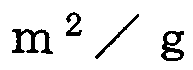
Claims
Priority Applications (4)
| Application Number | Priority Date | Filing Date | Title |
|---|---|---|---|
| KR19997005879A KR100351381B1 (ko) | 1996-12-27 | 1997-12-24 | 지르코늄-세륨계 복합산화물 및 그 제조법, 및 배기가스 정화용 조촉매 |
| US09/331,821 US6171572B1 (en) | 1996-12-27 | 1997-12-24 | Method for preparing a zirconium-cerium composite oxide |
| DE69724655.8T DE69724655C5 (de) | 1996-12-27 | 1997-12-24 | Zirkonium-cerium-verbundoxid, verfahren zur herstellung und cokatalysator zur reingung von abgas |
| EP97950373A EP0955267B1 (en) | 1996-12-27 | 1997-12-24 | Zirconium-cerium composite oxide, method for preparing the same, and co-catalyst for purifying exhaust gas |
Applications Claiming Priority (2)
| Application Number | Priority Date | Filing Date | Title |
|---|---|---|---|
| JP34967996A JP4053623B2 (ja) | 1996-12-27 | 1996-12-27 | ジルコニウム−セリウム系複合酸化物及びその製造方法 |
| JP8/349679 | 1996-12-27 |
Publications (1)
| Publication Number | Publication Date |
|---|---|
| WO1998029341A1 true WO1998029341A1 (fr) | 1998-07-09 |
Family
ID=18405375
Family Applications (1)
| Application Number | Title | Priority Date | Filing Date |
|---|---|---|---|
| PCT/JP1997/004786 Ceased WO1998029341A1 (fr) | 1996-12-27 | 1997-12-24 | Oxyde de compose zirconium et cerium, procede d'elaboration correspondant et co-catalyseur d'epuration des gaz |
Country Status (7)
| Country | Link |
|---|---|
| US (1) | US6171572B1 (ja) |
| EP (1) | EP0955267B1 (ja) |
| JP (1) | JP4053623B2 (ja) |
| KR (1) | KR100351381B1 (ja) |
| CN (1) | CN1098811C (ja) |
| DE (1) | DE69724655C5 (ja) |
| WO (1) | WO1998029341A1 (ja) |
Cited By (1)
| Publication number | Priority date | Publication date | Assignee | Title |
|---|---|---|---|---|
| US6492297B1 (en) * | 2000-09-15 | 2002-12-10 | Engelhard Corporation | Catalyst composition for purifying exhaust gas |
Families Citing this family (96)
| Publication number | Priority date | Publication date | Assignee | Title |
|---|---|---|---|---|
| US5919727A (en) * | 1996-11-14 | 1999-07-06 | W. R. Grace & Co.-Conn. | Ceric oxide washcoat |
| GB9903519D0 (en) * | 1999-02-16 | 1999-04-07 | Europ Economic Community | Precipitation process |
| JP4696338B2 (ja) * | 1999-07-09 | 2011-06-08 | 東ソー株式会社 | ジルコニア微粉末の製造方法 |
| JP4443685B2 (ja) * | 1999-09-10 | 2010-03-31 | 三井金属鉱業株式会社 | 排気ガス浄化用助触媒の製造方法 |
| US20020032123A1 (en) * | 2000-02-23 | 2002-03-14 | Ford Global Technologies, Inc. | Exhaust gas catalyst and method of manufacturing same |
| US6673143B2 (en) * | 2000-03-23 | 2004-01-06 | Shin-Etsu Chemical Co., Ltd. | Aqueous slurry of rare earth hydroxide particles |
| EP1166855B1 (en) * | 2000-06-27 | 2009-06-17 | ICT Co., Ltd. | Exhaust gas purifying catalyst |
| US6468941B1 (en) | 2000-10-17 | 2002-10-22 | Delphi Technologies, Inc. | Niobium containing zirconium-cerium based soild solutions |
| JP2002177781A (ja) | 2000-12-12 | 2002-06-25 | Ict:Kk | 排ガス浄化用触媒 |
| US7887714B2 (en) * | 2000-12-25 | 2011-02-15 | Nissan Chemical Industries, Ltd. | Cerium oxide sol and abrasive |
| US6803138B2 (en) * | 2001-07-02 | 2004-10-12 | Nextech Materials, Ltd. | Ceramic electrolyte coating methods |
| FR2829129B1 (fr) * | 2001-09-03 | 2004-10-15 | Rhodia Elect & Catalysis | Composition a reductibilite elevee et a base d'oxyde de cerium, d'oxyde de zirconium et d'un oxyde d'une autre terre rare, son procede de preparation et son utilisation comme catalyseur |
| US20040234438A1 (en) * | 2001-09-07 | 2004-11-25 | Lianxin Dai | Ceric oxide and method for production thereof, and catalyst for exhaust gas clarification |
| US20030186805A1 (en) * | 2002-03-28 | 2003-10-02 | Vanderspurt Thomas Henry | Ceria-based mixed-metal oxide structure, including method of making and use |
| JP3758601B2 (ja) | 2002-05-15 | 2006-03-22 | トヨタ自動車株式会社 | 吸蔵還元型NOx浄化用触媒 |
| FR2841547B1 (fr) * | 2002-06-26 | 2005-05-06 | Rhodia Elect & Catalysis | Composition a base d'oxyde de zirconium et d'oxydes de cerium, de lanthane et d'une autre terre rare, son procede de preparation et son utilisation comme catalyseur |
| US20030130117A1 (en) * | 2002-10-11 | 2003-07-10 | Veernoy Paul D. | Zirconia catalysts for nitrous oxide abatement |
| JP3797313B2 (ja) * | 2002-10-28 | 2006-07-19 | トヨタ自動車株式会社 | 金属酸化物粒子の製造法及び排ガス浄化用触媒 |
| US7265076B2 (en) * | 2002-12-26 | 2007-09-04 | Matsushita Electric Industrial Co, Ltd. | CO removal catalyst, method of producing CO removal catalyst, hydrogen purifying device and fuel cell system |
| RU2235686C1 (ru) * | 2003-01-04 | 2004-09-10 | Шарыгин Леонид Михайлович | Способ получения сферогранулированных материалов на основе гидроксида или оксида циркония |
| WO2004067171A1 (en) * | 2003-01-31 | 2004-08-12 | Aktina Limited | Petrol engine exhaust catalyst |
| CN1317074C (zh) * | 2003-03-14 | 2007-05-23 | 中国科学院大连化学物理研究所 | 一种锆基复合氧化物催化剂及制备方法和应用 |
| FR2852592B1 (fr) * | 2003-03-18 | 2007-02-23 | Rhodia Elect & Catalysis | Compositions a base d'un oxyde de cerium, d'un oxyde de zirconium et, eventuellement d'un oxyde d'une autre terre rare, a surface specifique elevee a 1100 c, leur procede de preparation et leur utilisation comme catalyseur |
| FR2852596B1 (fr) | 2003-03-18 | 2007-02-23 | Rhodia Elect & Catalysis | Composition a base d'oxydes de cerium et de zirconium a surface specifique stable entre 900 c et 1000 c, son procede de preparation et son utilisation comme catalyseur |
| FR2852591B1 (fr) * | 2003-03-18 | 2006-06-16 | Rhodia Elect & Catalysis | Composition a base d'oxyde de zirconium et d'oxyde de cerium a temperature maximale de reductibilite reduite, son procede de preparation et son utilisation comme catalyseur |
| FR2859470B1 (fr) * | 2003-09-04 | 2006-02-17 | Rhodia Elect & Catalysis | Composition a base d'oxyde de cerium et d'oxyde de zirconium a reductibilite et surface elevees, procede de preparation et utilisation comme catalyseur |
| EP1516855B1 (en) | 2003-09-15 | 2017-03-01 | Toyota Jidosha Kabushiki Kaisha | Cerium-zirconium composite metal oxide with a cerium oxide core surrounded by zirconium oxide |
| US7384888B2 (en) | 2003-09-15 | 2008-06-10 | Toyota Jidosha Kabushiki Kaisha | Cerium-zirconium composite metal oxide |
| JP4120559B2 (ja) | 2003-10-24 | 2008-07-16 | トヨタ自動車株式会社 | 排気ガス浄化用触媒 |
| JP5217072B2 (ja) | 2003-11-14 | 2013-06-19 | トヨタ自動車株式会社 | 排ガス浄化用触媒およびその製法 |
| US7452843B2 (en) * | 2003-12-29 | 2008-11-18 | Umicore Ag & Co. Kg | Exhaust treatment devices, catalyst, and methods of making and using the same |
| FR2866871B1 (fr) * | 2004-02-26 | 2007-01-19 | Rhodia Chimie Sa | Composition a base d'oxydes de zirconium, de praseodyme, de lanthane ou de neodyme, procede de preparation et utilisation dans un systeme catalytique |
| JP4165419B2 (ja) | 2004-03-09 | 2008-10-15 | トヨタ自動車株式会社 | 金属酸化物粒子及び排ガス浄化触媒の製造方法 |
| FR2868768B1 (fr) | 2004-04-07 | 2007-07-20 | Rhodia Chimie Sa | Composition a base d'oxydes de zirconium et d'ytrium, procede de preparation et utilisation dans un systeme catalytique |
| JP4165443B2 (ja) | 2004-04-27 | 2008-10-15 | トヨタ自動車株式会社 | 金属酸化物粒子の製造方法、及び排ガス浄化触媒 |
| JP4165441B2 (ja) * | 2004-04-27 | 2008-10-15 | トヨタ自動車株式会社 | 排ガス浄化触媒の製造方法 |
| CN104096594A (zh) * | 2004-04-27 | 2014-10-15 | 丰田自动车株式会社 | 制造金属氧化物粒子的方法及废气净化用催化剂 |
| CN1964919B (zh) * | 2004-06-11 | 2010-08-25 | 株式会社丰田中央研究所 | 金属氧化物纳米多孔体、用于得到它的被覆组合物以及它们的制造方法 |
| JP4660135B2 (ja) * | 2004-07-26 | 2011-03-30 | 第一稀元素化学工業株式会社 | ジルコニア系多孔質体及びその製造方法 |
| US7838460B2 (en) * | 2005-01-28 | 2010-11-23 | Kabushiki Kaisha Toyota Chuo Kenkyusho | Nanoporous metal oxide material, catalyst support, and catalyst for hydrogen production reaction using the same |
| JP4972868B2 (ja) * | 2005-03-17 | 2012-07-11 | 東ソー株式会社 | 表面修飾されたセリア・ジルコニア系水和酸化物、その酸化物及びそれらの製造方法並びに用途 |
| JP4179299B2 (ja) | 2005-03-23 | 2008-11-12 | トヨタ自動車株式会社 | 触媒担体粉末及び排ガス浄化触媒 |
| JP4648089B2 (ja) * | 2005-05-27 | 2011-03-09 | 株式会社キャタラー | 排ガス浄化用触媒 |
| CN100387522C (zh) * | 2005-07-27 | 2008-05-14 | 浙江师范大学 | 高储氧纳米铈基复合氧化物材料的制备工艺 |
| KR100713298B1 (ko) * | 2005-09-08 | 2007-05-04 | 한화석유화학 주식회사 | 내열성이 우수한 금속산화물 및 이의 제조방법 |
| JP4714568B2 (ja) * | 2005-11-22 | 2011-06-29 | マツダ株式会社 | 排気ガス浄化用触媒及びその製造方法 |
| JP5216189B2 (ja) * | 2005-12-22 | 2013-06-19 | 株式会社キャタラー | 排ガス浄化用触媒 |
| JP4789794B2 (ja) * | 2005-12-28 | 2011-10-12 | 第一稀元素化学工業株式会社 | セリウム・ジルコニウム複合酸化物及びその製造方法 |
| JP2007185588A (ja) * | 2006-01-12 | 2007-07-26 | Mazda Motor Corp | 排気ガス浄化用触媒 |
| JP4851190B2 (ja) * | 2006-01-13 | 2012-01-11 | 戸田工業株式会社 | 排気ガス浄化用触媒 |
| KR100723392B1 (ko) * | 2006-02-02 | 2007-05-30 | 삼성에스디아이 주식회사 | 복합 산화물 담지체, 저온 쉬프트 반응 촉매 및 그의 제조방법 |
| KR101076945B1 (ko) * | 2006-02-17 | 2011-10-26 | 로디아 오퍼레이션스 | 지르코늄, 세륨, 이트륨, 란타늄의 산화물 및 또 다른 희토류의 산화물을 기재로 하는 조성물, 그의 제조 방법 및 촉매 용도 |
| JP5065605B2 (ja) * | 2006-03-02 | 2012-11-07 | Jx日鉱日石エネルギー株式会社 | 水素製造装置および燃料電池システム並びにその運転方法 |
| FR2898887B1 (fr) * | 2006-03-21 | 2008-05-02 | Rhodia Recherches & Tech | Composition a base d'oxyde de zirconium et d'oxyde de cerium a reductibilite elevee et a surface specifique stable procede de preparation et utilisation dans le traitement des gaz d'echappement |
| KR100993706B1 (ko) * | 2006-05-15 | 2010-11-10 | 로디아 오퍼레이션스 | 지르코늄, 세륨 및 란타늄의 산화물 및 이트륨, 가돌리늄 또는 사마륨의 산화물 기재 고 비표면 및 환원성 조성물, 그의 제조 방법 및 촉매로서의 용도 |
| GB0609783D0 (en) * | 2006-05-17 | 2006-06-28 | Magnesium Elektron Ltd | Improved oxygen storage component |
| DK2359771T3 (en) | 2006-05-23 | 2016-08-29 | Ivoclar Vivadent Ag | A process for the preparation of colored blanks and dental form pieces. |
| DE102007011339A1 (de) | 2006-05-23 | 2007-12-06 | Ivoclar Vivadent Ag | Blockkörper |
| US8173562B2 (en) | 2006-05-23 | 2012-05-08 | Ivoclar Vivadent Ag | Shaded zirconia ceramics |
| EP2027371B1 (en) * | 2006-06-15 | 2019-12-04 | Dinex Finland Oy | Coating for particulate filters |
| JP5344805B2 (ja) * | 2006-06-20 | 2013-11-20 | 第一稀元素化学工業株式会社 | ジルコニア系複合酸化物及びその製造方法 |
| JP5196656B2 (ja) * | 2006-07-05 | 2013-05-15 | 株式会社キャタラー | 排ガス浄化用触媒及びその製造方法 |
| ATE507797T1 (de) * | 2006-09-13 | 2011-05-15 | Ivoclar Vivadent Ag | Mehrfarbiger formkörper |
| JP4928931B2 (ja) * | 2006-12-20 | 2012-05-09 | 日本電工株式会社 | セリア−ジルコニア系複合酸化物及びその製造方法 |
| JP5232401B2 (ja) * | 2007-04-05 | 2013-07-10 | 株式会社キャタラー | 排ガス浄化用触媒 |
| JP2008289971A (ja) | 2007-05-23 | 2008-12-04 | Toyota Motor Corp | コアシェル構造体及びその製造方法並びに当該コアシェル構造体を含む排ガス浄化用触媒 |
| FR2926075B1 (fr) * | 2008-01-09 | 2010-08-13 | Rhodia Operations | Composition a base d'oxyde de zirconium, d'oxyde d'yttrium et d'oxyde de tungstene, procede de preparation et utilisation comme catalyseur ou support de catalyseur. |
| US8389436B2 (en) | 2008-02-12 | 2013-03-05 | Santoku Corporation | Composite oxide |
| CN100569367C (zh) * | 2008-05-13 | 2009-12-16 | 桂林工学院 | 一种单环萜烯高收率的α-蒎烯异构化催化剂及制备方法 |
| WO2010058834A1 (ja) | 2008-11-21 | 2010-05-27 | 日産自動車株式会社 | 粒子状物質浄化材料、粒子状物質浄化材料を用いた粒子状物質浄化用フィルタ触媒及び粒子状物質浄化用フィルタ触媒の再生方法 |
| EP2223905A1 (en) | 2009-02-27 | 2010-09-01 | Treibacher Industrie AG | Novel zirconia ceria compositions |
| US8530372B2 (en) * | 2009-07-22 | 2013-09-10 | Basf Corporation | Oxygen storage catalyst with decreased ceria reduction temperature |
| RU2560376C2 (ru) | 2009-12-25 | 2015-08-20 | Анан Касеи Ко., Лтд. | Сложный оксид, способ его получения и катализатор для очистки выхлопных газов |
| FR2955098B1 (fr) * | 2010-01-11 | 2014-09-05 | Rhodia Operations | Composition a base d'oxydes de zirconium, de cerium et d'une autre terre rare a temperature maximale de reductibilite reduite, procede de preparation et utilisation dans le domaine de la catalyse. |
| CN102134089B (zh) * | 2011-02-01 | 2012-11-07 | 大连海事大学 | 一种具有纺锤状大尺度铈基复合氧化物粉体及其制备方法 |
| CN102134088B (zh) * | 2011-02-01 | 2012-08-22 | 大连海事大学 | 具有高比表面积羽毛状大颗粒铈基复合氧化物粉体及其制备方法 |
| EP2540391A1 (en) * | 2011-07-01 | 2013-01-02 | Treibacher Industrie AG | Ceria zirconia alumina composition with enhanced thermal stability |
| CN102407100B (zh) * | 2011-09-28 | 2013-07-03 | 上海华明高纳稀土新材料有限公司 | 纳米铈锆基固溶体稀土储氧材料及其制备方法 |
| EP2781487B1 (en) | 2011-11-16 | 2019-01-02 | Santoku Corporation | Composite oxide |
| CN103127925B (zh) * | 2011-11-23 | 2015-03-25 | 上海华明高纳稀土新材料有限公司 | 铈锆基固溶体稀土储氧材料及其制备方法 |
| WO2014121813A1 (en) * | 2013-02-05 | 2014-08-14 | Rhodia Operations | Precipitated and calcinated composition based on zirconium oxide and cerium oxide |
| US10010868B2 (en) | 2013-06-04 | 2018-07-03 | Nippon Denko Co., Ltd. | Ceria-zirconia-based composite oxide and method of production of the same |
| CN104591275B (zh) * | 2014-12-30 | 2016-05-18 | 四川大学 | 水介质分散铈锆氧化物纳米材料的合成方法 |
| GB201518996D0 (en) | 2015-10-27 | 2015-12-09 | Magnesium Elektron Ltd | Zirconia-based compositions for use as three-way catalysts |
| CN105736093B (zh) * | 2016-03-02 | 2018-04-10 | 吴振华 | 一种多元纳米稀土催化剂机动车尾气净化器及其制造方法 |
| JP6682650B2 (ja) | 2016-04-01 | 2020-04-15 | パシフィック インダストリアル デベロップメント コーポレイション | メソポーラスジルコニウム系複合酸化物の製造方法 |
| US12582966B2 (en) * | 2016-04-26 | 2026-03-24 | Rhodia Operations | Cerium- and zirconium-based mixed oxides |
| FR3050450A1 (fr) | 2016-04-26 | 2017-10-27 | Rhodia Operations | Oxyde mixte a base de cerium et de zirconium |
| KR102706190B1 (ko) | 2018-01-08 | 2024-09-12 | 패서픽 인더스트리얼 디벨럽먼트 코퍼레이션 | 세리아-지르코니아-산소 저장 물질을 포함하는 촉매 및 그 제조 방법 |
| CN111447997B (zh) | 2018-01-08 | 2023-08-01 | 太平洋工业发展公司 | 制造用于废气处理的介孔储氧材料的方法、所述储氧材料及其用途 |
| GB201901560D0 (en) * | 2019-02-05 | 2019-03-27 | Magnesium Elektron Ltd | Zirconium based dispersion for use in coating filters |
| EP3935015A1 (en) | 2019-03-03 | 2022-01-12 | Rhodia Operations | Mixed oxide with high pore volume |
| US20220177372A1 (en) * | 2019-07-30 | 2022-06-09 | Daiichi Kigenso Kagaku Kogyo Co., Ltd. | Zirconia-based composite oxide and method for manufacturing zirconia-based composite oxide |
| WO2021220727A1 (ja) * | 2020-04-28 | 2021-11-04 | ユミコア日本触媒株式会社 | Ce-Zr複合酸化物およびその製造方法ならびにこれを用いた排気ガス浄化用触媒 |
| CN112067607B (zh) * | 2020-09-09 | 2022-04-15 | 深圳九星印刷包装集团有限公司 | 一氧化碳指示装置 |
| CN114433063B (zh) * | 2022-01-12 | 2023-04-07 | 江门市科恒实业股份有限公司 | 一种铈锆复合氧化物及其制备方法 |
Citations (8)
| Publication number | Priority date | Publication date | Assignee | Title |
|---|---|---|---|---|
| JPH06316416A (ja) * | 1993-02-10 | 1994-11-15 | Rhone Poulenc Chim | ジルコニウム及びセリウムの混合酸化物を基とする組成物の製造方法 |
| JPH0716452A (ja) * | 1993-06-21 | 1995-01-20 | Santoku Kinzoku Kogyo Kk | 酸素吸収・放出能を有する複合酸化物及びその製造法 |
| JPH0716460A (ja) * | 1993-06-21 | 1995-01-20 | Santoku Kinzoku Kogyo Kk | 高温耐久性を有するセリウム及びジルコニウム含有複合酸化物及びその製造法 |
| JPH07315840A (ja) * | 1994-05-27 | 1995-12-05 | Rhone Poulenc Chim | 高い還元性を有するアルミナ−、酸化セリウム−及び酸化ジルコニウム基材化合物、それらの製造法、及び触媒の製造におけるそれらの使用 |
| JPH08109020A (ja) * | 1994-10-05 | 1996-04-30 | Santoku Kinzoku Kogyo Kk | 酸素吸収・放出能を有する複合酸化物 |
| JPH08109021A (ja) * | 1994-10-05 | 1996-04-30 | Santoku Kinzoku Kogyo Kk | 酸素吸収・放出能を有する複合酸化物及びその製造法 |
| JPH09175823A (ja) * | 1995-12-26 | 1997-07-08 | Daihatsu Motor Co Ltd | 耐熱性酸化物 |
| JPH09175822A (ja) * | 1995-12-26 | 1997-07-08 | Daihatsu Motor Co Ltd | 耐熱性酸化物 |
Family Cites Families (4)
| Publication number | Priority date | Publication date | Assignee | Title |
|---|---|---|---|---|
| AU595655B2 (en) * | 1986-11-04 | 1990-04-05 | Kabushiki Kaisha Toyota Chuo Kenkyusho | Catalyst for the purification of exhaust gas |
| FR2699524B1 (fr) * | 1992-12-21 | 1995-02-10 | Rhone Poulenc Chimie | Composition à base d'un oxyde mixte de cérium et de zirconium, préparation et utilisation. |
| FR2701471B1 (fr) * | 1993-02-10 | 1995-05-24 | Rhone Poulenc Chimie | Procédé de synthèse de compositions à base d'oxydes mixtes de zirconium et de cérium, compositions ainsi obtenues et utilisations de ces dernières. |
| US6030914A (en) * | 1996-11-12 | 2000-02-29 | Tosoh Corporation | Zirconia fine powder and method for its production |
-
1996
- 1996-12-27 JP JP34967996A patent/JP4053623B2/ja not_active Expired - Lifetime
-
1997
- 1997-12-24 US US09/331,821 patent/US6171572B1/en not_active Expired - Lifetime
- 1997-12-24 DE DE69724655.8T patent/DE69724655C5/de not_active Expired - Lifetime
- 1997-12-24 WO PCT/JP1997/004786 patent/WO1998029341A1/ja not_active Ceased
- 1997-12-24 EP EP97950373A patent/EP0955267B1/en not_active Expired - Lifetime
- 1997-12-24 KR KR19997005879A patent/KR100351381B1/ko not_active Expired - Lifetime
- 1997-12-24 CN CN97181053A patent/CN1098811C/zh not_active Expired - Lifetime
Patent Citations (8)
| Publication number | Priority date | Publication date | Assignee | Title |
|---|---|---|---|---|
| JPH06316416A (ja) * | 1993-02-10 | 1994-11-15 | Rhone Poulenc Chim | ジルコニウム及びセリウムの混合酸化物を基とする組成物の製造方法 |
| JPH0716452A (ja) * | 1993-06-21 | 1995-01-20 | Santoku Kinzoku Kogyo Kk | 酸素吸収・放出能を有する複合酸化物及びその製造法 |
| JPH0716460A (ja) * | 1993-06-21 | 1995-01-20 | Santoku Kinzoku Kogyo Kk | 高温耐久性を有するセリウム及びジルコニウム含有複合酸化物及びその製造法 |
| JPH07315840A (ja) * | 1994-05-27 | 1995-12-05 | Rhone Poulenc Chim | 高い還元性を有するアルミナ−、酸化セリウム−及び酸化ジルコニウム基材化合物、それらの製造法、及び触媒の製造におけるそれらの使用 |
| JPH08109020A (ja) * | 1994-10-05 | 1996-04-30 | Santoku Kinzoku Kogyo Kk | 酸素吸収・放出能を有する複合酸化物 |
| JPH08109021A (ja) * | 1994-10-05 | 1996-04-30 | Santoku Kinzoku Kogyo Kk | 酸素吸収・放出能を有する複合酸化物及びその製造法 |
| JPH09175823A (ja) * | 1995-12-26 | 1997-07-08 | Daihatsu Motor Co Ltd | 耐熱性酸化物 |
| JPH09175822A (ja) * | 1995-12-26 | 1997-07-08 | Daihatsu Motor Co Ltd | 耐熱性酸化物 |
Non-Patent Citations (1)
| Title |
|---|
| See also references of EP0955267A4 * |
Cited By (1)
| Publication number | Priority date | Publication date | Assignee | Title |
|---|---|---|---|---|
| US6492297B1 (en) * | 2000-09-15 | 2002-12-10 | Engelhard Corporation | Catalyst composition for purifying exhaust gas |
Also Published As
| Publication number | Publication date |
|---|---|
| JP4053623B2 (ja) | 2008-02-27 |
| US6171572B1 (en) | 2001-01-09 |
| EP0955267B1 (en) | 2003-09-03 |
| EP0955267A1 (en) | 1999-11-10 |
| DE69724655D1 (de) | 2003-10-09 |
| CN1241988A (zh) | 2000-01-19 |
| KR20000062370A (ko) | 2000-10-25 |
| JPH10194742A (ja) | 1998-07-28 |
| EP0955267A4 (en) | 2001-11-21 |
| CN1098811C (zh) | 2003-01-15 |
| DE69724655C5 (de) | 2021-04-22 |
| KR100351381B1 (ko) | 2002-09-05 |
| DE69724655T2 (de) | 2004-06-24 |
Similar Documents
| Publication | Publication Date | Title |
|---|---|---|
| WO1998029341A1 (fr) | Oxyde de compose zirconium et cerium, procede d'elaboration correspondant et co-catalyseur d'epuration des gaz | |
| JP3946982B2 (ja) | ジルコニア・セリア基複合酸化物の製造方法 | |
| JP4041106B2 (ja) | セリウム酸化物及びジルコニウム酸化物を基とし、高い比表面積及び高い酸素貯蔵能力を有する組成物並びにその製造方法 | |
| JP2893648B2 (ja) | 触媒支持体材料 | |
| JP5405977B2 (ja) | 酸化セリウム及び酸化ジルコニウムを主体とする向上した還元能と表面性を有する組成物、その製造方法、及び触媒としての利用 | |
| US6030914A (en) | Zirconia fine powder and method for its production | |
| JP3657620B2 (ja) | 硫黄を含有する燃料によって作動する内燃機関からの排気ガスを処理する方法 | |
| WO2003022740A1 (en) | Ceric oxide and method for production thereof, and catalyst for exhaust gas clarification | |
| WO2009076119A1 (en) | Low temperature water gas shift catalyst | |
| JP2003277059A (ja) | セリア−ジルコニア系複合酸化物 | |
| WO2019003424A1 (ja) | アルミナ系複合酸化物及びその製造方法 | |
| WO2000027527A1 (en) | Preparation of nanocrystalline and dispersible supported metal catalysts | |
| US3316057A (en) | Method of treating exhaust gases of internal combustion engines | |
| CN113275000B (zh) | 耐高温的铈锆复合氧化物及其制备方法与应用 | |
| JP4972868B2 (ja) | 表面修飾されたセリア・ジルコニア系水和酸化物、その酸化物及びそれらの製造方法並びに用途 | |
| CN114177902A (zh) | 一种具有微米级大孔的铈锆固溶体及其制备方法和应用 | |
| JPH11292538A (ja) | ジルコニア−セリア組成物の製造方法 | |
| JP2003265958A (ja) | 排ガス浄化用触媒 | |
| JPS6253739A (ja) | メタノ−ル合成触媒の製造方法 | |
| CN107224971A (zh) | 氧吸藏材料及其制造方法 | |
| JP5025996B2 (ja) | リチウムアルミネートの製造方法及びリチウムアルミネート | |
| JP2003275588A (ja) | Coシフト反応用触媒 | |
| JP2004330106A (ja) | 一酸化炭素変成用触媒及び該触媒を用いた一酸化炭素の変成方法 | |
| EP1043059B1 (en) | Catalyst for purifying an exhaust gas | |
| JP4206813B2 (ja) | 一酸化炭素変成用触媒及び該触媒を用いた一酸化炭素の変成方法 |
Legal Events
| Date | Code | Title | Description |
|---|---|---|---|
| WWE | Wipo information: entry into national phase |
Ref document number: 97181053.2 Country of ref document: CN |
|
| AK | Designated states |
Kind code of ref document: A1 Designated state(s): CN KR US |
|
| AL | Designated countries for regional patents |
Kind code of ref document: A1 Designated state(s): AT BE CH DE DK ES FI FR GB GR IE IT LU MC NL PT SE |
|
| DFPE | Request for preliminary examination filed prior to expiration of 19th month from priority date (pct application filed before 20040101) | ||
| 121 | Ep: the epo has been informed by wipo that ep was designated in this application | ||
| WWE | Wipo information: entry into national phase |
Ref document number: 09331821 Country of ref document: US |
|
| WWE | Wipo information: entry into national phase |
Ref document number: 1997950373 Country of ref document: EP |
|
| WWE | Wipo information: entry into national phase |
Ref document number: 1019997005879 Country of ref document: KR |
|
| WWP | Wipo information: published in national office |
Ref document number: 1997950373 Country of ref document: EP |
|
| WWP | Wipo information: published in national office |
Ref document number: 1019997005879 Country of ref document: KR |
|
| WWG | Wipo information: grant in national office |
Ref document number: 1019997005879 Country of ref document: KR |
|
| WWG | Wipo information: grant in national office |
Ref document number: 1997950373 Country of ref document: EP |