WO2000005271A1 - Process for producing olefin polymer - Google Patents
Process for producing olefin polymerInfo
- Publication number
- WO2000005271A1 WO2000005271A1 PCT/JP1999/003954 JP9903954W WO0005271A1 WO 2000005271 A1 WO2000005271 A1 WO 2000005271A1 JP 9903954 W JP9903954 W JP 9903954W WO 0005271 A1 WO0005271 A1 WO 0005271A1
- Authority
- WO
- WIPO (PCT)
- Prior art keywords
- group
- polymerization
- transition metal
- meta
- component
- Prior art date
- Legal status (The legal status is an assumption and is not a legal conclusion. Google has not performed a legal analysis and makes no representation as to the accuracy of the status listed.)
- Ceased
Links
Classifications
-
- C—CHEMISTRY; METALLURGY
- C08—ORGANIC MACROMOLECULAR COMPOUNDS; THEIR PREPARATION OR CHEMICAL WORKING-UP; COMPOSITIONS BASED THEREON
- C08F—MACROMOLECULAR COMPOUNDS OBTAINED BY REACTIONS ONLY INVOLVING CARBON-TO-CARBON UNSATURATED BONDS
- C08F10/00—Homopolymers and copolymers of unsaturated aliphatic hydrocarbons having only one carbon-to-carbon double bond
-
- C—CHEMISTRY; METALLURGY
- C08—ORGANIC MACROMOLECULAR COMPOUNDS; THEIR PREPARATION OR CHEMICAL WORKING-UP; COMPOSITIONS BASED THEREON
- C08F—MACROMOLECULAR COMPOUNDS OBTAINED BY REACTIONS ONLY INVOLVING CARBON-TO-CARBON UNSATURATED BONDS
- C08F10/00—Homopolymers and copolymers of unsaturated aliphatic hydrocarbons having only one carbon-to-carbon double bond
- C08F10/02—Ethene
-
- C—CHEMISTRY; METALLURGY
- C08—ORGANIC MACROMOLECULAR COMPOUNDS; THEIR PREPARATION OR CHEMICAL WORKING-UP; COMPOSITIONS BASED THEREON
- C08F—MACROMOLECULAR COMPOUNDS OBTAINED BY REACTIONS ONLY INVOLVING CARBON-TO-CARBON UNSATURATED BONDS
- C08F210/00—Copolymers of unsaturated aliphatic hydrocarbons having only one carbon-to-carbon double bond
- C08F210/16—Copolymers of ethene with alpha-alkenes, e.g. EP rubbers
-
- C—CHEMISTRY; METALLURGY
- C08—ORGANIC MACROMOLECULAR COMPOUNDS; THEIR PREPARATION OR CHEMICAL WORKING-UP; COMPOSITIONS BASED THEREON
- C08F—MACROMOLECULAR COMPOUNDS OBTAINED BY REACTIONS ONLY INVOLVING CARBON-TO-CARBON UNSATURATED BONDS
- C08F4/00—Polymerisation catalysts
- C08F4/42—Metals; Metal hydrides; Metallo-organic compounds; Use thereof as catalyst precursors
- C08F4/44—Metals; Metal hydrides; Metallo-organic compounds; Use thereof as catalyst precursors selected from light metals, zinc, cadmium, mercury, copper, silver, gold, boron, gallium, indium, thallium, rare earths or actinides
- C08F4/60—Metals; Metal hydrides; Metallo-organic compounds; Use thereof as catalyst precursors selected from light metals, zinc, cadmium, mercury, copper, silver, gold, boron, gallium, indium, thallium, rare earths or actinides together with refractory metals, iron group metals, platinum group metals, manganese, rhenium technetium or compounds thereof
- C08F4/62—Refractory metals or compounds thereof
- C08F4/64—Titanium, zirconium, hafnium or compounds thereof
- C08F4/659—Component covered by group C08F4/64 containing a transition metal-carbon bond
- C08F4/65908—Component covered by group C08F4/64 containing a transition metal-carbon bond in combination with an ionising compound other than alumoxane, e.g. (C6F5)4B-X+
-
- C—CHEMISTRY; METALLURGY
- C08—ORGANIC MACROMOLECULAR COMPOUNDS; THEIR PREPARATION OR CHEMICAL WORKING-UP; COMPOSITIONS BASED THEREON
- C08F—MACROMOLECULAR COMPOUNDS OBTAINED BY REACTIONS ONLY INVOLVING CARBON-TO-CARBON UNSATURATED BONDS
- C08F4/00—Polymerisation catalysts
- C08F4/42—Metals; Metal hydrides; Metallo-organic compounds; Use thereof as catalyst precursors
- C08F4/44—Metals; Metal hydrides; Metallo-organic compounds; Use thereof as catalyst precursors selected from light metals, zinc, cadmium, mercury, copper, silver, gold, boron, gallium, indium, thallium, rare earths or actinides
- C08F4/60—Metals; Metal hydrides; Metallo-organic compounds; Use thereof as catalyst precursors selected from light metals, zinc, cadmium, mercury, copper, silver, gold, boron, gallium, indium, thallium, rare earths or actinides together with refractory metals, iron group metals, platinum group metals, manganese, rhenium technetium or compounds thereof
- C08F4/62—Refractory metals or compounds thereof
- C08F4/64—Titanium, zirconium, hafnium or compounds thereof
- C08F4/659—Component covered by group C08F4/64 containing a transition metal-carbon bond
- C08F4/65912—Component covered by group C08F4/64 containing a transition metal-carbon bond in combination with an organoaluminium compound
-
- C—CHEMISTRY; METALLURGY
- C08—ORGANIC MACROMOLECULAR COMPOUNDS; THEIR PREPARATION OR CHEMICAL WORKING-UP; COMPOSITIONS BASED THEREON
- C08F—MACROMOLECULAR COMPOUNDS OBTAINED BY REACTIONS ONLY INVOLVING CARBON-TO-CARBON UNSATURATED BONDS
- C08F4/00—Polymerisation catalysts
- C08F4/42—Metals; Metal hydrides; Metallo-organic compounds; Use thereof as catalyst precursors
- C08F4/44—Metals; Metal hydrides; Metallo-organic compounds; Use thereof as catalyst precursors selected from light metals, zinc, cadmium, mercury, copper, silver, gold, boron, gallium, indium, thallium, rare earths or actinides
- C08F4/60—Metals; Metal hydrides; Metallo-organic compounds; Use thereof as catalyst precursors selected from light metals, zinc, cadmium, mercury, copper, silver, gold, boron, gallium, indium, thallium, rare earths or actinides together with refractory metals, iron group metals, platinum group metals, manganese, rhenium technetium or compounds thereof
- C08F4/62—Refractory metals or compounds thereof
- C08F4/64—Titanium, zirconium, hafnium or compounds thereof
- C08F4/659—Component covered by group C08F4/64 containing a transition metal-carbon bond
- C08F4/6592—Component covered by group C08F4/64 containing a transition metal-carbon bond containing at least one cyclopentadienyl ring, condensed or not, e.g. an indenyl or a fluorenyl ring
- C08F4/65922—Component covered by group C08F4/64 containing a transition metal-carbon bond containing at least one cyclopentadienyl ring, condensed or not, e.g. an indenyl or a fluorenyl ring containing at least two cyclopentadienyl rings, fused or not
- C08F4/65925—Component covered by group C08F4/64 containing a transition metal-carbon bond containing at least one cyclopentadienyl ring, condensed or not, e.g. an indenyl or a fluorenyl ring containing at least two cyclopentadienyl rings, fused or not two cyclopentadienyl rings being mutually non-bridged
-
- Y—GENERAL TAGGING OF NEW TECHNOLOGICAL DEVELOPMENTS; GENERAL TAGGING OF CROSS-SECTIONAL TECHNOLOGIES SPANNING OVER SEVERAL SECTIONS OF THE IPC; TECHNICAL SUBJECTS COVERED BY FORMER USPC CROSS-REFERENCE ART COLLECTIONS [XRACs] AND DIGESTS
- Y10—TECHNICAL SUBJECTS COVERED BY FORMER USPC
- Y10S—TECHNICAL SUBJECTS COVERED BY FORMER USPC CROSS-REFERENCE ART COLLECTIONS [XRACs] AND DIGESTS
- Y10S526/00—Synthetic resins or natural rubbers -- part of the class 520 series
- Y10S526/901—Monomer polymerized in vapor state in presence of transition metal containing catalyst
-
- Y—GENERAL TAGGING OF NEW TECHNOLOGICAL DEVELOPMENTS; GENERAL TAGGING OF CROSS-SECTIONAL TECHNOLOGIES SPANNING OVER SEVERAL SECTIONS OF THE IPC; TECHNICAL SUBJECTS COVERED BY FORMER USPC CROSS-REFERENCE ART COLLECTIONS [XRACs] AND DIGESTS
- Y10—TECHNICAL SUBJECTS COVERED BY FORMER USPC
- Y10S—TECHNICAL SUBJECTS COVERED BY FORMER USPC CROSS-REFERENCE ART COLLECTIONS [XRACs] AND DIGESTS
- Y10S526/00—Synthetic resins or natural rubbers -- part of the class 520 series
- Y10S526/904—Monomer polymerized in presence of transition metal containing catalyst at least part of which is supported on a polymer, e.g. prepolymerized catalysts
-
- Y—GENERAL TAGGING OF NEW TECHNOLOGICAL DEVELOPMENTS; GENERAL TAGGING OF CROSS-SECTIONAL TECHNOLOGIES SPANNING OVER SEVERAL SECTIONS OF THE IPC; TECHNICAL SUBJECTS COVERED BY FORMER USPC CROSS-REFERENCE ART COLLECTIONS [XRACs] AND DIGESTS
- Y10—TECHNICAL SUBJECTS COVERED BY FORMER USPC
- Y10S—TECHNICAL SUBJECTS COVERED BY FORMER USPC CROSS-REFERENCE ART COLLECTIONS [XRACs] AND DIGESTS
- Y10S526/00—Synthetic resins or natural rubbers -- part of the class 520 series
- Y10S526/943—Polymerization with metallocene catalysts
Definitions
- the present invention relates to a method for producing an olefin polymer, and more specifically, to polymerize an olefin in the presence of a meta-aqueous catalyst, to ensure stable operation for a long period of time without adhering to a product wall or forming a bulk polymer.
- the present invention relates to a method for producing an olefin polymer. Background art
- Olefin polymers such as linear low-density polyethylene (LLDPE), which is a copolymer of ethylene and ethylene and ⁇ -olefin, are widely used as film molding materials and injection molding materials. It's being used.
- LLDPE linear low-density polyethylene
- such an olefin polymer has been prepared by solution polymerization, suspension polymerization, bulk polymerization, or gas-phase polymerization in the presence of a titanium-based, magnesium- or halogen-based catalyst. Manufactured by polymerization or copolymerization.
- the product polymer adheres to the walls and stirring blades, and sometimes the adhered polymer melts to form a sheet-like polymer. On the other hand, it may generate a bulk polymer and block the product withdrawal line, which may hinder operation.
- a method of adding alcohols, ketones, etc. to the system Japanese Patent Application Laid-open No. Hei 1-233067
- a method of adding water Japanese Patent Publication No. 7-56) No. 65
- a method of adding a substance consisting of a mixture of an alcohol phosphate salt and a quaternary ammonium salt Japanese Patent Application Laid-Open No. 6-172124
- a method of adding water-containing particles in a reactor in advance Japanese Patent Application Laid-Open No. 485,073
- a method of initiating a reaction by previously charging particles containing oxygen into a reactor. Five No. 308 is known.
- a catalyst system comprising a catalyst component containing a metallocene compound of Group 4 metal of the long period table such as zirconium or titanium has been developed as a catalyst that has attracted attention in recent years ( Japanese Patent Publication No. 4 1 2 2 8 3 etc.). Polymers obtained using these methods have low crystallinity components and good blocking properties, and can control the processing properties by introducing long-chain branches. In recent years, it has attracted attention because of its unique features.
- the present inventor has found a method of producing a polymer having a metallocene-based transition metal catalyst and operating stably for a long period of time without producing a sheet-like polymer or a bulky polymer in the production of an olefin polymer. It was completed.
- the present invention when polymerizing olefins in the presence of a meta-mouthed transition metal catalyst, there is no adhesion of a polymer to a reactor wall or formation of a sheet-like polymer or a bulky polymer, and stable for a long time.
- the purpose is to perform operation, that is, to stabilize operation.
- the present invention has been made as a result of intensive studies to achieve the object, and [A] a meta-mouthed transition metal catalyst, and [B] a general formula
- R 1 is a C> 2 (1 alkyl group, Represents an aryl group, hydrogen or halogen.
- R 2 represents a C alkyl group or an aryl group.
- n is a number selected from 0 ⁇ n ⁇ 3.
- FIG. 1 is a flowchart for helping the understanding of the present invention.
- FIG. 2 is a flow chart showing a fluidized bed reactor used in the present invention. BEST MODE FOR CARRYING OUT THE INVENTION
- the term “polymerization” is used not only when only one type of monomer is used, but also includes copolymerization using two or more types of monomers. Further, the term “polymer” is used to include not only a polymer using one kind of monomer but also a copolymer using two or more kinds of monomers.
- operation stabilization refers to the conditions under which not only the formation of sheet-like polymer and bulk polymer but also the formation of molten polymer such as sheet-like polymer and bulk polymer when polymerizing olefins. That is, it is used for a long-term operation without the polymer adhering to the reactor wall or the stirring blade.
- the meta-acene catalyst used as the component [A] in the present invention is a catalyst consisting of [a1] a meta-acene compound and [a2] a clay, a clay mineral, an ion-exchangeable layered compound, or Instead of the component [a 2], it is composed of an organoaluminoxy compound supported on a carrier [a 3] or a boronanion-based compound supported on a carrier [a 4].
- the components [al], [a 2], [a 3], and [a 4] will be described below.
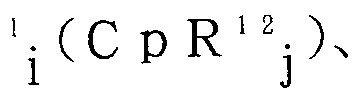
- the [a 1] meta-cyclopentane compound used in the present invention is a meta-cyclopentane transition metal compound containing a metal belonging to Groups 4, 5, and 6 of the Long Periodic Table, and represented by the following general formula (1). It is a compound.
- each (C pR 12 j) may be the same or different, Represents a substituted cyclopentagenyl group
- R 11 is a covalent cross-linking group containing an element of Group 14 or 15 of the Long Periodic Table such as carbon, gayne, and germanium
- each R 12 is the same Or a hydrogen, halogen, silicon-containing group, a hydrocarbon group having 1 to 20 carbon atoms which may have a halogen substituent, an alkoxy group or an aryloxy group
- two R 12 May be present at two adjacent carbon atoms of the cyclopentagenenyl ring and may be bonded to each other to form a C 4 -C 7 ring.
- R 11 is a covalent bond bridging group containing a group 14 or 15 element of the long-period table such as carbon, silicon, and germanium, and two groups represented by C pR 12 j It binds a cyclopentagenenyl ring-containing group.
- alkylidene groups such as methylene group and ethylene group, ethylidene group, propylidene group, isopropylidene group, phenylmethylidene group, alkylidene group such as diphxnylmethylidene group, dimethylsilylene group, dimethylsilylene group, Silicon-containing cross-linking groups such as propylsilylene group, disopropylsilylene group, diphenylsilylene group, methylethylsilylene group, methylphenylsilylene group, methylisopropylsilylene group, methyl-t-butylsilylene group, dimethylgermylene group, Diisopropylgermylene group, diphenylgermylene group, methylethylgermylene group, methylphenylgermylene group, methylisopropylgermylene group, methyl-t-butylgermene
- Examples include a germanium-containing cross-linking
- Each C p R 12 j is the same or different, and is a cyclopentagenenyl group or a substituted cyclopentagenenyl group.
- R 12 may be the same or different; halogen such as hydrogen, fluorine, chlorine, bromine and iodine; silicon-containing groups such as trimethylsilyl, triethylsilyl and triphenylsilyl groups; methyl, ethyl and propyl pill , Butyl, isobutyl, pentyl, isopentyl, hexyl, heptyl, octyl, nonyl, decyl, phenyl, chloromethyl, and chloromethyl hydrocarbons which may have a halogen group such as 1-20 And alkoxy groups such as methoxy, ethoxyquin, propoxy, and butoxy groups, or aryloxy groups such as phenoxy, methylphenoxy, and pentamethylphenoxy groups.
- R 12 when two R 12 are present at two adjacent carbon atoms of the cyclopentagenenyl ring, they are bonded to each other to form a C 4 to C 7 ring, and indenyl, tetrahydroindenyl, It may be a fluorenyl, octahydroflurenyl, azulenyl, or hexahydrazulenyl group.
- R 12 particularly preferred as R 12 are hydrogen, a methyl group, and two R 12 bonded to each other to form indenyl, tetrahydroindenyl, fluorenyl, octahydrofluorenyl, azulenyl, or hexahydroazure. It is a hydrocarbon group forming a phenyl group.
- R 13 may be the same or different; halogen such as hydrogen, fluorine, chlorine, bromine and iodine; silicon-containing groups such as trimethylsilyl, triethylsilyl, and triphenylsilyl groups; methyl, ethyl, propyl, butyl, and isobutyl. , Pentyl, isopentyl, hexyl, heptyl, octyl, nonyl, decyl, phenyl, chloromethyl, chloroethyl, and the like.
- halogen such as hydrogen, fluorine, chlorine, bromine and iodine
- silicon-containing groups such as trimethylsilyl, triethylsilyl, and triphenylsilyl groups
- Pentyl isopentyl, hexyl, heptyl, oc
- alkoxy group such as methoxy, ethoxyquin, propoxy and butoxy groups
- aryloxy group such as phenoxy, methylphenoxy and pentamethylphenoxy groups, and particularly preferably hydrogen, chlorine and methyl groups.
- M is the fourth,, of the long-period table of titanium, zirconium, hafnium, vanadium, niobium, tantalum, chromium, molybdenum, tungsten, etc. It is a Group 5 or 6 metal, with titanium, zirconium and hafnium being particularly preferred.
- zirconium is used as an example of the above-mentioned meta-opencene-based transition metal compound, and as a compound corresponding to the general formula (1), isopropylidene-bis (indenyl) zirconium dichloride, isopropylidene-bis (Indenyl) zirconium dimethyl, isopropylidene-bis (indenyl) zirconium dihydride, isopropylidene (cyclopentagenenyl) (fluorenyl) zirconium dichloride, isopropylidene (cyclopentagenenyl) (fluorenyl) zirconium dimethyl dimethyl, dimethyl Silyl (cyclopentagenenyl) (fluorenyl) dicondimethyldimethyl, isopropylidene (cyclopentagenenyl) (fluoreninole) zirconium dihydride, methylene-bis (cyclopentagenenyl) Zirco dimethyl dichloride,
- the [al] component represented by the general formula (1) may be used alone or in combination of two or more. Further, it can be used together with a known solid catalyst containing titanium trichloride as a main component or a carrier-supported catalyst containing magnesium, titanium and halogen as essential components.
- the [a1] component is typically used with [a2] clay, clay minerals, or ion-exchangeable layered compounds.
- clay is usually composed mainly of clay minerals.
- an ion-exchangeable layered compound is a compound having a crystal structure in which planes formed by ionic bonds and the like are stacked in parallel with weak bonding force, and the ions contained therein are exchangeable.
- Clays, clay minerals, and ion-exchange layered compounds are not limited to those of natural origin, but may be artificially synthesized.
- [a2] component examples include power olines such as date kitite, nacryite, kaolinite, anorkite, metahaloysite, and halloysite, serpentine groups such as chrysotile, risaldite, antigorite, and montmorillonite. , Zodiconite, beidelite, nontronite, savonite, theonilite, hectite, stevensite, etc., bamikyuraites such as bamikiuraite, mica, ylite, etc.
- mica such as chlorite, attapulgite, sepiolite, palygorskite, bentonite, pyrophyllite, talc, Chlorite group. These may form a mixed layer.
- smectites such as montmorillonite, zaconite, beidelite, nontronite, saponite, hectolite, stevensite, bentonite, theonilite, etc. The tribes and mica are preferred.
- the component [a 2] is also preferably subjected to a chemical treatment.
- a chemical treatment any of a surface treatment for removing impurities adhering to the surface and a treatment for affecting the crystal structure of the clay can be used. Specific examples include acid treatment, alkali treatment, salt treatment, and organic substance treatment. Acid treatment removes surface impurities and increases the surface area by eluting cations such as A1, Fe, and Mg in the crystal structure. Alkali treatment destroys the crystal structure of the clay, causing a change in the structure of the clay.
- salt treatment and organic substance treatment form ionic complexes, molecular complexes, and organic derivatives, and can change the surface area and eyebrow distance.
- ion exchange property By utilizing the ion exchange property and replacing the exchangeable ions between the layers with another large bulky ion, a layered material in which the layers are expanded can also be obtained.
- the bulky ions play a pillar-like role in supporting the layered structure, and are called pillars.
- T i C 1 4, Z r C 1 such cationic inorganic compounds, T i (oR) 4, Z r (oR) 4, PO (oR) 4, B (oR) 4, (R is an alkyl group or Ariru group) such as a metal Arukora bets, [a 1 13 0 4 (OH) 24] [Z r 4 (OH) ,. t] z [F e 3 O (OCOCH 3) 6] a metal hydroxide ion such as T and the like.
- These compounds may be used alone or in combination of two or more.
- pillars include oxides formed by subjecting the hydroxide ions to an interlayer between layers and then heating and dehydrating.
- a particularly preferred chemical treatment is a salt treatment and / or an acid treatment. Salt treatment and / or acid treatment can change the solid acid strength.
- the salt treatment forms an ion complex, a molecular complex, an organic derivative, and the like, and can change the surface area and the interlayer distance.
- a layered material in which the layers are expanded can be obtained.
- at least 30%, preferably at least 40%, of exchangeable cations contained in at least one compound selected from the group consisting of ion-exchangeable layered compounds before being treated with salts It is particularly preferable to exchange 60% or more of the ions with cations dissociated from the following salts.
- the salts used in the salt treatment of the present invention for the purpose of ion exchange are compounds containing a cation containing at least one atom selected from the group consisting of Groups 2 to 14.
- T i F 4 T i C 1 "T i B r 4, T i I" T I_ ⁇ _C 1 2, T i (S0 4 ) 2 T i ( N_ ⁇ 3) 4, T I_ ⁇ ( N0 3 ) 2 , T i 3 (P ⁇ 4 ) 4 , T i (C l ⁇ 4 ) 4,
- Mo OC 14 Mo C 1 3, and Mo C, Mo C 1 " ', Mo F 6, Mo I 2,
- Mn (OOCCH 3) M n (CH 3 C ⁇ CHCOCH 3) 2, Mn C0 3, Mn (N0 3) 2, MnO, Mn (C 10 4) 2 ⁇ Mn F 2, Mn C 1 2 ,
- the periodic table 4 5, 6 transition metal cations, i.e., T i 2 +, T i 3 T i 4 ', Z r:, Z r;, ⁇ Z r 4 ⁇ H, H f 3 ⁇ H f 4 ⁇ V 2 ' , V 3 ⁇ V 4 V'", N b 2 -, N b 3:, N b 4 -, N b 5 ⁇ T a 2 ⁇ T a 3 ', ⁇ a" T a 5 + , Salts containing C r 2 t C r 3 C r 4 i C r 5 i, C r Mo 2 + Mo 3 Mo 4+ Mo 5 + Mo 6 ⁇ W 2 ⁇ W 3 i W 4 ⁇ W 5 ⁇ W 6 It is.
- the acid treatment removes impurities on the surface and elutes some or all of the cations such as A 1 Fe Mg in the crystal structure.
- the acid used in the acid treatment is preferably selected from hydrochloric acid, sulfuric acid, nitric acid, acetic acid and oxalic acid.
- Two or more kinds of salts and acids may be used for the treatment. In the case of combining the salt treatment and the acid treatment, a method of performing the salt treatment and then performing the acid treatment, a method of performing the acid treatment and then performing the salt treatment, and a method of performing the salt treatment and the acid treatment simultaneously. is there.
- the treatment conditions with salts and acids are not particularly limited, but usually, the salt and acid concentrations are 0.1 to 30% by weight, the treatment temperature is from room temperature to the boiling point, and the treatment time is from 5 minutes to 24 hours. It is preferable to select at least one compound selected from the group consisting of ion-exchange layered compounds and to elute at least a part of a substance constituting at least one compound.
- salts and acids are generally used in an aqueous solution, but are not particularly limited to these.
- the component [a 2] obtained as described above can obtain a catalyst with good fluidity, and has a bulk density with few fine particles / coarse particles.
- an olefin polymer having a high molecular weight is obtained, and it is particularly preferable that the conditions (a), (mouth) and (c) are simultaneously satisfied.
- the average particle size is not less than 20 zm and not more than 1000; zm and the number of particles having a particle size of not more than 10 zm is not more than 20% of all particles.
- the crushing strength of particles measured with a micro compression tester shall be 0.5 MPa or more.
- the bulk density of the particles is 0.6 g / cm 3 or more.
- the condition (a) relates to the average particle size of the component [a 2] and the abundance of the component having a particle size of 10 m or less. 0 / m or less, and the number of particles having a particle size of 10 / m or less is 20% or less of all the particles.
- Average particle size is from 20 zm to 500 m
- the particles having a particle size of 0/111 or more and 10 or less are preferable, and the particles having a particle size of 10 zm or less are preferably 15% or less, more preferably 10% or less of all the particles.
- the condition (a) preferably satisfies one or both of the above-mentioned preferable conditions regarding the average particle diameter and the abundance of the particle diameter of 10 / m or less.
- the measurement of particles should be carried out using a particle size distribution analyzer (“LMS024”, light source: semiconductor laser (wavelength: 670 nm)) by the laser diffraction method of Seishin Enterprise Co., Ltd. Can be.
- LMS024 particle size distribution analyzer
- ethanol was used as a dispersion medium
- the refractive index was 33
- the shape factor was 1.0
- the particle size distribution and average particle size were calculated.
- the condition (mouth) relates to the strength of the component [a 2], specifically, that the crushing strength of the particles measured by a micro compression tester is 0.5 MPa or more.
- the crushing strength is at least 1. OMPa.
- the upper limit is 40 MPa.
- the crushing strength was measured using a micro compression tester “MCTM-500” manufactured by Shimadzu Corporation to measure the compressive strength of 10 or more particles, and the average value was used as the crushing strength. It was obtained as.
- the condition (c) relates to the bulk density of the component [a 2], and specifically, the value should be 0.6 g / cm 3 or more.
- the upper limit is 1.5 g / cm 3 .
- the component [a 2] that satisfies the conditions (a), (mouth), and (c) is, specifically, the clay, clay mineral, or ion-exchange layered compound exemplified above, and the above-mentioned salt treatment and / or acid treatment.
- it can be produced by controlling the particle properties by pulverization, granulation, sizing, classification, etc. before, during and after the treatment.
- the method can be any suitable one.
- granulation methods include spray granulation, tumbling granulation, compression granulation, stirring granulation, preketting, compacting, extrusion granulation, fluidized bed granulation, Emulsion granulation method, submerged granulation method and the like can be mentioned.
- Particularly preferred granulation methods are the spray granulation method, the tumbling granulation method, and the compression granulation method among the above.
- the clay, clay mineral, and ion-exchange layered compound may be used alone or in combination of two or more.
- organoaluminoxy compounds Next, the [a 3] organoaluminoxy compound will be described.
- the organoaluminoxy compound referred to herein is a compound represented by the following general formula (2) or (3).
- R 2 1 is an alkyl group of C
- r is an integer of 0 or more.
- [a 3] components are products obtained by reacting one type of trialkylaluminum or two or more types of trialkylaluminum with water.
- methylalumoxane, ethylalumoxane, butylalumoxane, isobutylalumoxane, etc. are mentioned.
- methylethylamine is used. Examples include alumoxane, methylbutylalumoxane, methylisobutylalumoxane, etc.o
- methylalumoxane isobutylalumoxane, methylisobutylalumoxane, and mixtures thereof. Particularly preferred are methylalumoxane and methylisobutylalumoxane.
- organoaluminoxy compounds can also be used by being supported on silica gel or alumina.
- those in which methylalumoxane is supported on silica gel are preferable.
- alumoxanes can be prepared under various known conditions. Specifically, the following methods can be exemplified.
- (A) A method in which a trialkylaluminum is directly reacted with water using an appropriate organic solvent such as toluene, benzene, or ether.
- the meta-mouthed transition metal catalyst is represented by the following general formula (4) together with the component [a 1] and the component [a 4].
- R 13 is formula (1) - [R ' ⁇ CC p R' (C p R '2 j) MR l 3 R' 4] R 15 - ⁇ ⁇ ' Is equivalent to
- R ′ 1 is a covalent cross-linking group containing an element of Group 14 or 15 of the Long Periodic Table such as carbon, gayne, and germanium;
- R '4 is a ligand of coordinating as tetrahydrofuran and the like neutral M.
- R 15 is a counter anion capable of stabilizing the metal cation represented by the general formula (4), and includes [a] such as tetrabutyl perolate, tetra (p-tolyl) borate, carbadodecaborate, and dicarpounde force borate. 4] component, that is, boron-anion compound You.
- Specific examples of the compound corresponding to the general formula (4) include: isopropylidene-bis (indenyl) zirconium (chloride) (tetraphenylborate) tetrahydrofuran complex, isopropylidene-bis (indenyl) zirconium (methyl) ) (Tetrafenolporate) Tetrahydrofuran complex, isopropylidenebis (indenyl) zirconium (hydrido) (Tetrafenylporate) Tetrahydrofuran complex, isopropylidene (cyclopentagenenyl) (fluorenol) zirconium ( Chloride) (tetraphenyl borate) tetrahydrofuran complex, isopropylidene (cyclopentagenenyl) (fluorenyl) zirconium (methyl) (tetrafluoroborate) tetrahydrofuran Complex, isopropylidene (cyclopen
- these boron anion compounds can be used by being supported on silica gel or alumina.
- the organoaluminum compound used as the component [a5] is an aluminum compound represented by the following general formula (5).
- R 3 represents an alkyl group of C 2
- X represents hydrogen, halogen, an alkoxy group, an alkylsilyl group, an alkylsiloxy group, an alkylamino group, or an alkylamide group.
- M represents 0 ⁇ m ⁇ 3 Number chosen.
- component [a5] include, for example, trimethylaluminum, triethylaluminum, tripropylaluminum, trin-butylaluminum, tritert-butylaluminum, tripentylaluminum, trioctylaluminium, tridecylaluminum, tridecylaluminum, and tridecylaluminum.
- Trialkylaluminums such as cyclohexylaluminum and tricyclooctylaluminum, dimethylaluminum chloride, dimethylaluminum chloride, dialkylaluminum halides such as dimethylaluminum bromide and diisobutylaluminum chloride, getylaluminum high Dialkyl aluminum hydride such as hydride and diisobutylaluminum hydride. Aluminum is preferable, and among them, triethylaluminum and triisobutylaluminum are particularly preferable.
- the supply amount of the component (B) is 0.0001 nanomo 1 to 100 nanomol, preferably 0.001 nanomol to 1 g of the product polymer discharged from the reactor. 5 0 0 0 nano mol, sa More preferably, the [a5] component is further added in addition to the addition of 0.01 nanomo1100 nanomo1.
- the method of supplying the components is usually a combination of a method of bringing the components into contact with the catalyst in advance and a method of supplying the components to the circulation line during the polymerization, but the supply method is not particularly limited. The following supply method may be used.
- the organoaluminum compound used as the component [B] is an alkoxy group-containing aluminum represented by the following general formula (6).
- R 1 is C 2 alkyl group, Ariru group, a hydrogen or halogen
- R 2 is C
- -.... 2 is n representing an alkyl group or Ariru group selected from 0 ⁇ n ⁇ 3 Number.
- dialkoxy such as methyl aluminum di (methoxide), ethyl aluminum di (ethoxide), isopropyl aluminum di (isopropoxide), ethyl aluminum di (isopropoxide), and ethyl aluminum di (phenoxide) Group-containing or diaryloxy group-containing aluminum, or these,
- Aluminum monoalkoxides such as dialkylaluminum (alkoxide), diallyl aluminum (alkoxide), dialkylaluminum (aryloxide), diarylaluminum (aryloxide),
- Trialkoxyaluminum such as aluminum tri (methoxide), aluminum tri (ethkind), anolemminium tri (isopropoxide) or triaryloxyaluminum compound such as aluminum tri (pentoxide), or dialkylaluminum (Alkoxide), diaryl aluminum (alkoxide), dialkyl aluminum (aryl oxide), diaryl aluminum (aryl oxide), alkyl aluminum di (alkoxide), aryl aluminum di (alkoxide), alkyl aluminum di (aryl oxide), aryl aluminum And mixtures thereof with di (aryl oxide).
- Alkoxide diaryl aluminum (alkoxide), dialkyl aluminum (aryl oxide), diaryl aluminum (aryl oxide), alkyl aluminum di (alkoxide), aryl aluminum di (alkoxide), alkyl aluminum di (aryl oxide), aryl aluminum And mixtures thereof with di (aryl oxide).
- getyl aluminum ethoxide is particularly preferred.
- These aluminum compounds containing an alkoxy group may be used alone or in combination of two or more. Further, these aluminums can be used as an arbitrary mixture with trialkylaluminums such as trimethylaluminum, triethylaluminum dium and triisobutylaluminum.
- a combination of trialkylaluminum and dialkylaluminum (alkoxide) is preferable, and a combination of triethylaluminum and getylaluminum ethoxide is particularly preferable.
- the supply amount of the component [B] is 0.0 001 nanomo 1-100 000 nanomo1, preferably 0.0 001 nanomo per 1 g of the product polymer discharged from the reactor. mo 1 to 500 nanomol, more preferably 0.01 nanomo1 to 1000 nanom01.
- the supply amount of the component [B] is not particularly limited to the component [a5], but is supplied to the component [a5] 1 mol. Therefore, it is desirable that the water is supplied in the range of 0.001 to 100 mo1, preferably in the range of 0.01 to 10 mo1. Further, the supply amount of the component [B] is not particularly limited with respect to the metallocene transition metal compound supplied to the reaction system as the component [a 1]. It is desirably supplied in the range of 0.01 to 100 mol, preferably 0.1 to 100 mol.
- the supply of component [B] to the reactor is usually supplied to the circulation line attached to the reactor where the polymerization is performed, but the supply point is not particularly limited, and the following supply method should be used. Can be.
- the methacrylate catalysts used in the present invention may be ethylene, propylene, 1-butene, 1-hexene, 1-octene, 4-methyl-1-pentene, etc., or a mixture thereof.
- the olefin mixture may be preliminarily polymerized.
- the prepolymerization is preferably carried out so as to produce 0.01 to 100 g of a polymer per 1 g of the catalyst before the prepolymerization.
- the polymerization method of the olefin according to the present invention is to polymerize the olefin in the presence of the above-mentioned olefin polymerization catalyst, and includes a gas phase polymerization, a bulk polymerization, a slurry polymerization, and the like.
- a gas phase polymerization method particularly preferred is a gas phase polymerization method.
- the problem that occurs when the above polymerization is performed is that the polymerized polymer fine powder adheres and stays on the reactor walls and stirring blades due to electrostatic force, etc. There is a problem that the polymer melts on the vessel wall or the surface of the stirring blade and forms a sheet-like polymer or a bulk polymer. These sheet and bulk polymers block the extraction line and make it impossible to extract the polymerized polymer, which is a major obstacle to supplying products stably over a long period of time.
- Conditions for forming the sheet-like polymer and the block-like polymer include that the polymer-polymer fine powder adheres and stays on the vessel wall and the stirring blade surface. It can be monitored whether or not there is adhesion retention on the vessel wall by installing a wall thermometer that measures the vessel wall surface and observing the difference between the wall temperature and the polymerization temperature. In other words, when there is a large amount of adhesion retention, the polymer polymer adheres thickly, causing a temperature drop, and the difference between the polymerization temperature and the vessel wall temperature becomes large. Conversely, when the adhesion retention is small, the temperature drop is small, so the difference between the polymerization temperature and the vessel wall temperature is small. Therefore, by monitoring this temperature difference, it is possible to detect the conditions under which the sheet polymer or the bulk polymer is generated at an early stage.
- the wall temperature (denoted by tw. Unit: ° C) is usually lower than the polymerization temperature (denoted by tr. Unit: C) because heat escapes to the outside of the reactor.
- tw. Unit: ° C The wall temperature (denoted by tw. Unit: ° C) is usually lower than the polymerization temperature (denoted by tr. Unit: C) because heat escapes to the outside of the reactor.
- the aforementioned component [A] is supplied to a stirred fluidized bed reactor 2 from a catalyst supply line 1 shown in FIG.
- a raw material monomer or an inert gas such as nitrogen is supplied from a raw material supply line 4 into a circulating gas line 3, and a component [B] is supplied from a supply line 5 to a circulating gas pump.
- Drive 7 to circulate these gases.
- the circulating gas is again fed back to the stirred fluidized bed reactor.
- the product and surplus gas are led to the product separator 10 from the extraction line 9.
- the product is continuously or intermittently supplied by the product extraction line 1 2 below the separator. Extract and purge excess gas from the upper purge line 1 1 to the outside of the system.
- the pressure of the reactor is kept constant by adjusting the opening of the pressure control valve installed on the purge line 11.
- a fluidized bed is formed by particles charged in advance, or a polymer gas generated by polymerization, a fluid gas composed of a raw material monomer, an inert gas, and the like, and a stirring blade 6 for mechanically stirring.
- the stirring blade 6 is forcibly stirred by the motor 14.
- thermometer 13 is installed in the reactor to measure the temperature of the vessel wall, and the difference between the polymerization temperature and the vessel wall temperature is monitored. It is preferable that the thermometer for measuring the wall temperature be installed within a range of 0.5 to 10.0 mm from the wall.
- the flowing gas is in the range of 5 V 0 1% to 90 V o 1% for inert gas, and 10 V 0 1% to 95 V 0 for the raw material monomer such as ethylene and ⁇ -olefin. Operated in 1% range.
- the heat of polymerization generated by the reaction is removed by the heat exchanger 8 installed in the circulation gas line.
- the pressure of the gas used is 1 kg / cm 2 ⁇ 1 0 0 kg / cm 2 , preferably in the range 5 kg / cm 2 ⁇ 5 0 was used in the range of kg / cm 2, temperature 1 0 ° C ⁇ 1 0 In the range of 0 ° C, preferably in the range of 30 ° C to 100 ° C, more preferably in the range of 50 ° C to 100 ° C. Use within the range.
- a stirring blade such as a ribbon-type stirring blade machine, an anchor-type stirring machine or a screw-type stirring machine can be used. Furthermore, two or more polymerization reactors as shown in Fig. 2 can be connected in series to perform multi-stage polymerization.
- a fluidized bed other than the agitated fluidized bed can be used as the fluidized bed reactor 2.
- An example of the fluidized bed is a gas-phase fluidized bed using a dispersion plate when circulating gas is introduced into the reaction system.
- the orefin used in the present invention is preferably an orefin having 2 to 18 carbon atoms.
- Examples thereof include ethylene, propylene, 1-butene, 11-pentene, 11-hexene, 4-methyl-11-pentene and 3 —Methyl-1-pentene, 1-heptene, 1-octene, 1-nonene, 1-decene, 1-dedecene, 1-dodecene, 1-tetradecene, 1-hexadecene, and 1-year-old kutadecene.
- cyclopentene, cycloheptene, norbornene, 5-methyl-2-norbornene, styrene, vinylcyclohexane and the like can be mentioned.
- these olefins are polymerized or copolymerized.
- Polyenes such as butadiene, isoprene, 1,4-hexadiene, dicyclopentadiene, 5-ethylidene-2-norbornene, etc., must also be copolymerized. Can also.
- ethylene or copolymerize ethylene with ⁇ -olefin having 3 to 18 carbon atoms it is preferable to homopolymerize ethylene or copolymerize ethylene with ⁇ -olefin having 3 to 18 carbon atoms, and particularly copolymerize with ethylene and 1-year-old olefin having 3 to 18 carbon atoms. It is preferred to combine them, or to homopolymerize propylene, or copolymerize propylene with ethylene and / or a single olefin having 4 to 18 carbon atoms.
- an inert gas such as nitrogen or a saturated hydrocarbon can be used at the same time.
- the heat may be removed and condensed in the heat exchanger 8, but the polymerization temperature of the fluidized bed reactor 2 depends on the high-temperature refine or non-hydrogen.
- the conditions under which the saturated hydrocarbon becomes a gas are selected.
- melt index Ml
- density the density of the melt index
- the gas concentration in the system was measured using gas chromatography.
- Ethylene and 11-hexene were measured using Hitachi Model 163.
- the hydrogen concentration was measured using Shimadzu Model 4C (detector TCD method) and Hitachi. Factory 2 6 3—30 type (detector PID method) was used depending on the hydrogen concentration.
- swellable synthetic mica (“Somasif ME—100” manufactured by Corp Chemical) 4 100 g of commercially available hydrophilic smectite (manufactured by Coop Chemical Co., Ltd., “SWN”) was mixed and dispersed in 2.8 liters of a 2.0% by weight aqueous solution of chromium nitrate (M). The mixture was stirred at room temperature for 2 hours. This was filtered and washed with deionized water. Water was added to the obtained solid part to prepare a 20.0% by weight water slurry, which was subjected to a spray drying treatment. As a result, 450 g of particles having an average particle size of 54 / m were obtained.
- the number of particles having an average particle diameter of 10 / m or less was 4% of all the particles, the crushing strength was 2.0 MPa, and the bulk density was 0.75 g / cc.
- the particles were further dried under reduced pressure at 200 ° C. for 2 hours.
- Gas phase polymerization was carried out using the preliminary polymerization catalyst of the above (3). Polymerization was carried out in a continuous gas phase polymerization reactor as shown in FIG. 1.1 kg of the seed polymer is weighed in advance and charged into the reactor, the catalyst prepared above is slurried with n-hexane, and converted into 30 Omg / hr in terms of per prepolymerized catalyst. Supplied. Similarly, triethylaluminum diluted in n-hexane was supplied to the reactor at 27 Omg / hr. Further, getyl aluminum ethoxide diluted with n-hexane was intermittently fed at 30 mg / hr.
- the polymerization reactor was carried out under the conditions of a pressure of 20 kg / cm 2 , a polymerization reaction temperature of 83 ° C., an average residence time of 3.7 hours, and a rotation speed of a stirring blade of 150 rpm.
- the gas concentration in the system was analyzed periodically using gas chromatography. Each time, the ethylene concentration in the reactor was 84.0 to 87.0 V 0 1%, and the 1-hexene concentration was 3%. 3 to 3.5 V 0 1%, hydrogen concentration 180 to 210
- the feed gas amount was adjusted so as to be kept in the range of ppm. In the steady state where the production was almost constant, the feed rate of ethylene gas was 5.5 kg / hr.
- the feed rate of hexene was 0.6 kg / hr. Under these conditions, we operated for three hours, but it was possible to operate stably without any trouble in the extraction line.
- the difference between the polymerization temperature (tr) and the wall temperature (tw) was in the range of 3.0-5.0 ° C. After the polymerization was completed, the reactor was opened and an internal inspection was performed. No formation of a sheet polymer or a bulk polymer was observed, and no polymer adhered to the wall.
- the density of the polymer was 0.9926 g / cc, the melt index (MI) was 1.6 g / 10 minutes, the average particle size was 790 / m, and the bulk density was 0.38 g / cc. Was.
- polymerization was carried out without using getyl aluminum etkind.
- the polymerization conditions such as the gas concentration in the system, the polymerization pressure, the polymerization temperature, and the number of rotations of the stirring blade were set to be the same as those in Example 1.
- the difference between the polymerization temperature immediately before adding the catalyst and the vessel wall temperature was 3.5 ° C.
- Half a day after the start of the polymerization the temperature difference between the polymerization temperature and the vessel wall temperature began to increase, and reached 11.5 ° C in one day.
- the phenomenon that the wall temperature sometimes jumped up was observed, and a rise to a maximum of 87 ° C was observed.
- the polymerization was carried out under the following operating conditions: a pressure of 20 kg / cm 2 , a temperature of 80 ° C., an average residence time of 4.1 hours, and a stirring blade rotation speed of 150 rpm.
- the gas concentration in the system was analyzed periodically using gas chromatography, and the ethylene concentration in the reactor was 84.0 to 87.0 vol% and the 1-butene concentration was 3.0 to 3.
- the feed gas amount was adjusted so that the hydrogen concentration was kept in the range of 5 vol% and the hydrogen concentration was 210 to 24 Oppm.
- the difference between the polymerization temperature before the catalyst feed and the reactor wall temperature was 3.5 ° C.
- the difference between the polymerization temperature and the reactor wall temperature gradually widened after the start of the catalyst feed, and reached 10 ° C or more after one day. After another half day, the reactor wall temperature sometimes jumps and the reactor wall temperature exceeds 80 ° C even though the polymerization temperature is kept at 80 ° C. It became so. For this reason, tert-dimethyl methoxide diluted with n-hexane was fed intermittently at 34 mg / hr.
- Example 2 Using a catalyst prepared in the same manner as in Example 1, polymerization was carried out using a continuous gas phase polymerization reactor. Polymerization was carried out under the same conditions as in Example 1 except that ethanol was supplied instead of supplying getyl aluminum ethoxide.
- the difference between the polymerization temperature and the reactor wall temperature was 3.4 ° C. Since the temperature difference started to widen gradually after the start of polymerization, ethanol supply was started. Ethanol was placed in a metal pot under the conditions of 25 ° C and polymerization pressure + 2 kg / cm 2 , and nitrogen gas was passed through the ethanol by publishing. Supplied to the system. Assuming that the ethanol in the nitrogen gas passed through the bubbling was saturated, the ethanol supply amount was 2 O mg / hr.
Landscapes
- Chemical & Material Sciences (AREA)
- Health & Medical Sciences (AREA)
- Chemical Kinetics & Catalysis (AREA)
- Medicinal Chemistry (AREA)
- Polymers & Plastics (AREA)
- Organic Chemistry (AREA)
- Crystallography & Structural Chemistry (AREA)
- Engineering & Computer Science (AREA)
- Materials Engineering (AREA)
- Transition And Organic Metals Composition Catalysts For Addition Polymerization (AREA)
Description
Claims
Priority Applications (2)
| Application Number | Priority Date | Filing Date | Title |
|---|---|---|---|
| US09/508,513 US6353063B1 (en) | 1998-07-24 | 1999-07-23 | Process for producing olefin polymer |
| EP99931510A EP1018520A4 (en) | 1998-07-24 | 1999-07-23 | PROCESS RELATING TO THE PRODUCTION OF OLEFIN POLYMER |
Applications Claiming Priority (2)
| Application Number | Priority Date | Filing Date | Title |
|---|---|---|---|
| JP20928298 | 1998-07-24 | ||
| JP10/209282 | 1998-07-24 |
Publications (1)
| Publication Number | Publication Date |
|---|---|
| WO2000005271A1 true WO2000005271A1 (en) | 2000-02-03 |
Family
ID=16570372
Family Applications (1)
| Application Number | Title | Priority Date | Filing Date |
|---|---|---|---|
| PCT/JP1999/003954 Ceased WO2000005271A1 (en) | 1998-07-24 | 1999-07-23 | Process for producing olefin polymer |
Country Status (4)
| Country | Link |
|---|---|
| US (1) | US6353063B1 (ja) |
| EP (1) | EP1018520A4 (ja) |
| KR (1) | KR100545463B1 (ja) |
| WO (1) | WO2000005271A1 (ja) |
Families Citing this family (22)
| Publication number | Priority date | Publication date | Assignee | Title |
|---|---|---|---|---|
| DE19915108A1 (de) * | 1999-04-01 | 2000-10-05 | Bayer Ag | Geträgerte Katalysatoren mit einer Donor-Akzeptor-Wechselwirkung |
| CN100509872C (zh) * | 2002-12-13 | 2009-07-08 | 陶氏环球技术公司 | 含有13族氨化物衍生物的烯烃聚合催化剂组合物 |
| JP2006509898A (ja) * | 2002-12-16 | 2006-03-23 | バーゼル、ポリオレフィン、ゲゼルシャフト、ミット、ベシュレンクテル、ハフツング | アルミノキサンを少量含む担持触媒組成物の製造 |
| US7220695B2 (en) * | 2004-01-07 | 2007-05-22 | Exxonmobil Chemical Patents Inc. | Supported activator |
| US7741417B2 (en) * | 2004-01-07 | 2010-06-22 | Exxonmobil Chemical Patents Inc. | Preparation of polymerization catalyst activators utilizing indole-modified silica supports |
| US7253239B2 (en) * | 2004-10-29 | 2007-08-07 | Westlake Longview Corporation | Method for preventing or inhibiting fouling in a gas-phase polyolefin polymerization process |
| US20070299222A1 (en) * | 2006-04-04 | 2007-12-27 | Fina Technology, Inc. | Transition metal catalysts and formation thereof |
| US7683002B2 (en) * | 2006-04-04 | 2010-03-23 | Fina Technology, Inc. | Transition metal catalyst and formation thereof |
| US8022005B2 (en) | 2007-11-08 | 2011-09-20 | Exxonmobil Chemical Patents Inc. | Halogen substituted heterocyclic heteroatom containing ligands-alumoxane activation of metallocenes |
| US9321854B2 (en) | 2013-10-29 | 2016-04-26 | Exxonmobil Chemical Patents Inc. | Aluminum alkyl with C5 cyclic and pendent olefin polymerization catalyst |
| BR112017024302A2 (pt) | 2015-05-11 | 2018-07-24 | Grace W R & Co | processo para a produção de argila modificada, catalisador de polimerização de metaloceno suportado, catalisador produzido e uso dos mesmos |
| US10940460B2 (en) | 2015-05-11 | 2021-03-09 | W. R. Grace & Co.-Conn. | Process to produce modified clay, modified clay produced and use thereof |
| WO2016195824A1 (en) | 2015-05-29 | 2016-12-08 | Exxonmobil Chemical Patents Inc. | Polymerization process using bridged metallocene compounds supported on organoaluminum treated layered silicate supports |
| US10618988B2 (en) | 2015-08-31 | 2020-04-14 | Exxonmobil Chemical Patents Inc. | Branched propylene polymers produced via use of vinyl transfer agents and processes for production thereof |
| CN107921424A (zh) | 2015-08-31 | 2018-04-17 | 埃克森美孚化学专利公司 | 粘土上的具有悬垂烯烃的烷基铝 |
| US11041029B2 (en) | 2015-08-31 | 2021-06-22 | Exxonmobil Chemical Patents Inc. | Aluminum alkyls with pendant olefins for polyolefin reactions |
| US10059788B2 (en) | 2016-04-29 | 2018-08-28 | Exxonmobil Chemical Patents Inc. | Organoaluminum activators on clays |
| US10562987B2 (en) | 2016-06-30 | 2020-02-18 | Exxonmobil Chemical Patents Inc. | Polymers produced via use of quinolinyldiamido transition metal complexes and vinyl transfer agents |
| US10626200B2 (en) | 2017-02-28 | 2020-04-21 | Exxonmobil Chemical Patents Inc. | Branched EPDM polymers produced via use of vinyl transfer agents and processes for production thereof |
| WO2018160278A1 (en) | 2017-03-01 | 2018-09-07 | Exxonmobil Chemical Patents Inc. | Branched ethylene copolymers produced via use of vinyl transfer agents and processes for production thereof |
| KR20240023174A (ko) | 2021-06-24 | 2024-02-20 | 보레알리스 아게 | 올레핀 중합 촉매의 압축 특성을 결정하는 방법 |
| WO2026019921A1 (en) * | 2024-07-19 | 2026-01-22 | Yield Engineering Systems, Inc. | Control of surface polymerization rate by formulation of reaction compositions |
Citations (3)
| Publication number | Priority date | Publication date | Assignee | Title |
|---|---|---|---|---|
| JPH06136046A (ja) * | 1992-10-29 | 1994-05-17 | Mitsubishi Kasei Corp | オレフィン重合用触媒及びオレフィン重合体の製造方法 |
| JPH08143616A (ja) * | 1994-09-21 | 1996-06-04 | Mitsui Petrochem Ind Ltd | オレフィン重合用触媒およびオレフィンの重合方法 |
| JPH1171415A (ja) * | 1997-07-02 | 1999-03-16 | Basf Ag | チーグラー/ナッタ触媒組成物によるc2−c8アルカ−1−エンの重合方法 |
Family Cites Families (4)
| Publication number | Priority date | Publication date | Assignee | Title |
|---|---|---|---|---|
| US5241025A (en) * | 1987-01-30 | 1993-08-31 | Exxon Chemical Patents Inc. | Catalyst system of enhanced productivity |
| US5206199A (en) * | 1987-04-20 | 1993-04-27 | Mitsui Petrochemical Industries, Ltd. | Catalyst for polymerizing an olefin and process for polymerizing an olefin |
| US5122491A (en) * | 1987-04-20 | 1992-06-16 | Mitsui Petrochemical Industries, Ltd. | Catalyst for polymerizing an olefin and process for polymerizing an olefin |
| TW218884B (ja) * | 1991-05-01 | 1994-01-11 | Mitsubishi Kakoki Kk |
-
1999
- 1999-07-23 EP EP99931510A patent/EP1018520A4/en not_active Withdrawn
- 1999-07-23 WO PCT/JP1999/003954 patent/WO2000005271A1/ja not_active Ceased
- 1999-07-23 US US09/508,513 patent/US6353063B1/en not_active Expired - Fee Related
- 1999-07-23 KR KR1020007003125A patent/KR100545463B1/ko not_active Expired - Fee Related
Patent Citations (3)
| Publication number | Priority date | Publication date | Assignee | Title |
|---|---|---|---|---|
| JPH06136046A (ja) * | 1992-10-29 | 1994-05-17 | Mitsubishi Kasei Corp | オレフィン重合用触媒及びオレフィン重合体の製造方法 |
| JPH08143616A (ja) * | 1994-09-21 | 1996-06-04 | Mitsui Petrochem Ind Ltd | オレフィン重合用触媒およびオレフィンの重合方法 |
| JPH1171415A (ja) * | 1997-07-02 | 1999-03-16 | Basf Ag | チーグラー/ナッタ触媒組成物によるc2−c8アルカ−1−エンの重合方法 |
Non-Patent Citations (1)
| Title |
|---|
| See also references of EP1018520A4 * |
Also Published As
| Publication number | Publication date |
|---|---|
| EP1018520A1 (en) | 2000-07-12 |
| KR20010030695A (ko) | 2001-04-16 |
| US6353063B1 (en) | 2002-03-05 |
| EP1018520A4 (en) | 2007-07-25 |
| KR100545463B1 (ko) | 2006-01-24 |
Similar Documents
| Publication | Publication Date | Title |
|---|---|---|
| WO2000005271A1 (en) | Process for producing olefin polymer | |
| RU2258712C2 (ru) | Способ полимеризации | |
| AU710813B2 (en) | Supported catalyst containing tethered cation forming activator | |
| AU743070B2 (en) | Catalyst delivery method and catalyst feeder | |
| KR100567505B1 (ko) | 사이클로펜타페난트레닐 금속 착체 및 중합 방법 | |
| JP4751836B2 (ja) | 担持活性化剤 | |
| US20080058487A1 (en) | Polymerization reactor operability using static charge modifier agents | |
| CZ298647B6 (cs) | Sloucenina, která je reakcním produktem iontové slouceniny a organokovové nebo metaloidní slouceniny, nenanesená katalytická kompozice, katalytická komponentová kompozice, nanesená katalytická kompozice a zpusob adicní polymerace | |
| KR20000005027A (ko) | 분산된 촉매 활성화제를 사용하는 용액 중합 방법 | |
| CA2430517A1 (en) | Catalyst composition, method of polymerization and polymer therefrom | |
| CA2420631A1 (en) | A catalyst system and its use in a polymerization process | |
| US6977283B1 (en) | Polymerization process | |
| US6620894B2 (en) | Start-up procedure for multiple catalyst polymerization systems | |
| AU4463800A (en) | A method for preparing a supported catalyst system and its use in a polymerization process | |
| KR100572541B1 (ko) | 감소된 양의 용매를 이용한 지지된 중합 촉매의 제조 방법및 중합방법 | |
| KR100538590B1 (ko) | 폴리올레핀의 고수율 합성을 위한 촉매 시스템 | |
| KR100594336B1 (ko) | 올레핀 중합 방법 | |
| US6852811B1 (en) | Process for preparing a supported polymerization catalyst using reduced amounts of solvent and polymerization process | |
| EP1070088B1 (en) | Polymerization process | |
| JP4020540B2 (ja) | オレフィン重合体の製造方法 | |
| MXPA01006188A (es) | Modificador de catalizador y su uso en la polimerizacion de olefina (s). | |
| JP5562682B2 (ja) | オレフィン重合用固体触媒の製造方法およびポリオレフィンの製造方法 | |
| JP2002114803A (ja) | プロピレン系ランダム共重合体の製造方法 |
Legal Events
| Date | Code | Title | Description |
|---|---|---|---|
| AK | Designated states |
Kind code of ref document: A1 Designated state(s): KR US |
|
| AL | Designated countries for regional patents |
Kind code of ref document: A1 Designated state(s): AT BE CH CY DE DK ES FI FR GB GR IE IT LU MC NL PT SE |
|
| WWE | Wipo information: entry into national phase |
Ref document number: 1020007003125 Country of ref document: KR |
|
| WWE | Wipo information: entry into national phase |
Ref document number: 1999931510 Country of ref document: EP Ref document number: 09508513 Country of ref document: US |
|
| 121 | Ep: the epo has been informed by wipo that ep was designated in this application | ||
| WWP | Wipo information: published in national office |
Ref document number: 1999931510 Country of ref document: EP |
|
| WWP | Wipo information: published in national office |
Ref document number: 1020007003125 Country of ref document: KR |
|
| WWG | Wipo information: grant in national office |
Ref document number: 1020007003125 Country of ref document: KR |