WO2000009138A1 - Nutritional compositions for preventing or treating hyperlipoproteinemia - Google Patents
Nutritional compositions for preventing or treating hyperlipoproteinemia Download PDFInfo
- Publication number
- WO2000009138A1 WO2000009138A1 PCT/JP1999/004336 JP9904336W WO0009138A1 WO 2000009138 A1 WO2000009138 A1 WO 2000009138A1 JP 9904336 W JP9904336 W JP 9904336W WO 0009138 A1 WO0009138 A1 WO 0009138A1
- Authority
- WO
- WIPO (PCT)
- Prior art keywords
- weight
- acid
- phospholipids
- hyperlipoproteinemia
- test
- Prior art date
- Legal status (The legal status is an assumption and is not a legal conclusion. Google has not performed a legal analysis and makes no representation as to the accuracy of the status listed.)
- Ceased
Links
Classifications
-
- A—HUMAN NECESSITIES
- A61—MEDICAL OR VETERINARY SCIENCE; HYGIENE
- A61K—PREPARATIONS FOR MEDICAL, DENTAL OR TOILETRY PURPOSES
- A61K38/00—Medicinal preparations containing peptides
- A61K38/16—Peptides having more than 20 amino acids; Gastrins; Somatostatins; Melanotropins; Derivatives thereof
- A61K38/17—Peptides having more than 20 amino acids; Gastrins; Somatostatins; Melanotropins; Derivatives thereof from animals; from humans
- A61K38/1703—Peptides having more than 20 amino acids; Gastrins; Somatostatins; Melanotropins; Derivatives thereof from animals; from humans from vertebrates
- A61K38/1709—Peptides having more than 20 amino acids; Gastrins; Somatostatins; Melanotropins; Derivatives thereof from animals; from humans from vertebrates from mammals
-
- A—HUMAN NECESSITIES
- A23—FOODS OR FOODSTUFFS; TREATMENT THEREOF, NOT COVERED BY OTHER CLASSES
- A23J—PROTEIN COMPOSITIONS FOR FOODSTUFFS; WORKING-UP PROTEINS FOR FOODSTUFFS; PHOSPHATIDE COMPOSITIONS FOR FOODSTUFFS
- A23J7/00—Phosphatide compositions for foodstuffs, e.g. lecithin
-
- A—HUMAN NECESSITIES
- A23—FOODS OR FOODSTUFFS; TREATMENT THEREOF, NOT COVERED BY OTHER CLASSES
- A23L—FOODS, FOODSTUFFS OR NON-ALCOHOLIC BEVERAGES, NOT OTHERWISE PROVIDED FOR; PREPARATION OR TREATMENT THEREOF
- A23L33/00—Modifying nutritive qualities of foods; Dietetic products; Preparation or treatment thereof
- A23L33/10—Modifying nutritive qualities of foods; Dietetic products; Preparation or treatment thereof using additives
- A23L33/17—Amino acids, peptides or proteins
-
- A—HUMAN NECESSITIES
- A23—FOODS OR FOODSTUFFS; TREATMENT THEREOF, NOT COVERED BY OTHER CLASSES
- A23L—FOODS, FOODSTUFFS OR NON-ALCOHOLIC BEVERAGES, NOT OTHERWISE PROVIDED FOR; PREPARATION OR TREATMENT THEREOF
- A23L33/00—Modifying nutritive qualities of foods; Dietetic products; Preparation or treatment thereof
- A23L33/40—Complete food formulations for specific consumer groups or specific purposes, e.g. infant formula
-
- A—HUMAN NECESSITIES
- A61—MEDICAL OR VETERINARY SCIENCE; HYGIENE
- A61K—PREPARATIONS FOR MEDICAL, DENTAL OR TOILETRY PURPOSES
- A61K38/00—Medicinal preparations containing peptides
- A61K38/16—Peptides having more than 20 amino acids; Gastrins; Somatostatins; Melanotropins; Derivatives thereof
- A61K38/168—Peptides having more than 20 amino acids; Gastrins; Somatostatins; Melanotropins; Derivatives thereof from plants
-
- A—HUMAN NECESSITIES
- A61—MEDICAL OR VETERINARY SCIENCE; HYGIENE
- A61P—SPECIFIC THERAPEUTIC ACTIVITY OF CHEMICAL COMPOUNDS OR MEDICINAL PREPARATIONS
- A61P3/00—Drugs for disorders of the metabolism
Definitions
- LPL lipoprotein lipase
- hyperkilomicronemia also called type I hyperlipoproteinemia or Viyruga-Grüt syndrome
- V The present invention relates to a nutritional composition that is effective for preventing or treating hyperlipoproteinemia such as hyperlipoproteinemia (hyperlipidemia).
- hyperlipidemia which used to be a condition in which serum levels became cloudy due to an increase in triglyceride concentration, is now recognized as a synonym for hyperlipoproteinemia. This is because hyperlipidemia is a condition in which one or more of cholesterol, triglyceride, or phospholipid, which is a serum lipid component, is increased, and the serum lipid component is composed of protein (apoprotein) and This is because they are present in the blood as bound lipoproteins.
- apoprotein protein
- Hyperlipoproteinemia is a condition that indicates an increase in serum lipoproteins.
- Serum lipoprotein is kilomicron, very low density lipoprotein (hereinafter referred to as VLDL), low density lipoprotein (hereinafter referred to as LDL), and high.
- VLDL very low density lipoprotein
- LDL low density lipoprotein
- HDL high density lipoprotein
- 3-VLDL 3-VLDL.
- Hyperlipoproteinemia depends on the types of lipoproteins that are increasing (indicated in Kakko in the following description), type I (kilomicrons), type Ha (LDL), type ⁇ b (LDL and The phenomena are classified into six types: VLDL), type ((one VLDL), type IV (VLDL), and type V (key micron and VLDL). There are secondary diseases based on the underlying disease and essential diseases based on the constitution (genetic). Depending on the type of phenotype, xanthomas, arteriosclerosis, abdominal pain, seizures, etc. occur concurrently.
- hyperlipoproteinemia is described except for the cited parts of the prior art documents.
- low-fat nutrition that reduces triglycerides in kilomicrons has been adopted as dietary therapy for patients with type I and type V hyperlipoproteinemia.
- Low-fat nutrition reduces the intake of dietary exogenous lipids, thus reducing the patient's blood kilomicron formation and serum triglycerides.
- organic phosphoric acid compounds as arachidonic acid, eicosapentaenoic acid, A composition blended with eicosaporic acid such as saenic acid (JP-A-59-219396).
- a cholesterol lowering or raising suppressing composition comprising 3.5% or more of the total weight of egg yolk lecithin in a composition having a normal fat content (Japanese Patent Application Laid-Open No. 60-97916).
- a component of the first group selected from the group consisting of eicosapentaenoic acid, docosahexaenoic acid, and combinations thereof, di-r-homolinolenic acid, cislinolenic acid,: —linolenic acid, and Cholesterol in the blood, wherein the components of the first group and the components of the second group are mixed in a ratio of 3: 1 to 1 : 3 selected from the components of the second group selected from the group consisting of A composition for lowering the level of triglycerides (JP-A-60-115522).
- Emulsions containing at least one eicosapolyenoic acid selected from eicosaporic acid and its derivatives, which are effective for atherosclerotic diseases and thrombotic diseases Japanese Patent Application Laid-Open No. 60-123414. No.).
- a tube feeding composition that is a 0 / W emulsion containing polyunsaturated fatty acids as lipids, consisting of carbohydrates, proteins or their degradation products, lipids, minerals and vitamins.
- a composition having a pharmacological action of a polyunsaturated fatty acid to improve a disease state Japanese Patent Application Laid-Open Nos. 61-58560 and 7-48991.
- composition for preventing and treating vascular, arteriosclerotic and thrombotic diseases comprising an oil or fat containing at least one of tellurium (Japanese Patent Application Laid-Open No. 61-112020).
- a nutritional food containing five or more of the seven active fats of palmitooleic acid, r-linolenic acid, eicosapentaenoic acid, docosahexanoic acid, lecithin, vitamin D, and octacosanol In addition, foods that are effective in preventing or treating vascular disorders (JP-A-62-224258).
- a method for regulating the serum cholesterol concentration in mammals which comprises locally administering at least one phospholipid in an amount sufficient to regulate the serum cholesterol concentration (Japanese Patent Application Laid-Open No. 6-5501245). Gazette).
- a nutritional composition comprising carbohydrates, proteins, hydrolyzates or amino acids, lipids, minerals and vitamins, wherein carbohydrates and proteins, hydrolysates or amino acids occupy a major component, and lipids are fatty acids of fatty acids.
- Fat and oil containing 2 to 40% by weight of polyunsaturated fatty acid and at least 10% by weight of phosphatidylcholine containing 60% by weight or more of insoluble acetone. /.
- a nutritional composition containing 0.1 to 30 parts by weight of lecithin containing 100% by weight of lecithin containing phosphatidylethanolamine and 5% by weight or more of phosphatidylethanolamine, and has an effect of improving serum lipids and an effect of inhibiting platelet aggregation. (Japanese Patent No. 2537645).
- a method of treating a plant and animal lecithin containing phospholipids and neutral fats with a solvent to obtain high-purity lecithin from which neutral fats have been removed, or a method for fractionating a specific phospholipid comprises a liquefied gas (eg, liquefied carbon dioxide).
- a method for purifying lecithin, which is desolvated and dried using is also known (JP-A-60-94987).
- a polyunsaturated fatty acid and / or a composition using egg yolk lecithin and having a cholesterol lowering or increasing inhibitory action JP-A-60-97916
- Various nutrient compositions aimed at improving blood lipids by utilizing the physiological activities of phospholipids such as lecithin are known. I have. However, these compositions suppress the decrease and / or increase of cholesterol and / or triglycerides in endogenous lipoproteins produced in vivo using polyunsaturated fatty acids and / or phospholipids.
- the present invention has been made in view of the circumstances described above, and has an object to provide a nutritional composition effective for preventing or treating type I and type V hyperlipoproteinemia. Disclosure of the invention
- the inventors of the present invention have conducted intensive studies on nutritional compositions effective for the treatment of type I and type V hyperlipoproteinemia patients. Despite the presence of triglyceride-type essential fatty acids in the tissue, the uptake into tissues is impaired, resulting in a decrease in n-6 and n-3 type essential fatty acids in the tissues. It was found that the proportion of 5,8,11-eicosatrienoic acid, an n-9 fatty acid, in the plasma phospholipid fraction, which increases upon fatty acid deficiency, was significantly increased even in healthy subjects.
- the inventors have found that the lipolytic enzymes of patients with type I and type V hyperlipoproteinemia As a result of measurement of elementary activity, it was found that some patients were almost the same as healthy individuals, and as a result of actually ingesting phospholipids into patients, it was essential to bind to phospholipids taken up in lipoproteins in the blood. Fatty acids are released by the action of phospholipid hydrolase and taken up into tissues, the proportion of essential fatty acids in the plasma phospholipid fraction increases, the eicosatrienoic acid decreases, and the state of essential fatty acid deficiency is improved. I found that.
- the role of the phospholipid in the present invention is to promote the uptake of essential fatty acids into the specific living body of patients with type I and type V hyperlipoproteinemia, which is different from the prior art in terms of its physiological action. Is completely different. That is, the present invention provides an invention for solving the above-mentioned problems, comprising one or more nitrogen sources selected from the group consisting of proteins, protein hydrolysates, peptides and amino acids, lipids, A nutritional composition comprising carbohydrates, vitamins, and minerals, wherein the lipid is a) or b)
- a high-lipoprotein which is at least 5.0% (by weight) of phospholipids with a total solids content and less than 7.0% (by weight) of the total solids content, but excluding 0% (by weight).
- a nutritional composition for preventing or treating bloodemia.
- the fat and oil content is 0.1 to 2.0% (weight) of the total solid content, and the phospholipid is at least 80% (weight). Unless otherwise specified, The same is said to be desirable.
- Lipids used in the nutritional composition of the present invention are Lipids used in the nutritional composition of the present invention.
- the phospholipid desirably has a purity of 80% or more.
- fats and oils include soybean oil, safflower oil, natural coconut oil called so-called phosphate oil, palm kernel oil, etc. which are usually used for food. .
- medium chain triglyceride (MCT) produced by an ester reaction between medium chain fatty acid and glycerin can be used.
- a composition containing the fat or oil in the above-mentioned amount can be administered. If the patient does not have LPL activity, a composition comprising only phospholipids or a composition comprising phospholipids and medium-chain fatty acids can be administered. A composition containing triglycerides is administered.
- One or a mixture of two or more of these lipids is blended with the phospholipids described below at a ratio of less than 7.0%, preferably 0.1 to 2.0% of the total solid content, as apparent from the test examples described later.
- the amounts of these lipids can be appropriately adjusted depending on the age, symptoms, etc. of the patient to be administered.
- Examples of the phospholipid used in the nutritional composition of the present invention include soybean phospholipid, egg yolk phospholipid, marine phospholipid derived from fish oil, and phospholipid derived from rapeseed oil.
- Egg yolk lecithin or soy lecithin is preferred.Egg yolk lecithin includes egg yolk oil containing approximately 30% phospholipids, and products containing 70% and 100% phospholipids. Tall products are desirable.
- soy lecithin is a paste-like product (phospholipid content 62-68%) produced by separating and decoloring hydrates generated in the degumming step in the refining of soybean oil.
- powdered products with a higher lipid content of 95% or more are commercially available, products with as high a phospholipid content as possible are desirable, similar to egg yolk lecithin.
- these phospholipids are blended in at least 5.0%, preferably 7.0 to 5.0% of the total solid content.
- the amount of the phospholipid to be added can be appropriately adjusted depending on the age and symptoms of the patient to be administered.
- the nitrogen source used in the nutritional composition of the present invention is composed of one or more selected from the group consisting of edible proteins derived from various animals and plants, hydrolysates of the protein, peptides and amino acids. . Specifically, it is as follows.
- Examples of edible proteins derived from various animals and plants include commercially available casein, whey protein, soy protein, egg protein, and the like.
- Examples of amino acids include aliphatic amino acids, sulfur-containing amino acids, and aromatic amino acids
- Examples thereof include acidic amino acids such as hydroxyamino acids, neutral amino acids, and basic amino acids.
- the protein hydrolyzate is obtained by hydrolyzing the above-mentioned various proteins with an acid or an enzyme. From the viewpoint of no bitterness and no antigenicity, for example, Japanese Patent No. 1,003,417
- the hydrolyzate produced by the method described in (1) can be exemplified. According to Example 1 of this patented invention, the following hydrolyzate can be produced.
- the peptide include fractions obtained by fractionating the protein hydrolyzate based on the molecular weight. For example, it can be produced as follows according to the invention described in JP-A-59-76022.
- the resulting peptides have an average molecular weight of 340, with peptides with a molecular weight of 700 or less accounting for over 88% of the total.
- Examples of the carbohydrate used in the nutritional composition of the present invention include commercially available lactose, sucrose, glucose, maltose, dextrin, fructose, galactose and the like.
- vitamin B 1 vitamin B 2 vitamin B 6, vitamin B 12, vitamin C, bread Toten acid, Naiashin, Biochin, water of folic acid
- Oil-soluble vitamins such as vitamin A, vitamin A, vitamin D, vitamin E, vitamin K, etc., all of which can be used commercially, and all or a number of these can be used as needed. Seeds are appropriately blended.
- the minerals used in the nutritional composition of the present invention include commercially available calcium, sodium, phosphorus, chlorine, magnesium, iron, zinc, copper, manganese, iodine, and the like. If necessary, all or some of them are appropriately blended.
- the nutritional composition of the present invention is produced by appropriately blending each of the above-mentioned components, and the production method is a known method, which will be exemplified in Examples described later. Next, the effects of the nutritional composition of the present invention will be described in more detail with reference to test examples.
- Test example 1
- This test was conducted to determine the type of lipid used in the nutritional composition of the present invention.
- Test meal 1 contains soybean oil (manufactured by NOF Corporation) composed of long-chain fatty acid triglycerides, so that the essential fatty acids linoleic acid and linolenic acid each amounted to 4.9 g per 100 g of test meal. Contains 0.7 g.
- Test meal 2 contains soybean phospholipid (manufactured by Lucas Meyer, Germany) instead of soybean oil, and its lipid composition is as shown in Table 2. Various phospholipids are the main constituents. However, it contains 9.7% of long-chain fatty acid triglycerides. As shown in Table 1, the content of linoleic acid and monolinolenic acid in Test Meal 2 was smaller than that of Test Meal 1 and was 2.0 g and 0.3 g per 100 g, respectively.
- Test meal 3 contained no lipid, and was prepared in the same manner as in Example 1 except that the amount of addition of carbohydrate was adjusted.
- a 25-year-old male patient with type I hyperlipoproteinemia was ingested test meal 1, test meal 2 and test meal 3 at a dose of 130 g once a day for 2 weeks, 3 times a day.
- blood was collected from the patients, and the blood triglyceride was measured by a triglyceride E test (manufactured by Wako Pure Chemical Industries, Ltd.).
- triglyceride E test manufactured by Wako Pure Chemical Industries, Ltd.
- blood was centrifuged at 3,000 rpm for 15 minutes, and total lipids were extracted from the obtained plasma according to a conventional method for lipid extraction using chloroform and methanol, and phospholipids were fractionated using a silica gel column. did.
- the phospholipid fraction was methylated using a methanolic boron trifluoride solution, and the fatty acid composition was measured using a gas chromatograph (Hewlett-Packard) connected to a capillary column.
- the soybean oil portions of four types of test foods 1 to 4 and 3 with the added amounts of soybean oil were changed to MCT (manufactured by Taiyo Yushi Corporation)
- MCT manufactured by Taiyo Yushi Corporation
- the substituted test meal 5 was prepared in the same manner as in Example 1.
- Table 5 shows the proportion of fatty acids that make up soybean oil and MCT. The difference in the amount of fats and oils in each test meal was adjusted for carbohydrates.
- LPL activity is remarkably low
- blood triglyceride level before the start of the test meal is 3,540 mg / dl
- hyperlipoproteinemia of a 16-year-old man with clinical symptoms of knee inflammation, xanthomas and retinal lipemia Patients were ingested 100 g of the test foods 1 to 4 at different doses of oils and fats for 2 weeks, 3 times a day. The test meal is in powder form, but the patient's condition, etc. Water was added as needed to make the liquid ingested. Blood triglyceride was measured by the same method as in Test Example 1.
- -Test meal 5 contained the same amount of MCT as soybean oil in test meal 3, but the blood triglyceride was 510 mg / dl, which was higher than test meal 2 which consumed 6.0 g of soybean oil per day. It has been found that triglycerides in blood can be kept low.
- the fats and oils content in the nutritional composition is 7.0% (weight) of the total solids content. It is essential that the amount of fats and oils to be ingested is lower, and the lower the proportion of fats and oils to be ingested, the lower the blood triglycerides.
- Test meal 1 Test meal 2 Test meal 3 Test meal 4 Test meal 5 Protein (%) 34.0 34.0 34.0 34.0 34.0 Soybean oil (%) 0.1 2.0 7.0 12.0 0.0
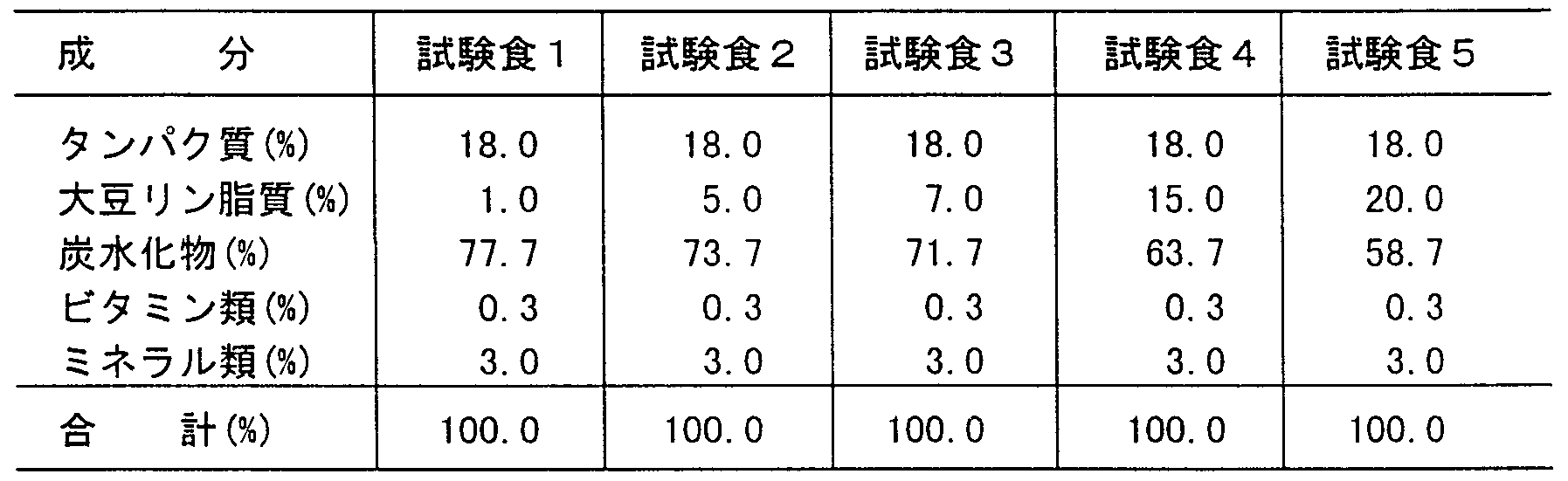
- Example 1 Using the same soybean phospholipid as in Test Example 1 (manufactured by Lucas Meier Co., Ltd., Germany), five types of test foods 1 to 5 were used as in Example 1 with different amounts as shown in Table 7. Prepared by the same method. The difference in the amount of soybean lipid in each test meal was adjusted with carbohydrates.
- LPL-deficient type I hyperlipoproteinemia patients (18 years old, boy) were ingested 120 g of the milk powder of the composition shown in Table 7 once a day, 3 times a day for 3 weeks for each test meal. Let each At the end of ingestion of the test meal, the fatty acid composition in blood triglyceride and plasma phospholipid was measured by the same method as in Test Example 1.
- phospholipids absorbed from the small intestine are hydrolyzed once to lysophospholipids and free fatty acids, and are re-synthesized into phospholipids again in small intestinal epithelial cells to form kilomiclone, partly triglyceride. It is known that these compounds are also synthesized in this manner. Therefore, in this study, it was presumed that blood triglycerides were elevated. Therefore, in this disease, it is necessary to pay attention to the excessive intake of phospholipids, as well as to limit the intake of long-chain fatty acid triglycerides as described above. In other words, application of high-purity phospholipids among commercially available phospholipid products is effective for the prevention and treatment of this disease. Therefore, it is desirable that the phospholipid used has a purity of 80% or more that does not contain neutral lipids, which are acetone-soluble lipids, as much as possible.
- test meal 1 At the end of ingestion of test meal 1, the ratio of eicosatrienoic acid noarachidonic acid, an essential fatty acid index in plasma phospholipids, was 1.80, and as described above, healthy subjects reported by Wollmann et al. The value was far above the value of less than 0.2, indicating that essential fatty acids were deficient. Ingestion of test meal 2 containing 5% soybean phospholipids per solid content resulted in an essential fatty acid index of 0.09, which improved the state of essential fatty acid deficiency.
- soybean phospholipid content in which the blood triglyceride does not exceed 1,000 mg / dl is defined as the total solid content. It has been found that a range of 7.0 to 15.0% is desirable.
- the improvement of essential fatty acid status in blood of patients with LPL-deficient type I hyperlipoproteinemia requires at least 5.0%, and preferably 7.0%, of the total solids content in the nutritional composition. 15.0% phospholipids proved to be effective.
- Example 1 Same as Table 3 Examples are shown below, and the nutritional composition of the present invention will be described in more detail and concrete I. However, the present invention is not limited to the following examples.
- Example 1 Same as Table 3 Examples are shown below, and the nutritional composition of the present invention will be described in more detail and concrete I. However, the present invention is not limited to the following examples.
- a powdered milk for preventing or treating hyperlipoproteinemia of infants having the following composition was prepared by a conventional method. Casein powder (New Zealand's Dillivod) and soybean phospholipid (Lukasmeyer, Germany; phospholipid content 90.3%).
- MCT manufactured by Taiyo Yushi Co., Ltd.
- lactose manufactured by Mirai, Germany
- dextrin manufactured by Matsutani Kagaku Kogyo
- a nutritional composition for preventing or treating hyperlipoproteinemia which is capable of supplying sufficient energy without deficiency of essential fatty acids and increasing undesired fat in blood.
- this nutritional composition can be used for prevention or treatment of hyperlipoproteinemia in a wide range of ages from infants to the elderly, this nutritional composition can be used for special-purpose milk powder, various liquid foods, prepared milk powder, etc. . Further, since the nutritional composition has a low content of fats and oils and a necessary amount of essential fatty acids, it is possible to supplement essential fatty acids to patients with lipid absorption disorders.
Landscapes
- Life Sciences & Earth Sciences (AREA)
- Health & Medical Sciences (AREA)
- Chemical & Material Sciences (AREA)
- Engineering & Computer Science (AREA)
- Proteomics, Peptides & Aminoacids (AREA)
- Animal Behavior & Ethology (AREA)
- Veterinary Medicine (AREA)
- Public Health (AREA)
- General Health & Medical Sciences (AREA)
- Medicinal Chemistry (AREA)
- Polymers & Plastics (AREA)
- Food Science & Technology (AREA)
- Pharmacology & Pharmacy (AREA)
- Bioinformatics & Cheminformatics (AREA)
- Immunology (AREA)
- Epidemiology (AREA)
- Gastroenterology & Hepatology (AREA)
- Mycology (AREA)
- Nutrition Science (AREA)
- General Chemical & Material Sciences (AREA)
- Pediatric Medicine (AREA)
- Organic Chemistry (AREA)
- Nuclear Medicine, Radiotherapy & Molecular Imaging (AREA)
- Biochemistry (AREA)
- Marine Sciences & Fisheries (AREA)
- Zoology (AREA)
- Chemical Kinetics & Catalysis (AREA)
- Obesity (AREA)
- Hematology (AREA)
- Diabetes (AREA)
- Botany (AREA)
- Acyclic And Carbocyclic Compounds In Medicinal Compositions (AREA)
- Medicines That Contain Protein Lipid Enzymes And Other Medicines (AREA)
- Pharmaceuticals Containing Other Organic And Inorganic Compounds (AREA)
- Coloring Foods And Improving Nutritive Qualities (AREA)
Description



Claims
Priority Applications (2)
| Application Number | Priority Date | Filing Date | Title |
|---|---|---|---|
| EP99937017A EP1106181A4 (en) | 1998-08-12 | 1999-08-11 | NUTRITIONAL COMPOSITION TO PREVENT HYPERLIPOPROTEINEMIA |
| CA002340223A CA2340223A1 (en) | 1998-08-12 | 1999-08-11 | Nutritional compositions for preventing or treating hyperlipoproteinemia |
Applications Claiming Priority (2)
| Application Number | Priority Date | Filing Date | Title |
|---|---|---|---|
| JP10/228342 | 1998-08-12 | ||
| JP22834298 | 1998-08-12 |
Publications (2)
| Publication Number | Publication Date |
|---|---|
| WO2000009138A1 true WO2000009138A1 (en) | 2000-02-24 |
| WO2000009138A8 WO2000009138A8 (en) | 2000-08-10 |
Family
ID=16874968
Family Applications (1)
| Application Number | Title | Priority Date | Filing Date |
|---|---|---|---|
| PCT/JP1999/004336 Ceased WO2000009138A1 (en) | 1998-08-12 | 1999-08-11 | Nutritional compositions for preventing or treating hyperlipoproteinemia |
Country Status (3)
| Country | Link |
|---|---|
| EP (1) | EP1106181A4 (ja) |
| CA (1) | CA2340223A1 (ja) |
| WO (1) | WO2000009138A1 (ja) |
Cited By (4)
| Publication number | Priority date | Publication date | Assignee | Title |
|---|---|---|---|---|
| JP2002068998A (ja) * | 2000-08-29 | 2002-03-08 | Meiji Milk Prod Co Ltd | 経腸栄養および静脈栄養に伴う脂肪肝発生予防組成物 |
| JP2006516614A (ja) * | 2003-02-05 | 2006-07-06 | エヌ.ブイ.・ヌートリシア | 敗血症の予防および/または治療のための経腸組成物 |
| JP2007500789A (ja) * | 2003-07-31 | 2007-01-18 | ゼネラル・エレクトリック・カンパニイ | 流体系における腐食の抑制 |
| US20230095677A1 (en) * | 2021-09-08 | 2023-03-30 | Apeel Technology, Inc. | Compounds and formulations for protective coatings |
Families Citing this family (10)
| Publication number | Priority date | Publication date | Assignee | Title |
|---|---|---|---|---|
| US7226916B1 (en) | 2000-05-08 | 2007-06-05 | N.V. Nutricia | Preparation for the prevention and/or treatment of vascular disorders |
| AU2003240187A1 (en) * | 2002-06-17 | 2003-12-31 | Medestea Research And Production S.R.L. | A process for preparing long chain saturated or unsaturated oxygenated compounds |
| US10561674B2 (en) | 2012-12-02 | 2020-02-18 | Lipogen Ltd. | Processes for the preparation of phospholipid-enriched dairy products as neutraceuticals for the formulation of functional foods |
| IL223373A (en) * | 2012-12-02 | 2013-09-30 | Ilan Perry | Processes for the preparation of dairy products enriched with phospholipids as nutritional supplements for the compositions of functional food and nutritional supplements and/or medicines |
| US9345727B2 (en) | 2013-03-15 | 2016-05-24 | Mead Johnson Nutrition Company | Nutritional compositions containing a peptide component and uses thereof |
| US9289461B2 (en) | 2013-03-15 | 2016-03-22 | Mead Johnson Nutrition Company | Reducing the risk of autoimmune disease |
| US9352020B2 (en) | 2013-03-15 | 2016-05-31 | Mead Johnson Nutrition Company | Reducing proinflammatory response |
| US9138455B2 (en) | 2013-03-15 | 2015-09-22 | Mead Johnson Nutrition Company | Activating adiponectin by casein hydrolysate |
| US8889633B2 (en) | 2013-03-15 | 2014-11-18 | Mead Johnson Nutrition Company | Nutritional compositions containing a peptide component with anti-inflammatory properties and uses thereof |
| US9345741B2 (en) | 2013-03-15 | 2016-05-24 | Mead Johnson Nutrition Company | Nutritional composition containing a peptide component with adiponectin simulating properties and uses thereof |
Citations (1)
| Publication number | Priority date | Publication date | Assignee | Title |
|---|---|---|---|---|
| JPH01128919A (ja) * | 1987-11-13 | 1989-05-22 | Snow Brand Milk Prod Co Ltd | 薬剤的活性を有する栄養組成物 |
Family Cites Families (6)
| Publication number | Priority date | Publication date | Assignee | Title |
|---|---|---|---|---|
| DE2556592C2 (de) * | 1975-12-16 | 1986-10-09 | A. Nattermann & Cie GmbH, 5000 Köln | Arzneimittelzubereitungen auf Basis öliger Lösungen von Phospholipiden |
| JPS6097916A (ja) * | 1983-11-01 | 1985-05-31 | Ajinomoto Co Inc | コレステロ−ル低下又は上昇抑制作用を有する組成物 |
| ES2033193B1 (es) * | 1990-10-30 | 1994-01-16 | Ganadera Union Ind Agro | Mezcla grasa para nutricion infantil y de adultos. |
| GB9301629D0 (en) * | 1993-01-27 | 1993-03-17 | Scotia Holdings Plc | Formulations containing unsaturated fatty acids |
| FR2721481B1 (fr) * | 1994-06-27 | 1996-09-06 | Inst Rech Biolog Sa | Nouvelles compositions diététiques à base de phospholipides et leur utilisation comme complément nutritionnel. |
| CN1136007C (zh) * | 1995-09-06 | 2004-01-28 | 协和发酵工业株式会社 | 脂质代谢改善剂 |
-
1999
- 1999-08-11 CA CA002340223A patent/CA2340223A1/en not_active Abandoned
- 1999-08-11 EP EP99937017A patent/EP1106181A4/en not_active Withdrawn
- 1999-08-11 WO PCT/JP1999/004336 patent/WO2000009138A1/ja not_active Ceased
Patent Citations (1)
| Publication number | Priority date | Publication date | Assignee | Title |
|---|---|---|---|---|
| JPH01128919A (ja) * | 1987-11-13 | 1989-05-22 | Snow Brand Milk Prod Co Ltd | 薬剤的活性を有する栄養組成物 |
Non-Patent Citations (1)
| Title |
|---|
| See also references of EP1106181A4 * |
Cited By (5)
| Publication number | Priority date | Publication date | Assignee | Title |
|---|---|---|---|---|
| JP2002068998A (ja) * | 2000-08-29 | 2002-03-08 | Meiji Milk Prod Co Ltd | 経腸栄養および静脈栄養に伴う脂肪肝発生予防組成物 |
| JP2006516614A (ja) * | 2003-02-05 | 2006-07-06 | エヌ.ブイ.・ヌートリシア | 敗血症の予防および/または治療のための経腸組成物 |
| JP2007500789A (ja) * | 2003-07-31 | 2007-01-18 | ゼネラル・エレクトリック・カンパニイ | 流体系における腐食の抑制 |
| US20230095677A1 (en) * | 2021-09-08 | 2023-03-30 | Apeel Technology, Inc. | Compounds and formulations for protective coatings |
| US12408680B2 (en) * | 2021-09-08 | 2025-09-09 | Apeel Technology, Inc. | Compounds and formulations for protective coatings |
Also Published As
| Publication number | Publication date |
|---|---|
| CA2340223A1 (en) | 2000-02-24 |
| WO2000009138A8 (en) | 2000-08-10 |
| EP1106181A4 (en) | 2004-12-15 |
| EP1106181A1 (en) | 2001-06-13 |
Similar Documents
| Publication | Publication Date | Title |
|---|---|---|
| JP5860704B2 (ja) | 水中オメガ−3強化された魚油型非経口栄養エマルション | |
| Anez‐Bustillos et al. | Intravenous fat emulsion formulations for the adult and pediatric patient: understanding the differences | |
| Rubin et al. | Structured triacylglycerol emulsion, containing both medium-and long-chain fatty acids, in long-term home parenteral nutrition: a double-blind randomized cross-over study | |
| JP5688818B2 (ja) | 栄養組成物 | |
| JP5600232B2 (ja) | 遊離アミノ酸含有組成物 | |
| JP5574561B2 (ja) | 総合経腸栄養組成物 | |
| CN1553805A (zh) | 控制血糖水平的营养组合物 | |
| US20040157932A1 (en) | Supplements and foods comprising oleylethanolamide | |
| US20180133190A1 (en) | Monoacylglycerols and fat-soluble nutrients for use in the treatment of nutrient deficiency from maldigestion | |
| CN101360490A (zh) | 具有二十二碳五烯酸的组合物 | |
| JP2001526908A (ja) | 脂肪ブレンド | |
| US20110178008A1 (en) | Compositions for Enhancing the Production of PPAR and/or PPAR-Associated Factors | |
| JPH044298B2 (ja) | ||
| US20080031860A1 (en) | Compositions Comprising Pantothenic Acid or Derivatives Thereof and Their Use for Stimulating Appetite | |
| JPH06340545A (ja) | ヒト免疫不全ウィルス感染者のための栄養製剤 | |
| JP4165904B2 (ja) | 加水分解最適化脂質エマルジョンおよびその使用 | |
| EP1106181A1 (en) | Nutritional compositions for preventing or treating hyperlipoproteinemia | |
| US20070042008A1 (en) | Compositions containing phosphatidylcholine and essential fatty acids | |
| JP4700193B2 (ja) | 脂肪の腸吸収を増加させるための方法および組成物 | |
| EP3062786A1 (en) | Monoacylglycerols for use in the treatment of malabsorption having a mechanical basis | |
| US7842679B2 (en) | Phospholipid derivatives of DHA and methods for treating respiratory failure using the same | |
| WO2007080149A2 (en) | Treatment of stressed patients | |
| EP1972345B1 (en) | Food product for enteral or oral nutrition | |
| JP2006022068A (ja) | 血清脂質代謝改善剤 | |
| US20180228759A1 (en) | Monoacylglycerols for use in conjunction with a lipase inhibitor and/or diets low in fat and/or calories |
Legal Events
| Date | Code | Title | Description |
|---|---|---|---|
| AK | Designated states |
Kind code of ref document: A1 Designated state(s): CA JP US |
|
| AL | Designated countries for regional patents |
Kind code of ref document: A1 Designated state(s): AT BE CH CY DE DK ES FI FR GB GR IE IT LU MC NL PT SE |
|
| DFPE | Request for preliminary examination filed prior to expiration of 19th month from priority date (pct application filed before 20040101) | ||
| 121 | Ep: the epo has been informed by wipo that ep was designated in this application | ||
| AK | Designated states |
Kind code of ref document: C1 Designated state(s): CA JP US |
|
| AL | Designated countries for regional patents |
Kind code of ref document: C1 Designated state(s): AT BE CH CY DE DK ES FI FR GB GR IE IT LU MC NL PT SE |
|
| CFP | Corrected version of a pamphlet front page |
Free format text: UNDER (72, 75) ADD "(OSHIDA, KYOICHI) (JP/JP)" AND ITS JAPANESE TRANSLITERATION |
|
| ENP | Entry into the national phase |
Ref document number: 2340223 Country of ref document: CA Ref country code: CA Ref document number: 2340223 Kind code of ref document: A Format of ref document f/p: F |
|
| WWE | Wipo information: entry into national phase |
Ref document number: 1999937017 Country of ref document: EP |
|
| WWE | Wipo information: entry into national phase |
Ref document number: 09762654 Country of ref document: US |
|
| WWP | Wipo information: published in national office |
Ref document number: 1999937017 Country of ref document: EP |
|
| WWW | Wipo information: withdrawn in national office |
Ref document number: 1999937017 Country of ref document: EP |