WO2000020408A1 - Triketone derivative and herbicide - Google Patents
Triketone derivative and herbicide Download PDFInfo
- Publication number
- WO2000020408A1 WO2000020408A1 PCT/JP1999/005477 JP9905477W WO0020408A1 WO 2000020408 A1 WO2000020408 A1 WO 2000020408A1 JP 9905477 W JP9905477 W JP 9905477W WO 0020408 A1 WO0020408 A1 WO 0020408A1
- Authority
- WO
- WIPO (PCT)
- Prior art keywords
- group
- carbon atoms
- dioxide
- atom
- chloro
- Prior art date
- Legal status (The legal status is an assumption and is not a legal conclusion. Google has not performed a legal analysis and makes no representation as to the accuracy of the status listed.)
- Ceased
Links
Classifications
-
- C—CHEMISTRY; METALLURGY
- C07—ORGANIC CHEMISTRY
- C07D—HETEROCYCLIC COMPOUNDS
- C07D333/00—Heterocyclic compounds containing five-membered rings having one sulfur atom as the only ring hetero atom
- C07D333/50—Heterocyclic compounds containing five-membered rings having one sulfur atom as the only ring hetero atom condensed with carbocyclic rings or ring systems
- C07D333/52—Benzo[b]thiophenes; Hydrogenated benzo[b]thiophenes
- C07D333/54—Benzo[b]thiophenes; Hydrogenated benzo[b]thiophenes with only hydrogen atoms, hydrocarbon or substituted hydrocarbon radicals, directly attached to carbon atoms of the hetero ring
-
- A—HUMAN NECESSITIES
- A01—AGRICULTURE; FORESTRY; ANIMAL HUSBANDRY; HUNTING; TRAPPING; FISHING
- A01N—PRESERVATION OF BODIES OF HUMANS OR ANIMALS OR PLANTS OR PARTS THEREOF; BIOCIDES, e.g. AS DISINFECTANTS, AS PESTICIDES OR AS HERBICIDES; PEST REPELLANTS OR ATTRACTANTS; PLANT GROWTH REGULATORS
- A01N43/00—Biocides, pest repellants or attractants, or plant growth regulators containing heterocyclic compounds
- A01N43/02—Biocides, pest repellants or attractants, or plant growth regulators containing heterocyclic compounds having rings with one or more oxygen or sulfur atoms as the only ring hetero atoms
- A01N43/04—Biocides, pest repellants or attractants, or plant growth regulators containing heterocyclic compounds having rings with one or more oxygen or sulfur atoms as the only ring hetero atoms with one hetero atom
- A01N43/06—Biocides, pest repellants or attractants, or plant growth regulators containing heterocyclic compounds having rings with one or more oxygen or sulfur atoms as the only ring hetero atoms with one hetero atom five-membered rings
- A01N43/12—Biocides, pest repellants or attractants, or plant growth regulators containing heterocyclic compounds having rings with one or more oxygen or sulfur atoms as the only ring hetero atoms with one hetero atom five-membered rings condensed with a carbocyclic ring
-
- A—HUMAN NECESSITIES
- A01—AGRICULTURE; FORESTRY; ANIMAL HUSBANDRY; HUNTING; TRAPPING; FISHING
- A01N—PRESERVATION OF BODIES OF HUMANS OR ANIMALS OR PLANTS OR PARTS THEREOF; BIOCIDES, e.g. AS DISINFECTANTS, AS PESTICIDES OR AS HERBICIDES; PEST REPELLANTS OR ATTRACTANTS; PLANT GROWTH REGULATORS
- A01N43/00—Biocides, pest repellants or attractants, or plant growth regulators containing heterocyclic compounds
- A01N43/02—Biocides, pest repellants or attractants, or plant growth regulators containing heterocyclic compounds having rings with one or more oxygen or sulfur atoms as the only ring hetero atoms
- A01N43/04—Biocides, pest repellants or attractants, or plant growth regulators containing heterocyclic compounds having rings with one or more oxygen or sulfur atoms as the only ring hetero atoms with one hetero atom
- A01N43/14—Biocides, pest repellants or attractants, or plant growth regulators containing heterocyclic compounds having rings with one or more oxygen or sulfur atoms as the only ring hetero atoms with one hetero atom six-membered rings
- A01N43/18—Biocides, pest repellants or attractants, or plant growth regulators containing heterocyclic compounds having rings with one or more oxygen or sulfur atoms as the only ring hetero atoms with one hetero atom six-membered rings with sulfur as the ring hetero atom
Definitions
- the present invention relates to a novel triketone derivative and a herbicide containing the triketone derivative as an active ingredient. More specifically, the present invention relates to a triketone derivative which is highly useful as an effective herbicide for weeds that inhibit the growth of cultivated plants, in particular, paddy field weeds such as fly and firefly, and a herbicide containing the same as an active ingredient. .
- Landscape technology a triketone derivative which is highly useful as an effective herbicide for weeds that inhibit the growth of cultivated plants, in particular, paddy field weeds such as fly and firefly, and a herbicide containing the same as an active ingredient.
- Herbicides are important agents for reducing labor for controlling weeds that hinder the growth of cultivated plants and for improving the productivity of agricultural and horticultural crops. Herbicides have been developed.
- a herbicide containing a certain type of triketone derivative having a bicyclic benzoyl structure as an active ingredient has high safety against field crops and exhibits excellent herbicidal activity against field weeds.
- a herbicide containing a compound described in Patent Registration No. 25796963 or International Publication No. 97Z08164 as an active ingredient is an excellent herbicide for field crops. It has an effect.
- herbicides containing these compounds as active ingredients have problems in that they have insufficient herbicidal effects on paddy weeds and are not sufficient in terms of safety against rice. Disclosure of the invention
- the present invention provides a herbicide containing a triketone derivative as an active ingredient, which has a low phytotoxicity to cultivated crops, especially rice, and can control a wide range of weeds at a low dose. Choose what you want.
- the present inventors have conducted intensive studies to achieve the above object, and as a result, have found that a triketone derivative having a specific chemical structure can control a wide variety of weeds at a low dose with little phytotoxicity to cultivated crops.
- the inventors have found that the present invention can be performed, and have completed the present invention based on these findings.
- the present invention comprises the following first and second inventions. That is, the gist of the first invention is as follows.
- R is a methyl group
- X and Y are each independently a hydrogen atom, a halogen atom, a nitro group, an amino group, a cyano group, a hydroxy group, a mercapto group, —R 1 -OR 1, - SR 1, - S ⁇ 2 R 1, -N
- R 2 R 3 or —NHCOR 1 (where R 1 is a branched structure, a ring structure, an alkyl group having 1 to 6 carbon atoms which may have an unsaturated bond, a branched structure, a ring structure, etc.) Haloalkyl having 1 to 6 carbon atoms which may have an unsaturated bond R 2 and R 3 are each independently a hydrogen atom, a branched structure, a ring structure, or a non-substituted phenyl group or a benzyl group which may have a substituent.
- M is a hydrogen atom, an alkali metal
- R 4 is a hydrogen atom or an alkyl group having 1 to 6 carbon atoms
- m is an integer of 0 to 4 (provided that
- R is a methyl group
- X and Y are each independently a hydrogen atom, a halogen atom, a nitro group, Shiano group, One feet 1, -OR 1, One
- R 1 represents a branched structure, a ring structure and an alkyl group having 1 to 6 carbon atoms which may have an unsaturated bond, a branched structure, a ring structure and an unsaturated bond.
- Alkyl group a branched structure, a ring structure, and an optionally substituted haloalkyl group having 1 to 6 carbon atoms, an optionally substituted phenyl group, and an optionally substituted group.
- R 3 has the same meaning as R 1 , R 2 , and R 3 in X and Y, A and Q are each independently an oxygen atom or a sulfur atom, and p is 0, 1 or 2. , N is 1 or 2), OM (where M is a hydrogen atom, an alkali metal, an alkaline earth metal or an organic base) or a halogen atom, and m is 0 to It is an integer of 4. ]
- a herbicide comprising the triketone derivative according to any one of (1) to (11) as an active ingredient.
- a herbicide for paddy rice comprising the triketone derivative according to any of (1) to (11) as an active ingredient.
- the gist of the second invention is as follows.
- R is a methyl group
- X is a hydrogen atom, a halogen atom, a nitro group, an amino group, a cyano group, a hydroxy group, a mercapto group,
- R 1 may have a branched structure, a ring structure and an alkyl group having 1 to 6 carbon atoms which may have an unsaturated bond, a branched structure, a ring structure and an unsaturated bond.
- a haloalkyl group having 1 to 6 carbon atoms, a phenyl group which may have a substituent or a benzyl group which may have a substituent wherein R 2 and R 3 are each independently a hydrogen atom A branched structure, a ring structure and an alkyl group having 1 to 6 carbon atoms which may have an unsaturated bond, a branched structure, A haloalkyl group having 1 to 6 carbon atoms which may have a ring structure and an unsaturated bond, a phenyl group which may have a substituent, a benzyl group which may have a substituent or R 2 And R 3 are a group having a ring structure bonded to each other), and G is a 5- to 7-membered saturated condensed ring or unsaturated condensed ring including two carbon atoms of an adjacent benzene ring.
- ring atoms (up to two of these ring atoms are atoms selected from nitrogen, oxygen and sulfur), and the ring atoms forming G are alkyl groups having 1 to 6 carbon atoms.
- a monoalkylhydrazono group or a dialkylhydrazono group having 1 to 6 carbon atoms may have one or two or more substituents, and when a ring atom constituting G contains a carbon atom, May have the same carbon atom or an adjacent carbon atom substituted by a substituent selected from an ethylenedioxy group, an ethylenedithio group, a propy
- X has the same meaning as R 1 R 2 or R 3 , A and Q are each independently an oxygen atom or a sulfur atom, p is 0, 1 or 2, and n is 1 to 3 A) or a halogen atom, m is an integer of 0 to 4, and q is 1 or 2.
- a and Q are each independently an oxygen atom or a sulfur atom, p is 0, 1 or 2, and n is 1 to 3 A) or a halogen atom, m is an integer of 0 to 4, and q is 1 or 2.
- each of G i to G 4 is an unsubstituted or substituted alkyl group having 1 to 6 carbon atoms, an alkoxy group having 1 to 6 carbon atoms, an oxo group, or an alkoxysimino group having 1 to 6 carbon atoms.
- R is a methyl group
- X and Y are each independently a hydrogen atom, a halogen atom, a nitro group, a cyano group, one R 1 -OR one SR 1 or one NR 2 R 3 (However, R 1 may have a branched structure, a ring structure, an alkyl group having 1 to 6 carbon atoms which may have an unsaturated bond, a branched structure, a ring structure and an unsaturated bond.
- R 2 and R 3 are each independently a hydrogen atom
- a phenyl group which may have a substituent, a benzyl group which may have a substituent or A group represented by R 2 and R 3 is a group of the bound ring structure), Z is, -OR 1, -SOPR
- R 3 has the same meaning as R 1 R 2 and R 3 in X and Y above, A and Q are each independently an oxygen atom or a sulfur atom, and p is 0, 1 or 2 And n is 1 or 2), one OM (where M is hydrogen Which is an atom, an alkali metal, an alkaline earth metal or an organic base) or a halogen atom, and m is an integer of 0-4. ]
- Triketone derivative according to any one of QR one N wherein (OR 1) a group selected from R 2 (7) ⁇ (9 ).
- a herbicide comprising the toketone derivative according to any one of (1) to (11) as an active ingredient.
- the triketone derivative of the first invention (hereinafter sometimes simply referred to as “the present invention” in this section) is a triketone derivative having a chemical structure represented by the general formula [1-1]. .
- the triketone derivatives having the chemical structure represented by the general formula [I-11] are a triketone derivative having the chemical structure represented by the general formula [I-11].
- Triketone derivatives having the chemical structures represented by [I-2] and [1-3] are more preferable compounds because they have little phytotoxicity to cultivated plants and are excellent in controlling weeds.
- an alkyl group having 1 to 6 carbon atoms may have a branched structure, a ring structure and an unsaturated bond represented by R 1 ! ⁇ 3 in the general formulas U—1] to [I-14].
- Specific examples of the group include a methyl group, an ethyl group, an n-propyl group, an i-propyl group, an n-butyl group, an i-butyl group, a sec-butyl group, a tert-butyl group, and an n-pentinole group.
- I-pentyl group In the case of ethyl group or various propyl groups and butyl groups, they may contain an unsaturated bond. In the case of various propyl groups, butyl groups, pentyl groups, and hexyl groups, they may be linear, branched or cyclic. Among these, a methyl group or an ethyl group is preferred.
- alkyl group examples include a haloalkyl group in which a part or all of the hydrogen atoms in the above alkyl group are substituted with a halogen atom such as a chlorine atom, a fluorine atom, a bromine atom or an iodine atom, for example, a chloromethyl group
- a trifluoromethyl group or a trichloromethyl group is
- phenyl group which may have a substituent represented by the lengths 1 to! ⁇ 3 in the above general formulas [I-11] to [I-14] include a phenyl group, a trinole group and a m- Examples thereof include a chlorophenyl group, a ⁇ -methoxyphenyl group, a ⁇ -nitrophenyl group, and a p-cyanophenyl group.
- propoxy groups or butoxy groups may contain an unsaturated bond and may be a group having a linear, branched or cyclic form.
- a haloalkoxy group in which some or all of the hydrogen atoms in these alkoxy groups have been substituted with halogen atoms for example, chloromethyloxy, difluoromethyloxy, trichloromethyloxy, trifluoromethyloxy
- halogen atoms for example, chloromethyloxy, difluoromethyloxy, trichloromethyloxy, trifluoromethyloxy
- Examples thereof include a xy group, a 2-chloroethyloxy group, a 2-fluoroethyloxy group, a 3-chloropropyloxy group, and a 3-fluoropropyloxy group.
- a methoxy group, an ethoxy group, a difluoromethyloxy group or a trifluoromethyloxy group is preferred.
- one SR 1 group represented by X and Y in the general formulas [I-11] to [I-14] include a methylthio group, an ethylthio group, an n-propylthio group, and an i-propylthio group.
- alkylthio groups such as n-butylthio group, i-butylthio group, sec-butynolethio group, tert-butylthio group, n-pentynolethio group, i_pentylthio group, n-hexylthio group and i-hexylthio group.
- propylthio or butylthio groups may contain an unsaturated bond, and may have a straight-chain structure or a branched structure. It may be a group having a structure or a ring structure.
- haloalkylthio groups in which some or all of the hydrogen atoms in these alkylthio groups have been replaced by halogen atoms, such as chloromethylthio, difluoromethylthio, trichloromethylthio, trifluoromethylthio, 2-chloroethylthio, Examples include a 2-fluoroethylthio group, a 3-chloropurpyrthio group, and a 3-fluoropropylpyrthio group.
- a methylthio group, an ethylthio group or a trifluoromethylthio group is preferred.
- one SO2R 1 for example methylsulfonyl group, E Chirusuruhoniru group, n- propylsulfonyl group, i one propylsulfonyl two Le group, n- butylsulfonyl group, i over butylsulfonyl group, sec- Bed
- examples thereof include a tylsulfonyl group and a tert-butylsulfoninole group.
- a methylsulfonyl group or an ethylsulfonyl group is preferred.
- Specific examples of the one NR 2 R 3 group represented by X, Y and Z in the general formulas (I-11) to (1_4) include a methylamino group, a dimethylamino group, an ethylamino group, a pyrrolidinyl group, a piperidino group, and the like. Is mentioned.
- Specific examples of the 1 N (OR 1 ) R 2 group include a methoxyamino group, a methoxymethylamino group, a benzyloxyamino group, and an aryloxyamino group.
- NHCOR 1 shows an NHCOCH3, -NHCOC 2 H 5, -NHCOC 3 H 7, and the like -NHCOC 4 HI 0.
- R 4 in the general formulas [I-1] and [I-13] represents a hydrogen atom or an alkyl group having 1 to 6 carbon atoms.
- Examples of the group include a methyl group, an ethyl group, an n-propyl group, an i-propyl group, an n-butynole group, an i-butynole group, a sec-butyl group, a tert-butynole group, an n-pentynole group, an i ⁇ nchinole group, sec-pentynole group, n-hexynole group and i-hexyl group.
- R 4 a hydrogen atom or a methyl group is preferable, and a hydrogen atom is particularly preferable.
- a halogen atom, —R 1 —OR 1 , —SR 1 is preferable, and further a halogen atom or methyl Groups are particularly preferred.
- a hydrogen atom, a halogen atom and —R 1 are preferable, and a hydrogen atom, a methyl group and a fluorine atom are preferable. Particularly preferred.
- m is 0 to 4, preferably 0 to 2, and particularly preferably 0.
- one SOPR 1 group represented by Z in the general formula [1-4] include a methinolesulfonyl group, an ethylsulfoninole group, a propinolesulfonyl group, a butylsulfonyl group, a pentylsulfonyl group and a Alkylsulfonyl group of xyls norefonyl group; methylsulfinyl group, ethyls norefiel group, propylsulfinyl group, butylsulfinyl group, pentylsulfininole group or hexinolesnofinyl group such as hexylsnorefinyl group; And a butynolethio group, a pentylthio group and an alkylthio group such as a hexylthio group.
- specific examples of the 1 OM group represented by Z in the general formulas (I-11) to (I-13) or Z in the general formula (I-14) include a case where M is a hydrogen atom, lithium And alkali metal sources such as sodium and potassium And alkali earth metal atoms such as magnesium, calcium and barium, and organic bases such as trimethylamine, triethylamine or aniline.
- M is a hydrogen atom
- lithium And alkali metal sources such as sodium and potassium And alkali earth metal atoms such as magnesium, calcium and barium
- organic bases such as trimethylamine, triethylamine or aniline.
- a hydrogen atom is particularly preferred as M.
- R 4 , X, and m have the same meaning], but the triketone derivative of the present invention encompasses all of these compounds and mixtures thereof.
- compound (a) and compound (b) are used in an amount of 1 mole each or one compound in excess of equimolar,
- compound (c) is obtained by the following reaction in the presence of 1 mol or more of a base.
- an alkali metal carbonate, an alkaline earth metal carbonate, an alkali metal hydroxide or the like can be used.
- the reaction solvent include alcohols such as methanol and ethanol, chlorinated hydrocarbons such as chloroform-dichloromethane, hydrocarbons such as hexane and toluene, N, N-dimethylformamide, and the like.
- An inert solvent such as water is used for this reaction.
- stirring may be performed at a temperature between 0 ° C. and the boiling point of the solvent until the reaction is completed.
- reaction can be carried out in a two-phase system in the presence of a quaternary ammonium salt.
- the compound (c) can also be obtained by reacting the above compound (a) with sodium or potassium hydrosulfide and chloroacetic acid or bromoacetic acid.
- This cyclization reaction may be performed in the presence of a catalytic amount or an equimolar amount or more of an acidic reagent.
- Acidic reagents used in this case include hydrochloric acid, sulfuric acid, phosphorus trichloride, phosphorus pentachloride, phosphorus oxychloride, polyphosphoric acid, acetic acid, acetic anhydride, trifluoromethanesulfonic acid, trifluoromethanesulfonic anhydride, Sulfuryl chloride and the like are preferred.
- This reaction may be performed without a solvent, but when a reaction solvent is used, hexane, dichloromethane, 1,2-dichloroethane, chloroform, N, N-dimethylformamide, etc. are preferably used. it can.
- stirring may be carried out at a temperature between 120 ° C. and the boiling point of the solvent until the reaction is completed.
- the carboxylic acid of compound (c) may be converted to an acid halide, and then reacted in the presence of a Lewis acid.
- a halogenating reagent such as oxalyl chloride-dithiol chloride is used in an equimolar amount or more, and no solvent or a solvent such as methylene chloride, 1,2-dichloroethane, or chloroform is used.
- the reaction may be stirred at a temperature between room temperature and the boiling point of the solvent until the reaction is completed. In the latter reaction, aluminum chloride and titanium tetrachloride are used as Lewis acids. And stirring at ⁇ 20 ° C.
- the isomer may be mixed in as an impurity, so that it may be purified and used by the same purification method as above.
- reducing agent used in this reduction reaction sodium borohydride, sodium triisopropoxide and the like are suitable.
- reaction solvent methanol, ethanol, water, dichloromethane, toluene and the like are suitable. In carrying out this reaction, stirring may be carried out at a temperature between 120 ° C. and the boiling point of the solvent until the reaction is completed.
- This dehydration reaction can be carried out in the presence of a catalytic amount of an acidic substance such as hydrochloric acid, sulfuric acid, p-acid, amberlyst and the like.
- an acidic substance such as hydrochloric acid, sulfuric acid, p-acid, amberlyst and the like.
- a reaction solvent in this case, a solvent such as benzene or toluene that can remove generated water by azeotropic distillation is convenient.
- the reaction can be promoted by removing the generated water by the ability to adsorb it to the molecular sieve or the like and the azeotropy with the solvent.
- stirring may be performed at room temperature to 50 ° C. until the reaction is completed.
- the azeotropic dehydration the azeotropic dehydration is performed while heating and refluxing at the boiling point of the solvent until the theoretical amount of water is azeotropically dehydrated.
- the reaction is carried out under the condition that at least 2 mol of an organic peroxide such as hydrogen peroxide or m-chloroperbenzoic acid is present.
- an organic peroxide such as hydrogen peroxide or m-chloroperbenzoic acid
- Acetic acid or methylene chloride is suitable as the reaction solvent in this case.
- This reaction may be stirred at a temperature of from 120 ° C. to 100 ° C. until the reaction is completed.
- compound (g) is hydrogenated as follows to obtain compound (h).
- This hydrogenation reaction may be performed under the same conditions as in a general catalytic hydrogenation reaction.
- the catalyst used here palladium on activated carbon, Raney-Ekel, platinum oxide and the like are suitable.
- the reaction solvent tetrahydrofuran, methanol, ethanol, ethyl acetate, water and the like are used. The condition in this case may be stirring under a hydrogen gas atmosphere under normal pressure or under pressure at a temperature between room temperature and the boiling point of the solvent until the reaction is completed.
- R 4 X, Y and m are the formula [1- 1) to (I in one 4] has R 4, X, same meaning as Y and m] shown in
- a triketone derivative represented by any one of the general formulas [1-1] to [1-3] and a triketone derivative represented by the general formula [I-14], wherein Z is a hydroxyl group can be obtained.
- the intermediate carboxylic acid is converted into a halide in the same manner as in the cyclization reaction, and an organic solvent inert to the reaction such as acetonitrile is used as a reaction solvent.
- the reaction may be carried out at 0 to 20 ° C. in the presence of an organic base, and then a cyanide donor such as acetone cyanhydrin may be added in a catalytic amount and reacted at room temperature with stirring.
- triketone derivatives represented by the general formulas [1-1] to [I-13] and the triketone derivatives in which Z in the general formula [1_4] is a hydroxyl group are described in, for example, By using the reactions described in JP-A-62-298563, JP-A-62-242755 and JP-A-63-2947, a compound capable of partially or entirely substituting the hydroxyl group is reacted to obtain the above-mentioned compound. Triketone derivatives represented by the general formulas [1-1] to [I-13] and triketone derivatives represented by the above general formula [I-14] having various groups introduced as Z can be obtained. . II. Second invention
- the triketone derivative of the second invention (hereinafter, may be simply referred to as “the present invention” in this section) is a triketone derivative having a chemical structure represented by the above general formula [II-11]. . And among the triketone derivatives having the chemical structure represented by this general formula [II-11], the above-mentioned general formula [
- triketon derivative having a chemical structure represented by the general formula [II-13] is more preferable.
- the above-mentioned general formulas [II-14] to [II-19] The triketone derivative having the chemical structure represented is a more preferable compound because it has little phytotoxicity to cultivated crops and high herbicidal activity.
- the substituent represented by in these chemical structural formulas may be a halogen atom or 1 R 1 .
- Alkyl groups represented by —OR 1 alkoxy groups represented by —OR 1 —alkylthio groups represented by SR 1 are preferred compounds.
- Y in the formula has various substituents in addition to a hydrogen atom.
- Y is preferably a hydrogen atom or a methyl group.
- X in the general formula [II-110] also has a chemical structure having various substituents. Among them, X is preferably a halogen atom or a methyl group.
- substituent represented by Z 1 although there is a chemical structure having various substituents, Z or Z 1 Among them, be a halogen atom and later That one OR 1 - S OP R 1 - A (CH2) nQR 1 - N (OR 1) R
- Triketone derivatives having a structure substituted with the group represented by 2 are preferred.
- R 1 Triketone derivatives having a structure substituted with the group represented by 2 are preferred.
- alkyl group having 1 to 6 carbon atoms which may have a branched structure, a ring structure and an unsaturated bond represented by R 3 include a methyl group, an ethyl group, an n-propyl group, and i — Propyl, n-butyl, i-butyl, sec-butynole, tert-butynole, n-pentynole, i-pentyl, sec-pentyl, n-hexyl, i-hexyl
- ethyl group various propyl groups and butyl groups, they may contain unsaturated bonds, and in the case of these various propyl groups, butyl groups, pentyl groups and hexyl groups, linear groups It may be shaped, branched or cyclic. Among these, a methyl group and an ethyl group are preferred.
- branched structure, the ring structure, and the haloalkyl group having 1 to 6 carbon atoms which may have an unsaturated bond represented by the above 1 to! ⁇ 3 include a part or all of the above alkyl group.
- a hydrogen atom of which is substituted by a halogen atom such as a chlorine atom, a fluorine atom, a bromine atom or an iodine atom, for example, a chloromethyl group, a chloromethyl group, a trichloromethyl group, a trifluoromethyl group, a 2-chloromethyl group;
- a trifluoromethyl group is preferable.
- benzyl group which may have a substituent represented by R i to R 3 include a benzyl group, ⁇ _methylbenzyl group, and ⁇ .
- Examples include a monomethylbenzyl group, an m-chlorobenzyl group, a p-methoxybenzyl group, a p-nitrobenzyl group, and a p-cyanobenzyl group. Of these, a phenyl group or a benzyl group is preferred.
- OR 1 group examples include a methoxy group, an ethoxy group, various propoxy groups, a butoxy group, an alkoxy group such as a pentyloxy group and a hexyloxy group.
- these various propoxy groups or butoxy groups may contain an unsaturated bond and may have a linear, branched or cyclic form.
- haloalkoxy group in which some or all of the hydrogen atoms in these alkoxy groups have been replaced by halogen atoms, for example, chloromethyloxy, difluoromethyloxy, trichloromethynoleoxy, trifolylene
- halogen atoms for example, chloromethyloxy, difluoromethyloxy, trichloromethynoleoxy, trifolylene
- examples include an olomethinoleoxy group, a 2-chloroethynoleoxy group, a 2-fluoroethyloxy group, a 3-chloropropyloxy group, and a 3-fluoropropyloxy group.
- a methoxy group, an ethoxy group or an isopropoxy group is preferred.
- SR 1 groups Z 1 represents the methylthio group, Echiruchio group, various propylthio group, Puchiruchio group, an alkylthio group, such as pentylthio group or a hexyl Chio group.
- these various propylthio groups or butylthio groups may contain an unsaturated bond and may have a linear, branched or cyclic structure.
- haloalkylthio group in which some or all of the hydrogen atoms in these alkylthio groups have been substituted with halogen atoms, for example, chloromethylthio, difluoromethylthio, trichloromethylthio, trifluoromethylthio, and 2-chloroethylthio Group, 2-fluoroethylthio group, 3-chloro A mouth purpylthio group, a 3-fluoropropylpyrthio group and the like.
- a methylthio group, an ethylthio group, an i-propylthio group or a t-butylthio group is preferred.
- X, Y and Z 1 in these general formulas [11-1] to [11-9] are represented by — specific examples of the SO p R 1 group include a methylsulfonyl group, an ethylsulfonyl group and various types of Alkylsulfonyl group of propylsulfonyl group, butylsulfonyl group, pentylsulfonyl group or hexylsulfonyl group; methylsulfiel group, ethylsulfinyl group, various propylsulfinyl groups, butynolsulfinyl group, pentylsulfinyl group, or Alkylsulfinyl groups such as a xylsulfiel group; alkylthio groups such as a methylthio group, an ethylthio group, various propylthio groups, a butylthio group, a pen
- R 2 group examples include a methoxyamino group, a methoxymethylamino group, a benzyloxyamino group, and an aryloxyamino group. Of these, a methoxymethylamino group is preferred.
- q which is the number of substitutions of X, is 1 or 2, and 1 is preferred.
- R 1 group represented by Z in the above general formula [II-110] include an acetyloxy group and a propionyloxy group. I can do it.
- the ten (C 0) OR 1 groups represented by Z or Z 1 in [[I- 10], main butoxycarbonyl O alkoxy group, an ethoxycarbonyl O dimethylvinylsiloxy groups
- n in each general formula is preferably from 0 to 2, and particularly preferably 0.
- the triketone derivative of the present invention includes all of these compounds and a mixture thereof, although it may have a sex structure.
- the ring atoms G i to G 4 which may have a substituent in II-19) include an unsubstituted ring atom or a mer group, an oxo group, a methoxy group, an isopropyloxy group or a methoxyimino group.
- Preferred specific examples include ring atoms having one or two substituents selected from the group consisting of the following substituents. In the general formula, 2 is preferable as i.
- G in the set [11-1] of the formula [11-1] of the lichen of the present invention is obtained.
- Benzothiophene-12-carboxylic acid which is an intermediate in the case of forming a 5-membered ring containing two carbon atoms of adjacent benzene rings, can be effectively produced, for example, by the following production steps.
- the compound (a) and the compound (b) are used in the presence of 1 mol or more than 1 mol of a base, each of which is used in an amount of 1 mol or an excess of one compound.
- the compound (c) is obtained below by the following reaction.
- an alkali metal carbonate, an alkaline earth metal carbonate, an alkali metal hydroxide or the like can be used.
- the reaction solvent include alcohols such as methanol and ethanol, halogenated hydrocarbons such as chloroform / dichloromethane, hydrocarbons such as hexane and toluene, N, N-dimethylformamide, and water.
- An inert solvent is used for the reaction. When performing this reaction, stirring may be performed at a temperature between 0 ° C. and the boiling point of the solvent until the reaction is completed.
- reaction can be carried out in a two-phase system in the presence of a quaternary ammonium salt.
- the compound (c) can also be obtained by reacting the above compound (a) with sodium or potassium hydrosulfide and chloroacetic acid or bromoacetic acid.
- the product when X or Y of the substituent in the compound (c) is a substituent capable of leaving, the product may be obtained as a mixture, but in such a case, After the process, the desired product may be obtained by purification by distillation, recrystallization, chromatography or the like.
- This cyclization reaction may be performed in the presence of a catalytic amount or an equimolar amount or more of an acidic reagent.
- Acidic reagents used in this case include hydrochloric acid, sulfuric acid, phosphorus trichloride, phosphorus pentachloride, phosphorus oxychloride, polyphosphoric acid, acetic acid, and acetic anhydride. Acid, trifluoromethanesulfonic acid, trifluoromethanesulfonic anhydride, and sulfuryl chloride are preferred.
- this reaction may be performed without a solvent, but when a reaction solvent is used, hexane, dichloromethane,
- 1,2-Dichloroethane, chloroform, N, N-dimethylformamide and the like can be suitably used.
- stirring may be carried out at a temperature between 120 ° C. and the boiling point of the solvent until the reaction is completed.
- the carboxylic acid of compound (c) may be converted to an acid halide, and then reacted in the presence of a Lewis acid.
- a halogenating reagent such as oxalyl chloride-dionyl chloride is used in an equimolar amount or more, and no solvent or a solvent such as methylene chloride, 1,2-dichloroethane, or chloroform is used.
- the reaction may be stirred at room temperature or at a temperature between the boiling points of the solvents until the reaction is completed. In the latter reaction, aluminum chloride, titanium tetrachloride, tin tetrachloride, etc.
- the isomer may be mixed in as an impurity, so that the compound may be used after being purified by the same purification method as described above.
- reducing agent used in this reduction reaction sodium borohydride, sodium triisopropoxide and the like are suitable.
- reaction solvent methanol, ethanol, water, dichloromethane, toluene and the like are suitable. In carrying out this reaction, stirring may be performed at a temperature between ⁇ 20 ° C. and the boiling point of the solvent until the reaction is completed.
- This dehydration reaction can be carried out in the presence of a catalytic amount of an acidic substance such as hydrochloric acid, sulfuric acid, p-toluenesulfonic acid and the like.
- a reaction solvent in this case, a solvent such as benzene or toluene capable of removing azeotropically generated water is advantageous.
- the reaction can be promoted by removing the generated water by azeotropy with a solvent, by which the generated water is adsorbed on a molecular liquid or the like.
- stirring may be performed at room temperature to 50 ° C. until the reaction is completed.
- the azeotropic dehydration the azeotropic dehydration is performed while heating and refluxing at the boiling point of the solvent until the stoichiometric amount of water is azeotropically dehydrated.
- the reaction is carried out under the condition that at least 2 mol of an organic peroxide such as hydrogen peroxide or m-chloroperbenzoic acid is present.
- an organic peroxide such as hydrogen peroxide or m-chloroperbenzoic acid
- Acetic acid or methylene chloride is suitable as the reaction solvent in this case.
- This reaction may be stirred at a temperature of from 120 ° C. to 100 ° C. until the reaction is completed.
- This hydrogenation reaction may be performed under the same conditions as in a general catalytic hydrogenation reaction.
- the catalyst used here palladium on activated carbon, Raney-ekel, platinum oxide and the like are suitable.
- the reaction solvent tetrahydrofuran, methanol, ethanol, ethyl acetate, water and the like are used. The condition in this case may be stirring under a hydrogen gas atmosphere under normal pressure or under pressure at a temperature between room temperature and the boiling point of the solvent until the reaction is completed.
- stirring is carried out in a mixed solvent of an alcohol such as ethanol and water at a temperature between room temperature and the boiling point of the solvent in the presence of at least equimolar alkali metal hydroxide until the reaction is completed. I just need.
- the intermediate carboxylic acid is converted into a halide in the same manner as in the cyclization reaction, and an organic solvent inert to the reaction such as acetonitrile is used as a reaction solvent.
- the reaction is carried out at 0 to 20 ° C in the presence of an organic base, and then a catalytic amount of a cyanide donor such as acetone cyanhydrin is added thereto, and the mixture is stirred at room temperature while stirring. You can respond.
- G in each of the above general formulas constitutes a 6-membered ring or a 7-membered ring containing two carbon atoms of an adjacent benzene ring
- International Patent Publication WO94 / 044 It can be produced according to the production method described in JP-A-5-224, WO94 / 09888, and WO09 / 030464.
- the herbicides of the first invention and the second invention are represented by the general formulas [I-I] to [1-4] in the first invention.
- a triketone derivative represented by each of the general formulas in the second invention as an active ingredient which is mixed with a liquid carrier such as a solvent or a solid carrier such as mineral fine powder, It can be formulated and used in the form of preparations, emulsions, powders or granules.
- a surfactant may be added in order to impart emulsifiability, dispersibility, spreadability and the like to the herbicide.
- the triketone derivative is usually 5 to 55% by weight
- the solid carrier is 40 to 93% by weight
- the surfactant is 2 to 5% by weight. If you adjust the composition that is blended in the proportion of% and use it for weeding, then.
- the herbicide of the present invention When used in the form of an emulsion, the Prepare a composition containing 10 to 50% by weight of a triketone derivative, 35 to 85% by weight of a solvent and 5 to 15% by weight of a surfactant, and use it for weeding. do it.
- the triketone derivative is generally used in an amount of 1 to 15% by weight
- the solid carrier is used in an amount of 80 to 97% by weight
- the surfactant is used in an amount of 2 to 15%. It is advisable to adjust and use the composition blended at 5% by weight.
- the herbicide of the present invention when used in the form of granules, usually, the triketone derivative is used in an amount of 1 to 15% by weight, the solid carrier is used in an amount of 80 to 97% by weight, and the surfactant is used in an amount of 2 to 20%. What is necessary is just to use the composition which mix
- the solid carrier examples include oxides such as diatomaceous earth and slaked lime, phosphates such as limestone, sulfates such as gypsum, talc, pie ferrite, clay, kaolin, bentonite, acid clay, and white. Suitable examples include fine powders of mineral substances such as carbon, quartz powder, and kaite powder.
- the solvent examples include aromatic hydrocarbons such as benzene, toluene, and xylene, chlorinated hydrocarbons such as o-chlorotoluene, trichloroethane or trichloroethylene, cycloxanol, and aminoleanol.
- Ketones such as isophorone, cyclohexanone, cyclohexeninolecyclohexanone, etc., ethylene glycol glycols, etc.
- Suitable solvents include esters such as benzyl acetate and methyl phthalate, amides such as dimethylformamide, and organic solvents such as mixtures thereof.
- surfactant an anion type, a nonion type, a cation Any of zwitterionic or zwitterionic surfactants such as amino acids or betaines can be used.
- the herbicide of the present invention may contain, if necessary, other components having herbicidal activity together with the triketone derivatives represented by the above general formulas [I] to [4] as active ingredients.
- Such other herbicidally active ingredients include, for example, diphenyl ethers, triazines, ureas, carbamates, thiocarbamates, acid anilides, pyrazoles, phosphates, sulfonylpreas, oxadiazones, etc. These herbicidal active ingredients can be appropriately selected and used in combination.
- the herbicide of the present invention may contain an insecticide, a fungicide, a plant growth regulator, a fertilizer, and the like, if necessary.
- the herbicide of the present invention when applying the herbicide of the present invention, before or after germination of the weed, the herbicide is applied to the weed or its growing area.
- the means of application in this case varies depending on the type of cultivated plant and the use environment, but for example, forms such as spraying, spraying, watering, and water injection can be adopted.
- the cultivated plants include, for example, rice plants such as rice, wheat, oats, maize, embata, and sorghum, and broadleaf crops such as soybean, ivy, beet, sunflower, rapeseed, and fruit trees, fruit vegetables and root vegetables. And vegetables such as leafy vegetables and lawn.
- the weeds to be controlled by the herbicide of the present invention include paddy weeds (P addy we eds) spatula; motaka (Ali sma canalicu 1 at urn), omoda sword (S agittaria trifolia), and perica (S agittariapygmaea).
- Cyperaceae weeds, such as Eleochariskurog uw ai, and Scrothulariaceae (S crothulariaceae), such as Lazenia (Linderniapyxidaria); P ontenderiaceae) Weeds, Pole mo getondistinctus (Pota mo getondistinctus), etc.
- solanaceae (S o 1 anaceae) weeds such as golden squirrel (S olan um nigrum), and Japanese sardine (D aturastra mo ni um), squirrel (Abuti Iontheophrasti), and American sika deer ( sidaspinosa), Malvaceae weeds, Malva asagamo (Ipomo eapurpurea), etc. (Convolvulaceae) weeds, Inubu (Ama ranthus 1 ividus), etc.
- aqua ampicillus (L amium amp 1 exicau 1 e), E uphorbiasupina, and E uphorbia ma culata (G ali um spurium) Ga iumaparine, Ru biaakane, Rubiaceae, Violaarvensis, Violaceae (Vilaceae) weeds, Aesbaniaexaltata, Ebisugusa, etc.
- Broadleaf weeds such as Leguminaceae (Legum inosae) weeds such as C assiaobtusifo 1 ia), wild sorghum (Sorgh um bicolor), wild sorghum (Panicumdichot om if 1 orum), and shyonsongkhus (S orgh um haepense, E, chinochloac rus— ga 1 1 i), mexisino (D igitariaadscendes), oats (Av enafatua), ohisino (E 1 eusineindica), enocoguchi (S etariaviridis) Grainaceous weeds (G raminaceous we eds), Cyperusrotundus (Cyperusrotundus, Cyperusesculentus), and other weeds (Cyperaceous we eds).
- Leguminaceae Legum inosae
- Ethyl 2,4-dichloromethyl benzoate 10. 0 g, 9.44 g of carbonated ruthenium, 50 milliliters of dimethylformamide and 3.8 milliliters of mercaptoacetic acid at 80 ° In C, the mixture was reacted by heating for 4 hours.
- reaction mixture was poured into ice water, extracted with ethyl acetate, dried over sodium sulfate, filtered, and concentrated to obtain 12.3 g of a crude reaction product.
- the acid chloride obtained by concentrating the reaction mixture obtained here was dissolved in 36 ml of methane. Then, this solution was added dropwise to the previously prepared solution of 14.3 g (107 mmol) of aluminum chloride and 150 milliliters of dichloromethane at a water temperature over 1 hour, and further added at room temperature. Reacted for hours.
- the obtained reaction mixture was poured into ice water, extracted with dichloromethane, dried over sodium sulfate, filtered, and concentrated to obtain 12.3 g of a crude reaction product as a brown oil. Further, the crude reaction product was purified by column chromatography to obtain 5.3 g (yield 23%) of the target product as a brown oil.
- the reaction product was cooled to room temperature, the reaction solution was diluted with water, and the generated solid was separated by filtration. After drying the obtained solid, it was purified by column chromatography to obtain 3.7 g (95% yield) of the target compound as colorless crystals.
- O g and, chloride Chioniru 0.54 8 Four milliliters of a 1,2-dichloroethane suspension was reacted for 1 hour under heating to reflux.
- the solvent was distilled off from the obtained reaction product under reduced pressure. Using the obtained acid chloride and 0.47 g of 1,3-cyclohexanedione, these were added to 10 ml of acetonitrile as a solvent. In the dissolved solution, 0.82 g of triethylamine was dissolved in 5 milliliter of acetonitrile at room temperature. The solution was added dropwise.
- Table I-11 shows the results of iH-NMR (CDC13; TMS standard) and infrared spectrum analysis, as well as the measurement results of the chemical structural formula and melting point of the target compound obtained here. .
- Example I-1 The same procedure as in Example I-1 was repeated, except that 4-methyl-5 ⁇ -hydroxycanoleboninoleate 2,3-dihydroxybenzothiophene-1,1-dioxide was used. Obtained. 1 H-NMR (CDC 13 3. TMS standard) and infrared spectrum analysis results and chemical structural formula of the target compound obtained here The measurement results of the melting point are shown in Table I-11.
- Example 1_1 4-chloro-5-oxycarbinole-1,4-dichlorobenzothiophene used in Example 1_1 was replaced with 4-chloro-7-methinolene 5-oxycarbonolyl instead of 1,1-dioxide.
- the desired compound was obtained in the same manner as in Example 1-1, except that 2,3-dihydrobenzothiophene 1,1-dioxide was used.
- Example 1-1 As a raw material, instead of the 4-chloro-5-carboxycarbonyl-1,2,3-dihydrobenzothiophene 1,1-dioxide used in Example 1-1, 4,7-dimethinole-5-oxycarbonyl The target compound was obtained in the same manner as in Example 1-1 except that 1,2,3-dihydrobenzozothiophene 1,11-dioxide was used.
- Example I-1 As a raw material, 4-methoxy-5-oxycarbonylcarbonyl used in Example I-1 was replaced with 4-methoxy-5-oxycanoleboninole instead of 1,3-dihydroxybenzothiophene-1,1-dioxide.
- the target compound was obtained in the same manner as in Example 1-1, except that 1,2,3-dihydrobenzothiophene-1,1-dioxide was used.
- Table 1 shows the results of 1 H-NMR (CDCl3, TMS standard) and infrared spectrum analysis of the target compound obtained, and the measurement results of the melting point in the case of the chemical structural formula. Shown in
- Example I_1 4-methylthio-5-oxycarboyl-2-yl-2-methoxycarbonyl-1,2-dioxobenzoyl-1,4-dioxoxide used in Example I_1
- the target compound was obtained in the same manner as in Example 1-1 except that 1,1-dioxide, 3-dihydrobenzothiophene was used.
- the target compound was prepared in the same manner as in Example 1-1 except that 4-methyl-1,3-cyclohexanedione was used in place of the 1,3-cyclohexanedione used in Example 1-1 as a raw material. I got
- Example I-11 The same procedures as in Example I-11 were carried out except for using 4,4-dimethyl-1,3-cyclohexanedione in place of the 1,3-cyclohexanedione used in Example 1-1 as a raw material. The compound was obtained.
- Example 1_1 In the same manner as in Example I-11, except that 5,5-dimethyl-1,3-cyclohexanedione was used as a raw material instead of the 1,3-cyclohexanedione used in Example 1_1, The desired compound was obtained.
- Example 1-1 As a raw material, instead of the 1,3-cyclohexanedione used in Example 1-1, 5,5-dimethyl-1,3-cyclohexanedione was used, and 4-chloro-5-hydroxyphenolic olevonyl was used.
- 2,3-dihydrobenzothiophene 1,1,1 In place of 1-dioxide, 4-cyclohexyl 7-methytyl—5-oxycanoleboninole 1,2,3-dihydrobenzobenzothiophene 1,1,1 —Except for using dioxide, the target compound was obtained in the same manner as in Example I-11.
- Example I-1 As a raw material, instead of 1,3-cyclohexanedione used in Example I-1, 4,4-dimethyl-11,3-cyclohexanedione was used, and 4-chloro-15-oxycanoleponinole was used. 1,2,3-dihydrobenzothiophene 4-chloro-1,7-methyl-5-hydroxycanoleboninole-1,3-dihydrobenzothiophene_1,1-dioxide in place of 1,1-dioxide In the same manner as in Example I-11 except that Was.
- the target compound was prepared in the same manner as in Example I-11 except that 5-methyl-1,3-cyclohexanedione was used instead of 1,3-cyclohexanedione used in Example 1_1 as a raw material. I got
- Example I-11 In the same manner as in Example I-11 except that 4,4,6-trimethyl-1,3-cyclohexanedione was used as a raw material instead of 1,3-cyclohexanedione used in Example I-1. Thus, the target compound was obtained.
- Example I-11 In the same manner as in Example I-11 except that 1,6-cyclohexanedione used in Example I-1 was replaced by 4,6-dimethyl-11,3-cyclohexanedione as a raw material The target compound was obtained.
- Example 1 was repeated except that '4,4,6,6-tetramethyl-1,3-cyclohexanedione was used in place of the 1,3-cyclohexanedione used in Example I-1 as a raw material.
- the target compound was obtained in the same manner as in I-11.
- Example 1-1 As in Example 1-1, except that 1,5-cyclohexanedione used in Example I-1 was replaced by 4,5-dimethyl-1,3-cyclohexanedione as a raw material The target compound was obtained.
- the measurement results of 1 H-NMR (CDC13, TMS standard) and infrared spectrum analysis, the chemical structural formula, and the melting point of the target compound obtained here are shown in Table I-11. Show.
- Example I-1 As a raw material, instead of 4-chloro-5-hydroxycarboxy-2,3-dihydrobenzothiophene-1,1-dioxide used in Example I-1, 4-chloro-2-methylthio-5-oxycarbonole
- the target compound was obtained in the same manner as in Example I-11, except that 1,2,3-dihydrobenzothiophene 1,11-dioxide was used.
- Example I-1 As a raw material, 4-methoxy-2-methoxy-2-carbonyl-5-oxycarboyl used in Example I-1 was replaced with 4-methoxy-2-carbonyl-2,3-dihydrobenzothiophene-1,1-dioxide.
- a target compound was obtained in the same manner as in Example I-11, except that 2,2-dihydrobenzothiophene-1,1-dioxide was used.
- Example I_1 4-bromo-5-oxycanoleboninoleate was used in place of the 4-chloro-1,5-carboxy-2,3-dihydrobenzothiophene-1,1-dioxide used in Example I_1.
- the target compound was obtained in the same manner as in Example I-11 except that 2,3-dihydrobenzothiophene-1,1_dioxide was used.
- Example I-11 As a raw material, instead of the 4-chloro-5-oxycarbone-1,2,3-dihydrobenzothiophene1-1,1-dioxide used in Example I-11, 4-cyano-5-carboxycarbonyl 2,3 was used. —Except that dihydrobenzothiophene-1,1-dioxide was used, the target compound was obtained in the same manner as in Example I_1.
- talc 57 parts by weight of talc and 40 parts by weight of bentonite as a carrier, and 3 parts by weight of sodium alkylbenzenesulfonate as a surfactant were uniformly ground and mixed to obtain a carrier for a wettable powder.
- Example I-11 10 parts by weight of the triketone derivative [Compound No. A-1] obtained in Example I-11 was added to 90 parts by weight of the carrier for wettable powder, and the mixture was uniformly ground and mixed to obtain a herbicide. Obtained.
- Paddy field soil is filled into 1/2000 arenal pot, paddy seeds are sown on the surface, and rice seedlings at the 2.5 leaf stage are transplanted to this soil. did.
- the pot was placed in a greenhouse where the temperature was controlled at 20 to 25 ° C, and these were grown under plant growth conditions.
- the herbicide prepared in the above (1) was treated by adding a predetermined amount.
- the herbicidal rate, herbicidal effect, and phytotoxicity of paddy rice were determined.
- Paddy soil was filled in a 1/2000 arenal pot, paddy seeds were sown on the surface, and rice seedlings at the 2.5 leaf stage were transplanted to the soil.
- the pot was placed in a greenhouse whose temperature was controlled at 20 to 25 ° C, and these were grown under plant growth conditions.
- the herbicide prepared in the above (1) was treated by adding a certain amount thereof.
- the herbicidal rate, the herbicidal effect, and the phytotoxicity of rice were determined.
- the herbicidal effects and phytotoxicity in the above biological tests 1 and 2 were determined according to the following criteria.
- the herbicidal effect was determined according to the following criteria.
- Rice phytotoxicity was determined according to the following criteria.
- the herbicidal organism was prepared in the same manner as in Example 1-22 (2) except that each herbicide prepared in (1) above was used instead of the herbicide prepared in (1) of Example 1_22. The test was performed.
- a herbicide was prepared in the same manner as in (1) of Example 1_22 except for using the compound represented by.
- the herbicidal organism was prepared in the same manner as in Example 1-22 (2) except that each herbicide prepared in (1) above was used instead of the herbicide prepared in (1) of Example 1_22. The test was performed.
- a herbicide was prepared in the same manner as in Example 1-22 (1) except that the compound represented by
- a herbicide was prepared in the same manner as in Example 1-22 (2) except that the herbicide prepared in (1) was used instead of the herbicide prepared in (1) of Example 1-22. Was subjected to a biological test.
- a herbicide was prepared in the same manner as in Example 1-22 (1) except that the compound represented by
- a herbicide was prepared in the same manner as in Example 1-22 (1) except that the compound represented by
- a herbicide was prepared in the same manner as (2) of Example 1-22 except that each herbicide prepared in (1) above was used instead of the herbicide prepared in (1) of Example 1-22. Was subjected to a biological test.
- reaction mixture was poured into ice water, extracted with ethyl acetate, dried over sodium sulfate, filtered, and concentrated to obtain 12.3 g of a crude reaction product.
- the acid chloride obtained by concentrating the reaction mixture obtained here was dissolved in 36 ml of methane. Then, this solution was added dropwise to the previously prepared solution of 14.3 g (107 mmol) of aluminum chloride and 150 ml of dichloromethane at an ice temperature over 1 hour, and further added at room temperature. Reacted for 2 hours.
- the solvent was distilled off from the obtained reaction product under reduced pressure. Using the obtained acid chloride and 0.47 g of 1,3-cyclohexanedione, these were added to 10 ml of acetonitrile as a solvent. At room temperature, a solution in which 0.82 g of triethylamine was dissolved in 5 milliliter of acetonitrile was added dropwise to the dissolved solution.
- Table II-11 shows the results of iH-NMR (CDC13; TMS standard) and infrared spectrum analysis, and the results of chemical structural formula and melting point measurements of the target compound obtained here. .
- Table 1 shows the results of the 1 H—NMR (CDCl3, TMS standard) and infrared spectrum analysis results, chemical structural formula, and melting point measurement results for the target compound obtained here. Shown in
- the target compound was obtained in the same manner as in Example II-12, except that benzenethiol was used instead of ethanethiol used in Example II-2.
- Table 1 shows the results of the 1 H—NMR (CDCl3, TMS standard) and infrared spectrum analysis results, chemical structural formula, and melting point measurement results for the target compound obtained here. Shown in
- Example II-1 4-chloro-5- (1,3-dioxocyclohexa_2-2-i ⁇ ) canoleboni 2,3-dihydrobenzobenzothiophene used in Example II-1 was converted to 1,1-dioxide. Instead, 4—Black mouth 7—Met ⁇ ⁇ — 5 — (1,3-Dioxocyclohexa-2-yl) Carbinoyl 2,3-dihydrobenzothiophene 1.1, Except for using 1,1-dioxide, the target compound was prepared in the same manner as in Example II-11. I got
- Example II-2 The raw material used in Example II-2 was the 4-chloro-5- (3-chloro-1-oxocyclohexa-2-yl) carboxy-2,3-dihydrobenzothiophene 1,1-dioxide.
- a target compound was obtained in the same manner as in Example II-2 except that benzenethiol was used instead of ethanethiol.
- the compound of interest was prepared in the same manner as in Example II-1, except that oxalyl bromide was used in place of the oxalyl chloride used in Example II-1 as a raw material. I got something.
- the target compound was obtained in the same manner as in Example II-12, except that methanethiol was used as a raw material instead of ethanethiol used in Example II-12.
- the measurement results of 1 H-NMR (CDC 13 TMS standard) and infrared spectrum analysis of the target compound obtained here and the measurement result of melting point in the case of chemical structural formula are shown in Table II-1. Show.
- the target compound was obtained in the same manner as in Example II-2 except that 1-port punchol was used in place of the ethanethiol used in Example II-2 as a raw material.
- Table 1 shows the measurement results of 1 H-NMR (CDCl3, TMS standard) and infrared spectrum analysis of the target compound obtained here, and the measurement result of melting point if it is a chemical structural formula. Shown in
- the target compound was obtained in the same manner as in Example II-2, except that ethanethiol used in Example II-2 was replaced with a 2-port punchol as a raw material.
- the target compound was obtained in the same manner as in Example II-12 except that 1-butanethiol was used as a raw material instead of ethanethiol used in Example II-2.
- Example II-12 The desired compound was obtained in the same manner as in Example II-12, except that benzylthiol was used instead of ethanethiol used in Example II_2 as a raw material.
- the measurement results of 1 H-NMR (CDC13, TMS standard), infrared spectrum analysis, chemical structural formula and melting point of the target compound obtained here are shown in Table II-11. Show.
- the target compound was obtained in the same manner as in Example II-2, except that 4-methylbenzenethiol was used instead of ethanethiol used in Example II-2 as a raw material.
- the target compound was obtained in the same manner as in Example II-2 except that 3-methylbenzenethiol was used instead of ethanethiol used in Example II-12 as a raw material.
- the target compound was obtained in the same manner as in Example II-12, except that 2-methylbenzenethiol was used as a raw material instead of ethanethiol used in Example II-12.
- the target compound was obtained in the same manner as in Example II-12 except that 2-chlorobenzenethiol was used instead of ethanethiol used in Example II-2 as a raw material.
- Table II-1 shows the measurement results of S standard) and infrared spectrum analysis, as well as the chemical structural formula and melting point measurement results.
- a target compound was obtained in the same manner as in Example II-12, except that 4-methoxybenzenethiol was used instead of ethanethiol used in Example II-2 as a raw material.
- the target compound was obtained in the same manner as in Example II-12, except that 4-bromobenzenethiol was used instead of the ethanethiol used in Example II-12 as a raw material.
- a target compound was obtained in the same manner as in Example I-2 except that 3-propenylthiol was used as a raw material instead of ethanethiol used in Example II-12.
- Table 1 shows the measurement results of 1 H-NMR (CDCl3, TMS standard) and infrared spectrum analysis of the target compound obtained here, and the measurement result of melting point if it is a chemical structural formula. Shown in
- Table 1 shows the results of the 1 H—NMR (CDCl3, TMS standard) and infrared spectrum analysis results, chemical structural formula, and melting point measurement results for the target compound obtained here. Shown in
- reaction mixture was diluted with methylene chloride and filtered, and the filtrate was washed with a 5% aqueous sodium sulfite solution, a 5% aqueous carbonated solution and saturated brine, and dried over anhydrous sodium sulfate. Then, the desiccant is filtered off and concentrated. 4-Chloro-5- (3-methylsulfonyl-1-oxo-oxo-hexa-2-inole) canoleboninolee 2,3-dihydrobenzothiophene-1,1-dioxide 0.76 g (yield 87%) was obtained.
- Table 1 shows the measurement results of 1 H—NMR (CDCl3, TMS standard), infrared spectrum analysis, chemical structural formula, and melting point of the target compound obtained here. Shown in
- Example II-1-1 The raw material used in Example II-1-1 was 4-chloro-1-5- (1,3-dioxocyclohexa-2-inole) 1,2-dihydrobenzothiophene-1,1,1-dihydrobenzothiophene Instead of dioxide, 4-chloro-5- (5-methyl-1,3-dioxocyclohexa-2-yl) carbonyl-1,2,3-dihydrobenzothiophene 1,1,1-dioxide was used.
- the target compound was obtained in the same manner as in Example II-11.
- Example II-2 4-chloro-5- (3-chloro-1-oxocyclohexa-2-inole) carbonyl-1,2,3-dihydrobenzobenzothiophene used in Example II-2 was replaced with 1,1-dioxide.
- the desired compound was obtained in the same manner as in Example II-12, except that benzene was used instead of.
- Table 1 shows the results of the 1 H—NMR (CDCl3, TMS standard) and infrared spectrum analysis results, chemical structural formula, and melting point measurement results for the target compound obtained here. Shown in
- Example II-24 The starting material used in Example II-24 was 4-chloro-1--5- (3-methylthio-1-oxocyclohexyl-2- ⁇ f) carboxy 2,3-dihydrobenzothiophene-1, 4-Chloro-5- (3-ethylthio-1-oxocyclohexa-2-yl) carbonyl--2,3-dihydrobenzothiophene-1,1,1-dioxide was used in place of 1-dioxide.
- the target compound was obtained in the same manner as in Example II-124.
- Table 1 shows the measurement results of 1 H-NMR (CDCl3, TMS standard) and infrared spectrum analysis of the target compound obtained here, and the measurement result of melting point if it is a chemical structural formula. Shown in
- Example II-24 As a raw material, the 4-chloro-5- (3-methylthio-1-oxocyclohexyl-2-yl) used in Example II-24 was replaced with carboxy-2,3-dihydrobenzothiophene-1,1-dioxide Example 1 except that 4-chloro-5- [3_ (3-propyl) thio_1-oxocyclohexyl 2-yl] carboxy 2,3-dihydrobenzothiophene 1,1-dioxide was used.
- the target compound was obtained in the same manner as in II-124.
- Example II-24 4-chloro-5- (3-methylthio-1-oxocyclohexa-2-yl) used in Example II-24, carboxy-2,3-dihydrobenzothiophene-1,1,1 4-Dichloro-1- (3-isopropylthio1-1-oxocyclohexa-2-yl) carbonyl-2,3-dihydrobenzothiophene1-1,1-dioxide was used in place of -dioxide. Otherwise, in the same manner as in Example II-24, the target compound was obtained.
- the 4-chloro-5- (3-methylthio-1-oxocyclohexyl-2-yl) carbonyl used in Example II-24 was carbonyl_2,3-dihydrobenzothiophene-1,1-dioxide.
- 4-5- [3- (4-butyl) thio-1-oxocyclohexa-2-yl] is used to convert 2,3-dihydrobenzothiophene 1,1-dioxide. Except for using it, the target compound was obtained in the same manner as in Example II-24.
- Example II-24 the 4-chloro-5- (3-methylthio-1-oxocyclohex-2-yl) carbonyl-1,2,3-dihydrobenzothiophene_1,1-dioxide used in Example II-24 was used. Instead of using 4-chloro-5- (3-pheninorethio-1-oxocyclohexa-2-i ⁇ ) canolebonii 2,3-dihydrobenzothiophene 1-1,1-1 dioxide The target compound was obtained in the same manner as in Example II-24.
- Example II-24 4-Chloro-5- (3-methylthio-1 1-oxocyclohexa-2-yl) canoleboninolee 2,3-dihydrobenzothiophene 1,1,1-dioxide used in Example II-24 as a raw material
- Table 1 shows the results of the 1 H—NMR (CDCl3, TMS standard) and infrared spectrum analysis results, chemical structural formula, and melting point measurement results for the target compound obtained here. Shown in (Example II- 1 3 3)
- Example II-24 The raw material used in Example II-24 was the 4-chloro-5- (3-methylthio-1-oxocyclohexyl-2-yl) carboxy 2,3-dihydrobenzothiophene 1,1- In place of dioxide, 4-chloro-1- (3- (3-methylphenyl) thio_1-oxocyclohexyl-2-yl) carboninole 2,3-dihydrobenzothiophene 1,1-dioxide Except for using, the target compound was obtained in the same manner as in Example II-24.
- the 1 H- NM R (CDC l 3 , TM S standard) and infrared scan Bae spectrum analysis measurements and chemical structure if the melting point of the measurement results in beauty of the object compound obtained here, the first II- 1 Table Show.
- Example II-24 the 4-chloro-1-5-cyclohexyl 2-yl used in Example II-24 was used as a raw material.
- Carbonyl 2,3-dihydrobenzothiophene 1,1, 1 In place of 1-dioxide, 4-1-chloro-1- (3- (2-chlorophenyl) thio-1-1-oxocyclohexa-2-yl] carbonyl-1,2,3-dihydrobenzothiophene
- the desired compound was obtained in the same manner as in Example II-124 except that 1,1 dioxide was used.
- Table II-1 shows the measurement results of 1 H—NMR (CDCl3, TMS standard), infrared spectrum analysis, chemical structural formula, and melting point of the target compound obtained here. Shown in
- Example II-24 As a raw material, the 4-chloro-5- (3-methylthio-1-oxocyclohexyl-2-yl) used in Example II-24 was converted to carboxy-2,3-dihydrobenzothiophene_1,1-dioxide. Instead, 4-chloro-5- [3- (4-methoxyphenyl) thiol 1-oxocyclohexa-2-inole] canoleboninole-1,2,3-dihydrobenzothiophene 1,1-dioxide was used. The target compound was obtained in the same manner as in Example II-24.
- Example II-24 The raw material used in Example II-24 was 4-chloro-1-5-cyclohexyl-2-yl] canoleboninole _2,3-dihydrobenzothiophene_1,1 Instead of 1-dioxide, 4-chloro-1-5- (3- (3-propenyl) thio_1-oxocyclohexa-2-yl] carboxy 2,3-dihydrobenzothiophene 1, The desired compound was obtained in the same manner as in Example II-124 except that 1-dioxide was used.
- Table 1-11 shows the measurement results of 1 H—NMR (CDC13, TMS standard) and infrared spectrum analysis, the chemical structural formula, and the melting point of the target compound obtained here. Shown in
- Example II-12 The desired compound was obtained in the same manner as in Example II-12, except that 4-hydroxybenzenethiol was used instead of ethanethiol used in Example II-2 as a raw material.
- Table 1 shows the results of the 1 H—NMR (CDCl3, TMS standard) and infrared spectrum analysis results, chemical structural formula, and melting point measurement results for the target compound obtained here. Shown in
- Example II-24 The raw material used in Example II-24 was 4-chloro-1-5-cyclohexyl-2-yl] carboxy-2,3-dihydrobenzothiophene-1, 4-Chloro-5- [3- (2-Methoxycarboylphenyl) thio-1 1-oxocyclohexa_2-inole] Canoleboninole 2,3-dihydrobenzothiophene 1,1,1 in place of 1-dioxide Except for using dioxide, the procedure was the same as in Example 11-24. The compound was obtained.
- a target compound was obtained in the same manner as in Example II-12, except that 4-ethanetylbenzenethiol was used instead of ethanethiol used in Example II-2 as a raw material.
- Example II-24 4-chloro-5- (3-methylthio-1-oxocyclohexyl-2-yl) canolebonyl-2,3-dihydrobenzothiophene used in Example II-24 was replaced with 1,1-dioxide.
- the target compound was obtained in the same manner as in Example II-24.
- the measurement results of 1 H-NMR (CDC13, TMS standard), infrared spectrum analysis, chemical structural formula and melting point of the target compound obtained here are shown in Table II-11. Show.
- Example 2 As a raw material, 4-chloro-1--5- (1.3-dioxocyclohexa_2-2-y ⁇ ) used in Example II-1 Canoleboni-1,2,3-dihydrobenzothiophene-1,1 Example 1 except that 4-dimethyl-5- (1.3-dioxocyclohexa-2-inole) canoleboninole 2,3-dihidrobenzothiophene1-1,1-dioxide was used instead of dioxide. In the same manner as in the above, the target compound was obtained.
- the desired compound was obtained in the same manner as in Example II-12, except that 2-hydroxybenzenethiol was used instead of ethanethiol used in Example II-2 as a raw material.
- the target compound was obtained in the same manner as in Example II-150, except that isopropanol was used instead of ethanol used in Example II-50.
- Example II-150 The desired compound was obtained in the same manner as in Example II-150 except that methanol was used instead of ethanol used in Example II-150.
- Example II-150 The target compound was obtained in the same manner as in Example II-150 except that 2-methoxyethanol was used instead of ethanol used in Example II-150.
- Table 1 shows the results of the 1 H—NMR (CDCl3, TMS standard) and infrared spectrum analysis results, chemical structural formula, and melting point measurement results for the target compound obtained here. Shown in
- Example II-11 4- (1-, 3-dioxocyclohexa-2-inole) carbonyl-1,2,3-dihydrobenzobenzothiophene 1,1,1-dioxide used in Example II-11 as a raw material Example II— except that 4-methoximino-1,5,8-dimethyl-16- (1,3-dioxocyclohexa-1-yl) carboylthiochroman-11,1-dioxide was used instead of The target compound was obtained in the same manner as in 1.
- Table 1 shows the measurement results of 1 H—NMR (CDCl3, TMS standard), infrared spectrum analysis, chemical structural formula, and melting point of the target compound obtained here. Show.
- Table 1 shows the results of the 1 H—NMR (CDCl3, TMS standard) and infrared spectrum analysis results, chemical structural formula, and melting point measurement results for the target compound obtained here. Shown in
- Example II-2 4-chloro-5- (3-chlorocyclohexyl-2-oxocyclohexyl 2-inole) used in Example II-2 was replaced with canoleboninole-1,2,3-dihydrobenzothiophene1-1,1-dioxide.
- Table 1 shows the results of the 1 H—NMR (CDCl3, TMS standard) and infrared spectrum analysis results, chemical structural formula, and melting point measurement results for the target compound obtained here. Shown in
- Example II-2 4-chloro-5- (3-chlorocyclohexyl-1-oxocyclohexyl-2-inole) carboninole 2,3-dihydrobenzozothiophene1,1,2-chloro-5- (3-chlorocyclohexyl-2-inole) used in Example II-2 as a raw material
- 4-methoximino-1,5,8-dimethinole 6- (3_chloro-1-oxocyclohexa-2-yl) carboxylthiochroman 1,1-dioxide is used, and ethanethiol is used.
- the desired compound was obtained in the same manner as in Example II-12 except that 4-methinolebenzenethiol was used instead.
- Table 1 shows the results of the 1 H—NMR (CDCl3, TMS standard) and infrared spectrum analysis results, chemical structural formula, and melting point measurement results for the target compound obtained here. Shown in
- the 4-chloro-5- (3-methylthio-1-1-oxocyclohexa-2-yl) carboxyl 2,3-dihydrobenzothiophene-1 used in Example II-24 was used as a raw material.
- 1 In place of 1-dioxide, 4-methoxymino-1,5,8-dimethyl-6_ [3- (4-methylphenyl) thio-1 1-oxocyclohexa-2-yl] carboxylthiochroman 1,1— Except for using dioxide, the target compound was obtained in the same manner as in Example II-124. Obtained.
- Example II-2 4-chloro-5- (3-chloro-) used in Example II-2 was used.
- the target compound was obtained in the same manner as in II-2.
- Table 1 shows the measurement results of 1 H-NMR (CDCl3, TMS standard) and infrared spectrum analysis of the target compound obtained here, and the measurement result of melting point if it is a chemical structural formula. Shown in
- the target compound was obtained in the same manner as in Example II-1.
- Example II-24 The starting material used in Example II-24 was the 4-chloro-5- (3-methylthio-1-oxocyclohexa-2--2- ⁇ )-force norebonyl-1,2,3-dihydrobenzothiophene-1, Instead of 1-dioxide, 4-methoxymino _5,8-dimethinole-6- [3- (4-phenyl phenyl) thiol 1 -oxoseki mouth hexer 2-inole] kanoleboninolechiochroman 1 4- The target compound was obtained in the same manner as in Example II-124, except that ON-111-dioxide was used.
- Example II-1 As a raw material, the 4-chloro-1--5- (1,3-dithiol) used in Example II-1 was used.
- the desired compound was obtained in the same manner as in Example II-1 except that carboxythiochroman 1,1-dioxide was used.
- Example II-2 4-Chloro-5- (3-chloro-1-1-oxocyclohexyl 2-yl) used in Example II-2 as a raw material Carbininole-1,3-dihydrobenzothiophene 1,1-dioxide Using 4- (2-propyl) oxy-1,5,8-dimethyl-16- (3-chloro-1-oxocyclohexa-2-yl) carbonylthiochroman-1,1-dioxide instead of ethanethiol In place of benzenethiol, the target compound was obtained in the same manner as in Example II-2.
- Example II-12 the 4-chloro-5- (3-chloro-1-oxocyclohexa-2-inole) canolebonyl-2,3-dihydrobenzothiophene_1,1-dioxide used in Example II-12 was used as a raw material. Instead, use 4- (2-propyl) oxy-1,5,8-dimethyl-16- (3-chlorocyclo-1-oxocyclohexa-2-yl) carboxythiochroman 1,1-dioxide and The desired compound was obtained in the same manner as in Example II-12, except that benzylthiol was used instead of ethanethiol.
- Example II-24 The starting material used in Example II-24 was the 4-chloro-5- (3-methylthio-1-oxocyclohexyl-2-yl) carbonyl-1,2,3-dihydrobenzothiophene-1,1-dioxide.
- 4_ (2-propyl) oxy-1,5,8-dimethinole-1 6— (3-benzinolethiol 1-oxocyclohexa-2-inole) Except for using, the target compound was obtained in the same manner as in Example II-124.
- Table 1 shows the measurement results of 1 H-NMR (CDCl3, TMS standard) and infrared spectrum analysis of the target compound obtained here, and the measurement result of melting point if it is a chemical structural formula. Shown in
- Example II-11 As a raw material, the 4-chloro-5- (1,3-dioxocyclohexa-2-yl) carbonyl-1,2,3-dihydrobenzobenzothiophene_1,1-dioxide used in Example II-11 was used. In the same manner as in Example II-11, except that 4-methoxymethoxy-5-methyl-6- (1,3-dioxocyclohexa-2-yl) carbonylthiochroman-1,1-dioxide was used instead. Thus, the target compound was obtained.
- Table 1 shows the results of the 1 H—NMR (CDCl3, TMS standard) and infrared spectrum analysis results, chemical structural formula, and melting point measurement results for the target compound obtained here. Shown in
- Example II-12 The raw material used in Example II-12 was 4-chloro-1-5-cyclohexyl-1-yl 2-carbyl-2-yl 2,3-dihydrobenzothiophene 1-1,1-1 In place of dioxide, 4-methoximino-1-5-methynole-6- (3-chloro-1--1-oxocyclohexa-2-yl) carboxythiochroman 1,1-dioxide is used, and ethanethiol is used. Then, the target compound was obtained in the same manner as in Example II-12 except that benzenediol was used.
- Table 1 shows the results of the 1 H—NMR (CDCl3, TMS standard) and infrared spectrum analysis results, chemical structural formula, and melting point measurement results for the target compound obtained here. Shown in
- Example II-24 4-chloro-5- (3-methylthio-1-oxocyclohexa-2-yl) carboxy-2,3-dihydrobenzothiophene used in Example II-24 The procedure was carried out except that 4-methoxymino-5-methyl-6- (3_phenylthio-1-oxocyclohexyl-2-yl) carboxylthiochroman-1,1-dioxide was used in place of dioxide. The target compound was obtained in the same manner as in Example II-24.
- Example II As a raw material, replace with 4-chloro-5- (3-chloro mouth_1-oxocyclohexa-2-yl) carboxy-2,3-dihydrobenzothiophene1-1,1-dioxide used in Example II-12 Example II except for using 4-methoxyimino-5-methyl-6- (3-chloro-1,1-oxocyclohex-1-yl) carbylthiochroman 1,1-dioxide. In the same manner as in the above, the target compound was obtained.
- Example II-1 The raw material used in Example II-1 was 4-chloro-1-5- (1,3-dioxocyclohexa-2-yl) carboxy-2,3-dihydrobenzobenzothiophene-1,1
- Example II-11 Same as Example II-1-1 except that 5 _ 1-6-(1, 3-dioxocyclohexyl 2- i ⁇ ⁇ ) canoleboninolethiochroman 1, 1 _ dioxide was used instead of 1 dioxide Thus, the target compound was obtained.
- Example II-2 The raw material used in Example II-2 was 4-chloro-1-5-cyclohexyl 2- (3-chloro-1-oxocyclohex-2-ol) canoleboninole-1,2,3-dihydrobenzothiophene instead of 1,1-dioxide.
- 5-Chloro-6- (3-chloro-1--1-oxohexyl-2-inole) Canoleboninolethiochroman-1,1-dioxide and benzenethiol in place of ethanethiol was obtained in the same manner as in Example II-12.
- Example II-2 4-chloro-5- (3-chloro-1-1-oxocyclohexyl-2-inole) used in Example II-2 2- (2-cyclohexyl) -2-carbone-2,3-dihydrobenzozothiophene-1,1-dioxide 6- (3-Chloro-1-oxo-mouth hex 2-inole) canoleboninolethiochroman 1,1-dioxide instead of ethanethiol and methanethiol instead of ethanethiol Except for the use, the target compound was obtained in the same manner as in Example II-12. The measurement results of 1 H-NMR (CDC13, TMS standard), infrared spectrum analysis, chemical structural formula and melting point of the target compound obtained here are shown in Table II-11. Show.
- Example II-24 The raw material used in Example II-24 was the 4-chloro-5- (3-methylthio-1-oxocyclohexa-2-inole) phenol 1,2,3-dihydrobenzothiophene 1,1,11
- 5-chloro-6- (3-methylthio-1-oxocyclohexa-2-yl) carbonyltiochroman-1,1-dioxide was used instead of dioxide, The desired compound was obtained.
- the target compound was obtained in the same manner as in Example I-2 except that 3-methylthiopropanethiol was used in place of the ethanethiol used in Example II-2 as a raw material.
- a herbicide was prepared in the same manner as in Example I122 except that each of the triketone derivatives obtained in Examples II-11 to 81 was used instead of the triketone derivative used in Example I122. A similar herbicide biological test was performed.
- Herbicidal herbicidal effect Herbicidal herbicidal effect Example No. g / ha
- the present invention provides a herbicide containing a triketone derivative as an active ingredient, which has little phytotoxicity to cultivated crops, especially rice, and can control a wide range of weeds at a low dose.
- a herbicide containing a triketone derivative as an active ingredient, which has little phytotoxicity to cultivated crops, especially rice, and can control a wide range of weeds at a low dose.
Landscapes
- Life Sciences & Earth Sciences (AREA)
- Organic Chemistry (AREA)
- Chemical & Material Sciences (AREA)
- Dentistry (AREA)
- Health & Medical Sciences (AREA)
- Engineering & Computer Science (AREA)
- Plant Pathology (AREA)
- General Health & Medical Sciences (AREA)
- Wood Science & Technology (AREA)
- Zoology (AREA)
- Environmental Sciences (AREA)
- Pest Control & Pesticides (AREA)
- Agronomy & Crop Science (AREA)
- Agricultural Chemicals And Associated Chemicals (AREA)
- Organic Low-Molecular-Weight Compounds And Preparation Thereof (AREA)
Description


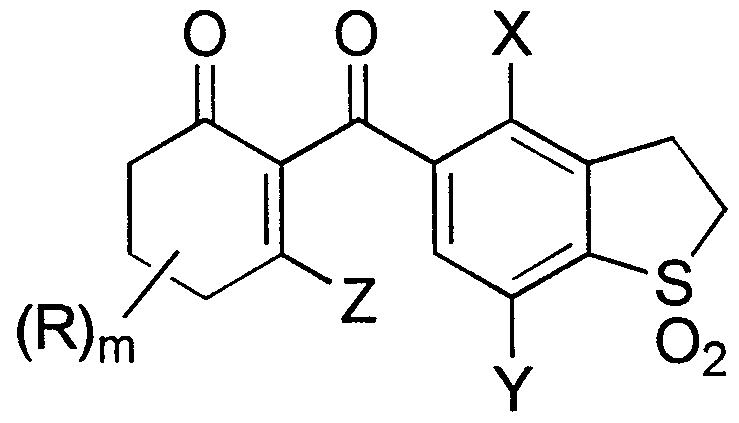


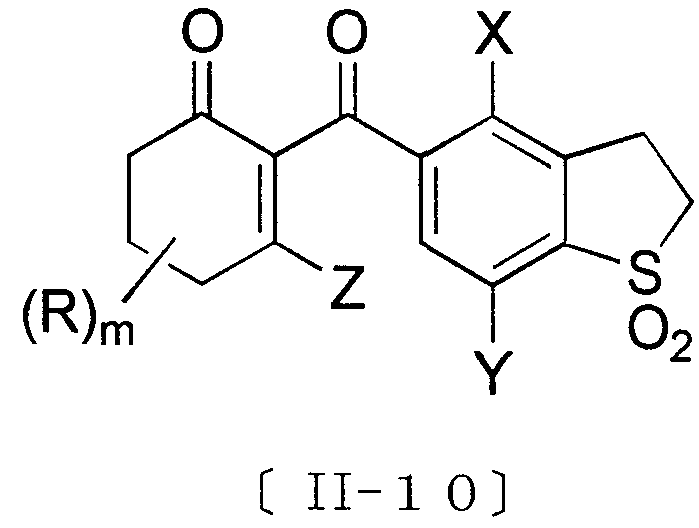


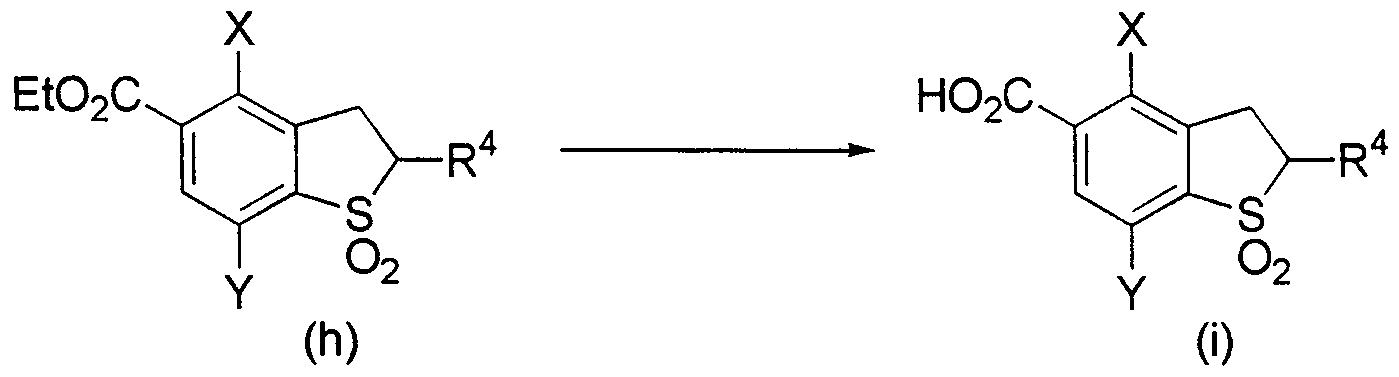


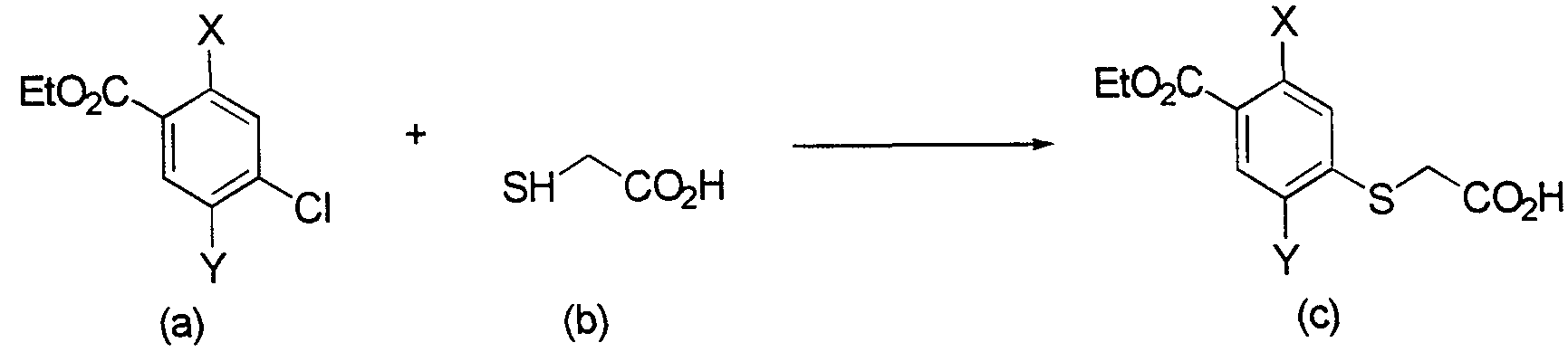


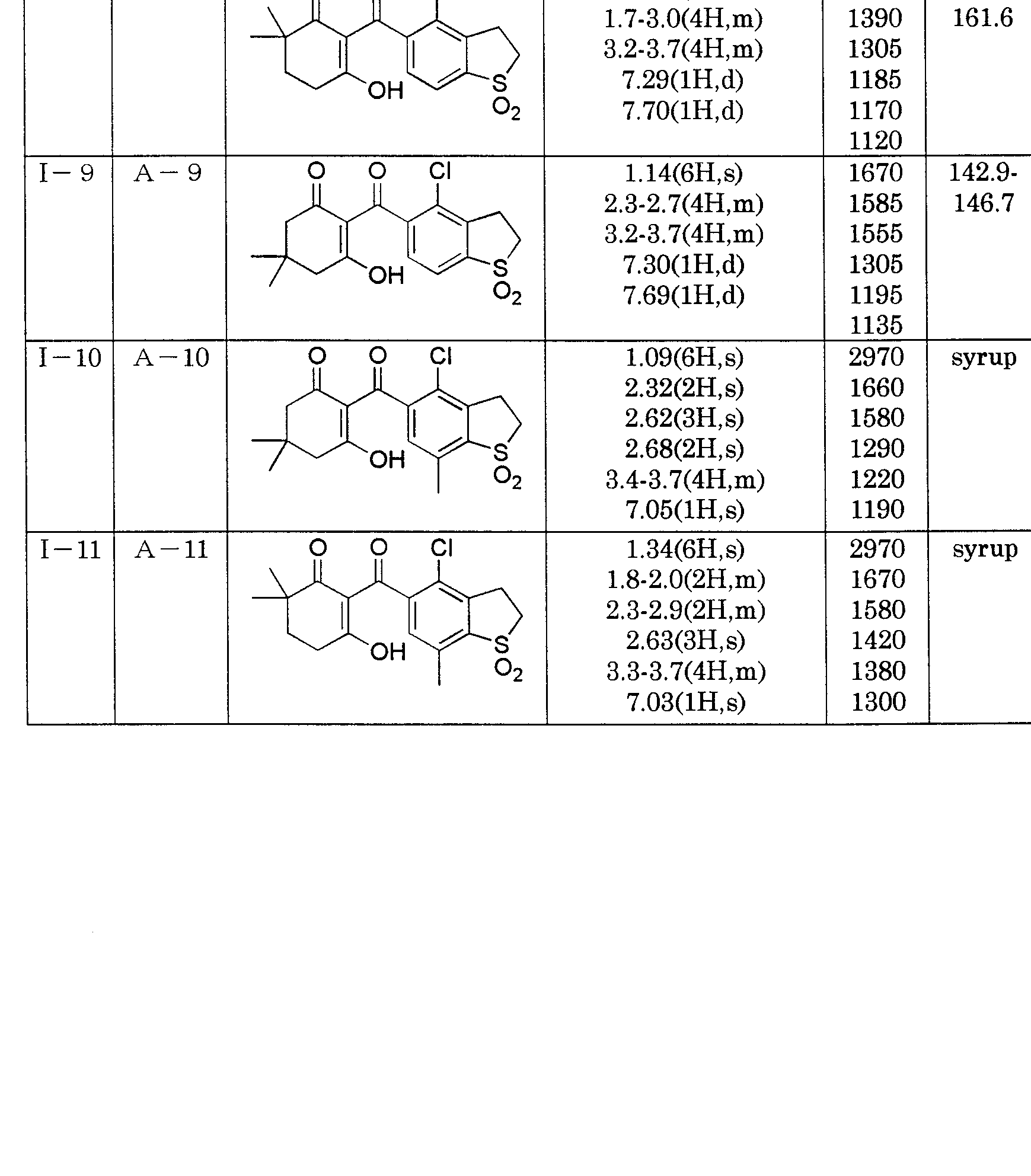


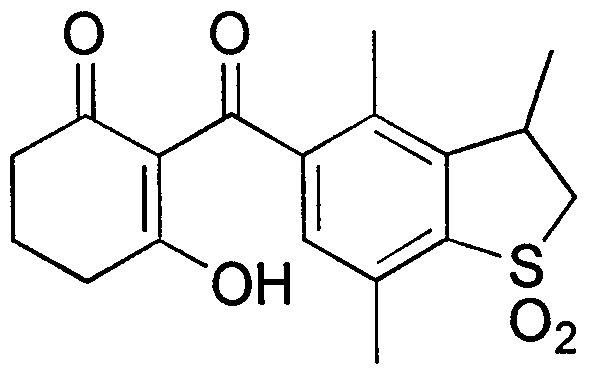


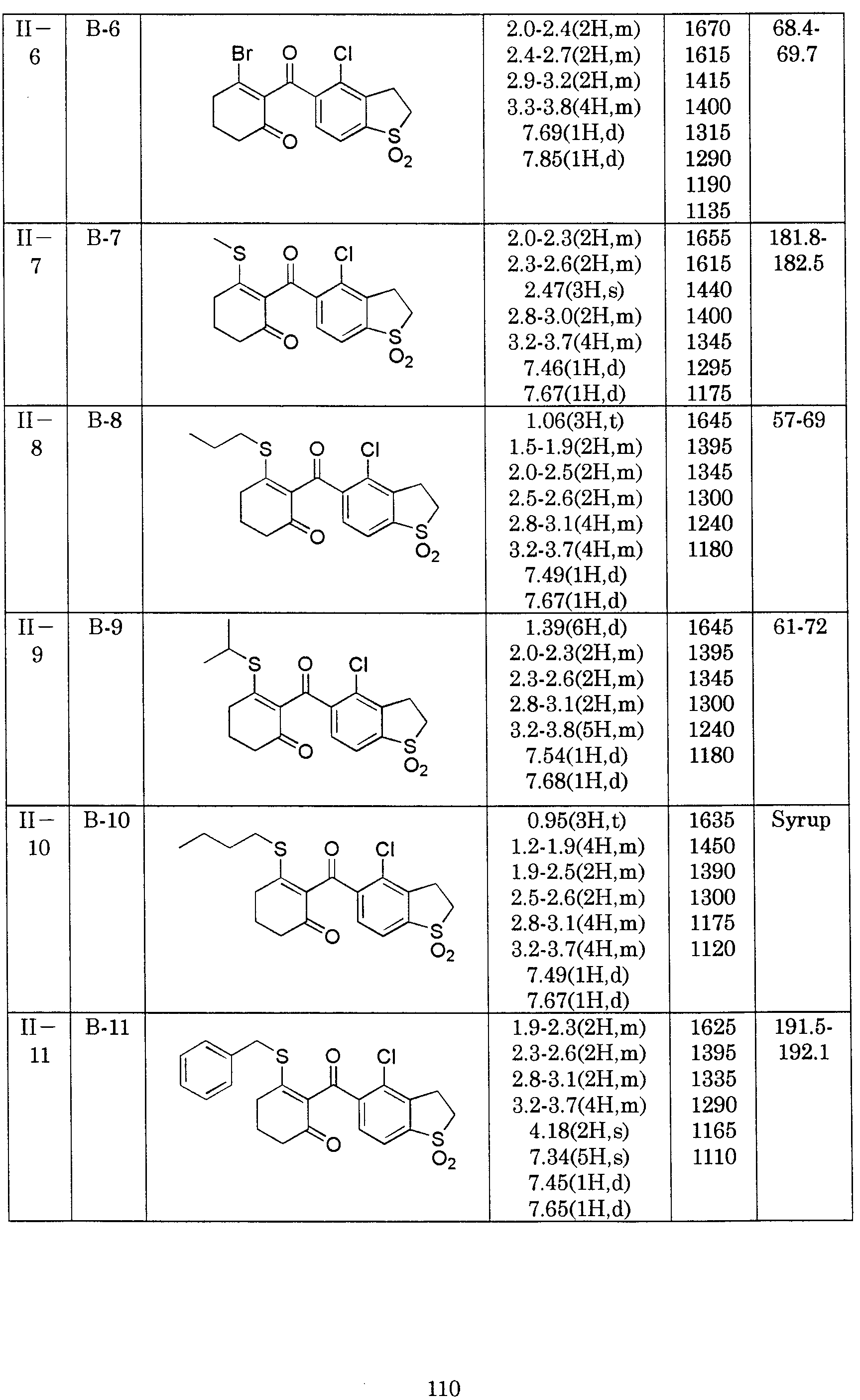


Claims


Priority Applications (7)
| Application Number | Priority Date | Filing Date | Title |
|---|---|---|---|
| BR9916177-0A BR9916177A (pt) | 1998-10-06 | 1999-10-05 | Derivados e herbicidas de tricetona |
| US09/806,948 US6756343B1 (en) | 1998-10-06 | 1999-10-05 | Triketone derivatives and herbicide |
| EP99969953A EP1120413A4 (en) | 1998-10-06 | 1999-10-05 | TRIKETONE DERIVATIVES AND HERBICIDES |
| CA002346065A CA2346065A1 (en) | 1998-10-06 | 1999-10-05 | Triketone derivative and herbicide |
| EA200100421A EA200100421A1 (ru) | 1998-10-06 | 1999-10-05 | Трикетоновые производные и гербициды |
| KR1020017004380A KR20010085893A (ko) | 1998-10-06 | 1999-10-05 | 트리케톤 유도체 및 제초제 |
| AU60032/99A AU760018B2 (en) | 1998-10-06 | 1999-10-05 | Triketone derivative and herbicide |
Applications Claiming Priority (6)
| Application Number | Priority Date | Filing Date | Title |
|---|---|---|---|
| JP28408698 | 1998-10-06 | ||
| JP10/284086 | 1998-10-06 | ||
| JP11177563A JP2000178269A (ja) | 1998-10-06 | 1999-06-23 | トリケトン誘導体および除草剤 |
| JP11177562A JP2000178268A (ja) | 1998-10-06 | 1999-06-23 | トリケトン誘導体および除草剤 |
| JP11/177562 | 1999-06-23 | ||
| JP11/177563 | 1999-06-23 |
Related Child Applications (2)
| Application Number | Title | Priority Date | Filing Date |
|---|---|---|---|
| US09/806,948 A-371-Of-International US6756343B1 (en) | 1998-10-06 | 1999-10-05 | Triketone derivatives and herbicide |
| US10/403,014 Division US20040002425A1 (en) | 1998-10-06 | 2003-04-01 | Triketone derivatives and herbicides |
Publications (1)
| Publication Number | Publication Date |
|---|---|
| WO2000020408A1 true WO2000020408A1 (en) | 2000-04-13 |
Family
ID=27324443
Family Applications (1)
| Application Number | Title | Priority Date | Filing Date |
|---|---|---|---|
| PCT/JP1999/005477 Ceased WO2000020408A1 (en) | 1998-10-06 | 1999-10-05 | Triketone derivative and herbicide |
Country Status (9)
| Country | Link |
|---|---|
| US (2) | US6756343B1 (ja) |
| EP (1) | EP1120413A4 (ja) |
| KR (1) | KR20010085893A (ja) |
| CN (1) | CN1326452A (ja) |
| AU (1) | AU760018B2 (ja) |
| BR (1) | BR9916177A (ja) |
| CA (1) | CA2346065A1 (ja) |
| EA (1) | EA200100421A1 (ja) |
| WO (1) | WO2000020408A1 (ja) |
Cited By (7)
| Publication number | Priority date | Publication date | Assignee | Title |
|---|---|---|---|---|
| WO2001074802A1 (en) * | 2000-04-04 | 2001-10-11 | Idemitsu Kosan Co., Ltd. | Fused-benzoyl derivatives and herbicide compositions containing the same |
| JP2002003467A (ja) * | 2000-06-26 | 2002-01-09 | Sds Biotech:Kk | 置換ベンゾイルチオエーテル化合物の製造方法 |
| WO2002050055A1 (en) * | 2000-12-21 | 2002-06-27 | Idemitsu Kosan Co., Ltd. | Benzothiophene derivatives and herbicidal compositions containing the same |
| DE102010042786A1 (de) | 2010-10-22 | 2012-04-26 | Bayer Cropscience Ag | Herbizid- Kombination mit einem Dimethoxytriazinyl-substituierten Difluormethansulfonylanilid |
| WO2013072402A1 (en) | 2011-11-16 | 2013-05-23 | Basf Se | Substituted 1,2,5-oxadiazole compounds and their use as herbicides ii |
| WO2013076315A2 (en) | 2012-04-27 | 2013-05-30 | Basf Se | Substituted n-(tetrazol-5-yl)- and n-(triazol-5-yl)arylcarboxamide compounds and their use as herbicides |
| WO2014184019A1 (en) | 2013-05-15 | 2014-11-20 | Basf Se | N-(1,2,5-oxadiazol-3-yl)carboxamide compounds and their use as herbicides |
Families Citing this family (7)
| Publication number | Priority date | Publication date | Assignee | Title |
|---|---|---|---|---|
| US7078540B1 (en) * | 1999-08-06 | 2006-07-18 | Takeda Pharmaceutical Company Limited | Substituted aromatic-ring compounds, process for producing the same, and use |
| AR032779A1 (es) | 2000-12-11 | 2003-11-26 | Basf Ag | Derivados de ciclohexenona de benzazolonas, acidos benzazolonacarboxilicos, agentes que contienen por lo menos un derivado de ciclohexenona, procedimiento para combatir el crecimiento indeseado de plantas y uso de dichos derivados como herbicidas |
| KR20110132441A (ko) * | 2009-03-11 | 2011-12-07 | 스미또모 가가꾸 가부시끼가이샤 | 제초 조성물 및 잡초의 방제 방법 |
| WO2013181385A2 (en) | 2012-05-31 | 2013-12-05 | Nike International Ltd. | Golf club having a reinforced ball striking plate |
| JP2019507145A (ja) * | 2016-02-18 | 2019-03-14 | バイエル・クロップサイエンス・アクチェンゲゼルシャフト | キナゾリンジオン−6−カルボニル誘導体及び除草剤としてのそれらの使用 |
| US20200196601A1 (en) * | 2017-05-04 | 2020-06-25 | Bayer Cropscience Aktiengesellschaft | Herbicide safener compositions containing quinazolinedione-6carbonyl derivatives |
| AU2019345827B2 (en) * | 2018-09-29 | 2023-01-12 | Shandong Cynda Chemical Co., Ltd. | Triketone compound, preparation method therefor and use thereof, and herbicide |
Citations (7)
| Publication number | Priority date | Publication date | Assignee | Title |
|---|---|---|---|---|
| WO1997001550A1 (en) * | 1995-06-29 | 1997-01-16 | E.I. Du Pont De Nemours And Company | Herbicidal ketals and spirocycles |
| WO1997008164A1 (en) * | 1995-08-25 | 1997-03-06 | E.I. Du Pont De Nemours And Company | Bicyclic herbicides |
| WO1997009324A1 (de) * | 1995-09-01 | 1997-03-13 | Basf Aktiengesellschaft | 2-cyclohexan-1,3-dion-benzoylderivate |
| WO1998029406A1 (en) * | 1996-12-27 | 1998-07-09 | Idemitsu Kosan Co., Ltd. | Cyclohexanedione derivatives and herbicides prepared therefrom |
| WO1998035954A1 (en) * | 1997-02-14 | 1998-08-20 | E.I. Du Pont De Nemours And Company | Bicyclic hydrazone herbicides |
| WO1999009023A1 (en) * | 1997-08-20 | 1999-02-25 | Novartis Ag | Benzothiophene derivates as herbicides |
| US5981439A (en) * | 1996-12-27 | 1999-11-09 | Idemitsu Kosan Co., Ltd. | Cyclohexanedione derivatives and herbicides containing them |
-
1999
- 1999-10-05 AU AU60032/99A patent/AU760018B2/en not_active Ceased
- 1999-10-05 WO PCT/JP1999/005477 patent/WO2000020408A1/ja not_active Ceased
- 1999-10-05 BR BR9916177-0A patent/BR9916177A/pt not_active IP Right Cessation
- 1999-10-05 CA CA002346065A patent/CA2346065A1/en not_active Abandoned
- 1999-10-05 CN CN99813233A patent/CN1326452A/zh active Pending
- 1999-10-05 US US09/806,948 patent/US6756343B1/en not_active Expired - Fee Related
- 1999-10-05 EP EP99969953A patent/EP1120413A4/en not_active Withdrawn
- 1999-10-05 KR KR1020017004380A patent/KR20010085893A/ko not_active Withdrawn
- 1999-10-05 EA EA200100421A patent/EA200100421A1/ru unknown
-
2003
- 2003-04-01 US US10/403,014 patent/US20040002425A1/en not_active Abandoned
Patent Citations (7)
| Publication number | Priority date | Publication date | Assignee | Title |
|---|---|---|---|---|
| WO1997001550A1 (en) * | 1995-06-29 | 1997-01-16 | E.I. Du Pont De Nemours And Company | Herbicidal ketals and spirocycles |
| WO1997008164A1 (en) * | 1995-08-25 | 1997-03-06 | E.I. Du Pont De Nemours And Company | Bicyclic herbicides |
| WO1997009324A1 (de) * | 1995-09-01 | 1997-03-13 | Basf Aktiengesellschaft | 2-cyclohexan-1,3-dion-benzoylderivate |
| WO1998029406A1 (en) * | 1996-12-27 | 1998-07-09 | Idemitsu Kosan Co., Ltd. | Cyclohexanedione derivatives and herbicides prepared therefrom |
| US5981439A (en) * | 1996-12-27 | 1999-11-09 | Idemitsu Kosan Co., Ltd. | Cyclohexanedione derivatives and herbicides containing them |
| WO1998035954A1 (en) * | 1997-02-14 | 1998-08-20 | E.I. Du Pont De Nemours And Company | Bicyclic hydrazone herbicides |
| WO1999009023A1 (en) * | 1997-08-20 | 1999-02-25 | Novartis Ag | Benzothiophene derivates as herbicides |
Non-Patent Citations (1)
| Title |
|---|
| See also references of EP1120413A4 * |
Cited By (7)
| Publication number | Priority date | Publication date | Assignee | Title |
|---|---|---|---|---|
| WO2001074802A1 (en) * | 2000-04-04 | 2001-10-11 | Idemitsu Kosan Co., Ltd. | Fused-benzoyl derivatives and herbicide compositions containing the same |
| JP2002003467A (ja) * | 2000-06-26 | 2002-01-09 | Sds Biotech:Kk | 置換ベンゾイルチオエーテル化合物の製造方法 |
| WO2002050055A1 (en) * | 2000-12-21 | 2002-06-27 | Idemitsu Kosan Co., Ltd. | Benzothiophene derivatives and herbicidal compositions containing the same |
| DE102010042786A1 (de) | 2010-10-22 | 2012-04-26 | Bayer Cropscience Ag | Herbizid- Kombination mit einem Dimethoxytriazinyl-substituierten Difluormethansulfonylanilid |
| WO2013072402A1 (en) | 2011-11-16 | 2013-05-23 | Basf Se | Substituted 1,2,5-oxadiazole compounds and their use as herbicides ii |
| WO2013076315A2 (en) | 2012-04-27 | 2013-05-30 | Basf Se | Substituted n-(tetrazol-5-yl)- and n-(triazol-5-yl)arylcarboxamide compounds and their use as herbicides |
| WO2014184019A1 (en) | 2013-05-15 | 2014-11-20 | Basf Se | N-(1,2,5-oxadiazol-3-yl)carboxamide compounds and their use as herbicides |
Also Published As
| Publication number | Publication date |
|---|---|
| EA200100421A1 (ru) | 2001-10-22 |
| EP1120413A4 (en) | 2002-01-30 |
| BR9916177A (pt) | 2001-08-14 |
| CN1326452A (zh) | 2001-12-12 |
| US20040002425A1 (en) | 2004-01-01 |
| AU760018B2 (en) | 2003-05-08 |
| US6756343B1 (en) | 2004-06-29 |
| CA2346065A1 (en) | 2000-04-13 |
| AU6003299A (en) | 2000-04-26 |
| EP1120413A1 (en) | 2001-08-01 |
| KR20010085893A (ko) | 2001-09-07 |
Similar Documents
| Publication | Publication Date | Title |
|---|---|---|
| JP3078661B2 (ja) | 新規な除草剤 | |
| RU2237664C2 (ru) | Изоксазолиновые производные и гербициды, содержащие их в качестве активных ингредиентов | |
| EP0900795B1 (en) | Benzene derivatives substituted by heterocycles and herbicides | |
| KR100422924B1 (ko) | 제초제 | |
| AU680280B2 (en) | Pyrazole derivative | |
| WO2000020408A1 (en) | Triketone derivative and herbicide | |
| RO111076B1 (ro) | Derivati 2-cian-1,3-diona, procedee de preparare a acestora, compozitie erbicida si metoda pentru controlul cresterii buruienilor | |
| RO115351B1 (ro) | Derivati ai 2-ciano-1,3-dionei, procedee pentru prepararea acestora, compozitie erbicida care ii contine si metoda de combatere a cresterii buruienilor | |
| JPH06316565A (ja) | ピリミジン誘導体及び除草剤 | |
| US5756759A (en) | Pyrazole compounds having a thiochroman ring and pesticides containing such compounds | |
| JP3557230B2 (ja) | 新規な除草剤 | |
| AU720761B2 (en) | Pyrazole derivatives | |
| WO1998029406A1 (en) | Cyclohexanedione derivatives and herbicides prepared therefrom | |
| US5965492A (en) | Triketone derivatives | |
| JPH05279363A (ja) | 新規の除草剤 | |
| RU2126394C1 (ru) | Производные изоксазола, способы их получения, гербицидная композиция, способ борьбы с сорняками | |
| JP2000178268A (ja) | トリケトン誘導体および除草剤 | |
| WO2001079199A1 (en) | Acetylene derivatives and herbicides containing the same | |
| JP2001288183A (ja) | 縮合環式ベンゾイル誘導体及びそれを用いた除草剤組成物 | |
| US5990049A (en) | Triketone derivatives | |
| KR100342949B1 (ko) | 제초성 아릴티아졸 유도체 및 그의 제조방법 | |
| JP2002114776A (ja) | ベンゾチオフェン誘導体及びそれを用いた除草剤組成物 | |
| EP1188376A1 (en) | Triketone derivatives and herbicides for lowland fields | |
| KR20030064864A (ko) | 벤조티오펜 유도체 및 이를 함유하는 제초제 조성물 | |
| KR19990000516A (ko) | 1-디에틸카바모일피라졸 유도체 및 그의 제조방법 |
Legal Events
| Date | Code | Title | Description |
|---|---|---|---|
| WWE | Wipo information: entry into national phase |
Ref document number: 99813233.0 Country of ref document: CN |
|
| AK | Designated states |
Kind code of ref document: A1 Designated state(s): AL AU BA BB BG BR CA CN CU CZ EE GE GM HU ID IL IN IS KR LC LK LR LT LV MG MK MN MX NO NZ PL RO SG SI SK SL TR TT UA US UZ VN YU |
|
| AL | Designated countries for regional patents |
Kind code of ref document: A1 Designated state(s): GH GM KE LS MW SD SL SZ TZ UG ZW AM AZ BY KG KZ MD RU TJ TM AT BE CH CY DE DK ES FI FR GB GR IE IT LU MC NL PT SE BF BJ CF CG CI CM GA GN GW ML MR NE SN TD TG |
|
| DFPE | Request for preliminary examination filed prior to expiration of 19th month from priority date (pct application filed before 20040101) | ||
| 121 | Ep: the epo has been informed by wipo that ep was designated in this application | ||
| WWE | Wipo information: entry into national phase |
Ref document number: 60032/99 Country of ref document: AU |
|
| WWE | Wipo information: entry into national phase |
Ref document number: 1999969953 Country of ref document: EP |
|
| ENP | Entry into the national phase |
Ref document number: 2346065 Country of ref document: CA Ref document number: 2346065 Country of ref document: CA Kind code of ref document: A |
|
| WWE | Wipo information: entry into national phase |
Ref document number: 1020017004380 Country of ref document: KR |
|
| WWE | Wipo information: entry into national phase |
Ref document number: 09806948 Country of ref document: US |
|
| WWE | Wipo information: entry into national phase |
Ref document number: 200100421 Country of ref document: EA |
|
| WWP | Wipo information: published in national office |
Ref document number: 1999969953 Country of ref document: EP |
|
| WWP | Wipo information: published in national office |
Ref document number: 1020017004380 Country of ref document: KR |
|
| WWG | Wipo information: grant in national office |
Ref document number: 60032/99 Country of ref document: AU |
|
| WWW | Wipo information: withdrawn in national office |
Ref document number: 1999969953 Country of ref document: EP |
|
| WWW | Wipo information: withdrawn in national office |
Ref document number: 1020017004380 Country of ref document: KR |